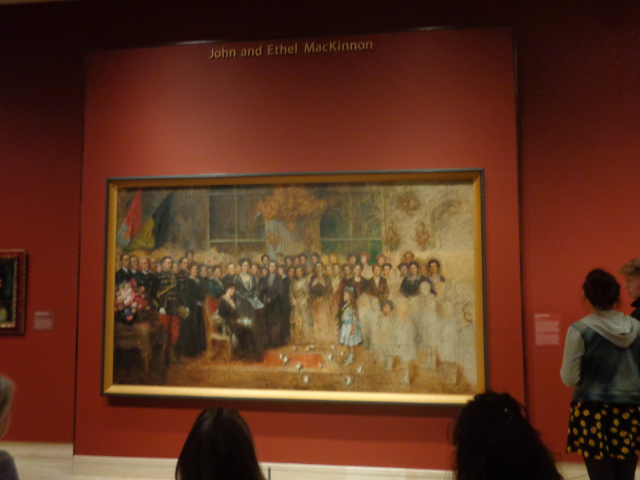
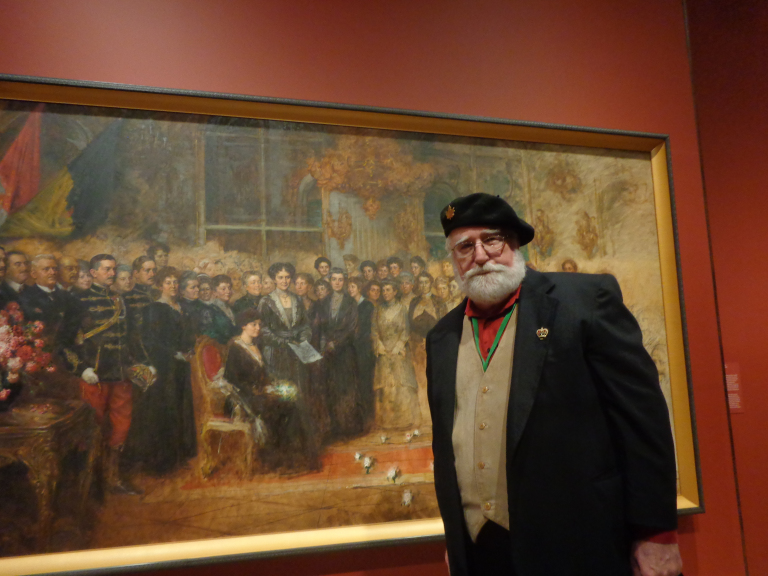

I am wondering if my family tree was researched, and, I was not told. This Come Unto Me matter was brought up with the Elders, and, they went around me?
Above are the five Sisters who came to my home. The elder woman was going to take me to the Eugene Genealogical center, but, they needed a male to drive us. That fell through.
I was wearing the wrong shirt. I should not have put my arm around her. She was going to The Mountain.
This is The Name!
17. VICTOR EMANUEL FELIX STUTTMEISTER – International Genealogical Index / GE
Gender: Male Christening: 07 MAR 1861 Sankt Petri, Berlin Stadt, Brandenburg, Preussen
I have connected it to the Teutonic Order – AGAIN! I had to wait for an hour at Riverbend Hospital to get bloodwork at Quest. I got on my phone and Googled
VICTOR EMANUEL FELIX STUTTMEISTER
I believe this is a Signature Name that links my family to……
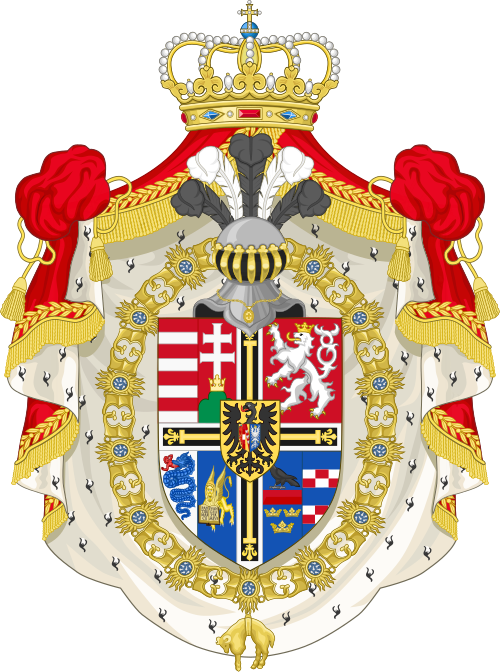
The House of Austria-Este!
I just felt people – reading me! I have invisible followers. There is an incrideble cat and mouse game going on! I can see myself, in these people……
WHO HID THEMSELVES! WHY?
John ‘The Prophet’
John ‘The Prophet’
“The symbol will now be used as a visual identifier for official literature, news, and events of the Church. It will remind all that this is the Savior’s Church and that all we do as members of His Church centers on Jesus Christ and His gospel.” — Russell M. Nelson, “Opening the Heavens for Help,” general conference, Apr. 2020
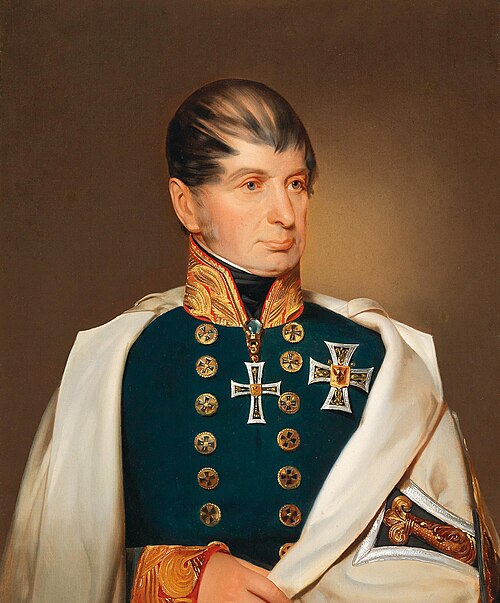
https://en.wikipedia.org/wiki/Elisabeth_Christine_of_Brunswick-Wolfenb%C3%BCttelElisabeth Christine of Brunswick-Wolfenbüttel (28 August 1691 – 21 December 1750) was Princess of Brunswick-Wolfenbuttel, Holy Roman Empress, German Queen, Queen of Bohemia and Hungary; and Archduchess of Austria, etc. by her marriage to Charles VI, Holy Roman Emperor.[1] She was renowned for her delicate beauty and also for being the mother of Empress Maria Theresa and grandmother of Joseph II and Leopold II, Holy Roman Emperor
7/3/2024
The Mormons Are The Chosen Ones
I was born to fulfil the prophecies of the LDS Mission.
John ‘The Nazarite Judge’
Reformed LDS Temple of King Jesus
Posted on May 28, 2022 by Royal Rosamond Press
Mormon Temple in Oakland, California


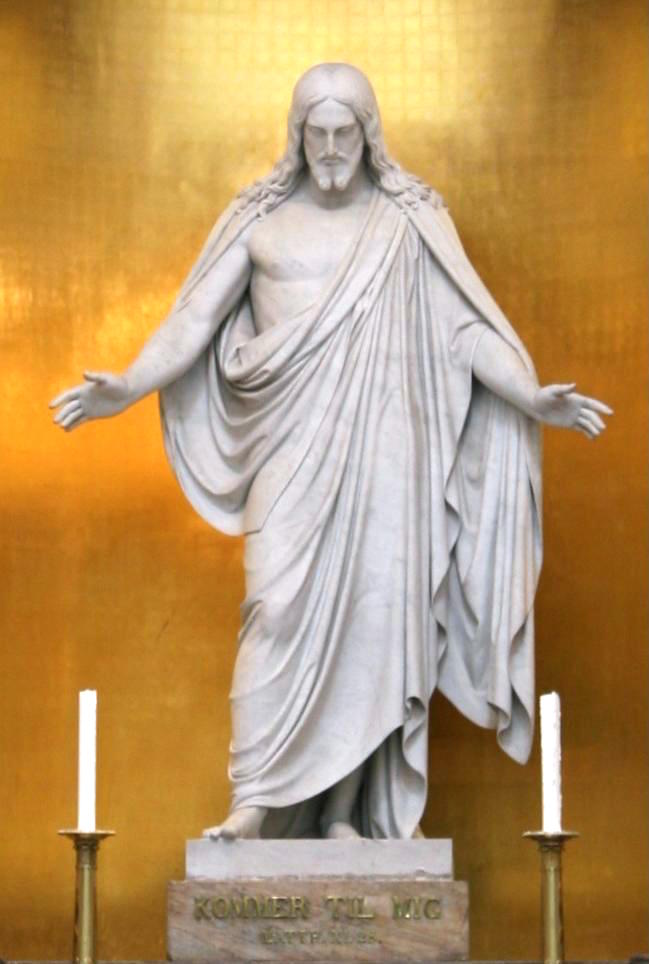
While living in the shadow of the LDS Temple in Oakland, I had a dream about a fire. My dream came true, thus I am a prophet after Samuel the Nazarite. I am authoring a book that concludes Jesus declared he was going to build a new temple on the Mount of Olives that would rival the Herodian temple. This is the motive for his arrest and execution. John the Baptist and his priestly father designdthis temple in all aspects. It was blessed by the priesthood who served in the Holy of Holies. When the elder of the LDS church ADOPTED the statue off Christus – they brought my bloodline into the core of the church – to indicate the LDS church – WAS A CHRISTIAN CHURCH! Why would there be any doubt? let me count the ways. I conclude…..
“All’s well, that ends well!”
There are several profound indications that I have been chosen to…..REFORM THE LDS. I met two sisters in the produce section of Wal-Mart and I told Sister Higgens the secret of what Jesus wrote in the dust. I suggested she read what rabbis wrote about The Sotah.
- My kin, Senator Thomas Hart Benton did not help build their Zionist temple in Missouri. He may have secretly led the opposition – because he was a Freemason? I told the three LDS Sister the Shekinah wants to dwell in the new Eurgene Temple. The Shekinah has everything to do with the true Zion.
I believe this blog was examined to see if…………? I believe the darkness around me – wato s shocking. Below is the Mariage certificate my nephew came to own. He did not tell me his mother, was dead. When I found out, he asked if i wanted anything. I asked for my painting he never delivered. He hates me because I pointed out his lies. I forgot about this certificate. Another LDS Sister suggested my deceased kin – want to be SAVED – via their genealogies. I was not told my father was dead, and found out three years later when I talked to a cousin doing the Presco family tree. I was not told my mother was dying. Demons have been trying to destroy My Family Tree. WHY? I am being – ELECTED! I believe the LDS is the REPSITORY for ‘Royal Rosamond Press’.
Sister Higgens stood in my living room and announced we are in the End of Days. The day of the fire I drove to the top of the road that begins seventy yards past the entrance to the temple and saw the dark ceiling of smoke that almost block out the sun.
Stop judging me. I was born in Oakland during a star shower. We might pass through the tail of a comet this weekend. You need to examine my revelations – with real scholarship. I am already in the door. You can say the life-size statue of Christus overlooking my Stuttmeister ancestors – is a Trojan Horse?
John Presco
Latter-day Saints Join Efforts after Oakland Fire (churchofjesuschrist.org)
On Sunday, October 20, Bishop Samuel Richard Wickel, Jr., of the Oakland Third Ward, in the Oakland California Stake, had finished Church meetings and was visiting with members when word came that parts of the city were burning. He sent everyone home.
“We could see the fire coming our way. It was about 2:00 p. m. The fire fighters kept fighting the fire. By 4:00 p. m. we had to leave. We could see a wall of flames shooting thirty to forty feet in the air.”
Sister Margaret Wickel said, “It was so dark in our house from the intense smoke that we had to use flashlights to find the sleeping bags and to read our list of phone numbers.”
“We moved a block away,” Bishop Wickel continued, “and stood and watched our homes. The heat was so bad and the air was so bad that we could hardly breathe. We could see the wall of flame coming to our house, and my wife said, ‘Let’s leave. I can’t stand to see our home go.’”
Were The Stuttmeisters Prussian Royalty | Rosamond Press
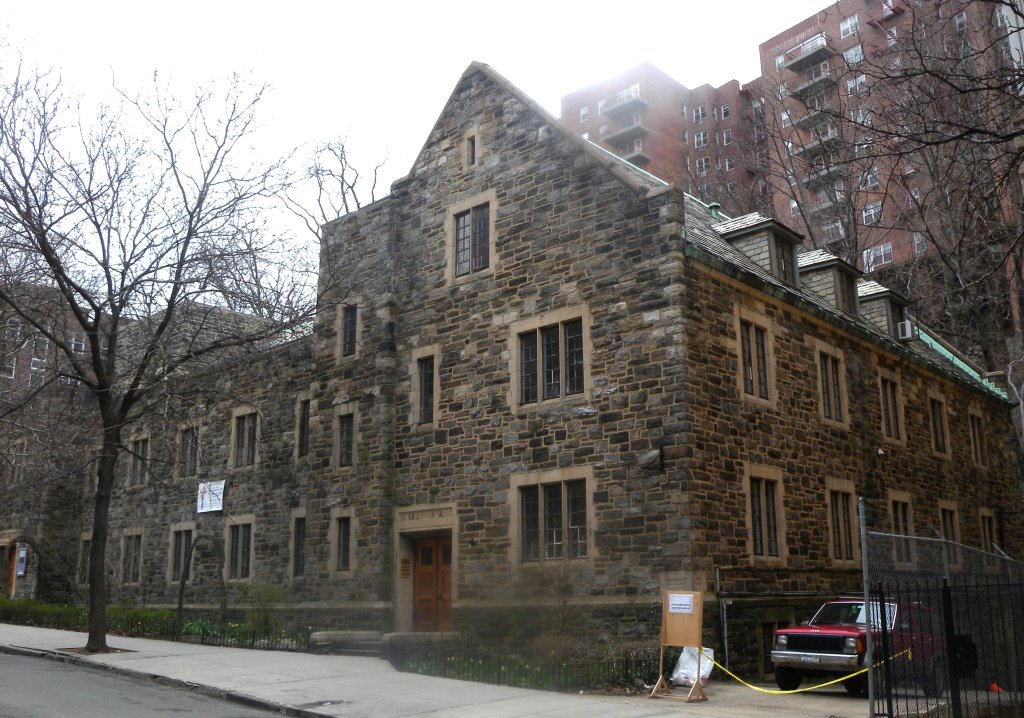
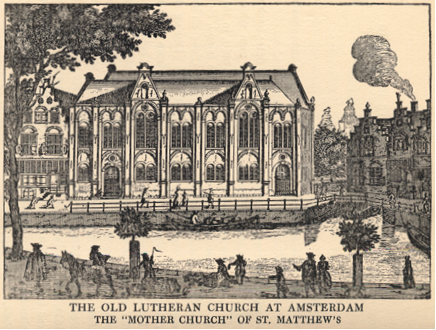
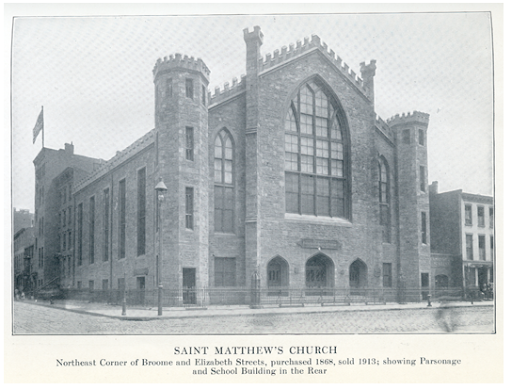
Evangelical Lutheran Church of St. Matthew (New York City) – Wikipedia
The recent laudable movement within the Church to discard a traditional parochialism for a more universal appeal is very much in evidence. Pronouncements and travels of Church leaders, the establishment of seminary and institute programs outside of North America and the expanded use of the mass media in the missionary effort all dramatize the new thrust. Undoubtedly, this worldwide emphasis has also been one of the stimuli behind the interest in exploring the history of Mormonism in foreign lands. An additional motive is that former missionaries sometimes take this route to express their affection for the areas and people of their service. The book by Gilbert Scharffs, Mormonism in Germany: A History of the Church of Jesus Christ of Latter-day Saints in Germany falls into this category, attempting, in the author’s words, “. . . to relate the dramatic, untold story of the growth and survival of the Church . . . in Germany. . . .” Such studies, if well done, should be welcomed by the Church membership, not only as a reflection of the vigor of the Church, but for their potential contribution toward a greater mutual understanding and brotherhood among Church members the world over.
The Church of Jesus Christ of Latter-day Saints in Germany – Wikipedia
Mormonism in Germany – BYU Studies
The Evangelical Lutheran Church of St. Matthew is the oldest Lutheran congregation in North America. The congregation is a member of the Lutheran Church–Missouri Synod. Since 2006, the congregation has been located at the Cornerstone Center, 178 Bennett Avenue in Manhattan, New York City. The congregation has been known by different names, only acquiring the name St. Matthew in 1822 and using it exclusively since 1838.[3][2][4]
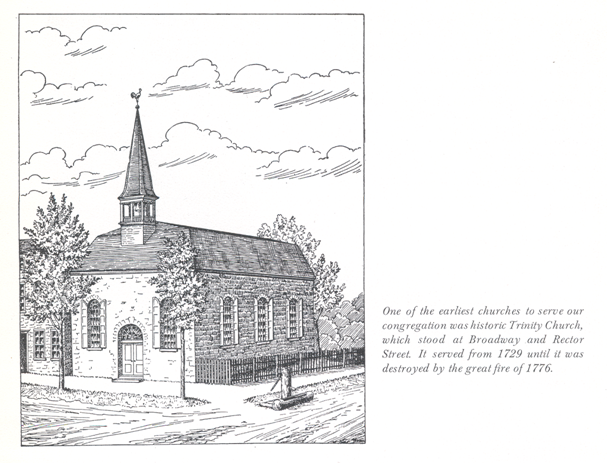
Trinity Church – Lutheran (1729-1776), Broadway, New York City
The congregation was founded in 1643 by Dutch Lutherans in New Amsterdam but the church was not chartered until December 6, 1664, when the new governor, Richard Nicolls, issued a charter after the British had taken control of the colony in April 1664.[2]
Judging The Sotah
Posted on August 12, 2019 by Royal Rosamond Press
Jesus said;
“Judge not, lest thee be judged!”
This has everything to do with the judging of the woman accused of adultery that I ALONE solved the riddle of. I announced that I know the answer surrounded by men and women carrying guns. One said;
“No one knows the answer!”
“I do!” says I.
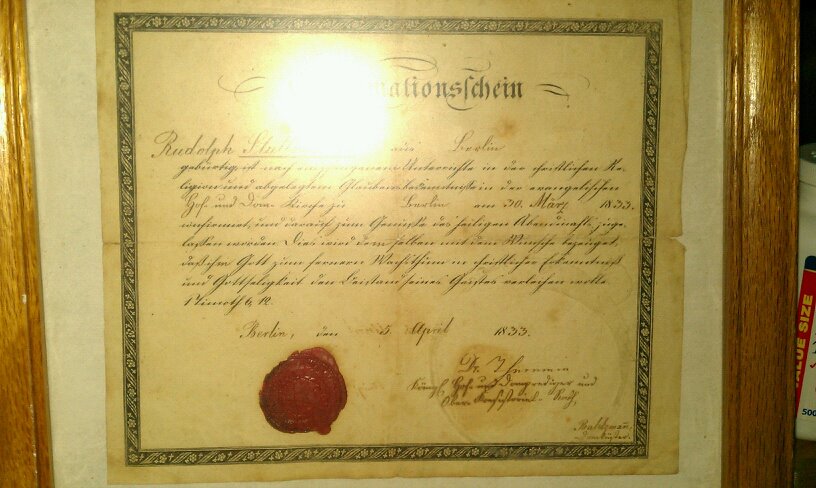
Stuttmeister Married at Famous Lutheran Church
Posted on August 14, 2021 by Royal Rosamond Press
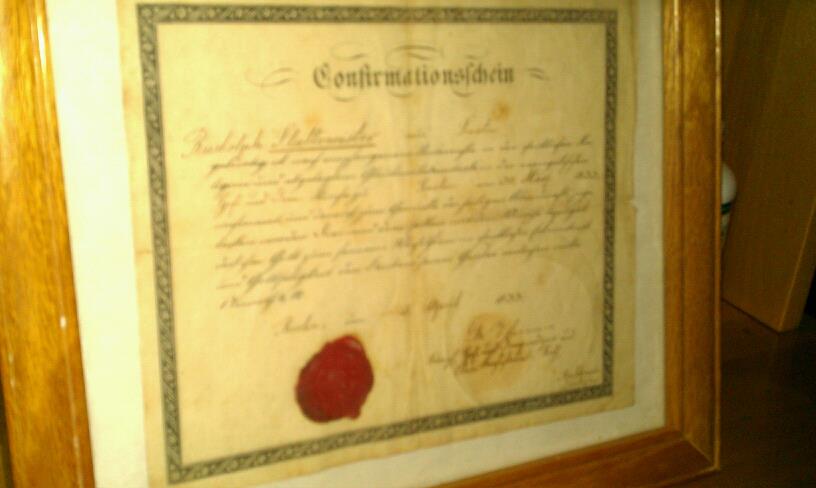
Here is the marriage certificate of Rudolph Stuttmeister who lost his mother at birth. The Stuttmeisters are San Francisco Pioneers. When I become Governor of the Great Bohemian State of California, I will pass a law making it illegal for anyone to sell, or attempt to sell, anyone’s family tree to outsiders, especially if they are hostile towards Heirs of said tree. My late sister, Victoria Presco, had this on her wall. Where is it?
John ‘Bohemian Historian’



Capturing Beauty
by
John Presco
Copyright 2021
My Broderick cousin who lives in Berlin has been helping me compile some of our family history that my natal family knew very little about, especially Christine Rosamond Benton. Therefor, our history could not be sold to outsiders. I am not alone. Others are appalled at what they have read. The Carmel Art Feeding Frenzy resembles the denuding of our forests that concerned Robert Lewis Stevenson, a Carmel Pioneer.
I will be sending out a three page synopsis of my story that will begin with me having my mother call up Sydney Morris to find out what was going on. Morris told Rosemary he and Stacey Pierrot had emptied her daughters home of everything but a large box of family photographs.
“Do you want them?” Morris asked.
“Of course….I want them!” answered the mother of a world famous woman artist, who is demonized…
View original post 2,267 more words
http://forum.alexanderpalace.org/index.php?topic=533.15
7. AGNES EMMA HEDWIG STUTTMEISTER – International Genealogical Index / GE
Gender: Female Christening: 06 SEP 1856 Sankt Petri, Berlin Stadt, Brandenburg, Preussen
8. ALBERTUS FRIEDERICH STUTTMEISTER – International Genealogical Index / GE
Gender: Male Christening: 11 JUL 1745 Jerusalem, Berlin Stadt, Brandenburg, Preussen
9. DOROTHEA SOPHIA STUTTMEISTER – International Genealogical Index / GE
Gender: Female Christening: 03 AUG 1807 Jerusalem, Berlin Stadt, Brandenburg, Preussen
10. EMILIE FRIEDRICKE STUDTMEISTER – International Genealogical Index / GE
Gender: Female Christening: 26 JAN 1806 Sankt Nikolai, Berlin Stadt, Brandenburg, Preussen
11. AMALIE CHARLOTTE JOHANNE ELISABETH STUTTMEISTER – International Genealogical Index / GE
Gender: Female Christening: 06 MAR 1860 Sankt Petri, Berlin Stadt, Brandenburg, Preussen
12. FRIEDRICH HEINRICH STUTTMEISTER – International Genealogical Index / GE
Gender: Male Christening: 30 JAN 1862 Sankt Elisabeth, Berlin Stadt, Brandenburg, Preussen
13. JOH. CARL STUTTMEISTER – International Genealogical Index / GE
Gender: Male Christening: 20 AUG 1747 Jerusalem, Berlin Stadt, Brandenburg, Preussen
14. JOHANNES HERMANN STUTTMEISTER – International Genealogical Index / GE
Gender: Male Christening: 04 MAY 1826 Friedrichswerder Berlin, Brandenburg, Preussen
15. CARL HEINRICH STUTTMEISTER – International Genealogical Index / GEDr.
Gender: Male Christening: 15 APR 1805 Sankt Nikolai, Berlin Stadt, Brandenburg, Preussen
16. CATHARINA DOROTHEA STUTTMEISTER – International Genealogical Index / GE
Gender: Female Christening: 02 AUG 1743 Jerusalem, Berlin Stadt, Brandenburg, Preussen
17. VICTOR EMANUEL FELIX STUTTMEISTER – International Genealogical Index / GE
Gender: Male Christening: 07 MAR 1861 Sankt Petri, Berlin Stadt, Brandenburg, Preussen
Predicting The Oakland Fire
Posted on December 25, 2015 by Royal Rosamond Press
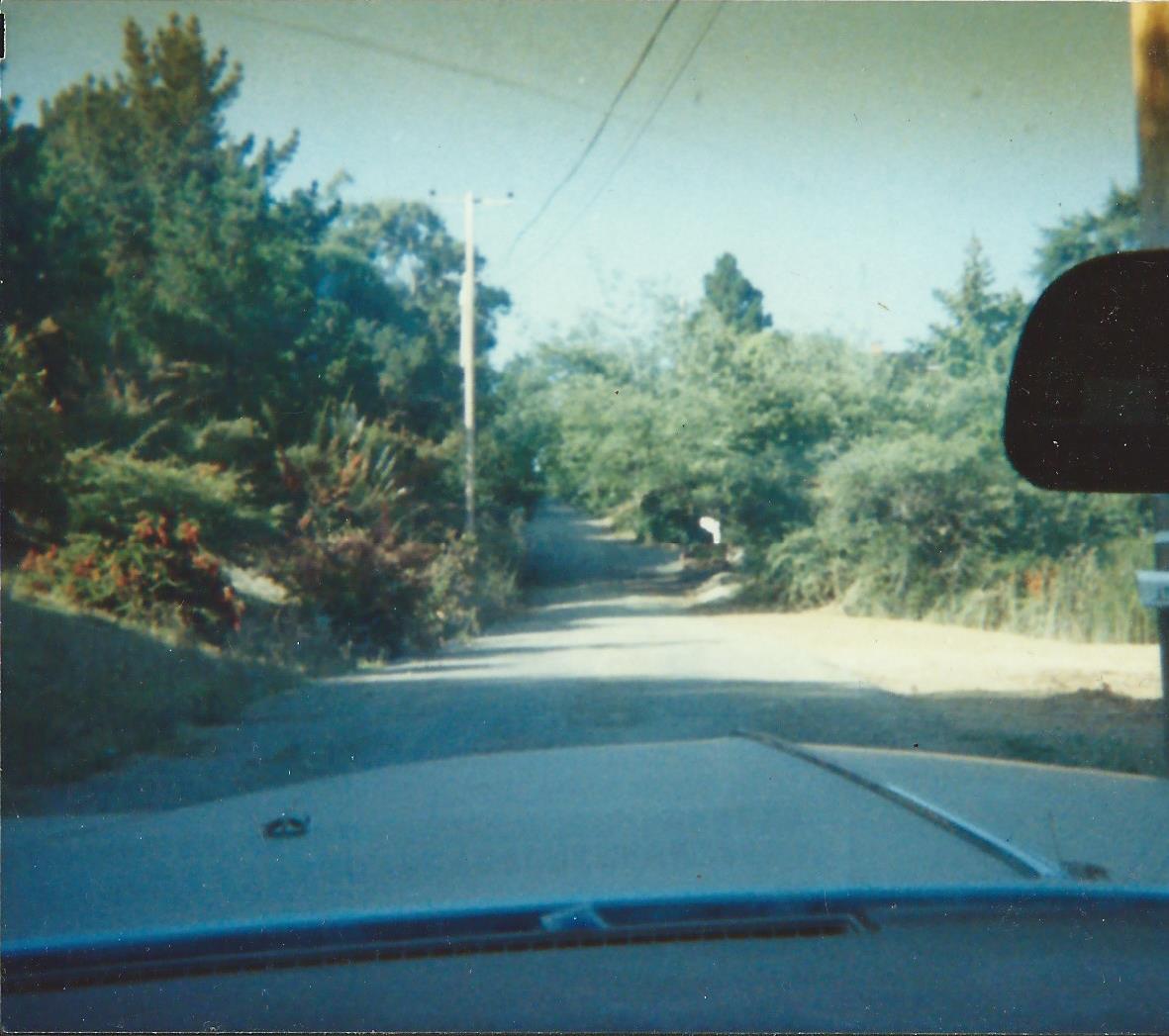

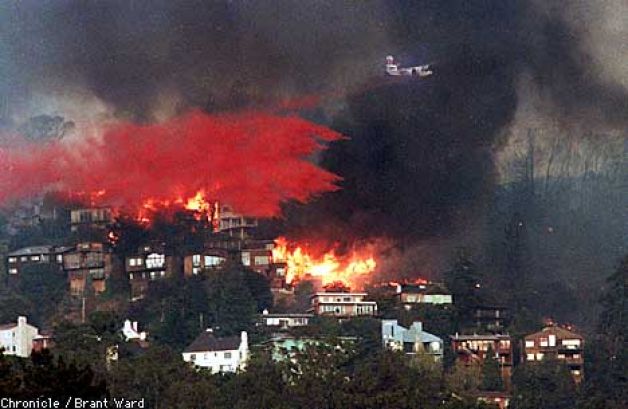
Consider this my Christmas Card. Life is short. I will ignore all who disrespect me, and, those who show me no respect.
Joel 2:28
“And afterward, I will pour out my Spirit on all people. Your sons and daughters will prophesy, your old men will dream dreams, your young men will see visions.
A week before the Oakland Fire I had a dream about it. I saw smoke and helicopters. I lived at 2816 London Rd below the Mormon Temple. It was a heavily wood canyon with no exit. I asked my landlord if I could clear some of the brush around his house, and remove pine needles he asked why. I told him about my dream.
The morning of October 20, 1991, Al called me up and said;
“Greg! You’re dreams on T.V. Turn on the news!”
The fire was two miles away when Al left to do errands. I asked him if hee wanted me to take his dog and family photos with me if the fire got near. He scoffed, let go a laugh.
“The fire won’t come anywhere near!”
In the dream, Al and I have manned hoses and are watering the brush around the house. Our neighbor calls and asked if I saw the flames come into our canyon.
“No! I just saw the smoke.”
Twenty minutes later, three cars were parked in her driveway loaded with her friend’s possessions. There was antique furniture tied on the roof. This was scary. These people’s homes were in flames they fleeing for safety based upon a Prophets Dream.
Suddenly, Al’s car comes barreling down the road. He jumps out and orders me to man a hose on one side of the house, while he mans another. I am in my dream. When the refuges saw that, they pulled out. We could get trapped down here. But, the flames stopped a quarter-mile away when the strong wind died down. I drove to the top of the hill and saw a huge column of smoke crossing the bay. I was in hell.
I am done trying to defended myself from family and friends who do not own the abilities I own, and have not died, and come back like Jesus who was seen by many after his resurrection. For forty days he walked around saying hello to people. I know how he felt.
Jon ‘The Nazarite’


The Oakland firestorm of 1991 was a large suburban wildland-urban interface conflagration that occurred on the hillsides of northern Oakland, California, and southeastern Berkeley on October 20, 1991. The fire has also been called the Oakland hills firestorm or the East Bay Hills Fire. The fire ultimately killed 25 people and injured 150 others. The 1,520 acres (620 ha) destroyed, included 2,843 single-family dwellings and 437 apartment and condominium units. The economic loss has been estimated at $1.5 billion.[1]
The most important factor was the rapid spread of the wind-driven fire. Before most of the firefighting resources could be brought to the scene, the fire had established a large perimeter. At the fire’s peak, it destroyed one house every 11 seconds. By the first hour, the fire had destroyed nearly 790 structures. In addition to the winds and the heat, an important factor in the rapid spread of the fire was that it started in an area that was at an interface between developed and undeveloped land. Many of the first dwellings to burn were surrounded by thick, dry vegetation. In addition, the nearby undeveloped land had even more dry brush.
The same conditions contributed to a major conflagration nearby in the 1923 Berkeley fire and a more limited conflagration in the same area on September 22, 1970, again under similar conditions. A smaller fire also started in Wildcat Canyon on December 10, 1980.[6]
Born Under Falling Stars
Posted on March 5, 2019 by Royal Rosamond Press

I was born under a sign in the heavens. When I died, I saw God, raised my hand, and spoke these words…….
“I am!”
I was destined for the church. This message did not get to me due to my abusive parents. It came directly from God – twice! The First Messenger was my DNA! My ancestors spoke to me in foreign tongues at the moment of my death. I was their Last Hope. God hears their prayers, and restored my life.
After taking a DNA test for Ancestry.Com I found a Priestly Linage that descends from the Rosenberg and Schwarzenberg family to William and John Wilson. We find Lord Zinzendorf in our family tree – that came to America and founded Churches! William Wilson is a marvel of the Church of England, that time forgot. I am going to find time to do a portrait of John Wilson and Nikolaus Zinzandorf. Then there is Gottschalk Rosemondt and the Order of Saint Francis.
John Presco
“William Wilson was Chaplain to the Archbishop of Canterbury, Prebendary of Rochester, Rector of Cliffe, near Rochester, etc. and for 32 years, Prebendary of St. George’s Chapel at Windsor where he was buried.”
“He was educated at Merton College, Oxford which he left in 1575 on his acceptance of a living from the Earl of Pembroke. . .He became Prebendary of Saint Paul’s and Rochester Cathedrals, and held the rectory of Cliffe, Kent. In 1584 he became a Canon of Windsor in place of Dr. William Wickham.”
“He was a Prebendary of St. Paul’s and Rochester Cahtedral, and also rector of Cliffe, Kent. He was chaplain of Archbishop Grindall of Canterbury, and was made Canon of Windsor in 1584. He married Isabel, daughter of John and Elizabeth Woodhall of Walden, Essex, a niece of Bishop Grindall. He died in 1615, and was buried next his father at Windsor.”
“Rev. William Wilson, D.D., of Merton College, Oxford, was also a prebendary of st. Paul’s and Rochester cathedrals, and held the rectory of cliffe, in the county of Kent. In 1584 he became canon of Windsor in place of dr. Will. Wickham promoted to the see of Lincoln, being about that time chaplain to Edmund (Grindall), Archbishop of Canterbury. He married Isabel Woodhall, daughter of John and Elizabeth Woodhall of Walden in Essex, and niece of Archbishop Grindall. He was buried in St. George’s Chapel, Windsor Castle, near the body of his father, William Wilson, late of Wellsbourne, in Lincolnshire, Gent.”,
Born Under a Shower of Stars
Posted on August 11, 2013by Royal Rosamond Press


I was born October 8, 1946 two minutes after the sun set. An amazing star-shower was suddenly visible. The nurses in the maternity ward bid my mother to come to the window and look, but, was too spent having just delivered me.
Rosemary said she had a vision while she was giving birth to me, she telling herself she must not forget it. She forgot.
Rosemary named me after John the Baptist because she believed I was born on the Day of Atonement, Yom Kippur. I was born three days after Yom Kippur.
When my Astrologer began her five hour (recorded) reading of my chart, she began
with these words;
“Jon, I have never seen a chart like yours, never knew it was possible. It
begins where all charts in theory begin, on the exact cusp of Pisces and Aries..
For this reason I had to move up the time of your birth ten minutes, or in
theory, you were not born. As it is now, you barely escaped becoming a veritable
prisoner in this lifetime, that is, all the information you came here to share.”
I believe I was born to die, and when I did, my clock was readjusted so my information could be set free. My astrologer said I am of the great Scorpion Scholars of the Biblical Wilderness who sting themselves in order to induce a near-death experience and behold the Creator, if only for a little while.
I Am Dragon Born | Rosamond Press
Prussia Reborn In New World | Rosamond Press
Freedom On Liberty Street
Posted on September 20, 2017 by Royal Rosamond Press
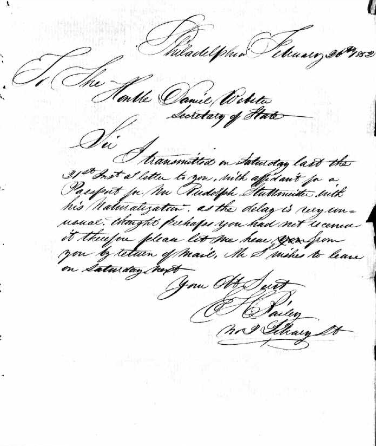
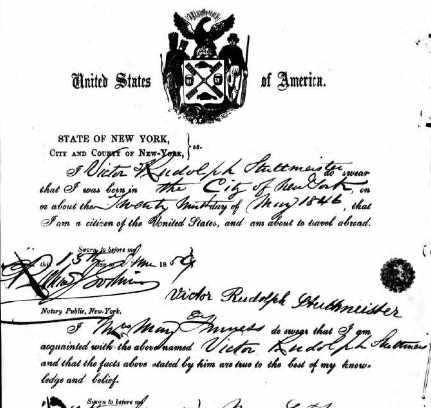
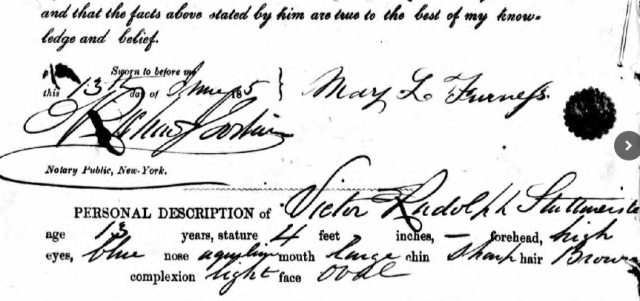
My Stuttmeister ancestors came to New York and lived on Liberty Street where the Trade Towers once stood. I now suspect they were Ministers. They came to Chili, also. Thirteen year old Victor Rudolph Stuttmeister applied for a passport when he was thirteen years of age. He had a high forehead, an aquiline nose, a large mouth, a sharp chin, brown hair, and blue eyes. Rudolph had six children and was a New York City Physician. Phillip, Mary, and Lizzie are born in New York City. Bertha is the first child to be married in California. This family were pioneers in San Francisco, Belmont, and Lagunitas in Marine County where Beryl and Leonard Buck moved after living in Oakland for many years.
Jon Presco
6 1006 __21 Stuttmeister Rudolph 57 M W Physician 12,000 6,000 Germany X X
7 1006 __21 Stuttmeister Matilda 42 F W Keeping House New York X X
8 1006 __21 Stuttmeister Victor 24 M W New York X X
9 1006 __21 Stuttmeister Bertha 10 F W California X X
10 1006 __21 Stuttmeister Willie 8 M W California X X
11 1006 __21 Stuttmeister Alice 3 F W California X
12 1006 __21 Stuttmeister Mary 16 F W New York X
13 1006 __21 Stuttmeister Lizzie 14 F W New York X
14 1006 __21 Stuttmeister Phillip 18 M W New York
Name:Rudolph Stuttmeister Arrival Date:12 Jul 1843 Age:27Gender:M (Male)Port of Arrival: New York Port of Departure: Hamburg, Germany Place of Origin: Deutschland Ship: Stephani
Rudolph or Rudolf (French: Rodolphe, Italian, Portuguese and Spanish: Rodolfo) or Rodolphe is a male first name, and, less commonly, a surname. It is a Germanic name deriving from two stems: Rod or Hrōð, meaning “fame”, and olf meaning “wolf” (see also Hroðulf; cf. Adolf).
1888: From the Daily Alta, an article on the marriage of Dr. William O.
Stuttmeister and Augusta D. Janke.
Daily Alta California, Volume 42, Number 14175, 24 June 1888
STUTTMEISTER-JANKE.
One of the most enjoyable weddings of the past week took place at
Belmont, Wednesday morning last, the contracting parties being Miss
Augusta Janke, daughter of Mr. and Mrs. August Janke of Belmont,
and Dr. Wm. Stuttmeister of San Francisco. The house was
handsomely decorated with a rich profusion of ferns and flowers, and
at the appointed hour was filled with the relatives and intimate friends
of the contracting parties. At 11 o’clock the wedding march was played
and the bridal party entered the parlor. The bride was attended by Miss
Alice Stuttmeister, a sister of the groom, and Miss Minnie Janke, a
sister of the bride, as bridesmaids, and Dr. Muldownado and Wm.
Janke, a cousin of the bride, were groomsmen. The Rev. A. L. Brewer
of San Mateo performed the beautiful and impressive ceremony under
an arch composed of flowers and greens very prettily arranged, after
which the guests pressed forward and offered their congratulations.
The bride was attired in a very pretty and becoming costume of the
crushed strawberry shade, and wore a corsage bouquet of orange
blossoms. She carried a handsome bouquet of white flowers. After the
guests had paid their compliments the bride and groom led the way to
the dining-room, where the wedding dinner was served and the health
of the newly married pair was pledged. The feast over, the guests
joined in the dance, and the hours sped right merrily, interspersed with
music singing and recitations, until the bride and groom took their
departure amid a shower of rice and good wishes. Many beautiful
presents were received. Dr. and Mrs. Stuttmeister left Thursday
morning for Santa Cruz and Monterey, where they will spend the
honeymoon. On their return they will make their home in Belmont.
1911: Dr. Willian O. Stuttmeister was practicing dentistry in Redwood
City, CA. (Reference: University of California, Directory of Graduates,
1864-1910, page 133).
Records from Tombstones in Laurel Hill Cemetery, 1853-1927 – Janke
– Stuttmeister
Mina Maria Janke, daughter of William A, & Cornelia Janke, born
February 2, 1869, died March 1902.
William August Janke, native of Hamburg, Germany, born Dec. 25,
1642, died Nov. 22, 1902, son of Carl August & Dorette Catherine
Janke.
Frederick William R. Stuttmeister, native of Berlin, Germany, born
1612, died January 29, 1877.
Mrs. Matilda Stuttmeister, wife of Frederick W.R. Stuttmeister, born
1829, died March 17, 1875, native of New York.
Victor Rudolph Stuttmeister, son of Frederick W.R. & Matilda
Stuttmeister, born May 29, 1846, died Jan. 19, 1893, native of New
York.
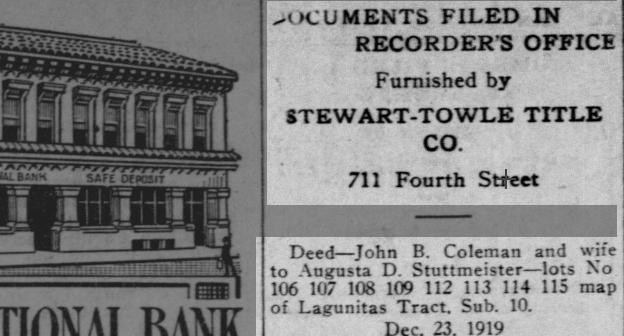

| DOCUMENTS FILED IN RECORDER’S OFFICE Furnished by STEWART-TOWLE TITLE CO. 711 Fourth StreetDeed—John B. Coleman and wife to Augusta D. Stuttmeister —lots No. 106 107 108 109 112 113 114 115 map of Lagunitas Tract, |
http://www.historicunioncemetery.com/Person.php?person=Janke%2C+Dorette+Catherine
http://www.historicunioncemetery.com/archives/Stories/CarlandDorotheaJanke.pdf
Carl and Dorothea Janke
By: John Edmonds
Carl August Janke was a native of Hamburg, Germany, as was Dorothea; they left Germany in late 1848 and sailed to San Francisco arriving in 1860 following a brief trip to the gold country. They spent little time in San Francisco, finding the climate more to their liking in Belmont, San Mateo County.
Carl built the well known Belmont Picnic Grounds in the vicinity of today’s Twin Pines Park. The grounds became well known in San Francisco and when the railroad became well established in the mid 1860s the well intentioned and sometimes the not so well intentioned citizens of the great city took the train to Belmont. Good citizens of San Mateo County also enjoyed the good imported German beer and the dancing to the German band.
One of the problems for the San Francisco and San Jose Railroad that serviced Belmont and the San Mateo County Peninsula was that the trip back to the city often resulted in a great number of broken windows. The railroad solved that problem by increasing the toll for the trip to Belmont to cover the cost of replacing the windows. Thus everybody had to pay for the misdeeds a few.
On one occasion one of the less than gentlemanly males from San Francisco, thinking himself a playboy, took affection to a teen age young lady from Belmont. After a dance or two he took her for a walk in the nearby field and raped her.
The Belmont Picnic Grounds
The young lady reported the incident to her mother who, in turn, reported it to the Sheriff’s Office. The rapist, of course, disappeared in the crowed but the Deputy along with others took the young lady, one to the front of the train and the other to the back of the train and they worked their way toward each other until they located the suspect who was arrested and taken to the Jail in Redwood City.
A trial was held in the courtroom in Redwood City and during the process of that trial the suspect rose and walked forward to testify. The father of the victim rose and fired two shots into the suspect killing him instantly. The newspapers were blatant about the suspect got what he deserved and the father pleaded he went crazy after the rape. Several people testified to that fact. The father, having regained his sanity while waiting for his day in court, walked out of court a free man. This seems to fully agree with the newspapers, it’s nice to see justice served.
This is the only murder in a San Mateo County courtroom.
American sailors were no strangers to Valparaiso’s harbor, either. One monument at the Dissidents Cemetery honors a battle of the far-flung War of 1812, America’s “Second War of Independence.” On March 24, 1814, the frigate USS Essex, under command of Admiral David Porter, went into battle against the British vessels HMS Phoebe and HMS Cherub just offshore. Porter lost the battle and 58 American sailors died. (One sailor aboard the Essex was the future Civil War admiral David Farragut, famous for later coining the phrase, “Damn the torpedoes, full speed ahead!” during the siege of Mobile, Alabama, in 1864.)
Valparaiso also holds a minor spot in American history and literature: Writer Herman Melville, whose seafaring days in the South Pacific took him here, opens his anti-slavery novel “Benito Cereno” off the Chilean coast.
Cementerio Disidentes (The Cemetery of Dissidents) is the final resting place for hundreds of European and North American Protestants, freethinkers, and other non-Catholics who died in this “skinny country,” and their descendents, who still call Chile home.
Today, we don’t tend to think of Latin America as an immigration hub. But in the 1800s, Chile, Argentina and Brazil attracted many new settlers from abroad, including quite a few whose native tongue wasn’t Spanish or Portuguese. Argentina and Chile, in fact, are mostly immigrant nations.
Liberty Street is a street in New York City that stretches east-west from the middle of Lower Manhattan almost to the East River. It borders such sites as One Chase Manhattan Plaza, the Federal Reserve Bank of New York, One Liberty Plaza, Liberty Plaza Park, the World Trade Center site, the World Financial Center, Gateway Plaza, Liberty Park, and the North Cove marina. A FDNY Firehouse, Engine Co. # 10 and Ladder Co. # 10, is located at 124 Liberty Street, directly across from Ground Zero.[1]
History[edit]
Before the American Revolution, Liberty Street was known as Crown Street, but afterwards the name was changed. The present Liberty Street and the present Maiden Lane between Liberty and Pearl Streets. The name was changed to Liberty Street in 1793, with the part east of the junction being added to Maiden Lane.[2]
.jpg)
Central Railroad of New Jersey’s Liberty Street Ferry Terminal in New York City, ca. 1900
Between the 1860s and the 1960s the Central Railroad of New Jersey‘s main ferry ran from the foot of the street on the Hudson River to Communipaw Terminal in Jersey City.
In the late 1960s, all buildings that ran along the north side of the street from Church Street to West Street were demolished to make way for the World Trade Center.
The western portion of the street was extensively damaged by the September 11 attacks. This section of the road, adjacent to the South Tower of the World Trade Center, was crushed by debris and blanketed with dust and smoke when the building collapsed at 9:59 A.M. Rebuilding efforts continue near the World Trade Center site.
The Deutsche Bank Building, located at 130 Liberty Street, sustained heavy damage that morning and was later demolished. Other buildings on Liberty Street were also ravaged by the events. The Burger King on the corner was used as a temporary NYPD headquarters in the days following the attacks.
Tesla’s Liberty Street Laboratory
Martin Hill Ortiz 6:10 AM 4 comments
In 1887, Nikola Tesla rented his first laboratory. This is described in Carlson’s biography:
Tesla’s first laboratory was located in New York’s financial district. The laboratory was at 89 Liberty Street, just around the corner from the offices of Mutual Union at 120 Broadway. On the ground floor was the Globe Stationery & Printing Company, and Tesla occupied a room upstairs. The lab was furnished with only a workbench, a stove, and a dynamo manufactured by Edward Weston.
From: Carlson, W. Bernard. Tesla: Inventor of the Electrical Age (p. 81). Princeton University Press.
This was in the middle of the north side of Liberty Street between Broadway and Church. (The street is named Church north of Liberty, and Trinity to the south). Across the street from 89 Liberty, Temple Street ran two blocks south to Trinity Church. With Tesla’s obsession with the number three and with his father a priest, perhaps Trinity, Church and Temple were significant to him. The building with his laboratory is highlighted below in orange in an 1891 Atlas map.

From: Plate 2. Atlas of the City of New York, Manhattan Island. G.W. Bromley and Co., Philadelphia, 1891.
His stay here continued through the time when he invented the A/C generator and motor, although much of the refinement of these inventions were done in Pittsburgh. He moved to his Grand Street laboratory in August of 1889.
Globe Stationery continued at this address from 1876 until 1897 when it moved to 25 John Street. (Modern Stationer and Book-Seller, April 25, 1921. page 44, Google Books).
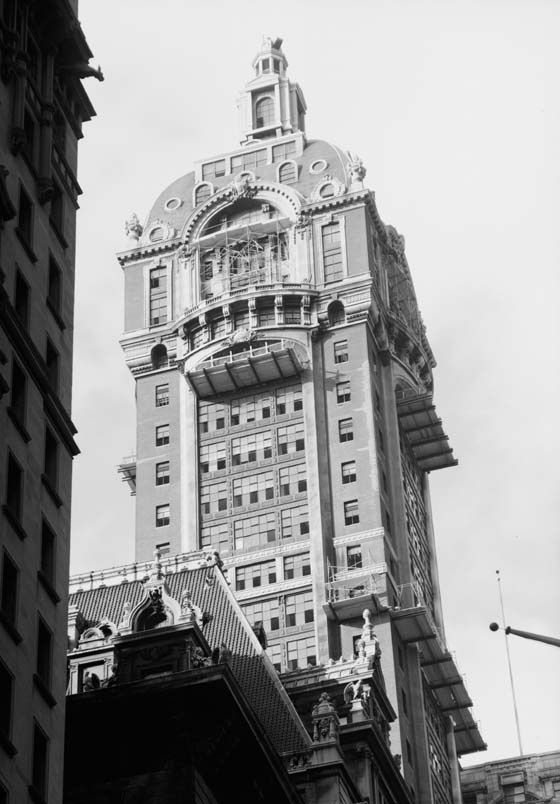
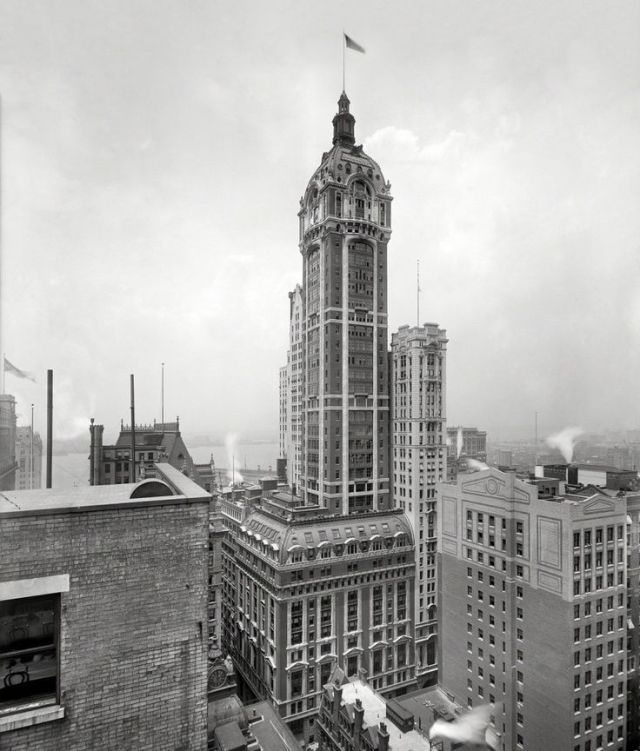
The Singer Building was constructed on this site. When it was completed in 1908, it was briefly the tallest building in the world. It was torn down in 1968, at the time the tallest building ever demolished. It was replaced by 1 Liberty Center. The site of Tesla’s laboratory is one-half block east of the southeastern corner of what would become the grounds of the World Trade Center.

From: Plate 2. Atlas of the City of New York, Manhattan Island. G.W. Bromley and Co., Philadelphia, 1911. This map clearly shows 89 Liberty Street as part of the southwest corner of the Singer Building.
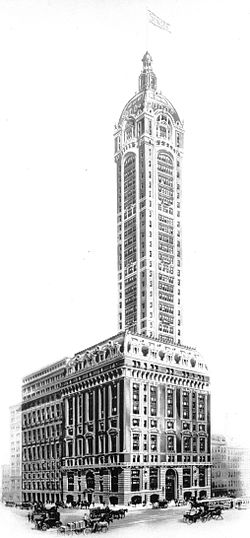
The Singer Building. Photo from Wikipedia. Tesla’s laboratory at 89 Liberty Street was situated at what became the southwestern corner (leftmost in the above picture).
http://www.dw.com/en/colonia-film-broaches-atrocities-of-german-run-sect-in-chile/a-18712816
Although Paul Schäfer was the founder of Colonia Dignidad, an isolated settlement in Chile 400 kilometers south of Santiago, he wasn’t the only one who made its creation possible. Established in 1961 by German emigrants with strong Nazi ties, the enclave, which became known for its widespread cases of torture and child abuse, had several supporters in Germany and Chile.
In his book “Colonia Dignidad” (1998), the journalist Gero Gemballa wrote that the media’s portrayal of the settlement remained surprisingly factual – practically no exaggerations or creepy legends were added to the descriptions.
https://en.wikipedia.org/wiki/Paul_Sch%C3%A4ferBrazilEvangelical Church of the Lutheran Confession in BrazilAn ELCA Global Mission description, since the official site for the Igreja Evangélica de Confissão Luterana no Brasil is in Portuguese. The largest South American Lutheran Church with about 716,000 members, IECLB’s roots were first planted with the arrival of German immgrants in 1824. Congregations developed in Southern Brazil and were supported by German Lutheran Churches. The first Synods were organized in 1886, still relating to the Mother Church in Germany. After World War 2 the Synods began to work more with each other than the church in Germany, and the independent IECLB was formally established in 1968.The Evangelical Lutheran Church in BrazilThe English page of the Igreja Evangélica Luterana do Brasil, which was established in 1904 through the efforts of LCMS missionary activity that started in 1900. For another English site, check this personal site on the IELB.ChileEvangelical Lutheran Church in ChileAn ELCA Global Mission description, with the official site for the Iglesia Evangélica Luterana en Chile being in Spanish. The IELCH traces its beginnings to the 1860s, when the first German Lutherans immigrated to Chile. However the formation of non-Roman Catholic churches was not permitted until 1925, after which Lutheran congregations organized an association that later became the IEHLC. In the 1960s the church began missionary work in Spanish. The church underwent schism during the Pinochet regime, resulting in the formation of a separate Lutheran Church in Chile (Iglesia Luterana en Chile). Both churches are part of the LWF and have formed the Lutheran Church Council in Chile with a goal of unification in 2014.
http://www.pastorzip.org/internationallinx.html
http://www.pastorzip.org/internationallinx.html
http://www.atlasobscura.com/places/the-dissidents-cemetery
STUTTMEISTER
(07) 179 Johanna Marie Sophie Charlotte Stuttmeister, evang.
g am 19.10.1805 in Nienburg(r)
s am 16.4.1871 in Nienburg(r)
∞ Gottfried Ludwig Höppner, g am 8.9.1802 in Nienburg(r), s am 10.7.1882 ebd.(r), 18 Uhr, b am 13.7.1882 ebd., evang. (siehe 178 HÖPPNER I) H am 22.11.1829 in Nienburg(r)
Tochter : 1) Sophie Charlotte Höppner, g am 18.6.1831 in Nienburg(r), t am 27.6.1831 ebd., s nach dem 2.7.1852, evang. (siehe 89 HÖPPNER I)
(08) 358 Johann Gottfried Christoph Stuttmeister, evang.
g am 23.12.1768 in Nienburg(r)
s nach dem 22.11.1829
───────────────────────── Ausbildungen und Berufe ──────────────────────────
Schiffer
∞ Christine Elisabeth Erdmuthe Adler, g am 15.1.1771 in Nienburg(r), s nach dem 22.11.1829, evang. (siehe 359 ADLER) H vor dem 19.10.1805
Tochter : 1) Johanna Marie Sophie Charlotte Stuttmeister, g am 19.10.1805 in Nienburg(r), s am 16.4.1871 ebd.(r), evang. (siehe 179 STUTTMEISTER)
tps://rosamondpress.com/2011/09/19/german-forty-eighters-in-chile/
http://www.genealog.cl/Alemanes/S.html stutt
Date: Wed, 12 May 1999 15:31:03 -0800
William Olin Stuttmeister was born in 1866, and I assumed it was from
Charlottenburg, Germany. However this is only a suposition, as his
death certificate does not indicate he emigrated from Germany. He
had a brother, and four sisters. One sister was my grandmother,
Alice L. Stuttmeister Broderick. Her sister, Bertha, married a
Meyer. They all lived in
Oakland, California, USA. Dr. William Olin Stuttmeister, I believe
the
second eldest, became a dentist and practiced in Redwood City,
Calif., but
lived in San Francisco, California. He had a quarrel with the
sisters and
they never reconciled. Thus the lack of any substantial family
information.
Through childhood conversations with my maternal grandmother – she
related
that the two other sisters, names unknown, emigrated to South Africa
where
on married a man who had an osterich farm(feathers fashionable at
that
time) The other married a man with either a gold or diamond mine.
I
say
diamond, because prior to WW1 they came to visit the family, and they
brought my grandmother’s wedding ring, a very large yellow diamond.
Then
of course the war came, and no one ever heard from them again, or
perhaps
they did, but I was not privy to this adult knowlege – thus they are
lost,
I suppose forever. I thought just perhaps some of this history may
ring a
‘bell’ with someone out there.
Their father was a medical doctor in Berlin, Brandenburg – Dr.
Rudolph
Stuttmeister, but I have absolutely no information on him. My half
brother
claims both parents died young, and left one of the sisters, Berthe,
to
raise the other children – my grandmother, Alice, only 10 years old.
However, none of this seems quite accurate. I remember this paternal
grandmother Alice spoke broken English which indicats to me they
emigrated,
and she was not born in the US, but all death certificates seem to
indicate
they were born in the US, but I think there is a mistake here. It
is
all
very confusing delving after the truth when this family evidently
wanted to
hide their past and confuse us all.
Daryl Bulkley
Port Townsend, Washington
USA
Date: Sun, 14 Nov 1999 11:09:12 -0800
To Dave Herring, and Listers,
Thank you very much for the information on Herman Stuttmeister. It
is
interesting that my information differed a little from what you sent
me, as
along with Herman Stuttmeister there was a HEDWIGA, age 27 from
Bavaria,
Sipiory, which I think is the incorrect spelling of the town, and if
anyone
can correct this I would appreciate it.
I thought that Lemberg was in Switzerland, but there is a Lemberg in
Germany I believe.
Would anyone know where it is in proximation to the suburb of
Charlottenburg which is now incorporated in the city of Berlin?
Quite right, they came as tourists. I wonder what attracted Germans
to
America at this time? And did they return to Germany? If so, is
there a
way of checking?
Daryl
Dear N.Y. Listers, John Dornheim very kindly emailed this
information
on the ‘Prussia’ list, but I want to write to the Church concerning
their marriage records, and if I can obtain a marriage certificate,
1844. I discovered that F.W. Rudolph Stuttmeister married Mathilde
Oltman in this church. The church was formerely known as ‘The German
Lutheran Church’ as so many of the German immigrants attended this
church. Is there some knowlegeable person who could give me a full
address, zip code and all? >There is no Lutheran church in any of
the
five boroughs of NYC that goes >by “Evangelical Lutheran Church” of
which I am aware. The word >Evangelical is an adjective which many
Lutheran congregations include in >their name. It means Gospel-
centered. >Organized in the mid 1660’s St. Matthew is the oldest
(perhaps second >oldest) Lutheran church in NYC. It is in the
uppermost part of Manhattan >near 207th St. > >John Dornheim I did
write to one church which I found in a N.Y. telephone book, but I
think that it is not the old church. ALSO, I would like to know what
medical schools were available in New York in the middle 1800. I do
not know whether Dr. W. F. Stuttmeister became a doctor in New York,
or in Berlin, Germany. He was twenty-eight years when he married, so
could have studied medicine in New York. Does anyone know how I
would
go about unearthing this bit???? Many thanks to those IN THE KNOW!
Daryl Pacific Northwest
Is there any way, other than asking someone, I can find out whether
there were city directories in the middle 1800’s? Looking to see
when
my great grandfather came from Berlin to New York, and how long he
stayed. His name was W.F. Rudolph Stuttmeister, may have had
the ‘von’ in front, and may have had Dr. attached too, which brings
me to the question, what medical schools were in Manhattan or nearby
in the middle 1800’s. I know he was married in 1844 in Manhattan.
| Name: | Rudolph Stuttmeister |
|---|---|
| Arrival Date: | 12 Jul 1843 |
| Age: | 27 |
| Gender: | M (Male) |
| Port of Arrival: | New York |
| Port of Departure: | Hamburg, Germany |
| Place of Origin: | Deutschland |
| Ship: | Stephani |
| Family Identification: | 30119947 |
| Microfilm Serial Number: | M237 |
| Microfilm Roll Number: | 52 |
Victor Stuttmeister
in the Hamburg Passenger Lists, 1850-1934
- Add alternate information
- Report issue
Indicates required field
Please choose a reason for your alternate.
Provide alternate for Victor Stuttmeister
Choose…
Name
Gender
Age
Ethnicity/Nationality
Marital Status
Relationship
Religion
Birth Date
Birth place
Residence
Departure Date
Departure Port
Destination
Arrival Port
Reason
Choose…
Transcription error
Incorrect in image
Nick Name
Name Change
Variation
Maiden Name
Information not transcribed
Add an update for {0}
Explain or Source your update (optional) Explain or Source your update (optional)
Submit Alternate Cancel
Your alternate has been saved
Apply Close
This is what other Ancestry members have added to this record. If you have something to add, click on Add your own and tell us what you know.
| 0 Contributions |
|---|
Add your own Close
| Name: | Victor Stuttmeister |
|---|---|
| Gender: | männlich (Male) |
| Departure Age: | 15 |
| Occupation: | Student |
| Birth Date: | abt 1846 |
| Residence: | New York, USA |
| Departure Date: | 1 Jun 1861 |
| Port of Departure: | Hamburg |
| Port of Arrival: | New York |
| Ship Name: | Bavaria |
| Captain: | Meier |
| Shipping Clerk: | Aug. Bolten Wm. Miller`s Nachfolger |
| Shipping line: | Hamburg-Amerikanische Packetfahrt-Actien-Gesellschaft |
| Ship Type: | Dampfschiff |
| Ship Flag: | Deutschland |
| Accommodation: | Zweite Kajüte |
| Volume: | 373-7 I, VIII A 1 Band 015 |
| Name: | Rud. Stuttmeister |
|---|---|
| Arrival Year: | 1852 |
| Arrival Place: | Chile |
| Source Publication Code: | 1192.4 |
| Primary Immigrant: | Stuttmeister, Rud |
| Annotation: | “German Immigrants to Chile, 1853-1856.” Date and port of arrival. |
| Source Bibliography: | CLASEN, ARMIN. “Deutsche Auswanderung nach Chile, 1853-1856.” In Zeitschrift fuer Niedersaechsische Familienkunde, 33. Jahrgang, Heft 4 (Juli 1958), pp. 86-101. |
| Page: | 55 |
Hugo Stuttmeister
in the Hamburg Passenger Lists, 1850-1934
- Add alternate information
- Report issue
Indicates required field
Please choose a reason for your alternate.
Provide alternate for Hugo Stuttmeister
Choose…
Name
Gender
Age
Ethnicity/Nationality
Marital Status
Relationship
Religion
Birth Date
Birth place
Residence
Departure Date
Departure Port
Destination
Arrival Port
Reason
Choose…
Transcription error
Incorrect in image
Nick Name
Name Change
Variation
Maiden Name
Information not transcribed
Add an update for {0}
Explain or Source your update (optional) Explain or Source your update (optional)
Submit Alternate Cancel
Your alternate has been saved
Apply Close
This is what other Ancestry members have added to this record. If you have something to add, click on Add your own and tell us what you know.
| 0 Contributions |
|---|
Add your own Close
| Name: | Hugo Stuttmeister |
|---|---|
| Gender: | männlich (Male) |
| Departure Age: | 31 |
| Occupation: | Kaufmann |
| Birth Date: | abt 1861 |
| Residence: | Berlin, Preußen (Germany) |
| Departure Date: | 21 Jul 1892 |
| Port of Departure: | Hamburg |
| Destination: | Rio de Janeiro |
| Port of Arrival: | Lissabon; Brasilien (Brazil) |
| Ship Name: | Tijuca |
| Captain: | Langerhanß |
| Shipping Clerk: | Hamburg-Amerikanische Packetfahrt-Actien-Gesellschaft |
| Shipping line: | Hamburg-Südamerikanische Dampfschifffahrt-Gesellschaft |
| Ship Type: | Dampfschiff |
| Ship Flag: | Deutschland |
| Accommodation: | ohne Angabe |
| Volume: | 373-7 I, VIII A 1 Band 081 A |
| Name: | Hugo Stuttmeister |
|---|---|
| Gender: | männlich (Male) |
| Departure Age: | 48 |
| Marital Status: | ledig (Single) |
| Occupation: | Kaufmann |
| Birth Date: | abt 1861 |
| Residence: | Berlin |
| Departure Date: | 7 Mrz 1909 (7 Mar 1909) |
| Port of Departure: | Hamburg |
| Destination: | Madeira |
| Port of Arrival: | Boulogne; Leixoes; Lissabon; Madeira; Nordbrasilien |
| Ship Name: | La Plata |
| Shipping Clerk: | Hamburg-Amerika Linie (Hamburg-Amerikanische Packetfahrt-Actien-Gesellschaft) |
| Shipping line: | Hamburg-Amerika Linie (Hamburg-Amerikanische Packetfahrt-Actien-Gesellschaft) |
| Ship Type: | Dampfschiff, kein Auswandererschiff |
| Ship Flag: | Deutschland |
| Emigration: | nein |
| Accommodation: | 1. Klasse |
| Volume: | 373-7 I, VIII A 1 Band 208 |
| Household Members: |
Share this:
6/26/2025
I Re-found Order of Teutonic Knights

On this day, June 26, 2025, I john Presco reborn the Order of Teutonic Knights, and the Brotherhood of the Sword, that will include Sisterhood of the Sword.
Because the President of the United States chooses to be the President of half of this Democracy, then on this day I bind Democrats to the tenants of NATO, of which Democrat Taxpayers have supported since its Founding. Because President Trump failed again to stand proud against Putin the Terrible, We The Investors in World Peace have a right to protect our investment.
What I suggest is, Estonia and NATO build a Universal Military College so American students – driven out by the Trumpire Purge – and complete their degree, get a diploma, and serve in the Estonia Military for two years.
John Presco
Thanks to our membership in NATO and the European Union, the security of Estonia is better secured than ever before. NATO and the EU help ensure the stability of the international position of Estonia and its integration into the democratic space of values. NATO membership ensures credible military deterrence and collective defence for Estonia. Like other NATO allies, Estonia focuses on the development of mobile and sustainable armed forces and increasing participation in international peace operations.
The Livonian Brothers of the Sword (Latin: Fratres militiæ Christi Livoniae; German: Schwertbrüderorden) was a Catholic military order established in 1202 during the Livonian Crusade by Albert, the third bishop of Riga[1][2] (or possibly by Theoderich von Treydend). Pope Innocent III sanctioned the establishment in 1204 for the second time. The membership of the crusading order comprised warrior monks, mostly from northern Germany, who fought Baltic and Finnic pagans in the area of modern-day Estonia, Latvia and Lithuania. Alternative names of the Order include Christ Knights, Swordbrothers, Sword Brethren, Order of the Brothers of the Sword,[2] and The Militia of Christ of Livonia. The seal reads: +MAGISTRI ETFRM (et fratrum) MILICIE CRI (Christi) DE LIVONIA.
The Teutonic Order is a Catholic religious institution founded as a military society c. 1190 in Acre, Kingdom of Jerusalem. The Order of Brothers of the German House of Saint Mary in Jerusalem was formed to aid Christians on their pilgrimages to the Holy Land and to establish hospitals. Its members have commonly been known as the Teutonic Knights, having historically served as a crusading military order for supporting Catholic rule in the Holy Land and the Northern Crusades during the Middle Ages, as well as supplying military protection for Catholics in Eastern Europe.
Purely religious since 1810, the Teutonic Order still confers limited honorary knighthoods.[2] The Bailiwick of Utrecht of the Teutonic Order, a Protestant chivalric order, is descended from the same medieval military order and also continues to award knighthoods and perform charitable work.[3]
The Lutheran Teutonic Knights
Posted on November 26, 2021 by Royal Rosamond Press
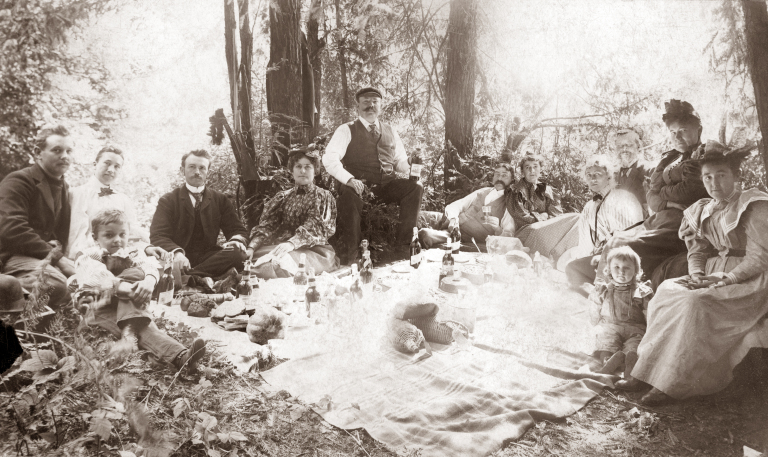
My Stuttmesiter ancestors were members of the Lutheran Church in Berlin, and were Teutonic Knights. I wondered how that could be – until seven minutes ago! On this day I raise the Stuttmeisters from the dead! Are we kin to Albert?
VRR
Albert was the first German noble to support Luther’s ideas[citation needed] and in 1544 founded the University of Königsberg, the Albertina, as a rival to the Roman Catholic Krakow Academy. It was the second Lutheran university in the German states, after the University of Marburg.
Albert, Duke of Prussia – Wikipedia
Will Estonia Save American Democracy?
Posted on February 2, 2023 by Royal Rosamond Press

“TALLINN, Estonia — The United States will deploy additional infantry troops to the Baltic country of Estonia “in the coming weeks” to strengthen defenses on NATO’s eastern flank, Estonian defense officials said Thursday.”.
“Congressional Democrats are betting that a coordinated offense is their best defense against the coming Republican investigative onslaught.
Democrats on Capitol Hill, at the White House, in agencies and in outside political groups are gearing up to do battle with the Republican committee chairs probing all corners of the Biden administration as well as the Biden family’s financial dealings.’
Estonia and the United States are United Members of NATO. They took an oath to come to the defense of each other. Because We The People and our President are engaged in killing and stopping Russian troops that threaten many NATO Nations – We need to ask several….WHAT IF?
- What if the Insurectionists had been successful, and Donald Trump emerged on the steps of our Capital and declared himself President. Would our NATO allies support him – even though he declares he is on the side of Putin?
- What if the Republican Party DOES NOT raise the Debt Ceiling?. Will the President of the United State dismiss, and IGNORE THE VOTES of Republican Election Deniers – and raise the debt cieling with an Executive Order for the sake of our troops – that are in harms way?
- What if the Tea Party Traitors, The Oath Keepers, and other pseudo-religious militias, had taken many elected Democratic leaders HOSTAGE, and paraded them in cages before Emperor Von Trump? Would Estonia send a warship full of Estonian Commandos – to free their rightful allies?
- What if most NATO Nations concluded what I conclude, that the Republican Party has been taken over by neo-Confederate Lunatics Losers who just want – the South to rise again – in the name of Jesus and John Darby? Who in the hell is John Darby?
Many Americans claim the Republican Party – IS FULL OF RACISTS! What do the fifty Nation Members of NATO think about that? They are thinking about it – BIG TIME! The ConGelicals claim the taking down of Confederate statues is a great threat to them – and Jesus! What does Prime Minister Kaja Kallas think about this – as she stares at Putin and Kirills big guns across the border? How real is this compared to Little Boy Gaetz going after the Bidens – and all Democrats? Does she wonder why Republicans can’t see – who the real enemy is?
5. What if Robert E. Lee was born in Germany in 1902, and became Nazi Germany’s greatest general? Would Hitler have won the war?
I am kin to General Lee. We are kin to the Reuss family, and thus…Hochmeister Heinrich Reuß von Plauen….who has a high forehead like I do. My Stuttmeisters grandfathers were allegedly Teutonic Knights. We do not know what their reeal name, is. There is a Stuttmeister province in Estonia. We dealt in furs – that were brought from America?
6. What if Miriam Starfish Christling fell in love with Prime Minister Kaja Kallas, and wanted to pledge fealty to her. You see, she has Praetorian Guard blood in her veins. She was born to serve and protect leaders of nations……Royalty – even Emperors! Does Trump have a dream of being a Roman Emperor? Remember him, the Greatest Traitor We have ever known?
This is what you call a brilliant flanking maneuver. I have captured their Racist Headquarters. Most of the Bible – is fiction! The enemies of the President of United States claims the Bible and God – is on THEIR SIDE! Why am I the only one who challenges their claim, and their claim they are – Great Representatives of the White Race? Who do they go on their side to prove this? The White Confederates – LOST! The White Nazis – LOST! White Trump and his Devotees – LOST! The Estonian Government knows – THEY ARE LOSERS! So does Putin – WHO IS LOSING!
I was one of the first Anti-War Hippies. I was born to be a Prussian General. Today, I am like a Prussian General, who has come to serve my President, Joseph Biden. I might be the Greatest War Propagandist – that ever lived!
“The pen is mighttier than the sword!”
Now….who do the Republicans got? John Darby? Who the hell is he!!
I intend to win World War Three!
How do you like them apples?
6. What if Jesus was a Moabite General who began a revolt in Judea against Rome – AND LOST?
7. What if the real Knight Templars discovered this was the case on the Mount of Olives?
I have a lot of alleged Knight Templar friends on Facebook. Did Jesus believe in Reincarnation?
8. What if Trump and the ConGelicals made a secret alliance with Putin, and they are going after Hunter Biden so they can end the U.S. support of Ukraine and NATO?
Gideon the Nazarite

Reuß von Plauen joined the Teutonic Order at a young age. He was first a brother in a monastery in Germany. Reuß von Plauen arrived in Prussia in the 1420s when he became the Vogt of Dirschau. In 1433 he became the Komtur of Balga and in 1440 the Vogt of Natangia. From 1441, Reuß von Plauen held the position of the Grand Hospitaller and the Komtur of Elbing (Elbląg). As the Grand Master’s nephew, his influence in the Order grew and he advanced quickly. He took control of the Order’s army during the Thirteen Years’ War and became famous for destroying the Polish army in the Battle of Konitz. After the Second Peace of Thorn in 1466, Reuß von Plauen became the Komtur of Preußisch Holland.
Kaja Kallas (Estonian: [ˈkɑjɑ ˈkɑlːɑs]; born 18 June 1977) is an Estonian politician who has been serving as the prime minister of Estonia since 2021. The leader of the Reform Party since 2018, she was a Member of Parliament from 2019 to 2021, and previously between 2011 and 2014. Kallas served as a Member of the European Parliament between 2014 and 2018, representing the Alliance of Liberals and Democrats for Europe. Prior to her election to Parliament, she was an attorney specialising in European and Estonian competition law.
Estonia calls on NATO for stronger defence of its Baltic members
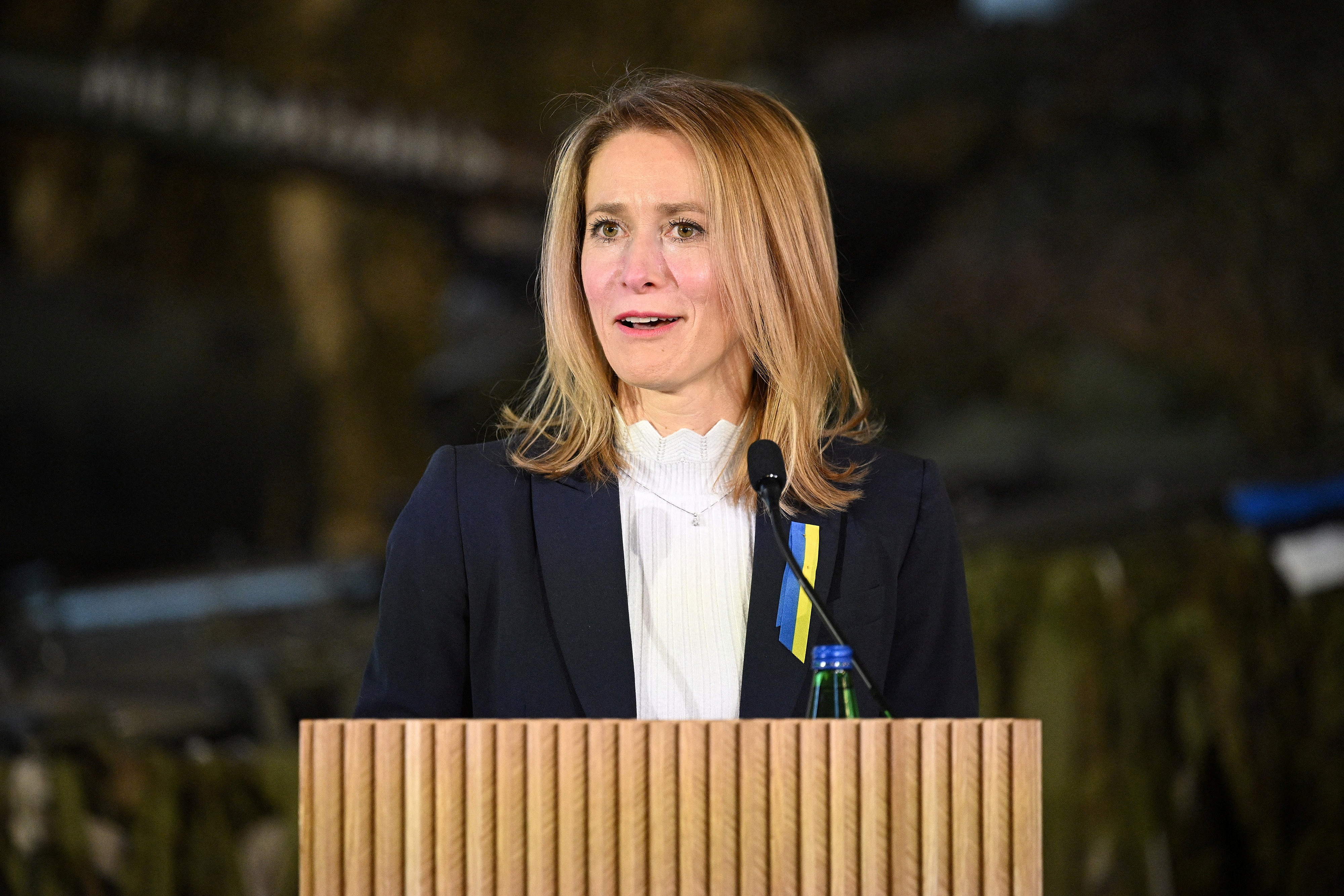
VILNIUS, March 1 (Reuters) – NATO must improve its defences of the Baltic nations, the most vulnerable part of the military alliance, Estonian Prime Minister Kaja Kallas told a news conference on Tuesday.
“This includes, on land, establishing a permanent, increased forward presence. In the air, establishing a credible defence posture. And a sense of urgency in developing NATO’s upgraded defence plan,” Kallas said after meeting with British Prime Minister Boris Johnson and NATO chief Jens Stoltenberg.
The three met at Estonia’s Tapa Military Base as Russia warned Kyiv residents to flee their homes on Tuesday and rained rockets down on Kharkiv. read more
Register for free to Reuters and know the full story
Register now
Kallas pledged her country will “continue to provide significant military, financial and humanitarian aid” to Ukraine.
NATO has established Enhanced Forward Presence battlegroups in each of the Baltic states of Latvia, Estonia and Lithuania in 2017, after Russia annexed the Crimea peninsula from Ukraine.

As part of a new largest aid package to Ukraine, Estonia has decided to hand over all its 155-mm howitzers.
This was reported by the General Staff of the Armed Forces with reference to the message of the Embassy of Estonia in Ukraine.
“We are giving all our 155-mm howitzers to Ukraine. And we want to create a precedent in this way so that other countries will not have any excuses why they cannot provide Ukraine with the necessary weapons to win the war,” emphasized Estonian ambassador to Ukraine Kaimo Kuusk.
Currently, the government of Estonia has approved the largest package of military aid to Ukraine to date, with a total cost of EUR 113 million:
- dozens of 155-mm FH-70 and 122-mm D-30 howitzers
- thousands of 155 mm artillery shells
- hundreds of M2 Karl-Gustaf anti-tank grenade launchers with ammunition
- means of supporting artillery units
Thus, total military aid to Ukraine is more than 1% of Estonia’s GDP.
It is noted that Estonia will continue to provide Ukraine with basic and specialized training for soldiers of the AFU.
The Estonian Embassy in Ukraine also thanked allies who joined the Tallinn Declaration #TallinnPledge and pledged to collectively push for an unprecedented set of grants, including main battle tanks, heavy artillery, air defense equipment, ammunition and infantry fighting vehicles for defense of Ukraine.
BRUSSELS — Ukrainian officials have a long list of requests for their European allies this week: fighter jets and other heavy weaponry to fend off a looming Russian offensive, E.U. membership within a few years, legal mechanisms to hold Russians to account, and a plan to use seized Russian assets for reconstruction.
Baltic Noble Corporations of Courland, Livonia, Estonia, and Oesel (Ösel) were medieval fiefdoms formed by German nobles in the 13th century under vassalage to the Teutonic Knights and Denmark in modern Latvia and Estonia. The territories continued to have semi-autonomous status from 16th to early 20th century under Swedish and Russian rule.
The four knighthoods are united in the Verband der Baltischen Ritterschaften. e.V. ( Association of Baltic Noble Corporations ) [1]
The Teutonic Knights entered the area of what is now Latvia and Estonia in the beginning of the 13th century in order to Christianize the region. After the conquest much of the Order’s land was divided among the German noble families originally from Westphalia and regions along the Rhine river. The towns also saw the development of a German mercantile class. The noble families constituted a minority amongst the local German-speaking population, and overall, the German-speakers constituted a small minority of the total population. During the second half of the 16th century, this area fell under the sovereignty of Poland and Sweden, which at that time dominated the Baltic Sea. While this resulted in the suppression of the Teutonic Order, local self-government remained in the hands of the four aristocratic corporations of Livonia, Estonia, Courland and Oesel.
Nazarite Lamp of Helena
Posted on March 28, 2016 by Royal Rosamond Press


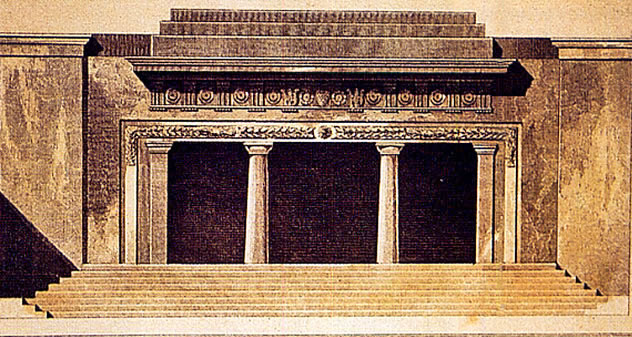
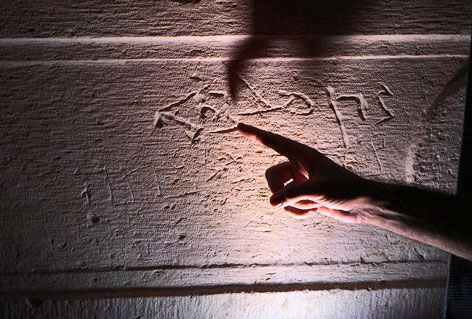
Heinrich Reuss – Grand Master Teutonic Knights
Posted on March 25, 2019 by Royal Rosamond Press
I am kin to Heinrich Reuss.
Jon

Hochmeister Heinrich Reuß von Plauen
Heinrich Reuß von Plauen (died 2 January 1470) was the 32nd Grand Master of the Teutonic Order, serving from 1467 to 1470. He was the nephew of the previous Grand Master, Ludwig von Erlichshausen, and a distant relative to the 27th Grand Master, Heinrich von Plauen. Reuß von Plauen came from the Reuss family from Plauen, Thuringia. Incidentally, the family named every male child Heinrich (Henry). Earlier, the brothers Heinrich Reuss von Plauen the Elder and Heinrich Reuss von Plauen the Younger had served in the Thirteen Years’ War.
Reuß von Plauen joined the Teutonic Order at a young age. He was first a brother in a monastery in Germany. Reuß von Plauen arrived in Prussia in the 1420s when he became the Vogt of Dirschau. In 1433 he became the Komtur of Balga and in 1440 the Vogt of Natangia. From 1441, Reuß von Plauen held the position of the Grand Hospitaller and the Komtur of Elbing (Elbląg). As the Grand Master’s nephew, his influence in the Order grew and he advanced quickly. He took control of the Order’s army during the Thirteen Years’ War and became famous for destroying the Polish army in the Battle of Konitz. After the Second Peace of Thorn in 1466, Reuß von Plauen became the Komtur of Preußisch Holland.

After the 1467 death of his uncle, Grand Master Ludwig von Erlichshausen, Reuß von Plauen assumed control over of the Teutonic Order without having been elected Grand Master. He settled in Mohrungen and waited for further moves of King Casimir IV Jagiellon of Poland, hesitating to call the meeting of the Order’s capitulum to elect him de jure. Pressured by Casimir, he finally called the capitulum in 1469 to Königsberg. This was just a formality as the decision was unanimous and Reuß von Plauen was declared the 32nd Grand Master of the Teutonic Order on 17 October 1469. Reuß von Plauen went to Piotrków Trybunalski to attend the sejm where he paid homage to Casimir IV. On his way back to Prussia he suffered a stroke and became paralyzed which made further travel impossible. Reuß von Plauen died in Mohrungen on 2 January 1470 and was buried in Königsberg Cathedral.


Deutscher Orden – German Order – Teutonic Order – 1190 – 2019
The Chivalric Teutonic Order of St Mary’s Hospital in Jerusalem
International Copyright Held © 2001-2019 – All Rights Reserved

“Helfen – Wehren – Heilen ” Help – Defend – Heal”
House of Reuss

Reuss

Lords of Reuss 1106-1206
Egbert I, (d.1122), Ancestor of the House of Reuss.
Reuss divided 1206:
Lords of Reuss- 1206-1532 ex.
Lords of Reuss-Gera 1206-1425 ex.
Lords of Reuss-Gera 1425-1479 ex.
Lords of Reuss-Lobenstein 1425-1547 ex.
Lords of Reuss-Plauen 1206-1303
Lords of Reuss-Plauen 1303-1569 ex.
Lords of Reuss-Greiz 1303
Reuss-Greiz divided 1564:
Lords of Reuss of Unter-Greiz 1564-1673
Counts of Reuss of Unter-Greiz 1673-1678
Counts of Reuss of Greiz 1678-1778
Princes of Reuss of Senior Line(Greiz) 1778-1927 ex.
Lords of Reuss of Ober-Greiz 1564-1616 ex.
Lords of Reuss- 1564-1647

Princes of Reuss of Senior Line(Greiz)
Reuss-Gera divided 1647:
Lords of Reuss-Gera 1647-1673
Counts of Reuss- 1673-1802 ex.
Lords of Reuss-Schleiz 1647-1673
Counts of Reuss-Schleiz 1673-1692
Lords of Reuss-Lobenstein 1647-1673
Counts of Reuss-Lobenstein 1673–1678
Reuss-Schleiz divided 1692:
Counts of Reuss-Schleiz 1692-1802
Counts of Reuss-Schleiz-Gera 1802-1806
Princes of Reuss-Schleiz-Gera 1806-1848
Princes of Reuss Junior Line 1848-present
Counts of Reuss-Schleiz-Köstriz 1692-1817
Princes of Reuss-Schleiz-Köstriz 1817-present
Princes of Reuss Junior Line
Reuss-Lobenstein divided 1678:
Counts of Reuss-Lobenstein 1673–1790
Princes of Reuss-Lobenstein 1790–1824 ex.
Counts of Reuss-Ebersdorf 1678–1806
Princes of Reuss-Ebersdorf 1806–24
Princes of Reuss-Lobenstein-Ebersdorf 1824–48 ex.

Princes of Reuss-Lobenstein
All of the male members of the House of Reuss are named Heinrich/ Henry plus a number. The first male child born in each century is named Heinrich/Henry I, the second Heinrich/Henry II and so on until the beginning of the new century when the numbering begins anew. This odd regulation was formulated as a Family Law in 1688, but the tradition of the uniformity of name was in practice as early as 1200. It was seen as a way of honouring the Emperor Henry VI who raised Henry the Rich (+1209) to the office of provost of the Cloister in Quedlinburg.
- Heinrich Reuß von Plauen ‘the Elder’,(c.1370–1429), 27th Grand Master of the Teutonic Knights, from 1410-1413.
- Heinrich Reuß von Plauen ‘the Younger’ (d. 1470), 32nd Grand Master of the Teutonic Order, from 1467-70.
- Heinrich XIV, Prince Reuss of Junior Line(Schleiz) reigned 1867-1913 founded the Princely Honour Cross (Fürstlich Reussisches Ehrenkreuz) on May 24, 1869. When his son Fürst Heinrich XXVII was made regent of the Reuss Elder Line in 1902, the Honour Cross was extended to that state as well. Thus, from 1902 to 1913, Heinrich XIV awarded the Honour Cross as Fürst of the Reuss Younger Line while his son awarded it as regent in the name of Heinrich XXIV of the Reuss Elder Line. In 1913, with Heinrich XIV’s death, Heinrich XXVII awarded it for both houses (although in the case of the Reuss Elder Line, still in the name of Heinrich XXIV).

Grand Master of the Teutonic Order

Heinrich XIV, Prince Reuss of Junior Line
Albert, Duke of Prussia
From Wikipedia, the free encyclopediaJump to navigationJump to search“Albert of Prussia” redirects here. For other people, see Albert of Hohenzollern.
| Albert | |
|---|---|
| Grand Master of the Teutonic Knights Duke of Prussia | |
| Albert of Prussia, painting by Lucas Cranach the Elder, dated 1528 | |
| Grand Master of the Teutonic Knights | |
| Reign | 1510 – 1525 |
| Predecessor | Duke Frederick of Saxony |
| Successor | Walter von Cronberg |
| Duke of Prussia | |
| Reign | 10 April 1525 – 20 March 1568 |
| Successor | Albert Frederick of Prussia |
| Born | 17 May 1490[1] Ansbach, Brandenburg-Ansbach, Holy Roman Empire (now Bavaria, Germany) |
| Died | 20 March 1568 (aged 77) Tapiau Castle, Tapiau, Prussia (now Gvardeysk, Russia) |
| Spouse | Dorothea of Denmark Anna Marie of Brunswick-Lüneburg |
| Issue among others… | Anna Sophia Albert Frederick |
| House | House of Hohenzollern |
| Father | Frederick I of Brandenburg-Ansbach |
| Mother | Sophia of Poland |
| Religion | Catholicism (until 1525) Lutheranism (from 1525) |
Albert of Prussia (German: Albrecht von Preussen; 17 May 1490 – 20 March 1568) was a German prince who was the 37th Grand Master of the Teutonic Knights, who after converting to Lutheranism, became the first ruler of the Duchy of Prussia, the secularized state that emerged from the former Monastic State of the Teutonic Knights. Albert was the first European ruler to establish Lutheranism, and thus Protestantism, as the official state religion of his lands. He proved instrumental in the political spread of Protestantism in its early stage, ruling the Prussian lands for nearly six decades (1510–1568).
A member of the Brandenburg-Ansbach branch of the House of Hohenzollern, Albert became Grand Master, where his skill in political administration and leadership ultimately succeeded in reversing the decline of the Teutonic Order. But Albert, who was sympathetic to the demands of Martin Luther, rebelled against the Roman Catholic Church and the Holy Roman Empire by converting the Teutonic state into a Protestant and hereditary realm, the Duchy of Prussia, for which he paid homage to his uncle, Sigismund I, King of Poland. That arrangement was confirmed by the Treaty of Kraków in 1525. Albert pledged a personal oath to the King and in return was invested with the duchy for himself and his heirs.
Albert’s rule in Prussia was fairly prosperous. Although he had some trouble with the peasantry, the confiscation of the lands and treasures of the Catholic Church enabled him to propitiate the nobles and provide for the expenses of the newly established Prussian court. He was active in imperial politics, joining the League of Torgau in 1526, and acted in unison with the Protestants in plotting to overthrow Emperor Charles V after the issue of the Augsburg Interim in May 1548. Albert established schools in every town and founded Königsberg University in 1544.[2] He promoted culture and arts, patronising the works of Erasmus Reinhold and Caspar Hennenberger. During the final years of his rule, Albert was forced to raise taxes instead of further confiscating now-depleted church lands, causing peasant rebellion. The intrigues of the court favourites Johann Funck and Paul Skalić also led to various religious and political disputes. Albert spent his final years virtually deprived of power and died at Tapiau on 20 March 1568. His son, Albert Frederick, succeeded him as Duke of Prussia.
Albert’s dissolution of the Teutonic State caused the founding of the Duchy of Prussia, paving the way for the rise of the House of Hohenzollern.
Dorothea of Denmark (1 August 1504 – 11 April 1547), was a Duchess of Prussia by marriage to Duke Albert, Duke of Prussia. She was the daughter of King Frederick I of Denmark and Anna of Brandenburg.
Contents
Life[edit]
After her father’s accession to the throne in 1523 a marriage was suggested to the English claimant to the throne, Duke Richard of Suffolk, who was supported by King Francis of France, but without success.
In 1525, she received a proposal from the newly made Duke of Prussia. The marriage was arranged by her father’s German chancellor Wolfgang von Utenhof. The wedding was conducted 12 February 1526 and Dorothea arrived with a large entourage in Königsberg in June.
Dorothea had a very good relationship with Albert and this contributed to a good and active contact between Denmark and Prussia which continued during her brother’s reign and until her death. Dorothea and her spouse corresponded with her brother, the king of Denmark, and acted as his political advisors. Dorothea and Albert were present at the coronation of Christian III of Denmark in Copenhagen in 1537; they also acted as foster-parents of her nephew Duke Hans of Denmark in 1536–1542.
The Königsberg Cathedral has a monument of her.
Contents
- 1Early life
- 2Grand Master
- 3Duke in Prussia
- 4Legacy
- 5Spouse and issue
- 6Ancestors
- 7Notes
- 8References
- 9External links
Early life[edit]
Albert was born in Ansbach in Franconia as the third son of Frederick I, Margrave of Brandenburg-Ansbach.[3] His mother was Sophia, daughter of Casimir IV Jagiellon,[3] Grand Duke of Lithuania and King of Poland, and his wife Elisabeth of Austria. He was raised for a career in the Church and spent some time at the court of Hermann IV of Hesse, Elector of Cologne, who appointed him canon of the Cologne Cathedral.[2] Not only was he quite religious; he was also interested in mathematics and science and sometimes is claimed to have contradicted the teachings of the Church in favour of scientific theories. His career was forwarded by the Church, however, and institutions of the Catholic clerics supported his early advancement.
Turning to a more active life, Albert accompanied Emperor Maximilian I to Italy in 1508 and after his return spent some time in the Kingdom of Hungary.[2]
Grand Master[edit]
As Grand Master of the Teutonic Order, painting from 1522
Duke Frederick of Saxony, Grand Master of the Teutonic Order, died in December 1510. Albert was chosen as his successor early in 1511 in the hope that his relationship to his maternal uncle, Sigismund I the Old, Grand Duke of Lithuania and King of Poland, would facilitate a settlement of the disputes over eastern Prussia, which had been held by the order under Polish suzerainty since the Second Peace of Thorn (1466).[2]
The new Grand Master, aware of his duties to the empire and to the papacy, refused to submit to the crown of Poland. As war over the order’s existence appeared inevitable, Albert made strenuous efforts to secure allies and carried on protracted negotiations with Emperor Maximilian I. The ill-feeling, influenced by the ravages of members of the Order in Poland, culminated in a war which began in December 1519 and devastated Prussia. Albert was granted a four-year truce early in 1521.[2]
The dispute was referred to Emperor Charles V and other princes, but as no settlement was reached Albert continued his efforts to obtain help in view of a renewal of the war. For this purpose he visited the Diet of Nuremberg in 1522, where he made the acquaintance of the Reformer Andreas Osiander, by whose influence Albert was won over to Protestantism.[2]
The Grand Master then journeyed to Wittenberg, where he was advised by Martin Luther to abandon the rules of his order, to marry, and to convert Prussia into a hereditary duchy for himself. This proposal, which was understandably appealing to Albert, had already been discussed by some of his relatives; but it was necessary to proceed cautiously, and he assured Pope Adrian VI that he was anxious to reform the order and punish the knights who had adopted Lutheran doctrines. Luther for his part did not stop at the suggestion, but in order to facilitate the change made special efforts to spread his teaching among the Prussians, while Albert’s brother, Margrave George of Brandenburg-Ansbach, laid the scheme before their uncle, Sigismund I the Old of Poland.[2]
Duke in Prussia[edit]
Prussian Homage: Albert and his brothers receive the Duchy of Prussia as a fief from Polish King Sigismund I the Old, 1525. Painting by Matejko, 1882.
After some delay Sigismund assented to the offer, with the provision that Prussia should be treated as a Polish fiefdom; and after this arrangement had been confirmed by a treaty concluded at Kraków, Albert pledged a personal oath to Sigismund I and was invested with the duchy for himself and his heirs on 10 February 1525.[2]
The Estates of the land then met at Königsberg and took the oath of allegiance to the new duke, who used his full powers to promote the doctrines of Luther. This transition did not, however, take place without protest. Summoned before the imperial court of justice, Albert refused to appear and was proscribed, while the order elected a new Grand Master, Walter von Cronberg, who received Prussia as a fief at the imperial Diet of Augsburg. As the German princes were experiencing the tumult of the Reformation, the German Peasants’ War, and the wars against the Ottoman Turks, they did not enforce the ban on the duke, and agitation against him soon died away.[2]
In imperial politics Albert was fairly active. Joining the League of Torgau in 1526, he acted in unison with the Protestants, and was among the princes who banded and plotted together to overthrow Charles V after the issue of the Augsburg Interim in May 1548. For various reasons, however, poverty and personal inclination among others, he did not take a prominent part in the military operations of this period.[2]One Groschen coin, 1534, Iustus ex fide vivit — The Just lives on Faith
The early years of Albert’s rule in Prussia were fairly prosperous. Although he had some trouble with the peasantry, the lands and treasures of the church enabled him to propitiate the nobles and for a time to provide for the expenses of the court. He did something for the furtherance of learning by establishing schools in every town and by freeing serfs who adopted a scholastic life. In 1544, in spite of some opposition, he founded Königsberg University, where he appointed his friend Andreas Osiander to a professorship in 1549.[2] Albert also paid for the printing of the Astronomical “Prutenic Tables” compiled by Erasmus Reinhold and the first maps of Prussia by Caspar Hennenberger.[4]
Osiander’s appointment was the beginning of the troubles which clouded the closing years of Albert’s reign. Osiander’s divergence from Luther’s doctrine of justification by faith involved him in a violent quarrel with Philip Melanchthon, who had adherents in Königsberg, and these theological disputes soon created an uproar in the town. The duke strenuously supported Osiander, and the area of the quarrel soon broadened. There were no longer church lands available with which to conciliate the nobles, the burden of taxation was heavy, and Albert’s rule became unpopular.[2]
After Osiander’s death in 1552, Albert favoured a preacher named Johann Funck, who, with an adventurer named Paul Skalić, exercised great influence over him and obtained considerable wealth at public expense. The state of turmoil caused by these religious and political disputes was increased by the possibility of Albert’s early death and the need, should that happen, to appoint a regent, as his only son, Albert Frederick was still a mere youth. The duke was forced to consent to a condemnation of the teaching of Osiander, and the climax came in 1566 when the Estates appealed to King Sigismund II Augustus of Poland, Albert’s cousin, who sent a commission to Königsberg. Skalić saved his life by flight, but Funck was executed. The question of the regency was settled, and a form of Lutheranism was adopted and declared binding on all teachers and preachers.[2]Portrait of Pavao Skalić, an encyclopedist, Renaissance humanist and adventurer from Croatia, who strongly influenced the Duke in the closing years of his reign
Virtually deprived of power, the duke lived for two more years, and died at Tapiau on 20 March 1568[2] of the plague, along with his wife. Cornelis Floris de Vriendt designed his tomb within Königsberg Cathedral.[5]
Albert was a voluminous letter writer, and corresponded with many of the leading personages of the time.[2]
Legacy[edit]
Tomb of Albert by Cornelis Floris de Vriendt in Königsberg Cathedral“Albertus” with sword from the Silberbibliothek
Albert was the first German noble to support Luther’s ideas[citation needed] and in 1544 founded the University of Königsberg, the Albertina, as a rival to the Roman Catholic Krakow Academy. It was the second Lutheran university in the German states, after the University of Marburg.
A relief of Albert over the Renaissance-era portal of Königsberg Castle‘s southern wing was created by Andreas Hess in 1551 according to plans by Christoph Römer.[6] Another relief by an unknown artist was included in the wall of the Albertina’s original campus. This depiction, which showed the duke with his sword over his shoulder, was the popular “Albertus”, the symbol of the university. The original was moved to Königsberg Public Library to protect it from the elements, while the sculptor Paul Kimritz created a duplicate for the wall.[6] Another version of the “Albertus” by Lothar Sauer was included at the entrance of the Königsberg State and Royal Library.[6]
In 1880 Friedrich Reusch created a sandstone bust of Albert at the Regierungsgebäude, the administrative building for Regierungsbezirk Königsberg. On 19 May 1891 Reusch premiered a famous statue of Albert at Königsberg Castle with the inscription: “Albert of Brandenburg, Last Grand Master, First Duke in Prussia”.[7] Albert Wolff also designed an equestrian statue of Albert located at the new campus of the Albertina. King’s Gate contains a statue of Albert.
Albert was oft-honored in the quarter Maraunenhof in northern Königsberg. Its main street was named Herzog-Albrecht-Allee in 1906. Its town square, König-Ottokar-Platz, was renamed Herzog-Albrecht-Platz in 1934 to match its church, the Herzog-Albrecht-Gedächtniskirche.[8]
Spouse and issue[edit]
Dorothea of Denmark, Duchess of Prussia by Cornelis Floris de Vriendt
Albert married first, to Dorothea (1 August 1504 – 11 April 1547), daughter of King Frederick I of Denmark, in 1526. They had six children:
- Anna Sophia (11 June 1527 – 6 February 1591),[3] married John Albert I, Duke of Mecklenburg-Güstrow.
- Katharina (b. and d. 24 February 1528).
- Frederick Albert (5 December 1529 – 1 January 1530).[3]
- Lucia Dorothea (8 April 1531 – 1 February 1532).
- Lucia (3 February 1537 – May 1539).
- Albert (b. and d. March 1539).
He married secondly to Anna Maria (1532–20 March 1568), daughter of Eric I, Duke of Brunswick-Lüneburg, in 1550. The couple had two children:
- Elisabeth (20 May 1551 – 19 February 1596).
- Albert Frederick (29 April 1553 – 18 August 1618), Duke of Prussia.
 Rosamond Press
,_Broadway,_New_York_City.png)
.jpg)


.png)


_by_shakko_02.jpg)
Leave a comment