
Anthony Guest and I have been on a parallel path in the Labyrinth of Fair Rosamond. We are detinned to come together at the Epicenter the Rose of The world.
John Presco
https://en.wikipedia.org/wiki/Anthony_Haden-Guest
Haden-Guest formerly penned a weekend column on art collection for the Financial Times[4][5] and was the original male voice on Cristina’s single “Disco Clone“.[6] His drawings have appeared in The New York Observer and he has contributed articles and stories to the Sunday Telegraph, Vanity Fair, The New Yorker, Paris Review, Whitehot Magazine, Sunday Times, Esquire, GQ (UK), The Observer, Radar and other major publications. In 1979 he was awarded a New York Emmy for writing and narrating the PBS documentary The Affluent Immigrants.[1][2][7] He also wrote Down the Programmed Rabbit-Hole, a collection of essays on 1970s corporate figures.
Radical Art and Music
Posted on August 20, 2021 by Royal Rosamond Press
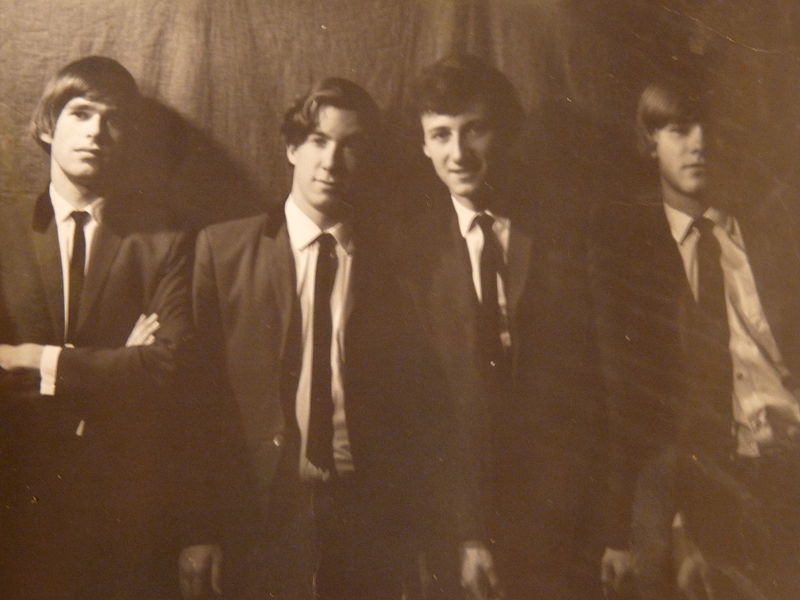
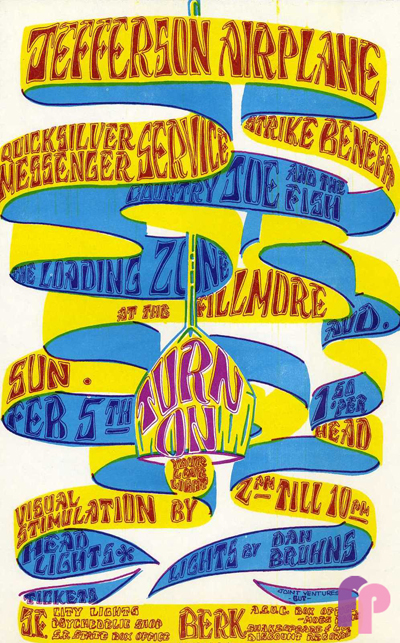
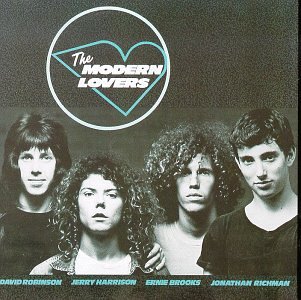
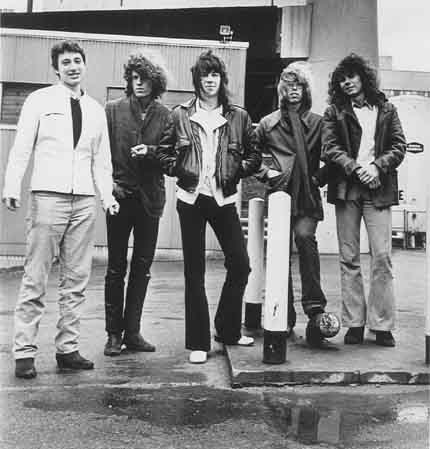

I have been involved in Radical Art and Music most of my life. I can think of no better way to test your metal, find your righteous place in this world, then to consider rendering a painting that is a window to the outside of what is judged normal, and search for notes that are not regular, that plumb the depths of our magnificent consciousness. For, this is what some of us came here for. Others only want a simple faith. When one enters a church, they find music within, and, some work of art. Artists were employed to adorn magnificent cathedrals. Alas, while living in a small trailer on the McKinzie River, I opened a Bible and read all of Luke. I have discovered a lost view of…….The Truth? Is art – The Truth? Is music – The Truth? Who wants
THE TRUTH?
In the last four days I have been examining the truth of four men
Peter Shapiro
Stefan Eins
Jonathan Richman
John Presco
To my friend Peter, I suggested he and Jonathan get on a stage at Harvard and speak of the Musical Genesis the history of their quest to make music, has captured them in. Is there a Muse of History? Is she – The Tenth Muse? Is she – A Male?
I am a Historian and a Thea login, two things I never thought I would be. I got TAGGED. When I joined the Upstairs Art Association, Rosalie Ritz – TAGGED ME – to be the General Manager, seconds after I told her my mother, Rosemary, was the manager of the Valley Youth Orchestra and worked in the office of the head of California Endowment of the Arts, who approves of THE FUNDING. I was tagged by black members of UAA to confront Rosalie, who ended up being fired by the board. Her favorite artist and I became roommates. Michael Harvey and I became best friend. We played allot of tennis. Peter Shapiro and I played allot of tennis. I lived with Peter in a downtown Victorian. I was the Artist in Residence. I had an easel next to the sound room where The Loading Zone practiced. I told Jonathan Richman about the Zone, and he took my advice about keeping his music – on a human scale!
Peter and I were roommates in another house where I rendered a large painting of Rena Easton, that got lost. My sister, Christine Rosamond Benton, saw that canvas, and took up art.
In 1971 I lived in a large factory with other artists. One artist built a stage in his space, and invited Richman to play on Halloween Night. Stefan and I shared our views on art. He and Christine Wandel were an item. She had been my, Keith’s, and Peter’s lover, and a close friend of Bill Graham.
John Presco
President: Royal Rosamond Press
The Marbles were an American rock band active in San Francisco from 1965 to 1966.
Biography[edit]
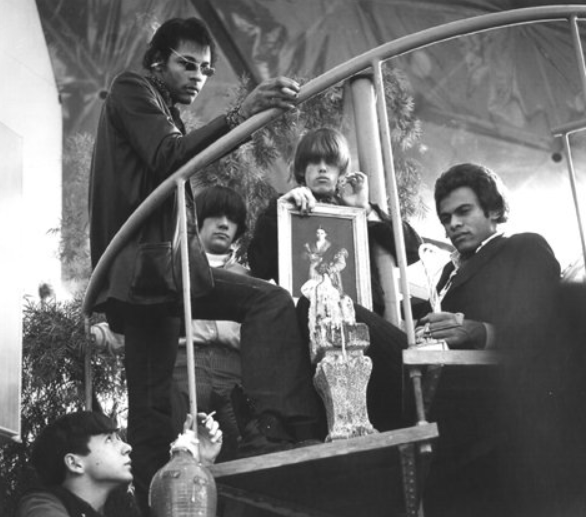
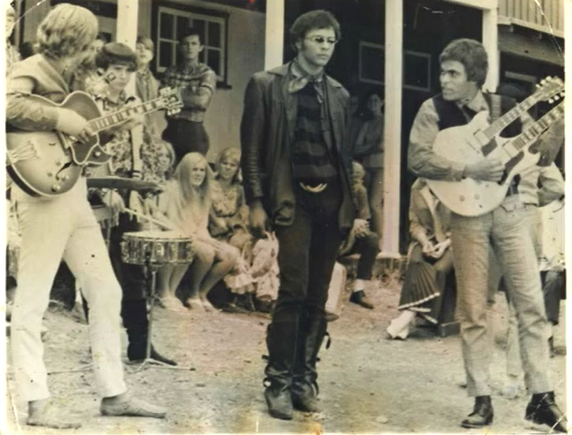
The Marbles had the following members: Peter Shapiro on lead guitar, Steve Dowler on rhythm guitar, David Dugdale on bass and Ray Greenleaf on drums. The Marbles were a psychedelic and rock group whose most notable performances were at the Tribute to Dr. Strange at the Longshoremen’s Hall in San Francisco on October 15, 1965, and again at the same venue for The Trips Festival on January 21, 22 and 23 along with Jefferson Airplane, The Charlatans and The Great Society. Both Shapiro and Dowler went on to become members of Paul Fauerso’s The Loading Zone.[1][2]
Fashion Moda
From Wikipedia, the free encyclopediaJump to navigationJump to search
Fashion 时装 Moda МОДА, whose name comes from “fashion” in English, Chinese, Spanish and Russian, colloquially referred to as Fashion Moda, started as a cultural concept guided by the idea that art can be made by anyone, anywhere. Fashion Moda was an art space located in the South Bronx, New York founded by Stefan Eins in 1978. As a museum of science, art, invention, technology, and fantasy, it was an alternative art space that combined aspects of a community arts center and a worldwide progressive arts organization until its closing in 1993.[1]
Our Love Generation
Posted on June 1, 2020 by Royal Rosamond Press
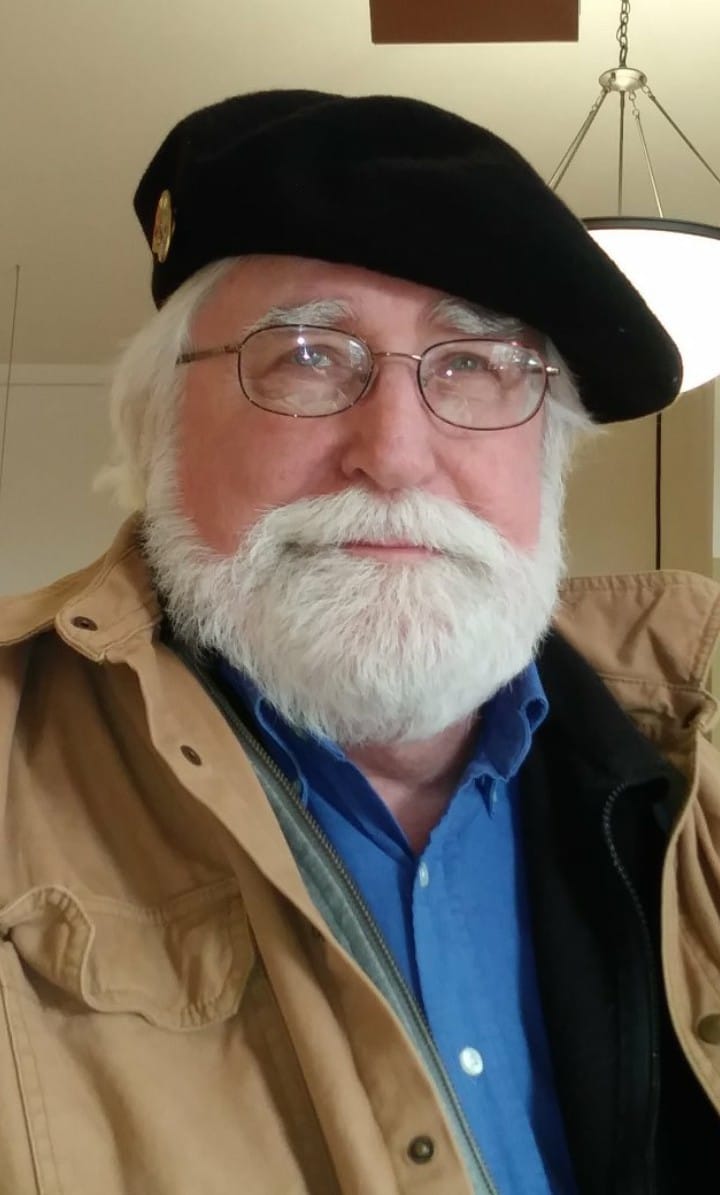
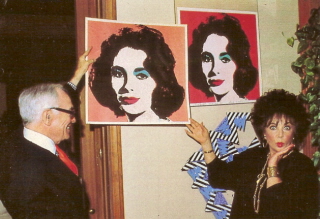

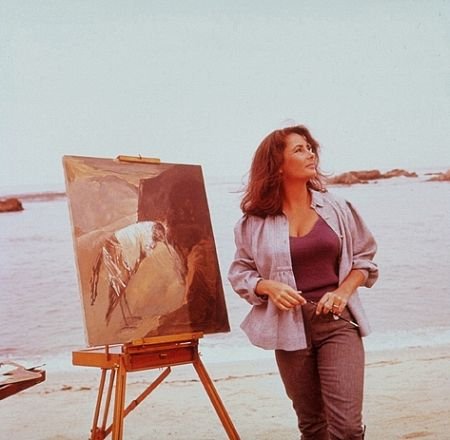
When I took the train to Rhode Island in 1970, I stopped in Lincoln Nebraska to see Rena Christensen. I had a vision of renting an old farm house and I would have a studio in the barn where I would render large canvases of the most beautiful woman in the world who was attending the University of Nebraska. I did see doing images of us….Lovers! I do not recall seeing the work of Aldo Luongo who Ira Roberts promoted at the same time as Christine Rosamond. Three days ago I read he was friendly with Christine.
“Aldo remembers first seeing Rosamond’s work. “I had never seen anyone utilize negative space so well as Christine.”
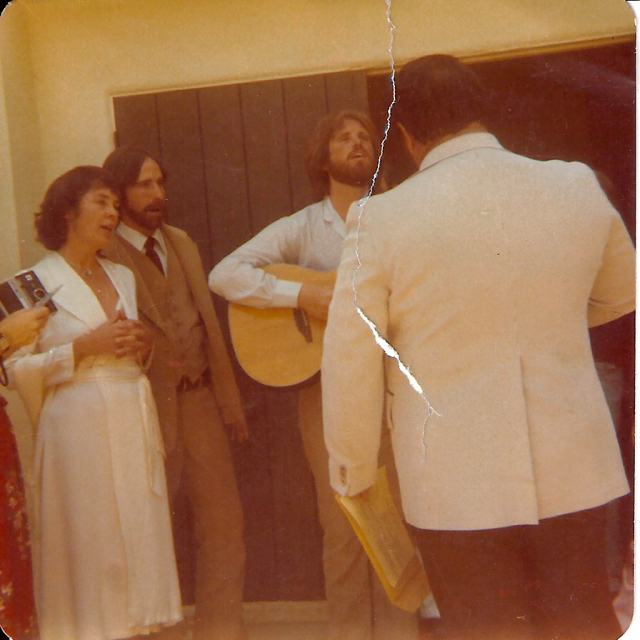
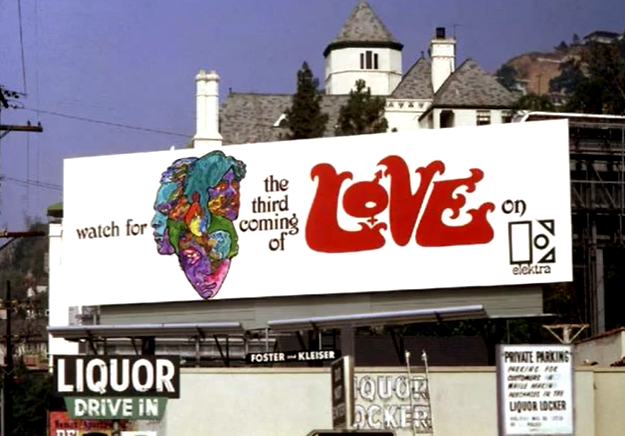
At shows my sister was questioned as to whether or not she was a Lesbian because all her images were of women. Below is a image of me in Rosamond’s studio. I was going to be her first male subject. Yesterday I googled Aldo and was shocked to see we look alike. Christine was aware of this, and knew her friend would see this also. Aldo and Rosamond influenced each other’s work. Rosamond knew I was a heterosexual and had witnessed my love affair with Marilyn Godfrey who did some modeling. Melinda and I were lovers, and Raphael had the hots for me. We went to Lacienaga with Bryan McLean who was my friend, and then Christine’s lover. We inspired the song the song ‘Alone Again, or’. Bryan and my friend, Mark Owen, became Rosamond’s lover, and his father was going to marry Rosemary. Bryan sand at my wedding to Mary Ann Tharaldsen who was Thomas Pynchon’s lover. My ex did a life-size painting of her friend, Mimi Farina who I think is very beautiful. I got to dance with her.
Due to the coronavirus artists are selling on the internet. I believe folks with money are investing in – The Art Market! I now see how easily Christine and I were derailed due to the low self-esteem we suffered from. Our parent glommed on to all our creations, our beauty, even our lovers. I and done with my daughter who along with her family worked me, put me on the defensive. For the last twenty years I should have been painting. I did a quick watercolor of Heather when she was sixteen and intended to do more. I wanted my daughter to be a muse. Aldo did paintings of he and his daughter. I was hoping Rena would send me copies of her photographs so I could do paintings from them.
John Presco
President: Royal Rosamond Press
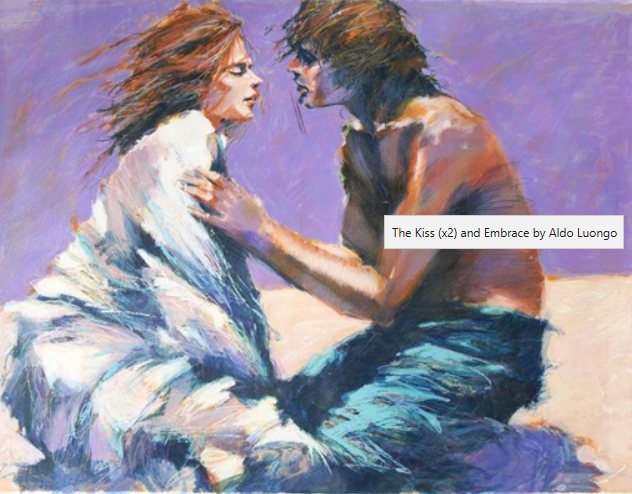

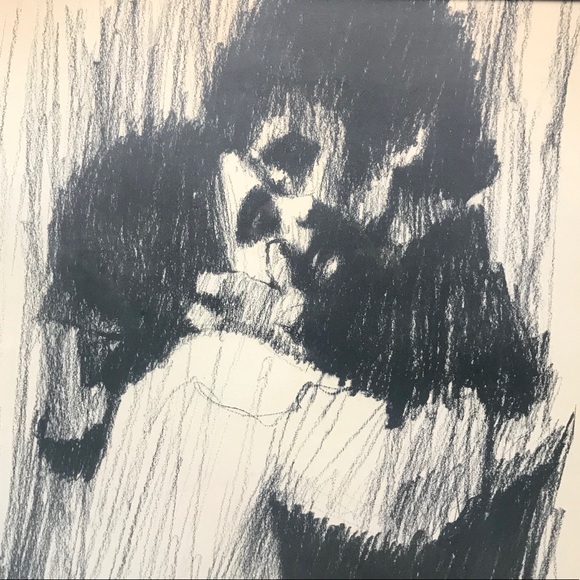

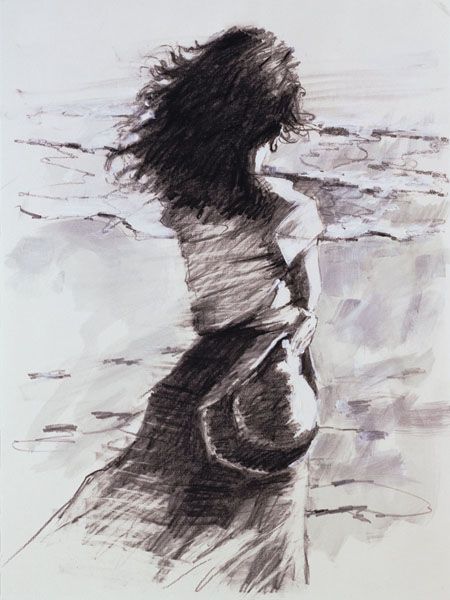
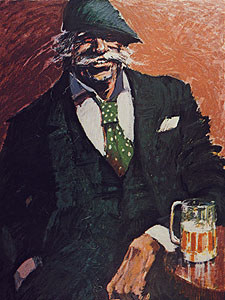
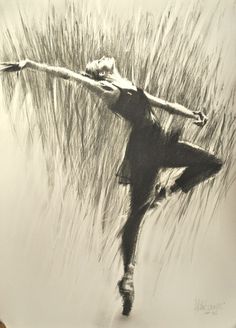

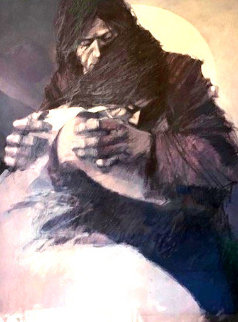

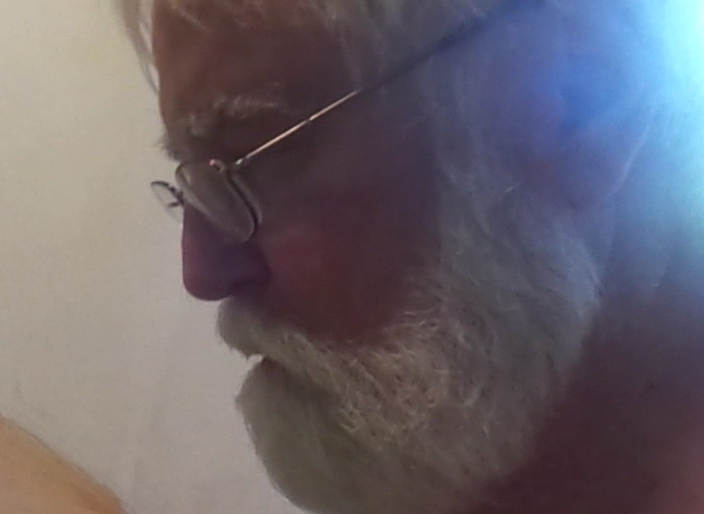
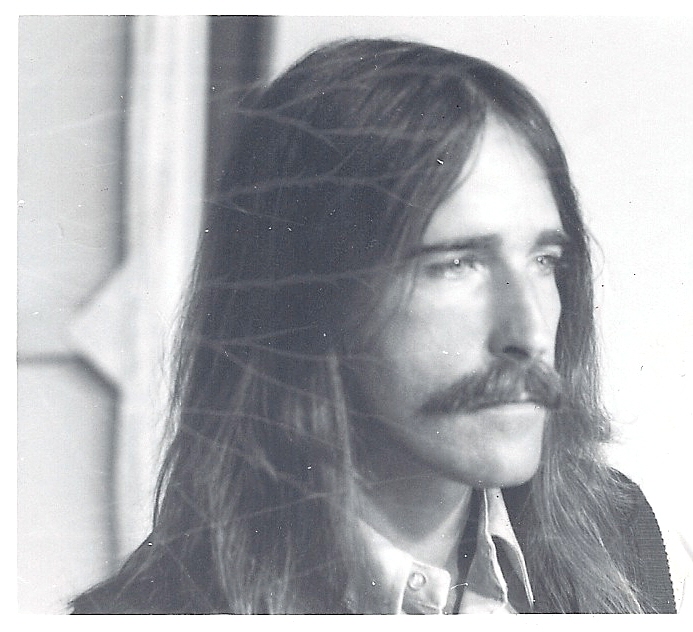

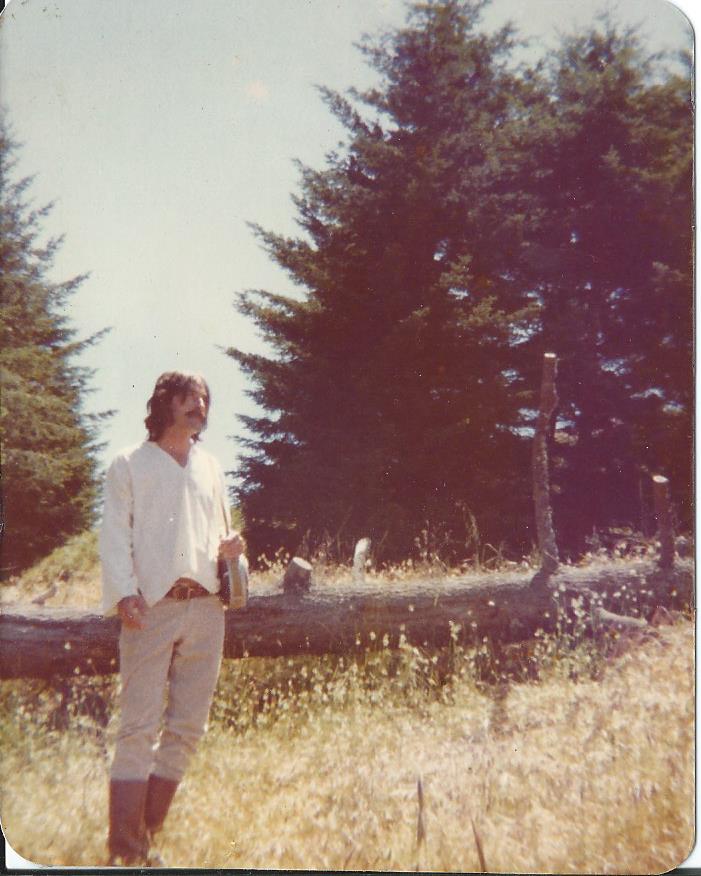
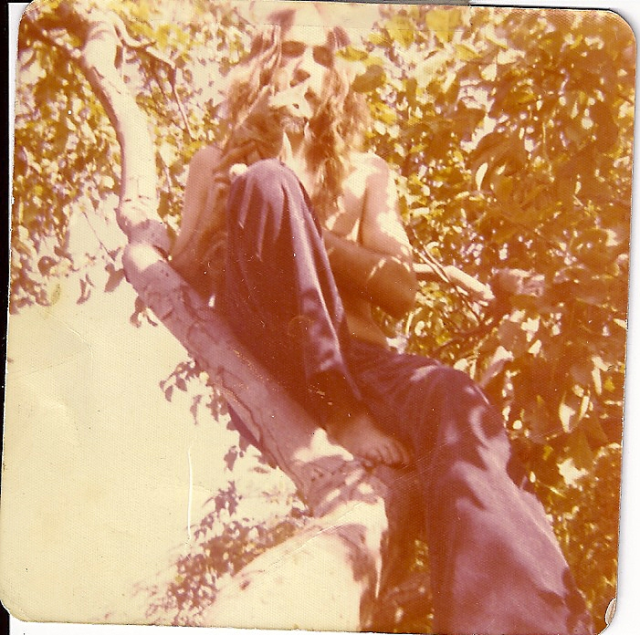
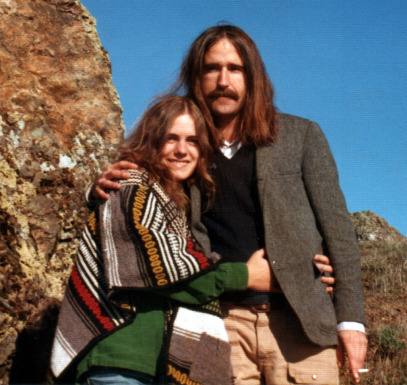

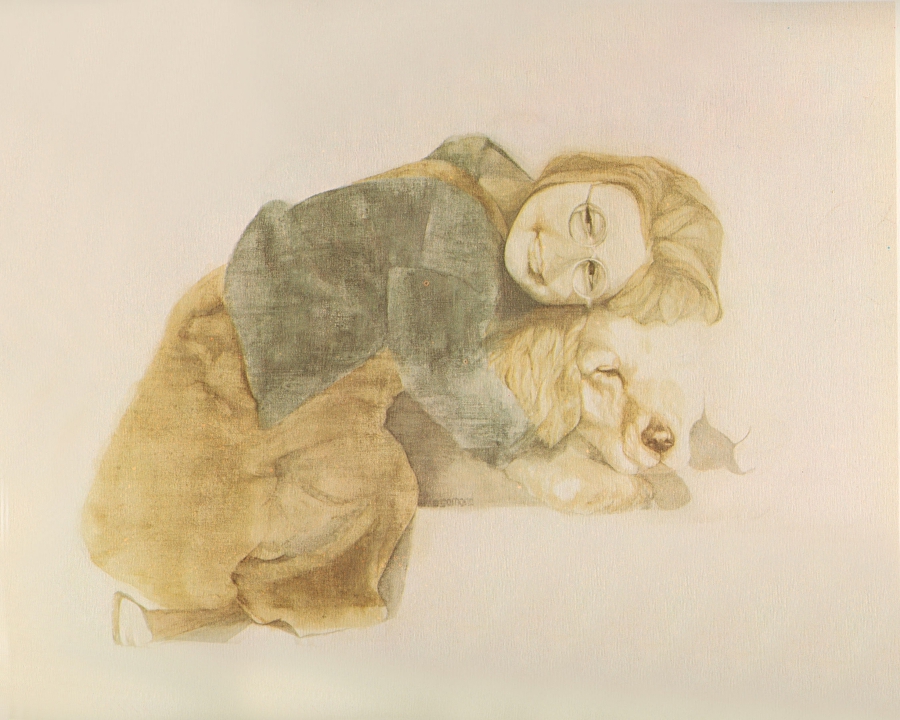
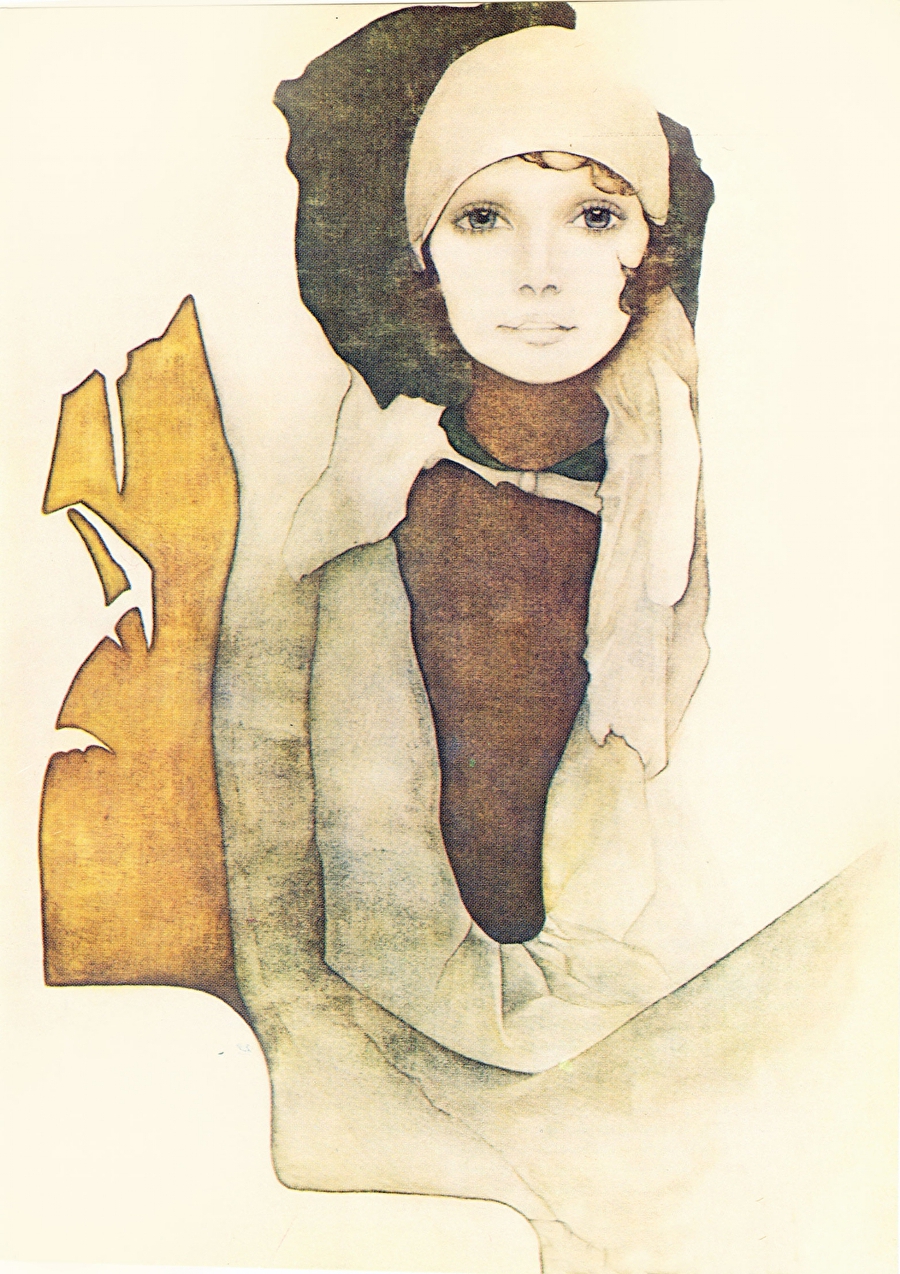
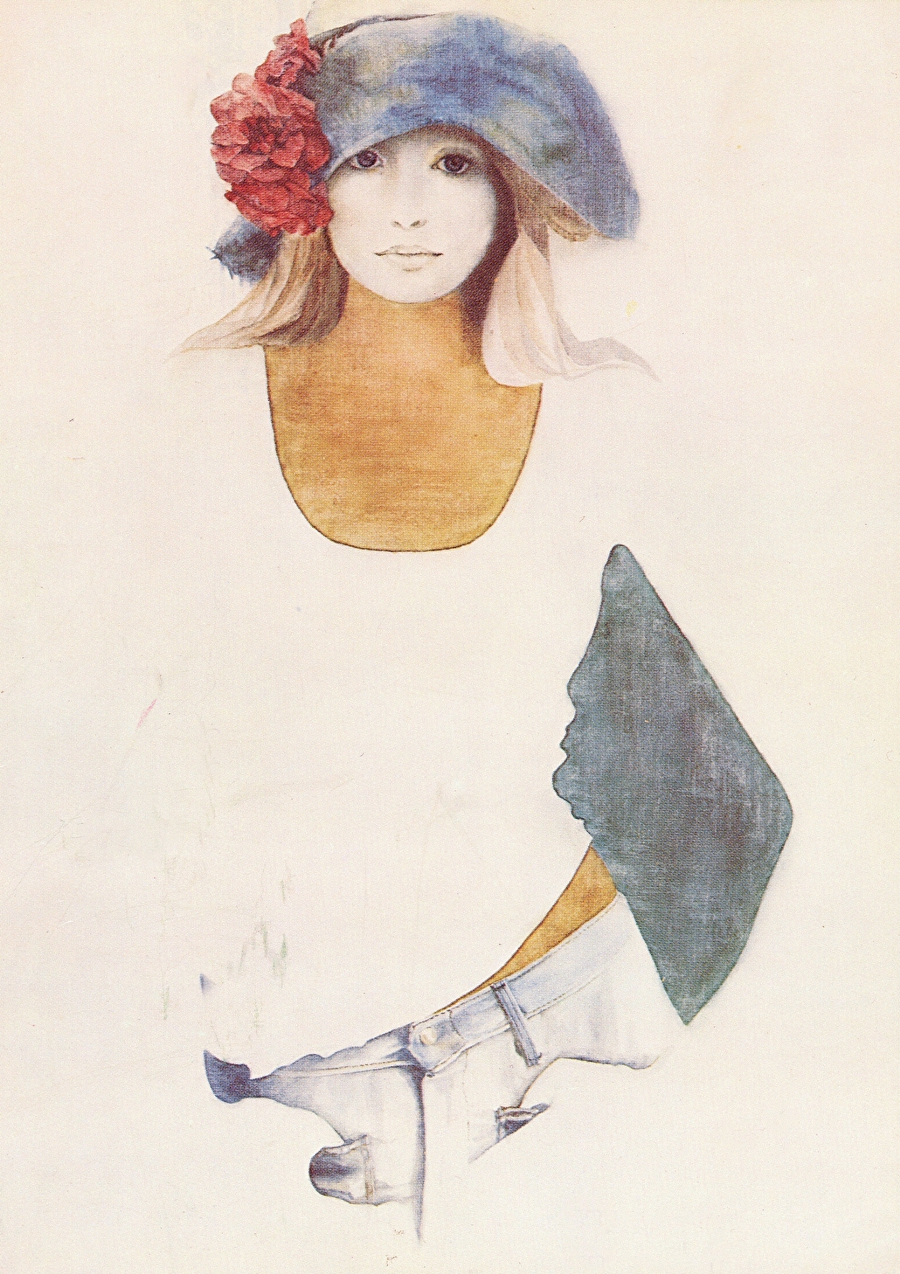
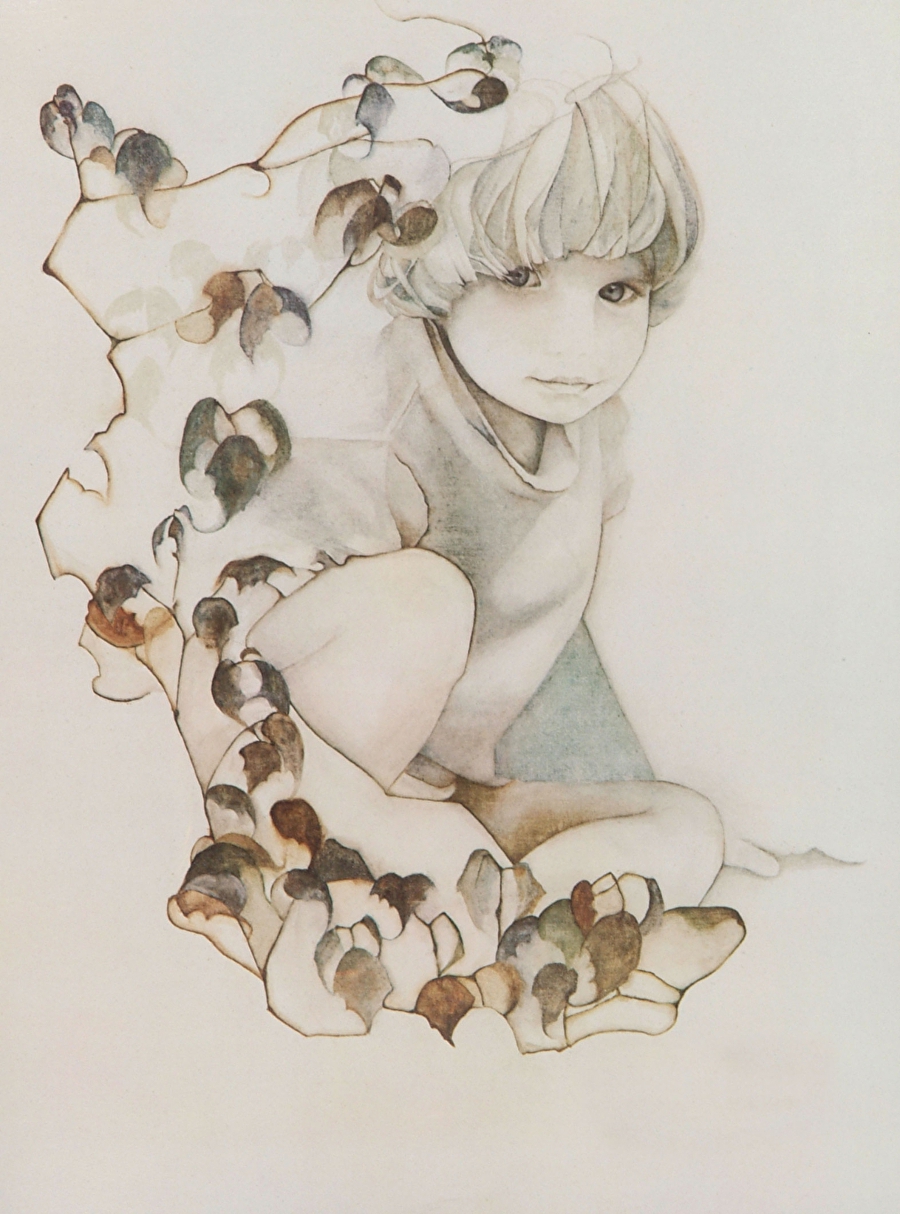
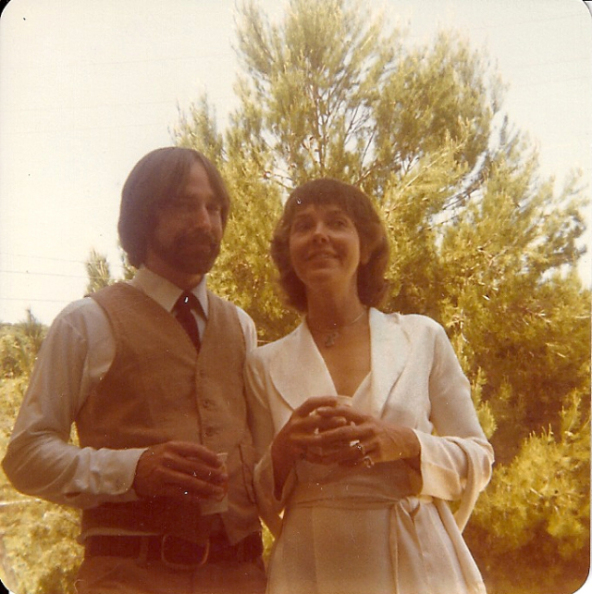

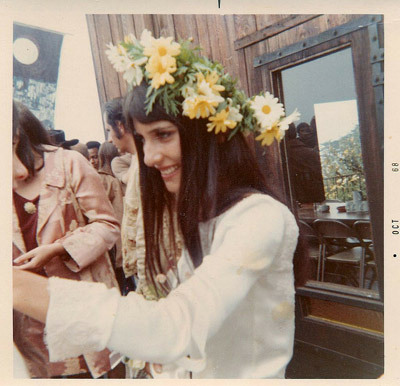
http://www.shafferfineart.com/The_Biography_of_Aldo_Luongo.htm
Share this:
Cute and Disorderly
Posted on June 10, 2014 by Royal Rosamond Press

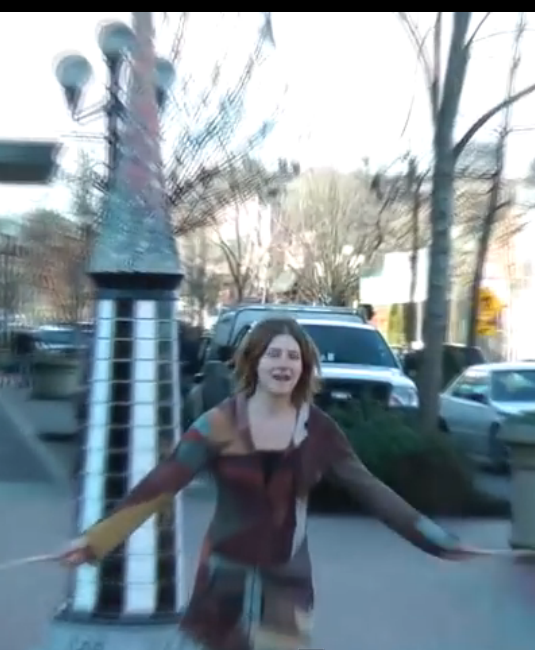
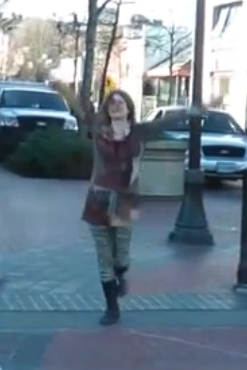

Watching the ‘Chalk Graffiti Is Harmless’ video, and seeing Alley Valkyrie doing her Mary Martin pose under the Broadway sign, I think I have been inspired to write the hit song of my musical ‘My Big Beautiful Blue Bicycle.
https://rosamondpress.com/?s=cyber+bully
Cute and Disorderly
by Jon Presco
Copyright 2014
Hey you sanitzing
dehumanizing cop on the beat
You can’t tell me what to do
where to go
and how to brush my teeth
because
I’m Cute……and Disorderly!
I got dimples on my butte and cheeks
I know every ragamuffin on these streets
Hey Mr. Straighty
are you checking out my tiny fairy fanny
You better watch out
because
I’m Cute……and Disorderly
If I want to take a puke
in a city planter
Or piss in some dark alley
What is it to you
you dumb-ass yuppie?
I can do anything I want
because
I’m cute…..and disorderly!
Art Lessons For My Daughter
Posted on June 2, 2020 by Royal Rosamond Press





Art Lessons For My Daughter
A Proposal For A Series
by
John Presco
Copyright 2020
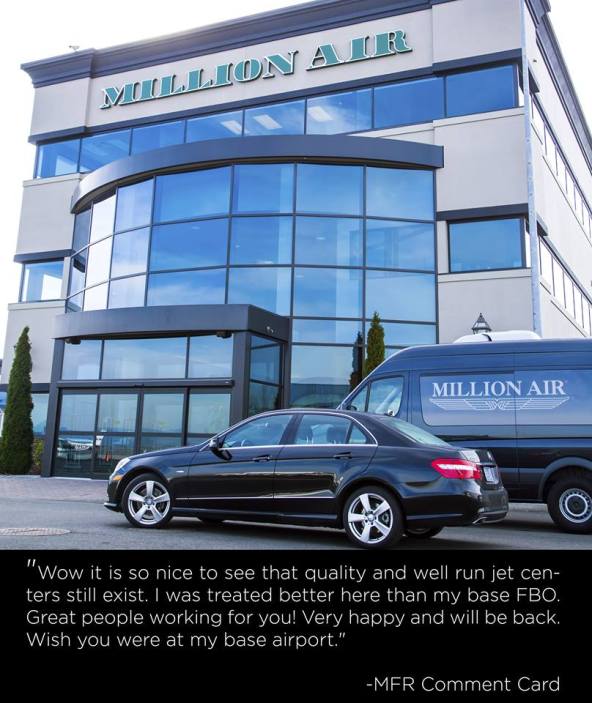
Gregory Prescott picked up his daughter he did not know he had at Billion Air Jet, a private airport that catered to members of the Billionaire Club who flew their own Lear Jets. His patron owned a Lear and flew it to Santa Rosa to fetch Dezmerelda Delpiano so she could meet her father for the first time. At sixteen Greg’s daughter had red hair like his mother, Mary Rosamunde, who was one of Errol Flynn’s young lovers.
“And, what do you want to be when you grow up?” Greg asked, breaking the ice in the back of the limo that took them to Prescotts humble Carmel cottage that used to belong to George Sterling ‘The King of the Bohemians’.
“I am grown up, Daddy. Do you mind if I call you Dad? I am a ballerina. Here are some pics of me performing.”
Three hours later, Dez, is showing her Dad the drawing she did of fmous ballerina she did when she was fourteen.
“You should become an artist. You have talent. Has your mother seen these?”
“No. I did them in the closet because my mother hates artists. She said you were cruel to her and you abandoned her when you locked yourself in your studio and rendered another of those somber ‘I Stand Alone’ paintings that no one wanted but a few retired Generals in Pacific Grove. However, she loves my aunts images of happy, flowery, women. They remind her of her hippie days when she was the Acid Queen of Telegraph Avenue.”
Gregory felt rage, because he already detected the most passive aggressive woman in California had done her thing on their daughter. It was evident she was a Stage Mother out for revenge. When Dez showed her father pics of the ballerina costumes her mother made, the Last Bohemian considered plan B, which was to give his only child the Tourist Treatment, and send her packing with souvineers and a bag of Carmel Taffy.
“Do you know the story of The Red Shoes?” Gregory asked, knowing he was jumping off The Cliff of Commitment.
“Yes. I read it when I was eleven.”
“Your mother has put those shoes on your feet. It is my job to take them off. I want to give you art lessons like I did my sister. But, she was compromised and sold out. Your mother has put you on the path of the Red Shoes. She owns dark ambitions. I can teach you how to free your soul and be true to yourself.”
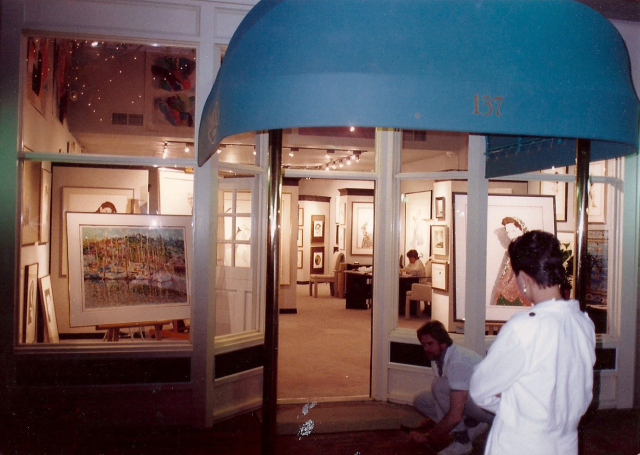
I Found Marian Salyer
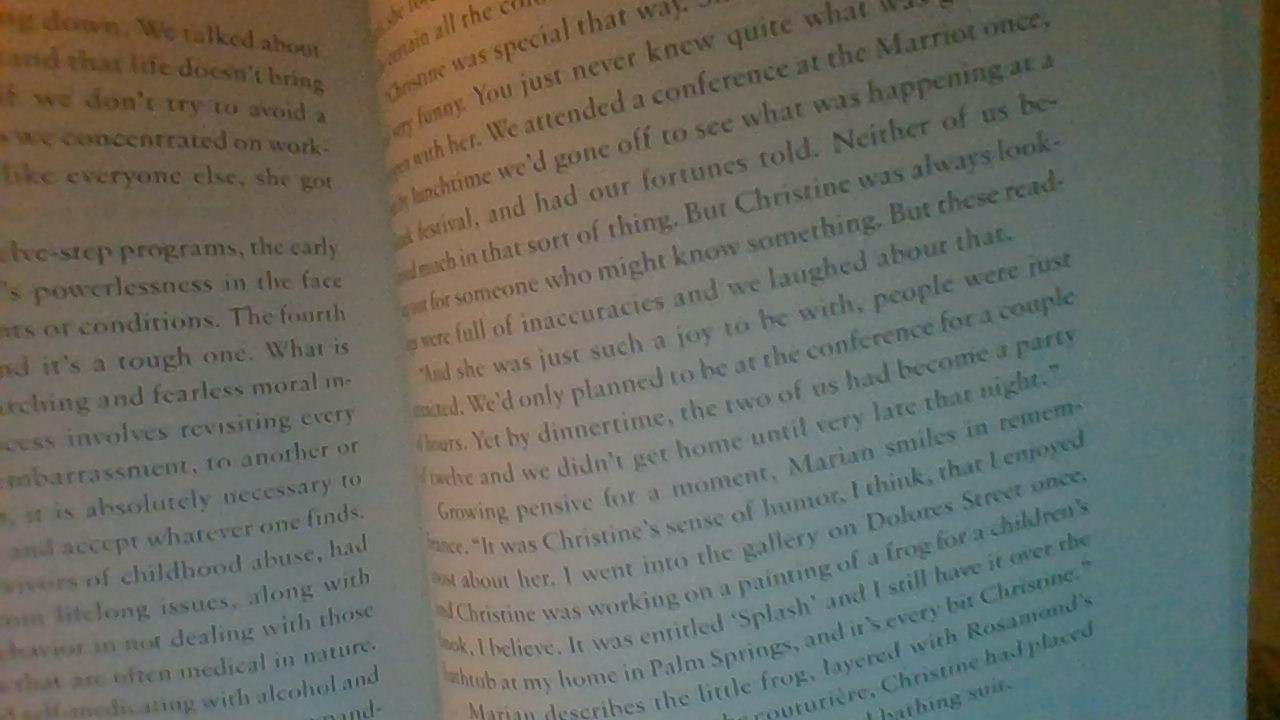
This morning around 7:30 A.M. I found my late sister’s sponsor in AA. It had been over ten years since I looked for her. Tom Snyder says she purchased Dunkin The Frog after seeing Christine Rosamond working on it at the Rosamond Gallery. Snyder quotes Marian who claims it is above her bathtub in Palm Springs. Marian…is dead. If not for her obituary, and her son being convicted of criminal fraud and Racketeering, then I would not have found The Missing Link in my story…Capturing Beauty.
The Tomato King meets Dunkin The Frog
Scott Salyer was The Tomato King. He owne’sd the Ryan Ranch. I suspect Christine met Scott. I titled our father ‘The Spud King’. Mark and I went into a tomato field to glean tomatos with our father who employed us in his produce market, Acme Produce. The artist, Thomas Hart Benton,illustrated John Steinbeck’s ‘Grapes of Wrath’. Did Scott see Dunkin at his moms house when he went to relieve himself. He needs to cooperated with the DA. Christine’s favorite movie is ‘Chinatown’. There is a Fresno connection. The DA needs to talk to Scott Hale who knew of the lawsuit against Ira Kaplan who broke free on this gallery owner who exploited several artists. Did Scott take out a life insurance policy on Rosamond?
Dashiell Hammett had his Maltese Falcon. I have my Dunkin The Frog. There was a huge fight over the Salyer estate. I might take the train to Monterey. Here is the Ranch that Rena was the rightful Queen Cowgirl of. I am going t render images of Rena for my series I am going to sell to HBO or Netflix.


https://en.wikipedia.org/wiki/The_Red_Shoes_(fairy_tale)
https://www.latimes.com/archives/la-xpm-1995-02-10-mn-30367-story.html
By MARK ARAX
Feb. 10, 1995
12 AM
TIMES STAFF WRITER
CORCORAN, Calif. —
The Boswells and the Salyers, two of the richest and most powerful farming families in America, have ended decades of rivalry and rancor over their San Joaquin Valley empires with a huge land deal in which one colossus will swallow the other.
Fred Salyer, 72, has agreed to sell his cotton and grain empire–about 25,000 acres of fertile San Joaquin Valley soil–to J. G. Boswell for tens of millions of dollars, according to business associates and employees.
The two men themselves are not talking about the deal that would end one of the most protracted and colorful family feuds in California history. Salyer, a stickler for privacy, waved off a reporter in front of his modest ranch house here: “I’ve got no comment.”
He confirmed the sale, effective March 1, in a terse letter to city and county officials that gave no hint of its symbolic importance. The Boswells and the Salyers have been fighting over land and water and control of this part of the state since their forebears–“the Colonel” and “the Cockeye”–first squared off in the early 1920s.
In this two-company cotton town along California 43, where almost everyone’s bread is buttered by Boswell or Salyer but rarely by both, it was always thought that too much venom and pride stood between the two clans for any deal to be struck. But over the last decade, as his fortunes waned, Salyer grew more open to overtures.
Last week, on the heels of another disappointing crop for Salyer, James G. Boswell II, the largest cotton grower in the world, traveled to Corcoran from his headquarters in Downtown Los Angeles to sit down face-to-face with Salyer.
Salyer initially wanted to sell only part of his empire, sources said, but soon everything was on the table. Boswell sealed the deal with a check that, by some accounts, exceeded $26 million.
“It’s the end of a long chapter,” Corcoran Mayor Jon Rachford said.
The deal is the talk in diners, hardware stores and barbershops in this town of about 10,000, but only in private.
“We’ve got the state prison now, but this is still a town divided down the middle by Boswell and Salyer,” said one reticent old-timer wearing a seed company hat and munching on a hamburger at Tolbert’s cafe.
He said he had done more than $2 million worth of work on cotton gins belonging to both giants in recent years. “I’d be kind of foolish to say anything,” he smiled tightly. “I don’t want to be tarred and feathered and run out of town.”
At the Brunswick barbershop, where photos of deceased patriarch Clarence (Cockeye) Salyer and his two famous dove-hunting partners, Clark Gable and John Wayne, stare down at customers, barber Jim Cook said he hadn’t seen Fred Salyer in almost two weeks.
“He usually comes in once or twice a week for a trim but since all this came out maybe he feels uncomfortable coming downtown,” Cook said. “Anyhow, he doesn’t tell me a thing. He’s a very private man.”
Salyer work crews in their green hats and mud-caked white Chevy pickups seemed to be everywhere, warning strangers not to set foot on the boss’s far-ranging lands. “I wouldn’t be snooping around here if I was you,” snapped one young, grim-faced foreman.
A bad mood had gripped the entire company, he said, ever since Salyer broke the word to employees last week that he was selling “lock, stock and barrel” to rival Boswell–the men in blue. Salyer could not guarantee that his 136 full-time and 220 seasonal workers would find jobs with Boswell.
“He drove field to field in his gray Fleetwood,” the foreman said. “It was a sad day.”
The fear is that Boswell, known as a picky boss, will become even pickier now that workers have lost their one card–the ability to walk a hundred yards across the Santa Fe railroad tracks and sign up with the competition.
Rachford, a real estate man who spent 18 years on Boswell’s payroll as a self-described gofer, said there was little reason to be grim. “The land is still here, the crops are still going to be grown and harvested and ginned. And it’s going to require people to do it.”
*
Even by San Joaquin Valley standards, Corcoran is a strange place. Few small towns in the country boast so many millions with so little flaunting of wealth. Perhaps that shyness has something to do with the federally subsidized water that for decades has flowed the cotton giants’ way, and the paper games that both land barons have played to get around the law that limits acreage of farmers who get that water.
The town itself has nothing but pride, proclaiming to visitors in bold letters: “Welcome to the Farming Capital of California.” It is no idle boast.
Boswell is not only the largest cotton grower in the world but also the largest grower of wheat and seed alfalfa in America. In California alone, the crop value on 129,000 acres of Boswell land was estimated at more than $100 million in 1993. Salyer was 14th on the list of the state’s largest farms, with an estimated crop value of $40 million on 33,000 acres.
Bales of the finest cotton stand row upon row as far as the eye can see, waiting to be turned into Jockey underwear, Fieldcrest towels and L.L. Bean shirts.
Such abundance is a testament to the vision and guile of two pioneers of California agriculture: Col. James G. Boswell, a military and cotton man driven out of Georgia by the boll weevil, and a Virginia hillbilly named Salyer, who skinned mules and carried the cruel moniker Cockeye on account of a fake eye that wandered so far to the left that the glass iris was barely visible.
Vision was needed because this land, in wet years, was at the bottom of the largest body of fresh water west of the Mississippi–Tulare Lake. In dry years, when the four rivers ran low, the land could sustain any and all row crops.
By P.J. Huffstutter, Los Angeles Times
June 17, 2010
12 AM
Scott Salyer stepped into the federal courtroom in Sacramento, his trim frame swimming in an orange prisoner jumpsuit, his legs shackled, his wrists restrained.
It was a humiliating moment in February for the 54-year-old agribusiness mogul, the last prince of one of California’s cotton farming dynasties. The tomato processing outfit he started with his father, Fred Salyer, was in bankruptcy. Scott was being blamed for running SK Foods into the ground — and far worse.
Salyer clenched his jaw as the prosecutor reeled off the allegations: that he and SK Foods tricked supermarkets and big food companies into buying substandard tomato products to put into brands found in almost every American cupboard.
Scott and SK Foods, the government said, conspired to inflate prices on millions of pounds of processed tomatoes sold to 55 companies in 22 states. It was an alleged scheme that ripped off consumers and reaped big profits for Salyer.
Behind him, in the crowded spectator seats, attorneys for angry creditors slapped high-fives. Fred, 86, was not there. Neither was any of the rest of the Salyer clan.
From humble Southern roots, the Salyers became one of the most powerful agricultural families in the West. And Scott’s legal woes are rooted in a litigious family tradition.
For three generations, the Salyers fought one another in court to control multimillion-dollar corporations and, at its peak, oversaw a land empire three times the size of San Francisco. Yet the dynasty ultimately couldn’t withstand the infighting, particularly the falling-out between Scott and Fred.
Fred declined to be interviewed for this story. So did Scott, who pleaded not guilty in May to 12 counts of corruption, including racketeering, wire fraud, obstruction of justice and violating federal antitrust laws. He remains in jail because he can’t make his $6.3-million bail.
It’s the latest chapter in a family saga that’s unfolding through court documents, public records and interviews with colleagues, former workers and others.
No one has suggested Fred is complicit in the tomato debacle. If anything, investigators say, the real trouble started after he left.
Long before produce tore the family apart, the Salyers were known as one of the best cotton growers in the Central Valley. From the family’s dusty ranch home in Corcoran, about 50 miles south of Fresno, they snapped up marginal land with access to water and pushed it to yield crops. Their cotton gins cranked out fibers used in products as varied as car tires and designer T-shirts.
Along with his brother Everette, Fred ran the business that their father built from nothing. Fred was a farmer’s farmer, a tall, balding and bespectacled man who spent more time in the fields than behind a desk. A child of the Great Depression, he possessed frugal sensibilities that shaped his views from national politics to family affairs.
Scott was born Frederick Scott Salyer. He grew into an outgoing man with a movie-star smile and a penchant for racing cars and flying planes.
After Scott came home to Corcoran in 1977 with a degree in agribusiness from Cal Poly San Luis Obispo, Fred groomed him to take over the family business. At school, Scott had learned that success was achieved through growth, and growth came by leveraging what you own to borrow money.
By the early 1980s, Scott took the lead at Salyer American.
“There’s an old saying: You give a horse its head,” said Thomas Foley Jr., Fred’s attorney. “Fred gave Scott his head.”
Scott borrowed money from banks, using the family farmland as collateral, Foley said. Costs mounted as floods battered the Central Valley and oversupply sent cotton prices plummeting.
Fred tried to step back in, Foley said, but by 1987, Salyer American was more than $100 million in debt. Father and son turned over more than half of the family’s farmland — 40,000 acres — to its main lender, Bank of America, to clear the debt.
Tensions grew. A business consultant was hired to be a buffer between Fred and Scott. Together, they agreed to get into the tomato business.
The plan started simply: Grow tomatoes on Salyer land, broker deals with other farmers to ensure plenty of supply, and build factories to process it all.
By the summer of 1990, the first SK Foods plant was running in Lemoore, Calif., said Richard Jennings, a former president of SK Foods. “We only used the best produce and the best equipment,” Jennings said.
But, he added, “Scott was always asking, ‘Why are we going to all this trouble? Who’s going to know the difference?’”
The strain between Fred and Scott continued. At board meetings, Scott would scream and belittle anyone who disagreed with him, Jennings said, while Fred would stew quietly.
Scott wanted to run SK Foods, so he bought out his family’s interest in 1996, Foley said. But he still had ties to Salyer American Fresh Foods, the family’s produce-growing and -selling firm.
By the early 1990s, production costs were mounting once again. Father and son fought over how quickly to grow the various businesses. In 1995, Fredcontacted boyhood friend and longtime rival James G. Boswell II and asked him to buy the majority of the family’s farmland. Boswell agreed.
Years passed and the family feud roiled. In 1998, Scott took Fred, his mother, Marian, and his sister Linda Salyer Lee to court to force the dissolution of Salyer American Fresh Foods.
He accused Fred and Linda of trying to ousthim and called his father selfish, according to a complaint filed in Monterey County Superior Court. His father and sister countersued, accusing Scott of using at least $833,000 in corporate funds for personal use, including a 10th-wedding-anniversary party.
“As a result of Fred’s belief that Scott had misappropriated funds … he continually referred to Scott as a ‘liar and thief.’ Scott referred to Fred as ‘dumb’ or a ‘stupid old man,’ ” according to a 2000 court filing submitted by Scott’s then-attorney, Charles G. Warner.
Judge Richard M. Silver ordered that Scott be reinstated as treasurer but denied his bid to involuntarily dissolve Salyer American Fresh Foods. The same judge, Foley said, later ordered the Salyers to record their meetings to try to keep the peace.
The legal wrangling continued, however, and in 2005, Scott filed suit in federal court in San Jose accusing his father and sister of racketeering, fraudulent accounting practices and demonstrating “unrelenting hostility.” When Scott was fired — again — he said they called the local sheriff’s department to kick him out of a board meeting, according to court documents.
The federal case was dismissed in 2007, as part of a settlement: Scott bought Fred and Linda out of the business for an undisclosed sum.
By then, the FBI was well underway in its probe of Scott and SK Foods. Investigators called it Operation Rotten Tomato.
It started with a tip the FBI got in 2005 from Morning Star Co., the nation’s largest tomato packer: Former executive Anthony Ray Manuel, it was alleged, had embezzled money from the Woodland, Calif., firm.
The FBI raided Manuel’s home. According to court documents, Manuel told investigators that the corruption happening at his then-current employer — SK Foods — was far worse. Manuel agreed to wear a wire in exchange for consideration during his sentencing. (Manuel, 58, later pleaded guilty to embezzling $975,000 from Morning Star. He could not be reached for comment.)
Investigators also obtained court orders for wiretaps on a company broker’s phones. In the spring of 2008, federal agents raided SK Foods’ offices in Monterey, Scott’s $6-million mansion in Pebble Beach and several other locations.
What they found, prosecutors say, was that SK Foods was having trouble keeping up with demand. When the firm ran short of the tomato paste customers wanted, Scott had employees relabel poorer-quality tomatoes to fill the order, the government said.
SK Foods sold its customers organic paste that wasn’t organic, changed production dates to make the product seem fresher than it was and altered quality-control documents to hawk paste with mold content that was higher than levels permitted by the FDA, according to court documents.
“You can solve all your problems with a label printer,” Scott told Glen McClaran, a former SK Foods president, in 2007, according to court documents.
To ensure that the companies would buy SK Foods’ tomato paste, Scott allegedly directed his subordinates to bribe purchasing managers to make sure the inflated deals were signed.
By the time creditors forced SK Foods into bankruptcy protection in May 2009, the banks alone were owed about $195 million. Bankruptcy trustee Bradley D. Sharp said he discovered that SK Foods funds were used to buy a $1.5-million lot in Maui and a $2.6-million Lake Tahoe condo and to operate a $1.5-million jet, among other things.
The Bankruptcy Court found there was evidence that, after federal agents raided Scott’s home, he liquidated business assets worth $3 million to $7 million and transferred the money to overseas banks, according to court documents. Then last year, he left the country and went to Europe.
On Feb. 4, Scott flew back to the U.S. to meet with Sharp about the SK Foods bankruptcy. FBI agents arrested him at John F. Kennedy International Airport.
Eleven people have been charged in connection with the SK Foods case. All but Scott have pleaded guilty.
SK Foods’ plants were sold for $39 million to a Singapore firm. Salyer American Fresh Foods, which was debt-free when Scott bought it, is now in receivership.
Scott sits in a solitary cell on the Sacramento County Main Jail’s seventh floor, awaiting trial. Back in Corcoran, Fred lives on the same ranch where Scott grew up. He has not visited his son.
After a failed marriage and the birth of her daughter Shannon, Christine fell in love with Scott Hale, an ambitious and demanding lighting designer. Recognizing Christine’s talent, Scott invited her to move in with him so that she could concentrate on her art. Feeling encouraged for the first time, Christine was able to paint with a bold new energy. A year later, at Scott’s insistence, Christine showed a number of these portraits at the 1972 Westwood Art Fair. Recognizing a fresh voice, art dealer Ira Kaplan bought out the collection and commissioned Christine to create an additional painting for him every week thereafter.
“She had me cornered. I was trying to reason with her and get away before things got out of hand. She kept coming at me, and the bed was right there, so I finally whapped her. And it was like Bozo the clown. She bounced off the bed as if nothing had happened, and just kept right on coming. I was finally able to get around and out of the room, and years later I asked her if she remembered me slapping her during that episode. She had no memory of it whatever.”

Fox’s 20 Million Dollar Gift
Posted on February 8, 2020by Royal Rosamond Press
Christine Rosamond Benton had millionaire friends.


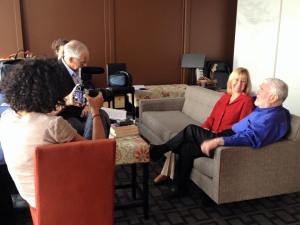
If you invite someone to stay the night in your home, and there is a accidental death, then, you show up at the funeral. As far as I know Alan Fox was not at Christine’s funeral. Alan is a very wealthy man. Did he call his attorney after Christine drowned? Who set up his foundation? Was/is Robert Brevoort Buck Alan’s attorney?
Jon Presco
ttp://fcfox.org/news/12-profiles_in_philanthropy_the_frieda_c_fox_family_foundation
The University of Arizona recently announced a $20 million gift to its School of Music by Alan C. Fox, president of ACF Property Management, a real-estate investment company in Studio City, California, and his wife Daveen. A fifth of that money will be used to create three endowed chairs at the school, and $2 million will establish the Fox Scholarship Fund. The school will also be renamed the Fox School of Music.
Alan Fox’s 20 Million Dollar Gift
Posted onApril 17, 2016byRoyal Rosamond Press


Alan Fox gifted…
View original post 1,846 more words
https://rehold.com/Pebble+Beach+CA/RODEO+RD/1042
https://www.thepacker.com/article/scott-salyer-released-jail
http://www.pineconearchive.com/100917-5.htm
https://en.wikipedia.org/wiki/SK_Foods
https://www.latimes.com/archives/la-xpm-2010-jun-17-la-fi-tomato-king-20100617-story.html
https://www.geni.com/people/William-Salyer-I/6000000009046368455
Stefan Eins and Jessie Benton
Posted on November 20, 2020 by Royal Rosamond Press
Capturing Beauty
by
John Presco
Copyright 2020
Jessie Benton married Mel Lyman. I met Jessie in Roxbury. I lived down the street from the Fort Hill Commune with three males. In 1971 we were part of the Food Conspiracy where we place orders for wholesale prices, then picked our food up several days later. I recall my kin to be. She had a gentle nature and was like a mother hen looking over her chicks as we divided the food. I believe we exchanged a couple of words. Her husband had designs to take over the world. He authored articles that appeared in his newspaper ‘The Avatar’. Mel Lyman may have been claiming he was God. At the time I was a follower of Avatar Meher Baba. Had Mel read about him.
There are a thousand artists who would die to have their names appear on the same page with Stefan Eins. He is that famous – for founding the last great Art Movement, if not the biggest art movement in the history of New York. Because Christine Wandel and Stefan are a couple, I am right there due to being Christine’s best friend. I now conclude she sabotaged my friendship with Stefan in order to publish her book about – THEM! She was upset when I blogged about her writer-friend, who did make me suspicious. I will summon that blog up titled ‘The Dullard’.
Christine had told me a hundred stories about Stefan that were ripe for the New York Art World. I told Christine I am going to include them in my autobiography. she had no problems. Indeed, Stefan acknowledges he and Chris are going to be the happy ending to my Art Story in the e-mail below. After buying a house together, Chris told me Stefan was not contributing monies for necessary repairs. I suggested I publish articles in the New Yorker Magazine and she gets the monies to fix her leaky roof and drainpipe. Peter Shapiro was going to pay my plane fare to go into the attic and give him an estimate of how much this repair was going to cost – so he could pay for it. We knew what a paranoid recluse Christine – is. When her pipes burst due to a freeze she brushed off several local plumbers – who put her on The Shit List.
Then she told me she voted for Trump and called me a….”Snowflake”. I was blown away! I wanted to come to New York and write about Bill Graham and his troupe – along with Stefan’s behavior after attending Easter Mass at Christine’s church. Christine was a good friend of Bill who took my ex-lover to dinner whenever The Loading Zone played at the Fillmore. Sure he wanted to get in her pants. Christine is now asking me to help her sell a tiney bell that came off Janis Joplin’s costume while they were backstage.
“How much do you think it’s worth? My neighbor threatened to call the city on me for my drain that fell in his yard. Stefan had some money, but he spent it on his latest Euro-Skank. You aughta see this one. She must be eighty, and she dresses like a young Euro-slut! They want to get a famous artist in bed and will pay him. He’s not an artist. He’s a gigolo. He accosted a woman in the subway, Hit her up for money! I apologized to this total stranger, and took back the calling card he gave her!”
“Chris. Stop! You got a gold mine right under your nose. Fuck Janis’s bobble. There are women in penthouses on the east side of Central Park who have unlimited amounts of money. Their money makes money. I see them in bed eating Bon-Bons while reading about your torrid Bohemian love antics. Let me write about this. We will split the revenue from book sales. Stefan doesn’t have a clue how to do this. He’s not going to meet one of these women on the subway.”
I tell Chris I want to spend the last of my Uncle’s Trust on a trip to New York. I had not been there since 1985. I asked Chris to get Stefan to put me up for a few days with one of his artists. I did not hear back. I kept asking. She now tells me she wants me to come stay in her house in Wilkes-Barre – so I can crawl in her attic.
“Chris. I’m too old to climb in your attic. And, I’ve put on wieght!”
“How much? You were so slim!”
When Christine first lay eyes on me in 1967, she had to have me. I wrote a poem about this and read it at the Jazz and Poetry readings. If she can get me in her attic, she will take me hostage – until I repair her house. The Dullard wants to buy her an evening gown and take her to a gathering of Boston Right-wing blue bloods. Stefan was with him – shopping. I wondered if he was writing – their bio!
This morning I found an e-mail from Stefan Eins thanking me for anointing him the leader of The Union of Western States. I am blown away. Two days ago I found an article proving my theory that my Prussian ancestors may have been part of a plan John Fremont had to found a New Nation in The West if the Confederacy won the Civil War. Yesterday I decided not to post on this, and save it for my book. But, after reading a newspaper article about how unpresented Trump’s clinging to power, is, I knew I am looking at a very Historic Event from the viewpoint of creative artists and writers.
I mention – my muses to Stefan. I just found Rena. What I realize, is, that in telling women I am writing about them, I activate their low self-esteem. Rena would talk about her flaws all the time. She complained her nose was too big. When I began my large painting of her when I was Peter’s roommate, I asked her to send me a pic of her profile. She jumped into a old photo booth, and sent me – one pic – that she picked from the others. She did the editing, and did not leave it up to me to pick the one – I liked the best. This is why she sicked the Sheriff on me, because in her letter she had set a guideline on how – I should see her – too! I activate Belle’s, Kim’s and Valkyrie’s low self-esteem. I held The Ugly Mirror up so – in their mind – they could behold flaws they had never seen before. I magnified them. I had to be destroyed. These four women were told about my struggle to own a picture of how my famous sister died. They could care less. How would Rosamond see them – if she was alive? I have been having a wikipedia War with Stacey Pierrot who keeps changing my input. Here she is saying……
“A rogue wave, unusual for that time of year, rushed into the cove.”
Does anyone but me see how insanely untrue this line is? How did she find out that rogue waves are rare in March? Here is the definition of rogue wave”
Christine had nightmares about being swept out to sea by a large wave. She was very protective of her youngest daughter, Drew Benton, who is an artist like Jessie Benton Lyman. Her father, the world famous artist, Thomas Hart Benton, the grandson of the Senator, whose name was removed from a building at Oregon State. Garth Benton was a famous muralist like Benton, whose legacy supported the community that Mel made. Jessie and Susan Benton had salons in Paris and San Francisco. These people are kin to Ian Fleming and Elizabeth Rosemond Taylor.
To put Poe next to the Lyman’s, Fleming, Royal Rosamond, and the Black Mask authors – is to map a universal constellation – that will be linked to people who befriended my on facebook, who are trying to found The New Kingdom of Prussia – in Europe! They knew nothing of my Prussian ancestors involvement of founding a Prussian Kingdom in California, that is now hinged on how we collectively defeat the coronaviruses. Poe’s ‘Masque of the Red Death’, and De Rougemont’s ‘The Devil’s Share’ will lead the way in established a Creative Dynasty that will form bonds with the Europen Union, and Artists and Writers all over the World.
Some people of note are suggesting Trump is guilty of treason. He is being defended by millions of evangelical women who voted for him – twice! I now understand Stefan inflamed Christine Wandel’s accute low self-esteem by forcing her to attend publc events where he – shined! Stefan also owns a poor opinion of himself due to his childhood abuse. His father was a Nazi. When he came home after Germany surrendered, he took his three year old son to the balcony, and hung him over the edge by his ankles, threatening to drop him. For my sister to go down in that cove, was not only suicide, it would be equivalent holding Drew over the yaw of Death.
I had another long talk with my friend, Casey Farrell about the course of my writing career. I told him I will be writing a series of short stories. I felt good about my mission statement. This is not meant to be. In reading the exchange of e-mails with Stefan, I now know for sure I am authoring The Great American Novel – while running one of America’s Great Newspapers – all by myself!
My fifty year friendship with Christine ended on Easter when I expressed shock at Trump’s behavior.
“How dare you ruin my Easter. Trump is a great man!”
“Fuck you!”



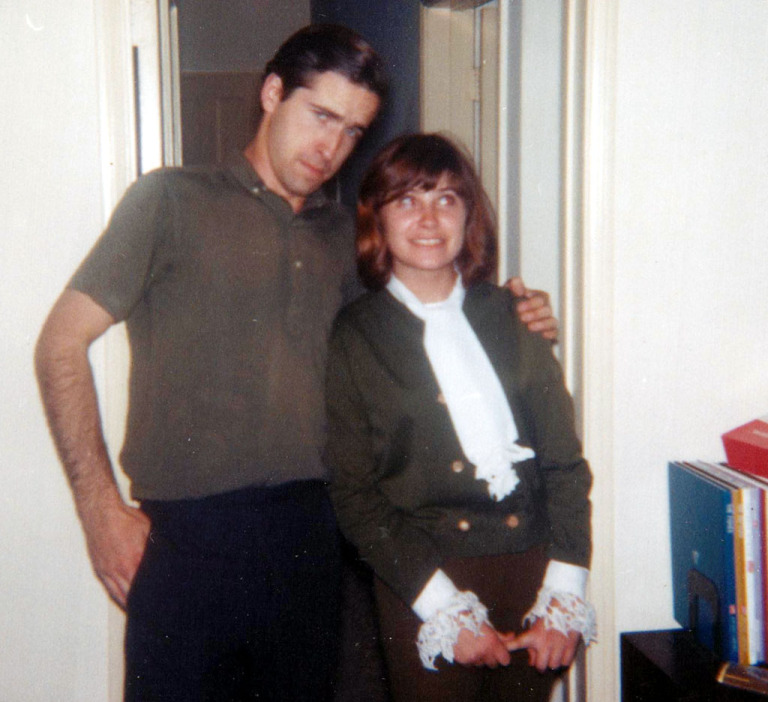
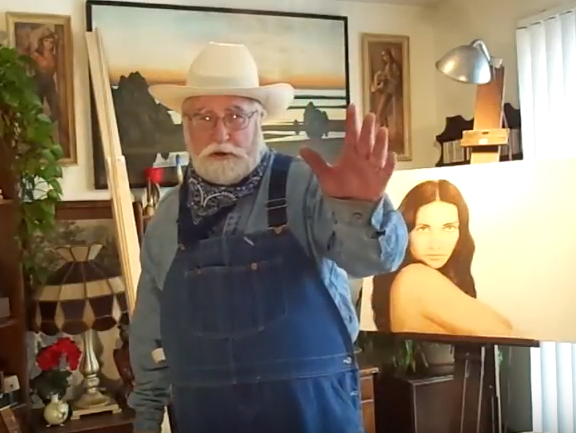
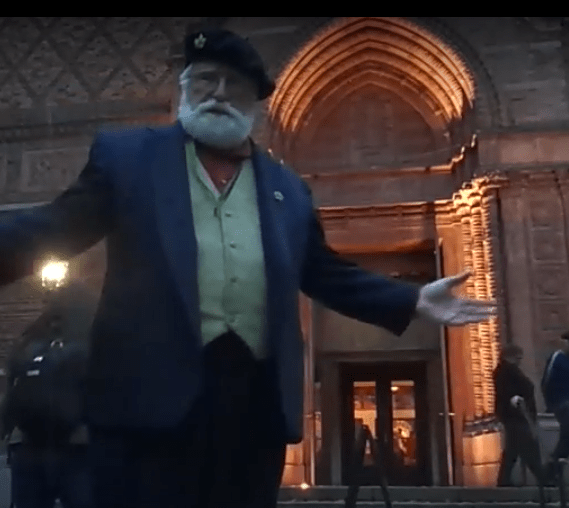
https://en.wikipedia.org/wiki/Christine_Rosamond
Death
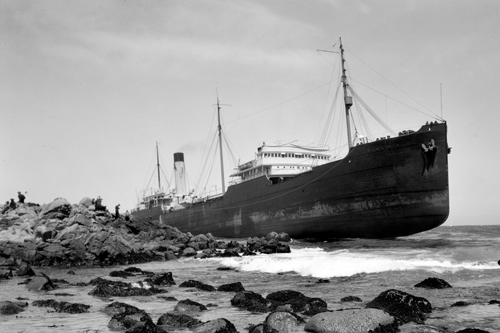
Just weeks after Christine’s last art expo in 1994, she was invited to stay in a famous home twenty miles south of Carmel at Rocky Point. As reported in the Carmel Pinecone, Rosamond had had nightmares about a giant wave causing her demise. On March 26, 1994, Rosamond was exploring tidal pools in a cove along with her sister and eight-year-old daughter, Drew. A rogue wave, unusual for that time of year, rushed into the cove. The sister was able to save the child, but Rosamond was swept out to sea. She was 46.[6]
http://www.ornamentalist.net/2013/04/in-memoriam-garth-benton.html
I awoke at 4:00 A.M. wondering if my daughter put a witch on me. Why? Why do women take a instant un-liking to me? The answer came in a flash! I am a Historian! Most women hate history and see a dignified white-haired scholar -as their enemy! My ilk had to have oppressed them for thousands of years. Dumb, lust-filled men are like sex-slaves to women. This is the type my daughter – and her mother – bonded with.
I got up, and got on my computer. I needed back up from my dead ancestors. I looked to my Stuttmeister/Janke folks. Eureka! I found him!
John Wilson Poe
https://hubpages.com/education/The-Colonization-of-California-France-Prussia-Russia-and-England
Prussia
Prussia, alone among the contenders for California, had no colonies of its own. All but without a navy of its own, and the weakest and smallest of the European great powers, its position as a candidate for the vast state of California upon the other side of the world can seem unlikely at first. Friedrich Ludwig von Roenne, the German ambassador to the United States, was a vigorous proponent of colonies, and wrote the following to Christian von Bunsen, the Prussian ambassador to the United Kingdom, as follows:
I fully agree with you that now is the moment, under the rule of our excellent King, who has a genuine German mind and heart, which beats aloud for everything that is noble, to lay the foundations of the greatness of our beautiful German Fatherland, in a political as well as in a commercial sense. England will always, as you say, see in us an awkward rival, but the time has arrived when we must act in a bold and independent way, and this can only happen if we are united as if we have a Navy and colonies. What a country Germany could become in such circumstances! She would be the equal of any other . . .
Your idea of purchasing California is an excellent one. I would never have thought of doing such an audacious thing, but, nevertheless, as early as the year 1837 I already had the notion, for when I reported on the condition of immigrants- especially with regard to the question of establishing a penal colony- I called attention to the possibility that Mexico might agree to give up a piece of land in California. The idea of buying all California deserves in every way to be preferred to this. The many Germans who go there yearly from the United States very soon cease to be Germans; they adopt local manners and customs and are entirely lost to Germany. On the other hand, a completely German colony, even long after migration, would retain for our German manufactures a permanent market and yield all the profit to the Mother Country. The possession of such a colony would also provide a good training-ground for our army and offer innumerable other benefits.
Upper California- which alone can be considered- if one can trust the many descriptions of it which which have been produced- the [latest] is I believe that by Alexander Forbes,12 published in 1839 in London- is one of the finest countries in the world, and on account of its happy position between the tropical and northern zones, is capable of bringing forth all the products which are suitable for exchange with the Mother Country, and which also would even be sought after by Mexico and the South American states. It is only necessary that it should be in the possession of an active, industrious and energetic people, and who would dispute these qualities to our German countrymen? These are the qualities whereby they earn so much respect here in the United States. No people on earth are better as cultivators of the soil than the Germans.
England, France and the United States would no doubt look at such an undertaking with jealous eyes, but I can hardly believe they would use force to prevent it from happening. Certainly not the United States! But in any case it would be a good thing, before taking any of the contemplated steps, to assure the cooperation of Denmark through her Navy. Only then would we be powerful enough, and have the means to carry out this plan.
The sovereignty of Mexico over California may hardly at be said at present to be more than a paper one-as a matter of fact I don’t exactly know what the situation is. Three years ago independence was declared.13 Nevertheless it would be very important vis-à-vis the other powers that sovereignty should be ceded by Mexico. Actual possession could then easily be secured without the use of very much force being required. Also, I am inclined to think, because of the looseness of the existing connection, that she would be readily disposed to entertain such a proposition. In any case she would prefer to see Germans there to the English, the Americans or the Texans, and I believe that even these two last would prefer to have Germans to the English.
Nevertheless I am not absolutely in a position to say whether this is likely to have enthusiastic acceptance on the part of Mexico. If Denmark appreciated her advantage she would not hesitate for a moment to cooperate in the closest possible way with Germany. The time is past- or at least should be- when smaller nations should see advantage in being hostile to their more powerful neighbours. . . . The smaller states can only reckon on the continuance of their independence if they don’t stand in the way of their larger neighbours. . .
Ludwig von Roenne’s words were not just idle musings. He planned to negotiate with Denmark for the usage of the Danish navy in communications with the colony, and to have his colleague Baroth von Gerolt, a fluent Spanish speaker, conduct negotiations with the Mexicans. However, in December 1842, he Mexican ambassador to the United States in Washington DC. Talking with Mr. Almonte, the Mexican ambassador, he was convinced that the Mexicans saw advantage in ceding Northern California to the Germans, rather than, as rumors put it, to the American or the English. For the Mexicans, the idea was that it would form an effective buffer state between them and the Americans. He would go ahead as well to contact William Hogan, a former US congressman and the equivalent of a lobbyist, who declared his support for the endeavor. This all came to nought : at this points sources differ with either that the Prussian government advanced no further, quietly shelving the project, or that it proceeded as far as negotiations with the Mexicans in Washington and London for the sum of some $6 million to purchase the colony, but then abruptly dropped out of negotiations. Whichever that it was, California would not be painted in Prussian blue.

What if these attempts had succeeded?
As with any discussion of attempts that might have succeeded, but didn’t, there is the question : what if they did work out? What if one of these nations managed to take California from the Spanish or the Mexicans, establishing it as one of their own colonies?
In all of these nations, the question they faced is not whether they could take California, but whether they could keep California. As American settlers expanded West in huge numbers, the possibility existed that any European colony might be overwhelmed by them, just as Mexican Texas faced an American revolt as Americans grew to outnumber the Mexicans in its territory. European powers would have to ensure that any territory they took had a strong enough government, or enough of their own emigrants (and loyal ones) to be able to prevent an internal rebellion from snatching it from their hands. Here, the capabilities of California’s suitors diverged.
- England
Throughout the long 19th century, England possessed the largest colonial empire in the world, one which continued to expand throughout time. Although in North America the English had lost and were challenged by the newly-rising United States, with the world’s largest colonial empire and the world’s largest and most powerful navy, the capability for the English to be able to project power to California would have been more than enough to deal with any American incursions there. In addition, large numbers of people emigrated from England, driven from conditions of misery in that country, and thus a large settler pool existed for any potential Californian colony. Thus, a Californian colony would in the intermediate future in all probability remain British.
- France
In the 19th century, the only nation which stood second to the United Kingdom in terms of its colonial empire, and in terms of its navy, was France. While the France of the 1840s, increasingly riven by internal turmoil and division, had fallen in relative terms from its position half a century before, France still had a powerful navy, army, and world-wide reach. In the event that the French succeeded in gaining control of California, they seem likely to continue to be able to hold it. France’s only problem was a small settler population during the 19th century, as few Frenchmen preferred to leave overseas : the lack of the same explosive population growth as elsewhere, and the solution of rural landlessness through land re-distribution, meant that few French left the country. But during the pre-Gold Rush days in California, the French population was relatively abundant from trappers and explorers, and during the Gold Rush itself some 25% of the population was foreign and a third of that French, an entirely reasonable base combined with French support with them and fewer Americans. Thus, a French California seems like a colony that would remain French, instead of being supplanted by the United States. France would both be able to settle enough French into the territory to ensure the reliability of its population, and to threaten the United States with sufficient military power, to ensure that the costs of taking California would be too high to make it worth it for the Americans.
- Prussia
The smallest and the weakest of the European great powers, and lacking in a navy, Prussia’s capability to hold onto the distant colony of California is one which presents itself as doubtful. Although many German colonists came to the United States in the 19th century, few of these were ones that the Prussian state could call upon or view as loyal to its projects : many came from outside of Prussia, such as in Saxony, and of those that came from Prussia, a great number were German liberals fleeing from oppression at home. Prussia’s capability to send colonists was limited, while its limited navy meant that supporting its colony through military means was equally problematic. It was envisioned that Denmark would enable Prussia to support its colony through the support of the Danish navy, but this raises the great problem of colonies : that colonial and continental politics diverged. If Danish support would enable the Prussians to guard their colony, in Europe, Germany desired Schleswig-Holstein, under Danish control, and if, as historically, this conflict flared into war, it would make Danish-German colonial cooperation infeasible. Still, lacking a navy didn’t historically preclude colonial endeavors, such as Belgium’s colony in the Congo, created by a state almost entirely lacking in a navy, Prussia had a famed army and government administrative system, and at least some German settlers might be drawn to California. A continued Prussian hold over California might be unlikely, but with careful management of power politics and an iron hand, Prussia might have been able to forestall American interest in the region long enough to secure it.
stefan.eins@oneunoeins.comTo:braskewitz@yahoo.comFri, Nov 3, 2017 at 5:13 PMToo bad you didn’t make it to New York!! How come? Need some time to go through your recently emailed product – beautiful shot of nude females!!! Tootle-oo! Let’s all be happy! Stefan, Tel. 9176050974
stefan.eins@oneunoeins.comTo:John AmbroseFri, Feb 24, 2017 at 8:36 AMTHANK YOU! I AM HONORED, Stefan One 壹 Eins ОДИН فرد Uno, T 9176050974 Hide original message
——— Original Message ———Subject: Euro USA
From: “John Ambrose” <braskewitz@yahoo.com>
Date: 2/16/17 1:30 pm
To: “stefan.eins@oneunoeins.com” <stefan.eins@oneunoeins.com>
Stefan, I would like you to be the ambassador for the Western Union of State in New York. Jon Western Union of States
| Western Union of StatesWhite Canton – Correct Version image by Rick Wyatt, 28 July 2001 Blue Canton – Wrong Version image by Rick Wyatt… |
stefan.eins@oneunoeins.com
To:John Ambrose
Fri, Feb 24, 2017 at 8:36 AM
THANK YOU! I AM HONORED, Stefan One 壹 Eins ОДИН فرد Uno, T 9176050974
John Ambrose <braskewitz@yahoo.com>
To:stefan.eins@oneunoeins.com
Fri, Jan 3, 2014 at 10:16 PM
I will help promote your work. Check this out. Show it to Christine.
http://en.wikipedia.org/wiki/Blows_Against_the_Empire
Jon Gregory
John Ambrose <braskewitz@yahoo.com>
To:stefan.eins@oneunoeins.com
Mon, Jan 20, 2014 at 11:52 PM
Thank you for you and Chris offering me the end of my story, but, I think it arrived tonight. However, I have such a story to tell, it might take two books – or three!
I’d love to come see you and Chris. Let me see if my Muse is ready to see me. She live’s in Montana. Maybe I can do a stop-over on my way to NY.
Show Chris this video.
https://rosamondpress.wordpress.com/2014/01/21/22450
Love
Jon Gregory
John Ambrose <braskewitz@yahoo.com>
To:stefan.eins@oneunoeins.com
Mon, Jan 20, 2014 at 11:52 PM
Thank you for you and Chris offering me the end of my story, but, I think it arrived tonight. However, I have such a story to tell, it might take two books – or three!
I’d love to come see you and Chris. Let me see if my Muse is ready to see me. She live’s in Montana. Maybe I can do a stop-over on my way to NY.
Show Chris this video.
https://rosamondpress.wordpress.com/2014/01/21/22450
Love
Jon Gregory
Hide original message
On Monday, January 20, 2014 9:36 AM, “stefan.eins@oneunoeins.com” <stefan.eins@oneunoeins.com> wrote:
Hi,
The picture of your Muse looks like Christine. Your email – to me – below refers to Stefan and Christ (!), I thought the end of your autobiography might be you actually visiting New York and joining me and Christ having a magical time. How about it? After all: you found your muse! Tootle-oo!
Stefan Eins
——– Original Message ——–
Subject: Strange Freind
From: John Ambrose <braskewitz@yahoo.com>
Date: Thu, January 16, 2014 12:45 am
To: “stefan.eins@oneunoeins.com” <stefan.eins@oneunoeins.com>
Hi Stefan;
My artist-friend Amy turned out to be too strange. Forget about that show.
The good news, is, I found my Muse and she sent me a four page letter. We have not communicated in 44 years. I am inspired. I have the end of my autobiography.
I trust you and Christ are having a magical time.
Jon Gregory
Picture of my Muse at 18, the last time we talked.
John Ambrose <braskewitz@yahoo.com>
To:stefan.eins@oneunoeins.com
Mon, Sep 23, 2013 at 3:31 PM
Hi Stefan.
I heard your message. Chris like the clothes – great! Now she is ready for NY Art Scene.
I hope all went well in court. I will send photos of our friends on bridge.
Have a good trip!
Jon
stefan.eins@oneunoeins.com
To:braskewitz@yahoo.com
Sat, Jan 4, 2014 at 9:00 AM
Hi, attached a shot of Christine and me; it was taken by Julie Christine daughter a few days ago.
Stefan
stefan.eins@oneunoeins.comTo:braskewitz@yahoo.comThu, Sep 12, 2013 at 11:20 AMHi John,Very interesting, will follow up!Stefan917 6050974OneUnoeins.com ——– Original Message ——–
Subject: Chris’s Friend
From: John Ambrose <braskewitz@yahoo.com>
Date: Thu, September 05, 2013 6:31 pm
To: “Stefan.Eins@OneUnoEins.com” <Stefan.Eins@OneUnoEins.com>
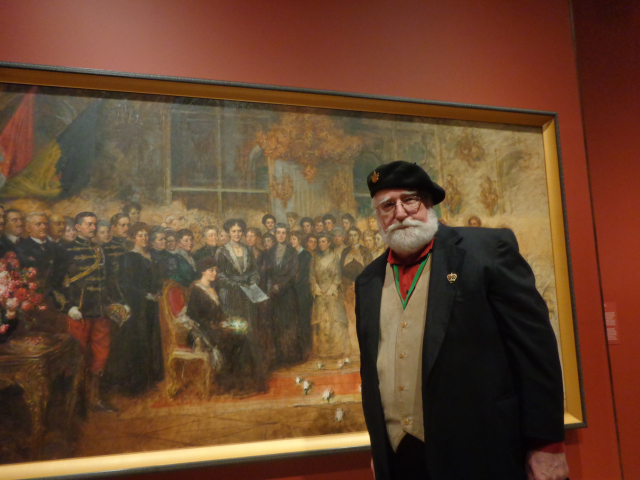
Hello Stefan; It was good to talk to you. Anyone who champions Chris, is a friend of mine. Here is my phone no. 541 844-1974 Here is painting ‘The Last Audience of the Habsburgs’. http://jsma.uoregon.edu/events/gallery-talk-last-audience-hapsburgs
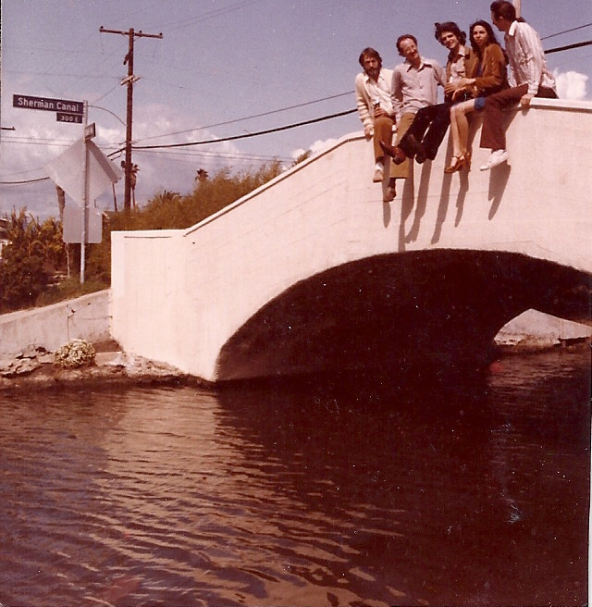
http://www.youtube.com/watch?v=AMRX89J6MFU (Preview) Here is some of my history off my blog. My former wife was married to Thomas Pynchon. She was an artist and part of a Family Dynasty of Artists. My late sister was the world famous artist, Christine Rosamond Benton. An early love, Keith Purvis was Chris’s lover later on. On a bridge in Venice Ca. Is from left to right, myself, Peter Shapiro, Tim O’Connor, Janette, and Keith.In 1967 we lived in a large Victorian with the ‘Loading Zone’ in Oakland. Chris and Peter were also lovers. Peter called two days ago to see how his old friends are doing. Please show this photo to Chris. Two bad biographies were written about my sister, and two bad screenplays, one of them written by my kindred, Carrie Fisher. Elizabeth Rosemond Taylor is my kindred. Chris Wandel and our mutual friends will be in my autobiography ‘Capturing Beauty’. I believe you are a perfect agent that will bring back Empress Zita to the Motherland. You are known for your ‘Found Art. I see a Grand Entrance and Ball. I would like to see Chris there, in a Austrian Palace, being asked to dance by a Habsburg Prince. Who anc re commission to make a glass slipper. Your friend in Art: Jon Gregory Presco President: Royal Rosamond Press https://rosamondpress.wordpress.com/2013/08/10/joan-de-rougemont-queen-mother-of-all-queens/
https://rosamondpress.wordpress.com/2013/08/30/mary-ann-tharaldsen-thomas-pynchon/
https://rosamondpress.wordpress.com/2013/07/01/back-to-the-land-bohemians/
http://en.wikipedia.org/wiki/The_Loading_Zone
https://rosamondpress.wordpress.com/2013/08/03/our-creative-love-stories
https://rosamondpress.wordpress.com/2012/11/30/the-buriel-place-of-the-lords-of-rougemont
Art repatriation is the return of art or cultural objects, usually referring to ancient or looted art, to their country of origin or former owners (or their heirs). The disputed cultural property items are physical artifacts of a group or society that were taken from another group usually in an act of looting, whether in the context of imperialism, colonialism or war. The contested objects range widely from sculptures and paintings to monuments and human remains.
One of the most infamous cases of esurient art plundering in wartime was the Nazi appropriation of art from both public and private holdings throughout Europe and Russia. The looting began before World War II with illegal seizures as part of a systematic persecution of Jews, which was included as a part of Nazi crimes during the Nuremberg Trials.[5] During World War II, Germany plundered 427 museums in the Soviet Union and ravaged or destroyed 1,670 Russian Orthodox churches, 237 Catholic churches and 532 synagogues.[6]
The 1970 UNESCO Convention against Illicit Export under the Act to implement the Convention (the Cultural Property Implementation Act) allowed for stolen objects to be seized if there were documentation of it in a museum or institution of a state party and the following agreement in 1972 promoted world cultural and natural heritage[33]The 1978 UNESCO Convention strengthened existing provisions; the Intergovernmental Committee for Promoting the Return of Cultural Property to its Countries of Origin or its Restitution in case of illicit Appropriation was established. It consists of 22 members elected by the General Conference of UNESCO to facilitate bilateral negotiations for the restitution of “any cultural property which has a fundamental significance from the point of view of the spiritual values and cultural heritage of the people of a Member State or Associate Member of UNESCO and which has been lost as a result of colonial or foreign occupation or as a result of illicit appropriation”.[34] It was also created to “encourage the necessary research and studies for the establishment of coherent programmes for the constitution of representative collections in countries whose cultural heritage has been dispersed”.[34]
http://portal.unesco.org/culture/en/ev.php-URL_ID=35283&URL_DO=DO_TOPIC&URL_SECTION=201.html
UNESCO’s Executive Board and other Organs elected by the General Conference (36C), Intergovernmental Organs and Councils of UNESCO’s InstitutesIntergovernmental Committee for Promoting the Return of Cultural Property to its Country of Origin or its Restitution in Case of Illicit Appropriation (ICPRCP)Origin: Committee established by the General Conference at its 20th session, in 1978 (20 C/Res. 4/7.6/5). Statutes amended by the General Conference at its 23rd (23 C/Res. 32.1) (1985), 28th (28 C/Res. 22) (1995) and 33rd (33 C/Res.44) (2005) sessions.Mission: To seek ways and means of facilitating bilateral negotiations for the restitution or return of cultural property to its countries of origin; to promote multilateral and bilateral co-operation in this respect; to submit proposals with a view to mediation or conciliation to the Member States concerned; to encourage the necessary research and studies for the establishment of coherent programmes for the constitution of representative collections in countries whose cultural heritage has been dispersed; to foster a public information campaign on the real nature, scale and scope of the problem; to guide the planning and implementation of UNESCO’s programme of activities in the matter; to encourage the establishment or reinforcement of museums or other institutions for the conservation of cultural property and the training of the necessary scientific and technical personnel; to promote exchanges of cultural property in accordance with the Recommendation on the International Exchange of Cultural Property.
http://www.unesco.org/eri/committees/Committees_and_Organs_GC.asp?code=+1+8&language=E
https://www.facebook.com/unesco
Mel Lyman’s Culture War
Posted on March 17, 2012by Royal Rosamond Press
Mel Lyam married Jessie Benton, the daughter of the artist, Thomas Hart Benton, the cousin of Garth Benton, the father of Drew Benton, the daughter of my late sister, Christine Rosamond Benton.
The Gooch genealogy ends thus;
Children of THOMAS BENTON and RITA PIACENZA are:
i. THOMAS PIACENZA7 BENTON, b. Private.
ii. JESSE P. BENTON, b. Private.
I met Jessie once at the Fort Hill commune. I lived down the street two blocks in a commune I and four friends founded in 1970. We exchanged food and ideas.
With the rekindling of the Culture Wars by the Pope over sonic imaging and birth control, I must assume the War on Hippie Bohemians has been rasied from the Dead – Heads. When you add together my history with alternative societies and thinking, you can conclude I am the Big Boss Bohemian Man – the Last Hippie Man Standing!
Come and get me – Ratzinger! You dirty rat!
Jon the Nazarite
Melvin James Lyman (March 24, 1938, Eureka, California – April 1978, exact date and location unknown) was an American musician, film maker, writer and founder of the Fort Hill Community.
[edit] Musician“ Mel Lyman played harmonica like no one under the sun / Mel Lyman didn’t just play harmonica, he was one. – Landis MacKellar[1] ”
Lyman grew up in California and Oregon. As a young man, he spent a number of years traveling the country and learning harmonica and banjo from such legendary musicians as Woody Guthrie, Brother Percy Randolph, and Obray Ramsey.[2] In 1963 he joined Jim Kweskin’s Boston-based jug band as a banjo and harmonica player
Lyman, once called “the Grand Old Man of the ‘blues’ harmonica in his mid-twenties”,[3] is remembered in folk music circles for playing a 20 minute improvisation on the traditional hymn “Rock of Ages” at the end of the 1965 Newport Folk Festival to the riled crowd streaming out after Bob Dylan’s famous appearance with an electric band. Some felt that Lyman, primarily an acoustic musician, was delivering a wordless counterargument to Dylan’s new-found rock direction. Irwin Silber, editor of Sing Out Magazine, wrote that Lyman’s “mournful and lonesome harmonica” provided “the most optimistic note of the evening” [4]
[edit] FilmmakerIn the early Sixties, Lyman had been drawn to New York. The music and fellow musicians that he found there led in turn to a larger circle of writers, artists and filmmakers. He became friends with underground film-maker Jonas Mekas, which led to the studios of Andy Warhol, and Bruce Conner all of whom he counted as both teachers and inspirations for his later film work. Several of Lyman’s films have recently been digitally restored to be included in the permanent collection of the Anthology Film Archives,
[edit] WriterIn 1966, supported and funded by Jonas Mekas, Lyman published his first book, Autobiography of a World Savior, which set out to reformulate spiritual truths and occult history in a new way. In 1971, Lyman published Mirror at the End of the Road, derived from letters he wrote during his formative years, starting in 1958 from his initial attempts to learn and become a musician, through the early Sixties as his life widened and deepened musically and personally. The last entries are from 1966 which simply express the profound joys and deepest losses which defined and gave his life direction and meaning in the years ahead. The key to the book and the life he lived afterwards are stated simply in the dedication at the beginning “To Judy, who made me live with a broken heart” .[5]
[edit] The Lyman Family, The Fort Hill Community and the AvatarIt was his relationship with Judy which brought him to Boston in 1963. Again, Lyman became acquainted with many artists and musicians in the vibrant Boston scene including, among others, Timothy Leary’s group of LSD enthusiasts, IFIF. Lyman was involved for a very short time and, against his wishes, so was Judy. Knowing LSD’s power, he felt she was not ready but, “the bastards at IFIF gave her acid… I told her not to take it. I knew her head couldn’t take it.” Lyman’s fears turned out to be justified and she left college and returned to her parents in Kansas.[6] Lyman was by all accounts very charismatic and later, after Judy had left, a community or family naturally tended to grow up around him. At some point thereafter Lyman began to realize himself as destined for a role as a spiritual force and leader.
In 1966, Lyman founded and headed The Lyman Family, also known as The Fort Hill Community, centered in a few houses in the Fort Hill section of Roxbury, then a poor neighborhood of Boston. The Fort Hill Community, to observers in the mid-to-late Sixties, combined some of the outward forms of an urban hippie commune with a neo-transcendentalist[7] socio-spiritual structure centered on Lyman, the friends he had attracted and the large body of his music and writings.
Although Lyman and the Family shared some attributes with the hippies– prior experimenting with LSD and marijuana and Lyman’s cosmic millennialism–they were not actually hippies either in appearance (female members dressed conservatively and male members wore their hair relatively short by the standards of the era) or beliefs (while Lyman and other Family members had fathered children by different women, polyamory was eschewed in favor of serial monogamy).
By the Spring of 1967 the Fort Hill Community had become an established presence in Boston and it, along with members of the wider community in greater Boston and Cambridge, came together to create and publish the Avatar. It contained local news, political and cultural essays, commentary and more personal contributions, writing and photography, from various members of the Fort Hill Community including Lyman. The paper and magazine set new standards in content and design later adopted by more mainstream publications. Throughout the first year of its existence it created what became a national audience and many more people visited Fort Hill at that time, some eventually staying and becoming part of the community.
Rather than the gentle and collectivist hippie ethic in other publications of the time, Lyman’s writing in Avatar espoused a philosophy that contained, to some readers of the time ‘, strong currents of megalomania and nihilism and to others a powerful alternative voice to the prevailing ethos.[8]
“ I am going to reduce everything that stands to rubble / and then I am going to burn the rubble / and then I am going to scatter the ashes / and then maybe SOMEONE will be able to see SOMETHING as it really is / WATCHOUT ”
—Mel Lyman, Declaration of Creation [9]
After working very intensely on each issue, in the Spring of 1968 the Family gained complete editorial control (some say adversarially) of Avatar for the final issue of the paper. Later they founded their own magazine, American Avatar which continued the editorial directions of the newspaper. Lyman’s writings in these publications brought increased visibility and public reaction both pro and con. His writings, along with others in the publications, could be poetic, philosophical, humorous and confrontational, sometimes simultaneously, as Lyman at various times claimed to be: the living embodiment of Truth, the greatest man in the world, Jesus Christ, and an alien entity sent to Earth in human form by extraterrestrials. Such pronouncements were typically delivered with extreme fervor and liberal use of ALL CAPS.
“ Love isn’t something you find, something you do, something you study. Love is something you BECOME after there is no more YOU. – Mel Lyman[10] ”
[edit] Later developments, and Lyman’s deathIn 1971, Rolling Stone magazine published a cover exposé, an extensive philippic on the Family by associate editor David Felton. The Rolling Stone report described an authoritarian and dysfunctional environment, including an elite “Karma Squad” of ultra-loyalists to enforce Lyman’s discipline, the Family’s predilection for astrology, and isolation rooms for disobedient Family members. Family members disputed these reports.
“ The only difference between us and the Manson Family is that we don’t go around preaching peace and love and we haven’t killed anyone, yet. – Jim Kweskin (perhaps in jest)[11] ”
The Rolling Stone article and the earlier trial of Charles Manson, who seemed to share some traits in common with Lyman, raised the Family’s profile and – whether fairly or not – established Lyman in the sensationalist part of the public mind as a bizarre and possibly dangerous person.
But although Lyman deeply understood Charles Manson and even corresponded with him once, and was sometimes revered as a Messiah-like figure by the Family, it would be inaccurate to overstate the similarities between the Manson Family and the Lyman Family. The Lyman Family was larger and more stable and productive than Manson’s. Unlike Manson’s group, Lyman’s included many persons of accomplishment and note, such as Kweskin, therapist and actress Daria Halprin,[12] actor Mark Frechette, and pioneering rock critic Paul Williams. And although the Family was often accused of strong-arm tactics in dealing with neighbors and alternative-community groups, they certainly never killed anyone or even manifested serious homicidal intent.
However, in 1973, members of the Family, including Frechette, staged a bank robbery. One member of the Family was killed by police, and Frechette, sentenced to prison, died in a weightlifting accident in jail in 1975.[13]
Frechette said the place was not a commune: “It’s a ‘community,’ but the purpose of the community is not communal living. … The community is for one purpose, and that’s to serve Mel Lyman, who is the leader and the founder of that community.”[14]
Thus it has been said that, unlike the Manson Family, Lyman’s did not explode in a dramatic denouement. Rather, the Family took a lower profile and carried on, quietly building on the relationships formed in the turbulent early years. Lyman died in 1978, age 40, under unknown (but presumably natural) circumstances.
After Lyman’s death, the Family evolved into a more conventional extended family- small, low-profile, and prosperous. The skills and work ethic honed in refurbishing the structures of the Family compound led to the founding of the profitable Fort Hill Construction Company. The Family acquired property in Kansas and other places. Many Family members went on to successful careers. Although some former Family members have rejected him and perhaps that part of their own past, all current members still revere Lyman, as do many former members.
Jonas Mekas (Lithuanian pronunciation: [ˈjonɐs ˈmækɐs]; born December 24,[1] 1922) is a Lithuanian-born American filmmaker, writer, and curator who has often been called “the godfather of American avant-garde cinema.” His work has been exhibited in museums and festivals across Europe and America.
Jonas Mekas (Lithuanian pronunciation: [ˈjonɐs ˈmækɐs]; born December 24,[1] 1922) is a Lithuanian-born American filmmaker, writer, and curator who has often been called “the godfather of American avant-garde cinema.” His work has been exhibited in museums and festivals across Europe and America.
In 1954, he became editor of Film Culture, and in 1958, began writing his “Movie Journal” column for The Village Voice. In 1962, he co-founded Film-Makers’ Cooperative (FMC) and the Filmmaker’s Cinematheque in 1964, which eventually grew into Anthology Film Archives, one of the world’s largest and most important repositories of avant-garde films. The films and the voluminous collection of photographs and paper documents (mostly from or about avant garde film makers of the 1950-1980 period) were moved from time to time based on Mekas’ ability to raise grant money to pay to house the massive collection. At times, Mekas personally paid its housing rent and, at low points in external funding, he had to restrict access to the collection. Easily, he can be credited with single-handedly saving large portions of the avant garde films and associated materials.
He was part of the New American Cinema, with, in particular, fellow film-maker Lionel Rogosin. He was heavily involved with artists such as Andy Warhol, Nico, Allen Ginsberg, Yoko Ono, John Lennon, Salvador Dalí, and fellow Lithuanian George Maciunas.
In 1964, Mekas was arrested on obscenity charges for showing Flaming Creatures (1963) and Jean Genet’s Un Chant d’Amour (1950). He launched a campaign against the censorship board, and for the next few years continued to exhibit films at the Film-makers’ Cinemathèque, the Jewish Museum, and the Gallery of Modern Art.
From 1964-1967, he organized the New American Cinema Expositions, which toured Europe and South America and in 1966 joined 80 Wooster Fluxhouse Coop.
In 1970, Anthology Film Archives opened on 425 Lafayette Street as a film museum, screening space, and a library, with Mekas as its director. Mekas, along with Stan Brakhage, Ken Kelman, Peter Kubelka, James Broughton, and P. Adams Sitney, begin the ambitious Essential Cinema project at Anthology Film Archives to establish a canon of important cinematic works.
http://www.trussel.com/f_mel.htm
Share this:
Share this:
Art Conspiracy and Fraud
Posted on June 9, 2014 by Royal Rosamond Press
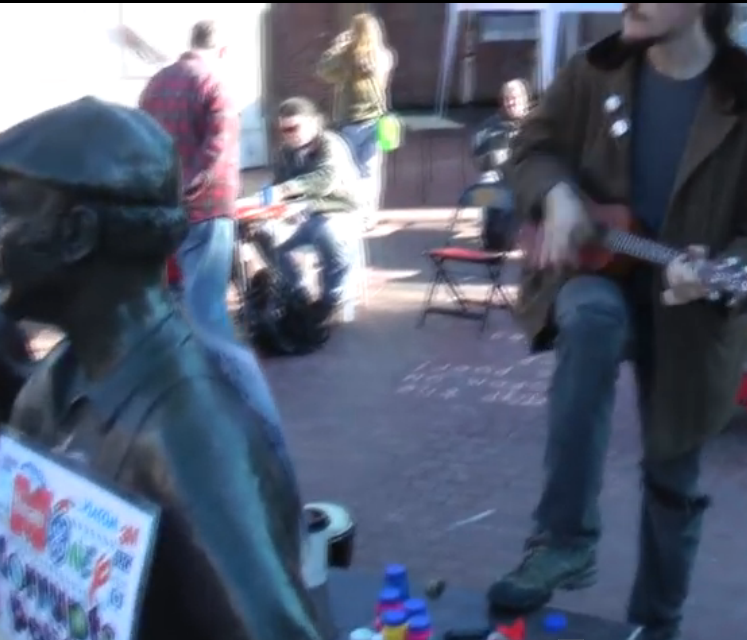



Here is a video of Alley Valkyrie and John Monroe participating in a Revive Ken Kesey Square event. John is playing the guitar Alley was holding. These two got arrested with Belle Burch, as did Jean Stacey who may be an attorney for SLEEPS. There is a call for “art vendors”. Note how the statue of Ken Kesey is used to promote their cause a sandwhich-board put around his neck. This is defacing a public work of art. A artist displays her work.
Note how Alley says “Yes! Yes! Yes!” like Belle did in my video. Did Belle see this video? Note woman with red OCCUPY ribbon on her hat that is there at the arrest.
I was not approached by a individual, but by a person representing a group that may have known Belle was going to give me a call and set up an appointment. This group WANTS ARTISTS! After I tell Belle Burch what my blog is about, she says;
“We can talk. What’s your number?”
Belle was not taking my number for her personal use, but the use of her extended “family” of activists. She was obligated to tell me she was acting as an agent for a group of people. To not do so, is fraud!
Alley is enjoying her One Woman Downtown Celebration, she going out of her way to make me feel my life is in danger if I go downtown, or, attend a City Hall meeting. This came about when I questioned Belle partying downtown at bars, and perhaps doing so with monies donated to the homeless. Alley is not homeless. She attached herself to the homeless plight and brags about getting laws changed, just for her.
It is obvious Belle has been taking lessons from Alley on how to be Cute & Disorderly while getting to manipulate people with impunity. This cute little pixie never has to grow up. Alley is ‘King of the Planter’ and a female Robin Hood.
Chalk graffiti is harmless. At the Wandering Goat I told Belle how the European Bohemians would put their tables out in the street in defiance of the curfews their conquerors would impose on them. Here was her chance to tell me how she and her “family” do this in Ken Kesey Square. Who is giving these Pixies permission to rip folks off? Jean Stacey looks like an adult, but, I doubt it! They got caught, and they got scared! Case closed!
It’s official. I am very angry! But, then I realize this will put me in the art history books. Both Belle and Alley are – artists! Never in Art History have two artist launched a vicious campaign to utterly destroy the reputation of a fellow artist! This is a milestone in the short history of Women’s Liberation! I think I am going to try to sell a story to a major magazine. ‘Cute and Disorderly’….A New Approach!
Perhaps Playboy would want to do a shoot?
Jon Presco
Kesey Square Revival
May 4, 2012
“You don’t lead by pointing and telling people some place to go. You lead by going to that place and making a case.”
– Ken Kesey
Reclaim Kesey Square as a place for street artists, entertainers, friends and activists to gather as a community.
Since the breakup of the Washington Jefferson Park occupation site, many of the displaced homeless have been harassed by some within the Eugene Police Department.
They have been unfairly targeted, charged with small crimes, and then told they can’t return to a 20 block area surrounding Kesey Square.
This “Downtown Public Safety Zone” is being used to discriminate against the homeless. Alley Valkyrie demonstrates how easy it is to break these laws, and not get arrested because she doesn’t look homeless.
Join in every Friday, noonish to dusk-ish. Art vendors welome.
Where? Kesey Square, of course, Broadway & Willamette.
Donations
Occupy Eugene asks for your financial support so that we can continue to build coalitions, pressure our elected leaders, and work together to end the inequality and injustices in our community and in our country.
We welcome any level of support and hope that you will give an amount meaningful to you. Donations to Occupy Eugene can be done using the Donate with WePay button, at Oregon Community Credit Union,mailed to PO. Box 744 Eugene, OR 97440, or use the option to direct debit donations from your checking or savings account using the Occupy Eugene Direct Debit logo.


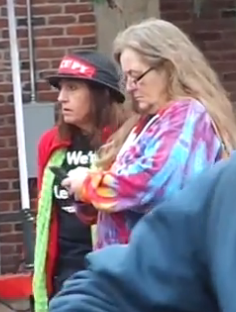

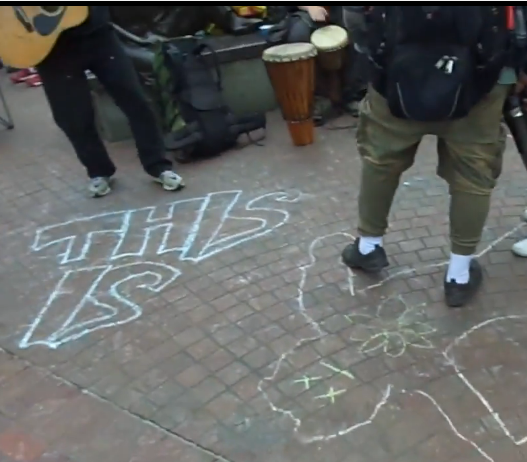


On Sunday, April 20, 2014 11:51 AM, Belle Burch wrote:
Yes, those are my hands in the RG. That was the first time I had ever appeared in the news as an activist.
Yes, I got a misdemeanor along with 11 other people for trying to talk to a silent and (cowardly) hiding John RUIZ.
I LOVE Crouching Tiger. It’s one of my favorites. The scene where the two young warrior lovers are in the bath together in the desert is my favorite part I think.
Is Bohemian a language as well as a place? Or are you referring to Romani? Was Romani the language that was spoken in Bohemia?
I’d like to hear more of your personal life story. “When I got sober”, “When I was homeless”, “When I was fighting cancer”……. these are words you drop and then let flit by without much detail or explanation or storytelling. I want those details and stories. Please.
Tell me what you thought of my poem. Did it make you feel anything? Did it make you think? If so, what?
On Sat, Apr 19, 2014 at 10:27 PM, John Ambrose wrote:
O.K. Belle, the only one that made me chuckle a dozen good times after a date. My mother wanted my name to be spelled JON. A nurse put an H in it and that’s how it appears on my birth certificate. Rosemary was furious and started calling me GREG. My father called me GREGORY, because that is how my middle name is spelled. When I got sober, I recovered JON.
Now to AMBROSE which is also AMBROSIUS. In Bohemian this name is spelled BRASKEWITZ, as I told you. Now I wanted a pen name as a writer JON AMBROSE. In PRESCO there is also a ROSE.
Now, to you, mystery hands with message! Are those your hands in the RG? Did you get arrested confronting JON REUZ, who returned my call just after we met. I just watched the movie Croutching Tiger.
On Saturday, April 19, 2014 9:34 PM, Belle Burch wrote:
Hey Jon,
It’s Belle. Still wondering if you’re real. Thank you again for the bike. Let’s set up a time for me to do some modeling. Thurs and Fri are possibilities for me.
By the way, Why “John Ambrose”? Is that your middle name? Nom de plume? Highly synchronistic, as my current partner’s legal first name is Ambrose. I’m very curious about this.
Also, I thought you preferred to spell your name without the “h”?
Here’s the poem I said I’d send you.
Haven’t read any of your emails yet, will get to that soon.
Untitled
Last night I fell
asleep in a tent on the concrete
in front of city hall
to the sounds of a quiet radio-
some show about the Bermuda Triangle.
How things, people
disappear there.
Whether or not it exists.
Interviews with people
who believed in it,
interviews with people
who didn’t. Its history.
Amelia Earhart. (Airheart?)
It seemed to go on
for centuries.
There are people out there
who don’t have state IDs, passports,
birth certificates,
social security numbers,
who technically
legally
don’t exist.
The faeries who put people
to sleep for 100 years must live there
in that West Atlantic Vortex.
I got lost in it,
like Rip Van Winkle*,
and woke
to a changed world.
I texted a lover in New Orleans,
‘I’m stuffing almonds into a banana,
around my neck is a red bandana
and I love you.’ It was all true.
I walked through what is known
in Eugene as the Barmuda Triangle,
the magical trine of Luckey’s,
Horsehead and Jameson’s downtown.
If you order food at Jameson’s,
it gets run across the street
from Horsehead.
Luckey’s has the best pool tables,
and a fantastic little Mexican foodcart lovechild
that only accepts cash.
At the Horsehead,
there is a touch screen machine
where you get to choose
what music is being played.
You pay money for this privilege.
If you pay more money,
your songs get played
first.
This is a triangle
you can only get lost in
if you’re a real person.
* bandana around my eyes to keep the
blazing orange streetlights out
On Fri, Apr 18, 2014 at 6:34 PM, John Ambrose wrote:
Dear Belle
Our café experience was better then ‘My Dinner With Andre’. It was a very creative happening!
Here are some posts you might be interested in. My ancestor was the Master of the Falcon Art College in Holland, and a member of the Swan Brethren. He used a rose to sign his name. Here are photos of me when I was 26 in my sister’s studio. There is an energy field around me. I am 24 in the photo of me in blog ‘defying mafia’.
If you want a character reference, call Marilyn, the woman who was my first girlfriend. We are still close today.
Your friend
Jon
P.S. nothing in the blog is true.
Rosamond Publishing
Alley’s post on Kitty Piercy’s wall.
“This man’s name is John Gregory Presco, DOB 10/8/1946. He lives in Springfield, Oregon.
He frequents Eugene, especially the Whiteaker neighborhood, and regularly shows up at activist events. He is a stalker, a harasser, and an obsessed de…lusional sicko.
If you need a concrete example of his behavior and why I am posting this, his delusional writings can be found at https://rosamondpress.wordpress.com/
If you see him in your neighborhood, on the street, or anywhere, call him out. Expose him. Make it known that you will not accept and tolerate someone who harasses and obsesses over young women in our community. This man is a very sick individual. Anyone who deliberately makes women feel unsafe should not be tolerated in this or any community.
On Saturday, April 19, 2014 9:41 PM, Belle Burch wrote:
Hell yes I want to see a dance show on Broadway. I’ve always wanted to see a Broadway show. I’ve been in NYC twice but failed both times to get overpriced tickets to any Broadway shows enough in advance to make one. Why do you ask?
12 Cited for Criminal Trespass After Refusing to Leave City Manager’s Office After Hours
This afternoon, a group of people staged a sit-in at the City Manager’s Office and refused to leave. At 5 p.m., they were advised the office was closed and they indicated their intention to stay. At 5:45 p.m., the group was informed that they would be subject to Criminal Trespass charges if they didn’t leave. Twelve people were cited in lieu of custody and released.
The group was demanding to meet with the city manager regarding homeless issues recently discussed or ruled on by council, outside a council setting. The city manager’s delegate on this issue, Deputy Chief Joe Zaludek, came to the office to meet with them but they did not accept that offer.
Last week, on March 26, the City of Eugene re-posted notices that property is not open to the public and that the clearing and clean-up of the area would begin after April 1. The City Council has directed that the site be closed no later than April 15.
The City’s goal has been for people to leave the site voluntarily and to get connected with the services they need to find safe and legal shelter. The City is coordinating with a number of local social service agencies to help people transition from the camp.
The City Council and City staff have been working to help develop options. There are now two rest stops open – at Garfield and Roosevelt, and Northwest Expressway and Chambers – that are being managed by Community Supported Shelters. The City is continuing to work with community partners to open a third site and hopes to have a signed agreement with a volunteer site manager in the next few days.
Cited and Released were:
1. Bollman, Aurthur Frank 12/31/63 Eugene Trespass II
2. Burch, Belle Erin 11/21/90 No Address Trespass II
3. Shepard, Helen Marie 07/12/85 Eugene Trespass II
4. Monroe, John Lee 11/06/85 Eugene Trespass II
5. Smith, Charles Anderson 11/08/50 Springfield Trespass II
6. Williams, Terra Renee 02/24/88 Eugene Trespass II
7. Marcroft, Sabra Marie 05/15/66 Eugene Trespass II
8. Stacey, Jean Anderson 08/23/45 No Address Trespass II
9. Valkrie, Alley NMI 12/20/81 Eugene Trespass II
10. Wales, Geran Straford 09/15/90 Eugene Trespass II
11. Holtham-Keathley, Ambrose Stormrider 02/06/92 Eugene Trespass II
12. Grotticelli, Peter David 07/16/88 Eugene Trespass II
On May 27 the Eugene Police Department brought the City Council a proposal to close Kesey Square between 11 pm and 6 am, a move that some say is targeting the homeless population. Kesey Square, aka Broadway Plaza, is a city-deemed performance space that sits on the corner of Broadway and Willamette, home to the bronze statue of Ken Kesey. The City Council has not scheduled a vote.
Civil Liberties Defense Center attorney Lauren Regan says the proposal to close the public square is repugnant in the face of the human rights image touted by the city of Eugene.
“It’s incredibly classist and discriminatory based on income and status, and I think we gave up those types of policies 100-plus years ago,” Regan says.
Homeless rights advocate Alley Valkyrie says there is already a lack of public space for the unhoused downtown.
“What downtown Eugene needs are bathrooms, benches and more open spaces,” Valkyrie says.
She says the ordinance changes will stir more resentment between businesses and the transient population. “The only reason they’re there in the first place is because after park curfew there’s nowhere else legal for them to be, and now we’re going to kick them out of the last place that they’re allowed to be,” Valkyrie says. “Where are they supposed to go?”
Police Chief Pete Kerns says the businesses near the public plaza want it closed at night. He says food cart equipment is often broken and stolen.
“Anyone who walks across the plaza won’t be — it doesn’t affect them,” Kerns says. “It’s the people that want to park there and get in fights and drink and camp there overnight.”
Tom Kamis, owner of The Davis on the corner of Broadway and Olive, estimates that a large fight happens once a week outside of his restaurant. “The fighting, I think, is going on a lot more in back alleys,” Kamis says.
Valkyrie says she noticed more problems coming from the college-age crowd than the unhoused when she was living on 10th Avenue and Lincoln Street. She says she believes the police largely ignore their behavior because they spend money downtown.
“Public space is public,” Valkyrie says. “We should not be excusing the behavior that comes from people who spend money and then scapegoating those who have no money.”
Regan says enforcing this ordinance would cost taxpayers money and ensure that police will continue to get the largest chunk of the city’s municipal budget.
“People will qualify for court-appointed lawyers based on the fact that they have no income and there are no other places for them to seek shelter in Eugene,” Regan says.
Citations for being in Kesey Square between 11 pm and 6 am could amount in fines as high as $500 on the first offense and $1,000 and one year in jail for subsequent violations. Kerns says he expects the council to take action on the ordinance by the end of June.
The proposal also prohibits unlicensed dogs from the downtown activity zone, which covers the area between Sixth and 11th avenues and High and Lincoln streets.
“Neither proposal addresses the sources of homelessness or contributes to a solution,” Eugene Human Rights Commission member Ken Neubeck says. “Carrying these proposals out will utilize staff time and financial resources that could be far better used by police in the prevention and pursuit of more serious crimes perpetrated on the housed and unhoused.”
Friday, April 5, 2013
A vibrant public space is essential to a healthy city center, and Downtown Eugene lacks a functional and frequented commons. Kesey Square, at the corner of Broadway and Willamette Streets, is publicly owned and centrally located downtown, but it has long been a neglected and underutilized plaza. Originally furnished with elevated terrace seating, and in later with years tables and chairs, it has stood bare for several years now. The seating in Kesey Square was removed by city staff, as were nearly all the benches throughout downtown, at the request of local business and property owners. The theory was that removing benches would discourage the homeless and transient population, especially street youth, from congregating in the square and throughout downtown.
Kesey Square stands nearly empty in the fall of 2011
Those populations have not left, and are still the subject of complaints and controversy. Removing all seating has not only failed in discouraging people from hanging out, but it has arguably exacerbated the problem. Not only do they still sit, but for lack of designated seating they sit anywhere and everywhere, especially in Kesey Square. People are often strewn about all over the ground throughout the square, surrounded by their belongings and interfering with pedestrian traffic. Those who live and work downtown often avoid walking through Kesey Square.
Street youth hang out in Kesey Square because they have nowhere else to go. Kesey Square is not designated a city park, and is therefore not governed by a 11pm curfew, which makes Kesey Square the only public space downtown where people are allowed to congregate 24-7. Some of the youth who are fixtures in Kesey Square have been excluded from city parks by the police, others have been excluded from the library and/or the LTD station, and Kesey Square is literally the only place downtown they are allowed to “be”.
In addition to removing the seating, the City of Eugene has employed several strategies in recent years in order to discourage youth and transients from hanging out. In June of 2010, the City launched a “Food Cart Pod” in Kesey Square with five food carts in the hopes that commerce would drive out the “undesirables”. However, a lack of customer traffic resulted in flat sales, and by the end of the summer, only one food cart remained. Other food carts came and went, but by the summer of 2011 there were only one or two food carts that set up with any regularity in Kesey Square, and only for a few hours each day, a few days a week. Other than that, the square usually stood empty save for the street kids, often sprawled out playing card games on the ground.
Those with nowhere else to go hanging out in Kesey Square
The weekly gathering that became the Kesey Square Revival emerged from a collective vision of what a common space in downtown Eugene could (and should) look like. A public plaza should be alive and thriving, with people eating lunch, making music, reading, playing chess, and meeting with friends. And as Ken Kesey himself once said, “You don’t lead by pointing and telling people some place to go. You lead by going to that place and making a case.” We decided to manifest this vision.
On a beautiful Friday afternoon in early 2012, approximately fifty people spontaneously appeared in Kesey Square, bringing tables, chairs, board games, free food, music, street theater, and chalk art. We spent the afternoon interacting with the community, creating a space that was welcoming to everyone, whether housed, unhoused, or somewhere in between. The response to our presence was overwhelmingly positive, and as a result, we gathered at Kesey almost every Friday during the warm months of 2012.
Kesey Square Revival, February 3, 2012
We spent the year continually focused on integrating the downtown population as a whole and creating vibrant public space that focuses on community inclusion, positive energy, economic revitalization, and free expression. We attracted workers on their lunch break, neighborhood residents who were out for a walk, and random passersby who stopped simply based on the fact that something was going on in Kesey Square. We drew a mixed community into the square and created a positive atmosphere. The same people who came to play chess and chat with friends also wanted to eat lunch in the square, and the two food carts benefited from our presence on Fridays.
Seniors playing Scrabble in Kesey Square
And during the course of that year, we watched as the corner of Broadway and Willamette transformed before our eyes. An arcade opened, and then a hip coffee shop. A movie theater and a pizza parlor were rumored to be in the works, rumors which have since been confirmed. The new LCC building rose from the ground a block away. Office workers were suddenly going in and out of the Woolworth Building and the Broadway Commerce Center. The signs of revitalization were stark and impressive.
However, we also noticed something else over the course of that year from the corner of Broadway and Willamette: an increased police presence, both bicycle and patrol officers who spent much of their time downtown engaging in patterns of harassment towards the “undesirables” downtown and enforcing ordinances intended to criminalize homelessness. We watched every Friday as the police harassed, cited, and sometimes even arrested the young and unhoused for “crimes” such as sitting on a planter, leaning against a building, sitting on the sidewalk, or failing to cross the street at a right angle.
We watched as the “Downtown Guides” regularly approached groups of young people, obviously based on their appearance, and forced them to “move along” when their only “offense” was congregating in public space. We noted that this enforcement was increasing as more businesses opened downtown, and we predicted that one of the effects of “revitalization” would be an intensified push to drive the “undesirables” from public space downtown. In November, the Kesey Square Revival decided to take the winter off, with the intention of gathering every Friday again come early spring, but downtown activists associated with the Kesey Square Revival maintained a connection with the square throughout the winter, further observing both signs of revitalization and oppression.
Police and Downtown Guides in Kesey Square, September 2012. Officer Ellis drove the car into the square to scare away the homeless, and then hung out in the square with his car running for the next two hours in order to intimidate.
A few months ago, the City relaunched the Food Cart Pod in Kesey Square with four food carts. And a few weeks later, Kesey Square Revival officially started up again. We immediately noticed that not only were we not the only people in the square, but the square was quite crowded with commercial activity. There were people sitting at tables provided by the food cart vendors, and others waiting on line for food. We did not have room for the tables and chairs that we usually set up for the community due to the tables and chairs provided for the food carts. There were plenty of places for the customers to sit, but no space left for the rest of community to sit.
When we returned the following Friday, we came upon the same scene. Tables and chairs set out for customers, people eating in the square, and little room for any other activities. In the meantime, community activists were planning events in the square on Fridays that coincided with the Revival and added to the crowd. On one Friday in early March, an anti-NDAA march proceeded to the square, with protesters in costumes that inevitably conflicted with the flow lunch crowd. When activists who were part of Nuclear Justice week arrived at Kesey Square on a beautiful Friday a week later to do tabling and outreach during lunchtime, the food cart owners could not hide their frustration. The conflict was obvious, and we had a feeling what was coming.
And sure enough, a few weeks later I was approached by one of the food cart vendors, who very politely but firmly let me know that the presence of the Kesey Square Revival was hurting the food cart sales, and that they would appreciate it if we didn’t encourage people to come down to the square on Fridays. He referenced a group who was tabling for nuclear justice and a lunchtime granola giveaway as examples of what was hurting their business. He pointed out that in such a small square, it was hard for them to operate with our presence.
On one hand, it’s a great sign for commerce that there are finally enough people downtown during the lunch hour to sustain four food carts in a plaza. As a former part-owner of a food cart some years back that did not succeed downtown due to lack of business, I know full well how hard it is out there and I’m glad that the food carts in Kesey Square are enjoying success. They deserve it. But their prosperity is unfortunately directly connected to the City’s agenda of pushing the homeless out of downtown and inevitably has a detrimental effect on all who spend time downtown.
By successfully establishing four food carts in a plaza that’s less than a thousand square feet in area , they City has effectively taken the space away from the people as a commons. Kesey Square is the sole public plaza in downtown Eugene, and now it is crowded with food carts, with no room left for those engaged in non-commercial activities. Not only does this affect the downtown homeless and youth population, which already has nowhere to go, but it affects anyone who wishes to gather in Kesey to play chess, table or rally for a political cause, display or sell art, or just meet with friends. The food carts are not at fault. The City of Eugene is at fault, both for this decision as well as for years’ worth of decisions regarding public space downtown that have been detrimental to the overall population.
Public space is for everyone, a fundamental concept that both City officials as well as the downtown property and business owners don’t seem to understand or care about. For years, both public and private interests have waged a war against the homeless downtown, criminalizing their existence and systematically pushing them from public space. In this case, in order to drive out those who the businesses consider undesirable, the city has commercialized Kesey Square at the expense of the overall population. The City talks about their role in “balancing the interests” between the business owners and the homeless, but not only does the City not seem to recognize that human rights ALWAYS outweigh economic interest, but any attempt of “balancing” on their part seems to weigh heavily in favor of the businesses. The commercialization of Kesey is a not only a significant loss (and abuse) of common space, but it signifies a renewed effort on the part of the City to “clean up” public spaces downtown, presumably to encourage further commercial revitalization.
We have been caught in the crosshairs of this effort, and while our instinct is to dig our heels in and exercise our First Amendment right to public space, in reality the situation requires a different approach. We wish to develop and retain positive relationships with those who work downtown, especially the food cart owners, and we don’t want to gather in Kesey Square if our presence directly interferes with their business. Additionally we refuse to allow the City to pit us against the food carts in a political fight, which would further distract us from our true goals. For this reason, the Kesey Square Revival will no longer take place until further notice.
Instead, we will spend the next several months focused on an even greater concern in terms of Kesey Square and the City’s attempts to push the homeless from public space. According to reliable sources, the City of Eugene intends on designating Kesey Square a city park within the next few months. Kesey Square is currently a 24-hour public plaza and is not under control of the Parks Department, and is the only public place downtown where people can congregate after 11pm. By designating Kesey Square a park, not only will the City of Eugene will be able to impose a 11pm curfew, but the police will have the power to cite people for violating park rules in Kesey, which means that many minor offenses that are currently only violations under city code will become arrestable offenses that are charged as misdemeanors in Kesey Square. Police will also have the power to exclude those who violate any park rules in Kesey Square through the use of a park restriction. Park restrictions apply to all city parks, not just the park where the violation took place.
Downtown Eugene has no shelters, no benches, and no public spaces that one can congregate in 24-hours a day other than Kesey Square. If a curfew is imposed on Kesey Square, there will literally be nowhere left to go at night. Nowhere. Nowhere to sit down, to take a rest. Being homeless after 11pm will essentially be illegal ANYWHERE in downtown Eugene. Not just camping, not just sleeping. EXISTING.
40 years ago, Eugene was a sundown town, an important part of this city’s past that many are uncomfortable to speak of. African-Americans were not allowed in the city limits after nightfall, forcing them to the outskirts of town under threat of harassment or violence. As it already stands currently, there is a near-sundown effect in Eugene today as it concerns the homeless, given that there are there are no shelters, no benches, sitting under an awning is an arrestable offense, leaning against a planter or a building can also land you a night in jail, and all parks have a 11pm curfew. Cutting off access to Kesey Square only further cements the sundown effect, making it abundantly clear to the unhoused that they are not welcome anywhere in town at night.
To take away the last public space where those who are homeless can congregate 24 hours a day is to repeat the same bigoted patterns of behavior that defined this city for nearly a century. In viewing the current actions of both the business interests and City officials through the lens of history, we see the continuation of a sociological mindset that fears and targets the “other”, a mindset that with the exception of the specified target, remains essentially unchanged from the ideals that drove the beliefs and actions of our forefathers, beliefs and actions that we consider to be shameful by modern standards.
I am confident that future generations who look back will see the actions towards the homeless to be as bigoted and shameful as most view Eugene’s past as it concerns African-Americans. In the meantime, however, those behind the Kesey Square Revival refuse to let the City further exclude the homeless from public spaces without a community-based response. Our belief that public space is for everyone is why we first gathered at Kesey in the first place, and while we have now retreated from that space as a weekly gathering, it is only in order to focus our energies on the larger picture of preserving Kesey Square for use by everyone, any time of day.
We will be fighting and publicly campaigning against the City’s plan to designate Kesey Square as a park. We will not allow the City to slip this through quietly and covertly, as is their intention. We will be researching the legalities behind this move, in an attempt to learn what kind of public input or public control (if any) there is over the process, and how to prevent or appeal such a move. We will be publicizing the issue and raising awareness about the intentions and consequences should the City succeed in their efforts. And we invite anyone who shares our concerns to join us in this fight. And if the city does manage to take Kesey away from the people despite our efforts, we’ll meet you in the streets for a summer of civil disobedience.
http://www.opb.org/news/article/revival-on-the-ropes/
The Sanctuary at the Fairgrounds
(This is a letter I sent to Mayor Piercy and the City Council on August 29th. Given that the “Whoville” camp is back at the fairgrounds, I realized that its still quite relevant and should be shared.)
Greetings, Mayor and Council,
While everyone has been concentrating on the current controversy that is the Free Speech Plaza, I wish to momentarily draw your attention to the southeast corner of 13th and Adams.
For the past four days, a small row of tents has been set up on a median strip in front of the Lane County Fairgrounds, on County property. They are a SLEEPS-affiliated group of homeless people who are there to protest the camping ban and declare their right to sleep, but they have also been specifically enacting and demonstrating a community living model quite similar to the “rest stops” that the Council has proposed.
They have deliberately set up in a residential neighborhood in order to defy the stereotypes associated with the homeless and to show that they can live peacefully, cleanly, and safely in our community. They have won the support of a large majority of the neighbors, to the extent where KEZI knocked on the doors of several houses looking for someone to speak out against it, and could not find a single person. I have personally witnessed several neighbors come by to show their support, bring them food, and offer their assistance. The only concern expressed by the neighbors was regarding sanitation, and a porta-potty was brought in to assuage these concerns. The protest camp is spotless, military-clean, and police will confirm that there has not been a single incident that has warranted law enforcement action.
Among the dozen or so people there are at least two homeless veterans, one who fought in the most recent Gulf War. There are women there who have chosen to be a part of that community specifically because they fear for their safety on the street. One of the other men who is camped there used to work at LCC in the same department as Councilor Evans. Another older man is there who worked every day of his adult life until he was hit by a car three years ago. He uses a walker and is in constant chronic pain. He has applied for disability twice and has been denied.
As I write this, they are set to be cited for prohibited camping in a few hours. The Mission is full, and there is literally nowhere else for them to go. Two federal courts have ruled that citing homeless people for sleeping when there is no shelter is unconstitutional, and yet I have no doubt the citations will be issued as usual. They are prepared to be cited, to plead not guilty, and fight the charges at trial. They also fully intend to reform their camp on another parcel of public land soon after they are cited, knowing full well that they will be cited again and again.
Meanwhile, over the past month, not only has BLM swept over 200 people from the wetlands, but EPD and LCSO have conducted coordinated sweeps of the riverbanks and other city parkland. There are literally hundreds of people who no longer have anywhere to hide, nowhere to be, nowhere to go. What is occurring in Eugene right now is nothing short of a humanitarian crisis, and I don’t say that lightly. These are people, just like you and me, who are literally being denied the right to exist. I ask you to think long and hard about what that really means. They are literally being denied the right to exist, in a city that prides itself as a “human rights city”.
What you need to understand about the current SLEEPS protests is that this is a completely different scenario than either Occupy or the first incarnation of SLEEPS. Both of those prior efforts were initiated by housed activists, with the aim of securing rights for those who are unhoused. The current SLEEPS protests, on the other hand, were initiated by homeless folks themselves as a direct response to being evicted from the wetlands and other places. While myself and several other housed activists have been assisting the protesters, we are only in advisory roles this time around. The homeless are running this show, bar none.
Their movement is expanding by the day… people I’ve never even met before are coming out of the woodwork, willing to place themselves in the public eye and be cited for prohibited camping. In my nearly six years of interacting with the homeless in Eugene, never have I seen such anger, such despair, and such a willingness to engage in active resistance. Right now there are three SLEEPS camps, a fourth will most likely form tomorrow, and from what I am told that number will grow in the next several days. These folks have simply had enough. They are done with being treated as less than human, they are done with their fundamental rights being violated, and they are done with hiding in the shadows. Nobody “wants” to be camped out in the Free Speech Plaza. They are there because there is nowhere else to go. They are no longer willing to hide and no longer willing to be oppressed. They are willing, on the other hand, to remain in the public eye, to be cited again and again, and to clog the courts for months. Such a scenario is not only a waste of time and resources on behalf of both parties, but will most likely eventually result in a federal lawsuit that could easily have been avoided.
Last April, homeless activists were hopeful that the Council would set aside legal camping places that would allow the countless numbers of homeless people in our community to safely sleep at night. Since then, the proposal has dwindled from many sites to only one, in which people will have to pack up every morning, and where there will apparently be no sanitation. From the perspective of an activist, I feel that you have backpedaled due to pushback from the community, and that the fundamental issue at hand is no longer in focus. But I can tell you that while I am experiencing frustration and disappointment, my emotions are nothing compared to what those on the streets are expressing, which is nothing short of pure rage. It is a legitimate rage which I honor in its truth and power, and a rage that I notice is deepening with every day that goes by.
Back to 13th and Adams. Your “rest stop” not only already exists, but it’s already serving a critical need for a dozen of the most vulnerable members of our community. It isn’t costing you a penny. It isn’t hurting anyone. It is not only well-executed and functional, it stands as a strong testament to the fact that homeless people can indeed conduct themselves respectfully in a residential neighborhood. It stands as an example to the community that they do not have to fear the homeless, that they are not all drunks, criminals, and freeloaders. It effectively reflects the fact that the stereotypes and misunderstandings that so many in this community hold towards the homeless are just that: stereotypes and misunderstandings.
I feel right now that the city, the county, and the homeless are standing at a vital crossroads. I see a pressing humanitarian situation that has hit a critical peak and may possibly turn quite ugly in the coming months. I also seen an opportunity for the city to be on the right side of history, even if the county chooses a different path.
The campers at 13th and Adams will be cited at sunrise, but will then have 24 hours to vacate and will most likely be there until late morning. I cannot encourage you enough to go down there this morning, meet them, talk to them, look at their site, see what they have created, and get to know them. And after you do that, I ask that you act with the courage of your convictions and grant them sanctuary somewhere on public land within the city limits, at least on a temporary basis until the humanitarian crisis that is on your hands can be properly dealt with.
The Geneva Conventions declare sleep deprivation to be a method of torture, and denying a person sleep is expressly forbidden in the treatment of prisoners of war. Consider the fact that there are multiple veterans of American wars, homeless and on the streets in this very town, who currently have less protection under their local government in regards to the right to sleep than they would under the Geneva Conventions were they being held captive in a foreign and hostile country.
Sleeping is a human right. Please, let the homeless sleep.
Respectfully,
Alley Valkyrie
 Rosamond Press
Leave a comment