
Someone is trying to inform me of what I already know. What’s their motive? When I first post on the Belmont Historical Society Facebook, I saw my posts – vanish – without comment. Later, Cynthia McCarthy said my posts were removed to be judged if they ARE SPAM, and would be put back up – if they pass the litmus test. I wondered if the unknown moderators – were racists – and had rifled through my blog to see WHAT KIND OF MAN I AM. I had posted my family group photos and a link to the artwork of Carl Jankes descendant, who did a painting title ‘Lena and Her Sisters’. I believe it was Black History Month.
Last night before I went to bed, the news was talking about the controversy surrounding Kamala Harris. Thar controversy began in my posts. made over three years ago.
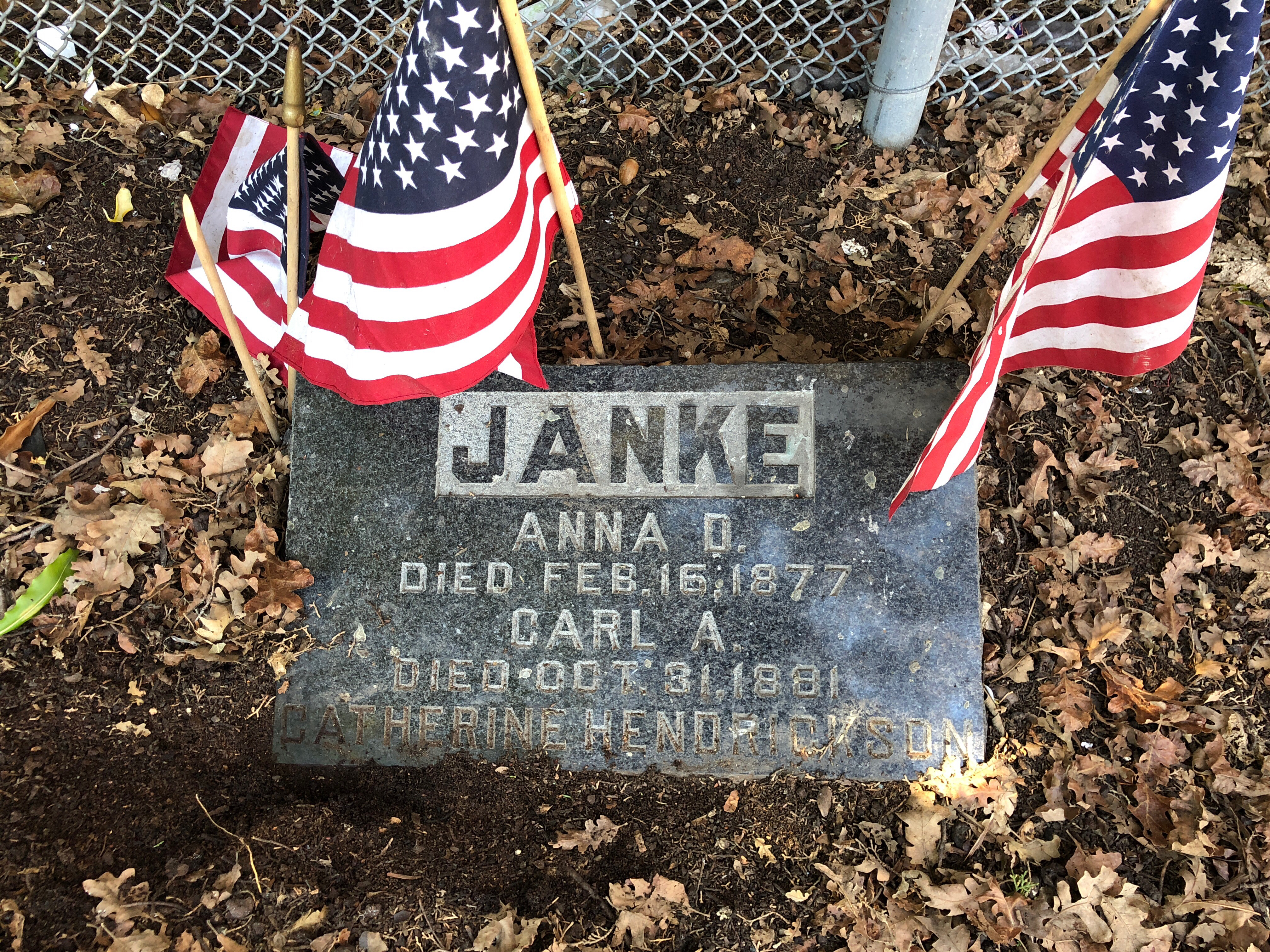
When someone is buried they are put below ground. In trying to ascertain when the Jankes were dug out of their grave beneath the Bay tree, I found a citation saying the DAR did a survey in 1937 of grave markers. Doris Vannier says the Jankes were dug up in the middle of the night, but, does not say what year. Cynthia McCarthy had to know about this DIGGING UP – and was hiding it from me. This is why she ABUSED ME on Facebook. Everyone has the right – TO HONNOR THEIR DEAD!
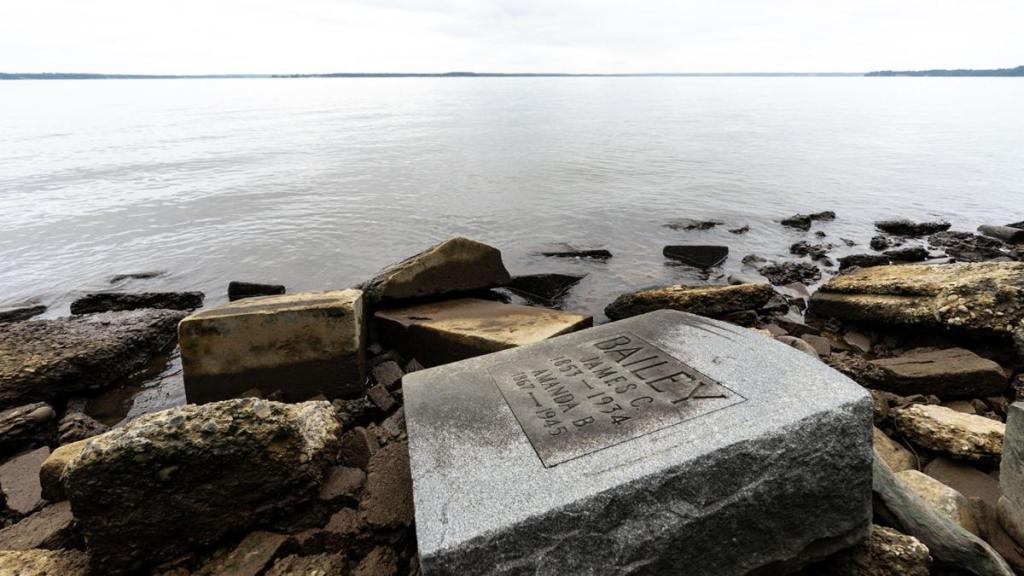
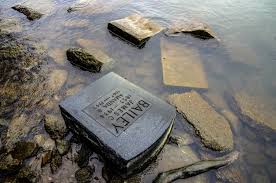
Above is a photo of a young man who had come across headstones on the beach. He is reading the name and the date – with natural reverence – even though he is not related to the deceased. Cynthia McCarthy published a book on the history of Belmont, with the blessing of Denny Lawhern. I was a great threat to these two historians because I am RELATED to the Founders of Belmont. Not once did they comment on the art of Rosamond, one of the most successful women artist in history. I knew I was dealing with…
UNDERGROUND MONSTERS
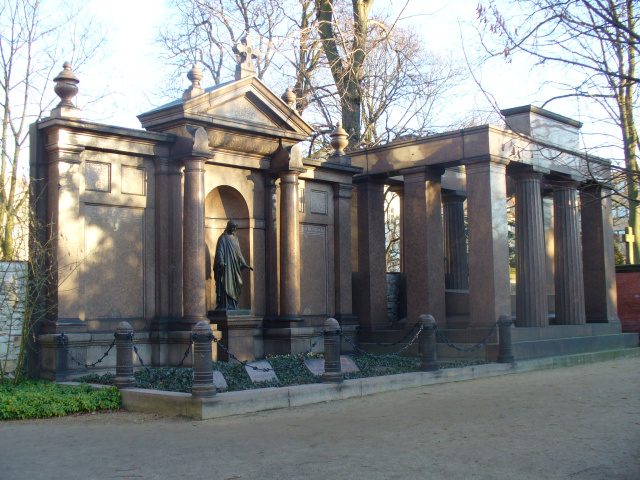
The grave marker we see in the Union Cemetery was not made in 1937. I demand the City of Belmont hire a private investigator to SEARCH for the lost Janke tombstone. This is extremely upsetting to me. The idea of Eternal Rest has been shattered – for me!
John Presco
President: Royal Rosamond Press
https://rosamond.com/collections/33010
- years. https://rosamondpress.com/2020/08/29/the-marin-shipmates/
 ROSAMONDPRESS.COM The Marin Shipmates The Marin Shipmates
- Like
- · Reply
- · Remove Preview
- · 3d
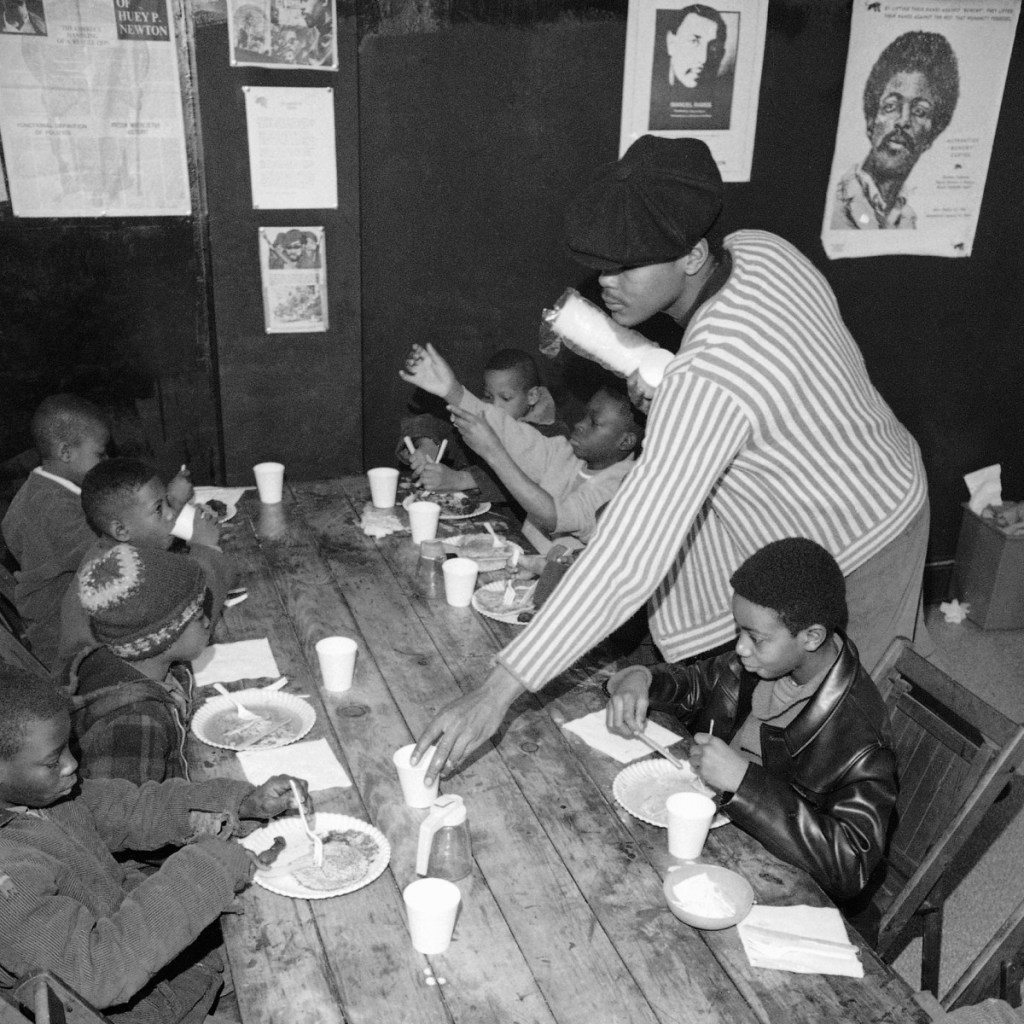
- Greg Presco Kamala is linked to the Black Panthers. This is real history. Are we going to allow her to be CLEANSED and made presentable? To whom? https://rosamondpress.com/2020/11/28/marin-city-sea-cadets/
 ROSAMONDPRESS.COMMarin City Sea CadetsMarin City Sea Cadets
- Like
- · Reply
- · Remove Preview
- · 3d
- Greg Presco My friend, Ed Howard is trying to save the history of this park and have it play a big part of our future. We have to get off the insipid merry-go-round they have made for us. If we stay on it, then it is on
I found Carl and Dorothea (also and Doretta) are buried at the Union Cemetary in Redwood City.
Carl_August_Janke
Names Listed on the Marker:
Janke, Carl August
Janke, Dorette Catherine
Janke, Mutter Heinrich
Inscription:
— From the 1937 headstone survey —
Carl August Janke, born in Dresden, Germany Oct. 1806, died Belmont, Calif. Sept. 2, 1881
Dorette Catherine, wife of Carl August Janke, born in Hamburg, Germany, July 21, 1813, died in Belmont, California, Feb 16, 1877
Mutter Heinrich, mother of Dorette Catherine Janke, born in Island of Heligoland, Germany, 1781 died in Belmont, California 1876
NOTE: In 1937 the Daughters of the American Revolution recorded all the headstones.
Yesterday I received information from Shirley Schwoerer of the Redwood City Library, that said my ancestor, Carl August Janke, was instrumental in establishing a Turnverien in Belmont, and the Bay Area. Was it the first?
“He erected the old amusement hall of the Turnverein, and managed this for several years.”
Janke may be the first real estate developer in the San Francisco bay area.
Three Flags – One Grave
Posted on May 27, 2023 by Royal Rosamond Press
Janke and Turner Abolitionists
Posted on February 24, 2021 by Royal Rosamond Press


I had a psychic hit that there was trouble coming. Add to this posts on facebook I read where Trump supporters declared they will fight to the death, one did not need to be – that much of a Seer! Why then didn’t any of our spendy Intelligence agencies SEE what was coming? How about foreign spies? Do Russia and Israel keep a close score which way the wind is blowing in our Un-United States? How about black leaders and journalists? Did they sound a warning – that went unheeded. AFTA was being blamed – before hand! Did the FBI get fooled by this right-wing smokescreen? I don’t like the Capitol Insurrection Hearing, so far, because THE MAIN TARGET of these white militias – is black people.
Stuttmeister ‘The Wonder Man’ | Rosamond Press
February is Black History Month. In July of last year I founded the Black Turners and the Marin Shipmates, a all Black Navy. I posted this video of the Chilean army doing the goosestep – on a Black Panther group! I was banned. I formed the New Army of the Potomac, so there will forever be s standing force of Black Soldiers prepared for the next attack of neo-Confederate Racists – who will never give up! Never!
What I suggest is the formation of a First Patriot Alert System where eight Congressman are linked to a special message system on their phones and computers. There will be four Republicans, and four Democrats. If four of the eight see a dire emergency, they will sound the alarm, that will launch the New Army of the Potomac into action. And, here they come, marching down Pennsylvania Avenue with United Nations armored vehicles – because the United Nations should play a role in safeguarding our elections that are being conducted along racial, and radical religious, lines. The American Taliban – is real! They present an ever increasing threat to Black People – they target! Let their worse nightmare – come true! We are dealing with dangerous mentally ill paranoids.
I am for Washington D.C. becoming a State, and, Sovereign Democratic Nation that will represent all the Democracies of the World…..The United Democratic Nations. UDN. There are forty million black citizens in America. Native Americans can be more represented in the UDN Washington. I got on facbook while the Insurection was gong on and read this post from a woman;
“Can we get another nation to intervene?”
William Stuttmeister married Augustus Janke at Ralston Hall. His father sailed from Germany to New York, and then Chile, where the Forty-Eighters had made a colony. They are Prussians. Is this why the Chilean Government adopted the Prussian style parade.
Two nights ago, I saw black tombstones stuck in the mud along a river fifty miles from our Capitol. A black cemetery was closed, and the markers with names were used to shore up the river. The desecration of graves and statures has to stop. The TEARING DOWN stage – is over! I am going to apply for a grant so that I can hire other researchers into the role the Turners and Forty-Eigters played in freeing the slaves. I suspect the Turner history of Belmont was deliberately erased during World War One when there was ant-German sentiment. The Jessie Benton Scouts waged a covert war with the Emperor of Mexico and France. Drew Benton is kin to Emperor Napoleon the third.
The children in the tree at Belmont Park may be the cherished offspring of the Oddfellow’s. Eight thousand came to Belmont on the train, and, by ship.
“Yesterday I received information from Shirley Schwoerer of the Redwood City Library, that said my ancestor, Carl August Janke, was instrumental in establishing a Turnverien in Belmont, and the Bay Area. Was it the first?”
I suspect the Janke-Stuttmeister family waa targeted – along with the Oddfellows – when our graves were dug open, and our bodies evicted from our graves. The Oddfellows had a special bond and vow they made with their dead. We never recovered – till now! In Berlin the Stuttmeisters were very wealthy merchants and owned much property. They gave it all up. There had to be a reason. I believe they were leaders of the Turnverein Forty-Eighters, many who became military leaders for the Union, and personal bodyguards to Jessie and John Fremont, a co-founder of the Abolitionist Republican Party.
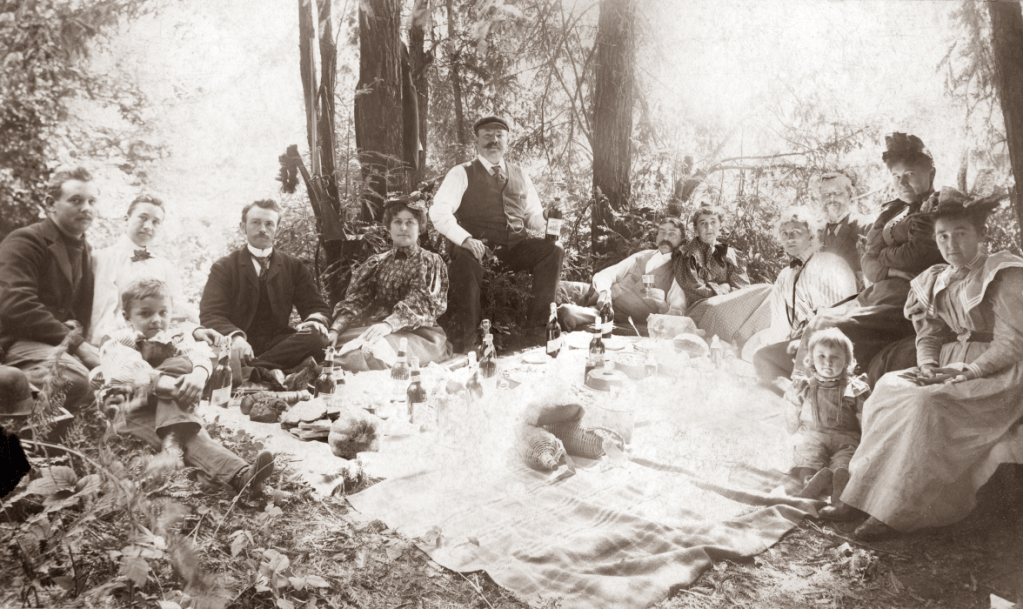
Alice Stuttmeister is the woman at the base of the tree, to the right of the portly gentleman, who may be Carl Janke, her grandfather. She married William Broderick, who is seated next to her. This was taken in the Oakland Hills.
John Presco
President: Royal Rosamond Press
(45) Chile Military Parade, with Chilean Commentator – YouTube
Militia groups believed Trump was on their side, says terrorism expertAwkward moment as House Republican leaders clash over Trump speaking at…

Democratic fury over the mob attack on the Capitol and its aftermath is spilling into nearly every aspect of life in the House, squashing hopes for comity and threatening even mundane legislative tasks like the naming of a local post office.
He points out that the state has been a longtime home to right-wing militia activity, spurred years ago by the reduction in federal timber payments as well as increasingly limited government services in some rural areas.
“Militias moved in to take up some of that work, to act as first responders,” he says.

Black History Month : Charity Navigator
Radical Democracy Party | Rosamond Press
“No entity, including the FBI, provided any intelligence indicating that there would be a coordinated violent attack on the United States Capitol by thousands of well-equipped armed insurrectionists,” he testified in written remarks about a conference call the day before the attack.
The Democratic chair of the Senate Homeland Security Committee, Sen. Gary Peters of Michigan, said, “There was a failure to take this threat more seriously.”
HE SAID, HE SAID
As hundreds of rioters stormed the Capitol, breaking into the iconic building’s windows and doors, sometimes in hand-to-hand combat with police, there are conflicting accounts from the security officials over what happened next.
Sund, who had raised the idea of calling on the National Guard for backup days earlier, specifically recounted a 1:09 p.m. phone call he made to the then-sergeant-at-arms of the House, Paul Irving, his superior, requesting National Guard troops.
Sund said he was told they would run it up the chain of command .
Irving said he has no recollection of the conversation at that time and instead recalls a conversation nearly 20 minutes later. He said the 1:09 p.m. call does not show up on his cellphone log.
Takeaways from Congress’ first hearing on Capitol riot | The Seattle Times
FAILURE TO COMMUNICATE
Intelligence warnings of an armed uprising by extremist groups heading to the Capitol didn’t rise to the level of alarm — or even get passed up the chain of command — in time for the Jan. 6 attack.
Crucially, a key warning flare from the FBI field office in Norfolk, Virginia, of a “war” on the Capitol was sent the night before to the Capitol Police’s intelligence division. But then-Capitol Police Chief Steven Sund testified that he only learned about it the day before Tuesday’s hearing.
Instead, Sund said he was bracing for demonstrations on par with other armed protests by mobs of Trump’s supporters in the nation’s capital in November and December after the presidential election.
The Dead Shall Rise | Rosamond Press
Tombstones from long ago surfacing on S.F. beach (sfgate.com)
Four years ago, Virginia State Senator Richard Stuart and his wife Lisa were exploring their new farm on the Potomac River when they saw something in the water that brought tears to her eyes and made him feel ill.
“Lisa and I looked at each other, and both of us said, is that a headstone? Then we looked, and we saw another and another and another,” the lawmaker told CBS News’ Chip Reid.
“It was just a horrible feeling to think that this person’s headstone was here on our shoreline… and not where it belonged with her body, where her family could grieve and mourn and remember her life,” Lisa said.
Since discovering the headstones, Richard said, “we’ve been working to get them back where they belong.”
The couple consulted with historians, who followed the trail of names to the Columbian Harmony Cemetery in Washington, D.C.
Los Angeles 1898
A popular Union commander and native German, Major General Franz Sigel was the highest ranking German-American officer in the Union Army, with many Germans enlisting to “fight mit Sigel.” Sigel was a political appointment of President Abraham Lincoln, who hoped that Sigel’s immense popularity would help deliver the votes of the increasingly important German segment of the population[citation needed]. He was a member of the Forty-Eighters, a political movement of the revolutions in German states that led to thousands of Germans emigrating to the United States. These included such future Civil War officers as Maj. Gen. Carl Schurz, Brig. Gen. August Willich, Louis Blenker, Max Weber and Alexander Schimmelfennig.
Schurz was part of the socio-political movement in America known as the Turners, who contributed to getting Lincoln elected as President. The Turners provided the bodyguard at Lincoln’s inauguration on March 4, 1861, and also at Lincoln’s funeral in April 1865.

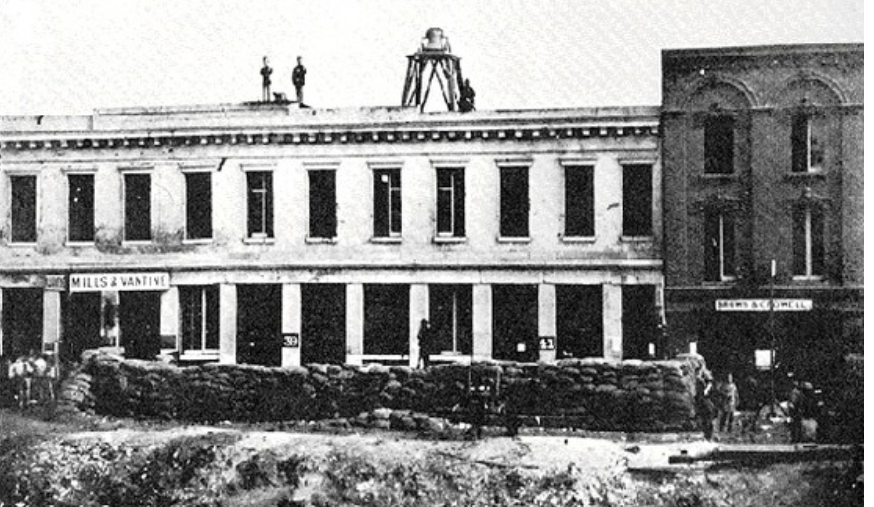


Yesterday I discovered one of my great grandfathers founded a Turnverein Hall on Bush Street in San Francisco. This hall was a place one could go hear music and practice gymnastics. The Seamens Friendly Union met here, and the Vigilance Committee. Plays were performed, and debates held. This is the radical root of San Francisco that I have traced to the Longshoreman’s Hall and the first Acid Tests. The Turner hall offered music and other entertainment as an alternative to gambling and prostitution. My father was a Merchant Marine and would be pleased to know the first institution for furthering sailor rights met in the Bush hall.
“All seamen are invited to attend at the Turn Verein Hall on Bush Street between Stockton and Powell Streets on Thursday Evening, January 11 at 7 1/2 o’clock to form a Seamens Society for the Pacific Coast.”
The Vigilance Committee combatted corruption and violence. These were idealists that lay the groundwork for a city famous for it cultural revolutions.
“Flaunting their rebellious spirit, the gymnasts of Vormärz wore their hair long and sported large black hats decorated with a rooster feather”

Above are my grandparents having picnic in the Oakland Hills. There is a sharpshooters rifle hanging in the tree. Janke had marksman contests Belmont Park. Many Turnverein were Socialists and Marxists.
Jon Presco
Israeli National-Socialists
Posted on September 18, 2011by Royal Rosamond Press

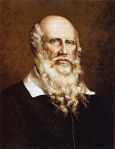

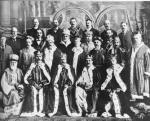


Israel was founded by Socialists who got a foothold in Palestine via the Maccabi Sports Clubs that sprang from the German Turnverein, or, Turn Verein, Turner Societies, founded by Freiderich Jahn a Prussian, who is considered by some to be the Father of National-Socialisms, or, the Nazis. I suspect my kin, Carl Janke, was a Turnverein and established a Turner Society in Belmont that later merged with the Oddfellows. William Ralston, whose home was in Belmont, provided the funds to spread the Oddfellows throughout Europe, beginning in Germany, where Jews and Gentiles met in Turnverien clubs, worked out together, talked business, and promoted the idea that their children should marry. Then the Germans wanted the Jews out, and they formed their own Turnverein clubs that became the Maccabi gymnasts who began to colonize Palastine.
After world war one there was a prejudice against Germans, and Turnverein was changed to Tanforan, the alleged kin of a Mexican Spaniard.
The Zionist Socialists of Israel would have you believe, great Rabbis and Jewish Prophets, founded the nation of Israel, for the sake of the evangelical prophets from Ireland. Worng! This is pure Nationalism – without God!
Jon Presco
Copyright 2011
http://art.famsf.org/wa-janke-founded-belmont-picnic-grounds-and-first-turn-verein-bush-street-39933
“W.A. Janke, founded the Belmont Picnic Grounds, and the first Turn Verein on Bush Street.”
Yesterday I received information from Shirley Schwoerer of the Redwood City Library, that said my ancestor, Carl August Janke, was instrumental in establishing a Turnverien in Belmont, and the Bay Area. Was it the first?
“He erected the old amusement hall of the Turnverein, and managed this for several years.”
Janke may be the first real estate developer in the San Francisco bay area.
“In 1849 the family came around the Horn on an old Clipper ship, and Mr. Janke brought with him on the trip the material for six portable houses. He set up these houses, and at once engaged in a successful business, as a building contractor.”
This information confirms my theory that the Tanforan cottages in the Mission, are the Turnverein cottages that Janke brought around the Cape in order to establish a German community of Freethinkers in the New Western Land of the Free -free of church rule! The Jüdischen Turnverein was established for the same reason. For awhile Jews and Germans shared the same Turnverien in Berlin, and were seen as Liberal-Socialists. San Francisco is considered the most Liberal and ethnically diverse city in the world where folks from the old world can practice their traditions of total freedom. Hitler banned and persecuted the Freethinkers, and outlawed the Turnverein.
The membership of the new clubs was more inclusive, as the cor of students and academics which had made up the rank and file of the Turnverein in its early years was joined by a large contingent of craft workers, along with many Jewish members, often in positions of leadership. These gymnastic clubs were often closely aligned with workers’ organizations and democratic clubs with whom they shared a desire for reform and a rejection of traditional hierarchies.
They even imparted a new spirit to their gymnastic program by initiating training sessions for children and, far more radical in light of the times, for women as well. Flaunting their rebellious spirit, the gymnasts of Vormärz wore their hair long and sported large black hats decorated with a rooster feather instead of the more formal attire of the Biedermeier period.
Given the radicalization of the movement in the 1840s, it is not surprising that the German gymnasts were directly involved in the 1848 revolutions. Turnverein leaders won renown for their leading roles in local uprisings,
The Turnverein as an organization was most closely associated with the uprisings in Baden, the center of the radical sentiment in southwest Germany
http://en.wikipedia.org/wiki/Turners
http://patch.com/california/sanrafael/history-street-name-the-only-remnant-of-sharp-shooter
The first organization of seamen in the United States occurred in January of 1866 when the following notice appeared in a San Francisco paper:
Fremont’s Foreign Fighters
Posted on August 21, 2015by Royal Rosamond Press

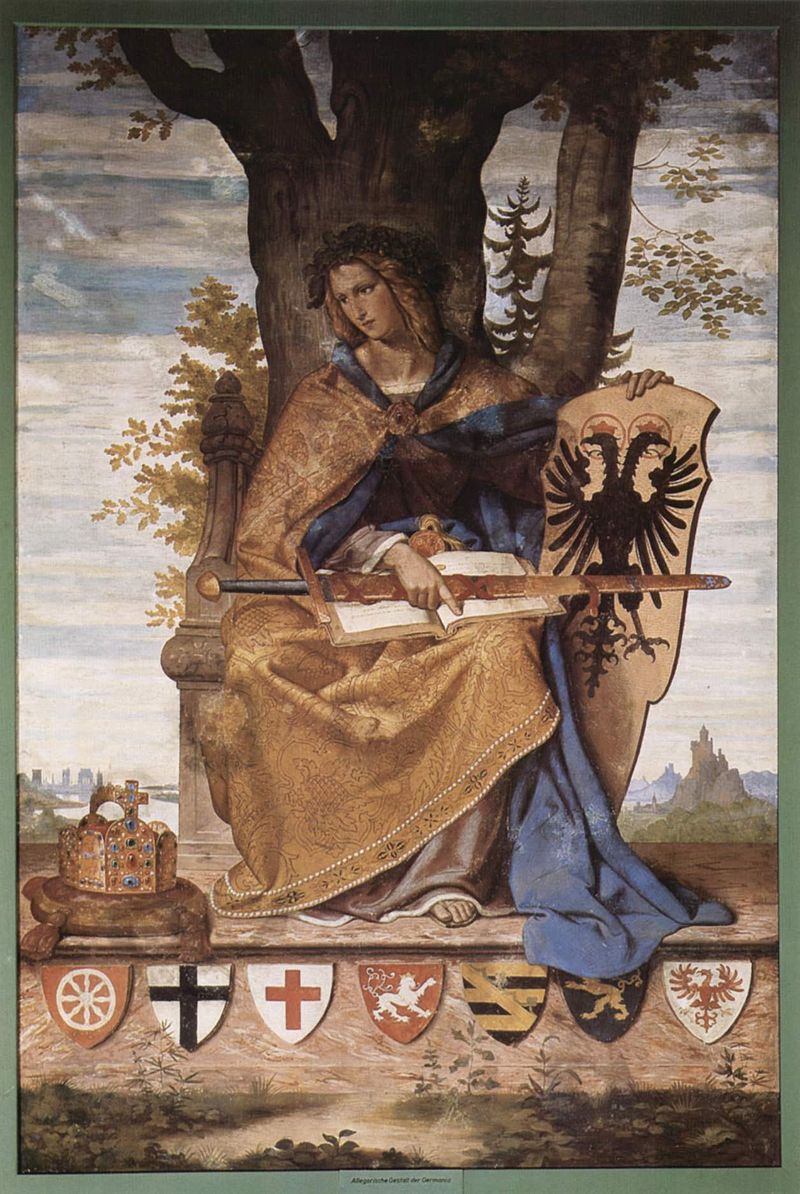


The Fremont family spent much time in Europe. I believe Elizabeth Fremont burned the reason why. John and Jessie had a bodyguard made up of foreigners. They feared a foreign invasion, and Lincoln was aware of this;
“President knew we were on the eve of England, France and Spain recognizing the South: they were anxious for a pretext to do so; England on account of her cotton interests, and France because the Emperor dislikes us.”
Above is a photo of Germans reenacting Civil War battles. This is because 200,000 Germans fought in this bloody war. Many of them were Turners. My Prussian and German ancestors were Turners in the Bay Area and had to know what role they would play before my kindred in South Carolina went to war with the Union.
I suspect Carl Janke was part of an effort to make California a colony of the German Unification, if not the Liberal Prussian Capital of a revolt that was taking place throughout Europe led by the Forty-Eighters who made up the Radical Republicans, who nominated John Fremont as their first candidate for office of President of the United States. Lincoln could not have become President without the Germans who must have backed the Fourteenth Amendment so their children could be recognized Citizens of the U.S.A.
In Sunshine magazine, Jessie Fremont says Britain was getting ready to import (deport) thousands of pesky Irish Catholics to California, who could be made into an army to fight for the Confederacy. If the Union fell, I suspect Fremont was prepared to declare a Nation of the West, and launch a European front to defeat the foreign allies of Slave Masters Consider ISIS Slave Masters recruiting Europeans to come take young girls slaves, and rape them. Mary Confederate Generals raped young black slaves.
https://en.wikipedia.org/wiki/German_Americans_in_the_American_Civil_War
When Janke brought six portable house around the Cape and erected them in Belmont, it is said he did so to provide housing for gold miners who struck it rich. But gold had not been discovered. I believe these homes were made for leaders of the Prussian Unification and founding of the Prussian State of California and a United West, that was not a part of the Union. I suspect John Fremont gave much of his gold to this Nation Building.
Seamens Friendly Union Society
All seamen are invited to attend at the Turn Verein Hall on Bush Street between Stockton and Powell Streets on Thursday Evening, January 11 at 7 1/2 o’clock to form a Seamens Society for the Pacific Coast.
This meeting resulted in organization of the Seamens Friendly Union and Protective Society. Alfred Enquist was elected president and George McAlpine, secretary. It was the first organization of seamen in this country, perhaps the first in the world. In 1875, the United Seamen’s Association was formed in the port of New York, and it sent a delegation to Congress to petition for laws to protect seamen. The delegation, according to a news report in The New York Times of January 21, was “graciously received by the President.”
No more was heard of this organization.
The Seamen’s Friendly Union and Protective Society in San Francisco did not last long, and the next organization to come along was the Seamen’s Protective Union formed in San Francisco in 1878 with 800 members. It, too, had a short life.
http://www.ohio.edu/chastain/rz/turnvere.htm
Return of the Turners
Posted on June 27, 2012 by Royal Rosamond Press


Yesterday I received information from Shirley Schwoerer of the Redwood City Library, that said my ancestor, Carl August Janke, was instrumental in establishing a Turnverien in Belmont, and the Bay Area. Was it the first?
“He erected the old amusement hall of the Turnverein, and managed this for several years.”
Janke may be the first real estate developer in the San Francisco bay area.
“In 1849 the family came around the Horn on an old Clipper ship, and Mr. Janke brought with him on the trip the material for six portable houses. He set up these houses, and at once engaged in a successful business, as a building contractor.”
This information confirms my theory that the Tanforan cottages in the Mission, are the Turnverein cottages that Janke brought around the Cape in order to establish a German comminity of Freethinkers in the New Western Land of the Free -free of church rule! The Jüdischen Turnverein was established for the same reason. For awhile Jews and Germans shared the same Turnverien in Berlin, and were seen as Liberal-Socialists. San Francisco is considered the most Liberal and ethnically diverse city in the world where folks from the old world can practice their traditions of total freedom. Hitler banned and persecuted the Freethinkers, and outlawed the Turnverein because he was a devout Christian. Consider the support the Sephardic Jews gave William of Orange in his war against Papal rule in Britain. Members of the Jüdischen Turnverein were instrumental in the founding of the Socialist state of Israel, and thus can be seen a Messiahnic orginazation that did name itself after the Messiah, Bar Kochba, “son of the star”.
It is time for Democrats to reach out to members of the Republican Party and show them their traditional roots.
Down with Big Brother Jesus and the ‘one arm workout’ that makes the rich and powerful – stronger! Let us rescue our obese children from the Fat Cat Billionaire Club, and launch a new Physical Education Program that will get young people away from their electronic gadgets made overseas.
Jon Presco
1. Postcard of “Bar Kochba” Sports Club: Turnergruss vom Jüdischen Turnverein “Bar Kochba”, Berlin. Postcard in color, in lithographic printing, produced by Bruno Bürger & Ottillie, Leipzig. Sent by mail in 1900. Good condition. Minor stains, creased corners. Mailed.
2. Postcard with photo and writing (photomontage), produced for “Maccabi World Winter Games”, (Banská Bystrica), Slovakia, February 1936. Good condition. Mailed.
“Charles August Jaxke came to CaHfornia in the gold rush days
of ’49, and as a contractor erected some of the very early homes and
other huildings around the bay. He was especially interested in the
development of that section known as Belmont, in what is now San
Mateo County.
He was born in Saxony, Germany, in 1809, and he married there
Dorothy Peterson, who w^s born on one of the Islands of the North
Sea in 1814. In 1849 the family came around the Horn on an old
Clipper ship, and Mr. Janke brought with him on the trip the material
for six portable houses. He set up these houses, and at once engaged
in .a successful business, as a building contractor. He had served his
apprenticeship and had become a very thorough workman in Germany. He
erected the old amusement hall of the Turnverein, and managed this for
several years. He secured a tract of land and established Belmont Park,
opening it and developing it and putting it on the market, and continued
to operate Belmont Park proper until his death. He died in 1881, and
his wife passed away at the age of sixty-three.”
Maccabi World Union
Original Maccabi logo
Formation
1921
Type
INGO
Purpose/focus
Sports
Headquarters
Kfar Maccabiah[1]
Location
Ramat Gan, Israel
Region served
Worldwide
President
Jeanne Futeran
Website
maccabiworld.org
The Maccabi World Union is an international Jewish sports organisation spanning 5 continents and more than 50 countries, with some 400,000 members.[2] Maccabi World Union organises the Maccabiah Games, a prominent international Jewish athletics event.
The organisation comprises six confederations: Maccabi Israel, European Maccabi confederation, confederation Maccabi North America, confederation Maccabi Latin America, Maccabi South Africa and Maccabi Australia.
Contents
[hide]
1 Etymology
2 History
2.1 Background
3 See also
4 References
5 External links
5.1 World Maccabi bodies
[edit] Etymology
The movement is named after the Maccabees (Hebrew: מכבים or מקבים, Makabim) who were a Jewish national liberation movement that fought for and won independence from Antiochus IV Epiphanes.
The origin of the word is not clear but the common opinion is that the word “Maccabi” (מכבי) is an acronym of the biblical sentence: “Who is like unto Thee, O LORD, among the mighty?” (Exodus 15:11), in Hebrew: “‘מי כמוך באלים י”, “Mi kamocha ba’elim YHWH”.
[edit] History
The Maccabi World Union was created at the 12th World Jewish Congress in Karlovy Vary, Czechoslovakia in 1921. It was then decided by the secretariat of Jewish sport leaders to form one umbrella organization for all Jewish sports associations. Its aims were defined as working “foster physical education, belief in Jewish heritage and the Jewish nation, and to work actively for the rebuilding of our own country and for the preservation of our people”. [2] In 1960, the International Olympic Committee officially recognized the Maccabi World Union as an “Organization of Olympic Standing”.[3]
[edit] Background
As early as the 19th century, Jewish sports clubs were founded in Eastern and Central Europe. The first club was the Israelite Gymnastic Association Constantinople (German: Israelitischer Turnverein Konstantinopel) founded in 1895 in Constantinople, Turkey by Jews of German and Austrian extraction who had been rejected from participating in other social sport clubs. Two years later, haGibor was formed in Philipople, Bulgaria and 1898 saw the founding of Bar Kochba Berlin along with Vivó és Athletikai Club in Budapest, Hungary.
Other clubs that followed were named after “Bar Kochba” or Hebrew names such as “Hakoah” or “Hagibor” that symbolized strength and heroism. One of the basic premises behind the founding of these clubs was Jewish Nationalism. The concept was that Jews were not only a religious entity, but also one based on a common historical and social background, having special cultural and psychological concepts that have been preserved to this day, resulting in a strong recognition of collective belonging.
In 1906, the first Jewish gymnastics club was formed in Palestine. Clubs later would spring up in other cities. By 1912, all of them joined the Maccabi Federation of Israel. That same year, the first relations were established between them and their European counterparts, when a decision was taken at the Maccabi Conference in Berlin to begin group trips to Palestine.
Maccabi GB is a member of the English National Council for Voluntary Youth Services (NCVYS)[4] because of its work promoting the personal and social development of young people.
The Maccabiah (Hebrew: מַכַּבִּיָּה) is an international Jewish athletic event similar to the Olympics held in Israel every four years under the auspices of the Maccabi Federation, affiliated with the Maccabi World Union.
The third Maccabiah, scheduled for 1938, was delayed until 1950 due to the rise of Nazism in Europe and the outbreak of the Second World War. The Maccabiah has been a quadrennial event since 1957.
Maccabiah is open to Jewish athletes as well as Israeli athletes regardless of religion. Arab Israelis have also competed in it.[1]
Simon bar Kokhba (Hebrew: שמעון בר כוכבא) (died A.D. 135) was the Jewish leader of what is known as the Bar Kokhba revolt against the Roman Empire in 132 CE, establishing an independent Jewish state of Israel which he ruled for three years as Nasi (“Ruler”). His state was conquered by the Romans in 135 following a two-year war.
Documents discovered in the modern era[1] give us his original name, Simon ben Kosiba (Hebrew: שמעון בן כוסבא). He was given the surname Bar Kokhba, (Aramaic for “Son of a Star”, referring to the Star Prophecy of Numbers 24:17, “there shall step forth a star out of Jacob, and a scepter shall rise out of Israel, and shall smite through the corners of Moab”) by his contemporary, the Jewish sage Rabbi Akiva.
Nordau also, at the 1898 Zionist Congress, coined the term “muscular Judaism” (muskel-Judenthum) as a descriptor of a Jewish culture and religion which directed its adherents to reach for certain moral and corporeal ideals which, through discipline, agility and strength, would result in a stronger, more physically assured Jew who would outshine the long-held stereotype of the weak, intellectually sustained Jew. He would further explore the concept of the “muscle Jew” in a 1900 article of the Jewish Gymnastics Journal.[3]
The Maccabees, central figures in the Hanukkah saga, are thought to be the inspiration for what would become the worldwide Jewish sports association known as Maccabi. It is Max Nordau, right-hand man to Zionist visionary Theodor Herzl, who is typically credited with the creation of what would become the Maccabi organization. His 1900 call for a “Muskel Judentom” (Muscular Judaism) which appears below, refers in passing to other influences on the creation of this movement. In actuality – and perhaps with some irony – it was the German gymnastics “Turnen” movement, begun a half century earlier, combining physical fitness, patriotism, and social causes, which served as a model for the emergence of Jewish pride through sport. The “Deutsche Turnerschaft” (German gymnastics movement) championed the idea of “mens sana in corpore sano” – a healthy mind in a healthy body – and made gymnastics the basis of a political program fostering patriotism and social/political awakening, and already included Jewish members in the early 1800’s.
Nordau saw sport as serving the Zionist idea of “awakening Judaism to new life.” His critique concerning the poor physical condition of Europe’s Jews helped to spur on the creation of Jewish sports associations. The Bar Kochba club in Berlin, which Nordau looked to for his inspiration, actually came out of the German “Turnerschaft” movement. As sports clubs in Germany and elsewhere in central Europe became a vehicle for the expression of patriotism, they began to adopt strong anti-Semitic policies, excluding Jews from participating. When the German gymnastics club in Istanbul formally voted to exclude Jews in 1895, the Jewish members formed their own club, calling it “Israelitische Turnverein”. Nordau’s push of sport as a critical component of Jewish life, coupled with the centrality of Istanbul as a hub of international Zionist activity, put the Istanbul club center stage, and it benefited from visits by and support from Zionist leaders. With the growth of gymnastics clubs promoting physical fitness and Jewish pride, the Union of Jewish Gymnastics Clubs (“Judische Turnerschaft) was founded in 1903, and its affiliate in Palestine, Maccabi of Eretz Yisrael, was founded in 1912. This, in turn, led to the World Maccabi Union, established in 1921.
Following are remarks made by Nordau at the World Zionist Congress in 1900:
Two years ago, at the Zionist Congress in Basel, I spoke about the need to create, once again, a muscular Judaism. I say “again”, because, as history shows, such a Judaism existed once before. For too long now we have neglected matters of the flesh.
Truth to tell, it was others who engaged in the death knell of the physical side of Jewish life, and with particular success. Consider the hundreds of thousands who fell in the ghettos of Europe, in the plazas outside the cathedrals, and on the roads during the Middle Ages. We should certainly forego such piety. We would have done well to be fit, and not be fodder for those who sought to kill us.
In crowded Jewish quarters, deprived of air and sunshine, our bodies became weak. In darkened homes, we feared the persistent persecution in silent trembling. But now the chains of this duress are broken, now we fear no such constraints, we are allowed to live our lives fully, at least from a physical standpoint. Let us, therefore, re-establish the bonds with our ancient past; let us again be wide of body and strong of gaze.
The intention is to return to a proud past, as reflected in the name selected by the gymnastics association of Berlin: “Bar Kochba”, a hero who recognized no defeat. When victory turned in retreat, he accepted death. He embodied a Jewish history forged in war but taking up arms. If someone takes of the cry of Bar Kochba, then the striving for honor beats in his breast. Such a hope befits the gymnasts, who strive for advanced development.
In no other nation or race does physical exercise fulfill as educative a role as it must fulfill among us Jews. It must bring us to full upright stature, both physically and in our character. It must prompt a self-awareness. Our detractors claim that, in any event, we are too arrogant. But we would do well to acknowledge how distorted is such a claim. A quiet belief in our strength is lacking in us altogether.
Muscular Jews of our age have yet to reach the degree of heroism of our ancestors of old, who erupted into the arena to wrestle the well-trained Greek athletes and the strong barbarians of the north. But from a moral perspective we are their superiors, because they were ashamed of their Jewishness and tried, by way of undoing their circumcision, to hide the sign of the covenant that was sealed in their flesh while others, such as members of the “Bar Kochba” club have openly and freely proclaimed their ties to their people.
Let the association for Jewish gymnastics flourish and set an example in all centers of Jewish life.
“The first major immigration wave occurred in 1848 when the
Czech “Forty Eighters” fled to the United States to escape political
persecution by the Habsburgs.”
“Among the many social clubs Brandeis joined in Boston, he went to a
Turnverein for exercise and, as he frankly stated, to cultivate
useful business contacts.”
“When the Brandeises and their close friends set up a reading room
in Louisville it was not a German reading club, nor were the friends
all German-Americans. It was a congenial group of Forty-Eighters and
cultivated native Americans that the Brandeises found for themselves
in the Kentucky town.”
My great grandfather, Wensel Anton Prescowitz, was a Forty-Eighter
that immigrated from Bohemia located in Czechoslovakia.
“Louis D. Brandeis (1856-1941), descended from a Jewish family that
immigrated to the United States in 1849, became the first Jewish
Supreme Court Justice (1916-39). He helped to draft the Czechoslovak
Declaration of Independence, issued in 1918.”
Here is a biography of Brandeis. He was a President of the Zionist
Organization of America.
CHAPTER ONE
In Quest of Freedom. The Forty-Eighters
IF Louis BRANDEIS knew how to use freedom, it was because his
parents, Adolph Brandeis and Frederika Dembitz Brandeis, knew how to
acquire it. Though neither family actively participated in the
European revolutions of 1848, they suffered from the severity with
which the revolutions were crushed. Along with thousands of
other “Forty-eighters,”
http://mki.wisc.edu/HGIA/Building_Communities.htm
Freethinkers” Of the Early Texas Hill Country
By Edwin E. Scharf
Between the years 1845 and 1860, a large contingent of German Freethinkers immigrated to the Texas Hill Country. Unlike the thousands of Adelsverein-sponsored German farmers immigrating to the United States and Texas to escape overpopulation and economic problems, the Freethinkers, being ardent advocates of democracy and freedom from religion, were fleeing primarily from political and religious tyranny. They came to the United States seeking freedom from dictatorial monarchies and clerics.
The Freethinkers refused to accept political absolutism and the authority of a church, religion, or its supposedly inspired scripture. They insisted on the freedom to form religious opinions on the basis of intellectual reasoning powers and not on blind, unquestioned faith. Freethinking became fashionable in the German state of Prussia during the reign of Frederick the Great, who ruled from 1740-53, within a period known as the “Age of Reason.”
The Age of Reason began in the late 1600s and extended into the late 1700s. It was the period in history when philosophers emphasized the use of reason as the best method of learning truth. Its leaders included Descartes, Voltaire, Bacon, Locke, and Paine. The period produced many important advances in such fields as anatomy, astronomy, chemistry, mathematics, and physics.
Philosophers of the Age of Reason organized knowledge in encyclopedias and founded scientific institutes. They believed that the scientific method could be applied to the study of human nature and thoroughly explored issues in education, law, philosophy, and politics. These intellectuals openly attacked tyranny, social injustice, superstition, and ignorance. Many of their ideas contributed directly to the outbreak of the American and French revolutions in the late 1700’s. They stressed the importance of education and believed that knowledge is power.
The Texas Hill Country Freethinkers numbered an estimated 1,000 individuals with close to 250 documented surnames. This group came primarily from the intellectual core of the German states, with many of them being highly respected nobles, philosophers, scientists, physicians, and engineers.
Besides being well educated, many of the Freethinkers had been quite affluent while living in the German states. When they immigrated to Texas, they brought with them not only clothes and guns, but books, linens, china, paintings, musical instruments, and especially, a new philosophy. As a matter of survival, these intellectuals rapidly engaged in the effort to master the art of pioneer farming. For this endeavor, they drew on the expertise of the Comanches and some local Mormons who taught them how to raise the crops best suited for the Texas climate and soil.
They quickly learned to clear land; build cabins, cabinets, wagons, and fences; cut trees; split shingles; shoe horses; distill wine; roll cigars; hunt and fish; and raise corn, cotton, tobacco and cattle. However, their time was divided between fields and education. Higher ideals, classics, and cultural affairs were studied, discussed, and debated. Their children early on were schooled in these areas.
Education was of paramount importance to these intellectual immigrants. They built schools and libraries which also served for defense against occasional renegade Indian attacks. They educated their children to be independent and self-reliant, and with minds free from prejudice. They strongly encouraged a skeptical outlook on the pronouncement of others in their own study of right and truth. Very important in their education was the development of a spirit which would sustain the courage of their convictions without regard to personal consequences. Girls, as well as boys, were strongly encouraged to pursue their highest potential level of aptitude.
These intellectuals would frequently gather at the schoolhouse or one of their rustic frontier homes to contemplate the important issues in philosophy, science, literature, politics, and music. Their meetings were often conducted in Latin or Greek, mystifying their neighbors and creating the name “Latin Colonies” for their settlement areas. Even large numbers of friendly Comanches would observe these sessions in bewilderment through the open windows and doors.
In May, 1854, the annual state convention of German singing groups, called a Saengerfest, was held in San Antonio. This convention, instigated and dominated by the Freethinkers, drew up numerous resolutions, some of which demanded:
that laws be enacted, so simple and intelligible, that there should be no need of lawyers,
the abolition of the grand jury,
the abolition of capital punishment,
the abolition of all temperance laws,
that people be taxed on the level of income–the greater the income, the greater the tax,
that there should be no religious instruction in schools and no preachers could be teachers,
the abolition of laws respecting Sunday or days of prayer,
the abolition of the oath as a matter of religious sanction, and
that Congress should never be opened by prayer.
The slave-holding and religious communities of San Antonio became highly incensed that these newcomers to America could propose such radical ideas. They feared that the German-Americans were forming secret societies, to unite in a conspiracy with similar Freethinking societies in the North, in order to destroy their institutions, laws, and religious ministries.
Dr. Carl Adolph Douai’s newspaper, the San Antonio Zeitung, was totally abolitionist. He boldly published all questions of public interest in the light of social progress and came out strongly against slavery. In 1855, his newspaper offices were destroyed by irate local citizens who opposed his views on freedom for all people.
Texas in the late 1840’s and 1850’s offered what any liberty-loving immigrant could ever hope to seek in the way of refuge far away from the oppressions of Europe. This indeed was the promised land of liberty that attracted the German Freethinkers to the United States. They strongly admired the ideals of the great American patriots: Washington, Jefferson, Paine, Adams, Madison, and Franklin.
They brought to the United States the highest ideals of freedom for all, academic education for children to realize their greatest potential in building a better future, limited government, and medical and scientific advancements for the benefit of all humankind. However, after only a few glorious years, they ended up sacrificing their homes, fortunes, future, and very lives for these ideals, largely annihilated by repressive forces of a political, religious, social, and economic nature.
Civil War broke out on April 12, 1861, after the Southern states had seceded from the Union. Confederate military authorities in Texas moved to eliminate any internal threats to the confederacy by issuing to the young men of the state an ultimatum: take oaths of allegiance to the Confederacy or leave the state. Martial law was declared in Texas on May 30, 1862, due primarily to perceived threats in the Texas Hill Country.
http://ffrf.org/legacy/fttoday/1998/april98/scharf.html
Founded amid the nationalist enthusiasms of the War of Liberation, the German gymnastic movement, or Turnverein, had fundamentally changed by the time of the 1848 revolutions in the German lands. Although Friedrich Ludwig Jahn, the gymnasium instructor who had originated the idea of nationalist gymnastics in Berlin in 1811, was still venerated in the organization, his anti-Semitism, hatred of the French, and loyalty to the Hohenzollern dynasty left him out of step with an organization committed to national unification and political liberalism. While the Turnverein’s ideological stance reflected the prevailing spirit of the German Vormärz, it also bespoke the peculiar circumstances of the organization’s history. The German Confederation of Metternich had viewed the patriotic enthusiasms of the War of Liberation with suspicion and had banned the Turnverein following the murder of the conservative journalist August von Kotzebue by the young student Karl Sand in 1819. Turnverein practice areas had been closed, the apparatus dismantled, and the leaders prosecuted. Jahn himself had been imprisoned at the Kolberg Fortress until 1825, and barred from teaching or gymnastic work after his release. This period, which Jahn called the Turnsperre, lasted in Prussia and most German states until the 1840s.
The lifting of the Turnsperre in the more liberal atmosphere of the 1840s reawakened the Turnverein to a vigorous new life. The center of the revived movement shifted out of Prussia, which had been its heartland under Jahn’s leadership, to the South and West German States, where the Turnsperre had generally been shorter and less restrictive. The membership of the new clubs was more inclusive, as the cor of students and academics which had made up the rank and file of the Turnverein in its early years was joined by a large contingent of craft workers, along with many Jewish members, often in positions of leadership. These gymnastic clubs were often closely aligned with workers’ organizations and democratic clubs with whom they shared a desire for reform and a rejection of traditional hierarchies.
http://www.ohio.edu/chastain/rz/turnvere.htm
. The “Germans” who came to America in the 1800s tended to form communities within their own regional groups. Bavarians and Prussians were the two biggest German speaking groups who settled in New York City.
The book begins with a summary of the early nineteenth-century German gymnastics movement, which provided the initial model for the founders of the Sokol. Beyond specific gymnastic practices, the Sokol also drew on the Turnverein’s blend of cultural and political nationalism. Following a standard Czech argument, however, Nolte stresses that the Sokol was very different from its German prototype. As George Mosse has shown, the totalitarian potential of German mass gymnastics was realized under National Socialism. [2] For the most part, Nolte plays down the integral nationalist tendencies of the Sokol, as the movement seems to have flowed benignly into a democratic Czechoslovakia in 1918. Perhaps this is too sanguine a picture, as Czech radical nationalists—drawing ideological sustenance from the Sokol tradition—achieved their own “final solution” of the German question after World War II with the expulsion of Czechoslovakia’s three million Sudeten Germans. [3] To her credit, Nolte later notes a rhetoric of “cleansing” among fin-de-siecle Sokol publicists, though the implications of such concepts for subsequent events remain unclear.
The German Freethinkers League (‘Deutscher Freidenkerbund’) was an organisation founded in 1881 by the materialist philosopher, and physician Ludwig Büchner,[1] to oppose the power of the state churches in Germany.[2] Its aim was to provide a public meeting-ground and forum for materialist and atheist thinkers in Germany.
By 1885 the group had 5,000 members.[1] The first organization of its sort founded in Germany, by 1930 the German Freethinkers League had a membership numbering some 500,000. The League was closed down in the spring of 1933, when Hitler outlawed all atheistic and freethinking groups in Germany. Freethinkers Hall, the national headquarters of the League, was then converted to a bureau advising the public on church matters.[3]
Among the League’s chairmen was Max Sievers, whom the Nazis executed by guillotine in 1944.
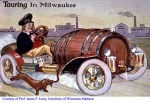
In the Milwaukee postcard from around 1900 shown here, the central figure bears an unmistakable resemblance to stereotypical representations of ethnic Germans that were common at the time. The stout, good-natured, and quite evidently beer-loving Dutchman rides in a fanciful beer-barrel automobile through the city. Outfitted with overflowing steins for reflective headlights, the vehicle has compartments for limburger cheese and frankfurters, while a dachshund chases along after a sausage link. In the background one sees a cheese factory, pretzel factory, malt house, and brewery—all the comforts of a Dutchman’s adopted “Heimat.” While the references to Milwaukee’s brewing industry are historically correct, those to cheese and pretzels are not. Wisconsinites are known today as“cheeseheads,” to be sure, but the state’s cheese industry owes more to Yankee immigrants than to Germans.
The emphasis in the image on alcohol reflects an early division between people of German heritage and Yankees over the cultural and political issue of temperance, often arising from the fondness of German Americans for drinking on Sundays, especially in connection with their family-oriented tavern culture.
This historic heterogeneity was and to some extent still is reflected in the plethora of clubs and societies linked to German ethnicity. These “Vereine” (clubs, societies, associations) allowed members of the growing middle class to associate publicly with one another and became an important social expression of the changes brought on by industrialization in Germany during the nineteenth century. German-speaking immigrants brought the “Vereinswesen” (club culture) with them to America, where it represented not only an example of direct cultural transfer, but also a means through which the transition from the Old Country to the New could be eased.
Some of the more radical Forty-Eighters and Turners were also Freethinkers. Freethinkers promoted an attitude of liberalism and rationality unencumbered by religious dogma, and many supported progressive ideas such as public education reform, improved working conditions, voting rights for women, and the abolition of slavery. These issues were often raised among the Turners as well, and may explain in part the fact that large numbers of Turners enthusiastically responded to Lincoln’s call for volunteers in the Union army.
Seamens Friendly Union Society
All seamen are invited to attend at the Turn Verein Hall on Bush Street between Stockton and Powell Streets on Thursday Evening, January 11 at 7 1/2 o’clock to form a Seamens Society for the Pacific Coast.
This meeting resulted in organization of the Seamens Friendly Union and Protective Society. Alfred Enquist was elected president and George McAlpine, secretary. It was the first organization of seamen in this country, perhaps the first in the world. In 1875, the United Seamen’s Association was formed in the port of New York, and it sent a delegation to Congress to petition for laws to protect seamen. The delegation, according to a news report in The New York Times of January 21, was “graciously received by the President.”
http://www.digthatcrazyfarout.com/trips/trips_festival_history.html
The Marin Shipmates
Posted on August 29, 2020 by Royal Rosamond Press


Yesterday I am sitting on the bus bench looking at these two good ol boys come out of a black Japanese-built beater – with a Confederate flag on top. They had big guts and grey hair. They were letting it all hang out after Franklin Graham gave our President ABSOLUTION in the White House Rose Garden. They then went inside a phone store. I debated about crossing the street and yanking that flag from atop the car. These seniors were about my age. Were they looking to go down in a blaze of glory? I then thought about going over and talking to them, inform them I am about to form a branch of the Black Panther Party called…
MARIN SHIPMATES
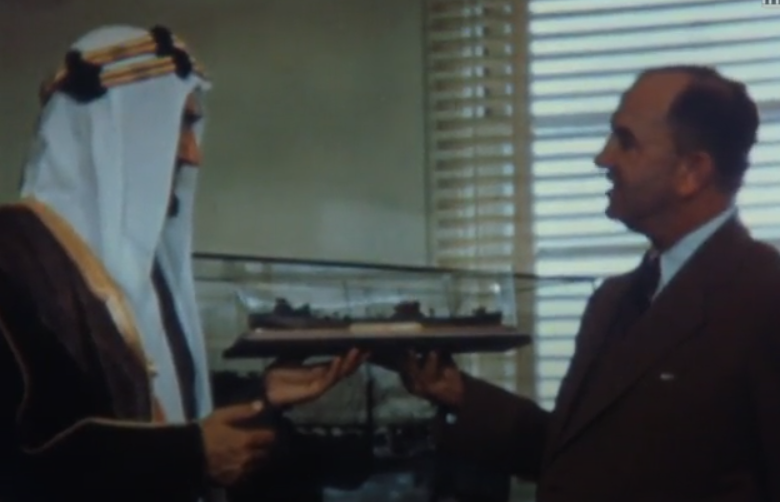
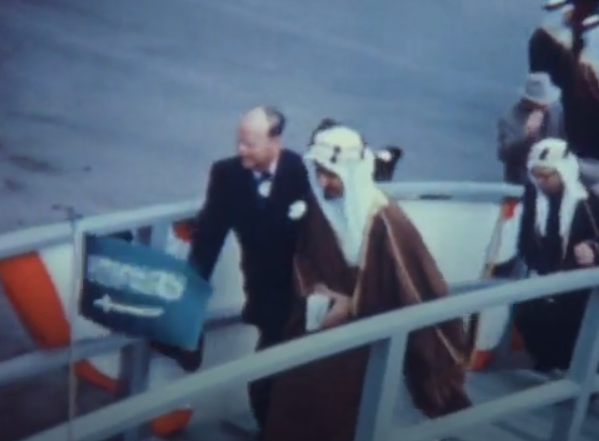
I bought MARINSHIPMATES.COM before I went to see my doctor. The night before, I watched a old movie about MARINSHIP. It was about the Government BUYING land in Marin County, and city named MARIN CITY to build Liberty Ships – and oil tankers. Then I see King Faidal and his bodyguards coming aboard the flag ship
THE TAMALPIAS
These oil tankers are going to be carrying oil to Japan to help in the war effort – after Japan surrendered! WTF!? Where is this oil coming from? Did the United States just SUPPLY the King with a OIL FLEET built by black workers who were lured from the deep South to work in the shipyards scattered around the San Francisco Bay? I asked myself how many black men have made over a million dollars in the Oil Trade?
Here are aspects of the Buck Foundation that was legally established by the law firm of Robert Brevoort Buck. Robert mishandled the estate of my late sister, the world famous artist, Christine Rosamond Benton. I am going to leave the amazing family history I have compiled in my newspaper-blog, to David Hunt, my daughter’s half brother. David father was a Black Panther. I see a all black San Francisco Bay Coast Guard stationed in a United States Reservation for Descendants of Native Africans. I believe the land the U.S. government purchased for Marinship – still belongs to the People of the United States – who were deceived into believing the Marinship ships would benefit the American Taxpayer. I will be applying for several grants from the Buck Institute.
In these historic photographs we are seeing the birth of ISIS and 911. Osama Bin Laden waged war against the corrupt Marriage Contract with Islam and Cooperate Christianity which was pushed by Franklin Graham, and the Red State Neo-Confederate President of One Party that was co-founded by my Abolitionist kinfolk, John Fremont.
As for enlightening Springfield’s branch of the Racist Red Right, they surely would have used weapons on me at the end of my short history lesson, they hearing enough in the first twenty seconds.
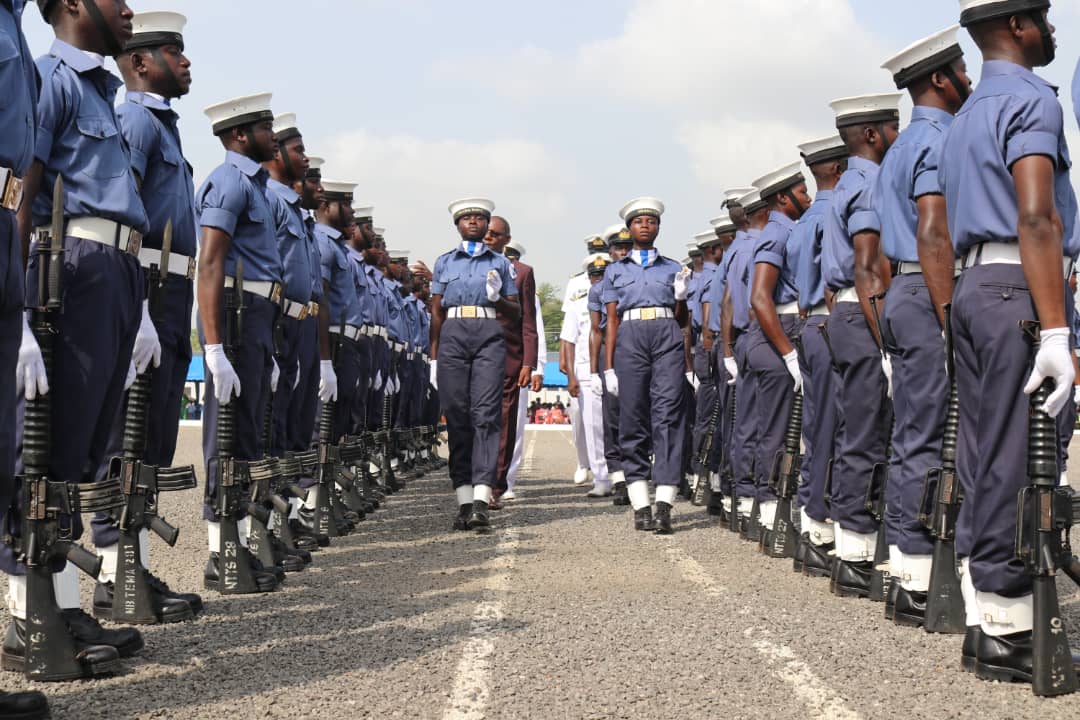
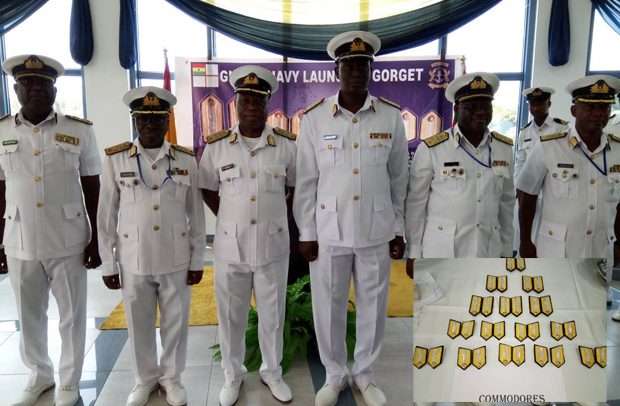
There is much controversy about the intentions of Beryl Buck when she willed her fortune to the poor people of Marin – which would be the poor backs living in Marin City who came to work on King Faisal oil tankers. Her kin, Frank Buck was a oil and lumber tycoon. He raped the woods around Springfield. She wanted a “religious” foundation of a unspecified nature. Alcohol Justice comes close because AA is a spiritual program. This is why I see Briarcliff College moving into the Buck Institute. Below are images of Ghana’s Navy after the display of what looks like a Black Muslin party in Marin.
John Presco
President: Royal Rosamond Press
EXTRA! On August 30, 2020 while rereading this post, I found Richard Rosenberg. He was on the bard of directors of the Buck Institute and Commander of the Naval Reserves. I will be contacting him. In this video we see a Liberty Ship that Richard may have served on. In this video he talks about being poor during the Depression and not being esteemed like the boy in the photo above. Richard head the Naval War College.
https://www.linkedin.com/company/naval-war-college-foundation-inc
The Foundation enriches and further enhances Naval War College programs as defense dollars diminish and the need for officers educated in international security affairs grows. The following are among the many important activities supported by the Foundation: Increasing public awareness of the Naval War College mission, capabilities and accomplishments. Providing financial support to many academic programs and activities at the College for which public funds are not available. These projects range from faculty research, curriculum development and endowed academic chairs to nationally recognized speakers for guest lectures, academic awards for student achievement, and historical document and artifact acquisition for the library and Naval War College Museum.
Philanthropist Dick Rosenberg isn’t resting on his laurels
https://www.usni.org/people/richard-rosenberg
https://www.usni.org/about-us/mission-and-vision
https://www.foundsf.org/index.php?title=Marinship_to_Marin_City:_How_a_Shipyard_Built_a_City
https://www.marincf.org/resources/racial-justice
The San Francisco Foundation: The Dilemma of The Buck Trust (A)
By
Robert Augsburger, Victoria, Chang, William Meehan III
1998|Case No.SI106ANonprofit
When Beryl Buck, a Marin County, California widow, died on May 30, 1975 at the age of 75, she left $7.6 million “for exclusively nonprofit charitable, religious or educational purposes in providing care for the needy in Marin County, California, and for other nonprofit charitable, religious or educational purposes in that county.” For many years, Buck and her husband, a physician, had lived in Ross, a wealthy town in Marin County, just north of San Francisco.
When Buck died, the money was mostly invested in Belridge Oil stock. The oil company was privately held and owned land that was rich in heavy crude oil reserves in Southern California. By the time the lengthy probate proceedings had ended, Belridge Oil had been sold to Shell Oil Company and the total amount in the Buck Trust skyrocketed from $7.6 million to $260 million.



Giving is personal.
Perhaps there’s a cause or an organization that’s special to you. Perhaps giving is a family tradition. Or maybe you want to start a family tradition. Whatever the reason, you want to partner with someone who understands you and your goals and can make your experience easy, effective and joyful.
Welcome to MCF.
We’re here to provide access to the people, resources and issue-area expertise to transform your philanthropic ambitions into reality.
Here are some of our recommendations for your consideration (with organizations led by a person of color noted by asterisk):
Racial Justice Organizations
Advocacy and Civic Engagement
Black Futures Lab works with Black people to transform communities, building Black political power and changing the way that power operates—locally, statewide, and nationally. It works to understand the dynamics impacting Black communities, build the capacity of communities to govern, and engage and include Black people in the decisions that impact their lives. blackfutureslab.org/ *
Note: Black Futures Lab is fiscally sponsored by Chinese Progressive Association.
Black Lives Matter is a global organization in the U.S., U.K., and Canada whose mission is to eradicate white supremacy and build local power to intervene in violence inflicted on Black communities. blacklivesmatter.com/ *
Note: Black Lives Matter is fiscally sponsored by Tides Foundation.
BOLD (Black Organizing for Leadership and Dignity) is a national training, coaching and technical assistance program focused on strengthening Black social justice infrastructure by transforming the practice of Black organizers in the US to increase their alignment, impact and sustainability to win progressive change. boldorganizing.org/ *
Note: BOLD is fiscally sponsored by Highlander Center.
BVM (Black Voters Matter) Capacity Building Institute aims to increase power in marginalized, predominantly Black communities. BVM supports community-based organizations with funding, strategy, and technical assistance to help mobilize voters for elections at various levels and strive to obtain social justice throughout the year. bvmcapacitybuilding.org *
Californians for Justice is a statewide, youth-powered organization fighting for racial justice, with a special focus in Fresno, Long Beach, Oakland, and San Jose. It works to improve the lives of people of color, immigrants, those from low-income backgrounds, LGBTQ individuals, and those from other marginalized communities. It focuses its work on achieving relationship-centered schools, equitable school funding, and youth voice in democracy. caljustice.org/ *
Color of Change is a national online effort, driven by 1.7 million members, to move decision-makers in corporations and government to create a more human and less hostile world for Black people in America. They use an innovative combination of technology, research, media savvy, and local community engagement to build powerful movements and change the industries that affect Black people’s lives—in Silicon Valley, Hollywood, Wall Street, Washington, prosecutor offices, capitol hills, and city halls around the country. colorofchange.org/ *
Equal Justice Society transforms the nation’s consciousness on race through law, social science, and the arts. Its strategy aims to broaden conceptions of present-day discrimination to include unconscious and structural bias by using social science, structural analysis, and real-life experience. equaljusticesociety.org *
Movement for Black Lives creates a space for over 100 Black organizations across the country to debate and discuss the current political conditions; develop shared assessments of the political interventions that are necessary to achieve key policy, cultural, and political wins; and convene organizational leadership in order to debate and co-create a movement-wide strategy. m4bl.org/ *
Note: Movement for Black Lives is fiscally sponsored by the Alliance for Global Justice.
National Coalition on Black Civic Participation is a non-partisan organization dedicated to increasing civic engagement and voter participation in Black and underserved communities. It strives to create an enlightened community by engaging people in all aspects of public life through service/volunteerism, advocacy, leadership development, and voting. It includes a Bay Area chapter. ncbcp.org/ *
Oakland Rising educates and mobilizes local voters to speak up for and take charge of the issues impacting their lives. Their work focuses on three major goals—to build permanent political/electoral infrastructure, exercise and expand political influence, and align organizations and coordinate with other progressive forces. oaklandrising.org/
Note: Oakland Rising is fiscally sponsored by Movement Strategy Center.
Jessie Scouts and BLM
Posted on June 29, 2020 by Royal Rosamond Press

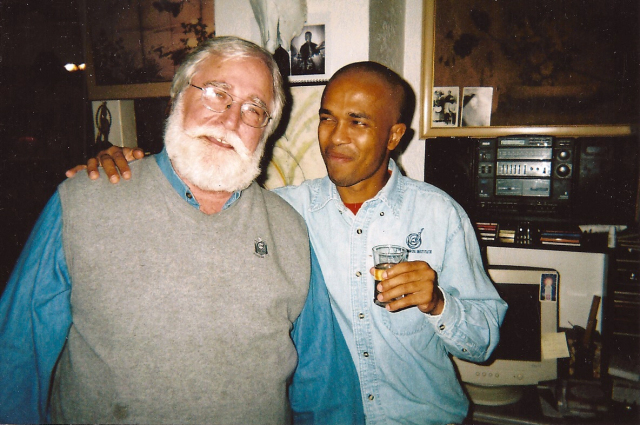

For ten years I have been trying to get radicals of all colors to look at Jessie Benton Fremont – because I saw BLM – coming! Indeed, I might be the founder of BLM.
Trump has long shown a fascination with Mount Rushmore. South Dakota Gov. Kristi Noem said in 2018 that he once told her straight-faced that it was his dream to have his face carved into the monument. He later joked at a campaign rally about getting enshrined alongside George Washington, Thomas Jefferson, Theodore Roosevelt and Abraham Lincoln. And while it was Noem, a Republican, who pushed for a return of fireworks on the eve of Independence Day, Trump committed to visiting South Dakota for the celebration.
https://www.keloland.com/news/local-news/preparations-underway-at-mount-rushmore/
Conservative commentator Ben Shapiro predicted Tuesday that it’s only a matter of time before the far-left and anarchist protesters who have vandalized and destroyed statues across America come for the famed Mount Rushmore.
“It is all statues, it’s not just restricted to Confederate monuments … [or] to people in history who have very checkered pasts …,” “The Ben Shapiro Show” host explained. “We are five seconds away from the ‘blow up Mount Rushmore’ movement.”
The Jessie Scouts
Posted on April 27, 2014by Royal Rosamond Press


For years I have been begging women to step forth and reform the Jessie Scouts who conducted clandestine operations against the Hapsburgs in Mexico.
Jon Presco
https://rosamondpress.wordpress.com/2013/06/04/jessie-ann-benton-fremont/
Jessie Scouts were irregular soldiers during the American Civil War on the side of the Union who operated in territory of the Confederate States of America in the southern United States in insurgency missions.[1][2] The unit was created by John C. Frémont and named in honour of his wife, rather than of a Colonel Jessie, who was himself a myth.[3] The initial Jessie Scout unit was formed in St. Louis, Missouri early in the war as the plan to develop independent scouts was implemented. The first man to command the scouts was Charles C. Carpenter.[4][5] The Jessie Scouts wore Confederate uniforms with a white handkerchief over their shoulders to signify their allegiance to friendly troops, and number around 58 for much of the war, commanded by Major Henry Young.[6]
http://www.jessiescouts.com/Jessie%20Scouts%20Home.html
Off Limits To OSU
Posted on June 5, 2019by Royal Rosamond Press

Oregon State University is forbidden to use this, or any history relating to the history of the Benton Family!
Millions of liberal Democrats have a Confederate in their family tree, and do not hold racist views. Jessie Benton-Fremont said she was snubbed by most of the folks in her family tree when she announced she was an Abolitionist.
I suspect Ed Ray was going to render some kind of mural honoring his native people and his historians inside Benton Hall. Jessie Benton backed Gutzon Borglum in many of his creative endeavors, including Mount Rushmoore.
John Presco
Artistic Development of Gutzon Borglum
Posted on August 23, 2013by Royal Rosamond Press
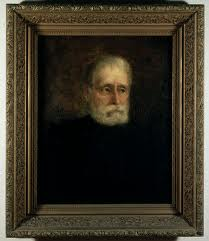
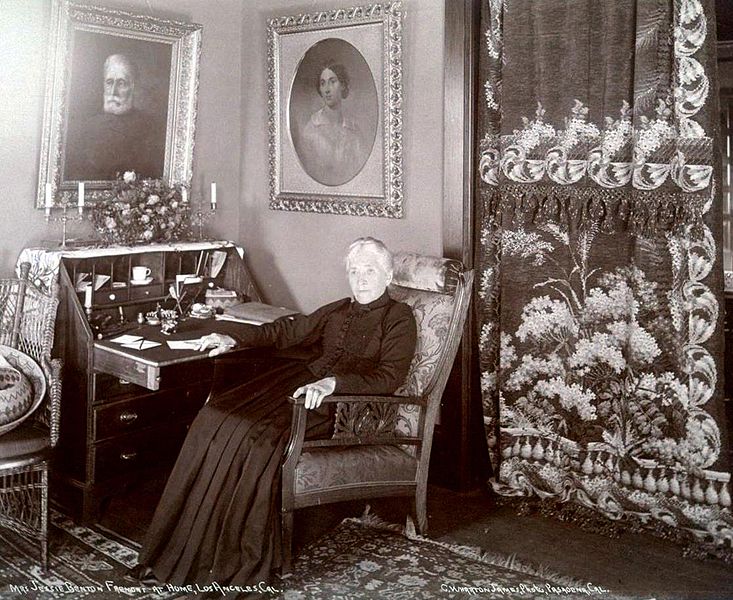



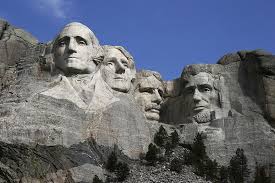
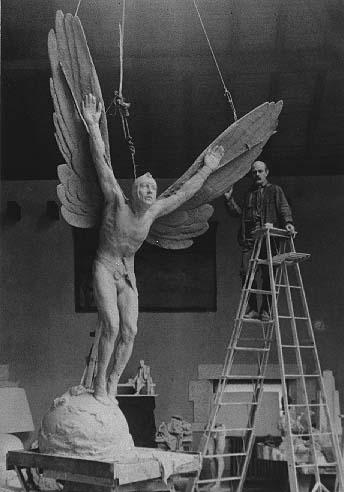
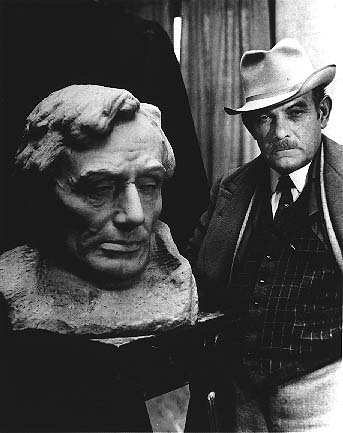
The greatest artist to come out of Nebraska – by far – is Gutzon Borglum, who created Mount Rushmore. Gutzon and his family lived in Omaha and Fremont City. When they moved to Los Angeles, my kindred, Jessie Benton-Fremont, became his patron. She sent Gutzon to famous art schools in Europe. Gutzon did a bust of Jessie, and a portrait of John Fremont.
Charles Lummis the editor of ‘The Land of Sunshine’ and ‘Out West’ was a great promoter of Gutzon and the Fremonts. There is a good chance my grandfather, Royal Rosamond, knew Lummis because he published his poems and stories in Out West..
In 1970, I went with Rena Easton to the art department at the University of Nebraska where she unveiled a life-size clay sculpture of her boyfriend. I later did two paintings of Rena Christensen. One of them inspired my sister to take up art, and she became the world famous artist, Christine Rosamond Presco. She later married Garth Benton, the cousin of the famous artist, Thomas Hart Benton, the grandson of Senator Thomas Hart Benton, the father of Jessie Benton, and father-in-law of John Fremont, the first presidential candidate of the Republican Party.
Royal was bid to write by the artists, Jack and Fanny Cory. Fanny did covers for the Saturday Evening Posts, as did Philip Boileau, the son of Susan Benton who had a salon in Paris and may have sponsored Gutzon in France.
Christine and Garth were introduced by Lawrence Chazen, a partner of Rosamond in her first Carmel Gallery, and business partner of the Getty and Pelosi family. Nancy Pelosi’s husband and Chazen are top financial advisors for the Getty family who at one time owned the largest art collections in the world. Chazen is a CEO of Nobel Oil, and was my father’s private lender in his loan business.
If Rena and I had not mended the rent in our relationship at the University of Nebraska Museum, then Christine would not have become famous and married into the creative Benton family, because, I would not have captured her beauty on canvas. I am the Benton and Rosamond family historian.
Jon Presco
Copyright 2013
Out of Rushmore’s Shadow: The Artistic Development of Gutzon Borglum
“Out of Rushmore’s Shadow: The Artistic Development of Gutzon Borglum” will be on exhibit at the Stamford Museum & Nature Center through February 20, 2000. The exhibition is a major retrospective on the work of Gutzon Borglum, best known for the carving of the presidential portraits on Mount Rushmore, South Dakota.
The Jessie Scouts
By David L. Phillips
One of the most important functions of the cavalry during the Civil War involved the collection of intelligence. Skilled volunteers were selected from many cavalry regiments and these brave men moved in the advance or on the flanks of their regiments in order to prevent any surprise attacks. Frequently, they moved independently to collect information on the presence, condition, and intentions of the enemy forces in their vicinity.
In order to do this effectively, many of these men began to wear the enemy’s uniform as they conducted their operations. While in the enemy’s clothing, the volunteer scout was placing his life in his hands. The commonly applied rules of war defined his presence within the opposition’s lines. Wearing the wrong uniform was defined as an act of espionage, punishable by death. Their secret service to their country involved hazardous activities and could lead to summary execution, if apprehended. Dangers other than summary execution awaited the volunteers, but both armies continued to locate volunteers to perform the dangerous duty.
The Jessie Scout was a Federal soldier, dressed and armed a la Rebel. He was named after Mrs. Jessie Fremont, wife of the General of that name, who first suggested that mode of obtaining information.?“When a Rebel was captured, his furlough or pass was taken from him, and also his outer garments. A soldier was then found, who resembled him in size, age, and general appearance. The Rebel’s uniform, from hat to boots, was put upon this man, who assumed the name of the prisoner, and the Federal left the camp, a soldier of the Confederacy…. These Jessie Scouts generally preceded the advance of the army, and they frequently picked up a great many prisoners, without creating any alarm. I made the acquaintance of many of them, and found them bold, dashing, reckless, good fellows. I met Major Young, Sheridan’s chief of scouts, and found him eminently fitted for outpost duty and border warfare.”-John Opie, 1899
Frank H. Buck’s Big Oil Spill
Posted on August 1, 2017by Royal Rosamond Press


Who paid for the clean-up? Did Robert Buck hide the history of his ancestor? How many seabirds were shot dead in Marin County? Who paid for the shotgun shells?
Jon Presco
San Francisco Bay, 1937
Not much is known about the immediate environmental effects of San Francisco Bay’s worst oil spill. That’s mainly because it took place in the late 1930s, when we just weren’t paying much attention to ecological issues.
But what we do know about the incident is that the passenger ship President Coolidge rammed the oil tanker Frank H. Buck at Lands End just outside the Golden Gate Bridge on March 6, 1937, and that the Buck then spilled about 2.73 million gallons of crude oil into the water — either immediately, or after storms thwarted halting efforts to pump remaining oil out of the ruined ship’s cargo tanks.
According to witnesses of the day, more than 20,000 birds died of oil contamination in the days after the collision. Rehabilitation efforts were nonexistent, and members of the SPCA patrolled local beaches with shotguns to put ailing birds out of their misery.
Frank H. Buck, who is president of the Frank H. Buck Company, a prominent fruit growing and shipping concern of San Francisco, is descended from ancestors who have been outstanding figures in the history of California in the days gone past. He was born on a ranch near Vacaville, Solano county, California, September 23, 1887, and is a son of Frank H. and Annie E. (Stevenson) Buck.
The Buck family is of English origin. Leonard W. Buck, the grandfather of Frank H., was a first lieutenant in the Union Army during the Civil war, and served as state senator from Solano county in 1891-93. Frank H. Buck, the father of the immediate subject of this biography, was his son, and was born June 8, 1859. He was the founder of the fruit growing and shipping business, in 1886, which is now under the management of his son. On the maternal side of Mr. Buck’s family, the Stevenson family is Scotch. Andrew M. Stevenson, his grandfather, was a lieutenant colonel in a Kentucky regiment during the Mexican war, and after the close of hostilities he settled in Vacaville, California, where he engaged in cattle raising. With his brother, George Bushrod Stevenson, he constructed the Vaca Valley & Clear Lake Railroad, which is now a part of the Southern Pacific railway system. He was state senator from Solano county about 1855. He was a first cousin of Adlai Stevenson, vice president of the United States from 1893 to 1897. Annie E. (Stevenson) Buck, mother of Frank H. Buck, was born January 20, 1861.
With the class of 1903, Mr. Buck graduated from the high school in Vacaville, and then took up his advanced studies at the University of California, from which he received the Bachelor of Letters degree in 1908. He then entered upon the study of law at Harvard, and in 1911 this famed institution conferred upon him the Bachelor of Laws degree. He was admitted to the California state bar in November, 1911, and from 1912 to 1917 he maintained a law office in the city of San Francisco. He actually resided in this city during his first year in the practice, but since has made his home in Piedmont, although he retains his old legal residence in Vacaville. In 1916, he became manager in charge of the interests of the Buck estate, his father having passed away in that year. The latter started the business of this organization in 1886, and it was incorporated in 1902. The purpose of the concern is the growing and shipping of decidnous fruit. Frank H. Buck was elected president at his father’s death. In 1919, he became a director in the Associated Oil Company and was made a member of its executive committee in 1922. In 1916 he became a director in the Belridge Oil Company; in 1916 a director in the Booth Kelly Lumber Company; and in 1918 a director in the West Coast Oil Company. He is also interested in the Tidewater Associated Oil Company, and in various banking and kindred associations. He is president of the California Growers and Shippers Protective League, and is vice president of the American Fruit and Vegetable Shippers Association. He has attained an influential position among the growers and shippers of fruit in California, and he is known as a business man who follows a careful and intelligent course in any activity which he may undertake.
Mr. Buck was married first in 1911, and by this union became the father of four children, namely: Frank H., Jr., Margaret Anne, C. Brevoort, and Elias Z., now (1931) being nineteen, eighteen, sixteen, and fourteen years of age, respectively. All of the children reside with their father at 17 Sotelo avenue in Piedmont, Mr. Buck was married secondly in Alameda, California, to Eva Benson, a daughter of Martin Benson and born May 18, 1899. Her mother is deceased. Mrs. Buck has a fine interest in various affairs of public nature. She is a director of the Women’s Athletic Club of Oakland, California, and also a director of the Baby Hospital Association in the same city.
The democratic party has been Mr. Buck’s choice of political affiliation. He is a member of the executive committee of the state central committee, and was a delegate to the 1928 democratic convention. He was a write in candidate for congressman from the third district in 1930, with democratic endorsement, as there were no party nominees at this election. He worships in the Presbyterian Church. He belongs to the Theta Delta Chi collegiate fraternity, and from 1919 to 1923 he was president of the grand lodge of the Benevolent and Protective Order of Elks. His name is also on the membership rolls of the Sutter Club of Sacramento; the Bohemian, Pacific Union, and Commonwealth Clubs of San Francisco; the Claremont Country and Athens Athletic Clubs of Oakland; and the Mount Diablo Country Club, He has given generously of his time and means to many enterprises of public nature in the bay district, and throughout his career has followed a thoroughly public spirited course of action. When the United States was engaged in war with Germany, he gave notable service locally. He was a member of the San Francisco legal advisory board; of the Vacaville council of defense; and of the prune advisory board under the food administration.
From:
The History of San Francisco, California
Lewis Francis Byington, Supervising Editor
Oscar Lewis, Associate Editor
The S. J. Clark Publishing Company
Chicago-San Francisco 1931
Big Buck Think Tank
Posted on August 18, 2017by Royal Rosamond Press


Why all this BRAIN POWER? What good is it? This BUCK BUNCH didn’t keep Von Trump out of the White House, and, never considered doing so, because………….? Are they Republicans? What an exotic group of peacocks, who are all about preseriving the Republican Clique, the old Money Guard. They have been gathered together on Peacock Island where the strut about showing off their BIG BRAINS. What are they good for? Their Grand Peacock In Chief has laid a rotten egg about bloody bullets, and Pershing. Of course they pretend not to notice, lest someone ask for their opinion. They go into a Huddle of Smartness, instead.
“Are we ready for our first test? People are beginning to think our Longevity Program is a fraud, even a CIA front.”
“Come on Barry. No one’s THINKING that. No one knows we exist. It’s your GUILTY CONCIENCE acting up again. Here! Open up and take our new Freedom Pill.”
Here is the Senior Vice President at the Buck Institute for Aging Research yammering on about some problem in North Africa that needs our immediate attention – NOT! Don’t we have enough MANPOWER on this, and – MONEY? Most folks with brains are concluding all THEIR PROBLEMS arise from sectarian bickering that has been going on for thousands of years. In other words, this is Bible, Torah, and Koran crap!
As you know I am one of the few people trying to preserve the Legacy of the Peaceful and Creative Hippie and Bohemian Culture, that is at loggerheads with religious nuts carrying guns and shooting their mouths off. In my musical there will be ‘The Fan Dance of The Giant Eggheads’. Here is a good spread, the opening of Raja Kamal’s fantastic fan!
Don’t you love this name………..Richard “Dick” Bodman. Biggus Dickus? This is why they hate hippies – on acid! Beryl Buck was not THINKING GLOBAL AFFAIRS when she left her wealth to ‘The Poor and Stupid of Marin’. All these BBs cant grasp this problem. Perhaps they should elect a poor and stupid Marinite to the board, just to study him, or her, and, stay focused on THE BIG PROBLEM – that Jesus handled – with ease!
I am the guy who hopped the fence at the Buck Institute, and have been brought before Emperor Buckus Dickus. Robert ‘BIG BUCKS’ Buck.
P.S. Robert Brevoort Buck may not be stable. If Von Trump see this name “MILLION AIR” there’s going to be a boastful war of words. BILLION AIR.COM is taken. POOR AIR.COM is available.
Jon Presco
When someone is buried they are put BElOW ground
- years. https://rosamondpress.com/2020/08/29/the-marin-shipmates/ROSAMONDPRESS.COM The Marin Shipmates The Marin Shipmates
- Like
- · Reply
- · Remove Preview
- · 3d
- Greg Presco Kamala is linked to the Black Panthers. This is real history. Are we going to allow her to be CLEANSED and made presentable? To whom? https://rosamondpress.com/2020/11/28/marin-city-sea-cadets/ROSAMONDPRESS.COMMarin City Sea CadetsMarin City Sea Cadets
- Like
- · Reply
- · Remove Preview
- · 3d
- Greg Presco My friend, Ed Howard is trying to save the history of this park and have it play a big part of our future. We have to get off the insipid merry-go-round they have made for us. If we stay on it, then it is on
I found Carl and Dorothea (also and Doretta) are buried at the Union Cemetary in Redwood City.
Carl_August_Janke
Names Listed on the Marker:
Janke, Carl August
Janke, Dorette Catherine
Janke, Mutter Heinrich
Inscription:
— From the 1937 headstone survey —
Carl August Janke, born in Dresden, Germany Oct. 1806, died Belmont, Calif. Sept. 2, 1881
Dorette Catherine, wife of Carl August Janke, born in Hamburg, Germany, July 21, 1813, died in Belmont, California, Feb 16, 1877
Mutter Heinrich, mother of Dorette Catherine Janke, born in Island of Heligoland, Germany, 1781 died in Belmont, California 1876
NOTE: In 1937 the Daughters of the American Revolution recorded all the headstones.
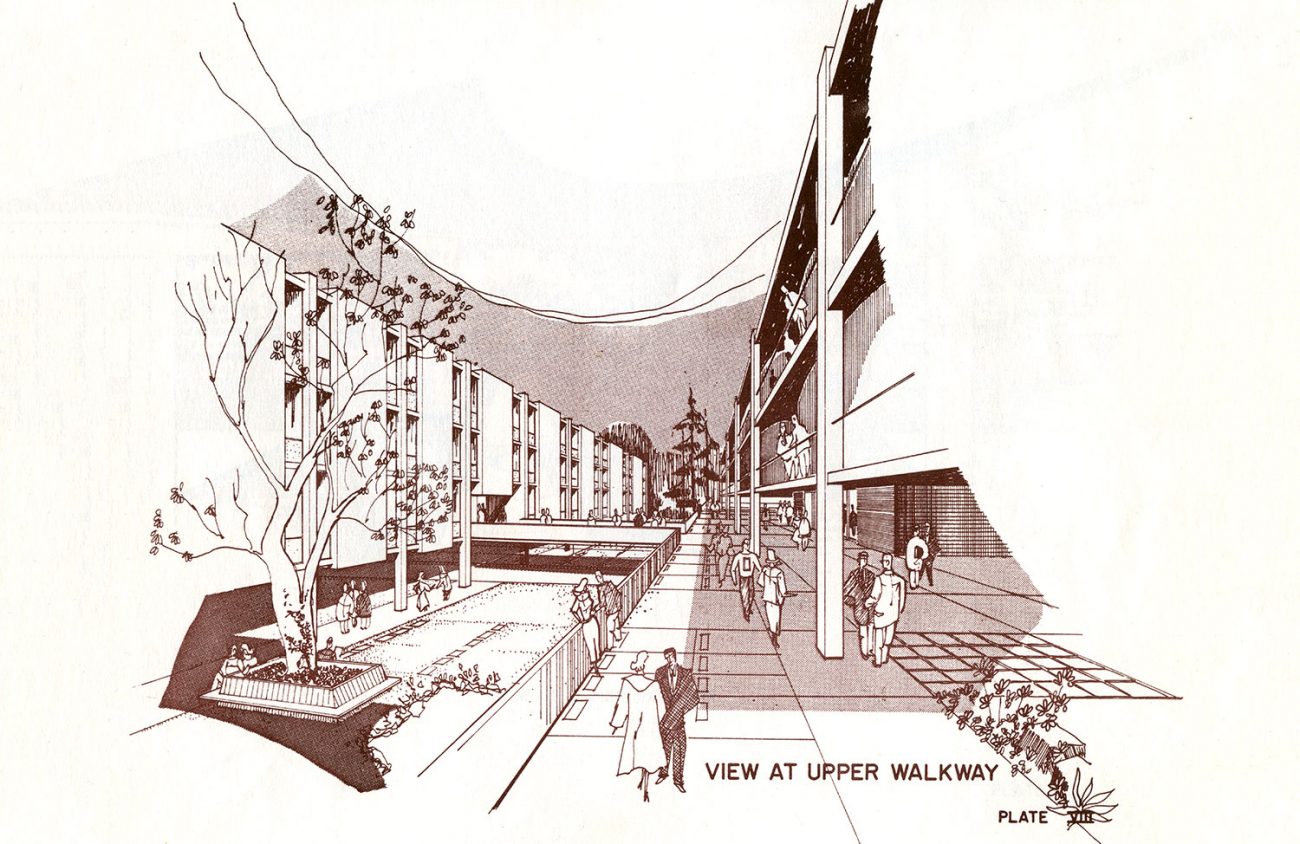
Up in the Air
THE UNIVERSITY OF OREGON HAS A COMPLICATED HISTORY WITH EUGENE’S PIONEER CEMETERY, AND COMPLICATED RELATIONSHIPS WITH ITS OWN BUILDINGS TODAY
NEWSBY ASIA ALVAREZ ZELLERPOSTED ON
- CLICK TO SHARE ON FACEBOOK (OPENS IN NEW WINDOW)
- CLICK TO SHARE ON TWITTER (OPENS IN NEW WINDOW)
- CLICK TO SHARE ON TUMBLR (OPENS IN NEW WINDOW)
- CLICK TO EMAIL A LINK TO A FRIEND (OPENS IN NEW WINDOW)
Students happily mill past cemetery markers, while buildings rise high above the graves. This surreal scene appears in drawings from 1963 showing a proposed addition to the University of Oregon campus: structures sitting on pilings over the Pioneer Cemetery.
The idyllic sketches make the cemetery on the south edge of campus look almost parklike beneath the edifices, with the long-buried dead a minor afterthought to the aspirations of higher education.
It’s sketches like these, as reported in the Daily Emerald back in the 1960s as well as a couple of student theses on the topic, that allowed Eugene Weekly to piece together the University of Oregon’s buried history with the Pioneer Cemetery — a moment when the UO decided it was a good idea to erect buildings over the dead.
Roxi Thoren, associate professor and department head of Landscape Architecture at the UO, sheds light on the architectural thinking. She says, cemetery aside, the idea of an elevated building was “standard architecture of the time.”
She says the idea comes from French architect and modern architecture pioneer Le Corbusier’s idea of a tower in the park. It’s “supposed to be a continuous horizontal green plane, and the city will be this expansive garden,” she says.
She calls the thinking of the time progressive and technocratic. “It’s about technology freeing us from the vicissitudes of nature,” Thoren says.
But looking back, the plans look strangely out of touch.
Although a bit weird, the university’s aspirations probably don’t shock anyone familiar with the “University of Nike.” Even before being flooded with Phil Knight’s money, the UO was ambitious. The university in 1963 was doing exactly what it’s doing now: casting its gaze on nearby land, seeking to acquire real estate and build not only new academic buildings, but its reputation as well.
In 1963, the architecture firm Lutes and Amundson created five plans for the UO to expand onto the land occupied by the Pioneer Cemetery. The most ambitious — and most unbelievable — was an idea to construct buildings over existing graves, presumably without disturbing them.
Thoren says the tower-in-a-park idea is a nice one, but she calls some of the unbuilt design examples, such as the plan for the cemetery, a bit extreme. “A tower in a park is one thing,” she says. “A tower in a cemetery is another.”
She adds that architects of the period often did not think about the world as it existed around them. They saw their desire to build as something paramount to the needs and limitations of the space it would inhabit.
The non-engagement with pre-existing conditions seems to have been at play with Lutes and Amundson and the UO. The plan depicts a landscaped graveyard with footpaths for students to walk on. Above them are buildings vaulted and supported by beams. Skybridges direct students from other areas of campus to their over-the-cemetery classrooms.
Basically, the UO wanted so badly to expand that it was willing to put buildings on stilts over a graveyard.
“That is shocking,” says Ocean Howell, associate professor of architectural history at the University of Oregon Clark Honors College, looking at the architectural drawings. He’s shocked not only by the premise of the plans themselves, but also by the fact that they were seriously considered in 1963.
Whose Cemetery?
Long before plans were made for grand buildings and skybridges above the cemetery, quieter plans arose to challenge the governing body of the Pioneer Cemetery. A fracture within the Odd Fellows Cemetery Association led to more than a decade of disputes over the land, many of them involving the university. The Odd Fellows Lodge owned the cemetery at the time.
The association split into two groups: the Odd Fellows Cemetery Association and the Pioneer Memorial Park Association. The Odd Fellows believed the new Pioneer Association wanted to hand over rights to the university.
Down the line the Odd Fellows changed the name of their association to the Eugene Pioneer Cemetery Association in hopes of disassociating with the Lodge and getting the rights to the property back.
The two groups went to court and, at one point, the Eugene Pioneer Cemetery Association argued that the Pioneer Memorial Park Association had allowed the cemetery to become so overgrown that it “constituted a fire hazard besides having an unsightly appearance.”
The five plans created by Lutes and Amundson called for the university to convert the cemetery into usable academic space. The strangest of them was the Le Corbusier-esque tower-in-the-cemetery idea.
This idea was backed by state Rep. Ed Elder and was known as Elder’s Compromise.
The plan included utility tunnels and vehicular circulation that “could be located within 30 feet of roadways where excavation without disturbing graves would be possible.” The plans also say “some ground floor service areas and stairways could be located in vacant grave areas.”
Howell told EW that it would, in fact, not be possible to construct to this scale above a cemetery without disturbing graves.
Much of the record over the debate comes fromthe Daily Emerald’s assiduous reporting on the university’s interest in the cemetery for several months.
In 1969, a bill was introduced in the Legislature that would allow for the cemetery to be condemned, then absorbed into the university and built over. It was not the first bill of its kind and, like the others, the bill did not pass.
The other plans for the cemetery that Lutes and Amundson offered seem to have gotten lost in the buzz of Elder’s Compromise.
One alternative to building over the cemetery was a plan for a “relocation in kind” which involved creating a duplicate of the existing cemetery somewhere else in Eugene, and moving the bodies to the duplicate cemetery. This would have freed up land for any building project the UO might’ve had.
Lutes and Amundson also suggested a relocation of the graves with a more consolidated design and relocation to a perpetual care cemetery where a fund is used for general maintenance and repair of cemetery grounds or, finally, a compression of the cemetery on the existing land.
The buzz over developing the cemetery finally died down for good when the university expanded elsewhere and the cemetery was added to the National Register of Historic Places.
Then and Now
These days, the UO is no longer trying to expand on or above the Pioneer Cemetery, but it is expanding nonetheless.
In December 2018, the university released its 10-year capital plan detailing how, over the course of the next decade, the university plans to renovate existing buildings and build new ones.
When asked about the plan for buildings on stilts above the cemetery, Michael Harwood, associate vice president and university architect at the UO, says, “I never realized we had this bad idea.”
As far as current involvement with the cemetery goes, Harwood says one of the university’s staff members sits on its board, but that’s the extent of it.
The 10-year capital plan is “our attempt to lay out for the future our capital needs,” he says. He calls the plan the “third link in a chain” that starts with an academic plan, followed by a space plan that assesses what spaces on campus are going to grow.
Harwood says there aren’t many new buildings in the plan “because we think that the space we have will accommodate our growth at the moment.”
Existing buildings will be renovated to be more accessible to alter-abled students, faculty and staff. Plumbing, mechanical and electrical systems will be replaced to “reduce the energy and maintenance costs,” according to the plan.
Some new buildings that were in the plan, such as Tykeson Hall and the Lyllye Reynolds-Parker Black Cultural Center, are finished and in use in the 2019-2020 school year.
Perhaps the biggest change to the UO is the creation of the Phil and Penny Knight Campus for Accelerating Scientific Impact, which has already displaced several businesses on Franklin Boulevard.
The Knight Campus is not to be confused with the Knight Library, the William K. Knight Law Center or the Matthew Knight Arena, which are existing buildings for which the Knight family has made financial contributions to fund construction or renovation over the years.
The 160,000-square-foot first phase of Knight Campus is projected to be completed by 2020, according to the University of Oregon 10 year capital plan. Around the O says the Knight Campus is a “$1 billion initiative aimed at integrating research, training and entrepreneurship into a single, nimble, interdisciplinary enterprise.”
Historic Hayward Field was under construction the entirety of the 2018-2019 school year and is being pushed through for spring 2020, including late night work. It’s a prime example of history that did, in fact, get destroyed at the hands of the university when Phil Knight waved a good chunk of change in front of them and other donors followed suit.
The historic East Grandstand, where fans once watched Steve Prefontaine run by, was demolished, despite public outcry, protests by local activists and a call to preserve the structure.
According to the university’s online information, once renovations are completed, Hayward Field will include a new nine-lane track, spacious seats and a tower in the northeast corner that will feature “interpretive exhibits” and an observation deck.
The UO declined to discuss the Hayward tower with EW, referring reporters to the website, so Eugene will have to wait until track season to find out what exactly these “interpretive exhibits” are.
Hayward Field will also house classrooms and labs for the department of human physiology.
The Future of the University
Landscape architecture professor Thoren says that, for the time, ideas like the one for the cemetery were progressive and idealistic, but when we look back with hindsight they look a bit silly.
Time will tell if the same can be said for the university’s new and future developments.
In her work, Thoren is interested in “the role that place and landscape have in reinforcing cultural identity and also helping to create cultural identity.”
“One of the things that I love about this campus is the role that the landscape plays in structuring. It has a figure, and buildings fit into that figure,” she says. “But the landscape rooms are themselves important.”
Thoren adds, “If we begin to lose the landscape, we begin to lose part of what makes us the University of Oregon.”
Exhuming the Cemetery Dispute
Founded 1872 by Spencer Butte Lodge No. 9 of the Independent Order of Odd Fellows, Pioneer Cemetery was formally platted in 1892. Years later, a dispute arose over just who was the governing body of the Pioneer Cemetery.
According to The Eugene Pioneer Cemetery: A Historical Overview by Elizabeth Oster, a man by the name of Ben Dorris called a meeting in 1954 of the Odd Fellows Cemetery Association.
The Odd Fellows Lodge had owned the cemetery for many years but had failed to live up to the standard of maintenance that new cemetery laws required. The meeting appointed a new board of trustees in hopes of better maintenance.
The new board staged a takeover and executed articles of incorporation under the name Pioneer Memorial Park Association.
The stated purpose of this new organization was “to acquire the interests in the cemetery property held by the Lodge and the Odd Fellows Cemetery Association and to operate and maintain it on a businesslike basis.”
Others believed that the association’s true objective was to secure the title of the property so the cemetery could be destroyed and the land could be sold to the University of Oregon. They believed the new board was setting the stage for a business deal with its next-door neighbors.
In her 2012 thesis on the history of the Pioneer Cemetery, Elisabeth Kramer writes, “The relationship between the UO and the cemetery is like any association between longtime neighbors.”
To make things even more complicated, two years after the coup, in 1956, the Odd Fellows Cemetery Association changed its name to the Eugene Pioneer Cemetery Association in hopes of disassociating itself from the Lodge and once again acquiring the rights to the cemetery from the Pioneer Memorial Park Association.
Almost a decade passed and in January 1963 the UO wanted to expand but found itself bumping up against the nearby cemetery. Local architecture firm Lutes and Amundson created plans for the UO’s potential expansion.
In the midst of all this arose “Elder’s Compromise,” named after Oregon state Rep. Ed Elder, which proposed the plan, detailed by Lutes and Amundson, of constructing buildings above the cemetery, allowing for both expansion and preservation, on some level, of the historic cemetery.
A Daily Emerald article from Feb. 14, 1963, “Bridge It or Build On It, But By All Means Buy It,” urged the university to purchase the land and decide what to do with it, and supported Elder’s Compromise.
Another article quotes Harold Edmunds, chairman of the cemetery association, as saying the association “will give consideration to anything the university thinks practical…”
In September, the Eugene Pioneer Cemetery Association, the group that wanted to preserve the property, and the Pioneer Memorial Park Association, which owned and was responsible for maintaining the property, went to court. The Eugene Pioneer Cemetery Association charged that the Pioneer Memorial Park Association allowed the cemetery to become overgrown and unsightly.
Meanwhile, the Daily Emerald published yet another article about the cemetery controversy in October, saying, “The petitions filed last month alleged that it is not the intention of the present association directors to maintain the cemetery but to make available to the state board of higher education portions for the university campus.”
This reflects the suspicions of those who believed the Memorial Park group had all along intended to sell the land.
The case litigated until August 1964, when the Pioneer Memorial Park Association was dismissed from court because it proved to a judge that it “did not have the funds to maintain the property and no means of acquiring any.”
The Pioneer Memorial Park Association was freed from any allegations of letting the property become intentionally overgrown — it simply didn’t have the funds to maintain it.
In 1969, the university continued to try to acquire the cemetery property. A bill introduced in the Legislature would have allowed for the cemetery to be condemned, absorbed into the university and built over. It was not the first bill of its kind, and like the others, the bill did not pass.
In 1970, the cemetery had another day in court, and for similar reasons. Harrison R. Kincaid, a cemetery lot owner, brought the Pioneer Memorial Park Association along with university President Robert Clark and former President Arthur Fleming, among others, to trial for a suit in damages amounting to $200,000.
Kincaid alleged “the Pioneer Memorial Park Association and its associates were purposely allowing the property to degenerate in conspiracy with the university so that it might be condemned and then declared open for sale and rezoning, resulting in the relocation of the burials.”
If true, it would make the process of obtaining the land much easier for the university.
In 1971, a judge ruled in favor of the defendants because Kincaid failed to provide sufficient evidence that a conspiracy was happening.
After 1971, the Pioneer Memorial Park Association “ceased to be active concerning the cemetery,” according to Oster, who wrote The Eugene Pioneer Cemetery.
As it turns out, four Medal of Honor winners had been buried at the cemetery, qualifying it to be on the National Register of Historic Places. Once it attained that designation, talks of the university buying the cemetery dissolved.
Kramer’s thesis explains that by the late 1990s “the needs of the university had also adjusted as land was purchased to the east of campus, shifting the focus away from the cemetery.” — Asia Zeller
I Copyrighted Carl Janke of Belmont
Posted on June 23, 2023 by Royal Rosamond Press
It is time to look for a great attorney!
John Saint John
Summoning The Muse of Sir Sterling London Joaquin Lord de Rosemond
Posted on January 21, 2014 by Royal Rosamond Press
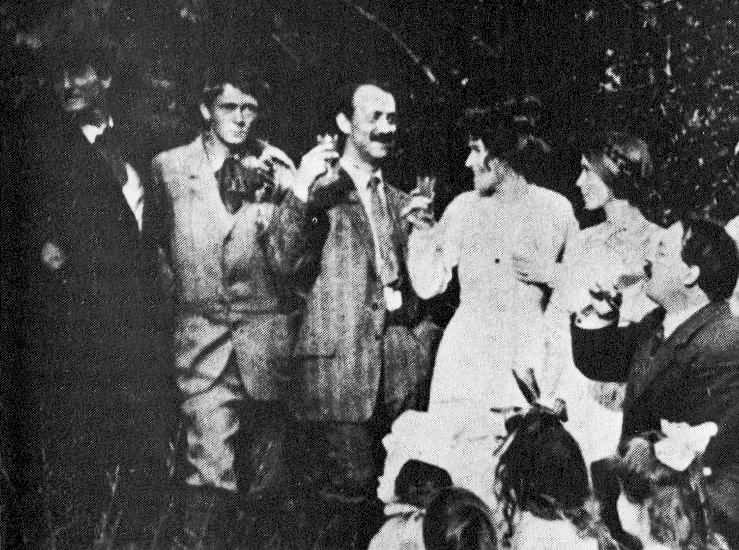
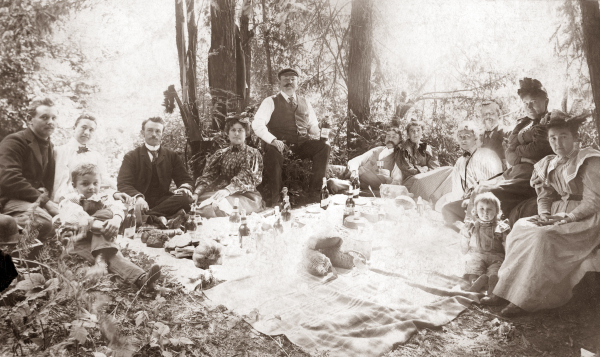

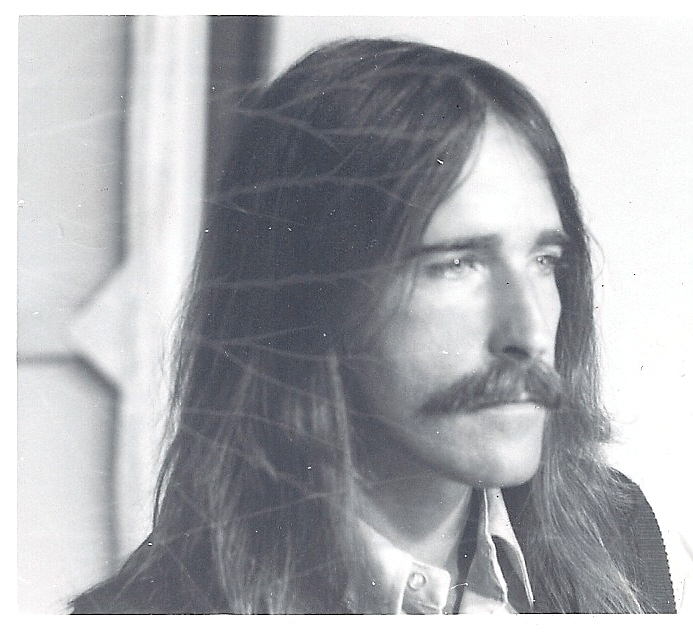

During the Summer of Love, and the renewal of Bohemian activity in the Bat Area on a grand scale, only I seemed to be aware of Sterling, London, and Joaquin ‘The Trail Blazers’ who had gone before us into the wilderness, and carved out Bohemian Sanctuaries, groves, wherein we worshipped the Queen of Druids – our Grand Bohemian Muse!
“Hail Brother Bohemians – Lovers of the Grand Beloved Muse!”
With the return of the Muse that Bill and I followed, and who rendered my late sister a world famous artist, can the re-capture of the Creative Spirit that has fallen into hands of the Un-Creative of the World – commence!
In discovering that my great grandfather, Carl Janke, was the first to build a Bohemian Community and Retreat in Belmont California – that he co-founded – put my family history next door to the Bohemian Grove in Monte Rio.
Five years ago after learning Rena Easton was married to a Commodore, and lived in the Isle of Wight, I had fantasies of what happened after we met. After my friend Bryan drops us off in Oakland – after he tried to kidnap Rena on Pismo Beach – I drive her down to the Oakland Estuary where my seventy foot yacht is moored. WE are now all alone down in the industrial train yards. There is not a soul around. I take her hand and guide her aboard. We go down below where I perform a superb removal of her apprehension. Why shouldn’t she be leery of this dark sailor man, this Hermit of the Sea.
Above is a photo of my small sailboat that I lived on. I was a tad ashamed to show it, until Rena told me in her letter about her small dwelling.
When Rosemary was showing us the family photos, her children perked up when we beheld these antique people having a picnic in the Oakland Redwoods where we used to have picnics.
“Who are these people, mother?”
“Those are your father’s people, the Bohunks.”
“Bohunks!” We exclaimed. “What’s a Bohunk?”
“Bohunks are Bohemians.” our mother answered with some concern.
What harm could it do these innocent children to know they have Bohunk blood in their veins? As long as they never learn my father was a Hillbilly, smitten by a Redneck Muse that he named ‘Ravola of Thunder Mountain’.
I am a very Lucky Man!
Jon Presco
Copyright 2014
https://rosamondpress.wordpress.com/2012/07/03/belmonts-bohemian-redwood-grove/
http://en.wikipedia.org/wiki/Oyster_pirate
http://en.wikipedia.org/wiki/Jack_London_Square
http://en.wikipedia.org/wiki/Jack_London
There were old growth redwood trees near Belmont and Redwood city that were harvested. Carl Janke built his theme park on Belmont Creek a watershed that came down from the hills. This was an ideal habitation for giant redwoods that could be seen by sailors on the bay. It must have been an incredible and beautiful sight that would have appealed to a German who traitinally love the forests.
“In the hundred years since the Huddart Park area was logged, a new forest of redwoods and other trees have grown, covering much of the evidence of this early logging activity. However, still visible are large stumps of the virgin redwoods and “skid roads” over with the teams of oxen dragged logs to the sawmills.
If Janke brought his six portable houses around the Cape on a Clipper in 1848, instead of 1849 as some say, then Carl did not do so to sell them to gold miners who struck it rich, but to create a utopian city and haven for people all over the world who would come to behold these giant redwoods. Were the founders of Bohemian Grove inspired by Janke’s Turnverien free-thinker dream? Jack London, George Sterling, and Joaquin Miller, were members of the Bohemian Grove. Miller knew the Stuttmeisters who had a farm down the hill from ‘The Heights’ where artists and poets met. Miller wrote ‘City Beautiful’ . Above are photos of the Stuttmeisters and Brodericks having a picnic in the redwoods. Miller planted trees all over the Oakland Hills. The Stuttmeisters built forty home in Fruit Vale on streets they named after trees. Here are your Hobbits, your Gandalf’s, your Magical Men that made California a Mecca for those who use their mind, believe thinking is the best way to travel.
Dr. William O. Stuttmesiter is the gentleman with white hair and dark mustache. He played violen for the Oakland Symphony.
Jon Presco
Copyright 2012
Janke’s park offered all the necessary provisions for an outdoor holiday, which included a dance pavilion to accommodate 300 large glassless windows, a conical roof and a dance floor situated around a large spreading tree. The pavilion was also equipped with a bar, an ice cream parlor and a restaurant.
Months after my sister’s death I went to the Sacramento Library and looked at microfish about a legal battle between the heirs of Carl Janke’s estate in Belmont that appeared in the San Francisco Call. I lost the copy I made of that article that I am certain mentioned William O. Stuttmeister, and the sisters of Augusta Stuttmeister-Janke. Carl’s sons did not want Minni and Cornillia, to have anything, and one brother (or cousin) took their side, and was cut out. This has to be William, or W. JANKE. “The bride was attended by Miss Alice Stuttmeister, a sister of the groom, and Miss Minnie Janke, a sister of the bride, as bridesmaids, and Dr. Muldownado and Wm. Janke, a cousin of the bride, were groomsmen.” When Victor Presco turned twenty-one, the the Janke spinsters offered him a moving company in San Francesco. Apparently they saw him as the heir to the Stuttmiester legacy, and the Hope of a return to former glory because they had no children. How about their brother, William? Rosemary said this; “Your father was a made man.” Two days ago, in an e-mail, my cousin Daryl Bulkley confirmed my suspicions that ‘Stuttmeister’ was not the original name of the folks from Berlin. I suspect they were a branch of the Glucksburg family who became Calvinist Evangelicals, and perhaps Rosicrucians. In the top photo we see Minni and Corniallia Janke in the family vault that William Stuttmeister purchased for $10,000 dollars to put the reains of the Jankes and Stuttmeisters in after they were evicted from the Oddfellow cemetery. That William Ralston was a Oddfellow that put up a large sum of money to establish the Oddfellows in Germany – and perhaps elsewhere – makes me wonder about his alleged suicide by plunging into the bay. I am reading articles on the internet about the Oddfellows being the founders of the Welfare State in America, where being charitable to the poor, the infirmed, and the widows, was paramount. They also paid much attention to burying their dead, which suggests they believed in a different hereafter. As a theologian I have pointed out the strange raising of the dead in Matthew 27:53 at the very moment of Jesus’ alleged death.
I suspect Judas was given thirty pieces of silver to purchase Jesus’ tomb, and Jesus was about to practice the ancient Judaic ritual called of the RESUSCITATION, where the soul of the diseased enters the body of another. I believe this is why those who take the Nazarite Vow are bid to keep their distance from the dead. That the Oddfellows titled women as Rebekahs, suggests they are Rechabites, who have been associated with the Nazarites who composed the first Christian church called “The Church of God”. That Jesus came to be seen as God “the Father” is a usurption that began with Paul of Tarsus. That the fall of the Oddfellows in the Bay Area happened overnight, and all traces of their demise, all but disappeared, tells me there was a real Judas and purge. That Daryl pointed out in her research that we knew next to nothing about the Stuttmeisters, whose tomb was lost until seven years ago, tells me William Stuttmeister retired to the Geronimo Valley a disillusioned man, who played a rare violin, and left his Stuttmeister-Janke legacy to his housekeeper. And then he is dead, his remains put in the vault that I went to visit with my daughter and grandson. Before I left for California I told my friend Joy Gall, that I wanted a AA coin to put in this tomb in honor of Christine Rosamond Benton whose funeral fell on he first sober birthday in AA. As I lined up to view my sister in her casket, I did consider the Nazarite Vow I took in 1989. As fate would have it, I ended up putting this coin in William Oltman Stuttmeisters crypt because there was an opening made by the earthquake of 1989.
On this coin is an Angel. In 1992 I began a biography of my family called ‘Bonds With Angels’. It begins with an account of the Blue Angel that appear at the foot of Christine’s bed that woke her and Vicki, who crawled into Christine’s bed and beheld her. Vicki was six years of age, and is clean and sober this day. The Nazarite Vow bids one to not ingest alcohol, not get drunk, so that the Holy Spirit may speak through you, use you as a Horn of Power to broadcast the Word of God. When I entered the tomb of my ancestors and sat down on the marble bench, I noticed the letter A made of brass lying behind the faux fern plant. I picked it up. It was the A in JANKE that had come lose in the earthquake. I looked up at the stained glass window and read; “In loving memory of my beloved wife, Augusta Stutteister,” Was Augusta the Angel that came to visit my sisters? May our bonds with Angels continue – forever more! Amen! Jon Presco Daily Alta California, Volume 42, Number 14175, 24 June 1888 STUTTMEISTER-JANKE. One of the most enjoyable weddings of the past week took place at Belmont, Wednesday morning last, the contracting parties being Miss Augusta Janke, daughter of Mr. and Mrs. August Janke of Belmont,
and Dr. Wm. Stuttmeister of San Francisco. The house was handsomely decorated with a rich profusion of ferns and flowers, and at the appointed hour was filled with the relatives and intimate friends
of the contracting parties. At 11 o’clock the wedding march was played and the bridal party entered the parlor. The bride was attended by Miss Alice Stuttmeister, a sister of the groom, and Miss Minnie Janke, a sister of the bride, as bridesmaids, and Dr. Muldownado and Wm. Janke, a cousin of the bride, were groomsmen. The Rev. A. L. Brewer
of San Mateo performed the beautiful and impressive ceremony under an arch composed of flowers and greens very prettily arranged, after which the guests pressed forward and offered their congratulations. The bride was attired in a very pretty and becoming costume of the crushed strawberry shade, and wore a corsage bouquet of orange
blossoms. She carried a handsome bouquet of white flowers. After the guests had paid their compliments the bride and groom led the way to the dining-room, where the wedding dinner was served and the health
of the newly married pair was pledged. The feast over, the guests joined in the dance, and the hours sped right merrily, interspersed with music singing and recitations, until the bride and groom took their departure amid a shower of rice and good wishes. Many beautiful presents were received. Dr. and Mrs. Stuttmeister left Thursday morning for Santa Cruz and Monterey, where they will spend the honeymoon. On their return they will make their home in Belmont. 1911: Dr. Willian O. Stuttmeister was practicing dentistry in Redwood City, CA. (Reference: University of California, Directory of Graduates,
1864-1910, page 133).
Records from Tombstones in Laurel Hill Cemetery, 1853-1927 – Janke
– Stuttmeister
Mina Maria Janke, daughter of William A, & Cornelia Janke, born
February 2, 1869, died March 1902.
William August Janke, native of Hamburg, Germany, born Dec. 25,
1642, died Nov. 22, 1902, son of Carl August & Dorette Catherine Janke. Frederick William R. Stuttmeister, native of Berlin, Germany, born
1612, died January 29, 1877.
Mrs. Matilda Stuttmeister, wife of Frederick W.R. Stuttmeister, born
1829, died March 17, 1875, native of New York.
Victor Rudolph Stuttmeister, son of Frederick W.R. & Matilda
Stuttmeister, born May 29, 1846, died Jan. 19, 1893, native of New
York.
http://www.ebooksread.com/authors-eng/daughters-of-the-americanrevolution- california-s/records-from-tombstones-in-laurel-hill-cemetery- 1853-1927-gua/page-6-records-from-tombstones-in-laurel-hillcemetery- 1853-1927-gua.shtml Copyright 2011
“Every story deserves to be told.”
Posted on March 23, 2021 by Royal Rosamond Press


Here are the opening words for the little book on Belmont, by MacCrisken:
“Every story deserves to get told. When we hear the stories of
others, we grow empathy, pride, and an overall connection to the
world. From this booklet, I hope you learn how this land has
evolved into the wonderful town that you now call home, and that
the work that you put into the world never truly fades as it
continues to live in the everyday lives of others you’ve touched.
Thank you to everyone at the Belmont Historical Society, Karin
Saltzherr, the GSNorCal council, and an extra special thank you to
the wonderful Denny Lawhern who truly is the spirit of Belmont
and whom without, this project would absolutely not be possible”
It appears Carolyn Yau got permission to use the photographs that Cynthia captured – somehow! Why was I not offered the use of the photograph of one of my great grandfathers, William Janke, that is buried in the Stuttmeister crypt? Cynthia did not even tell me she wrote a book. She suggested I was violating someone’s copyrights – which can be miscrued as a THREAT – a scare tactic aimed at getting me to give up and walk away with all my posts in the hands of Belmont Historical Society. Some guy said my info was interesting, but could I keep it local. I thought he was referring to my posts on Vice President, Kamala Harris, the Black Panther, and the History of Oakland. Indeed, Cynthia then took off all of my posts and left a phtogrpah of the Janke Stuttmeister picnic – that could have been at Belmont. All my words and MY STORY was disapeared in what may be the Rudist History Event in American History,
My father, made a loan to Jack London’s daughter, and as thanks she let him pick a first editions book. He chose ‘Martin Eden’ which contains scenes he acquired when he worked in Belmont. Cynthia knew this – as did all members of the Historic Soceity. Here was the post the fellow liked.
Jackie Jensen And William Stuttmeister | Rosamond Press
The Mayor needs to question all people involved in the Historical Society that THEY DID’NT LIKE ABOUT MY STORY…..that deserves to be told. When did they start their COVERT WEEDING process? When did the CONSPIRE to oppress the parts THEY did not like, and somehow make the parts of MY STORY – THEIR STORY! And, when did they discuss authoring another book. These are vampires. This is out of the Invasion of the Body Snatchers. They became the OWNERS of the town history they prey upon. I am looking at the publisher who seems to be selling this SCHEME to folks who have no roots and looking to mine the gold. This goes against the ethics of people who do their genealogy and share information for free.
FOR MONEY?
They, or just Cynthia (she took all the blame) did not like the idea that FAMOUS PEOPLE came out of Belmont, and thus that history is INCLUSIVE to the Belmont vortex they made. Cynthia has been on a power trip. This is outrageous! She STALKED ME and my famous family.
John Presco
Christine Rosamond – Wikipedia
Belmont History Scandal | Rosamond Press
Stuttmeisters Expelled From Belmont | Rosamond Press
Amazon.com: Belmont (Images of America) (9781467131353): McCarthy, Cynthia Karpa: Books
mapping_belmonts_story.pdf (belmonthistoricalsociety.com)
Belmont Historical Society, Belmont, CA sent Today at 8:03 AM
Cipriani describes himself as Florentine in his diaries even though he was from Corsica. He recounts meeting another Italian speaker in Nevada and tells him he’s “Florentine, thank God!”
Belmont Historical Society, Belmont, CA sent Today at 8:03 AM
One of the photos and captions is from the book I wrote. I am not certain if you think much of this information is new to us.
You sent Today at 8:44 AM
What are you suggesting? Who is us? The Janke family is MY family not your family. Millions of families brag on their family history no matter how mundane. This is all I am doing. I did not come to battle with volenteers who I thought would be glad to hear from descendants of the Founder of Belmont. I thought MY history was being rejected as it was twenty years ago by kin of your famous cop who controlled the city history. I never encountered the way you set up your facebook group and assumed the worst and appologised. I even removed post to show I am not at war with a group of volunteers who may be working on books and have written books. I know being related to historic people gives me an advantage. The Benton’s are kin to the Bonaparte family that Cipriani had extensive relationship with.

Belmont Historical Society, Belmont, CA sent Today at 8:44 AM
Greeting! Thanks Greg for your message. We are not here right now, but we’ll get back to you as soon as we can. We are a small organization with a handful of volunteers. Thank you for your patience.
You sent Today at 8:53 AM
New to us? I don’t get this statement. I can get the opinion of a professional writer as to what he makes of this. You may be treating me as a outsider a author who thinks he is in competition with you
You sent Today at 9:00 AM
Here is my good friend, Mark Gall. For 25 years we have discussed out family history. He grew up in Hunter’s Point and will be in my book. Our mutual friend also went to Harvard and wrote a Eisenhower bio. He was an editor for Double Day. How long has each member of the Belmont Society been volunteering to gather my family history? Thank you for the good job you have done. https://pages.uoregon.edu/mgall/vita.htm
“We are related to historic people somewhere.“
Belmont Historical Society, Belmont, CA sent Today at 9:39 AM
“There’s no competition, for Pete’s sake.“
Belmont Historical Society, Belmont, CA sent Today at 9:39 AM
“Maybe your friend the editor can explain copyright to you.
Belmont Historical Society, Belmont, CA sent Today at 9:39 AM
“Everyone is related to “historic people.”
You sent Today at 9:50 AM
Are you suggesting I am violating YOUR copyright, or, a group’s copyright? I just want to make sure. There is strong evidence that MY family has been collecting OUR history for hundreds of years. Here is the proof the Benton family is kin to the Bonaparte family who were close friends of Cipriani. My famous artist sister married the artist, Garth Benton, the cousin of the artist Thomas Hart Benton. My niece Drew Benton is an artist, and so am I. This constitutes a artistic dynasty – when you include my mother’s cousin, the actress Elizabeth Rosemond Taylor. https://www.wikitree.com/wiki/Benton-1403Zebulon Howell Benton (1811-1893) | WikiTree FREE Family Treewikitree.com
Carolyn Yau Girl Scout Troop 33004 Gold Award Project
“There’s no such thing as an uninteresting life, such a thing is an impossibility. Beneath the dullest exterior, there is a drama, a comedy, a tragedy.” -Mark Twain
Captain Owen O’Neill was an Englishman who brought passengers to and from England and San Francisco on his ship the Hell and Mariah by means of journeying around Cape Horn in South America in the mid 1800s. After his retirement from traveling to and from Europe, O’Neill used the lumber he brought with him around Cape Horn up Belmont Creek from the Bay to build a house and dock in the Belmont marshland to bring people between Belmont and San Francisco. That house he built for him and his family was located along Old County Road and what is now O’Neill Street. Today, some of O’Neill’s descendants still live and work in the Belmont area; and this area is the last remaining wetlands area preserved from development in Belmont where native wildfowl, migratory birds, and spawning fish can nest and feed
The building of what is now known as The Van’s Restaurant is one of two remaining buildings from the 1915 Japanese Exhibition at the Panama Pacific International Exposition held in the San Francisco Marina District in commemoration of the opening of the Panama Canal; the other building being the Palace of Fine Arts. Land Baron E.D. Swift purchased the building and sent it down the Bay to Belmont. In 1921, it was transported by horse and mule to the top of the hill, where it is today. In 1933, Elsie Smuck bought the building and renamed it “Elsie’s” where it became a speakeasy that was rumored to have had slot machines and dice games. When Prohibition ended, Elsie turned it into a legalized saloon. Elsie left the saloon to a Burlingame citizen who sold it to two gentlemen who opened a restaurant called “Gevan’s”. After ten years of partnership, the two parted and one shortened the name to “The Van
Around 1897 when he was 21 years old, during a time in which he would write 15 hours a day and buy stamps so he could eagerly send manuscript after manuscript to publishers, who would eventually become classic American novelist Jack London had run out of money. London’s step-sister(Eliza)’s step-son(Herbert Shepard) got him a job working as a helper in the laundry of the Belmont Academy for the rate of 30 dollars a month. The school was sure that their new equipment could get through the work at twice the speed, so it hired only two men to do the job of four. The two constantly worked unpaid overtime and were always exhausted. London never got a chance to read the books he had hoped to read while there. London quit his job at Belmont Academy once the school year ended in June. His experiences working in the laundry can be seen reflected in the fictional, titular main character of his novel Martin Eden.
Jackie Jensen And William Stuttmeister
Posted on February 28, 2021 by Royal Rosamond Press


Jackie Jenson and William Stuttmeister attended the University of California at Berkeley. My grandmother, Melba Broderick raised the Jensen brothers after their mother had a “nervous breakdown” These were the words used – and no more information was offered about this shameful thing. My father, Victor Presco, told me he and Jackie attended Oakland High School at the same time. Vic was proud of this fact, but, also jealous. The Golden Boy was the most famous person in the San Francisco Bay Area. He was an Oakland Boy who chose to play for the Oakland Oaks over the Yankees. Above is Jackie with teammate, Billy Martin, who would coach the Oakland A’s. Billy’s name was heard by people who love baseball – all over the world!
I am waiting on confirmation from a researcher at the Sacramento Library, that my great, great grandfather, Carl Janke, brought six portable houses around the Cape on a clipper ship in 1849, and erected them in Belmont California. This would make the Janke Family California Pioneers. That they operated three businesses in Belmont, a soda works, a theme park, and a stagecoach line, moves them to the top of Bay Are entrepreneur, next to William Ralston ‘The Man Who Built San Francisco’ who lived in Belmont. Alice Stuttmeister married William Broderick, a officer in the California Barrel Company located five miles from Belmont is Dogpatch. William Stuttmeister developed about forty homes in Oakland, and named some of the streets. When I was born we lived on Berlin Way.
Presco Family History | Rosamond Press
Did Belmont Racists Oppress Black History?
Posted on March 23, 2021 by Royal Rosamond Press
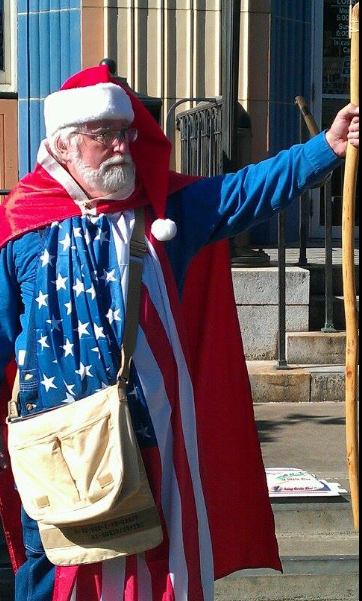

This is a two part question. Are there racists in power in Belmont – who would want to oppress all black history? Vice President Kamala Harris and her mother attended a place associated with Black Panthers. Should this fact be hidden – by anyone? Is China eluding to bad race relations when they claim our democracy is inferior to their democracy? Yes! But, what makes them think they own a successful system? Could it be, everyone in China is the same, is like everyone else, and, no one argues. Why rebel?. Everyone gets along, just like they do in Belmont. Belmont is good for you. China – is good for you! What is the problem?
Would China allow me to walk around dressed as Uncle Samaclaus? I doubt it. But, if I inform them I am a Victim of Selected History, where my family history has been selected for me, and is in control of a City Government? Then – they would USE ME to shame the whole U.S.?
“I am a victim of Identity Theft! We used to be somebody. Now, we are wards of the State. They put a chip in us to keep track of us! They don’t want us to breed and make trouble.”
John Presco
China uses Black Lives Matter to embarrass Biden Administration – Washington Times
“And the United States has its style, United States-style democracy, and China has the Chinese-style democracy,” Yang said during his opening remarks. “It is important for the United States to change its own image and to stop advancing its own democracy in the rest of the world. Many people within the United States actually have little confidence in the democracy of the United States, and they have various views regarding the government of the United States.”
Ed Howard’s Place In Oakland History | Rosamond Press
Review of Black Panther | Rosamond Press
Oakland Coogler – Black Panther | Rosamond Press
Heather Is Your Daughter – Alone! | Rosamond Press
Is Hollywood Under Attack? | Rosamond Press
Victoria and Starfish Have a Sit-down | Rosamond Press
- years. https://rosamondpress.com/2020/08/29/the-marin-shipmates/ROSAMONDPRESS.COMThe Marin ShipmatesThe Marin Shipmates
- Like
- · Reply
- · Remove Preview
- · 3d
- Greg PrescoKamala is linked to the Black Panthers. This is real history. Are we going to allow her to be CLEANSED and made presentable? To whom? https://rosamondpress.com/2020/11/28/marin-city-sea-cadets/ROSAMONDPRESS.COMMarin City Sea CadetsMarin City Sea Cadets
- Like
- · Reply
- · Remove Preview
- · 3d
- Greg PrescoMy friend, Ed Howard is trying to save the history of this park and have it play a big part of our future. We have to get off the insipid merry-go-round they have made for us. If we stay on it, then it is on
Kamala ‘Daughter of Oakland’
Posted on February 4, 2021 by Royal Rosamond Press
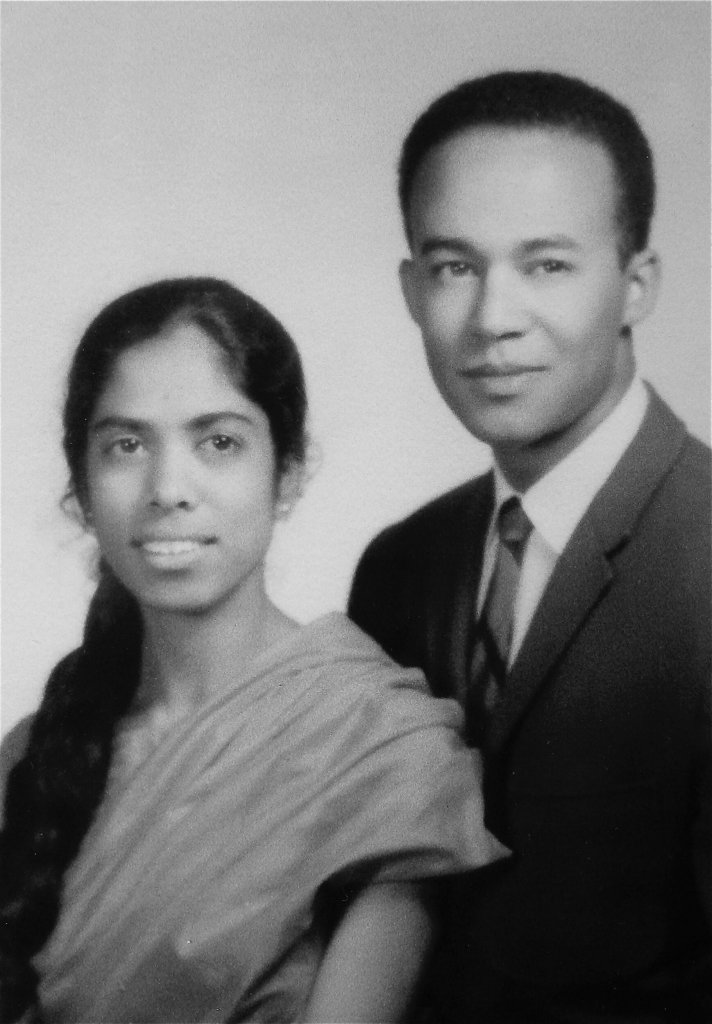
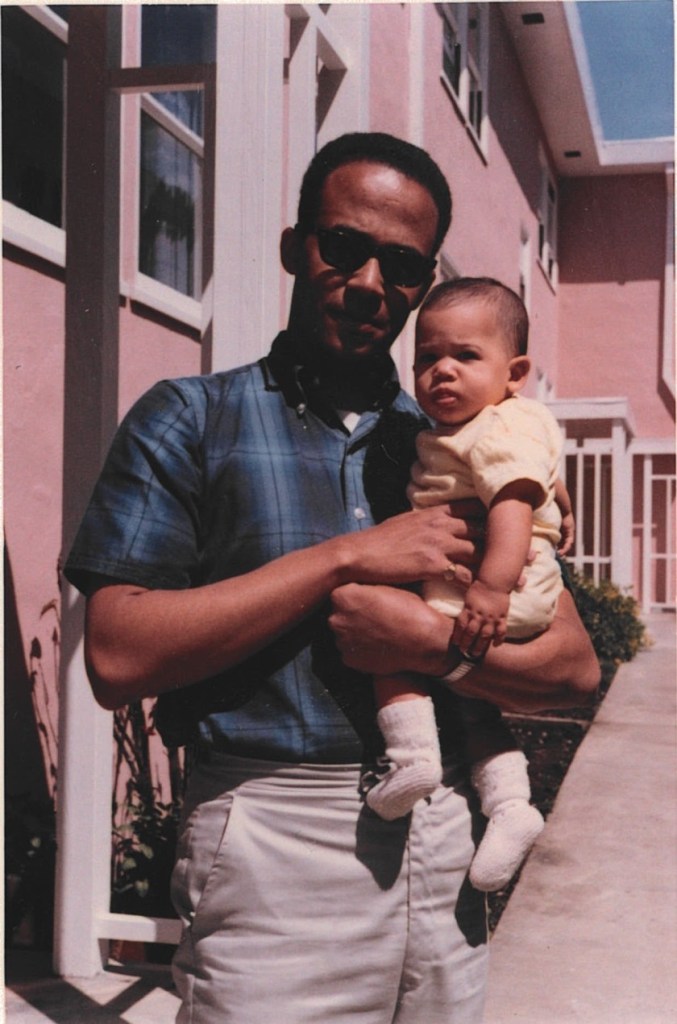


Kamala was born in Kaiser Hospital that was located two blocks from where I lived with Gloria and our female lab, Deva, which I just discovered in the middle name of Kamala Devi Harris. Devi/Deva means ‘divine godlike shiny being’. Kamala is the goddess Lakshmi. Being a follower of Meher Baba while I lived on Yosemite, I can conjure up a divine image of Kamala’s birth and life from the perspective of her mother who took her famous daughter to India. I know Kamala is concerned with the Christian Identity of America. Let us remove this block by saying I came back to Oakland with Dottie Witherspoon whose great grandfather was Signer John Witherspoon, a Presbyterian Leader from South Carolina where we visited Baba’s retreat. I clear a path for the ever-dwelling presence of The Divine Light. Kaiser was torn down and is now a empty lot. I suggest the U.S. Government purchase this property and build a college and shrine for students who want to know the culture of India.
I can not find the address for the Oakland residence that I believe the photo of Kamala and her father was taken. I am well versed in the blend of Black Politics and the existence of a Divine Transcendence that was very prevalent in the Bay Area. This energy filled the air and hovered on the borderline of Oakland and Berkeley. I am going to retrieve this light and history. Deva lived with my wife, Mary Ann Tharaldsen, and my stepdaughter, Britt, on Miles Street, which is a half-mile away from Kaiser. Deva lived there too.
“On this day I found the Cal-Oregon Rainbow Coalition.”
On September 7, 2020, a month before Kamala was elected Vice President, I posted about the Rainbow Coalition. This morning I find the ‘Rainbow Sign’. Founding the Marin Sea Cadets is part of ‘The Kamala Prophecy’.
John Presco
Kennedy Brothers at Defremery Park | Rosamond Press
Inside Rainbow Sign, a vibrant hub for black cultural arts | Berkeley News
Pete Townshend ‘Parvardigar’ – Fillmore West, San Francisco 1996 – YouTube
Meher Baba (petetownshend.net)
On any given day, visitors at the Rainbow Sign could have a meal at its restaurant, take a dance class, learn Swahili, attend a book party for Black Panther Party leader Huey Newton, make a batik print, listen to Maya Angelou read from her book of new poems or pull an all-nighter at a jazz festival after-party (with a complimentary breakfast served the next morning).
| In practice the event engulfed the two shows. Both America Needs Indians and the Open Theater’s cabaret theater were mournfully out of place in the rackety, echoing space of Longshoremen’s Hall. America Needs Indians was just a little tepee and some slides, so far as most people could tell. But there were things to do. Mikes and speakers and electrical gadgets strewn around. A light show with strobe. A booth selling books on psychedelic subjects, and another selling books about insects. There were Trips Festival T-shirts for sale. And a shopping bag full of Owsley’s latest LSD was making the rounds of the hall. But mostly it was unparalleled chaos in a crowded hall pulsing with undirected energy. A young woman jumped up on stage, stripped to the waist and danced until Brand got her off. This clinched it for the Open Theater, which was supposed to go on at ten__they weren’t going to attempt their nude “Revelations” in this wild energy. They read their sermons and got about halfway through the God Box skits when it became obvious that the crowd wanted rock and roll. They quickly brought on the Marbles, who had recently metamorphosed into a band calling itself the Loading Zone. On Saturday night the Tape Center was going on with films by the Canyon Cinema Group in something called “Options and Contracts at the Present Time.” The Ann Halprin Dancers, films by Bruce Baillie and Anthony Martin and a Vortex Light Box were going to be the visuals. Sound would come from a synthesizer invented by Donald Buchla, which would perform on its own and also modulate the rock and roll sounds of Big Brother and the Holding Company in freakish and avant-garde ways. The Acid Test would follow at 10:00 P.M. “Can you die to your corpses? Can you metamorphose? Can you pass the twentieth century? “What is total dance?” |
 Rosamond Press
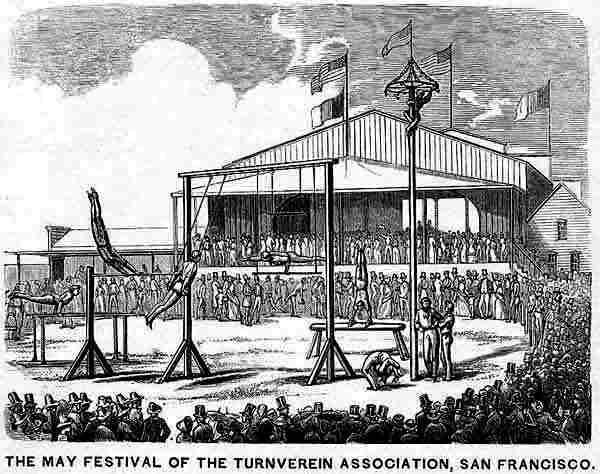
Leave a comment