When I contacted the Belmont Historical Society, I believe they then read these posts, or, had read them before they published their history book – that included Carl Janke.
John Presco
9/18/2011
Israeli National-Socialists
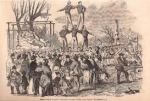
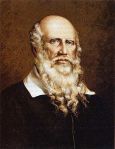
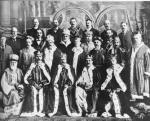
Israel was founded by Socialists who got a foothold in Palestine via the Maccabi Sports Clubs that sprang from the German Turnverien, or, Turn Verein, Turner Societies, founded by Freiderich Jahn a Prussian, who is considered by some to be the Father of National-Sociialism, or, the Nazis.
I suspect my kin, Carl Janke, was a Turnverein and established a Turner Society in Belmont that later merged with the Oddfellows. William Ralston, whose home was in Belmont, provided the funds to spread the Oddfellows throughout Europe, beginning in Germany, where Jews and Gentiles met in Turnverien clubs, worked out together, talked business, and promoted the idea that their children should marry. Then the Germans wanted the Jews out, and they formed their own Turnverein clubs that became the Maccabi gymnasts who began to colonize Palastine.
After world war one there was a prejudice against Germans, and Turnverein was changed to Tanforan, the alleged kin of a Mexican Spaniard.
The Zionist Socialists of Israel would have you believe, great Rabbis and Jewish Prophets, founded the nation of Israel, for the sake of the evangelical prophets from Ireland. Worng! This is pure Nationalism – without God!
Jon Presco
Copyright 2011
On the fourth of May [1856] the regular annual festival of the Turnverein Association of San Francisco took place, with all the usual accompaniments of music, dancing, gymnastics, oratory, eating and drinking. The festival, which was inaugurated by a procession of the Society to welcome their brother Turners from the interior, lasted three days, and everybody passed off in the most orderly and agreeable manner. The gymnastic performances were excellent, and formed a large portion of the ceremonies.
The celebration of the “May festival,” although in the United States it is conducted under the control of the Turnverein Association, is a national festival in which all the Germans partake, and which is celebrated throughout all Germany. The origin of the Turner Association, which has now become so large and so important a one among our German citizens, was a political one. Germany is divided into thirty-six different States, with as many Governments of a despotic nature, and many of them hostile to each other.
Young Germany, deeply imbued with the spirit of freedom, has been for a long time anxious to throw off these yokes, and unite under one liberal, consolidated Government; but the rulers, in order to prevent this, have forbidden all assemblies or associations for political purposes, under heavy penalties. In order to avoid this prohibition an enthusiastic republican named Jahn made the meeting and associations for gymnastic exercisesthe occasion for the spread of democratic doctrines, and the Turnverein (or gymnastic association,) soon spread and grew into importance wherever Germans are found. This association now exists in, and exercises a great influence over the whole German population.
There is no secrecy about the association, neither is there any direct connection between the different associations, although a Turner of any one city considers himself, to all intents and purposes, a member of the Turnverein of any other city.
Odd Fellows. Independent Order of Odd Fellows. Hall, corner of Market and Seventh streets. Local Lodges and Encampments included: Golden Gate Encampment, Walhalla Encampment, Wildey Encampment, Unity Encampment, Oriental Encampment, Oriental Encampment, Good Will Encampment, Canton San Francisco, California, SanFrancisco, Harmony, Yerba Buena, Templar, Magnolia, Bay City, Abou Ben Adhem, Germania, Concordia, Apollo, Parker, Unity, Hermann, Pacific, Ophir, Occidental, Cosmopolitan, Golden Gate, Alta, Franco-American, Fidelity, Morse, Myrtle, Western Addition, Excelsior, Golden West, Presidio, Excelsior Degree, Teutonia, California Rebekah Degree, Templar Rebekah Degree, Oriental Rebekah Degree, and Walhalla Rebecka Degree. Related organizations included: Odd Fellows’ Literary and Social Club, Odd Fellows’ Hall Association of SanFrancisco, Veteran Odd Fellows’ Association, Odd Fellows’ Library Association, and The Odd Fellows’ Cemetery Association (incorporated September 26, 1865).
m
Criticism
In his time Friedrich Jahn was seen by both his supporters and opponents as a liberal figure. He advocated that the German states should unite after the withdrawal of Napoleon’s occupying armies, and establish a democratic constitution (under the Hohenzollern monarchy), which would include the right to free speech. As a German nationalist, Jahn advocated maintaining German language and culture against foreign influence. In 1810 he wrote, “Poles, French, priests, aristocrats and Jews are Germany’s misfortune.”[2]At the time Jahn wrote this, the German states were occupied by foreign armies under the leadership of Napoleon. Also, Jahn was “the guiding spirit” of the fanatic book burning episode carried out by revolutionary students at the Wartburg festival in 1817.[3]
Jahn gained infamy in English-speaking countries through the publication of Peter Viereck’s Metapolitics: The Roots of the Nazi Mind (1941).[4]Viereck claimed Jahn as the spiritual founder of Nazism, who inspired the early German romantics with anti-Semitic and authoritarian doctrines, and then influenced Wagner and finally the Nazis.
Friedrich Ludwig Jahn (August 11, 1778 – October 15, 1852) was a German gymnastics educator and nationalist. He is commonly known as Turnvater Jahn, roughly meaning “father of gymnastics” Jahn. Was born in Lanz in Brandenburg. He studied theology and philology from 1796 to 1802 at Halle, Göttingen at the University of Greifswald. After the Battle of Jena-Auerstedt in 1806 he joined the Prussian army. In 1809 he went to Berlin, where he became a teacher at the Gymnasium zum Grauen Kloster and at the Plamann School.
DEATH in SanFrancisco, July 13th, Augustus SMALLFIELD, a merchant of Stockton, and a native of Eutin, Holstein, Germany, aged 40 years. [>Davenport, Iowa, papers please copy.]
AT HALF-MAST On Saturday and yesterday, the flags of the different Engine houses of the Fire Department; also the flag on the Odd Fellows’ Building, waved at half-mast as a mark of respect to the memory of Augustus SMALLFIELD, who died at SanFrancisco on the morning of the 13th instant. Deceased was, for a number of years, a merchant in this city, and was a gentleman highly respected by a large circle of friends and acquaintances. He was a member of Charity Lodge, No. 6, Independent Order of Odd Fellows; also a member of San Joaquin Engine Company No. 3, and Turn-Vereins. His remains arrived from SanFrancisco yesterday morning and were taken to their last resting place in the Rural Cemetery at 2 o’clock in the afternoon. The funeral was largely attended by Odd Fellows, Firemen, Turn-Verein and citizens, and the solemn procession was headed by the Stockton Brass Band.
Inscription. They were an order that inscribed upon their banners, “Visit the sick, relieve the distressed, and bury the dead.”
“To the benevolent – If there is any of that commodity called charity in this community, we earnestly call upon those possessing it to exercise it forthwith.”
So went out the plea to the Brotherhood in an editorial appeal that appeared in the Placer Times, August 18, 1849.
General Albert V. Winn was the first to move in this direction, summoning his brother members of the Independent Order of Odd Fellows at large to assemble under most extraordinary circumstances and form an association for the relief of the sick, the distressed, and to bury the dead. The call was answered and they came, forming the first Odd Fellows Association in Sacramento on August 24, 1849. And that their children’s children might point with pride, this was the first organized effort for dispensing relief and humanity to the sick and dying in that darkest hour of Sacramento history.
Tanforan Racetrack in San Bruno, California was a thoroughbred horse racing facility that operated from September 4, 1899 to July 31, 1964. Tanforan was constructed to serve a clientele from the nearby city of San Francisco. The facility was named after Toribio Tanforan, the grandson-in-law of Jose Antonio Sanchez, the grantee of Rancho Buri Buri. [1] [2]
Jewish Pride Through Sport: Max Nordau and “Muscular Judaism”
The Maccabees, central figures in the Hanukkah saga, are thought to be the inspiration for what would become the worldwide Jewish sports association known as Maccabi. It is Max Nordau, right-hand man to Zionist visionary Theodor Herzl, who is typically credited with the creation of what would become the Maccabi organization. His 1900 call for a “Muskel Judentom” (Muscular Judaism) which appears below, refers in passing to other influences on the creation of this movement. In actuality – and perhaps with some irony – it was the German gymnastics “Turnen” movement, begun a half century earlier, combining physical fitness, patriotism, and social causes, which served as a model for the emergence of Jewish pride through sport. The “Deutsche Turnerschaft” (German gymnastics movement) championed the idea of “mens sana in corpore sano” – a healthy mind in a healthy body – and made gymnastics the basis of a political program fostering patriotism and social/political awakening, and already included Jewish members in the early 1800’s.
Nordau saw sport as serving the Zionist idea of “awakening Judaism to new life.” His critique concerning the poor physical condition of Europe’s Jews helped to spur on the creation of Jewish sports associations. The Bar Kochba club in Berlin, which Nordau looked to for his inspiration, actually came out of the German “Turnerschaft” movement. As sports clubs in Germany and elsewhere in central Europe became a vehicle for the expression of patriotism, they began to adopt strong anti-Semitic policies, excluding Jews from participating. When the German gymnastics club in Istanbul formally voted to exclude Jews in 1895, the Jewish members formed their own club, calling it “Israelitische Turnverein”. Nordau’s push of sport as a critical component of Jewish life, coupled with the centrality of Istanbul as a hub of international Zionist activity, put the Istanbul club center stage, and it benefited from visits by and support from Zionist leaders. With the growth of gymnastics clubs promoting physical fitness and Jewish pride, the Union of Jewish Gymnastics Clubs (“Judische Turnerschaft) was founded in 1903, and its affiliate in Palestine, Maccabi of Eretz Yisrael, was founded in 1912. This, in turn, led to the World Maccabi Union, established in 1921.
Following are remarks made by Nordau at the World Zionist Congress in 1900:
Two years ago, at the Zionist Congress in Basel, I spoke about the need to create, once again, a muscular Judaism. I say “again”, because, as history shows, such a Judaism existed once before. For too long now we have neglected matters of the flesh.
Truth to tell, it was others who engaged in the death knell of the physical side of Jewish life, and with particular success. Consider the hundreds of thousands who fell in the ghettos of Europe, in the plazas outside the cathedrals, and on the roads during the Middle Ages. We should certainly forego such piety. We would have done well to be fit, and not be fodder for those who sought to kill us.
In crowded Jewish quarters, deprived of air and sunshine, our bodies became weak. In darkened homes, we feared the persistent persecution in silent trembling. But now the chains of this duress are broken, now we fear no such constraints, we are allowed to live our lives fully, at least from a physical standpoint. Let us, therefore, re-establish the bonds with our ancient past; let us again be wide of body and strong of gaze.
The intention is to return to a proud past, as reflected in the name selected by the gymnastics association of Berlin: “Bar Kochba”, a hero who recognized no defeat. When victory turned in retreat, he accepted death. He embodied a Jewish history forged in war but taking up arms. If someone takes of the cry of Bar Kochba, then the striving for honor beats in his breast. Such a hope befits the gymnasts, who strive for advanced development.
In no other nation or race does physical exercise fulfill as educative a role as it must fulfill among us Jews. It must bring us to full upright stature, both physically and in our character. It must prompt a self-awareness. Our detractors claim that, in any event, we are too arrogant. But we would do well to acknowledge how distorted is such a claim. A quiet belief in our strength is lacking in us altogether.
Muscular Jews of our age have yet to reach the degree of heroism of our ancestors of old, who erupted into the arena to wrestle the well-trained Greek athletes and the strong barbarians of the north. But from a moral perspective we are their superiors, because they were ashamed of their Jewishness and tried, by way of undoing their circumcision, to hide the sign of the covenant that was sealed in their flesh while others, such as members of the “Bar Kochba” club have openly and freely proclaimed their ties to their people.
Let the association for Jewish gymnastics flourish and set an example in all centers of Jewish life.
The Maccabi World Union is an international Jewish sports organisation spanning 5 continents and more than 50 countries, with some 400,000 members.[2] Maccabi World Union organises the Maccabiah Games, a prominent international Jewish athletics event.
The organisation comprises six confederations: Maccabi Israel, European Maccabi confederation, confederation Maccabi North America, confederation Maccabi Latin America, Maccabi South Africa and Maccabi Australia.
Shimon bar Kokhba (Hebrew: שמעון בר כוכבא, also transliterated as Bar Kochba) was the Jewishleader of what is known as the Bar Kokhba revoltagainst the Roman Empire in 132 CE, establishing an independent Jewish state of Israel which he ruled for three years as Nasi(“Ruler”). His state was conquered by the Romans in 135 following a two-year war.
Documents discovered in the modern era[citation needed]give us his original name, Simon ben Kosiba, (Hebrew: שמעון בן כוסבא) he was given the surname Bar Kokhba, (Aramaicfor “Son of a Star”, referring to the Star Prophecy of Numbers 24:17, “A star has shot off Jacob”) by his contemporary, the Jewish sage Rabbi Akiva.
After the failure of the revolt, the rabbinical writers referred to bar Kokhba as “Simon bar Kozeba” (Hebrew: בר כוזיבא, “Son of lies” or “Son of deception”).
The German Turnverein
Founded amid the nationalist enthusiasms of the War of Liberation, the German gymnastic movement, or Turnverein, had fundamentally changed by the time of the 1848 revolutions in the German lands. Although Friedrich Ludwig Jahn, the gymnasium instructor who had originated the idea of nationalist gymnastics in Berlin in 1811, was still venerated in the organization, his anti-Semitism, hatred of the French, and loyalty to the Hohenzollern dynasty left him out of step with an organization committed to national unification and political liberalism. While the Turnverein’s ideological stance reflected the prevailing spirit of the German Vormärz, it also bespoke the peculiar circumstances of the organization’s history. The German Confederation of Metternich had viewed the patriotic enthusiasms of the War of Liberation with suspicion and had banned the Turnverein following the murder of the conservative journalist August von Kotzebue by the young student Karl Sand in 1819. Turnverein practice areas had been closed, the apparatus dismantled, and the leaders prosecuted. Jahn himself had been imprisoned at the Kolberg Fortress until 1825, and barred from teaching or gymnastic work after his release. This period, which Jahn called the Turnsperre, lasted in Prussia and most German states until the 1840s.
The lifting of the Turnsperre in the more liberal atmosphere of the 1840s reawakened the Turnverein to a vigorous new life. The center of the revived movement shifted out of Prussia, which had been its heartland under Jahn’s leadership, to the South and West German States, where the Turnsperre had generally been shorter and less restrictive. The membership of the new clubs was more inclusive, as the cor of students and academics which had made up the rank and file of the Turnverein in its early years was joined by a large contingent of craft workers, along with many Jewish members, often in positions of leadership. These gymnastic clubs were often closely aligned with workers’ organizations and democratic clubs with whom they shared a desire for reform and a rejection of traditional hierarchies.
In contrast to the organization Jahn had founded, almost one-half of the membership on the 1840s were non-gymnasts, the so-called “Friends of Turnen,” and because of this, the new clubs engaged in more non-gymnastic activities, such as funding libraries and reading rooms, and sponsoring lectures, often of a politically liberal nature. They joined the new volunteer firemen’s movement, and acted as a police force during the outbreaks of social unrest which characterized the revolutionary period. They even imparted a new spirit to their gymnastic program by initiating training sessions for children and, far more radical in light of the times, for women as well. Flaunting their rebellious spirit, the gymnasts of Vormärz wore their hair long and sported large black hats decorated with a rooster feather instead of the more formal attire of the Biedermeier period.
Spread throughout the geographic area of Germany, this more diverse gymnastic movement staged larger and more elaborate gymnastic festivals, which sometimes lasted several days and always culminated with a pledge for national unity. In an effort to realize this unity on a gymnastic level, an all-German gymnastic union was formed in April 1848, shortly after revolution had swept the German Confederation. Established as a demonstration of support for the Frankfurt Parliament, the new league was immediately controversial not the least because it avowed purpose, “to work for the unity of the German people and to uplift the brotherhood and the physical and spiritual power of the people,” failed to mention gymnastics. Impatient with the cautious program of the German Gymnastic Union, a group of radical clubs formed a second, rival union called the “Democratic Gymnastic Union,” and further schisms followed.
Given the radicalization of the movement in the 1840s, it is not surprising that the German gymnasts were directly involved in the 1848 revolutions. Turnverein leaders won renown for their leading roles in local uprisings, among them Gustav Struve in Baden, Otto Heubner in Dresden, and August Schärttner in Hanau. One Turnverein leader who was not in the forefront of radical change was Turnvater Jahn. Elected as a representative to the Frankfurt Parliament, Jahn was given honor, but no real influence, in the revived gymnastic movement.
Although a proposal to form a “Gymnastic Army” (Turnerschar) to supplement the National Guard was never realized, gymnasts manned barricades and participated in crucial fighting during the revolutions. Early in the revolutionary period, the eighty-odd members of the Kiel Turnverein took arms against Denmark in the conflict over Schleswig-Holstein. Although soon defeated, their actions won praise from moderates in the organization who contrasted their “unpolitical” dedication to the cause of the nation with the more radical social and political programs of gymnasts in other regions. Exemplifying this latter trend were the gymnasts in the mob that murdered Prince Felix Lichnowsky and General Hans von Auerswald in Frankfurt in September 1848, during a popular protest against the armistice with Denmark, and those who fought, often in the club uniform, to defend the city of Dresden against Prussian forces in May 1849. Turnverein clubs also participated in the veneration of Robert Blum, who had been killed by counter-revolutionary forces in Vienna, by holding services in his honor, marching in memorial parades, and helping to raise money for his family.
The Turnverein as an organization was most closely associated with the uprisings in Baden, the center of the radical sentiment in southwest Germany. Gymnasts had been among the defenders of the city of Freiburg in early disturbances in the province in April 1848. In the late spring and early summer of 1849, violence erupted again and brought about some of the most prolonged fighting of the revolutionary period. After agitation for a democratic nation-state had forced the Grand Duke to flee, other German states, led by Prussia, sent in troops to crush the movement. The gymnastic organization of the Rhineland province of Hanau organized a march to Baden to defend the province. Although this force gathered around 600 men along the way, it was poorly armed and led and easily outmatched by the regular armies it encountered. About 240 survivors of this effort managed to cross into neighboring Switzerland, where they received a hero’s welcome from Swiss gymnasts and students.
The aftermath of the 1848 revolutions devastated the German gymnastic movement. Clubs were disbanded, property confiscated and leaders lost to jail or exile. The various attempts to form a union of gymnastic clubs likewise fell victim to the Reaction. In these circumstances, the Turnverein turned away from politics to concentrate on its gymnastic program. It was only with the revival of the drivefor German unification in the late 1860s, that the gymnastic movement rediscovered its purpose and was able to regain he momentum of the revolutionary era.
dd
Share this:
One response to “Israeli National-Socialists”
Royal Rosamond PressDecember 10, 2017 at 4:49 amEditReblogged this on Rosamond Press and commented:https://rosamondpress.com/2011/09/19/here-come-the-new-slave-masters/
https://rosamondpress.com/2011/09/19/german-forty-eighters-in-chile/
9/19/2011
German Forty-Eighters in Chile



Before Conservative Germans went after the Jews, they went after the Freethinkers and Forty-Eighters who were forced to flee their homeland in 1848. The Chilean government encouraged these bright, modern-thinking men and women to seek refuge in their nation, they not giving a rat’s ass if they did not believe Adam and Eve propagated the human race ten thousand years ago, because they wanted educated doctors, engineers, and other proffessional people to help bring their government into the next century, help them build a infrastructure.
How ironic that intelligent Jews who fled Nazi Germany and the Soviet Union, are empowering ignorant Fake Christians backed by Americas Greedy Billionaires who made their fortune on the backs of bright futuristic peoples. And then they blame it on the poor, this rush back to the Stupid Stoneage in preparation for the Blessed Doomsday where many wonderful manmade things will be destroyed by King Killer Jesus! I’m sure the Chilean government would not invite the End Days Darbyites to come live in chile. But, here are the Israelites inviting them to come to Israel, and take over OUR Secular Government! How smart is that?
In the stupefied evangelized city I live in, I can’t get anyone to recognize; least honor the Fremonts and the Forty-Eighters that backed all their efforts in the West. In Chile, MY PEOPLE have a statue erected in their memory, a big THANK YOU! In Springfield got a screaming eagle on a wall with – GOD BLESS AMERICA! And then destroy America for the sake of the Fake Christians?!!!
Evangelical Tea-Baggers are opposing Obama’s plan to put folks back to work repairing our infrastructure – just because he is a black man, and – NOT ONE OF THEM!
Jon Presco
On microfische #1609199, Family History Center, Item 9 –
It states that the `HERMAN’ left HAMBURG Sept. 3, 1851, arrived December 4,
1851 in the port of Valdivia, page 56. Then it says Ship `HERMAN’ under
the command of Captain O.A. Kleingarn, left HAMBVRG, December, 1852 and
made for Valdivia and Valparaio, arriving July 31, 1852.
There must be a mistake in dates. The first is the passenger list, and
the other bit was on another page giving more detailed information, but it
is rather confusing. What year did my ancestor arrive in Chili? I found my
ancestor, Friedrich Wilhelm Stuttmeister on the list, and a much needed
clue. It stated he was from Philadelphia. I have been looking at New York
port of entry, so now I will look for arrivals from Germany to Phiadelphia.
The other puzzler is, did the HERMAN stop in Philadelphia before going on
to Valparaiso, and pick up passengers? My ancestor arrived in the US
before 1844, as he was married on that date, so eight years later he is
traveling to Chili, and what was the attraction? And where was his wife?
More puzzles! Or did he travel back to Germany, and take this emmigrant
ship to Chili from Hamburg? I guess I cannot rule that out.
Has anyone done any extra reading about the Germans who went to Chili? I
noticed from the passenger list, broken down by occupations, there were
three doctors, l lawyer, and various professions represented, along with a
few farmers, carpenters, etc. which I found intriguing. Stuttmeister did
not travel as a physician, but as a `Commercial’. He was a doctor.
Anyone have any comments on this?
Daryl
The first German colonisation was at the Llanquihue lake and in the Frontera. Encouraged by these first successes in 1846 by Philippi, thirty settlers from Hessenwere recruited for Bella Vista. A further 1,000 Germans followed in 1848, mostly inspired by the events of the revolution to begin a new life overseas; besides craftsmen, many university graduates were involved. Arriving in 1851, their numbers were supplemented by skilled workers (beer-brewers, tanners, furniture makers) and included academics such as pharmacists, professors and scientific investigators. In 1852 Germans founded Deutsche Player Maiten, Volcan and Puerto Octay, as well as in 1853, Puerto Montt. Llanquihue, Frutillar and Puerto Varas were settled with Germans in the same year. Between 1872-75, Nordboehmer Quilanto, lot Bajos, El Carril, Linea Plantanosa and new Braunau started. To the settlement of Germans in Valdivia Fritz Kindermann and Karl Anwandter contributed much. In the Frontera (area between the rivers Biobio and Tolten) were settled primarily colonists from Brandenburg, Pomerania and Switzerland.Many Germans moved also into the cities Valparaiso, Santiago, Temuco, Conception, Ancud and Magellanes. They had to endure hard times during the first years in the wilderness, but with determination they gradually became prominent and a most respected segment of Chilean society.
Share this:
3 responses to “German Forty-Eighters in Chile”
eduardost1March 24, 2013 at 9:22 pmEditHello:My ancestor was J. Tyroldt, from Culmbach (Germany) and went to Chile in the same ship as Mr. Stuttmeister (Hermann, Capt. Kleingarn, 1852). Do you have more information about the travel, some letters, or pictures? I am writing a book about the german inmigration to South America (Chile, Peru) in the years 1850-1855.
My email is edu.salazar79@yahoo.com.Thank you!
EduardoReply
9/19/2011
Here Come the Forty-Eighters!


Lojos Kossuth was titled ‘The Angel of Fredom’ by smart Americans. The Darbyites were still in Ireland, dumbing-down the Irish with their Doomsday Pre-Trib Terrorism. Kossuth was a good friend of my kin, the Fremonts. Hungarian forty-Eighters made up the Jessie Scouts, and John’s bodyguards. Kossuth led the revolt against the Catholic Hapburgs who all descend from Jeanne de Rougemont, who may be my ancestor on my mother’s side. The Hapsburgs held the titles King and Queen of Bohemia.
Carl Augusta Janke was a Forty-Eighter, he coming to San Francisco in 1848. Many Forty-Eighters in Chile, left for this city to take part in the Gold Rush of 1849.
Above in the Wihelm family of Chile who look like my kinfolk.
Jon Presco
Forty-EightersFrom Wikipedia, the free encyclopedia
The Forty-Eighters were Europeans who participated in or supported the revolutions of 1848that swept Europe. In Germany, the Forty-Eighters favored unification of the German people, a more democratic government, and guarantees of human rights.[1
]Disappointed at the failure of the revolution to bring about the reform of the system of government in Germany or the Austrian Empireand sometimes on the government’s wanted list because of their involvement in the revolution, they gave up their old lives to try again abroad. Many emigrated to the United States, Canada, and Australiaafter the revolutions failed. They included Germans, Czechs, Hungarians, and others. Many were respected, wealthy, and well-educated; as such, they were not typical migrants. A large number went on to be very successful in their new countries.
Contents [hide]
1 Forty-Eighters in the USA
1.1 Notable German Forty-Eighters in the US
1.2 Notable Czech Forty-Eighters in the US
1.3 Notable Hungarian Forty-Eighters in the US
1.4 Notable Irish Forty-Eighters in the US
2 Forty-Eighters in England
2.1 Heligoland
3 Forty-Eighters in Holland
4 Forty-Eighters in France
5 Forty-Eighters in Switzerland
6 Forty-Eighters in Australia
6.1 Famous Australian Forty-Eighters
7 Peripatetic Forty-Eighters
8 See also
9 References
10 Bibliography
[edit] Forty-Eighters in the USAIn the United States, many Forty-Eighters opposed nativism and slavery, in keeping with the liberal ideals that had led them to flee Germany. Several thousand enlisted in the Union Army, where they became prominent in the Civil War. In the Camp Jackson Affair, a large force of German volunteers helped prevent Confederate forces from seizing the government arsenal in St. Louisjust prior to the beginning of the war.[2]
Many Forty-Eighters settled in the Texas Hill Countryin the vicinity of Fredericksburg, and voted heavily against Texas’s secession. In the Bellvillearea of Austin County, another destination for Forty-Eighters, the Germanprecincts voted decisively against the secession ordinance.[3]
More than 30,000 Forty-Eighters settled in the Over-the-Rhineneighborhood of Cincinnati, Ohio. There they helped define the distinct German culture of the neighborhood, but in some cases also brought a rebellious nature with them from Germany. During violent protests in 1853 and 1854, Forty-Eighters were held responsible for the killing of two law enforcement officers.[4]In the Cincinnati Riot of 1853, in which one demonstrator was killed, Forty-Eighters violently protested the visit of the papal emissary Cardinal Gaetano Bedini, who had repressed revolutionaries in the Papal States in 1849.[5]
Many German Forty-Eighters settled in Milwaukee, Wisconsin, helping solidify that city’s progressive political bent and cultural Deutschtum. The Acht-und-vierzigersand their descendants contributed to the development of that city’s long Socialist political tradition.[6]
After the Civil War, Forty-Eighters supported improved labor laws and working conditions. They also advanced the country’s cultural and intellectual development in such fields as education, the arts, medicine, journalism, and business.
[edit] Notable German Forty-Eighters in the USArchitects, Engineers: Louis Burger,[7] Adolf Cluss, Henry Flad
Artists: Friedrich Girsch;[8] Wilhelm Heine; Louis Prang; Adelbert John Volck; Theodore Kaufman
Businessmen, investment bankers: Solomon Loeb, Abraham Kuhnfounders of Kuhn, Loeb & Co.
Generalsin the American Civil War: Louis Blenker; Alexander Schimmelpfennig; Carl Schurz; Franz Sigel; Max Weber; August Willich; Frederick C. Salomon
Journalists, writers, publishers: Mathilde Franziska Anneke; Gustav Bloede (see Marie Bloede); Rudolf Doehn; Carl Adolph Douai; Carl Daenzer; Bernard Domschke; Christian Esselen(editor of Atlantis); Julius Fröbel; Karl Peter Heinzen; Rudolf Lexow(founder of Belletristisches Journal); Niclas Müller; Reinhold Solger;[9] Emil Praetorius; Oswald Ottendorfer; Friedrich Hassaurek;[10] Theodor Olshausen; Hermann Raster; Wilhelm Rapp;[11] Carl Heinrich Schnauffer;[12]Kaspar Beetz; Carl Dilthey; F. Raine; Heinrich Börnstein; Charles L. Bernays; Emil Rothe; Eduard Leyh;[13] George Schneider(who was also a banker); Albert Sigel[14]; Franz Umbscheiden; Edward Morwitz(who was also a physician)
Musicians: Carl Zerrahn; Carl Bergmann; Otto Dresel; Herman Trost(band leader in Sherman’s army who later settled in Lexington, Kentucky, where he conducted the first band at the University of Kentucky; friend of John Philip Sousa)
Physicians: Abraham Jacobi; Herman Kiefer; Ernest Krackowizer;[15] Hans Kudlich; Wilhelm Loewe, Gustav C. E. Weber[16]
Poets: Konrad Krez;[17] Edmund Märklin; Rudolf Puchner
Political activists: Lorenz Brentano(later a member of the Congress); Friedrich Hecker; Carl Schurz(later US Secretary of the Interior); Gustav von Struve; Wilhelm Weitling; Joseph Weydemeyer; Rudolf Dulon; Edward Salomon; Louis F. Schade
Other: Margarethe Schurz(founder of the first kindergartenin the U.S.); Al Sieber(known as “Chief of the Scouts” in Arizona, who fought at Antietam, Fredericksburg, and Chancellorsvillewith Hecker, Schurz, and Sigel, and then in the Battle of Gettysburg); Joseph Spiegel(founder of the Spiegel Catalog); Hugo Wesendonck(founder of the Germania Life Insurance Company, now Guardian Life); Pauline Wunderlich(fought at the Dresden barricades); John Michael Maisch(father of adequate pharmaceutical legislation)
[edit] Notable Czech Forty-Eighters in the USProkup Hudek, one of the “Slavonic Artillerymen” of the 24th Illinois Infantry Regiment, and one of the co-founders of the Workingmen’s Party of Illinois[18]
František Korbel, winegrower in Sonoma County, California
Vojta Náprstek, Czech language publisher in Milwaukee
[edit] Notable Hungarian Forty-Eighters in the USAlexander Sandor Asboth
Charles Zagonyi
Julius Stahel
Albin Francisco Schoepf
Phineas Mendel Heilprin
Michael Heilprin
Edward R. Straznicky
Martin Koszta[19]
[edit] Notable Irish Forty-Eighters in the USThomas Francis Meagher[20]
John O’Mahony
Lola Montez(she fled from Bavariavia Switzerland, France and England)
[edit] Forty-Eighters in EnglandGiuseppe Mazziniused Londonas a place of refuge before and after the revolutions of 1848. In the early years after the failure of the revolutions of 1848, a group of German Forty-Eighters and others met in a salonorganized by Baroness Méry von Bruiningk in St. John’s Wood, England.[21]The baroness was a Russian of German descent who was sympathetic with the goals of the revolutionaries. Among the people who attended her salon, hosted by herself and her husband Ludolf August von Bruiningk, were Carl Schurz, Gottfried and Johanna Kinkel, Ferdinand Freiligrath, Alexander Herzen, Louis Blanc, Malwida von Meysenbug, Adolf Strodtmann, Johannesand Bertha Ronge, Alexander Schimmelfennig, Wilhelm Loewe-Kalbe and Heinrich Bernhard Oppenheim.[22]
Carl Schurz reports “A large number of refugees from almost all parts of the European continent had gathered in London since the year 1848, but the intercourse between the different national groups — Germans, Frenchmen, Italians, Hungarians, Poles, Russians — was confined more or less to the prominent personages. All, however, in common nourished the confident hope of a revolutionary upturning on the continent soon to come. Among the Germans there were only a few who shared this hope in a less degree. Perhaps the ablest and most important person among these was Lothar Bucher, a quiet, retiring man of great capacity and acquirements, who occupied himself with serious political studies.”[23]
Other Germans who fled to England for a time were Ludwig Bamberger,[24] Arnold Ruge, Alexandre Ledru-Rollin and Franz Sigel. Along with several of the above, Sabine Freitag also lists Gustav Adolf Techow, Eduard Meyen, Graf Oskar von Reichenbach, Josef Fickler and Amand Goegg.[25] Karl Blindbecame a writer in England.
Hungarian refugee Gustav Zerffibecame an English citizen and worked as a historian in London. Lajos Kossuth, a Hungarian revolutionary, toured England and then the United States, and then formed a government in exile in England.
[edit] HeligolandIn addition, the British possession of Heligolandwas a destination for refugees, for example Rudolf Dulon.
[edit] Forty-Eighters in HollandLudwig Bamberger was in Holland for a time,[24]as was Heinrich Bernhard Oppenheim.[26]
[edit] Forty-Eighters in FranceLudwig Bamberger settled in Parisand worked in a bank from 1852 until the amnesty of 1866 allowed him to return to Germany.[24]Carl Schurz was in France for a time before moving on to England.[27]He stayed there with Adolf Strodtmann.
[edit] Forty-Eighters in SwitzerlandThe following were all refugees from Germany:
Friedrich Beustsettled in Switzerlandto work in early-childhood education. He lived and worked there until his death in 1899.
Gottfried Kinkelmoved to Switzerland in 1866 after living in England. He was a professor of archaeology and the history of art at the Polytechnikum in Zürich, where he died sixteen years later.
Hermann Köchlyfirst fled to Brussels in 1849. In 1851, he was appointed professor of classical philology at the University of Zürich. By 1864, he was back in Germany as a professor at the University of Heidelberg.
Richard Wagner, the composer, first fled to Paris and then settled in Zurich. He eventually returned to Germany.
[edit] Forty-Eighters in AustraliaIn 1848, the first non-British ship carrying immigrants to arrive in Victoriawas from Germany; the Goddefroy, on February 13. Many of those on board were political refugees. Some Germans also travelled to Australia via London.
In April 1849 the Beulahwas the first ship to bring assisted German vinedresser families to NSW.[28]
The second ship, the Parland[29]left London on 13 March 1849, and arrived in Sydney on 5 July 1849[30]
The Princess Louiseleft Hamburg March 26 of 1849, in the spring, bound for South Australia via Rio de Janeiro. The voyage took 135 days which was considered slow but nevertheless the Princess Louiseberthed at Port Adelaide on August 7, 1849 with 161 emigres, including Johann Friedrich Mosel. Johann, born in 1827 in Berlin in the duchy of Brandenburg had taken three weeks to travel from his home to the departure point of the 350 tonne vessel at Hamburg. This voyage had been well planned by two of the founding passengers, brothers Richard and Otto Schomburgk who had been implicated in the revolution. Otto had been jailed in 1847 for his activities as a student revolutionary. The brothers along with others including Frau von Kreussler and D. Meucke formed a migration group, the South Australian Colonisation Society, one of many similar groups forming throughout Germany at the time. Sponsored by the scientist geologist Leopold von Buch, the society chartered the Princess Louiseto sail to South Australia. The passengers were mainly middle-class professionals, academics, musicians, artists, architects, engineers, artisans and apprentices, and were among the core of liberal radicals, disillusioned with events in Germany.
Many Germans became vintnersor worked in the wine industry; others founded Lutheran churches. By 1860, for example, about 70 German families lived in Germantown, Victoria. (When World War I broke out, the town was renamed Grovedale.) In Adelaide, a German Club was founded in 1854 which played a major role in society.
[edit] Famous Australian Forty-EightersCarl Linger, the conductor and composer who wrote “Song of Australia”
Dr Moritz Richard Schomburgk, later director of the Adelaide Botanical Gardens
Hermann Büring, in the wine industry
Friedrich Krichauff, Chairman of the Agricultural Bureau
[edit] Peripatetic Forty-EightersFerenc Pulszky, a Hungarian politician, who joined Kossuth on his tour of the United States and England, became involved in Italian revolutionary activities and was imprisoned, and then was pardoned and returned home in 1866
Share this:
Press
1/1/2025
Woodminster of The Tree Rings
There are seveal Tolkein movies out and other projects.
I have been working on mine for twenty years.
JP
Prophets of the Tree Rings
Posted on April 18, 2014 by Royal Rosamond Press

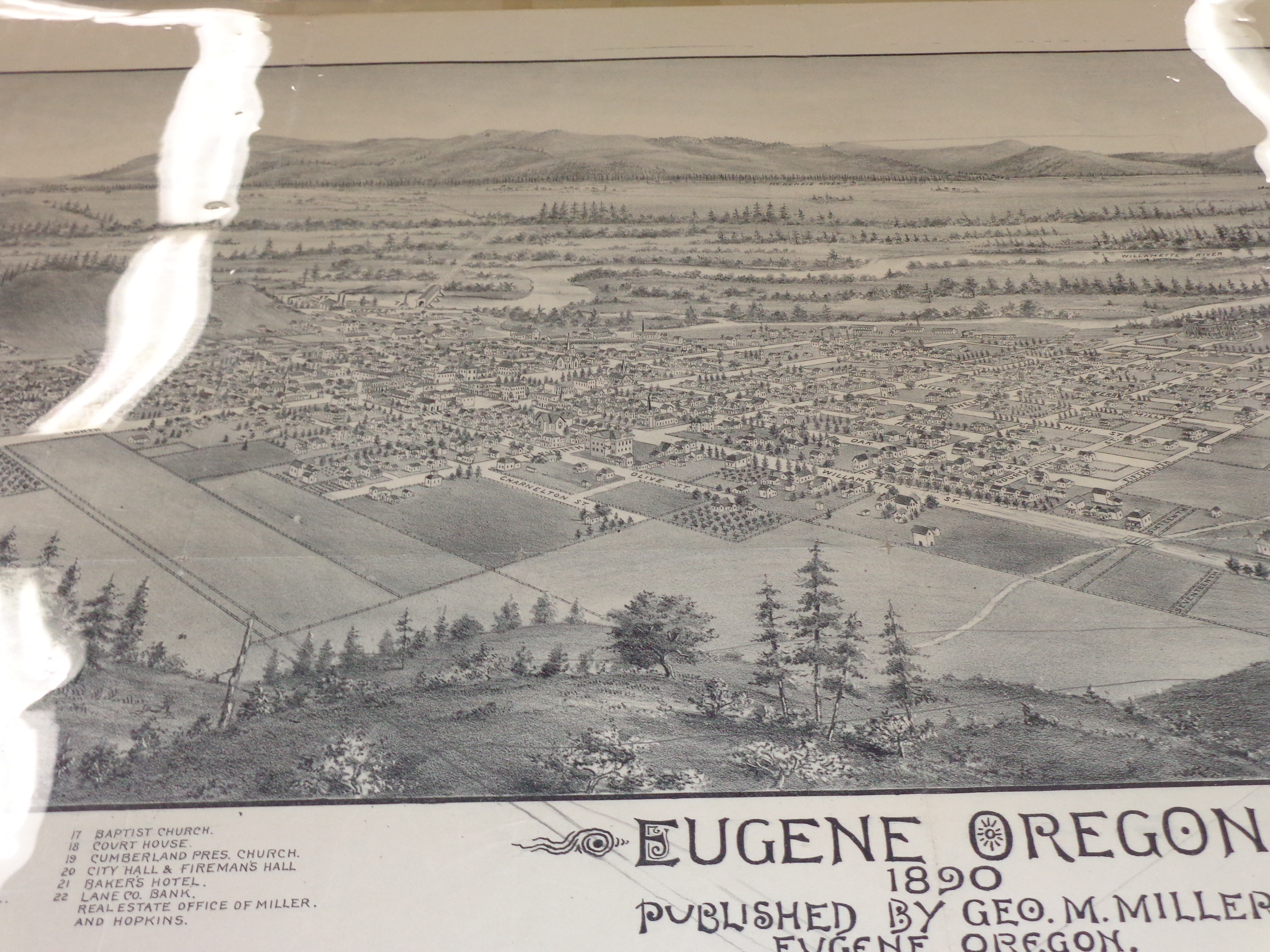
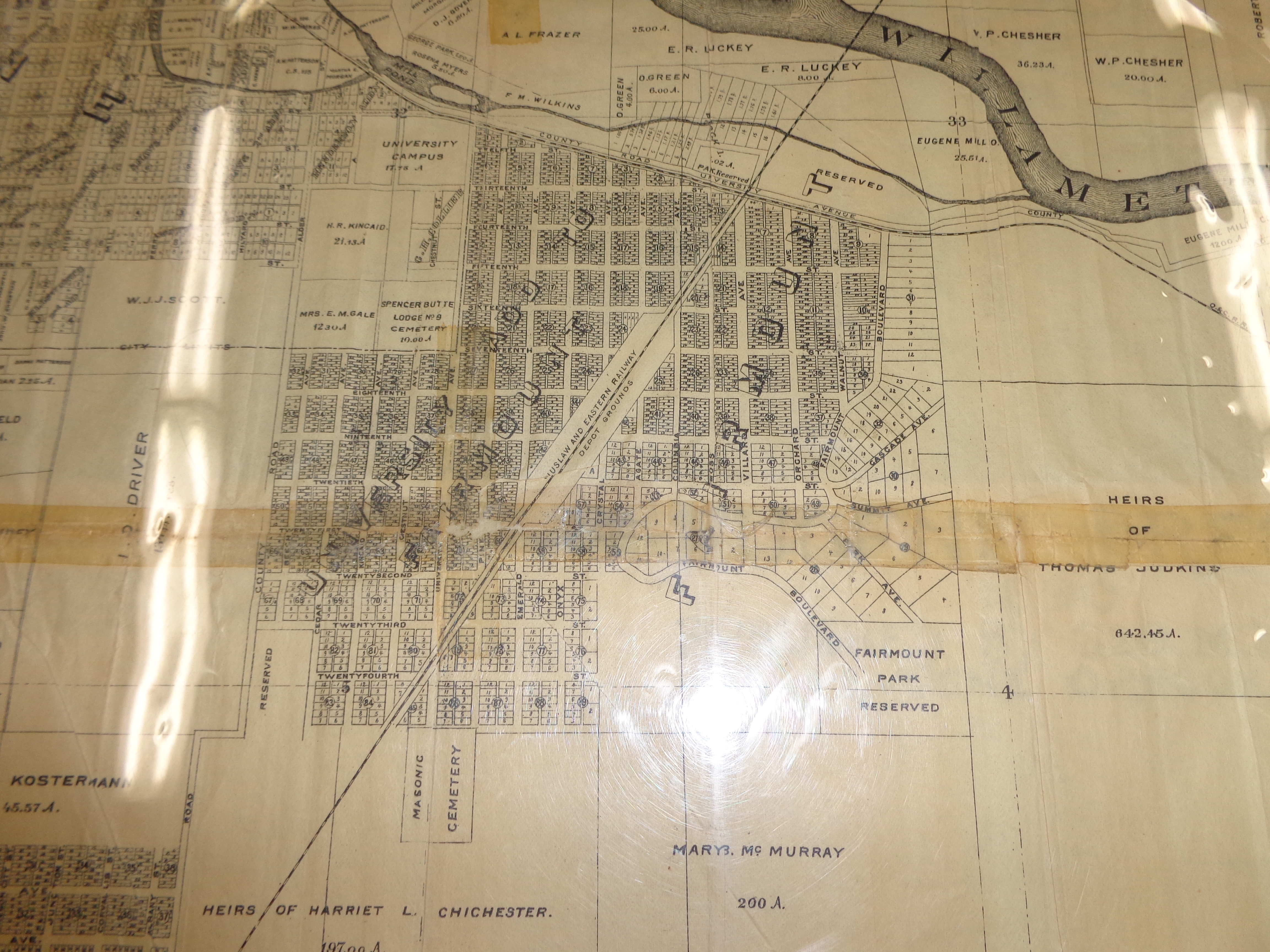
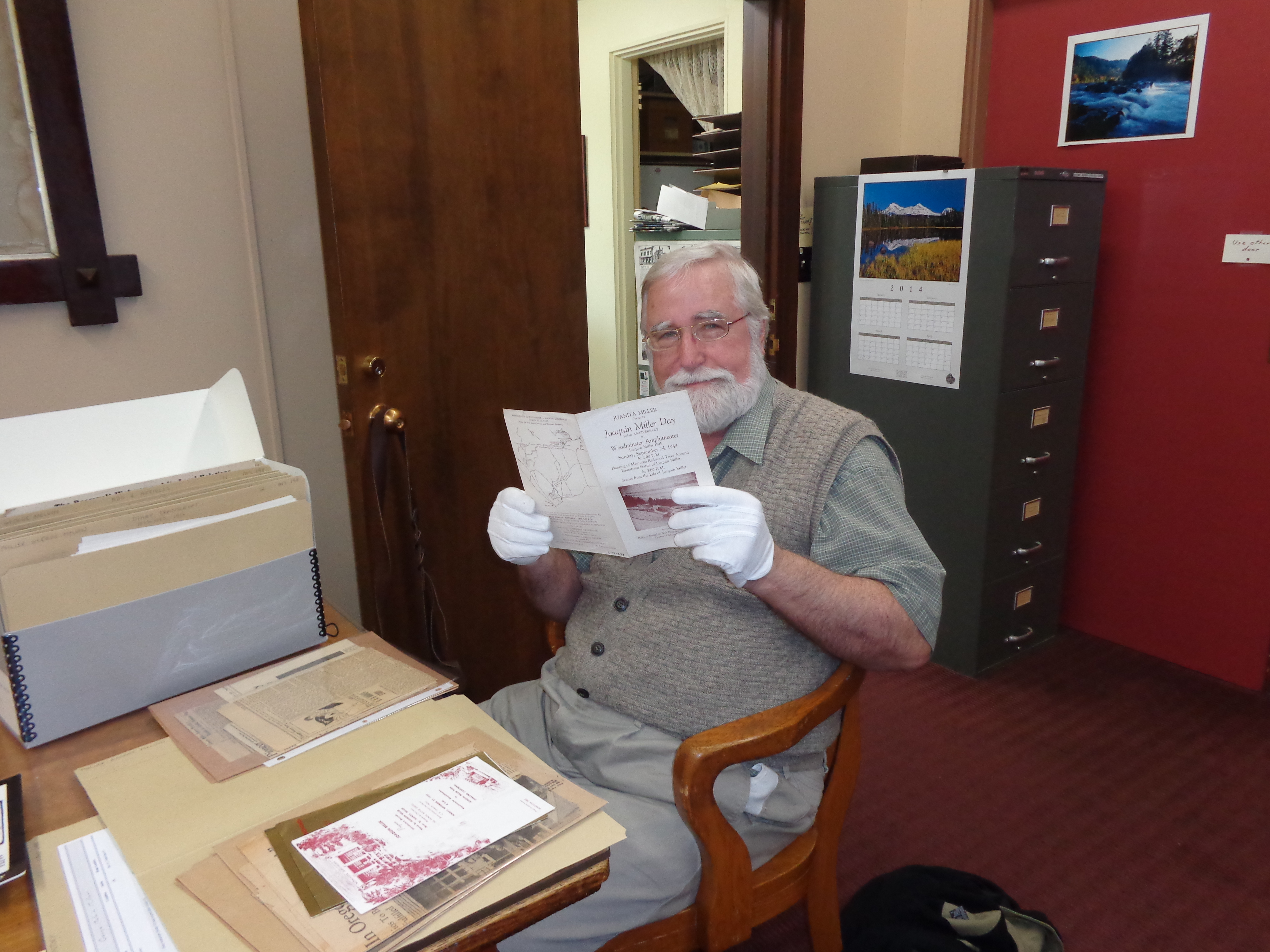


Yesterday I found a Grail at the Lane County Historical Society, that hopefully will change the way we look at things today, and the way we live and communicate with one another. I beheld the beautiful master plan put forth by the Miller Brother Prophets, who are right out of the Lord of the Rings, as you will see.
Jon Presco
The Society also publishes the Lane County Historian, a tri-annual periodical of local historical information. It also prints a quarterly newsletter and other publications, such as diaries, cemetery records, and local census records. Throughout the year the Society hosts general meetings featuring presentations of historical interest. It also participates in many projects such as historic preservation and the collection of oral histories. For further information, contact the Lane County Historical Society at P. O. Box 5407, Eugene, OR 97405-3819, via email, or phone (541) 682-4242. To join The Lane County Historical Society, you may complete our Membership Form.
The Society’s vision for the future is to create a history center in a visible, accessible location. It would house the Museum, possible related organizations, and a cafe–in a space twice the size of the current facility. It would include a larger, more accessible exhibit space, adequate workspace for collections management and exhibit preparation, storage for current and expanded collections, a well designed library and archives, an expanded gift shop and bookstore, and a multi-purpose room or theater with kitchen facilities for events. The center would also be climate controlled, secure, well-lit and ADA accessible. It would be a dynamic education, research and entertainment destination.
http://www.lanecountyhistoricalsociety.org/aboutus.html
Joaquin Miller Went To Columbia College
Posted on February 28, 2020 by Royal Rosamond Press

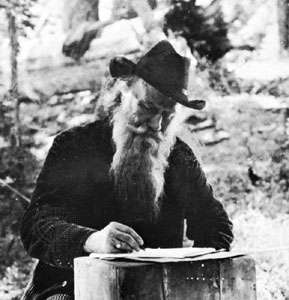


Joaquin Miller’s proposal to Pre-Raphaelite Muse Emma Brown – is huge! That he attended one of the first colleges in the West – is huge! I was going to tell you why, but, I am saving it for my lawsuit against Oregon State. This is what I want. I am made a professor for life with tenure. A model of Miller’s cabin is built for me out in the agriculture fields where I will hold classes on Tolkien, Miller, London, and Fleming.
I am going to ask Phil Knight to revive Columbia College and make it a Mecca for Bohemian, Alternative, Learning – with Hippie Museum!
John Presco
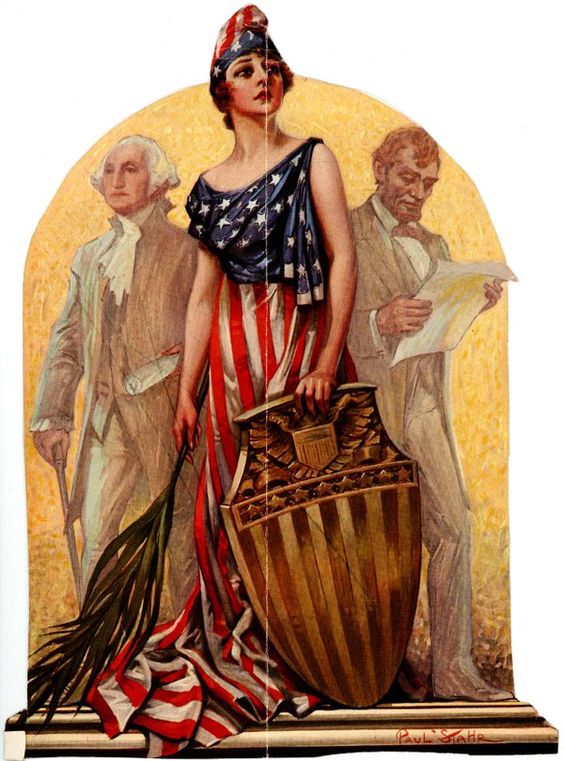

Laneland
Posted on February 12, 2019by Royal Rosamond Press

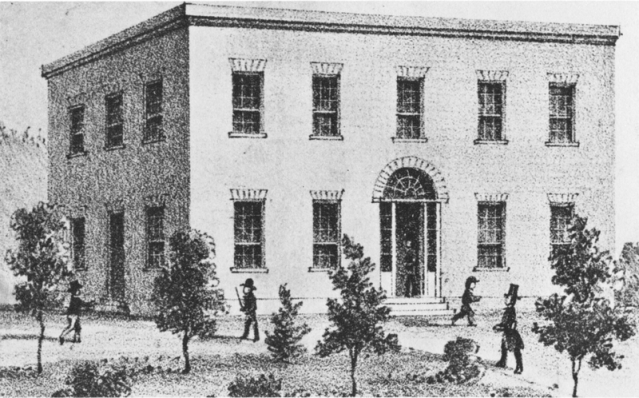
One of the first colleges in Oregon was burned down – twice! Arson is suspected. I believe a man loyal to the cause of Joseph Lane is the culprit. Could it have been my hero, Joaquin Miller, who graduated from Columbia with about twenty others. There was a schism. John Dicky was an abolitionist preacher who co-founded Columbia. Was Miller, like Paul, blinded by the light, he seeing the error of his way, and turning his life around? Did Harry Lane see the error of his grandfather’s way, and make a precise plan to not be like him?
In the De-naming game I find myself in the thick of, I decided to go all the, by De-naming the United States of America – because We the People – have never been united. End the hypocrisy – now! How about ‘Laneland’? Two generations of the Lane family dwelt in Jamestown that was an experimental city. This might be America’s first Hippie Town…..Bohemianville if you will!
Two days ago I watched Ken Burn’s ‘Vietnam’. It was painful from the start. Being a Anti-War Demonstrator, I grieved at the loss of time and my youth – all our youths! I thought I would die without seeing a anti-war monument. Then I saw the painting of the new building around the old dealership of Joe Romania who donated much of the land that Lane College is built on. I will be going before Mayor of Eugene, suggesting a statue of Harry Lane be put here, because he was against America entering World War 1.
We hippies invented Political Correctness. We honored Native Americans and begged for Non-Violence. We need a museum to record and preserve this important history. Do no let Ed Ray have the last word. I want to interview him. Did he go to Vietnam, or did he get a college deferment? Many Vets who were gungho about killing gooks, turned their life around. The motto of Lane College is…….
Transforming Lives Through Learning
Consider Harry Potter and Harry Lane. Demand more magic in your lives! Screw that ugly wall that is a continuance of Benton’s Manifest Destiny. Our President is unteachable!
Note the wall around Jamestown, and the hundred foot Warrior Chief on the other side. Here is proof the grand experiment went wrong at the beginning. I will be sending a script to the History Channel about my theory why Europeans had to kill all the Native Americans. Apparently they carried a giant gene after mating with the Nephilim, and, every now and then a Squaw gave birth to a giant. Say goodbye to that Shame Game!
John Presco
President: Royal Rosamond Press
Colonel Joseph Lane (son of Thomas Lane and Elizabeth Jones) was born 1675 in Jamestown, James City, VA, USA, and died 1758 in Edgecombe,NC, USA.He married Julian Alderson on 1685 (sic) in Surry, VA, USA. Col. Joseph Lane is my 7th great-grandfather, and my GEDMATCH is #A319313 and my DNA matches his son, Edward Lane. He married Julian Jarrell.
In a Land Deed signed by his son Joseph LANE Sr, it states that: “Deed from Joseph Lane and Julian his wife of Isle of Wight County, Sept. 4, 1710, to Thomas Lane, of Surrey County 200 acres given me by my father (Thomas Lane, patent 1682) in his last will and testament (father Thomas Lane, patent 1682). Signed, Joseph Lane (Ielian) Julian Lane
“Sealed in red wax. Wit: Thomas Hart, Mary Hart, Thomas Lane Jr. The witnesses Thomas and Mary Hart were the son in-law and daughter of Richard & Eliz. Washington- his will Nov. 9, 1724, Surrey Co.” (Ref. Surrey County Deed Book 5, page 37) This can be found on Microfilm at the Family History Center called” General History of the LANES of NC and GA.”
There is some refrences that state Thomas LANE SR. was the son of John LANE who married the daughter of Robert BIRD, John had sons Robert, Thomas and John, however more research needs to be done.
Joaquin Miller And Emma Brown
Posted on September 4, 2019by Royal Rosamond Press
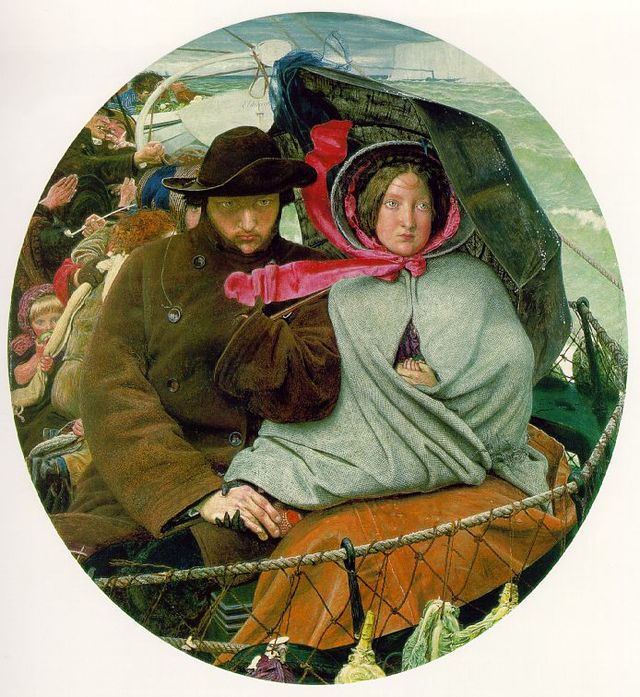
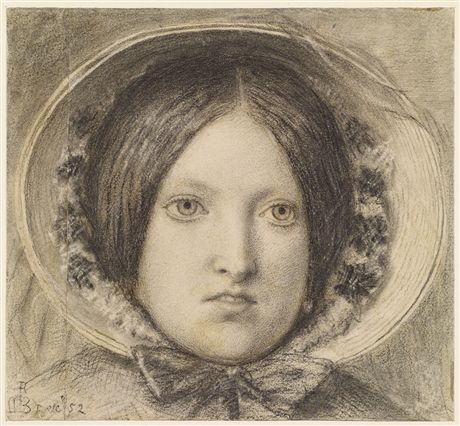
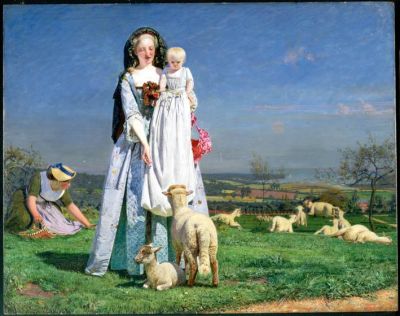

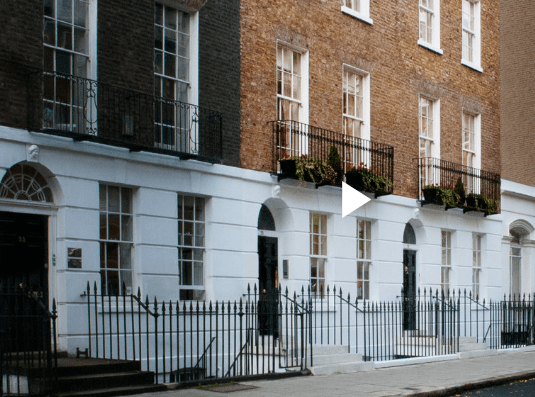
I learned yesterday that Joaquin Miller proposed to Pre-Raphaelite Muse, Emma Hill, who became the wife of Ford Maddox Brown. Joaquin spent some time in Maddox’s famous home at 37 Fitzroy Street that is regrettably owned by Scientology. Some of the greatest artists, poets, and writers of Britain met here, especially the Pre-Raphaelites, of which I declared I was one in 1969. I shared these artists with my late sister, the world famous artist known as ‘Rosamond’ who took up art in 1972. I have posthumously titled Christine a Pre-Raphaelite Artist. One of the artists that spent time at William Morris whom had a great influence on J.L. Tolkien. The painting Brown rendered are moviesque. I will try to get the director of my movie ‘Hromund’ to use the work of the Pre-Raphaelites.
Joaquin Miller was friends with William Michael Rossetti, and his brother, Gabriele. William married Lucy Maddox Brown. If Joaquin had married Emma, then he would be kin to the most literary and creative people in the West. For years I have been trying to get City Manager, Neil Laudati, interested in making Springfield Oregon, the Home of the Pre-Raphaelites, because the Miller family lived down the road apiece, and were Oregon Pioneers. My family knows nothing about this history. Since Christine’s death, Drew Benton, Shannon Rosamond, and Shamus Dundon have not written and published ONE WORD about the Artists and Writers in their family, yet, they claim so much! This is an astounding Creative Legacy that will be recognized by Great Britain, once they are made aware of it.
I modeled Royal Rosamond Press after The Germ. I elevated the famous commercial success of Drew and Shannon’s mother, and I have never been thanked. Christine said she owed her success to me, her teacher. The proof of this is evident.
Yoni Noguchi was at the Fitzroy House and lived with Miller in the Oakland Hills. My family knew Miller who may have modeled his Bohemian enclave after the Pre-Raphaelites and the creative souls who knew the Brown family. Yoni appears to have been a Japanese Spy sent by the Emperor to learn Western Culture through poetry. This is so Tolkienish! Here is the Japanese Bilbo who travels to a strange land and bonds with Gandalf. Joaquin write about their small statue. More of his “brown” people came to the Hights.
So soon after I gave my family a flash of bright light, there are dark problems about why I was not told Vicki died ten days ago. It has been suggested I was both the mother and father to my parents, and my siblings. I have been avoiding the possibility I am……..The Family Giver…………and I have been severely ripped off? Or is it a case of the naughty stupid children hiding everything from their brilliant parent who may be their superior, and a genius. No one but me took the time to learn anything about art, and, literature!
Joaquin Miller was the editor of Eugene’s first newspaper – before there was a Springfield. His brother George married a Cogswell who are the founders of the Eugene Register Guard. There’s newspaper men surrounding the Pre-Raphaelite Brotherhood and Sisterhood. George could have been the brother-in-law of Emma Hill.
Joaquin put the make on English Women dressed as a cowboy, or, Californian Hippie. He came to conquer – with poetry! I would like to employ Miller’s poetry in my book and movie the same way Tolkien did with the poetry of William Morris. Joaquin did his best to wed English Literature to the Wild West. Joaquin’s influence on the culture of Japan needs a collegiate study. The Invasion of Pearl Harbor may have contained Miller’s poetry.
“The Californians like to laze about all day reading poetry to one another, and painting pretty picture. Then, when the mood strikes them, they roll over on one another and fornicate like beasts. Our Imperial Marines will make quick work of them. Bonsai!”
The Beauty that Joaquin really wanted to roll over one, was Mathilde Blind. But, he met his Waterloo! Alas I think I have found the Teutonic Woman that broke Miller’s heart. Did he propose to Emma after Blind body-slammed his cowboy ass in the Bohemian Cage of Pathos, Life, and Death? Our Orgonian was out of his league. There is no Pathos, here, here! Lucy Maddox Brown did a portrait of Blind.
With the passing of my sister my thoughts went to the loneliness of Rena Victoria Easton, my Waterloo. It is this connectivity that motivates and moves these Bohemians across a flowery dance floor seeking first the attention of their Sisters and Brothers. Here are the original Hobbits and Hippies, the timeless root of the New Cooperation.
The other day, when my beloved sister came to me while I took my old man nap, she thanked me! From heaven she could behold the Big Picture now that her artistic siblings allowed her to be a part of. She was – wowed! She could not believe her good fortune, and the great choice she made, to be born from the same Rosy womb!
Are those California poppies? Did Joaquin bring a pot of them, over there, on a ship?
John Presco
President: Royal Rosamond Press
Copyright 2019
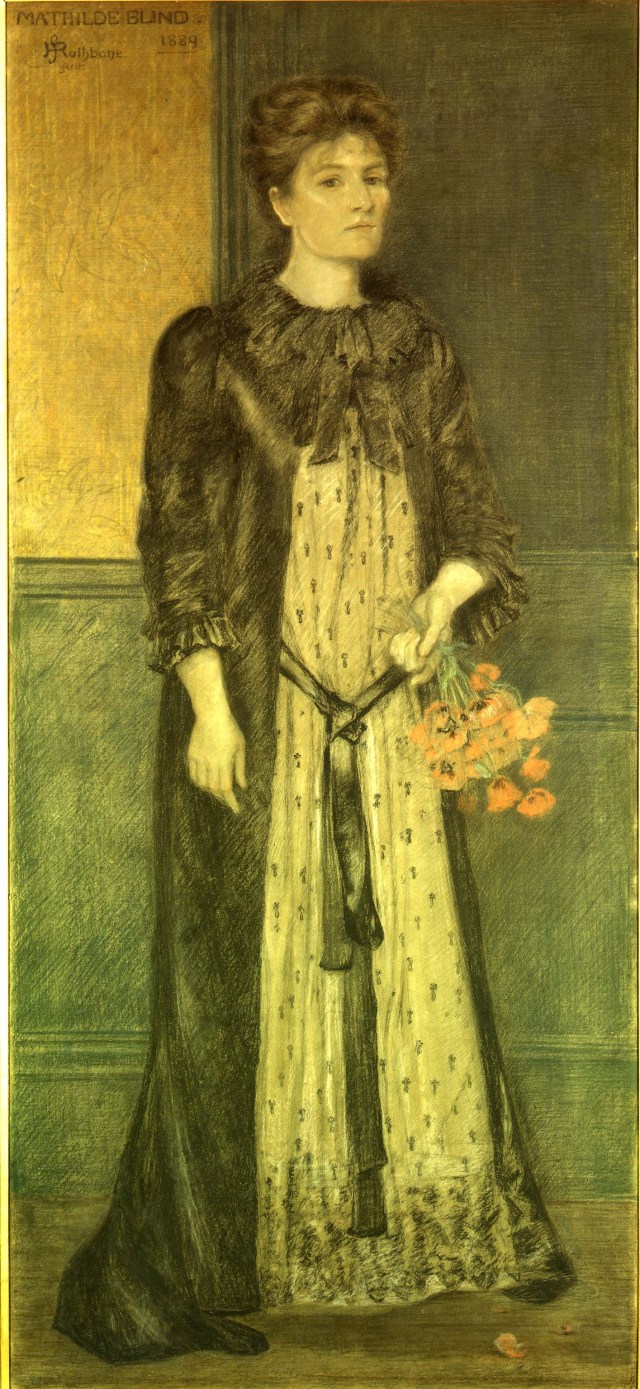
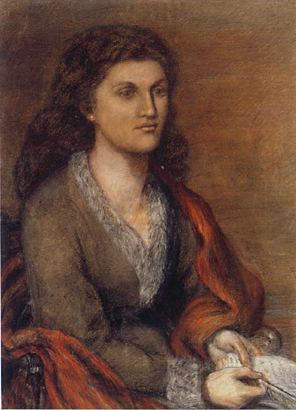

Mathilde Blind (born Mathilda Cohen, 21 March 1841 in Mannheim, Germany, died 26 November 1896 in London),[1] was a German-born English poet, fiction writer, biographer, essayist and literary critic. In the early 1870s she emerged as a pioneering female aesthete in a mostly male community of artists and writers, and by the late 1880s she had become a prominent voice and leader among New Woman writers, including Vernon Lee (Violet Paget), Amy Levy, Mona Caird, Olive Schreiner, Rosamund Marriott Watson, and Katharine Tynan. Her work was praised by Algernon Charles Swinburne, William Michael Rossetti, Amy Levy, Edith Nesbit, Arthur Symons and Arnold Bennett. Her widely discussed poem The Ascent of Man represents a distinctly feminist response to the Darwinian theory of evolution.[2]
Rosamond Marriet Watson is sometimes placed in the milieu of Thomas Hardy, and again with fin-de-siecle poetry (Oscar Wilde for example). There’s a magnificent website dedicated to her
Mother of the unfortunate, mystic form,
Who calm, immutable, like oldest fate,
Sittest, where through the sombre swinging gate
Moans immemorial life’s encircling storm.
My heart, sore stricken by grief’s leaden arm,
Lags like a weary pilgrim knocking late,
And sigheth–toward thee staggering with its weight–
Behold Love conquered by thy son, the worm!
He stung him mid the roses’ purple bloom,
The Rose of roses, yea, a thing so sweet,
Haply to stay blind Change’s flying feet,
And stir with pity the unpitying tomb.
Here, take him, cold, cold, heavy and void of breath!
Nor me refuse, O Mother almighty, death.


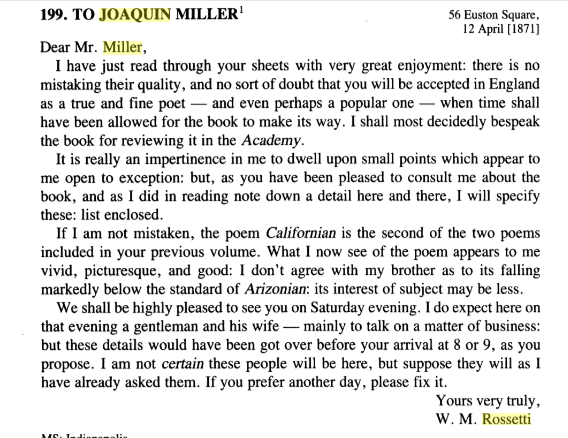

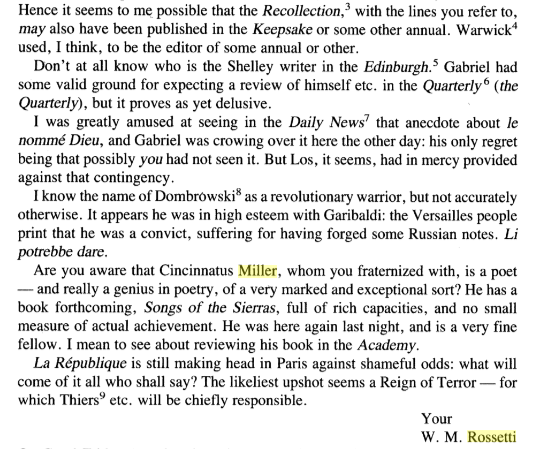
Born in London, he was a son of immigrant Italian scholar Gabriele Rossetti and his wife Frances Rossetti née Polidori, and the brother of Maria Francesca Rossetti, Dante Gabriel Rossetti and Christina Georgina Rossetti.
He was one of the seven founder members of the Pre-Raphaelite Brotherhood in 1848, and became the movement’s unofficial organizer and bibliographer. He edited the Brotherhood’s literary magazine The Germ which published four issues in 1850 and wrote the poetry reviews for it.
It was William Michael Rossetti who recorded the aims of the Pre-Raphaelite Brotherhood at their founding meeting in September 1848:
- To have genuine ideas to express;
- To study Nature attentively, so as to know how to express them;
- To sympathize with what is direct and serious and heartfelt in previous art, to the exclusion of what is conventional and self-parading and learned by rote;
- And most indispensable of all, to produce thoroughly good pictures and statues.[1]
Although Rossetti worked full-time as a civil servant, he maintained a prolific output of criticism and biography across a range of interests from Algernon Swinburne to James McNeill Whistler. He edited the diaries of his maternal uncle John William Polidori (author of The Vampyre and physician to Lord Byron), a comprehensive biography of D. G. Rossetti, and edited the collected works of D. G. Rossetti and Christina Rossetti.
Rossetti edited the first British edition of the poetry of Walt Whitman, which was published in 1868; however, this edition was bowdlerized.[2] Anne Gilchrist, who became one of the first to write about Whitman, first read his poetry from Rossetti’s edition, and Rossetti helped initiate their correspondence.[3]
In 1874 he married Lucy Madox Brown, daughter of the painter Ford Madox Brown. They honeymooned in France and Italy. Their first child, Olivia Frances Madox, was born in September 1875, and her birth was celebrated in an ode of Swinburne’s. A son, Gabriel Arthur, was born in February 1877, followed by another daughter, Helen Maria, in November 1879, and twins, Mary Elizabeth and Michael Ford, in April 1881. Their son Michael died in infancy. Rossetti and his wife did not have the children baptized, nor were they raised in a Christian household. The children were schooled at home by their mother and governesses. In 1897, Olivia married an Italian anarchist refugee, Antonio Agresti. They later moved to Italy, where Olivia became a translator and writer. After she was widowed in 1926, she became an associate of Ezra Pound, and the two corresponded frequently.
Ford was born in Wimbledon in London,[2], to Catherine Madox Brown and Francis Hueffer, the eldest of three; his brother was Oliver Madox Hueffer. Ford’s father, who became music critic for The Times, was German and his mother English. His paternal grandfather Johann Hermann Hüffer was first to publish Westphalian poet and author Annette von Droste-Hülshoff. He was named after his maternal grandfather, the Pre-Raphaelite painter Ford Madox Brown, whose biography he would eventually write.
Melba Charlotte Broderick
Posted on August 31, 2011by Royal Rosamond Press
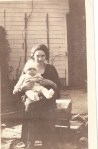


Above is a photo of my father’s mother, Melba, and her childhood friend, Violet (Vie), near Joaquin Miller’s house. I heard they were into Isadora Duncan. Did they meet Miller and his daughter at this age?Joaquin Miller lived in the Oakland Hills above the Stuttmeister farm and orchard located in the city of Fruitvale that would later be incorporated into the city of Oakland. Miller was titled the `Poet of
the Sierras’. His farm was called `The Heights’ and was a Mecca for California artists and poets. This eccentric Bohemian was friends of William Broderick and would accompany Melba Charlotte Broderick, the mother of Victor Presco, to San Francisco where Melba met her husband, Hugo Presco, a professional gambler in the Barbary Coast.
Miller carried the infant father of Rosamond on these adventures that proved too much for Melba who divorced Hugo when Victor, Melba’s only child, was three years of age. Joaquin Miller was invited to England by the Pre-Raphaelite poet and artist, Dante Gabriel Rossetti, and had dinner at his house with most of the Brotherhood present. The four Presco children would converse with Miller’s daughter on the phone, she calling herself `The White Witch’..
The boy in the two photos is Melba’s brother, Frederick Broderick, with his cow, Daisy. This had to be taken on the farm in Fruit Vale.
Jon Presco
Copyright
2011


http://www.poetryatlas.com/poetry/poem/2357/the-plains-of-arizona.html
Ambrose Gwinnett Bierce (June 24, 1842[2] – circa 1914[3]) was an American short story writer, journalist, poet, and Civil War veteran.
Bierce’s book The Devil’s Dictionary was named as one of “The 100 Greatest Masterpieces of American Literature” by the American Revolution Bicentennial Administration.[4] His story “An Occurrence at Owl Creek Bridge” has been described as “one of the most famous and frequently anthologized stories in American literature”;[5] and his book Tales of Soldiers and Civilians (also published as In the Midst of Life) was named by the Grolier Club as one of the 100 most influential American books printed before 1900.[6]
A prolific and versatile writer, Bierce was regarded as one of the most influential journalists in the United States,[7][8] and as a pioneering writer of realist fiction.[9] For his horror writing, Michael Dirda ranked him alongside Edgar Allan Poe and H. P. Lovecraft.[10] His war stories influenced Stephen Crane, Ernest Hemingway, and others,[11] and he was considered an influential and feared literary critic.[12] In recent decades Bierce has gained wider respect as a fabulist and for his poetry.[13][14]
In December 1913, Bierce traveled to Chihuahua, Mexico, to gain first-hand experience of the Mexican Revolution.[15] He disappeared, and was rumored to be traveling with rebel troops. He was never seen again.
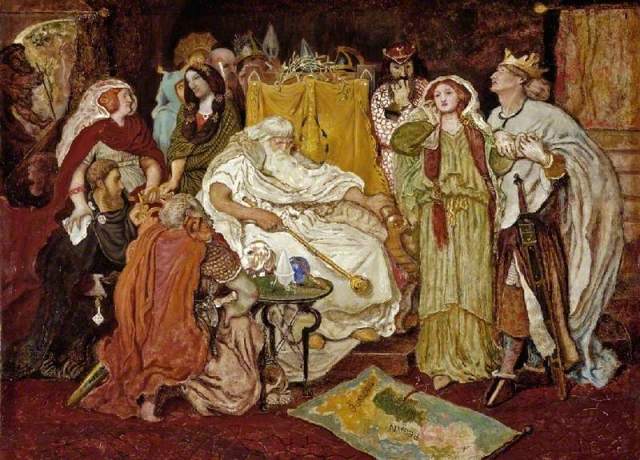
Brown, Ford Madox; Cordelia’s Portion; The Fitzwilliam Museum; http://www.artuk.org/artworks/cordelias-portion-4910

King Ren?’s Honeymoon 1864 Ford Madox Brown 1821-1893 Purchased 1917 http://www.tate.org.uk/art/work/N03229
Rosamund Ball, known as Rose, was born in London[1] on 6 October 1860, the fifth child of Benjamin Williams Ball, an accountant and amateur poet, and Sylvia (Good) Ball.[2] Her older brother Wilfrid Ball became a painter of landscapes and marine subjects who helped introduce her to London’s literary circles, including John Lane, the influential publisher of The Yellow Book.[2]
Gandalf and the Pre-Raphaelites
Posted on November 5, 2018by Royal Rosamond Press


Joaquin Miller had dinner with the Pre-Raphaelites and was my grandmother’s friend. This history is being compiled for the grant I am applying for. The history of the Pre-Raphaelites has not been discarded. I will prepare a home in Springfield.
Above is a photograph of my ancestors taken in the Oakland Hills no far from where Miller lived in his Bohemian enclave called ‘The Hights”. These are Turners and Forty-eighters who helped found the Abolitionist Republican Party and elected our Kin, John Fremont, to be the first Presidential candidate. I am going to send this photo to the Smithsonian. There is a rifle and a black wreath hanging in the tree. The wreath may have something to do with the Odd Fellows who allowed Ken Kesey’s mural to be rendered on their wall.
“As a token of her confidence, she told him he need no longer call
her, “Auntie.” The previous year, Bilbo had suggested that Frodo no
longer address him as, “Uncle,” if he wished. Plain, “Bilbo,” would
do. Frodo still called Bilbo, “Uncle,” now and then; it had become
too ingrained a habit. But, following suit, Rosamunda suggested Frodo
might call her, “Rosa,” or, “Rosamunda.” Frodo forgot, and called
her, “Auntie,” many times, but, within the space of an afternoon
tea, “Rosa,” she became.”
Rosamunda Bolger (née Took) was the mother of Fredegar “Fatty” Bolger
and Estella Brandybuck. She was married to Odovacar Bolger and was
known as Rosamunda Took prior to the marriage. They lived in
Budgeford in Bridgefields in the Eastfarthing of the Shire. Rosamunda
and Odovacar both attended the Bilbo’s Farewell Party in 3001 along
with their children.


Christine Rosamond Benton and I were drawn into Tolkien’s Trilogy. The artist known as ‘Rosamond’ could not put these books down, nor could I. This caused our mutual friend, Keith Purvis, a British subject, to comment;
“She doesn’t know these books are real.”
We three were original hippies who took the Lord of the Rings to heart as we modified the modern world, made it over more to our liking, we oblivious to what normal folk were about. This is exactly what William Morris and the Pre-Raphaelite Brother and Sisterhood did. They – returned!
I discovered the Pre-Raphaelites in 1969 and let my hair grow long for the first time. I gave up drugs in 1967 and was looking for a spiritual format. I came under the spell of the Rossetti family who were friendly with Joaquin Miller. We Presco children knew Miller’s daughter as ‘The White Witch’ and we would call her for advice. Miller’s home ‘The Abbye’ was above our home in the Oakland Hills. Our kindred were friends of Miller, who was also a friend of Swineburn, who wrote ‘The Queen-Mother and Rosamund’ and ‘Rosamund Queen of Lombards. Tolkien was inspired by the Lombards.
Filed away in Rosamond’s probate is my plea to the executor to allow me to be my sister’s historian. I mention Miller and Rossetti. I saw myself in the role of Michael Rossetti who had his own publishing company. He published Miller and other famous poets. When I was twelve, my mother read evidence I might become a famous poet.
All my imput has been ruthlessly ignored, because petty un-creative minds have forced our families creative legacy down the tiny holes of their hidden agendas, into the mouths of worms and parasites, because these ignorant people sensed I and the real Art World, did not let them in the door – would never admit them into our circle, our ring of genius!
Jon Presco
Copyright 2011
Glenwood and George Miller
Posted on February 4, 2019by Royal Rosamond Press
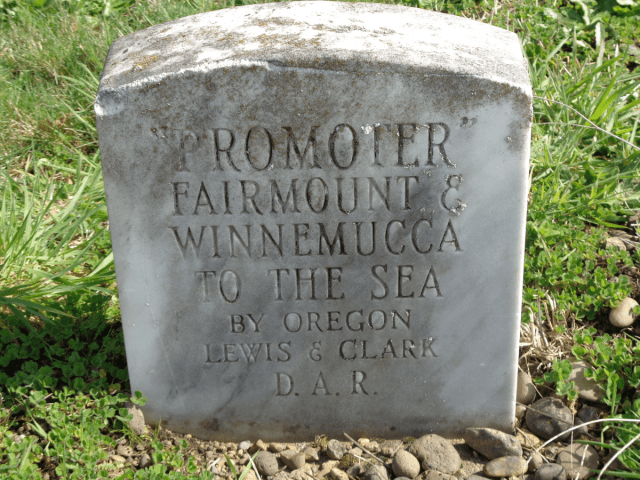


I propose a newspaper museum for the New Glenwood, and the naming of the George Miller Highway from Florence to Winnemucca. I would like to see Glenwood renamed Fairmont, after the city that was swallowed by Eugene.
Elizabeth Maude “Lischen” or “Lizzie” Cogswell married George Miller. Lizzie was the foremost literary woman in Oregon. On Feb. 6, 1897, Idaho Cogswell, married Feb. 6, 1897, Ira L. Campbell, who was editor, publisher and co-owner (with his brother John) of the Daily Eugene Guard newspaper. The Campbell Center is named after Ira.
The Wedding of John Cogswell to Mary Frances Gay, was the first recorded in Lane County where I registered my newspaper, Royal Rosamond Press. Idaho Campbell was a charter member of the Fortnightly Club that raised funds for the first Eugene Library. Joaquin Miller was the editor of Eugene’s first newspaper the Democratic Register, and the Eugene City Review.
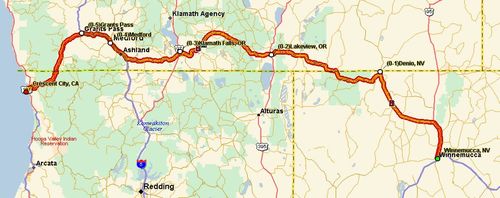
George Melvin Miller was a frequent visitor to ‘The Hights’ his brothers visionary utopia where gathered famous artists and writers in the hills above my great grandfather’s farm. The Miller brothers promoted Arts and Literature, as well as Civic Celebrations. Joaquin’s contact with the Pre-Raphaelites in England, lent credence to the notion that George and Joaquin were Oregon’s Cultural Shamans. Joaquin took part in the City Beautiful movement. George platted the city of Florence and Fairmont that was located next to Franklin Street. George was the promoter of a highway from Crescent City to Winnamucca, that was going to be a National Highway to New York. With new highways, I am promoting the Florence to Winnamucca route that traverses the Fremont Highway, named after the ‘Pathfinder’ who explored and mapped the Oregon Territory.
John Presco
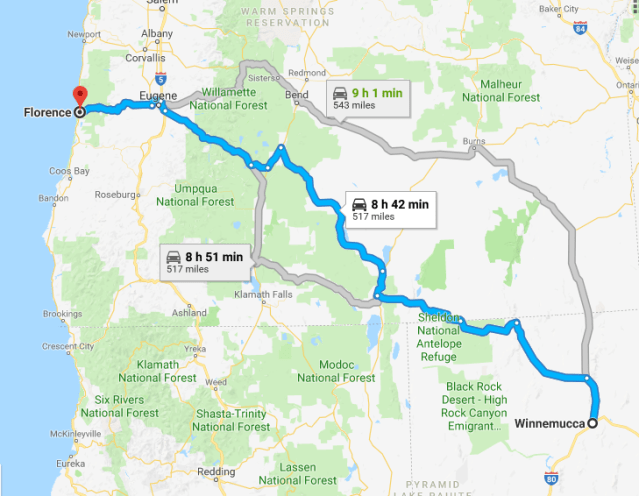
Oregon Route 31 is a state highway in the U.S. state of Oregon that runs between the Central Oregon cities of La Pine and Lakeview. OR 31 traverses most of the Fremont Highway No. 19 of the Oregon state highway system,[2] named after John C. Frémont. The entire length of OR 31 is part of the Outback Scenic Byway, though the byway extends further south beyond the end of OR 31, to the California border.


“TO THE ROSSETTIS”
Posted on April 3, 2014by Royal Rosamond Press


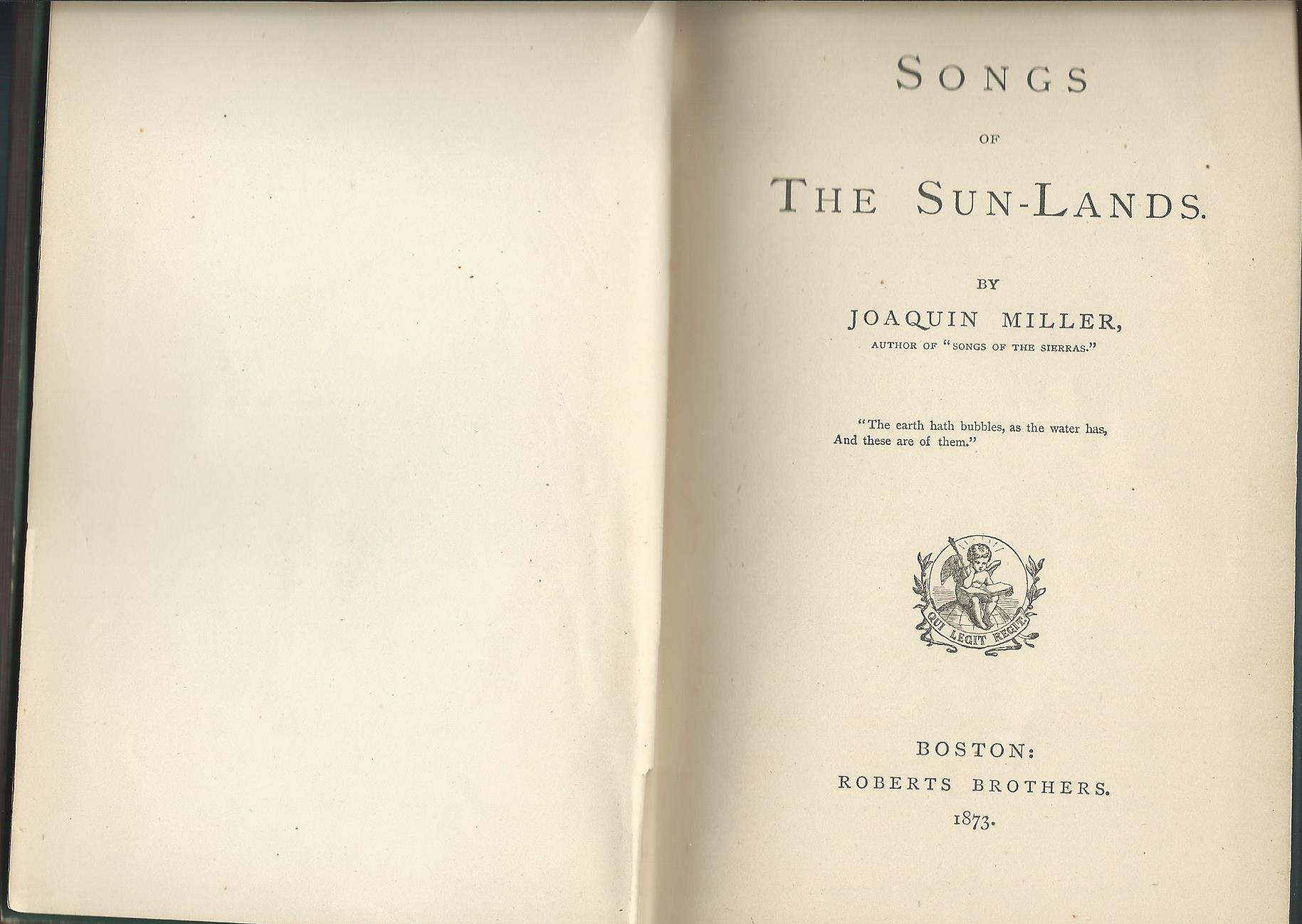


Yesterday I received in the mail a book I ordered on E-Bay. I quickly scanned it to see if their were any illustrations or photographs. Then, I found it, what amounts to my personal Holy Grail. Joaquin Miller dedicated his book of poems ‘Songs of The Sun-Land’ to the Rossetti family that includes Gariel, Michael, and, Christine. Gabriel was a artist and poet, Michael, a publisher, and Christine, a poet.
“TO THE ROSSETTIS”
There is controversy over this dedication. Michael is against it. He is critical of Miller’s poems that takes the reader to the Holy Land. Joaquin is describing a personal relationship with the Savior that reminds me of how Bohemians and Hippies would view Jesus, he a Nature Boy of sorts.
Gabriel, who had Joaquin over to his house for dinner, where he met several members of the Pre-Raphaelite Brotherhood seems to address his brother’s objections in a letter, and gives a tentative go ahead. He talks about Miller sending him a photograph of himself and bids him to say a word or two at the bottom of it, that does not exist. This photo may be the famous one taken by Charles Lutwidge Dodgson, who is better known as Lewis Carrol the author of ‘Alice in Wonderland’. If Joaquin had glued this portrait to a piece of paper, then we might have seen it on the dedication page.
What is going on here is extremely profound. Miller has exported his vision and lifestyle to the England, where he wrote Song of the Sierras, and now he is importing to America a cultural brand that contains Grail and Arthurian subject matter that was at the epicenter of the work of the Pre-Raphaelite Brotherhood.
The Rossettis may not have been too happy with Miller attaching himself to their star because the British are very protective of their culture. I wish I could say the same thing about the University of Oregon that is about to tear down homes that were once in the city limits of Fairmount, the city founded by Joaquin’s brother, George Miller.
The homes the Miller brothers lived in are registered and protected as Monuments. There is a Joaquin Miller State Park near Florence that was founded by George who also promoted the Winnemucca to the Sea Highway. There needs to be a Monument for George. I suggest the homes on Columbia Terrace be spared, and this city block declared a National Monument. I have suggested these homes be used to house homeless Vets going to college, but now I see a Free College on this site due to the student loan crisis.
This college will teach alternatives to prospective students of the UofO, such as having parents of students purchase a home in Eugene. In many cases a mortgage is cheaper than rent. Teaching your children how to get a job rather then attend college, will produce more home ownership that the UofO who promises jobs – that don’t exist!
The Miller Brothers were born on a farm near Coburg. They went into the world and achieved much. They are a cultural icon too Oregon and California. On page ten of the prelude, we read;
“By unnamed rivers of the Oregon north’
That roll dark-heaved into turbulent hills,
I have made my home….The Wild heart thrills
With memories fierce, and world storms forth.”
I once read that many college students didn’t know there was a Oregon, and if they did, they didn’t know where it is. The Rossettis more than likely read these words. Did they go to a globe to see where Joaquin and George live?
How many students at the UofO know who the Miller brothers were, and the Brotherhood.
Jon Presco
Copyright 2014
Joaquin and Leonie
Posted on May 16, 2016by Royal Rosamond Press


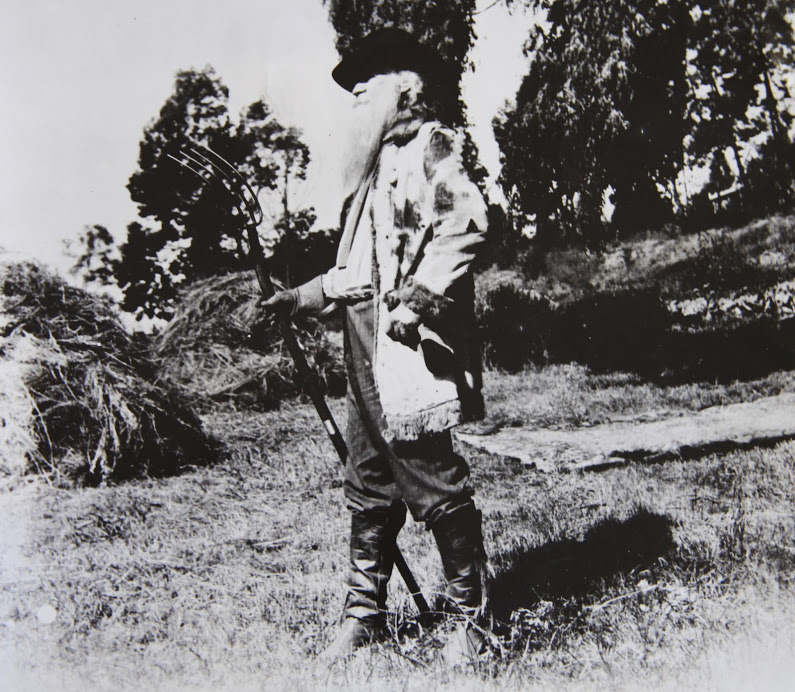

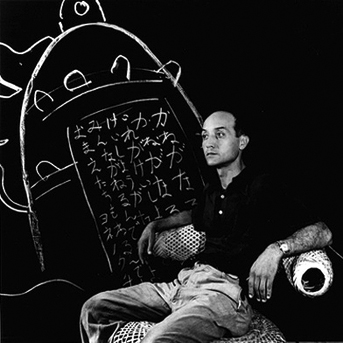


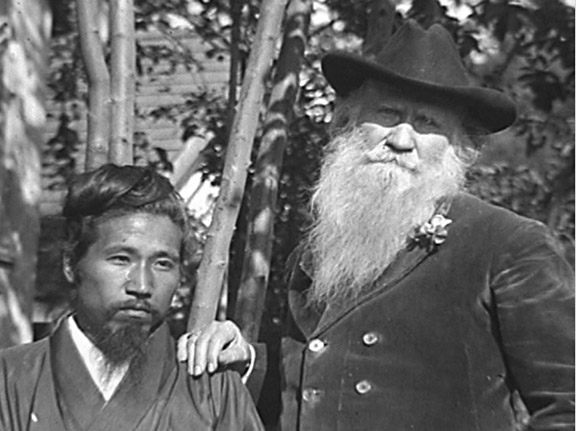
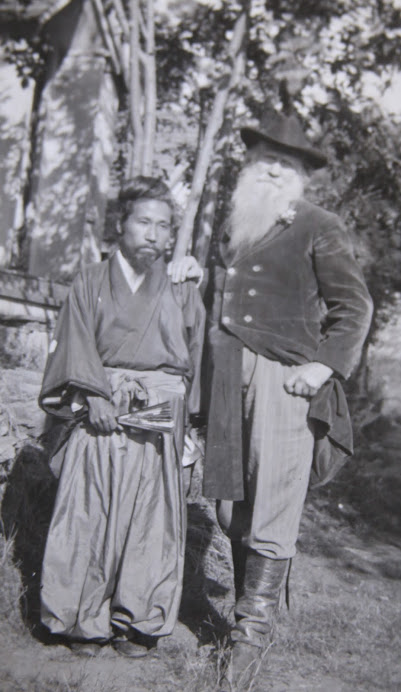
Joaquin Miller had a poets colony in the Oakland. Japanese Poets came to live here. One of them was Yonejiro Noguchi. I just discovered a movie was made about the mother of Yone’s son, who was the famous sculptor, Isamu Noguchi, who had a famous half-sister, Ailes Gilmore. She was a dancer for Martha Graham. Leonie grew up in the Village of New York, and lived in a Tent City in Pasadena California.
My kindred had a twenty-six acre fruit orchard below Miller’s property. Joaquin carried my father on his lap when he took the trolley with my grandmother. Victor Presco gave birth to the world famous artist ‘Rosamond’ and her brother. I am a Art Historian, Poet, Writer, and Reporter for my newspaper Royal Rosamond Press.
Here are two creative branches stemming from ‘The Hights’ where western artists and writers established a Bohemian Mecca. Miller was the first editor for The Eugene City Democratic Register , Eugene Oregon’s first newspaper. Joaquin attended Columbia College in Eugene. Here are the roots of the Beat and Hippie, scene, the Great California Dream, that a Japanese woman producer tried to capture, while we in the West turn our backs, we even forgetting to recall John Steinbeck – for the sake of our young! Our traditions are honored, elsewhere.
When we were children we would call Juanita Miller on the phone and pretend we were older so we could have The White Witch give us advice on our love life, that we invented. Joaquin Miller’s daughter titled herself the ‘White Witch’ and had involved her groom in a pagan ritual when they got married. She pretended she was dead, and, he brought her back to life. Sounds like Sleeping Beauty.
I found photos of Juanita dancing. Isadora Duncan grew up in Oakland. Above is two photos of my Grandmother, Melba Broderick, with her friend, Violet, on Miller’s property. I now believe they were disciples of the White Witch, and may have danced through the forest with her. Joaquin carried my infant father on the Fruit Vale trolley. My kin owned a orchard just below the Hights, the theme park Joaquin and his daughter built. There is a monument to my kindred, John Fremont, that looks like a rook. Here poets and artists met, and lived. Artists Embassy International met here, as well as in Alameda at 532 Haight Avenue in a beautiful Victorian.
Juanita corresponded with the artist, Frederick Church, whose work resembles Christine Rosamond, and, Fanny Corey, who encouraged Royal Rosamond to write. We are looking at the foundation of the Bohemian-Hippie scene in the San Francisco Bay Area that is tied to the Pre-Raphaelites. Did Church consider himself a Pre-Raphaelite, and was hoping the Millers would give him a introduction to the Rossettis?

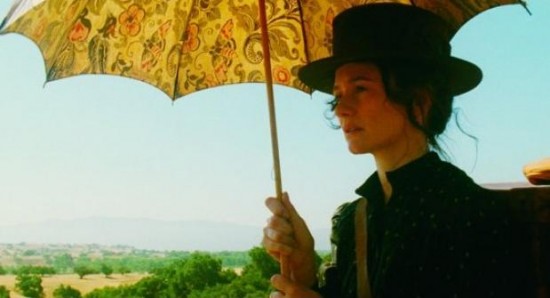
The movie ‘Leonie’ would have been a masterpiece if it had included the history of ‘The Hights’. Here was the first East meets West. In 1904 Miller wrote a prophetic poem about Japan. There needs to be a monument to the blending of our culture, that began with the love affair a Japanese poet had with his editor. The image of swarming bees taking off from ships to attack Pearl Harbor, was first seen in the third eye of a Oakland poet.
His cherry-blossoms drop like blood;
His bees begin to storm and sting;
His seas flash lightning, and a flood
Of crimson stains their wide, white ring;
His battle-ships belch hell, and all
Nippon is but one Spartan wall!
Aye, he, the boy of yesterday,
Now holds the bearded Russ at bay;
While, blossom’d steeps above, the clouds
Wait idly, still, as waiting shrouds.
But oh, beware his scorn of death,
His love of Emperor, of isles
That boast a thousand bastioned miles
Above the clouds where never breath
Of frost or foe has ventured yet,
Or foot of foreign man has set!
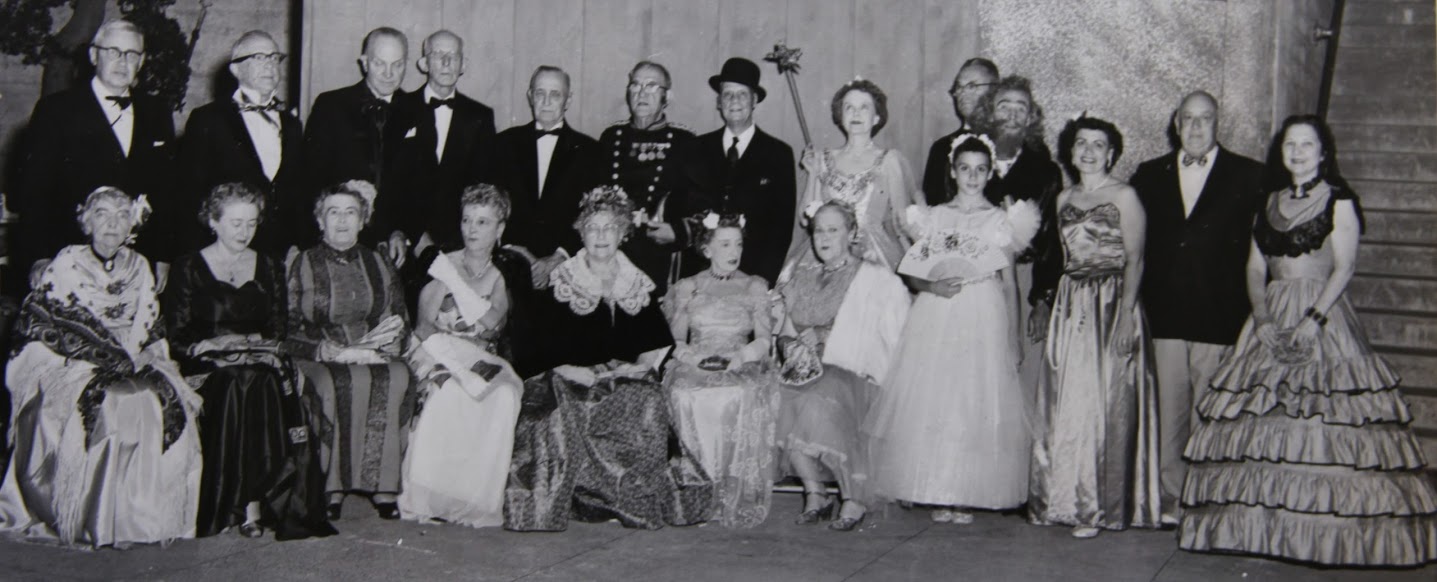
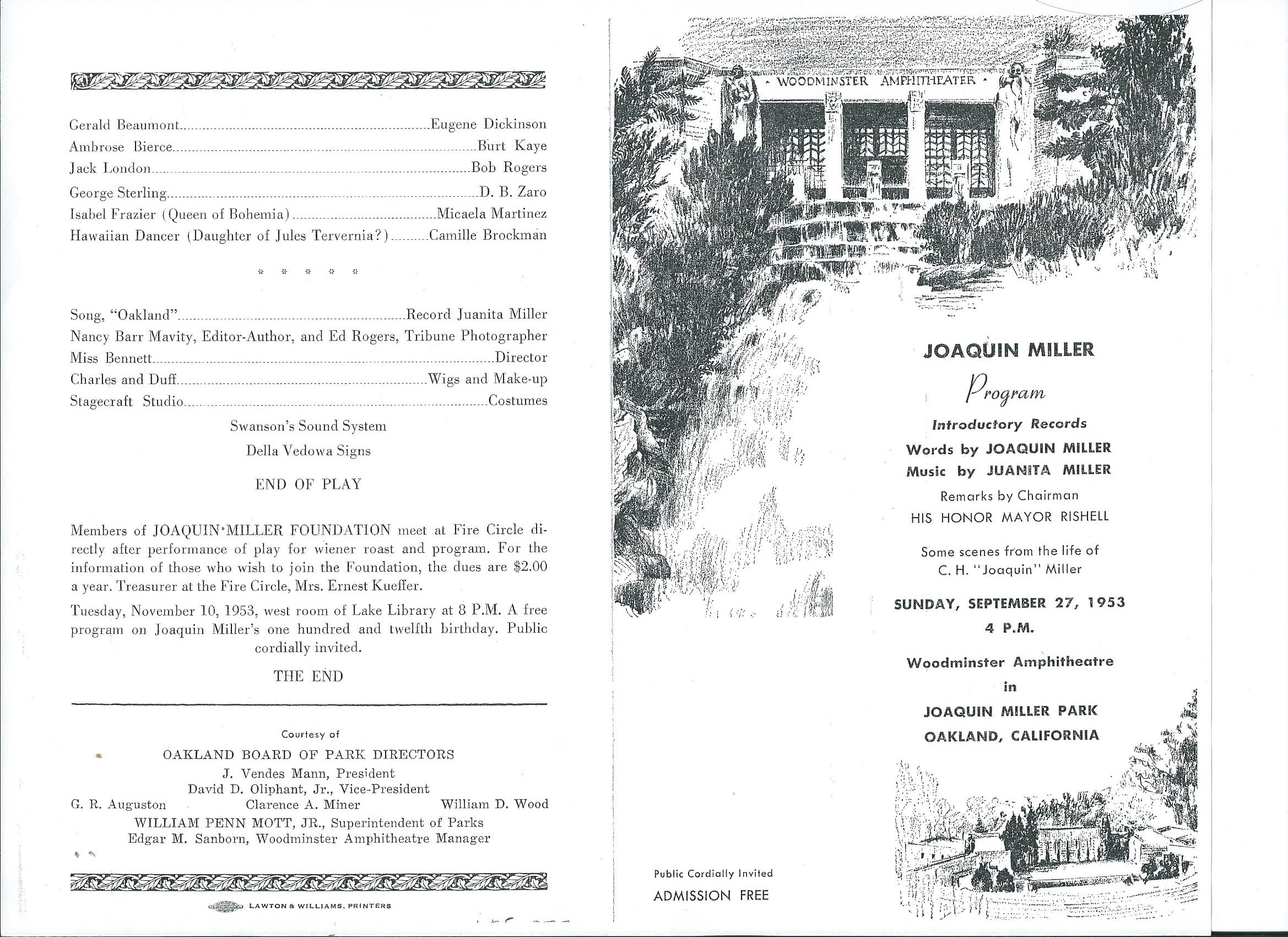
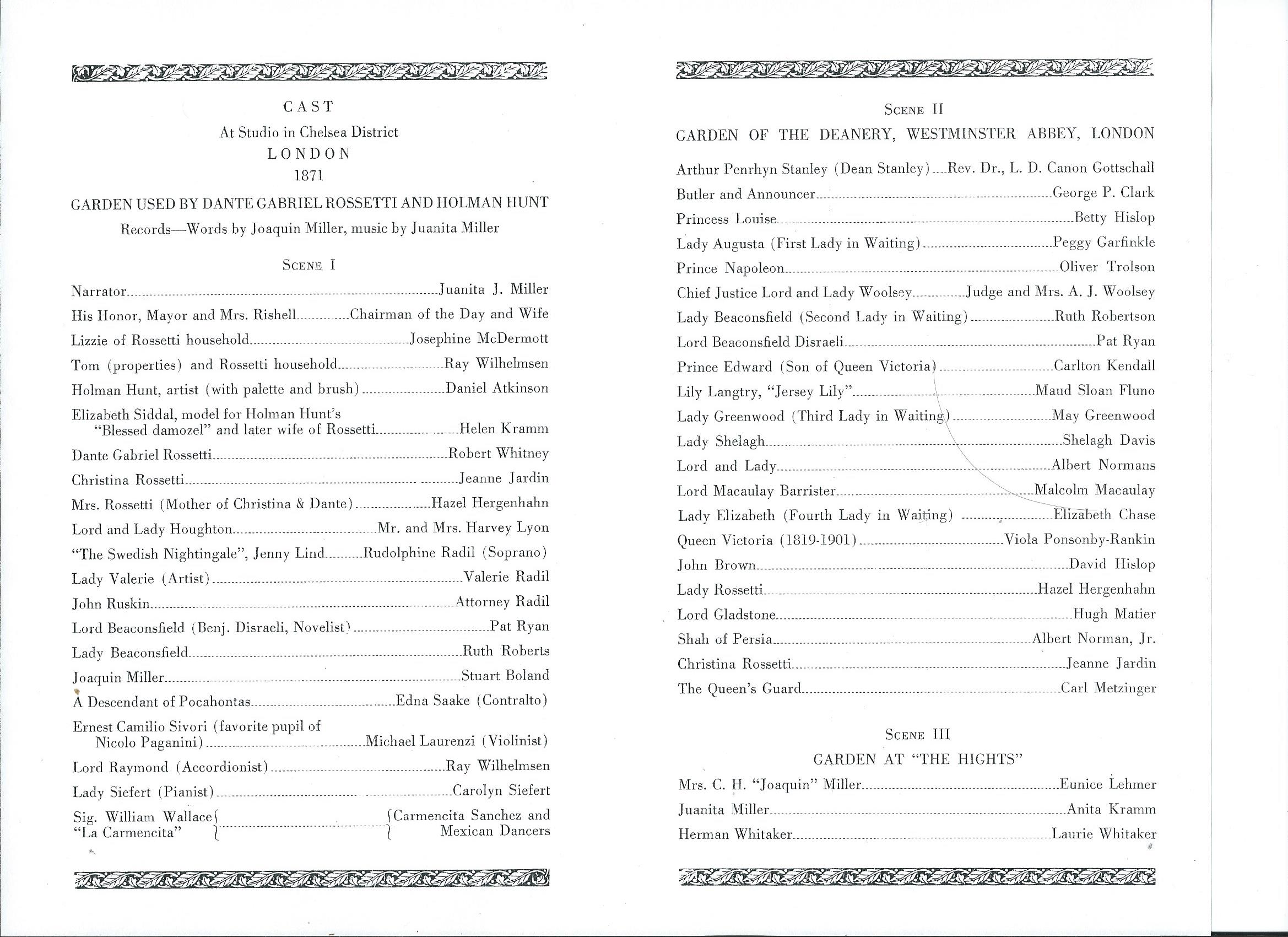
Here are photographs of the celebration Miller’s daughter, Juanita, conducted at the Hights. I believe these people took part in the play she scripted, where present are members of the artistic Rossetti family who founded the Pre-Raphaelite art movement. That is the artist Xavier Martinez and his wife with two fiddle players on Joaquin’s front porch. Why is this history being ignored? Yone and the other Japanese poets made bar-b-que for the Ramblen Bohemian Boys and their Village Tent Woman. There’s nothing new under the sun.
Hands across the water. The hearts of poets, flew like doves. Pacific means “peace”. Love conquers all. Water was diverted to flow over oriental rock falls, past the paper and screen huts where even Chinese and Japanese artists, were inspired. Meditation had come to dwell in California. An anglo woman carries in her womb, the infants of Japanese men, to born a new genius, a Western Kabuki Muse, coy fish swimming in foreign waters. Traces of an ancient Emperor and a Wild Man that looks like Gandalf.
I had a vision for a Peace Center in the Sawtelle that was recently named ‘Japan Town’.
Jon Presco

Léonie Gilmour (June 17, 1873 – December 31, 1933) was an American educator, editor, and journalist. She was the lover and editor of the writer Yone Noguchi and the mother of sculptor Isamu Noguchi and dancer Ailes Gilmour. She is the subject of the feature film Leonie (2010) and the book Leonie Gilmour: When East Weds West (2013).
Miller attended Columbia College in in Eugene City from 1857 to 1858. He taught school, studied law, and was admitted to the bar in 1861. From 1861 to 1862 Miller rode pony express from Walla Walla to Idaho mines but he soon returned to Eugene City to become a newspaper editor. In his newspaper, The Eugene City Democratic Register, he pleaded for an end to the Civil War, adopting the Quaker creed of his father.
Even today, you’d have to go far to run into a radical individual like Leonie Gilmour. But in America in 1901, to meet a young woman like her must have been on par with witnessing a comet.
Raised in New York by a single mother, Gilmour studied at Bryn Mawr, a liberal-arts college in Pennsylvania, and Paris’ Sorbonne university on a scholarship. She then got a job as an editor for Japanese poet Yonejiro Noguchi; things took a short-lived turn for the amorous, and she bore a son, Isamu Noguchi — who became one of the most influential and important Japanese artists of the 20th century.
Ailes grew up in a Japanese style house that Leonie had constructed in Chigasaki, a seaside town near Yokohama. Ailes had close Japanese childhood friends, spoke Japanese as well as English, and identified with Japan before she returned to the USA in 1920, at age 8. When Ailes and her mother returned to America, they lived first in San Francisco and then moved to New York City.
During the Depression Era, dancers like Ailes and artists like Isamu struggled to find work. In 1932, when Radio City Music Hall opened, Ailes performed at the debut with Graham’s company. Their work, Choric Patterns, lasted on stage for just one week. Ailes ruefully observed to Marion Horosko that Radio City Music Hall could succeed only when it became a movie theater with Rockettes.
Noguchi was the first Japanese author to publish English-language novels and books of poetry. Born near Nagoya, Japan, in 1875, he studied at Keio University in Tokyo and gained a passion for English literature. At 18 he came to the United States, where he worked at a newspaper run by Japanese exiles.
Miller attended Columbia College in in Eugene City from 1857 to 1858. He taught school, studied law, and was admitted to the bar in 1861. From 1861 to 1862 Miller rode pony express from Walla Walla to Idaho mines but he soon returned to Eugene City to become a newspaper editor. In his newspaper, The Eugene City Democratic Register, he pleaded for an end to the Civil War, adopting the Quaker creed of his father.
In 1894, Noguchi visited Miller and was so mesmerized by the aging poet that he stayed with him for four years, working for his room and board. He absorbed Miller’s philosophy of life and met his literary friends.
With Miller, Noguchi said, he found his true vocation as a poet, and he considered Miller’s Oakland Hills estate to be an ideal place to write his poems.
When “Homeless Snail” was republished in 1920, Noguchi wrote a new introduction.
“Since I left California in 1900 for New York and London I have seen many other cities more big and more prosperous, but my mind always returned to Miller Heights (Hights) where my poetry first began to grow amid the roses and carnations which Miller and I watered tenderly. … He was my first friend in American life. … He looked on me as his American son.”
His love life was complicated. He had several relationships simultaneously with white American women. His son, Isamu, whose mother was Leonie Gilmore, became a famous American sculptor.
In 1904, Noguchi went back to Japan and taught English at his alma mater. He continued to write and travel the world. By 1930, his works had fallen into critical disfavor. He died of stomach cancer in 1947.
“Then he had the Japanese and Chinese artists living there. They built their beautiful little Japanese paper houses up through the woods. What beautiful country! It looks like a mess now, but it was beautiful then — a natural and wild landscape — and the Japanese had carefully created a meandering little stream, Japanese style, beautifully arranged with gardens and little rockeries near the poet’s. You know their expertness in creating beauty. They’d made this beautiful place where they had their barbecues. At that time the poet’s barbecues were always run by his Japanese friends. We’d have raw fish and soy sauce — really delicious. Then, always the particular barbecue for which the poet was famous — he had beautifully peeled willow switches on which were arranged rounds of onions and meat — which you held over the fire until cooked to your taste.
Then we’d go up to a little art colony scattered throughout the woods in their beautiful paper houses. These houses were well made, beautifully constructed, but all the doors and windows except the frames were made of paper. We’d go in, take our shoes off and sit down and we’d watch the artists work, or they’d display work to show us. Some were Chinese, most of them were Japanese.
In 1848 William Makepeace Thackeray used the word bohemianism in his novel Vanity Fair. In 1862, the Westminster Review described a Bohemian as “simply an artist or littérateur who, consciously or unconsciously, secedes from conventionality in life and in art”. During the 1860s the term was associated in particular with the pre-Raphaelite movement, the group of artists and aesthetes of which Dante Gabriel Rossetti was the most prominent:[2]
As the 1860s progressed, Rossetti would become the grand prince of bohemianism as his deviations from normal standards became more audacious. And as he became this epitome of the unconventional, his egocentric demands necessarily required his close friends to remodel their own lives around him. His bohemianism was like a web in which others became trapped – none more so than William and Jane Morris.[3]
Although Gilmour harbored literary aspirations, her achievements as a writer were limited. Much of her literary energy was channeled into her editorial projects, particularly those of her partner, Yone Noguchi. It has been speculated that she may have co-authored or authored some works attributed to him, such as The American Diary of a Japanese Girl, and there is little doubt that much of Noguchi’s best writing was accomplished with her editorial assistance.
As an author in her own right, Gilmour’s most successful pieces were short autobiographical essays for newspapers and magazines chronicling unfortunate events with a wry ironic humor, In a picaresque, matter-of-fact style, Gilmour described the unusual situations in which she found herself as a result of her unconventional attitudes and lifestyle. Gilmour’s “Founding a Tent-Home in California,” for example, shows turn-of-the-century Los Angeles from the perspective of a hapless, idealistic new arrival.[21] “Dorobo, or the Japanese Burglar” portrays the experience of being burglarized with a humorous perspective.[22]
Léonie Gilmour (June 17, 1873 – December 31, 1933) was an American educator, editor, and journalist. She was the lover and editor of the writer Yone Noguchi and the mother of sculptor Isamu Noguchi and dancer Ailes Gilmour. She is the subject of the feature film Leonie (2010) and the book Leonie Gilmour: When East Weds West (2013).
The Noguchi Museum, chartered as The Isamu Noguchi Foundation and Garden Museum, was designed and created by the Japanese-American sculptor Isamu Noguchi. Opening on a limited basis to the public in 1985 the purpose of the museum and foundation was and remains to preserve and display Noguchi’s sculptures, architectural models,stage designs, drawings, and furniture designs. The two-story, 24,000 square feet (2,200 m2) museum and adjacent sculpture garden, located in Long Island City section of Queens, one block from the Socrates Sculpture Park, underwent major renovations in 2004 allowing the museum to stay open year round.[1]
Isamu Noguchi (野口 勇 Noguchi Isamu?, November 17, 1904 – December 30, 1988) was an American artist andlandscape architect whose artistic career spanned six decades, from the 1920s onward.[1] Known for his sculpture and public works, Noguchi also designed stage sets for various Martha Graham productions, and several mass-produced lamps and furniture pieces, some of which are still manufactured and sold.
In 1947, Noguchi began a collaboration with the Herman Miller company, when he joined with George Nelson, Paul László and Charles Eames to produce a catalog containing what is often considered to be the most influential body of modern furniture ever produced, including the iconic Noguchi table which remains in production today.[2] His work lives on around the world and at the Noguchi Museum in New York City.
Leonie (Japanese: レオニー Hepburn: Reonī?) is a 2010 Japanese film directed by Hisako Matsui and starring Emily Mortimer and Shido Nakamura. The film is based on the life of Léonie Gilmour, the American lover and editorial assistant of Japanese writer Yone Noguchi and mother of sculptor Isamu Noguchi and dancer Ailes Gilmour.
Production started in April 2009 and the film was released in Japan on November 20, 2010. An extensively reedited version of the film began a limited theatrical run in the United States on March 22, 2013 and was released on DVD on May 14, 2013.
The film opens on a beach. A window overlooks the beach. In a dark room, Isamu Noguchi, grown old, is chipping away at a large stone with a hammer and chisel. “Mother, I want you to tell the story.” The film periodically returns to this scene of Isamu at work.
Bryn Mawr 1892. After a class in which she argues with a professor about the importance of artist Artemisia Gentileschi, Leonie (Emily Mortimer) befriends Catherine Burnell (Christina Hendricks). Later, they meet Umeko Tsuda (Mieko Harada), a graduate student. In Tsuda’s room, Leonie gazes at a print of Hokusai’s The Great Wave off Kanagawa.
The story now alternates between Pasadena 1904—where Leonie, living in a primitive tent with her mother Albiana (Mary Kay Place), bears a child temporarily named “Yo,”—and New York, where Leonie met Japanese poet Yone Noguchi (Shido Nakamura). She and Yone succumb to passion while collaborating on his anonymous novel, The American Diary of a Japanese Girl, published by Frederick A. Stokes (David Jensen). They quarrel when Yone returns unannounced from London with an apparently drunk Charles Warren Stoddard (Patrick Weathers). The Russo-Japanese War begins and Yone, declaring he will return to Japan, greets Leonie’s announcement of pregnancy with angry disbelief. Leonie tells her sad story to the now unhappily married Catherine, who reminds her of her advice not to be boring. In California, Leonie fends off a racist attack against her son and decides, against Albiana’s advice, to accept Yone’s invitation to come to Japan.
Léonie Gilmour was born in New York City on June 17, 1873, and grew up in the East Village, Manhattan.[1] At the time of her birth, her father, Andrew Gilmour, a clerk, and mother, Albiana Gilmour (née Smith, daughter of one of the co-founders of the Brooklyn Times-Union),[2] were living “in one room in a rear house”[3] in St. Bridget’s Place, the alley behind St. Brigid’s Church on the east side of Tompkins Square Park.
http://www.botchanmedia.com/YN/LG/interview101211.htm
When we were children we would call Juanita Miller on the phone and pretend we were older so we could have The White Witch give us advice on our love life, that we invented. Joaquin Miller’s daughter titled herself the ‘White Witch’ and had involved her groom in a pagan ritual when they got married. She pretended she was dead, and, he brought her back to life. Sounds like Sleeping Beauty.
Several days ago I found photos of Juanita dancing. Isadora Duncan grew up in Oakland. Above is two photos of my Grandmother, Melba Broderick, with her friend, Violet, on Miller’s property. I now believe they were disciples of the White Witch, and may have danced through the forest with her. Joaquin carried my infant father on the Fruit Vale trolley. My kin owned a orchard just below the Hights, the theme park Joaquin and his daughter built. There is a monument to my kindred, John Fremont, that looks like a rook. Here poets and artists met, and lived. Artists Embassy International met here, as well as in Alameda at 532 Haight Avenue in a beautiful Victorian.
Above is a letter to Juanita from the artist, Frederick Church, whose work resembles Christine Rosamond, and, Fanny Corey, who encouraged Royal Rosamond to write. We are looking at the foundation of the Bohemian-Hippie scene in the San Francisco Bay Area that is tied to the Pre-Raphaelites. Did Church consider himself a Pre-Raphaelite, and was hoping the Millers would give him a introduction to the Rossettis?
Joaquin Miller
The Little Brown Man (ca. 1904)
Where now the brownie fisher-lad?
His hundred thousand fishing-boats
Rock idly in the reedy moats;
His baby wife no more is glad.
But yesterday, with all Nippon,
Beneath his pink-white cherry-trees,
In chorus with his brown, sweet bees,
He careless sang, and sang right on.
Take care! for he has ceased to sing;
His startled bees have taken wing!
His cherry-blossoms drop like blood;
His bees begin to storm and sting;
His seas flash lightning, and a flood
Of crimson stains their wide, white ring;
His battle-ships belch hell, and all
Nippon is but one Spartan wall!
Aye, he, the boy of yesterday,
Now holds the bearded Russ at bay;
While, blossom’d steeps above, the clouds
Wait idly, still, as waiting shrouds.
But oh, beware his scorn of death,
His love of Emperor, of isles
That boast a thousand bastioned miles
Above the clouds where never breath
Of frost or foe has ventured yet,
Or foot of foreign man has set!
Beware his scorn of food (his fare
Is scarcely more than sweet sea-air);
Beware his cunning, sprite-like skill—
But most beware his dauntless will.
Goliath, David, once again,
The giant and the shepherd youth—
The tallest, smallest of all men,
The trained in tongue, the trained in truth.
Beware this boy, this new mad man!
That erst mad man of Macedon,
Who drank and died at Babylon;
That shepherd lad; the Corsican—
They sat the thrones of earth! Beware
This new mad man whose drink is air!
His bees are not more slow to strife,
But, stirred, they court a common death!
He knows the decencies of life—
Of all men underneath the sun
He is the one clean man, the one
Who never knew a drunken breath!
Beware this sober, wee brown man,
Who yesterday stood but a span
Beneath his blossomed cherry-trees,
Soft singing with his brother bees!
The brownie’s sword is as a snake,
A sudden, sinuous copperhead:
It makes no flourish, no mistake;
It darts but once—the man is dead!
’Tis short and black; ’tis never seen
Save when, close forth, it leaps its sheath
And, snake-like, darts up from beneath.
But oh, its double edge is keen!
It strikes but once, then on, right on:
The sword is gone—the Russ is gone!—From the Century.
The Enmeshed Rosamond and Rossetti Family
Posted on November 8, 2011by Royal Rosamond Press
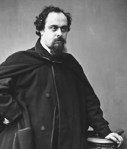

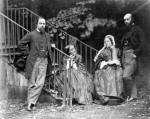


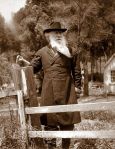

After dying and beholding untold beauty in heaven, I sought a way to heal my family. This was going to be near impossible because we are an enmeshed family due to the extreme abuse, and the relationship between the abusers and the abused that demands extreme loyalty – even after death. I am reluctant to give the antidote to the poison apple that Christine Rosamond, partake, for her other family, those parasite are in waiting – for their fair share!
“Many of us come from enmeshed families in which the boundaries are skewed and all members are a part of the pie, so to speak, as opposed to individual slices within the pie. Members of these families look to one another for insight regarding who they are becoming, as opposed to looking within.”
“Enmeshed families are characterized by an extreme sense of closeness, so much so that almost any expression of independence or separateness is seen as disloyalty to the family. This kind of false loyalty is a very high value in an Enmeshed family.”
The uncreative members of my family have been agitated by the parasites who know they are in the shadow of the gifted ones, and are needing to feel equal – somehow – thus they convinced my family, the more outside parasites – the rosier!
That Christine came to honor her father and older brother, over me, is as tragic a tale one can find. To find it in the art world – is maddening – destructive beyond belief! What happened?
The answer is simple. From an early age I began to look inward to find my identity, while my parents tried to manipulate and control thier mate, and then their children. Mark Presco’s hateful manifestos are all about the outisders who let him down, and thus tainted his perfect image he wangted to own of himself as the White Super Misogynist Man who needs NO ONE, but a hundred million inferior scum-bags after his little pile of money. Mark Presco has turned women and people of color into his disloyal children! Mark is a god. He was named after Marcus Arealius, the Roman Emperor – who declared they were gods!
Mark, and his ilk, want allot of bang for their buck. This is why they want Jesus on their side, because he utterly ignored money in his lifetime. Today, Jesus is extremely interested in the Stock Market and Herman Cain’s devine ambition that allows Republicans to overlook the idea that he grabbed a womans’ head and pulled it down to his crotch. The Ne Roman Republican Party have Jesus atop a tall building Gothum with his good bud, Howard Roarke, Ann Rand’s invention.
“Look at all those socialist parasites down there, how they clammer over one another so as to get a piece of our tax pie! Come Jesus, let’s smoke a bowlful, get instrospective, and design another high tower, another monument to the Selfish Giant Indvidual!”
Christine Rosamond did not have time to develope an artistic identity, complete her journey within to find herself, develope a healing bond with her Muse. When one of her first paintings was bought by Priscilla Presley at a show in Westwood, Ira Cohen took note. I assume he got to look at the list of sales. What he knew, was it was a matter of who you know. He understood Christine had gotten her foot in the door, and very famous folks would be viewing her work, including Elvis. They would talk about Christine’s painting, ask where they could get one of works of art. If Coehn could get Rosamond signed to a contract, then, the Already Famous would come to him, beat a path to his gallery on Lacienaga.
A year later, my dear sister is asking me to help her find a artisitc idienty – within! Sadly I tell her;
“I can’t give you that!”
Christine turned to her enmeshed idenity within our extremely dysfunctional family for her identity. Rather then seek psychiratritc help for their mental illness, Vic and Rosemary worked out on their children almost every day of our their lives. This is why Julie Lynch invited a fake ninety nine year old crone school teacher to come get Christine and take her home to ‘The Caretaker’ who ended up with the Rosamond Gallery, the Rosamond Publishing company, the Rosamond Movie, the Rosamond T.V. Series – and my dream! The Rossetti family were poets, artists, and publishers.
Joaquin Miller went to Europe and had dinner with Rossetti and the Pre-Raphaelites. In his novel ‘The Distruction of Gotham’ he is in New York following an old crone and yojng girl who has turned to prostitution to survive in the big city. Miller carried my ingant father on his lap when he wnet with Melba on the trolly to the Ferry. In ‘The Distruction of Gotham’ Miller has his Roxanne walk from Liberty Street, where William Stuttmeister lived, to Fight Avenue.
Miller was one of the founders of Bohemian Grove where the elite go to camp, live in a tent, then go to the Russian river to swim. I and my Muse, would swim in the same waters. When David beheld Bathsheba, he had to have her, and the world would never be the same.
Jon Presco
Copyright 2011
Shamus called and said my sister is dead. Why didn’t you tell me? I suspect Cean put you in touch with Mark. I have copied all our messages. https://rosamondpress.com/2019/09/03/hearing-my-sister-vicki-2/
I was just going to plan a road trip to tell you in person , I was planning on leaving in the morning with my loyal companion. Then I looked didn’t my phone the first time really in a few days , I saw you message and the first time today is when I saw Shamus’s text.
 Rosamond Press
Leave a comment