Jeff Bezos said their was a screen test with five actors who wanted to play James Bond.
Meanwhile, in Oregon, Bezos is playing games with Governor Kotek employing his data centers like chess pieces! How……BONDISH! Voters see Bezos and his ilk, as the bad guys!
FILE – A data center in Umatilla, Ore. on April 3, 2026. The centers often have power stations built adjacent to them to supply the extensive energy needs.
Amazon’s Bezos says he helped pick Pattinson as Bond
By Reuters
November 17, 20264:56 PM PSTUpdated November 17, 2026
Item 1 of 2 Jeff Bezos, founder of Amazon and Blue Origin and co-founder and co-CEO of Prometheus and Vik Bajaj, co-founder and co-CEO of Prometheus (not pictured) speak with Semafor’s business and finance Editor Liz Hoffman at the Semafor “Silicon Valley & The World” Conference in San Francisco, California, US November 17, 2026. REUTERS/Manuel Orbegozo
[1/2]Jeff Bezos, founder of Amazon and Blue Origin and co-founder and co-CEO of Prometheus and Vik Bajaj, co-founder and co-CEO of Prometheus (not pictured) speak with Semafor’s business and finance Editor Liz Hoffman at the Semafor “Silicon Valley & The World” Conference in San Francisco, California,… Purchase Licensing Rights, opens new tabRead more
SAN FRANCISCO, Nov 17 (Reuters) – Amazon (AMZN.O), opens new tab founder and chairman Jeff Bezos said he was heavily involved in selecting “Batman” actor Robert Pattinson to take on the iconic film role of James Bond.
Bezos spoke at Semafor’s Silicon Valley & The World conference on Tuesday, a day after the company announced Pattinson as the next 007. He said Amazon narrowed down a larger group and screen-tested five actors by having them perform three scenes in full costume on sets.
The Misinformation Monitor newsletter rounds up international misinformation narratives, with a “Real or Fake?” quiz in every edition. Sign up here.
This extremely rare photo of the first west coast Black Mask get-together on January 11, 1936 captures possibly the only meeting of several of these authors.
Pictured in the back row, from left to right, are Raymond J. Moffatt, Raymond Chandler, Herbert Stinson, Dwight Babcock, Eric Taylor and Dashiell Hammett. In the front row, again from left to right, are Arthur Barnes (?), John K. Butler, W. T. Ballard, Horace McCoy and Norbert Davis.
Rosemary told me her father, Royal Rosamond, used to sail to the Channel Islands and camp with his friend, Dashiell Hammett who is seen standing on the right in the photo above.
Aunt Lillian told me she would fall asleep listening to Royal and Erle Stanley Gardner on the typewriter in the living room. Royal was Gardner’s teacher and a member of the Black Mask. I believe I can almost recoginize Black Mask authors under the tree on Santa Cruz Island sitting under a tree with my grandmother, Mary Magdalene Rosamond, who does not look very happy as she embraces a black dog. Who is that woman? Is she a writer? She looks a bit crazed, as does the guy holding a gun. Is Mary hearing some far-out and weird ideas around the campfire?
When I was fifteen Rosemary showed me about six magazines wherein her father’s stories appeared. There were several mysteries. I am going to send the camping photo to some experts. That looks like Raymond Chandler in front of the tent. Is he the guy packing heat?
Hammett wrote the Maltese Falcon that begins with a story about the Knight Templars. Was this a tale passed around the campfire on Santa Cruz Island?
Chandler had an immense stylistic influence on American popular literature, and is considered by many to be a founder, along with Dashiell Hammett, James M. Cain and other Black Mask writers, of the hard-boiled school of detective fiction. His protagonist, Philip Marlowe, along with Hammett’s Sam Spade, is considered by some to be synonymous with “private detective,” both having been played on screen by Humphrey Bogart, whom many considered to be the quintessential Marlowe.
Black Mask was a pulp magazine launched in 1920 by journalist H. L. Mencken and drama critic George Jean Nathan as one of a number of money-making publishing ventures to support the prestigious literary magazine The Smart Set, which Mencken edited, and which operated at a loss. Under their editorial hand, the magazine was not exclusively a publisher of crime fiction, offering, according to the magazine, “the best stories available of adventure, the best mystery and detective stories, the best romances, the best love stories, and the best stories of the occult.” The magazine’s first editor was Florence Osborne (credited as F. M. Osborne).[1]
Contents [hide] 1 Editorial control 2 Contributing authors 3 Decline and revival 4 In popular culture 5 Anthologies 6 References 7 External links Editorial control[edit] After eight issues, Mencken and Nathan considered their initial $500 investment to have been sufficiently profitable, and they sold the magazine to its publishers, Eltinge Warner and Eugene Crow for $12,500. The magazine was then edited by George W. Sutton (1922–24), followed by Philip C. Cody.[2] In 1926, Joseph Shaw took over the editorship.
Contributing authors[edit]
Early Black Mask contributors of note included J. S. Fletcher, Vincent Starrett, and Herman Petersen.[3] Shaw, following up on a promising lead from one of the early issues, promptly turned the magazine into an outlet for the growing school of naturalistic crime writers led by Carroll John Daly. Daly’s private detective Race Williams was a rough and ready character with a sharp tongue, and established the model for many later acerbic private eyes.
Black Mask later published the profoundly influential Dashiell Hammett, creator of Sam Spade and The Continental Op, and other hardboiled writers who came in his wake, such as Raymond Chandler, Erle Stanley Gardner, Paul Cain, Frederick Nebel, Frederick C. Davis, Raoul F. Whitfield,[3] Theodore Tinsley, W.T. Ballard, Dwight V. Babcock, and Roger Torrey.[4] Author George Harmon Coxe created “Casey, Crime Photographer”, for the magazine, which became a media franchise with novels, films, radio, comic book tie-ins, television, and legitimate theatre.[5] Black Mask’s covers were usually painted by artists Fred Craft or J. W. Schlaikjer,[6] while Shaw gave the artist Arthur Rodman Bowker a monopoly over all Black Mask interior illustrations.[7] Although primarily known for male contributors, Black Mask also published a number of women crime writers, including Marjory Stoneman Douglas, Katherine Brocklebank, Sally Dixon Wright, Florence M. Pettee, Marion O’Hearn, Kay Krausse, Frances Beck, Tiah Devitt and Dorothy Dunn. [8] The magazine was hugely successful, and many of the writers, such as Hugh B. Cave, who appeared in its pages went onto greater commercial and critical success. Although crime fiction made up most of the magazine’s content, Black Mask also published some Western and general adventure fiction.[1] Decline and revival[edit] Black Mask reached a sales peak in the early 1930s, but then interest began to wane under increasing pressure from radio, the cinema, and rival pulp magazines. In 1936, refusing to cut writers’ already meager pay, Shaw resigned, and many of the high-profile authors abandoned the magazine with him. Shaw’s successor Fanny Ellsworth, (1936–40) managed to attract new writers to Black Mask, including Cornell Woolrich, Frank Gruber, Max Brand and Steve Fisher. [9] However, from the 1940s on, Black Mask was in decline, despite the efforts of new editor Kenneth S. White (1940–48). The magazine in this period carried the work of John D. MacDonald.[1] Henry Steeger then edited Black Mask anonymously until it eventually ceased publication in 1951. [2]
In 1985, the magazine was revived as The New Black Mask, and featured noted crime writers James Ellroy, Michael Collins, Sara Paretsky and Bill Pronzini, as well as Chandler and Hammett reprints. Edward D. Hoch praised the revived Black Mask, stating in the book Encyclopedia Mysteriosa that “it came close to reviving the excitement and storytelling pleasure of the great old pulp magazines”. Due to a legal dispute over the rights to Black Mask name, the magazine ceased publication in 1987. It was revived as a short-lived magazine titled A Matter of Crime.[10] Original copies of the Black Mask are highly valued among pulp magazine collectors. Issues with Chandler and Hammett stories are especially rare and command high prices.[1] In popular culture[edit] Black Mask magazine was the specific pulp fiction magazine that inspired the 1994 Quentin Tarantino film Pulp Fiction. Originally, the title of the film was Black Mask, before being changed. An issue of Black Mask magazine features as a (planted) clue in the 1927 murder mystery novel Unnatural Death by Dorothy L. Sayers. An episode of the 1990s television series Millennium mentions a ‘literary journal’ known as the ‘Dark Mask’ which featured detective fiction, an obvious parody of the Black Mask. Anthologies[edit] The Hard-Boiled Omnibus: Early Stories from Black Mask edited by Joseph T. Shaw, (1946). The Hard-Boiled Detective: Stories from Black Mask magazine, 1920-1951 edited by Herbert Ruhm, (1977). The Black Mask Boys: masters in the hard-boiled school of detective fiction edited by William F. Nolan, (1985). Includes a short history of the magazine. The Black Lizard Big Book of Black Mask Stories edited by Otto Penzler, (2007).
This extremely rare photo of the first west coast Black Mask get-together on January 11, 1936 captures possibly the only meeting of several of these authors. Pictured in the back row, from left to right, are Raymond J. Moffatt, Raymond Chandler, Herbert Stinson, Dwight Babcock, Eric Taylor and Dashiell Hammett. In the front row, again from left to right, are Arthur Barnes (?), John K. Butler, W. T. Ballard, Horace McCoy and Norbert Davis.
Cleve F. Adams (6 stories) Dwight V. Babcock (21 stories) W. T. Ballard (43 stories) Max Brand (9 stories) Katherine Brocklebank (7 stories) John K. Butler (11 stories) Paul Cain (17 stories) Hugh B. Cave (9 stories) D.L. Champion (30 stories) Raymond Chandler (11 stories) Merle Constiner (12 stories) George Harmon Coxe (27 stories) John Carroll Daly (60 stories) Norbert Davis (13 stories) Ramon DeColta (24 stories) Lester Dent (2 stories) Bruno Fischer (5 stories) Steve Fisher (9 stories) Erle Stanley Gardner (103 stories) William Campbell Gault (7 stories) Frank Gruber (14 stories) Brett Haliday (2 stories) Dashiell Hammett (49 stories) Baynard H. Kendrick (14 stories) Louis L’Amour (1 story) John Lawrence (14 stories) John D. MacDonald (6 stories) Horace McCoy (17 stories) Robert Martin (8 stories) Frederick Nebel (67 stories) Robert Reeves (10 stories) Stewart Sterling (12 stories) Herbert Stinson (27 stories) Eric Taylor (7 stories) Roger Torrey (50 stories) Donald Wandrei (6 stories) Raoul Whitfield (66 stories) Cornell Woolrich (24 stories)
Raymond Chandler
.
This account by Ian Fleming of his friendship and correspondences with Raymond Chandleroriginally appeared in the December 1959 edition of The London Magazine, a few months after Chandler’s death. It begins with a note on the nature of the piece.
.
(I knew Raymond Chandler for about four years and these are all my memories of him, together with some random comments and reflections and most of the letters we exchanged. Not many people knew Chandler, so I will not apologise for the triviality of our correspondence. It fitted in with our relationship – the half-amused, ragging relationship of two writers working on the same thin, almost-extinct literary seam, who like each others work. But I do apologise for dragging my own books and what he wrote about them into this biographical note. Unfortunately, there is no alternative. We came together over my books and not over his, and our friendship would not have existed without them.)
I first met Raymond Chandler at a dinner party given by Stephen and Natasha Spender some time in May 1955. He was just coming out of the long spell of drinking which followed the death of his wife. She died after a three years’ illness in their house at La Jolla, in California. When the police arrived they found Raymond Chandler in the sitting room firing his revolver through the ceiling. Chandler never recovered from the tragedy and, whatever the reality of his married life, his wife became a myth which completely obsessed the following years.
He sold his house in California and every scrap of furniture that reminded him of her and came to England, perhaps in one of those flights back to one’s youth and childhood (he was educated at Dulwich and worked for some time in London) that badly hurt people sometimes resort to.
He was very nice to me and said that he had liked my first book, Casino Royale, but he really didn’t want me to talk about anything much except the loss of his wife, about which he expressed himself with a nakedness that embarrassed me while endearing him to me. He showed me a photograph of her – a good-looking woman sitting in the sun somewhere. The only other snapshot in his note case was of a cat which he had adored. The cat had died within weeks of his wife’s death and this had been a final blow.
He must have been a very good-looking man but the good, square face was puffy and unkempt with drink. In talking, he never ceased making ugly, Hapsburg lip grimaces while his head stretched away from you looking along his right or left shoulder as if you had bad breath. When he did look at you he saw everything and remembered days later to criticise the tie or the shirt you had been wearing. Everything he said had authority and a strongly individual slant based on what one might describe as a Socialistic humanitarian view of the world. We took to each other and I said that I would send him a copy of my latest book and that we must meet again.
I don’t like James Bond thinking. His thoughts are superfluous.
Chandler had taken a flat in Eaton Square and he rang me up in a few days to say that he enjoyed my book and asked if I would like him to say so for the benefit of my publishers.
Rather unattractively, I took him up on this suggestion and wrote to him on May 26th:
‘Your elegant writing paper makes you sound very much at home, and I shall call you up next week and see if you would like to walk round the corner and pay us a visit…
‘I wouldn’t think of asking you to write to me about Moonraker but if you happen to feel in a mood of quixotic generosity, a word from you which I could pass on to my publishers would make me the fortune which has so far eluded me.
‘Incidentally The Spectator is almost girlishly thrilled that you will do The Riddle of the Sands for them and the things you said to me and I published about Prince’s Bookshop have brought Francis a flood of new business. So the impact you are having on London is that of Father Christmas in Springtime.’
The first sentence of his reply of June 4th contained some very kind words. He went on:
‘Peter Cheyney wrote one good book, I thought, called Dark Duet, and another fairly good one, but his pseudo-American tough-guy stories always bored me. There was also James Hadley Chase, and I think the less said of him the better. Also, in spite of the fact that you have been everywhere and seen everything, I cannot help admiring your courage in tackling the American scene…
‘If this is any good to you would you like me to have it engraved on a gold slab?’
I answered:
June 6th, 1955
‘These are words of such gold that no supporting slab is need and I am passing the first sentence on to Macmillan’s in New York and Cape’s here, and will write my appreciation in caviar when the extra royalties come in.
‘Seriously, it was extraordinarily kind of you to have written as you did and you have managed to make me feel thoroughly ashamed of my next book, which is also set in America, but in an America of much more fantasy than I allowed myself in Live and Let Die.
‘There’s a moratorium at home at the moment as the Duke of Westminster (whom may God preserve) has ordered us to paint the outside of our house and the whole thing is hung with cradles and sounds of occasional toil.
‘But they will be gone in a few days time and I hope you will be one of the first to darken our now gleaming doorway.’
I wanted him to come to lunch to meet my wife, who had not been at the Spender’s, and at last it was arranged.
The luncheon was not a success. The Spenders were there and Rupert Hart-Davis and Duff Dunbar, a lawyer friend of mine and a great Chandler fan. Our small dining room was overcrowded. Chandler was a man who was shy of houses and ‘entertaining’ and our conversation was noisy and about people he did not know. His own diffident and rather halting manner of speech made no impact. He was not made a fuss of and I am pretty sure he hated the whole affair.
Now get on with writing your book and stop picking your nose and staring out of the window.
Almost a year later he was back again in England and Leonard Russell invited him to review my next book, Diamonds are Forever, for the Sunday Times. It was the first review Chandler had ever written. I quote these extracts to show the sharp, ironical mind:
‘Later there is a more detailed, more fantastic, more appalling description of Las Vegas and its daily life. To a Californian, Las Vegas is a cliché. You don’t make it fantastic because it was designed that way, and it is funny rather than terrifying… and of course Mr Bond finally has his way with the beautiful girl. Sadly enough his beautiful girls have no future because it is the curse of the “series character” that he always has to go back to where he began… The trouble with brutality in writing is that it has to grow out of something. The best hard-boiled writers will never try to be tough, they allow the toughness to happen when it seems inevitable for its time, place and conditions… These are pages in which James Bond thinks. I don’t like James Bond thinking. His thoughts are superfluous. I like him when he is in the dangerous card game; I like him when he is exposing himself unarmed to half a dozen thin-lipped killers, and neatly dumping them into a heap of fractured bones; I like him when he finally takes the beautiful girl in his arms, and teaches her about one-tenth of the facts of life she knew already… But let me plead with Mr Fleming not to allow himself to become a stunt writer, or he will end up no better than the rest of us.’
I wrote and thanked him for the review and there was this exchange of letters:
April 11th, 1956
‘Dear Ian,
‘Thank you so much for your letter of Wednesday and if the payment for my outstanding review had been received a little earlier, I should have been able to eat three meals a day.
‘I thought my review was no more than you deserved and I tried to write in such a way that the good part could be quoted and the bad parts left out. After all, old boy, there had to be some bad parts. I think you will have to make up your mind what kind of writer you are going to be. You could be almost anything except that I think you are a bit of a sadist!
‘I am not in any Hampstead hospital. I am at home and if they ever put me in a hospital again I shall walk out leaving corpses strewn behind me, except pretty nurses.
‘As for having lunch with you, with or without butler, I can’t do it yet – because even if I were much better than I am I should be having lunch with ladies.’
Oil boom built Ventura and Erle Gardner’s fortune as a lawyer. Oil leases and big money. Many of Perry Mason’s plots involve oil and oil exploration.
In the 1920s The Olivas Adobe was a “Gun Club” where people hunted ducks. Gardner like shooting ducks until he switched to Bow hunting. It was really a sort of speakeasy too and their may well have had girls out there so it may have been a sort of brothel too. Gardner was a member. Did he join for social reasons? Perhaps. He didn’t drink so what else would have attracted him?
Definition: Something that acts like or is very nearly a specific thing, quality, or state, though not in every exact or formal way
The best-selling American author of the 20th century at the time of his death, Gardner also published under numerous pseudonyms, including A. A. Fair, Carl Franklin Ruth, Carleton Kendrake, Charles M. Green, Charles J. Kenny, Edward Leaming, Grant Holiday, Kyle Corning, Les Tillray, Robert Parr, Stephen Caldwell, and once as the Perry Mason character Della Street (“The Case of the Suspect Sweethearts”). Three stories were published anonymously: “A Fair Trial”, “Part Music and Part Tears”, and “You Can’t Run Away from Yourself”, also known as “The Jazz Baby”.
Raymond Chandler learned the mechanics of writing pulp fiction by closely analyzing and imitating the plotting structure of Erle Stanley Gardner. [1, 2]
Encouraged by Chandler’s attorney/oilman friend Warren Lloyd, they moved to Los Angeles in 1913,[15] where he strung tennis rackets, picked fruit and endured a time of scrimping and saving. He found steady employment with the Los Angeles Creamery. In 1917, he traveled to Victoria, where in August he enlisted in the 50th Reinforcement Battalion Canadian Expeditionary Force.[16] He saw combat in the trenches in France with the 7th Battalion C.E.F. (British Columbia Regiment).[17] He was twice hospitalized with Spanish flu during the pandemic[18] and was undergoing flight training in the fledgling Royal Air Force (RAF) when the war ended.[11]
As a writer
In straitened financial circumstances during the Great Depression, Chandler turned to his latent writing talent to earn a living, teaching himself to write pulp fiction by analyzing and imitating a novelette by Erle Stanley Gardner. Chandler’s first professional work, “Blackmailers Don’t Shoot”, was published in Black Mask magazine in 1933. According to genre historian Herbert Ruhm, “Chandler, who worked slowly and painstakingly, revising again and again, had taken five months to write the story. Erle Stanley Gardner could turn out a pulp story in three or four days—and turned out an estimated one thousand.”[20]
His first novel, The Big Sleep, was published in 1939, featuring the detective Philip Marlowe, speaking in the first person. In 1950, Chandler described in a letter to his English publisher, Hamish Hamilton, why he began reading pulp magazines and later wrote for them:
Wandering up and down the Pacific Coast in an automobile I began to read pulp magazines, because they were cheap enough to throw away and because I never had at any time any taste for the kind of thing which is known as women’s magazines. This was in the great days of the Black Mask (if I may call them great days) and it struck me that some of the writing was pretty forceful and honest, even though it had its crude aspect. I decided that this might be a good way to try to learn to write fiction and get paid a small amount of money at the same time. I spent five months over an 18,000 word novelette and sold it for $180. After that I never looked back, although I had a good many uneasy periods looking forward.[21]
Chandler’s only produced original screenplay was The Blue Dahlia (1946). He had not written a denouement for the script and, according to producer John Houseman, Chandler concluded he could finish the script only if drunk, with the assistance of round-the-clock secretaries and drivers, which Houseman agreed to. The script gained Chandler’s second Academy Award nomination for screenplay.[23]
Chandler collaborated on the screenplay of Alfred Hitchcock‘s Strangers on a Train (1951), an ironic murder story based on Patricia Highsmith‘s novel, which he thought implausible. Chandler clashed with Hitchcock and they stopped talking after Hitchcock heard Chandler had referred to him as “that fat bastard”.[24] Hitchcock made a show of throwing Chandler’s two draft screenplays into the studio trash can while holding his nose, but Chandler retained the lead screenwriting credit along with Czenzi Ormonde.
In 1946, the Chandlers moved to La Jolla, an affluent coastal neighborhood of San Diego, California, where Chandler wrote two more Philip Marlowe novels, The Long Goodbye and his last completed work, Playback. The latter was derived from an unproduced courtroom drama screenplay he had written for Universal Studios.
After Cissy’s death, Chandler’s loneliness worsened his propensity for clinical depression; he returned to drinking alcohol, never quitting it for long, and the quality and quantity of his writing suffered.[11] In 1955, he attempted suicide. In The Long Embrace: Raymond Chandler and the Woman He Loved, Judith Freeman says it was “a cry for help,” given that he called the police beforehand, saying he planned to kill himself. Chandler’s personal and professional life were both helped and complicated by the women to whom he was attracted, notably Helga Greene (his literary agent), Jean Fracasse (his secretary), Sonia Orwell (George Orwell‘s widow), and Natasha Spender (Stephen Spender‘s wife). Chandler regained his U.S. citizenship in 1956, while retaining his British rights. In the year before his death, he was elected president of the Mystery Writers of America.[28]
I want QUIBI to make a series about a time machine which allows an old writer to huddle with the Black Mask writers so they can author books that would confound Fuzzy Bear Hackers that were launched by Putin who wants to be Tsar. While preparing to launch their first counter-attack, the grandparents of the old man appear in the secret warehouse they meet in in Ventura by the Sea. Jack London and George Sterling join this endeavor to save Western Civilization from the Tsarist Red State Menace. Putin has launched a superior rocket and evangelical rednecks down in the red states are celebrating. They have been brainwashed by the Trumpire. Bohemia has risen! Long live the King of the Bohemians!
As the Authors of the Quest raise their goblets at the great table, a man comes out of the shadow. It is Ian Fleming, who is kin to Elizabeth Rosemond Taylor.
“What are you doing here, Fleming. This is our side of the pond!”
“Not any more. Mr. Rosamond, grandson of Royal Rosamond, is writing the worst spy-detective novel ever written. It’s about two Lesbians that take on the revival of the Romanov Empire. If he finishes this trashy dime novel, he will ruin my reputation.”
“Really. Is this true Mr. Rosamond?”
“Yes! I confess! I was inspired by the oppression of Pussy Riot who are going to jail and being whipped in public in order to destroy Putin’s reputation.”
“I see. Makes sense to me!”
“Why hasn’t the Queen of England written a formal protest? She and her family have Romanov DNA, what Putin would kill for to own.”
“Are Baigent and Leigh still around?”
“Let me get this straight. I have gone into the past, somehow?”
“Wrong! We have gone into the future. We are the Futurian Brotherhood, and we are quite aware that you have the gift to write about the future – days before real events occur. In a sense…we are – the future!”
“Welcome Brother!”
“Have you heard of the great library of Alexandria and the Mouseion? How about the Septuagint? There was a duplicate archive in the temple that King Herod built. This archive was secretly moved to the Land of God by the Ashekinazi Jews, one of the Lost Tribe. You have written a chapter where you have Victoria Bond and Miriam Christling look for Queen Victoria’s lost library that you suggest is a collection of Russian Fairytales. You are poised to write that Starfish found this library. We highly suggest you go no further, because this would be a death sentence. A Great Goddess Muse is dictating much of your writing. The reason she does, is because you descend from Cleopatra and Mark Anthony. So does your cousin, Elizabeth Rosemond Taylor.”
“And so does Jesus!” offered another Black Mask Brother.
“And so do you!”
“Have you heard of the Septuagint, Mr. Rosamond?”
“Yes. I am a theologian.”
“Why did you give up on your book ‘Where Art Thou?”
“I felt my Biblical work was rendered hopeless by the evangelical followers of Tim LaHaye who wrote the ‘Left Behind’ series.”
“Left behind? Do you see what is going on? We are from – the past. We can go into the future. There is a dark force which wants to put an end to the future of earthlings, but for a handful of their elite.”
“Your Muse wants to see Victoria’s fairytale archive because the true Torah, and the work of the Nine Muses is encoded – there!”
“Look at the cover of our magazine. Who does this woman in the water look like?”
“Oh my God! It’s – Liz Taylor!”
“Yes! They called her a Movie Goddess. Indeed, she is the Tenth Muse, the Muse of Motion Pictures.”
The Great Library of Alexandria in Alexandria, Egypt, was one of the largest and most significant libraries of the ancient world. The Library was part of a larger research institution called the Mouseion, which was dedicated to the Muses, the nine goddesses of the arts.[10] The idea of a universal library in Alexandria may have been proposed by Demetrius of Phalerum, an exiled Athenian statesman living in Alexandria, to Ptolemy I Soter, who may have established plans for the Library, but the Library itself was probably not built until the reign of his son Ptolemy II Philadelphus. The Library quickly acquired many papyrusscrolls, due largely to the Ptolemaic kings’ aggressive and well-funded policies for procuring texts. It is unknown precisely how many such scrolls were housed at any given time, but estimates range from 40,000 to 400,000 at its height.
This extremely rare photo of the first west coast Black Mask get-together on January 11, 1936 captures possibly the only meeting of several of these authors.
Pictured in the back row, from left to right, are Raymond J. Moffatt, Raymond Chandler, Herbert Stinson, Dwight Babcock, Eric Taylor and Dashiell Hammett. In the front row, again from left to right, are Arthur Barnes (?), John K. Butler, W. T. Ballard, Horace McCoy and Norbert Davis.
Rosemary told me her father, Royal Rosamond, used to sail to the Channel Islands and camp with his friend, Dashiell Hammett who is seen standing on the right in the photo above.
Aunt Lillian told me she would fall asleep listening to Royal and Erle Stanley Gardner on the typewriter in the living room. Royal was Gardner’s teacher and a member of the Black Mask. I believe I can almost recoginize Black Mask authors under the tree on Santa Cruz Island sitting under a tree with my grandmother, Mary Magdalene Rosamond, who does not look very happy as she embraces a black dog. Who is that woman? Is she a writer? She looks a bit crazed, as does the guy holding a gun. Is Mary hearing some far-out and weird ideas around the campfire?
When I was fifteen Rosemary showed me about six magazines wherein her father’s stories appeared. There were several mysteries. I am going to send the camping photo to some experts. That looks like Raymond Chandler in front of the tent. Is he the guy packing heat?
Hammett wrote the Maltese Falcon that begins with a story about the Knight Templars. Was this a tale passed around the campfire on Santa Cruz Island?
Chandler had an immense stylistic influence on American popular literature, and is considered by many to be a founder, along with Dashiell Hammett, James M. Cain and other Black Mask writers, of the hard-boiled school of detective fiction. His protagonist, Philip Marlowe, along with Hammett’s Sam Spade, is considered by some to be synonymous with “private detective,” both having been played on screen by Humphrey Bogart, whom many considered to be the quintessential Marlowe.
Sterling was born in 1869 in Sag Harbor, New York, where his ancestors stretched back to the Puritans. As a young man, he joined the seminary to become a priest and excelled in studying poetry. In 1890, he decided against the priesthood and moved to California to work in real estate with his uncle, a successful businessman. Around that time, he began writing poetry seriously. In 1896, he married Carrie Rand, a stenographer in his uncle’s office.
By 1900, Sterling was active in every Bay Area literary circle, and his reputation was burgeoning. Novelist Mary Austin wrote of Sterling that in 1900, there was a “rumor of a new poet of Keatsian promise, rising somewhere about the Golden Gate.” He belonged to the Bohemian Club, where influential journalists, artists, and businessmen met behind a closed door marked with the cryptic motto “Weaving Spiders Come Not Here.” Along with London, Sterling also attended a salon at the artist Xavier Martinez’s house and studio in Piedmont, a San Francisco suburb. He ate at Coppa’s, whose owner, Poppa Coppa, was an art lover who served the Bohemians heaping plates of seafood. “One dined so well in San Francisco in those days,” Austin wrote. “And all for thirty-five cents!”
September 1929 cover of Black Mask, featuring part 1 of serialization of The Maltese Falcon, by Dashiell Hammett. Illustration of private eye Sam Spade by Henry C. Murphy, Jr.
Black Mask was a pulp magazine first published in April 1920[1] by the journalist H. L. Mencken and the drama critic George Jean Nathan. The magazine was one of several money-making publishing ventures to support the prestigious literary magazine The Smart Set, which Mencken edited, and which had operated at a loss since at least 1917. Under their editorial hand, the magazine was not exclusively a publisher of crime fiction, offering, according to the magazine, “the best stories available of adventure, the best mystery and detective stories, the best romances, the best love stories, and the best stories of the occult.” The magazine’s first editor was Florence Osborne (credited as F. M. Osborne).[2]
After eight issues, Mencken and Nathan considered their initial $600 investment to have been sufficiently profitable, and they sold the magazine to its publishers, Eltinge Warner and Eugene Crow, for $12,500. The magazine was then edited by George W. Sutton (1922–24), followed by Philip C. Cody.[3] Cody had significant interests and expertise in the publishing world serving as Vice President of Warner Publications publishers of such mass market magazines as Field and Stream, and pulp genre publications such as Black Mask. Under Cody’s editorship, the content of Black Mask became more sensationalist. Cody, who had a keen sense for what appealed to the public marketplace, focused on what had the most reader allure. Under Cody, the stories chosen for publication were longer, more intricately plotted and strewn with more blood, guts, gore and sex. Cody served as both circulation editor and general editor from 1924 to 1926. In 1926, Joseph Shaw took over the editorship.
Early Black Mask contributors of note included J. S. Fletcher, Vincent Starrett, and Herman Petersen.[4] Shaw, following up on a promising lead from one of the early issues, promptly turned the magazine into an outlet for the growing school of naturalistic crime writers led by Carroll John Daly. Daly’s private detective Race Williams was a rough-and-ready character with a sharp tongue, establishing a model for many later acerbic private eyes.
The magazine was successful, and many of the writers whose work appeared in its pages, such as Hugh B. Cave, went on to greater commercial and critical success. Writer George Harmon Coxe created “Casey, Crime Photographer“, for the magazine; the character became a media franchise, appearing in novels, films, radio and television programs, comic books, and theatrical productions.[7]
Black Mask’s covers were usually painted by Fred Craft or J. W. Schlaikjer.[8] Shaw gave Arthur Rodman Bowker a monopoly on creating illustrations for the interior of the magazine.[9]
Black Mask reached a sales peak in the early 1930s, but then interest began to wane under increasing pressure from radio, the cinema, and rival pulp magazines. In 1936, refusing to cut writers’ already meager pay, Shaw resigned, and many of the high-profile authors abandoned the magazine with him. Shaw’s successor, Fanny Ellsworth (1936–40), managed to attract new writers to Black Mask, including Cornell Woolrich, Frank Gruber, Max Brand and Steve Fisher.[10] However, from the 1940s on, Black Mask was in decline, despite the efforts of a new editor, Kenneth S. White (1940–48). The magazine in this period carried the work of John D. MacDonald.[2]Henry Steeger then edited Black Mask anonymously until it ceased publication in 1951.[3]
In 1985, the magazine was revived as The New Black Mask, featuring noted crime writers James Ellroy, Michael Collins, Sara Paretsky and Bill Pronzini, as well as Chandler and Hammett reprints. Edward D. Hoch praised the revived Black Mask, stating in the book Encyclopedia Mysteriosa that “it came close to reviving the excitement and storytelling pleasure of the great old pulp magazines”. As a result of a legal dispute over the rights to the name Black Mask, the magazine ceased publication in 1987. It was revived as a short-lived magazine entitled A Matter of Crime.[11]
Original copies of the Black Mask are highly valued among pulp magazine collectors. Issues with stories by Chandler and Hammett are especially rare and command high prices.[2]
In 2016, the magazine, including its copyrights and intellectual property, were acquired by Steeger Properties, LLC.[12] It was relaunched by Altus Press.[13]
The Hard-Boiled Omnibus: Early Stories from Black Mask, edited by Joseph T. Shaw (1946).
The Hard-Boiled Detective: Stories from Black Mask magazine, 1920–1951, edited by Herbert Ruhm (1977).
The Black Mask Boys: Masters in the Hard-Boiled School of Detective Fiction, edited by William F. Nolan (1985). Includes a short history of the magazine.
The Black Lizard Big Book of Black Mask Stories, edited by Otto Penzler (2007).
c
hither side, and are dictating to me, giving me all the best clues – in order to save the world!
Victoria Bond chose to take the train to London to see Clive Rougemont. She needed time to think. She deduced she and Miriam Starfish Christling were in deep shit. How deep, was not the question. Victoria wrote this on her yellow legal pad;
“How deep do you want to go!”
That’s when she heard Miriam’s mournful waling that caught up with the whistle of the train at every crossing, proving a mathematical relativity that only her dear lover could fathom. Victoria felt quaking in her throat as she knew her beloved Wild Woman was doing everything she could to keep this question, down;
“Are you going to betray me, my love?”
The heat of her tears began to blur her mission, which was to Deprogram herself. She took about BAD’s treatment on David Hume’s Guillotine, which was the prescribed moral and logical lifeboat all BAD agents were instructed to use – to the best of their ability. There was no guarantee this lifeboat will save your ass, or, anyone’s ass you might-ought to be considering worth saving.
“A boat, is a boat, is a boat. All boats are the same because they serve three purpouses. 1. They keep the occupant dry. 2. They keep the occupant fro drowining. 3. They get you to and from you destination. Our object is to get other spies to lose tract of what a boat is. If you are not sure you are lost, then, read this……..
In every system of morality, which I have hitherto met with, I have always remarked, that the author proceeds for some time in the ordinary way of reasoning, and establishes the being of a God, or makes observations concerning human affairs; when of a sudden I am surprised to find, that instead of the usual copulations of propositions, is, and is not, I meet with no proposition that is not connected with an ought, or an ought not. This change is imperceptible; but is, however, of the last consequence. For as this ought, or ought not, expresses some new relation or affirmation, ’tis necessary that it should be observed and explained; and at the same time that a reason should be given, for what seems altogether inconceivable, how this new relation can be a deduction from others, which are entirely different from it. But as authors do not commonly use this precaution, I shall presume to recommend it to the readers; and am persuaded, that this small attention would subvert all the vulgar systems of morality, and let us see, that the distinction of vice and virtue is not founded merely on the relations of objects, nor is perceived by reason.”
Miriam’s wail got even louder because she knew her beloved Miriam was reading this paragraph – that she refused to read!
“I would never betray you this way!”
“What way would you betray me?” was Victoria’s comeback. Then she wrote;
“When mothers die young, when their children are young, the greater tears to be shed, are shed by the dead mother, for she has lost them, her beloved souls that were put in her care.”
Victoria studied what she wrote and asked if this was pure Victoria sentiment, or, a valid observation.
“What is the primary and most lingering emotion the children own after losing their mothers?”
Victoria tapped her pen on her lower teeth and gazed at nothing in particular. She thought she saw Miriam running alongside the train, very fast. She was shouting to Victoria.
“What? What are you saying?”
Victoria got up and lowered the window.
“Speak up!”
“The answer is, we all feel guilty. We feel we caused our mother’s death!”
Victoria dropped her yellow pad, and sunk her face in her trembling hands. Where did this answer come from? Is there such a thing as a psychic interenion. Did the fact that she, Miriam and Belle all lost their mothers when they were nine. That’s three nines? Does this have any meaning? If Miriam were here, she would be all over this with he PI ditty.
All of a sudden, Miriam is running alongside the train. She is holding up a large poster-board upon which is written…..
“9+9=18. 1+8=9. 18+9=27. 2+7=9”
Victoria almost fainted. She was not longer blocked to math. Miram had been jamming and cramming her brain with simple match riddles. When she asked why she had not read Hume’s Guilotine, she sad.
“He is fucking with my parents Russian Fairytales and the Secret Math they found that applies to them. This is why it is important we find Queen Victoria’s lost library. I suspect it is full of Fairytales that have not see the light of day for a hundred years – at least!”
Of course, a boat is not a boat – when it is a Fairytale. Now, Victoria owned the real picture of what Miriam is doing, she is stalking about Osborne House looking for Fairytale Library.
“The is hope for us – yet!” Victoria wrote. And, she put her notepad away.
I will no longer be using photographs of living people for my book. I decided twenty minute ago to use Pre-Raphaelite painting. I found the perfect image for Victoria Serena Bond. I then found this…My Winged Muses are on my side, and are my friends. I can do not wrong.
I am driving over a cliff in depicting Lesbian Lovers as spies. I made no study on this. The typical Bond plot, has James getting good reasons to kill a man or ten after chasing him down. Only then is he rewarded with sexual intercourse from a woman. I want to add – what are we fighting and dying for? Any oaf can be loyal to his country for almost any damn reason. Are men and women loay to one another – like they used to be?
I was in a line at my pharmisist listening to a father and his son argue about Gamer Rules. This beautiful boy, about nine, was making a point about characters being brought back to life, and his father was saying his reasoning was not sound. I had bee working on and important aspect of my book, and begged to ask them a question. The father’s phone rang and he said;
“My son will answer your question.”
There we were at Wal-Mart pharmacy talking about a plot for a James Bond movies. I was so impressed with this sophisticated human being who had so many answers. He is the male version of Victoria – and Miriam. I better now my stuff. I just found this……This is a mother! What as son! What a father! Harry’s loyalty to Meghan is exemplary! Mission accomplished! Well done!
Talk: Pre-Raphaelite Women Artists And The Isle of Wight
Interested in art? Why not head to this talk tomorrow (Saturday) night at Dimbola about Pre-Raphaelite Women Artists And The Isle of Wight.
The discovery that THE MAN WITH A GUN is Norbert Davis – catipults me to the top of todays Mystery Writers, especially since I have proven I am kin to Ian Fleming, who wanted my kin, Richard Burton, to star in the first James Bond movie. This is a divine anointment – from beyond the grave that is an addition to all the recent novels written about Mary Magdalene. It is rumored Dan Brown and his wife eavesdropped on a Templar yahoogroup that Bill Arney was a member of.
“I think it is good that Bill Arney, and others, step forth and protect the era of Napoleon, but not from me, not at my expence, as I am beside myself to protect certain aspects of this era, one being the writing of my late sister’s biography, one of two in the works. Christine Rosamond Presco has sold more art then any artist alive or dead.”
Here is a paragraph from the e-mail I posted in Templar-yahoogroup in 2001. My seventeen year old daughter has been disappeared and is trying to get in the rival biography. I am defending myself from an attack by Bill Arney who came to San Francisco to “reinvent himself”. Ian Sinclair, and other Sinclairs were reinventing themselves and were employed by Dan Brown to reinvent Mary Magdalene whose scholarly tools were hidden at Rosslyn Chapel, the source of the “rose line” some say.
Da Vinci was a famous male artist. My late sister ‘Rosamond’ was a famous female artist. Bill, nor his crew of fake Franciskers, did not want to acknowledge Christine, or the fact Royal taught Erl Stanley Gardner to write. With the mysterious death of Tracy Twyman, I begin a new investigation into these mysteries that suggest Mary begat the Merovingians, one who is named ‘Rosamunde’. A ghost is summoned. Arney gets a lot of attention as a…..non-writer! He is a usurper. Some accuse Dan and his wife of eaves-dropping on our groups that I bothered to archive……some of it! What we said – is lost!
I was attacked by suggesting Napoleon was trying to reestablish the Merovingian line (rose line) with Josephine. The sec0nd War of the Roses was underway. Is Twyman a victim of this war? Was she following the descendants of Josephine like I have?
Above is a photo of Austrian Philosopher, Ludwig Wittgenstein, who studied the Black Mack Writers and other authors of Detective novels. He was fascinated with Norbert Davis who was a friend of my grandparents – who have redeemed THEIR family from beyond the grave. I am the head of my family. Here is a movie about Ludwig. In this scene he is attending a movie based on detective writers like Dashiell Hammet and Erle Stanley Gardener who were friends of Royal Rosamond.
I have seen the light! I just sent this to my ex-wife, Mary Ann Tharaldsen;
“You saw greatness in me Mary Ann and so did my famous sister. Our destructive parents filled us with the most vile low-self esteem one could imagine. Not able to believe I was great, people I came in contact saw that my energy was exposed to them, and they too took from me – and Christine!”
Yesterday I talked to my diabetic nurse about my lower readings, and thanked her for the support from the staff at my clinic. She asked why by reading were high around the third. This was the day I found out Bill Arnold’s sister is dead. Bill was born on February 3, 1945. He took his life on October 9, 1964. The suggestion by Tom Snyder that I could have saved Bill’s life, if I had passed my famous sister’s note to him like she asked, is the most outrageous accusation in the annals of Art History, and Psychiatrics History. Christine Rosamond Benton was seeing as many as three psychiatrists -one whom she was having an affair. When we were in our teens, our mother Rosemary kept saying; “I have a scholarship to Camarillo State Mental Hospital.” She would then laugh that infamous laugh. Consider Ken Kesey working on a mental ward where he says he was exposed to LSD. Then there is the wonderment if Thomas Pynchon sat in on Nabokov’s class and Cornell.
With the revelation that Ludwig Wittgenstein took a keen interest in the writing of Norbert Davis, the last piece of the Labyrinth Puzzle has fallen into place. You can say the Minotaur is Ludwig, a famous philosopher that was looking for a way out of our mental predicaments. It has been suggested that if he had contacted Norbert, he could have saved his life.
Last night I exchanged e-mails with my friends, Mark Gall, and hinted he might want to co-author my autobiography because he graduated from Harvard and Berkley with degrees in psychology.
I debated about revealing the Wittgenstein connect because my Doctor Jekyll and Mr. Hyde acquaintance – stabbed me in the back again – after we discussed for a year getting a grant to do a radio show. He mocked me saying he is going after money, chaffer, a maid, while I muddle along with my very long study – that has hit the Mother Load! Casey Farrell a.k.a ‘The Green Swastika’ is beside himself in his need to rip me off and assume my identity – some more! Then there is the terrible Rosamond Cult where women I share DNA with, are drawn to the work and drama of Rosamond. They know it is the Mind Game to end all Mind Games! If Ludwig were alive, and aware of The Rose of the World Labyrinth, he would put his students to work researching all the strange twists and turns, that are most diabolical, a Philosophers Dream. I will now apply for several grants so this work can continue.
University of California at Berkeley. Psychology. Ph.D., 1968.
Harvard School of Education. Developmental Psychology. Ed.M., 1963.
Harvard University. English. A.B., 1963.
PROFESSIONAL EMPLOYMENT
1975 to present. University of Oregon, College of Education: Department of Educational Leadership, Technology, and Administration (DELTA). Associate professor, 1975-1980; Professor, 1980-2000. Retired Professor with reduced FTE appointment, 2000 to present.
Director of Graduate Studies in DELTA. 1997 to 1998.
Co-Director of Middle-Secondary Teacher Licensure Program. 1998-2000.
Director of Foreign Language Teaching License Program. 1992-1996.
Director of Graduate Programs in Curriculum and Instruction, 1977- 1980, 1989-1991.
Director of Summer Program in Teaching Skills, 1982-1992.
Department of Educational Psychology, Adjunct professor, 1975 -1982.Graduate instruction: staff development; research methods; instructional systems design; questioning strategies; study skills instruction; curriculum materials selection.Preservice teacher instruction: teaching strategies for middle-school and secondary teachers; student teacher supervision.
1968-1974. Far West Laboratory for Educational Research and Development; San Francisco, California. Senior program associate.
Unit director of research projects investigating effects of teacher behavior on student achievement.
Team director for development of teacher education minicourses: supervision of materials production, field testing, and technical reporting.
Manager of contracts with outside agencies to conduct independent evaluations of teacher education minicourses.
1966-1967. University of California Counseling Center at Berkeley. Counseling psychologist: counseling, testing, research.
1965-1966. San Francisco Veterans Administration Hospital. Clinical psychologist: therapy, testing.
1964-1965. University of California at Berkeley, Psychology Department. Graduate teaching assistant.
PROFESSIONAL AFFILIATIONS
American Educational Research Association
American Psychological Association
Association for Supervision and Curriculum Development
Phi Delta Kappa
AREAS OF SPECIALIZATION
Preservice and inservice teacher education
Teaching strategies
Instructional design
Research methodology
AWARDS AND HONORS
Selected for inclusion in Who’s Who in America, 44th-50th editions (1986 to present). Chicago: Marquis.
Selected for inclusion in Who’s Who in the West, 20th-22nd editions (1986 to present). Chicago: Marquis.
Selected for inclusion in Who’s Who in American Education, 4th edition. Owings Mills, MD: National Reference Institute.
Selected for inclusion in Contemporary Authors, volumes 6 (1982) and 21 (1987).
Selected for inclusion in Who’s Who in Writers, Editors, and Poets, 3rd edition. Highland Park, IL: December Press, 1990.
Elected president of the Oregon Educational Research Association for 1985.
Elected to fellow status in Division 15 (Educational Psychology) of the American Psychological Association. 1983.
Phi Delta Kappa District I Meritorious Award for Contributions to Education through Activities in Evaluation, Development, and Research. 1978.
U.S. Public Health Fellowship. 1963-64.
The scene is London; the year, 1941. Ludwig Wittgenstein, likely the greatest philosopher of the twentieth century, has taken a hiatus from his Cambridge professorship to do “war work” in a menial position at Guy’s Hospital. By the time he arrives there, in September, the worst of the Blitz is over, but there’s no way of knowing that—the bombing could begin again any night. Wittgenstein serves as a dispensary porter, meaning he pushes a big cart from ward to ward, delivering medicine to patients. He’s 52 years old, small and thin, not to say frail. He writes in a letter that sometimes after work he can “hardly move.”
To John Ryle, brother of Oxford philosopher Gilbert Ryle, Wittgenstein explains his reason for volunteering in London: “I feel I will die slowly if I stay there [in Cambridge]. I would rather take the chance of dying quickly.”
Wittgenstein’s time at Guy’s Hospital is an especially lonely period in a lonely life. Socially awkward in the extreme, he does not endear himself to his coworkers. Although it soon gets out, he initially hopes to conceal that he’s a professor in regular life, hating the prospect of being treated differently. But he is different. His attempts to hide in plain sight must strike everyone as yet another eccentricity.
Nevertheless, he makes at least one friend at the hospital, a fellow staffer named Roy Fouracre. After some time, Fouracre is permitted to visit Wittgenstein in his room, a rare privilege with the reclusive philosopher. Crossing the threshold into Wittgenstein’s private quarters, Fouracre must expect to find books everywhere, hefty, awe-inspiring tomes by Aristotle and Kant and the like. Nothing of the sort. The only reading material in evidence is “neat piles of detective magazines.”
Those magazines would have been American detective pulps, the kind that chronicled the adventures of Philip Marlowe, Mike Hammer, Sam Spade and other hardboiled heroes. During the last two decades of his life, Wittgenstein read such fiction compulsively. But what drew him to detective stories, and to American hardboiled ones in particular? How did a man engaged in a fundamental reform of philosophy—no less than an overhaul of how we think and talk about the world—develop such a passion for pulps?
***
Wittgenstein was born the youngest child of one of the most well-to-do and cultured families in fin-de-siècle Vienna. He gave away his vast inheritance as a young man and lived the rest of his life in monkish simplicity. Three of his brothers committed suicide, one by swallowing cyanide in a crowded Berlin café, but while Ludwig was also given to suicidal thoughts, he was less eager to draw attention to himself. Like many obsessives, he generally sought to keep day-to-day life as uneventful as possible. The real adventure was happening in his head.
His formal education began at a technical school in Linz, Austria (where one of his fellow pupils was Adolf Hitler) and continued at the polytechnic in Charlottenburg, Germany. He then transferred to the University of Manchester, where he learned aeronautics engineering, and finally moved to Cambridge, where he studied the philosophy of mathematics and logic under Bertrand Russell and eventually became chair of the department. He moved, in other words, from real-world technical problems, to the mathematics behind the problems, to the theory of mathematics, to the nature of language, truth and the world. Always digging.
Today, Wittgenstein is one of our most celebrated thinkers—and one of our least understood. He believed that what we call philosophical problems are usually pseudo-problems derived from misconceptions of language. For him, real philosophy was not about solving such questions but about clarifying language to the point where they could not arise. He is perhaps best described as an anti-philosopher, a prophet of post-philosophy.
***
When Wittgenstein began reading detective fiction is hard to pinpoint. The formal innovations of the American hardboiled detective story (as opposed to the more mannered and cerebral British mystery) resonated with ideas he was developing precisely during the 1930s, the heyday of the hardboiled detective. But the hardboiled prose style spoke to convictions he had held as far back as the 1910s. By the 1930s, in any case, he was hooked.
Wittgenstein at Trinity, 1939.
When American pulps became scarce in the U.K. during and after World War II, Wittgenstein relied on American philosopher Norman Malcolm to send them in care packages from the States. “Thanks a lot for the detective mags,” he wrote Malcolm in 1948. “I had, before they arrived, been reading a detective story by Dorothy Sayers, & it was so bl[oody] foul that it depressed me. Then when I opened one of your mags it was like getting out of a stuffy room into the fresh air.” Wittgenstein’s favorite “mag” was Street & Smith’s Detective Story Magazine, which he preferred—simply out of habit, it seems—to the similar and now more widely remembered Black Mask.
One of his favorite detective novels was The Mouse in the Mountain, by the relatively obscure Norbert Davis. On the surface it appears an odd choice for a philosopher who even among philosophers stood out for his apocalyptic seriousness. Davis’s novel relates the comic misadventures of a short, pudgy detective named Doan and his massive canine sidekick, Carstairs. Although Doan is nominally the master in the relationship—or partnership—it soon becomes clear that Carstairs is really the one holding the leash. He growls whenever Doan takes a drink, which is often. Other characters include an heiress, a maid and a gigolo. When Wittgenstein wasn’t contemplating the existential prison that is human speech, he had a great appreciation of oddball humor.
The novel so impressed Wittgenstein that he wrote Malcolm for more: “[…] I’d like you to ask at a bookshop if Norbert Davis has written other books, & what kind. […] It may sound crazy, but when I recently re-read the story I liked it again so much that I thought I’d really like to write to the author & thank him. If this is nuts don’t be surprised, for so am I.”
In fact, Wittgenstein’s impulse was far from crazy. If any down-on-his-luck scribbler ever needed a fan letter from an avid pulp-reader who just happened to be one of the greatest living philosophers, it was Norbert Davis. Pulp magazines were declining rapidly under pressure from comic books and paperbacks. Many crime-writing colleagues had saved their careers by transitioning to Hollywood, but Davis had failed to make that lucrative leap. He wrote to Raymond Chandler in 1948 that fourteen of his last fifteen stories had been rejected for publication. Could Chandler lend him 200 bucks? In 1949, Davis moved from Los Angeles to Connecticut, partly to be closer to New York hardcover publishers. The gambit appears to have failed, at least in his eyes. That year he committed suicide, aged 40.
He never received a letter from Wittgenstein, and Malcolm was unable to find more of Davis’s books to send the philosopher.
***
The simplest explanation for Wittgenstein’s pulp reading—that he appreciated the magazines as a diversion from, and perhaps a counterpoint to, his work in philosophy—proves too simple on closer inspection. Wittgenstein himself claimed repeatedly that his pulp reading nourished his philosophy. His letters to Malcolm play variations on this theme.
“THE ONE WAY IN WHICH THE ENDING OF LEND-LEASE REALLY HITS ME IS BY PRODUCING A SHORTAGE OF DETECTIVE MAGS IN THIS COUNTRY.”o
“It’ll be fine to get detective mags from you. There is a terrible scarcity of them now. My mind feels all underfed.” Wittgenstein writes this in October 1940, a time when most people in the United Kingdom are more worried about the terrible scarcity of food. And in late 1945, Wittgenstein writes, from a U.K. where shortages have actually gotten worse since the end of the war: “Thanks for the detective mags! They are rich in mental vitamins & calories.” In a letter from earlier that year, Wittgenstein addresses the relation between pulp reading and philosophical work more directly: “The one way in which the ending of Lend-Lease really hits me is by producing a shortage of detective mags in this country. […] [I]f the U.S.A. won’t give us detective mags we can’t give them philosophy, & so America will be the loser in the end.” In 1948, he contrasts his favorite “mag” with the Oxford philosophical journal Mind: “Your mags are wonderful. How people can read Mind if they could read Street & Smith beats me. If philosophy has anything to do with wisdom there’s certainly not a grain of that in Mind, & quite often a grain in the detective stories.”
Wittgenstein also enjoyed popular movies, especially American westerns and musical comedies, but he never credited them with much wisdom. After conducting a seminar, he would rush off to a “flick” solely to get his mind off philosophy. As a student at Cambridge, Malcolm often accompanied Wittgenstein to the cinema. Wittgenstein once turned to Malcolm during a film and whispered: “This is like a shower bath!”
For Wittgenstein, popular movies were a way of cleansing the mind of philosophical dust. Popular detective stories, in contrast, were a source of inspiration and insight.
On the question of Wittgenstein’s love of crime fiction, the researcher who perhaps has dug the hardest is Josef Hoffmann, who published two articles on Wittgenstein in Crime and Detective Stories magazine, or CADS, and later combined the articles in a chapter of his 2013 book, Philosophies of Crime Fiction.ARTICLE CONTINUES AFTER ADVERTISEMENThttps://ecbf8e9bd55cfbd08b36d6f2162bc82f.safeframe.googlesyndication.com/safeframe/1-0-37/html/container.html
Calling the philosopher “PI Wittgenstein,” Hoffmann strings together various speculative connections between Wittgenstein’s work and the crime fiction he devoured. Some of these hypotheses pay off more than others. One of the more rewarding has to do with Wittgenstein’s reception by English academics. From the way Wittgenstein’s English translators often dulled the hard edge of his German prose, Hoffmann infers an attempt to anglicize Wittgenstein in translation, as it were, to adapt a notoriously brusque German speaker to a typically polite English audience. Reading Wittgenstein in both languages and noting some discrepancies here and there, I have never suspected any such agenda, but I find it intriguing. It becomes more intriguing still when Hoffmann connects the dots between such knee-jerk conservativism and academia’s longtime failure to give Wittgenstein’s interest in crime fiction its due. For decades, the philosopher’s enthusiasm for detective stories was, despite the voluminous scholarship covering almost every other aspect of his life and thought, consistently and perhaps even systematically overlooked.
The early hardboiled writers were the HBO of their day, continually testing how much they could get away with in terms of sex, violence, profanity and—perhaps most envelope-pushing of all—cynicism. A famous philosopher with a predilection for pulps occupied an uncomfortable position of cultural ambiguity in mid-twentieth century British or American academia (though less so in France). Wittgenstein’s literary executors, who often doubled as his first translators and exegetes, had a great deal invested in his reputation and may have downplayed his off-key reading habits, consciously or unconsciously, in a bid to keep him firmly on the high end of the cultural spectrum. A personal image needed to be protected, even polished, and there was no room for the neat piles of detective “mags” Roy Fouracre had spotted in Wittgenstein’s room. Whereupon the “mags” mysteriously disappeared.
Here, I believe PI Hoffmann is on to something.
***
Examining Wittgenstein’s work in the light of the crime fiction he loved, we should avoid repeating the mistake of Poe’s Prefect of the Police, who fails to find the “purloined letter” because it is lying out in the open. Writing style, perhaps in part because it is so obvious, is often dismissed from serious consideration in philosophy, but to do so in this case would be a serious mistake.
Almost uniquely among philosophers, Wittgenstein wrote with extreme concision. His customary method of composition was to write thoughts spontaneously into large notebooks and then, dictating to a typist, redact and condense this raw material into a more finished draft. The typescript became the basis for another, even more condensed draft, and so on. Typically, in the middle of this distillation (although what is it to be in the middle of a process with no end?), Wittgenstein would become dissatisfied with what he had written and, rather than revise it further, simply start again. Or he would hit upon a new idea and begin accumulating more material in more large notebooks. Meanwhile, his almost-final draft would lie accumulating dust on the shelf.
Wittgenstein at Swansea, 1947.
In the end, suffering from such a horror of publishing extraneous words, he published few words of any kind. The only book to appear in his lifetime was the Tractatus Logico-Philosophicus, a slim volume of some 80 pages which he had finished writing before he was 30. The rest of his prolific output he left to his literary executors, who from 1953 onward issued one posthumous volume after another, gradually giving us access to an intensely private thinker.
But Wittgenstein’s writing style was and is more than just a reflection of his personal eccentricities. Rather, the medium is (part of) the message. That is, the language in which he couches his arguments, rightly seen, is itself a philosophical argument.
WITTGENSTEIN’S CENTRAL QUESTION, THE CONUNDRUM THAT HAUNTED HIM THROUGHOUT HIS LIFE, WAS WHAT CAN AND CANNOT BE SAID.
Wittgenstein’s central question, the conundrum that haunted him throughout his life, was what can and cannot be said. With time his position on this question changed, but even at his most expansive, he remained skeptical about the ability of words to capture, or even explore, universal truths—precisely what most philosophers believe their words to be doing. The young Wittgenstein thought it was impossible to say anything truly meaningful about God, the soul, ethics, the nature of being or virtually any of the other subjects that philosophers go on about. His claim was not that these things don’t exist but merely that words can’t touch them.
Here, a tragedy looms. It appears we’re being asked to accept that the most profound dimensions of our experience—more or less all the things that make life tolerable—are incommunicable, that as soon as we have the guts to admit the truth about language, the door locks on our cage of existential solitude. But happily (if that’s the word I’m looking for), Wittgenstein continued to believe in ways of showing what cannot be directly said and of understanding what cannot be directly thought. By arranging our ideas correctly, we reveal the ineffable connections between them; by looking at the world in a certain way, we permit its true nature to show through. In the Tractatus, Wittgenstein calls this “the mystical”: a communication beyond the articulable and an understanding beyond the limits of reality. Because mysticism also cannot be spoken of, it occupies very little space in the Tractatus, yet in a sense it is what the whole book is about. By delimiting language, Wittgenstein hoped to open us up to what lies beyond it.
I think we can now see at least one reason that Wittgenstein became hooked on hardboiled writing: the minimalism of the genre often enacts an essential aspect of his philosophy. The hardboiled style is highly adept at the magic trick of saying without actually saying, of using indirect means such as tone and mood, atmosphere and scene, symbolism and choice of detail to conjure up an understanding, or simply a feeling, that is all the stronger, and perhaps all the truer, for never being stated explicitly.
***
Wittgenstein’s fascination with hardboiled detectives grew throughout the 1930s. This was a time of upheavals in his thinking, when he was struggling to rework earlier ideas. After a decade-long break from philosophy, he was back at Cambridge and teaching for the first time at a university. His teaching method was simple: he would think aloud about whatever questions occupied him at the moment and occasionally ask his listeners for suggestions. When the suggestions he received were unhelpful, his replies were often cutting, but his courses were popular nonetheless. Many students, understanding little, were drawn primarily by the performance. Pacing, muttering, gesticulating, Wittgenstein was tenacious mental activity made flesh.
The ideas he was wrestling with in these years may not have been inspired directly by his pulp reading, but they were not isolated from it either. A student transcript from 1935 shows him opening a lecture with a quote from Detective Story Magazine. The passage concerns a detective’s thoughts about a ticking clock and the enigmatic nature of time. Wittgenstein makes clear that he considers the detective’s reflections wrongheaded. He cites the “mag” not for the sake of any wisdom in it but for what one might call negative wisdom—a helpful example of how not to think. At the same time, he asserts that such confusions are more useful and more telling “in a silly detective story” than in the writings of “a silly philosopher.”ARTICLE CONTINUES AFTER ADVERTISEMENThttps://ecbf8e9bd55cfbd08b36d6f2162bc82f.safeframe.googlesyndication.com/safeframe/1-0-37/html/container.html
Clearly, by this time, Wittgenstein was more interested in the detectives in his “mags” than in the Great Minds in the library. He was finding more to ponder in the escapades of the Continental Op than in the postulates of the Continental tradition.
I think the main reason for this was his personal identification with fictional detectives, a subject I’ll touch on later. But even on a strictly philosophical level, there may be some justification for Wittgenstein’s unorthodox attitude. By 1935, his thinking had shifted so far from any of the conventional currents in philosophy that he may simply have had more in common with certain fictional detectives than with his philosophical colleagues.
To clarify what I’m getting at, we have to step back and consider a (simplified) timeline of Wittgenstein’s thought—his early versus his late period. We then have to juxtapose that timeline with a (simplified) timeline of crime fiction—the traditional mystery versus the hardboiled detective story. What we see is that the transitional Wittgenstein of the 1930s was attempting to break with past philosophy much in the same way that the early hardboiled writers had broken with their crime-fiction forebears.
Wittgenstein’s early period culminated in the Tractatus. During that time, he was one of several philosophers trying to analyze our knowledge of the world down to its most basic parts, an approach to philosophy known as logical atomism. One of the central ambitions of logical atomism was to construct an absolute theory of meaning, one that would explain with mathematical precision just how the elementary units of meaning, namely words and propositions, relate to their ostensible objects, namely things and states of affairs. The Tractatus is perhaps the work that best succeeds in taking this strand of logical atomism to its logical conclusions—and, for the same reason, perhaps also the work that best demonstrates how unsatisfactory such an approach to language ultimately is. The theory of meaning put forth in the Tractatus is, to put it mildly, somewhat narrow. As Wittgenstein points out, the book itself, if judged by its own ruthless standards, is largely meaningless.
In the 1930s, however, Wittgenstein embarked on something new, something audacious: the attempt to call off the search for absolute meaning, once and for all. Since just this search had held philosophy in thrall since its infancy (see Plato), he could hardly turn to the great historical philosophers for help. He would need to invent a whole new method, a new mindset, a new way of seeing. But (and here’s where the timeline of crime fiction comes in) at least one model of how he might go about this task was within reach—right there on the nightstand, in those neat piles of pulp magazines.
Crime fiction, for its part, had just undergone a kind of schism. The traditional whodunit, locked-door mystery or Sherlock Holmes adventure looked upon crimes as puzzles to be solved by abstract reflection. Detectives proceeded from clues to conclusions by the principles of formal reasoning. In the 1920s and 30s, however, under the pioneering influence of Carroll John Daly and Dashiell Hammett, the hardboiled school undertook a radical renewal of this legacy. Rejecting the detective as master logician, perhaps best embodied by Poe’s C. Auguste Dupin, these writers developed a more naturalistic, pragmatic type of hero who distrusts abstractions and solves crimes instead with a blend of street smarts, gut instinct and the occasional right hook to the jaw: a figure we now recognize immediately as the hardboiled detective.
Hardboiled investigations proceed not by logical links between clues but from scene to scene and suspect to suspect. Formal reasoning rarely has much to contribute. Questions are posed and solved—or not solved—by messier, more tentative, ultimately more human rules of play. In his 1934 introduction to The Maltese Falcon, Hammett, who himself had been a Pinkerton detective, described how Sam Spade differed from his famous predecessors: “Spade has no original […] For your private detective does not […] want to be an erudite solver of riddles in the Sherlock Holmes manner; he wants to be a hard and shifty fellow, able to take care of himself in any situation, able to get the best of anybody he comes in contact with […]”
TO SEARCH FOR LOGIC IN A MURDER CASE IS TO EXPECT TO FIND WHAT WAS LIKELY NEVER THERE.
That a crime has been committed, Hammett knew, does not necessarily mean that a plan has been carried out. Plotting and scheming are things people usually do in response to a crime, not in preparation for one. And since most crimes are not clean in the first place, their solutions probably aren’t either. To search for logic in a murder case is to expect to find what was likely never there.
We can now, I hope, perceive the parallels between the shift Wittgenstein was looking to effect in philosophy and the split the hardboiled school had introduced into the detective genre. Wittgenstein wanted to slash through the Gordian knot of logical analysis, rescuing language from its abstract philosophical uses and restoring it to its natural functions. The hardboiled writers, meanwhile, were hard at work extricating the detective from the airless realm of riddles and reinjecting him or her into social reality, seedy underbelly and all.
Wittgenstein did eventually develop a method for his new philosophy. The key insight was that language is not a logical system of denotation after all. Rather, language is a form of social behavior—a set of conventions and nothing more. Instead of asking what a word means in and of itself, we should ask how it is used in context (or contexts). After all, if we can use the word correctly in the specific situations where it is called for, then we must know its meaning already. So what is left to explain?
This view radically depreciates supposedly philosophical language (which Wittgenstein continued to believe was mostly nonsense) and radically appreciates everyday speech. The philosopher achieves clarity, Wittgenstein now believed, by discarding generalizations and focusing instead on concrete circumstances. Wittgenstein’s late writings are accordingly less systematic and more situational—more case specific, we might say. The grand scheme, he now thought, was a temptation to be resisted. Just because you have pieces does not mean you have a puzzle. It is enough to describe accurately. Attempting to explain only compounds the confusion.
Well—I hear the crime-fiction fans saying—any hardboiled writer could have told him that.
The Continental Op never solved a crime by abstraction. He took to the streets, diving headfirst into the flow. He cracked cases not by steps in logic but by steps on the pavement. Similarly, we can take Wittgenstein to be saying that philosophers have gone wrong by adopting the method of the armchair detective, who solves the mystery at a distance and because of that distance, because unlike the police he is not too close to the case. Wittgenstein’s new philosophy embraced closeness, challenging philosophers to finally get up from their armchairs, so to speak, and hit the streets. It was in this fundamentally hardboiled sense that he called his late masterpiece the Philosophical Investigations.
***
So why was Wittgenstein addicted to pulps? Not only because they were damned entertaining. In many ways, the magazines were a busman’s holiday, an extension of his philosophical thinking into the fictional realm. There were parallels in his work for both hardboiled prose and the hardboiled approach to (criminal) investigation. There is another parallel to consider, though, one that perhaps sums up the other two.
Why did Wittgenstein love his “mags”? Well, why do we—any of us—love the particular fiction we do? Probably not because it matches our philosophical convictions. We choose a genre of fiction because it chooses us—because it speaks to us on the primary level of identity. To read fiction is to inhabit other selves, try on alternative lives, run test cases that probe and stretch our inner and outer relations. And then to return to our actual lives, where we find that the temporary reimagining has already spilled over, quickening, enriching. On the surface, Wittgenstein had little enough in common with a wise-cracking, gun-toting private eye. In the realm of fiction, however, where all is permitted, he liked his other lives hardboiled.
And in fact the hardboiled hero is a model he embodied with admirable consistency, in his own intellectual way. Sangfroid, indifference to popular opinion, contempt for authority, unflinching determination to face our human limits—these were all hallmarks of his personal style. Wittgenstein, we might say, was a hardboiled thinker. Like a hardboiled hero, he was obsessed by right and wrong but only on his own terms, and he refused to preach about it. Like a hardboiled hero, when faced with the choice between misunderstanding and silence, he chose silence. His primary loyalty was to himself and his work—which in the final analysis were the same thing.
The Mojave Desert at sunset looks remarkably like a painting of a sunset on the Mojave Desert which, when you come to think of it, is really quite surprising. Except that the real article doesn’t show such good color sense as the average painting does. Yellows and purples and reds and various other violent sub-units of the spectrum are splashed all over the sky, in a monumental exhibition of bad taste. They keep moving and blurring and changing around, like the color movies they show in insane asylums to keep the idiots quiet.
Another possible point of identification for Wittgenstein with hard-boiled crime fiction could well have been the particular role that the new private detective assumed in society. He was a lone fighter caught between the fronts of the rich upper class and the desolate world of poverty, between city administration and the police force on the one hand, and the underworld on the other. Wittgenstein too saw himself in the role of the lonesome warrior, pitting his energies against both the bourgeois academic life style and the narrow-mindedness and ‘meanness’ of normal people – against whom he had railed frequently, especially in his younger years. Like the modern private detective, Wittgenstein seemed to move in various social ‘camps’ or milieus without feeling at home in any of them.
In many ways, Wittgenstein’s style of writing betrays an affinity to the prose of the Black Mask school, especially to that of Norbert Davis. Wittgenstein had an abhorrence of what he called “waffle”, and was almost obsessed with a brief, precise, logical form of expression. He tormented people around him by constantly correcting mistakes in their syntax. Both in his private texts and conversations, and in his dairy entries, letters, and philosophical writings, he tended towards coarse, hard-boiled expressions and sarcastic humour. He had a preference for laconic turns of phrase intended to illustrate a thought ‘in a flash.’ The term ‘wise crack’ might be used to put his style of writing philosophy in an appropriate nutshell, were it not already reserved for the sharp-witted dialogues of Philip Marlowe and his colleagues.
In December 1929 Wittgenstein reported a dream about a man called Vertsag: “He opens fire with a machine-gun at a cyclist behind him who writhes with pain and is mercilessly gunned to the ground with several shots. Vertsag has driven past, and now comes a young, poor-looking girl on a cycle and she too is shot at by Vertsag as he drives on. And these shots, when they hit her breast make a bubbling sound like an almost empty kettle over a flame.”
The film, in a series of sketches, depicts Wittgenstein’s life from boyhood, through the first World War period to his Cambridge professorship and association with Bertrand Russell and John Maynard Keynes. The emphasis is on the exposition of his ideas and depicts his characteristics as a homosexual, an intuitive, moody, proud, and perfectionistic thinker, and a genius.
Their son, Moses Meyer, was initially the estate manager of the Counts. In 1806, after the Reichsdeputationshauptschluss, the Wittgensteiner Land fell to Hessen-Darmstadt. In 1808, Napoleon initiated the Jewish emancipation and Jews were required to adopt a fixed surname within three months. Moses chose the name Meyer-Wittgenstein. This led to a conflict with the Prussian Wilhelm zu Sayn-Wittgenstein-Hohenstein [de], who had been elevated to Reichsfürst in 1804. Moses left the Wittgensteiner Land with his family and moved to the nearby Principality of Waldeck. It was there that he created a successful business as a wool trader in the former Hanseatic City Korbach, an area with many sheep.
Norbert Harrison Davis (April 18, 1909 – July 28, 1949) was an Americancrime fiction author.
Norbert Davis was born in Morrison, Illinois, where he grew up.[1] At the end of the 1920s his family moved to Southern California and by the end of 1934 he was to receive his law degree from Stanford University but never bothered to take the bar exam. He started writing short stories for Black Mask in 1932 and lived in the Los Angeles area. He also contributed to Dime Detective, Double Detective, Detective Fiction Weekly, Argosy, and The Saturday Evening Post. From 1943 he published the detective novels The Mouse in the Mountain (Morrow 1943) (also published in paperback under the titles Rendezvous with Fear and Dead Little Rich Girl), Sally’s in the Alley (Morrow 1943), Oh, Murderer Mine (Quinn Publishing 1946), all three novels featuring Doan, a private investigator, and Carstairs, a Great Dane.[2] His Murder Picks the Jury (Samuel Curl 1947) was written in collaboration with W. T. Ballard under the authorship ‘Harrison Hunt’.
A complete collection of his Max Latin stories from Dime Detective called The Complete Cases of Max Latin was published in 2014 by Altus Press. A complete collection of his Doan and Carstairs stories Doan and Carstairs: Their Complete Cases was published by Altus Press in 2016. ‘The Adventures of Max Latin’ was put out by Mysterious Press in 1988.
Davis died on July 28, 1949, an apparent suicide following a diagnosis of cancer.[2]
Nevertheless, he makes at least one friend at the hospital, a fellow staffer named Roy Fouracre. After some time, Fouracre is permitted to visit Wittgenstein in his room, a rare privilege with the reclusive philosopher. Crossing the threshold into Wittgenstein’s private quarters, Fouracre must expect to find books everywhere, hefty, awe-inspiring tomes by Aristotle and Kant and the like. Nothing of the sort. The only reading material in evidence is “neat piles of detective magazines.”
When American pulps became scarce in the U.K. during and after World War II, Wittgenstein relied on American philosopher Norman Malcolm to send them in care packages from the States. “Thanks a lot for the detective mags,” he wrote Malcolm in 1948. “I had, before they arrived, been reading a detective story by Dorothy Sayers, & it was so bl[oody] foul that it depressed me. Then when I opened one of your mags it was like getting out of a stuffy room into the fresh air.” Wittgenstein’s favorite “mag” was Street & Smith’s Detective Story Magazine, which he preferred—simply out of habit, it seems—to the similar and now more widely remembered Black Mask.
One of his favorite detective novels was The Mouse in the Mountain, by the relatively obscure Norbert Davis. On the surface it appears an odd choice for a philosopher who even among philosophers stood out for his apocalyptic seriousness. Davis’s novel relates the comic misadventures of a short, pudgy detective named Doan and his massive canine sidekick, Carstairs. Although Doan is nominally the master in the relationship—or partnership—it soon becomes clear that Carstairs is really the one holding the leash. He growls whenever Doan takes a drink, which is often. Other characters include an heiress, a maid and a gigolo. When Wittgenstein wasn’t contemplating the existential prison that is human speech, he had a great appreciation of oddball humor.
The novel so impressed Wittgenstein that he wrote Malcolm for more: “[…] I’d like you to ask at a bookshop if Norbert Davis has written other books, & what kind. […] It may sound crazy, but when I recently re-read the story I liked it again so much that I thought I’d really like to write to the author & thank him. If this is nuts don’t be surprised, for so am I.”
Many crime-writing colleagues had saved their careers by transitioning to Hollywood, but Davis had failed to make that lucrative leap. He wrote to Raymond Chandler in 1948 that fourteen of his last fifteen stories had been rejected for publication. Could Chandler lend him 200 bucks? In 1949, Davis moved from Los Angeles to Connecticut, partly to be closer to New York hardcover publishers. The gambit appears to have failed, at least in his eyes. That year he committed suicide, aged 40.
Wittgenstein also enjoyed popular movies, especially American westerns and musical comedies, but he never credited them with much wisdom. After conducting a seminar, he would rush off to a “flick” solely to get his mind off philosophy. As a student at Cambridge, Malcolm often accompanied Wittgenstein to the cinema. Wittgenstein once turned to Malcolm during a film and whispered: “This is like a shower bath!”
For Wittgenstein, popular movies were a way of cleansing the mind of philosophical dust. Popular detective stories, in contrast, were a source of inspiration and insight.
The early hardboiled writers were the HBO of their day, continually testing how much they could get away with in terms of sex, violence, profanity and—perhaps most envelope-pushing of all—cynicism. A famous philosopher with a predilection for pulps occupied an uncomfortable position of cultural ambiguity in mid-twentieth century British or American academia (though less so in France). Wittgenstein’s literary executors, who often doubled as his first translators and exegetes, had a great deal invested in his reputation and may have downplayed his off-key reading habits, consciously or unconsciously, in a bid to keep him firmly on the high end of the cultural spectrum. A personal image needed to be protected, even polished, and there was no room for the neat piles of detective “mags” Roy Fouracre had spotted in Wittgenstein’s room. Whereupon the “mags” mysteriously disappeared.


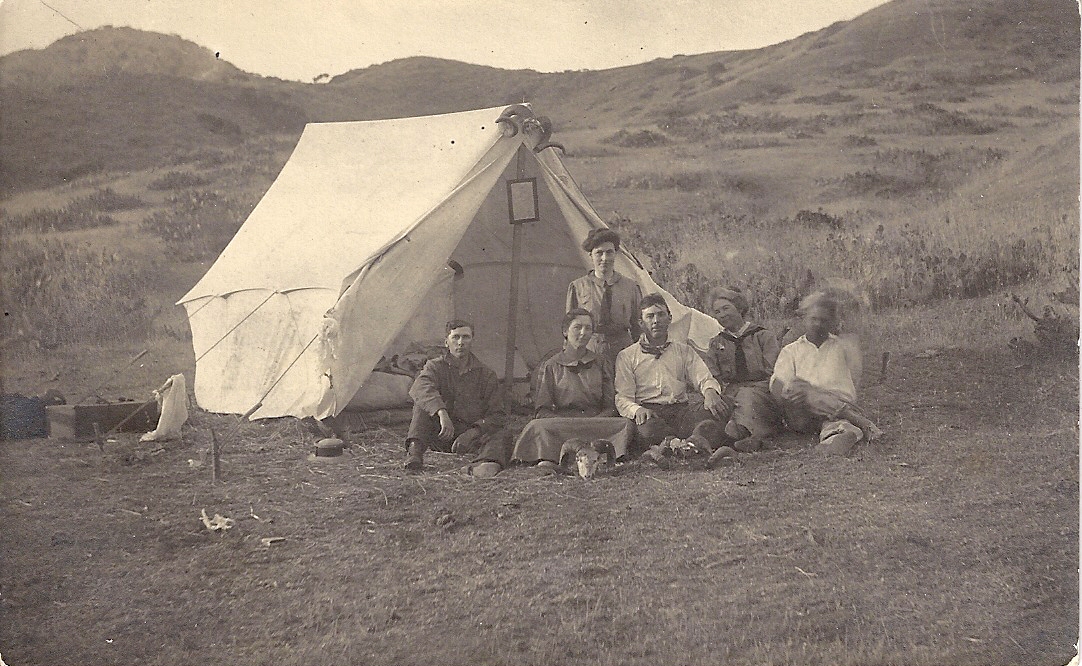


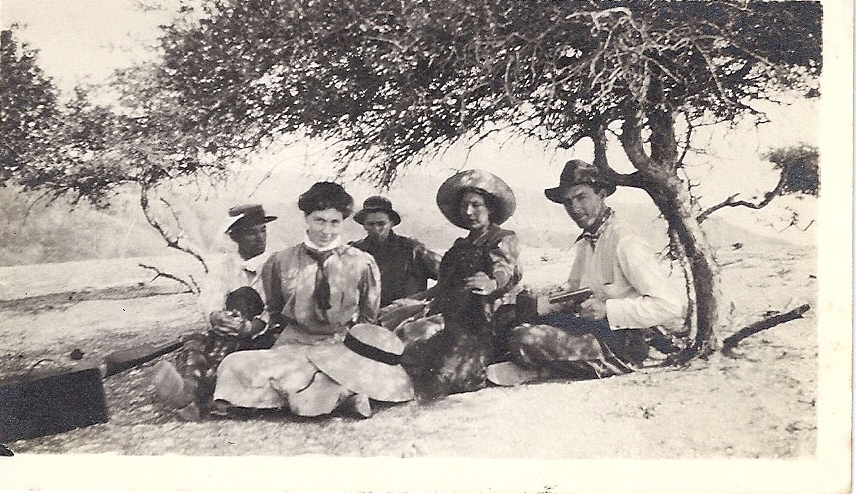


 Vaguely Sunny in association with the Julia Margaret Cameron Trust are hosting a lecture by the highly-respected writer Dr Jan Marsh.


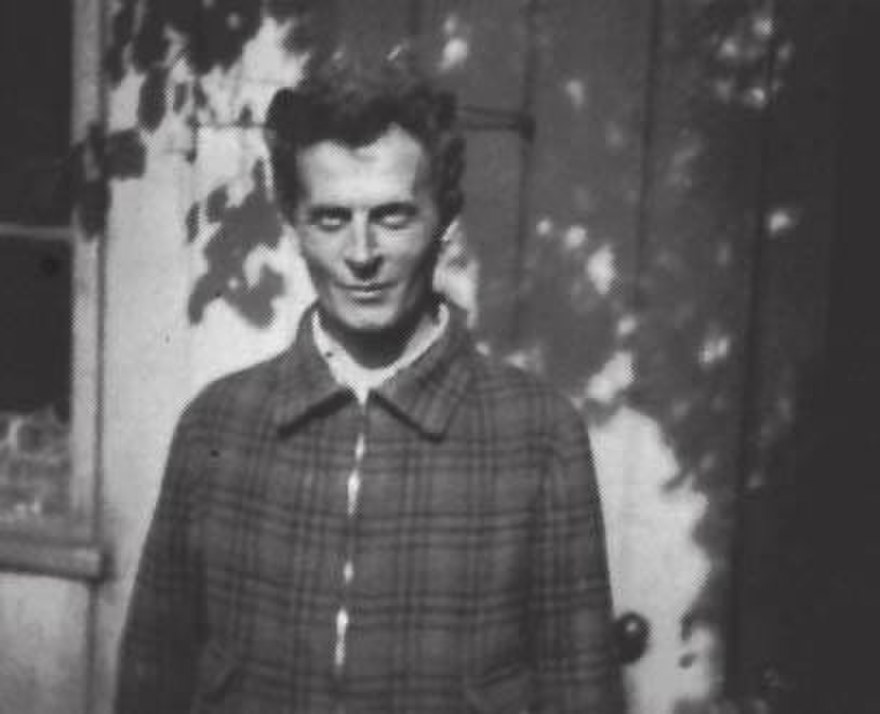

Leave a Reply