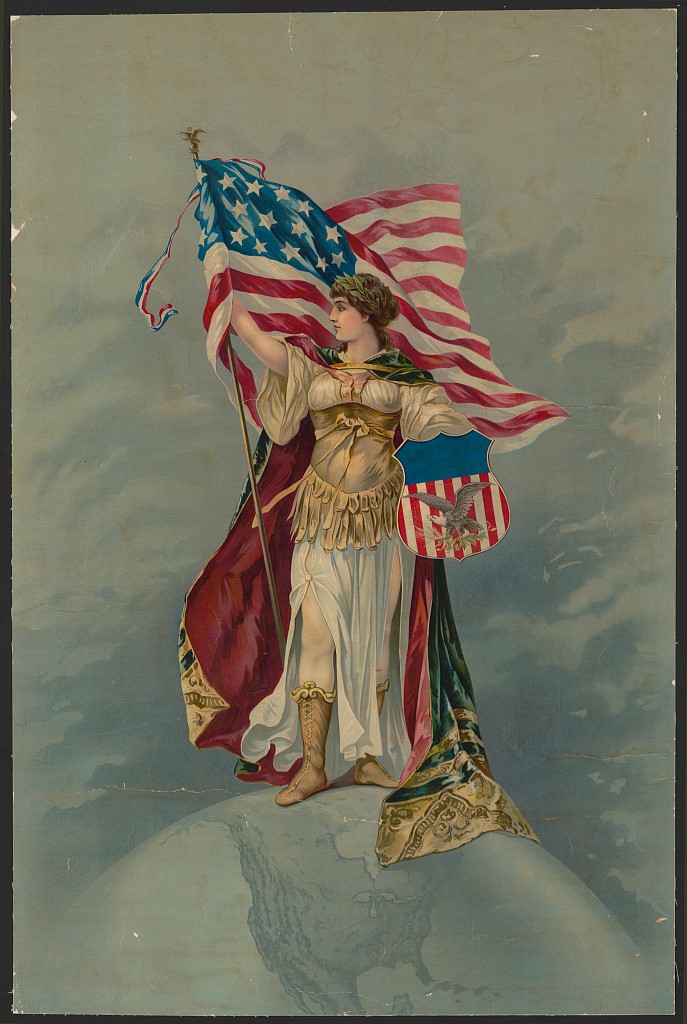
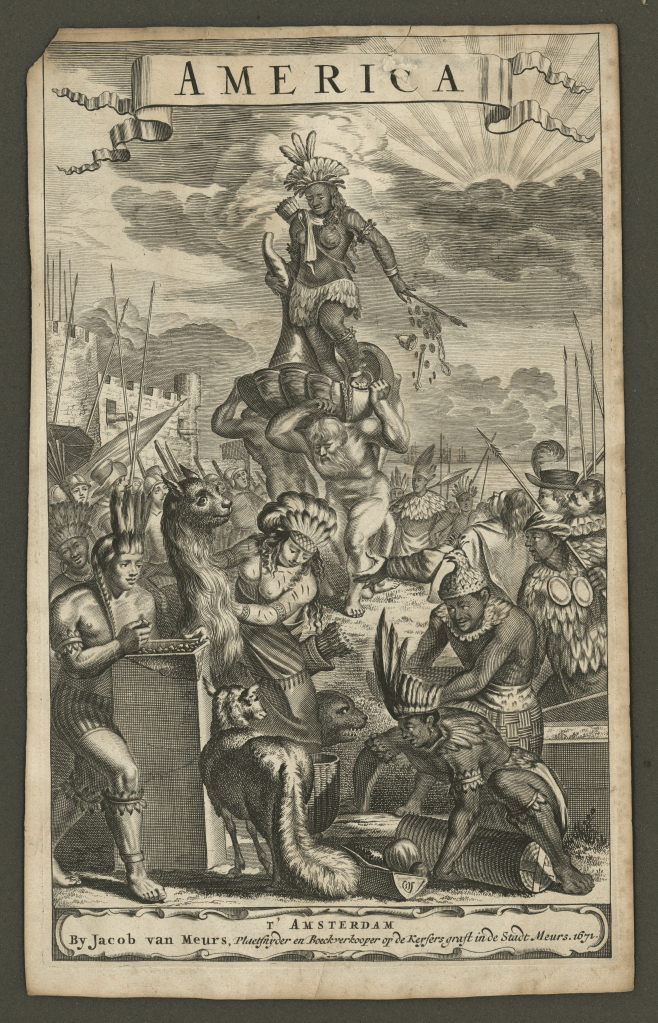
On this day, September 1, 2026, I John Presco, change the name of Columbia to…
ROSEMOND….THE RISEN ART OF THE WORLD!
On this day, I found RAGA, the…
ROSAMOND ART GUILD OF THE AMERICAS
Let it be known, that Elizabeth Rosemond Taylor is the Patron Art Saint of RAGA. I will depict her ancestor as Gottschalk Rosemont, the Master of Louvain, and the Falcon Art College. He was a member of…
THE BROTHERHOOD OF THE SWAN
Gottschalk may have taught Hironimus Bosch who may have worshipped
OUR LADY……WHO REMEMBLES A NAZARITE MOTHER
On this day, the Republican Planation Party of Robert E. Trump. is trying to declare Socialism….EVIL! This attempt….
DIVORCES THEM FROM FREMONT’S PARTY!
Let the Re-Plantaionists for the party of Vances Habsburg Mary, form their new party of Pro-Slavery Devils. Let the name of our Dictator be changed to
ROBERT E. TRUMP
Let us march to Washington – and stop the transformation of our White House to
THE HOME OF THE GUILDED HE-WHORE FOR RUSSIANISM.
John Presco
President: Royal Rosamond Press
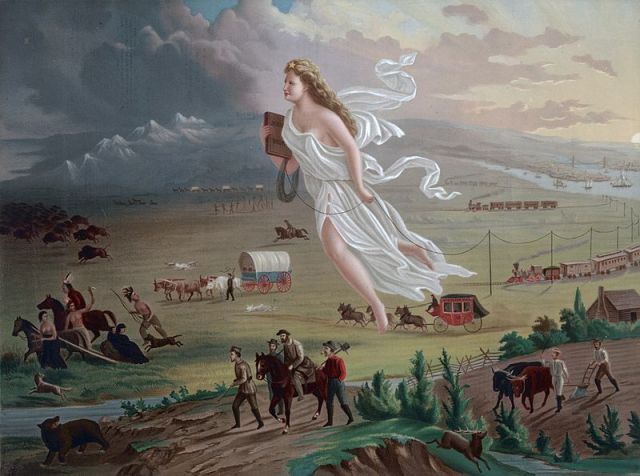
Columbia (/kəˈlʌmbiə/; kə-LUM-bee-ə), also known as Lady Columbia or Miss Columbia, is a female national personification of the United States. It was also a historical name applied to the Americas and to the New World. The association has given rise to the names of many American places, objects, institutions and companies, including the District of Columbia; Columbia, South Carolina; Columbia University; “Hail, Columbia“; Columbia Rediviva; and the Columbia River. Images of the Statue of Liberty (Liberty Enlightening the World, erected in 1886) largely displaced personified Columbia as the female symbol of the United States by around 1920, and Lady Liberty was seen as both an aspect of Columbia[1] and a rendition of the Goddess of Liberty. She is the central element of the logo of Hollywood film studio Columbia Pictures.
- In 1791, three commissioners appointed by President George Washington named the area destined for the seat of the United States government the territory of Columbia. In 1801, it was organized as the District of Columbia.
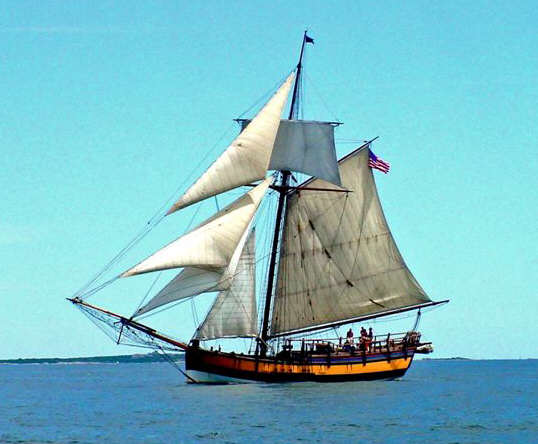
- In 1792, the Columbia Rediviva sailing ship gave its name to the Columbia River in the American Northwest (much later, the Rediviva gave its name to the Space Shuttle Columbia[citation needed]).
1/24/2018
Columbia Along The Platte – The Prophet
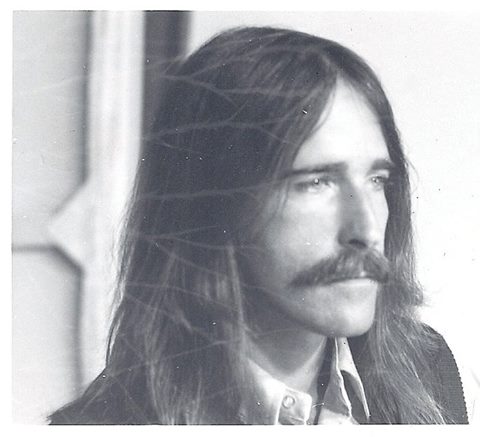
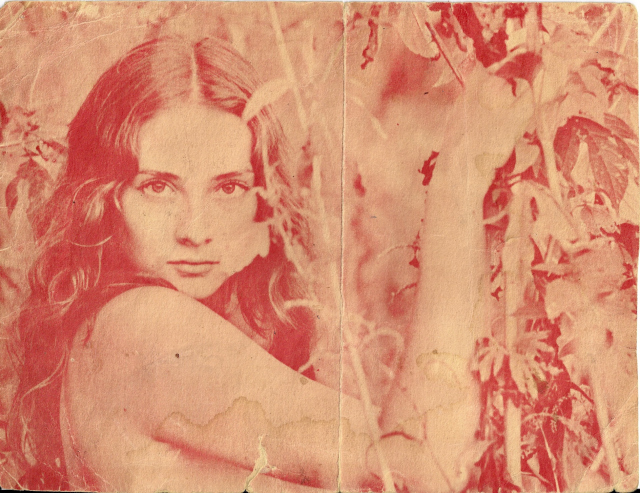
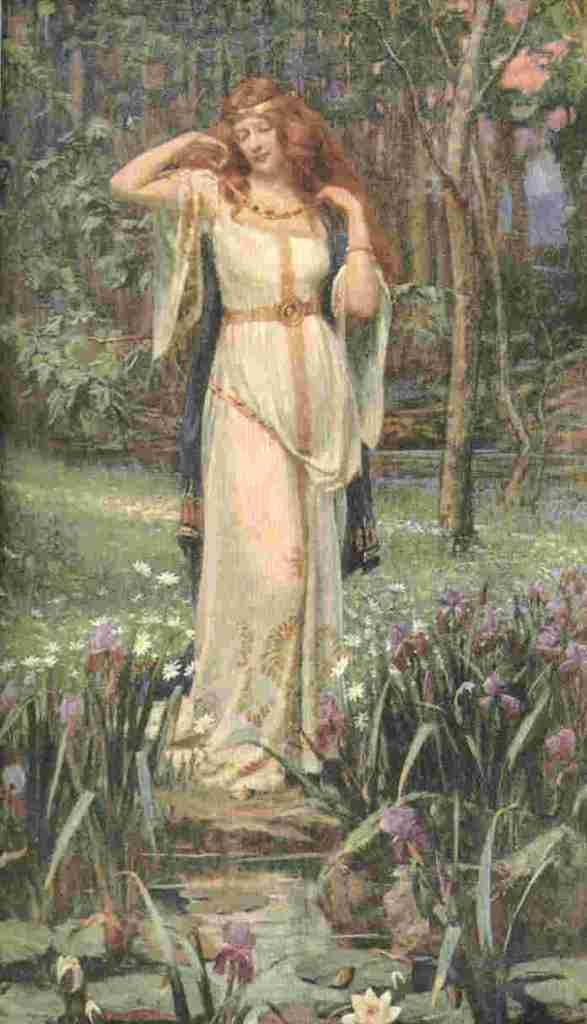
Columbia Along The Platte
by
Jon Presco
Copyright 2018
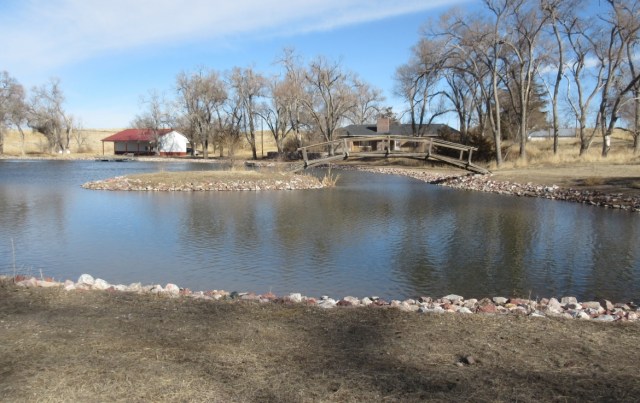
Ten hours after I wrote this, I found Rena Christensen and her People, camping along the Platte.
“As the Chosen Prophet of The Church of Art, I have the ability to summon, reborn, and channel the Great Artists of our Past, in order to arrive at Lost Truths. I cast off my disguise to expose a younger version of myself, for We Artists – ARE ONE!
We made America – even greater! Freedom is a work in progress! As the artist Bartholdi, I bring a message from The Eternally Creative Afterlife………”
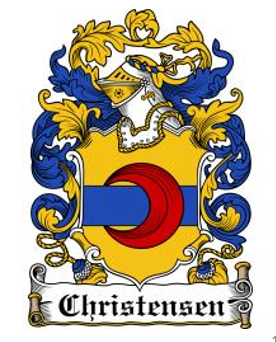
I had looked at the name of Rena’s father again……Thomas Ernest Christensen. You will find a lineage of Danish men named Ernest due to the naming of the eldest son after his grandfather. The Christensens converted to Mormonism in Denmark, and came to America on the ship ‘Obetrit’. They came along the Platte thru Nebraska. Some Scandinavian families remained in the State Rena was born in. Some came here from Utah after being disillusioned. Rena’s kin, is Halfdan Christensen. Halfdan is the son of Frodi, also Frodo. J.R. Tolkien was inspired by Rena’s people. Rena did not know much about her family tree. This is a great genealogical search, a psychic search, verses a psycho search. The Mormon cosmology is based upon gathering the souls of their dear departed in a Tree of Eternal Life. Rena was searching for something, someone, when she came to California. We found each other in order to fulfill a Endeavor. Will there be a new Nation?
2/2/2024
Rosemond Taylor and The Falcon Art College

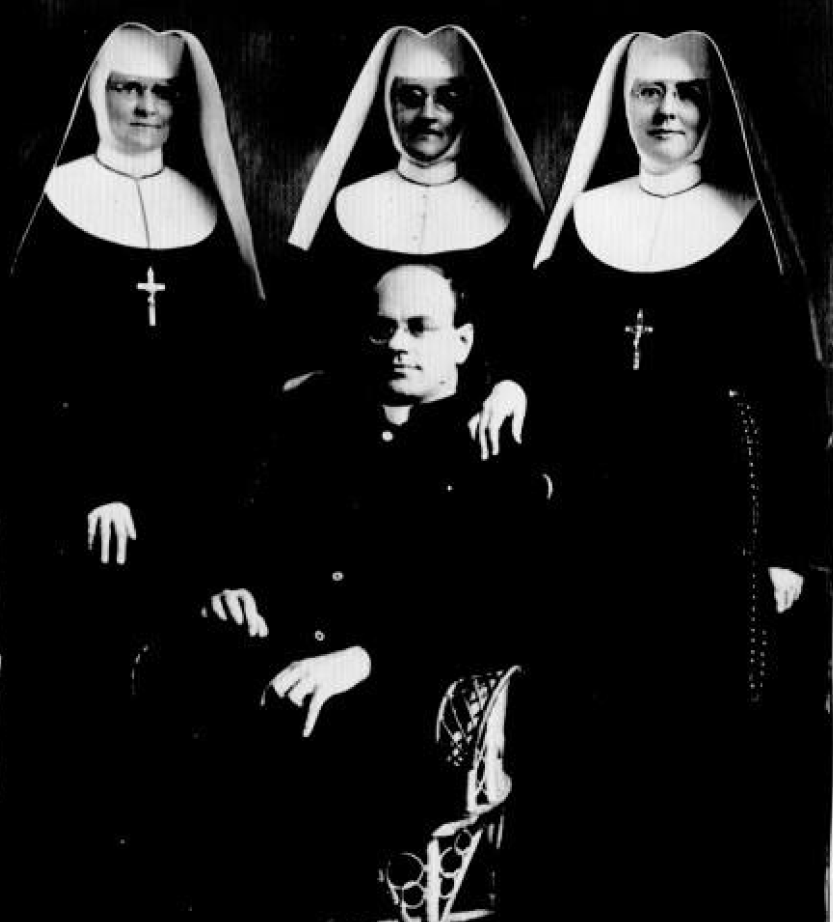
The Rosemond College of Success
For several years I have proposed the founding of a college in Belmont, or Dogpatch. Perhaps Ken Griffin would want to help build My Dream – from the bottom -up? Ken claims he is amongst ‘The Problem Solvers
“The billionaire said the university must make clear that it will “resume its role educating young American men and women to be leaders and problem solvers.”
Would Ken like to be associated with Elizabeth Rosemond Taylor, like the Kardashians? Liz converted to Judaism. However….The Rose of the World might be seen as the Empress of the Snowflakes! What is a snowflake in the educated opinion of Mr. Griffin? I think he is referring to higher-ups who like Black and Gay People. How about – Jews? How about – Art?
Until recently, millions of Jews and Christians saw the founding of Israel as the epitome of a Problem Solving College with a campus of nine million people. Some of the best minds in the world, live in Israel. What happened? What went wrong?
For the last three days I have been studying why my newfound laughter was hell-bent on destroying the legacy of her famous aunt she never met, with the help of her mother and her siblings – who never met Christine Rosamond – who made family members – JEALOUS OF HER SUCCESS! I did not understand that this would be a problem with my sixteen year old daughter I never met, whose mother was SCHOOLING her to be a Big Success! Even more successful than………….ROSAMOND?
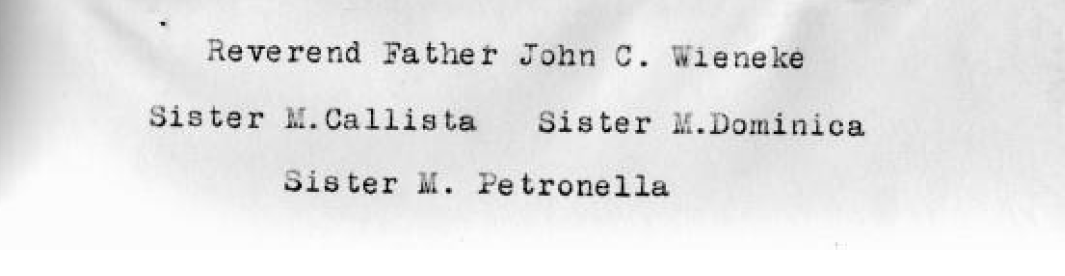
The God of the Jews said He is a…..Jealous God! What does/did He mean. Below Liz is four Wieneke siblings who became members of the Order of Saint Francis. Father John went to Louvain. His cousin, Mary Magdalene Rosemond nee’ Wieneke – is my grandmother. A lot was expected of her. Instead of dressing like a Nun, she rode on the back of her boyfriends motorcycle from Iowa to Los Angeles. I believe I was named after John, and was expected to fulfill the religious responsibilities of my family. How similar to the Orthodox Zionists Jews that have put Netanyahu at the center of their Conservative Circle.
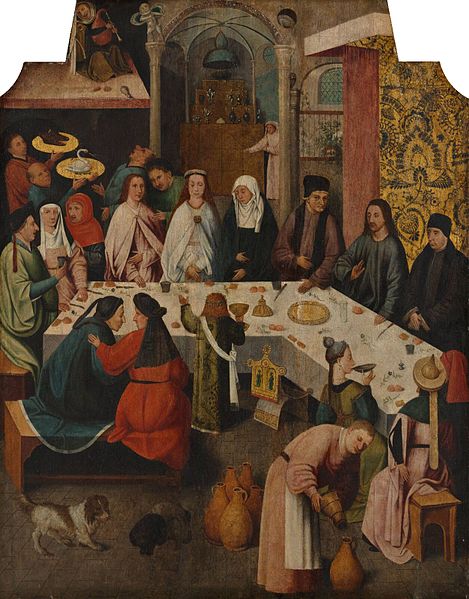
Liz died without knowing about the Dutch branch of her family. She might have glanced at the Rosamond Rednecks and Clodhoppers. She talks about the “spiritual calling” she had most of her life. She became a professional actress at nine – and never went to acting school. She sent her children to LeRosey – where not only White People were esteemed. Were black people admitted? Our alleged ancestor are in Bosch’s Marriage Feast at Cana. Liz and I are kin to John Wilson The Founder of Harvard Divinity School. The Sister on the far right, founded Briarcliff College.
Today, my daughter believes I went out out of my way to sabotage her – and her mother’s success – that never happened. But – it could have happened! For doing this, they are glad Rosamond’s Artistic Legacy – lie in ruin. I asked myself why Christine – WAS THE TARGET.
Make a picture of the Four Divine Siblings walking down a street in Jerusalem, and being spit on by very Divine Orthodox Jews. Is it because these Jews believe Christians are members of God’s Holy Family? Have they studied Genesis – around the clock? We may have a Merovingians in our Rosey Collegiate Tree. There is no Problem Solving, ir you cant bare to look at THE TRUTH! We thought that’s why young people went to college – to find the truth!
Christine and I grew up very poor, and were hungry all the time. I dropped out of High School, and Christine attended special art classes at ULA. She became one of the highest earning artists in recent history. She died with a massive identity crisis that was fueled by outsiders trying to make millions from books and movie scripts. THE FAILED! They claimed they were – LIKE FAMILY! They knew nothing about the history in this post on Royal Rosamond Press that I founded.
John Presco
President; Royal Rosamond Press
“Pope Adrien launched a Anti-Reformation, I suspect with help of his good friend, Gottschalk Rosemondt, the Master of Leuven, and the Falcon Art College. Adrien stipulated in his Will (that Rosemondt was the Executor of) that he wanted a residential college so poor students could come study Theology and the Arts. This was in answer to the Pope’s in Rome, and the Medici Bankers, who Adrien, and I assume, Rosemondt, saw as threat to the Papacy. I suspect Rosemondt is the founder of the Dutch Renaissance that produced Hieronymus Bosch, a member of the Swan Brethren, as were members of the Roesmont family. Bosch destroyed the idea of Decorative Art – as intended. His work is full of messages – from God – that can not be ignored! This is Dutch Bohemianism with roots in Humanism as promoted by Erasmus. It may have its roots in the Poor Knight of Christ, who may have convinced Adrien to save Rhodes, and launch another Crusade.
Le Rosey’s philosophy is inspired by what Harvard educationalist Howard Gardner has called “multiple intelligences“: “its aim is to develop all Roseans’ talents through academic, sporting and artistic programmes.”[5]
I am deeply, privately spiritual,” Elizabeth Taylor told POZ in 1997. “I’ve always been interested in spiritual things.” Taylor was captivated by Kabbalah, an ancient Jewish tradition of mysticism, although she made it clear that this was a spiritual pursuit, and not a religious one. “Kabbalah is not conformist,” she said. “You don’t have to be Jewish to believe in it. It’s not a religion. It coincides with many of my beliefs.”
Read More: https://www.thelist.com/130598/the-untold-truth-of-elizabeth-taylor/
Ken Griffin, one of the largest donors to Harvard University, said he won’t support the school financially unless it makes significant changes and accused elite US colleges of producing “whiny snowflakes” instead of future leaders.
“I’m not interested in supporting the institution,” Griffin said of Harvard at the MFA Network conference in Miami on Tuesday. The billionaire said the university must make clear that it will “resume its role educating young American men and women to be leaders and problem solvers.”
Hundreds of Academics Rally Behind Jewish Studies Scholar Heading Harvard’s Antisemitism Task Force Amid Backlash
Over 300 scholars of Jewish history, Israeli society, antisemitism and the Holocaust say Prof. Derek Penslar is ideally placed to co-chair the U.S. university’s new task force, labeling accusations of antisemitism against him ludicrousShare in FacebookShare in TwitterShare in WhatsApp
Send in e-mailSend in e-mailSaveSave article to reading listZen ReadPrint article

Prof. Derek Penslar (left) and the Harvard University campus.Credit: Courtesy of Derek Penslar, Steven Senne /AP
True to her form, Liz, as she was affectionately called, is still able to shine by putting on a great show – even in death. This was evidenced by the enormous interest garnered by her collection of personal treasures, presently on a world tour. Slated to culminate with a spectacular two-day auction at Christie’s at New York in December, this collection of breathtaking personal ‘bling’ is accompanied by her other awesome belongings: dresses by Valentino and Versace, and invaluable paintings by Degas, Renoir, and Van Gogh.
Mark Zuckerberg is throwing his support behind former Facebook exec Sam Lessin, a venture capitalist calling for significant reform to Harvard.
The Facebook billionaire held a virtual event on Friday supporting Lessin, who has called for major reform at Harvard – including the resignation of Penny Pritzker, who leads the powerful Harvard Corporation.
Another billionaire, hedge fund manager Bill Ackman, is stepping up his own effort to get a slate of four outsider candidates on the ballot before the deadline on Wednesday.
Ackman, who led the campaign to oust former Harvard president Claudine Gay, is drawing attention to the tedious process of gathering signatures from alumni.
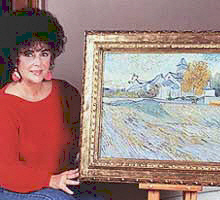

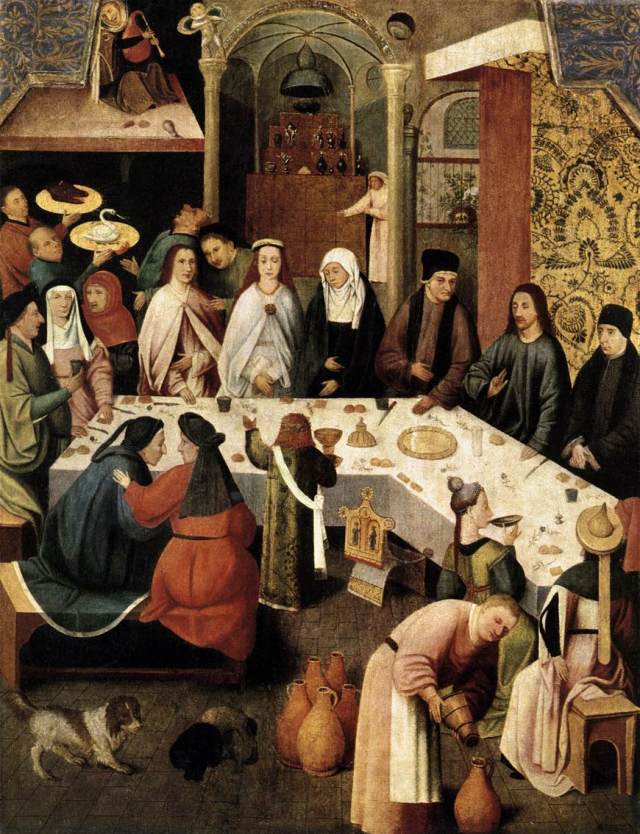
Elizabeth Rosemond Taylor may be reated to Goddstalk Rosemondt, the Master of Leuvain, and the Falcon Art College.




Ask Dear Herbie
Posted on July 21, 2023 by Royal Rosamond Press
Herbert Boyer
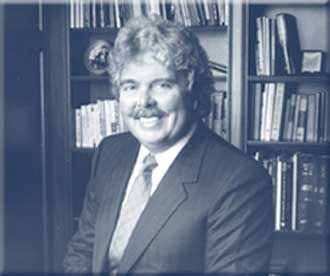
Image of Herbert Boyer. From lineman on the varsity football team to co-founder of the first biotech company, Boyer has never lacked imagination, drive, or vision. His and Stanley Cohen’s recombinant DNA work paved the way for the biotech revolution.

My Royal Dutch Bond
Posted on June 30, 2021 by Royal Rosamond Press
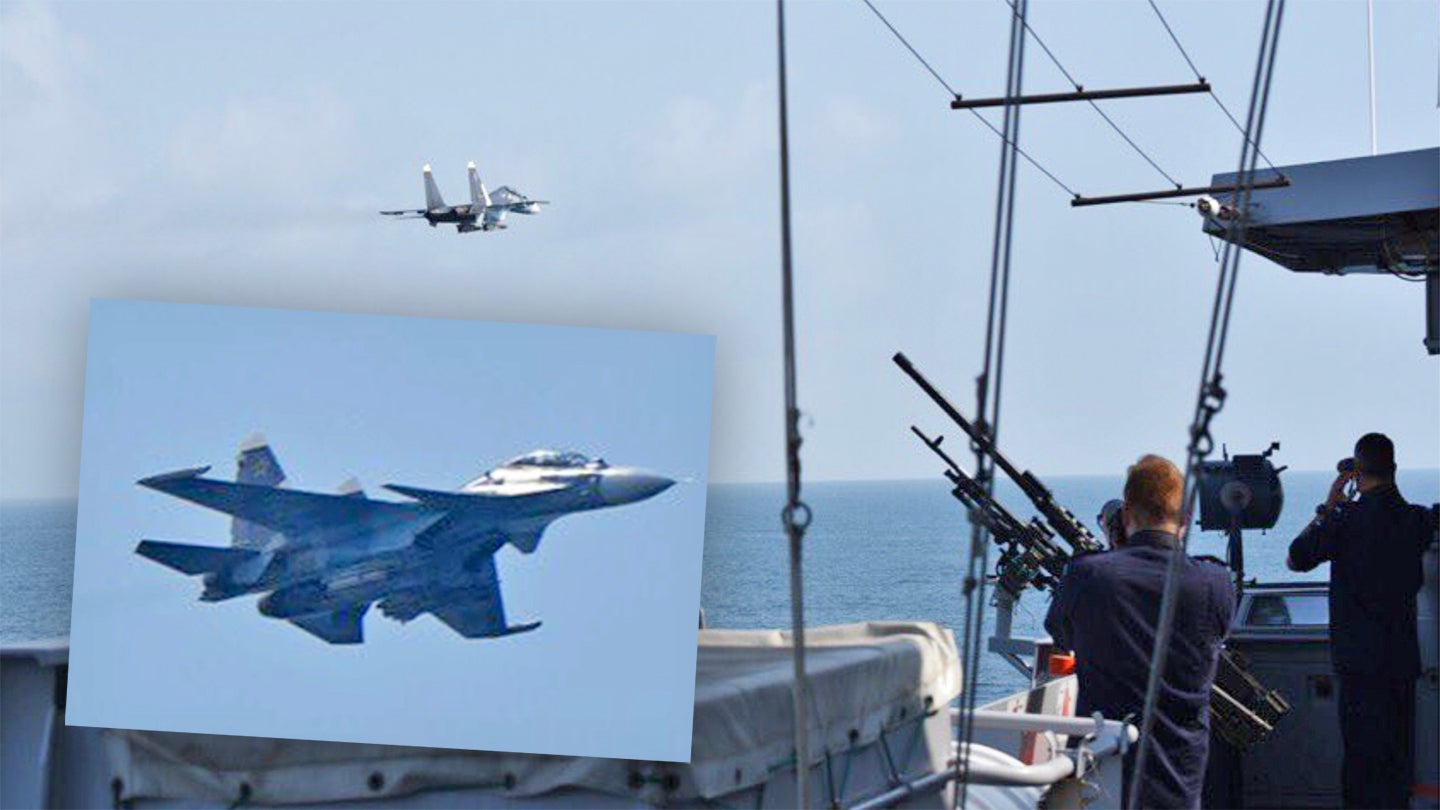


With Putin threatening a Royal Dutch naval vessel, the Roozemond family are not innocent bystanders safely watching the action. Why the title “Royal Netherlands Navy”? My ignorant daughter and her wicked drunken family do not get to use me for target practice anymore.
I am going to make Miriam Starfish Christling a Ukranian. Ian Fleming was a reporter before he became a leader of British Naval Intelligence. My characters are a literary extension of this branch, created to fight tyranny, and not to make money. I have been tempted to make Victoria and Miriam non-bisexual, but there go the real contrast. In liberal – is Liberty!
John Presco
Commander – Goldbrick Think Tank
Amsterdam Welcomes Putin With Rainbows (rferl.org)
The Royal Netherlands Navy has now confirmed that its De Zeven Provincien class frigate HNLMS Evertsen, which has been sailing in the Black Sea together with the U.K. Royal Navy destroyer HMS Defender, was harassed by Russian fighter jets last week. The announcement comes after Russia and the United Kingdom entered something of a war of words last week when the Type 45 destroyer HMS Defender conducted maneuvers in an area close to Russian-controlled Crimea. Both of these ships are currently part of the British aircraft carrier HMS Queen Elizabeth’s multinational strike group, also known as Carrier Strike Group 21, or CSG21.
The Falcon College of Art
Posted on November 19, 2018 by Royal Rosamond Press


I am almost certain The Falcon art college was named after Bavo. There is a real possibility the Rosemond-Roesmont family – are of Merovingian descent. Bavo and John of Patmos are rendered from the same subject, who could be my kin.
John Presco
College of the Falcon For Poor Students
Posted on March 1, 2018by Royal Rosamond Press

Pope Adrien launched a Anti-Reformation, I suspect with help of his good friend, Gottschalk Rosemondt, the Master of Leuven, and the Falcon Art College. Adrien stipulated in his Will (that Rosemondt was the Executor of) that he wanted a residential college so poor students could come study Theology and the Arts. This was in answer to the Pope’s in Rome, and the Medici Bankers, who Adrien, and I assume, Rosemondt, saw as threat to the Papacy. I suspect Rosemondt is the founder of the Dutch Renaissance that produced Hieronymus Bosch, a member of the Swan Brethren, as were members of the Roesmont family. Bosch destroyed the idea of Decorative Art – as intended. His work is full of messages – from God – that can not be ignored! This is Dutch Bohemianism with roots in Humanism as promoted by Erasmus. It may have its roots in the Poor Knight of Christ, who may have convinced Adrien to save Rhodes, and launch another Crusade.
Jon Presco
Copyright 2018
Bavo The Merovingian
Posted on November 19, 2018 by Royal Rosamond Press

I found him! Bavo is on the shutter of Bosch’s masterpiece. Allowin will be the name of my Tolkien Revelation.
Dreamer Jon
Saint Bavo of Ghent (also known as Bavon, Allowin, Bavonius,[1] and Baaf) (622–659) was a Roman Catholic and Eastern Orthodox saint.
Contents
Life[edit]
Bavo was born near Liège, to a Frankish noble family that gave him the name Allowin.[2] His father was Pippin of Landen, the Mayor of the Palace of Austrasia.
A wild, young aristocrat of Brabant [nl], he contracted a beneficial marriage, and had a daughter through it. He was a soldier[1] who led an undisciplined and disorderly life. Shortly after the death of his wife, Bavo decided to reform after hearing a sermon preached by Saint Amand. Struck by the sermon, which was on the emptiness of material things, Bavo was converted to Christianity at Amand’s convent.[1]
For some time thereafter, Bavo joined Amand in the latter’s missionary travels throughout France and Flanders. On one occasion, Bavo met a man whom he had sold into slavery years before. Wishing to atone for his earlier deed, Bavo had the man lead him by a chain to the town jail. Bavo built an abbey on his grounds and became a monk. He distributed his belongings to the poor and lived as a recluse, first in a hollow tree and later in a cell in the forest by the Abbey.
He died at the Abbey in Ghent, in what is today Belgium.
Veneration[edit]
Bavo is the patron saint of Ghent, Zellik, and Lauwe in Belgium, and Haarlem in the Netherlands. His feast in the Catholic Church and the Orthodox Church is October 1.
He is most often shown in Christian art as a knight with a sword and falcon. The most popular scene is the moment of his conversion, which has many stories attached to it. Because he is so often shown with a falcon, he came to be considered the patron saint of falconry. In medieval Ghent, taxes were paid on Bavo’s feast day, and it is for this reason he is often shown holding a purse or money bag.
According to Rodulfus Glaber, the city of Bamberg is named after him, with Bamberg meaning “Mount of Bavo”.
The Last Judgement
Posted on November 19, 2018 by Royal Rosamond Press

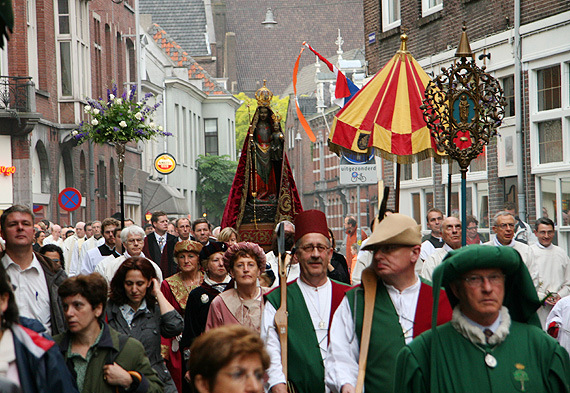
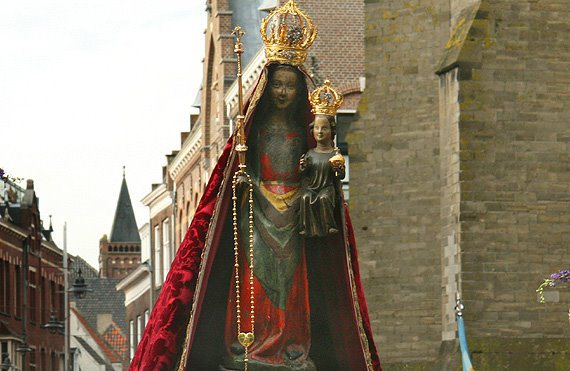
There’s a good chance my ancestors commissioned this work. If only I could summon the lost worship of John of Patmos by my kindred, I can save the world.
Dreamer Jon
The Rosemont Family of Hertogenbosch
Posted on May 7, 2018by Royal Rosamond Press
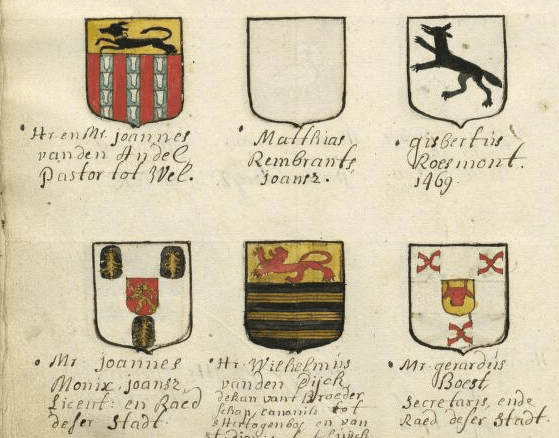


Here are the Roesmonts of Den Bosch. That is the tower of Janskirk in the background. The Roesmont family worshipped there.
Jon Presco
Ancestors (and descendant) of Godschalck Rodolphi Roesmont (Rosemont)
I Claim These Castles
Posted on August 4, 2021 by Royal Rosamond Press


The Seinsheim family is not extant. In theory all the Wilsons that descend from Sir John Robert Wilson and Ada, are the continuance of this lineage. Because I am the first American to claim this property stolen by Adolph Hitler, I claim it in the name of all Czech descendants in the State of Nebraska for services rendered when the United States of American waged war against the mass murderers of the Jewish People. The Czech People of Nebraska paid taxes that were used to pay for the Cold War Stalin waged against the United States, and has been revived by Putin. Let it be known that on this day August 4, 2021, that any aggression by Putin, or any other tyrant, will be considered an attack on the Citizens of Nebraska!
I will author a treaty between the United States, the State of Nebraska, and the Czech Republic that will pledge mutual support when the enemy is at the door. The Knights of White Mountain of both Nations – shall ride forth!
John Presco ‘Grail Author’
The Wilson-Rosamond Altered Lineage | Rosamond Press
Sir John Robert Wilson II, Earl of Cuper, Burgess of Edinborough (1425–1492) • FamilySearch
(44) The Living Daylights Location Tour, Vienna | James Bond Radio – YouTube
When Sir John Robert Wilson II, Earl of Cuper, Burgess of Edinborough was born in 1425, in Cupar, Fife, Scotland, his father, john Robert Thomas Wilson, was 15 and his mother, Angelina Ellison bull, was 15. He married Lady Ada Antoinette Erasmus in 1445, in Canongate, Edinburgh, Edinburghshire, Scotland, United Kingdom. They were the parents of at least 6 sons. He died in 1492, in Bradfield, Yorkshire, England, United Kingdom, at the age of 67.
Origin[edit]
The family stems from the Lords of Seinsheim, who had established themselves in Franconia during the Middle Ages.[1] A branch of the Seinsheim family (the non-Schwarzenberg portion died out in 1958) was created when Erkinger of Seinsheim acquired the Franconian territory of Schwarzenberg and the castle of Schwarzenberg in Scheinfeld during the early part of the 15th century. He was then granted the title of Freiherr (Baron) of Schwarzenberg in 1429. At that time, the family also possessed some fiefdoms in Bohemia.
E-MAIL TO KAREL SCHWARZENBERG
John Ambrose <braskewitz@yahoo.com>To:karel@schwarzenberg.czWed, Aug 4 at 10:10 AM
Dear Karel; I have claimed the castles that once belonged to your family in the name of the Czech People of Nebraska. This claim nullifies the claim that my Nation has no business in your part of the world. This puts an end to Putin’s claim the Czech Republic is liken to a Russian colony. I am gathering a record from Czech descendants whose fathers went – over there once again – and defeated the evil forces of Adolph Hitler, the man that stole the property belonging to all descendants of Ada Wilson and her husband.
Let us form a bond between the Czech Citizens of Nebraska, and your family, and Nation, that will last forever! Sincerely…
John Presco
I Claim These Castles | Rosamond Press
The Seinsheim family is not extant. In theory all the Wilsons that descend from Sir John Robert Wilson and Ada, are the continuance of this lineage. Because I am the first American to claim this property stolen by Adolph Hitler, I claim it in the name of all Czech descendants in the State of Nebraska for services rendered when the United States of American waged war against the mass murderers of the Jewish People. The Czech People of Nebraska paid taxes that were used to pay for the Cold War Stalin waged against the United States, and has been revived by Putin. Let it be known that on this day August 4, 2021, that any aggression by Putin, or any other tyrant, will be considered an attack on the Citizens of Nebraska!
I will author a treaty between the United States, the State of Nebraska, and the Czech Republic that will pledge mutual support when the enemy is at the door. The Knights of White Mountain of both Nations – shall ride forth!
John Presco ‘Grail Author’
The Wilson-Rosamond Altered Lineage | Rosamond Press
Sir John Robert Wilson II, Earl of Cuper, Burgess of Edinborough (1425–1492) • FamilySearch


Elisabeth von Pezold, née Princess of Schwarzenberg-Frauenberg
Posted on August 19, 2018 by Royal Rosamond Press


Here is my kin.
John
Elisabeth von Pezold wants the return of property expropriated by the Czechoslovak state in 1947.
However, her adopted brother, Karel Schwarzenberg, the Czech Republic’s foreign minister, apparently does not.
The homes include the Cesky Krumlov castle, a jewel in the crown of Czech tourism which towers over an ancient town in southern Bohemia.
But Mrs von Pezold claims that her brother, one of the republic’s most popular politicians, has blocked her case.
She argues that the Prince of Schwarzenberg, to use his formal title, has failed to fulfil the wishes of their father, whose will asked that his successor should fight to get the property back.
Law360, New York (February 11, 2016, 6:59 PM EST) — A Swiss-German family whose farms and forest holdings were seized by Zimbabweans during the government’s “land reform” of the 2000s is owed at least $130 million and perhaps more than $310 million by the country’s government, according to a decision from the International Centre for the Settlement of Investment Disputes made public this week.
In a ruling marked by sweeping assessments of history, politics, power and what could have been for the struggling African country, an ICSID panel said the government of Robert Mugabe bears responsibility…
Elisabeth von Pezold, née Princess of Schwarzenberg-Frauenberg

Princess Elisabeth of Schwarzenberg was born on 1 October 1947 in Vienna as the only daughter of Prince Heinrich Schwarzenberg, Duke of Krumlov, and his wife Eleonore Schwarzenberg, Countess of Stolberg-Stolberg. Because of his exemplary anti-Fascist and pro-Czechoslovak stance during the war he was imprisoned by the Gestapo i.a. in KZ Buchenwald and became a forced labourer until the end of the war. Since 1945 her father was groundlessly barred from returning to Czechoslovakia, and so Elisabeth grew up with her parents in Gusterheim near Pöls in Styria, where she attended the local elementary school. Later, she moved with her parents to the Schwarzenberg Palais in Vienna so that she could attend the Sacre Coeur Catholic Grammar School
In Vienna, Elisabeth lived not only with her parents, but also with her aunt, Princess Eleonore Schwarzenberg and her uncle, Prince Joseph Schwarzenberg, the last head of the family.
After 1945, Elisabeth’s father managed to win the restitution of the property of Prince Adolph Schwarzenberg in Germany and Austria confiscated by the Gestapo in 1940. He then managed this property for his cousin and adoptive father as its general trustee. For his part, Heinrich owned Gusterheim Castle, which he had inherited from his father Felix in 1946. Adolph died in 1950, making Heinrich his universal heir. With much effort, he managed to rebuild the family’s Vienna palais, which had been partially destroyed by wartime bombing, while his wife devoted herself to looking after the expansive park.
Elisabeth’s father Heinrich died in 1965, the same year she successfully completed grammar school and began studying art history and archeology at the university in Freiburg im Breisgau, where her father had applied for her to stay at the Catholic hall of residence. Elisabeth later continued her studies in Bonn and in Munich.
On 31 May 1970, Elisabeth married Rüdiger von Pezold in Gusterheim. The couple then moved to Munich, where he worked as an attorney. In 1971 their daughter Anna was born, followed over the next twelve years by one more daughter, Juliane, and five sons – Heinrich, Georg Philipp, Felix, Johann, and Adam.
Following the completion of renovations at Gusterheim Castle, the family moved in, devoting itself to managing the agricultural and forestry holding inherited from Elisabeth’s father. The Pezolds restructured their farm and forestry activities with an emphasis on natural forestry and a reduction in the number of ungulate game. Over the years, Elisabeth reforested 500 hectares of primarily high-mountain land in order to protect the landscape from avalanches. Here she invested some four million Euros, also to clean up streams and rivers. Elisabeth von Pezold also established fish ladders and restored dried-up stream beds so that they could be suitable for fish again.
The 1980s were marked by the battle against emissions from two state-owned industrial companies that threatened local forests and human health. After many years of court hearings and official negotiations, Elisabeth and her husband and neighbours succeeded in effecting the closure of the nearby ÖDK Zeltweg thermal power station and the establishment of a new cellulose factory in Pöls reflecting technical and safety standards.
From 1975 to 1995, Rüdiger von Pezold was chairman and director general of the ducal foundations in Coburg. Besides the management of the ample forests his main task was to look after the foundation’s collection of furniture, art, and coins, as well as the renovation of the castle and family mausoleum in Coburg and Castle Greinburg in Upper Austria with the aim of opening them to the public. In these efforts, Elisabeth’s extensive knowledge of art was of great help, as she put to use both her knowledge of art as well as her experiences from renovating her patronage church of St. James in Frauenburg, Styria, which she led personally.
In 1979, Elisabeth provided her house in Unzmarkt to the disposition of Professor Franz Schwarzenberg-Orlik and his wife Amelie when they came to Austria from the United States after his retirement. Later Elisabeth was adopted by Amelie Schwarzenberg-Orlik.
An important chapter in Elisabeth’s life began in 1988, when she and her husband acquired Forrester Estate in Zimbabwe. In addition to managing the business, they built new dams for 28 million cubic meters of water, and an irrigation system to go with it. On their African farm, the couple also expanded medical care and provided education for the local inhabitants. In the 1990s, the Pezolds established a polytechnic college, with all the equipment generously provided by the Federal Republic of Germany. Because of political developments in Zimbabwe, however, the college was never opened – as part of the country’s so called land reform, the state took over the location and the school was demolished.
In 1998, the couple handed over the management of their African holdings to their 27-year-old son Heinrich, in order to transfer responsibility for managing their expansive agricultural and forestry holdings. As a result, the couple gained more time for the exceptionally complex and time-demanding work associated with the unexpected duty to push for the restitution of Adolph Schwarzenberg’s property confiscated in Czechoslovakia. After her adoptive brother Karel Schwarzenberg had failed to comply with his promise to meet his obligations contained in the will of her father regarding the restitution of this property, Elisabeth has become the only person engaged in the restitution process. The restitution concerns her grandfather Adolph Schwarzenberg’s property confiscated by the Gestapo in 1940 and since 1945 held by the Czechoslovak, and later the Czech state, in violation of the law and the constitution. In order to properly devote herself to the issue, Elisabeth acquired Czech citizenship and moved to Prague in 1993.
In December 1994, Elisabeth’s mother passed away in Gusterheim, surrounded by family. With Amelie Schwarzenberg, however, the Pezolds’ children continue to have a loving and loved Czech grandmother.
In 2003, Elisabeth acquired a house in Prague’s Smichov district, which she renovated with the help of her son Georg Philipp. Since then, she has lived there with her husband. Currently, her son Adam is living with his parents in Prague and working there for a company which refurbishes historic listed houses.
Following years of court hearings, in 2007 the High Court in Vienna ruled that Karel Schwarzenberg forfeited his inheritance from Heinrich Schwarzenberg in favour of Heinrich’s daughter Elisabeth if he failed culpably to fulfil the duty assigned to him by the will of his adoptive father Heinrich Schwarzenberg to actively work towards the return of the confiscated Czech property of Adolph Schwarzenberg. The Austrian High Court’s ruling returned the case to the court of first instance for, among other things, clarification of this issue.
In 2009, Elisabeth von Pezold was able to celebrate another legal victory when the Czech Constitutional Court warranted that the family’s tomb in Domanin near Trebon and other property that had not been confiscated had to be returned.
Elisabeth is the proud grandmother of eight grandchildren, who visit her in Prague and whom she visits at their homes in Zimbabwe, England, and Austria.
Karl Schwarzenberg and The Habsburg Audience
Posted on July 23, 2018 by Royal Rosamond Press


For several years I have been trying to bring to the attention of the Austrian Government the existence of the large canvas at the University of Oregon Museum titled ‘The Last Audience of the Habsburgs’ that was smuggled out of Austria. Alas, I have found just the right person. He is my kindred, Karl Schwarzenberg, who himself had to flee a oppressive regime. Karl opposes Putin, and backs Britain. I will contact him and see if he would like to come give a talk on this painting. His relative, Prince Felix Schwarzenberg, restored the Habsburg Empire.
John Presco
President: Royal Rosamond Press
My Ancestor – William Wilson
Posted on November 22, 2021 by Royal Rosamond Press


Here is my line to John and William Wilson. It is not DNA results. It appear after I put a name in a GENI search engine. I typed nothing.
John Presco
William Wilson William Rosamond’s 8th. Great Grandfather
Posted on March 5, 2019 by Royal Rosamond Press
Rev. Dr. William Wilson is William Thomas Rosamond’s 9th great grandfather.
→
Samuel Rosamond
his father
→
Benjamin Rosamond
his father
→
James Rosamond
his father
→
Sarah Wilson Rosamond
his mother
→
Thomas Wilson
her father
→
Robert Wilson, Sr
his father
→
John Willson
his father
→
James Willson
his father
→
Robert Willson
his father
→
William Wilson
his father
→
Rev. Dr. William Wilson
his father
The Life Summary of John Robert
When Sir John Robert Wilson II, Earl of Cuper, Burgess of Edinborough was born in 1425, in Cupar, Fife, Scotland, his father, Sir Thomas Robert “Talbot” Wilson VII, was 15 and his mother, Angelina Ellison bull, was 15. He married Lady Ada Antoinette Erasmus in 1445, in Canongate, Edinburgh, Midlothian, Scotland, United Kingdom. They were the parents of at least 6 sons. He died in 1492, in Bradfield, Yorkshire, England, United Kingdom, at the age of 67.
Spouse and Children
Marriage
1445
Canongate, Edinburgh, Midlothian, Scotland, United Kingdom
Children
(6)
Lady Ada Antoinette Erasmus1430-14801430Birth • 0 Sourcesabout 1430England, United Kingdom1480Age 51Death • 0 Sourcesabout 1480England, United KingdomFamily MembersSPOUSES AND CHILDREN
Sir John Robert Wilson1425-1492Marriage: 1445Canongate, Midlothian, Scotland
Lady Ada Antoinette Erasmus1430-1480Children (5)
William Wilson1435-1500
Christopher Wilson1446-1500
Sir Thomas Wilson1450-1470
Sir John William Wilson1450-1492
Thomas Wilson1451-PARENTS AND SIBLINGS
Erkinger Eramus Von Schwarzenberg1362-1437Marriage:
Princess Barbara Von Abensberg Abensberg1398-1448Children (9)
Johann ” The Elder”, Baron Of Schwarzenberg1424-1460
Magdalene von Seinsheim1426-
Erkinger von Seinsheim1427-1503
Friedrich von Seinsheim1428-
Ulrich von Seinsheim1429-1465
Kunigunde von Schwarzenberg1430-1469
Lady Ada Antoinette Erasmus1430-1480
Sigmund I Freiherr von Schwarzenberg und Hohenlandsberg1430-1502
Lately, I’ve been doing a lot of digging on my mothers side of the family. And I found a long line of Wilsons that I traced back a few hundred years. It appears that they bobbed and weaved from northern England in Yorkshire and up to Glasgow and the Fife region of Scotland. I looked up the history of the Yorkshire Wilsons and suggests that if you go way back, they descended from the Danes. Does anyone know if these Wilsons have any connection to the Gunns or is it a separate branch or clan? Here is the line below that I found. Looks like they were barons and earls:Thomas Wilson (1355 – 1397)21st great-grandfatherSir Thomas, Baron of Temple Wilson Wilson (1380 – 1430)Son of Thomas WilsonSir Thomas VII “Talbot” Wilson, Earl of Cuper, Baron Wilson of Temple (1401 – 1475)Son of Sir Thomas, Baron of Temple Wilson WilsonSir John II “Robert”, Earl of Cuper, Burgess of Edinburgh Wilson (1425 – 1475)Son of Sir Thomas VII “Talbot” Wilson, Earl of Cuper, Baron Wilson of TempleSir John, of Cupar and Fife Wilson (1450 – 1492)Son of Sir John II “Robert”, Earl of Cuper, Burgess of Edinburgh WilsonSir Thomas, of Strubby Wilson (1470 – 1532)Son of Sir John, of Cupar and Fife WilsonWilliam Cumberworth Wilson (1492 – 1587)Son of Sir Thomas, of Strubby WilsonSir Robert Wilson (1520 – 1568)Son of William Cumberworth WilsonSir Robert Wilson (1550 – 1597)Son of Sir Robert WilsonWilliam “The Temperor” Wilson (1578 – 1615)Son of Sir Robert WilsonWilliam Wilson (1600 – 1663)Son of William “The Temperor” WilsonJoan Wilson (1615 – 1655)Daughter of William Wilson
Surname meaning for Wilson, Earl of Cuper, Baron Wilson of Temple
English and French: occupational name or habitational name for someone who was employed at or lived near one of the houses (‘temples’) maintained by the Knights Templar, a crusading order so named because they claimed to occupy in Jerusalem the site of the old temple (Middle English, Old French temple, Latin templum). The order was founded in 1118 and flourished for 200 years, but was suppressed as heretical in 1312. English: name given to foundlings baptized at the Temple Church, London, so called because it was originally built on land belonging to the Templars. Scottish: habitational name from the parish of Temple in Edinburgh, likewise named because it was the site of the local headquarters of the Knights Templar.
Sir Thomas VII “Talbot” Wilson, Earl of Cuper, Baron Wilson of Temple 1401-1475 – Ancestry®
“Last night I watched several episodes of ‘The West’ while I worked on a floor plan of a house I placed on this farm I googled. I had just finished a Cape Cod that I put in the Back Bay of Boston where in Fantasy World I lived with Rena Easton after I convinced her we were meant to spend the rest of our lives together. It was her eyes. I missed her look, her view of the world. Then there was her gate. She walked the earth like a great stalking cat. She had animal magnatism up the Yin Yang. I assumed this was because there is nothing there – there! When I took the train across America I stopped to see her in Lincoln. I brought up the idea that I could move here, rent an old farm and have a studio.
“There’s nothing here. You wouldn’t be happy here! She carefully informed me.
“You’re here.” was my pitiful retort, that her silence dismissed. She had a new lover.”
Alas, I found her – all of her! With the Planatir I searched for her. I am her lost husband that she married in Denmark before she boarded that awful ship, and set sail – straight into the largest storms sailors had not seen in a century. Rena was terrified. Lutherans gathered on the docks to curse her and her family. She converted when her parents did. She did not have a choice. A Lutheran minister married us so she would not be swallowed up by heathens in a heathen land.
Rena cowered below deck in a rope locker. She recited a thousands poems to keep herself from being frightened to death. In sight of New Orleans, he mother went below to tell her the good news. They were about to land. Miss Christensen…….was dead. She was buried on a little island. She never set foot on the mainland. Rena was terrified of the sea when we were together in 1970.
Everything now makes sense, why Rena did not like the girls her aged, that said wicked things behind her back. In her letter, she says I would be proud to know she alas has friends. She is such a lost soul. She does not seem to love the three men she married. Rena is contentious, a real fighter. She is the epitome of the Mormon History in the New World – where they did not find friends, only enemies. Rena’s roots have been ripped out of her being. She is not grounded in the reality she once knew.
As the Christensen family leaves Saint Louis in a covered wagon, Rena rises from her lonely tomb, and follows. She is not a Lutheran, not a Christian, nor a Mormon. She is the Goddess Freya. Here core being has returned to the ancient religion. She was the Muse of Mormon Exodus to America. Other people’s saw her spirit, and called her Columbia.
Alas, my epic tale has been freed from the snags and mud. The argument over ownership of America is no longer Rena’s and my concern – our concern! The Last Question remaining, is……….Does God Dwell in America? Where is God?
Jon ‘The Prophet’
“By late 1852, those who had joined the Mormon Church in Denmark were feeling like outcasts in the predominantly Lutheran Danish society. When John Forsgren was preparing for his return to Utah, he put together a company of 297 converts to join him. The people in this company sold their property for only a fraction of its value before they left. They were known as the “Scandinavian Mormon Migration,” the first large group of Mormons to travel from Denmark to the Great Salt Lake. Christian and Margrethe Christensen and their two sons were a part of this migration.


Alas I have traced my grandfather’s mother, IDA LOUISIANA ROSE, to WILLIAM ROSE, who sailed for Cowes Isle of Wight, with William Penn. William and his wife, Jane Sarah Ridgway, landed in Philadelphia in December 3, 1699. They sailed on the Canterbury, perhaps the most important ship that sailed the waters of the Isle of Wight.
Alas, the TWO ROSES are joined in my ROSY FAMILY TREE. This makes my family one of the foremost PATRIOTIC AMERICAN FAMILIES in history. We fought off pirates to arrive here, so we could practice RELIGIOUS FREEDOM.
By 1850 about 400 Danes, Norwegians, and Swedes resided on the west coast. Another thirty- five Scandinavians who had crossed Nebraska included one Swedish-born person, thirty-two Norwegian-born people, and two Danish-born people who were living in the Utah Territory. Peter O. Hansen had been part of the very first company of about 150 Mormons, “three Negro ‘servants’,” and between two and six non-Mormons to leave eastern Nebraska for Utah in 1847. By 1850, however, Hansen had crossed the plains a second time and was back in his native Denmark. Twenty years later the Scandinavian population in Utah had grown to more than 7,000, that on the west coast was above 5,000, and the districts along the Platte River road (the state of Nebraska and the territory of Wyoming) had about 4,200 (about 4,000 of them resided in Nebraska). Some of the Scandinavians who settled in Nebraska came there directly, but others originally had different destinations in mind. Years of research on Danes in America led P.S. Vig to conclude that many of the earliest Danish settlers in western Iowa, particularly Council Bluffs and Pottawattamie County, had been connected with Mormonism in one way or another before they left Denmark. Vig believed that the same was true for Danes in the eastern Nebraska areas of Omaha and Fremont as well as surrounding Douglas, Dodge, and Washington counties.2
Their ship was in sight of Jamaica from February 23rd to the 25th. They all seemed happiest when there was a good wind because they could sail so much faster. After passing the West Indies their voyage was quite uneventful until the morning of March the 7th. This was a glorious morning for them as their eyes beheld the first glimpse of America. Later in the day they reached the Mississippi River and sailed up it until about four o’clock in the afternoon, when they dropped anchor. Shortly after dropping anchor John E. Forsgren went ashore to put in order the necessary preparations for the rest of the journey. That same evening a sister Jorgensen died. The following morning a casket was made and in the afternoon she was taken ashore and buried on a little island where there were many tree stumps and a little light house. Many of the company went ashore, this being their first chance to set foot on American soil. The ship remained at anchor here for several days, during which time several deaths occurred. On March 11th a Petersen child died, on the 12th a sister Christensen died, and on the 13th Brother Ipsen died. At about 1 A. M. March 14th, Jens Christian, the little son of Mads and Maren Jensen died. The Journal says, “and the body was buried. ” Family tradition has it that Jens Christian was buried in the Gulf of Mexico, but the Forsgren Company Journal places it on an island in the mouth of the Mississippi River.
As a result of his preaching against Lutheranism, Forsgren was charged with disruprion of the peace and ordered to be deported to the United States. The captain of the ship Forsgren was placed on allowed Forsgren to leave the ship when it docked temporarily in Denmark, and Forsgren traveled to Copenhagen and was reunited with Snow and Hansen. In February 1852, Snow appointed Forsgren as his successor as president of the church’s Scandinavian Mission, and Forsgren held this position until December, when he was replaced by Willard Snow.
Leader of pioneer company[edit]
Upon completion of his mission, Forsgren became the leader of an emigrating company of approximately 300 Latter Day Saints from Scandinavia and northern Europe. The company departed from Liverpool on 1 January 1854 and arrived in Salt Lake City on 30 September.
Later life and excommunication[edit]
In Utah, Forsgren initially settled in Brigham City, and later lived in Moroni, Santaquin, and Dover. He also lived in Carson City, Nevada for several years.
In 1879, Forsgren was excommunicated from the LDS Church for proclaiming himself to be a prophet and for denouncing Church President Brigham Young. Forsgren began to refer to himself as “John J. Branch”. He became regarded as an eccentric and was occasionally ridiculed in the Deseret News as the “Bench Prophet” because he lived in a tent near a bench in Salt Lake City, Utah. After his tent burnt down, he moved to Blaine County, Idaho to live with a daughter. He died in Salt Lake City at a friend’s house and was buried at Brigham City, Utah.
Two stories preserved by the Danish historian Saxo Grammaticus (died circa 1205 AD), who is widely recognized as having drawn his inspiration for the first nine books of his history of Denmark from the mythic material available to him, shed light on these otherwise obscure poetic references. They are the story of Frodi and his beautiful sister Gunvara, who weds the peasant Erik in Book V of Saxo’s Historica Danica, and the tale of Otharus and Syritha, whose very names reflect the Old Norse Odr and Syr, in Book VII. Together these two stories preserve the memory of Freyr and Freyja’s captivity among the giants, and how Freyja in particular was rescued by the mortal Odr, also called Erik, and how she became his bride. To some Saxo Grammaticus may seem like an unlikely source of Germanic Mythology, thus let us first examine the nature of Saxo’s histories, so that his value as a source is clear.
Although the Christianization of Scandinavia beheld a new institution in Scandinavia, the church, that sought to demonize the native gods, belief and reverence in the gods, including Freyja, remained into the modern period and melded into Scandinavian folklore. Britt-Mari Näsström (sv) comments that Freyja became a particular target under Christianization:Freyja’s erotic qualities became an easy target for the new religion, in which an asexual virgin was the ideal woman […] Freyja is called “a whore” and “a harlot” by the holy men and missionaries, whereas many of her functions in the everyday lives of men and women, such as protecting the vegetation and supplying assistance in childbirth were transferred to the Virgin Mary.[38]
http://gersey.tripod.com/religion/mythology/freya_odr.html
Finn and Hengest is a study by J. R. R. Tolkien, edited by Alan Bliss and published posthumously in book form in 1982.
Finn and Hengest are two Anglo-Saxon heroes appearing in the Old English epic poem Beowulf and in the fragment of “The Fight at Finnsburg“. Hengest has sometimes been identified with the Jutish king of Kent. He and his brother Horsa (the names meaning “stallion” and “horse”) were the legendary leaders of the first Anglo-Saxon immigrants to Britain as mercenaries in the 5th century.
The book is based on an edited series of lectures Tolkien made before and after World War II. In his lectures, Tolkien argued that the Hengest of “The Fight at Finnsburg” and Beowulf was a historical rather than a legendary figure and that these works record episodes from an orally composed and transmitted history of the Hengest named in the Anglo-Saxon Chronicle.[1] This view has gained acceptance from a number of medieval historians and Anglo-Saxon scholars both since Tolkien’s initial lectures and since the publication of this posthumous collection.
Tolkien’s lectures describe what he called the “Jutes-on-both-sides theory”, which was his explanation for the puzzling occurrence of the word ēotenas in the episode in Beowulf. Tolkien read the word as Jutes, and theorised that the fight was a purely Jutish feud, and Finn and Hnæf were simply caught up by circumstance. Tolkien explained both their presence and their ambiguous loyalty with his interpretation of the story.
Synopsis and interpretation by Tolkien[edit]
Hnæf, son of Hoc Half-Dane, is the lord of a Danish people who have conquered part of Jutland (probably the northern part of the Cimbrian Peninsula) and exiled its former Jutish rulers. Finn, king of Frys-Land (modern-day Friesland in the Netherlands) has allowed dispossessed Jutes to settle in his lands and enter his service. Finn marries Hnæf’s older sister Hildeburh, and sends their son (whose name was probably Friðuwulf) to be fostered in Hnæf’s household.
In the recent translation of Saxo’s Histories, titled Saxo Grammaticus, The History of the Danes Books I-IX” translated by Peter Fisher (1996), the renowned Old Norse scholar Hilda Ellis Davidson comments:
“The first nine books, presented here in the translation of Peter Fisher, are regarded by many as no more than a hotch-potch of ancient legends, speeches from heroic poems, selections from Icelandic sagas, rationalized myths, bits of Danish folklore, references to genealogies, echoes from Latin chroniclers and snippets of ….approved authors who featured in university syllabuses of the early Middle Ages.”
“As a token of her confidence, she told him he need no longer call
her, “Auntie.” The previous year, Bilbo had suggested that Frodo no
longer address him as, “Uncle,” if he wished. Plain, “Bilbo,” would
do. Frodo still called Bilbo, “Uncle,” now and then; it had become
too ingrained a habit. But, following suit, Rosamunda suggested Frodo
might call her, “Rosa,” or, “Rosamunda.” Frodo forgot, and called
her, “Auntie,” many times, but, within the space of an afternoon
tea, “Rosa,” she became.”
Rosamunda Bolger (née Took) was the mother of Fredegar “Fatty” Bolger
and Estella Brandybuck. She was married to Odovacar Bolger and was
known as Rosamunda Took prior to the marriage. They lived in
Budgeford in Bridgefields in the Eastfarthing of the Shire. Rosamunda
and Odovacar both attended the Bilbo’s Farewell Party in 3001 along
with their children.
https://rosamondpress.com/2014/01/14/i-dont-know-where-you-are/ https://rosamondpress.com/2017/12/25/a-english-rose-born-to-america/
When the Mormon missionary Johan Erik “John” Forsgren was banished from Sweden in 1850, he and his partner Erastus Snow continued their missionary work in København. There they converted Christian and Margrethe Christensen, who named their second son Johan “Jon” Erastus Christensen (born June 11, 1852) in honor of those two missionaries.7
By late 1852, those who had joined the Mormon Church in Denmark were feeling like outcasts in the predominantly Lutheran Danish society. When John Forsgren was preparing for his return to Utah, he put together a company of 297 converts to join him. The people in this company sold their property for only a fraction of its value before they left. They were known as the “Scandinavian Mormon Migration,” the first large group of Mormons to travel from Denmark to the Great Salt Lake. Christian and Margrethe Christensen and their two sons were a part of this migration.
They camped on Tuesday, July 26, by the Wood River, and on Wednesday, July 27, by the Platte River. When they camped near the rivers, they had plenty of water and firewood. As they traveled along the Platte for the next couple of weeks, some of the deeper streams that needed crossing had bridges that had been constructed by earlier Mormon companies, while others were shallow enough to ford. The streams they had to cross had descriptive names, including Elm Creek, Buffalo Creek, Six Spring Creek, Black Mud Creek, Bluff Creek, Petite Creek, Rattlesnake Creek, Wolf Creek, Watch Creek, Crab Creek, and Sand Hill Creek. They camped near Buffalo Creek on Saturday, July 30. On Sunday, July 31, John Forsgren informed the travelers that when they reached their destination they would not choose where to stay but would be appointed a place.
The naming convention in Denmark at that time was for the first-born son to be named after his paternal grandfather and for the second-born son to be named after his maternal grandfather. This might lead one to believe that Peter had an older brother named Christen. However, in some locations the naming convention might have been different for an illegitimate son, who would be named instead after his maternal grandfather.6 With this in mind, it can be assumed that Peter was the oldest son in the family.
On Saturday, August 6, Christian Munk’s child fell off of the wagon, but was not injured.26 At their Sunday meeting on August 7, John Forsgren warned the people not to leave the camp without permission from their group’s captain, so that they could know where everyone was at all times. On Monday, August 8, Christian Christiansen died.27 On Wednesday, August 10, they were visited by a group of sixty Indians, begging for food, which the travelers gave to them. At their Sunday meeting on August 14, John Forsgren admonished the people to take care of themselves and not to try to take care of others.
On Saturday, August 20, they reached Fort Laramie, where they crossed the Platte River. By Monday, August 22, they were into the Rocky Mountains. Among the places they passed by and camped in along this leg of the journey were Little Spring Creek, Deer Creek, LaBonte River, Boyd Stream, La Prele Creek, Bad Slough, Sweet Water River, Devils Gate, Alkali Lake, Strawberry Creek, Pacific Creek, Little Sandy, Black’s Fork, and Ham’s Fork. On Thursday, August 25, Charlotte Thorp was run over by a wagon, but she survived the accident. On Sunday, August 28, Hans Larsen was married to Anne Marie Jorgensen.28 On Monday, August 29, Herman DePlade died. On Tuesday, September 13, Peter Madsen was mending a broken harness when one of his oxen got scared and dragged him for some time. He had to remain in the wagon for ten days before he could walk again.
On Tuesday, September 20, they arrived at Bridger’s Fort, where trail split. To the north, it became the Oregon Trail; to the west it became the Mormon Trail, heading toward the Salt Lake Valley. During this last leg of the trip, they passed Muddy Creek, Bear River, Echo Canyon, Cache Cave, East Canyon Creek, and Last Creek, until they finally arrived at Salt Lake City on Friday, September 30. Brigham Young directed the Danish immigrants to settle in what would later become Sanpete County, along the Sanpitch River.
Peter’s parents were Christian Christensen (born March 4, 1819, in Kirke Såby, Voldborg, Roskilde, Denmark)1 and Margrethe Hansdatter (born April 26, 1826 in Skulleløv, Frederiksborg, Denmark).2 They were married September 16, 1849, in København, Denmark. At the time they were married, Christian was working as a farm hand.3 During the early years of their marriage, they lived in København, where Christian worked as a laborer in a soap factory.4
Peter was born August 17, 1849 in København, Denmark,5 approximately one month before his parents were married. He was baptized the same day as his parents’ marriage, and the moral judgment of the parish priest seems to be evident in the comment uægte [illegitimate] included in two separate places on Peter’s birth and baptism record. His name at birth was Hans Peter Christensen. Apparently, he was known by his middle name during his early years, because he spent the rest of his life as Peter, probably never knowing that his original name was Hans. He also spent his life thinking his birthday was December 5, 1849, which is the date of birth listed on his death certificate.
New Nation of Fromond
Posted on November 13, 2016 by Royal Rosamond Press
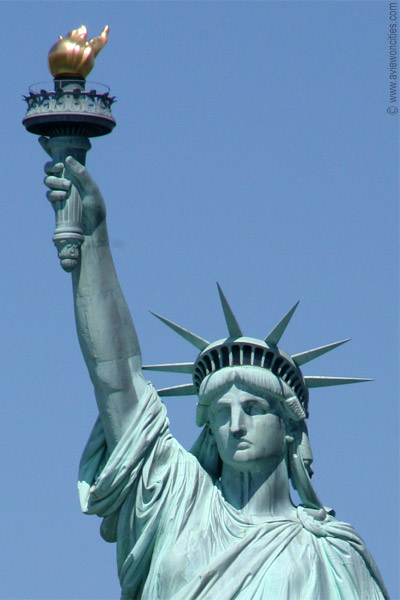
The New Nation of Fromond will be born the day after Trump is inaugurated. I suggest we have a massive celebration in San Francisco celebrating the transfer of all America’s Creative Spirit over the The People of Fromond. Frodomond is a alternative spelling. Let us create a collective legacy that will be passed down for generations to come. The Counter Culture may not have suitable Heirs.
The Fromondese will be as Green as can be. More details are coming. Study the plans for Cascadia. John Fremont founded the West. I have read his French surname is derived from Fromond. He was the first Presidential candidate for the Republican Party he co-founded. We will take away Trumps permission to use our founding father’s name. Indeed, we will pass around a petition demanding the Trumpites leave our sacred Abolitionist Party. We will broadcast a Declaration of Emancipation across this Democratic Land, the very moment Tricky Trump places his hand on the Bible. The next day, women will march on Washington. We will reform the Jessie Scouts and make sure centers that cater to the needs of women are a safe place.
I implore you take me seriously. I am a wealth of Historic Permission, that will trump the vile permission you have already heard spewing forth from the Trumpster.
Jon Presco
Designer of Fromond
Copyright 2016
Tens of thousands of people say they are participating in a “Women’s March on Washington” the day after President-elect Donald Trump is inaugurated.
On September 20, 2009 I announced my grand entry into the Republican Party – in order to save it from the Oil Orcs. I compare this to Frodo throwing the ring of invisibility into Mount Doom. I wanted to make visible the invisible Evil Ones that have taken over the party founded by my Benton kindred.
A week ago I talked to my sister, Vicki, and my niece, Drew Benton, on the phone. I told them I was about to show how the name ROSAMOND is at the epicenter of many myths, including the myths that inspired Tolkien. I told Vicki and Drew we could author – and illustrate – our own family legend. Drew is working on a comic book, and goes on raids with her aunt on Everquest where Vicki has several avatars, one of them being, Rosamond.
Frodo’s father is Drogo (dragon). He and his wife drowned in a boating accident.
Christine and I were avid readers of the Ring Trilogy. Above is a photo of Rosemary Rosamond with her four children whom she loved dearly. We are going on a road trip. Little did we know we were making a beeline for Mount Doom. There can be a new beggining if you leave the author alone, and let me show the brighter side of the coin. We may be destined for Immortality.
Footnotes for “From Saint Louis to Sanpete County”:
20The journals from the journey simply say “The wife of C. Christiansen.” According to Conquerors of the West: Stalwart Mormon Pioneers, Vol. 1–2, edited by Florence C. Youngberg (Agreka Books, 1999), Christian Christiansen was the first Mormon convert in Denmark, and he married Christina Maria Hedvig Bruun in 1850. This book mentions their birth of stillborn twins near Keokuk.
21According to the LSD Church History web site, the child born on May 22, was Hannah Andersen, daughter of Wilhelm and Henrietta Andersen, but Hannah Andersen had actually been born on January 1, while the Forest Monarch was anchored in the River Mersey, so this couldn’t be her. The identity of this “Sister Andersen” remains a mystery.
It is difficult to find more information about this Niels Pedersen. The most likely candidate would be a Niels Pedersen whose gravestone in the Little Denmark Cemetery in Gowen, Michigan, says he was born in 1815 in Denmark and died in 1882.
When the Mormon missionary Johan Erik “John” Forsgren was banished from Sweden in 1850, he and his partner Erastus Snow continued their missionary work in København. There they converted Christian and Margrethe Christensen, who named their second son Johan “Jon” Erastus Christensen (born June 11, 1852) in honor of those two missionaries.7
By late 1852, those who had joined the Mormon Church in Denmark were feeling like outcasts in the predominantly Lutheran Danish society. When John Forsgren was preparing for his return to Utah, he put together a company of 297 converts to join him. The people in this company sold their property for only a fraction of its value before they left. They were known as the “Scandinavian Mormon Migration,” the first large group of Mormons to travel from Denmark to the Great Salt Lake. Christian and Margrethe Christensen and their two sons were a part of this migration.
All in all, the Smiths considered eastern Nebraska “a paradise of nature!” Two years earlier Christian Nielsen wrote that western Iowa was filled with endless fields of the best sort of grass. Nielsen commented that the oxen got fat and the fields and woods were “full of fruit.”23
Hazards of the Trail
Even at its best, however, no journey across the plains in the second half of the 1800s was a pleasure cruise. (Including by rail, which will not be discussed here.) In relating the story of his experiences as part of one of the two handcart companies of 1857, C.C.A. Christensen mentioned the difficulties of the trip, as well as some of the lighter aspects. Christensen applauded the replacement of a Scottish leader by a Danish one when the company he was traveling in was re-organized after arriving in Florence from Iowa City. Christensen regretted the fact that so many books had to be left behind due to weight limitations, and remarked that the food supply was poor. Christensen also observed that the rigors of the walk led to fatigue, illness, and even death among the migrants. The story of kindness by the leader of a provision train ahead of them was also noted: An injured ox was given to the handcarters for food. The constant fear of stampeding bison and the inexperience of the Scandinavians as hunters meant that the company seldom ate the meat of the great shaggy beasts, so the ox was a welcome gift. Christensen’s journey was made more pleasant by the presence of a blind Norwegian woman whose laughter rang out when she unexpectedly found herself wading through a stream or river. He was also amused when an Indian carried several young girls, one at a time, across the Loup Fork River on horseback. Although footsore and tired from the long march, the men took turns at guard duty with the result that “we were not molested by either wild people or wild animals.” Christensen felt that the people were generally in good spirits and to top things oft`, the entire walk was concluded with the lead handcart flying a Danish flag.24 Between 1856 and 1869 an estimated 4,000 Mormon converts, about one fourth of whom were Scandinavians, crossed the plains pulling handcarts.25 Christensen’s company was fortunate that several stations had been set up along the last 400 miles of the trail to provide the migrating Mormons with flour. As the group got closer to Salt Lake City, wagons brought them additional supplies and carried the weakest and sickest people into the valley.26 These measures had been taken in response to the fate of the handcart companies of 1856. In that year some 2,000 Latter Day Saints in five handcart companies crossed the plains. The first three arrived in relatively good condition, but the last two got a late start and were caught in freezing weather and snow on the trail. When the fourth handcart company of 1856 finally reached its destination on November 9, its numbers (originally 500) had been reduced by the deaths of an estimated sixty-two to sixty-seven people. No one is really certain how many lives were lost from the 575 members of the fifth company, but estimates range from 135 to over 200. (Allowance must be made for the migrants who dropped out at Ft. Laramie and took up residence there and others who trailed backwards to that point.) In addition to the handcarters who perished on the trail itself, there were those who died after their arrival in Utah, prompting one pair of historians to call the 1856 handcart migration “the worst disaster in the history of Western migration.”27 The lesson had been learned. There were no more late starts after 1856. Even when the migrants made the largest part of the journey by rail between 1861 and 1868, some 2,016 “teams,” consisting of a wagon and four yoke of oxen and accommodating from eight to ten persons, were sent out from Utah as “church trains” to aid the emigrants in completing their journey.28
http://files.lib.byu.edu/mormonmigration/articles/AfterWinterQuartersAndCouncilBluffsTheMormons.pdf
Some of the Scandinavians who left Utah and the Mormon religion behind no doubt objected to their marriage practices. Members of the Sinamark and Watt families often stated that they left Utah so that their daughters would not have to become the second or third wife of a polygamist at young ages. When Anna Maria Sinamark (who had journeyed to Utah as part of a handcart company while still a child) married Claus Andersen (Clausen) in Fremont in 1874, she was about eighteen years old. Anna Maria’s sister, Mary Anne, was also approximately eighteen when she married Mads Peter Hansen at his home in Colfax County, Nebraska on October 8, 1883. Anna C. (or Hannah) Watt, who had come to Nebraska from Utah as a ten year old, also happened to be about eighteen when she married John R. McCulley in 1875.39 During the 1850s about half of the Scandinavian converts to Mormonism who emigrated to Utah were farm families, and in the 1860s they were a third of the total.40 This statistic was reflected in the eastward migration, even when it went to the cities. John Schow, who later lived in Nance and Howard counties in Nebraska, claimed that he helped Mark (Markus) Hansen stack wheat in Spanish Fork, Utah. Hansen later settled in Omaha where he is best known for having started the Danish-American newspaper Den danske pioneer [The Danish Pioneer] and the organization that became the Danish Brotherhood in America. Hansen is believed to have come to Omaha in 1860 with others from his home county of Ribe. Hansen’s wife, Anna Nielsen and her parents had also come to Nebraska with Mormons. Anna stayed in Omaha where she married Mark in 1866, but her parents continued westward to Utah. Other farming families included the Borglums near Fremont, who owned 6,000 acres. The wood carver James Borglum went east from Provo, Utah to St. Louis, Missouri in 1868 (apparently to study medicine). Borglum’s sons, Guzton and Solon Hannibal, who later carved the monument at Mt. Rushmore, managed the farm while their father practiced medicine. Members of the Borglum family were found in the Omaha census in 1880 and the Fremont census for 1885.41
One possible motivation for farmers to leave Utah was that the homestead law took effect in the United States in 1862. It did not become valid in Utah, however, until 1869, by which time all the good land had been taken.42 The farming community in Utah was also affected by unrest among the Native Americans in the 1860s. In 1863 the Ute Chief Black Hawk began raiding communities in Utah. The raids continued throughout the 1860s. In Seiver County, Utah several farms were abandoned during the “Indian war” of 1865. The federal census for Seiver County revealed that many of the farms remained unoccupied in 1870.43
The Danites and the Native Americans were blamed for numerous murders and killings on the Mormon trail and in Utah. The Danites were an alleged secret order of Mormons. Supposedly formed around 1837, the Danites were rumored to have killed many apostate Mormons and others who defamed the church of the Latter Day Saints. John Schow (a son of Søren Schow) said he knew of “several Danes” whose lives had ended at the hands of the Danites. John Ahmanson seemed to suspect that the deaths of Secretary Babbitt of the Utah Territory and later of two apostate families who were on their way back to England, were the work of Mormon avengers rather than Indians.44 Stories of such killings may have motivated some Scandinavians to journey no further than Nebraska and others to return there.
Young reviewed information on the Great Salt Lake Valley and the Great Basin, consulted with mountain men and trappers, and met with Father Pierre-Jean De Smet, a Jesuit missionary familiar with the region. Young also organized a vanguard company to break trail to the Rocky Mountains, evaluate trail conditions, find sources of water, and select a central gathering point in the Great Basin. A new route on the north side of the Platte and North Platte rivers was chosen to avoid potential conflicts over grazing rights, water access, and campsites with travelers using the established Oregon Trail on the river’s south side.
Seeing Into The Planatir
Posted on August 29, 2017 by Royal Rosamond Press




Rena begins her letter, thus;
“Here I am!”
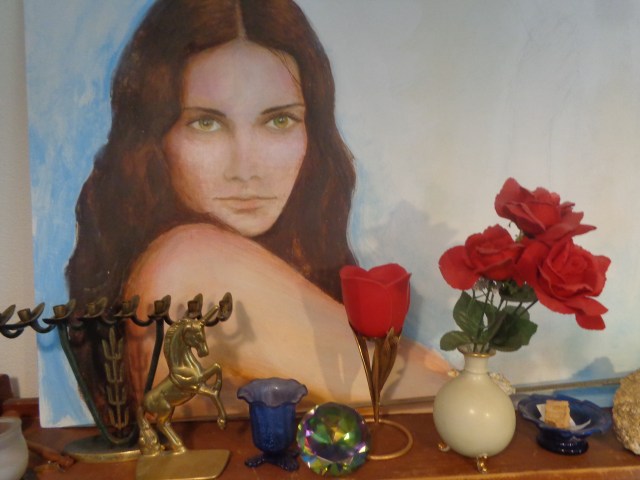
I had been playing Enya’s song “If I Could Be Where You Are’. I had begun a painting of her as Fair Rosamond Clifford. She agreed to be my Muse. My portrait of her is almost done. The seascape behind me is titled ‘Rosmarin’ after the city Ross in Marin County. She is my angel who comes from the sea carrying a glass float that looks like the world. I only heard of the Planatir, yesterday! Rosmarin is giving me the Planatir. With it, I found Rena again, and, her late husband. When I reveal their connection to Churchill, and Fair Rosamond, I will indeed own the world. My enemeies played their cards right into my hands, and……….The Hand of God!
It is written. Kismet!
Jon ‘The Nazarite’
Personality conflicts, frustration, or anger with the way Mormon leaders dealt with various aspects of the migration process, and personal tragedy played a role in causing some of the faithful to lose their faith. A handful of Danes, including J.P. Jakobsen and his family, left the Mormon church upon arrival in Florence, Nebraska in 1862. In a letter from Omaha dated October 5, 1862, Jakobsen explained that he and his wife had suffered the heartbreak of losing four of their children to the measles while sailing from Hamburg to New York. Jakobsen had no complaints about the six day train ride to St. Joseph, Missouri, but was disgusted to discover that the leader of his group made at least a $2 per person profit on the tickets for the steamer from St. Joseph to Florence. According to Jakobsen, the immigrants were treated little better than freight on the steamboat, while the group’s leader rode in a fine passenger cabin. The Jakobsens rented a room in a boarding house in Omaha, where ten other families of Danes and Swedes were living.14
Halfdan Christensen (12 December 1873 – 17 September 1950) was a Norwegian stage actor and theatre director. He was married twice, first to actress Gyda Christensen, and later to actress Gerda Ring. He had his stage début at Den Nationale Scene in 1896. He was among the leading actors at the National Theatre from its opening in 1899, and was theatre director from 1911 to 1923, and again from 1930 to 1933. During the Second World War he had to flee to Sweden, and there he led the theatre Fri norsk scene together with his wife Gerda Ring.[1]
Christensen was appointed Commander of the Royal Norwegian Order of St. Olav in 1932, he was Commander of the Danish Order of the Dannebrog, and Commander of the Swedish Order of Vasa.[2]
The invaders are usually identified as Danes, although the tenth-century churchman Asser stated that the invaders came “de Danubia“, which translates as “from the Danube“; the fact that the Danube is located in what was known in Latin as Dacia suggests that Asser actually intended Dania, a Latin term for Denmark.[6]
Halfdan (Old Norse: Halfdan, Old English: Healfdene, Medieval Latin: Haldānus, Proto-Norse: *Halbadaniz, “half Dane“) was a late 5th and early 6th century legendary Danish king of the Scylding (Skjöldung) lineage, the son of king named Fróði in many accounts, noted mainly as the father to the two kings who succeeded him in the rule of Denmark, kings named Hroðgar and Halga in the Old English poem Beowulf and named Hróar and Helgi in Old Norse accounts.
According to the Chronicon Lethrense and Saxo Grammaticus‘ Gesta Danorum (Book 2), Halfdan had two brothers named Ro and Skat who also sought the throne. Both were killed by Halfdan. Saxo adds that his brothers’ supporters were hanged and that Halfdan continued to reign with great cruelty, but that he reigned long and died peaceably in extreme old age.
The Ynglinga saga gives Halfdan (in this work also son of a king named Fróði) a brother named Fridleif and says both were great warriors but that Halfdan was the better of the two. This might have been a lead-in to a feud between the brothers if Snorri had been dealing with Danish matters rather than Swedish matters.
Snorri here only tells us that Halfdan attacked King Aun of Sweden and drove him into exile into Götaland. Halfdan then ruled Sweden for twenty years until he died in Uppsala of sickness and was buried in a mound.
According to Ynglinga saga, a Danish king named Fróði the Bold aided Aun’s successor Egil against the rebelling thrall Tunni. This may be Froda the Heathobard of Beowulf who becomes Fróði the slayer of Halfdan in other Norse traditions which do not make his end peaceful.
In the Saga of Hrolf Kraki, this Fróði is Halfdan’s younger brother but in the Latin epitome to the Skjöldunga saga the younger brother, here a half-brother, is named Ingjalldus and this Ingjalldus is later father of a son named Frothi. Since in Beowulf Froda is father of a son named Ingeld, it is usually considered that the names have accidentally been interchanged in the tradition behind the Skjöldunga saga. In the Saga of Hrolf Kraki, Fróði brother of Halfdan is ruler of a separate kingdom. Halfdan was calm and good-natured but Fróði was cruel and vicious. Fróði attacked Halfdan’s hall by night and burned it. Halfdan was killed in the battle and Fróði took over his country and his widow.
But eventually Halfdan’s sons in turn killed Fróði to avenge their father’s death. Thus the tradition in Beowulf of a feud between the Danes and Heathobards in which Fróda king of the Heathobards was slain appears in Norse texts as a family feud in which Halfdan’s brother Fróði kills Halfdan and Halfdan’s sons kill Fróði.
Fróði (Old Norse: Frōði; Old English: Frōda; Middle High German: Vruote) is the name of a number of legendary Danish kings in various texts including Beowulf, Snorri Sturluson‘s Prose Edda and his Ynglinga saga, Saxo Grammaticus‘ Gesta Danorum, and the Grottasöngr. A Danish king by this name also appears as a minor character in the Middle High German epic Die Rabenschlacht. The name is possibly an eponym for the god Freyr.
The form Fróði is still in use in Icelandic and Faroese and appears Latinized as Frotho or Frodo. This form of the name is used by J. R. R. Tolkien in The Lord of the Rings for the main character. Alternative Anglicizations are Frode, Fródi, Fróthi and Frodhi. The Danish, Norwegian and Swedish form is Frode. The meaning of the name is “clever, learned, wise”.[1]
As of the end of 2008, the number of men with the name Frode in Scandinavia is: Norway (ca.) 11384,[2] Denmark (ca.) 1413,[3] Sweden (ca.) 307.[4]
The Gesta Danorum describes six Frothos.
Rosamunda Bolger & Brandybuck
Posted on August 28, 2017 by Royal Rosamond Press

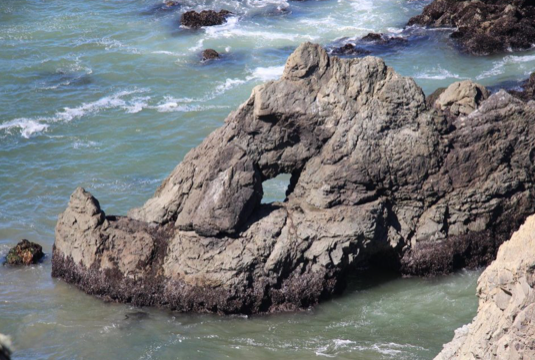
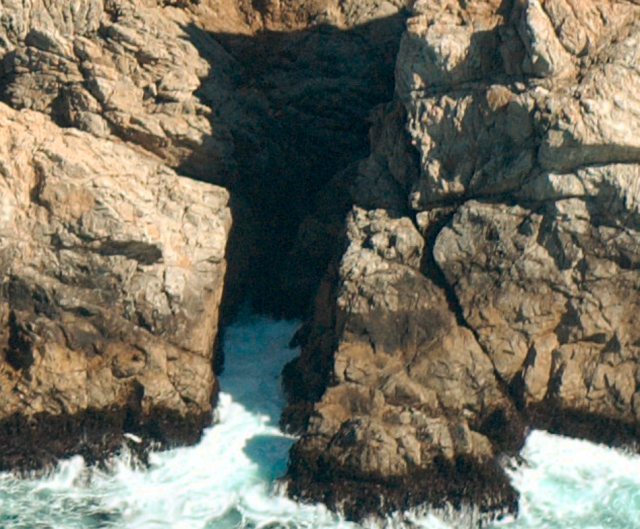
Fig. 18
Skellig Michael, South Peak. The Needle’s Eye. Its entrance is reached by a short traverse of dry-stone masonry at the
top of a steep rock face. The masonry has deteriorated, bulging and subsiding dangerously.
Photograph by Walter Horn.
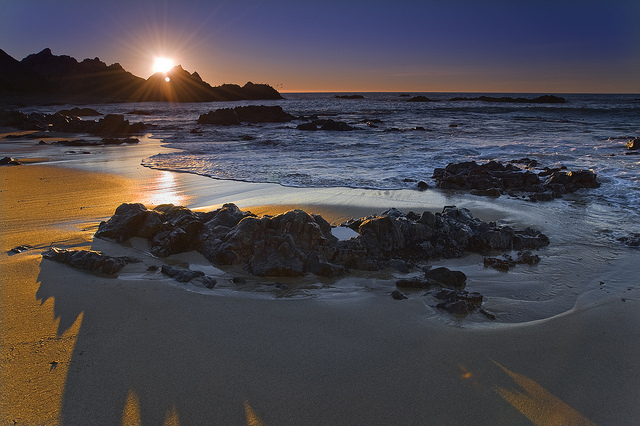




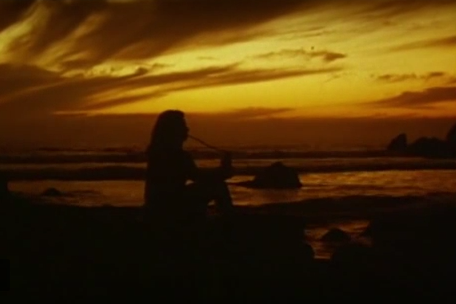
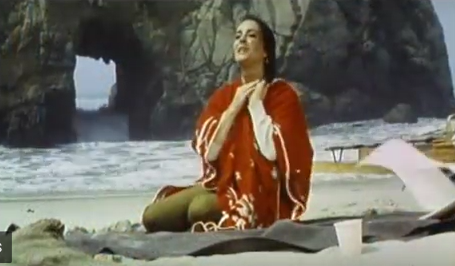

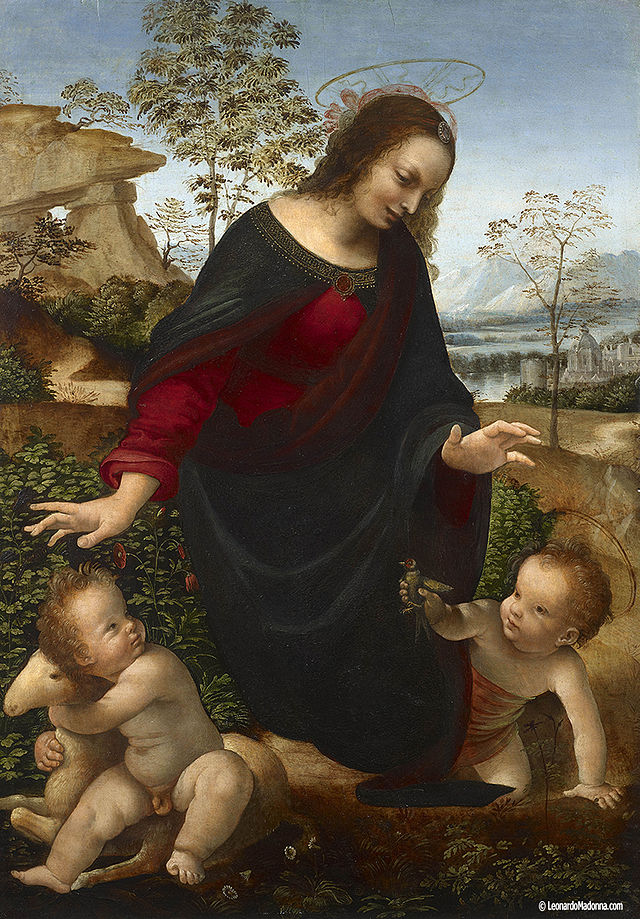
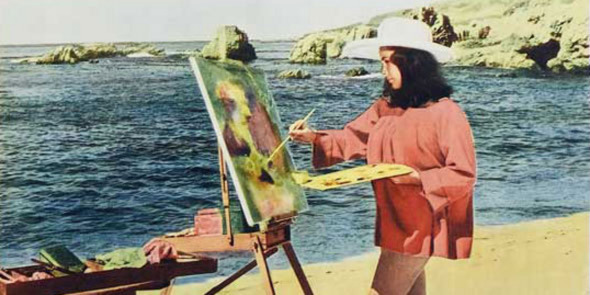
It could be said artists are not so much interested in living a meaningful life, but, dying a meaningful death. Our enemies rendered the life of the artist, Christine Rosamond Benton, meaningless, because, they have no death scene. This is because we are a part of The Never Ending Story that is forever writing itself. We get glimpses, now and then. Sometimes we behold the full Monty!
We are The Ancient Sea Wendlings. We learned Alchemy from John Dee, and came to California with Sir Francis Drake.
It is time for a New Renaissance. I beseech business men and women to put down the club of the Neanderthal, and take an artist and poet to lunch.
This is it! We have arrived!
Jon Presco
Rosamunda Bolger (née Took) was the mother of Fredegar “Fatty” Bolger
and Estella Brandybuck. She was married to Odovacar Bolger and was
known as Rosamunda Took prior to the marriage. They lived in
Budgeford in Bridgefields in the Eastfarthing of the Shire. Rosamunda
and Odovacar both attended the Bilbo’s Farewell Party in 3001 along
with their children.
Needlehole was a village in the Westfarthing of the Shire, about ten miles east of Nobottle. It was near the Westfarthing–Northfarthing border and was on The Water about five miles north of Rushock Bog.[1]
In J. R. R. Tolkien‘s fictional universe of Middle-earth, the Brandybuck clan was a powerful Hobbit family. Like the other main aristocratic families, the Tooks and the Bolgers, they had a Fallohide strain,[1] though they and the Bucklanders among whom they lived were at least partly of Stoor origin, and “by all accounts”[2] had Bree blood as well.
The family began as the Oldbuck clan, who named themselves such apparently after Bucca of the Marish, the first Thain of the Shire. Eleven Oldbuck Thains followed, until Gorhendad Oldbuck crossed into Buckland over the river Brandywine. The Thainship then passed to the Took clan.
Gorhendad took the surname Brandybuck, and began delving the dwelling of Brandy Hall. The village of Bucklebury, and the settlement of Buckland, grew up round the hall.3]


Christine Rosamond Benton was my beloved sister. When she came north for a visit she was reading Tolkiens Trilogy that she could not put down. This prompted our friend, Keith Purvis, to say;
“Too bad she can not see those books are real.”
Keith was once Christine’s lover. He descends from the O’Neil Kings of Ireland and is a British subject. Keith was with me when I died on McClure’s Beach, just after I read Tolkien’s Trilogy that us hippies made famous. When we climbed that rock, I saw it as the mountain of doom that I must cast the Ring of Invsibility into so that what is Good and True could become manifest and oversome the war lords of darkness. I was at the vanguard of the peace movement that was real and changed the world. This is true history that I was at the vanguard of. I am entitled to record this spiritual history as I see fit.
If you take four books and shuffle them together, you get the hidden story I am destined to author. You can say the Atlanteans have written the One Book, and placed it at the four corners of the world so the Rose Master can find them and bring them together and make them one with the NAME. This is the Master’s Test, so you can see what we have seen, and see forever………….The Rose Kingdom of Truth!
The House of Wolfen – by William Morris
The Orea Linda Book – author unknown
The Proto-James – author unknown
The Roza Mira Prophecy – Andreev
Here is the actor that played Tommy’s father playing Jesus. The priests tell the mob to take the woman accused of adultery to “The Master”. Why are they calling him “master” if they hate him and plot his death?
The answers if, he is a Nazarite Judge, and is perhpas being tested by the priests to see if he knows the rule of judgeing a Sotah. These rules were written in raised gold letters on the templa wall, they a gift of Queen Helena. In the book of James, Anna, the grandmother of Jesus, is bid to drink bitter waters for she is with child while her husband was away. Only I have figured out what Jesus wrote in the dust. He wrote the name of God in the dust, and put this dust in a cup. He then bid the Sotah to drink.
Murdock Site
Murdock Site – Alda, NebraskaThe Murdock site is located on the south side of the Wood River, two miles south of present-day Alda, Nebraska, and one mile southwest of the Wood River Crossing. The swales seen in the ground on this 2.4 acre site are from decades of wagon wheels, plodding livestock and pioneers on foot. They have survived because the small patch of ground between the modern road and the river was preserved for generations as pastureland.The Mormon Pioneer Party crossed the site on April 29, 1847, and William Clayton reported, “The morning very cool. There seems to be very little rain in this country and no dew. . . . After traveling about two miles came to a pretty stream of good water [Wood River], about ten feet wide on an average, but at the fording place about a rod wide. . . . We then traveled on a table or prairie gently ascending for four or five miles but very even and good traveling.”During the 1860s a sawmill and dwelling, referred to as the Murdock Homestead, were located here.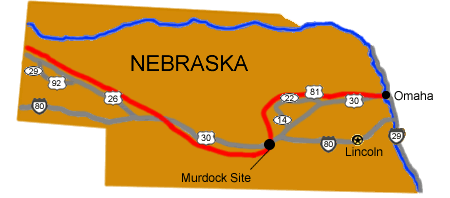 |
Map image of the auto tour route driving directions for the Mormon Pioneer NHT across Nebraska.
Ernest A Christensen was born circa 1913, at birth place, Washington, to Halfdan M Christensen and Dagmar E Christensen.
Ernest had 6 siblings: Thomas H Christensen, Vivian E Christensen and 4 other siblings.
Ernest Burton Jense or Christensen, 1875 – 1955
Ernest Burton Jense or Christensen was born on month day 1875, at birth place, Utah, to Jens (or James) Christian Christensen and Johanne Kirstine Christensen (born Pedersen).
Jens was born on August 10 1832, in Ruberg, Hjorring, Denmark.
Johanne was born on March 6 1835, in Vejby, Hjorring, Denmark.
Ernest had 7 siblings: Nels Thomas Christensen or Jense, Anne Marie Christensen and 5 other siblings.
Ernest married Florence Leona Jense or Christensen (born Pierce) on month day 1918, at age 43 at marriage place, Utah.
Florence was born on February 21 1897, in Pleasant Grove, Utah, UT.
They had 4 children.
Ernest passed away on month day 1955, at age 80 at death place, Utah.
He was buried on month day 1955, at burial place, Utah.
Ernest Adolph Christensen, 1912 – 2003
Ernest Adolph Christensen was born on month day 1912, at birth place, Washington, to Halfdan Martinius Christensen and Dagmar Leonora Petersen Christensen.
Halfdan was born on April 9 1878, in Modum, Buskerud, Norge.
Dagmar was born on March 4 1880, in Oslo, Oslo, Norway.
Ernest had 6 siblings: Lillian Anita Neal (born Christensen), Torbjørn (Thomas Hartmann Christensen) Christensen and 4 other siblings.
Ernest married Audrey Winifred Christensen.
Audrey was born on February 7 1915.
They had one son: Perry Ernest Christensen.
Ernest passed away on month day 2003, at age 91 at death place, Washington.
Documents of Ernest Adolph Christensen
Ernest A Christensen in 1920 United States Federal Census
Ernest A Christensen was born circa 1913, at birth place, Washington, to Halfdan M Christensen and Dagmar E Christensen.
Ernest had 6 siblings: Thomas H Christensen, Vivian E Christensen and 4 other siblings.
Ernest lived in 1920, at address, Washington.
Ernest C Christensen, 1893 – 1980
Ernest C Christensen was born on month day 1893, at birth place, Nebraska.
Ernest married Esther Christensen (born Lundsgaard) on month day 1916, at age 22.
Esther was born on April 7 1894, in Nebraska, United States.
They had 2 children: Jerome E Christensen and one other child.
Ernest lived in 1930, at address, Nebraska.
He lived in 1935, at address, Nebraska.
He lived in 1940, at address, Nebraska.
His occupation was occupation.
Ernest passed away of cause of death on month day 1980, at age 86.
He was buried at burial place, Nebraska.
Ernest Christensen in 1940 United States Federal Census
Ernest Christensen was born circa 1881, at birth place, South Dakota.
Ernest married Clara Christensen.
Ernest lived in 1935, at address, Montana.
He lived in 1940, at address, Montana.
Ernest Jerome Christensen was born on month day 1918, at birth place, Nebraska, to Ernest C. Christensen and Esther Christensen (born Lundsgaard).
Ernest was born in 1894.
Esther was born in 1894.
Ernest had one sister: Lorraine Kastrup (born Christensen).
Ernest married Angela Soledad Cabrera Christensen (born Garcia).
They had 2 children.
Ernest passed away on month day 1987, at age 68.
Jerome Christensen in 1940 United States Federal Census
Jerome Christensen was born circa 1919, at birth place, Nebraska, to Ernest Christensen and Esther Christensen.
Jerome had one sibling: Lorraine Christensen.
Jerome lived in 1935, at address, Nebraska.
He lived in 1940, at address, Nebraska.
Jerome E Christensen in 1930 United States Federal Census
Jerome E Christensen was born circa 1919, at birth place, Nebraska, to Ernest C Christensen and Esther Christensen.
Jerome had one sibling: S Lorraine Christensen.
Jerome lived in 1930, at address, Nebraska.
Ernest J Christensen in 1920 United States Federal Census
Ernest J Christensen was born in month 1918, at birth place, Nebraska, to Ernest C Christensen and Esther Christensen.
Ernest lived in 1920, at address, Nebraska.
Ernest Leonard Christensen, 1884 – 1892
Ernest Leonard Christensen was born on month day 1884, at birth place, Utah, to Jens Christian Christensen and Ana Katrina Christensen (born Jensen).
Jens was born on February 9 1836, in Jerslev, Hjorring, Denmark.
Ana was born on March 23 1849, in Jerslev, Jerslev, Hjørring, Denmark.
Ernest had 7 siblings: Ane Tomine Maria Galli (born Christensen), Charles Christian Carl Christensen and 5 other siblings.
Ernest passed away on month day 1892, at age 7 at death place, Utah.
Ernest Christensen was born on month day 1905, to Ellen Fredrika Kaas (born Kasper).
Ellen was born on September 1 1877, in Daretorp Parish, Skaraborg County, Sweden.
Ernest had 4 siblings.
Ernest married Lillian Christensen (born Jørgensen) on month day 1936, at age 31.
Lillian was born on January 21 1914, in Dagmar, Montana.
They had 3 children: Leroy Christensen and 2 other children.
Ernest passed away on month day 1988, at age 83.
Ernest Christensen in U.S. Social Security Death Index (SSDI)
Ernest Christensen was born on May 8 1905.
Ernest lived in Plentywood, Montana 59254, USA.
Ernest passed away on August 8 1988, at age 83.
Ernest Anthony Christensen was born on month day 1900, at birth place, Utah, to Steffin(Stephen) Christian Jorgensen* Christensen and Inger Ane Christine Christensen (born Jensen).
Steffin(Stephen) was born on June 22 1849, in Worrsehause, Verjlev, Hjrrng..
Inger was born on September 28 1862, in Taars, Hjrrng, Denmark.
Ernest was baptized in 1900, at baptism place, Utah.
He had 10 siblings: Louis Adolph Christensen, Hertha Marie Paystrup (born Christensen) and 8 other siblings.
Ernest married first name Christensen (born Bodell).
They had 5 children.
Ernest passed away on month day 1949, at age 49 at death place, Utah.
He was buried on month day 1949, at burial place, Utah.
C
 Rosamond Press
Leave a comment