

I began this post our days ago. Trump is not the Anti-Christ! He is…….
BAD BABBA!
San Sebastian Avenue
I can guarantee you, the President of the United States would love to own the German History I, and my grandchildren own.
“German immigrants arrived in Chile following the failure of the
liberal revolutions of 1848 in Germany.
The first German Jews to emigrate were mostly young men. They
entered thinly scattered networks which consisted of relatives and
neighbors from the same European communities. The second group came
after the failed German revolution (1848). They were somewhat older
than the first and more educated. These German Jews often went into
peddling and petty trade, endeavors calling for small outlays of
capital. From small starts, many went on to build substantial
businesses andy were absorbed into the American middle class.
Last night I had dinner with Mark Gall and his ex-boss, Martin Koffman, the retired Dean of the Department of Education. Mark’s sister was there, visiting from back East. Her son is ultra-Orthodox Jew. What do these educators think of evangelical politicians backing the Torah when it comes to God creating the universe ten thousand years ago, verses evolution? Will these bright men put aside logic and reason in order to show support for Israel and their new found allies who back the Israelite State only to fulfill their End Time Tribulation Prophecy that demands all Jews convert, or meet the fate of a billion non-Christians? Does this Rabbi back the religious ranting of John Darby and a fifteen year old girl with a fever – just for the sake of Israel?
EDUCATION
University of California at Berkeley. Psychology. Ph.D., 1968.
Harvard School of Education. Developmental Psychology. Ed.M., 1963.
Harvard University. English. A.B., 1963.
PROFESSIONAL EMPLOYMENT
1975 to present. University of Oregon, College of Education: Department of Educational Leadership, Technology, and Administration (DELTA). Associate professor, 1975-1980; Professor, 1980-2000. Retired Professor with reduced FTE appointment, 2000 to present.
AWARDS AND HONORS
Selected for inclusion in Who’s Who in America, 44th-50th editions (1986 to present). Chicago: Marquis.
Selected for inclusion in Who’s Who in the West, 20th-22nd editions (1986 to present). Chicago: Marquis.
Selected for inclusion in Who’s Who in American Education, 4th edition. Owings Mills, MD: National Reference Institute.
Selected for inclusion in Contemporary Authors, volumes 6 (1982) and 21 (1987).
Selected for inclusion in Who’s Who in Writers, Editors, and Poets, 3rd edition. Highland Park, IL: December Press, 1990.
Elected president of the Oregon Educational Research Association for 1985.
Elected to fellow status in Division 15 (Educational Psychology) of the American Psychological Association. 1983.
Phi Delta Kappa District I Meritorious Award for Contributions to Education through Activities in Evaluation, Development, and Research. 1978.
U.S. Public Health Fellowship. 1963-64.
Marty recognized that unique opportunities existed in states to provide sustained support for school-level change. In 1992, Marty was named dean of the College of Education at the University of Oregon and served in that role until 2005.
Throughout his career, Marty was driven by the belief that advancing knowledge is a community effort and that the development and nurturing of that community is essential. Marty cultivated deep working relationships supporting the development of a generation of researchers, faculty, agency staff and practitioners, transforming the individuals he worked with by his deep caring for improving the lives children and youth. This tireless commitment created a life of purpose and transformative impact on the field of education research and policy.
4/29/2016
The Hermann Nautical Museum

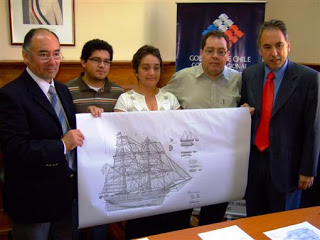

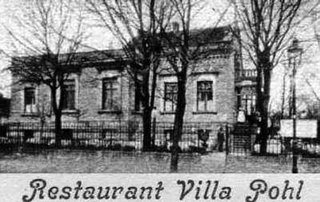

Alas a member of our family had a real chance be in a museum.
Here is a e-mail written by my cousin Daryl Broderick-Bulkley. Rudolph Stuttmeister appears to be a recruiter for the German Colony in Chile. Stuttmeister appears be the name of the area later named Charlottenburg. Did the Stuttmeisters own and develop this land? There was a amusement park named Flora? Were the Jankes involved? With the revelation Victor Emanuel established a colony in Belmont California, one wonders if the Stuttmeisters were not experienced in establishing colonies for refugees. Did that have Huguenot roots? Berlin was a haven for them.
Jon Presco
The other puzzler is, did the HERMAN stop in Philadelphia before going on
to Valparaiso, and pick up passengers? My ancestor arrived in the US
before 1844, as he was married on that date, so eight years later he is
traveling to Chili, and what was the attraction? And where was his wife?
More puzzles! Or did he travel back to Germany, and take this emmigrant
ship to Chili from Hamburg? I guess I cannot rule that out.
Has anyone done any extra reading about the Germans who went to Chili? I
noticed from the passenger list, broken down by occupations, there were
three doctors, l lawyer, and various professions represented, along with a
few farmers, carpenters, etc. which I found intriguing. Stuttmeister did
not travel as a physician, but as a `Commercial’. He was a doctor.
Anyone have any comments on this?
“German immigrants arrived in Chile following the failure of the
liberal revolutions of 1848 in Germany. They settled the rainy and,
until then, largely unimproved provinces south of the Biobío River.
This region had remained largely controlled until the mid-19th
century by the indigenous Araucanians. The German settlers
introduced small industries and farming and in the lake district
established resorts that remain popular with tourists. Small groups
of settlers from Italy, Austria, Switzerland, Spain, and Yugoslavia
also came in the mid-19th century. Most of them settled in the same
area as the Germans.
One of the ships used for the German emigration to Chile in the mid-nineteenth was the brig “Hermann”. This boat made five trips to Chile transporting German settlers and their families to the port of Corral in southern Chile, and Valparaiso. He also made several trips from Hamburg to Australia transporting settlers and the United States of America.
There is a Chilean project to build a replica and turn this into a museum of immigration in Valdivia, but now it seems that this project is stopped.
http://historiadevaldivia-chile.blogspot.com/2013/10/barcos-inmigracion-alemana.html
Barco “Hermann” Captain OA Kleingarn
31.07.1852 Hamburg to Valdivia and Valparaiso
| Passenger | Occupation | Origin |
| Backhaus, Franz | LDM. | Berlin |
| Bentjerodt, Heinr. | Hutmacher | Berkel (OVC.) |
| Betz, Marie | – | Egelsheim (W.) |
| von Bock, Eugen | Gelehrter | Kempten (W.) |
| Breckle, Gottlieb | Zimmermann | Osweil (W.) |
| Callisen, Ernst | LDM. | San Francisco (Cal.) |
| Gebhardt, Emil | Mechniker | Ludwisgburg (W.) |
| Gebhardt, Ernst | LDM. | Ludwisgburg (W.) |
| Gebhardt, Gustav | LDM. | Ludwisgburg (W.) |
| Greve, Hermann | Seifensieder | Frankfurt a. OR. |
| Greve, Wilhelmine | – | Frankfurt a. OR. |
| Hahn, Nicolaus | Dr. med. | Korb (W.) |
| Heindl, Ernst | Backer | Passau (Bay.) |
| Holtz, Joh. Ludw. | Kfm. | Schonbach (Meckl.) |
| Jensen, Christian | Tischler | Tondern |
| Kapf, Adelaide | – | Ludwisgburg (W.) |
| Landbeck, … | – | Mossingen |
| Michael, August | Maurer | Prauska (W.) |
| Otto, Baptiste | LDM. | Rietenhausen (W.) |
| Ohlsen, Maria | – | Flensburg |
| Rohlffs, Ernst | – | San Francisco (Cal.) |
| Roth, C. Theod. | Zimmermann | Neuenburg (W.) |
| Stahlmann, Wilh. | Sattler | Hildesheim |
| Stillfried, Hugo | LDM. | schlesien |
| Stuttmeister, Rud. | Kfm. | Philadelphia (Am.) |
| Tietz, Pauline | – | Frankfurt a. OR. |
| Tyroldt, Joh. ML | LDM. | Culmbach (W.) |
“After Victor Emmanuel became King of Sardinia he appointed Cipriani to be his first consul in San Francisco.”
Cipriani’s home was brought around the Cape by my kindred, Carl Janke, whose daughter married William Stuttmeister. I believe my kindred were chosen to help found the Sardinian Colony that would support Victor Emmanuel’s kingdom. This is astonishing! With the history of John Fremont and his wife, Jessie Benton, my kindred are the Acme of California History.
Janke Park, Hall, And Stagecoach Line
“German immigrants arrived in Chile following the failure of the
liberal revolutions of 1848 in Germany. They settled the rainy and,
until then, largely unimproved provinces south of the Biobío River.
This region had remained largely controlled until the mid-19th
century by the indigenous Araucanians. The German settlers
introduced small industries and farming and in the lake district
established resorts that remain popular with tourists. Small groups
of settlers from Italy, Austria, Switzerland, Spain, and Yugoslavia
also came in the mid-19th century. Most of them settled in the same
area as the Germans.
Frederick Wilhelm I (1688 — 1740), Elector of Brandenburg (1713 — 1740), feeling the need to bring change to his private hunting grounds,[1] built many structures that are still visible today.[citation needed] As the King was expanding Unter den Linden, a roadway that connected the City Palace and the Tiergarten, he had a swathe of forest removed in order to connect his castle to the newly built Charlottenburg Palace. Der Große Stern, the central square of the Tiergarten, and Kurfürstenplatz, the electoral plaza, were added, with seven and eight boulevards respectively.[citation needed] This is seen as the beginning of a transformation in the Tiergarten, a movement from the king’s personal hunting territory to a forest park designed for the people.[citation needed]
Dorotheenstadt is bordered in the west by the Großer Tiergarten, in the north by the River Spree, in the northeast by the Kupfergraben (part of the Spree canal system), in the east by Hinter dem Gießhaus and Oberwallstraße and in the south by the Behrenstraße.
The first German Jews to emigrate were mostly young men. They
entered thinly scattered networks which consisted of relatives and
neighbors from the same European communities. The second group came
after the failed German revolution (1848). They were somewhat older
than the first and more educated. These German Jews often went into
peddling and petty trade, endeavors calling for small outlays of
capital. From small starts, many went on to build substantial
businesses andy were absorbed into the American middle class. These
immigrants came to America in search of democracy. This is reflected
in their overall concern for Jewish communal conditions. Religious,
philanthropic and fraternal organizations were founded during this
period. Many German-Jewish immigrants were part of the Reform
Movement and the religious life of American Jews was colored by that
connection. Founded in Hamburg, Reform Judaism aimed at winning
civic equality and social acceptance in the modern world.
http://www.jewishmuseum.net/American.htm
German colonization (1850-1910) Presentation Valdivia and Llanquihue
The two last decades of century XIX, were the period of greater
splendor of the seated German community in the regions of Valdivia
and Llanquihue. Although never they added more of 5% of the
population of those places, constituted a nucleus of industrial
development that gravitated on national scale. In Valdivia, one
constituted an industrial sector dedicated to the elaboration of
beer, tanneries, shipyards and sawmills; in the borders of the
Llanquihue lake and in the level ones of Osorno, the farming
activities were developed based on the supplying of insumos for the
valdiviano enclave; in addition, in Montt Port it prospered the
commerce with Hamburg, which formidably extended the demand for the
production of the colonos German. The first colonos arrived at a
region that, towards 1840, was separated of the rest of the country
by the territory mapuche and was slowst of Chile. The national
authorities had measures stimulus to the establishment of foreign
immigrants and entrusted to Bernardine Eunom Philippi the pick up of
colonos in Germany and the demarcation of the lands in which they
would settle down. In spite of the objections interposed by catholic
sectors, in 1846 Philippi it managed to seat to the first group of
colonos around the fluvial system of the Valdivia river and, with
the aid of his Rodulfo brother Loving, it explored the river basin
of the Llanquihue lake with the intention of qualifying new earth
for the interested ones. In October of 1850, Vicente Perez Rosales
replaced to Philippi like agent of colonization in Europe and, two
years later, he disembarked in Montt Port with tens of German
families who settled to borders of the Llanquihue lake.
This new big wave of immigrants had to transform the natural
landscape of the territory to dedicate itself to the agriculture,
whose production was complemented harmonically with the
manufacturing and commercial activities that their been compatriots
made in Valdivia. Towards 1870, the project of German colonization
in the south of Chile was everything a success. The region showed
the greater economic dynamism of the country and the new citizens
were an example of laboriosidad, honesty and enterprising spirit for
the rest of the Chileans. Nevertheless, with the coming of century
XX, a steep end of that prosperity took place. Between the main
causes of the decay, they appear the depreciation of the national
currency, the promulgation of the Alcohol Law of 1902 and the
adoption in 1907, of protectionistic measures in Germany against the
elaborated article import. Paradoxicalally, the defense of the
industry in Germany, buried to the German industry in Chile.
http://www.genealog.cl/Alemanes/
The minister in charge, Vicente Perez Rosales, consulted a friend
who was at that time Chilean Consul in Hamburg. His friend insisted
on inviting Germans who were already in an emigration mood
especially in areas such as Baden-Württemberg and the Black Forest,
as the landscape of southern Chile with its lakes, rivers and
forests would be an attractive and familiar enviroment similar to
the one to which they were accustomed.
Massive emigration is usually triggered by poor living conditions in
the homeland. Migrants therefore are usually mostly poor and
unskilled. This is also the case of the Spaniards of Galicia and the
Italians from Southern Italy who emigrated in large numbers to
Argentina, as well as the Irish, Poles, Mecklenburgian Germans who
did so to the United States. However, the migration of Germans to
Chile was less important in terms of quantity than of quality.
The first German colonisation was at the Llanquihue lake and in the
Frontera. Encouraged by these first successes in 1846 by Philippi,
thirty settlers from Hessen were recruited for Bella Vista.
A further 1,000 Germans followed in 1848, mostly inspired by the
events of the revolution to begin a new life overseas; besides
craftsmen, many university graduates were involved. Arriving in
1851, their numbers were supplemented by skilled workers (beer-
brewers, tanners, furniture makers) and included academics such as
pharmacists, professors and scientific investigators. In 1852
Germans founded Deutsche Player Maiten, Volcan and Puerto Octay, as
well as in 1853, Puerto Montt. Llanquihue, Frutillar and Puerto
Varas were settled with Germans in the same year. Between 1872-75,
Nordboehmer Quilanto, lot Bajos, El Carril, Linea Plantanosa and new
Braunau started. To the settlement of Germans in Valdivia Fritz
Kindermann and Karl Anwandter contributed much. In the Frontera
(area between the rivers Biobio and Tolten) were settled primarily
colonists from Brandenburg, Pomerania and Switzerland. Many Germans
moved also into the cities Valparaiso, Santiago, Temuco, Conception,
Ancud and Magellanes. They had to endure hard times during the first
years in the wilderness, but with determination they gradually
became prominent and a most respected segment of Chilean society.
Pablo Neruda, Nobel-prize winner and arguably Chile’s greatest poet,
wrote of frontier life in Chile during the 19-teens:
No one had any money, and yet printing presses, hotels,
slaughterhouses burgeoned … In time, everything crumbled and
everyone was left as poor as before. Only the Germans kept a
stubborn hold on their assets, and that singled them out in the
hinterlands. (Memoirs, p. 13)
Historical Literature
The history of German migration to Chile is well-documented, and
compiled especially in the lifelong studies of the authority in the
field: Mrs. Ingeborg Schmalz. Mrs. Schmalz is today (1999) in her
80’s and not familiar with computers. Much of her work and also
other bibliographic material is today being archived by the
Biblioteca y Archivo Histórico de la Inmigración Alemaná which in
turn is maintained by the Deutsch-Chilenischer Bund.
http://www.genealogienetz.de/reg/WELT/chile.html
Passenger Lists
View Image
Preview
Name:
Hugo Stuttmeister
Port of Arrival:
Lissabon; Brasilien (Brazil)
There’s more to see
A picture of the original document
And things like
Departure Date
Destination
Estimated Birth Year
Age Year
Gender
Residence
Occupation
Ship Name
Captain
Shipping Line
Ship Type
Accommodation
Ship Flag
Port of Departure
Volume
Page
Microfilm Roll Number
Sign up now
Name:
Hugo Stuttmeister
Birth:
year
Departure:
date – location
Arrival:
Lissabon; Brasilien (Brazil)
Hamburg Passenger Lists, 1850-1934 (in German)
Passenger Lists
View Image
Name:
Hugo Stuttmeister
Birth:
year
Departure:
date – location
Arrival:
Boulogne; Leixoes; Lissabon; Madeira; Nordbrasilien
U.S. Passport Applications, 1795-1925
Border Crossings & Passports
View Image
Name:
Victor Rudolph Stuttmeister
Birth:
date – location
Civil:
date
U.S. Passport Applications, 1795-1925
Border Crossings & Passports
View Image
Name:
Mr Rudolph Stuttmeister
Civil:
date
England, Alien Arrivals, 1810-1811, 1826-1869
Passenger Lists
View Image
Name:
Fredk Wm Rudolph Stuttmeister
Arrival:
date – London, England
Residence:
location
California, Voter Registers, 1866-1898
Citizenship & Naturalization Records
View Image
Name:
Victor Stuttmeister
Birth:
abt 1842
Residence:
1868 – San Francisco, California, United States
California, Voter Registers, 1866-1898
Citizenship & Naturalization Records
View Image
Name:
Victor Stuttmeister
Birth:
abt 1846
Residence:
1868 – San Francisco, California, United States
California, Voter Registers, 1866-1898
Citizenship & Naturalization Records
View Image
Name:
Victor Stuttmeister
Birth:
abt 1846
Residence:
1868 – San Francisco, California, United States
California, Voter Registers, 1866-1898
Citizenship & Naturalization Records
View Image
Name:
Victor R Stuttmeister
Birth:
abt 1846
Residence:
1884 – Alameda, California, United States
California, Voter Registers, 1866-1898
Citizenship & Naturalization Records
View Image
Name:
Victor Rudolph Stuttmeister
Birth:
abt 1846
Residence:
1886 – Alameda, California, United States
California, Voter Registers, 1866-1898
Citizenship & Naturalization Records
View Image
Name:
Victor Rudolph Stuttmeister
Birth:
abt 1846
Residence:
1886 – Alameda, California, United States
California, Voter Registers, 1866-1898
Citizenship & Naturalization Records
View Image
Name:
Victor Rudolph Stuttmeister
Birth:
abt 1846
Residence:
1880 – San Francisco, California, United States
California, Voter Registers, 1866-1898
Citizenship & Naturalization Records
View Image
Name:
Victor Stuttmeister
Birth:
abt 1853
Residence:
1875 – San Francisco, California, United States
California, Voter Registers, 1866-1898
Citizenship & Naturalization Records
View Image
Name:
Vietor Stuttmeister
Birth:
abt 1856
Residence:
1878 – San Francisco, California, United States
California, Voter Registers, 1866-1898
Citizenship & Naturalization Records
View Image
Name:
William Oltman Stuttmeister
Birth:
abt 1862
Residence:
1890 – San Mateo, California, United States
New York, Passenger and Immigration Lists, 1820-1850
Passenger Lists
Name:
Rudolph Stuttmeister
Birth:
year
Origin:
location
Departure:
city
Arrival:
date – New York
Passenger and Immigration Lists Index, 1500s-1900s
Passenger Lists
Name:
Rud. Stuttmeister
Arrival:
year – Chile
The first German colonisation was at the Llanquihue lake and in the Frontera. Encouraged by these first successes in 1846 by Philippi, thirty settlers from Hessen were recruited for Bella Vista. A further 1,000 Germans followed in 1848, mostly inspired by the events of the revolution to begin a new life overseas; besides craftsmen, many university graduates were involved. Arriving in 1851, their numbers were supplemented by skilled workers (beer-brewers, tanners, furniture makers) and included academics such as pharmacists, professors and scientific investigators. In 1852 Germans founded Deutsche Player Maiten, Volcan and Puerto Octay, as well as in 1853, Puerto Montt. Llanquihue, Frutillar and Puerto Varas were settled with Germans in the same year. Between 1872-75, Nordboehmer Quilanto, lot Bajos, El Carril, Linea Plantanosa and new Braunau started. To the settlement of Germans in Valdivia Fritz Kindermann and Karl Anwandter contributed much. In the Frontera (area between the rivers Biobio and Tolten) were settled primarily colonists from Brandenburg, Pomerania and Switzerland. Many Germans moved also into the cities Valparaiso, Santiago, Temuco, Conception, Ancud and Magellanes. They had to endure hard times during the first years in the wilderness, but with determination they gradually became prominent and a most respected segment of Chilean society.
Pablo Neruda, Nobel-prize winner and arguably Chile’s greatest poet, wrote of frontier life in Chile during the 19-teens:
No one had any money, and yet printing presses, hotels, slaughterhouses burgeoned … In time, everything crumbled and everyone was left as poor as before. Only the Germans kept a stubborn hold on their assets, and that singled them out in the hinterlands. (Memoirs, p. 13)
Historical Literature
The history of German migration to Chile is well-documented, and compiled especially in the lifelong studies of the authority in the field: Mrs. Ingeborg Schmalz. Mrs. Schmalz is today (1999) in her 80’s and not familiar with computers. Much of her work and also other bibliographic material is today being archived by the Biblioteca y Archivo Histórico de la Inmigración Alemaná which in turn is maintained by the Deutsch-Chilenischer Bund.
http://www.genealogienetz.de/reg/WELT/chile.html
http://www.genealog.cl/Alemanes/
STRAUB – STRAUBE – STRAUCH – STREIBELEIN – STRESAU – STRINGE – STRIPPEL – STRÖBEL (STROEBEL) – STROEL – STROEM – STROEVER – STRUBE – STUBBENDORFF – STÜBING – STUCKMANN – STUECKRATH (STÜCKRATH) – STUEHL (STÜHL) – STUEMPFLE – STUECKEN – STUMM – STUMPF – STUMPFOLL – STÜRMER – STURZ – STUTTMEISTER – STUVEN – SUEDEL – SUELZER – SUBE – SUNKEL – SURBER – SUROSCHEK – SWATOSCH – SWENSON
Germans to Chili, 1851, 52?
sealegs@olympus.net (Daryl Bulkley) on 02/11/2000
On microfische #1609199, Family History Center, Item 9 –
It states that the `HERMAN’ left HAMBURG Sept. 3, 1851, arrived December 4,
1851 in the port of Valdivia, page 56. Then it says Ship `HERMAN’ under
the command of Captain O.A. Kleingarn, left HAMBVRG, December, 1852 and
made for Valdivia and Valparaio, arriving July 31, 1852.
There must be a mistake in dates. The first is the passenger list, and
the other bit was on another page giving more detailed information, but it
is rather confusing. What year did my ancestor arrive in Chili? I found my
ancestor, Friedrich Wilhelm Stuttmeister on the list, and a much needed
clue. It stated he was from Philadelphia. I have been looking at New York
port of entry, so now I will look for arrivals from Germany to Phiadelphia.
The other puzzler is, did the HERMAN stop in Philadelphia before going on
to Valparaiso, and pick up passengers? My ancestor arrived in the US
before 1844, as he was married on that date, so eight years later he is
traveling to Chili, and what was the attraction? And where was his wife?
More puzzles! Or did he travel back to Germany, and take this emmigrant
ship to Chili from Hamburg? I guess I cannot rule that out.
Has anyone done any extra reading about the Germans who went to Chili? I
noticed from the passenger list, broken down by occupations, there were
three doctors, l lawyer, and various professions represented, along with a
few farmers, carpenters, etc. which I found intriguing. Stuttmeister did
not travel as a physician, but as a `Commercial’. He was a doctor.
Anyone have any comments on this?
A French Chilean (French: Franco-Chilien, Spanish: franco-chileno) is a Chilean citizen of full or partial Frenchancestry. Between 1840 and 1940, 20,000 to 25,000 French people immigrated to Chile.[1] The country received the fourth largest number of French immigrants to South America after Argentina (239,000), Brazil (40,000) and Uruguay(more than 25,000).[citation needed]
The French came to Chile in the 18th century, arriving at Concepción as merchants, and in the mid-19th century to cultivate vines in the haciendas of the Central Valley, the homebase of world-famous Chilean wine. The Araucanía Region also has an important number of people of French ancestry, as the area hosted settlers arrived by the second half of the 19th century as farmers and shopkeepers. With akin Latin culture, the French immigrants quickly assimilated into mainstream Chilean society.
From 1840 to 1940, around 25,000 Frenchmen immigrated to Chile. 80% of them were coming from Southwestern France, especially from Basses-Pyrénées (Basque country and Béarn), Gironde, Charente-Inférieure and Charente and regions situated between Gers and Dordogne.[2]
A large number of people of European heritage in South Africa are descended from Huguenots. Most of these originally settled in the Cape Colony, but were absorbed into the Afrikaner and Afrikaans population, because they had religious similarities to the Dutch colonists.
9/18/2011
Rabbi Endorses Candidate



Here is a video of a Rabbi endorsing Bob Turner for Congress. According to IRS laws, Christian ministers can not do this under penalty of losing their tax exemption.
Last night I had dinner with Mark Gall and his ex-boss, Martin Koffman, the retired Dean of the Department of Education. Mark’s sister was there, visiting from back East. Her son is ultra-Orthodox Jew. What do these educators think of evangelical politicians backing the Torah when it comes to God creating the universe ten thousand years ago, verses evolution? Will these bright men put aside logic and reason in order to show support for Israel and their new found allies who back the Israelite State only to fulfill their End Time Tribulation Prophecy that demands all Jews convert, or meet the fate of a billion non-Christians? Does this Rabbi back the religious ranting of John Darby and a fifteen year old girl with a fever – just for the sake of Israel?
It appears the Democratic Jews of Wiener’s district voted for a Republican candidate in response to the vote Palestinians are poised to cast in order to achieve Statehood. Many Jews appear to be lying as to their motive – it’s the economy – stupid! I have prepared twenty four years for this sad day when supposedly the intelligent Children of God, are so viciously deceived.
“Let my people go!” sayeth the Lord.
Jon Presco
Nazarite
“If Jewish New Yorkers and others who support Israel were to turn away from the Democratic Party and elect the Republican candidate to Congress in 2011, it might very well cause President Obama to change his hostile position on the State of Israel and to re-establish the special relationship presidents before him had supported,” the New York Postquoted Koch as saying.
Polls show declining support
Whether or not Israel was in the end a big factor in the special election, the Democratic Party is evidently concerned about the perception that Obama is not as supportive of the Jewish state as predecessors have been.
Clergy Set to Defy IRS Ban on Endorsements
By Megan Larkin
NEW YORK–More than 100 clergy are expected to openly challenge the IRS ban on endorsing political candidates in the fall in the midst of the Presidential election campaign.
According to the Alliance Defense Fund (ADF), the protest is scheduled to take place in pulpits across the country on Sunday, October 2.
The “Freedom Pulpit Sunday” confrontation will take head-on the Internal Revenue Service’s regulation that churches or pastors who endorse political candidates face loss of the church’s tax-exempt status.
“We challenge the IRS to remove a church’s tax-exempt status so we can get into court and get the rule declared unconstitutional,” ADF Senior Legal Counsel Erik Stanley told The Spiritual Herald in an exclusive interview.
The ADF, which is organizing and backing the demonstration, holds that churches have the right of political activity under the First Amendment free speech guarantee and the Constitution’s Establishment clause stating that Congress make no laws respecting the establishment of religion or its free exercise.
“Pastors must be and are free to state their beliefs without interference from the IRS or anyone,” Stanley declared. “The IRS has the regulation but does not act on it. We cannot sue the IRS or get into court unless the IRS enforces that ban on a pastor.”
Americans United for the Separation of Church and State also complained to the IRS without success.
The IRS says it did remove tax-exempt status from Pat Robertson’s Christian Broadcasting Network for 1986-87 for supporting Robertson’s presidential bid, and Jerry Falwell’s Old Time Gospel Hour for the same years for diverting money to a political action committee.
And New York Rev. Floyd Flake, pastor of the Allen African Methodist Episcopal Church was asked to sign documents stating that he would not intervene in election campaigns after he endorsed presidential candidate Al Gore from the pulpit in 2000.
In 2004, the IRS assigned agents to oversee a new project called the Political Activity Compliance Initiative (PACI) to ensure compliance with the law, and issued warnings to 42 churches found to have violated the law. In 2006 it followed up with warnings not to violate the law again.
Can Israel Survive this Presidency?
By Jonathan S. Tobin, Senior Online Editor, Commentary Magazine
http://www.patriotactionnetwork.com/group/istandwithisrael/forum/topics/can-israel-survive-this
Reviewed by J. Edgar Williams
Tobin believes that the recent showdown between President Obama and Israeli Prime Minister Netanyahu has revealed a great deal about American support for Israel. The day before Netanyahu arrived in Washington, the president blindsided him with a speech proposing that Israel negotiate the creation of a Palestinian state on the basis of Israel’s 1967 borders. Aiming to restart the peace process based on Israeli concessions alone, he made no parallel demands of the Palestinians, such as giving up the 7.4 million refugees’ “right of return” to Israel, and he also denied that Israel had any claim to a unified Jerusalem.
When the prime minister later spoke to Congress, he received an enthusiastic welcome, and many members of Congress from both parties spoke up, some fairly harshly, against Obama’s proposals.
Over the last 44 years, Israel has consistently maintained its right to defend itself against the many attacks it has suffered, and most Americans support this right.
Some critics, however, claim that Congress supports Israel because of the supposedly great power of the “Israel Lobby,” especially the American Israel Public Affairs Committee (AIPAC). For many years, AIPAC worked to try to make its voice heard in Washington by trying to persuade the Executive Branch to listen to the pro-Israel majority in the country, rather than to the pro-Arab “siren song” from the State Department. That did not succeed, and AIPAC began focusing most of its attention on Congress, with astonishing results, such as the cessation of annual battles over aid to Israel.
Despite the president’s less than friendly attitude toward Israel and support for an independent Palestine, he will probably feel forced to veto a forthcoming UN resolution granting the Palestinians unilateral recognition. The president will surely recall that Israel has offered Palestinian statehood three times over the past 11 years, and the Palestinian leadership has turned down the offer each time. To date, the president has not stinted on security projects undertaken by the U.S. and Israeli militaries – a tribute to the value of the strategic alliance between the two countries. That the Fatah-run Palestinian Authority (PA) has now made a pact with Hamas, a terrorist organization that denies Israel’s right to exist, further complicates the question of U.S. support for unilateral UN recognition.
A referendum on Obama and Israel: Bob Turner vs. David Weprin is really about the President
BY DOUGLAS J. FEITH AND SETH CROPSEY
DAILY NEWS STAFF WRITER
Monday, September 12, 2011
Tomorrow’s election in New York’s 9th Congressional District is unusual because, unlike even most presidential campaigns, the outcome may hinge on foreign policy. In deciding between Republican Bob Turner and Democrat David Weprin, the 9th’s large percentage of Jewish voters may provide an important clue about what a part of President Obama’s base in 2008 will do in next year’s presidential contest.
The polls show a close race. Obama’s coldness toward Israel may tip the balance against the Democrat. Polls in Israel are not close on the question of the U.S. President. In May last year only 9% of Israeli respondents thought that the Obama administration was more pro-Israeli than pro-Palestinian. More than five times that number said Obama favored the Palestinians.
Boehner says US must be strong partner for Israel
By DONNA CASSATA, Associated Press – 1 hour ago
WASHINGTON (AP) — House Speaker John Boehner says the U.S. commitment to Israel should be stronger now as the American ally faces challenges to its existence in the volatile Middle East.
In an address Sunday to the Jewish National Fund conference in Cincinnati, the Ohio Republican dismissed suggestions that Israel has isolated itself and he argued that the Jewish state stands above others as the “one true beacon of freedom and opportunity” in the region.
The U.S., he said, must stand by Israel’s side “not just as a broker or observer — but as a strong partner and reliable ally.”
A text of Boehner’s address was made available in advance.
Boehner’s remarks come on the eve of the U.N. General Assembly session in New York, which is shaping up as a difficult diplomatic period for Israel.
The Palestinian Authority intends to seek recognition of statehood despite a threat of a U.S. veto in the Security Council and the strong objections of the United States and Israel.
Boehner also noted that the U.N. will highlight the Durban Declaration, viewed by many as an anti-Semitic statement, and that Iranian President Mahmoud Ahmadinejad, a foe of Israel, will address the General Assembly.
Boehner’s speech comes amid renewed attention to President Barack Obama’s policies toward Israel. Republicans say the president isn’t forceful enough on behalf of Israel, and political questions have been raised on whether the GOP can capitalize on the discontent and make inroads with Jewish voters.
Last Tuesday, Republican Bob Turner scored a surprising win in a historically Democratic New York congressional district in part because of complaints about Obama’s Mideast policies. The district also has a large concentration of Orthodox Jews.
In May, Obama called for Israel’s 1967 borders with mutually agreed land swaps to serve as the starting point in Israeli-Palestinian negotiations. That proposal was rejected by Israeli Prime Minister Benjamin Netanyahu.
Boehner, in his speech, did not mention Obama, but did recall his invitation to Netanyahu to address a joint session of Congress, also in May, and the message the prime minister delivered.
“The American people deserved to hear from him — and Washington, quite frankly, needed to hear what he had to say,” Boehner said. “I invite the people in this room — and anyone as concerned as I am about the future of Israel — to speak out. Washington needs to hear from you, too.”
Boehner said Israel has shown that it seeks “nothing more than peace … a peace agreed to by the two states and only the two states.” The speaker said Netanyahu understands that peace will require compromise.
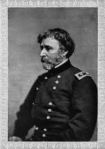
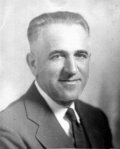
Martin Kaufman, Ph.D., guided work needed to complete the university’s new $48.1 million HEDCO education building. He also will work to continue the college’s on and off-campus collaborations and school and community partnerships.
Dean of the College of Education at the University of Oregon 1992-2005, Kaufman is nationally active in the development of a professional culture of shared standards, values, and ethics in education. He is a strong advocate for elevating respect for educators and their professional accountability for student learning
9/19/2011
German Forty-Eighters in Chile



Before Conservative Germans went after the Jews, they went after the Freethinkers and Forty-Eighters who were forced to flee their homeland in 1848. The Chilean government encouraged these bright, modern-thinking men and women to seek refuge in their nation, they not giving a rat’s ass if they did not believe Adam and Eve propagated the human race ten thousand years ago, because they wanted educated doctors, engineers, and other proffessional people to help bring their government into the next century, help them build a infrastructure.
How ironic that intelligent Jews who fled Nazi Germany and the Soviet Union, are empowering ignorant Fake Christians backed by Americas Greedy Billionaires who made their fortune on the backs of bright futuristic peoples. And then they blame it on the poor, this rush back to the Stupid Stoneage in preparation for the Blessed Doomsday where many wonderful manmade things will be destroyed by King Killer Jesus! I’m sure the Chilean government would not invite the End Days Darbyites to come live in chile. But, here are the Israelites inviting them to come to Israel, and take over OUR Secular Government! How smart is that?
In the stupefied evangelized city I live in, I can’t get anyone to recognize; least honor the Fremonts and the Forty-Eighters that backed all their efforts in the West. In Chile, MY PEOPLE have a statue erected in their memory, a big THANK YOU! In Springfield got a screaming eagle on a wall with – GOD BLESS AMERICA! And then destroy America for the sake of the Fake Christians?!!!
Evangelical Tea-Baggers are opposing Obama’s plan to put folks back to work repairing our infrastructure – just because he is a black man, and – NOT ONE OF THEM!
Jon Presco
On microfische #1609199, Family History Center, Item 9 –
It states that the `HERMAN’ left HAMBURG Sept. 3, 1851, arrived December 4,
1851 in the port of Valdivia, page 56. Then it says Ship `HERMAN’ under
the command of Captain O.A. Kleingarn, left HAMBVRG, December, 1852 and
made for Valdivia and Valparaio, arriving July 31, 1852.
There must be a mistake in dates. The first is the passenger list, and
the other bit was on another page giving more detailed information, but it
is rather confusing. What year did my ancestor arrive in Chili? I found my
ancestor, Friedrich Wilhelm Stuttmeister on the list, and a much needed
clue. It stated he was from Philadelphia. I have been looking at New York
port of entry, so now I will look for arrivals from Germany to Phiadelphia.
The other puzzler is, did the HERMAN stop in Philadelphia before going on
to Valparaiso, and pick up passengers? My ancestor arrived in the US
before 1844, as he was married on that date, so eight years later he is
traveling to Chili, and what was the attraction? And where was his wife?
More puzzles! Or did he travel back to Germany, and take this emmigrant
ship to Chili from Hamburg? I guess I cannot rule that out.
Has anyone done any extra reading about the Germans who went to Chili? I
noticed from the passenger list, broken down by occupations, there were
three doctors, l lawyer, and various professions represented, along with a
few farmers, carpenters, etc. which I found intriguing. Stuttmeister did
not travel as a physician, but as a `Commercial’. He was a doctor.
Anyone have any comments on this?
Daryl
The first German colonisation was at the Llanquihue lake and in the Frontera. Encouraged by these first successes in 1846 by Philippi, thirty settlers from Hessenwere recruited for Bella Vista. A further 1,000 Germans followed in 1848, mostly inspired by the events of the revolution to begin a new life overseas; besides craftsmen, many university graduates were involved. Arriving in 1851, their numbers were supplemented by skilled workers (beer-brewers, tanners, furniture makers) and included academics such as pharmacists, professors and scientific investigators. In 1852 Germans founded Deutsche Player Maiten, Volcan and Puerto Octay, as well as in 1853, Puerto Montt. Llanquihue, Frutillar and Puerto Varas were settled with Germans in the same year. Between 1872-75, Nordboehmer Quilanto, lot Bajos, El Carril, Linea Plantanosa and new Braunau started. To the settlement of Germans in Valdivia Fritz Kindermann and Karl Anwandter contributed much. In the Frontera (area between the rivers Biobio and Tolten) were settled primarily colonists from Brandenburg, Pomerania and Switzerland.Many Germans moved also into the cities Valparaiso, Santiago, Temuco, Conception, Ancud and Magellanes. They had to endure hard times during the first years in the wilderness, but with determination they gradually became prominent and a most respected segment of Chilean society.
Share this:
3 responses to “German Forty-Eighters in Chile”
eduardost1March 24, 2013 at 9:22 pmEditHello:My ancestor was J. Tyroldt, from Culmbach (Germany) and went to Chile in the same ship as Mr. Stuttmeister (Hermann, Capt. Kleingarn, 1852). Do you have more information about the travel, some letters, or pictures? I am writing a book about the german inmigration to South America (Chile, Peru) in the years 1850-1855.
My email is edu.salazar79@yahoo.com.Thank you!
Eduardo
9/18/2011
Israeli National-Socialists
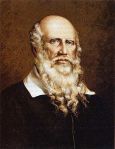
Israel was founded by Socialists who got a foothold in Palestine via the Maccabi Sports Clubs that sprang from the German Turnverien, or, Turn Verein, Turner Societies, founded by Freiderich Jahn a Prussian, who is considered by some to be the Father of National-Sociialism, or, the Nazis.
I suspect my kin, Carl Janke, was a Turnverein and established a Turner Society in Belmont that later merged with the Oddfellows. William Ralston, whose home was in Belmont, provided the funds to spread the Oddfellows throughout Europe, beginning in Germany, where Jews and Gentiles met in Turnverien clubs, worked out together, talked business, and promoted the idea that their children should marry. Then the Germans wanted the Jews out, and they formed their own Turnverein clubs that became the Maccabi gymnasts who began to colonize Palastine.
After world war one there was a prejudice against Germans, and Turnverein was changed to Tanforan, the alleged kin of a Mexican Spaniard.
The Zionist Socialists of Israel would have you believe, great Rabbis and Jewish Prophets, founded the nation of Israel, for the sake of the evangelical prophets from Ireland. Worng! This is pure Nationalism – without God!
Jon Presco
Copyright 2011
On the fourth of May [1856] the regular annual festival of the Turnverein Association of San Francisco took place, with all the usual accompaniments of music, dancing, gymnastics, oratory, eating and drinking. The festival, which was inaugurated by a procession of the Society to welcome their brother Turners from the interior, lasted three days, and everybody passed off in the most orderly and agreeable manner. The gymnastic performances were excellent, and formed a large portion of the ceremonies.
The celebration of the “May festival,” although in the United States it is conducted under the control of the Turnverein Association, is a national festival in which all the Germans partake, and which is celebrated throughout all Germany. The origin of the Turner Association, which has now become so large and so important a one among our German citizens, was a political one. Germany is divided into thirty-six different States, with as many Governments of a despotic nature, and many of them hostile to each other.
Young Germany, deeply imbued with the spirit of freedom, has been for a long time anxious to throw off these yokes, and unite under one liberal, consolidated Government; but the rulers, in order to prevent this, have forbidden all assemblies or associations for political purposes, under heavy penalties. In order to avoid this prohibition an enthusiastic republican named Jahn made the meeting and associations for gymnastic exercisesthe occasion for the spread of democratic doctrines, and the Turnverein (or gymnastic association,) soon spread and grew into importance wherever Germans are found. This association now exists in, and exercises a great influence over the whole German population.
There is no secrecy about the association, neither is there any direct connection between the different associations, although a Turner of any one city considers himself, to all intents and purposes, a member of the Turnverein of any other city.
Odd Fellows. Independent Order of Odd Fellows. Hall, corner of Market and Seventh streets. Local Lodges and Encampments included: Golden Gate Encampment, Walhalla Encampment, Wildey Encampment, Unity Encampment, Oriental Encampment, Oriental Encampment, Good Will Encampment, Canton San Francisco, California, SanFrancisco, Harmony, Yerba Buena, Templar, Magnolia, Bay City, Abou Ben Adhem, Germania, Concordia, Apollo, Parker, Unity, Hermann, Pacific, Ophir, Occidental, Cosmopolitan, Golden Gate, Alta, Franco-American, Fidelity, Morse, Myrtle, Western Addition, Excelsior, Golden West, Presidio, Excelsior Degree, Teutonia, California Rebekah Degree, Templar Rebekah Degree, Oriental Rebekah Degree, and Walhalla Rebecka Degree. Related organizations included: Odd Fellows’ Literary and Social Club, Odd Fellows’ Hall Association of SanFrancisco, Veteran Odd Fellows’ Association, Odd Fellows’ Library Association, and The Odd Fellows’ Cemetery Association (incorporated September 26, 1865).
m
Criticism
In his time Friedrich Jahn was seen by both his supporters and opponents as a liberal figure. He advocated that the German states should unite after the withdrawal of Napoleon’s occupying armies, and establish a democratic constitution (under the Hohenzollern monarchy), which would include the right to free speech. As a German nationalist, Jahn advocated maintaining German language and culture against foreign influence. In 1810 he wrote, “Poles, French, priests, aristocrats and Jews are Germany’s misfortune.”[2]At the time Jahn wrote this, the German states were occupied by foreign armies under the leadership of Napoleon. Also, Jahn was “the guiding spirit” of the fanatic book burning episode carried out by revolutionary students at the Wartburg festival in 1817.[3]
Jahn gained infamy in English-speaking countries through the publication of Peter Viereck’s Metapolitics: The Roots of the Nazi Mind (1941).[4]Viereck claimed Jahn as the spiritual founder of Nazism, who inspired the early German romantics with anti-Semitic and authoritarian doctrines, and then influenced Wagner and finally the Nazis.
Friedrich Ludwig Jahn (August 11, 1778 – October 15, 1852) was a German gymnastics educator and nationalist. He is commonly known as Turnvater Jahn, roughly meaning “father of gymnastics” Jahn. Was born in Lanz in Brandenburg. He studied theology and philology from 1796 to 1802 at Halle, Göttingen at the University of Greifswald. After the Battle of Jena-Auerstedt in 1806 he joined the Prussian army. In 1809 he went to Berlin, where he became a teacher at the Gymnasium zum Grauen Kloster and at the Plamann School.
DEATH in SanFrancisco, July 13th, Augustus SMALLFIELD, a merchant of Stockton, and a native of Eutin, Holstein, Germany, aged 40 years. [>Davenport, Iowa, papers please copy.]
AT HALF-MAST On Saturday and yesterday, the flags of the different Engine houses of the Fire Department; also the flag on the Odd Fellows’ Building, waved at half-mast as a mark of respect to the memory of Augustus SMALLFIELD, who died at SanFrancisco on the morning of the 13th instant. Deceased was, for a number of years, a merchant in this city, and was a gentleman highly respected by a large circle of friends and acquaintances. He was a member of Charity Lodge, No. 6, Independent Order of Odd Fellows; also a member of San Joaquin Engine Company No. 3, and Turn-Vereins. His remains arrived from SanFrancisco yesterday morning and were taken to their last resting place in the Rural Cemetery at 2 o’clock in the afternoon. The funeral was largely attended by Odd Fellows, Firemen, Turn-Verein and citizens, and the solemn procession was headed by the Stockton Brass Band.
Inscription. They were an order that inscribed upon their banners, “Visit the sick, relieve the distressed, and bury the dead.”
“To the benevolent – If there is any of that commodity called charity in this community, we earnestly call upon those possessing it to exercise it forthwith.”
So went out the plea to the Brotherhood in an editorial appeal that appeared in the Placer Times, August 18, 1849.
General Albert V. Winn was the first to move in this direction, summoning his brother members of the Independent Order of Odd Fellows at large to assemble under most extraordinary circumstances and form an association for the relief of the sick, the distressed, and to bury the dead. The call was answered and they came, forming the first Odd Fellows Association in Sacramento on August 24, 1849. And that their children’s children might point with pride, this was the first organized effort for dispensing relief and humanity to the sick and dying in that darkest hour of Sacramento history.
Tanforan Racetrack in San Bruno, California was a thoroughbred horse racing facility that operated from September 4, 1899 to July 31, 1964. Tanforan was constructed to serve a clientele from the nearby city of San Francisco. The facility was named after Toribio Tanforan, the grandson-in-law of Jose Antonio Sanchez, the grantee of Rancho Buri Buri. [1] [2]
Jewish Pride Through Sport: Max Nordau and “Muscular Judaism”
The Maccabees, central figures in the Hanukkah saga, are thought to be the inspiration for what would become the worldwide Jewish sports association known as Maccabi. It is Max Nordau, right-hand man to Zionist visionary Theodor Herzl, who is typically credited with the creation of what would become the Maccabi organization. His 1900 call for a “Muskel Judentom” (Muscular Judaism) which appears below, refers in passing to other influences on the creation of this movement. In actuality – and perhaps with some irony – it was the German gymnastics “Turnen” movement, begun a half century earlier, combining physical fitness, patriotism, and social causes, which served as a model for the emergence of Jewish pride through sport. The “Deutsche Turnerschaft” (German gymnastics movement) championed the idea of “mens sana in corpore sano” – a healthy mind in a healthy body – and made gymnastics the basis of a political program fostering patriotism and social/political awakening, and already included Jewish members in the early 1800’s.
Nordau saw sport as serving the Zionist idea of “awakening Judaism to new life.” His critique concerning the poor physical condition of Europe’s Jews helped to spur on the creation of Jewish sports associations. The Bar Kochba club in Berlin, which Nordau looked to for his inspiration, actually came out of the German “Turnerschaft” movement. As sports clubs in Germany and elsewhere in central Europe became a vehicle for the expression of patriotism, they began to adopt strong anti-Semitic policies, excluding Jews from participating. When the German gymnastics club in Istanbul formally voted to exclude Jews in 1895, the Jewish members formed their own club, calling it “Israelitische Turnverein”. Nordau’s push of sport as a critical component of Jewish life, coupled with the centrality of Istanbul as a hub of international Zionist activity, put the Istanbul club center stage, and it benefited from visits by and support from Zionist leaders. With the growth of gymnastics clubs promoting physical fitness and Jewish pride, the Union of Jewish Gymnastics Clubs (“Judische Turnerschaft) was founded in 1903, and its affiliate in Palestine, Maccabi of Eretz Yisrael, was founded in 1912. This, in turn, led to the World Maccabi Union, established in 1921.
Following are remarks made by Nordau at the World Zionist Congress in 1900:
Two years ago, at the Zionist Congress in Basel, I spoke about the need to create, once again, a muscular Judaism. I say “again”, because, as history shows, such a Judaism existed once before. For too long now we have neglected matters of the flesh.
Truth to tell, it was others who engaged in the death knell of the physical side of Jewish life, and with particular success. Consider the hundreds of thousands who fell in the ghettos of Europe, in the plazas outside the cathedrals, and on the roads during the Middle Ages. We should certainly forego such piety. We would have done well to be fit, and not be fodder for those who sought to kill us.
In crowded Jewish quarters, deprived of air and sunshine, our bodies became weak. In darkened homes, we feared the persistent persecution in silent trembling. But now the chains of this duress are broken, now we fear no such constraints, we are allowed to live our lives fully, at least from a physical standpoint. Let us, therefore, re-establish the bonds with our ancient past; let us again be wide of body and strong of gaze.
The intention is to return to a proud past, as reflected in the name selected by the gymnastics association of Berlin: “Bar Kochba”, a hero who recognized no defeat. When victory turned in retreat, he accepted death. He embodied a Jewish history forged in war but taking up arms. If someone takes of the cry of Bar Kochba, then the striving for honor beats in his breast. Such a hope befits the gymnasts, who strive for advanced development.
In no other nation or race does physical exercise fulfill as educative a role as it must fulfill among us Jews. It must bring us to full upright stature, both physically and in our character. It must prompt a self-awareness. Our detractors claim that, in any event, we are too arrogant. But we would do well to acknowledge how distorted is such a claim. A quiet belief in our strength is lacking in us altogether.
Muscular Jews of our age have yet to reach the degree of heroism of our ancestors of old, who erupted into the arena to wrestle the well-trained Greek athletes and the strong barbarians of the north. But from a moral perspective we are their superiors, because they were ashamed of their Jewishness and tried, by way of undoing their circumcision, to hide the sign of the covenant that was sealed in their flesh while others, such as members of the “Bar Kochba” club have openly and freely proclaimed their ties to their people.
Let the association for Jewish gymnastics flourish and set an example in all centers of Jewish life.
The Maccabi World Union is an international Jewish sports organisation spanning 5 continents and more than 50 countries, with some 400,000 members.[2] Maccabi World Union organises the Maccabiah Games, a prominent international Jewish athletics event.
The organisation comprises six confederations: Maccabi Israel, European Maccabi confederation, confederation Maccabi North America, confederation Maccabi Latin America, Maccabi South Africa and Maccabi Australia.
Shimon bar Kokhba (Hebrew: שמעון בר כוכבא, also transliterated as Bar Kochba) was the Jewishleader of what is known as the Bar Kokhba revoltagainst the Roman Empire in 132 CE, establishing an independent Jewish state of Israel which he ruled for three years as Nasi(“Ruler”). His state was conquered by the Romans in 135 following a two-year war.
Documents discovered in the modern era[citation needed]give us his original name, Simon ben Kosiba, (Hebrew: שמעון בן כוסבא) he was given the surname Bar Kokhba, (Aramaicfor “Son of a Star”, referring to the Star Prophecy of Numbers 24:17, “A star has shot off Jacob”) by his contemporary, the Jewish sage Rabbi Akiva.
After the failure of the revolt, the rabbinical writers referred to bar Kokhba as “Simon bar Kozeba” (Hebrew: בר כוזיבא, “Son of lies” or “Son of deception”).
The German Turnverein
Founded amid the nationalist enthusiasms of the War of Liberation, the German gymnastic movement, or Turnverein, had fundamentally changed by the time of the 1848 revolutions in the German lands. Although Friedrich Ludwig Jahn, the gymnasium instructor who had originated the idea of nationalist gymnastics in Berlin in 1811, was still venerated in the organization, his anti-Semitism, hatred of the French, and loyalty to the Hohenzollern dynasty left him out of step with an organization committed to national unification and political liberalism. While the Turnverein’s ideological stance reflected the prevailing spirit of the German Vormärz, it also bespoke the peculiar circumstances of the organization’s history. The German Confederation of Metternich had viewed the patriotic enthusiasms of the War of Liberation with suspicion and had banned the Turnverein following the murder of the conservative journalist August von Kotzebue by the young student Karl Sand in 1819. Turnverein practice areas had been closed, the apparatus dismantled, and the leaders prosecuted. Jahn himself had been imprisoned at the Kolberg Fortress until 1825, and barred from teaching or gymnastic work after his release. This period, which Jahn called the Turnsperre, lasted in Prussia and most German states until the 1840s.
The lifting of the Turnsperre in the more liberal atmosphere of the 1840s reawakened the Turnverein to a vigorous new life. The center of the revived movement shifted out of Prussia, which had been its heartland under Jahn’s leadership, to the South and West German States, where the Turnsperre had generally been shorter and less restrictive. The membership of the new clubs was more inclusive, as the cor of students and academics which had made up the rank and file of the Turnverein in its early years was joined by a large contingent of craft workers, along with many Jewish members, often in positions of leadership. These gymnastic clubs were often closely aligned with workers’ organizations and democratic clubs with whom they shared a desire for reform and a rejection of traditional hierarchies.
In contrast to the organization Jahn had founded, almost one-half of the membership on the 1840s were non-gymnasts, the so-called “Friends of Turnen,” and because of this, the new clubs engaged in more non-gymnastic activities, such as funding libraries and reading rooms, and sponsoring lectures, often of a politically liberal nature. They joined the new volunteer firemen’s movement, and acted as a police force during the outbreaks of social unrest which characterized the revolutionary period. They even imparted a new spirit to their gymnastic program by initiating training sessions for children and, far more radical in light of the times, for women as well. Flaunting their rebellious spirit, the gymnasts of Vormärz wore their hair long and sported large black hats decorated with a rooster feather instead of the more formal attire of the Biedermeier period.
Spread throughout the geographic area of Germany, this more diverse gymnastic movement staged larger and more elaborate gymnastic festivals, which sometimes lasted several days and always culminated with a pledge for national unity. In an effort to realize this unity on a gymnastic level, an all-German gymnastic union was formed in April 1848, shortly after revolution had swept the German Confederation. Established as a demonstration of support for the Frankfurt Parliament, the new league was immediately controversial not the least because it avowed purpose, “to work for the unity of the German people and to uplift the brotherhood and the physical and spiritual power of the people,” failed to mention gymnastics. Impatient with the cautious program of the German Gymnastic Union, a group of radical clubs formed a second, rival union called the “Democratic Gymnastic Union,” and further schisms followed.
Given the radicalization of the movement in the 1840s, it is not surprising that the German gymnasts were directly involved in the 1848 revolutions. Turnverein leaders won renown for their leading roles in local uprisings, among them Gustav Struve in Baden, Otto Heubner in Dresden, and August Schärttner in Hanau. One Turnverein leader who was not in the forefront of radical change was Turnvater Jahn. Elected as a representative to the Frankfurt Parliament, Jahn was given honor, but no real influence, in the revived gymnastic movement.
Although a proposal to form a “Gymnastic Army” (Turnerschar) to supplement the National Guard was never realized, gymnasts manned barricades and participated in crucial fighting during the revolutions. Early in the revolutionary period, the eighty-odd members of the Kiel Turnverein took arms against Denmark in the conflict over Schleswig-Holstein. Although soon defeated, their actions won praise from moderates in the organization who contrasted their “unpolitical” dedication to the cause of the nation with the more radical social and political programs of gymnasts in other regions. Exemplifying this latter trend were the gymnasts in the mob that murdered Prince Felix Lichnowsky and General Hans von Auerswald in Frankfurt in September 1848, during a popular protest against the armistice with Denmark, and those who fought, often in the club uniform, to defend the city of Dresden against Prussian forces in May 1849. Turnverein clubs also participated in the veneration of Robert Blum, who had been killed by counter-revolutionary forces in Vienna, by holding services in his honor, marching in memorial parades, and helping to raise money for his family.
The Turnverein as an organization was most closely associated with the uprisings in Baden, the center of the radical sentiment in southwest Germany. Gymnasts had been among the defenders of the city of Freiburg in early disturbances in the province in April 1848. In the late spring and early summer of 1849, violence erupted again and brought about some of the most prolonged fighting of the revolutionary period. After agitation for a democratic nation-state had forced the Grand Duke to flee, other German states, led by Prussia, sent in troops to crush the movement. The gymnastic organization of the Rhineland province of Hanau organized a march to Baden to defend the province. Although this force gathered around 600 men along the way, it was poorly armed and led and easily outmatched by the regular armies it encountered. About 240 survivors of this effort managed to cross into neighboring Switzerland, where they received a hero’s welcome from Swiss gymnasts and students.
The aftermath of the 1848 revolutions devastated the German gymnastic movement. Clubs were disbanded, property confiscated and leaders lost to jail or exile. The various attempts to form a union of gymnastic clubs likewise fell victim to the Reaction. In these circumstances, the Turnverein turned away from politics to concentrate on its gymnastic program. It was only with the revival of the drivefor German unification in the late 1860s, that the gymnastic movement rediscovered its purpose and was able to regain he momentum of the revolutionary era.
dd
9/19/2011
Here Come the Free-Thinkers!

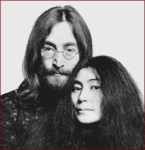
False Prophets of the Fake Religion believe science does not matter, only old Biblical laws and myths. They want all secular government to end, so it can be replaced by what really works, Mosaic Law. Can we see an example of how wonderful this rule works? I thought the Jews crucified Jesus because they did not want to go forward, and adopt a new religion? Are the evangelicals talking about Papal Rule, when the Pope launched three crusades against my Bohemian people in Prague, and then the Papal Police burned Johan Huss at the stake? How about what the Pope did to my Huguenot ancestors on Saint Bartholomew Day? Strom Thurmond, launched a crusade against John and Yoko Lennon, and Beverly LaHayes is determined to defund the Arts and National Public Radio, a pet project of Thurmond – the Dixiecrat who loathed the Civil Rights Movement and prayed the South would rise again! Thanks to the Fake Preachers, and some Zionist Rabbis, his prayers are being answered.
Jon Presco
FreethoughtFrom Wikipedia, the free encyclopediaJump to: navigation, search
Not to be confused with Freedom of thought or Free will.
Part of a series on
Irreligion
Irreligion
Secular Humanism · Secularism
Secularity · Freethought
Post-theism · Nontheism
Anti-clericalism · Antireligion
Criticism of religion
Marxism · Parody religion
Atheism
Demographics · History
State · Militant · New
Implicit and explicit
Negative and positive
Criticism · Discrimination
Existence of God · Antitheism
Atheism and religion
Agnosticism
Strong · Weak
Agnostic atheism
Agnostic theism
Apatheism · Ignosticism
Naturalism
Methodological · Religious
Humanistic
People
Atheists · Agnostics
Humanists · Pantheists · Deists
Books
The God Delusion
God Is Not Great
The End of Faith
Letter to a Christian Nation
Why I Am Not a Christian
Organizations
Atheist Alliance International
The Chicago Freethought Project
Freedom From Religion
Foundation
World Pantheist Movement
Atheism portal
WikiProject Atheism
v · d · e
Freethought is a philosophical viewpoint that holds that opinions should be formed on the basis of science, logic, and reason, and should not be influenced by authority, tradition, or other dogmas.[1] The cognitive application of freethought is known as ‘freethinking,’ and practitioners of freethought are known as ‘freethinkers.'[2]
Contents [hide]
1 Overview
2 Symbol
3 History
3.1 Pre-modern movement
3.2 Modern movements
3.2.1 England and France
3.2.2 Germany
3.2.3 Belgium
3.2.4 Netherlands
3.2.5 United States
3.2.6 Canada
3.2.7 Anarchism
4 See also
5 References
6 Further reading
7 External links
[edit] OverviewFreethought holds that individuals should not accept ideas proposed as truth without recourse to knowledge and reason. Thus, freethinkers strive to build their opinions on the basis of facts, scientific inquiry, and logical principles, independent of any logical fallacies or intellectually limiting effects of authority, confirmation bias, cognitive bias, conventional wisdom, popular culture, prejudice, sectarianism, tradition, urban legend, and all other dogmas. Regarding religion, freethinkers hold that there is insufficient evidence to support the existence of supernatural phenomena.[3]
A line from “Clifford’s Credo” by the 19th Century British mathematician and philosopher William Kingdon Clifford perhaps best describes the premise of freethought: “It is wrong always, everywhere, and for anyone, to believe anything upon insufficient evidence.”
[edit] Symbol
The pansy, symbol of freethought.The pansy is the long-established and enduring symbol of freethought, its usage inaugurated in the literature of the American Secular Union in the late 1800s. The reasoning behind the pansy being the symbol of freethought lies in both the flower’s name and appearance. The pansy derives its name from the French word pensée, which means “thought”; it was so named because the flower resembles a human face, and in mid to late summer it nods forward as if deep in thought.[4]
[edit] History[edit] Pre-modern movementIn Buddhism a type of freethought was advocated by Gautama Buddha, most notably in the Kalama Sutta:
“It is proper for you, Kalamas [the people of the village of Kesaputta], to doubt, to be uncertain; uncertainty has arisen in you about what is doubtful. Come, Kalamas. Do not go upon what has been acquired by repeated hearing; nor upon tradition; nor upon rumor; nor upon what is in a scripture; nor upon surmise; nor upon an axiom; nor upon specious reasoning; nor upon a bias towards a notion that has been pondered over; nor upon another’s seeming ability; nor upon the consideration, ‘The monk is our teacher.’ Kalamas, when you yourselves know: ‘These things are bad; these things are blameable; these things are censured by the wise; undertaken and observed, these things lead to harm and ill, abandon them. “…Do not accept anything by mere tradition… Do not accept anything just because it accords with your scriptures… Do not accept anything merely because it agrees with your pre-conceived notions… But when you know for yourselves—these things are moral, these things are blameless, these things are praised by the wise, these things, when performed and undertaken, conduce to well-being and happiness—then do you live acting accordingly.”
However, Bhikkhu Bodhi (b. 1944 – ) argues against the idea that “the Buddha’s teaching dispenses with faith and formulated doctrine and asks us to accept only what we can personally verify”,[5] saying this interpretation
forgets that the advice the Buddha gave the Kalamas was contingent upon the understanding that they were not yet prepared to place faith in him and his doctrine; it also forgets that the sutta omits, for that very reason, all mention of right view and of the entire perspective that opens up when right view is acquired. It offers instead the most reasonable counsel on wholesome living possible when the issue of ultimate beliefs has been put into brackets.
Bhikkhu Bodhi’s interpretation is by no means universal to Buddhists or even to Theravada Buddhism, the tradition in which he is ordained. For example, Ven. Soma Thera, a Theravada monk from Sri Lanka, called the Kalama Sutta “The Buddha’s Charter of Free Inquiry”.[6]
The web of transmissions and re-inventions of critical thought meanders from the Hellenistic Mediterranean, through repositories of knowledge and wisdom in Ireland and the Iranian civilizations (e.g. Khayyam and his unorthodox sufi Rubaiyat poems), and in other civilizations, as the Chinese, (e.g. the seafaring Southern Sòng’s renaissance),[7] and on through heretical thinkers of esoteric alchemy or astrology, to the Renaissance and the Protestant Reformation.
French physician and writer Rabelais celebrated “rabelaisian” freedom as well as good feasting and drinking (an expression and a symbol of freedom of the mind) in defiance of the hypocrisies of conformist orthodoxy in his utopian Thelema Abbey (from θέλημα: free “will”), the devise of which was Do What Thou Wilt:
“So had Gargantua established it. In all their rule and strictest tie of their order there was but this one clause to be observed, Do What Thou Wilt; because free people … act virtuously and avoid vice. They call this honor.”
When the hero of his book, Pantagruel, journeys to the “Oracle of The Div(in)e Bottle”, he learns the lesson of life in one simple word: “Trinch!”, Drink! Enjoy the simple life, learn wisdom and knowledge, as a free human. Beyond puns, irony, and satire, Gargantua’s prologue metaphor instructs the reader to “break the bone and suck out the substance-full marrow” (“la substantifique moëlle”), the core of wisdom.
[edit] Modern movementsThe year 1600 is considered the beginning of the era of modern freethought, as it is marked by the execution in Italy of Giordano Bruno, a former Dominican Monk, by the Inquisition.[8]
[edit] England and FranceThe term free-thinker emerged toward the end of the 17th century in England to describe those who stood in opposition to the institution of the Church, and of literal belief in the Bible. The beliefs of these individuals were centered on the concept that people could understand the world through consideration of nature. Such positions were formally documented for the first time in 1697 by William Molyneux in a widely publicized letter to John Locke, and more extensively in 1713, when Anthony Collins wrote his Discourse of Free-Thinking, which gained substantial popularity. In France, the concept first appeared in publication in 1765 when Denis Diderot, Jean le Rond d’Alembert and Voltaire included an article on Libre-Penseur in their Encyclopédie. The European freethought concepts spread so widely that even places as remote as the Jotunheimen, in Norway, had well-known freethinkers, such as Jo Gjende, by the 19th century.
The Freethinker magazine was first published in Britain in 1881.
[edit] GermanyIn Germany, during the period (1815–1848) and before the March Revolution, the resistance of citizens against the dogma of the church increased. In 1844, under the influence of Johannes Ronge and Robert Blum, belief in the rights of man, tolerance among men, and humanism grew, and by 1859 they had established the Bund Freireligiöser Gemeinden Deutschlands (Union of Secular Communities in Germany). This union still exists today, and is included as a member in the umbrella organization of free humanists. In 1881, in Frankfurt am Main, Ludwig Büchner established Deutschen Freidenkerbund (German Freethinkers League) as the first German organization for atheists. In 1892 the Freidenker-Gesellschaft and in 1906 the Deutscher Monistenbund were formed.[9] Freethought organizations developed “Jugendweihe”, secular “confirmation” ceremonies, and atheist funeral rites.[9][10] The Union of Freethinkers for Cremation was founded in 1905, and the Central Union of German Proletariat Freethinker in 1908. The two groups merged in 1927, becoming the German Freethinking Association in 1930.[11] More “bourgeois” organizations declined after World War I, and “proletarian” Freethought groups proliferated, becoming an organization of socialist parties.[9][12] European socialist free-thought groups formed the International of Proletarian Freethinkers (IPF) in 1925.[13] Activists agitated for Germans to disaffiliate from the Church and for secularization of elementary schools; between 1919–21 and 1930–32 more than 2.5 million Germans, for the most part supporters of the Social Democratic and Communist parties, gave up church membership.[14] Conflict developed between radical forces including the Soviet League of the Militant Godless and Social Democratic forces in Western Europe led by Theodor Hartwig and Max Sievers.[13] In 1930, the Soviet and allied delegations, following a walk-out, took over the IPF and excluded the former leaders.[13] Following Hitler’s rise to power in 1933, most freethought organizations were banned, though some right-wing groups that worked with Volkisch associations were tolerated by the Nazis until the mid 1930s.[9][12]
[edit] BelgiumMain article: Organized secularism
The Université Libre de Bruxelles and the Vrije Universiteit Brussel, along with the two Circles of Free Inquiry (Dutch and French speaking), defend the freedom of critical thought, lay philosophy and ethics, while rejecting the argument of authority.
[edit] NetherlandsIn the Netherlands, freethought has existed in organized form since the establishment of De Dageraad (now known as de Vrije Gedachte) in 1856. Among its most notable subscribing 19th century individuals were Johannes van Vloten, Multatuli, Adriaan Gerhard and Domela Nieuwenhuis.
In 2009, Frans van Dongen established the Atheist-Secular Party, which takes a considerably restrictive view of religion and public religious expressions.
[edit] United States
Robert G. Ingersoll [15]Driven by the revolutions of 1848 in the German states, the 19th century saw an immigration of German freethinkers and anti-clericalists to the United States (see Forty-Eighters). In the U.S., they hoped to be able to live by their principles, without interference from government and church authorities.[16]
Many Freethinkers settled in German immigrant strongholds, including St. Louis, Indianapolis, Wisconsin, and Texas,[16] where they founded the town of Comfort, Texas, as well as others.
These groups of German Freethinkers referred to their organizations as Freie Gemeinden, or “free congregations.”[16] The first Freie Gemeinde was established in St. Louis in 1850.[17] Others followed in Pennsylvania, California, Washington, D.C., New York, Illinois, Wisconsin, Texas, and other states.[16][17]
Freethinkers tended to be liberal, espousing ideals such as racial, social, and sexual equality, and the abolition of slavery.[16]
Freethought in the United States began to decline in the late nineteenth century. Its anti-religious views alienated would-be sympathizers. The movement also lacked cohesive goals or beliefs. By the early twentieth century, most Freethought congregations had disbanded or joined other mainstream churches. The longest continuously operating Freethought congregation in America is the Free Congregation of Sauk County, Wisconsin, which was founded in 1852 and is still active today. It affiliated with the American Unitarian Association (now the Unitarian Universalist Association) in 1955.[18]
German Freethinker settlements were located in:
Burlington, Racine County, Wisconsin[16]
Belleville, St. Clair County, Illinois
Castell, Llano County, Texas
Comfort, Kendall County, Texas
Fond du Lac, Fond du Lac County, Wisconsin[16]
Frelsburg, Colorado County, Texas
Hermann, Gasconade County, Missouri
Jefferson, Jefferson County, Wisconsin[16]
Indianapolis, Indiana[19]
Latium, Washington County, Texas
Manitowoc, Manitowoc County, Wisconsin[16]
Meyersville, DeWitt County, Texas
9/18/2011
Voting For Your Favorite Self-Fulfilling Propehcy



Rabbi Algaze understands the term “Friends of Israel” include forty million evangelicals who vote the Republican ticket in order to hurry the coming Tribulation and Rapture. Until that blessed event, when all comes to ruin, let me leave you with some End Time music and words that you can make into a never ending tape.
Time is up! Vote, please!
http://zionsake.tripod.com/tribulation.htm#Who
The Unannounced Reason Behind American Fundamentalism’s Support for the State of Israel
by Gary North
July, 2000
With the President meeting this week with Prime Minister Barak of Israel and Yassir Arafat, it may be time to review a topic that is baffling for Jews, annoying to Arabs, and unavoidable for American Congressmen: the unswerving political support for the State of Israel by American fundamentalists.
Vocal support of a pro-Israel American foreign policy is basic for the leaders of American Protestant fundamentalism. This has been true ever since 1948. Pat Robertson and Rev. Jerry Falwell have been pro-Israel throughout their careers, beginning two decades before the arrival of the New Christian Right in the late 1970’s. These men are not aberrations. The Trinity Broadcasting Network is equally supportive. So are the best-selling authors who speak for, and influence heavily, Protestant fundamentalism, most notably Hal Lindsey, author of The Late Great Planet Earth(1970), and Tim LaHaye, the husband of Beverly LaHaye of Concerned Women for America, which says on its Web site that it is “the nation’s largest public policy women’s organization.” Rev. LaHaye and his co-author have each earned some $10 million in royalties for their multi-volume futuristic novel, Left Behind. They have a very large audience.
People may ask themselves, “Why this support?” Fundamentalists earlier in this century were sometimes associated with anti-Semitism. James M. Gray of the Moody Bible Institute in 1927 wrote an editorial favorable to Henry Ford’s Dearborn Independentseries on Jews. Gray’s editorial appeared in the Moody Bible Institute Monthly. Arno C. Gabelein, a prominent fundamentalist leader, believed that the Protocols of the Learned Elders of Zionwas a legitimate document. Gabelein’s 1933 book, The Conflict of the Ages, would today be regarded as anti-Semitic.
Other fundamentalist leaders of the pre-War era, while not anti-Semitic, attempted to maintain neutrality on the issue of Hitler’s persecution of Jews. In his 1977 book, Armageddon Now!, Christian historian Dwight Wilson cites numerous examples of fundamentalist theologians in the late 1930’s who regarded Hitler’s discriminatory policies against Jews as part of God’s judgment on the Jews. He writes: “Pleas from Europe for assistance for Jewish refugees fell on deaf ears, and ‘Hands Off’ meant no helping hand. So in spite of being theologically more pro-Jewish than any other Christian group, the premillennarians also were apathetic. . . .” [pp. 96-97].
What was it that persuaded almost the entire fundamentalist movement to move from either hostility or neutrality to vocal support of Israel? No single answer will fit every case, but there is a common motivation, one not taken seriously by most people in history: getting out of life alive.
The Not-Quite Last Things
The Christian doctrine of eschatology deals with the last things. Sometimes eschatology deals with the personal: the death of the individual. Usually, however, it has to do with God’s final judgment of mankind.
There have been three main views of eschatology in the history of the church, which theologians classify as premillennialism, postmillennialism, and amillennialism. The pre- and post- designations refer to the expected timing of the bodily return of Jesus in the company of angels: before (pre-) the establishment of an earthly kingdom of God, or after (post-) this kingdom has extended its rule across the earth.
The amillennial view is that the kingdom of God is mainly spiritual. This became the dominant view of Christianity for over a millennium after Augustine’s City of God, with its distinction between the city of God, the church (spiritual and permanent) and the political cities of man (rising and falling). Luther held this eschatological view. Most of the Continental Protestant Reformers of the sixteenth century held it. But seventeenth-century Scottish Presbyterians were more likely to hold the postmillennial view, and they carried it with them when they emigrated to America. Their postmillennialism rested in part on their belief that God will convert the Jews to Christianity as a prelude to the kingdom’s period of greatest expansion, an idea derived from Paul’s Epistle to the church at Rome, chapter 11. Presbyterians are officially commanded to pray for the conversion of the Jews. [Westminster Larger Catechism(1647), Answer 191.] The first generation of Puritan Congregationalists in New England also held similar postmillennial opinions.
The premillennial view was commonly held in the pre-Augustinian church, although the other views did have defenders. After 1660, premillennialism became increasingly common within American Puritanism. Cotton Mather was a premillennialist. But Jonathan Edwards was postmillennial. In nineteenth-century America, both views were common prior to the Civil War. After the War, premillennialism steadily replaced postmillennialism among fundamentalists. A secularized postmillennialism was adopted by the Social Gospel movement. Non-fundamentalist Protestants from Continental Europe, like the Catholics, remained amillennial. Postmillennialism faded after World War I until the late 1970’s, when it experienced a limited revival.
Basic to the view of both premillennialism and amillennialism is pessimism regarding the efforts of Christians to build a culture-wide kingdom of God on earth. Both positions hold that only by Jesus’ bodily presence among the saints can Christians create an cultural alternative to the competing kingdoms of man. The premillennialist believes that this international kingdom construction task will begin in earnest a thousand years before the final judgment, with Jesus ruling from a literal throne, probably located in Jerusalem. The amillennialist views this universal extension of the kingdom of God into culture as possible only after the resurrection of all humanity at the final judgment, i.e., in a sin-free, death-free, Christians-only world.
Tribulation and Rapture
Just prior to Jesus’ return to set up an earthly kingdom, argue most amillennialists and all premillennialists, there will be a time of persecution, called the Great Tribulation. It is here that the great debate over the Jews begins. Amillennialists believe that Christians will be persecuted by their enemies. A handful of premillennialists, referred to as “historic premillennialists,” also identify Christians as the targets. This version of premillennialism has been insignificant institutionally since the 1870’s. The dominant premillennial view says that Jews will suffer the Great Tribulation. Born-again Christians will have flown the coop – literally. This is the doctrine of the pre-tribulation Rapture.
According to pre-tribulation premillennialists, who are known as dispensationalists, Jesus will come secretly in the clouds and raise deceased Christians – and only Christians – from the dead. Immediately thereafter, every true Christian will be transported bodily into the sky, and from there to heaven: the Rapture event. The passage cited to defend this view is found in Paul’s first letter to the church at Thessolonica: “For the Lord himself shall descend from heaven with a shout, with the voice of the archangel, and with the trump of God: and the dead in Christ shall rise first: Then we which are alive and remain shall be caught up [harpazo] together with them in the clouds, to meet the Lord in the air: and so shall we ever be with the Lord” (I Thes. 4:16-17). Throughout most of church history, this passage was associated with the final judgment, but beginning sometime around 1830 in England, it was linked to the premillennial, pretribulational Rapture – a word that is not found in the Greek text or in any English translation of the New Testament. Its Latin root word is in Jerome’s Vulgate, a translation of the Greek “harpazo” – seize, catch, or pluck.
This outlook on the earthly future became increasingly popular among fundamentalists, beginning in the 1870’s. It was formalized in the footnotes of the Scofield Reference Bible(1909; revised, 1917). In 1930, it became the first Oxford University Press book to reach sales of one million. It has now sold over five million copies. C. I. Scofield’s system has defined fundamentalism for nine decades.
The Rapture-based escape from history is now universally believed by fundamentalists to be imminent. Generations of fundamentalists have believed that they will escape bodily death. They will be transported into the sky, like Elijah, though without benefit of chariots.
But when? That has been the great question. The answer: “Soon.” But why soon? Why not a millennium from now? The psychological answer: Because men do not live that long in this millennium. The main selling point for fundamentalism’s Bible prophecies is to get insight into what is coming soon. In this case, the issue of mortality is central. As the slogan says, “Everybody wants to go to heaven, but nobody wants to die.” The doctrine of the imminent Rapture allows Christians to believe seriously that they can go to heaven without dying. Millions of Americans believe this today.
But how can they be so sure? Because of the events of 1948. In that year, the crucial missing piece of the prophetic puzzle – the restoration of the nation of Israel – seemed to come true. Critics of the dispensational system could no longer say, “But where is Israel in all this?” The answer, at long last: “In Palestine, just in time for the Great Tribulation.”
The Grim Fate of Israel
The source of the idea of the Great Tribulation is found in Jesus’ last words regarding Israel, which are recorded in Matthew 24 and Luke 21.
And when ye shall see Jerusalem compassed with armies, then know that the desolation thereof is nigh. Then let them which are in Judaea flee to the mountains; and let them which are in the midst of it depart out; and let not them that are in the countries enter thereinto. For these be the days of vengeance, that all things which are written may be fulfilled. But woe unto them that are with child, and to them that give suck, in those days! for there shall be great distress in the land, and wrath upon this people. And they shall fall by the edge of the sword, and shall be led away captive into all nations: and Jerusalem shall be trodden down of the Gentiles, until the times of the Gentiles be fulfilled (Luke 21:20-24).
Throughout most of church history, this prophecy was interpreted as having been fulfilled by the Roman siege of Jerusalem and the destruction of the temple in 70 A.D. With the rise of dispensationalism, however, the fulfillment of this passage was moved into the future.
Dispensationalism’s critics had long asked: “Where is the nation of Israel? Where are the Jews?” Not in Palestine, surely. So, dispensationalists tended to apply this prophecy of near-destruction to Jews in general – only symbolically residing in Israel – until 1948. This was one reason for their silence on Hitler’s persecution. Hitler was just another rung in the ladder of persecution leading to the inevitable Great Tribulation.
The prophesied agency of the great persecution has shifted over the years. As Wilson shows in Armageddon Now!, from 1917 until 1977, Russia was a prime candidate. But, after 1991, this has become difficult to defend, for obvious reasons. The collapse of the Soviet Union has created a major problem for dispensationalism’s theologians and its popular authors. But there have been no comparable doubts about the intensity of the coming persecution. Here is the opinion of John F. Walvoord, one of dispensationalism’s leading theologians, who served for three decades as the president of Dallas Theological Seminary (founded, 1924), the movement’s main seminary.
The purge of Israel in their time of trouble is described by Zechariah in these words: “And it shall come to pass, that in all the land, saith Jehovah, two parts therein shall be cut off and die; but the third shall be left therein. And I will bring the third part into the fire, and will refine them as silver is refined, and will try them as gold is tried” (Zechariah 13:8, 9). According to Zechariah’s prophecy, two thirds of the children of Israel in the land will perish, but the one third that are left will be refined and be awaiting the deliverance of God at the second coming of Christ which is described in the next chapter of Zechariah. [John F. Walvoord, Israel in Prophecy(Grand Rapids, MI: Zondervan, [1962] 1988), p. 108.
Nothing can or will be done by Christians to save Israel’s Jews from this disaster, for all of the Christians will have been removed from this world three and a half years prior to the beginning of this 42-month period of tribulation. (The total period of seven years is interpreted as the fulfillment of the seventieth week of Daniel [Dan. 9:27].)
In order for most of today’s Christians to escape physical death, two-thirds of the Jews in Israel must perish, soon. This is the grim prophetic trade-off that fundamentalists rarely discuss publicly, but which is the central motivation in the movement’s support for Israel. It should be clear why they believe that Israel must be defended at all costs by the West. If Israel were militarily removed from history prior to the Rapture, then the strongest case for Christians’ imminent escape from death would have to be abandoned. This would mean the indefinite delay of the Rapture. The fundamentalist movement thrives on the doctrine of the imminent Rapture, not the indefinitely postponed Rapture.
Every time you hear the phrase, “Jesus is coming back soon,” you should mentally add, “and two-thirds of the Jews of Israel will be dead in ‘soon plus 84 months.’” Fundamentalists really do believe that they probably will not die physically, but to secure this faith prophetically, they must defend the doctrine of an inevitable holocaust.
This specific motivation for the support of Israel is never preached from any fundamentalist pulpit. The faithful hear sermons – many, many sermons – on the pretribulation Rapture. On other occasions, they hear sermons on the Great Tribulation. But they do not hear the two themes put together: “We can avoid death, but only because two-thirds of the Jews of Israel will inevitably die in a future holocaust. America must therefore support the nation of Israel in order to keep the Israelis alive until after the Rapture.” Fundamentalist ministers expect their congregations to put two and two together on their own. It would be politically incorrect to add up these figures in public.
The fundamentalists I have known generally say they appreciate Jews. They think Israel is far superior to Arab nations. They believe in a pro-Israel foreign policy as supportive of democracy and America’s interests. They do not dwell upon the prophetic fate of Israel’s Jews except insofar as they want to transfer the threat of the Great Tribulation away from themselves and their families. Nevertheless, this is the bottom line: the prophetic scapegoating of Israel. This scapegoat, not Christians, must be sent into the post-Rapture wilderness.
Evangelism in Israel
Their eschatology has produced a kind of Catch-22 for fundamentalists. What if, as a result of evangelism, the Jews of Israel were converted en masseto Christianity? They would then be Raptured, along with their Gentile brethren, leaving only Arabs behind. This scenario would make the immediate fulfillment of prophecy impossible: no post-Rapture Israelis to persecute. So, fundamentalists have concluded that the vast majority of the Jews of Israel cannot, will not, and must not be converted to Christianity.
This raises an obvious question: Why spend money on evangelizing Israelis? It would be a waste of resources. This is why there are so few active fundamentalist ministries in Israel that target Jews. They target Arabs instead. Eschatologically speaking, the body of an Israeli must be preserved, for he may live long enough to go through the Great Tribulation. But his soul is expendable. This is why fundamentalists vocally support the nation of Israel, but then do very little to preach to Israelis the traditional Protestant doctrine of salvation by faith in Jesus Christ. Fundamentalists have a prophetic agenda for Israelis that does not involve at least two-thirds of the Israelis’ souls. Israelis are members of the only group on earth that has an unofficial yet operational King’s X against evangelism by fundamentalists, specifically so that God may preserve Israelis for the sake of the destruction of modern Israel in the Great Tribulation. The presence of Israel validates the hope of fundamentalists that Christians, and Christians alone, will get out of life alive.
July 19, 2000
Futurist view
In the futurist view of Christian eschatology, the Tribulation is a relatively short period of time where anyone who chose not to follow God before the Rapture and was left behind (according to Pre-Tribulation doctrine, not Mid- or Post-Tribulation teaching) will experience worldwide hardships, disasters, famine, war, pain, and suffering, which will wipe out more than 75% of all life on the earth before the Second Coming takes place.
According to Dispensationalists who hold the futurist view, the Tribulation is thought to occur before the Second Coming of Jesus and during the End Times. Another version holds that it will last seven years in all, being the last of Daniel’s prophecy of seventy weeks. This viewpoint was first made popular by John Nelson Darby in the 19th century and was recently popularized by Hal Lindsey in The Late Great Planet Earth. It is theorized that each week represents seven years, with the timetable beginning from Artaxerxes’ order to rebuild the Temple in Jerusalem (the Second Temple). After seven plus 62 weeks, the prophecy says that the messiah will be “cut off”, which is taken to correspond to the death of Christ. This is seen as creating a break of indeterminate length in the timeline, with one week remaining to be fulfilled.
Preterist view
In the Preterist view, the Tribulation took place in the past when Roman legions destroyed Jerusalem and its temple in AD 70 during the end stages of the First Jewish–Roman War, and it only affected the Jewish people rather than all mankind.
Christian preterists believe that the Tribulation was a divine judgment visited upon the Jews for their sins, including rejection of Jesus as the promised Messiah. It occurred entirely in the past, around 70 AD when the armed forces of the Roman Empire destroyed Jerusalem and its temple.
A preterist discussion of the Tribulation has its focus on the Gospels, in particular the prophetic passages in Matthew 24, Mark 13 and Luke 21, rather than on the Apocalypse or Book of Revelation. (Preterists apply much of the symbolism in the Revelation to Rome, the Cæsars, and their persecution of Christians, rather than to the Tribulation upon the Jews.)
Jesus’ warning in Matthew 24:34 that “this generation shall not pass, till all these things be fulfilled” is tied back to his similar warning to the Scribes and the Pharisees that their judgment would “come upon this generation” (Matthew 23:36), that is, during the first century rather than at a future time long after the Scribes and Pharisees had passed from the scene. The destruction in 70 AD occurred within a 40-year generation from the time when Jesus gave that discourse.
The judgment on the Jewish nation was executed by the Roman legions, “the abomination of desolation, spoken of by Daniel the prophet” (Matthew 24:15), which Luke presented to his Gentile audience, unfamiliar with Daniel, as “armies” surrounding Jerusalem to cause its “desolation.” (Luke 21:20)
Since Matthew 24 begins with Jesus visiting the Jerusalem Temple and pronouncing that “there shall not be left here one stone upon another, that shall not be thrown down” (vs. 3), preterists see nothing in Scripture to indicate that another Jewish temple will ever be built. The prophecies were all fulfilled on the then-existing temple that Jesus spoke about and that was subsequently destroyed within that generation.
A self-fulfilling prophecyis a prediction that directly or indirectly causes itself to become true, by the very terms of the prophecy itself, due to positive feedback between belief and behavior. Although examples of such prophecies can be found in literature as far back as ancient Greece and ancient India, it is 20th-century sociologist Robert K. Mertonwho is credited with coining the expression “self-fulfilling prophecy” and formalizing its structure and consequences. In his book Social Theory and Social Structure, Merton defines self-fulfilling prophecy in the following terms: e.g. when Roxanna falsely believes her marriage will fail, her fears of such failure actually cause the marriage to fail.
The self-fulfilling prophecy is, in the beginning, a falsedefinition of the situation evoking a new behaviour which makes the original false conception come ‘true’. This specious validity of the self-fulfilling prophecy perpetuates a reign of error. For the prophet will cite the actual course of events as proof that he was right from the very beginning.[1]
In other words, a prophecy declared as truth when it is actually false may sufficiently influence people, either through fear or logical confusion, so that their reactions ultimately fulfill the once-false prophecy.
In the middle 1820’s a religious environment began to be established among a few Christians in London, England which proved to be the catalyst from which the doctrine of the Rapture emerged. Expectations of the soon coming of our Lord were being voiced. This was no new thing, but what was unusual was the teaching by a Presbyterian minister named Edward Irving that there had to be a restoration of the spiritual gifts mentioned in 1 Corinthians chapters 12–14 just before Christ’s Second Advent. To Irving, the time had come for those spiritual manifestations to occur. Among the expected gifts was the renewal of speaking in tongues and of prophetic utterances motivated by the spirit.
Irving began to propagate his beliefs. His oratorical skills and enthusiasm caused his congregation in London to grow. Then a number of people began to experience the “gifts.” Once this happened, opposition from the organized churches set in. It resulted in Irving’s dismissal from the Presbyterian Church in 1832. His group established themselves as the Catholic Apostolic Church and continued the teachings of Irving. These events were the beginnings of what some call present day Pentecostalism. Some church historians referred to Irving as “the father of modern Pentecostalism.”
What does this have to do with the origin of the Rapture doctrine? Look at what happened in the year 1830 — two years before Irving’s dismissal from the Presbyterian Church. In that year a revival of the “gifts” began to be manifested among some people living in the lowlands of Scotland. They experienced what they called the outpouring of the Spirit. It was accompanied with speaking in “tongues” and other charismatic phenomena. Irving preachedthat these things must occur and now they were.
On one particular evening, the power of the Holy Spirit was said to have rested on a Miss Margaret Macdonald while she was ill at home. She was dangerously sick and thought she was dying. In spite of this (or perhaps because she is supposed to have come under the “power” of the spirit) for several successive hours she experienced manifestations of “mingled prophecy and vision.” She found her mind in an altered state and began to experience considerable visionary activity.
The message she received during this prophetic vision convinced her that Christ was going to appear in two stages at His Second Advent, and not a single occasion as most all people formerly believed. The spirit emanation revealed that Christ would first come in glory to those who look for Him and again later in a final stage when every eye would see Him. This visionary experience of Miss Macdonald represented the prime source of the modern Rapture doctrine as the historical evidence compiled by Mr. MacPherson reveals.
Share this:
One response to “Voting For Your Favorite Self-Fulfilling Propehcy”
DonSeptember 19, 2011 at 6:08 amEdit[Rosamond Press: Thanks for your excellent summary of pretrib rapture history. Here is a recent MacPherson (see above) article that can be seen on the net. Interesting times today! Don]PRETRIB RAPTURE SCHOLAR WANNABES!by Dave MacPhersonTo become a PH.D (Pretrib History Distorter) or a D.D. (Doctrinal Deviant), do the following:(1) MISSPELL THE LAST NAMES OF MANUEL LACUNZA, MARGARET MACDONALD, C. I. SCOFIELD, HAL LINDSEY, GRANT JEFFREY, TIM LAHAYE ETC.(2) STATE THAT MARGARET MACDONALD WAS A PLYMOUTH BRETHREN MEMBER, OR THAT JOHN DARBY WAS HER PASTOR.
Wrong and wrong.(3) OR GUESS THAT MARGARET WAS AN IRVINGITE, OR THAT EDWARD IRVING WAS HER PASTOR.
Wrong and wrong again.(4) ASSUME THAT MARGARET MACDONALD ORIGINATED “DISPENSATIONALISM.”
This “straw man” assumption by Jack Kinsella (“Is Dispensationalism a Recent Doctrine?,” 8/11/11) is totally missing from all genuine scholarship, and Jack can’t find her even mentioning that long word!(5) CLAIM THAT MARGARET’S PRIVATELY CIRCULATED 1830 RAPTURE “REVELATION” TAUGHT ONLY THE POSTTRIB VIEW.
Longtime No. 1 pretrib rapture leader John Walvoord’s “Rapture Question” proves (p. 105f) that Margaret’s view (that only PART of the Church gets raptured) has long been a widely held form of the PREtrib view – and Charles Ryrie’s 1981 “rapture” book and other pretrib works have purposely ignored Walvoord!
Margaret’s 1830 “revelation” saw “the one taken [before Antichrist’s revealing] and the other left.” The PART of the Church left on earth after the rapture was viewed by her collectively as “the Church” – the same wording used in the same way by later partial rapturists! (Google “X-Raying Margaret” and “Edward Irving is Unnerving.”)(6) REPEAT THE FALSEHOOD THAT JOHN DARBY WAS DISPENSATIONALISM’S “FATHER.”
Darby wasn’t original on any crucial aspect of that system including the “church/Israel dichotomy,” the church being absent from a future “Jewish” tribulation, the “Jewish” book of Matthew, the “literal method,” the “Gentile parenthesis,” the “ruin of the church,” and especially the “pretribulation rapture.” Margaret was the first to “discover” pretrib in the Bible and she shared her novel interpretation only privately with others (spring of 1830). Rev. Edward Irving and his followers, who credited Margaret, were the first to publicly teach it (September of 1830) in the Irvingite journal “The Morning Watch.” Darby didn’t clearly express pretrib until 1839 – and when he did he plagiarized the exact same Rev. 12 “man child caught up” argument Irving had publicly used eight years earlier!(7) TRY NOT TO REPRODUCE MARGARET’S 117-LINE PRETRIB RAPTURE “REVELATION.”
But if you do, copy it like Thomas Ice who in 1989 copied it so quickly he somehow omitted a total of 49 words from different sentences – the same 49 words that Tim LaHaye left behind in his 1992 book “No Fear of the Storm”! LaHaye (pp. 168, 207) also came up with two different titles for Lacunza’s famous old book – neither one correct! (Google “Thomas Ice (Bloopers),” “America’s Pretrib Rapture Traffickers” (which reveals that Ice’s “Ph.D” was issued by a school that was fined by the state of Texas for illegally issuing degrees!), “Pretrib Expert John Walvoord Melts Ice,” and “LaHaye’s Temperament.”(8) DON’T LET YOURSELF QUOTE ACTS 2:34-35, ACTS 3:21, OR I THESS. 1:7-8.
Why? They prove that Christ can’t leave heaven ahead of time for a pretrib rapture!(9) READ PRETRIB INTO AS MANY PRE-1830 WRITERS AS POSSIBLE.
Such writers used only double meaning or unclear phrases like “escape,” “taken away,” “before the general conflagration,” “before Armageddon” etc. – but many of your readers will believe you if you assert that the ancient writers were really teaching pretrib!
Even Walvoord couldn’t find ANYONE before the time of Darby (whom Walvoord labeled as an “early pretribulationist”!) who taught pretrib, so Walvoord had to settle for only what seemed to be “imminence” (in three of the earliest church documents) which seemingly could fit into the pretrib scheme – and Walvoord even censored portions of the ancient statements which, when quoted completely, revealed the posttrib view! Is it possible that John Bray, Thomas Ice, Grant Jeffrey and some others can locate – or manufacture – evidence of pretrib before 1830 that even Walvoord couldn’t find?! (To see exposures of those claiming to find pretrib before 1830, Google my internet article entitled “Deceiving and Being Deceived.”)(10) IGNORE ARTICLES ON GOOGLE AND YAHOO LIKE “PRETRIB RAPTURE – HIDDEN FACTS,” “PRETRIB RAPTURE DIEHARDS,” AND “PRETRIB RAPTURE SECRECY.”
If you ignore this advice, at least take some tranquilizers first!(11) PLAGIARIZING IS EASIER THAN RESEARCHING. BUT TRY TO DISGUISE YOUR THIEVERY!
If you think that stealing isn’t a way of life for pretrib promoters (from Darby to LaHaye), you’ve never Googled “Pretrib Rapture Dishonesty,” “Appendix F: Thou Shalt Not Steal,” or “Thieves’ Marketing.”(12) IF ALL ELSE FAILS, CLAIM THAT REV. 3:10 PROVES PRETRIB.
Avoid Googling “Famous Rapture Watchers” which reveals how the greatest New Testament Greek scholars of all time interpreted it.Finally, I invite you to obtain my 300-page, highly endorsed online book “The Rapture Plot.” What you’ve read so far in this paper is less than one percent of the mountains of documentation on pretrib rapture history in this book of mine. Some of my web articles, such as the ones listed above, are on various blogs (owned by my good friend Joe Ortiz) including “The End Times Passover” and “Why Christians Will Suffer Great Tribulation.” Joe is the author of two excellent books that biblically refute the Rapture to Heaven mythology, namely, “The End Times Passover” and “Why Christians Will Suffer ‘Great Tribulation.’ “
5/4/2023
The California Dream Barrel
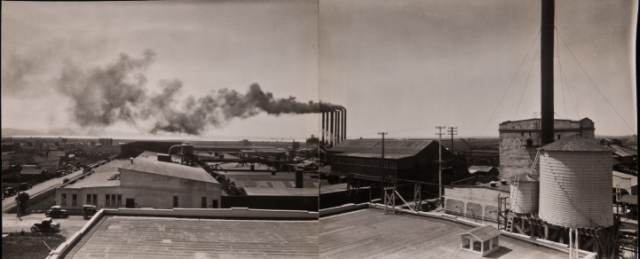

Meg Whitman and I have three things in common:
- We own the California Barrel Company
- We loathe and fear Donald Trump
- We loathe and fear Ron DeSantis
Meg Whitman was the head of Disney and made this company money, like she did when she was the head of Ebay – and Hewitt Packard. However, he QIBI company – was a huge flop. I tried to warn her it would not work, but, could not contact her personally.
On August 31, 2011, I copyrighted the name California Barrel Co. because the day before I received a genealogy from a cousin that covered the Brodericks and Stuttmeister. I have to guess as to how a company associated with Whitnan, took California Barrel Co. LLC as a name. Planners must have looked at the history of companies in Dogpatch – and assumed no one wanted this name?
In the last two days I have come up with a plan on how to win The Widget Wars that are now a partof the Culture Wars. I am seeking partners and a promoter. How about a attorney. I will be composing a proposal for my new company.
John Presco
President; California Barrel Co.- Belmont Soda Works – Royal Rosamond Press
Meg Whitman, Calling Donald Trump a ‘Demagogue,’ Will Support Hillary Clinton for President

- Aug. 2, 2016
Meg Whitman, a Hewlett Packard executive and Republican fund-raiser, said Tuesday that she would support Hillary Clinton for president and give a “substantial” contribution to her campaign in order to stop Donald J. Trump, whom she berated as a threat to American democracy.
“I will vote for Hillary, I will talk to my Republican friends about helping her, and I will donate to her campaign and try to raise money for her,” Ms. Whitman said in a telephone interview.
Here.
The California Barrel Company – Lives!
Posted on February 15, 2019 by Royal Rosamond Press
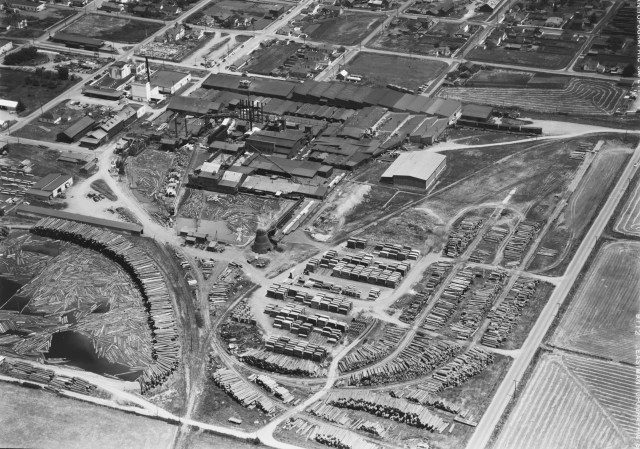
0674, 5/17/05, 2:30 PM, 8C, 6784×4902 (423+3151), 100%, humbolt, 1/80 s, R49.7, G29.0, B61.2

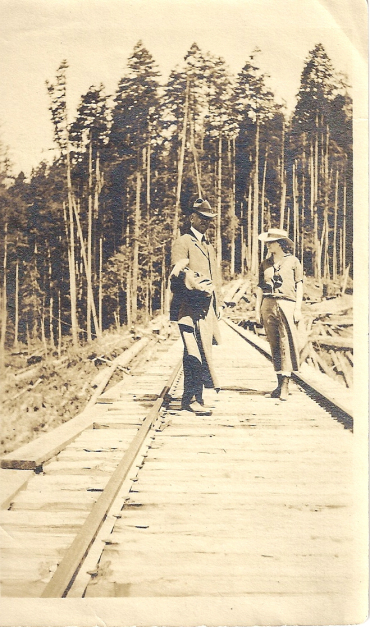


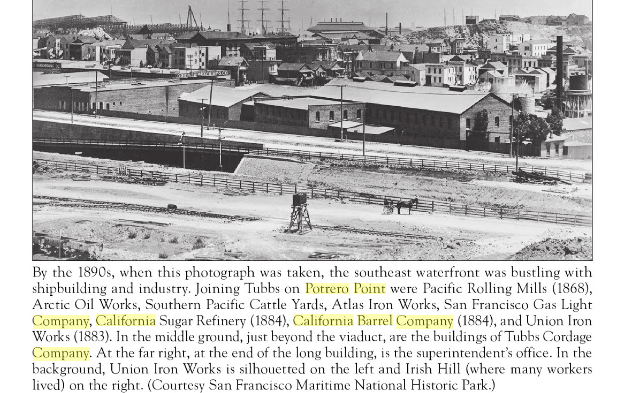
I just found this in the parallel business world. William Broderick, the husband of Alice Stuttmeister, was the Vice President (a Director) of the California Barrel Company that was located in the Dogpatch, south of San Francisco, and Arcate in Humbolt County where the photograph of Melba and her grandfather is taken. The photo says it is her father, but, it is her grandfather, William Oltman Stuttmeister. I know this because according the Daryl Bulkley, William was very tall, and William Broderick, was short. That is how I remember him.
The President of Cal-Barrel, was Frederick Jacob Koster, who was a member of the Bohemian Club, as was Joaquin Miller, and George Stirling, seen in a traditional tent at the Grove Gathering. When Rosemary would show us the family photos, she would say this about our kin gathered in the redwoods of the Oakland Hills.
“Those are you Bohunk kin.”
Why Rosemary would say this, knowing the Prescos came from Bohemia in 1882, is puzzling. Was she once told they were Bohemian Bohos?
My father and I own the same facial features Will Stuttmeister does, who has a long face.
Jon Presco

http://www.foundsf.org/index.php?title=The_Story_of_Dogpatch



Plans Revealed for Enormous Waterfront Development in Potrero
- by Carlos Olin Montalvo on Sep 25, 2017
AddThis Sharing Buttons
Share to FacebookShare to TwitterShare to PinterestShare to RedditShare to EmailShare to More
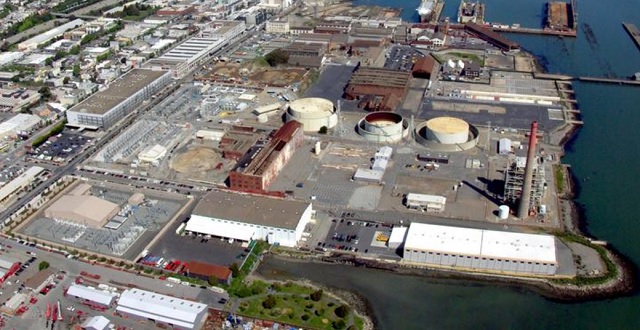
Credit: Bob Ecker
Cleanup is currently underway at the industrial area surrounding the old Potrero Power Plant site and adjacent shoreline. Draft plans were recently created and unveiled for a 29-acre Central Waterfront site at 1201 Illinois Street (bounded by Illinois, the Bay, 22nd and 23rd Streets). This area is being prepared for over 5 million square feet of development rising up to 300 feet in height.
The project is currently funded and led by California Barrel Company, with support from Associate Capital and Meg Whitman, the CEO of HP Enterprise. The overall development would introduce up to 2,700 new housing units, 220 hotel rooms, 600,000 square feet of office space and more than 100,000 square feet of retail (including a new grocery store).
To ensure capacity for these new businesses, new parking will be added for nearly 2,600 cars and 1,700 bikes. There are also plans to add a dedicated bike land down 23rd Street. Interestingly, the plans call to keep the power plant’s old smokestack and its nearby Power Block structure intact.


Credit: SocketSite
The proposed plan also calls for adding six acres of open space and parks. This includes a central Power Station Park, a waterfront park, and promenade connected to San Francisco’s Blue Greenway. Lastly, the project team is debating the construction of a new dock that could provide water access for recreational, commercial, and municipal watercrafts.
Except for one 30-story building on the western side of the site, which is roughly the same height as the existing boiler stack along the bay, the other 18 proposed buildings range from 65 to 180 feet in height. Current zoning for this area limit buildings to 65 feet in high, so expect some amendments at some point.
The Potrero development site is near many other very large mixed-use projects such as the 28-acre Pier 70, 14-acre India Basin, the proposed Golden State Warriors arena, and the Hunters Point Shipyard and Candlestick Point.
The original power plant was previously owned by PG&E and stopped operating in 2011. It was considered one of the dirtiest energy producers in the state of California and its predecessors operated on the site going all the way back to the 1870s.
The ultimate hope is that the power plant property will become an extension of Pier 70, where a dozen historic industrial buildings will be preserved. We’ll keep you posted as we find out more.
http://www.socketsite.com/archives/tag/california-barrel-company
Looking back at Arcata’s barrel company

By THE TIMES-STANDARD |
February 20, 2020 at 2:51 a.m.
The Historical Sites Society of Arcata’s annual lunch will be March 14 at 11:30 a.m. at the Baywood Country Club, 3600 Buttermilk Lane in Arcata. The cost for lunch is $25. RSVP by calling 707-822-4722.
The program will be “The California Barrel Company: Arcata’s Biggest Business.” For decades, the California Barrel Company was the biggest employer in Arcata, according to a Historical Sites Society press release.
Early on, it made barrels for the Spreckles Sugar Company, later expanding to supply containers to China and to provide wire-bound crates for produce and machinery in the United States. The company cut spruce and other trees in several parts of Humboldt County, including Fickle Hill and a portion of what later became Prairie Creek Redwoods State Park.
Much of its mill, just northwest of Samoa Boulevard and L Street in Arcata, still stands, recalling the days when it provided the paychecks for 1,142 workers.
There will also be an account of the Koster Mansion, the San Francisco residence of John Koster, CABCO’s founder.
California Barrel Company & Bohemian Grove
Posted on August 31, 2011 by Royal Rosamond Press
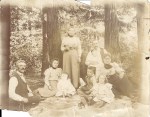
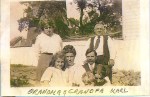

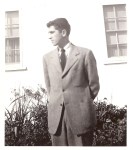
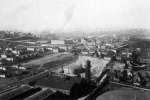

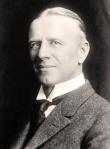



William Broderick, the husband of Alice Stuttmeister, was the Vice President of the California Barrel Company that was located in the Dogpatch, south of San Francisco, and Arcate in Humbolt County where the photograph of Melba and her grandfather is taken. The photo says it is her father, but, it is her grandfather, William Oltman Stuttmeister. I know this because according the Daryl Bulkley, William was very tall, and William Broderick, was short. That is how I remember him.
The President of Cal-Barrel, was Frederick Jacob Koster, who was a member of the Bohemian Club, as was Joaquin Miller, and George Stirling, seen in a traditional tent at the Grove Gathering. When Rosemary would show us the family photos, she would say this about our kin gathered in the redwoods of the Oakland Hills.
“Those are you Bohunk kin.”
Why Rosemary would say this, knowing the Prescos came from Bohemia in 1882, is puzzling. Was she once told they were Bohemian Bohos?
My father and I own the same facial features Will Stuttmeister does, who has a long face.
Jon Presco
Copyright 2011
http://www.espritpark.com/Community/dogpatchHistory.aspx
http://foundsf.org/index.php?title=Staking_Out_Potrero_Hill
http://pier70sf.org/dogpatch/DogHistSig.htm
Bohemian Grove is a 2,700-acre (1,100 ha) campground located at 20601 Bohemian Avenue, in Monte Rio, California, belonging to a private San Francisco-based men’s art club known as the Bohemian Club. In mid-July each year, Bohemian Grove hosts a two-week, three-weekend encampment of some of the most powerful men in the world.[1][2
http://freepages.genealogy.rootsweb.ancestry.com/~npmelton/sfbkost.htm
Socially he has connection with the Pacific Union, Bohemian, Olympic, San Francisco Commercial Commonwealth and Woodside Country Clubs and the Meadow Club of Tamalpais. Through his own exertions Mr. Koster has risen to the top, winning gratifying success as well as the high esteem and good-will of his fellowmen. Prompted by humanitarian instincts, he has steadily broadened his field of usefulness and his far-reaching labors have been productive of much good.
LOCAL HISTORIAN JERRY ROHDE IS planning to use a dozen or so of Shuster’s old aerials in the geographical history he’s writing of Humboldt County, including one of California Barrel Company’s operations. Cal-Barrel, cutting mostly spruce, was the biggest employer in Arcata back in the 1940s
Bohemian GroveFrom Wikipedia
Bohemian Grove is a 2,700-acre (1,100 ha) campground located at 20601 Bohemian Avenue, in Monte Rio, California, belonging to a private San Francisco-based men’s art club known as the Bohemian Club. In mid-July each year, Bohemian Grove hosts a two-week, three-weekend encampment of some of the most powerful men in the world.[1][2]
Summer, 1967 at Owls Nest Camp with two future U.S. presidents. Around the table, left to right: Preston Hotchkis, Ronald Reagan, Harvey Hancock (standing), Richard M. Nixon, Glenn Seaborg, Jack Sparks, (unidentified individual), (unidentified individual), and Edwin W. Pauley. Retrieved July 15, 2009.Contents [hide]
The Bohemian Club’s all-male membership includes artists, particularly musicians, as well as many prominent business leaders, government officials (including many former U.S. presidents), senior media executives, and people of power.[3][4] Members may invite guests to the Grove although those guests are subject to a screening procedure. A guest’s first glimpse of the Grove typically is during the “Spring Jinks” in June, preceding the main July encampment. Bohemian club members can schedule private day-use events at the Grove any time it is not being used for Club-wide purposes, and are allowed at these times to bring spouses, family and friends, though female and minor guests must be off the property by 9 or 10 p.m.[5]
After 40 years of membership the men earn “Old Guard” status, giving them reserved seating at the Grove’s daily talks, as well as other perquisites.
The Club motto is “Weaving Spiders Come Not Here,” which implies that outside concerns and business deals are to be left outside. When gathered in groups, Bohemians usually adhere to the injunction, though discussion of business often occurs between pairs of members.[2] Important political and business deals have been developed at the Grove.[5] The Grove is particularly famous for a Manhattan Project planning meeting that took place there in September 1942, which subsequently led to the atomic bomb. Those attending this meeting, apart from Ernest Lawrence and military officials, included the president of Harvard and representatives of Standard Oil and General Electric. Grove members take particular pride in this event and often relate the story to new attendees.[2]
[edit] History
In the 1870s, Henry “Harry” Edwards was an actor with the California Theatre Stock Company, a founding Bohemian and the head entomologist at the California Academy of Sciences.The tradition of a summer encampment was established six years after the Bohemian Club was formed in 1872.[2] Henry “Harry” Edwards, a well-loved founding member, announced that he was relocating to New York City to further his career. On June 29, 1878, somewhat fewer than 100 Bohemians gathered in the Redwoods in Marin County near Taylorville (present-day Samuel P. Taylor State Park) for an evening sendoff party in Edwards’ honor.[6] Freely flowing liquor and some Japanese lanterns put a glow on the festivities, and club members retired at a late hour to the modest comfort of blankets laid on the dense mat of Redwood needles. This festive gathering was repeated the next year without Edwards, and became the club’s yearly encampment.[7] By 1882 the members of the Club camped together at various locations in both Marin and Sonoma County, including the present-day Muir Woods and a redwood grove that once stood near Duncans Mills, several miles down the Russian River from the current location. From 1893 Bohemians rented the current location, and in 1899 purchased it from Melvin Cyrus Meeker who had developed a successful logging operation in the area.[2] Gradually over the next decades, members of the Club purchased land surrounding the original location to the perimeter of the basin in which it resides.[2]
Writer and journalist William Henry Irwin said of the Grove,
You come upon it suddenly. One step and its glory is over you. There is no perspective; you cannot get far enough away from one of the trees to see it as a whole. There they stand, a world of height above you, their pinnacles hidden by their topmost fringes of branches or lost in the sky.[8]
Not long after the Club’s establishment by newspaper journalists, it was commandeered by prominent San Francisco-based businessmen, who provided the financial resources necessary to acquire further land and facilities at the Grove. However, they still retained the “bohemians”—the artists and musicians—who continued to entertain international members and guests.[2]
[edit] Membership and operationThe Bohemian Club is a private club; only active members of the Club (known as “Bohos” or “Grovers”[9]) and their guests may visit the Grove. These guests have been known to include politicians and notable figures from countries outside the U.S.[2] Particularly during the midsummer encampment, the number of guests is strictly limited due to the small size of the facilities. Nevertheless, up to 2,900 members and guests have been reported as attending some of the annual encampments.[citation needed]
The membership list has included every Republican and some Democratic U.S. presidents since 1923, many cabinet officials, directors and CEOs of large corporations including major financial institutions. Major military contractors, oil companies, banks (including the Federal Reserve), utilities (including nuclear power) and national media (broadcast and print) have high-ranking officials as club members or guests.[10]
[edit] Camp valetsCamp valets are responsible for the operation of the individual camps. The “head” valets are akin to a general manager’s position at a resort, club, restaurant, or hotel. Service staff include female workers whose presence at the Grove is limited to daylight hours and to central areas close to the main gate. Male workers may be housed at the Grove within the boundaries of the camp to which they are assigned or in peripheral service areas. High-status workers stay in small private quarters but most workers are housed in rustic bunkhouses.[2]
[edit] FacilitiesThe main encampment area consists of 160 acres (0.65 km2) of old-growth redwood trees over 1,000 years old, with some trees exceeding 300 feet (90 m) in height.[11]
The primary activities taking place at the Grove are varied and expansive entertainment, such as a grand main stage and a smaller, more intimate stage. Thus, the majority of common facilities are entertainment venues, interspersed among the giant redwoods.
A Bohemian tent in the 1900s, sheltering Porter Garnett, George Sterling and Jack LondonThere are also sleeping quarters, or “camps” scattered throughout the grove, of which it is reported there were a total of 118 as of 2007. These camps, which are frequently patrilineal, are the principal means through which high-level business and political contacts and friendships are formed.[2]
The pre-eminent camps are:[2][12]
Hill Billies (Big Business/Banking/Politics/Universities/Media/Texas Business);
Mandalay (Big Business/Defense Contractors/Politics/U.S. Presidents);
Cave Man (Think Tanks/Oil Companies/Banking/Defense Contractors/Universities/Media);
Stowaway (Rockefeller Family Members/Oil Companies/Banking/Think Tanks);
Uplifters (Corporate Executives/Big Business);
Owls Nest (U.S. Presidents/Military/Defense Contractors);
Hideaway (Foundations/Military/Defense Contractors);
Isle of Aves (Military/Defense Contractors);
Lost Angels (Banking/Defense Contractors/Media);
Silverado squatters (Big Business/Defense Contractors);
Sempervirens (California-based Corporations);
Hillside (Military—Joint Chiefs of Staff);
Members of the Bohemian Club were titled ‘Bohos’ and ‘Grovers’.
ltman- Stuttmeister Genealogy
Posted on August 30, 2011 by Royal Rosamond Press

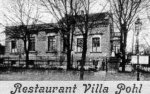
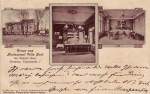

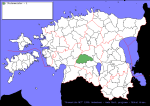
Since I can recall, Rosemary told me and my brother we descend from Teutonic Knights on our father’s side. Eight years ago I found a Stutenmeister province in Estonia that appears to be named after a Teutonic Knight, who purchased this land.
I also found a Stuttmeister Estate in the Pankow where the summer homes of the very wealthy are located. This estate is now a resturant. The Stuttmeister owned about five properties in Berlin.
Eleven years ago I found the unmarked grave of Royal Reuben Rosamond, and my aunt Lillian bought a stone with roses.
Six years ago my cousin, Daryl Bulkley, located the lost Stuttmeister crypt in Colma, and I went there with my daughter and new born grandson, Tyler Hunt. With the help of Murray Oltman, our family is more visible and united.
Descendants of Dorthia Matilda Oltman
Generation No. 1
1. Dorthia Matilda5 Oltman (Jurgen4 Oltmann, Jacob3, Jurgen2, Peter1) was born September 13, 1829 in New York, NY, and died March 17, 1875 in San Francisco, CA. She married Frederick William R. Stuttmeister. He was born 1812 in Germany, and died January 29, 1877 in San Francisco, CA.
Children of Dorthia Oltman and Frederick Stuttmeister are:
2 i. Victor Rudolf6 Stuttmeister, born May 29, 1846 in New York; died January 19, 1893 in German hospital in San Francisco.
3 ii. Bertha Matilda Stuttmeister, born January 02, 1860 in Califonia; died May 07, 1931 in Merritt Hospital in Oakland, California. She married Wilham E. C. Beyer; born in Germany.
4 iii. William Oltman Stuttmeister, born 1862. He married Augusta Janke June 1888.
+ 5 iv. Alice L. Stuttmeister, born October 13, 1868 in San Francisco, CA; died February 13, 1953 in Roseville Community Hospital in Oakland, CA.
Generation No. 2
5. Alice L.6 Stuttmeister (Dorthia Matilda5 Oltman, Jurgen4 Oltmann, Jacob3, Jurgen2, Peter1) was born October 13, 1868 in San Francisco, CA, and died February 13, 1953 in Roseville Community Hospital in Oakland, CA. She married William Broderick October 02, 1897. He was born Abt. 1871 in Ohio.
Children of Alice Stuttmeister and William Broderick are:
+ 6 i. Frederick William7 Broderick.
+ 7 ii. Melba Charlotte Broderick.
Generation No. 3
6. Frederick William7 Broderick (Alice L.6 Stuttmeister, Dorthia Matilda5 Oltman, Jurgen4 Oltmann, Jacob3, Jurgen2, Peter1) He married (1) ?? Babour Bef. 1932. He married (2) ?? Abt. 1932.
Children of Frederick Broderick and ?? Babour are:
8 i. Frederick8 Broderick.
9 ii. Beverly Broderick.
Children of Frederick Broderick and ?? are:
+ 10 i. Daryl8 Broderick, born January 21, 1933.
11 ii. William Gardiner Broderick.
7. Melba Charlotte7 Broderick (Alice L.6 Stuttmeister, Dorthia Matilda5 Oltman, Jurgen4 Oltmann, Jacob3, Jurgen2, Peter1) She married (1) Victor Hugo Presco. He was born July 1885 in Hartford, CT. She married (2) Joseph Wilkin.
Child of Melba Broderick and Victor Presco is:
+ 12 i. Victor William8 Presco, born August 12, 1923; died November 1994.
Generation No. 4
10. Daryl8 Broderick (Frederick William7, Alice L.6 Stuttmeister, Dorthia Matilda5 Oltman, Jurgen4 Oltmann, Jacob3, Jurgen2, Peter1) was born January 21, 1933. She married Paul Bulkley.
Child of Daryl Broderick and Paul Bulkley is:
13 i. Kimberly9 Bulklley.
12. Victor William8 Presco (Melba Charlotte7 Broderick, Alice L.6 Stuttmeister, Dorthia Matilda5 Oltman, Jurgen4 Oltmann, Jacob3, Jurgen2, Peter1) was born August 12, 1923, and died November 1994. He married Rosemary Rosamond.
Children of Victor Presco and Rosemary Rosamond are:
+ 14 i. Mark9 Presco, born September 07, 1945.
+ 15 ii. Greg Presco, born October 08, 1946.
+ 16 iii. Christine Presco, born October 24, 1947; died March 26, 1994.
+ 17 iv. Vicki Presco, born May 14, 1952.
Generation No. 5
14. Mark9 Presco (Victor William8, Melba Charlotte7 Broderick, Alice L.6 Stuttmeister, Dorthia Matilda5 Oltman, Jurgen4 Oltmann, Jacob3, Jurgen2, Peter1) was born September 07, 1945.
Child of Mark Presco is:
18 i. Cean10 Presco, born 1969.
15. Greg9 Presco (Victor William8, Melba Charlotte7 Broderick, Alice L.6 Stuttmeister, Dorthia Matilda5 Oltman, Jurgen4 Oltmann, Jacob3, Jurgen2, Peter1) was born October 08, 1946.
Child of Greg Presco is:
19 i. Heather10 Hanson.
16. Christine9 Presco (Victor William8, Melba Charlotte7 Broderick, Alice L.6 Stuttmeister, Dorthia Matilda5 Oltman, Jurgen4 Oltmann, Jacob3, Jurgen2, Peter1) was born October 24, 1947, and died March 26, 1994. She married (1) Garth Benton. She married (2) Larry Sidle.
Child of Christine Presco and Garth Benton is:
20 i. Shannon10 Sidle, born 1968.
17. Vicki9 Presco (Victor William8, Melba Charlotte7 Broderick, Alice L.6 Stuttmeister, Dorthia Matilda5 Oltman, Jurgen4 Oltmann, Jacob3, Jurgen2, Peter1) was born May 14, 1952. She married James Dundon.
Child of Vicki Presco and James Dundon is:
21 i. Shamus10 Dundon.
Belmont Legacy of Carl Janke
Posted on September 11, 2011 by Royal Rosamond Press
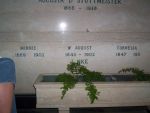
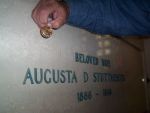

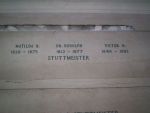


Months after my sister’s death I went to the Sacramento Library and looked at microfish about a legal battle between the heirs of Carl Janke’s estate in Belmont that appeared in the San Francisco Call. I lost the copy I made of that article that I am certain mentioned William O. Stuttmeister, and the sisters of Augusta Stuttmeister-Janke. Carl’s sons did not want Minni and Cornillia, to have anything, and one brother (or cousin) took their side, and was cut out. This has to be William, or W. JANKE. “The bride was attended by Miss Alice Stuttmeister, a sister of the groom, and Miss Minnie Janke, a sister of the bride, as bridesmaids, and Dr. Muldownado and Wm. Janke, a cousin of the bride, were groomsmen.” When Victor Presco turned twenty-one, the the Janke spinsters offered him a moving company in San Francesco. Apparently they saw him as the heir to the Stuttmiester legacy, and the Hope of a return to former glory because they had no children. How about their brother, William? Rosemary said this; “Your father was a made man.” Two days ago, in an e-mail, my cousin Daryl Bulkley confirmed my suspicions that ‘Stuttmeister’ was not the original name of the folks from Berlin. I suspect they were a branch of the Glucksburg family who became Calvinist Evangelicals, and perhaps Rosicrucians. In the top photo we see Minni and Corniallia Janke in the family vault that William Stuttmeister purchased for $10,000 dollars to put the reains of the Jankes and Stuttmeisters in after they were evicted from the Oddfellow cemetery. That William Ralston was a Oddfellow that put up a large sum of money to establish the Oddfellows in Germany – and perhaps elsewhere – makes me wonder about his alleged suicide by plunging into the bay. I am reading articles on the internet about the Oddfellows being the founders of the Welfare State in America, where being charitable to the poor, the infirmed, and the widows, was paramount. They also paid much attention to burying their dead, which suggests they believed in a different hereafter. As a theologian I have pointed out the strange raising of the dead in Matthew 27:53 at the very moment of Jesus’ alleged death.
I suspect Judas was given thirty pieces of silver to purchase Jesus’ tomb, and Jesus was about to practice the ancient Judaic ritual called of the RESUSCITATION, where the soul of the diseased enters the body of another. I believe this is why those who take the Nazarite Vow are bid to keep their distance from the dead. That the Oddfellows titled women as Rebekahs, suggests they are Rechabites, who have been associated with the Nazarites who composed the first Christian church called “The Church of God”. That Jesus came to be seen as God “the Father” is a usurption that began with Paul of Tarsus. That the fall of the Oddfellows in the Bay Area happened overnight, and all traces of their demise, all but disappeared, tells me there was a real Judas and purge. That Daryl pointed out in her research that we knew next to nothing about the Stuttmeisters, whose tomb was lost until seven years ago, tells me William Stuttmeister retired to the Geronimo Valley a disillusioned man, who played a rare violin, and left his Stuttmeister-Janke legacy to his housekeeper. And then he is dead, his remains put in the vault that I went to visit with my daughter and grandson. Before I left for California I told my friend Joy Gall, that I wanted a AA coin to put in this tomb in honor of Christine Rosamond Benton whose funeral fell on he first sober birthday in AA. As I lined up to view my sister in her casket, I did consider the Nazarite Vow I took in 1989. As fate would have it, I ended up putting this coin in William Oltman Stuttmeisters crypt because there was an opening made by the earthquake of 1989.
On this coin is an Angel. In 1992 I began a biography of my family called ‘Bonds With Angels’. It begins with an account of the Blue Angel that appear at the foot of Christine’s bed that woke her and Vicki, who crawled into Christine’s bed and beheld her. Vicki was six years of age, and is clean and sober this day. The Nazarite Vow bids one to not ingest alcohol, not get drunk, so that the Holy Spirit may speak through you, use you as a Horn of Power to broadcast the Word of God. When I entered the tomb of my ancestors and sat down on the marble bench, I noticed the letter A made of brass lying behind the faux fern plant. I picked it up. It was the A in JANKE that had come lose in the earthquake. I looked up at the stained glass window and read; “In loving memory of my beloved wife, Augusta Stutteister,” Was Augusta the Angel that came to visit my sisters? May our bonds with Angels continue – forever more! Amen! Jon Presco Daily Alta California, Volume 42, Number 14175, 24 June 1888 STUTTMEISTER-JANKE. One of the most enjoyable weddings of the past week took place at Belmont, Wednesday morning last, the contracting parties being Miss Augusta Janke, daughter of Mr. and Mrs. August Janke of Belmont,
and Dr. Wm. Stuttmeister of San Francisco. The house was handsomely decorated with a rich profusion of ferns and flowers, and at the appointed hour was filled with the relatives and intimate friends
of the contracting parties. At 11 o’clock the wedding march was played and the bridal party entered the parlor. The bride was attended by Miss Alice Stuttmeister, a sister of the groom, and Miss Minnie Janke, a sister of the bride, as bridesmaids, and Dr. Muldownado and Wm. Janke, a cousin of the bride, were groomsmen. The Rev. A. L. Brewer
of San Mateo performed the beautiful and impressive ceremony under an arch composed of flowers and greens very prettily arranged, after which the guests pressed forward and offered their congratulations. The bride was attired in a very pretty and becoming costume of the crushed strawberry shade, and wore a corsage bouquet of orange
blossoms. She carried a handsome bouquet of white flowers. After the guests had paid their compliments the bride and groom led the way to the dining-room, where the wedding dinner was served and the health
of the newly married pair was pledged. The feast over, the guests joined in the dance, and the hours sped right merrily, interspersed with music singing and recitations, until the bride and groom took their departure amid a shower of rice and good wishes. Many beautiful presents were received. Dr. and Mrs. Stuttmeister left Thursday morning for Santa Cruz and Monterey, where they will spend the honeymoon. On their return they will make their home in Belmont. 1911: Dr. Willian O. Stuttmeister was practicing dentistry in Redwood City, CA. (Reference: University of California, Directory of Graduates,
1864-1910, page 133).
Records from Tombstones in Laurel Hill Cemetery, 1853-1927 – Janke
– Stuttmeister
Mina Maria Janke, daughter of William A, & Cornelia Janke, born
February 2, 1869, died March 1902.
William August Janke, native of Hamburg, Germany, born Dec. 25,
1642, died Nov. 22, 1902, son of Carl August & Dorette Catherine Janke. Frederick William R. Stuttmeister, native of Berlin, Germany, born
1612, died January 29, 1877.
Mrs. Matilda Stuttmeister, wife of Frederick W.R. Stuttmeister, born
1829, died March 17, 1875, native of New York.
Victor Rudolph Stuttmeister, son of Frederick W.R. & Matilda
Stuttmeister, born May 29, 1846, died Jan. 19, 1893, native of New
York.
http://www.ebooksread.com/authors-eng/daughters-of-the-americanrevolution- california-s/records-from-tombstones-in-laurel-hill-cemetery- 1853-1927-gua/page-6-records-from-tombstones-in-laurel-hillcemetery- 1853-1927-gua.shtml Copyright 2011
Belmont Soda Works – Reborn
Posted on April 13, 2021 by Royal Rosamond Press
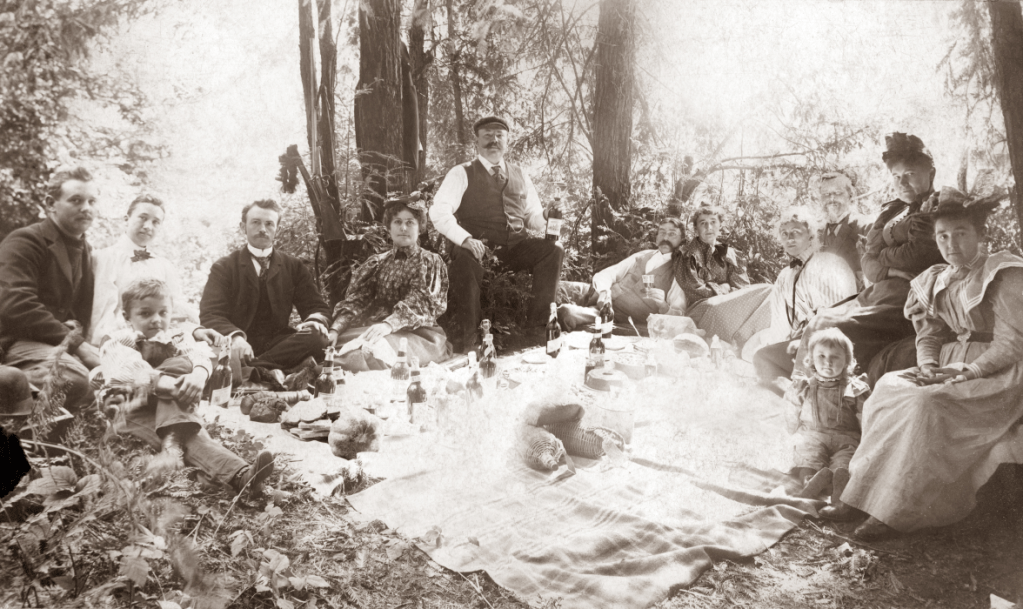
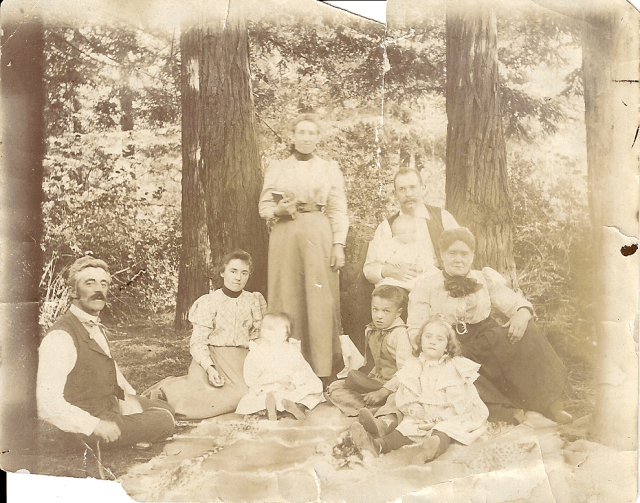

Capturing Beauty
by
John Presco
Capturing The Beautiful Hill
At 1:38 A.M. on April 13, 2021, I founded the new Belmont Soda Works. An hour later I found a branch of the Janke family, born of Elizabeth Janke, the daughter of Carl. Her children and grandchild lived and worked in many places in Belmont. I also found proof that my great, great, grandfather brought six portable houses around the Cape and erected them in Belmont, a city that means ‘Beautiful Hill’. This makes Janke a premiere pioneer builder in the Bay Area, and the owner of one of California’s first Theme Parks. Cark and his family are business peers of Walt Disney. I also found the copyrighted post of my families achievements, that precedes all copyrights by anyone who had written about this very important and historic family. Elizabeth and Melba Broderick, my father’s mother, look alike. This post remains untouched, and contains the double posting of images that was occurring at this time, until I learned how to fix this. I will now make the Janke family the premiere family genealogy. I believe the photos above were taken in Janke’s Park. This is one of the or the First Families of the Bay Area. Anyone interested in manufacturing a soda, please e-mail me.
JohnPresco@belmontsodaworks.com
History of the San Francisco Bay Region: History and Biography – Bailey Millard – Google Books
.


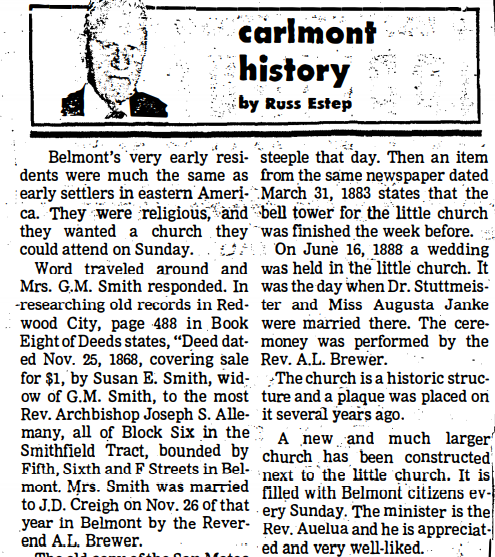


History of the San Francisco Bay Region: History and Biography – Bailey Millard – Google Books
The Life Summary of Eva Adelia
When Eva Adelia Johnson was born on 27 February 1880, in California, United States, her father, Amassa Parker Johnson, was 43 and her mother, Elizabeth Dorothy Janke, was 35. She married Lewis Charles Vannier on 19 October 1901, in Marin, California, United States. They were the parents of at least 1 son and 2 daughters. She lived in Judicial Township 2, San Mateo, California, United States in 1940 and Belmont, San Mateo, California, United States in 1969. She died on 21 December 1974, in San Mateo, California, United States, at the age of 94.
Vol6.pdf (belmonthistoricalsociety.com)
Stuttmeister-Janke Wedding at Ralston Hall
Posted on September 9, 2011 by Royal Rosamond Press





This morning I opened an email from my kin, Murray Oltman, and read the proof of what I have been saying for over ten years, being, Augusta Stuttmeister, the beloved wife of William Oltman Stuttmeister, is kin to Carl Arugusta Janke the co-founder, if not sole founder of the City of Belmont California.
William August Janke, native of Hamburg, Germany, born Dec. 25, 1842, died Nov. 22, 1902, son of Carl August & Dorette Catherine Janke.
Carl Janke came to San Francisco in 1848, one year before the Gold Rush. According to an article in the DAR, he brought six portable houses around the Cape and erected them in Belmont for gold miners who had struck it rich. As fate would have it, William Ralston ‘The Man Who Built San Francisco’ and his partner, lived in Belmont in a house that still stands, called Ralston Hall. I believe this is one of Janke’s homes that Coun Leonetto Cipriani purchased, and added on to. This house had 5,000 screws in it according to one (lost) article I read. Another lost article said these homes were manufactured in Mass. then shipped to California. I suspect two of these homes are found on Dolores Street in the Mission. One article said one house was moved a distance from the Tanforan ranch. The name Tanforan may have been the name of the Theme Park that Janke built in Belmont, perhaps the first in California. It also might be Turnverein, the German gymnastic clubs of the Forty-Eighters. There is much evidence the Stuttmeisters were members of the Turner Societies of Free-thinkers.
What is truly astounding, is that Sir Thomas Hesketh married Florence Sharon at Ralston Hall, and Florence Breckenridge married their son. Florence descends from John Witherspoon,and thus is kin to the Jessie Benton Fremont, thus the Presco family, when Christine Rosamond Presco married Garth Benton.
This is truly a Rags to Riches story. Christine and I used to take walks in Piedmont where the Sharon family lived. The Hesketh family are in the Peereage.
Then there is the Oddfellow gathering in Belmont that may have been staged by William Ralston. The Oddfellows were forming a union with the Freemasons and holding Knights Templar titles. Was the Stuttmeister-Janke union a Masonic-Odfellow marriage? If so, my family owns all those legends that Dan Brown gathered into his basket to create a money-making work of fiction.
When my daughter gets married, I will do all that is humanly and divinely possible to see that she ties the night at Ralston Hall, because; “All’s wll, that ends well!”
Jon Presco
Copyright 2011
Florence Louise Breckinridge was born in November 1881 at California, U.S.A..2 She married Thomas Fermor-Hesketh, 1st Baron Hesketh, son of Sir Thomas George Fermor-Hesketh, 7th Bt. and Florence Emily Sharon, on 9 September 1909 at British Embassy Church, Paris, France.
1888: From the Daily Alta, an article on the marriage of Dr. William O.
Stuttmeister and Augusta D. Janke.
Daily Alta California, Volume 42, Number 14175, 24 June 1888
STUTTMEISTER-JANKE.
One of the most enjoyable weddings of the past week took place at
Belmont, Wednesday morning last, the contracting parties being Miss
Augusta Janke, daughter of Mr. and Mrs. August Janke of Belmont,
and Dr. Wm. Stuttmeister of San Francisco. The house was
handsomely decorated with a rich profusion of ferns and flowers, and
at the appointed hour was filled with the relatives and intimate friends
of the contracting parties. At 11 o’clock the wedding march was played
and the bridal party entered the parlor. The bride was attended by Miss
Alice Stuttmeister, a sister of the groom, and Miss Minnie Janke, a
sister of the bride, as bridesmaids, and Dr. Muldownado and Wm.
Janke, a cousin of the bride, were groomsmen. The Rev. A. L. Brewer
of San Mateo performed the beautiful and impressive ceremony under
an arch composed of flowers and greens very prettily arranged, after
which the guests pressed forward and offered their congratulations.
The bride was attired in a very pretty and becoming costume of the
crushed strawberry shade, and wore a corsage bouquet of orange
blossoms. She carried a handsome bouquet of white flowers. After the
guests had paid their compliments the bride and groom led the way to
the dining-room, where the wedding dinner was served and the health
of the newly married pair was pledged. The feast over, the guests
joined in the dance, and the hours sped right merrily, interspersed with
music singing and recitations, until the bride and groom took their
departure amid a shower of rice and good wishes. Many beautiful
presents were received. Dr. and Mrs. Stuttmeister left Thursday
morning for Santa Cruz and Monterey, where they will spend the
honeymoon. On their return they will make their home in Belmont.
1911: Dr. Willian O. Stuttmeister was practicing dentistry in Redwood
City, CA. (Reference: University of California, Directory of Graduates,
1864-1910, page 133).
Records from Tombstones in Laurel Hill Cemetery, 1853-1927 – Janke
– Stuttmeister
Mina Maria Janke, daughter of William A, & Cornelia Janke, born
February 2, 1869, died March 1902.
William August Janke, native of Hamburg, Germany, born Dec. 25,
1642, died Nov. 22, 1902, son of Carl August & Dorette Catherine
Janke.
Frederick William R. Stuttmeister, native of Berlin, Germany, born
1612, died January 29, 1877.
Mrs. Matilda Stuttmeister, wife of Frederick W.R. Stuttmeister, born
1829, died March 17, 1875, native of New York.
Victor Rudolph Stuttmeister, son of Frederick W.R. & Matilda
Stuttmeister, born May 29, 1846, died Jan. 19, 1893, native of New
York.
http://www.ebooksread.com/authors-eng/daughters-of-the-americanrevolution-
california-s/records-from-tombstones-in-laurel-hill-cemetery-
1853-1927-gua/page-6-records-from-tombstones-in-laurel-hillcemetery-
1853-1927-gua.shtml
http://www.ralstonhall.com/tour/video.html
The Charlatans of Belmont
Posted on May 9, 2021 by Royal Rosamond Press
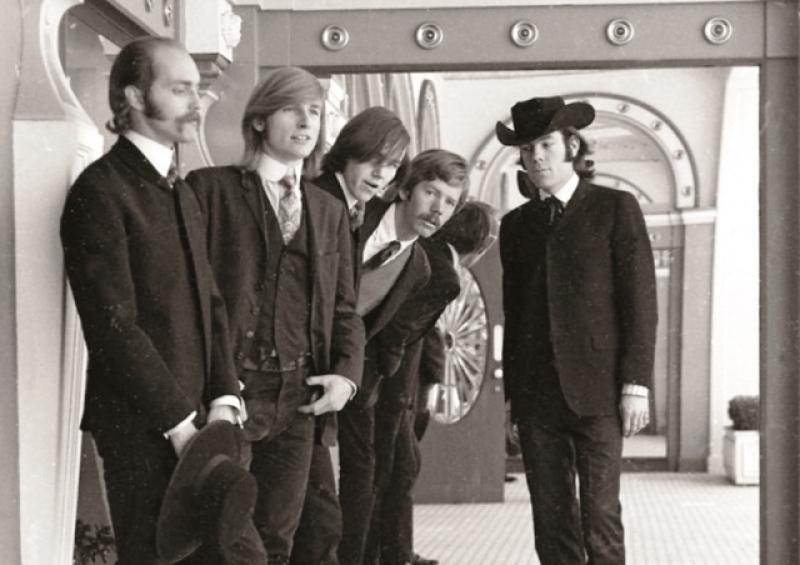


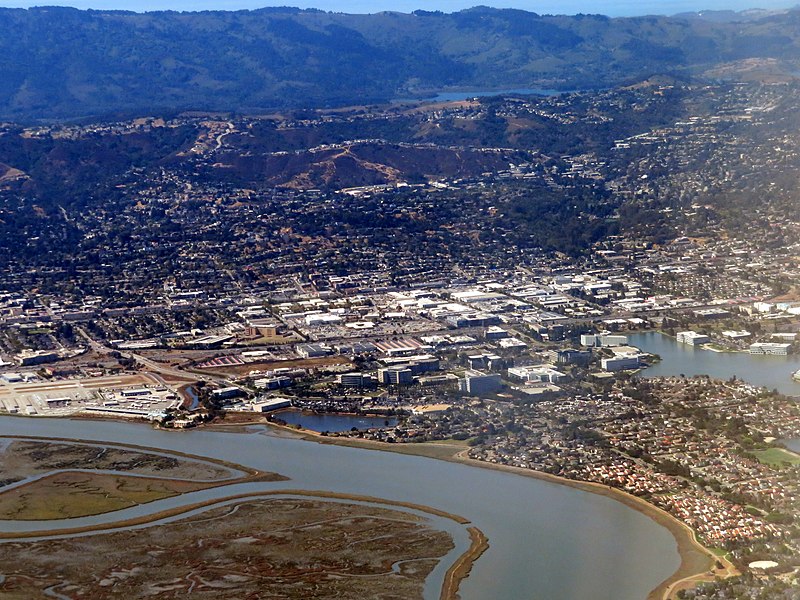
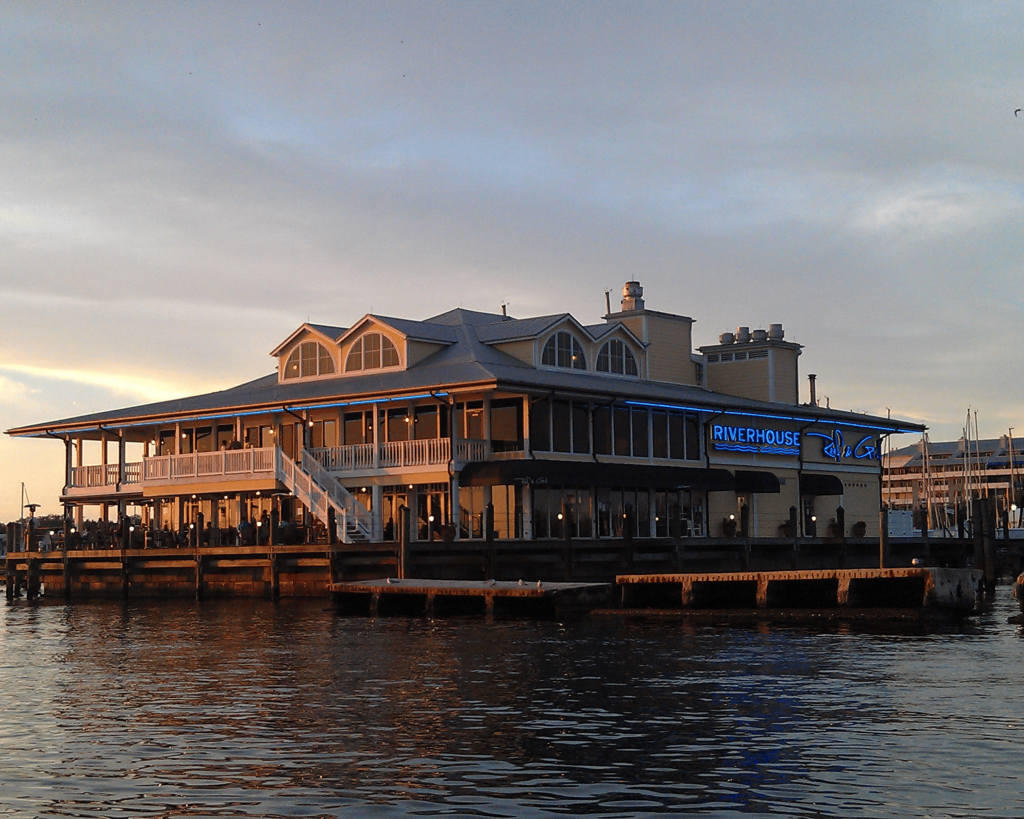
I am looking to form a band called ‘Belmont Charlatans’. I am looking for investors in The Rouge Dog Sarsaparilla Saloon.
I awoke from a dream early this morning. I was with Peter Shapiro, Keith Purvis, and, Christine Wandel. Peter was on this balcony hiding something. We confronted him. He accused us of hiding bottles under our shirts. Then, we caught Chris, slinking away. What does she got?
I lie there trying to go back to sleep, but could not. I began to study our history we made. Twelve years ago, Peter told me he used to play with the Charlatans, and considered Mike Wilhelm the guy who got it all started. He was very impressed with his guitar playing – as was Jerry Garcia. Rock Historians are saying the Charlatans set the scene for the Haight Ashbury and the Summer of Love.
All of a sudden, I am looking at the photograph of my kindred in Belmont, running a soda company – and a Summer Fun Theme Park. Look at what they are wearing. My kindred were the real thing, the Real McCoys, who are connected to William Ralston and William Sharon who made millions on the Comstock Load. Sharon built Virginia City. The Red Dog Saloon was built in the home that once belonged to Henry Comstock. You cant ask for better historic ambience – minus the drugs! My generation has grown up. We need a place to go that reminds us of our youth. The scene of the Sober Cowboy ordering a sarsaparilla is a classic and traditional scene that the City of Belmont can Brand.
hub.pdf (belmonthistoricalsociety.com)
What I see, is the building of Sarsaparilla Pier that would look like the building above – that is on the waterfront! Downtown Belmont is Deadsville, and not the good kind of dead. Rock Scully managed the Grateful Dead – and the Charlatans! I see a house band called ‘The Belmont Charlatans’ a take on the name for sellers of medicine oil and other healing drinks – which might have behind the name of this group that experimented with a wonder drug – when it was legal. The Charlatans played jug-band music and modern western. Selling alcohol is down on my list of things to do.
I see Sarsaparilla Pier as a destination for locals, and their guests who come to town. Heading to San Francisco is a chore these days, and, all the old sourdough flavor is gone. I see Belmont Sourdough Bread, Belmont Ice-cream and Yogurt shop, root beer floats, Belmont Sodas, Sushi bar, Belmont Kefir, and – Rougedog Coffee and Teas. Sure, why not Rougedog Hot Dogs!
Lord Hesketh at Belmont | Rosamond Press
This is where you bring your kids at the end of a hot summer day. Teenagers will come on The Date Shuttle that leaves from downtown. There will be a statue of Jack London. How about a statue of The Charlatans who I suspect got their name from the dealing of William Sharon and his gun toting mistress, Sarah Hill, who produced fake papers claiming she was his wife. If true, this would be Belmont’s band.
Above is a photograph of the Charlatans in front of the Hippodrome that was a showcase for the Barbary Coast where my grandfather, Victor Hugo Presco, was a professional gambler. I would like to see a schooner that sails to Crockett and back. How about a stage coach ride for newlyweds? My kin, Carl Janke, ran the stagecoach line, The Belmont Accommodations Company. William Janke opporated the Belmont Soda Company, and lived at 320 Haight Street for a time. He helped with the Turnverein Hall his Pioneer father built that is a model for Sarsaparilla Pier, as is the Janke theme park that may be the first such park in California – that may have inspired Disneyland.
My uncle owned Sam’s Anchor Café in Tiberon where scenes from the cult movie ‘The Second Coming of Suzanne’ were filmed. The director was in my art class. The Bigalows were good friends with the Keenes. I see a Keene Art Festival held on Sarsaparilla Pier. How many real artists have been tempted to create a historic work of fakery? Sailboats from Tiberon can dock in Belmont, and sailors do some shopping in the new boutiques.
Hey! How about a costume contest with skit?…..Will the real Keenes – please stand up!
I would like to see a Charlatan Court where folks can present their new ideas.
I just discovered there was a Carl Janke Day – and a street that was named after him! I am going to petition the Belmont City Government to get these markers – restored! What are people thinking? Most cities place historic markers – with pride! I have encountered Social Cleansing by certain citizens who labeled their Founding Pioneer Family – a public nuisance! This resembles a young gun slinger going after a famous sheriff. Consider Gunsmoke, and, Miss Kitty. What exactly was her job description? A thousand Westerns have been made where some folks behave badly, and some don’t. To wipe out the history of a Pioneer – put some bad historians – in power! I wonder if there is any un-claimed Janke land? I feel my High Noon Moment, coming! I will be linking this history with Black Mask author, Norbert Davis, and Ludwig Wittgenstein.
Bad Day At Belmont | Rosamond Press
One rude Belmont historian raves about the Warlocks playing out on the highway near Belmont. This is a big feather in her cap. On this day, with the pulp fiction song ‘The Shadow Knows’ I come home to Belmont to claim my rightful heritage! There is no threat of violence coming from me. Playing the Big Victim is the game of real charlatans.
How about building the afterdeck of the Lancaster Witch and conducting weddings? There can be the Ralston and Janke rooms at the Palace Hotel.
John Presco
President: Belmont Soda Works
Copyright 2021
Fermor, Bond, and Fleming | Rosamond Press
(32) The Charlatans: The Red Dog Saloon, Virginia City, Nevada: The Shadow Knows – YouTube
George Hunter of the Charlatans never shot Jerry Garcia of the Grateful Dead, not even once. But in the spring of 1966, on the grounds of Rancho Olompali just north of San Francisco, Garcia had reason to believe Hunter was gunning for him, causing the great guitarist to royally freak out. The misunderstanding unfolded when Hunter decided to drop some LSD and bring a loaded .30-30 Winchester rifle to a party at the Dead’s new Marin County hangout. Hunter never intended to strike fear into the heart of his genial host, but when he did, he was so high that he began to panic—perhaps he had accidentally shot someone, if not Garcia, after all. It took a long bummer of a night, and three of Hunter’s closest friends, to shake that demon thought from his troubled mind.
“I said, ‘How would you like to be looking down the barrel of this thing?’”
You’ve probably never heard of the “Incident at Olompali,” as no one has called it since, and your awareness of the Charlatans is likely limited to seeing the band’s name on scores of vintage rock posters, alongside more familiar monikers such as Jefferson Airplane, Quicksilver Messenger Service, Big Brother and the Holding Company, and Grateful Dead.
That’s too bad, because in their heyday, from 1965 to 1968, the Charlatans were a lot of people’s favorite band, thanks to a danceable mix of distinctively American musical genres—from the blues and rock to Western swing and jazz. Around the time of the Charlatans’ first paying gig, in June of 1965, the Grateful Dead were still playing pizza parlors as the Warlocks, Jefferson Airplane had yet to take off, Big Brother was a year away from handing Janis Joplin a microphone, and Quicksilver was not even a gleam in anyone’s eye. By 1966, the Charlatans had a record deal with the same label that had released the 1965 smash hit Do You Believe In Magic? by the Lovin’ Spoonful.
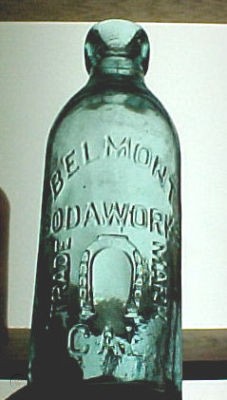
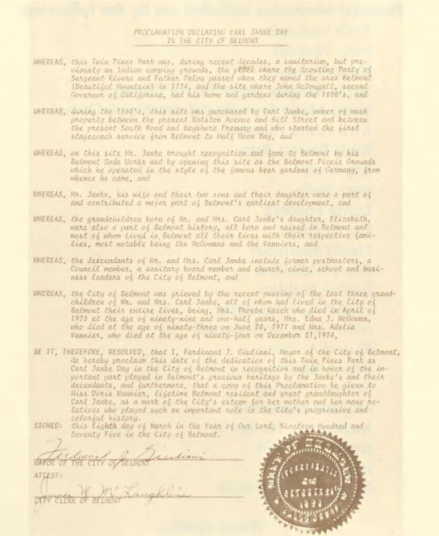
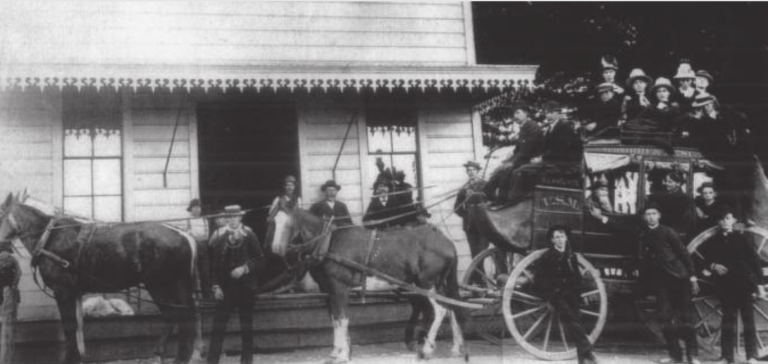
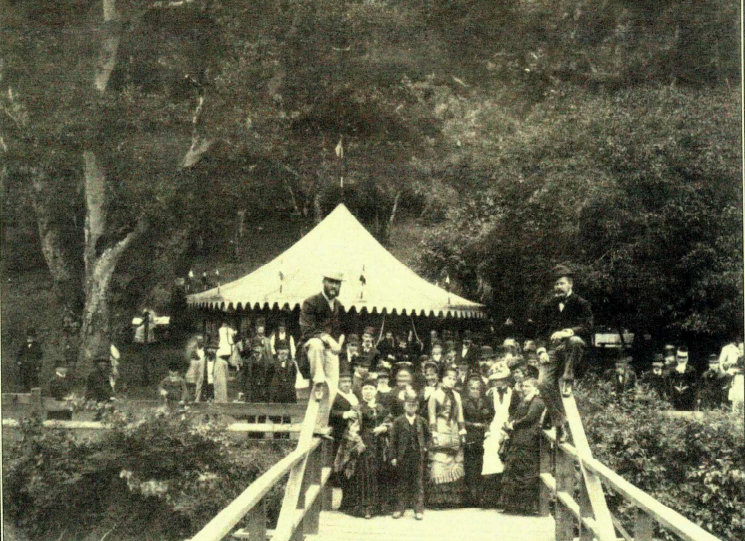
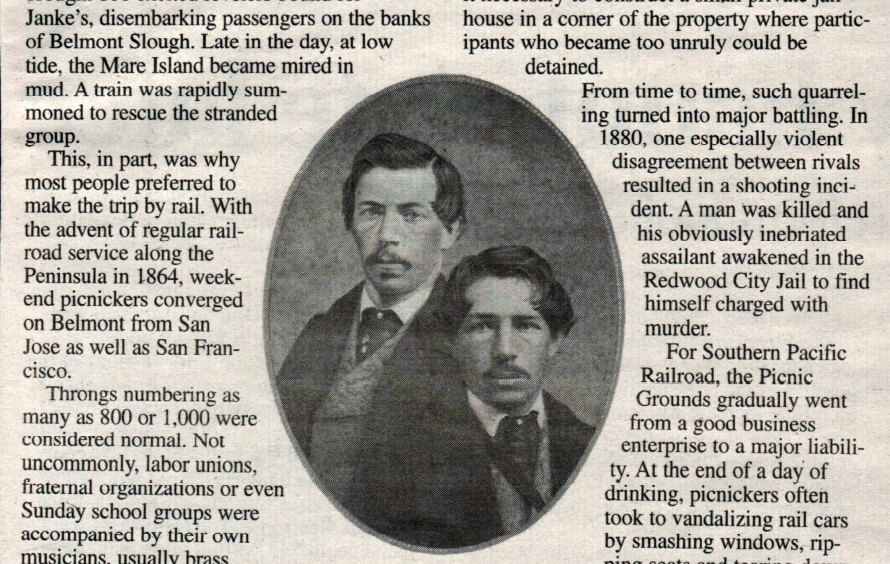

Copyright 2021
 Rosamond Press
Leave a comment