

Where Art Thou?
The Staff of Aaron and Nazarite Angel
One thing can be said about the dead with certainity….
THEY ARE WORK SHY and WORLDLY ARGUMENTS HAVE CEASED FOR THEM
We are all born into a world of existing arguments. When we take the first step to get sober, we are bid to leave Argument Mundi, and focus on getting, and remaining sober. Two weeks ago, I worked on forming a religion that would specifically protect alcoholic LGBTQ people from…..PERSECUTION! I was inspired to do this by the
BLACK INVERTED TRIANGLE
People that were judged UNFIT for Nazi society were made to wear this
DEATH BADGE

People were chosen to wear these Death Badges. They had been….
JUDGED
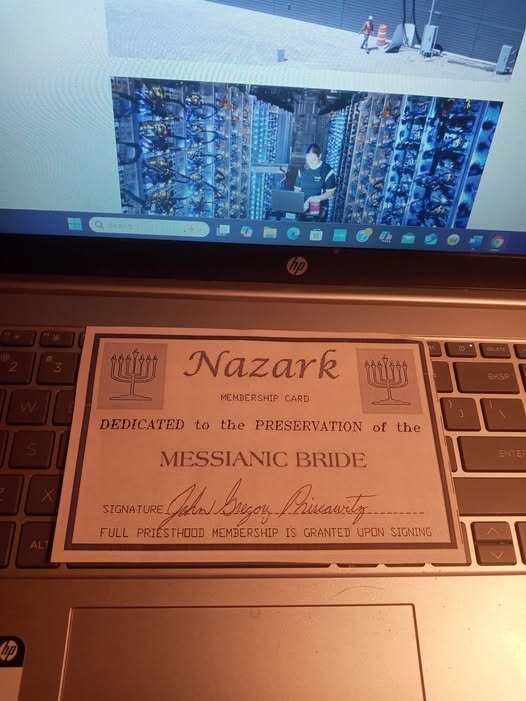
Two days ago I looked closely at my NAZARK badge that anointed me into the Priesthood. Of what? The NAZARK people no longer exist. I am…..
THE LAST NAZARK PRIEST STANDING?
I think I downloaded this badge in 1999. The Internet was
YOUNG AND FREE
In theory, this is the birth of Artificial Intelligence, and is worth…
$248,000,000 million dollars
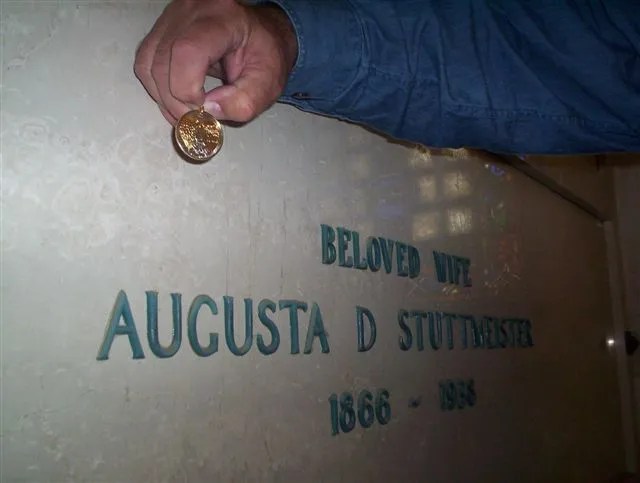
A sister in AA gave me a Angel Coin after she heard I was going to visit my Janke-Stuttmeister ancestors in Colma – for the first time. They were lost – and now they are found! Augusta D. Stuttmiester married William Stuttmeister in Ralston Hall. They took the Janke stagecoach to Halfmoon Bay for a honeymoon, and established resident in Belmont.
In this video, the War Seccretay calls fellow Americans “garbage” and “debris”. Where did he get permission to denigrate and divorce some Americans from the right to serve and protect their Democracy? Is it the right of the U.S. Military to do such things? Pete has a tattoo of the Jerusalem cross on his arm. Is this the sign of
“UNITY OF PURPOUS” ?
The Nazis defined who they were, by people they deemed INFERIOR. This is to say, they are STRONGER and more UNITED in comparison to someone who is…..
CRIPPLED OR BLIND
On this day, I John Presco ‘The Nazarite found The Nazark Church. It is open to all people the War Secretary REJECTS! We propmote all ideas that Pete trashes, while wearing a military uniform of the United States.
The Nazark Church gives Sanctuary to all who are persecuted for righteousness sake. The Nazis ended the “grumbling” of millions of Jews, and millions of margianl peoples. Allegedly God ends the “grumbling” over the temple priesthood. But, this is about moving the Tabernacle from Shiloh to Jerusalem.
On this day, June 1, 2026, I challenge the Man of Holy War to a debate! Let him “grumble” to my face! I will prove he does not speak for God. Not even close!
John ‘The Nazarite’
“So the last shall be first, and the first last: for many be called, but few chosen.
The Lord said to Moses, “Put back Aaron’s staff in front of the ark of the covenant law, to be kept as a sign to the rebellious. This will put an end to their grumbling against me, so that they will not die.” 11 Moses did just as the Lord commanded him.
First Amendment
Congress shall make no law respecting an establishment of religion, or prohibiting the free exercise thereof; or abridging the freedom of speech, or of the press; or the right of the people peaceably to assemble, and to petition the Government for a redress of grievances.
EXTRA! At 11:20 AM I solved the mystery of what is inside the Ark. And, what tree Adam and Eve partake from. It was my first vision when I awoke. I was going to post on it first, but, was gong to de so…..next!
City of Belmont CA – Government
oresdtpnoSyl9e211049rl070at21a1sm 40Yueta:77miMcc7A12 c6cud ·
Please join us for Belmont’s annual Pride Flag Raising Ceremony tomorrow, June 2, at 10:30 a.m. in front of City Hall as we come together to celebrate unity, inclusion, and community. This free event will feature guest speakers and a poem from Belmont’s new Poet Laureate, Greg McCulloh. We invite all community members to attend and help us recognize and celebrate Pride Month together. All are welcome!
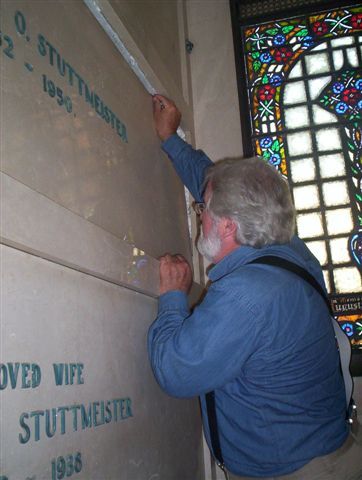
John Presco slips his sister’s AA Angel coin into William Suttmeister’s crypt via a crack made by the earthquake. Peace!
So the last shall be first, and the first last: for many be called, but few chosen.
7/18/2024
Here, midrash tells us, the angel is trying to figure out if Manoaẖ thinks he’s a man, and is offering him dinner, or if Manoaẖ thinks he’s an angel, and is offering, well, an offering.
“No,” says the angel, trying to answer both possibilities. “I won’t eat your food. And if it is a burnt offering you’re planning, offer it not to me but to Adonai.”
4.8(6.2k)
The “Ark of the Nazarite” is not a specific biblical term, but rather likely a combination of two distinct biblical concepts: the Ark of the Covenant and the Nazarite Vow. [1, 2, 3, 4, 5]
- The Ark of the Covenant is a sacred, gold-covered wooden chest built by the Israelites to hold the tablets of the Ten Commandments. It served as the focal point of God’s presence in the Tabernacle. [1, 2]
- The Nazarite Vow is an ancient, voluntary dedication to God found in Numbers 6. It required individuals to refrain from alcohol and grape products, never cut their hair, and avoid touching dead bodies to remain ritually pure. [1, 2, 3]
Black triangle (badge)
From Wikipedia, the free encyclopedia
For other uses, see Black triangle (disambiguation).

The inverted black triangle (German: schwarzer Winkel) was an identification badge used in Nazi concentration camps to mark prisoners designated “asocial” (“a(nti-)social“)[1][2] and arbeitsscheu (“work-shy“). The Roma and Sinti people were considered asocial and tagged with the black triangle.[1][3] The Yenish were also counted among the “asocials”.[4] The designation also included disabled individuals, alcoholics, beggars, homeless people, nomads, and prostitutes (though male sex workers were marked with the pink triangle), as well as violators of laws prohibiting sexual relations between Aryans and Jews.[1][2] Queer women, transmasculine individuals, and other transgender and queer people assigned female at birth were also deemed to be anti-social, including lesbians and others deemed as nonconformists.[2][5]
“Asocials” during the Nazi era
The term asocial was rooted in a nationalist and racial ideology, with a focus on eugenics. This also applies to “Lumpenproletariat” when occasionally used synonymously by Nazi ideologues and “asocial” researchers. A Nazi synonym that replaced “asocials” was community aliens, or Gemeinschaftsfremde.[6] A law against marginalized social groups was planned and in process but was prevented by the defeat of the Nazi regime in 1945.[7][8]
Among those arrested as asocial [there were] also enough people who could not be accused of anything other than, for example, having come to work late twice or taken unauthorized leave, changed jobs without permission from the labor office, “mistreated” their National Socialist domestic servant, earned their bread as a gigolo, and suchlike “offenses”.[9]
The total number of prisoners classified as “asocials” or “professional criminals” in concentration camps is estimated at 60,000 to 80,000.[10]
Usage

Nazi
Main article: Nazi concentration camp badge
The symbol originates from Nazi Germany, where every prisoner had to wear a concentration camp badge on their prison clothes, of which the design and color categorized them according to the reason for their internment. The homeless were included, as were disabled people, alcoholics, those who habitually avoided labor and employment, draft evaders, pacifists, Roma and Sinti people, and others.[11][12]
Romani
Main article: Romani Holocaust
Romani first wore the black triangle with a Z notation (for Zigeuner, ‘gypsy‘) to the right of the triangle’s point.[13] Male Romani were later assigned a brown triangle in some camps.[14] Female Romani were still deemed asocials as they were stereotyped as petty criminals (prostitutes, kidnappers and fortune tellers).[15]
Disabled people
See also: Aktion T4
The Nazis marked disabled concentration camp inmates with a black triangle. Some United Kingdom-based groups concerned with the rights of disabled people have adopted the symbol in their campaigns,[16][17] citing press coverage and government policies – including changes to disability benefits and Disability Living Allowance, as the reasons for their campaigns.[18][19] “The Black Triangle List” was created to keep track of welfare-related deaths due to cuts by the Department for Work and Pensions.[20]
Aftermath

After the Nazi rule
In May 1946, the two former concentration camp prisoners Georg Tauber and Karl Jochheim-Armin published a magazine titled: Truth and Justice! “Black-Green”. Internal information bulletin of the concentration camp inmates of Germany, the Black and Green, of which a total of three issues are known. Their goal was the moral recognition of the suffering of asocials and Berufsverbrecher (literally professional criminals) as well as the fight for material compensation for these two categories of concentration camp prisoners. In later issues of the magazine, the admission of “greens” and “blacks” to the administration of the care centers was demanded; the title of the third issue reads: Bi-monthly journal for truth and justice of all former concentration camp inmates and Nazi victims. The magazine also leveled sharp criticism at the behavior of former political prisoners and the negative portrayal of “black” and “green” prisoners in their publications, although they were aware of the problem of public conflicts among prisoner groups.[21]
Persistent stereotypes
Even after 1945, the term with the underlying complexes of ideas (“saboteur in the building of socialism”, “socially harmful […], unwilling […], to integrate into society”) remained part of stereotypical everyday thinking in German public opinion. “Asocials” were not recognized as victims of Nazi persecution even by other victims. In Hamburg, survivors of the concentration camps were divided into three categories: Category “I A” were “political conviction offenders”, “I B” were non-criminal persecuted, under category “I C” “criminals” and “asocials” were subsumed. They received only material benefits immediately after liberation, some of which were later withdrawn, and were excluded from any compensation. Furthermore, they had to register at the labor offices. The counseling centers and associations, in which former concentration camp prisoners were also involved, often held the view that these criminals and asocials damaged the reputation of all survivors; this was true in both East and West Germany.[22] In the West German compensation law, asocials and Berufsverbrecher were not recognized as victims of persecution and, thus, not entitled to compensation.[23]
In the GDR, this tradition came into effect in the Penal Code of 1968 in § 249 “Endangering public order through asocial behavior”, the “Asi paragraph”.[24] Previously, courts had interpreted the Ordinance on Residence Restrictions of August 24, 1961 in such a way that persons “who could not be integrated into socialist society” could be sentenced to force labor.[25]
Of the approximately 230,000 people imprisoned in the GDR between 1960 and 1990 for political reasons, 130,000 were convicted as asocials for non-conformist lifestyles.[26]
Compensation
Asocials were not recognized as victims of Nazi persecution in either West Germany or East Germany. Therefore, there was also no targeted compensation for this group. Even in the GDR, widespread negative attitudes toward asocials prevented their full recognition as victims of Nazi persecution.[27]
Odd Fellows Cemetery
Opened: November 19, 1865
Location: Bounded by Geary, Turk, Parker, and Arguello Streets (30 acres).
Closed: Bodies moved in 1929-1935 to Greenlawn Cemetery in Colma, California.
View west, with French Hospital in distance. Columbarium on right. Looking east into the Yerba Buena section from the Friends Home section. The corner stone to the left of the lady in the black dress reads “[…] Friends Home Sec.” The steps across the road read: “Yerba Buena No. 15.” To the left of the tree you can see the Charles de Young monument. (ANSR), 1900s –
All that remains of the cemetery founded on the western slopes of Lone Mountain is the Columbarium, a magnificent repository for cremated remains still in business today (run by the Neptune Society).
A Greek cemetery, close to the current intersection of Stanyan and Golden Gate, was accessed through the Odd Fellows ground until the bodies were moved to the Golden Gate Cemetery. (Although the removal of the bodies may not have been done with the greatest of care. See the 1899 story, “A Neglected Graveyard”, on Ron Filion’s site for more.)
Odd Fellows plot in Laurel Hill Cemetery. [1004 In Laurel Hill (sic) San Francisco Lodge I.O.O.F Plot], circa 1885 –
The land, exempting the five-acre plot surrounding the Columbarium, was developed into commercial and residential lots. A large section was used for a public park and pool named after former mayor Angelo Rossi.
Memorial Day ceremonies at Grand Army of the Republic plot in Odd Fellows Cemetery. Parker Monument on upper left., May 31, 1909 –
Sources: San Francisco Almanac, Gladys Hansen; “Lone Mountain & Laurel Hill”, The Argonaut, Winter 1992, by Deanna L. Kastler.
The Israelites said to Moses, “We will die! We are lost, we are all lost! 13 Anyone who even comes near the tabernacle of the Lord will die. Are we all going to die?”
Numbers 17New International Version
The Budding of Aaron’s Staff
17 [a]The Lord said to Moses, 2 “Speak to the Israelites and get twelve staffs from them, one from the leader of each of their ancestral tribes. Write the name of each man on his staff. 3 On the staff of Levi write Aaron’s name, for there must be one staff for the head of each ancestral tribe. 4 Place them in the tent of meeting in front of the ark of the covenant law, where I meet with you. 5 The staff belonging to the man I choose will sprout, and I will rid myself of this constant grumbling against you by the Israelites.”
6 So Moses spoke to the Israelites, and their leaders gave him twelve staffs, one for the leader of each of their ancestral tribes, and Aaron’s staff was among them. 7 Moses placed the staffs before the Lord in the tent of the covenant law.
8 The next day Moses entered the tent and saw that Aaron’s staff, which represented the tribe of Levi, had not only sprouted but had budded, blossomed and produced almonds. 9 Then Moses brought out all the staffs from the Lord’s presence to all the Israelites. They looked at them, and each of the leaders took his own staff.
10 The Lord said to Moses, “Put back Aaron’s staff in front of the ark of the covenant law, to be kept as a sign to the rebellious. This will put an end to their grumbling against me, so that they will not die.” 11 Moses did just as the Lord commanded him.
12 The Israelites said to Moses, “We will die! We are lost, we are all lost! 13 Anyone who even comes near the tabernacle of the Lord will die. Are we all going to die?”
Irwin Keller
Rabbi, Teacher, writer, hope-monger
Sonoma County, CA * (415) 779-4914 * Irwin@irwinkeller.com
A Nameless Angel and a Woman whose Name Might or Might Not Have Been Tzlelponit
So speaking of angels who come to visit us, it’s time to gather around, children, because I have a good story to tell you.
It’s a Torah story, and I know that you know a lot of those. But this might be one that you haven’t heard before. Even though it might feel familiar.
I tell you this story tonight – even though there are many pressing things we could talk about – because it is this week’s haftarah portion. It is from the Book of Judges – an under-appreciated book about the doings of the Jews in the Promised Land from the time they settled until the time they decided a king would be nice. So maybe 300 or 400 years of history.
So as I implied, it is a story about a visit from an angel. Two visits in fact.
So why do we read this story this week?
Well, you know that every week’s haftarah portion is connected to the week’s Torah portion because of a similar theme or some shared language or plot device. Now this week’s Torah portion, called Naso, is quite a mixed bag. It has some administrative stuff, cataloguing gifts to the priests. It has some harsh, hard-to-redeem stuff about the testing of the fidelity of wives. On the other extreme it offers us the gift of the words of the threefold priestly blessing – y’varekh’kha Adonai v’yishm’rekha – “may God bless you and keep you,” words that we continue to bless each other with to this very day.
And this week’s portion sets out the rules for taking a nazirite vow. And that’s the connection to this week’s haftarah.
What? So now you want to know what a nazirite vow is?
Fine. A nazirite vow is a vow that a Jewish person way back in antiquity could take in order to dedicate themselves to God. To be a little separate from the world and connected to the Divine. A vow like a monk or a nun might take in Catholicism.
The nazirite vow was open to men and to women. We don’t know if they hung out together or lived communally the way monks do and nuns do. More likely, they continued living their lives in the thick of the community, but people understood that they were different and somehow set apart.
In taking the vow to become a nazirite, these people would give up cutting their hair. And they would give up wine and, in fact, any product of the grapevine – so no wine, no juice, no grape jelly, no wine vinegar, and dolmas were right out. And, for the duration of their vow, they would not be allowed to go near the dead, even if it was their close loved one who died. And if they did so accidentally, they would have make the vow over again.
The nazirite vow wasn’t a lifelong commitment. Just for the period of time the nazirite would choose. At the end of the term of their vow, they would bring a sacred offering to the Temple: two lambs, a ram, a basket of matzah. And these would get offered up to God. And right then and there the nazirite would finally shave their head and those locks that had not known a scissors for however many years would get thrown right into the fire. And when all that was done, the nazirite vow would have been fulfilled and released, and the now former nazirite could at last sit down to a long overdue glass of chardonnay.
So children, put your thinking caps on. No wine. No cutting of hair. Does that sound familiar at all? Does it bring to mind some Sunday school story or Leonard Cohen song?
That’s right, Samson. Samson the great hero, who led the Israelites for twenty years and brought the roof down on the Philistines!
Samson was a nazirite, and Samson is the link to this week’s haftarah portion.
So… are you ready?
It is long ago in the land of Israel. The Israelites, once slaves, have been living in the Promised Land for hundreds of years. But it hasn’t all been peaceful. And right now, they have been conquered by the Philistines and are living under Philistine rule.
The Israelites are holding out for a hero.
And here in this moment of fear and hope and worry, we meet a woman who, like this moment of time itself, would like to give birth but is unable.
What is her name? We don’t know. Torah doesn’t tell us. Torah just says that she was married to a guy named Manoaẖ. You probably don’t like that Torah does tell her name. I don’t like it either. And neither did the rabbis of the Talmud who, on one page of Bava Batra, supplied the names of many of the unnamed women in Torah. And this woman, they say, is named Tz’lelponit, which I guess might mean “the one who is drawn to the shade,” or maybe it means something else.
So here she is one day – maybe she’s resting in the shade, maybe she’s working in the field – and suddenly a malakh Adonai – an angel of Adonai – appears to her and says, “You shall conceive and bear a son.”
Not waiting for her reaction, the angel continues with instructions: “Avoid all wine and all liquor. Do not eat anything impure. And do not cut your hair. For your child is going to be a nazirite from the womb! And he shall be the hero who will deliver the people from the Philistines.”
Is this feeling familiar? An angel coming to announce a miraculous birth? Maybe like the angels who came to Abraham to prophesy the birth of Isaac, although they didn’t speak to Sarah, she just overheard them. But what about Mary? Ding ding ding. Yes, that might be why this is feeling familiar, because you are maybe more likely to know that core story of Christianity than this side tale of Judaism.
Anyway, back to our protagonist whose name might or might not be Tz’lelponit. She clocks this visitor as an angel right away. She goes home and tells her husband what happened, although, maybe knowing her husband’s skepticism, she describes the visitor as “a man of God” who looked like an angel and who was astonishing. Anticipating her husband’s questions, she says that she didn’t asked the stranger where they came from, and the stranger had not volunteered their name.
Manoaẖ is cautiously excited about this prophecy. But wants to know how you raise a nazirite baby! So he prays to God to send this messenger a second time so he could ask the follow-up questions directly.
God complies and sends the angel again – again not to Manoaẖ but to Manoaẖ’s wife, whose name might or might not have been Tz’lelponit. This time she realizes if she doesn’t have her husband there, she’ll be spending the next five verses of Torah repeating everything again. So she runs and fetches Manoaẖ and he follows her back to the field. Manoaẖ asks the stranger, “Are you the man who spoke to my wife?”
(Because where his wife saw an angel, he insists on seeing a man.)
“Yes,” answers the angel.
“Oh! May your words come true! And tell me, what rules do we need to follow for raising the boy,” asks Manoaẖ.
“Just what I already told your wife,” answers the angel. “No wine. No liquor. Nothing that comes from a grapevine. Nothing unclean.”
“Well, please stay and let us offer you something,” says Manoaẖ. “It’s goat night.”
Here, midrash tells us, the angel is trying to figure out if Manoaẖ thinks he’s a man, and is offering him dinner, or if Manoaẖ thinks he’s an angel, and is offering, well, an offering.
“No,” says the angel, trying to answer both possibilities. “I won’t eat your food. And if it is a burnt offering you’re planning, offer it not to me but to Adonai.”
Clever, huh?
And this is where we learn that angels presumably don’t eat. Maybe because they don’t have anatomies. Or maybe because the reason they fulfill their mission is because it is God’s will, not because there might be treats at the end. Angels are messengers who don’t need to be tipped.
Manoaẖ, still curious, asks the stranger’s name. “So we can name the baby after you.”
But the angel declines. “You must not ask my name; it is wondrous, unknowable.”
And so again, like other times in Torah, like after Jacob’s wrestling match, an angel refuses to share their name. Maybe because it can’t be heard or understood by human ears. Maybe because the angel is its own name – its name is its essence, and thus unpronounceable. Or maybe the angel knows that when the story gets told down the road, it’s going to leave out the name of Manoaẖ’s wife, and the angel withholds its own name in solidarity.
So Manoaẖ and his wife prepare the goat and the meal offering and set it on a stone altar. And then a marvelous thing happens as they watch. The flame leaps up from the altar toward heaven. And the angel of Adonai steps into the flames of the altar and ascends to the sky on the updraft, while they watch, astonished.
They throw themselves to the ground. Manoaẖ, finally believing that this was an angel, says to his wife, whose name might or might not have been Tz’lelponit, “Oh! We shall surely die! For we have seen Elohim! We have seen the Divine!”
But Tz’lelponit, more perceptive and comprehending, says, “Look, if God wanted us to die, God would not have accepted our offering, nor let us see these things, nor announced to us about the birth of our child.”
And of course she was right. Just a little down the road she gives birth to a son. Shimshon – Samson – she calls him. Bright as the sun, drawing her out of the shade. He grows up and is blessed and the rest of it you know, more or less.
And so, our story comes to an end. You probably want some big moral from it, and I don’t have one. I just thought it was a story you should know exists. A cool story, a Jewish annunciation, and an angel who, like Dr. Seuss’s lorax, “lifts itself up by the seat of its pants; heists itself and takes leave of the place, through a hole in the sky without leaving a trace.”
And if you are sticklers for finding meaning, we can turn this story over a few times in our hands, and squeeze some lessons out of it. For instance:
- It’s not always the person with the well-known name who’s really at the center of the story.
- If your intuition tells you that you’re talking to an angel, trust it.
- If an angel does something for you, don’t force reward on them if they say no. It might not be how they operate.
- But gratitude to the Divine is always good.
What else?
- You never know when you’ll be deployed as an angel for someone else.
- When they say they see an angel in you, don’t argue.
- You never know what part you’ll have to play in all that unfolds.
- Don’t drink while pregnant.
- And when you are next sitting in the field, in a shady spot, in a moment when something new needs to be birthed into the world, just keep your eyes open.
Happy special birthday to my teacher, Rabbi Shohama Wiener.
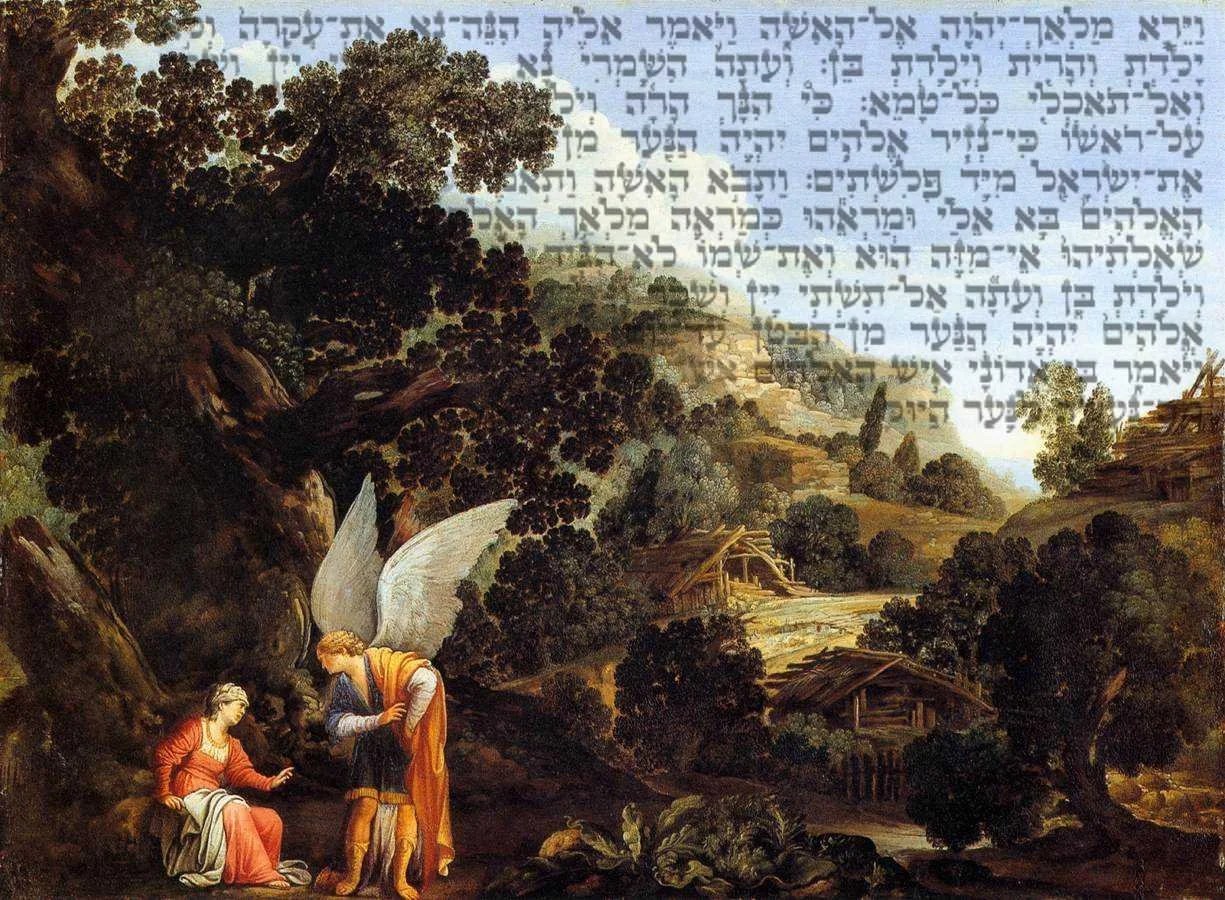
Painting by Carlo Saraceni, ca. 1610
In the Book of Joshua, when the Israelites arrived in the land, they set up the Tabernacle. There Joshua and Eleazar divided the land among the Twelve Tribes who had not yet received their allocation in Joshua 18:1–10, and dealt with the allocation of Levitical cities in Joshua 21:1–8. Subsequently, Shiloh became one of the leading religious shrines in ancient Israel, a status it held until shortly before David‘s elevation of Jerusalem.[16] Joshua 18:1 notes, “The whole congregation of Israel assembled together at Shiloh and set up the tent (or tabernacle) of the congregation there.” The tabernacle had been built under Moses‘ direction from God in Exodus 26 (discussed in the parashah “Terumah”) to house the Ark of the Covenant, also made according to Moses’ instructions from God in Exodus 25. Talmudic sources state that the Tabernacle remained at Shiloh for 369 years,[17] until the Ark of the Covenant was taken into the battle camp at Eben-Ezer in 1 Samuel 4:3–5 and
 Rosamond Press


Leave a comment