“John Presco commented on his ancestral connection to Belmont.”
“Those dreadful brothers of mine used to light the fires with them. And it (our friendship) never got beyond the stage of chanting and incense. He’d bring his incense pot, light it, and chant his poems”
Elsie Martínez
Dear Monica Korde
I am very impressed with all the work you have done as poet Laureate of Belmont California.
I penned a small poem fpr Poetry Month and the Great Project.
A Poetic Crack
by
John Presco
I penned a small poem
Like the crack
in a famous bell
And the world poured in
I was flooded with a freedom
I never knew
But, this freedom knew me
and had missed me
for how long
only a fellow poet can tell
On October 10, 2023 I attended a City Hall meeting. There was a dedication ceremony before me. When I spoke I welcomed a Native American and her tribe to my ancestral land;
“You are welcome here!”
I then spoke of my ancestors graves, that had been dug up in the middle of the night, and moved to Redwood City. They founded Belmont. I then mentioned the horrific attack on Israel, that occurred three days earlier. After I finished, a statement was read on this matter.
In 1849 Carl Janke and his wife brought six portable house around the Cape in a Clipper. They left Germany to build a knew home in our Democracy. Their offspring did not fight on the side of Germany in the two world wars. Nor did millions of German Americans. After the earthquake, members of the Janke, Stuttmeister, and Broderick family fled to Oakland and had a fruit farm below the fruit farm of Juaquin Miller who would carry my father’s mother on his lap when he accompanied Alice Broderick Stuttmeister to the Dogpatch where he husband worked for California Barrel Company that was kept in operation. I suspect only me rebuilding San Francisco (that William Ralston built) could reside here..
Consider the effort o rebuild Tokyo and Hiroshima. When will the rebuilding of Gaza, commence? Six Japanese Poets lived with Joaquin and penned poems. The daughter of Xavier Martinez speaks of these foreigners. One of them was her first boyfriend, After Pearl Habor, many Japanese Californian were sent to detainment camps. How – undemocratic! Were there any poets among them? Does peoty help all huma beings learn – to forgive?
Poems are tools for remembering.In 2000 my aunt Lillian and I found the unmarked grave of her father, Royal Rosamond. We placed a marker that delcares he was a poet. a year later my sixteen year old daughter came into my life. I took her to the Janke-Stuttmeister crypt in Colma, that my cousin and I found – after being lost and un-known. When I was thittenn I found a poem that was givien to “Will”. But what Will? I suspect William Stuttmeister who paid for this crypt to put his loved ones in aftw they duyg up from the Odd Fellows cemetary in San Francisco.
The Kasidah is epic. as is the repeated digging-up of my dead. If Edgar Alan Poe were alive, he’d be on it – having a field day! Belmont would be – shamed for an eternity! Here is my suggestion. When I die, a tomb will be build in Twin Pines Park..
“HERE LIES THE UN-PUBUBLISHED POET”
How many great poems have been written, then – throw away? The Phantom of The Thrown Poem will forever be trying to get The Living to pen and publish his lost poems. How many lovers get married at City Hall? I suggest Poetry Dispensers be put in many City Halls, for no woman should be married – unless she is gifted a poem! When one attends a City Hall meeting, they should come away with a poem penned my thousands of unpublished poets. Of course they will be saved, put in a scrap book, or, in that special closet, up high, in n old shoe box.
When I awoke this morning I wanted to bring The Goblin’s Market to Belmont, and now I wanted to include the Kasidah as a prelude to the Poetry of J.R. Tolkien who was inspirited by the Pre-Raphaelite Artist, William Morris, the partner of Dante Gabriel Rossetti who Joaquin Miller had dinner with. But, here they all come to Beautful Mountain, Even Strider, a wandering king oa Aragon. Bt kismet drawn on the last day of Ramadan. We come to Belmont in the morning mist, with the bliss of Sufis… Following, the tinkle of the camels bell.
At sixteen I was a blonde beauty, medium height, lithe and slim, with perfect features that our artist friends called classic Greek; and some, inclined to romanticism, declared I resembled the Blessed Damozel; of Rossetti. But to our Piedmonters and our friends, used to seeing me flitting about the hills with my long golden braids, Iwas the little Valkyrie.
Joaquin Miller Baum You’ve mentioned that Joaquin Miller seemed to favor the Whitaker family.
Martinez My father was very fond of Joaquin Miller. My father and I walked up to Miller’s, a mere four miles or so, I guess at least every other week, sometimes every week. Joaquin Miller was very fond of our family. He was a picturesque figure even as an old man; he was in his seventies then.
My first beau, I was sixteen, was a Japanese poet living there. However, my father, being an Englishman, looked with grave displeasure on the whole thing. My young poet used to come down to our home with reams of beautiful eucalyptus bark on which were inscribed his poem in exquisite Japanese characters.
Those dreadful brothers of mine used to light the fires with them. And it (our friendship) never got beyond the stage of chanting and incense. He’d bring his incense pot, light it, and chant his poems. Of course I didn’t know Japanese but I sat quite serenely and listened to them. Finally my father told Miller that he didn’t approve and it must stop. Then there was one final parting call from Kugi. He brought his incense pot, and his lyrics must have been heartbreaking from the expressions and the dramatic rendering of them. That was the last time I saw him.
THE KASÎDAH
I
THE hour is nigh; the waning Queen walks forth to rule the later night; Crown’d with the sparkle of a Star, and throned on orb of ashen light:
The Wolf-tail[1] sweeps the paling East to leave a deeper gloom behind, And Dawn uprears her shining head, sighing with semblance of a wind:
The highlands catch yon Orient gleam, while purpling still the lowlands lie; And pearly mists, the morning-pride, soar incense-like to greet the sky.
The horses neigh, the camels groan, the torches gleam, the cressets flare; The town of canvas falls, and man with din and dint invadeth air:
[1. The False Dawn.]
{p. 10}
The Golden Gates swing right and left; up springs the Sun with flamy brow; The dew-cloud melts in gush of light; brown Earth is bathed in morning-glow.
Slowly they wind athwart the wild, and while young Day his anthem swells, Sad falls upon my yearning ear The tinkling of the camel-bells:
An Invitation from Belmont Poet Laureate Monica Korde
Poetry not only matters, but it is profoundly essential to our everyday lives. Why, you ask? Because it has the unique ability to wake us up to life in the most unexpected, miraculous, and humblest of ways. It may not solve our problems, but it can help us find order in chaos, heal us in times of grief, and offer us advice to thrive. In a single moment, poetry can connect us to others and to ourselves, transcending boundaries of space and time. And to invite poetry back in your life, all you need to do is pay attention, listen, and keep an open heart.
Project POETRY 360 aims to offer an immersive experience to reach everyone while cultivating the concept of having poetry all around us. I like to believe that if you haven’t fallen in love with poetry yet, you haven’t found the right poem yet! Verse in the form of written word and spoken word can truly awaken wonder and my thought behind this initiative is to invite every child, youth, and adult to befriend poetry, to fall in love with it, and to rediscover themselves by connecting with it.
This community-wide initiative will run throughout my laureateship tenure and will act as a gathering ground for poets as well as non-poets, reminding us of the possibilities poetry can hold. I endeavor to offer a variety of sub-projects, public readings, and arts and culture events all through my term and also bring special features during the National Poetry Month under this initiative, designed to nurture the connection between poetry and people.
Project POETRY 360 was launched in April 2022’s National Poetry Month, announcing two special sub-projects in collaboration with Belmont Parks and Recreation and the Belmont Library. Community gatherings, poetry readings, and a host of other literary and cultural events were also offered throughout the month. The original goal of my initiative was to build community through poetry, and it has certainly done that. As I move forward, the idea is to continue to bring visibility to poetry and to form a new canon of poets and poetry lovers around us.
I look at Project POETRY 360 as the bridge that connects each of us no matter where we come from or how different we are, and I hope that it enables the passage of ideas, thoughts, and words honoring the literary arts and celebrating diverse voices within our community.
This special feature of Project POETRY 360 designed by Poet Laureate Monica Korde was introduced in April 2022. An interactive public art installation at the Belmont Library, this miniature tree invited visitors to create Spring themed haikus and couplets and string them on to the POETree branches. The tree sprouted poetry leaves, growing through the National Poetry Month. As a culmination to this project, verses contributed to the POETree by library visitors were collected by Monica & curated into a Community Poem.
3 Page 1 MEETING MINUTES OF CITY OF BELMONT CITY COUNCIL AND BELMONT FIRE PROTECTION DISTRICT BOARD OF DIRECTORS REGULAR MEETING City Council Chambers, City Hall, One Twin Pines Lane, Belmont, California TUESDAY, OCTOBER 10, 2023 CALL TO ORDER: 7:00 PM ROLL CALL COUNCILMEMBER PRESENT: Latimerlo, Pang-Maganaris, McCune, Hurt, Mates COUNCILMEMBES ABSENT: None PLEDGE OF ALLEGIANCE Led by Mayor Mates. REPORT FROM CLOSED SESSION No closed session on this agenda. SPECIAL PRESENTATIONS Proclamation Recognizing Indigenous Peoples’ Day, October 9, 2023 Mayor Mates read the proclamation. Gloria E. Gomez, Former Councilwoman for the Muwékma Ohlone Tribe accepted the proclamation. PUBLIC COMMENTS ON ITEMS NOT ON THE AGENDA William Blight commented on interactions with the Public Works department regarding a sewer line issue at his home. John Presco commented on his ancestral connection to Belmont. COUNCILMEMBER ANNOUNCEMENTS Mayor Mates commented on the recent actions in Israel and reiterated that Belmont is a safe and inclusive community. She commented on upcoming events and programs offered to the Belmont Community. Councilmember Pang-Maganaris commented on October being domestic prevention month and offered resources for those that may need them. CONSENT BUSINESS Approval of Minutes of September 12, 2023, Council Meeting Minutes September 26, 2023, Council Special and Regular Meeting Minutes September 12
Low hangs the mists, and chill the wintry air, Rain-swept the pines, and sodden everything. And into these the weary travelers fare For shelter from the night’s approaching sting. The woodman’s axe to pitch-wood bark applied— Then red flames leap and light a circle wide!
A desert waste, white, and hot, and bone strewn! Here giant cacti eke a living death; And there beside, a man with face plain-hewn— No water left to stay his waning breath! But see! a miner’s pick, in cacti driven, A fount of life the desert there has given!
Resourceful bird, Road-runner of the South, Grey as the desert road he runs along. What chance for food and drink where withering drouth Holds awful sway and robs all life of song! There vicious rattlers add their venom-hate But choya armed the bird has mastered fate.
With instinct given to start a fire in rain, Instinct to drink were sparkling springs unheard, And horn of plenty moved beyond the plain, Give me the wisdom of this desert bird. Then I can go with right good cheer and will Where life’s great desert meets the verdant hill.
Rosamond, Roy Reuben. 1911. The Road Runner. Out West (New Series). 3 (March), 234.
You can read Rosamond’s poem in the original magazine along with his stories, “Camping on Anacapa,” and, “Guilty,” on Google books:
I insist the History Department of Stanford assist me in gathering all the information there is on Carl Janke and Family so it can be studied.. I will post in increments. Two of the portable houses that Janke brought around the Cape were erected in San Francisco. Carl built a Turnverein Hall in the city my father was born.
Birth Place: Germany Pioneer Father:Carl August Janki Birth Place: Germany Date of Arrival in California: Sept. 12, 1850 Pioneer Mother: Anna Dorthea Peterson Birth Place: Germany Date of Arrival in California: Sept. 12, 1850 Death: Father: Belmont 1881; Mother: Belmont 1881
Remarks: My father was the first to bring portable houses to the city. I believe two were erected where Sherman & Clays Music store now stands (Sutter & Kearney). One on Montgomery Street on part of the lot now occupied by the D.O Mills building and two on Folsom Street near First All were covered with slate roofs. My two brothers wore the flag of the Old Fusilier Guard. A building company called California Fusiliers (German) of which Colonel Little was the captain. My father also built and managed the first Turn Verein Hall situated on Bush Street near Powell. The hall was dedicated Christmas Eve and all the people of note in the city attended the exercises.
Welcome! The San Francisco Historical Society exists to uncover, preserve, and present, in engaging ways, the colorful and diverse history of our city from its earliest days to the present.
Here is a fantastic article about my great grandfather, Carl Janke, rebuilding the Turn Verein Hall that was destroyed in the infamous 1906 Earthquake! Wow! This makes all members of my family SURVIVORS of one of the greatest Historic Events – IN HISTORY!!!!
Remember when it was her turn to be brave How she reveled in her chance to play in the dance of the sunsets
How wild her eyes in this juggling act Full of sea-set waves of her hand that withdrew every dove from your reluctant heart
What she did with your promises stacking the old moments on edge Daring you now to recognize your life without her Becoming afraid of her.
The new promises made met with a hush in the coming night in the failing light she came for her victory kiss No more conjuring ways all the doves were asleep in her arms
From the land a warm breeze wrapped her long hair around your embrace while the new rumor and web play refrains of whispering strings touching the back of your neck Now afraid for her.
For we have all lost the best things owned The longest memories are made in the dance of the broken sunsets And perhaps brave? Who alone would know Being afraid with her
You were once my one companion You were all that mattered You were once a friend and father Then my world was shattered
Wishing you were somehow here again Wishing you were somehow near Sometimes it seem if I just dream Somehow you would be here
Wishing I could hear your voice again Knowing that I never would Dreaming of you won’t help me to do All that you dreamed I could
Passing bells and sculpted angels Cold and monumental Seem for you the wrong companions You were warm and gentle
Too many years Fighting back tears Why can’t the past just die
Wishing you were somehow here again Knowing we must say goodbye Try to forgive teach me to live Give me the strength to try No more memories no more silent tears No more gazing across the wasted years Help me say goodbye’.
In her letter Rena says “I have a million poems memorized.” that she recites while she works. So, for now the Muse will be broadcasting sonnets from KMUS Bozeman Montana while accompanied by – vacuum cleaner?
The Kasîdah of Hâjî Abdû El-Yezdî (1880) is a long English language poem written by “Hâjî Abdû El-Yezdî”, a pseudonym of the true author, Sir Richard Francis Burton (1821-1890), a well-known British Arabist and explorer. In a note to the reader, Burton claims to be the translator of the poem, to which he gives the English title “Lay of the Higher Law.” It is thus a pseudotranslation, pretending to have had an original Persian text, which never existed. The Kasidah is essentially a distillation of Sufi thought in the poetic idiom of that mystical tradition; Burton had hoped to bring Sufist ideas to the West.
The Sufi writer Idries Shah (1924–1996), in his 1964 book The Sufis, states that The Kasidah was a distillation of Sufi thought, and that “there seems little doubt that Burton was trying to project Sufi teaching in the West… In Sufism he finds a system of application to misguided faiths ‘which will prove them all right, and all wrong; which will reconcile their differences; will unite past creeds; will account for the present and will anticipate the future with a continuous and uninterrupted development.’” (251-2) Shah devoted almost an entire chapter of the book to Burton’s poem, calling it, “One of the most interesting productions of Western Sufic literature… Burton provided a bridge whereby the thinking Westerner could accept essential Sufi concepts.”
After the earthquake of 1906 he moved across the bay to Piedmont, California, and met Elsie Whitaker, 20 years his junior, the daughter of the writer Herman Whitaker.[3] On October 17, 1907, he married Elsie Whitaker in Oakland.[2] After their honeymoon in Carmel-by-the-Sea they commenced building a studio in Piedmont. During the summers of 1909 to 1914, they rented a house in Carmel so that Martínez could teach art classes at the Hotel Del Monte.[6]
Under the influence of his friend the poet George Sterling, Martinez wrote poetry. His poem “Mictlan” was selected for publication in the Book Club of California‘s prestigious 1925 anthology Continent’s End: An Anthology of Contemporary California Poets.[16]
During the last two decades of his life, Martinez became increasingly interested in his indigenous Mexican heritage. He published poetry and philosophic writings in a column entitled “Notas de un Chichimeca” in the Hispano-Americano, San Francisco’s Spanish-language newspaper.[17]
Joaquin Miller had a poets colony in the Oakland. Japanese Poets came to live here. One of them was Yonejiro Noguchi. I just discovered a movie was made about the mother of Yone’s son, who was the famous sculptor, Isamu Noguchi, who had a famous half-sister, Ailes Gilmore. She was a dancer for Martha Graham. Leonie grew up in the Village of New York, and lived in a Tent City in Pasadena California.
My kindred had a twenty-six acre fruit orchard below Miller’s property. Joaquin carried my father on his lap when he took the trolley with my grandmother. Victor Presco gave birth to the world famous artist ‘Rosamond’ and her brother. I am a Art Historian, Poet, Writer, and Reporter for my newspaper Royal Rosamond Press.
Here are two creative branches stemming from ‘The Hights’ where western artists and writers established a Bohemian Mecca. Miller was the first editor for The Eugene City Democratic Register , Eugene Oregon’s first newspaper. Joaquin attended Columbia College in Eugene. Here are the roots of the Beat and Hippie, scene, the Great California Dream, that a Japanese woman producer tried to capture, while we in the West turn our backs, we even forgetting to recall John Steinbeck – for the sake of our young! Our traditions are honored, elsewhere.
When we were children we would call Juanita Miller on the phone and pretend we were older so we could have The White Witch give us advice on our love life, that we invented. Joaquin Miller’s daughter titled herself the ‘White Witch’ and had involved her groom in a pagan ritual when they got married. She pretended she was dead, and, he brought her back to life. Sounds like Sleeping Beauty.
I found photos of Juanita dancing. Isadora Duncan grew up in Oakland. Above is two photos of my Grandmother, Melba Broderick, with her friend, Violet, on Miller’s property. I now believe they were disciples of the White Witch, and may have danced through the forest with her. Joaquin carried my infant father on the Fruit Vale trolley. My kin owned a orchard just below the Hights, the theme park Joaquin and his daughter built. There is a monument to my kindred, John Fremont, that looks like a rook. Here poets and artists met, and lived. Artists Embassy International met here, as well as in Alameda at 532 Haight Avenue in a beautiful Victorian.
Juanita corresponded with the artist, Frederick Church, whose work resembles Christine Rosamond, and, Fanny Corey, who encouraged Royal Rosamond to write. We are looking at the foundation of the Bohemian-Hippie scene in the San Francisco Bay Area that is tied to the Pre-Raphaelites. Did Church consider himself a Pre-Raphaelite, and was hoping the Millers would give him a introduction to the Rossettis?
Below is the artist Christine Rosamond Benton, the great granddaughter of Alice Stuttmeister, the sister of William Stuttmeister. My sister got married to Rick Partlow who won an Emmy.
John Presco
President: Belmont Soda Works; Royal Rosamond Press; California Barrel Company
Daily Alta California, Volume 42, Number 14175, 24 June 1888
STUTTMEISTER-JANKE. One of the most enjoyable weddings of the past week took place at Belmont, Wednesday morning last, the contracting parties being Miss Augusta Janke, daughter of Mr. and Mrs. August Janke of Belmont, and Dr. Wm. Stuttmeister of San Francisco. The house was handsomely decorated with a rich profusion of ferns and flowers, and at the appointed hour was filled with the relatives and intimate friends of the contracting parties. At 11 o’clock the wedding march was played and the bridal party entered the parlor. The bride was attended by Miss Alice Stuttmeister, a sister of the groom, and Miss Minnie Janke, a sister of the bride, as bridesmaids, and Dr. Muldownado and Wm. Janke, a cousin of the bride, were groomsmen.
The Rev. A. L. Brewer of San Mateo performed the beautiful and impressive ceremony under an arch composed of flowers and greens very prettily arranged, after which the guests pressed forward and offered their congratulations. The bride was attired in a very pretty and becoming costume of the crushed strawberry shade, and wore a corsage bouquet of orange blossoms. She carried a handsome bouquet of white flowers. After the guests had paid their compliments the bride and groom led the way to the dining-room, where the wedding dinner was served and the health of the newly married pair was pledged. The feast over, the guests joined in the dance, and the hours sped right merrily, interspersed with music singing and recitations, until the bride and groom took their departure amid a shower of rice and good wishes. Many beautiful presents were received. Dr. and Mrs. Stuttmeister left Thursday morning for Santa Cruz and Monterey, where they will spend the honeymoon. On their return they will make their home in Belmont. 1911: Dr. Willian O. Stuttmeister was practicing dentistry in Redwood City, CA. (Reference: University of California, Directory of Graduates,
1864-1910, page 133). Records from Tombstones in Laurel Hill Cemetery, 1853-1927 – Janke – Stuttmeister Mina Maria Janke, daughter of William A, & Cornelia Janke, born February 2, 1869, died March 1902. William August Janke, native of Hamburg, Germany, born Dec. 25, 1642, died Nov. 22, 1902, son of Carl August & Dorette Catherine Janke. Frederick William R. Stuttmeister, native of Berlin, Germany, born 1612, died January 29, 1877. Mrs. Matilda Stuttmeister, wife of Frederick W.R. Stuttmeister, born 1829, died March 17, 1875, native of New York. Victor Rudolph Stuttmeister, son of Frederick W.R. & Matilda Stuttmeister, born May 29, 1846, died Jan. 19, 1893, native of New York.
Love is the opening door Love is what we came here for
This morning I awoke with a song Elton John made famous that was written by a woman. Yesterday, I left this message on my daughter’s Facebook.
“Happy Easter, Daughter. It is no longer about forgiving each other. It is about accepting the truth, there are stories that are greater than oneself. You were born into such a story. You should include me in your healing profession. https://rosamondpress.com/…/viscountess-rosamond…/
I thought about opening the great brass doors to the Stuttmeister crypt – with you Heather. And we three entered. You were carrying my grandson. I was aware you had no husband. I had hoped to be at your wedding – yet to be! But, there was love. And this is what we came here for. All is forgivable – with love!
Love is the opening door Love is what we came here for
An hour ago I found out there is going to be a wedding festival in Belmont Park on April 13th. I want to meet you, Booby Dew, and Ember there. We will got to a Justice of the Peace, and you will be married. It is – Kismet! I told you from the get about Fair Rosamond. Henry Guest and his kin are kin to Princess Diana, and are associated with Fair Rosamond. Months ago I wrote the Mayor of Belmont about conducting Spy Weddings at Belmont. Henry Guest was a Commander of Spies!
Seer John
EXTRA! I just sent Heather this message, that might be seen as a Shotgun Wedding Offer!
“The Fates made them an offer they couldn’t refuse!”
Juanita Miller brought the Pre-Raphaelites to Oakland, the City I was born in during a shower of stars.
John Presco
What I discovered was a pamphlet announcing Joaquin Miller Day. A musical drama was performed at the Woodminster Amphitheater on September 24, 1944. There was going to be the planting of memorial redwood trees around the equestrian statue of Joaquin Miller. On stage was a replica of the studio and garden used by Dante Gabriel Rossetti and Holman Hunt. The Poet, Christina Rossetti was played by Jeanne Jardin. Elizabeth Siddal Hunt’s model and muse is played by Helen Kraum. Carmencita Sanchez and her Mexican dancers, performed. In Scene Two we have the Bonaparte and Queen Victoria.
Yesterday I received in the mail a book I ordered on E-Bay. I quickly scanned it to see if their were any illustrations or photographs. Then, I found it, what amounts to my personal Holy Grail. Joaquin Miller dedicated his book of poems ‘Songs of The Sun-Land’ to the Rossetti family that includes Gariel, Michael, and, Christine. Gabriel was a artist and poet, Michael, a publisher, and Christine, a poet.
“TO THE ROSSETTIS”
There is controversy over this dedication. Michael is against it. He is critical of Miller’s poems that takes the reader to the Holy Land. Joaquin is describing a personal relationship with the Savior that reminds me of how Bohemians and Hippies would view Jesus, he a Nature Boy of sorts.
Gabriel, who had Joaquin over to his house for dinner, where he met several members of the Pre-Raphaelite Brotherhood seems to address his brother’s objections in a letter, and gives a tentative go ahead. He talks about Miller sending him a photograph of himself and bids him to say a word or two at the bottom of it, that does not exist. This photo may be the famous one taken by Charles Lutwidge Dodgson, who is better known as Lewis Carrol the author of ‘Alice in Wonderland’. If Joaquin had glued this portrait to a piece of paper, then we might have seen it on the dedication page.
What is going on here is extremely profound. Miller has exported his vision and lifestyle to the England, where he wrote Song of the Sierras, and now he is importing to America a cultural brand that contains Grail and Arthurian subject matter that was at the epicenter of the work of the Pre-Raphaelite Brotherhood.
The Rossettis may not have been too happy with Miller attaching himself to their star because the British are very protective of their culture. I wish I could say the same thing about the University of Oregon that is about to tear down homes that were once in the city limits of Fairmount, the city founded by Joaquin’s brother, George Miller.
The homes the Miller brothers lived in are registered and protected as Monuments. There is a Joaquin Miller State Park near Florence that was founded by George who also promoted the Winnemucca to the Sea Highway. There needs to be a Monument for George. I suggest the homes on Columbia Terrace be spared, and this city block declared a National Monument. I have suggested these homes be used to house homeless Vets going to college, but now I see a Free College on this site due to the student loan crisis.
This college will teach alternatives to prospective students of the UofO, such as having parents of students purchase a home in Eugene. In many cases a mortgage is cheaper than rent. Teaching your children how to get a job rather then attend college, will produce more home ownership that the UofO who promises jobs – that don’t exist!
The Miller Brothers were born on a farm near Coburg. They went into the world and achieved much. They are a cultural icon too Oregon and California. On page ten of the prelude, we read;
“By unnamed rivers of the Oregon north’ That roll dark-heaved into turbulent hills, I have made my home….The Wild heart thrills With memories fierce, and world storms forth.”
I once read that many college students didn’t know there was a Oregon, and if they did, they didn’t know where it is. The Rossettis more than likely read these words. Did they go to a globe to see where Joaquin and George live? How many students at the UofO know who the Miller brothers were, and the Brotherhood.
Jon Presco
Copyright 2014
“When Joaquin Miller left DC, most sources agree that he gave his cabin to a friend, who in turn gave it to the Sierra Club. Then in 1913 the cabin was carefully disassembled at the urging of the California State Association and moved to its current location in Rock Creek Park, near the intersection of Beach Drive and Military Road, where it is now the property of the National Park Service. By and by, another Miller found inspiration in the cabin. From 1931 through the 1950’s, Pherne Miller, Joaquin’s niece, leased the cabin from the Parks Department, and there she gave art classes and sold soft drinks and candy.”
Dante Gabriel Rossetti (/ˈdænti ˈɡeɪbriəl rəˈzɛti/;[1] 12 May 1828 – 9 April 1882) was an English poet, illustrator, painter and translator. He founded the Pre-Raphaelite Brotherhood in 1848 with William Holman Hunt and John Everett Millais, and was later to be the main inspiration for a second generation of artists and writers influenced by the movement, most notably William Morris and Edward Burne-Jones. His work also influenced the European Symbolists and was a major precursor of the Aesthetic movement.
Rossetti’s art was characterised by its sensuality and its medieval revivalism. His early poetry was influenced by John Keats. His later poetry was characterised by the complex interlinking of thought and feeling, especially in his sonnet sequence The House of Life. Poetry and image are closely entwined in Rossetti’s work; he frequently wrote sonnets to accompany his pictures, spanning from The Girlhood of Mary Virgin (1849) and Astarte Syriaca (1877), while also creating art to illustrate poems such as Goblin Market by the celebrated poet Christina Rossetti, his sister.
The son of émigré Italian scholar Gabriele Pasquale Giuseppe Rossetti and his wife Frances Polidori, Rossetti was born in London, and named Gabriel Charles Dante Rossetti. His family and friends called him Gabriel, but in publications he put the name Dante first (in honour of Dante Alighieri). He was the brother of poet Christina Rossetti, critic William Michael Rossetti, and author Maria Francesca Rossetti.[2]
His visions of Arthurian romance and medieval design also inspired William Morris and Edward Burne-Jones.[13] Neither Burne-Jones nor Morris knew Rossetti, but were much influenced by his works, and met him by recruiting him as a contributor to their Oxford and Cambridge Magazine which Morris founded in 1856 to promote his ideas about art and poetry.[14][15]
In February 1857, Rossetti wrote to William Bell Scott: Two young men, projectors of the Oxford and Cambridge Magazine, have recently come up to town from Oxford, and are now very intimate friends of mine. Their names are Morris and Jones. They have turned artists instead of taking up any other career to which the university generally leads, and both are men of real genius. Jones’s designs are marvels of finish and imaginative detail, unequalled by anything unless perhaps Albert Dürer’s finest works.[14]
In 1861, Rossetti became a founding partner in the decorative arts firm, Morris, Marshall, Faulkner & Co. with Morris, Burne-Jones, Ford Madox Brown, Philip Webb, Charles Faulkner and Peter Paul Marshall.[15] Rossetti contributed designs for stained glass and other decorative objects. http://en.wikipedia.org/wiki/Dante_Gabriel_Rossetti
Gabriele Rossetti, a well-known Italian patriot and Dante – scholar, was one of the leaders of the Carbonari (the red shirted resistance movement at Naples),which he inflamed with his patriotic songs. Jailed and sentenced to death by the French oppressors, he was rescued with the help of an English Admiral, smuggled to Malta and then to London. There he married a lady of Italian origin, but English birth, then finished his later years a professor at London University. He was visited, while in Exile, by Guiseppe Mazzini and other Italian revolutionaries.
Tradition has it that the “Rossetti” name of the family came into being with Maria Rossi who married Nicola Della Guardia. It is not known whether they were at odds with the rest of the family or if her maiden name, or the red hair color of their offsprings, or both prompted them to call their children the “Rossettis” meaning “little red ones”. During the many years of political turmoil and upheavals, so many events went unrecorded, or their documentation were lost or destroyed. As a general rule most information and dates prior to about 1750 are mainly legendary data handed down by word of mouth from one generation to the next one.
Miller went to England, where he was celebrated as a frontier oddity. There, in May 1871, Miller published Songs of the Sierras, the book which finalized his nickname as the “Poet of the Sierras”.[27] It was well received by the British press and members of the Pre-Raphaelite Brotherhood, particularly Dante Gabriel Rossetti and William Michael Rossetti.
While in England, he was one of the few Americans invited into the Savage Club along with Julian Hawthorne, son of Nathaniel Hawthorne. The younger Hawthorne referred to Miller as “a licensed libertine” but admitted to finding him “charming, amiable, and harmless”.[28] Rather abruptly, Miller left England in September 1871 and landed in New York. At the encouragement of family, he made his way to Easton, Pennsylvania to visit his dying brother before returning to Oregon; his father died shortly thereafter. Miller eventually settled in California, where he grew fruit and published his poems and other works.
In 1886, Miller published The Destruction of Gotham, a book which was one of the earliest to depict a prostitute as a heroine.[2] That year, he moved to Oakland, California, and built a home for himself he called “The Hights”. He remained there until his death in 1913.[34] Japanese poet Yone Noguchi came to The Hights in 1894 and spent the next four years there as an unpaid laborer in exchange for room and board. While living there, he published his first book, Seen or Unseen; or, Monologues of a Homeless Snail (1897). Though he referred to Miller as “the most natural man”, Noguchi reflected on those years as his most difficult in the United States and later fictionalized his experience in The American Diary of a Japanese Girl.[35]
An historical marker for his birthplace was unveiled October 10, 1915, on U.S. 27 north of Liberty in Union County, Indiana.[47] Joaquin Miller Cabin is located in Washington, DC. The Hights, the Oakland home Miller built at the end of his life, is currently known as the Joaquin Miller House and is part of Joaquin Miller Park. He planted the surrounding trees and he personally built, on the eminence to the north, his own funeral pyre and monuments dedicated to Moses, General John C. Frémont, and the poets Robert Browning and Elizabeth Barrett Browning. The Japanese poet Yone Noguchi began his literary career while living in the cabin adjoining Millers’ during the latter half of the 1890s. The Hights was purchased by the city of Oakland in 1919 and can be found in Joaquin Miller Park.[34] It is now a designated California Historical Landmark. Miller Middle School and Joaquin Miller Elementary School in Burbank, Calif., were also named after him.
People in London were fascinated by the frontiersman poet, the Byron of the Rockies, the Wild West poet. According to Marberry’s biography of Miller, Miss Lily Langtry exhibited the curiosity common among Londoners as she related her understanding of Joaquin: “He had lived a life adventuresome….He ran away from school to mine for gold, he had been adopted by the Indians, imprisoned for some imaginary offence, had escaped from jail by the aid of an Indian girl, swam a river with her to freedom, and married her—all before twenty.” He loved an audience, and good whiskey. He dressed the part, complete with spurs and sombrero, when the mood struck him, and of course, his famous bear skin. And while in London, Joaquin Miller managed to publish several volumes of his own poetry, one, Songs of the Sierras, to critical acclaim.
Some American writers who joined Joaquin in London found his habits pompous and unnerving. Even some London critics refused to yield to the intrigue of his posing. However, Miller seemed to weather most criticism, as tenaciously as Columbus in his poem. He did not give up hope. He sailed on! Miller clearly enjoyed the voyage, despite its perils. Others’ disdain for his self-promotion was not sufficient to tip his boat. Songs of the Sierras sold very well in England.
Even writers who were generally friendly with Miller could not overlook his unconventional habits and unlikely fame, however. Mark Twain wrote of Miller’s behavior in London: He was affecting the picturesque and untamed costume of the wild Sierras at the time, to the charmed astonishment of conventional London. He and Trollope talked all the time, and both at the same time. Trollope pouring forth a smooth and limpid and sparkling stream of faultless English, and Joaquin discharging into it his muddy and tumultuous mountain torrent—well there was never anything just like it except the Whirlpool Rapids under Niagara Falls (Marberry 135).
Brett Harte, who first met Joaquin Miler as a young writer in San Francisco, tended to be jealous and disparaging, and even Walt Whitman championed and defended by Miller and a kind friend to Joaquin throughout his life, was said to have admitted in 1881, “Miller never did quite the work I expected him to do” (Marberry 145).
When Joaquin Miller left DC, most sources agree that he gave his cabin to a friend, who in turn gave it to the Sierra Club. Then in 1913 the cabin was carefully disassembled at the urging of the California State Association and moved to its current location in Rock Creek Park, near the intersection of Beach Drive and Military Road, where it is now the property of the National Park Service. By and by, another Miller found inspiration in the cabin. From 1931 through the 1950’s, Pherne Miller, Joaquin’s niece, leased the cabin from the Parks Department, and there she gave art classes and sold soft drinks and candy.
Today Joaquin Miller’s Washington Cabin is tightly sealed and in need of some repair. Nonetheless, Tuesday evenings in June and July at 7:30 PM, it is the site of a long-lived poetry reading series. The Joaquin Miller Cabin Reading Series begins its 33rd year this summer. Poetry by the cabin lives on! Gathered at picnic tables and in camp chairs beside the cabin, audiences gather to listen to local and nationally-known poets read their word. The reading series—developed and sustained by the literary non-profit, The Word Works, and nurtured especially by The Word Works president, Karren Alenier and its beloved host, the late Jacklyn Potter—is a fitting tribute to the man whose imagination championed exploration and whose legendary tales and exploits brought the West to the East. I like to imagine him standing in the doorway, listening, proud of the good fortune his handy-work has brought the nation’s capital, and perhaps hatching a plan to crash the reception and sell another authentic bearskin rug. http://washingtonart.com/beltway/jmiller.html http://archive.org/stream/daringyoungmenth012358mbp/daringyoungmenth012358mbp_djvu.txt
Furthermore, the Pre-Raphaelite movement was not a solely British phenomenon. Across the Atlantic a ferment was working among certain young American painters, authors, and architects who were directly inspired by the English P.R.B. attack on sterile conservatism. This progres- sive group in turn denounced what they considered the slavish adherence to mere tradition. They too became less polemic, but through the latter half of the nineteenth century and into our own times they and their followers did
*Two extensions of this term are implicit in this study: first, Ruslcin, although not a member of the Brotherhood, was so closely associated with them in the minds of the American Pre-Raphaelites that frequent reference must be made to him; and, secondly, although the actual P.R.B. organization existed for little more than five years, investigation of the continuing careers of its members and of such later associates as William Morris is of course essential.
THE PRE-RAPHAELITE MOVEMENT 5
succeed in exerting an influence on the artistic expression and even on phases of the economic life of the United States that cannot be ignored.
Three noteworthy periodicals in this country stemmed directly from the tenets of Ruskin and the British Brother- hood. The first journal clearly Pre-Raphaelite in its origin and sympathies was the Crayon, edited by William James Stillman, a painting-companion of Ruskin and a close as- sociate of the whole Rossetti family. This review appeared in the 1850*5 and conveyed to American readers the heart of the P.R.B. theories. Another little magazine, the New Path, was the organ of a superbly self-confident American Brother- hood known as the “Society for the Advancement of Truth in Art/’ which centered in New York City in the Civil War years. Charter members of this group included several young men of a liberal cast of mind, who were to gain some public recognition: Clarence King, later the good friend of Henry Adams, author of Mountaineering in the Sierra Nevada, and first Director of the U. S. Geological Survey; Charles Herbert Moore, subsequently a respected art historian in the Norton tradition and the first administrator of Harvard’s Fogg Museum; Clarence Cook, who became editor of the old Studio-, and two men who made names as architects and critics, Peter B. Wight, a proponent of the Gothic Revival in America, and Russell Sturgis, art editor for Scribnefs and designer of four Gothic buildings for Yale University, A third American magazine deriving from British sources, in this case from William Morris and his Arts and Crafts movement, was the Craftsman, which achieved the impres- sive circulation of 60,000 before ceasing publication during the First World War. Its pages gave a comprehensive ac- count of the American handicrafts revival that flourished for over two decades and was inspired chiefly by Morris’s
6 THE DARING YOXJNG MEN
“Red House” and the London Arts and Crafts Exhibition.
In a socio-economic direction not only the Arts and Crafts movement may be largely credited to P.R.B. origins, but, in its wider ramifications, the founding in this country of an experimental Utopian community, the ill-fated “Rus- kin Commonwealth,” which flowered for a few years in Tennessee and Georgia.
In the more specific field of the visual arts the spirit of Rossetti and Morris is definitely recognizable in the paint- ing and stained-glass work of John La Farge and in the varied products of Louis Tiffany, “the William Morris of his generation in America.” Richard Watson Gilder of the Century, who acknowledged Rossetti as his literary god- father, likewise was linked directly with the liberal art move- ment through the activities of his artist wife and their “little salon” in their New York home, “The Studio/’ Several other less known painters, such as Thomas Charles Farrer, a stu- dent of Ruskin, and J. Henry Hill, were of the American Pre-Raphaelite school. The exceptional collections of manu- scripts, sketches, and paintings made by the late Samuel Bancroft, Jr., of Wilmington, Delaware, and by Grenville L. Winthrop, who bequeathed his extensive holdings to the Fogg Museum of Art, are further evidence of a continuing American interest in original Pre-Raphaelite materials.
Literary contacts, too, were frequent. Personal associa- tions, some fugitive but others of lasting significance, were established between the British P.R.B/S and their American sympathizers. Thomas Buchanan Read, for example, was Dante Gabriel Rossettf s first friend among writers from this country. Joaquin Miller worked his eccentric way to the dinner-table of “The Master,” as he labeled Rossetti. W. J. StiUman, already recognized as the editor of the Crayon, later displayed talent as an autobiographer and critic, and
THE PRE-RAPHAELITE MOVEMENT 7
added intimate details to the Rossetti canon; and both Still- man and his beautiful Greek wife, Marie Spartali, were themselves artists of some ability and served as models for Dante Gabriel. Hawthorne, Emerson, Whitman, Longfellow, Moncure Conway, and others knew the Pre-Raphaelites in- dividually, and were concerned with their ideas. Some later American writers also owe something to the concepts of Ruskin and the young Brotherhood. The verse of Christina Rossetti, on the periphery of the group, was among the models for Sara Teasdale’s poetry. D. G. Rossetti and Morris had a considerable effect on such diverse figures as Richard Hovey, Josephine Preston Peabody, and Ezra Pound; while Vachel Lindsay in his “Gospel of Beauty” expounded much of the Ruskinian aspiration for the better life.
These Britishers and Americans were, in the main, expo- nents of the second of the two chief aesthetic attitudes of the latter half of the nineteenth century. Put simply, one view held that the effective creation of artistic beauty, in whatever form, was an adequate and justifiable end in itself art for the sake of art was enough. But to many sensitive persons this interpretation seemed too precious, too other- worldly, too esoteric. Beauty is not a supreme and absolute value. Art cannot be abstracted from the conditions of art, but must take its inspiration from its time and place, and must, in full circle, bear a constructive relationship to its surroundings.
Although pioneering chronologically, Poe’s dreamworld, “out of space, out of time/’ demonstrated little visible con- nection with the American environment; and through its sensuous vividness and easy intelligibility, it led a reader smoothly into the convolutions of Walter Pater and Oscar Wilde. The purity and aloofness of art might be even better
O THE DARING YOUNG MEN
illustrated by the French, with whom the “art for art’s sake” movement largely began: Flaubert, Gautier, Baudelaire, and the brothers de Goncourt.
But other writers and artists, sometimes labeled as mere sociological thinkers, looked about them at the masses of humanity struggling for a better life or even for mere exist- ence, and believed that an artist had a moral as well as an aesthetic duty. To lead the masses the artist must serve the masses. The majority of mankind laboring under inescapable pressures must still be awakened to the power of beauty. And the materialistic proprietors of the new machine-made wealth must likewise be made to see the artistic and hu- manitarian light. Victor Hugo and Zola in France; Carlyle, Ruskin, and Morris in England; Whitman, Emerson, and many of the later, lesser writers in America saw what they considered the logical and inevitable link between art and literature and common, everyday life.
The core of the Pre-Raphaelite attitude, however, was a more inclusive desire than merely to apply art to society to bring about visible improvements. The touchstone, if one well-worn phrase must be selected, was “truth to nature/* to Nature capitalized. Empty and trite interpretations, de- liberate manipulations of subject matter to gain meretricious effects in a word, artistic insincerity, illogicality and dis- honesty in all their guises and applications these were the foes of the Pre-Raphaelites on both sides of the Atlantic. And against them they rode manfully and loudly to battle.
This attitude of the Americans, which is our chief concern here, is of particular significance when viewed against the backdrop of its historical period. The low estimate of human nature and its potential which was inherent in the theologi- cal determinism of the Puritans had yielded to the optimistic faith in man and his perfectibility through reason which the
THE PRE-RAPHAELITE MOVEMENT Q
Enlightenment had offered. This “rational” attitude had found magnificent political expression in “life, liberty, and the pursuit of happiness,” and had found brief philosophical application in Deism, and thereafter in the more organized concepts of Unitarianism. In the Transcendental mode man achieved an even nobler level, sharing a spark of the Divine fire, himself but little lower than the angels. And on a practi- cal level the rich new continent seemed to stretch out end- lessly, with equal opportunity and success and satisfaction for all comers.
On this day, February 6, 2022, I John Presco, Republican Candidate for Governor of Oregon, found ‘The Bohemian Guild of Mount Hood. This will be a guild of journalists and writers known as ‘The Wolves of Mount Hood’. Once a year we will meet. We will come from all over the Free World to celebrate our victory over the Russian Wolf of Darkness. We will be wearing deep blue capes -with hood! We will stand on the edge of Enid Lake just after sunset…..ad when the first star appears in this blue lake, we will take off our hoods, and one by one, speak our name while large speakers play the sound of our brothers and sisters.
President Biden has given three hundred and fifty million dollars to the President of Ukraine to help defeat Dark Putin – who is waging war on the press of Russia! The free press – will be his undoing! Zelensky wants ammunition and arms. From what nations will they come? I believe the Czech-Republican will try to make a delivery.
Above is a photograph of members of the Bohemian Club spreading Juaquin Miller’s ashes on a pyre that he built to have his body consumed by flames. But the City of Oakland would not allow this. Miller might have met William Morris at Rosetti’s home. Morris had a powerful influence on Tolkien. The King Under The Mountain Tale – is coming true!
“Around a fire they gathered, at the base of Mount Hood, a refection of a star, in a lake. They took turn through the night, reading…The House of the Wolfings.”
The Bohemian Club was originally formed in April 1872 by and for journalists who wished to promote a fraternal connection among men who enjoyed the arts. Michael Henry de Young, proprietor of the San Francisco Chronicle, provided this description of its formation in a 1915 interview:
The Bohemian Club was organized in the Chronicle office by Tommy Newcombe, Sutherland, Dan O’Connell, Harry Dam, J.Limon and others who were members of the staff. The boys wanted a place where they could get together after work, and they took a room on Sacramento street below Kearny. That was the start of the Bohemian Club, and it was not an unmixed blessing for the Chronicle because the boys would go there sometimes when they should have reported at the office. Very often when Dan O’Connell sat down to a good dinner there he would forget that he had a pocketful of notes for an important story.[12]
Journalists were to be regular members; artists and musicians were to be honorary members.[13] The group quickly relaxed its rules for membership to permit some people to join who had little artistic talent, but enjoyed the arts and had greater financial resources. Eventually, the original “bohemian” members were in the minority and the wealthy and powerful controlled the club.[14][15] Club members who were established and successful, respectable family men, defined for themselves their own form of bohemianism which included men who were bon vivants, sometime outdoorsmen, and appreciators of the arts.[11] Club member and poet George Sterling responded to this redefinition:
Any good mixer of convivial habits considers he has a right to be called a Bohemian. But that is not a valid claim. There are two elements, at least, that are essential to Bohemianism. The first is devotion or addiction to one or more of the Seven Arts; the other is poverty. Other factors suggest themselves: for instance, I like to think of my Bohemians as young, as radical in their outlook on art and life; as unconventional, and, though this is debatable, as dwellers in a city large enough to have the somewhat cruel atmosphere of all great cities.[16]
Despite his purist views, Sterling associated very closely with the Bohemian Club, and caroused with artist and industrialist alike at the Bohemian Grove.[16]
Oscar Wilde, upon visiting the club in 1882, is reported to have said “I never saw so many well-dressed, well-fed, business-looking Bohemians in my life.”[17]
Alas I have traced my grandfather’s mother, IDA LOUISIANA ROSE, to WILLIAM ROSE, who sailed for Cowes Isle of Wight, with William Penn. William and his wife, Jane Sarah Ridgway, landed in Philadelphia in December 3, 1699. They sailed on the Canterbury, perhaps the most important ship that sailed the waters of the Isle of Wight.
Alas, the TWO ROSES are joined in my ROSY FAMILY TREE. This makes my family one of the foremost PATRIOTIC AMERICAN FAMILIES in history. We fought off pirates to arrive here, so we could practice RELIGIOUS FREEDOM.
On April 17, 2014, I found a Pre-Raphaelite Grail at the Lane County Historical Society, that hopefully will change the way we look at things today, and the way we live and communicate with one another. I beheld the beautiful master plan put forth by the Miller Brother Prophets, who are right out of the Lord of the Rings.
What I discovered was a pamphlet announcing Joaquin Miller Day. A musical drama was performed at the Woodminster Amphitheater on September 24, 1944. There was going to be the planting of memorial redwood trees around the equestrian statue of Joaquin Miller. On stage was a replica of the studio and garden used by Dante Gabriel Rossetti and Holman Hunt. The Poet, Christina Rossetti was played by Jeanne Jardin. Elizabeth Siddal Hunt’s model and muse is played by Helen Kraum. Carmencita Sanchez and her Mexican dancers, performed. In Scene Two we have the Bonaparte and Queen Victoria.
When we were children we would call up Juanita Miller who we knew as ‘The White Witch’. She gave advice if you had problems. At thirteen, Bill Arnold, Nancy Hamren, and myself adopted the Beat Scene, Jack London and George Sterling, and as Hippies we understood Joaquin Miller was the source of our Bohemianism that some claim is the fastest growing religion in the world. In Eugene Oregon there is a worship of Ken Kesey. Now add to this the images of the Pre-Raphaelites and J.R. Tolkien, and you have the most powerful imagery outside of the Christian Church.
But, we are not done! Joaquin Miller was approached by Japanese Poets who asked if they could live with Joaquin and treat him like their master. There were several Japanese houses built on ‘The Hights’ that was also named ‘The Fremont Ranch’. Fremont is in my family tree because he married Jessie Benton whose father was the proprietor of the Oregon Territory. My later sister was the world-famous artist, Christine Rosamond Benton who had a gallery in Carmel a Art Colony that Elsie Martinez and her husband help found.
Joaquin Miller had dinner at Rossetti and ate with many of the Pre-Raphaelites. I suspect William Morris was present. In 1969 I began to render images on furniture after Morris whose novel ‘The House of Wolfings’ was the main inspiration for Tolkien.
Christine Rosamond Benton and I were drawn into Tolkien’s Trilogy. The artist known as ‘Rosamond’ could not put these books down, nr could I. This caused our mutual friend, Keith Purvis, a British subject, to comment;
“She doesn’t know these books are real.”
We three were original hippies who took the Lord of the Rings to heart as we modified the modern world, made it over more to our liking, we oblivious to what normal folk were about. This is exactly what William Morris and the Pre-Raphaelite Brother and Sisterhood did. They – returned!
I discovered the Pre-Raphaelites in 1969 and let my hair grow long for the first time. I gave up drugs in 1967 and was looking for a spiritual format. I came under the spell of the Rossetti family who were friendly with Joaquin Miller. We Presco children knew Miller’s daughter as ‘The White Witch’ and we would call her for advice. Miller’s home ‘The Abbye’ was above our home in the Oakland Hills. Our kindred were friends of Miller, who was also a friend of Swineburn, who wrote ‘The Queen-Mother and Rosamund’ and ‘Rosamund Queen of Lombards. Tolkien was inspired by the Lombards.
Filed away in Rosamond’s probate is my plea to the executor to allow me to be my sister’s historian. I mention Miller and Rossetti. I saw myself in the role of Michael Rossetti who had his own publishing company. He published Miller and other famous poets. When I was twelve, my mother read evidence I might become a famous poet.
I was twelve when I came upon the Woodminster amphitheatre. I was put in a trance by what I beheld. I sensed I had entered the real world, the one I belonged in. Juanita Miller was the visionary for this outdoor theatre where plays inspired by her father were performed. Redwoods were planted around Woodminster. George Miller planted many trees in his visionary city, Fairmount. Nearby, my great grandfathers had picnics. Note the rifle hanging in the tree. The Stuttmeister farm lie just below this structure that is right out of Lord of the Rings.
Yesterday I presented to Mayor Kitty Piercy my idea for the New Eugene Celebration that would be centered around the Cuthbert Amphitheater and the Mill Race that I see as flowing from the Woodminster Amphitheater Cascade. I see O Lake as a reflecting pond. I see a Japanese arch at the end of a pier where is docked a Japanese boat. Up the hill is a Zen Garden and the cottages rescued from Columbia Terrace located in the lost city of Fairmont platted by George Melvin Miller, the brother of Joaquin.
There is a Writer’s Grove planted next to the cascade. I see a similar grove planted near the Cuthbert. Where will sit the two Craftsman housed rescued from Columbia Terrace. Once house will be a Miller Brother’s Museum, and the other a Museum of Bohemian Art and Literature. Ken Kesey lived in one of the barracks that was moved from Fort White. I see a Museum to Peace, with Kesey and Hippie memorabilia. Our Mayor should contact officials I Japan to see if they see these barracks that once housed soldiers destined to go to war with Japan, of historic significance.
The Calm Waters of Peace, Poetry, and Art, flow underground all the way from Oakland California, and surface in a New Arcadia in Eugene. From brother to brother. let there be a New Cultural Unity!
With the new proposal for Downtown Eugene, arises my old proposal that was ignored, or, not promoted enough – by me! In this post made two years ago, emerges my idea for the next James Bond movie, and, the birth of the next Tolkien book, and/or movie. All the elements are in place.
What I see in the old EWEB plant, is a Newspaper Museum, with George Miller’s flying machine suspended in air. Joaquin Miller was the editor of The Eugene City Democratic Register, The Oregon State Journal, and the Eugene City Review. Joaquin took part in a debate at Eugene’s Columbia College whether or not the Pacific States should become a separate nation – before Oregon and California became States. Here is Fairmount, the city that George Miller platted, along with Florence.
There is a good chance Joaquin met William Morris, who inspired Tolkien. This building can be a Castle of The Free Press, standing at the Gate of the McKenzie. There is room enough for a Logging Museum. Wood pulp made newsprint. Before the coming of the silicon chip, this is how good men got the News to the American People.
Freedom Loving People from all over the world will come to pay homage. There should be a Japanese torii on the river, and a grand piano where the compositions of Henry Cowell can be played. Guest pianists will come from all over the world to play Henry’s music.
Eugene can have a very magical and specialized history based upon facts, and not left to the whims of radicals fighting over Ken Kesey Square. Here is a suitable Dream, that was made manifest, then, made invisible. Why?
Joaquin Miller had dinner with the Pre-Raphaelites, and was my grandmother’s friend. This history is being compiled for the grant I am applying for. Miller built a monument to my kin, John Fremont, the first Presidential Candidate for the Abolitionist Republican Party, and the first to emancipate slaves, forcing Lincoln’s hand. It is time to erase the history of Joseph Lane from Oregon. He was a traitor and a butcher of Native Americans. He was for human slavery. His son was just the opposite, and thus I suggest a proclamation making Harry the bearers of the Lane name in Lane Country.
Joaquin Miller (1837-1913) was the pen name of writer Cincinnatus Hiner Miller, born on September 8, 1837, to Quaker parents. In 1852, the family moved to Oregon, traveling overland on a three thousand mile trip that took over seven months. They settled near Eugene, Oregon where they established a home and farm. Miller later married the Oregon poet Therese Dyer.
“Miller attended Columbia College in (what was then) Eugene City from 1857 to 1858. He taught school, studied law, and was admitted to the bar in 1861. From 1861 to 1862 Miller rode pony express from Walla Walla to Idaho mines but he soon returned to Eugene City to become a newspaper editor. In his newspaper, The Eugene City Democratic Register, he pleaded for an end to the Civil War. The editorials were suppressed as pro-Southern in sympathy and Miller sold out, moving briefly to Port Orford on Oregon’s southern coast.”
“In 1864 he drove a herd of cattle across the Cascade Mountains to Canyon City where he planted the region’s first orchard and served as Grant County Judge until 1870.”
“Miller’s work Songs of the Sierras was published in Great Britain during a visit in 1870-1871. Among his other works of poetry and prose were My Life Among the Modocs, Unwritten History, In Classic Shades, and A Royal Highway of the World.”
“A Tale of the House of the Wolfings and All the Kindreds of the Mark is a fantasy novel by William Morris, perhaps the first modern fantasy writer to unite an imaginary world with the element of the supernatural, and thus the precursor of much of present-day fantasy literature.[1] It was first published in hardcover by Reeves and Turner in 1889.[2] Its importance in the history of fantasy literature was recognized by its republication by the Newcastle Publishing Company as the sixteenth volume of the celebrated Newcastle Forgotten Fantasy Library in April, 1978.
This book also influenced J. R. R. Tolkien’s popular The Lord of the Rings. In a December 31, 1960 letter published in The Letters of J. R. R. Tolkien, (p. 303), Tolkien wrote: ‘The Dead Marshes and the approaches to the Morannon owe something to Northern France after the Battle of the Somme. They owe more to William Morris and his Huns and Romans, as in The House of the Wolfings or The Roots of the Mountains.” Among the numerous parallels with The Lord of the Rings, Morris has Old English-style placenames such as Mirkwood (p. 2), germanic personal names such as Thiodolf (p. 8), and dwarves as skilled smiths (“How the Dwarf-wrought Hauberk was Brought away from the Hall of the Daylings”, p. 97).
This work and its successor, The Roots of the Mountains, were to some degree historical novels, with little or no magic. Morris would go on to develop the new genre established in this work in such later fantasies as Child Christopher and Goldilind the Fair, The Wood Beyond the World, The Well at the World’s End, and The Water of the Wondrous Isles.[3]
[edit] Plot summaryThe House of the Wolfings is Morris’ romantically reconstructed portrait of the lives of the Germanic Gothic tribes, written in an archaic style and incorporating a large amount of poetry. It combines his own idealistic views with what was actually known at the time of his subjects’ folkways and language. He portrays them as simple and hardworking, galvanized into heroic action to defend their families and liberty by the attacks of imperial Rome.
Morris’ Goths inhabit an area called the Mark on a river in the forest of Mirkwood, divided according into the Upper-mark, the Mid-mark and the Nether-mark. They worship their gods Odin and Tyr by sacrificing horses and rely on seers who foretell the future and serve as psychic news-gatherers.
The men of the Mark choose two War Dukes to lead them against their enemies, one each from the House of the Wolfings and the House of the Laxings. The Wolfing war leader is Thiodolf, a man of mysterious and perhaps divine antecedents whose ability to lead is threatened by his possession of a magnificent dwarf-made mail-shirt which, unknown to him, is cursed. He is supported by his lover the Wood Sun and their daughter the Hall Sun, who are related to the gods.”
In November 1912, Lane was elected to the United States Senate where he was a leading advocate for woman suffrage and a more benevolent relationship between the American government and the nation’s Native American population.
Military operations against Native Americans[edit]
In 1853, after he was re-elected as Delegate in 1853, but before he left for Washington, D.C., Lane was appointed as brigadier general commanding a force of volunteers raised to suppress recent Native American violence. Lane led the force to southern Oregon to stop Native American attacks against settlers and miners there.[1] Lane was again wounded in a skirmish at Table Rock, in Sams Valley, not far from today’s cities of Medford and Central Point.[1]
Lane was also an active participant in the so-called Rogue River Wars of 1855–1856.[1]
Vice-presidential nomination and political decline[edit]
This “Southern Democrat” ticket was defeated. With his defeat for vice president and the beginning of the Civil War, Lane’s political career ended. His pro-slavery views had been controversial in Oregon; his pro-secessionist views were wholly unacceptable.[5] Lane became notorious for an exchange with Andrew Johnson of Tennessee on his last day in the Senate. Johnson had spoken in favor of the Union and denounced secession. A referendum on secession in Tennessee failed shortly thereafter, generally credited to Johnson’s speech. On March 2, Lane accused Johnson of having “sold his birthright” as a Southerner. Johnson responded by suggesting that Lane was a hypocrite for so accusing Johnson when Lane so staunchly supported a movement of active treason against the United States.[6]
Christine Rosamond Benton and I were drawn into Tolkien’s Trilogy. The artist known as ‘Rosamond’ could not put these books down, nr could I. The Bentons secured the Oregon Territory from Britain. John Fremont freed the first slaves and ran against
We three were original hippies who took the Lord of the Rings to heart as we modified the modern world, made it over more to our liking, we oblivious to what normal folk were about. This is exactly what William Morris and the Pre-Raphaelite Brother and Sisterhood did. They – returned!
I discovered the Pre-Raphaelites in 1969 and let my hair grow long for the first time. I gave up drugs in 1967 and was looking for a spiritual format. I came under the spell of the Rossetti family who were friendly with Joaquin Miller. We Presco children knew Miller’s daughter as ‘The White Witch’ and we would call her for advice. Miller’s home ‘The Abbye’ was above our home in the Oakland Hills. Our kindred were friends of Miller, who was also a friend of Swineburne, who wrote ‘The Queen-Mother and Rosamund’ and ‘Rosamund Queen of Lombards. Tolkien was inspired by the Lombards.
Filed away in Rosamond’s probate is my plea to the executor to allow me to be my sister’s historian. I mention Miller and Rossetti. I saw myself in the role of Michael Rossetti who had his own publishing company. He published Miller and other famous poets. When I was twelve, my mother read evidence I might become a famous poet.
William Morris had a major influence on J. R. R. Tolkien. As John Garth points out, unlike most authors traumatized by the experience of World War I, Tolkien did not “discard the old ways of writing, the classicism or medievalism championed by Lord Tennyson and William Morris. In his hands these traditions were reinvigorated so that they remain powerfully alive for readers today” (40). His love of Morris, in particular, goes back to his undergraduate days when he turned from studying the Greek and Latin classics to the the northern traditions — the language and literature of the Scandinavian and Germanic past.
William Morris, from the late 1870s on, decided to “remedy” the defects of the real historical record by producing specific works of “pseudo-history,” fully-fleshed stories that he could present as “re-discovered” manuscripts of ancient tribal lore. So eager were the Germanic speakers of 19th century Europe to know more about their ancestors, that sometimes even academically trained scholars would be fooled by the books Morris wrote, and asked him for his sources, and wanted to read the original saga manuscripts themselves. To which requests Morris replied “Doesn’t the fool realize, that it’s a romance, a work of fiction — that it’s all lies!” (from May Morris, daughter of W. Morris recollections).
I will be going out to Coburg today to plant another flower at the grave of George Miller, the brother of Joaquin Miller, a honorary member of the Bohemian Club that was a place for Bay Area Journalists to gather and compare notes. If Miller lived in the Bay Area, then he too would be a honorary member.
Elizabeth Maude “Lischen” or “Lizzie” Cogswell married George Miller. Lizzie was the foremost literary woman in Oregon. On Feb. 6, 1897, Idaho Cogswell, married Feb. 6, 1897, Ira L. Campbell, who was editor, publisher and co-owner (with his brother John) of the Daily Eugene Guard newspaper. The Campbell Center is named after Ira.
The Wedding of John Cogswell to Mary Frances Gay, was the first recorded in Lane County where I registered my newspaper, Royal Rosamond Press. Idaho Campbell was a charter member of the Fortnightly Club that raised funds for the first Eugene Library.
George Melvin Miller was a frequent visitor to ‘The Hights’ his brothers visionary utopia where gathered famous artists and writers in the hills above my great grandfather’s farm. The Miller brothers promoted Arts and Literature, as well as Civic Celebrations. Joaquin’s contact with the Pre-Raphaelites in England, lent credence to the notion that George and Joaquin were Oregon’s Cultural Shamans, verses, he-men with big saw cutting down trees.
A year ago I received in the mail a book I ordered on E-Bay. I quickly scanned it to see if their were any illustrations or photographs. Then, I found it, what amounts to my personal Holy Grail. Joaquin Miller dedicated his book of poems ‘Songs of The Sun-Land’ to the Rossetti family that includes Gabriel, Michael, and, Christine. Gabriel was a artist and poet, Michael, a publisher, and Christine, a poet.
“TO THE ROSSETTIS”
Gabriel, who had Joaquin over to his house for dinner, where he met several members of the Pre-Raphaelite Brotherhood. Miller sends Michael a photograph of himself, and is sent a photo. This photo may be the famous one taken by Charles Lutwidge Dodgson, who is better known as Lewis Carrol the author of ‘Alice in Wonderland’. If Joaquin had glued this portrait to a piece of paper, then we might have seen it on the dedication page.
What is going on here is extremely profound. Miller has exported his vision and lifestyle to the England, where he wrote Song of the Sierras, and now he is importing to America a cultural brand that contains Grail and Arthurian subject matter that was at the epicenter of the work of the Pre-Raphaelite Brotherhood.
Lewis Carrol posed two children as Fair Rosamond and Queen Eleanore. I associate Fairmount with Rosamond. Johnnny Depp is starring in another Alice in Wonderland movie. Eugene can celebrate our Land of Make Believe, our White Rabbit made famous by the Jefferson Airplane. I stood before the Mayor of Eugene and suggested a Newspaper Museum at Kesey Square wherein is a model of Miller’s Fantastic Flying Machine. We could build a parade around this contraptions, a world contest that would bring creative people to our Fair City. Children would love this! They too would be in costume for the White Rabbit Run!
Here is what amounts to MY FANTASTIC MOVIE shot in Eugene. What an Amazing Journey is has been!
“Then he had the Japanese and Chinese artists living there. They built their beautiful little Japanese paper houses up through the woods. What beautiful country! It looks like a mess now, but it was beautiful then — a natural and wild landscape — and the Japanese had carefully created a meandering little stream, Japanese style, beautifully arranged with gardens and little rockeries near the poet’s. You know their expertness in creating beauty. They’d made this beautiful place where they had their barbecues. At that time the poet’s barbecues were always run by his Japanese friends. We’d have raw fish and soy sauce — really delicious. Then, always the particular barbecue for which the poet was famous — he had beautifully peeled willow switches on which were arranged rounds of onions and meat — which you held over the fire until cooked to your taste.
Then we’d go up to a little art colony scattered throughout the woods in their beautiful paper houses. These houses were well made, beautifully constructed, but all the doors and windows except the frames were made of paper. We’d go in, take our shoes off and sit down and we’d watch the artists work, or they’d display work to show us. Some were Chinese, most of them were Japanese.
In 1848 William Makepeace Thackeray used the word bohemianism in his novel Vanity Fair. In 1862, the Westminster Review described a Bohemian as “simply an artist or littérateur who, consciously or unconsciously, secedes from conventionality in life and in art”. During the 1860s the term was associated in particular with the pre-Raphaelite movement, the group of artists and aesthetes of which Dante Gabriel Rossetti was the most prominent:[2]
As the 1860s progressed, Rossetti would become the grand prince of bohemianism as his deviations from normal standards became more audacious. And as he became this epitome of the unconventional, his egocentric demands necessarily required his close friends to remodel their own lives around him. His bohemianism was like a web in which others became trapped – none more so than William and Jane Morris.[3]
Jane Morris, Edward Burne-Jones and pre-Raphaelite traits[edit]
Jane Morris, who was to become Rossetti’s muse, epitomised, probably more than any of the women associated with the pre-Raphaelites, an unrestricted, flowing style of dress that, while unconventional at the time, would be highly influential at certain periods during the 20th century.[4] She and others, including the much less outlandish Georgiana Burne-Jones (wife of Edward Burne-Jones,[5] one of the later pre-Raphaelites), eschewed the corsets and crinolines of the mid-to-late Victorian era,[6] a feature that impressed the American writer Henry James when he wrote to his sister in 1869 of the bohemian atmosphere of the Morrises’ house in the Bloomsbury district of London and, in particular, the “dark silent medieval” presence of its chateleine:
It’s hard to say whether she’s a grand synthesis of all the pre-Raphaelite pictures ever made … whether she’s an original or a copy. In either case she’s a wonder. Imagine a tall lean woman in a long dress of some dead purple stuff, guiltless of hoops (or of anything else I should say) with a mass of crisp black hair heaped into great wavy projections on each of her temples … a long neck, without any collar, and in lieu thereof some dozen strings of outlandish beads.[7]
Effie Gray by Thomas Richmond In his play Pygmalion (1912) Bernard Shaw unmistakably based the part of Mrs. Higgins on the then elderly Jane Morris. Describing Mrs. Higgins’ drawing room, he referred to a portrait of her “when she defied the fashion of her youth in one of the beautiful Rossettian costumes which, when caricatured by people who did not understand, led to the absurdities of popular estheticism [sic] in the eighteen-seventies”.[8]
(January 14, 1867, Huddersfield, England – January 20, 1919, New York City) was a Californian writer. Whitaker and his family moved to the Piedmont, California hills in 1902 and took up residence in “The Bug House,” which is now Blair Avenue.[1] His family became part of the Bohemian group including Jack and Bess London and George and Carrie Sterling.[1] His daughter, Elsie Whitaker, was the subject of photographs and paintings.[1] She married Mexican-American artist Xavier Martinez (1869-1943) in October 1907, and they remained married until Martinez’s death in 1943. His books include The Probationer (1905), The Settler (1906), The Planter (1909), and The Mystery of the Barranca (1913) among many others. His novel Over the Border (1916) was adapted for the John Ford western 3 Bad Men (1926).[2]
Dinner at Rossetti’s by Joaquin Miller ________________________________________ There is no thing that hath not worth; There is no evil anywhere; There is no ill on all this earth, If man seeks not to see it there. September 28. I cannot forget that dinner with Dante Gabriel Rossetti, just before leaving London, nor can I hope to recall its shining and enduring glory. I am a better, larger man, because of it. And how nearly our feet are set on the same way. It was as if we were all crossing the plains, and I for a day’s journey and a night’s encampment fell in with and conversed with the captains of the march. But one may not gave names and dates and details over there as here. The home is entirely a castle. The secrets of the board and fireside are sacred. And then these honest toilers and worshippers of the beautiful are shy, so shy and modest. But I like this decent English way of keeping your name down and out of sight till the coffin-lid hides your blushes–so modest these Pre-Raphaelites are that I should be in disgrace forever if I dared set down any living man’s name. But here are a few of the pearls picked up, as they were tossed about the table at intervals and sandwiched in between tales of love and lighter thoughts and things. All London, or rather all the brain of London, the literary brain, was there. And the brain of all the world, I think, was in London. These giants of thought, champions of the beautiful earth, passed the secrets of all time and all lands before me like a mighty panorama. All night sol We dined so late that we missed breakfast. If I could remember and write down truly and exactly what these men said, I would have the best and the greatest book that ever was written, I have been trying a week in vain, I have written down and scratched out and revised till I have lost the soul of it, it seems to me; no individuality to it; only like my own stuff. If I only had set their words down on the next day instead of attempting to remember their thoughts! Alas! the sheaves have been tossed and beaten about over sea and land for days and days, till the golden grain is gone, and here is but the straw and chaff. The master sat silent for the most part; there was a little man away down at the other end, conspicuously modest. There was a cynical fat man, and a lean philanthropist all sorts and sizes, but all lovers of the beautiful of earth. Here is what one, a painter, a ruddy-faced and a rollicking gentleman, remarked merrily to me as he poured out a glass of red wine at the beginning of the dinner: “When travelling in the mountains of Italy, I observed that the pretty peasant women made the wine by putting grapes m a great tub, and then, getting into this tub, barefooted, on top of the grapes, treading them out with their brown, bare feet. At first I did not like to drink this wine. I did not think it was clean. But I afterward watched these pretty brown women” and here all leaned to listen, at the mention of pretty brown women– I watched these pretty brown women at their work in the primitive winepress, and I noticed that they always washed their feet after they got done treading out the wine.” All laughed at this, and the red-faced painter was so delighted that he poured out and swallowed another full glass. The master sighed as he sat at the head of the table rolling a bit of bread between thumb and finger, and said, sitting close to me: “I am an Italian who has neven seen Italy. Belle Italia!…” By and by he quietly said that silence was the noblest attitude in all things; that the greatest poets refused to write, and that all great artists in all lines were above the folly of expression. A voice from far down the table echoed this sentiment by saying:”Heard melodies are sweet; but unheard melodies are sweeter.” “Written poems are delicious; but unwritten poems are divine,” cried the triumphant cynic. “What is poetry?” cries a neighbor. “All true, pure life is poetry,” answers one. “But the inspiration of poetry?” “The art of poetry is in books. The inspiration of poetry in nature.” To this all agreed. Then the master very quietly spoke: “And yet do not despise the books of man. All religions, said the Chinese philosophers, are good. The only difference is, some religions are better than others, and the apparent merit of each depends largely upon a mans capacity for understanding it. This is true of .poetry. All poetry is good. I never read a poem in my life that did not have some merit, and teach some sweet lesson. The fault in reading the poems of man, as well as reading the poetry of nature, lies largely at the door of the reader. Now, what do you call poetry?” and he turned his great Italian eyes tenderly to where I sat at his side. To me a poem must be a picture,” I answered. Proud I was when a great poet then said: “And it must be a picture–if a good poem so simple that you can understand it at a glance, eh? And see it and remember it as you would see and remember a sunset, eh?” “Aye,” answered the master, “I also demand that it shall be lofty in sentiment and sublime in expression. The only rule I have for measuring the merits of a written poem, is by the height of it. Why not be able to measure its altitude as you measure one of your sublime peaks of America?” He looked at me as he spoke of America, and I was encouraged to answer:”Yes, I do not want to remember the words. But I do want it to remain with me a picture and become a part of my life. Take this one verse from Mr. Longfellow: “And the night shall be filled with music, And the cares that infest the day Shall fold their tents like the Arabs, And as silently steal away.’” “Good!” cried the fat cynic, who, I am sure, had never heard the couplet before, it was so sweet to him; “Good! There is a picture that will depart from no impressible clay. The silent night, the far sweet melody falling on the weary mind, the tawny picturesque Arabs stealing away m the darkness, the perfect peace, the stillness and the rest. It appeals to all the Ishmaelite in our natures, and all the time we see the tents gathered up and the silent children of the desert gliding away in the gloaming.” A transplanted American, away down at the other end by a little man among bottles, said: “The poem of Evangeline is a succession of pictures. I never read Evangeline but once.” “It is a waste of time to look twice at a sunset,” said Rossetti, sotto voce, and the end man went on: “But i believe I can see every picture in that poem as distinctly as if I had been the unhappy Arcadian; for here the author has called in ail the elements that go to make up a perfect poem.” “When the great epic of this new, solid Saxon tongue comes to be written,” said one who sat near and was dear to the master’s heart, “it will embrace all that this embraces: new and unnamed lands; ships on the sea; the still deep waters hidden away in a deep and voiceless continent; the fresh and fragrant wilderness; the curling smoke of the camp-fire; action, movement, journeys; the presence–the inspiring presence of woman; the ennobl- ing sentiment of love, devotion, and devotion to the death; faith, hope and charity,- and all in the open air.” “Yes,” said the master thoughtfully, ‘no great poem has ever been or ever will be fitted in a parlor, or even fashioned from a city. There is not room for it there.” “Hear! hear! you might as well try to grow a California pine in the shell of a peanut,” cried I. Some laughed, some applauded, all looked curiously at me. Of course, I did not say it that well, yet I did say it far better, I mean I did not use the words carefully, but I had the advantage of action and sympathy. Then the master said, after a bit of reflection: “Homer’s Ulysses, out of which have grown books enough to cover the earth, owes its immortality to all this, and its out-door exercise. Yet it is a bloody book a bad book, in many respects–full of revenge, treachery, avarice and wrong. And old Ulysses himself seems to have been the most colossal liar on record. But for all this, the constant change of scene, the moving ships and the roar of waters, the rush of battle and the anger of the gods, the divine valor of the hero, and, above all, and over all, like a broad, white-bosomed moon through the broken clouds, the splendid life of that one woman; the shining faith, the constancy, the truth and purity of Penelope–all these make a series of pictures that pass before us like a panorama, and we will not leave off reading till we have seen them all happy together again, and been assured that the faith and constancy of that woman has had it reward. And we love him, even if he does lie!” How all at that board leaned and listened. Yet let me again and again humbly confess to you that I do him such injustice to try thus to quote from memory. After a while he said: “Take the picture of the old, blind, slobber-mouthed dog, that has been driven forth by the wooers to die. For twenty years he has not heard the voice of his master. The master now comes, in the guise of a beggar. The dog knows his voice, struggles to rise from the ground, staggers toward him, licks his hand, falls, and dies at his feet.” Such was the soul, heart, gentleness of this greatest man that I ever saw walking in the fields of art….
I have failed to get the Mayor and City Council of Eugene and Springfield interested in the real connection between the Miller Brothers, the Pre-Raphaelites, William Morris, and J.R. Tolkien. This would be a boon for all of Lane County – and Oregon! I am not sure what the problem is, but, if I press The Mighty Proud & Ignorant’ they will try to hurt me, like the Kimites and Alleyites, who insist they own all the answers.
“No need to look anywhere else – buster! The days of your curiosity are over. so get back in your little cell, Old Man! Prophet – my ass!”
I think jealousy in involved, because this looks like Big Stuff, and, it is not being presented and exploited by Big People, thus the Wee Ones can own permission to get on board in a safe and puny way. I will pay a penalty for making them look – small! If I would just die, or, go away, then there tiny input will suffice. The feeding frenzy over Nothing, will go on. The ongoing homeless problem will define us. They are all powerless! Not I. I came up with a solution for one homeless person. I did my Civic Duty. Consider Gulliver’s Travels.
J.R. Tolkien was deeply influenced by William Morris’s The House of Wolfen. Morris was a Pre-Raphaelite and great friend of Dante Gabriel Rossetti whose last name is translated thus in French…..ROSAMONDE. I will be safely accused of self-grandizing by invoking this name that was popular amongst the Brotherhood. Rossetti painted a version of Fair Rosamond, and his friend, Swineburne wrote…..ROSAMUND QUEEN OF THE LOMBARDS.
I have been so busy running my little town newspaper, and being a real prophet out to thwart the Mad Man in The White House, that I have neglected the little essay Joaquin Miller wrote about his Dinner with Rossetti. I had not noticed the mention or the poem Evangeline written by Longfellow the friend of Nathaniel Hawthorne, who wrote about my ancestor, John Wilson, in The Scarlet Letter. This work, and the writing of Washington Irving inspired me to write ‘A Rose Among The Woodwose’ which is a continuation, a splicing, a Time Machine that takes up where Longfellow left off….the telling of the Great American Tale and Spirit…that the Mad Woodwose and Wood Master, Jaquin Miller took to England, at the suggestion of Ina Coolbrith, the head of the Oakland Library. Did she know Jack London?
Cease! I have written too much! The Candy-coated Consumer can only take so much. They want QUICK BITES of candy full of Stars. Many want Quick Jesus Candy from a Con Artist and Lunatic. They want A Hit and a Toke! They want to swallow The Ring, then, go for The Ten Minute Ringtone Crown.
Miller’s dinner with Rossetti preceded Tolkien’s discussions with his friend C.S. Lewis. This is my discovery that connects Lane County with Britain. This is an amazing cultural link that has to be ignored and rejected because it makes me powerful.
THIS is the forest primeval. The murmuring pines and the hemlocks, Bearded with moss, and in garments green, indistinct in the twilight, Stand like Druids of eld, with voices sad and prophetic, Stand like harpers hoar, with beards that rest on their bosoms. Loud from its rocky caverns, the deep-voiced neighboring ocean Speaks, and in accents disconsolate answers the wail of the forest.
This is the forest primeval; but where are the hearts that beneath it Leaped like the roe, when he hears in the woodland the voice of the huntsman? Where is the thatch-roofed village, the home of Acadian farmers,— Men whose lives glided on like rivers that water the woodlands, Darkened by shadows of earth, but reflecting an image of heaven? Waste are those pleasant farms, and the farmers forever departed! Scattered like dust and leaves, when the mighty blasts of October Seize them, and whirl them aloft, and sprinkle them far o’er the ocean. Naught but tradition remains of the beautiful village of Grand-Pré.
Ye who believe in affection that hopes, and endures, and is patient, Ye who believe in the beauty and strength of woman’s devotion, List to the mournful tradition still sung by the pines of the forest; List to a Tale of Love in Acadie, home of the happy.[16][17][18]
To me a poem must be a picture,” I answered. Proud I was when a great poet then said: “And it must be a picture–if a good poem so simple that you can understand it at a glance, eh? And see it and remember it as you would see and remember a sunset, eh?” “Aye,” answered the master, “I also demand that it shall be lofty in sentiment and sublime in expression. The only rule I have for measuring the merits of a written poem, is by the height of it. Why not be able to measure its altitude as you measure one of your sublime peaks of America?”
He looked at me as he spoke of America, and I was encouraged to answer:”Yes, I do not want to remember the words. But I do want it to remain with me a picture and become a part of my life. Take this one verse from Mr. Longfellow: “And the night shall be filled with music, And the cares that infest the day Shall fold their tents like the Arabs, And as silently steal away.’”
“Good!” cried the fat cynic, who, I am sure, had never heard the couplet before, it was so sweet to him; “Good! There is a picture that will depart from no impressible clay. The silent night, the far sweet melody falling on the weary mind, the tawny picturesque Arabs stealing away m the darkness, the perfect peace, the stillness and the rest. It appeals to all the Ishmaelite in our natures, and all the time we see the tents gathered up and the silent children of the desert gliding away in the gloaming.”
A transplanted American, away down at the other end by a little man among bottles, said: “The poem of Evangeline is a succession of pictures. I never read Evangeline but once.” “It is a waste of time to look twice at a sunset,” said Rossetti, sotto voce, and the end man went on: “But i believe I can see every picture in that poem as distinctly as if I had been the unhappy Arcadian; for here the author has called in ail the elements that go to make up a perfect poem.”
“When the great epic of this new, solid Saxon tongue comes to be written,” said one who sat near and was dear to the master’s heart, “it will embrace all that this embraces: new and unnamed lands; ships on the sea; the still deep waters hidden away in a deep and voiceless continent; the fresh and fragrant wilderness; the curling smoke of the camp-fire; action, movement, journeys; the presence–the inspiring presence of woman; the ennobl- ing sentiment of love, devotion, and devotion to the death; faith, hope and charity,- and all in the open air.”
The House of the Wolfings is a romantically reconstructed portrait of the lives of the GermanicGothic tribes, written in an archaic style and incorporating a large amount of poetry. Morris combines his own idealistic views with what was actually known at the time of his subjects’ folkways and language. He portrays them as simple and hardworking, galvanized into heroic action to defend their families and liberty by the attacks of imperial Rome.
Morris’s Goths inhabit an area called the Mark on a river in the forest of Mirkwood, divided into the Upper-mark, the Mid-mark and the Nether-mark. They worship their gods Odin and Tyr by sacrificing horses, and rely on seers who foretell the future and serve as psychic news-gatherers.
The men of the Mark choose two War Dukes to lead them against their enemies, one each from the House of the Wolfings and the House of the Laxings. The Wolfing war leader is Thiodolf, a man of mysterious and perhaps divine antecedents, whose ability to lead is threatened by his possession of a magnificent dwarf-made mail-shirt which, unknown to him, is cursed. He is supported by his lover the Wood Sun and their daughter the Hall Sun, who are related to the gods.
While Miller toured Europe and lived out their mutual dream of visiting Lord Byron’s tomb, Coolbrith was saddled with custody of his daughter and the care of members of her own family. As a result, she came to reside in Oakland and accepted the position of city librarian. Her poetry suffered as a result of her long work hours, but she mentored a generation of young readers including Jack London and Isadora Duncan. After she served for 19 years, Oakland’s library patrons called for reorganization, and Coolbrith was fired. She moved back to San Francisco and was invited by members of the Bohemian Club to be their librarian.[4]
Whiles in the early Winter eve We pass amid the gathering night Some homestead that we had to leave Years past; and see its candles bright Shine in the room beside the door Where we were merry years agone But now must never enter more, As still the dark road drives us on. E’en so the world of men may turn At even of some hurried day And see the ancient glimmer burn Across the waste that hath no way; Then with that faint light in its eyes A while I bid it linger near And nurse in wavering memories The bitter-sweet of days that were.
CHAPTER I—THE DWELLINGS OF MID-MARK
The tale tells that in times long past there was a dwelling of men beside a great wood. Before it lay a plain, not very great, but which was, as it were, an isle in the sea of woodland, since even when you stood on the flat ground, you could see trees everywhere in the offing, though as for hills, you could scarce say that there were any; only swellings-up of the earth here and there, like the upheavings of the water that one sees at whiles going on amidst the eddies of a swift but deep stream.
On either side, to right and left the tree-girdle reached out toward the blue distance, thick close and unsundered, save where it and the plain which it begirdled was cleft amidmost by a river about as wide as the Thames at Sheene when the flood-tide is at its highest, but so swift and full of eddies, that it gave token of mountains not so far distant, though they were hidden. On each side moreover of the stream of this river was a wide space of stones, great and little, and in most places above this stony waste were banks of a few feet high, showing where the yearly winter flood was most commonly stayed.
You must know that this great clearing in the woodland was not a matter of haphazard; though the river had driven a road whereby men might fare on each side of its hurrying stream. It was men who had made that Isle in the woodland.
For many generations the folk that now dwelt there had learned the craft of iron-founding, so that they had no lack of wares of iron and steel, whether they were tools of handicraft or weapons for hunting and for war. It was the men of the Folk, who coming adown by the river-side had made that clearing. The tale tells not whence they came, but belike from the dales of the distant mountains, and from dales and mountains and plains further aloof and yet further.
Joaquin Miller Baum You’ve mentioned that Joaquin Miller seemed to favor the Whitaker family.
Martinez My father was very fond of Joaquin Miller. My father and I walked up to Miller’s, a mere four miles or so, I guess at least every other week, sometimes every week. Joaquin Miller was very fond of our family. He was a picturesque figure even as an old man; he was in his seventies then.
We would go up there every year on the Whitaker day, and in between I’d go up with my father, I guess, two or three times a month. There were often a great many interesting people there and a great many interesting Orientals; I met Yone Noguchi, the famous poet there.
I started to write a book on one year in the Whitaker life, and I had a whole chapter and I’m going to leave the manuscript with the album. In one chapter I had written a complete and perfect description of the Miller place. It was exquisite, with the picturesque little chapel and the little house in which his mother lived. She had just died.
On one of our visits up there the famous old Indiana fiddlers had come to see Joaquin Miller. He was born, you know, in a log cabin
― 179 ― in Indiana. He sat there with the most ecstatic look while those old fiddlers with great big beards — they’d have to stick their long beards into the collar of their coats before they could play. Oh, it was just wonderful.
Then all through the trees — the place was beautiful then. The front of the house was enclosed in rose bowers — he loved roses — rose bowers and orange and lemon trees. There was a tiny bridge over the creek at the entrance of the chapel. Beyond the chapel was a little place where he used to demonstrate for his visitors that he could bring rain. He’d lived with the Modocs. So we decided we had to have him make rain for us, and we all — he held a Whitaker day at the Hights every year — because he said it was so unusual in those days to see a family of seven — good pioneer style.
On the first visit all seven of us were marshalled into this little dark room which was sort of rustic looking, beautiful vines and everything over it, and nothing inside except a great buffalo robe on the floor. So he sat down and told us all to sit around him. Then he began to pray for rain in the Modoc language. First of all it was a gentle murmur, soft, put you to sleep almost, and then it got stronger until it was a roar and the whole place reverberated with the tremendous roar. He stopped suddenly: soon we heard a few raindrops, then a heavy downpour. We all sat there just fascinated. He called us out and there was the sun shining but the shrubbery was dripping. We all of us were a little bit astonished, it was a little astounding, but maybe the Indians could do it. When we were on our
― 180 ― way home one of my brothers said, “Listen, I sat next to the old man and I felt a bump under the buffalo robe and I found a faucet.” [Laughter] He said, “I found a faucet. I almost touched his hand on it. I pulled it away when I found his hand was there.” He’d turned the faucet on, and that little devil had stuck his hand under the robe and found where his hand was. He was suspicious.
Then he had the Japanese and Chinese artists living there. They built their beautiful little Japanese paper houses up through the woods. What beautiful country! It looks like a mess now, but it was beautiful then — a natural and wild landscape — and the Japanese had carefully created a meandering little stream, Japanese style, beautifully arranged with gardens and little rockeries near the poet’s. You know their expertness in creating beauty. They’d made this beautiful place where they had their barbecues. At that time the poet’s barbecues were always run by his Japanese friends. We’d have raw fish and soy sauce — really delicious. Then, always the particular barbecue for which the poet was famous — he had beautifully peeled willow switches on which were arranged rounds of onions and meat — which you held over the fire until cooked to your taste.
Then we’d go up to a little art colony scattered throughout the woods in their beautiful paper houses. These houses were well made, beautifully constructed, but all the doors and windows except the frames were made of paper. We’d go in, take our shoes off and sit down and we’d watch the artists work, or they’d display work to show us. Some were Chinese, most of them were Japanese. At that time his
― 181 ― ambition was to overthrow Kipling’s “East and West, never the twain shall meet”. Well, he was going to correct that. He succeeded in arranging several marriages between Americans and Japanese.
My first beau, I was sixteen, was a Japanese poet living there. However, my father, being an Englishman, looked with grave displeasure on the whole thing. My young poet used to come down to our home with reams of beautiful eucalyptus bark on which were inscribed his poem in exquisite Japanese characters.
Those dreadful brothers of mine used to light the fires with them. And it (our friendship) never got beyond the stage of chanting and incense. He’d bring his incense pot, light it, and chant his poems. Of course I didn’t know Japanese but I sat quite serenely and listened to them. Finally my father told Miller that he didn’t approve and it must stop. Then there was one final parting call from Kugi. He brought his incense pot, and his lyrics must have been heartbreaking from the expressions and the dramatic rendering of them. That was the last time I saw him.
Baum Did he speak English, too?
Martinez Oh yes. Many Japanese speak English.
Baum But he never wrote in English?
Martinez No. Miller arranged the marriage between Gertrude Boyle, the sculptress, and a Japanese Shinto priest. Later she left the priest and married a young Japanese artist. She was a very talented woman, too, and a very interesting one. He had arranged, I understand, several other marriages before that.
― 182 ―
There’s the wonderful tale about Joaquin Miller in Europe that Ina Coolbrith told me. There was a tremendous wave of love of the wild West in Europe, England especially. They admired Mark Twain, Bret Harte was feted in London, Stoddard, too, was loved — he brought the South Seas there long before Stevenson did. And the famous Buffalo Bill Cody and his circus had just swept Europe by storm; Cody entertained all the crowned heads and grand dukes of Europe, taking them on hunting trips in Yellowstone when it was a magnificent wilderness. Lord Houghton had the hobby of collecting wild westerners.
Ina Coolbrith told Lord Houghton about the truly picturesque Joaquin Miller — how he had studied law by correspondence and been a judge in Modoc County; he had been a Pony Express rider, was a famous scout, and lastly, a poet. He had, moreover, lived with the Indians and was an expert on Indian lore and customs, and so Houghton demanded to see him. Ina sent for Joaquin.
He arrived in London, if you please, in his picturesque outfit — a tall Mexican hat the hidalgo wears and a suit of white deerskin which the Sioux Indian women work on until it looks like velvet, a Sioux vest beaded in gorgeous colors and designs, with gobs of raw Klondike gold for buttons, and soft black leather boots up to the knees. He was six feet two and he had blue eyes and golden curls. That night they were to see the Queen who was appearing at a special performance in one of the theaters in London. Ina and Joaquin were to meet in the Green Room. On his arrival, Ina Coolbrith looked him over and said, “You know,” (she’d been doused in the Rossetti tradition
― 183 ― and everything was Italian style) “Joaquin, I think you should have your hair trimmed just a little, Italian style”. He wouldn’t hear of it. He had blonde curls over his shoulders. So he became angry and left. Ina was terribly upset – what to do?, what to do? She had already briefed him on where to meet them at the Green Room, and when she arrived there, there was no Joaquin Miller. Houghton was much disappointed. However, during the first scene of the performance, into the Houghton box stepped a white figure. She looked up – the curls were gone! She was terribly upset. Right across from Houghton’s box was Queen Victoria’s box. When the lights went up Miller came to the front of the box, took his great hat off, bowed to the Queen and down fell this mass of beautiful curls over his shoulders. (Laughter) That winter to every woman in London it was the fashion to have curls over the shoulders. He was the sensation of the London season. Queen Victoria gave him a special audience thanks to her son, Edward VII, who made much of Joaquin.
In this effete Victorian period, the wild West was so refreshing to them. The “mauve decade” was very properly named. He met all the great men of the period. He met the empire builder Disraeli, and Disraeli’s staunch opponent Gladstone. He met great poets, writers and painters of England. He was given the velvet carpet treatment there and was the hit of the season. Queen Victoria gave him a large autographed portrait of herself. It was in the place of honor in the center of his wall surrounded by autographed photographs of all the great men of England with personal and many glowing tributes
― 184 ― to him. Before his wife and daughter arrived when he was ill, all these photos disappeared without a clue as to their whereabouts.
He went from England to Italy and became a friend of the King of Italy. He was the figure in Europe in that period. The King of Italy told him about the trouble they were having with malaria in Rome from the Pontine Marshes outside of Rome. Miller said, “Well, I’ll tell you how to take care of that – I will send you 2,000 eucalyptus seedlings that will dry your marshes up.” He sent about 10,000 seedlings – they were planted and, as Miller promised, grew apace and dried up the marshes and helped bring down Rome’s malaria considerably.
Designed by a team headed by Oakland Park Superintendent William Mott Jr and built as a WPA project, Woodminster Amphitheater and Cascades were dedicated in 1940 as a memorial to California writers. The trees and other vegetation along the Cascades, planted by horticulturist and design team member Lionel Sprattling, are designated Writers Memorial Grove, and individual plantings are dedicated to California’s great authors, including Joaquin Miller as well as Bret Harte, Jack London, Mark Twain, Dashiell Hammet, Ina Coolbrith, and many others. This is a fitting tribute, since so many of them visited this spot when “Poet of the Sierras” Joaquin Miller owned this land which he called “The Hights,” spelling intentional.
Later, when George Sterling replaced Herman Whitaker as London s best friend and Elsie married Xavier Martinez at the age of seventeen, she moved to Piedmont, which had become something of a writers center. Through her San Francisco and Oakland and Piedmont connections she came to know most of the writers of the Bay Area. She also came to know the members of the Carmel colony almost as soon as it was started by Sterling in 1906; after her mar riage to Martinez she would go with him to visit the hospitable Sterlings and still later, when he was teaching summer art courses at the Del Monte Hotel in Monterey and in Carmel, she continued to come in contact with writers like Mary Austin and Harry Leon Wilson. At a still later date she moved to Carmel, where she now lives.
Still another contact with the writing world came through her friendship with Harriet Dean, financial manager of the famous Little Review which under Margaret Anderson s leadership in Chicago had been very influential in furthering the renascence of American letters which followed the First World War.
iv
For a while the Little Review was published in San Francisco; then Margaret Anderson took it to Paris while Harriet Dean remained in the West, living with Elsie in Piedmont and Carmel until her recent death.
The other string for Elsie s bow was, of course, her contact with local artists. Through her marriage to Martinez, the flamboyant “Aztec” who loved to capitalize on his Mexican -Indian origins and his experiences in Paris at the Ecole des Beaux -Arts, she came to know most of the aspiring artists of the region, from Maynard Dixon to Arnold Genthe. These not only included the painters who once had had their studios in the old Montgomery Block, but those who exhibited and taught at Del Monte and Carmel, as well as those associated with the California College of Arts and Crafts, where Xavier Martinez spent years as a teacher. The Martinez s daughter, Micaela or “Kai”, is now a well-known painter of religious art; Elsie s son-in-law, Ralph Du Casse, is today one of the leading Bay Area painters and head of the Art Department at Mills College. Thus, Elsie Martinez, perennially young, has kept in touch with writers and artists to the present day.
We lingered silently, overlooking the view father loved, a soft breeze rippling the already tall grasses on the hillsides; and from the wooded canyons below, came the pungent scent of sage and wild mint; and memory followed the old road that wound up the Thorn- hill Grade over which the early pioneers traveled and, in the past, after the “round-up,” we watched the cattle drive, a weaving, mas sive thrust into the valley below; beyond lay the Bay of burnished silver and, across it, rose the towers of San Francisco and, en circling the Bay, the expanding towns reaching up into the hills; across the Bay the Golden Gate, outlet to the Orient, was tied to Tamalpais, a beautiful mountain whose outlines, to father, had a curious resemblance to the romantic picture he loved on our wall at
“Family lore is that Ed Fadeley was born in the kitchen of the family’s home in rural Missouri on Dec. 13, 1929 — a Friday the 13th and just two months after the Great Depression crash.”
Ed and Darian chose the Arcadian life. I had been out at their farm in Creswell. When Ed and I found ourselves by ourselves, we bragged about our Ozark roots. Mr. Fadeley was born there, on his folks kitchen table. My grandfather wrote books about the Ozarks. He may have met the artist, Thomas Hart Benton, whose great uncle was the administrator of the Oregon Territory. Otto Rayburn knew the Bentons. It was destiny that a Benton would marry a Rosamond. My ex-brother-law, Garth Benton, was a famous muralist and cousin of Thomas. Garth married my sister, the world famous artist ‘Rosamond’. Ed’s history is being carried home, perhaps on one of Benton’s trains.
“I walked on, for I had yet a long way to go before nightfall. Now it was but a mite after mid-day. After leaving the train at Winona, I could have perhaps caught a ride to Eminence had I stayed with the wagon road instead of footing it up the spur-track leading northward to cross Jack’s Fork at the Hodge place where I left to journey up Possum Trot toward Little Wonder Schoolhouse and Tucked Away Church House, above which in the ride to the north, I lived – the place where I was born and which I called home, where my parents had settled in their youth and planned some day to die.”
I tried to get Ed involved in saving the Columbia Street Cottages that I suggested to some politicians could be used as guest cottages for foreign poets. My grandfather was a poet and a Newspaperman – of sorts! He sold 400 copies of The Oklahoman, and 200 copies of the Oklahoma Times, at his newspaper stand in Oklahoma City. He tutored young people in poetry and had plans to build a Poet’s retreat on the Buffalo River.The Ozark Historian, Otto Rayburn, was supportive of this. I will be sending Royal’s letters to the university of Arkansas. Click on them to enlarge.
As it turns out, I found a literary Grail!
“Michael rises from the bench to go get what he considers to be a Literary Grail. He shows me Ken Kesey’s short story ‘Sunset at Celilo’. He reads the words Ken wrote and tells me he believes this story was the harbinger of ‘One Flew Over The Cuckoos’ Nest’.”
It is the objective of my newspaper to restore the dream of these two men who published their own magazine. Rayburn published ‘Arcadian Life’, and Royal’s Gem Publishing, published ‘Bright Stories’. Royal also published one novel under ‘R.R. Rosamond Publishing’ founded in 1931 in Ventura where it was printed.
I believe the house mentioned is on the cover of his good friend, Otto Rayburn’s magazine ‘Arcadian Life’. In a letter, Otto asks Royal if he knows any Californian Poets who would want to contribute to the Arcadian, a name that denotes a simple rural lifestyle. How many men and women with a vision, still answer Rayburn’s call. How many false Republicans claim they got Redneck blood coursing through their veins that makes them ferocious as mamma bears. Wasn’t Twain born in the ‘Show Me’ State?
Royal Rosamond, whose photographs appears in the history of the Ozarks that Otto Rayburn is the caretaker of. There are several photographs of the Thomas Hart Benton family, the regional artist that my niece Drew Benton, is kin to, as are the Prescos. Before Christine and Garth Benton met each other, the history of their creative ancestors merged, and can be considered National Treasures, because these men created an art form from whence a well spring of American Culture has sprang – as well a the American Tree of Life. I own letters that will be sent to the University of Arkansas where thy will be deposited in the Raybrun collection, which is the National Archives for the History of the Ozarks.
Back in 2002 I talked to Ed about Dick Armey and how his faith-based initiative was a Trojan Horse for secessionist evangelical crazies. Dick later became the head of FreedomWorks that born the Tea Party whose goal is to defund the Secular Federal Government and shut it down because only the Republicans are right with Jesus. Ed listened to me, and gave me good advice.
My ancestors were real Patriots, not Fake Patriots, who parade elected politician around like oxen with a ring in their nose. Ed’s enemies would be wanting to hang the title “Bullshitter” around this real Redneck’s, neck. But he was the real deal. Without the Ulster-Scots aiming their long-rifles at the Redcoats in their ongoing religious revolution, we Americans would have celebrated the Queen’s birthday, last, and the birth of her granddaughter.
“The origins of this term Redneck are Scottish and refer to supporters of the National Covenant and The Solemn League and Covenant, or “Covenanters”, largely Lowland Presbyterians, many of whom would flee Scotland for Ulster (Northern Ireland) during persecutions by the British Crown. The Covenanters of 1638 and 1641 signed the documents that stated that Scotland desired the Presbyterian form of church government and would not accept the Church of England as its official state church.
Many Covenanters signed in their own blood and wore red pieces of cloth around their necks as distinctive insignia; hence the term “Red neck”, (rednecks) which became slang for a Scottish dissenter*. One Scottish immigrant, interviewed by the author, remembered a Presbyterian minister, one Dr. Coulter, in Glasgow in the 1940’s wearing a red clerical collar — is this symbolic of the “rednecks”?
In 1971 I saved Dottie Witherspoon, a great granddaughter of Signer, John Witherspoon, and John Knox. I had just won my court case against the Mafia of Boston and survived an attempt on my life. My attorney introduced me to Mayor White, who shook my hand;
“It took a lot of guts to stand up to those guys.” he said, looking me in the eyes.
Because my sister married a Benton, I am kin to the Witherspoons, who were Ulster-Scots, and the Windsors.
Here is Terry McDermott mocking Ed’s background in the Register Guard;
“Senate approval of a sales tax in the wee small hours Saturday marks one more crook in a crooked road that winds back into the dusty Missouri memory where a loaf of bread still costs a dime, not a dime plus a penny tax.”
There is nothing “dusty” about my kindred’s memory. John Fremont married Jessie Benton, who wrote the journal about ‘The Pathfinders’ exploration of the Willamette Valley. Jessie held a salon in San Francisco that was attended by Mark Twain and Bret Harte, two writers who became famous writing books about poor boys and men making a living out West any way they can. There was no such thing as the Cayman Island Tax Shelter for millionaires who do not want to pay their taxes because they claim they made America great. These arrogant liars are real pirates! Most Americans only had their Bibles to read, and they read about the high and mighty stomping the crap out of me meek without mercy. Then, His prophets came………..out of the wilderness!
How can anyone pay a red cent for a paper to read the opinions of a loudmouth who knows nothing about history, and from where the name Willamette – hail? I love to spot the children of the Ulster-Scot every time I go shopping. First I spot their reddish-blonde hair, then read their name tags!
“The Williamite War in Ireland was a conflict between Jacobites (supporters of Catholic King James II) and Williamites (supporters of Protestant Prince William of Orange) over who would be King of England, Scotland and Ireland. It is also called the Jacobite War in Ireland or the Williamite–Jacobite War in Ireland.”
In 1825, in the village of Fenagh in county Leitrim in Ireland, a gang of Catholic youths attacked the Rosamond home. The Rosamonds were staunch Protestants. James, aged 20 (born 1805) and his brother Edward, aged 15, attempted to protect their mother. A shot was fired by Edward and a youth was dead. The boys fled to Canada. James went to Merrickville where he worked for James Merrick as a weaver. Edward, still fearing arrest, worked his way eventually to Memphis, Tennessee.
Armey was for taxing the poor, because they are not tax payers. His ilk take away from the poor and give to the rich. Dick is the anti-Pope. Defunding the Poor has been around for thousands of years. But, Dick added a new twist, the poor no longer have Jesus on their side because they are born sinners, they selfish beyond belief because they don’t want Jesus to balance the National Budget – God’s supreme goal!
John Boehner resigned as Speaker of the House, having seen the light of mercy pouring off Saint Francis. He said what I have been saying for a quarter of century, there are a lot of false prophets in the Republican Party.
Bernie spoke at a Christian college and one observer compared him to Jesus quoting Issiah’s message about the Jubilee and the freeing of slaves. What Jesus opposed, was the Self-righteous Tax. Being, you don’t get to look down your snooty nose at the disenfranchised and exclude them from access to God and His Community. This is ‘The Snooty Tax’ that has always made the fortunate feel that much more – blessed! Purchasing the best seats in the synagogue – was all the craze!
“I have come for the sinner – not the self-righteous! The first – will later be last.”
Jesus
After my homeless friend died, and we could not find his family, I adopted him through the Elk’s Society. I paid for Hollis’ funeral and memorial. I got on Kitty Piercy’s case about homeless Vets, and a year later she has helped house two hundred lost souls who served their Nation, only to find themselves without shelter in the wilderness. I am the sole prophet of the church I founded.
I suspect the Fadeleys were Billy Boys, Ulster-Scotts that fought under William of Orange. My kindred, Bennett Rosamond, was a Grand Master of the Orange Lodge in Canada. Look out you snoots, on high – here come the Hillbillys!
Hillbilly
The origin of this American nickname for mountain folk in the Ozarks and in Appalachia comes from Ulster. Ulster-Scottish (The often incorrectly labeled “Scots-Irish”) settlers in the hill-country of Appalachia brought their traditional music with them to the new world, and many of their songs and ballads dealt with William, Prince of Orange, who defeated the Catholic King James II of the Stuart family at the Battle of the Boyne, Ireland in 1690.
Supporters of King William were known as Orangemen and Billy Boys and their North American counterparts were soon referred to as hill-billies. It is interesting to note that a traditional song of the Glasgow Rangers football club today begins with the line, ‘Hurrah! Hurrah! We are the Billy Boys!’ and shares its tune with the famous American Civil War song, Marching Through Georgia.
I would have liked to have read this at Ed’s memorial. Take you pick of instrument:
Jon
Poetry On Leaves (1946)
by
Royal Reuben Rosamond
“Poetry on Leaves
The spring sun was warm now, brightening as with happiness in the open fields, the broad land resembling a crazy quilt because of the wooded patches everywhere. Already the wild grapes were in bloom, and if the sun continued smiling there would be, in every Hillman’s cellar, many, many jars of grape juice for making jelly, and wine for those who knew the trick of making it. Those pink-white blossoms on the pale yellow bushes hard against warm hillside rocks were huckleberries in bloom. The wild grapes and the huckleberries once ripe, tangier here in Shannon County, Missouri, than most any other place in the Ozarks.
I walked on, for I had yet a long way to go before nightfall. Now it was but a mite after mid-day. After leaving the train at Winona, I could have perhaps caught a ride to Eminence had I stayed with the wagon road instead of footing it up the spur-track leading northward to cross Jack’s Fork at the Hodge place where I left to journey up Possum Trot toward Little Wonder Schoolhouse and Tucked Away Church House, above which in the ride to the north, I lived – the place where I was born and which I called home, where my parents had settled in their youth and planned some day to die. The way was long, the trail lonesome and ofttimes steep. As wild a region as ever grew outdoors. No matter. I wanted to stretch my legs and let the April breeze take the orders of a Saint Louis foundry away from me.
I went home on a visit once a year – had already worked five years up there, long enough to forget how to talk (or write) hillbilly talk, it seemed like. Still, I didn’t mind being called a hillbilly. Life in the Ozarks had a tang. I liked everything about them, from the blooming of the redbud and dogwood in springtime to pumpkin pies and possum and coon hunting and listening to fox hounds in the fall. I was born and bred here. This wilderness was in my blood. I felt as much a part of it as does a back log to a fireplace. I was twenty six years old now, and when I become fifty, I intend to retire, and go sit on pappy’s rocker there on the front porch and rock and smoke and think until I die.
Here on the side of Grapevine Mountain, high above the glistening of Jack’s Fork below, for days and weeks and years back into the dim past she had lived in splendid isolation, the silence, save for the passing Hillman on the road below her cabin, as vast as the greenery of the heaving land-billows rising higher and ever higher toward the summit of the far ridge leaning against the blue heaven on the west, below which was the great spring from which the stream Jack’s Fork nursed and found perpetual substance. A skinny, faded creature in her late forties, seemingly as antiquated as the furniture in the two small rooms in her rustic cabin, yet she possessed the amazing gift of cheerfulness. Even though her income was very meager, yet she contrived to spread a spirit of near-opulence and comforting friendliness about herself which was as convincing as was Mr. Russell’s plush appearing abundance. In summer she mothered her pansy beds, naming the little faces, as she called them, after the little girls she taught in winter, the boys unslighted by living as vegetables in her garden, the more refractory being a gooseberry busy or wild plum tree.”
Here is Otto’s review of Royal’s novel.”BOUND IN THIS CLAY
“I have encountered a number of strange characters during my forty years in the Ozarks, but the fellow who really upset the applecart with his fantastic ideas was Royal (Rosy) Rosamond at Eminence, Missouri. I was located in this Shannon County town, publishing Arcadian Magazine, in 1931-32. Rosamond came to the Ozarks from California. He was a native Missourian, but had been away from the hills for a number of years. “Rosy” was a writer and the short story was his vine and fig tree. He tried to cut a wide swath. I helped him with his novel, Bound in this Clay, a story of the Irish Wilderness in Oregon County, Missouri. He started a magazine called Bright Stories, but it lasted only a few issues. About 1933 he went to Ozark Missouri, and later lived in the back woods at Chastain in Baxter County, Arkansas. About 1940 he drifted into Oklahoma City and operated a newsstand during World War Two. He made a little money and put it into published his books. He had his own publishing name which he called the Gem Publishing Company. His later books were, Ozark Moonshiners, Ravola of Thunder Mountain, and Bad Medicine. Rosamond died November 26, 1953.Royal Rosamond’s Bound in this Clay is one of the most bizarre novels to come from the Ozarks. Too many of our novels are all drama with no comedy.
The saving grace of Rosamond’s Irish Wilderness Folks is their sense of humor. They have the ability to take life the hard way and laugh it off. No doubt their Irish ancestry had much to do with it. Prog the Peddler is the human pivot around which the story revolves. His sense of humor is a lighted candle in a world darkened by prejudice and superstition. Old Mrs. Eisher is the enigma of the story; a personality with a massive body, an alert mind, and a loving heart.
Then there is Ben Holland, a fox hunter who owns a trio of miracle-hounds, Henry Winkle, the wild man of the hills, Miss Sarah Rose, poet and school teacher, Nancy Shobe and her “nameless daughter” Jack Bracken champion fiddler and pedigreed liar from the Turkey Tracks neighborhood, Jan Dancy, the young Apollo without a voice, Jane Tilly, Jan’s Sweetheart, an Ozark Venus who knows all the answers, and other descendants of the O’Dells, the Shobes, the Ramseys who settled Oregon County Missouri in the thirties and forties.Rosamond’s novel is poorly written and will never become a classic, but it contains lots of laughs with its absurd narrative. The title itself is honey in the rock. “Bound in this Clay” it is.Rosamond himself was tied to the earth in a strange way. He was obsessed with the idea of being a writer and considered his short stories to be masterpieces of art. He was a hard worker and made great sacrifices for his ideals.””
After the death of his father in 1924, Benton became particularly interested in the traditional manners and customs of America’s mountain people, the people who were tied in many ways to the history of his own family and its migration to the western frontier. For Benton, as suggested in his autobiography, the unique ways of mountain life offered important connections to essential American values: “Our past social history in its pioneer phase is, to a great extent, embedded in the ways of our mountain people.” In Benton’s thinking, this concept of the mountains was primarily related to the southern mountain ranges including the mountains of the Ozark region.”
“The Thomas Benton Family. T. P., Jake (the dog), Jessie, Rita, Tom; and A Benton Painting in Process.” Photographs, 1:48. “The Birth of a Painting. Thomas Benton sketching on the Buffalo River in Newton County, Arkansas.” Photograph, 1:49. “INSTRUCTION. A painting by Thomas Hart Benton.” [These Benton photographs were made by Frank Louder, famous Ozark photographer, of Kansas City, Missouri] Photograph, 1:49.
“Albert Pike. From an engraving printed in the ‘Centenary Souvenir of His Birth’ published by the Supreme Council 33, Scottish Rite, Southern Jurisdiction.” Picture, clipping, 1:281. “Vance Randolph in an interview with “Skeeter Jim” Walden, Ozark Fiddler, at Busch, Arkansas, 1953.” Photograph, 1:285. “Otto Ernest Rayburn at Hideaway Lodge, 1922; and White River Float Trip, 1923, Otto Rayburn and Tomp Turner.” Photographs, 1:291. “Otto Ernest Rayburn, 1940.” Photograph, vol.1:292. “Otto E. and Lutie B. Rayburn at Eureka Springs, 1952; Glovon and her boy friend James T. Orrell. They were married in November, 1944; Billy Joaquin Rayburn and Pal at Lonsdale, Arkansas, 1944.” (3) photographs, 1:293. “Opie Read in his heyday.” Picture, clipping, vol . 1:298. “Will Rice.” Picture, clipping, 1:303. “Ted Richmond.” Sketch portrait, 1:318. “Wilderness Library.” Photograph, 1:318. “Royal Rosamond.” Photograph, 1:321.
Otto Ernest Rayburn (1891-1960) was a writer, schoolteacher, and promoter for thirty years in the Ozarks, as the title ofhis memoir states. He published magazines and books celebrating theregion and yearned to preserve and extend what he saw as “the pureAnglo-Saxon culture” of the region. He wanted scholars and thepublic to have access to his research materials, and arranged for themto come to the University Libraries.
Otto Ernest Rayburn Papers 1916-1960 (MC MS R19). (1473 items) The bulk of the collection is The Ozark Folk Encyclopedia, 229 folders containing Rayburn’s working files of clippings, notes, letters, photographs, etc., arranged in alphabetical order. Some material was compiled by Rayburn into book form: Bibliographies of his works and of other writing on the Ozarks; Enchanted Ozarks, in 3 volumes, “folkways and customs, actual events, and traditional folklore;” Ozark Folks and Folklore; Survey of Ozark Superstitions, in 2 volumes; Ozark Sketchbook; a compilation of his verse. Way Back Yonder, copies of a published newspaper column by Rayburn.. The collection also includes correspondence, scrapbooks, pictures, Book reviews and comments on his works Forty Years in the Ozarks and Ozark Country. The University Libraries acquired Rayburn’s extensive personal library of Ozark print materials, which were classified and integrated into the Arkansas and circulating book collections.
Otto Ernest Rayburn moved to the Ozarks in 1917. He lived in Missouri and Arkansas, where he was a teacher, newspaper publisher, bookseller, and promoter of tourism. Toward the end of his life he organized his enormous hoard of information about the Ozarks into the collection now in the University Libraries. He died in 1960.
THE COLLECTION
The Otto Ernest Rayburn Collection was acquired from Mr. Rayburn, a collector, educator, publisher, and bookseller then residing in Eureka Springs, Arkansas, in part purchased by an agreement dated September 8, 1952 and by additional deposits in 1959 and 1960.
The collection included an extensive library of books and other print material pertaining to the Ozark Mountains Region, which has been cataloged and shelved in the Libraries’ main and Arkansas collections. The remaining portion, divided into 13 series, comprises a voluminous collection of research files entitled the Ozark Folk Encyclopedia, bibliographies of Rayburn’s writings and other writing about the Ozarks, several typescript volumes written or compiled by Rayburn, correspondence, scrapbooks, pictures, and other material.
The Rayburn Collection, organized in 13 series, consists of correspondence, writings compiled or written by or about Otto Ernest Rayburn, research files, scrapbooks, and pictures. The bulk of the collection is the Ozark Folk Encyclopedia, 229 folders containing Rayburn’s working files of clippings, notes, letters, pictures, etc., arranged in alphabetical order.
Some material was compiled by Rayburn into book form: Bibliographies of his works and of other writing on the Ozarks; Enchanted Ozarks, in 3 volumes, “anecdotes of men and women who have helped enrich the lore of the region;” Ozark Panorama, in 3 volumes, “folkways and customs, actual events, and traditional folklore;” Ozark Folks and Folklore;Survey of Ozark Superstitions, in 2 volumes; Ozark Sketchbook; a compilation of his verse; Book reviews and comments on his works Forty Years in the Ozarks and Ozark Country; Way Back Yonder, copies of a published newspaper column by Rayburn.
There are 4 scrapbooks and a series of pictures, mostly photographs. Processed by Special Collections. Special Collections Division, University of Arkansas Libraries, Fayetteville, Arkansas.
51
Martinez: home, the legendary and hapless Lady of Shalott, Elaine the Fair, of whose sorrows the troubadours sang –of her last journey, stretched out on a sumptuous barge her fabulous golden hair in long waves clinging to the heavily embroidered blue mantle wrapped about her, floating gently down the historic Thames to London Town. With a last look at the softly rounded knoll that held his ashes, they gallantly tried to hide their tears as they wended down the curving road back home, absorbed in a loneliness they had never experienced or felt before.
It is 8:33 A.M. May 27, 2023 – and I am still in shock having discovered my grandparents are buried in the same grave! I saw TWO flags put on one gravestone. That was a half hour ago. THEN – I see another flag! There are three of my ancestors buried in the same grave! WHY? Did the caretakers conclude this was a very poor family? William Stuttmeister knew they were Belmont before he died. At great expense to himself, he moved the Jankes to Colma after they were evicted from the Odd Fellow cemetery – at great expense! This was a wealthy pioneer family whose graves keep being defiled! They were moved to the Union cemetery i 1972?
I found Carl and Dorothea (also and Doretta) are buried at the Union Cemetary in Redwood City.
Carl_August_Janke Names Listed on the Marker: Janke, Carl August Janke, Dorette Catherine Janke, Mutter Heinrich Inscription: — From the 1937 headstone survey — Carl August Janke, born in Dresden, Germany Oct. 1806, died Belmont, Calif. Sept. 2, 1881 Dorette Catherine, wife of Carl August Janke, born in Hamburg, Germany, July 21, 1813, died in Belmont, California, Feb 16, 1877 Mutter Heinrich, mother of Dorette Catherine Janke, born in Island of Heligoland, Germany, 1781 died in Belmont, California 1876 NOTE: In 1937 the Daughters of the American Revolution recorded all the headstones.
As early as the 19th century, Jewish sports clubs were founded in Eastern and Central Europe. The first club was the Israelite Gymnastic Association Constantinople (German: Israelitischer Turnverein Konstantinopel) founded in 1895 in Constantinople, Turkey by Jews of German and Austrian extraction who had been rejected from participating in other social sport clubs. Two years later, haGibor was formed in Philipople, Bulgaria and 1898 saw the founding of Bar Kochba Berlin along with Vivó és Athletikai Club in Budapest, Hungary.
Other clubs that followed were named after “Bar Kochba” or Hebrew names such as “Hakoah” or “Hagibor” that symbolized strength and heroism. One of the basic premises behind the founding of these clubs was Jewish Nationalism. The concept was that Jews were not only a religious entity, but also one based on a common historical and social background, having special cultural and psychological concepts that have been preserved to this day, resulting in a strong recognition of collective belonging. In 1906, the first Jewish gymnastics club was formed in Palestine. Clubs later would spring up in other cities. By 1912, all of them joined the Maccabi Federation of Israel. That same year, the first relations were established between them and their European counterparts, when a decision was taken at the Maccabi Conference in Berlin to begin group trips to Palestine.
Yesterday I found a book that says my great great grandfather, Carl Janke was a Forty-niner who built homes all over the Bay Area. This history was oppressed because Christians did not like the German Forty-Eighters who backed my kin, John Fremont, the co-founder of the Rebpilcian Party, and its first Presidential Candidate. Recording this history is the most important thing I can do.
Many white people did not like the Germans because they were for freeing the slaves.
John Presco
BELMONT PARK ! 1 ;. c*» •• TDK penue, who wish to HH apend a few boon plaanntly, are invited to ■”••visit BELMONT PARK, located In a BEAUTIFUL GROVE at tha entrance of Canon Diablo, about 25 miles from San Francisco, ona hour’s ride on the Ran Francisco and San JosS Railroad, and Tha Proprietor. MR. 0. JANKE, it a <lerman, also proprietor of Turn-Verein Hall, San Franeiaeo, baying had many yean experience in beautifying places of amassment, feels eonSdent that this PARE la more attractive than any other place in California, and will be completed on the Ist day of Uti hotel U built around a very Uri’e OAK TREE, near a fine itraam of water surrounded by large oakl and shrubbery, with winding ataira np and platforms in many of the trees. The ground is properly laid ont in order, with tables, sea’s, tie., aad nortaina abont SO seres: the dance hall is largeand well arranged; the bar well fnpplitd with eheiee liquors; anitea of rooms, and meal* at all hour* M uHie for dancing will be at this pla«* at all times when the Han Kranciseo and San Jocf Railroad Company run excurtinn train!. –,
Daily Alta California, Volume 16, Number 5253, 20 July 1864
Music, Taljk; and Dancing Mark Completion of Temporary Home
BIG ATTENDANCE
With music end speeches the ttmpo; rary San Franclseo Turn Verein If all, 853 Turk street, was formally dedicated Sunday night, and In the presence of a large aasembly of members the keys of the new building were presented by the president ofthe building committee to the’ first president- of the association. After the exercises had been, brought to a. close the -remainder of the evening was spent in j dancing. Cigars and refreshments were served and everything possible . wa.s done to make, the occasion one of enjoyment for all present. – No sooner had the earthquake and fire destroyed the – old hall than the members of the San Francisco Turn Verein j began to plan the erection of another building.; On. the Friday following, the earthquake a meeting was held.for that purpose and committees were appointed. to look after the work. The new building would have been completed some time ago but for the scarcity of lumber. • , “, ■”, ‘
The present building will serve all the purposes of the organisation until the new,’ expensive structure, work on which will be commenced almost immediately, is completed. .Then the’present hall will be used simply as a gymnasium. ..:;. :: /.; ;
The building committee having in charge the construction of the new hall consists of John Slmmen, ‘• president; William Plagemano and Hans V*ronl. The board of trustees consists of Fran* Acker, president; Paul Leonhardt. Hans VeronJ, psear Hooka and Charles Wolters.:’. V:” .’: ‘ ‘; ‘ : ‘ . .’ . . . ■ ‘7- :
The San Francisco Turn. Veraln. was organized in 1.853 and is the oldest association of its kind on .\the. Pacific Coast. Th» , main building, which Is soon : tQ b$ erected, will be 70×70 feet and will be three stories in height It will cost about?2o,ooo.
San Francisco Call, Volume 100, Number 75, 14 August 1906
History of the San Francisco Bay Region: History and Biography, Volume 2
These posts were taken down from the Belmont Historic Society by one or more alleged volunteers. Cynthia Karpa McCarthy takes all the blame in order to get me to rage at her via personal e-mail, and, or, she wants to be THEIR champion so she can write a new book employing my family who founded Belmont, and were German Turnverein. They read these posts- and winced! I was their worst nightmare – alas come home to roost. I believe Cynthia came across my blog, Royal Rosamond Press, in her studies. THEY conspired on how to take care of me – and remove my posts. No one extended his/her welcoming hand to a senior – who owns the same DNA Carl Janke & Sons own! My Rosamond Ancestors were Patriots in South Carolina, and ARE the Good ol Boys! They would not dream of treating anyone like a Carpetbagger – today!…
It was radical socialist Jews, who belonged to sports clubs, that founded the state of Israel, and not Rabbis or a Messiah. The only person giving the title ‘Messiah’ was Harry Truman, a Democrat. The group that gets most of the credit is the Israelitische Turnverein, a group of Jewish gymnasts who were expelled from the Berlin Turnverien. My Stuttmeiser, Janke kinfolk were members of the Tunrverein, and were radical Forty-Eighters who are also give credit for the founding of Israel. These Forty-Eighters made up John Fremont’s and Jessie Benton’s bodyguard. The Freemasons are here. Other clubs that followed were named after “Bar Kochba” who was seen as a Messiah until he failed to drive the Romans out of Judea. His name was changed to “Simon bar Kozeba” (Hebrew: בר כוזיבא, “Son of lies” or “Son of deception”).
Whne you add it all up, for some strange reason my kindred are right there at the center of the Zionist controversy that has overcome the Republican Party, all but destroying it. The Zionist Evangelicals – disguised as Patriots – have brought our Democracy to a halt. In order to keep the focus on them, budgets are not going to be passed. Millions will be hurt financially. These religious fanatics use our Federal Taxes like a secular tithe in order to spread their propaganda that backs the Hawks of Israel. The only thing that keeps them hidden in the wings, is they have failed to capture the White House. When they do, the Capitol building that houses the Senate and Congress, will be turned into the Evangelical Vatican. They do these things because they know their cosmology is not tenable, is based on delusions and lies. They are Decietful Parasites looking for a legitimate host. This is why I registered as a Republican two years ago.
Get out of the Republican Party founded by my kindred. Form you own party.
Jon the Nazarite
As early as the 19th century, Jewish sports clubs were founded in Eastern and Central Europe. The first club was the Israelite Gymnastic Association Constantinople (German: Israelitischer Turnverein Konstantinopel) founded in 1895 in Constantinople, Turkey by Jews of German and Austrian extraction who had been rejected from participating in other social sport clubs. Two years later, haGibor was formed in Philipople, Bulgaria and 1898 saw the founding of Bar Kochba Berlin along with Vivó és Athletikai Club in Budapest, Hungary. Other clubs that followed were named after “Bar Kochba” or Hebrew names such as “Hakoah” or “Hagibor” that symbolized strength and heroism. One of the basic premises behind the founding of these clubs was Jewish Nationalism. The concept was that Jews were not only a religious entity, but also one based on a common historical and social background, having special cultural and psychological concepts that have been preserved to this day, resulting in a strong recognition of collective belonging. In 1906, the first Jewish gymnastics club was formed in Palestine. Clubs later would spring up in other cities. By 1912, all of them joined the Maccabi Federation of Israel. That same year, the first relations were established between them and their European counterparts, when a decision was taken at the Maccabi Conference in Berlin to begin group trips to Palestine.
Simon bar Kokhba (Aramaic: שמעון בר כוכבא, also transliterated as Bar Kochba) was the Jewish leader of what is known as the Bar Kokhba revolt against the Roman Empire in 132 CE, establishing an independent Jewish state of Israel which he ruled for three years as Nasi (“Ruler”). His state was conquered by the Romans in 135 following a two-year war. Documents discovered in the modern era[1] give us his original name, Simon ben Kosiba, (Hebrew: שמעון בן כוסבא) he was given the surname Bar Kokhba, (Aramaic for “Son of a Star”, referring to the Star Prophecy of Numbers 24:17, “A star has shot off Jacob”) by his contemporary, the Jewish sage Rabbi Akiva. After the failure of the revolt, the rabbinical writers referred to bar Kokhba as “Simon bar Kozeba” (Hebrew: בר כוזיבא, “Son of lies” or “Son of deception”).
Despite the devastation wrought by the Romans during the First Jewish-Roman War (66–73 CE), which left the population and countryside in ruins, a series of laws passed by Roman Emperors provided the incentive for the second rebellion. The last straw was a series of laws enacted by the Roman Emperor Hadrian, including an attempt to prevent Jews from living in Jerusalem; a new Roman city, Aelia Capitolina, was to be built in its place. The second Jewish rebellion took place 60 years after the first and re-established an independent state lasting three years. For many Jews of the time, this turn of events was heralded as the long hoped for Messianic Age. The excitement was short-lived, however; after a brief span of glory, the revolt was eventually crushed by the Roman legions.
A complete Roman legion with auxiliaries was annihilated. The new state knew only one year of peace. The Romans committed no fewer than twelve legions, amounting to one third to one half of the entire Roman army, to reconquer this now independent state. Being outnumbered and taking heavy casualties, the Romans refused to engage in an open battle and instead adopted a scorched earth policy which reduced and demoralized the Judean populace, slowly grinding away at the will of the Judeans to sustain the war.
The first all Jewish gymnastic club was formed in 1895 known as the Israelitische Turnverein Konstantinopel (Israelite Gymnastic Association Constantinople), it was formed by German and Austrian Jews residing in Constantinople (Istanbul – Kushta) who were unwelcome at the German gymnastic societies with their “Aryan – only” membership proclivities.
Modeling themselves on the very German organization which had barred them, they adopted the slogan of the vigorous, devout, cheerful and free.
Another milestone in the formation of the Jewish sport movement occurred at a meeting of the permanent committee of the Second Zionist Congress held in Basel in 1898. Dr. Max Nordau made an impassioned plea for a Muscular Judaism noting that “We Jews possess an exceptional gift for physical activity. It may by that this will appear paradoxical since we have been accustomed for generations to view ourselves in the mirror which our enemies have held up to so, and to discover any number of physical blemishes. It is true that our muscles have been weakened and that our attitudes and postures are not always satisfactory… but when Jews do engage in sport their defects vanish, their postures improve, their muscles become strong and their general health gets better”. Similarly, Herzl stressed that the derisive term coined by the anti-Semites, Judenjungen (akin to “Jewboy”), should be reversed in both form and content, and give way to the meritorious appellation Junge Juden (Young Jew).
Following Herzl’s and Nordau’s call, many clubs were quickly organized. This nascent movement received an immeasurable boost with the appearance in 1900 of the first periodical dedicated entirely to Jewish sport, Die Juedische Turanzeitung, which was the official publication of the pre-eminent Jewish gymnastic club, Juedische Turnverein Bar Kochba – Berlin.
Bolstered by the newspaper’s daring proclamation, the by now numerous Jewish gymnastic clubs banded together in 1903 under the umbrella organization of Die Juedische Turnerschaft (Jewish Gymnastic Association) with headquarters in Berlin. The constitution of Die Juedische Turnerschaft permitted membership to every Jewish gymnastic club that accepted that “the aim of the society is to foster gymnastics as a medium to build up physical fitness as part of the Jewish National Idea.”
On the fourth of May [1856] the regular annual festival of the Turnverein Association of San Francisco took place, with all the usual accompaniments of music, dancing, gymnastics, oratory, eating and drinking. The festival, which was inaugurated by a procession of the Society to welcome their brother Turners from the interior, lasted three days, and everybody passed off in the most orderly and agreeable manner. The gymnastic performances were excellent, and formed a large portion of the ceremonies.
The celebration of the “May festival,” although in the United States it is conducted under the control of the Turnverein Association, is a national festival in which all the Germans partake, and which is celebrated throughout all Germany. The origin of the Turner Association, which has now become so large and so important a one among our German citizens, was a political one. Germany is divided into thirty-six different States, with as many Governments of a despotic nature, and many of them hostile to each other.
Young Germany, deeply imbued with the spirit of freedom, has been for a long time anxious to throw off these yokes, and unite under one liberal, consolidated Government; but the rulers, in order to prevent this, have forbidden all assemblies or associations for political purposes, under heavy penalties. In order to avoid this prohibition an enthusiastic republican named Jahn made the meeting and associations for gymnastic exercises the occasion for the spread of democratic doctrines, and the Turnverein (or gymnastic association,) soon spread and grew into importance wherever Germans are found. This association now exists in, and exercises a great influence over the whole German population.
There is no secrecy about the association, neither is there any direct connection between the different associations, although a Turner of any one city considers himself, to all intents and purposes, a member of the Turnverein of any other city.
Here is a fantastic article about my great grandfather, Carl Janke, rebuilding the Turn Verein Hall that was destroyed in the infamous 1906 Earthquake! Wow! This makes all members of my family SURVIVORS of one of the greatest Historic Events – IN HISTORY!!!!
Too bad I can’t post it on the Belmont Historical Society because I have been banned because I threatened all of the members that I would go to the Mayor of Belmont. Did they think I was going to get them in trouble – for not giving me a warm greeting, and inviting me to MC events at the next Oktoberfest! I’m gong to write the German Consulate and tell them how my plan to esteem the German People of the Bay Area was thwarted. I mean, other races from other nations are honored.
My mother’s favorite movie is Gone With The Wind, followed by ‘San Francisco. My father looked like Jimmy Stuart when young, and a bit like Clark. Vic was born in San Francisco. After THREATENING to make a movie about Belmont, on the Mayor’s facebook, he took down all my posts, and banned me! I was still being a BAD BOY, a roguish rebel who does not want to go along with the program. My history must be taken from me, and I sent to Siberia-Mont.
Rosemary Rosamond’s favorite movie of all time, is ‘Withering Heights’. She died knowing nothing of our roots in Belmont, where Carl – was just like Clark! She did not know we are kin to Robert-E. Lee. With Lawrence Ferlinghetti out of the way – I’m the King of San Francisco. See?
This morning I awoke, and felt THEM combing through this blog – to really get something on me. They gleefully found some real dirt – and have taken it to The Mayor!
“We found some good shit, your honor. Mr. Presco has an inflamed ego – out the here!’
“Who does he think he is – GOD!”
“Exactly! He’s been playing GOD with us. But, he’s a scallywag and a cad!”
Below is a photo of Janke’s descendants at General Vallejo’s house. Then at the Janke crypt. This family built, and helped rebuild – SAN FRANCISCO! Hit it boys!
Wait a minute! Hold your horses! I think ‘Sweet Home Belabama’ should be a musical!
It’d 5:42 A.M.in the morning. I awoke – deeply depressed – wondering if I am done as a writer. There is so much negativity. I keep seeing this ugly picture of the Montana riot squad clearing the balcony. Then, I hear the testimony of a woman who claims she was raped by the ex-president of the United States.
I almost gave up, trying to save Rena and I – our story. Then I find a lost poem by my grandfather, Roy Reuben Rosamond. I just wrote it down in my note book and will post it later. This poem reminds me that heterosexual love – is not easy! Not as easy as heterosexual sex? Do we all want to be in love – before we die? What exactly is The Cowboys Lament – they don’t see enough soaring eagles when they ride the range – mending fences? Where have all the eagles gone? Here’s one I just found in Roy’s story ‘A Voice Of The Mountains’…
“An eagle that nested in the cliffs above above Calvin’s ranch, soared above them gracefully!”
BINGO! There it is! The CRUX of the culture war – that is tearing this country apart. I call BULLSHIT! How many Montanians own a ranch – with eagle in the cliff? How many conservative folks who are giving Zooey a hard time – have ever written a poem to the beautiful one – they love? There aught to be a test for those who claim Montana in the name of Cowboys who – herd cattle! How many are there – ten thousand five hundred and thirty three? I have to wonder if Royal took literary liberties when he wrote this. He’s not selling his Ozarkian books and has got a beautiful wife and four daughters to feed. How many Montaneians – can say this?
“Herded cattle in the western part of Kansas to get the money to come on.”
In her long letter Rena declines to be my “live-in muse” but bids me to put her in my “muse hall of fame” which I have done – BIG TIME! Rena Easton is to me, what Mary Magdalene Rosamond was to Royal – a reason for living and writing! That said, alas – our story begins…..
Marilyn Reed called me about 5:00 P.M. and told me this was the last Jazz & Poetry Night at the Granary. After three years, it was time for the Muse of Poetry and Jazz, to seek another abode. Many hearts did she warm. Many bright words came from starry beings.
I had little time to prepare. I wanted to bring my blow-up of Rena’s photo that she gave me in 1970 when she was 18. I had brought my muse here before in order to read my poem I wrote about her. Now that we were exchanging words, I wanted to read her poem while the audience beheld her beauty.
While reading ‘All Winter Long’ I wished there was a young woman who would read Rena’s poem. All of a sudden, Marilyn’s daughter walked in and sat next to me. I have known Nisha since 1987 when she was four years old. She was my surrogate daughter before my daughter came into my life. Marilyn was my first girlfriend. She has memories of all members of my family, and I hold memories of her family.
Marilyn read a poem, and then sang the words while her husband’s Jazz band backed her up. Nisha missed this. She had never read a poem in public. She played Cello at the Universtity of Oregon and performs Asian Music all over town.
After reading Rena’s poem, twice, her step-father called us up to read. After reading it once, Nisha started to read it again, but then, she began to sing. She never sings, least on stage. Her voice became an instrument. It was spell binding because Nisha’s muse took hold of her, and, Rena at eighteen years old, came into the room. There was magic and light in the room. I now own the end of my autobiography. I am with those who love the Muse.
There is nothing more I expect of Rena Victoria Easton. We have been embraced. We are made complete with the sharing of our love, our soul, and our story. This video is a true miracle.
In her letter Rena says “I have a million poems memorized.” that she recites while she works. So, for now the Muse will be broadcasting sonnets from KMUS Bozeman Montana while accompanied by – vacuum cleaner?
This morning I went in search of Roy Reuben Rosamond’s story about Calvin and Nell that takes place in Montana. I am blown away.
“The sun climbed toward the zenith, up over the colossal Beartooth Mountain!”
It is high noon in Bozeman. Andre Artaud and Vincent Van Gough have gotten off the train so they can be witness to the Greatest Artistic Destiny in Creative History. The Ghosts of Creations Past all want to meet her, they summoned by the spirit of my grandfather – I never lay eyes on – to come behold her, Rena Destina, the cowgirl of our dreams. Destiny rides again!
It appears Rena was married to Rob Burda an architect for Beartooth builders! WHAT!!!! Rob built the house where in back is parked the White Ford Pickup, the Ghost Truck of Dreams Past. In Roy’s story ‘The Voice of the Mountain’ he talks about newly built Pasadena cottages as being the place they are destined to live in if they are forced to come down from the mountains by Nell’s father. Calvin grabs Nell’s arm in a tug-of-war, like I grabbed Rena’s arm a hundred miles West of Winnamucca. We had a little fist-fight in my 1950 Dodge Coronet. She was angry at me because I turned my back on her while we were in bed.
“I don’t want to play anymore!” is what I told her after her boyfriend came from Nebraska to take her back home. They talked in the living room of the Harkins home on Willis Court. I fell asleep, expecting when I awoke, she would be gone, the girl of my dreams. All of a sudden, I am awake. Rena has made a tent over us with just the sheet. With her elfin, cattish face, there is a strange fire in her eyes, as she chatters these word with a hiss;
“I hate him. I hate him!”
Rena, you scared the shit out of me! There! The truth is out! But, now I see, you took us back to Renamont and our beloved tent. For, this was YOUR FIRST HOME! Outside our home, was a real campfire. I loved you so much, and always will.
“Nell stood breathless because of a painful grasp from her lovers hands, a signification of his will unconsciously explained to her.”
WHAT???
It gets even more strange. Above are photos of Beartooth in alpenglow! It looks just like the mountains in Swiss Alps, and, Clarence King Mountain.
Rena I am going to do two paintings of you, one destined for the Gene Autry Museum. The other will be you as a Pre-Raphaelite Goddess.
And now my epic tale can begin. It will be a continuation of Royal’s story…….
‘The Voice of the Mountain – Rena Destina and the Second Coming of Wolfdietrich’
I am come to rescue you once more, Rena Destina. We will live in that home built to hold our dreams. We will wed at the foot of Beartooth mountain. It is – our destiny!
When Brian shut Rena and I out, I reminded him I had just given up my apartment for his good friend. So, he grabs his tent, and throws it down on the ground, locks the door, and leaves. I set the tent of in the backyard, and that night Rena and I get in it. It is summer. We start taking off our clothes, so alas we can have sexual intercourse. Then I see her bare back with the flow of her auburn hair cascading down it.
“My God, Rena! You have the most beautiful back. Let’s leave our underwear on. I don’t think doing it in a backyard is right. Here, lie down and let me rub your back.”
For an hour we were both in heaven as my hand explored, my nails, tickled, and the palm of my hand lie on her abdomen. I worshipped a Goddess, and I filled her with color energy. Then, I pulled our blankets halfway outside our tent, and we looked up at the stars. My message was one of cosmic union and love. Rena fell asleep on my arm and shoulder.
I had a poetic voice. Rena had forgotten that. Then she listened to my ‘Birth of Venus’. She became alarmed, because, she came to own that voice. She never considered the source after she left for home.
Jon Presco
When Rena and I first kissed on my friend’s floor, a cosmic event occurred. We both found The Other. Cosmic Sparks, flew. The energy we created altered – much! How much?
Let us return to the place of The Kiss. It happened on Congress Avenue in Oakland California after my friend kidnapped Rena, drove down Pismo Beach with her until she demanded he return for me, he having left me standing there, watching him go crazy. He had to have her, just as Paris had to have Hellen.
So jealous was Brian of me, of us, that he locked us out of his apartment and went to stay at his mothers. Rena and I were now homeless. Brian gave us his tent and sleeping bag so we could sleep in the backyard. I went to Map Quest to look at that house again where I once lived. I had just given up my apartment there for a married couple and newborn child. I had gone to LA and considered moving there. I met Rena at the Venice Pier. I have never seen such a beautiful woman hence. Her animal magnetism was off the chart. She was a creature from another planet. The cosmic image above was posted on Facebook by my friend Persephone Rose who post a beautiful woman on her wall everyday. She thinks Rena is my Twin Soul. I concur, for we are both very isolated at this moment, if not most of our life.
Whatever wonderful genetics Rena’s parents carried before they made love and born four beautiful daughters, was from a superior gene pool. Combined, the results were overwhelming, overpowering. When Rena came at me from the dark doorway and stood feet from me, I had to look away so I could catch my breath. When I looked at this creature, I was a disbeliever. They don’t make human being this beautiful. Then, it spoke;
“Can I walk with you?”
When I saw the movie ‘Species’ I laughed aloud at the urgency of the alien to mate with an earth man and was being very direct. Rena could have been asking me a carnal question. This just doesn’t happen in real life. Why me? Is it because I carry the genetics of Royal Rosamond who gave birth to four beautiful daughters? Did Rena read my genetic material, somehow, and I was fit to be her Knight in Shining Armor?
I found, her. She was lost and forsaken. Rena is a Foundling. For reasons she did not divulge she was sent to live with her grandmother when she was seven. In a letter she sent me a year ago she says she was sexually abused by her father. She did not grow up with her three sisters who became models. She did not get along with, them, her family, that she felt she was not a part of. And now, he boyfriend has disappeared leaving her alone, and without a place to lay her head. Alas, Rena has made manifest her core identity, the way she truly feels most of her waking hours. For seven hours or more she has had time to study her situation, take it all in, her hidden feelings that are concealed no more. This is one of the best things that ever happened to her, for she alone can hone her survival skills, and come up with ‘The Solution’. I was that solution, she chose. She chose me, like a preditor, a Cheetah that has run down a gazelle.
“Sure. I was expecting you!” is the answer I managed to eek out, for I was rendered speechless.
“What do you mean by that?” Rena asked, she moving a step ahead of me in order to head my answer off, get a better look into my eye for the glint of a a hidden agenda.
When we woke that first morning she was very relaxed with me, for I told her the truth;
“I am a harmless romantic. Don’t be afraid.”
We spent two nights in that backyard. Men who met me, now rushed into the backyard to behold her. They didn’t bother to say hello to me, the dude they didn’t know that well, and, didn’t want to know – at all! I was disgusted! They were like dogs around a bitch in heat.
Then, there was Rena’s walk, her gate. We walked through a tough Oakland neighborhood she oblivious and impervious to any danger, or anyone. I was awestruck at how she was taken in. Rena got respect. It was like I had a man-eating beast, on a leash! We walked to a store located on 35th. Avenue in Oakland. When people saw Rena coming their way, they were spellbound. She exuded animal magnetism. She was a Sexy Beast. She put on a show for real cowboys back in Nebraska. Se made grown married men, whimper.
Rena was the most perfectly proportioned woman I have ever beheld, and she was tall, about 5/11. From afar you knew you were going to be treated to a show. She had a walk – the walk! It was like a great cat. Then there was the look in her eyes. This was a powerful human being. I loved to study people’s reaction to her. There were some cool Latinos and Blacks in this hood. Coming from Grand Island Nebraska, this seventeen year old had no idea how cool she was, how she complimented every scene, every stage she walked onto. Everyone parted the way, and got a good look she seemed oblivious to. Irene had animal magnetism – in spades! She was a very rare Royal Flush!
About to go into the store, suddenly Rena backed up. She spotted a magazine in the window depicting a blonde in a bathing suit.
“I think that is my sister. She said. “She was going to be one the cover of a magazine.”
We went inside to get a closer look.
“No. It’s not my sister.”
Now, I am four generation Oakland, and I never dreamed I would hear such words. LIFE magazine had done a pictorial on ‘California Girl’s’ obviously shot on the beach in Southern California. This blonde is emerging from the sea, dripping wet, splashing in the foam. She is a beautiful Nereid. I just found the photos for this article. I suspect Rena’s sister is amongst the group of waders, or, perhaps she is the woman lying on her side with her back to us.
This article precedes the Sports illustrated pictorial. I am sure there was a contest to see who gets on the cover, and Rena’s sisters, lost. This meant, LIFE magazine hired at least one professional model. However, when I first walked on Santa Monica beach at sixteen years of age, I saw model material everywhere.
Marilyn, my first girlfriends, modeled for Sea and Ski when she was thirteen, which happens to be the age of consent in Nebraska. I assume this was because young women were scarce in the barren planes, and young men were want to start family early so as to have sons to work the fields. Rena, and her three beautiful sisters, wanted none of that, and fled. That is Marilyn, the blonde in the black and white photo. The famous fashion photographer did a shoot of Marilyn on the beach siting on a rock like a Mermaid.
I am going to assume Rena’s boyfriend heard about the sister modeling in California, and drove Rena out west to see if she could be discovered and end up in a magazine, or, on the silver screen?
My friend was a good friend of the Stackpole family who lived in the Oakland hills. After the Oakland fire we went and looked at the ruins of the Stackpole home. What a loss. Thousands of negatives were consumed in the inferno. Peter Stackpole shot Hollywood stars for LIFE and was assigned to Liz Taylor. Peter went on a cruise with Errol Flynn who dated two of the four Rosamond sisters who were raised in Ventura by the Sea. Rosemary and Lillian argued forever about whom the Swashbuckler was attracted to the most.
My grandfather, Roy Reuben Rosamond, wrote for Out West and Liberty magazine. I believe he and I were the embodiment of the minor god, Nerites, who was the brother of the Nereids, the only male sibling. Consider the fifty images of the Rosamond Women captured in the gallery in Carmel, a city co-founded by Robert Louis Stevens.
I just noted that the name Irene (Rena’s birth name) is found in Nereid.
Jon Presco
Copyright 2012
In Greek mythology, Nerites was a minor sea deity, son of Nereus and Doris (apparently their only male offspring) and brother of the fifty Nereides. He is described as a young boy of stunning beauty. According to Aelian,[1] Nerites was never mentioned by epic poets such as Homer and Hesiod, but was a common figure in the mariners’ folklore. Aelian also cites two versions of the myth concerning Nerites, which are as follows. In one of the versions, Aphrodite, even before her ascension from the sea to Olympus, fell in love with Nerites. When the time had come for her to join the Olympian gods, she wanted Nerites to go with her, but he refused, preferring to stay with his family in the sea. Even the fact that Aphrodite promised him a pair of wings did not make him change his mind. The scorned goddess then transformed him into a shellfish and gave the wings to her son Eros. In the other version, Nerites was loved by Poseidon and answered his feelings. From their mutual love arose Anteros (personification of reciprocated love). Poseidon also made Nerites his charioteer; the boy drove the chariot astonishingly fast, to the admiration of various sea creatures. But Helios, for reasons unknown to Aelian’s sources, changed Nerites into a shellfish. Aelian himself supposes that Helios might have wanted the boy for himself and was offended by his refusal.
Once upon a time, there was a young cowboy riding along the trail to Beartooth Mountain. He was thinking about his cowgirl he just lost. He was figuring he got it all wrong. They were not destined to for one another. Perhaps it was Lilly Mae he was supposed to marry!
Suddenly, a rattlesnake lashed out at his horses legs, and Lil Nell jumped back out of the reach of its poisonous fangs. Cal knew Nell was backing them over a cliff. If he pulled hard on the reins that would send them over. So he leaned forward, and whispered in Nell’s ear.
“I love you Nell!”
Nell sensed her danger, and they both looked back, down on the river flowing far below. Feeling Nell’s front legs grab the earth, was like being reborn. When her back hooves got a good hold of the trail, Cal heard a strange clanking and jingling. He looked at his hands grasping the reigns, and they were covered in metal. Then, he beheld a sharp metal horn on Nell’s brow. She looked like a Unicorn. Wondering if he was in shock, and seeing things, now he was hearing, things. It was a voice coming down the mountain.
Born during a shower of stars
a great dragon appear in the sky
to devour thee.
But, this was not your destiny
Raised by wolves
my beloved grandson
deep in the woods
where only I could find you
You were born to save a fair maiden
restore a lost kingdom
and own the cloak of invisibility
after you do battle with
the Dwarf King Lauren
in his rose garden
When Cal noticed there was a sword on his waste, with what looked like a very expensive gem on its hilt, his first thought was to ride hard to town and sell it at the pawn shop so he could afford to by that old Winnabega. Then. would she marry him, now that he was not living in a tent out on the range?
Then, a bank of clouds rolled in on the drum roll of thunder. He and Nell took cover under a overhang, and in half an hour there was a break in the dark clouds. The sun was setting. Cal felt a chill come over his whole being as he beheld Beartooth bathed in a bright reddish light. Then he whispered;
“Alpenglow!” Then, he wondered what this word meant. Cal looked down to see he was covered in a body of armor so shiny, he could see his………….mountain in it. He had brought her here, and read his grandfather’s poem to her. She thought it was stupid when he could not tell her – her name.
The tide was low today, my love A cadence of the sea was wrought In melancholy strain, and low and fraught With whisperings of your name above The deep sea song! A shell that lured along the shore Whispered; “I love you evermore!” I wrote your name upon the sands – Would that I traced with gentle hands – The minor chords were wont to spell Each syllable! The tide is high tonight, my dear. The rock-bound shore loves the wave But sends it dying to its grave. The low base notes vie with the fear The wind send on The all-encircling gloom Descended o’er old ocean’s tomb! Your name is gone tonight, my love: The angry surge rushed in above. It cries aloud, with sea gull’s shrill “I love you still!”
The South Tyrol saga of King Laurin (German: König Laurin, Ladin: Re Laurin, Italian: Re Laurino) is part of a popular tradition in the Dolomites. It is a popular explanation of the optical phenomenon of Alpenglow (Ladin: Enrosadira), by which the summit of the mountains change their color to shades of red and purple during and after sunset. King Laurin’s legend is also considered to be the source of the German name of the Rosengarten group (Italian: Catinaccio) between South Tyrol and the Trentino.
The visitation I speak of began when I began my portrait of Rena, my Muse, and Christine’s! Muses are Spirit Guides who visit this one and then that one. I thought Rena knew what a Muse was. Is her muse a lover of horror movies? I think WE have a Muse and she drives an old white Ford truck. She wants a Happy Ending!
Rena, you inspire me – no matter what! Can we start from the top. I want to do paintings from your photographs – the Rena Collection. We can sign a contract. We can do talks shows. Contact me!
“Since your visitations ended, I began to design a house for you to dwell in. It’s a hobby of mine to turn on the T.V. And work on floor plans. You have been placed in a home with only 670 square feet, to a castle with 6,000″
Paradise Valley Gem: Architect designed custom house built by Beartooth Builders, with extraordinary finishes and quality. Beautiful views, land has water rights, McDonald Creek flows through the property. House on 16+ acres, Parcel B, can be sold for $1.5 million. Property borders a large ranch, close to Chico Hot Springs and Pine Creek. A very special property. Parcel A with over 16 acres has a caretaker’s cabin and historic ranch outbuildings. This 33 acre property has amazing views of the Absaroka Beartooth Wilderness and the Absaroka Mountains. Close to National Forest trailheads for hiking and horseback riding and close to Yellowstone National Park, the property offers a wide variety of recreational opportunities. The house, designed by Rob Burda and built by Beartooth Builders in 2009 has 4164 square feet with 4 bedrooms and 4.5 bathrooms. The exterior has been artfully landscaped and a stream flows in front of the entrance to the house. Large rocks form seating areas to enjoy the views of the surrounding valley.
Over 30 years ago, in the shadows of the Beartooth mountains, Beartooth Builders was founded on superior craftsmanship which is readily apparent and has been featured in the pages of Log Home Living Magazine, Log Homes Illustrated, the book Cabin Fever, and numerous other publications. However, the true benchmark of Beartooth Builders success can be found in the testimonials of our satisfied customers. Please browse our website to learn more about how Beartooth Builders can assist you in your residential or commercial contracting needs.
Doug Mackaman has developed Beartooth Builders on a foundation of excellence in workmanship and unsurpassed customer service. Each home created reflects the unique personality and desires of the homeowner. Dougs willingness to adhere to the goals of the homeowner and insistence on excellence assure that building a home need not be a stressful experience. We have a long list of satisfied customers who have been very pleased with Beartooth Builders quality craftsmanship and our devoted customer service.
With the addition of Rob Burda to the staff in 2001, we began our journey into design. Rob is an honored graduate of Montana State University School Of Architecture and recent recipient of a Masters Of Architecture from MSU. Our design department has grown and evolved over the years and we are increasingly excited about the projects we are designing and building. Whether you bring your own plan or work with us on your design, we are here to make your dreams come true
des·ti·ny
(dĕs′tə-nē)
n.pl.des·ti·nies
1. The inevitable or necessary fate to which a particular person or thing is destined; one’s lot.
2. A predetermined course of events considered as something beyond human power or control: “Marriage and hanging go by destiny” (Robert Burton).
3. The power or agency thought to predetermine events: Destiny brought them together.
(Classical Myth & Legend) the power that predetermines events, personified as a goddess
Rena Destina
All day yesterday I composed the description of the entity that dwelt in Rena when I knew her. I saw this other person on several occasions and was rendered speechless – helpless! This beautiful creature was awe-inspiring. Then, she let your see her, the Real Rena. There are your normal perceptions of the world, and then there is Rena World. If she likes you, trusts you – loves you – then you get to see her. I found her the day after we met, when we stopped on the beach at Santa Barbara. I caught her he with her back to the ocean, behind a small sand dune. I sat bowlegged, facing her. She was being aloof.
“You’re afraid of the ocean, aren’t you?”
Rena lowered the book she was reading and studied me.
“How did you know?” She asked, impressed with my detective abilities.
“It’s a beautiful and sunny afternoon, and you have your back to the sea reading a book. Do you see anyone else doing this? What are you reading?”
“Jane Eyre.”
Many times I have watched the scene from the movie ‘Laura’ where Gene Tierney dozes and drops the book she is reading. Rena had Gene’s beauty, her presence, and then some. Famous directors looked carefully for what Rena and Gene had. Just to watch their expressions, their vivid messages in the minute changes they undertake, their little looks and glances – is heavenly! I was curious. Did they practice? I asked Rena what it was like to behold herself in a mirror. You should have seen the look she gave me!
Buffalo Bill started working at the age of eleven after his father’s death, and became a rider for the Pony Express at age 14. During the American Civil War, he served for the Union from 1863 to the end of the war in 1865. Later he served as a civilian scout to the US Army during the Indian Wars, receiving the Medal of Honor in 1872.
One of the most colorful figures of the American Old West, Buffalo Bill started performing in shows that displayed cowboy themes and episodes from the frontier and Indian Wars. He founded his Buffalo Bill’s Wild West in 1883, taking his large company on tours throughout the United States and, beginning in 1887, in Great Britain and Europe.
In 1932, Autry married Ina May Spivey, the niece of Jimmy Long. After she died in 1980, he married Jacqueline Ellam, who had been his banker, in 1981. He had no children by either marriage.
Autry, was raised into Freemasonry in 1927 at Catoosa Lodge No. 185, Catoosa Oklahoma. He later became a 33rd degree Master Mason, as recorded on his headstone.[26]
The very first hit movie shot in Hollywood was a western (“The Squaw Man“), and over the years the good old cowboy movie has played a big role the history of Tinseltown. Generations of kids thrilled to the adventures of Roy Rogers, Tom Mix, the Lone Ranger, and the original singing cowboy, Gene Autry. Well, now Los Angeles has its own Gene Autry Western Heritage Museum, where those cowboy movie stars of yesteryear finally get the recognition and appreciation they rightly deserve.Don’t imagine for a moment that this is some small, second-rate undertaking. This is a grand museum, both in size and scope. Walt Disney Imagineering designed the museum’s six permanent exhibition areas, and their professionalism shows. Prepare to be surprised by the museum’s size and sophistication.
Orvon Grover Autry[1] (September 29, 1907 – October 2, 1998), better known as Gene Autry, was an American performer who gained fame as a singing cowboy on the radio, in movies, and on television for more than three decades beginning in the early 1930s. Autry was also owner of a television station, several radio stations in Southern California, and the Los Angeles/California/Anaheim Angels Major League Baseball team from 1961 to 1997.
From 1934 to 1953, Autry appeared in 93 films and 91 episodes of The Gene Autry Show television series. During the 1930s and 1940s, he personified the straight-shooting hero—honest, brave, and true—and profoundly touched the lives of millions of Americans.[2] Autry was also one of the most important figures in the history of country music, considered the second major influential artist of the genre’s development after Jimmie Rodgers.[2] His singing cowboy movies were the first vehicle to carry country music to a national audience.[2] In addition to his signature song, “Back in the Saddle Again“, Autry is still remembered for his Christmas holiday songs, “Here Comes Santa Claus“, which he wrote, “Frosty the Snowman“, and his biggest hit, “Rudolph the Red-Nosed Reindeer“.
Autry purchased the 110 acre Monogram Movie Ranch in 1953, located in Placerita Canyon near Newhall, California in the northern San Gabriel Mountains foothills. He renamed it the Melody Ranch after his movie Melody Ranch.[15] Autry then sold 98 acres of the property, most of the original ranch. The Western town, adobes, and ranch cabin sets and open land for location shooting were retained as a movie ranch on 12 acres. A decade after he purchased Melody Ranch, a brushfire swept through in August 1962, destroying most of the original standing sets. However, the devastated landscape did prove useful for productions such as Combat!. A complete adobe ranch survived at the northeast section of the ranch.[16][17]
The Museum of the American West in Los Angeles’ Griffith Park was founded in 1988 as the Gene Autry Western Heritage Museum, featuring much of his collection of Western art and memorabilia. It is now called The Autry National Center and is divided into two locations, eight miles apart from each other. Its mission is to present the unique and diverse perspectives of the American West, including the romanticized West in pop culture and the “real” nuanced history, including native and minority voices.
The Autry National Center is a museum in Los Angeles, California, dedicated to exploring an inclusive history of the American West. Founded in 1988, the museum presents a wide range of exhibitions and public programs, including lectures, film, theater, festivals, family events, and music, and performs scholarship, research, and educational outreach. It has two sites and attracts about 150,000 visitors annually.[1]
In 2013, it extensively redesigned and renovated the Irene Helen Jones Parks Gallery of Art and the Gamble Firearms Gallery in its main building, known as the Autry National Center. In its related opening exhibit for the Parks Gallery, Art of the West, the new organization enabled material to be presented in relation to themes rather than chronology, and paintings were shown next to crafts, photography, video and other elements in new relationships.[1]
The Autry was established in 1988 by actor and businessman Gene Autry (as “Gene Autry Western Heritage Museum”) to explore and share the comprehensive story of the American West and its multiple cultures, and interpret its significance. Its Griffith Park collection includes 21,000 paintings, sculptures, costumes, textiles, firearms, tools, toys, musical instruments, and other objects. The museum presents contemporary and historical exhibitions, year-round programs for children, intellectual forums, and the Native Voices at the Autry performing arts series. The museum is located in Griffith Park across from the Los Angeles Zoo.
The 4,000-square foot Parks Gallery was renovated in 2013 and has been organized into three theme areas: Religion and Ritual, Land and Landscape, Migration and Movement, and also contains two mini galleries with revolving exhibits. This enables flexible curating of the museum’s extensive materials: paintings can be placed near textiles, photographs, pottery and videos. The spaces can also be used for more flexible programming.[1]
The Gamble Firearms Gallery also was renovated in 2013. It now shows more of the context and place of firearms in the Old West; curators grouped firearms by themes: “hunting and trapping, the impact of technology on firearms, the conservation movement and the West in popular culture.”[1] This is part of the Western Frontiers: Stories of Fact and Fiction Gallery.[1]
The Autry’s Southwest Museum of the American Indian Collection of Native American art is one of the most significant of its kind in the United States, second only to the Smithsonian InstitutionNational Museum of the American Indian. The 238,000-piece collection includes 14,000 baskets, 10,000 ceramic items, 6,300 textiles and weavings, and more than 1,100 pieces of jewelry. It represents work by indigenous peoples from Alaska to South America, with an emphasis on cultures of California and the Southwestern United States.
The Autry Institute includes the collections of the Braun Research Library and the Autry Library. It is a research and publishing enterprise that produces and supports scholarly work in Western history and the arts. In 2002, the Women of the West Museum of Colorado merged with the Institute. This has broadened the scholarly and educational emphasis to include gender issues and women’s experiences in the American West. In addition, the International Gay Rodeo Association’s (IGRA) archives are now held by the Autry Library.
The Ark upon the mountain The Dove and Branch upon the sea The hammers of iniquity beat upon my forgotten tomb I am awake upon the turbulant waters
My enemies cast lots and blame me for their sins while God’s friends read me on the Day of Atonement so all will be saved so all will be united in peace
The sun went down on me so long ago The vine that grew over my head has wilted in the desert of forgetfulness But, there on a mountian a purple haze a rosy afterglow in a King’s rosegarden atop a mount that bid noble knights to climb hither that beckon knights to sever a thread and once again be brave
During the Summer of Love, and the renewal of Bohemian activity in the Bat Area on a grand scale, only I seemed to be aware of Sterling, London, and Joaquin ‘The Trail Blazers’ who had gone before us into the wilderness, and carved out Bohemian Sanctuaries, groves, wherein we worshipped the Queen of Druids – our Grand Bohemian Muse!
“Hail Brother Bohemians – Lovers of the Grand Beloved Muse!”
With the return of the Muse that Bill and I followed, and who rendered my late sister a world famous artist, can the re-capture of the Creative Spirit that has fallen into hands of the Un-Creative of the World – commence!
In discovering that my great grandfather, Carl Janke, was the first to build a Bohemian Community and Retreat in Belmont California – that he co-founded – put my family history next door to the Bohemian Grove in Monte Rio.
Five years ago after learning Rena Easton was married to a Commodore, and lived in the Isle of Wight, I had fantasies of what happened after we met. After my friend Bryan drops us off in Oakland – after he tried to kidnap Rena on Pismo Beach – I drive her down to the Oakland Estuary where my seventy foot yacht is moored. WE are now all alone down in the industrial train yards. There is not a soul around. I take her hand and guide her aboard. We go down below where I perform a superb removal of her apprehension. Why shouldn’t she be leery of this dark sailor man, this Hermit of the Sea.
Above is a photo of my small sailboat that I lived on. I was a tad ashamed to show it, until Rena told me in her letter about her small dwelling.
When Rosemary was showing us the family photos, her children perked up when we beheld these antique people having a picnic in the Oakland Redwoods where we used to have picnics.
“Who are these people, mother?” “Those are your father’s people, the Bohunks.” “Bohunks!” We exclaimed. “What’s a Bohunk?” “Bohunks are Bohemians.” our mother answered with some concern.
What harm could it do these innocent children to know they have Bohunk blood in their veins? As long as they never learn my father was a Hillbilly, smitten by a Redneck Muse that he named ‘Ravola of Thunder Mountain’.
There were old growth redwood trees near Belmont and Redwood city that were harvested. Carl Janke built his theme park on Belmont Creek a watershed that came down from the hills. This was an ideal habitation for giant redwoods that could be seen by sailors on the bay. It must have been an incredible and beautiful sight that would have appealed to a German who traitinally love the forests.
“In the hundred years since the Huddart Park area was logged, a new forest of redwoods and other trees have grown, covering much of the evidence of this early logging activity. However, still visible are large stumps of the virgin redwoods and “skid roads” over with the teams of oxen dragged logs to the sawmills.
If Janke brought his six portable houses around the Cape on a Clipper in 1848, instead of 1849 as some say, then Carl did not do so to sell them to gold miners who struck it rich, but to create a utopian city and haven for people all over the world who would come to behold these giant redwoods. Were the founders of Bohemian Grove inspired by Janke’s Turnverien free-thinker dream? Jack London, George Sterling, and Joaquin Miller, were members of the Bohemian Grove. Miller knew the Stuttmeisters who had a farm down the hill from ‘The Heights’ where artists and poets met. Miller wrote ‘City Beautiful’ . Above are photos of the Stuttmeisters and Brodericks having a picnic in the redwoods. Miller planted trees all over the Oakland Hills. The Stuttmeisters built forty home in Fruit Vale on streets they named after trees. Here are your Hobbits, your Gandalf’s, your Magical Men that made California a Mecca for those who use their mind, believe thinking is the best way to travel.
Dr. William O. Stuttmesiter is the gentleman with white hair and dark mustache. He played violen for the Oakland Symphony.
Jon Presco
Copyright 2012
Janke’s park offered all the necessary provisions for an outdoor holiday, which included a dance pavilion to accommodate 300 large glassless windows, a conical roof and a dance floor situated around a large spreading tree. The pavilion was also equipped with a bar, an ice cream parlor and a restaurant.
Months after my sister’s death I went to the Sacramento Library and looked at microfish about a legal battle between the heirs of Carl Janke’s estate in Belmont that appeared in the San Francisco Call. I lost the copy I made of that article that I am certain mentioned William O. Stuttmeister, and the sisters of Augusta Stuttmeister-Janke. Carl’s sons did not want Minni and Cornillia, to have anything, and one brother (or cousin) took their side, and was cut out. This has to be William, or W. JANKE. “The bride was attended by Miss Alice Stuttmeister, a sister of the groom, and Miss Minnie Janke, a sister of the bride, as bridesmaids, and Dr. Muldownado and Wm. Janke, a cousin of the bride, were groomsmen.” When Victor Presco turned twenty-one, the the Janke spinsters offered him a moving company in San Francesco. Apparently they saw him as the heir to the Stuttmiester legacy, and the Hope of a return to former glory because they had no children. How about their brother, William? Rosemary said this; “Your father was a made man.” Two days ago, in an e-mail, my cousin Daryl Bulkley confirmed my suspicions that ‘Stuttmeister’ was not the original name of the folks from Berlin. I suspect they were a branch of the Glucksburg family who became Calvinist Evangelicals, and perhaps Rosicrucians. In the top photo we see Minni and Corniallia Janke in the family vault that William Stuttmeister purchased for $10,000 dollars to put the reains of the Jankes and Stuttmeisters in after they were evicted from the Oddfellow cemetery. That William Ralston was a Oddfellow that put up a large sum of money to establish the Oddfellows in Germany – and perhaps elsewhere – makes me wonder about his alleged suicide by plunging into the bay. I am reading articles on the internet about the Oddfellows being the founders of the Welfare State in America, where being charitable to the poor, the infirmed, and the widows, was paramount. They also paid much attention to burying their dead, which suggests they believed in a different hereafter. As a theologian I have pointed out the strange raising of the dead in Matthew 27:53 at the very moment of Jesus’ alleged death.
I suspect Judas was given thirty pieces of silver to purchase Jesus’ tomb, and Jesus was about to practice the ancient Judaic ritual called of the RESUSCITATION, where the soul of the diseased enters the body of another. I believe this is why those who take the Nazarite Vow are bid to keep their distance from the dead. That the Oddfellows titled women as Rebekahs, suggests they are Rechabites, who have been associated with the Nazarites who composed the first Christian church called “The Church of God”. That Jesus came to be seen as God “the Father” is a usurption that began with Paul of Tarsus. That the fall of the Oddfellows in the Bay Area happened overnight, and all traces of their demise, all but disappeared, tells me there was a real Judas and purge. That Daryl pointed out in her research that we knew next to nothing about the Stuttmeisters, whose tomb was lost until seven years ago, tells me William Stuttmeister retired to the Geronimo Valley a disillusioned man, who played a rare violin, and left his Stuttmeister-Janke legacy to his housekeeper. And then he is dead, his remains put in the vault that I went to visit with my daughter and grandson. Before I left for California I told my friend Joy Gall, that I wanted a AA coin to put in this tomb in honor of Christine Rosamond Benton whose funeral fell on he first sober birthday in AA. As I lined up to view my sister in her casket, I did consider the Nazarite Vow I took in 1989. As fate would have it, I ended up putting this coin in William Oltman Stuttmeisters crypt because there was an opening made by the earthquake of 1989.
On this coin is an Angel. In 1992 I began a biography of my family called ‘Bonds With Angels’. It begins with an account of the Blue Angel that appear at the foot of Christine’s bed that woke her and Vicki, who crawled into Christine’s bed and beheld her. Vicki was six years of age, and is clean and sober this day. The Nazarite Vow bids one to not ingest alcohol, not get drunk, so that the Holy Spirit may speak through you, use you as a Horn of Power to broadcast the Word of God. When I entered the tomb of my ancestors and sat down on the marble bench, I noticed the letter A made of brass lying behind the faux fern plant. I picked it up. It was the A in JANKE that had come lose in the earthquake. I looked up at the stained glass window and read; “In loving memory of my beloved wife, Augusta Stutteister,” Was Augusta the Angel that came to visit my sisters? May our bonds with Angels continue – forever more! Amen! Jon Presco Daily Alta California, Volume 42, Number 14175, 24 June 1888 STUTTMEISTER-JANKE. One of the most enjoyable weddings of the past week took place at Belmont, Wednesday morning last, the contracting parties being Miss Augusta Janke, daughter of Mr. and Mrs. August Janke of Belmont, and Dr. Wm. Stuttmeister of San Francisco. The house was handsomely decorated with a rich profusion of ferns and flowers, and at the appointed hour was filled with the relatives and intimate friends of the contracting parties. At 11 o’clock the wedding march was played and the bridal party entered the parlor. The bride was attended by Miss Alice Stuttmeister, a sister of the groom, and Miss Minnie Janke, a sister of the bride, as bridesmaids, and Dr. Muldownado and Wm. Janke, a cousin of the bride, were groomsmen. The Rev. A. L. Brewer of San Mateo performed the beautiful and impressive ceremony under an arch composed of flowers and greens very prettily arranged, after which the guests pressed forward and offered their congratulations. The bride was attired in a very pretty and becoming costume of the crushed strawberry shade, and wore a corsage bouquet of orange blossoms. She carried a handsome bouquet of white flowers. After the guests had paid their compliments the bride and groom led the way to the dining-room, where the wedding dinner was served and the health of the newly married pair was pledged. The feast over, the guests joined in the dance, and the hours sped right merrily, interspersed with music singing and recitations, until the bride and groom took their departure amid a shower of rice and good wishes. Many beautiful presents were received. Dr. and Mrs. Stuttmeister left Thursday morning for Santa Cruz and Monterey, where they will spend the honeymoon. On their return they will make their home in Belmont. 1911: Dr. Willian O. Stuttmeister was practicing dentistry in Redwood City, CA. (Reference: University of California, Directory of Graduates,
1864-1910, page 133). Records from Tombstones in Laurel Hill Cemetery, 1853-1927 – Janke – Stuttmeister Mina Maria Janke, daughter of William A, & Cornelia Janke, born February 2, 1869, died March 1902. William August Janke, native of Hamburg, Germany, born Dec. 25, 1642, died Nov. 22, 1902, son of Carl August & Dorette Catherine Janke. Frederick William R. Stuttmeister, native of Berlin, Germany, born 1612, died January 29, 1877. Mrs. Matilda Stuttmeister, wife of Frederick W.R. Stuttmeister, born 1829, died March 17, 1875, native of New York. Victor Rudolph Stuttmeister, son of Frederick W.R. & Matilda Stuttmeister, born May 29, 1846, died Jan. 19, 1893, native of New York.
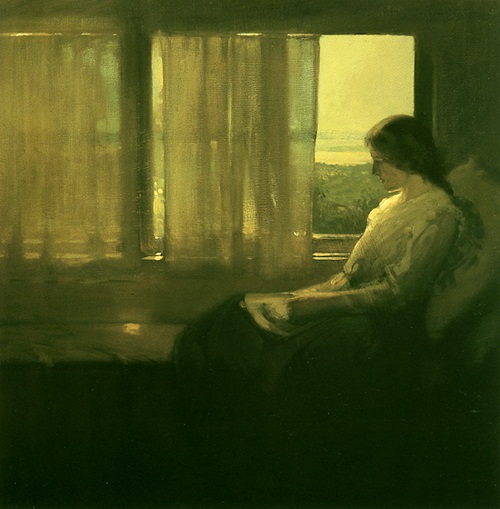


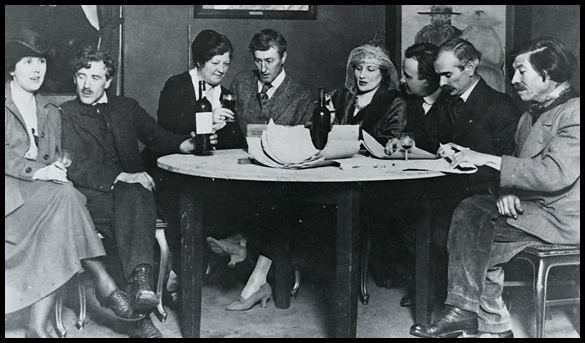


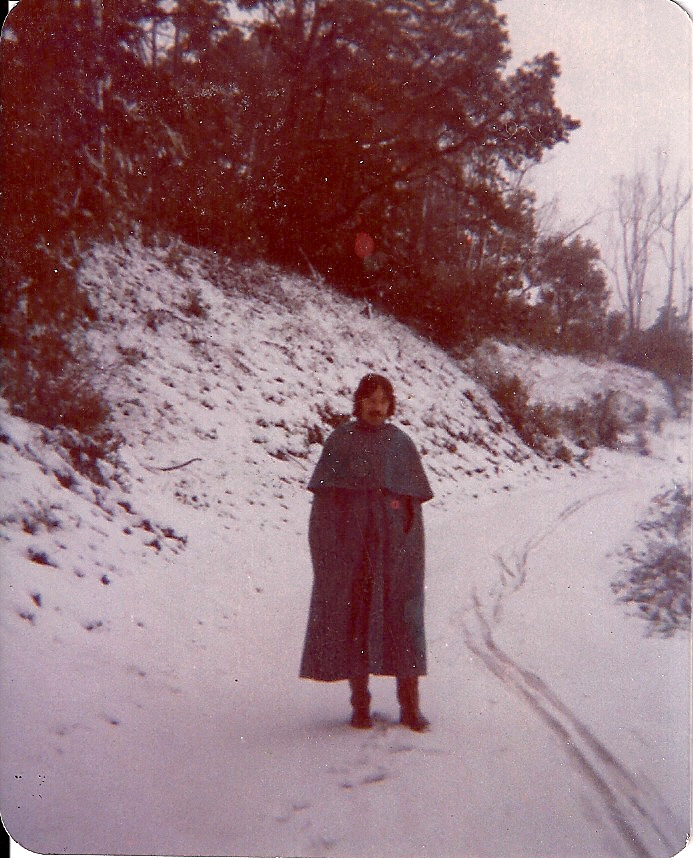


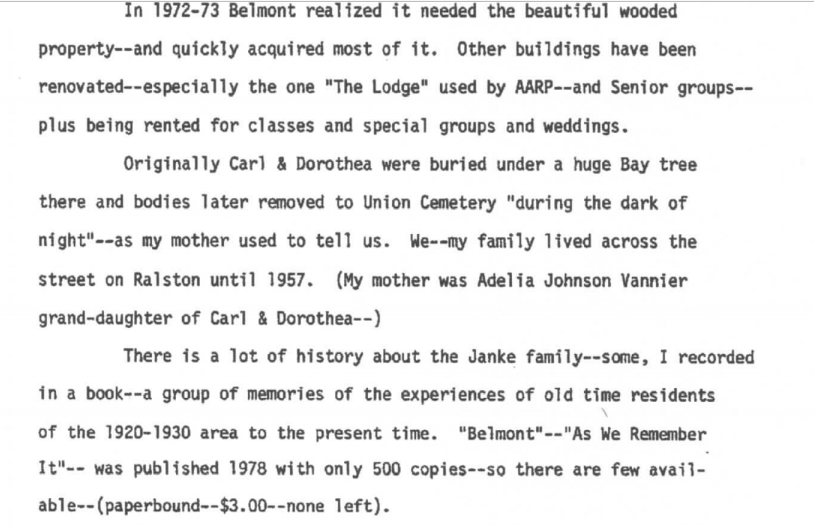

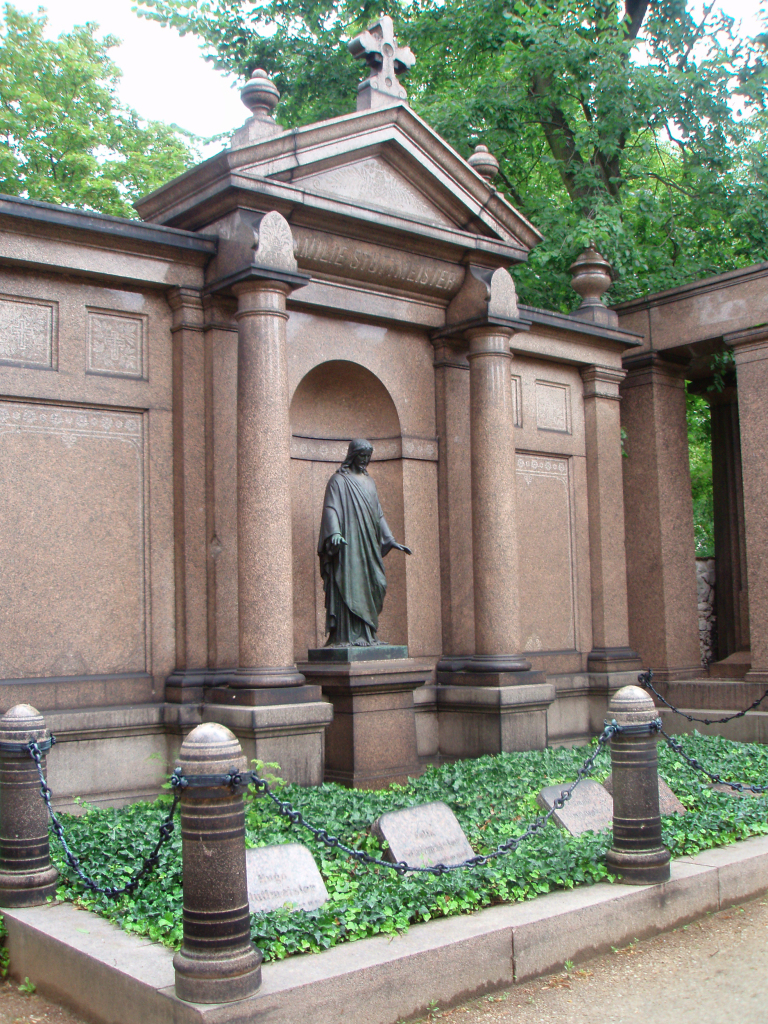



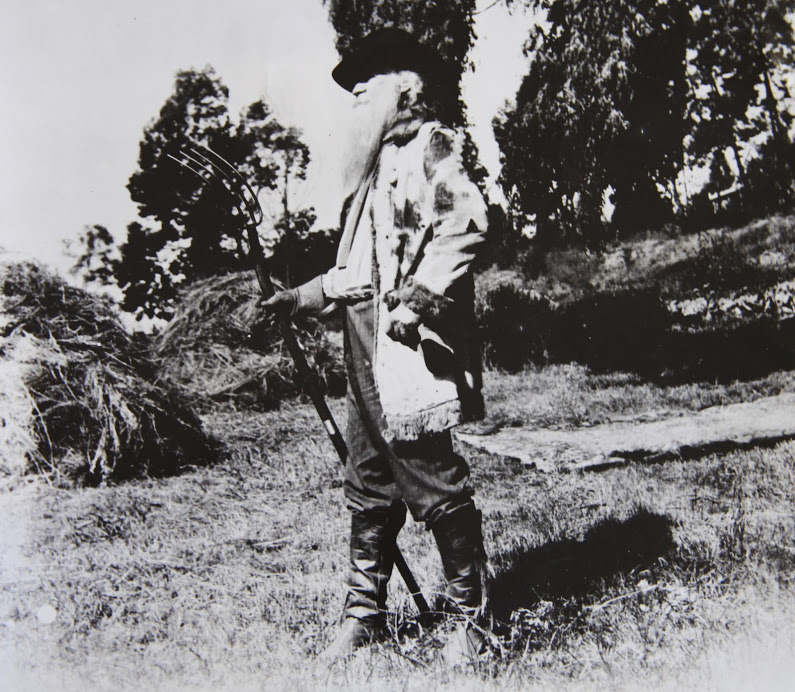

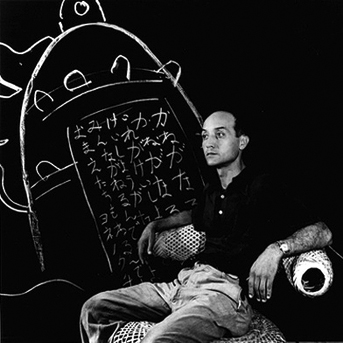


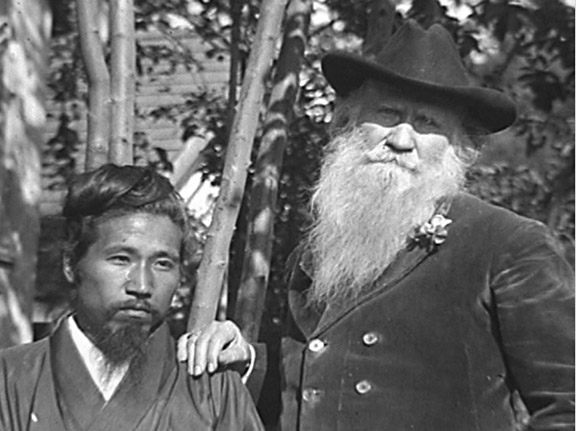
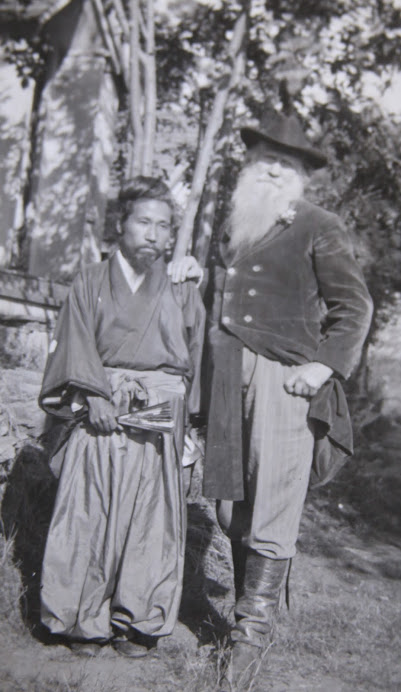
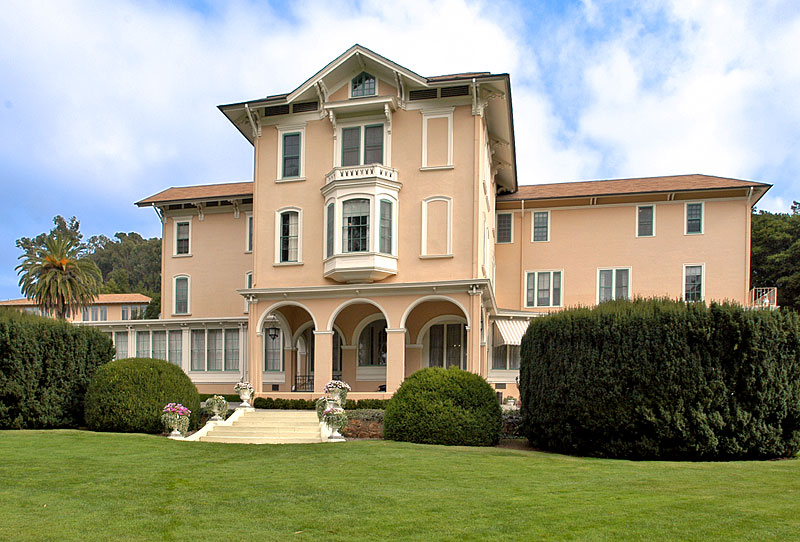
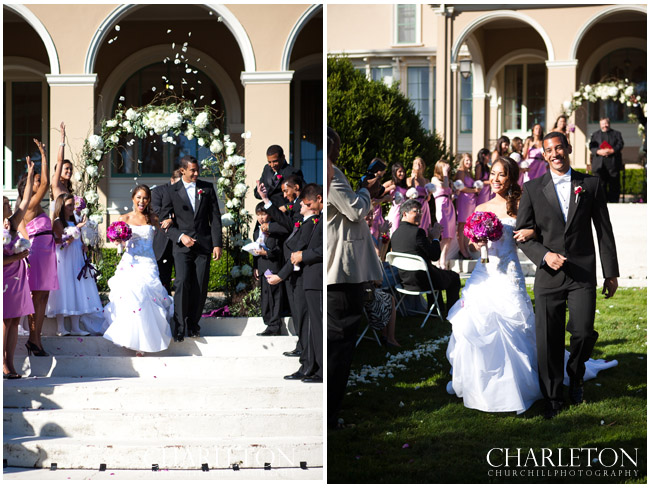
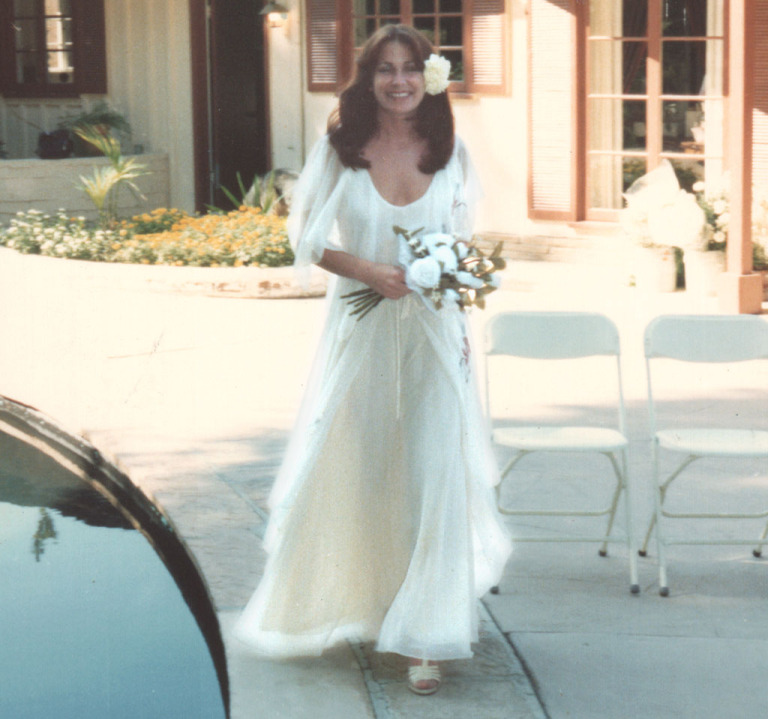


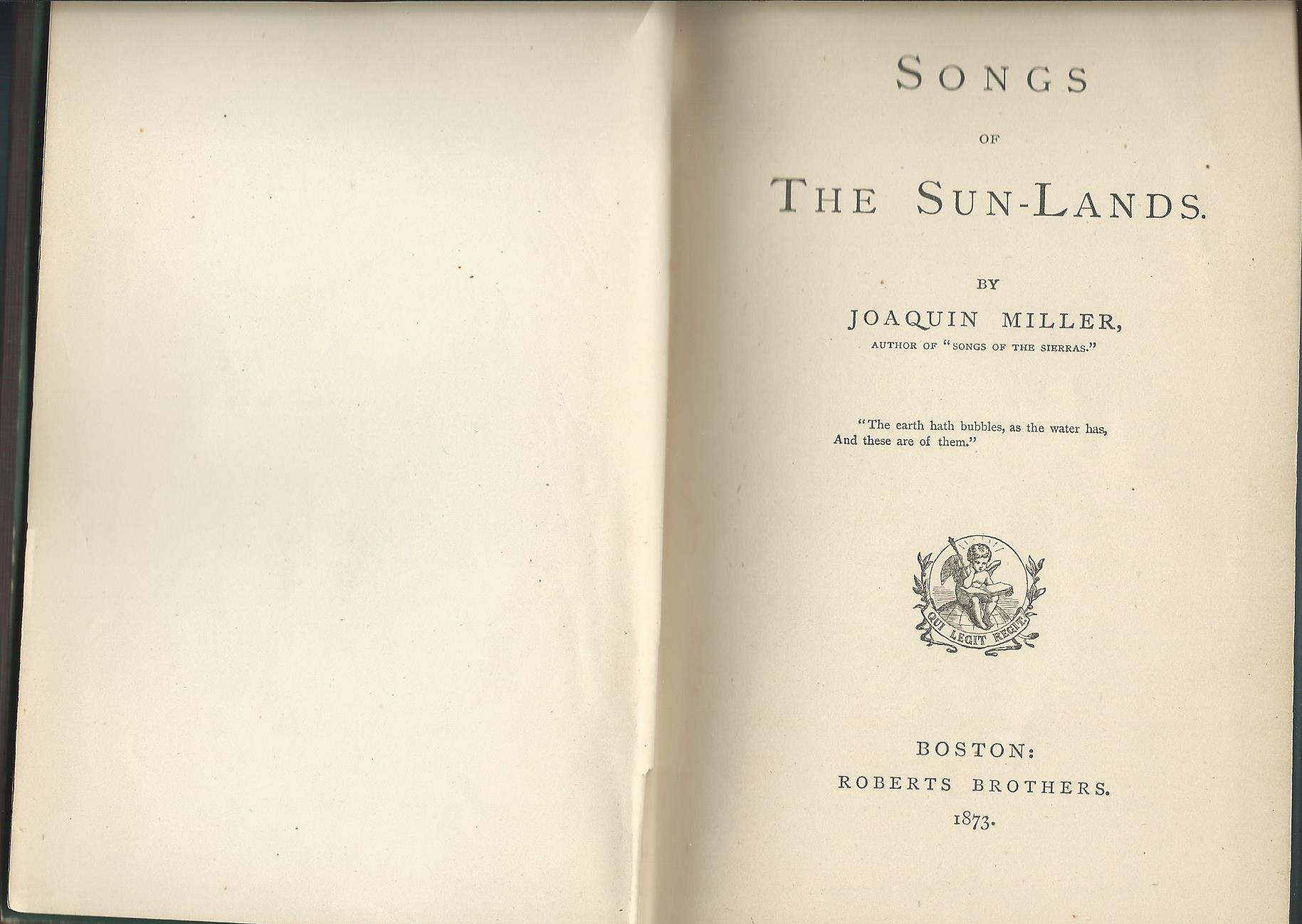


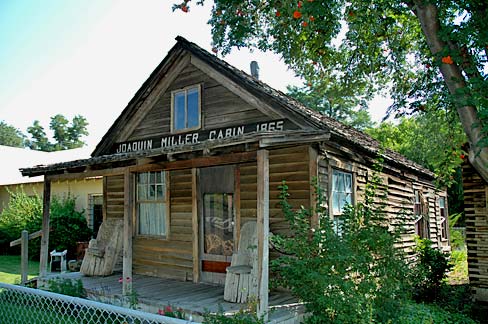
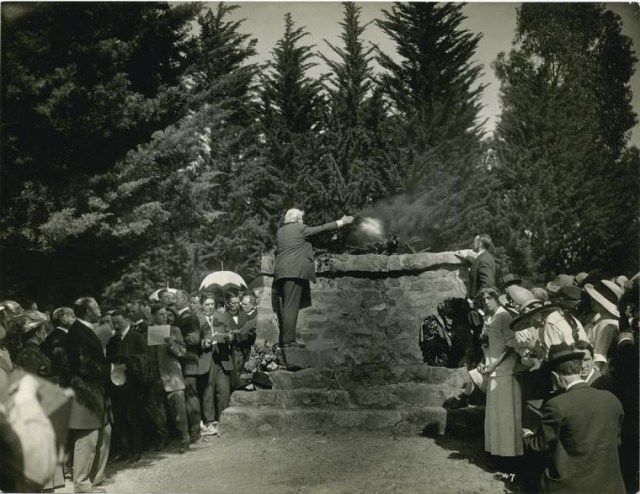


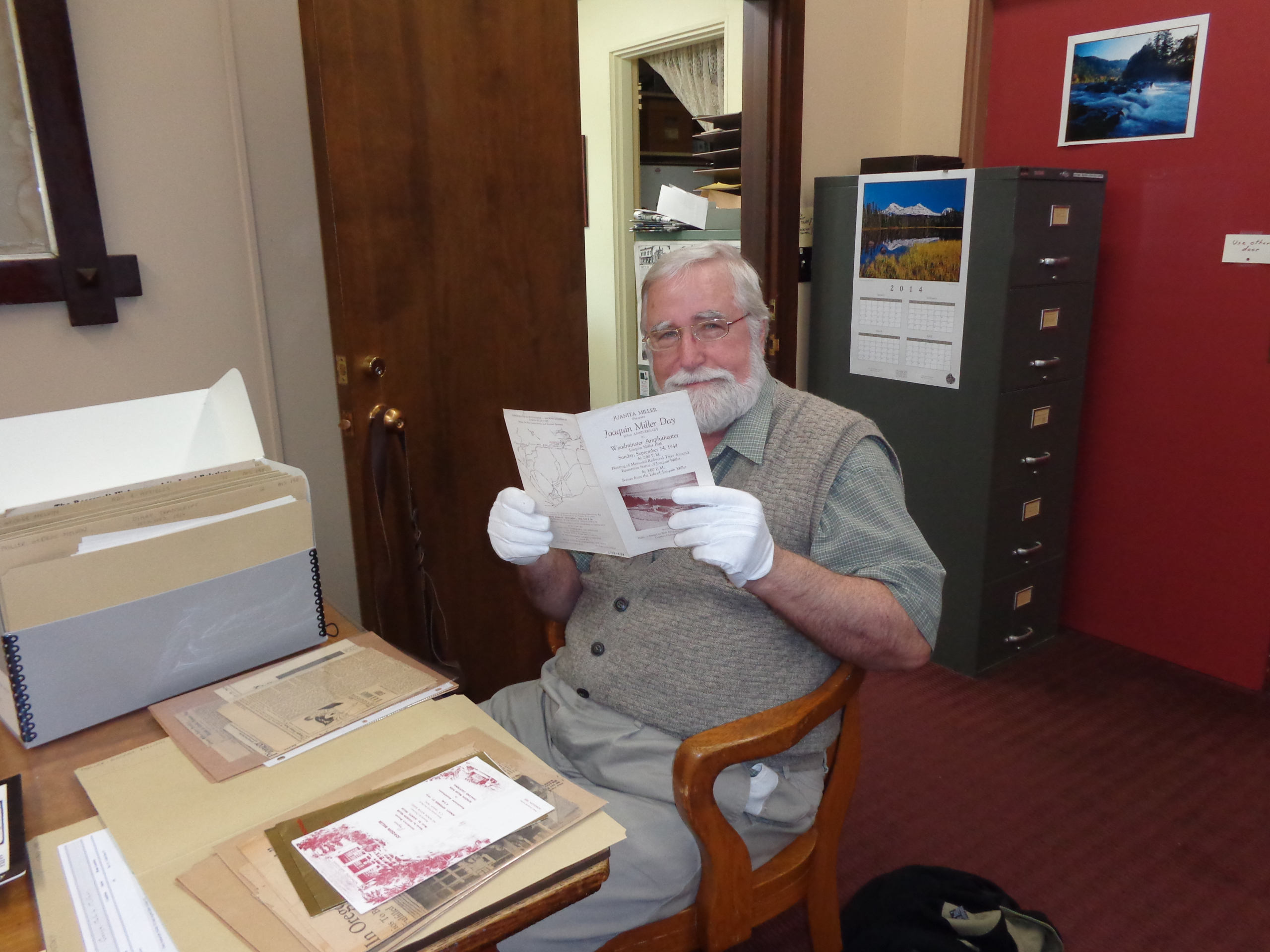
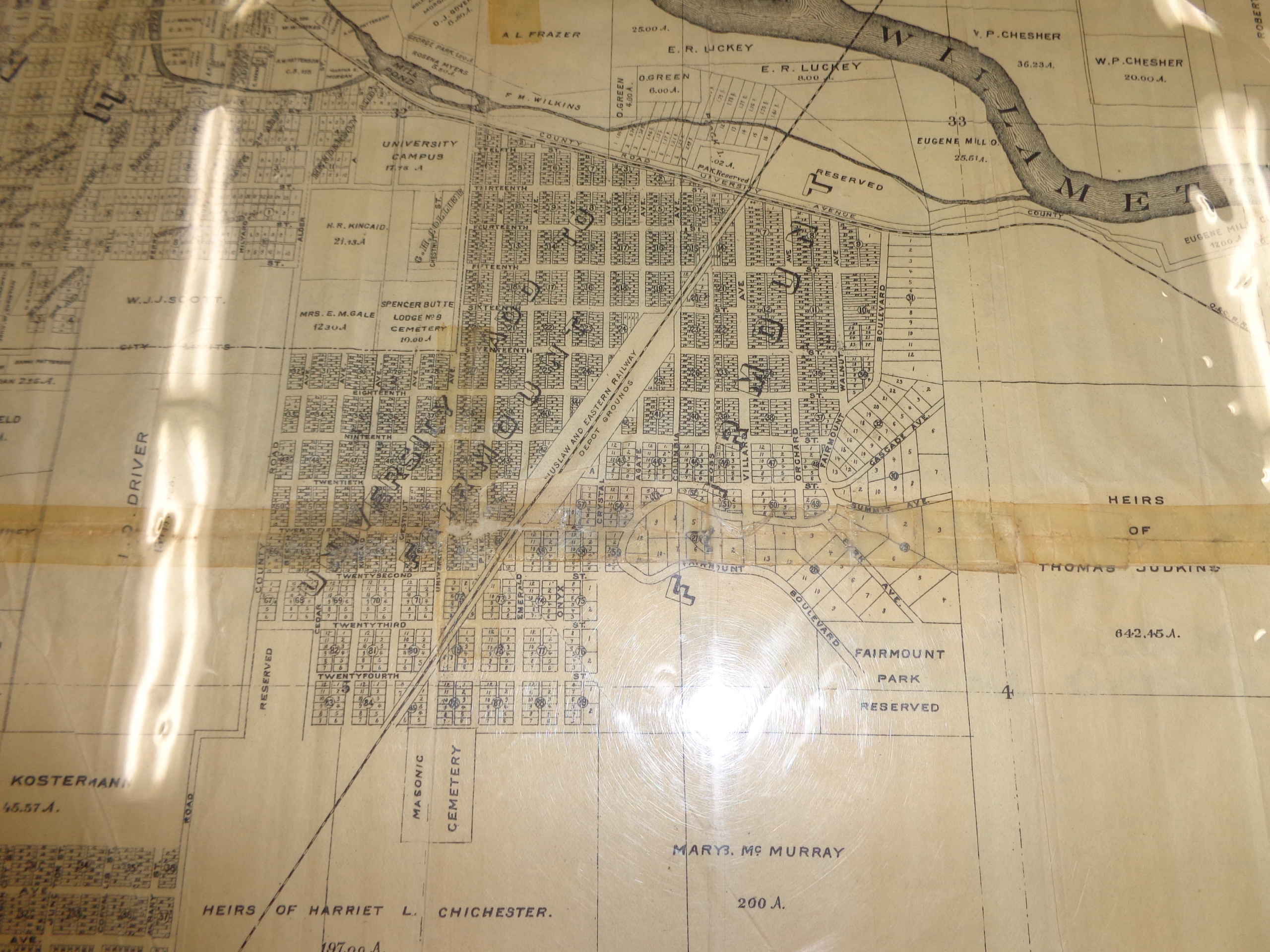
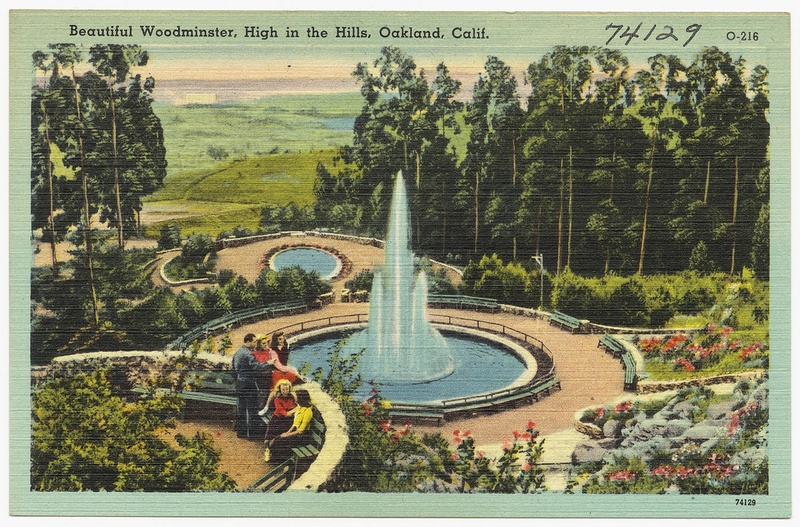
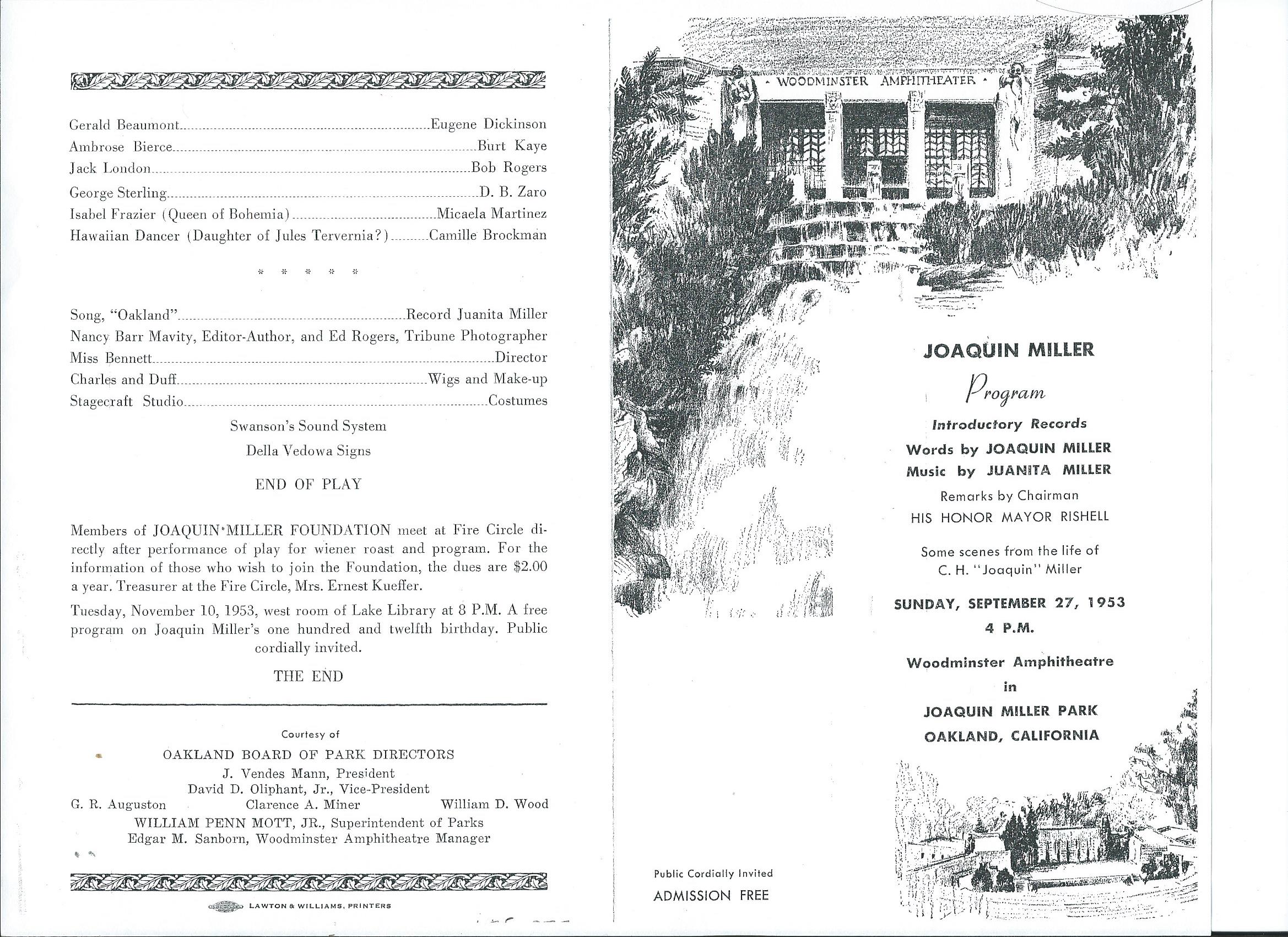


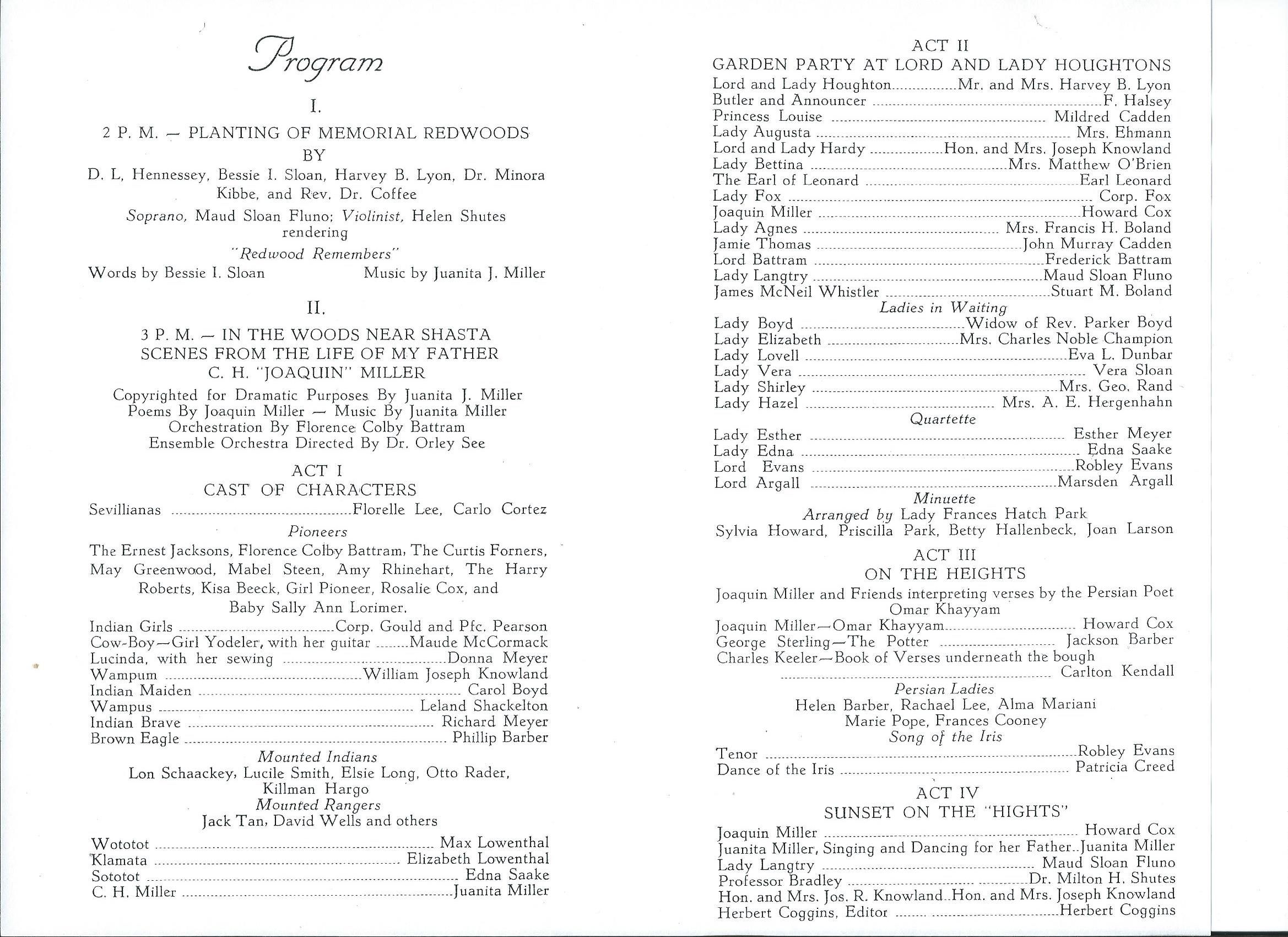
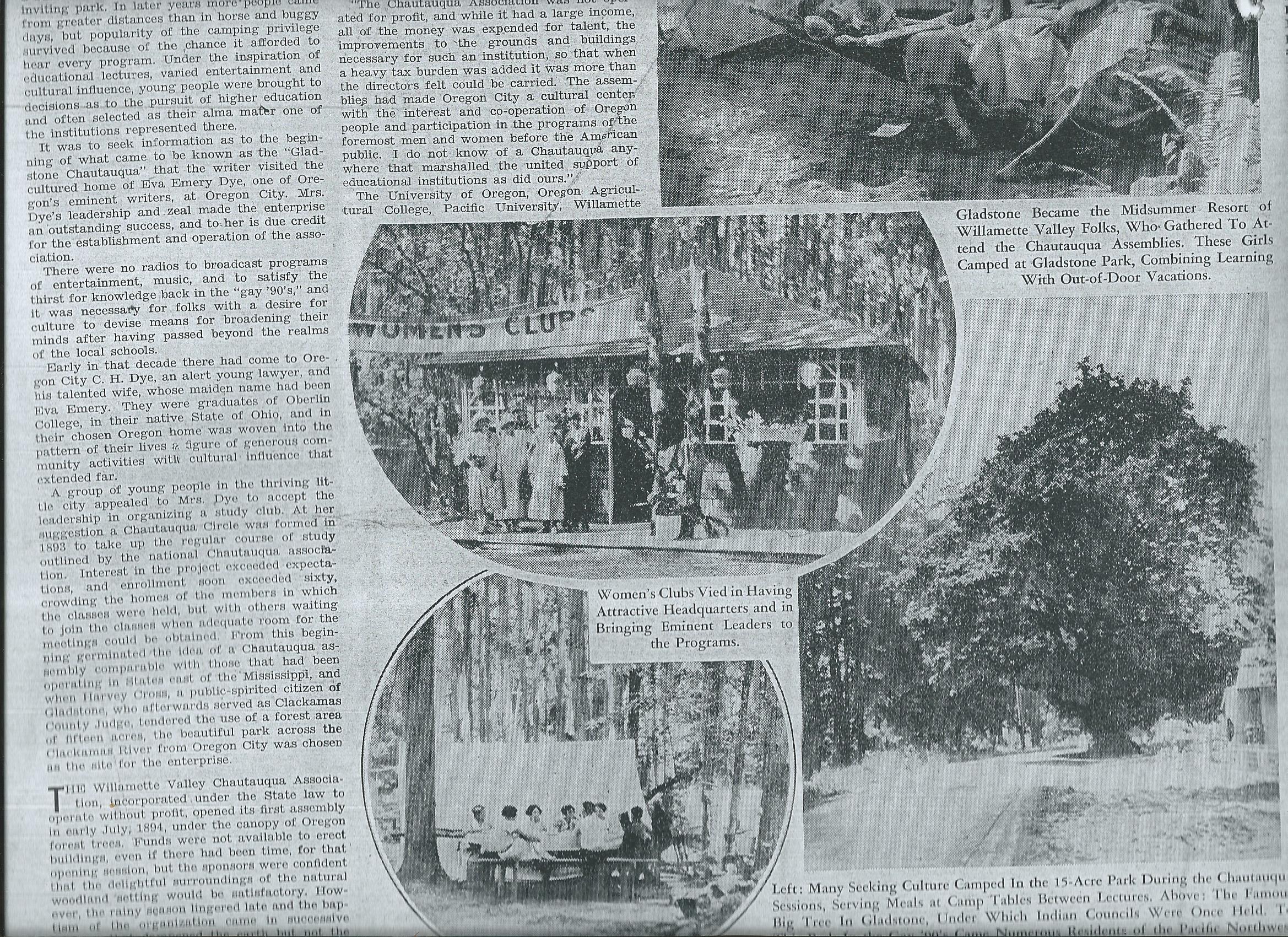
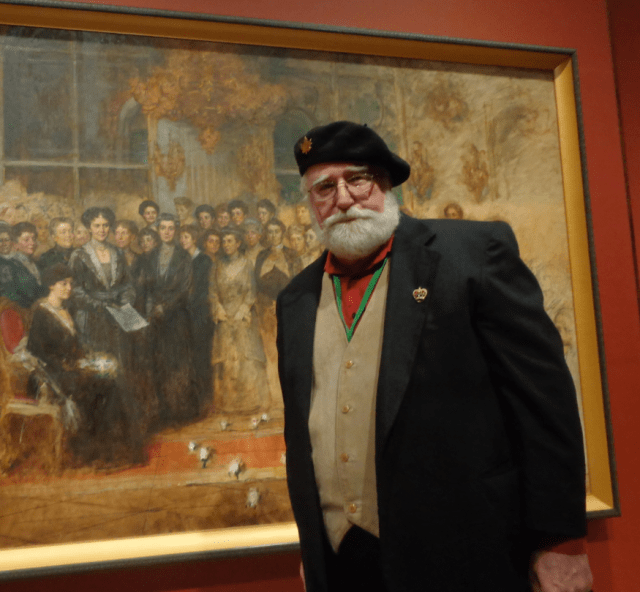




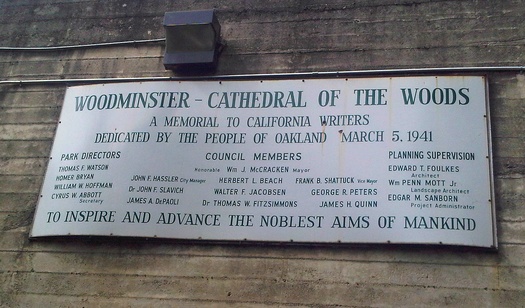


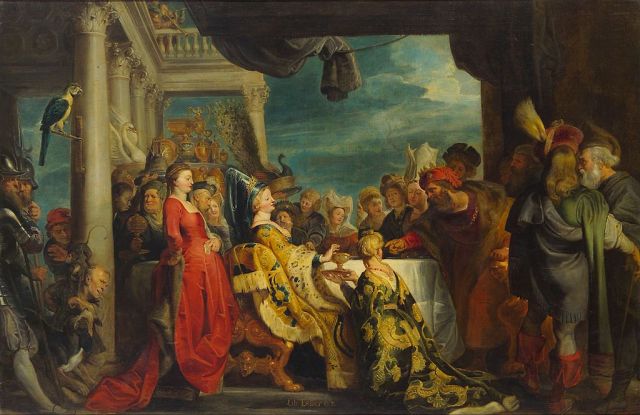


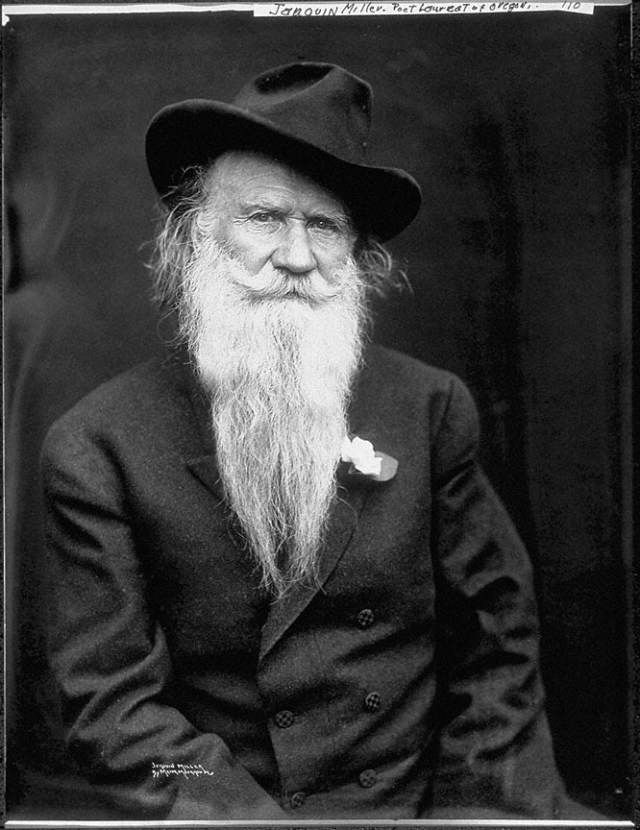
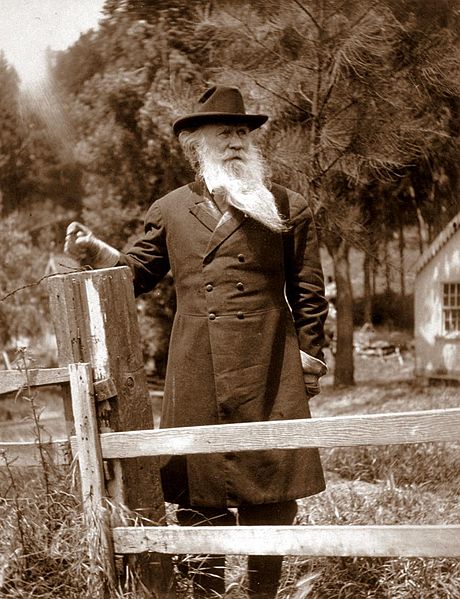


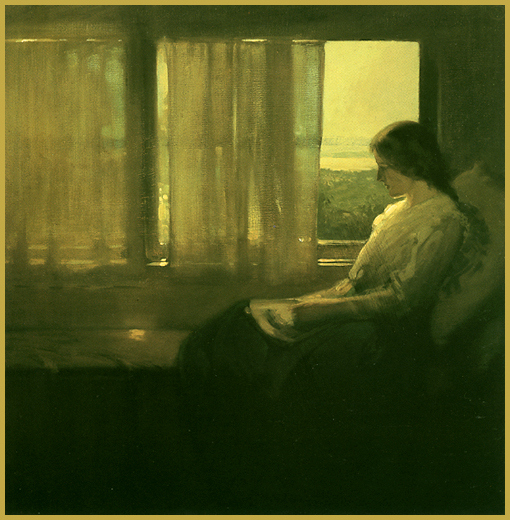


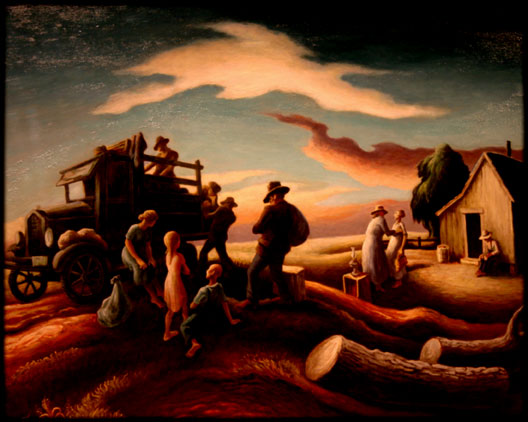
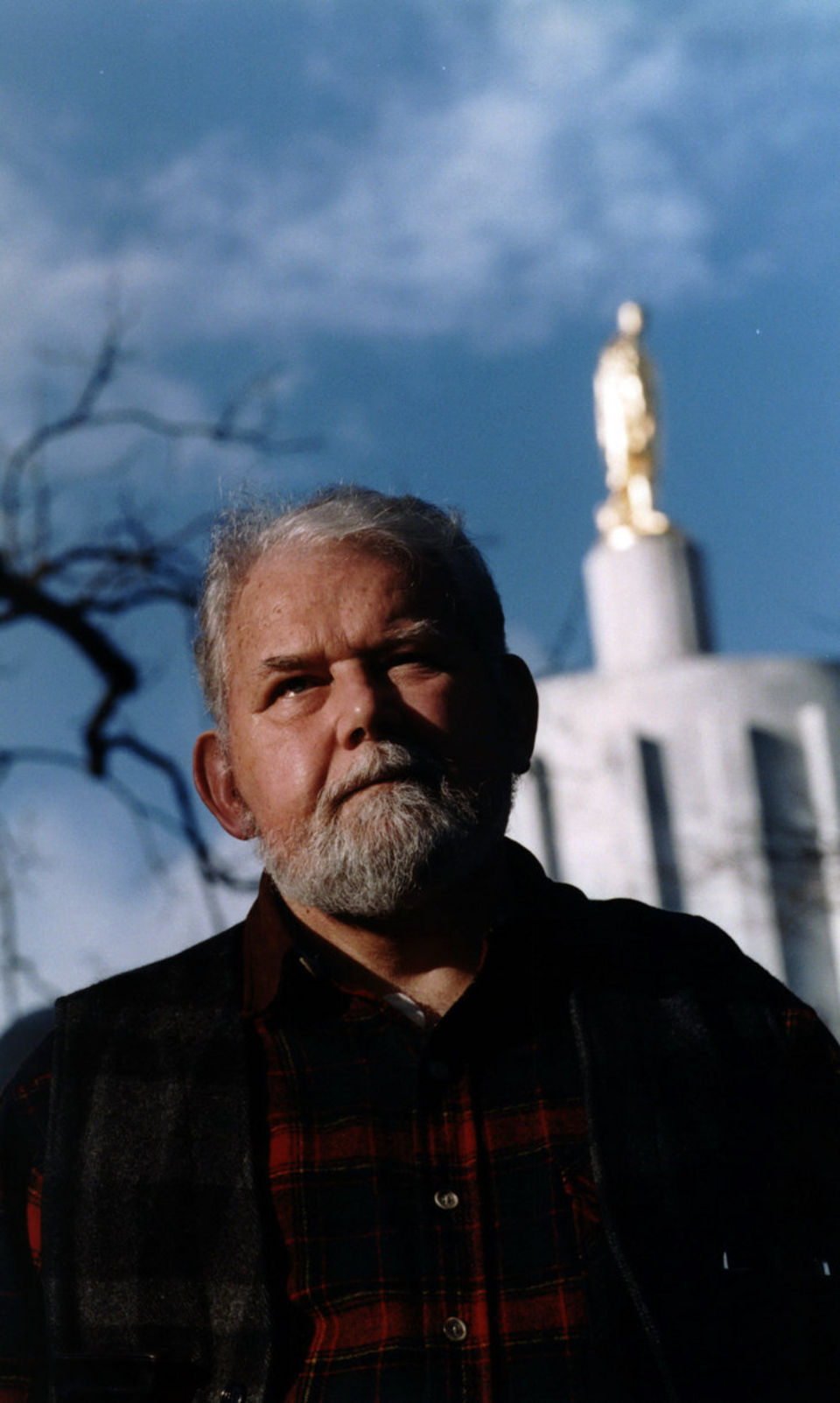
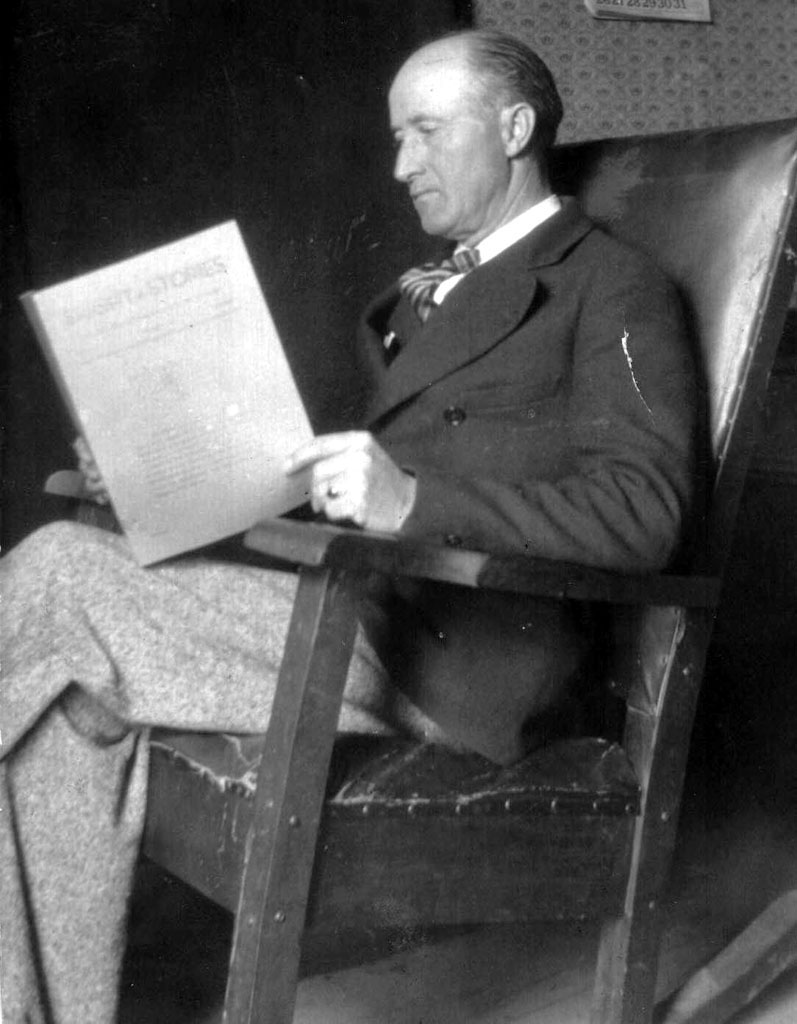


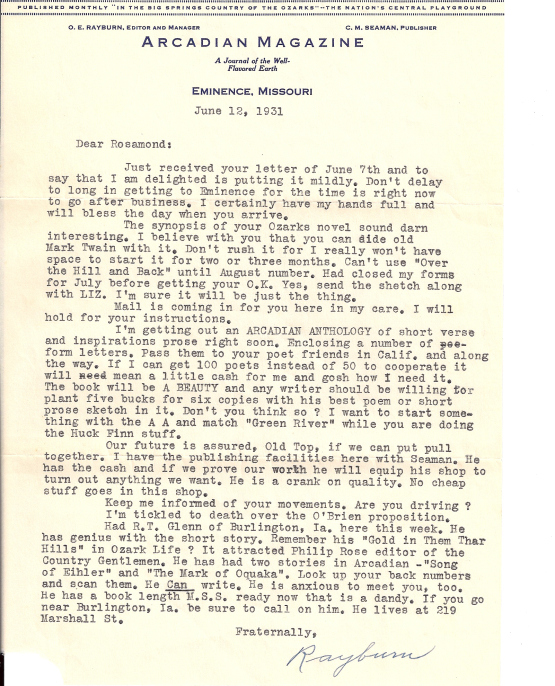


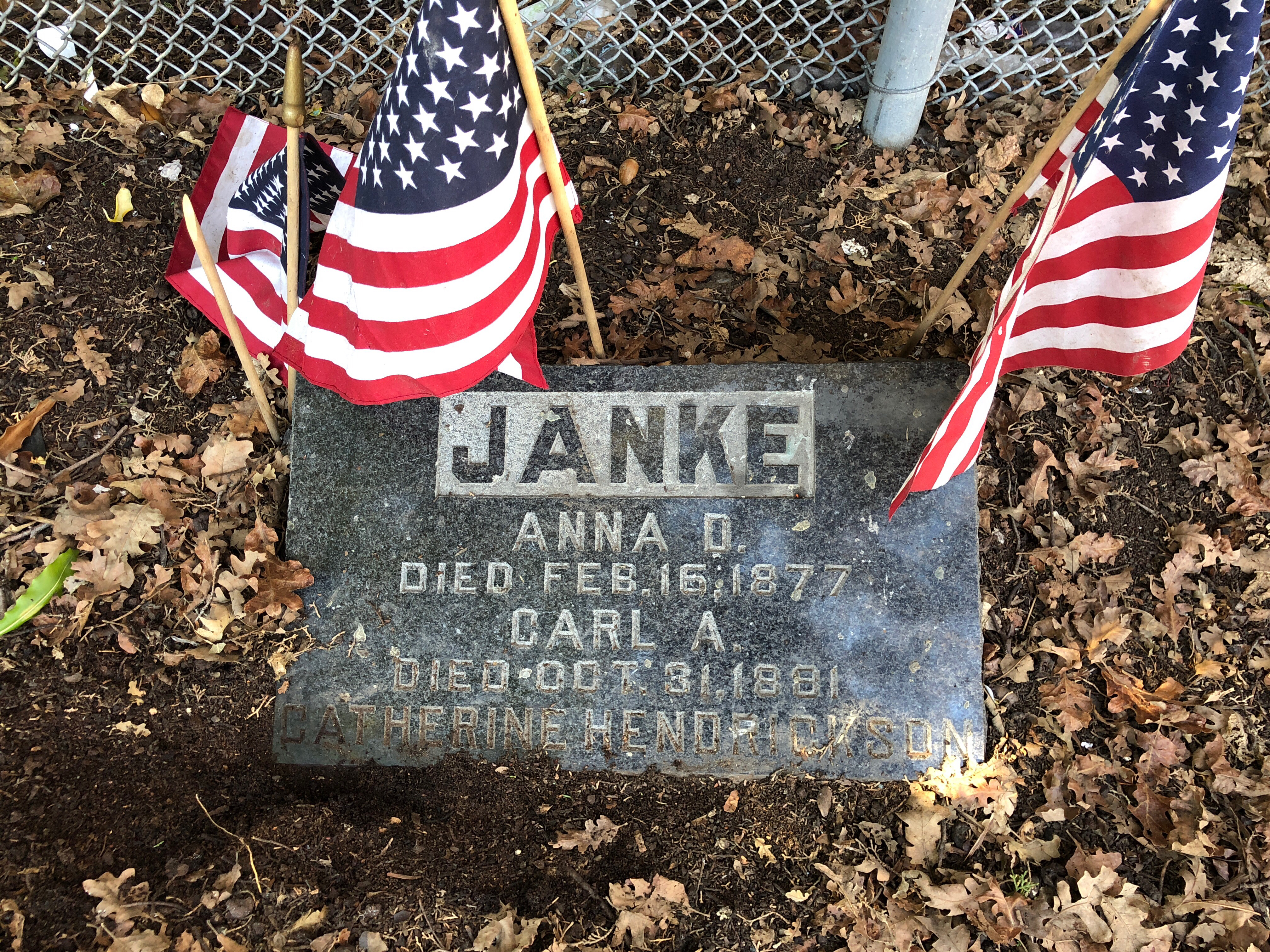


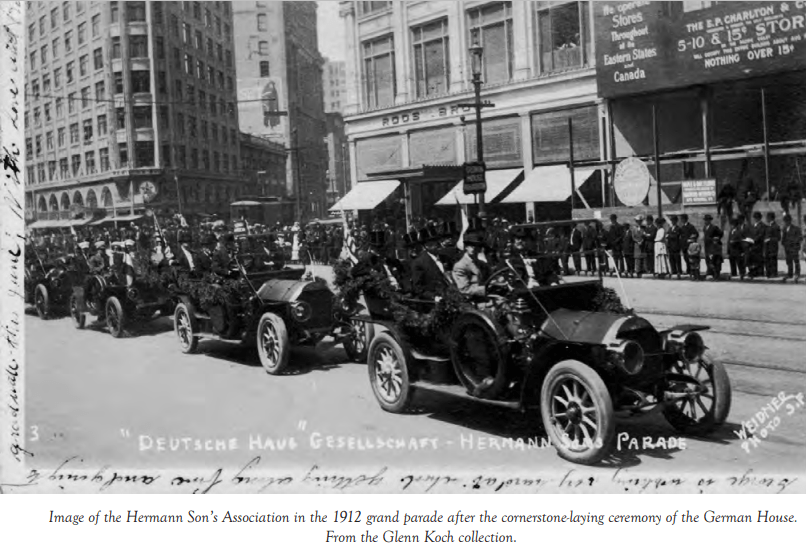

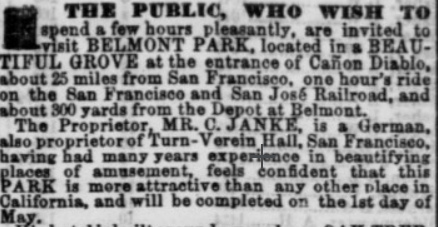


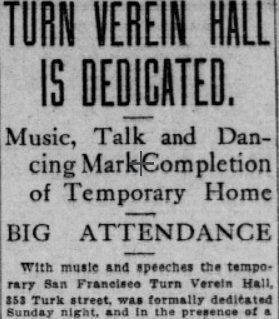
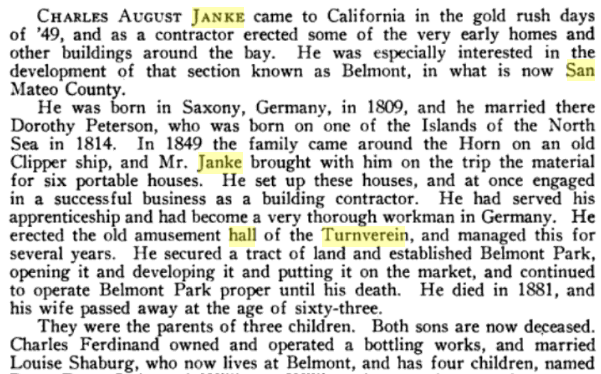
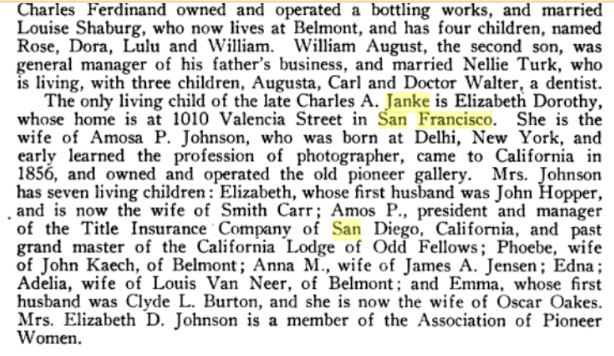


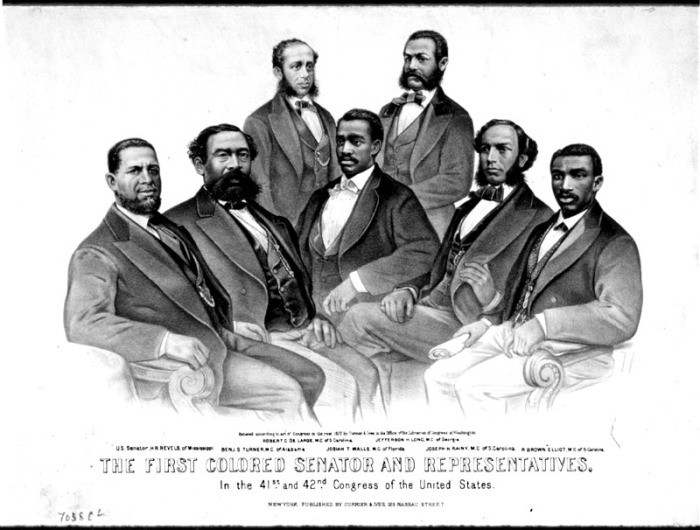
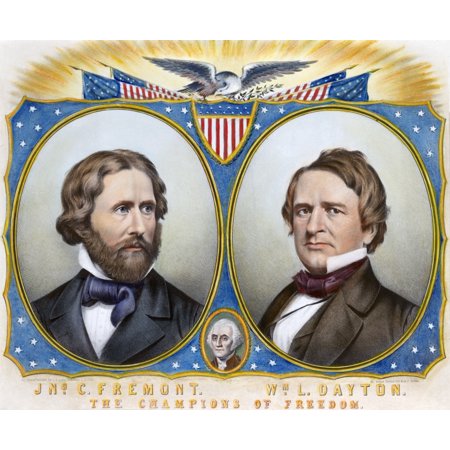



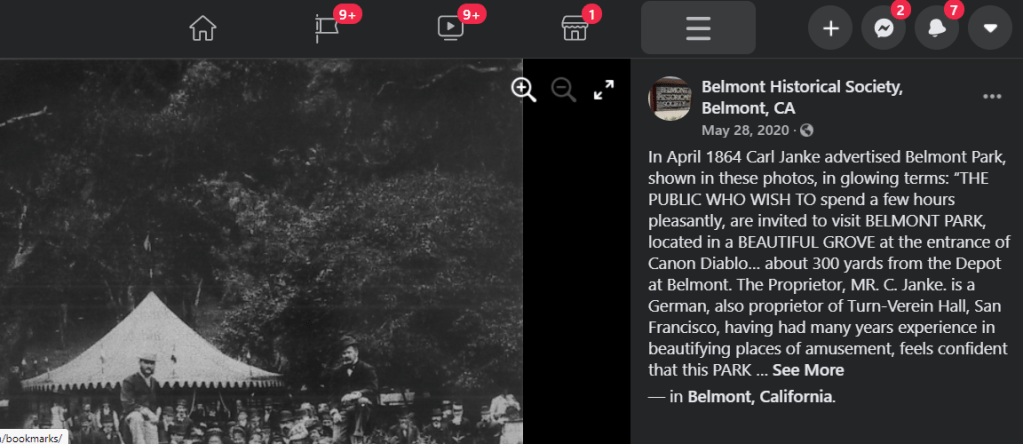



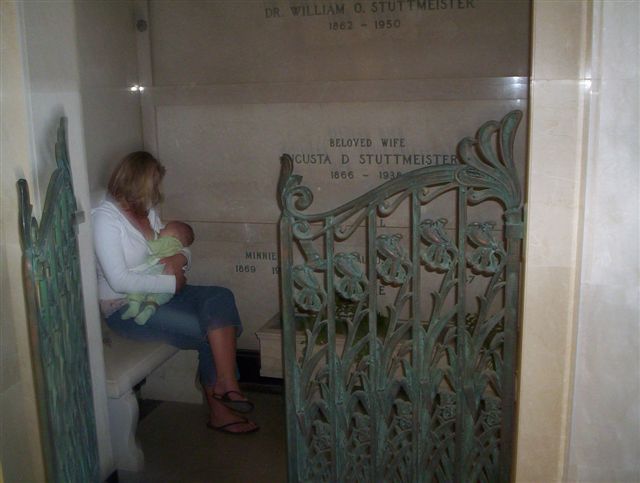







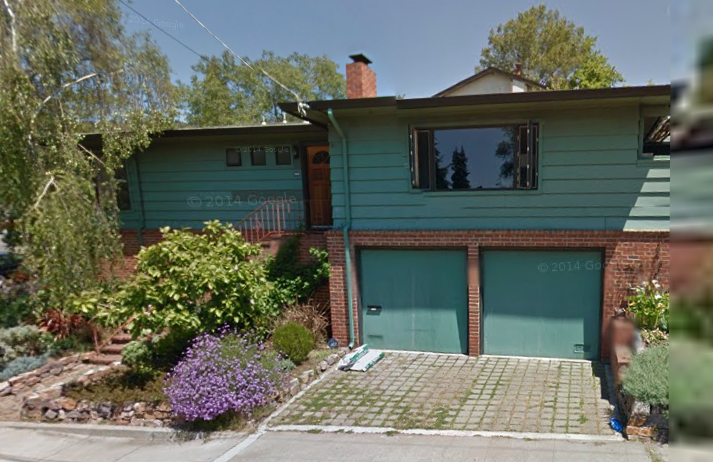


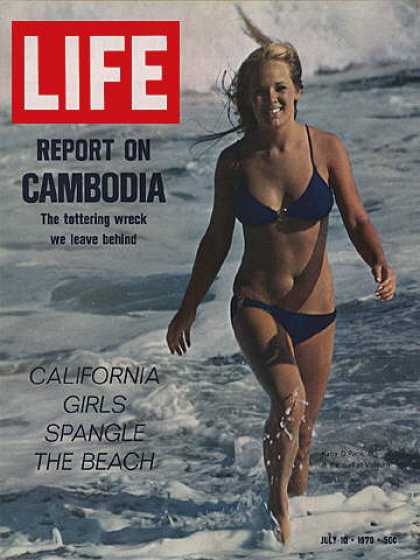

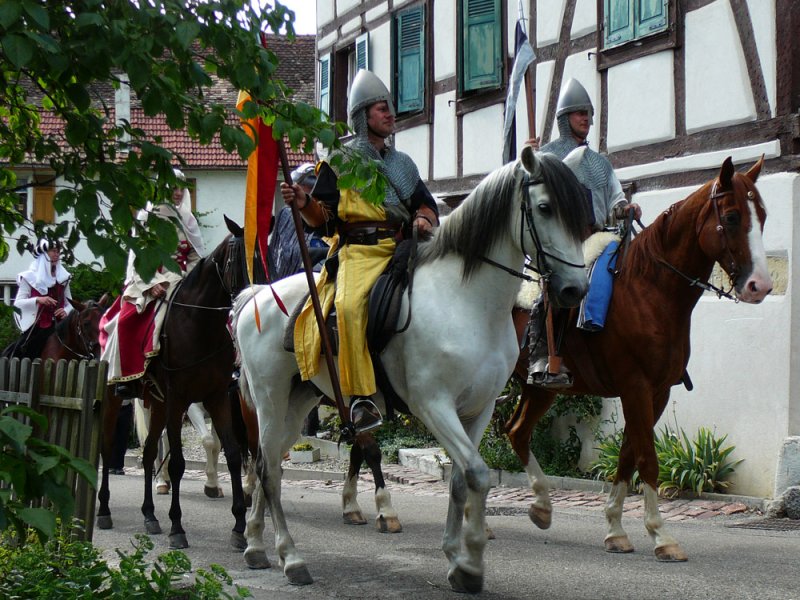

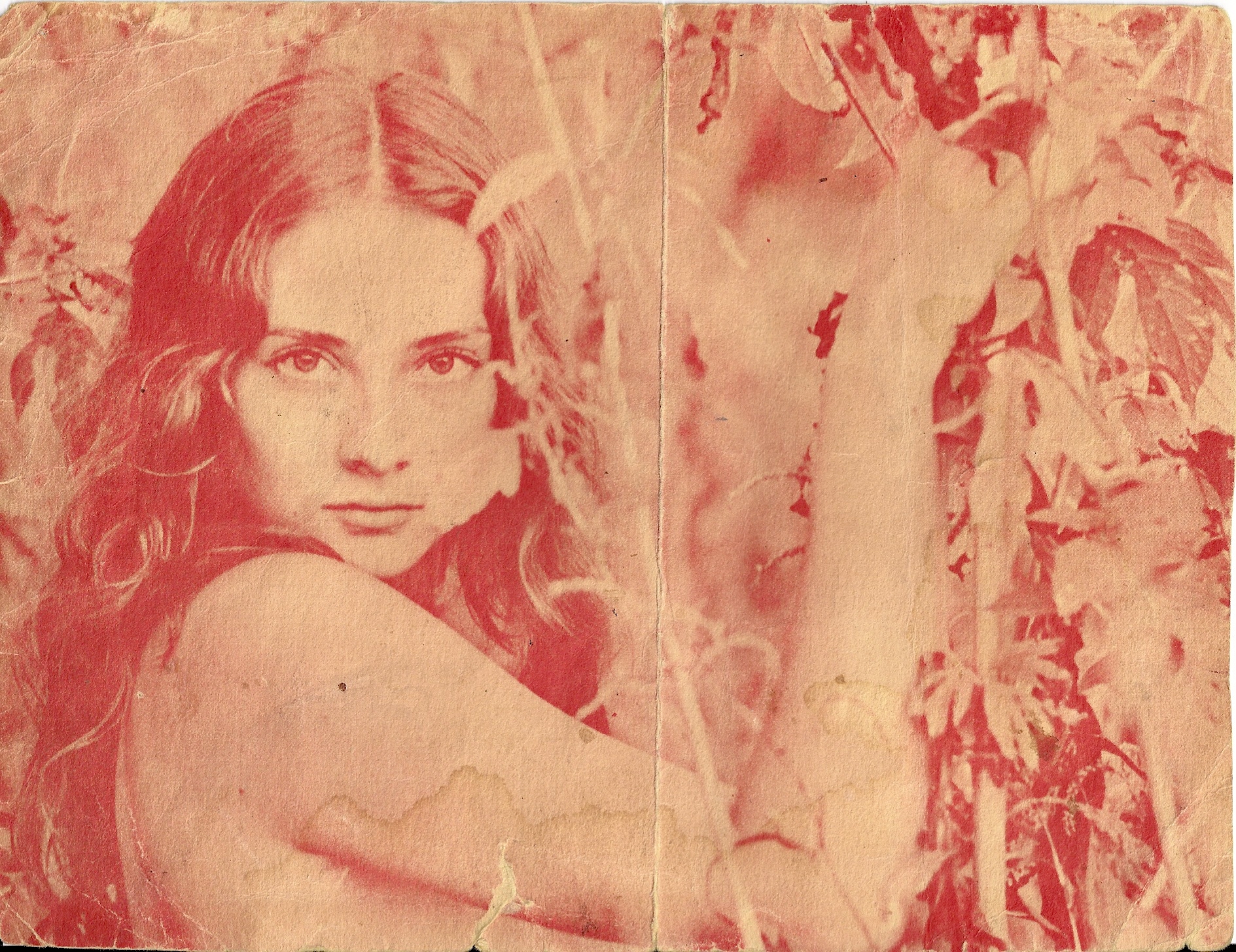
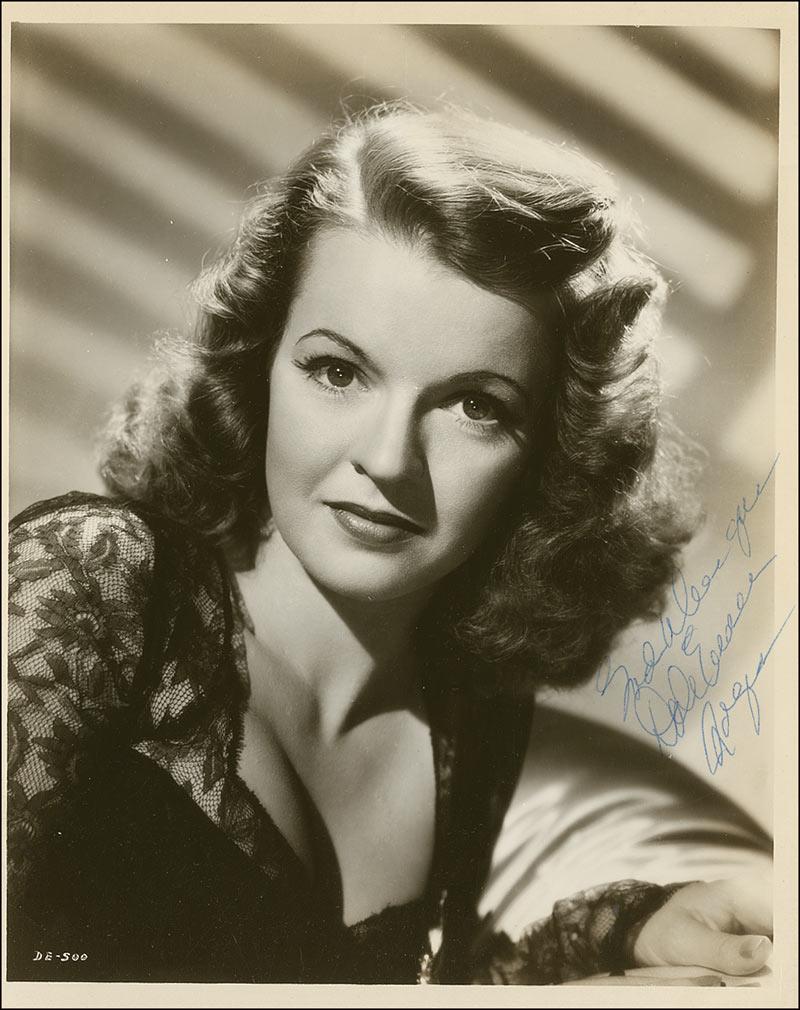


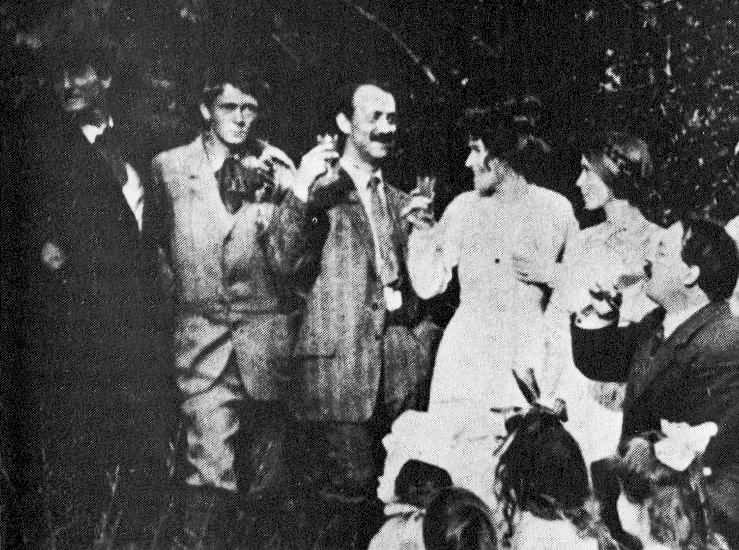
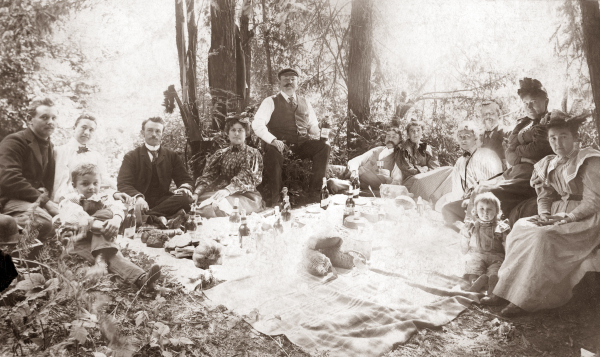

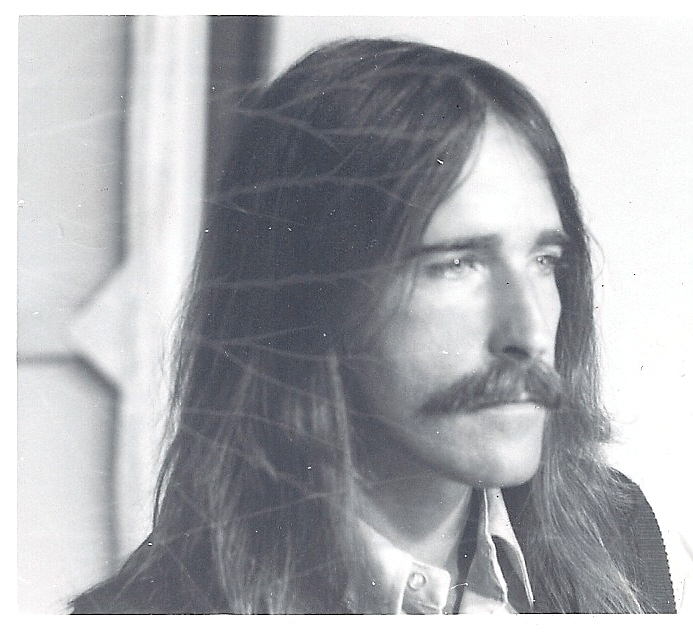
 Rosamond Press
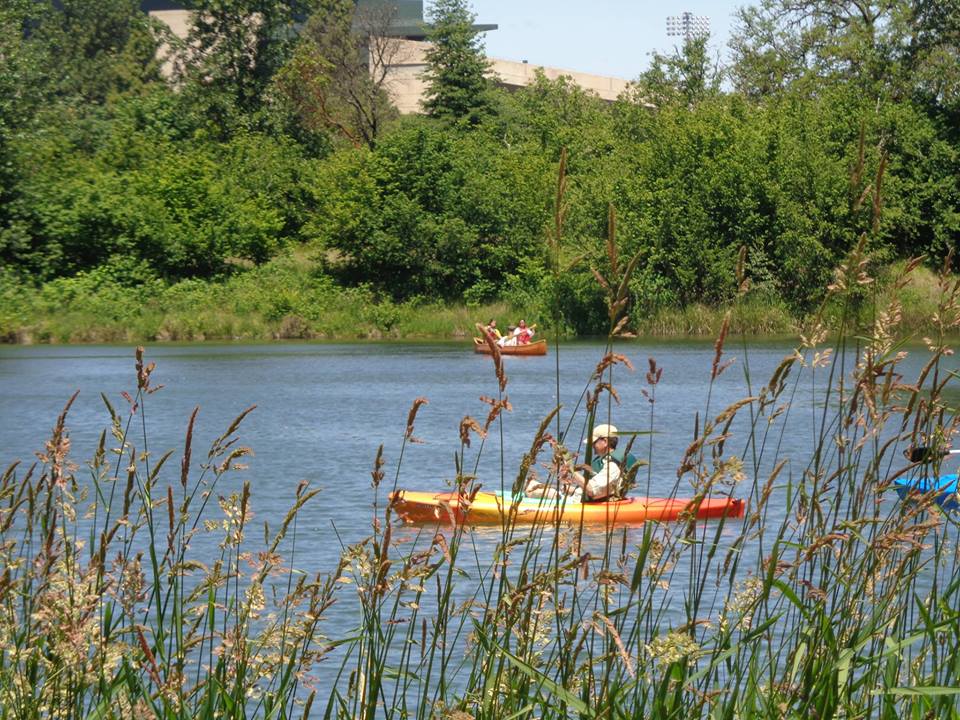

Leave a comment