San Sebastian Avenue
by
John Presco
ALL RIGHTS RESERVED
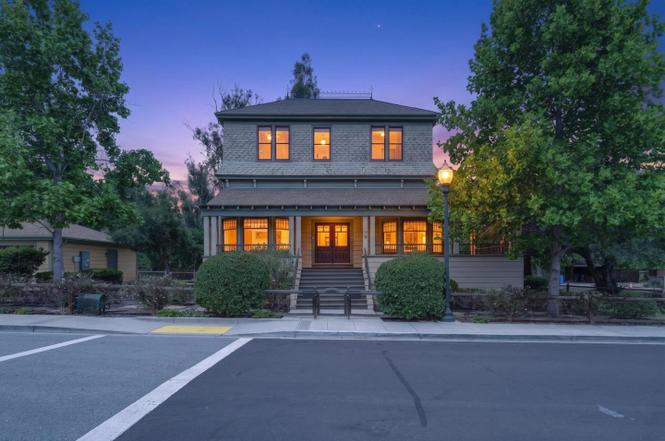
I want to live in the Emmett House located at 1000 O’Neil Avenue. I want to be a part of The American Dream. I want the Presco family to be great again, like we were on…
SAN SEBASTIAN AVENUE
Has it been two years since I talked to the wife of Mark Presco’s best friend. We had met in the 70’s when I dropped by the Young home on……
SAN SEBASTIAN AVENUE
Thinking we owned our home, she asked me what we got for it. The price of a home in Oakland. This pales in comparison to the cost of a home in Belmont, that my ancestors founded when they brought six portable homes around the Cape and planted them in Belmont California. However, there is a missing year. They took thee homes somewhere else. I suspect they unpacked them at the mouth of Peralta Creek – and erected one to live in! It is very possible I and my new bride lived in that house on Miles Avenue. So many strange and impossible things happened, and are coming together. If Russia claims the Augello Ranch, then I will be a….
TRILLIONAIRE!
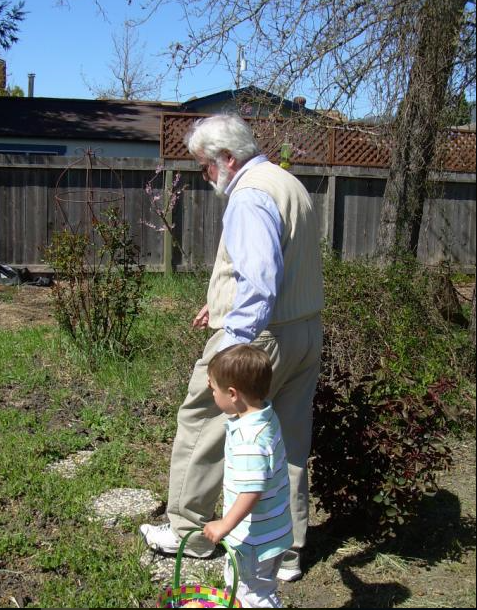
Above is a photograph of me with my grandson, Tyler Hunt. I want him to live with me in Emmett house and be my chauffer. Yesterday I suggested he try to get a job with Belmont’s Park and Recreation. I was not told I was going to be a grandfather. I was not told where my daughter had disappeared to. I blame the law firm of Buck, Rose, Hillsinger. This law firm put together the Buck Foundation worth….
TWO BILLION DOLLARS
Heisinger Buck & Morris – sold our family story to an outsider, who hired several ghost writers to….
HIJACK AND DESTROY THE GREATEST STORY EVER TOLD/STOLD
I will now be promoting Our Historic Story. Perhaps Netflix would want to do a series
BACK TO BENNETT HOUSE
John Presco
President: Royal Rosamond Press
“All’s well, that ends well!”
Posted on May 29, 2026 at 7:43 AM
Sidney M. Morris
Top rated Estate Planning & Probate attorney in Carmel-by-the-sea, California
Practice areas: Estate Planning & Probate


“What has God wrought?”
My initial post was made around 8:30 AM. In rereading it I was astounded to read the Wikipedia citation Aelbert Von Chamisso. Several hours later I sent an e-mail to the Russian Embassy in Washington. I was deeply inspired. Did Adelbert know the Stuttmiester family in Berlin? Did he encourage my ancestors to….
“Go West!”
Dear Sirs;
Today I made a pro-founded cultural discovery. I found a bust of Adelbert Von Chamisso, done by Julius Moser, who rendered a replica of ‘Christus’ for the Stuttmeister monument in a cemetery in Berlin. Adelbert appears to have sailed through the Golden Gate (before the bridge was built) and as a botanist, recorded the California Poppy. On this day, May 27, 2026, I see a ‘Hand across the water’ offering Cultural; Peace between the People of Russia, and the People of the United States.
I was born in 1946. In the last several days I have watched twenty five hours of film on World War Two. I have seen the coming together of the Russian and American troops, a couple of times. It would be a cultural crime for my generation to not be able to make peace. Come to California…..
I am going to post this e-mail on my blog.
John Presco
President: Royal Rosamond Press
7/19/2024
Feeding Frenzy of The Belmont Landsharks
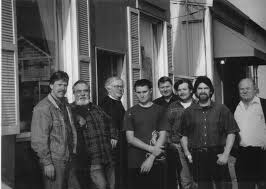
The men above formed the BHS to protect Twin Pines Park. Did they do this before the Janke Graves were dug up, or after?
John Presco
in 1987 and served as its president for at least a decade, said current president Denny Lawhern.
“He was very instrumental, basically, in the whole effort to start the process of preserving Belmont’s history,” Lawhern said.
Seivert also played a leading role in negotiations with the city in 1989 to secure the society’s history room in the Twin Pines Park Manor House for displaying collected artifacts, Lawhern said.
“He loved working with people, and he loved talking about Belmont,” Lawhern said. “He loved getting those little treasures and bringing them back to Belmont.”
For the last nine years, Seivert was involved in the ongoing project to preserve the Emmett house, a local historical landmark, Lawhern said.
In the 1970s, he helped lead the effort to save Twin Pines Park from commercial development, which he received a Belmont Citizen of the Year award for, his daughter Jill Donley said.
A longtime educator, Seivert taught junior high school in East Palo Alto from the late 1960s through the late 1980s, as well as adult education in Belmont and Redwood City.
in 1987 and served as its president for at least a decade, said current president Denny Lawhern.
“He was very instrumental, basically, in the whole effort to start the process of preserving Belmont’s history,” Lawhern said.
Seivert also played a leading role in negotiations with the city in 1989 to secure the society’s history room in the Twin Pines Park Manor House for displaying collected artifacts, Lawhern said.
“He loved working with people, and he loved talking about Belmont,” Lawhern said. “He loved getting those little treasures and bringing them back to Belmont.”
For the last nine years, Seivert was involved in the ongoing project to preserve the Emmett house, a local historical landmark, Lawhern said.
In the 1970s, he helped lead the effort to save Twin Pines Park from commercial development, which he received a Belmont Citizen of the Year award for, his daughter Jill Donley said.
A longtime educator, Seivert taught junior high school in East Palo Alto from the late 1960s through the late 1980s, as well as adult education in Belmont and Redwood City.
In 1972, faced with the possibility of the park being re-zoned for offices and apartments, concerned citizens campaigned to save it, and in 1973, the park and old Manor House were designated city landmarks. Today, the Twin Pines Park is headquarters for a number of civic and artistic endeavors serving Belmont’s population of 27,000.
The San Mateo County Arts Council is housed in the Manor House, along with a gallery and artists studios, while the Belmont Historical Society has an interesting museum tucked away in a back room of the mansion. The Senior and Community Center occupies one of the many fine old outbuildings. The park itself is the site of the popular Art and Wine Festival, a summer concert series and the recently organized Sunday Farmers’ Market.
This has been a year of major changes in Belmont’s city government. And the biggest issue to be faced, according to new City Manager Jere Kersnar, remains vacancies in all staff levels.
“When I first arrived there were 28, now we’ve cut that in half, but it’s still a problem.”
Kersnar, 51, who was Carmel’s City Administrator for seven years, took over in October after a controversial series of personnel changes in Belmont’s top ranks. But he says he’s looking forward to working on the city’s “big projects, ” which include the first revision in 20 years of the Belmont General Plan. Still it’s not all problems: The city enjoys above-average public schools, a low crime rate and a pleasant residential ambience.
But the lack of any large businesses — Oracle is only partially within its borders — has made fiscal matters difficult. An obstacle apparently surmounted, judging by its budget allocating more than $15 million in capital improvements, including reconstruction and beautification of major streets and an ambitious City Hall renovation and seismic retrofit.
The latter is under supervision of Carlos de Melo, 33, principal planner, who came aboard in February. Craig Ewing, the new planning director, joined last week.
The only member of upper management who remains from the old guard is Director of Parks and Recreation Karl Mittelstadt, 50, who has worked for the city for 26 years.
All those staff changes took place concurrent with the hugely disruptive Ralston/Harbor/Holly Grade Separation project to facilitate traffic movement under the Caltrain tracks. Still in planning stages are affordable-housing efforts, evidenced by multiple units under construction at Sixth Avenue and Ralston, near the new Village Center complex where Max’s Bistro marks the corner.
Not everyone is happy with such large-scale housing projects, according to civic activist Doris Barbagelata, a self-described “design Ladybird.”
Barbagelata envisions a re-creation of historic “Angelo’s Corners” at the Ralston Avenue gateway plaza, rather than any dense housing endeavors. One of the dozens of Belmont artists on her side in this battle, she says, is sculptor Ruth Waters, who helped organize the first Belmont artists cooperative, now housed at 1870 Ralston in a former school site.
Also sympathetic to the idea of re-creating a historic plaza is the indefatigable president of the Belmont Historical Society, Tom Seivert, who has not forgotten the recent destruction of the old Emmett store, the last remnant of Belmont’s original town center on Old County Road. Seivert, a retired school teacher, is especially worried about the fate of the equally historic Emmett House, which is owned by the city but whose fate remains murky.
Longtime resident Marion Harris, a historian and researcher, lives in one of the town’s more interesting houses — a hacienda-style adobe that is one of several built during the 1940s. She is also concerned about the fate of the Emmett House.
“The original Village Center project was supposed to incorporate the house and have underground parking and a lovely fountain,” she says. “Since none of that happened, I find it not so wonderful, but an improvement, I guess.” Dec 15, 2000
This year, the average single-family home sold for $675,000, and the average price was up to $680,000 in November, according to Coldwell Banker‘s Barbara Ellis.
Through all its ups and downs, Notre Dame College has been an anchor of stability and gentility for the City of Belmont, which was incorporated in 1926, shortly after the sisters moved their college from San Jose. At that time, the town was best known as a location for small schools and sanitariums. Most prominent was the Twin Pines Sanitarium on Ralston Avenue just west of El Camino. Today it has been transformed into Twin Pines Park, one of the most pleasant recreational areas on the Peninsula. This oasis of culture in the midst of Belmont’s frenzied renewal activities is a study in public involvement.
In 1972, faced with the possibility of the park being re-zoned for offices and apartments, concerned citizens campaigned to save it, and in 1973, the park and old Manor House were designated city landmarks. Today, the Twin Pines Park is headquarters for a number of civic and artistic endeavors serving Belmont’s population of 27,000.
Despite the recent gentrification of Belmont — delis, cell phone stores, bistros and coffee houses not withstanding — the most glamorous thing about the town remains the legendary Billy Ralston and his estate.
Bay from Belmont hi lls showing Red Rock Hill. Doris Vannier has picture of sister Flor ence, whe n 6 years old,during dedication of cabi n in Golden Gate Park for Ca lifornia Pionee r s . Bill Kn owl and is hol din g her hand. Ellie will have pictur e copied . Tom Seivert mentioned picture of people in grandstand at dog track from Earl Miller . Doris Vannier sa id there were more people at the dog track than l ived i n Belmont. There were thousands. Eve St e rr y discussed Hi s torical Bay Tree in the Pa rk . Doris Vannier told of Carl J anke & wife being bur i there be f or e being moved to Union Cemetery in R.C. De nny suggested further discussion & permission from City Council . Tom suggested that this was a good idea and should be put on the agend a fo r new business
If you’re new to the Bay Area, you may not know of Ralston — the flamboyant character for whom Belmont’s main road is named. But you may have heard of his splendid 80-room mansion where he held lavish parties, picnics and balls — the beautiful Ralston Hall, a national landmark — atop the hill at the College of Notre Dame. His house and adjacent grounds have become a center of Peninsula cultural activities over the years since his “Belmont” estate was acquired by the Notre Dame Sisters in 1922 to become the headquarters for one of the oldest colleges in California.
In recent years, Ralston’s former ballroom has been transformed into a theater and performing arts space. The house, which had its origins in a smaller Italianate Villa style, was built in 1864 in what the sisters call “Steamboat Gothic,” inspired by William Chapman Ralston‘s Mississippi River origins.
After making a fortune in San Francisco mining and transportation ventures, Billy Ralston joined his fellow capitalists in building a spectacular summer home on the Peninsula. Following a recession in the U.S. economy in 1875, Ralston’s Bank of California crashed, and his body was found floating in San Francisco Bay, a probable suicide.
ADVERTISEMENT
Article continues below this ad
Computer science teacher Paul Bishop, 40, has recently completed his first year at Notre Dame. He says he’s fully in tune with the college’s newly approved development plans, which include a new campus center, library expansion and new teacher-technology program.
Although delighted with his teaching duties, Bishop does suffer the usual Peninsula housing blues.
Still stunned by the high rents he has encountered since his arrival from the East Coast, the single professor says there’s no way he’d be able — or willing — to buy a house in the Peninsula market.
Still, Belmont’s property values are reasonable by Silicon Valley standards:


For some reason, my phone has a better search-engine than my laptop, so I have been able to find more info about my German Family History in Belmont. I’m waiting for Cypress Lawn to be open so I can have them search for the remains of Charles F. Janke who died of a concussion at 47. Was he kicked by a horse, or, did he die defending his town and business establishments – from thugs? Charles Janke owned the Emmet House, and may have paid for its construction. People of Belmont did not want it moved, because they wanted what many cities, have – a historic center. How come it was not moved to Twin Pines Park? I detected an anti-German angst – from the start of my genealogical research!
I almost wept at the City Council meeting because I knew what was coming due to the Palestinian War. Germany is being discussed due the Holocaust. There are hostages. The Emmet House and my family history – WAS BUTCHERED! I want it restored! It appears many elected officials honed their civic swords on The Janke House, so they can earn a paycheck telling people what to do – and how to do it. At the end of my three minute presentation, I thought I heard the Mayor say….”We honor all peoples!” This is the ongoing excuse to wipe out – FAMILY HISTORIES! Enough! U.S. Citizens are going to pay billions to protect the antiques and archeological digs of Israel – who are guilty of treating the Palestinian inhumanly, and, with no respect! Enough! This is the Last Go-round with that BULLSHIT!
On the news a Jewish woman who lives in the SF Bay Area says Jewish Males that live in America are flying to Israel to fight against Hamas. Carl Janke appears to have formed a militia. Russia bragged about taking back Alaska, and Fort Ross – employing force. Many Jews are calling for the firing of Netanyahu, that I think is being prevented by President Biden – for the sake of UNITY! The Republican still can’t get – UNIFIED!
Throwing’ out – and banning OUR HISTORY – does not prevent history from being made! “Don’t!” There have been several Westerns on cable. I should have proposed one called ‘Belmont’. I will do so! I see a pattern in Belmont. Every time there is A NEED FOR MORE LAND, the solution is to dig up another Janke, or, move a Janke home -somewhere else!
“Let’s dib up another Nazi from their grave! Those German deserved it for what they done!”
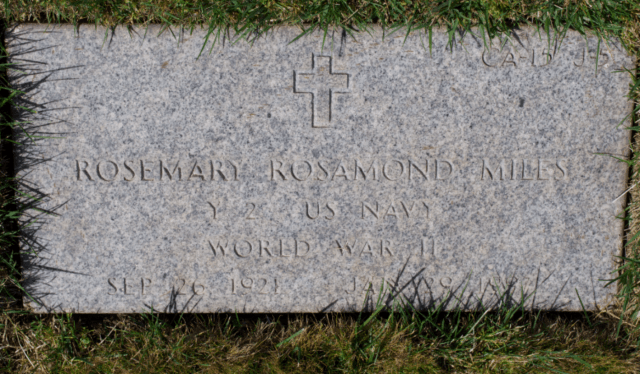
I see these Kevin Kostner clips, where his character built up a great ranch, and now NON-FAMILY FOLKS – want to tear it all down – or make the ranch their own! The biggest fight in our family, was between my mother, Rosemary, and aunt Lillian, as to whom Errol Flynn desired the most. They both dated him as teenagers. Rosemary married Carl Janke’s great grandson, Victor William Presco.
John Presco
EXTRA! I just found Charles F. Janke, his wife, Louisa, and their daughter Rose Hannah. This is my first gravesite I have located after becoming a Odd Fellow on August 27th.
In looking at the evil resting place of Carl and his wife, I keeping reading this..
“From the 1937 headstone survey — (apparently there was a different stone)“
This is saying there was an original tombstone, that was removed, to put new bodies in the same hole, and then capped by a new tombstone!!! I never saw such a thing. Are you telling me the City of Belmont could not afford – a new grave! Outrageous! This city is dripping with money. They also cut corners with the Emmet House – destroying it as a Landmark. There is a George Schmoll in the Janke plot. I read last night that Belmont took the land of John Schmoll. Is Geroge his son, who died poor? I suspect there was, and still is, a family who had it out for my ancestors. I’m coming to Belmont!
https://www.opensfhistory.org/osfhcrucible/2020/11/15/odd-fellows-cemetery-a-closer-look/
https://www.findagrave.com/memorial/245445316/herman-w-schaberg


Louisa Schaberg Janke
BIRTH1847
Louisiana, USADEATH11 Sep 1934 (aged 86–87)
Belmont, San Mateo County, California, USABURIAL
Cypress Lawn Memorial ParkColma, San Mateo County, California, USA Show MapGPS-Latitude: 37.6744650, Longitude: -122.4502480PLOTEast Side Garden, Lot 332, Div SMEMORIAL ID245445776 · View Source
Carl Augustus Janke
BIRTHOct 1806
Dresden, Stadtkreis Dresden, Saxony, GermanyDEATH31 Oct 1881 (aged 74–75)
Belmont, San Mateo County, California, USABURIAL
Union CemeteryRedwood City, San Mateo County, California, USA Show MapGPS-Latitude: 37.4737300, Longitude: -122.2239100MEMORIAL ID186938257 · View SourceSHARESAVE TO
SUGGEST EDITSTOGGLE DROPDOWN
Carl Augustus Janke was a local merchant in the city of Belmont, California he founded Belmont Park in 1865 which was modeled after a German beer garden. Janke subsequently he founded a local soft drink bottling plant, the first industry for the town of Belmont.
— From the 1937 headstone survey — (apparently there was a different stone)
Carl August Janke, born in Dresden, Germany Oct. 1806,
died Belmont, Calif. Sept. 2, 1881
Dorette Catherine, wife of Carl August Janke,
born in Hamburg, Germany, July 21, 1813,
died in Belmont, California, Feb 16, 1877
Mutter Heinrich (spelled Catherine Hendrickson on the gravestone), mother of Dorette Catherine Janke,
born in Island of Heligoland, Germany, 1781 died
in Belmont, California 1876
DENVER (KDVR) — As a violent attack continues in Israel, a handful of Coloradans are traveling to the country, some to help fight.
Rabbi Menachem Siderson of Aish of the Rockies said seven members of his synagogue have now arrived in Israel. He said some are reservists in the Israeli army, while others are making the trip completely voluntarily.
“It was quite surprising to me, actually, to find out the news that we had young men and women that are in our community that just felt the need — one of them called it the raw need — to just pick up and find their way to Israel,” Siderson said. “It makes the emotions so much higher, so much more personal, when we know the people in our community who are no longer here because they are there risking their lives to protect the country.”
Dug Up From Our Graves!
Posted on May 25, 2023 by Royal Rosamond Press
“Originally Carl abd Doretha were buried under a huge bay tree there and bodies later moved to the Union Cemetary “during the dark of night” my mother used to tell us.”
http://belmonthistoricalsociety.com/
Posted on November 14, 2016 by Royal Rosamond Press
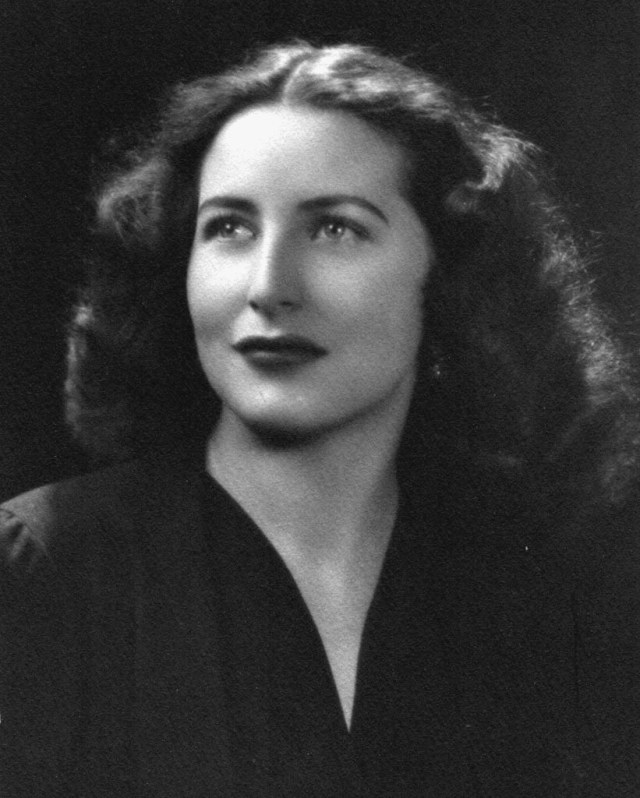
Here is some soundtrack to go wi with the Lewis Family Film starring Rosemary Rosamond who is seen walking by the sea. The Lewis family owned a large ranch in Camarillo – that fist with Belmont! Play both videos at the same time.
The California Fusileers
Posted on May 7, 2021 by Royal Rosamond Press
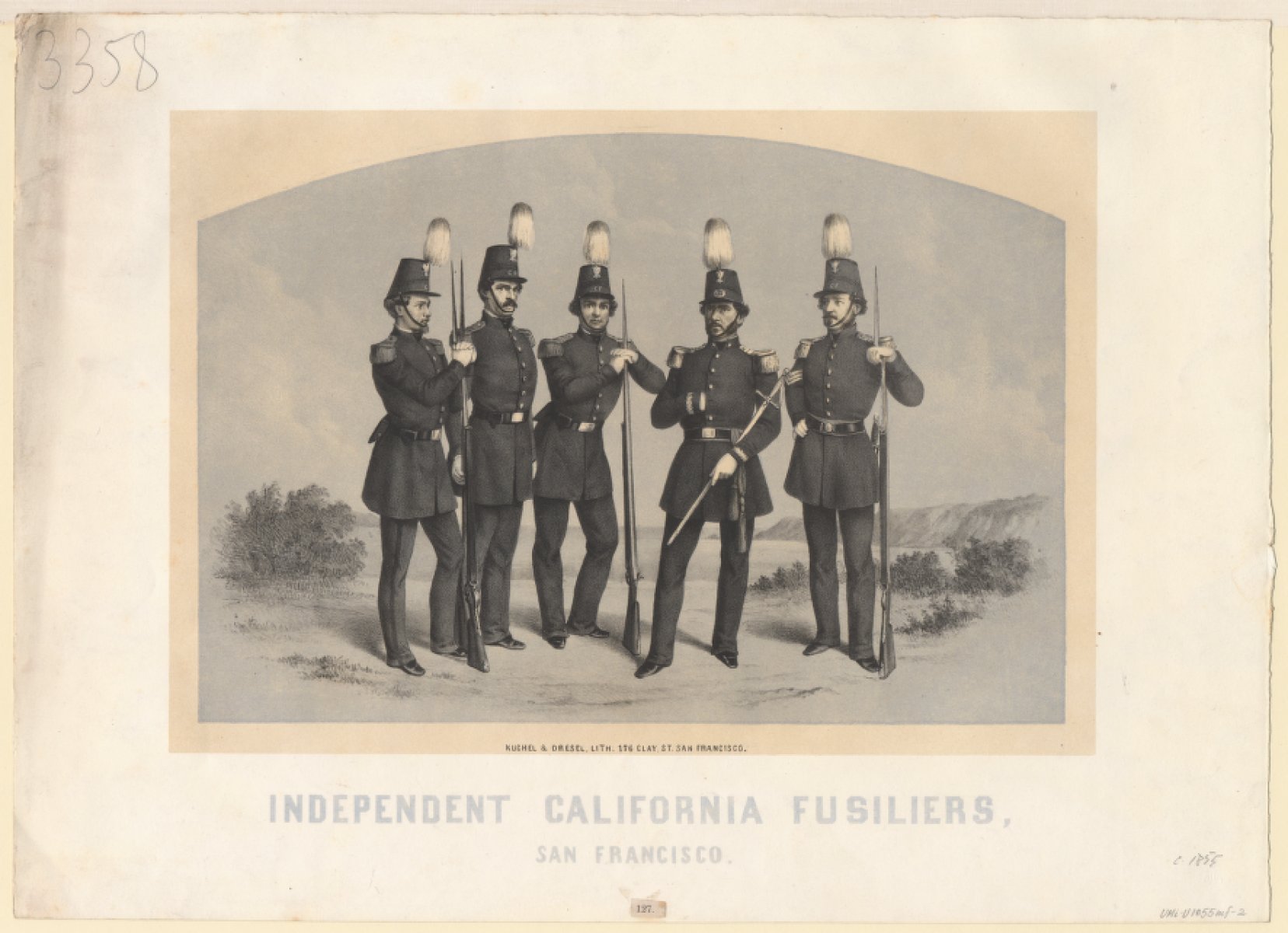
My ancestors were wealthy Prussians. Were they investors in Prussia’s attempt to purchase California, that did not happen possibly due to the Revolutions of 1848? Did some Germans realize California could be had by a intensive migration? The six million dollars could be used to buy portable homes, and other necessities. The chances Count Cipriani purchased a portable home from Carl Janke, is high. Unless he brought one in his wagon train.
The Jankes were members of the California Fusiliers. Did they have any contact with my kin, John Fremont, who was talked out of founding a new nation in the West during the Civil War. Consider the Manifest Destiny propaganda of his father-in-law and John Astor, who paid Washington Irving to author a propaganda novel that clamed the right of Americans to take the Oregon Territory – from BRITISH ROYALS. Astor launched a financial conquest of China – that could be the model for China today! If they take over Central America, will they manufacture Chinese cocaine after exterminating the criminal cartel and all gangs south of the border? Texans would be – pleased as punch! As long as China does not take away their right not to wear masks – or their guns! What about – their God? China could get its powerful think tank to invent a Cocaine Jesus for anti-Democratic cult followers, who will honor the day the Democrats cheated them our of their birth right with fake elections. To the Chinese, we look like members of a superstitious Cargo Cult, we easy pickens when it comes to….Divide and Conquer. Our tribal system is open to covert bribes, pitting one tribe against another tribe.
John Presco ‘Author of The Royal Janitor’
California Fusileers (militarymuseum.org)
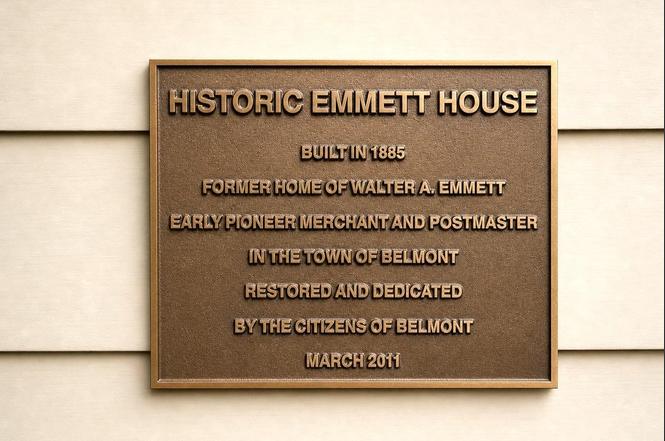
Belmont Unveils Renovated Emmett House
The ribbon-cutting ceremony took place on Saturday afternoon.

Laura Dudnick,Patch Staff
Posted Sun, Mar 20, 2011 at 6:30 pm PT|Updated Mon, Mar 21, 2011 at 5:07 am PTReply
Saturday’s rain ceased just long enough for Belmont to enjoy a moment that’s been a long time coming: unveiling the renovated Emmett House.
The approximately 100 residents, city officials and local politicians who gathered at the Emmett House on Saturday cheered as Mayor Coralin Feierbach snipped the bright red ribbon with a pair of gigantic scissors, symbolizing, at last, that the Emmett House was open.
“They said it couldn’t be done,” Feierbach said. “It could not be moved; it would fall apart, so let’s tear it down. But it got moved and it looks fantastic. One of our last historical pieces is saved.”
It’s been a little more than three years since Belmont residents — also in the rain — watched the historic building be moved down the street from Ralston Avenue to its current location at 1000 O’Neill Ave.
The city of Belmont purchased the historic building in 1999, but the first survey of the property dates back to 1990. The house itself — a two-story Victorian complete with a wraparound porch — was originally built around 1885.
Find out what’s happening in Belmontwith free, real-time updates from Patch.
Subscribe
Belmont Historic Society President Denny Lawhern said there have been more than 125 meetings before the Emmett House reached its current state: modernized and ready for two low-income families to move in.
The building, now split into two homes, features bright, carpeted rooms with views of Belmont from all angles.
The project of renovating the Emmett House, Lawhern said, contained two elements: historic preservation, and providing low- and moderate-income housing.
The Emmett House is named after Walter Emmett, a pioneer, merchant and postmaster who had an early and very strong presence in the city of Belmont.
“We’re here to honor Walter A. Emmett,” Lawhern said. “He came to Belmont in 1880 and became a major merchant who led the business community in the earlier years of Belmont. This was Mr. Emmett’s home.”
Community Development Director Carlos de Melo said the city’s Redevelopment Agency funded the purchase and reconstruction of the original house, as well as the purchase of the lots on which the house now resides.
“The Redevelopment Agency took care of all the components financially to make this home a reality,” de Melo said. “That’s why Redevelopment Agencies are important.”
Assemblymember Jerry Hill, D-San Mateo, spoke at the ribbon-cutting ceremony as well and commended Belmont for its dedication to preserving history.
“This is a perfect example of how Belmont does it best,” Hill said to applause from the audience. “This is a prize that we need to preserve, not just for us, not just for the next generation, but for those generations that we’ll never know.”
Hill also presented the city with a certificate of recognition from the California State Assembly for its “commitment to preserving what’s best about this Peninsula,” he said.
“It’s wonderful that two families will be living in it,” Hill said in an interview after the ceremony. “They were able to preserve the historic value and place this home in a nice neighborhood. It will add a lot to the redevelopment of downtown Belmont.”
City Manager Greg Scoles called the Emmett House a “significant” project for the city of Belmont.
“To me, it represents the history of Belmont,” Parks and Recreation Director Jonathan Gervais said. “Historic structures don’t stand the test of time unless people are taking care of them, monitoring them, managing them, and this, with folks living in it, will stand the test of time.”
Not everyone, however, agrees the building should be used for housing.
Daniel Greenberg, who lives minutes away from the Emmett House near the border of Belmont and San Carlos, said that while he commended Belmont for renovating the historic building, he thought the city could financially benefit more by leasing the property for commercial use.
“Kudos to the people that were involved, it’s a beautiful house,” Greenberg said. “I’ve seen the Emmett House through its transformation, from when it was first moved to this beautiful state today. I think it’s added a lot to the neighborhood.”
But, he added, he believes the building should be used for a purpose other than to house two families.
“They could probably do a better job of preserving this for the long-term by leasing it out for commercial use,” for instance to professional service firms like accounting or law firms, Greenberg said.
“If you’re really looking to preserve a house for the long-term, you don’t have people living in it, you have people using it in a low-traffic manner.”
Get more local news delivered straight to your inbox. Sign up
“The project was redefined so many times with new councils, new planning commissions and new city managers,” Lawhern said.
The Belmont Historical Society applied for registration of the house on the National Register, however, it was rejected due to the extent of modifications made to the building.
“What a sense of completion,” Lawhern said. “Maybe now I can go out of town for a week without worrying about it.”
“It has taken a long time to save our Emmett House,” said Mayor Coralin Feierbach. “There were concerns raised from the neighborhood about relocating the building to this new site. However, when one looks at it now, we were right, it can be done.”
A historic renovation: Belmont’s Emmett House to reopen
- By Bill Silverfarb Daily Journal staff
- Mar 11, 2011 Updated Jul 12, 2017
- 0
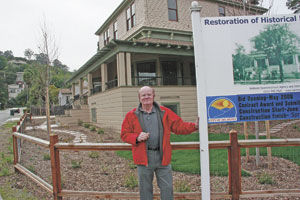
After years of renovations, Belmont’s historic Emmett House is finally set to reopen after being moved from its original home on Ralston Avenue in 2008.
The historic structure was first constructed in 1885 and bought by the city in 1998 for about $750,000.
Emmett House was relocated on a rainy night in January 2008, when hundreds of people braved the elements to watch the structure move from its original location to its new resting place on O’Neill Avenue near City Hall.
Since the move, it has been renovated and remodeled into a two-unit residential building that will provide low- to moderate-income housing for local families.
The tenants will move in next month, said Denny Lawhern, president of the Belmont Historical Society.
In total, the purchase and renovation of the building will cost about $2 million, Lawhern said. A significant portion of the money came from the city’s Redevelopment Agency.
Lawhern has spent more than 12 years with the Emmett House and has attended more than 120 meetings related to the structure. Initially, the city intended to renovate the structure at its original resting place.
“The project was redefined so many times with new councils, new planning commissions and new city managers,” Lawhern said.
Lawhern is happy the project is almost done.
“What a sense of completion,” Lawhern said. “Maybe now I can go out of town for a week without worrying about it.”
The original Emmett cottage was built in the mid-1880s, with the second story added in 1899. Some modifications were made to the building over the years, including its change of use from residential to commercial and office space and removal of its wraparound porch. For a time, the house was even a sanitarium.
The integrity of the original structure remained, however, and it survived its 2008 move intact. A number of its historic components have been restored, including the porch and the widow’s walk. The infrastructure has been upgraded to meet all current building codes, including plumbing, mechanical and electrical. A detached two-car garage is also included on the site.
The two units are three bedrooms each and are reserved for families who qualify for affordable rent.
In 1990, the San Mateo County Historical Association conducted a State Office of Historic Preservation Historic Resources Inventory and as a result, in 1992 Belmont declared the building a historic landmark under the city’s Historic Resources Ordinance.
The Belmont Historical Society applied for registration of the house on the National Register, however, it was rejected due to the extent of modifications made to the building.
Lawhern intends to reapply for the federal designation based on who the home’s original owner was.
In the 30 years between 1880 and 1910, Walter Alfred Emmett became Belmont’s leading merchant, according to city documents. He purchased a general store from Carl F. Janke at the northwest corner of the Old County Road in 1880 in partnership with Matthew O’Neill. He bought out O’Neill in 1888, and acquired the Belmont Soda Works in 1892. By 1893, he owned the entire block on the north side of The Corners and constructed a livery stable, according to city documents.
Emmett was a one-man Chamber of Commerce, Lawhern said.
The house sits adjacent to the Belmont Creek across from the Twin Pines Senior and Community Center and directly across the street from the Beli Deli on Sixth Avenue.
Gin Nikoloff, the deli’s owner, is excited the project is done.
“I’m delighted they completed. It sat idle for a while and was an eyesore,” Nikoloff said. “Everybody’s pretty happy.”
The city will hold a ribbon-cutting next weekend to celebrate the reopening as the historic aspect of the renovations will be finished.
“It has taken a long time to save our Emmett House,” said Mayor Coralin Feierbach. “There were concerns raised from the neighborhood about relocating the building to this new site. However, when one looks at it now, we were right, it can be done.”
A celebration of the completion of renovations for Belmont’s historic Emmett House is set for Saturday, March 19, 3 p.m., 1000 O’Neill Ave. The public is invited and refreshments will be served.
Bill Silverfarb can be reached by e-mail: silverfarb@smdailyjournal.com or by phone: (650) 344-5200 ext. 106.
Jack London’s Schützenfest Articles
Posted on August 6, 2022 by Royal Rosamond Press
During the Middle Ages, many towns had to find ways to defend themselves from gangs of marauders. For this reason, clubs and associations were founded, comparable to militias; these paramilitary associations were sanctioned for the first time in the Law for the Defensive Constitution of the Towns by King Henry I, and officially integrated into the towns’ defense plans. Accompanying the military exercises and physical examinations of the towns’ contingents, festivities were combined with festive processions. Participants from other parishes and, at times, even the feudal heads of state were also invited to these Marksmen’s Courts (Schützenhöfe). However, the self-confident spirit of the townsfolk that marked these festivities was not always regarded positively by the authorities. For this reason, different traditions developed in other regions. The military significance lessened over the centuries and became meaningless with the creation of regular troops and garrisons for national defense. The Schützenfests, however, continued in the form of a regional patriotic tradition.
Jack London’s Schützenfest Articles
Schüetzenfest No. 1
July 15, 1901 . The Goths have entered Rome ! Aye, it is so, but there was no cry in the night, no clamor of hasty flight, no scurrying with household gods to the citadel. Rather, did San Francisco throw wide her gates and fraternize with her Teutonic invaders. On the other hand, these descendants of Germanic Tribesmen who swept down out of the forest of middle Europe some two thousand years ago, are quite unlike their savage forbearers. They are not clad in the skins of wild beasts, and though they bear weapons in their hands, we do not fear; for they come not in war, but in love; not as foes, but as blood-brothers. And though their ancestors of old time looted many a fair city, we need keep no anxious eye on our possessions. We have but one thing they might appropriate if they were able–and that is our climate.
The Manhattan Declaration
Posted on December 17, 2019 by Royal Rosamond Press


The contestants for Miss Russian San Francisco 2017 pose with the founder Karina Zakharov, center in white skirt and perwinkle top.
The Royal Janitor
by
John Presco
Copyright 2019
Chapter Five: The Manhattan Declaration
“She’s pregnant!” Clive told Victoria across the cold glass that covered his families ancient mahogany desk where the fate of world’s shipping was mapped out in secret trade agreements. Everything was Insured.
“Who’s pregnant?” Victoria asked, and tried to oppress the hot blood that rushed to her brain.
“Miriam.” Clive said, and studied Victoria’s reaction.
“She’s….with child? She told me she was a virgin. I am a virgin. That was our seal, our bond. How do you know? Did she tell you?”
“Breath! Take three deep breaths – and think calm thoughts. Your face is turning red. You need to meditate!”
“I need to meditate?” Victoria was fighting off a torrent of Christian Shame. She had used logic to dismiss the truth that she was having a Lesbian relationship, but, the idea that her lover got pregnant, filled her soul, her brain, with the idea she had done something – very bad – as if she knocked-up her beloved Starfish.
How she acquired Catholic Sin in the bowels of the College of Heraldry, must be due to all the mottos she read on the Coat of Arms, and, the religious notes she had to carefully study in cases of Crusader Knighthood. There were many who belonged to orders that sprang from Jerusalem. There was images of baby Jesus in a manger. All this sin and shame!
“How did you find out Starfish is pregnant? Victoria was glaring at Clive.
“Please! Sit back down. Take three deep breaths. Our toilets test all BAD women, automatically, when you use them.”
“You mean……you chemically analyze our urine – in the toilet? Do you test for drugs, too? Do you take pictures of us?’
“Yes – breath!”
Victoria slid out of the chair in a dead faint. Her chin his the glass top and put a crack in it. When she came to, she was on the greatest leather sofa ever made. A antiseptic sheet was put on it. Victoria heard the sound of the last staple put in her chin. Her wound required three staples. The BAD doctor wiped away the blood that had rolled down her neck and stained the sheet. Victoria tried to wipe away the vision of a grown man pissing in a BAD toilet with his…….She had never seen a penis!
“Are the men at BAD tested? Do you have photos of them relieving themselves on file!” asked Victoria, she sounding like a moron due to her lower jaw being numb. Reaching with her hand, she swore when she felt the big white bandage.
“Fuck! I had planned to go shopping while in London! I can’t be seen like this!”
“Wear a smog mask. They make very expensive ones that are in fashion! Don’t get up.”
“Fuck you! Give me something to throw. It must be spendy. Couldn’t you have ordered a bouquet of flowers and put them on the desk, when you told me the fucking blessed good news. I love Miriam, you rotten bastards! I feel so defiled! I want my tinkling pics – now! And Miriam’s! How dare you! Is nothing sacred?”
“We do not capture you while tinkling, but when you turn on the faucet to wash your hands. This flushes the toilet. Haven’t you noticed the delay?”
‘Why do you do this?” Victoria asked, then, took three quiet breaths. “Washing ones hands is a very sacred practice – you creeps! When we use public toilets we spread the message we are not spreading germs. You have dirtied – us! We love our mirrors you place a camera behind. We give our best look. Why!”
“When women have an unexpected pregnancy, they become very vulnerable – to our enemy. Most women believe it is their right to privately summon their higher power to deal with – the big surprise! Many women have no higher power, and fall back on the myth of pure logic – that does not exist! Everyone in Western Culture is subjected to a Shame-base, Christian morality. It comes with the total package. There exist a very intrusive ambitious Abortion Cult that swoops down on vulnerable women in high places. Have you heard of Charles Colson?”
“Do you mean, Chuck Colson, of Watergate fame?”
‘Yes! He was ordered by the President to get something dirty on the Democrats. There was talk one of the leaders owned a porno collection of naked Hippies posing with Senators and Congressmen at a commune on a secret island. Have you heard of Jonah Puffhausen, and Cardinal Foley?”
Foley I know very well. I worked on his genealogy and coat of arms. He subscribe to the coming of a American Prophet who would rebuild the temple in Jerusalem! Miriam knew when to close her mouth, and listen.
“Here’s the bottom line. There are Americans and Russians who believe Alaska, Washington, Oregon, and California belongs to Russia via saints of the Russian Orthodox Church that built Fort Ross. Miriam’s parents were leaders in this movement. They met Jonah at UC Berekley. Jonah sent them to Oregon where they eventually studied at North West University. They founded the Russian Bear and Star club. This is the Star of Bethlehem held in the talons of the double eagle of the Orthodox church.”
Clive studied Victoria as she did a chart in her head. She connected some dots to coats of arms, and other private information secret orginizations with the College of Heradlry. Many people want to be seen as immortal. When she read the President of the United States was wanting a bogus coat of arms, she picked up the phone and out the kabash on his fraudulent dream.”
‘POTUS is poised to sign an executive order, turning four States over to Putin…..BREATH!”
“Why would he do such a thing?’
“Think Electorial College and the fact the West will forever be for the Democrats. California has 58 electorial votes, that will be removed from the election of POTUS. If this happens, then there will forever be a Republican President. No longer will the Repbulican Abortion and Heathen Club have to get dirt on the Democrats. This is a religious cult, who for two thusand years have taken over the land of Non-Christians who are deemed godless heathens -who can not be saved. This is why POTUS built his wall. ”
Victoria went to rub her chin, and, felt the bandage. She understood all this via Christian coat of arms – and flags!
“We can not tell Miriam. She was seduced by a disciple of Puffhausin who she had a crush on when they met. She was fifteen. He was twenty. They both have Royal Alute blood. There has been an interest in their breeding, and the child they would produce. They are looking for their Virgin Mary.”
‘Does Miriam know about this?”
“Some. Her increble intuition is putting the jigsaw puzzle together, starting with the blue sky pieces. You know how she is. We have set up a War Room. We want you to do a chart. You, we, must arrive at the epicenter before Miriam does. I’m afraid she sees you as a conduit of information. She does not want to see you this way. She will use you. You must use her. Study Calexit and its connecteion to Brexit. The Manhatten cult wants to do away with the Europan Union and NATO. They convinced POTUS France was the world capitol of infidelity because French men of means have a mistress.”
(Blank stares exchanged here)
Here is the Manhatten Declaration and a list of times POTUS said there would be an uprising if he is Impeached. The Democrats will file tomorrow. They are having a pow-wow right now. You need to do a Story Board. We are looking at Biblical Prophecy – LIVE!”
“Miriam knowns evertything there is to know about prophecy. She would be a tremendous help right now!”
“Once the storyboard is complete, we will bring her here to look at it on the big screen. Once she has seen our work, she will own the upperhand. It must appear that we own the high ground, or, she will run circles around us. Thank God, for this!” Clive put a file before Victoria made of green velvet.
“This is your Puritan ancestry we have kept from you. John von John is your kin. His real name is John Wilson Rosamond. He has revived Herbert Armstrong’s church. Call him, now. He needs to be here. We are going to fight BAD prophecy, with BAD prophecy. We are going into the Sage&Scribe business. When the storyboard is complete, you are going to Scotland to stay over night with The Poker Club.”
“The Poker Club?” Victoria chimed. Aren’t they an ancient all male club who some say rule the Western World?” Victoria got no answer.
“Why are you and Miriam sneaking about Osborne House?”
“We are looking for Victoria’s lost library.
“Interesting. In four days I want you and Miriam on a plane. You are going to Harvard to look for the lost library of Reverend John Wilson, who is your 9th. grandfather, too!” Clive watched his remark sink in.
“Are you saying John von John and I share this ancestor? Miriam hates him. Wait a minute, the Puritans and California Russians, are on the same path. Who owns America is the question.”
“They say Manhattan was purchased from the heathens for a pair of beads. The Russian Pioneer Monks married native women. They kept very good genealogical records. Look at Saint Innocent of Alaska. Miriam claimed she was a Russian Native American Princess.”
“And this is why she dresses like Sheenah, Queen of the Jungle?” added Victoria, with three calm breaths. “I wonder if Russia has a Walt Disney?”
Today, we crossed the Rubicon. There is no turning back. President Trump sent the Speaker of the House an extremely demonizing letter – with eagle seal – that invoked the name of my Puritan ancestors. Nancy tore it up.
If I were a young man, again, I would want to marry all the beautiful women in the Russian beauty contest. Paul bid members of the first church – not to marry because The End was coming, and so was Jesus. He was a no-show. Paul, latched on to our genitals, and the church has been shaking them like a Pitbull ever since in order to get our attention, and trillions in tithe.
Today, we saw Trump trying to run their Holy Blackmail scam. Remaining neutral as a non-believer, is almost impossible. The Christian-right wants to go to war with the Democrats. Republican women, should jump ship.
The abortion issue was invented by Paul Weyrich to counter the Civil Rights Movement that was opposed by Southern Baptists. Robert P. George founded the Witherspoon think tank. He says religious disobedience is required. History is about religious wars. The End Time is a tool for religious terrorists.
“President Donald Trump on Tuesday savaged House Democrats’ impeachment proceedings in a six-page letter to Speaker Nancy Pelosi that read like a collection of his most vitriolic tweets.
The fiery missive, frequently punctuated with exclamation points, came loaded with hyperbolic assertions — including the president’s claim that “more due process was afforded to those accused in the Salem Witch Trials” and his accusation that Pelosi and House Democrats “view democracy as your enemy!”
https://www.gty.org/library/articles/A390/the-manhattan-declaration
https://en.wikipedia.org/wiki/Manhattan_Declaration:_A_Call_of_Christian_Conscience
Odd Fellows Cemetery: A Closer Look
by Arnold Woods
Beginning in 1854 with the establishment of what was eventually called the Laurel Hill Cemetery, the Lone Mountain area became the original “city of the dead” for San Francisco. Laurel Hill was found to the north of Geary between Presidio and Parker, where you would now find part of the UCSF campus and the Laurel Heights neighborhood. In 1860, the Roman Catholic church bought the land between Geary and Turk and east of Masonic to open the Calvary Cemetery. Today, you would go shopping there at the City Center complex. In 1864, the Masons fraternal organization opened the Masonic Cemetery on the south slope of Lone Mountain, where you would find USF today.
The reason these cemeteries were located in the Lone Mountain area was that in the 1850s and 1860s, this area was so far out of town that they were, in fact, outside the city limits of San Francisco at that time. It wasn’t until 1866 that the Outside Lands Act brought this area into city limits. After the Masons opened their cemetery, the third cemetery on the slopes of Lone Mountain, another fraternal organization followed suit.
Odd Fellows Cemetery, circa 1885. (wnp26.342; Courtesy of a Private Collector)
155 years ago this week, on November 19, 1865, the Independent Order of Odd Fellows opened their own cemetery. The Odd Fellows Cemetery was located on the west slope of Lone Mountain, between Geary and Turk and west of Parker. At that time, there were very few public parks to be found, so cemeteries were developed as “green space” with park-like landscaping.
View east toward Lone Mountain of Odd Fellows Cemetery, 1880s. (wnp37.01340; Isaiah West Taber, photographer – Marilyn Blaisdell Collection / Courtesy of a Private Collector)
Although this was the Odd Fellows’ cemetery, others could buy plots there and some groups purchased sections there. One was a Greek Cemetery section near today’s Stanyan and Golden Gate intersection. The Grand Army of the Republic, the Civil War Veteran’s group, purchased a plat of land there and would hold Memorial Day parades that started downtown and ended at the Odd Fellows Cemetery.
Odd Fellows Cemetery, 1900s. (wnp15.208; Courtesy of a Private Collector)
Perhaps the most prominent person interred at the Odd Fellows Cemetery was Charles de Young, the co-founder (with his brother Henry) and publisher of the San Francisco Chronicle newspaper. De Young was shot and killed on April 23, 1880 by the son of the mayor of San Francisco, the culmination of an escalating feud between the mayor and the newspaperman. The funeral service for de Young, an Odd Fellow member, began at his home on Eddy Street. Then a procession of carriages took him to his not-so-final resting place (we’ll get to that) at the Odd Fellows Cemetery.1 De Young’s widow later had a magnificent monument to her husband built at the cemetery near the entrance. Perhaps not surprisingly considering the source, the entrance to the Odd Fellows Cemetery was later cited as the “most picturesque of any of the cemeteries.2”
Crematorium at Odd Fellows Cemetery, circa 1905. (wnp33.01105.jpg; Courtesy of a Private Collector)
The Odd Fellows Cemetery was funded by the sale of gravesites, from which the grounds were maintained. As the cemetery filled up though, there was no longer sufficient monies to keep the site up and it began to look worse for the wear. Consequently, the Odd Fellows looked for a new source of funding. Their solution, in 1895, was to open a crematorium on the grounds and began advertising cremation as an alternative to burial.
Columbarium at Odd Fellows Cemetery, circa 1905. (wnp33.01104; Courtesy of a Private Collector)
Of course, once someone was cremated, you might need a place to store the ashes. So the Odd Fellows Cemetery opened a striking new building called the Columbarium. It was designed by architect Bernard J.S. Cahill in a neo-Classical style and featured a copper dome. Construction started just after Easter in 18973 and was completed around the end of the year,4 in time to be opened in early 1898.
View north across Odd Fellows Cemetery with Columbarium in back right, circa 1900. (wnp31.00027; Bauchou Family Photographs / Courtesy of Peter Linenthal / Potrero Hill Archives)
While Odd Fellows and its fellow Lone Mountain cemeteries started out in the boonies, San Francisco quickly spread westward to and past the cemeteries. As early as the 1880s, there were calls to move the cemeteries in order to put the land to better use, although couched in terms of the potential health hazards of having cemeteries so close to the population. On March 26, 1900, the supervisors passed an ordinance prohibiting burials within city limits, which would take effect on August 1, 1901.5 The ultimate goal was the removal of the cemeteries completely and the Odd Fellows saw the writing on the wall. As with other cemeteries, they looked south to Colma and purchased land there in 1904 for a new cemetery which they named Green Lawn Cemetery.
M. Rider postcard of Odd Fellows Cemetery, Crematorium at center, circa 1908. (wnp25.4260; Courtesy of a Private Collector)
After banning burials, San Francisco, on November 21, 1910, took the next step and banned cremations within city limits.6 The same year, the United States Supreme Court upheld the City’s ban on burials.7 Although it would not be until the 1930s before the City began forcing Odd Fellows and other cemeteries to remove bodies, the end was nigh. Relatives of the deceased at Odd Fellows Cemetery were given notice in 1912 to move their loved ones. Charles de Young, as one example, was moved to Cypress Lawn Memorial Park in Colma. In 1932, some 26,000 graves were moved from the Odd Fellows Cemetery to Green Lawn Cemetery.
WPA Workers converting Odd Fellows Cemetery into Rossi Playground, December 26, 1933. (wnp14.2425; Courtesy of a Private Collector)
By the end of 1933, San Francisco was rapidly converting a portion of the Odd Fellows Cemetery grounds into Rossi Playground. In 1949, the Coronet Theatre opened on Geary on a small part of the former Odd Fellows Cemetery. Other public, private, and governmental uses were made of the cemetery land. However, one part of the Odd Fellows Cemetery still remains. The Columbarian was allowed to stay and it passed through different owners over the years, but eventually fell into disrepair. Finally, it was purchased by the Neptune Society, which rededicated it on September 10, 1980 and began a long and costly restoration effort.8 It can still be visited today, though perhaps not while the pandemic continues to rage.
For a more complete history of the Odd Fellows Cemetery, see the cemetery’s website. You can also listen to our Outside Lands Podcast about the Cemeteries of the Inner Richmond or the Outside Lands Podcast about the Columbarium.
5/11/2026
Where Art Thou – My Mother’s Day?
Where Art Thou?
I don’t think I got a Mother’s Day. But, I am not alone. My three siblings didn’t get a Mother’s Day, either. It was Forboden, by King Victor who was called Vic ‘The Nazi; by one of his secretaries who worked in his home, She died when she was twenty-two.
I tried to celebrates My First Father’s Day, but, this was not allowed either. I bought Vic a fishing knife, and invited him outside on the front porch,
“Here Father. I bought this fishing knife for you!” said eleven year old me.
Victor growled at it, and said;
“You didn’t buy it for me. You boiught it – for you! Keep it!”
He turned, opened our front door, and shut it – hard! It was the last time I shed tears for my famil, until I line up to veiw Drew’s mother in her casket. I sobbed on my brother’s shoulder. He said;
“She’s not really dead!”
What he meant was, this was not a real funeral. Outsiders took it over. They made plans the day after Christine was killed by a “rogue wave” – NOT!
Members if my family ran and hid from the Police Detective, and left Drew Rosamlond Taylor Benton in a ice box for twenty days. I found out she committed suicide on my kin’s facebook. I payed for her creamtion, and was sent her ashes.
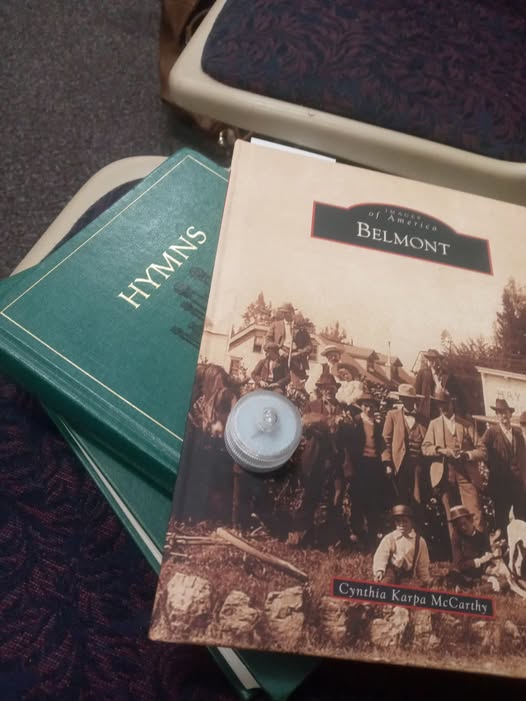
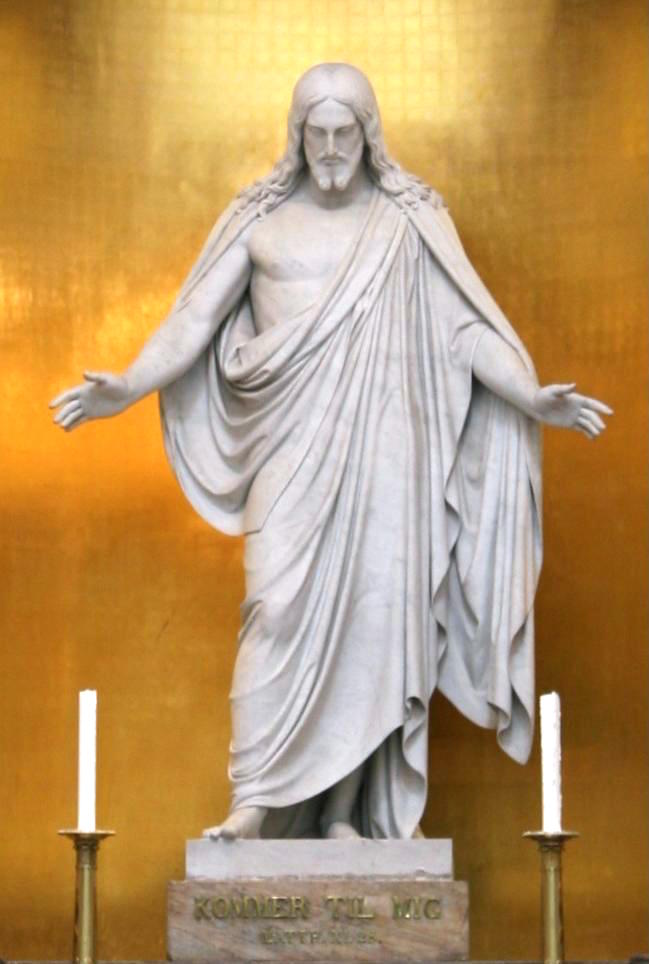
The night before I went to get blood work, and to the temple, I noticed Drew’s voive candle had become very faint. When I found the Stuttmeister linage at Riverbend, I nade up my mind I was going to become a member so I can get my dead family Baptzed. But, then I might – drop dead – in a day or two! So, I broght the history of Belmont book I just got, knowing I would have time to read it. I opened it in a waiting room where hung Christus.
“Walter Alfred Emmet and Matt O’Neil bought the business pictured below from Carl Janke in 1880.” (Courtesy of Belmont Historical Society)
Until I paid good money for my family history did I read…
“Courtesy of Belmont Historical Society” This is key, because the author accused me of violating her copyright when I posted photos of this busines and my great grandfather, and his brother. I believe “courtesy” means – they were loaned. Maybe a man of law would know. But, I was in shock on Presdient Street. Not only do I not get a Mother’s and Father’s Day, I don’t get an Ancestor Day!
Drew got know Family Service, because my nephew picked a fight with me;
“Your Knights Templar study is allot of crap!” I think he was refering to Hl[ern who ripped off part of my study, and tried to trick me into signing a NDA.
So, fearing Drew would lose the opportunity to be in a church worship with folks singing and praying…..I snuck her in, in my coat pocket. I carried the History of Belmont, after nixing carrying it in a bag.
“What do you got there, brother?”
“Oh, not much. Just my Janke family history, the Founders of Belmont!”
“Good! Good! Keep up the good work. I’ve been working on my family tree for twenty years! Ho! Ho! Ho!”
I did not know it was Mother’s Day until a uoung man around fifteen talked about his mother at the pulpit. Oh boy! Ouch! I didn;t attend my mother’s funeral becauce my family didn’t tell me she was dying. I missed her by one day, I didn;t get to say goodbye! Sooooooooooooo…….I invited Rosemary to Drew’s pre-Chrsitnen with funeral event – and inrtroded her to her husbands semi-famous ancestors she didnt know a damn thing about, causing her and my father to have vicious fights over…
“LOST PRESTIGE”
I summoned the photograph of Rosemary and her four children about to leave our home on San Sebastian Avenue to go to Easter Sunday Mass. Out church was full so we rushed to another. There, Victor almost got into a fist-fight with an usher that was going up and down the isles with a longs stick – poking folks on the back of their head for talking.
If he gets near me with that pole, Im going to shove it us his…..”
After services I made bacon and eggs and wathed the golf torney. I live Ricky Fowler who almost won. I was trying to relax and stop worrying about…
GETTING REJECTED AGAIN!
Around nine, I wondered if the Jankes owned Emmett Store, did they come to own
THE EMMETT HOUSE?
I Google it, and saw that is was up for sell for a whopping
$2,788,000
Wow! If I came to own that house, this would be a great Recovery of Lost Prestige Story, even greater than ‘Gone With The Wind’. Did you know Cark Janke and his wife were dug out of their graves in the middle of the night. This dovetails nicely with my ancestoris being dug out of their graves in the Oddfellows cemetery,
Drew died childless. She was never a mother – in this unkind place! All her prestige was taken from her, by the false smiles of the pretenders.
To be continued


5/27/2023
Three Flags – One Grave
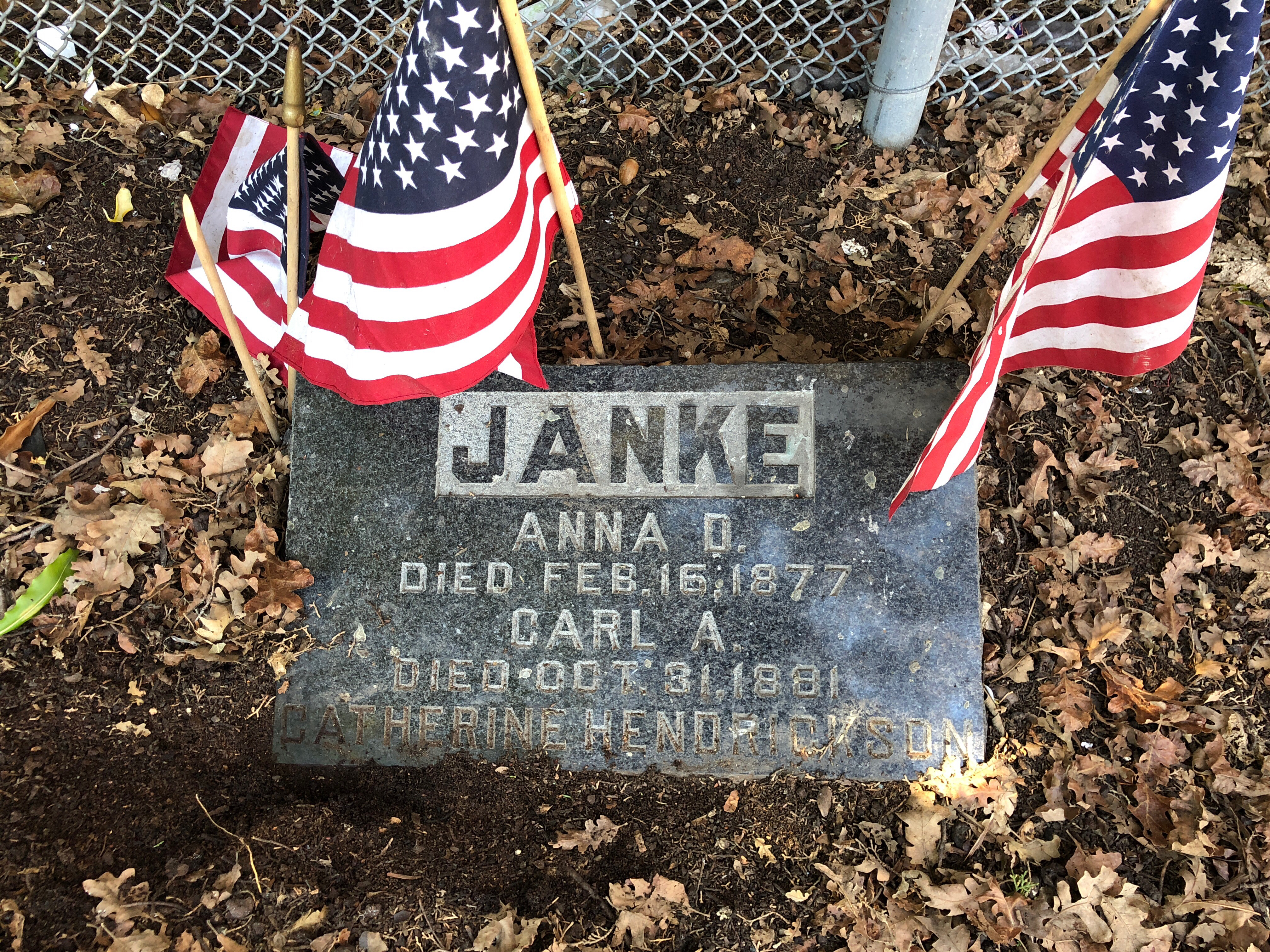
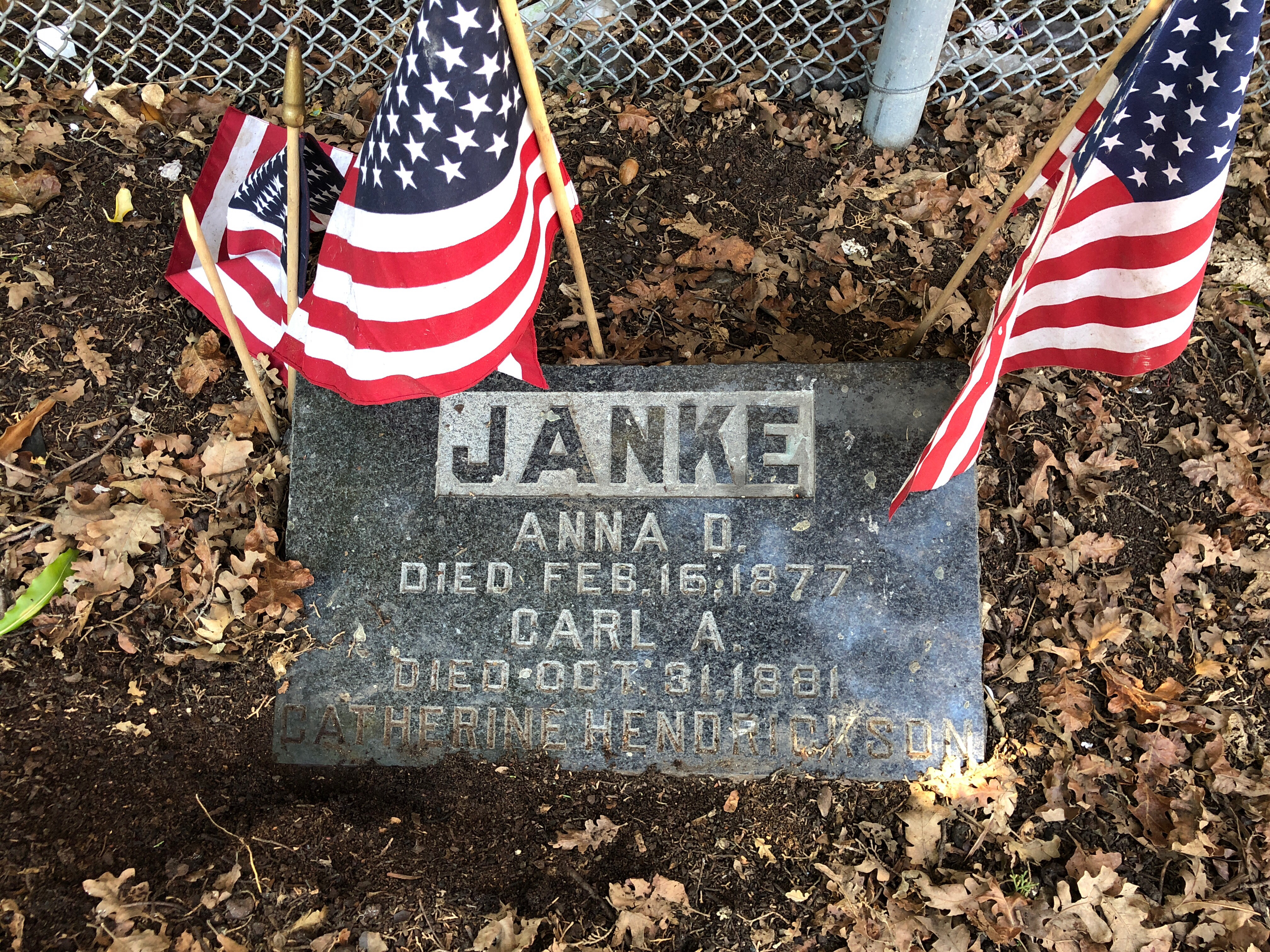
It is 8:33 A.M. May 27, 2023 – and I am still in shock having discovered my grandparents are buried in the same grave! I saw TWO flags put on one gravestone. That was a half hour ago. THEN – I see another flag! There are three of my ancestors buried in the same grave! WHY? Did the caretakers conclude this was a very poor family? William Stuttmeister knew they were Belmont before he died. At great expense to himself, he moved the Jankes to Colma after they were evicted from the Odd Fellow cemetery – at great expense! This was a wealthy pioneer family whose graves keep being defiled! They were moved to the Union cemetery i 1972?
Below is a video I made after I met with LDS Sisters who wanted to meet at the genealogy center to look at these illustrious people who have a magnificent crypt in Berlin. I don’t know if I told them I was considering putting Amanda Gorman in my painting of the two pages saving our electoral votes.
John Presco
“Originally Carl abd Doretha were buried under a huge bay tree there and bodies later moved to the Union Cemetary “during the dark of night” my mother used to tell us.”


I believe the New Zion will be where the new LDS Temple is going to be built, a mile or more away from where I live. The Mormons built their cosmology on DNA and Family Trees. Deseret lies next to the Louisiana Purchase. I can now SEE all of what I saw in part. I have been called MAD by all who bonded with me. I kept a record of my Fantastic Quest! I can Baptize by the river.
Janke and Turner Abolitionists
Posted on February 24, 2021 by Royal Rosamond Press


I willbe contacting ‘Finding Your Roots’ to helpmewith the mostastounding genealogical story of all time
Awake Amongst The Liars and Sleepers
Posted on May 5, 2019 by Royal Rosamond Press
Brief Life History of Elizabeth Dorothy
When Elizabeth Dorothy Janke was born on 14 November 1844, in Hamburg, Germany, her father, Carl August Janke, was 24 and her mother, Dorothea, was 24. She had at least 1 son and 6 daughters with Amassa Parker Johnson. She lived in Belmont, San Mateo, California, United States in 1880. She died on 20 January 1929, in San Francisco, California, United States, at the age of 84, and was buried in Colma, San Mateo, California, United States.
Belmont A Capitol of German Culture
Union Cemetery is a historic cemetery on Woodside Road (CA 84) near El Camino Real in Redwood City, San Mateo County, California. The cemetery was named a California Historical Landmark #816 in 1967, then added to the National Register of Historic Places in 1983.[4]
History[edit]
Founded in 1859, this is the site of the first American burial ground in San Mateo County, and was originally located just outside the town limits of Redwood City.[5][4] The cemetery officially closed in 1918, but it was used for many years after that for burial of the poor.[5] There are special cemetery plots for the Masonic Order, members of the International Order of Odd Fellows and the California volunteers who fought during the Civil War.[5]
Soldier statue[edit]
The life-sized metal sculpture of a civil war veteran was erected during 1889 for a Memorial Day celebration, the earliest such celebration on the Peninsula.[5] The statue was paid for by Jane Lathrop Stanford.[6] It was vandalized in 1958, 1959 and 1969, but was subsequently repaired, and in 1999 it was replaced with a replica constructed of more durable material.[5][6]
he historic Union Cemetery at 316 Woodside Road in Redwood City will host a Memorial Day event featuring music, speeches, the decorating of graves, and the traditional anvil firing as the community gathers to honor soldiers.
The event will take place from 10 a.m. to 11:30 a.m. on Monday, May 29.
As parking can be challenging, organizers encourage biking, walking, and carpooling to Union Cemetery. Transportation to seating area is available for folks who need assistance.
Union Cemetery is a California Historic Landmark and listed in the National Register of Historic Places and is one of the oldest burial grounds in San Mateo County. The cemetery has been closed, officially, since 1918, although Redwood City administrators used it as a paupers’ field, which is defined as a place for the burial of unknown, unclaimed or indigent people. During the Depression, those unable to afford a more prominent place continued to bury their loved ones at Union Cemetery.
Lerona Rosamond
Posted on June 5, 2016 by Royal Rosamond Press


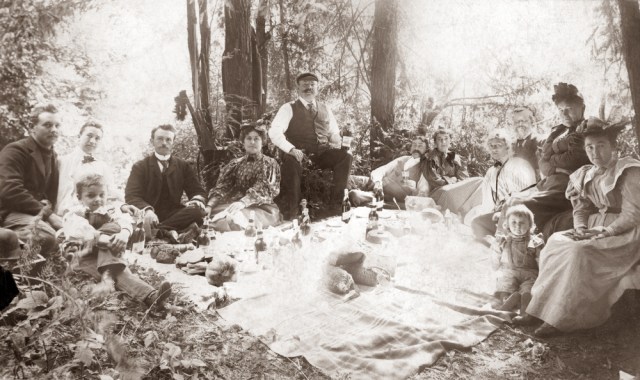
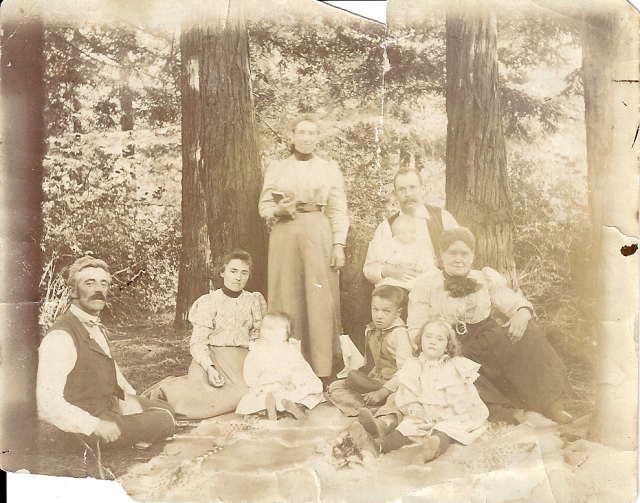
William Oltman Stuttmeister went to the University of California and practiced dentistry in San Francisco. He bought two vacation properties in San Geronimo where he retired and died. The Maillard, Count Cipriani, Napoleon, and Prince Victor Napoleon connection is interesting. Is this the continuation of the Belmont Colony? Was this land purchased with a recovered treasure? Many have searched for the lost treasure of Sir Francis Drake near this valley overlooked by the ‘Sleeping Maiden’ mountain.
Below is a video showing Cipriani’s home inside Ralston’s additions. It was a portable house. An expert needs to compare this with the Tanforan cottages. Samples of the wood and screws need to taken and compared to the houses Janke brought around the Cape. William married Augusta Janke.
Generation No. 1
1. Dorthia Matilda5 Oltman (Jurgen4 Oltmann, Jacob3, Jurgen2, Peter1) was born September 13, 1829 in New York, NY, and died March 17, 1875 in San Francisco, CA. She married Frederick William R. Stuttmeister. He was born 1812 in Germany, and died January 29, 1877 in San Francisco, CA.
Children of Dorthia Oltman and Frederick Stuttmeister are:
2 i. Victor Rudolf6 Stuttmeister, born May 29, 1846 in New York; died January 19, 1893 in German hospital in San Francisco.
3 ii. Bertha Matilda Stuttmeister, born January 02, 1860 in Califonia; died May 07, 1931 in Merritt Hospital in Oakland, California. She married Wilham E. C. Beyer; born in Germany.
4 iii. William Oltman Stuttmeister, born 1862. He married Augusta Janke June 1888.
+ 5 iv. Alice L. Stuttmeister, born October 13, 1868 in San Francisco, CA; died February 13, 1953 in Roseville Community Hospital in Oakland, CA.
Jon Presco
http://www.historicunioncemetery.com/Person.php?person=Janke%2C+Dorette+Catherine
http://www.historicunioncemetery.com/Marker.php?markername=JANKE
| From the 1950 headstone survey — (and the current stone) JANKE ANNA D Died Feb 16, 1877 CARL A. Died Oct. 31, 1881 CATHERINE HENDRICKSON — From the 1937 headstone survey — (apparently there was a different stone) Carl August Janke, born in Dresden, Germany Oct. 1806, died Belmont, Calif. Sept. 2, 1881 Dorette Catherine, wife of Carl August Janke, born in Hamburg, Germany, July 21, 1813, died in Belmont, California, Feb 16, 1877 Mutter Heinrich, mother of Dorette Catherine Janke, born in Island of Heligoland, Germany, 1781 died in Belmont, California 1876 |
Carl Augustus Janke
BIRTH Oct 1806 Dresden, Stadtkreis Dresden, Saxony (Sachsen), Germany DEATH31 Oct 1881 (aged 74–75) Belmont, San Mateo County, California, USA BURIALUnion Cemetery Redwood City, San Mateo County, California, USA Show Map
Carl Augustus Janke
BIRTH Oct 1806 Dresden, Stadtkreis Dresden, Saxony (Sachsen), Germany DEATH31 Oct 1881 (aged 74–75) Belmont, San Mateo County, California, USA BURIALUnion Cemetery Redwood City, San Mateo County, California, USA Show MapMEMORIAL ID186938257 · View Source
SHARE
SAVE TO
TOGGLE DROPDOWN
Carl Augustus Janke was a local merchant in the city of Belmont, California he founded Belmont Park in 1865 which was modeled after a German beer garden. Janke subsequently he founded a local soft drink bottling plant, the first industry for the town of Belmont.
— From the 1937 headstone survey — (apparently there was a different stone)
Carl August Janke, born in Dresden, Germany Oct. 1806,
died Belmont, Calif. Sept. 2, 1881
Dorette Catherine, wife of Carl August Janke,
born in Hamburg, Germany, July 21, 1813,
died in Belmont, California, Feb 16, 1877
Mutter Heinrich (spelled Catherine Hendrickson on the gravestone), mother of Dorette Catherine Janke,
born in Island of Heligoland, Germany, 1781 died
in Belmont, California 1876
William August Janke
BIRTH Dec 1841 Hamburg, Germany DEATH22 Nov 1902 (aged 60) San Francisco, San Francisco County, California, USA BURIALCypress Lawn Memorial Park Colma, San Mateo County, California, USA PLOTGarden / Section: PRIMROSE GARDEN 2 HILLSIDE
Cornelia Turk Janke
BIRTH 24 Dec 1846 Frankfurt am Main, Stadtkreis Frankfurt, Hessen, Germany DEATH27 Jul 1938 (aged 91) San Francisco, San Francisco County, California, USA BURIALCypress Lawn Memorial Park Colma, San Mateo County, California, USA
Minnie Janke
BIRTH Feb 1869 California, USA DEATH4 Mar 1902 (aged 33) San Francisco, San Francisco County, California, USA BURIALCypress Lawn Memorial Park Colma, San Mateo County, California, USA PLOTGarden / Section: BIRCH Lot: LOT 189 Division: DIV 5
Added by E. Sweeney
Advertisement
Augusta D. Janke Stuttmeister
BIRTH Sep 1866 California, USA DEATH25 Dec 1938 (aged 72) San Francisco, San Francisco County, California, USA BURIALCypress Lawn Memorial Park Colma, San Mateo County, California, USA PLOTWS-Unit 3 Tomb Rooms Lot/Section/Panel: U2 MEMORIAL ID87628501 · View Source
SHARE
SAVE TO
TOGGLE DROPDOWN
Gravesite Details
Family Members


Twin Pines Park is the hub of Blemont Parks & Recreation. From Geocache GC1JB51, titled Sarsaparilla Park:
In the 1870s, Belmont was a whistle stop on the Southern Pacific railroad, an aspiring suburb to San Francisco and a base for tycoons like William Ralston who had built country mansions in the canyons and hills to the west. In 1876, two German immigrants brought some industry to town. Carl Augustus Janke and his son Carl Ferdinand founded the Belmont Soda Works just north of The Corners (now Ralston and El Camino). The Jankes manufactured a variety of fizzy drinks, most notably sarsaparilla, and delivered them to San Francisco and points south along the railroad.
The Jankes turned out to be entertainment entrepreneurs as well. They bought up a dozen acres on the south side of Belmont Creek and established Belmont Park and picnic grounds. Patterned after the beer gardens of their German heritage, it offered a 300 person dance pavilion, a carousel, a running track and walking trails, an ice cream parlor, plenty of picnicking space and of course drinks – beer and plenty of sarsaparilla (which might have been spiked with cocaine in that era). The Jankes made a mutually profitable deal with the Southern Pacific to run weekend picnic special trains from the city to Belmont Park. The place often hosted large crowds, with one notable affair being 8,000 people for an Odd Fellows fraternal gathering.
With drink and crowds came trouble. Drunken brawls were not uncommon, and on one occasion a shoot-out between gangs left a man dead (some modern problems are not new.) A private jail was installed at the park, beneath the dance hall floor, and the Southern Pacific put special police on its excursion trains. But as Belmont and other Peninsula settlements grew, the weekly influx of rowdies was seen as a problem that outweighed their commercial benefits. Under pressure from the locals, the railroad cancelled its party train specials by 1900. Belmont Park went into a quick decline, and was mostly subdivided for other uses. The present park and the civic center are part of its remains, with little to show of its checkered past.
Some features of Twin Pines Park are a children’s playground and the Buckeye, Redwood, or the Meadow picnic areas. Facility rentals include the Lodge, Cottage, Manor, or Twin Pines Senior & Community Center.
I posted this in 2011
From the Daily Journal archives
Belmont’s party place got too wild
- By Joan Levy Daily Journal correspondent
- Apr 5, 2004 Updated Jun 28, 2019
- 0
Belmont Park was started to be a German biergarten, but it turned out to be a picnic ground in a more American style. Carl Janke bought ex-governor McDougal’s place in Belmont. He envisioned a bucolic spot where gentlemen could take their leisure, sip beer and talk. The 12-acre wooded strip along Belmont Creek seemed perfectly suited for this. Janke was born in Hamburg, Germany about 1814, came to California in 1850 and to the Peninsula in 1859. He wanted a home in Belmont.
The park opened around 1866 and soon was popular with people from San Francisco. It was not to be the typical biergarten that Janke envisioned. It attracted small American-style family picnics and huge organizational celebrations. Janke juggled his diverse clientele on the three days a week the park was open. Wednesday was the day for quiet Sunday School picnics. Sunday was for the bigger and more boisterous crowds. That was when they hired the bands and tapped the kegs.
The main entrance to Belmont Park was on Ralston Avenue near 6th Avenue. At the large white gate a fee was collected for the use of the grounds. Up Ralston Avenue was the carriage entrance and stables. To the South was Janke’s home.
Along the creek there was an amusement park with a merry-go-round. A dance pavilion that could accommodate 300 was built around a tree trunk. There was a bar at one end and an ice cream parlor at the other.
There was also a dining hall and some refreshment stands. Janke had a track built for foot racing and pony cart racing. There was a shooting gallery for sharpshooters.
Other early German immigrants to the Peninsula had started breweries to produce their favorite beverage, but Janke and his partner Henry Carstans manufactured soda. Their plant was located on Old County Road near Ralston Avenue in Belmont. They started the operation in 1875 and had a ready market at Janke’s place. They produced sarsaparilla of several different varieties.
Steamers brought people by way of Ralston’s pier at Belmont. At night they could return to the city by special train. One Sunday in 1876, a party of 8,000 members of the Odd Fellows Lodge made the trek in 75 railroad cars. Over time, the crowds became more unruly. It was the scene of a kidnapping, when little Annie Mooney disappeared and was never found. Then in 1880, there was a shoot-out between rival San Francisco gangs during which Dave Condon killed Jerry Stanton. Janke installed a private jail under the dance pavilion, and the Southern Pacific hired special police to monitor the excursion trains. Still, violence and vandalism plagued the peaceful picnickers.
Janke retired, and the management of the park fell to his sons.
Finally, the railroad refused to carry the picnic groups to or from Belmont due to their uncontrollable behavior. This contributed to the demise of the enterprise in the late 1890s.
The park closed and the land was converted to other purposes. In 1906, George L. Center built a sturdy home on the grounds. Later it became the site of a sanitarium for treating nervous disorders and alcoholism.
Now, Twin Pines Park marks the location of Janke’s dream for a biergarten.
Rediscovering the Peninsula appears in the Monday edition of the Daily Journal. For more information on this or related topics, visit the San Mateo County History Museum, 777 Hamilton St., Redwood City.
John
Royal Wedding at Belmont
Posted on September 10, 2011 by Royal Rosamond Press
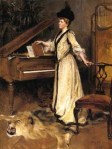

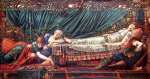


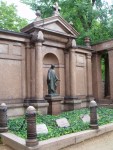
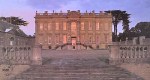
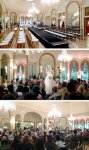

Belmont means ‘Beautiful Mountain’. Many folks who aspire to being California Royalty, get married at Ralston Hall in Belmont. To envision oneself as a banking heiress whose Daddy owned gold and silver mines, and then be whisked off your feet by a Knight of the Realm who takes you to his stately home in Merry Ol England, is the Acme of good breeding!
“A REGAL WEDDING FEAST; MARRIAGE OF MISS SHARON AND SIR THOMAS HESKETH.
SAN FRANCISCO, Dec. 24.–The most brilliant wedding ever celebrated in California took place last evening at Belmont, the princely country seat of Senator William Sharon. Mr. Sharon’s daughter Flora, a petite brunette of 19 years, was united, in the presence of about 150 invited guests, to Sir Thomas Henry Fermor Hesketh, Baronet, of Rufford Hall, Lancashire, England.”
Louis Tevis was the daughter of Lloyd Tevis the President of Wells Fargo Bank. She married into the Breckenridge family who were not only Kentucky Bluebloods, they are kin to the Royal Stewarts as I discovered! Louis did not know this when she got a divorce, and then marries William Sharon, a partner of William Ralston President of the Bank of California! How many banks is that?
Now, all over the internet are claims there is a divine bloodline that descends from Jesus and Mary Magdalene that begat the Stewarts and the Freemasons, who in turn owned banks. Why not gold and silver mines? Surely folks kin to King Solomon would want to have a gold collection as big as this Davidic King who collected 666 talons of gold a year in taxes! Wow! How much silver was taken out of the Comstock mine that Sharon owned?
Last month I tried to communicate some doubt to a bunch of nasty Sinclair folk, that they are all what they make themselves out to be. Surely if they own God’s blood, then His Divine Will would have bid the Sinclairs to do truly wonderous things on His Green Earth – like find plenty of gold in the new world! Actually, they do make the claim the Money Pit is their doing, their Templar line finding all this gold in the ground – then putting it back where no one can spend it – not even the Sinclairs! The check is in the mail!
What was perfectly clear when Sir Thomas sailed into San Francisco Bay, he was looking for a rich heiress to marry – like so many other landed Brits before him – so he would have the monies to remodel his decaying estates. Thomas struck pay dirt when he married Louis Tevis Breckenridge at Ralston Hall, where my great grandparents were married in what may have been seen as the Oddfellow marriage of the century. Surely the Knight Templars in this Masonic-like fraternity, compared the Stuttmeister-Janke union as ordained.
Louis took no chances, and moved the Hand of Fater back into the Breckenridge-Stewart lineage, when her son married Florence Witherspoon Breckenridge, thus tying another knot that links this titled family to the Bentons and Prescos, via the marriage of the world famous artist, Christine Rosamond Benton!
My parents died without this knowlege, and the father of my niece, Garth Benton knew nothing about it. Since Christine died, I have sent letters to the Court that are filed in Rosamond’s Probate, that speak of the Grail, Knight Templars – did mention the Stewarts?
What is curious, is that the Oddfellows, and the Orange Lodge which Bennett Rosamond was the Grand Master of, beleived they were the remnants of the Royal Kings of Judea. Did I tell you that my niece, Drew Benton, descends from Colonel Thomas Hart Benton the Grand Master of the Iowa Freemasons, who saved Albert Pike’s Masonic Library, and thus the Scotish Rite? Add it all up, folks!
Gold and Silver Mines
Big Banks
Knight Templars
Freemasons
Royal Lineages
Senators
Congressmen
Signer of Constitution
Diasporic Lineages
Looks like God’s Work to me!
“The child plays
The toy boat sails across the pond
The work now has just begun
Oh child
Lokk what you have done ”
Jon Presco
Copyright 2011
Furthering the cause was the marriage of Flora’s son Thomas to another American heiress, Florence Louise Witherspoon Breckinridge. The union kept the Fermor-Heskeths in silver, at least until next week.
Flora’s branch of the Sharons does not appear to have any heirs left in the Bay Area, at least according to an online family history, and an official said there seems to be no interest in the goods at Ralston Hall — still a fine place for a wedding. Going once…….
Louise married John Witherspoon Breckenridge, son of Congressman, Senator, Vice President, Presidential Candidate and Confederate General John C. Breckenridge, c. 1878 and lived in San Rafael, CA. Their marriage ended in divorce and she married secondly Frederick W. Sharon.
Louise Tevis Breckenridge Sharon (1858-1938)
We are privileged to be able to offer a selection of exciting San Francisco made and retailed flatware owned by one of San Francisco’s leading 19th century families who married into the English nobility.
Louise Tevis Breckenridge Sharon, was the daughter of Lloyd Tevis, president of Wells Fargo and one of the richest men in California. When he became president of Wells Fargo, it was an express (coach) company; when he retired it was a bank as we know it today. Tevis was assessed by the state of California as having a fortune worth $1,590,000.00 in 18801.
Louise married John Witherspoon Breckenridge, son of Congressman, Senator, Vice President, Presidential Candidate and Confederate General John C. Breckenridge, c. 1878 and lived in San Rafael, CA. Their marriage ended in divorce and she married secondly Frederick W. Sharon.
Frederick Sharon was the son of Senator William Sharon (right), one of California’s very richest men. Sharon arrived in San Francisco in 1849, first investing in real estate, then also in mining and banking. By 1880, the state of California assessed his personal fortune at $4,470,000.002 and he was the largest single taxpayer in the state. Louise and Frederick were married at Sharon’s 55,360 square foot palatial estate ‘Belmont’ in 1884 (below).
In preference to William Sharon’s ‘Belmont’, Louise and Frederick Sharon lived in Paris, in New York at their mansion at 323 5th Avenue and at their Menlo Park mansion ‘Sharon Heights’ (below) after its completion in 1906.
In 1909 Florence Louise Breckenridge, Louise’s daughter by her first marriage to John W. Breckenridge, married Sir Thomas Fermor-Hesketh, 8th Baronet (elevated to the rank of Baron in 1935). Their wedding presents included a large selection of silver from San Francisco’s famous Shreve & Co.
Florence, then Lady Hesketh, lived in the Hesketh country seat, Easton Neston, one of England’s great country houses. It is currently on the market, see here. The silver descended in the family until recently.
It is interesting to note that after the death of William Sharon in 1885, such was his wealth that many people claimed to be related (one even claimed to be a wife) to get a share of the fortune. One person made a claim 30 years later, saying that records of his birth had been destroyed in the great San Francisco fire of 1906. None of these claims ever succeeded.
Most of these pieces appear to date to the time of her first marriage to John W. Breckenridge. Others, as noted below, are later. Some of these items, including the Vanderslice ‘Gargoyle’ pattern flatware service, the Gorham ‘Medallion’ tea knives and the Gorham ‘Old Medici’ salad forks are very rare.
“It’s quite clear the girls knew what they were up to,” Miller says. “They knew they had this cash, which would allow them to become objects of interest. Also, it was a passport to Europe, to a certain degree of freedom and what they saw as a more sophisticated environment. So they traded money for access to what they saw as the cream of world society.”
So Sharon — known here mostly as “Flora,” there as “Florence” or “Emily” — traded her cash for Sir Thomas’ cachet, and they were married at Ralston Hall (known as Belmont at the time) on Dec. 23, 1880
They boarded the Lancashire Witch and made their way to Japan, then zipped over to San Francisco, where Sir Thomas heard that a ship registered in Tahiti with Americans aboard had gone missing in Mexico.
Sir Thomas sent the yacht and a few of his shipmates over to search for the missing, but had the good sense to stay in San Francisco and party
.
“I was lucky enough to find a journal of this journey of 1879-1880, which was a pivotal moment in the family history,” Miller says. “It was written by someone aboard his ship, obviously a great friend, and it makes it quite clear that they were all aware of the, er, potential prospects America had to offer. So when they were in San Francisco, they knew there were pretty American girls who had ‘the needful.’ ”
The city toasted Sir Thomas for his heroic, though reportedly futile, rescue gesture, making him a member of the San Francisco yacht club and honoring him with a scroll from the Board of Trade, Miller says.
Society also feted him at parties from San Francisco’s Palace Hotel to Belmont’s Ralston Hall. By 1880, the former Nevada senator Sharon owned both, due to the suicide of his business partner, William Ralston, and had such a massive empire that he paid more taxes than any individual in California.
Here’s one of the journal entries: “I must say American girls are very pretty, dress well, have good feet, lots of fun & very sharp. Some have lots of money.”
And another: “To my astonishment Hesketh has been making love to Miss Sharon, a most charming girl, daughter of Senator Sharon. The engagement was announced in the Chronicle & Newsletter.”
No need to call Sir Thomas a cad, however.
When the new Lady Fermor-Hesketh boarded The Lancashire Witch, $2 million and a few hundred words of outrage accompanied her.
“There were lots of newspaper reports, general comments in San Francisco, saying how disgraceful it is that this money should leech out of the country,” Miller says.
The new lady of the manor quickly set out to spend some of that money when she found things not entirely to her liking. She had hoped for a “rambling, medieval” home, Miller reports, and had to work to instill those qualities in Nicholas Hawksmoor’s graceful Baroque masterpiece of architecture.
Hawksmoor’s painted oak model of the house is listed among the more precious pieces at auction, valued at more than $150,000. There are also many pieces of silver in mint condition — unused wedding presents from fine American purveyors such as Tiffany and Shreve — and a striking portrait of the lady of the house by Emile Charles Wauters.
“She’s got great style, doesn’t she?” says Miller, chuckling at the in- charge, elegantly clad image of Lady Fermor-Hesketh. “She was apparently very outspoken, too — you know, talked straight, where English girls didn’t, particularly. That’s a nice American characteristic.”
One perhaps Sir Thomas tired of, because after the birth of their two sons Flora eventually began to spend more time in London until she died in 1924.
“She seems to have had a lover who was an admiral at some point,” Miller says. “She converted her house in London to have the sash windows bricked up and put portals in to make him comfortable.”
The admiral’s comfort came at no expense to Easton Neston, which continued to be maintained by a steady flow of American dollars from San Francisco — interrupted, Miller says, only in 1906 by the great earthquake.
Furthering the cause was the marriage of Flora’s son Thomas to another American heiress, Florence Louise Witherspoon Breckinridge. The union kept the Fermor-Heskeths in silver, at least until next week.
Flora’s branch of the Sharons does not appear to have any heirs left in the Bay Area, at least according to an online family history, and an official said there seems to be no interest in the goods at Ralston Hall — still a fine place for a wedding. Going once…….
Easton Neston, built by Nicholas Hawksmoor in around 1700 in Northamptonshire, England, will open to the public for the first time for viewing Friday through Monday; the three-day auction of more than 1,500 lots of furniture, art, silver and other antiques begins on Tuesday. The full catalog is online at http://www.sothebys.com, and interested parties can call the firm’s San Francisco office for more information,
Daily Alta California, Volume 42, Number 14175, 24 June 1888
STUTTMEISTER-JANKE.
One of the most enjoyable weddings of the past week took place at
Belmont, Wednesday morning last, the contracting parties being Miss
Augusta Janke, daughter of Mr. and Mrs. August Janke of Belmont,
and Dr. Wm. Stuttmeister of San Francisco. The house was
handsomely decorated with a rich profusion of ferns and flowers, and
at the appointed hour was filled with the relatives and intimate friends
of the contracting parties. At 11 o’clock the wedding march was played
and the bridal party entered the parlor. The bride was attended by Miss
Alice Stuttmeister, a sister of the groom, and Miss Minnie Janke, a
sister of the bride, as bridesmaids, and Dr. Muldownado and Wm.
Janke, a cousin of the bride, were groomsmen. The Rev. A. L. Brewer
of San Mateo performed the beautiful and impressive ceremony under
an arch composed of flowers and greens very prettily arranged, after
which the guests pressed forward and offered their congratulations.
The bride was attired in a very pretty and becoming costume of the
crushed strawberry shade, and wore a corsage bouquet of orange
blossoms. She carried a handsome bouquet of white flowers. After the
guests had paid their compliments the bride and groom led the way to
the dining-room, where the wedding dinner was served and the health
of the newly married pair was pledged. The feast over, the guests
joined in the dance, and the hours sped right merrily, interspersed with
music singing and recitations, until the bride and groom took their
departure amid a shower of rice and good wishes. Many beautiful
presents were received. Dr. and Mrs. Stuttmeister left Thursday
morning for Santa Cruz and Monterey, where they will spend the
honeymoon. On their return they will make their home in Belmont.
1911: Dr. Willian O. Stuttmeister was practicing dentistry in Redwood
City, CA. (Reference: University of California, Directory of Graduates,
1864-1910, page 133).
Records from Tombstones in Laurel Hill Cemetery, 1853-1927 – Janke
– Stuttmeister
Mina Maria Janke, daughter of William A, & Cornelia Janke, born
February 2, 1869, died March 1902.
William August Janke, native of Hamburg, Germany, born Dec. 25,
1642, died Nov. 22, 1902, son of Carl August & Dorette Catherine
Janke.
Frederick William R. Stuttmeister, native of Berlin, Germany, born
1612, died January 29, 1877.
Mrs. Matilda Stuttmeister, wife of Frederick W.R. Stuttmeister, born
1829, died March 17, 1875, native of New York.
Victor Rudolph Stuttmeister, son of Frederick W.R. & Matilda
Stuttmeister, born May 29, 1846, died Jan. 19, 1893, native of New
York.
http://www.ebooksread.com/authors-eng/daughters-of-the-americanrevolution-
california-s/records-from-tombstones-in-laurel-hill-cemetery-
1853-1927-gua/page-6-records-from-tombstones-in-laurel-hillcemetery-
1853-1927-gua.shtml
http://www.ralstonhall.com/tour/video.html
Belmont Legacy of Carl Janke
Posted on September 11, 2011 by Royal Rosamond Press
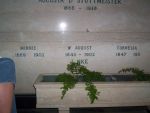
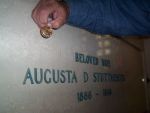

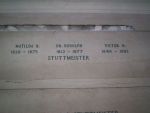


Months after my sister’s death I went to the Sacramento Library and looked at microfish about a legal battle between the heirs of Carl Janke’s estate in Belmont that appeared in the San Francisco Call. I lost the copy I made of that article that I am certain mentioned William O. Stuttmeister, and the sisters of Augusta Stuttmeister-Janke. Carl’s sons did not want Minni and Cornillia, to have anything, and one brother (or cousin) took their side, and was cut out. This has to be William, or W. JANKE. “The bride was attended by Miss Alice Stuttmeister, a sister of the groom, and Miss Minnie Janke, a sister of the bride, as bridesmaids, and Dr. Muldownado and Wm. Janke, a cousin of the bride, were groomsmen.” When Victor Presco turned twenty-one, the the Janke spinsters offered him a moving company in San Francesco. Apparently they saw him as the heir to the Stuttmiester legacy, and the Hope of a return to former glory because they had no children. How about their brother, William? Rosemary said this; “Your father was a made man.” Two days ago, in an e-mail, my cousin Daryl Bulkley confirmed my suspicions that ‘Stuttmeister’ was not the original name of the folks from Berlin. I suspect they were a branch of the Glucksburg family who became Calvinist Evangelicals, and perhaps Rosicrucians. In the top photo we see Minni and Corniallia Janke in the family vault that William Stuttmeister purchased for $10,000 dollars to put the reains of the Jankes and Stuttmeisters in after they were evicted from the Oddfellow cemetery. That William Ralston was a Oddfellow that put up a large sum of money to establish the Oddfellows in Germany – and perhaps elsewhere – makes me wonder about his alleged suicide by plunging into the bay. I am reading articles on the internet about the Oddfellows being the founders of the Welfare State in America, where being charitable to the poor, the infirmed, and the widows, was paramount. They also paid much attention to burying their dead, which suggests they believed in a different hereafter. As a theologian I have pointed out the strange raising of the dead in Matthew 27:53 at the very moment of Jesus’ alleged death.
I suspect Judas was given thirty pieces of silver to purchase Jesus’ tomb, and Jesus was about to practice the ancient Judaic ritual called of the RESUSCITATION, where the soul of the diseased enters the body of another. I believe this is why those who take the Nazarite Vow are bid to keep their distance from the dead. That the Oddfellows titled women as Rebekahs, suggests they are Rechabites, who have been associated with the Nazarites who composed the first Christian church called “The Church of God”. That Jesus came to be seen as God “the Father” is a usurption that began with Paul of Tarsus. That the fall of the Oddfellows in the Bay Area happened overnight, and all traces of their demise, all but disappeared, tells me there was a real Judas and purge. That Daryl pointed out in her research that we knew next to nothing about the Stuttmeisters, whose tomb was lost until seven years ago, tells me William Stuttmeister retired to the Geronimo Valley a disillusioned man, who played a rare violin, and left his Stuttmeister-Janke legacy to his housekeeper. And then he is dead, his remains put in the vault that I went to visit with my daughter and grandson. Before I left for California I told my friend Joy Gall, that I wanted a AA coin to put in this tomb in honor of Christine Rosamond Benton whose funeral fell on he first sober birthday in AA. As I lined up to view my sister in her casket, I did consider the Nazarite Vow I took in 1989. As fate would have it, I ended up putting this coin in William Oltman Stuttmeisters crypt because there was an opening made by the earthquake of 1989.
On this coin is an Angel. In 1992 I began a biography of my family called ‘Bonds With Angels’. It begins with an account of the Blue Angel that appear at the foot of Christine’s bed that woke her and Vicki, who crawled into Christine’s bed and beheld her. Vicki was six years of age, and is clean and sober this day. The Nazarite Vow bids one to not ingest alcohol, not get drunk, so that the Holy Spirit may speak through you, use you as a Horn of Power to broadcast the Word of God. When I entered the tomb of my ancestors and sat down on the marble bench, I noticed the letter A made of brass lying behind the faux fern plant. I picked it up. It was the A in JANKE that had come lose in the earthquake. I looked up at the stained glass window and read; “In loving memory of my beloved wife, Augusta Stutteister,” Was Augusta the Angel that came to visit my sisters? May our bonds with Angels continue – forever more! Amen! Jon Presco Daily Alta California, Volume 42, Number 14175, 24 June 1888 STUTTMEISTER-JANKE. One of the most enjoyable weddings of the past week took place at Belmont, Wednesday morning last, the contracting parties being Miss Augusta Janke, daughter of Mr. and Mrs. August Janke of Belmont,
and Dr. Wm. Stuttmeister of San Francisco. The house was handsomely decorated with a rich profusion of ferns and flowers, and at the appointed hour was filled with the relatives and intimate friends
of the contracting parties. At 11 o’clock the wedding march was played and the bridal party entered the parlor. The bride was attended by Miss Alice Stuttmeister, a sister of the groom, and Miss Minnie Janke, a sister of the bride, as bridesmaids, and Dr. Muldownado and Wm. Janke, a cousin of the bride, were groomsmen. The Rev. A. L. Brewer
of San Mateo performed the beautiful and impressive ceremony under an arch composed of flowers and greens very prettily arranged, after which the guests pressed forward and offered their congratulations. The bride was attired in a very pretty and becoming costume of the crushed strawberry shade, and wore a corsage bouquet of orange
blossoms. She carried a handsome bouquet of white flowers. After the guests had paid their compliments the bride and groom led the way to the dining-room, where the wedding dinner was served and the health
of the newly married pair was pledged. The feast over, the guests joined in the dance, and the hours sped right merrily, interspersed with music singing and recitations, until the bride and groom took their departure amid a shower of rice and good wishes. Many beautiful presents were received. Dr. and Mrs. Stuttmeister left Thursday morning for Santa Cruz and Monterey, where they will spend the honeymoon. On their return they will make their home in Belmont. 1911: Dr. Willian O. Stuttmeister was practicing dentistry in Redwood City, CA. (Reference: University of California, Directory of Graduates,
1864-1910, page 133).
Records from Tombstones in Laurel Hill Cemetery, 1853-1927 – Janke
– Stuttmeister
Mina Maria Janke, daughter of William A, & Cornelia Janke, born
February 2, 1869, died March 1902.
William August Janke, native of Hamburg, Germany, born Dec. 25,
1642, died Nov. 22, 1902, son of Carl August & Dorette Catherine Janke. Frederick William R. Stuttmeister, native of Berlin, Germany, born
1612, died January 29, 1877.
Mrs. Matilda Stuttmeister, wife of Frederick W.R. Stuttmeister, born
1829, died March 17, 1875, native of New York.
Victor Rudolph Stuttmeister, son of Frederick W.R. & Matilda
Stuttmeister, born May 29, 1846, died Jan. 19, 1893, native of New
York.
http://www.ebooksread.com/authors-eng/daughters-of-the-americanrevolution- california-s/records-from-tombstones-in-laurel-hill-cemetery- 1853-1927-gua/page-6-records-from-tombstones-in-laurel-hillcemetery- 1853-1927-gua.shtml Copyright 2011
Sharon-Hesketh Family of Piedmont
Posted on September 11, 2011 by Royal Rosamond Press


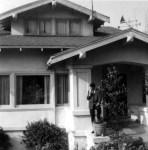
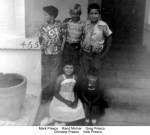
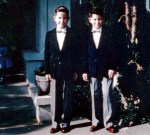
The Presco Children lived on the boundary of Oakland and Piedmont that had more millionaires per capita then any city in America. Here Sharon built a home, Roycrafters, that looks like Rufford Old Hall the seat of the Hesketh family in Britain. It is alleged Shakespeare performed a play here.
Come Saturday morning when Vic and Rosemary began their evil shout and hate match, I would get on my bicycle and ride through Piedmont, down Saint James Drive to Crocker, then to Lakeshore. I had to get away from my parents battle over lost prestige. Christine and I would lead a bunch of kids on a tour of Piedmont via the pedestrian staircases that the WPA built so The Help could get to work, and the children of the rich, make their way to school. Come Halloween we begged candy from the Piedmontese.
It was Christine’s Dream to be rich one day. Her autobiography begins with a fight we had over the last of the milk for cereal.
Vic never paid one dime for child support as ordered by the court, yet, he wanted in on the Art Game.
I noticed there is a Christmas Tree in the window of our house on San Sebastian. I think this is the one we stole from the lot on Park Blvd. above Liemert. We four boys had sewn deep pockets in our jackets, and when we went grocery shopping with Rosemary, we stole food and household items. We stole this tree by throwing it down into Dimond Canyon and retrieving it in the morning. Rosemary ordered up a flocked tree that we put red bulbs on. Then there was the precise ritual of hanging tinsel. If you did not do it right, you were shamed and replaced. It was Rosemary’s Art.
While shopping in Lucky Store in Montclair, the manager approached Rosemary and tried to shame her by saying;
“Do you know your sons are stealing us blind. I’m going to have to ask you to shop (lift) elsewhere.”
“I had no idea!”
Below is a Wikipedia article on Piedmont that may have been authored by Brad Gilbert whom I knew since he was a baby. His father, Barry Gilbert, lived below Bill Arnold on Athol Avenue. Bill painted a mural for Barry when the moved into a plush Piedmont home. Bill came to live with us when his father kicked him out. We were the Artists in Residence.
Jon Presco
Copyright 2011
Baron Hesketh, of Hesketh in the County Palatine of Lancaster, is a title in the Peerage of the United Kingdom. It was created in 1935 for Sir Thomas Fermor-Hesketh, 8th Baronet, who had previously briefly represented Enfield in the House of Commons as a Conservative. As of 2010 the titles are held by his grandson, the third Baron, who succeeded his father in 1955. Lord Hesketh held junior ministerial positions in the Conservative administrations of Margaret Thatcher and John Major. However, he lost his seat in the House of Lords after the House of Lords Act 1999 removed the automatic right of hereditary peers to sit in the upper chamber of Parliament.
The Hesketh Baronetcy, of Rufford in the County Palatine of Lancaster, was created in the Baronetage of Great Britain in 1761 for Thomas Hesketh, with special remainder to his brother Robert, who succeeded him as second Baronet. The latter’s great-great-grandson, the fifth Baronet, sat as a Conservative Member of Parliament for Preston. His grandson, the eighth Baronet, was elevated to the peerage as Baron Hesketh in 1935.
The former seat of the Barons Hesketh was Easton Neston in Northamptonshire. The house was previously the seat of the Fermor family (Earls of Pomfret since 1721), and came into the Hesketh family through the marriage in 1846 of Sir Thomas George Hesketh, 5th Baronet, to Lady Anna Maria Isabella Fermor, sister and heiress of George Richard William Fermor, 5th and last Earl of Pomfret. However, the house was sold by the current Baron in 2005.
The original seat of the Hesketh family was Rufford Old Hall in the village of Rufford in Lancashire. This house was sold to the National Trust by the first Baron Hesketh in 1936.
The hall is reputedly haunted by a grey lady, Queen Elizabeth I and a man in Elizabethan clothing.[6] The figure of a man floating above the canal at the rear of the building has also been reported.[7] On 20 February 2010, the crew of the paranormal television series Most Haunted filmed at the hall.
Piedmont is a small, affluent[2] city in Alameda County, California, United States. It is surrounded by the city of Oakland. The population was 10,667 at the 2010 census. Piedmont was incorporated in 1907 and was developed significantly in the 1920s and 1930s. Piedmont was one of the “25 Top-Earning Towns” in CNN Money Magazine’s list of ‘The Best Places to Live in 2007, and was also named one of the “Best Places To Live-Urban Enclaves” in the United States in 2007 by Forbes.[3]
Residents originally sought incorporation in 1907. Two elections were held among the citizens of Piedmont in 1907, both of which narrowly upheld the decision for Piedmont to become a separate city, rather than become a neighborhood within the city of Oakland.
By the Roaring Twenties, Piedmont was known as the “City of Millionaires” because it had the most resident millionaires per square mile of any city in the United States. Many of these millionaires built mansions that still stand, notably on Sea View Avenue and Sotelo Avenue/Glen Alpine Road in upper Piedmont. Piedmont became a charter city under the laws of the State of California on December 18, 1922. On February 27, 1923, voters adopted the charter, which can only be changed by another vote of the people.
Piedmont celebrated the year 2007 as its Centennial Anniversary since incorporation. The Centennial Committee hosted celebratory events along a trail that runs through downtown Piedmont and denoted historical landmarks in the city. The Committee also created a float for the city’s Fourth of July parade.[5]
The historical exhibit “A Deluxe Autonomy: Piedmont’s First 100 Years” was on display in the Oakland Public Library from January 5 to March 31, 2007.[6]
Notable residents
[edit] Current
Piedmont is home to a number of somewhat prominent figures in the political, business, sports, and academic communities, including: ex-Major League Baseball player Dave McCarty, ex-National Football League player Bubba Paris, San Francisco 49ers, ex-National Football League player Bill Romanowski, Oakland Raiders owner Al Davis, Ambassador to Australia Jeff Bleich, and Peter Docter, director of Pixar’s Monsters, Inc. and Up and co-writer of WALL-E and AFJR, extra in the Santa Claus 3, and Billie Joe Armstrong of the rock band Green Day.
[edit] Past
Author Jack London lived in Piedmont, and John F. Kennedy’s Secretary of Defense Robert S. McNamara grew up in Piedmont, where his family lived on Annerley Road.[12] Clint Eastwood resided in Piedmont and attended Piedmont schools. Country Joe McDonald resided in Piedmont in the 1970s. Actors Dean Butler (Little House on the Prairie) and Austin Tichenor (Reduced Shakespeare Company) also grew up in Piedmont. Further, notable tennis player and coach Brad Gilbert, grew up in Piedmont. Charles R. Schwab, founder of the discount stock brokerage firm bearing his name, and his family also lived in Piedmont in the early 1980s, as did Dean Witter, founder of Dean Witter Reynolds brokerage, in the 1940s.
Brad Gilbert (born August 9, 1961), is an American tennis coach, a television tennis commentator, and former professional tennis player. He was born in Oakland, California and graduated from Piedmont High School (California).
As a player, Gilbert’s career-high singles ranking was World No. 4, which he reached in January 1990. Since retiring from the tour, he has coached several top players including Andre Agassi, Andy Roddick and Andy Murray.
Sharon Family Reunion at Palace Hotel
Posted on September 11, 2011 by Royal Rosamond Press
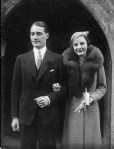


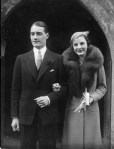

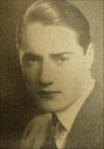


I have talked to Anne Farmer-Fermor, and Patrick Sharon the second, about the renewal of the Sharon Family reunions at the Palace Hotel, that William Ralston built, that his partner, William Sharon, came to own. Anne was communicated in person with members of the Hesketh family in Britain, and is friendly with Baron Revelstoke whom she was hoping to get an invite through to William Windsor’s wedding. The Baron is kin to the founder of Baring & Brothers Co. a British banking company.
William Ralston appears to be the Grand Master of the Oddfellows, and may have invited the Oddfellows of Lodge 17 in San Francisco to come celebrate with the new Oddfellows of Belmont, in Belmont. Did he build the Palace Hotel in order to accommodate Oddfellows from all over America – and the world?
Jon Presco Copyright 2011
From: Anne Farmer y@yahoo.com> Subject: Re: SHARON To: “John Ambrose” Date: Thursday, December 23, 2010, 3:34 AM Hi John- I will call Patrick Sharon after Christmas when I return to Seattle. Today I take mother to Portland on Amtrak for Chrustmas to see some friends. Please send me your mailing address as I am sending out my New Year’s cards- thank you. Have a great Holiday and a very Happy New Year. Kindest Regards- Anne —
On Sun, 12/5/10, John Ambrose wrote: From: John Ambrose Subject: SHARON To: @yahoo.com Date: Sunday, December 5, 2010, 5:03 PM Anne; Here is the number John, Thanks for all of your information. I am still trying to find the list of the California Sharon Family Reuniun. This will help me establish family connections for all of us. As I mentioned my Great grandparents were the last of our family who received the invite.Their names are Samuel and Stella Sharon of Kansas City. Lets stay in contact. Patrick Sharon II
From: Anne Farmer y@yahoo.com> Subject: Re: Withersppon To: “John Ambrose” Date: Saturday, March 6, 2010, 1:41 PM Hi Jon- These I know- the Heskeths married into my side- the Fermors so they are distant cousins of mine. The Quakers, Methodists were the Fermor side- they never owned slaves like Witherspoon did.I had heard about the Presbyterian strong influence- and how the Calvinists were more fighters. On my side we have the lovers, not fighters. Anne PS- I was just connected via a mutual friend to look up Theresa-Mary Morton while in London, who is Queen’s librarian.
James Cecil Baring, 6th Baron Revelstoke (born 16 August 1938) is a British peer. A son of Rupert Baring, the 4th Baron, and Flora Fermor-Hesketh, daughter of the 1st Baron Hesketh, he was educated at Eton College. He married Aneta Laline Dennis Fisher in 1968. They had two sons, Alexander Rupert Baring, born 9 April 1970, and Thomas James Baring, born 4 December 1971. He married Sarah Stubbs in 1983. They had two daughters, Flora Aksinia Baring, born 17 July 1983, and Miranda Louise Baring, born 1 May 1987. He succeeded his brother, John Baring, 5th Baron Revelstoke, born 2 December 1934, in 2003. His half-sisters, by a later marriage of his mother to Lt.-Cdr. Derek Lawson, are Arabella Ann Spurrier (née Lawson), born 14 August 1946, and Caroline Flora Turner (née Lawson), born 23 September 1953.
http://revelstoke.org.uk/fam/1stLordR.html Barings Bank was founded in 1762 as the John and Francis Baring Company by Francis Baring, with his older brother John as a mostly silent partner.[2] They were sons of John (né Johan) Baring, wool trader of Exeter, born in Bremen, Germany. The company began in offices off Cheapside and within a few years moved to larger quarters in Mincing Lane.[3] Barings gradually diversified from wool into many other commodities, providing financial services necessary for the rapid growth of international trade. By 1790, Barings had greatly expanded its resources, both through Francis’ efforts in London and by association with leading Amsterdam bankers Hope & Co. In 1793, the increased business necessitated a move to larger quarters in Devonshire Square. Francis and his family lived upstairs, above the offices.
pened on October 2, 1875, the original Palace Hotelwas the glorious final “gift” of the colorful — but ill-fated —
William Chapman Ralston to his adopted home city of San Francisco. Born in Ohio on January 12, 1826, Ralston, an agent — and sometimes even last minute captain — of Gold Rush steamersthat ferried thousands of gold-seekers to California from Panama, was 28 when he finally settled himself in the still wild young city by the Bay in 1854. By the time he co-founded the Bank of Californiathere a decade later in 1864, the energetic and innovative Ralston was already on his way to becoming one of the city’s — and the West’s — wealthiest and most important men. The same year that he opened the bank, Ralston also began building a magnificent summer home called “Ralston Hall” on his recently purchased 14-acre estate named “Belmont” located twenty-five miles south of the city. (The magnificent four-story, eighty-room, 55,360 square foot mansionthat resulted still stands there today as a glorious example of this golden era.) Many of Ralston Hall’s magnificent architectural features such as its stately dining room, a 28′ x 61′ mirrored “Versailles” ballroom, an “opera box” galleryencircling the grand staircase leading to the second floor modeled after the Paris Opera House, and the classic columns and crystal chandeliers in its foyer all presaged the design of similar features incorporated into the design of the Palace Hotel a decade later. http://thepalacehotel.org/ There were two main Sharon families in California after 1850. The first and most prominent was that of William Sharon, son of William Sharon and Susannah Kirk. He left Illinois and made a fortune in the gold, silver, banking and hotel business in California and in Nevada. He became the fourth United States Senator from Nevada. The other family was that of William Evans Sharon, son of Smiley Sharon and Sarah Ann Hurford. Smiley Sharon was a brother of William mentioned above. William Evans Sharon went west to work with his Uncle and his family line is in the San Francisco area today. This section covers these two families. SENATOR WILLLIAM SHARON William Sharon was the second son born to William Sharon and Susanna Kirk Sharon. He was born in Smithfield, Jefferson County, Ohio on January 9th, 1821. William’s mother died when he was twelve years old and he was raised by his father and the older children. He attended local schools and then at the age of sixteen attended Franklin College in Athens, Ohio nearby in Harrison County. He returned home after college in 1840 and tried farming but did not find it to his liking. He then went to Steubenville, Ohio to study and read law with Edwin M. Stanton. Stanton was later to become Secretary of War under President Abraham Lincoln. William Sharon was admitted to the bar in Steubenville in the early 1840s. After a brief stint at both the law in Steubenville and some merchandising on the Ohio River, he travelled to St. Louis, Missouri to establish a law practice. His elder brother, Dr. John Kirk Sharon had moved to nearby Carrollton, Illinois in 1843 and had established a growing merchandising concern there. About 1846, William moved to Carrollton and joined his brother in the business. In 1849 the news of Gold in California arrived. William had not established roots yet in Illinois and the lure of fortunes offered a great inducement to head west. The Mexican War was over and California was now part of the United States. William Sharon was twenty-eight at the time. According to an article in the CARROLLTON (Illinois) GAZETTE, William and five other men left Carrollton on March 30, 1849 for the gold fields. One of the men was J. D. Frey who was to be a lifelong friend and associate of William Sharon. According to most articles that I have read, William Sharon was a small man, slight of build and not of good health as a young man. While it seemed he could not stand the rigors of the law and left it for merchandising, the cross country treck of some five months seemed to strengthen him and instill the strength that was to support him through life. In late July they reached the Sierras and passed through Placerville and the Mount Davidson area of Nevada where later the famous Comstock Lode was discovered and it was here that Sharon later made his fame and fortune. They pushed on to California and arrived in Yerba Buena in August of 1849. Yerba Buena was a hide trading post that was to grow rapidly into what is now San Francisco. William Sharon proceeded to Sacramento, but quickly gave up the search for gold and opened a store to supply the miners. He saw the future of the City and the area was to offer greater rewards than were the gold fields. Sharon invested the profits of merchandising in real estate and speculating in mining stocks. He rapidly amassed a fair size fortune and owned a great deal of real estate that was soon to become downtown San Francisco. In 1850 he was elected to the City Council and was instrumental in the formation of the city. By 1852 the area had swelled to some 40,000 people and families as well as fortune seekers arrived daily. Among these families came a young lady, Maria Malloy, an eighteen year old Canadian girl from Quebec. Her father was a sea captain before he died and she arrived with her mother and stepfather, a Mr. Murphy. Later in 1852, she was to become the wife of William Sharon and was to bear him five children before her death in 1875. For the next decade, William Sharon developed real estate and land development and became quite wealthy and influential. During this period his family was born and the Sharons were a very prominent family. Also during this period of growth, he met and became associated with William C. Ralston who had formed the Bank of California and was another key figure in the growth of San Francisco. By 1859 the gold was running out in the hills and miners were drifting eastwards in search of new deposits. One of these men, Henry Comstock, discovered silver in the same Mount Davidson area Sharon had passed through ten years earlier on his way to California. The new silver mines around Virginia City, Nevada caused a new rush of mining and speculation. William Sharon had made his small fortune in real estate and not in mining, yet in 1860 he became involved in the silver mines and by 1862 had lost most everything he had made in the past ten years. The growth and expansion of the mines was rapid and by 1864, William Ralston had opened a branch of the Bank of California in Virginia City and had placed William Sharon in charge of its operations. Within a few years, the mines began to peter out and it looked like even worse disasters were facing Sharon. Bill Sharon, however, felt that the greatest profits were yet to come. He foreclosed on most of the milling operations and brought them under the control of the Bank. He then forced the mine operators to use his mills for production and rapidly had the Bank as the controlling factor in Virginia City. He felt that the real lode lay deeper in the ground and speculated that by deepening the existing mines, huge deposits would be found. He was correct. By 1868 the Bank was a virtual monopoly in the greatest silver discovery in history. Ralston and Sharon then set up their own company, the Union Mill and Mining Corporation and `relieved’ the bank of its holdings for their own use. They made millions. By the early 1870s, Ralston and Sharon were perhaps the two wealthiest men in the west. Ralston had invested great sums in building the Grand Hotel in San Francisco and a palatial home in Belmont. He was undertaking the construction of a new hotel, the Palace, which was to be the largest and grandest in the west. Backtracking a bit… During the waning years of the Civil War, Abraham Lincoln, in 1864, needed one more state vote to insure passage of the amendment to abolish slavery. Rather than continue the costly war, he agreed to admit Nevada as a state as it would generate the additional vote needed. You must realize that at the time, California and Oregon were the only two states west of Kansas. The rest was simply ‘The West.’ Nevada was admitted and the Civil War came to an end the following year. In 1874 William Sharon was perhaps the most influential man in Nevada and was being pressed by friends to run for the United States Senate. He spent some $600,000 to `buy’ the vote and was handily elected to a six year term from 1875 to 1881. However in 1875, Sharon and the Bank of California were having problems and he did not even go to Washington for his first year in office and afterwards made only token appearances. He certainly wanted the prestige of being a United States Senator, but never was really interested in the job part of the deal. Needless to say he did not even bother to run for reelection. In mid 1875, the Bank of California found it had over extended itself and was on the verge of collapse and could very well bring down the entire economy of California. There seemed to be no hope, and on August 26, 1875, William Ralston committed suicide. William Sharon was the administrator and recipient of the estate of William Ralston. To protect his own interests, Sharon virtually took over control of the Bank which had now closed. He raised new capital by re-issuing stock and on October 2, 1875 the Bank of California reopened
its doors stronger than ever. On the following day, October 3rd, the Palace Hotel, now owned by Sharon through Ralston’s estate, opened its doors to the public. On October 14th, 1875, the official opening came in the way of a banquet for General Phillip Sheridan, freshly returned from the Franco Prussian War. William Sharon’s wife, Maria had died that Spring, on May 20, 1875. Now William Sharon had only his business dealings to keep him occupied. Depending on which side you listen to, Sharon either could not attend Senate sessions in Washington due to the potential disasters at home or simply because he had total disinterest in politics. Probably it was both. By the early 1880s, William Sharon’s real estate empire had grown to the extent that he was the largest single tax payer in California. His payment to the City of San Francisco represented a full two percent of the City’s total income. As his fortunes seemed to increase by themselves, William Sharon spent a great deal of time relaxing and entertaining. His business interests were being looked after by his son, Frederick Sharon, and his son-in-law, Francis Newlands. His other daughter, Flora, had married an English nobleman and was doing just fine by herself. In 1883, a woman named Sarah Althea Hill, claimed she was his true second wife and claimed a portion of his estate. She was most likely his mistress, as she had lived with him, but was never his wife. The trials took away the health of William Sharon. The court ruled in favor of Miss Hill and on November 13, 1885, William Sharon passed away at his home in San Francisco after a fairly long illness. It was not until after his death that the California Supreme Court ruled in his favor and left Sarah Hill without any claim on his fortune. Even in death, William Sharon eventually won. Many cousins and relatives had gone to California to become part of his vast empire and he made them all fairly well off. From a somewhat sickly childhood, William Sharon had shown strength in both body and in convictions. Like most of the men that formed America, he was both a visionary and a robber baron, but he was of the ilk that made America what it is today. I have an old family photograph taken about 1870 showing the young William, Maria and their first two daughters. They made quite the handsome family. William and Maria Sharon had five children. Two died as infants and the following three grew to live interesting lives. Clara Adelaide Sharon Clara was the eldest child. She was born in San Francisco in 1854. On November 20, 1874 she married Francis Griffith Newlands. According to an article in the Carrollton, Illinois GAZETTE, she received one million dollars as a marriage gift from her father. The Newlands had three daughters before Clara died in childbirth in San Francisco on February 17, 1882. The son was a son Sharon Newlands born and died on February 17th. Francis Newlands married again on September 4, 1888 to Edith McAllister and they had one son, Hall McAllister Newlands in 1890. This second wedding took place in England at the Estate of his brother and sister-in-law, Sir Thomas and Lady Hesketh. They had two sons who both died in infancy. Francis Newlands died in San Francisco in 1917. The children were: Edith Newlands Edith was born on May 17, 1876. She married H. L. Johnston in about 1903. They had two sons: FRANCIS NEWLANDS JOHNSTON was born March 8,1904. He married Janine Schladenhoffen in Le Harve, France on October 25, 1935. He died October 15, 1996. They had four children: Nancy Anne Johnston born September 9, 1936 in Lausanne, Switzerland. She married Donald Church McNear May 2, 1959. Francis Andrew Johnston born June 16, 1939 in Washington, D.C. He married Barbara Stegemerten December 9, 1966. Frederick Robert Johnston born in Washington, D.C. on December 20, 1940. Sandia Janine Johnston born in Washington on January 10, 1942. She married Lewis Emery Pugh on July 6, 1968. ALAN LADD JOHNSTON born in 1906 and died May 2, 1968. Janet Newlands Janet was born in January of 1878. She married William Barnard Johnston. She died on January 29, 1965 in Washington DC. William was born in 1876 and died in 1948. They had two children: JANET SHARON JOHNSTON born July 31, 1904. She married William Sharon Farr on August 29, 1936. He was born April 7, 1903 (see his listing later on in this section). WILLIAM WARING JOHNSTON born August 27, 1907 and died as a youth on December 18, 1920. Frances Clara Newlands Frances was born November 21 1880 and died August 21, 1907. She married Leopold Waldemar Von Bredow. They had one daughter before her early death: FRIEDERIKE VON BREDOW who married Alexander Graf Strachwitz. Hall McAllister Newlands He was born February 17, 1890 and at age two. John Cutler Newlands He was born December 2, 1893 and died the next day. Florence Emily Sharon Flora Sharon was born in San Francisco in 1858 or 1859. On December 23, 1886 after the death of her father, she married Sir Thomas George Fermor-Hesketh of England in her home in San Francisco. As she was single at the time of her father’s death in 1885, she was left the bulk of his estate. This marriage was a merger of sorts. She moved to England and they had two sons, Frederick and Thomas. Flora remained in England and died at her London home on September 25, 1924. The two sons were: Frederick Fermor-Hesketh When Frederick was only twenty-six years old and in the service, he took a one week leave to visit Ireland and simply disappeared from the face of the earth. A little foul play it would seem. Thomas Fermor-Hesketh Thomas married Florence Breckenridge, a daughter of Louise Tevis Breckenridge Sharon. Louise was the widow of John Witherspoon Breckenridge prior to marrying Frederick W. Sharon. This was a marriage of step cousins of sorts. Thomas was made the first Baron Hesketh in 1935. He died in 1935. They had five children: THOMAS FERMOR HESKETH LOUISE FERMER HESKETH who married Sir Edmond Stockdale. FREDERICK FERMER HESKETH the next Lord Hesketh. He married Christine McEwen. They had three sons: Alexander Hesketh the next Lord at age 19 in 1970. Robert Hesketh John Hesketh FLORA FERMER HESKETH who first married Lord Revelstoke and then later married Derick Lawson. JOHN FERMER HESKETH twice married. First to a Patricia and then to a Lorelei. Don’t have any last names. Frederick W. Sharon Frederick Sharon was born in 1862 in San Francisco and in 1884 he married a widow, Louise Tevis Breckenridge in San Francisco. Louise was the daughter of Lloyd Tevis and Susan Saunders. She had been married to John Witherspoon Breckenridge. There were three children in her first marriage. They had one child, Henry William Tevis Sharon. Frederick Sharon died in July 1915 and touched off yet another hotly contested Will controversy as mentioned earlier. The following article is taken from an article on the life and home of Frederick W. Sharon, son of Senator Sharon, printed in the Fall 1977 issue of the JOURNAL OF THE SAN MATEO COUNTY HISTORICAL ASSOCIATION: The death of Frederick W. Sharon (in July of 1915) was to produce a legal drama not too unlike that of his father and the claims of Sarah Hill. After a very lengthy probate, a final distribution of the estate was about to be made, when out of nowhere appeared a young gentleman by the name of Fred Sharon. Flanked by a battery of attorneys, young Fred, a publisher from Tacoma, claimed to be the adopted son of Frederick Sharon and was entitled to one half of the multi-million dollar estate. Fred was, in reality, a son of John Sharon, a nephew of Senator William Sharon. Frederick W. Sharon had indeed befriended the boy as a child but had never adopted him or even seen him for years. Young Fred appeared in court with witnesses that claimed to have seen some adoption papers, which, they also claimed, had been destroyed in the holocaust of 1906. The jury ruled in favor of young Fred. The Supreme Court, however, as in the case of the Senator and Sarah Althea Hill, overturned the lower court decision and the young scamp got nothing. Oh well, just another valiant attempt to grab at the Sharon Fortune that went down the old drain. The only child was: Henry William Tevis Sharon I have no information on Henry Sharon other than he died at a young age. WILLIAM EVANS SHARON A complete story of William Evans Sharon life is found in THE ENCYCLOPEDIA OF AMERICAN BIOGRAPHY, published by the American Historical Society in 1932, volume 21, pages 53-57. William Evans Sharon was a son of Smiley Sharon and Sarah Ann Hurford. He was born in Smithfield, Jefferson County, Ohio on March 22, 1852. He grew up on his parents’ farm and attended the local public schools. In 1872 at the age of twenty, he traveled to California. Initially he lived with his uncle, William Sharon, and attended a business college. He accompanied his uncle to the silver fields of Virginia City, Nevada and managed several of the famous Comstock Lode Mines. He served for two years in the Nevada State Senate representing Storey County. On December 25th, 1876 in Virginia City, William Evans Sharon married Lillian Mygatt. Lillian was born in Iowa City, Iowa on January 16, 1858. Her family originally came from England to Boston in 1633, and were the founders of Hartford, Connecticut in 1639. There is a complete genealogy of the Mygatt Family in the Sharon Biography in the above mentioned book. In 1890 the Sharons moved back to Oakland, California and in 1898 built their home Roycrofters at 37 Sharon Avenue in Piedmont. In 1915 when Frederick Sharon (see the story of Senator William Sharon) died, William Evans Sharon took over the control of the Sharon Estate and their vast holdings in California. William Evans Sharon died at his Piedmont home on January 26, 1926. I do not know when Lillian died. William and Lillian had ten children, seven of whom lived to adulthood. They were: Claude Summer Sharon Claude was born in Virginia City, Storey County, Nevada on November 1, 1877. He was twice married. First to Ivy Evans of Reno, Nevada and then he married a widow, Mrs. Edith Logan. Claude died in Oakland, Alameda County, California on February 22, 1965. There was one daughter in the second marriage: Leslie Sharon I have no information on Leslie Sharon. Florence Emma Sharon Florence Emma was born in Virginia City, Nevada July 12, 1879. She was married five times. She first married a violinist and composer, Peter Coole Allen, on May 2, 1900. Peter died at the family home, Roycrofters, July 29, 1904. There were two children, Frances Lillian Allen and Willette Allen. Florence then married Herbert Hamilton Brown of San Francisco on June 2, 1907. They had three more children before they were divorced. Herbert died in 1922. She married Jerome Johnstone who was in the Army. They lived in Carmel, California and were later divorced. Her forth husband was a Colonel in the Russian Imperial Army, Ilya Mihielovich Jadovskoy. They opened the Russian Tea Room in Carmel. Again they were divorced. I do not have the name of husband number five but he died. Florence was in a nursing home in Marin County, California from about 1960 until her death about 1980. The children were: Frances Lillian Allen Frances was born in Oakland on April 10, 1901. She was first married to Steven Glassell who died in 1928. She then married James Cooper Doud in about 1929-1930. They lived in Carmel California and had a place in Hawaii as well. James was born in 1902 and died in 1983. Frances died in May 1993 in Carmel, California. There were three children: LOUISE FRANCESCA (GLASSELL) DOUD born January 14, 1922. She married Robert Warren. She was alive in 2006, and living in Falmouth here on Cape Cod. They had: Valerie Warren born December 22, 1949. She married a Stricland and lives in Woodstock New York. Barbara Warren born in 1950 and married to Paul Holden. They live in Colorado. Diana Warren born April 8, 1952. She married David Wald and lives in Falmouth on the Cape. James Warren born about 1954, is married and lives in New Hampshire. TOLAND SHARON (GLASSELL) DOUD born in 1925. His wife is Beverly Jean Dowgiallo. They were married June 19, 1950. He was a dentist in Carmel. They were both alive in 2006. They had 5 children. Melinda Margaret Doud born March 20, 1952. She married Patrick Scott McGibney April 28, 1974. They had no children. Lindi was the one who supplied this info in 2006. Thanks. Laurie Jean Doud born June 22, 1953 and died May 9, 1985. She married Mark Kintz in 1978 and they divorced 2 years later. She then married Norman K. Green in 1981. They had one daughter. Marian Jeanette Doud born January 26, 1957. She married John Plastini June 26, 1985. They have two children. Frances Sharon Doud born December 22, 1967. Unmarried as of 2006. Toland Thomas Doud born September 24, 1971. Unmarried as of 2006. STEPHANIE DOUD born in 1928. She first married Budd Archer, and later married Jean Paillard. She died in 2002. Willette Allen Willette was born in Oakland on November 27, 1904. She married Robert Fitch and died in Texas in 1954. I have no information on children, if any. Hamilton Brown Hamilton was born about 1910 in California. His wife was Charlotte. They had two children: PETER BROWN CHRISTOPHER BROWN William B. Brown William was born about 1912 and died in Carmel in 1986. His wife was Muriel. He later married Carol Henning. Carol was the first wife of the author John Steinbeck. There was one child in the first marriage: SHARON ELIZABETH BROWN married to Lawrence Bacon. Florence Edith Brown Florence was born September 10, 1916 in Oakland, California and died in Stamford, Connecticut in 1975. She married and later divorced John Bennett Geisen. She then married Robert Franklin Hart. Children were: JOHN BENNETT GEISEN III killed in Viet Nam in 1967. LEE GEISEN born January 20, 1943. MARTHA JACOBS HART born October 10, 1953. She married Walter LeRoy Wensel on June 26, 1982. GUY WILLIAM HART born February 2, 1956. He married Donna Marie Louis on July 9, 1989. Blanche Sharon Blanche was born in Virginia City June 23, 1881. She married Harold St. Lawrence Farr in Oakland in 1902. Blanche died November 23, 1923. I do not know when Harold died. There were two sons: William Sharon Farr William was born in Oakland on April 7, 1903. He married a cousin, Janet Sharon Johnston in 1936. Janet was born July 31, 1904. She was a daughter of William Johnston and Janet Newlands. Janet Newlands was a daughter of Francis Newlands and Clara Sharon, daughter of Senator William Sharon. William died on February 23, 1992. Janet was still living in Chevy Chase, Maryland in 1993. Their children, all living in 1990, were: WILLIAM SHARON FARR JR. born August 12, 1937. He married Mary Fullerton and was later divorced. He remarried to Katy Kearns in 1978. He had two children in the first marriage: Sheila Ford Farr born July 13, 1964. Mark William Farr born December 23, 1965. JANET MARION FARR born January 3, 1939. She married J. Raymond Ewing Nelson in 1964. They were divorced. She had four children: Emma Farr Nelson a twin born March 4, 1966. Charlotte Ewing Nelson the other twin. She married Charles William Malcolm Moyle on July 21, 1990. They had daughters India Charlotte Farr Moyle born February 27, 1992 and Iona Mary Wharton Moyle born December 17, 1994. Charlotte and Charles were divorced. She will marry Jonathan Hardy Hall on August 5, 2005. James William Ewing Nelson born July 12, 1967. He married Sakae Nakamura on December 16, 1994. They have two children as of 2004: Ako Nakamura Nelson born July 21, 199 and Sam Nakamura Nelson born July 23, 2003. Thomas Newlands Campbell Nelson born May 26, 1972. He married Marjorie Robertson June 3, 2000. They have as of 2004: Asha Janet MacMillan Nelson born January 8, 2001 and Jack Angus Ewing Nelson born April 25, 2002. SHEILA LADD FARR born August 31, 1940. She married John Erich Christian Nielsen in 1969. He died in 2000, Sheila was in Mill Valley, California as of 2003. They had two children: Dinantha Janet Nielsen born November 18, 1972. Galen Theodore Nielsen born May 18, 1975. GAVIN MALLOY FARR born December 8, 1942. He married Cathleen Hiser Smith. They have two children: Sarah Malloy Farr born June 19, 1976. Emily Newlands Farr born June 22, 1978. Frederick Sharon Farr Frederick was born in Piedmont, California August 2, 1910. He married Janet Haskins and then later married Dee Tombs on November 29, 1969. Both were living in Monterey, California in 1990. There were three children: SAMUEL HASKINS FARR born July 4, 1941. He married Sharon Alexa Baldwin on August 30, 1968. He was a California State Legislator and they are living in Carmel, California. He is now (1993) a United States Congressman from California. They have one child: Jessiica Farr born June 27, 1978. FRANCESCA FARR born in Washington, D.C. on October 30, 1942. She married Prescott S. Bush III (nephew of President George Bush) in 1970. They were divorced in the first year. She was living in San Francisco as of 1990. NANCY FARR was born in San Francisco January 4, 1948. She died in a horse riding accident in August 1965. She was still single. Robert Alexander Sharon Robert Sharon was born in Oakland, California on March 26, 1890. He married Hazel Ingels June 1, 1915. He may have later married to an Olive. Hazel was born August 31, 1891 and died October 11, 1981. Robert Sharon died in Oakland on September 1, 1963. They had one son: WILLIAM W. SHARON born March 29, 1921. He was still living in 1999 in Moraga, California. He was previously married to a Ruth and they divorced. His second wife was Betty Unger who died in 2001. He died in March 2008. He and Ruth had three sons: William David Sharon He had two children: Elise J. Sharon born August 7, 1967. She is single and lives on Maui in Hawaii. Richard D. Sharon born September 23, 1971. He is single and lives in Seattle. Richard Sharon He never married. Robert Sharon He never married either. Ruth Coralie Sharon Ruth was born in Virginia City April 20, 1892. She married Alberto A. DeGrassi on March 25, 1917. He was a native of Italy who came to America at the outbreak of World War I. Albert was still living in California in 1990, but Ruth had died in 1930. There were two children: ALBERTO H. DEGRASSI born 1919 and died 1988. He married Helen Virginia Anderson. She died in 2005. ROBERT ANDREA DEGRASSI born 1924 and married to Elizabeth Delany. Both are alive in 2005. They had: Milo Alessandro de Grassi born August 3, 1954. Andrea Louise de Grassi born March 10, 1958. Ann Maria de Grassi born January 3, 1960. Esther Lillian Sharon Esther Sharon was born in Nevada April 8, 1895. She married Lucius G. Norris. Lucius was born March 2, 1895 and died November 3, 1973. I do not know when Esther died. They had four children: WESTRICK NORRIS born July 10, 1927. He married Sandy Dickey on March 19, 1949. SHARON NORRIS born April 5, 1929. His wife was Alberta Jo. In 1990 they were living in Bakersfield, California. LUCIUS NORRIS died at age fifteen. ELISE NORRIS died at age six. Hurford Clarence Sharon He was born in Oakland, Alameda County, California on April 17, 1898. He also worked in the Sharon family business. He married Narcissa Cerini in the early 1920s. Narcissa died very early on June 17, 1927. Hurford remarried in 1928 to Evelyn Reyland. He died March 16, 1979. Evelyn Sharon died in 1985. There were two children: William F. Sharon William was born in Oakland on June 24, 1924. He married Carol Booth in Oakland on September 2, 1951. They were divorced. Bill is a lawyer in Oakland and lives in Piedmont, California. Their children are: JOHN SHARON born July 8, 1952. He married Ann Fazio in June 1992. He died in 2001. CAROLYN SHARON born August 27, 1954. She has been married twice. She is now married to Gaylen Heyder, and they have a daughter: Nichole Heyder JANET SHARON born September 25, 1961. She e-mailed me in May 2003. Said she married Brian Patrick Maher June 9, 2001. They presently live on the island of Maui in Hawaii. John Hurford Sharon John Sharon was born in Oakland on March 5, 1927. He first married Ruth Corsini in May of 1955. He later married Frances Virgin in 1968. He moved to Washington, D.C. and was a lawyer there. He served as an advisor to Adali Stevenson and later to John F. Kennedy both before and during his Presidency. John H. Sharon died in Washington on June 10, 1980. There were three children in each marriage: LISA FARR SHARON born August 9, 1958. She married Hugh Drescher in May of 1987 and they were divorced in 1991. LAURA MYGATT SHARON born June 15, 1961. JOHN HURFORD SHARON 3rd born February 25, 1964. He married Amy E. Grotevant in June 1992. He is an administrator at the Maret School in Washington. He and Amy visited here at the Inn in 1993 and he supplied much of this information. In the second marriage were: BARCLAY NEWLANDS SHARON born June 10, 1970. WILLIAM WADSWORTH SHARON born December 2, 1971 and died in June 1973. EDWARD VIRGIN SHARON born May 11, 1974. MISCELLANEOUS CALIFORNIA SHARONS In the 1900 California Census I find this family headed by WILLIAM SHARON age 34 born in Pennsylvania in April 1866. His wife, LOUISA, is 30 born in California in September 1869. They have a daughter, ALICE SHARON, age 7 born August 1892. Also there is Louisa’s brother, Henry BALTIC age 38 also from California. This family was living at 36 Victor Street in San Francisco. The only Sharons that I believe were still in Pennsylvania were the families descended from Samuel Sharron in Perry County. I feel William Sharon is related to us, but I have no connection at this time.
http://www.historicunioncemetery.com/Person.php?person=Janke%2C+Dorette+Catherine
http://www.historicunioncemetery.com/Marker.php?markername=JANKE
| From the 1950 headstone survey — (and the current stone) JANKE ANNA D Died Feb 16, 1877 CARL A. Died Oct. 31, 1881 CATHERINE HENDRICKSON — From the 1937 headstone survey — (apparently there was a different stone) Carl August Janke, born in Dresden, Germany Oct. 1806, died Belmont, Calif. Sept. 2, 1881 Dorette Catherine, wife of Carl August Janke, born in Hamburg, Germany, July 21, 1813, died in Belmont, California, Feb 16, 1877 Mutter Heinrich, mother of Dorette Catherine Janke, born in Island of Heligoland, Germany, 1781 died in Belmont, California 1876 |
Carl Augustus Janke
BIRTH Oct 1806 Dresden, Stadtkreis Dresden, Saxony (Sachsen), Germany DEATH31 Oct 1881 (aged 74–75) Belmont, San Mateo County, California, USA BURIALUnion Cemetery Redwood City, San Mateo County, California, USA Show Map
Carl Augustus Janke
BIRTH Oct 1806 Dresden, Stadtkreis Dresden, Saxony (Sachsen), Germany DEATH31 Oct 1881 (aged 74–75) Belmont, San Mateo County, California, USA BURIALUnion Cemetery Redwood City, San Mateo County, California, USA Show MapMEMORIAL ID186938257 · View Source
SHARE
SAVE TO
TOGGLE DROPDOWN
Carl Augustus Janke was a local merchant in the city of Belmont, California he founded Belmont Park in 1865 which was modeled after a German beer garden. Janke subsequently he founded a local soft drink bottling plant, the first industry for the town of Belmont.
— From the 1937 headstone survey — (apparently there was a different stone)
Carl August Janke, born in Dresden, Germany Oct. 1806,
died Belmont, Calif. Sept. 2, 1881
Dorette Catherine, wife of Carl August Janke,
born in Hamburg, Germany, July 21, 1813,
died in Belmont, California, Feb 16, 1877
Mutter Heinrich (spelled Catherine Hendrickson on the gravestone), mother of Dorette Catherine Janke,
born in Island of Heligoland, Germany, 1781 died
in Belmont, California 1876
William August Janke
BIRTH Dec 1841 Hamburg, Germany DEATH22 Nov 1902 (aged 60) San Francisco, San Francisco County, California, USA BURIALCypress Lawn Memorial Park Colma, San Mateo County, California, USA PLOTGarden / Section: PRIMROSE GARDEN 2 HILLSIDE
Cornelia Turk Janke
BIRTH 24 Dec 1846 Frankfurt am Main, Stadtkreis Frankfurt, Hessen, Germany DEATH27 Jul 1938 (aged 91) San Francisco, San Francisco County, California, USA BURIALCypress Lawn Memorial Park Colma, San Mateo County, California, USA
Minnie Janke
BIRTH Feb 1869 California, USA DEATH4 Mar 1902 (aged 33) San Francisco, San Francisco County, California, USA BURIALCypress Lawn Memorial Park Colma, San Mateo County, California, USA PLOTGarden / Section: BIRCH Lot: LOT 189 Division: DIV 5
Added by E. Sweeney
Advertisement
Augusta D. Janke Stuttmeister
BIRTH Sep 1866 California, USA DEATH25 Dec 1938 (aged 72) San Francisco, San Francisco County, California, USA BURIALCypress Lawn Memorial Park Colma, San Mateo County, California, USA PLOTWS-Unit 3 Tomb Rooms Lot/Section/Panel: U2 MEMORIAL ID87628501 · View Source
SHARE
SAVE TO
TOGGLE DROPDOWN
Gravesite Details
Family Members
Twin Pines Park is the hub of Blemont Parks & Recreation. From Geocache GC1JB51, titled Sarsaparilla Park:
In the 1870s, Belmont was a whistle stop on the Southern Pacific railroad, an aspiring suburb to San Francisco and a base for tycoons like William Ralston who had built country mansions in the canyons and hills to the west. In 1876, two German immigrants brought some industry to town. Carl Augustus Janke and his son Carl Ferdinand founded the Belmont Soda Works just north of The Corners (now Ralston and El Camino). The Jankes manufactured a variety of fizzy drinks, most notably sarsaparilla, and delivered them to San Francisco and points south along the railroad.
The Jankes turned out to be entertainment entrepreneurs as well. They bought up a dozen acres on the south side of Belmont Creek and established Belmont Park and picnic grounds. Patterned after the beer gardens of their German heritage, it offered a 300 person dance pavilion, a carousel, a running track and walking trails, an ice cream parlor, plenty of picnicking space and of course drinks – beer and plenty of sarsaparilla (which might have been spiked with cocaine in that era). The Jankes made a mutually profitable deal with the Southern Pacific to run weekend picnic special trains from the city to Belmont Park. The place often hosted large crowds, with one notable affair being 8,000 people for an Odd Fellows fraternal gathering.
With drink and crowds came trouble. Drunken brawls were not uncommon, and on one occasion a shoot-out between gangs left a man dead (some modern problems are not new.) A private jail was installed at the park, beneath the dance hall floor, and the Southern Pacific put special police on its excursion trains. But as Belmont and other Peninsula settlements grew, the weekly influx of rowdies was seen as a problem that outweighed their commercial benefits. Under pressure from the locals, the railroad cancelled its party train specials by 1900. Belmont Park went into a quick decline, and was mostly subdivided for other uses. The present park and the civic center are part of its remains, with little to show of its checkered past.
Some features of Twin Pines Park are a children’s playground and the Buckeye, Redwood, or the Meadow picnic areas. Facility rentals include the Lodge, Cottage, Manor, or Twin Pines Senior & Community Center.
http://belmonthistoricalsociety.com/sites/default/files/BHS_4-9-88.pdf
http://belmonthistoricalsociety.com/sites/default/files/BHS_5-14-88.pdf
SATURDAY, MAY 14, 1988 page 2 MEETINGS: Eve Sterry stated options should be considered for afternoon or evening mee tings; she felt evening meetings were no problem. Tom reminded the group the re would be no meetings during the summer and that this item Gould be an item at a later meeting. NEWSLETTER:Charlaine Seivert said she would have to resign from primary responsibility for the newsletter; she would be available and happy to assist in its production. WINE FESTIVAL: Eve Sterry requested volunteers to help man the Society’s Booth on May 21st and 22nd. Tom Seivert said he would transport the material to and from the Park. Eve Sterry said she expected to have some copies of THE HERITAGE OF THE WOODED HILLS available for sale; she had arranged for a special shipment and that the cost would be negligible. BOOK SALES: Tom Seivert said that the price of the book should be such that some profit could be made. Charlaine ··sei~ert made a motion that the price of the book be set at 50% over the cost of production; Russel Estep seconded the motion. There was general discussion on prices and tax; prices ranged from $5-$6. Eve Sterry explained how the books were paid for and how the BHS would repay the City; she said the City would pay the California Sales Tax. The discussion which ensued covered the 1977 production and its costs. Questions were raised as to whether Freight Costs were included in the estimate given the City Council . Tom Seivert reiterated that the object was to raise money. THIS MOTION WAS WITHDRAWN.
Dolores Callagy moved: The book HERITAGE OF THE WOODED HILLS be sold at a price of $6, which price to include the California Sales Tax. Eve Sterry seconded the motion. There was discussion about the BHS’s role and how the City would be repaid as well as the payment of the sales tax after the loan is paid off. Tom Seivert reviewed the contents of the original motion approved by the Belmont City Council; $1069 was authorized as seed money as a loan with no interest. Eve Sterry said the precedent had been set in the past but the present situation was different. Tom Seivert reminded the group what the objectives/goals of the BHS were. THE MOTION WAS PASSED UNANIMOUSLY. RESPONSIBILITY: Tom Seivert reminded everyone that if speaking for the Society, the individual should clear the subject matter with him; individuals may do their individual thing but not in the name of the Society. He rep~ated the need for a uniformity of approach as well as a show of unanimity on the Societys purpose. SPECIAL REPORT: Anna Scott made a report on the Census of 1860 for Belmont; she copies of the pages of that Census which were headed Belmont Post Office. Further study of these pages is required and a comparison with the 1870 Census, which wasl0-12 pages.
RESPONSIBILITY: Tom Seivert reminded everyone that if speaking for the Society, the individual should clear the subject matter with him; individuals may do their individual thing but not in the name of the Society. He rep~ated the need for a uniformity of approach as well as a show of unanimity on the Societys purpose. SPECIAL REPORT: Anna Scott made a report on the Census of 1860 for Belmont; she copies of the pages of that Census which were headed Belmont Post Office. Further study of these pages is required and a comparison with the 1870 Census, which wasl0-12 pages. PUBLICATIONS: BELMONT AS WE REMEMBERED IT: Half tones of the pictures in the book have been ordered; Anna Scott asked for additional picoures which could illustrate Doris Vannier’s stories. ADJOURNMENT: Tom Seivert adjourned the meeting. The next meeting is June 11, 1988 st 9:30 a.m. at the Senior Citizen Center. Submitted by:~~g Secretary
Honorable Ma yor and Members of the City Council; APRIL 6·, 1988 The Belmont Historical Society is looking for a home. As a Belmont based community organization, it is our hope that the City might assist in finding or providing a room in which the Society could display historical artifacts and provide historical programming for the public benefit. It is our understanding that there may be space in the Manor Building the the San Mateo Count y Arts Council is not leasing from the City. The Manor Building would be an ideal location for the Historical Society for two reasons. Firstly , the building’s location in 1~in pines Park is ideally suited for this use as it is a center for the community’s cultural and recreational activities and the addition of the Belmont Historical Society would be an enhancement. Secondl y , the Manor Building is a historical building and what more appropriate location for the Historical Society than in a building designated by the City of Belmont as a historical structure. Lastly , I would l i ke to take this opportunity to thank the City Council on behalf of the Society f or support you have given us in the past. The Soci ety looks forward to working with you in the f,uture. Sincerely, Tom Sievert President Belmont Histori cal Society
 Rosamond Press



Leave a comment