San Sebastian Avenue
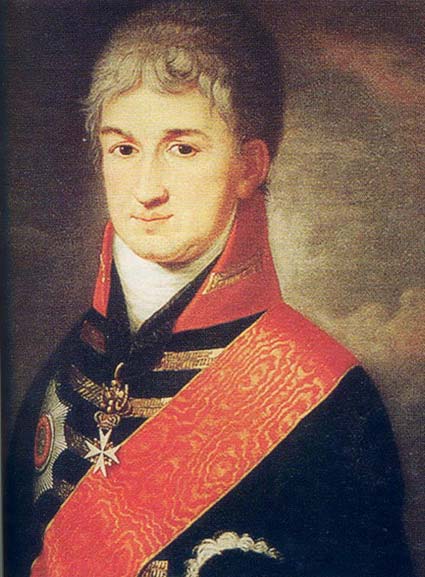
On this say, May 28, 2026, I John Presco, lay claim to Rancho de las Pulgas. I am going to work with the Russian Cultural Society to determine if . Nikolai Petrovich Rezanov came to own de las Pulgas – when he placed a wedding ring on the finger of….
Doña Concepción Argüello
Missionary monks are present at what I believe to be….
A treaty between Mexico and Russian Fur Traders!
I also claim Black Point that is connected to this treaty.
Now to Rancho San Antonio. I may have a claim to this ranch because a developer moved the original ranch house, thus negating the laws of the Spanish Grants. My great grandfather, William Stuttmeister built forty homes in Oakland, near Peralta Creek. He named a street, Berlin Way, that is fifty feet from this creek. There was a Janke Street in Belmont, but it was removed – with objections of citizens! Did Stuttmeister build a home in Belmont? Was William aware of any Russian claims?
I would love to tell you more. But, I am being stalked by a land-grabber, parasite, who follows Royal Rosamond Press – like a desert scavenger!
‘The Treasure of Sierra Madre’
John Presco
President: Royal Rosamond Press
“So moved was Rezanov by the misery of the colonists that he purchased a vessel from Americans in Alaska and sailed to San Francisco Bay early in 1806 to purchase grain and, if possible, to establish trade relations with the Spanish in Upper California on a continuing basis. On his arrival, Rezanov boldly ignored the fact that all California ports were officially closed to trade with foreigners. He was at once ordered to anchor. The commandant of the Spanish presidio, Don José Dario Argüello, was away, so Rezanov was met by his son, Don Luís Antonio Argüello, and by several Catholic missionaries, all of whom were favorably impressed by Rezanov’s credentials, guns, and good manners. Soon Rezanov was cordially received at the Presidio by the family of the Spanish commandant.
During the next few weeks, the persuasive Rezanov successfully carried out his goal of trading Russian-made utensils and tools for wheat. With the return of Commandant Argüello to the Presidio, Rezanov was able to gain support for permission to trade with Spanish California, which was referred to Madrid for approval. Rezanov’s cause was further promoted by his romance with the commandant’s daughter, Doña Concepción Argüello, which led to a marriage proposal, and its acceptance, on the eve of his departure.
Rancho San Antonio, also known as the Peralta Grant, was a 44,800-acre (181 km2) land grant by Governor Pablo Vicente de Solá, the last Spanish governor of California, to Don Luís María Peralta, a sergeant in the Spanish Army and later, commissioner of the Pueblo of San José, in recognition of his forty years of service. The grant, issued on August 3, 1820, embraced the sites of the cities of San Leandro, Oakland, Alameda, Emeryville, Piedmont, Berkeley, and Albany.[1]
Rancho de las Pulgas was a 35,240-acre (142.6 km2) 1795 Spanish land grant in present-day San Mateo County, California, to José Darío Argüello. The literal translation is “Ranch of the Fleas,” named after the exceptional abundance of fleas in the area.[1][2] The grant extended about one league from San Francisco Bay to the hills, and was bounded by San Mateo Creek on the north (which separated it from Rancho San Mateo) and San Francisquito Creek on the south (which separated it from Rancho San Francisquito and Rancho Rincon de San Francisquito).[3] The grant encompassed present-day San Mateo, Belmont, San Carlos, Redwood City, Atherton and Menlo Park.[4] The southern boundary of the Rancho at San San Francisquito Creek would later define the eastern portion of the southern boundary of San Mateo County. https://www.realclearhistory.com/historiat/2018/03/12/does_russia_still_own_a_piece_of_the_us_276.html?fbclid=IwY2xjawSEKeJleHRuA2FlbQIxMQBzcnRjBmFwcF9pZBAyMjIwMzkxNzg4MjAwODkyAAEemt4fTRk12fD
1/21/2020
Prussian Colony In California


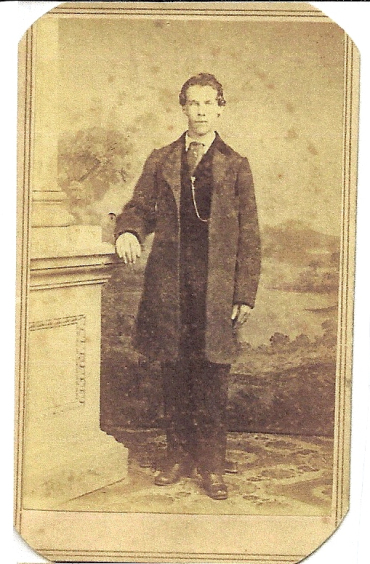

Eureka! Mexico was going to sell California to Prussia for $6 million dollars. Carl Janke, brought six portable houses around the Cape in 1848 – before the Gold Rush! One of them was Ralston House. Was Belmont going to be the Capitol of New Prussia? I just found her when I google the King of Prussia who ruled in 1846. My angel has been leading me to her in my book ‘The Royal Janitor’. https://en.wikipedia.org/wiki/Prussia
Frederick married Victoria, Princess Royal, eldest daughter of Queen Victoria
The question I have been asking, is what kind of kingdom was John Fremont going to establish in the West, that Starr King talked him out of? Did Lincoln know about the Prussian offer? What about Chile? The Germans had a colony there that William Stuttmeister dwelt in before he came to California. Are we looking at a hidden Prussian Kingdom – blessed by Victoria – Princess Royal, whom the Osborne House was built!
The Empress and Emperor of Prussia are Harry Windsor’s close kindred. They took away Harry’s uniform today. Will he wear a crown and the Emperor of California? Will Harry and Meghan sit in the grandstand and watch their troops? Will the transformation of the Republican Party, start here?
John Presco
President: Royal Rosamond Press
For other princesses named “Victoria”, see Princess Victoria (disambiguation).
| Victoria | |
|---|---|
| Princess Royal | |
| German Empress consort Queen consort of Prussia | |
| Tenure | 9 March 1888 – 15 June 1888 |
| Born | 21 November 1840 Buckingham Palace, London, England, United Kingdom |
| Died | 5 August 1901 (aged 60) Schloss Friedrichshof, Kronberg im Taunus, Grand Duchy of Hesse, German Empire |
| Burial | 13 August 1901Friedenskirche, Potsdam, Kingdom of Prussia, German Empire |
| Spouse | Frederick III, German Emperor (m.1858; died 1888) |
| Issue | Wilhelm II, German EmperorCharlotte, Duchess of Saxe-MeiningenPrince HenryPrince SigismundViktoria, Princess Adolf of Schaumburg-LippePrince WaldemarSophia, Queen of the HellenesMargaret, Landgravine of Hesse |
| Full nameVictoria Adelaide Mary Louisa | |
| House | Saxe-Coburg and Gotha |
| Father | Prince Albert of Saxe-Coburg and Gotha |
| Mother | Victoria of the United Kingdom |
Victoria, Princess Royal (Victoria Adelaide Mary Louisa;[1][2][3] 21 November 1840 – 5 August 1901) was German Empress and Queen of Prussia by marriage to German Emperor Frederick III. She was the eldest child of Queen Victoria of the United Kingdom and Prince Albert of Saxe-Coburg and Gotha, and was created Princess Royal in 1841. She was the mother of Wilhelm II, German Emperor.
Educated by her father in a politically liberal environment, Victoria was betrothed at the age of sixteen to Prince Frederick of Prussia and supported him in his views that Prussia and the later German Empire should become a constitutional monarchy on the British model. Criticised for this attitude and for her English origins, Victoria suffered ostracism by the Hohenzollerns and the Berlin court. This isolation increased after the rise to power of Otto von Bismarck (one of her most staunch political opponents) in 1862.


Prussia
Prussia, alone among the contenders for California, had no colonies of its own. All but without a navy of its own, and the weakest and smallest of the European great powers, its position as a candidate for the vast state of California upon the other side of the world can seem unlikely at first. Friedrich Ludwig von Roenne, the German ambassador to the United States, was a vigorous proponent of colonies, and wrote the following to Christian von Bunsen, the Prussian ambassador to the United Kingdom, as follows:
I fully agree with you that now is the moment, under the rule of our excellent King, who has a genuine German mind and heart, which beats aloud for everything that is noble, to lay the foundations of the greatness of our beautiful German Fatherland, in a political as well as in a commercial sense. England will always, as you say, see in us an awkward rival, but the time has arrived when we must act in a bold and independent way, and this can only happen if we are united as if we have a Navy and colonies. What a country Germany could become in such circumstances! She would be the equal of any other . . .
Your idea of purchasing California is an excellent one. I would never have thought of doing such an audacious thing, but, nevertheless, as early as the year 1837 I already had the notion, for when I reported on the condition of immigrants- especially with regard to the question of establishing a penal colony- I called attention to the possibility that Mexico might agree to give up a piece of land in California. The idea of buying all California deserves in every way to be preferred to this. The many Germans who go there yearly from the United States very soon cease to be Germans; they adopt local manners and customs and are entirely lost to Germany. On the other hand, a completely German colony, even long after migration, would retain for our German manufactures a permanent market and yield all the profit to the Mother Country. The possession of such a colony would also provide a good training-ground for our army and offer innumerable other benefits.
Upper California- which alone can be considered- if one can trust the many descriptions of it which which have been produced- the [latest] is I believe that by Alexander Forbes,12 published in 1839 in London- is one of the finest countries in the world, and on account of its happy position between the tropical and northern zones, is capable of bringing forth all the products which are suitable for exchange with the Mother Country, and which also would even be sought after by Mexico and the South American states. It is only necessary that it should be in the possession of an active, industrious and energetic people, and who would dispute these qualities to our German countrymen? These are the qualities whereby they earn so much respect here in the United States. No people on earth are better as cultivators of the soil than the Germans.
England, France and the United States would no doubt look at such an undertaking with jealous eyes, but I can hardly believe they would use force to prevent it from happening. Certainly not the United States! But in any case it would be a good thing, before taking any of the contemplated steps, to assure the cooperation of Denmark through her Navy. Only then would we be powerful enough, and have the means to carry out this plan.
The sovereignty of Mexico over California may hardly at be said at present to be more than a paper one-as a matter of fact I don’t exactly know what the situation is. Three years ago independence was declared.13 Nevertheless it would be very important vis-à-vis the other powers that sovereignty should be ceded by Mexico. Actual possession could then easily be secured without the use of very much force being required. Also, I am inclined to think, because of the looseness of the existing connection, that she would be readily disposed to entertain such a proposition. In any case she would prefer to see Germans there to the English, the Americans or the Texans, and I believe that even these two last would prefer to have Germans to the English.
Nevertheless I am not absolutely in a position to say whether this is likely to have enthusiastic acceptance on the part of Mexico. If Denmark appreciated her advantage she would not hesitate for a moment to cooperate in the closest possible way with Germany. The time is past- or at least should be- when smaller nations should see advantage in being hostile to their more powerful neighbours. . . . The smaller states can only reckon on the continuance of their independence if they don’t stand in the way of their larger neighbours. . .
Ludwig von Roenne’s words were not just idle musings. He planned to negotiate with Denmark for the usage of the Danish navy in communications with the colony, and to have his colleague Baroth von Gerolt, a fluent Spanish speaker, conduct negotiations with the Mexicans. However, in December 1842, he Mexican ambassador to the United States in Washington DC. Talking with Mr. Almonte, the Mexican ambassador, he was convinced that the Mexicans saw advantage in ceding Northern California to the Germans, rather than, as rumors put it, to the American or the English. For the Mexicans, the idea was that it would form an effective buffer state between them and the Americans. He would go ahead as well to contact William Hogan, a former US congressman and the equivalent of a lobbyist, who declared his support for the endeavor. This all came to nought : at this points sources differ with either that the Prussian government advanced no further, quietly shelving the project, or that it proceeded as far as negotiations with the Mexicans in Washington and London for the sum of some $6 million to purchase the colony, but then abruptly dropped out of negotiations. Whichever that it was, California would not be painted in Prussian blue.
- Prussia
The smallest and the weakest of the European great powers, and lacking in a navy, Prussia’s capability to hold onto the distant colony of California is one which presents itself as doubtful. Although many German colonists came to the United States in the 19th century, few of these were ones that the Prussian state could call upon or view as loyal to its projects : many came from outside of Prussia, such as in Saxony, and of those that came from Prussia, a great number were German liberals fleeing from oppression at home. Prussia’s capability to send colonists was limited, while its limited navy meant that supporting its colony through military means was equally problematic. It was envisioned that Denmark would enable Prussia to support its colony through the support of the Danish navy, but this raises the great problem of colonies : that colonial and continental politics diverged. If Danish support would enable the Prussians to guard their colony, in Europe, Germany desired Schleswig-Holstein, under Danish control, and if, as historically, this conflict flared into war, it would make Danish-German colonial cooperation infeasible. Still, lacking a navy didn’t historically preclude colonial endeavors, such as Belgium’s colony in the Congo, created by a state almost entirely lacking in a navy, Prussia had a famed army and government administrative system, and at least some German settlers might be drawn to California. A continued Prussian hold over California might be unlikely, but with careful management of power politics and an iron hand, Prussia might have been able to forestall American interest in the region long enough to secure it.


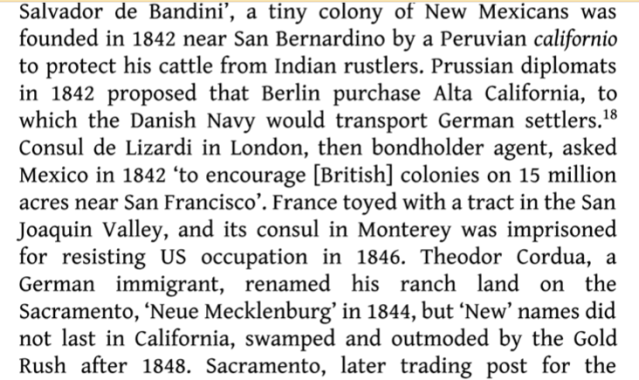
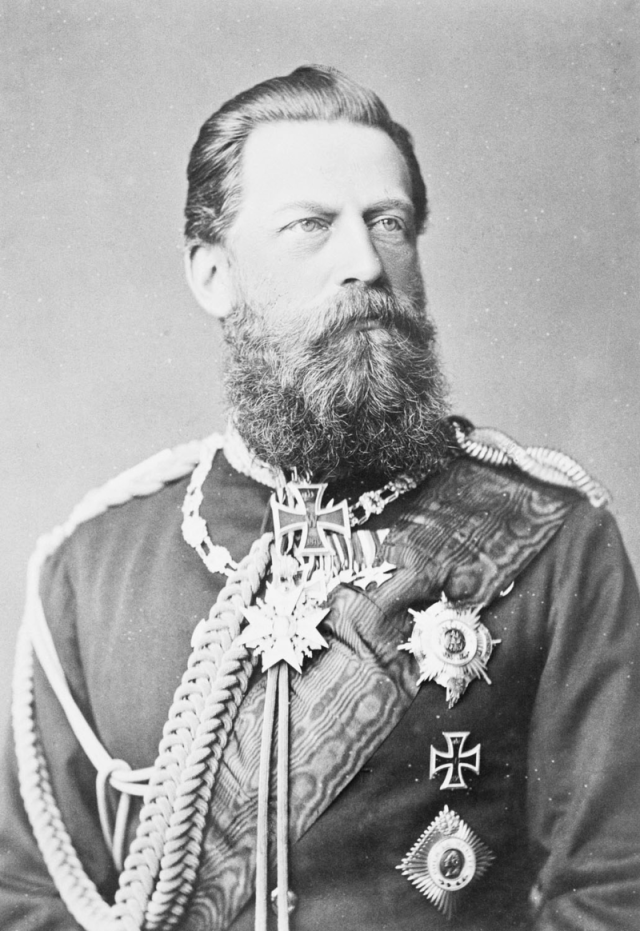
Frederick married Victoria, Princess Royal, eldest daughter of Queen Victoria of the United Kingdom. The couple were well-matched; their shared liberal ideology led them to seek greater representation for commoners in the government. Frederick, in spite of his conservative militaristic family background, had developed liberal tendencies as a result of his ties with Britain and his studies at the University of Bonn. As the Crown Prince, he often opposed the conservative Chancellor Otto von Bismarck, particularly in speaking out against Bismarck’s policy of uniting Germany through force, and in urging that the power of the Chancellorship be curbed. Liberals in both Germany and Britain hoped that as emperor, Frederick III would move to liberalize the German Empire.
Stuttmeister Tomb in Colma
Posted on August 3, 2011 by Royal Rosamond Press
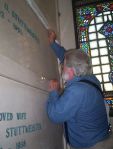
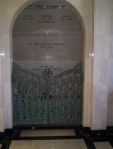
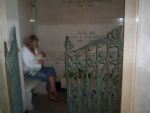
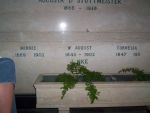


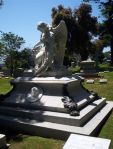


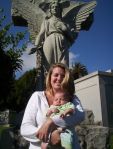
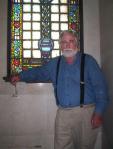
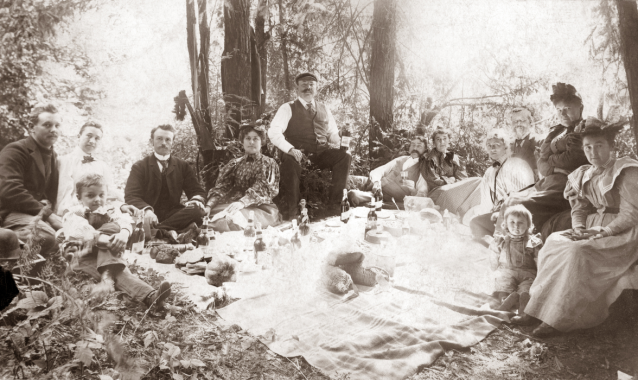
A curator for the Oakland Museum called me yesterday and asked me to e-mail him the photograph of my kinfolk having a picnic in the Oakland Hills. I had just returned from Dot Dotsons in Eugene where Jo framed a enlargement of this historic event in a antique frame I purchased. She did a splendid job!Thanks to the Trust my uncle Vincent Rice left me, I have more funds to investigate and record my lost family history. Being poor I have had to endure hardship in order to visit my newfound daughter and newborn grandson in California. Tyler’s father was not there for his son, so when I went to see him for the first time I made a point to ground him in the history of my father’s people whom I and my cousin had just discovered were in a tomb at Cypress Lawn in Colma.
We three were the first kin to enter this tomb in many years. Tyler took an early lunch when Heather breast-fed her son on a marble bench facing the Tiffany window. Afterwards we went atop a hill and had a picnic next to these beautiful angels. Heather told me Tyler remembers being there. I was amazed when I saw his eyes follow a plane in the sky, and then smile.
My friend, Joy, had given me a special AA coin with the image of an angel on it for my late sister, Christine Rosamond, that I slipped into a crack made by an earthquake.
When we drove through San Francisco on our way home, I told Heather this was her and Tyler’s town now, for the Stuttmeisters are listed as a pioneer family, and made the Blue Book. In some respects, this was a Baptism.
Were The Stuttmeisters Prussian Royalty
Posted on August 3, 2011 by Royal Rosamond Press


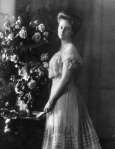
I found a video of the Dorotheenstadt cemetery this morning. The Stuttmeister family are placed at the entrance. Millions of Berliners have walked past their grave. They appear to be kin to Dorothea von Holstein Glücksburg, Second Wife of the Elector Frederick William, the “Great Elector”, or, they adopted their names in order to honor them. Hedwig is Schleswig-Holstein. This family is very close to the Windsors and married Kaiser Wilhelm. There is rumor the Soviet Union looted all that belonged to this family and there is a search underway to restore lands seized by the East Germans to their rightful owners.My father, Victor William Presco, was an only child. His mother’s middle name was Charlotte. Her mother was Alice Stuttmeister. Victor married Rosemary Rosamond whose ancestors allegedly were Huguenots who are buried in the Huguenot cemetary next to the the Dorotheenstadt cemetary that was named after Dorothea von Holstein.
Jon Presco
Copyright 2011
AGNES EMMA HEDWIG STUTTMEISTER
DOROTHEA SOPHIA STUTTMEISTER
AMALIE CHARLOTTE JOHANNE ELISABETH STUTTMEISTER – International Genealogical Index / GE
Gender: Female Christening: 06 MAR 1860 Sankt Petri, Berlin Stadt, Brandenburg, Preussen
Name: Philippine Auguste Amalie Brandenburg Schwedt
Born: 10 Oct 1745 at Of, Schwedt, Brandenburg, Prussia
Name: Sophie Dorothea Marie Prussia [5] Note
Born: 25 Jan 1719 at Berlin, Brandenburg, Prussia
Dorothea von Holstein
Born: 10/09/1636 in the castle of Glücksburg
Died: 8/16/1689 in Carlsbad (Bohemia)
Burial: Cathedral Berlin
The heirs to the Commonwealth realms are descended from Prince Philip of Greece and Denmark, a paternal grandson of George I of Greece. However, by Letters Patent of 8 February 1960, Queen Elizabeth II declared that her children with Prince Philip would belong to the House of Windsor, as would any agnatic descendants who enjoy the style of Royal Highness, and the title of Prince or Princess. (Those who do not have that style and title would bear the surname Mountbatten-Windsor.)[3]
The agnatic lineage is continued from Friedrich Wilhelm, Duke of Schleswig-Holstein-Sonderburg-Glücksburg.
• Christian IX of Denmark
The House of Schleswig-Holstein-Sonderburg-Glücksburg (Danish: Slesvig-Holsten-Sønderborg-Lyksborg, the latter name is also spelled Glücksborg), known as the House of Glücksburg (or House of Glücksborg) for short, is a German ducal house, junior branches of which include the royal houses of Denmark and Norway, the deposed royal house of Greece, and the heir to the thrones of the Commonwealth realms[1][2] (although in the latter case, they are, by royal proclamation, declared to be members of the House of Windsor[3]). The family is named after Glücksburg in northernmost Germany, and is a cadet branch of the House of Oldenburg that is descended from King Christian III of Denmark. However, as the elder line of the House of Oldenburg became extinct in the 19th century, the House of Glücksburg is now the senior surviving branch of the House of Oldenburg.
This particular line comes from the Dukes of Schleswig-Holstein-Sonderburg-Beck. The last of them became Duke of Glücksburg and changed his title accordingly to Friedrich Wilhelm, Duke of Schleswig-Holstein-Sonderburg-Glücksburg. He was married to Princess Louise Caroline of Hesse-Kassel, a granddaughter of King Frederick V of Denmark.
Neither the Dukes of Beck nor of Glücksburg were sovereign rulers – they held their lands in fief to the sovereign dukes of Schleswig and Holstein (who were also the Kings of Denmark in personal union) and, before 1773, the Dukes of Holstein-Gottorp.
The heirs to the Commonwealth realms are descended from Prince Philip of Greece and Denmark, a paternal grandson of George I of Greece. However, by Letters Patent of 8 February 1960, Queen Elizabeth II declared that her children with Prince Philip would belong to the House of Windsor, as would any agnatic descendants who enjoy the style of Royal Highness, and the title of Prince or Princess. (Those who do not have that style and title would bear the surname Mountbatten-Windsor.)[3]
The agnatic lineage is continued from Friedrich Wilhelm, Duke of Schleswig-Holstein-Sonderburg-Glücksburg.
• Christian IX of Denmark
• George I of Greece
• Prince Andrew of Greece and Denmark
• Prince Philip of Greece and Denmark[2]
• Charles, Prince of Wales[2]
• Prince William, Duke of Cambridge[2]
http://en.wikipedia.org/wiki/Holstein-Sonderburg-Gl%C3%BCcksburg
http://en.wikipedia.org/wiki/Sophia_Dorothea_of_Schleswig-Holstein-Sonderburg-Gl%C3%BCcksburg
http://forum.alexanderpalace.org/index.php?topic=533.15
7. AGNES EMMA HEDWIG STUTTMEISTER – International Genealogical Index / GE
Gender: Female Christening: 06 SEP 1856 Sankt Petri, Berlin Stadt, Brandenburg, Preussen
8. ALBERTUS FRIEDERICH STUTTMEISTER – International Genealogical Index / GE
Gender: Male Christening: 11 JUL 1745 Jerusalem, Berlin Stadt, Brandenburg, Preussen
9. DOROTHEA SOPHIA STUTTMEISTER – International Genealogical Index / GE
Gender: Female Christening: 03 AUG 1807 Jerusalem, Berlin Stadt, Brandenburg, Preussen
10. EMILIE FRIEDRICKE STUDTMEISTER – International Genealogical Index / GE
Gender: Female Christening: 26 JAN 1806 Sankt Nikolai, Berlin Stadt, Brandenburg, Preussen
11. AMALIE CHARLOTTE JOHANNE ELISABETH STUTTMEISTER – International Genealogical Index / GE
Gender: Female Christening: 06 MAR 1860 Sankt Petri, Berlin Stadt, Brandenburg, Preussen
12. FRIEDRICH HEINRICH STUTTMEISTER – International Genealogical Index / GE
Gender: Male Christening: 30 JAN 1862 Sankt Elisabeth, Berlin Stadt, Brandenburg, Preussen
13. JOH. CARL STUTTMEISTER – International Genealogical Index / GE
Gender: Male Christening: 20 AUG 1747 Jerusalem, Berlin Stadt, Brandenburg, Preussen
14. JOHANNES HERMANN STUTTMEISTER – International Genealogical Index / GE
Gender: Male Christening: 04 MAY 1826 Friedrichswerder Berlin, Brandenburg, Preussen
15. CARL HEINRICH STUTTMEISTER – International Genealogical Index / GEDr.
Gender: Male Christening: 15 APR 1805 Sankt Nikolai, Berlin Stadt, Brandenburg, Preussen
16. CATHARINA DOROTHEA STUTTMEISTER – International Genealogical Index / GE
Gender: Female Christening: 02 AUG 1743 Jerusalem, Berlin Stadt, Brandenburg, Preussen
17. VICTOR EMANUEL FELIX STUTTMEISTER – International Genealogical Index / GE
Gender: Male Christening: 07 MAR 1861 Sankt Petri, Berlin Stadt, Brandenburg, Preussen
Name: Margrave Friedrich Wilhelm Brandenburg Schwedt [1] Note
Born: 27 Dec 1700 at Oranienbaum, Anhalt, Germany [2]
Married: 10 Nov 1734 at Potsdam, Brandenburg, Prussia
Died: 4 Mar 1771 at Wildenbruch, Brandenburg, Prussia [4]
Father: Philipp Wilhelm Margrave Brandenburg Schwedt
Mother: Princess Johanna Charlotte Anhalt-dessau
WIFE
Name: Sophie Dorothea Marie Prussia [5] Note
Born: 25 Jan 1719 at Berlin, Brandenburg, Prussia [6]
Died: 13 Nov 1765 at Schwedt, Brandenburg, Prussia [7]
Father: King Frederick William I Hohenzollern Of Prussia
Mother: Sophia Dorothea Hanover
CHILDREN
Name: Princess Friederike Of Brandenburg-schwedt
Born: 18 Dec 1736 at , Brandenburg, Germany
Died: 9 Mar 1798 at Stuttgart
Husband: Duke Friedrich Ii Of Wurttemberg
Name: Anna Elisabeth Luise Prussia
Born: 22 Apr 1738 at Of, Schwedt, Brandenburg, Prussia
Died: 10 Feb 1820
Husband: Prince Of Prussia Ferdinand
Name: Georg Philipp Wilhelm Brandenburg Schwedt
Born: 10 Sep 1741 at Of, Schwedt, Brandenburg, Prussia
Died: 28 Apr 1742
Name: Philippine Auguste Amalie Brandenburg Schwedt
Born: 10 Oct 1745 at Of, Schwedt, Brandenburg, Prussia
Died: 1 May 1800 at Berlin, Brandenburg, Prussia
Husband: Frederick Ii Von Hessen-cassel Landgrave Of Hesse Cassel
Name: Georg Philipp Wilhelm Brandenburg Schwedt
Born: 3 May 1749 at Of, Schwedt, Brandenburg, Prussia
Died: 13 Aug 1751
Sophia Dorothea of Schleswig-Holstein-Sonderburg-Glücksburg
From Wikipedia, the free encyclopedia
Jump to: navigation, search
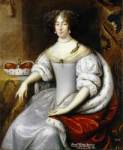
Portrait of Sophia Dorothea by Jacques Vaillant, 1682
Her tomb
Dorothea Sophia of Schleswig-Holstein-Sonderburg-Glücksburg (28 September 1636 – 6 August 1689) was a German noble, Electress of Brandenburg as the spouse of Frederick William, Elector of Brandenburg.
Contents
[hide]
• 1 Biography
• 2 References
• 3 Ancestry
• 4 Succession
[edit] Biography
Sophia Dorothea was born in Glücksburg. The great-granddaughter of King Christian III of Denmark, she was the daughter of Philip, Duke of Schleswig-Holstein-Sonderburg-Glücksburg and Sophia Hedwig of Saxe-Lauenburg. She was the sister of Auguste of Schleswig-Holstein-Sonderburg-Glücksburg
In 1653 she married Christian Louis, Duke of Brunswick-Lüneburg, brother-in-law to king Frederick III of Denmark. The marriage was childless. In 1665 her first spouse died and she moved to the Herzberg Castle. On 14 June 1668 she remarried to the Great Elector. In 1670, she purchased Brandenburg-Schwedt and other fiefs for her sons. In 1676, she became the commander of her own regiment, Regimentes zu Fuß (1806: No. 7). In 1678 and 1692 she equipped two fleets for the Brandenburg state.
She died at Karlsbad, and is buried in Berlin Cathedral. The Dorotheenstadt neighbourhood of Berlin was a present to her from her husband and is named after her.
Ancestors of Sophia Dorothea of Schleswig-Holstein-Sonderburg-Glücksburg
[edit] Succession
Sophia Dorothea of Schleswig-Holstein-Sonderburg-Glücksburg
House of Schleswig-Holstein-Sonderburg-Glücksburg
Cadet branch of the House of Oldenburg
Born: 28 September 1636 Died: 6 August 1689
German royalty
Vacant
Title last held by
Luise Henriette of Nassau
Duchess consort of Prussia
14 June 1668 – 29 April 1688 Succeeded by
Sophia Charlotte of Hanover
Electress consorts of Brandenburg
14 June 1668 – 29 April 1688
Vacant
Title last held by
Dorothea of Denmark
Duchess of Brunswick-Lüneburg, Princess of Lüneburg
9 October 1653 – 15 March 1665 Vacant
Title next held by
Benedicta Henrietta of the Palatinate and Éléonore Desmier d’Olbreuse
Vacant
Title last held by
Anne Eleonore of Hesse-Darmstadt
Duchess of Brunswick-Lüneburg, Princess of Calenberg and Göttingen
9 October 1653 – 15 March 1665
Frederick William (German: Friedrich Wilhelm) (16 February 1620 – 29 April 1688) was the Elector of Brandenburg and the Duke of Prussia (“Brandenburg-Prussia”) from 1640 until his death. He was of the House of Hohenzollern and is popularly known as the Great Elector (Der Große Kurfürst) because of his military and political skill. Frederick William was also a staunch pillar of the Calvinist faith, associated with the rising commercial class. He saw the importance of trade and promoted it vigorously. The Great Elector’s shrewd domestic reforms gave Prussia a strong position in the post-Westphalia political order of north-central Europe, setting Prussia up for elevation from duchy to kingdom, achieved under his successor.
There is a thread on Crownprincess Cecilie in “The Hohenzollerns”.I’d like to begin a new thread on other Kaiser Wilhelm ‘s daughteers-in-law.How did they look like? What characters they had? Was their married life happy? How were they getting on with formidable Kaiser?
With a short legenda each of Princesses,except Cecilie discussed earlier.
1.Princess Eithel Friedrich,nee Duchess Sophie Charlotte of Oldenburg (1879-1964),eldest daughter of Duke Friedich August and Princess Elisabeth of Prussia. “Lotta” married Eithel Friedrich in 1906 and was divorced in 1926.The married couple had no children (they said EF was a homosexual).It seems Sophie Charlotte wanted to marry and leave her parental home becouse of endless conflicts with her step-mother.May be Prince EF was not the best refuge for Lotta.
.Princess August Wilhelm,nee Prss Alexandra Victoria of Schleswig-Holstein-Gluksburg (1887-1957), 2d daughter of Duke Friedrich Ferdinand and Prss Caroline Mathilde of Schleswig-Holstein-Augustenburg. So Alexandra Victoria was a 1t-cousin of her spouse as her mother was a sister of Empress Augusta Viktoria. Alexandra and Auwi married in 1908,divorced in 1920,they had only one son.She married again.
For me she was the prettiest d-in-law of Kaiser (after Cecilie,of course).
4. Princess Oskar (at first Grafin von Ruppin),nee Countess Ina von Bassewitz (1888-1973).She was the only “non-royal” d-in-law of Kaiser and they said that Wilhelm liked her most of all his d-in-laws. Ina and Oskar married in 1914 and had a very happy family life .The yhad 4 children.
The Dorotheenstädti church
In the year 1687 the Dorotheenstädti church was inaugurated as the tenth place of worship in Berlin and as the first Protestant building of churches. Nearly 200 years in Berlin no more church had been built. By the plague of the yearly 1598 and the Dreißigjährigen war the population had decreased/gone back to at the most 10,000 inhabitants. But in the death year of the large cure prince 1688 18 became already. – to 20,000 inhabitants indicated, and around 1700 were already 29.000. – Frenchmen, Dutchmen, Pfälzer and Welsch Swiss enriched not only the statistics, but likewise the economic, cultural and church development of the city.
If one regards the perspective plan of the fortress Berlin, which the kurfürstliche made land measurer Johann Bernhard Schulz 1688, then „the new city at that time is “, which in the year 1676 after the second wife of Friedrich Wilhelm Dorothea was designated, particularly well to recognize: From the citizen of Berlin „new Thor ” out goes it westward over the fortress ditch into the long-drawn-out Dorotheenstadt, which is protected by „a horn work “. A vierreihige lime tree avenue, to which the cure princess is to have done the first spade line, particularly falls in the eye, and in the west one sees the new church, which exhibits whole a considerable height compared with its surface. Before the church was delighted, the inhabitants held their service the summer over in the free one „under the lime trees “, in the winter met them in the house „Hamburg messenger ” Paul Grothe.
In the year 1674 the cure prince had already given his agreement to the building to a small church, at which both lutherische and reformed preachers should exercise their office. 1678 were begun with the Kirchbau, and at the 3rd Advent 1687 – thus nearly after one decade! – one inaugurated the church in presence of the cure prince Friedrich. That happened with two services on the same day: In the morning the reformed Hofprediger Stosch preached, in the afternoon the lutherische preacher Ranslebens. The argument between the two protestant denominations, which were in certain respects at that time further from each other, moved as today the large churches in Germany the whole people. The sympathy of the cure prince was on sides of the reformed ones, and for reasons of the reasons of state tried it, the conflicts, which expenditure-fenced from the Lutheranern for conscience reasons became to hold down by force. In the year 1683 it had forbidden even a Katechismus, which contained hard attacks against the calvinistische teachings. Also the fact that the church did not receive a Biblical name, was designated but simply after the new suburb, is out of consideration opposite the reformed ones to be explained.
By the edict of potsdam the cure prince 1685 had offered made of France the refugee Protestant in Prussia a new homeland. While in the year 1680 the municipality from 600 Lutheranern and only 37 reformed existed, now the number of the calvinistischen Christians increases. In addition the cure prince gets dutchmen as a building master and craftsmen into his residence. Far more largely however is the number of the French Réfugiés: In the Dorotheenstadt live in the year 1697 already 1615 Frenchmen, that is almost half of all inhabitants. In the year 1698 the national gentleman of the French municipality permits the sharing of the church. Against reimbursement of half of all past expenditures and with the obligation to take part in the future in the preservation of the church you are transferred half of the property at the place of worship. In the course 18. Century should decrease however the number of the Frenchmen in the Dorotheenstadt and the need the use of the church become smaller, since 1705 the French church was built on the gendarme market and 1733 a special chapel in the French hospital, Friedrichstraße 129, near the Oranienburger gate. After some arguments with that in the meantime protestant unierten German municipality in the Dorotheenstadt finally gave up the French municipality in the year 1858 their joint possession right at the church.
One receives a good impression of the first church building by the multicolored illustration on a porcelain cup, which was given to the preacher father (1831-1880) by two Konfirmandinnen and today in the Märki museum is located. The building „forms in the sketch a Greek cross with three right-angled arms, polygon for closed altar area and four low cultivations in the angles of the cross arms, thus a simple central plant “. Since the cathedral church received a new pulpit in the year 1690, the old cathedral pulpit of the church was left to Dorotheenstäd tables. Probably in the year architect, painters and mathematicians the Rütger of long field the church, built the 1695 deceased of which a sandstone intending board in the southern Kreuzflügel reminded.
The bells had called already before completion of the building of churches „under the lime trees ” to the service. The largest was provided with the coat of arms of the cure prince and its wife Sophie Dorothea from the house Holstein luck castle. In the year 1680 it had rung „to the thanks because of the pommerschen Viktoria “, i.e. conquest Stettins. She came to completion of the building into the tower, the two different into an opening of the roof. The middle bell from the year 1723 carried the inscription:
Since Friedrich Wilhelm sat on of Prussia king throne a right Salomon of the large Friedrichs son ward my CASTING made to play there and sound if our Zion wants the highest victim to bring.
Johann Porst, which went then as Propst to pc. Nikolai, published a Gesangbuch, which should find as certification of pietistischer Frömmigkeit far spreading and even to 1905 was again printed during its time at Dorotheen in the year 1708 (first anonymous): „Clergyman and lovely songs, which the spirit of the faith by Dr. Martin Luthern, Johann army man, Paul Gerhard and other one its tools in the previous and current times sealed. “- From 1709 to 1719 the after times Propst of pc. Petri, Johann Gustav Reinbeck, „Beichtvater of the queens” and a taught theologian, was preacher at the new church.
Like many churches in Berlin changed also the Dorotheenstädti in the course 19. Century their face. While French occupation at the beginning of the century had stranger troops – by the way Bavaria – in the church lived, which mutilates monuments, organ pipes taken out, coffins in the Grabgewölbe broken open and the old cathedral pulpit burned. Already since the year 1750 the church ground had served as installing chamber for of Prussia soldiers. All of this did not contribute straight to the preservation of the church. Thus one decided 1861 „to a complete renewal of the church in modern brick forms, with retention of the old sketch, on which on 21 November 1863 the new inauguration took place “. The preachers of the Jerusalemskirche said in their greeting to the colleagues: „We feel also in as much connected you in the spirit as your church, as the unsrige, was similar a monument of the union convicition of our prince house and our protestant population still before the introduction of the union. “
On 18 February 1831 into the Dorotheenstadt as on the Friedrichswerder – both churches were united at the time still in a Pfarrsystem with one another – the 1817 of the king had been carried out proclaimed union. The statute signed by ministers and church executive committees begins with the words: „Stops from now on at the municipalities of the two in all remaining, as before, united Parochien Confessions under separated complete, and forms instead of two for each church only one protestant uniierte municipality. “It is still mentioned that this is valid for all members of the municipality, if the reformed ones not already held themselves among them „the year ago 1817 with express explanation to another reformed municipality”.
It is remarkable that in the year 1846 by the Ministry for the religious affairs the employment of a Universitätspredigers was ordered, which should hold for Dorotheenstäd tables in the church services for the students. At the 3rd Advent 1847 this – for Berlin probably first „übergemeindliche ” Pfarrstelle, apart from the Militärseelsorge – was opened by a service, with which also the catholic rector at that time of the university held a speech. The Studentenpfarramt was maintained however only up to the year 1856. It was then transferred to the emperor Friedrich Gedächtniskirche.
In the year 1902/03 the church was again transformed. In place of the past timber ceiling it received a Tonnengewölbe. The emperor and its wife gave marble reliefs of the large cure prince and the cure princess Dorothea, which today in the garden „of the Schleiermacherhäuser ” (Johannes Dieckmann, early pigeon road 3) to see are. On the right of and to the left of the Altarapsis now two chapels were set. One found as communion chapel use, which took up others the monument of the count of the Mark, which had in the dark confessed one hundred years. This marble monument for with eight years the deceased the natural son of the king Friedrich Wilhelm II. and the Trompeterstochter Wilhelmine Enke, the later countess Lichtenau, was the first large work of Gottfried Schadow and represents in the judgement R. Borrmanns 1893 „the first work of the modern German art in Berlin “. It is located today – without inscription and Girlande – in (east) the citizens of Berlin national gallery.
Already before 250 years there were indications of an at that time still rare tolerance at the Dorotheenstädti church: Not only that the preachers and municipality members of the two protestant confessions forced themselves by their common place of worship mutually „to the bearing SAMness “; it also is reported, „that one with funerals and corpses of having an accident, suicides, Komödianten and the catholics not the strict, often even schimpfliche way did not observe, which were with other churches of Berlin use “: Funeral in a special corner of the cemetery, no bell ring and no candles.
The first Kirchhof was, as generally usually, around the place of worship put on. A free standing monument reminded of the imperial-Russian colonel general Konstantin von Stourdza, who had taken itself in the year 1806 in the zoo the life. A large part of the deceased was buried however in the Kirchengewölbe. Last burying at the old Kirchhof took place in the year 1876, after fifty had been already adjusted years before the funerals officially.
A second cemetery – on the left Spreeufer, which lock Monbijou opposite – was long occupied starting from 1708 about 50 years. In the year 1912 the municipality – together with Friedrichswerder – received the Dorotheenstädti Kirchhof existing this very day, which should become the historically most important cemetery of Berlin. There rest philosopher spruce and Hegel, which sculptors and architects Schinkel, Stüler, Schadow and smoke, which physician hoof country, who antiquity researcher Boeckh, which printer Litfaß and finally from our time heal ne Weigel, Bertold break, Arnold branch and Heinrich man. Starting from 1842 the municipality used a further Kirchhof at the reading road, in the today’s western part of the city. There the Zirkusdirektoren Renz, Schumann and shrubs are buried. Only temporarily – from 1889 to 1912 — the municipality had also a cemetery at the Schamberger road, which was called Tegeler Chaussee at that time.
At the beginning of this century at the Dorotheenstädti church still another minister was active, who admits beyond the borders of the municipality was: D. Wilhelm Schneemelcher, starting from 1902 Secretary-General of the protestant-social congress, founder of the magazine „protestant-socially “. In the church special services were regarded from 1921 to 1923 as Germans from Russia. Berlin was the goal of many refugees also at that time.
In place of 1917 20 years sold bell later a new bell in service were taken, whose inscription represents also a piece „to church history “: „Which the world war us took, has the time of the German unit us again-brought by the welfare service of our municipality and our woman wife in the third realm 1936. To see “- beside it was, as in the chronicle from the year 1937 is noted, the iron cross and – the swastika. In this chronicle it means also: „The burning Reichstag dome became us with all concern over coming heavy events a Fanal of a new free and strong Germany without party spirit and internal fights, like it whenever in Reichstag the damage for the reputation and those will our people expenditure-fenced became.”
On 23 November 1943 the Dorotheenstädti church was heavily damaged with a bomb attack easily, on 21 June 1944. Although it was classified still six years later than receive-worth, the ruin fell 1968 finally the pointed heel to the victim. The municipality is come up in Friedrichswerder. The name of the earlier quarter and its church is only resumed today by the two Kirchhöfe in the east and in the west. Also the Dorotheenstraße, which had been called originally „last road “, was umgewidmet: It is called now Clara Zetkin road. From „the lime trees ” out there the newurban Kirchstraße – this name is still received – leads toward Spree at a parking lot past, which is intended for the half for cars of the opposite message of the United States of America. The entire parking lot is noticeable by its own tree existence: Schnurbäume, God trees and genuine Robinien. There once the first Protestant place of worship of Berlin stood.
The cemetery of Dorotheenstadt is located in the heart of Berlin. It is one of the most interesting cemeteries in Germany, and the final resting place of German playwright Bertolt Brecht.
The cemetery was established in 1762, and although it has only 300 graves, more German artists, philosophers, and politicians are buried here than anywhere else. The tombstones of this cemetery read like the Who’s Who of Berlin’s intellectual and artistic elite.
Stroll through the cemetery which is shaded by giant trees, and you’ll discover the resting places of the philosophers Georg Wilhelm Friedrich Hegel and Johann Gottlieb Fichte, of writers like Heinrich Mann and Arnold Zweig, or the former German President, Johannes Rau.
Highlights
• The highlight of the cemetery of Dorotheenstadt is the grave of Bertolt Brecht and his wife, the actress Helene Weigel.
The couple lived in the house right next to the cemetery. Fans of Brecht often leave red carnations on his grave, a symbol for his political views.
• No flowers, but expensive cigars adorn the headstone of German dramatist and theatre director Heiner Müller, a trademark of this German artist.
• Another very impressive tomb here is the one of Karl Friedrich Schinkel, the German architect who designed many neoclassicist buildings in Berlin.
He did not only build the landmarks Gendarmenmarkt and the Old Museum, but he also designed his own gravestone.
The Dorotheenstadt is an area of Berlin comprising the area north of
Behrenstrasse (the street parallel and just south of Unter den Linden),
south of the River Oder, east of the Brandenburger Tor, and west of a line
formed by Oberwallstrasse/Falconstrasse/Niederwallstrasse. It was laid
out as a Vorstadt of Berlin in 1674. The record undoubtedly refers to a
baptism in the Dorotheenst”adtische Kirche, erected in 1677 as a
Simultankirche, for the use of both Lutherans and Reformed (merged into
the Evangelische Kirche der Union in 1831). 1680-1840 joined with the
Friedrichswerder Kirche; now Friedrichswerder[-Dorotheenstadt]
Kirchengemeinde. The original church registers for 1677-1874 were
destroyed during World War II, but microfilm copies prepared by the
Reichsstelle f”ur Sippenforschung/ Reichssippenamt in the 1930’s and
1940’s survive in the Evangelisches Zentralarchiv in Berlin. The Family
History Library in Salt Lake City has copies of these microfilms, and you
can borrow copies through any LDS (Mormon) Family History Center.
The Dorotheenstadt cemetery, officially the “Cemetery of the Dorotheenstadt und Friedrichswerder Parishes”, is a landmarked burial ground located in the Berlin district of Mitte which dates to the late 18th century. The entrance to the 17,000 m2 plot is at 126 Chaussee Straße (next door to the Brecht House, where Bertolt Brecht and Helene Weigel spent their last years, at 125 Chaussee Straße). It is also directly adjacent to the French cemetery (also known as the cemetery of the Huguenots), established in 1780, and is sometimes confused with it.
A small area surrounded by a low hedge is reserved for members of the nearby Berlin Academy of Arts, among others René Graetz, Anna Seghers, Erich Arendt and Lin Jaldati, a Jew who survived three concentration camps to make a successful career as a dancer and singer of Jewish songs.
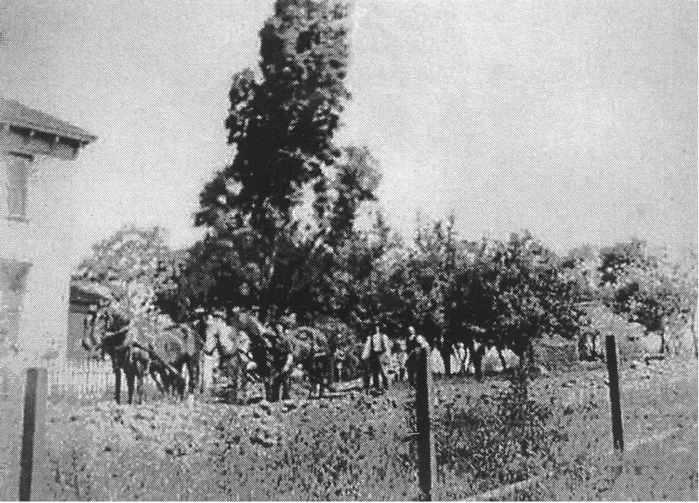
Workers removing adobe bricks from the site in 1897, the last wall of the 1821 Peralta adobe on the right. The Peralta House is partly visible on the left.
In 1897, Ynez Peralta Galindo sold the Peralta House and surrounding land to Henry Z. Jones, a real estate developer. He laid out lots to sell and moved the Peralta House about 150 feet Southeast, to where it is now.
Jones took down the last wall of the 1821 adobe. The bricks went to Diamond Park, to build a Boy Scout Lodge. You can still see some of the bricks there today.
Had Rezanov lived, he might have succeeded in securing more funds for his plans, bringing in more settlers from Russia, and establishing a stronger control of the area by the Russian Empire. Instead, the Russian colony in California that was set up after his death was only a small scale enterprise.
In another plan, retired admiral Nikolay Mordvinov wrote to Nesselrode suggesting that the Russians expand their area of control around the Fort Ross colony in all directions, all the way to the Rocky Mountains if possible. In 1825, the Russian-American Company even suggested taking away San Francisco from the Mexicans. However, none of these plans found serious support in the upper echelons of the government. This would mark the last time any serious discussion of expanding the Russian presence in the Americas was held.
Imperial Russia gave up on its company, and the latter tried to sell the fort to the British, the French, and the Mexican governments before finally approaching an American businessman with an offer. Fort Ross was bought by John Sutter (of California Gold Rush fame) in 1841, and Sutter, a Mexican citizen who was born in Switzerland, paid the debt in full. Sutter supported French interests in the New World (he was from the French-speaking part of Switzerland) before initially supporting Mexico during the Mexican-American War, and his payment has raised questions in some quarters about the legality of his purchase.
Rancho San Antonio, also known as the Peralta Grant, was a 44,800-acre (181 km2) land grant by Governor Pablo Vicente de Solá, the last Spanish governor of California, to Don Luís María Peralta, a sergeant in the Spanish Army and later, commissioner of the Pueblo of San José, in recognition of his forty years of service. The grant, issued on August 3, 1820, embraced the sites of the cities of San Leandro, Oakland, Alameda, Emeryville, Piedmont, Berkeley, and Albany.[1]
Although the United States government promised all rights of citizenship and property ownership to the Californios through the Treaty of Guadalupe Hidalgo signed at the end of the Mexican–American War in 1848, the California Land Act of 1851 required the Californios to prove their land titles in court. The resulting litigation lasted years. In the interim, squatters continued to overrun Rancho San Antonio, stealing and killing cattle and even subdividing and selling land belonging to the Peraltas. Although the United States Supreme Court confirmed the Peralta title in United States v. Peralta (60 U.S. 343) in 1856, the Peralta family had their own internal title dispute to resolve. Left out of the distribution of the land grant, the Peralta sisters felt cheated out of the family land, and contested their brothers’ sole claim to the Rancho San Antonio land grant. The court case, known as the “Sisters Title case” was eventually resolved in the brothers’ favor by the California Supreme Court in 1859.
History of Russian America
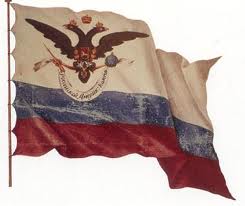
Outpost of an Empire – Russian Expansion To America by Stephen Watrous
Excerpted from Fort Ross © 1998 Fort Ross Interpretive Association (Fort Ross Conservancy) ISBN # 1-56540-355-X
- The Russian Settlements In Alaska
- The Russian Advance To California
- Establishment Of The California Settlement
- Fort Ross – The Russian Colony In California
- Farming And Ranching At Fort Ross
- Manufacturing And Trade
- Exploration And Natural Science Pursuits
- The Last Years Of The Russian Colony
- Russia’s California Outpost In Historical Perspective
Recommended Reading
Otter Skins, Boston Ships, and China Goods: The Maritime Fur Trade of the Northwest Coast, 1785-1841 (Mcgill-Queen’s Native and Northern Series) By James R. Gibson.
Russian Expansion To America
In the centuries that followed the discovery of America, European expansion into the Western Hemisphere reached a scale that changed the world. The voyages to the New World undertaken by the Atlantic powers of Europe in the 16th and 17th centuries are generally well known, as are the explorations and settlement of Europeans in North America during the 18th and 19th centuries. Less well known, however, is the penetration of America’s northwest coast by the Russians, the culmination of Russia’s age-old effort to settle and develop its eastern frontier.
Russia’s eastward expansion took on a new dimension in the 17th and 18th centuries, as a counterpart to European and American westward expansion. About the same time that English colonists first settled along the Atlantic seaboard, Russian explorers, trappers, and settlers pushed east into Siberia and in 1639 reached the Pacific Ocean. By the mid-17th century frontier promyshlenniki—self employed and contract entrepreneurs—had sailed through the strait that separates Asia from North America, inadvertently discovering a sea route from the Arctic to the Pacific.
But it was not until almost 75 years later, when Tsar Peter the Great became determined to define the geography of the North Pacific, that the potential value of the discoveries in this region became clear. In two arduous voyages, Vitus Bering and Alexei Chirikov, under commission of the Russian Crown, sailed through the area now called the Bering Strait in 1728, and in 1741 discovered the Aleutian Islands and the mainland of Alaska, both of which they claimed for Russia. These results aroused great interest among Russian hunters and traders; the fur trade had long been the mainspring of Russia’s eastward expansion, and now these frontier entrepreneurs were drawn to the herds of fur seal and sea otter that lived in the North Pacific.
From the 1740s to the end of the century, over forty Russian merchants and companies sponsored voyages to the Aleutians and the Alaskan mainland. By the early 1800s, Russian entrepreneurs were exporting an average of 62,000 fur pelts from North America each year, worth roughly two-thirds of a million paper rubles (about $133,200), a large sum in those days. Even though over eighty percent of the pelts were fur seal, the nearly five percent that were sea otter pelts were the most valuable.
The Russian Settlements in Alaska
The rapid growth of the fur trade called for permanent Russian posts in Alaska as well as bases for hunting expeditions and storing furs. A Russian presence in the Aleutians and on Unalaska Island began to appear in the 1770s, but the first known permanent settlement was founded on Kodiak Island in 1784 by the enterprising merchant Grigory Ivanovich Shelikhov. The hardy, ambitious, and resourceful Shelikhov, who was perhaps the most farsighted Siberian merchant of his day, became an early advocate of extending Russian enterprise as far south as California.
The Russian foothold in Alaska remained undisturbed by other Europeans for several decades. In the minds of Europeans and American colonists of the 18th century, Alaska was barely known—at most, it was little more than a place name for a remote and forbidding land. From the late 1760s on, however, the governments of Spain and Great Britain, both with claims to the North American mainland, became concerned about Russia’s presence in the North Pacific and, later, its monopoly of the fur trade. Spain advanced its territorial claims by sending naval expeditions as far north as Unalaska, and by establishing a chain of missions in Upper California between 1769 and 1776, from San Diego north to San Francisco Bay. Great Britain promoted its cause by sending Captain James Cook to search for a Northwest Passage; the Cook expedition visited the northern Pacific coast and Unalaska, where they met the Russians in 1778. The newly formed United States established a claim to the northwest coast, in part as a result of merchant voyages from Boston to the Columbia River of Oregon in 1787-88.
Despite the growing profits of the fur trade in the North Pacific, the number of Russian trading companies in operation at the end of the 18th century declined. The diminishing animal populations in northern waters, the losses of sailing vessels in Alaska storms, and the rising costs of long voyages from the Siberian seaboard to keep the American settlements supplied all combined to reduce the number of trading companies and leave the field only to the strongest. At Grigory Shelikhov’s death in 1795, his firm dominated the trade. In a move of significance for all of Russian America, Shelikhov’s widow, Mme. Natalia Shelikhova, and a business partner combined with another competitor in 1797 to form the United American Company, which two years later reorganized to become the Russian-American Company, chartered by Tsar Paul I.
The Russian-American Company, like other European joint-stock companies (Dutch East India Company, Hudson’s Bay Company, Northwest Fur Company, British East and West India Companies), was given tasks to perform that went beyond the realm of trade. It was authorized to use the coastal areas of North America south to 55° north latitude (near Alaska’s current southern boundary) and to explore and colonize unoccupied lands. It was also given the right to exploit surface and mineral resources in the areas settled by Russians. In effect, it became the “right arm” of the Russian government in the American hemisphere. Members of the Tsar’s family, the court nobility, and high officialdom held shares in the Company, and it was understood that the Company would henceforth control all Russian exploration, trade, and settlement in North America. Shelikhov’s dream of turning the North Pacific into an “inland sea” of the Russian Empire was now under way.
The next step in the continuing expansion along the Northwest Coast of America was the establishment of the Company’s permanent headquarters on the island of Sitka in 1808, a settlement the Russians named Novo-Arkhangel’sk. From here, over the next few years, the Russians established relations with the Spanish in California, set up a base for exploring the California coast, and then founded a colony north of San Francisco as a fur and agricultural supply post.
The Russian Advance to California
In 1791 Shelikhov sent Alexandr Andreyevich Baranov to Alaska as his trusted assistant to manage his trading company’s affairs. Baranov’s success earned him the role of first manager-in-chief of the Russian-American Company at its founding in 1799, a post he filled until a few months before his death in 1818. From his headquarters at Novo-Arkhangel’sk, Baranov, with the help of his able assistant, Ivan Alexandrovich Kuskov, supervised the Company’s growing enterprises in Alaska, and those as far afield as California and even Hawaii. A man of enormous talent, courage, and stamina, who was both admired and feared by Russians, natives, and foreigners alike, Baranov was the main architect of Russia’s southward expansion.
Worried by the dwindling otter catch in Alaskan waters, Baranov dispatched an exploratory hunting expedition to California in 1803 in a joint venture with an American sea captain, Joseph O’Cain. Sailing as far south as San Diego and Baja California, the voyagers found the otter to be plentiful, which ensured that the sea otter would remain the Company’s most profitable trade item, even if the quality of the fur was not as high as that of the Alaskan otter.
The other nagging problem that drove the Russians south was the persistent difficulty in keeping the new settlements in the North Pacific supplied with adequate provisions to feed their colonists. The harsh physical environment of Alaska and the lack of familiarity with crop and stock raising among the Kodiak and Aleutian Islanders, on whom the Russians relied for labor, worked against their meager attempts at agriculture. Even the efforts of Russian settlers to grow garden produce and to obtain seed were disappointing. The winter of 1805-06 was climactic. The weather was unusually severe, and no supply ships arrived from Siberia for many months. The few staples on hand at Sitka were rationed but soon gave out, and the lean, ill-nourishing diet the settlers had to live on led to malnutrition, scurvy, and death. Upon this dismal scene arrived a high-ranking company official from St. Petersburg to inspect the colony. Nikolai Petrovich Rezanov, imperial chamberlain and son-in-law of Grigory Shelikhov, was appalled at what he saw and reported the colonial territories to be in a “disastrous situation.”
So moved was Rezanov by the misery of the colonists that he purchased a vessel from Americans in Alaska and sailed to San Francisco Bay early in 1806 to purchase grain and, if possible, to establish trade relations with the Spanish in Upper California on a continuing basis. On his arrival, Rezanov boldly ignored the fact that all California ports were officially closed to trade with foreigners. He was at once ordered to anchor. The commandant of the Spanish presidio, Don José Dario Argüello, was away, so Rezanov was met by his son, Don Luís Antonio Argüello, and by several Catholic missionaries, all of whom were favorably impressed by Rezanov’s credentials, guns, and good manners. Soon Rezanov was cordially received at the Presidio by the family of the Spanish commandant.
During the next few weeks, the persuasive Rezanov successfully carried out his goal of trading Russian-made utensils and tools for wheat. With the return of Commandant Argüello to the Presidio, Rezanov was able to gain support for permission to trade with Spanish California, which was referred to Madrid for approval. Rezanov’s cause was further promoted by his romance with the commandant’s daughter, Doña Concepción Argüello, which led to a marriage proposal, and its acceptance, on the eve of his departure.
Returning to Sitka with provisions and news of a possible trade agreement with Spanish California, Rezanov urged Baranov to make use of “the one unoccupied stretch” of California coastline as an agricultural and hunting base for the settlements in Russian Alaska. Then he set out on his return trip to St. Petersburg, traveling via Kamchatka and Siberia, to report to the Tsar and the Company’s home office. On the way, weakened by fever, Rezanov fell from his horse and died of injuries a few days later, on March 1, 1807. It was a year or two before Doña Concepción knew of his fate. But, in Alaska, Baranov and Russian-American Company officials hurried to act on Rezanov’s advice.
Establishment of the California Settlement
In 1803, 1806 and 1808 Baranov had appointed Timofei Tarakanov, a talented promyshlennik, to lead large Native Alaskan hunting parties to California. Between 1808 and 1811, Baranov sent his deputy Kuskov on a series of expeditions to reconnoiter possible settlement sites in “New Albion,” a name used by the Russians after Sir Francis Drake’s designation of California. At Bodega Bay, called Rumiantsev Bay by the Russians, on the Sonoma Coast north of San Francisco Bay, Kuskov established a temporary base and set about exploring the surrounding territory. He examined several sites, and in 1811 selected a cove and promontory up the coast from Bodega Bay as the best location for the colony. Although it lacked the deep-water anchorage the Russians enjoyed in Bodega’s outer bay, the proposed site had overall advantages in soil, timber, water supply, and pasturage. In addition, its relative inaccessibility from Spanish-occupied territory gave it an advantage in terms of defense. Kuskov submitted his recommendations to Baranov, and preparations began for founding a settlement.
In March 1812, with orders to build and administer the settlement, Kuskov returned to the Sonoma Coast. With him came twenty-five Russians, many of them craftsmen, and eighty Aleuts. These Native Alaskans brought forty baidarkas, the swift, maneuverable skin kayaks used for hunting and a few larger skin boats, baidaras, for transport. Kuskov’s assignment was not an unfamiliar one. He had previously administered settlements in Alaska and had built Novo-Arkhangel’sk on Sitka Island after local Indians destroyed the Company fortress in 1802. Construction at the California site began at once. Some of the craftsmen with Kuskov may have worked on reconstructing the Sitka settlement. The structures which rose on the bluff of the new colony took on lines similar to those of Novo-Arkhangel’sk, as the workmen followed models of the traditional stockade, blockhouses, and log buildings found in Siberia and on Sitka.
On August 30, 1812 (in the old style Russian calendar), the name-day of Tsar Alexander I, the Russians held a special religious service at the colony, marking the completion of the stockade. The stockade was built of redwood, much in the same configuration as seen today. Two blockhouses with cannon ports were constructed at the northwest and southeast corners of the stockade. The northwest blockhouse had seven sides and the southeast one had eight, each structure being two stories high. Between twelve and forty cannons were placed within the stockade and blockhouses, the number varying in the different accounts of the site written over the years. Sentries bearing flintlock muskets stood guard in each blockhouse, but although it was fortified, the settlement served as a commercial, not a military outpost. Flagstaffs were first erected in the center of the stockade and outside it on the bluff, each bearing the flag of the Russian-American Company, with the imperial double-headed eagle as its insignia. The settlement was given the name “Ross” most likely to highlight poetically its connection with Imperial Russia (Rossiia). Ross had other early names as well: the Russians often described the outpost as “Ross Colony,” “Ross Settlement,” and “Ross Fortress,” and Company officials called it the “Ross Office.” Its current name, “Fort Ross,” has been used by Americans since the mid-19th century.
By 1820 the stockade interior contained the house of the manager (now called the Kuskov House), the quarters of other officials, barracks for the Russian employees, and various storehouses and lesser structures. Some buildings had two stories. The manager’s house had glass windows and was comfortably furnished. The chapel was added about 1825, replacing a small bell tower on the same site. A well inside the stockade provided the colonists with fresh water in case of emergency. In 1832 an anonymous Bostonian who visited Ross recorded his description of the stockade and manager’s residence: The Presidio is formed by the houses fronting inwards, making a large square, surrounded by a high fence. The Governor’s house stands at the head, and the remainder of the square is formed by the chapel, magazine, and dwelling houses. The buildings are from 15 to 20 feet high, built of large timbers, and have a weather-beaten appearance.
Outside the stockade, a windmill, cattle yard, bakery, threshing floor, and cemetery, along with farm buildings and bath houses, appeared within five years. There were vegetable gardens and an orchard. In later years there were two windmills, two threshing floors, several bathhouses and assorted other structures described in the 1841 Russian Inventory for Sutter. Along the cove, at the mouth of the stream below the stockade, were located a shipyard, forge, tannery, boathouse and storage shed for baidaras and baidarkas.
After 1820 many Russians chose to live outside the stockade. There were also the dwellings of the local Kashaya Indians, on whose ancestral land the outpost was built, and who worked for the Russians. The Native Alaskans who had come with Kuskov, generally designated by the Russians as Aleuts, lived outside the fort as well. Auguste Bernard Duhaut-Cilly, visiting from France in 1828, noted a population of about sixty Russians, eighty “Kodiaks,” and about eighty Indians, all living in relative harmony.
Fort Ross – The Russian Colony in California
Records show that after 1812 there were from twenty-five to one hundred Russians and from fifty to one hundred twenty-five Native Alaskans at the settlement at any given time. The number of the Kashaya, who came to work as day laborers, varied with the seasons. Records indicate the presence of only a few Russian women in the colony (the most prominent of whom was the wife of the last manager); “creole” and Alaskan women were somewhat more numerous. However, during the life of the colony, a number of Russians and Alaskan natives married California Indian women—Kashaya, Coast Miwok and Southern Pomo—with the consent of tribal and Company authorities. The children at the settlement, who made up about a third of the residents by the mid-1830s, were almost all considered as “Creoles,” born of these ethnically mixed unions.
Everyone in the vicinity of Fort Ross labored for the Russian-American Company. The organization and operation of the colony followed the same general pattern as in the Company’s Alaskan settlements. The Ross colony, as in Alaska, was headed by a manager. He was paid a salary and given living quarters, and, although he also had servants, he worked as hard as any of the colonists, even finding time to tend a garden to add to the food supply. Kuskov, the first manager, was a particularly avid gardener, growing cabbage and beets for pickling, with enough produce harvested for shipments to be sent to Sitka for distribution in Alaska. The Ross settlement had five managers during its existence—Kuskov served from 1812 to 1821, Karl Ivanovich Schmidt from 1821 to 1824, Pavel [Paul] Ivanovich Shelikhov from 1825 to 1830, Peter Stepanovich Kostromitinov from 1830 to 1838, and Alexander Gavrilovich Rotchev from 1838 to 1841.
The rest of the Russian colonists were drawn from various parts of the Russian Empire. Besides prikashchiki, who were the administrative assistants and work supervisors, some of the colonists were artisans—carpenters, blacksmiths, coopers, and those skilled in a trade. Many of the Russians were promyshlenniki (Kuskov used the term promyshlennye in his census of 1821): handymen, laborers, hunters, and occasional seamen in the Company service. Before 1820, such workers were hired to work on a share-of-the-catch basis; after that time they were paid a salary, signing on for a seven-year term and agreeing to serve their manager, to resist trading with the natives or foreigners for personal gain, and to avoid vice, particularly drunkenness. Their salary was paid in Company scrip, and out of this they had to buy their clothes and food; a portion of meat and flour was allotted to them on a regular basis. In 1832, the 72 salaried employees at Fort Ross averaged an annual income of 360 rubles apiece¾ not a subsistence wage. The Aleuts, with their “passion” for hunting sea otter, were paid according to the number of otters they caught. They were furnished waterproof parkas and boots for the hunt and sea lion skins with which to repair their baidarkas, which could stand the battering of the sea for only about three months before needing to be mended.
Much of the wear and tear on the baidarkas took place in the waters off the Farallon Islands, some 30 miles west of San Francisco, where the Russians, until about 1830, maintained their chief hunting base. Here, in their hunting group, or artel, up to ten Aleuts and Indians under a Russian foreman lived in crude earthen huts on the rocky slopes and regularly embarked upon harpooning forays on shore and sea. They processed their catch at this base camp for periodic shipment to the mainland—bundles of seal and sea otter pelts, bird meat, eggs and feathers, resilient sea lion skin and sinew, salted and dried sea lion meat, and blubber stored in small kegs, used both for food and as lamp oil. Members of the artel and their families were rotated between Fort Ross and the Farallones, depending on the size of the sea mammal herds during the hunting season.
When Kuskov selected the settlement site for Ross on Kashaya territory in 1811, he was uncertain about relations with the Indians. Such concerns proved groundless. Unlike relations between the Indians and other foreigners in California, those between the Russians and the Kashaya were remarkably free of tension and strife. On the whole, the Russians appear to have treated the Kashaya fairly. The Indians employed at the settlement were paid in flour, meat, and clothing (either daily or monthly); lodging was provided, and their labor was at first voluntary, although relations deteriorated later. The coastal Indians regarded the Russians as far more desirable neighbors than the Spaniards, and they viewed the Russian presence as a safeguard against the Spanish (or Mexicans) and against other Indians entering their territory.
The Kashaya called the foreigners associated with the Russian colony the “Undersea People,” whereas they referred to themselves as the “People From the Top of the Land.” Originally, the land made available to the Russians by the Indians was accompanied by an exchange of gifts, mainly tools and trinkets, and professions of friendship. As the settlement grew, the Russians, who were amply aware of Spanish claims to all territory north of San Francisco, prudently decided to formalize their title. Consequently, Chief Manager Baranov sent Captain Leontii Andreianovich Hagemeister to the Sonoma Coast to document the transfer. A deed “releasing land to the Company” was drawn up and agreed upon in 1817 by the local Indian chiefs (Chu-gu-an, Amat-tan, and Gem-le-le), but it was signed only by the Russians present—Hagemeister and six other officials. It stated that “the chiefs are very satisfied with the occupation of this place by the Russians” and that “they now live in security from other Indians who used to attack them.” A copy of the agreement, the only one known to have been executed between Indians and Europeans in California, was dispatched to Russia. Chief Chu-gu-an was presented a silver medal inscribed with the words “Allies of Russia.”
The three-way culture of Native Californians, Native Alaskans, and Russians at Fort Ross was chiefly one of genuine cooperation, which some attribute to the religious values that had been instilled earlier in the Russians and Aleuts, by clergymen in Alaskan Russian America. At Fort Ross many of the Kashaya acquired a good understanding of the Russian language, and a number of Russian words found their way into the Kashaya vocabulary. It is also known that some Kashaya wives and children accompanied their promyshlennik husbands and fathers north to Alaska and even to Russia after the sale of the colony in 1841.
Although no one left a detailed account of daily life in the colony, the observations of both residents and visitors point to a busy if simple existence. In addition to hunting sea mammals and birds, parties fished for salmon, sea perch, and sea bass, and harvested local shellfish for the settlement’s larder. Sturgeon were caught in the Russian River. Farming and ranching consumed many hours of the colonists’ time, with even some of the Aleuts and Indians joining in to handle planting, cultivating, herding, logging, and construction chores. At the sheds along the cove, artisans got to work making furniture, barrels, plows, and other hardware, and later even ships and boats. The blacksmith’s anvil rang with the hammering of metal, as countless articles needed for trade and for operating the colony were fashioned by the skilled workers. Not all was hard work for the employees, however, for at Ross, as in Alaska and in the motherland, various holidays were observed. These occasions were cause for celebrations, which sometimes featured gun and rifle practice, followed by a feast of fresh meat obtained by slaughtering a bull from the settlement’s herd of cattle. All in all, everyday life was active and peaceful.
Not once was the settlement threatened by outside attack. The climate was mild yet invigorating, and the beauty of the surroundings imparted a sense of well-being recorded by many who were there. Manager Rotchev was to look back nostalgically at the time spent in this “enchanting land” as the “best years” of his life.
Closely bound to the lives of the colonists was their religion. The Russians brought with them their Eastern Orthodox Christianity as they had to Siberia and Alaska. In the early 1820s, as reported by the Company’s chief manager, “The Russian, Creole, and Aleut employees at Ross settlement expressed their intention to build at their own expense a chapel dedicated to St. Nicholas.” The goal was helped along in 1823-24 when the officers and crews of three Russian Navy ships, on visit to San Francisco Bay, donated a “rather considerable sum” to the proposed chapel, and, soon thereafter, the Company’s home office ordered four icons to be sent from Russia for placement in the building.
Presumably, Paul Shelikhov, the settlement manager at that time, deserves credit for supervising the chapel’s construction, for the first known reference to the “newly built” chapel, the first Orthodox structure established in the New World south of Alaska, came in 1828 from a French visitor, Duhaut-Cilly. The chapel, however, was never consecrated as a church because of the colony’s tenuous legality and the fact that no clergyman was ever permanently assigned. Nevertheless, the colonists conducted prayer meetings in the chapel and designated a sexton for its upkeep. In later years they hosted at least two priests who visited Ross and its chapel.
In the summer of 1836, Father Ioann Veniaminov spent about five weeks at the settlement. While there he preached, instructed, and conducted weddings, confessions, communion services, baptisms, burials, and prayer services. He also held services for the Aleuts (in translation), consecrated the waters of Fort Ross Creek, and led a festive procession around the stockade exterior. According to Father Veniaminov’s detailed journal, about 15 per cent of the settlement’s population, then numbering two hundred and sixty, consisted of Indians baptized in the Eastern Orthodox faith; among the residents were also a few who were Lutheran and Catholic. The priest also described his visit to the missions of the San Francisco Bay area and the cordial relations he was able to establish with the Mexicans. In later years, Father Veniaminov became Bishop of Alaska and, subsequently, Metropolitan of Moscow, the senior bishop of the Russian Empire; in 1980, he was canonized as Saint Innokenty of Alaska.
Farming and Ranching at Fort Ross
As early as 1816, the sea otter catch showed signs of decline, and, by 1820 or so, attention was increasingly given to agriculture and stock raising. But the initial intention of Company officials that the Ross settlement become an important food base for Alaska as well as for the Siberian seaboard (Kamchatka and Okhotsk) was not to be fulfilled. The reasons were many. The arable land around the settlement was limited and relatively infertile. Coastal fogs and encroaching wild oats often caused poor wheat harvest. Gophers, mice, and blackbirds damaged the tilled fields and adversely affected harvests. Despite some attempts at mechanization and scientific farming, introduced by Moscow-trained agronomist Yegor Leontievich Chernykh, the colonists had inadequate knowledge of crop rotation, fertilization, and other farming techniques, and for the most part were unable to reap even marginal yields of grain. Better results were often gleaned from the small-scale plots of wheat and barley under private, individual cultivation. Harvests from private holdings actually surpassed those from the Company’s fields during the tenure of Kuskov’s successor, Karl Schmidt, in the early 1820s. Most long-lasting of the first horticultural efforts at Ross were the Russian experiments with fruit trees. The first peach tree, brought from San Francisco, was planted in 1814, and in 1817-18, Captain Hagemeister introduced grape stock brought from Peru and more peach trees from Monterey. Eventually the Russian orchard, located on the hillside less than a mile from Ross, included apples, peaches, grapes, cherries, and several types of pear. This orchard, which is still maintained today, contains several fruit-bearing trees that were possibly planted over a century and a half ago.
Agriculture at Fort Ross peaked in the early 1830s, but it fell far short of expectations. This disappointment gradually led Company officials to experiment with agriculture inland and to the south. They reasoned that establishing farms in more sheltered areas might not only raise the colony’s overall productivity but would serve as a buffer between the Russian coastal holdings and the Mexican and American settlers advancing from the south. Between 1833 and 1841, the Russians maintained three such ranches. The farthest ranch from Ross was that founded by the agronomist Yegor Chernykh. Chernykh had been sent by the Company to California to improve crop production on the Sonoma Coast
and, soon after his arrival in 1836, he recommended extending the colony’s farming activities farther inland. He established his ranch about ten miles from the coast, in a small valley watered by a wooded stream (Purrington Creek, between Occidental and Graton). There he erected barracks and five other structures, and grew vegetables, fruit, wheat, and other grains. Chernykh also developed a large vineyard, introducing what has since become a major crop in the area.
Another ranch was located on the south side of the Russian River near its mouth, east of today’s State Highway One bridge over the river. The presumed founder was Peter Kostromitinov. By 1841, this farmstead consisted of one hundred acres and produced mainly wheat. In addition to a ranch house, the property contained a barracks, granary, threshing and winnowing floors, and a house for Indian laborers. It also had a kitchen, bath house, corrals, and a boat landing for river crossings. The ranch of Vasily Khlebnikov, a Company employee, was located several miles inland, east of Bodega Bay in the upper Salmon Creek valley. The largest of the three ranches, it had the same types of buildings as on the Kostromitinov Ranch, as well as a bakery, forge, and tobacco shed. Here the Russians used adobe brick in building the main house. A sizable amount of land was allotted to wheat, corn, beans, and tobacco. In 1841 the ranch site was chosen to host a two-day birthday celebration for Yelena (Helena) Pavlovna Rotcheva, the wife of the last manager. The event was attended by guests from the Mexican community at Sonoma, foreign visitors, and Russians from Fort Ross. The festivities featured music and dancing which continued for almost forty-eight hours.
Although the Russians never made it their major enterprise, stock raising was more consistently successful than growing crops, and in time it became an integral part of the economy. Breeding stock, first obtained from the Spanish, produced several thousand head of cattle, horses, mules, and sheep, and enabled substantial shipments of wool, tallow, hides, salt beef, and butter to be sent to Alaska, as well as other destinations, for marketing. Moreover, sheep and cattle provided raw materials for clothing and a variety of household goods, much of which was used in trading. In the early 1820s, about 1,800 pounds of wool were produced annually, more than enough to cover the needs of the colony and to export to the California missions and elsewhere. Although wool blankets and saddle-cloths were woven at Fort Ross, efforts to expand woolen manufacturing proved unsuccessful because of the lack of skilled workers. From tallow the Russians made candles, with wicks of flax or rush, and they also used animal fat combined with oakwood ashes, seashell lime and water to make soap. Lanterns, combs, and powder horns were fashioned from the horns of oxen. Shoe soles and boot uppers were made from hides. In the last years of the colony 1,700 head of cattle, 940 horses and mules, and 900 sheep were in Russian hands, and were described by the French observer, Eugène Duflot de Mofras, as “in prime condition and unquestionably the finest in California.”
Manufacturing and Trade
The forests surrounding the Russian settlement supplied the raw materials for housing, shipbuilding, and other timber products. The colonists made barrels from redwood at the cooperage, and navigational equipment from the harder wood of bay trees. They boiled pitch from fir and pine trees, and processed tannic acid from the bark of the tan oak tree. They sawed redwood beams, 21 feet long and in various widths, and even prefabricated sections of housing, all of which sold well on the California market.
Because of the abundance of timber, Company officials held high hope for the development of shipbuilding at Ross, primarily as a means of improving trans-Pacific trade and communication. Baranov, in particular, encouraged the enterprise and in 1817 sent a shipwright from Sitka, Vasily Grudinin, to supervise the project. In eight years’ time, three brigs and a schooner were built at the cove, ranging in size from 160 to 200 tons, and in cost from 20,000 to 60,000 rubles each ($4,000 to $12,000). In the end, however, shipbuilding was abandoned, as Company Agent Kiril Timofeyevich Khlebnikov reported, because the oak used in construction was ” . . freshly cut and the wood used while still unseasoned, and by the time the ship was launched the rot had set in. After three or four years the changes in climate caused the rot to increase in all the main parts of the ship, and there was no way to repair it.” As a consequence, the larger vessels could only be used for coastal trade from Monterey to Alaska, and occasionally for a voyage to Hawaii or Okhotsk. Nevertheless, the shipyard at Ross was the first of any size to operate in California, and many of the smaller boats constructed there found a ready market among the Californios, as the Spanish-Mexican settlers were called, of the San Francisco Bay area.
Other commercial activities were more consistently successful, particularly tanning, milling, brickmaking, blacksmithing and foundry work. At the tannery at the mouth of Fort Ross Creek, working with six redwood vats, an Aleut master tanner dressed, tanned, and fashioned hides and skins into shoes, boots, and other leather goods. By the late 1820s between 70 and 90 tanned hides were shipped to Sitka each year. In 1814, the first known wind-powered flour mill in California was built on a knoll north of the stockade; another windmill, added some time later, was able to grind over 30 bushels of grain a day. A third mill was hand and animal-powered. After the flour was ground, it was stored, exported, or used for baking in one of the fort’s kitchens. Two mill-driven machines were used to crush tan-oak bark for the tannery. A good-quality clay was found nearby, which led to the manufacture of bricks; their production and storage were moved to Bodega in 1832.
Much has been written about the enmity and suspicion that existed between the Russian and the Spanish-Mexican authorities in California, but their disagreements have been overstated. The Spanish government officially forbade its subjects from trading with foreigners. Commercial exchanges, however, did take place between the Spanish and the Russians beginning with Rezanov’s visit, and, in the early days of Ross, the Californios supplied the Russians with their first wheat, fruit trees, cattle, and horses. Because the Californios undertook almost no manufacturing of their own, they had considerable demand for farm implements and household wares. As the Russian colony grew, it was soon able to fulfill some of this demand. There was hardly a useful item of wood, metal, or leather that the promyshlenniki and artisans did not produce, and soon the Russians sold ploughs, axes, nails, wheels, metal cookware and longboats to their neighbors in exchange for grain, salt, and other raw materials.
After Mexico won her independence from Spain in 1821, foreign trade was no longer against the law. Trade between the Californios and the Russians continued, but now there was more competition from the Americans and British. Competition lowered the price of Russian goods and increased the price of California produce. Trade relations were further hampered by the Mexican imposition of new anchorage fees on all foreign vessels entering California ports. One compensation for the Russians, however, was their control of Bodega Bay, their main shipping port. Here they had established storage and supply facilities as well as landing rights, all made available to foreign vessels. Here some supplies were warehoused and others taken to Fort Ross by baidara and baidarka or by horseback. The journey between the port facilities at Bodega Bay and Fort Ross usually took five hours, whether by land or by sea. With this port of entry and with their variety of goods for sale, the Russians were able to continue trading with the Californios, as evidenced, for example, by the records of the sale of gunpowder and uniforms, procured or produced by the Russians, to General Mariano Guadalupe Vallejo, on the nearby Mexican frontier.
RUSSIAN CONTACT IN CALIFORNIA WAS NOT LIMITED TO THE SPANISH AND MEXICAN SETTLERS. THE ROSS OFFICE ALSO TRADED WITH AMERICAN AND EUROPEAN SHIPS VISITING THE CALIFORNIA COAST. ALSO OF INTEREST WAS CONTACT IN 1833 WITH THE BONA VENTURA BRIGADE, LED BY JOHN WORK AND MICHEL LAFRAMBOISE OF THE HUDSON’S BAY COMPANY. THE BRIGADE, CONSISTING OF 163 PEOPLE, WAS RELUCTANTLY GIVEN PERMISSION TO PASS BY FORT ROSS BY MANAGER KOSTROMITINOV. THE GROUP CAMPED FIVE MILES UP THE COAST BEYOND FORT ROSS.
Exploration and Natural Science Pursuits
A number of explorers, scientists, artists, and men of letters from Imperial Russia used Ross as a base of operation while pursuing their investigations and recording their findings. Others used Russian ships in San Francisco Bay as springboards for exploration, travel, and scientific research. Some of these men were on expeditions sponsored by the Russian government or by private initiative; others were Company employees with a penchant for observation, who recorded what they saw around them. Altogether, their pioneering work in the geography, botany, zoology, entomology, geology, meteorology, and ethnology of the region contributed information and insight valuable to the present day.
The first of these observers, the physician and biologist Georg Heinrich von Langsdorff, accompanied Rezanov to California in 1806. Langsdorff was a correspondent member of the Imperial Academy of Sciences, and the memoirs of his stay present a classic account of early Spanish California. His sketches of California Indians and their artifacts are among the earliest portraits of native life to have survived.
In 1808 Ivan Kuskov and his crew explored Bodega Bay; soon thereafter Kuskov traveled 45 miles up the Russian River (which he named the Slavianka) in search of a site suitable for settlement. Later he sent parties of Native Alaskans on expeditions up the coastline as far north as Humboldt and Trinidad Bays. It was Manager-in-Chief Baranov who decided to rename Bodega Bay Rumiantsev Bay in honor of Count Nikolai Petrovich Rumiantsev, Russian Foreign Minister and a wealthy patron of the Russian-American Company. By 1818, Kuskov’s promyshlenniki had traveled almost 70 miles up the Sacramento River; later they ascended the American River above what is now Sutter’s Fort.
In 1816, Captain Otto von Kotzebue headed a voyage around the world. Privately chartered by Count Rumiantsev, the ship brought the naturalist Adelbert von Chamisso, the artist Louis Andreyevich Choris, and the entomologist-zoologist Johann Friedrich Eschscholtz to California. During their stay in the San Francisco area, Chamisso collected the California poppy and gave it the botanical name Eschscholzia californica, after his friend and the land that they were investigating. On a return trip to California with Kotzebue in 1824, Eschscholtz made a large insect collection, recorded the geology of the area, and carefully described such mammals as bears, skunks, deer, and “mountain goats,” with “long hair hanging from their legs, and short, rather straight horns.” Kotzebue left detailed memoirs of his California travels on both occasions; he provides, for example, the first mention of the geysers of Sonoma County, confusing them with the smoke of Indian campfires.
In 1818, Captain Vasily Nikolaevich Golovnin, of the Russian Navy, visited northern California and included stops at Fort Ross and Bodega Bay. His memoirs describe the warm welcome given him by the Miwok chiefs at Bodega Bay, as well as many observations of Indian life and customs, including the autumn grass fires intentionally set to encourage the growth of seeds and grains. Golovnin made a useful navigator’s map of the Bodega Bay area, with precise water depths and topographical features included. On board his ship was the young artist Mikhail Tikhonovich Tikhanov, who made a series of five color sketches of California Indians while ashore at Bodega Bay. In the mid-1820s, another Russian naval officer, Lieutenant Dmitry Irinarkhovich Zavalishin, visited San Francisco Bay. In an extensive literary portrait of the Spanish population and local geography he wrote that he traveled overland to Fort Ross, Santa Cruz and east to the Calaveras-Mariposa area.
During the early 1830s, Baron Ferdinand Petrovich von Wrangell, while manager-in-chief of the Russian-American Company, strongly encouraged the scientific study of the wildlife and geography of North America. In 1833 on a journey to evaluate the possibilities of extending the Russian settlement farther inland, he personally conducted the first anthropological study of the Indian population of the Russian River area and the Santa Rosa plain. Along with his own written observations on the natural habitat and Indian customs Wrangell arranged to have the Imperial Academy of Sciences publish a comprehensive anthropological account of California Indians written by Manager Peter Kostromitinov. Also invaluable today are the first systematic weather records kept in California, compiled by Yegor Chernykh between 1837 and 1840. These documented temperature, sky cover, air pressure, precipitation and wind conditions at Ross and at his ranch ten miles inland.
Among the later visitors to Ross was the naturalist and artist, Ilya Gavrilovich Voznesenskii. A trained scientist and competent graphic artist, Voznesenskii was sent by the Imperial Academy of Sciences to explore and investigate Russian America. Many important sketches of the Ross Settlement and its surrounding area come from Voznesenskii’s hand, the result of a year-long visit to Northern California. His avid interest in California’s flora and fauna, as well as Indian life, took him far afield by foot, boat, and horseback.
In May 1841, Chernykh and Voznesenskii joined forces to map and name the tributaries of the Russian River as far north as the Healdsburg area. Shortly afterward they made the first recorded ascent of Mt. St. Helena. A metal plaque, in Russian and Spanish, was made in advance, and the explorers installed it on the north summit to mark their feat. In the 1850s the plaque was removed, but a facsimile was made for the Fort Ross centennial in 1912 to replace it; this marker remains atop Mt. St. Helena. Voznesenskii also traveled up the Sacramento River to visit the Swiss émigré, Captain Johann (John) Augustus Sutter, at his ranch and fort, New Helvetia. He rode up California’s central valley to explore the volcanic Sutter Buttes with his host, who would soon play a major role in the fate of Fort Ross.
On these and other expeditions, Voznesenskii was able to gather an ethnographically invaluable collection of California Indian artifacts. These include ornaments, weapons, garments and baskets that can be seen today at the Museum of Ethnography, St. Petersburg, Russia. Many of these objects are the sole surviving items of their kind. Voznesenskii’s travel notes tell of his many local excursions, from the islands of San Francisco Bay to the forests of the Mendocino Coast. They contain observations of the lives of Californians, from the children at Fort Ross to the foreign merchants at Yerba Buena (San Francisco).
The Last Years of the Russian Colony
By 1839, for all the diversity of activity at Fort Ross, officials of the Russian-American Company had decided to abandon the colony. The California sea otter population had been largely depleted by the mid-1830s, and the Russian shift of emphasis from hunting to farming and stock raising, to produce large quantities of grain, beef, and dairy products, did not match expectations. Moreover, the experiment in shipbuilding, while impressive in the short run, proved defective over time, and trade in manufactured goods did not return enough profit to offset deficits.
At the same time, the Mexican government’s active encouragement of new settlers into the area, as well as a growing influx of Americans, posed a looming challenge to Russian claims over territory, which neither the Imperial government in distant St. Petersburg nor the Russian-American Company was able to meet. A last effort to avert a Russian withdrawal came in 1836 when Baron von Wrangell journeyed from Sitka to Mexico City to seek an improvement in relations with the new Mexican Republic. He also sought Mexico’s formal recognition of the legality of Russia’s claim to Fort Ross, previously denied by both Spain and Mexico. The Mexicans were willing to yield on this issue, but only in return for Russia’s diplomatic recognition of their own national independence as a republic. However, Tsar Nicholas I, an unwavering defender of absolute monarchy and a foe of revolutionary change, rejected the condition, and so ended any chance of a favorable resolution of the contested issue of the “legitimacy” of the Russian colony. In April 1839, the Tsar approved of the Company’s plan to liquidate the settlement, and shortly thereafter the Company offered all of its California holdings for sale.
The man charged with selling the colony and its assets was Alexander Rotchev, who had arrived at Fort Ross in mid-1836, on a temporary assignment. Joining him later were his wife, Helena, the Princess Gagarina, and their three children. A prominent writer and literary translator conversant in several languages, the energetic and talented Rotchev, together with his attractive wife, soon lent a new tone to life in the frontier community, giving it vigor, intensity, and sophistication in its last few years. Named to succeed Kostromitinov as manager of the colony in late 1838, Rotchev was quick to grasp the problems facing the distant colonial outpost and proved himself to be a resourceful administrator and diplomat. Although he personally opposed the decision to sell the colony, he faithfully carried out his orders, ably conducting the intricate negotiations that led to the sale of the Company’s assets in California.
Rotchev first approached the Hudson’s Bay Company regarding the purchase, but the British turned down the offer in 1840. He then made overtures to France through the French military attaché in Mexico City, Eugène Duflot de Mofras. Duflot made an extensive visit to Ross to investigate the area first-hand, but he, too, declined to put forth a bid, on the grounds that he lacked authority in such matters. The Russian-American Company then ordered Rotchev to offer the outpost to Mexico. Both the Mexican Government and General Vallejo of Sonoma rejected the Russian terms, partly because Mexico already considered Fort Ross as legally its own, and possibly because they hoped that the Russians would simply abandon the outpost.
Rotchev then approached Captain Sutter at his ranch in the Sacramento Valley, and in late 1841 Sutter agreed to buy the Russian-American Company’s assets. This included all the buildings, livestock, and implements, but not the land itself, which was still claimed by Mexico. The contract stipulated that Sutter pay the Company the equivalent of $30,000 in installments, in both cash and produce. However, a separate, unofficial deed, signed by Rotchev one day earlier than the day on which Sutter, a Mexican citizen, signed the official contract, transferred to the new owner a stretch of land extending from Cape Mendocino to Point Reyes and inland for 12 miles. (This deed did not surface publicly until 1857 and then caused considerable legal controversy.)
On January 1, 1842, Rotchev and about one hundred colonists sailed from Bodega Bay on the last Russian ship bound for Sitka. After 30 years, the flag of the Russian-American Company was lowered at Fort Ross, and the Russian epoch in the history of California came to a close.
Russia’s California Outpost in Historical Perspective
The venture of the Russian-American Company into California was short-lived. However, the memory of it has lingered long, preserved in the buildings and the stockade at Fort Ross, both original and restored, in the place names of scattered creeks and coves along the northern coast and of the largest river in Sonoma County, and in the vestiges of Russian and Native Alaskan influence on the Kashaya Pomo language and culture. The Russians were the first to explore and map parts of Northern California, and they were also the first known Europeans to climb Mt. St. Helena.
The abandonment of Fort Ross was a harbinger of Russia’s withdrawal from North America altogether. The Russian-American Company’s profits continued to decline, and, when the Company’s charter expired in 1862, it was extended thereafter only provisionally. Meanwhile, Russia’s preoccupation with developing its newly acquired Pacific territories north of China was increasing, and the prospective costs of continuing to maintain the outposts in America, especially in the face of a growing British presence, led Russia to sell its Alaskan holdings to the United States Government in 1867, thus terminating a century-long territorial presence in America. In retrospect, the withdrawal from Fort Ross, Russia’s easternmost outpost, signaled a turning point in the expansion of the Russian Empire. As the world’s largest contiguous empire, Imperial Russia chose to redirect its energies and consolidate itself on only two continents instead of three.
AFTER 1842 AND THE ABANDONMENT OF COLONY ROSS ELEMENTS OF RUSSIAN INTEREST IN CALIFORNIA CONTINUED. ALEXANDER ROTCHEV, THE LAST MANAGER OF ROSS, RETURNED DURING THE GOLD RUSH IN 1851-1852. HE OBTAINED A PATENT FOR CALIFORNIA’S FIRST GOLD WASHING MACHINE WHICH HE SET UP ON THE YUBA RIVER. PETER KOSTROMITINOV, MANAGER OF ROSS FROM 1830 TO 1838, RETURNED TO SAN FRANCISCO IN 1851 AS THE RUSSIAN-AMERICAN COMPANY AGENT, AND IN 1852 HE BECAME RUSSIAN VICE CONSUL, A POSITION HE HELD UNTIL 1862. COMMERCIAL INTERESTS ALSO CONTINUED IN CALIFORNIA. THE KODIAK OFFICE OF THE ICE COMPANY WAS FORMED IN 1851 TO CUT AND STORE ICE NEAR KODIAK AND SUPPLY IT TO SAN FRANCISCO.
c
 Rosamond Press
.png)
Leave a comment