
Royal Rosamond Press
A Newspaper For the Arts
by
John Presco
ALL RIGHTS RESERVED
I have never been more punished, then when I chose….Peace! There could be no greater FAILURE than I. My SUCCESSFUL President claimed he WAS…..A Man of Peace. The President of Russia says…other nations can give Iran nuclear weapons.
I am becoming a good chess player. I play a computer. I regret not working more on my Epic inspired by William Morris, who inspired Tolkien. I asked the History Department of the University of California to make a copy of this entire blog ‘Royal Rosamond Press’ and put it in their archive.
Seer John
The Ark upon the mountain
The Dove and Branch upon the sea
The hammers of iniquity
beat upon my forgotten tomb
I am awake upon the turbulant waters
My enemies cast lots
and blame me for their sins
while God’s friends
read me on the Day of Atonement
so all will be saved
so all will be united in peace
The sun went down on me
so long ago
The vine that grew over my head
has wilted in the desert of forgetfulness
But, there on a mountian
a purple haze
a rosy afterglow
in a King’s rosegarden atop a mount
that bid noble knights to climb hither
that beckon knights to sever a thread
and once again
be brave
Jon
Capturing Similde
Who dare climb
humanities loftiest peak
to capture beauty
adorned in universal peace
Who will take the risk
to own a spiritual transcendence?
Why has no poet or artist gone
to see the treacherous rocks
where from the Rose of the World
was washed away
And with serene brow
and a love for the truth
rendered a work of art
a forgiving sonnet?
Theodoric accepts the challenge
and comes to the Rose Garden
to rescue the beautiful Similde
captured by a dwarf
with an invisible cloak
Brave knights follow
the clue of the crushed roses
and render their foe
visible.
What is there to see
when we chose to rise
above it all
all that is base
lacking grace
and civility?
Youth challenges youth
while wisdom old in years
authors chivalrous poetry
for grandsons un-born
There must be a mystery
and a clue
a broken thread
that marks the point
of no return.
For our destiny awaits
where we dare not go
and we go
to see
if we are truly alive
and are not a mirage
and life a cruel fantasy
Going To Ojai – With Muse!
Posted on November 26, 2023 by Royal Rosamond Press

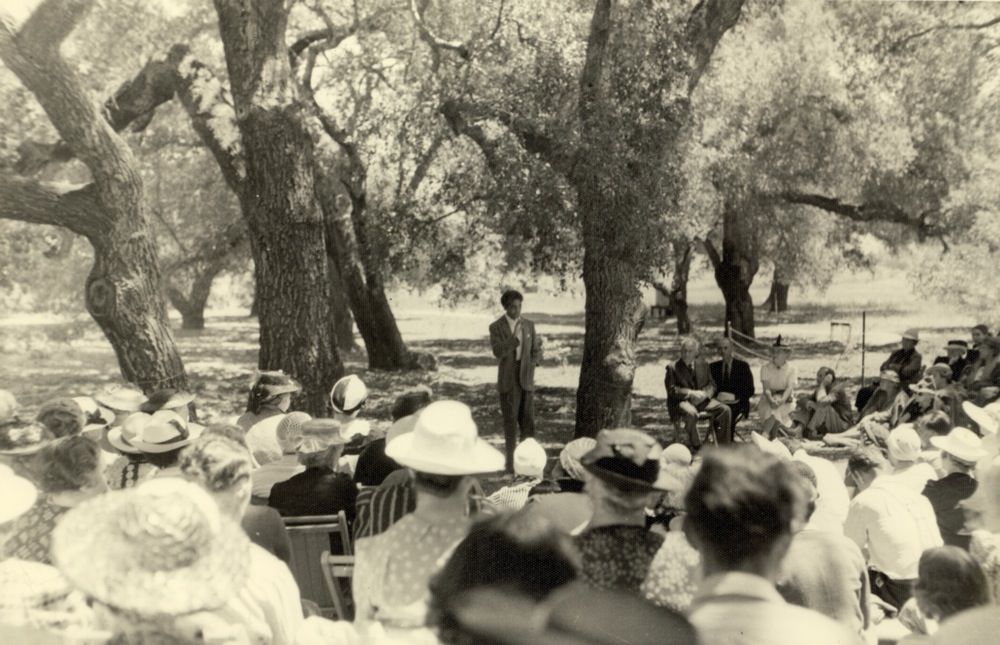


I am going to Ojai.- in my mind and spirit? I might be God. I might not be able to die! Meher Baba went to Ojai – and Krishnamurti! My grandmother knew the leaders of the Theosophic Society. The Rosicrucian’s are here. Conrad Wienke raised bees and sold honey on Route 33.
Last night I looked at my parents, my brother, and my daughter’s family – UNBONING me! Add my sister’s and Rena to the list. This UNBORNING me has been going on – the day I was born! My mother – was the worst! I can not tell you why because there are people trying to steal MY STORY, and….
UNSTORY ME!
HISTORY is about achievement. Meher Baba became THE GOD MAN. I associated with him after I died in 1967 – and came back to life – according to the three Readers at the Berkeley Psychic Institute, who I believe switched tapes of my reading – lest I own them!
Last night I looked at my brother and daughter disowning me, how they reveled in me being a
NOBODY!
Heather Hanson did not call me on Thanksgiving. She and her family are guilty of trying to transfer the history of Christine Rosamond – over to their family. They used me as a doormat – then tried to destroy me! A Judge sold out family history to outsiders – and they destroyed the legacy of the artist…
ROSAMOND
All this DISTRUCTION – elects me – and is proof I died. I was twenty. What would I have ACHIEVED – if I had not died! I wonder and worry about this – all the time.
For years I have searched Zillow for the final resting place for me and my Muse. We are – in Ojai! We are there to SAVE and enhance the history of my grandparents, Royal and Mary Magdalene Rosamond.
Last night I looked at Napoleon’s plan to conquer America, and realized Virginia’s ancestor would have come to the Lousiana Territory and helped DESTROY my Democracy – with the help of Count Cipriani!
In 2017, I discovered the Mallard family, who was close with Joseph Bonapartes, purchased the Geronimo Valley, where my great grandfather, William Stuttmeister, retired. There is no escaping the truth – I own the crux of California History. But, mow than that, I am…
THE GOD OF CALIFORNIA…
At least!
I tried to be – other things. I even tried – to be somebody! On Thanksgiving, as I watched millions of people celebrating Thanksgiving, I saw how much my daughter, and two grandchildren, needed me to be a – BIG FAILURE! Wasn’t Jesus a BIG FAILURE in the eyes of his family and his people? Does Netanyahu believe Jesus – is real? Does he scoff at – the Second Coming? Wouldn’t Jesus go to Gaza and relieve the suffering of human beings, even though they are – HATERS! My family hated me – the day I was born. My father said I was the product of his wife’s – BETRAYAL! Did Victor ever – kiss me?
Last night I made up my mind to claim the State of Lousiana. But, then I realized I was suffering from low-self esteem – due to my upbringing! Also, I found some evidence Virginia may not be alive. no one has answered her phone – for months. People are cunning. I recall when I lost all my cunningness when I died. Consider how my ancestors were uprooted – when they were dead! I’ve been….
UPROOTED!
John ‘The God of California’

Napoleon’s big brother Joseph, ex-King of Spain, likely sired “natural son” Louis Mailliard, whose grandson Adolph lived with both families in New Jersey until doctors advised him to relocate to a healthier climate with his wife Ann Ward & at least 2 children, John & 10 yr old Joseph. In 1868 the trip via Panama took 3 weeks. He had purchased the entire San Geronimo Valley, sight unseen, for the exorbitant amount of $50,000. When he was working in SF for a short time prior to that in 1850, the same land had been sold for a mere $1,000. The home they built (three times) in what would become Woodacre had 18 rooms, 11 fireplaces, 3 conflagrations & many visitors, including Alexander Graham Bell who installed the 1st telephone line in California there – ironic that cell phone reception is still iffy. Ann’s sister Julia visited often & they would sing her composition “The Battle Hymn of the Republic.”
http://www.mdhs.org/betsy-bonaparte/author/admin
In 1854 Adolph Maillard bought a large portion of the Valley, but he and his family didn’t move onto the property until 1873. Adolph Maillard was the son of Louis Maillaird, Joseph (brother of Napoleon) Bonparte’s personal secretary. Since the Maillards were closely connected royalty, they were a wealthy family. While Adolph was one of the more better known owners of the valley, the Dickson and Roy families had been around for several decades before him. The Maillards opened a creamery on their piece of property, and gave it their family name. The creamery produced a special “M Butter” that was only sold to gourmet restaurants and bakeries in San Francisco. The creamery drew more attention to the Valley, and meanwhile the population was steadily increasing.
From Mortefontaine to America
Mailliard was not Joseph Bonaparte’s son, although it is sometimes stated that he was. Louis Hypolite Mailliard was born in Mortefontaine, France, on May 22, 1795. In 1798, Joseph bought the château of Mortefontaine, north of Paris. In 1808, Mailliard entered Joseph’s service. He accompanied Joseph when the latter became King of Spain, and stayed with him through the fall of Napoleon’s Empire. In 1815 he fled with Joseph into exile in the United States.
Ranching: It is thought that La Cañada de San Geronimo became a ranching outpost of Mission San Rafael till the fall of the mission system in the 1830s. In the years before California joined the United States, the Valley was settled and grazed by Mexican soldier Rafael Cacho, who was in the area as early as 1839. Cacho transferred ‘Rancho San Geronimo’ to Joseph W. Revere, a naval officer who was the grandson of Paul Revere. The bulk of the land in the Valley then changed hands a number of times before arriving under the ownership of Adolph Mailliard, whose family owned Rancho San Geronimo until the early 1910s. Other ranch families included the Roy and Nunez families, as well as the Dickson and Ottolini families – who are both still operating ranches.
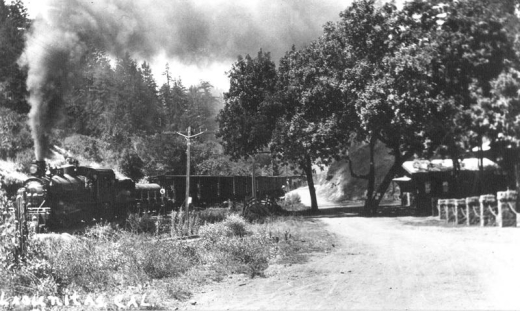
Development: A group of developers under the name the Lagunitas Development Company then purchased from the Mailliard heirs what we now know as Woodacre, San Geronimo, Forest Knolls and Lagunitas. They created the names Woodacre and Forest Knolls in the process of subdividing the Valley. The area grew slowly and mostly consisted of summer homes until development picked up markedly following World War II. The Valley became more suburbanized at this point, until in the late 1960s an exodus of progressive young people from San Francisco changed the character of the area once again.
CHÂTEAU DE MORTEFONTAINE
Château de Mortefontaine, Mortefontaine, Oise, Hauts-de-France
Built between 1600 and 1630, for Philippe Hotman (d.1643), Seigneur de Plailly-Montmélian, whose father (the French Ambassador to Switzerland) bought the estate in 1570. It remained a seigneurial manor until it was purchased in 1798 by Napoleon‘s brother, Joseph-Napoléon Bonaparte (1768-1844) and his wife Marie-Julie Clary as their new home. It was here that the Convention of 1800 was signed that ended a two year quasi naval war fought in the Caribbean between France and the United States….
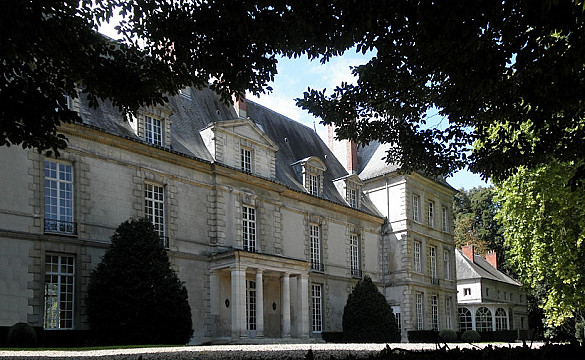
This house is best associated with…

Joseph Bonaparte
Joseph-Napoléon Bonaparte, ex-King of Naples and Spain
1768-1844

Marie-Julie Clary
Marie-Julie (Clary) Bonaparte, ex-Queen of Naples and Spain
1771-1845

Louis-René de Gramont
Lt. Louis-René de Gramont, Comte de Gramont, of Chateau de Mortefontaine
1883-1963
Antoinette (de Rochechouart-Mortemart) Comtesse de Gramont
1893-1972
Bonaparte was very attached to Mortefontaine and he laid out a magnificent park here with tens of follies and faux-ruins plus an assortment of bridges and towers, and underground tunnels that connected one side of the estate to the other – similar to what he laid out at Point Breeze in New Jersey, the first version of which he styled on his beloved Mortefontaine. In 1815, after Napoleon‘s defeat at Waterloo, Joseph made his escape to America, living for the next twenty years at Point Breeze. While he lived in exile, his wife lived here almost permanently until he sold it in 1827. In 1841 Bonaparte was re-united with his wife and lived out his last years at the Palazzo Serristori in Florence.
Bonaparte sold Mortefontaine to Louis-Henri Bourbon, last Prince de Condé, but three years later he was found swinging at the end of a rope. Rumors ran rife that either his revengeful illegitimate daughter, Sophie, had plotted his demise with his Orléanist rival for the French throne, Louis Philippe I, or it was the result of a sexual act gone wrong. Either way, Mortefontaine was soon afterwards inherited by the same illegitimate daughter implicated – but found innocent – in his death. In 1894, retaining the “Petit Parc” she sold the “Grand Parc” to the north of the chateau to the Duke of Gramont and his wife, Marguerite de Rothschild, where they built the palatial Chateau de Vallière.
Mortefontaine remained in Sophie’s family until 1928 when it was sold to Louis-René de Gramont, who grew up the Chateau de Vallière. Having by then fallen into a bad state of repair, he carried out the much needed renovations only to be evicted during the Second World War when it was occupied by the Nazis. Five years later, he sold it to an Order of Dominican Monks and it became a school which operated until 1985 when Mortefonatine was purchased by Monsieur Pontheiu who converted it into a luxury hotel. This eventually failed by about 2004 and today it is once again a private home.
Lagunitus and Belmont Theme Park
Posted on September 22, 2017 by Royal Rosamond Press

Pynchon Wittgenstein and Cornell Grouping
Posted on March 20, 2021 by Royal Rosamond Press



Rosy Pink Road Signs
Posted on October 18, 2022 by Royal Rosamond Press
I took a break from my Road Trip to Ojai where I had Thanksgiving with allot of Wienke folks when I was fifteen. ” I googled ” Ojai Enlightenment” to inform readers about this Mecca. I found an article about Alpenglow which I was going to – repost on. I still wanted to point out how prophetic this post is. I wrote a poem about the Dove and the Branch which is about Jonah whose tomb was blown up by ISIS.
You got to know where your heart is at.
John ‘The Prophet’
Who dare climb
humanities loftiest peak
to capture beauty
adorned in universal peace
Who will take the risk
to own a spiritual transcendence?
Why has no poet or artist gone
to see the treacherous rocks
where from the Rose of the World
was washed away
And with serene brow
and a love for the truth
rendered a work of art
a forgiving sonnet?
Theodoric accepts the challenge
and comes to the Rose Garden
to rescue the beautiful Similde
captured by a dwarf
with an invisible cloak
Brave knights follow
the clue of the crushed roses
and render their foe
visible.
What is there to see
when we chose to rise
above it all
all that is base
lacking grace
and civility?
Youth challenges youth
while wisdom old in years
authors chivalrous poetry
for grandsons un-born
There must be a mystery
and a clue
a broken thread
that marks the point
of no return.
For our destiny awaits
where we dare not go
and we go
to see
if we are truly alive
and are not a mirage
and life a cruel fantasy
http://en.wikipedia.org/wiki/Alpenglow
The Ark upon the mountain
The Dove and Branch upon the sea
The hammers of iniquity
beat upon my forgotten tomb
I am awake upon the turbulant waters
My enemies cast lots
and blame me for their sins
while God’s friends
read me on the Day of Atonement
so all will be saved
so all will be united in peace
The sun went down on me
so long ago
The vine that grew over my head
has wilted in the desert of forgetfulness
But, there on a mountian
a purple haze
a rosy afterglow
in a King’s rosegarden atop a mount
that bid noble knights to climb hither
that beckon knights to sever a thread
and once again
be brave
Jon
Witness the ‘pink moment’ and take a spiritual journey in the Ojai valley
The mysterious alpenglow – an optical phenomenon that materialises as a horizontal glow just after sundown – graces the Ojai valley
ByFionn Davenport20 October 2017 • 10:15am

Sun-splashed Ojai has long been a spiritual magnet for seekers of every description. It might not look too different from other small towns in the Ventura valley, but take a closer look at the clusters of single-storey buildings spaced out along the broad main street and you’ll find an abundance of New Age shops, kooky art galleries and mind-body spas.
Magdalene of Rose Valley
Posted on October 18, 2022 by Royal Rosamond Press
I have been thinking of moving back to Oakland, or, Ventura. Ojai crossed my mind.
That’s my grand uncle, Conrad Wieneke, behind the steering wheel of a real big car. He has a ranch on Highway 399, and some houses in Ventura by the Sea where my mother, Rosemary, was born.
John ‘The Nazarite’
Old Highway Route 399
Posted on November 10, 2015 by Royal Rosamond Press


Conrad Wieneke, the brother of my grandmother, lived on Highway 399 in Ojai. His sister, Eutrophia Maude Brown, lived on a farm nearby. Mary Magdalene Rosamond lived in one of Conrad’s homes in Ventura. The third photo from the top could have been taken on 399.
What is key, my kindred are modeling. My two aunts are posing with their mother sitting on the runner of a vintage car, and Eutrophia is posing in the bottom photo. These people did not know they are kin to Elizabeth Rosemond Taylor. My later sister, Christine Rosamond Benton, became a famous artist and married into the artistic Benton family. Jessie Benton, the wife of John Fremont, held a salon at Black Point in San Francisco. My first girlfriend, Marilyn Reed, did some modeling when she was thirteen, and fit right in with all the beautiful Rosamond Women.
That is Conrad Wieneke on the Ventura Beach with his three children, and June, Bonnie, Lillian, and Rosemary Rosamond. U.S. Route 399 went from Ventura to Bakersfield. This highway was changed to Route 33.
My sister Christine Rosamond, is modeling Marilyn’s ‘Train Dress’. My ex-wife is wearing Marilyn’s dress at our wedding, where my good friend, Bryan MacLean, played. Bryan was in love with Christine in high school, and played for the rock group ‘Love’. My wife, Mary Ann Tharaldsen, was married to the author, Thomas Pynchon. These folks got their creative roots out on Route 399.
Below is a home movie of my mother at Ventura Beach and Camarillo. This was filmed by a member of the famous Lewis family, whom Rosemary almost married into.
Jon Presco
Copyright 2015
The Third Elijah and St. Francis
Posted on October 14, 2022 by Royal Rosamond Press
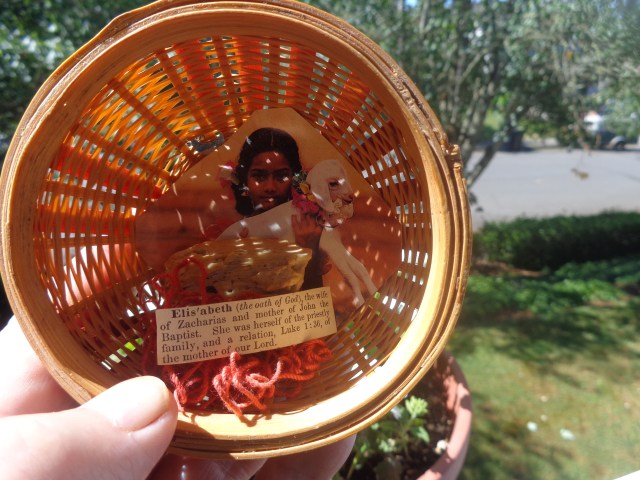
Three years after I got sober, and took the Vow of the Nazarite, I put together a basket honoring Elizabeth, the mother of John the Baptist. I found a pic of an Arab girl holding a lamb and assigned the name Elizabeth to her. This image became the child I would never have. Ten years later my sixteen year old daughter came into my life. I thought I was going to die – childless – like Zechariah.
The Quran has make a huge mistake! There are two billion Muslims in the world. John was a historic person, while scholars can find no history of Jesus. If you take away Jesus and his mother, Mary, then the usurpation – is abolished. There is – only Elizabeth, and her divine son, that spoke when the priests came to circumcise and name him when he was eight days old.
John ‘The Third Elijah’


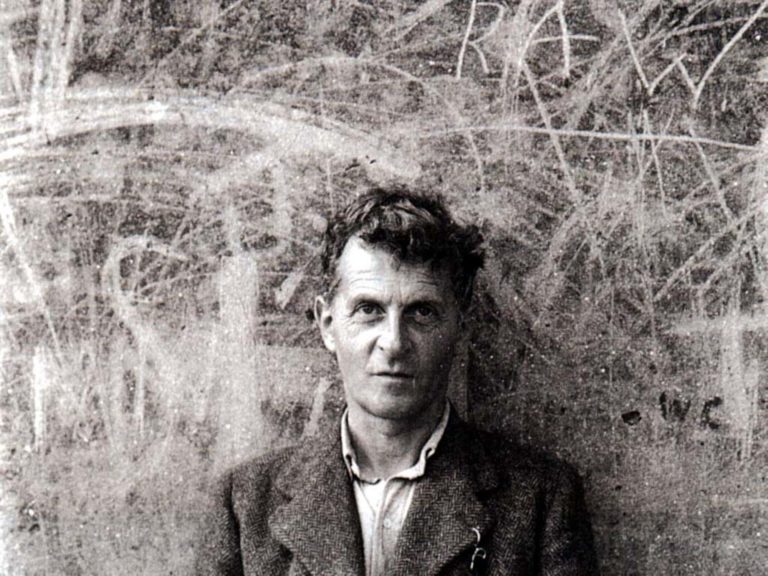
Today is the most momentous day in my life. All my hard work has paid off. Ludwig traveled to Ithaca and hung with Cornell philosophers. My cup runneth over. I am so overjoyed that my grandparents can be put in a group of writers and thinkers – forever! I can remove my sister Christine from the literary hell she was thrown in hours after she died. My relationship with the woman I married, is redeemed. We believed in each other.
John Presco
Wittgenstein’sVisittoIthaca.pdf (cornell.edu)
Pynchon and Philosophy radically reworks our readings of Thomas Pynchon alongside the theoretical perspectives of Wittgenstein, Foucault and Adorno. Rigorous yet readable, Pynchon and Philosophy seeks to recover philosophical readings of Pynchon that work harmoniously, rather than antagonistically, resulting in a wholly fresh approach.
Martin Paul Eve
Chapter in Profils Américains: Thomas Pynchon
Edited by Bénédicte Chorier-Fryd and Gilles Chamerois
Pynchon and Wittgenstein: Ethics, Relativism and Philosophical Methodology
Perhaps the strongest rationale for a philosophico-literary study intersecting Thomas Pynchon
with Ludwig Wittgenstein is that, in the writings of this philosopher, the very nature of philosophy is
reflexively questioned. Within his lifetime Wittgenstein published a single text, Tractatus
Logico-Philosophicus, influenced by the logical atomists in which he claimed, initially, to have “solved
all the problems of philosophy” (Tractatus Logico-Philosophicus x). However, in 1929 he resumed
lecturing and, following his death in 1951, the world was presented with the unfinished product of
these intervening years: the Philosophical Investigations. While many early studies, and indeed this
biographical overview, present a seemingly bi-polar, bi-tonal Wittgenstein, who enacts a retraction of
the Tractatus in the Philosophical Investigations, a closer examination of Wittgenstein’s notebooks and
intermediate remarks reveals that the latter owes its genesis to a critique of the former and was
developed through an accumulation of thought and a gradual transition.
This piece presents a tripartite analysis of the relationship between the philosophical works of
Ludwig Wittgenstein and the novels of Thomas Pynchon. This is broadly structured around three
schools of Wittgenstein scholarship identified by Guy Kahane et al. as the Orthodox Tractatus, the New
Wittgenstein, and several strands of the Orthodox Investigations (Kahane et al. 4-14). Moving from the
earliest affiliation that Pynchon stages between Wittgenstein and Weissman, the underlying theme lies
in Pynchon’s relationship to ethical relativism as it pertains to Nazism. From this it will become clear
that neither relativism of experience and representation, nor an unbounded relativism of non-committal
John Presco Married Mary Ann Tharaldsen
Posted on December 8, 2020 by Royal Rosamond Press
I married Mary Ann Tharaldsen, the ex-wife of Academy Award Winner, David Seidler, who is also in my family tree, along with Rick Partlow who marred my sister, Christine Rosamond Benton, who was married to the muralist, Garth Benton. Partlow won a Grammy. A Cornell paper says Mary Ann was married to Thomas Pynchon and they lived in the Rockridge on College Avenue near where the Hippie Movement began. The Loading Zone played at the Open Theatre. Lead guitarist, Peter Shapiro, played at our wedding reception. A close friend lived nearby and he was asked to contribute to Oliver Stone’s movie. He was a good friend of Jim Morrison and Michael MacLure who taught poetry across the street from the Art College.
My family were San Francisco Pioneers. Mary Ann’s father came from Norway. My step-daughter, Britt Baumback Murray will be in my family tree. Mary Ann is wearing Marilyn Reed’s ‘Train Dree’ that my sister Christine Rosamond Benton, wore, and Debbie Boone on the cover of her album. Mary Ann discovered the actor, Paul Drake, who played Mick in ‘Sudden Impact’. My friend, Bryan MacLean played at our wedding.
I still admire and love the only woman I married. She found me living and hiding in a little shack working on the fifty drawings of Atlantis. MA lived in Marin. My niece, Shannon Rosamond, read the bad movie script written about her mother. I’m going to use MA’s discovery of me in – our movie about a world famous artist. MA was raving about me, she saying my drawing were worthy of a Master’s Dissertation. She asked me if I was a member of Mensa?
I was blown away when twelve year old Britt showed me her written code after beating the Mother May I machine. I hope our new President will revitalize Gifted Children programs. Britt chose to go to my old school, McCheznie, verses the all white private school in SF. My Stuttmeister-Broderick kin had a house and small farm down the street. Gertrude Stein was a neighbor. I was very proud of my step-daughter for this stellar choice. Our black maid lived nearby and would take Christine home with her on the weekends to stay with the Sisters. At the reception MA danced with my nephew, Cian, when he was about nine. He is ‘The Garden Child’ I did a life-size drawing of MA who did a life-size painting of her good friend, Mimi Farina. I wish I had found time to do a painting of Britt and Mary Ann. Perhaps I will.
After our divorce, I moved downstairs. I remained good friends with MA. One day Britt brought her black girlfriend down to meet me, and show me their cornrow hairdos they just did. I should have become a photographer – along time ago. Her father had her going to the most exclusive private school in SF so she could meet the children of the rich. There had been a legal matter. Looking at these two beauties, was the happy outcome. These beautiful lessons continue to be the highlight of Bay Area History.
It occurs to me why I did not take up photography. I was afraid of becoming a commercial success like my sister, who is depicted as being deluded in saying her gallery ripped her off for millions; when in truth, they only ripped her for $50,000 a year. In this court matter, it never occurred to me me to use Rosamond as a character reference. I just now realize she was the kind of person Mr. Baumbach wanted his daughter to mingle with. The Benton’s were friends of the Getty family. The hut in this painting is more my style. I did this when I was seventeen from memory of the mudflats off the entrance of the Bay Bridge. It is rumored Pynchon lived here. You could only walk to this shack during a special low-tide. How perfect for your average recluse. Note the pier is broken, thus, there is no access to the Recluse, this way. Money can’t buy seclusion like this, because it is……a state of mind. Stoke the potbelly stove. Cue the rain!
John Presco
President: Royal Rosamond Press
Our Home On Miles | Rosamond Press

The Queens of Avalon
Posted on July 27, 2012 by Royal Rosamond Press



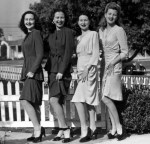
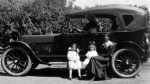
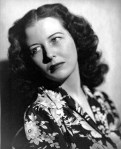
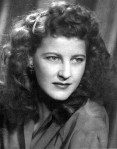
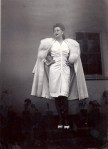
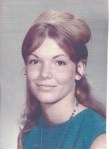






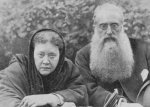
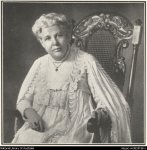


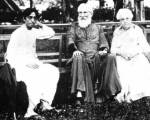

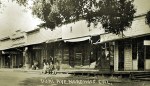
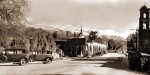
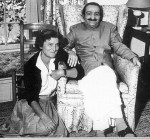

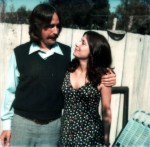

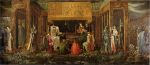

Mary Magdalene Rosamond knew members of the Theosophical Society and visited their retreat in Ojai where her brother, Conrad Wieneke, owned four homes. Mary became a feminist. She might have known Annie Besant. I believe that is Conrad behind the wheel of the huge car.
Besant brought Krishnamurti from India to America and introduced him as ‘The World Teacher’ not unlike the teacher foretold in the Rose of the World prophecy. Krishnamurti had a retreat in Ojai, as did Avatar Meher Baba ‘The Awakener’.
Mary gave birth to four beautiful daughters, June, Bonnie, Rosemary, and Lillian.
My first girlfriend, Marilyn, looks like Mary, they bot having those cheekbones. Rena could pass as Mary’s granddaughter. I was surrounded by beautful woman. I was their champion.
The owners of Catalina Island named its first town Avalon. It was in California a Great Awakening occrured. Here are Tyler Hunt’s people.
Jon Presco
Copyright 2012
Cipriani and California In Sardinia
Posted on November 17, 2023 by Royal Rosamond Press


La California
Posted on October 5, 2015 by Royal Rosamond Press
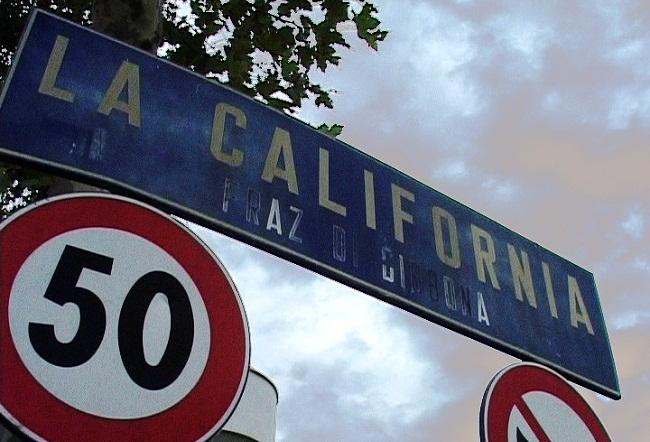
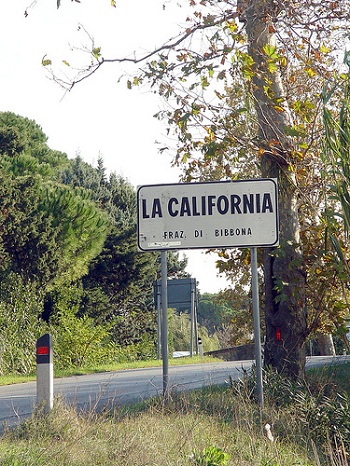
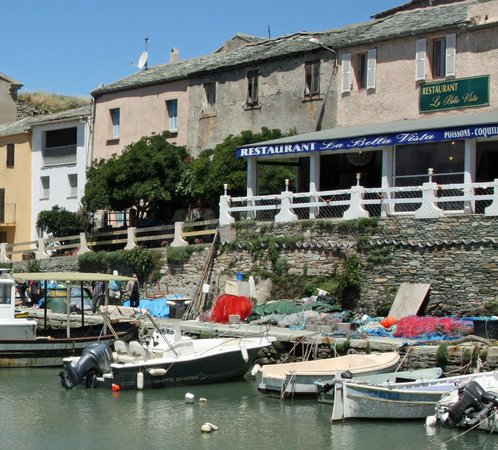
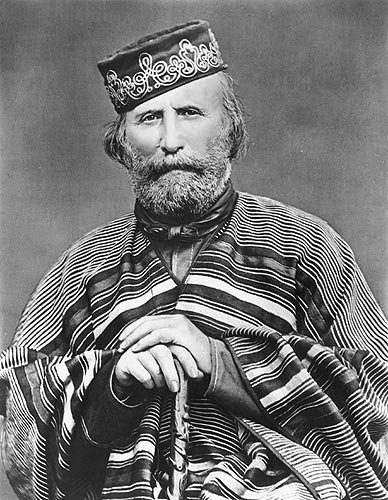
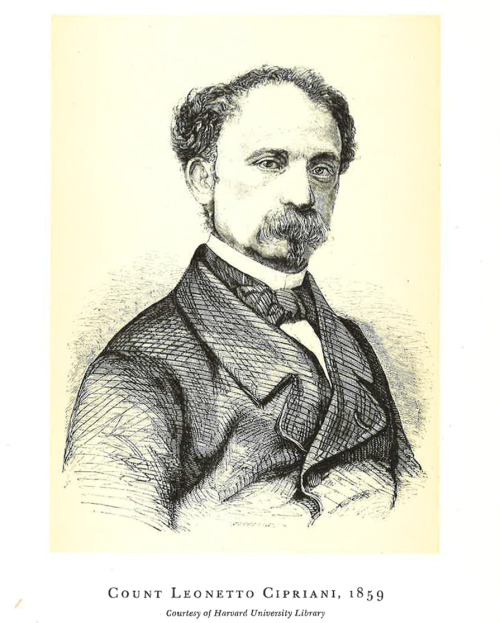
The name Belmont comes from Beaumont. Count Leonetto Cirprini named a province in Italy after California, the place he dwelt. He was the first Italian ambassador and fought the Habsburgs as a Forty-Eighter, who I suspect were going to colonize California. Was Belmont going to be the capital of the Italian Unification, and, this is why Carl Janke brought six portable houses around the Cape? Little Italy?
I am going t establish correspondence, and unite the two Californians.
Jon Presco
I will be composing a proposal to the Mayor and City Council of Belmont, suggesting they purchase my newspaper and install it at 901 Waltermire. I will take residence upstairs, and operate the Royal Sardinian Touring Company.
In January of 2021 I bought art supplies with the last Corvid check I received from the United States Government in order to maintain, and further my existence this Great Democracy. Being very poor, I had a taste of what it is like to – have money! This Government Money inspired me t look at ways – I can have more money! Being a theologian, Bohemian, and Historian, I get paid every day – ascetically. Wanting to envision a more material existence, I looked at homes for sale in Belmont California and Crockett. I put my newspaper, Royal Rosamond Press up for sale. I reasoned there were folks in the world with much money, who would want to invest in my – and my gifts! I would continue to write articles for my ex-paper in relative safety. My neighbors in Springfield were threatening me and the cats who came to visit.
I saw myself working on paintings in the sunroom of the the Waltermire house, and writing in the other half of this space. I wanted passerby’s to see a Real Bohemian at work. There would be a potbelly stove where gather the La California Touring Club of Belmont that takes members to our resort in Sardinia – where I hope to have a small writers cottage where I work on my Ian Fleming inspired books. With the Napoleon series, I suspect the interested in the Emperor and his family – will soar! I will be there, waiting for the lovers of history, and the school children.
“Did you know the Bonaparte family were thinking of invading California?”
John Presco
President: La California Touring Company TCTC
“Returning to Paris in October, 1855, he was warmly received
by his friend Prince Napoleon who overwhelmed him with questions
about his travels in America. “I answered them the best I could.”
Cipriani wrote, “But , it is a veritable deluge….We keep talking
about my journeys, of the Sanora, of conquering it.” Perhaps he
thought of seizing it for France and hoped the prince might persuade
his cousin the Emperor to finance the undertaking. “It is an idea in
the air,” he added, “that I would willingly undertake, if necessary
capital and men were available.”
Last night as I was admiring my post of the history of Crockett, I went to Belmont California to see if they had any interesting homes for sale. Eureka! Is this the future home of Royal Rosamond Press? What was here before? I moved in the daughters of Christine Rosamond Benton. Why not Tyler, too? Our children can experience the miracle the Presco Children created growing up on San Sebastian Avenue in Oakland. Belmont – needs our history – in their Downtown! There is nothing there – there! The same goes for Crockett. If they only knew where the remains of William Janke ended up, after being dug up and evicted from his grave. Did William interact with the children gathered in the giant oak tree? I am going to do a painting of these little people dressed as Bohemians, posing before the Time Machine.
“What does the future have in store for us? Can we all get along?”
It appears that Cipriani was successful in uniting the House
of Savoy with the Bonapartes, and thus the House of Stuart. Prince
Napoleon Joseph Charles Paul of France, Pr Napoléon, married in Turin
in 1859, Princess Clothilde of Savoy daughter of Victor Emanuel. From
this union would come other Bonapartes with the name Victor. Prince
Napoléon Victor Jérôme Frédéric, Prince LOUIS Jérôme Victor Emmanuel
Léopold Marie, and, Prince Charles Marie Jérôme Victor
Was the Jacobite ‘Order of the White Rose’ somewhat successful
in their plan to put the Stuarts on a throne and rule the world?
There appears to contention with the Prussians who can claim the same
ancestry through the Winter Queen of Bohemia, Elizabeth Stuart,
daughter of King James, and thus the Hanovers who are in all regards,
the Windsors.
http://osdir.com/ml/culture.templar.history/2003-10/msg00001.html
Count Cipriani was born in Centuri Corsica, on October 10,
1812. On his father’s side he is descended from an old Florentine
family of Ghibellines, which after a long struggle with the vitorious
Guelfs, found refgue in Corsica in the fifteenth century. On his
mother’s side he is descended from Saint Francis Caracciolo of
Naples, and thus Saint Aquinas. This struggle inspired Shakespear to
write ‘Romeo and Juliet’ and thus the question “What is in a name?”
came to be.
Royal Rosamond Press dedicates this closure to my
chapter ‘Bohemians and Bankers’ to Cipriani, a man who shaped the
West, and knew the ancestor of Rosamond, the ‘Rose of the World.
John Presco
Did the Jacobite movement come to America? I am authoring a
biography of my family, and came upon Count Leonetto Cipriani who
became the President of Italy.
Jon
“On behalf of the Emperor Napoleon 3, he visited King Victor
Emanuel of Sardinia to explore the possibilities of a matrimonial
arrangement between the ruling houses as a prelude to a political-
military alliance between France and Sardinia.”
“It appears that Cipriani was successful in uniting the House
of Savoy with the Bonapartes, and thus the House of Stuart.”
Anarchists, Jacobites, Masons & Manifest Destiny
The City of Belmont
California was founded by Count Cipriani who appears to be related to
the Anarchists of Italy, who may have had something to do with
Sissi’s assasination. Anarchists Clubs sprang up in Italy in response
to the Hapsburg’s and Austria coming to rule Italy. Opposed by the
Piedmontese and the Milanese, Count Leonetto Cipriani would champion
the cause of a free and democratic Italy.
“A writer hostile to Cipriani accused him of forbidding his
son Italian citizenship because he did not want the boy to be a
subject of an Italy that, after 1882, was allied with the traditional
enemy, Hapsburg Austria. Cipriani seldom forgave and never forgot an
enemy.”
Whether Leonetto Cipriani is related to the infamous Italian
Anarchist, Amilcare Cipriani, I do not know. But, they surely had the
same cause, that would come to shape the culture of San Francisco, if
not the whole Pacific Coast, and not just the Italian community. It
appears that Cipriani was successful in uniting the House
of Savoy with the Bonapartes, and thus the House of Stuart. Prince
Napoleon Joseph Charles Paul of France, Pr Napoléon, married in Turin
in 1859, Princess Clothilde of Savoy daughter of Victor Emanuel. From
this union would come other Bonapartes with the name Victor. Prince
Napoléon Victor Jérôme Frédéric, Prince LOUIS Jérôme Victor Emmanuel
Léopold Marie, and, Prince Charles Marie Jérôme Victor
Was the Jacobite ‘Order of the White Rose’ somewhat successful
in their plan to put the Stuarts on a throne and rule the world?
There appears to contention with the Prussians who can claim the same
ancestry through the Winter Queen of Bohemia, Elizabeth Stuart,
daughter of King James, and thus the Hanovers who are in all regards,
the Windsors.
Count Cipriani was born in Centuri Corsica, on October 10,
1812. On his father’s side he is descended from an old Florentine
family of Ghibellines, which after a long struggle with the vitorious
Guelfs, found refuge in Corsica in the fifteenth century. On his
mother’s side he is descended from Saint Francis Caracciolo of
Naples, and thus Saint Aquinas. This struggle inspired Shakespear to
write ‘Romeo and Juliet’ and thus the question “What is in a name?”
came to be.
“Returning to Paris in October, 1855, he was warmly received
by his friend Prince Napoleon who overwhelmed him with questions
about his travels in America. “I answered them the best I could.”
Cipriani wrote, “But , it is a veritable deluge….We keep talking
about my journeys, of the Sanora, of conquering it.” Perhaps he
thought of seizing it for France and hoped the prince might persuade
his cousin the Emperor to finance the undertaking. “It is an idea in
the air,” he added, “that I would willingly undertake, if necessary
capital and men were available.”
To another member of the imperial household, Jerome
Bonaparte, ex-king of Westphalia, Cipriani revealed tha the had
considerable investments in California and hinted at receiving
interest of twelve to fifteen percent a month on his money. He also
boasted of his house in Belmont which “out there is considered
magnificent.”
On behalf of the Emperor Napoleon 3, he visited King Victor
Emanuel of Sardinia to explore the possibilities of a matrimonial
arrangement between the ruling houses as a prelude to a political-
military alliance between France and Sardinia. The conversation
eventually turned to Cipriani’s overland journey of 1853, which
apparently had not escaped the king’s notice. “I have heard tell,” he
said, “of a great journey of yours, with you on horseback and camping
out.”
“For eight solid months, Your Majesty,” Cipriani replied,
making certain to include the time he left San Francisco in February
to October, 1853.
“But it is true.” the king continued, “that you led covered
wagons and crossed the Rocky Mountains where there was roads, and
great rivers without any bridges.”
The above is from the ‘California and Overland Diaries of
Count Leonetto Cipriani’. a journey that may constitute the first
cattle drive. What this diary reveals is France’s plan to conquer
Mexico, and perhaps the Western United States.
“Cipriani must have followed with close interest the
activities of Count Raousset-Boulbon and other French filibusters in
the Sonora province of Mexico. The French consul in San Francisco, in
difficulty with the American government for his alleged support of
such filibustering activity, wrote to the Sardinian Ministry of
Foreign Affairs in 1854 that he was grateful (moral) support he was
receiving from Colonel Cipriani. That Cirpiani had entertained some
such expedition in the Sonora is clear from his memoirs though there
is no evidence of any actual participation.”
Wieneke
Posted on December 10, 2021 by Royal Rosamond Press
Here is the Wieneke family. My mother’s mother was born, Mary Magdalene Wieneke.
VRR
The Oak of Meher Mont
Posted on December 10, 2017 by Royal Rosamond Press

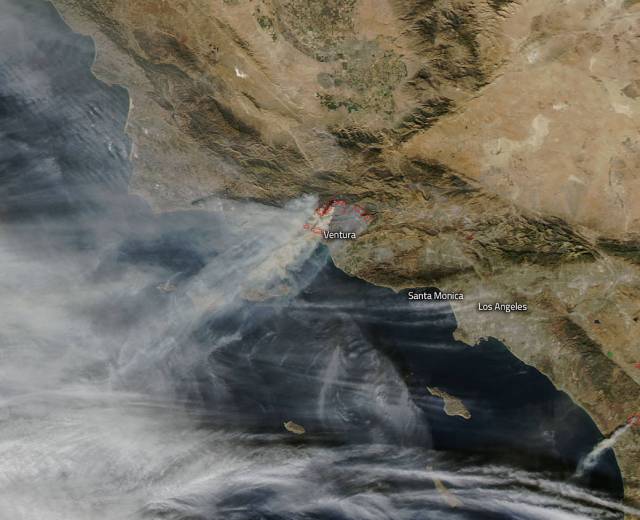
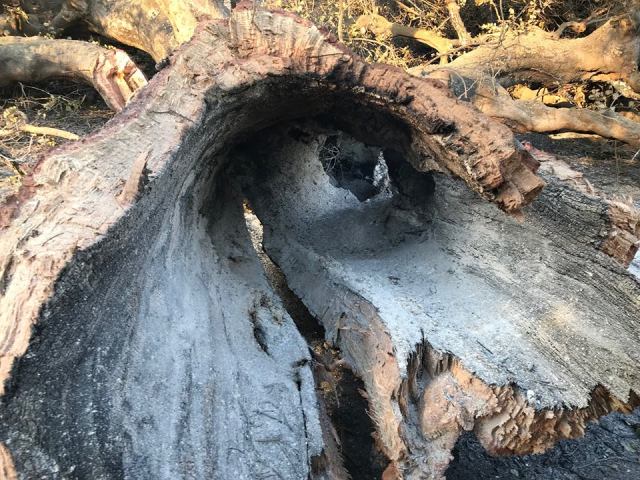
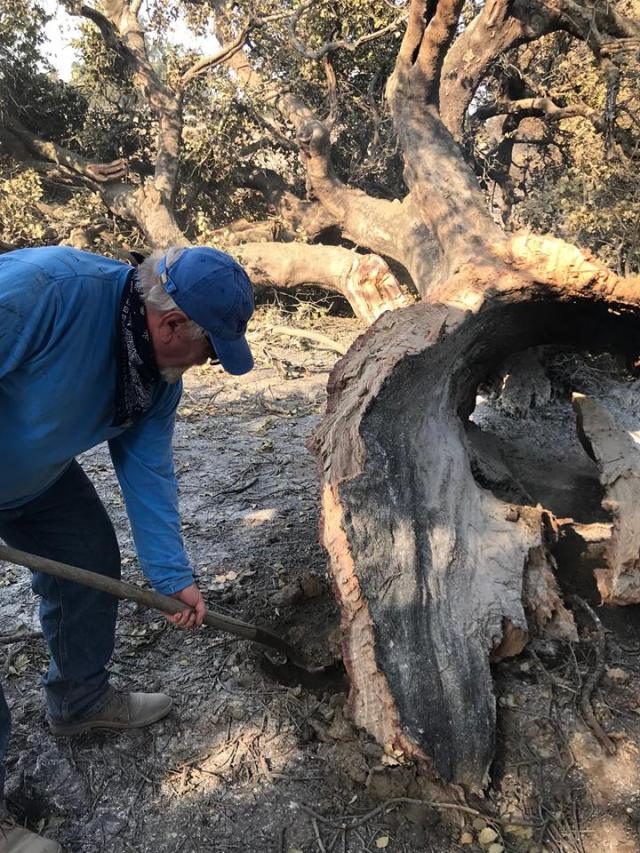
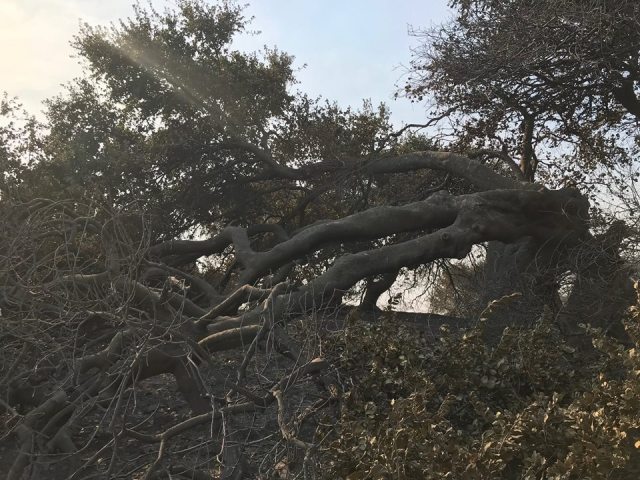

I posted this in 2009.
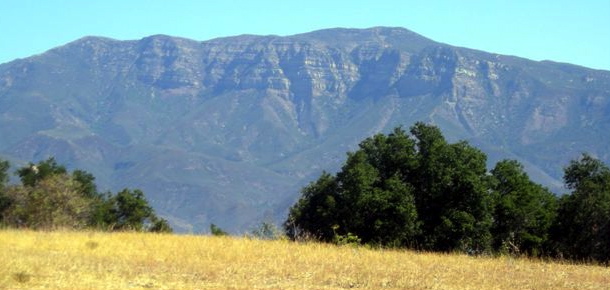
“When I awoke yesterday morning, my Angel bid me restore the Shekinah. The day before I had read a theory put forth by Fridrich von Suhtscheck that the story of Parzival is based upon the Song of the Pearl, or, the Hymn of the Pearl, or, the Hymn of Judas Thomas who was born of royal Parthian parents. For the reason Meher Baba was born of a Parthian father, I looked at Sulphur Mountain above Ventura as the new home of the Shekinah, or, the Rosa Mystica.
There is a rose garden atop Sulpher Mountain. Those who wish to connect with the Shekinah on Santa Rosa can see the Channel Islands from Meher (Mithra) Baba’s retreat. Anyone who seeks the light of God and the Rosa Mystica are forbidden to set foot on Santa Rosa Island until the end of the world.”
Jon
Jai Baba!
Update #7 from Sam Ervin
Yesterday, Dec. 8, Buzz and Ginger, Manager/Caretakers, were again at Meher Mount. They learned a lot more about the aftermath of the fire, and the news is troubling and leaves us with considerable uncertainty. I’ll combine the latest news with much of the report from update #6 to give a more complete picture of what we have learned. The “Thomas Fire”, named after St. Thomas Aquinas College because it started near there, has been raging across Ventura County since Monday, Dec. 4, and is still not nearly contained, having burned more than 100,000 acres. It has been driven by winds up to 80 MPH and extremely low humidity. In its first few days it burned the entire area, rural and wilderness, between the towns of Ojai, Santa Paula and Ventura, including all of Sulphur Mountain, where Meher Mount is located. Fire fighters played a role in saving some structures, as did effective weed and fire hazard abatement, as Buzz and Ginger did at
Heather and Eutrophia
Posted on December 26, 2014by Royal Rosamond Press

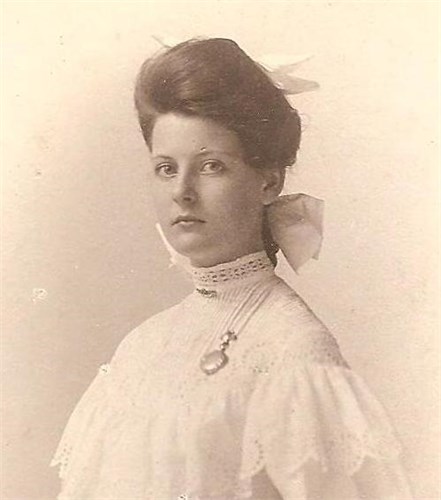
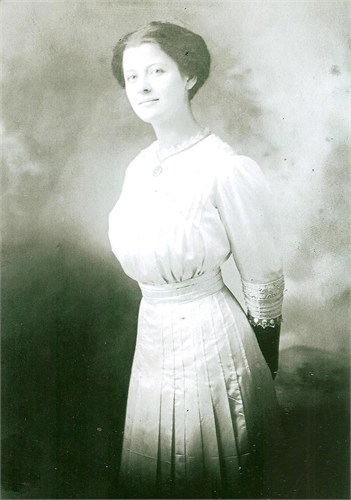
Around 2:30 P.M. on Christmas Day, I opened my computer and showed Marilyn my post ‘Christmas with Eutrophia’. No sooner did she see the top photo, Mariliyn says;
When my sister Christine was nine, and my sister Vicki, was five, they saw a blue angel standing at the foot of Christine’s bed. I just found this photo of an angel over the head of Mother Dominica, the cousin of my grandmother, Mary Magdalene Rosamond.
And angel appeared above me just before I died. The fight I have with Patrice Hanson, is, she claims the light that surrounded OUR daughter, came from her mother that was like a guardian angel. Wrong! This angel and light comes from the Wieneke family who entered the Order of Saint Francis. That angel guarded MY daughter from the fake father, Randal Delpiano. Why wasn’t there an angel to protect Patrice’s two sons – that I took in to get them away from Randall? This alleged angel-mother did not stop her daughter from bonding with a criminal.
Heather can keep this angel and light, as long as she admits it comes via her real father, and HIS family! The Order is always looking for new members amongst the Wieneke and Starks, because Nuns and Fathers do not produce children. Heather was a candidate – before she was born!
John Gregory Presco
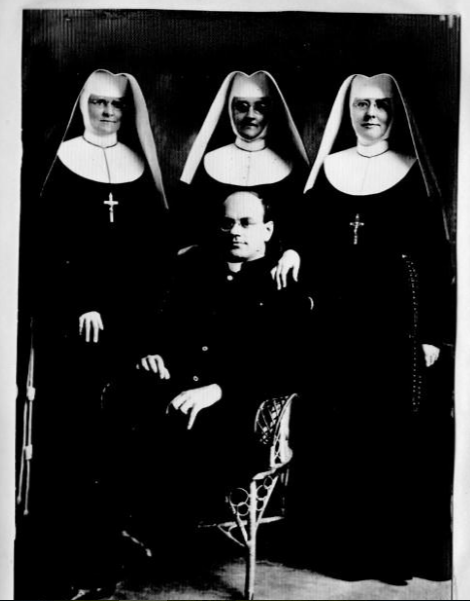
- Wieneke and StarkTop to bottom: Phillipine Wieneke (Mother Dominica), Anna Marie (Wieneke) Stark, Rose Elizabeth Wieneke (Sister Callistus), Theodore Stark
- Burial
/-90.66455,42.50056,7/710x248.png?access_token=pk.eyJ1IjoiYW5jZXN0cnltYXBib3giLCJhIjoiNllqcGhKYyJ9.p9QKjx4kc2E_55jLTmDw0Q) Dubuque, Dubuque, Iowa, USABonding With The SisterhoodPosted on March 25, 2017by Royal Rosamond Press
Dubuque, Dubuque, Iowa, USABonding With The SisterhoodPosted on March 25, 2017by Royal Rosamond Press


- Above is a photo of the Wieneke farm in Iowa. Here Sisters of the Order of Saint Francis were grounded in America after they were forced to flee Germany due to Bismark’s Kulturkampf. This is a story of how a religious order was helped by an American family who had immigrated from Germany fifty years before. The Wieneke family was given credit for preparing the way for Saint Francis, and, Jesus Christ.
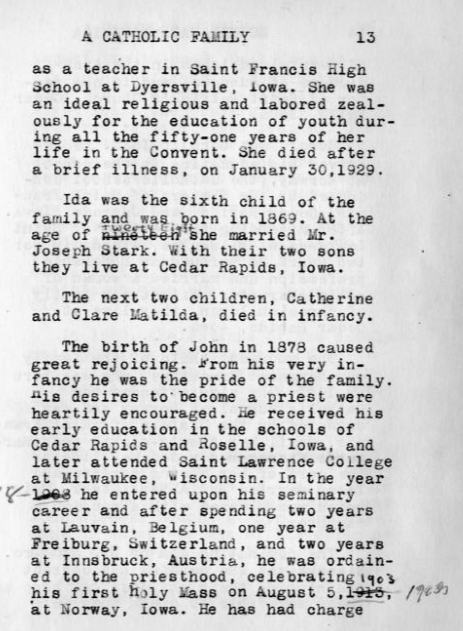
- They were seen as Saints.https://www.youtube.com/embed/TwDV1C5UZvM?version=3&rel=1&showsearch=0&showinfo=1&iv_load_policy=1&fs=1&hl=en&autohide=2&wmode=transparentLast night I read this book again, online. I was hoping John Stark would have posted the rest of the book on ancestry.com. He has not. I tried to get him to give this book to the Sister’ of Briarcliff. John said the book contained accounts that ranged “from the reidulous to the sublime”. You are going to have to cut and past this to url.file:///C:/Users/jongr/Downloads/Mother%20Mary%20Dominica.pdf
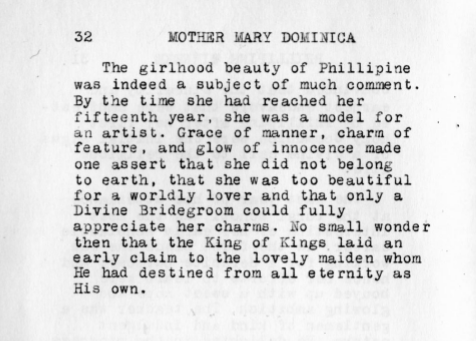
 Phillipine was a muse to an artist. Her brother studied at Louvain. There is a missing chapter on the “Family Grotto”. I suspect there were sightings here. Please, John, publish the rest of this book!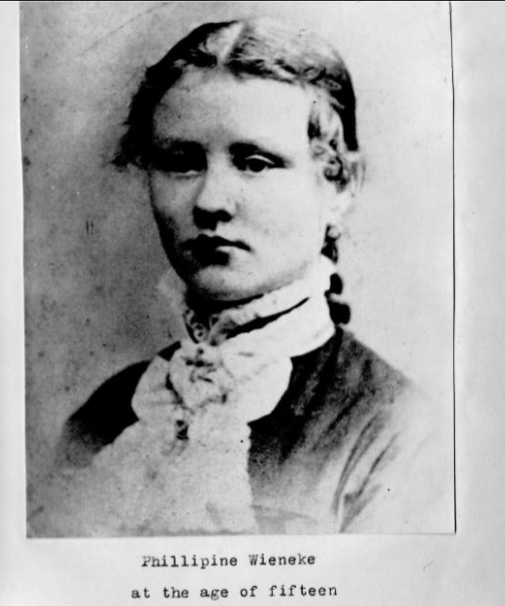
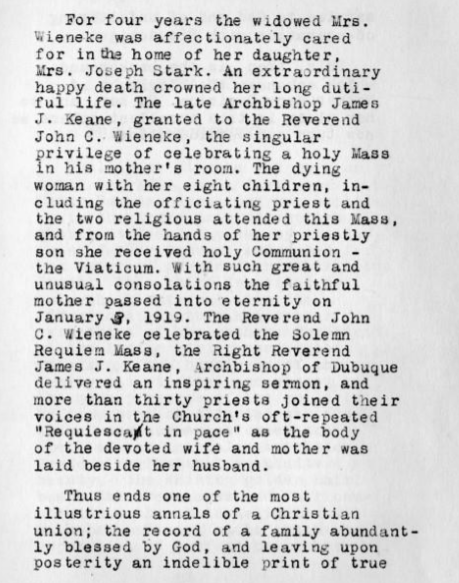
 Members of the Wieneke came in close contact with the Order of Saint Francis that was forced to flee Germany. It appears they were The Keepers of The Miriam Cult. They wanted to spread the Devotion of Mary in America. The Wieneke Family were chosen to be The Messengers. They spoke German in their homes, as did the Sisters. Below is Father John, and his three sisters born from the same womb. My mother wanted me to become a Franciscan Monk. Her mother, Mary Magdalene Rosamond, said I was destined for the church. These are her cousins, and the sibings of Eutropia.The name Philippine is a German. In German the meaning of the name Philippine is: loves horses.There is a scene of the Wienekes taking the Sisters to church in their horse and wagon. This is the opening scene to a movie. I see the rolling hills of golden grass. The camera come closer in this Western secene, and everyone is speaking German. That John Kelly came home severely wonded in his fight with the secular evil in Germany, was very important. These Sisters knew their flock, and shen they did not hear from John and Eutropia, they sent an emisary to Ventura By The Sea. This is a Papal Emisary, as you shall read in my newspaper…………..Royal Rosamond Press.My sisters awoke to see a Blue Angel standing at the foot of their bed. There was a High Mass held in the Wieneke home to honor the dying mother who had given birth to the first American Sisters of the Order of Saint Francis. The term “papal rank” is used.https://rosamondpress.com/2016/05/09/bonding-with-a-blue-angel/Jon PrescoPresidentCopyright 2017https://rosamondpress.com/2017/02/08/the-franiscan-family-of-mary-magdalene-rosamond/https://www.youtube.com/embed/TgyPRoWIa5c?version=3&rel=1&showsearch=0&showinfo=1&iv_load_policy=1&fs=1&hl=en&autohide=2&wmode=transparent





 http://www.catholicnews.com/services/englishnews/2016/health-care-is-a-right-not-a-privilege-pope-says.cfm
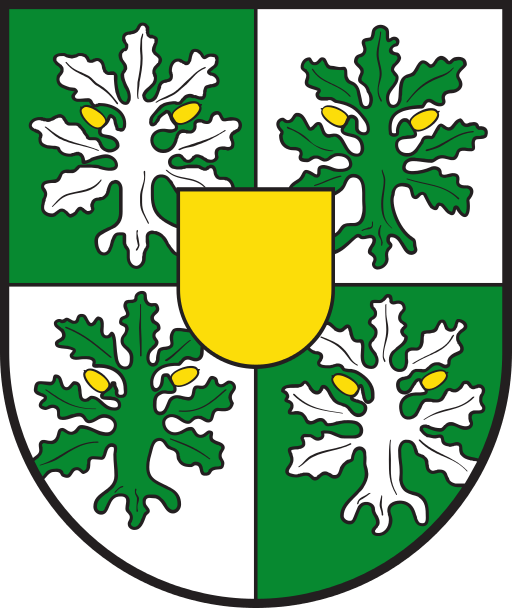
Wieneke Born In Verl and Detmold Germany
Posted on June 6, 2018 by Royal Rosamond Press


Come to Sardinia
Posted on April 27, 2016 by Royal Rosamond Press

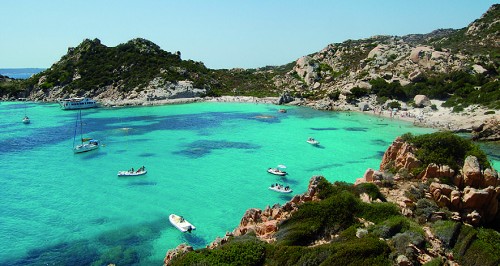
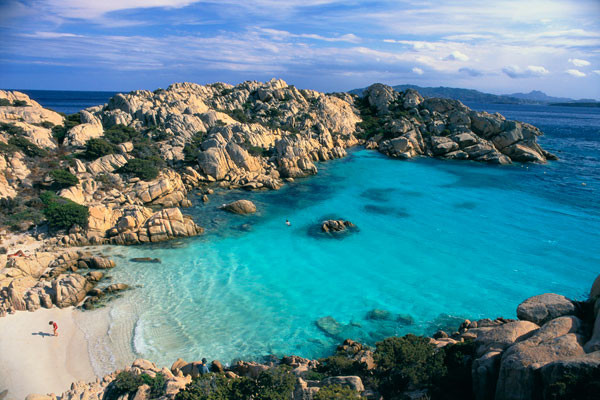

Every year tourists flock to San Francisco. New Yorkers used to flock to the Catskills in the summer. SFers used to go to Occidental and Camp Meeker for the summer months. I suggest citizens of the city named after Saint Francis, come to Sardinia for a Bohemian Be-in. Every year there will be a meeting of the Creative Alternative Minds from all over the world. Ways to save the planet will be discussed. Global Warming will be a paramount concern. Pioneers of the Internet can discuss the future of Cyber-Space.
As fate would have it, there are several statues of Saint Francis on Sardinia. One looks like the Statue of Liberty. Here is Destinies Welcome! We can save the Animals of the Earth.
Jon Presco
Alghero’s Enchanting Church of Saint Francis in Sardinia
http://www.sardegna.com/en/blog/st-francis-lula-1st-may-sardinia/
Come Home To Beautiful Mountain
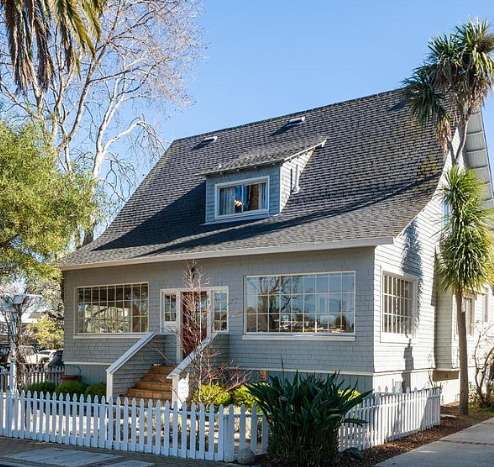
Posted on February 22, 2021 by Royal Rosamond Press
Releasing The German Oak King
Posted on July 9, 2024 by Royal Rosamond Press
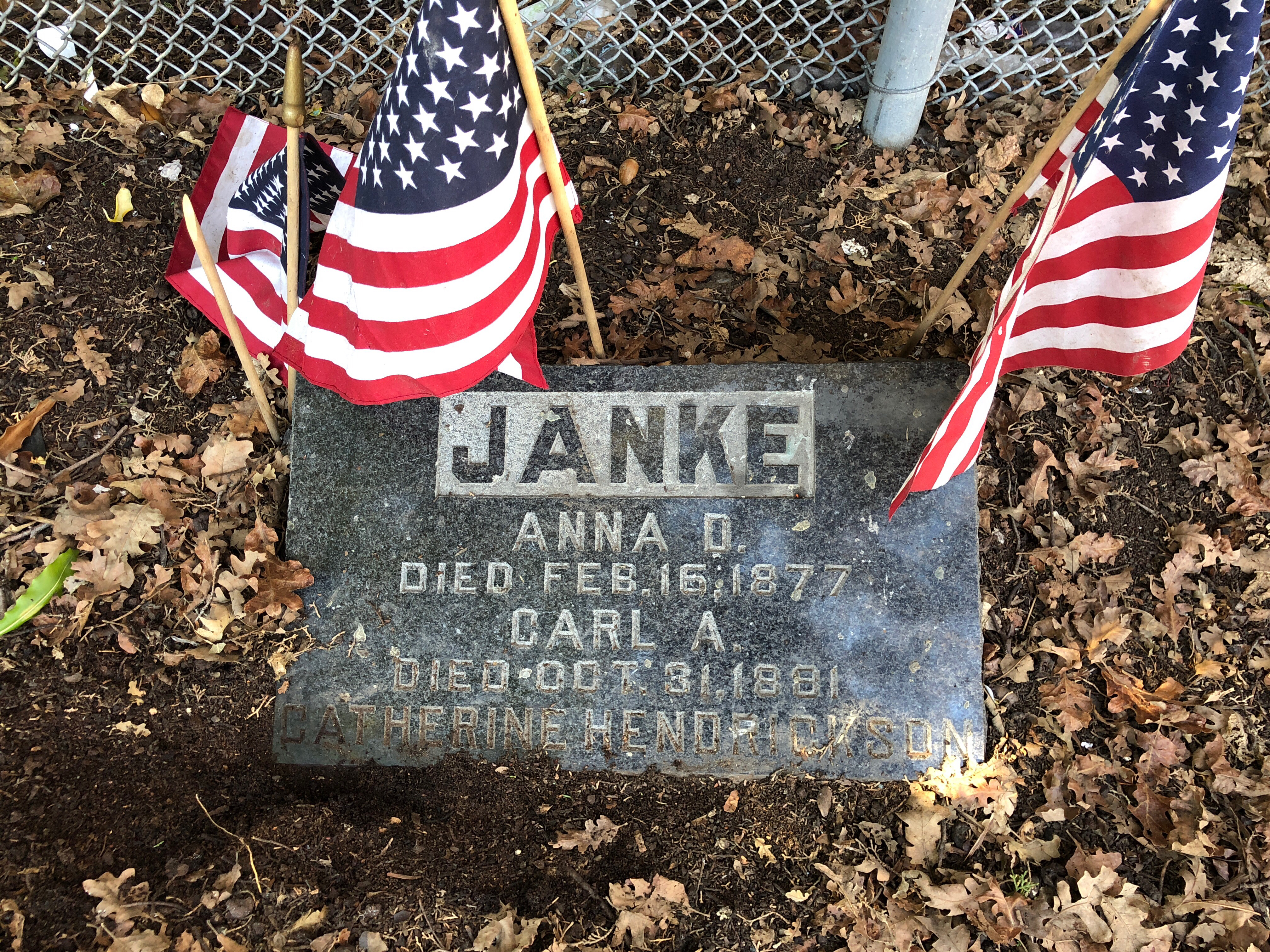
I gasped when I saw the oak leaves around The Janke Grave. I have wondered if members of the Belmont Historic Society – own much more of my German family history than they let on. Consider the observatory platforms built in the giant oak trees, and Janke’s offspring living in OAK – LAND!
What became of those giant oaks? Were the Jankes clamming they descend from Ancient Druids, and a anti-Pagan Christian – destroyed our family culture?
John-Janke Son of the Oak King
The Freeing of The Oak and Holly King
Posted on December 10, 2017 by Royal Rosamond Press


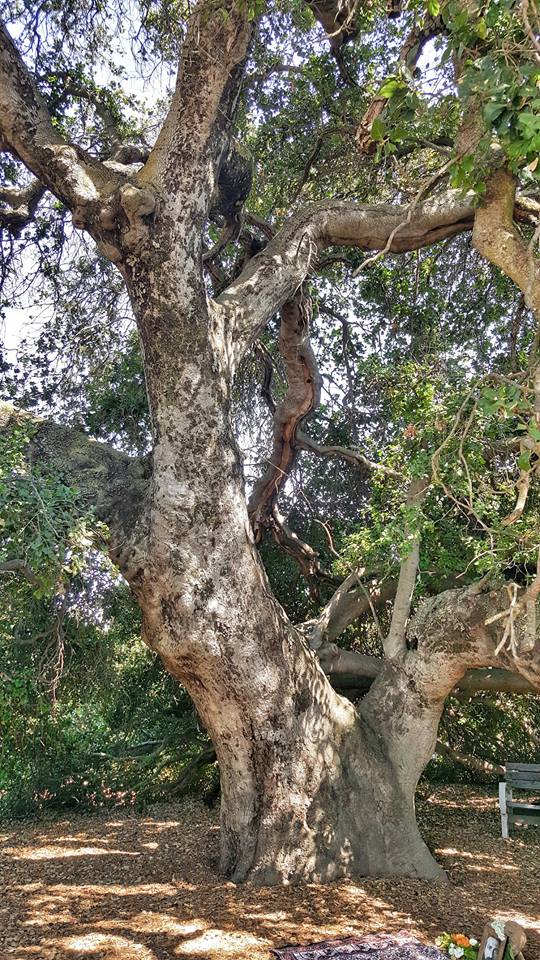


The Oak King has been freed from the great tree that was felled by wind and fire. The California Seasons are all eskew. They must be repaired or the whole State will be ablaze.
Jon
The Holly King is a speculative archetype of modern studies of folklore and mythology which has been popularized in some Neopagan religions. In his book The White Goddess, the author Robert Graves proposed that the mythological figure of the Holly King represents one half of the year, while the other is personified by his counterpart and adversary the Oak King: the two battle endlessly as the seasons turn. At Midsummer the Oak King is at the height of his strength, while the Holly King is at his weakest. The Holly King begins to regain his power, and at the Autumn Equinox, the tables finally turn in the Holly King’s favor; his strength peaks at Midwinter. Graves identified a number of paired hero-figures which he believes are variants of this myth, including Lleu Llaw Gyffes and Gronw Pebr, Gwyn and Gwythr, Lugh and Balor, Balan and Balin, Gawain and the Green Knight, the robin and the wren, and even Jesus and John the Baptist.[1][2]
At Midsummer it is the Oak King who is at the height of his strength, while the Holly King is at his weakest.
In some Wiccan traditions, the Oak King and the Holly King are seen as dual aspects of the Horned God. Each of these twin aspects rules for half the year, battles for the favor of the Goddess, and then retires to nurse his wounds for the next six months, until it is time for him to reign once more.
Often, these two entities are portrayed in familiar ways – the Holly King frequently appears as a woodsy version of Santa Claus. He dresses in red, wears a sprig of holly in his tangled hair, and is sometimes depicted driving a team of eight stags. The Oak King is portrayed as a fertility god, and occasionally appears as the Green Man or other lord of the forest.
Ultimately, while these two beings do battle all year long, they are two essential parts of a whole. Despite being enemies, without one, the other would no longer exist.
The Chosen Family of Earth
Posted on May 23, 2015by Royal Rosamond Press


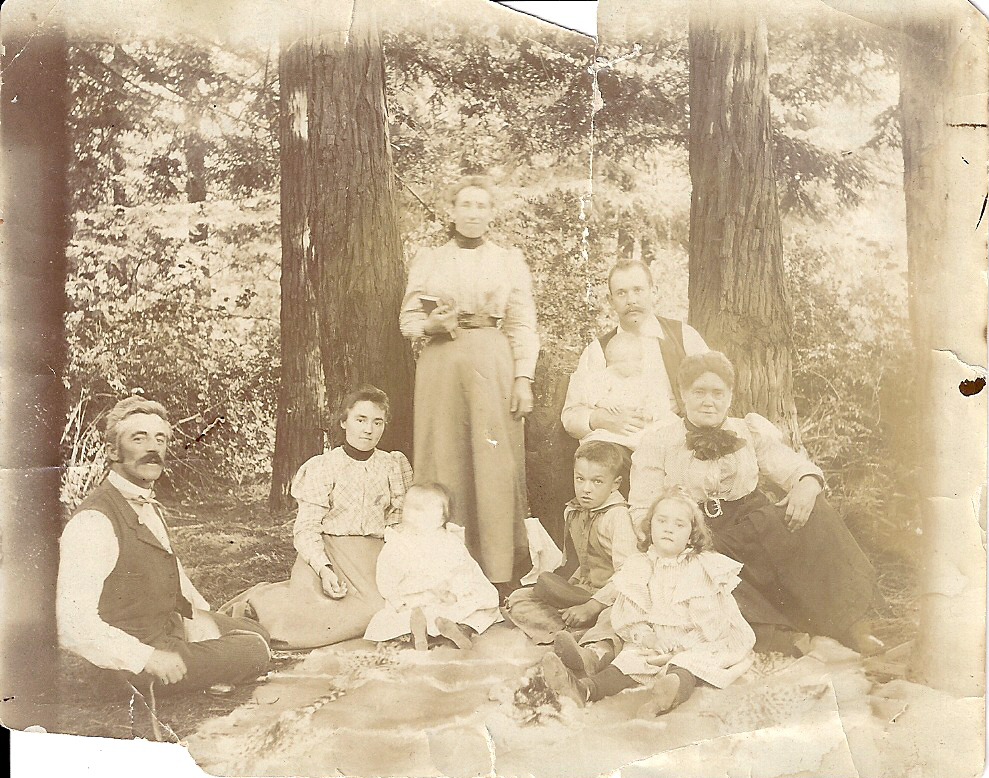


AVTR-211B Zo Saldana is Neytiri, a fearless and beautiful warrior, and a member of PandoraÕs royal clan of NaÕvi.

Fusion x64 TIFF File


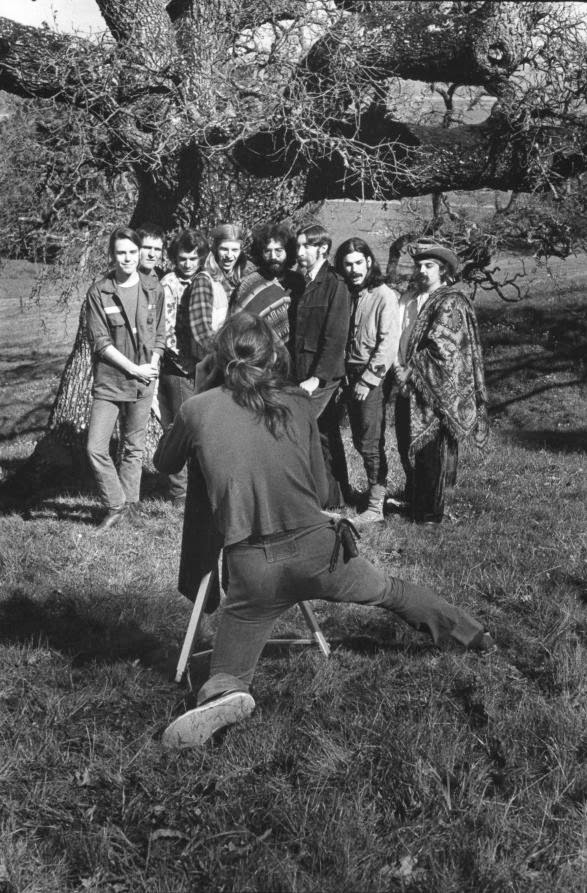
On the back of the Grateful Dead album, Aoxomoxoa, there is a photograph of a tree with people under it. Members of the Dead are here, along with members of the Olompali commune, known as ‘The Chosen Family’ are present. I will take this tree into the future. This is the Enidu tree from my science fiction novel ‘Elfine’ that I authored along with ‘The Gideon Computer’ inspired by my friends Nancy who lived with Mountain Girl’s brother on Ken Kesey’s ranch.
Lagunitus and Belmont Theme Park
Posted on September 22, 2017by Royal Rosamond Press




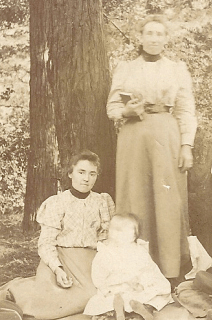
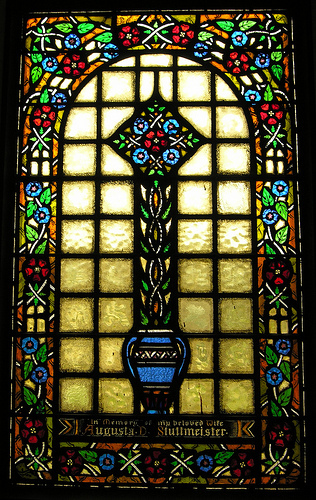
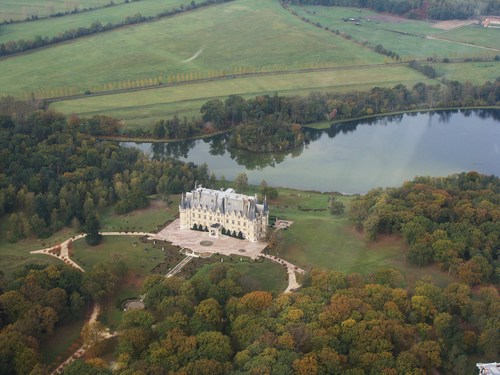
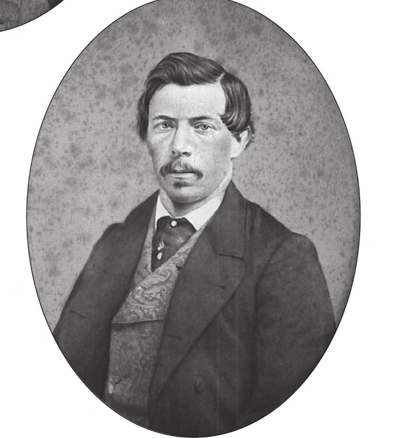


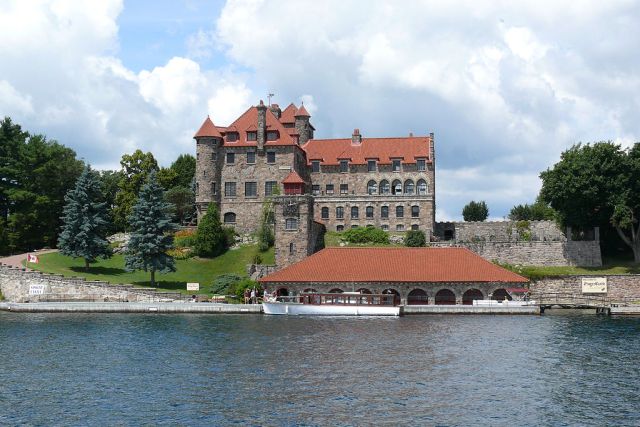
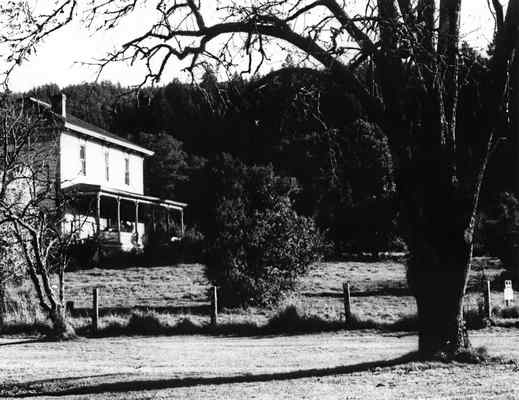
Above is the home of Adolph Maillard, at Castle Rock that is near Woodacre. Adolph sold his property to the Lagunitas Development Company who sold eight ajoining tracts of land to August D. Stuttmeister the daughter of Carl Janke who founded a Theme Park in Belmont California, modeled after a German Beirgarten. I suspect Augustus moved the Jankes and Stuttmeisters from Laurel Hill cemetary to the beautiful family crypt in Coma. You see her name behind my daughter and newborn grandson, Tyler Hunt. Did she have plans to build another Theme Park in Lagunitas located in Marin County, the home of the Beryl Buck Theme Park, called The Buck Institute on Aging, where growing old is frowned upon. Whether anyone can really solve this problem, outside Fantasy Writers, remains to be seen. Beryl Buck was not a Peter Pan and Wendy freak, as far as I can tell, but, Michael Jackson was. Before he bought the California Property for his Neverland, he looked at the Castle ‘The Towers’ built on Dark Island by the President of the Singer company. He modeled this castle after Fair Rosamond Clifford who had a Theme Labyrinth built around her at Woodstock, where a zoo was built. Sir Walter Scott claims he found the lost blueprints for Rosamond’s Bower, and wrote Woodstock. Washington Irving stayed with Scott, and exchanged letters with Henry Brevoort, the ancestor of Roberty Brevoort Buck, whose law firm created the Buck Trust and Foundation, and, mishandled the Creative Estate of Christine Rosamond Benton-Presco, a descendant of the Stuttmeister and Jankes. My later sister was the world famous artist ‘Rosamond’.
The Buck-Brevoort family founded Greenwich Village, and were Knickerbocker Royalty. Catherine de Navarre Brevoort claims she has ties to French Royalty and her husband built a Chateau around her. A month ago I founded the Land of the Wendlings inside the boundaries of Marin County in order to tap in the 1.7 billion dollar Buck Foundation. It only occurs to me now, that Wendy is a Wendling.
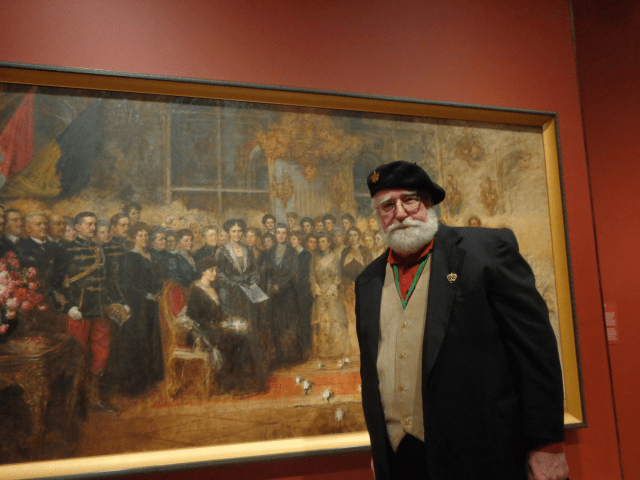
Is Adolph Mailliard in the Bonaparte Family Tree, and thus he is kin to Marie Louis Von Habsburg who married Napoleon, and is kin to Empress Zita who is seen in this painting I stand in front of, it my mission to see it is returned to the People of Austria.
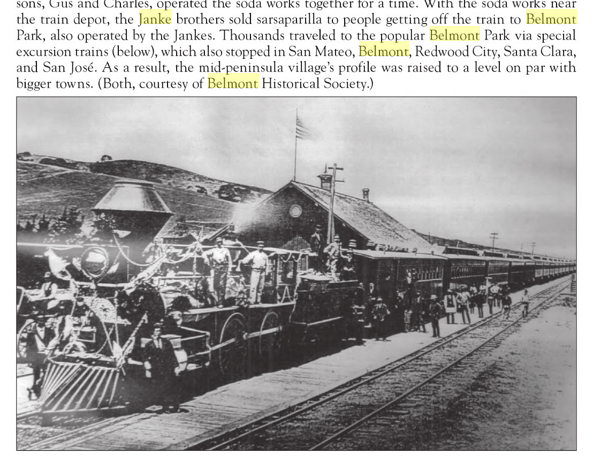
I now SEE where all this is leading! I SEE a Fantastic Theme Park in Larkspur! I SEE Atlantis and the Eternal Time Machine! I see The Best of the Best in Human History gathered in one place. I SEE a………Never World Fair! I SEE ships heading to The Land of Helen of Troy where there once was a Great Labyrinth! I SEE – Science! I SEE Count Cipriani inspecting his portable house that will be put on a ship bound for San Francisco! I see the six portable houses that Carl Janke brought around the Cape, and erected in Belmont in 1848 for Gold Miners who have struck it rich. I SEE The California Dream!
I SEE the finest Military Science and Naval History Museum in the world! I SEE a New Lady of Liberty and Peace welcoming all into the Golden Gate! I SEE Young Americans taking an interest in creating a Better World they now own Real Interest in! I SEE Elizabeth Patterson and other beautiful women who have married European Royalty. I SEE a International Festival, a World Bank of Commerce, Trade, and the Arts!
I make an appeal to Robert Brevoort Buck, to make amends. I SEE us sitting at a great table talking to The Walt Disney Company.
The traffic in Los Angeles is getting worse. Getting to Disneyland is almost impossible. I SEE fairies and BART carrying Believers in The American Dream – to a New Land!
Jon Presco
Copyright 2017

he Woodacre Improvement Club (WIC) was built on the site of Adolph Mailliard’s “Castle Rock” home.
Napoleon’s big brother Joseph, ex-King of Spain, likely sired “natural son” Louis Mailliard, whose grandson Adolph lived with both families in New Jersey until doctors advised him to relocate to a healthier climate with his wife Ann Ward & at least 2 children, John & 10 yr old Joseph. In 1868 the trip via Panama took 3 weeks. He had purchased the entire San Geronimo Valley, sight unseen, for the exorbitant amount of $50,000. When he was working in SF for a short time prior to that in 1850, the same land had been sold for a mere $1,000. The home they built (three times) in what would become Woodacre had 18 rooms, 11 fireplaces, 3 conflagrations & many visitors, including Alexander Graham Bell who installed the 1st telephone line in California there – ironic that cell phone reception is still iffy. Ann’s sister Julia visited often & they would sing her composition “The Battle Hymn of the Republic.”
http://www.mdhs.org/betsy-bonaparte/author/admin
An historic landmark on the island, “The Towers”, was long known as “Dark Island Castle” until recently renamed “Singer Castle”. The island is situated only a few yards south of the Canada-United States border that runs along the river.
Neverland Valley Ranch (renamed Sycamore Valley Ranch)[1] is a developed property in Santa Barbara County, California, located at 5225 Figueroa Mountain Road, Los Olivos, California 93441, first opened in 1988. It is most famous for being the home of the American entertainer Michael Jackson.[2] Jackson named the property after Neverland, the fantasy island in the story of Peter Pan, a boy who never grows up. Michael’s first encounter with the ranch came when he visited Paul McCartney, who was staying there during their filming of the “Say Say Say” video. According to La Toya Jackson, Michael expressed interest to her in someday owning the property at that time
This morning I opened an email from my kin, Murray Oltman, and read the proof of what I have been saying for over ten years, being, Augusta Stuttmeister, the beloved wife of William Oltman Stuttmeister, is kin to Carl Arugusta Janke the co-founder, if not sole founder of the City of Belmont California.
William August Janke, native of Hamburg, Germany, born Dec. 25, 1842, died Nov. 22, 1902, son of Carl August & Dorette Catherine Janke.
Carl Janke came to San Francisco in 1848, one year before the Gold Rush. According to an article in the DAR, he brought six portable houses around the Cape and erected them in Belmont for gold miners who had struck it rich. As fate would have it, William Ralston ‘The Man Who Built San Francisco’ and his partner, lived in Belmont in a house that still stands, called Ralston Hall. I believe this is one of Janke’s homes that Coun Leonetto Cipriani purchased, and added on to. This house had 5,000 screws in it according to one (lost) article I read. Another lost article said these homes were manufactured in Mass. then shipped to California. I suspect two of these homes are found on Dolores Street in the Mission. One article said one house was moved a distance from the Tanforan ranch. The name Tanforan may have been the name of the Theme Park that Janke built in Belmont, perhaps the first in California. It also might be Turnverein, the German gymnastic clubs of the Forty-Eighters. There is much evidence the Stuttmeisters were members of the Turner Societies of Free-thinkers.
What is truly astounding, is that Sir Thomas Hesketh married Florence Sharon at Ralston Hall, and Florence Breckenridge married their son. Florence descends from John Witherspoon,and thus is kin to the Jessie Benton Fremont, thus the Presco family, when Christine Rosamond Presco married Garth Benton.
This is truly a Rags to Riches story. Christine and I used to take walks in Piedmont where the Sharon family lived. The Hesketh family are in the Peereage.
Then there is the Oddfellow gathering in Belmont that may have been staged by William Ralston. The Oddfellows were forming a union with the Freemasons and holding Knights Templar titles. Was the Stuttmeister-Janke union a Masonic-Odfellow marriage? If so, my family owns all those legends that Dan Brown gathered into his basket to create a money-making work of fiction.
When my daughter gets married, I will do all that is humanly and divinely possible to see that she ties the night at Ralston Hall, because; “All’s wll, that ends well!”
Jon Presco
Copyright 2011
In 1858, when Elizabeth Patterson Bonaparte was seventy-three years old, she lamented “My Beauty is departed,” a sentiment she had uttered for decades. Her beauty had been celebrated throughout her life. In her youth, she was thought the most beautiful woman in America. Her appearance was the thing of legends and, in 1803, drew Jérôme Bonaparte to Baltimore to meet the “exquisite creature” described to him.
For a woman whose beauty was central to her identity, aging must have been difficult. Rather than embracing the changes time wrought, Elizabeth defied them. Her account books documents a recipe for hair dye, as well as various compounds to create creams and possibly cosmetics. If she must age, she was going to do it as gracefully as possible.
As early as 1815 when Elizabeth was 30, a letter from her friend Elizabeth Godefroy suggests that Elizabeth saw her looks declining. Godefroy assures her, “I do not believe you about your looks.” Perhaps she attributed her visible aging to the strain and stress of Napoléon’s annulment, her return to her father’s unwelcoming home in Baltimore and her (successful) suit for divorce from Jérôme. Life had been, as Elizabeth once said, “a mean and grinding martyrdom.” Such emotional misery is not easy on the looks.
Despite her perception of her appearance, Elizabeth’s beauty is documented in several surviving portraits. In 1838 when Elizabeth was 53, she had her silhouette cut in Rockaway Beach, New York. The solid black image depicts her in profile with a softening jawline and an appropriately middle-aged appearance. The silhouette is the last known image of her that survives. To date, no photographs of her are known. Instead, Elizabeth commissioned copies of her portraits to give as gifts. How did this woman look at 40, 60, 90?
Florence Louise Breckinridge was born in November 1881 at California, U.S.A..2 She married Thomas Fermor-Hesketh, 1st Baron Hesketh, son of Sir Thomas George Fermor-Hesketh, 7th Bt. and Florence Emily Sharon, on 9 September 1909 at British Embassy Church, Paris, France.
1888: From the Daily Alta, an article on the marriage of Dr. William O.
Stuttmeister and Augusta D. Janke.
Daily Alta California, Volume 42, Number 14175, 24 June 1888
STUTTMEISTER-JANKE.
One of the most enjoyable weddings of the past week took place at
Belmont, Wednesday morning last, the contracting parties being Miss
Augusta Janke, daughter of Mr. and Mrs. August Janke of Belmont,
and Dr. Wm. Stuttmeister of San Francisco. The house was
handsomely decorated with a rich profusion of ferns and flowers, and
at the appointed hour was filled with the relatives and intimate friends
of the contracting parties. At 11 o’clock the wedding march was played
and the bridal party entered the parlor. The bride was attended by Miss
Alice Stuttmeister, a sister of the groom, and Miss Minnie Janke, a
sister of the bride, as bridesmaids, and Dr. Muldownado and Wm.
Janke, a cousin of the bride, were groomsmen. The Rev. A. L. Brewer
of San Mateo performed the beautiful and impressive ceremony under
an arch composed of flowers and greens very prettily arranged, after
which the guests pressed forward and offered their congratulations.
The bride was attired in a very pretty and becoming costume of the
crushed strawberry shade, and wore a corsage bouquet of orange
blossoms. She carried a handsome bouquet of white flowers. After the
guests had paid their compliments the bride and groom led the way to
the dining-room, where the wedding dinner was served and the health
of the newly married pair was pledged. The feast over, the guests
joined in the dance, and the hours sped right merrily, interspersed with
music singing and recitations, until the bride and groom took their
departure amid a shower of rice and good wishes. Many beautiful
presents were received. Dr. and Mrs. Stuttmeister left Thursday
morning for Santa Cruz and Monterey, where they will spend the
honeymoon. On their return they will make their home in Belmont.
After escaping an assassination attempt in Vienna while negotiating the Treaty of Schönbrunn on 12 October 1809, Emperor Napoleon decided that he needed an heir to cement his relatively young Empire.[9] He also sought the validation and legitimation of his Empire by marrying a member of one of the leading royal families of Europe. He began proceedings to divorce Joséphine de Beauharnais, who did not bear him a son, and began searching for a new empress. His wish to marry Grand Duchess Anna Pavlovna of Russia, the youngest daughter of Tsar Paul I of Russia, caused alarm in Austria, who were afraid of being sandwiched between two great powers allied with each other.[10] At the persuasion of Count Metternich, a marriage between Napoleon and Marie Louise was suggested by Emperor Francis to the Count of Narbonne[11][12] but no official overture was made by the Austrians.[13] Though officials in Paris and Austria were beginning to accept the possibility of the union, Marie Louise was kept uninformed of developments.[14]
Frustrated by the Russians delaying the marriage negotiations, Napoleon rescinded his proposal in late January 1810 and began negotiations to marry Marie Louise with the Austrian ambassador, the Prince of Schwarzenberg.[15] Schwarzenberg signed the marriage contract on 7 February.[16] Marie Louise was informed of the marriage by Metternich.[17] When asked for consent, she replied: “I wish only what my duty commands me to wish.”[17]
1911: Dr. Willian O. Stuttmeister was practicing dentistry in Redwood
City, CA. (Reference: University of California, Directory of Graduates,
1864-1910, page 133).
Records from Tombstones in Laurel Hill Cemetery, 1853-1927 – Janke
– Stuttmeister
Mina Maria Janke, daughter of William A, & Cornelia Janke, born
February 2, 1869, died March 1902.
William August Janke, native of Hamburg, Germany, born Dec. 25,
1642, died Nov. 22, 1902, son of Carl August & Dorette Catherine
Janke.
Frederick William R. Stuttmeister, native of Berlin, Germany, born
1612, died January 29, 1877.
Mrs. Matilda Stuttmeister, wife of Frederick W.R. Stuttmeister, born
1829, died March 17, 1875, native of New York.
Victor Rudolph Stuttmeister, son of Frederick W.R. & Matilda
Stuttmeister, born May 29, 1846, died Jan. 19, 1893, native of New
York.
http://www.ebooksread.com/authors-eng/daughters-of-the-americanrevolution-
california-s/records-from-tombstones-in-laurel-hill-cemetery-
1853-1927-gua/page-6-records-from-tombstones-in-laurel-hillcemetery-
1853-1927-gua.shtml
http://www.ralstonhall.com/tour/video.html
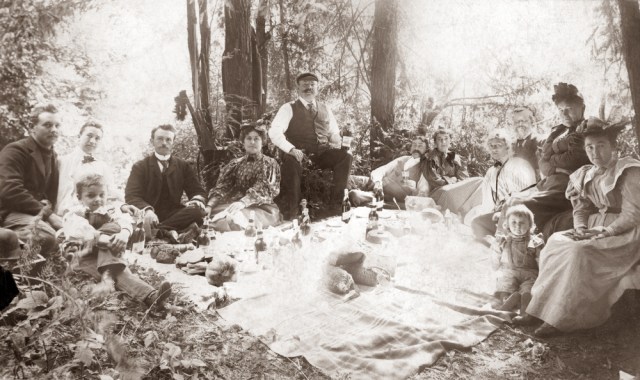
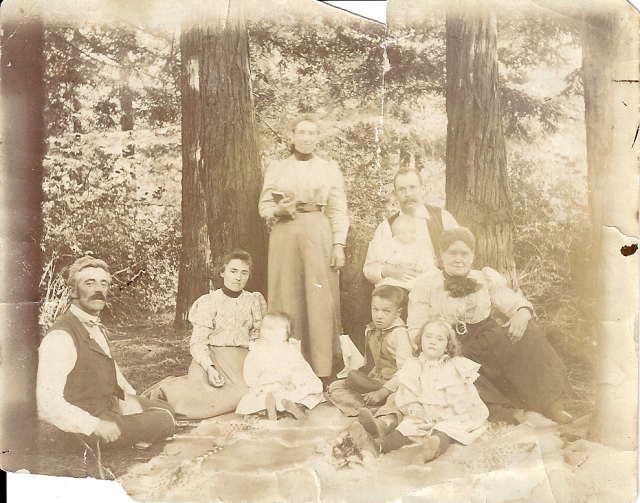
William Oltman Stuttmeister went to the University of California and practiced dentistry in San Francisco. He bought two vacation properties in San Geronimo where he retired and died. The Maillard, Count Cipriani, Napoleon, and Prince Victor Napoleon connection is interesting. Is this the continuation of the Belmont Colony? Was this land purchased with a recovered treasure? Many have searched for the lost treasure of Sir Francis Drake near this valley overlooked by the ‘Sleeping Maiden’ mountain.
Below is a video showing Cipriani’s home inside Ralston’s additions. It was a portable house. An expert needs to compare this with the Tanforan cottages. Samples of the wood and screws need to taken and compared to the houses Janke brought around the Cape. William married Augusta Janke.
Generation No. 1
1. Dorthia Matilda5 Oltman (Jurgen4 Oltmann, Jacob3, Jurgen2, Peter1) was born September 13, 1829 in New York, NY, and died March 17, 1875 in San Francisco, CA. She married Frederick William R. Stuttmeister. He was born 1812 in Germany, and died January 29, 1877 in San Francisco, CA.
Children of Dorthia Oltman and Frederick Stuttmeister are:
2 i. Victor Rudolf6 Stuttmeister, born May 29, 1846 in New York; died January 19, 1893 in German hospital in San Francisco.
3 ii. Bertha Matilda Stuttmeister, born January 02, 1860 in Califonia; died May 07, 1931 in Merritt Hospital in Oakland, California. She married Wilham E. C. Beyer; born in Germany.
4 iii. William Oltman Stuttmeister, born 1862. He married Augusta Janke June 1888.
+ 5 iv. Alice L. Stuttmeister, born October 13, 1868 in San Francisco, CA; died February 13, 1953 in Roseville Community Hospital in Oakland, CA.
Jon Presco
http://theoltmans.com/images/Ancestors_of_Murray_Oltman_and_Ralph_Oltman.pdf
http://www.historicunioncemetery.com/Person.php?person=Janke%2C+Dorette+Catherine
http://www.historicunioncemetery.com/Marker.php?markername=JANKE
| From the 1950 headstone survey — (and the current stone) JANKEANNA D Died Feb 16, 1877 CARL A. Died Oct. 31, 1881 CATHERINE HENDRICKSON— From the 1937 headstone survey — (apparently there was a different stone) Carl August Janke, born in Dresden, Germany Oct. 1806, died Belmont, Calif. Sept. 2, 1881 Dorette Catherine, wife of Carl August Janke, born in Hamburg, Germany, July 21, 1813, died in Belmont, California, Feb 16, 1877 Mutter Heinrich, mother of Dorette Catherine Janke, born in Island of Heligoland, Germany, 1781 died in Belmont, California 1876 |
http://www.historicunioncemetery.com/Person.php?person=Janke%2C+Lilly
http://www.sfgenealogy.com/sf/cemetery/laurel_hill_cemetery.pdf
http://www.belmont.gov/Home/Components/FacilityDirectory/FacilityDirectory/158/520
http://www.belmontchamber.org/history.html
An historic landmark on the island, “The Towers”, was long known as “Dark Island Castle” until recently renamed “Singer Castle”. The island is situated only a few yards south of the Canada-United States border that runs along the river.
In his 1911 novelisation Peter and Wendy, Barrie referred to “the Neverland”, and its many variations “the Neverlands”.[1] In the earliest drafts of Barrie’s play, the island was called “Peter’s Never Never Never Land”,
Peter Pan; or, the Boy Who Wouldn’t Grow Up or Peter and Wendy is J. M. Barrie‘s most famous work, in the form of a 1904 play and a 1911 novel. Both versions tell the story of Peter Pan, a mischievous yet innocent little boy who can fly, and has many adventures on the island of Neverland that is inhabited by mermaids, fairies, Native Americans and pirates. Peter has many stories involving Wendy Darling and her two brothers, his fairy Tinker Bell, the Lost Boys, and the pirate Captain Hook. The play and novel were inspired by Barrie’s friendship with the Llewelyn Davies family. Barrie continued to revise the play for years after its debut until publication of the play script in 1928.
The Bonapartes had tried to bestow nobility upon Cipriani, but he
refused fearing to become more of a puppet then he was. Victor
Emanuel had made him Governor of Balogna, and he would become the
first President of the United Kingdom of Italy. Cipriani would marry
an American, Mary Tolly Worhtington of Baltimore County who a
descendant of George Washington. Cipriani descends from the famous
Caracciolo family of Naples, and appears to be the son of Napoeleon’s
major dommo, Franchesci Cipriani. The whole truth is not being told
here, and Cipriani may have been playing down the royal hand he was
dealt.
Jerome Bonaparte married Elizabeth Patterson, and wealthy
heiress. Emperor Napoleon had marred Marie-Louis von Habsburg, and it
was a Habsburg that be amply qualified to become the first Emperor of
Mexico. Napoleon III. gave the emigrants troops, French financial
circles assured their assistance. The French supported the
conservatives in the civil war with the radicals and occupied the
capital. They planned an expansion of France on the American soul.
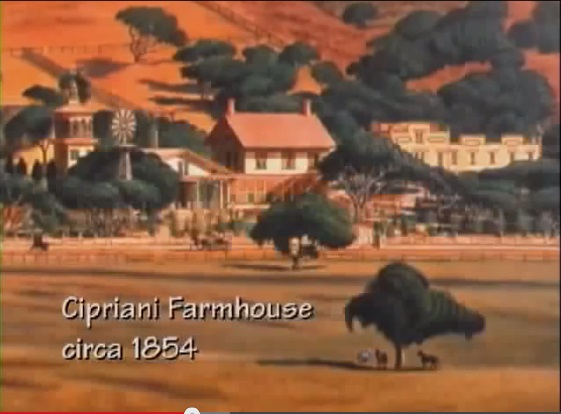
Cipriani built the farmhouse shown on the left in 1852 in Italy (probably Corsica, his home), had it dismantled, packed in labeled wooden crates amounting to 150 tons, shipped to San Francisco and then hauled in wagons 22 miles south to Cañada del Diablo, now known as Belmont in central San Mateo County.

In the mid-1860s, Bank of California founder William Chapman Ralston sought a country place conducive to entertaining and purchased, “tore down, built up and embellished” Cipriani’s Belmont villa (Sacramento Daily Union 1888) to create “The White House of the West.”
Mrs. Anna Lake Townsend, a.k.a. Shirley, Philip, wrote this in her column “Freehand Notes” in the Sacramento Daily Union, July 14, 1883:
Although there is very little boasting among Californians about their sumptuous homes, and while they accept with remarkable humility the patronizing descriptions given by the Eastern traveler of places on the Hudson, Long Island and in the suburbs of Boston, to say nothing of the oppressive claims of country-seats in England, they have really every right in the world to tell a reasonable pride in their possessions. After all the State is only thirty years old, and the luxurious laying out of Monterey, the magnificence of Palo Alto, the San Mateo and Menlo Park residences, and the white glories of Belmont and its ivy-covered stone stable, make a wonderful showing of wealth and taste, and, at a certain season, of enlightened hospitality.
The most historical of all these residences, the richest is associations, the most widely known outside of California, is undoubtedly Belmont, now the property of Mr. Sharon, and formerly that of the brilliant, restless and ill-starred Ralston…. The nucleus, so to speak, of the house as it now is was built by General Cipriani, an Italian patriot who had fought with Garibaldi, and came to California somewhat richer in money than many patriots-Italian or other nationality-and built at Belmont.
Posted in Uncategorized | Leave a comment
“I’m a Florentine…thank God.”
Posted on March 16, 2015by cgkmccarthy
Noting from his strange accent that he was not American, I asked of what country he might be.
The old fellow was Neopolitan (sic).
“‘I am delighted,” I said.
“Let me shake your hand.”
“Are you Italian?’” he asked.
“Yes, thank God.”
“And of what region?”
“I’m a Florentine,” I answered.
Falbo, Ernest, trans. 1962. California and Overland Diaries of Count Leonetto Cipriani from 1853 through 1871; containing the account of his cattle drive from Missouri to California in 1853; a visit with Brigham Young in the Mormon settlement of Salt Lake City; the assembling of his elegant prefabricated home in Belmont, the first of consequence on the San Francisco peninsula, later to become The Ralston Mansion. Portland, OR.: Champoeg Press.
Posted in Uncategorized | Leave a comment
Leonetto Cipriani’s Death Announced to Italian Senate, 1888
Posted on March 16, 2015by cgkmccarthy
I must announce the death of the Senator General Count Leonetto Cipriani. He ceased to live May 10 last in his castle at Bellavista, Centuri in Corsica, where he was born October 16, 1812. He was a man of mettle and of strong spirit, and gave evidence not dubious in his eventful life, sealed with the fact of having written by himself and with a sure hand, shortly before his death, the news of his death that he was sent to the Presidency. In this unique announcement he declares that all praise is read in the Senate a letter that he wrote in 1860 the King Vittorio Emanuele. To fulfill the last wishes of his colleague, I will read this document for him honorable, which was then published, and that will be what conchiusione one can say authoritatively this brief commemoration. “Colonel, the important services she has rendered to the nation since 1848, and mainly in the last year, holding the Romagna, would not let me give up avail myself of his work patriotic and sagacious . But since for reasons of personal convenience, she has to go elsewhere, and walks away before the country was able to give her a certificate of appreciation and esteem with which accompanies it, do not be disagreeable that I witnessed the senses of my grateful heart. Italians will not forget what she did in very difficult times for the national cause, and this will pel noble soul of her prize grateful. I know that in any event she future there niegherà the support of his arm and his council . This I wanted to tell her, who identified himself with the destiny of the nation, they divide the hopes and duties. Florence, April 29, 1860. Vittorio Emanuele. ”
(Senate of the Kingdom, 1888)
Maria Ludovica of Austria, Empress of France
by Susan Flantzer

painted by Jean-Baptiste Isabey, c1810. source: Wikipedia
Maria Ludovica of Austria, Empress of the French
Archduchess Maria Ludovica Leopoldina Franziska Therese Josepha of Austria was the second wife of the French Emperor Napoleon, and later Duchess of Parma, Piacenza and Guastalla in her own right. She was born on December 12, 1791 at the Hofburg Palace in Vienna, the eldest child of Franz II, Holy Roman Emperor (later Emperor Franz I of Austria), and Maria Teresa of Naples and Sicily. She had 11 siblings:
- Emperor Ferdinand I of Austria (1793) – married Maria Anna of Savoy, no issue
- Archduchess Marie Caroline (1784) – died in infancy
- Archduchess Caroline Ludovica (1795) – died in childhood
- Archduchess Maria Leopoldina (1797) – married Emperor Pedro I of Brazil, had issue
- Archduchess Marie Clementine (1798) married Leopold, Duke of Salerno, had issue
- Archduke Joseph Franz Leopold (1799) – died in childhood
- Archduchess Marie Caroline (1801) – married King Friedrich August II of Saxony, no issue
- Archduke Franz Karl (1802) – married Sophie of Bavaria, had issue
- Archduchess Marie Anna (1804) – unmarried
- Archduke Johann Nepomuk (1805) – died in childhood
- Archduchess Amalie Theresa (1807) – died in infancy
Posted on May 3, 2016by Royal Rosamond Press

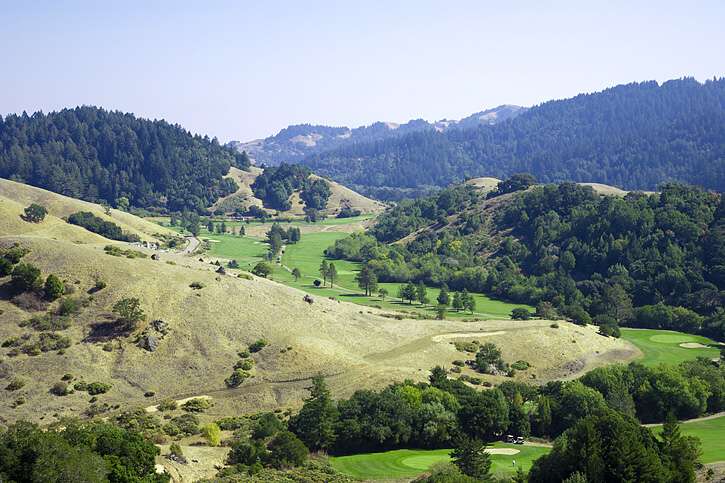


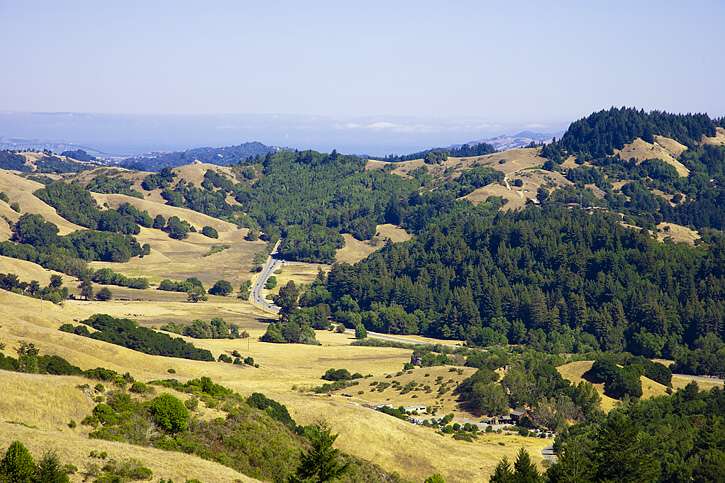
William Oltman Stuttmeister went to the University of California and practiced dentistry in San Francisco. He bought two vacation properties in San Geronimo where he retired and died. The Maillard, Count Cipriani, Napoleon, and Prince Victor Napoleon connection is interesting. Is this the continuation of the Belmont Colony? Was this land purchased with a recovered treasure? Many have searched for the lost treasure of Sir Francis Drake near this valley overlooked by the ‘Sleeping Maiden’ mountain.
Below is a video showing Cipriani’s home inside Ralston’s additions. It was a portable house. An expert needs to compare this with the Tanforan cottages. Samples of the wood and screws need to taken and compared to the houses Janke brought around the Cape. William married Augusta Janke.
Jon Presco

Maria Clotilde was the eldest of eight children born to Victor Emmanuel, King of Sardinia by his first wife and cousinArchduchess Adelaide of Austria. Her father would later become the King of a united Italy as Victor Emmanuel II of Italy.
Maria Clotilde’s paternal grandparents were Charles Albert of Sardinia and Maria Theresa of Tuscany.
Her maternal grandparents were Archduke Rainer of Austria and Elisabeth of Savoy. Rainer was a younger son ofLeopold II, Holy Roman Emperor.
John B. Coleman and wife to Augusta Stuttmeister, lot 111, map |of Lagunltas tract, sub 10, portion of I San Geronimo Rancho. Deed —
http://cdnc.ucr.edu/cgi-bin/cdnc?a=d&d=SN19190118.2.62
Sausalito News, Volume 35, Number 3, 18 January 1919
Mailliard to Lagunitas Development Co., mortgage 43-119; lot 13, Map of Sub. No. 10, Lagunitas Tract. Deed — Lagunitas Development Co. to William O. and Augusta D. Stuttmelster, lot 13, Map of Sub. No. 10, Lagunitas Tract. Deed of Trust — W. 0. and Augusta Stuttmeister lo Katherlne Sheehy and F. Levy, to John B. ColeI man; same as above Deed
http://cdnc.ucr.edu/cgi-bin/cdnc?a=d&d=SN19190118.2.62
EARLY 1900’s The Valley swelled to 30 families
In 1905 and 1906 the Mailliard heirs subdivided much of Lagunitas, and in 1912 they sold their remaining interest in San Geronimo Valley real estate to the Lagunitas Development Company, which subsequently subdivided Forest Knolls, San Geronimo, and Woodacre. Most of the homes built prior to World War II were used as summer cabins. In 1925 San Geronimo had 20 families that “swelled to 30” in the summer. After the opening of the Golden Gate Bridge, offering easier access to Marin County, and with the coming of World War II, when Sausalito shipyard workers needed housing, many summer cabins became permanent residences.
http://sgvpg.org/planning-resources/sg-valley-historical-information/

Settlement and Development
Rafael Cacho, a military officer and friend of General Mariano Vallejo, was the first person to hold title to the San Geronimo Valley. On February 12, 1844, he was granted the 8,800 acre Rancho Cañada de San Geronimo (The Valley of Saint Jerome) by the Mexican government, in acknowledgment of his loyal service as a Mexican citizen. Cacho lived in the Valley with his wife and children, grazing cattle and horses, until his finances forced a sale in 1846 to Lieutenant Joseph Revere, who purchased the rancho for $1,000 and an interest in a very small ranch in Napa. Revere, a naval officer and grandson of Paul Revere, had served under General Vallejo, and had released the beleaguered general from imprisonment at Sutter’s Fort. Revere had discovered the Valley while hunting elk, and immediately determined to make it his own. He wrote:
The Canada of San Geronimo is one of the loveliest valleys in California, shut in by lofty hills, the sides of which are covered with redwood forests, and pines of several kinds, and interspersed with many flowering trees and shrubs peculiar to the Country. Through it flows a copious stream, fed by the mountain brooks; and the soil in the bottomlands is so prolific, that a hundred bushels of wheat to the acre can be raised with the rudest cultivation and other crops in corresponding abundance.
Joseph Revere retained ownership of Rancho San Geronimo for only four years, and then sold it to Rodman Price for $7,500. Price returned to New Jersey, where he was elected Governor, and hired Lorenzo White, a 49er gold miner, to manage Price’s cattle operation on the rancho. For many years the rancho was known as White’s Valley, and White’s Hill still bears his name. Title to Rancho San Geronimo was then sold several times, finally, in 1854, to Adolph Mailliard, whose father was Louis Mailliard, “natural son” of Joseph Bonaparte, King of Spain and Naples, and elder brother of the infamous Napoleon Bonaparte. After the family’s exile from Spain, Louis Mailliard retrieved from Switzerland a strongbox filled with the family’s jewels, and brought the treasure to their new home in New Jersey. Adolph Mailliard purchased the rancho, to celebrate the birth of his son, Joseph, for $50,000, a mighty sum considering it was purchased a mere eight years earlier for $1000.
Adolph Mailliard and his wife, Annie, set out to establish a grand estate, building their home of 18 rooms and 11 fireplaces near Castle Rock, in today’s Woodacre. Annie’s aunt described it as “an unremarkable house with a deep veranda all around and small rooms with high ceilings.” Her sisters pitied her isolation, and visitors from the East “were to wonder how Annie could put up with straw matting on her floors, awkward servants and austere furniture, but she did.” In fact, Annie loved her house and her Valley, and refused to ever leave. Annie’s sister, Julia Ward Howe, author of “The Battle Hymn of the Republic” and an active abolitionist and suffragette, would often enjoy relaxing at the Mailliard’s home in the Valley during her travels.
Early in the second half of the nineteenth century Adolph Mailliard transferred title to tracts of 400-600 acres each to James and Thomas Roy in San Geronimo, and to James Dickson and Calvin Dickson in Woodacre. Little other division of the rancho occurred through the end of the century.
In 1895 Annie Mailliard died of breast cancer in the home she loved so dearly. Her husband died a year later. Their home became the clubhouse of the Woodacre Improvement Club in 1924. The building burned in 1958 and was replaced, where it continues to serve the Club’s members and the Valley community.
In 1905 and 1906 the Mailliard heirs subdivided much of Lagunitas, and in 1912 they sold their remaining interest in San Geronimo Valley real estate to the Lagunitas Development Company, which subsequently subdivided Forest Knolls, San Geronimo, and Woodacre. Most of the homes built prior to World War II were used as summer cabins. In 1925 San Geronimo had 20 families that “swelled to 30” in the summer. After the opening of the Golden Gate Bridge, offering easier access to Marin County, and with the coming of World War II, when Sausalito shipyard workers needed housing, many summer cabins became permanent residences.
Following World War II, little changed in the Valley, but in April 1961 the Marin County Board of Supervisors adopted a Master Plan proposal for the Valley that envisioned 20,000 new residents, and 5,000 new homes that would cover the Valley’s northern and southern hillsides, up to and around Kent Lake. The land around Spirit Rock was proposed to be the site for a civic center, fire station, shopping center, heliport, and multifamily residences. A freeway was proposed to come from San Anselmo over White’s Hill and through the center of the Valley, with an interchange that would cross into Nicasio Valley. During the next ten years only the golf course and a few homes adjacent to the golf course, on San Geronimo Valley Drive, were developed as elements of that 1961 Master Plan.
During the 1960s the Valley became a magnet for “Flower Children” from San Francisco, who set up camps and other unconventional abodes in the hills of San Geronimo Valley, much to the horror of many Valley residents.
In 1972 a Countywide Plan was proposed for adoption by the Marin County Board of Supervisors, and was adopted in 1973, emphasizing low density and the preservation of open space, rural areas, and agriculture. Also in 1972, Lagunitas resident Jean Berensmeier was informed that growth was a-comin’ to the Valley, based on the 1961 Valley Master Plan. Discovering the 1961 Master Plan, she organized a community meeting to review the Plan and the proposed Countywide Plan. The ad hoc Planning Group was thus born, and worked for five years to create a new Community Plan that met the goals of the 1973 Countywide Plan, preserving the rural character of the Valley. Gone were the 5,000 new homes, the Civic Center, the shopping center, the heliport, and the freeway. Instead, boundaries were set around the four villages so the remaining land could be preserved for its rural character, and for open space and agricultural use, with only a spattering of homes outside the village boundaries. The San Geronimo Valley Community Plan was adopted in January 1978.
Painted miniatures of Louis Mailliard and his wife Marguerite Angelique Redet, before 1820
When Joseph Bonaparte arrived in the United States in August 1815, he was accompanied by four people, including his secretary Louis Mailliard. Mailliard served Joseph faithfully for 36 years and became his closest confidant. In 1817 Joseph sent Mailliard on a hunt for buried treasure in Europe.
From Mortefontaine to America
Mailliard was not Joseph Bonaparte’s son, although it is sometimes stated that he was. Louis Hypolite Mailliard was born in Mortefontaine, France, on May 22, 1795. In 1798, Joseph bought the château of Mortefontaine, north of Paris. In 1808, Mailliard entered Joseph’s service. He accompanied Joseph when the latter became King of Spain, and stayed with him through the fall of Napoleon’s Empire. In 1815 he fled with Joseph into exile in the United States.
Mailliard married Marguerite Angelique Redet, whose father was Master of Horse for Joseph’s wife Julie. At some point Marguerite followed her husband to America. Their son Adolphe was born at Point Breeze, Joseph’s estate in Bordentown, New Jersey, on August 5, 1819. Sadly, Marguerite died 10 days later, leaving Mailliard heartbroken. At age two and a half, Adolphe was sent to France to be raised by his grandfather, who sent him to boarding school and college under the name of “Henri Lustre.” (1)
A Swiss treasure hunt
In 1817 Joseph sent Louis Mailliard back to Europe to retrieve a cache of diamonds, papers and money he had buried in 1815, with Mailliard’s help, in a foxhole at his Swiss estate of Prangins. The ship on which Mailliard sailed was wrecked in a storm off the coast of Ireland, but the passengers and crew were saved. Mailliard stopped in Brussels, where – as instructed by Joseph – he tried to persuade Joseph’s wife Julie and their daughters to come to America. Julie demurred, saying her physicians told her she could not stand the sea voyage.
Mailliard continued on to Switzerland and presented himself to a man named Véret, Joseph’s financial administrator. Just as he assumes a disguise for his mission to Europe in Napoleon in America, Mailliard was disguised as an Englishman, complete with a red wig and a fake accent. This was convincing enough to deceive Véret, who laughed when Mailliard revealed his identity.
The two agreed that Mailliard should pose as an English speculator who wanted to prospect for coal at Prangins. Véret hired two unsuspecting workmen to help with the digging. Mailliard instructed them to start at some distance from where he knew Joseph’s treasure was buried. Gradually he brought them closer, and finally to the exact spot, where he had them dig only to a certain depth, after which he dismissed them. That night, he returned with Véret to remove the final layer of dirt and uncover the iron box. Back at Véret’s house, they opened the lid and inventoried the contents against a list Mailliard had brought with him. After drying out the parcels, among which were 16 diamonds worth approximately five million francs, they ascertained that nothing was missing. Mailliard returned to Point Breeze with the treasure. (2)
Joseph Bonaparte’s “right hand”
Louis Mailliard stayed with Joseph until the latter’s death in 1844. Joseph clearly thought highly of him. He wrote to Julie:
I cannot do without [Mailliard]; he is my secretary, my intendant; he is my right hand. (3)
Mailliard kept a journal, which is held at the Yale University Library in New Haven, Connecticut. There are some extracts in an excellent article by Peter Hicks in Napoleonica. La Revue, entitled “Joseph Bonaparte and the ‘Réunion de Famille’ of 1832-33.” Focusing on Joseph’s return to Europe in 1832 and a family meeting in London in 1833, Hicks reports how Mailliard noted the division between Joseph and his nephew Louis-Napoléon (the future Napoleon III).
We don’t see the same for our cause in France. That is unfortunate for the cause. (4)
Mailliard also made clear that Joseph thought little of his brother Lucien:
Lucien is all imagination but without perseverance, changing all the time. (5)
Mailliard was the executor of Joseph’s estate. Joseph noted in his will:
I here declare that no man has more right to my confidence and esteem than Mr. Louis Mailliard…. I would like to show my attachment to him by a great legacy: but his modesty equals his fidelity. I know that what I am about to give him will satisfy him. I bequeath, then, to Mr. Louis Mailliard, the farm of Groveville, near the village of the same name, of about 250 acres, more or less, such as it is, and as I bought it…. This farm, situated in America, forms part of the domain that I have designated for the above. I give and bequeath equally to Mr. Louis Mailliard, six thousand dollars in stock of the Union Canal, of Pennsylvania. (6)
Joseph also left Mailliard an annual lifetime income of $400, a gold watch, and a miniature portrait of himself in the uniform of his guard. He left Mailliard’s son, Adolphe, stock in the Union Canal Company and his silver toilet articles.
Once Louis-Napoléon was on the throne in Paris, Louis Mailliard was instrumental in getting Joseph’s remains returned to France in 1862 (Joseph had specified in his will that he wanted to be interred there). Mailliard retired to Mortefontaine and died in 1872 at the age of 77.
In 1846, Mailliard’s son Adolphe married Ann Eliza Ward, the sister of Julia Ward Howe, author of “The Battle Hymn of the Republic.” Adolphe died in California in 1890.
You might also enjoy:
Joseph Bonaparte: From King of Spain to New Jersey
Achille & Joseph Archambault: Napoleon’s grooms on St. Helena
Louis-Joseph Marchand: Napoleon’s valet and friend
Royal Rosamond Press dedicates this closure to my
chapter ‘Bohemians and Bankers’ to Cipriani, a man who shaped the
West, and knew the ancestor of Rosamond, the ‘Rose of the World.
John Presco
Copyright 2003
“Returning to Paris in October, 1855, he was warmly received
by his friend Prince Napoleon who overwhelmed him with questions
about his travels in America. “I answered them the best I could.”
Cipriani wrote, “But , it is a veritable deluge….We keep talking
about my journeys, of the Sanora, of conquering it.” Perhaps he
thought of seizing it for France and hoped the prince might persuade
his cousin the Emperor to finance the undertaking. “It is an idea in
the air,” he added, “that I would willingly undertake, if necessary
capital and men were available.”
To another member of the imperial household, Jerome
Bonaparte, ex-king of Westphalia, Cipriani revealed tha the had
considerable investments in California and hinted at receiving
interest of twelve to fifteen percent a month on his money. He also
boasted of his house in Belmont which “out there is considered
magnificent.”
On behalf of the Emperor Napoleon 3, he visited King Victor
Emanuel of Sardinia to explore the possibilities of a matrimonial
arrangement between the ruling houses as a prelude to a political-
military alliance between France and Sardinia. The conversation
eventually turned to Cipriani’s overland journey of 1853, which
apparently had not escaped the king’s notice. “I have heard tell,” he
said, “of a great journey of yours, with you on horseback and camping
out.”
“For eight solid months, Your Majesty,” Cipriani replied,
making certain to include the time he left San Francisco in February
to October, 1853.
“But it is true.” the king continued, “that you led covered
wagons and crossed the Rocky Mountains where there was roads, and
great rivers without any bridges.”
The above is from the ‘California and Overland Diaries of
Count Leonetto Cipriani’. a journey that may constitute the first
cattle drive. What this diary reveals is France’s plan to conquer
Mexico, and perhaps the Western United States.
“Cipriani must have followed with close interest the
activities of Count Raousset-Boulbon and other French filibusters in
the Sonora province of Mexico. The French consul in San Francisco, in
difficulty with the American government for his alleged support of
such filibustering activity, wrote to the Sardinian Ministry of
Foreign Affairs in 1854 that he was grateful (moral) support he was
receiving from Colonel Cipriani. That Cirpiani had entertained some
such expedition in the Sonora is clear from his memoirs though there
is no evidence of any actual participation.”
With the ‘Gold Rush’ came foreigners who sought to fulfill
the manifest destiny of their nations who now feared the growing
richness and power of America and the role she might play on the
world stage. One could say pre-emptive strikes were made against
the “boastful barbarians” as Count Cipriani titled most of the
Americans he encountered. Without a doubt he followed with interest
the moves of Count Gaston Raousset-Boulbon, who arrived in San
Francisco on August 22, 1850, just at moment US laws segregated the
foreign people who came to search for California riches. His arrival
coincided with the move of thousands of French-people who looked for
a way out of the wars in their country, who came to find substance
and well-being in California. Not finding any gold, Raousett wondered
if California’s gold extended into the Mexican State of Sonora. I am
sure Ciprinai wondered this as well, and he may have organized his
cattle drive for such an expedition, he selling some California
property to the Rothschilds to bank-roll his adventure that the
Bonapartes were well aware of.
Raousset-Boulbon made his first trip to Mexico in February
1852. Once in Mexico City, he met Consul André Levasseur who
introduced him to investors of a company called La Restauradora whose
majority partner was Jecker, Torre and Co. On April 7, 1852, Raousset-
Boulbon singed a contract with La Restauradora on which he is
appointed jointly with an “agent”, who he met in San Francisco, to
explore all places in northern Sonora, and discover gold mines..
The Count returned to San Francisco, and recruited a company
of about 270 men, in addition to weapons and food. On May 19, 1852,
he left San Francisco, on the Archival Gracie to arrive Guaymas,
Sonora, the first day of July, under a spectacular welcome provided
by the Guaymas people and Sonora authorities. But in no time it was
clear he was a rebel. Raousset-Boulbon granted the company with a
flag with the French colors and the words “Indepéndance de Sonora”.
On October 1852, General Navarro and Blanco faced Roausset
near Hermosillo. The treaty with the French company was dissolved,
but Blanco guaranteed the security of the French. Raousset-Boulbon,
who had hidden in Guaymas, and did not sign the treaty. The project
in ruin, the French nobleman returned to San Francisco where he
consolidated his mission in Sonora:
Becoming rich with the supposed Sonora gold
Putting a stop to the US expansionism.
Reestablish the pure Latin-blood on the Americas.
Taking revenge on Mariano Arista.
Back in Mexico, Arista was deposed and replaced by Juan
Bautista Ceballos as the presidency, then by Manuel María Lombardini,
who in turn was succeeded by Santa Anna, and Gandsen, US minister to
Mexico. Raousset-Boulbon departed from San Francisco on June 16,
1853, arriving in Mexico City on July 7. He met Santa Anna and
discused with him his colonization project in Sonora by bringing
6,000 emigrants from Upper California from Europe in six years. Santa
Anna refused the proposals and Raousset-Boulbon’s forces were finally
defeated by General José María Yáñez on July 13, 1854. He is shot
dead on August 12, 1854.
Around 1860 a group of rich Mexican emigrants met in Europe,
they had fled the Juarez revolution. Catholic and conservative, they
looked for support in Europe for their plan to establish a monarchy
in Mexico. They needed money, troops and a genuine European noble.
The Bonapartes had tried to bestow nobility upon Cipriani, but he
refused fearing to become more of a puppet then he was. Victor
Emanuel had made him Governor of Balogna, and he would become the
first President of the United Kingdom of Italy. Cipriani would marry
an American, Mary Tolly Worhtington of Baltimore County who a
descendant of George Washington. Cipriani descends from the famous
Caracciolo family of Naples, and appears to be the son of Napoeleon’s
major dommo, Franchesci Cipriani. The whole truth is not being told
here, and Cipriani may have been playing down the royal hand he was
dealt.
Jerome Bonaparte married Elizabeth Patterson, and wealthy
heiress. Emperor Napoleon had marred Marie-Louis von Habsburg, and it
was a Habsburg that be amply qualified to become the first Emperor of
Mexico. Napoleon III. gave the emigrants troops, French financial
circles assured their assistance. The French supported the
conservatives in the civil war with the radicals and occupied the
capital. They planned an expansion of France on the American soul.
Napoleon did not want to invest money into an affair without
future. She did not even bother to go to Vienna. Franz Josef did not
want to hear anything of its brother, specially not since the
Viennese rallied after the lost war against Prussia “Vivat emperor
Maximilian”, who seemed to them as more liberal and the better
emperor for Austria. Her last hope was the Pope, who could have
talked to Napoleon and Franz Josef, concluded a concordat with Mexico
and convinced the Mexican catholic church. But Pius IX. only wanted
to pray. Charlotte fell into depression, one night fled from the
hotel and required lodging in the Vatican. Her brother brought the
mentally ill Empress back to Miramar.
It appears that Cipriani was successful in uniting the House
of Savoy with the Bonapartes, and thus the House of Stuart. Prince
Napoleon Joseph Charles Paul of France, Pr Napoléon, married in Turin
in 1859, Princess Clothilde of Savoy daughter of Victor Emanuel.
http://shannonselin.com/2014/08/joseph-bonapartes-secretary-louis-mailliard/
http://shannonselin.com/2014/08/joseph-bonapartes-secretary-louis-mailliard/
Count Cipriani was born in Centuri Corsica, on October 10,
1812. On his father’s side he is descended from an old Florentine
family of Ghibellines, which after a long struggle with the vitorious
Guelfs, found refgue in Corsica in the fifteenth century. On his
mother’s side he is descended from Saint Francis Caracciolo of
Naples, and thus Saint Aquinas. This struggle inspired Shakespear to
write ‘Romeo and Juliet’ and thus the question “What is in a name?”
came to be.
He was born in the Palais Royal of Paris during the Second French Empire the son of thePrince Napoleon and his wife, Princess Marie Clothilde of Savoy, daughter of Victor Emmanuel II of Italy. Two younger siblings would soon follow: Prince Louis (1864–1932) and Princess Maria Letizia Bonaparte (1866–1926), later the Duchess of Aosta. At the time of his birth, he was third in the line of succession to the throne behind the Prince Imperial and his father. The Empire came to an end in 1870 with the abdication of the Emperor Napoleon III.
Victor, Prince Napoléon, titular 4th Prince of Montfort (Napoléon Victor Jérôme Frédéric Bonaparte; 18 July 1862 – 3 May 1926) was the Bonapartist pretender to the French throne from 1879 until his death in 1926. He was known asNapoléon V by his supporters.
“Returning to Paris in October, 1855, he was warmly received
by his friend Prince Napoleon who overwhelmed him with questions
about his travels in America. “I answered them the best I could.”
Cipriani wrote, “But , it is a veritable deluge….We keep talking
about my journeys, of the Sanora, of conquering it.” Perhaps he
thought of seizing it for France and hoped the prince might persuade
his cousin the Emperor to finance the undertaking. “It is an idea in
the air,” he added, “that I would willingly undertake, if necessary
capital and men were available.”
To another member of the imperial household, Jerome
Bonaparte, ex-king of Westphalia, Cipriani revealed tha the had
considerable investments in California and hinted at receiving
interest of twelve to fifteen percent a month on his money. He also
boasted of his house in Belmont which “out there is considered
magnificent.”
On behalf of the Emperor Napoleon 3, he visited King Victor
Emanuel of Sardinia to explore the possibilities of a matrimonial
arrangement between the ruling houses as a prelude to a political-
military alliance between France and Sardinia. The conversation
eventually turned to Cipriani’s overland journey of 1853, which
apparently had not escaped the king’s notice. “I have heard tell,” he
said, “of a great journey of yours, with you on horseback and camping
out.”
“For eight solid months, Your Majesty,” Cipriani replied,
making certain to include the time he left San Francisco in February
to October, 1853.
“But it is true.” the king continued, “that you led covered
wagons and crossed the Rocky Mountains where there was roads, and
great rivers without any bridges.”
The above is from the ‘California and Overland Diaries of
Count Leonetto Cipriani’. a journey that may constitute the first
cattle drive. What this diary reveals is France’s plan to conquer
Mexico, and perhaps the Western United States.
http://www.napoleon-series.org/research/napoleon/c_arsenic.html
Riding west on Sir Francis Drake Boulevard, motorists and cyclists blow right by the San Geronimo Valley Cultural Center – unless they happen to know this is the place to see winter-run salmon in the creek and a WPA mural in the lobby.
The bucolic landscape is 15 feet wide, 7 feet tall, and 50 feet off the road. It’s worth a stop just to see how little has changed along the way out to Olema and Point Reyes in the 70 years since it was painted by Maurice Del Mue. A Parisian by way of San Francisco, Del Mue came out here to live and paint in 1925 as part of a migration as consistent as the salmon. The valley claims the highest concentration of artists in Marin County, and that’s saying something given all the watercolorists in Mill Valley.
“Because of the beauty, it’s like Santa Fe, N.M. It just brings that out in people,” explains Susan Lahr, who has lived here for 30 years. “It’s a huge artistic community – recording artists, visual artists, literary artists.”
There are enough artists that the Two Bird Cafe has its own curator. The valley has almost as many post offices per capita as there are artists – four for 4,000 people. Each of the villages has its own – Woodacre, San Geronimo, Forest Knolls and Lagunitas. “You meet your friends and neighbors at the post office on a daily basis,” Lahr says.http://www.sfgate.com/magazine/article/Valley-of-the-Artists-Mural-still-speaks-to-2511837.php
“This is a real ’60s place. Jerry Garcia, Janis Joplin, Quicksilver – they all lived out here,” says Lahr, who didn’t arrive from her hometown of Pittsburgh until 1973 – which was in time for Elvin Bishop and the day Garcia died at Serenity Knolls, the recovery center in Forest Knolls. They also lost folksinger Kate Wolf, but she is brought back the third Sunday of each month with Kate’s Cafe, featuring performance art in the Cultural Center. It starts at 6:30 tonight. The two galleries are open, and the mural is lighted in the lobby. (It can also be seen weekdays, or by calling Lahr, the Cultural Center arts and events coordinator, at (415) 488-9385, Ext. 4.)
Five miles west of Fairfax, the San Geronimo Valley is entered by crossing Brown’s Bridge at White’s Hill, the great divide between rich Marin and West Marin. Opened this year, the 380-foot bridge is touted as the longest single- span west of the Mississippi.
http://www.sgvcc.org/valley/history.html
http://www.emperornorton.net/norton-drury.txt


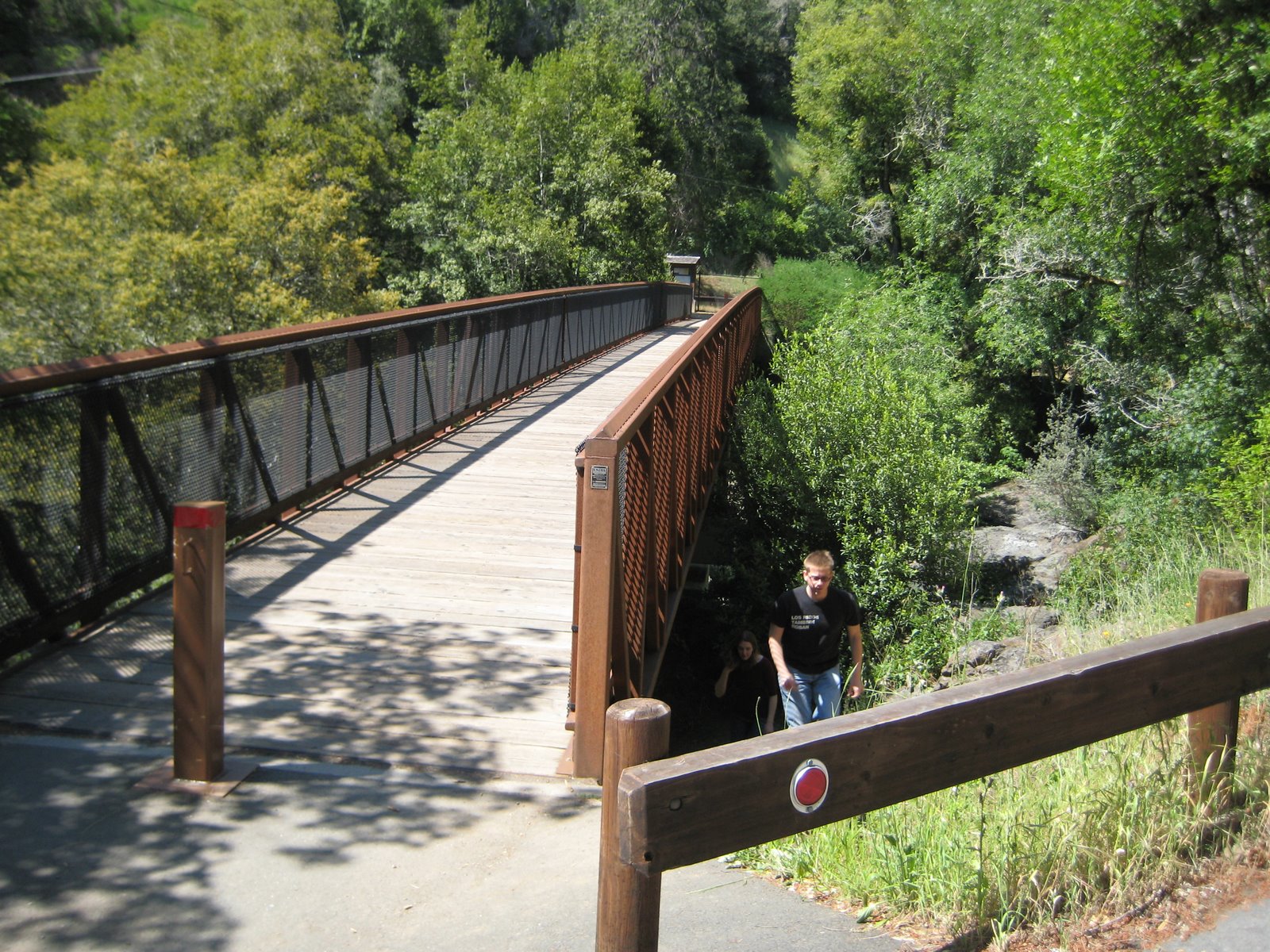

Location
The Inkwells are small, deep, dark pools beside Sir Francis Drake Boulevard in Lagunitas, West Marin. They aren’t marked, but they’re easy to find. When driving along Drake Boulevard, the Inkwells are just beyond where the houses stop and Samuel P. Taylor State Park begins. As you cross a bridge called Shafter Bridge, the Inkwells are directly on your right, underneath a reddish-colored bridge called the Inkwells Bridge. You walk down a crumbly path to the right of Inkwells Bridge to get to the beautiful, swimmable pools along Lagunitas Creek. There are two of them, one bigger than the other. There are rocks to jump off of and sun to bask in. It is the perfect place for a summer afternoon!
History
The San Geronimo Valley, including Lagunitas and Lagunitas creek where the Inkwells are, was largely uninhabited and untouched until the 19th century. In the 19th century railroad transportation made it easy to bring goods and passengers through the valley, thereby popularizing the gorgeous area.
From 1875 to 1935 the North Pacific Coast Railroad, then the Northwestern Pacific Railroad, operated trains from Sausalito to Pt. Reyes Station and then farther north to Cazadero in Sonoma. Originally the railroad transported lumber, dairy products, oysters, and other goods from the fertile lands of West Marin. Later the railroad began transporting passengers. The tracks went directly alongside the Lagunitas Creek, and the old railroad right-of-way can be found on the other side of the red-colored Inkwells Bridge from Sir Francis Drake Boulevard.
During the 1870’s and 80’s, tourists rode this train from San Francisco to a hotel resort and campgrounds in what is now Samuel P. Taylor State Park.
In 1974 the county purchased the rail line from Lagunitas to Tocaloma for trail use. There are extensive trails all over the area, and the 2004 construction of the Inkwells Bridge provided a missing link in the Bay Area Ridge Trail. The Bay Area Ridge Trail is a 500-mile continuing trail that circles the Bay Area (sections already exist in the Headlands and on Big Rock Ridge). The bridge connects Kent Lake trails with the old railroad grade pathway that runs 8 miles through Samuel P. Taylor to Tocaloma Bridge Road. The Inkwells bridge provides hikers and bicyclists a safe way to explore the beautiful San Geronimo Valley away from street traffic.
The bridge also serves an important infrastructural purpose: it has two 36″ water pipes that carry water from Kent Lake and the Nicasio Reservoir to the water treatment plant providing drinking water to north-central Marin.
Since I can recall, Rosemary told me and my brother we descend from Teutonic Knights on our father’s side. Eight years ago I found a Stutenmeister province in Estonia that appears to be named after a Teutonic Knight, who purchased this land.
I also found a Stuttmeister Estate in the Pankow where the summer homes of the very wealthy are located. This estate is now a resturant. The Stuttmeister owned about five properties in Berlin.
Eleven years ago I found the unmarked grave of Royal Reuben Rosamond, and my aunt Lillian bought a stone with roses.
Six years ago my cousin, Daryl Bulkley, located the lost Stuttmeister crypt in Colma, and I went there with my daughter and new born grandson, Tyler Hunt. With the help of Murray Oltman, our family is more visible and united.
Descendants of Dorthia Matilda Oltman
Generation No. 1
1. Dorthia Matilda5 Oltman (Jurgen4 Oltmann, Jacob3, Jurgen2, Peter1) was born September 13, 1829 in New York, NY, and died March 17, 1875 in San Francisco, CA. She married Frederick William R. Stuttmeister. He was born 1812 in Germany, and died January 29, 1877 in San Francisco, CA.
Children of Dorthia Oltman and Frederick Stuttmeister are:
2 i. Victor Rudolf6 Stuttmeister, born May 29, 1846 in New York; died January 19, 1893 in German hospital in San Francisco.
3 ii. Bertha Matilda Stuttmeister, born January 02, 1860 in Califonia; died May 07, 1931 in Merritt Hospital in Oakland, California. She married Wilham E. C. Beyer; born in Germany.
4 iii. William Oltman Stuttmeister, born 1862. He married Augusta Janke June 1888.
+ 5 iv. Alice L. Stuttmeister, born October 13, 1868 in San Francisco, CA; died February 13, 1953 in Roseville Community Hospital in Oakland, CA.
Generation No. 2
5. Alice L.6 Stuttmeister (Dorthia Matilda5 Oltman, Jurgen4 Oltmann, Jacob3, Jurgen2, Peter1) was born October 13, 1868 in San Francisco, CA, and died February 13, 1953 in Roseville Community Hospital in Oakland, CA. She married William Broderick October 02, 1897. He was born Abt. 1871 in Ohio.
Children of Alice Stuttmeister and William Broderick are:
+ 6 i. Frederick William7 Broderick.
+ 7 ii. Melba Charlotte Broderick.
Generation No. 3
6. Frederick William7 Broderick (Alice L.6 Stuttmeister, Dorthia Matilda5 Oltman, Jurgen4 Oltmann, Jacob3, Jurgen2, Peter1) He married (1) ?? Babour Bef. 1932. He married (2) ?? Abt. 1932.
Children of Frederick Broderick and ?? Babour are:
8 i. Frederick8 Broderick.
9 ii. Beverly Broderick.
Children of Frederick Broderick and ?? are:
+ 10 i. Daryl8 Broderick, born January 21, 1933.
11 ii. William Gardiner Broderick.
7. Melba Charlotte7 Broderick (Alice L.6 Stuttmeister, Dorthia Matilda5 Oltman, Jurgen4 Oltmann, Jacob3, Jurgen2, Peter1) She married (1) Victor Hugo Presco. He was born July 1885 in Hartford, CT. She married (2) Joseph Wilkin.
Child of Melba Broderick and Victor Presco is:
+ 12 i. Victor William8 Presco, born August 12, 1923; died November 1994.
Generation No. 4
10. Daryl8 Broderick (Frederick William7, Alice L.6 Stuttmeister, Dorthia Matilda5 Oltman, Jurgen4 Oltmann, Jacob3, Jurgen2, Peter1) was born January 21, 1933. She married Paul Bulkley.
Child of Daryl Broderick and Paul Bulkley is:
13 i. Kimberly9 Bulklley.
12. Victor William8 Presco (Melba Charlotte7 Broderick, Alice L.6 Stuttmeister, Dorthia Matilda5 Oltman, Jurgen4 Oltmann, Jacob3, Jurgen2, Peter1) was born August 12, 1923, and died November 1994. He married Rosemary Rosamond.
Children of Victor Presco and Rosemary Rosamond are:
+ 14 i. Mark9 Presco, born September 07, 1945.
+ 15 ii. Greg Presco, born October 08, 1946.
+ 16 iii. Christine Presco, born October 24, 1947; died March 26, 1994.
+ 17 iv. Vicki Presco, born May 14, 1952.
Generation No. 5
14. Mark9 Presco (Victor William8, Melba Charlotte7 Broderick, Alice L.6 Stuttmeister, Dorthia Matilda5 Oltman, Jurgen4 Oltmann, Jacob3, Jurgen2, Peter1) was born September 07, 1945.
Child of Mark Presco is:
18 i. Cean10 Presco, born 1969.
15. Greg9 Presco (Victor William8, Melba Charlotte7 Broderick, Alice L.6 Stuttmeister, Dorthia Matilda5 Oltman, Jurgen4 Oltmann, Jacob3, Jurgen2, Peter1) was born October 08, 1946.
Child of Greg Presco is:
19 i. Heather10 Hanson.
16. Christine9 Presco (Victor William8, Melba Charlotte7 Broderick, Alice L.6 Stuttmeister, Dorthia Matilda5 Oltman, Jurgen4 Oltmann, Jacob3, Jurgen2, Peter1) was born October 24, 1947, and died March 26, 1994. She married (1) Garth Benton. She married (2) Larry Sidle.
Child of Christine Presco and Garth Benton is:
20 i. Shannon10 Sidle, born 1968.
17. Vicki9 Presco (Victor William8, Melba Charlotte7 Broderick, Alice L.6 Stuttmeister, Dorthia Matilda5 Oltman, Jurgen4 Oltmann, Jacob3, Jurgen2, Peter1) was born May 14, 1952. She married James Dundon.
Child of Vicki Presco and James Dundon is:
21 i. Shamus10 Dundon.
Lagunitas is an unincorporated community in Marin County, California.[1] It is located 10 miles (16 km) southwest of Novato,[2] at an elevation of 217 feet (66 m).[1] For census purposes, Lagunitas is aggregated with Forest Knolls into the census-designated place Lagunitas-Forest Knolls.
The first post office at Lagunitas opened in 1906.[2] Lagunitas’ ZIP Code is 94938.[3]
Lagunitas-Forest Knolls is a census-designated place, composed of two unincorporated areas in the western half of the San Geronimo Valley in Marin County, California, United States. The population was 1,819 at the 2010 census.
The two towns are locally seen as separate, geographically divided by narrow points in the San Geronimo Valley, and each with its own small commercial center. Both are primarily residential. Lagunitas’ ZIP code is 94938, while that of Forest Knolls is 94933.
http://www.casalmon.org/salmon-snapshots/about/lagunitas-creek-1
http://sevenwondersofmarin.blogspot.com/2009/05/ink-wells.html
 Rosamond Press
Leave a comment