
“More cowbell”
The President of the United States looks just like my father, thus, I know that look. It’ s Victor Presco’s infamous SHIT-CAN look. I suspect he wants to SHIT-CAN Hesgeth for putting on the worst parade in American History. The Empire of Emperor Trump spent millions to put more German Stuff in his Birthday Parade, because he is German. Hesgeth knows nothing about German History. Jack London lived in Belmont and authored a very long article on the Schüetzenfest. If you can’t give the most powerful leaders in the world – WHAT HE WANTS – resign! No wonder Russia, Israel, Itan, and Israel have no respect for Trump. Now he is in Canada at the G7 conference. He shoud have marched his beloved German Sharpshooters up to Canada! SHITm or get off the pot, as my father, said.
Schüetzenfest No. 1
July 15, 1901 . The Goths have entered Rome ! Aye, it is so, but there was no cry in the night, no clamor of hasty flight, no scurrying with household gods to the citadel. Rather, did San Francisco throw wide her gates and fraternize with her Teutonic invaders. On the other hand, these descendants of Germanic Tribesmen who swept down out of the forest of middle Europe some two thousand years ago, are quite unlike their savage forbearers. They are not clad in the skins of wild beasts, and though they bear weapons in their hands, we do not fear; for they come not in war, but in love; not as foes, but as blood-brothers. And though their ancestors of old time looted many a fair city, we need keep no anxious eye on our possessions. We have but one thing they might appropriate if they were able–and that is our climate.
Grand Marshal Robert Weineke led the long column of many divisions, and with the assistance of innumerable aides on gaily caparisoned horses, went over the line of march in splendid order. The route was up Market Street to City Hall avenue , around the Lick monument, countermarch on Market to Kearney , to California , to Montgomery and down Market to the Oakland ferry. The banners were many and beautiful, but it was the uniforms that especially caught the eye. Gray and green predominated. And, it is indeed a pretty sight, a body of stalwart men clad in the traditional hunting green with black drooping plums of ostrich in their dark slouch hats. But with the recent development of machinery of warfare in one’s mind, one would forebear looking a second time at the unobtrusive, inconspicuous grays. They would surely conceal more easily a sharpshooter’s movements at the time when discovery would mean to invite a whirlwind of death-dealing missiles. And the grays were pretty, too-in fact, all uniforms were neat and tasty.
Donald Trump’s paternal ancestors were German immigrants. His grandfather, Friedrich Trump, was born in Kallstadt, Germany. The Trump family’s German heritage is a part of their family history. Friedrich Trump immigrated to the United States to avoid mandatory military service in Germany. Donald Trump’s father, Fred Trump, was also born in the US to German immigrant parents.
From 1816 to 1918, when Bavaria became the Free State of Bavaria, the Palatinate was part of the Kingdom of Bavaria. In 1871, Bavaria became a part of the newly formed German Empire. During periods of war and anti-German discrimination in the United States, Trump’s son Fred later denied his German heritage, claiming his father had been a Swede from Karlstad, Sweden.[11] This version was repeated by Fred’s son Donald in his 1987 autobiography.[12]
Lena and The Belmont Turnverein
Posted on August 8, 2024 by Royal Rosamond Press
San Sebastian Avenue
By
John Presco
Cynthia McCarthy and Denny Lawhern pretend it took them four days to become aware of me, but Facebook had just got into letting your cellphone tell you you got a post. Both members of the Belmont Historical Society show no interest in the Gold Mine of History I am posting – that they are taking down – in the hope I go away! JUST GO AWAY because they had to be aware of me for many years. They published a book with the Cities’ blessing. Denny prides himself on going to estate sales for any tidbit of Belmont that he hares with the old folks at the home. Would they love to see the Jankes at rest under a Tiffany stain glass window? Would they like to know a world famous woman artist came out of Belmont, after all, Denny has founded some Art Programs?
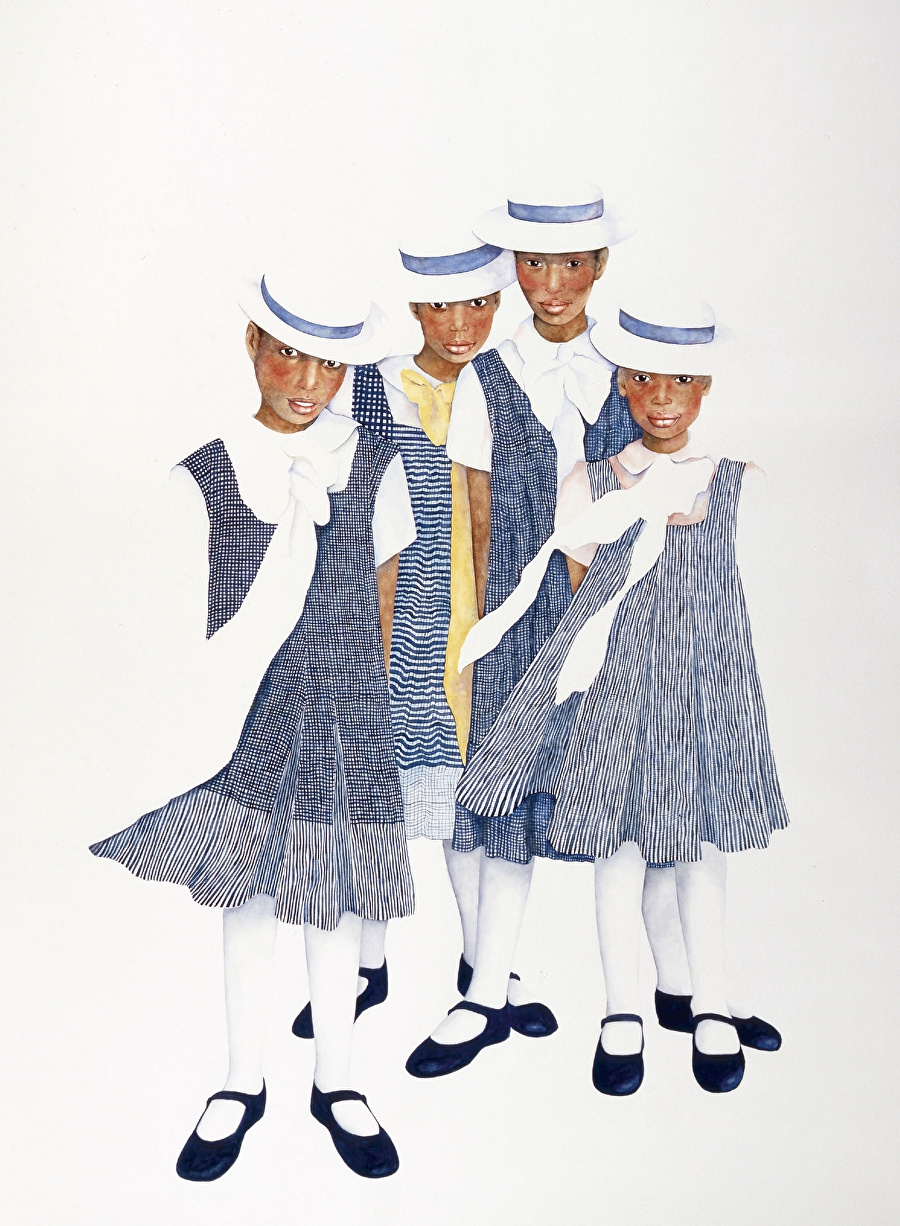
Christine painted ”Lena And Her Sisters’ to honor our black maid who took care of us when Rosemary went to work. They came up from the South when their families went to work for Kaiser making Liberty Ships. Lena took Christine Rosamond Benton home with her. She lived with three sisters who took care of white children in the Red States. Lawhern and McCarthy knew I had a Best Seller. I told them there was a movie script about ‘Rosamond’. They never told me about the Vannier-John family. They never asked about my daughter and grandson in th family crypt. They ransacked this blog, and knew I was creating an amazing BRAND. I was not invited to the Belmont Historic Society to see what they got?
I now know, that Lil Denny considered Belmont – his town! And, when he saw my first post about me coming to his town and starting a newspaper, he got behind His Belmont Wall, and prepared for war. Was I going to bring the Black Panthers, Black Lives Matter, and the Black VP to – his town? He hpped so, because this would be his Dream Battle.
John Presco
Jack London at Shell Mound Park
Posted on June 28, 2024 by Royal Rosamond Press


For several years I have been looking the opening of Shell Mound Park as causing the demise of Carl Janke’s Twin Pine Parks – and not crazed drunken Germans out to hurt innocent folks – as The Belmont slanderers contend……so they can dig up my ancestors and thrown them in a mass grave in Redwood City where William Stuttmeister had a dentist office. Jank London, who worked in a aundry in Belmont, wrote a very long article about this park that was located near Captain Cogswell’s house. I’m sure he and his wife attended. How fun!
“From the beginning, transportation helped insure the success of the park. Beginning in late March. 1877, special trains ran from Oakland’s Long Wharf direct to Shell Mound Park. Visitors from San Francisco would ride a ferry to Oakland, board a train right on the wharf, and arrive soon enough at Shell Mound Station. These picnics or “excursions” were daylong events, and the ferry and train rides were incorporated as part of the day’s excitement.
Schüetzenfest No. 1
July 15, 1901 . The Goths have entered Rome ! Aye, it is so, but there was no cry in the night, no clamor of hasty flight, no scurrying with household gods to the citadel. Rather, did San Francisco throw wide her gates and fraternize with her Teutonic invaders. On the other hand, these descendants of Germanic Tribesmen who swept down out of the forest of middle Europe some two thousand years ago, are quite unlike their savage forbearers. They are not clad in the skins of wild beasts, and though they bear weapons in their hands, we do not fear; for they come not in war, but in love; not as foes, but as blood-brothers. And though their ancestors of old time looted many a fair city, we need keep no anxious eye on our possessions. We have but one thing they might appropriate if they were able–and that is our climate.
During the Middle Ages, many towns had to find ways to defend themselves from gangs of marauders. For this reason, clubs and associations were founded, comparable to militias; these paramilitary associations were sanctioned for the first time in the Law for the Defensive Constitution of the Towns by King Henry I, and officially integrated into the towns’ defense plans. Accompanying the military exercises and physical examinations of the towns’ contingents, festivities were combined with festive processions. Participants from other parishes and, at times, even the feudal heads of state were also invited to these Marksmen’s Courts (Schützenhöfe). However, the self-confident spirit of the townsfolk that marked these festivities was not always regarded positively by the authorities. For this reason, different traditions developed in other regions. The military significance lessened over the centuries and became meaningless with the creation of regular troops and garrisons for national defense. The Schützenfests, however, continued in the form of a regional patriotic tradition.
Donald Trump’s paternal ancestors were German immigrants. His grandfather, Friedrich Trump, was born in Kallstadt, Germany. The Trump family’s German heritage is a part of their family history. Friedrich Trump immigrated to the United States to avoid mandatory military service in Germany. Donald Trump’s father, Fred Trump, was also born in the US to German immigrant parents.
From 1816 to 1918, when Bavaria became the Free State of Bavaria, the Palatinate was part of the Kingdom of Bavaria. In 1871, Bavaria became a part of the newly formed German Empire. During periods of war and anti-German discrimination in the United States, Trump’s son Fred later denied his German heritage, claiming his father had been a Swede from Karlstad, Sweden.[11] This version was repeated by Fred’s son Donald in his 1987 autobiography.[12]
Our Oakland History
Posted on February 6, 2021 by Royal Rosamond Press
Vice President Kamala Harris and I were born in Oakland, she at Kaiser, and I at Merritt. On December 31, 2019 I announced I am the second coming of Martin Eden. I just made a astounding discovery about the Black Mask authors and tie them to London.
Oltman- Stuttmeister Genealogy | Rosamond Press
John Presco
06/06/11 at 9:44 PM
Hi Jon,
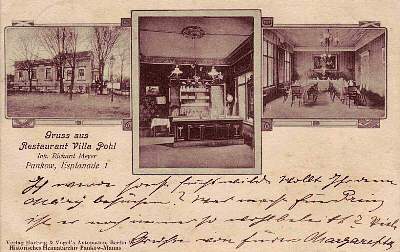
You are a good researcher! You remarked that someone lived in Pankow? That is new to me. This German family left Mecklenburg in 1732. They became citizens of Berlin. They started out selling pelts, and that grew into furs with a large warehouse in Berlin. One Stuttmeister, who was a builder/architect had his office at the Kaiser’s court. They grew quite wealthy. Kim went to the Records department and received a list of all the residences that the Stuttmeister had in Berlin, and she took pictures of all the churches, where they were baptized and the properties they had owned. . Freddie has always said that the Stuttmeister was not their true name, but the records in Germany indicate that Stuttmeister was their legal name.
Daryl Bulkley
Photographs: John Presco in Springfield Oregon. William Stuttmeister and family in Oakland Hills.


SHELL MOUND PARK
by Sandra Sher
Shell Mound Park opened, humbly enough, in 1876. with a 200-yard rifle range. Edward Wiard, the park owner, soon added a 500-yard range, and the shooting facilities quickly gained popularity. At the same time, Wiard was busy making improvements that would accommodate large excursions and picnics. The park land was bounded by the Northern Railroad tracks on the east, the bay shoreline on the west. and occupied approximately the middle third of the land between today’s Park Avenue and Powell Street-16 acres in all.
Back in 1859, when Wiard had bought the 115-acre property that would later become Shell Mound Park and the adjacent Oakland Trotting Park, the land was little more than a rough country estate. The previous owner of the property had erected a house and planted a garden; otherwise, the land was covered with grasses and shrubs, a grove of willow trees near the course of Temescal Creek. and one very large shellmound (between 32 and 40 feet high) and several smaller shellmounds. The shellmounds remained from the pre-European (native Indian) era. The house became one of the buildings on the Oakland Trotting Park property, while the largest of the shellmounds became a focal point of Shell Mound Park.
A VIEW OF THE COUNTRYSIDE
Wiard, who was born in New Haven, Connecticut in 1815, had arrived in California in 1850. After nine years of mining in Mariposa County, he had come to Alameda County and soon purchased the 115 acres in today’s Emeryville for $7,000. By January of 1877, Wiard had laid out avenues within the park and was in the process of building an octagonal dance pavilion on top of the large shellmound. The pavilion was finished and available for dancing at the opening of the 1877 picnic season (in March), and a restaurant near the park entrance was completed as well.
The dance pavilion was something of a novelty for park goers: 90 feet in diameter, 40 feet from the floor to the peak of the roof. and situated well above ground level, the pavilion provided a picturesque view of Oakland. the Bay and the surrounding countryside. The fact that native artifacts and burials lay beneath the floor, when considered at all, only seemed to heighten the curiosity and attraction of dancing in the pavilion.
On May 1, the Oakland Guard chose Shell Mound Park for their annual picnic and target excursion. Other groups having their picnics at the park early in 1877 included the Thompson Rifles, the Miners’ Protective Association, the Lafayette guard, and the employees of the Palace Hotel in San Francisco. Promoting itself as a “pleasure resort” or “picnic grounds,” Shell Mound Park (sometimes spelled “Shellmound Park”) became quite popular with both Oakland and San Francisco associations for their group picnics.
COMFORTS AND ATTRACTIONS
From the beginning, transportation helped insure the success of the park. Beginning in late March. 1877, special trains ran from Oakland’s Long Wharf direct to Shell Mound Park. Visitors from San Francisco would ride a ferry to Oakland, board a train right on the wharf, and arrive soon enough at Shell Mound Station. These picnics or “excursions” were daylong events, and the ferry and train rides were incorporated as part of the day’s excitement.
While Shell Mound Park was not the only public resort of its time, it could accommodate large crowds with a variety of comforts and attractions, could be reached directly by train, and was conveniently situated cheek by jowl with the Oakland Trotting Park, another major attraction. In February of 1877, less than a year after Shell Mound Park had opened, the Oakland Tribune reported that 35 group picnics had already been scheduled there for the season (The season ran from the first Sunday in March until the end of September, later extended through October).
CAPTAIN SIEBE
In 1879, Wiard leased the park to 33-year-old Ludwig Siebe, who proceeded to make many more improvements. A native of Germany who came to the United States when very young, Siebe had gone on to serve with the Northern army in the Civil War and had arrived in San Francisco in 1867.
By 1887, Capt. Siebe (as he was known), had added a 30-yard pistol range to the longer rifle ranges of 100 to 600 yards. All of the interstate shooting matches were held at Shell Mound Park at that time. He also built a second dance pavilion, 80 feet by 130 feet at ground level, as well as a bowling alley and dining room. A grandstand seating 3,000 people was constructed around a track that was used for races, athletic contests and exhibitions. Numerous smaller comforts and attractions—cold drink and fruit stands, skating rink, picture gallery, etc.—were also added. In the 1880’s, in a nod to the importance of the San Francisco patrons, Capt. Siebe established a branch office of the park at Fourth and Mission streets in San Francisco to reserve picnic dates for the San Francisco associations.
Capt. Siebe continued to lease the park after Wiard’s death in 1885 and the subsequent foreclosure sale of the park and racetrack properties in January, 1886. According to Wiard’s son, George E. Wiard, his father had lost the property due to an $81,000 mortgage and had died a broken and disappointed man. The sale was contested but became final on May 26, 1887. James Mee of San Francisco made the purchase of both properties together for $84,611.76. Meanwhile, the picnics went on as usual at Shell Mound Park, season after season. The Oakland Enquirer declared that the park’s Fourth of July picnic in 1890 was “the largest ever held on this side of the bay.”
Some of the groups holding their annual picnics at Shell Mound Park in the—1890 season were: the United Lodges of Orangemen, the Knights of Pythias of Berkeley, the Brick Layers’ Union of San Francisco, the Independent Rifles, and the California Sugar Refinery Mutual Aid Society. In 1891, an equally diverse group of organizations amused themselves at the park. Among them were the Swedish Society of San Francisco, the Caledonian clubs of San Francisco, the Catholic Ladies Aid Society of Oakland, the Placer County Reunion, the Garibaldi Guard and, to round things out, the Golden Gate Literary Society. Beer was frequently reported as having flowed abundantly at these picnics.
EMERYVILLE ISSUES
In 1896, several issues kept Emeryville almost constantly in the news. The massive renovation of the Oakland Trotting Park, begun in June and completed in October, was a project of newsworthy proportions, in and of itself. Additionally, in the process of digging and regrading for the new racetrack and auxiliary structures, many native Indian artifacts and burials were unearthed. For a while, the newspapers daily reported the finds and fueled public interest (however sensational, unsavory and superficial) in the digging. Speculation abounded regarding the native use and development of the local shellmounds, including the shellmound on top of which the park’s octagonal dance pavilion had been built.
When the fanfare about the new track opening in October began to die down, the issue of Emeryville’s incorporation rose to the forefront. Although the frequently voiced issues concerned the existence of the “Butchertown” (Emeryville) slaughterhouses and betting at the racetrack, the “California Sabbath Association” launched a criticism of Shell Mound Park for allowing shooting matches, bicycle races, concerts, picnics, dances, etc. to occur on Sundays. Nonetheless, with fewer than 200 total votes, incorporation still won by a landslide in December, 1896. One other event, specific to Shell Mound Park, occurred in 1896. The Columbia Pistol and Rifle Club, which used the park’s shooting ranges regularly, requested that two new targets on the west end of the range be set aside for the exclusive use of the club. In addition, a high partition between those ranges and the others was erected, partly because ladies were soon to be admitted to the Columbia club’s membership (we don’t know if the partition was to prevent distraction of the ladies or of those gazing upon them). On October 12, 1896, the San Francisco Call reported that ladies had participated in the Columbia’s shoot of the previous day.
SOMETHING FOR EVERYONE
At the end of 1896, Capt. Siebe put money into sprucing up the park’s attractions for the next picnic season. Buildings and fences were painted, one of the dance pavilions was renovated, the track and grandstand (also called “the athletic park”) were reconditioned, and new trees, shrubs and other plants were put in.
A typical day at the park in the 1890’s may be glimpsed, in the detailed newspaper account of the Knights of the Red Branch picnic on September 13, 1896. The picnic began in earnest just after noon when the ferry and train brought the participants from San Francisco. Dancing in both pavilions began in the early afternoon. A bugle announced the beginning of activities on the park’s track: bicycle racing, foot races, sack races, hurdle races, weight throwing, long-jumping, etc.
As family affairs, the day’s program included something for everyone. On the track, there were races for boys under 12, girls under 12, married ladies, married men, and even a race for “fat ladies” (Let it be noted that races for “fat men” were frequently held as well). First-place prizes could be as much as $4; other prizes were cigars, tea and various goods. First-place prize in the married ladies’ race was five pounds of English breakfast tea. In the “fat ladies” race, first-place prize was a half-ton of Wellington coal, and the second-place winner received a half barrel of flour—quite useful, and, yes, substantial prizes.
DANCE PAVILION BURNS
During the night of February 26, 1901, just prior to the annual opening of the park, the rectangular dance pavilion at ground level burned down in a fire of unknown origin. Hose companies from Emeryville and Berkeley responded to the alarm, as well as two detachments from the Oakland Fire Department. The fire companies did not arrive in time to save the pavilion, despite laying 1600 feet of hose to reach the fire, as well as laying hose from the racetrack. However, they were able to prevent the fire from spreading to any other buildings in the park.
Captain Siebe immediately declared that the pavilion would be rebuilt, and the opening of the 1901 picnic season proceeded as planned on March 3. While the pavilion was being rebuilt, dancers crowded the octagonal pavilion on the crest of the mound and also used the banquet hall of the Shell Mound Hotel (near the park entrance) under special arrangement. The pavilion was rebuilt in time for the National Shooting Bund competition and festival in July of 1901, an event that brought sharpshooters from almost every state in the Union and was perhaps the largest national shooting competition to be held up to that time. The 1902 picnic season opened with a rebuilt pavilion and additional renovations to the park grounds.
1,300 FED AND HOUSED
When the 1906 earthquake hit on April 18, the Emeryville racetrack and Shell Mound Park-like many other parks. churches, meeting halls, etc.-opened their gates to the stream of earthquake refugees. Gradually, most of the outlying camps were consolidated into the more organized (and sanitary) camps established by the Oakland Relief Committee (ORC). On April 29, the Oakland Tribune noted that the camp at Shell Mound Park was being broken up due to unsanitary conditions. Remaining camp residents were moved to the City Camp at Adams Point (Military Camp No.) established by the ORC. Meanwhile, on May 1, 300 people were still being fed and housed, with reportedly good sanitation, at the Jockey Club camp (Emeryville racetrack). Nonetheless, plans were made to have that camp, too, removed to the City Camp for more efficient delivery of goods and services. As of May 22, 1906. delivery of refugee supplies to the racetrack was discontinued.
It wasn’t long before Shell Mound Park was back in regular operation. On June 2, 1906, the 28th annual reunion of the State of Maine was held at the park, complete with music, “exercises” and food. An indication of the times, however, may be gleaned from the engagement of the “Refugee Band of San Francisco” to play for the occasion. The next day, the Swedish Society of San Francisco and Oakland was scheduled to hold their family reunions and picnic at the park.
By 1912, Capt. Siebe had added a children’s playground surrounded by trimmed cypress trees. Ice cream, candy and photographic booths also made their appearance in the park. Moreover, the park management boasted “of having one of the finest merry-go-rounds in the West, having cost in excess of $5,000.” Within the bowling alley, a 25-yard shooting gallery was kept up for winter weather.
Shell Mound Park had been used, from the beginning, not just by fraternal, labor and civic societies, but also by military companies and political groups. From the Workingmen’s Party of California, an amalgamation of San Francisco’s disenchanted who rallied under the cry of “The Chinese Must Gol” in 1878. to the Irish Nationalists in 1896, to a number of militia and rifle guards, a variety of causes were represented over the decades at picnics and rallies at Shell Mound Park. With American entry into World War I, patriotic rallies were frequently the order of the day.
WAR HEROES’ DAY
Under the sponsorship of the British California Dependents’ Association, a “War Heroes’ Day” was held at Shell Mound Park on May 30, 1918. Representatives of all the allied nations were present, and Lieut. J. C. Dagger, soldier orator of the British Army, gave a war talk entitled “Digging Kaiser Bill’s Grave.” Upstaging the event, as it were, was the participation of several grand opera stars (including Madame Lydia Sturtevant of the Italian Grand Opera Company) who sang several national anthems and other patriotic songs. A military drill was presented by the Oakland Boy Scouts drill team, an allegorical dance entitled “War Heroes of the Nations” was performed by 50 costumed dancers, and the Caledonian Kilties’ Band played several selections. The Caledonian Club of San Francisco, which had held its annual games at Shell Mound Park on May 30 for 35 years, graciously altered its date to allow for “War Heroes’ Day.”
Several organizations, including the Caledonian Club and the Butchers Association, had a long tradition of holding their annual picnics at Shell Mound Park. The Butchers’ groups would sometimes reserve both the park and the racetrack and manage to fill both. On the 1895 Butchers’ Day program, two tug-of-war contests were listed, both with $10 prizes: one between the Oakland and Butchertown (Emeryville) slaughterers, and the other between the Oakland and San Francisco journeymen butchers. At the 1899 outing by the butchers’ associations, a full days’ events were capped with a spectacular fireworks and electric light display at 9 o’clock in the evening.
The question of when Black-Americans and other ethnic minorities began to use Shell Mound Park for organization picnics—and if there ever was an admission barrier to ethnic minorities at the park—is still being researched. A notice appeared in Western Outlook on April 29, 1922 announcing an annual picnic by the Household of Ruth, the female Black-American (“colored”) chapter of the Odd Fellows. This chapter was formed in October, 1888 with 35 members. Lists of upcoming picnics reported in local newspapers indicated that Black Americans used the park for organizational gatherings at least since 1890.
NO LUSTER WITHOUT LIQUOR
In February, 1911, an anti-gambling law took effect and horse racing came to an end at the Emeryville racetrack. On January; 16, 1920, Prohibition took effect. Four and a half years later, Shell Mound Park closed, its demise garnering little news interest at the time. According to several accounts, and most vocally by Capt. Siebe himself, the park had begun to lose money with Prohibition. A day in the park, with dancing, picnics, games and other amusements, apparently lost its luster without the flow of liquor.
Immediately following the park’s closure in October, 1924, the large shellmound was removed by steam shovel. University of California anthropologist W. E. Schenck stood nearby and compiled data on the contents. Most of the park’s equipment was reportedly moved across the bay to California Park in San Rafael. Capt. Siebe, manager of the park for several decades, died six months after the park closed. Although Shell Mound Park had initially opened with a “bang” as a humble but popular shooting range in 1876, it closed 48 years later with barely a whimper.
Jack London’s Schützenfest Articles
Posted on August 6, 2022 by Royal Rosamond Press
During the Middle Ages, many towns had to find ways to defend themselves from gangs of marauders. For this reason, clubs and associations were founded, comparable to militias; these paramilitary associations were sanctioned for the first time in the Law for the Defensive Constitution of the Towns by King Henry I, and officially integrated into the towns’ defense plans. Accompanying the military exercises and physical examinations of the towns’ contingents, festivities were combined with festive processions. Participants from other parishes and, at times, even the feudal heads of state were also invited to these Marksmen’s Courts (Schützenhöfe). However, the self-confident spirit of the townsfolk that marked these festivities was not always regarded positively by the authorities. For this reason, different traditions developed in other regions. The military significance lessened over the centuries and became meaningless with the creation of regular troops and garrisons for national defense. The Schützenfests, however, continued in the form of a regional patriotic tradition.
Jack London’s Schützenfest Articles
Schüetzenfest No. 1
July 15, 1901 . The Goths have entered Rome ! Aye, it is so, but there was no cry in the night, no clamor of hasty flight, no scurrying with household gods to the citadel. Rather, did San Francisco throw wide her gates and fraternize with her Teutonic invaders. On the other hand, these descendants of Germanic Tribesmen who swept down out of the forest of middle Europe some two thousand years ago, are quite unlike their savage forbearers. They are not clad in the skins of wild beasts, and though they bear weapons in their hands, we do not fear; for they come not in war, but in love; not as foes, but as blood-brothers. And though their ancestors of old time looted many a fair city, we need keep no anxious eye on our possessions. We have but one thing they might appropriate if they were able–and that is our climate.
It was a unique parade, that which passes through San Francisco’s peaceful streets Sunday forenoon. Beneath fluttering banners and between packed rows of spectators, to the martial music of band and fife and drum, marched two thousand men and picked men all. Not since our own “ Californias ” has so splendid a body of men been in our midst. And picked men they certainly are, picked from all the states, these men of the shooting clubs, these sharpshooters, these Schüetzenbrüder.
Men from the cities and men from the fields and forests; riflemen and sharpshooters from the Eastern centers, and hunters and fighters from the plains and mountains of the West. From Montana , Idaho , Arizona , Colorado and Iowa , from Chicago , New York and Boston , and even from Europe they have come to take part in the Third National Bundes Shooting Festival. They are skillful men, eagle-eyed and steady of nerve, who have won trophies everywhere-gun experts and crowned kings of the target, to say nothing of princes and knights galore, who have demonstrated their fitness on rifle ranges the world over, and who have come together here, by the shores of the Pacific, in friendly contest.
Promptly at the target The Examiner’s siren the parade swung into motion from the corner of Market and New Montgomery streets; and right here, in passing, it is meet to state that promptness pre-eminently characterizes these riflemen. No delays; no lagging. They achieve the impossible feat of doing everything on schedule time.
Grand Marshal Robert Weineke led the long column of many divisions, and with the assistance of innumerable aides on gaily caparisoned horses, went over the line of march in splendid order. The route was up Market Street to City Hall avenue , around the Lick monument, countermarch on Market to Kearney , to California , to Montgomery and down Market to the Oakland ferry. The banners were many and beautiful, but it was the uniforms that especially caught the eye. Gray and green predominated. And, it is indeed a pretty sight, a body of stalwart men clad in the traditional hunting green with black drooping plums of ostrich in their dark slouch hats. But with the recent development of machinery of warfare in one’s mind, one would forebear looking a second time at the unobtrusive, inconspicuous grays. They would surely conceal more easily a sharpshooter’s movements at the time when discovery would mean to invite a whirlwind of death-dealing missiles. And the grays were pretty, too-in fact, all uniforms were neat and tasty.
Denny Lawhern Loved Genealogies
Posted on July 27, 2024 by Royal Rosamond Press


At high noon on July 27, 2024, I John Presco found proof, Denny Lawhern oppressed my posts on the Belmont Historical Society, and, he wanted me to go away – AND DIE! But more than that – he wanted to UPROOT my family DNA from Belmont – even more than he had!
I did not hear from Lawhern because he was scouring my blog to find evidence I was not related to Carl Janke. Not once did he or Cynthia McCarthy comment on the photographs in the Stuttmeister-Janke crypt of me introducing my daughter and newborn grandson – TO THEIR ROOTS. Any genealogist would have been thrilled to help me with MY RESEARH of my family tree, accept the co-founder of the Belmont Historical Society. The really BIG QUESTION, is, Did Denny research Doris Vannier’s FAMILY TREE – and find me? The next BIG QUESTION, is, did Denny find my DNA Battle with Ian Sinclair? I think he did. Then, he looked at the star of his DNA,
THOMAS DOGGETT
Why didn’t Cynthia call Denny and have him message me with his phone number so we could – straighten everything out. This was an important contact. When Cynthia said she was to blame and not one else, and when she gave me her e-mail – I CUT AND PASTED OUR TEXT – believing she was going to disappear it. I suspect Denny read most of it.
Greg PrescoWilliam Stuttmeister moved his Janke kin to Colma after the outrage of their graves being opened and evicted. I am going to bring a lawsuit against Belmont if my posts are not restored. This is very traumatic! An outrage made fresh by a jealous ingrate… See More
- Like
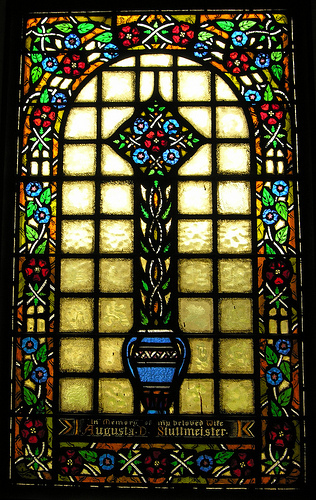
Greg PrescoThis is the Tiffany window inside the family crypt with the name Ausutus Stuttmeister on it. I presented this as a gift to all the people of Belmont this morning and a selfish jealous monster shat all over it. Most cities would kill for this history t… See More
- Like
- · Reply
- · 3d
- Greg PrescoMy sister is the world famous artist, Christine Rosamond Benton. She married into the famous Benton family that married John Fremont. This painting is of our black maid Lena and her sisters. My mother raised four children almost by herself. Christine i… See More
Come Home To Beautiful Mountain
Posted on February 22, 2021 by Royal Rosamond Press
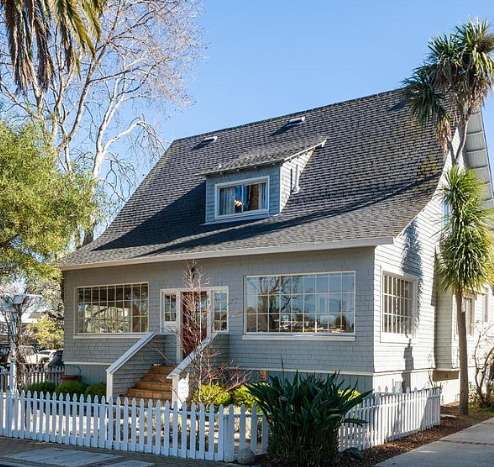


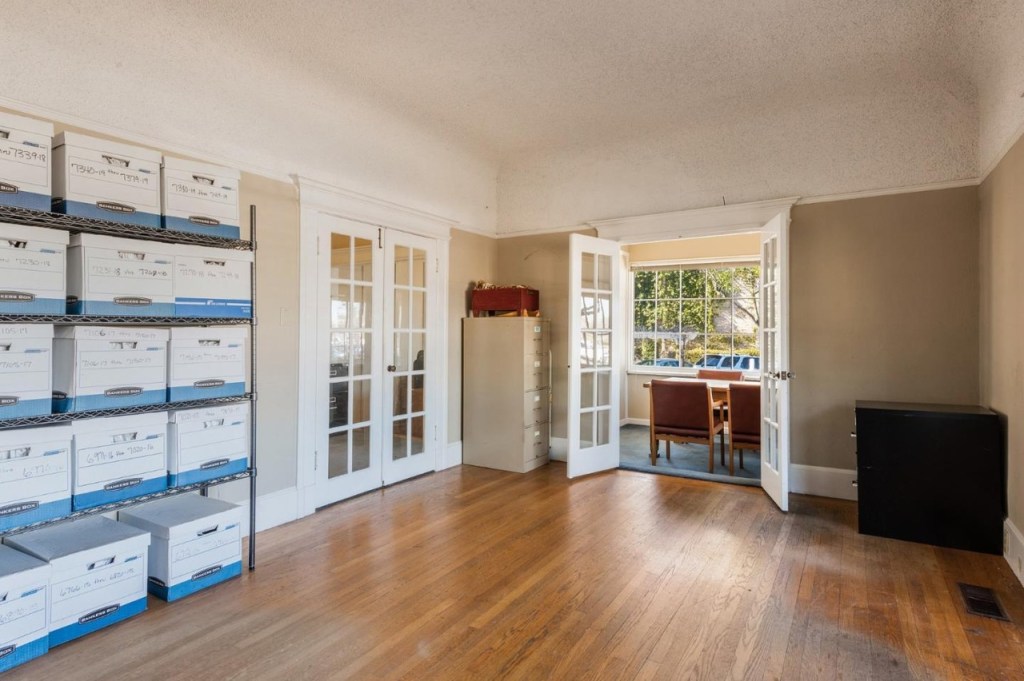
Last night as I was admiring my post of the history of Crockett, I went to Belmont California to see if they had any interesting homes for sale. Eureka! Is this the future home of Royal Rosamond Press? What was here before? I moved in the daughters of Christine Rosamond Benton. Why not Tyler, too? Our children can experience the miracle the Presco Children created growing up on San Sebastian Avenue in Oakland. Belmont – needs our history – in their Downtown! There is nothing there – there! The same goes for Crockett. If they only knew where the remains of William Janke ended up, after being dug up and evicted from his grave. Did William interact with the children gathered in the giant oak tree? I am going to do a painting of these little people dressed as Bohemians, posing before the Time Machine.
“What does the future have in store for us? Can we all get along?”
The United States Rainbow
Posted on September 1, 2020 by Royal Rosamond Press



The Jealous Historical Society
Posted on February 28, 2021 by Royal Rosamond Press
Dear Mr. Mayor;
Someone on the Belmont Historical Society suggested I have violated their copyright, by posting an image of William Janke, who may be in a family photograph this is posted on their facebook page. About twelve of my posts have been removed, which alarms me, because I offer NEW family information – that could be used without my permission! Being related this famous family does not rate with this clic who are described as “we”. To be invited by an origination connected with the City of Belmont, to contribute your family history, then be treated like you are a outsider and parasite – is outrageous! This goes against the tradition of other Historical Societies – who encourage descendant of famous people to contribute – because there is no telling what they have, or, if they are going to put that Society in their will. I demand a full investigation. I would like to see your bi-laws.



Someone on the Belmont Historical Society suggested I have violated their copyright, by posting an image of William Janke, who may be in a family photograph this is posted on their facebook page. About twelve of my posts have been removed, which alarms me, because I offer NEW family information – that could be used without my permission! Being related this famous does not rate with this clic who are described as “we”. To be invited by an origination connected with the City of Belmont, to contribute your family history, then be treated like you are a outsider and parasite – is outrageous! This goes against the tradition of other Historical societies – who encourage descendant of famous people to contribute – because there is not telling what they have, or if they are going to put that Society in their will. I demand a full investigation. I would like to see your bi-laws.
John Presco
President: Royal Rosamond Press
braskewitz@yahoo.com
“The Belmont Historical Society Facebook page features posts and information pertaining to Belmont, San Mateo County, California and its history. Everyone is encouraged to send us messages. We will review the content for its interest to our followers.”
Here is Cynthia guarding her small town from an outsider whose family made most of Belmont’s history. It boggles the mind! Surely progressive investors are grateful for the warning. I live in Sprigfield Oregon that has been called Springtucky. How about Belabama?
“We are related to historic people somewhere.
Belmont Historical Society, Belmont, CA sent Today at 9:39 AM
There’s no competition, for Pete’s sake.
Belmont Historical Society, Belmont, CA sent Today at 9:39 AM
Maybe your friend the editor can explain copyright to you.
Belmont Historical Society, Belmont, CA sent Today at 9:39 AM
Everyone is related to “historic people.”
(2) Belmont Historical Society, Belmont, CA | Facebook
My name is Cynthia McCarthy and you can blame me and me alone, not the Belmont Historical Society. You can email me at cgkmccarthy@gmail.com.

Belmont Historical Society, Belmont, CA sent Today at 11:02 AM
You were advised that any further threats, accusation or name-calling would result in your being blocked from this page. I have not read your newspaper nore do I intend to. Your posts have been subject to the same review as anyone else’s. Again, this is Cynthia Karpa McCarthy, not the president or any other officer of BHS. Please blame me entirely.
Belmont Historical Society, Belmont, CA sent Today at 8:03 AM
Cipriani describes himself as Florentine in his diaries even though he was from Corsica. He recounts meeting another Italian speaker in Nevada and tells him he’s “Florentine, thank God!” Belmont Historical Society, Belmont, CA sent Today at 8:03 AM One of the photos and captions is from the book I wrote. I am not certain if you think much of this information is mew to us.
Where are my posts? I just read this on your page. I am compelled to write an article on my blog-newspaper – for the arts – about your harassment and oppression of my CONNECTION to MY family history – that irks you – because you think you own MY family information. WE are not related. To hint I am violating your copyright, is harassment. I want your name. Here is your chance to make clear to the People of Belmont, why you are censoring information THEY may find interesting and revelent. That you allow a post of a Hollywood actress, who just went to school in Belmont, goes against the criteria you apply to me that is TOO SPECIAL. I suspect you don’t like other things I wrote about on my newspaper and are electing yourself to be a police force.
I am compelled to write an article on my blog-newspaper – for the arts – about your harassment and oppression of my CONNECTION to MY family history – that irks you – because you think you own MY family information. WE are not related. To hint I am violating your copyright, is harassment. I want your name. Here is your chance to make clear to the People of Belmont, why you are censoring information THEY may find interesting and revelent. That you allow a post of a Hollywood actress, who just went to school in Belmont, goes against the criteria you apply to me that is TOO SPECIAL. I suspect you don’t like other things I wrote about on my newspaper and are electing yourself to be a police force.
We have an automatic reply set that says we will respond as soon as we can.
You sent February 25 at 9:21 AM
Thanks. Sorry
8:01 AM
Belmont Historical Society, Belmont, CA is responding to a comment you made on their Page. View comment.

Belmont Historical Society, Belmont, CA sent Today at 8:03 AM
Cipriani describes himself as Florentine in his diaries even though he was from Corsica. He recounts meeting another Italian speaker in Nevada and tells him he’s “Florentine, thank God!”Belmont Historical Society, Belmont, CA sent Today at 8:03 AMOne of the photos snd captions is from the book I wrote. I am not certain if you think much of this information is mew to us.
You sent Today at 8:44 AM
What are you suggesting? Who is us? The Janke family is MY family not your family. Millions of families brag on their family history no matter how mundane. This is all I am doing. I did not come to battle with volenteers who I thought would be glad to hear from descendants of the Founder of Belmont. I thought MY history was being rejected as it was twenty years ago by kin of your famous cop who controlled the city history. I never encountered the way you set up your facebook group and assumed the worst and appologised. I even removed post to show I am not at war with a group of volunteers who may be working on books and have written books. I know being related to historic people gives me an advantage. The Benton’s are kin to the Bonaparte family that Cipriani had extensive relationship with.
Belmont Historical Society, Belmont, CA sent Today at 8:44 AM
Greeting! Thanks Greg for your message. We are not here right now, but we’ll get back to you as soon as we can. We are a small organization with a handful of volunteers. Thank you for your patience.
You sent Today at 8:53 AM
New to us? I don’t get this statement. I can get the opinion of a professional writer as to what he makes of this. You may be treating me as a outsider a author who thinks he is in competition with you
You sent Today at 9:00 AM
Here is my good friend, Mark Gall. For 25 years we have discussed out family history. He grew up in Hunter’s Point and will be in my book. Our mutual friend also went to Harvard and wrote a Eisenhower bio. He was an editor for Double Day. How long has each member of the Belmont Society been volunteering to gather my family history? Thank you for the good job you have done. https://pages.uoregon.edu/mgall/vita.htm
We are related to historic people somewhere.Belmont Historical Society, Belmont, CA sent Today at 9:39 AMThere’s no competition, for Pete’s sake.Belmont Historical Society, Belmont, CA sent Today at 9:39 AMMaybe your friend the editor can explain copyright to you.Belmont Historical Society, Belmont, CA sent Today at 9:39 AMEveryone is related to “historic people.”
You sent Today at 9:50 AM
Are you suggesting I am violating YOUR copyright, or, a group’s copyright? I just want to make sure. There is strong evidence that MY family has been collecting OUR history for hundreds of years. Here is the proof the Benton family is kin to the Bonaparte family who were close friends of Cipriani. My famous artist sister married the artist, Garth Benton, the cousin of the artist Thomas Hart Benton. My niece Drew Benton is an artist, and so am I. This constitutes a artistic dynasty – when you include my mother’s cousin, the actress Elizabeth Rosemond Taylor. https://www.wikitree.com/wiki/Benton-1403Zebulon Howell Benton (1811-1893) | WikiTree FREE Family Treewikitree.com
Belmont Historical Society, Belmont, CA sent Today at 9:51 AM
Sir, our organization is interested solely in Belmont. Best of luck with your endeavors.
You sent Today at 10:00 AM
Are you suggesting that if Harry Truman was born in Belmont, you would exclude the fact he was President? The Bonapartes were world famous and were preparing to invade California and had extensive dealings with Cipriani who they may have been trying to employ in their designs on U.S. Territory. Did Cipriani live in Belmont? You brought his name up in our chit-chat. It appears you are preparing to get me banned from your facebook. You appear to be setting me up. Are you saying I can not post on the Palace Hotel that Ralston built – outside Belmont city LIMITS? You are trying to LIMIT me. I wonder if other city history originations do this.
You sent Today at 10:04 AM
I would like to see a copy of your bi-laws, that should suggest YOU encourage people to contribute THEIR history. It looks like you are DISCOURAGING me.
As of 10:20 P.M. on 2/25/21 these posts are up.
I subscribe to the ideas of Richard Florida who says creative people and investors want to be a part of a progressive, tolerant, and open Bohemian lifestyle. They do not want to move to a place that is closed and claimed by the locals who don’t trust outsiders. https://www.theguardian.com/…/gentrification-richard…

- Cynthia Karpa McCarthyPlease be advised that further threats, accusations or name-calling will result in your being blocked from the page. Thank you.
- Like
- · Reply
- · 20h
- Greg PrescoI apologize.
- Like
- · Reply
- · 20h
- Belmont Historical Society, Belmont, CAThanks.
- Like
- · Reply
- · 20h
- Belmont Historical Society, Belmont, CAGreg Presco Hi Greg , I have been enjoyed some of your posts and photos that are directly related to the Belmont area and you have provided some new photos and information that will be put in a file, but please try not to post anything that is off topic or is not Belmont Area related. Thank you ,Denny Lawhern Belmont Historian
- Like
- · Reply
- · 19h
- · Edited
- Greg PrescoFor several days I have been looking for a backer to buy this house in Belmont in order to open a gallery and have a home for my newspaper blog, Royal Rosamond Press. Here is Lawrence Chazen who was a partner of Christine in her first gallery. He was my father’s private lender in his real estate loan business. He is a advisor for the Getty family and a partner in PlumbJack along with the Newsom and Pelosi family. William Ralston is titled ‘The Man Who Built San Francisco’. The Getty family picked up the gauntlet – and run San Francisco and the State of California. They are interested in banks. They like to invest in historic places that honor the arts and artists. https://rosamondpress.com/…/07/19/what-is-lawrence-chazen/
Greg PrescoBelmont Historical Society, Belmont, CA
Yesterday at 5:20 PM · I am going to contact the Mayor about the removal of my posts. Who are you?26 Comments2 SharesLikeCommentShare
Comments
Oldest
- Belmont Historical Society, Belmont, CAWe are a group of volunteers who promote Belmont history and maintain the Belmont Historical Society’s collection in the History Room in Twin Pines Park.
- Like
- · Reply
- · 14h
- Belmont Historical Society, Belmont, CAThe mayor of Belmont is Charles Stone. You may reach him through this website: https://www.belmont.gov/…/council…/city-council
BELMONT.GOVCity Council | City of BelmontCity Council | City of Belmont
- Like
- · Reply
- · 14h
- Greg PrescoWhy don’t you say there is a delay in posts appearing? I tried to give you this information twenty years ago and someone got threatened and – did nothing! Someone was claiming they were kin to Janke. Is there some kind of unclaimed property? My grandf… See More
 ROSAMONDPRESS.COMAm I In Contact With Aliens?Am I In Contact With Aliens?
- Like
- · Reply
- · Remove Preview
- · 14h
- Greg PrescoPeople get jealous. I am in a battle with outsiders who have written books and movie scripts about my family. Here is my grandmother Mary Magdalene Rosamond sitting next to Norbert. Her daughter, Rosemary, married Victor William Presco the only child … See More
- Like
- · Reply
- · 14h
- Belmont Historical Society, Belmont, CAOrganization Facebook pages have administrators who post to their pages, which is standard practice. Our automatic reply says that we respond as soon as we can. Your Notifications have been posted within twenty-four hours of receipt, not bad for an org… See More
- Like
- · Reply
- · 14h
- · Edited
- Belmont Historical Society, Belmont, CASir, your Notifications have been posted.
- Like
- · Reply
- · 14h
- Belmont Historical Society, Belmont, CAIn answer to your initial question, my name is Cynthia McCarthy.
- Like
- · Reply
- · 14h
- Greg PrescoMuch of our history – has no home – because historians and famous families run into roadblocks all the time, and give up. I am working with a black man to get a grant for recording the black history of Oakland. What an ordeal. People ASSUME famous fam… See More
- Like
- · Reply
- · 13h
- Greg PrescoBelmont Historical Society, Belmont, CA They did not show up all last evening. Thank you very much.
- Like
- · Reply
- · 13h
- Greg PrescoBelmont Historical Society, Belmont, CA I thought they were being deleted. I could see them, then they were gone.
- Like
- · Reply
- · 13h
- Belmont Historical Society, Belmont, CANo, sir. Facebook page administrators post notifications. Otherwise you would have spam posted on your page for your followers every day. It might take me a few days before posts I share from this page to the You Know You’re from Belmont page to show up, but I understand that the administrator will get to it when she can.
- Like
- · Reply
- · 13h
- Greg PrescoCan you post a message saying this?
- Like
- · Reply
- · Page responded privately
- · 13h
- Greg PrescoThe Stackpole history is an orphan. My good friends was very close with them. Ralph camped at Lake Temescal in Oakland with famous artists and writers. https://rosamondpress.com/…/04/am-i-stackpoles-historian/
 ROSAMONDPRESS.COMAm I Stackpole’s Historian?Am I Stackpole’s Historian?
- Like
- · Reply
- · Remove Preview
- · 13h
- Greg PrescoI feel so relieved!!!!! The tension historians feel is epic. These people become your children. You want them to do well – long after they are dead! I look at the painting of Freida, and she is alive! Thank you!
- Like
- · Reply
- · 13h
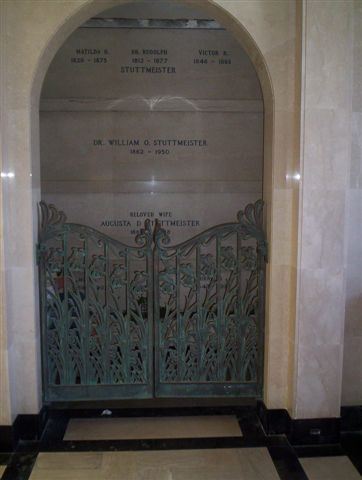
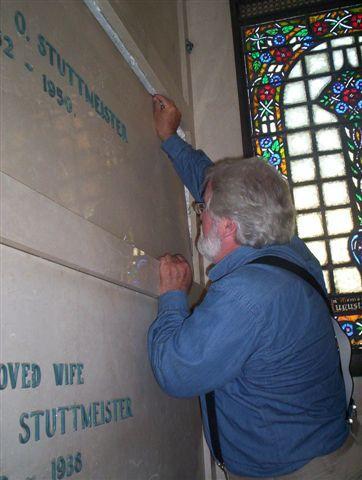
- Greg PrescoI took my newfound daughter to visit the Janke-Stuttmeister crypt that was damaged in the earthquake The A in JANKE had fallen off. I wondered if I would be believed because of this. That was twenty years ago. I welcome all challenges to my information… See More
- Like
- · Reply
- · 13h
- Greg PrescoThis crypt was lost – now found! When I saw it – I gasped. Minnie comes from Wilhelmina.
- Like
- · Reply
- · 13h
- Greg PrescoMy newborn grandson, Tyler Hunt. I did not know I had a daughter.
- Like
- · Reply
- · 13h
- Greg PrescoWilliam O. Stuttmeister moved his kin to Colma after the Oddfellow graveyard was dug up. This is a Tiffany window. This is his gift to the City of Belmont and all its citizens. You are all welcome to visit this shine of respecting our family history, a… See More
- Like
- · Reply
- · 13h
- Greg PrescoHere is the Stuttmeister monument in Berlin. This very wealthy family gave it all up to come to dwell in our Democracy…that they believed in! They wanted to know how it felt. They wanted to contribute to freedom.
- Like
- · Reply
- · 13h
- Greg Prescohttps://rosamondpress.com/…/knight-stuttmeister…/
 ROSAMONDPRESS.COMKnight Stuttmeister (Stallmeister)Knight Stuttmeister (Stallmeister)
- Like
- · Reply
- · Remove Preview
- · 13h
- Cynthia Karpa McCarthyIf you would like your notifications to show up as posts on the page, post them as comments to your previous posts. Thank you.
- Like
- · Reply
- · 13h
- Greg PrescoThanks! I could not seed my first post. There is more that I will post tomorrow.
- Like
- · Reply
- · 13h
- Greg Prescohttp://www.historicunioncemetery.com/Person.php…
 HISTORICUNIONCEMETERY.COMHistoric Union CemeteryHistoric Union Cemetery
- Like
- · Reply
- · Remove Preview
- · 12h
- Greg PrescoBelmont is sitting on a gold mine of history. I suspect these cottages belonged to Carl Janke who brought six portable houses to Belmont in 1849. Count Cipriani screwed his house together, that Ralston added on to. Carl tried looking for gold, and may … See More
 ROSAMONDPRESS.COMTanforan CottagesTanforan Cottages
- Like
- · Reply
- · Remove Preview
- · 12h
- Greg PrescoBelmont is The Hub of History. https://rosamondpress.com/…/10/royal-wedding-at-belmont/
 ROSAMONDPRESS.COMRoyal Wedding at BelmontRoyal Wedding at Belmont
- Like
- · Reply
- · Remove Preview
- · 11h
- Greg PrescoBelmont has the real Gone With The Wind. https://rosamondpress.com/…/statue-of-john…/
 ROSAMONDPRESS.COMStatue of John Breckenridge CastlemanStatue of John Breckenridge Castleman
- Like
- · Reply
- · Remove Preview
- · 11h
Prussian Colony In California
Posted on January 21, 2020 by Royal Rosamond Press


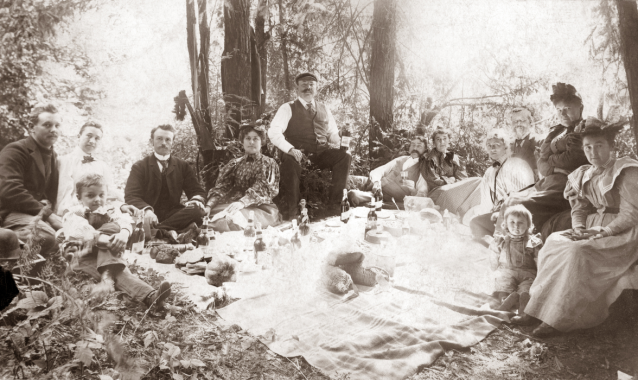
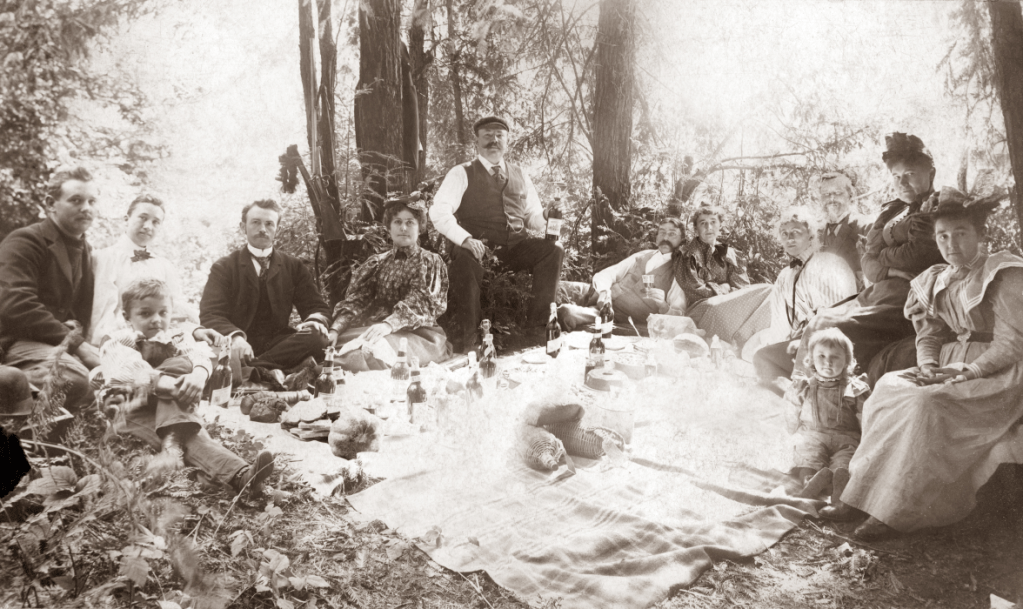
Eureka! Mexico was going to sell California to Prussia for $6 million dollars. Carl Janke, brought six portable houses around the Cape in 1848 – before the Gold Rush! One of them was Ralston House. Was Belmont going to be the Capitol of New Prussia? I just found her when I google the King of Prussia who ruled in 1846. My angel has been leading me to her in my book ‘The Royal Janitor’. https://en.wikipedia.org/wiki/Prussia
Frederick married Victoria, Princess Royal, eldest daughter of Queen Victoria
The question I have been asking, is what kind of kingdom was John Fremont going to establish in the West, that Starr King talked him out of? Did Lincoln know about the Prussian offer? What about Chile? The Germans had a colony there that William Stuttmeister dwelt in before he came to California. Are we looking at a hidden Prussian Kingdom – blessed by Victoria – Princess Royal, whom the Osborne House was built!
The Empress and Emperor of Prussia are Harry Windsor’s close kindred. They took away Harry’s uniform today. Will he wear a crown and the Emperor of California? Will Harry and Meghan sit in the grandstand and watch their troops? Will the transformation of the Republican Party, start here?
John Presco
President: Royal Rosamond Press
Belmont Soda Works – Reborn
Posted on April 13, 2021 by Royal Rosamond Press

Capturing Beauty
by
John Presco
Capturing The Beautiful Hill
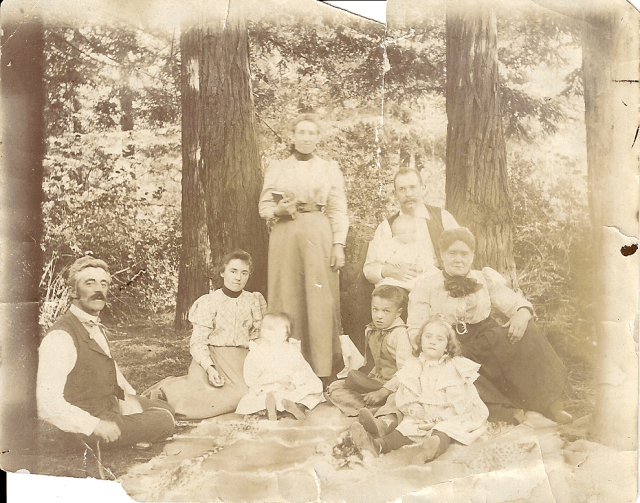
At 1:38 A.M. on April 13, 2021, I founded the new Belmont Soda Works. An hour later I found a branch of the Janke family, born of Elizabeth Janke, the daughter of Carl. Her children and grandchild lived and worked in many places in Belmont. I also found proof that my great, great, grandfather brought six portable houses around the Cape and erected them in Belmont, a city that means ‘Beautiful Hill’. This makes Janke a premiere pioneer builder in the Bay Area, and the owner of one of California’s first Theme Parks. Cark and his family are business peers of Walt Disney. I also found the copyrighted post of my families achievements, that precedes all copyrights by anyone who had written about this very important and historic family. Elizabeth and Melba Broderick, my father’s mother, look alike. This post remains untouched, and contains the double posting of images that was occurring at this time, until I learned how to fix this. I will now make the Janke family the premiere family genealogy. I believe the photos above were taken in Janke’s Park. This is one of the or the First Families of the Bay Area. Anyone interested in manufacturing a soda, please e-mail me.
JohnPresco@belmontsodaworks.com
History of the San Francisco Bay Region: History and Biography – Bailey Millard – Google Books
.


Flemming and Hammett
Posted on April 14, 2021 by Royal Rosamond Press


Yesterday I found an article written in 2014 that connects Ian Fleming with Raymond Chandler and Dashiell Hammett. Mary and Royal Rosamond would be pleased to know their grandson has connected them to a very successful author, and he found our lost kin in Belmont – that the Belmont Historic Society failed to tell me about! Did Mary Magdalene Rosamond hear rumors about her son-in-laws side of the family? Too bad – they could not connect! Better late then never. What year did I receive that letter from my muse, Rena Easton, who inspired my Bond book ‘The Royal Janitor’? I wonder if Fleming read Jack London.
John Presco
‘The Special Relationship’: Ian Fleming and America | Artistic Licence Renewed (literary007.com)
Bond of Nebraska | Rosamond Press
There is a certain paradox about James Bond’s relationship with all things America. Devoted to the Anglo-American war against Communism, there is a level of contempt that runs through the novels during a time when the British Empire was winding up and the new American one was burgeoning. The contempt tended to be about material things, perhaps a veiled attack on America’s overt consumerism.
In life, Fleming was something of a fan of America. He loved his Studebaker car, holidayed in Vermont and New York; took many trips throughout the States for fun and research for his books and had many close American friends such as Raymond Chandler, Ernie Cuneo and even John F. Kennedy. Perhaps this is why the Brits and Americans are referred to as ‘Cousins’ and not ‘Brothers’.
When interviewed by Roy Norquist for a publication called CounterpointIan Fleming had this to say about the influence of America on him:
Two splendid American writers, the great masters of the modern thriller, Dashiell Hammett and Raymond Chandler. I was influenced by these writers, by their extremely good style and the breadth and ingeniousness of their stories.
There is some American detail. Of course, three or four of the books are set in and around America, and there’s a subsidiary hero, an American named Felix Leiter who’s with the CIA and later with a detective agency. But I do get into trouble with my Americanisms. People write in and say I’ve got things wrong here and there. Recently, in fact, I got an assistant librarian at Yale who passes on all my American scenes. I give him the book, and he very kindly goes through it and suggests where the American language could be improved. So I try to catch everything, but still —- well, it annoys me as much as it must annoy Americans to find America so clumsily depicted in English books.
Similarly, the English are annoyed by mistakes Americans make about England. As an author, one should try to get the lingo totally correct. This applies most strongly to the gangster idiom (of which we have an exaggerated idea, perhaps largely due to Damon Runyon). Gangster language changes with the times, just like beat language, and it’s very difficult, if one isn’t living in America, to keep up with it. But I try my best, and I’m pleased to find that too many Americans don’t complain.
Yet the much lamented ‘snobbery’ aspect of Fleming’s writing is not helped with lines like this from For Your Eyes Only:
You can get far in North America with laconic grunts. “Huh,” “hun,” and “hi!” in their various modulations, together with “sure,” “guess so,” “that so?” and “nuts!” will meet almost any contingency.
But apart from some lazy prejudice at times, when Fleming spends time on writing about America, he does it justice with his intense enthusiasm and attention to detail. Remember, he summered most years up at his old pal Ivar Bryce’s farm in Vermont, where he came up with plot ideas set in America. In October 1956, Diamonds Are Forever came out in America and was well received. Even the The New York Times’, Anthony Boucher—described by a Fleming biographer, John Pearson as “throughout an avid anti-Bond and an anti-Fleming man” noted that “Mr. Fleming’s handling of American and Americans is well above the British average”.
While William Plomer a friend and reader for Fleming’s publisher, Jonathan Cape, read the manuscript and singled out Fleming’s description of the racing stables in Saratoga as: “The work of a serious writer”.
The London Fleming Connection
Posted on April 14, 2021 by Royal Rosamond Press

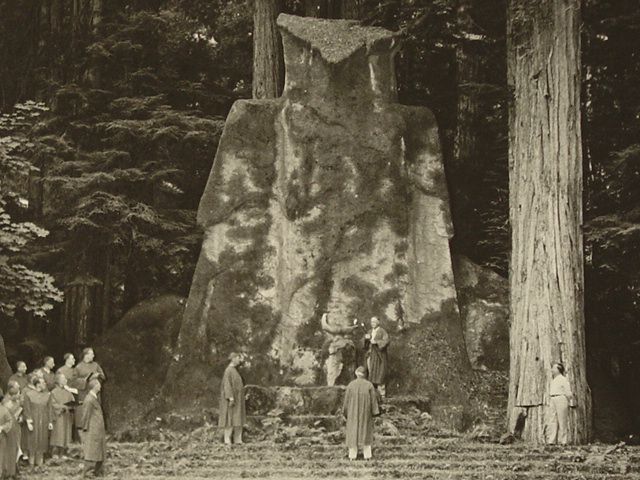
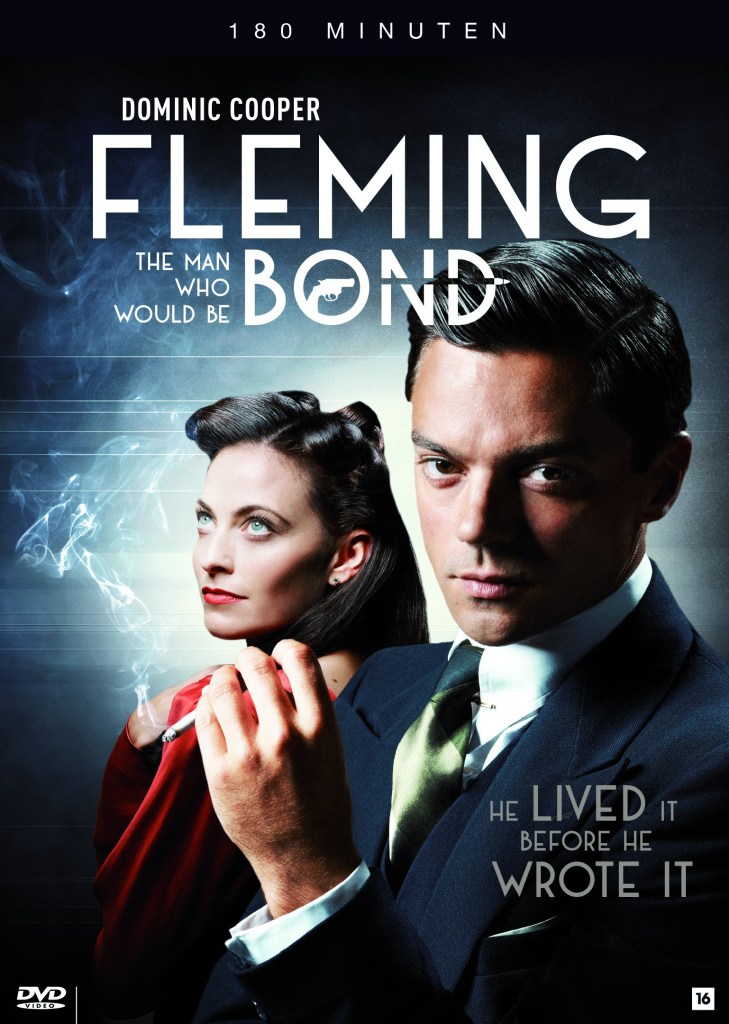

It is suspected Ian Fleming read some of Jack London. This – frees me up! Not that I allowed anyone to – lock me up! It’s just going to be a hell of a lot easier! Now I can have Victoria Rosamond Bond, and Miriam Starfish – snoop around the Bohemian Club – without fearing losing more family members due to a – stab in the back! All their blades – have struck home! I get to play – THE TOTAL GOD!
“On the way off the pier, Starfish spotted a green object in the shallow water. She did not hesitate wading in.
“Don’t go in that water. It might be contaminated!” said Victoria, her motherly instinct coming out now that she loved her first human being – more than life itself.
“Look!” cried Starfish. “It’s an old bottle…”The Belmont Soda Works!”
Off Miriam sped to the site of the other California Barrel Company. Victoria was on google being tossed about, she no longer looking at the road as Miriam squealed around corners. Getting out of their joy ride, they walked to his circular area in the industrial wasteland.
“Who owns this property?” asked Victoria and began to circumnavigate the area that looked like a launch pad for alien craft.
“Meg Whitman.” answered Starfish. “Look at these symbols in the dirt. Someone has been conducting a ritual here. “
“Here’s a plan for a very exclusive community.”
That I sign with the combined name of the two families of Belmont is out of this world! I am reminded of The Davinci Code and the appearance of members of the Sinclair family who are keen on finding the burial fault of Mary Magdalene. Surely members of BHS knew about Elizabeth Janke and investigated MY genealogical claim when I said I am kin to the Janke family. Again, why was there no warm greeting – with announcement of my lost kin? Ancestry.com is a multi-million dollar company that caters to ninety millions souls interested in find their lost kin. The BHS must have known that I could make a claim to OWNING much, if not all, of Belmont’s History. Do they have another book in the works? To elude THEY had a problem with the history of Oakland, Kamala Harris, and the Black Panthers, and thus I was given the cold shoulder – is racist! The London connection between these two cities now includes a PHILOSOPHY of Fleming and London, that dovetails nicely with Ludwig Wittgensteins interest in Norbert Davis, who like James Bond, is seen with a gun.
Has anyone (but me) compared Dan Drown to the Black Mask authors? There were complaints when Janke Street was renamed. Do members of BHS see themselves as the rightful founding family of Belmont, because they believed WE had all died out? The Invasion of the Body Snatchers comes to mind. Also the movie ZARDOZ where Sean Connery VIOLATES the Immortals of The Vortex, and gets the Apathetic all excited when they TASTE THE SWEAT OF ZED. I am The Sweat of Zed!
John Presco
(16) Da Vinci code – cryptex decodeing scene – YouTube


The Philosopher Detective | Rosamond Press
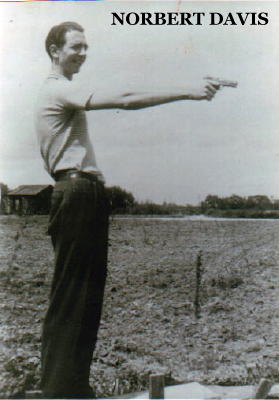


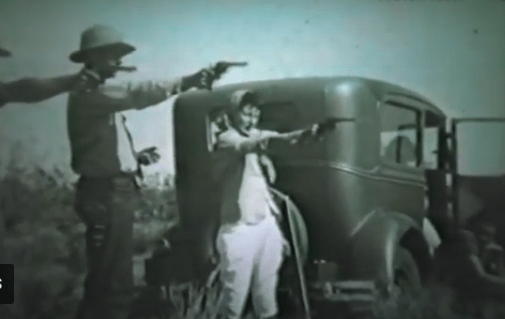

Battle At Think Tank
Posted on March 11, 2021 by Royal Rosamond Press
This photo of me has been popping up in My Think Tank that I founded yesterday. We are going there, next. Having Victoria Bond’s bodyguard being half Russian is a tell.
William Stuttmeister Janke
The Science Fiction of Jack London | Rosamond Press
Posted 05 May 2011 – 12:18 AMI was scrolling through Wikipedia today, and had spent a few minutes looking at the Jack London entry (I was looking up some factoids on his life and on The Assassination Bureau) when I scrolled down to the London “Apocrypha”, as it was labeled… and came across this (bolding is my own, for emphasis):
I would rather be ashes than dust!
I would rather that my spark should burn out in a brilliant blaze than it should be stifled by dry-rot.
I would rather be a superb meteor, every atom of me in magnificent glow, than a sleepy and permanent planet.
The function of man is to live, not to exist.
I shall not waste my days in trying to prolong them.
I shall use my time.
Well, of course, reading those last two lines stopped me dead in my tracks… because I think we all recognize them from You Only Live Twice, the novel, listed there as Bond’s “philosophy”. If Fleming had been a closet London fan, I had never heard of it.
This quotation, called London’s “Credo”, is taken in this form from an introduction by Irving Shepard, London’s step-nephew, to a 1956 collection of short stories entitled Jack London’s Tales of Adventure. It would seem to be in this poetical typesetting that Fleming first encountered these words, but a slightly different version (actually, the only other complete version) appeared even earlier, in a December 1916 article by Ernest J. Hopkins, published just weeks after London’s death; I’ll let Clarice Statz, a London scholar, take over from here (she quotes Hopkins’ article at the start; the bolding is my own):
“‘I would rather be ashes than [sic] said Jack London not two months before his death, to a group of friends with whom he was discussing, as he loved to discuss, the eternal problems of life and living.
‘I would rather be ashes than dust.’ The words, with their strange double significance, are now recalled with emotion by those friends. When he made that striking summary of his personal philosophy, London was marvelously alive. He irradiated vigor. Every breath that he drew was to him a brilliant sensation. Every moment of his time was crammed with events. he was in love with life–an[d] with vitality–ablaze with the joy and the poignancy and the overwhelming interest of “The Game.”
Let there be no misunderstanding of his phrase. Jack London did not mean to say that, after death, he would prefer the ashes of cremation to the dust of ordinary burial. Nothing was further from him than the thought that he himself was, as he put it, soon to ‘go into the silence.’ Of all the ardent group that heard him on that occasion, he was the most alive. Beside him all other men seemed colorless. But he was talking about life, not about death. He was giving his law of conduct, not his preference in funeral customs.
‘I would rather be ashes than dust. I would rather that my spark should burn out in a brilliant blaze than that it should be stifled by dry-rot. I would rather be a superb meteor, every atom of me in magnificent glow, than a sleepy and permanent planet. The proper function of man is to LIVE. I shall not waste my days trying to prolong them. I shall use my time.’
‘I would rather be ashes than dust.’ In those words London perfectly expressed himself. Never content to do his thinking by halves, upon that instinct for supreme activity he constructed a philosophy that was consistent, if unusual. Absorbed in today, he could not envisage a hereafter. Enthusiastic over tangible facts and present sensations, he believed that ease was cowardice; that the stronger must over conquer the weaker; that intellectuality divorced from action was wasted an futile; that man and the animals were of one nature, man having no quality that was not rudimentarily present in horses and dogs; that after death the human being was ‘just meat.’ Amid these tangible ideas there was room for race-memories, but not for superstitions. There was room for violent work, intense play, fierce fighting, mad adventure, thoughtful planning, but not for pretty dreaming, not for dogma, not for detached theorization. His thought was essentially practical….”
The question London scholars have is whether these words are all London’s and as he expressed them. Even moreso than today journalists’ quotes were unreliable or even sheer inventions. The full passage has many marks of London’s style–its directness, its rhythm, its diction–to persuade that it is authentic.
That all was not Hopkins’ invention can be found further in one document in London’s own handwriting. While visiting Australian suffragette Vida Goldstein in Melbourne, he placed the following in her Autograph Book. (The book is owned by a private collector who provided a photocopy of the page.)
Dear Miss Goldstein:–
Seven years ago I wrote you that I’d rather be ashes than dust. I still subscribe to that sentiment.
Sincerely yours,
Jack London
Jan. 13, 1909
In my opinion, the phrasing of the fragment featured in YOLT is too close to be from anyone but London; Fleming obviously encountered Shepard’s London collection sometime after its 1956 publication, and found it appropriate — in fact, it is probably the perfect expression of London’s, Fleming’s, and Bond’s life philosophies.
“The proper function of man is to LIVE. I shall not waste my days trying to prolong them. I shall use my time.”
The Old California Barrel Company
Posted on March 24, 2021 by Royal Rosamond Press
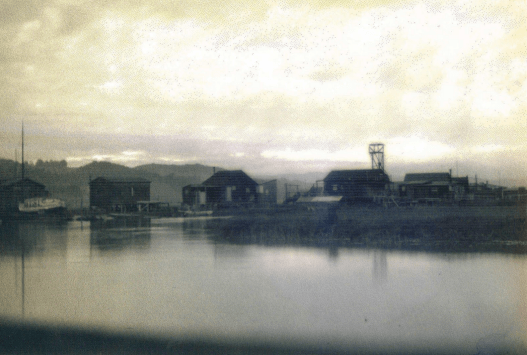
Jack London studied Communism. I guessed at what the wharf area of Belmont looed like when I had Victoria Rosamond Bond, and Miriam Starfish Christling come to Belmont to investigate the California Barrel. Company. Jack’s parents were psychics, I believe involved in Remote Viewing. Company. I saw the coming War of Words between the United States and China. I posted on the facebook of Jon Rosamond yesterday. I introduced him to the Sea Lord Caspar John who is the son of the artist, Augustus John, who is kin to Ian Fleming. The Bohemian Ghost (Caspar) fleet has landed in Bohemian Belmont. The knight under White Mountain – ride out to meet the enemy!
When I began the Royal Janitor I founded a THINK TANK – my think tank! It sits at the end of this wharf in Bohemian Belmont. There is a fading sign facing the Bay….
‘The California Barrel Company’
The Home of BAD, the BELMONT ALLIIED DEFENCE!
“Look for the man wearing a barrel!
I get $789 dollars of U.S. Government money to live on. No government has got their monies worth like my government!
“Bond!……James Bond!”
“Hello boys! Do you mind if this Old Salt pulls up a chair and joins you?”
China bashes US over racism, inequality, pandemic response (msn.com)
In Defense of Communism: Jack London- How I Became A Socialist (idcommunism.com)
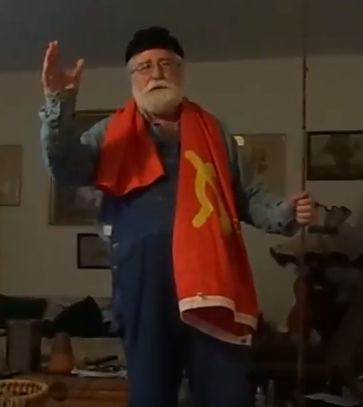




To return to my conversion. I think it is apparent that my rampant individualism was pretty effectively hammered out of me, and something else as effectively hammered in. But, just as I had been an individualist without knowing it, I was now a Socialist without knowing it, withal, an unscientific one. I had been reborn, but not renamed, and I was running around to find out what manner of thing I was. I ran back to California and opened the books. I do not remember which ones I opened first. It is an unimportant detail anyway. I was already It, whatever It was, and by aid of the books I discovered that It was a Socialist. Since that day I have opened many books, but no economic argument, no lucid demonstration of the logic and inevitableness of Socialism affects me as profoundly and convincingly as I was affected on the day when I first saw the walls of the Social Pit rise around me and felt myself slipping down, down, into the shambles at the bottom.
Battle At Think Tank
Posted on March 11, 2021 by Royal Rosamond Press
This photo of me has been popping up in My Think Tank that I founded yesterday. We are going there, next. Having Victoria Bond’s bodyguard being half Russian is a tell.
William Stuttmeister Janke
A war over Russia has erupted at the Atlantic Council (msn.com)
In a very rare public battle at a prominent Washington, D.C. think tank, almost two dozen employees and fellows at the Atlantic Council have issued a statement slamming two of their colleagues for writing what they see as a pro-Russia article on the think tank’s website.
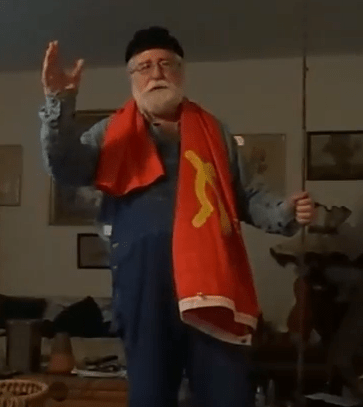
Emma Ashford and Mathew Burrows, two senior experts at the Atlantic Council, on Friday published an article that said the U.S. should not focus on human rights in its dealings with Russia and wrote that “democratization in Russia would not necessarily be good for US foreign policy interests.”

The Royal Janitor
by
John Presco
Copyright 2021
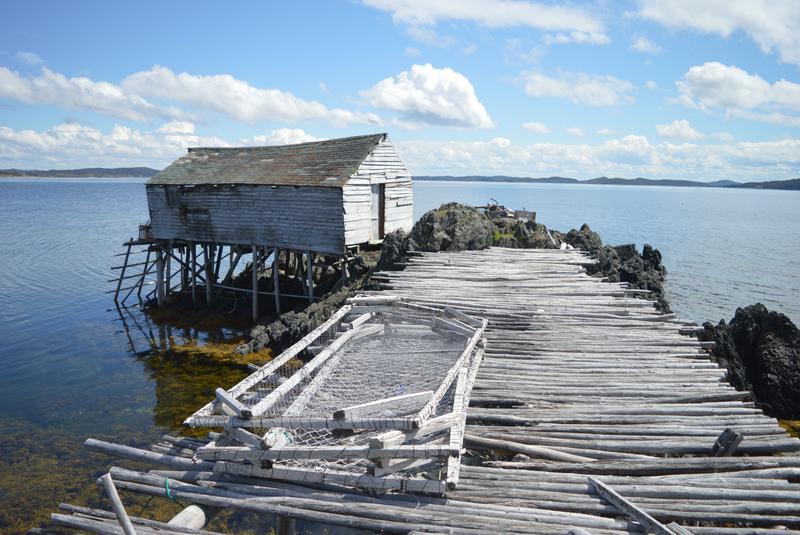
Victoria found the old California Barrel Company in a old phone directory. There were two of them. One was located in the Dogpatch area south of San Francisco, and the other offshore of Belmont on the really old Wharf Road. Making their way carefully down the rickety wharf to the house that sat at the end of it, they passed a chicken coop. Just as they were about to knock at the door, it flew open, and there stood a jovial Santa-looking gentleman in his seventies!
“I knew I was going to have company today! My name is William Stuttmeister Janke, the proprietor of the original California Barrel Company. I’m going to have to fix my ladder and get up there and freshen up my fading sign. Are you looking to buy some barrels?”
“No thanks!,” said Victoria. “We came to talk…
Bad Day At Belmont
Posted on March 17, 2021 by Royal Rosamond Press






Capturing Beauty
by
John Presco
Copyright 2021
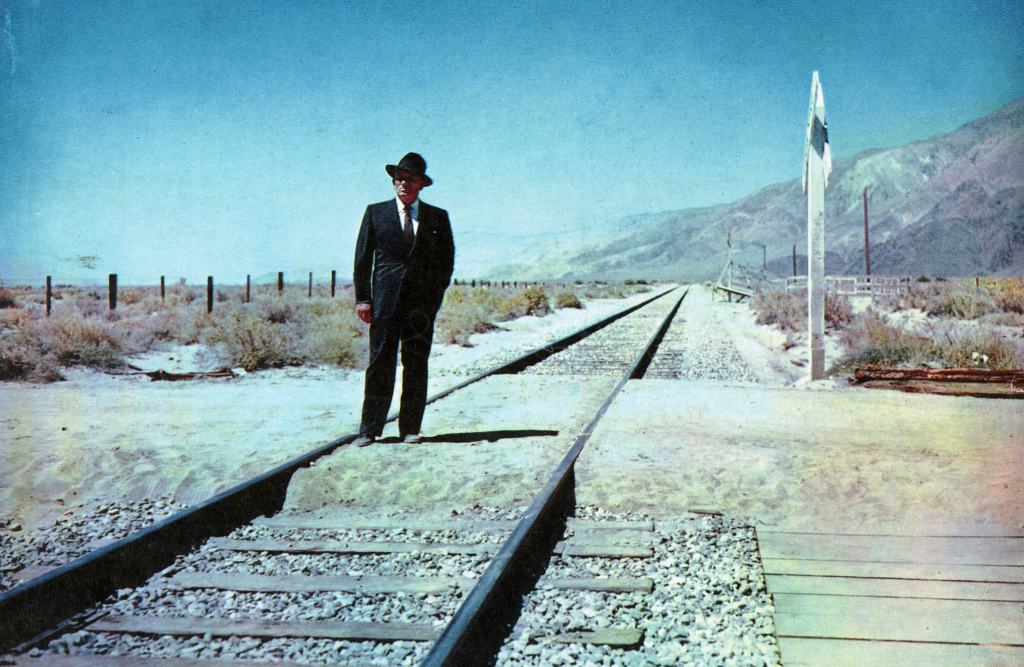
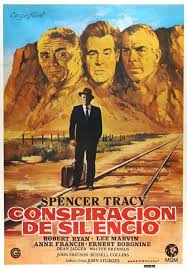
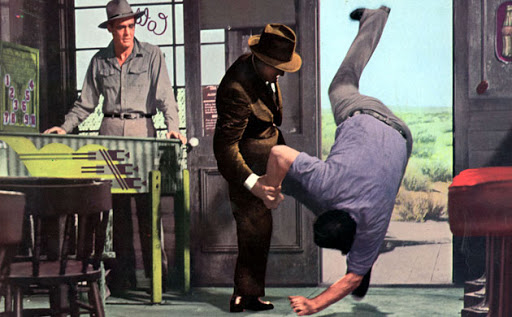
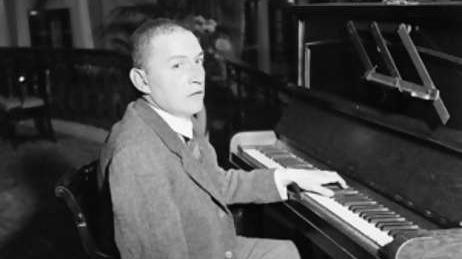
When I read about Ludwig Wittgenstein infatuation with Norbert Davis, the movie Bad Day At Black Rock popped into my mind because his brother was a one-armed pianist. I about pissed my pants. I knew I had found the Lost Anaconda Mine. I had a vison of Ludwig coming to America to look for that perfect vast empty tumble-weed place Norbert Davis made famous in his books. He too has lost one arm in a failed suicide attempt. He decides to bring along his scattered philosophy that is not yet in book form. Who knows, someone might find merit in his work – and buy IT! Geniuses are notorious for believing their work is third rate, not up to snuff, thus, they keep digging deeper, and deeper.
In the last month, I’ve been thinking of taking two train rides. The first place I considered, was Belmont California. I’d pack up my grandfather’s books he could not sell in his lifetime, just incase the Belmont Historical Society wants them. So, I get off the train and find the BHS whose members promised they would meet me at the train station. But, they subscribe to the real old ways, and ask me if I want to participate in The Wicker Man Celebration.
“No thanks. I saw the movie! I think I’ll be moseying back to the station!”
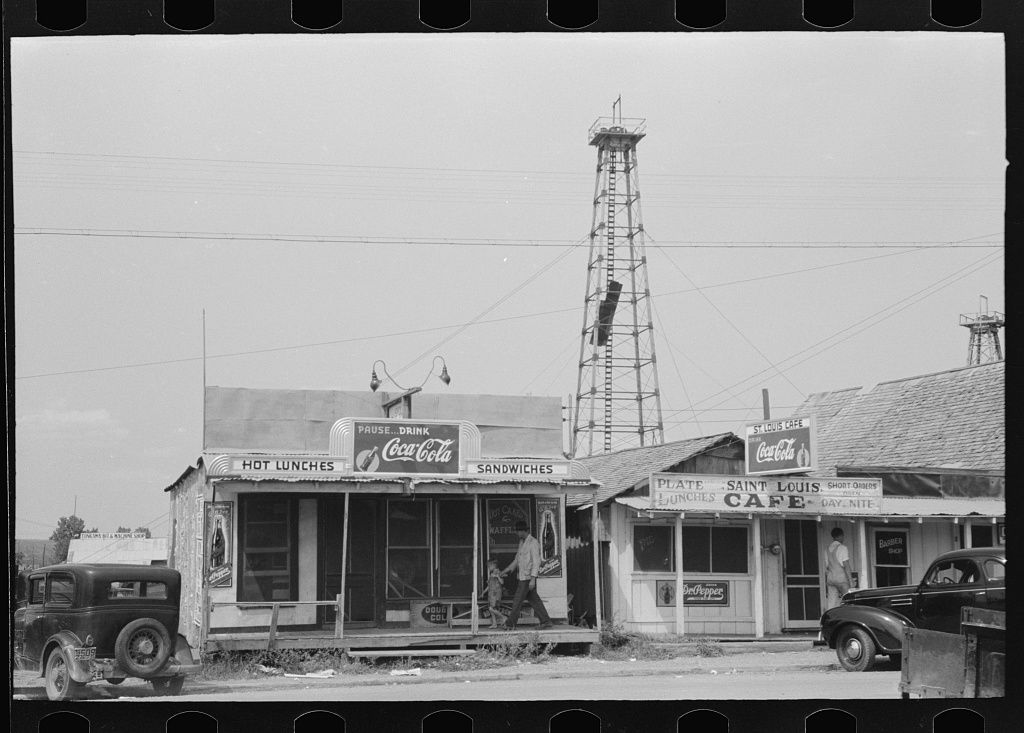
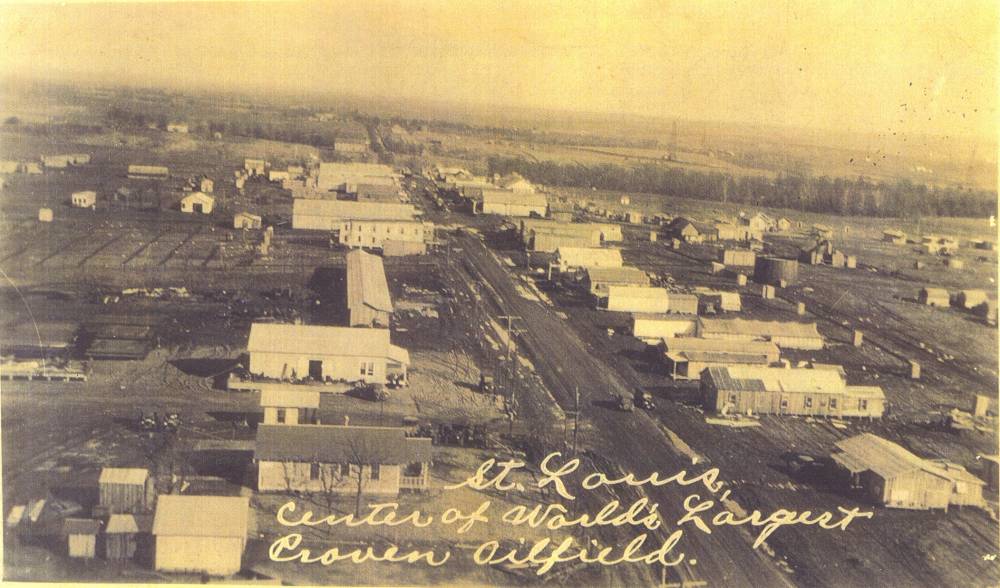
Getting back on the train, I head for the small town of St. Louis Oklahoma founded by Louis Frank and Lillie Rosamond who platted it in 1927. Looks like a quiet place. I can plant my roots here, and buy a plaque for Ludwig when I put a down payment on my burial niche in Oklahoma City. What can go wrong.
Nearing St. Louis I have visions of the movie Zabriskie Point starring two cult followers of my kinfolk, Jessie and Mel Lyman. Googling on my pad, I find a federal lawsuit involving a Rosamond and a oil company. (just found it) Sounds like the movie GIANT, starring my kin, Elizabeth Rosemond Taylor. Say! What am I getting myself into? I don’t want any trouble. I don’t want to go looking for trouble.
1 This is an action by Louie F. Rosamond, plaintiff, against Indian Territory Illuminating Oil Company, defendant, to recover damages resulting from the failure of defendant to protect from drainage by offset wells an 80-acre tract of’ land in which plaintiff owned a one-eighth interest in the oil and gas. Defendant was the owner of the oil and gas lease on the tract. From a verdict and judgment for plaintiff in the sum of $2,995, defendant appeals.
Wait a minute. That movie resembles the early life of Vice President Kamala Harris. As I get off the train, I wish I had not gone and put a Star of David on Ludwig’s plaque.
I’m going to write a hard-boiled detective novel starring Ludwig, Norbert, and my Rosamond kin. Mary Magdalene Rosamond has fallen in love with Norbert and tells Royal not to come home. He meets Ludwig who takes a vacation to Oklahoma. They buy stock in a oil well and come up against a oil theft scheme. Royal gets in a accident.
Above is a photo of Austrian Philosopher, Ludwig Wittgenstein, who studied the Black Mack Writers and other authors of Detective novels. He was fascinated with Norbert Davis who was a friend of my grandparents – who have redeemed THEIR family from beyond the grave. I am the head of my family. Here is a movie about Ludwig. In this scene he is attending a movie based on detective writers like Dashiell Hammet and Erle Stanley Gardener who were friends of Royal Rosamond.
I am kin to Harper Lee, and there is a woman named Rosamund in Caldwell’s ‘God’s Little Acre’.
Rosamund and God’s Little Acre | Rosamond Press
Wittgenstein – Derek Jarman (1993).avi – YouTube
Wittgenstein: Philosophical discussion in Cambridge – Part 1 – YouTube
The Philosopher Detective | Rosamond Press
On March 27, 1959, 27-year-old film star Elizabeth Taylor underwent conversion to Judaism in a ceremony at Temple Israel in Hollywood, California. The ceremony was the end of a nine-month process undertaken by Taylor under the supervision of Reform Rabbi Max Nussbaum.
1959: Elizabeth Taylor converts to Judaism – Jewish World – Haaretz.com


Bad Day at Black Rock – Wikipedia
In late 1945, one-armed John J. Macreedy gets off a train at the isolated desert hamlet of Black Rock. It is the first time in four years that the train has stopped there. After Macreedy states he is looking for a man named Komoko, several of the local men become inexplicably hostile. The hotel desk clerk, Pete Wirth, claims he has no vacant rooms. Hector David threatens him. Later, Reno Smith informs Macreedy that Komoko, a Japanese-American, was interned during World War II.
ST. LOUIS.
St. Louis is located approximately four miles east of U.S. Highway 177 on State Highway 59 in southern Pottawatomie County. Originally known as Simpsonville, the town began when J. R. Simpson opened a cotton gin, added a gristmill around 1906, and soon thereafter opened the first general store. Later the town was called St. Louis when Samuel Gratis Johnson, the local Unity School teacher, jokingly remarked to a passerby on his way to town that he was going to St. Louis.
The town grew slowly. A man named Pemberton ran the only blacksmith shop. In 1902 Benjamin M. Green, a Primitive Baptist preacher, arrived from Polk County, Arkansas. He had 160 acres northeast of town and dealt in hides and cattle. In 1910 he opened a gristmill in town. Until a Dr. Blunt moved to St. Louis around 1910, the nearest doctor was Dr. S. D. Dodson who came from Sacred Heart, the nearby Roman Catholic mission and school.
Frank and Lillie E. Rosamond filed the town plat on March 9, 1927. The post office was established in 1928, and the town was incorporated during the oil-boom days. With the influx of oil-field workers during the 1920s, schools met the demand of a tenfold increase of school children. To bring about better education the Unity, Collins, and Cloverdale schools consolidated to form the St. Louis School District. The community’s economy has been based primarily on raising cotton and corn and providing agricultural services. The population declined from 493 in 1930 to 326 in 1940. By 1990 and 2000, respectively, the population was 181 and 206. By the turn of the twenty-first century the residents had erected a sign offering the message, “WELCOME TO ST. LOUIS, Home of 179 Friendly People, 1 Pyromaniac & 1 Busy Body.” The population was 158 in 2010.
2 Plaintiff claimed that oil was being drained from under the 80-acre tract by three offset wells on adjoining lands, one north of the northeast corner of the tract, one east of the northeast corner, and one diagonally north and east of the northeast corner. He contended that under the implied covenant of the oil and gas lease of defendant it was the duty of defendant to drill a well in the northeast ten acres of the 80-acre tract, which would offset the wells above mentioned and protect the tract from drainage thereby, and sought damages for drainage resulting from defendant’s failure to drill such well. The three wells which he contends drain the oil from under his land were drilled in 1928 and 1929. In 1929 defendant drilled a well in the southeast corner of the 80-acre tract which, with a well in the northeast corner, would have protected the tract from the surrounding wells. After the drilling of the well in the southeast corner plaintiff and his co-owners in the mineral interests under the tract requested that a well be drilled in the northeast corner, but this was not done. Plaintiff’s co-owners then brought an action for damages for failure to drill in the northeast corner of the land, which action was settled in October, 1934, by defendant paying such co-owners the sum of $8,000 and assigning to them the oil and gas lease, excepting the southeast ten acres on which the well drilled by defendant was located. Plaintiff was not a party to the action or settlement, and after the settlement was made he again demanded that the well be drilled or damages paid him for drainage, but all negotiations failed, and this action was filed on August 2, 1937.
Rosamond v. Reed Roller Bit Company, 292 P.2d 373 – CourtListener.com
St. Louis originally began in 1906 as a community named Simpsonville when J. R. Simpson opened a cotton gin, a gristmill and then a general store. It is unclear when the name of the community was changed to St. Louis. A town plat was not filed until March 9, 1927 and a post office was established in 1928.[4]
Except for a brief oil boom in the 1920s, the town’s economy has been based on serving local cotton farmers.[4]
The population peaked at 493 residents in 1930 and has declined until the present.[4]
Paul Herschel Rosamond (1923-2015) | WikiTree FREE Family Tree
Tulsa County, Oklahoma Genealogy Trails
Zabriskie – The Musical
Posted on August 26, 2017 by Royal Rosamond Press

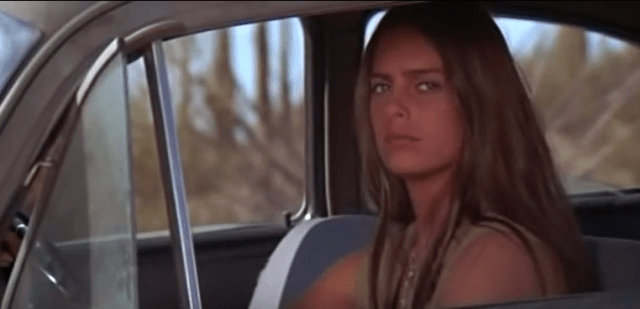


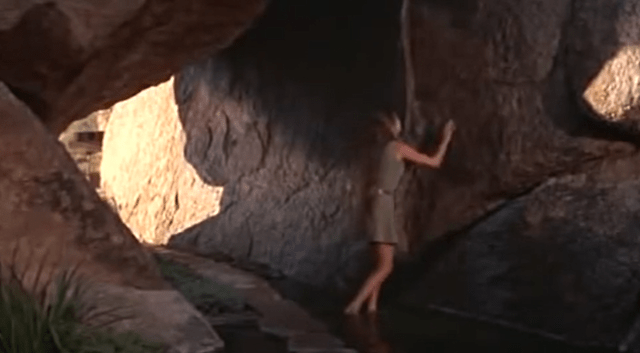

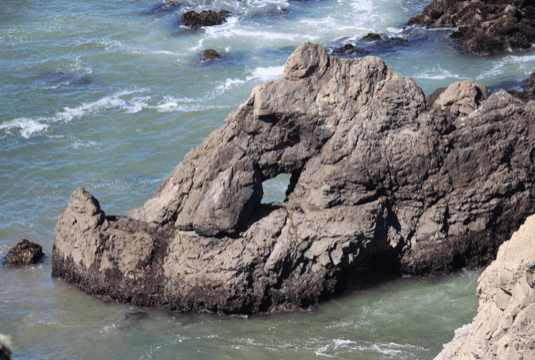


“I say hello to Nancy and the artists. I think about the Chicano Artist Sanctuaries I am thinking of founding.”
I wrote the above two days ago. I am seeing into the future. Trump’s good squad own guns and see themselves as cowboys. He is supplying them with targets. Hippies were a favorite target of the Republican-right. We were ‘The Savage Indians’. We were hunted!
http://www.cnn.com/2017/08/26/politics/trump-arpaio/index.html
The pardon of Sheriff Joe checked so many boxes for what we know about how Trump views the world and operates that, in retrospect, it was utterly predictable.
This morning I awoke carrying a heavy load. I dreamed I was in a warehouse in New York choosing old props from a play that had failed, or, was never fully produced. Something went wrong. Now, I was the savior of this play. I heard someone say;
“This is an extremely difficult project. This guy gets his big break, and he’s going for this?”
I awoke with FAILURE staring me in the face. What is the play? I lie in bed half asleep and let my intuition look for the answer. Maybe it’s a musical? I thought about my friends in New York and ‘My Big Beautiful Blue Bicycle’ and my unfinished novel ‘The Gideon Computer’. I say hello to Nancy and the artists. I think about the Chicano Artist Sanctuaries I am thinking of founding. Then, I am looking at my next post I had in mind, and – BINGO!
In lest than an hour I am watching Darian Halsprin walking into a hole in the rocks where there is a waterfall in a grotto. it leads to a house designed by the famous architect – as a prop, that is going to be blown-up!
This movie was made in 1970, the year Rena and I went camping for fifty days in my 1950 Dodge. When Christine saw the painting I did of my muse in 1971, she took up art. Life imitates art. Life is a movie. Consider the real estate deal going on in the house.
Angela Davis is in this movie. My daughter’s mother had a son by a Black Panther, who knew Angela. It’s all here. It wrote itself, as if there is a God, and, Art is God.
Jon Presco
Copyright 2017

At the end of director Michelangelo Antonioni’s anti-capitalist, anti-life turkey of a film ‘Zabriskie Point,’ this house — designed by architect Paolo Soleri and (like several scenes in Antonioni’s film) based on the house in Alfred Hitchcock’s ‘North by Northwest,’ which was itself inspired by Frank Lloyd Wright’s desert houses — this house is ‘lovingly’ exploded in montage as the ‘climax’ of the film; destroyed in balletic slow motion with “a final destructive glee.”
As a director, Antonioni was for sure an accomplished artist. His films were honest demonstrations — of essentially anti-life themes. Antonioni’s original ending to this film, which was the perfect culmination of his film’s theme, was a shot of an airplane sky-writing the phrase “Fuck You, America,” which was cut by MGM president Louis F. Polk.
Never doubt that’s what he meant this replacement scene to say — “a series of slow-motion captures of capitalistic debris flying apart against a smoky blue background.” Never doubt that he meant it.
That’s why the house needed to be so good. Understand that, and you understand much of modern art. Think about it.
And from the siting of the house you can begin to appreciate what it means to “integrate architecture with your site.”

Christian Brevoort Zabriskie (October 16, 1864 – February 8, 1936) was an American businessman and former vice president of Pacific Coast Borax Company. Zabriskie Point on the northeasternmost flank of the Black Mountains east of Death Valley, located in Death Valley National Park is named after him.
| Maria Zabriskie (Brevoort) | |
| Birthdate: | April 10, 1779 (82) |
| Birthplace: | New Barbadoes, Bergen County, New Jersey |
| Death: | December 22, 1861 (82) Hackensack, Bergen County, New Jersey, United States |
| Immediate Family: | Daughter of Elias Brevoort and Maria Brevoort Wife of Jacob Christian Zabriskie Mother of Dr. Christian Brevoort Zabriskie; Elias Brevoort Zabriskie; Henry Brevoort Zabriskie; Maria Stoutenburgh Solomon and Col. James Cannon Zabriskie |
|---|---|
| Managed by: | Michael M.van Beuren © |
About Elias Brevoort
Seems to have started as a Loyalist <see list. Not to be confused with another Elias Brevoort now on the DAR list and served under Major Goetchius (NJ) ref: DAR# A104082 . His younger brother Henry remained “loyal” in the Out Ward of New York and preserved the family farm just north of Washington Square.
One Elias Brevoort was granted land in Digby, NS as a Loyalist refugee. Evidently, he returned to the US just as many other refugees did.
Bow and Bohemian Bell
Posted on August 8, 2024 by Royal Rosamond Press

San Sebastian Avenue
I was dismayed there were very few photographs of old Jack London Square, and the Produce Market where the Presco Family operated Acme Produce. Everyone remembers their first job. At eight, this was where I was. This is where I worked. When I went to work for Yale Trucking when I was seventeen, located on the East River, the guys from Brooklyn, the Bronx, and the City – couldn’t believe there was no quit in me. I worked from twelve midnight till eight in the morning. They knew I was not dressed for the cold. I became their mascot. They called me…..The California Kid’
Everyday I got to fight off the label everyone wants to lay on me.
“You’re a bum – a loser! Like your father!”
I think I found Vic Prescos car, parked out side the Kraut’s bar. It’s that Plymouth on the left. Is Vic inside having a few lunch-time German beers? He had to tie the door closed with an old piece of hemp rope. He knew about the wealthy Suttmeisters who turned their back on his mother because she married a famous gambler – who lived on a houseboat in Crockett! Now throw in Sam’s Anchor Cafe on the wharf in Tiberon owned by my uncle, What happened? Berkeley and Oakland were full of Beat photographers and Bohemian Artist types. None of them went down to the Oakland Estuary with a camera?. Bobby Jensen did paintings – down there! I lived on a boat, there, and got some pics. I was dirt-poor! Why didn’t someone buy me a good camera, and free developing. The answer is, they were jealous of me! I had the Bohemian Lifestyle, down! I now declare this way of life a secular religion. because a rich dude is promising to tear Taylor’s home. Where are The Beat Franciscan Monks?
I took home $8.00 a day after taxes, social security, and Man Power’s cut. If I worked overtime, I had a couple of quarters to feed the pay radio in my room at the Saint George Hotel. Out my window was the alley where large rats scurried about.
There’s no quit in me. I want more than all of Belmont’s History. I want a Handsome Payday! Last night I told Christine my family were Bohemians long before she and Peter Shapiro showed up from Boston. Peter socialize with Captain Vic. He knew he was…..Mr. Oakland! I fired Mr. Noodles because he called me “Snooty”. I was questioning his credentials. He was telling me his family was just like my family. Denny Lawhern died knowing, the Lawhern’s were not a California Pioneer Family. Thanks to me! I’m the rel thing, and sometimes use the moniker…..Johnny Waterfront!
I think I see my old Dodge that I drove Ms. Christensen about in. My muse kicks my Bohemian Ass – everyday. She was the girl I did not meet in New York when I was seventeen. This was her age when she came to California from Grand Island Nebraska. I summoned her out of the sea on Venice Pier!
I get to wear the Bohemian Do-Me-Do Duds! Not you Mr. Noodles! Not – you!
JW

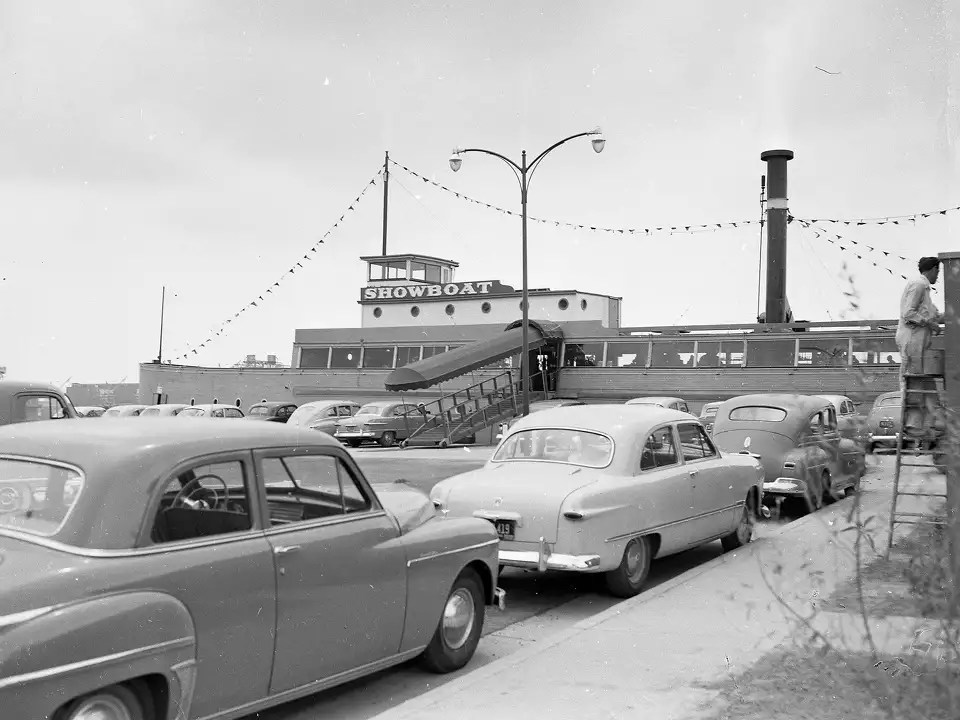
Watercolorist – Robert Jensen
Posted on July 13, 2015 by Royal Rosamond Press


Martin Eden Comes Home To Belmont
Posted on March 24, 2021 by Royal Rosamond Press


Capturing Beauty
by
John Presco
Copyright 2021
With the discovery Jack London lived and worked in Belmont, I have grounded my life’s work, and the creative direction of several generations of my family. who were Belmont Pioneers. And San Francisco Pioneers who helped found Fruit Vale that became a part of Oakland.
Jack London helped found the City of Carmel with the help of George Serling who was a founder of the Bohemian Club. My sister Rosamond had two galleries in Carmel. I bring my grandfather genetic DNA to Belmont where I found this day ‘The Belmont Bohemians’. I bring Ludwig Wittgenstein to Belmont. Like London and Martin, he was a philosopher. Edgar Albee said you got to fight for your bench. I own Belmont in a Literary Way.
John Presco
President: Royal Rosamond Press
Rosamond Crippled In Car Wreck | Rosamond Press
Martin Eden Comes Home
Posted on December 31, 2019 by Royal Rosamond Press


The Second Coming of Martin Eden
by
John Presco
Copyright 2019
The child plays
The toy boat sails across the pond
The work now has just begun
Oh child
Look what you have done.
I could not believe Rosemary had given me her father’s ship lanterns that once hung in the cabin of his sail boat. It was the last tour we would take together of the secret treasures that lie at the bottom of her cedar chest. My mother let me thumb through several issues of Out West magazine while telling me her father was a writer and a poet, but, she never let me read the work of a man I never met, never saw face to face. When my best friend, Bill Arnold, told me Rosemary had shown him the evidence Royal Rosamond was a writer, I was puzzled, and jealous. What gives?
Rosemary had read my amazing poems written when I was twelve and thirteen. It was like I was channeling her father, my grandfather, I desperate for an identity, any identity other then the one her husband had given Mark and I when he woke us up at four in the morning to go work in his produce market in Jack London Square – while it was still dark! I was eight, and my brother, nine. We were on Vic-time. The dreams of our peers were set to the clock at school. There, real children were allowed to dream about becoming an airline pilot, an astronaut, even the President of the United States. In our house, come summer time, the hands of the clock were stolen, along with our childhood, replaced by the whims of a tyrant.
“There’s no free lunch in my family. You boys are going to help support your family. You’re going to work.”
These lanterns were beautiful, made of solid brass, and no sooner did I own them, then I lost them, because I was a homeless vagabond, not caring where my next meal would come from, or, if I had a place to rest my head. Perhaps Rosemary gave me Royal’s lanterns as a peace offering, she feeling guilty for driving me from my home when I was seventeen, I ending up in New York working the graveyard shift at Yale Trucking, and living in the West Village. The stevedores called me the California Kid, and were amazed at what a hard worker I was, how strong I was for being so skinny. I had real endurance. I walked to work through Hell’s Kitchen where I bought my first beer in a bar. I was not a man. I did not have to register for the draft, as yet.
“There’s no free lunch in my country. You boys are going to have to fight and kill for your freedom.”
When I told my father I lived aboard a small boat docked in the Oakland estuary, he had to come see it, for I had stepped on his secret dream, even intercepted it, because Vic was inspired by Jack London. What fatherless young man growing up in Oakland did not entertain the idea they could go down to the waters edge and become a Pirate, make a living stealing other people’s oysters?
Captain Victim stole other people’s houses for a living, along with his best friend, Ernie Quinonis. Vic would brag how her would get drunk with Ernies’s brothers, especially Art, who was the head of the Mexican Mafia, and was in and out of San Quinten. Art made Vic an honary member of his family, and he and Ernie started to go to Puerto Varte to purchase Time Shares. I wondered if they were laundering money, because it was in Puerto Varte that Vic met Consuela his wife to be, that he smuggled over the border in a marijuana shipment.
When Dee-Dee knocked Captain Victime’s eye out with a four pound ashtray, he wore a black patch over one eye. Everyone pointed out how much he looked like the pirate on the Oakland Raider’s helmets. I have titled my father, Darth Vader. But when I saw this name on a letter sent to him by one of Vic’s loyal Bill Collector’s, the fog I was marooned in most of my life, began to lift.
“BILL LARSEN”
When I drank with my father, who was in the Merchant Marines. he would tell me about his tough as nails Captain, who was a Communist. He had shown Vic the ropes, and made a man out of him. He taught my father how to box, and he would win his matches on the deck o his ship as he sailed the Elusians. Vic told me he was made an honorary member of a Eskimo tribe when he gave the chief a knife.
As we stood on the dock looking down on my sailboat, Vic said something vicious and demeaning to Ernie, and I saw Wolf Larsen, with one hand on his hip, and the other holding his pecker as he took another piss on my dream. My boat was not big enough, he hard pressed to believe I was happy living in such cramped quarters. I told him I was very happy, because I lived in a secret boatyard hidden in the Southern Pacific rail yard, and when I felt cramped I would walk to the end of the old wooden pier where one could see the city of San Francisco floating on the horizon. At night, it was an island of gems, whose sparkling lights were temporarily blocked out by a freighter making its way up the estuary, from a foreign land. I had the best view in the whole bay area, and falling asleep, my boat was gently rocked in the wake.
Studying the photos of the interior of my boat, I notice there is a typewriter and a drawing pad. I own the tools to forge my own dream, the compass to chart my own course. There is a image of Jesus, and an antique tea cup I purchased at Goodwill to replicate the fine antiques we grew up with, thanks to the Stuttmiesters. I was a devotee of Meher Baba, and his photo would have been there in place of Jesus, if I had found one. No one knew I was here. I should have never brought my father here, for this inspired him to own two boats, two classic Chris Crafts that he docked in Martinez, that I was not welcome to board, because I had not proven my loyalty to him, not like his namesake, my younger sister Vicki whom he gave keys to, keys to his kingdom, the Kingdom of the Sea.
Above is the cover of Out West magazine, of August 191. That is a drawing of Californian seaweed, called Plocamium Coccineum. It would amuse me to author poems under this alias so I would be even more anonymous, and insignificant, if only to please my father – beyond the grave.
“Just call me Sea………………..Sea Weed!”
Inside we find a poem by R.R.R. in the Index.
The fisherman’s Home
The twilight sad, the sea – a certain waste;
The mainsail taut, to part the jib inclines:
Faster then the breeze our hearts make haste
With fishes from the trolling lines.
Ahead the boat the gloomy island looms
In direful silence, and-to-me-
In vagueness as of aged tombs,
In awesome outline giant mystery.
Behold! Within the lea a light’s bright flash;
Then hidden in the swells-below, above:
The real, infinite and mysteries crash:
Behold a domicile of love
In searching for another dream, other then the dark ship my father would have me stow my gentle heart within, I came to to plumb the phantom heart of a poet I never met. And after three seers told me I had died carrying much guilt that did not belong to me, I recall, the poem I wrote, the first in two years. I had a vision of my father in a row boat, he a young man setting out to sea in search of his dream; and for a little while we were one, and the same.
The Dark Horse is in the ocean
grey-silver manes around the sun
The horn of the eye plays chords out to sea
which sets adrift my father’s boat
of wood and colored scales
to catch the blue fish of the mind.
The setting sun
like a golden ring
He place upon one hand.
And bring home his days catch
Crystal colors upon the sand.
My father never met his father-in-law, who was banished from his home, never his four beautiful daughters – to see. Victor told me he made a loan for Jack London’s daughter, who offered him one of her father’s first edition books – there on a shelf.
“Which book did you chose?” asked I.
“Martin Eden.” was my father’s reply, who chose to believe I never loved him, til the day he die!
Jack London published in Out West, and the Overland Monthly. Royal was a failed writer. Mary Magdalene Rosamond, told him not to come when he was in New York trying to get a book deal with Roy Croy. His close friend, Otto Rayburn, was trying to get Rosy’s L.A. writers to contribute their poems to the Arcadian Magazine. Rosy talked about founding a trout fishing camp for poets and writers. This is before Hemmingway.
When my little sister, Vicki, and her friend, Pip Burns, came to visit me at the Sunshine boat dock at the end of Adeline street, they got cat calls from the crew of the freighter you can just see the prow of. They headed up the gangplank.
“No!” I said and my sister heard my warning, and came back on the dock.
“That’s a foreign ship. If you got raped, there was nothing the law could do without going through a lot of red tape. Why bother with two hippie chicks? All they got to do is go out to sea, and they are free and clear!”
After my fall on the rocks at McClure’s Beach while high on LSD, I would walk down 13th. Street late at night to an empty field next to the Last Chance Saloon. I sat looking at an old dock that burned down. I never found the courage of jump in the Oakland Estuary. I didn’t know who I was anymore.
Jon Presco
Copyright 2011
Overland Monthly
From Wikipedia, the free encyclopediaJump to: navigation, search
Overland Monthly cover, January 1919Overland Monthly was a monthly magazine based in California, United States, and published in the 19th and 20th century.
The magazine’s first issue was in July 1868, and continued until the late 1875. The original publishers, in 1880, started The Californian, which became The Californian and Overland Monthly in October 1882. In January 1883, the effort reverted to The Overland Monthly (starting again with Volume I, number 1). In 1923 the magazine merged with Out West to become Overland Monthly and the Out West magazine, and ended publication in July 1935.
Famous writers, editors, and artists included:
Ambrose Bierce
Alice Cary
Willa Cather
Bret Harte
Ina Coolbrith
Edgar Fawcett
Henry George
John Brayshaw Kaye
Clarence King
Jack London
Josephine Clifford McCracken
Joaquin Miller
John Muir
Hugo Wilhelm Arthur Nahl
Stephen Powers – on California Native Americans.
William Saroyan
Clark Ashton Smith
Charles Warren Stoddard
Mark Twain
Joseph Pomeroy Widney – contributed 8 articles.
Jack London Square, Oakland, California, old postcards, photos and other historic images.
Jack London Square, Oakland California, old postcards, photos, and other historic images, including menus, matchbook covers, ashtrays and other items, provide a great visual look back at the history of Jack London Square in Oakland, California.
The Sea Wolf Restaurant was located at the site where Scott’s Restaurant (which opened in 1976) is today. The Grotto Restaurant was open from 1936 to 1990 and was at the site where Kincaids Restaurant is today. Other restaurants that have been at Jack London Square include: Showboat, Showboat 2, Showboat 3, Planters Dock, Bow & Bell, London House, Elegant Farmer, the Castaway, Mikado, The Mast, Il Pescatore, Marco Polo, El Caballo, Gallagher’s, Emperor, Simon’s Square.
Bow and Bell, Jack London Square, Oakland, California
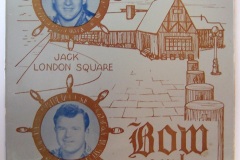
Grotto Restaurant, Jack London Square, Oakland, California
The Grotto Restaurant was at Jack London Square in Oakland, California was open from 1936 to February 1990. It was located at the site where Kincaids Restaurant is today. The original Grotto Restaurant opened in 1936 and was called “Oakland Seafood Grotto”. The Restaurant was rebuilt in 1966, right behind the original location, and the name was shortened to “Grotto.” Thanks to Michael Stipic for sharing these great images from his personal collection. Michael is the son of Mike Stipic, who along with Andy Franicevich and Tony Markovich owned and operated the Grotto. Michael grew up in Alameda, California and graduated from Alameda High School. If you have any Grotto Restaurant images or memorabilia not seen here, please contact Michael Stipic who is an active collector. He is especially interested in trying to locate a Grotto ashtray.
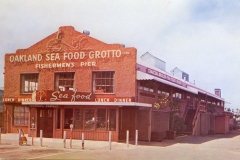
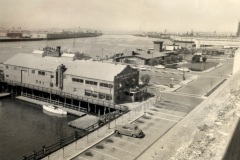
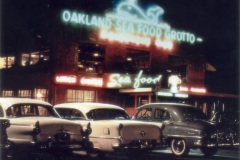
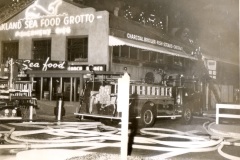
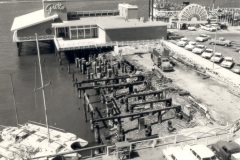
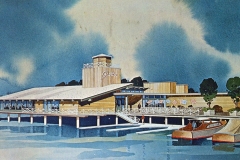
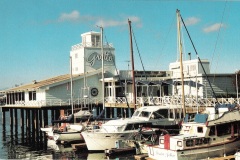
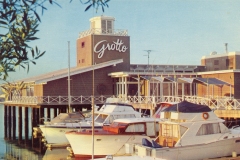
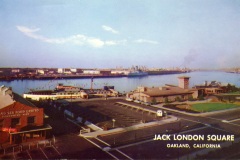
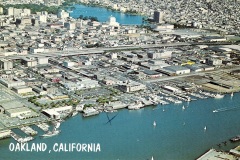
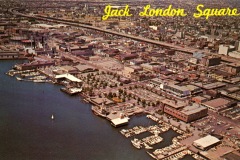
Jack London Square’s early days: A saloon, a local sports hero and a floating restaurant
Oakland wanted Jack London Square to be a dining destination from day one; here’s its evolution
By Bill Van Niekerken,Library DirectorUpdated Jan 24, 2020 12:05 p.m.
Jack London Square has seen its ups and downs, but in the past few years, several popular restaurants have opened on its waterfront. Now, with plans for a 35,000-square-foot food hall and the possibility of a new A’s stadium next door, the area may become the “waterfront restaurant center” that Oakland officials hoped it would be when they first dedicated it to the famous author.
Seven decades ago, Oakland officials assumed the London name would help attract tourists and build a destination like San Francisco’s Fisherman’s Wharf. While it never grew to that level of popularity, Jack London Square had unique dining draws early on. During a search through The Chronicle archives, I found photo negatives of the Oakland landmark and realized some of the negatives show the original restaurants under construction.
The story of Jack London Square begins in 1950, when Oakland’s Board of Port Commissioners named four blocks of waterfront area after one of its most famous former residents. London spent time at a saloon in the square during his youth, worked in the area, and took off from the port on his journey to Hawaii, a voyage that inspired two of his books.
Advertisement
Article continues below this ad
The square was dedicated on May 1, 1951, the 99th anniversary of the founding of Oakland. Bess London Fleming, London’s youngest daughter, was in attendance. “Daddy would have appreciated this,” she said. “He didn’t like anything that was useless, and he loved anything that had to do with the sea.”
One of the early restaurants to open at Jack London Square was the Bow & Bell, which had the “charm of an old English tavern and chop house transplanted to the Oakland docks,” The Chronicle wrote on May 7, 1951. Roast beef with Yorkshire pudding was a specialty.
The Bow & Bell had an added draw. One of the original owners was local athlete Jackie Jensen, an “all-city everything at Oakland High,” as columnist Ron Fimrite described him in 1968, who was also named All-American during his time on the UC Berkeley football team. But he spent most of his sports career in major-league baseball, playing for the New York Yankees and the Boston Red Sox, where he was named American League MVP in 1958.
“To this day, the Bow & Bell is something of a monument to Jensen,” Fimrite wrote in 1968. “His plaques, trophies and photographs serve as wallpaper.”
More from Chronicle Vault
Oakland Assembly: With giant food hall, Jack London Square again seeks to fulfill potential
What will be the future of Jack London Square as a food hub?
Another early restaurant took advantage of its location on the water. The Sea Wolf, named after one of London’s most popular books, was noted in The Chronicle’s 1952 Dining Guide as having “ an excellent view of the Bay and its bridge.”
Advertisement
Article continues below this ad
In 1951 the Petaluma, a paddlewheel steamboat, dropped anchor at the foot of Broadway at Jack London Square. Renamed the Showboat Restaurant, and renovated to house a circular bar on the upper level and a spacious dining room below, it was described as a floating palace. There was a ladder and a mooring to allow local yachtsmen to drop off their passengers on the boat for a meal or a drink.
While restaurants have come and gone since the square was first named, Heinold’s First and Last Chance saloon was there before and remains still. There has been a drinking establishment there since 1865, and Johnny Heinold became its owner in 1883. The bar survived the 1906 earthquake and had to rebuild after a fire in the 1920s
The saloon has strongest ties to Jack London. The writer spent lots of time at the bar in his youth, and Heinold lent him the money to go to college. The bar owns a photo that shows the writer at age 10, sitting at one of the bar’s three tables and reading from a large dictionary Heinold had bought for him.
More from Chronicle Vault
• Not Your Century: 1901 — Queen Victoria dies.
• Freeway treat: Remembering Emeryville’s mudflat art — and why the mud won out.
• Not just a marketing slogan: How Fisherman’s Wharf went from fishing hub to tourist mecca.
• Oakland’s sanctuary: A century of Lake Merritt photos pulled from the archive.
From the Archive is a weekly column by Bill Van Niekerken, the library director of The Chronicle, exploring the depths of the newspaper’s archive. It’s part of Chronicle Vault, a twice-weekly newsletter highlighting more than 150 years of San Francisco stories. It is edited by Taylor Kate Brown, The Chronicle’s newsletter editor. Sign up for the newsletter here, and follow Chronicle Vault on Instagram. Contact Bill at bvanniekerken@sfchronicle.com and Taylor at taylor.brown@sfchronicle.com.
 Rosamond Press
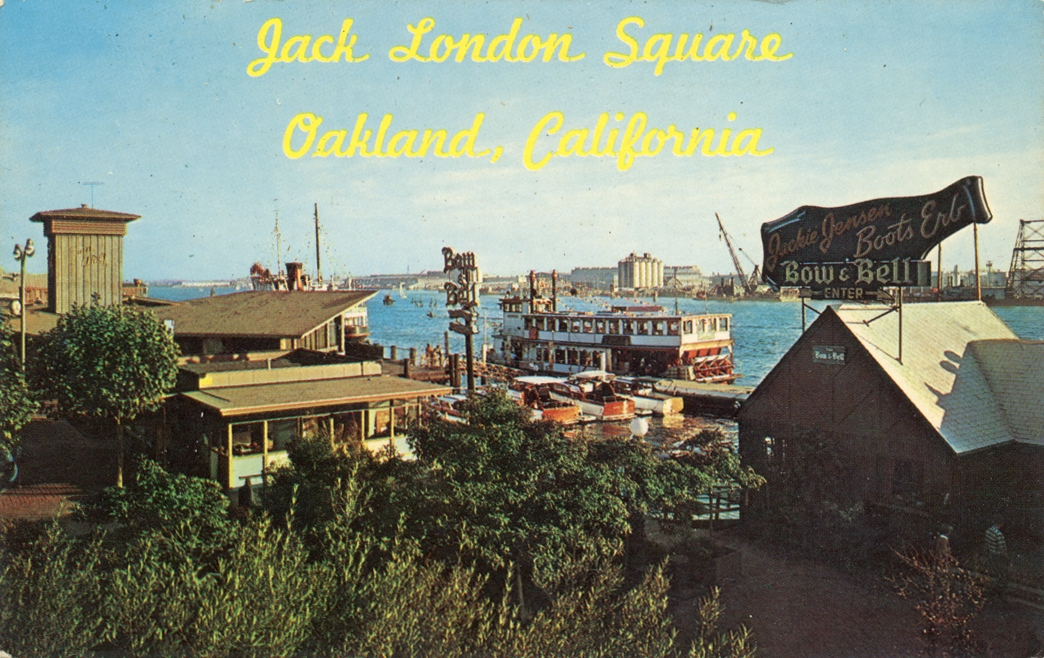
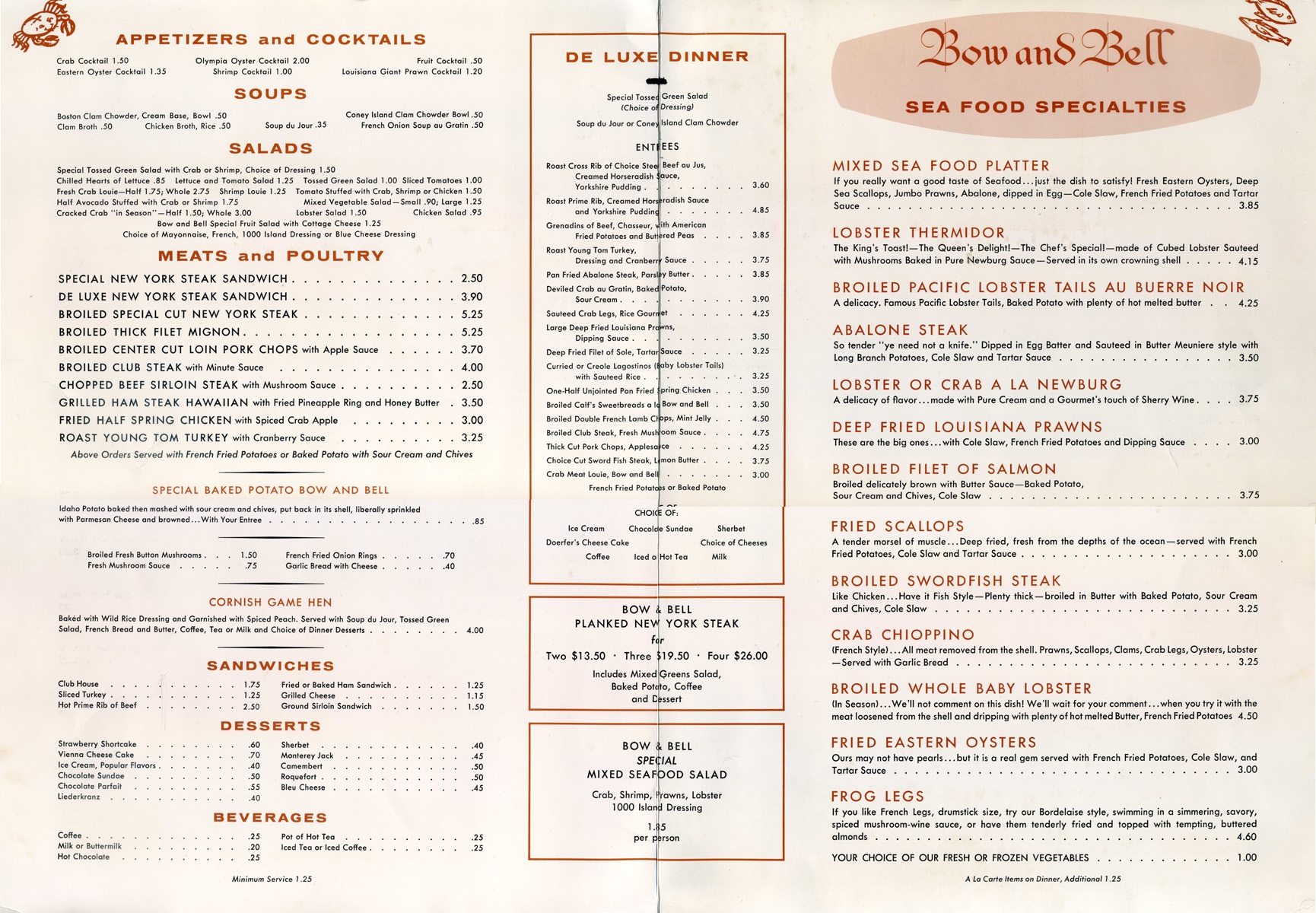
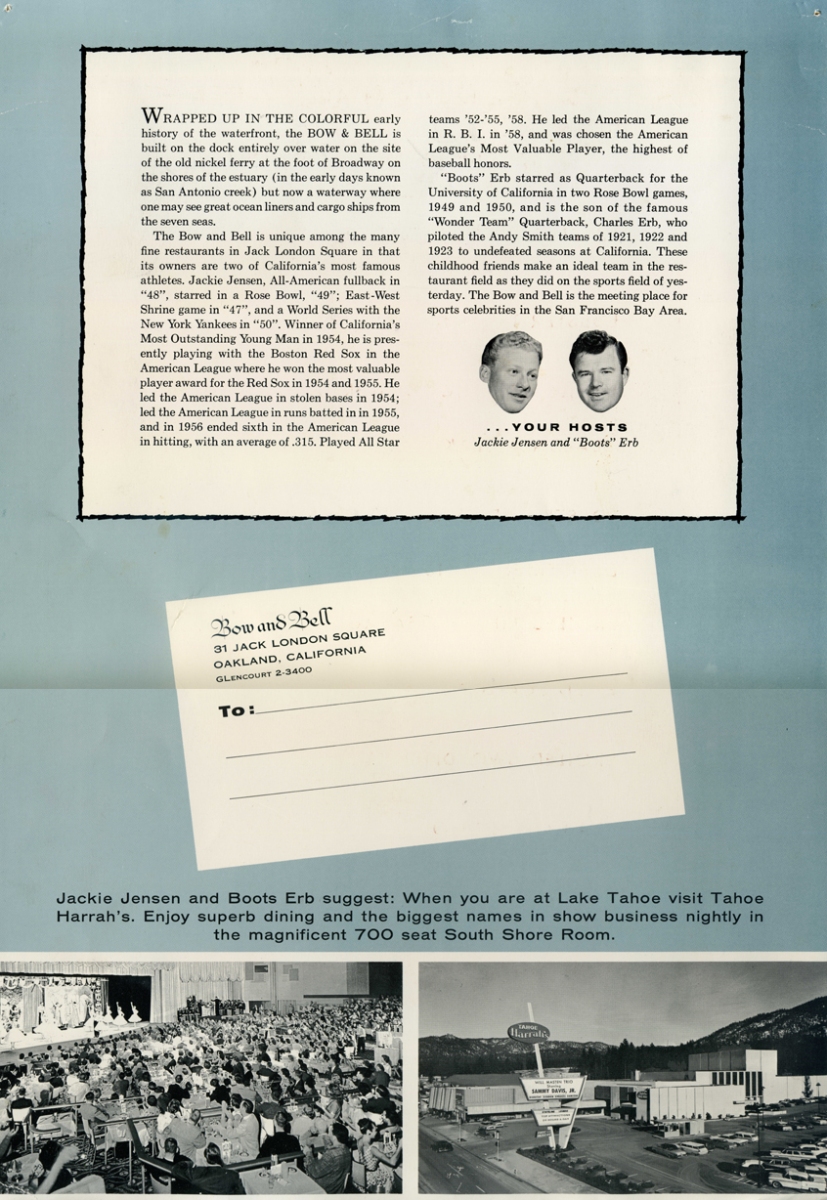
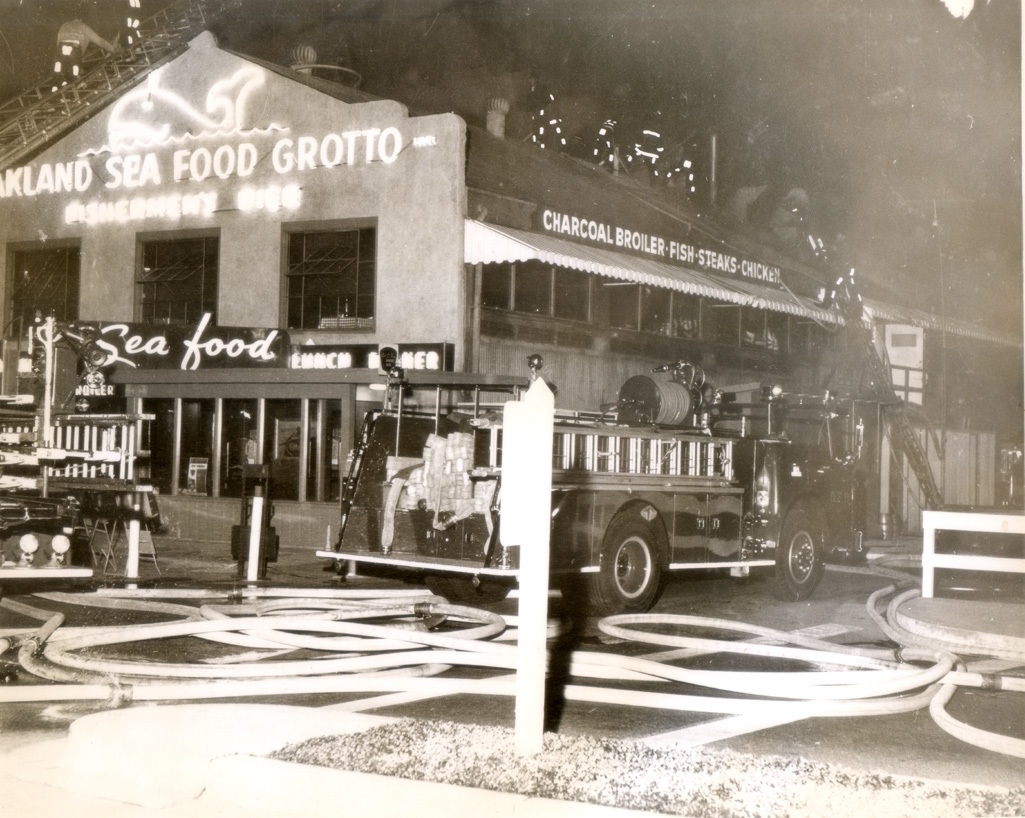
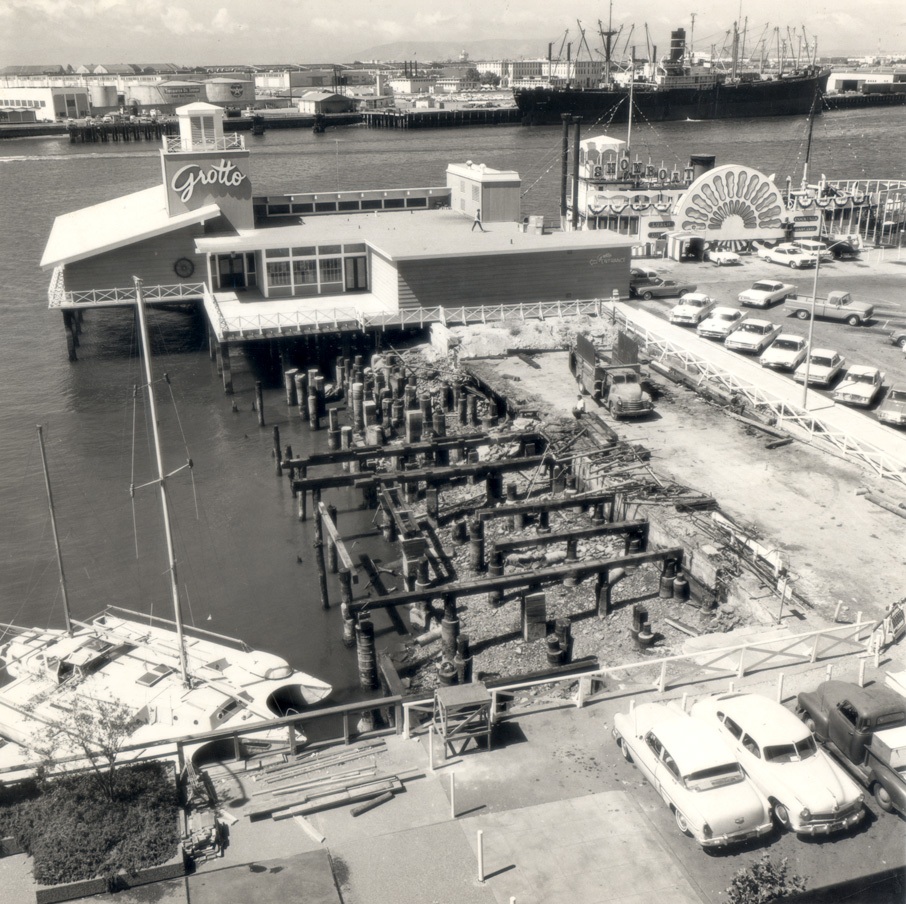
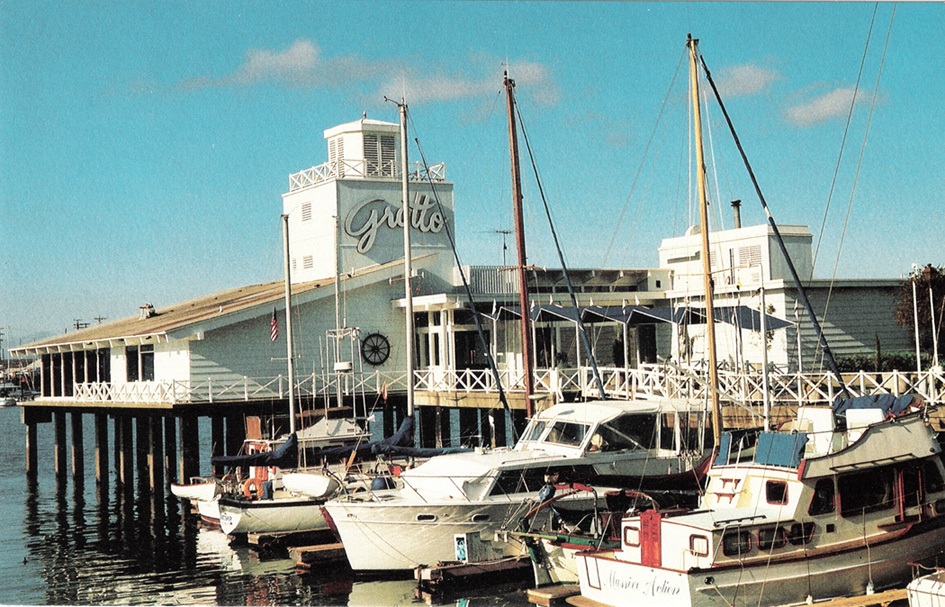
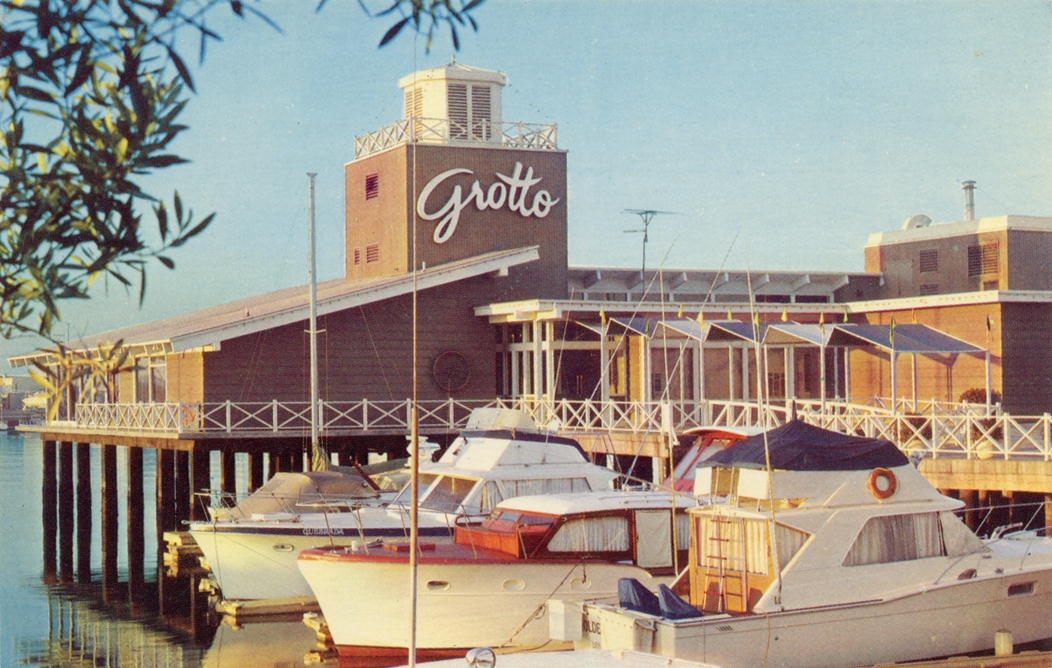
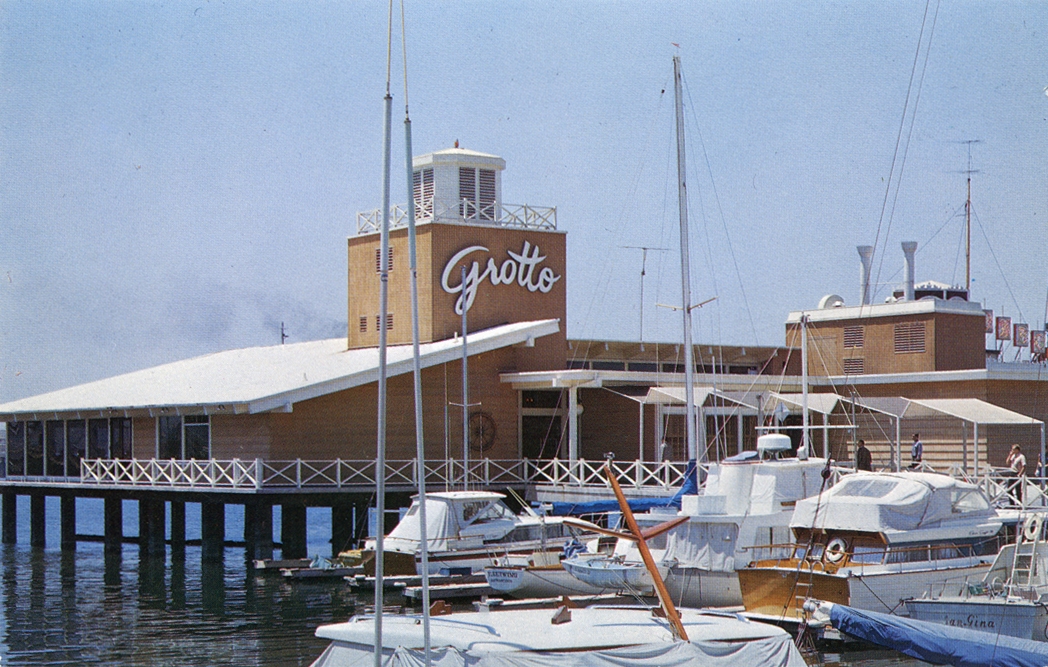
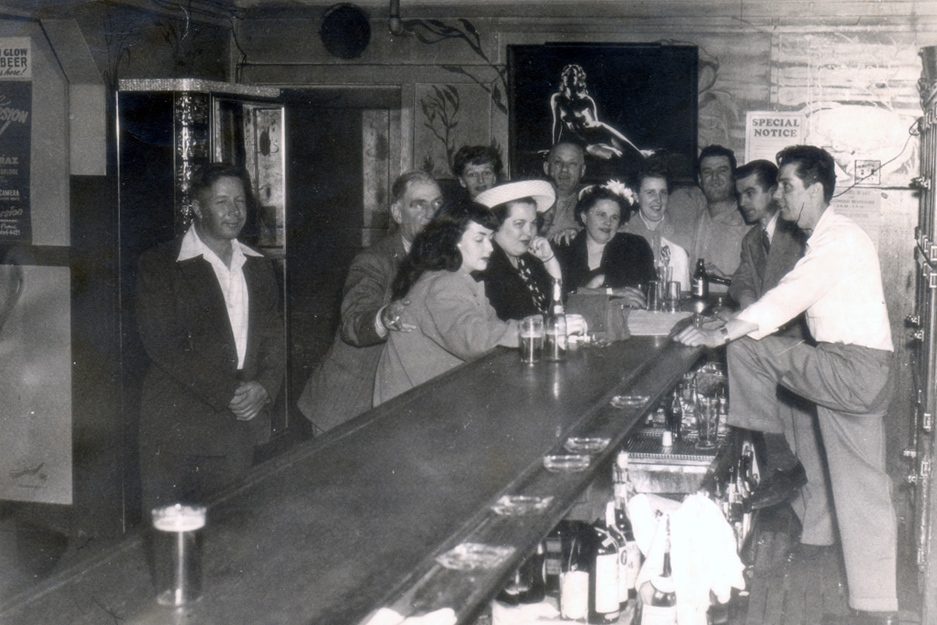
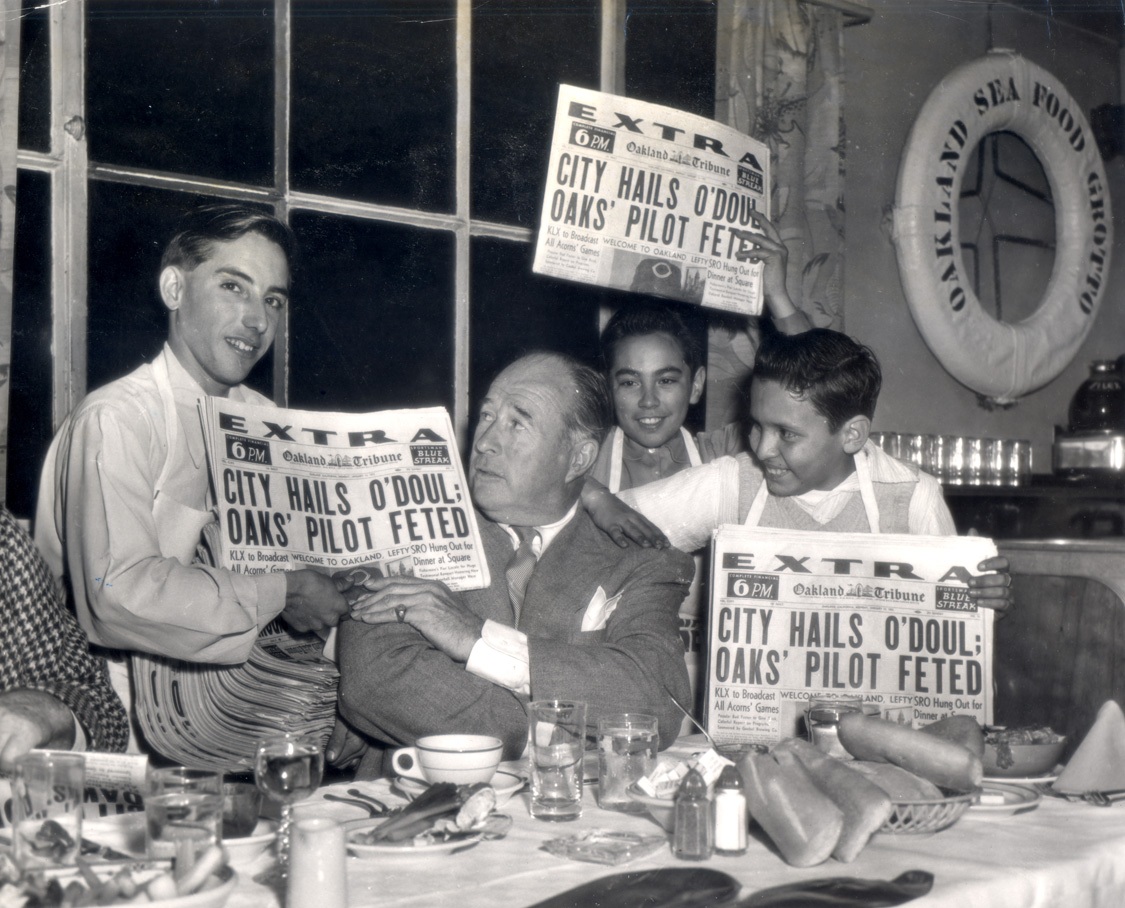
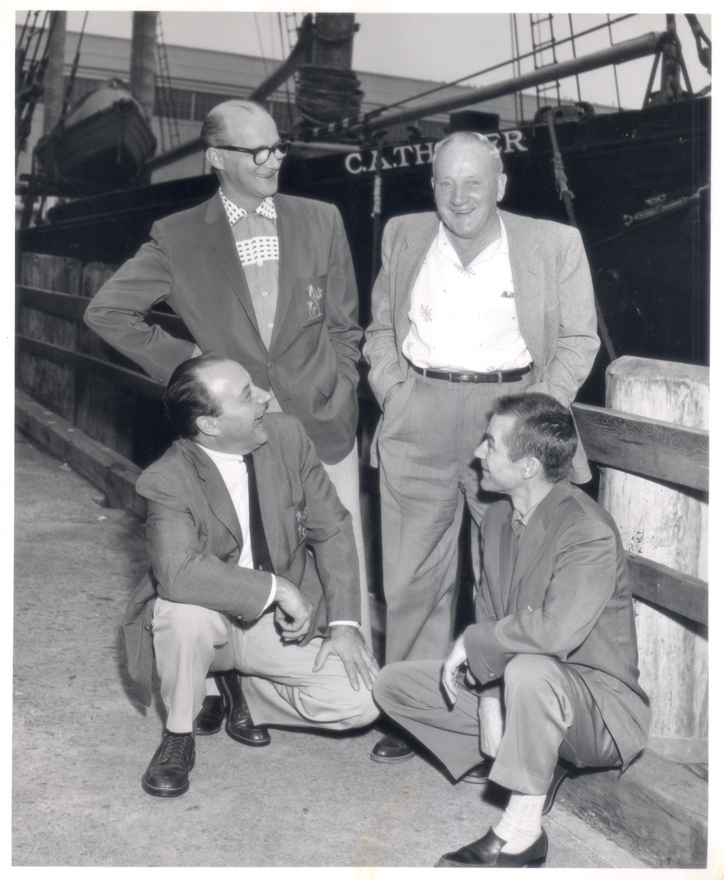
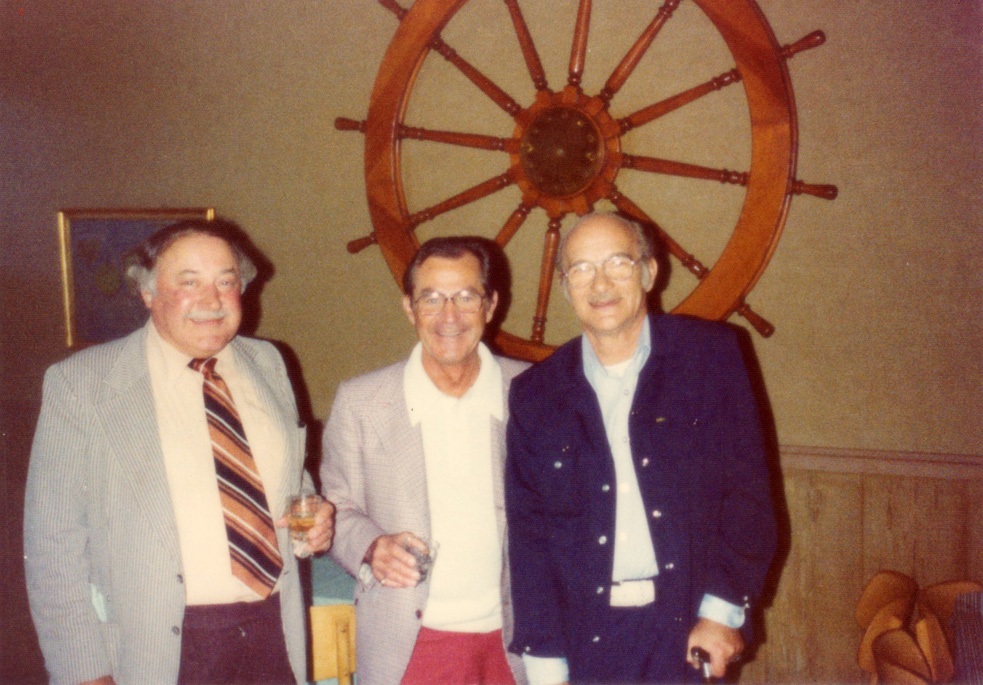
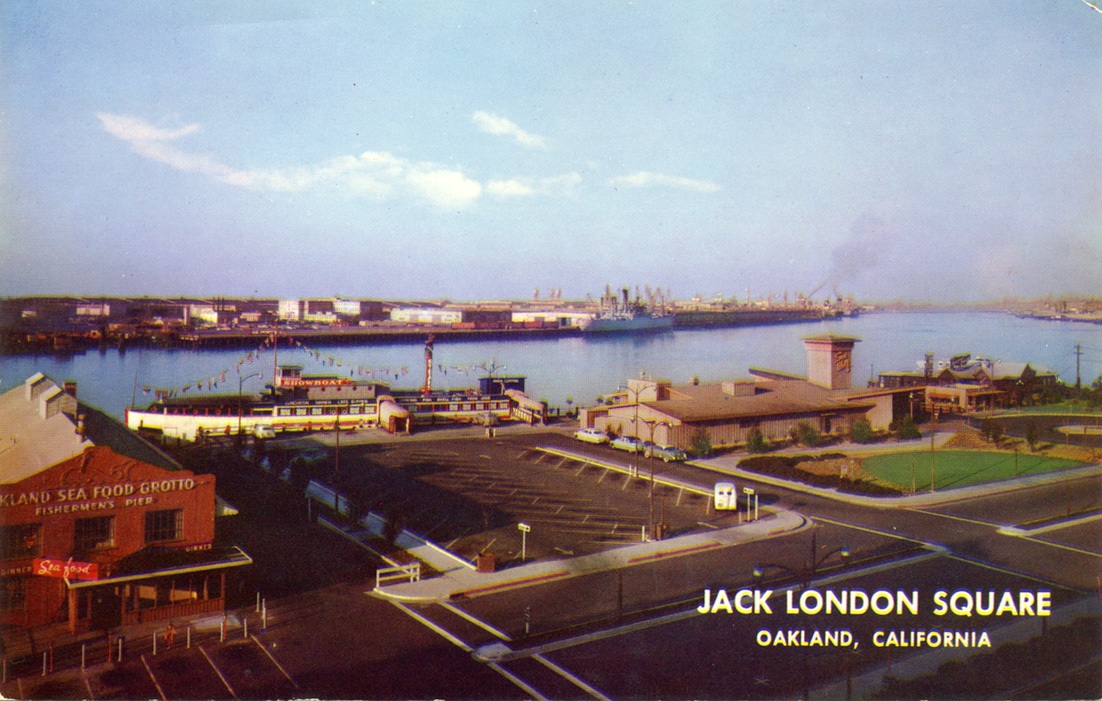
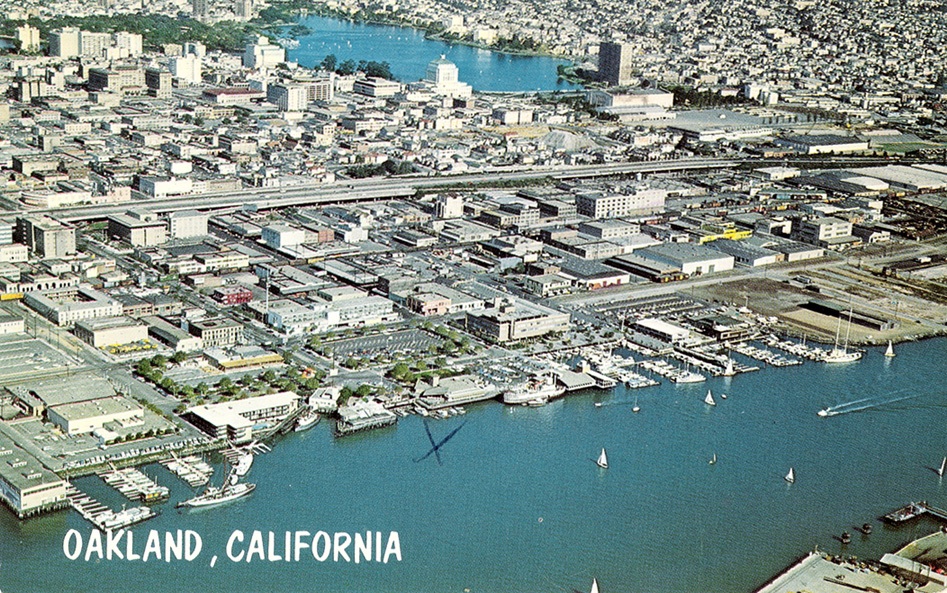
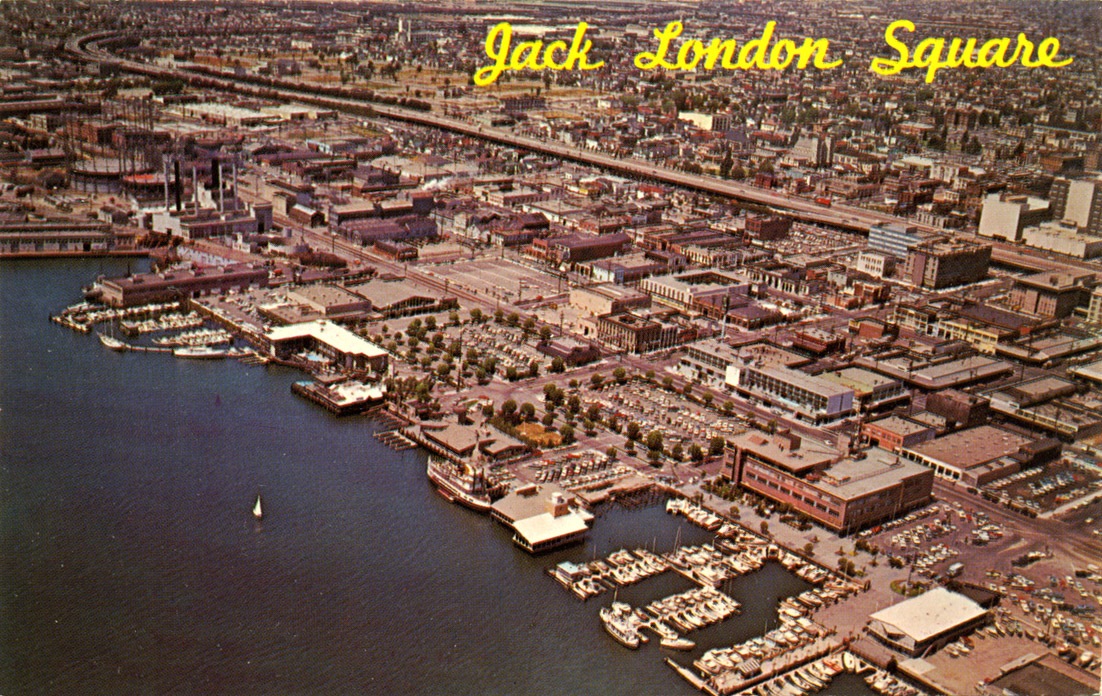
Leave a comment