
San Sebastian Avenue
I was dismayed there were very few photographs of old Jack London Square, and the Produce Market where the Presco Family operated Acme Produce. Everyone remembers their first job. At eight, this was where I was. This is where I worked. When I went to work for Yale Trucking when I was seventeen, located on the East River, the guys from Brooklyn, the Bronx, and the City – couldn’t believe there was no quit in me. I worked from twelve midnight till eight in the morning. They knew I was not dressed for the cold. I became their mascot. They called me…..The California Kid’
Everyday I got to fight off the label everyone wants to lay on me.
“You’re a bum – a loser! Like your father!”
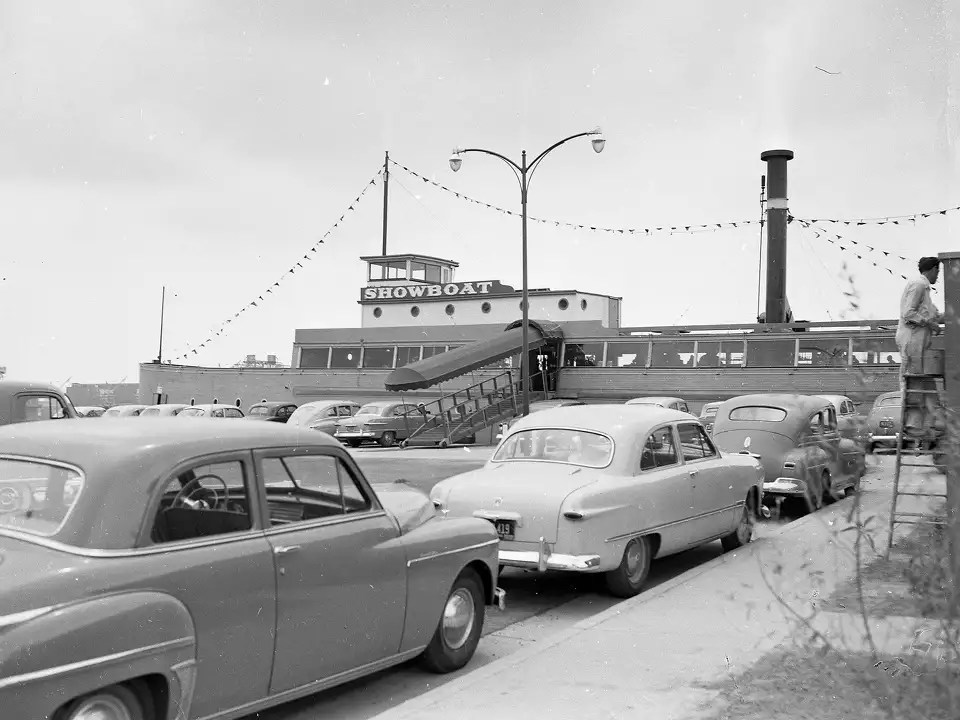
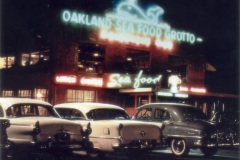
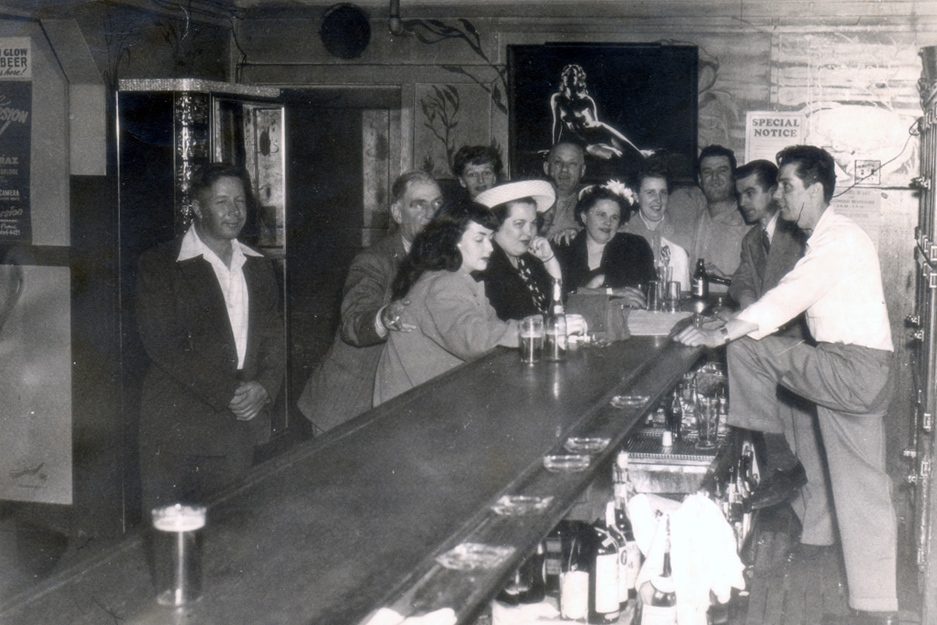
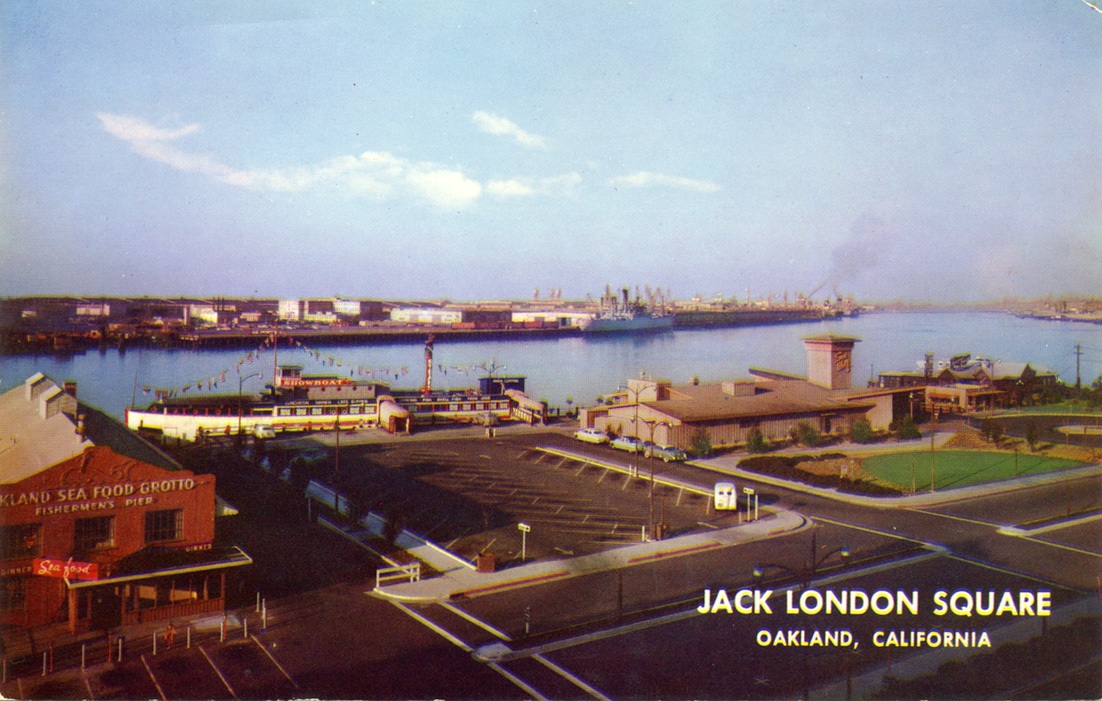
I think I found Vic Prescos car, parked out side the Kraut’s bar. It’s that Plymouth on the left. Is Vic inside having a few lunch-time German beers? He had to tie the door closed with an old piece of hemp rope. He knew about the wealthy Suttmeisters who turned their back on his mother because she married a famous gambler – who lived on a houseboat in Crockett! Now throw in Sam’s Anchor Cafe on the wharf in Tiberon owned by my uncle, What happened? Berkeley and Oakland were full of Beat photographers and Bohemian Artist types. None of them went down to the Oakland Estuary with a camera?. Bobby Jensen did paintings – down there! I lived on a boat, there, and got some pics. I was dirt-poor! Why didn’t someone buy me a good camera, and free developing. The answer is, they were jealous of me! I had the Bohemian Lifestyle, down! I now declare this way of life a secular religion. because a rich dude is promising to tear Taylor’s home. Where are The Beat Franciscan Monks?
I took home $8.00 a day after taxes, social security, and Man Power’s cut. If I worked overtime, I had a couple of quarters to feed the pay radio in my room at the Saint George Hotel. Out my window was the alley where large rats scurried about.
There’s no quit in me. I want more than all of Belmont’s History. I want a Handsome Payday! Last night I told Christine my family were Bohemians long before she and Peter Shapiro showed up from Boston. Peter socialize with Captain Vic. He knew he was…..Mr. Oakland! I fired Mr. Noodles because he called me “Snooty”. I was questioning his credentials. He was telling me his family was just like my family. Denny Lawhern died knowing, the Lawhern’s were not a California Pioneer Family. Thanks to me! I’m the rel thing, and sometimes use the moniker…..Johnny Waterfront!
I think I see my old Dodge that I drove Ms. Christensen about in. My muse kicks my Bohemian Ass – everyday. She was the girl I did not meet in New York when I was seventeen. This was her age when she came to California from Grand Island Nebraska. I summoned her out of the sea on Venice Pier!
I get to wear the Bohemian Do-Me-Do Duds! Not you Mr. Noodles! Not – you!
JW

Watercolorist – Robert Jensen
Posted on July 13, 2015 by Royal Rosamond Press


Martin Eden Comes Home To Belmont
Posted on March 24, 2021 by Royal Rosamond Press


Capturing Beauty
by
John Presco
Copyright 2021
With the discovery Jack London lived and worked in Belmont, I have grounded my life’s work, and the creative direction of several generations of my family. who were Belmont Pioneers. And San Francisco Pioneers who helped found Fruit Vale that became a part of Oakland.
Jack London helped found the City of Carmel with the help of George Serling who was a founder of the Bohemian Club. My sister Rosamond had two galleries in Carmel. I bring my grandfather genetic DNA to Belmont where I found this day ‘The Belmont Bohemians’. I bring Ludwig Wittgenstein to Belmont. Like London and Martin, he was a philosopher. Edgar Albee said you got to fight for your bench. I own Belmont in a Literary Way.
John Presco
President: Royal Rosamond Press
Rosamond Crippled In Car Wreck | Rosamond Press
Martin Eden Comes Home
Posted on December 31, 2019 by Royal Rosamond Press


The Second Coming of Martin Eden
by
John Presco
Copyright 2019
The child plays
The toy boat sails across the pond
The work now has just begun
Oh child
Look what you have done.
I could not believe Rosemary had given me her father’s ship lanterns that once hung in the cabin of his sail boat. It was the last tour we would take together of the secret treasures that lie at the bottom of her cedar chest. My mother let me thumb through several issues of Out West magazine while telling me her father was a writer and a poet, but, she never let me read the work of a man I never met, never saw face to face. When my best friend, Bill Arnold, told me Rosemary had shown him the evidence Royal Rosamond was a writer, I was puzzled, and jealous. What gives?
Rosemary had read my amazing poems written when I was twelve and thirteen. It was like I was channeling her father, my grandfather, I desperate for an identity, any identity other then the one her husband had given Mark and I when he woke us up at four in the morning to go work in his produce market in Jack London Square – while it was still dark! I was eight, and my brother, nine. We were on Vic-time. The dreams of our peers were set to the clock at school. There, real children were allowed to dream about becoming an airline pilot, an astronaut, even the President of the United States. In our house, come summer time, the hands of the clock were stolen, along with our childhood, replaced by the whims of a tyrant.
“There’s no free lunch in my family. You boys are going to help support your family. You’re going to work.”
These lanterns were beautiful, made of solid brass, and no sooner did I own them, then I lost them, because I was a homeless vagabond, not caring where my next meal would come from, or, if I had a place to rest my head. Perhaps Rosemary gave me Royal’s lanterns as a peace offering, she feeling guilty for driving me from my home when I was seventeen, I ending up in New York working the graveyard shift at Yale Trucking, and living in the West Village. The stevedores called me the California Kid, and were amazed at what a hard worker I was, how strong I was for being so skinny. I had real endurance. I walked to work through Hell’s Kitchen where I bought my first beer in a bar. I was not a man. I did not have to register for the draft, as yet.
“There’s no free lunch in my country. You boys are going to have to fight and kill for your freedom.”
When I told my father I lived aboard a small boat docked in the Oakland estuary, he had to come see it, for I had stepped on his secret dream, even intercepted it, because Vic was inspired by Jack London. What fatherless young man growing up in Oakland did not entertain the idea they could go down to the waters edge and become a Pirate, make a living stealing other people’s oysters?
Captain Victim stole other people’s houses for a living, along with his best friend, Ernie Quinonis. Vic would brag how her would get drunk with Ernies’s brothers, especially Art, who was the head of the Mexican Mafia, and was in and out of San Quinten. Art made Vic an honary member of his family, and he and Ernie started to go to Puerto Varte to purchase Time Shares. I wondered if they were laundering money, because it was in Puerto Varte that Vic met Consuela his wife to be, that he smuggled over the border in a marijuana shipment.
When Dee-Dee knocked Captain Victime’s eye out with a four pound ashtray, he wore a black patch over one eye. Everyone pointed out how much he looked like the pirate on the Oakland Raider’s helmets. I have titled my father, Darth Vader. But when I saw this name on a letter sent to him by one of Vic’s loyal Bill Collector’s, the fog I was marooned in most of my life, began to lift.
“BILL LARSEN”
When I drank with my father, who was in the Merchant Marines. he would tell me about his tough as nails Captain, who was a Communist. He had shown Vic the ropes, and made a man out of him. He taught my father how to box, and he would win his matches on the deck o his ship as he sailed the Elusians. Vic told me he was made an honorary member of a Eskimo tribe when he gave the chief a knife.
As we stood on the dock looking down on my sailboat, Vic said something vicious and demeaning to Ernie, and I saw Wolf Larsen, with one hand on his hip, and the other holding his pecker as he took another piss on my dream. My boat was not big enough, he hard pressed to believe I was happy living in such cramped quarters. I told him I was very happy, because I lived in a secret boatyard hidden in the Southern Pacific rail yard, and when I felt cramped I would walk to the end of the old wooden pier where one could see the city of San Francisco floating on the horizon. At night, it was an island of gems, whose sparkling lights were temporarily blocked out by a freighter making its way up the estuary, from a foreign land. I had the best view in the whole bay area, and falling asleep, my boat was gently rocked in the wake.
Studying the photos of the interior of my boat, I notice there is a typewriter and a drawing pad. I own the tools to forge my own dream, the compass to chart my own course. There is a image of Jesus, and an antique tea cup I purchased at Goodwill to replicate the fine antiques we grew up with, thanks to the Stuttmiesters. I was a devotee of Meher Baba, and his photo would have been there in place of Jesus, if I had found one. No one knew I was here. I should have never brought my father here, for this inspired him to own two boats, two classic Chris Crafts that he docked in Martinez, that I was not welcome to board, because I had not proven my loyalty to him, not like his namesake, my younger sister Vicki whom he gave keys to, keys to his kingdom, the Kingdom of the Sea.
Above is the cover of Out West magazine, of August 191. That is a drawing of Californian seaweed, called Plocamium Coccineum. It would amuse me to author poems under this alias so I would be even more anonymous, and insignificant, if only to please my father – beyond the grave.
“Just call me Sea………………..Sea Weed!”
Inside we find a poem by R.R.R. in the Index.
The fisherman’s Home
The twilight sad, the sea – a certain waste;
The mainsail taut, to part the jib inclines:
Faster then the breeze our hearts make haste
With fishes from the trolling lines.
Ahead the boat the gloomy island looms
In direful silence, and-to-me-
In vagueness as of aged tombs,
In awesome outline giant mystery.
Behold! Within the lea a light’s bright flash;
Then hidden in the swells-below, above:
The real, infinite and mysteries crash:
Behold a domicile of love
In searching for another dream, other then the dark ship my father would have me stow my gentle heart within, I came to to plumb the phantom heart of a poet I never met. And after three seers told me I had died carrying much guilt that did not belong to me, I recall, the poem I wrote, the first in two years. I had a vision of my father in a row boat, he a young man setting out to sea in search of his dream; and for a little while we were one, and the same.
The Dark Horse is in the ocean
grey-silver manes around the sun
The horn of the eye plays chords out to sea
which sets adrift my father’s boat
of wood and colored scales
to catch the blue fish of the mind.
The setting sun
like a golden ring
He place upon one hand.
And bring home his days catch
Crystal colors upon the sand.
My father never met his father-in-law, who was banished from his home, never his four beautiful daughters – to see. Victor told me he made a loan for Jack London’s daughter, who offered him one of her father’s first edition books – there on a shelf.
“Which book did you chose?” asked I.
“Martin Eden.” was my father’s reply, who chose to believe I never loved him, til the day he die!
Jack London published in Out West, and the Overland Monthly. Royal was a failed writer. Mary Magdalene Rosamond, told him not to come when he was in New York trying to get a book deal with Roy Croy. His close friend, Otto Rayburn, was trying to get Rosy’s L.A. writers to contribute their poems to the Arcadian Magazine. Rosy talked about founding a trout fishing camp for poets and writers. This is before Hemmingway.
When my little sister, Vicki, and her friend, Pip Burns, came to visit me at the Sunshine boat dock at the end of Adeline street, they got cat calls from the crew of the freighter you can just see the prow of. They headed up the gangplank.
“No!” I said and my sister heard my warning, and came back on the dock.
“That’s a foreign ship. If you got raped, there was nothing the law could do without going through a lot of red tape. Why bother with two hippie chicks? All they got to do is go out to sea, and they are free and clear!”
After my fall on the rocks at McClure’s Beach while high on LSD, I would walk down 13th. Street late at night to an empty field next to the Last Chance Saloon. I sat looking at an old dock that burned down. I never found the courage of jump in the Oakland Estuary. I didn’t know who I was anymore.
Jon Presco
Copyright 2011
Overland Monthly
From Wikipedia, the free encyclopediaJump to: navigation, search
Overland Monthly cover, January 1919Overland Monthly was a monthly magazine based in California, United States, and published in the 19th and 20th century.
The magazine’s first issue was in July 1868, and continued until the late 1875. The original publishers, in 1880, started The Californian, which became The Californian and Overland Monthly in October 1882. In January 1883, the effort reverted to The Overland Monthly (starting again with Volume I, number 1). In 1923 the magazine merged with Out West to become Overland Monthly and the Out West magazine, and ended publication in July 1935.
Famous writers, editors, and artists included:
Ambrose Bierce
Alice Cary
Willa Cather
Bret Harte
Ina Coolbrith
Edgar Fawcett
Henry George
John Brayshaw Kaye
Clarence King
Jack London
Josephine Clifford McCracken
Joaquin Miller
John Muir
Hugo Wilhelm Arthur Nahl
Stephen Powers – on California Native Americans.
William Saroyan
Clark Ashton Smith
Charles Warren Stoddard
Mark Twain
Joseph Pomeroy Widney – contributed 8 articles.
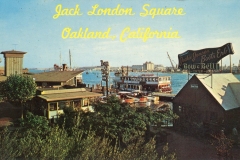
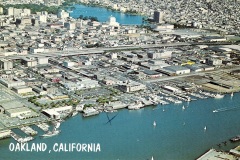
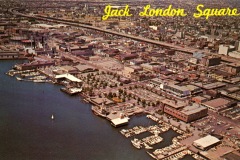
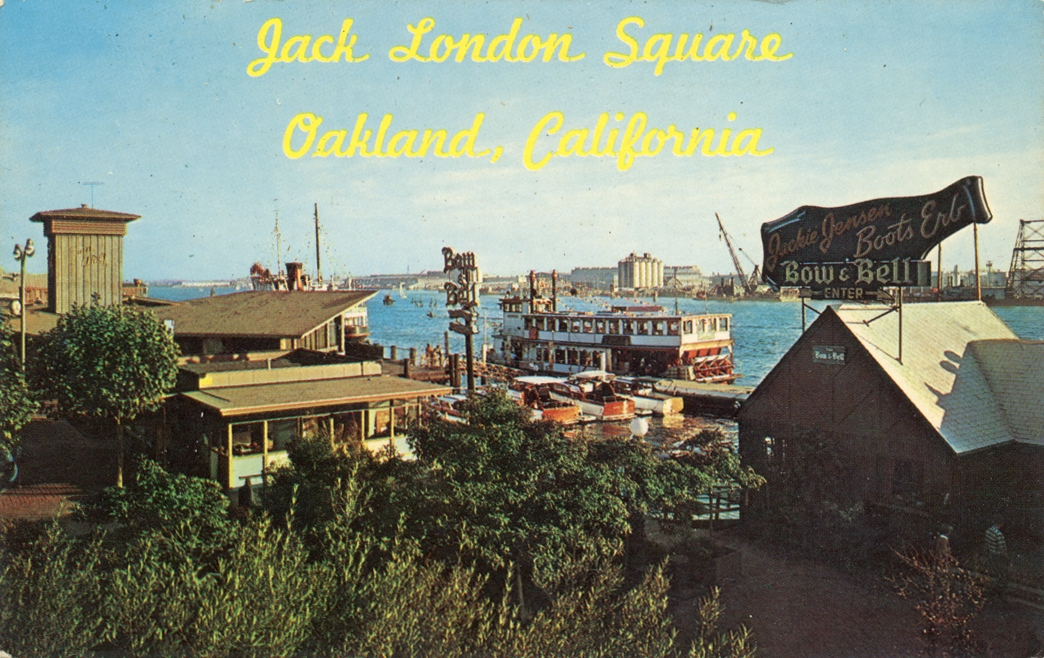
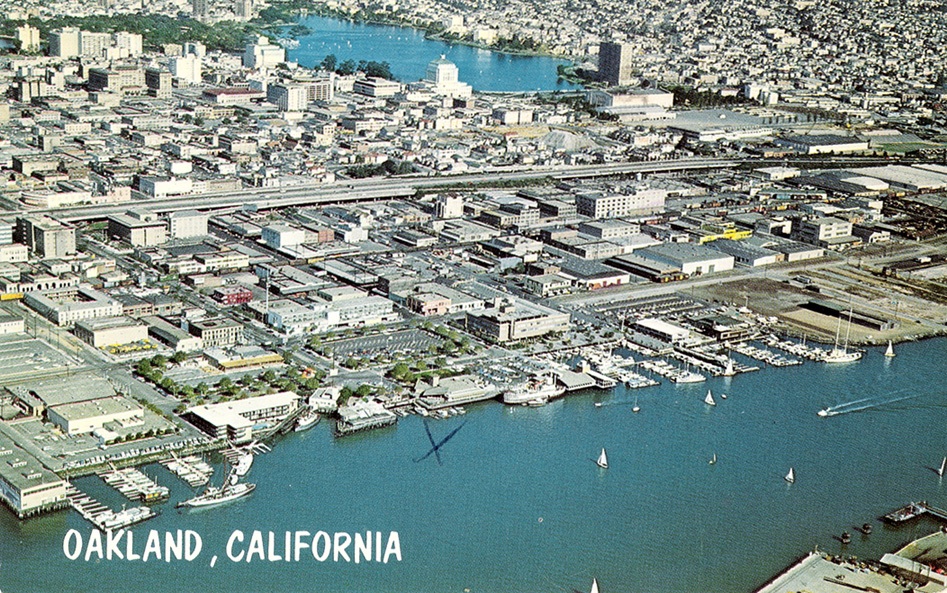
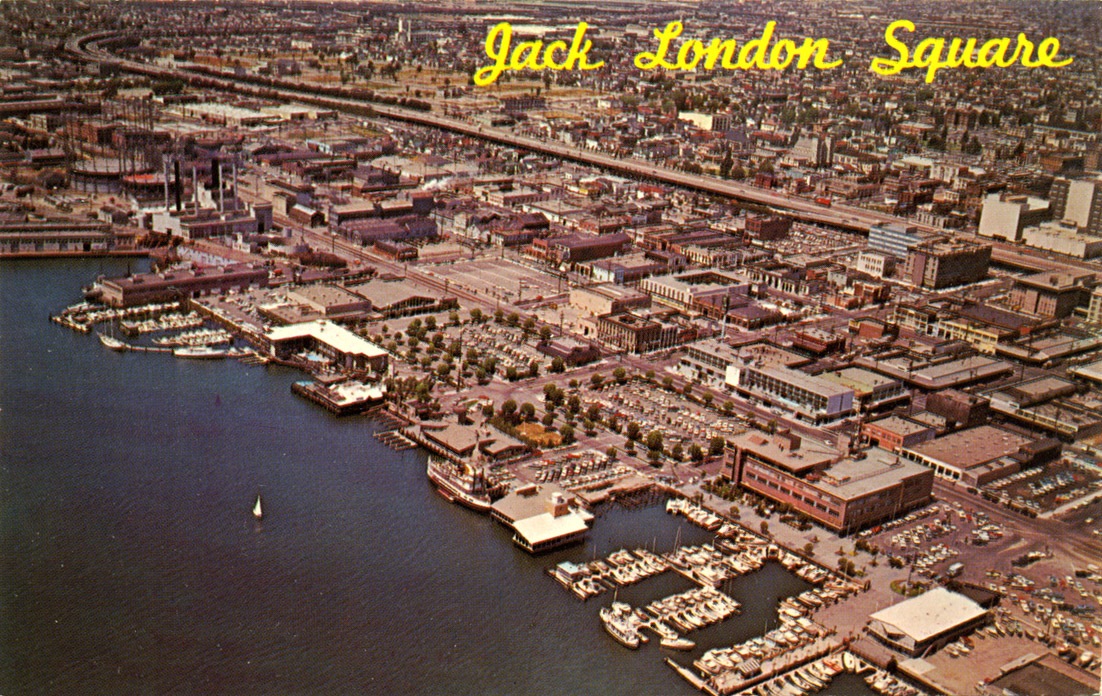
Jack London Square, Oakland, California, old postcards, photos and other historic images.
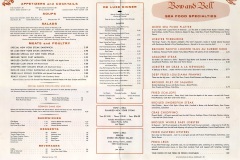
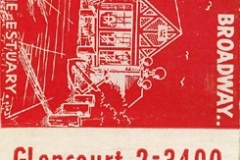
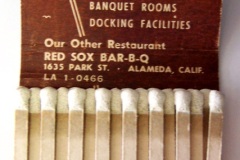
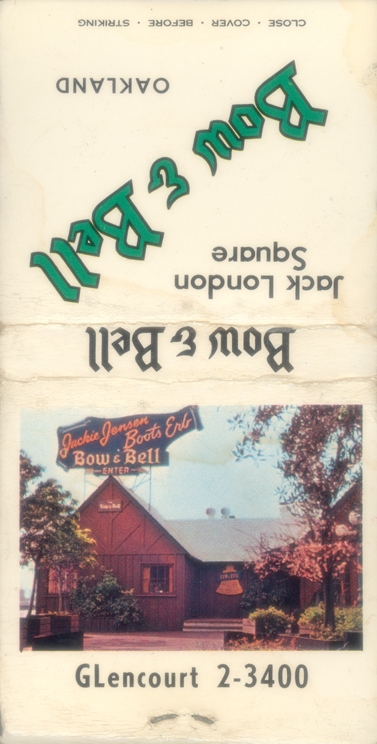
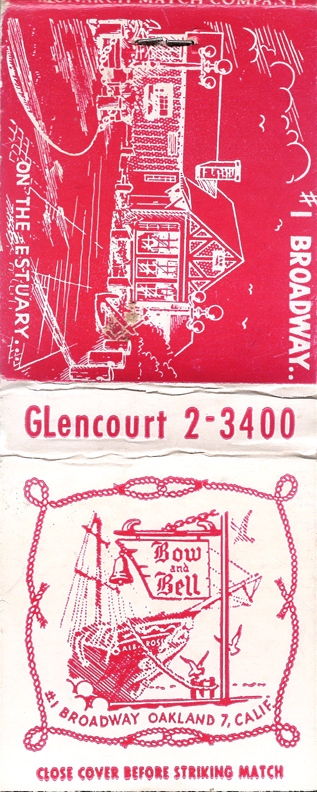
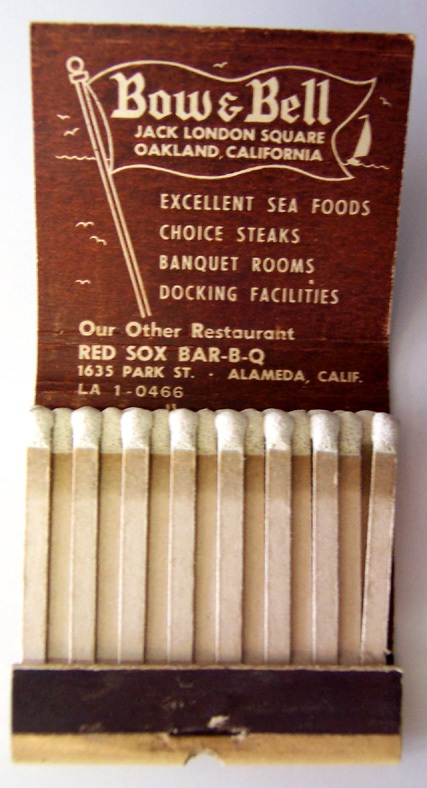
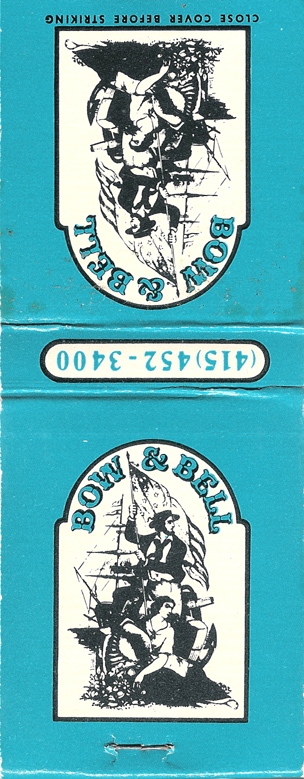
Jack London Square, Oakland California, old postcards, photos, and other historic images, including menus, matchbook covers, ashtrays and other items, provide a great visual look back at the history of Jack London Square in Oakland, California.
The Sea Wolf Restaurant was located at the site where Scott’s Restaurant (which opened in 1976) is today. The Grotto Restaurant was open from 1936 to 1990 and was at the site where Kincaids Restaurant is today. Other restaurants that have been at Jack London Square include: Showboat, Showboat 2, Showboat 3, Planters Dock, Bow & Bell, London House, Elegant Farmer, the Castaway, Mikado, The Mast, Il Pescatore, Marco Polo, El Caballo, Gallagher’s, Emperor, Simon’s Square.
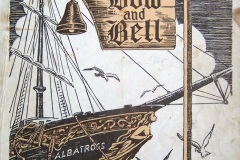
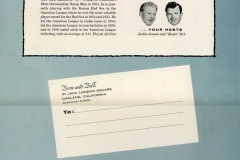
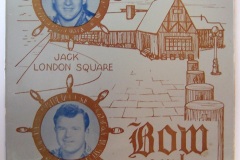
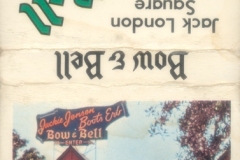
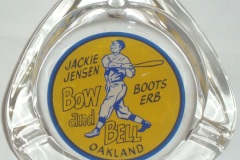
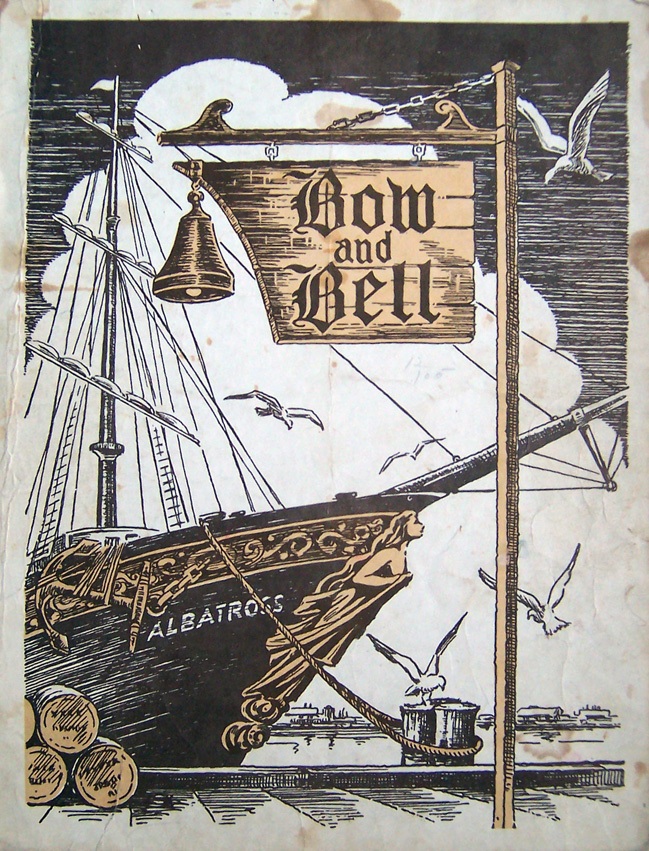
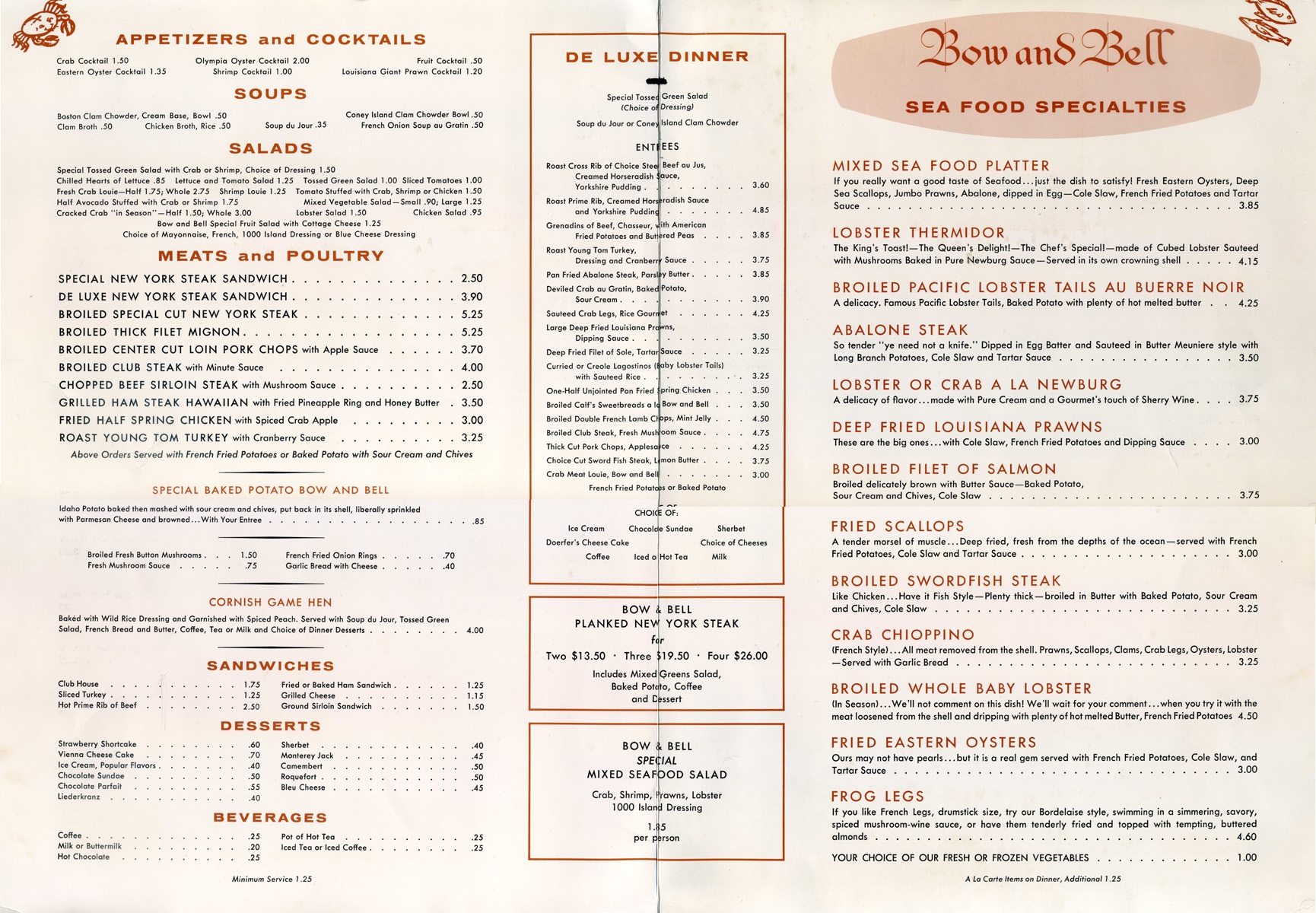
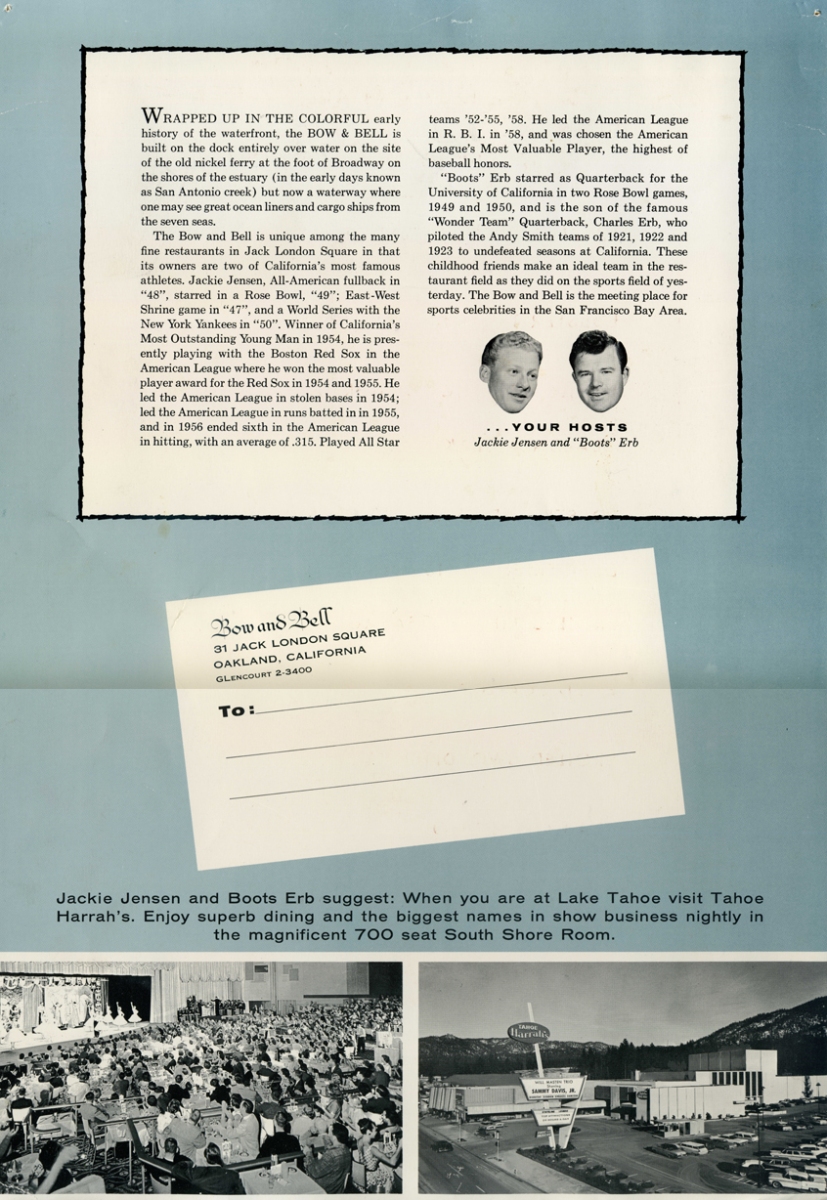
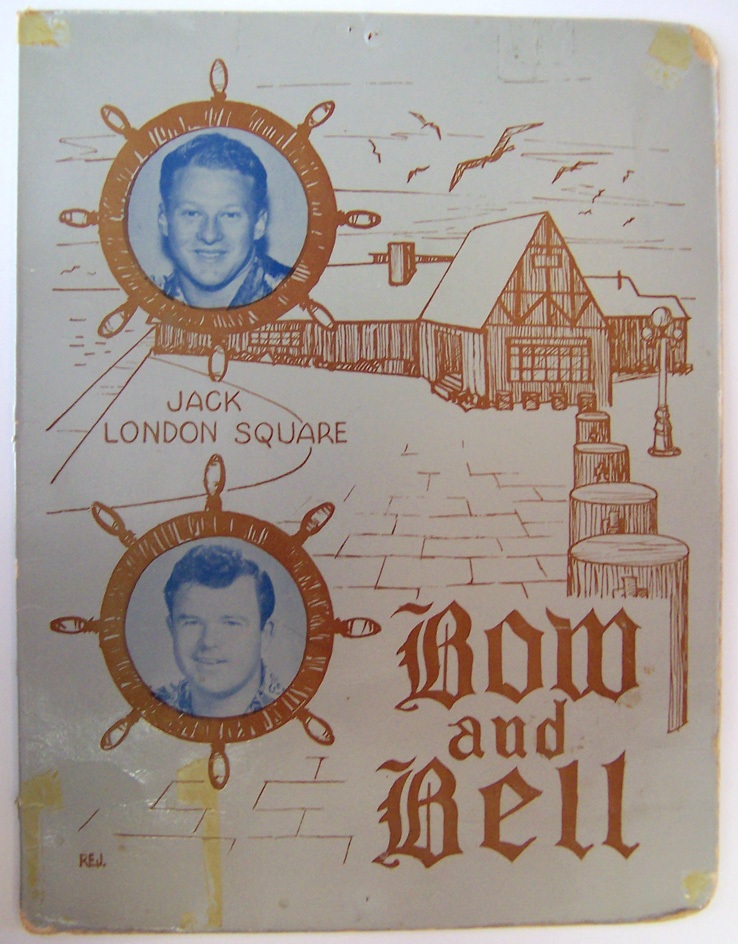
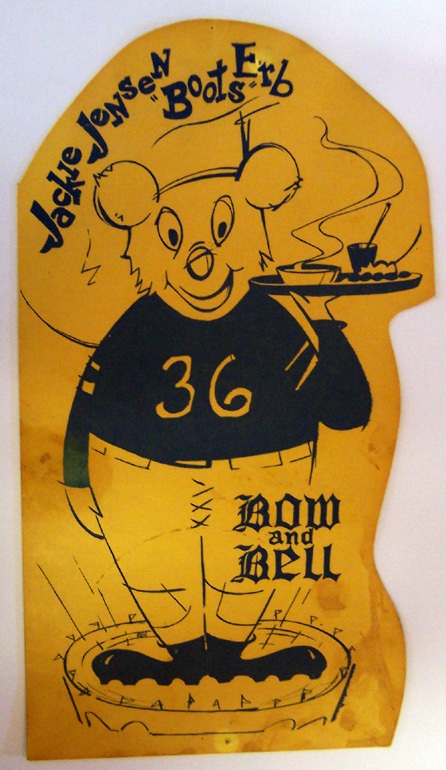
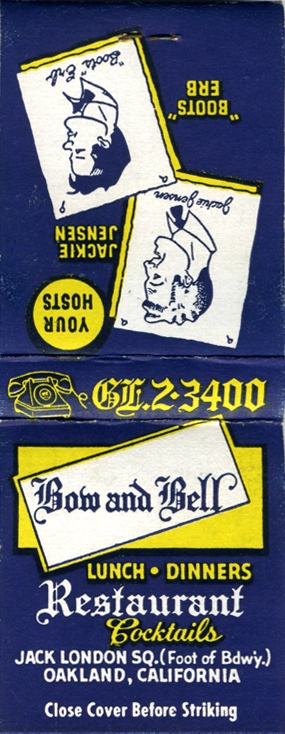
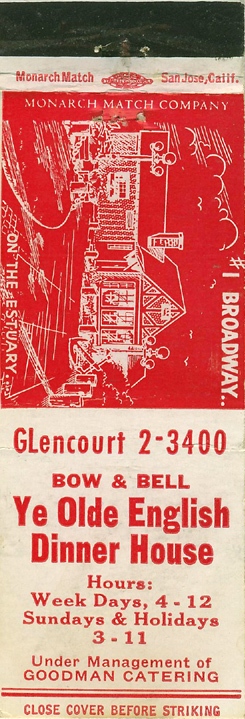
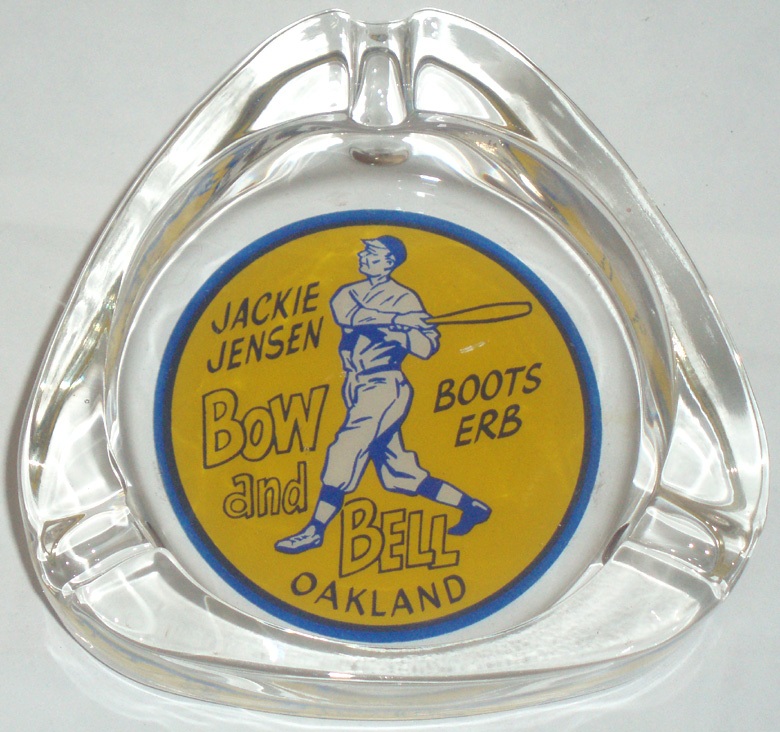
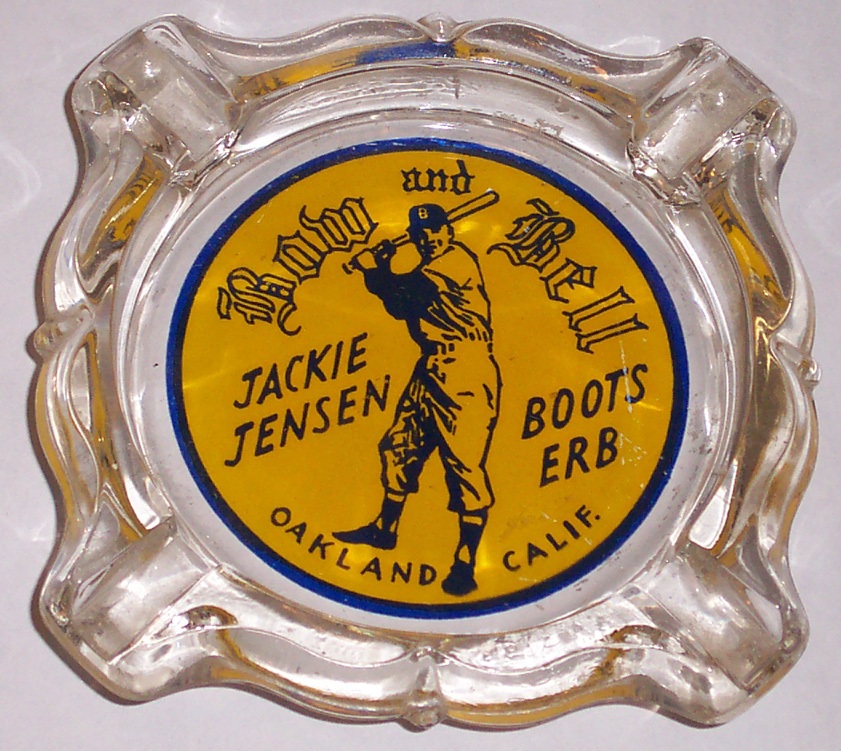
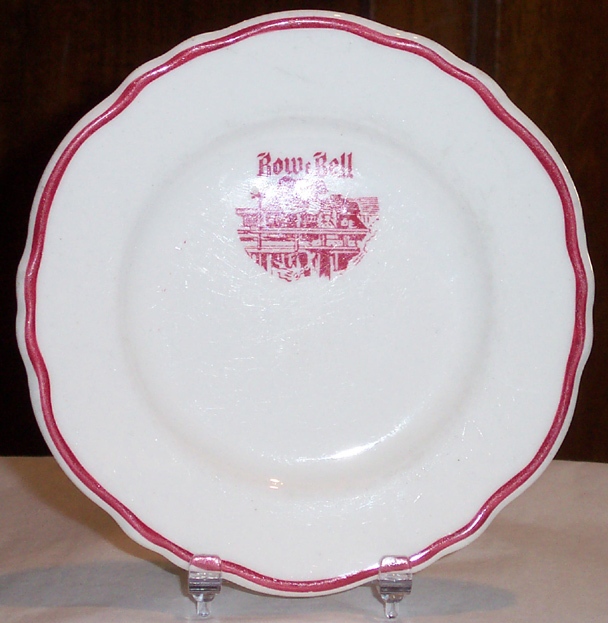
Bow and Bell, Jack London Square, Oakland, California
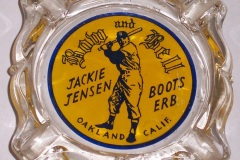
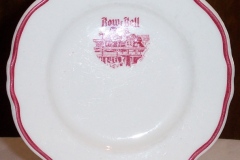
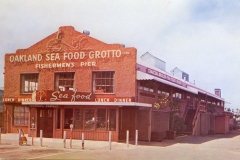
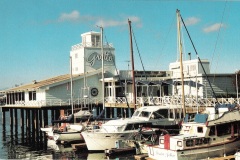
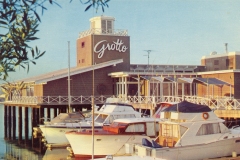
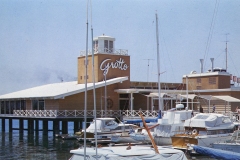
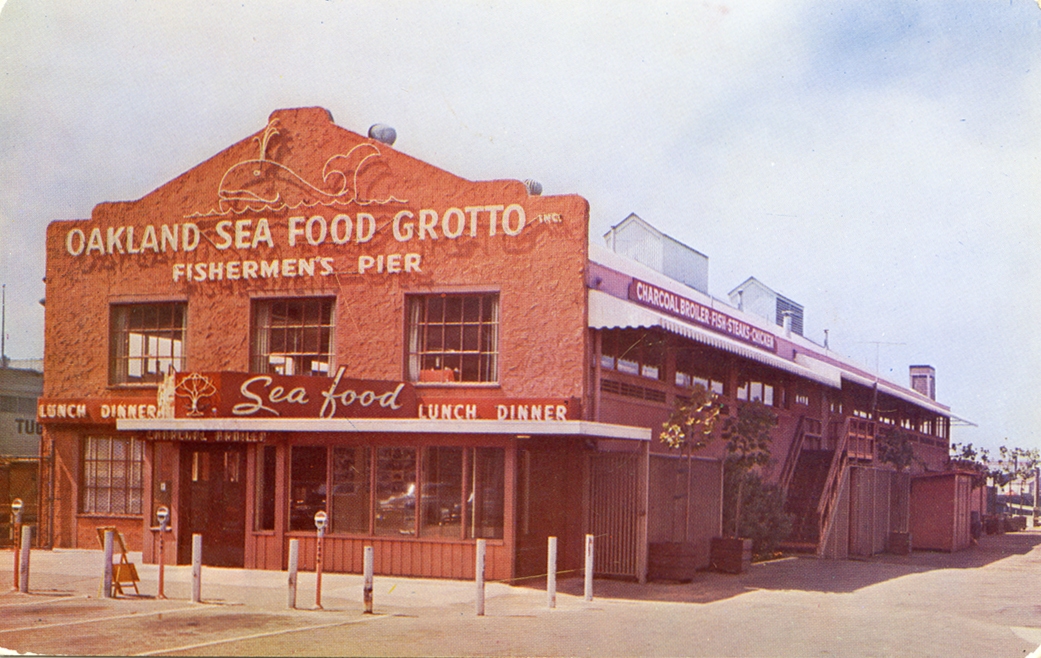
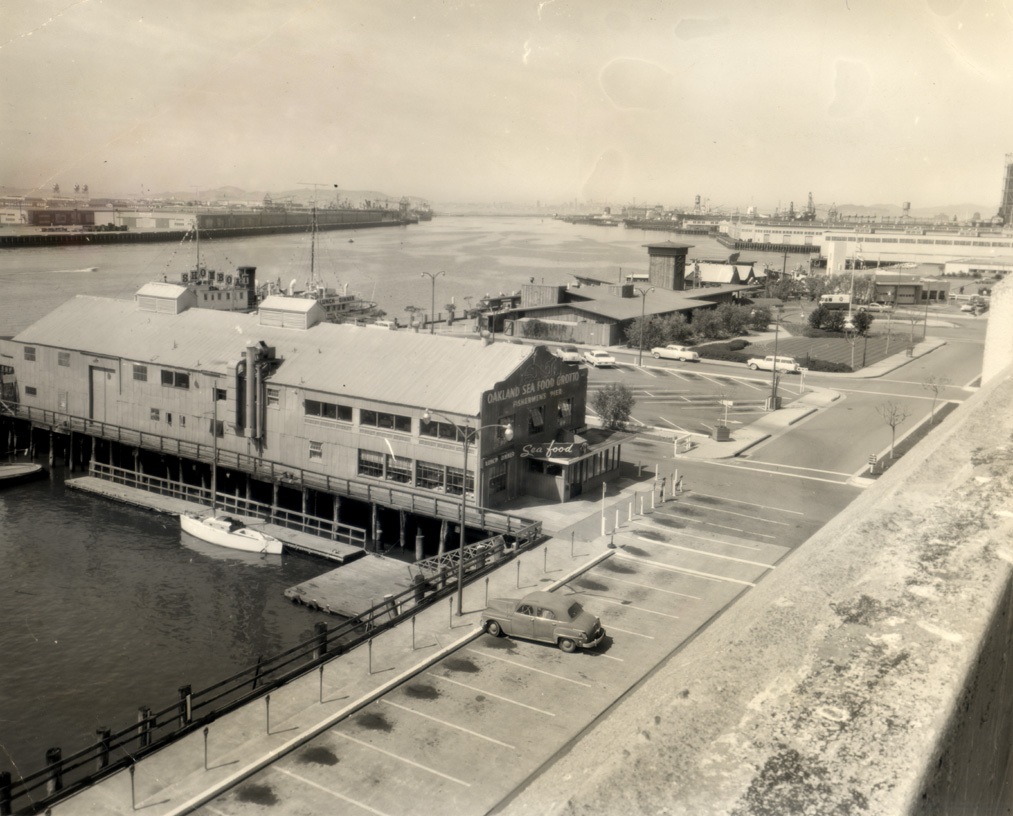
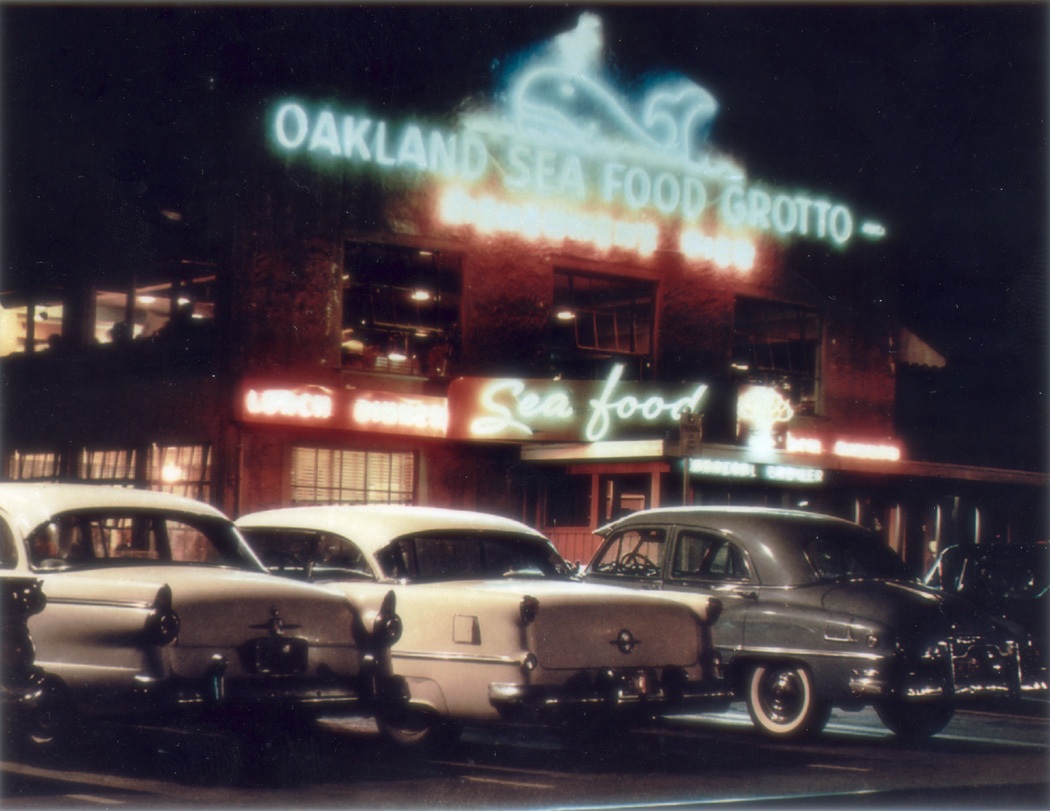
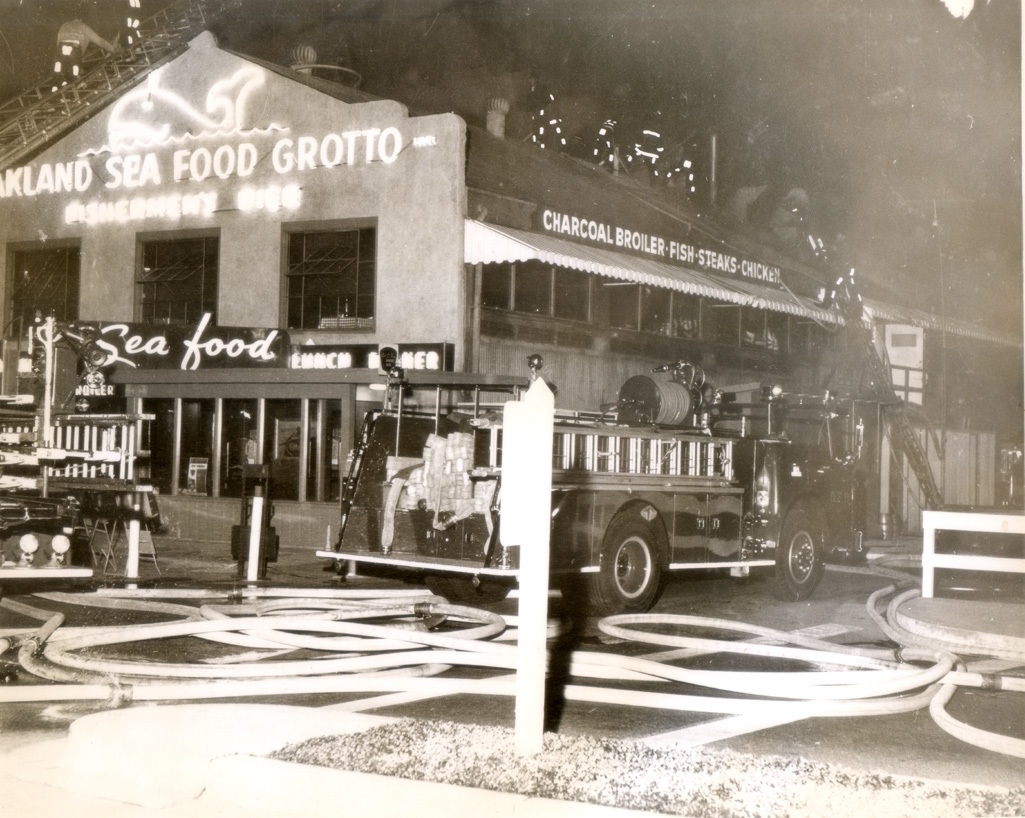
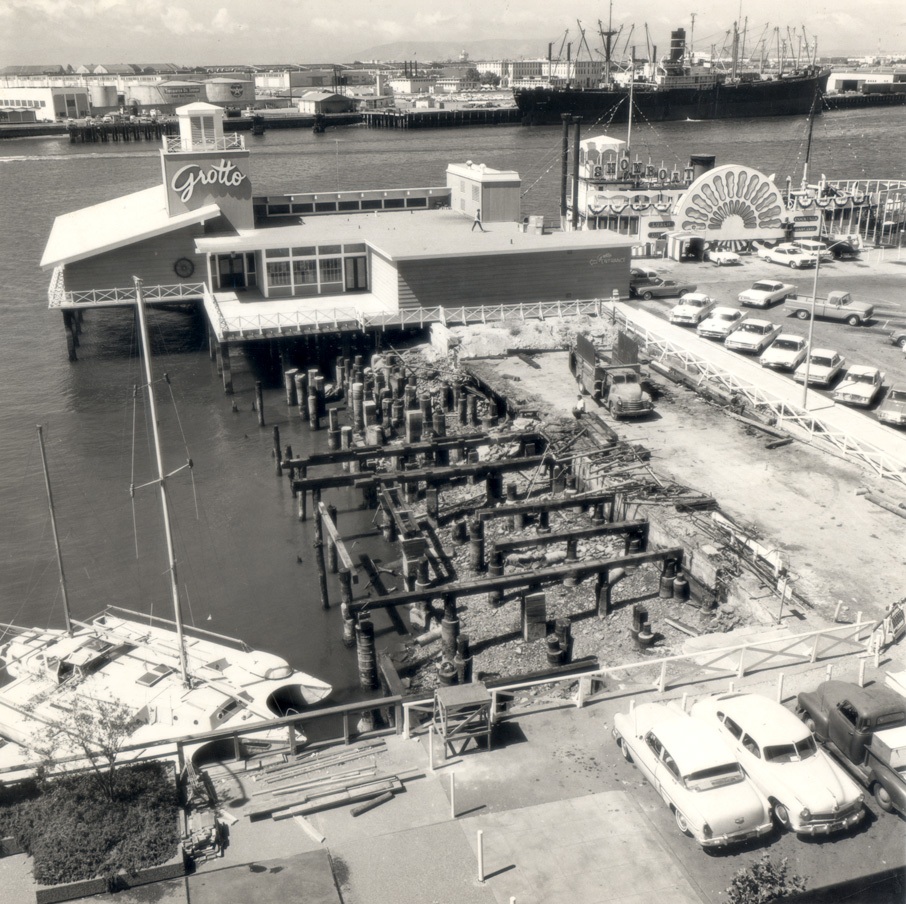
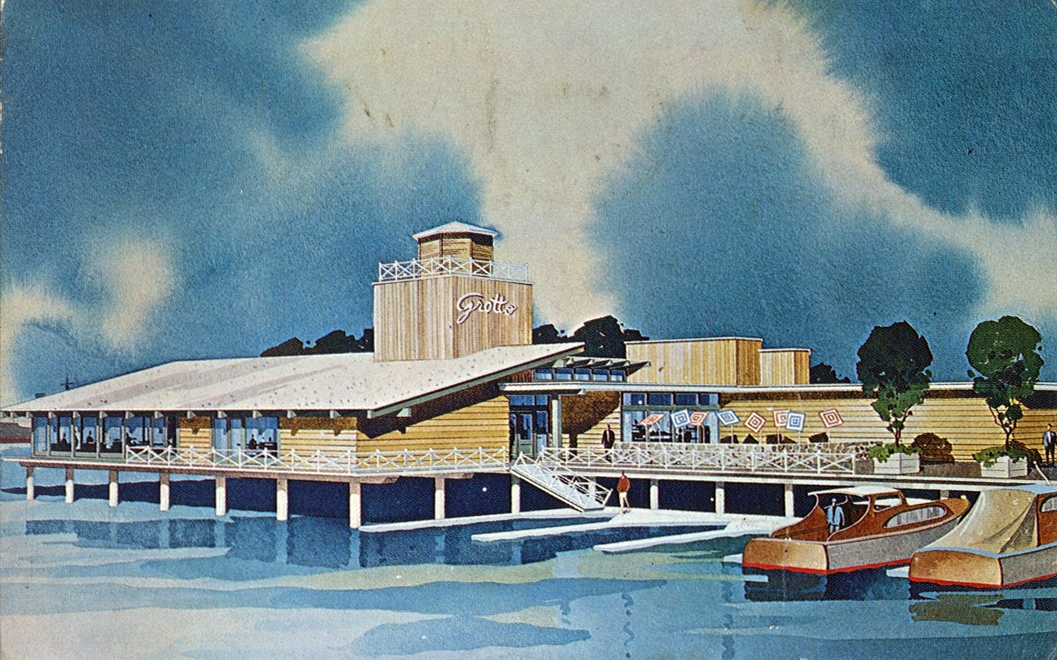
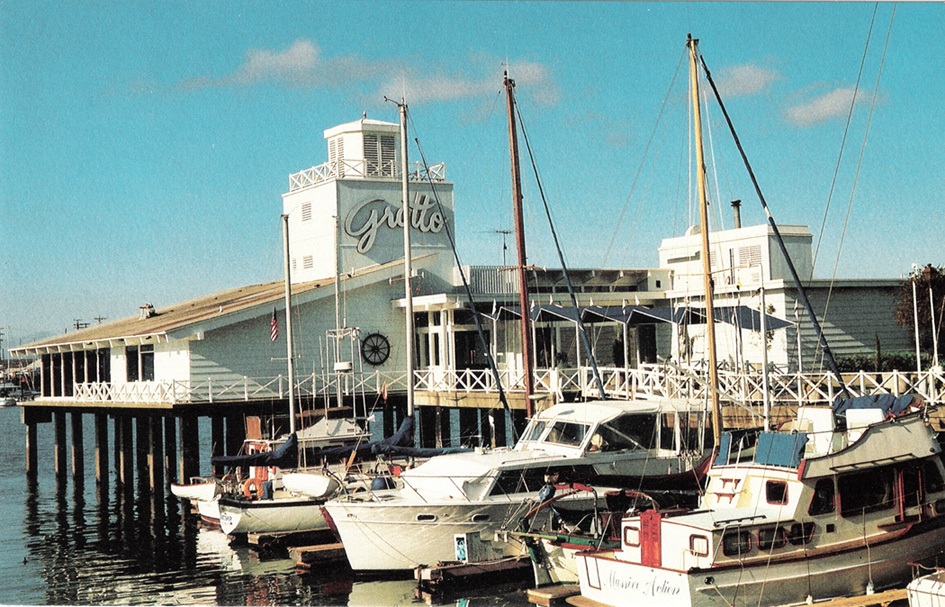
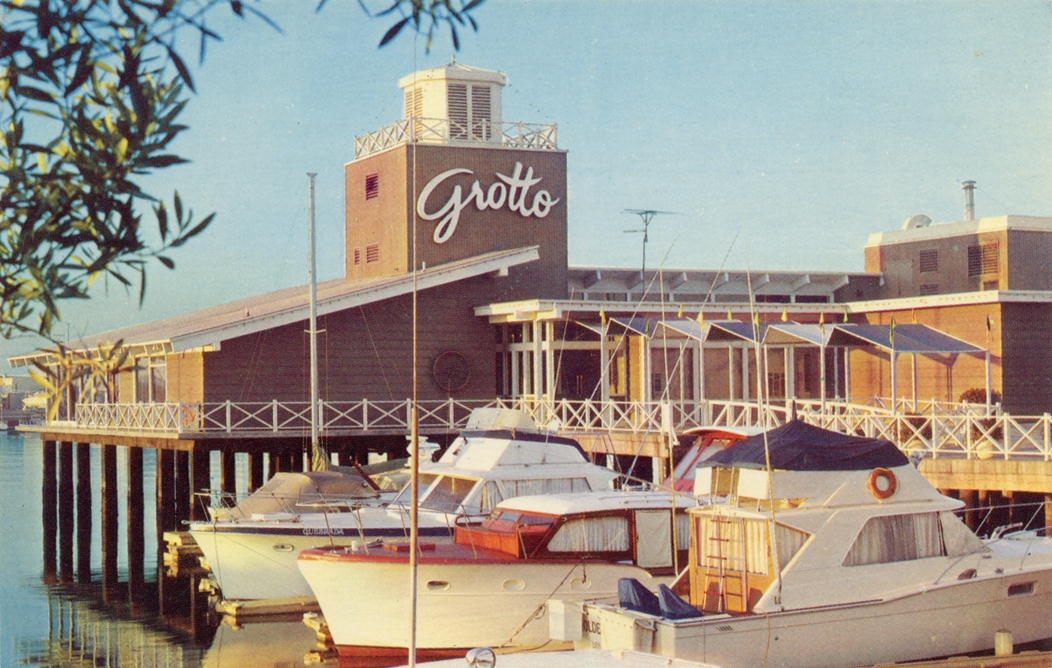
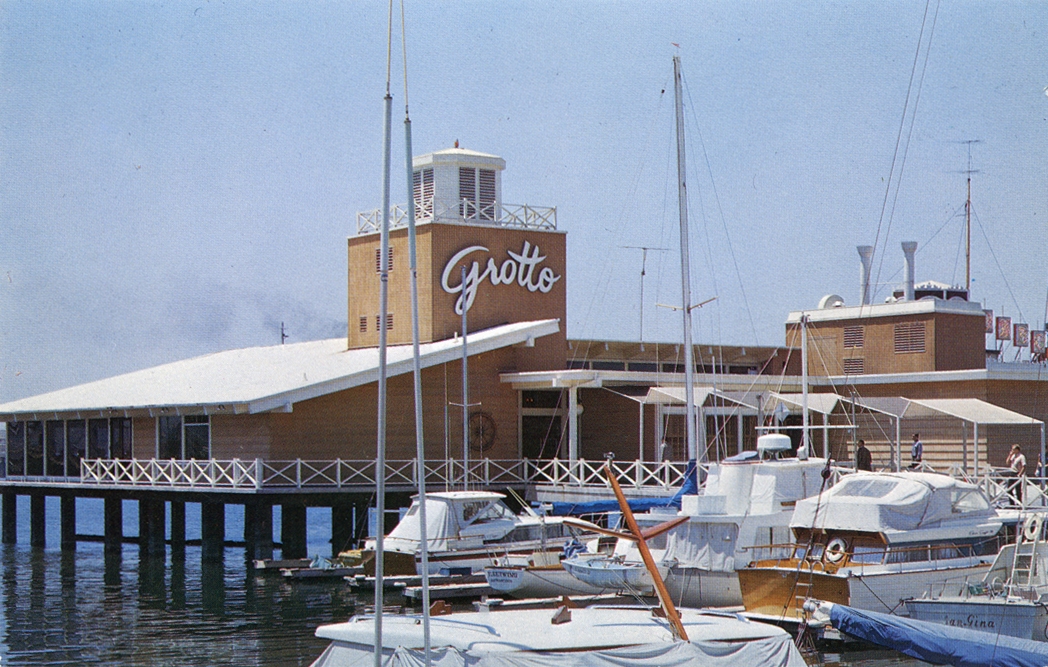
Grotto Restaurant, Jack London Square, Oakland, California
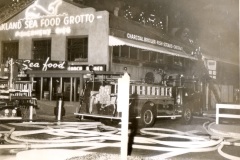
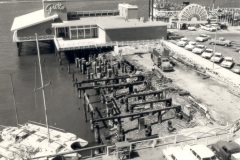
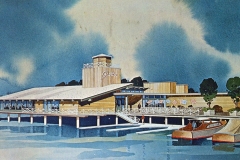
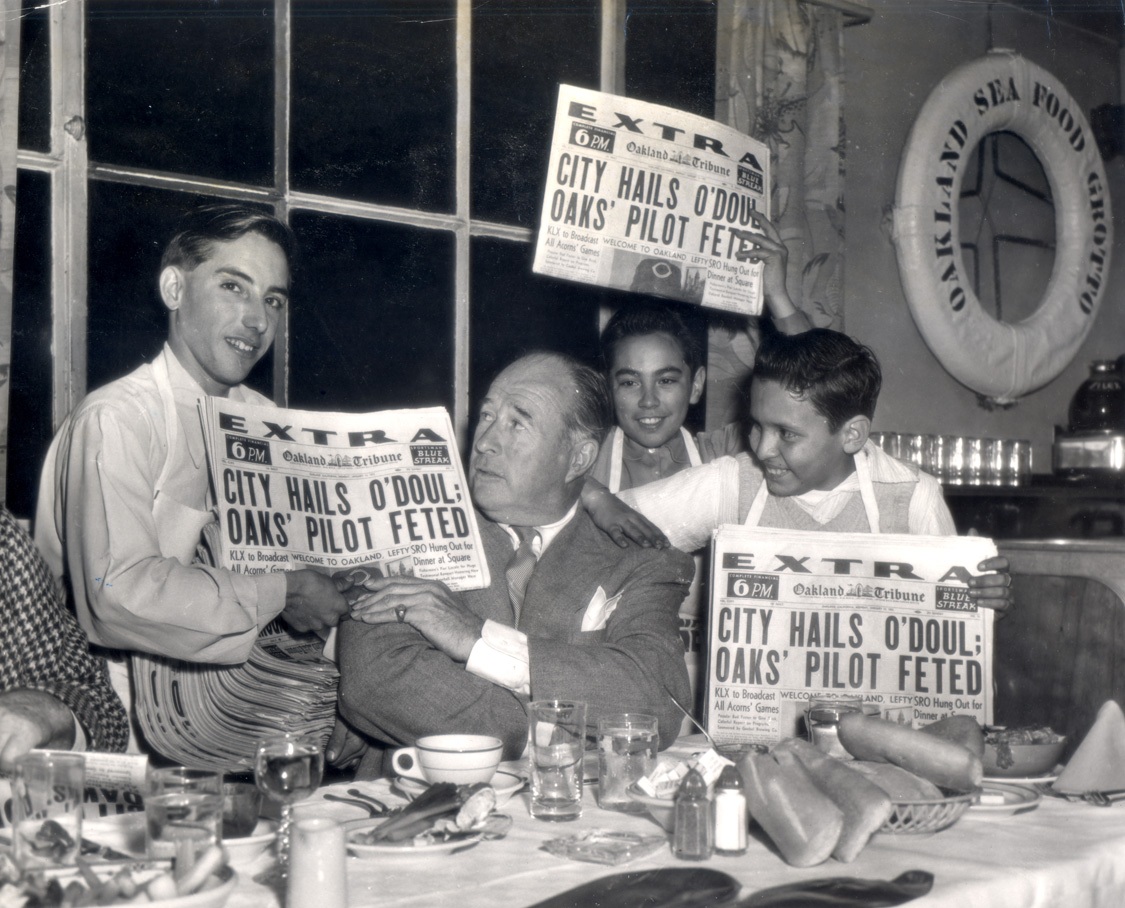
The Grotto Restaurant was at Jack London Square in Oakland, California was open from 1936 to February 1990. It was located at the site where Kincaids Restaurant is today. The original Grotto Restaurant opened in 1936 and was called “Oakland Seafood Grotto”. The Restaurant was rebuilt in 1966, right behind the original location, and the name was shortened to “Grotto.” Thanks to Michael Stipic for sharing these great images from his personal collection. Michael is the son of Mike Stipic, who along with Andy Franicevich and Tony Markovich owned and operated the Grotto. Michael grew up in Alameda, California and graduated from Alameda High School. If you have any Grotto Restaurant images or memorabilia not seen here, please contact Michael Stipic who is an active collector. He is especially interested in trying to locate a Grotto ashtray.
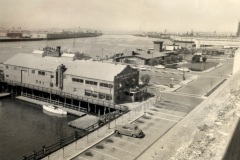
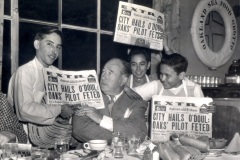
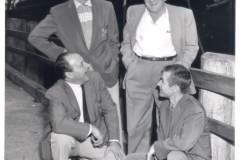
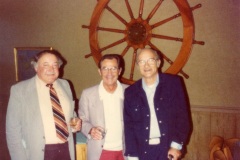
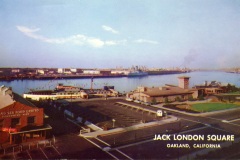
Jack London Square’s early days: A saloon, a local sports hero and a floating restaurant
Oakland wanted Jack London Square to be a dining destination from day one; here’s its evolution
By Bill Van Niekerken,Library DirectorUpdated Jan 24, 2020 12:05 p.m.
Jack London Square has seen its ups and downs, but in the past few years, several popular restaurants have opened on its waterfront. Now, with plans for a 35,000-square-foot food hall and the possibility of a new A’s stadium next door, the area may become the “waterfront restaurant center” that Oakland officials hoped it would be when they first dedicated it to the famous author.
Seven decades ago, Oakland officials assumed the London name would help attract tourists and build a destination like San Francisco’s Fisherman’s Wharf. While it never grew to that level of popularity, Jack London Square had unique dining draws early on. During a search through The Chronicle archives, I found photo negatives of the Oakland landmark and realized some of the negatives show the original restaurants under construction.
The story of Jack London Square begins in 1950, when Oakland’s Board of Port Commissioners named four blocks of waterfront area after one of its most famous former residents. London spent time at a saloon in the square during his youth, worked in the area, and took off from the port on his journey to Hawaii, a voyage that inspired two of his books.
Advertisement
Article continues below this ad
The square was dedicated on May 1, 1951, the 99th anniversary of the founding of Oakland. Bess London Fleming, London’s youngest daughter, was in attendance. “Daddy would have appreciated this,” she said. “He didn’t like anything that was useless, and he loved anything that had to do with the sea.”
One of the early restaurants to open at Jack London Square was the Bow & Bell, which had the “charm of an old English tavern and chop house transplanted to the Oakland docks,” The Chronicle wrote on May 7, 1951. Roast beef with Yorkshire pudding was a specialty.
The Bow & Bell had an added draw. One of the original owners was local athlete Jackie Jensen, an “all-city everything at Oakland High,” as columnist Ron Fimrite described him in 1968, who was also named All-American during his time on the UC Berkeley football team. But he spent most of his sports career in major-league baseball, playing for the New York Yankees and the Boston Red Sox, where he was named American League MVP in 1958.
“To this day, the Bow & Bell is something of a monument to Jensen,” Fimrite wrote in 1968. “His plaques, trophies and photographs serve as wallpaper.”
More from Chronicle Vault
Oakland Assembly: With giant food hall, Jack London Square again seeks to fulfill potential
What will be the future of Jack London Square as a food hub?
Another early restaurant took advantage of its location on the water. The Sea Wolf, named after one of London’s most popular books, was noted in The Chronicle’s 1952 Dining Guide as having “ an excellent view of the Bay and its bridge.”
Advertisement
Article continues below this ad
In 1951 the Petaluma, a paddlewheel steamboat, dropped anchor at the foot of Broadway at Jack London Square. Renamed the Showboat Restaurant, and renovated to house a circular bar on the upper level and a spacious dining room below, it was described as a floating palace. There was a ladder and a mooring to allow local yachtsmen to drop off their passengers on the boat for a meal or a drink.
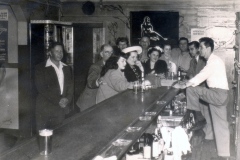
While restaurants have come and gone since the square was first named, Heinold’s First and Last Chance saloon was there before and remains still. There has been a drinking establishment there since 1865, and Johnny Heinold became its owner in 1883. The bar survived the 1906 earthquake and had to rebuild after a fire in the 1920s
The saloon has strongest ties to Jack London. The writer spent lots of time at the bar in his youth, and Heinold lent him the money to go to college. The bar owns a photo that shows the writer at age 10, sitting at one of the bar’s three tables and reading from a large dictionary Heinold had bought for him.
More from Chronicle Vault
• Not Your Century: 1901 — Queen Victoria dies.
• Freeway treat: Remembering Emeryville’s mudflat art — and why the mud won out.
• Not just a marketing slogan: How Fisherman’s Wharf went from fishing hub to tourist mecca.
• Oakland’s sanctuary: A century of Lake Merritt photos pulled from the archive.
From the Archive is a weekly column by Bill Van Niekerken, the library director of The Chronicle, exploring the depths of the newspaper’s archive. It’s part of Chronicle Vault, a twice-weekly newsletter highlighting more than 150 years of San Francisco stories. It is edited by Taylor Kate Brown, The Chronicle’s newsletter editor. Sign up for the newsletter here, and follow Chronicle Vault on Instagram. Contact Bill at bvanniekerken@sfchronicle.com and Taylor at taylor.brown@sfchronicle.com.
 Rosamond Press
Leave a comment