During the Defense Trial of Senator Thomas Hart Benton, my assistance will bring in sacks of fake severed ears, and put them on the Judges Bench. I will make the case the Oregon State Beaver Historicans reduced Benton to a two-bit punk racist hanging out in a pool hall in Alabama with other White Supremist. Then, he was further reduced, or, rendered into a puddle of hateful goo. Then, Joseph moved in to minister the coupe de gras! I will be getting all the papers I can in the freedom of information act to see of Thomas Hart is mentioned. Hart was a partner of Daniel Boone’s Transvania Company. There are many real folks who made real American history, that includes the truth
THE BENTON FAMIY HELPED CONQUOR A VAST TRACK OF LAND ON PLANET EARTH!
The key word is CONQUOR! OSU has helped the CONQUORED get back at members of my family, and, I think they made the mistake if not Googling to see if there were any living Bentons
HOW STUPID CAN YOU BE?
Here is the damning paragraph that Benton wrote, that got him the title of
ARCHECTECT OF MANIFEST DESTINY
In another letter to Ed Ray, I will reveal the True Architect. I will also inform him my Bohemian ancestors fought battles with the Mongols – and may have saved Europe! My mother said our Stuttmeister folks were Teutonic Knights who fought with Genghis Khan. I google on this, and found King e, who my great grandfather was named after. On this day, April 21, I call for another Bohemian Crusade, because we are in real trouble. Pope Francis never called for a Crusade – while alive. What if I told you – he calls for one now? He owns the high ground!
“The sun of civilization must shine across the sea; socially and commercially the van of the Caucasians, and the rear of the Mongolians, must intermix. They must talk together, and trade together, and marry together. . . . Moral and intellectual superiority will do the rest; the White race will take the ascendant, elevating what is susceptible of improvement-wearing out what is not. . . . And thus the youngest people, and the newest land, will become the reviver and the regenerator of the oldest . .”
Look at the Crazy Man with wild eyes! He’s talking about Norman People mating with Mongols as a way to CONQUOR them. Where did he get such weird ideas? Was it from his history professor at the University of North Carolina? Did Thomas read about the Bohemian Knights, and wished his daughter could find one – and marry him? Look deep into that eyes. I think he hears the distant pounding of
WAR HORESE!
8. Sacks of severed ears
At the Battle of Legnica in modern-day Poland in April 1241, the Mongols were said to have counted the number of dead European foes by cutting the right ear off of every enemy corpse. The severed ears reportedly filled nine large sacks.
This macabre method of battlefield data collection by the Mongols also may have happened in Bulgaria and Russia around the same time. There, according to some sources, the number of bloodied trophy ears was in the thousands..
Wenzel Preskowitz was born in month 1858, at birth place , to Anton Preskowitz and Maria Preskowitz (born Studcika) .Anton was born in Bohemia. Maria was born in Bohemia. Wenzel married Christine Preskowitz (born Roth) .Christine was born in Germany.They had 3 children: Oscar Presco and 2 other children .Wenzel passed away in 1941, at age 82 at death place , Connecticut. .
The University of North Carolina was chartered by the North Carolina General Assembly on December 11, 1789; its cornerstone was laid on October 12, 1793, at Chapel Hill, chosen because of its central location within the state.[20][21] It is one of three universities that claims to be the oldest public university in the United States, and the only such institution to confer degrees in the eighteenth century as a public institution.[22][23]
EXTRA! After this post, I turned on my TV and was made aware, a Tribe wants totem poles moved because it is CULTURAL APPROPRIATION! Wow! Alas I have defination of what happened to my family of…..CREATIVE BOHEMIANS!
If I was a Native American Tribe and contacted OSU about the appropriation of my family history, I would have got an immediate reply – full of apologies! My Bohemian ancestors may have been members of the Boii tribe who helped Hannibal wage war against Rome – like the Jews did! Some folks specialty who would won if Hannibal and Ganges Khan met on the battlefield.
Senator Thomas Hart Benton on Manifest Destiny (1846)
It would seem that the White race alone received the divine command, to subdue and replenish the earth: for it is the only race that has obeyed it-the only race that hunts out new and distant lands, and even a New World, to subdue and replenish . . . .
The Red race has disappeared from the Atlantic coast; the tribes that resisted civilization met extinction. This is a cause of lamentation with many. For my part, I cannot murmur at what seems to be the effect of divine law. I cannot repine that is this Capitol has replace the wigwam-this Christian people, replaced the savages-white matrons, the red squaws . . . . Civilization, or extinction, has been the fate of all people who have found themselves in the trace of the advancing Whites, and civilization, always the preference of the Whites, has been pressed as an object, while extinction has followed as a consequence of its resistance . . . .
The van of the Caucasian race now top the Rocky Mountains, and spread down on the shores of the Pacific. In a few years a great population will grow up there, luminous with the accumulated lights of the European and American civilization. There presence in such a position cannot be without it influence upon eastern Asia. . . .
The Mongolian, or Yellow race is there, four hundred millions in number spreading almost to Europe; a race once the foremost of the human family in the arts of civilization, but torpid and stationary for thousands of years. It is a race far above the Ethiopian, or Black-above the Malay, or Brown, (if we admit five races)-and above the American Indian or Red; it is a race far above all these, but still far below the White and like all the rest, must receive an impression from the superior race whenever they come in contact . . . .
The sun of civilization must shine across the sea; socially and commercially the van of the Caucasians, and the rear of the Mongolians, must intermix. They must talk together, and trade together, and marry together. . . . Moral and intellectual superiority will do the rest; the White race will take the ascendant, elevating what is susceptible of improvement-wearing out what is not. . . . And thus the youngest people, and the newest land, will become the reviver and the regenerator of the oldest . . . .
It is in this point of view, and as acting upon the social, political, and religious condition of Asia, and giving a new point of departure to her ancient civilization, that I look upon the settlement of the Columbia river by the van of the Caucasian race as the most momentous human event in the history of man since his dispersion over the face of the earth.
A Chinese diplomat removed the sovereignty of the Czech Republic yesterday. Allow me to put on the real amour of God and go after His real enemies, and not transgenders and Woke Folks. My Bohemian Knights under White Mountain – ARE AWAKE! They move onto the Protestant Battlefield. The Dutch Government backs this move, and challenges the threat of the Chinese government.
Prague awaits clarification from Beijing after scandalous statements by Chinese ambassador to France
Ukrainska Pravda
Sun, April 23, 2023 at 11:13 PM PDT·1 min read
The Czech Republic is surprised and concerned by the statements of the Chinese ambassador to France regarding the sovereignty of the countries that were once part of the USSR and is awaiting a comment from official Beijing on this issue.
He noted that, by his words, the Chinese ambassador actually questioned the sovereignty of a number of states, from the Baltic States to Central Asia.
“Chinese ambassador to France exposed either shocking incompetence or very dangerous position contradicting the basics of the international law. I expect his HQ will distance itself from untenable statement,” Lipavsky said.
Chinese Ambassador Lu Shaye said in an interview that the countries of the former USSR “do not have an effective status in international law, as there is no international agreement that would specify their status as a sovereign country”.
He also said that the question of the territorial affiliation of the Russian-occupied Crimea “depends on how one perceives the problem”, and that the peninsula “belonged to Russia from the beginning”.
Official Paris and the EU’s top diplomat then called on Beijing to explain whether these statements reflected China’s official position and the Baltic States expressed outrage by summoning Chinese diplomats to the Foreign Ministry.
AMSTERDAM — Europe doesn’t seem to share Washington’s fear of a dangerous China, but the Netherlands is changing its tune and rethinking its ties with Beijing, one of its biggest trading partners.
Beijing, of course, wasn’t pleased. Chinese Foreign Ministry spokesman Wang Wenbin shot back that “relevant officials” should “stop making a big deal out of the so-called China threat story.”
Night before last, Christine Wandel read half of my letters I sent to Peter Shapiro in 1974, wherein I announce I am a King! How Christine got this letter – is a mystery! She read the first page of my letter to me on the phone, due to her bad eyesight – that he brother Thadeus Wandel – will not correct. He is an eye doctor. He and his sister carry out cruel instructions from their evil mother – who died fifteen years ago. Christine had exposed a fraud in regards to a drawing contest for Filene’s, a famous Department store that made the Boston Globe.
I predicted Putin has his Evil Eye of Modar on Czechoslovakia that he sees as being invaded and gobbled up by aggressive NATO who he wants to BACK OFF and give up their evil gains. Putin claims he is a Christian, and thus millions of Evangelicals adore him. NATO is the secular enemy of the followers King David Trump of the Red Confederate Empire.
I believe we are on the eve of cyber-warfare with Russia. I believe I am the Heir of the Royalty of Bohemia, and Heir to Tolkien’s work, as well as Ian Fleming. I believe I am king of the American Beats and Bohemians. I back the Czech Pople in their ongoing war with Russia. Let all the Bohemian People of America stand united!
In the 13th and 14th centuries, an enormous empire straddled half of the Eurasian landmass. At its zenith, it stretched from the Pacific shores of the Korean Peninsula to the cold forests of Eastern Europe. This was the mighty Mongol Empire, and its emperors, known as Khagans, were some of the most bloodthirsty and powerful rulers in human history. Here we look at eight of their most shocking acts.
1. The decimation of Merv
Genghis Khan was born with the name Temuchin in the mountains of northern Mongolia in 1162. He later founded the Mongol Empire, ruling from 1206 to 1227.
In February 1221, Genghis Khan’s forces laid siege to the city of Merv, in modern-day Turkmenistan. When the people of Merv surrendered to the Mongols, the conquerors responded by virtually wiping the city off the map, murdering, pillaging, and wrecking the ancient metropolis.
Khan was reported to have given himself a front row seat for the mayhem at Merv. He sat on a golden throne and watched as men were dragged before him and executed. It was said to have been a ‘memorable day for shrieking and weeping and wailing’. The invaders tortured the wealthy citizens of Merv so they’d give up their money and jewels.
One source puts the number of dead in the Merv massacre at 700,000, while a contemporary Persian chronicler estimated the number of corpses at a staggering 1.3 million. Khan apparently ordered each of his soldiers to kill at least 300 people.
Ögedei Khan, son of Genghis Khan, ruled as Khagan-Emperor of the Mongol Empire from 1229 to 1241. Like his father, Ögedei loved war, sending the vast Mongol hordes thousands of miles in nearly every direction to fight and expand the empire.
He was also responsible for an act that one historian has called ‘one of the worst Mongol atrocities recorded’. This was the mass rape of the Oirat girls.
In 1237, the Oirat people, according to Persian chroniclers, failed to contribute the expected cohort of young women to the Mongol emperor’s harem. A furious Ögedei decided to punish the Oirat. He ordered that 4,000 Oirat girls were to be repeatedly raped by his soldiers and that the girls’ families were forced to watch. Two of the girls died, and the rest were distributed as sex slaves among the harem, merchant caravans, and the Mongol army.
3. The destruction of Baghdad
Hulagu Khan, a grandson of Genghis Khan, led an army of perhaps 150,000 men to Baghdad, the capital of the mighty Abbasid Empire, in modern-day Iraq.
The Mongol forces, which included Chinese siege engineers, captured the city on 10th February 1258. The victors poured into the city and began a week of carnage, inflicting on the residents a campaign of pillaging, raping, torture, and murder.
One contemporary account reported that 800,000 were killed during the siege of Baghdad and its aftermath. However, this source also says that this number does not include those who drowned, ‘children thrown in the mud’, or those dying from disease, hunger, and ‘fear’. Some sources even go as high as two million for the total number of dead, though the true figure is not known.
The Baghdad destroyed in 1258 was the city of the Islamic Golden Age, resplendent with grand libraries, palaces, and mosques, a centre of learning for centuries. One chronicle says that the Tigris river ran black with the ink from the books of the destroyed House of Wisdom, and red with the blood of murdered philosophers and scientists.
The siege of Nishapur (modern-day Iran) in April 1221 was bloody and fierce. A huge Mongol army attacked the city, hurling hundreds of fireballs, a quarter of a million large stones, and much more at the defences. Nishapur finally fell and bloody house-to-house fighting ensued inside the city.
Survivors were, like every other resident of Nishapur, beheaded after being pulled from underground hiding places, mounds of rubble, and piles of bodies. The Mongols made three mountains of skulls from those they’d beheaded at Nishapur – one pyramid each for men, women and children.
Genghis Khan had been clear to his commanders that he wanted nothing in Nishapur to survive, so even the city’s dogs, cats and vermin were exterminated.
400 skilled workers were lucky enough to be spared, but all of the remaining 170,000 population of Nishapur were massacred.
5. The brutal funeral procession of Genghis Khan
In August 1227, Genghis Khan died. It is said that the mighty warlord had stipulated that his burial place was to remain a secret.
Marco Polo, the famous Venetian explorer who served as an envoy for the Mongol emperor Kublai Khan in the 1270s and 1280s, told the sinister story of Genghis’ funeral.
According to this version of events, 2,000 slaves that worked on burying the late emperor were butchered by their guards, who in turn were cut down by the second unit of infantry. These soldiers then made their way through the countryside, away from the burial place, and murdered everyone who saw them, so that no trace of their presence or witnesses to their route was left. This final group of men then committed suicide when they returned to their base.
Modern experts have concluded that the most likely location of Genghis Khan’s grave is in the area of the Mongol sacred mountain, Burkhan Khaldun, in the far north of Mongolia.
In 1220, Mongol forces sacked the ancient city of Termez in modern-day Uzbekistan. According to legend, a local woman pleaded with the Mongol invaders to spare her life, saying that she had swallowed pearls. Her captors duly sliced her open and retrieved the precious gemstones. This prompted an order by the Mongol commander that the corpse of every citizen of Termez was to be disembowelled, believing it would yield similar riches.
7. The massacre of Otrar
In 1219, after Inalchuq, governor of the city of Otrar in modern-day Kazakhstan, had severely provoked Genghis Khan, the Mongol emperor led a vast army to invade the Khwarazmian Empire and lay siege to Otrar. After five months the oasis town was captured.
The Mongols executed Inalchuq by having molten silver poured down his neck (some accounts say it was poured into his ears and eyes).
The fighters defending Otrar were all killed, and the entire population of the city was brought out onto the plain by the victorious Mongols. Every one of them – numbering about 100,000 – was put to the sword.
At the Battle of Legnica in modern-day Poland in April 1241, the Mongols were said to have counted the number of dead European foes by cutting the right ear off of every enemy corpse. The severed ears reportedly filled nine large sacks.
This macabre method of battlefield data collection by the Mongols also may have happened in Bulgaria and Russia around the same time. There, according to some sources, the number of bloodied trophy ears was in the thousands.
Ögedei Khan ordered Batu Khan to conquer Rus’ in 1235.[3] The main force, headed by Jochi‘s sons, and their cousins, Möngke Khan and Güyük Khan, arrived at Ryazan in December 1237. Ryazan refused to surrender, and the Mongols sacked it and then stormed Suzdalia. Many Rus’ armies were defeated; Grand Prince Yuri was killed on the Sit River (March 4, 1238). Major cities such as Vladimir, Torzhok, and Kozelsk were captured.
Afterward, the Mongols turned their attention to the steppe, crushing the Kipchaks and the Alans, and sacking Crimea. Batu appeared in Kievan Rus’ in 1239, sacking Pereyaslavl and Chernigov. The Mongols sacked Kiev on December 6, 1240, destroyed Sutiejsk, and conquered Galicia along with Vladimir-Volynsky. Batu sent a small detachment to probe the Poles before passing on to Central Europe. One column was routed by the Poles while the other defeated the Polish army and returned.[4]
The attack on Europe was planned and executed by Subutai, who achieved perhaps his most lasting fame with his victories there. Having devastated the various Rus’ principalities, he sent spies into Poland and Hungary, and as far as eastern Austria, in preparation for an attack into the heartland of Europe.[5] Having a clear picture of the European kingdoms, he prepared an attack nominally commanded by Batu Khan and two other familial-related princes. Batu Khan, son of Jochi, was the overall leader, but Subutai was the strategist and commander in the field, and as such, was present in both the northern and southern campaigns against Rus’ principalities.[6] He also commanded the central column that moved against Hungary. While Kadan‘s northern force won the Battle of Legnica and Güyük’s army triumphed in Transylvania, Subutai was waiting for them on the Hungarian plain. The newly reunited army then withdrew to the Sajó river where they inflicted a decisive defeat on King Béla IV of Hungary at the Battle of Mohi. Again, Subutai masterminded the operation, and it would prove one of his greatest victories.
The Mongols invaded Central Europe with three armies. One army defeated an alliance which included forces from fragmented Poland and their allies, led by Henry II the Pious, Duke of Silesia in the Battle of Legnica. A second army crossed the Carpathian mountains and a third followed the Danube. The armies re-grouped and crushed Hungary in 1241, defeating the Hungarian army at the Battle of Mohi on April 11, 1241. The devastating Mongol invasion killed half of Hungary’s population.[7] The armies swept the plains of Hungary over the summer, and in early 1242 regained impetus and launched campaigns into Dalmatia and Moravia. The Great Khan had, however, died in December 1241, and on hearing the news, all the “Princes of the Blood,” against Subutai’s recommendation, went back to Mongolia to elect the new Khan.[8]
After sacking Kiev,[9] Batu Khan sent a smaller group of troops to Poland, destroying Lublin and defeating an inferior Polish army. Other elements—not part of the main Mongol force—saw difficulty near the Polish-Halych border.
The Mongols then reached Polaniec on the Czarna Hańcza, where they set up camp.[10] There, the Voivode attacked them with the remaining Cracovian knights, which were few in number, but determined to vanquish the invader or die. Surprise gave the Poles an initial advantage and they managed to kill many Mongol soldiers. When the invaders realized the actual numerical weakness of the Poles, they regrouped, broke through the Polish ranks and defeated them. During the fighting, many Polish prisoners of war found ways to escape and hide in the nearby woods. The Polish defeat was partly influenced by the initially successful Polish knights having been distracted by looting.
After the defeat of the European forces at Legnica, the Mongols then continued pillaging throughout Poland’s neighboring states, particularly Moravia. King Wenceslaus I of Bohemia returned to protect his kingdom after arriving in Legnica a day late. He gathered reinforcements from Thuringia and Saxony on his way back. He stationed his troops in the mountainous border regions of Bohemia where the Mongols would not be able to utilize their cavalry effectively.[13]
By that time, Mongolian forces had divided into two, one led by Batu and Subutai who were planning to invade Hungary, and another led by Baidar and Kadan who were ravaging their way through Silesia and Moravia. When they arrived to attack Bohemia, the kingdom’s defenses discouraged them from attacking and they withdrew to the town of Otmuchów in Poland.[13][14] A small force of Mongolians did attack the strategically located (on the way to the mountain passes) Bohemian town of Kladsko (Kłodzko) but Wenceslaus’ cavalry managed to fend them off.[15][16] The Mongols then tried to take the town of Olomouc, but Wenceslaus with the aid of Austrian Babenbergs repulsed the raid.[13][17][18] A Mongol commander was captured in a sortie near Olomouc.[19] Under Wenceslaus’ leadership during the Mongol invasion, Bohemia remained one of a few central European kingdoms that was never pillaged by the Mongols even though most countries around it such as Poland and Hungary were ravaged.[13] Such was his success that chroniclers sent messages to Emperor Frederick II of his victorious defense.[20] After these failed attempts, Baidar and Kadan continued raiding Moravia (via the Moravian Gate route into the valley of the river Morava towards the Danube) before finally going southward to reunite with Batu and Subutai in Hungary.
The Hungarians had first learned about the Mongol threat in 1229, when King Andrew II granted asylum to some fleeing Ruthenian boyars. Some Magyars (Hungarians), left behind during the main migration to the Pannonian basin, still lived on the banks of the upper Volga (it is believed by some[who?] that the descendants of this group are the modern-day Bashkirs, although this people now speaks a Turkic language, not Magyar). In 1237 a Dominican friar, Julianus, set off on an expedition to lead them back, and was sent back to King Béla with a letter from Batu Khan. In this letter, Batu called upon the Hungarian king to surrender his kingdom unconditionally to the Tatar forces or face complete destruction. Béla did not reply, and two more messages were later delivered to Hungary. The first, in 1239, was sent by the defeated Cuman tribes, who asked for and received asylum in Hungary. The second was sent in February 1241 by the defeated Polish princes.
Only then did King Béla call upon his magnates to join his army in defense of the country. He also asked the papacy and the Western European rulers for help. Foreign help came in the form of a small knight-detachment under the leadership of Frederick II, Duke of Austria, but it was too small to change the outcome of the campaign. The majority of the Hungarian magnates also did not realize the urgency of the matter. Some may have hoped that a defeat of the royal army would force Béla to discontinue his centralization efforts and thus strengthen their own power.
Although the Mongol danger was real and imminent, Hungary was not prepared to deal with it; in the minds of a people who had lived free from nomadic invasions for the last few hundred years, an invasion seemed impossible, and Hungary was no longer a predominantly soldier population. Only rich nobles were trained as heavy-armored cavalry. The Hungarians had long since forgotten the light-cavalry strategy and tactics of their ancestors, which were similar to those now used by the Mongols. The Hungarian army (some 60,000 on the eve of the Battle of Mohi) was made up of individual knights with tactical knowledge, discipline, and talented commanders. Because his army was not experienced in nomadic warfare, King Béla welcomed the Cuman King Kuthen (also known as Kotony) and his fighters. However, the Cuman invitation proved detrimental to the Hungarians because Batu Khan considered this acceptance of a group he considered rebels as justifications for his invasion of Hungary. After rumors began to circulate in Hungary that the Cumans were agents of the Mongols, some hot-headed Hungarians attacked the Cuman camp and killed Kotony. This led the enraged Cumans to ride south, ravaging the countryside, and slaughtering the unsuspecting Magyar population. The Austrian troops retreated to Austria shortly thereafter to gain more western aid. The Hungarians now stood alone in the defense of their country.
Battle of Mohi in a Medieval-era depiction
The 1241 Mongol invasion first affected Moldavia and Wallachia (situated east and south of the Carpathians). Tens of thousands of Wallachians and Moldavians lost their lives defending their territories from the Golden Horde. Crops and goods plundered from Wallachian settlements seem to have been a primary supply source for the Golden Horde. The invaders killed up to half of the population and burned down most of their settlements, thus destroying much of the cultural and economic records from that period. Neither the Wallachians nor the army of Hungary offered much resistance against the Mongols.[21] The swiftness of the invasion took many by surprise and forced them to retreat and hide in forests and the enclosed valleys of the Carpathians. In the end, however, the main target of the invasion was the Kingdom of Hungary.[21]
The Hungarian army arrived and encamped at the Sajó River on April 10, 1241, without having been directly challenged by the Mongols. The Mongols, having largely concealed their positions, began their attack the next night; after heavier-than-expected losses inflicted by Hungarian crossbowmen, the Mongols adjusted their strategy and routed the Hungarian forces rapidly. A major Hungarian loss was imminent, and the Mongols intentionally left a gap in their formation to permit the wavering Hungarian forces to flee and spread out in doing so, leaving them unable to effectively resist the Mongols as they picked off the retreating Hungarian remnants. While the king escaped with the help of his bodyguard, the remaining Hungarian army was killed by the Mongols or drowned in the river as they attempted escape. Following their decisive victory, the Mongols now systematically occupied the Great Hungarian Plains, the slopes of the northern Carpathian Mountains, and Transylvania. Where they found local resistance, they killed the population. Where the locale offered no resistance, they forced the men into servitude in the Mongol army. Still, tens of thousands avoided Mongol domination by taking refuge behind the walls of the few existing fortresses or by hiding in the forests or large marshes along the rivers. The Mongols, instead of leaving the defenseless and helpless people and continuing their campaign through Pannonia to Western Europe, spent time securing and pacifying the occupied territories. On Christmas 1241, the costly siege of Esztergom destroyed the capital and economic center of the Kingdom of Hungary, forcing the capital to be moved to Buda.[22]
During the winter, contrary to the traditional strategy of nomadic armies which started campaigns only in spring-time, they crossed the Danube and continued their systematic occupation, including Pannonia. They eventually reached the Austrian borders and the Adriatic shores in Dalmatia. The Mongols appointed a darughachi in Hungary and minted coins in the name of the Khagan.[23] According to Michael Prawdin, the country of Béla was assigned to Orda by Batu as an appanage. At least 20–40% of the population died, by slaughter or epidemic. Rogerius of Apulia, an Italian monk and chronicler who witnessed and survived the invasion, pointed out not only the genocidal element of the occupation, but also that the Mongols especially “found pleasure” in humiliating local women.[24] But while the Mongols claimed control of Hungary, they could not occupy fortified cities such as Fehérvár, Veszprém, Tihany, Győr, Pannonhalma, Moson, Sopron, Vasvár, Újhely, Zala, Léka, Pozsony, Nyitra, Komárom, Fülek and Abaújvár. Learning from this lesson, fortresses came to play a significant role in Hungary. King Béla IV rebuilt the country and invested in fortifications. Facing a shortage of money, he welcomed the settlement of Jewish families, investors, and tradesmen, granting them citizenship rights. The King also welcomed tens of thousands of Kun (Cumans) who had fled the country before the invasion. Chinese fire arrows were deployed by Mongols against the city of Buda on December 25, 1241, which they overran.[25]
The Mongolian invasion taught the Magyars a simple lesson: although the Mongols had destroyed the countryside, the forts and fortified cities had survived. To improve their defense capabilities for the future, they had to build forts, not only on the borders but also inside the country. In the siege of Esztergom, the defenses managed to hold off the Mongolians despite the latter having overwhelming numerical superiority and 30 siege machines which they had just used to reduce the wooden towers of the city.[26][27] During the remaining decades of the 13th century and throughout the 14th century, the kings donated more and more royal land to the magnates with the condition that they build forts and ensure their defenses.
After being routed on the banks of the Sajó river in 1241 by the Mongols, Béla IV fled to today’s Zagreb in Croatia. Batu sent a few tumens (roughly 20,000 men at arms) under Khadan in pursuit of Bela. The major objective was not the conquest but the capture of the Arpad king. The poorly fortified Zagreb was unable to resist the invasion and was destroyed, its cathedral burned by Mongols.[31] In preparation for a second invasion, Gradec was granted a royal charter or Golden Bull of 1242 by King Béla IV, after which citizens of Zagreb engaged in building defensive walls and towers around their settlement.[32]
The Mongols’ pursuit of Béla IV continued from Zagreb through Pannonia to Dalmatia. While in pursuit, the Mongols under the leadership of Kadan (Qadan) attacked Klis Fortress in Croatia in March 1242. Due to the strong fortifications of Klis, the Mongols dismounted and climbed over the walls using nearby cliffs. The defenders were able to inflict a number of casualties on the Mongols, which enraged the latter and caused them to fight hand to hand in the streets and gather a sizable amount of loot from houses. As soon as they learned that King Bela was elsewhere, they abandoned the attack and split off to attack Split and Trogir.[33] The Mongols pursued Béla IV from town to town in Dalmatia, while Croatian nobility and Dalmatian towns such as Trogir and Rab helped Béla IV to escape. After being defeated by the Croatian soldiers, the Mongols retreated and Béla IV was awarded Croatian towns and nobility. Only the city of Split did not aid Béla IV in his escape from the Mongols. Some historians claim that the mountainous terrain of Croatian Dalmatia was fatal for the Mongols because of the great losses they suffered from Croat ambushes in mountain passes.[32] In any case, though much of Croatia was plundered and destroyed, long-term occupation was unsuccessful.
Saint Margaret (January 27, 1242 – January 18, 1271), a daughter of Béla IV and Maria Laskarina, was born in Klis Fortress during the Mongol invasion of Hungary-Croatia in 1242.[34]
Historians estimate that up to half of Hungary’s two million population at that time were killed during the Mongol invasion of Europe.[35]
The subjugation of Hungary opened a pathway for the Mongol Horde to invade Vienna. Using similar tactics during their campaigns in previous Eastern and Central European countries, the Mongols first launched small squadrons to attack isolated settlements in the outskirts of Vienna in an attempt to instill fear and panic among the populace.[36] In 1241 the Mongols raided Wiener Neustadt and its neighboring districts, located south of Vienna. Wiener Neustadt took the brunt of the attack and, like previous invasions, the Mongols committed horrible atrocities on the relatively unarmed populace. The city of Korneuburg, just north of Vienna, was also pillaged and destroyed.[37] The Duke of Austria, Frederick II, had previously engaged the Mongols in Olomouc and in the initial stages of the Battle of Mohi. Unlike in Hungary however, Vienna under the leadership of Duke Frederick and his knights, together with their foreign allies, managed to rally quicker and annihilate the small Mongolian squadron.[38][39] After the battle, the Duke estimated that the Mongols lost 300 to upwards of 700 men, while the defending Europeans lost 100.[40] Austrian knights also subsequently defeated the Mongols at the borders of the River March in the district of Dévény (Devín).[41] After the failed initial raids, the rest of the Mongols retreated after learning of the Great Khan Ögedei’s death.[disputed – discuss]
During his withdrawal from Hungary back into Ruthenia, part of Batu Khan’s army invaded Bulgaria. A Mongolian force was defeated by the Bulgarian army under Tsar Ivan Asen II.[42] A larger force returned to raid Bulgaria again the same year, though little is known of what happened. According to the Persian historian Rashid-al-Din Hamadani, the Bulgarian capital of Tarnovo was sacked. This is unlikely, but rumor of it spread widely, being repeated in Palestine by Bar Hebraeus.[43] The invasion of Bulgaria is mentioned in other contemporary sources, such as Philippe Mouskès, Thomas of Cantimpré and Ricoldo of Montecroce.[44] Contemporary documents indicate that by 1253, Kaliman I was a tribute-paying vassal of the Mongols, a status he had probably been forced to accept during the invasion of 1242.[45]
The traditional European method of warfare of melee combat between knights ended in catastrophe when it was deployed against the Mongol forces as the Mongols were able to keep a distance and advance with superior numbers. The New Encyclopædia Britannica, Volume 29 says that “Employed against the Mongol invaders of Europe, knightly warfare failed even more disastrously for the Poles at the Battle of Legnica and the Hungarians at the Battle of Mohi in 1241. Feudal Europe was saved from sharing the fate of China and the Grand Duchy of Moscow not by its tactical prowess but by the unexpected death of the Mongols’ supreme ruler, Ögedei, and the subsequent eastward retreat of his armies.”[46]
However, during the initial Mongol invasion and the subsequent raids afterwards, heavily armored knights and cavalry proved more effective at fighting the Mongols than their light-armored counterparts. During the Battle of Mohi, for example, while the Hungarian light cavalry and infantry were decimated by Mongol forces, the heavily armored knights in their employ, such as the Knights Templar, fought significantly better.[47] During the Battle of Legnica, the Knights Templar that numbered between 65 and 88 during the battle lost only three knights and 2 sergeants.[48] Austrian knights under Duke Frederick also fared better in fighting the Mongol invasion in Vienna.[39]
King Béla IV of Hungary hired the help of the Knights Hospitaller, as well as training his own better-armed local knights, in preparation for the Second Mongol invasion of Hungary.[49] In the decades following the Mongolian raids on European settlements, Western armies (particularly Hungary) started to adapt to the Mongol tactics by building better fortifications against siege weapons and improving their heavy cavalry.[50] After the division of the Mongol Empire into four fragments, when the Golden Horde attempted the next invasion of Hungary, Hungary had increased their proportion of knights (led by Ladislaus IV of Hungary) and they quickly defeated the main Golden Horde Army in the hills of western Transylvania.[51]
Also, by this time, many Eastern and Central European countries had ended their hostilities with one another and united to finally drive out the remnants of the Golden Horde.[52]Guerrilla warfare and stiff resistance also helped many Europeans, particularly those in Croatia and Durdzuketia, in preventing the Mongols from setting a permanent hold and driving them off.[53][54]
Several sources mention the Mongols deploying firearms and gunpowder weapons against European forces at the Battle of Mohi in various forms, including bombs hurled via catapult.[55][56][57] Professor Kenneth Warren Chase credits the Mongols for introducing gunpowder and its associated weaponry into Europe.[58] A later legend arose in Europe about a mysterious Berthold Schwarz who is credited with the invention of gunpowder by 15th- through 19th-century European literature.[59]
During 1241, most of the Mongol forces were resting on the Hungarian Plain. In late March 1242, they began to withdraw. The most common reason given for this withdrawal is the Great Khan Ögedei‘s death on December 11, 1241. Ögedei Khan died at the age of fifty-six after a binge of drinking during a hunting trip, which forced most of the Mongolian army to retreat back to Mongolia so that the princes of the blood could be present for the election of a new great khan. This is attested to by one primary source: the chronicle of Giovanni da Pian del Carpine, who after visiting the Mongol court, stated that the Mongols withdrew for this reason; he further stated that God had caused the Great Khan’s death to protect Latin Christendom.[60] As Stephen Pow pointed out in his analysis of this issue, by Carpini’s account, a messenger would have to be able to make the journey from Mongolia to Central Europe in a little over three months at a minimum; the messenger would have to arrive in March, meaning he took about three months in the middle of winter from the time of the khan’s death. Carpini himself accompanied a Mongol party in a much shorter journey (from Kiev to Mongolia) in 1246, where the party “made great speed” in order to reach the election ceremony in time, and made use of several horses per person while riding nearly all day and night. It took five months.[61]
Mongol invasions in Europe (1235–1242)
Rashid Al-Din, a historian of the Mongol Ilkhanate, explicitly states in the Ilkhanate’s official histories that the Mongols were not even aware of Ogedei’s death when they began their withdrawal.[62] Al-Din, writing under the auspices of the Mongol Empire, had access to the official Mongol chronicle when compiling his history, the Altan Debter. John Andrew Boyle asserts, based on the orthography, that Al-Din’s account of the withdrawal from central Europe was taken verbatim from Mongolian records.[63]
Another theory is that weather data preserved in tree rings points to a series of warm, dry summers in the region until 1242. When temperatures dropped and rainfall increased, the local climate shifted to a wetter and colder environment. That, in turn, caused flooding of the formerly dry grasslands and created a marshy terrain. Those conditions would have been less than ideal for the nomadic Mongol cavalry and their encampments, reducing their mobility and pastureland, curtailing their invasion into Europe west of the Hungarian plain,[64] and hastening their retreat.
The true reasons for the Mongol withdrawal are not fully known, but numerous plausible explanations exist. The Mongol invasion had bogged down into a series of costly and frustrating sieges, where they gained little loot and ran into stiff resistance. They had lost a large number of men despite their victories (see above). Finally, they were stretched thin in the European theater, and were experiencing a rebellion by the Cumans (Batu returned to put it down, and spent roughly a year doing so).[65]
Regardless of their reasons, the Mongols had completely withdrawn from Central Europe by mid-1242, though they still launched military operations in the west at this time, most notably the 1241–1243 Mongol invasion of Anatolia. Batu specifically decided against attending the kurultai in favor of staying in Europe, which delayed the ceremony for several years.[66]
The historian Jack Weatherford claims that the Mongol invasion concluded when the geography was no longer in their favor. To venture farther would have put their army at a disadvantage. This was because there was no more pastureland, which their methods of warfare relied upon, and the more humid coastal climate would weaken the Mongol bows.[67] However, a counter to this assertion is that the Mongols were willing to fight in the densely populated areas of Song China and India. Furthermore, the Mongols were able to conquer Southern China which is located in a tropical climate zone and would have received far more rainfall and humidity than anywhere in Europe. The territory of Western Europe had more forests and castles than the Mongols were accustomed to, and there were opportunities for the European heavy cavalry to counter-attack.[citation needed] Also, despite the steppe tactics of the Avars and early Hungarians, both were defeated by Western states in the 9th and 10th centuries, though many states conquered by the Mongols have also faced steppe tactics successfully before. A significant number of important castles and towns in Hungary had also resisted the formidable and infamous Mongol siege tactics.
John Keegan thought that Europeans had an advantage due to more food surpluses enabling better campaigns, and larger horses.[68]
Some historians believe that the reason for Batu’s stopping at the Mohi River was that he never intended to advance further.[69] He had made the new Rus’ conquests secure for the years to come, and when the Great Khan died and Batu rushed back to Mongolia to put in his claim for power, it ended his westward expansion. Subutai’s recall at the same time left the Mongol armies without their spiritual head and primary strategist. Batu Khan was not able to resume his plans for conquest to the “Great Sea” (the Atlantic Ocean) until 1255, after the turmoil after Ögedei’s death had finally subsided with the election of Möngke Khan as Great Khan.
Mongol successor khanates
From 1241 to 1248, a state of almost open warfare existed between Batu, son of Jochi, and Güyük, son of Ögedei. The Mongol Empire was ruled by a regency under Ögedei’s widow Töregene Khatun, whose only goal was to secure the Great Khanate for her son, Güyük. There was so much bitterness between the two branches of the family that when Güyük died in 1248, he was on his way to confront Batu to force him to accept his authority. Batu also had problems in his last years with the Principality of Halych-Volhynia, whose ruler, Danylo of Halych, adopted a policy of confronting the Golden Horde and defeated some Mongol assaults in 1254. He was finally defeated in 1259, when Berke ruled the Horde. Batu Khan was unable to turn his army west until 1255, after Möngke had become Great Khan in 1251, and he had repaired his relations with the Great Khanate. However, as he prepared to finish the invasion of Europe, he died. His son did not live long enough to implement his father and Subutai’s plan to invade Europe, and with his death, Batu’s younger brother Berke became Khan of the Kipchak Khanate. Berke was not interested in invading Europe as much as stopping his cousin Hulagu Khan from ravaging the Holy Land. Berke had converted to Islam and watched with horror as his cousin destroyed the Abbasid Caliphate, the spiritual head of Islam as far as Berke was concerned. The Mamluks of Egypt, learning through spies that Berke was both a Muslim and not fond of his cousin, appealed to him for help and were careful to nourish their ties to him and his Khanate.
Both entities were Turkic in origin.[70] Many of the Mamluks were of Turkic descent and Berke’s Khanate was almost totally Turkic also. Jochi, Genghis Khan’s oldest son, was of disputed parentage and only received 4,000 Mongol warriors to start his Khanate. His warriors were virtually all Turkic people who had submitted to the Mongols. Thus, the Khanate was Turkic in culture and had more in common with their Muslim Turkic Mamluks brothers than with the Mongol shamanist Hulagu and his horde. Thus, when Hulagu Khan began to mass his army for war against the Mamluk-controlled Holy Land, they swiftly appealed to Berke Khan who sent armies against his cousin and forced him to defend his domains in the north.
Hulagu returned to his lands by 1262, but instead of being able to avenge his defeats, had to turn north to face Berke Khan, suffering severe defeat in an attempted invasion north of the Caucasus in 1263, after Berke Khan had lured him north and away from the Holy Land. Thus, the Kipchak Khanate never invaded Europe, keeping watch to the south and east instead. Berke sent troops into Europe only twice, in two relatively light raids in 1259 and 1265, simply to collect booty he needed to pay for his wars against Hulagu from 1262 to 1265.
Pope Gregory IX sanctioned a small Crusade against the Mongols in mid-1241
The Papacy had rejected the pleas of Georgia in favor of launching crusades against the Moors and Saracens in Iberia and the Middle East, as well as preaching a Crusade against Kievan Rus in 1238 for refusing to join his earlier Balkan Crusade. Meanwhile, Emperor Frederick II, a well-educated ruler, wanted to annex Italy to unite his separated kingdoms of the Holy Roman Empire and Sicily. In addition to calling a council to depose the Holy Roman Emperor, Pope Gregory IX and his successor Innocent IV excommunicated Frederick four times and labeled him the Antichrist.[71]
In the 1240s the efforts of Christendom were already divided between five Crusades, only one of which was aimed against the Mongols. Initially, when Bela sent messengers to the Pope to request a Crusade against the Mongols, the Pope tried to convince them to instead join his crusade against the Holy Roman Emperor. Eventually Pope Gregory IX did promise a Crusade and the Church finally helped sanction a small Crusade against the Mongols in mid-1241, but it was diverted when he died in August 1241. Instead of fighting the Mongols, the resources gathered by the Crusade was used to fight a crusade against the Hohenstaufen after the German barons revolted against the Holy Roman Emperor’s son Conrad in September 1241.[72]
The Golden Horde raids in the 1280s (those in Bulgaria, Hungary, and Poland), were much greater in scale than anything since the 1241–1242 invasion, thanks to the lack of civil war in the Mongol Empire at the time. They have sometimes been collectively referred to as “the second Mongol invasion of Europe”, “the second Tatar-Mongol invasion of central and south-eastern Europe”,[73] or “the second Mongol invasion of central Europe.”[74]
In 1259, eighteen years after the first attack, two tumens (20,000 men) from the Golden Horde, under the leadership of Berke, attacked Poland after raiding Lithuania.[75] This attack was commanded by general Burundai with young princes Nogai and Talabuga. Lublin, Sieradz, Sandomierz, Zawichost, Kraków, and Bytom were ravaged and plundered. Berke had no intention of occupying or conquering Poland. After this raid the Pope Alexander IV tried without success to organize a crusade against the Horde.
An unsuccessful invasion followed in 1287, led by Talabuga and Nogai Khan. 30,000 men (three tumens) in two columns under Nogai (10,000 Mongol cavalry) and Talabuga (20,000 Mongols and Ruthenians) respectively raided Lesser Poland to plunder the area and meet up north of Kraków. Lublin, Mazovia, and Sieradz were successfully raided, but the Mongols failed to capture Sandomierz and Kraków and were repulsed with heavy casualties when they attempted to assault the cities, although the cities were devastated. Talabuga’s main army (the rest of his column having dissolved across the countryside for raiding) was defeated by Duke Leszek II at the Battle of Łagów. After this severe setback, Talabuga linked back up with the raiding parties and fled Poland with the loot that was already taken. Nogai’s column, after suffering losses during the assault on Kraków, split up to raid the lands both north and south of the city. One detachment headed towards the town of Stary Sącz, another to Podolínec, and others to the Duchy of Sieradz. The first detachment was surprised and defeated by the Poles and their Hungarian allies in the Battle of Stary Sącz, while the second devastated the area of Podhale while skirmishing with the locals. After the defeat at Stary Sącz, Nogai’s whole column retreated into Ruthenia.[76]
During the reign of Berke there was also a raid against Thrace. In the winter of 1265, the Bulgarian czar, Constantine Tych, requested Mongol intervention against the Byzantines in the Balkans. Nogai Khan led a Mongol raid of 20,000 cavalry (two tumens) against the territories of Byzantine eastern Thrace. In early 1265, Michael VIII Palaeologus confronted the Mongols, but his smaller squadron apparently had very low morale and was quickly routed. Most of them were cut down as they fled. Michael was forced to retreat to Constantinople on a Genoese ship while Nogai’s army plundered all of Thrace. Following this defeat, the Byzantine emperor made an alliance with the Golden Horde (which was massively beneficial for the latter), giving his daughter Euphrosyne in marriage to Nogai. Michael also sent much valuable fabric to Golden Horde as tribute.[77]
Thrace also suffered raids in 1324 and 1337, during the reign of Uzbeg Khan.[78]
The successors of Tsar Ivan Asen II – the regency of Kaliman Asen I decided to pay tax to the Golden Horde. In 1271 Nogai Khan led a successful raid against the country, which was a vassal of the Golden Horde until the early 14th century. Bulgaria was again raided by the Mongols in 1274, 1280 and 1285. In 1278 and 1279 Tsar Ivailo led the Bulgarian army and crushed the Mongol raids before being surrounded at Silistra.[79] After a three-month siege, he managed to once again break through the elite Mongol forces, forcing them to retreat north of the Danube. In 1280 a rebellion inspired by Byzantium left Ivailo without much support, and so he fled to Nogai‘s camp, asking him for help before being killed by the Mongols. Tsar George I, however, became a Mongol vassal before the Mongol threat was finally ended with the reign of Theodore Svetoslav.
In 1285 Nogai Khan led a raid of Hungary alongside Talabuga. Nogai lead an army that ravaged Transylvania with success: Cities like Reghin, Brașov and Bistrița were plundered and ravaged. However Talabuga, who led the main army in Northern Hungary, was stopped by the heavy snow of the Carpathians and the invading force was defeated[80] near Pest by the royal army of Ladislaus IV and ambushed by the Székely in the return. Nogai’s own column suffered serious casualties. As with later invasions, it was repelled handily, the Mongols losing much of their invading force. The outcome could not have contrasted more sharply with the 1241 invasion, mostly due to the reforms of Béla IV, which included advances in military tactics and, most importantly, the widespread building of stone castles, both responses to the defeat of the Hungarian Kingdom in 1241. The failed Mongol attack on Hungary greatly reduced the Golden Horde’s military power and caused them to stop disputing Hungarian borders.[74][81]
Serbian king Uroš II Milutin after victory over Mongols
In 1291 a large Mongol-Bulgarian alliance raided into Serbia, where Serbian king Stefan Uroš II Milutin defeated the Mongolian contingent. However, after a threat that Nogai himself will return with the Golden Horde, the Serbian king acknowledged Nogai’s supremacy and sent his son as hostage to prevent further hostility when Nogai threatened to lead a punitive expedition himself.[82]
By the mid-14th century the grip of the Golden Horde over Central and Eastern Europe had started to weaken. Several European kingdoms started various incursions into Mongol-controlled lands with the aim of reclaiming captured territories as well as adding new ones from the Empire itself. The Kingdom of Georgia, under the leadership of King George V the Brilliant, restored Georgian dominance in their own lands and even took the Empire of Trebizond from Mongol hands.[84]Lithuania, taking advantage of internal strifes in the Golden Horde, started an invasion of their own, defeating the Mongols at the Battle at Blue Waters, as well as conquering territories of the Golden Horde such as the Principality of Kiev all the way to the Dnieper River, before being halted after their defeat at the Battle of the Vorskla River.[85][86] The Duchy of Moscow also started to reclaim many Rus’ lands, eventually developing into the Tsardom of Russia. In 1345, the Kingdom of Hungary took the initiative and launched their own invasion force into Mongolian territory, capturing what would become Moldavia.[87]
By this point, some Western European armies also started to meet the Mongols in their conquered territories. In the siege of Caffa for example, when the Mongols under Janibeg besieged Caffa in Crimea, a relief force of a Genoese army came and defeated the Mongols, killing 15,000 of their troops and destroying their siege engines. A year later, the Genoese blockaded Mongol ports in the region, forcing Janibeg to negotiate, and in 1347 the Genoese were allowed to reestablish their colony in Tana on the Sea of Azov.[88]
My cousin Elizabeth and I share the same great grandfather, James Rosamond, who owned slaves in South Carolina where Nikki Haley lives. She did well tonight in the New Hampshire primary. But, she dishonors the history of our ancestors, and all peoples who were once slaves, and, all people who liberated slaves, the foremost being, Moses – the Jew. Liz did convert to Judaism, and thus owns abolitionist religious roots. Joseph was sold into slavery by his brethren.
Someone altered our linage to the Rosenbergs, but luckily I saved it, I will be lodging a compliant.
Rosemond, James of Abbeville County, Will Typescript (Mss Will: Estate Record Book 1, Page 329; Estate Packet: Box 80, Pkg 1949) (2 Frames):
WILL OF JAMES ROSEMOND
In the Name of God amen, I James Rosemond of the State of South Carolina and Abbeville County being in a tolerable state of health but Calling to mind the uncertainty of life do make and ordain this my Last will and Testament in way and manner following that is to say I will and desire that all my just debts and funeral Charges be paid & satisfied Imprimus I Leave and bequeath to Marry my Loving Wife two Negro Wenches that is one Named Nell and the other Charity and likewise two Negro boys one Named Ralph and the other Sam for her use and for the Maintainence of her and my Children during her Life and Likewise my Wife shall have three horses that is to say my Brown horse and Black Gray & young Bay mare and plantation tools sufficient to work the plantation and Likewise I Leave for her use my whole stock of Cattle Excepting two or three which I allow her to Give to her Son James when she thinks he has ocassion for them and Likewise for the use of my wife and Children I Leave the one half of my hogs & sheep and the other half to be sold and Likewise I Give to my Wife all the household furniture that she thinks she has Occassion for Item I will and desire tha my Son Nathaneil shall have my Negro Smart but that he shall be sold and the money to be put to Interest untill he the sd. Natl. does Come of age and Likewise to my Son Natl I Give and bequeath my part of a tract of nine hundred and forty seven acres of Land Lying in Lawrence County on the Waters of Saluda and Reedy rivers near to where Ruben Piles Esqur now Lives Item to my son Thomas I leave and bequeath my Negro named George Item to my son Benjamin I Leave and bequeath my Negro girl named Jenny Item to my son Samuel I Leave & bequeath my Negro girl named Elon Item to my Daughter Mary I Leave & bequeath my Negro girl named Nancy. Item I Leave and bequeath to my three sons Thomas Benjamin and Samuel the Rest of my Lands to be Equally Devided amongst them to be given to them as they Come of age but the tract I now live on I alow my Wife to have the use of it while she Lives and at her death the Same to be divided as above. Item the Negro fellow Sam that I purchased from George Welded and my Stills and all my other property not above mentioned I desire that they shall be sold at publick Sale to the highest bidder except one horse Calld my young Bay and a saddle which I give to my wifes son James Dahorty Item my will is that at the Death of my Wife the four Negroes that I Leave to her for her Maintainence for Life Shall be Devided amongst my four Sons Nathaniel, Thomas, Benjamin and Samuel in manner following that is to say to my son Nathaniel I Leave and bequeath my Negro wench named Nell and to my son Thomas l Leave and bequeath the Above named aegro girl Named Charity, and to my son Benjamin I Leave & bequeath the above named Ralph and to my son Samuel I Leave and bequeath the above named Negro Sam My two sons Nathneal Thomas if their Negros should have any increase before she comes of age shall make up an equal proportion with one of them selves to my Daughter Mary and if they the sd. wenches should not have any encrease my four Sons shall make up to my Daughter Mary an equal proportion with them selves without exposing any of the the sd Negroes to sale Item my will and Desire is that all the monies arising from the sale of the above mentioned after paying all my just Debts shall be equally Devided between my wife and four sons and a horse and saddle to my Daughter Mary besides her equal share with the rest and I do hereby Constitute and ordain this my last will and Testament and desire it to be Received by all as such and I do hereby make & Disanul all former Wills and testaments by me made or ordained and I do Constitute and ordain Samuel Rosemond and James Watts Executors and mary my Wife executrix of this my last will and testament Given under my hand and sealed with my seal this fifteenth day of July A.D. one thousand seven hundred and ninety five.
James Rosemond (seal)
Signed sealed in presence of
Jas. Watts Wm Norwood Robert Ingram
The House of Rosenberg (Czech: Rožmberkové, sg. z Rožmberka) was a prominent Bohemian noble family that played an important role in Czech medieval history from the 13th century until 1611. Members of this family held posts at the Prague royal (and later imperial) court, and were viewed as very powerful lords of the Kingdom of Bohemia. This branch of the Vítkovci clan was initially founded by Vítek III, the son of Witiko of Prčice.
Around 1250, the Vítkovci clan settled at the Rožmberk Castle in the region of Český Krumlov, then about 1253 erected the Český Krumlov Castle. The Český Krumlov Castle thus became the residence of the Lords of Rosenbergs for the next three hundred years. It was the Rosenbergs who influenced the appearance of southern Bohemia to a great extent. The coat of arms and emblem of this family was represented by a red five-petalled rose on a silver field, which is still often seen in a considerable part of southern Bohemia.
A daughter of Oldřich II was Perchta of Rosenberg, who is identified with the Rosenbergs “White Lady” ghost tales, and current residents of the area still report seeing Perchta’s spirit around the castle.
The decline of the House of Rosenberg began with William and Peter Vok, the sons of Jošt III, both being raised under the guardianship of their uncle, Peter V.
William of Rosenberg is generally considered the most significant representative of the family, making the Český Krumlov area the centre of southern Bohemian cultural and political life.
After William’s death in 1592, his younger brother Peter Vok assumed the position of reigning lord. In 1601, he was forced to sell the Krumlov castle to Rudolf II, Holy Roman Emperor. Peter Vok transferred his residence after the sale to Třeboň, where he died in 1611. Peter Vok brought to a close the three-hundred-year-long reign of this illustrious dynasty.
Witiko or Vitico of Prčice (Czech: Vítek z Prčice, German: Witiko von Purschitz; c. 1120–1194) was a Bohemian nobleman and liensman of the Přemyslid dynasty. He was the ancestor of the Vítkovci family and the subject of the historical novel Witiko by Adalbert Stifter published in 1867.[1]
A noble Vítek (diminutive from Vít, Vitus) descending from Prčice south of Prague was first documented in an 1134 deed. An alleged relation with the Italian Orsini family, as claimed by his descendants John (1434–1472) and Jošt of Rosenberg (1430–1467), has not been established.
In 1184 Vitico was appointed burgrave in Prácheňsko and was able to acquire extended estates in South Bohemia. He again appeared at the court of Duke Conrad II in 1189. Through his four sons, he was the progenitor of several Vítkovci branches, among them the House of Rosenberg (Rožmberk).
“One of the most ancient and distinguished families of the Roman nobility, whose members often played an important rôle in the history of Italy, particularly in that of Rome and of the Papal States.
The Roman or principal line of the family, from which branched off a series of collateral lines as time went on, may be traced back into the early middle Ages, and a legendary ancestry goes back even as far as early Roman times. The Roman line, as well as its branches, had large possessions in Italy and were the rulers of numerous and important dominions, fortified towns, and strongholds. In Rome, the Orsini were the hereditary enemies of the equally distinguished Colonna: in the great medieval conflict between papacy and empire, the latter were for the most part on the side of the emperor and the leaders of the Ghibelline party, while the Orsini were ordinarily champions of the papacy and leaders of the Guelph party. The Orsini gave three popes to the Church — Celestine III, Nicholas III, and Benedict XIII — as well as many cardinals and numerous bishops and prelates. Other members of the family.
The founder of the family was Vítek III, the son of Vítek z Prčice. The Rosenberg thus originated as one of family branches of the Vítkovci. The family residence, the Rosenberg castle, was founded around the year 1250 by Wok (1262) who was also at the establishment of the monastery in Vyšší Brod in 1259. After the Lords of Krumlovdied out in 1302, Jindřich I took over the Krumlov castle as well as the whole property of the allied family branch and he transferred the family residence to Krumlov. The Krumlov castle thus became the residence of the Lords of Rosenberg for the next three hundred years. Peter I. von Rosenbergheld the post of the superior chamberlain at the court of John of Luxembourg. His wife was a widow of the Czech King Václav III. – Viola Těšínská. His oldest son Jindřich perished together with John of Luxembourg in the battle of Crecy in August of 1346. Another significant personage of the family was a son of Oldřich II. – Heinrich III.von Rosenbergwho lead the Union of Nobility, which was displeased by the reign of King Václav IV. The Union of Nobility therefore imprisoned the king in 1396 at the castle in Český Krumlov. Heinrich’s son Ulrich II von Rosenbergbelonged to the Czech members of the nobility who defended the interests of Czech Catholic nobility and of Sigismund of Luxembourg during the stirring times of the Hussite wars. A daughter of Ulrich II was Perchta von Rosenberg who is identified with the Rosenberg “White Lady” (see Tales of the White Lady). The renowned personage Peter IV. von Rosenbergmeant, for the Rosenberg dynasty, the development of economic activities (namely fishing and the mining of heavy metals), the beginnings of humanism and the Renaissance, and especially the affirmation of a significant position of the Rosenbergs among leading Bohemian families.
The decline of the family of Rosenberg is linked with Wilhelm and Peter Wok, the sons of Jošt III, who were brought up in the guardianship of their uncle Peter V. Wilhelm von Rosenbergwas indisputably the most significant representative of the family as he made Český Krumlov the centre of cultural and political life. After his death in 1592, his younger brother Peter Wok von Rosenbergassumed the reign. In 1601, he was forced to sell the Krumlov castle to the Emperor Rudolf II of Habsburg. Peter Wok transferred his residence after the sale to Třeboň where he died in 1611. Peter Wok brought to a close the three-hundred-year-long history of one of the most influential Czech noble families – the Rosenbergs.
Vítek III. the Younger of Prčice and Plankenberk (before 1194 – after 1244) was the lord of Prčice and Plankenberk and is considered the founder of theRosenberg family.
According to Václav Březan, the unknown daughter was Anežka. However, here Březan again erroneously proceeded from the will of Vok of Rožmberk, where he bequeathed property to the son of this unknown daughter of Vítek the Younger: “Item pueris sororismee do Pritschit in cambium”. Further, this will reads: “….. Et quinque marce auri solvantur inde pueris domini Bawari secundum”. (see JSH, volume LVII/1, p87 ). In the translation of these references, Březana was led by the erroneous assumption that the son of the unknown daughter of Vítek the Younger and the son of Bavor II of Strakonice were the same person. Březan therefore believed that the unknown daughter was Anežka, but it is demonstrably Anežka – the illegitimate daughter of Přemysl Otakar II.
In this part, Březan made one more mistake. He attributed two other sons to Vítek: Nicholas (he is a Prague bishop; he mistakenly took this assumption from Hájek’s chronicle) and Burian (this person only figures in the documents of Wenceslas I from 1250 as a witness of Borso de Rysenburch).
Silver medal Czech Seals – Vítek III form Prčice and Plankenberk standThe Czech Seal cycle of the Czech Mint which perceives our history with the unique optics of the world of sigillography, is made of silver medals beautified with patina. After a pair of mintages dedicated to our rulers the third issue opens a chapter reminiscent of the distinct social class of the medieval world – the nobility – represented by Witco III. of Prčice and Plankenberk.
The origins of the powerful Vítkovci clan date back to the second half of the 12th century and associate with the heraldic story of the division of roses, according to which Witco I of Prčice divided roses of different colors between his five sons. One of the sons – Witco III. of Prčice and Plankenberk, who received a silver shield with a red rose from his father, is considered to be the founder of the Lords of Rosenberg. Only one specimen of his seal, which belongs to the so-called pedestrianshield-shaped seals, remained well preserved. “From the viewpoint of iconography, there is an interesting Norman type shield that shapes the seal. The armament of standing noble medieval warrior consists of another shield, spear with a battalion and pot-shaped helmet corresponding with the 13th century. The knight’s armor is covered by the upper skirt called the surcot. The german predicate DE PLANKHINBERC is also mentioned in the inscription besides the name WITKO,” explains the author of the medal, czech expert historian and academic sculpor Michal Vitanovský.
There is no Beat-Bohemian leadership in America. Christine’s parents and Boston house is in my book ‘The Gideon Computer’ – that is coming true! I am….The Last Bohemian Standing! It looks like I was chosen to do Revelations that many deluded evangelicals assign to EX-president, Donald Trump who made a fake cote of arms.
John of Bohemia
“Alexander Petrov” and “Ruslan Boshirov”, since identified as GRU agents Anatoly Chepiga and Alexander Mishkin, are wanted in connection with a blast in the Czech Republic – Copyright AP
SHARE THIS ARTICLE
Czech police are hunting the two Russians wanted over the 2018 Salisbury poisonings in the UK in connection with a massive explosion at a Czech arms depot in 2014.
Detectives said they had ascertained Russia’s military intelligence agency, the GRU, had been involved in the deadly blast in October 2014 in the eastern town of Vrbetice, in which two workers were killed.
The Czech Republic’s coalition government is on a collision course with the country’s populist president after it vowed to end controversial security arrangements at Prague’s historic castle, established supposedly to prevent terror attacks.
Vít Rakušan, the interior minister, said he would ask police and security services to review measures in place at the 70,000 sq metre complex, which is the country’s most visited tourist attraction and also the official residence of the Czech president, Miloš Zeman.
Writing on Twitter, Rakušan, a member of the liberal Mayors and Independents party (Stan), decried the metal detectors and armed officers guarding the castle’s four entrances as a “war fortification” that marred its status as a revered emblem of national identity.Advertisement
“Prague castle is a symbol of Czech statehood,” he tweeted. “It belongs to all of us. And we are not really all terrorists, as we may now feel when we visit it. I have asked the relevant institutions to review all the security measures that have created a war fortification around the castle.”
Rakušan told Czech journalists the police would seek the opinions of all relevant bodies. “They will assess and comment on the necessity of the existing measures and possibly work on a new security regime,” he added. “I believe an assessment of the current massive measures is in order.”
The stringent regime – requiring visitors to empty their pockets and put their possessions on a conveyor belt – was fiercely criticised when it was introduced in 2016 after Islamist attacks in Paris and Brussels. The checks caused long queues at the castle gates, with guides complaining that they increased the time and cost of organised tours.
Critics insisted the castle’s status as public property rendered such measures inappropriate, while doubting the credibility of an Islamist threat in a country with a small Muslim population.
Some claimed the steps were prompted less by fear of terrorism than anger over a stunt carried out in 2015 by anti-Zeman activists, who managed to access the castle roof and fly a pair of large red boxer shorts in protest at the president’s vocal support for authoritarian regimes in Russia and China.
Zeman’s office said the security measures had been implemented on police advice.
While there was no immediate response on Rakušan’s comments, Zeman is likely to resist any change to the arrangements. His office accused two MPs from the interior minister’s party of “spreading misinformation” last month when they wrote an open letter to him calling for the security regimen to be lifted.
Zeman, whose term ends in 2023, has spent little time at the castle recently. He was admitted to Prague’s central military hospital with an undisclosed illness the day after a parliamentary election last October and spent 46 days there before being taken to the official presidential countryside retreat in central Bohemia, where he has been recuperating.
The last official occupant of the castle to be attacked was Reinhard Heydrich, who was head of the Nazi occupation administration running Bohemia and Moravia during the second world war. He was ambushed by British-trained Czechoslovak resistance fighters in 1942 and later died of his injuries. Heydrich did not live in the castle because he feared it was an easy target but was travelling there in an open-topped car when he was attacked.
The castle is thought to date back to 870 when its first walled building was constructed. It was later the seat of ancient Bohemian kings and the Holy Roman emperor. Adolf Hitler spent a night there after Nazi Germany invaded Czechoslovakia in March 1939.
For several years I have been trying to bring to the attention of the Austrian Government the existence of the large canvas at the University of Oregon Museum titled ‘The Last Audience of the Habsburgs’ that was smuggled out of Austria. Alas, I have found just the right person. He is my kindred, Karl Schwarzenberg, who himself had to flee a oppressive regime. Karl opposes Putin, and backs Britain. I will contact him and see if he would like to come give a talk on this painting. His relative, Prince Felix Schwarzenberg, restored the Habsburg Empire.
Karel Schwarzenberg is the Prince of Schwarzenberg, Duke of Krumlov, former first Deputy Prime Minister and Minister of Foreign Affairs of the Czech Republic and honorary Chairman of Top 09 party. Schwarzenberg was also a Member of the Senate of the Czech Parliament and a candidate for the President of the Czech Republic in the 2013 presidential election. He is noted as a pro-European member of the center-right governing coalition.
Schwarzenberg’s family, who once ranked among the oldest and wealthiest aristocrats in Central Europe, had to leave the Czechoslovakia after the Communist coup of 1948. He spent most of his adult life in Austria to plot against communism. He is a great proponent of human rights and has been for his entire life. In 1989, he was awarded, together with Lech Wałesa, the Council of Europe’s Human Rights Award. Lan Anh Vu sat down with Schwarzenberg to learn more about his political life, the challenges he faced and his advice for young people across the world when it comes to pursuing a career in politics.
As told to Lan Anh Vu
My Career in Politics
In my early childhood, I was an observer of politics. In 1948, when the Communists took over, I was ten years old when I had to leave the Czechoslovakia and move to Austria. When I went to the school in Vienna to study law, I engaged in some political activities and became active in promoting human rights. At Munich university where I studied Graz and forestry, I was elected to student government. Due to the early death of my adoptive father, Jindrich Schwarzenberg, I had to cut my studies short and start managing the family properties.
From 1984 to 1991, I became president of the International Helsinki Federation for Human Rights. I pushed for human rights in Europe and was negotiating the question of human rights in the former USSR, Bulgaria, Kosovo and the Czech Republic.
When the Communist regime fell in 1989 , I returned to live in the Czechoslovakia and work for the late President Vaclav Havel. In 1990, I was appointed as the Chancellor of the Office of the President.
Some people told me I should become a senator. I first ran in the senate elections in 2002 and was unsuccessful, and in 2004 I ran again, succeeded and was elected a senator. Three years later, I became the foreign minister of the Czech Republic. Politics has been a constant part of my life ever since childhood.
My whole life I fought for liberty and democracy. I always thought that if you had opportunities ahead, you have responsibilities and should do something for your country.
When this unfinished canvas was first exhibited in Eugene fifty years ago, it was described as a “painting with a history as romantic as old Vienna.” Given that it was smuggled into the United States in a carpet roll by a political refugee, this claim is not unfounded.
The artist began the work in October of 1918 at Schönbrunn Palace, where the young Empress Zita (1892 – 1989) received an audience of war orphans and a group of wealthy noblewomen, the Organization of War Godmothers, who had “adopted” them. Within hours, Empress Zita (shown seated on her throne), her husband, and their own eight children were forced to flee across the Swiss border because of the contentious political climate. Despite several attempts, they were never able to reestablish themselves on their thrones; both the Emperor and Empress died in exile.
This morning I looked at homes for sale in Lincoln Nebraska. I found one on Rose St. that flamed my imagination. In 1970 I got off the train in Lincoln Nebraska to see Rena. I told her my idea to come live in Lincoln and find a studio where I would paint her. This was my destiny. It is not too late to…..come home to my Bohemian People. I bought a vintage camera that uses film. I could find models and do Bohemian fashion shots – and paintings! I googled models and beauty pageants in Nebraska….and here she comes, my vision again.
The first book of Capturing Beauty is coming to a close. When you save a beautiful young maiden, you must never let her go. You must follow her to the ends of the earth. You must have her, like King David had to have Bathsheba. Since I last say Rena Easton in Lincoln Nebraska, I solved the riddle of the ages. I know the relationship between Jesus and David.
My first blog, The Bohemian Democratic Register, crashed, or was sabotaged. It was named after the Eugene Democratic Register that Joaquin Miller was the editor for. He was a member of the Bohemian Club that was made up of Writers, Artists, and Journalists.
My famous sister was there on the pier when I met Rena Easton Christensen who lived with her grandmother in Grand Island Nebraska. She knew I found my new muse. When Christine saw the second painting of Rena I did in 1971, she took up art and was hard pressed to tell people why she was painting beautiful women. I have the antidote that will end – my published book!
I have followed The White Bohemian Roses seen in this painting of the Habsburgs. I traced my Rosamond kin to royal Bohemians. I found the Rose Sword and Grail. I own the greatest Art Story – of all time! I will go and live in Nebraska, on Rose Street. I will be with – my people! I will promote my people, here, and abroad! I will search for beautiful young women, there, so I can capture their beauty with a brush – and a lens! I will be famous! Art Justice – will prevail! I have persevered!
In the 1860s, many Czechs primarily from Bohemia and Moravia immigrated to Nebraska. Edward Rosewater and John Rosický, early Omaha newspaper editors originally from Bohemia, encouraged countrymen to come by extolling promises of free land in frontier Nebraska. By 1880 Czechs were the most concentrated ethnic group in Omaha. …
Komenský Clubs were founded in Nebraska, including in Omaha, Lincoln and other cities where there were numerous Czech immigrants. When the Bohemian National Alliance was formed in 1914, its midwestern district was headquartered in Omaha. Czechs in the city helped promote Bohemian independence after World War I. The nation of Czechoslovakia was created in the break-up of the Austro-Hungarian Empire. By 1920 an estimated 3,500 immigrants lived in Omaha’s Bohemian Town. Czech Nebraskan – Wikipedia
Omaha, Nebraska, October 9th, 1912, having come to this country when thirteen years of age. The women in her family were noted for their fine cooking, so that she acquired her art through a natural inheritance. However, while good cooking is in the main an inborn art, it can be learned by perseverance, patience and diligence. – ROSE ROSICKÝ. Omaha, Nebraska, March 25th, 1915.
Wenzel Preskowitz was born in month 1858, at birth place , to Anton Preskowitz and Maria Preskowitz (born Studcika) .Anton was born in Bohemia. Maria was born in Bohemia. Wenzel married Christine Preskowitz (born Roth) .Christine was born in Germany.They had 3 children: Oscar Presco and 2 other children .Wenzel passed away in 1941, at age 82 at death place , Connecticut.
Perchta was born in 1429 as the daughter of one of the most powerful men in the Kingdom of Bohemia, Oldrich II of Rozmberk. Her mother, Katerina of Vartenberk died early, yet Perchta spent a happy childhood in her beloved Cesky Krumlov. She grew up, together with her sister Anezka and several other children of her age, and was looked after by her relatives and the female retinue. She had more siblings: sisters Lidmila and Katerina, who died as a child, and brothers Jindrich, Jost and Jan.
When Perchta reached the age of 20, she obeyed the wish of her father and married prince Jan of Liechtenstein, who was the lord of Mikulov and Valtice in South Moravia and in the Austrian Steiregg. The marriage was arranged for profit reasons: Oldrich placed great hopes in the power contacts of his future son-in-law, and expected Jan, who possessed a large wealth, not to require a much too high dowry.
Liechtenstein, on the contrary, wanted to solve his financial problems with the dowry. In this deal, Perchta became a mere item of goods with nobody taking her feelings into consideration.
Soon after Perchta’s arrival in Mikulov the differences between the character traits of both spouses started to become more and more visible. Jan spent a lot of time on entertainment, tournaments and carouses, which never attracted Perchta. She was fairly well educated for that time and preferred spiritual enjoyments. Liechtenstein felt irritated by her being so “virtuous”, and kept picking quarrels. He reproached her for her low dowry and kept reducing her expenses so that she and her servants lived in poverty in the end.
Her mother-in-law, Hedvika of Pottendorf, too, added fuel to the flames and did not miss an opportunity to hurt the young lady. Perchta did not have any support from anybody and her situation was desperate. Her situation was not even improved by the births of her daughter and son. The only short moments of happiness she had were her rare visits to ?eský Krumlov.
Perchta and Jan of Liechtenstein’s marriage later became a public affair. Perchta appealed to her father, brothers and mediators from among the nobility related for help. The dispute was even dealt with by the king George of Pod?brady. However, the couple never reconciled again. In the end, Perchta left Jan of Liechtenstein and returned to Cesky Krumlov spending the last years of her life in Vienna.
Jan of Liechtenstein died in 1473 and Perchta outlived him by three years. She is buried in the Liechtenstein tomb of the Monastery of Virgin Mary of Scotland in Vienna.
Legend has it that the dying Jan of Liechtenstein called Perchta to his deathbed and asked her for forgiveness. Yet Perchta could not forgive him, for which Jan cursed her. According to this curse she has to appear as the White Lady in Rozmberk residences at night until somebody frees her. For centuries people have believed in her supernatural abilities and held her for a patroness of family seats and their inhabitants.
Until today, both inhabitants of and visitors to the former Rozmberk seats meet the White Lady. Apart from the castle of Rozmberk, her picture can be seen in Cesky Krumlov, Trebon, Jindrichuv Hradec and Telc. These places are connected with the fate of Perchta of Rozmberk, and her ghost has been appearing here for centuries.
Witiko von Prčice, (auch Witego de Purschitz; Witiko I. von Prčice; Veit von Prčitz[1]; Vorname auch Witek; Witko, Witigo; Witego; Prädikat auch von Purschitz; von Prschitz; tschechisch Vítek z Prčice; Vítek I. z Prčice; Vítek nejstarší; * vor 1120; † 1194) war ein böhmischer Adliger, der in den Diensten der herrschenden Přemysliden stand. Er gilt als Stammvater der Witigonen, die sich unter seinen Söhnen in vier Familienzweige verästelten.
Witikos Herkunft und Geburtsdatum sind nicht bekannt. Sein Prädikat „von Prčice“ (von Purschitz) leitet sich von Prčice bei Sedletz ab. Erstmals erwähnt wurde er 1134. Für das Jahr 1165 ist er als Mundschenk und von 1169 bis 1175 als Truchsess am Hofe des Herzogs Vladislav II. nachgewiesen. Von diesem wurde er als Gesandter zum Kaiser Friedrich Barbarossa gesandt. 1177 war er Burggraf von Glatz. 1179 soll er an der Schlacht bei Loděnice teilgenommen haben, die zwischen den Herzögen Vladislav II. und Friedrich ausgetragen wurde.
1184 wurde Witiko zum Burggrafen von Prácheň (Castellan de Prahen)[2] ernannt. Vermutlich in dieser Position erwarb er umfangreiche Ländereien in Süd- und Mittelböhmen sowie im Mühlviertel, die er an seine vier Söhne vererbte, die jeweils eigene Familienzweige begründeten.
Seine Söhne waren:
* Witiko d. Ä. von Prčice (Vítek starší z Prčice; Vítek II.), belegt 1213–1236; Begründer der Linie Krumau, die 1302 ausstarb.
* Witiko von Prčice und Blankenberg (Vítek mladší z Prčice a z Blankenberka; Vítek III. z Prčice a z Blankenberka); begründete die Linie der Rosenberger, an die 1302 die Besitzungen der ausgestorbenen Krumauer Linie übergingen. Mit Peter Wok von Rosenberg starb diese Linie 1611 aus. * Heinrich I. von Neuhaus; Begründer des Familienzweigs der Herren von Neuhaus, der 1604 ausstarb * Witiko von Klokot[3] (Vítek z Klokot; Vítek IV.), belegt 1220–1234; Begründer der Linie Landstein, die 1381 ausstarb. Romanheld [Bearbeiten]
1867 veröffentlichte Adalbert Stifter, der ein Kenner der böhmischen Geschichte des Mittelalters war und selbst aus Südböhmen stammte, den historischen Roman Witiko. Der Protagonist des Romans ist Witiko von Prčice, den er möglichst authentisch darzustellen versucht.
Legende [Bearbeiten]
Die Abstammung der Witigonen von dem römischen Geschlecht der italienischen Orsini ist nicht belegt und gehört in den Bereich der Legende. Sie kam dadurch zustande, dass Ulrich II. von Rosenberg zur Steigerung des Prestiges der Rosenberger eine fiktive genealogische Abkunft von den Fürsten Orsini konstruierte. Sie wurde zwischen 1469 und 1481 auf Wunsch von Ulrichs Söhnen Johann und Jost von drei Mitgliedern der Familie Orsini bestätigt. Die Legende wurde nach 1594 von dem Rosenberger Hofchronisten und Archivar Václav Březan in seinen „Monumenta Rosenbergica“ aufgegriffen und dadurch verbreitet. 1609 nahm sie Březan auch in den Kurzen und summarischen Auszug aus der Rosenbergischen Chronik auf. Dort lautet die Witiko betreffende Überschrift in Kapitel I deshalb irreführend: „O knížeti vlaském Vítkovi, kterýž se nejprv do těchto krajin dostal“ (Vom italienischen Herzog Witiko, welcher als erster in dieses Land kam).
Literatur [Bearbeiten]
* Anna Kubíková: Rožmberské kroniky. Krátky a summovní výtah od Václava Březana. České Budějovice 2005. ISBN 80-86829-10-3.
Witiko von Prčice, (auch Witego de Purschitz; Witiko I. von Prčice; Veit von Prčitz[1]; Vorname auch Witek; Witko, Witigo; Witego; Prädikat auch von Purschitz; von Prschitz; tschechisch Vítek z Prčice; Vítek I. z Prčice; Vítek nejstarší; * vor 1120; † 1194) war ein böhmischer Adliger, der in den Diensten der herrschenden Přemysliden stand. Er gilt als Stammvater der Witigonen, die sich unter seinen Söhnen in vier Familienzweige verästelten.
Witikos Herkunft und Geburtsdatum sind nicht bekannt. Sein Prädikat „von Prčice“ (von Purschitz) leitet sich von Prčice bei Sedletz ab. Erstmals erwähnt wurde er 1134. Für das Jahr 1165 ist er als Mundschenk und von 1169 bis 1175 als Truchsess am Hofe des Herzogs Vladislav II. nachgewiesen. Von diesem wurde er als Gesandter zum Kaiser Friedrich Barbarossa gesandt. 1177 war er Burggraf von Glatz. 1179 soll er an der Schlacht bei Loděnice teilgenommen haben, die zwischen den Herzögen Vladislav II. und Friedrich ausgetragen wurde.
1184 wurde Witiko zum Burggrafen von Prácheň (Castellan de Prahen)[2] ernannt. Vermutlich in dieser Position erwarb er umfangreiche Ländereien in Süd- und Mittelböhmen sowie im Mühlviertel, die er an seine vier Söhne vererbte, die jeweils eigene Familienzweige begründeten.
Seine Söhne waren:
* Witiko d. Ä. von Prčice (Vítek starší z Prčice; Vítek II.), belegt 1213–1236; Begründer der Linie Krumau, die 1302 ausstarb.
* Witiko von Prčice und Blankenberg (Vítek mladší z Prčice a z Blankenberka; Vítek III. z Prčice a z Blankenberka); begründete die Linie der Rosenberger, an die 1302 die Besitzungen der ausgestorbenen Krumauer Linie übergingen. Mit Peter Wok von Rosenberg starb diese Linie 1611 aus. * Heinrich I. von Neuhaus; Begründer des Familienzweigs der Herren von Neuhaus, der 1604 ausstarb * Witiko von Klokot[3] (Vítek z Klokot; Vítek IV.), belegt 1220–1234; Begründer der Linie Landstein, die 1381 ausstarb. Romanheld [Bearbeiten]
1867 veröffentlichte Adalbert Stifter, der ein Kenner der böhmischen Geschichte des Mittelalters war und selbst aus Südböhmen stammte, den historischen Roman Witiko. Der Protagonist des Romans ist Witiko von Prčice, den er möglichst authentisch darzustellen versucht.
Legende [Bearbeiten]
Die Abstammung der Witigonen von dem römischen Geschlecht der italienischen Orsini ist nicht belegt und gehört in den Bereich der Legende. Sie kam dadurch zustande, dass Ulrich II. von Rosenberg zur Steigerung des Prestiges der Rosenberger eine fiktive genealogische Abkunft von den Fürsten Orsini konstruierte. Sie wurde zwischen 1469 und 1481 auf Wunsch von Ulrichs Söhnen Johann und Jost von drei Mitgliedern der Familie Orsini bestätigt. Die Legende wurde nach 1594 von dem Rosenberger Hofchronisten und Archivar Václav Březan in seinen „Monumenta Rosenbergica“ aufgegriffen und dadurch verbreitet. 1609 nahm sie Březan auch in den Kurzen und summarischen Auszug aus der Rosenbergischen Chronik auf. Dort lautet die Witiko betreffende Überschrift in Kapitel I deshalb irreführend: „O knížeti vlaském Vítkovi, kterýž se nejprv do těchto krajin dostal“ (Vom italienischen Herzog Witiko, welcher als erster in dieses Land kam).
Literatur [Bearbeiten]
* Anna Kubíková: Rožmberské kroniky. Krátky a summovní výtah od Václava Březana. České Budějovice 2005. ISBN 80-86829-10-3.
Vítkovci, též páni z Růže (německy Witigonen, či Wittigonen), patřili k nejsilnějším domácím rozrodům. Za zakladatele tohoto starého českého rodu je považován Vítek I. z Prčice, ale nejspíše je rod mnohem starší. Jméno Vitek je buď zdrobnělina Víta, po jeho úctě v českém království, a nebo má slovanský význam “pán”/”vládce” jako ve jméně Svantovít.
z Prčice, někdy uváděný jako Vítek nejstarší (před rokem 1120 – 1194, uváděný také německy jako Witiko von Prčice, Veit von Prčitz či latinsky jako Witego de Purschitz) je považován za zakladatele rodu Vítkovců.
Přesné místo ani datum jeho narození není známo. Je první známou osobou z rodu Vítkovců, jednoho z nejstarších českých šlechtických rodů, který ve středověku svou politickou mocí i majetkem patřil k zároveň nejvýznamnějším.[1]
Velmož Vítek I. je poprvé doložen k roku 1169, kdy se prokazatelně pohyboval na dvoře krále Vladislava II. ve funkci královského stolníka.[2] Po Vladislavově rezignaci v roce 1172 byl nejprve na straně jeho syna Bedřicha a účastnil se i jednání s císařem Friedrichem Barbarossou v letech 1172–1173.[1] Potom se přiklonil ke knížeti Soběslavovi II., na jehož dvoře je opět uváděn jako stolník.[2] Roku 1177 byl jmenován kladským purkrabím.
Po návratu Bedřicha do Čech ale znovu přešel na jeho stranu a v roce 1179 za něj bojoval v bitvě u Loděnice. Za to mu pravděpodobně kníže Bedřich daroval Prčici (v roce 1184 byl už uváděn jako Vítek z Prčice) a jmenoval ho i správcem Prácheňského kraje.[1][2] V témže roce byl jmenován kastelánem prácheňského hradu a získal další majetky ve středních a především jižních Čechách.
Roku 1185 byl proti vydání Vitorazska, patřícího k české koruně, Kuenringům. Když byl roku 1189 na sněmu v Sadské přijat nejstarší český zákoník Zemská statuta knížete Konráda III., vystupoval Vítek jako svědek.
Potomci Vítek I. z Prčice měl prokazatelně čtyři syny, z nichž nejstarší byl Jindřich (?–1237). U dalších neznáme přesně jejich jména ani data narození a úmrtí, jsou uváděni jako Vítek II. starší, Vítek III. mladší, Vítek IV. z Klokot. Jako pátý, nelegitimní syn bývá uváděn Sezema (to byl ale možná synovec). Podle rodové pověsti mezi tyto potomky rozdělil před smrtí svůj majetek a tak vzniklo pět rodových větví Vítkovců známé jako dělení růží.[1]
Legenda Jedna z legend praví, že Vítkovci mají původ v římském rodu italských Orsiniů. Legenda vznikla tak, že Oldřich II. z Rožmberka kvůli zvýšení prestiže rodu Rožmberků vytvořil fiktivní genealogickou linii knížat Orsiniů. Ta byla na přání Oldřichových synů Jana a Jošta mezi roky 1469 až 1481 dokonce potvrzena třemi členy rodu Orsiniů; byla dokládána i podobností erbů. Legendu po roce 1594 znovu oživil rožmberský dvorní kronikář a archivář Václav Březan ve svém díle „Monumenta Rosenbergica“ a ta se tak šířila dále, ačkoliv nebyla jinak doložena. V roce 1609 ji Březan zapsal také ve svém zkráceném výtahu z rožmberské kroniky Kurzen und summarischen Auszug aus der Rosenbergischen Chronik. Nadpis první kapitoly: „O knížeti vlaském Vítkovi, kterýž se nejprv do těchto krajin dostal“, je tudíž zavádějící.
Reference
JUŘÍK, Pavel. Jihočeské dominium. Praha: Libri, 2008. 443 s. ISBN 978-80-7277-359-6. Kapitola Historie rodu Vítkovců a Rožmberků, s. 38–71. (česky)
FRIEDRICH, Gustavus. Codex diplomaticus et epistolaris regni Bohemiae, tomus I (805–1197). 1. vyd. Praha: [s.n.], 1907. 568 s. Dostupné online. S. 218, 244, 274.
Literatura POLÁCH, Jaroslav: Páni z Krumlova – Rod Záviše z Falkenštejna, Veduta, České Budějovice 2014 Constantin von Wurzbach: Rosenberg, Vitek von. In: Biographisches Lexikon des Kaiserthums Oesterreich (BLKÖ), díl 27. Kaiserlich-königliche Hof- und Staatsdruckerei, Wien 1874, s. 12 Matthäus Klimesch (vyd.): Norbert Heermann’s Rosenberg’sche Chronik. Praha 1898 Vratislav Vaníček: Die Familienpolitik der Witigonen und die strukturellen Veränderungen der südböhmischen Region im Staatenverband König Přemysl II. Ottokars. In: Böhmisch-österreichische Beziehungen im 13.Jahrhundert. Praha 1998, ISBN 80-85899-42-6, s. 85–105 Anna Kubíková: Rožmberské kroniky. Krátký a sumovní výtah od Václava Březana. České Budějovice 2005. ISBN 80-86829-10-3
Rodokmen Vítkovců je následující[3]
Vítek I. z Prčice (?–1194) + ? → zakladatel Vítkovců
–Jindřich Vítkovic z Prčice a Hradce (?–1237) + ? → zakladatel pánů z Hradce Vítek z Hradce (1218–1259) Sezema z Kosové Hory (po 1218 – asi 1259) + ? z Řečice
–Vítek II. starší z Prčice (?–1236) + ? z rodu Markvarticů → zakladatel pánů z Krumlova
–Vítek III. mladší z Prčice a Plankenbergu (?–před 1250) + N? von Schwarzburg → zakladatel pánů z Rožmberka
–Vítek IV. z Prčice a Klokot (? – po 1236) → zakladatel pánů z Landštejna
–Sezema z Prčice, Ústí a Řečice (? – asi 1220) → zakladatel pánů z Řečice
Witikův původ a datum narození nejsou známy. Jeho predikát „von Prčice“ (von Purschitz) je odvozen od Prčice u Sedlce. První zmínka o něm pochází z roku 1134. V roce 1165 je zaznamenán jako číšník a v letech 1169 až 1175 jako správce na dvoře vévody Vladislava II. V zimě roku 1172 byl spolu s pražským biskupem Fridrichem I. vyslán na dvě diplomatické mise k císaři Fridrichu Barbarossovi. V roce 1177 byl purkrabím z Glatzu. V roce 1179 se prý zúčastnil bitvy u Loděnice, kterou svedli vévodové Vladislav II. a Fridrich. Od roku 1181 se kromě dříve běžného jména „Vítek“, které je deminutivem od Víta (Veit), traduje i německá podoba jména „Witigo“.
V roce 1184 byl jmenován purkrabím na Prácheň (Castellan de Prahen). Pravděpodobně v této pozici získal rozsáhlé pozemky v jižních a středních Čechách. V roce 1185 byl u toho, když byla oblast Weitra, která tehdy patřila Čechám, přidělena Kuenringerům. Když roku 1189 na soudním dni v Sadské vévodou Konrádem III. Při kodifikaci českého zemského práva vystupoval také jako svědek.
Své rozsáhlé pozemky předal svým čtyřem synům, z nichž každý založil vlastní rodové větve: Witiko d. A. z Prčice (Vítek starší z Prčice; Vítek II), doloženo 1213–1236; Zakladatel českokrumlovské linie, která vymřela roku 1302. Witiko z Prčice a Blankenberga (Vítek mladší z Prčice a z Blankenberka; Vítek III. z Prčice a z Blankenberka); založil rožmberskou linii, na kterou v roce 1302 přešel majetek zaniklé českokrumlovské linie. Tato linie vyšla s Petrem Vokem z Rožmberka v roce 1611. Jindřich I. z Neuhausu; Zakladatel rodové větve pánů z Neuhausu, která vymřela v roce 1604. Witiko z Klokot[2] (Vítek z Klokot; Vítek IV), doloženo 1220–1234; Zakladatel rodu Landstein a Witingau, který vymřel roku 1381.

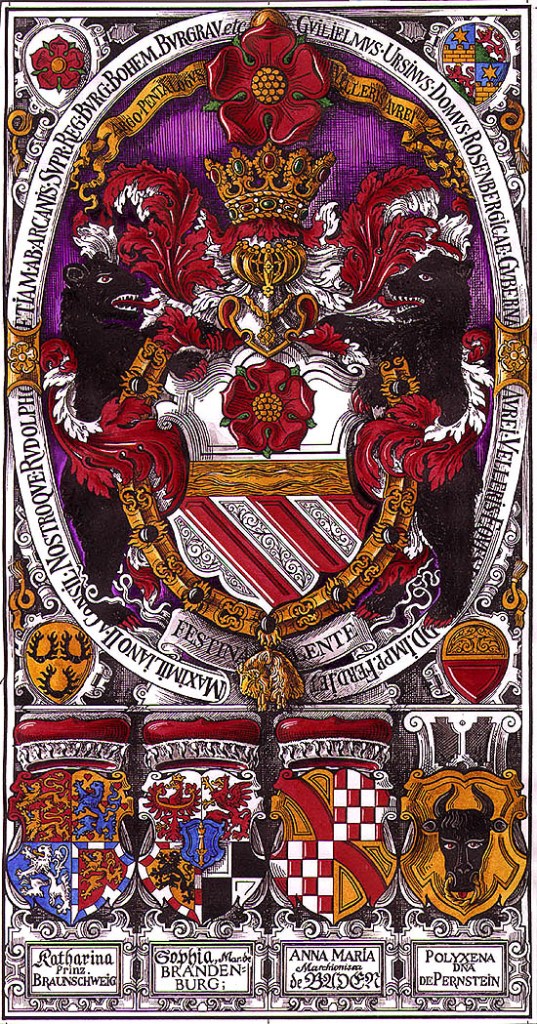
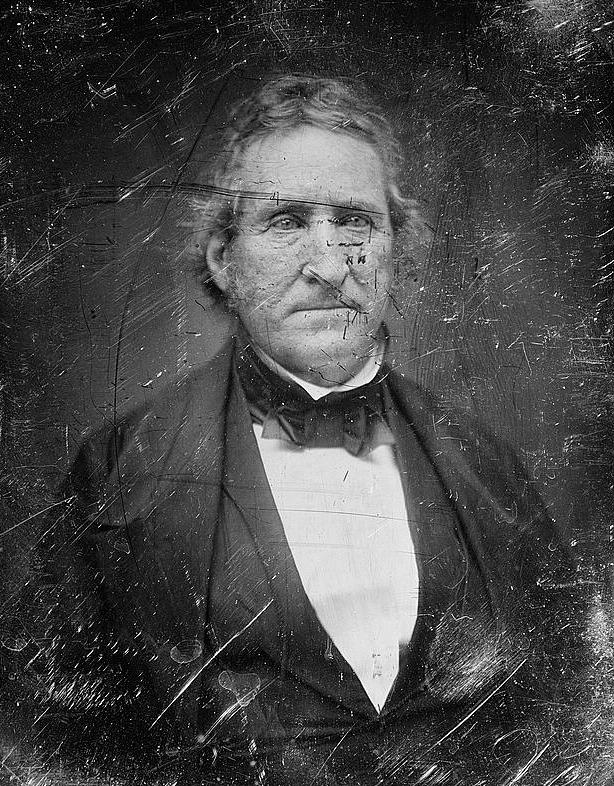


.png)


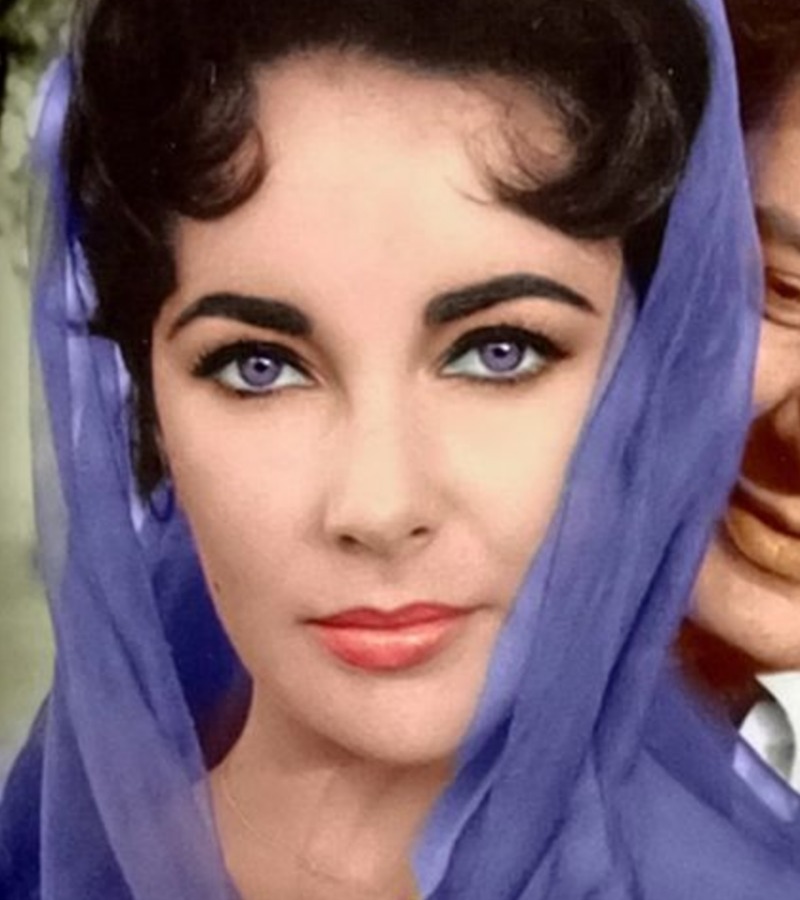

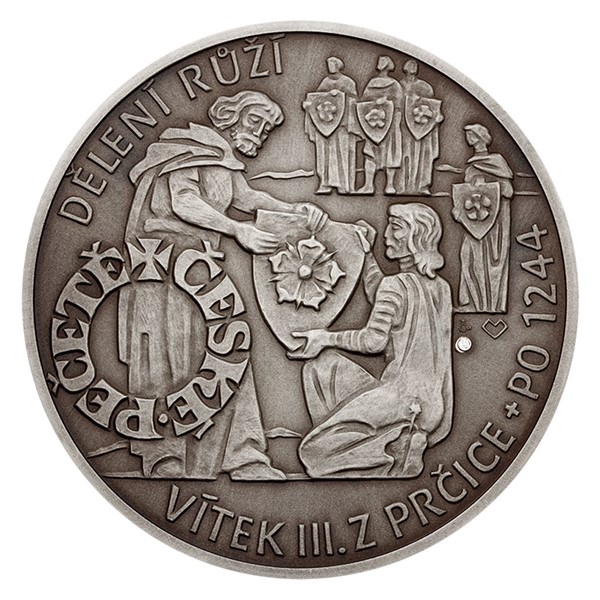

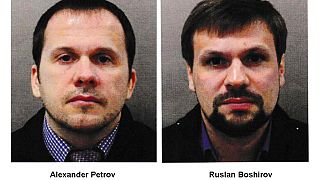










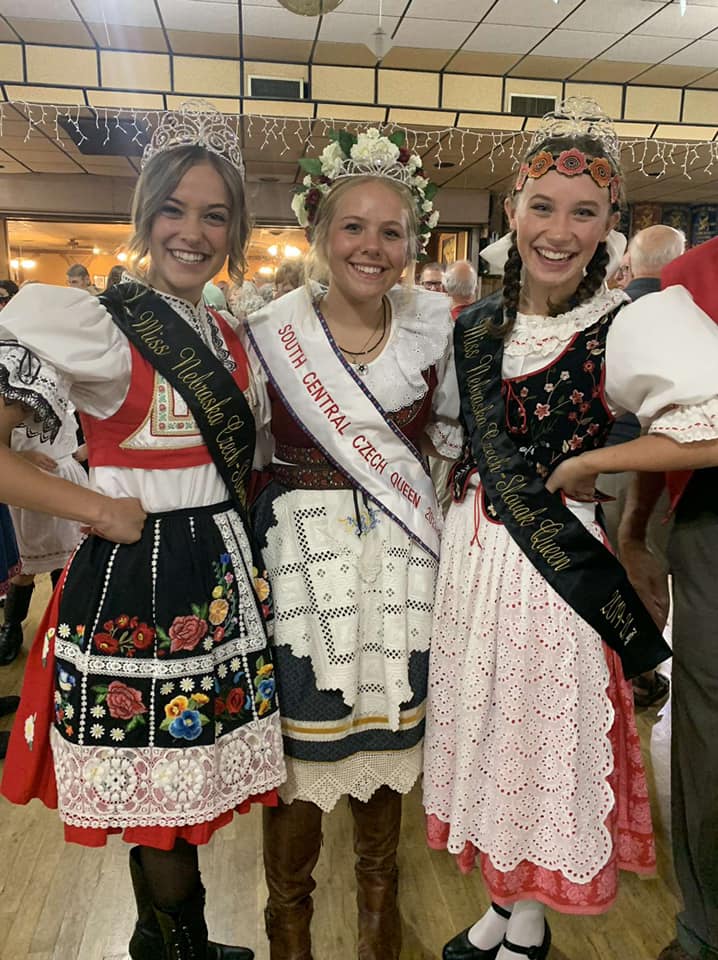


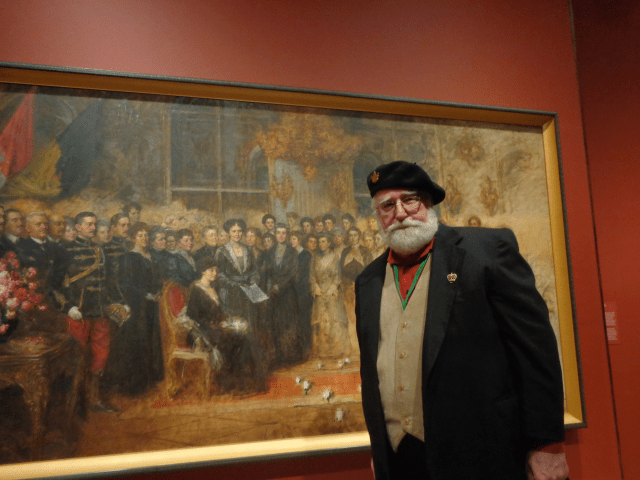

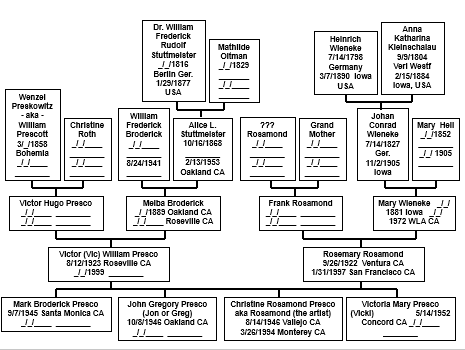
 Rosamond Press

.svg)


Leave a comment