On this day, March 18, 20025, I John Presco found ‘Caspar Armstrong Radio London’. I honor Sea Lord, Casper John, a close relative of Ian Fleming, who named his son after him. Herbert Armstrong broadcast aspects of his prophetic radio show from the Radio London ship, and other pirate ships he helped fund. Miriam Starfish is based upon Armstrong, and Victoria Bond, upon Casper.
On the day after Saint Patties day I believe I solved the riddle of the Red Hand of Ulster being on the Coat of Arms of James Bond. Fleming’s wife was married to Shane Edward Robert O’Neill, 3rd Baron O’Neill (1907–1944). They lived in Ulster. The Rosamond family were allegedly Ulster-Scots. In his “Hillbilly” book, ‘Bound In This Clay’, Royal Rosamond wrote he descends from Captain Isaac Hull. Did Fleming suffer from feelings of inadequacy in regards to he Peerage? In my next post I will begin to explain why peerage matters. I will show you Shane Castle. Shane is a form of John. I was good friends of two brothers who claimed they descended from Irish Kings via their mother, Elizabeth O’Neil. Was Fleming concerned he might be targeted by the IRA – and his wife?
On January 13, 2023 I found the James Bond News Service. A month ago I talked to an attorney about Jeff Besoz decreasing of my Family Brand, and exploitation of Family Myths, fictional and real. Both books of the Bible concern the Descendant of Jacob. As a Biblical Scholar I have found much fiction in both Holy Books. With the connection to the O’Neils of Ireland, we get the history of the Catholic and Protestant conflict in Ireland, that Victoria Rosemond Bond gets in the middle of in my Bond book, The Royal Janitor.
Our President just ended a ninety minute call with Putin. I am going to learn how to set up a podcast today. I will show the cultural contact Ben Toney and Herbert Armstrong had with Britain. Toney (Tosney) is related to Jane Rosamond Clifford.
John Presco
President: Royal Rosamond Press, and.The Bohemian Democrat Register. .
My grandfather, Royal Rosamond, wrote in one of his books that one of his grandfathers Captained the U.S.S. Constitution. All night long, my Sea Angel bid me to gather around me all the power others have take from me. Yesterday, I edited the wikipedia citation on Christine Rosamond Benton. I challenged the sentence saying – it was not the season for rogue waves! If you have been at sea, or, just stood at the shore, you should know there is no season for rogues waves. They can occur at anytime, and any place. According to a reader at the Berkeley Psychic Institute, I died at the edge of the sea in February of 1967. This morning, when I opened my eyes, a voice bid me to declare myself THE CAPTAIN OF THE USS. ENTERPRISE.
Rosamund de Clifford was probably born around 1140. She was the daughter of Walter de Clifford, a lord on the Welsh Marches, and his wife Margaret de Tosny. We know nothing of her childhood, she may have been educated at Godstow Abbey, but it is not certain; nor is when she actually met the king. The rest of her life is made of rumor and gossip.
Rosamund Clifford (before 1150 – c. 1176), often called “The Fair Rosamund” or the “Rose of the World”, was famed for her beauty and was a mistress of King Henry II of England, famous in English folklore.
Rosamund was the daughter of the marcher lord Walter de Clifford and his wife Margaret Isobel de Tosny (referred to as “de Toeni” on the Page of her husband, Walter de Clifford). Walter was originally known as Walter Fitz Richard, but his name was gradually changed to that of his major holding, first as steward, then as lord. This was Clifford Castle on the River Wye.
Rosamund had two sisters, Amice and Lucy. Amice married Osbern fitz Hugh of Richard’s Castle and Lucy Hugh de Say of Stokesay. She also had three brothers, Walter II de Clifford, Richard and Gilbert.
Rosamund probably first met the King when he passed by Clifford Castle in 1163 during one of his campaigns in Wales against Rhys ap Gruffydd.
Her name, Rosamund, may have been influenced by the Latin phrase rosa mundi, which means “rose of the world.”[1
On this day, Friday the 13th. 2023, I found…The James Bond News Service. On Friday the 13th. in the year 1307, members of the Knight Templars were arrested. They were accused of occult behavior.
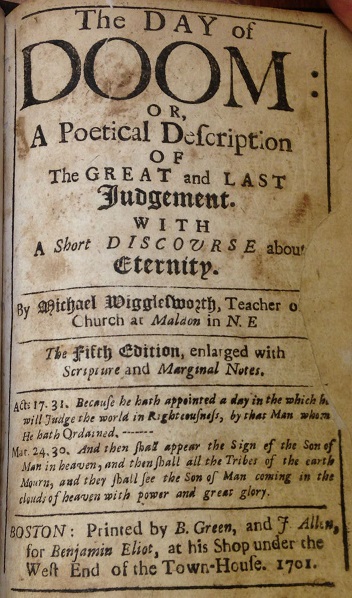
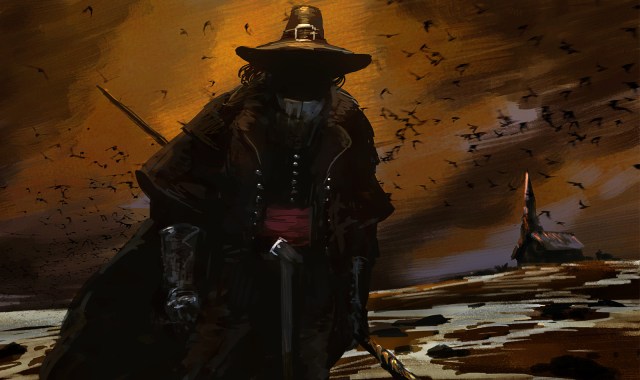
With the appointment of Special Councils to investigate the Top Secret papers the present and last president had in their possession, the world of Spy Craft is poised to permeate our consciousness. Add to this the appearance of the embodiment of Michal Wigglesworth, the Puritan that penned The Day of Doom, the head of BAD and members of The Poker Club, instructed Victoria Rosemond Bond to purchase a newspaper in Oregon.
At 1:47 on Friday the 13th, Victoria Bond met with John Presco in Springfield Oregon, and purchased his blog-newspaper ‘Royal Rosamond Press’.. Immediately she took out papers of Incorporation and founded ‘James Bond News Service’ a Anti-Doomsday newspaper whose Motto is
“Self-fulfilling Prophesies will be the death of me yet!”
As I type, Victoria Bond is carrying on the secret work of her grandfather – who loathed Doomsayers!
“They are the bane of mankind. They have been around – forever! It was they that put that serpent in the forbidden tree in Paradise!
I will publish the entire mission statement when Victoria is done.
John Ambrose: Editor of the James Bond News Service
“Exactly 50 years, right after the unification of Jerusalem, in February 1968, Prof. Benjamin Mazar, my grandfather, started archaeological excavations on behalf of the Hebrew University of Jerusalem right at the foot of the walls of that 2,000-year-old Temple Mount compound. At the end of that year, Mr. Herbert W. Armstrong, the founder of the Ambassador Cultural Foundation, became the most significant financial supporter of the excavations,” said Mazar.
Herbert W. Armstrong (left) and Prof. Benjamin Mazar present the Jerusalem excavations to the Japanese Ambassador. (courtesy)
Armstrong’s journey to becoming a Christian “cultural ambassador” is a tale in itself. Born in 1892 to a Quaker family in Iowa, he was an advertising man in Oregon before becoming a more observant Christian. Initially, he found truth through the Oregon Conference of the Church of God (Seventh Day) where he was ordained in 1931. With differences in theology, he quickly left that church, and in 1933, he began a popular radio devotional, which soon blossomed into the Radio Church of God in 1934.
A media genius, Armstrong began to produce free monthly prophetic publications, filled with his visions of this world and the world to come. At their peak they had a circulation of some 8 million copies and an estimated 20-30 million readership, according to Flurry.
Armstrong’s church evolved into the Worldwide Church of God in 1968, with a multi-campus seminary called Ambassador College, a popular television ministry that would make any evangelical star jealous, and later a humanitarian nonprofit called the Ambassador International Cultural Foundation, founded in 1975.
Above the Crests: INVITUM SEQUITUR HONOS(Honours follow us without seeking) Below the shield: LAMH DEARG EIRIN(The Red Hand of Ireland)
Baron O’Neill, of Shane’s Castle in the County of Antrim, is a title in the Peerage of the United Kingdom.[1] It was created in 1868 for the musical composer The ReverendWilliam O’Neill. Born William Chichester, he succeeded to the estates of his cousin John Bruce Richard O’Neill, 3rd Viscount O’Neill, in 1855 (on whose death the viscountcy and first barony of O’Neill became extinct) and assumed by royal licence the surname of O’Neill in lieu of Chichester in order to inherit the lands of his cousin, despite not being descended in the male line from an O’Neill.[2] The Chichesters trace their lineage to the name O’Neill through Mary Chichester, daughter of Henry O’Neill of Shane’s Castle. Lord O’Neill was the patrilineal great-great-great-grandson of John Chichester, younger brother of Arthur Chichester, 2nd Earl of Donegall.[3] The latter two were both nephews of Arthur Chichester, 1st Earl of Donegall, and grandsons of Edward Chichester, 1st Viscount Chichester (see the Marquess of Donegall for more information). Lord O’Neill was succeeded by his eldest son, the second Baron. He sat as a ConservativeMember of Parliament for Antrim.
His eldest son and heir apparent, the Hon. Arthur O’Neill, represented Antrim Mid in the House of Commons as a Conservative from 1910 until 1914, when he was killed in action during the First World War, the first MP to die in the conflict. The second Baron was therefore succeeded by his grandson, Shane O’Neill, 3rd Baron O’Neill (the son of the Hon. Arthur O’Neill). He was killed in action in Italy during the Second World War. The title is currently held by his son, the fourth Baron, who succeeded in 1944. He was Lord Lieutenant of Antrim from 1994 to 2008.
The holders of the O’Neill and Rathcavan baronies are in the remainder of the titles Earl of Donagall, Viscount Chichester and Baron Chichester, though the chances of that happening are very slim.
Ian Fleming may have been authoring Historic-Fiction. This is what I am about, thus, my characters are not purely characters. So much fact is applied to Fleming’s novels – after the fact – in a strange guessing game due to the main macho interest -that always results in gun play.
A video and poem Lara Roozemond posted, made me CHOOSE her. It was anti-gun. Her voice was so frail and feminine. She took it down because she chose to believe I am pretending to be a Billionaire Hot Shot that will give her money – to take her clothes off. I must be a jerk and fraud – because I have no money. It must be a trick? Did she own a prejudice against James Bond movies? What is James doing to those women is his flicks?
Here is my next painting of Lara as Fair Rosamond. She will have a gold chain with pearl on her forehead. She is not happy with King Henry Plantagenet. Want to guess – why? Henry may have a zoo at Woodstock, like the zoo his grandfather owned.
Lara Roozemond has PURPLE EYES like the eyes of Elizabeth Rosemond Taylor. The name Rosemond has been traced to Holland. If I had a billion dollars I would pay Miss Roozemond to take a DANA test, and pay to have Liz Taylors grave opened.
I have traced Lara Roozemond to Floris Roozemond-Roesmont. I have an Heir. This is a undiscovered branch of the Rosamond Tree. Three years ago I began a painting of Fair Rosamond. because I didn’t like any of the portraits I saw. The one by Rossetti, is terrible. Everyone around me was very disagreeable about me doing this. They are out of my life. Doing Lara’s portrait is the end of my autobiography ‘Capturing Beauty’. This has been a Knight’s Quest. Floris 111 is kin to King Henry 11. We are in the Labyrinth with the Rose of the World.
Lara’s poetry and complaint is the continuation of Samuel Daniel’s quest to immortalize Fair Rosamond, place his Muse amongst the great Muses. I held a copy of his work. That a male attempts to see the world thru a Beautiful Woman is the story and study behind the mask. To get the message direct this time, places Lara’s Complaint amongst the greats. Her fear of not being good enough – is epic! She can do no wrong in her Quest. For she was born a Rosamond, born to raise the bar, so men can be what they must be.
James Bond Fans have gone over every Bong Thing with a fine-tooth comb, and, can not answer the riddle of the Red Hand of Ulster being in the Bond cote of arms.
The Red Hand of Ulster, right and left hand versions
The Red Hand of Ulster (Irish: Lámh Dhearg Uladh) is an Irish symbol used in heraldry[1] to denote the Irish province of Ulster. It is an open hand coloured red, with the fingers pointing upwards, the thumb held parallel to the fingers, and the palm facing forward. It is usually shown as a right hand, but is sometimes a left hand, such as in the coats of arms of baronets.
In memory of my Friend, Ben Toney, and Herbert Armstrong who broadcast WARNINGS about the Russian Menace. I talked with my man, Spooky Noodles, to get Meg Whitman to put a replica of Radio London offshore of her property in Dogpatch – two years ago!
“He argued that Russia should retaliate quickly and not rush to accept Biden’s summit offer.
“Revenge is a dish best served cold,” Kosachev wrote. “I believe the saying is quite adaptable to a situation when we talk not about revenge but a due answer to aggressive action by an opponent.”
By Neil EarleRadio Caroline was the first of the offshore “pirate ships” beaming into Britain, though the idea had been tried off California and elsewhere in the 1930’s.
(Jingle) “Radio London reminds you: Go to the Church of your choice.”
(Pause)
(Announce, loudly): “THE WORLD TOMORROW! Garner Ted Armstrong brings you the plain truth about today’s world news with the prophecies of the World Tomorrow!
(GTA): “And greetings friends, this is Garner Ted Armstrong with the good news of the World Tomorrow. World leaders admit that they are frightened, that they are engaged in a fantastic nightmare. They’re scared. They don’t know what to do. They’re wondering what is going to happen in the future and none of them really know.”
This was a typical opener for a “World Tomorrow” radio show beaming down on millions of Englishman in the Greater London area between late 1964 and August 15, 1967. This period is now somewhat notable in British broadcasting circles as the heyday of the Pirate Ships. A fascinating tale, this, of how the Armstrongs, Herbert and Garner Ted (successful radio evangelists based in America) ended up in a curious roundelay involving Her Majesty’s government in London, the BBC, some of Britain’s elite publications and a host of over-the-top radio personalities – some of whom ended up as legends of British popular culture.
The genius behind the pirate ship idea was the offshore positioning of creaky vessels and the occupation of abandoned World War Two-era sea forts as staging platforms to beam in the music millions in “swinging England” craved. As covered earlier, Radio Luxembourg had represented the first crack in the British Broadcasting Corporation’s (BBC) exclusive monopoly over radio broadcasting in Britain. But on March 28, 1964, from a 763-ton vessel propelled by a 1,000 h.p. diesel engine off England’s southeast coast came the jived up sounds of Radio Caroline, broadcasting on 199 metres. Radio Caroline was the first of the offshore “pirate ships” beaming into Britain, though the idea had been tried off California and elsewhere in the 1930’s. 1
Mean men lament, great men do rent their Robes, and tear their hair: They do not spare their flesh to tear through horrible despair. All Kindreds wail: all hearts do fail: horror the world doth fill With weeping eyes, and loud out-cries, yet knows not how to kill.
In vain do they to Mountains say, fall on us and us hide From Judges ire, more hot than fire, for who may it abide? No hiding place can from his Face sinners at all conceal, Whose flaming Eye hid things doth ‘spy and darkest things reveal.
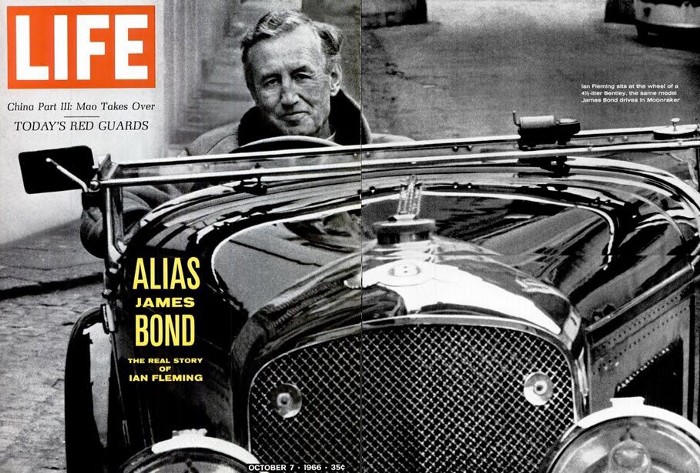
Writer Ian Fleming queried Hitler’s intentions in this 1938 letter to The Times. A year later, he joined as a special correspondent before working for Naval Intelligence during the war. It wasn’t until 1952 that he brought James Bond to life in Casino Royale, creating an iconic character.
September 28, 1938
To the editor of The Times
Sir, -Since the immediate future of Europe appears to depend largely on Herr Hitler’s intentions, it is most important that we should have a clear knowledge of exactly what those intentions are. The present crisis has shown that to be forewarned is not necessarily to be forearmed, but it may be argued that forearming did not appear necessary when the warning was so incredible. Doubts are dispelled, and it may now be of interest to your readers to learn that exact details of the National-Socialist Party Programme as circularized to members of the party and others on February 24 1920, four years before “Mein Kampf” was written.
The original 25 points were issued from Munich in the form of a circular which is now extremely rare. I know of only one other copy, in the Nazi archives at the Brown House.
This is a literal translation, from an original copy in m possession, of the preamble and the first three points:-
“The Programme of the German Workers’ Party is a ‘Time-Programme’ (Zeit-Program). The Leaders will abstain from setting up new goals, after the attainment of the goals set out in the Programme, with the sole object of permitting the continued existence of the Party by artificially stimulating the appetite of the Masses.
We demand the union of all Germans within the Greater-Germany on the grounds of the right of peoples to self-determination.
We demand equality of rights for the German people vis-a-vis other nations, and repeal of the Peace Treaties of Versailles an dSt. Germain.
We demand land and soil (colonies) for the feeding of our people and the emigration of our surplus population.
The remaining 22 points deal with racial questions and other internal matters, and, although they do not concern the purpose of this letter, it is remarkable with what minute fidelity each of these 22 points has been adhered to. One might say with justice that only the above three points remain to be carried out to the letter.
If we finally agree, then, that Herr Hitler means what he says, we must also be clear in our minds whether there is anything in the above three points which runs contrary to England’s interests, and, if so, whether we are prepared to shed Europe’s blood and our own in preventing their attainment. A possible answer would be that we have no great objection to Germany regaining her pre-War strength so long as we can be sure that she will not use that strength as she did in 1914, or, in other words, that those three points represent the absolute limit of Germany’s territorial ambition.
It would therefore seem that there will be no peace, no return of prosperity, and no happiness in Europe until and England and France agree to the fulfilment of Herr Hitler’s stated programme in exchange for a binding disarmament pact, and the guarantee of the traditional protective alliances of the signatory Powers.
If and when Herr Hitler refuses a settlement on these lines – if, that is to say, it is made clear that Germany already aims once again at world domination by aggression – then it will be time to organize this country on a wartime basis and announce to Germany that we shall fight at the final act of aggression against our fundamental treaty of obligations.
Above all, should it be necessary to make this announcement, we must hope that the basic issues will be made crystal clear to the world in the immediate future. The policy of keeping our hands free in Europe has confused the German nation and bewildered our own. Moral issues must be disentangled from the instinct of self-preservation, and we must state what we would fight for and why.
Many people must hope that Mr. Chamberlain will finally deal fully with this broader aspect of the present crisis when he addresses Parliament, as it is to be presumed that it has been fully discussed in his talks with Herr Hitler. I personally hope that if he does not obtain the settlement I have outlined above he will, at any rate, put before Herr Hitler the concrete alternative I mention.
When it is certain that he has done neither then it will be time to turn a reluctant ear either to the dangerous counsels of the slaughter-house brigade or to the bemused vapourings of those who long for the day when England is another Holland and out of the fight for ever.
Yours faithfully, Ian L. Fleming 22b, Ebury Street SW1
Regardless of what circumstances contributed to Hess’s devotion to the idea of coming alone to England, his actions resulted in a failed attempt at contacting supposed Anglo-German Nazi sympathizers, and after crash landing his plane in Scotland, he was captured, interrogated, and later imprisoned.
This is one half of the story, at least. The rest deals with an odd set of circumstances being enacted by the British Royal Navy during this same critical period, in which spies, secret agents, and even some degree of sorcerery had been attempted… all in the effort to secure victory against the Hitler and the Third Reich.
The Secret Agent
Interestingly, word that Hess would attempt his epic solo-flight had, according to some sources, already reached British intelligence agents in England. On the particular afternoon in question, a peculiar memo had appeared in the hands of a young Commander in the British Royal Navy, having arrived from an inside source within Germany. “Now this is what Hess proposes to do,” the message read. “He wants to fly to England alone.” The man pouring over this intriguing message had been none other than thirty-two-year-old Ian Lancaster Fleming, who later would author the famous novels of spies and adventure featuring secret agent 007, otherwise known as James Bond.
British writer Donald McCormick, who worked alongside Fleming at the foreign desk of the Sunday Times and later penned one of his biographies, maintained that Fleming’s inside contact had been a peculiar—and perhaps even enigmatic woman named Vanessa Hoffman. McCormick claimed he was briefed about the situation by Fleming later on, but was allegedly urged, “not to breathe a word of it” while Fleming was still alive. Fleming met Hoffman in Germany prior to the War, and with her knowledge of obscure social circles and a penchant for gathering information, she continued to serve as a conduit for leaks filtered to Fleming by spies and various informants infiltrating the Reich. Hoffman, though well connected, was no spy however; “Bill Findearth”, later revealed to be an intelligence agent named William Otto Lucas, had been the insider that brought her word that Hess was becoming restless. Networking with an anti-fascist network in Switzerland, as well as a handful of “moles” directly within the Gestapo, Lucas had obtained word that Hess might possess noble aspirations to enter peace talks, and had thus passed this information along to Hoffman.
According to McCormick and others, several of the War’s most sensitive details at the time were said to be obtained through this secretive chain of command, complete with an intelligence informant to the United States named Helga Stultz who worked in a room adjacent to Hitler’s office at the Berghof, his home in the Swiss Alps. Through his various information sources, William Lucas had managed to gather obscure bits of information, which eventually began to outline a rather bold idea; British Intelligence might be capable of exploiting, of all things, the strange occult interests that the Nazis appeared to maintain with such gusto.
It was already known in various intelligence circles that the Nazis may have had a strong penchant for occult sciences such as astrology, as well as secret societies that emphasized aspects of pagan ritual. Such strange bits of “crypto-history” caused a surge in interest in the subject of Nazi occultism within the decades that followed the war, with such books as Pauwels and Bergier’s The Morning of the Magicians hitting the bookstore shelves by 1960. But during the actual years of conflict, few intelligence bodies among the Allies had seemed to give much serious thought to the idea that the Nazis might be manipulated in some way by cashing in on their occult fascinations.
Ian Fleming — A Life
Journalist, Wartime Intelligence Officer & The Creator of James Bond
Ian Fleming may be dead but his famous literary creation, James Bond, continues to live a full and active life, either between the covers of books, which include the 14 original novels by Fleming (which some years ago received the accolade of becoming Penguin Modern Classics), the 22 continuation novels by such distinguished writers as Kingsley Amis, John Gardner (who had already created his own hilarious secret agent, Boysie Oakes), and the Texan born writer, Raymond Benson (the author of The James Bond Bedside Companion, and the founder and Director of the Ian Fleming Foundation), plus the 7 novelizations of screenplays, mostly written by Gardner and Benson, with two early ones by Christopher Wood (who later wrote a couple of Bond screenplays). Some recent additions to this extensive publishing list are The Moneypenny Diaries, written by Dr Kate Westbrook (AKA Samantha Weinberg),and the superb “Young Bond” series of novels written by Charlie Higson. More recently, two new novels by Anthony Horowitz, Trigger Mortis, and Forever and a Day, and William Boyd’s Solo.
Apart from the books (and I haven’t even mentioned the spoof biographies of Bond, and the many biographies of Fleming) there are the ever growing number of Bond DVDs (the original videos are now very collectible) and the continuing recreation of Bond on the cinema screen, with the latest film, No Time To Die, a huge success. But perhaps it’s time to remind ourselves who Ian Fleming was.
R Type Bentley Continental
Almost exactly twenty-four hours before, James Bond had been nursing his car, the old Continental Bentley — the ‘R’ type chassis with the big 6 engine and 13:40 back-axle ratio — that he had now been driving for three years, along the fast but dull stretch of the N.1 between Abbeville and Montreuil that takes the English tourist back to his country via Silver City Airways from Le Tourquet or by ferry from Boulogne or Calais. He was hurrying safely, at between eighty and ninety, driving by the automatic pilot that is built in to all rally-class drivers, and his mind was totally occupied with drafting his letter of resignation from the Secret Service…
The above is the opening paragraph of chapter two of Ian Fleming’s 1963 James Bond novel, On Her Majesty’s Secret Service, which is a superb example of Fleming’s hard writing style that encapsulates, in less than one hundred and twenty words, what a James Bond novel is all about: fast cars (and the distinction between himself and, in this case, the average ‘tourist’), which are invariably described in the same matter of fact way Fleming often describes his women, who are, of course, another vital part of any Bond novel. It also tells us, at the very end, that Bond works for the Secret Service, which is a reference that immediately suggests to us, the reader, adventure, intrigue and danger, and not least the possibility of violent death. But it is also a piece of writing, the style of which has its origins not in spy thrillers, but in the ability and requirement to write short, pithy, and accurate intelligence reports and directives; something for which Fleming was renowned in the years he spent as a naval intelligence officer during World War II.
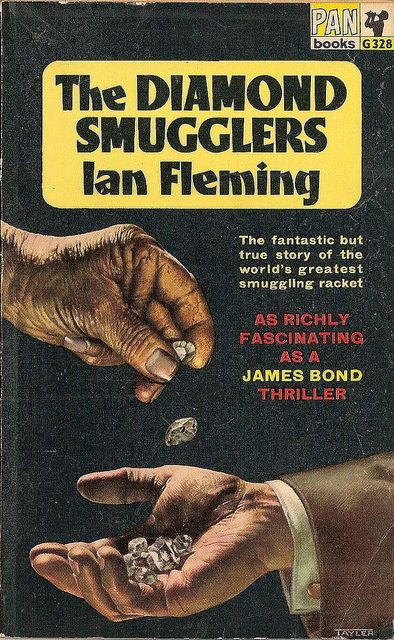
Fleming also wrote a couple of hugely popular non-fiction books, with the first, The Diamond Smugglers, published in 1957, an amazing literary investigation into the post war diamond smuggling that went on between South Africa and Europe and tells at break-neck speed the story of a secret agent who penetrated the highly organized, and very dangerous, smuggling gangs. It reads today more like an early Frederick Forsyth novel than it does a Fleming and proves that the creator of 007 was a writer of immense journalistic skill. His next, Thrilling Cities, published in1963, is a travel book that is a world tour that takes us from London to New York, then, via Chicago, to Berlin and Vienna, and all points east. If you want to rediscover that vanished world of the late 1950s and early1960s — the world in which James Bond moved —and you can find a copy, it’s worth a read.
Chitty Chitty Bang Bang Source: thefix.com
Of course most people will have heard of Chitty Chitty Bang Bang, and if they haven’t read Fleming’s original novel, published in 1964, they will probably have seen Ken Hughes’ 1968 musical film version (with songs by Richard and Robert Sherman), that has an inventive and amusing screenplay by Roald Dahl and Ken Hughes, with additional dialogue by the New York born screenwriter, Richard Maibaum, who has also been responsible for eight Bond screenplays.
Chitty Chitty Bang Bang starred a wholly implausible Dick Van Dyke as the crazy inventor, Caractacus Potts, with the younger Lionel Jeffries playing his grandfather. And many of those who have read the novel, and seen the film, might also have enjoyed Jeremy Sams’ stage adaptation of 2002 — directed by former RSC artistic director — Adrian Nobel, which ran for many years.
Read the novel now and it soon becomes apparent that Fleming created, in the magical flying car, a kind of automotive James Bond (which is appropriate given Bond’s love of motor cars) who, with the help of Caractacus Potts (undoubtedly “Q”) and Truly Scrumptious (a not untypical Bond girl) they go after big time baddies Joe the Monster, Man-Mountain Frank, and Soapy Sam, who are dead-ringers for Ernst Stavro Blofeld, Hugo Drax, and Auric Goldfinger. Like the Bond novels it is a tough and simply written piece of work that, again like the Bonds, and Fleming himself, has many literary and psychological layers.
Ian Lancaster Fleming was born at 7 Green Street, Mayfair, London, on May 28th 1908. His father was the wealthy Scottish banker, Valentine Fleming, and his mother the beautiful socialite, Evelyn St. Croix Rose Fleming. Ian’s brother, the travel writer Peter Fleming, had been born a year earlier, and two younger brothers, Richard and Michael, came in quick succession after Ian. In 1910 Valentine Fleming was elected MP for South Oxfordshire and moved his growing family to a much larger house on Hampstead Heath.
Valentine Fleming. Image: pinterest
Ian’s first boarding school was Durnford, near Swanage, followed by Eton College (James Bond’s college, of course, where the headmaster asks, according to Charlie Higson, for his new student’s name, to receive the inevitable, and famous, reply); this was followed by Fettes College (where Ian seems to have spent most of his time reading thrillers by Sapper and John Buchan) and Sandhurst Military Academy.
With the outbreak of the First World War Valentine Fleming joined the Oxfordshire Yoemanry and fought bravely in France (he was promoted to major in the field) dying in action on the 20th May 1917. He received a posthumous DSO and an obituary in The Times written by his old friend and wartime comrade, Winston Churchill, a copy of which Ian kept framed on his desk for the rest of his life.
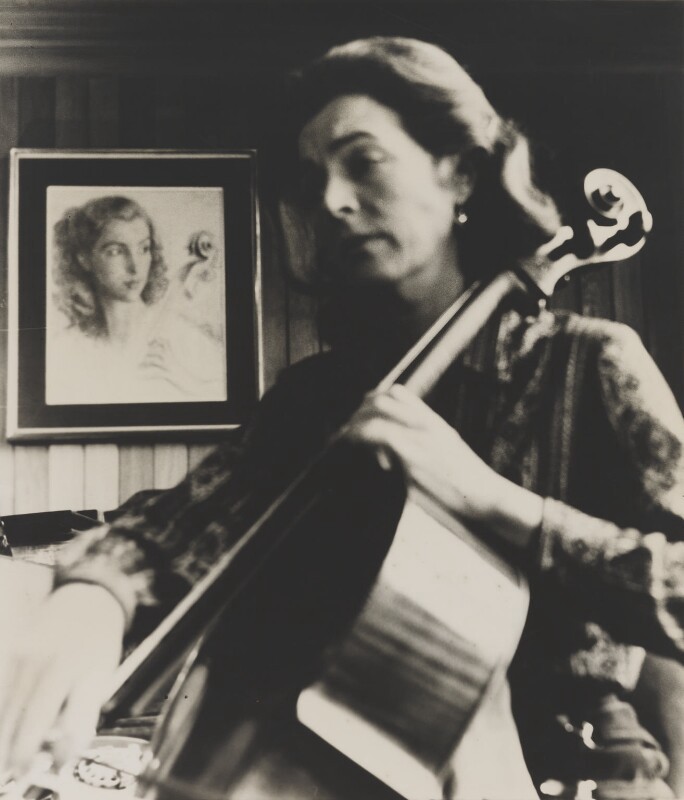
Ian’s mother inherited her husband’s substantial estate but only with the proviso that she did not re-marry, which made it inevitable that she would, in John Cork’s words, “…remain forever Valentine’s widow.” What it also meant was that Evelyn took several lovers, one of whom was the painter Augustus John, the result of which was the birth, in 1925, of their daughter, Amaryllis Fleming, who went on to become a world renowned cellist (she doubled for Bette Davis in the 1970 film Connecting Rooms, where Davis plays the part of a cellist) dying in 1999. Amaryllis was also a great inspiration for many of her half brother’s female characters, most especially the beautiful Judy in the short story ‘For Your Eyes Only’.
Amaryllis Fleming. Image: Rosamond Press
After Sandhurst Ian Fleming moved to the Continent to study languages at Kitzbühel in Austria, and then Munich University, followed by a stint at Geneva University. After finishing his studies, and failing his entrance exams for the Foreign Office, he managed to get a job as a journalist with Reuters where he especially enjoyed covering several espionage trials in Russia. On his return to London he gave up journalism to become a stockbroker. Then, in 1939, everything changed.
Early in 1939 Fleming returned to Russia as a journalist with The Times to cover and report on a British trade mission. What he was actually doing was spying for the Foreign Office. In fact it seems that ever since failing his entrance exam for the FO he had been working for them as a spy, indeed his failure to gain an official position with them may have been a cover for his espionage work.
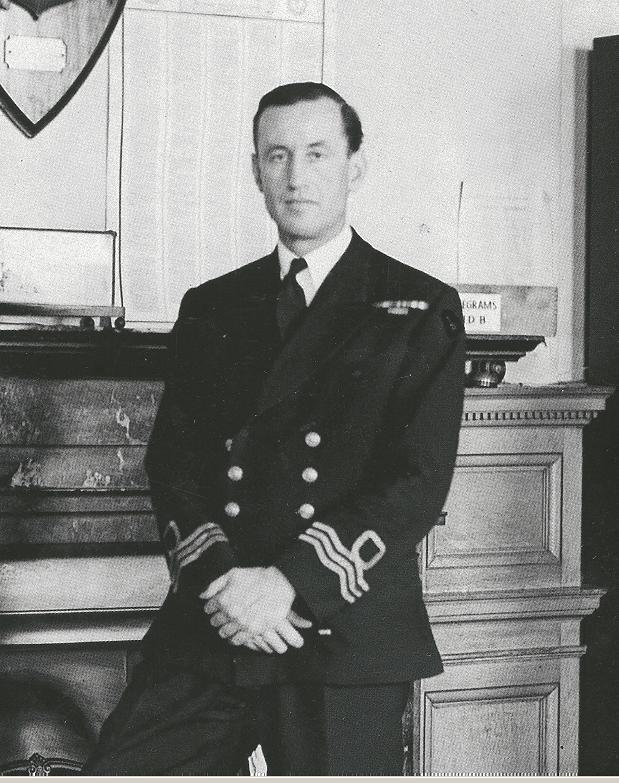
In May 1939, with the threat of war growing daily, Fleming became formally attached to Britain’s intelligence services and began working with Naval Intelligence, taking the rank of Lieutenant (RNVR). With the outbreak of war in September Fleming took on the rank of Commander (Bond’s rank) and became the Personal Assistant to Rear Admiral John Godfrey, Director of Naval Intelligence in Room 39 of The Admiralty, where Fleming was given the personal code number of 17F, and a desk in front of the glass door that led to Godfrey’s office overlooking Horse Guards Parade.
Commander Fleming. Source: Diletant.media
Fleming made his presence felt immediately and became a major influence on the future wartime work of Naval Intelligence. His energy and inventiveness knew no bounds, with plans and ideas to wrong-foot and deceive the enemy flying from his typewriter like sparks.
In 1940 he was sent to a France that was on the brink of collapse to organise the escape of troops and intelligence operatives from Dieppe. He spent his last evening in the town eating and drinking at a local restaurant that became one of his favourites after the war. One of the last people he managed to get out of France before the German’s marched into the port was the infamous King Zog of Albania.
In an article for The Ian Fleming Foundation, screenwriter John Cork outlines Fleming’s invaluable contribution to Naval Intelligence and the so called ‘Fleming Flair’:
“ The ‘Fleming Flair’ proved to be his greatest strength in Naval Intelligence. He dined at Scott’s, White’s, the Dorchester, plotted intelligence operations, many of which were absurd, and many of which proved ingenious. Yet, Fleming understood the business side of the war. He understood his practical job, and the tight constraints of man-power, money and supplies. He did not take his assignments lightly, always gravely aware of the real human risks involved…The ‘ Fleming Flair’… also proved valuable in one other respect: writing. As assistant to Admiral Godfrey, Fleming wrote countless memos and reports. His style and elegant arguments, plus his seemingly limitless knowledge of his subjects made the usual dry missives a pleasure to read. Eventually, Fleming wrote memos to William ‘Wild Bill’ Donovan on how to set up the OSS, forerunner to the CIA. For that bit of work, Fleming received a revolver engraved with the thanks: ‘For Special Services.’ ”
In 1942 Fleming helped set up 30 Assault Unit (based on the German Intelligence Commando Units) that was made up of men from the Army, Royal Navy and Royal Air Force, whose purpose it was to accompany regular commandos on raids behind the enemy lines, with the aim of obtaining as much intelligence as possible, including new weaponry, cyphers, and occasionally prisoners. Fleming planned the operations and saw the men off personally, having to remain desk-bound himself. Thirty AU were effectively Fleming’s private army and they proved highly effective throughout the war.
Fleming was not always desk bound, with missions undertaken to France, Spain, North Africa, Ceylon, Australia, Cairo, Tehran, and late in the war Jamaica, an island that captivated him and where he later made a home. On one such visit to Gibraltar he conceived Operation Golden Eye, which was a plan to defend Gibraltar should the German’s mount an invasion through Spain.
Fleming also accompanied Admiral Godrey to Washington where he met the head of the FBI, J. Edgar Hoover, and a little later, in New York, the Canadian, William Stephenson, who had joined the British Secret Intelligence Services (SIS, which includes MI5 and MI6) in 1940. Stephenson was then sent to New York to head the British Security Coordination, where he worked closely with the aforementioned William Donovan in setting-up the OSS, an organisation J. Edgar Hoover distrusted and tried desperately to close down.
There can be no doubt that Ian Fleming was, at that time, a very important and large cog in the intelligence wheel, who was not only at the heart of British Intelligence but in at the birth of the US Intelligence Services that would culminate, in1947, with the creation, by President Truman, of the CIA. Throughout the Bond novels there is a deep respect for the CIA, plus a bit of leg pulling, with the character of CIA agent, Felix Leiter, wholly sympathetic and likeable.
After the war Fleming headed for Jamaica were he bought a run down property, designed a new house which, when complete, he called Goldeneye in honour of his days at Naval Intelligence. There was no hot water, or glass in the windows, and it was considered by many who went there as extremely uncomfortable; but Fleming loved it and spent most winters there swimming, entertaining his lovers and such literary worthies as Noel Coward, Eric Ambler (who was a great influence on Fleming as a writer), Patrick Leigh-Fermor (writer and wartime intelligence officer), and that great editor and writer, Cyril Connolly. It is not difficult for us to see Fleming enjoying the life of a wealthy bachelor with a taste for fine wines, fast cars, and hand made cigarettes — the very prototype of James Bond.
Only in 1952, when his married mistress, Lady Anne Rothermere, became pregnant by Fleming did he, aged 44, decide at last to settle down. And as he waited in his island paradise for Anne’s divorce to come through back in London he started to write what became James Bond’s debut novel, Casino Royale.
This first Bond novel was like nothing else on the bookshop shelves and was soon being criticised for its sex and violence, with the latter still quite hard hitting (literally) today. There had been spy novels before, with Sapper’s Bulldog Drummond (although not strictly a spy) perhaps the nearest equivalent to Bond.
The plot of the novel is simplicity itself (always the hallmark of a Bond adventure) with Bond sent to a casino in Royale-les-Eaux, in Northern France, to disgrace the deadly Soviet agent, Le Chiffre, by ruining him at the tables and forcing his Soviet spy masters to ‘retire’ him. Naturally things don’t initially go to plan, with the beautiful Vesper Lynd leading Bond into increasing amounts of danger. Bond wins out in the end of course. As a spy thriller it works superbly well and set the blueprint for all, and every, spy thriller that followed. It would not be going too far to say that Ian Fleming, with that single novel, changed popular culture forever, as John Buchan had years before with The Thirty-Nine Steps.
Casino Royale was published by Jonathan Cape in 1953, with the dust jacket designed by Fleming himself, which is, in the words of editor Crispin Jackson, “… a curious concoction…[with a]…Wedgewood blue background, decorated with nine bleeding hearts and a ghostly white wreath bearing the motto: ‘A whisper of love, A whisper of hate.’ ” It is indeed a strange cover, and if you come across that cover, and a first edition of the book inside it today, and it’s in good condition, you might have to pay around £10,000 to £12,000 for it. If you come across it in fine condition you’ll need to stump up anything between £15,000 to £20,000! Even a first paperback edition of that novel, in fine condition, will set you back a couple of thousand pounds.
When, as a young teenager, I first started buying James Bond novels back in the 1950s I would order them from W.H. Smiths to ensure I got a first edition, with each one costing, if I remember correctly, sixteen shillings. And by then they had those superb covers by Richard Chopping, and its hard to describe the sheer joy of collecting my new James Bond novel and spending my hard earned newspaper delivery money. I sold them all many years ago with each one fetching around £50 to £100. Of course the prices went through the roof the minute I’d sold mine.
After Casino Royale came Live and Let Die (1954), followed by Moonraker(1955) and Diamonds are Forever(1956), then From Russia with Love(1957), Dr No(1958), Goldfinger(1959), For Your Eyes Only(1960), Thunderball(1961), The Spy Who Loved Me (1962)(where Bond only appears in the last quarter of the book), On Her Majesty’s Secret Service(1963) (my favourite), You Only Live Twice(1964), The Man with the Golden Gun (1965), and Octopussy/The Living Daylights (1966).
Image: mansfinelife.com
Throughout the 1950s Fleming continued to write for The Times. But by the end of that decade he was a publishing phenomena, and by the early 1960s, with the first Bond film, Dr No, in the can, he was an international celebrity. But the good life of rich food, fine wines, and cigarettes, was catching up with him and in 1964, having suffered a dreadful chest cold, and later pleurisy, he attended, against his doctors orders, his mother’s funeral. The ordeal brought him to an emotional low point and he never really regained his health. On the night of August 11th 1964 he suffered a heart attack and began to bleed to death internally. In the early hours of August 12th he died, aged 56.
His wife, Anne, died in 1981, and their only son, Casper, died from a drug overdose in 1975. All three are buried together in Sevenhampton.
Ian Fleming left a legacy of steadfast service to his country and fourteen famous books that have weathered the test of time and are undoubtedly worthy of classic status, Penguin or otherwise.
Source: Curbside Classics
Acknowledgements to John Pearson’s — The Life of Ian Fleming; Andrew Lycett’s — Ian Fleming: The man who created James Bond 007; Keith Jeffry’s — MI6; Book & Magazine Collector; Ben Macintyre’s — Cross and Double Cross & A Spy Among Friends; The entire works of Ian Fleming; Andrew Roberts — The Storm of War: A New History of the Second World War…
Sir Francis Drake may have landed on Oregon and named it New Albion. If I had become Governor of Oregon, I was going to offer Harry and Meghan a title….Lord and Lady Mountbatten. Harry’s grandmother grabbed the name Mountbatten to shore up the name Windsor for her German husband. Now King Charles is not going to give Harry, and his American wife – any titles! That king needs to get out of the block – and in the race! Meghan needs to be educated – on every level! I volunteer to be her teacher in the New Cyber Chess Game. Winston Churchill and President Roosevelt did not have time to establish The Rules. FDR died after the Hands across the Water Unity was completed.
“After five hours of research, I found this alternative history site that came to the same conclusions that I did, but, did not know Harry would remove his family from the influence of the Windsor’s. Harry carries the DNA of the Romanovs. We are talking about a Russian Romanov Kingdom in California. Alexandra of Prussia was married to Nicholas 1. Was she the source of the Prussian plan to purchase Alta Norte, Northern California? How much land was offered to Sutter that he could not afford?
With Great Britain leading a united force against Putin. I can come to the end of our amazing story, that Rena did not know about. She is the Muse of the Ages.
Caspar John is in my rosy family tree. He was a Sea Lord, and half-brother of Poppet Pol (John) There is no doubt that Rena’s late husband, Commander Sir Ian Easton, and John, knew each other. Tabitha Getty is Caspar’s second-niece. She was a Bohemian fashion model, and step-mother of John Paul, who was abducted. John is the subject of a movie and television series titled ‘Trust’. Why are these knighted men marrying beautiful American women? May I dare wonder?
Rena was the muse of my late, Christine Rosamond, and I. This is the love story of our time. The children born at the end of the World War were given a special mission. Rena and I were destined to meet – and part – so our spirits can rescue Britain from her enemies. Britannia rules the waves! Like Phoenix Birds…………..We will rise from the ashes?
“We now come to the History of Jon. Jon, Jôn, Jhon, Jan, are all the same name, though the pronunciation varies, as the seamen like to shorten everything to be able to make it easier to call. Jon—that is, “Given”—was a sea-king, born at Alberga.”
King Henry the second claims he descends from Trojans. I have compared Rena to Helen of Troy – and the goddess, Britannia! I began a painting of her as Fair Rosamond, who captured Henry’s heart. This King of England placed her in a Labyrinth. I can not yet reveal what the movie ‘The Shape of Water’ revealed to me. It has much to do with Pharamond, the King of Franks.
I am going to contact Boyle and send him a movie script ‘Capturing Beauty’. If he won’t produce it, I will send it to de Toro.
Everyone wants to overlook the truth that I rescued Rena in the City of Venice, by the sea. At the premiure of OUR MOVIE, we will unite. When she comes down the isle, the audience will stand as one, and sing: for the world is saved by many means, but, it is the love the artist has for his muse, that forever gets our special attention. This is what we come back for, again, and again.
The Muses, still with freedom found, Shall to thy happy coasts repair. Blest isle! with matchless beauty crowned, And manly hearts to guard the fair.
A Russian lawmaker made an outlandish demand over the weekend that the United States return Alaska and a historic settlement in California, in addition to paying reparations to Russia over crippling American-led sanctions that have put Moscow’s economy in a tailspin.
Oleg Matveychev, a member of the state Duma, outlined on Russian state television a set of demands for the U.S. and Ukraine after Kiv’s “demilitarization is completed,” the Express newspaper in the United Kingdom reported.
The demands include the return of Alaska, which the U.S. purchased from the Russian Empire in 1867 as part of the Alaska Purchase, and the former Russian settlement of Fort Ross, California, 90 miles north of San Francisco.
The Kremlin’s spin doctor is demanding the US return Alaska and pay Russia reparations due to the White House’s crippling sanctions imposed in the wake of Russian President Vladimir Putin’s invasion of Ukraine.
Parliament member Oleg Matveychev, who often speaks on behalf of top government officials, made the outlandish demands on Sunday while on Russian state TV, according to the Daily Mail.
“We should be thinking about reparations from the damage that was caused by the sanctions and the war itself, because that too costs money and we should get it back,” Matveychev said — even though Russia was the country that started the war.
Russian parliament member Oleg Matveychev called for reparations from the US and a return of Alaska in response to sanctions imposed on Russia due to its invasion of Ukraine.Youtube/Oleg Matveychev
Matveychev then said he wants “the return of all Russian properties, those of the Russian empire, the Soviet Union and current Russia, which has been seized in the United States, and so on.”
That includes Alaska and even Fort Ross, California, a small area in Sonoma County that was at one point the Russian Empire’s southernmost outpost in North America and was sold off in 1841.
Among the Russian properties Kremlin spin doctor Oleg Matveychev wants returned is Fort Ross, California a small town in Sonoma County.Getty Images
The Doma member also said his demand includes the Antarctic.
“We discovered it, so it belongs to us,” he said, according to the Daily Mail.
John Sutter did not complete the payment to the Russians for Fort Ross, and thus I claim it in the name of Harry and Meaghen Markel. This land discovered by a Russian explorer, was called New Albion, as was the land Sir Francis Drake discovered and claimed in the name of Queen Elizabeth.
After five hours of research, I found this alternative history site that came to the same conclusions that I did, but, did not know Harry would remove his family from the influence of the Windsor’s. Harry carries the DNA of the Romanovs. We are talking about a Russian Romanov Kingdom in California. Alexandra of Prussia was married to Nicholas 1. Was she the source of the Prussian plan to purchase Alta Norte, Northern California? How much land was offered to Sutter that he could not afford?
The name of Lord Mountbatten will forever be found in the California Birth Records. Lilibet Diana Mountbatten-Windsor is an entity unto herself. She can come and go as she please when she reaches the age of eighteen. At sixteen, she will traditionally rebel against her father, and render him The Bad Guy, even ‘The Evil One’. This is part of the Woman’s Ritual of America. In the quest to be REVELANT, sixteen year old American Female Teenagers will rank higher than King Jesus, then drop down into the rank and file of Us Mortals. The Duchess of Cambridge has escaped all this by going along with the Royal Program – to the max! She liked her Job Description – and excelled! Meghan Markle hated her Job Description – and rebelled – as is her prerogative. She was born in America, the home of the Great Christian Schism that led to the bloody Civil war. Royal families sent their Military Spies to take notes on The Great Holy War Over Slavery so when it came time to knocking the crap out of an aggressive cousin, they are equipped with the most modern killing tools and tactics. Because the U.S. Military knocked the crap out of The Peace Movement, seeking peace is no longer revelent. Jesus is not The Son of Peace’ but a Sword Swinging King of Anger. Look out!
The only other revelent thing in The West, is the Rights of Northern Ireland. The IRA put a bomb in Mountbatten’s boat – and blew him all to hell! My Rosamond kin took part in this bloodshed, and fled to Canada after killing a Catholic lad. The only thing the North and the South have in common – is the Legend of Fair Rosamond – that I informed President Clinton about in a two page letter written in 1997. I was utterly ignored. Now we got Rosamond coming out of our ass, as the Bible Thumpers declare they are a Separate Christian Nation! For Mountbatten to meet with President Kennedy, an Irish Catholic, was an attempt to end the long Christian Schism that has divided Ireland in twain.
FACT: It is not Beatniks and Lesbians that cause all the trouble in the world, and shed all that blood. It is Religion that does this.
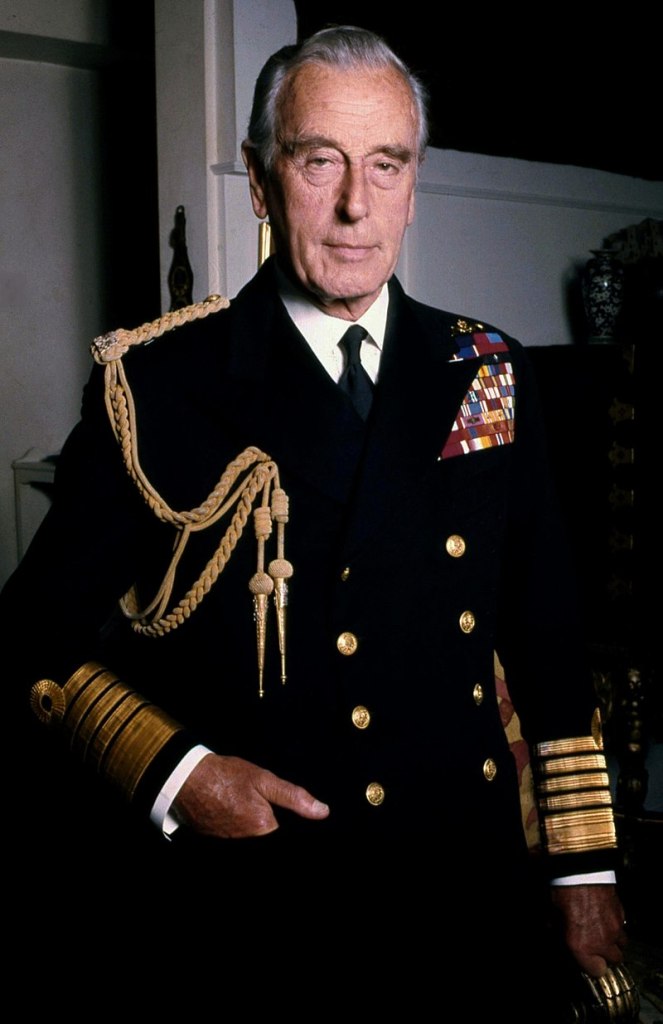
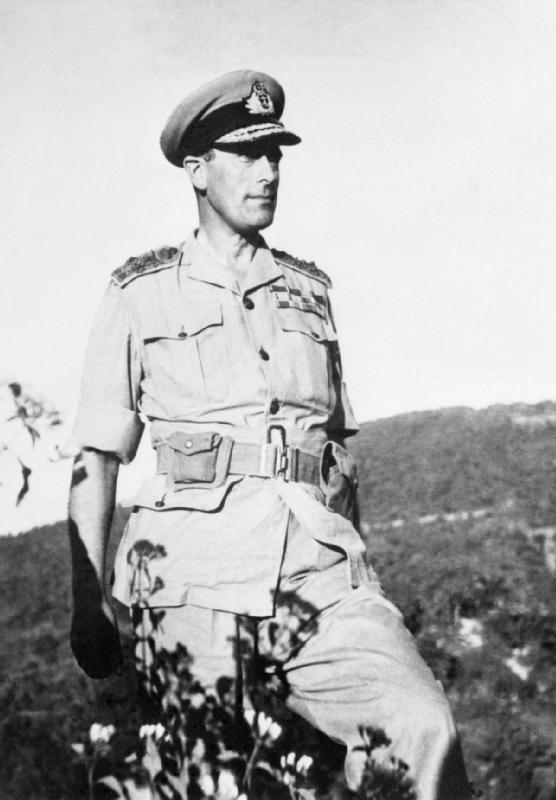
Lord Mountbatten was a Sea Lord, as was Caspar John, whose father was a famous British Beatnik Artist. But for Bohemianism, there is no Cosmology confronting Giant Chinesism – that laughs at us as our Davidic Slingshot Stones clink off the massive body armor.
“My kingdom for a Nazarite!”
I began my novel ‘The Royal Janitor’ with Victoria Rosemond Bond being driven to the Osborne House where Mountbatten studied Naval Tactics. She is hurting to take part in a Orange parade where she want to play her bagpipe with a dragon head on it, representing the Clifford family. Confronting the truth she and her bodyguard have a drinking problem, Miriam Starfish forces her lover to take The Oath of the Nazarite. They both do the dance of the Jawbone of Ass, and are empowered with Angelic Spirit. If you are looking for more, or a different pertinence, there isn’t any, unless you consult the I-Ching, or, get off on Four-leaf clovers.
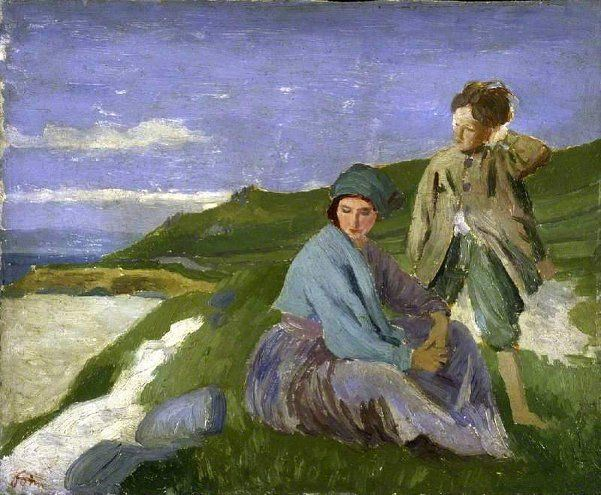
The woman who wrote The Book that unlocks the inner sanctuary of the James Bond Mystique, designed the dress above. She is kin to Elizabeth Rosemond Taylor – The Fashion Plate of the Century – who wore Bohemian clothes. Thanks to my long, arduous research, you can put Liz in the painting of Gypsies, rendered by Agustus John, whom she knew. She grew up in his house, and her uncle and father dealt in John’s art.
Wittgenstein also enjoyed popular movies, especially American westerns and musical comedies, but he never credited them with much wisdom. After conducting a seminar, he would rush off to a “flick” solely to get his mind off philosophy. As a student at Cambridge, Malcolm often accompanied Wittgenstein to the cinema. Wittgenstein once turned to Malcolm during a film and whispered: “This is like a shower bath!”
I am now going to concentrate on promoting myself in a professional manner. I taught my famous sister how to paint. She married into the famous Benton family of artists. I am kin to Augustus John.
Ed Corbin introduced me to the Poet, Tom-Tom, who married into the Schlumberger family. Ed stayed in their estate in Texas. I hope Tom is at the Life Celebration. Katrine was married to a Rockefeller. I am kin to the Getty family, via Elizabeth Rosemond Taylor. I read Tom’s poetry in Springfield with Kenny Reed backing me up. Marilyn Reed was photographed by Silverstein who studied under Sarah Moon. I am going to become a Fashion Designer under the assumed name….John Rosamond Presco. I’m going to do the Hugo Gambler Line, named after my grandfather, Victor Hugo, the professional gambler of the Barbary Coast.
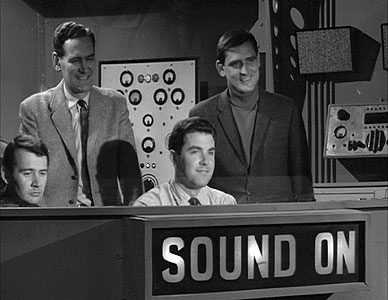





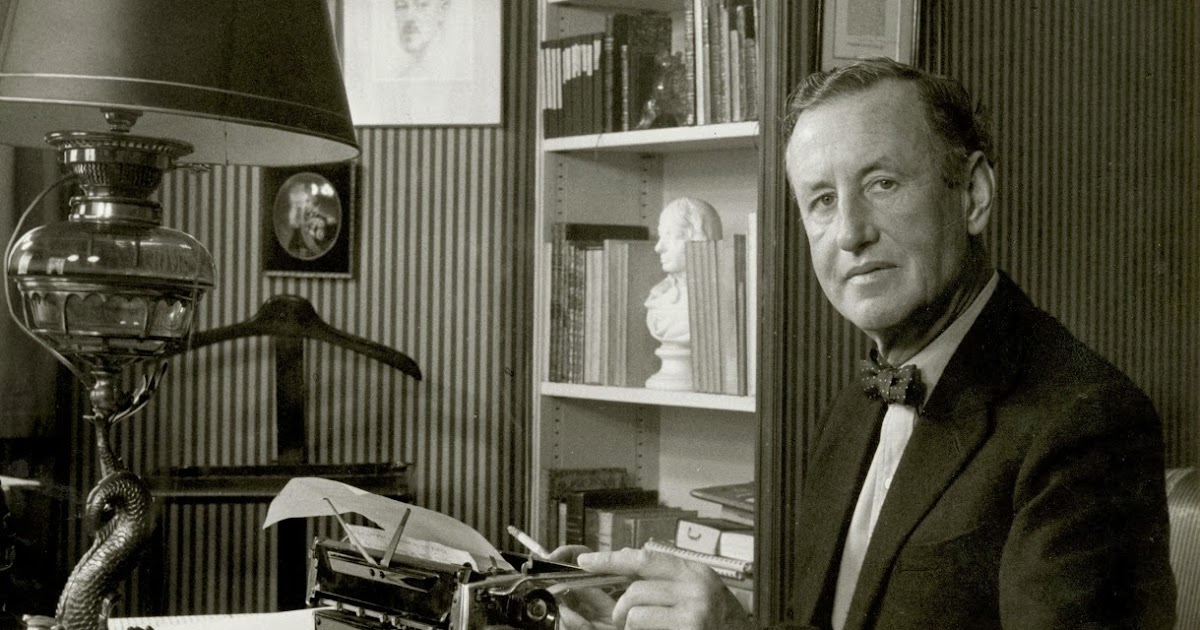






 Radio Caroline was the first of the offshore “pirate ships” beaming into Britain, though the idea had been tried off California and elsewhere in the 1930’s.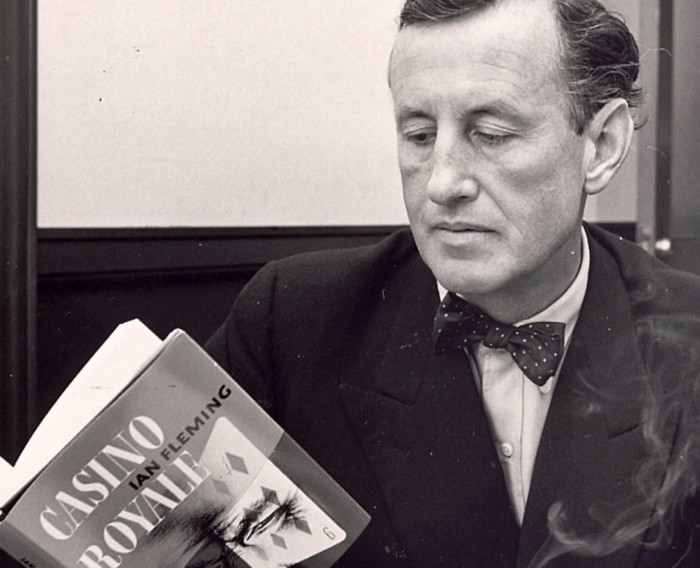

















 Rosamond Press
.svg)


Leave a comment