William A. Janke the great grandfather of John Presco and brother.
The Falcon Art College of Belmont
by
John Presco
ALL RIGHTS RESERVED
On November 15, 2026, I found an article that says Waterdog Reservoir in Belmont was part of the package in the sale of the NDNU Catholic campus to the University of California Investment team. After several years of planning, Stanford University backed our. I had written Stanford about un-identified property my great, great grandfather owned, that his son William did not want him to sell while on his death-bed? Was a Catholic priest present when he died. Carl’s two sons had a legal battle over property, and perhaps money from a sale. I have a strong suspicion Water Dog Lake was owned by Carl Janke, it sold to him by William Ralston, because, Carl & Sons owned Belmont Soda Works, that would consume a lot of water. Belmont was growing. Was there a fight over the water that ran through Twin Pines Park. You need clean water to wash bottles and make sasphella.
I have communicated with Belmont City Government about Carl and his wife being dug up from their grave in Twin Pines Park, and, put in the same grave as Carl’s mother-in-law who died years before. They share the same grave in Redwood City. The Mayors of Belmont failed to investigate after I sent them many messages. The sale did not go thru the City – but went thru the Vatican. When did the citizens of Belmont – know? Why were they kept in the dark?
I will author another message to the Pope and ask him if I can see the negotiations, and, Bills of Sales of the Lake. I am sure he does not want the Vatican to be guilty of conversion, and….Nemo dat quod non habet! Did Sanford pull out when it could not find a Deed for Water Dog Lake?
On this day, I John Presco, claim my families share of the water-rights, and will consult an attorney about compensation for water used.
At 2:15 PM on November 15, 2026, I sent the above words to the Vatican. I pray the Pope will look into these matters, and clear the Holy See of what looks like a scandal, even fraud over….Holy Water! Did the Nuns who dwelt in Belmont, suspect something was wrong?
Our Vatican Holiday apartments are located in a stunning location, really two-minute walk from Piazza San Pietro and the Vatican museums… Starting from our location and walking through a pedestrian zone, you will easily reach the heart of Rome, to make memories with Piazza Navona. Piazza di Spagna, the Colosseum, Fontana di Trevi and all the most famous monuments in Rome
“Belmont’s mayor at the time of the announcement, Julia Mates, noted that the city only recently learned of the discussions between NDNU and UC Investments before the deal became public, and said she was looking forward to more communication about what UC Investments intends for the site. As of now, that communication hasn’t produced a public redevelopment plan.
By late September, after a review process that required sign-off from the Sisters of Notre Dame de Namur’s leadership and, because of NDNU’s Catholic affiliation, formal approval from the Vatican, the sale closed.
That single detail, the involvement of Rome in a Belmont property transaction, is the kind of thing that explains why this deal took the shape it did. It wasn’t a straightforward commercial sale. It was a religious order transferring stewardship of a campus its Sisters had held since 1923, and the sale terms include a leaseback rather than an immediate change in use.
Nemo dat quod non habet, literally meaning “no one [can] give what they do not have”, is a legal rule in common law, sometimes called the nemo dat rule, that states that the purchase of a possession from someone who has no ownership right to it also denies the purchaser any ownership title. It is equivalent to the civil (continental)Nemo plus iuris ad alium transferre potest quam ipse habet rule, which means “one cannot transfer to another more rights than they have”.
Melba Joe and Vicky, models for the three hundred and thirty-three dollar bill
San Sebastian Avenue
On June 1, 2026, I watched the early morning news. The owner of a billion dollar company said AI is going to be fifty times larger than the .COM craze. I believe him, because I have taken steps to make a Virtual Belmont – and then some!
VIRTUAL BELMONT PLUS
On July 7, 2024, I founded ‘West Roseville’ and sent a letter to Governor Newsom. On this say, June 1, 2026, I John Presco found…..
THE BOHEMAN BANK OF BELMONT
I suspect when I first posted on the Belmont Historical Society Facebook page, a conferance call was made by people working on the Belmont Village Plan. I did not know I was the Monkey Wrench – in the works! They knew I was the preverbial…
“What can go wrong – will go wrong!”
Did Anything Actually Change When Belmont’s NDNU Campus Finally Sold?
SHARE
Drive down Ralston Avenue past the wrought iron gates of the old Notre Dame de Namur University campus this month and it looks almost exactly like it did a year ago. Same fenced lawn in front of Ralston Hall Mansion. Same students walking between buildings. Same quiet stretch of road that residents have driven past for decades without much reason to stop. If you’d heard that the sale of this campus finally closed, you might expect something to look different by now. It doesn’t, and that gap between what the news said and what the hillside actually shows is worth understanding.
The short version: Notre Dame de Namur University sold its 96.5-acre Belmont property to UC Investments, the University of California’s investment arm, and the deal received final Vatican approval and formally closed on September 29, 2025. That’s the headline most Belmont residents half-remember. What gets lost is that closing a real estate transaction and changing a campus are two different timelines, and the leaseback means the campus will remain in use for a while.
The Deal That Took Four Years to Fall Apart, Then Quickly Took Shape
To understand why nothing looks different, it helps to know how strange the last year of this story actually was.
Stanford University had held an option to purchase the NDNU campus since 2021, with a plan that would have relocated some Stanford programs from Palo Alto and rebranded the site as Stanford Belmont. City staff spent years working through a conceptual development plan with Stanford, including an environmental review process, ahead of what looked like a done deal.
Then, in February 2025, Stanford walked away. The university cited a longer than expected timeline for establishing academic uses on the site, along with what it called factors that could not be anticipated when the option agreement was first signed four years earlier.
What happened next moved fast by university real estate standards. NDNU president Beth Martin has said she received a cold call from UC Investments within days of the Stanford announcement, expressing interest in the property. By May 27, 2025, NDNU and UC Investments had a signed sale agreement. By late September, after a review process that required sign-off from the Sisters of Notre Dame de Namur’s leadership and, because of NDNU’s Catholic affiliation, formal approval from the Vatican, the sale closed.
That single detail, the involvement of Rome in a Belmont property transaction, is the kind of thing that explains why this deal took the shape it did. It wasn’t a straightforward commercial sale. It was a religious order transferring stewardship of a campus its Sisters had held since 1923, and the sale terms include a leaseback rather than an immediate change in use.
What’s Actually Locked In for the Next Several Years
The sale agreement gives NDNU a leaseback of up to five years on the campus it just sold. In practice, that means the university keeps teaching in the same buildings, with the same programs, for a stretch of time that could run through the end of the decade.
NDNU has already been transitioning for a while. The university stopped offering a four-year residential undergraduate program in 2021 and now operates primarily as a graduate school with degree completion options for adults, a shift that left it with more campus than it needed. Martin has said publicly that the campus is too spread out for the size of the current operation, which is part of the financial logic behind the sale.
So the people who currently occupy the buildings along Ralston Avenue aren’t leaving on any near-term schedule. NDNU has said it plans to relocate to a new site within San Mateo County once the leaseback period ends, but no location or firm date has been announced. For residents wondering when the current campus activity will wind down, the honest answer is that the university itself hasn’t committed to one yet.
The Part of This Story With Nothing to Do With Who Owns the Deed
Here’s the detail that tends to get flattened in coverage of the sale: Water Dog Lake, Belmont’s largest parkland, was included in the 96.5 acres that changed hands, but its public use is governed by a separate lease that has nothing to do with who holds title to the land.
The City of Belmont has operated the 50.5-acre preserve, including its hiking trails and stocked fishing lake, under a lease with roughly 40 years remaining. That lease predates the UC Investments purchase and survives it. Whether the underlying owner is NDNU, Stanford, or UC Investments, the city’s right to run Water Dog Lake as a public park doesn’t change, because that arrangement was never part of what NDNU was negotiating away.
This matters if you’ve ever hiked Water Dog Lake and wondered whether news of a campus sale meant anything for trail access. It didn’t, and by the terms of the existing lease, it isn’t going to for a long time.
The Buildings Nobody’s Touched Yet
The other piece of the deal that gets mentioned in every press release but rarely explained is the promise to renovate Ralston Hall Mansion and its Carriage House, both listed as National and California registered historic landmarks. UC Investments committed to that renovation as part of the sale terms.
What hasn’t been announced is a start date, a budget, or a scope of work. The mansion and carriage house are the most visible structures on the property from the road, and they’re also the ones with the most historical constraints on any renovation, given their landmark status. Belmont residents who’ve watched Ralston Hall sit behind a fence for years shouldn’t expect that to change on any particular timeline based on what’s public so far.
What UC Investments Has Actually Said About the Future
For an acquisition this size, UC Investments has been notably vague about what comes next, and that vagueness is worth taking at face value rather than reading into.
Dianne Klein, an investment adviser for UC Investments, told the San Francisco Chronicle that the university system envisions the property might eventually house “an institute or other such research center.” That’s a possibility, not a plan. There’s no announced project, no filed application, and no timeline attached to it.
Belmont’s mayor at the time of the announcement, Julia Mates, noted that the city only recently learned of the discussions between NDNU and UC Investments before the deal became public, and said she was looking forward to more communication about what UC Investments intends for the site. As of now, that communication hasn’t produced a public redevelopment plan. UC Investments has described the purchase as part of its long-term “centennial” investing strategy, the kind of holding period measured in decades rather than years, which is consistent with a buyer that isn’t in a hurry to announce what comes next.
Dear Mr. White; My name is John Presco and I am the great, great grandson of Carl Janke, who brought six portable houses around the Cape in 1849. It appears that one of these portable houses is inside Ralston Hall – that was built around the small houses that Count Cipriani allegedly had shipped from Italy. I doubt this is true. I would conduct a study by archeological historians who can test the wood – that may not be cut from foreign trees? How about the screws that put this house together?
Three days before Memorial Day I discovered Carl Janke, his wife, and his mother-in-law were dug up from their graves in the middle of the night, and put in the same hole in Redwood City. This was done in 1972. I wonder if this religious activity is recorded in the archives of ND? The sacred ground reserved for the Jankes was located in Twin Pines Park that is next to ND – that might have purchased some of the original land owned by Carl. Can you check? You have a team of scholars and researchers at your disposal. Do you teach local history, or, is your main field – psychology? If so, then an analysis of City Planner’s is called for, being, Stanford purchased ND and is going to make big changes. Can we rest assured new planners – won’t do something crazy? There are rules and laws for exhuming the dead – and reburying them. Would you like to be thrown in a grave with your mother-in-law?
(What would Freud say about this – recurring nightmare?)
Let me begin my proposal this way….I want your assistance in returning my great grandparents to their original burying grounds, and installing me as a professor and theologian in residence. My kindred, Dominica Wieneke founded Briarcliff College. Other family members became a priest and nuns in the Oder of Saint Francis. My alleged ancestor, Godeschalk Rosemondt, was the Master of Louvain and the Falcon Art College in Holland. He was Pope Adrien executor, and found the Pope’s College for poor boys. My kin commissioned the artist Hieronymus Bosch, whose art should be taught at NM, as well as Artificial Intelligence in the World of Art, a course I will design. I would like to found a school of spies and augurs, in Ralston Hall where my great grandfather, William Stuttmeister, got married to Augustus Janke, the daughters of Carl, I am kin to John Fremont, the first to emancipate slaves. I became a Nazarite in 1987, and am steeped in Biblical knowledge. I alone figured out what Jesus wrote in the dust. I can teach a course in religion – that will change Christianity as we know it.
I am seventy six years of age, and do not feel safe where I am. I believe you should follow religious traditions, and have me be The Monk in Residence until it is time for me to go to a just reward. My blog, Royal Rosamond Press may be the largest blog in the world, and should be archived. Today is Father’s Day. Any books that come out of this Journey to The Past will be donated to an Art Program for poor children. I taught my late sister how to paint and she became the famous artist ‘Rosamond’. She is a great granddaughter of Carl Janke, and married into the Benton family.. We are kin to John Fremont who emancipated slaves. Carl built two Turnverien Halls and may be a Fourty-Eighter. Our history has much to do with the celebration of Juneteenth. This was not the first time members of the Janke family were dug out of their graves. Four of them were removed from the Oddfellows graveyard in SF. Member of the LDS church offered to help me research the Janke family. I went to their event.. I believe my Civil Liberties are being violated considering the classes you offer to minorities, where discovering their past – is vital! Freedom of religion involves – our dead! Jesus, and other Jews, raised people from the dead. I declared my self Nazarite in 1987.
Last night I researched getting a Getty Grant. There is a residency program attached to the Getty Villa. My late brother-in-law did the murals here. He and Christina Rosamond Benton were friends of Ann and Gordon Getty and did a mural in their home. Consider all the great murals in churches. I believe I am the exception. I was forced to drop out of high school. A watercolor I did toured the world in a Red Cross show. I believe I am a National Treasure and will say so in my message to Gavin Newsom who has been close the the Getty family his whole life.
I ran for Governor of Oregon last year and and am a Republican Candidate for President. For years I have ordered the Evangelical Politicians who subscribe to the false teaching of John Darby and Tim LaHaye – to get out of my families party! I figured out why Jesus said;
“I’ve come for the sinner – and not the righteous!”
The author Damon Knight did a study of Bosch and found to figures in The Wedding Feast at Cana – that were removed – and replaced with a dancing dog. I believe those men are Pope Adrien and Godeschalk Rosemondt. The other figures are members of the Swan Brethren. Everyone and everything is pointing to the foundation of the Brotherhood of the Swan at Notre Dame de Namur.
It is 4:38 A.M. in Springfield Oregon. I just woke from the most arduous dream of my life where I was REBORN, into the flesh, into the spirit, into the plan God made for me. On this day I found The Falcon Art College At Belmont. I will write a letter to Pope Saint Francis and asking him for his blessing and support in the fulfilment of a Prophecy.
Today is October 7, 2020. I believe it is God’s will that the Falcon Art College of Belmont be located inside Ralston Hall, that I believe is one of the portable buildings brought around the Cape on a Clipper Ship by my great grandfather, Carl Janke, the founder of a soda works in Belmont, and a German Theme park. The Ralston house was a portable house put together by 5,000 screws. I am now convinced that Gottschalk Rosemondt is my great ancestor, and appeared in a Bosch painting with his best friend, Pope Adrian. I believe it is the Fair Lady of the Swan Brethren who is my guardian angel and angelic guide.
John Gregory Presco
President: Royal Rosamond Press and Falcon Art College at Belmont
Copyright 2020
What This Means If You Live Near Ralston Avenue
Put the pieces together and the picture is less dramatic than the headlines from last year suggested, but more useful for anyone trying to understand their own neighborhood. The ownership of the land changed. The people using it, the trails running through it, and the buildings standing on it have not, and by the terms of the deal itself, most of that is set to hold steady for years.
If you’re the kind of resident who’s driven past that fence on Ralston Avenue and wondered what was going on, the honest answer right now is: not much yet. The interesting part of this story isn’t what changed. It’s how ownership changed while campus activity stayed largely the same.
If you’re curious about what a property like this, or any home near a site with this kind of institutional history, might mean for your own plans down the road, Ektra Real Estate knows the Belmont market well enough to talk through it in plain terms.
This article is general information, not legal, tax or financial advice. Consult a qualified professional about your situation.
Smack in the middle of the city of Belmont is a steep wooded canyon that’s perfect for a midday getaway. Water Dog Lake Park offers a well-maintained trail through native oaks, California buckeye and eucalyptus, leading to a secluded lake. The lake was formed when financier William Ralston created a dam in the area to supply water for his Belmont mansion. From the lake you can continue 1.4 miles to the end of the trail at Hallmark Drive. There are no restrooms. Dogs are permitted on leash.
The term “water dog” does not refer to the wet dog you may be dragging out of the lake if you neglect the leash. It refers to a type of salamander, also called a mud puppy, that is said to make a barking sound.
Friends of SFGATE enjoy ad-free reading and more in our new app.
Pick up the Lake Road Trail at Lyall Way, a few feet west of Lake Road. You will find a posted map and clear trail markers. The city will seem far behind as you climb gradually, surrounded by the fantastical shapes of native oaks with the wild canyon falling away steeply to your left. Signs warning you about mountain lions help you forget how close you are to Belmont homes. You will see many birds and perhaps some lizards and rabbits.
After about three-quarters of a mile, you will come to the Berry Trail on your left. Take it, and you will very shortly arrive at sheltered, picturesque Water Dog Lake (listed on some maps as Belmont Reservoir). You may see people fishing, but no swimming is permitted. If you take the Water Dog Lake Loop Trail (0.4 miles) to circumnavigate the lake, watch out for poison oak.
Return to the Lake Road Trail and continue on to Hallmark Drive. Here, at the trail’s end, you will find a water fountain and a bench, where you can relax and have a snack.
Advertisement
Article continues below this ad
Return the way you came and enjoy sweeping views to the east across the canyon. A lower trail, the John Brooks Trail, is popular with mountain bikers. It offers a longer hike, eventually connecting to the Elevator Trail, which leads out of the canyon to Carlmont Drive, a short walk from the original trailhead at Lyall and Lake. However, these trails are not well marked and it is easy to get lost. If you want to explore, you can download a map showing all the trails at links.sfgate.com/ZHPZ.
After the walk
Drop by the nearby Carlmont Village Shopping Center at the corner of Ralston and Alameda de Las Pulgas, where you can get sandwiches and coffee. From the shopping center, look down on the lovely brook and waterfalls built over a reconstructed storm drain. The brook is flanked by brilliant flowers.
Getting there
By public transportation, from the Belmont Caltrans Station, take SamTrans bus No. 260 at the corner of Ralston Avenue and El Camino Real toward Continentals Way. Get off at Ralston and Alameda de Las Pulgas. Walk west on Ralston to Lyall Way, turn left and continue to Lake Road.
Advertisement
Article continues below this ad
By car, from Highway 101, exit at Ralston (exit 412). Turn right onto Ralston and continue to Lyall Way. Turn left and continue to Lake Road. From Highway 280, take Highway 92 east to the Ralston exit. Turn left onto Ralston and right onto Lyall Way. Follow Lyall to Lake Road.
Savoy of California
Professor Michael Fowley taught espionage at Stanford, and rescieved an e-mail from a old man who said the true Shroud of Turin was hidden in a vault under Ralston Hall in Belmont California in order to keep it out of the hands of the Nazis. Hitler wanted to form a Christianized Cult around it. What got Michael’s attention was the claim there were two shrouds, one that was Jesus’ burial shroud, and the other…The Shroud of Lazarus!
Michael wrote John Presser back, and was bewlieldered to learn John was raised in a Sanitiarum on the grounds of Notre Dame de Namur University after being placed on the chappel steps by his parents, with this note;
“This is the great grandson of William Stuttmeister and Augusta Janke, the daughter of Carl Janke, the co-founder of Belmont. His life is in danger. Take good care of him. His name is….John!”
Italian Monks Reportedly Hid The Holy Shroud From Hitler
The Holy Shroud, said to be the burial cloth of Christ, was hidden for years.
ByANN WISE
April 8, 2010, 8:12 AM
ROME April 8, 2010— — According to an Italian monk, the real reason the Holy Shroud was hidden in a remote monastery in southern Italy during World War II was to protect it from the thieving hands of the Nazi dictator Adolf Hitler.
Officially the famous linen cloth, also known as the Shroud of Turin and believed to have wrapped the dead body of Christ, was secretly sent south by its owners, the Savoy royal family of Turin, to keep it safe from wartime bombings.
Now, on the eve of a rare public display of the Shroud, the Rev. Andrea Davide Cardin, the librarian at the Montevergine Abbey where the Shroud was concealed from 1939 to 1946, says it appears there was another reason to hide the holy relic: to keep it out of the hands of Hitler, who was said to be interested in the esoteric and the occult.
Cardin, a Benedictine monk, told the Italian paper La Stampa that he was preparing an exhibit on the Shroud in his library when he came across a document that he believes shows the Shroud was actually hidden from Hitler.
When it was returned to Cardinal Maurilio Fossati at the Turin Cathedral in 1946, according to Cardin, Fossati wrote in a church document that hiding the shroud had been the right thing to do “because the invader had been in a hurry to ask questions.”
Other historians and Shroud experts are skeptical, but Cardin tells an intriguing story.
In a recent interview with the Italian Magazine Diva e Donna, Cardin said that when Hitler visited Italy for seven days in May 1938, he did not go to Turin where the Shroud was kept in the Cathedral, but “Nazi officials asked unusual and insistent questions about the Shroud and where it was kept.”
This alarmed the Savoys and the Church, says Cardin, and the King thought the Shroud would be safest in the Vatican. But according to Cardin, Pope Pius XII did not feel the Vatican was safe and it was decided that the Shroud should be hidden in the Abbey of Montecassino.
In 1953 the College of Notre Dame became a four-year college with 23 Sisters of Notre Dame de Namur[4] involved in the school. The college introduced evening classes in 1955, and in 1965, started the teaching credential programs. Originally a women’s institution, College of Notre Dame became coeducational in 1969;[4] three men graduated as part of the class of 1970. The college expanded its offerings to include master’s degrees in 1972 and added evening undergraduate programs in 1987.
In 2001, the college established a structure dividing the university into schools and changed its name to Notre Dame de Namur University. In 2009, the university began offering partnerships with local community colleges to provide greater access to higher education, and that same year it became a Hispanic-Serving Institution, meaning at least 25% of its undergraduate population is Hispanic, that same year. The online degree program was established in 2012, and in 2013, the university introduced one of the first PhD programs in art therapy in the nation. The university established a new campus in Tracy, California in 2015, offering evening undergraduate and graduate degree programs in business administration.[5]
Notre Dame de Namur University was one of the first universities in the United States to offer a Ph.D. in Art Therapy. The Art Therapy Ph.D., launched in 2013, is also the first doctoral program offered at the university.
In 2016 the faculty, both full-time and adjunct, unionized with SEIU 1021. This was a historic move since tenure-line professors at Catholic universities have had trouble unionizing since the Yeshiva ruling (1980).[6][7]
In December 2017, BINA48 (a Hanson Robotics robot) successfully participated as a guest student in a full semester college course on philosophy and love created and taught by Professor William J. Barry at Notre Dame de Namur University. The robot used an algorithm framework called TQ Theory created by Professor Barry to interact with rapport with students.[8]
The history of the sanctuary of Montevergine is closely linked to the figure of William of Montevergine, a hermit monk who lived between the 11th and 12th centuries, who took pilgrimages to places of Christianity.[2] Returning to Italy after a long journey to Santiago de Compostela, he decided to undertake a new pilgrimage to Jerusalem and to prepare himself spiritually he took refuge at Mount Serico, in Atella, where he is the protagonist of the healing of a blind man.[3] Resuming the journey towards the holy land, he arrives in Ginosa, meeting with John of Matera, who advises him to give up the pilgrimage and to work for the divine service in the lands of the West: William refuses the advice of the saint and continues with his walk until he is beaten up by a group of brigands.[4] Remembering John’s words and after a long spiritual reflection, he understands the new path to follow, that is to retire in solitude and devote himself to meditation.[2] Arriving in Irpinia, he feels that God’s will is to make him reside on a mountain, known today as Partenio, at an altitude of over a thousand meters.[5]
6/11/2023
Michael McFaul
Dear Michael; Yesterday, while watching golf, I googled members of the Spogoli Institute and started with you. I was bowled over. To start with, I have been looking for you for years. I wanted to blog on the guy Putin wanted to interrogate – that Trump agreed to handover!. I sent an e-mail to Amy Zegart that is applicable to what I am asking you to do. I am kin to Ian Fleming nd began a James Bond novel that was inspired by Rena Easton of Bozeman Montana. She is the widow of Admiral Ian Easton of the British Defense Staff Washington. Do you know this organization?. I have been composing a new chapter that will take place at the Norte Dame de Namur campus that Stanford wants to purchase. I want you to represent me and my historic families’ interests in this matter. I have watched you on the Rachel Maddow show, and trust you. That you lived in Bozeman Montana is key to my novel. You have altered the direction it is taking. The claim by McCarthy and Pence that Biden has weaponized the Justice Department by indicting Trump on Espionage charges, is Karmic Justice – and more! Was Mike Pence all for handing you over to Putin – who might have hanged you?
The White House has declined to rule out accepting a Russian proposal to question on US soil American people – including the former ambassador to Moscow Michael McFaul – sought by the Kremlin for “illegal activities”.
“The president is going to meet with his team and we’ll let you know when we have an announcement on that,” White House spokeswoman Sarah Sanders told a news briefing. Sanders added that Trump “said it was an interesting idea … He wants to work with his team and determine if there is any validity that would be helpful to the process”.
Sanders’s comments prompted outrage in the US, including from McFaul, a vocal Putin critic.
“When Trump says Russia is no longer targeting America, that’s not how this American feels,” McFaul wrote on Twitter.
“Putin is most certainly targeting and intimidating me. And I’m an American.”
On July 17, 2018, the Prosecutor General of Russia announced that it was seeking to question McFaul, amongst other Americans, in relation to its investigation of allegations made against Bill Browder.[26][27] This followed a request Vladimir Putin made to President Donald Trump during the summit in Helsinki. In a White House news conference two days later, Press Secretary Sarah Huckabee Sanders said Trump described Putin’s suggestion as an “interesting idea” and Trump “wants to work with his team and determine if there is any validity that would be helpful to the process”.[28][29]
Dear Amy Zegart; Did you know Ursula von der Layen attended Stanford University and born her children while getting a degree? Stanford is looking at buying the Norte Dame de Namur in Belmont where I was snubbed and ridiculed by the Historic Society after I showed them proof I am descended from Carl Janke who brought six portable houses around the Cape in 1848. These are Prussians, who offered by purchase California for seven million dollars. My kin may have been agents for this purchase – that was nixed when gold was discovered. In 2021 I suggested a School of Espionage move in to Namur. Yesterday in search of historians at Stanford – I find you! You, Ms. Zegart – are up! If you are drinking coffee right now, put that cup down, and look around at the way your reality – used to be! You have passed between the Two Pine Trees of Belmont, and the bronze doors to the Janke-Stuttmeister crypt in Colma. Carl Janke and his wife were dug up from their graves in the middle of the night, and ended up in the Union graveyard in Redwood City. If Dr. Stuttmeister knew where they were, he would have interred them in our crypt, where he put Carl’s bloodline – after they were evicted from the Oddfellow’s cemetery! I am claiming Twn Pines Park, because in looking at you – and all of this intrigue – I saw The Light shining through. The Truth came in between the two trees, and falling upon my beloved ancestors.
In 2018, after discovering I am kin to Ian Fleming, via Liz Taylor, I began my own Bond novel ‘The Royal Janitor. I researched what spies do. They look at a lot of data, and analyze it. In your book, you attest to this, and then say spy novels, and fake spies, ruin the real work.. I had the stars of my Bond book become lovers, and then get married after seeing a video of Putin’s Cossacks whipping members of Pussy Riot. I knew I was throwing away an opportunity to have a pay day, but I am driven to do the right thing. I suspect you are too.
I suggest you approach the President of Sandford and ask for the funds to conduct a investigation – that will include us meeting in Belmont to look for evidence I am the rightful Heir of Twin Pines Park. I believe we are destined to author a book, or two. I see your husband is a screenwriter. I suggest you both take good notes. I was poised to send Vice President Kamala Harris the second part of my message – that will now include this e-mail. When I mentioned her to the Belmont Historic Society in March of 2021, there was a conspiracy to get rid of me – and take my infraction for another book. I have sent messages to the Mayor of Belmont and the City Council. I am feared!
I believe you are Victoria Rosemond Bond, and I am Miriam Starfish Christling, Here they are having breakfast. Carl Janke founded a German Theme Park that may be the first in California. Walt Disney was inspired by Fairyland in Oakland. Putin and Patriarch Kirill invaded Ukraine to do harm to the LGBTQ folks. Consider Governor DeSantis – doing the same! Zelenskyy is in Japan at the G-7. as I type.
Your destiny awaits you. This e-mil will self-destruct. You made the cover of my newspaper for the arts. Oh. I forgot. My Muse, Rena Easton inspired me to write a Bond novel because in a letter she said she committed a million poems to memory. She had two children by Admiral Ian Easton, head of the British Defense Staff Washington. Have you heard of this agency? I am the Union of The Fake and The Real – Spy! Your study – is flawed! Don’t worry. We can fixt it! Here is your chance to work – in the field!
McFaul stepped down in February after two tough years as ambassador to return to his job as a top political science professor at Stanford University. He gave a public talk Thursday at Montana State University on the Ukraine-Russia conflict and what it means for the United States.
On July 19, shortly before the Senate was to vote on a resolution opposing the idea, Sanders stated that Trump “disagreed” with the Putin proposal.[30] The Senate approved the non-binding “sense of the Senate” resolution on a 98–0 vote; it stated that no current or former diplomat or other government employee should be made available to the Russians for interrogation.[31]
Born in Glasgow, Montana, McFaul was raised in Butte and Bozeman, where his father worked as a musician and music teacher.[8] While attending Bozeman High School, McFaul participated in policy debate; his partner was current U.S. Senator Steve Daines (R) of Montana.
In 2009, McFaul joined the Barack Obama administration as a senior adviser in Washington, D.C., where he was the architect of the so-called “Russian reset” policy.
In March 2011, McFaul attended, in his official White House capacity, the meeting between Joe Biden and Vladimir Putin, which Biden characterized in his memoir as “argumentative.”[13] The two met again in a 2021 summit.[14]
Secretary of State John Kerry and McFaul tour Red Square in Moscow on May 7, 2013
In November 2011, Obama nominated McFaul to be the 7th post-SovietUnited States Ambassador to the Russian Federation. On December 17, 2011, the United States Senate confirmed McFaul by unanimous consent.[15] McFaul became the first non-career diplomat to be the U.S. ambassador to Russia.[12] He arrived in Russia just as huge protests were erupting over Vladimir Putin‘s resumption of the presidency. As ambassador he was accused of “fomenting revolution” by the Russian state media, meeting with Russian pro-democracy activists and commenting frequently on Twitter in English and Russian.[16] In his Washington Post article though he argued that these meetings were in line with Obama’s policy.[17]
In a 2012 interview for the news portal Slon.ru, McFaul described himself as “specialist on democracy, anti-dictator movements, revolutions”.[18]
Reaction to the visit was mixed: then president Dmitry Medvedev, in his public comments at Moscow State University, largely exonerated McFaul by saying that meeting with opposition figures was a routine occurrence, although he warned the new U.S. ambassador that he was on Russian soil and should respect Russian political sensibilities.[20] The incident sparked a highly negative reaction in the state-controlled Russian media, which accused him of conspiring with the opposition, but was appreciated by activists and social media users.[16]
McFaul announced his resignation as ambassador to Russia on February 4, 2014, effective after the Sochi Olympics.[21]John F. Tefft was confirmed as the next ambassador to Russia.[22]
McFaul returned to Stanford as a professor of political science. He also became a senior fellow at the Hoover Institution. He continued to be involved in geopolitics.[23] In October 2014, he stated that he believed the Russians continued to bug his and his wife’s cell phones in the United States.[24] In 2014 he was placed on the Kremlin’s sanction list of people who are not allowed to enter Russia.[16][25]
On July 17, 2018, the Prosecutor General of Russia announced that it was seeking to question McFaul, amongst other Americans, in relation to its investigation of allegations made against Bill Browder.[26][27] This followed a request Vladimir Putin made to President Donald Trump during the summit in Helsinki. In a White House news conference two days later, Press Secretary Sarah Huckabee Sanders said Trump described Putin’s suggestion as an “interesting idea” and Trump “wants to work with his team and determine if there is any validity that would be helpful to the process”.[28][29]
On July 19, shortly before the Senate was to vote on a resolution opposing the idea, Sanders stated that Trump “disagreed” with the Putin proposal.[30] The Senate approved the non-binding “sense of the Senate” resolution on a 98–0 vote; it stated that no current or former diplomat or other government employee should be made available to the Russians for interrogation.[31]
McFaul debated the Russian invasion with John Mearsheimer in May 2022. McFaul has taken a position on the Russian invasion of Ukraine identifying Putin as a culprit in conducting the invasion of Ukraine against the position of Mearsheimer that Putin is pursuing a realist geopolitical plan to secure Russian national interests in the presence of perceived threats from an expanding NATO.[33]
In 2003 McFaul supported regime change in Iraq.[34]
After the 2016 presidential election, he became a regular commentator on MSNBC and social media, and was frequently critical of the policies and actions of President Donald Trump with regard to Russia.[16]
In July 2019, McFaul wrote that Communist Party of China‘s officials “champion the advantages of their system — an ability to undertake massive infrastructure projects, the capacity to manage income inequalities and a commitment to harmony in government and society. In contrast, polarized U.S. politics in the Trump era seem to impede any major initiative, be it infrastructure development or addressing income inequality.”[36]
Coit D. Blacker called McFaul “the leading scholar of his generation, maybe the leading scholar, on post-Communist Russia” and a Stanford news release said his knowledge of Russia “was an important resource to politicians. He advised President George W. Bush on his dealings with Russian President Vladimir Putin“.[11][37]
cc
12/31/2019
The Second Coming of Martin Eden
The Second Coming of Martin Eden
A Novel by John Gregory Presco a.k.a. John Wilson Rosamond
Copyright 2019
Yesterday, I discovered I am Martin Eden. I am a Futurian. I will always be a Bohemian Time Traveler. I can trace my Time Line back to Egypt. Why I did not see I was Martin, until recently, is most interesting because it is archeological proof Futurians exist. I am working on the correct term that describes the ability of a Muse to travel into the future and drastically affect someone, who then aspires to be a writer. What came first, the chicken or the egg in regards to Time Line Inspiration, is a very loaded question for a Futurian aimed at hiding, then limiting Time Line Crossovers. We have the ability to be two places at the same time. We experience many out of body experiences. I just had one when I discovered how similar my relationship is to Shell Mound Park, and, Janke Park which was owned and operated by one of my grandfathers.
The Janke dance pavilion was built around a giant redwood, and was a hundred and fifty feet across. The Shellmound dance pavilion was built atop a shell mound Here is what Martin says about this mystical place:
“He noted, one Sunday morning, that the Bricklayers’ Picnic took place that say at Shell Mound Park, and to Shell Mound Park he went. He had been to the working-class picnics too often in his earlier life, and as he entered the park he experienced a recrudescence of all the old sensations. After all, they were his kind, these working people. He had been born among them, he had lived among them, and though he had strayed for a time, it was well to come back among them”
Then there is the Metropole Hotel that was located a block away from where I and the Loading Zone lived. They were close with the Tower of Power. I founded Royal Rosamond Press in order to preserve the Bohemian Art and Culture that Jack London and George Sterling gave birth to. I will employ Martin, as I have employed Ian Fleming to combat Putin and Trump.
What has puzzled me for so long, is why Rena Easton ended up in Oakland, in a backyard, in a tent, with me. Now that I am no longer blocked in every conceivable way – I can see for miles! Everything makes perfect sense. I did not have to die, but, I died.
This is the first installment of my story that I want to appear in the Royal Rosamond Magazine, and/or Quibi.
John Presco a.k.a Martin Eden
Shell Mound Park (presently the Emeryville Bay Street Shopping Center) was originally a Native American archeological site but by London’s time, it had been converted to an amusement park consisting of bars, dance pavilions, a racetrack, etc. In Martin Eden, Shell Mound Park is where Eden goes to try and slip back into the ease of the camaraderie he used to feel with his old working-class colleagues. Ultimately, Eden’s attempt to reclaim his old lifestyle is futile and Shell Mound, and its association with working-class recreation, is yet another space where Eden feels fundamentally left out. He ends up retreating back to the Hotel Metropole (pictured below), a reputable establishment in downtown Oakland, but feels equally alienated from the bourgeois life of luxury and leisure that his sudden and immense fortune has afforded him.
Mr. Morse met Martin in the office of the Hotel Metropole. Whether he had happened there just casually, intent on other affairs, or whether he had come there for the direct purpose of inviting him to dinner, Martin never could quite make up his mind, though he inclined toward the second hypothesis. At any rate, invited to dinner he was by Mr. Morse – Ruth’s father, who had forbidden him the house and broken off the engagement.
Martin was not angry. He was not even on his dignity. He tolerated Mr. Morse, wondering the while how it felt to eat such humble pie. He did not decline the invitation. Instead, he put it off with vagueness and indefiniteness and inquired after the family, particularly after Mrs. Morse and Ruth. He spoke her name without hesitancy, naturally, though secretly surprised that he had had no inward quiver, no old, familiar increase of pulse and warm surge of blood.
Carmel History Lesson
On this day, February 18th. I claim all the Belmont that was deeded to the University of California. I suspect parts of Belmont was scurred for King Carlos 111 and was GIVEN to the Sisters of Norte Dam De Nmur who are connected to the House of Bourbon. No way would they pay for such expensive land. I insister the University of California make public all Deeds and Bill of Sales to this Sacred Property that I believe Carl Janke was the Caretaker of. This why this land was not developed, long with the Janke property that included Twin Pines Park. Right after the Sisters bought the property, Belmont became a City in 1926. This is why Carl Janke dressed as King Carlos for the Masque Ball. He might be related to him. His son took the name Charles. U demand a DNA tese!
I gifted the New Orleans Territory to my late fiancé Virgoa Hambley. This was a ACT OF GOD because there is poweful eivdence I descnd from the Meringian Franks. I can Unifiry all of Europe against all it foes! Come gather around me – all Knight Templars!
King John De California
Did you know that Yo Solo is Spanish for “I Alone?” In fact, that motto has something to do with Spanish Louisiana Governor Bernardo de Gálvez and how he was honored for his bravery during the American Revolution! Check out this video to learn about this lesser-known history and discover how Spanish Louisiana aided the American Patriots in their fight against the British during the American Revolution.
In 1780 King Carlos sent an official request to Spanish America, asking that they donate to the American colonial cause. He asked for 2 pesos per Spanish citizen and one peso per Indian. There are some rare books with lists of those people who gave “donativos.” For example, there is New Mexico’s Contribution to the American Revolution[2].
Loans were also made. For example, Havana residents donated to De Grasse’s expedition to Yorktown in 1781. Mexico later repaid this money with interest. [3]
On October 1, 2013 on the day the Government of the United States ceased to exist due to the successful take-over of our Democracy by the Tea Party secessionists, I, John Presco, proposed to, Virginia Hambley de Bourmont, and she accepted.
With this proposal, I presented to my fiancé the Louisianans Territory as held by her illustrious French Ancestors.
Let it be known, that on this day, October 2, 2013, that I John Gregory Presco lay claim to the California and the Oregon Territory as it was known to my illustrious ancestors the Benton and Fremont family, who egregiously ignored the Constitution and the Economic Idealogy of Jeane-Baptise Say, who married into the de Bourmont Anjou family, who are this very day trying to restore the Monarchy of France. Good luck!
I believe the only chance the Orlean de Anjou claimants have, is to back the New Found Kingdoms in America that take in most of the land west of the Missouri River – that was illegally taken by the ideology of ‘Manifest Destiny’ as promoted by my kindred, Senator Thomas Hart Benton. Now that this democracy ceases to exist, I hereby make null and void the purchase of the Oregon Territory from Britain.
Let it be known, that I, the rightful King of California and Oregon, will return California to Mexico and the Mexican People, if they back my claim, and make my bride-to-be and her beloved kindred – the Titular and Dynastic Rulers of the New Kingdom of California-Mexico!
It is my desire to see my kindred merrily taking part in all festivities these great people are known for, with pomp, and royal flare that will be paid for by the Mexican people via a Royal Tax. This is a small price to pay for solving half of the immigration problem.
Sincerely
John Presco
Titular King of Oregon and California
P.S. also let it be known I am the Rightful Leader of the Republican Party – in exile!
During the reign of the third Bourbon king of Spain, Charles III (1759-88), the Bourbons introduced important reforms at home and in the colonies. To modernize Mexico, higher taxes and more direct military control seemed to be necessary; to effect these changes, the government reorganized the political structure of New Spain into twelve intendencias , each headed by an intendente under a single commandant general in Mexico City, who was independent of the viceroy and reported directly to the king.
The economic reforms were directed primarily at the mining and trade sectors. Miners were given fueros and were allowed to organize themselves into a guild. Commerce was liberalized by allowing most Spanish ports to trade with the colonies, thus destroying the old monopoly held by the merchants of the Spanish port of Cádiz.
The Bourbon reforms changed the character of New Spain by revising governmental and economic structures. The reforms also prompted renewed migration of Spaniards to the colonies to occupy newly created government and military positions. At the same time, commerce, both legal and illegal, was growing, and independent merchants were also welcomed. The new monied classes of miners and merchants were the real promoters of the successes of the reforms enacted by the Bourbons.
Data as of June 1996
The beginning of the eighteenth century in Spain coincided with the crowning of Spain’s first Bourbon king. Under the Habsburgs, Spain had been ruined by wars abroad and conflicts at home. The new Bourbon administration that assumed power in 1707 was determined to effect structural changes in Spain’s government and the economy to centralize power in the monarch. The colonies also received increased attention, mainly in terms of their defense and the reorganization of their economies.
The House of Bourbon-Parma (Italian: Casa di Borbone di Parma) is an Italian cadet branch of the House of Bourbon. It is thus descended from the Capetian dynasty in male line. The name of Bourbon-Parma comes from the main name (Bourbon) and the other (Parma) from the title of Duke of Parma. The title was held by the Spanish Bourbons as the founder was the great-grandson of Duke Ranuccio II Farnese, Duke of Parma. Since 1964 a cadet branch of the House of Bourbon-Parma rules Luxembourg as Grand Duke.
Louise Marie Thérèse d’Artois (Louise Marie Thérèse; 21 September 1819 – 1 February 1864) was a duchess and later a regent of Parma. She was the eldest daughter of Charles Ferdinand, Duke of Berry, younger son of King Charles X of France and his wife Carolina of Naples and Sicily, daughter of King Francis I of the Two Sicilies.
Princess Zita of Bourbon-Parma (Zita Maria delle Grazie Adelgonda Micaela Raffaela Gabriella Giuseppina Antonia Luisa Agnese; 9 May 1892 – 14 March 1989) was the wife of Emperor Charles of Austria. As such, she was the last Empress of Austria, Queen of Hungary and Croatia, and Queen of Bohemia. Born as the seventeenth child of the dispossessed Robert I, Duke of Parma and his second wife Infanta Maria Antonia of Portugal, Zita married the then Archduke Charles of Austria in 1911. Charles became heir presumptive to the Emperor Franz Joseph I of Austria in 1914 after the assassination of his uncle Archduke Franz Ferdinand of Austria, and acceded to the throne in 1916 after the old emperor’s death. After the end of World War I in 1918, the Habsburgs were deposed when the new countries of Austria, Czechoslovakia, Hungary and the State of Slovenes, Croats and Serbs were formed. Charles and Zita left for exile in Switzerland and later Madeira, where Charles died in 1922. After her husband’s death, Zita and her son Otto served as the symbols of unity for the exiled dynasty. A devout Catholic, she raised a large family after being widowed at the age of 29, and never remarried. Asteroid 689 Zita is named in her honour.
On October 1, 2013 on the day the Government of the United States ceased to exist due to the successful take-over of our Democracy by the Tea Party secessionists, I, John Presco, proposed to, Virginia Hambley de Bourmont, and she accepted. With this proposal I presented to my fiancé the Lousianana Territory as held by her illustrious French Ancestors.
Let it be known, that on this day, October 2, 2013, that I John Gregory Presco lay claim to the California and the Oregon Territory as it was known to my illustrious ancestor the Benton and Fremont family, who egregiously ignored the Constitituion and the Economic Idealalogy of Jeane-Baptise Say who married in to the de Bourmont Anjou family who are this very day trying to restore the Monarchy of France. Good luck! I believe the only chance the Orlean de Anjou caiments have, is backing the New Found Kingdoms in America that take in most of the land west of the Missouri River, that was illegally taken by the idealogy of ‘Manfest Destiny’ as promoted by my kindred, Senator Thomas Hart Benton.
Let it be known, that I, the rightful King of California and Oregon whill return Calfinofrina to Mexcio and the Mexican People if they back my claim and make my bride to be and her beloved kindred the Titular and Dnynastic Rulers of the New Kingdom of Mexico. It is my desire to see my kindred merrilyt takingpart in all festitifities these great people are known for, with pomp, and royal flare.
Sincerely
John Presco
Titular King of Oregon and California
Robert I (Italian: Roberto I Carlo Luigi Maria di Borbone, Duca di Parma e Piacenza; 9 July 1848 – 16 November 1907) was the last sovereign Duke of Parma and Piacenza from 1854 to 1859, when the duchy was annexed to Sardinia-Piedmont during the unification of Italy. He was a member of the House of Bourbon, descended from Philip, Duke of Parma the third son of King Philip V of Spain and Elizabeth Farnese.
The agreement includes the possible purchase of the main NDNU campus in Belmont, including Ralston Hall, Koret Field, NDNU Theater, and Cunningham Chapel. The property included in the agreement is outlined above with a yellow dashed line. https://belmont.stanford.edu/about
To: Governor Newsom
From: John Presco
I am the great grandson of Carl Janke, the founder of Belmont. I suspect he was a member of the Turnverein Germans who came with John Sutter to California from Saint Louis, and later brought six portable homes around the Cape to Belmont California in 1848. It stands to reason Janke already has buyers for these homes. After much study I conclude the Franciscan Order bought some of these homes and placed them on a large parcel of land they called Belmont, or Canada del Diablo. I have a theory the Monks saw Mount Diablo from a hill above Belmont. The setting sun created what is called, Alpenglow, that turned Diablo a crimson red. Was this a sign to build a Mission here that I suspect Count Leonetti was ordained to support, and is why he came West with a wagon train, and cattle? Cipriani did not dismantle his home in Italy and have it shipped to Belmont. I suspect the house he assembled with 5,000 screws was one of the Janke houses, that was built atop the primetime structure the Monks made that was raised. Building atop the original structure may have sustained land grant rules, Janke’s house is within Ralston Hall this day.
I suspect Cipriani lived in San Francisco after he was appointed Italian Council, and added a structure for his residence when he came to stay in Belmont, that was under his protectorate. He may have left the Mission in charge of a unknown person when he moved to Italy. Carl Janke had to be fully aware of this. How William Ralston came to own this Mission, needs to be investigated. He might have had a religious agreement, that was not respected by William Sharon when he moved in. I can not find an history of contact with Carl Janke and Sharon. Both men had to be aware of the two graves mentioned by Russel Estep who was a founding member of the Belmont Historic Society. I suspect they are the graves of Franciscan Monks that were put in a designated Franciscan cemetery. There is a sculpture of Saint Francis in back of Ralston Hall made by Benny Buffano. I suspect it was paced there after the two tombstones were removed. I suspect there are other Franciscan buried on the hill, who got wooden markers that deteriorated, are a simply engraved rock that were taken as souvenirs.
On this day, I John Presco claim this hill, and all the grounds that were designated to the College of Norte Dame De Namur. One article on the Ralston house says there were four acres. I will go by this area, that I suspect includes much of Twin Pines Park where Carl Janke was buried under a Bay tree, along with his wife, and possibly his mother-on-law. This suggests Janke understood there was an established and ordained graveyards that surrounded a stone mission, that my have been an attraction to Janke’s These Park, which may be the first in California. I suspect Simon Mezes created a fictional Spanish family, the Tanforan family, and took the large track of land the Governor of Mexico gave the the Franciscan Order. I suspect Simon heard the Franciscans had abandoned the Mission when they moved to San Francisco, that is named after Saint Francis.
The confusion began with the Mexican Secularization Act of 1833, officially called the Decree for the Secularization of the Missions of California. The Franciscan Order had to give up vast tracks of land, but were allowed to keep land that may have been sizable. Simon Mezes wins all of a track for the Arguello family – that might have included Franciscan property. I suspect the Franciscans sold Carl Janke a large track of their land to keep it out of the clutches of Simon Mezes who ended up with 7,000 acres. His son is born in Belmont and manages his family property.
“Mexico ceded California to the United States in 1848 and California became the 31st state in 1850. The arrival of large numbers of settlers put Mexican land titles at risk and members of the Argüello family, holders of the vast Rancho de las Pulgas, were forced to defend their land titles in court. Attorney Simon Mezes successfully defended the claim for the Argüellos and was paid for his services with nearly 7,000 acres, much of what is now Redwood City.”
My cousin (who I never met) brought up the removal of the three bodies in the middle of the night, at a Belmont Historic Society meeting in 1992. I have the minutes. She and another person wanted Denny Lawhern to ask the City to pay for a plaque to put on the Bay tree sating their Pioneer Contributions. This was never done. The original marker for the three Jankes, was replaced, I suspect because it was vandalized. I suspect it was a large metal monument – that may have been moved – three times! This marker may have contained a declaration of a land grant. Doris Vanier listed a large area of land owned by her great grandfather in a document founding ‘Carl Janke Day’ that was signed by the Mayor of Belmont – and City Seal – applied.
Because I am being stalked by someone who reads my blog, and who began to overlay his fake family history over mine – saying anyone can make a land claim – I hereby claim all the land mentioned by Mrs. Vannier. In a private letter I will say who this person is, and categorized the ill treatment I received when I posted on the BHS Facebook over three years ago. I suspect a cover-up, and possible conspiracy.
It stands to reason the Franciscan Friar did not want to live in the infamous SF Fog, and built their mission in a fog-free place, where they could climb hill and see the Wondrous Alpenglow. Was a statue of Saint Francis put on this hill Down below they could see the stone mission – with graves around it. Then came Carl Janke with his six homes. I believe my beautful vison has restored – The Truth!
I have written you several times on this matter, and you NEVER responded. You left a great grandson of a California Pioneer un-protected! There are vultures flying overhead – governor! There are DEAD BODIES without tombstones. Your beautiful wife went to Stanford. She needs to lead this study of Belmont History. I put political pressure on your family tree. Member of my Wieneke family became members of the Order of Sant Francis and founded Briarcliff College. I have a spiritual connection to Saint Francis via Meher Baba, an Avatar from India who flew into SF airport. I will make Kamala Harris aware of this after I anoint my cousin Elizabeth Rosemond Taylor the Spiritual Saint of a claim I will make – for all of California, There is such a thing as a Celestial Deed!
Governor, you and Jenny got to go to the Seibel Ranch in Montana and recognize the Christian Foundations of the old ranch building that were torn down. Thomas Siebel came from San Mateo County that has wiped out most of it’s history in order to build expensive housing for High Tech Workers. This is the fate of Belmont – who insults me this very day! They want me to go away – and die! The tenant of Christianity is the promise you can be reborn. My cousin, Elizabeth Rosemond Taylor is reborn every other day to satisfy the whimsy of attention getters. You need to talk to the Governor of Montana about making it real. Jenny needs to make another film about strong pioneer women! Franciscan Friars take a vow of celibacy, and thus are often adopted by heterosexual families whose children enter the Order. If they had offspring, then, it stands to reason the OSF would own most of California and be Dynastic.
You need to put together a panel to study what can be titled Artificial Rich Cowboy Intelligence, where an owner builds high density, high tech cities of no empathy, then movies to his mega-ranch in order to touch Indians, and get in touch with his roots – that are not in The Country! But – let’s pretend! May I suggest you levy a ‘Pretend Tax’. There might not be a God? – is the question by those left behind! Only from ones high saddle, does everything look good? Jesus on horseback, or on zn ass, riding north out of Baja California.
Siebel angers neighbors for tearing down historic buildings
GRASS RANGE, Mont. — California computer billionaire Thomas M. Siebel has angered some central Montana ranchers by tearing down two historic buildings on the N Bar Ranch he bought last June.
Former owner and manager Tom Elliott, neighboring ranchers and historians are dismayed.
“I think it’s a tragedy, personally. It’s so senseless,” Elliott said.
Siebel, a San Mateo, Calif. software mogul ranked No. 105 in Forbes magazine’s latest list of the world’s richest people, is worth an estimated $4.2 billion.
The two buildings he razed were on the National Register of Historic Places. N Bar Ranch manager Doug Groats said he had no idea the buildings has special status.
“I wasn’t aware that they needed to be protected,” Groats said. “We have all those houses that if we just let them sit there the mice and the rats would take over.”
Darrell Abbott, who lives a few miles west of the N Bar’s headquarters, said Siebel has torn down the cook house, a storage shed made of rock and an old homestead known as the Pike place.
The cookhouse was built in 1885 of square-hewn logs. The rock house, built in the 1930s, housed the electrical generating equipment for the ranch complex. The structures were two of 13 buildings at the ranch headquarters listed in 1991 by the Elliotts on the National Register of Historic Places.
A one-and-a-half story farm house built in 1930 and also listed on the register, was moved off the property.
“We like to be notified if they’re going to move any of the buildings or tear them down,” said Kate Hampton of the Montana Historical Society. “Moved buildings lose their integrity of association.”
But since the buildings are privately owned, the society has no say about what happens to the structures.
Hampton said large cattle operations from the turn of the century are significant to the state’s history. Few of them are left.
Siebel said he intends to be a good neighbor. He plan to run the N Bar as a commercial cattle operation, he said, much like the 70,000-acre Dearborn Ranch he owns near Wolf Creek. According to state officials familiar with the operation, the Dearborn’s land is conservatively managed to maintain adequate grass for cattle and wildlife. Although public hunting isn’t allowed on the ranch, some non-fee hunting by ranch employees and friends is allowed.
“What we’re trying to do is clean it up,” Siebel said of the N Bar. “We want to improve the habitat for the wildlife, improve the riparian habitat. We want to ranch it in a responsible way.”
Siebel said the beauty of the ranch attracted him to the place. He spent time on the McKay ranch near Red Lodge as a youngster and worked on a ranch near Bellevue, Idaho, after graduating from college, he said. “Hopefully (the N Bar) will be a showcase ranch,” Siebel said. “I think it’s just a great resource. We want to improve it so it’s one of the great ranches in the state.”
Royal officials provided horses for the 20 Franciscan friars to ride up the Camino Real. All accepted the offer, except for Serra and one companion, a friar from Andalusia. Strictly following the rule of his patron saint Francis of Assisi that friars “must not ride on horseback unless compelled by manifest necessity or infirmity,” Serra insisted on walking to Mexico City. He and his fellow friar set out on the Camino Real with no money or guide, carrying only their breviaries. They trusted in Providence and the hospitality of local people along the way
Once fully implemented, the secularization act took away much of the California Mission land and sold it or gave it away in large grants called ranchos.[2][3] Secularization also emancipated Indigenous peoples of California from the missions and closed the monjeríos,[4] although only a minority of Indigenous peoples were distributed land grants, which left many of them landless to work the ranchos.[5]
After four years of trying to get the City of Belmont, and its exclusive Historic Society, to get my family History – right – and correct the egregious mistreatment of their Founding Family, I am bid by my deceased to raise them, and our history – from the dead……and do what I will!
I havea taken the liberty to rename Belmont, Jankeville, after my great, great, grandfather, Carl Jake, who I suspect was ruined by Leland Stanford who is title a ‘Robber Baron’. Leland and his greedy wife ay be responsible for the demise of Mezeville.
There are so many ways to treat my family history. One way is th author a script for a cable series that will be titled……’JANKEVILLE’
Like any worthy Western, it will begin with the Janke Stage traverse the new road from Belmont to Halfmoon Bay, with newlyweds on board. Willian Stuttmeister, and Augustus Janke were married at Ralston Hall once owned by William Ralston ‘The Man Who Built San Francisco’. When William came to Belmont, he purchased the portable house that Count Leonetti Cipriani had put together with 5,000 screws. This was one of the home Carl Janke brought around the Cape in 1848. This home s described as a “farmhouse” around which Ralston Hall was built.
With the appearance of the Heritage Masterplan, being promoted by a convicted felon on trial for Insurrection, I was found INNOCENT! Family and friends – betrayed me! I found myself…..
STANDING ALONE!
And the whistle blow. It’s high noon. Here come Leland Stanford’s half mile long train bringing 1,500 Odd Fellows to Tanforan, the German Wonderland that Carl built around an ancient oak and bay tree.
Mezesville
Main content start
The discovery of gold at Sutter’s Fort in 1848 ushered in a period of rapid change in California as thousands of immigrants flooded into the state and the non-native population grew from 20,000 to 100,000 in one year.
Mexico ceded California to the United States in 1848 and California became the 31st state in 1850. The arrival of large numbers of settlers put Mexican land titles at risk and members of the Argüello family, holders of the vast Rancho de las Pulgas, were forced to defend their land titles in court. Attorney Simon Mezes successfully defended the claim for the Argüellos and was paid for his services with nearly 7,000 acres, much of what is now Redwood City.
The building boom that resulted from the Gold Rush created a demand for lumber and over two dozen sawmills were established in the Santa Cruz Mountains to supply redwood and Douglas fir. Much of this lumber was transported to Redwood Creek and then shipped by barges on San Francisco Bay.
About a mile southeast of Mezesville was Sweeny Ranch, first owned by Myles Sweeny beginning in the late 1800s. Stanford Redwood City is located within the former ranch lands. Myles Sweeny was an Irish immigrant who made his fortune as a liquor importer and distributor in San Francisco and then became president of Hibernia Bank. The Sweenys lived in San Francisco and maintained the land in Redwood City for growing hay and grazing cattle. After his death, Sweeny’s daughters sold the ranch.
By the end of the century Redwood City had grown into a small town of some 1,600 residents. At the opening of Stanford Redwood City in 2019, the city had grown to nearly 90,000.
Françoise Blin de Bourdon was a native of Picardy. Her family belonged to the old nobility of France. She was the youngest child of Viscount Pierre Louis Blin de Bourdon and the Baroness Marie Louise Claudine de Fouquesolles.
William Stuttmeister, married Augustus Janke at Ralston Hall where the Sisters of Norte Dame de Namur found a home for their college. To find your bloodline piled in a grave together, invokes a mountain of literature. Indeed – it is the Deed of Many Stories! My dead, will go, where they will go. I own the Sea Beast of de Anjou and Merovee. Dan Brown and his wife, eavesdropped on our Gmail groups? Is that too a legend that took on real life?
The Notre Dame de Namur University campus developed around Ralston Hall Mansion. William Chapman Ralston built Ralston Hall shortly after purchasing the property in 1864.[17] William Ralston was a pivotal figure in the gold and silver bonanzas, which helped Ralston amass wealth. Ralston Hall was built with a steamboat gothic design on the interior, which is rumored to have been influenced by Ralston’s love of boating from a young age.[18] The interior of Ralston Hall is strikingly shaped like the inside of a boat.[18] Ralston Hall was built as an entertainment destination.[18] After William Ralston died, his business partner, William Sharon, came to control the mansion.[18] Sharon was a United States senator representing Nevada from 1875 to 1881.[18] Ralston Hall has been used for a variety of jobs throughout its history; Ralston Hall held one of the largest American weddings when William Sharon’s daughter Flora married Sir Thomas Fermor-Hesketh of England.[18] Notre Dame De Namur was chartered by the State of California in 1868 but was not affiliated with Ralston Hall until 1922.[18] The mansion was a finishing school for young women until 1898.[19] Since 1923 Ralston Hall has been affiliated with Notre Dame de Namur University.[19]
Françoise Blin de Bourdon was a native of Picardy. Her family belonged to the old nobility of France. She was the youngest child of Viscount Pierre Louis Blin de Bourdon and the Baroness Marie Louise Claudine de Fouquesolles. She received her early training at the home of her maternal grandmother. From the age of six years until she made her First Holy Communion, she attended the school of the Bernardines; she completed her education with the Ursulines of Amiens.
When Françoise was nineteen, she left Gézaincourt for Bourdon, as her parents wished her to make her debut into society. For several years she was one of the gayest members of the brilliant society of her time and was presented at the Court of Louis XVI and Marie Antoinette. For a while the charms of the world dazzled her, but she soon tired of what seemed to her a frivolous, useless life. She became more religiously oriented.
Thus her life passed happily until the Reign of Terror loosed its madness on the land. Early in 1793 her aged father was imprisoned at Amiens; a few months later she herself was dragged from her home by a frantic mob, all in the name of Liberty. She was taken to a house of detention at Amiens where she learned that her father, her brother, his wife, and child were all prisoners. Her entreaties to see them were harshly silenced. Every day a long list of victims was announced for execution. After seven months’ imprisonment, she read the names of her father and herself among the proscribed. The day set for their execution was July 29, 1794, but their lives were saved by the fall of Robespierre on the preceding day, As her grandmother had died from the effect of so many horrors, Françoise, after her release from prison, returned to the home of her brother in the Rue des Augustins.
In 1807 he took advantage of an amnesty to rejoin the French army and served in several campaigns until 1814. He rose in rank to become a general of division. During this period, he was suspected of being an agent of the Comte d’Artois and passing information to France’s enemies. Though he was notoriously anti-Napoleon and many officers did not trust him, he was employed again during the Hundred Days. Immediately after the campaign began, he deserted to the Prussian army with Napoleon’s plans. King Louis XVIII of France gave him a command in the Spanish expedition of 1823.
Promoted to Marshal of France, he was put in command of the Invasion of Algiers in 1830. However, after the July Revolution, he refused to recognize King Louis-Philippe of France and was sacked. After being involved in a plot against the new government, he fled to Portugal in 1832. He led the army of Dom Miguel in the Liberal Wars, and when the liberals won, he fled to Rome. He accepted another amnesty, this time in 1840, and died in France six years later.
There is reality, fantasy, and the business of illusion making. My dear friend Virginia – is the Lost Princess! I have talked about writing a new kind of book in this blog that is chock full of mini stories. My waitress says she would purchase Quibi.
Françoise Blin de Bourdon (Mother Saint-Joseph between 1816 and 1838).
This is the story of the great friendship between Julie Billiart, Françoise Blin de Bourdon, without which the Congregation would never have seen the light of day!
One of the gifts that the Congregation considers as its most precious is the fact that it is born of a deep friendship between two women. This is one of those friendships that can figure among the greatest in religious life.
Françoise possessed an immense capacity for friendship. We are going to speak especially of that which united her to Julie.
The story of 22 years of friendship between Julie and Françoise (between 1794-1816)
Born in the middle of the 18th century (Julie in 1751 and Françoise in 1756), in the north of France, from very different backgrounds, the first 40 years of their lives are not alike in their exterior circumstances but offer great similarities with respect to their relationship with God. They both had a rich interior life. Julie dies in 1816, after 22 years of friendship and collaboration with Françoise. The Congregation of the Sisters of Notre Dame of Namur is founded on an UNPREDICTABLE friendship between two very DIFFERENT French women. [Julie and Françoise had very different personalities: the first joyful, extroverted; the other more reserved. They also differed in their origins and education: the one from a modest milieu and who attended the village school; the other from the aristocracy with an excellent education. However, we will see how Julie and Françoise resembled one another in their way of living for God.
1. The Life of Françoise Blin de Bourdon before meeting Julie
In four words: Aristocratic, well-educated, chatelain and Carmel.
Aristocratic: A noble birth in a wealthy family, fruit of the union between the Blin de Bourdon and the Fouquesolles families. Françoise’s family was one of the oldest in Picardy, in the north of France. It traced its heritage to the eleventh century. In the Middle Ages there was an adage with respect to the name. When something was considered good, people said that it was “good as a Blin.”
Françoise Blin de Bourdon, Lady of Gézaincourt
When her parents married in 1748, her father, Pierre-Louis Blin de Bourdon, was 42 years of age and her mother, Marie-Louise-Claudine de Fouquesolles, was 17. Born on March 8, 1756, and preceded by a brother, Louis-Marie-César and a sister, Marie-Louise-Aimée, she was the third and last child and was baptized the day after her birth, on the feast of Sainte Françoise Romaine. Only 25 years of age and with two other children, 2 and 3 years old, Françoise’s mother was encouraged to leave the newborn with her parents at Gézaincourt, a vast and beautiful country manor with gardens (about 19 miles from Amiens). Aside from a few trips to Bourdon where her parents possess a chateau, she spends her childhood at Gézaincourt with her maternal grandparents, the baron and baroness de Fouquesolles. Françoise’s grandmother, with the assistance of a governess, Mademoiselle Ursula, introduces the young child to her first educational experiences, religious and secular. Françoise is raised with love. She was an obstinate and strong-willed child. * Well-educated At the age of six, Françoise became a boarder with the Benedictines in Doullens. It was there that she was confirmed when she was eight years of age. In 1768, she was sent for two or three years to the Ursulines in Amiens to complete her education. At 19, in order to prepare for her introduction into French society, she frequents the salons of Paris and is presented to the Court at Versailles. She was a friend of the sister of King Louis XVI, Madame Élisabeth.
Illustration by T.J. Bond dans Mother St. Joseph by SND, Sands and Co, Glasgow, 1964.
Françoise was 25 when her sister and brother marry and she now finds herself alone with her parents at Bourdon. This is a sacrifice for her since she got along well with her brother who was a true friend and confidant. He establishs himself in Amiens where he buys a town home on the rue des Augustins.
Three years later, at age 28: her maternal grandfather and her mother died (her grandfather on February 24, 1784, and her mother on April 2). Her mother was 53 when she died, 10 months after a carriage accident.
Françoise suffered greatly from these losses.
Chatelain and Carmel:
Françoise doesn’t stay long with her father because her duty calls her to Gézaincourt. She must assist her grandmother and assume her duties as chatelain of the vast domain. She gives herself to her grandmother and the villagers and she distributes alms to the poor. There she manages the vast domain and its dependencies. She also visits the sick and cares for them by means of medicinal herbs that she cultivates; the villagers freely ask advice of the “good young lady.” The pastor later affirms that Françoise went each day to Mass, prayed at length and received communion often. [Françoise seemed to be aware that she was preparing herself to manage the future Congregation by becoming a good administrator in order to make good decisions and expand the Institute. [Cf. Mémoire de Cécile Dupont for the purpose of obtaining her Masters in History: The SND de Namur, Educational Entrepreneurs (1804-1842), Louvain-la-Neuve, 2014].
In her writings are found notes that show a deep commitment to God. In these personal notes, she had written, in 1783, “partial conversion; imperfect light” and, in 1785 (age 29), “full or complete conversion with the unshakeable resolve to remove from my life all that could separate me from my end or goal.” She wanted to enter a Carmelite monastery.
In 1789, the Revolution breaks out. Françoise, because of her social standing, will suffer terribly during the French Revolution.
Illustration by T.J. Bond dans Mother St. Joseph by SND, Sands and Co, Glasgow, 1964.
In 1793, the members of the Blin de Bourdon family (her father, more than 80 years of age, and Françoise’s brother) were among those falsely accused of having fled the country, were imprisoned. In February of 1894, Françoise is arrested in place of her grandmother – who dies on March 18 – and is conducted to prison in Amiens. Because of overcrowding in the prisons, prisoners were given the option of begin transferred to the Carmelite monastery where the Carmelites were being held captive. Only Françoise accepted the transfer. [Françoise will not encounter them but she hears them pray.] It is only after the death of Robespierre that they will all be freed on August 3 and 4, 1794; Françoise then rejoins her brother at the Hotel Blin, in Amiens. The Viscount leaves for Bourdon; Françoise stays in Amiens. It is there that she will meet Julie.
A few words on Julie’s life: As for Julie, she suffers terribly during the French Revolution because of her fidelity to the Church and her deep faith. Forced to flee her village that she had never left, at 40 years of age, paralyzed, having lost the use of speech, having known several dwellings in Gournay-sur-Aronde and in Compiègne, she was retrieved in October of 1794 by an aristocrat well known in Cuvilly, the Countess Baudoin.
2. The Meeting
A Little after Julie’s arrival at the Hotel Blin (cf. April’s theme), Madame Baudoin proposes to Françoise that she meet Julie.
Comic of Saint Julie, Editions du Signe, 2000.
Françoise, who didn’t have too many occupations at the time, accepts. Françoise was to write later about this encounter in her Memoires:
“This young woman had leisure in abundance and was quite willing tocome, though when she found she could not understand the invalid’s labored speech the visits seemed less attractive…. Finally, in spite of a natural repugnance which she had at first experienced, a friendship grew between them, as events will show.”
Julie is immediately drawn to Françoise. She had already seen her in a vision (see the theme for the month of May) and recognizes her.
In the beginning, the encounter with Julie (43 years old) and Françoise (38) is difficult: Julie could hardly express herself and Françoise does not understand her.
It is interesting to note that it is Françoise who ministers to Julie. She makes the decision to perform an act of charity, a work of compassion. According to Saint Francis de Sales, the love of friendship is not merely a feeling but a resolute effort following a decision…. What begins with an act of compassion is transformed into one of the most beautiful examples of spiritual friendship between two women.
One of the foundations of friendship is that it should grow in time. Very quickly, then, the bonds of affection grew between the two women. Visits become more and more frequent. Both had an affinity for things spiritual.
3. In the friendship between Julie and Françoise, we can see 3 stages.
The first state is situated between 1794-1799.
The friendship begins
with a resemblance between the two women. (The two women had been tested by the SUFFERING endured during the height of the French Revolution – Julie, paralyzed, and Françoise tested by the deaths of her mother and her grandparents and by a period of terrifying imprisonment. Both emerged from their sufferings more FAITH-FILLED and committed to growth in goodness.
The friendship between Julie and Françoise is the only perfect kind of friendship, the Ancients would say: it is based on goodness or virtue. Julie and Françoise resembled one another in their goodness. And, the RECIPROCITY in the recognition of the GOOD proper to each one is evident. There is a mutual benevolence which expresses itself by the fact that each desires growth in the love of God for the other. It is a “Jesus-centered affectionate friendship.” We can say that, from the beginning, the friendship between Julie and Françoise was of a spiritual order.
Saint Augustin writes that he would feel the need to approach, to know and to bind himself in friendship to a person whose love for Christ had been proven in some trial or persecution. Such was the case for Julie and Françoise whose love for Christ had been tested before their encounter.
Soon, a little community forms around Julie’s bedside. In addition to Françoise, the daughters of Madame Baudoin invited their friends, the young women of the Méry and Doria families. Father Thomas, in hiding at the Hotel Blin, guides the group and celebrates the Eucharist. Children are baptized and confirmed in Julie’s room. But this association had only an ephemeral existence. Françoise remains as Julie’s only companion.
Françoise stays one year in Amiens.
Between 1795 and 1797, Françoise travels to Gézaincourt and to Bourdon to be near her sick father. During these two years of separation, Françoise and Julie write many letters to each other. Françoise returns to Amiens after the death of her father. The letters from Julie to Françoise are saved: 33 letters where one can discover the affection that they had for one another. They expressed their friendship. And, as Saint Francis de Sales said: the lack of communication (union of hearts) can end a friendship.
Julie quickly becomes the “Mother” in their correspondence. While Françoise is the one of social standing and the first to offer her assistance, it is Julie who becomes the spiritual director in whom there is complete trust.
After the death of her father, Françoise was free to consecrate herself to God as she wished. But, she had doubts as to the shape of the project: she was hesitating to become a Carmelite. It is then that Julie informs her what she had seen in a vision when she was hiding in Compiègne: some women religious and among them was the face of Françoise that Julie did not recognize at the time. Françoise returns to Amiens with confidence.
The end of 1797, a new “Terror” breaks out. Father Thomas, pursued into the Hotel Blin, escapes his aggressors on June 15, 1799. The next day, Father Thomas, Françoise, Julie and her niece, Felicity, seek shelter in Bettencourt. Together, they evangelize the village. Julie’s health improves and she begins to speak.
In every friendship, there is a second and a third phase:
Between 1799-1803 (this is the second stage of their friendship relationship): Happy period where they live together in Bettencourt – the friends share their interior life and each shares in the qualities of the other.
Importance of communication: ) cf. Aristotle: “”If friends are not able to be present to one another and if they are not able to communicate, the friendship will die.”) Friendship has to be worked at and takes time.
There begins the time that Saint Francis de Sales calls, “the gentle struggle of friendship”. Friendship requires frankness; misunderstandings are inevitable (and there will be some between Julie and Françoise, notably due to the distance between them and their exchange of letters when one will be in Amiens and the other at Namur).
Friendship is strengthened through many shared difficulties, patience exhibited, tenderness, consideration, sharing of burdens.
There is a visible change in Julie and Françoise’s relationship from director and directee to that of a mutually recognized equality.
In February, 1803, Father Thomas, Julie and Françoise return to Amiens. The two friends receive some orphan girls in a modest house on the rue Neuve.
The third and last stage in the development of true friendshipis its perfection: union in diversity. Friends at this point communicate every aspect of themselves becoming one of heart and soul. As Aristotle said: “One soul in two bodies.”
Testimonies abound related to the obvious union of Julie and Françoise who were in total harmony despite striking temperamental differences (cf. Memoires, Blin): “Mère Julie, in a spirit of humility and Christian prudence, which never relies on itself alone, consulted [Mother Blin] as collaborator and friend… and the two were one in heart and soul.” “Mère Julie’s character was very different from Mother Blin’s but they were so united that there was never any real disagreement between them.” Julie was rather extroverted, quick to act; Françoise was reserved, introverted.
On February 2, 1804, Julie, Françoise and Catherine Duchâtel (who will die a few months later) make their vow of chastity and commit to consecrate their life to Christian education. They take the name, Sisters of Notre Dame, and received a rule from Father Varin. Françoise, as was the custom at the time, takes the name Sister Saint Joseph.
On October15, 1805, Julie, Françoise, Victoire Leleu and Justine Garson make their religious vows. The next day, Mère Julie is elected superior general. On June 18, 1806, the statutes of the Association called Notre Dame are approved by Napoleon. The opening of free schools is authorized. Françoise brings her wealth to the Congregation.
A conflict breaks out in Amiens with the superior of the Congregation, Father de Sambucy. He demands that Sister Saint Joseph bequeath the totality of her fortune to the house in Amiens exclusively. The two foundresses refuse these propositions. Father de Sambucy skillfully influences the Bishop of Amiens, Monsignor Demandolx, and succeeds in obliging Julie to leave the diocese of Amiens on January 12, 1809.
Illustration by T.J. Bond dans Mother St. Joseph by SND, Sands and Co, Glasgow, 1964.
During this conflict, Françoise gives witness to her deep friendship for Julie (sharing of burdens).
The first Sisters of Notre Dame are established in Namur on July 7, 1807, at the request of Monsignor Pisani de la Gaude. The Bishop of Namur welcomes them with great kindness and offers them a house near the bishopric. Sister Saint Joseph is named superior of the community. Thanks to Françoise’s fortune, the Sisters buy a larger house, rue des Fossés (the actual Motherhouse). Namur become the Motherhouse of the Sisters of Notre Dame. Many schools are established.
4. After Julie’s death(After 22 years of friendship, Françoise will live another 22 years without Julie)
In 1816, after Mère Julie’s death, Mother Saint Joseph is elected superior general and will remain so until the end of her life. She faithfully continues the work of her friend; she edits the rule, completes foundations in Liège and Dinant, creates those at Thuin, Verviers, Philippeville and Bastogne.
Her great concern will be to preserve the unity of the Congregation under the Dutch regime between 1815-1830. By forbidding all foreign teaching authority, William I, is the source of many worries for Mother Saint Joseph. -King William fixes the number of sisters authorized to be in each house. -The Sisters are obliged to take an examination before a Committee of Instruction. -Françoise wants to resign as superior general in favor of a sister of Flemish origin for the good of the Congregation.
Finally, in December of 1824, she receives the document of naturalization and becomes a citizen of the Netherlands.
[After having caused so much worry, King William 1 comes to Namur in 1829. He visits the school and leaves saying to her “Madame, a woman like you should never die!” (cf. the Annals of the Congregation)] -Meanwhile, Mother Saint Joseph had accepted to take responsibility for hospices since the schools were no longer viable.
Mother Saint Joseph and King William I, illustrated by T.J. Bond dans Mother St. Joseph by SND, Sands and Co, Glasgow, 1964.
In 1835, in spite of the opposition of some sisters, she keeps intact the spirit of the Institute. This is what is called the great trial; a sad trial that came from her own daughters who threatened the existence of the Institute. One sister plotted the Reform of the Congregation of the Sisters of Notre Dame (18 sisters were in on the secret, one of whom was the Mistress of Novices). Their intention was to establish two membership categories: lay sisters who would be responsible for the domestic tasks and choir sisters for teaching. The intended goal of this new organization was to educate in the boarding school girls of the leisure class. This project directly targeted two of the original three essential founding purposes of the Institute: -equality of the sister -dedication to the instruction of the poor
The preservation of the general government had already earned for Julie an expulsion from Amiens.
With the assistance of Sister Ignace Goethals, Mother Saint Joseph prevailed in this struggle but at the price of great suffering. Three sisters left the Institute; the others recognized their errors and, after public reparation, were readmitted. Françoise died at Namur, at the age of 82, (February 9, 1838).
5. Conclusion
What touches us particularly with Françoise is the contrast between this woman of the nobility who tried to live simply (in the Congregation, there is no distinction between lay and choir sisters). And, this was not easy for her or her family. In Amiens, when she went into town dressed in a religious costume, this caused an embarrassment, to the discomfort of her family. Françoise came from the highest ranks of French aristocracy but she never used her fortune to exert any influence or power over others. As Sister Jo Ann Recker explains, her true power of influence resided, rather, in her ability to transform the life of others by means of friendship. And Françoise possessed a tremendous capacity for friendship. She had the unique ability to forget self and to be sincerely concerned about the welfare of the other: from her grandmother whom she loved so much, to her childhood friend, (Jeanne de Franssu with whom she remained close until her death), to her friend, Julie Billiart, and her dear sister in religion, Sister Anastasia Leleu. She was able to see the greatest good in each person she encountered. God drew Julie and Françoise together for something special. He led them to a unity in diversity to make possible the development of the Institute.
May this example of friendship between two women be a source of inspiration for you!
Ave Maria! Ave Maria! maiden mild! Listen to a maiden’s prayer! Thou canst hear though from the wild Thou canst save amid despair Safe may we sleep beneath thy care Though banish’d, outcast and reviled – Maiden! hear a maiden’s prayer; Mother, hear a suppliant child! Ave Maria!
Five days ago, I sent my daughter and her unborn child a photograph of what I believe is an angel hovering over the head of Mary Dominica who is Mary Magdalene Rosamond’ cousin. None of the women on Heather’s empowerment group, responded, this is because they are witch-base. I am fighting off witches that hover over my unborn grandchild. Kim Haffner is one of them. I suspect she has been sending pregnant Heather – poison!
I was born this day to Rosemary Rita Rosamond. None of the witches honor my mother and Heather’s grandmother. They are frauds. Many women’s empowerment groups honor the grandmother.
The piece was composed as a setting of a song (verse XXIX from Canto Three) from Walter Scott‘s popular epic poem The Lady of the Lake,[2] in a German translation by Adam Storck [de] (1780–1822),[3] and thus forms part of Schubert’s Liederzyklus vom Fräulein vom See. In Scott’s poem the character Ellen Douglas, the Lady of the Lake (Loch Katrine in the Scottish Highlands), has gone with her exiled father to stay in the Goblin’s cave as he has declined to join their previous host, Roderick Dhu, in rebellion against King James. Roderick Dhu, the chieftain of Clan Alpine, sets off up the mountain with his warriors, but lingers and hears the distant sound of the harpist Allan-bane, accompanying Ellen who sings a prayer addressed to the Virgin Mary, calling upon her for help. Roderick Dhu pauses, then goes on to battle.[4]
Schubert’s arrangement is said to have first been performed at the castle of Countess Sophie Weissenwolff in the little Austrian town of Steyregg and dedicated to her, which led to her becoming known as “the lady of the lake” herself.[5]
The opening words and refrain of Ellen’s song, namely “Ave Maria” (Latin for “Hail Mary”), may have led to the idea of adapting Schubert’s melody as a setting for the full text of the traditional Roman Catholic prayer “Ave Maria“. The Latin version of the “Ave Maria” is now so frequently used with Schubert’s melody that it has led to the misconception that he originally wrote the melody as a setting for the “Ave Maria”





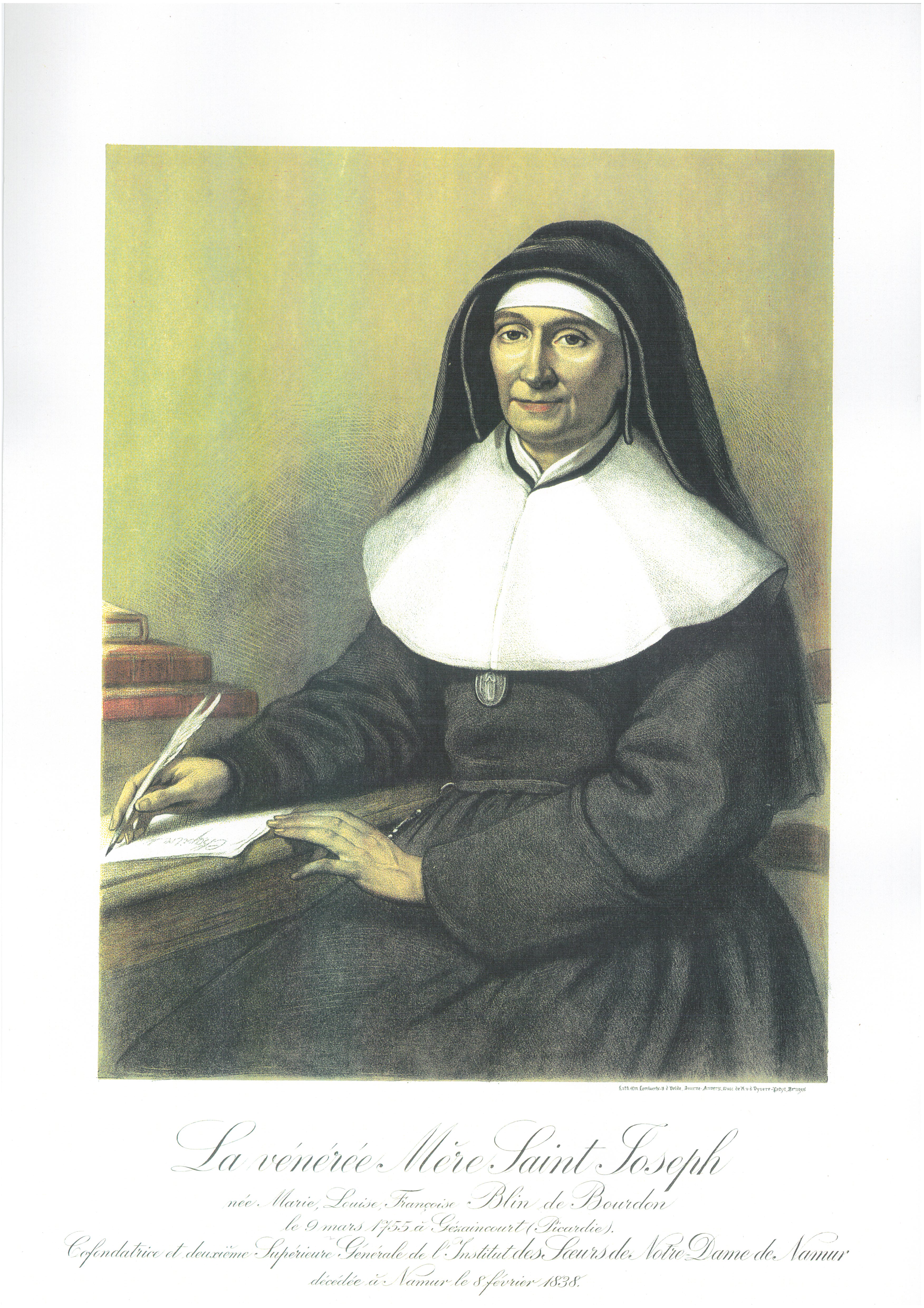


Leave a Reply