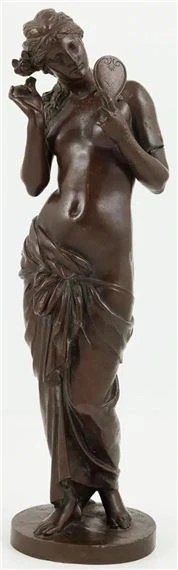

San Sebastian Avenue
Pope Leo has entered The Gideon Computer that I constructed in 1986 after hearing Steve Jobs do an interview. I got sober in 1987 in order to FINIS this science fiction novel, that came true yesterday when I saw the video that the Mayor of Belmont made to celebrate one hundred years of Belmont history that was made by the Janke Family, the founders of Belmont. Was it a mistake they were not mentioned?
WHO KNOWS?
I watched Frontline before I went to bed, and saw the most inept War Party ever assembleD – blunder it was off a cliff. MSNBC described Trump and his party as
A MASS OF ANGRY MEN OUT TO BE MAD AT EVERYTHING. WHY?
The History of the Republican Party – is dead! The History of the U.S. Military
IS DEAD!
Is………..Christianity………..dead?
YES!
The white men who rallied around Jesus, and claimed him to be the instrument of their wrath….ARE BRAIN DEAD! And……….
THEY HAVE NO SOUL!
WHY?
“Touching on disinformation, which “finds a powerful amplifier in AI,” Leo said “democratic life is weakened” when truth is not pursued by a society.
“Indifference to the truth leads, slowly but surely, to a descent into totalitarianism,” he wrote.”
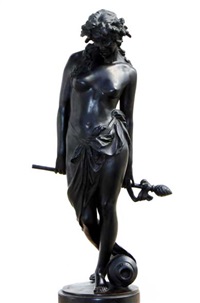
Like an Oscar, I clutched the figurine carved by Julius Moser, who rendered the replica of Christus that was placed on the Stuttmeister monument in Berlin. This was one of the first images I posted on the Belmont Historical Society Facebook page. Neither Denny Lawhern, or Cynthia McCarthy, mentioned it, when alas they popped up four days later. The JEALOUSY they felt was so extreme, they made a Voo-Doo doll of me, and stuck pins in it. I wondered if they were going to send a Hit Man to my door!
“Do you paint houses?”
In my autobiography I will reveal the truth, my mother, born Rosemary Rita Rosamond, was JEALOUSE of me – when I was in her womb! My story ends with a make-believe scene of Rena and I walking into my mother’s home. I now understand, that I own so many beautiful gifts, most everyone wants me to fail. First, they pray to Jesus I never have any money, and will forever WANT of the basic things of life. They pray to God, I die alone – forsaken by my family. They want me to be exceedling crippled, with no one to help me – do my dishes! Most White Women in America…
WORSHIP PRESIDENT TRUMP LIKE MOST WHITE MEN. WHY?
Lord Trump plays to the lowest levels of human existance. He priases their total ignorance, utter lack of class, and gives them A Billion Dollar Bounty to hunt down and destroy all things of good breeding and class. Millions of Christians want…
TRUMP TO HAVE ALL THE MONEY IN THE WORLD SI HE WIILL GIVE THEM SOME! THEY CAN’T WAIT TO WALK THROUGH HIS ARCH DE’ TRIUMPH SO THEY WILL BE IMORTAL……TO!
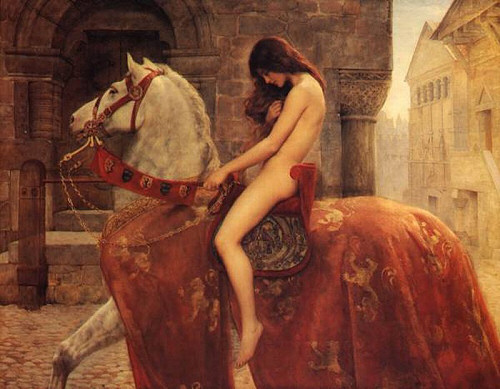
The statue above is not Venus, but, Eirene, a goddess from where the name Irene come from, and the idea of SERENE………PEACE! I delcare this statue the most aunthentic work of art – on earth! I declare the photo of the back of the canvas….
THE STAMP OF AUTHENTICY
I declare the painting ‘Fighting Dogs’ by Julius Moser to represent the fight of Artificial Intelligence that if raging as I type! Read what the Pope has to say, then scroll down and behold her…….My beloved muse who died several months ago!
Irene Victoria Christensen, and John Gregory Presco, are……Futurians!
John Presco
President: Royal Rosamond Press
“The pope has had AI on his radar from the onset of his papacy, telling the cardinals who elected him that in today’s age, that the church is called to offer “the treasury of her social teaching in response to another industrial revolution and to developments in the field of artificial intelligence that pose new challenges for the defense of human dignity, justice and labour.”

- Julius Moser
- Fighting dogs, 1891
- 21.5 x 27 cm. (8.5 x 10.6 in.)
Pope Leo calls to ‘disarm’ AI in major document, warns of technologic threats to humanity

Pope Leo XIV smiles as he greets visitors and pilgrims from the popemobile while riding around St. Peter’s Square at the Vatican before his weekly general audience May 20, 2026. (CNS/Lola Gomez)

by Justin McLellan
Vatican Correspondent
View Author Profilejmclellan@ncronline.org
Follow on Twitter at @m/McLellan_Js
Join the Conversation
Send your thoughts to Letters to the Editor. Learn more
Vatican City — May 25, 2026
Share on BlueskyShare on FacebookShare on TwitterEmail to a friendPrint
With the most authoritative document yet of his still-young pontificate, Pope Leo XIV directed the Catholic Church’s moral gaze toward the frantic pace of technological development that threatens human solidarity. With AI as its entry point, Leo used his first encyclical, Magnifica Humanitas (“Magnificent Humanity”), on safeguarding the human person in the time of artificial intelligence, to articulate the church’s position on a wide range of contemporary crises, including war, modern slavery, wealth inequality, the erosion of democracy and the devaluing of human capacities.
Leo takes aim not at a particular type of AI, but instead explores the effects of technologies that “merely imitate certain functions of human intelligence” and draws a distinction between human beings and machines.
“So-called artificial intelligences do not undergo experiences, do not possess a body, do not feel joy or pain, do not mature through relationships and do not know from within what love, work, friendship or responsibility mean,” Leo writes.
The encyclical, among the most authoritative forms of papal teaching, was presented at the Vatican on May 25 during an event featuring testimony from the pope himself, prominent cardinals and theologians, and a co-founder of the AI company Anthropic, Christopher Olah, who leads its interpretability team.
The document is the fruit of 10 years of dialogue on ethics between the Vatican and the tech industry, a source engaged in the church’s outreach to the tech industry but not authorized to speak publicly on the encyclical said ahead of its release. Tech leaders “were interested in wisdom from the church” regarding “how best to serve humanity,” the source said. “We are trying to engage all these companies with the wisdom of the church and the wisdom of anybody of goodwill.”
In the encyclical, Leo said AI must be freed from an “armed” logic of competition driven by the pursuit of geopolitical and commercial dominance.
“To disarm does not mean rejecting technology, but preventing it from dominating humanity,” he wrote.

A screen reads “AI” in reference to artificial intelligence as attendees gather during Rivian’s first Autonomy and AI Day in Palo Alto, Calif., 11, 2025, showcasing developments in self-driving technology. (OSV News photo/Carlos Barria, Reuters)
The more than 200-page document offers a broad reflection on the church’s understanding of the human person in light of the advent of AI, but is not limited in its scope to addressing technological development. Leo also calls on universities to promote Catholic social teaching in light of the challenges prompted by technological advances and he calls on ordinary people to witness on behalf of peace and human dignity.
“Just like Laudato Si’ was not a climate change encyclical, this will not be an AI encyclical, even if its central case study, in a way, is AI,” said a Vatican source familiar with the document’s drafting ahead of its release, referencing Pope Francis’ 2015 encyclical that reflected on modern humanity’s relationship with the environment.
Almost half of the Magnifica Humanitas is dedicated to tracing the development and foundational principles of the church’s social teaching from Rerum Novarum, the industrial revolution-era encyclical penned by the pope’s namesake, Pope Leo XIII, through Pope Francis.
The pope has had AI on his radar from the onset of his papacy, telling the cardinals who elected him that in today’s age, that the church is called to offer “the treasury of her social teaching in response to another industrial revolution and to developments in the field of artificial intelligence that pose new challenges for the defense of human dignity, justice and labour.”
More than one year later, Leo’s first encyclical draws heavily from the documents of the Second Vatican Council and previous papal encyclicals to justify the church’s public engagement in debate over technological development, even when it does not fit squarely into its spiritual domain.
“Technology is never neutral, because it takes on the characteristics of those who devise, finance, regulate and use it,” Leo wrote. AI developers, therefore, “bear a particular ethical and spiritual responsibility, for every design choice reflects a vision of humanity.”
One of Leo’s most robust criticisms of AI takes aim at the concentration of power among a technocratic class of AI developers. To make his case, Leo invokes the principle of subsidiarity, which holds that social and political decisions should be made at the most local level possible.
The pope insisted within the development of AI systems “the possibility of openly discussing the ethical frameworks involved and subjecting them to shared standards of social justice.”
“Communities and intermediary organizations must not be reduced to passive recipients of decisions made elsewhere; they must be able to contribute to discernment and oversight,” he wrote. “Moreover, ownership of data cannot be left solely in private hands but must be appropriately regulated.”

Pope Leo XIV speaks with the College of Cardinals in the New Synod Hall at the Vatican May 10, 2025, during his first formal address to the college since his election May 8. (CNS photo/Vatican Media)
Pope challenges ‘just war’ framework
Amid technological changes which push humanity toward a “violent culture of power” through polarization and the erosion of ethics, Leo acknowledges the right to self defense but challenges the church’s teaching on just war, a teaching which recently made headlines during debates over the United States-led war effort in Iran.
“Today, more than ever, without prejudice to the right to self-defense in the strictest sense, it is important to reaffirm that the ‘just war’ theory, which has all too often been used to justify any kind of war, is now outdated,” Leo wrote.
Although Pope Francis had previously rejected invoking just war theory to justify “preventive” acts of war, Leo’s statement goes further in asserting that technological developments have decidedly altered the moral conditions on which just war theory had been formed.
Though the pope did not provide his own parameters for an updated understanding of just war, he wrote that today, “humanity possesses far more effective and capable tools for promoting human life and resolving conflicts, such as dialogue, diplomacy and forgiveness.”
After U.S. President Donald Trump’s virtual tirade directed at the pope over his condemnation of the war in Iran, Vice President JD Vance, a Catholic, questioned Leo’s understanding of just war theory. Various members of the global Catholic hierarchy, including Washington Cardinal Robert McElroy, have said the war in Iran does not meet the moral requirements to constitute a just war.
Leo identified a “paradigm shift” around public discourse of war in contemporary society, calling out the “troubling revival of war as an instrument of international politics” aided “by polarizing media narratives, which are often amplified by algorithms that prioritize conflict and confrontation.”
“War is not only fought, but also culturally conditioned through simplistic narratives, a friend-or-foe mentality, disinformation and fear,” he wrote. The pope also warned that the military-industrial complex has become “a defining feature of the current political landscape,” producing what he called an “armed nation” in which war appears as “a natural extension of politics.”
The pope condemned outright the surrendering of combat decisions to AI systems, writing that “it is not permissible to entrust lethal or otherwise irreversible decisions to artificial systems.”
Technology must retain a “chain of responsibility” in war settings “so that accountability and blame are not collapsed into ‘the machine,’” he wrote.
Leo asks pardon for church’s delay in condemning slavery
Leo also connected the AI economy to what he called “new forms of slavery,” arguing that the digital realm relies on the “silent work of millions” engaged in data labeling, model training and content moderation — often for minimal wages and under harsh conditions — and the labor of those working in the extraction of rare earth materials needed to produce the devices and microprocessors on which AI depends.
Embedded within the larger reflection on contemporary forms of slavery, Leo addressed the church’s own history of complicity with the slave trade, stating that Catholics cannot “deny or diminish the delay with which both society and the Church came to denounce the scourge of slavery.”
Despite the church’s consistent affirmation of universal human dignity, “it took eighteen centuries for its full incompatibility with slavery to be explicitly recognized,” Leo wrote. “For this, in the name of the Church, I sincerely ask for pardon.”
Numerous papal bulls issued in the Age of Discovery explicitly granted colonizers the right to enslave Indigenous peoples. It was not until 1839 that Pope Gregory XVI called that slave trade “inhuman” and “unworthy of the Christian name.”
Advertisement
St. John Paul II had previously apologized for the role of Christians in slavery in speeches in Cameroon and Senegal, and the Vatican published a statement in 2023 repudiating the “Doctrine of Discovery” used to justify slavery by church authorities.
Leo’s apology, on behalf of the church and inserted into a magisterial document, constitutes a more direct mea culpa explicitly from the institutional church.
Economic consequences of AI
Warning against the potential human costs of widespread unemployment brought about by the integration of AI into the work force — a 2025 MIT study estimated AI could replace 11.7% of the U.S. workforce — Leo wrote, “technological progress will inevitably produce structural inequalities” if efforts are not made to prevent further disparities, “including tax systems that lighten the burden on the weakest and ask for more from those with greater resources”
“The pursuit of greater profits cannot justify choices that systematically sacrifice jobs,” he wrote, “because the human person is an end, not a means, and the economic order must remain subordinate to human dignity and the common good.”
Leo then called for transparency in how “data and algorithms influence credit distribution, personnel selection or access to services and opportunities,” and said society must invest in the skills of individuals “to ensure that technology does not widen the gap between those who have and those who have not.”
Acknowledging the church’s historic support for labor unions, the pope said organized labor is called to represent and defend workers while also being “open to new types of employment and the corresponding needs of workers.”
The pope also lodged a broader critique of the economic benchmarks used to measure societal progress: “It is important to move beyond the current metrics of development — which for more than eighty years have been tied to the concept of Gross Domestic Product (GDP) — since these metrics almost systematically neglect aspects essential to the overall wellbeing of people and the environment.”
AI-fueled misinformation weakens democracy
Touching on disinformation, which “finds a powerful amplifier in AI,” Leo said “democratic life is weakened” when truth is not pursued by a society.
“Indifference to the truth leads, slowly but surely, to a descent into totalitarianism,” he wrote.
The pope wrote at length on the essential nature of truth in communication, ranging from the prophetic to the purely practical and highlighting the key role of education of orienting individuals toward truth.
Leo urged society to “exercise restraint in the use of AI and to protect our young people from the promise of the perfect machine, from that subtle temptation which renders human thought seemingly superfluous precisely when it is most needed.”
“Having a personal mobile device at too early an age and using it without adult supervision can exacerbate young people’s vulnerabilities, foster addiction and expose them to isolation, bullying and cyberbullying, as well as to pressures to share intimate images or sensitive information,” the pope wrote.
Leo also identified how, although young people acquire knowledge in schools, they also demonstrate an “inability to connect information with deeper knowledge or maintain a sense of purpose,” urging educational models that “incorporate silence, in-depth study, reading and judicious analysis.”

(Pexels/Tara Winstead)
Addressing transhumanism and posthumanism
The pope also pushed back against currents of transhumanism and posthumanism, warning against visions of progress that treat human limitations as problems to be surpassed.
Transhumanism generally seeks to extend human capacities beyond their biological limits, while more radical forms of posthumanism challenge the idea that the human person should remain the central reference point for ethics.
“If the human being is treated as something to be perfected or surpassed, it becomes easier to accept that some lives are less useful, less desirable or less worthy,” the pope wrote. “In the name of progress, ‘necessary sacrifices’ may begin to be justified, placing the burden on the most vulnerable in pursuit of a supposed optimization of the species.”
In the encyclical’s most sustained reflection on the spiritual implications of technological development, Leo exalted human experience, stating that “humanity flourishes not despite limitations, but often through them.”
He wrote that it is within their human limitations that people are led to compassion, generosity, “spiritual experience and the worship of God.”
Leo noted how certain works of art communicate, through an expression of limitations, the principle of human fraternity and push back against injustices which threaten it, explicitly citing Beethoven’s “Ninth Symphony,” “Guernica” and “Schindler’s List.”
Christian self-transcendence, on the other hand, is sought “through an escape from reality or a contempt for their limitations, but through their fulfillment in love,” he wrote.
“For an algorithm, an error is a flaw to be corrected; for a person, however, an error can be a catalyst for profound change,” the pope wrote.
The long arc of Catholic social teaching applied to AI
Atypical for an encyclical, Leo spends almost half of his first major teaching text recounting the principles and development of the church’s social teaching through history to avoid his teaching “being perceived as an undue interference in ‘worldly’ matters or as an external code of ethics imposed from above.”
“In reality, it stems from a Church that walks alongside humanity, recognizing the autonomy of earthly realities and the distinction between ecclesial and political communities,” the pope wrote.

Pope Leo XIV is pictured in a June 4, 2025, alongside an AI illustration. (CNS/Lola Gomez/Reuters/Dado Ruvic)
Leo applied the core principles of Catholic social teaching to the rapid pace of technological development, offering them as a moral framework for deciding how new technologies should be designed, governed and applied.
Articulating the principle of the universal destination of goods, which Catholic teaching holds as superior to the right of private property, the pope said that among the goods intended for all “must also include new forms of property, such as patents, algorithms, digital platforms, technological infrastructure and data.”
“In a context where the wealth of nations depends increasingly on knowledge and technology, when these goods remain concentrated in the hands of a few, without adequate forms of sharing and access, a new imbalance is created that contradicts the universal destination of goods,” he wrote.
Leo also warned that the concentration of power among major economic and technological actors threatens the principle of subsidiarity, particularly among “companies and platforms that define conditions for access, rules of visibility, forms of interaction, and even economic opportunities.”
“We cannot allow a handful of actors to dictate these processes on their own; instead, we must build forms of cooperation that respect the various levels of the global community and make them jointly responsible for the common good,” he wrote.
At the core of the church’s social teaching, Leo stated that for all Christians “going beyond the narrow confines of one’s own interests and committing oneself, within the limits of one’s ability, to the common good is a non-negotiable value, as is the promotion of life.”
Despite the scale of challenges confronting humanity, the pope asserted that “no one is without responsibility” in shaping humanity’s response to the age of AI, and warned of a “polite form of resignation, often disguised as realism” which disengages people from the moral questions posed by new technologies.
Concretely, the pope asked people to be conscious about their use of language, to give space to the victims of injustice, engage in dialogue, revive diplomacy and multilateralism and pray for peace in relationships and society.
To illustrate his call, Leo quoted Gandalf from J.R.R. Tolkien’s Lord of the Rings, in which the wizard describes the characters’ responsibility for “uprooting the evil in the fields that we know, so that those who live after may have clean earth to till.”
Calling all people to action, Leo wrote, “The civilization of love will not arise from a single or spectacular gesture, but from the sum total of small and steadfast acts of fidelity that serve as a bulwark against dehumanization.”
The National Catholic Reporter’s Rome Bureau is made possible in part by the generosity of Joan and Bob McGrath.

Size of this preview: 523 × 600 pixels. Other resolutions: 209 × 240 pixels | 419 × 480 pixels | 670 × 768 pixels | 893 × 1,024 pixels | 1,319 × 1,512 pixels.
Original file (1,319 × 1,512 pixels, file size: 420 KB, MIME type: image/jpeg)Open in Media Viewer
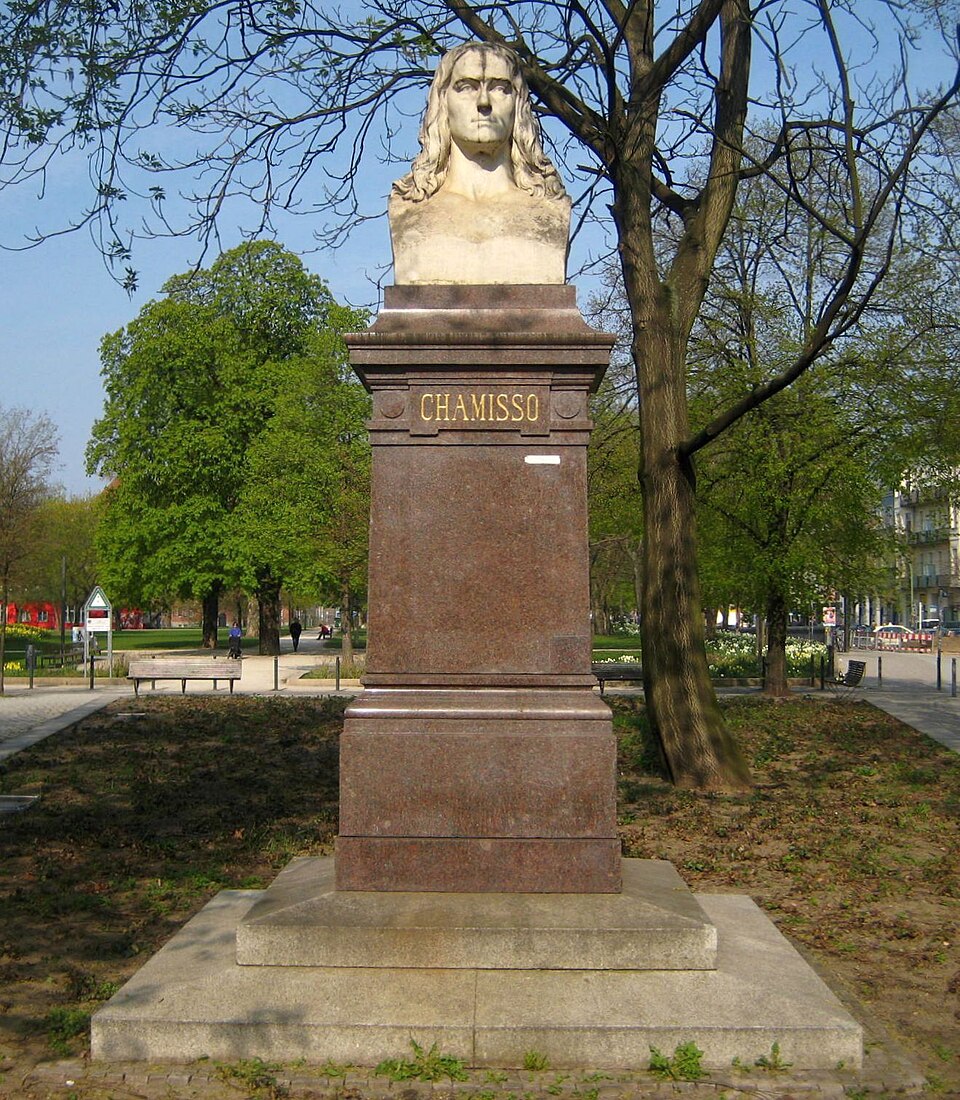
Captions
English
Add a one-line explanation of what this file represents
Summary
| Description | Deutsch: Büste von Adelbert von Chamisso am Eingang des Monbjouparks in Berlin-Mitte. Sie wurde 1888 von Julius Moser geschaffen. Die Skulptur ist als Baudenkmal gelistet.English: Bust of Adelbert von Chamisso at the entrance of Monbijou-Park in Berlin-Mitte. It was created in 1888 by Julius Moser. The sculpture has been dedicated as a historic landmark. |
| Date | 19 April 2010 |
| Source | Own work |
| Author | Jörg Zägel |
Adelbert von Chamisso (German pronunciation: [ˈaːdl̩bɛʁt fɔn ʃaˈmɪso]; 30 January 1781 – 21 August 1838) was a German poet, writer and botanist. He was commonly known in French as Adelbert de Chamisso (or Chamissot) de Boncourt, a name referring to the family estate at Boncourt.
Life
The son of Louis Marie, Count of Chamisso, by his marriage to Anne Marie Gargam, Chamisso began life as Louis Charles Adélaïde de Chamissot at the château of Boncourt at Ante, in Champagne, France, the ancestral seat of his family.[1] His name appears in several forms, one of the most common being Ludolf Karl Adelbert von Chamisso.[2]
In 1790, the French Revolution drove his parents out of France with their seven children, and they went successively to Liège, the Hague, Würzburg, and Bayreuth, and possibly Hamburg, before settling in Berlin. There, in 1796, the young Chamisso was fortunate in obtaining the post of page-in-waiting to the queen of Prussia, and in 1798 he entered a Prussian infantry regiment as an ensign to train for a career as an army officer.[citation needed]

Shortly thereafter, thanks to the Peace of Tilsit, his family was able to return to France, but Chamisso remained in Prussia and continued his military career. He had little formal education, although he is a noted alumnus of the French Highschool of Berlin (Französisches Gymnasium), that has existed since 1689 for the express purpose of accommodating the children of exiled French nobles. While in the Prussian military service in Berlin he assiduously studied natural science for three years. In collaboration with Varnhagen von Ense, in 1803 he founded the Berliner Musenalmanach, the publication in which his first verses appeared. The enterprise was a failure, and, interrupted by the Napoleonic wars, it came to an end in 1806. It brought him, however, to the notice of many of the literary celebrities of the day and established his reputation as a rising poet.[1]
Chamisso had become a lieutenant in 1801, and in 1805 he accompanied his regiment to Hamelin, where he shared in the humiliation of the town’s capitulation the next year. Placed on parole, he went to France, but both his parents were dead; returning to Berlin in the autumn of 1807, he obtained his release from the Prussian service early the following year. Homeless and without a profession, disillusioned and despondent, Chamisso lived in Berlin until 1810, when through the services of an old friend of the family he was offered a professorship at the lycée at Napoléonville in the Vendée.[1]
He set out to take up the post, but instead joined the circle of Madame de Staël, and followed her in her exile to Coppet in Switzerland, where, devoting himself to botanical research, he remained nearly two years. In 1812 he returned to Berlin, where he continued his scientific studies. In the summer of the eventful year, 1813, he wrote the prose narrative Peter Schlemihl, the man who sold his shadow. This, the most famous of all his works, has been translated into most European languages (English by William Howitt). It was written partly to divert his own thoughts and partly to amuse the children of his friend Julius Eduard Hitzig.[1]
In 1815, Chamisso was appointed botanist to the Russian ship Rurik,[3] fitted out at the expense of Count Nikolay Rumyantsev, which Otto von Kotzebue (son of August von Kotzebue) commanded on a scientific voyage round the world.[1] He collected at the Cape of Good Hope in January 1818 in the company of Krebs, Mund and Maire.[4] His diary of the expedition (Tagebuch, 1821) is a fascinating account of the expedition to the Pacific Ocean and the Bering Sea. During this trip Chamisso described a number of new species found in what is now the San Francisco Bay Area. Several of these, including the California poppy, Eschscholzia californica, were named after his friend Johann Friedrich von Eschscholtz, the Rurik’s entomologist. In return, Eschscholtz named a variety of plants, including the genus Camissonia, after Chamisso. On his return in 1818 he was made custodian of the botanical gardens in Berlin, and was elected a member of the Academy of Sciences, and in 1819 he married his friend Hitzig’s foster daughter Antonie Piaste (1800–1837). He became a leading member of the Serapion Brethren, a literary circle around E. T. A. Hoffmann.
In 1827, partly for the purpose of rebutting the charges brought against him by Kotzebue, he published Views and Remarks on a Voyage of Discovery, and Description of a Voyage Round the World. Both works display great accuracy and industry. His last scientific labor was a tract on the Hawaiian language. Chamisso’s travels and scientific researches restrained for a while the full development of his poetical talent, and it was not until his forty-eighth year that he turned back to literature. In 1829, in collaboration with Gustav Schwab, and from 1832 in conjunction with Franz von Gaudy, he brought out the Deutscher Musenalmanach, in which his later poems were mainly published.[1]
Chamisso died in Berlin at the age of 57. His grave is preserved in the Protestant Friedhof III (Cemetery No. 3 of the congregations of Jerusalem’s Church and the New Church) in Berlin-Kreuzberg, to the south of the Hallesches Tor.
Chamisso collected numerous zoological and botanical specimens as well as occasional human bones.[5] His collections are in the care of a number of European museums. Some of his fungal specimens were distributed by Johann Friedrich Klotzsch in his highly influential exsiccata Herbarium vivum mycologicum sistens fungorum per totam Germaniam crescentium collectionem perfectam (1832).[6]
Botanical work

Chamisso is chiefly remembered for his work as a botanist; his most important contribution, done in conjunction with Diederich Franz Leonhard von Schlechtendal, was the description of many of the most important trees of Mexico in 1830–1831. Also, his Bemerkungen und Ansichten, published in an incomplete form in Kotzebue’s Entdeckungsreise (Weimar, 1821) and more completely in Chamisso’s Collected Works (1836), and the botanical work, Übersicht der nutzbarsten und schädlichsten Gewächse in Norddeutschland (Review of the Most Useful and the Most Noxious Plants of North Germany, with Remarks on Scientific Botany), of 1829, are esteemed for their careful treatment of their subjects.[1] In 1824 he became a member of the Regensburg Botanical Society.[7]
The genera Chamissoa Kunth (Amaranthaceae) and Camissonia Link (Onagraceae) and many species were named in his honor.[8]
The standard author abbreviation Cham. is used to indicate this person as the author when citing a botanical name.[9]
Belles-lettres
Chamisso’s earliest writings, which include a verse translation of the tragedy Le Comte de Comminge in which “heilsam” is used in place of “heilig”, show a 20-year-old still struggling to master his new language, and a number of his early poems are in French. Between 1801 and 1804 he became closely associated with other writers and edited their journal.
As a poet Chamisso’s reputation stands high. Frauenliebe und -leben (1830), a cycle of lyrical poems which was set to music by Robert Schumann, by Carl Loewe, and by Franz Paul Lachner, is particularly famous. Composers such as Pauline Volkstein also used Chamisso’s texts in their compositions. Also noteworthy are Schloss Boncourt and Salas y Gomez. He often deals with gloomy or repulsive subjects; and even in his lighter and more cheery productions there is an undertone of sadness or of satire. In the lyrical expression of the domestic emotions he displays a fine felicity, and he knew how to treat with true feeling a tale of love or vengeance. Die Löwenbraut may be taken as a sample of his weird and powerful simplicity; and Vergeltung is remarkable for a pitiless precision of treatment. The first collected edition of Chamisso’s works was edited by Hitzig and published in six volumes in 1836.[1]
Legacy
Otto von Kotzebue named Chamisso Island after him.[10] Chamisso is commemorated in the scientific name of a species of Chilean snake, Philodryas chamissonis.[11]
Literary work
He is the author of the famous story, Peter Schlemihl, about a man who sold his shadow, and is the poet of the short poem “Tragic Story” which tells about a wise monk without the benefit of common sense who tries to change the direction of his pigtail.[12]

11/25/2024
The Goddess, Montana Rose, of Tamalpais

Eirene was a minor goddess in ancient Greek mythology, associated with ideals of peace and prosperity. Though not a major figure, she continues to hold allegorical significance in modern times through her enduring symbolic representations. This article explores the mythology and meaning behind Eirene, the Greek goddess of peace and wealth.
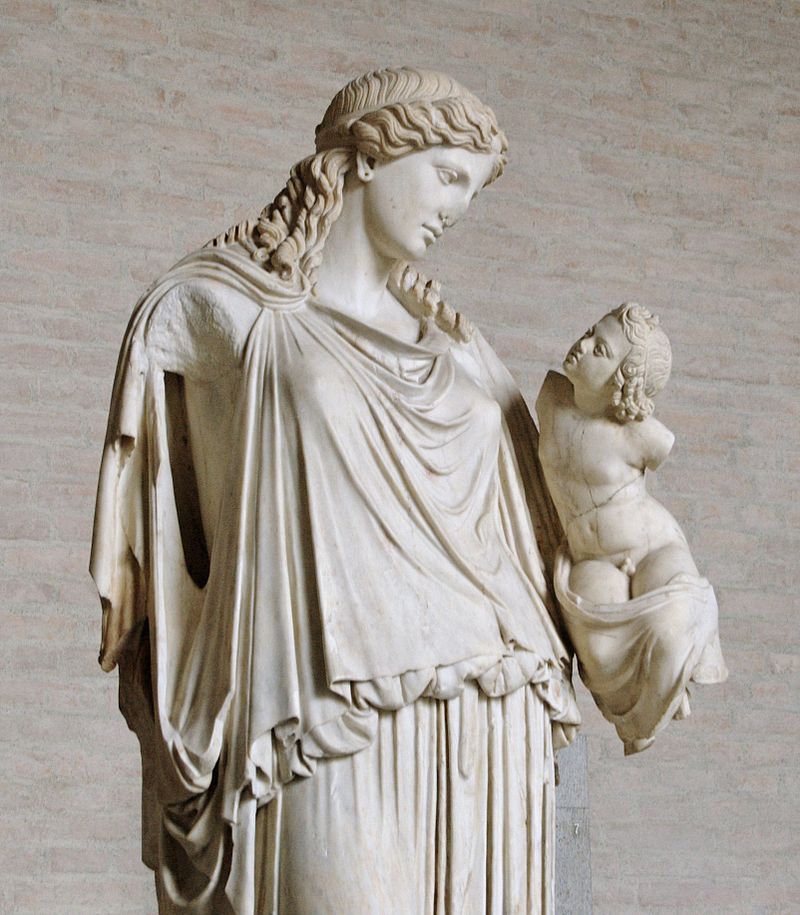

On this day, November 25, I John Presco, install Goddess Worship in America. Rena Easton and I camped two days on Mount Tamalpais. Rena is my muse, and the muse of Christine Rosamond, When I become President of the United States I will make the teaching of the World Goddess’s mandatory. My ancestor, John Wilson, tried to create a language and dictionary for the Native Americans.
I name America’s goddess, Irene, or Eirene, is Rena’s middle name. You have my permission, and Eirene’s permission, to worship her and her child this Thanksgiving. Be a California Child of Peace – today!
See Jon
Eirene or Irene (/aɪˈriːniː/; ‹See Tfd›Greek: Εἰρήνη, Ëirene, [eːrɛ́ːnɛː], lit. “Peace”),[1] more commonly known in English as Peace, is one of the Horae, the personification and goddess of peace in Greek mythology and ancient religion. She was depicted in art as a beautiful young woman carrying a cornucopia, sceptre, and a torch or rhyton. She is usually said to be the daughter of Zeus and Themis and thus sister of Dike and Eunomia. Her Roman equivalent is the goddess Pax.
Beauty Beyond Compare
Posted on October 4, 2024 by Royal Rosamond Press
Made In The Image of God
Posted on September 6, 2023 by Royal Rosamond Press

Rena and I were made in the image of God. When Christine Rosamond Presco saw a photo of the painting I did of Rena Christensen standing on a hill watching the sunset, she took up art. She couldn’t stand it, that I got so much, and she got – nothing! Out of vengeance – she had to have it all! In her autobiography that the New Narcists disappeared, my jealous sister began Her Story, this way
“Everyone thought my brother would be a famous artist someday, but, it wasn’t meant to be!”
Rosamond hated to go to shows because men and women always asked…
“Are you a Lesbian? Are you in love with women?”
I was in love with women – including the most beautiful woman in the world – whose back sent me to heaven. I just made this sunset on Fotor, that is close to the painting I did that I showed Christine in person, and that my brother – disappeared! They both wanted me to be…The Hidden One!
After spending the day on Monte Rio beach, we would shop for food, then drive into the Armstrong Woods. Putting the Dodge in second, and finding music to go with on the radio, we began our ascent to the top of our mountain. I felt I was stealing Beauty away from the World. I accused Rena of wanting to be in a crowd of people, but, she just wanted to be……with me!
John ‘The Hidden One’
“It was very uncool for a Hippie to get caught taking a pic with a camera, a rule I wished I had broke. This is a…….re-creation.“



The Healing Ride
Posted on October 5, 2019 by Royal Rosamond Press
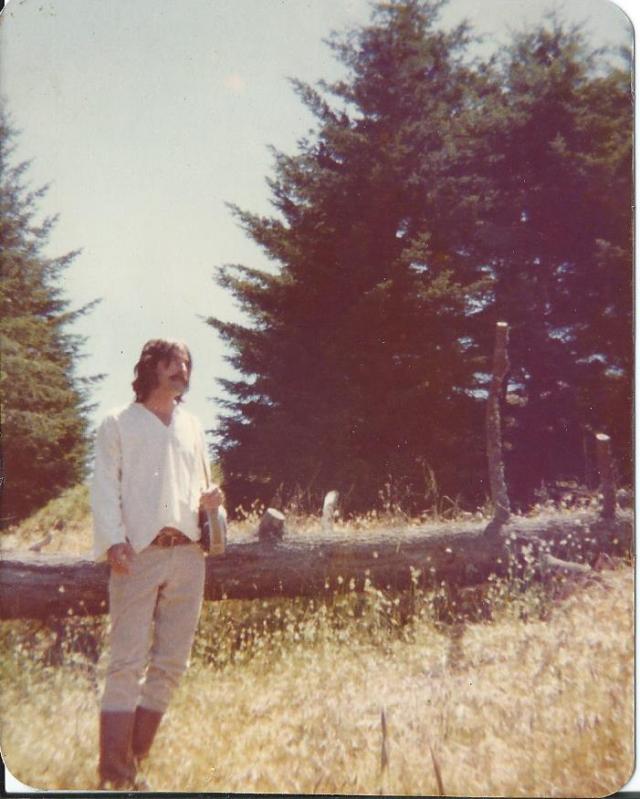


Alas I found the road that Rena and I traversed almost every day for fifty days. It was a miracle my 1950 Dodge held up. Mind you Rena grew up in Grand Island Nebraska where it is completely flat. There were some hairy turns and deep drop-offs that my love looked down with some unease. This was her High School graduation excursion her harrowing climb in the Swiss Alps. Coming down, my breaks would get hot and we stopped at the usual pullover. We wee healing for a swim in the Russian River, or a day at Victoria Beach.
In the bottom video, the water in the pond was much higher. Rena would swim here at dusk, in the buff. I made all the meals, and the camp coffee. I gave lessons about the Indian Religion around the campfire. Then we watched the sunset, and the milky way appear.
Rena was afraid to even look at the ocean. I took her to our beach about five times, and she was trying to brave, more than I knew. Looking at the video taken near Jenner, I can now put myself in her place, a flat safe, place.
I was concerned our Dodge would break down going up one of the greatest roads in the West. I was going to post a map, but changed my mind. We took a back pack with us in case we had to bail, and put our thumbs out and hitchhike to Nebraska. Rena was such a special cargo. She called her grandmother every time we went to town. Rena was part Nerd. She sure got her ticket punched for the California Dream Ride.
It was very uncool for a Hippie to get caught taking a pic with a camera, a rule I wished I had broke. This is a…….re-creation.
John Presco
Kentfield (formerly Ross Landing, Tamalpais, and Kent)[5] is a census-designated place (CDP) in Marin County, California, United States, just north of San Francisco. Kentfield is located 2 miles (3 km) southwest of downtown San Rafael,[5] at an elevation of 115 feet (35 m).[3] The population was 6,808 at the 2020 census.[4] The ZIP codes are 94904 for street addresses, and 94914 for PO boxes, and are shared with the neighboring community of Greenbrae.
History
[edit]
In 1857, James Ross (1812–1862) bought Rancho Punta de Quentin. Ross, a Scot who had arrived in San Francisco from Australia in 1848 and made his fortune in the wholesale liquor business, set up a trading post called “Ross Landing”.[5][6] Steamers would come up Corte Madera Creek to the landing there.[5] Albert Emmett Kent bought the land from the Ross estate in 1871.[5][7] Kent built an estate called Tamalpais, later applied to the nearby railroad station.[5] His son, William Kent, was a US Congressman, philanthropist and founder of Muir Woods.[7]
The name of the railroad station was changed to Kent in the 1890s, and finally to Kentfield with the opening of the first post office in 1905.[5]
Jenny’s Destiny – Hands Across The Water!
Posted on July 8, 2024 by Royal Rosamond Press
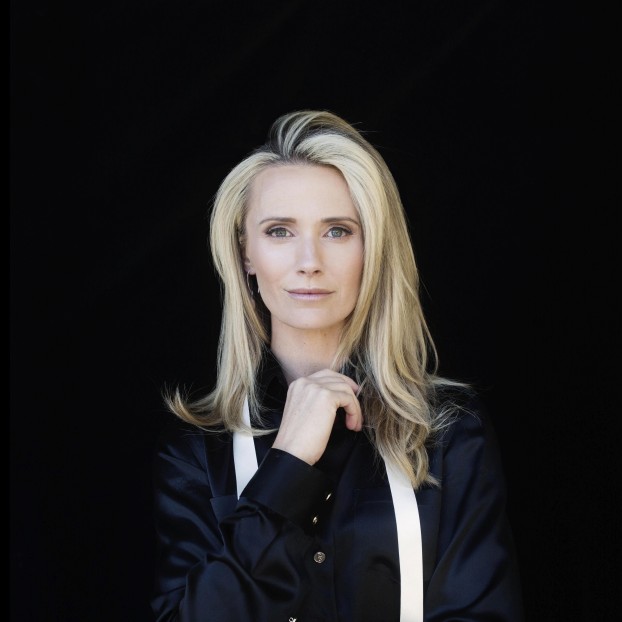
Jenny is destined to found Hands Across The Water – an immediate answer and thank you to French and British Voters. The spirit of Douglas Fairbanks Junior walks with her. She will be knighted! I’m sure she does not know Elizabeth Rosemond Taylor is kin to all the Gettys. How many know! They are also kin to Ian Fleming!
LET’S GO!
Time to end the play at being a California Royal and his Montana Cowgirl. Let us enter…..
The Great Theatre! The true dream…..will go on!
Seer Jon
Douglas Fairbanks Jr. and James Bond
Posted on September 2, 2018 by Royal Rosamond Press
It Is Written – Montana Rose
Posted on July 9, 2024 by Royal Rosamond Press
Six hours ago I had a vision of Jenny Newsom being the First Lady. Then I read her eldest daughter is named…….Montana!
I see Oregon becoming a part of California. Did I create NATO-WEST? Yes I did! If Washington joins California, then we can appeal to Canada to get us into NATO. There would be a Western Sanctuary repel the Confederate Red State Menace. NATO would come to our defense! President Biden signs The Western Freedom Deal – before he leaves office! They will say it is illegal! What say ye?
Seer Jon
Rena Montana of Yellowstone
Posted on June 3, 2023 by Royal Rosamond Press

Rena Montana by John Presco Copyright 6/2/23


Rena Montana
by
John Presco
Copyright 2023
I watched three episodes of Yellowstone last night. What a terribly maudlin show, that you could tell was leading up to a Native American getting shot by a Angry White Man. Meanwhile, back at the ranch, Kevin is going hog wild about his property he owns in the land Roy Rosamond and his wife, Mary Magdalene – roamed – without a cent! Yet they, and their offspring, got what Costner can’t get with all his millions and choice real-estate – a real Western – a sense that you belong here. and are the Real McCoy. After spending fifty million dollars putting their choice property on the line – his wife left him. I think she knows to – want it all -is to lose it all, because you are declaring – you don’t have it!
It! What is – IT? Is IT – a story?
Not far away from the Costner Sea-ranch, I plucked Rena Easton from the edge of the sea, and on Santa Barbara beach, I discovered she is afraid of the ocean. I did a large painting of her. I asked her to send me a photograph of her profile, and she jumped into an old pay photo booth. According to Garth Benton, who is kin to the Western Artist, Thomas Hart Benton, my sister used a projector and images of models cut out of fashion magazines, to become one of the wealthiest artists of our time. Christine Rosamond Benton has Rena Christensen Easton to thank. They met once, in Venice California.
Neither Cristine nor Irene knew Dollie Rosamond was buried on the same grave as her mother, Ida Rosamond, born, Ida Rose On this day, I raise Dollie from the dead, along with Carl Janke and folk, buried in the same grave in Redwood City What if, Dollie survived the Yellow Fever, and become the most beautiful young woman anyone has ever seen? She is called….The Red Rose of Yellowstone! When John Muri came upon her he thought he was seeing things. He swore he saw the ghost of a Greek Goddess.
“She’s different than any human I ever met. I suspect she died of the fever -but then came back. She practically raised herself. She claimed a pack of wolves raised her up!.
One day a handsome young man came into Yellowstone on a horse. riding with him were San Francisco business men. Some of them were foreigners. They wanted to purchase land that Muir wanted included in Yellowstone park. John Janke was the son of Carl Janke who brought six portable houses around the Cape and erected them suth of San Francisco. William Ralston ‘The Man Who Built San Francisco’ bought one, then added to it to make a fine house in the city that would be called….Belmont! It was here that the Janke family built a German Wonderland. These businessmen represent Prussian Royalty who wanted to build their own Vonderland in the wilderness – before it was gone. No sooner did Mr. Janke open his mouth, and deliver The Rose a winning smile, Rena cut him off – at the pass!
“Your’re trespassing on our land. You have no business here. Turn around and go back!
Baron von Studtmeister translated this old phrase into German, then gave his beautful Trakhner horse a slight signal to it’s ribs, and this War Horse – advanced! Rena had been admiring it, and her pack was sniffing it from on the other side of the rocks – that they mounted, and they took in the humans and their pack horses. Ralph Stutdmeistter was impressed. His Teutonic ancestors worshipped the wolf. He was named after a wolf – and the Master of the Horse! . Taking in the startling clear blues eyes of Rena, he lost interest in the cattle, the buffalos, and the giant trees. He had to have her. so did John Janke. And thus began the Great Western Rivalry that would carve out a Hidden Empire, that has remained a secret, to this day.
Rena told me her three older sisters were models, and one was the mistress of Robert Vesco.
“How come you don’t want to be a model like your sisters?”
“I don’t like their lifestyle!”
Rena got married again to a man who owns a small cattle ranch in Montana. What does that tell you?
Ms. Easton, I tried to tell you, I tried to give you, the title Sleeping Beauty. I told you were responsible for Rosamond’s success, and the success of Sarah Moon – who copied my sister’s style. His fans thought I was Sarah – an Iranian man who disguised himself as a woman! His real identity was unknow for many years. Sounds like the problem you got in Montana – that more gnarly cowboyism will solve?
. On Monday I will be taking two floppy discs to my computer guy to get them on the right track so I can publish them. The Gideon Computer is unfinished, but Chameleon Art – is done! This prophetic short story was written in 1987, the years I got sober.
“This is the birth of Artificial Intelligence!”
I will be known as The Emperor of Artistic Artifical Intelligence. You will be known as…
The Artistic Muse of Artificial Intelligence!. You are…..The Empress of Yellowstone!
Kevin! Abandon that project. This is the story the Emperor Computer has written for you to produce! Human Beings want – and need a Love Story – and not a sad story about a billionaire grumblepuss landowner who can’t find happiness. How boring. Not – my problem! When folks read it, they will proclaim…..
“About time!”
I wake up each day vondering how I can render – Rena! At least I used to. Eureka!
John Janke wrote a poem to Rena, first in High German, then, English. Von Studmeister got wind of this poem, and had Joaquin Miller help him with his poem. All three men were members of The Bohemian Club. The greatest poetry contest known to humankind, was underway!
The Amazons of Yellowstone
by
John Janke
The Amazon forest
burns hot tonight
my love.
Soon
there will be no oxygen
in the air
To breath, my love
my love of air
is no equal
to my memory of you
In the last
of everything
in the consuming sparks
that dance around the moon
I save my last breath
for you
For you
my last sigh
John Presco
President: Royal Rosamond Art

Royal’s Montana Stories
Montana Rose
Posted on April 8, 2017 by Royal Rosamond Press
High Noon Jenny
Posted on July 8, 2024 by Royal Rosamond Press

Gov. Gavin Newsom with his wife Jennifer Siebel Newsom and children Dutch, Montana, Brooklynn, and Hunter in Sacramento, Calif., Friday, Jan. 6, 2023. (Photo: José Luis Villegas/AP)
Gavin brought a Montana Girl into the Getty Fold. I fell into a trance when Spooky Noodles told me 80 bodyguards went with Gavin to get hitched in Montana. I’s on……The Final Countdown! Jenny went to Sandford! I told Spooky I went into Dreamtime. I found a video with the two Light Witnesses.
John
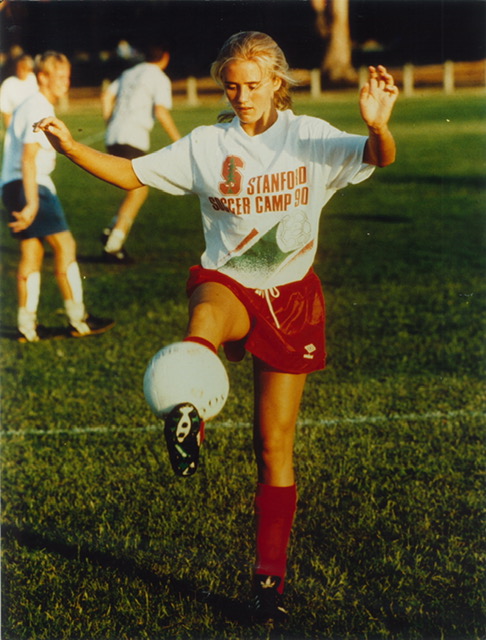
Jennifer Lynn Siebel Newsom (born June 19, 1974) is an American documentary filmmaker and actress who is the current First Partner of California as the wife of Governor Gavin Newsom. She is the director, writer, and producer of the film Miss Representation (2011), which premiered in the documentary competition at the Sundance Film Festival. The film examines how the media has underrepresented women in positions of power. The Mask You Live In (2015), her second film which she wrote, produced and directed, scrutinizes American society’s definition of masculinity.
During her tenure as the wife of the governor, the role of first lady was retitled “first partner” to be gender inclusive.[3][4][5] She was previously the state’s second lady from 2011 to 2019 and first lady of San Francisco from 2008 to 2011.
Early life and education[edit]
Jennifer Lynn Siebel was born in San Francisco, to Kenneth F. Siebel Jr., an investment manager, and Judy Siebel (née Fritzer), cofounder of the Bay Area Discovery Museum in Sausalito.[2] She grew up in the suburb of Ross, California.[6][7][8] She is the second cousin once removed to Thomas Siebel.[9]
Jennifer is the second oldest of five girls and attended Ross Grammar School and The Branson School. At six years old, she was present when a golf cart accidentally ran over her older sister Stacy, killing her.[10] Siebel Newsom has stated that she still feels survivor’s guilt over her sister’s death. During high school, she played varsity basketball, soccer, and tennis.[11] She later graduated with honors from Stanford University, where she earned a Bachelor of Arts degree in Latin American studies in 1996 and Master of Business Administration in 2001.[citation needed]
At Stanford, she was recruited to play on the women’s soccer team. While pursuing her MBA, Siebel Newsom also studied at the American Conservatory Theater, where she completed a certificate program. After completing her education, Siebel Newsom traveled to Africa, Latin America, and Europe on assignments with Conservation International, a global environmental coalition.[7]
Career[edit]
Siebel Newsom and Governor Newsom presenting the 2019 inductees in the California Hall of Fame.
In 2002, Siebel Newsom moved to Hollywood, where she concentrated on building her acting career.[7] Siebel Newsom earned many roles in television, film, and theater. She has appeared on such television shows as Life, Mad Men, Strong Medicine, and Numb3rs.
Miss Representation premiered at the 2011 Sundance Film Festival to mostly positive reviews.[12] The film went on to screen at numerous other festivals, including the San Francisco International Film Festival, Athena Film Festival and won the Audience Award at the Palo Alto International Film Festival. The film interweaves stories from teenage girls with interviews with, among others, Condoleezza Rice, Lisa Ling, Nancy Pelosi, Katie Couric, Rosario Dawson, and Gloria Steinem discussing the media and its message regarding women.[13] On February 10, 2011, Oprah Winfrey announced that she had acquired the film for the OWN Documentary Film Club.[14]
Siebel Newsom raised $101,111 on Kickstarter to fund the production of her second film The Mask You Live In, which premiered at the 2015 Sundance Film Festival.[15] Her third film was The Great American Lie.[16] She directed the documentary film Fair Play in 2022.
Siebel Newsom co-founded The Representation Project, an organization which works to end gender stereotypes.[17] The Representation Project’s board members include Jan Yanehiro, Nathan Ballard, Susie McCormick, and Maureen Pelton.[18][19][20] In 2021, The Sacramento Bee revealed that from 2011 to 2018, Siebel Newsom earned $2.3 million from her film work through her nonprofit organization, which had received $800,000 in donations from companies with business before California’s government as her husband Gavin Newsom‘s political career ascended, and continued to draw her salary after he became governor.[21] While the practice is allowed by California law, outside ethics experts expressed concerns about conflicts of interest; a spokesperson for The Representation Project said Siebel Newsom had not overseen fundraising since 2015.[21]
Personal life[edit]

In the early 2000s, Siebel Newsom dated actor George Clooney.[7][22][23]
She met Gavin Newsom on a blind date set up by a mutual friend at the Yerba Buena Center for the Arts in October 2006.[1] The couple announced their engagement in January 2008.[1] Jennifer and Gavin wed in July of the same year at her parents’ ranch in Stevensville, Montana. The Newsoms have four children.[24][25][26][27]
In 2011, Siebel Newsom and her family moved from San Francisco to Kentfield, where she had grown up.[28] In 2019, Siebel Newsom and her family moved to Fair Oaks, California.[29]
Her sister, Melissa Siebel, is married to Joshua Irwing Schiller, son of Boies Schiller Flexner LLP co-founder Jonathan Schiller.[30]
Siebel Newsom was registered as a Republican until 2008, before re-registering as No Party Preference. Prior to registering as an independent voter, she accidentally registered with the far-right American Independent Party, before correcting her party to “decline to state”.[31]
Siebel Newsom was one of several accusers against Harvey Weinstein in his 2022 Los Angeles criminal rape and sexual assault trial.[32] In November 2022, Siebel Newsom testified in court that, in 2005, Weinstein had raped her in a hotel room, having lured her there under the pretenses of holding a professional discussion about film projects.[33] Weinstein’s attorney claimed what took place was “consensual, transactional sex“.[34] The jury was unable to reach a verdict on Newsom’s accusation and that of one of his other accusers. A mistrial was declared on those charges. However, the jury found Weinstein guilty on three counts pertaining to a third accuser, an Italian model and actress. Weinstein, who was already two years into a 23-year sentence for a rape and sexual assault conviction in New York, faced a 24-year sentence for the Los Angeles verdict as of December 2022.[35]
The Creative Royal Fleet Sets Sail
Posted on April 16, 2018 by Royal Rosamond Press

Here are the vessels that Sir Caspar John served upon. He was born into a artistic family. I would like see the College of Defence Studies founded by the Artist, Sir Winston Churchill, expanded to include Creative People in Britain and the U.S. As a rule artists, writers, and musicians do not take slaves, gas people, and loot other people’s art. Hitler did all three. He was a bad artist who cost the world many lives, and a trillion dollars to put him down. We took back the art he stole and put it in sacred public places. I support Theresa May’s strike against Assad, who gassed his own people.
Below are the warships that Sir Ian Easton served on.
Jon Presco


Share this:
Bread and Roses of Marin
Posted on August 21, 2017 by Royal Rosamond Press

Did Beryl Buck ever meet, or see, Mimi Farina, who was a good friend of my ex? Where are Beryl’s things and letters? Did she ever buy a ticket to go see Bread&Roses?
Above is a pic of where B&R was located in Mill Valley in Marin Couty. Mimi lived on Mount Tamalpais. Mimi created the ideal charity. She is the model for all Buck Foundations. Instead we get a dude playing with his expensive toys.
Sydney Morris screwed up the Brett Weston creative legacy. I had my mother call him and he and Stacey were about to throw away our family photos.
“Do you want them?”
“Of course I want them!”
These are fucking lawyers! They should be banned from getting near creative people.
Jon
Mimi died on July 18, 2001, at her home on Mt. Tamalpais in Mill Valley, California, surrounded by her family and close friends. Her vision lives on in the form of Bread & Roses today.
The Mission Statement for this inspirational program is as follows:
Bread & Roses is dedicated to uplifting the human spirit by providing free, live, quality entertainment to people who live in institutions or are otherwise isolated from society. Our performances: enrich the soul and promote wellness through the healing power of the performing arts; create a sense of community for our professional performers, in a non-commercial setting in which they can donate their talents to inspire and be inspired; provide an opportunity for non-performing volunteers to contribute a variety of skills and resources that support our humanitarian services and increase the impact of donor contributions. In carrying out this mission, Bread & Roses seeks to create a social awareness of people who are isolated from society, and to encourage the development of similar organizations in other communities.
Cunimund’s grim end and Rosamund are mentioned in J. R. R. Tolkien‘s story “The Lost Road”, when the character Alboin asks his father, Oswin Errol, about the origin of his name:
…and Oswin told his son the tale of Alboin son of Audoin, the Lombard king; and of the great battle of the Lombards and the Gepids, remembered as terrible even in the grim sixth century; and of the kings Thurisind and Cunimund, and of Rosamunda. ‘Not a good story for near bed-time,’ he said, ending suddenly with Alboin’s drinking from the jewelled skull of Cunimund…
—J. R. R. Tolkien, The Lost Road
In an early version of J. R. R. Tolkien‘s fantasy time-travel story The Lost Road, Tolkien considered placing one of his main characters in the person of Alboin.
Buck, Beryl (Elizabeth) H. (Hamilton)
(1896–1975) philanthropist; born in Minnesota; and Leonard W. (1891–1953) pathologist; born in Vacaville, Calif. Beryl met Leonard at Roosevelt Hospital in Oakland where she was training to be a nurse and he a doctor. They married a year later (1914). Leonard’s father died in 1916, and his mother in 1920, leaving the Buck’s millionaires with a fortune from oil. They built an estate in Ross (Marin County) (1931), and Leonard, a pathologist, taught at the University of California: San Francisco (1928–51). Leonard died suddenly, leaving all his estate to Beryl. She, in turn, formed the Leonard and Beryl Buck Foundation Trust which, after she died, became part of the San Francisco Foundation, with the stipulation that the money be reserved for Marin County’s needy and various nonprofit, educational, religious, and charitable organizations. What was a $15 million bequest became a $253-million trust when the Buck’s Beldridge Oil stock was bought by Shell Oil. Attempts by the San Francisco Foundation to spend money outside the already prosperous Marin County resulted in litigation and a court settlement (1986) establishing the Marin Community Foundation (1987), which administers the trust now valued at more than $500 million for Marin County residents.
“As far as Morris is concerned, the terms of the sale of the Weston archive represents the best outcome for both Weston”s estate, and for the legacy of Weston”s artistic achievement. Any supposed controversy over the sale, says Morris, is strictly in the mind of Williams, and that Brett never explicitly stated how he wanted his archive disposed of.
“I honestly feel the results achieved over the past four years are as good as could have been achieved for this estate,” says Morris. “We”ve done all we can do and I feel good about it. It has not been easy, but it”s my nature to know what I”m doing is right and doing the best job to get the estate closed.
“In my opinion the Center will have the definitive collection of Brett”s work and as far as everyone else is concerned they couldn”t be happier,” says Morris.
As a coda to the events surrounding the legal fight over the sale of Weston”s archive to Keesee, Williams herself was sued this past October by Morris on behalf of the estate over breach of contract for the remaining two books on Weston”s work, and for the return of 600 Weston photographs intended for those publications. She is also being sued for money Morris says is due the estate as a result of ongoing sales of Weston”s work by Williams at the Photography West Gallery.
Williams says she hadn”t gone forward on the other books because Morris told her the estate didn”t want any additional tax liabilities from any additional sales or promotions.
Morris denies Williams assertions, and says only that negotiations between the estate and Williams are ongoing and may be resolved in January.
“My feeling is she breached her contract for the other two books, and the estate issues have nothing to do with her failure to do the last two books,” says Morris.
http://articles.latimes.com/1986-07-26/news/mn-50_1_legal-battle
Mimi the Muse
Posted on November 23, 2014by Royal Rosamond Press
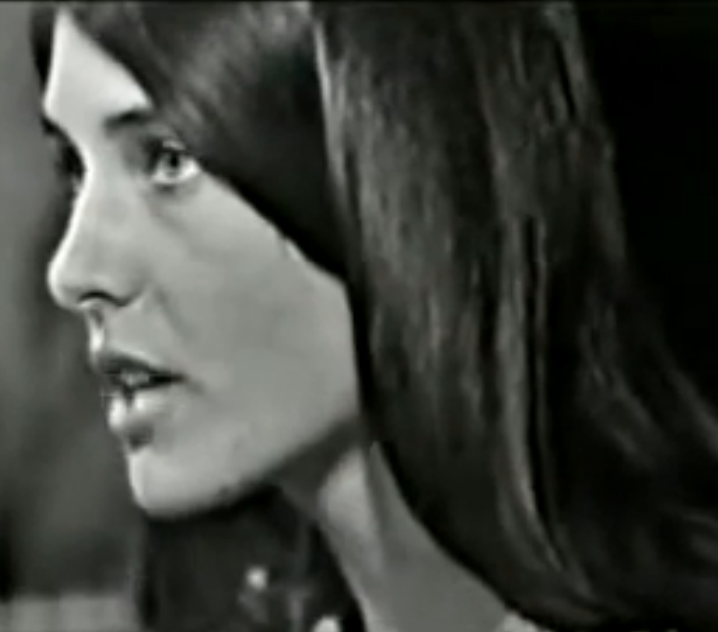

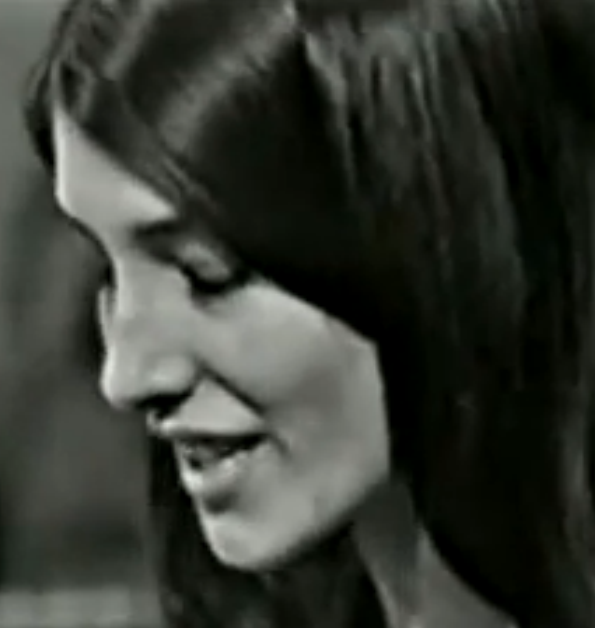
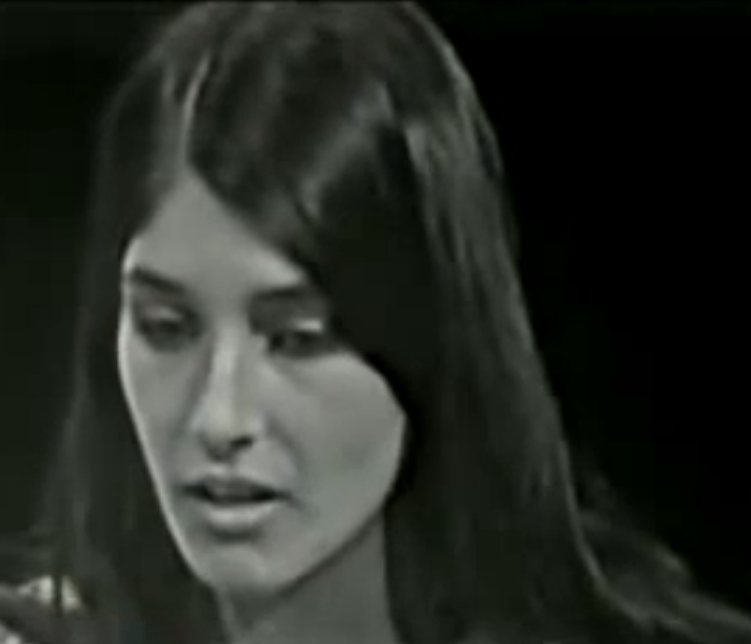
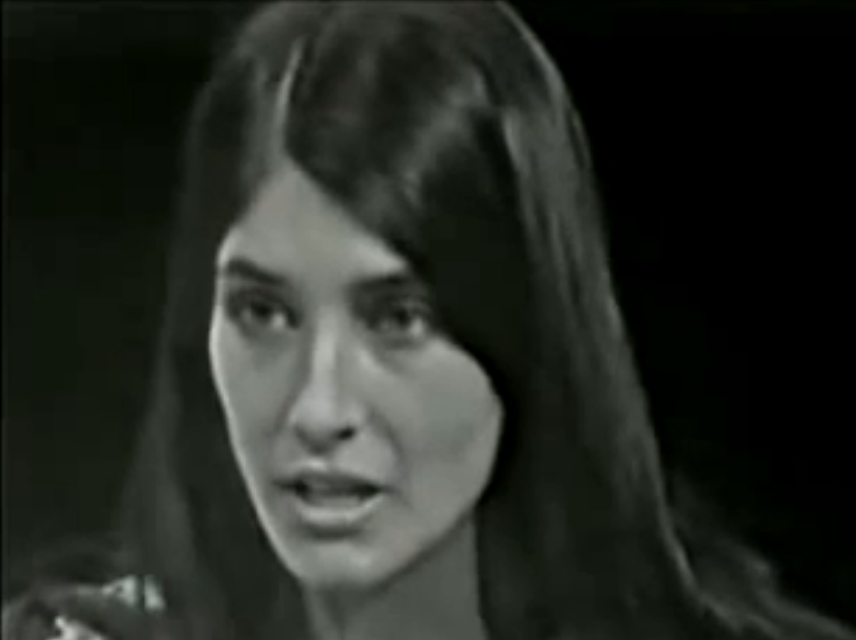




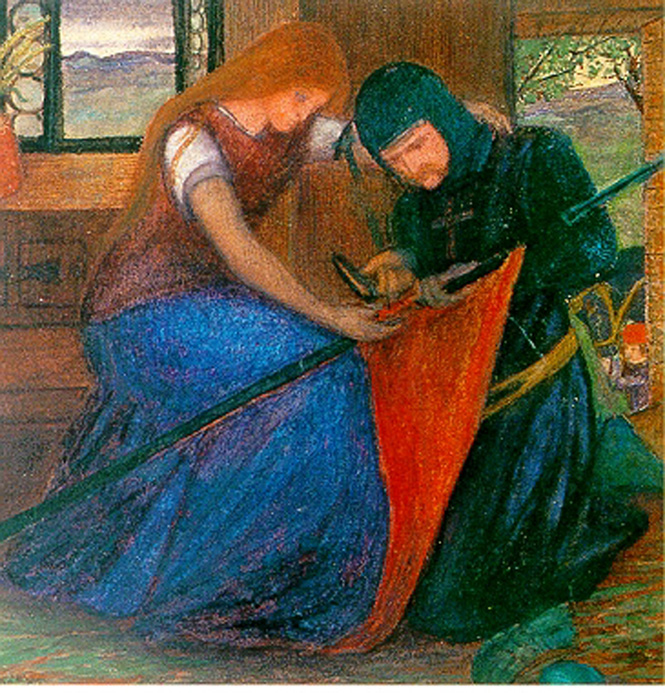
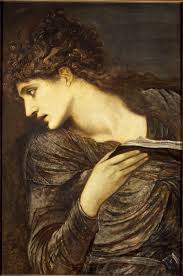
Mimi Farina-Baez walked the earth as the embodiment of the Pre-Raphaelite Muse. She was a modern day Troubadour. I met her at the last Monterey Pop Festival, and fell in love. She owned the look I loved, that I found in other women, and loved these women. My ex-wife was Mimi’s friend, and did a life-size portrait or her. My late sister, Christine Rosamond Benton, has the same Madonna look. Arwen has this look. The Ring movies borrow from the world the Pre-Raphaelites rendered. Tolkien was obsessed with Queen Rosamond and might have modeled Arwin after this Queen. I am going have Mimi be my model for my images of several historic Rosamonds. With the snipping tool I can capture certain angles. The living muses I tried to get to be my model, could not grasp my ambition to make ROSAMOND a brand name. Here is a woman totally groking on the name Cordelia and Rosamond for the name of her baby when she is born.
Jon Presco
http://www.behindthename.com/bb/baby/3969359
http://www.youtube.com/watch?v=zHNSAK-iWy0
http://en.wikipedia.org/wiki/Edward_Burne-Jones
http://en.wikipedia.org/wiki/Maria_Zambaco
Rosamund[edit]
Cunimund had a daughter named Rosamund (or Rosemund). She was forced into marrying Alboin after the Gepids‘ defeat, but she arranged his assassination in 572 or 573.
In literature[edit]
Cunimund’s grim end and Rosamund are mentioned in J. R. R. Tolkien‘s story “The Lost Road”, when the character Alboin asks his father, Oswin Errol, about the origin of his name:
…and Oswin told his son the tale of Alboin son of Audoin, the Lombard king; and of the great battle of the Lombards and the Gepids, remembered as terrible even in the grim sixth century; and of the kings Thurisind and Cunimund, and of Rosamunda. ‘Not a good story for near bed-time,’ he said, ending suddenly with Alboin’s drinking from the jewelled skull of Cunimund…
—J. R. R. Tolkien, The Lost Road
In an early version of J. R. R. Tolkien‘s fantasy time-travel story The Lost Road, Tolkien considered placing one of his main characters in the person of Alboin.
In Meg Cabot’s Princess Diaries, the country of Genovia’s first ruler was a princess named Rosamund, based on the princess Alboin raped. In the book, Mia writes that Rosamund’s father was killed by a warlord, who made his skull into a cup and forced her to drink from it. She strangled him in his sleep with her braids and was given the principality of Genovia in honor of her brave deed.
| Author: | Dracotorix (Authenticated as Dracotorix) |
| Date: | November 30, 2010 at 8:16:16 PM |
| Reply to: | Cordelia talk + suggestions? by Kitty |
I love Cordelia, but I think it is a little too long for a kid on it’s own. I like the nickname Cora, but if you prefer Coco or Delia or Lia or Cordie or something they could work too.
I like Cordelia Beatrice Rosamund.
Others could be Cordelia Helen Rosamund, Cordelia Joan Rosamund, Cordelia Undine Rosamund, Cordelia Anne Rosamund, Cordelia Alanis Rosamund, Cordelia Athenais Rosamund, Cordelia Juniper Rosamund, Cordelia Sage Rosamund, Cordelia Willow Rosamund, Cordelia Eve Rosamund, Cordelia Anthea Rosamund, Cordelia Gaia Rosamund, Cordelia Miranda Rosamund, Cordelia Mina Rosamund, Cordelia Wilhelmina Rosamund, Cordelia Isis Rosamund, Cordelia Isadora Rosamund, Cordelia Pelagia Rosamund, Cordelia Tamsin Rosamund, Cordelia Lilith Rosamund, Cordelia Terpsichore Rosamund, Cordelia Emerald Rosamund, Cordelia Avalon Rosamund, Cordelia Jane Rosamund, Cordelia Sahar Rosamund, Cordelia Arwen Rosamund, Cordelia Branwen Rosamund, Cordelia Isolde Rosamund, Cordelia Morwen Rosamund, Cordelia Lyra Rosamund, Cordelia Saffron Rosamund, Cordelia Fleur Rosamund, Cordelia Eleanor Rosamund, Cordelia Sylvie Rosamund, Cordelia Jade Rosamund, or Cordelia Peony Rosamund.
Sorry if some of those are incredibly long..



cc
 Rosamond Press


Leave a comment