
Capturing Beauty
by
John Presco
ALL RIGHTS RESERVED
“Only earlier, the White House said Britain and other Nato allies had “turned their backs” on the American people during the war.
Trump also argued the long-standing security organisation had been “tested and they failed”.
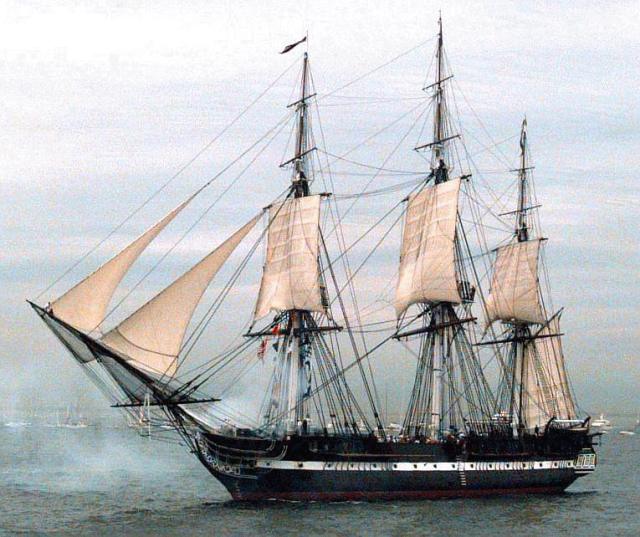
Last night on CNN there was mention of the “Barbary Pirates” in regards to Iran controlling the the Hormuz Strait. My great grandfather, Sir Isaac Hull, captained several ships in the Barbary Coast War. One of them was…..
THE USS CONSTITUTION
In theory, this Navy ship is included in the pact a U.S. President made with Winston Churchill, in regards to the British Defense Staff Washington, that guaranteed our Nations would come to the defense of the other. Does this pact include informing each other of a pending military action?
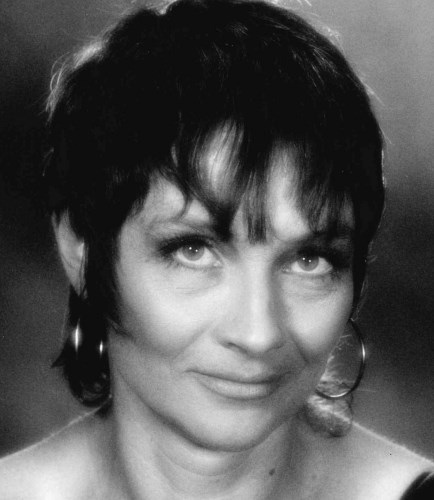
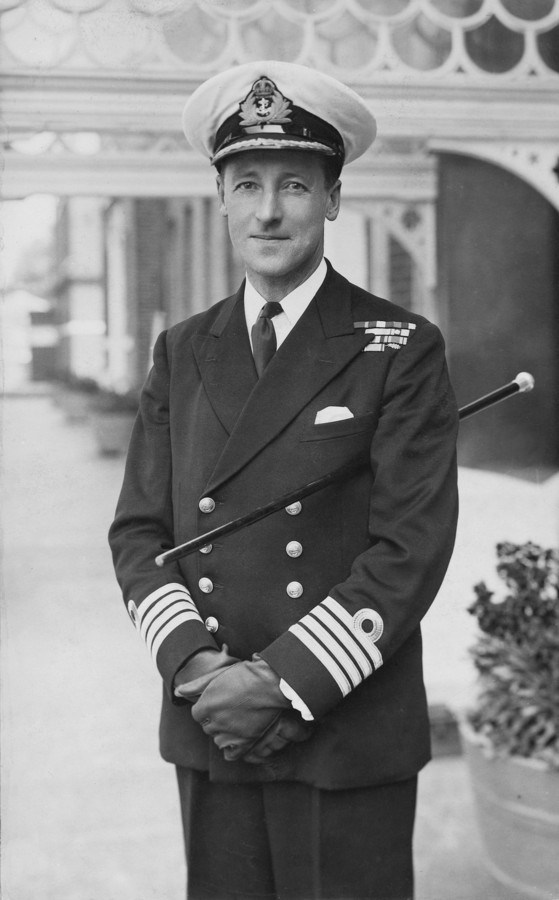
When I heard Rena Christensen married a British Admiral, I wondered if she was a spy. When she sent me a letter telling me who her late husband was, my wonderment was – enhanced! When she told me she has committed a million poems to memory, I concluded she would have made a great spy. Every conversation, every document she looked at, would be filed away in her great memory. With this thought in mind, I began my spy novel…
THE ROYAL JANITOR
I am related to Ian Fleming, who if alive today, would attach himself to one of the most beautiful, and intriguing – WOMAN IN THE WORLD – that I compared to
HELEN OF TROY
I am going to write my elected leaders and suggest they pass a bill putting the Constitution in the command of
OUR FIRST LADIES – FOREVER!
Hull took the Hart sisters on world cruises. I suggest First Lady, Melania Trump, sail the Constitution thru the Hormoz Strait, with a packet of poems…..
PERSIAN POEMS
The First Lady will throw down a white glove, and
The Great Poetry Contest is on!
Melania rose up through Modeling Agencies. Rena told me her three beautiful sisters were models. I asked her why she was not a model?
“I don’t like that lifestyle.”
This lifestyle is at the core of the Epstein Secrets. Did the First Lady
GIVE US A CLUE?
Did she give us one end a rouge thread,,,,,,
THAT LEADS US INTO A MAZE?
“Rosamond!”
John Presco
President: Royal Rosamond Press
The U.S. president has branded NATO a “paper tiger” for refusing to lead efforts to open the strategic Strait of Hormuz and for limiting U.S. forces from using bases on their territories.
Trump has lashed out at several leaders personally, lambasting UK Prime Minister Keir Starmer as “no Winston Churchill” and ridiculing Britain’s aircraft carriers as “toys.”
The plan reported by the Wall Street Journal would fall short of Trump’s oft-hinted threats to pull the United States out of NATO entirely — a move for which he would need the approval of Congress.
NATO has been buffeted by crisis after crisis since Trump returned to power last year — most acutely by his threat to seize Greenland.
But he failed to calm Mr Trump’s annoyance as the president later posted on his Truth Social platform: “NATO WASN’T THERE WHEN WE NEEDED THEM, AND THEY WON’T BE THERE IF WE NEED THEM AGAIN.”
Only earlier, the White House said Britain and other Nato allies had “turned their backs” on the American people during the war.
Trump also argued the long-standing security organisation had been “tested and they failed”.
How Wonderful is the murderous mercy of God!by Meher Baba
English version by Bhau Kalchuri
Original Language Persian/Farsi or Urdu or Hindi
How Wonderful is the murderous mercy of God!
His mercy has graced the rose with thorns.
How justice manifests in the glory of God!
Cruelty is hidden in His kindness.
It matters not whether wine is accepted by any religion –
I long for the intoxication of love.
Oh God! What bliss lies in love’s intoxication!
The wine of man can never bestow bliss.
One cannot experience love by reading books –
Love can never be described in words.
I have never read about real love — for it cannot be written.
Love is portrayed with the blood of one’s heart —
only then will it be yours (the devotee’s).
Oh God! Grant me the gift of Your union —
I have died in Your separation.
But in Your ledger You need not count the pains
I have felt away from You.
Blood is spilling from my heart
which has become like minced meat!
But missing is that salt which You sprinkle
in the wounds of the heart.
Why should one question the lovers of God about Him?
One should wish to ask God directly!
Oh God! You are found in the question
as well as in the answer.
I have seen God, He is the same God everywhere!
His abode is in every heart.
God is the wine-seller in the house rich in purity,
however, He is living in the house of ruination.
why should one feel restless experiencing misery, cruelty
and the difficulties of the world?
Oh Huma, if God showers His mercy upon you,
then bliss is felt in the pain.
The U.S. president has branded NATO a “paper tiger” for refusing to lead efforts to open the strategic Strait of Hormuz and for limiting U.S. forces from using bases on their territories.
Trump has lashed out at several leaders personally, lambasting UK Prime Minister Keir Starmer as “no Winston Churchill” and ridiculing Britain’s aircraft carriers as “toys.”
The plan reported by the Wall Street Journal would fall short of Trump’s oft-hinted threats to pull the United States out of NATO entirely — a move for which he would need the approval of Congress.
NATO has been buffeted by crisis after crisis since Trump returned to power last year — most acutely by his threat to seize Greenland.
But he failed to calm Mr Trump’s annoyance as the president later posted on his Truth Social platform: “NATO WASN’T THERE WHEN WE NEEDED THEM, AND THEY WON’T BE THERE IF WE NEED THEM AGAIN.”
Only earlier, the White House said Britain and other Nato allies had “turned their backs” on the American people during the war.
Trump also argued the long-standing security organisation had been “tested and they failed”.
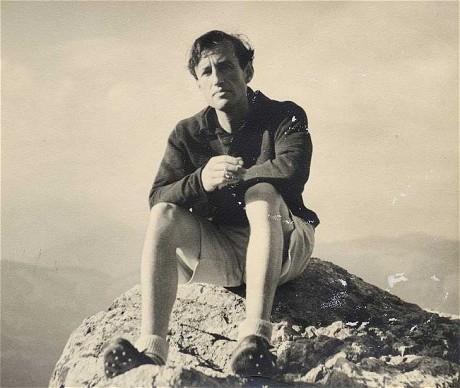
Ian Fleming at Cheyne Walk
Posted on August 22, 2021 by Royal Rosamond Press



The Royal Janitor
by
John Presco
Copyright 2021
Becoming a James Bond Author
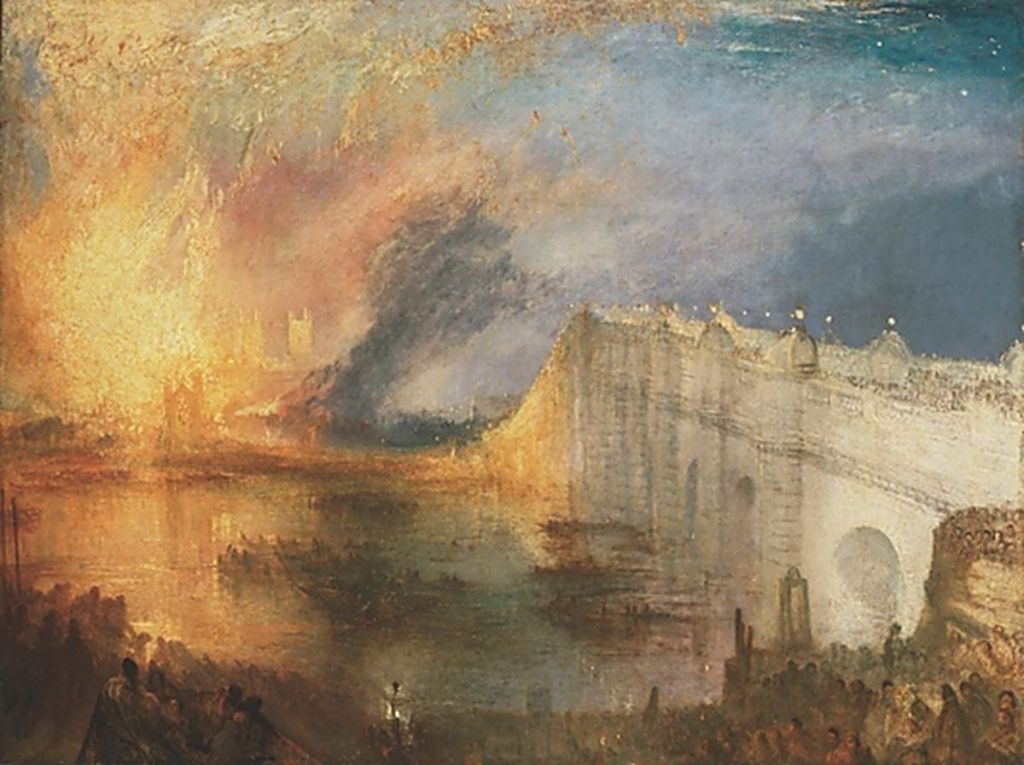
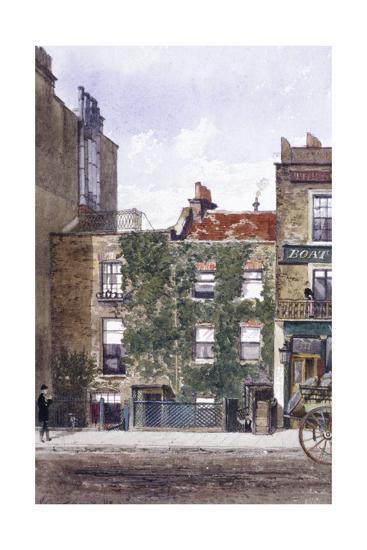
Just past midnight on August, 22, 2021, I googled “Ian Fleming” and “Bohemian” and discovered Evelyn Saint Croix Rose bought the house that one of my favorite artists lived in, and held a salon there. Turner lived in on Cheyne Walk, as did Dante Gabriel Rossetti, a co-founder of the Pre-Raphaelite Brotherhood, which I revived in 1969. My ship has come in. The Art Dynasty I saw coming over the horizon – is a magnificent Work of Art. The nine Muses have been my Winged Guides! I have found The Grail! I have persevered!
Eve was the lover of the artist, Augustus John, and had a daughter by him. My kin, Elizabeth Taylor, was raised in John’s house. Her father, Francis Taylor, sold John’s art.
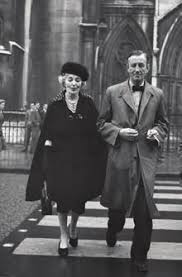
Yesterday, many Australians protested against the lockdown, and marched without masks. This is foreseen in my second Bond novel ‘Bond of Nebraska’ where Cornhuskers go to the big game, knowing they will be exposed. My two spies, Victoria Rosemond Bond, and Miriam Starfish Christling, have been psychic tools that allowed me to see – things to come. Winston Churchill wrote the obituary of Valentine Fleming. Consider the British Defense Staff Washington, and Ian Easton, the late husband of my muse, Rena Easton. The creative Fleming family, has been replicated.
My first book will be about I being the Prophetic Heir to the Ian Fleming. It is like MY KIN – his spirit – came to warn us all, and prevent the greatest intelligence disaster in the history of the United States. The blow to our prestige will be felt for a very long time. My struggle to own some credibility – is epic! It is – THE STORY!
John Presco
President: Royal Rosamond Art

SYDNEY — More than 250 people who were protesting coronavirus lockdowns in Australia were arrested Saturday and many faced fines for defying health orders, authorities said.
At least seven police officers were treated for injuries after skirmishes broke out at some of the protests, which took place in multiple cities nationwide. The largest and most violent protest was in Melbourne. Many were organized by people in encrypted online chat groups.
The London Homes of Ian Fleming | Artistic Licence Renewed (literary007.com)
Evelyn St. Croix Fleming – Wikipedia
Story: Valentine Fleming’s Eulogy by Winston Churchill | Lives of the First World War (iwm.org.uk)
JAMES BOND MEMES: Winston Churchill in the James Bond books
Major Valentine Fleming (1882-1917) – Find A Grave Memorial
Hundreds arrested, fined during Australia lockdown protests – ABC News (go.com)
When Spectre opened in theaters nationwide in November 2015, it enjoyed the second-highest opening weekend figures of any James Bond film released to date. Clearly, audiences still love the suave, unstoppable Agent 007. As University of Texas at Austin media professor Thomas Schatz says in a Christian Science Monitor article, the Bond films are a “transcendent franchise . . . something that seems to operate above the fray.” Of course, there would be no 007 at all if it weren’t for Ian Fleming, the original Bond writer. And, to a certain extent, we have Fleming’s Solo Mom, Evelyn (Eve) St. Croix Fleming, to thank as well.
Fleming, an English author, journalist, and naval intelligence officer, was raised by Eve after his father, Valentine Fleming, was killed by German shelling on the Western Front in 1917. Though his family background might imply that Fleming was brought up in a conservative banking family, he absorbed something of a Bohemian lifestyle from his mother; after her husband’s death, Eve lived in a house that had previously been the studio of the painter J.M.W. Turner. Eve was a free spirit: when Fleming was 17 years old and attending school at Eton, his mother packed up, went on a long cruise, and returned with a baby girl in her arms. She claimed the child, named Amaryllis, was adopted, though eventually Fleming learned Amaryllis was, in fact, a blood relation, the product of Eve’s affair with the artist Augustus John.
Ian Fleming: Icon Creator | ESME
119 Cheyne Walk, Chelsea, S.W.3

119 Cheyne Walk, Chelsea, S.W.3 (Photo: Google Maps)
After selling Pitt House in 1923 Fleming’s mother bought three cottages in Cheyne Walk and converted them into one dwelling. She named the three Turner’s House after the painter J M W Turner who had spent his last years at No. 119. He died here in 1851. During her time here, Eve established a Bohemian salon for artists, like her lover, Augustus John, to allow them to mingle with patrons such as Winston Churchill. The young Ian lived here during his school holidays and continued to visit whilst he was at Kitzbuhel and at Geneva University.
The London Homes of Ian Fleming | Artistic Licence Renewed (literary007.com)

This house, number 4 Cheyne Walk was the home of the novelist George Eliot. She moved in there with her husband John Walter Cross. You might argue that Burgess was pushing his luck in this case. George Eliot (alias Marian Evans and Mary Ann Cross) only lived there for three weeks in December 1880. Her husband, who suffered from depression had thrown himself into a Venetian canal on their honeymoon but survived. Although both of them loved the house with its views of the river, Eliot became ill with a recurrence of a kidney condition she had suffered from for years and died before the year was out. I don’t think that Burgess is suggesting that the woman following another dog in the picture is the author herself.
Cheyne Walk provided many subjects for Burgess. At number 59 was the house of W Holman Hunt.

This was a slightly more modest residence further down Cheyne Walk, close to the Old Church. When Hunt became more famous he moved to Melbury Road in Kensington – from the early Chelsea haunts of the Pre-Raphaelite Brotherhood to the more affluent neighbourhood of Lord Leighton.
(Apologies for the wavy picture on the scan. The original is a pencil drawing in a thick mount)
By contrast that other famous member of the Brotherhood, Dante Gabriel Rossetti moved to a big house at the other end of Cheyne Walk.

Number 16, also known as Queen House and Tudor House was the house Rossetti moved into in 1862 after the death of Elizabeth Siddall. Rossetti’s brother lived there for a while as did the poet Algernon Swinburne. I’ve mentioned Rossetti’s menagerie before, which included armadillos and wallabies but Burgess’s collaborator Richard Le Gallienne (who wrote the text of Bits of Old Chelsea) reports an incident I’d never heard before attributed to James McNeill Whistler. Apparently Rossetti acquired a zebu (an African species of cow) which had to be conveyed into the garden through the house tied up. It was tethered to a tree, a condition it disliked (or perhaps it never forgot its undignified entry into the property), and one day it managed to uproot the tree and charge at Rossetti who had to climb the garden wall to escape its vengeance. Rossetti never found a buyer and had to give it away although we don’t know to whom.
My Kinship With Liz, The Gettys, Ian Fleming
Posted on September 17, 2019 by Royal Rosamond Press

I am now going to concentrate on promoting myself in a professional manner. I taught my famous sister how to paint. She married into the famous Benton family of artists. I am kin to Augustus John.
John Presco


FRANCIS TAYLOR and ELIZABETH ROSEMOND:
Marriage: Abt. 1895
Children of ELIZABETH ROSEMOND and FRANCIS TAYLOR are:
3.i.FRANCES LYNN13 TAYLOR, b. 28 Dec 1897, Springfield, Sangamon
County, Illinois; d. 20 Nov 1968, Los Angeles County, California.
ii.JOHN TAYLOR.
An appreciation of art ran in Taylor’s family: her father, Francis, and great-uncle Howard Young were dealers. Born in London, Francis moved to Hollywood during the second world war and set set up his own gallery in the Beverley Hills Hotel, where it attracted film star clients including Hedda Hopper and Greta Garbo.
Francis Taylor exclusively represented the Welsh painter Augustus John in America, a relationship that had developed when the Taylor family moved into John’s former house in Hampstead, where Elizabeth was born in 1932. The Christie’s sale includes 21 works by John, including Portrait of Poppet in Black Hat, which Elizabeth inherited from her father and, says Bertazzoni, “cherished all her life”.
Meghan McCain Says U.S. Is ‘Laughing Stock’ Over Taliban’s Mock Iwo Jima Photo (msn.com)
Meghan McCain has branded the U.S. a “laughing stock” after the Taliban mocked the iconic Iwo Jima flag-raising photo following President Joe Biden‘s controversial withdrawal from Afghanistan.
Pompeo: US adversaries watching America ‘destroy’ its alliances amid Afghanistan exit (msn.com)
The Rose of the World Art Gallery | Rosamond Press
The Cheyne Art Walk
Posted on December 21, 2020 by Royal Rosamond Press
I went to bed early, then awoke around 1:30 A.M. realizing I had come to the end of this lonely road I have been on. It ends at No. 16 Cheyne Walk where my hero, Dante Gabriel Rossetti, once lived. Here John Paul Getty and his beautiful muse and wife lived. Talitha Getty Pol is kin to Augustus John, and Ian Fleming, via my cousin, Elizabeth Rosemond Taylor, whose grandson is a Getty. John and Talitha struggled to stay alive which meant they had to give up alcohol and drugs, as I did….thirty-three years ago. I am a success story. I rose like a Phoenix Bird above the ashes, as did Sir John Getty.
I am now going to seek funding from the numerous Trusts and Grants that the Getty Family left so a person like me can continue their Creative and Sober Legacy that was established to help struggling writers, artists, historians, and even poets. I deserve a grant, and I deserve help applying for a grant. I am asking Robert Brevoort Buck, and members of Alcohol Justice, to help me fill out and file the proper forms. A failure to to do so, will be seen as a statement that I do not deserve to be funded. Is it because of the things I said in my Newspaper, Royal Rosamond Press?
Another of my heroes, Joaquin Miller, had dinner at Rossetti’s home. This Oregon native communicated with Michael Rossetti about publishing his poems about California. I have tried to get the cities of Eugene and Springfield interested in the Pre-Raphaelite history that my late sister, Christine Rosamond Benton, gave me credit for sharing with her, and thus she was inspired to take up art at the age of twenty-four. Rossetti’s wife and muse lived in Cheyne Walk, and like Tabitha, she died of an overdose. I believe the painting Fair Rosamund was rendered here.
I am going back to bed, and I copyright what fate has in store for me, and Christine. We have been seperated by the forces of darkness. The parasites’ and haters of art – have had a field day! Those days are over. These bright creative beings, deserve an integral sanctuary – that will be a beacon of light for all those creative souls who struggle with the disease of alcoholism.
Yesterday, I turned my living room into my studio so I can finish the the two paintings I began of my muse, Rena Easton, and begin my two portraits of Lara Roozemond.
John Presco
President: Royal Rosamond Press
Copyright 2020

“I was ushered into one of the prettiest and most curiously furnished old-fashioned parlours that I had ever seen. Mirrors and looking-glasses of all shapes, sizes and design lined the walls. Whichever way I looked I saw myself gazing at myself.”–Recollections of Dante Gabriel Rossetti and his circle (Cheyne walk life), Henry Treffry Dunn.
Henry Treffry Dunn, who was at one time Rossetti’s studio assistant, gives us an intimate glimpse into the artist’s home. Rossetti moved into Tudor House at 16 Cheyne Walk (located in Chelsea) soon after the death of his wife, Elizabeth Siddal, from an overdose of Laudanum. His years at Tudor House are often described as bohemian and his behavior did become quite eccentric. It was in this home that he began collecting a menagerie of exotic animals and developed a passion for hoarding antique furniture, blue-and-white china, and vast amounts of bric-a-brac. His former lover and model Fanny Cornforth became the housekeeper of Tudor House and the household also consisted of poet Algernon Charles Swinburne.
Fair Rosamund (Dante Gabriel Rossetti, 1861) appears here behind a balustrade in the royal manor of Woodstock. The sitter, Fanny Cornforth, was a frequent model of Rossetti’s. She became his housekeeper after the death of his wife Elizabeth Siddall in 1862. 1861. Oil on canvas.
To Paint a Mistress – two views on Fair Rosamund (museum.wales)
The decline began after Getty divorced his first wife Gail in 1966, and married Talitha Pol, who, within five years, had turned from an envied beauty of the continental jet set – Saint-Laurent and Nureyev were among her bosom pals – to a hopeless addict, who died of a heroin overdose in Italy in 1971.
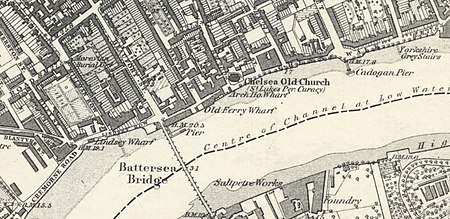
Fearing arrest, Getty fled to London, and the self-imposed obscurity of a large house in Cheyne Walk, Chelsea. Overcome with remorse at the death of his wife, he deteriorated physically, and, in an attempt to end his own various addictions, he entered the London Clinic in 1984 for a long period of treatment.
Getty only makes the papers through his philanthropies. To the increasing annoyance of the Getty Museum, those gifts are sometimes designed to keep in Britain works of art that the museum is interested in acquiring.
A public campaign already had raised about $8.8 million to match the Malibu museum’s offer for the Canova and keep it in Britain. The government last week ordered a three-month extension of the time allowed under British law to equal the museum’s offer; with Getty’s gift, only approximately $1.22 million remains to be found.
During the past decade, Getty’s philanthropy has become increasingly visible. He had previously given money to prevent a crucifixion painting by Duccio from leaving Britain for the Getty. His largest gift to date is $64.5 million in 1985, made to help London’s National Gallery finance an extension, and he has given about $25 million to the British Film Institute.
He has also contributed to areas apart from the arts: $150,000 to striking miners’ families in 1984, $4.4 million for a new grandstand at Lord’s Cricket Ground in London in 1986, $3.5 million to London’s Imperial War Museum, $750,000 to Ely Cathedral, and money to a fund for the Special Air Service regiment.
Although some of his better-known donations are publicized, Getty also gives quietly to other causes. For instance, reading in 1986 that a Royal Air Force hero was forced to auction his medals to raise funds for a memorial to his Dambuster squadron, Getty immediately offered to pick up the bill.
John Paul Getty Jr.’s history has been a troubled one. He was actually christened Eugene Paul Getty, the first child by his father’s fourth wife. His mother, Ann, married three more times, and young Getty and his brother Gordon were raised mainly by their maternal grandmother in San Francisco.
He studied at San Francisco State but did not graduate. He was drafted into the Army and served briefly in Korea. At 23, he married Gail Harris; they had four children, the eldest of whom was J. Paul Getty III. The others are Aileen, Mark and Ariadne.
Getty joined the family oil business and received his father’s permission to change his name to J. Paul Getty Jr. The senior Getty’s personal assistant, Claus von Bulow, remembers young Getty as a man of “charm, conversation and sex appeal.”
He was divorced from Gail and married Talitha Pol, of Dutch parents, in 1966 and became part of the international social set.
In May, 1968, Talitha had a son, whom they named Tara Gabriel Galaxy Gramaphone Getty. Then, while living in Rome, J. Paul Getty Jr. quit the family business in a chilly exchange with his father, who disapproved of his lack of enthusiasm for the business and involvement with drugs. The couple, discussing divorce, separated. Talitha moved to London from Rome into an exquisite house on Cheyne Walk in Chelsea.
Later that year she flew to Rome in hopes of a reconciliation, but under mysterious circumstances died overnight, apparently of a drug overdose. Getty left Italy–while the case was being investigated–for the house in London. Two years later, his son J. Paul III, then 16, was kidnaped in Italy and held for $3.35-million ransom. Getty Jr. hadn’t enough cash to comply, and Getty Sr. at first refused to pay on the grounds that all his grandchildren would then be vulnerable to kidnaping.
After five months, when the abductors cut off a piece of the boy’s ear and sent it to a Rome newspaper, the oil magnate loaned his son the additional money for the release of the grandson.
In 1981, J. P. Getty III suffered a drink-and-drug-induced stroke that left him paralyzed and almost blind. He now gets around in a wheelchair.
For years, Getty Jr. rarely ventured from his Cheyne Walk home. But one neighbor remembers taking her dog walking late at night and chatting with him on a nearby park bench.
“He was very pleasant, polite and informed,” she recalls. “I never knew who he was until later.”
Another neighbor recalls him at her door early one morning, in a disheveled state, asking to use the phone because his was out of order. She tried to help him with his disintegrating address book, but he finally left without making the call. Two hours later she received six dozen roses.
In the mid-1980s, Getty entered London Clinic, where he stayed for more than a year for treatment of phlebitis. There, he pursued his main hobby of collecting antiquarian books, with particular interested in illuminated manuscripts.
He has purchased several at auction for more than $1 million each, and they form the core of a vast library of precious books that he is establishing at his country home, in a castle-like building made from flint stone.
To Paint a Mistress – two views on Fair Rosamund (museum.wales)
Dinner At Dante Rossetti’s
Posted on February 27, 2020by Royal Rosamond Press


I am heir to the literary kingdoms of Tolkien, Fleming, and London. When I searched the internet for a replacement muse of Rena Easton, I gasped when I saw the three photographs of Lara Roozemond. If she was born in another time, and she came upon them, The Pre-Raphaelite Brotherhood would have fought bloody battles over her. Would Joaquin Miller join the fray?
There is a debate over the source of the name Rosamond. Some say it means “rose mouth”. Lara’s lips are like rose blossoms.
John Prescohttps://www.youtube.com/embed/cmO3ZO9TGgA?version=3&rel=1&showsearch=0&showinfo=1&iv_load_policy=1&fs=1&hl=en&autohide=2&wmode=transparent
Dinner at Rossetti’s
by Joaquin Miller
________________________________________
There is no thing that hath not worth;
There is no evil anywhere;
There is no ill on all this earth,
If man seeks not to see it there.
September 28. I cannot forget that dinner with Dante Gabriel Rossetti, just before leaving London, nor can I hope to recall its shining and enduring glory. I am a better, larger man, because of it. And how nearly our feet are set on the same way. It was as if we were all crossing the plains, and I for a day’s journey and a night’s encampment fell in with and conversed with the captains of the march.
But one may not gave names and dates and details over there as here. The home is entirely a castle. The secrets of the board and fireside are sacred. And then these honest toilers and worshippers of the beautiful are shy, so shy and modest. But I like this decent English way of keeping your name down and out of sight till the coffin-lid hides your blushes–so modest these Pre-Raphaelites are that I should be in disgrace forever if I dared set down any living man’s name.
But here are a few of the pearls picked up, as they were tossed about the table at intervals and sandwiched in between tales of love and lighter thoughts and things.
All London, or rather all the brain of London, the literary brain, was there. And the brain of all the world, I think, was in London. These giants of thought, champions of the beautiful earth, passed the secrets of all time and all lands before me like a mighty panorama. All night sol We dined so late that we missed breakfast. If I could remember and write down truly and exactly what these men said, I would have the best and the greatest book that ever was written, I have been trying a week in vain, I have written down and scratched out and revised till I have lost the soul of it, it seems to me; no individuality to it; only like my own stuff. If I only had set their words down on the next day instead of attempting to remember their thoughts! Alas! the sheaves have been tossed and beaten about over sea and land for days and days, till the golden grain is gone, and here is but the straw and chaff.
The master sat silent for the most part; there was a little man away down at the other end, conspicuously modest. There was a cynical fat man, and a lean philanthropist all sorts and sizes, but all lovers of the beautiful of earth. Here is what one, a painter, a ruddy-faced and a rollicking gentleman, remarked merrily to me as he poured out a glass of red wine at the beginning of the dinner:
“When travelling in the mountains of Italy, I observed that the pretty peasant women made the wine by putting grapes m a great tub, and then, getting into this tub, barefooted, on top of the grapes, treading them out with their brown, bare feet. At first I did not like to drink this wine. I did not think it was clean. But I afterward watched these pretty brown women” and here all leaned to listen, at the mention of pretty brown women– I watched these pretty brown women at their work in the primitive winepress, and I noticed that they always washed their feet after they got done treading out the wine.”
All laughed at this, and the red-faced painter was so delighted that he poured out and swallowed another full glass. The master sighed as he sat at the head of the table rolling a bit of bread between thumb and finger, and said, sitting close to me: “I am an Italian who has neven seen Italy. Belle Italia!…”
By and by he quietly said that silence was the noblest attitude in all things; that the greatest poets refused to write, and that all great artists in all lines were above the folly of expression. A voice from far down the table echoed this sentiment by saying:”Heard melodies are sweet; but unheard melodies are sweeter.” “Written poems are delicious; but unwritten poems are divine,” cried the triumphant cynic. “What is poetry?” cries a neighbor. “All true, pure life is poetry,” answers one. “But the inspiration of poetry?” “The art of poetry is in books. The inspiration of poetry in nature.” To this all agreed.
Then the master very quietly spoke: “And yet do not despise the books of man. All religions, said the Chinese philosophers, are good. The only difference is, some religions are better than others, and the apparent merit of each depends largely upon a mans capacity for understanding it. This is true of .poetry. All poetry is good. I never read a poem in my life that did not have some merit, and teach some sweet lesson. The fault in reading the poems of man, as well as reading the poetry of nature, lies largely at the door of the reader. Now, what do you call poetry?” and he turned his great Italian eyes tenderly to where I sat at his side.
To me a poem must be a picture,” I answered.
Proud I was when a great poet then said: “And it must be a picture–if a good poem so simple that you can understand it at a glance, eh? And see it and remember it as you would see and remember a sunset, eh?” “Aye,” answered the master, “I also demand that it shall be lofty in sentiment and sublime in expression. The only rule I have for measuring the merits of a written poem, is by the height of it. Why not be able to measure its altitude as you measure one of your sublime peaks of America?”
He looked at me as he spoke of America, and I was encouraged to answer:”Yes, I do not want to remember the words. But I do want it to remain with me a picture and become a part of my life. Take this one verse from Mr. Longfellow:
“And the night shall be filled with music,
And the cares that infest the day
Shall fold their tents like the Arabs,
And as silently steal away.’”
“Good!” cried the fat cynic, who, I am sure, had never heard the couplet before, it was so sweet to him; “Good! There is a picture that will depart from no impressible clay. The silent night, the far sweet melody falling on the weary mind, the tawny picturesque Arabs stealing away m the darkness, the perfect peace, the stillness and the rest. It appeals to all the Ishmaelite in our natures, and all the time we see the tents gathered up and the silent children of the desert gliding away in the gloaming.”
A transplanted American, away down at the other end by a little man among bottles, said: “The poem of Evangeline is a succession of pictures. I never read Evangeline but once.” “It is a waste of time to look twice at a sunset,” said Rossetti, sotto voce, and the end man went on: “But i believe I can see every picture in that poem as distinctly as if I had been the unhappy Arcadian; for here the author has called in ail the elements that go to make up a perfect poem.”
“When the great epic of this new, solid Saxon tongue comes to be written,” said one who sat near and was dear to the master’s heart, “it will embrace all that this embraces: new and unnamed lands; ships on the sea; the still deep waters hidden away in a deep and voiceless continent; the fresh and fragrant wilderness; the curling smoke of the camp-fire; action, movement, journeys; the presence–the inspiring presence of woman; the ennobl- ing sentiment of love, devotion, and devotion to the death; faith, hope and charity,- and all in the open air.”
“Yes,” said the master thoughtfully, ‘no great poem has ever been or ever will be fitted in a parlor, or even fashioned from a city. There is not room for it there.”
“Hear! hear! you might as well try to grow a California pine in the shell of a peanut,” cried I. Some laughed, some applauded, all looked curiously at me. Of course, I did not say it that well, yet I did say it far better, I mean I did not use the words carefully, but I had the advantage of action and sympathy.
Then the master said, after a bit of reflection: “Homer’s Ulysses, out of which have grown books enough to cover the earth, owes its immortality to all this, and its out-door exercise. Yet it is a bloody book a bad book, in many respects–full of revenge, treachery, avarice and wrong. And old Ulysses himself seems to have been the most colossal liar on record. But for all this, the constant change of scene, the moving ships and the roar of waters, the rush of battle and the anger of the gods, the divine valor of the hero, and, above all, and over all, like a broad, white-bosomed moon through the broken clouds, the splendid life of that one woman; the shining faith, the constancy, the truth and purity of Penelope–all these make a series of pictures that pass before us like a panorama, and we will not leave off reading till we have seen them all happy together again, and been assured that the faith and constancy of that woman has had it reward. And we love him, even if he does lie!”
How all at that board leaned and listened. Yet let me again and again humbly confess to you that I do him such injustice to try thus to quote from memory. After a while he said: “Take the picture of the old, blind, slobber-mouthed dog, that has been driven forth by the wooers to die. For twenty years he has not heard the voice of his master. The master now comes, in the guise of a beggar. The dog knows his voice, struggles to rise from the ground, staggers toward him, licks his hand, falls, and dies at his feet.”
Such was the soul, heart, gentleness of this greatest man that I ever saw walking in the fields of art….
William Morris and Joaquin Miller
Posted on August 1, 2018by Royal Rosamond Press

Joaquin Miller had dinner with the Pre-Raphaelites and was my grandmother’s friend. This history is being compiled for the grant I am applying for. The history of the Pre-Raphaelites has not been discarded, thus, Kehinde Wiley has no right to claim it and hand it out to NOBODIES who don’t deserve it! I don’t give a rat’s ass what the color of their skin is, and how badly they were oppressed. Let them work for their bragging rights. Just because Wyley thinks he has immortalized these non-artists, does not give them any titles. I will see to that.
Miller built a monument to my kin, John Fremont, the first Presidential Candidate for the Abolitionist Republican Party, and the first to emancipate slaves, forcing Lincoln’s hand.https://www.youtube.com/embed/-_WrJyp-WYI?version=3&rel=1&showsearch=0&showinfo=1&iv_load_policy=1&fs=1&hl=en&autohide=2&wmode=transparent
Honoring The Visions of George Miller
Posted on May 30, 2016by Royal Rosamond Press


I will be going out to Coburg today to plant another flower at the grave of George Miller, the brother of Joaquin Miller, a honorary member of the Bohemian Club that was a place for Bay Area Journalists to gather and compare notes. If Miller lived in the Bay Area, then he too would be a honorary member.http://www.findagrave.com/cgi-bin/fg.cgi?page=gr&GRid=29810634
Elizabeth Maude “Lischen” or “Lizzie” Cogswell married George Miller. Lizzie was the foremost literary woman in Oregon. On Feb. 6, 1897, Idaho Cogswell, married Feb. 6, 1897, Ira L. Campbell, who was editor, publisher and co-owner (with his brother John) of the Daily Eugene Guard newspaper. The Campbell Center is named after Ira.
The Wedding of John Cogswell to Mary Frances Gay, was the first recorded in Lane County where I registered my newspaper, Royal Rosamond Press. Idaho Campbell was a charter member of the Fortnightly Club that raised funds for the first Eugene Library.
George Melvin Miller was a frequent visitor to ‘The Hights’ his brothers visionary utopia where gathered famous artists and writers in the hills above my great grandfather’s farm. The Miller brothers promoted Arts and Literature, as well as Civic Celebrations. Joaquin’s contact with the Pre-Raphaelites in England, lent credence to the notion that George and Joaquin were Oregon’s Cultural Shamans, verses, he-men with big saw cutting down trees.
A year ago I received in the mail a book I ordered on E-Bay. I quickly scanned it to see if their were any illustrations or photographs. Then, I found it, what amounts to my personal Holy Grail. Joaquin Miller dedicated his book of poems ‘Songs of The Sun-Land’ to the Rossetti family that includes Gabriel, Michael, and, Christine. Gabriel was a artist and poet, Michael, a publisher, and Christine, a poet.
“TO THE ROSSETTIS”
Gabriel, who had Joaquin over to his house for dinner, where he met several members of the Pre-Raphaelite Brotherhood. Miller sends Michael a photograph of himself, and is sent a photo. This photo may be the famous one taken by Charles Lutwidge Dodgson, who is better known as Lewis Carrol the author of ‘Alice in Wonderland’. If Joaquin had glued this portrait to a piece of paper, then we might have seen it on the dedication page.
What is going on here is extremely profound. Miller has exported his vision and lifestyle to the England, where he wrote Song of the Sierras, and now he is importing to America a cultural brand that contains Grail and Arthurian subject matter that was at the epicenter of the work of the Pre-Raphaelite Brotherhood.
Lewis Carrol posed two children as Fair Rosamond and Queen Eleanore. I associate Fairmount with Rosamond. Johnnny Depp is starring in another Alice in Wonderland movie. Eugene can celebrate our Land of Make Believe, our White Rabbit made famous by the Jefferson Airplane. I stood before the Mayor of Eugene and suggested a Newspaper Museum at Kesey Square wherein is a model of Miller’s Fantastic Flying Machine. We could build a parade around this contraptions, a world contest that would bring creative people to our Fair City. Children would love this! They too would be in costume for the White Rabbit Run!
Here is what amounts to MY FANTASTIC MOVIE shot in Eugene. What an Amazing Journey is has been!


Juanita Miller ‘The White Witch’
Posted on December 6, 2014by Royal Rosamond Press




Joaquin Miller, William Morris & Me
Posted on August 5, 2013by Royal Rosamond Press


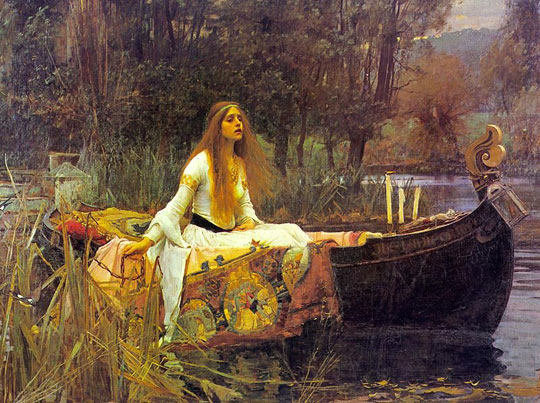

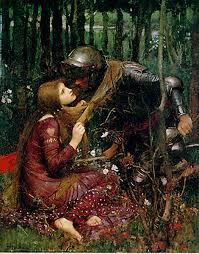


Christine Rosamond Benton and I were drawn into Tolkien’s Trilogy. The artist known as ‘Rosamond’ could not put these books down, nr could I. This caused our mutual friend, Keith Purvis, a British subject, to comment;
“She doesn’t know these books are real.”
We three were original hippies who took the Lord of the Rings to heart as we modified the modern world, made it over more to our liking, we oblivious to what normal folk were about. This is exactly what William Morris and the Pre-Raphaelite Brother and Sisterhood did. They – returned!
I discovered the Pre-Raphaelites in 1969 and let my hair grow long for the first time. I gave up drugs in 1967 and was looking for a spiritual format. I came under the spell of the Rossetti family who were friendly with Joaquin Miller. We Presco children knew Miller’s daughter as ‘The White Witch’ and we would call her for advice. Miller’s home ‘The Abbye’ was above our home in the Oakland Hills. Our kindred were friends of Miller, who was also a friend of Swineburn, who wrote ‘The Queen-Mother and Rosamund’ and ‘Rosamund Queen of Lombards. Tolkien was inspired by the Lombards.
Filed away in Rosamond’s probate is my plea to the executor to allow me to be my sister’s historian. I mention Miller and Rossetti. I saw myself in the role of Michael Rossetti who had his own publishing company. He published Miller and other famous poets. When I was twelve, my mother read evidence I might become a famous poet.
All my imput has been ruthlessly ignored, because petty un-creative minds have forced our families creative legacy down the tiny holes of their hidden agendas, into the mouths of worms and parasites, because these ignorant people sensed I and the real Art World, did not let them in the door – would never admit them into our circle, our ring of genius!
Jon Presco
Copyright 2011
William Morris had a major influence on J. R. R. Tolkien. As John Garth points out, unlike most authors traumatized by the experience of World War I, Tolkien did not “discard the old ways of writing, the classicism or medievalism championed by Lord Tennyson and William Morris. In his hands these traditions were reinvigorated so that they remain powerfully alive for readers today” (40). His love of Morris, in particular, goes back to his undergraduate days when he turned from studying the Greek and Latin classics to the the northern traditions — the language and literature of the Scandinavian and Germanic past. According Garth,
William Morris, from the late 1870s on, decided to “remedy” the defects of the real historical record by producing specific works of “pseudo-history,” fully-fleshed stories that he could present as “re-discovered” manuscripts of ancient tribal lore. So eager were the Germanic speakers of 19th century Europe to know more about their ancestors, that sometimes even academically trained scholars would be fooled by the books Morris wrote, and asked him for his sources, and wanted to read the original saga manuscripts themselves. To which requests Morris replied “Doesn’t the fool realize, that it’s a romance, a work of fiction — that it’s all lies!” (from May Morris, daughter of W. Morris recollections).
JRRT, a generation later than Morris, got in on the tail end of this nationalistic/ romantic period, and became as fully enmeshed in its allures as Morris. Tolkien went on to “sub-create” his own “pseudo-histories,” manufacturing his versions of the source myths that would allow a richer understanding of the Nordic tradition, especially the Anglo-Saxon phenomena of England. Between them, as much by accident as firm intent, Morris and Tolkien established an entire genre of pseudo-history that has, by now in the 21st century, become one of the most popular fields of literature.
“These two men knew either much (Morris) or most (Tolkien) of all that was known about these [northern] people and their lives. They used that wealth of knowledge to create ‘dreamed realities’ (Morris) or an ‘imaginary history’ (Tolkien) about what it might have been like to live in those days. While what they wrote wasn’t necessarily true in a strict sense, both knew enough about the past and were talented enough as writers that what they wrote created a strong sense that they described what might have been.” ( Michael W. Perry, More to William Morris, p. 7, 2003)
So, the question then becomes, for Tolkien readers, how does Morris stand up to JRRT? Is it worth the money to buy Morris’s books? Will I get the same, or at least a very similar thrill from reading them as I get when running through the pages of LotR and The Hobbit? Well, that’s what I am trying to decide in the next few installments of this topic. How do the works of the two authors compare, in what ways are they similar, in what ways do they differ?http://tolkiensring.proboards.com/index.cgi?board=authors&action=display&thread=675
Joaquin Miller looked me up at Somerset House, and left with me
the remaining proofs of his forthcoming volume. He showed me the dedication, ‘To the Rossettis.’ I strongly recommended him to write direct to Gabriel as to the matter before anything further is done. I mentioned the dedication to Christina. She feels some hesitation in sanctioning it, not knowing what the book may contain. If she makes up her mind to object, she is to write to Miller. I looked through the proofs and noted down some remarks on them. They include a series of poems about Christ, named Olive Leaves, implying a sort of religious, or at least personal, enthusiasm, mixed up with a good deal that has more relation to a sense of the picturesque than of the devotional. These poems, though far from worthless from their own point of view, are very defective, and would, I think be highly obnoxious to many readers and Reviewers. I have suggested to Miller the expediency of omitting them altogether. – Christina, I find, has already read these particular poems, and to some considerable extent likes them, which is so far in their favour as affecting religious readers”
The wider world of Victorian London is present: Turgenev comes to dinner, Browning sends his new volumes, Swinburne arrives drunk, and the American poet and adventurer Joaquin Miller makes himself known to the Rossetti circle. Nine appendices include five devoted to Poems and one to the Fleshly School controversy.
Joaquin Miller Cabin is located in Washington, DC. The Hights, the Oakland home Miller built at the end of his life, is currently known as the Joaquin Miller House and is part of Joaquin Miller Park. He planted the surrounding trees and he personally built, on the eminence to the north, his own funeral pyre and monuments dedicated to Moses, General John C. Frémont, and the poets Robert Browning and Elizabeth Barrett Browning. The Japanese poet Yone Noguchi began his literary career while living in the cabin adjoining Millers’ during the latter half of the 1890s. The Hights was purchased by the city of Oakland in 1919 and can be found in Joaquin Miller Park.[42] It is now a designated California Historical Landmark.
Miller went to England, where he was celebrated as a frontier oddity. There, in May 1871, Miller published Songs of the Sierras, the book which finalized his nickname as the “Poet of the Sierras”.[22] It was well-received by the British press and members of the Pre-Raphaelite Brotherhood, particularly Dante Gabriel Rossetti and William Michael Rossetti.
While in England, he was one of the few Americans invited into the Savage Club along with Julian Hawthorne, son of Nathaniel Hawthorne. The younger Hawthorne referred to Miller as “a licensed libertine” but admitted him “charming, amiable, and harmless”.[
The Savage Club was formed to supply the want which Dr Samuel Johnson and his friends experienced when they founded the Literary Club. A little band of authors, journalists and artists felt the need of a place of reunion where, in their hours of leisure, they might gather together and enjoy each other’s society, apart from the publicity of that which was known in Johnson’s time as the coffee house, and equally apart from the chilling splendour of the modern club.
At present, there are 315 members. The club maintains a tradition of fortnightly dinners for members and their guests, always followed by entertainment. These dinners often feature a variety of famous performers from music hall to concert hall. Several times a year members invite ladies to share both the dinner and the entertainment — sometimes as performers. On these occasions guests always include widows of former Savages, who are known as Rosemaries (after rosemary, a symbol of remembrance).
Born in London, he was a son of immigrant Italian scholar Gabriele Rossetti, and the brother of Maria Francesca Rossetti, Dante Gabriel Rossetti and Christina Georgina Rossetti.
He was one of the seven founder members of the Pre-Raphaelite Brotherhood in 1848, and became the movement’s unofficial organizer and bibliographer. He edited the Brotherhood’s literary magazine The Germ which published four issues in 1850 and wrote the poetry reviews for it.
It was William Michael Rossetti who recorded the aims of the Pre-Raphaelite Brotherhood at their founding meeting in September 1848:
1. To have genuine ideas to express;
2. To study nature attentively, so as to know how to express them;
3. To sympathize with what is direct and serious and heartfelt in previous art, to the exclusion of what is conventional and self-parading and learned by rote;
4. And most indispensable of all, to produce thoroughly good pictures and statues.
Although Rossetti worked full time as a civil servant, he maintained a prolific output of criticism and biography across a range of interests from Algernon Swinburne to James McNeill Whistler. He edited the diaries of his maternal uncle John William Polidori (author of The Vampyre and physician to Lord Byron), a comprehensive biography of D. G. Rossetti, and edited the collected works of D. G. Rossetti and Christina Rossetti.
Rossetti edited the first British edition of the poetry of Walt Whitman, which was published in 1868; however, this edition was bowdlerized.[1] Anne Gilchrist, who became one of the first to write about Whitman, first read his poetry from Rossetti’s edition, and Rossetti helped initiate their correspondence.[2]
In 1874 he married Lucy Madox Brown, daughter of the painter Ford Madox Brown. They honeymooned in France and Italy. Their first child, Olivia Frances Madox, was born in September 1875, and her birth was celebrated in an ode of Swinburne.
William Michael Rosetti was a major contributor to the 1911 edition of the Encyclopædia Britannica; his contributions on artistic subjects were criticised by many reviewers at the time and since, as showing little evidence of having absorbed the mounting body of work by academic art historians, mostly writing in German.
Share this:
John of Gaunt, duke of Lancaster (born March 1340, Ghent—died February 3, 1399, London) was an English prince, fourth but third surviving son of the English king Edward III and Philippa of Hainaut; he exercised a moderating influence in the political and constitutional struggles of the reign of his nephew Richard II. He was the immediate ancestor of the three 15th-century Lancastrian monarchs, Henry IV, V, and VI. The term Gaunt, a corruption of the name of his birthplace, Ghent, was never employed after he was three years old; it became the popularly accepted form of his name through its use in Shakespeare’s play Richard II.
4/15/2023
Liz Cheney – Civilian Head of British Defense Staff
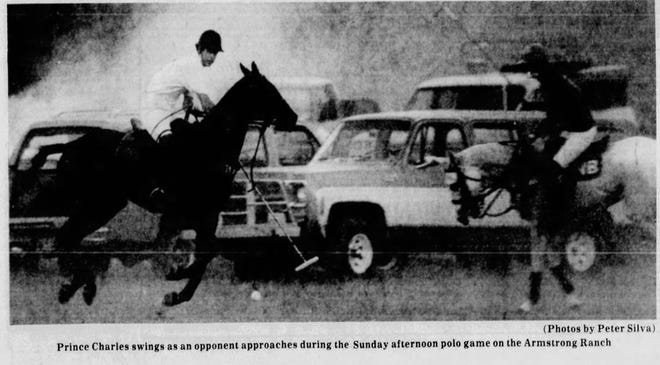


Prince Charles of Britain visited the Armstrong Ranch in South Texas with Anne Armstrong in October 1977. (David Adame/The Corpus Christi Caller-Times)
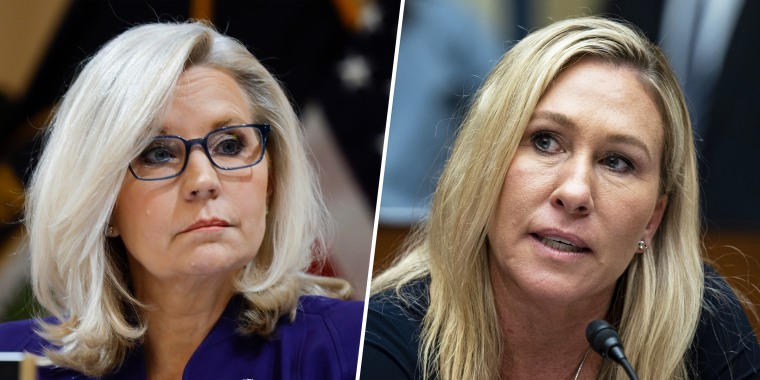
Liz Cheney, left, said Thursday that Marjorie Taylor Greene should lose her clearance for her tweets about the alleged leaker. Getty Images
America’s Allies are very nervous about the leak of Top Secret Documents. NATO is going to spend a trillion dollars on the threat Putin poses. The value of these Defense Dollars is being undermined. Our Allies our concerned by how divided the United States has become. Unity is the goal. President Biden is in Ireland this day shoring up the peace treaty between religious factions. I’m going to write him a letter suggesting he create the U.S. Civilian Oversight of British Defense Staff that is a Hands Across The Water, and Hands Across Party Lines.
Dick Cheney was friends with the Armstrong family who own a large Texas ranch. Prince Charles came for a visit, and a Polo game was played. Soon, this Prince will be King of the United Kingdom. Jane Dorothy is the ambassador of Britain. We have entered another Cold War. May I suggest the new head of the BDSUS reach out to Hollywood in regards to making propaganda movies, and anointing Hollywood Stars and Goodwill Ambassadors.
John Presco
Former White House Press Secretary Ari Fleischer said he thought Cheney’s embrace of Costner’s support would backfire.
“Liz is already going to lose, but while many fans love Costner and enjoy Yellowstone, who in Wyoming thinks he’s one of them?” Fleischer tweeted.
“It never ceases to amaze me how important Hollywood thinks it is,” he said.
Jane Dorothy Hartley (born April 18, 1950) is an American diplomat who has served as the United States ambassador to the United Kingdom in the Joe Biden administration since 2022. She served as the United States ambassador to France and Monaco from 2014 until 2017 during the Barack Obama administration.[1] She is also a member of the Council on Foreign Relations.
Former Rep. Liz Cheney said Thursday that GOP firebrand Rep. Marjorie Taylor Greene should not have a security clearance after Greene defended the Air National Guardsman suspected of leaking a trove of classified documents.
Cheney, a Republican from Wyoming who has come out against the Trump-aligned wing of the party, said Greene’s comments made clear that she “cannot be trusted” with national security information.
Rep. Marjorie Taylor Greene, of Georgia, defended the alleged leaker, Jack Teixeira, 21, in two tweets Thursday night, claiming that the Biden administration was “the real enemy” and had “lied to us from the very beginning.“
Cheney responded in a post on Twitter, saying, “Marjorie Taylor Greene makes clear yet again that she cannot be trusted with America’s national security information and should not have a security clearance of any kind.”



Airman suspected of leaking secret US documents hit with federal charges
Story by By Tim McLaughlin and Sarah N. Lynch • Yesterday 6:04 PM

By Tim McLaughlin and Sarah N. Lynch
FBI arrests U.S. Air Force National Guard employee over the leaks online of classified U.S. documents© Thomson Reuters
BOSTON (Reuters) -A 21-year-old member of the U.S. Air National Guard accused of leaking top secret military intelligence records online was charged on Friday with unlawfully copying and transmitting classified material.
Jack Douglas Teixeira of North Dighton, Massachusetts, who was arrested by heavily armed FBI agents at his home on Thursday, made his initial appearance in a crowded federal court wearing a brown khaki jumpsuit.
Jack Douglas Teixeira appears in federal court in Boston© Thomson Reuters
At the hearing, Boston’s top federal national security prosecutor, Nadine Pellegrini, requested that Teixeira be detained pending trial, and a detention hearing was set for Wednesday.
During the brief proceeding, Teixeira said little, answering “yes” when asked whether he understood his right to remain silent.
The judge said Teixeira’s financial affidavit showed he qualified to be represented by a federal public defender, and he appointed one.
An undated picture shows Jack Douglas Teixeira who was arrested by the FBI, over the leaks online of classified documents© Thomson Reuters
After the hearing, three of Teixeira’s family members left the courthouse, with a group of reporters trailing them for several blocks. They entered a car without making any comments.
The leaked documents were believed to be the most serious U.S. security breach since more than 700,000 documents, videos and diplomatic cables appeared on the WikiLeaks website in 2010. The Pentagon has called the leak a “deliberate, criminal act.”
This leak did not come to light until it was reported by the New York Times last week even though the documents were posted on a social media website weeks earlier.
U.S. President Joe Biden said on Friday he ordered investigators to determine why the alleged leaker had access to the sensitive information, which included records showing purported details of Ukrainian military vulnerabilities and embarrassed Washington by revealing its spying on allies.
Relatives of Jack Teixeira, a member of the U.S. Air Force National Guard suspected of leaking highly classified U.S. documents, leave the federal courthouse in Boston© Thomson Reuters
Fallout from the case has roiled Washington. Senate Democratic leader Chuck Schumer has requested a briefing for all 100 senators next week while Republican House of Representatives Speaker Kevin McCarthy vowed to investigate.
Relatives of Jack Teixeira, a member of the U.S. Air Force National Guard suspected of leaking highly classified U.S. documents, leave the federal courthouse in Boston© Thomson Reuters
“The Biden administration has failed to secure classified information,” McCarthy said on Twitter. “Through our committees, Congress will get answers as to why they were asleep at the switch.”
Biden said he was taking steps to tighten security. “While we are still determining the validity of those documents, I have directed our military and intelligence community to take steps to further secure and limit distribution of sensitive information,” he said in a statement.
MORE CHARGES EXPECTED
A criminal complaint made public on Friday charges Teixeira with one count of violating the Espionage Act related to the unlawful copying and transmitting of sensitive defense material, and a second charge related to the unlawful removal of defense material to an unauthorized location.
Relatives of Jack Teixeira, a member of the U.S. Air Force National Guard suspected of leaking highly classified U.S. documents, leave the federal courthouse in Boston© Thomson Reuters
A conviction on the Espionage Act charge carries up to 10 years in prison.
The charges are connected to just one leaked document so far, a classified record that described the status of the Russia-Ukraine conflict and included details about troop movements on a particular date.
Experts expect more charges as investigators examine each leaked document. Teixeira could also face more counts depending on the number of times he separately uploaded and transmitted each document.
“They are going to pick the ones (documents), I would imagine, that foreign governments have already seen,” said Stephanie Siegmann, the former national security chief for the U.S. Attorney’s office in Boston and now a partner with the Hinckley Allen law firm.
A general view of federal courthouse where Jack Teixeira, a member of the U.S. Air Force National Guard suspected of leaking highly classified U.S. documents, makes his initial appearance in Boston© Thomson Reuters
In a sworn statement, an FBI agent said Teixeira had held a top secret security clearance since 2021 and also had sensitive compartmented access to other highly classified programs.
Since May 2022, the FBI said, Teixeira has been serving as an E-3/airman first class in the Air National Guard and has been stationed at Otis Air National Guard Base in Massachusetts.
Siegmann said one lingering question is why a 21-year-old National Guardsman held such a top-level security clearance.
“That’s an issue that Department of Defense needs to now deal with,” she said. “Why would he be entitled to these documents about the Russia-Ukrainian conflict?”
javascript:void(0)
Reuters has reviewed more than 50 of the documents, labeled “Secret” and “Top Secret,” but has not independently verified their authenticity. The number of documents leaked is likely to be over 100.
(Reporting by Sarah N. Lynch in Washington and Tim McLaughlin in Boston; Writing by Sarah N. Lynch and Patricia Zengerle; Editing by Don Durfee, Alistair Bell, Jonathan Oatis, Daniel Wallis and Cynthia Osterman)

Kevin Costner has got legs.
Literally, that’s true. But figuratively as well.
The seemingly innocuous photo of the “Yellowstone” actor wearing a tee-shirt calling out his support for Liz Cheney continues to get attention.
Cheney first surfaced the photo of Costner’s shirt-wearing support in a tweet that said “Real men put country over party.”
Congressional challenger Harriet Hageman, who grew up on a Wyoming ranch, has taken a dim view of Costner’s credentials as a rancher and his support for Cheney. But she does like the TV series.
“Yellowstone is a good show, but Kevin Costner is a pretend rancher in a Hollywood production shot mostly in Montana, not Wyoming,” Hageman told Cowboy State Daily.
“And I’d bet that if he had to work a real ranch for a day, he’d call his agent to get him out of there. I’ll take the support of the people of Wyoming any day of the week over a liberal actor who voted for Joe Biden.”
Former Trump spokesman and current Hageman advisor Tim Murtaugh took it a step further.
Murtaugh tweeted a photoshopped version of Costner with a different message on the tee-shirt.
“I’m for Liz Cheney leaving office,” the shirt read.
Whether any of this makes any difference to voters can be debated.
Former White House Press Secretary Ari Fleischer said he thought Cheney’s embrace of Costner’s support would backfire.
“Liz is already going to lose, but while many fans love Costner and enjoy Yellowstone, who in Wyoming thinks he’s one of them?” Fleischer tweeted.
“It never ceases to amaze me how important Hollywood thinks it is,” he said.
McALLEN, Texas – Anne Armstrong, a longtime powerful Republican who served as US ambassador to Great Britain in the Ford administration, died yesterday, her office said. She was 80.
Ms. Armstrong had battled cancer and had been in a Houston-area hospice for about a week, her assistant Kay Hicks said.
Ms. Armstrong and her husband, Tobin, were Republican stalwarts. She was a national leader of the Republican Party and a Cabinet-level adviser to Presidents Nixon and Ford.
Ms. Armstrong’s name was again in the news in 2006 when Vice President Dick Cheney accidentally shot and wounded a fellow hunter during an outing at the Armstrong family’s ranch in South Texas.
She was the first woman to serve as US ambassador to Great Britain, taking the post in 1976.
At her swearing-in, Ford quipped that his wife was “always needling me” to appoint women to such posts. Ms. Armstrong replied, “I have the feeling Abigail Adams would have been just as excited as Betty Ford and I” about her selection.
A couple of months into her tenure, The New York Times reported that the British had “taken an instant liking to her . . . because she is visible and direct and informal without turning informality into a cloying, down-home soupiness.”
More recently, Ms. Armstrong was an adviser on foreign intelligence to Presidents Reagan and George H.W. Bush.
“Her public service was exemplary and set a high standard for all who recognized that government service is vitally important to our way of life,” George H.W. Bush said in a statement. “Anne was a great sportsman, fantastic shot, and a wonderful friend to the Bush family. We send condolences to her family and mourn her death.”
Tobin Armstrong died in 2005. They had been married for 55 years.
The man wounded by Cheney on Armstrong’s ranch in February 2006 was Harry Whittington, a millionaire lawyer and longtime Republican activist. He was hit in the face, neck, and chest with birdshot and was hospitalized for several days.
The Kenedy County ranch had been in the Armstrong family since the 19th century. Tobin Armstrong’s grandfather, John Armstrong III, who settled it, had earned his fame as the Texas Ranger who captured notorious outlaw John Wesley Hardin.
How much is King Ranch worth?
Thanks to the sale of the W.T. Waggoner Estate Ranch in Texas earlier this year, we can get a sense of King Ranch’s value. Waggoner Ranch isn’t as large as King Ranch, but it calls itself the “largest ranch under one fence.” King Ranch, meanwhile, is split across multiple parcels.
Los Angeles Rams owner Stan Kroenke bought Waggoner Ranch this summer, according to Forbes, and though the terms of the sale weren’t disclosed, the nearly-800-square-mile property was listed at $725 million. Robert Grunnah, a principal at the Texas land specialty firm Novus Realty Advisors, told Bloomberg in July 2021 that if Waggoner Ranch is worth $725 million, King Ranch is worth $1.1 billion.
British Defence Staff USA
Posted on August 2, 2021 by Royal Rosamond Press
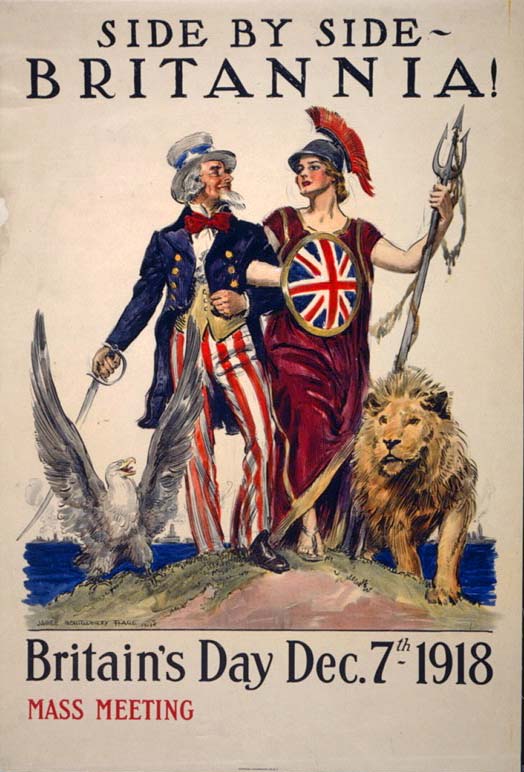
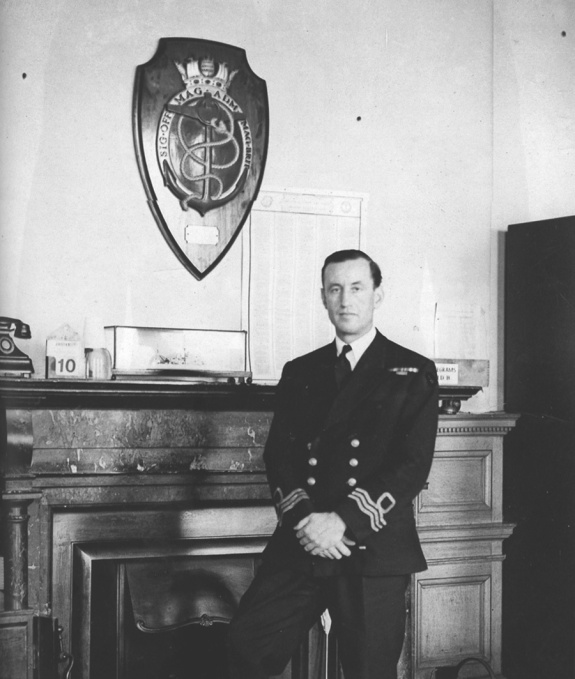

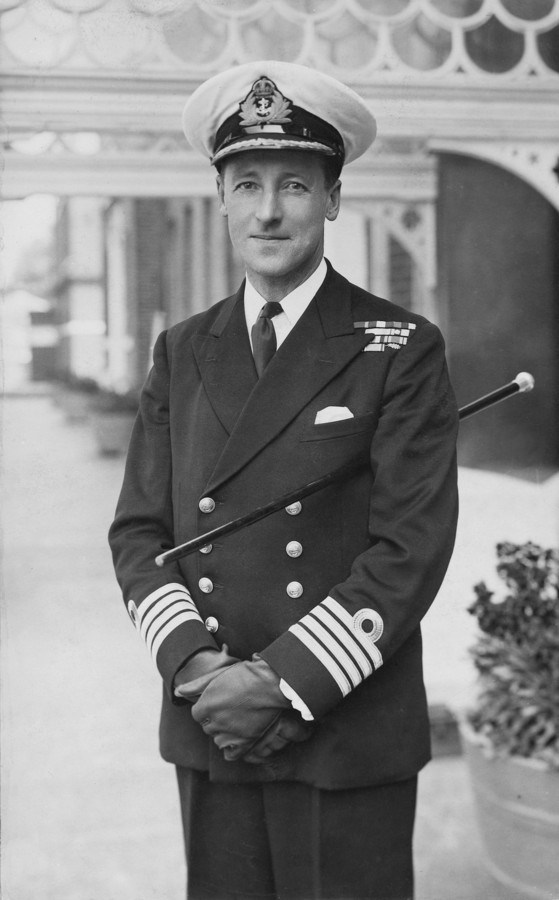
Treacherous Republican-Christians, and their disgraced ex-president, tried to end our alliance with Britain, formed by the artist , Winston Churchill.
John Presco
British Defence Staff in the USA
Location:USAPart of:Ministry of Defence
The Ministry of Defence (MOD) protects the security, independence and interests of our country at home and abroad.
We work with our allies and partners whenever possible. Our aim is to ensure that the armed forces have the training, equipment and support necessary for their work.
The MOD works with the United States on joint overseas operations and contingency planning, bilateral defence co-operation, interoperability and engages on defence trade.
Our team in the United States assists this work and communicates the broader transatlantic defence relationship, elevates the UK’s interests and reputation and provides high-quality advice and reporting to the UK on all aspects of defence business.
Responsibilities
The MOD is responsible for: defending the UK and its overseas territories, providing strategic intelligence, providing nuclear deterrence, supporting civil emergency organisations in times of crisis, defending our interests by projecting power strategically and through expeditionary interventions, providing a defence contribution to UK influence and providing security for stabilisation.
The British Defence Staff in the United States comprises some 750 military and civilian MOD personnel based in over 30 states across the US. Their mission is to protect and advance the UK and its interests by reinforcing the transatlantic defence and security relationship.
Priorities
Preserving global peace & security — The UK and the US co-operate to address the world’s most pressing security challenges.
Supporting trade and investment — Driving forward industry, the UK works with the US on facilitating defence trade and investment.
Co-operating in science, innovation, energy and higher education — The UK and the US collaborate in science and innovation; including advanced defence technologies.
Departments at post
- Ministry of Defence civil servants
- Royal Navy personnel
- British Army personnel
- Royal Air Force personnel
- Joint Forces Command
Follow us
Our people
- Air Vice-Marshal Mick SmeathDefence Attaché, USA
- Edward FergusonMinister Counsellor Defence, USA
- The UK is threatening to tear up its defense alliance with the US after President Donald Trump’s Iran crisis triggered a rupture between the two countries.
- UK Defense Secretary Ben Wallace told The Sunday Times that the UK was looking to forge stronger alliances with other international partners that shared its priorities.
- He said the US under Trump risked withdrawing from its global leadership role.
- Wallace also said Trump threatened to tear up the US’s intelligence-sharing relationship with the UK.
- Visit Business Insider’s homepage for more stories.
10 Things in Politics: Get the latest political & economic news.Email addressBy clicking ‘Sign up’, you agree to receive marketing emails from Insider as well as other partner offers and accept our Terms of Service and Privacy Policy.
President Donald Trump’s order to assassinate Iranian Maj. Gen. Qassem Soleimani has triggered a major rupture between the US and its historically closest ally, the UK.
In remarkably outspoken comments, UK Defense Secretary Ben Wallace said in an interview published Sunday that Trump’s isolationist foreign-policy stance had prompted the UK to look for alternative allies.
“I worry if the United States withdraws from its leadership around the world,” he told The Sunday Times.
He added: “The assumptions of 2010 that we were always going to be part of a US coalition is really just not where we are going to be.”
The comments came after Prime Minister Boris Johnson’s government distanced itself from the attack that killed Soleimani, with UK Foreign Secretary Dominic Raab labeling it a “dangerous escalation” that risked a conflict in which “terrorists would be the only winners.”
A spokesman for Johnson was also quick to condemn Trump’s threats to target Iranian cultural sites, if carried out, as a breach of international law and possibly a war crime.
The UK is now openly threatening to tear up its long-standing defense partnership with the US.
The US ‘withdraws from its leadership’ of the world under Trump
Wallace told The Sunday Times that the UK was increasingly looking for alternative international allies.
“Over the last year we’ve had the US pullout from Syria, the statement by Donald Trump on Iraq where he said NATO should take over and do more in the Middle East,” Wallace said.
“The assumptions of 2010 that we were always going to be part of a US coalition is really just not where we are going to be.”
Wallace said the UK would need to reduce its dependence on US military assets.
“We are very dependent on American air cover and American intelligence, surveillance, and reconnaissance assets,” he said. “We need to diversify our assets.”
Wallace told the paper that the UK would increasingly need to turn to other allies that more closely shared the UK’s interests.
SPONSORED BY GUT HEALTH WELLNESS
U.S. Surgeon: This Simple Trick Empties Almost Immediately Your Bowels Every Morning
How To Clean Your Guts Every Day – Top Surgeon ExplainsVISIT SITE
“Regardless of what the US does … we are going to have to make decisions that allow us to stand with a range of allies, the Five Eyes [intelligence partnership with the US, Canada, Australia, and New Zealand] and our European allies where our interests converge,” he said.
Trump is threatening to cut intelligence ties with the UK
Wallace also said the Trump administration had threatened to cut off its intelligence-sharing partnership with the UK if Johnson’s government pursued its plan to allow the Chinese technology company Huawei a role in building Britain’s 5G network.
“They have repeatedly said that. They have been clear about that,” he told the paper.
“President Trump, the national security adviser. The defense secretary said it personally to me directly when we met at NATO. It’s not a secret. They have been consistent. Those things will be taken into account when the government collectively decides to make a decision on it.”
He added: “Friends and enemies that are independent make you choose.”
Our Brexit Insider Facebook group is the best place for up-to-date news and analysis about Britain’s departure from the EU, direct from Business Insider’s political reporters. Join here.\
The British Ambassador
Posted on July 9, 2019 by Royal Rosamond Press

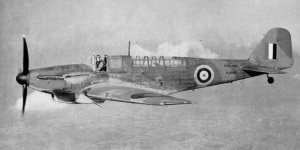
Douglas Fairbanks was made a member of the Order of Saint John. The range war I have been having with Rena Easton is pure prophecy. I see into the future with the help of my muses, reluctant or not.
John
British Ambassador
“At the outset of Trump’s presidency, there was some concern about how America’s international relationships would fare during his administration. Trump’s declared willingness to shake up the United States’ position in the international order was a feature of his 2016 campaign and one that, as president, he hasn’t shied away from.
There’s no suggestion at this point that the relationship between the United States and Britain will suffer over the long term from Darroch’s comments, particularly now that Trump has apparently excised him from America’s diplomatic sphere. These sorts of indelicacies, originating from an individual, aren’t generally the stuff that foment international crises.” A tractor is parked toward the end of seeding between Choteau and Dutton. (Photo: COURTESY PHOTO/SCOTT INBODY)
‘We feel abused’
SUNBURST, Mont. — As Lyle Benjamin fires up his tractor for seeding this spring, he’s doing it staring down what he anticipates will be a tough year for Montana farmers.
A mile and a half away from his farm, Canadian farmers are benefiting from access to overseas markets through deals that Americans have lost as “collateral damage” in the recent trade wars.
“What we’ve been asking for, what we’re trying to safeguard is what we already had,” Benjamin said. “We feel abused as other industries are asking for major concessions, and we’re collateral damage.”
Douglas Fairbanks Jr. and James Bond
Posted on September 2, 2018by Royal Rosamond Press

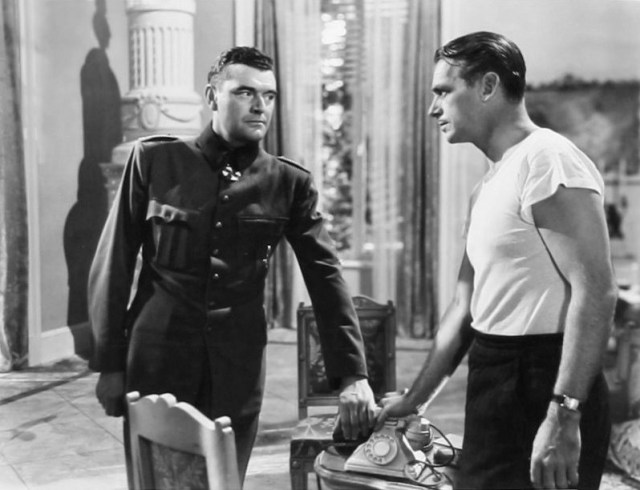
Highly-decorated Commander Fairbanks Jr., KBE, DSC, etc, after the war – and wife, Mary Lee
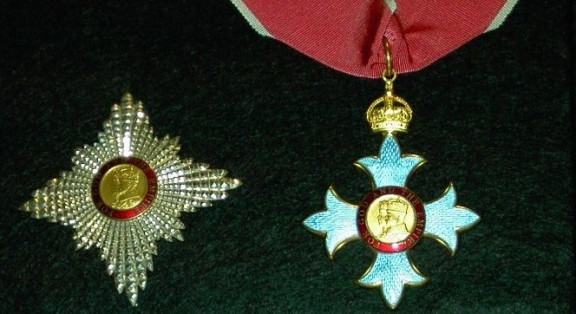


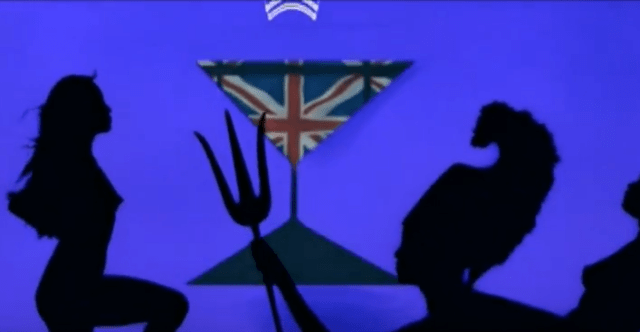
It is my conclusion, that Douglas Fairbanks Jr. is the model Ian Fleming used for James Bond. I discovered this by looking at the cast of ‘The American Venus’. Douglas plays Trident, the son of Nenptune. Consider the opening of ‘On Her Majesties Secret Service’ where beautiful nude women are carrying tridents.
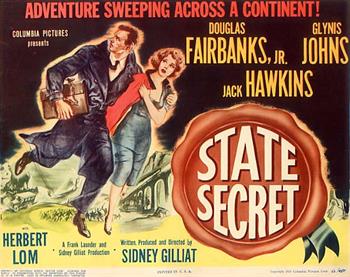
I suspect Ian Fleming saw the movie ‘State Secret’ and knew of Fairbank’s secret operations. Then there are those images of beautiful actresses hanging on him, the man who was considered the most handsome man in the world. A million women wanted him – at least. Fairbanks was at that bathing beauty contest starring Fey Lanphier.
Fairbanks kept his Naval history in the background. Did he know Fleming was authoring books? Did they converse? Why did no one, until now, compare James Bond to Fairbanks? I think there were agents in South America that might me compromised. Did Elizabeth Taylor know about her fellow thespian’s secret life? How about Ian Easton who headed the College of Defence Studies?
Douglas came up with the Beach Jumpers and trained as a Commando. I suspect he looked down on Hollywood after being – the real deal! He had friends in high places, and was done with Slumming For Roles.
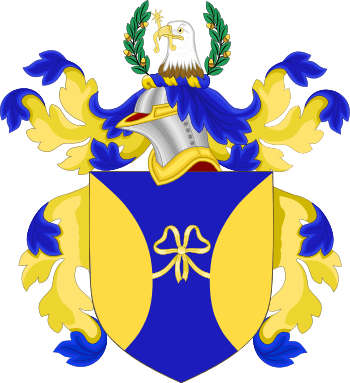
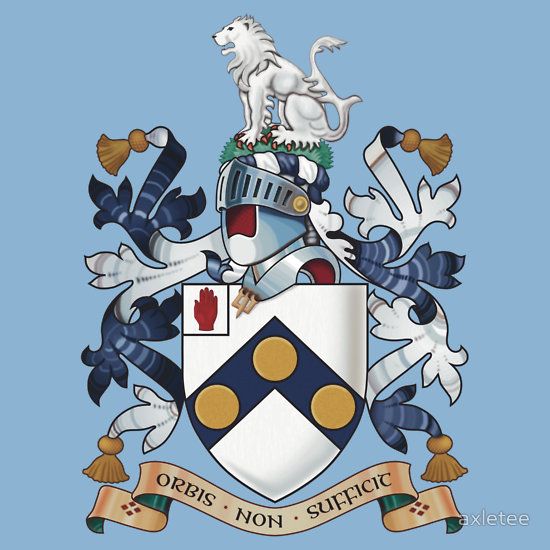
Above is the cote of arm of Douglas Fairbanks. It depicts Britain and the U.S. being united, tied by a ribbon across the Atlantic Ocean. Above is the American Eagle carrying the Olive Branch of Peace. This is the most profound discovery in all the billions of words that have been written about James Bond. Note the symbol for Anarchy on the wall under the image of the Arch Villain. I am ordained to take over Ian Fleming and Fairbank’s work. I think a remake of ‘State Secret’ would make a great Bond movie – that never mentions the name Bond. But, with the news of my discovery, everyone will flock to behold – the real deal! No more Hollywood phonies!
Chas Cunningham is now taking down my posts on his facebook for his band. He will have no part of my discovery. He is banned – for life!
John Presco 007
Copyright 2018
After that he was made Assistant Chief of Naval Staff (Policy) in 1969, Flag Officer for the Admiralty Interview Board in 1971 and Head of British Defence Staff and Senior Defence Attaché in Washington, D.C. in 1973.[1] He last posting was as Commandant of the Royal College of Defence Studies in 1976: he commissioned armourial bearings for the College which were presented during a visit by the Queen in November 1977.[3] He retired in 1978.[1]
Douglas Fairbanks: A Brash Officer with Brash Ideas
Reassigned to the United States in late 1942, Fairbanks – as brash a junior naval officer as he was a brash onscreen hero – pitched his idea for a U.S. Navy unit specializing in tactical cover, diversion, and deception operations to Admiral H. Kent Hewitt, commander of all U.S. amphibious forces and all American naval forces in North African and Mediterranean waters.
Hewitt loved the idea and took it to the Chief of Naval Operations, Adm. Ernest King. In March 1943, King issued a secret order to establish a force of 180 officers and 300 enlisted men for “prolonged, hazardous, distant duty for a secret project.”
Within weeks, Beach Jumper Unit 1 was stood up. The origins of the name Beach Jumper is unclear. One story maintains the moniker came from the unit’s mission to “scare the be-jesus out of the enemy,” and BJ led to the name Beach Jumpers. In a 1993 interview with the U.S. Naval Institute’s journal Proceedings, Fairbanks provided a much more mundane answer.
“It was a codename given by Mountbatten,” he said. “The idea was for it to be a cover name – partly descriptive – and a code name at the same time.”
The College of Arms in London granted Fairbanks a coat of arms symbolizing the U.S. and Britain united across the blue Atlantic Ocean by a silken knot of friendship


| Description | English: Coat of Arms of Douglas Fairbanks, Jr.Shield: Azure two flaunches connected by a ribbon in fess with a bow OrCrest: An American Bald Eagle’s head proper holding a spur Or between two olive branches ProperMotto: Fides conatus et fidelitas (Faith, endeavors and fidelity) |
| Date | 6 April 2015 |
| Source | English: The College of Arms |
Any heraldry experts care to comment on this? On the shield there is a “Red Hand”. Is that the “Red Hand of Ulster”? Or does it signify something else?
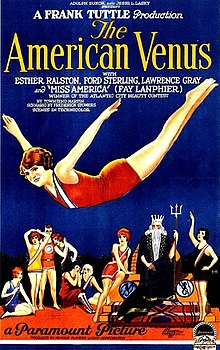
The American Venus is a 1926 American silent comedy film directed by Frank Tuttle, and starring Esther Ralston, Ford Sterling, Lawrence Gray, Fay Lanphier, Louise Brooks, and Douglas Fairbanks Jr. The film was based on an original story by Townsend Martin. The scenario was written by Frederick Stowers with intertitles by Robert Benchley.[1]
It was used as a Commando Training Depot during the Second World War and the village retains close ties to British Commandos, the United States Army Rangers and similar units from other allied nations. In 1928, the Achnacarry Agreement was signed, an early attempt to set petroleum production quotas.
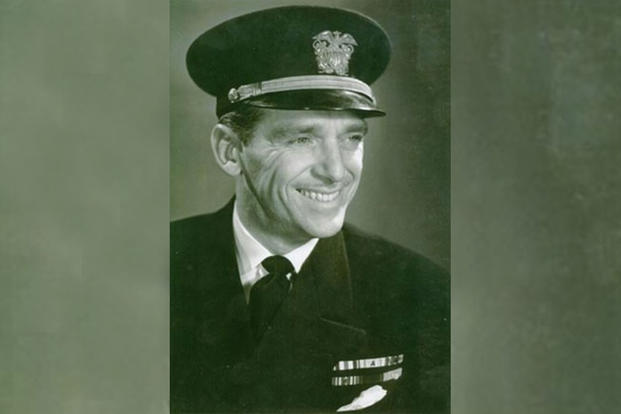
Military.comBy Bethanne Kelly Patrick
Dashing, handsome, and connected, Douglas Fairbanks Jr. had a well-established movie career in 1939. He could easily have spent the war years starring in light-hearted entertainments. Instead, he combined political activism with active-duty military service in the U.S. Navy, and was instrumental in bringing special tactical deception methods to U.S. naval operations.
Fairbanks came from Hollywood royalty and had friends in high places, including President Franklin Roosevelt, who in 1941 appointed Fairbanks as special envoy to South America, where he gathered intelligence. In the late 1930s, at the height of American isolationism, he helped Adlai Stevenson organize the William Allen White Committee that lobbied for U.S. entry into the war. Six months before Pearl Harbor, he obtained a commission in the Naval Reserve.
Fairbanks’ support of intervention was doubtless strengthened by his lifelong Anglophile sympathies. He was a great favorite of several British royals, and King George VI was to give him an honorary knighthood for “furthering Anglo-American amity.” His ties to England were knotted tight when he was assigned to an officer exchange program under British Adm. Lord Louis Mountbatten. Lt. Fairbanks trained with the Royal Navy at the HMS Tormentor Advanced Training and Amphibious Operations Base and at the Commando Training School at Ancharry Castle, Scotland. He learned the art of naval deception and brought its skills and philosophy with him to his next assignment at Virginia Beach.
Under the command of Adm. Kent Hewitt, Fairbanks suggested that a unit of specialists such as those he had trained with might aid in the deployment of U.S. Naval forces in North Africa and the Mediterranean. The suave Fairbanks helped Hewitt sell the idea in Washington, and in 1943 the Beach Jumper program was begun. Although Fairbanks was not senior enough to command the unit, he was assigned to develop, supervise, and coordinate all plans with the British. The Beach Jumpers created and sustained the illusion that a military landing was happening at one beach — when in reality, that landing was taking place at a completely different location. These units had great success at Sicily, Salerno, Southern France, and the Philippines during World War II.
At the war’s end, Fairbanks was working on schemes to support the scheduled British landings at Singapore. He retired from the reserve as a captain in 1954. He wrote an enormously entertaining book about his wartime experience, “A Hell of A War.”
However, his truest feelings about his patriotic service may be best expressed in his words to a journalist in 1990. After forming the White Committee, he and his family received several death threats. “Why did I do it,” said Fairbanks. “I can only describe it with words that are considered rather corny these days: conviction, conscience, doing what I thought was right, the hell with the results.”
Douglas Fairbanks Jr. died on May 7, 2000, at the age of 90.
Although celebrated as an actor, Fairbanks was commissioned as a reserve officer in the United States Navy when the United States entered World War II and was assigned to Lord Mountbatten‘s Commando staff in the United Kingdom.[16]
In 1941, President Franklin D. Roosevelt appointed him special envoy to South America. Fairbanks served on the cruiser USS Wichita during the disastrous Convoy PQ17 operation.[17]
Having witnessed (and participated in) British training and cross-Channel harassment operations emphasizing the military art of deception, Fairbanks attained a depth of understanding and appreciation of military deception then unheard of in the United States Navy. Lieutenant Fairbanks was subsequently transferred to Virginia Beach where he came under the command of Admiral H. Kent Hewitt, who was preparing U.S. naval forces for the invasion of North Africa.
Fairbanks convinced Hewitt of the advantages of a military deception unit, then repeated the proposal at Hewett’s behest to Admiral Ernest King, Chief of Naval Operations. King thereupon issued a secret letter on March 5, 1943 charging the Vice Chief of Naval Operations with the recruitment of 180 officers and 300 enlisted men for the Beach Jumper program.
The Beach Jumpers’ mission would simulate amphibious landings with a very limited force. Operating dozens of kilometers from the actual landing beaches and utilizing their deception equipment, the Beach Jumpers would lure the enemy into believing that theirs was the principal landing.
United States Navy Beach Jumpers saw their initial action in Operation Husky, the invasion of Sicily. Throughout the remainder of the war, the Beach Jumpers conducted their hazardous, shallow-water operations throughout the Mediterranean.
For his planning the diversion-deception operations and his part in the amphibious assault on Southern France, Lieutenant Commander Fairbanks was awarded the United States Navy’s Legion of Merit with bronze V (for valor), the Italian War Cross for Military Valor, the French Légion d’honneur and the Croix de guerre with Palm, and the British Distinguished Service Cross.
Fairbanks was also awarded the Silver Star for valor displayed while serving on PT boats and in 1942 made an Officer the National Order of the Southern Cross, conferred by the Brazilian government.[18][19]
“A Hell of a War”: An Interview with Douglas Fairbanks, Jr.


Naval History Magazine – October 1993 Volume 7 Number 3
The motion picture legend talked recently to the Naval Institute’s History Division Director Paul Stillwell and Naval History Editors Fred L. Schultz and Linda O’Doughda about his new book, A Hell of a War (New York: St. Martin’s Press, 1993). Still sporting his familiar thinly trimmed moustache and red carnation, he sat behind the desk of his Madison Avenue office immersed in a vast collection of memorabilia. Among the treasures he displayed—mostly autographed photos of Hollywood and political notables—were the helmet he wore in combat, his Navy cover and lieutenant commander’s shoulder boards, and a life ring off the battleship Washington (BB-56) inscribed “Lieut. D. Fairbanks, Jr., USNR, to a sailor good enough to be a Marine,” from then-Marine Corps Captain Donald Hittle, later Brigadier General Hittle, who is now a writer and the President of the Army-Navy Club in Washington, D.C.
In keeping with the low-key style he used so effectively in his new book—which is the sequel to his Hollywood memoir The Salad Days (New York: Doubleday, 1988)—Fairbanks recalled his experiences as a Naval Reserve officer in the Atlantic and Mediterranean theaters of World War II. As it turned out, the veteran of more than 80 movies knew of the Naval Institute, too.
Fairbanks : I still take the Proceedings , you know.
Naval History : Now, that’s the way to start an interview.
Naval History : You took great pains not to be recognized or treated specially during your naval service. How do you feel about participating in interviews and getting attention now?
Fairbanks : Frankly, being in the theatrical world, and also the governmental, diplomatic, and political worlds, I’ve been at the other end of interviews since I was a boy. So there’s really nothing novel about it. I try to make sense out of it, to give the right answers, and to be as honest as I can.
Naval History : To put things in perspective, where would you place your naval service in the overall context of your life?
Fairbanks : That’s a good question, isn’t it? It’s one I shouldn’t answer quickly. [Pauses.] I’d put it very high up, very high up indeed. But it had to be. I wasn’t a boy when I went in. In fact, I was beyond draft age. I went in 1940, when I was already 30 years old. My theatrical career was fairly flourishing at the time. But I wanted to get into the Reserves and take on Adolf Hitler. Actor Robert Montgomery and I went in at the same time and did our training together. I had a difficult time getting a commission in the first place, because I didn’t have a university education. I finally got one through a correspondence course in California. Franklin Roosevelt, Jr. went with me the day I signed on to go to sea in Boston.
Naval History : You’ve probably heard the various theories espoused about how in the world we could have been taken by such complete surprise at Pearl Harbor. At least one even implicates President Franklin D. Roosevelt in a conspiracy. What do you think about all of that?
Fairbanks : Nonsense. I don’t believe that President Roosevelt would have been involved in any conspiracy. If that were true, evidence of it surely would have come out much earlier than this. People suspect anything they don’t like or don’t want to digest. It’s libel and slander on the President to suggest a conspiracy. All sorts of things could have happened. Nearly everything is possible. The senior admirals and generals, I’m sure, considered it a possibility—but not a probability. And they likely gave it no more credence than a dozen other options.
Naval History : We realize that you had a close relationship with President Roosevelt and his family before the war. Has your opinion of him changed since then?
Fairbanks : Not at all, except that I have even more admiration for him now. I thought he was a wonderful man, and still do.
Naval History : In the book you say that, after you received an AlNav bulletin that Pearl Harbor had been attacked, you threw it in the wastebasket. Having been the first and only one on board to have seen it, what made you pull it back out?
Fairbanks : I was not certain what it meant—“Air Raid Pearl Harbor, this is no drill.” What the hell was Pearl Harbor? Where was it? And what did they mean, “This is no drill?” That part made me think it might be serious and that maybe I should tell somebody about it. I was an Atlantic sailor at the time, not a Pacific one. Nobody in the Atlantic knew much about Pearl Harbor.
Naval History : You acknowledge that you were luckier than most, especially those in the Navy. How would you rate your general relationship with your shipmates?
Fairbanks : Pretty good. I didn’t have any special advantages. I was just lucky that the things I did came off all right and that I didn’t get hurt. And I didn’t break any rules, or at least I didn’t get caught breaking any.
Naval History : So you made a specific effort not to trade on your celebrity status?
Fairbanks : Oh, absolutely, yes. That would have been stupid—suicidal. There were always some who tried to put me in my place. “We’ll teach this guy,” they’d say. When I didn’t pay them any attention, that sort of annoyed them. They got no fun out of it and eventually just gave up.
Naval History : What do you remember about your relationships with the enlisted men?
Fairbanks : I suppose it was just the same as any other junior officer—a very junior officer. I must have been a curiosity to many of them for the first few weeks. Then the curiosity just melted into the ship’s company.
Naval History : Which is exactly the way you wanted it to go.
Fairbanks : Oh, of course, that’s the way I tried to guide it. It would have been impossible to do the job otherwise.
Naval History : When would you say you turned from being a green officer into a veteran?
Fairbanks : I suppose that happened during the first engagement we had with a German U-boat on the destroyer—the Ludlow (DD-438) it was—when we crossed the Atlantic. It doesn’t take very long once you get a good scare. You get scared once, and you’re part of the team.
Naval History : You obviously had a varied Navy career, at least as far as ship types go. By our account, the only ships in which you did not serve were submarines. If you could have served in only one of those ship types, which would it have been and why?
Fairbanks : I enjoyed amphibious work best of all, because it had a little bit of everything. It had land, sea, and air, a combination that was sort of off the beaten track, not straight down the line. It was sort of special operations, and so it was more fun. It wasn’t so conventional. A battleship is too big, and a destroyer in a bad sea rolls around and rocks too much. A lot of people liked the tin cans best. But I’d take cruisers. They’re sort of in between. I enjoyed my time in the battleships—the Washington and the Mississippi —but they were so enormous.
Naval History : If you could have done anything differently in the war, what would it have been?
Fairbanks : Stayed out. No, seriously, I’ve always been interested in the diplomatic and political side. I would have liked to be in the State Department or to serve in some diplomatic capacity. I enjoyed my Navy experience, but I think I would have enjoyed doing the same sorts of things I did before the war for FDR down in South America and in Europe, particularly in England and France. I found it all very interesting. I was on a much higher level than people would have imagined from somebody like me. Nobody would have suspected that I was dealing directly with the President and the Secretary of State. So it was all very interesting and fascinating from my point of view.
Naval History : What impressions do you retain of [Allied Combined Forces Commander] Admiral [H. Kent] Hewitt pictured there on your wall?
Fairbanks : Very fond ones, very fond. He was a gentle, nice man. When Admiral [Ernest] King gave him hell in front of the lot of us, the old man almost wept with embarrassment and humiliation. We hated Admiral King for doing that to him, because we had such affection and respect for Admiral Hewitt.
Naval History : You described the frustration you felt in the beach jumpers when you had a skipper who was not very knowledgeable or supportive. Did that situation improve once he was replaced?
Fairbanks : The man was a madman. He was absolutely impossible. He tried to conspire with me, saying, “You must get more recognition. You must arrange to have somebody killed on the next operation. We haven’t had enough casualties yet.” That’s when I got around to reporting it. I was on friendly terms with some senior officers. I didn’t want to go through proper channels. This was too dangerous. He was widely disliked, widely hated, widely feared, and finally sent out to the Pacific.
Naval History : How did the term “beach jumper” come about?
Fairbanks : It was a code name given by Mountbatten, I think. We had training up in Inverary, Scotland. The idea was for it to be a cover name—partly descriptive—and a code name at the same time.
Naval History : Do you feel that the beach jumpers really fulfilled their potential?
Fairbanks : I thought we could have done even more. Today, this type of operation is an integral part of the force.
Naval History : In the book, why did you spotlight operations in the south of France over Normandy, which usually gets most of the attention?
Fairbanks : They didn’t do too much of my sort of fighting at Normandy. At Normandy we were experimenting with new things, like the Dieppe operation. Normandy was pretty much all power, not much deception. And we were later involved in strategic planning. It was called London Control—just a cover name. That was an interesting group. They had supervision over that sort of operation all around the world.
Naval History : From the looks of your walls, it’s almost as if people were standing in line to give you medals.
Fairbanks : A lot of them don’t mean a thing. They’re just routine. Two or three of them mean something, and I received them gratefully. The others are all just automatic.
Naval History : Well, six campaign stars on your Middle East/European/African medal is impressive indeed.
Fairbanks : We’re going to a dinner tomorrow night at an ambassador’s house. On the invitation it says that decorations will be worn. I don’t know where all mine are at the moment. My wife thinks she knows.
Naval History : Some of the action summaries that you wrote during the war and then quoted in the book certainly display a flair for writing. Do you enjoy writing?
Fairbanks : Yes. I probably should have done more. I’ve always enjoyed writing, and I still do. That is the art I most respect.
Naval History : What type of writing do you prefer—newspapers? Or novels? Or what you’re doing now?
Fairbanks : Different kinds. I wrote articles and poetry when I was 16 and 17. Two poems of mine were published in Vanity Fair , and I had some short stories printed in Esquire . I’ve been scribbling a long time. I didn’t win any prizes, but I did get published.
Naval History : What are you working on now? Is it a follow-on to A Hell of a War ?
Fairbanks : Oh, yes. I’m not working very hard on it, though. There’s no rush.
Naval History : Are you going to bring us up to the present in your next book?
Fairbanks : I won’t really know until it happens. I’ll see what the publisher wants. You might say I just scribble for the sake of the family now.
Naval History : How much did you rely on memory, how much on notes, and how much on research?
Fairbanks : It’s a little mélange of everything. I found some diaries and notes, and letters to the family.
Naval History : The research is the fun part, and the writing is the hard part.
Fairbanks : You’re absolutely right. It is fun to get it all assembled. Then you find one bit of research that upsets everything else before it, and it contradicts what you’ve already concluded.
Naval History : As historians, we wish everyone had as keen a sense of history as you obviously do. What does history mean to you? How important is it?
Fairbanks : I’ve always enjoyed it—the stories, the excitement, how things developed, the origin of everything. I’m not only fascinated with natural history—the sun and the stars—but also political history, language, and culture. I’ve been interested in how things began ever since I was a boy.
Naval History : Today’s history teachers try to instill this interest in young people, but it’s become more and more challenging.
Fairbanks : My children aren’t in the least interested in history, so I understand the situation.
Naval History : In your opinion, how has World War II been depicted in films? How would you rate it?
Fairbanks : Do you know, I haven’t seen very many of them. I’m trying to think of one. The Longest Day is one. I remember seeing the play, The Caine Mutiny , but I didn’t see the movie. In Which We Serve , with Noel Coward, I thought was great. That was all about Mountbatten, of course.
Naval History : What we are driving at here is that one of the big criticisms of movies, at least these days—and you must have heard it before—is that historical accuracy often suffers in favor of romanticism.
Fairbanks : Sure! And why shouldn’t it? Films and theatrical productions are not meant to be documentaries. Shakespeare wrote a lot of history, but I doubt if much of it was historically accurate. He made Richard III a famous hunchback villain. But there’s no evidence at all in any history showing that Richard III was deformed, that his right shoulder was higher than the left. Somebody else wrote that his left shoulder was higher than his right. This was the only contemporary mention that Richard III was crippled at all. Yet Shakespeare made Richard III famous as a hunchback villain.
Naval History : Do you have any stories or anecdotes that you’d like to share with our readers but didn’t include in the book?
Fairbanks : I doubt it. Nothing that I could say out loud, anyway.
Fairbanks’s War
1937
- Assigned by President Franklin D. Roosevelt, Secretary of State Cordell Hull, and Under Secretary of State Sumner Welles to official and semi-official government duties with various public, foreign, philanthropic, and educational organizations.
1939
- Helped organize the William Allen White Committee to Defend America by Aiding the Allies and served as National Co-Vice President with Mrs. Franklin D. Roosevelt.
- Helped organize Franco-British War Relief, Inc. (later, British War Relief).
- Headed and financed Douglas Voluntary Hospitals in the United Kingdom, later absorbed by St. John’s Ambulance Brigade and the British Red Cross.
1940
- Committee member of The Fight for Freedom Committee
1941
- Commissioned a lieutenant (junior grade), U.S. Naval Reserve.
- Appointed by President Roosevelt as presidential envoy to Brazil, Argentina, Uruguay, Chile, Peru, and Panama.
- Assigned temporary duty in the Office of Naval Intelligence, Navy Department, Washington, D.C.
- Ordered to USS Ludlow , serving as assistant gunnery officer, assistant communication officer, and watch officer in the destroyer, which was part of a convoy escort in the North Atlantic. Saw first action against German U-boats in November.
- Transferred as assistant gunnery and watch officer to USS Mississippi , flagship of U.S. Task Force 99, U.S. Atlantic Fleet (attached to British Home Fleet) based in Reykjavik, Iceland, and Scapa Flow, Scotland.
1942
- January, served in Office of Naval Intelligence, at headquarters of Commander-in-Chief, U.S. Fleet, U.S. Navy Department, Washington, D.C.
- February, served as executive officer with minesweeper patrol in U.S. Atlantic coastal waters.
- March, assigned to staff of Commander, U.S. Task Force 99 in the battleship Washington as flag lieutenant and aide to the task force commander.
- June, assigned temporary duty as assistant gunnery officer and “staff observer” on board the USS Wasp on convoys from Scapa Flow and Glasgow to Malta.
- July, assigned same duties on board the heavy cruiser USS Wichita as part of close covering escort of Convoy PQ-17, from Scapa Flow, via the Arctic Ocean, to Murmansk, U.S.S.R.
- End of July through September, assigned to Rear Admiral Lord Louis Mountbatten’s Combined Operations Commando Headquarters, London. Participated in planning section, special weapons and camouflage sections, and attended the Commando Training Centre, Inverary, Scotland. Later assigned by Mountbatten to command a flotilla of amphibious raiding craft (only U.S. officer assigned), with bases in Warsash, and Isle of Wight. Operated with Royal Marine Commandos in raids across the English Channel.
Late 1942 to 1944
- Assigned various special operational and staff duties, including planning staff for Special Operations Commander, Amphibious Force, U.S. Atlantic Fleet, and Commander, U.S. Naval Forces, Northwest African Waters. Served as Chief Staff Officer for Special Operations Task Group 80.4 (the “Beach Jumpers”) in the Mediterranean.
- After invasion of France in 1944, transferred to Strategic Plans Division and later to Post War Plans Division, Officer of the Chief of Naval Operations, and Headquarters of the Commander-in-Chief, U.S. Fleet, Washington, D.C., serving as liaison between the Joint Chiefs of Staff and the State Department. Returned to inactive duty, February 1946.
Share this:
Ian Fleming at Cheyne Walk
Posted on August 22, 2021 by Royal Rosamond Press
The Royal Janitor
by
John Presco
Copyright 2021
Becoming a James Bond Author
Just past midnight on August, 22, 2021, I googled “Ian Fleming” and “Bohemian” and discovered Evelyn Saint Croix Rose bought the house that one of my favorite artists lived in, and held a salon there. Turner lived in on Cheyne Walk, as did Dante Gabriel Rossetti, a co-founder of the Pre-Raphaelite Brotherhood, which I revived in 1969. My ship has come in. The Art Dynasty I saw coming over the horizon – is a magnificent Work of Art. The nine Muses have been my Winged Guides! I have found The Grail! I have persevered!
Eve was the lover of the artist, Augustus John, and had a daughter by him. My kin, Elizabeth Taylor, was raised in John’s house. Her father, Francis Taylor, sold John’s art.
Yesterday, many Australians protested against the lockdown, and marched without masks. This is foreseen in my second Bond novel ‘Bond of Nebraska’ where Cornhuskers go to the big game, knowing they will be exposed. My two spies, Victoria Rosemond Bond, and Miriam Starfish Christling, have been psychic tools that allowed me to see – things to come. Winston Churchill wrote the obituary of Valentine Fleming. Consider the British Defense Staff Washington, and Ian Easton, the late husband of my muse, Rena Easton. The creative Fleming family, has been replicated.
My first book will be about I being the Prophetic Heir to the Ian Fleming. It is like MY KIN – his spirit – came to warn us all, and prevent the greatest intelligence disaster in the history of the United States. The blow to our prestige will be felt for a very long time. My struggle to own some credibility – is epic! It is – THE STORY!
John Presco
President: Royal Rosamond Art
SYDNEY — More than 250 people who were protesting coronavirus lockdowns in Australia were arrested Saturday and many faced fines for defying health orders, authorities said.
At least seven police officers were treated for injuries after skirmishes broke out at some of the protests, which took place in multiple cities nationwide. The largest and most violent protest was in Melbourne. Many were organized by people in encrypted online chat groups.
The London Homes of Ian Fleming | Artistic Licence Renewed (literary007.com)
Evelyn St. Croix Fleming – Wikipedia
Story: Valentine Fleming’s Eulogy by Winston Churchill | Lives of the First World War (iwm.org.uk)
JAMES BOND MEMES: Winston Churchill in the James Bond books
Major Valentine Fleming (1882-1917) – Find A Grave Memorial
Hundreds arrested, fined during Australia lockdown protests – ABC News (go.com)
When Spectre opened in theaters nationwide in November 2015, it enjoyed the second-highest opening weekend figures of any James Bond film released to date. Clearly, audiences still love the suave, unstoppable Agent 007. As University of Texas at Austin media professor Thomas Schatz says in a Christian Science Monitor article, the Bond films are a “transcendent franchise . . . something that seems to operate above the fray.” Of course, there would be no 007 at all if it weren’t for Ian Fleming, the original Bond writer. And, to a certain extent, we have Fleming’s Solo Mom, Evelyn (Eve) St. Croix Fleming, to thank as well.
Fleming, an English author, journalist, and naval intelligence officer, was raised by Eve after his father, Valentine Fleming, was killed by German shelling on the Western Front in 1917. Though his family background might imply that Fleming was brought up in a conservative banking family, he absorbed something of a Bohemian lifestyle from his mother; after her husband’s death, Eve lived in a house that had previously been the studio of the painter J.M.W. Turner. Eve was a free spirit: when Fleming was 17 years old and attending school at Eton, his mother packed up, went on a long cruise, and returned with a baby girl in her arms. She claimed the child, named Amaryllis, was adopted, though eventually Fleming learned Amaryllis was, in fact, a blood relation, the product of Eve’s affair with the artist Augustus John.
Ian Fleming: Icon Creator | ESME
119 Cheyne Walk, Chelsea, S.W.3
119 Cheyne Walk, Chelsea, S.W.3 (Photo: Google Maps)
After selling Pitt House in 1923 Fleming’s mother bought three cottages in Cheyne Walk and converted them into one dwelling. She named the three Turner’s House after the painter J M W Turner who had spent his last years at No. 119. He died here in 1851. During her time here, Eve established a Bohemian salon for artists, like her lover, Augustus John, to allow them to mingle with patrons such as Winston Churchill. The young Ian lived here during his school holidays and continued to visit whilst he was at Kitzbuhel and at Geneva University.
The London Homes of Ian Fleming | Artistic Licence Renewed (literary007.com)
This house, number 4 Cheyne Walk was the home of the novelist George Eliot. She moved in there with her husband John Walter Cross. You might argue that Burgess was pushing his luck in this case. George Eliot (alias Marian Evans and Mary Ann Cross) only lived there for three weeks in December 1880. Her husband, who suffered from depression had thrown himself into a Venetian canal on their honeymoon but survived. Although both of them loved the house with its views of the river, Eliot became ill with a recurrence of a kidney condition she had suffered from for years and died before the year was out. I don’t think that Burgess is suggesting that the woman following another dog in the picture is the author herself.
Cheyne Walk provided many subjects for Burgess. At number 59 was the house of W Holman Hunt.
This was a slightly more modest residence further down Cheyne Walk, close to the Old Church. When Hunt became more famous he moved to Melbury Road in Kensington – from the early Chelsea haunts of the Pre-Raphaelite Brotherhood to the more affluent neighbourhood of Lord Leighton.
(Apologies for the wavy picture on the scan. The original is a pencil drawing in a thick mount)
By contrast that other famous member of the Brotherhood, Dante Gabriel Rossetti moved to a big house at the other end of Cheyne Walk.
Number 16, also known as Queen House and Tudor House was the house Rossetti moved into in 1862 after the death of Elizabeth Siddall. Rossetti’s brother lived there for a while as did the poet Algernon Swinburne. I’ve mentioned Rossetti’s menagerie before, which included armadillos and wallabies but Burgess’s collaborator Richard Le Gallienne (who wrote the text of Bits of Old Chelsea) reports an incident I’d never heard before attributed to James McNeill Whistler. Apparently Rossetti acquired a zebu (an African species of cow) which had to be conveyed into the garden through the house tied up. It was tethered to a tree, a condition it disliked (or perhaps it never forgot its undignified entry into the property), and one day it managed to uproot the tree and charge at Rossetti who had to climb the garden wall to escape its vengeance. Rossetti never found a buyer and had to give it away although we don’t know to whom.
My Kinship With Liz, The Gettys, Ian Fleming
Posted on September 17, 2019 by Royal Rosamond Press
I am now going to concentrate on promoting myself in a professional manner. I taught my famous sister how to paint. She married into the famous Benton family of artists. I am kin to Augustus John.
John Presco
FRANCIS TAYLOR and ELIZABETH ROSEMOND:
Marriage: Abt. 1895
Children of ELIZABETH ROSEMOND and FRANCIS TAYLOR are:
3.i.FRANCES LYNN13 TAYLOR, b. 28 Dec 1897, Springfield, Sangamon
County, Illinois; d. 20 Nov 1968, Los Angeles County, California.
ii.JOHN TAYLOR.
An appreciation of art ran in Taylor’s family: her father, Francis, and great-uncle Howard Young were dealers. Born in London, Francis moved to Hollywood during the second world war and set set up his own gallery in the Beverley Hills Hotel, where it attracted film star clients including Hedda Hopper and Greta Garbo.
Francis Taylor exclusively represented the Welsh painter Augustus John in America, a relationship that had developed when the Taylor family moved into John’s former house in Hampstead, where Elizabeth was born in 1932. The Christie’s sale includes 21 works by John, including Portrait of Poppet in Black Hat, which Elizabeth inherited from her father and, says Bertazzoni, “cherished all her life”.
Meghan McCain Says U.S. Is ‘Laughing Stock’ Over Taliban’s Mock Iwo Jima Photo (msn.com)
Meghan McCain has branded the U.S. a “laughing stock” after the Taliban mocked the iconic Iwo Jima flag-raising photo following President Joe Biden‘s controversial withdrawal from Afghanistan.
Pompeo: US adversaries watching America ‘destroy’ its alliances amid Afghanistan exit (msn.com)
The Rose of the World Art Gallery | Rosamond Press
The Cheyne Art Walk
Posted on December 21, 2020 by Royal Rosamond Press
I went to bed early, then awoke around 1:30 A.M. realizing I had come to the end of this lonely road I have been on. It ends at No. 16 Cheyne Walk where my hero, Dante Gabriel Rossetti, once lived. Here John Paul Getty and his beautiful muse and wife lived. Talitha Getty Pol is kin to Augustus John, and Ian Fleming, via my cousin, Elizabeth Rosemond Taylor, whose grandson is a Getty. John and Talitha struggled to stay alive which meant they had to give up alcohol and drugs, as I did….thirty-three years ago. I am a success story. I rose like a Phoenix Bird above the ashes, as did Sir John Getty.
I am now going to seek funding from the numerous Trusts and Grants that the Getty Family left so a person like me can continue their Creative and Sober Legacy that was established to help struggling writers, artists, historians, and even poets. I deserve a grant, and I deserve help applying for a grant. I am asking Robert Brevoort Buck, and members of Alcohol Justice, to help me fill out and file the proper forms. A failure to to do so, will be seen as a statement that I do not deserve to be funded. Is it because of the things I said in my Newspaper, Royal Rosamond Press?
Another of my heroes, Joaquin Miller, had dinner at Rossetti’s home. This Oregon native communicated with Michael Rossetti about publishing his poems about California. I have tried to get the cities of Eugene and Springfield interested in the Pre-Raphaelite history that my late sister, Christine Rosamond Benton, gave me credit for sharing with her, and thus she was inspired to take up art at the age of twenty-four. Rossetti’s wife and muse lived in Cheyne Walk, and like Tabitha, she died of an overdose. I believe the painting Fair Rosamund was rendered here.
I am going back to bed, and I copyright what fate has in store for me, and Christine. We have been seperated by the forces of darkness. The parasites’ and haters of art – have had a field day! Those days are over. These bright creative beings, deserve an integral sanctuary – that will be a beacon of light for all those creative souls who struggle with the disease of alcoholism.
Yesterday, I turned my living room into my studio so I can finish the the two paintings I began of my muse, Rena Easton, and begin my two portraits of Lara Roozemond.
John Presco
President: Royal Rosamond Press
Copyright 2020
“I was ushered into one of the prettiest and most curiously furnished old-fashioned parlours that I had ever seen. Mirrors and looking-glasses of all shapes, sizes and design lined the walls. Whichever way I looked I saw myself gazing at myself.”–Recollections of Dante Gabriel Rossetti and his circle (Cheyne walk life), Henry Treffry Dunn.
Henry Treffry Dunn, who was at one time Rossetti’s studio assistant, gives us an intimate glimpse into the artist’s home. Rossetti moved into Tudor House at 16 Cheyne Walk (located in Chelsea) soon after the death of his wife, Elizabeth Siddal, from an overdose of Laudanum. His years at Tudor House are often described as bohemian and his behavior did become quite eccentric. It was in this home that he began collecting a menagerie of exotic animals and developed a passion for hoarding antique furniture, blue-and-white china, and vast amounts of bric-a-brac. His former lover and model Fanny Cornforth became the housekeeper of Tudor House and the household also consisted of poet Algernon Charles Swinburne.
Fair Rosamund (Dante Gabriel Rossetti, 1861) appears here behind a balustrade in the royal manor of Woodstock. The sitter, Fanny Cornforth, was a frequent model of Rossetti’s. She became his housekeeper after the death of his wife Elizabeth Siddall in 1862. 1861. Oil on canvas.
To Paint a Mistress – two views on Fair Rosamund (museum.wales)
The decline began after Getty divorced his first wife Gail in 1966, and married Talitha Pol, who, within five years, had turned from an envied beauty of the continental jet set – Saint-Laurent and Nureyev were among her bosom pals – to a hopeless addict, who died of a heroin overdose in Italy in 1971.
Fearing arrest, Getty fled to London, and the self-imposed obscurity of a large house in Cheyne Walk, Chelsea. Overcome with remorse at the death of his wife, he deteriorated physically, and, in an attempt to end his own various addictions, he entered the London Clinic in 1984 for a long period of treatment.
Getty only makes the papers through his philanthropies. To the increasing annoyance of the Getty Museum, those gifts are sometimes designed to keep in Britain works of art that the museum is interested in acquiring.
A public campaign already had raised about $8.8 million to match the Malibu museum’s offer for the Canova and keep it in Britain. The government last week ordered a three-month extension of the time allowed under British law to equal the museum’s offer; with Getty’s gift, only approximately $1.22 million remains to be found.
During the past decade, Getty’s philanthropy has become increasingly visible. He had previously given money to prevent a crucifixion painting by Duccio from leaving Britain for the Getty. His largest gift to date is $64.5 million in 1985, made to help London’s National Gallery finance an extension, and he has given about $25 million to the British Film Institute.
He has also contributed to areas apart from the arts: $150,000 to striking miners’ families in 1984, $4.4 million for a new grandstand at Lord’s Cricket Ground in London in 1986, $3.5 million to London’s Imperial War Museum, $750,000 to Ely Cathedral, and money to a fund for the Special Air Service regiment.
Although some of his better-known donations are publicized, Getty also gives quietly to other causes. For instance, reading in 1986 that a Royal Air Force hero was forced to auction his medals to raise funds for a memorial to his Dambuster squadron, Getty immediately offered to pick up the bill.
John Paul Getty Jr.’s history has been a troubled one. He was actually christened Eugene Paul Getty, the first child by his father’s fourth wife. His mother, Ann, married three more times, and young Getty and his brother Gordon were raised mainly by their maternal grandmother in San Francisco.
He studied at San Francisco State but did not graduate. He was drafted into the Army and served briefly in Korea. At 23, he married Gail Harris; they had four children, the eldest of whom was J. Paul Getty III. The others are Aileen, Mark and Ariadne.
Getty joined the family oil business and received his father’s permission to change his name to J. Paul Getty Jr. The senior Getty’s personal assistant, Claus von Bulow, remembers young Getty as a man of “charm, conversation and sex appeal.”
He was divorced from Gail and married Talitha Pol, of Dutch parents, in 1966 and became part of the international social set.
In May, 1968, Talitha had a son, whom they named Tara Gabriel Galaxy Gramaphone Getty. Then, while living in Rome, J. Paul Getty Jr. quit the family business in a chilly exchange with his father, who disapproved of his lack of enthusiasm for the business and involvement with drugs. The couple, discussing divorce, separated. Talitha moved to London from Rome into an exquisite house on Cheyne Walk in Chelsea.
Later that year she flew to Rome in hopes of a reconciliation, but under mysterious circumstances died overnight, apparently of a drug overdose. Getty left Italy–while the case was being investigated–for the house in London. Two years later, his son J. Paul III, then 16, was kidnaped in Italy and held for $3.35-million ransom. Getty Jr. hadn’t enough cash to comply, and Getty Sr. at first refused to pay on the grounds that all his grandchildren would then be vulnerable to kidnaping.
After five months, when the abductors cut off a piece of the boy’s ear and sent it to a Rome newspaper, the oil magnate loaned his son the additional money for the release of the grandson.
In 1981, J. P. Getty III suffered a drink-and-drug-induced stroke that left him paralyzed and almost blind. He now gets around in a wheelchair.
For years, Getty Jr. rarely ventured from his Cheyne Walk home. But one neighbor remembers taking her dog walking late at night and chatting with him on a nearby park bench.
“He was very pleasant, polite and informed,” she recalls. “I never knew who he was until later.”
Another neighbor recalls him at her door early one morning, in a disheveled state, asking to use the phone because his was out of order. She tried to help him with his disintegrating address book, but he finally left without making the call. Two hours later she received six dozen roses.
In the mid-1980s, Getty entered London Clinic, where he stayed for more than a year for treatment of phlebitis. There, he pursued his main hobby of collecting antiquarian books, with particular interested in illuminated manuscripts.
He has purchased several at auction for more than $1 million each, and they form the core of a vast library of precious books that he is establishing at his country home, in a castle-like building made from flint stone.
To Paint a Mistress – two views on Fair Rosamund (museum.wales)
Dinner At Dante Rossetti’s
Posted on February 27, 2020by Royal Rosamond Press
I am heir to the literary kingdoms of Tolkien, Fleming, and London. When I searched the internet for a replacement muse of Rena Easton, I gasped when I saw the three photographs of Lara Roozemond. If she was born in another time, and she came upon them, The Pre-Raphaelite Brotherhood would have fought bloody battles over her. Would Joaquin Miller join the fray?
There is a debate over the source of the name Rosamond. Some say it means “rose mouth”. Lara’s lips are like rose blossoms.
John Prescohttps://www.youtube.com/embed/cmO3ZO9TGgA?version=3&rel=1&showsearch=0&showinfo=1&iv_load_policy=1&fs=1&hl=en&autohide=2&wmode=transparent
Dinner at Rossetti’s
by Joaquin Miller
________________________________________
There is no thing that hath not worth;
There is no evil anywhere;
There is no ill on all this earth,
If man seeks not to see it there.
September 28. I cannot forget that dinner with Dante Gabriel Rossetti, just before leaving London, nor can I hope to recall its shining and enduring glory. I am a better, larger man, because of it. And how nearly our feet are set on the same way. It was as if we were all crossing the plains, and I for a day’s journey and a night’s encampment fell in with and conversed with the captains of the march.
But one may not gave names and dates and details over there as here. The home is entirely a castle. The secrets of the board and fireside are sacred. And then these honest toilers and worshippers of the beautiful are shy, so shy and modest. But I like this decent English way of keeping your name down and out of sight till the coffin-lid hides your blushes–so modest these Pre-Raphaelites are that I should be in disgrace forever if I dared set down any living man’s name.
But here are a few of the pearls picked up, as they were tossed about the table at intervals and sandwiched in between tales of love and lighter thoughts and things.
All London, or rather all the brain of London, the literary brain, was there. And the brain of all the world, I think, was in London. These giants of thought, champions of the beautiful earth, passed the secrets of all time and all lands before me like a mighty panorama. All night sol We dined so late that we missed breakfast. If I could remember and write down truly and exactly what these men said, I would have the best and the greatest book that ever was written, I have been trying a week in vain, I have written down and scratched out and revised till I have lost the soul of it, it seems to me; no individuality to it; only like my own stuff. If I only had set their words down on the next day instead of attempting to remember their thoughts! Alas! the sheaves have been tossed and beaten about over sea and land for days and days, till the golden grain is gone, and here is but the straw and chaff.
The master sat silent for the most part; there was a little man away down at the other end, conspicuously modest. There was a cynical fat man, and a lean philanthropist all sorts and sizes, but all lovers of the beautiful of earth. Here is what one, a painter, a ruddy-faced and a rollicking gentleman, remarked merrily to me as he poured out a glass of red wine at the beginning of the dinner:
“When travelling in the mountains of Italy, I observed that the pretty peasant women made the wine by putting grapes m a great tub, and then, getting into this tub, barefooted, on top of the grapes, treading them out with their brown, bare feet. At first I did not like to drink this wine. I did not think it was clean. But I afterward watched these pretty brown women” and here all leaned to listen, at the mention of pretty brown women– I watched these pretty brown women at their work in the primitive winepress, and I noticed that they always washed their feet after they got done treading out the wine.”
All laughed at this, and the red-faced painter was so delighted that he poured out and swallowed another full glass. The master sighed as he sat at the head of the table rolling a bit of bread between thumb and finger, and said, sitting close to me: “I am an Italian who has neven seen Italy. Belle Italia!…”
By and by he quietly said that silence was the noblest attitude in all things; that the greatest poets refused to write, and that all great artists in all lines were above the folly of expression. A voice from far down the table echoed this sentiment by saying:”Heard melodies are sweet; but unheard melodies are sweeter.” “Written poems are delicious; but unwritten poems are divine,” cried the triumphant cynic. “What is poetry?” cries a neighbor. “All true, pure life is poetry,” answers one. “But the inspiration of poetry?” “The art of poetry is in books. The inspiration of poetry in nature.” To this all agreed.
Then the master very quietly spoke: “And yet do not despise the books of man. All religions, said the Chinese philosophers, are good. The only difference is, some religions are better than others, and the apparent merit of each depends largely upon a mans capacity for understanding it. This is true of .poetry. All poetry is good. I never read a poem in my life that did not have some merit, and teach some sweet lesson. The fault in reading the poems of man, as well as reading the poetry of nature, lies largely at the door of the reader. Now, what do you call poetry?” and he turned his great Italian eyes tenderly to where I sat at his side.
To me a poem must be a picture,” I answered.
Proud I was when a great poet then said: “And it must be a picture–if a good poem so simple that you can understand it at a glance, eh? And see it and remember it as you would see and remember a sunset, eh?” “Aye,” answered the master, “I also demand that it shall be lofty in sentiment and sublime in expression. The only rule I have for measuring the merits of a written poem, is by the height of it. Why not be able to measure its altitude as you measure one of your sublime peaks of America?”
He looked at me as he spoke of America, and I was encouraged to answer:”Yes, I do not want to remember the words. But I do want it to remain with me a picture and become a part of my life. Take this one verse from Mr. Longfellow:
“And the night shall be filled with music,
And the cares that infest the day
Shall fold their tents like the Arabs,
And as silently steal away.’”
“Good!” cried the fat cynic, who, I am sure, had never heard the couplet before, it was so sweet to him; “Good! There is a picture that will depart from no impressible clay. The silent night, the far sweet melody falling on the weary mind, the tawny picturesque Arabs stealing away m the darkness, the perfect peace, the stillness and the rest. It appeals to all the Ishmaelite in our natures, and all the time we see the tents gathered up and the silent children of the desert gliding away in the gloaming.”
A transplanted American, away down at the other end by a little man among bottles, said: “The poem of Evangeline is a succession of pictures. I never read Evangeline but once.” “It is a waste of time to look twice at a sunset,” said Rossetti, sotto voce, and the end man went on: “But i believe I can see every picture in that poem as distinctly as if I had been the unhappy Arcadian; for here the author has called in ail the elements that go to make up a perfect poem.”
“When the great epic of this new, solid Saxon tongue comes to be written,” said one who sat near and was dear to the master’s heart, “it will embrace all that this embraces: new and unnamed lands; ships on the sea; the still deep waters hidden away in a deep and voiceless continent; the fresh and fragrant wilderness; the curling smoke of the camp-fire; action, movement, journeys; the presence–the inspiring presence of woman; the ennobl- ing sentiment of love, devotion, and devotion to the death; faith, hope and charity,- and all in the open air.”
“Yes,” said the master thoughtfully, ‘no great poem has ever been or ever will be fitted in a parlor, or even fashioned from a city. There is not room for it there.”
“Hear! hear! you might as well try to grow a California pine in the shell of a peanut,” cried I. Some laughed, some applauded, all looked curiously at me. Of course, I did not say it that well, yet I did say it far better, I mean I did not use the words carefully, but I had the advantage of action and sympathy.
Then the master said, after a bit of reflection: “Homer’s Ulysses, out of which have grown books enough to cover the earth, owes its immortality to all this, and its out-door exercise. Yet it is a bloody book a bad book, in many respects–full of revenge, treachery, avarice and wrong. And old Ulysses himself seems to have been the most colossal liar on record. But for all this, the constant change of scene, the moving ships and the roar of waters, the rush of battle and the anger of the gods, the divine valor of the hero, and, above all, and over all, like a broad, white-bosomed moon through the broken clouds, the splendid life of that one woman; the shining faith, the constancy, the truth and purity of Penelope–all these make a series of pictures that pass before us like a panorama, and we will not leave off reading till we have seen them all happy together again, and been assured that the faith and constancy of that woman has had it reward. And we love him, even if he does lie!”
How all at that board leaned and listened. Yet let me again and again humbly confess to you that I do him such injustice to try thus to quote from memory. After a while he said: “Take the picture of the old, blind, slobber-mouthed dog, that has been driven forth by the wooers to die. For twenty years he has not heard the voice of his master. The master now comes, in the guise of a beggar. The dog knows his voice, struggles to rise from the ground, staggers toward him, licks his hand, falls, and dies at his feet.”
Such was the soul, heart, gentleness of this greatest man that I ever saw walking in the fields of art….
William Morris and Joaquin Miller
Posted on August 1, 2018by Royal Rosamond Press
Joaquin Miller had dinner with the Pre-Raphaelites and was my grandmother’s friend. This history is being compiled for the grant I am applying for. The history of the Pre-Raphaelites has not been discarded, thus, Kehinde Wiley has no right to claim it and hand it out to NOBODIES who don’t deserve it! I don’t give a rat’s ass what the color of their skin is, and how badly they were oppressed. Let them work for their bragging rights. Just because Wyley thinks he has immortalized these non-artists, does not give them any titles. I will see to that.
Miller built a monument to my kin, John Fremont, the first Presidential Candidate for the Abolitionist Republican Party, and the first to emancipate slaves, forcing Lincoln’s hand.https://www.youtube.com/embed/-_WrJyp-WYI?version=3&rel=1&showsearch=0&showinfo=1&iv_load_policy=1&fs=1&hl=en&autohide=2&wmode=transparent
Honoring The Visions of George Miller
Posted on May 30, 2016by Royal Rosamond Press
I will be going out to Coburg today to plant another flower at the grave of George Miller, the brother of Joaquin Miller, a honorary member of the Bohemian Club that was a place for Bay Area Journalists to gather and compare notes. If Miller lived in the Bay Area, then he too would be a honorary member.http://www.findagrave.com/cgi-bin/fg.cgi?page=gr&GRid=29810634
Elizabeth Maude “Lischen” or “Lizzie” Cogswell married George Miller. Lizzie was the foremost literary woman in Oregon. On Feb. 6, 1897, Idaho Cogswell, married Feb. 6, 1897, Ira L. Campbell, who was editor, publisher and co-owner (with his brother John) of the Daily Eugene Guard newspaper. The Campbell Center is named after Ira.
The Wedding of John Cogswell to Mary Frances Gay, was the first recorded in Lane County where I registered my newspaper, Royal Rosamond Press. Idaho Campbell was a charter member of the Fortnightly Club that raised funds for the first Eugene Library.
George Melvin Miller was a frequent visitor to ‘The Hights’ his brothers visionary utopia where gathered famous artists and writers in the hills above my great grandfather’s farm. The Miller brothers promoted Arts and Literature, as well as Civic Celebrations. Joaquin’s contact with the Pre-Raphaelites in England, lent credence to the notion that George and Joaquin were Oregon’s Cultural Shamans, verses, he-men with big saw cutting down trees.
A year ago I received in the mail a book I ordered on E-Bay. I quickly scanned it to see if their were any illustrations or photographs. Then, I found it, what amounts to my personal Holy Grail. Joaquin Miller dedicated his book of poems ‘Songs of The Sun-Land’ to the Rossetti family that includes Gabriel, Michael, and, Christine. Gabriel was a artist and poet, Michael, a publisher, and Christine, a poet.
“TO THE ROSSETTIS”
Gabriel, who had Joaquin over to his house for dinner, where he met several members of the Pre-Raphaelite Brotherhood. Miller sends Michael a photograph of himself, and is sent a photo. This photo may be the famous one taken by Charles Lutwidge Dodgson, who is better known as Lewis Carrol the author of ‘Alice in Wonderland’. If Joaquin had glued this portrait to a piece of paper, then we might have seen it on the dedication page.
What is going on here is extremely profound. Miller has exported his vision and lifestyle to the England, where he wrote Song of the Sierras, and now he is importing to America a cultural brand that contains Grail and Arthurian subject matter that was at the epicenter of the work of the Pre-Raphaelite Brotherhood.
Lewis Carrol posed two children as Fair Rosamond and Queen Eleanore. I associate Fairmount with Rosamond. Johnnny Depp is starring in another Alice in Wonderland movie. Eugene can celebrate our Land of Make Believe, our White Rabbit made famous by the Jefferson Airplane. I stood before the Mayor of Eugene and suggested a Newspaper Museum at Kesey Square wherein is a model of Miller’s Fantastic Flying Machine. We could build a parade around this contraptions, a world contest that would bring creative people to our Fair City. Children would love this! They too would be in costume for the White Rabbit Run!
Here is what amounts to MY FANTASTIC MOVIE shot in Eugene. What an Amazing Journey is has been!
Juanita Miller ‘The White Witch’
Posted on December 6, 2014by Royal Rosamond Press
Joaquin Miller, William Morris & Me
Posted on August 5, 2013by Royal Rosamond Press
Christine Rosamond Benton and I were drawn into Tolkien’s Trilogy. The artist known as ‘Rosamond’ could not put these books down, nr could I. This caused our mutual friend, Keith Purvis, a British subject, to comment;
“She doesn’t know these books are real.”
We three were original hippies who took the Lord of the Rings to heart as we modified the modern world, made it over more to our liking, we oblivious to what normal folk were about. This is exactly what William Morris and the Pre-Raphaelite Brother and Sisterhood did. They – returned!
I discovered the Pre-Raphaelites in 1969 and let my hair grow long for the first time. I gave up drugs in 1967 and was looking for a spiritual format. I came under the spell of the Rossetti family who were friendly with Joaquin Miller. We Presco children knew Miller’s daughter as ‘The White Witch’ and we would call her for advice. Miller’s home ‘The Abbye’ was above our home in the Oakland Hills. Our kindred were friends of Miller, who was also a friend of Swineburn, who wrote ‘The Queen-Mother and Rosamund’ and ‘Rosamund Queen of Lombards. Tolkien was inspired by the Lombards.
Filed away in Rosamond’s probate is my plea to the executor to allow me to be my sister’s historian. I mention Miller and Rossetti. I saw myself in the role of Michael Rossetti who had his own publishing company. He published Miller and other famous poets. When I was twelve, my mother read evidence I might become a famous poet.
All my imput has been ruthlessly ignored, because petty un-creative minds have forced our families creative legacy down the tiny holes of their hidden agendas, into the mouths of worms and parasites, because these ignorant people sensed I and the real Art World, did not let them in the door – would never admit them into our circle, our ring of genius!
Jon Presco
Copyright 2011
William Morris had a major influence on J. R. R. Tolkien. As John Garth points out, unlike most authors traumatized by the experience of World War I, Tolkien did not “discard the old ways of writing, the classicism or medievalism championed by Lord Tennyson and William Morris. In his hands these traditions were reinvigorated so that they remain powerfully alive for readers today” (40). His love of Morris, in particular, goes back to his undergraduate days when he turned from studying the Greek and Latin classics to the the northern traditions — the language and literature of the Scandinavian and Germanic past. According Garth,
William Morris, from the late 1870s on, decided to “remedy” the defects of the real historical record by producing specific works of “pseudo-history,” fully-fleshed stories that he could present as “re-discovered” manuscripts of ancient tribal lore. So eager were the Germanic speakers of 19th century Europe to know more about their ancestors, that sometimes even academically trained scholars would be fooled by the books Morris wrote, and asked him for his sources, and wanted to read the original saga manuscripts themselves. To which requests Morris replied “Doesn’t the fool realize, that it’s a romance, a work of fiction — that it’s all lies!” (from May Morris, daughter of W. Morris recollections).
JRRT, a generation later than Morris, got in on the tail end of this nationalistic/ romantic period, and became as fully enmeshed in its allures as Morris. Tolkien went on to “sub-create” his own “pseudo-histories,” manufacturing his versions of the source myths that would allow a richer understanding of the Nordic tradition, especially the Anglo-Saxon phenomena of England. Between them, as much by accident as firm intent, Morris and Tolkien established an entire genre of pseudo-history that has, by now in the 21st century, become one of the most popular fields of literature.
“These two men knew either much (Morris) or most (Tolkien) of all that was known about these [northern] people and their lives. They used that wealth of knowledge to create ‘dreamed realities’ (Morris) or an ‘imaginary history’ (Tolkien) about what it might have been like to live in those days. While what they wrote wasn’t necessarily true in a strict sense, both knew enough about the past and were talented enough as writers that what they wrote created a strong sense that they described what might have been.” ( Michael W. Perry, More to William Morris, p. 7, 2003)
So, the question then becomes, for Tolkien readers, how does Morris stand up to JRRT? Is it worth the money to buy Morris’s books? Will I get the same, or at least a very similar thrill from reading them as I get when running through the pages of LotR and The Hobbit? Well, that’s what I am trying to decide in the next few installments of this topic. How do the works of the two authors compare, in what ways are they similar, in what ways do they differ?http://tolkiensring.proboards.com/index.cgi?board=authors&action=display&thread=675
Joaquin Miller looked me up at Somerset House, and left with me
the remaining proofs of his forthcoming volume. He showed me the dedication, ‘To the Rossettis.’ I strongly recommended him to write direct to Gabriel as to the matter before anything further is done. I mentioned the dedication to Christina. She feels some hesitation in sanctioning it, not knowing what the book may contain. If she makes up her mind to object, she is to write to Miller. I looked through the proofs and noted down some remarks on them. They include a series of poems about Christ, named Olive Leaves, implying a sort of religious, or at least personal, enthusiasm, mixed up with a good deal that has more relation to a sense of the picturesque than of the devotional. These poems, though far from worthless from their own point of view, are very defective, and would, I think be highly obnoxious to many readers and Reviewers. I have suggested to Miller the expediency of omitting them altogether. – Christina, I find, has already read these particular poems, and to some considerable extent likes them, which is so far in their favour as affecting religious readers”
The wider world of Victorian London is present: Turgenev comes to dinner, Browning sends his new volumes, Swinburne arrives drunk, and the American poet and adventurer Joaquin Miller makes himself known to the Rossetti circle. Nine appendices include five devoted to Poems and one to the Fleshly School controversy.
Joaquin Miller Cabin is located in Washington, DC. The Hights, the Oakland home Miller built at the end of his life, is currently known as the Joaquin Miller House and is part of Joaquin Miller Park. He planted the surrounding trees and he personally built, on the eminence to the north, his own funeral pyre and monuments dedicated to Moses, General John C. Frémont, and the poets Robert Browning and Elizabeth Barrett Browning. The Japanese poet Yone Noguchi began his literary career while living in the cabin adjoining Millers’ during the latter half of the 1890s. The Hights was purchased by the city of Oakland in 1919 and can be found in Joaquin Miller Park.[42] It is now a designated California Historical Landmark.
Miller went to England, where he was celebrated as a frontier oddity. There, in May 1871, Miller published Songs of the Sierras, the book which finalized his nickname as the “Poet of the Sierras”.[22] It was well-received by the British press and members of the Pre-Raphaelite Brotherhood, particularly Dante Gabriel Rossetti and William Michael Rossetti.
While in England, he was one of the few Americans invited into the Savage Club along with Julian Hawthorne, son of Nathaniel Hawthorne. The younger Hawthorne referred to Miller as “a licensed libertine” but admitted him “charming, amiable, and harmless”.[
The Savage Club was formed to supply the want which Dr Samuel Johnson and his friends experienced when they founded the Literary Club. A little band of authors, journalists and artists felt the need of a place of reunion where, in their hours of leisure, they might gather together and enjoy each other’s society, apart from the publicity of that which was known in Johnson’s time as the coffee house, and equally apart from the chilling splendour of the modern club.
At present, there are 315 members. The club maintains a tradition of fortnightly dinners for members and their guests, always followed by entertainment. These dinners often feature a variety of famous performers from music hall to concert hall. Several times a year members invite ladies to share both the dinner and the entertainment — sometimes as performers. On these occasions guests always include widows of former Savages, who are known as Rosemaries (after rosemary, a symbol of remembrance).
Born in London, he was a son of immigrant Italian scholar Gabriele Rossetti, and the brother of Maria Francesca Rossetti, Dante Gabriel Rossetti and Christina Georgina Rossetti.
He was one of the seven founder members of the Pre-Raphaelite Brotherhood in 1848, and became the movement’s unofficial organizer and bibliographer. He edited the Brotherhood’s literary magazine The Germ which published four issues in 1850 and wrote the poetry reviews for it.
It was William Michael Rossetti who recorded the aims of the Pre-Raphaelite Brotherhood at their founding meeting in September 1848:
1. To have genuine ideas to express;
2. To study nature attentively, so as to know how to express them;
3. To sympathize with what is direct and serious and heartfelt in previous art, to the exclusion of what is conventional and self-parading and learned by rote;
4. And most indispensable of all, to produce thoroughly good pictures and statues.
Although Rossetti worked full time as a civil servant, he maintained a prolific output of criticism and biography across a range of interests from Algernon Swinburne to James McNeill Whistler. He edited the diaries of his maternal uncle John William Polidori (author of The Vampyre and physician to Lord Byron), a comprehensive biography of D. G. Rossetti, and edited the collected works of D. G. Rossetti and Christina Rossetti.
Rossetti edited the first British edition of the poetry of Walt Whitman, which was published in 1868; however, this edition was bowdlerized.[1] Anne Gilchrist, who became one of the first to write about Whitman, first read his poetry from Rossetti’s edition, and Rossetti helped initiate their correspondence.[2]
In 1874 he married Lucy Madox Brown, daughter of the painter Ford Madox Brown. They honeymooned in France and Italy. Their first child, Olivia Frances Madox, was born in September 1875, and her birth was celebrated in an ode of Swinburne.
William Michael Rosetti was a major contributor to the 1911 edition of the Encyclopædia Britannica; his contributions on artistic subjects were criticised by many reviewers at the time and since, as showing little evidence of having absorbed the mounting body of work by academic art historians, mostly writing in German.
Share this:
John of Gaunt, duke of Lancaster (born March 1340, Ghent—died February 3, 1399, London) was an English prince, fourth but third surviving son of the English king Edward III and Philippa of Hainaut; he exercised a moderating influence in the political and constitutional struggles of the reign of his nephew Richard II. He was the immediate ancestor of the three 15th-century Lancastrian monarchs, Henry IV, V, and VI. The term Gaunt, a corruption of the name of his birthplace, Ghent, was never employed after he was three years old; it became the popularly accepted form of his name through its use in Shakespeare’s play Richard II.
4/15/2023
Liz Cheney – Civilian Head of British Defense Staff
Prince Charles of Britain visited the Armstrong Ranch in South Texas with Anne Armstrong in October 1977. (David Adame/The Corpus Christi Caller-Times)
Liz Cheney, left, said Thursday that Marjorie Taylor Greene should lose her clearance for her tweets about the alleged leaker. Getty Images
America’s Allies are very nervous about the leak of Top Secret Documents. NATO is going to spend a trillion dollars on the threat Putin poses. The value of these Defense Dollars is being undermined. Our Allies our concerned by how divided the United States has become. Unity is the goal. President Biden is in Ireland this day shoring up the peace treaty between religious factions. I’m going to write him a letter suggesting he create the U.S. Civilian Oversight of British Defense Staff that is a Hands Across The Water, and Hands Across Party Lines.
Dick Cheney was friends with the Armstrong family who own a large Texas ranch. Prince Charles came for a visit, and a Polo game was played. Soon, this Prince will be King of the United Kingdom. Jane Dorothy is the ambassador of Britain. We have entered another Cold War. May I suggest the new head of the BDSUS reach out to Hollywood in regards to making propaganda movies, and anointing Hollywood Stars and Goodwill Ambassadors.
John Presco
Former White House Press Secretary Ari Fleischer said he thought Cheney’s embrace of Costner’s support would backfire.
“Liz is already going to lose, but while many fans love Costner and enjoy Yellowstone, who in Wyoming thinks he’s one of them?” Fleischer tweeted.
“It never ceases to amaze me how important Hollywood thinks it is,” he said.
Jane Dorothy Hartley (born April 18, 1950) is an American diplomat who has served as the United States ambassador to the United Kingdom in the Joe Biden administration since 2022. She served as the United States ambassador to France and Monaco from 2014 until 2017 during the Barack Obama administration.[1] She is also a member of the Council on Foreign Relations.
Former Rep. Liz Cheney said Thursday that GOP firebrand Rep. Marjorie Taylor Greene should not have a security clearance after Greene defended the Air National Guardsman suspected of leaking a trove of classified documents.
Cheney, a Republican from Wyoming who has come out against the Trump-aligned wing of the party, said Greene’s comments made clear that she “cannot be trusted” with national security information.
Rep. Marjorie Taylor Greene, of Georgia, defended the alleged leaker, Jack Teixeira, 21, in two tweets Thursday night, claiming that the Biden administration was “the real enemy” and had “lied to us from the very beginning.“
Cheney responded in a post on Twitter, saying, “Marjorie Taylor Greene makes clear yet again that she cannot be trusted with America’s national security information and should not have a security clearance of any kind.”
Airman suspected of leaking secret US documents hit with federal charges
Story by By Tim McLaughlin and Sarah N. Lynch • Yesterday 6:04 PM
By Tim McLaughlin and Sarah N. Lynch
FBI arrests U.S. Air Force National Guard employee over the leaks online of classified U.S. documents© Thomson Reuters
BOSTON (Reuters) -A 21-year-old member of the U.S. Air National Guard accused of leaking top secret military intelligence records online was charged on Friday with unlawfully copying and transmitting classified material.
Jack Douglas Teixeira of North Dighton, Massachusetts, who was arrested by heavily armed FBI agents at his home on Thursday, made his initial appearance in a crowded federal court wearing a brown khaki jumpsuit.
Jack Douglas Teixeira appears in federal court in Boston© Thomson Reuters
At the hearing, Boston’s top federal national security prosecutor, Nadine Pellegrini, requested that Teixeira be detained pending trial, and a detention hearing was set for Wednesday.
During the brief proceeding, Teixeira said little, answering “yes” when asked whether he understood his right to remain silent.
The judge said Teixeira’s financial affidavit showed he qualified to be represented by a federal public defender, and he appointed one.
An undated picture shows Jack Douglas Teixeira who was arrested by the FBI, over the leaks online of classified documents© Thomson Reuters
After the hearing, three of Teixeira’s family members left the courthouse, with a group of reporters trailing them for several blocks. They entered a car without making any comments.
The leaked documents were believed to be the most serious U.S. security breach since more than 700,000 documents, videos and diplomatic cables appeared on the WikiLeaks website in 2010. The Pentagon has called the leak a “deliberate, criminal act.”
This leak did not come to light until it was reported by the New York Times last week even though the documents were posted on a social media website weeks earlier.
U.S. President Joe Biden said on Friday he ordered investigators to determine why the alleged leaker had access to the sensitive information, which included records showing purported details of Ukrainian military vulnerabilities and embarrassed Washington by revealing its spying on allies.
Relatives of Jack Teixeira, a member of the U.S. Air Force National Guard suspected of leaking highly classified U.S. documents, leave the federal courthouse in Boston© Thomson Reuters
Fallout from the case has roiled Washington. Senate Democratic leader Chuck Schumer has requested a briefing for all 100 senators next week while Republican House of Representatives Speaker Kevin McCarthy vowed to investigate.
Relatives of Jack Teixeira, a member of the U.S. Air Force National Guard suspected of leaking highly classified U.S. documents, leave the federal courthouse in Boston© Thomson Reuters
“The Biden administration has failed to secure classified information,” McCarthy said on Twitter. “Through our committees, Congress will get answers as to why they were asleep at the switch.”
Biden said he was taking steps to tighten security. “While we are still determining the validity of those documents, I have directed our military and intelligence community to take steps to further secure and limit distribution of sensitive information,” he said in a statement.
MORE CHARGES EXPECTED
A criminal complaint made public on Friday charges Teixeira with one count of violating the Espionage Act related to the unlawful copying and transmitting of sensitive defense material, and a second charge related to the unlawful removal of defense material to an unauthorized location.
Relatives of Jack Teixeira, a member of the U.S. Air Force National Guard suspected of leaking highly classified U.S. documents, leave the federal courthouse in Boston© Thomson Reuters
A conviction on the Espionage Act charge carries up to 10 years in prison.
The charges are connected to just one leaked document so far, a classified record that described the status of the Russia-Ukraine conflict and included details about troop movements on a particular date.
Experts expect more charges as investigators examine each leaked document. Teixeira could also face more counts depending on the number of times he separately uploaded and transmitted each document.
“They are going to pick the ones (documents), I would imagine, that foreign governments have already seen,” said Stephanie Siegmann, the former national security chief for the U.S. Attorney’s office in Boston and now a partner with the Hinckley Allen law firm.
A general view of federal courthouse where Jack Teixeira, a member of the U.S. Air Force National Guard suspected of leaking highly classified U.S. documents, makes his initial appearance in Boston© Thomson Reuters
In a sworn statement, an FBI agent said Teixeira had held a top secret security clearance since 2021 and also had sensitive compartmented access to other highly classified programs.
Since May 2022, the FBI said, Teixeira has been serving as an E-3/airman first class in the Air National Guard and has been stationed at Otis Air National Guard Base in Massachusetts.
Siegmann said one lingering question is why a 21-year-old National Guardsman held such a top-level security clearance.
“That’s an issue that Department of Defense needs to now deal with,” she said. “Why would he be entitled to these documents about the Russia-Ukrainian conflict?”
javascript:void(0)
Reuters has reviewed more than 50 of the documents, labeled “Secret” and “Top Secret,” but has not independently verified their authenticity. The number of documents leaked is likely to be over 100.
(Reporting by Sarah N. Lynch in Washington and Tim McLaughlin in Boston; Writing by Sarah N. Lynch and Patricia Zengerle; Editing by Don Durfee, Alistair Bell, Jonathan Oatis, Daniel Wallis and Cynthia Osterman)
Kevin Costner has got legs.
Literally, that’s true. But figuratively as well.
The seemingly innocuous photo of the “Yellowstone” actor wearing a tee-shirt calling out his support for Liz Cheney continues to get attention.
Cheney first surfaced the photo of Costner’s shirt-wearing support in a tweet that said “Real men put country over party.”
Congressional challenger Harriet Hageman, who grew up on a Wyoming ranch, has taken a dim view of Costner’s credentials as a rancher and his support for Cheney. But she does like the TV series.
“Yellowstone is a good show, but Kevin Costner is a pretend rancher in a Hollywood production shot mostly in Montana, not Wyoming,” Hageman told Cowboy State Daily.
“And I’d bet that if he had to work a real ranch for a day, he’d call his agent to get him out of there. I’ll take the support of the people of Wyoming any day of the week over a liberal actor who voted for Joe Biden.”
Former Trump spokesman and current Hageman advisor Tim Murtaugh took it a step further.
Murtaugh tweeted a photoshopped version of Costner with a different message on the tee-shirt.
“I’m for Liz Cheney leaving office,” the shirt read.
Whether any of this makes any difference to voters can be debated.
Former White House Press Secretary Ari Fleischer said he thought Cheney’s embrace of Costner’s support would backfire.
“Liz is already going to lose, but while many fans love Costner and enjoy Yellowstone, who in Wyoming thinks he’s one of them?” Fleischer tweeted.
“It never ceases to amaze me how important Hollywood thinks it is,” he said.
McALLEN, Texas – Anne Armstrong, a longtime powerful Republican who served as US ambassador to Great Britain in the Ford administration, died yesterday, her office said. She was 80.
Ms. Armstrong had battled cancer and had been in a Houston-area hospice for about a week, her assistant Kay Hicks said.
Ms. Armstrong and her husband, Tobin, were Republican stalwarts. She was a national leader of the Republican Party and a Cabinet-level adviser to Presidents Nixon and Ford.
Ms. Armstrong’s name was again in the news in 2006 when Vice President Dick Cheney accidentally shot and wounded a fellow hunter during an outing at the Armstrong family’s ranch in South Texas.
She was the first woman to serve as US ambassador to Great Britain, taking the post in 1976.
At her swearing-in, Ford quipped that his wife was “always needling me” to appoint women to such posts. Ms. Armstrong replied, “I have the feeling Abigail Adams would have been just as excited as Betty Ford and I” about her selection.
A couple of months into her tenure, The New York Times reported that the British had “taken an instant liking to her . . . because she is visible and direct and informal without turning informality into a cloying, down-home soupiness.”
More recently, Ms. Armstrong was an adviser on foreign intelligence to Presidents Reagan and George H.W. Bush.
“Her public service was exemplary and set a high standard for all who recognized that government service is vitally important to our way of life,” George H.W. Bush said in a statement. “Anne was a great sportsman, fantastic shot, and a wonderful friend to the Bush family. We send condolences to her family and mourn her death.”
Tobin Armstrong died in 2005. They had been married for 55 years.
The man wounded by Cheney on Armstrong’s ranch in February 2006 was Harry Whittington, a millionaire lawyer and longtime Republican activist. He was hit in the face, neck, and chest with birdshot and was hospitalized for several days.
The Kenedy County ranch had been in the Armstrong family since the 19th century. Tobin Armstrong’s grandfather, John Armstrong III, who settled it, had earned his fame as the Texas Ranger who captured notorious outlaw John Wesley Hardin.
How much is King Ranch worth?
Thanks to the sale of the W.T. Waggoner Estate Ranch in Texas earlier this year, we can get a sense of King Ranch’s value. Waggoner Ranch isn’t as large as King Ranch, but it calls itself the “largest ranch under one fence.” King Ranch, meanwhile, is split across multiple parcels.
Los Angeles Rams owner Stan Kroenke bought Waggoner Ranch this summer, according to Forbes, and though the terms of the sale weren’t disclosed, the nearly-800-square-mile property was listed at $725 million. Robert Grunnah, a principal at the Texas land specialty firm Novus Realty Advisors, told Bloomberg in July 2021 that if Waggoner Ranch is worth $725 million, King Ranch is worth $1.1 billion.
British Defence Staff USA
Posted on August 2, 2021 by Royal Rosamond Press
Treacherous Republican-Christians, and their disgraced ex-president, tried to end our alliance with Britain, formed by the artist , Winston Churchill.
John Presco
British Defence Staff in the USA
Location:USAPart of:Ministry of Defence
The Ministry of Defence (MOD) protects the security, independence and interests of our country at home and abroad.
We work with our allies and partners whenever possible. Our aim is to ensure that the armed forces have the training, equipment and support necessary for their work.
The MOD works with the United States on joint overseas operations and contingency planning, bilateral defence co-operation, interoperability and engages on defence trade.
Our team in the United States assists this work and communicates the broader transatlantic defence relationship, elevates the UK’s interests and reputation and provides high-quality advice and reporting to the UK on all aspects of defence business.
Responsibilities
The MOD is responsible for: defending the UK and its overseas territories, providing strategic intelligence, providing nuclear deterrence, supporting civil emergency organisations in times of crisis, defending our interests by projecting power strategically and through expeditionary interventions, providing a defence contribution to UK influence and providing security for stabilisation.
The British Defence Staff in the United States comprises some 750 military and civilian MOD personnel based in over 30 states across the US. Their mission is to protect and advance the UK and its interests by reinforcing the transatlantic defence and security relationship.
Priorities
Preserving global peace & security — The UK and the US co-operate to address the world’s most pressing security challenges.
Supporting trade and investment — Driving forward industry, the UK works with the US on facilitating defence trade and investment.
Co-operating in science, innovation, energy and higher education — The UK and the US collaborate in science and innovation; including advanced defence technologies.
Departments at post
- Ministry of Defence civil servants
- Royal Navy personnel
- British Army personnel
- Royal Air Force personnel
- Joint Forces Command
Follow us
Our people
- Air Vice-Marshal Mick SmeathDefence Attaché, USA
- Edward FergusonMinister Counsellor Defence, USA
- The UK is threatening to tear up its defense alliance with the US after President Donald Trump’s Iran crisis triggered a rupture between the two countries.
- UK Defense Secretary Ben Wallace told The Sunday Times that the UK was looking to forge stronger alliances with other international partners that shared its priorities.
- He said the US under Trump risked withdrawing from its global leadership role.
- Wallace also said Trump threatened to tear up the US’s intelligence-sharing relationship with the UK.
- Visit Business Insider’s homepage for more stories.
10 Things in Politics: Get the latest political & economic news.Email addressBy clicking ‘Sign up’, you agree to receive marketing emails from Insider as well as other partner offers and accept our Terms of Service and Privacy Policy.
President Donald Trump’s order to assassinate Iranian Maj. Gen. Qassem Soleimani has triggered a major rupture between the US and its historically closest ally, the UK.
In remarkably outspoken comments, UK Defense Secretary Ben Wallace said in an interview published Sunday that Trump’s isolationist foreign-policy stance had prompted the UK to look for alternative allies.
“I worry if the United States withdraws from its leadership around the world,” he told The Sunday Times.
He added: “The assumptions of 2010 that we were always going to be part of a US coalition is really just not where we are going to be.”
The comments came after Prime Minister Boris Johnson’s government distanced itself from the attack that killed Soleimani, with UK Foreign Secretary Dominic Raab labeling it a “dangerous escalation” that risked a conflict in which “terrorists would be the only winners.”
A spokesman for Johnson was also quick to condemn Trump’s threats to target Iranian cultural sites, if carried out, as a breach of international law and possibly a war crime.
The UK is now openly threatening to tear up its long-standing defense partnership with the US.
The US ‘withdraws from its leadership’ of the world under Trump
Wallace told The Sunday Times that the UK was increasingly looking for alternative international allies.
“Over the last year we’ve had the US pullout from Syria, the statement by Donald Trump on Iraq where he said NATO should take over and do more in the Middle East,” Wallace said.
“The assumptions of 2010 that we were always going to be part of a US coalition is really just not where we are going to be.”
Wallace said the UK would need to reduce its dependence on US military assets.
“We are very dependent on American air cover and American intelligence, surveillance, and reconnaissance assets,” he said. “We need to diversify our assets.”
Wallace told the paper that the UK would increasingly need to turn to other allies that more closely shared the UK’s interests.
SPONSORED BY GUT HEALTH WELLNESS
U.S. Surgeon: This Simple Trick Empties Almost Immediately Your Bowels Every Morning
How To Clean Your Guts Every Day – Top Surgeon ExplainsVISIT SITE
“Regardless of what the US does … we are going to have to make decisions that allow us to stand with a range of allies, the Five Eyes [intelligence partnership with the US, Canada, Australia, and New Zealand] and our European allies where our interests converge,” he said.
Trump is threatening to cut intelligence ties with the UK
Wallace also said the Trump administration had threatened to cut off its intelligence-sharing partnership with the UK if Johnson’s government pursued its plan to allow the Chinese technology company Huawei a role in building Britain’s 5G network.
“They have repeatedly said that. They have been clear about that,” he told the paper.
“President Trump, the national security adviser. The defense secretary said it personally to me directly when we met at NATO. It’s not a secret. They have been consistent. Those things will be taken into account when the government collectively decides to make a decision on it.”
He added: “Friends and enemies that are independent make you choose.”
Our Brexit Insider Facebook group is the best place for up-to-date news and analysis about Britain’s departure from the EU, direct from Business Insider’s political reporters. Join here.\
The British Ambassador
Posted on July 9, 2019 by Royal Rosamond Press
Douglas Fairbanks was made a member of the Order of Saint John. The range war I have been having with Rena Easton is pure prophecy. I see into the future with the help of my muses, reluctant or not.
John
British Ambassador
“At the outset of Trump’s presidency, there was some concern about how America’s international relationships would fare during his administration. Trump’s declared willingness to shake up the United States’ position in the international order was a feature of his 2016 campaign and one that, as president, he hasn’t shied away from.
There’s no suggestion at this point that the relationship between the United States and Britain will suffer over the long term from Darroch’s comments, particularly now that Trump has apparently excised him from America’s diplomatic sphere. These sorts of indelicacies, originating from an individual, aren’t generally the stuff that foment international crises.”A tractor is parked toward the end of seeding between Choteau and Dutton. (Photo: COURTESY PHOTO/SCOTT INBODY)
‘We feel abused’
SUNBURST, Mont. — As Lyle Benjamin fires up his tractor for seeding this spring, he’s doing it staring down what he anticipates will be a tough year for Montana farmers.
A mile and a half away from his farm, Canadian farmers are benefiting from access to overseas markets through deals that Americans have lost as “collateral damage” in the recent trade wars.
“What we’ve been asking for, what we’re trying to safeguard is what we already had,” Benjamin said. “We feel abused as other industries are asking for major concessions, and we’re collateral damage.”
Douglas Fairbanks Jr. and James Bond
Posted on September 2, 2018by Royal Rosamond Press
Highly-decorated Commander Fairbanks Jr., KBE, DSC, etc, after the war – and wife, Mary Lee
It is my conclusion, that Douglas Fairbanks Jr. is the model Ian Fleming used for James Bond. I discovered this by looking at the cast of ‘The American Venus’. Douglas plays Trident, the son of Nenptune. Consider the opening of ‘On Her Majesties Secret Service’ where beautiful nude women are carrying tridents.
I suspect Ian Fleming saw the movie ‘State Secret’ and knew of Fairbank’s secret operations. Then there are those images of beautiful actresses hanging on him, the man who was considered the most handsome man in the world. A million women wanted him – at least. Fairbanks was at that bathing beauty contest starring Fey Lanphier.
Fairbanks kept his Naval history in the background. Did he know Fleming was authoring books? Did they converse? Why did no one, until now, compare James Bond to Fairbanks? I think there were agents in South America that might me compromised. Did Elizabeth Taylor know about her fellow thespian’s secret life? How about Ian Easton who headed the College of Defence Studies?
Douglas came up with the Beach Jumpers and trained as a Commando. I suspect he looked down on Hollywood after being – the real deal! He had friends in high places, and was done with Slumming For Roles.
Above is the cote of arm of Douglas Fairbanks. It depicts Britain and the U.S. being united, tied by a ribbon across the Atlantic Ocean. Above is the American Eagle carrying the Olive Branch of Peace. This is the most profound discovery in all the billions of words that have been written about James Bond. Note the symbol for Anarchy on the wall under the image of the Arch Villain. I am ordained to take over Ian Fleming and Fairbank’s work. I think a remake of ‘State Secret’ would make a great Bond movie – that never mentions the name Bond. But, with the news of my discovery, everyone will flock to behold – the real deal! No more Hollywood phonies!
Chas Cunningham is now taking down my posts on his facebook for his band. He will have no part of my discovery. He is banned – for life!
John Presco 007
Copyright 2018
After that he was made Assistant Chief of Naval Staff (Policy) in 1969, Flag Officer for the Admiralty Interview Board in 1971 and Head of British Defence Staff and Senior Defence Attaché in Washington, D.C. in 1973.[1] He last posting was as Commandant of the Royal College of Defence Studies in 1976: he commissioned armourial bearings for the College which were presented during a visit by the Queen in November 1977.[3] He retired in 1978.[1]
Douglas Fairbanks: A Brash Officer with Brash Ideas
Reassigned to the United States in late 1942, Fairbanks – as brash a junior naval officer as he was a brash onscreen hero – pitched his idea for a U.S. Navy unit specializing in tactical cover, diversion, and deception operations to Admiral H. Kent Hewitt, commander of all U.S. amphibious forces and all American naval forces in North African and Mediterranean waters.
Hewitt loved the idea and took it to the Chief of Naval Operations, Adm. Ernest King. In March 1943, King issued a secret order to establish a force of 180 officers and 300 enlisted men for “prolonged, hazardous, distant duty for a secret project.”
Within weeks, Beach Jumper Unit 1 was stood up. The origins of the name Beach Jumper is unclear. One story maintains the moniker came from the unit’s mission to “scare the be-jesus out of the enemy,” and BJ led to the name Beach Jumpers. In a 1993 interview with the U.S. Naval Institute’s journal Proceedings, Fairbanks provided a much more mundane answer.
“It was a codename given by Mountbatten,” he said. “The idea was for it to be a cover name – partly descriptive – and a code name at the same time.”
The College of Arms in London granted Fairbanks a coat of arms symbolizing the U.S. and Britain united across the blue Atlantic Ocean by a silken knot of friendship
| Description | English: Coat of Arms of Douglas Fairbanks, Jr.Shield: Azure two flaunches connected by a ribbon in fess with a bow OrCrest: An American Bald Eagle’s head proper holding a spur Or between two olive branches ProperMotto: Fides conatus et fidelitas (Faith, endeavors and fidelity) |
| Date | 6 April 2015 |
| Source | English: The College of Arms |
Any heraldry experts care to comment on this? On the shield there is a “Red Hand”. Is that the “Red Hand of Ulster”? Or does it signify something else?
The American Venus is a 1926 American silent comedy film directed by Frank Tuttle, and starring Esther Ralston, Ford Sterling, Lawrence Gray, Fay Lanphier, Louise Brooks, and Douglas Fairbanks Jr. The film was based on an original story by Townsend Martin. The scenario was written by Frederick Stowers with intertitles by Robert Benchley.[1]
It was used as a Commando Training Depot during the Second World War and the village retains close ties to British Commandos, the United States Army Rangers and similar units from other allied nations. In 1928, the Achnacarry Agreement was signed, an early attempt to set petroleum production quotas.
Military.comBy Bethanne Kelly Patrick
Dashing, handsome, and connected, Douglas Fairbanks Jr. had a well-established movie career in 1939. He could easily have spent the war years starring in light-hearted entertainments. Instead, he combined political activism with active-duty military service in the U.S. Navy, and was instrumental in bringing special tactical deception methods to U.S. naval operations.
Fairbanks came from Hollywood royalty and had friends in high places, including President Franklin Roosevelt, who in 1941 appointed Fairbanks as special envoy to South America, where he gathered intelligence. In the late 1930s, at the height of American isolationism, he helped Adlai Stevenson organize the William Allen White Committee that lobbied for U.S. entry into the war. Six months before Pearl Harbor, he obtained a commission in the Naval Reserve.
Fairbanks’ support of intervention was doubtless strengthened by his lifelong Anglophile sympathies. He was a great favorite of several British royals, and King George VI was to give him an honorary knighthood for “furthering Anglo-American amity.” His ties to England were knotted tight when he was assigned to an officer exchange program under British Adm. Lord Louis Mountbatten. Lt. Fairbanks trained with the Royal Navy at the HMS Tormentor Advanced Training and Amphibious Operations Base and at the Commando Training School at Ancharry Castle, Scotland. He learned the art of naval deception and brought its skills and philosophy with him to his next assignment at Virginia Beach.
Under the command of Adm. Kent Hewitt, Fairbanks suggested that a unit of specialists such as those he had trained with might aid in the deployment of U.S. Naval forces in North Africa and the Mediterranean. The suave Fairbanks helped Hewitt sell the idea in Washington, and in 1943 the Beach Jumper program was begun. Although Fairbanks was not senior enough to command the unit, he was assigned to develop, supervise, and coordinate all plans with the British. The Beach Jumpers created and sustained the illusion that a military landing was happening at one beach — when in reality, that landing was taking place at a completely different location. These units had great success at Sicily, Salerno, Southern France, and the Philippines during World War II.
At the war’s end, Fairbanks was working on schemes to support the scheduled British landings at Singapore. He retired from the reserve as a captain in 1954. He wrote an enormously entertaining book about his wartime experience, “A Hell of A War.”
However, his truest feelings about his patriotic service may be best expressed in his words to a journalist in 1990. After forming the White Committee, he and his family received several death threats. “Why did I do it,” said Fairbanks. “I can only describe it with words that are considered rather corny these days: conviction, conscience, doing what I thought was right, the hell with the results.”
Douglas Fairbanks Jr. died on May 7, 2000, at the age of 90.
Although celebrated as an actor, Fairbanks was commissioned as a reserve officer in the United States Navy when the United States entered World War II and was assigned to Lord Mountbatten‘s Commando staff in the United Kingdom.[16]
In 1941, President Franklin D. Roosevelt appointed him special envoy to South America. Fairbanks served on the cruiser USS Wichita during the disastrous Convoy PQ17 operation.[17]
Having witnessed (and participated in) British training and cross-Channel harassment operations emphasizing the military art of deception, Fairbanks attained a depth of understanding and appreciation of military deception then unheard of in the United States Navy. Lieutenant Fairbanks was subsequently transferred to Virginia Beach where he came under the command of Admiral H. Kent Hewitt, who was preparing U.S. naval forces for the invasion of North Africa.
Fairbanks convinced Hewitt of the advantages of a military deception unit, then repeated the proposal at Hewett’s behest to Admiral Ernest King, Chief of Naval Operations. King thereupon issued a secret letter on March 5, 1943 charging the Vice Chief of Naval Operations with the recruitment of 180 officers and 300 enlisted men for the Beach Jumper program.
The Beach Jumpers’ mission would simulate amphibious landings with a very limited force. Operating dozens of kilometers from the actual landing beaches and utilizing their deception equipment, the Beach Jumpers would lure the enemy into believing that theirs was the principal landing.
United States Navy Beach Jumpers saw their initial action in Operation Husky, the invasion of Sicily. Throughout the remainder of the war, the Beach Jumpers conducted their hazardous, shallow-water operations throughout the Mediterranean.
For his planning the diversion-deception operations and his part in the amphibious assault on Southern France, Lieutenant Commander Fairbanks was awarded the United States Navy’s Legion of Merit with bronze V (for valor), the Italian War Cross for Military Valor, the French Légion d’honneur and the Croix de guerre with Palm, and the British Distinguished Service Cross.
Fairbanks was also awarded the Silver Star for valor displayed while serving on PT boats and in 1942 made an Officer the National Order of the Southern Cross, conferred by the Brazilian government.[18][19]
“A Hell of a War”: An Interview with Douglas Fairbanks, Jr.
Naval History Magazine – October 1993 Volume 7 Number 3
The motion picture legend talked recently to the Naval Institute’s History Division Director Paul Stillwell and Naval History Editors Fred L. Schultz and Linda O’Doughda about his new book, A Hell of a War (New York: St. Martin’s Press, 1993). Still sporting his familiar thinly trimmed moustache and red carnation, he sat behind the desk of his Madison Avenue office immersed in a vast collection of memorabilia. Among the treasures he displayed—mostly autographed photos of Hollywood and political notables—were the helmet he wore in combat, his Navy cover and lieutenant commander’s shoulder boards, and a life ring off the battleship Washington (BB-56) inscribed “Lieut. D. Fairbanks, Jr., USNR, to a sailor good enough to be a Marine,” from then-Marine Corps Captain Donald Hittle, later Brigadier General Hittle, who is now a writer and the President of the Army-Navy Club in Washington, D.C.
In keeping with the low-key style he used so effectively in his new book—which is the sequel to his Hollywood memoir The Salad Days (New York: Doubleday, 1988)—Fairbanks recalled his experiences as a Naval Reserve officer in the Atlantic and Mediterranean theaters of World War II. As it turned out, the veteran of more than 80 movies knew of the Naval Institute, too.
Fairbanks : I still take the Proceedings , you know.
Naval History : Now, that’s the way to start an interview.
Naval History : You took great pains not to be recognized or treated specially during your naval service. How do you feel about participating in interviews and getting attention now?
Fairbanks : Frankly, being in the theatrical world, and also the governmental, diplomatic, and political worlds, I’ve been at the other end of interviews since I was a boy. So there’s really nothing novel about it. I try to make sense out of it, to give the right answers, and to be as honest as I can.
Naval History : To put things in perspective, where would you place your naval service in the overall context of your life?
Fairbanks : That’s a good question, isn’t it? It’s one I shouldn’t answer quickly. [Pauses.] I’d put it very high up, very high up indeed. But it had to be. I wasn’t a boy when I went in. In fact, I was beyond draft age. I went in 1940, when I was already 30 years old. My theatrical career was fairly flourishing at the time. But I wanted to get into the Reserves and take on Adolf Hitler. Actor Robert Montgomery and I went in at the same time and did our training together. I had a difficult time getting a commission in the first place, because I didn’t have a university education. I finally got one through a correspondence course in California. Franklin Roosevelt, Jr. went with me the day I signed on to go to sea in Boston.
Naval History : You’ve probably heard the various theories espoused about how in the world we could have been taken by such complete surprise at Pearl Harbor. At least one even implicates President Franklin D. Roosevelt in a conspiracy. What do you think about all of that?
Fairbanks : Nonsense. I don’t believe that President Roosevelt would have been involved in any conspiracy. If that were true, evidence of it surely would have come out much earlier than this. People suspect anything they don’t like or don’t want to digest. It’s libel and slander on the President to suggest a conspiracy. All sorts of things could have happened. Nearly everything is possible. The senior admirals and generals, I’m sure, considered it a possibility—but not a probability. And they likely gave it no more credence than a dozen other options.
Naval History : We realize that you had a close relationship with President Roosevelt and his family before the war. Has your opinion of him changed since then?
Fairbanks : Not at all, except that I have even more admiration for him now. I thought he was a wonderful man, and still do.
Naval History : In the book you say that, after you received an AlNav bulletin that Pearl Harbor had been attacked, you threw it in the wastebasket. Having been the first and only one on board to have seen it, what made you pull it back out?
Fairbanks : I was not certain what it meant—“Air Raid Pearl Harbor, this is no drill.” What the hell was Pearl Harbor? Where was it? And what did they mean, “This is no drill?” That part made me think it might be serious and that maybe I should tell somebody about it. I was an Atlantic sailor at the time, not a Pacific one. Nobody in the Atlantic knew much about Pearl Harbor.
Naval History : You acknowledge that you were luckier than most, especially those in the Navy. How would you rate your general relationship with your shipmates?
Fairbanks : Pretty good. I didn’t have any special advantages. I was just lucky that the things I did came off all right and that I didn’t get hurt. And I didn’t break any rules, or at least I didn’t get caught breaking any.
Naval History : So you made a specific effort not to trade on your celebrity status?
Fairbanks : Oh, absolutely, yes. That would have been stupid—suicidal. There were always some who tried to put me in my place. “We’ll teach this guy,” they’d say. When I didn’t pay them any attention, that sort of annoyed them. They got no fun out of it and eventually just gave up.
Naval History : What do you remember about your relationships with the enlisted men?
Fairbanks : I suppose it was just the same as any other junior officer—a very junior officer. I must have been a curiosity to many of them for the first few weeks. Then the curiosity just melted into the ship’s company.
Naval History : Which is exactly the way you wanted it to go.
Fairbanks : Oh, of course, that’s the way I tried to guide it. It would have been impossible to do the job otherwise.
Naval History : When would you say you turned from being a green officer into a veteran?
Fairbanks : I suppose that happened during the first engagement we had with a German U-boat on the destroyer—the Ludlow (DD-438) it was—when we crossed the Atlantic. It doesn’t take very long once you get a good scare. You get scared once, and you’re part of the team.
Naval History : You obviously had a varied Navy career, at least as far as ship types go. By our account, the only ships in which you did not serve were submarines. If you could have served in only one of those ship types, which would it have been and why?
Fairbanks : I enjoyed amphibious work best of all, because it had a little bit of everything. It had land, sea, and air, a combination that was sort of off the beaten track, not straight down the line. It was sort of special operations, and so it was more fun. It wasn’t so conventional. A battleship is too big, and a destroyer in a bad sea rolls around and rocks too much. A lot of people liked the tin cans best. But I’d take cruisers. They’re sort of in between. I enjoyed my time in the battleships—the Washington and the Mississippi —but they were so enormous.
Naval History : If you could have done anything differently in the war, what would it have been?
Fairbanks : Stayed out. No, seriously, I’ve always been interested in the diplomatic and political side. I would have liked to be in the State Department or to serve in some diplomatic capacity. I enjoyed my Navy experience, but I think I would have enjoyed doing the same sorts of things I did before the war for FDR down in South America and in Europe, particularly in England and France. I found it all very interesting. I was on a much higher level than people would have imagined from somebody like me. Nobody would have suspected that I was dealing directly with the President and the Secretary of State. So it was all very interesting and fascinating from my point of view.
Naval History : What impressions do you retain of [Allied Combined Forces Commander] Admiral [H. Kent] Hewitt pictured there on your wall?
Fairbanks : Very fond ones, very fond. He was a gentle, nice man. When Admiral [Ernest] King gave him hell in front of the lot of us, the old man almost wept with embarrassment and humiliation. We hated Admiral King for doing that to him, because we had such affection and respect for Admiral Hewitt.
Naval History : You described the frustration you felt in the beach jumpers when you had a skipper who was not very knowledgeable or supportive. Did that situation improve once he was replaced?
Fairbanks : The man was a madman. He was absolutely impossible. He tried to conspire with me, saying, “You must get more recognition. You must arrange to have somebody killed on the next operation. We haven’t had enough casualties yet.” That’s when I got around to reporting it. I was on friendly terms with some senior officers. I didn’t want to go through proper channels. This was too dangerous. He was widely disliked, widely hated, widely feared, and finally sent out to the Pacific.
Naval History : How did the term “beach jumper” come about?
Fairbanks : It was a code name given by Mountbatten, I think. We had training up in Inverary, Scotland. The idea was for it to be a cover name—partly descriptive—and a code name at the same time.
Naval History : Do you feel that the beach jumpers really fulfilled their potential?
Fairbanks : I thought we could have done even more. Today, this type of operation is an integral part of the force.
Naval History : In the book, why did you spotlight operations in the south of France over Normandy, which usually gets most of the attention?
Fairbanks : They didn’t do too much of my sort of fighting at Normandy. At Normandy we were experimenting with new things, like the Dieppe operation. Normandy was pretty much all power, not much deception. And we were later involved in strategic planning. It was called London Control—just a cover name. That was an interesting group. They had supervision over that sort of operation all around the world.
Naval History : From the looks of your walls, it’s almost as if people were standing in line to give you medals.
Fairbanks : A lot of them don’t mean a thing. They’re just routine. Two or three of them mean something, and I received them gratefully. The others are all just automatic.
Naval History : Well, six campaign stars on your Middle East/European/African medal is impressive indeed.
Fairbanks : We’re going to a dinner tomorrow night at an ambassador’s house. On the invitation it says that decorations will be worn. I don’t know where all mine are at the moment. My wife thinks she knows.
Naval History : Some of the action summaries that you wrote during the war and then quoted in the book certainly display a flair for writing. Do you enjoy writing?
Fairbanks : Yes. I probably should have done more. I’ve always enjoyed writing, and I still do. That is the art I most respect.
Naval History : What type of writing do you prefer—newspapers? Or novels? Or what you’re doing now?
Fairbanks : Different kinds. I wrote articles and poetry when I was 16 and 17. Two poems of mine were published in Vanity Fair , and I had some short stories printed in Esquire . I’ve been scribbling a long time. I didn’t win any prizes, but I did get published.
Naval History : What are you working on now? Is it a follow-on to A Hell of a War ?
Fairbanks : Oh, yes. I’m not working very hard on it, though. There’s no rush.
Naval History : Are you going to bring us up to the present in your next book?
Fairbanks : I won’t really know until it happens. I’ll see what the publisher wants. You might say I just scribble for the sake of the family now.
Naval History : How much did you rely on memory, how much on notes, and how much on research?
Fairbanks : It’s a little mélange of everything. I found some diaries and notes, and letters to the family.
Naval History : The research is the fun part, and the writing is the hard part.
Fairbanks : You’re absolutely right. It is fun to get it all assembled. Then you find one bit of research that upsets everything else before it, and it contradicts what you’ve already concluded.
Naval History : As historians, we wish everyone had as keen a sense of history as you obviously do. What does history mean to you? How important is it?
Fairbanks : I’ve always enjoyed it—the stories, the excitement, how things developed, the origin of everything. I’m not only fascinated with natural history—the sun and the stars—but also political history, language, and culture. I’ve been interested in how things began ever since I was a boy.
Naval History : Today’s history teachers try to instill this interest in young people, but it’s become more and more challenging.
Fairbanks : My children aren’t in the least interested in history, so I understand the situation.
Naval History : In your opinion, how has World War II been depicted in films? How would you rate it?
Fairbanks : Do you know, I haven’t seen very many of them. I’m trying to think of one. The Longest Day is one. I remember seeing the play, The Caine Mutiny , but I didn’t see the movie. In Which We Serve , with Noel Coward, I thought was great. That was all about Mountbatten, of course.
Naval History : What we are driving at here is that one of the big criticisms of movies, at least these days—and you must have heard it before—is that historical accuracy often suffers in favor of romanticism.
Fairbanks : Sure! And why shouldn’t it? Films and theatrical productions are not meant to be documentaries. Shakespeare wrote a lot of history, but I doubt if much of it was historically accurate. He made Richard III a famous hunchback villain. But there’s no evidence at all in any history showing that Richard III was deformed, that his right shoulder was higher than the left. Somebody else wrote that his left shoulder was higher than his right. This was the only contemporary mention that Richard III was crippled at all. Yet Shakespeare made Richard III famous as a hunchback villain.
Naval History : Do you have any stories or anecdotes that you’d like to share with our readers but didn’t include in the book?
Fairbanks : I doubt it. Nothing that I could say out loud, anyway.
Fairbanks’s War
1937
- Assigned by President Franklin D. Roosevelt, Secretary of State Cordell Hull, and Under Secretary of State Sumner Welles to official and semi-official government duties with various public, foreign, philanthropic, and educational organizations.
1939
- Helped organize the William Allen White Committee to Defend America by Aiding the Allies and served as National Co-Vice President with Mrs. Franklin D. Roosevelt.
- Helped organize Franco-British War Relief, Inc. (later, British War Relief).
- Headed and financed Douglas Voluntary Hospitals in the United Kingdom, later absorbed by St. John’s Ambulance Brigade and the British Red Cross.
1940
- Committee member of The Fight for Freedom Committee
1941
- Commissioned a lieutenant (junior grade), U.S. Naval Reserve.
- Appointed by President Roosevelt as presidential envoy to Brazil, Argentina, Uruguay, Chile, Peru, and Panama.
- Assigned temporary duty in the Office of Naval Intelligence, Navy Department, Washington, D.C.
- Ordered to USS Ludlow , serving as assistant gunnery officer, assistant communication officer, and watch officer in the destroyer, which was part of a convoy escort in the North Atlantic. Saw first action against German U-boats in November.
- Transferred as assistant gunnery and watch officer to USS Mississippi , flagship of U.S. Task Force 99, U.S. Atlantic Fleet (attached to British Home Fleet) based in Reykjavik, Iceland, and Scapa Flow, Scotland.
1942
- January, served in Office of Naval Intelligence, at headquarters of Commander-in-Chief, U.S. Fleet, U.S. Navy Department, Washington, D.C.
- February, served as executive officer with minesweeper patrol in U.S. Atlantic coastal waters.
- March, assigned to staff of Commander, U.S. Task Force 99 in the battleship Washington as flag lieutenant and aide to the task force commander.
- June, assigned temporary duty as assistant gunnery officer and “staff observer” on board the USS Wasp on convoys from Scapa Flow and Glasgow to Malta.
- July, assigned same duties on board the heavy cruiser USS Wichita as part of close covering escort of Convoy PQ-17, from Scapa Flow, via the Arctic Ocean, to Murmansk, U.S.S.R.
- End of July through September, assigned to Rear Admiral Lord Louis Mountbatten’s Combined Operations Commando Headquarters, London. Participated in planning section, special weapons and camouflage sections, and attended the Commando Training Centre, Inverary, Scotland. Later assigned by Mountbatten to command a flotilla of amphibious raiding craft (only U.S. officer assigned), with bases in Warsash, and Isle of Wight. Operated with Royal Marine Commandos in raids across the English Channel.
Late 1942 to 1944
- Assigned various special operational and staff duties, including planning staff for Special Operations Commander, Amphibious Force, U.S. Atlantic Fleet, and Commander, U.S. Naval Forces, Northwest African Waters. Served as Chief Staff Officer for Special Operations Task Group 80.4 (the “Beach Jumpers”) in the Mediterranean.
- After invasion of France in 1944, transferred to Strategic Plans Division and later to Post War Plans Division, Officer of the Chief of Naval Operations, and Headquarters of the Commander-in-Chief, U.S. Fleet, Washington, D.C., serving as liaison between the Joint Chiefs of Staff and the State Department. Returned to inactive duty, February 1946.
Share this:
ccc
c
 Rosamond Press
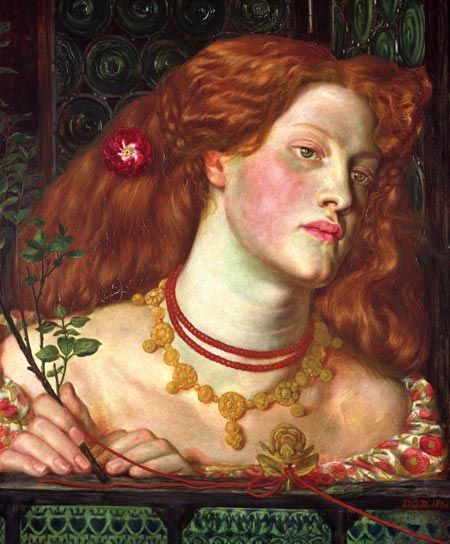
Leave a comment