It’s Friday Night! Here is my other Night blog.
John Presco
John Presco

Lost Angels In The Whit
Posted by Royal Rosamond Press in Uncategorized
[Edit]

John Presco
My La La Dance Movie 3
Posted on March 2, 2017 by Royal Rosamond Press
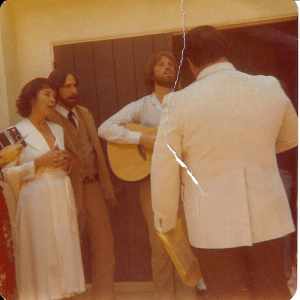
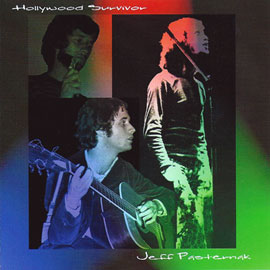
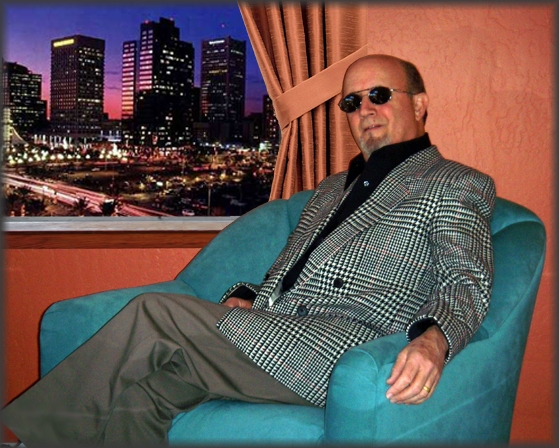
Marilyn, Jeff Pasternak, Bryan MacLean, and I went to University High School in La La Land. Bryan played at my wedding. Marilyn was there. You can just see her. All four of us are now at the epicenter of the La La Land Cultural Hoedown. Kenny Reed, and Rick Cobian did a Black and Mexican Bro Thing against Whitey Me in some sick need to change the outcome of their High School days. Marilyn played me that way too. This subject is all good thanks Karem Abdul-Jabbar’s essay. Nisha Calkins didn’t want to be associated with my blog about “threatening women” nor did Belle, Alley, and Rena. That might have changed. It’s good to be topical! Below is the e-mail I sent Jeff in 2011 saying Marilyn and I are collaborating on our story! I refer to my blog that got sabotaged, it named after Eugene’s first newspaper that Joaquin Miller was the editor for.
Jon Presco
Copyright 2017
http://www.thehollywoodsurvivor.com/SendEmail.php
John Ambrose <braskewitz@yahoo.com>
To
04/05/11 at 10:10 AM
| Hi Jeff Marilyn and I are going to co-author our story. I will be seeing an attorney today. We are going to split the proceeds. I would like you to contribute your memories of us, and you and Marilyn. Your honesty will be most welcome.http://the-bohemian-register.blogspot.com/Jon |
.com>
To
07/27/09 at 1:44 PM
| Master JublaThe rhythm in this Bo Diddley song, and the Hambone song, are identical. I wonder if the hand gesture at hips was taken from a slapping on the thighs to make a drum beat?http://www.youtube.com/watch?v=YMJeaZtgwng http://www.youtube.com/watch?v=HICsPNm2ARY&feature=relatedMy ancestor, Will Rosamond, born in 1887, was performing the Hambone in Mississippi. At the Obama celebration I got folks dancing in a circle clapping hands. I wanted African dancers doing the Jubla in the skit I authored.http://en.wikipedia.org/wiki/Juba_dancehttps://www.youtube.com/embed/yeZHB3ozglQ?version=3&rel=1&showsearch=0&showinfo=1&iv_load_policy=1&fs=1&hl=en&autohide=2&wmode=transparentThe Story |
Musical by Jeff Pasternak
Posted on January 14, 2021 by Royal Rosamond Press
Alas my old High School chum has his musical ready for market. I wrote him about my musical inspired by Belle Burch, and Jeff Holiday, who invented this yarn about the Whitaker Neighborhood Committee that the Pasternaks revived in 1987.
John Presco
(1) Max on the Tracks by Jeff Pasternak – YouTube

the rough streets of Hollywood are nothing compared to the music business

Twenty songs, written by Grammy nominated songwriter Jeff Pasternak, drive this tongue-in-cheek musical of a young, talented musician’s search for stardom. THE HOLLYWOOD SURVIVOR is a magical ride with a cast of eclectic characters, and full of twists and turns every step of the way.
A whimsical, supernatural tale of a young songwriter pursuing his dream, breaking away from his wealthy family only to learn the guarded secret tearing the family apart. The songs will keep you rocking, laughing, and crying on a beautiful, emotional ride. A unique happy ending with a twist allows the audience to draw their own conclusion for the future of THE HOLLYWOOD SURVIVOR
The Hollywood Survivor – a musical by Jeff and Shannon Pasternak
The Green Whiteaker Hood
Posted on February 6, 2015 by Royal Rosamond Press
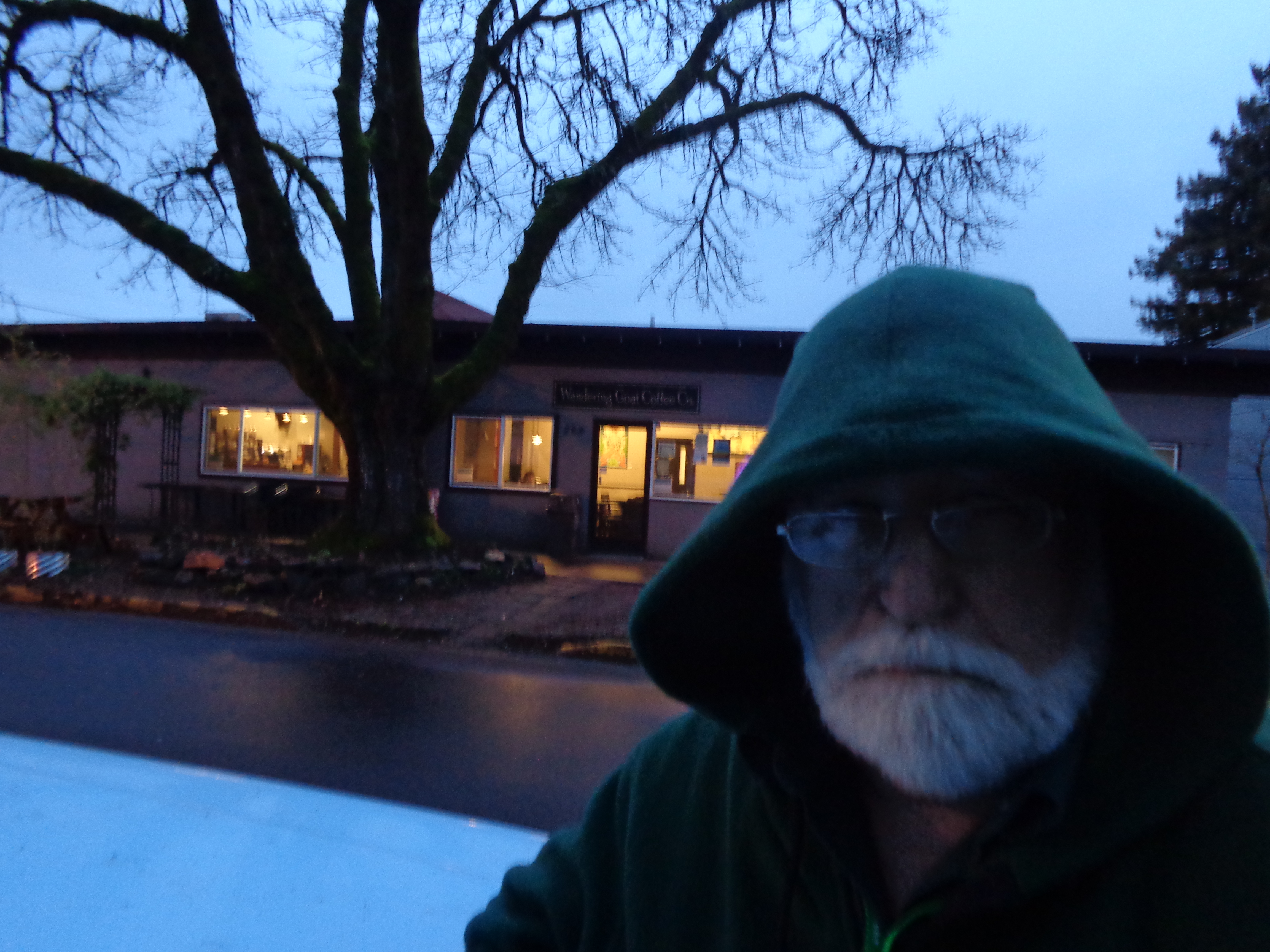

No sooner was I awake, then I was compelled to get out of bed and go to The Wandering Goat in the Whiteaker and found a Whiteaker newspaper that I suggested someone found on a Whiteaker Community Facebook. I was elected while I slept by a force that has given me other instructions in my dream state.
What I had been pondering, was, my answer to Belle Burch regarding the nature of this blog, being, to preserve and protect the Bohemian lifestyle. She appeared to agree this was a worthy cause, but, what she and her compatriots were really concerned about, was helping the homeless, even giving them a façade of being Bohemians. Well, the real Bohemians in the Whiteaker have had it with the homeless, the drug addicts and drunks that party in their hood and leave trash and feces for the real citizens to clean up.
For the most part, Whiteakerites are very caring people, but, their community is not unique. Almost every American city has a drug, alcohol, and homeless problem that is proving insurmountable. For this reason I renew my mission because I had found solutions for these problems – on a personal level – when I moved into the Whiteaker with a year of sobriety and opened a small business. I am a example of the solution. I did not bring my troubles to the Whiteaker, but my new found hope I owned after graduating from the New Hope Program at Serenity Lane.
Jon Presco
The New Balladeer
Posted on January 2, 2019 by Royal Rosamond Press

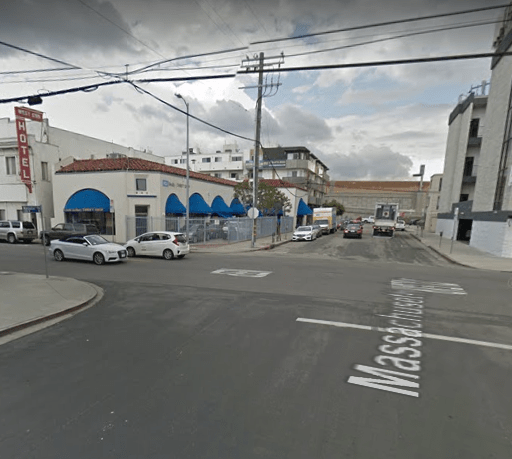
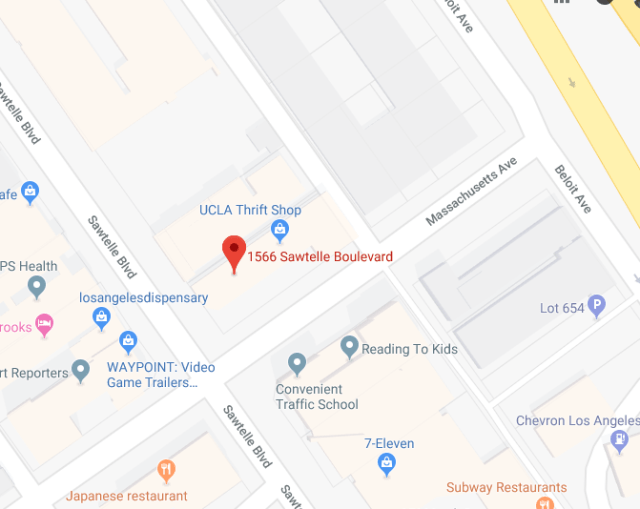

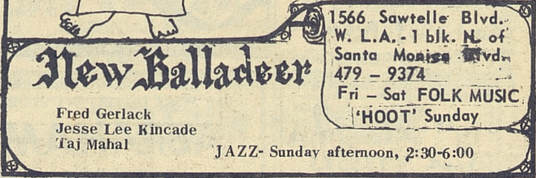
A few days ago, Marilyn Reed, the wife of Jazz Drummer, Kenny Reed, asked me if I have contributed any of our memories to the West Los Angeles Sawtelle Neighborhood Council. I told her it was close to three years since my last research. Today, I hit pay dirt when I googled the New Balladeer. Information is added all the time. I found a venue for the Balladeer, and a small posterette, which may constitute a first. There was a Jazz jam.
http://brunoceriotti.weebly.com/the-rising-sons.html
I went to the New Balladeer with Bryan Maclean, of the group, Love. I had my first art show here. I am pretty sure I heard John Fehey, and Ry Cooder, because I bought a guitar and played like them. Bryan taught me some chords, showed me how use a slide, and I did a lot of improvising. If not for my desire to be a famous artist, I might have ended up in a rock band. However, I am a terrible singer. That mattered, then.
Marilyn and I found a tea house here, before it became the Balladeer. We made it our Bohemian hideaway where we went after school. We attended University High School that was six blocks away. I did a drawing of my first flame sitting by the fire, sipping tea.
Morgan Cavett became the manager of the New Balladeer in April of 64. Bryan and I dropped out of High School and went here in 1963 when we were seventeen. I went to the Dwan gallery in Westwood, and was doing a lot of experimenting with styles. Two members of the Byrds played here. I believe they got started here, and not at the Troubadour, which was a Folk Club on Santa Monica. I doubt the Balladeer name was changed to Troubadour. That would have caused a problem.
Marilyn had introduced me to her good friend, Les McCann. Her sister lived with his drummer, Ron Jefferson. Shaunna co-wrote a biography about Fela that was sold to the producers that have a hit on off Broadway. Rising Sons, and Love, were interracial bands. Kenny Reed’s Jazz band, Stone Cold Jazz, is interracial, as is his marriage.
Marilyn fell in love with from afar. Later she saw the bust I was doing of Cindy, her muse since the second grade. Marilyn grew up in a interracial Filipino family in the Sawtelle. She has all the memories that are sorely needed in developing a cultural identity. My sister (who dated Bryan) followed in my footsteps, and became the world famous artist ‘Rosamond’. Bryan was an artist, and the three of us attended the LA Cienega Monday Art Walk. At sixteen and seventeen the world was our oyster. Bryan could not go with the Byrds to Europe because he was not an adult. A watercolor I did at sixteen toured the world.
What I suggest is UCLA turn its thrift store into a Folk Music School with Bohemian Boutique and coffee house. 1566 Sawtelle needs to be declared a Historic Monument. I see Massachusetts Avenue being closed off for a Folk, and Folk-Rock Festival. How about the ‘Eight Mile High Festival’. This may be where it all began. This is – Genesis! What song should lead off the festivities?
The Bohemian Balladeer and Boutique can raise funds for the charity now supported by the Thrift Store, that perhaps can be relocated near by? Can the UCLA School of Music help with the funding?
John Presco
Clark was invited to join an established regional folk group, the Surf Riders, working out of Kansas City at the Castaways Lounge, owned by Hal Harbaum.[8] On August 12, 1963, he was performing with them when he was discovered by the New Christy Minstrels.[9] They hired him, and he recorded two albums with the ensemble before leaving in early 1964.[10] After hearing the Beatles, Clark quit the New Christy Minstrels and moved to Los Angeles, where he met fellow folkie and Beatles convert Jim (later Roger) McGuinn at the Troubadour Club. In early 1964 they began to assemble a band that would become the Byrds.[11]
Bryan started playing guitar professionally in 1963. He got a job at the Balladeer in West Hollywood playing folk and blues guitar. The following year, the club changed its name to the Troubadour. His regular set routine was a mixture between Appalachian folk songs and delta blues, and he also frequently covered Robert Johnson’s “Cross Road Blues.” It was there he met the founding musicians of The Byrds, Gene Clark and Jim McGuinn, when they were rehearsing as a duo. Bryan became good friends with David Crosby.[2] During that time, Bryan also became friends with songwriter Sharon Sheeley, who fixed him up on his first date with singer Jackie De Shannon.
With MacLean as equipment manager, the Byrds went on the road to promote their first single “Mr. Tambourine Man.” By the time the Byrds left for their first UK tour, MacLean was left behind and very disappointed.
In 1964 he moved to Santa Monica, California, and formed Rising Sons with fellow blues rock musician Ry Cooder and Jessie Lee Kincaid, landing a record deal with Columbia Records soon after. The group was one of the first interracial bands of the period, which likely made them commercially unviable.[10] An album was never released (though a single was) and the band soon broke up, though Legacy Records did release The Rising Sons Featuring Taj Mahal and Ry Cooder in 1993 with material from that period. During this time Mahal was working with others, musicians like Howlin’ Wolf, Buddy Guy, Lightnin’ Hopkins, and Muddy Waters.[7]
The New Balladeer Los Angeles Concert Setlists
City Los Angeles, CA, United States
Address1566 Sawtelle Avenue
Los Angeles, CA 90025
USA
OpenedAugust 1964
Jun 4 1965
John Fahey at The New Balladeer, Los Angeles, CA, USA
Artist: John Fahey, Venue: The New Balladeer, Los Angeles, CA, USA
Edit setlist songs Show all edit options
May 29 1965
John Fahey at The New Balladeer, Los Angeles, CA, USA
Artist: John Fahey, Venue: The New Balladeer, Los Angeles, CA, USA
Edit setlist songs Show all edit options
May 28 1965
John Fahey at The New Balladeer, Los Angeles, CA, USA
Artist: John Fahey, Venue: The New Balladeer, Los Angeles, CA, USA
Edit setlist songs Show all edit options
May 16 1965
Rising Sons at The New Balladeer, Los Angeles, CA, USA
Artist: Rising Sons, Venue: The New Balladeer, Los Angeles, CA, USA
Edit setlist songs Show all edit options
May 14 1965
Jesse Lee Kincaid at The New Balladeer, Los Angeles, CA, USA
Artist: Jesse Lee Kincaid, Venue: The New Balladeer, Los Angeles, CA, USA
Edit setlist songs Show all edit options
May 14 1965
Taj Mahal at The New Balladeer, Los Angeles, CA, USA
Artist: Taj Mahal, Venue: The New Balladeer, Los Angeles, CA, USA
Edit setlist songs Show all edit options
Apr 30 1965
Frank Hamilton at The New Balladeer, Los Angeles, CA, USA
Artist: Frank Hamilton, Venue: The New Balladeer, Los Angeles, CA, USA
Edit setlist songs Show all edit options
Apr 23 1965
Jesse Lee Kincaid at The New Balladeer, Los Angeles, CA, USA
Artist: Jesse Lee Kincaid, Venue: The New Balladeer, Los Angeles, CA, USA
Edit setlist songs Show all edit options
Apr 23 1965
Taj Mahal at The New Balladeer, Los Angeles, CA, USA
Artist: Taj Mahal, Venue: The New Balladeer, Los Angeles, CA, USA
Edit setlist songs Show all edit options
The New Balladeer Los Angeles Concert Setlists
CityLos Angeles, CA, United States
Address1566 Sawtelle Avenue
Los Angeles, CA 90025
USA
OpenedAugust 1964
Apr161965
Taj Mahal at The New Balladeer, Los Angeles, CA, USA
Artist: Taj Mahal, Venue: The New Balladeer, Los Angeles, CA, USA
Edit setlist songs Show all edit options
Feb261965
Frank Hamilton at The New Balladeer, Los Angeles, CA, USA
Artist: Frank Hamilton, Venue: The New Balladeer, Los Angeles, CA, USA
Edit setlist songs Show all edit options
Feb191965
Frank Hamilton at The New Balladeer, Los Angeles, CA, USA
Artist: Frank Hamilton, Venue: The New Balladeer, Los Angeles, CA, USA
Edit setlist songs Show all edit options
Nov141964
Womenfolk at The New Balladeer, Los Angeles, CA, USA
Artist: Womenfolk, Venue: The New Balladeer, Los Angeles, CA, USA
Edit setlist songs Show all edit options
Nov131964
Womenfolk at The New Balladeer, Los Angeles, CA, USA
Artist: Womenfolk, Venue: The New Balladeer, Los Angeles, CA, USA
Edit setlist songs Show all edit options
Sep251964
Womenfolk at The New Balladeer, Los Angeles, CA, USA
Artist: Womenfolk, Venue: The New Balladeer, Los Angeles, CA, USA
The Womenfolk were an American folk band from Los Angeles, California.
The Womenfolk were active from 1963 to 1966 and were signed to RCA Records during the folk revival boom of the 1960s.[1] They released several albums, the most successful of which was their self-titled 1964 effort, which reached #118 on the Billboard 200.[2]
The Womenfolk’s version of “Little Boxes” was their only hit single, peaking at #83 in April 1964. It was at the time the shortest record (1:03) to make the Billboard Hot 100.
http://brunoceriotti.weebly.com/the-rising-sons.html
Sunday, February 1965 (?): ‘Hoot’, New Balladeer, 1566 Sawtelle Boulevard, 1 block North of Santa Monica Boulevard, West Los Angeles, Los Angeles County, California
“Our first open mike [Sunday nootenanny night] was at the New Balladeer coffeehouse in Santa Monica”, Jesse Lee Kincaid recalls. “John Kay, future singer with Steppenwolf, was washing dishes. Bamalama! We hit it into our delta beat, doing our two part Don and Dewey style harmonies. They thought we were pretty cool.”
Friday, April 23 – Saturday, April 24, 1965: ‘Folk Music’, New Balladeer, 1566 Sawtelle Boulevard, 1 block North of Santa Monica Boulevard, West Los Angeles, Los Angeles County, California
Taj Mahal & Jesse Lee Kincaid still performed as a folk duo. Also on the bill: John Kay.
Sunday, May 9, 1965: New Balladeer, 1566 Sawtelle Boulevard, 1 block North of Santa Monica Boulevard, West Los Angeles, Los Anges County, California
A Sunday afternoon rhythm & blues featuring The Rising Sons.
July 1965
Allen Stanton of Columbia Records signs The Rising Sons, at the urging of foresighted A&R man Billy James, who had spotted the band at the Teen-Age Fair. “Los Angeles was experiencing an explosion of psychedelic flower power.” Jesse Lee Kincaid remembers, “In a rush to capitalize on the new music, record companies were signing every band that had a gig. We were offered contracts with numerous labels. Columbia Records was our choice.”
Morgan Cavett, 1944 – 2004
Morgan Cavett, a fifteen year resident of Pinon Hills, died of cancer, peacefully in his sleep, on Thursday, December 9, 2004. He was a music and film producer, a newspaper writer for the Mountaineer Progress and funny man who made people laugh. He was 60 years old. Morgan was born into the Hollywood home of Frank and Mary Cavett. Morgan’s father Frank won screenwriting Oscars for “Going My Way” and “The Greatest Show on Earth.” Morgan’s mother, Mary Oakes Cavett was a famous Vogue fashion model. Morgan grew up hanging around famous personalities such as Ava Gardner, Artie Shaw and Dorothy Parker.
In the early 1960s, Morgan made inroads into the music business by managing the New Balladeer coffeehouse. Here he met John Kay of Steppenwolf and other singers, songwriters and musicians who become lifetime friends and professional colleagues. He went on to produce records with Johnny Mercer and became a successful producer in his own right discovering the 1970s duo sensation The Captain and Tennille. From 1977-1988 Morgan and his partner, Bruce Langhorne, owned Blue Dolphin Recording Studios where they wrote the soundtracks for “Melvin and Howard,” “Swing Shift” and other feature films.
In 1990 Morgan and his wife Mary settled in Pinon Hills and Morgan became active in the community. He and Yvonne Barton helped spearhead a group of high desert residents who successfully opposed the development of a large strip mine in Llano. In 1993 he began writing a column for the Mountaineer Progress entitled “Around Town” in which he featured Tri-Community residents and he also joined the Mountaineer Progress Staff as a part-time reporter. In 1994 Morgan served as president of the Pinon Hills Chamber of Commerce. He did all this while running a successful video documentary production company specializing in creative artists and historical figures. Morgan is survived by his wife Mary of Pinon Hills and his daughter Christina of Ukiah, California.
In 1988, the NAACP claimed Parker’s remains and designed a memorial garden for them outside its Baltimore headquarters.[62] The plaque reads,
Here lie the ashes of Dorothy Parker (1893–1967) humorist, writer, critic. Defender of human and civil rights. For her epitaph she suggested, ‘Excuse my dust’. This memorial garden is dedicated to her noble spirit which celebrated the oneness of humankind and to the bonds of everlasting friendship between black and Jewish people. Dedicated by the National Association for the Advancement of Colored People. October 28, 1988.[63]

Plaque at Parker’s birthplace
On August 22, 1992, the 99th anniversary of Parker’s birth, the United States Postal Service issued a 29¢ U.S. commemorative postage stamp in the Literary Arts series. The Algonquin Round Table, as well as the number of other literary and theatrical greats who lodged at the hotel, contributed to the Algonquin Hotel being designated in 1987 as a New York City Historic Landmark.[64] In 1996, the hotel was designated as a National Literary Landmark by the Friends of Libraries USA, based on the contributions of Parker and other members of the Round Table. The organization’s bronze plaque is attached to the front of the hotel.[65] Parker’s birthplace at the Jersey Shore was also designated a National Literary Landmark by Friends of Libraries USA in 2005[66] and a bronze plaque marks the former site of her family house.[67]
In 2014, Parker was elected to the New Jersey Hall of Fame.
The Big Show & Get Down
Posted by Royal Rosamond Press in Uncategorized
[Edit]


After discovering a movie is coming out about the Bronx Hip-hop Graffiti Artist, Dancers, and, Anarchists, I put together a Creative Cluster that joins the East with the West in what may be a New Wave. My friend, Stefen Eins, founded Fashion Moda. We may found Fashion Moda West in the Whiteaker.
http://en.wikipedia.org/wiki/Fashion_Moda
For over a year I have posted my idea on a Musical starring Christine and Stefan Eins that dynamic couple who have an established a living museum in the Village. With the connecting of these underground cables (East meets West) the creative sparks are flying!This match is the talk of the town. Witnesses have seen the return of the Honest Opinion. There is even the presence of a creative poltergeist that keeps ringing a curtain call!
“Ding-a-ling-a-ling! It’s show time!”
The director of Moulin Rouge, Baz Luhrmann, says he has had the concept for movie about the rise of Hip-Hop and Graffiti Art in the Bronx. Perhaps, but the person who took the A Train by the horns, and rode the third rail, is my friend, Stefen Eins, the alleged founding father of Fashion Moda. Stefan may have created the first audition show for nobodies. On his show, no one get’s gonged, to the consternation of the real critics who can not deny the genius of that. Everything is art. Innocent stains in the concrete pavement are captured and hung. Things are seen in things. A mindless crack is on the wall of MONA. Then, on a certain sunny day, an infamous profile appear.
Thanks to Eins, the Big Show is not squeezed into, and confined in, a tiny little box. The whole United States of America is a stage full of dancers, musicians, and artists. Not since P.T. Barnum has one person got the big picture like Stefan has, because, I believe he is the Art Ring Master, that gent with the foreign accent and whip, who dare step into a cage of wild cats where dwell the Queen of Sheba. Make no mistake about it, Christine is a Leo.
Crack that whip!
Well, it looks like my windmill has come in. I have been vindicated by the Omnipotent Art Justice that nobody can deny! Who ordered up this Bohemian Ash Can Dream full of Hip-Hop and Graffiti? Well, it looks like Stefan, an artist in his seventies, is the Fagan, here, the Pied Piper leading his squad of pick-pockets out of the Bronx into the heart of NY Art World. I depict Stefan as the embodiment of Fred Astaire, who takes up residence at the Woodstock Hotel and reminds us that America is the Eternal Home of Jazz, a fact Europeans can never forget. The casting couch is alive and well in Eugene where Merry Pranksters still hit the road. Stefan, Ken, Bugsley Berkeley, the girl with kaleidoscope eyes!
In 1965, Christine was there, at THE START of the new Art and Rock scene, but you won’t catch her bragging about it. Allow me! Here’s the testimonial of Alessandra Hart who co-founded BEAF:
“A small group of our friends decided to create the Berkeley Experimental Arts Foundation and we rented a space on College Avenue in Berkeley which we made into a theater, calling it Open Theater & Gallery. Pop Art was just coming in, Andy Warhol was experimenting with it on the East Coast. We opened with a pop art exhibit and a theater piece my husband, Roland Jacopetti, wrote.”
The Loading Zone played at this event, and later at the Trips Festival and Acid Test. Peter Shapiro was the lead guitarist for the Zone, who went by the name ‘The Marbles’ before that. Christine met Peter at a UC frat party in 1964 while she was attending Mills College Peter played at my wedding reception, along with Tim O’Connor who lived in Venice and was a good friend of the Dooby Brothers. I was married to Mary Ann Tharaldsen, who was married to Thomas Pynchon. My ex was born in New York and went to Cornell where she befriended Thomas and his close friend Richard Farina. Mary Ann did a life-size portrait of Mimi Farina, the sister of Joan Baez, who sang in Washington Park in New York. Keith was at my reception. He was the lover of one of the Zorthian sisters, whose father was titled ‘The Last Bohemian’. He was an artist and good friend of Charlie Parker. We lived in a commune with Nancy Hamren who dated Stanley Augustus Owsley. My friend, Bryan MacLean, of the rock group, Love, sang at my wedding. Bryan and my sister Christine Rosamond, were lovers. Christine married the muralist Garth Benton, who was kin to the artist Thomas Hart Benton, Jackson Pollack’s teacher. His daughter was married to Mel Lyman who founded a famous commune in Boston, and an underground newspaper ‘The Avatar’.
Then there is Jessie and Susan Benton who had salons in Paris and San Francisco. Last but not least is Michael who was a good friend of Jim Morrison and the Stackpole family, who befriended the famous muralist Diego Rivera and his famous wife, Freda Kahlo. Michael was a good friend of the Beat Poet Michael MacLure and offered his detective services at my wedding reception where he caught some punk going thru the purses. Michael studied under the famous PI, William Lindhart, who was hired by the famous Red light Bandit, Caryl Chessman. Michael also worked for Bruce Perlowin ‘The King of Pot’ who has a movie in the works..
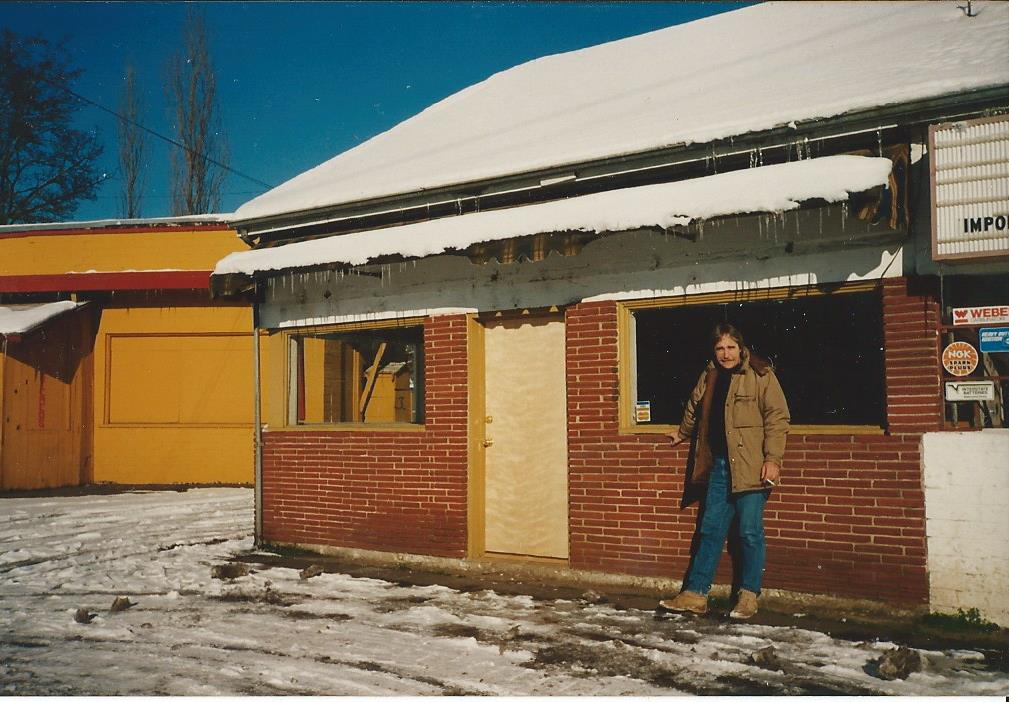
Above is a photograph of me standing in front of my art studio and gallery on Blair Street in the Whiteaker that is considered one of the most creative enclaves in the world. Jeff Pasternak, his wife Shannon, Marilyn Reed, the wife of Kenny Reed, and myself are Whiteaker Pioneers. Kenny is a Jazz artists who has been up on stage with Ken Babbs and Izzy Whetstone, two famous Pranksters. Pynchon has a thing for Jazz. The Loading Zone morphed into The Tower of Power!
What I have just got down on paper is a Creative Cluster that has truly changed the world. With the resent revival of Love (the first mixed-race rock and roll band) Pynchon’s movie, the movie ‘Get Down’ along with Marilyn’s family connection to Fela, that is an off Broadway hit, what we are looking at is a New Renaissance.
I must mention the two lousy biographies written about Christine and her family, and the two movie scripts being pushed, one written by our kindred, Carrie Fisher. Elizabeth Rosemond Taylor and I share the same great, great,, great, grandfather. Liz’a son married a Getty, who own the largest art collection in the world. Liz collected fine art, and Warhol did her portrait. On the Venice bridge is Peter and Tim, whose father was a famous actor. There is a thespian cluster here.
My Rosemont kin owned windmills in Holland. My last two muses are dancers and choreographers. I ran my musical by Jeff Pasternak a founding father of the Whiteaker Punk Rock Art Scene who is writing a musical based on his life. Shannon Pasternak hung with the Rat Pack. Last week I returned there and founded a new newspaper ‘The Green Whiteaker Hood. My first article is titled ‘Punk Sober’. Yesterday I read an acknowledgment to Stefan from a compatriot that helped produce ‘Get Down’. The there are the Miller brother and the Bohemian Club, which I would like to refound as a ‘Artist Writers, and Musicians Only Club.
Its time to make Peace. There is a master show being produced in a realm of reality we once knew, but have forsaken. I would love to give more details about reading the signs on the wall. Let me say this, the 400 pounds of blubber that first appear in Chris’s number, has left rings in her bathtub that some folks have trouble seeing, but, in this dance and song number Christine gets stuck in the butt-cheek of a 400 pound guerilla who didn’t look where she sat her big ass.
I’ve been telling everyone, this, thing, is writing itself! Just go with the flow. When I went back east with my ex, we stayed at Sol Yurick’s place in Brooklyn. We talked about his book and the gangs in Oakland. We discussed the ready-made drama that was captured in the movie West Side Story. Tony must capture the beautiful soul of Maria, or die!
I see alleged innovators claiming they broke the mold, then invent all kinds of claims to the new mold.- that changed the world forever! “Meet the new mold. Just like the old mold. We wont get fooled again!”
Sol does a much better job in character creation than Pynchon did in Inherent Vice, that is devoid of vice, action, and sexiness which Venice California explodes with. There are Chicano gangs there, mixing with Acid-head Beach Bunnies covered with fine, blonde, peach-fuzz body hair waving atop a golden tan. They got the natch. These are Leary’s Orphans, too, altered to live with their parents. So, they come down here to trip in the sea-foam. In the dance scene with the Warriors, you see a Beach Orphan dancing with a black Lizzie. This is the sexist dance scene I ever beheld.
http://en.wikipedia.org/wiki/The_Warriors_(Sol_Yurick_novel)
I hope some of the proceeds from these musical go to helping the homeless and the hungry.
https://rosamondpress.com/2014/06/23/broadways-dead-end-rap-kids/
Jon Presco
Copyright 2015
Mural in the Whiteaker

articles here: What makes ‘The Whit’ Tick? (2011), Idealism Fuels Anarchists’ Battles (2000), A Revolutionary Moment Hits Small-Town America (1999), and Flames of Dissent II (2006) related to history and gentrification in the Whiteaker neighborhood, Eugene, Oregon. (Wikipedia).
Turn down the first video and play the second video, and then, the third.
Tower Of Power – What Is Hip Lyrics
Translation in progress. Please wait…
So you want to jump out your trick bag
And ease on into a hip bag
But you ain’t just exactly sure what’s hip
So you start to let your hair grow
Spend big bucks to cop you a wardrobe
But somehow you know there’s much more to the trip[Chorus]
What is hip?
Tell me, tell me if you think you know
What is hip?
If you was really hip
The passing years would show
You into a hip trip
Maybe hipper than hip
But what is hip?So you became part of the new breed
Been smokin’ only the best weed
Been hangin’ out on the so-called hippest set
Being seen at all the right places
Being seen with just the right faces
You should be satisfied
Still it ain’t quite right[Chorus]
Hipness, what it is!
Hipness, what it is!
Hipness, what it is!
And sometimes hipness is
What it ain’t!
You done even went and found you a guru
In your effort to find you a new you
And maybe even managed
To raise your conscious level
As you striving to find the right road
There’s one thing you should know
What’s hip today
Might become passé
Fisher was born in Beverly Hills, California, the daughter of singer Eddie Fisher and actress Debbie Reynolds. Her father was Jewish, the son of immigrants from Russia, and her mother was raised a Nazarene, and is of Scots-Irish and English ancestry.[1][2][3][4] Her younger brother is producer and actor Todd Fisher, and her half-sisters are actresses Joely Fisher and Tricia Leigh Fisher, whose mother is the singer and actress Connie Stevens.
When Fisher was two, her parents divorced after her father left Reynolds for her best friend, actress Elizabeth Taylor, the widow of her father’s best friend Mike Todd. The following year, her mother married shoe store chain owner Harry Karl, who secretly spent Reynolds’s life savings. She attended Beverly Hills High School, but she left to join her mother on the road.[5] She appeared as a debutante and singer in the hit Broadway revival Irene (1973), which starred her mother.
https://rosamondpress.com/2014/06/25/muse-of-the-love-dance-2/
https://rosamondpress.com/2013/05/17/love-dance-4-4/
https://rosamondpress.com/2014/05/01/my-big-beautiful-blue-bicycle/
https://rosamondpress.com/2011/12/07/the-creative-stackpoles/
Wandel’s Woeful Wail
Once upon a time I used to be so free
I danced in a park at the human be-in
to Ginsberg’s extra-cosmic tamborine
I even caught a psychedelic wink
from a dimpled Timothy Leary
Now I am being squeezed hard up against 400 pounds of blubber.
Hey, in this town
its hard to be any kind of lover!
(Man wearing tin foil on head, reads Christ, mind)
Hey, Blondie, I’m on your wave-length
You can be my bosom babe
as long as you can pick up signals from outer space
And if you don’t mind French kissing a dirty old man
born of an alien race!
- Rembrandt (Warriors) and Hinton (Dominators) share the role of the artist in their respective gangs; however, they have totally different personalities. Rembrandt is portrayed as being level-headed but weak when it comes to fighting, whereas Hinton is a lot braver and has a rep for going “psycho” every now and then. Hinton ends up being the focal point of the novel, while the film focuses more on Swan, the gang’s field leader.
- In the film, the Warriors encounter a gang called the Orphans who try to prove they’re tough by showing the Warriors newspaper articles of incidents and crimes done by their gang. In the novel, the Dominators encounter a gang called The Borinquen Blazers and exchange newspaper articles with them of their doings in an attempt to avoid trouble from the gang.
https://rosamondpress.com/2014/07/12/beaf/
http://en.wikipedia.org/wiki/Fashion_Moda
“The Get Down will focus on 1970s New York — broken down and beaten up, violent, cash strapped — dying,” The Hollywood Reporter says. “Consigned to rubble, a rag-tag crew of South Bronx teenagers are nothings and nobodies with no one to shelter them — except each other, armed only with verbal games, improvised dance steps, some magic markers and spray cans. From Bronx tenements, to the SoHo art scene; from CBGBs to Studio 54 and even the glass towers of the just-built World Trade Center, The Get Down is a mythic saga of how New York at the brink of bankruptcy gave birth to hip-hop, punk and disco — told through the lives and music of the South Bronx kids who changed the city, and the world … forever.”
Fashion Moda was founded in 1978 by Stefan Eins. He was soon joined by artist Joe Lewis and William Scott, a young teenager from the neighborhood as co-directors.[1] Defining itself as a concept, Fashion Moda quickly became a strong voice in the New York art world during the late 1970s and the 1980s.[2] Fashion Moda crossed boundaries and mixed metaphors. It helped redefine the function of art in a post-modernist society. Fashion Moda spotlighted such artists as David Wojnarowicz, Keith Haring, Jane Dickson, Stefan Roloff, Jenny Holzer, Mark Kostabi, Kenny Scharf, Carson Grant, Joe Lewis, Thom Corn, John Ahearn, Lisa Kahane, Christy Rupp, John Fekner, Don Leicht, Jacek Tylicki, Stefan Eins himself and graffiti artists like Richard Hambleton, Koor, Daze, Crash, Spank, and many others. In addition to highlighting new talent, Fashion Moda was a major force in establishing new venues. In 1980, Fashion Moda collaborated with the downtown progressive artists organization Colab (Collaborative Projects Inc.) on “The Times Square Show” (June 1980), and Now Gallery which introduced uptown graffiti-related art to downtown art and punk scenes.
Speaking on the project, which acts as his debut television series and first musical venture since 2001’s Moulin Rouge!, Baz Luhrmann says The Get Down is something he has been envisioning for over a decade.
“The Get Down [is] a project I have been contemplating and working on now for over 10 years,” Luhrmann says. “Throughout, I’ve been obsessed with the idea of how a city in its lowest moment, forgotten and half-destroyed, could give birth to such creativity and originality in music, art and culture. I’m thrilled to be working with my partners at Sony and collaborating with a team of extraordinary writers and musicians, many of whom grew up with and lived the story we’ve set out to tell.”
I went to Colab meetings, you know, from the early days. The summer of the Times Square Show I was already involved with Fashion Moda, so my focus was on Fashion Moda, but I did go to Colab meetings. Many shows at Fashion Moda included Colab members.
There was also my space before Fashion Moda on 3 Mercer Street. I chose that location, because I wanted to be close to Canal Street. I wanted to sell my work, my multiples, to an audience on a mass-market level. I invited other people to make work for the 3 Mercer Store. I made my own work there, and then I provided others the opportunity to use the storefront. Tom Otterness had his first show there; Sherrie Levine had a show there; and many more.
When I started Fashion Moda in the Bronx, I already knew Joe Lewis from the 3 Mercer project. Joe had a studio up there [in the Bronx] at that time. I wanted him to be involved because I didn’t want to be the only European in this predominantly African-American and Hispanic neighborhood. I thought it was important for both of us to work together and to be a curatorial team. Early on there was another person working with us, Hector Ortega, who was Hispanic. I wanted different ethnic and racial elements—Joe Lewis’s mom is Canadian and a painter, his stepmother is German, and his dad was an African-American singer and lyricist. He also had formal art school training in upstate New York at Hamilton College studying painting and printmaking. Joe is now dean at UC Irvine in California.
The racial diversity at Fashion Moda was a result of my concept, which was and still is that creativity is a basic human trait. And so forget anything else. Where there is humanity, there is creativity. So I don’t even have to consider race [when understanding or promoting] creativity. I called Fashion Moda the museum of science, art, invention, technology, and fantasy to include all the different aspects of human creativity. Creativity always has to do with possibilities realized or attempted. Of course I found hip-hop, and hip-hop found Fashion Moda, in the Bronx.
Everything we did at Fashion Moda translated into the Times Square Show; for example, the idea of independence from certain structures in the art world. I think the whole approach really made a difference in the art world since galleries realized it’s not only them making decisions and that there are other ways to proceed.
As TSS was being set up, I knew that Tom Otterness and John Ahearn were working on the exhibition and that it was open to artists to participate. There was a moment at Fashion Moda prior to the exhibition where this kid suggested to John Ahearn to do a show in Times Square.
I did a piece at the TSS but I was actually in Austria for most of the time, attending my high school reunion. I put my piece up, and then I left the country. When I came back, I realized how much of a success it [TSS] had been. In my TSS piece, I used an image from Norman Mailer, The Executioner’s Song, a book about criminal Gary Gilmore. I just liked the image. The piece wasn’t necessarily related to other work I was doing at the time. What interested me was that an artist was a criminal and the idea that being a criminal doesn’t mean you can’t do interesting art. Anybody could do whatever they wanted to do for TSS, there was an independence of production and also in the mode of presentation.
I put my piece up the day before I left. I wanted it to be very visible. So I put it on the second floor very visible, and it said FASHION MODA on it. When I returned I was surprised and thrilled at the impact the show had. The Village Voice cover was a major moment. Of course the magazines came later. Lucy Lippard wrote something in Artforum. Jeffrey Deitch wrote something in Art in America.
The currents and ideas implemented at Fashion Moda that carried over into the TSS changed the whole art world. Thirty years ago, Fashion Moda communicated in four major world languages on our posters and press releases: Chinese, Russian, English, and Spanish. It foresaw the global development in the art world and that whole interconnectedness on the global level that is so much more now than it was then.
Also, in terms of Modernism, you really had to be a participant in an accepted movement. If you were not a Cubist, a Surrealist, a Pop artist—even a Conceptual artist or part of other movements—then you weren’t really regarded as important. We did away with that. Also: Subway Graffiti, Street Art (David Finn, Justen Ladda, Gail Rothchild, David Wells, and others at Fashion Moda). I don’t mean to exclude anyone, these are just the names that come to mind right now. There are others I probably don’t name here who are important to early Street Art. Fashion Moda’s activities from that time are all documented in the Fales Library at New York University.
I am quoting here from Cesar Levinson’s book Graffiti Street Art Revolution, 2008, “Fashion Moda mixed artists and styles of work in a way that is familiar today but at the time was considered cutting edge.” A mixing of styles was also part of the Times Square Show; and also at the Fashion Moda show at the New Museum in 1980–81.
What fashion meant to me was to be cutting edge, and I wanted to correlate with the fashion industry. I did not work on the Fashion Lounge at the Times Square Show, but the ideas were connected I suppose. After the TSS, Fashion Moda produced the line of T-shirts for our Stores at documenta 7 in Kassel, Germany, in 1982. I asked Keith Haring to design a T-shirt for the documenta stores, his first ever. Other T-shirts were by Joseph Beuys, John Fekner, Jenny Holzer, Picasso, Judy Rifka, myself. Christy Rupp made a rat T-shirt. So did the graffiti artists A-1 and Crash—all in all, it was a beautiful creative mix, almost twenty different designs. The MODE FASHION MODA logo T-shirt included Russian and Chinese. Mode means “fashion” in German.
Just recently I was reading an article in the New York Observer about galleries that do their exhibition scheduling quite differently from how galleries usually organize; not just in one location but in different locations. The article mentioned the TSS as an early role model. I just installed a Fashion Moda exhibition in Peekskill in Westchester, NY. It coincided with the show about the documenta 7 stores at the Neuberger Museum in Purchase, Westchester, New York in the spring of 2012.
The TSS changed the way art was installed and presented. It used to be that if you didn’t show in a gallery, you didn’t show. That is not so any longer. I think it opened up options and that correlates to the idea that you don’t have to belong to a movement to be accepted.
As told to Shawna Cooper, May 23, 2012
Stefan Eins (b. Prague, Czech Republic; raised in Vienna and Gresten, Austria)
Stefan Eins studied theology at the University of Vienna and attended the Academy of Fine Arts, Vienna from 1964 to 1967, when he relocated to New York City. In 1978, he founded Fashion Moda as a cultural concept in New York City’s South Bronx, exhibiting the work of artists like Charlie Ahearn, John Ahearn, Jules Allen, Jane Dickson, Ilona Granet, Keith Haring, Candace Hill-Montgomery, Jenny Holzer, Becky Howald, Justen Ladda, Christof Kohlhöfer, Joe Lewis, Judy Rifka, Christy Rupp, Rigoberto Torres, David Wells, and others. Fashion Moda—in its South Bronx location—was in operation until 1993. Additional information is available at: http://www.oneunoeins.com/.
Ralph Ward Stackpole (May 1, 1885 – December 13, 1973) was an American sculptor, painter, muralist, etcher and art educator, San Francisco’s leading artist during the 1920s and 1930s. Stackpole was involved in the art and causes of social realism, especially during the Great Depression, when he was part of the Federal Art Project for the Works Progress Administration (WPA). Stackpole was responsible for recommending that architect Timothy L. Pflueger bring Mexican muralist Diego Rivera to San Francisco to work on the San Francisco Stock Exchange and its attached office tower in 1930–31.[2] His son Peter Stackpole became a well-known photojournalist.
What finally smoked him out was Richard Fariña’s wedding to Mimi Baez, sister of the famous folk singer. In August, Pynchon took a bus up the California coast to serve as his friend’s best man. Remembering the visit soon after, Fariña portrayed Pynchon with his head buried in Scientific American before eventually “coming to life with the tacos.” Pynchon later wrote to Mimi that Fariña teased him about his “anti-photograph Thing … what’s the matter, you afraid people are going to stick pins; pour aqua regia? So how could I tell him yeah, yeah right, you got it.”
After Fariña’s wedding, Pynchon went up to Berkeley, where he met up with Tharaldsen and Seidler. For years, Pynchon trackers have wondered about Tharaldsen, listed as married to Pynchon in a 1966–67 alumni directory. The real story is not of a secret marriage but a distressing divorce—hers from Seidler. Pynchon and Tharaldsen quickly fell in love, and when Pynchon went back to Mexico City shortly after John F. Kennedy was assassinated, Tharaldsen soon followed.
In Mexico, Tharaldsen says, Pynchon wrote all night, slept all day, and kept mostly to himself. When he didn’t write, he read—mainly Latin American writers like Jorge Luis Borges, a big influence on his second novel, The Crying of Lot 49. (He also translated Julio Cortázar’s short story “Axolotl.”) His odd writing habits persisted throughout his life; later, when he was in the throes of a chapter, he’d live off junk food (and sometimes pot). He’d cover the windows with black sheets, never answer the door, and avoid anything that smelled of obligation. He often worked on multiple books at once—three or four in the mid-sixties—and a friend remembers him bringing up the subject of 1997’s Mason & Dixon in 1970.
Tharaldsen grew bored of the routine. Soon they moved to Houston, then to Manhattan Beach. Tharaldsen, a painter, did a portrait of Pynchon with a pig on his shoulder, referencing a pig figurine he’d always carry in his pocket, talking to it on the street or at the movies. (He still identified closely with the animals, collecting swine paraphernalia and even signing a note to friends with a drawing of a pig.) Once Tharaldsen painted a man with massive teeth devouring a burger, which she titled Bottomless, Unfillable Nothingness. Pynchon thought it was him, and hated it. Tharaldsen insists it wasn’t, but their friend Mary Beal isn’t so sure. “I know she regarded him as devouring people. I think in the sense that he—well, I shouldn’t say this, because all writers do it. Writers use people.”
Tharaldsen hated L.A., and decided to go back to school in Berkeley. “I thought they were unserious sort of beach people—lazy bums! But Tom didn’t care because he was inside all day and writing all night.”
https://rosamondpress.com/2014/01/12/dancing-the-bolero-with-my-muse/
https://rosamondpress.com/2012/03/25/i-danced-the-balero-for-marilyn/
https://rosamondpress.com/2014/07/01/mary-anns-peyote-dance/
https://rosamondpress.com/2015/02/06/vice-fashion-fitz/
https://rosamondpress.com/2014/01/17/waiting-for-artaud/
https://rosamondpress.com/2015/01/03/boris-kachka-sissy-fighter/
https://rosamondpress.com/2014/01/12/lucia-joyce/
https://rosamondpress.com/2014/01/12/lucy-in-the-sky-with-starship/
https://rosamondpress.com/2013/08/22/return-to-zabriskie-point/
Punk Sober
Posted by Royal Rosamond Press in Uncategorized
[Edit]


The story of my life reads like a Kung Fu movie, it full of inner truth. Twice in my life I played chess for someone’s life – with an armed man! I was chased thru the streets of downtown Oakland by a one-armed man, a ex-marine. It is very dishonorable to stand your ground and fight a vet who lost his arm fighting the Japs on Iwo Jima. In AA you are not encouraged to share your drunken war stories.
At the end of my drinking days I lived in a converted water tower in the worst crack hood in Oakland. I had helped a professor friend fix up this tower and other units in his one man gentrification plan. The kids in the hood came to watch me mud and paint. They asked if they could help. On Saturday morning I made them a bowl of Cheerios and let them watch cartoons. Seven years later when I rented the tower, these kids were all grown, and were packing a piece. They sold crack on the corner and the young girls turned tricks. I found needles. Then, their car got fire-bombed by a rival gang that was muscling in. One morning I am standing next to the gang leader who I had taught a skill, looking at his torched car.
“You guys are really blowing it!” I said. He said;
“Don’t worry. We’ll protect you. You’re a member of the hood.”
A day later after doing the math, I got an invite from a my kindred living in Blue River Oregon to come get into Serenity Lane. He just started working there as a councilor. When it came time to start the New Hope program, I looked in the paper for a cheap place to rent. I show my kin the ad for a place on Adams Street. They would not let me even go there to look at the place.
“Why? What’s wrong with just looking?”
“It’s full of whores, junkies, and thieves!” Dianne Dundon told me. “I will not allow you to live there!”
If I had taken that apartment I would have lived across the street of my High School sweetheart who owned a house on Adams. We had lost track of each other, had not seen one another since 1970.
So, I moved into a quad on 16th. five houses up from Serenity Lane. My first night there I am awoken by the sound of many folks in our shared kitchen. I open the door and there are all the Punks who hung out on 13th. getting a bite to eat after the Punk Rock concert. They are all in black, with studs in their cheeks. Bennett introduces himself ad his friends. Serena might have been there that night. We became good friends, and she became the Queen of the Anarchists, she the girlfriend of Kevin, who was a compatriot of Ambrose Holtham-Keathley, the lover of Belle Burch, who befriended me in Ken Kesey Square where SLEEPS was holding a clandestine cultural even for the Gifted Homeless.
After a week, my room became the Counseling Quad for some troubled young women, some of them living on the streets. They would interrupt my novel-writing to tell me horrendous reasons why they had to run away from home. I was forty. If I had it all to do over again, I would have kept it a big secret I am a writer.
After convincing me to come to an old warehouse in the Whiteaker to see the all-night Punk scene there, and listen to the bands, I had two sober friends drop me off. One of them could not believe where I was going.
“Are you crazy. You’re going to relapse! Look! Here’s the Buckley House. Let us drop you off here!”
Bennett told me the Punk station was near the big silos, and, not wanting to hear more negativity, I asked my friend to drop me off at the foot of these towers. From there……….I followed the Zombies.
Jon Presco
Copyright 2015
The Emerald Hood
Posted by Royal Rosamond Press in Uncategorized
[Edit]
This morning, at the crack of dawn, the Green Hood, put a key in the ignition of his truck, and returned to the Whiteaker Neighborhood where I have not shown my face since April of 2014. At approximately 7:00 A.M. in front of the Wandering Goat I founded what may be the first Whiteaker newspaper that I titled ‘The Green Whiteaker Hood’. I might shorten this name to ‘The Green Hood’ and apply the latter to other cities where one can find a Bohemian Hood that caters to the Bohemian lifestyle.
Hey! What about ‘The Emerald Hood’ or ‘The Jade Hood’?
What inspired me to found another newspaper was the conversation I enjoined on the Facebook group ‘The Whiteaker Neighborhood’. Folks who live in the Whiteaker were complaining about the trash and fecal matter put all over the place for others to clean up. At first the homeless were not blamed. Folks were just thinking aloud. There was talk about rude drunks and the ongoing drug problem. One young woman declared she does not do drugs. She was a voice from the Whit saying she does no have to do drugs to live in the Green Hood. I shared my history with these concerned citizens even though I no longer live in the Whiteaker. However, I ran a business there on Blair in 1988 after I got clean and sober at Serenity Lane. What I did was give permission to hip people to not drink and take drugs in order to be hip. I also gave permission to my fellow Bohemians to not try and solve all the world’s problems.
Homelessness and Alcoholism has been a problem for thousands of year. Taking drugs has its problems. There may be no fix, no solutions for these problems that are not unique to the Whiteaker. The point is, the Whiteaker is a unique place in the Emerald Valley. But, there are other Bohemian enclaves all over the world. These neighborhoods are very fragile because the citizens tend to be poor, and rely on shared or bartered assets. Homeless outsiders are taxing the limited charity and resources. If the Whiteaker was a church, they could apply for federal funding. Hmm! I am a theologian who founded a church in 1994. I got two members – in New York!
To assume citizens of The Whiteaker can solve problems, or provide services large cities sometimes provide, is threatening to destroy this human environment that over the years has established a unique and creative culture that needs to be defined in every way. Once defined, it needs to be protected, like some trees need to be protected.
It is safe to say most citizens of the Whiteaker subscribe to several Green Philosophies that protect many living creatures. Therefore it stands to reason The Green People must not parish from the face of the earth.
There is talk advocates for the homeless are inviting homeless people to our area so they can be counted and thus some groups receive Federal Funding. How much funding do the citizens and homeowners of the Whiteaker receive to host the homeless? The annual Whiteaker Spring Cleanup is coming up. The Serenity Prayer is applicable here, because I want this newspaper to concentrate on the positive creative things about the Whiteaker. I want to created a ‘Green Light’ that gives permission to Whiteakerites to continue to do what they do best – and do not despair!
Because the Green Hood newspaper was founded in the Whiteaker, and because I plan to write a weekly column in the ‘Wandering Goat’ I will make an appeal for citizenship. It is at the Wandering Goat I will reborn my ‘Bohemian Bank’ that hopefully will empower all those who work in the Service Industry, here and abroad, and establish a powerful Voting Block and Network of workers, many who pour us our first cup of coffee to begin our New Day.
The service industry employs more than half of our work force that can be a Green Work Force complete with a powerful Lobby when we pool our resources. Instead of throwing our votes away when we vote for Nader’s folks, we can begin to give the Tea Party a run for their money. Because many people who work in the service industry low less wages, then homeless shelters and rehab programs can be established to get those workers who fall through the cracks get back to their jobs. If we can prove to elected officials that we own solutions, and are not the source of the problem, then they, and the world, will look to see what else ‘The Emerald Bohemians’ have to offer.
Jon Presco
President: The Green Whiteaker Hood


The modern English word green comes from the Middle English and Anglo-Saxon word grene, from the same Germanic root as the words “grass” and “grow”.[1] It is the color of growing grass and leaves[2][3] and as a result is the color most associated with springtime, growth and nature
It is the most important color in Islam. It was the color the of the banner of Muhammad, and is found in the flags of all Islamic countries, and represents the lush vegetation of Paradise.[6] It is also often associated with the culture of Gaelic Ireland, and is a color of the flag of Ireland. Because of its association with nature, it is the color of the environmental movement. Political groups advocating environmental protection and social justice describe themselves as part of the Green movement, some naming themselves Green parties. This has led to similar campaigns in advertising, as companies have sold green, or environmentally friendly, products.
The environmental movement (sometimes referred to as the ecology movement), also including conservation and green politics, is a diverse scientific, social, and political movement for addressing environmental issues. Environmentalists advocate the sustainable management of resources and stewardship of the environment through changes in public policy and individual behavior. In its recognition of humanity as a participant in (not enemy of) ecosystems, the movement is centered on ecology, health, and human rights.
The environmental movement is an international movement, represented by a range of organizations, from the large to grassroots and varies from country to country. Due to its large membership, varying and strong beliefs, and occasionally speculative nature, the environmental movement is not always united in its goals. The movement also encompasses some other movements with a more specific focus, such as the climate movement. At its broadest, the movement includes private citizens, professionals, religious devotees, politicians, scientists, nonprofit organizations and individual advocates.
http://en.wikipedia.org/wiki/Environmental_movement
. Muir came to believe in nature’s inherent right, especially after spending time hiking in Yosemite Valley and studying both the ecology and geology. He successfully lobbied congress to form Yosemite National Park and went on to set up the Sierra Club in 1892. The conservationist principles as well as the belief in an inherent right of nature were to become the bedrock of modern environmentalism. However, the early movement in the U.S. developed with a contradiction; preservationists like John Muir wanted land and nature set aside for its own sake, and conservationists, such as Gifford Pinchot (appointed as the first Chief of the US Forest Service from 1905-1910), wanted to manage natural resources for human use.
service industry, an industry in that part of the economy that creates services rather than tangible objects. Economists divide all economic activity into two broad categories, goods and services. Goods-producing industries are agriculture, mining, manufacturing, and construction; each of them creates some kind of tangible object. Service industries include everything else: banking, communications, wholesale and retail trade, all professional services such as engineering, computer software development, and medicine, nonprofit economic activity, all consumer services, and all government services, including defense and administration of justice. A services-dominated economy is characteristic of developed countries. In less-developed countries most people are employed in primary activities such as agriculture and mining.
The proportion of the world economy devoted to services grew steadily during the 20th century. In the United States, for example, the service sector accounted for more than half the gross domestic product (GDP) in 1929, two-thirds in 1978, and more than three-quarters in 1993. In the early 21st century, service industries accounted for more than three-fifths of the global GDP and employed more than one-third of the labour force worldwide.
The simplest explanation for the growth of service industries is that goods production has become increasingly mechanized. Because machines allow a smaller workforce to produce more tangible goods, the service functions of distribution, management, finance, and sales become relatively more important. Growth in the service sector also results from a large increase in government employment
http://smallbusiness.chron.com/analysis-service-industry-5056.html
 Rosamond Press
Leave a comment