

Capturing Beauty
by
John Presco
ALL RIGHTS RESERVED
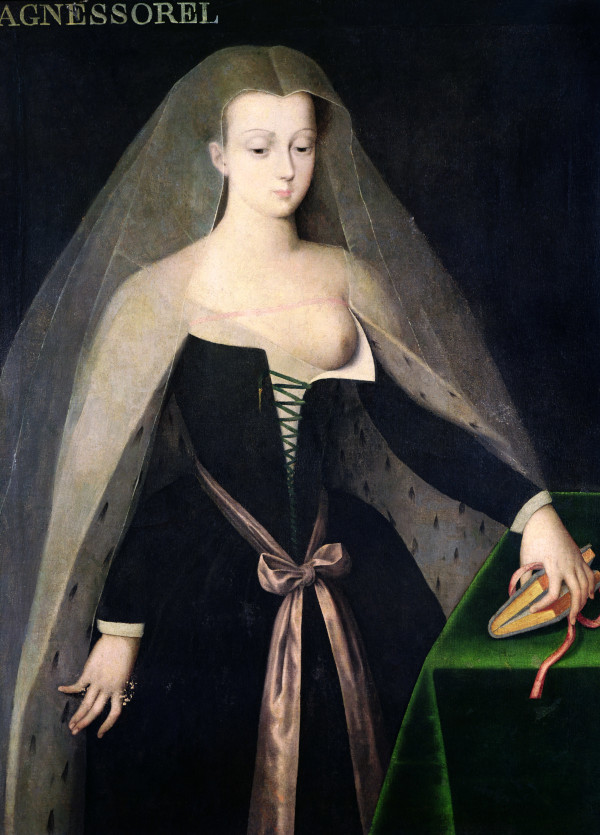
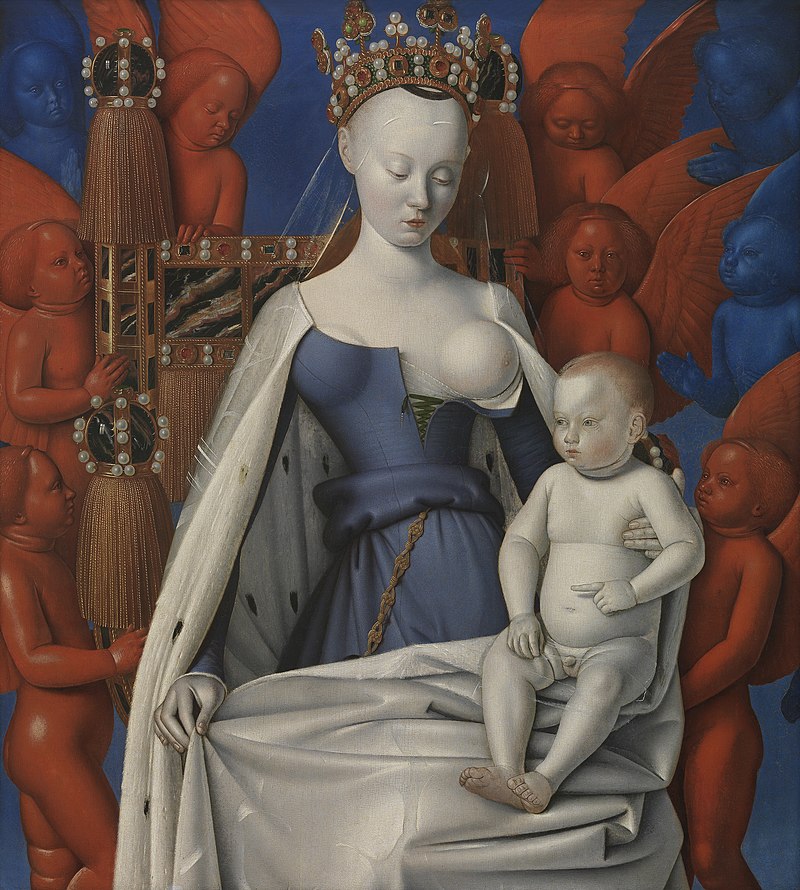
Eureka! I found her…..The Next Statue of Beautiful Liberty! Agnes is titled “The First Recognized Royal Mistress. Was she considered a Mary Magdalene? She is depicted as a Madonna. A series of books suggest Mary Magdalene had a child by Jesus. How come Agnes has two rams at her feet, and two Cherubim looking over her. Are these the Cherubim of the Holy Arc of the Covenant? Consider the exposed breast of Marianne! I believe I have…..UNCOVERED….a Royal Lineage, of women. The Jews follow a matriarchal line? Agnes begot four beautiful daughters that became the consorts and mistresses of kings. Agnes was at the court of Rene 1 de Anjou.
In studying King Henry yesterday (3-22-25} I wondered if Agnes conjured up Jean of Arc ‘The Maid of Orleans” and ,dressed up m armor, apearomg as a man, she chose the Savior of France, knew him, and picked him out of the crowd at court.
America’s New Starue of Liberty – must have one breast………..exposed!
JRP
“a matriarchal society”
Tomb of Agnes Sorel, 1422-50, mistress of Charles VII, with recumbent effigy with angels, rams and canopy, alabaster, restored 19th century, in the collegiate Eglise Saint-Ours, at the Chateau de Loches, built from 1013 by Foulques Nerra, count of Anjou, at the Cite Royale de Loches, Indre-et-Loire, France. It is listed as a historic monument. Picture by Manuel Cohen
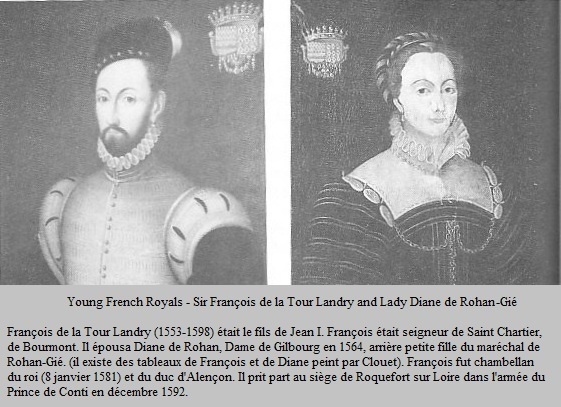
Finally, only if our budget allows us, a final stage will highlight a Rockstone from the Renaissance period (1564) carved with the weapons of François de Maillé de La Tour-Landry and Diane de Rohan, updated in 1996 in the rubble of the tower. If the entourage has suffered, the central stone of a single block on which the weapons are carved is fortunately intact. The final step will be the development of a terrace accessible from the courtyard to enter it.
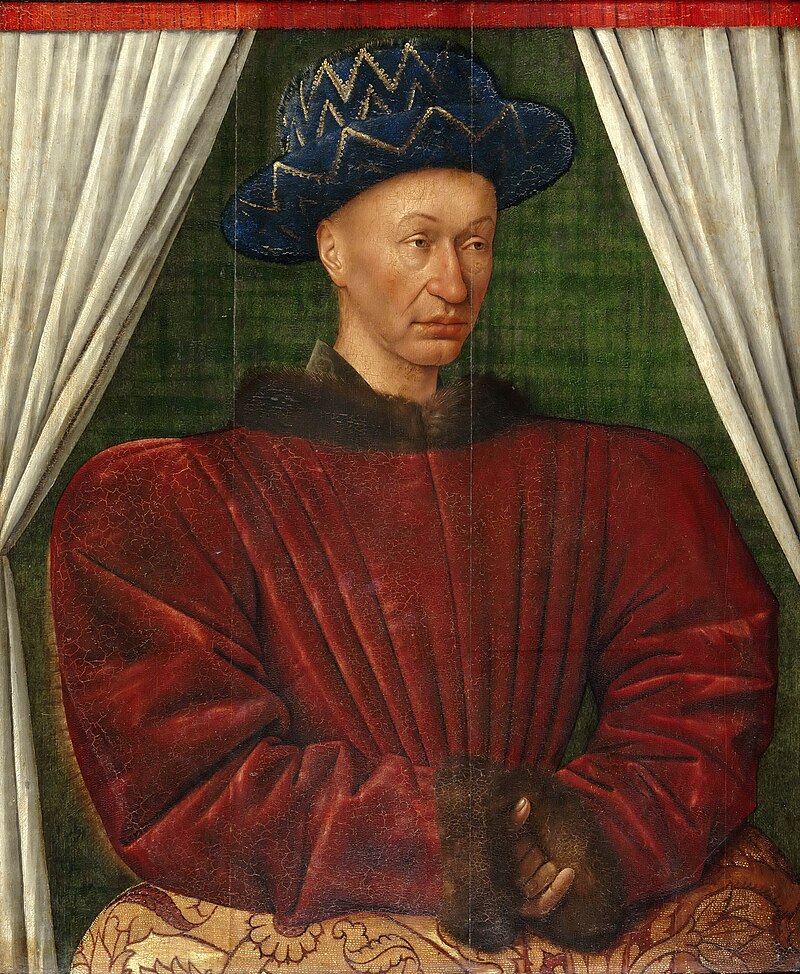
Agnès Sorel (French pronunciation: [aɲɛs sɔʁɛl]; 1422 – 9 February 1450), known by the sobriquet Dame de beauté (Lady of Beauty), was a favourite and chief mistress of King Charles VII of France, by whom she bore four daughters.[1] She is considered the first officially recognized royal mistress of a French king. She was the subject of several contemporary paintings and works of art, including Jean Fouquet‘s Virgin and Child Surrounded by Angels.
Soon, Agnes’ presence was felt at the royal court in Chinon where her company was alleged to have brought the king out of a protracted depression. Her influence on the court was first felt when she succeeded in convincing the poor king to rally his troops and drive English invaders from French soil. Agnes had a very strong influence on the king, and that, in addition to her extravagant tastes, earned her powerful enemies at court. She would become the first officially recognized royal mistress of a French king.[4]
Agnes generated scandal at court, particularly for popularizing the fashion of low-cut gowns. This behavior was both imitated and scorned. Jean Juvénal des Ursins, the archbishop of Reims, counseled the king to correct such fashions as “front openings through which one sees the teats, nipples, and breasts of women” (ouvertures de par devant, par lesquelles on voit les tetins, tettes et seing des femmes).[5]
Further scandal was brought to court when painter Jean Fouquet used her in his painting, the Melun Diptych, which depicted Agnes as the Mother of God. Courtiers were appalled that the king’s mistress and the mother of Charles’ illegitimate children was likened to Mary when her status was much less than holy.[6]
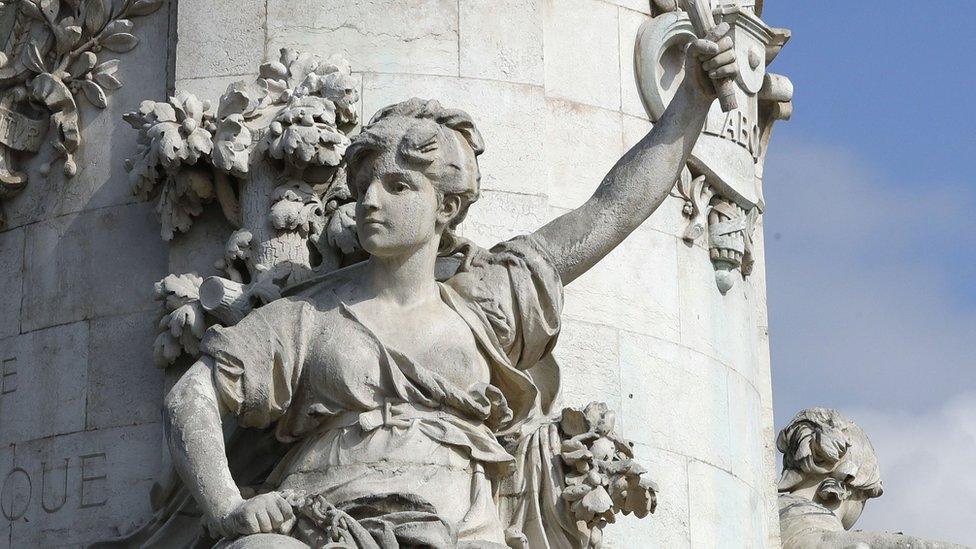
Prime Minister Manuel Valls has upset political rivals and historians by invoking the symbol of the French republic, Marianne, in the row over “burkini” beach bans.
“Her breast’s exposed because she’s feeding the people; she isn’t wearing a veil because she’s free,” he said.
But opponents were quick to seize on his remarks as the race hots up ahead of next year’s presidential elections.
One historian said his use of Marianne as a feminist symbol was “moronic”.
Mathilde Larrere, an expert on the French Revolution, said Marianne was an allegory and the use of her naked breast “just an artistic code” and nothing to do with femininity.

Synchronicity in Pan’s Labyrinth
Posted on May 11, 2014 by Royal Rosamond Press
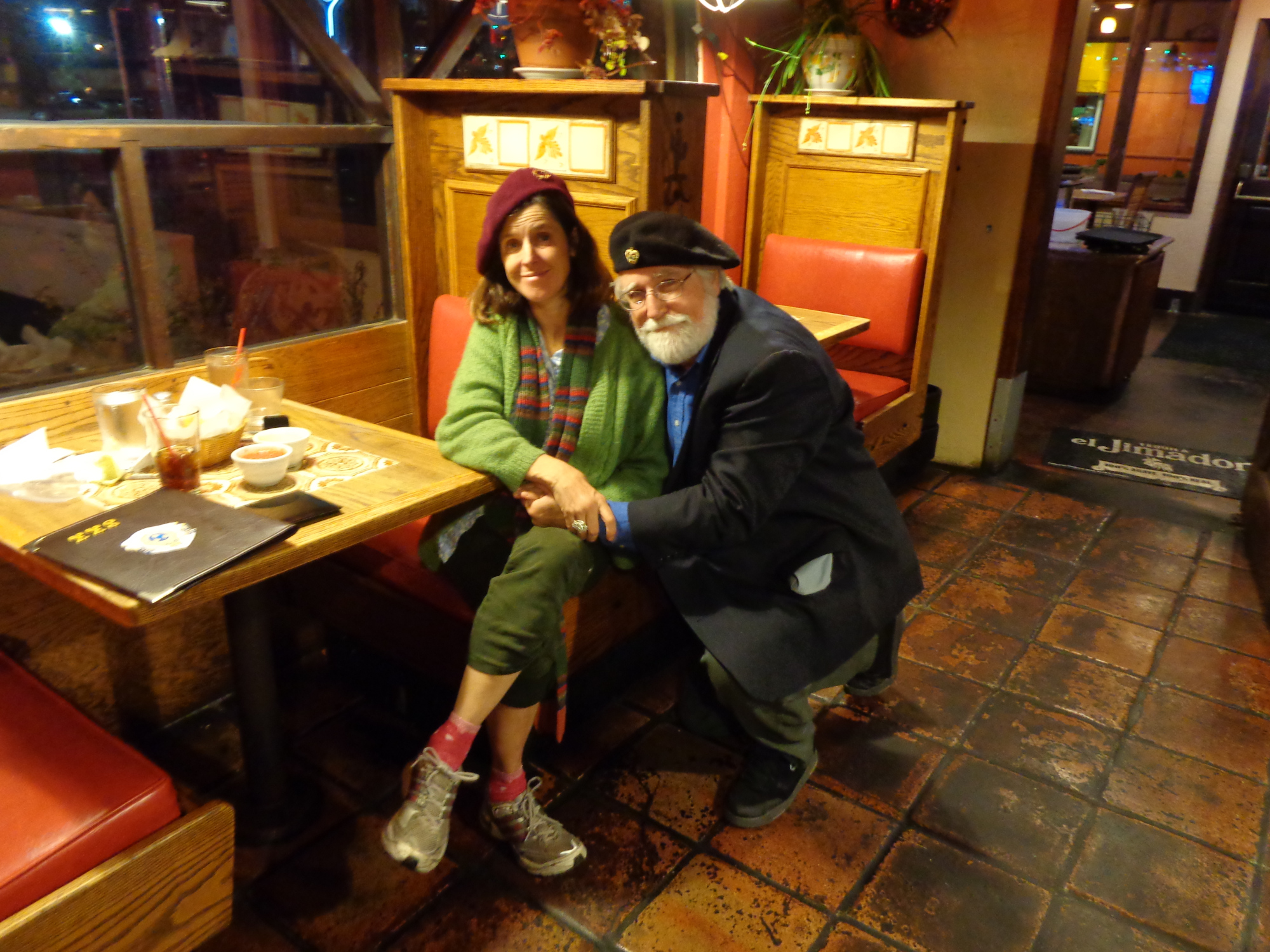
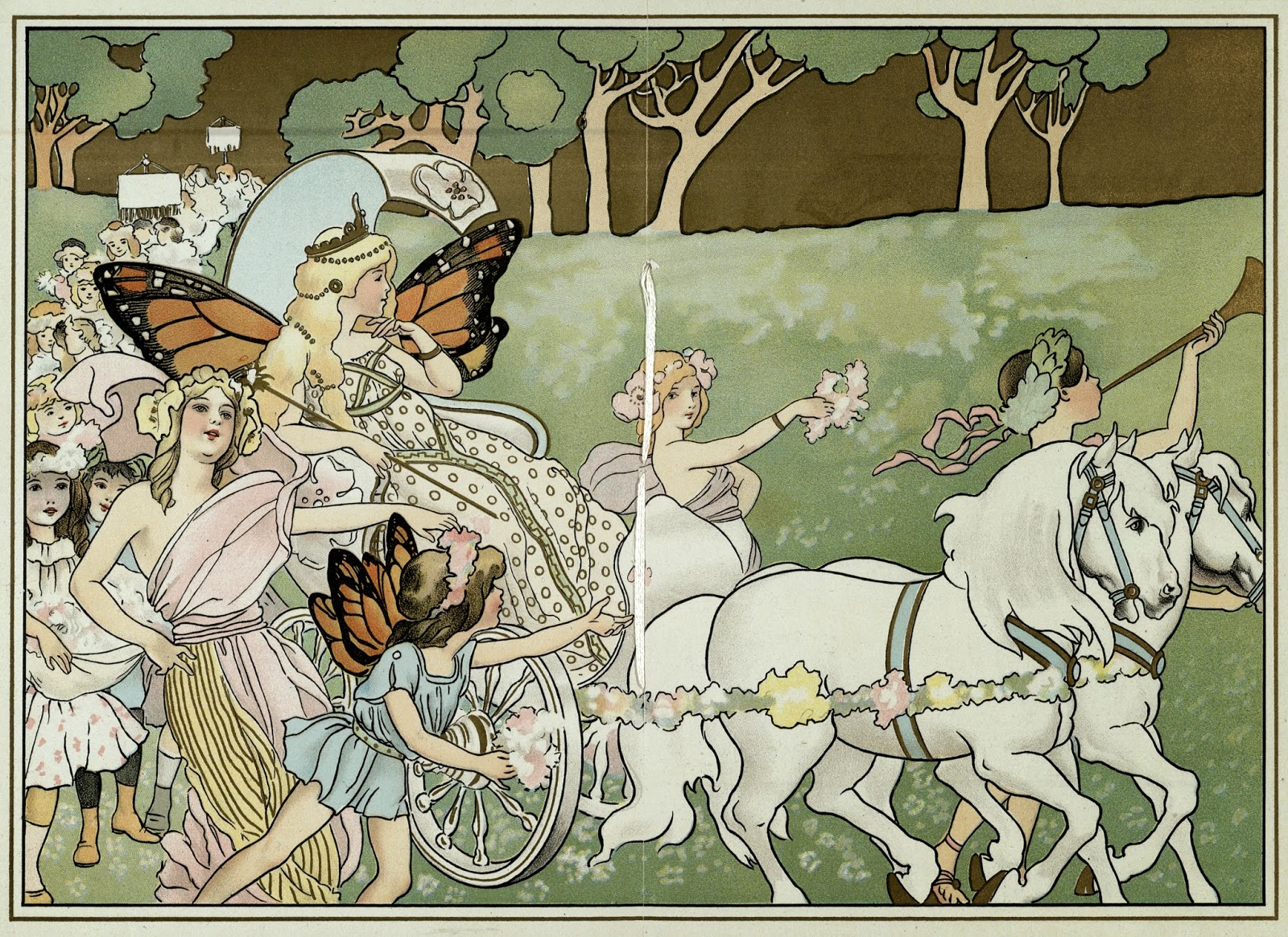


One indication that I have met a good friend, is their love of synchronicity. Belle Burch loved to make connections, gather and tie things together that no one else can see. When she told me she attended a French school and could speak fluent French, I wanted to take her to meet my friend, Virginia Hambley, as soon as possible. Virginia and her family are in line for the throne of France, if the monarchy is ever restored.
A year ago, my friend of seventeen years, got down on one knee, took my hand, and proposed marriage to me. I accepted. The next day she forgot what she had done. Virginia was in a terrible automobile accident when she was twenty and suffers from memory loss. A week later I proposed to her, on one knee. I put a cheap and garish ring on her finger knowing it would all come to not.
When Virginia was thirty, she got pregnant. Her mother made her get an abortion, and tied her tubes. Virginia would probably forget she had a baby. She asked me for my surname again.
Tomorrow is Mother’s Day, and Elizabeth is coming to visit from New York. When I met Belle, I had a vision of extended family, where Virginia would be the second mother. I have longed to see her holding a baby. She has never been married.
Here is the synchronicity between Virginia and the movie Pan’s Labyrinth. When I learned that Belle’s parents were involved in a Labyrinth Walk I was never more believing in a divine reality that invites just a few to partake. We are going on a Labyrinth Walk. This is the real deal.
Jon Presco
Copyright 2014
Maillé de La Tour-Landry
Virginia and John – Union of Love
Posted on January 4, 2021 by Royal Rosamond Press
I talked to my ex-fiance last night. She was thrilled that I called. Our flame was reignited. It will never die! Viva Virginia and her family! Here is their castle in France. The Tower of John is in need of repair. After she corrected my pronunciation, I told her about Belle, how I wanted them to meet because Ms. Burch speaks perfect French. Virginia’s accent is of the source. The Bourmonts are kin to the Anjous who are trying to restore the French Monarchy. I predicted the downfall of the Republican party and a coup by the right-wing traitors of our Democracy. I proposed a claim to the Lousiana Territory, and the establishment of a Western Kingdom, just in case. With the presidents attempt to extort votes in Georgia, we are not out of the woods.
De Bourmont – Anjou Legitimists | Rosamond Press
Reclaiming the Lousiana Territory | Rosamond Press
With the corruption of the Prostestant church by the evangelical heresy, I am looking at the Catholic religion, especially the Order of Saint Francis.
John Presco
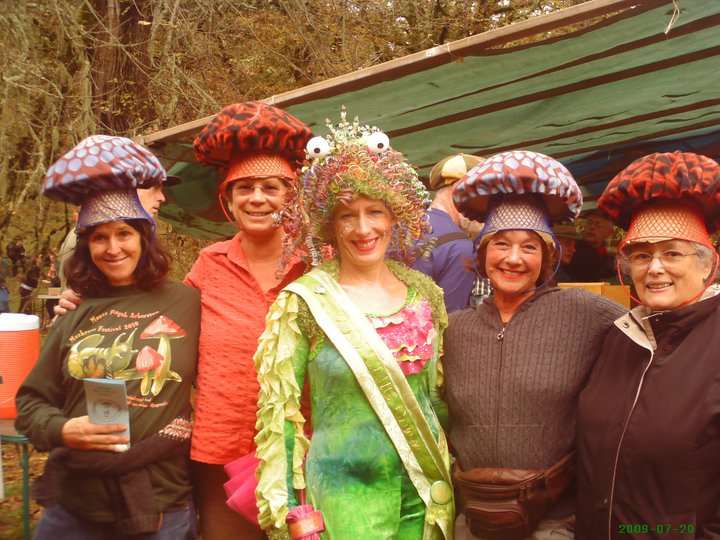

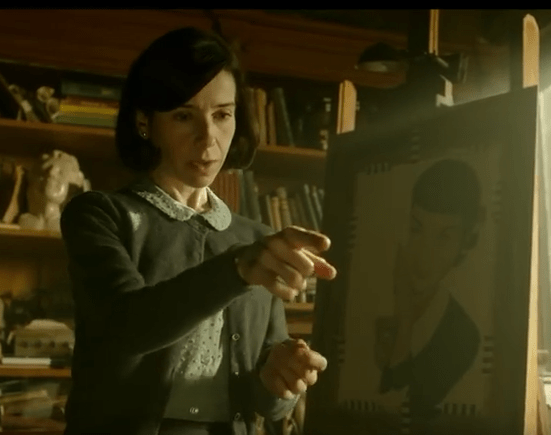



I wanted Virginia and I to have a child, but, her mother tied her tubes due to her head injury. Her ancestors were at the court of Rene d’Anjou. There is no good youtube program on him. What a disgrace. No wonder Europe falls to a moron and Putin.
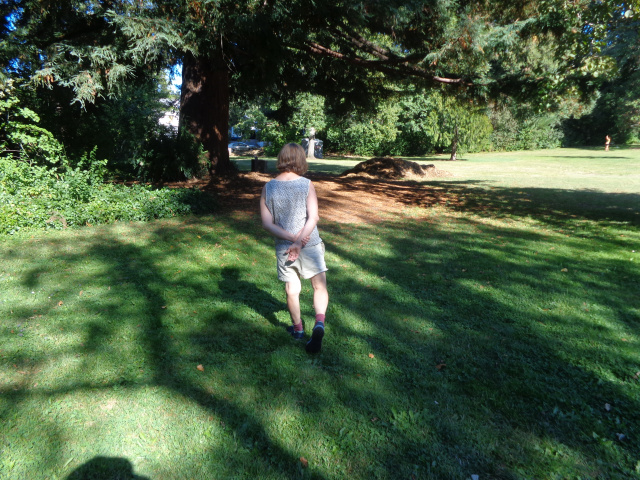
Virginia’s family hid their valuables in the basement of this castle we see above during the French Revolution. Many of her blood ties went to the Guillotine. I have a narrated video of Virginia wandering about picking up cigarette in the park.
“Lady’s and gentleman. Here we see a woman who is heir to the French throne walking about picking up cigarette butts the pigs have tossed about. Who would do it if not the French Royals?”
I don’t give a rat’s ass how many bad guys James Bond shoots, in my book, he is missing the point. Virginia is one of the bravest people I know. She was on a college excursion when the van got in a terrible wreck. They pulled her out from under a dead student, a young man. She was in a coma for 28 days. Most of her ability to remember, is gone. She would leave her infant in a bathtub. Rena has a million poems in her head. These two women, are Victory Bond.
Virginia was twenty when the major part of her life, ended. The brilliance that got left behind came into my reclusive ways. I successfully pushed everyone away, but, Virginia. She wanted to know who she was. She wanted me to help her find herself. I became devoted to her. I thought I was there at her beck and call. But, I could not be, not all of me, for the place where we make and keep our sense of endearment, was missing, left behind, on the highway to Coos Bay.
We are all damaged. I fell in love with Lara Roozemond, for she speaks of being damaged. She pens poems about being broken, cut off, somehow, some way. She is my inspiration for Victoria Bond. World Honesty…………hangs by a thread.
John Presco 007

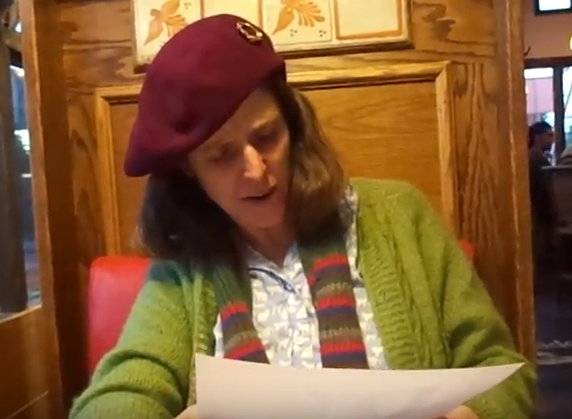




LET’S SAVE THE ST. JOHN’S TOWER AT THE CHÂTEAU DE BOURMONT!
 Reading180 %$17,963Collected on 10,000 eurosDonation vs. Donation113Contributions from 9 countriesFinishedSave from the collapse a tower of the former fortress of the castle of Bourmont, family residence since the 14th century and high place of the chouannerie, located on the steps of Brittany.Share this projectServane de BourmontThe Historic Home Castle Freigned – Vallons-de-l’Erdre Challenges CAMPAIGN COMMENTS16 CONTRIBUTORS113 NEWS2


The Historic Home supports the Château de Bourmont (member of the Association of Historic Homes) and joins their restoration project.

THE CASTLE OF BOURMONT

ST. JOHN’S TOWER FOR ALL, ALL FOR HER!
We are launching a campaign of works to stabilize the remains of an imposing 15th century tower,at the southwest corner of the courtyard of Bourmont Castle,located in the Loire-Atlantique. This tower has stood guard for more than five centuries and recalls the defensive role of the place when Bourmont was a stronghold of the Kingdom of France against the Duchy of Brittany.
The high place of the cabbage industry, this house keeps within it the memory of the terrible battles of the revolutionary period between the Whites and the Blues in a fratricidal war during which Bourmont was burned many times. This tower was notably an essential element of the defence of the fortress in 1795 when Bourmont Castle became the headquarters of the Catholic and Royal Army of Maine, Anjou and Upper Britain under the command of General de Scépeaux. It is here that The Marshal of Bourmont (1773-1846), a tireless actor from a troubled period in the history of France, whose memory his descendants now transmit, rests.


Entry castle

Logis and North Tower

Amaury and Servane de Bourmont with their children
INTRODUCING THE PROJECT
As young buyers, we want to make visitors of the place aware of the efforts undertaken to save these remains that make up its architectural unity. This project aims to preserve a remnant of the 15th century of high quality, inserting itself into a preserved picturesque complex. The previous restoration dated 1850 unfortunately contributed to the weakening of the building, which collapsed half a century ago.
A family home and a witness to the history of France, Bourmont aims to welcome visitors passing through but also to regularly bring together all those attached to it by organising dynamic and unifying events at the communal level and more broadly at the departmental and regional level.
For these reasons, we want to save the old St. John’s Tower from a total and inevitable disappearance by permanently stabilizing it in its current state.

WHAT WILL THIS COLLECTION BE USED FOR?

The first phase of the work should help to secure the site by stabilizing the stilt that threatens ruin with the help of a gondola. Then, the gravois will be sorted:on the one hand, the shale rubbing; on the other hand, the carved tuffeau stones that will be preserved.
The second step will be to stabilize the remaining but very fragile sections of walls, by large injections of lime, in order to ensure the coherence of the masonry and to strengthen the structure (stretching the bays, re-establishing the lintels in tuffeau of these, consolidating their bases and closing the cracks).
The third step will be to put the walls’ macrases out of water with appropriate lead protections.
Finally, only if our budget allows us, a final stage will highlight a Rockstone from the Renaissance period (1564) carved with the weapons of François de Maillé de La Tour-Landry and Diane de Rohan, updated in 1996 in the rubble of the tower. If the entourage has suffered, the central stone of a single block on which the weapons are carved is fortunately intact. The final step will be the development of a terrace accessible from the courtyard to enter it.

Previous state circa 1900

After a call for tenders from various approved companies and a detailed study of the estimates, the total amount of the project amounts to 190,000 euros, which will be financed in part by grants and partly from our own funds. Nevertheless, we hope to raise 15% of this sum in donations and sponsorships.
Forecast budget: $190k
Donations and sponsorships: 15%
Self-financing: 35-45%
WHO ARE WE?
Taking over The Castle of Bourmont with our four children, we are the 25th generation to take up the torch to make love this family cradle and pass on its memory. We are working together to support this house, which has been passed down to the same family since 1697.
HOW CAN WE SUPPORT THIS PROJECT?
You can support this project:
- – by donating online by credit card on this page after registration on the Dartagnans website
- – by making a bank transfer after registering on the Dartagnans website
- – by sending a cheque, on the back of which you will include your email address,written in the following order Historic Residence – St John’s Tower of Bourmont Castle,sent to the following address:
Dartagnans
Campaign St John’s Tower for
all, all for it! 15 rue de Milan
75009 PARIS
CHALLENGEABLE DONATIONS
Your donation is defically defically defyed if it fulfils the terms and conditions of Articles 200 and 238 bis of the general tax code, in particular because it is a private property in selfless management. At the end of the collection, you will receive a tax receipt allowing you to reduce your tax:
– Individually, you can deduct 66% of your donation within 20% of your taxable income.
– As a company, all payments to the project allow a 60% reduction in corporate tax on the amount of these payments, taken within the limit of 0.5% of the company’s C.A. H.T.
Parents of owners up to the 4th degree (including first cousin) will not be eligible for the tax reduction.
Ponthus and Sidonia
Posted on July 31, 2015 by Royal Rosamond Press
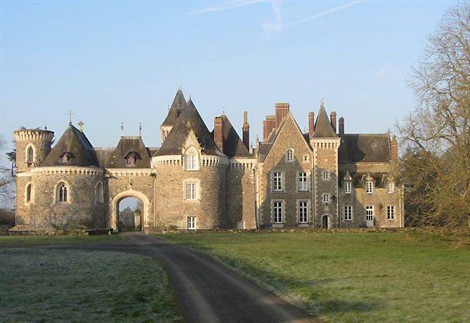


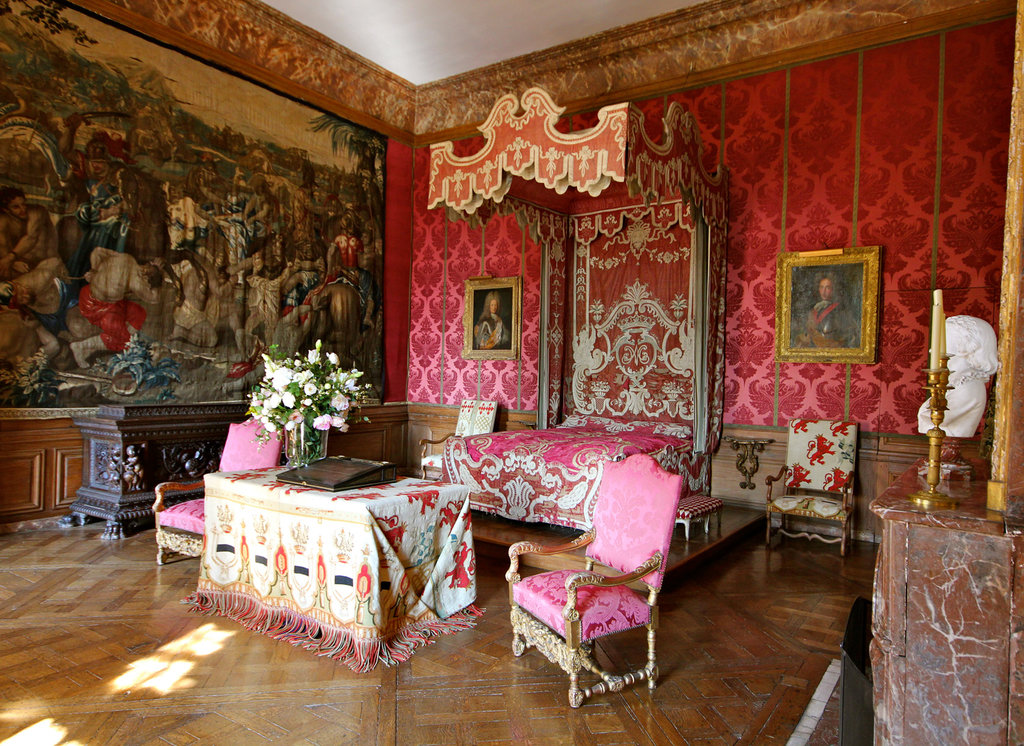
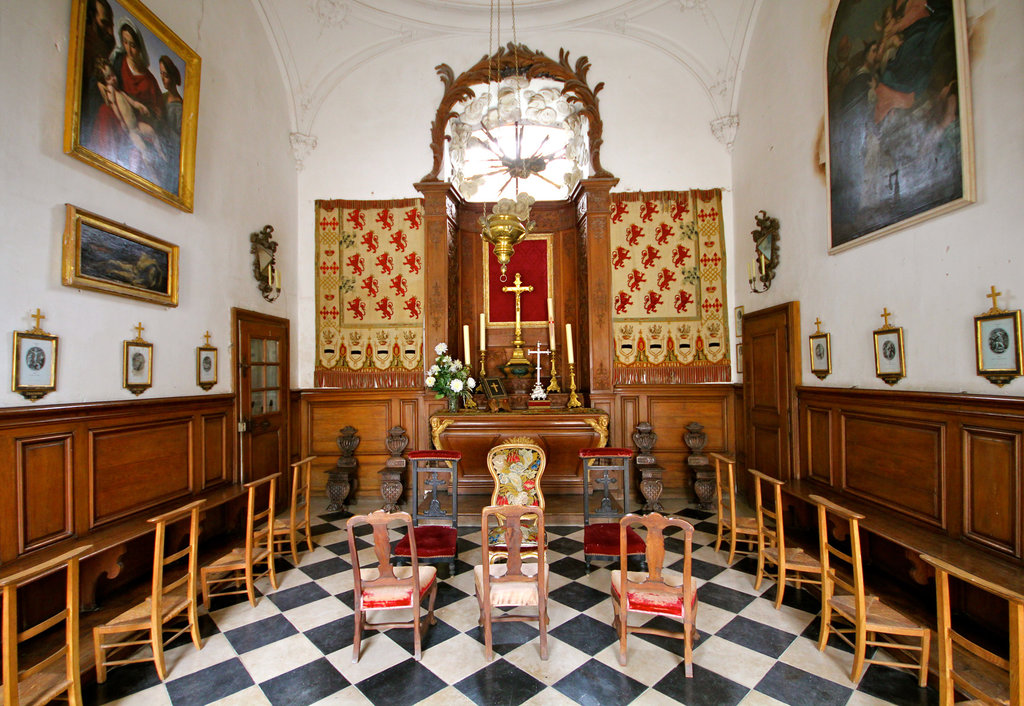
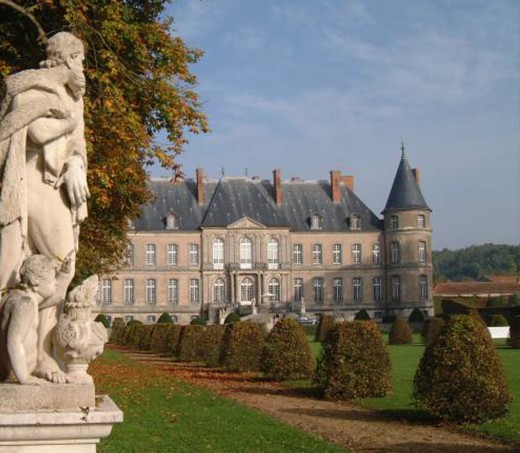


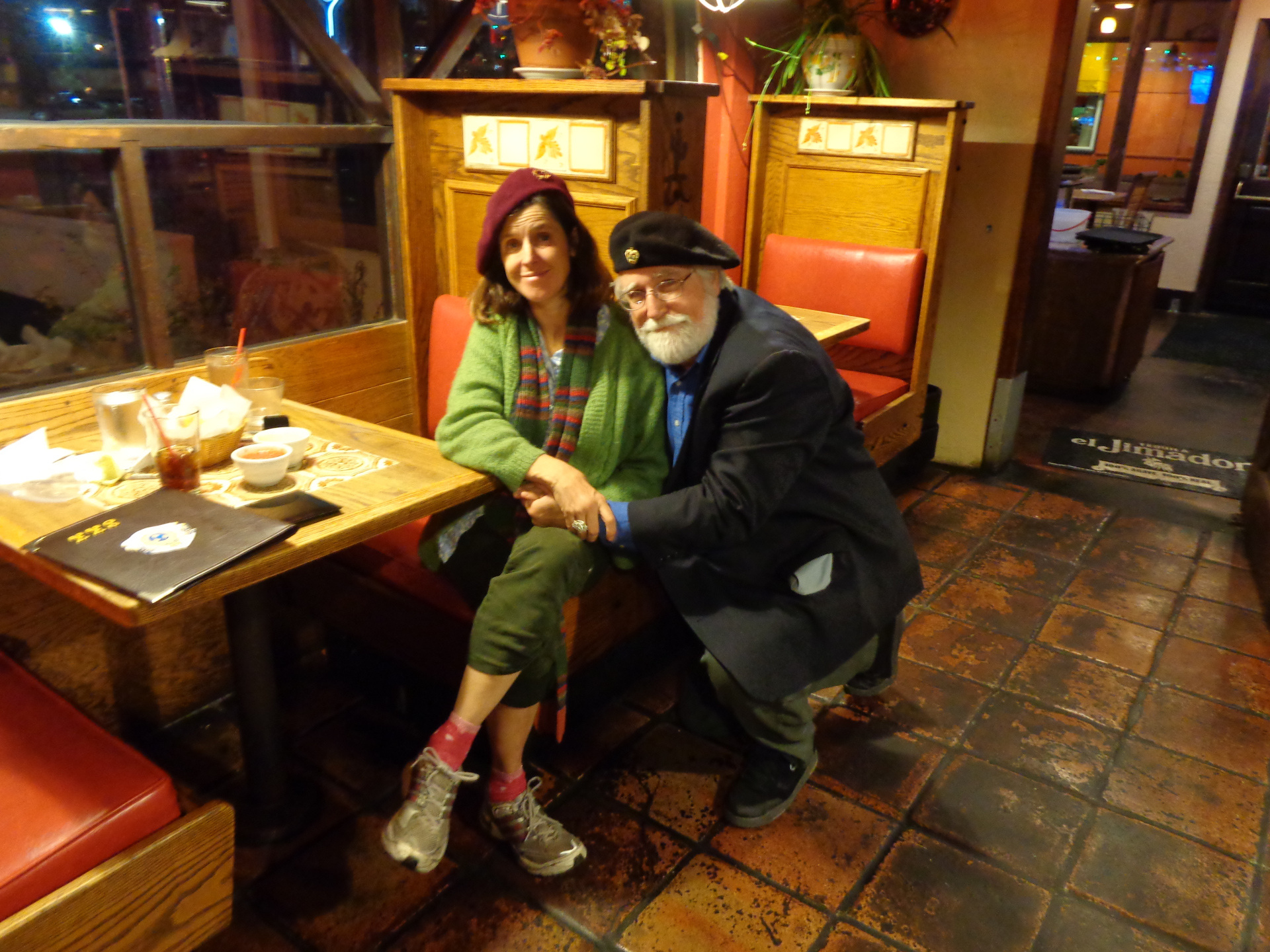
Virginia and Caroline Hambley’s mother is Elizabeth de Bourmont who are closely related to the Rouge, and La Tour-Landry dynasty. They are kin to Bertrand Beauvau was married to Blanche, the daughter of Rene de Anjou. A Family Renaissance centers around the chanson de geste ‘Ponthus and Sidonia’ and ‘King Horn’ . In Italian it is called a PROSAROMAN. Consider ROSAMAN.
Then there is the Book of the Knight of La Tour-Landry written by Geoffroy de la Tour for his three daughters that was illustrated by Albert Durer. Bertrand was a lover of the arts. This family built many castles that were used as centers of The Muse. They were miniature cities that protected Arts and Literature.
Here is Geoffroy offering The Book of the Knight in the Tower to two of his daughters who are in Virginia’s and Caroline’s family tree.


http://www.guice.org/bklvntr2.html
I met Virginia when I came to the rescue of Ariel, her neighbor and student of the University of Oregon who was in much distress. Her mother helped her purchase her first home and she was trying to paint it. She did not know what she was doing so I volunteered a couple of days to help. Up on a ladder, Virginia approached;
“Who are you?” she asked with twinkling eyes.
“Who are you?” I responded whimsically.
“I am the owner of this house!” she spoke proudly.
I did not know it at the time that two Renaissance families have met. Gottschalk Rosemont was the Master of Leuven and the Falcon Art College. The Rosemonts were members of the Swan Brethren who commissioned Hieronymus Bosch. Add to this the Benton and Rosamond artistic and literary legacy and one has to wonder if Fate had a hand in the coming together of the Rosamond and De Bourmont families,
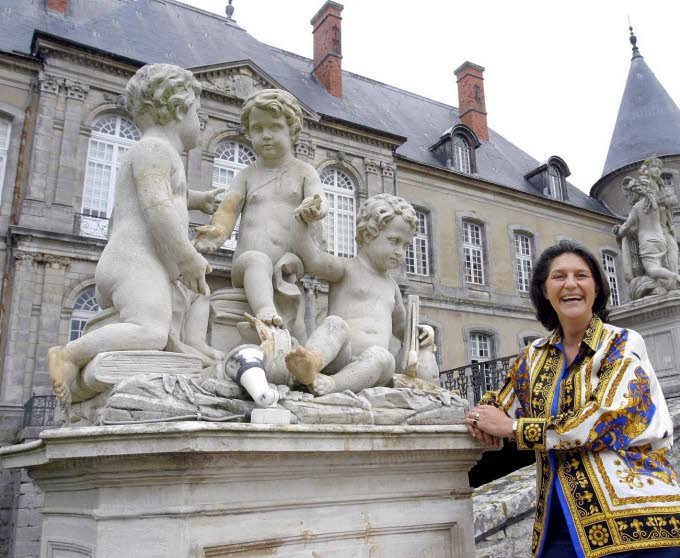
Above is a castle belonging to Princess Minnie de Beauvau-Craon. who employs te four lions that Landry Le Tour depicts as four wild men. Guy de Rougemont is France’s foremost artist who descends from the artist, Louis-François, baron Lejeune. This lineage is one of the most literary in French history and are given the prestigious title of “cousin du Roi”, reserved for a few families with an alliance with the royal house. This is why Louis Auguste Victor de Ghaisne de Bourmont worked so hard to restore the Bourbons to the throne of France. Add to this the Fairytales of Charlott-Rose de Caumont de la Force, and we have a real Sleeping Beauty Tale.
http://www.chateaudeharoue.fr/letter-from-france-a-tiny-village-with-its-very-own-princess/
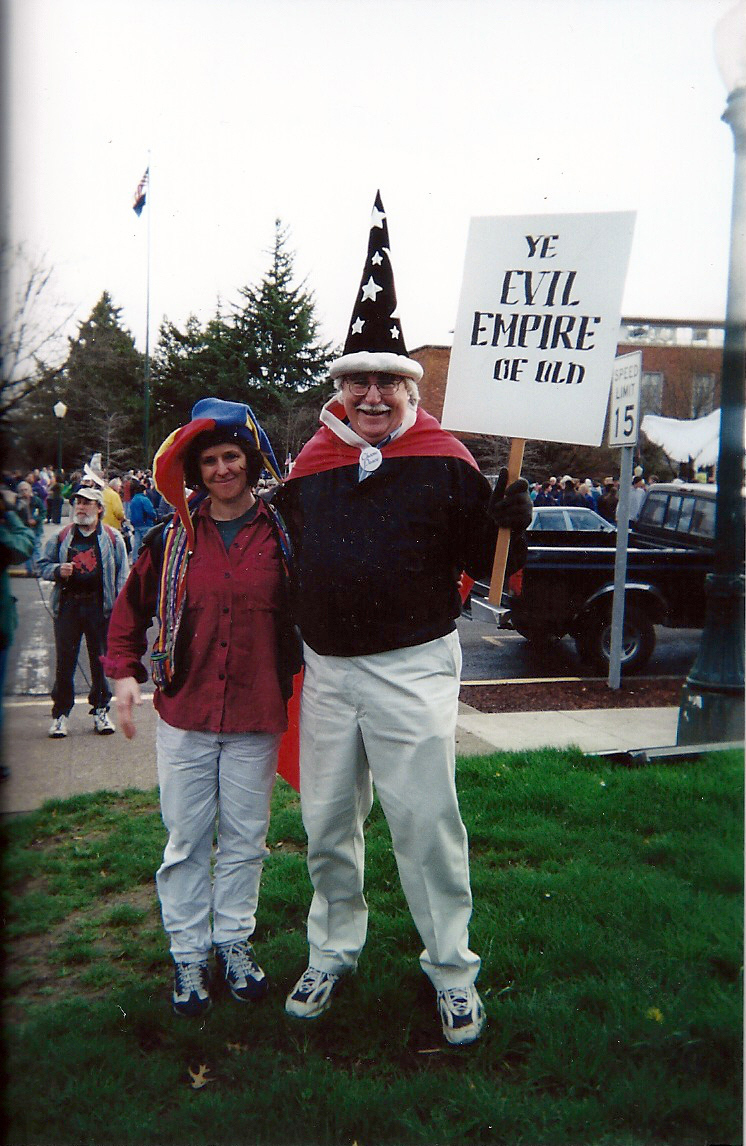
But, still we are not done. Virginia descends from the Celts of Brittany, and perhaps, Galicia. Her father, Clarke Hambley, comes from an ancient family in Cornwall, a Celt speaking Peoples who migrated to Brittany. He was an artist. We are talking about a Peoples who celebrate their pagan ways. Above is a photo of Virginia and I demonstrating against the second invasion of Iraq. I am dressed like Merlin. Virginia is a Court Jester who kindred paid homage the most royal people in France.
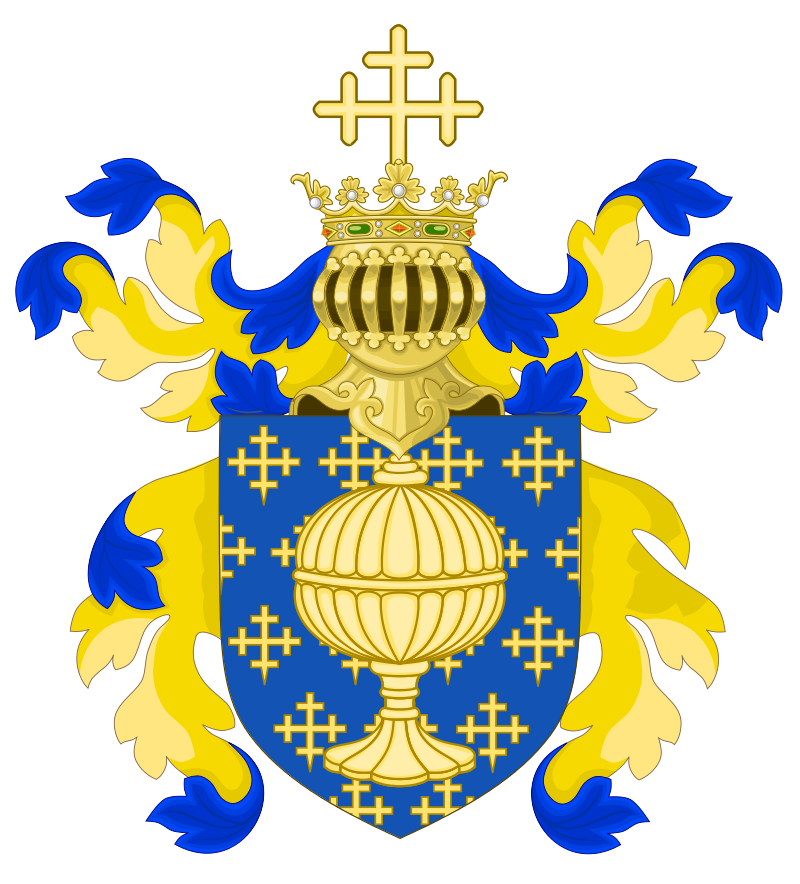
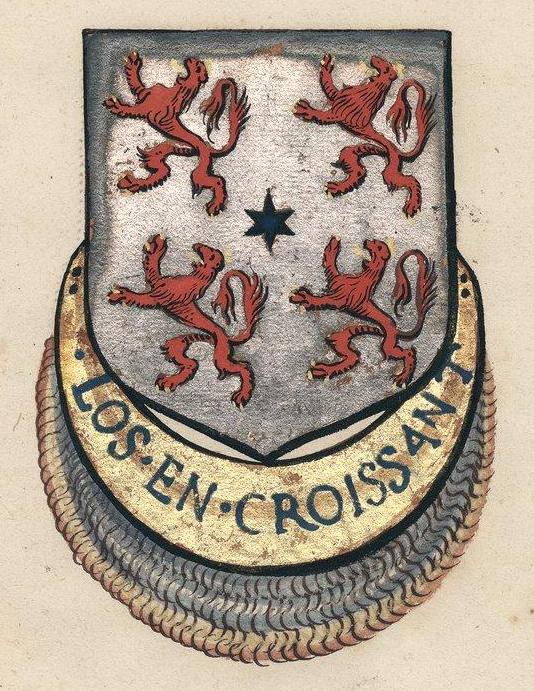
Last, but not least, Bertrand was a Knight of the Ordre du Croissant that has been described as neo-Arthurian in nature. King Rene was an accomplished artist. There is a Grail associated with Galicia. Did it come over to Brittany from Wales? Sir Lancelot became a Wild Man. Virginia is a Wild Woman.
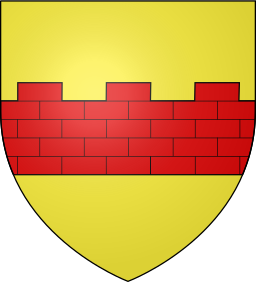
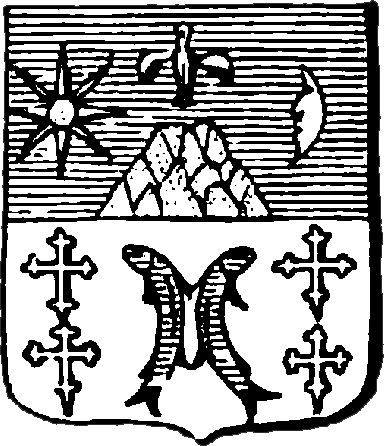
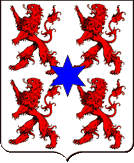
Here is the blazon of the Landry De La Tour family depicting a red wall that can be the top of a tower, thus the family name ‘of the tower’. What tower? I am saving the answer fr my book. You will be amazed.

http://fabpedigree.com/s078/f826052.htm
http://www.de-bric-et-de-broc.com/France/tourlandry.html
Jon Presco
Copyright 2015

The Ordre du Croissant (Order of the Crescent; Italian – Ordine della Luna Crescente) was a chivalric order founded by Charles I of Naples and Sicily in 1268. It was revived in 1448 or 1464 by René I, king of Jerusalem, Sicily and Aragon (including parts of Provence), to provide him with a rival to the English Order of the Garter. René was one of the champions of the medieval system of chivalry and knighthood, and this new order was (like its English rival) neo-Arthurian in character. Its insignia consisted of a golden crescent moon engraved in grey with the word LOZ, with a chain of 3 gold loops above the crescent. On René’s death, the Order lapsed.
http://gw.geneanet.org/favrejhas?lang=fr&p=bertrand&n=de+beauvau
http://fabpedigree.com/s078/f826052.htm
The La Tour-Landry, then mesh of La Tour-Landry held the lands of Bourmont since XIVe century. By the alliance in 1691, Marie-Hélène de Maillé de La Tour – Landry (1670-1752) with Marie-Henry, count of Ghaisne (1662-1710), it passes to the family of Ghaisne de Bourmont, to which it still belongs.
In 1773, the Château de Bourmont is the place of birth of Louis Auguste Victor de Ghaisne de Bourmont, author of the taken of Algiers in 1830. Conquest by which it will be made Marshal of France.
It is 29 years that Laure de Rougemont, a descendant of a “modest” line, in the words of his brother, married Marc de Beauvau-Craon. This last, twenty years her senior, bears the name of an illustrious family descendant of Maria Theresa of Austria, paired with the Duchy of Lorraine.”
Guy de Rougemont, born 23 April 1935 in Paris, is a painter and sculptor French, Member of the Académie des beaux-arts. He is the son of general Jean-Louis du Temple de Rougemont.
Louis-François, baron Lejeune On 2 September 1821 he married Louise Clary, sister of general Marius Clary and niece of Désirée Clary, queen of Sweden by her marriage with Jean-Baptiste Bernadotte.
Charlotte-Rose de Caumont de La Force or Mademoiselle de La Force (1654–1724) was a French novelist and poet. Her best-known work was her 1698 fairy tale Persinette which was adapted by the Brothers Grimm as the story Rapunzel.[1]
The family appears now to have been at its greatest height of prosperity and glory. Pontus de la Tour-Landry is cited as knight, lord of La Tour-Landry, of Bourmont, and of Loroux-Bottereau, and baron of Bouloir in the Vendômois; he appears in a record of the year 1424 as giving to the prior and convent of St. Jean of Anvers the tithe of grain in his estate of Cornouaille, and he seems to have held other considerable territories in Brittany and elsewhere.
Great friend of Jacques Cœur and René of Anjou, King of Sicily, Bertrand de Beauvau, renowned art lover, built several castles, as Ternay and Pimpean, including the chapels have remarkable decorations: Pimpean with murals and Ternay which arch bows is the vertical walls are fully carved.
The House of Beauvau is a very old family from Anjou, titular for several centuries of the seigneurie de Beauvau (Maine-et-Loire) ; of knightly extraction, it traced its evidence of nobility until 1265. It split into two main branches, the Beauvau du Rivau and the Beauvau-Craon, who made career under the Kings of France but also under the Dukes of Lorraine
Related to the counts of Anjou, the Beauvau spent at the service of the Kings of France in the XIIIe century, and the Dukes of Lorraine3 at the end of the middle ages. In 1454, Isabeau de Beauvau (daughter of Louis de Beauvau) married Jean VIII de Bourbon, count of Vendôme ; Isabeau is the trisaieule of King Henri IV, and the Beauvau family was thus recognize the title prestigious cousin of the King, reserved for the few families with an alliance with the House of France, by Louis XIV, then officially by Louis XV in 17394.
Pontus and Sidonia is a medieval prose roman, originally composed in French in ca. 1400, known as Ponthus et la belle Sidonie, possibly by Geoffroy IV de la Tour Landry (d. 1391) or by another member of the La Tour family. It is about Pontus, the son of the king of Galicia, who falls in love with Sidonia, daughter of the king of Brittany. The text is associated with lords of La Tour because it derives the ancestors of that family, whose ancestral possessions were in Brittany, from members of the train of prince Pontus. The story is based on an earlier work, the Anglo-Norman chanson de geste Horn et Rimenhild (ca. 1180).
Several German translations were made during the 15th century (viz., in the period corresponding to the final phase of Middle High German or the formative phase of Early New High German). There is a surviving version in Alemannic German, possibly written in the Old Swiss Confederacy, dated to between 1440 and 1460, and another version in Franconian German, probably written in the region of Trier. Another translation of the French text was made by Eleanor, Archduchess of Austria (1433–1480).
A late medieval Dutch translation Die historie van Ponthus ende die schoone Sidonie survived in an edition printed by Niclaes vanden Wouwere, Antwerp 1564.
http://quod.lib.umich.edu/c/cme/KntTour-L/1:2?rgn=div1;view=fulltext
THE feudal castle of La Tour-Landry, from which the author of the following book received his name, stood between Chollet and Vezins, in the part of the old province of Anjou which lay between Poitou and Brittany, where its ruins are still visible, consisting of a great donjon, or keep, said to date from the twelfth century. The family of our Knight appears to have been established there at least as early as that date. In the year 1200, a Landry de la Tour, lord of this place, is found engaged in a lawsuit relating to lands; and the names of different members of the family are met with not unfrequently during the thirteenth century. M. de Montaiglon, the editor of the original text of the Knight’s “Book,” who has investigated this question with laborious care, considers that the father of our author was Geoffroy de la Tour, spoken of at the beginning of the fourteenth century as lord of La Tour-Landry, Bourmont, La Galonière Loroux-Bottereau, and Cornouaille, and who, under the banner of the Count of Anjou in 1336, distinguished himself by his courage in the war with the English.
This Geoffroy de la Tour had two sons, our Geoffroy, who was the eldest, and another named Arquade, who is supposed to have been much younger than his brother. The latter, our Geoffroy de la Tour-Landry, appears from his own account to have been present at the seige of Aguillon in 1346. His name again appears in a military muster in 1363. We know that he married Jeanne de Rougé, younger daughter of Bonabes de Rougé, lord of Erval, vicomte of La Guerche, and chamberlain to the king, but we are unacquainted with the date of this marriage, though in 1371 and 1372, when he composed the following book, he must have been married a sufficient length of time to have sons and daughters of an age to require instruction of this kind.
The name of Geoffroy de la Tour occurs several times between the date of the compilation of his book and the end of the century. In 1378 he sent his contribution of men to the army employed in the siege of Cherbourg, but he did not serve in person on that occasion. In the document recording this fact, he is described as a knight banneret. In 1380 Geoffroy served in the war in Brittany, and we find him again in active service in the September of the year 1383. We learn from another document, that at this last date Geoffroy’s first wife, Jeanné de Rougé, was still living; but she must have died within a few years afterwards, for at a subsequent date, which M. de Montaiglon places in 1389, he contracted a second marriage with Marguerite des Roches, lady of La Mothe de Pendu, the widow of Jean de Clerembault, knight. This is the latest mention of the name of our Knight which has yet been discovered among contemporary records; the date of his death is quite unknown, but it probably occurred at some period towards the end of the fourteenth century.
The descendants of Geoffrey de la Tour-Landry appear to have been all active in the turbulent times during which they lived, and through one of them the name became again rather curiously connected with literary history. The Knight of La Tour tells us that he had sons (in the plural); for at the beginning of the book now published he tells us in the original that he had compiled two books, “l’un pour mes filz, et l’autre pour mes filles*. [“Et pour ce ….ay-je fait, deux livres, l’un pour mes filz, et l’autre pour mes filles pour aprendre à rommancier.”—, edited by M. de Montaiglon, p. 4. “And therfor y haue made .ij. bokes, one for my sones, an other for my doughtres, forto lerne hem to rede.”—, English translation, p. 4 of the present, volume.];” and in two other passages of the present book, addressing his daughters, he refers to the book he had compiled for their brothers, “ou livre de voz frères*. [“Comme vous le trouverez plus à plain ou livre de voz frères.“—, chap. lxxxix. p. 175. “Si comme vous le trouverez ou livre que j’ai fait à voz frères.” “As ye shal finde it more pleinly in the boke of youre bretheren.”—, chap. Ixxxix. p. 115 of the present volume.].” Caxton, in his printed translation, has given us at the Page ixconclusion a little more precise information on the subject, when he makes the good Knight refer his daughters to the other book in the words, “as hit is reherced̛ in the booke of my two sonnes *. [See the present volume, p. 205.].” The passage represented by these words of Caxton is not found in the known manuscripts of the French text; but we may be tolerably certain, from Caxton’s known exactness, that it existed in the manuscript of which he made use, and we are justified in assuming that, at the time when Geoffroy de la Tour-Landry compiled this book, that is, in 1371, he had two sons. He has in no instance mentioned the number of his daughters, but the manuscripts of the original text are ornamented with illuminations, and in these the Knight is always represented as attended by three daughters, for which number the illuminators had no doubt satisfactory authority. Of the history of these daughters we know very little. One of them, Marie de la Tour-Landry, married, on the 1st of November, 1391, Gilles Clerembault, the son of her father’s second wife by her former husband. Marie de la Tour left no issue, and died before 1400, as in that year Gilles Clerembault married a second wife.
This intermarriage of the two families appears to have been favourite idea of Geoffroy de la Tour-Landry, and was perhaps a mere question of family interest. Charles de la Tour-Landry, who was Geoffroy’s eldest son, was married first to Jeanne de Soudé, but this union appears not to have lasted long, for, after her death, Charles married in January, 1389, Jeanne Clerembault, the daughter of his step-mother, and sister of his brother-in-law. Charles de la Tour-Landry was slain at the battle of Azincourt, in October, 1415. There is some confusion in the family history at this time, through the imperfection of the genealogies; but a Geoffroy de la Tour, who was at the siege of Parthenay in 1419, and a Hervé de la Tour, who served in the wars near the same period (his name occurs in 1415 and 1416), are conjectured to have been sons of the author of our book. Charles de la Tour-Landry Page xhad five sons. The name of the eldest is uncertain, but he is said to have been with his father at Azincourt, and to have died of his wounds soon after the battle. As he died childless, his brother Pontus, the second son of Charles, remained the head of the family. The three other sons, Thibaud, Raoulet, and Louis, died without children. They had at least one sister, who formed a rather high matrimonial connection.
The family appears now to have been at its greatest height of prosperity and glory. Pontus de la Tour-Landry is cited as knight, lord of La Tour-Landry, of Bourmont, and of Loroux-Bottereau, and baron of Bouloir in the Vendômois; he appears in a record of the year 1424 as giving to the prior and convent of St. Jean of Anvers the tithe of grain in his estate of Cornouaille, and he seems to have held other considerable territories in Brittany and elsewhere. He was not unfrequently employed in public affairs, and was present at the battle of Formigrey in 1450. It is only necessary on the present occasion to say that Pontus had a daughter and a son, and that the latter, who was named Louis, had four sons, none of whom left issue; so that with them the male line of La Tour-Landry became extinct.
All the older great feudal families prided themselves on tracing their descent to the chieftains of the fabulous ages of society; and usually each of them had his family romance, which told the story of the primeval heroes of his house, and which was no doubt frequently read by his clerk or chaunted by his minstrel for the edification of his family and his guests. These formed what were called the Chansons or Romans de Geste, which were so numerous in the twelfth and thirteenth centuries, the period when feudalism had reached its greatest development. As feudalism was gradually falling from its original character, the composition of such family romances went out of fashion, and we know of but a small number of instances at periods subsequent to those just mentioned. Thus, at a much later date, in the latter half of the fourteenth century, the family of Lusignan gratified its pride by employing a writer Page xinamed Jean d’Arras to compile the romance of Melusine, according to which the lords of Lusignan derived their descent from the marriage of one of their great chiefs of early times with a fairy, named Melusine, who every Saturday took the form of a serpent. Pontus de la Tour-Landry was one of the very latest who imitated this example. Ambitious, probably, of rivalling the fame of the Lusignans, he appears to have employed some “clerk” like Jean d’Arras to compile the Roman de Ponthus, intending especially to glorify his own particular name. It is a romance of little merit, but appears to have been at one time rather popular, as it was often printed. Pontus is represented as having been the son of the king of Galicia and of his amours with the fair Sidonia, daughter of the king of Brittany, where part of the ancestral possessions of the lords of La Tour lay. Most of the distinguished companions of Ponthus came from this side of France, and the first of them, and the one who figures most prominently, bears the significant name of Landry de la Tour. The scene is laid in Galicia, Brittany, and England. It is curious now chiefly as forming an incident in the literary history of the Middle Ages.
Far differently interesting is the book which the great grandfather of the real Ponthus, our Geoffroy de la Tour-Landry, compiled himself for the instruction of his daughters. Its interest is the greater from the care its author has taken to make us acquainted with the circumstances and feelings under which it was composed. The good Knight had, as already stated, three daughters, who had been left motherless, and for whose success in the world he naturally felt anxiety. He undertook, therefore, to write a treatise for the purpose of instructing them in all those mental qualities which, in the fourteenth century, were looked upon as constituting the character of a pure and perfect lady. His care to inform his readers in all the particulars relating to the origin of his book is, indeed, quite curious. He lets us know the date when he began it, and that at which it was ended. Page xii He says that the idea of it came into his head as he was indulging in somewhat melancholy pensiveness in his garden at the close of the month of April in the year 1371 *. [See p. 1 of the present volume.]; and we learn from two other incidental statements in the original text that it was completed in the year 1372. In the forty-ninth chapter he tells an anecdote which, he says, happened in the same year in which he was writing —en cest an, qui est l’an mil trois cens lxxij*. [P. 103 of M. de Montaiglon’s edition; it is omitted in the translation we here publish.]; and in another passage he speaks of the battle of Crécy as having taken place twenty-six years ago—il y a xxvj ans; which, as that battle was fought on the 26th of August, 1346, would give us the same date of 1372. He further tells us in his introduction that he employed in compiling it two priests and two clerks *. [See p. 3 of the present volume.], whose work appears to have consisted in collecting illustrative examples and anecdotes from different writers. Every one aquainted with medieval literature knows how general was this pratice of teaching morals and religion through popular stories and short historical narratives. M. de Montaiglon has further pointed out the fact that the author had commenced his book in the intention of following another practice which was very popular in the literature of this period—that of composing books of instruction in verse. He has shown that in the original the prologue was written in verse, and that the rhythm, and even in great part the rhymes of this verse, are preserved almost perfectly in writing it as prose, until nearly the end of this prologue, when the Knight suddenly tells his readers that it is his design to write it, not in verse, but in prose, that he might be able to write less diffusely, and more simply and easier to be understood: “que je ne veulx point mettre en rime, ainçoys le veulz mettre en prose, pour l’abrégier et mieulx entendre,” or, as our English translation expresses it, “but y wolde not sette it in ryme, but in prose, forto abregge it, and that it might be beter and more Page xiiipleinly to be understond̛ *. [See p. 3 of the present volume.].” A very large proportion of the stories given by Geoffroy de la Tour-Landry are taken from the Scriptures and from the lives of saints and other similar productions; but, like other moralists of his age, he adopted the stories of the fabliaux, and the tales of the popular conteur, whenever they seemed to suit his purpose, and in his choice he has not rejected some which were better fitted by their want of delicacy to the ears of his contemporaries than to those of modern times. There then existed very little of refinement in word or thought, and, in the best society, both sexes often conversed in terms and on subjects which are in strange discordance with our modern sentiments.
No doubt under the pretext of instructing his own daughters, Geoffroy’s design was to write a treatise on the domestic education of women, and his plan appears to have extended still further, and to have been intended to embrace the other sex also. We learn positively from several passages in the present book, that he had already compiled a similar book for the use of his sons, and, from the way in which he speaks of it, the compilation of this other work must have preceded the book for the instruction of his daughters by some years. “And therefor,” he says at the end of his prologue, “y have made .ij. bokes, one for my sones, an other for my doughtres *. [See p. 205 of the present volume.].” In another place, in warning his daughters against drunkenness, he says, “as ye shal finde it more pleinly in the boke of youre bretheren *. [See p. 115 of the present volume.];” and again, at the close of the book, in Caxton’s translation, the knight is made to say, “as hit is reherced in the booke of my two sonnes *. [See p. 4 of the present volume.].” At least one other allusion to this book is found in the French text; yet, strange to say, nobody has ever heard of the existence of a copy of this treatise for the instruction of the Knight’s sons, nor has any trace of it ever been discovered except in the mention of it in the book of which the translation is now published.
The book which Geoffroy de la Tour-Landry compiled for the instruction of his daughters, on the contrary, appears to have become extremely popular. Nearly a dozen copies of the original text are known to exist in manuscript, of which seven are in the Bibliothèque Impériale in Paris, and one in the Library of the British Museum. One or two of them date at least as far back as the beginning of the fifteenth century, and two are adorned with illuminations. In the year 1514, the first printed edition of the French text was published in Paris, by Guillaume Eustace, the king’s printer. A second appeared no long time afterwards printed by the Veuve Jehan Trepperel, apparently copied from the edition of Guillaume Eustace. Both are very incorrect.
No other edition of the original text of this Book of the Knight of La Tour-Landry was printed in French until it was included in 1854 by Jannet in the series so well known as the Bibliothèque Elzévirienne. This critical edition was produced under the care of one of the well-known scholars of the medieval literature of France, M. Anatole de Montaiglon, now Secretary of the École des Chartes. M. de Montaiglon has given us, in a very portable and convenient form, a good and correct text, formed chiefly upon the oldest of the manuscripts preserved in the Bibliothèque Impériale and upon the manuscript in the British Museum (MS. Reg. 19 C vii), collated more or less with the others. It is accompanied with notes, and with a rather elaborate introduction, to which I gladly refer my readers.
The popularity of this book soon extended to foreign lands, and it was translated into several languages. The two earliest printed translations appeared in Germany and England very nearly at. the same date. The German translation, made by a knight named Marquard vom Stein, was first printed in a folio volume at Bâle in 1493, under the title of Der Ritter vom Turn, von den Exempeln der Gotsforcht und Erberkeit (The Knight of the Tower, of Examples of Piety and Honour). It forms a large and very handsome volume, with a great number of engravings Page xvon wood. The Book of the Knight of the Tower seems to have taken greatly in Germany, and it went through rather numerous editions between the date of this of Bâle and the middle of the sixteenth century. It has been reproduced much more recently, in fact so late as 1849, edited by Professor O. L. B. Wolff, as one of the Volumes of popular romances published by the bookseller Otto Wigand of Leipzig. The first edition in English, as we are informed in the colophon at the end, was translated by our first printer, William Caxton, and printed by him. He tells us himself, in this colophon, that the translation was finished on the first of June, 1483, and that the printing was completed on the last day of January, in the first year of the reign of King Richard III. As Richard III ascended the throne on the 26th of June, 1483; as the January in which the book was printed must have followed the June in which the translation was completed; and as we know that in the reckoning of this time the days from the 1st of January to the 25th of March were considered as belonging nominally to the former year and not to the year following, it means, of course, that Caxton’s translation was printed and ready for publication on the 31st of January, 1484; so that the publication of the German translation had preceded it. I enter into these particulars merely because it has been asserted that the date of publication of Caxton’s translation of the Knight of the Tower was January, 1483, and not January, 1484. It is a very singular circumstance that, although Caxton’s translation of the Book appears to have been widely read in England in the sixteenth century, it was never reprinted.
There existed, however, an English translation of the Book of Geoffroy de la Tour-Landry long anterior to that of Caxton, though it was never printed. It is anonymous, and we have no means whatever of ascertaining the name of the author, or, in fact, anything whatever of its history. It is contained in a manuscript in the Harleian collection in the British Museum (MS. Harl. No. 1764) forming a large thin volume, in double columns, Page xviin a good formal writing of the reign of King Henry VI, so that it is not only part of a manuscript made for a person of some rank and importance, but of a volume which no doubt contained other treatises. This translation is in many respects superior to that of Caxton. The latter is so strictly and often so nakedly literal, that in following the words Caxton has sometimes lost the sense of the original, and this is carried to such a degree that it would be easy to identify the particular manuscript which Caxton followed if it were in existence. The anonymous translation of our manuscript, on the contrary, displays much more freedom, and is more correct. This earlier translation, moreover, furnishes a far more elegant and interesting monument of the English language in the fifteenth century. It is for these reasons that I have chosen it for the text of the present volume. Unfortunately, it is an imperfect manuscript, for there are one or two lacunæ in the body of the work, and it is truncated at the end by nearly one-fifth of the whole. Under these circumstances, the only resource was to supply from Caxton’s text the parts which are wanting in the inedited manuscript.
In other respects, I have endeavoured to give as good an edition of the original manuscript as I could, and I have added a few illustrative notes to such points as seemed to require explanation. In forming my text, I cannot but acknowledge with thanks the assistance I have received from the excellent transcript and collation made by William Rossiter, Esq., to whom also the reader owes the side-notes and head-lines
THOMAS WRIGHT. Sydney Street, Brompton,July 13, 1867
http://www.baronville.com/#!famous-members/cfv7
He is the younger son of Jean III de Beauvau and Jeanne de Tigny[1]. He has an older brother, Pierre i. of Beauvau[2].
He began his career in the service of Louis II of Anjou. Its military acts, career diplomat and creditor to the Court of the Dukes of Anjou, namely Louis III of Anjou and René I of Anjou, and Kings, Charles VII of France and Louis XI of France, finally allowed him to amass a considerable fortune[1]. He was also Seneschal ofAnjou, first lay president of the Chamber of accounts in Paris[1] and Senator of theCrescent order.
He married four times, married successively:
Joan of the Tower-Landry,
Françoise de Brézé, for which he built the Château de Ternay in 1439
1456 Ide of the Châtelet
1467 Jeanne Blanche of Anjou (1438-1470) (natural daughter of King René)
and was widowed 4 times. His first three wives will die all the same way: by making the world their seventh child.
Great friend of Jacques Cœur and René of Anjou, King of Sicily, Bertrand de Beauvau, renowned art lover, built several castles, as Ternay and Pimpean, including the chapels have remarkable decorations: Pimpean with murals and Ternay which arch bows is the vertical walls are fully carved.
The House of Beauvau is a very old family from Anjou, titular for several centuries of the seigneurie de Beauvau (Maine-et-Loire) ; of knightly extraction, it traced its evidence of nobility until 1265. It split into two main branches, the Beauvau du Rivau and the Beauvau-Craon, who made career under the Kings of France but also under the Dukes of Lorraine
Related to the counts of Anjou, the Beauvau spent at the service of the Kings of France in the XIIIe century, and the Dukes of Lorraine3 at the end of the middle ages. In 1454, Isabeau de Beauvau (daughter of Louis de Beauvau) married Jean VIII de Bourbon, count of Vendôme ; Isabeau is the trisaieule of King Henri IV, and the Beauvau family was thus recognize the title prestigious cousin of the King, reserved for the few families with an alliance with the House of France, by Louis XIV, then officially by Louis XV in 17394.
Jean IV de Beauvau (1421-1503), Lord of Beauvau and Sermaise in Anjou, inherited her mother Jeanne de Craon the lordship of Craon (Mayenne), and began the Beauvau-Craonbranch. By becoming his wife, baron of Manonvillelaw, he also established this new branch in Lorraine.
On the death of René II de Beauvau (grandson of the above) in 1548, his sons have shared heritage: Claude (died 1597) continued the branch of the Lords of Beauvau, Manonville barons, Lords of Noviant, Tremblecourt, etc., and acquired the lordship of Fléville by his marriage with Nicole de Lutzelbourg . Alophe started the branch of the barons of Rorte (or Rorthey5(, acquired by their grandfather Pierre II de Beauvau Lordship), and Jean began one of the Lords of Panges (seigneurie inherited from their mother).
Legend has it that Black Fulk, Count of Anjou married the daughter of the Devil and the wicked temper and high vaunting ambition of his father in law were passed down the generations, first to the subsequent Counts of Anjou and, later, the Plantagenet Kings of England.
The girl was called Melusine, and the legends differ as to where he found her – some say he met her in the forest whilst out hunting on the Sabbath when he should have been at Mass, others that he went to the Holy Land as though Crusading … but not out of piety, but merely for the love of killing … and there met his wife whilst her father was out stirring up the Saracens.
Wherever he had been, he returned to his castle one day with this beautiful, if mysterious and slightly Moorish looking girl and in due course they were married.
Now Melusine was, in most parts, everything that a Countess should be – beautiful, charming and accomplished, a strong and efficient mistress of her house and a loyal and attentive wife to her husband, and over the years she bore him three fine, strong sons. There was just one problem … the Countess was adverse to attending Mass, and whenever she was persuaded to attend, it was discovered that she had slipped out prior to the moment when the Host was transformed, and whilst Fulk was not much put out by this he was … curious.
One day he prevailed about his wife to hear Mass, and once the Liturgy was well under way he had his knights bar the chapel door and prevent Melusine from slipping out. As the climax of the Mass approached Melusine became more and more anxious and seemed frantic to find a way out until, as the consecrated Host was presented she gave a great scream and, taking on a rather greater resemblance to her Father than she had had up until this point, she sprouted wings and flew out of the chapel window with one of her sons in each hand, never to be seen again.
The remaining son, for whom she didn’t have a hand free, went on to sire the subsequent line of Counts and Kings.
Henry II (1610-1683) was created Marquess of Beauvau by Louis XIV in 1664. His grandson and successor Marc (1679-1754), marquis of Beauvau Craon (1712), also received the marquisate ofHaroué of the Leopold Duke of Lorraine , and built the Castle (or Palace) of Haroué next to the ancient castle of François de Bassompierre. He was made prince of the Holy Roman Empire and created 1st prince of Craon by the Emperor in 17226.
The 2nd prince, Charles just de Beauvau-Craon, had married the daughter of the Duke of Bouillon, which had rank of foreign prince (en) to the Court of France, and Louis XV in 1745 acknowledged the use of the title of prince in the Beauvau-Craon7which were thus admitted to the honours of the Court in 1775.
Jean de Beauvau fills important missions to Louis XL for René of Anjou. II left his duties with life and was replaced on 21 January 1669, by Jean de Lorraine, father of Ferry de Lorraine and cousin of the King of Sicily.
(1) A line of heroic courage is committed on behalf of the mother of Jean and Louis de Beauvau, Jeanne de Craon, last heir to a powerful House of Brittany.
The House of Beauvau was a historic family originating in Anjou. The Beauvau du Rivau branch was rooted in Brittany and produced two bishops of Nantes, whilst the Craon (Prince of Craon) branch was established in Lorraine later enjoying great intimacy with the then reigning ducal family.
As with the comtes d’Anjou, the Beauvaus served the kings of France right up to the 18th century. In 1454, the family allied itself to the royal house of France by the marriage of Isabeau de Beauvau with Jean de Bourbon,Count of Vendôme.
Of knightly extraction, has proofs of its nobility going back as far as 1265. The title of marquis of Beauvau was granted to the head of the family by Louis XIV in 1664. The family also had rights to the prestigious title of “cousin du Roi”, reserved for a few families with an alliance with the royal house.
Marc de Beauvau, Prince of Craon (1679–1754) was entitled prince of the Holy Roman Empire in 1722, and it was under this title that the family was admitted to th
John II, Count of Vendôme (1425 – 6 January 1478) was a French nobleman, son of Louis, Count of Vendôme.[1] He was the eighth Count of Vendôme named John, and the second of his name from the House of Bourbon to possess that county. He was a courtier of King Charles VII of France and fought the English in Normandy and Guyenne. He attached himself to King Louis XI, but was not in his royal favor. He withdrew to the Château of Lavardin and completed its construction.
In 1454, he married Isabelle de Beauvau,[2] daughter of Louis de Beauvau, Seneschal of Anjou and Marguerite de Chambley. They had eight children:
- Jeanne de Bourbon, married Louis, Count of Grandpré
- Catherine de Bourbon, married Gilbert de Chabannes
- Jeanne de Bourbon
- Renée de Bourbon, Abbess of Fontevraud
- François de Bourbon, Count of Vendôme (1470–1495)
- Louis de Bourbon, Prince of La Roche-sur-Yon
- Charlotte de Bourbon, married Engelbert, Count of Nevers
- Isabelle de Bourbon, Abbess of la Trinité de Caen
The Honneurs de la Cour (Honors of the Court) were ceremonious presentations to the sovereign at the Royal Court of France which were formal for women but more casual for men. It was a very prestigious honour only granted to the families of ancient nobility. It allowed them to approach the King and the Queen of France.[1]
Marc de Beauvau-Craon (1921-1982)
Marc Charles Louis Joseph Marie de Beauvau-Craon, born in Paris on 3 February 1921, died in the Castle of Haroué on 21 November 1982, was the last prince of Beauvau-Craon.
He married his first wife on 9 December 1952 dona Albina Christina Laetitia Patiño y Borbón, daughter ofAntenor Patiño, ‘King ofTin’ and María Cristina de Borbón y Bosch Labrus, Duchess of Dúrcal, (born in Madrid on August 2, 1932) who gave him two daughters. They divorced November 26, 1958.
He married civilly on 11 January 1972 Laure Odette Charlotte du Temple de Rougemont (born in Tarbes on September 15, 1942, daughter of the general Jean-Louis du Temple de Rougemont), without posterity, former President of Sotheby’s France.
Of its first union are two daughters:
1. Marie Isabella Cristina Adèle Gracie, known as Minnie, Princess of Beauvau-Craon, born in Boulogne-Billancourt on 6 November 1953, wife of Xavier Botana.
2. Marie Diane Christina Isabella, Princess of Beauvau-Craon, born in Boulogne-Billancourt on 20 August 1955, wife of Ahmed Mohamadialal.
“It is 29 years that Laure de Rougemont, a descendant of a “modest” line, in the words of his brother, married Marc de Beauvau-Craon. This last, twenty years her senior, bears the name of an illustrious family descendant of Maria Theresa of Austria, paired with the Duchy of Lorraine.”
The King of Sicily’s fame as an amateur painter[n 1] formerly led to the optimistic attribution to him of many paintings in Anjou and Provence, in many cases simply because they bore his arms. These works are generally in the Early Netherlandish style, and were probably executed under his patronage and direction, so that he may be said to have formed a school of the fine arts in sculpture, painting, goldsmith’s work and tapestry.[1] He employed Barthélemy d’Eyck as both painter and varlet de chambre for most of his career.[citation needed]
- Jeanne Blanche (d. 1470), Lady of Mirebeau, married in Paris 1467 Bertrand de Beauvau (d. 1474
 Rosamond Press
Leave a comment