
GEORGETOWN — An inaugural event in Georgetown will celebrate the life of Francis Marion.
Francis Marion Living History Day — held on March 2 in the state’s third-oldest city — will celebrate the life of the officer best known during the American Revolution for his guerrilla style of warfare and oft-repeated nickname, “Swamp Fox.” Marion grew up near Georgetown after his birth in Berkeley County.
My Rosamond ancestors fought alongside Francis Marion. Brittan and the United States are bringing food and hospital supplies to starving and wounded Gaza Citizens. Pope Adrien gave sanctuary to the Knights Hospitallers. Israel never condemned Putin for leveling cities and taking 200,000 Ukrainian chidden hostage – after murdering unarmed citizens. Israel is friendly with Putin who murders the press and opposition. What if the plan was for Israel and Putin to take over Europe – including Germany, as an ac tof revenge? Wake up. Putin is the only friend Israel has. The Democrats may not get the loyal Jewish votes – and the Muslim vote. The Neo-Confederate Christians are not funding our Government. Time for President Biden to declare Marshall law and given Ukraine everything it needs – and other European Nations. Netanyahu and his Zionist rabbis have said nothing about Putin threatening to nuke Europe if they show more unity – and aggression!
Wake up! Israel is acting like ISIS – and they have nuclear weapons! One Zionist suggested the Gaza be nuked in October.
John ‘The Nazarite’
“Order of Saint John” redirects here. For other uses, see Order of Saint John (disambiguation).
“Hospitaller” redirects here. For other uses, see Hospitaller (disambiguation).
The Order of Knights of the Hospital of Saint John of Jerusalem (Latin: Ordo Fratrum Hospitalis Sancti Ioannis Hierosolymitani), commonly known as the Knights Hospitaller (/ˈhɒspɪtələr/),[b] is a medieval and early modern Catholic military order. It was founded in the crusader Kingdom of Jerusalem in the 12th century and had headquarters there until 1291, thereafter being based in Kolossi Castle in Cyprus (1302–1310), the island of Rhodes (1310–1522), Malta (1530–1798), and Saint Petersburg (1799–1801).
The Hospitallers arose in the early 12th century during the height of the Cluniac movement, a reformist movement within the Benedictine monastic order that sought to strengthen religious devotion and charity for the poor. Earlier in the 11th century, merchants from Amalfi founded a hospital in Jerusalem dedicated to John the Baptist to care for sick, poor, or injured Christian pilgrims to the Holy Land. Blessed Gerard, a lay brother of the Benedictine order, became its head in 1080. After the Christian conquest of Jerusalem in 1099 during the First Crusade, a group of crusaders formed a religious order to support the hospital. Some scholars consider the Amalfitan order and hospital to have been distinct from Gerard’s order and its hospital.
The organization became a military religious order under its own papal charter, charged with the care and defence of the Holy Land. Following the reconquest of the Holy Land by Islamic forces, the knights operated from Rhodes, over which they were sovereign, and later from Malta, where they administered a vassal state under the Spanish viceroy of Sicily. The Hospitallers were one of the smallest groups to have colonized parts of the Americas, briefly acquiring four Caribbean islands in the mid-17th century, which they turned over to France in the 1660s.
https://en.wikipedia.org/wiki/Knights_Hospitaller
Egregore of the Shroud of Savoy and Rougemomt
Posted on March 3, 2013 by Royal Rosamond Press

The Pope who is no more approved of the making of nine replicas of the Shroud of Turin so they may tour the world in what has been called, a New Evangelicism. The Rougemont Templars came to own the Shroud, as did the House of Savoy that produced one King of Spain. Here is Pan’s Labyrinth again.
The Shroud is now an Egregore and thus in theory I capture it and take to Rose Mountain for safe keeping.
What is in a name?
SHROUD – HROS
MUNDI – OF THE WORLD
HROSMUND – ROSAMOND
Angelic Lord of Rougemont
http://en.radiovaticana.va/articolo.asp?c=669017
http://wnep.com/2013/02/24/shroud-of-turin-exhibit/
Catholics believe this is an exact replica of the real Shroud of Turin in Italy.
Pope Benedict the 16th approved nine replicas of the actual shroud, and then individually blessed the cloths.
Each cloth was sent on tours all around the world.
“How many of us can really go to Turin, and that’s the feeling of the holy father, to let everyone see this, what the lord has left behind for us,” said Monsignor Grabowsky.
Many said they are so excited that the pope would do this, and it is a bitter sweet time for some followers now that Pope Benedict the 16th is stepping down.
“John Paul the second, that previous Pope was one of my favorites, Pope Benedict has also been very good, and I’m hoping and praying that the next successor will be just as good,” said Robin Wasatonic Coopersburg.
For the many many people that came out to Shenandoah from all over Pennsylvania, some waiting for over a year. This is something everyone can admire.
“Not just for Catholics, not just for Christians, it’s for all people to appreciate,” said William Jones of Allentown.
“It’s like everyone has been touched in some way. They come with mixed feelings and emotions and when they behold it, they leave a whole different way,” said Monsignor Grabowsky.
The Shroud of Turin exhibit will be on display for the next two weeks at St. Michael’s Church in Shenandoah.
The late Grand Master of the Knights of Malta, Baron Marcello Maria
Marrocco Trischitta., said this about Pope Adrian VI, who may have
tried to launch the last crusade.
“After many difficulties the fleet of the Order landed at
Civitavecchia at the end of July.
Adrian VI was alone in offering them refuge and protection. A
triumphant welcome
awaited the defenders of Rhodes. The naval squadron of the Pope
formed a guard of
honour for their arrival at the dock. The Pope put the entire city at
the disposal of the
Grand Master in order to allow the Knights a provisional home. This
was a generous and
unexpected gesture on the part of the Order’s host which gave great
hope for the future.
Fra’ Philippe de Villiers de l’Isle-Adam established the Convent and
Hospital at
Civitavecchia and the Papal naval base became the first residence of
the “Sacra Milizia”
after the loss of Rhodes”
http://www.chaosmatrix.org/library/chaos/texts/egregore.html
http://www.crcsite.org/egregor.htm
During The Trial of the Templars in 1307 Brother Jean Taillefer of Genay gave evidence. He “was received into the order at Mormant, one of the three perceptories under the jurisdiction of the Grand Priory of Champagne at Voulaine. He said at his initiation ‘an idol representing a human face’ was placed on the altar before him. Hughes de Bure, another Burgundian from a daughter house of Voulaine, described how the ‘head’ was taken out of a cupboard, or aumbry, in the chapel, and that it seemed to him to be of gold or silver, and to represent the head of a man with a long beard. Brother Pierre d’Arbley suspected that the ‘idol’ had two faces, and his kinsman Guillaume d’Arbley made the point that the ‘idol’ itself, as distinct from copies, was exhibited at general chapters, implying that it was only shown to senior members of the order on special occasions.
The treasurer of the Paris temple, Jean de Turn, spoke of a painted head in the form of a picture, which he had adored at one of these chapters.
Nine Shrouds of Malta and Rhodes
Posted on March 3, 2013 by Royal Rosamond Press


There were nine original Knight Templars. Pope Benedict sent nine Shrouds into the world. Pope Adrien rescued the Knights of Rhode and Malta, and gave them a Victory Parade in Rome. Adrien appears in Bosch’s painting that contain my kindred who were Swan Brethren. Godeschalk Rosemonds was the executor of Adrien’s Will. All his papal records were disapeared. Some allege the Knights of Malta have run the Vatican.
The Rovers and Striders are moving about the land in search of the man who is worthy to wear the Shoes of Fisherman, and put on the Papal Ring and wield the Seal of the Vicar of Christ. Did the Knights of Malta bid Benedict to risign?
The Dark Riders are coming to the Shire of the Gruyère de Rougemont. There is a break in the stem of the Rose because Benedict did not die on the throne of Peter. The cock crows thrice!
Awake ye Swiss Guard! Arise!
Jon the Awakener
Palestinians attend Eid al-Fitr holiday celebrations at Al Aqsa Mosque compound on the Temple Mount in Jerusalem’s Old City, April 21, 2023. (AP Photo/ Mahmoud Illean/ File)
US State Department spokesman Matthew Miller calls on Israel “to facilitate access to the Temple Mount for peaceful worshipers during Ramadan, consistent with past practice.”
“It’s not just the right thing to do, it’s not just a matter of granting people religious freedom that they deserve, to which they have a right, but it’s also a matter that is directly important to Israel’s security,” Miller says when asked about the issue during a press briefing.
“It is not in Israel’s security interest to inflame tensions in the West Bank or in the broader region. And so we’ll continue to make that clear,” he adds.
Here.
The leaders of 23 European parliaments are imploring Speaker Mike Johnson to take up and pass additional assistance for Ukraine amid its ongoing war with Russia.
“We believe that thanks to your personal leadership, the Congress will demonstrate historic bipartisan unity in support of the collective effort to assist Ukraine,” they wrote in an open letter. Supporting passage of further aid would “provide Ukraine with the necessary funds to continue its fight,” the leaders added.
The plea comes as Ukraine has repeatedly indicated it’s running low on ammunition amid the ongoing war with Russia. Senate lawmakers have passed a bill providing tens of billions in support for the country, but Johnson has not committed to bringing it up for a vote.
Johnson’s office said in response that “while Speaker Johnson believes we must confront Putin, and is exploring steps to effectively do so, as he said at the White House, his immediate priority is funding America’s government and avoiding a government shut down.”
Significant blocs of Republicans in both chambers are opposed to further aid to Ukraine.

The White House is exploring the possibility of airdropping aid from U.S. military planes into Gaza as deliveries by land become increasingly difficult, four U.S. officials told Axios.
Why it matters: The fact the Biden administration is even considering such a move underscores the growing concern within the White House about the worsening humanitarian crisis in Gaza, especially in the north where there is a growing threat of starvation, U.S. officials said.
- “The situation is really bad. We are unable to get enough aid [in] by truck so we need desperate measures like airdrops,” one U.S. official told Axios.
Driving the news: The amount of aid reaching Gaza fell by half this month, compared to January, according to the UN. That’s due to a number of reasons, officials say.
- Hamas’ civilian police who were escorting aid trucks walked off the job earlier this month after being targeted by Israel, creating a security vacuum that opened the door for armed gangs and Palestinians desperate for supplies to attack and loot aid trucks.
- At the same time, Israeli airstrikes and the fighting in some areas have hit aid workers, making it increasingly difficult for humanitarian groups to continue their operations.
- Those realities, along with restrictions put in place by Israel, have led to the bottlenecks of aid trucks at the Rafah crossing between Egypt and Gaza and the crossing between Israel and the Strip. The concerns have become increasingly dire in northern Gaza where the World Food Program recently warned “famine is imminent” if nothing changes.
UK to send navy ships and spy planes to support Israel
This article is more than 4 months old
British PM says aim is to support efforts to ensure regional stability and prevent further escalation
Dan Sabbagh Defence and security editorThu 12 Oct 2023 14.59 EDTShare
Britain will send surveillance aircraft, two Royal Navy support ships and about 100 Royal Marines to the eastern Mediterranean from Friday to support Israel and help prevent any sudden escalation of fighting in the Middle East.
Patrol flights of Poseidon P-8 aircraft and other planes will begin on Friday, Downing St announced, tasked partly with monitoring any efforts to transfer of weapons from countries such as Iran or Russia to Hezbollah in Lebanon.
Existing UK military units and fighter aircraft, based at RAF Akrotiri in Cyprus, are also on alert as Israel gears up for an expected ground assault on Gaza after last Saturday’s surprise attack by Hamas, which has left more than 1,300 Israeli civilians dead. The death toll in Gaza has risen above 1,400.
King Urges White House to Send a Hospital Ship to Treat Gaza Civilians
Senator, Armed Services Committee Chair seek medical care for Palestinians
WASHINGTON, D.C. — Senator Angus King (I-ME), a member of the Senate Armed Services Committee (SASC), and SASC Chairman Jack Reed (D-RI) are urging the Biden Administration to deploy a U.S. Navy hospital ship to the region. Sending a hospital ship would help to alleviate suffering and treat the injuries of Gazans hurt in the current conflict between Israel and Hamas terrorists embedded in the civilian population.
In a letter to the White House, the Senators make the case that supplying a hospital ship and establishing maritime logistics routes would provide humanitarian relief in a war-torn region, as well as deliver aid ashore to the population there — writing “one ship could supply a volume of aid equivalent to as many as 800 trucks.” They also note both France and Indonesia have successfully sent medical vessels to the area, demonstrating that such an endeavor can be done if sufficient precautions are taken.
In the letter, the Senators stress the stakes at play for the civilian population in Gaza:
“Despite the Administration’s significant efforts, including your continuing work to broker a temporary ceasefire, two million Gazans still face critical shortages in food, shelter, and medical care.
“Consequently, we urge you to take additional steps to deliver humanitarian aid by deploying a U.S. Navy hospital ship and support elements to the region and by working with the Israeli and Egyptian governments to establish maritime logistics routes and ensure civilian access to aid.”
U.S. Navy Admiral James Stavridis (Ret.), former NATO Supreme Allied Commander, also voiced support for this naval endeavor. “I have commanded these hospital ships in Latin America in the Caribbean as commander US Southern Command,” said Stavridis, who has overseen similar deployments. “They would bring immense capacity to bear off the coast of the Gaza strip. It would be a visible embodiment of America’s commitment to the humanitarian challenges of the region.”
Senator King has made repeated calls to protect the innocent civilians in Gaza caught in the crosshairs of the conflict between Israel and Hamas. During a bipartisan congressional delegation visit to the Middle East in January, King met with Israel Prime Minister and urged him to reduce bombings in an effort to prevent civilian casualties. In a November 2023 letter, King and his colleagues pressed for answers on how assistance would advance efforts to engage with Israel, Egypt, and the broader international community to address the ongoing humanitarian catastrophe in Gaza. He also has continuously supported Israel’s right to defend itself and has condemned Hamas’s use of rape and sexual violence during the October 7th terrorist attack.
https://www.theguardian.com/world/2023/oct/12/uk-to-send-navy-ships-and-spy-planes-to-support-israel
Listen
7 min
Share
Comment310Add to your saved stories
Save
KING ABDULLAH II AIR BASE, Jordan — From above, northern Gaza might be the skeletal remains of a forgotten ancient city, the broken pieces of its bombed-out buildings scattered like handfuls of chipped teeth.
But the area, which for weeks bore the brunt of the fighting in Israel’s military campaign against Hamas, is far from abandoned. Its people are facing starvation, aid workers say, and clamoring for relief. Jordanian air force pilots dropped 33 tons of medical supplies, food and other necessities on Gaza on Thursday — vital support for those it reaches, but nowhere near enough to meet the widespread need in the besieged enclave of more than 2 million people.
Neither are the truckloads of aid that are entering the strip at a declining pace — and that carry dangers of their own. More than 100 people were killed in Gaza City on Thursday and 700 wounded, health officials there said, after a crowd converged on a humanitarian aid convoy. Palestinian officials and witnesses blamed Israeli gunfire; Israeli officials blamed a stampede.
“I think the airdrop is a last-resort, extraordinarily expensive way of providing assistance,” Philippe Lazzarini, the head of the principal U.N. agency for Palestinian affairs, told reporters Thursday in East Jerusalem. “I don’t think that the airdropping of food in the Gaza Strip should be the answer today. The real answer is: Open the crossings and bring convoys and medical assistance into the Gaza Strip.”
A new mission
Jordan has been airdropping crates of humanitarian aid, affixed with GPS-guided parachutes provided by the United States and Britain, to the hospitals it operates in Gaza since early November.
But this week it began a new operation: airdropping smaller crates of food, diapers, sanitary products and other items along the strip’s Mediterranean coast.
Each C-130 Hercules can carry 16 such crates, each about a quarter the size of the packages headed to the hospitals, to maximize reach to civilians. The crates are wrapped in protective plastic and fitted with parachutes and shock-absorbing bases.
Some bear posters drawn by Jordanian schoolchildren. One showed a Palestinian flag topped with hearts, the legend “Hashem + Salma love you” and a Quranic phrase — “And he said, we shall strengthen your arm through your brother” — written in a childish script.
Templar Shroud of Fontenotte
Posted on October 11, 2019 by Royal Rosamond Press

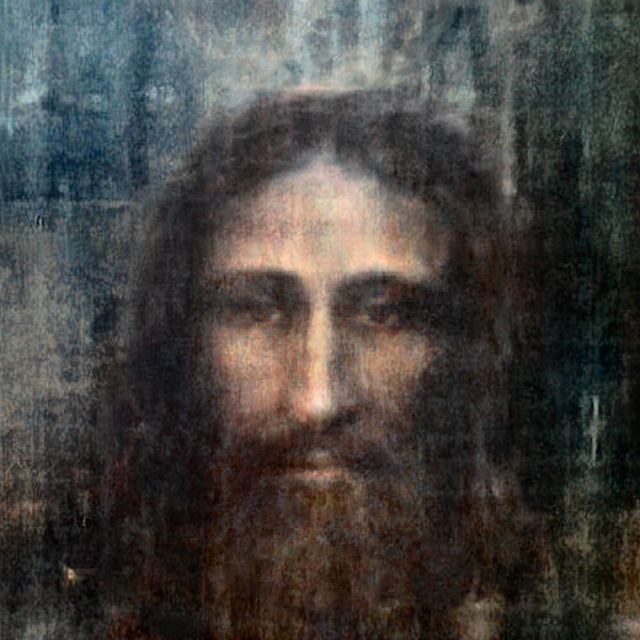
Here are images of Knight Templars who might have seen The Holy Shroud of Turin. I am calling for a New Reformation that will ground its roots at Fontenotte. We need a United Religion designed to stand its ground and take on New World Enemies.
John Presco
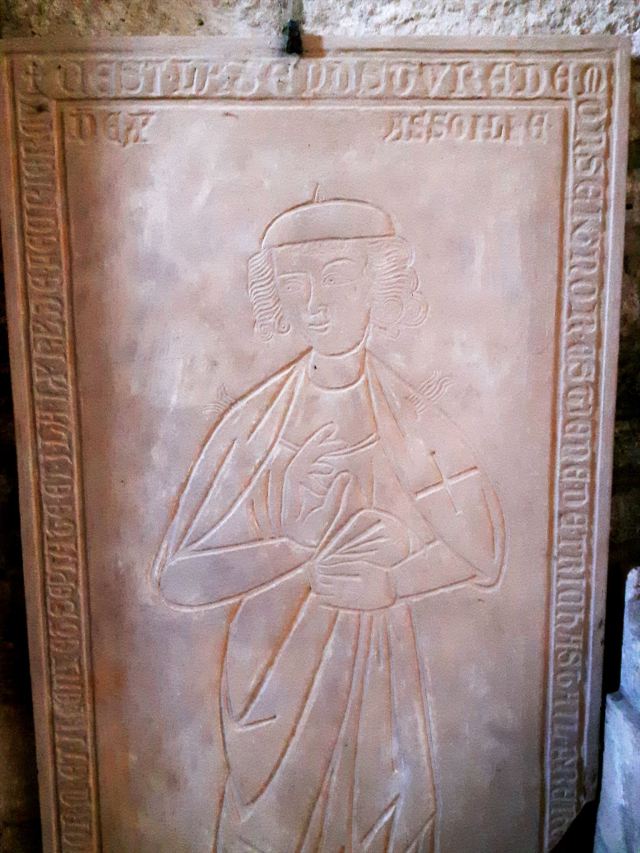
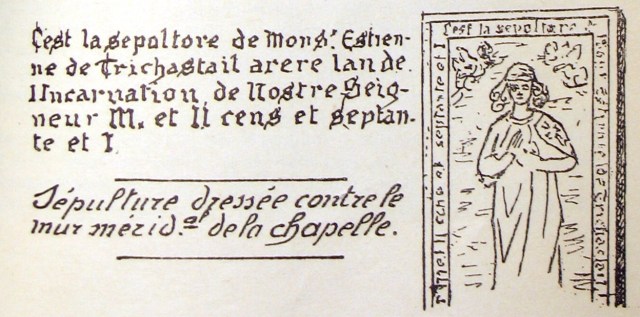
In this church, near the western gateway, you will first find the tombstone of Etienne de Til-Châtel , lord of Pichanges and Chapelain of the Templar Commandery of Fontenotte, buried in 1271.
He is the fifth son of Gui II of Til-Châtel (1180-1241) and Guillemette of Bourbonne, Lady of Coublant.
On the tombstone we can read:
“Who gist or cymetere are brothers of the Chevalerie Dou Temple of Fontenottes near Trichasteaul. “
This funerary stone is a molding of the original stone found in the Chapel of the Sheepfold, at the Rente Saint Joseph on the heights of Dijon.
(see GC6GQQK: TTBERG On the trail of the Knights Templar – La Bergerie)
Thanks to the engraving of this stone, we know the dress of a Chaplain of the Order for a ritual.

On the other side of the door is the nephew of Etienne, Guy III of Til-Châtel , Knight Templar, Lord of Til-Châtel and Pichanges, Gonfalonnier of Franche-Comté, and Archdeacon of Tonnerois in the church of Langres.
On the tombstone we can read:
“Cigit.messires.Gui.sires.de.Trichatel.qui.trespassa.lan.grace … of.mois.doctouvre.priez.for.lame.li. “
This tomb with its green traces of moss is the subject of an old tradition: the original stone would be that of St. Margaret, and as it is often wet because of its porosity, it is said that the saint cries.
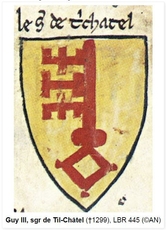
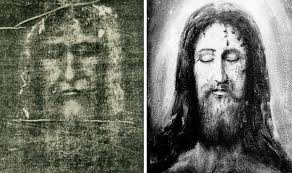

Rougemont Family Templars Worshipped at Fontenotte and owned the Shroud of Turin.
The First Preceptor of La Fontenotte
My mother’s maiden name has been traced to Rougemont who appear to have ties to the Windsors, thus much of the royalty of Europe. I am sharing this discovery with Robert Sinclair, and Ben Toney, who may be related to the Robert de Ros who lived in Belvoir castle that belonged to the House of Toney.
Because the world is going mad, and in order to strengthen Britain and recreated a European Union co-founded by Denis de Rougemont, I revive the order of Knight Templars, whom the Sinclairs are now tied via Anges de Toney.
Alexandre, and Francois de Rougemont are buried with Knight Templars as Til-Chatel. Gui 1er de Rougemont married Etinnette de Ruffey. Here are the Seigneur de Til-Chatel. Guy 2 de Rougemont Thibaut V de Rougemont 1306-1333 Guillaume de Rougemont Humbert de Rougemont married Alix Neufchatel Aymon 2 (Aimon) de Rougemont married Guillemette de Ray daughter of Othon de La Roche, owner of the Shroud of Turin. Thibaut V1 de Rougemont father of Catherine de Rougemont who married Jean de Neufchatel the son of Margarita de Castro e Souza from who the Windsors descend.
The fifth son of Guy II of Rougemont and Guillemette de Coublant,
Etienne de Rougemont was lord of Pichanges. In December 1265, having
recalled the donations made to the temple by Aimon IV and Guy II, he
gave to the Templars, with the agreement of his elder brother, Jean,
Lord of Rougemont, the right of pasturage on his lands of Pichanges
and Spoy. He died in 1271 and was buried before the altar in the
chapel of Fontenotte and conferring his Templar rank of Preceptor
(priest-templar).
After the death of Etienne, Jean de Til-Chatel had to confirm in 1274
the rights of the Templars over Fontenotte. In 1278 his younger
brother, Guy, who had been curate of Til-Chatel in 1242 then
archdeacon of Le Tonnerois in the church of Langres, succeeded him at
the head of the lordship of Pichanges.
In May, 1274, Jean de Rougemont, Marshal of Burgundy legally
recorded “for the repose of his soul and that of his elder brother,
Etienne de Rougemont, who lies in the cemetery of the said Temple,
and of the souls of his forebears”, granted to Henri de Dole,
Commander of the House of Fontenotte:”
I have found a Hughes/Hue de Rougemont who a “grand maître du
Temple”in two accounts, and the maître du Temple of Burgundy in
another.This Hugues appears to be related to Humbert de Villersexel
who wasthe Lord of Rougemont and Til-Chatel. Is this the Hughes that
preceeded Bernard de Tramelay/Dramelay? Did this Hugues come after
Bernard. In the Fromond/Dramelay genealogy we find a line of De La
Roches, and thus the Rougemonts are kin to another Templar Grand
Master, Amaury de La Roche.
Jon Presco
Copyright 2016
http://rougeknights.blogspot.com/
Today I found the Templar Chapel of Fontenotte where the Rougemont
family of Knights Templar worshipped.
http://www.petit-patrimoine.com/fiche-petit-patrimoine.php?


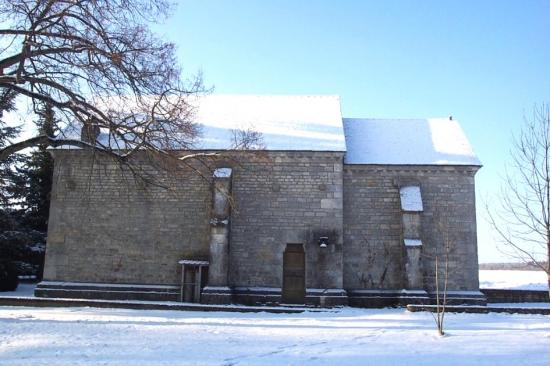

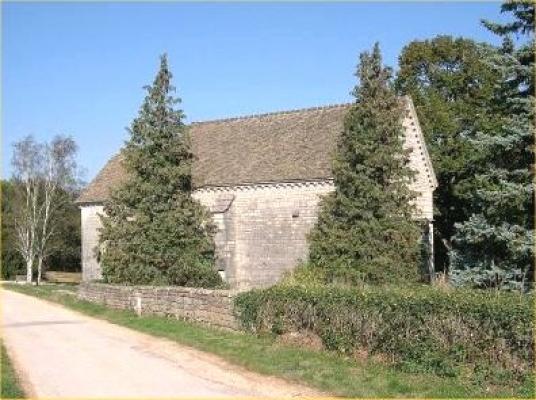


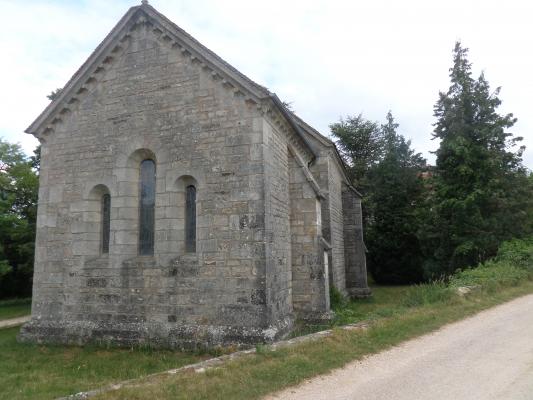
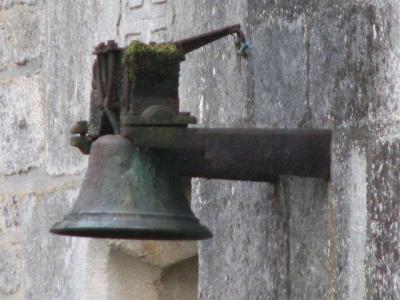


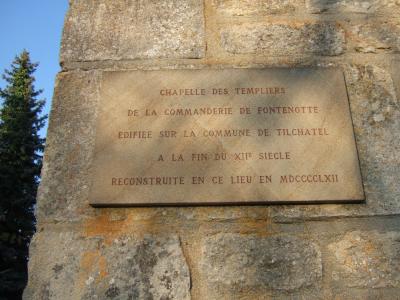



Hugues III donated his land of Fontenotte to the Knights Templar, to ensure the repose of his soul.
These built a commandery including this chapel dedicated to St Petronilla and St Peregrine.
When the order of the Temple was abolished in 1311, the estate of Fontenotte was administered by farmers until the Revolution and sold as a national property.
Became farm, managed by its owners until 1971, (Latour family) buildings and land were sold separately.
In 1960 thanks to Abbot Henri Latour the chapel was saved, dismounted stone by stone, after a journey of about forty kilometers, everything was reassembled in the walls of the sheepfold, on the heights of Dijon.
The chapel back to the place called “La Bergerie” is accessible from Dijon, taking the Avenue Eiffel, out of Dijon and continue on the D 108 G, the chapel is on the left, signposting “Bergerie”, very easy access. From Corcelles-les-Monts, take the D 108 G direction Dijon and continue to the entrance of this city, the chapel visible is on the right just before entering Dijon (chemin de la Rente St Joseph).
Le marchand de vin / époque gallo-romaine IIe-IIIe sièclesProvenance : Til-Châtel / Musée archéologique de Dijon
origin
The village, located on the way Agrippa between Langres (Andemantuno) and Chalon (Cabillione) is mentioned on the map of Peutinger in the year 230 CE under the name of Filena on the river Tille.
Historians consider that it was probably a locality of great importance, at least strategic, Dijon (Divio) is not mentioned.
Father Vignier who had consulted the texts of Claudian wrote during the 17th century that there existed during the Roman occupation a location called La Motte Ronde, located in the bottom of the village constituting a Castrum along the way Agrippa, which allowed to monitor both the river and the road.
It was bounded by Aval Street, Coupé Street and the alley of the Reculée.
The excavations that were carried out in this perimeter allowed to update many vestiges, statues, funerary steles and coins dating from the time of the Roman occupation.
At the time, a channel 2 meters wide by 1.5 deep to navigate flat-bottomed boats, connected the bridge on the Tille to a place called Ogne, located between Til-Châtel and Lux where excavations in the 1980s to 1992 confirmed the existence of a group of buildings occupying a site of approximately 9 hectares which could be, according to René Goguey who led the excavations, a set of warehouses linked to the river navigation where were gathered the grains from the Bassigny destined to the food of Rome.
Later, around the year 264 stands the martyrdom of Saint Florent patron of the village church. The Abbé Roussel tells that the invaders from northern Europe, commanded by Chrocus, after having ravaged Langres and massacred Saint Didier bishop of that city, stopped at Tilae Castrum (Castrum ad Tillam) as the village was then called .
They met there a Christian named Florent, son of the governor of Castrum whom they made prisoner and with whom they wanted to make abjure his faith. At his refusal they decapitated him with a plow. Her head rolled in the river Tille where, carried by the current, she was dragged to Barbe Island on the Saone near Lyons where she was kept in the church of Saint-Martin. As for Florent, his relics exposed in the church are at the origin of many miracles. Ogne and Castrum were destroyed during an invasion after the year 400.
Around 407, the kingdom of Burgundy was created by Gondicaire, barbarian Christian leader from across the Rhine that ended the Roman occupation.
We do not know what is happening in the village until the year 801. At that time it was dependent on the bishop of Langres Betto, who that year, concedes the church of Tilicastro and his income to the Augustinians of Saint Etienne de Dijon. Since that date, the name of the village is written according to the mood of the scribes and the language used, Latin or French, Tylicastrum, Trichastel, Trichâteau, Trichâtel, Tilchastel, Tréchâteau, and finally Til-Châtel in 1860, after being called Mont-sur-Tille during the revolutionary period.
The Lords
Reporting to the bishop of Langres, they originated from an Audon I of Til-Châtel, son of Garnier Count of Troyes attested in 918 by his signature in an act of the Duke of Burgundy Richard.
This family, which carried as a coat of arms a key in pal, also paid tribute to the dukes of Burgundy. She held a high rank among the lords of the duchy and county of Burgundy. Its members who contracted prestigious alliances followed one another from father to son until the year 1299 when Isabelle de Rochefort, daughter of Gaucher de Rochefort lord of Puiset in Beauce, widow of Guy III of Til-Châtel Gonfalonier of the County of Burgundy, became lady of Til-Chatel. She remarried with Humbert de Rougemont around 1306 and married her daughter Jeanne whom she had with Guy III of Til-Châtel to Thiébaud de Rougemont son of a first marriage of his new husband. The lordship then passes into this family until the end of the 15th century when the last of the Rougemont, having no children, ceded the seigneury to Antoine de Baissey from a family of Montsaugeonnais who immediately paid tribute to the bishop of Langres. At the same time, Isabelle de Til-Châtel, Guy III’s half-sister, married Guillaume de Grancey, to whom she brought Gemeaux, Pichanges and Selongey dowries, reducing the possessions of the Til-Châtel family, which , lost a significant part of its luster.
In 1618, having no descendants, the last of the Baissey left the land of Til-Châtel to his uterine brother Erard du Châtelet who called her marquisate and gave it to her son Antoine. Put in decree for settlement of its debts it was acquired in 1663 by the baron of Housset, in turn put in decree in 1685. It was then bought by his widow Marie d’Aguesseau which in 1703 made gift to her niece Catherine d Aguesseau married to Charles Marie de Saulx, Count of Tavannes whose descendants possessed Til-Chatel until the revolution.
The village
It consists of several parts:
– The town
situated in the upper part of the village bounded by the Rue de la Charme in the east, the Barrière in the south, the Bourg and the Derrière lane to the west and by the Côte au nord. Inside the village there was the church and priory now disappeared, the Rue des Pieds Ferret and the Rue du Château which led to the fortress built at the top of the hill dominating the village and the valleys of the Tille and the Ignon. At the time of its splendor, it contained two large belt ditches with double drawbridges and several towers. Today only remains the door of this castle transformed into a dwelling. The rue aux Apports linked the village to the Agrippa way and to the village which had gradually been built on the edge of it.
– The village
stretched along the edge of the way Agrippa where from the 12th century was built the Notre-Dame chapel around which a House-Dieu hospital and its dependencies had come to settle. Sold as a national good in the revolutionary period, these buildings remain and we can see part of the Place du Tertre and rue de l’Hôpital. Other more recent constructions remain, notably of Renaissance period. Going down the Aval street you pass the reach on which various mills existed and we reached the site of the former Castrum that was mentioned above. Beyond the river at the exit of the village the site of the Maladrerie where the lepers were received and treated remains, but there are no visible remains. The village today has more than 800 inhabitants, it has spread towards Langres in the north, the Forge in the northeast, Lux in the east and Marcilly in the west.
– The Saint-Florent church
Located near the castle on the spur overlooking the village, we saw above that it was mentioned in the year 801 in a charter of Betto, bishop of Langres who conceded the benefits to the abbey of Saint Etienne de Dijon . During the following centuries, it received numerous donations and was enlarged in the eleventh and twelfth centuries, access to the church which included only a short nave being done by the southern portal decorated with a tympanum representing a Christ in majesty surrounded by four angels bearing the mark of the sculptor Pierre de Dijon.
Towards the end of the 12th century, the nave was enlarged, giving this Romanesque church its present appearance. The large west portal surmounted by a semi circular archivolt developing 5 rollers whose ends rest on each side on as many rolls crowning fine round columns, all different.
This arcade surrounds a tympanum representing Christ seated, treading under foot the symbol of sin and surrounded by animals symbolizing the four evangelists.
During this work on May 15, 1146, the workers discovered a stone coffin containing a skeleton.
According to the legend, one of them, named Remy, who manipulated without respect this body fell backwards and remained paralyzed, his comrades had the idea to take him to the altar of Saint Florent where the mason, having confessed his fault was cured. The crowd shouted to the miracle and a child exclaimed “Honoratus”, this name was given to the holy contained in the tomb which was placed in the southern part of the transept. Subsequently several miracles occurred and Honoré designated as the second patron of the church.
A carved and painted wooden frame recalls its legend.
Over the centuries, many repairs or consolidation work was done in the church. During the nineteenth century it was in poor condition and at the request of Viollet-le-Duc a major restoration campaign was undertaken in the years 1868-1869. It was led by his son Maurice Uradou who put the church in its current state and saved the essentials, including the general architecture and the remarkable capitals.
We will not describe it here. Note, however, that besides the reliquaries of the patron saints, it contains a god of pity carved wood of the eleventh century, a wooden calvary of the seventeenth century, a triptych painted on wood offered by Jehan Morelet signed by T. Claudon, many funerary slabs including that of Gui III Til-Châtel dated 1240, baptismal fonts of the twelfth century octagonal and several fragments of murals that would have been made from the fifteenth to the seventeenth century.
– Fontenotte
Located on the way Agrippa 2 km towards Dijon, this area, ancient Roman villa had several sources, one of which was connected site of Ogne by a pipe whose remains were found during the excavations carried out on this site .
In 1170, Aimon IV or Amé, lord of Til-Châtel, leaving for the crusade gave the Templars Fontenotte and all its territory to ensure the rest of his soul.
A Templar commandery, dependent on that of Bure was then built.
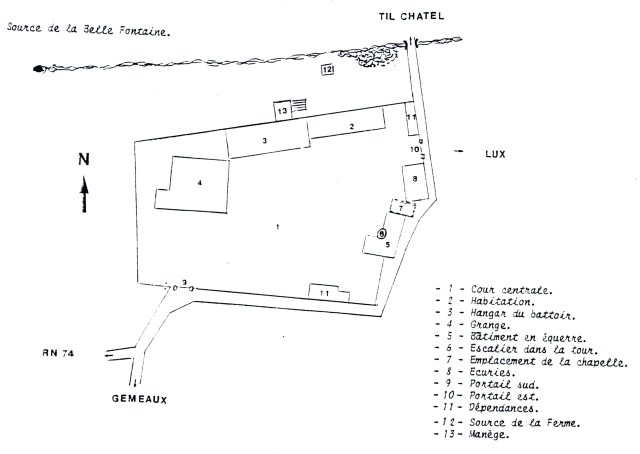
It was built around a central courtyard with various residential buildings, shed, barn, stables building square, tower, a chapel dedicated to St. Petronilla and a fence wall.
It benefited throughout the centuries of numerous donations and when the suppression of the order of the Temple in 1311 was attributed to the order of Malta. From then on, the estate of Fontenotte was administered by farmers until the Revolution.
At that time, the estate was sold as a national asset.
It became an agricultural operation and was administered by its owners, either directly or as a tenant, until 1971. At that date it was sold, the buildings and lands being sold separately.
In the 1960s, the chapel was dismantled by the priest Henri Latour, then pastor of Saint-Pierre in Dijon, son of the owner and back in the grounds of the field of Sheep in Corcelles les Monts.
A casting of the tombstone of Etienne de Til-Châtel was made, it is visible in the church Saint-Florent.
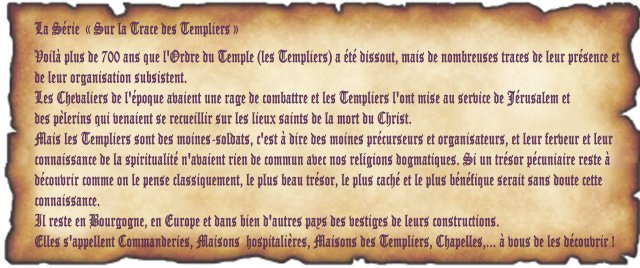
On the Trace of the Knights Templar, here we are at the Commanderie de Fontenotte.

Close to Til-Châtel, on the road from Dijon to Langres, still stands an old Templar farm called “Fontenotte”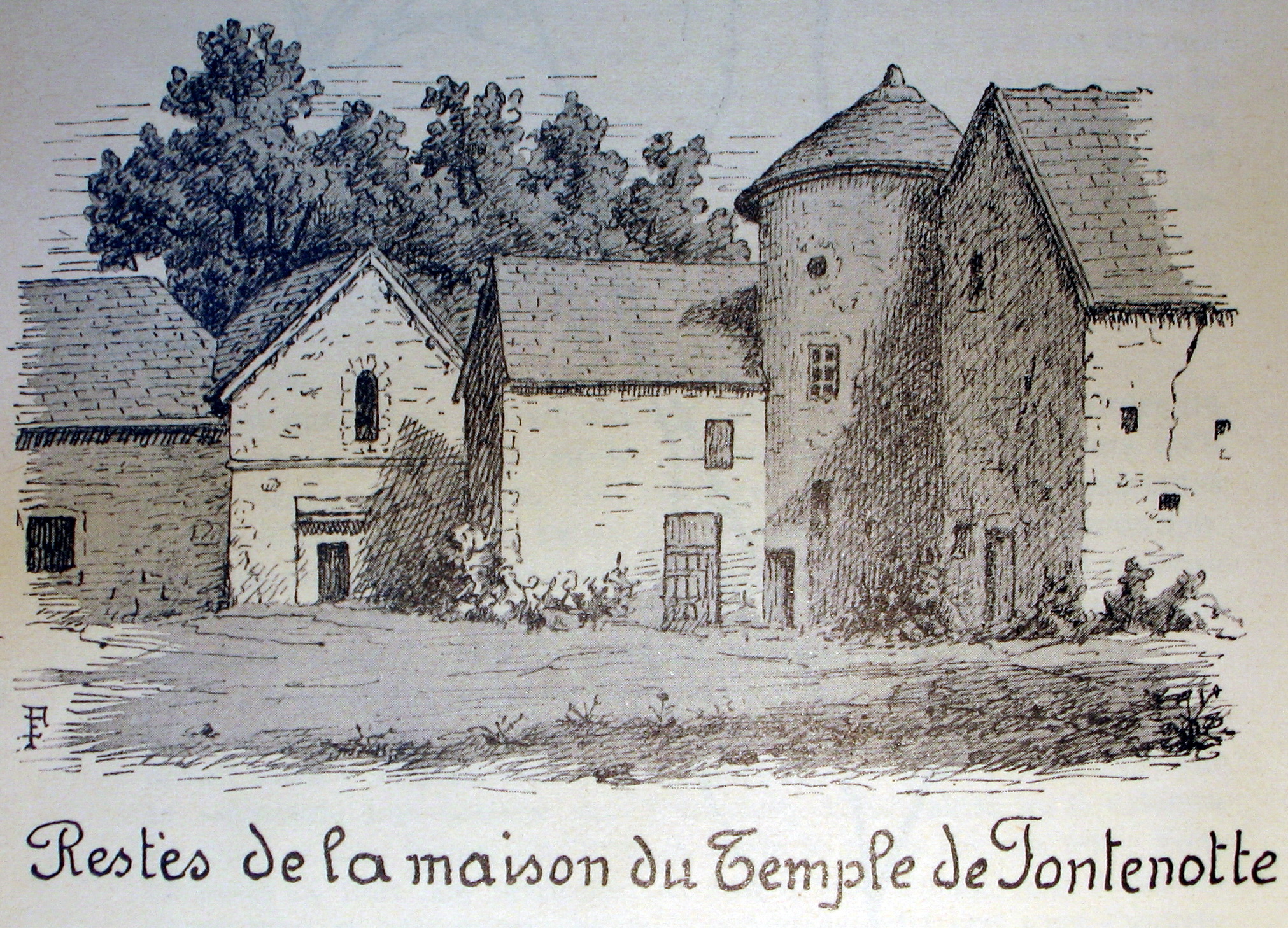
Before leaving for a crusade in the Holy Land, where he accompanied the Duke of Burgundy Hugues III, Aimon IV or Amé, lord of Til-Châtel, donated Fontenotte’s farm to the knights of the Temple “for the repose of his soul”.
The Templars thus receive around 1170 the enjoyment of a vast domain,
“The use on all his land so much in wood as in water and pasture”, that they affiliate with the commandery of Bure.
The monk-soldiers also obtain grazing rights to Pichanges and Spoy from a certain Etienne, lord of Pichanges, fifth son of Gui II of Til-Chatel and Guillemette de Coublant, Chapelain of the Commandery, he is, at his death in 1271, buried in the chapel of Fontenotte.
Three years later, Jean, his older brother, confirms some donations he makes to the Templar establishment and more particularly to Henri de Dole, commander: woods near the commandery, and still grazing rights on the whole finage Spoy.
It will be understood, the Templars accumulate in Fontenotte an important agricultural and forest area from which they derive the benefits and various tithes spread over Til-Châtel, Spoy and Pichanges, of course, but also Lux, Gemeaux, and Saint-Julien, to the gates of the ducal capital.
The other descendants then confirmed the donation, as here in 1278: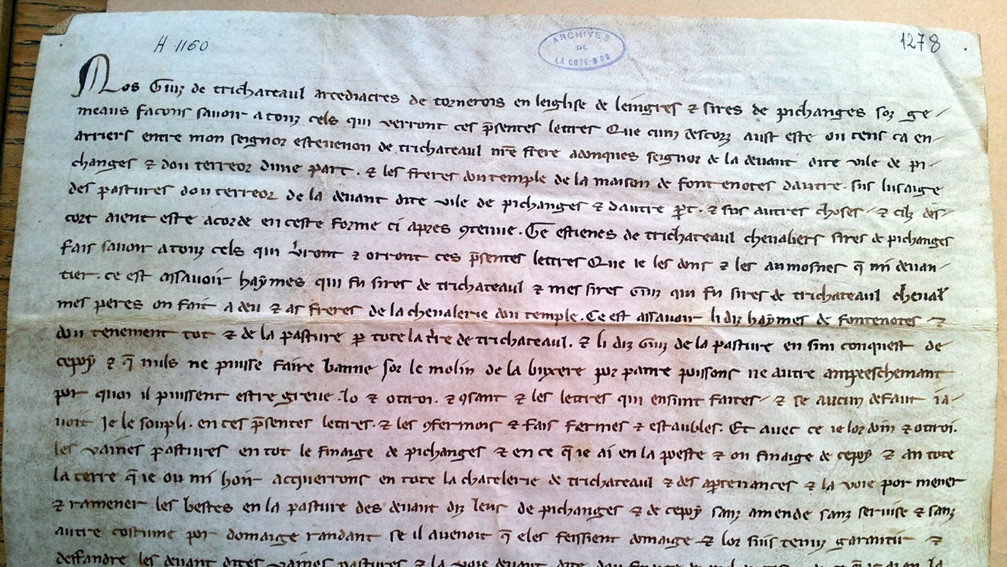
We can read on this document:
«Our Guiz de Trichatel archdeacon of Tonnerois in the church of Langres and lords of Pichanges. . .
let everyone know what will read. . .
my fathers made to God and brothers of the chivalry of the Temple. . . “
Fontenotte was built around a central courtyard with various residential buildings, hangar, barn, stables building square, tower, a chapel dedicated to St. Petronilla and St. Peregrine, and a fence wall.
The building currently used as a barn is large and elevated and appears to have been a clumsy house.
The chapel opens on a house at right angle. with a round stair tower in the inner corner.
In the 1960s, the chapel was dismantled and reassembled stone by stone identical to the Rente Saint Joseph on the heights of Dijon, the field of the Sheepfold, Corcelles road. (see GC6GQQK: TTBERG On the trail of the Knights Templar – La Bergerie)
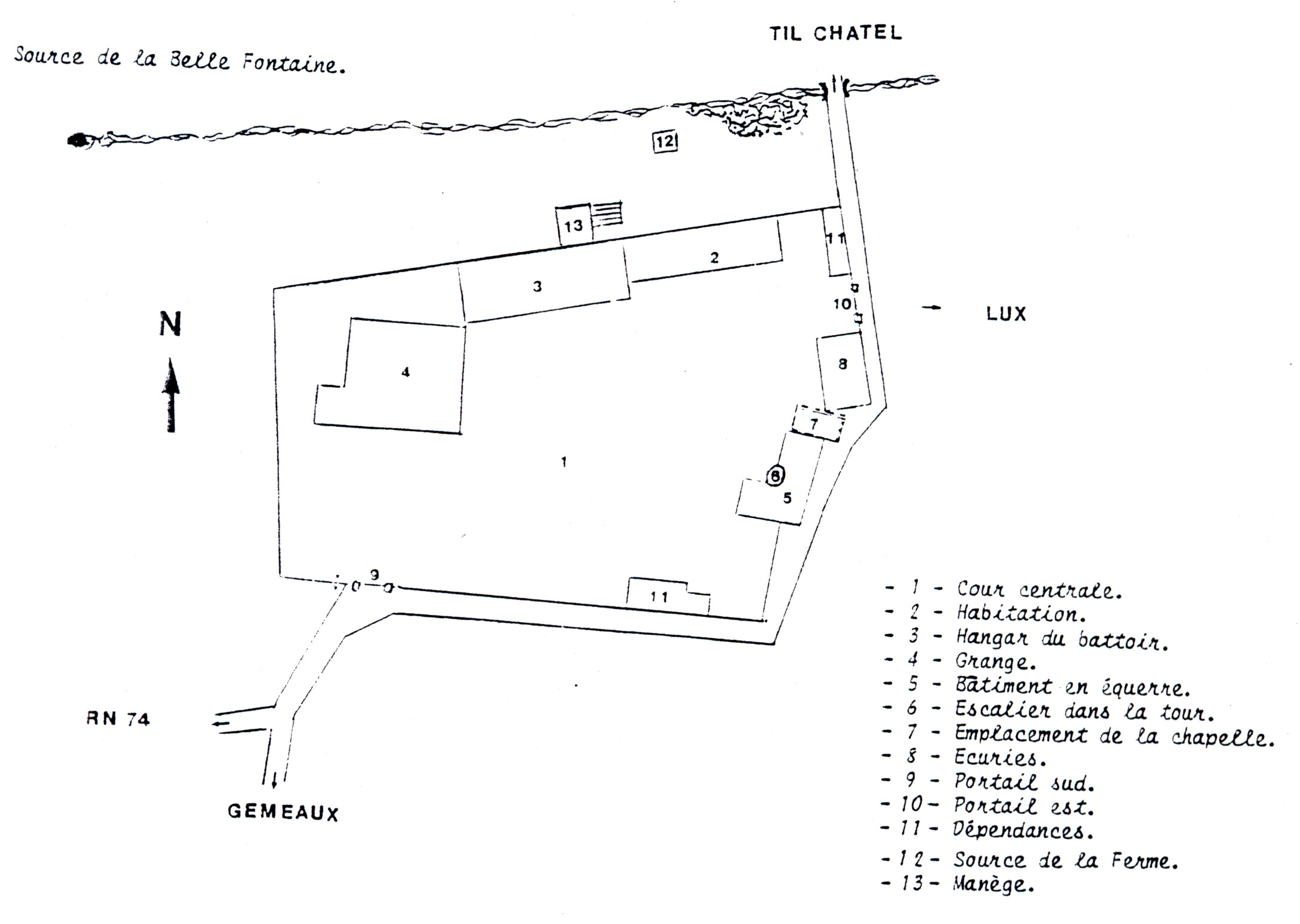
Fontenotte takes its name from the many sources that come close to it; sources which, as indicated by the remains of the aqueduct which were discovered, fed the old town of Ogne disappeared, and now feed the village of Lux.
Until the beginning of the 20th century, the mothers of Til-Châtel, Gemeaux, Lux came to Fontenotte to evoke Saint Petronille for their feverish children. They spread the nappies of the sick child on the water. If they ran to the bottom the poor mother knew that her mourning clothes had to be prepared.
https://www.petit-patrimoine.com/fiche-petit-patrimoine.php?id_pp=21231_3
https://en.wikipedia.org/wiki/Saint_Petronilla
https://en.wikipedia.org/wiki/The_Burial_of_St._Petronilla
https://www.geocaching.com/geocache/GC6GQQK_ttberg-sur-la-trace-des-templiers-la-bergerie
The Gonfaloniere was the holder of a highly prestigious communal office in medieval and Renaissance Italy, notably in Florence and the Papal States. The name derives from gonfalone, the term used for the banners of such communes.
In Florence, the office was known as Gonfaloniere of Justice and was held by one of the nine citizens selected by the drawing lots every two months, who formed the city’s government, or Signoria. In the papal states, it was known as Gonfaloniere of the Church or Papal Gonfaloniere. Other central and northern Italian communes, from Spoleto to the County of Savoy, elected or appointed gonfalonieri. The Bentivoglio family of Bologna aspired to this office during the sixteenth century. However, by the year 1622, when Artemisia Gentileschi painted a portrait of Pietro Gentile as a gonfaloniere of Bologna, with the gonfalone in the background, the office had merely symbolic value.
Jean Gonfalonier of the Burgundy County of ROUGEMONT, Chevalier, co-founder of Rougemont, lord of Til-Châtel and Rougemont, De Rougemont
Print Family TreeFamily Tree Print
Sosa : 2,905,724Sosa: 2,905,724
- Deceased after 1411 Deceased after 1411
ParentsParents
- Guillaume de ROUGEMONT ou Guy 1er de Rougemont , chevalier, Sire/seigneur de Rougemont et de Til-Châtel, sire de Ruffey , De Rougemont, Deceased about 1375Guillaume de ROUGEMONT or Guy 1st of Rougemont, knight, Sire / lord of Rougemont and Til-Châtel, sire of Ruffey, De Rougemont , Deceased about 1375
Married toMarried to - Etiennette de RUFFEY-sur-L’OIGNON ,dame de Ruffey-sur-l’Ognon, De Ruffey, Deceased about 1390Etiennette of RUFFEY-sur-L’OIGNON, lady of Ruffey-sur-l’Ognon, De Ruffey , Deceased about 1390
Spouses, children , grandchildrenand great-grandchildrenSpouses, Children , Grandchildren and Great-Grandchildren
- Married to Jeanne de VIENNE,(Jeannette Bourguignon), dame de Til-Châtel, De Vienne(Parents : Married to Jeanne de VIENNE, (Jeannette Bourguignon), lady of Til-Châtel, De Vienne(Parents:Henri de VIENNE, seigneur de Mirebel et de Charnay, De Vienne†1371/ &Henri de VIENNE, lord of Mirebel and Charnay, De Vienne † 1371 / &Marguerite de BAUFFREMONT, De Bauffremont ) withMarguerite de BAUFFREMONT, of Bauffremont ) with
 Guy II de ROUGEMONT ,seigneur de Rougemont et de Til-Châtel, seigneur de Ruffey-sur-l’Ognon ,seigneur de Maillot et de Vauvry, (“noble et puissant seigneur monsieur Guys de Rougemont et de Ruffy”) De Rougemont†1420/married toJeanne de MONTAGU, (“noble et puissante dame Jehanne de Montaigu”) De Montagu†1426 withGuy II de ROUGEMONT, lord of Rougemont and Til-Châtel, lord of Ruffey-sur-l’Ognon, lord of Maillot and Vauvry, (“noble and powerful lord Mr. Guys of Rougemont and Ruffy”) De Rougemont† 1420 /married toJeanne de MONTAGU, (“noble and powerful lady Jehanne de Montaigu”) De Montagu† 1426 with
- l
The Wolf & The Swan
Posted on September 10, 2015 by Royal Rosamond Press

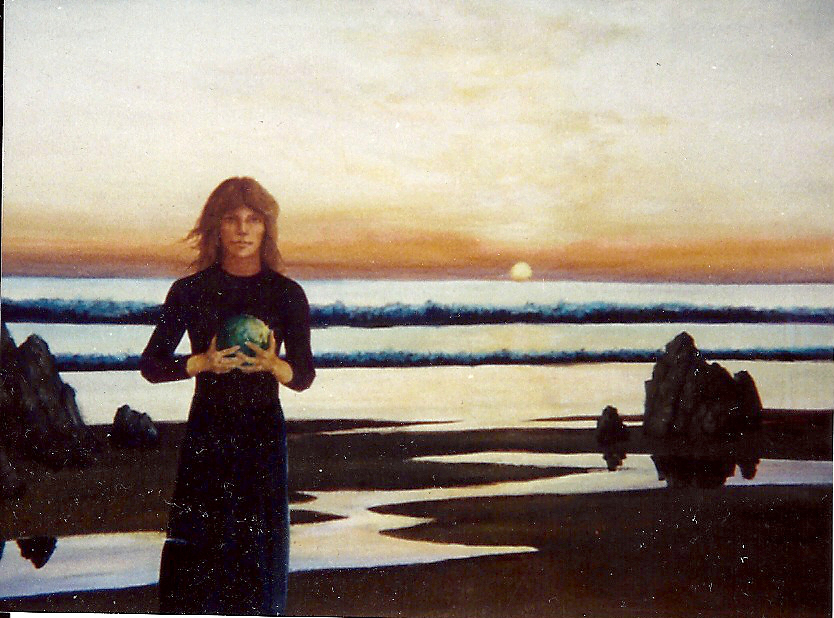
Now the Rose of the World steps through the Arch of Heavenly Glory and restores the world to the Creative and the Just!
My kindred belonged to several Guilds in Switzerland and Holland. Gottschalk Rosemont signed his name with a fully open rose instead of a budding rose, which tells me he was the Master of the Swan Brotherhood.
They had assigned chairs and drank from their own cup. I have no worries about Dan Brown suing me and my illustrious history.
At first I was bugged by this woman’s hair. For God’s sake, give her a comb! But, then I realized she is of high status. When you are really somebody, you wash your hair, pat it dry, and you are ready to seize the day!
After I died, I came upon my young parents sitting naked in the sand. They were playing cards. All the face cards were talking to me – in a foreign language – that I later recognize as Dutch. Let me do what I must do. Stop getting in my way! Holland will soon let in Syrian refugees. I am gathering a force to combat ISIS. No, not the ‘Please Force’.
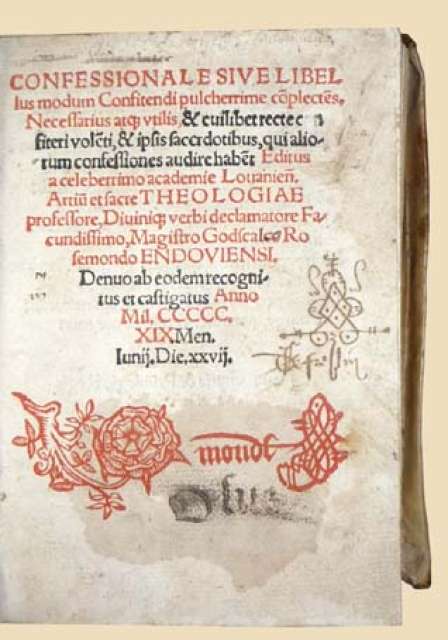
That is a hand-drawn Habsburg Cote of Arms next to the Rose. This book may have belonged to Charles Quint who was stealing gold in the New World. It reads;
“The Falcon” after the Falcon Art College Rosemont was the Master of. I suspect he commissioned Bosch, and contributed to some of his work.
Jon ‘The Nazarite’
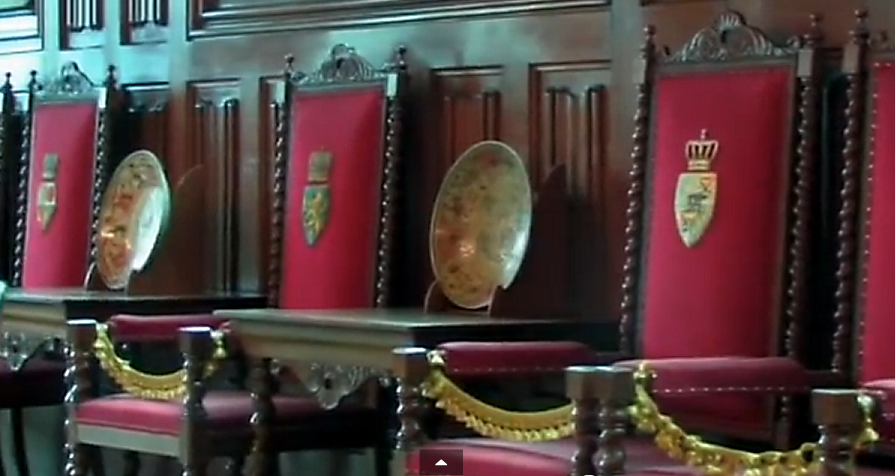
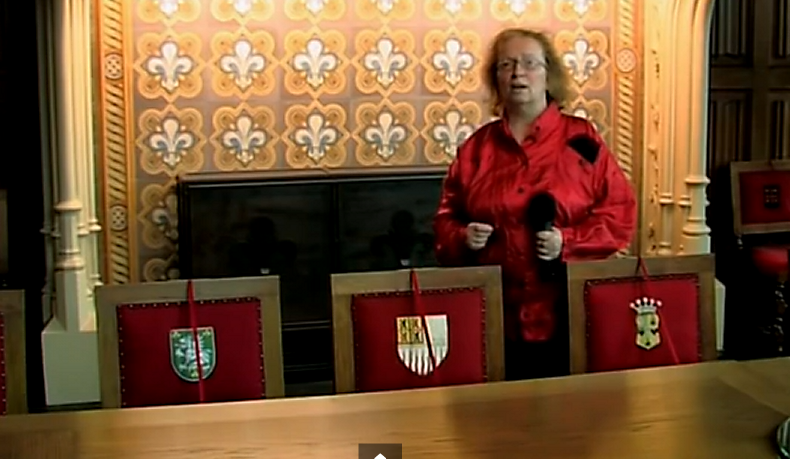

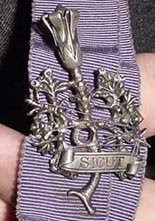
The emblem worn by the Swan Brethren depicts a a rose, or lily,
amongst thorns. At the root of the rose is the Latin word SICUT which
is the first word from a line from Song of Songs.
2:2. As the lily among thorns, so is my love among the daughters.
Sicut lilium inter spinas sic amica mea inter filias
On the façade of the Swan Brethren House are four statues, effigies
of Prince William 1 of Orange, Ghisbertus van der Poorten, Gerardus
of Uden, and Earl Floris van Egmond van Buren. Gerardus is the knight
with the shield. Ghisbertus may be second from the right. I have
every reason to believe Ghisbertus is Ghisbertus Roesmont son of
Danielis Roesmont, a Swan Brethren, and Adriana Theodorici Rover.
Heilwigis Arnoldi Danielis Roesmont married Arnoldus Rover Van der
Poirten, or Poorten, meaning “of the port”. Ghisbertus sat in
the “ships chair” which I assume means he was `Captain of the Port’.
Because he was the Master of Janskerk Church, which was allied with
the Swan Brethren, I believe it was Gisbertus Roesmont who gifted the
house of the brotherhood in 1483, and thus is one of the four statues
put on the Zwanenbroedershuis.
The Swan Brotherhood dined once a year on roasted swan. They ate from
plates with their coat of arms upon them, and the word “Sicut” The
Swan Brotherhood commissioned one of their members, Hieronymus Bosch,
to depict the Wedding at Cana where Jesus and his mother were
present. The words “Sicut lilium inter spinas ” are associated with
the Virgin Mother and the Canticle of Canticles. It appears that the
Swan Brethren have created a Last Supper worship around Mary, who is
titled the Rose of the World, or, Rosa Mundi. The Brotherhood
incorporated the Genealogy of Jesse of the House of David in their
worship which suggests they may be honoring a Davidic lineage that
was present at the wedding in Cana, and perhaps managed to stay
together after the fall of the temple. Did they migrate to Holland?
There is a Jewish line of the Van der Poorten family.
The Swan Brotherhood also drank from a cup, or beaker, called
a “drinkkannen” or “drinkbeker” These beakers were owned by the
members and had their coat of arms upon them. Ghisbertus and Danielis
Roesmont were Swan Brethren, thus these beakers are the Rosemont
families Holy Grail, the third one I have found. It appears these
beakers enjoined the owner with the cup that Jesus drank from at the
wedding of one of his kinfolk. Here is a supper where a Holy Bond is
made between members of the Holy Family. This Holy Family associates
itself with a Lily, or Rose, and thus to wear the emblem of Swan
Brethren is to be joined to the Holy Rose Tree where you are seen as
a budding rose amongst the thorns. Here is where my genealogical
search for my Rose liniage ends, where it began. In the images above
we see the symbols and Biblical passages that were applied to the
Virgin Mary that come from the Canticle of Canticles.
 Rosamond Press

Leave a comment