“Defeated on the battlefield, conservatives sought the aid of France to effect regime change and establish a monarchy in Mexico, a plan that meshed with Napoleon III’s plans to re-establish the presence of the French Empire in the Americas.“

For your entertainment enjoyment, I supply my readers of Royal Rosamond Press with an exhilarating soundtrack to go with my continuance of the movie ‘Napoleon. Feel free to adjust the sound level.
The Bonaparte Family in America
I watched the movie ‘Napoleon last night and was impressed with the brief shots of the Prussian Army. I suspect the director did not want to spend too much time on them, lest he be accused of being pro-German, or, being anti-Semitic, which is huge right now in the Propaganda War Israel, and aspects of the American media, are conducting. Anti-Semitism – is real! Israel had negotiated with Hamas in the past, and thus titling them “terrorists” does not work. Civilized Nations don’t negotiate with terrorists. Netanyahu made sure President Biden was signing off on the exchange of hostages. Consider the Barbary Coast Pirates who took many infidels hostage – and made them their slaves!
While I watched the Battle of Waterloo, I considered the role that Louis Auguste Victor, Count de Ghaisnes de Bourmont played in defeating Napoleon at Waterloo. Apparently de Bourmont was a turncoat – and traitor? This idea is deliberately blurred, because de Bourmont was a avid Royalists, with family ties to the Great Conde. This Royalist knew Napoleon was not royalty, and was in the way to the return of the True Monarchy, who manipulated Napoléon to their own ends. He could muster the troops – and was victorious! This is the theme of this movie.
As I watched I realized I am one of the few people – in the world – who knows what is really going on. When I saw the scenes of Napoleon in Egypt, I was reminded of DeBourmont’s invasion of Algiers that was conducted to destroy the Barbary Pirates – and cement the formation of the New Monarch with the French People. De Bourmont was mimicking Napoleon! He is also preparing the way for my great grandfather, Sir Isaac Hull who captained the U.S.S, Constitution who made was against the Caliph and freed hostages!
After the movie, I realized Napoleon was not just entertainment for me – and Virginia! I realized My Plot to gift my fiancé with the Lousiana Territory – WAS REAL – because the French – ARE PLOTTERS! It’s what they do! There us much evidence Napoleon 111 wanted to invade America, and depending on who won the Civil War – CONQUER AMERICA! This is – what the French – did! Did the Confederacy make a secret agreement to give France everything west of the Missippippi – if they invaded California – and destroyed John Fremont Western Army?
On Monday night, the Speaker of the House met with the Insurrectionist, Donald Trump Mar-a-Lago. It is rumored Mike Johnson is a Christian Nationalist who wants to install King Jesus in his American Kingdom. How about – Emperor Jesus – who declares…
“I found King David’s crown – in the gutter!”
The Red States – seceded from the Union. If the Confederates had won, would there be a De Bourmont winery in California – with castle?
John Presco
Copyright 2023
Newly minted House Speaker Mike Johnson met with former President Donald Trump at his Mar-a-Lago resort in Florida on Monday night, sources familiar with the matter told ABC News.
The meeting, which took place at a fundraiser for Rep. Gus Bilirakis, R-Fla., marked the first time the two have met in-person since Johnson was elected on Oct. 25.
Secession is the formal withdrawal of a group from a political entity. The process begins once a group proclaims an act of secession (such as a declaration of independence).[1] A secession attempt might be violent or peaceful, but the goal is the creation of a new state or entity independent of the group or territory from which it seceded.[2] Threats of secession can be a strategy for achieving more limited goals.[3]
Notable examples of secession, and secession attempts, include:
• the Confederate States of America seceding from the Union, setting off the American Civil War;
“With Napoleon’s orders in their hands, the Prussians were able to take the appropriate countermeasures to gather their army. Bourmont’s defection enraged the French rank and file. Though their loyalty to Napoleon was absolute, they began to suspect treachery in their generals. Étienne Hulot, who became the acting division commander, was compelled to give a speech that pledged loyalty to Napoleon and the tricolor.[3]“

When Virginia Hambley de Bourmont got down on her wounded knee, took my hand, and proposed to me, was my long search for the Grail, at an end. Virginia descends from Geoffrey IV de la Tour Landry who compiled Livre pour l’enseignement de ses filles for the instruction of his daughters. This book is also titled ‘The Book of the Knight of the Tower’. Geoffrey may have authored Pontus and Sidonia a medieval prose roman that was put to song, thus, here is alas The Phantom of this Opera!
Geoffroy de la Tour-Landry married Jeanne Le Rouge.
Chateau de Breze & Bourmont Wine
Posted on April 23, 2015 by Royal Rosamond Press



“Richard Eldridge, owner and winemaker, stumbled into wine through marriage to the late Valerie de Bourmont who introduced him to wine. In a sense, the rest is history.”
I met Virginia Hambley in 1998, and wanted children with her. When I learned she could not have children, and when my sixteen year old daughter appear in my life, I told Virginia I would share Heather with her. The same went for grandson, Tyler Hunt, when he was born. Virgnia was not born when her two older sisters attended the wedding of their cousin in New York where she was born. Clark Hambley was an artist and worked at a prestigious advertising agency.
Like her sister before her, after graduating from High School, Virginia was invited to stay with her Bourmont kindred in France. She told me they had a winery. When I showed her a photo of Breze Chateau, and asked her if this is where she stayed for nearly month, she said this was the place of the family winery.
“You didn’t tell me it was a castle!”
Jon Presco
Château de Brézé is a small, dry-moated castle located in Brézé, near Saumur in the Loire Valley, France. The château was transformed during the 16th and the 19th centuries. The current structure is Renaissance in style yet retains medieval elements including a drawbridge and a 12th-century trogloditic basement. Today, it is the residence of descendants of the ancient lords. The château is a listed ancient monument originally dating from 1060.[1] A range of wines are produced at the château which has 30 hectares of vineyards.[2]

.jpg)
Gebhard Leberecht von Blücher commanded the Prussian Army, one of the Coalition armies that defeated Napoleon at the Battle of Leipzig
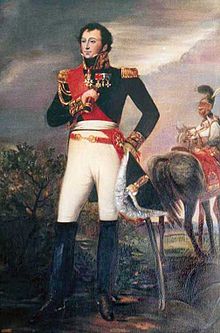
https://en.wikipedia.org/wiki/Louis-Auguste-Victor,_Count_de_Ghaisnes_de_Bourmont
On the morning of 15 June, as the French Army of the North advanced into Belgium, the 14th Division led the IV Corps column of march. Near Florennes, Bourmont halted his division. On the pretence of scouting ahead, he and his staff, rode ahead with a squadron of lancers. After gaining a suitable distance from French lines, he sent the lancers back with a letter for Gérard. In the missive, he explained that he was deserting but promised, “They will not get any information from me which will injure the French army, composed of men I love.” He and his staff put the white Bourbon cockade on their hats and galloped for the nearest Prussian position. He immediately handed over Napoleon’s operational plans to the Prussians. Gebhard von Blucher‘s chief of staff August von Gneisenau was pleased to receive this windfall. However, Blucher had no use for turncoats and called Bourmont a traitor to his face. When Gneisenau noted that Bourmont was wearing the white cockade, making them allies, Blucher screamed, “Cockade be damned! A dirty dog is always a dirty dog!”[2]
With Napoleon’s orders in their hands, the Prussians were able to take the appropriate countermeasures to gather their army. Bourmont’s defection enraged the French rank and file. Though their loyalty to Napoleon was absolute, they began to suspect treachery in their generals. Étienne Hulot, who became the acting division commander, was compelled to give a speech that pledged loyalty to Napoleon and the tricolor.[3]
Napoleon spots the Prussians[edit]
At about 13:15, Napoleon saw the first columns of Prussians around the village of Lasne-Chapelle-Saint-Lambert, 4 to 5 miles (6.4 to 8.0 km) away from his right flank—about three hours march for an army.[89] Napoleon’s reaction was to have Marshal Soult send a message to Grouchy telling him to come towards the battlefield and attack the arriving Prussians.[90] Grouchy, however, had been executing Napoleon’s previous orders to follow the Prussians “with your sword against his back” towards Wavre, and was by then too far away to reach Waterloo.[91]
Grouchy was advised by his subordinate, Gérard, to “march to the sound of the guns”, but stuck to his orders and engaged the Prussian III Corps rear guard under the command of Lieutenant-General Baron von Thielmann at the Battle of Wavre. Moreover, Soult’s letter ordering Grouchy to move quickly to join Napoleon and attack Bülow would not actually reach Grouchy until after 20:00.[91]
.jpg)
Portrait of Napoleon III, by Franz Xaver Winterhalter, c. 1850s
The Americans now had two choices: pay tribute or fight the pirates.”
https://en.wikipedia.org/wiki/Napoleon_III
“Returning to Paris in October, 1855, he was warmly received
by his friend Prince Napoleon who overwhelmed him with questions
about his travels in America. “I answered them the best I could.”
Cipriani wrote, “But , it is a veritable deluge….We keep talking
about my journeys, of the Sanora, of conquering it.” Perhaps he
thought of seizing it for France and hoped the prince might persuade
his cousin the Emperor to finance the undertaking. “It is an idea in
the air,” he added, “that I would willingly undertake, if necessary
capital and men were available.”

Napoleon with his nieces and nephews on the terrace at Saint-Cloud, by Louis Ducis, 1810. Napoleon and four of his siblings have living descendants.
Here.
It appears that Cipriani was successful in uniting the House
of Savoy with the Bonapartes, and thus the House of Stuart. Prince
Napoleon Joseph Charles Paul of France, Pr Napoléon, married in Turin
in 1859, Princess Clothilde of Savoy daughter of Victor Emanuel. From
this union would come other Bonapartes with the name Victor. Prince
Napoléon Victor Jérôme Frédéric, Prince LOUIS Jérôme Victor Emmanuel
Léopold Marie, and, Prince Charles Marie Jérôme Victor
Was the Jacobite ‘Order of the White Rose’ somewhat successful
in their plan to put the Stuarts on a throne and rule the world?
There appears to contention with the Prussians who can claim the same
ancestry through the Winter Queen of Bohemia, Elizabeth Stuart,
daughter of King James, and thus the Hanovers who are in all regards,
the Windsors.
https://groups.yahoo.com/neo/groups/Jacobite/conversations/messages/4180
French expeditionary force, 31 December 1862[edit]

At its peak in 1863, the French expeditionary force counted 38,493 men[4] : 740 (which represented 16.25% of the French army).[121] 6,654[7] : 231 French died, including 4,830 from disease.[7]: 231 Among these losses, 1,918 of the deaths were from the regiment of the French Foreign Legion.[122]: 267
https://en.wikipedia.org/wiki/Sonora,_California
https://en.wikipedia.org/wiki/Second_French_intervention_in_Mexico
https://en.wikipedia.org/wiki/Louis-Auguste-Victor,_Count_de_Ghaisnes_de_Bourmont
Louis-Auguste-Victor, Count de Ghaisnes de Bourmont (2 September 1773 – 27 October 1846) was a French general, diplomat and statesman who was named Marshal of France in 1830. A lifelong royalist, he emigrated from France soon after the outbreak of the French Revolution and fought with the counter-revolutionary Army of Condé for two years, then joined the insurrection in France for three more years before going into exile. He was arrested after assisting the Georges Cadoudal conspiracy, but escaped to Portugal.
In 1807 he took advantage of an amnesty to rejoin the French army and served in several campaigns until 1814. He rose in rank to become a general of division. During this period, he was suspected of being an agent of the Comte d’Artois and passing information to France’s enemies. Though he was notoriously anti-Napoleon and many officers did not trust him, he was employed again during the Hundred Days. Immediately after the campaign began, he deserted to the Prussian army with Napoleon’s plans. King Louis XVIII of France gave him a command in the Spanish expedition of 1823.
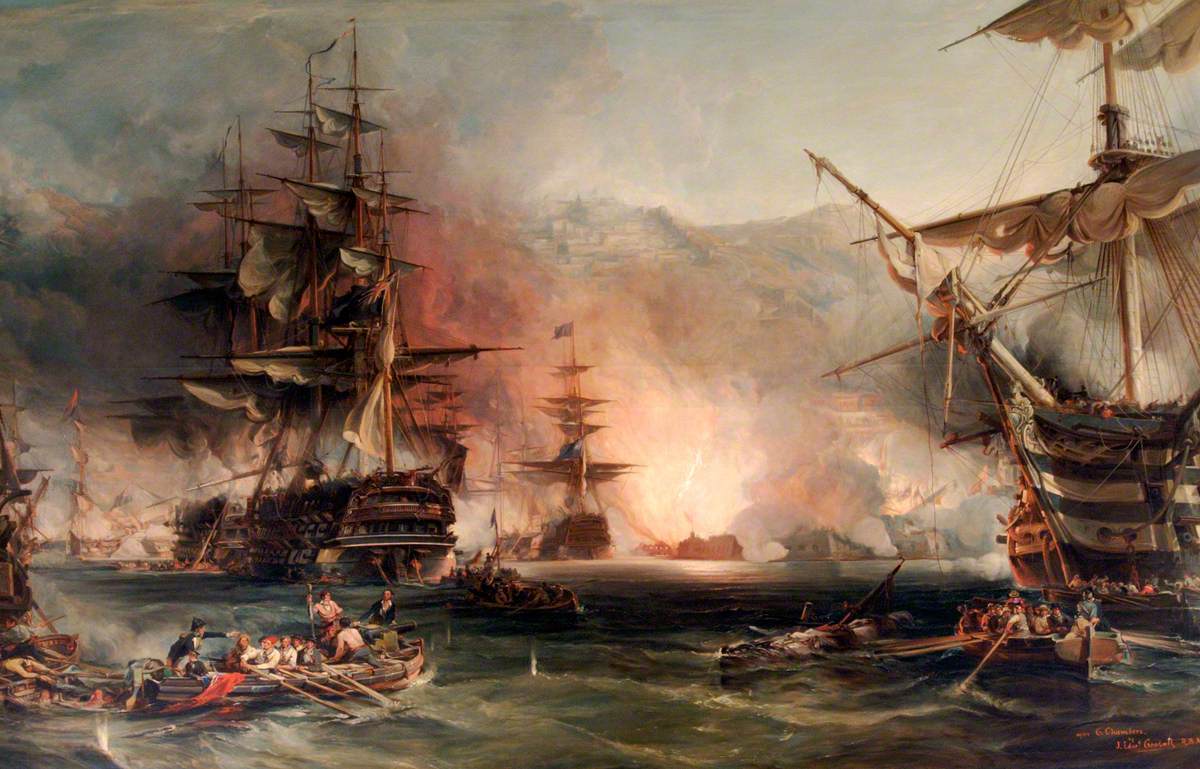
Promoted to Marshal of France, he was put in command of the Invasion of Algiers in 1830. However, after the July Revolution, he refused to recognize King Louis-Philippe of France and was sacked. After being involved in a plot against the new government, he fled to Portugal in 1832. He led the army of Dom Miguel in the Liberal Wars, and when the liberals won, he fled to Rome. He accepted another amnesty, this time in 1840, and died in France six years later.
The second French intervention in Mexico (Spanish: segunda intervención francesa en México), also known as the Second Franco-Mexican War (1861–1867),[13] was a military invasion of the Republic of Mexico by the French Empire of Napoleon III, purportedly to force the collection of Mexican debts in conjunction with Great Britain and Spain. Mexican conservatives supported the invasion, since they had been defeated by the liberal government of Benito Juárez in a three-year civil war. Defeated on the battlefield, conservatives sought the aid of France to effect regime change and establish a monarchy in Mexico, a plan that meshed with Napoleon III’s plans to re-establish the presence of the French Empire in the Americas. Although the French invasion displaced Juárez’s Republican government from the Mexican capital and the monarchy of Archduke Maximilian was established, the Second Mexican Empire collapsed within a few years. Material aid from the United States, whose four-year civil war ended in 1865, invigorated the Republican fight against the regime of Maximilian, and the 1866 decision of Napoleon III to withdraw military support for Maximilian’s regime accelerated the monarchy’s collapse. Maximilian and two Mexican generals were executed by firing squad on 19 June 1867, ending this period of Mexican history.
The intervention came as a civil war, the Reform War, had just concluded, and the intervention allowed the Conservative opposition against the liberal social and economic reforms of President Juárez to take up their cause once again. The Mexican Catholic Church, Mexican conservatives, much of the upper-class and Mexican nobility, and some Native Mexican communities invited, welcomed and collaborated with the French empire’s help to install Maximilian of Habsburg as Emperor of Mexico.[14] The emperor himself, however proved to be of liberal inclination and continued some of the Juárez government’s most notable liberal measures. Some liberal generals defected to the Empire, including the powerful, northern governor Santiago Vidaurri, who had fought on the side of Juárez during the Reform War.
America’s First Victory Over Terrorism
Posted on March 27, 2015 by Royal Rosamond Press


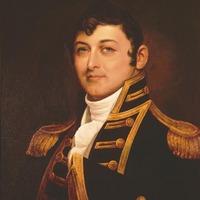
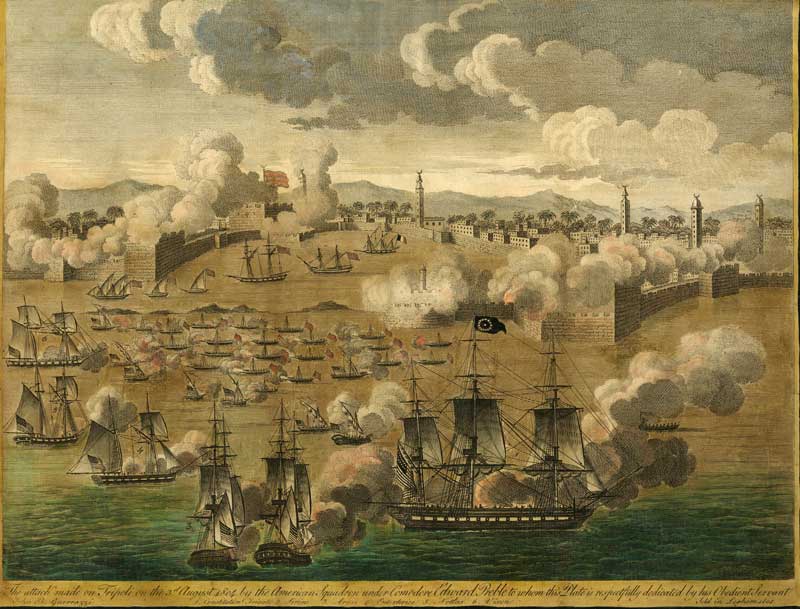
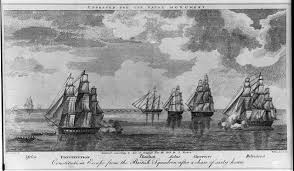


Yesterday I made two profound discoveries.
1. My great, great, great grandfather, Captain Isaac Hull directed, and engaged the enemy in America’s first War Against Islamic Terrorists.
2. Virginia Hambley’s great great, great grandfather, Louis de Bourmont, brought French legitimists before King Miguel, and recognized him a heir to the throne of France. Miquel is the grandfather of Empress Zita who fled to America when Hitler put a price on her head. Zita’s son was Otto Von Habsburg. Bourmont was in many respects similar to Jean of Arc, minus the religious visions. He was very keen on following a bloodline.
“Miguel was assisted by the French General Bourmont, who, after the fall of Charles X of France came with many of his legitimist officers to the aid of the king of Portugal (that is, Miguel).”
“http://en.wikipedia.org/wiki/Miguel_I_of_Portugal
Louis de Bourmont backed Henry Count of Chambord as the rightful heir to the thrown of France. Louis commanded the land forces that took major cities in Algiers. When de Bourmont refused to recognize to support the “Citizen King” Louis-Philippe, he was relieved of his command. Who knows how much territory de Bourmont would have taken in the second War against Muslim Terrorist. Louis must have studied the success of Hull and William Eaton that ended with the Treaty of Tripoli that produced Article X1.
It is my intention to compose a letter the President of the United States and the U.S. Senate making them aware of Hull and Bourmont who served Nation and King, and not God/Jesus. I am seeking a attorney to help me bring a lawsuit against Tom Cotton, and the Senators who signed his letter. There is powerful evidence these men were motivated by their religious ambitions they shared with Benjamin Netanyahu. Together these men grievously interfered with the negotiations with Iran who militias have handed ISIS defeats in Iraq. Many Republicans are altering true American history in order that it be subserviant to their faux religious history. Boehner’s attorney has quit the lawsuit against President Obama who has ordered our Air Force to bomb ISIS.
http://www.msnbc.com/rachel-maddow-show/stopping-the-next-tom-cotton-stunt-it-starts
Here is a letter from my kindred the Department of the Navy. He lists three Marines who shed their blood in Tunisia where there was a attack on the museum that was home to the Bey Captain Isaac Hull did battle with.
My bond with Virginia will last a lifetime. Her mother looks very much like Louis de Bourmont.
Jon Presco
Copyright 2015


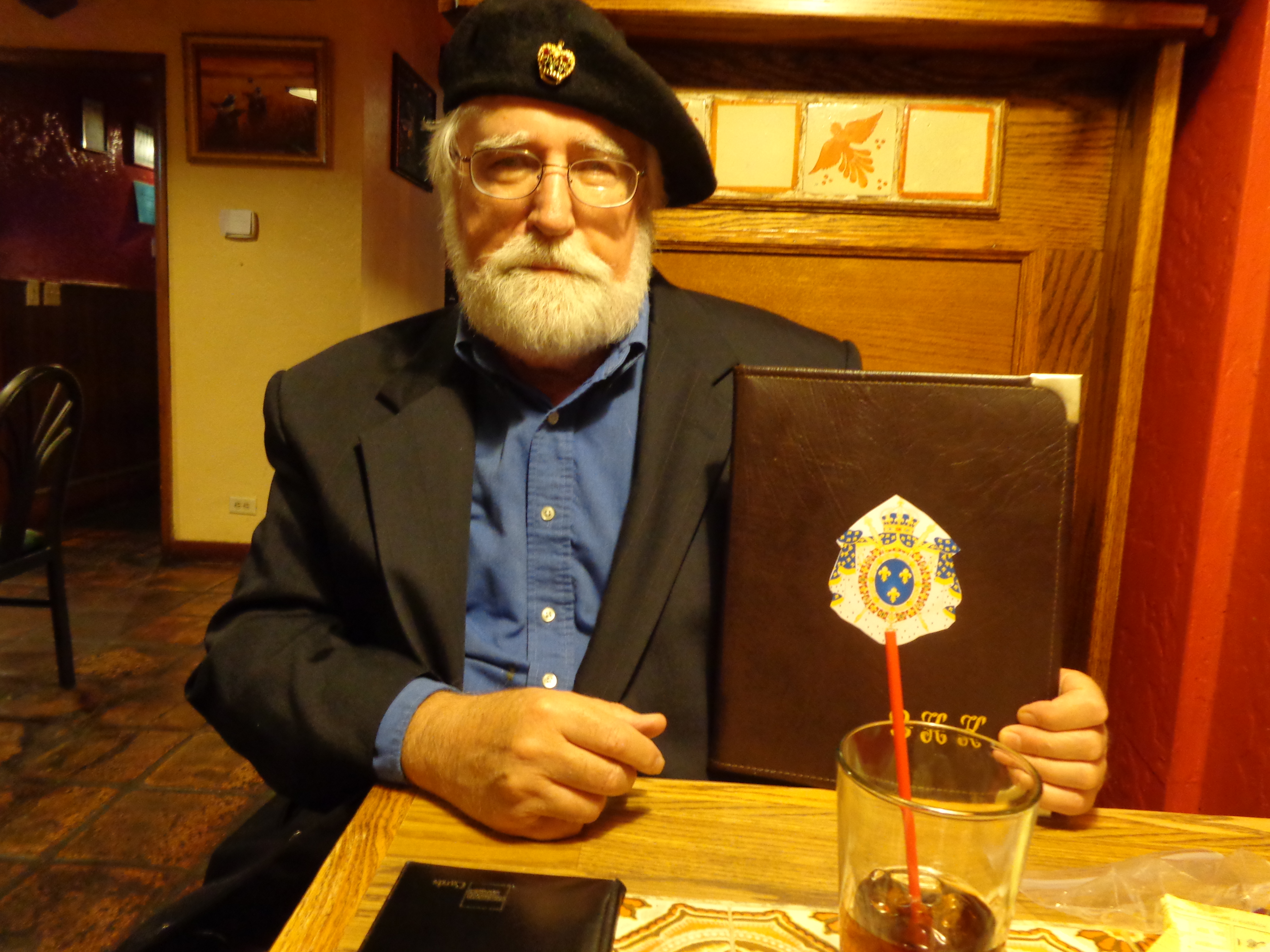
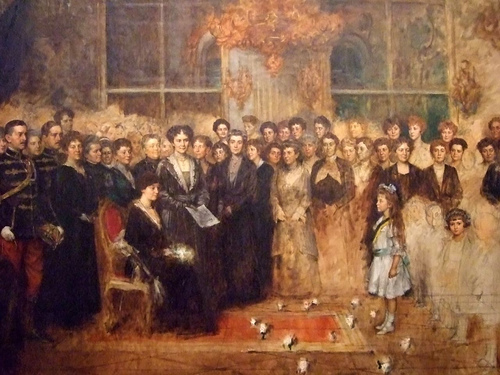
http://en.wikipedia.org/wiki/Henri,_Count_of_Chambord
UNITED STATES BRIG Argus
DERNE 28th April 1805
SIR, I have the honor to inform you, that at 9 O.Clock in the morning of the 27th being about 10 Miles to the Eastward of the Town of Derne, with the Hornet in Company, we discovered the Nautilus at Anchor very close to the shore, which led us to suppose that Capt. Dent had fallen in with Mr. Eatons Army, as he had been sent in shore for that purpose the day before. — We made all sail for the Nautilus, and at 1/2 past 10 spoke her, and was informed by Capt. Dent that he had, had communication with Mr. Eaton the night before, and that he wished to have the field Pieces landed as soon as possible, and that Mr. Eaton intended to make an attack upon Derne as soon as he could get possession of them, being then about two and a half miles from the Town, and the Enemy having sent him a chalenge, hoisted out our Boat to send the field Pieces on shore with such supplies as Mr. Eaton was in want of, but on approaching the shore we found that it was impossible to land the Guns without hauling them up an almost perpendicular rock Twenty feet above the Boat. But with the perseverence of the Officer and men sent on this service, they effected the landing one of them, by hauling them u the steep Rock. Mr. Eaton finding that we should loose time in landing the other, sent it off again informing me that he should march for the Town as soon as he could possibly mount the field Piece that he had on shore, gave Lieutenant Evans Orders to stand close in shore, and cover the Army while they were preparing to march, in case the Enemy should come out against them, as they had already made their appearance in large numbers outside of the Town, gave Orders for the necessary preparations to be made for the attack by Sea upon the Town and Batteries, and stood down very close to the Town. — At 2 P.M. Mr. Eaton began the attack by Land, at same time the Hornet Lieut. Evans Anchored with Springs on his Cables, within One hundred Yards of the Battery of eight Guns, and commenced a heavy fire upon it.
Tale of Two de Bourmonts
Posted on January 4, 2013 by Royal Rosamond Press
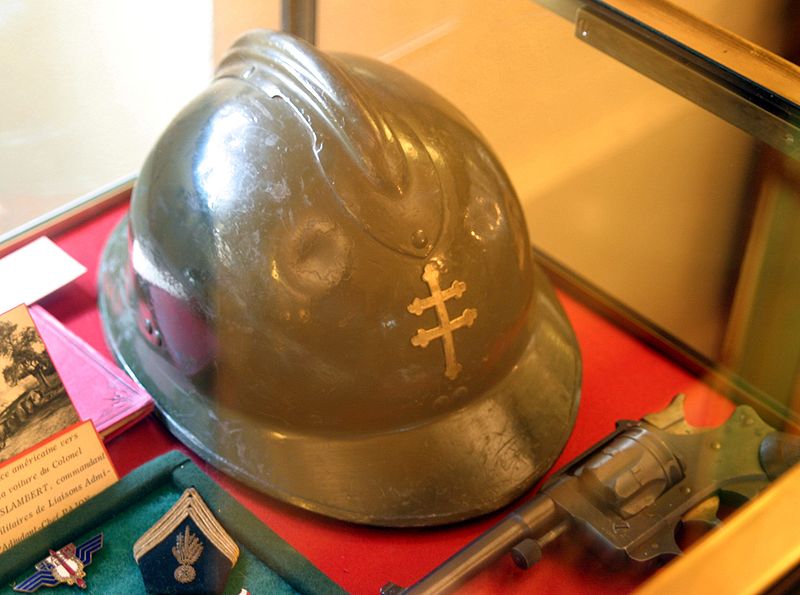
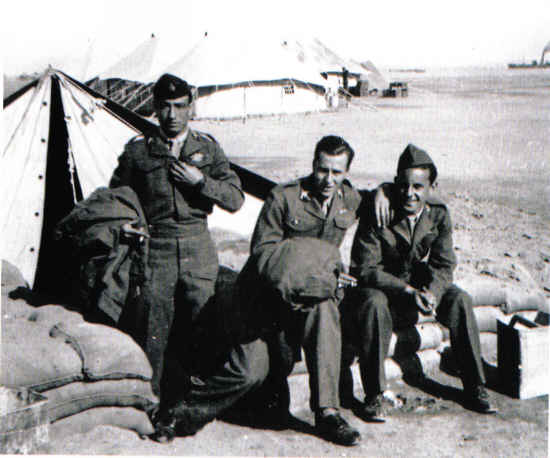


Pierre de Bourmont was a parachutist for the Free French. He is in the photos above, I believe he is on the left in the photo of three. Pierre has short legs like Virginia Hambley and her mother, Elizabeth. Was Pierre kin to Victor de Bourmont, and if so, is this a tale of divided loyalties? That is Pierre on the top row-right in the group of five.
https://en.wikipedia.org/wiki/Napoleon_III
https://en.wikipedia.org/wiki/Louis-Auguste-Victor,_Count_de_Ghaisnes_de_Bourmont
https://en.wikipedia.org/wiki/Government_negotiation_with_terrorists
Most Western countries have a stated policy of not negotiating with terrorists. This policy is typically invoked during hostage crises and is limited to paying ransom demands, not other forms of negotiation. Motivations for such policies include a lack of guarantee that terrorists will ensure the safe return of hostages and decreasing the incentive for terrorists to take more hostages in the future.
On June 18, 2013, G8 leaders signed an agreement against paying ransoms to terrorists.[1] However, most Western states have violated this policy on certain occasions. An investigation by The New York Times found that Al-Qaeda and its affiliates have taken in at least $125 million in revenue from kidnappings since 2008. These payments were made almost exclusively by European governments, which funneled the money through a network of proxies, sometimes masking it as development aid.[2][3]
Some Western countries, such as the United States, Canada, and Britain, tend to not negotiate or pay ransoms to terrorists. Others, such as France, Germany, Italy, and Switzerland are more open to negotiation. This is a source of tension between governments with opposing policies.[1][2]
https://en.wikipedia.org/wiki/Hamas
The founding charter of Hamas mandates the killing of Jews, the destruction of the state of Israel, and advocates for the establishment of an Islamic state in Israel, Gaza and the West Bank.[75][76][77] Hamas began accepting the 1967 borders in the agreements it signed with Fatah in 2005, 2006 and 2007.[78] In 2017, Hamas released a new charter that supported a transitional Palestinian state within the 1967 borders without recognizing Israel.[79][80][81][82] Hamas’s repeated offers of a truce (for a period of 10–100 years[83]) based on the 1967 borders are seen by many as being consistent with a two-state solution,[84][85][86][87] while others state that Hamas retains the long-term objective of establishing one state in former Mandatory Palestine.[88][89] While the 1988 charter of Hamas was widely described as antisemitic,[90][91][92] Hamas’s 2017 charter removed the antisemitic language and said Hamas’s struggle was with Zionists not Jews.[93][94][95][96] Under the ideological principles of Islamism, Hamas promotes Palestinian nationalism in an Islamic context;[97] it has pursued a policy of jihad (armed struggle) against Israel.[e] It has a social service wing, Dawah, and a military wing, the Izz ad-Din al-Qassam Brigades.[f][g] Since the mid-1990s,[24] Hamas has gained widespread popularity within Palestinian society for its anti-Israeli stance.[101][102]
Isaac Hull Captain of the Argus, Constitution, and Enterprise
Posted on March 29, 2015 by Royal Rosamond Press


My great grandfather captained three ships that took part in the Barbary Wars after the Treaty of Tripoli was made. Adams said this to President Thomas Jefferson;
“We ought not to fight them at all unless we determine to fight them forever,”
http://en.wikipedia.org/wiki/Treaty_of_Tripoli
Bill Bennett authored a book that claims Captain Isaac Hull battled and dispatched Islamic Terrorists. Bennett, in his new book, “America, the Last Best Hope”, describes it this way:
The Ambassador answered us that it was founded on the Laws of the Prophet, that it was written in their Koran, that all nations who should not have answered their authority were sinners, that it was their right and duty to make war upon them wherever they could be found, and to make slaves of all they could take as prisoners.
Joshua E. London’s description of the meeting in his book:
“The response was unnerving. As Adams and Jefferson later reported to the Continental Congress, the ambassador said the raids were a jihad against infidels. Muslim privateers felt “it was their duty to make war upon them [non-Muslims] wherever they could be found, and to make slaves of all they could as Prisoners, and that every Mussleman [Muslim] who should be slain in Battle was sure to go to Paradise.”
The Americans now had two choices: pay tribute or fight the pirates.”
U.S.S. Constitution of NATO
Posted on February 25, 2022 by Royal Rosamond Press
Tomorow I will compose a message to President Biden that will highly suggest the Ukranian People have been take hostage, and will be made to work for a Relgious Empire, liken to the one President Thomas Jefferson declared was with. I will ask him to make the U.S.S. Constitution a vessel of the NATO fleet.
John Presco

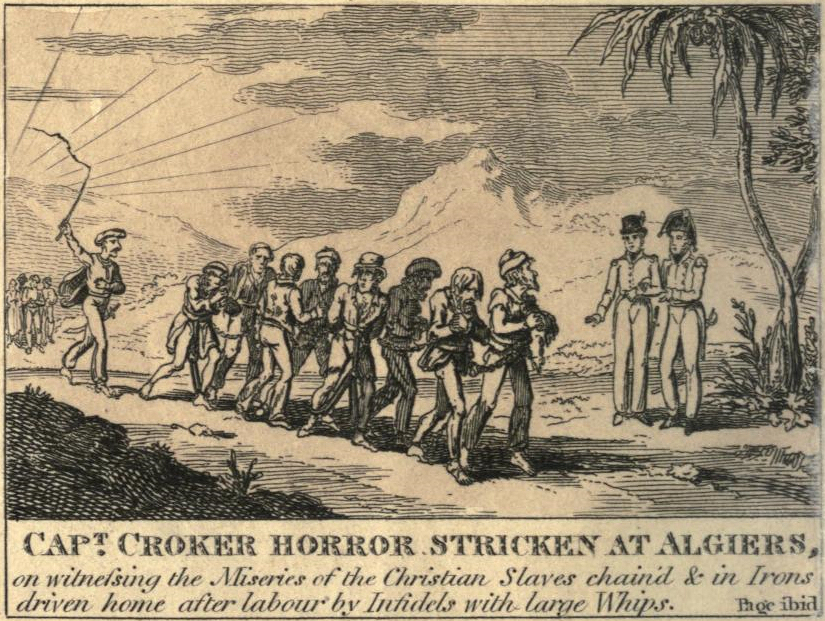


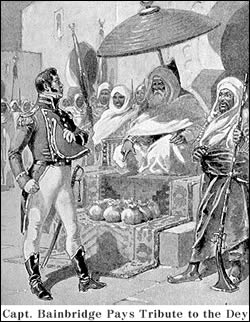
Le Rouge Knight of the Tower
Posted on September 16, 2013 by Royal Rosamond Press

“The father of our author was Geoffroy de la Tour, spoken of at the beginning of the fourteenth century as lord of La Tour-Landry, Bourmont, La Galonière Loroux-Bottereau, and Cornouaille, and who, under the banner of the Count of Anjou in 1336, distinguished himself by his courage in the war with the English.”
Below is Albrecht Dürer’s painting of a Knight coming home from the Crusades. Did he find the Holy Grail? Is it only when we find our way home again, do we find what was lost?
Albrecht Dürer did the illustrations for Landry’s work. I am this Knight Le Rouge. I did not forsake my Quest even though most of my friends and all my family, forsake me. I had a vision. I stuck to it. I am the Author of this Red Opera.



When Virginia Hambley de Bourmont got down on her wounded knee, took my hand, and proposed to me, was my long search for the Grail, at an end. Virginia descends from Geoffrey IV de la Tour Landry who compiled Livre pour l’enseignement de ses filles for the instruction of his daughters. This book is also titled ‘The Book of the Knight of the Tower’. Geoffrey may have authored Pontus and Sidonia a medieval prose roman that was put to song, thus, here is alas The Phantom of this Opera!
Geoffroy de la Tour-Landry married Jeanne Le Rouge.
(1320-1391)
1) ép. 1353 Jeanne Le Rougé
“Sophie” Juliette Louise Marie-Joseph de Bourmont married Le Rouge de Guerdavid, Joseph vicomte de Guerdavid.
Above is a painting of the Royal Entry of Virginia’s kindred.
Jon Preso
Copyright 2013
Masquerade balls were a feature of the Carnival season in the 15th century, and involved increasingly celebrate allegorical Royal Entries, pageants and triumphal processions celebrating marriages and other dynastic events of late medieval court life.
Above: Reception of the Grand Condé at Versailles following his victory at Seneffe. The Grand Condé advances towards Louis XIV in a respectful manner with laurel wreaths on his path, while captured enemy flags are displayed on both sides of the stairs. It marked the end of Condé’s exile, following his participation to the Fronde.
Napoleon III announces the French troop withdrawal[edit]
At the opening of the French chambers in January 1866, Napoleon III announced that he would withdraw French troops from Mexico. In reply to a French request for neutrality, the U.S. Secretary of State William H. Seward replied that French withdrawal should be unconditional. Napoleon assured the American government that the withdrawal would no longer be deferred, laying out a plan to reduce the troops in phases starting in November 1866 and ending one year later in November 1867. Seward then requested that French reinforcements to Mexico should now cease, and that Austria should stop recruiting volunteers for the Mexican expedition. The French and Austrian governments subsequently complied.[78]
Final French evacuations[edit]
On 19 December 1866, Napoleon III made it known that all troops would now be withdrawn, ahead of the previously laid out schedule.[94]
In late December, the French evacuated Guanjuato, rendezvousing in Querétaro with retreating troops from San Luis Potosi, and then heading towards the port of Vera Cruz. An imperialist garrison under Mejía however remained at Guanajuato, was able to hold a position and keep Republican troops at bay.[82]
Bazaine evacuated Mexico City on 5 February 1867. Vera Cruz was left in charge of the imperial general Pérez Gómez. Vera Cruz was a hub of activity with more than thirty vessels, including transports, mail steamers, and squadron ships in the harbor to help the evacuation. Bazaine and the last of the French troops embarked for Toulon on 12 March.[95]
Republican victory[edit]
The Execution of Emperor Maximilian, Édouard Manet 1868. Gen. Tomás Mejía, left, Maximiian, center, Gen. Miguel Miramón, right It is one of five versions of his renderings of the event.
With the end of the official French presence, the intervention was technically over, and yet the Empire which French troops and their Mexican collaborators had set up would last for a few months more, with the same Mexican generals that had previously fought alongside the French continuing the play a leading role, along with hundreds of Frenchmen who remained as independent mercenaries.
U.S. diplomacy and involvement[edit]
As early as 1859, U.S. and Mexican efforts to ratify the McLane-Ocampo Treaty had failed in the bitterly divided U.S. Senate, where tensions were high between the North and the South over slavery issues. Such a treaty would have allowed U.S. construction in Mexico and protection from European forces in exchange for a payment of $4 million to the heavily indebted government of Benito Juárez. On 3 December 1860, President James Buchanan had delivered a speech stating his displeasure at being unable to secure Mexico from European interference:
European governments would have been deprived of all pretext to interfere in the territorial and domestic concerns of Mexico. We should have thus been relieved from the obligation of resisting, even by force, should this become necessary, any attempt of these governments to deprive our neighboring Republic of portions of her territory, a duty from which we could not shrink without abandoning the traditional and established policy of the American people.
United States policy did not change during the French occupation as it had to use its resources for the American Civil War, which lasted 1861 to 1865. President Abraham Lincoln expressed his sympathy to Latin American republics against any European attempt to establish a monarchy. Shortly after the establishment of the imperial government in April 1864, United States Secretary of State William H. Seward, while maintaining U.S. neutrality, expressed U.S. discomfort at the imposition of a monarchy in Mexico: “Nor can the United States deny that their own safety and destiny to which they aspire are intimately dependent on the continuance of free republican institutions throughout America.”[115]
On 4 April 1864, Congress passed a joint resolution:
Resolved, &c., That the Congress of the United States are unwilling, by silence, to leave the nations of the world under the impression that they are indifferent spectators of the deplorable events now transpiring in the Republic of Mexico; and they therefore think fit to declare that it does not accord with the policy of the United States to acknowledge a monarchical government, erected on the ruins of any republican government in America, under the auspices of any European power.
As Napoleon Bonaparte expanded his new French Empire and conquered much of Western Europe, he doled out the spoils of war to his friends and family, whether they wanted it or not. Napoleon’s older brother Joseph, described by historians as “idealist, mild mannered, and lacking in vigor,” had wanted to be a writer, but was instead pressured into following his father into a law career. His brother had other plans for him, and installed him first on the throne of Naples and later, Spain.
King Joseph took both positions reluctantly, and didn’t fill either very well. Almost as soon as he was crowned in Spain, a popular revolt against French rule began. Joseph suffered a string of defeats as he and French forces engaged what was left of the Spanish regular army, and he asked his brother if he could abdicate and return to Naples. Napoleon wouldn’t have it, and left Joseph to keep a tenuous grasp on his army (the generals under his command insisted on checking with Napoleon before carrying out any of Joseph’s orders) and kingdom. Unable to beat back the rebels and their English allies, Joseph abdicated his throne in 1813, having ruled for just over five years.
Born to Run
After Napoleon’s defeat and forced exile, the Bonaparte name wasn’t winning Joseph any friends in Europe, so he fled to the United States under an assumed and with the crown jewels of Spain stashed in his suitcase.
He initially settled in New York City, then moved to Philadelphia, where his house at 260 South 9th Street became the center of activity for America’s French expatriate community. He eventually moved to a large estate in Bordentown, New Jersey, twenty-five miles northeast of Philadelphia along the Delaware River. It was called Point Breeze. There, Joseph Bonaparte, former King of Naples and Spain, brother of Napoleon I, Emperor of France, took the title of Comte de Survilliers (though his American neighbors and friends still called him Mr. Bonaparte and referred to his home as “Bonaparte’s Park”) and went into quiet, suburban exile.
Mansion on the Hill
Bonaparte may have been dethroned, but he was still royalty. He built up the estate to reflect his social standing.
He constructed a vast mansion for himself, with a large wine cellar, floor-to-ceiling mirrors, elaborate crystal chandeliers, marble fireplaces and grand staircases. His library held the largest collection of books in the country at the time (eight thousand volumes versus the sixty-five hundred volumes of the Library of Congress).
The land surrounding the mansion was elaborately landscaped and featured ten miles of carriage paths, rare trees and plants, gazebos, gardens, fountains and an artificial lake stocked with imported European swans.
Bonaparte’s home became a social hub for both his New Jersey neighbors, who liked to spend quiet afternoons browsing his library, and American and European elites. Among the distinguished guests who came through Point Breeze were John Quincy Adams, Henry Clay, Daniel Webster, the Marquis de Lafayette, and Stephen Girard, a French banker from Philadelphia who was then the richest man in the U.S.
Since Bonaparte’s wife did not accompany him to America (he did not see her for 25 years after he left), another frequent guest at the house was his mistress, Annette Savage. Bonaparte had met Annette, the 18-year-old, French-speaking daughter of distinguished Virginia merchants, while he was shopping for suspenders at her mother’s shop in Philadelphia. During their time together, Bonaparte and Annette would have two daughters, Caroline Charlotte and Pauline Josephe Anne.
Fire
In January 1820, Bonaparte’s mansion caught fire and burned to the ground. His neighbors rushed to the house and managed to save most of the silver and his priceless art collection. Contemporary newspaper reports called the blaze accidental, but according to the gossip around town, a local woman, an immigrant from Russia, set the fire as revenge for Napoleon’s invasion of her homeland.
Bonaparte was touched by his neighbors’ assistance, and expressed those feelings in a letter he wrote to one of the town’s magistrates:
All the furniture, statues, pictures, money, plate gold, jewels, linen, books, and in short, everything that was not consumed, has been most scrupulously delivered into the hands of the people of my house. In the night of the fire, and during the next day, there were brought to me, by laboring men, drawers, in which I have found the proper quantity of pieces of money, and medals of gold, and valuable jewels, which might have been taken with impunity. This event has proved to me how much the inhabitants of Bordentown appreciate the interest I have always felt for them; and shows that men in general are good, when they have not been perverted in their youth by a bad education. … Americans are, without contradiction, the most happy people I have known; still more happy if they understand well their own happiness. I pray you not to doubt of my sincere regard. —Joseph, Count de Survilliers [As reprinted in Bonaparte’s Park and the Murats, by Evan Morrison Woodward (1879)]
Bonaparte rebuilt his mansion and remained in New Jersey. He took ill and returned to Europe in 1839. When he died in 1844, Point Breeze passed to his grandson, who sold it and most of its contents at auction three years later. Some of the furnishings and paintings are now in the collections of the Philadelphia Museum of Art and the Pennsylvania Academy of Fine Arts.
A Night With the Jersey Devil
During his years at Point Breeze, Bonaparte believed he had a run-in with one of the Garden State’s most infamous residents—the Jersey Devil.
According to the folklore of Jersey’s Pine Barrens region, the Devil was born around 1735. Mother Leeds was in labor with her thirteenth child when the burden of the dozen she already had finally made her snap. “Let it be the Devil,” she cried as she pushed the baby out. The healthy baby boy in the midwife’s arms suddenly changed before the women’s eyes, growing wings, hooves, fur and a tail. The beastly baby screeched and flew out the window, making its home in the Barrens and haunting and harassing the people who lived there.
As Bonaparte recounted the story, he was hunting alone in the woods near his estate when he saw some peculiar tracks on the ground. They looked like they belonged to a horse or a donkey, but one that was walking only on its hind legs. He followed the tracks until they ended abruptly, as if the animal had jumped into the air and flown off. He stopped and stared at them.
A strange hissing noise came from behind him. He whirled around and came face to face with an animal he had never seen before. It had a long neck, wings, legs like a crane with horse’s hooves at the end, stumpy arms with paws and a face like a horse or a camel. He froze, and for a minute neither he nor the creature moved or even breathed. Then, the Devil hissed again and flew away.
Bonaparte later told his friends what happened, and they filled him in on the local legend. Until he returned to Europe, Bonaparte is said to have kept a sharp eye out for the Devil whenever he was in the woods, hoping to kill it and take the body as a trophy.
Last to Die
The Bonapartes had another American connection. Napoleon’s younger brother, Jérôme, visited the United States in 1803 and fell in love with Elisabeth Patterson, the daughter of a wealthy Baltimore merchant. They married that same year, but Napoleon did not approve and ordered his brother back to France. Jérôme went home, annulled his marriage, remarried, and became King of Westphalia. But not before consummating his marriage to Elisabeth. She was already pregnant when Jérôme left the U.S. and gave birth to another American Bonaparte.
The stateside branch of the family tree produced some notable members—including Charles Patterson Bonaparte, Secretary of the Navy under Theodore Roosevelt—but petered out a few decades ago. Jerome-Napoleon Patterson Bonaparte, great-grandnephew of Napoleon I, was walking his dog in Central Park in 1943, when he tripped over the leash, cracked his skull open on the ground and died.
Count Cipriani and Napoleon
Posted on April 10, 2021 by Royal Rosamond Press


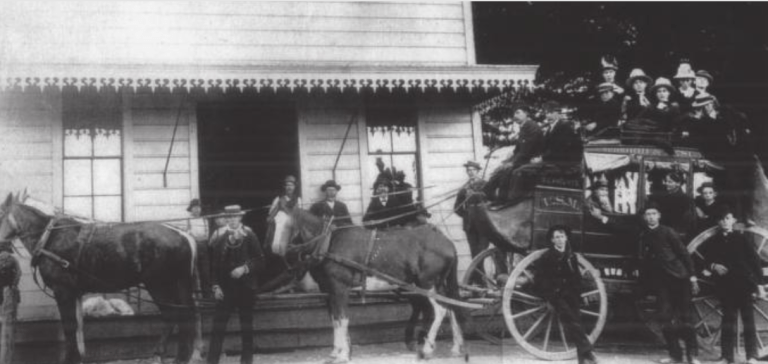
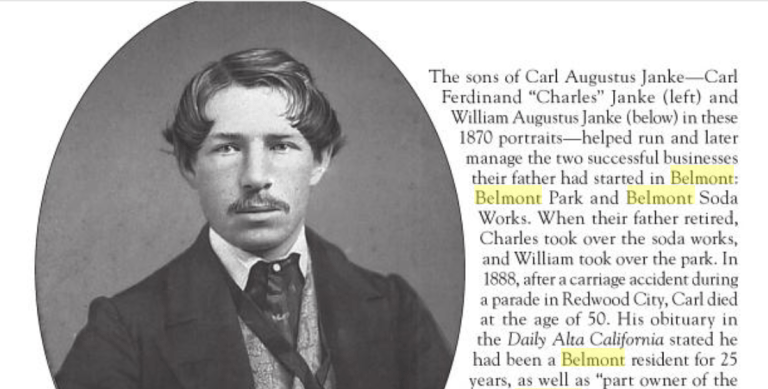


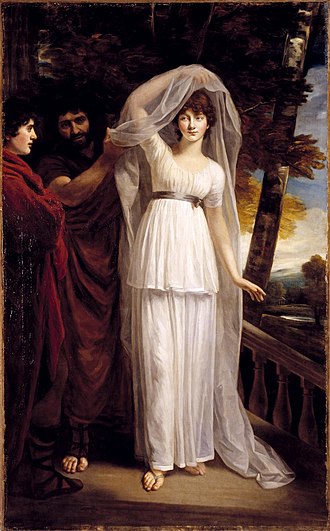
The daughter of Lenonetto, Lisi Cecilla Cipriani, appears to have been employed as a spy. Her great uncle had many conversations with the Napoleon family who made plans to invade California from Mexico. My kin, John Fremont, with the help of the Jessie Scouts, thwarted this plan. This is as close to much of European History as any territory that comprises the United States, as you can get. It has sat over there in the city of Belmont, in a captured state, that is resisted being shared with the rest of the Bay Area, and California!
Yesterday I purchased my THIRTY-FOUR year sober AA coin on Amazon. I bought an Angel Coin for Cristine, and put it in William Stuttmeister niche on our family tomb, where rest his bones. The 91 earthquake opened a crack. With Lisi’s treatise on The Romance of the Rose and the poetry of Dante, alas we have the touchstone and branding my grandfather, Royal Rosamond, worked hard at. Lisi mentions the play Troylus which was one of Shakespeare’s problem plays. I mentioned Belmont having a Shakespeare theatre. Rena as Helen may now be Rena as Cressida.
John Presco
Troilus and Cressida – Wikipedia

Studies in the Influence of the Romance of the Rose upon Chaucer (jstor.org)
Cipriani of Roman Times | Rosamond Press
In 1851 he brought to Belmont a prefabricated house in 1,200 parts,
to be fastened together with 700 hooks and 26,000 screws. He invested
in local realestate but lacked the Midas touch. The Count sold his
prefab house and sailed back east to organize a wagon train to move
overland to the Pacific. In 1853 the Count left Missouri with 11
wagons, 24 hired hands, 500 cattle, 600 cattle, 60 horses, and 40
mules. He wrote an account of this six-month journey that became the
book ‘The California and Overland Diaries of Count Leonetto Cipriani’
by Ernest Falbo.
Belmond Hotel Cipriani – Wikipedia
Count Cipriani was born in Centuri Corsica, on October 10,
1812. On his father’s side he is descended from an old Florentine
family of Ghibellines, which after a long struggle with the vitorious
Guelfs, found refuge in Corsica in the fifteenth century. On his
mother’s side he is descended from Saint Francis Caracciolo of
Naples, and thus Saint Aquinas. This struggle inspired Shakespear to
write ‘Romeo and Juliet’ and thus the question “What is in a name?”
came to be.
“Returning to Paris in October, 1855, he was warmly received
by his friend Prince Napoleon who overwhelmed him with questions
about his travels in America. “I answered them the best I could.”
Cipriani wrote, “But , it is a veritable deluge….We keep talking
about my journeys, of the Sanora, of conquering it.” Perhaps he
thought of seizing it for France and hoped the prince might persuade
his cousin the Emperor to finance the undertaking. “It is an idea in
the air,” he added, “that I would willingly undertake, if necessary
capital and men were available.”
To another member of the imperial household, Jerome
Bonaparte, ex-king of Westphalia, Cipriani revealed tha the had
considerable investments in California and hinted at receiving
interest of twelve to fifteen percent a month on his money. He also
boasted of his house in Belmont which “out there is considered
magnificent.”
On behalf of the Emperor Napoleon 3, he visited King Victor
Emanuel of Sardinia to explore the possibilities of a matrimonial
arrangement between the ruling houses as a prelude to a political-
military alliance between France and Sardinia. The conversation
eventually turned to Cipriani’s overland journey of 1853, which
apparently had not escaped the king’s notice. “I have heard tell,” he
said, “of a great journey of yours, with you on horseback and camping
out.”
“For eight solid months, Your Majesty,” Cipriani replied,
making certain to include the time he left San Francisco in February
to October, 1853.
“But it is true.” the king continued, “that you led covered
wagons and crossed the Rocky Mountains where there was roads, and
great rivers without any bridges.”
The above is from the ‘California and Overland Diaries of
Count Leonetto Cipriani’. a journey that may constitute the first
cattle drive. What this diary reveals is France’s plan to conquer
Mexico, and perhaps the Western United States.
Sardinian Kingdom Founds SF Colony
Posted on April 27, 2016 by Royal Rosamond Press
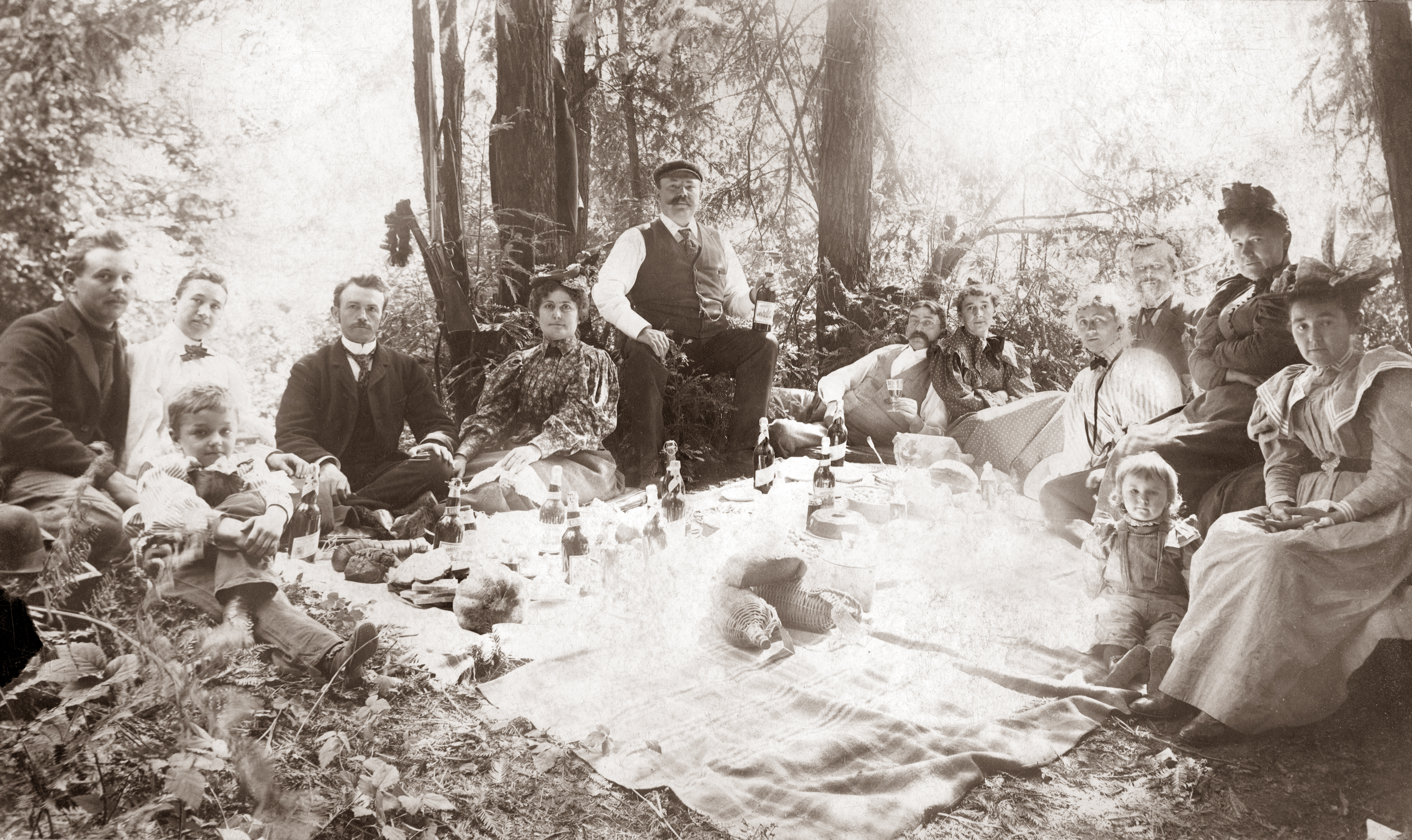
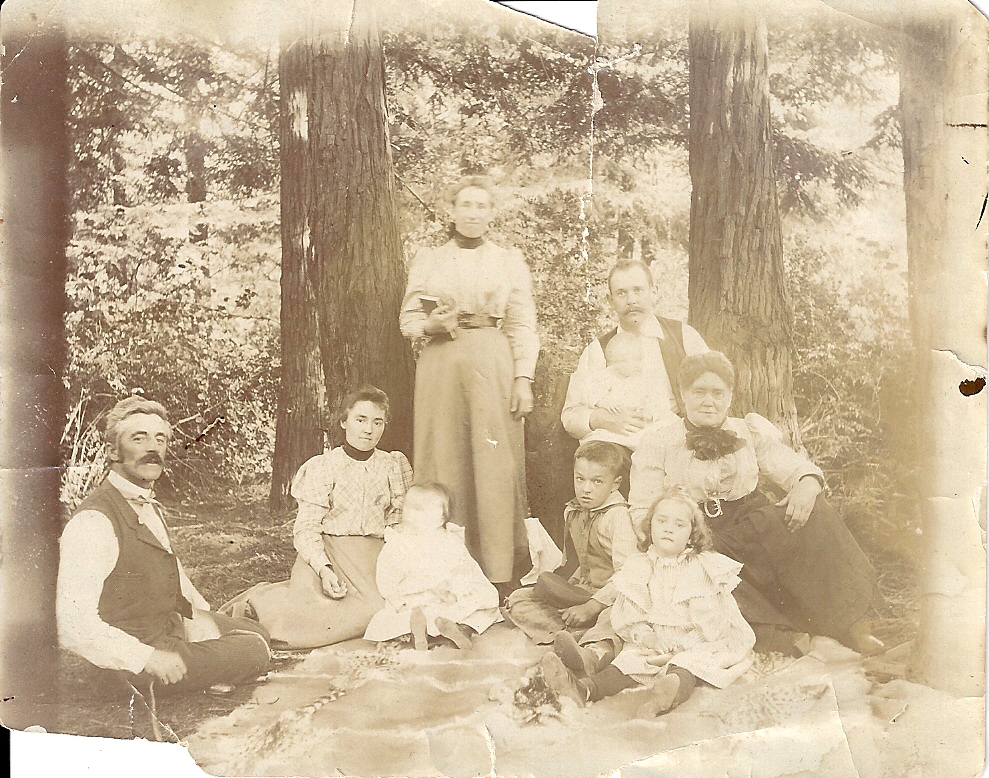
Not only have I found Sleeping Beauty Rosa, I have found her Kingdom in San Francisco!
“After Victor Emmanuel became King of Sardinia he appointed Cipriani to be his first consul in San Francisco.”
Cipriani’s home was brought around the Cape by my kindred, Carl Janke, whose daughter married William Stuttmeister. I believe my kindred were chosen to help found the Sardinian Colony that would support Victor Emmanuel’s kingdom. This is astonishing! With the history of John Fremont and his wife, Jessie Benton, my kindred are the Acme of California History.
One question I am often asked is whether Napoleon Bonaparte has any living descendants, or whether a particular sibling of Napoleon has any living descendants. Another version of the question is whether there are any Bonaparte descendants living in America. Here’s a handy summary to help you keep track. An asterix (*) indicates the person has living descendants.
Napoleon with his nieces and nephews on the terrace at Saint-Cloud, by Louis Ducis, 1810. Napoleon and four of his siblings have living descendants.
Napoleon Bonaparte (1769-1821)*

Napoleon’s illegitimate son Alexandre Walewski, circa 1855. He has living descendants.
Napoleon had one legitimate child, Napoleon François Charles Joseph Bonaparte (1811-1832), also known as the King of Rome or Napoleon II, who died childless at the age of 21.
Napoleon also had two acknowledged illegitimate sons, Charles Léon Denuelle* (1806-1881) and Alexandre Colonna Walewski* (1810-1868), both of whom have living descendants.
Joseph Bonaparte (1768-1844)*
Napoleon’s older brother Joseph had two legitimate daughters, Zénaïde* (1801-1854) and Charlotte (1802-1839). Charlotte died giving birth to her only child, who also died. Zénaïde married her cousin Charles Bonaparte* (1803-1857, son of Napoleon’s brother Lucien) and had eight children who lived to adulthood. She has living descendants.
Joseph also had two illegitimate daughters with his American mistress, Annette Savage. Pauline (1819-1823) died in an accident in Joseph’s garden at the age of 4. Caroline* (1822-1890) married an American, Zebulon Howell Benton, and had five children. She has living descendants, at least one of whom was born in America.
Lucien Bonaparte (1775-1840)*
Napoleon’s brother Lucien had 11 children who lived to adulthood. He has living descendants.
Elisa Bonaparte Baciocchi (1777-1820)
Napoleon’s sister Elisa had two children who lived beyond infancy. Her son Frédéric (1814-1833) was killed in a riding accident at the age of 18. Her daughter Napoléone (1803-1869) married a wealthy Italian count, from whom she separated after a couple of years. Napoléone’s only child, Charles (1826-1853), committed suicide at the age of 26. He had no children, thus Elisa has no living descendants.
Louis Bonaparte (1778-1846)*
Napoleon’s brother Louis, who was unhappily married to Napoleon’s stepdaughter Hortense de Beauharnais (Josephine’s daughter), had two sons who lived to adulthood. Napoléon-Louis (1804-1831), who married Joseph’s daughter Charlotte, died without any children. Louis’s second son Louis-Napoléon (1808-1873) became French Emperor Napoleon III*. Napoleon III’s only legitimate child, Louis-Napoléon (1856-1879) was killed in an ambush during the Anglo-Zulu War in South Africa at the age of 23, leaving no children. Napoleon III also had at least three illegitimate children: Bonaventur Karrer (1839–1921); Alexandre-Louis Eugène Bure* (1843-1910); and Louis-Ernest Alexandre Bure (1845-1882). Eugène Bure has living descendants.
Pauline Bonaparte Borghese (1780-1825)
Napoleon’s fun-loving sister Pauline had one son, Dermide (1798-1804), who died of fever and convulsions at the age of 6. Thus Pauline has no living descendants.
Caroline Bonaparte Murat (1782-1839)*

American actor René Auberjonois, a descendant of Napoleon’s sister Caroline, in 2013
Napoleon’s sister Caroline had four children: Achille (1801-1847), Letizia* (1802-1859), Lucien* (1803-1878) and Louise* (1805-1889). Achille, who moved to the United States and married a relative of George Washington, had no children. Lucien, who lived in the United States for 23 years, also married an American, Caroline Georgina Fraser from Charleston. They had five children: four born in Bordentown, NJ, and one in France. Lucien has living descendants, including the children of American actor René Auberjonois. Letizia and Louise also have living descendants.
Jérôme Bonaparte (1784-1860)*
Napoleon’s youngest sibling Jérôme had one son with his first wife, the American Elizabeth (Betsy) Patterson: Jerome Napoleon Bonaparte (1805-1870). Jerome Jr., who was not recognized as a Bonaparte by Napoleon, had two sons: Jerome Napoleon Bonaparte II* (1830-1893), and Charles Bonaparte (1851-1921), Charles, who served in President Theodore Roosevelt’s cabinet as Secretary of the Navy and, later, as Attorney General, died childless. Jerome Napoleon II had two children: Louise-Eugénie* (1873-1923), who married Danish Count Adam Carl von Moltke-Huitfeld and has living descendants; and Jerome Napoleon Charles (1878-1945), who fatally broke his neck by tripping over the leash while walking his wife’s dog in New York’s Central Park. Although Jerome Napoleon Charles had no children, reports that he was the last of the Patterson-Bonapartes are mistaken, unless one is referring only to the male line.
With his second wife, Princess Catharina of Württemberg, Jérôme Sr. had three children: Jérôme Napoléon Charles (1814-1847), who died childless; Mathilde (1820-1904), also childless; and Napoléon Joseph Charles* (1822-1891), who had three children and has living descendants.
Bonaparte pretenders to the French throne
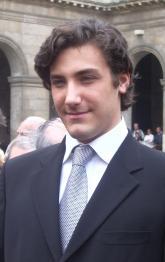
Jean-Christophe, Prince Napoléon, a descendant of Napoleon’s brother Jérôme, in 2006
Although Napoleon III was removed from power in 1870, and France – a republic – has not had a monarch since then, some members of the Bonaparte family are considered by some to have a claim to the non-existent French throne.
Under the law of succession established by Napoleon in 1804, only legitimate male descendants through the male line were eligible to assume the imperial crown. Lucien and his descendants were excluded from the succession plan because Napoleon disapproved of Lucien’s marriage. Over the years, the Bonaparte possessors of, or claimants to, the throne have been:
- Napoleon I (Emperor of the French, abdicated in 1815, died in 1821)
- Napoleon II (never actually ruled France, but briefly held the title of Emperor after his father’s 1815 abdication, died childless in 1832)
- Joseph (died in 1844 with no descendants through the male line)
- Louis (died in 1846)
- Napoleon III (Emperor of the French, removed from power in 1870, died in 1873; no legitimate descendants)
- Jérôme’s male descendants (with Catharina of Württemberg) through the male line. The current claimant is Jérôme’s descendant Jean-Christophe, Prince Napoléon (b. 1986). This claim is disputed by Jean-Christophe’s father, Charles, Prince Napoléon (b. 1950), who was excluded from the succession in his father’s will for having married without paternal permission.
The Bonapartes are not the only pretenders to the French throne. The Legitimists (successors of the senior branch of the Bourbons, ousted in 1830) and the Orléanists (successors of King Louis Philippe, ejected in 1848) also lay claim to the crown.
*Has living descendants.
France Wants Revenge!
Posted on September 23, 2021 by Royal Rosamond Press


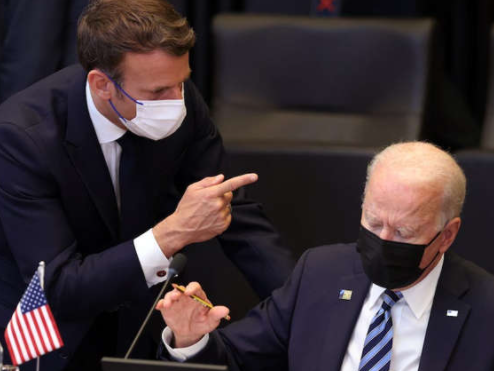
My purpose in life have been – fulfilled! There can no longer be any doubt I am the prophet-artist of the age. I am going to write the French Ambassador. I just sent an email to the French Consulate of Portland. Our lawsuit will be a just forum for real grievances.
Johnny Trouble
Attn: Dominique Gellin
French Revenge should be sweet – and classy! I gifted the Louisiana Territory to my fiancé, and founded Fromond and New France. Have your attorney contact me, and I will notify the press of Frances intentions to take back their Territory.
Today, October 1, 2013, I John Gregory Presco, the fiancé of Virginia Hambley de Bourmont, claim what was the Louisiana Territory in the name of the House of Bourbon, wherein said Territory, will be established a Democratic Monarchy, as was established by the Ligitimists of France.
- France ordered officials to “get revenge” after losing a submarine contract, Politico reported.
- France was incensed when Australia ditched it in favor of a deal with the US and UK.
- There are signs that relations are improving after Biden sought to calm the situation.
- See more stories on Insider’s business page.
France instructed its officials to “get revenge” on Australia, the US, and the UK after being booted from a contract to build Australia’s submarines, Politico reported.
A French official made the comment to Politico earlier this week as Paris continued to react furiously to Australia’s surprise decision to drop French-owned Naval Group from the $50 billion deal to replace its ageing submarines.
Australia will now build the submarines with help from the UK and US instead as part of a new security pact called AUKUS.
France – accusing the three nations of a “stab in the back”– recalled its ambassadors from the US and Australia, and moved to disrupt trade talks between the two nations and the EU, of which France is a leading member.
French officials have also found support from other EU members to delay talks with the US scheduled for next week, Bloomberg reported.
Birth of the New France
Posted on October 20, 2019 by Royal Rosamond Press

I believe the ancestors of Jesus were Kurds. All Knight Templars prepare to work for the Kurds, and New France in America! Trump and the Republican party destroyed my Democracy and Chivalry. Our allies will never trust us, which is what Putin dreamed. Trump is a Russian.
Thomas Jefferson believed the Lousiana Purchase was not legal as it went against the Thirteen Colonies and the Constitution. He believed Napoleon had no right to sell this land – that I claim due to my ties to many Royal Houses. If Virginia and I get married, we will be the most Royal Couple in America.
John ‘The Prophet;
Creating New France Will Destroy Republican Anarchists
Posted on October 3, 2013by Royal Rosamond Press

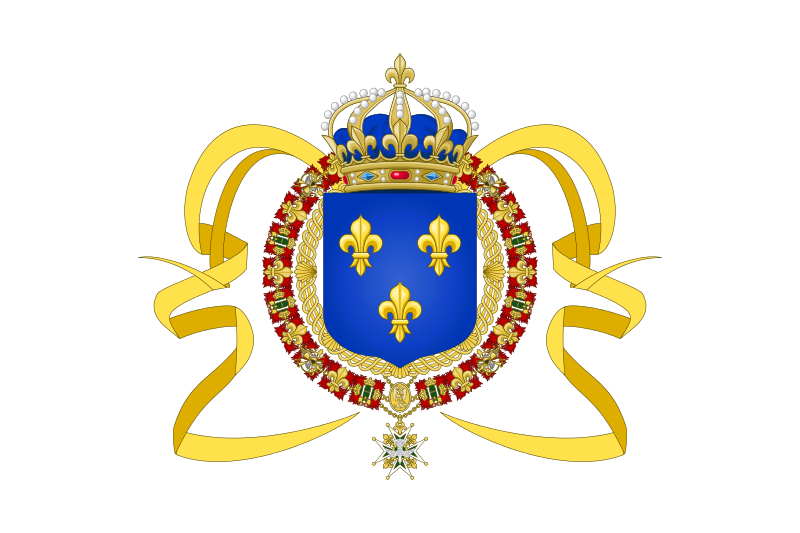


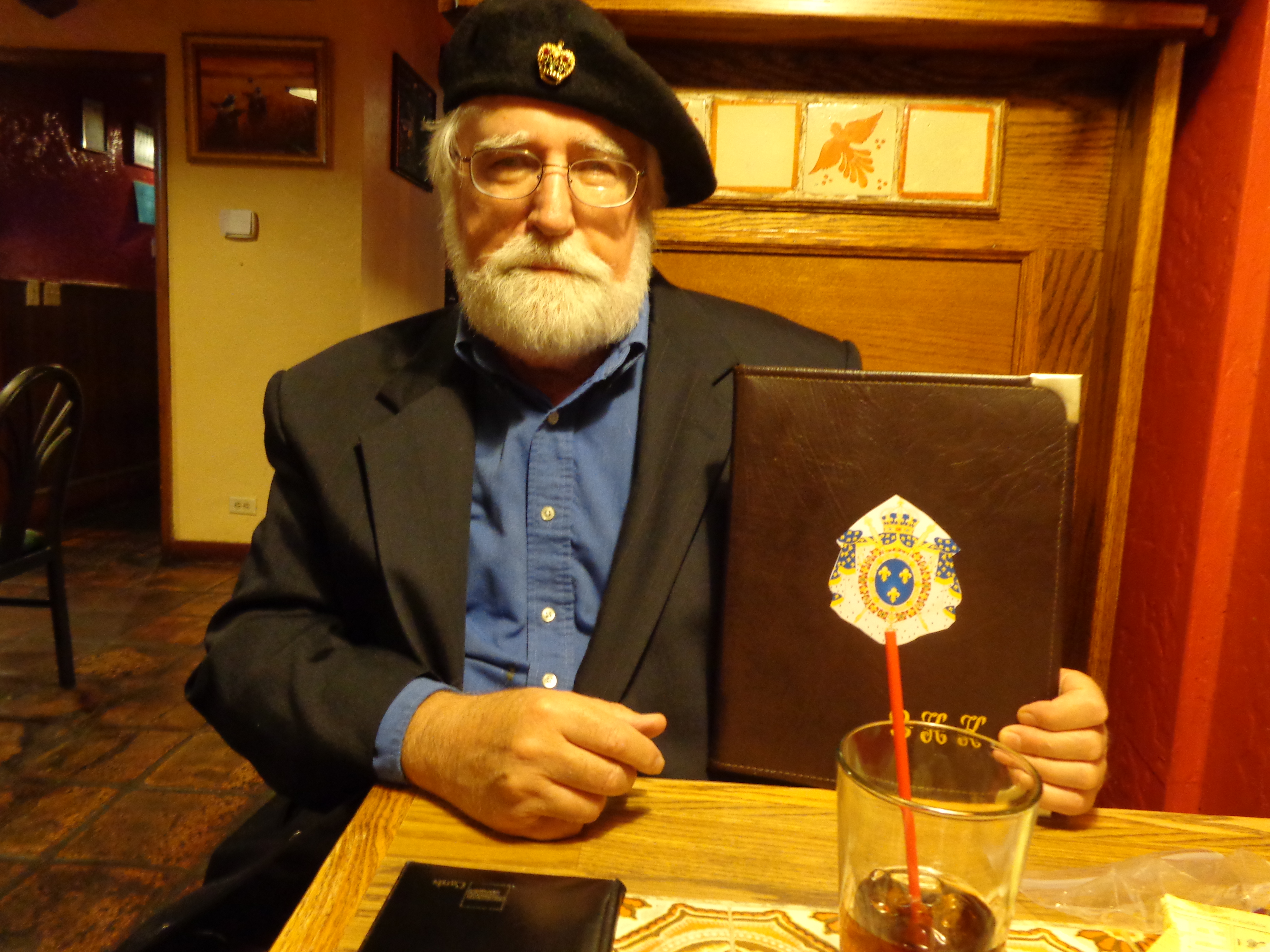
Virginia Hambley de Bourmont’s great, great grandfather, Louis Auguste Joseph De Ghaisne Comte De Bourmont, rekindled the Colonial ambitions of the French Crown when he took Algeria.
A group of Sioux leaders is passing a petition claiming the Dakotas were not part of Louisiana, a French Colony established by the House of Bourbon, and thus null and voids the sale of Louisiana to the United States. As acting Regent of the Bourbon Kingdom of New France in America, I will honor this claim and grant the Dakotas to the Sioux people so that they may establish a sovereign nation.
Here is why the President of the United States should sell the former Louisiana Territory to me and my fiancé for $1:
1. It would reopen the U.S. Government and end the debt ceiling crisis by eliminating Republican Congressmen from the states of Arkansas, Oklahoma, Missouri, Kansas, Iowa, and Nebraska, as well as parts of Minnesota, South Dakota, North Dakota, Montana, Wyoming, Colorado, New Mexico, Texas, and, of course, Louisiana. This would give the Democrats the majority in the House.
2. Once this is done, then I will arrest these Republican Anarchists and imprison them as un-desirable aliens.
3. I will then offer Mexico the State of Texas for $4,000,000,000 dollars. That’s four billion dollars.
J.G. Presco
King of Califoria
Regent of New France in America
The Empire of Virginia and John
Posted on August 2, 2018 by Royal Rosamond Press
Karl Schwarzenberg and The Habsburg Audience
Posted on July 23, 2018by Royal Rosamond Press


For several years I have been trying to bring to the attention of the Austrian Government the existence of the large canvas at the University of Oregon Museum titled ‘The Last Audience of the Habsburgs’ that was smuggled out of Austria. Alas, I have found just the right person. He is my kindred, Karl Schwarzenberg, who himself had to flee a oppressive regime. Karl opposes Putin, and backs Britain. I will contact him and see if he would like to come give a talk on this painting. His relative, Prince Felix Schwarzenberg, restored the Habsburg Empire.
John Presco
President: Royal Rosamond Press
https://www.huffingtonpost.com/lan-anh-vu/how-i-got-there-karel-sch_b_9043274.html
Prince Felix of Schwarzenberg (German: Felix Prinz zu Schwarzenberg; 2 October 1800 – 5 April 1852) was a Bohemian nobleman and an Austrian statesman who restored the Habsburg Empire as a European great power following the Revolutions of 1848. He served as Minister-President of the Austrian Empire and Foreign Minister of the Austrian Empirefrom 1848 to 1852.

Karel Schwarzenberg is the Prince of Schwarzenberg, Duke of Krumlov, former first Deputy Prime Minister and Minister of Foreign Affairs of the Czech Republic and honorary Chairman of Top 09 party. Schwarzenberg was also a Member of the Senate of the Czech Parliament and a candidate for the President of the Czech Republic in the 2013 presidential election. He is noted as a pro-European member of the center-right governing coalition.
Schwarzenberg’s family, who once ranked among the oldest and wealthiest aristocrats in Central Europe, had to leave the Czechoslovakia after the Communist coup of 1948. He spent most of his adult life in Austria to plot against communism. He is a great proponent of human rights and has been for his entire life. In 1989, he was awarded, together with Lech Wałesa, the Council of Europe’s Human Rights Award. Lan Anh Vu sat down with Schwarzenberg to learn more about his political life, the challenges he faced and his advice for young people across the world when it comes to pursuing a career in politics.
As told to Lan Anh Vu
My Career in Politics
In my early childhood, I was an observer of politics. In 1948, when the Communists took over, I was ten years old when I had to leave the Czechoslovakia and move to Austria. When I went to the school in Vienna to study law, I engaged in some political activities and became active in promoting human rights. At Munich university where I studied Graz and forestry, I was elected to student government. Due to the early death of my adoptive father, Jindrich Schwarzenberg, I had to cut my studies short and start managing the family properties.
From 1984 to 1991, I became president of the International Helsinki Federation for Human Rights. I pushed for human rights in Europe and was negotiating the question of human rights in the former USSR, Bulgaria, Kosovo and the Czech Republic.
When the Communist regime fell in 1989 , I returned to live in the Czechoslovakia and work for the late President Vaclav Havel. In 1990, I was appointed as the Chancellor of the Office of the President.
Some people told me I should become a senator. I first ran in the senate elections in 2002 and was unsuccessful, and in 2004 I ran again, succeeded and was elected a senator. Three years later, I became the foreign minister of the Czech Republic. Politics has been a constant part of my life ever since childhood.
My whole life I fought for liberty and democracy. I always thought that if you had opportunities ahead, you have responsibilities and should do something for your country.
Bohemian Monarchs and The Boii
Posted on July 24, 2018by Royal Rosamond Press


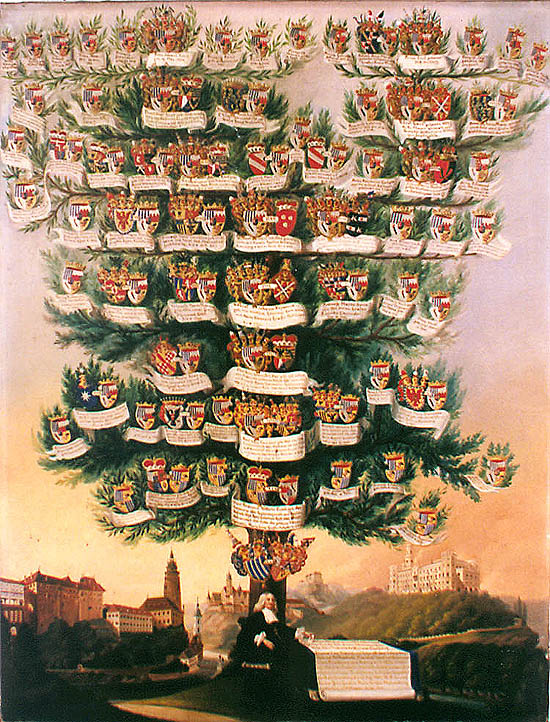

My mother called her children Bohunks because our father descended from Bohemians. She did not know she had Bohemian blood in her veins.
The Boii were a Celtic Gallic People who rebelled against the Slave Masters of Rome, and fought for Freedom From Slavery. They were allies of Hannibal who practiced a religion closely allied to Judaism and the Moabites. There was a temple to Melqart at Marseilles where allegedly Mary Magdalene fled.
Before the book The Davinci Code came out, I and others studied the idea of a Jesus bloodline, called The Rex Deus. The Habsburgs is a Rex Deus candidate. I found the core theories without merit, but for my conclusion Jesus was not a Divine Immortal, but a Messiah who was born to evict Rome from Judea and other places in the Crescent Circle. Jesus was another Hannibal a ‘Gift of Baal’. There were coordinated attacks. I suspect the Boii sent forces to defend the Temple in Jerusalem in 69 A.D. and led a rebellion in the Transalpine, Germany, and Britain. This was a World War against Slavery. It is this theory that I place at to core of my Tolkien book I am also destined to write.
John Presco
https://www.cnn.com/2018/08/02/politics/james-lankford-amy-klobuchar-election-security/index.html
Paneuropean Union and Virginia Hambley
Posted on October 8, 2013by Royal Rosamond Press

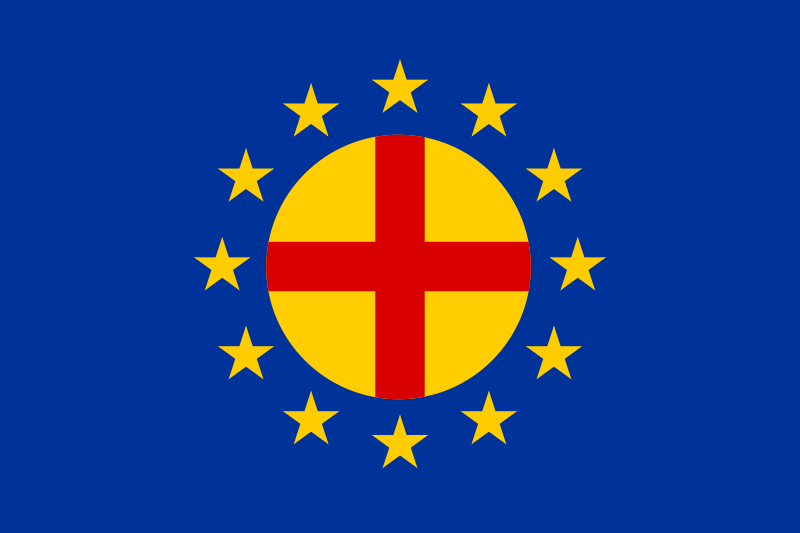

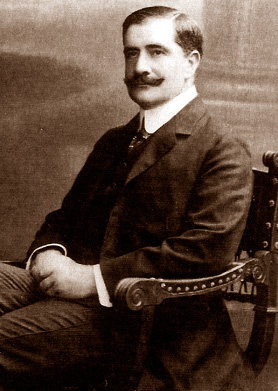
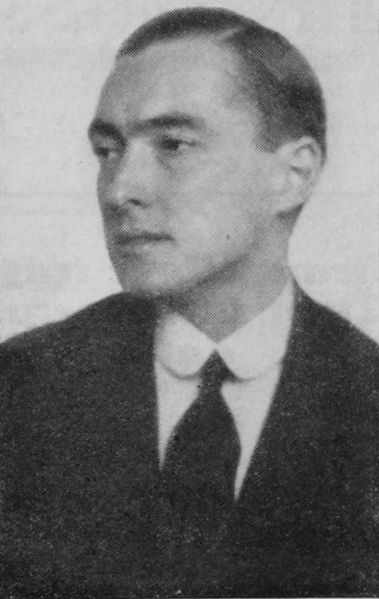
Virginia is kin to Count Richard Nikolaus von Coudenhove-Kalergi who gave birth to the European Union. Otto von Habsburg shared the dream of a Paneuropean Union that may be carried out in a bloodline that Virginia shares. The idea of a New France in America is not so farfetched now that the Republicans are on the brink of creating world chaos from which a new order will rise.
When one views the funeral march of Otto you see the flag of the Paneuropean Union followed by the flags of related families from many nations. Where did they get these uniforms? Were they, and the flags, at ready? This looks like a prearranged marriage. I believe Virginia and I represent the World Union in the West.
Jon Presco
Copyright 2013
Vinzenz was 1,300th Knight of the Order of the Golden Fleece in Austria. From his first marriage (1981–1991) with Hélène de Cossé-Brissac (1960–) he had two daughters:
Princess Adelheid Marie Beatrice Zita (b. Vienna, 25 November 1981), married in Deutschfeistritz-Peggau on 31 January 2009 Count Dominic von(b. London, 7 October 1973), son of Count Hans Heinrich von Coudenhove Kalergi and wife Cornelia Carter Roberts
The International Paneuropean Union, also referred to as the Paneuropean Movement and the Pan-Europa Movement, is the oldest European unification movement. It began with the publishing of Count Richard Nikolaus von Coudenhove-Kalergi’s manifesto Paneuropa (1923), which presented the idea of a unified European State. Coudenhove-Kalergi, a member of the Bohemian Coudenhove-Kalergi family and the son of an Austro-Hungarian diplomat and a Japanese mother, was the organisation’s central figure and President until his 1972 death.
It is independent of all political parties, but has a set of principles by which it appraises politicians, parties, and institutions. The International Paneuropean Union has four main basic principles: liberalism, Christianity, social responsibility, and pro-Europeanism. At the same time, it openly welcomes and acknowledges the contributions of Judaism and Islam whose heritage they share.[1]
The organisation was prohibited by Nazi Germany in 1933, and was founded again after the Second World War.
Otto von Habsburg, the head of the Habsburg dynasty and former Crown Prince of Austria-Hungary, became involved with the Paneuropean Union in the 1930s, was elected its Vice President in 1957 and became its International President in 1973, after Coudenhove’s death.[1] The President of the Union since 2004 is Alain Terrenoire, former Member of Parliament in France and MEP and Director of the French Paneuropa-Union.[1] Otto became the International Honorary President of the International Paneuropean Union in 2004. Its Vice President is Walburga Habsburg Douglas, a member of the Swedish Parliament.[1]
The Union has branches in many European countries, with the General Secretariat located in Munich. In France, the Pan-Europa Union was founded by later President Georges Pompidou and later cabinet minister Louis Terrenoire, with the support of Charles de Gaulle. The Union achieved high political influence in France, particularly within the gaullist segment of French politics.
The Austrian-Hungarian border crossing where the Pan-European Picnic took place in 1989
Among its notable members were Albert Einstein, Fridtjof Nansen, Johan Ludwig Mowinckel, Thomas Mann, Franz Werfel, Bronisław Huberman, Aristide Briand, Konrad Adenauer, Sigmund Freud, Benedetto Croce, Bruno Kreisky, Léon Blum and Georges Pompidou.[2] Winston Churchill lauded the movement’s work for a unified Europe prior to the war in his famous Zurich speech in 1946.[3][4]
Grounded in liberal democratic values, the Paneuropean Union was considered staunchly anti-communist from its inception and especially during the Cold War. For this reason, the organisation was much reviled by the communist regimes of the Eastern Bloc. The organisation became renowned for its role in organising the Pan-European Picnic, an important event during the Revolutions of 1989.
Presidents[edit]
Count Richard Nikolaus von Coudenhove-Kalergi (1923–1972)
Otto von Habsburg, MEP, the former Crown Prince Otto of Austria-Hungary (1973–2004)
Alain Terrenoire, former Member of Parliament and MEP, France (2004–)
Coudenhove-Kalergi is a noble Bohemian family of mixed European descent formed when Franz Karl Coudenhove (1825-1893) married Maria Kalergi (1840-1877). The Coudenhoves had been Counts of the Holy Roman Empire since 1790 and rose to great estate in the Netherlands and Belgium. After the upheaval of the French Revolution, they followed their dukes from the Low Countries into Austria. Maria’s family had a great name in Crete.[1]
History[edit source | edit]
The Coudenhove family dates back to the Duchy of Brabant nobleman and crusader Gerolf I de Coudenhove (died 1259) and, after it fought for the Habsburgs in the Dutch Revolt, it moved to Flanders before the Habsburgs and Coudenhoves were both driven to Austria by that war.[2]
The Kallergis claimed descent from the Byzantine Phokas family, which produced several generals and an emperor (Nikephoros II). During the Venetian rule over Crete, the Kallergis family was one of the most important Greek Orthodox families in the island.
http://en.wikipedia.org/wiki/Paneuropean_Union
Vincenz Karl, Pr von und zu Liechtenstein
Given Name: Vincenz Karl, Pr von und zu
Surname: Liechtenstein
Sex: M
Change Date: 27 JAN 2008 1 2 3 4
Birth: 30 JUL 1950 in Graz, Steiermark, Austria
Death: of of a massive heart attack 14 JAN 2008 in Graz, Steiermark, Austria
Event: Vincenz Karl Alfred Maria Michael et Omnes sancti (Full Name)
Father: Heinrich Karl, Pr von und zu Liechtenstein b: 5 AUG 1916 in Graz, Steiermark, Austria
Mother: Elisabeth Charlotte Alphonsa Christina etc. Archduchess of Austria b: 31 MAY 1922 in El Pardo, Madrid, Spain
Marriage 1 Hélène de Cossé Brissac b: 26 SEP 1960 in Neuilly-sur-Seine, Seine, France
Married: 5 MAR 1981 in Florence, Tuscany, Italy
Note: Married Paris (civ) 5 Mar 1981 (rel) 7 Mar 1981 (div 1991) 1
Children
1. Adelheid Marie Beatrice Zita, Princess von und zu Liechtenstein b: 25 NOV 1981 in Vienna, Lower Austria, Austria
2. Hedwig Maria Beatrice Hermine, Princess von u. zu Liechtenstein b: 28 NOV 1982 in Vienna, Lower Austria, Austria
Marriage 2 Roberta Valeri Manera b: 12 FEB 1953 in Milano, Lombardy, Italy
Married: 19 JUN 1999 in Venice, Venetia, Italy
Adelheid Marie Beatrice Zita, Princess von und zu Liechtenstein
Given Name: Adelheid Marie Beatrice Zita, Princess von und zu
Surname: Liechtenstein
Sex: F
Change Date: 8 AUG 2004 1
Birth: 25 NOV 1981 in Vienna, Lower Austria, Austria
Death:
Father: Vincenz Karl, Pr von und zu Liechtenstein b: 30 JUL 1950 in Graz, Steiermark, Austria
Mother: Hélène de Cossé Brissac b: 26 SEP 1960 in Neuilly-sur-Seine, Seine, France
Bourmont and Breze Castles
Posted on September 17, 2013 by Royal Rosamond Press


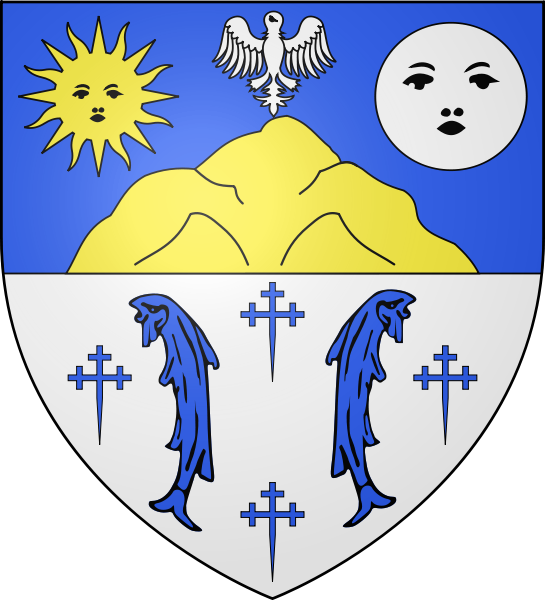

The Chateaus of the Anjou Legitimists who grow grapes and make wine while they wait for the return of the French Monarchy.
Jon Presco
The Château de Bourmont is located in the commune of Freigné in the Department of Maine-et-Loire, Pays de la Loire, France.
History
The La Tour-Landry, then mesh of La Tour-Landry held the lands of Bourmont since XIVe century. By the alliance in 1691, Marie-Hélène de Maillé de La Tour – Landry (1670-1752) with Marie-Henry, count of Ghaisne (1662-1710), it passes to the family of Ghaisne de Bourmont, to which it still belongs.
In 1773, the Château de Bourmont is the place of birth of Louis Auguste Victor de Ghaisne de Bourmont, author of the taken of Algiers in 1830. Conquest by which it will be made Marshal of France.
In 1795, during the chouannerie, the Viscount of Scepaux established his headquarters.
Claire Clémence de Maillé-Brézé (25 February 1628 – 16 April 1694) was a French noblewoman from the Brézé family and a niece of Cardinal Richelieu. She married Louis de Bourbon, Prince of Condé, known as Le Grand Condé (The Great Condé), and became the mother of Henri Jules. She was Princess of Condé and Duchess of Fronsac.
Brézé was the name of a noble Angevin family. The founder and most famous member of the family was Pierre de Brézé (c. 1410-1465), one of the trusted soldiers and statesmen of Charles VII. He was succeeded as seneschal of Normandy by his eldest son, Jacques de Brézé (c. 1440-1490), count of Maulevrier; and then by his grandson, Louis de Brézé (died 1531), husband of the famous Diane de Poitiers, whose tomb in Rouen Cathedral, attributed to Jean Goujon and Jean Cousin the Elder, is a splendid example of French Renaissance work.
The lordship of Brézé passed eventually to Claire Clémence de Maillé, Princess of Condé, who sold it to Thomas Dreux, who took the name of Dreux-Brézé when it was erected into a marquisate. Henri Evrard, marquis de Dreux-Brézé (1762-1829) succeeded his father as master of the ceremonies to Louis XVI in 1781. He died on 27 January 1829, when he was succeeded in the peerage and at court by his son Scipion (1793-1845).
Notable members of the Brézé family[edit source | editbeta]
Pierre de Brézé
Louis de Brézé, seigneur d’Anet (grandson of Pierre)
Claire Clémence de Maillé Brézé
Jean Armand de Maillé-Brézé (brother of Claire Clémence)
Urbain de Maillé-Brézé (1597 – February, 13 1650) , Marshall of France,marquis de Brézé
Château de Brézéis a Castle of XVIe century located on the common namesake, in the Maine-et-LoireDepartment, ten kilometres to the South of Saumur.
The peculiarity of the Château de Brézé lies in its cave network located under the Castle and in ditches, with both parts of everyday life (bakery, stables, magnanerie) military (drawbridge, path). The castle is a ranking as Historical Monuments since 6 March 19791.
The Château de Brézé is a private property belonging to Jean de Colbert, son of fire Mr. the count Bernard de Colbert and the now defunct Marquise Charlotte de Dreux-Brézé.
History[change the code]
Lands are those of the Lords of Brézé from the XIe century. The first Lords of Brézé made many donations to the nearbyAbbey of Fontevraud .
Among these Lords of Brézé, it knows Louis de Brézé , who married Diane de Saint Vallier known as Diane de Poitiers.
In 1448, Gilles de mesh Brézé gets permission to fortify the castle of King René and will dig trenches.
Italian style renaissance Castle and dependencies have been rebuilt at the beginning of the XVIe century by Arthur de cell2.
Urbain de Brézé mesh will be the first marquis after Louis XIII had erected the domain to a marquisate in 1615. He married Nicole du Plessis, sister of Richelieu and they have two children, Armand, grand Admiral of France, who died in Tuscany at the age of 27 years without posterity, and Claire-Clémence , who married Louis II de Bourbon Condé, le grand Condé, and transmit this heritage in 1650.
The grand Condé takes the helm of the Sling, is thus opposed to the Regency during the minority of the young Louis XIV and, in 1653, the castle is occupied by Royal troops.
In 1682, Conde will exchange the Château de Brézé against la Galissonière, belonging to Thomas de Dreux.
In 1685, Thomas de Dreux, Councillor at the Parlement of Paris, was the title of Marquis de Brézé by King Louis XIV is confirmed.
Henri Evrard de Dreux-Brézé, grand master of the ceremonies to Louis XVI will extend part revival of the Castle, and then his son Pierre, Bishop of Moulins, and his grandson Henri Simon will transform the castle which became Gothic Revival thanks to the angevin architect René Hode (pupil of Viollet-le-Duc).
Henri Jules was born to Louis II de Bourbon, Prince de Condé and his wife in 1643. He was five years younger than King Louis XIV. He was the sole heir to the enormous Condé fortune and property. His mother was a niece of Cardinal Richelieu. He was baptised at the Église Saint-Sulpice, Paris on his day of birth. For the first three years of his life, while his father was duc d’Enghien, he was known at court as the duc d’Albret.
Henri Jules’ four surviving daughters, Gobert.
Upon the death of his grandfather, he succeeded to his father’s courtesy title of duc d’Enghien. As a member of the reigning House of Bourbon, he was born a prince du sang with the style of Monsieur le Duc.
Jean Armand de Maillé-Brézé, Duke of Fronsac, Marquis of Brézé (18 October 1619 – 14 June 1646) was a French admiral.
He was born in Milly-le-Meugon, in one of the most powerful French families of the time; his father was Urbain de Maillé-Brézé, marquis de Brézé, Marshal of France, his uncle Cardinal Richelieu, King Louis XIII’s renowned minister, and his brother-in-law, Louis II de Bourbon, Prince de Condé, (better known as the le Grand Condé), was the First Prince of the Blood.
Thanks to his uncle, at the age of seventeen, he received the title of grand-maître de la navigation (Grand-master of Navigation), a new title created by King Louis XIII for Cardinal Richelieu and equivalent to Grand Admiral of France.
One of the leading figures in the Eighty Years’ War, he defeated the Spanish fleet near Cadiz (20 July 1640), and then seized Villafranca. In 1641, he arrived in Portugal to help in the Portuguese Restoration War against Spain. In 1642, he fought an indecisive action against the Spanish forces near Barcelona, and nearly completely destroyed their fleet near Cartagena on 3 July 1643. He was killed on 16 June 1646, during the Battle of Orbetello, where his fleet was defeated.
His remains were buried in the church of Milly le Meugon, abutted to the castle walls.
The Most Serene House of Condé (named after Condé-en-Brie, now in the Aisne département) is a historical French house, a noble lineage of descent from a single ancestor. The name of the house was derived from the title Prince of Condé originally assumed circa 1557 by the French Protestant leader, Louis de Bourbon (1530–1569),[2] uncle of King Henry IV of France, and borne by his male line descendants. It became extinct in 1830 when his eighth generation descendant Louis Henri Joseph de Bourbon died without surviving male issue. The title was held for one last time by Louis d’Orléans, Prince of Condé who died in 1866.
http://en.wikipedia.org/wiki/Princes_of_Cond%C3%A9
Louis was born in Paris, the son of Henri de Bourbon, Prince de Condé and Charlotte Marguerite de Montmorency. His father was a first cousin-once-removed of Henry IV, the King of France, and his mother was an heiress of one of France’s leading ducal families.
Conde’s father saw to it that his son received a thorough education – Louis studied history, law, and mathematics during six years at the Jesuits’ school at Bourges. After that he entered the Royal Academy at Paris. At seventeen, in the absence of his father, he governed Burgundy.
Signature of Gaston, Duke of Orléans at the marriage of the Louis, and Claire Clémence de Maillé on 7 February 1641
His father betrothed him to Claire-Clémence de Maillé-Brézé, niece of the powerful Cardinal Richelieu, chief minister of the king, before he joined the army in 1640
http://a.decarne.free.fr/gencar/dat930.htm#5
http://www.de-bric-et-de-broc.com/France/maille.html
http://www.de-bric-et-de-broc.com/France/tourlandry.html#francoisdemaille
Geoffroy de la Tour-Landry
(1320-1391)
1) ép. 1353 Jeanne de Rougé
(?-ap. 1383)
soeur de Mahaut de Rougé
et fille de Bonnabes de Rougé
seigneur d’Erval
vicomte de la Guerche
chambellan du roi
et de Jeanne de Maillé
fille de Jean de Maillé
seigneur de Clervaux
et de Thomasse de Doué
2) ép. 1380 Marguerite des Roches
veuve de Jean Clérambault
Dame de la Motte-de-Pendu
Ponthus de la Tour-Landry
(1381-1447)
chevalier
seigneur de la Tour landry
de Bourmont
du Loroux-Bottereau
baron de Bouloir en Vendomois
ép. N, Sidoine (v.1380-?)
http://www.de-bric-et-de-broc.com/France/tourlandry.html#francoisdemaille
Urbain de Maillé-Brézé (French pronunciation: [yʁbɛ̃ də maje bʁeze]) (1597 – February 13, 1650), was a Marshal of France during the Thirty Years’ War and Franco-Spanish War (1635).
He was married to Nicole du Plessis-Richelieu, sister of cardinal Richelieu.
Urbain de Maillé-Brézé had a brilliant career. He was ambassador in Sweden in 1631, Marshal of France in 1632 and viceroy of Catalonia in 1641.
Urbain de Maillé-Brézé fought in many battles. He participated in the Siege of La Rochelle (1627–1628). In 1635 he conquered Heidelberg and Speyer, together with Jacques-Nompar de Caumont, duc de la Force, at the head of the Army of Germany.
In 1635 he was put, together with Gaspard III de Coligny, at the head of the French army that invaded Flanders. They victorious at the Battle of Les Avins against the Spanish, but the Siege of Leuven was a complete failure.
In 1641, together with duc de la Meilleraye, he conquered Lens in 3 days, Aire-sur-la-Lys (august) and Bapaume (September).
After these successes Maillé-Brézé was made Viceroy of newly conquered Catalonia. He attempted to drive the Spanish from Collioure, Perpignan and Sainte-Marie, but failed. In May 1642 he was replaced and retired from active duty to spend the rest of his life in his castle in Milly-le-Meugon.
Marriage and children[edit source | editbeta]
He married on November 25, 1617 Nicole du Plessis-Richelieu (1587–1635), sister of cardinal Richelieu. They had two children :
Jean Armand de Maillé-Brézé, (1619-1646), French admiral.
Claire-Clémence de Maillé-Brézé, (1628–1694), married Louis II de Bourbon, prince de Condé
http://histoire.mayenne.53.free.fr/conf911.htm
The Kingdom of Louisiana
Posted on January 16, 2020 by Royal Rosamond Press


https://en.wikipedia.org/wiki/Divine_right_of_kings
Evangelical leaders who surround The Impeached President, have promised millions of American Citizens a Kingdom of God. They are not qualified to make this offer. They bid The Impeached President to return prayers back in our schools to back up their false claims as Kingdom Givers. Our National Intelligence has asked Congress not to make their report public for fear it will enrage The Impeached President who divided our Nation in twain on the orders of these false prophets and Kingdom Makers! They too should be arrested for undermining the Government of the United States – forever – and for destroying our Diplomatic Core.
Thomas Jefferson believed the Louisiana Purchase was illegal and went against the Constitution of the first Thirteen States. I concur.
The Second Kingdom of God shall be called….Lousiana! The True Knowledge of God shall prevail! Ignorance will be vanquished!
The blue area shall be given to the Dakota People. Alaska will be a Kingdom. The Gadson Purchase will be the Kingdom of the Kurds. The pink section will be the Kingdom of California. The brown area will be the American Kingdom. This is where the Evangelicals will live so they can continue to argue and pray for Doomsday, while the rest of North America, lives in peace!
So bet it
I do see a purple are down there. This will be the Kingdom of Artica. Only artists, writers, and other creative people can dwell here.
Need I say, there will be a Kingdom of Texas.
John ‘The King Maker’

https://www.cnn.com/2020/01/15/europe/putin-reforms-analysis-intl/index.html
Reclaiming Louisiana Territory For The Angvians
Posted on August 24, 2018by Royal Rosamond Press





Above are photos of Virginia Hambley, and I protesting the second Iraq war. I am reminding people of Reagan’s ‘Evil Empire’ and claiming Bush’s ‘Axis of Evil’ is fake. That couple is her kindred in line for the throne of France.
Now that I am aware I am the embodiment of John Dee, and a descendant of Dee’s compatriots, the Rosenberg: and with Sir Francis Drake claiming California for Queen Elizabeth, my claim of the Lousiana Territory, is rendered more valid.
Both the Democrats and Republicans are failing to do their job during our Constitutional Crisis due to Rapture Rat Voters and the coming elections. I have warned my readers for fifteen years these hereitcs will take over, and destroy, our Democracy. Anticipating this sad state of affairs I claimed the Lousiana Territory.
https://www.churchmilitant.com/news/article/french-royalists-commemorate-murder-of-king-louis-xvi
My kindred, John Fremont, and the Benton family, secured California, and the Oregon Territory from Britain, and the Habsburg family. John was the first Republican candidate for President, which he co-founded. His party lies in disgrace and ruin.
PARIS (ChurchMilitant.com) – On the 224th anniversary of the execution of King Louis XVI, French royalists gathered Saturday on Place de la Révolution (now Place de la Concorde) to commemorate his death. And in the Basilica of St-Denis, Prince Louis-Alphonse de Bourbon, the Duke of Anjou and descendant of the French kings, attended a Requiem Mass with his wife, Princess Marie-Marguerite.
The group that congregated on the Place de la Révolution, site of the king’s execution, waved flags bearing fleurs-de-lis — symbol of Royal France — and offered speeches honoring the memory of the fallen monarch, killed by guillotine on January 21, 1793, after five months’ imprisonment at the hands of anti-Catholic Jacobins. Heavily influenced by freemasonry, the revolutionaries had protested against the ancien régime, represented by the Catholic Church and the Catholic monarchy.
My Fiance With Moon and Star
Posted on August 2, 2018by Royal Rosamond Press
King of Oregon and California
Posted on October 3, 2013by Royal Rosamond Press


Virginia and I are no longer engaged to be married. I posted this for the Russian Trolls to see. Putin wants to bring back the Russian Monarchy. I wanted to get in his way – and Trumps. If you recall the Bourbons opposed Napoleon. Well, Virginia’s family are the Bourbon who tried to stop the Emperor who illegally sold the Lousiana Territory which I give to Virginia as an engagement gift. She, and her family, thought/think I am mad. But I was out to thwart the Evangelicals who think Putin is a co-savior of religion in America. I am a real Freedom Fighter, and the Real James Bond, who would be tackling all the issues that I have met head-on, without M-16’s help. I might be the only man on the job! I need an agent to promote me!
Reclaiming the Lousiana Territory
Posted on October 1, 2013by Royal Rosamond Press




Today, October 1, 2013, I John Gregory Presco, the fiancé of Virginia Hambley de Bourmont, claim what was the Lousiana Territory in the name of the House of Bourbon, wherein said Territory, will be established a Democratic Monarchy, as was established by the Ligitimists of France.
Three generations of de Bourmonts, personally accompanied the Duchess Du Berry in her families efforts to claim the throne of France in the name of the Bourbons.
Today, the President of the United States claimed our Democracy was shut down by Republican Congressmen who were conducting a “ideological crusade”. I have identified this crusade as coming from the economic ideology being pushed upon this nation by Libertarianism and libertarian Republicans who site the economic philosophy of Jean Baptiste SAY, who is the brother of another economist philosopher, Louis (Augustin) SAY, who is Virginia’s great great, great, grandfather.
This is to SAY, if Libertarians believe they own the right to shut down the Government of the United States of America in the name Jean-Baptise Say, and are the true owners and rulers of this Democracy, then, it stands to reason this is a Family ‘‘ideological crusade’’, owned by the linear descendants of the Say family.
It is my intent to apply the de Bourmont Family Ideology to the formation of the Democratic Bourban Monarchy, and make a claim to the Louisiana Territory, declaring this sale null and void because it went against the very philosophy of the Say Economists who promoted ‘Small Government’ and no Government Involvement in Economic Matters. This so happens to be what the opponents of the Louisiana Purchase believed in, as it drastically affected the adventure capitalist pioneers who had a right to exploit the land and resources as they saw fit. This right has been held by royal families in Europe and America.
With the coming union of Virginia Hambley, and John Presco, we also have the purchase of the Oregon Territory as promoted by my kindred, Senator Thomas Benton who son-in-law. John Fremont co-founded the Republican Party and was its first Presidential nominee.
Whether there will be a hereditary monarchy established in the New Bourbon Monarchy in America, remains to be determined – by fate? If this is what was meant to be, then I hereby recognize Virginian Hambley’s siblings, Caroline, Heloise, and Mark Hambley – and their children – as Heirs to the Democratic Throne of New France in America.
It is my desire to see a marriage between the rulers and subjects of New France, with the Arts and the New Enlightened Business Man, who will take the very best from the Say Brothers in order to keep this Economy going forward, and give a base for all Americans to reunite.
Above is a photograph of me holding on to the root of the grape vines Clarke Hambley planted in frot of his daughters’ house seventeen years ago. He built the trellis. I believe he felt guilty for denying his children their French Heritage by marrying Elizabeth de Bourmont. He had seen the Bourmont castle surrounded by vineyards.
Because Clarke was born in a Democracy, and his wife was born in France, here is the Root of the Bourbon Democratic
Monarchy in America brought to this Democracy to take hold.
On this day, I hereby declare Virginia Hambley de Bourmont ‘Titular Queen of the Bourbon Democratic Monarchy in America’. May she rule with dignity and grace.
As a wedding present I will gift unto her the Oregon Territory that was established and protected by my kindred. For the reasons set forth by Jean-Baptise Say, this territory should not have been purchased by the Government of the United States, and is now under the protectorate Virginia Hambley de Bourmont ‘Queen of the House of Bourbon in America’.
As for Religious Permission, I am a Nazarite after the Prophet Samuel, known as ‘The King Maker’.
So be it!
Yours Truly
John Gregory Presco
Founder of New France
Copyright 2013
“Benton was instrumental in the sole administration of the Oregon Territory. Since the Anglo-American Convention of 1818, Oregon had been jointly occupied by both the United States and the United Kingdom.”
Some historians argue that Jefferson was a hypocrite in the Louisiana Purchase, primarily pointing to the fact that Jefferson was a strict constructionist in his views on the Constitution, yet allegedly took a loose constructionist view of the Constitution regarding the Louisiana Purchase.
WASHINGTON (AP) — President Barack Obama says House Republicans have shut down the federal government over an ‘‘ideological crusade’’ against his health care law.
Obama is speaking in the Rose Garden on the first day of the government shutdown. He says the longer the shutdown continues, the worse the impact will be.
The president says Republicans should not be able to hold the entire economy ‘‘hostage.’’ He is urging them to reopen the government quickly and allow furloughed federal employees to go back to work.
The government shut down because Congress did not pass a funding bill ahead of Monday’s midnight deadline for the end of the 2013 fiscal year.
https://rosamondpress.wordpress.com/2013/09/30/genealogy-for-virginia-hambley/
This argument goes as follows:
The American purchase of the Louisiana territory was not accomplished without domestic opposition. Jefferson’s philosophical consistency was in question because of his strict interpretation of the Constitution. Many people believed he, and other Jeffersonians such as James Madison, were being hypocritical by doing something they surely would have argued against with Alexander Hamilton. The Federalists strongly opposed the purchase, favoring close relations with Britain over closer ties to Napoleon, and were concerned that the United States had paid a large sum of money just to declare war on Spain.[citation needed]
Both Federalists and Jeffersonians were concerned about whether the purchase was unconstitutional. Many members of the United States House of Representatives opposed the purchase. Majority Leader John Randolph led the opposition. The House called for a vote to deny the request for the purchase, but it failed by two votes, 59–57. The Federalists even tried to prove the land belonged to Spain, not France, but available records proved otherwise.[17]
The Federalists also feared that the political power of the Atlantic seaboard states would be threatened by the new citizens of the west, bringing about a clash of western farmers with the merchants and bankers of New England. There was concern that an increase in the number of slave-holding states created out of the new territory would exacerbate divisions between north and south as well. A group of northern Federalists led by Massachusetts Senator Timothy Pickering went so far as to explore the idea of a separate northern confederacy.
Another concern was whether it was proper to grant citizenship to the French, Spanish, and free black people living in New Orleans, as the treaty would dictate. Critics in Congress worried whether these “foreigners”, unacquainted with democracy, could or should become citizens.[18]
Most domestic objections were politically settled, overridden, or simply hushed up.[dubious – discuss] One problem, however, was too important to argue down convincingly: Napoleon did not have the right to sell Louisiana to the United States.[dubious – discuss] The sale violated the 1800 Third Treaty of San Ildefonso in several ways.[dubious – discuss] Furthermore, France had promised Spain it would never sell or alienate Louisiana to a third party. Napoleon, Jefferson, Madison, and the members of Congress all knew this during the debates about the purchase in 1803.[dubious – discuss] Spain protested strongly, and Madison made some attempt to justify the purchase to the Spanish government, but was unable to do so convincingly.[dubious – discuss] So, he tried continuously until results had been proven remorsefully inadequate.
The Louisiana Territory was broken into smaller portions for administration, and the territories passed slavery laws similar to those in the southern states but trying to encompass the preceding French and Spanish rule (for instance, Spain had prohibited slavery of Native Americans in 1769, but some slaves of mixed African-Native American descent were still being held in St. Louis when the US took over the Louisiana Territory).[35] In a freedom suit that went from Missouri to the US Supreme Court, slavery of Native Americans was finally ended in 1836.[35] The institutionalization of slavery under US territorial law in the Louisiana Territory contributed to the American Civil War a half century later.[34] As states organized within the territory, the status of slavery in each state became a matter of contention in Congress, as southern states wanted slavery extended to the west, and northern states just as strongly opposed new states being admitted as slave states. The Missouri Compromise of 1820 was a temporary solution.
Senator Benton’s greatest concern, however, was the territorial expansion of the United States to meet its “manifest destiny” as a continental power. He originally considered the natural border of the US to be the Rocky Mountains, but expanded his view to encompass the Pacific coast. He considered unsettled land to be insecure, and tirelessly worked for settlement. His efforts against soft money were mostly to discourage land speculation, and thus encourage settlement.
Benton was instrumental in the sole administration of the Oregon Territory. Since the Anglo-American Convention of 1818, Oregon had been jointly occupied by both the United States and the United Kingdom. Benton pushed for a settlement on Oregon and the Canadian border favorable to the United States. The current border at the 49th parallel set by the Oregon Treaty in 1846 was his choice; he was opposed to the extremism of the “Fifty-four forty or fight” movement during the Oregon boundary dispute.
Daguerreotype of Thomas Hart Benton, ca. 1850
Benton was the author of the first Homestead Acts, which encouraged settlement by giving land grants to anyone willing to work the soil. He pushed for greater exploration of the West, including support for his son-in-law John C. Frémont’s numerous treks.
A titular ruler, or titular head, is a person in an official position of leadership who possesses few, if any, actual powers.[1] Sometimes a person may inhabit a position of titular leadership and yet exercise more power than would normally be expected, as a result of their personality or experience. A titular ruler is not confined to political leadership but can also reference any organization, such as a corporation.
Etymology[edit]
Titular is formed from a combination of the Latin titulus (title) and the English suffix -ar,[2] which means “of or belonging to.” [3]
Development[edit]
In most parliamentary democracies today, the Head of State has either evolved into, or was created as, a position of titular leadership. In the former case, the leader may often have significant powers listed within the state’s constitution, but is no longer able to exercise them, due to historical changes within that country. In the latter case, it is often made clear within the document that the leader is intended to be powerless. Heads of State who inhabit positions of titular leadership are usually regarded as symbols of the people they “lead.”
http://en.wikipedia.org/wiki/Oregon_Country
http://en.wikipedia.org/wiki/Oregon_Territory
http://en.wikipedia.org/wiki/Thomas_Hart_Benton_(politician)
Jean Etienne SAY
Né en 1739
Décédé en 1806 , à l’âge de 67 ans
Parents
Jean SAY
Jeanne MUSSARD
Union(s) et enfant(s)
Marié avec Françoise CASTANET dont
Jean Baptiste SAY
Denis (André) SAY
Jean Honoré SAY
Louis (Augustin) SAY
Louis (Augustin) SAY
Parents
Jean Etienne SAY 1739-1806
Françoise CASTANET
Union(s) et enfant(s)
Marié avec Constance MARESSAL dont
Gustave SAY
Achille SAY
Constant SAY
Adolphe SAY
Louis (Octave) SAY
Laure SAY
Constance SAY
A libertarian Republican is a person who subscribes to libertarian philosophy while typically voting for and being involved with the United States Republican Party.
Sometimes the terms Republitarian or liberty Republican are used as well. Libertarian Republicans’ views are similar to Libertarian Party members, but differ in regard to the strategy used to implement libertarian policies.[citation needed]
http://en.wikipedia.org/wiki/Libertarian_Republican
http://en.wikipedia.org/wiki/Libertarianism
Libertarianism (Latin: liber, “free”)[1] is a set of related political philosophies that uphold liberty as the highest political end.[2][3] This includes emphasis on the primacy of individual liberty,[4][5] political freedom, and voluntary association. It is the antonym to authoritarianism.[6] Different schools of libertarianism disagree over whether the state should exist and, if so, to what extent.[7] While minarchists propose a state limited in scope to preventing aggression, theft, breach of contract and fraud, anarchists advocate its complete elimination as a political system
Louis Say (1774–1840) was a French economist. Brother of Jean-Baptiste Say, he issued a number of economic pamphlets criticizing the latter’s opinions.
Adam Smith (5 June 1723 OS (16 June 1723 NS) – 17 July 1790) was a Scottish moral philosopher and a pioneer of political economy. One of the key figures of the Scottish Enlightenment,[1] Adam Smith is best known for two classic works: The Theory of Moral Sentiments (1759), and An Inquiry into the Nature and Causes of the Wealth of Nations (1776). The latter, usually abbreviated as The Wealth of Nations, is considered his magnum opus and the first modern work of economics. Smith is cited as the “father of modern economics” and is still among the most influential thinkers in the field of economics today.[2]
http://en.wikipedia.org/wiki/Adam_Smith
David Ricardo (18 April 1772 – 11 September 1823) was a British political economist. He was often credited with systematizing economics, and was one of the most influential of the classical economists, along with Thomas Malthus, Adam Smith, and John Stuart Mill.[2][3] He was also a member of Parliament, businessman, financier and speculator, who amassed a considerable personal fortune. Perhaps his most important contribution was the theory of comparative advantage in which he advocates that a nation should abandon industries in which it is internationally competitive in order to concentrate solely on those industries in which it is most competitive.
 Rosamond Press

Leave a comment