
Savoy of California
I have been dealing with real witches – all my life! Zena Halpern was one lf them. She had a spell-helper that hid in the background. I was approached by someone from the History Channel, and she asked for his number. I gave it to her. Big mistake. She put an evil spell on the Oak Island brothers. I took her book of lies with me two years ago when I had an operation, and read half of it, Was this why I tried to shout…
“You’ll never find the Grail!” and shouted “You’ll never take the Grail from me!”
I will be contacting the Brothers and see if they want to follow the…
HUCK FINN ROAD TO CALIFORNIA SAVOY
These stupid withches have been steling my energy and are quite pleased with themselve. But, what they got, is….
STARFISH’S ENERGY
She is my Spirit fron another world, who works with me. Let us call her….
A DAUGHTER OF ROLLO
Let us take time to deal with these Dark Turd Witches!
“The government finally forced the Opera to mount Le Siege de Corinthe. Its success was so striking that the evening of the first representation (October 9, 1826), the public made almost a riot for half an hour, because Rossini, called loudly by an enthusiastic crowd, refused to appear upon the stage.:”
XXV
THE FINE ARTS
From 1824 to the end of the Restoration, the department of the Fine Arts, connected with the ministry of the King’s household, was confided to the Viscount Sosthenes de la Rochefoucauld, son of the Duke de Doudeauville. He was then at the head of the museums, the royal manufactures, the Conservatory and the five royal theatres,—the Opera, the Francois, the Odeon, the Opera-Comique, and the Italiens.
From the point of view of arts and letters the reign of Charles X. was illustrious. The King encouraged, protected, pensioned the greater number of the great writers and artists who honored France. What is sometimes called in literature the generation of 1830 would be more exactly described as the generation of the Restoration. This regime can claim the glory of Lamartine, as poet. A body-guard of Louis XVIII., he was the singer of royalty. He published, in 1820, the first volume of his Meditations Poetiques, in 1823 the second, and in 1829 the Harmonies. His literary success opened to him the doors of diplomacy. He was successively attache of the Legation at Florence, Secretary of Embassy at Naples and at London, Charge d’Affaires in Tuscany. When the Revolution of 1830 broke out, he had just been named Minister Plenipotentiary to Greece.
Victor Hugo published his Odes et Ballades from 1822 to 1828. “La Vendee,” “Les Vierges de Verdun,” “Quiberon,” “Louis XVII,” “Le Retablissement de la Statue de Henri IV.,” “La Mort du due de Berry,” “La Naissance du duc de Bordeaux,” “Les Funerailles de Louis XVIII.,” “Le Sacre de Charles X.,” are true royalist songs. Alexandre Dumas, FILS, in receiving M. Leconte de Lisle at the French Academy, recalled “the light of that little lamp, seen burning every night in the mansard of the Rue Dragon, at the window of the boy poet, poor, solitary, indefatigable, enamoured of the ideal, hungry for glory, of that little lamp, the silent and friendly confidant of his first works and his first hopes so miraculously realized.” Who knows? without the support of the government of the Restoration the light of that little lamp might less easily have developed into the resplendent star that the author of La Dame aux Camelias indicated in the firmament.
The author of Meditations Poetiques and the author of the Odes et Ballades were sincere in the expression of their political and religious enthusiasm. These two lyric apostles of the throne and the altar, these two bards of the coronation, obeyed the double inspiration of their imagination and their conscience. Party spirit should not be too severe for a regime that suggested such admirable verses to the two greatest French poets of the nineteenth century—to Lamartine and to Victor Hugo.
Let us recall also that in Victor Hugo it was not only the royalist poet that Charles X. protected, it was also the chief of the romantic school; for the government, despite all the efforts of the classicists, caused Hernani to be represented at the Francais, a subsidized theatre. When the Academy pressed its complaint to the very throne to prevent the acceptance of the play, the King replied wittily that he claimed no right in the matter beyond his place in the parterre. The first representation of Hernani took place the 25th of February, 1830, and the author, decorated, pensioned, encouraged by Charles X., did not lose the royal favor, when, on the 9th of March following, he wrote in the preface of his work: “Romanticism, so often ill-defined, is nothing, taking it all in all—and this is its true definition, if only its militant side be regarded—but liberalism in literature. The principle of literary liberty, already understood by the thinking and reading world, is not less completely adopted by that immense crowd, eager for the pure emotions of art, that throngs the theatres of Paris every night. That lofty and puissant voice of the people, which is like that of God, writes that poetry henceforth shall have the same matter as politics! Toleration and liberty!”
The first representation of a work that was a great step forward for the romantic school, Henri III et sa Cour, by Alexandre Dumas, had already taken place at the Francais, February 11, 1829. The 30th of March, 1830, the Odeon gave Christine de Suede, by the same author.
In 1829, Alfred de Vigny had represented at the Francais his translation in verse of Othello. It was from 1824 to 1826 that the poet published his principal poems. It was in 1826 that his romance of Cinq-Mars appeared. Victor Hugo published Les Orientates in 1829; Alfred de Musset, Les Contes d’Espagne et d’Italie in 1830. It may be said then that before the Revolution of 1830, romanticism had reached its complete expansion.
Note, also, that the government of Charles X. always respected the independence of writers and artists, and never asked for eulogies in exchange for the pensions and encouragement it accorded them with generous delicacy. It named Michelet Maitre de Conferences at the Ecole Normale in 1826. It pensioned Casimir Delavigne, so well known for his liberal opinions, and Augustin Thierry, a writer of the Opposition, when that great historian, having lost his eyesight, was without resources. It ordered of Horace Vernet the portraits of the King, the Duke of Berry, and the Duke of Angouleme, as well as a picture representing a “Review by Charles X. at the Champ-de-Mars,” and named the painter of the battles of the Revolution and the Empire director of the School of Rome.
From the point of view of painting as well as of letters, the Eestoration was a grand epoch. Official encouragement was not wanting to the painters. Gros and Gerard received the title of Baron. There may be seen to-day in one of the new halls of the French School at the Louvre, the pretty picture by Heim, which represents Charles X. distributing the prizes for the Exposition of 1824, where Le Vaeu de Louis XIII. by Ingres had figured, and where the talent of Paul Delaroche had been disclosed. In the Salon Carre of the Louvre, the King, in the uniform of general-in-chief of the National Guards, blue coat with plaits of silver, with the cordon of the Saint Esprit, and in high boots, himself hands the cross of the Legion of Honor to the decorated artists, among whom is seen Heim, the author of the picture.
Ingres, chief of the Classic School, and Delacroix, chief of the Romantic School, shone at the same time. In 1827, the first submitted to general admiration l’Apotheose d’Homere and Le Martyre de Saint Symphorien. The same year Delacroix, who had already given in 1824 Le Massacre de Scio, in 1826 La Mort du Doge Mariano Faliero, exhibited LE Christ au Jardin des Oliviers, acquired for the Church of Saint Paul; Justinien,—for the Council of State; and La Mort de Sardanapale.
When the Musee Charles X. (the Egyptian Museum) was opened at the Louvre, the government ordered the frescoes and ceilings from Gros, Gerard, Ingres, Schnetz, Abel de Pujol. M. Jules Mareschal says:—
“The right-royal munificence of Charles X. was not marked by niggardliness in the appreciation of works of art any more than in the appreciation of the works of science and letters. But, as is known, it is not by interest alone that the heart of the artist is gained and his zeal stimulated. They are far more sensitive to the esteem shown them, to the respect with which their art is surrounded, and to the taste manifested in the judgment of their productions. Now, who more than Louis XVIII. and Charles X. possessed the secret of awakening lively sympathy in the world of artists and men of letters? Who better than their worthy counsellor seconded them in the impulses of generous courtesy so common with them? Thus from this noble and gracious manner of treating men devoted to art and letters, which marked the royal administration of the Fine Arts under the Restoration, sprang an emulation and a good will which on all sides gave an impetus to genius, and brought forth the new talents.”
In theatrical matters, the Viscount Sosthenes de La Rochefoucauld exercised a salutary influence. He loved artists, and wishing to raise their situation, moral and social, he deplored the excommunication that had been laid on the players.
Speaking of the stage, he wrote in a report addressed to Charles X., June 20,1825: “I perceive that I have forgotten the most essential side,—the moral, I will even say the religious side. What glory it would be for a king to raise this considerable class of society from the abject situation in which it is compelled to live! Sacrificed to our pleasures, it has been condemned to eternal death, and a king believes his conscience quiet! For a long time I have cherished this thought; we must begin by elevating these people, as regards their art, by reforming, little by little, the swarming abuses that awaken horror, and end by treating with Rome in order to obtain some just concessions that would have important results.”
In another report to the King, dated October 21, 1826, M. de La Rochefoucauld wrote, apropos of the obsequies of Talma:—
“A profound regret for me is the manner of the great tragedian’s death. Sire, would it not be worthy of the reign, the breast, the conscience of Charles X., to draw this class of artists from the cruel position in which they are left by that excommunication that weighs upon them without distinction? Whether they conduct themselves well or ill, the Church repels them; this reprobation holds them perforce in the sphere of evil and disorder, since they have no interest in rising above it. Honor them, and they will honor themselves. It is time to undertake the reform of what I call a pernicious prejudice. The clergy itself is not far from agreeing on these ideas.”
In his relations with authors, artists, directors of theatres, the Viscount was courtesy itself. We read in one of his reports (June 17, 1825):—
“Rossini is the first composer of Europe; I have succeeded in attracting him to the service of France; he had before been tempted in vain. Jealous of his success, people have cried out that he was an idler, that he would do nothing. I secured him by the methods and in the interest of the King; I can do with him as I will, as with all the artists, though they are most difficult people. They must be taken through the heart. Rossini has just composed a really ravishing piece; and, touched by the manner in which he is treated, he wishes to present it to the King in token of his gratitude, and wishes to receive nothing. He is right, but the King cannot accept gratis so fine a present; I propose that the King grant him the cross of the Legion of Honor and announce it himself to him to-morrow—which would be an act full of grace. All favors must come always from the King.”
Great tenacity was needed in the government of Charles X. to get the Chefs-d’Oeuvre of Rossini represented at the Opera. A little school of petty and backward ideas rushed, under pretext of patriotism, but really from jealousy, systematically to drive from the stage everything not French. For this coterie Rossini and Meyerbeer were suspects, intruders, who must be repulsed at any cost. The government had the good sense to take no account of this ridiculous opposition, which refused to recognize that art should be cosmopolitan. Before seeing his name on the bills of our first lyric stage, Rossini required no less than nine years of patience. All Europe applauded him, but at Paris he had to face the fire of pamphleteers rendered furious by his fame. The government finally forced the Opera to mount Le Siege de Corinthe. Its success was so striking that the evening of the first representation (October 9, 1826), the public made almost a riot for half an hour, because Rossini, called loudly by an enthusiastic crowd, refused to appear upon the stage.
The maestro gave at the Opera Moise, March 26, 1826; Le Comte Ory, August 20, 1828; Guillaume Tell, August 20, 1829. (At this time the first representations of the most important works took place in midsummer.) The evening of the first night of Guillaume Tell, the orchestra went, after the opera, to give a serenade under the windows of the composer, who occupied the house on the Boulevard Montmartre, through which the Passage Jouffroy has since been cut. The 10th of February, 1868, on the occasion of the hundredth representation of the same work, there was a repetition of the serenade of 1829. The master then lived in the Rue Chaussee d’Antin, No. 2. Under his windows the orchestra and chorus of the opera commenced the concert about half an hour after midnight, by the light of torches, and Faure sang the solos.
The government which secured the representation of Guillaume Tell was not afraid of the words “independence” and “liberty.” A year and a half before, the 20th of February, 1828, there had been given at the Opera the chef-d’oeuvre of Auber, La Muette de Portici, and the Duchess of Berry, a Neapolitan princess, had applauded the Naples Revolution put into music.
The government of Charles X. protected Meyerbeer as well as Rossini. Robert le Diable was only played under the reign of Louis Philippe, but the work had already been received under the Restoration.
During the reign of Charles X. the fine royal theatres reached the height of their splendor: the Francais and the Odeon were installed in their present quarters; the Opera in the hall of the Rue La Peletier, excellent as to acoustics and proportions; the Italiens in the Salle Favart (where they remained from 1825 to 1838); the Opera Comique in the Salle Feydeau, until the month of April, 1829, when it inaugurated the Salle Ventadour. Talma, Mademoiselle Duchesnoir, Mademoiselle Mars, triumphed at the Francais; Mademoiselle Georges, at the Odeon; Nourrit, Levasseur, Madame Damoreau, Taglioni, at the Opera; Sontag, Pasta, Malibran, and Rubini at the Italiens.
The Viscount de la Rochefoucauld wished in every way to raise the moral level of the theatre. He forbade subscribers, even the most influential, the entree behind the scenes of the Opera, because these persons had not always preserved there the desirable decorum. Thence arose rancor and spite, against which he had to contend during his entire administration. He wrote to the King, July 29, 1828:—
“A cabal is formed to deprive me of the direction of the theatres; and by whom and for what? It is a struggle, Sire, between good and evil. It is sought to maintain, at any cost, the abuses I have dared to reform. They throw a thousand unjust obstacles in my way. Gamblers are mixed up in it too; they wish to join this ignoble industry and the theatres. It is a monstrous infamy. The opera must be reached at all hazards, the coulisses must be entered; these are the abuses that must be revived. How can it be done? By removing the theatres from troublesome authority … Sire, Your Majesty shall decide, and must defend me with a firm will in the interest, I venture to declare, of order; you must defend yourself also in the interest of morals and of art, and of a great influence of which it is sought to deprive you.”
M. de La Rochefoucauld had the last word, and remained at the head of the direction of the Fine Arts until the close of the Restoration. To the credit of his administration there must still be added the creation of the school of religious music, directed by Choron, and the foundation of the concerts of the conservatory with Habeneck, and a little against the wishes of Cherubini. The chefs-d’oeuvre of German music were brought out as well as those of Italian music. The Viscount performed his task con amore, as they say on the other side of the Alps. He wrote to Charles X. January 12, 1830:—
“How many reflections must have come to the King on regarding the picture of the Coronation! I divined the thought that he did not complete, and my eyes filled with tears. Oh, how much I feel and imagine all the ennui given to the King by these barren and unfortunate politics! I detest them more even than the King detests them. Ungrateful offspring of the times, they fly away, rarely leaving even a memory. How much I prefer the arts!”
This was also the feeling of the Duchess of Berry, who, during all the Restoration, fled from surly politics to live in the region, radiant and sacred, of art and charity. The taste of this Italian lady for painting and music was a veritable passion. She was forever to be found in the museums, the expositions, the theatres. She caught the melodies by heart and was always interested in new works. An expert, a dilletante, was no better judge of pictures and operas; the great artists who shone in the reign of Charles X. received from the amiable Princess the most precious encouragements. Nor did she forget to encourage the efforts of beginners. “Who, then,” she said, “would buy the works of these poor young people, if I did not?”
From Wikipedia, the free encyclopedia
| The Viscount of La Rochefoucauld | |
|---|---|
,_(1785-1864),_(homme_politique),_PH28751.jpg) La Rochefoucauld, by Mayer Frères and Pierson, c. 1860 La Rochefoucauld, by Mayer Frères and Pierson, c. 1860 | |
| Deputy for Marne | |
| In office 5 February 1828 – 16 May 1830 | |
| In office 7 October 1815 – 5 September 1816 | |
| Director-General of Fine Arts | |
| In office August 1824 – July 1830 | |
| Preceded by | Inaugural holder |
| Succeeded by | Edmond Cavé (in 1833) |
| Personal details | |
| Born | Louis François Sosthènes de La Rochefoucauld 19 February 1785 Paris, France |
| Died | 5 October 1864 (aged 79) Château d’Armainvilliers, Seine-et-Marne, France |
| Spouse(s) | Elisabeth de Montmorency Laval (m. 1779; died 1841) Angélique Herminie de La Brousse de Verteillac (m. 1841; died 1864) |
| Children | 6 |
| Parent(s) | Ambroise-Polycarpe de La Rochefoucauld Bénigne-Augustine Le Tellier de Louvois |
| Awards | Order of Saint-Louis Order of Saint Januarius |
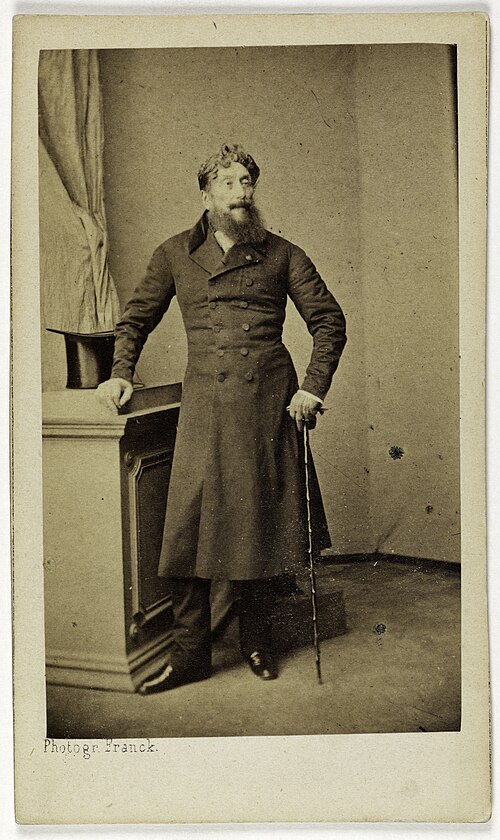
Louis François Sosthènes I de La Rochefoucauld, Viscount of La Rochefoucauld, 2nd Duke of Doudeauville GE (19 February 1785 – 5 October 1864), was a 19th-century French ultra-royalist politician. From 1814 to 1836, he was aide-de-camp to Charles, Count of Artois (future Charles X) and from 1824 to 1830, the King’s Director of Fine Arts. He served in the Chamber of Deputies in 1815 and from 1827 to 1830 during the Bourbon Restoration, until his retirement from public life after the July Revolution in 1830. From 1861 to 1864 he published his memoirs with his correspondence in fifteen volumes.
Early life
He was born in Paris on 19 February 1785. He was the son of Ambroise-Polycarpe de La Rochefoucauld, 1st Duke of Doudeauville, and heiress Bénigne-Augustine Le Tellier de Louvois.[1] His sister was Françoise Charlotte Ernestine de La Rochfoucauld, who married Pierre Jean Julie Chapt, Marquis of Rastignac.[2]
His paternal grandparents were Anne-Sabine-Rosalie de Chauvelin (a daughter of Germain Louis de Chauvelin) and Brig. Jean-François de La Rochefoucauld, 5th Marquis of Surgères, who was Governor of Chartres.[3] His maternal grandparents were Charlotte-Bénigne Le Ragois de Bretonvilliers and Charles-François-César Le Tellier de Louvois (a descendant of François-Michel le Tellier, Marquis de Louvois). His niece, Zénaïde Chapt de Rastignac, married François XIV de La Rochefoucauld, 9th Duke of La Rochefoucauld (eldest son and heir of François de La Rochefoucauld, 8th Duke of La Rochefoucauld)[4] His aunt, Anne Alexandrine Rosalie de La Rochefoucauld, Countess of Durtal, was guillotined in Paris in 1794 during the Reign of Terror.[5][6]
Career
.jpg)
La Rochefoucauld was appointed aide-de-camp to General Jean Joseph Dessolles immediately after the Allies entered Paris in 1814. He was sent to Nancy to inform Charles, Count of Artois of the formation of the provisional government and the fall of Napoleon. Due to his role in the reestablishment of the “legitimate throne” after the fall of Napoleon, including attempting to bring down the statue of Napoleon on the Vendôme Column, he was excluded from the amnesty that Bonaparte promulgated, on his return from the island of Elba.[7]
La Rochefoucauld accompanied King Louis XVIII to Ghent, and was appointed Colonel of the 5th Legion of the National Guard of Paris and aide-de-camp to Charles, Count of Artois during the Second Restoration.[8]
On 22 August 1815, he was elected Deputy for Marne in the Chamber of Deputies, voting with the ultra-royalist majority of the “Chambre introuvable” He was unable to be re-elected in 1816 as he was under the newly required age, however, he remained aide-de-camp to the Count of Artois. As an intimate of Zoé Talon du Cayla, he continued his influence in favor of absolute monarchy by pushing her towards Louis XVIII.[9]
Director of Fine Arts

In August 1824, King Louis XVIII named him Director General of the Division of Fine Arts and Royal Theaters, a department within the Ministry of the Interior under Minister Jacques Joseph de Corbière. When the King died a few days later, he selected Victor Hugo as the official poet for the Coronation of Charles X of France.[10]
As Director-General of Fine Arts, his duties included supervision of the Royal Theaters and Royal Museums. A number of decrees during his tenure were unpopular, including regulating the length of Opera dancer’s skirts,[11] and having plaster vine leaves applied to the middle of all the statues. With the help of Guillaume Capelle, he unsuccessfully tried to take control of the newspapers undertaking to remove Joseph-François Michaud, a highly critical royalist journalist, from overseeing La Quotidienne.[12]
He was able to get Louis XVIII to authorize the purchase of David’s Intervention of the Sabine Women and Thermopyle for the Louvre, and Théodore Géricault‘s The Raft of the Medusa, which was bought from the painter’s heirs in 1824. In 1825, together with Louis Nicolas Philippe Auguste de Forbin, he chose the subjects for the decorations of the ceilings of four rooms, intended for the Conseil d’État of the Jacques Lemercier wing of the Louvre.[13]
After July 1830, the position of Director of Fine Arts remained vacant until journalist Edmond Cavé was appointed in 1833.[14]
Later years
He was promoted to Maréchal de camp in May 1825, before being elected to the Chamber of Deputies on 24 November 1827, as a Deputy of Marne. After the July Revolution of 1830, La Rochefoucauld remained in contact with the royal family in exile. The Duchess of Angoulême (the eldest child of King Louis XVI and Queen Marie Antoinette, and their only child to reach adulthood) asked him to investigate Karl Wilhelm Naundorff, who claimed to be her brother who died in Temple prison.[15]
As a legitimist, La Rochefoucauld was opposed to the July Monarchy and was prosecuted for his pamphlet Today and Tomorrow (French: Aujourd’hui et demain), published in 1832. He was defended by Pierre-Antoine Berryer but lost and was imprisoned for three months in the Sainte-Pélagie Prison in 1833.[15]
Upon his father’s death in 1841, he inherited the dukedom of Doudeauville and the marquisate of Surgères.[a] From 1861 to 1864 he published his memoirs with his correspondence in fifteen volumes.[15]
Personal life
.jpg)

In 1807,[6] he married Elisabeth-Hélène-Pierre de Montmorency Laval (1790–1834), a daughter of Minister of Foreign Affairs Mathieu de Montmorency, 1st Duke of Montmorency-Laval,[17] and Pauline Hortense d’Albert de Luynes (a daughter of Louis Joseph d’Albert, 6th Duke of Luynes). To the marriage, Elisabeth brought the Château d’Esclimont at Saint-Symphorien-le-Château and the Château de Bonnétable in Bonnétable. Together, they were the parents of six children:[18]
- Ambroisine Marie Joséphine Élisabeth de La Rochefoucauld (1821–1835), who died young.[19]
- Augustin Marie Mathieu Stanislas de La Rochefoucauld (1822–1887), 3rd Duke of Doudeauville, who married Marie de Colbert-Chabanais in 1853.[18][20]
- Hortense Marie Pierre de La Rochefoucauld (b. 1823), who died young.[19]
- Charles Gabriel Marie Sosthène II de La Rochefoucauld (1825–1908), 4th Duke of Doudeauville who was created Duke of Bisaccia in 1851 in the peerage of the Kingdom of the Two Sicilies; he married Princess Yolande of Polignac, a daughter of Prime Minister Prince Jules de Polignac, in 1848. After her death, he married Princess Marie de Ligne, youngest daughter of Eugène, 8th Prince of Ligne.[18]
- Augustin Louis Marie Mathieu Ernest de La Rochefoucauld (b. 1826), who died young.[19]
- Marie Georgine Gertrude de La Rochefoucauld (1827–1840), who died young.[19]
A widower, he remarried on 18 August 1841 to Angélique Herminie de La Brousse de Verteillac (1797–1881), daughter of François-Gabriel-Thibault of La Brousse de Verteillac, Marquis de Verteillac, Baron de La Tour Blanche, and Charlotte Félicité Élisabeth Tiercelin d’Appelvoisin. She was the widow of Félix de Bourbon-Conti (recognized natural son of Louis François, Prince of Conti). When her first husband died in 1840, she inherited Hôtel de Boisgelin (which later became known as the Hôtel de La Rochefoucauld-Doudeauville).[21]
La Rochefoucauld died at Château d’Armainvilliers in Seine-et-Marne on 5 October 1864.[18]
Descendants
Through his son Stanislas, he was a grandfather of Charles Marie Mathieu Sosthène de La Rochefoucauld (1855–1875) and Auguste François Marie Stanislas Mathieu de La Rochefoucauld (1863–1881). As both boys predeceased their father, without issue, the dukedom and titles reverted to the 2nd Duke’s younger son, Sosthène II.[18]
4/1/2025
Zena Halpern And I
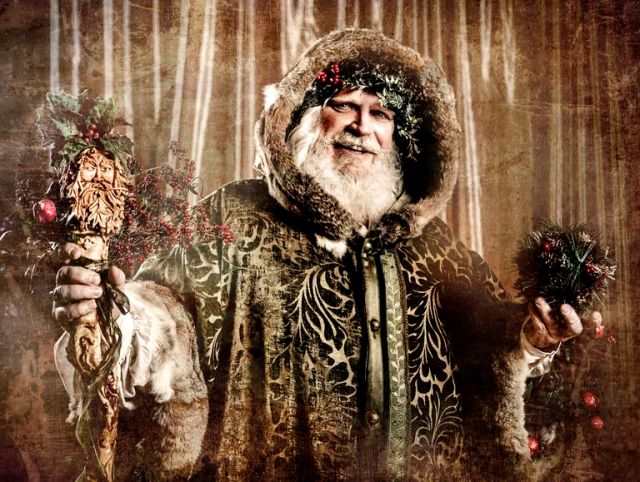
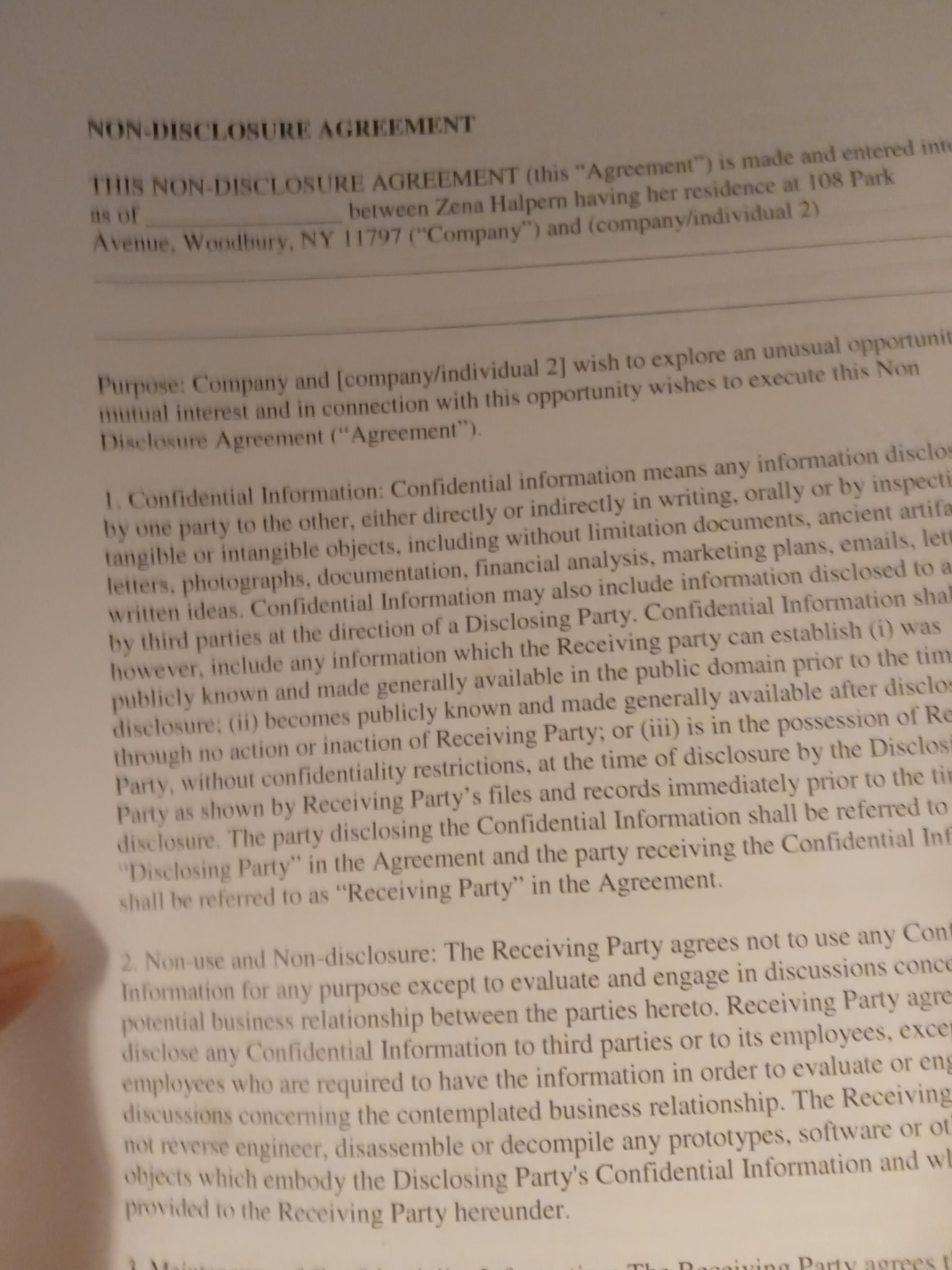
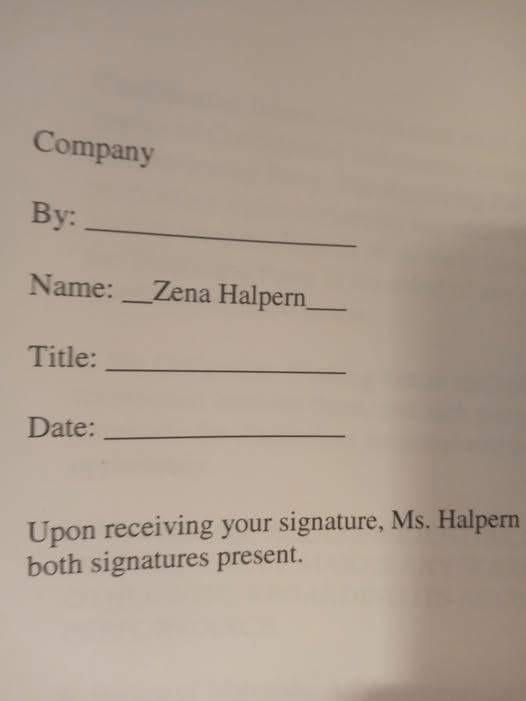
On this day, April 1, 2025, I John Presco made the discovery of the age! A week ago I went through my papers and found the Non-Disclosure Agreement Zena Halpern sent me to sign. I didn’t sign when she introduced a woman who found me and mystudy of the name……….
ROCHEFOUCAULD
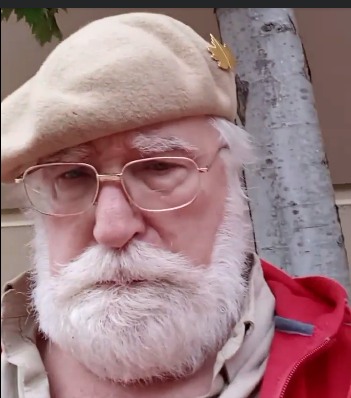
I don’t have much longer to live. If Rick and Marty build me a small cabin on Oak Islamd, I will come there and live. I will be the Hermit-wizard of Oak Island. I will sit on my front porch and tell woody tales of……THE OAK KING!
John Rosamond Presco ‘The Oak King’



Here
— On Fri, 2/19/10, ZHstar@aol.com <ZHstar@aol.com> wrote:
From: ZHstar@aol.com <ZHstar@aol.com>
Subject: Re: History Channel
To: braskewitz@yahoo.com
Date: Friday, February 19, 2010, 5:43 PM
Jon- I began working on that connection which will be in my book. This connection takes careful documentation and a lot of research. The time period fits. There is material on this and its true.
What documentary is the History Channel making ? Why are they asking this ?
The History Channel’s documentary “Holy Grail in America” came from a geologist Scott Wolter who found this odd mark called a Hooked X on several stones in 5 sites here. He claimed that the Templars/Cistercians carved the runic mark -the hooked X. He’s wrong but they made the documentary.
This is the guy who is trying to steal my work.
Z
In a message dated 2/19/2010 8:22:05 P.M. Eastern Standard Time, braskewitz@yahoo.com writes:
| A researcher just called me from the Discovery Channel wanting to know if I can connect Kabbalists to Arthurian legend, the Templars, or, Taliesen. I got his phone number. Got anything? Jon |
On Sun, 2/21/10, ZHstar@aol.com <ZHstar@aol.com> wrote:
From: ZHstar@aol.com <ZHstar@aol.com>
Subject: Re: History Channel
To: braskewitz@yahoo.com
Date: Sunday, February 21, 2010, 11:18 AM
Jon- It was good talking to you last nite. Please google www.atlanticconference.org
Scroll to theleft and click on my name to see my presentation on the Maritime Goddess Tanit.
Aand if you have a chance google Cyrus Gordon.Love, Z
In a message dated 2/19/2010 10:04:59 P.M. Eastern Standard Time, braskewitz@yahoo.com writes:
| He said Discovery Channel. I told him I am helping A author do research, but, did not mention your name or divulge anything about your topic, just that I knew an author, thinking this might be a foot in the door IF you had something on the Kabbalah, because I do not. I asked for Billy’s phone number, and he gave it to me saying; “And give my number to the author if they got something.” WEIRD! Here we are exchnging NUMBERS in a fishing contest, not knowing the players! I have chills! What are the odds? Did you ever see the movie PI ? I feel I am in that movie, and any minute I will be kidnapped by the Cohen Brothers. LoL! Could we work with Billy in any manner? I will make no move with him without consulting you, or, mentioning your name. He IS looking at my info. Billy Philips 310 980 7876 — On Fri, 2/19/10, ZHstar@aol.com <ZHstar@aol.com> wrote: From: ZHstar@aol.com <ZHstar@aol.com> Subject: Re: History Channel To: braskewitz@yahoo.com Date: Friday, February 19, 2010, 6:44 PM Jon- Amazing——Billy seems a decent sort…..He has very interesting material on Early Medieval Kabbalism. I’d rather he not know that you and I know each other. I guess Billy is trying to get his story on the History Channel. The Judaic Kingdom is in the book by Arthur Zuckerman a Columbia Univ. professor who researched this period in Narbonne . Book is very expensive’ “ A Jewish Princedom in the South of France —that’s not the exact title. If he said he’s a History Channel researcher- I wonder if it’s true. Do the call other people for research? Idon’t think so. Z In a message dated 2/19/2010 9:33:06 P.M. Eastern Standard Time, braskewitz@yahoo.com writes: Billy googled Cabal and found a blog on the Rosamond Clifford family where I do mention Taliesen, a Welsh poet. He did not know that, and Cabal was a term applied to a group of Lords in Parlaiment, one being, Lord Clifford. He is fishing, trying to connect King Arthur to the Kabbalists. I told him I read others make the connection, but, it was farfeteched. I told him I would look at my past blogs. However, Nunez is NUN who is in the genealogy of Jesus! Dear Zena; I too enjoyed our talk on the phone. I watched your presentation. Here is the suggestion that the Hambley’s descend from the Phoenicians. I wonder if there is a Hambely DNA project? I know I can get my friend, Virginia Hambley, to take a test. She has a classic hooked nose that Phoenician royalty had, a kingly nose. Also, witches in Egnland had this nose. Were they priestesses of Baal? Her English grandmother was a Craven. If you can do a DNA test on several Hambleys in Cornwall for your book, and establish there origin, this will blow the Sinclair claims out of the water! A real lineage of ancient sailors and tin miners who are kin to Hiram. Also, Bathsheba was a Hittite and King David’s wife. The Hittles went with Alexander the Great into India. The High Priest at Jeruaslem gave Alexander the Nehushtan ‘brazen serpent ‘ to ward off snakes in India. The name Alexander means “elixir” a potion against poison. Consider the snake mound in the Americas.Aaron made a brazen serpent to go before the multitude in the wilderness to ward off posoness snakes.. Jon http://tinyurl.com/yl94jkb https://www.youtube.com/watch?v=sEuc8euaJOA https://www.history.com/shows/the-curse-of-oak-island/articles/curse-of-oak-island-top-theories Top of Form Select StateAlabamaAlaskaArizonaArkansasCaliforniaColoradoConnecticutDelawareFloridaGeorgiaHawaiiIdahoIllinoisIndianaIowaKansasKentuckyLouisianaMaineMarylandMassachusettsMichiganMinnesotaMississippiMissouriMontanaNebraskaNevadaNew HampshireNew JerseyNew MexicoNew YorkNorth CarolinaNorth DakotaOhioOklahomaOregonPennsylvaniaRhode IslandSouth CarolinaSouth DakotaTennesseeTexasUtahVermontVirginiaWashingtonWest VirginiaWisconsinWyoming Bottom of Form Chat | Daily Search | My GenForum | Community Standards | Terms of Service Top of Form Jump to Forum Bottom of Form Home: Surnames: Hambly Family Genealogy Forum Top of Form Re: Hamblys of Gwennap, Cornwall Bottom of Form Posted by: Darren Hambly Date: December 28, 2001 at 14:50:22 In Reply to: Hamblys of Gwennap, Cornwall by Andrea Fitzgerald of 124 I have been researching the Hambly family. I have only got back to a William Hambly Born 1787, who married Ann Strutridge born 1789, Both are from cornwall . They Came to Ontario Canada around 1835-1845 I believe. They settled in Drayton Ontario in 1948. Children: John Hambly William S Hambly Thomas Hambly James Hambly Anna Hambly Kate Hambly Samuel Hambly Reuben Hambly Joseph Hambly John hambly I beleive all were born in bodmin cornwall England . Please contact me if you have any info http://genforum.genealogy.com/hambly/messages/67.html http://genforum.genealogy.com/hambly/ http://tinyurl.com/yl94jkb — On Sun, 2/21/10, ZHstar@aol.com <ZHstar@aol.com> wrote: From: ZHstar@aol.com <ZHstar@aol.com> Subject: Re: History Channel To: braskewitz@yahoo.com Date: Sunday, February 21, 2010, 11:18 AM Jon- It was good talking to you last nite. Please google www.atlanticconference.org Scroll to theleft and click on my name to see my presentation on the Maritime Goddess Tanit. Aand if you have a chance google Cyrus Gordon.Love, Z In a message dated 2/19/2010 10:04:59 P.M. Eastern Standard Time, braskewitz@yahoo.com writes: He said Discovery Channel. I told him I am helping A author do research, but, did not mention your name or divulge anything about your topic, just that I knew an author, thinking this might be a foot in the door IF you had something on the Kabbalah, because I do not. I asked for Billy’s phone number, and he gave it to me saying; “And give my number to the author if they got something.” WEIRD! Here we are exchnging NUMBERS in a fishing contest, not knowing the players! I have chills! What are the odds? Did you ever see the movie PI ? I feel I am in that movie, and any minute I will be kidnapped by the Cohen Brothers. LoL! Could we work with Billy in any manner? I will make no move with him without consulting you, or, mentioning your name. He IS looking at my info. Billy Philips 310 980 7876 — On Fri, 2/19/10, ZHstar@aol.com <ZHstar@aol.com> wrote: From: ZHstar@aol.com <ZHstar@aol.com> Subject: Re: History Channel To: braskewitz@yahoo.com Date: Friday, February 19, 2010, 6:44 PM Jon- Amazing——Billy seems a decent sort…..He has very interesting material on Early Medieval Kabbalism. I’d rather he not know that you and I know each other. I guess Billy is trying to get his story on the History Channel. The Judaic Kingdom is in the book by Arthur Zuckerman a Columbia Univ. professor who researched this period in Narbonne . Book is very expensive’ “ A Jewish Princedom in the South of France —that’s not the exact title. If he said he’s a History Channel researcher- I wonder if it’s true. Do the call other people for research? Idon’t think so. Z In a message dated 2/19/2010 9:33:06 P.M. Eastern Standard Time, braskewitz@yahoo.com writes: Billy googled Cabal and found a blog on the Rosamond Clifford family where I do mention Taliesen, a Welsh poet. He did not know that, and Cabal was a term applied to a group of Lords in Parlaiment, one being, Lord Clifford. He is fishing, trying to connect King Arthur to the Kabbalists. I told him I read others make the connection, but, it was farfeteched. I told him I would look at my past blogs. However, Nunez is NUN who is in the genealogy of Jesus! On the Nunez family crest you find three fleurs-de-lis that are also found on the crest of Doctor Mendes da Costa. I have traced his lineage to Narbonne France where for a little while a Judaic Kingdom existed. Jon http://freepages.genealogy.rootsweb.ancestry.com/~walker/nunez.html NUNES/NUNEZ The story has been told that all Nunes/Nunez families were originally Jewish from Israel who escaped from the Assyrians when they captured the city of Jerusalem . They scattered to the ends of the earth; some made their way to Spain and Portugal , and still others to Europe . In the late 1500’s there was the Inquisition that forced all Jews to convert to Roman-Catholicism or die, many of them converted, many died and many ran away to Hawaii or the Caribbean. Most converted to whatever religion they felt met their needs and many went back to their Jewish heritage. The NUNES family is a direct descendent of the royal house of King DAVID of ISRAEL . The Nunes family went to Spain about 2000 years ago, during the time of King Nebuchanezer (king of Assyria ). He conquered Israel and “kicked” out the royal family. From there the Nunes family (formerly known as Ben-Nun) went to Greece to Italy to Spain and Portugal . They lived there in peace and equality under the Moorish-Muslim Empire of the Al-Andalucians and the Al-Mohads, then came the Christians (Roman Catholics) and conquered the land from the Moors. For about 500 years there was no problem but in the 1800s Spain began eliminating the Jewish and Muslim families because they wanted to make Spain an all Catholic country so the Jewish people ran to Portugal and the Muslims ran to Morroco. Spain threathened Portugal to do the same, which Portugal did. It was the first Holocaust, it was the Inquisition. Portugal and Spain forced all Jews (Nunes, Pereira, Lopes, Rodrigues, Fernandes, Torres, etc…..) to convert to Roman Catholicism and if they didn’t convert they would be killed in the AUTOS DE FE in Lisbon . Many Jewish people did convert so they wouldn’t die but a few ran away to Brazil , Eastern Europe, and the Carribean Islands . In the early 1900s Portugal and Spain became “RELIGIOUS FREEDOM” nations. This movement helped many of the Jewish descendents to return to their faith. There are now about 200,000 Jews and Muslims in Portugal . It has been said that ALL NUNES FAMILIES ARE JEWISH ANCESTRY. MAY GOD BE WITH YOU ALWAYS…. DR. SAMUEL NUNES, a former court physician in Spain was a practicing Catholic; however, in secret he was a SEPHARDIC JEW. When things got to bad in Spain , Dr. Nunez organized a plan to take his family away to London , England . One night they had a party and in the attendees was a ship captain. The party toured the ship and set sail for London , England that night. In 1732 there were 6,000 Jews living in London . All but eight of the original forty-two Jewish colonists were Spanish/Portuguese Jews who had arrived in London ten years earlier, having lived as Crypto-Jews, publicly practicing Roman Catholicism and secretly preserving their Jewish heritage, prior to their departure from Portugal. Among these sephardic Jews was Dr. Samuel Nunes Ribiero, a physician who had been imprisoned during the Inquisition for his successful efforts to convert New Christians back to the Jewish faith.It was in England that SAMUEL and his wife REBECCA were remarried in a Jewish ceremony. Rebecca gave birth to a son whom both died afterwards in England . Samuel with his mother, ZIPPORAH NUNES, and grown children set sail to America with other Jewish families on the WILLIAM and SARAH. Forty-two brave pioneering Jews, the “largest group of Jews to land in North America in Colonial days” arrived in SAVANNAH on July 11, 1733, just five months after General James Edward Oglethorpe established the colony of Georgia RODRIGUEZ da COSTA, David Birth : EST 1795 Gender: MaleFamily: Marriage: 16 FEB 1820 in Spanish-Portuguese Synagogue,Kingston,Jamaica Spouse: CORDOVA, Rebecca ‘Abraham Haim’ Birth : EST 1799 Gender: FemaleParents: Father: CORDOVA, Abraham Haim ‘Joshua’ de Children: RODRIGUEZ da COSTA, David ‘David’ Birth : 28 FEB 1821 Kingston,JamaicaGender: MaleRODRIGUEZ da COSTA, Henry ‘David’ Birth : 23 NOV 1827 Kingston,JamaicaGender: MaleRODRIGUEZ da COSTA, Alexander ‘David’ Birth : 31 AUG 1830 Kingston,JamaicaGender: MaleRODRIGUEZ da COSTA, Septimus ‘David’ Birth : 22 NOV 1832 Kingston,JamaicaGender: MaleRODRIGUEZ da COSTA, Alexander ‘David’ Birth : 27 MAR 1835 Kingston,JamaicaGender: Male Back to Main Page RODRIGUEZ da COSTA, Jacob ‘David’ Birth : EST 1797 Gender: MaleFamily: Marriage: 11 DEC 1822 in Spanish-Portuguese Synagogue,Kingston,Jamaica Spouse: CORDOVA, Sarah ‘Abraham Haim’ Birth : EST 1801 Gender: FemaleParents: Father: CORDOVA, Abraham Haim ‘Joshua’ de Children: RODRIGUEZ da COSTA, Abraham ‘Jacob’ Birth : 18 SEP 1823 Kingston,JamaicaGender: MaleRODRIGUEZ da COSTA, Rachel ‘Jacob’ RODRIGUEZ da COSTA, Emily ‘Jacob’ Birth : 6 MAR 1830 Kingston,JamaicaDeath : 24 FEB 1912 Kingston,JamaicaGender: Female Back to Main Page HENRIQUEZ, Isaac ‘Isaac’ COHEN Birth : 1 DEC 1822 Kingston,JamaicaDeath : 28 AUG 1867 Kingston,JamaicaGender: MaleFamily: Marriage: 31 MAY 1857 in Spanish-Portuguese Synagogue,Kingston,Jamaica Spouse: RODRIGUEZ da COSTA, Rachel ‘Jacob’ Birth : 28 DEC 1827 Kingston,JamaicaDeath : 15 NOV 1861 Kingston,JamaicaGender: FemaleParents: Father: RODRIGUEZ da COSTA, Jacob ‘David’ Mother: CORDOVA, Sarah ‘Abraham Haim’ Children: HENRIQUEZ, Jacob ‘Isaac’ COHEN Back to Main Page CORINALDI, Edith Alice Birth : 12 OCT 1861 Montego Bay,JamaicaGender: FemaleFamily: Marriage: 11 OCT 1882 in 93 King Street.,Kingston,Jamaica Spouse: HENRIQUEZ, Jacob ‘Isaac’ COHEN Birth : EST 1858 Gender: MaleParents: Father: HENRIQUEZ, Isaac ‘Isaac’ COHEN Mother: RODRIGUEZ da COSTA, Rachel ‘Jacob’ Back to Main Page MUSAPHIA, Moses Birth : EST 1579 Death : 27 MAY 1643 Amsterdam,North Holland,NetherlandsGender: MaleParents: Father: MUSAPHIA, PATRIARCH Family: Marriage: EST 1604 Children: MUSAPHIA, Esther ‘Moses’ MUSAPHIA, Aaron ‘Moses’ MUSAPHIA, Sarah ‘Moses’ MUSAPHIA, David ‘Moses’ MUSAPHIA, Rachel assumed daughter of MosesMUSAPHIA, Joseph assumed son of MosesMUSAPHIA, Abraham ‘Moses’ Death : 3 OCT 1638 Amsterdam,North Holland,NetherlandsGender: Male Back to Main Page PINTO, Sarah ‘Jacob’ de Birth : 1658 Death : 11 AUG 1721 Amsterdam,North Holland,NetherlandsGender: FemaleParents: Father: PINTO, Jacob ‘Abraham’ de Mother: PEREIRA, Rebecca ‘Abraham’ (ISRAEL) Family: Marriage: 12 Sep 1674* (TiM 689-281) in Amsterdam,North Holland,Netherlands Spouse: FRANCO da COSTA, David Birth : 1647 Sevilla,Andalucia,SpainGender: MaleParents: Father: FRANCO da COSTA, PATRIARCH Mother: , Sara Franco da Costa (nee….?) Children: FRANCO da COSTA, Ribca ‘David’ FRANCO da COSTA, Rachel ‘David’ FRANCO da COSTA, Emanuel ‘David’ FRANCO da COSTA, Hanna ‘David’ Back to Main Page NUNES HENRIQUEZ, Abigael Gracia ‘Jacob or Rodrigo’ Birth : 1662 Rouen,FranceGender: FemaleParents: Father: NUNES HENRIQUEZ, Jacob Rodrigo ‘Abraham’ Family: Marriage: 16 Dec 1682* (TiM 693-263) in Amsterdam,North Holland,Netherlands Spouse: PINTO, Aaron ‘Jacob’ de Birth : 1658 Death : 17 APR 1718 Amsterdam,North Holland,NetherlandsGender: MaleParents: Father: PINTO, Jacob ‘Abraham’ de Mother: PEREIRA, Rebecca ‘Abraham’ (ISRAEL) Children: PINTO, Rebecca ‘Aaron’ de PINTO, Sarah ‘Aaron’ de PINTO, Rachel ‘Aaron’ de PINTO, Aaron ‘Aaron Jacob’ de Birth : EST 1688 Gender: MalePINTO, Esther ‘Aaron Jacob’ de PINTO, Abraham ‘Aaron’ de PINTO, Anna ‘Aaron’ de PINTO, David ‘Aaron Jacob’ de PINTO, Eliseba ‘Aaron’ de PINTO, Clara ‘Aaron’ de Back to Main Page NUNES HENRIQUEZ, son (ii) Birth : EST 1618 Gender: MaleParents: Father: NUNES HENRIQUEZ, Family: Marriage: EST 1643 Children: NUNES HENRIQUEZ, Isaac assumed brother of JacobNUNES HENRIQUEZ, Jacob assumed brother of Isaac — On Fri, 2/19/10, ZHstar@aol.com <ZHstar@aol.com> wrote: From: ZHstar@aol.com <ZHstar@aol.com> Subject: Re: History Channel To: braskewitz@yahoo.com Date: Friday, February 19, 2010, 6:15 PM Jon- I’ve been studying the LOS LUNAS DECALOGUE STONE FOR 20 YEARS! IVE. BEEN THERE 3 X’S- IV’E WRITTEN ABOUT IT. CYRUS GORDON THE GREAT BIBLICAL SCHOLAR AND SEMITICIST HAS WRITTEN ABOUT IT. THAT STONE IS SIMPLY A FORM OF PALEO HEBREW . GORDON SUGGESTED IT WAS SAMARITAN. I HAVE A TON OF RESEARCH ON IT. IT IS OF COURSE EVIDENCE OF ANCIENT VOYAGERS TO THE SOUTHWEST. I HAVE DOCUMENTED WHAT IS ON THE TOP OF THE MESA AND THE CONNECTION TO MINING FOR TURQUOISE IN THE PUERCO VALLEY CA. 4TH CENTURY BCE IT HAS NOTHING TO DO WITH ZIONISM— In a message dated 2/19/2010 9:08:17 P.M. Eastern Standard Time, braskewitz@yahoo.com writes: This is getting strange! Here is the Commandment Rock. I do not know what the show is going to be about. My phone number is 541 844-1974. Jon The Los Lunas Decalogue Stone bears a very regular inscription carved into the flat face of a large boulder on the side of Hidden Mountain, near Los Lunas, New Mexico, about 35 miles south of Albuquerque. The inscription is interpreted by some to be an abridged version of the Decalogue or Ten Commandments in a form of Paleo-Hebrew. A letter group resembling the tetragrammaton YHWH, or “Yahweh,” makes four appearances. The stone is controversial in that some claim the inscription is Pre-Columbian, and therefore proof of early Semitic contact with the Americas. The Flag and Stone of the American Zionist Revolution (Images: East India Company flag. Grand Union flag, and other first flags. Blason of the Teixeira Sampayo family. 0 http://en.wikipedia.org/wiki/Image:10_Commandment_Rock.jpg http://www.pbs.org/wgbh/nova/israel/losttribes2.html “At the time of the American Revolution the East India Company flag would have been identical to the Grand Union Flag. The flag probably inspired the Stars and Stripes (as argued by Sir Charles Fawcett in 1937). [10] Comparisons between the Stars and Stripes and the Company’s flag from historical records present some convincing arguments.” Christian authors in England and Europe were indentifying 1666 as an appocolyptic year. No doubt this was due to the numbers 666 which denotes ‘The Beast’ in Revelations. It is suggested the Sephardic Messiah, Sabbatai, believed in this prophecy, or, if he was a false-Messiah, exploited it. History tells us Mennesseh ben Israel exploited English Millenarianism when he appealed to Cromwell to let the Sepharid Jews return to England. Ben Israel (son of Israel) dedicated his book ‘The Hope of Israel’ to Cromwell. In this work of prophecy Ben Israel claims Messianic redemption would come to the Jewish people only when they are scattered to all the corners of the world, and especially England from where they were bannished. Did some Christian leaders believe this Jewish Messiah would be the second coming of Jesus? The Puritans subscribed to what is called Judeo-centrism that considered the prophecies of Ben Israel and the Sepharid Messiah, Sabbatai. Cromwell was a Puiitan who let the Jews back into England at Ben Israel’s urging. However, there was another motive, Cromwell wanted the backing of the Sephardic Jewish bankers. He got it. These bankers produced large sums of money to put down the Jacobites in 1748. Ben Israel believed some North American Indians were of the Lost Tribes of Israel. A week ago I discovered the Los Lunas Decalogue Stone. At first I believed it was the work of a Sephardic Kabbalists that accompnaied Coronado, but, this stone might be the work of Sephardic Jews from Brazil who were searcing for the a lost tribe of Israel, and had folowed Ben Israel and Sebbatai. Yesterday I discovered that Diego Teixeira Sampayo (Abraham Senior Teixeira) is a descendant of Don Abraham Senior the Nasi Prince Exilarch descended from King David. “Don Manuel’s father, Diego Teixeira Sampayo (Abraham Senior Teixeira), a descendant of Don Abraham Senior in the female line, was ennobled at Anvers (Antwerp) in 1643 (Rietstap, Armorial Général, Precedé d’un Dictionnaire des Termes du Blason, 2nd ed., 2 vols. Gouda, 1887, vol. ii, p. 891; Rietstap, Wapenboek van den Nederlandschen Adel, vol. ii, p. 87). He later settled in Hamburg, where he was known simply as the ‘rich Jew’. He rode in an ornate carriage upholstered with velvet, had liveried servants, and kept a princely house, which, in 1654, was for some time the residence of Queen Christina of Sweden, to whom Diego had been recommended by the Spanish ambassador” William of Orange and his Glorious Revolution, was backed by Sephardic Bankers. It is suggested Nassau Thomas Senior took the name Nassau from John Maurice of Nassau who was close kin of William of Orange. He was the head of the Order of St. John. John Maurice took back Sephardic Brazil from the Catholics. I suspect John Maurice was the head of the West Indies Trading Company whose flag looks very similar to the first flag of the United States, called the flag of the Grand Union. This flag was flown by the American ship the Andrea Doria when it sailed into the harbor of St. Eustatius that was owned by the East Indies Trading Company. The commander of Fort Orange returned the salute made by the captain of the Andrea Doria that consisted of thirteen vollies from the ships cannons. I suspect these thirteen shots were sounded for the thirteen red and white stripes on the new flag of the American Revolution that I suspect was a continuation of the Glorious Revolution of the House of Orange/Nassau. However, this Revolution was enjoined by the Sephardic Jews who followed the Judaic Messiah, Sabbatai, and thus these thirteen stribes may have also stood for for the red and white rose of Zohar. The commander of Fort Orange was Abraham Raven. He is a relative of Nassau Thomas Senior and the Exilarch Prince, Don Abraham Senior. The blazon of Diego Teixeira Sampayo Senior depicts five eagles. I suspect this eagle is the source of America’s Eagle, our National Ebblem and Ensign. I suspect the the red cross in the Grand Flag is not the red cross of Saint George, but the red cross of the Knights Templar. I suspect John Maurice Nassau was a Master Mason who introduced the Templar rank. I suspect the first Freemasons were Sephardic stone masons who came to build a new Zion in Brazil. This New Glorious Revolution was UNITED with the Puritan Exodus in the North. The Puritans showed great respect for the Indians. Did they also believe they were of the Lost Tribes of Israel? Did they believe the OLD world was going to end in 1666, and thus God had brought them to a NEW world? Jon Presco The Nazarite Copyright 2008 “Flying the flag of Grand Union on its stern flagstaff the Andrea Doria entered the harbor of St. Eustatius on 16 November 1776. As the Andrea Doria backed its topsails to slow its headway in preparation for dropping anchor, Captain Isaac Robinson the vessel’s commander decided to make a conspicuous entry into port. Robinson ordered the striped Grand Union of the Republic flag, the recently adopted American banner, dipped and a cannon salute fired from the vessel’s deck. According to maritime custom, a returned salute was the appropriate response of their host state. Abraham Raven, the commander of the Orange fort, assumed that the unfamiliar flag might be that of a rebel American warship and realized that returning a salute would offend the British. Raven sent a message for instructions to Johannes de Graaff, the island’s governor and was ordered to answer the salute. After some minutes passed, nine puffs of gun gray-white smoke arose from the walls of the fort followed by a salute of muffled thumps in cadence.[iv] An historic moment transpired; the American colors had been publicly recognized by a European power.[v] These brief cannon reports also turned out to be an expression of diplomatic indiscretion. This seemingly minor form of acknowledgment was contrary to the foreign policy of the Dutch government. When news of the incident reached the neighboring island of St. Christopher (St. Kitts), its British governor, Craister Greathead, sent a vehement protest to Governor de Graaff saying that “this Port always made and still makes distinction between Merchant or Private Vessells and the Ships of War belonging to Sovereign States” “The name ‘Nassau’, which was borne first by Nassau Thomas Senior (d 1786), elder son of (Moses) Aaron Senior (d 1736), may have originally been adopted in honour of John Maurice of Nassau (1604-1679), Prince of Nassau-Siegen and Governor of the Dutch territories in Brazil, prior to the reconquest of these territories by the Portuguese in 1654, when over 5,000 Jews fled that country. One ship carrying 23 Jewish refugees from Brazil went to New Amsterdam (New York), where they formed the nucleus of the Sephardic Jewish community in the USA. Joseph Senior Saraiva’s uncle, David Senior (who was born in about 1575 in Amarante, Portugal, and who died in Recife, Brazil, in 1650) was one of the leading members of the Jewish community in Recife. A more probable alternative is that the name ‘Nassau’ was adopted in honour of William of Orange-Nassau (1650-1702), that is William III, whose seizure of the throne of England in 1688 was financed by Jews, possibly including the Senior family. Jews also financed William III’s later wars against Louis XIV and did much to help London replace Amsterdam as the centre of European finance, a position it holds to this day. It is a curious fact that, on this basis, the famous Bill of Rights of 1689, one of the cornerstones of British democracy, was largely made possible by Jewish finance.” The Los Lunas Decalogue Stone bears a very regular inscription carved into the flat face of a large boulder on the side of Hidden Mountain, near Los Lunas, New Mexico, about 35 miles south of Albuquerque. The inscription is interpreted by some to be an abridged version of the Decalogue or Ten Commandments in a form of Paleo-Hebrew. A letter group resembling the tetragrammaton YHWH, or “Yahweh,” makes four appearances. The stone is controversial in that some claim the inscription is Pre-Columbian, and therefore proof of early Semitic contact with the Americas. Don Manuel’s father, Diego Teixeira Sampayo http://www.famousamericans.net/antoniodemontesinos/ ), a descendant of Don Abraham Senior in the female line, was ennobled at Anvers. Influence of English Millenarianism During the first half of the 17th century, millenarian ideas of the approach of the Messianic time, and more especially of the redemption of the Jews and their return to the land of Israel, with their own independent sovereignty, were popular. The apocalyptic year was identified by Christian authors as 1666. This belief was so dominant that Manasseh ben Israel, in his letter to Oliver Cromwell and the Rump Parliament, did not hesitate to use it as a motive for his plea for the readmission of the Jews into England, remarking “the opinions of many Christians and mine do concur herein, that we both believe that the restoring time of our Nation into their native country is very near at hand”. Sabbatai’s father, who as the agent of an English house was in constant touch with English people, must frequently have heard of these expectations and, being strongly inclined to believe them, must have communicated them to his son, whom he almost deified because of his piety and kabbalistic wisdom. — On Fri, 2/19/10, ZHstar@aol.com <ZHstar@aol.com> wrote: From: ZHstar@aol.com <ZHstar@aol.com> Subject: Re: History Channel To: braskewitz@yahoo.com Date: Friday, February 19, 2010, 5:43 PM Jon- I began working on that connection which will be in my book. This connection takes careful documentation and a lot of research. The time period fits. There is material on this and its true. What documentary is the History Channel making ? Why are they asking this ? The History Channel’s documentary “Holy Grail in America” came from a geologist Scott Wolter who found this odd mark called a Hooked X on several stones in 5 sites here. He claimed that the Templars/Cistercians carved the runic mark -the hooked X. He’s wrong but they made the documentary. This is the guy who is trying to steal my work. Z In a message dated 2/19/2010 8:22:05 P.M. Eastern Standard Time, braskewitz@yahoo.com writes: A researcher just called me from the Discovery Channel wanting to know if I can connect Kabbalists to Arthurian legend, the Templars, or, Taliesen. I got his phone number. Got anything? Jon The Curse of Oak Island New Episodes Tuesdays 9/8c; Stream Next Day about Episodes bios The Top 21 Theories About Oak Island by Aaron Homer Watch full episodes of The Curse of Oak Island online now. Follow the links in this article to see what happened on each episode. For the better part of two centuries, treasure hunters have been trying, and failing, to extract purported hidden treasure from the bottom of the Money Pit on Canada’s Oak Island. And though the prospect of finding millions of dollars’ worth of buried treasure is exciting enough, there are also dozens of theories attached to the island and its supposed riches. They range from the island being the home of Captain Kidd’s buried treasure to the land’s supposed connection to ancient secret societies such as the Freemasons and Knights Templar—and everything in between. Here are the top 21 theories about the mystery of Oak Island. The Captain Kidd Theory This theory, floated in Season 1: Episode 1 (“What Lies Below”), when the Lagina brothers first took over ownership of the island, holds that Captain Kidd buried his treasure on the island and then cursed it and booby-trapped it, thwarting centuries of treasure hunters. The team explored the matter further in Season 4: Episode 7 (“All That Glitters”), talking things over with author Randall Sullivan. Season 1, Episode 1: What Lies Below Did Captain Kidd bury his cursed treasure on Oak Island? Sign in to watch now. The Sir Francis Drake Theory In Season 5: Episode 7 (“The Lot Thickens”), historian Paul Speed suggested that a scrap of leather, purportedly used in the bookbinding process, is tied to the 16th-century privateer and his looting of hundreds of millions of dollars’ worth of treasure from a Spanish galleon. This theory further suggests that Drake himself is buried on the island. “When you hit metal, you might have hit his coffin,” said Speed. The Cathar Theory The Cathars were a Christian sect active in Europe during the early Middle Ages. In Season 2: Episode 6 (“Seven Must Dye”), the team explored the possibility that the group had access to many of Christendom’s greatest treasures, including the Holy Grail and the Ark of the Covenant. This theory holds that Cathar monks handed off some, if not all, their treasures to the Knights Templar, another medieval Christian sect, for safekeeping. When the Templars were disbanded, their treasures were supposedly secretly removed from Europe—possibly to Oak Island. The Marie Antoinette Theory Marie Antoinette was the Queen of France who lost her head in the French Revolution. Franklin Delano Roosevelt was the 32nd President of the United States. So what is the connection between the two, and what do they have to do with Oak Island? In Season 4: Episode 11 (“Presidential Secrets”), the team spoke with a historian who discussed Roosevelt’s belief that the lost crown jewels of France wound up buried on Oak Island. This theory holds that Marie Antoinette’s gems were given to a servant who spirited them away, possibly to wind up on the island. Season 5, Episode 7: The Lot Thickens Are Sir Francis Drake and his treasure both buried on Oak Island? Sign in to watch now. The Shakespeare Theory In Season 1: Episode 4 (“The Secret of Solomon’s Temple”), the brothers met with Petter Amundsen, a Freemason who claims that Shakespeare wrote a coded map that leads to Nova Scotia, not far from Oak Island. He suggested that seemingly random capitalization in Shakespeare’s works, misspelled words and out-of-sequence page numbering might be the code that leads to the treasure—a trove containing not only priceless gold, silver and jewels, but even some lost Shakespeare manuscripts. The South Shore Theory According to this theory, 16th-century philosopher and statesman Sir Francis Bacon buried “something incredible” on the island and enacted booby traps above it. In Season 6: Episode 13 (“The Paper Chase”), the brothers met with author Randall Sullivan, who speculated that a book of Bacon’s philosophical writings, published after his death, references the seas, pits, water and shafts—all bearing similarities to the booby traps in the Money Pit. The Dual Cipher Theory In Season 2: Episode 5 (“The 90-Foot Stone”), Rick and Marty met with Daniel Ronnstam, a cryptographer who believes that a slab of stone found at a depth of 90 feet holds a different set of clues to the treasure than previously thought. In 1949, Reverend A.T. Kempton, using a simple substitution, determined that the stone reads, “FORTY FEET BELOW TWO MILLION POUNDS ARE BURIED.” Ronnstam, however, believes that the cipher is actually two codes in one, including both the original English reading and a Spanish version that, when translated into English, reads, “AT 80FT GUIDE CORN LONG NARROW SEA INLET DRAIN”—supposed instructions on how to beat the booby traps that flood the pit. Season 1, Episode 4: The Secret of Solomon’s Temple Are the secrets of Oak Island secretly buried in the works of William Shakespeare? Sign in to watch now. The Money Pit Is Just A Decoy Theory In Season 3: Episode 11 (“Sword Play”), Rick and Marty met with Mike and Sean Herold, a team of engineers who believe, based on the research of a distant relative who explored the island decades ago, that the Money Pit was a red herring, intended to lead treasure-hunters away from the actual site of the booty. They suggest the real site is just adjacent to the Money Pit, based on the placement of stones. Unfortunately, since those stones were destroyed by earlier expeditions, Rick and Marty had to approximate where to look, and came up empty. The Star Map Theory In Season 6: Episode 7 (“Rock Solid”), astrophysicist Dr. Travis Taylor met with the team. Taylor believes that symbols used by Freemasons, as well as a map of the constellation Taurus, overlaid onto a map of Oak Island, reveal that the treasure is on the western side of the island. A brief expedition to some locations suggested in Dr. Taylor’s research failed to turn up anything conclusive. The Nolan Theory Fred Nolan, who explored the island and its mysteries for a few decades beginning in the 1950s, believed the man-made carvings and other markings on the island formed a perfectly symmetrical cross, believed to have originated with the Knights Templar, the Christian warrior monks who amassed huge wealth while serving as bankers to Europe’s most powerful medieval kings. In Season 3: Episode 7 (“The Missing Peace”), the team got permission from Mr. Nolan to investigate areas he believed could hold clues to the treasure. A core sample taken at the site revealed a possible void beneath the surface, a find that energized the elderly Mr. Nolan, but failed to yield treasure. Season 6, Episode 7: Rock Solid Can the secrets of Oak Island be revealed by using a map of the stars? Sign in to watch now. The Sunken Ship Theory Is it possible that a merchant or pirate ship was deliberately sunk, then buried in quicksand on Oak Island? It’s a prospect explored in Season 3, when Fred Nolan, who believes this theory, presented Rick with evidence of a sunken ship in a swamp on the island. He also believed that the swamp was man-made, deliberately built to obscure a ship buried beneath its depths. In Season 4: Episode 3 (“Swamp Things”), the team went out into the swamp with a professional diver, and found a plank of wood with knots in it, suggesting it had come from a ship. The theory will likely be explored further in Season 7. The Little Mash Theory Treasure hunter Gary Clayton met with Rick and Marty in Season 4: Episode 13 (“One of Seven”). Gary owns Little Mash Island, a tiny spit of land a few hundred yards north of Oak Island, which he believes was man-made, possibly by Lord George Anson, an 18th-century British naval commander. Clayton believes there’s a tunnel between his island and Oak Island—with a possible connection to where the purported treasure was buried. The Portuguese Templar Theory Several theories suggest that the treasure is tied, in one way or another, to the wealthy and secretive Knights Templar. In Season 3: Episode 4 (“The Overton Stone”), the team traveled to the nearby town of Overton and met with historian Terry Deveau, who believes that a large carved boulder known as “The Overton Stone” commemorates a friendship between Europeans and a local tribe known as the Miꞌkmaq. Deveau thinks the stone carvings were made by a group of Templars who came to the region from Portugal—and who possibly hid treasure on Oak Island. Season 3, Episode 4: The Overton Stone Did the Knights Templar carve the key to the Oak Island treasure into the Overton Stone? Sign in to watch now. The Havana Theory Metal-detection expert Gary Drayton, while exploring Lot 24 in Season 4: Episode 8 (“The Mystery of Samuel Ball”), found a button, coins and a chunk of lead, all believed to date from the 1700s. According to Oak Island historian Charles Barkhouse, the items suggest evidence of a British encampment on the island, possibly following the 1762 British siege of Havana, Cuba, then an important Spanish naval base. The theory goes like this: During the siege, the British looted untold millions in gold from the Spanish, who had themselves stolen it from indigenous Cubans. Then, as the precious cargo was transported north to Halifax, “rogue British naval officers” ordered the ship to Oak Island, where they had the treasure buried. The Aztec Gold Theory Author and historian John O’Brien met with the team in Season 3: Episode 6 (“Carved in Stone”), raising the intriguing possibility that Mesoamericans made their way north to Oak Island and buried some of their mythic gold and silver treasure there—to keep it from being stolen by the Spanish. The Christopher Columbus Theory Researcher Jeff Irving met with the team during Season 3: Episode 9 (“Columbus Day”), suggesting that the Oak Island treasure may in fact be the Ark of the Covenant, the Old Testament artifact that supposedly contains the stone tablets on which the Bible’s Ten Commandments were written. Irving believes Columbus was connected to the Templars, who ordered the Ark smuggled out of Jerusalem, and that the explorer may have somehow been involved in their efforts to spirit it away to the New World—Oak Island specifically. Season 3, Episode 6: Carved in Stone Did Mesoamericans travel to Oak Island to hide their treasure from the Spanish? Sign in to watch now. The Knights Baronet Theory In another variation on the Knights Templar theory, Scottish author and historian James McQuiston in Season 6: Episode 20 (“Short Days and Tall Knights”) laid out evidence for the idea that North American descendants of Scottish-based Templars, whose sect went by the name “Knights Baronet,” were among those depositing treasure on the island over the centuries. The Enochian Chamber Theory In the Old Testament, Enoch was the great-grandfather of Noah, the man who built the Ark on God’s command. An ancient series of texts used by Freemasons, known as “The Legend of Enoch,” claims that he built an underground chamber to save all the world’s knowledge and treasures from the coming Great Flood. Author Alan Butler met with the team in Scotland, in Season 6: Episode 6 (“Precious Metal”), to explain this belief that the Knights Templar followed Enoch’s lead and built the Money Pit to hold great treasure. In Season 7, the team promises to look more closely at the island’s swamp for possible clues to an Enochian Chamber beneath. The Zena Halpern Theory Zena Halpern, one of the myriad authors, treasure hunters, researchers and theorists who have lent expertise to the Lagina brothers’ team, spoke in Season 4: Episode 1 (“Going for Broke”) about a book she’d written, which details supposed 12th-century voyages made to the island by the Templars. In Season 5: Episode 10 (“The Signs of a Cross”), Rick found a lead cross with a loop at the top, like those used by the Templars—purportedly the first physical evidence of Templar activity on the island. Season 6, Episode 20: Short Days and Tall Knights Does the Oak Island treasure belong to the Scottish “Knights Baronet? Sign in to watch now. The Rochefoucauld Theory According to this theory, a French nobleman and naval captain named Jean-Baptiste Louis Frederic de La Rochefoucauld, whose family had historic ties to the Knights Templar, was reportedly dispatched with the French Armada to Nova Scotia in the 1700s. In Season 5: Episode 10 (“The Sign of the Cross”), historian Doug Crowell explained to the team that he found evidence in a library that the fleet, led by Rochefoucauld, was carrying treasure. Zena Halpern’s map mentions Rochefoucauld, and a ship’s log purportedly mentioned burying the vessel’s treasure in a pit. The Founding Fathers Theory This theory also references Zena Halpern’s map and the name “Rochefoucauld.” As researcher Bruce Lindahl and treasure hunter Justin Cannady explained to the team in Season 6: Episode 22 (“Lost and Founding”), American founding fathers Benjamin Franklin and Thomas Jefferson both had connections to Rochefoucauld’s son, Louis Alexander Rochefoucauld. Lindahl and Cannady raise the possibility that Louis Alexander told the prominent colonists about the treasure, so they could finance their war efforts against Great Britain. And in an intriguing twist, the researchers suggest that all the families, both French and American, had ties to the Freemasons and Templars. Check out a playlist of some of the full episodes featured in this story. Sign in to watch “Best Theories” now. |
Knights Templar and Zena Halpern
Posted on March 13, 2023 by Royal Rosamond Press
“This text is her life’s work. Some believe the story uncovered by her research to be a hoax. If so, it would be the most elaborate hoax in the history of hoaxes.”
Zena Halpern and I exchanged e-mails. I do not recall the year. I believe it was around the time the rival biographer of my family stories, Tom Snyder, tried to get me to sign a non-disclosure agreement. Halpern also wanted me to sing a NDA, before she showed me some amazing information. I was leery, and did not sign any NDAs. At the time it looked like I was the next author due for a book on he Templar-Grail Magdalene subject matter. I believe Halpern wanted to be in my book. Now, she will be.
Yesterday, I discovered for the first time Halpern published a book on the Templars in regards to the Oak Island series. I was researching the fictional genealogy of Victoria Rosemond Bond, when a Templar name came up in regards to the Oak Island Mystery – that I recognized! Zena and Rick Lagina missed it! they failed to strike – pay dirt! I will contact Rick. I believe Zena and I found each other on one of the Templar-Magdalene groups. I started Rennes-le-Hoax because some of the research was questionable – and any conflicting information was being oppressed.
I have not read Halpern’s book. I am willing to read exerts of this book – on television! I will answer questions. They say “Truth is Stanger than fiction”. In this case “Fiction is stranger than the truth – when it becomes – the truth. I have been saying my book ‘The Royal Janitor’ is writing itself – and is coming true. What if Victoria Rosemond Bond, and Miriam Starfish Christling were Goddesses in their past life, and….they meet again! A Viking and Phoenician Goddess – meet on the High Sea! This meeting – rocks half the world! If they unite, they will be a threat to controlling men. They would be forced to created a man-god to walk the earth and out an end to this heavenly duo.
John Presco
President: Royal Rosamond Press
Copyright 2023
Oak Island’s Mysteries of the Map, House of Rochefoucauld: the Templar Statue and Royston Cave [Print Replica] Kindle Edition
by Gretchen Cornwall (Author) Format: Kindle Edition
Did the Templars bury a treasure of spiritual significance on the Island? With the discovery of the stone road and wharf of 1200 AD, the answer is YES! Oak Island has been in use as a depository for centuries, starting with the visitation of the Vikings who transmitted the information to their descendants, the Templars.
I have travelled to see the castles on Zena Halpern’s Map of Oak Island. Castle Rochefoucauld revealed greater secrets of a dangerous Biblical past. I found the Young Lion of Talmont and visited his Castle.
One of the more memorable theorists on Oak Island is the irrepressible Zena Halpern. She reminded me so much of the fierce intelligent and caring energy of my own parents. We were introduced to Zena during Seasons 4 and 5. Everyone ran to buy her book on the Cremona Documents which included a controversial map of Oak Island.
Zena Halpern from The Curse of Oak Island died earlier this year
Wed Dec 05, 2018 at 2:20am ET
By Julian Cheatle
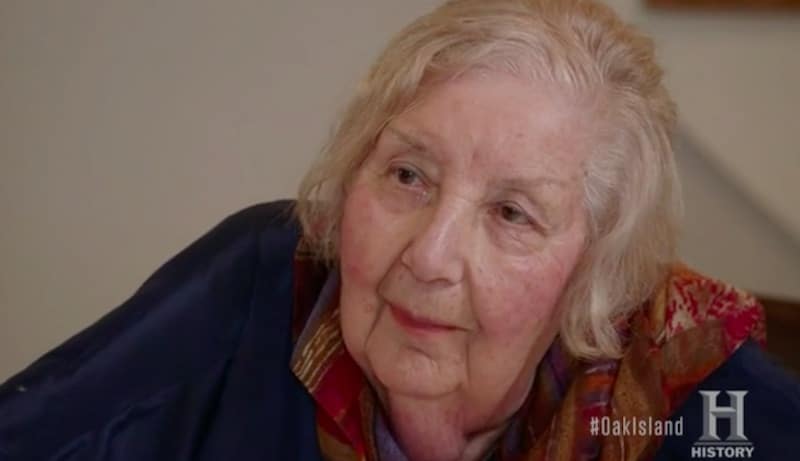
Researcher Zena Halpern, whose work and theories featured prominently on History’s hit show The Curse of Oak Island, passed away earlier this year.
The popular New York-based historian was a good friend of Rick Lagina, and had extensive knowledge of Oak Island after spending more than half a century investigating how members of the Knights Templar may have come to North America in the past.
Back on Season 4 of the show, she famously brought to light what was believed to be a 14th Century map of Oak Island, with possible links to the Templars. Last season she also presented a theory of how a mysterious lead cross found on the island could be a representation of the Goddess Tanit.
In 2017, she authored the book The Templar Mission to Oak Island and Beyond: Search for Ancient Secrets: The Shocking Revelations of a 12th Century Manuscript.
Zena’s passing was revealed back in June, with The Curse of Oak Island fans paying tribute to her on social media.


Zena Halpern from The Curse of Oak Island died earlier this year
Wed Dec 05, 2018 at 2:20am ET
By Julian Cheatle
Researcher Zena Halpern, whose work and theories featured prominently on History’s hit show The Curse of Oak Island, passed away earlier this year.
Cc
 Rosamond Press


Leave a comment