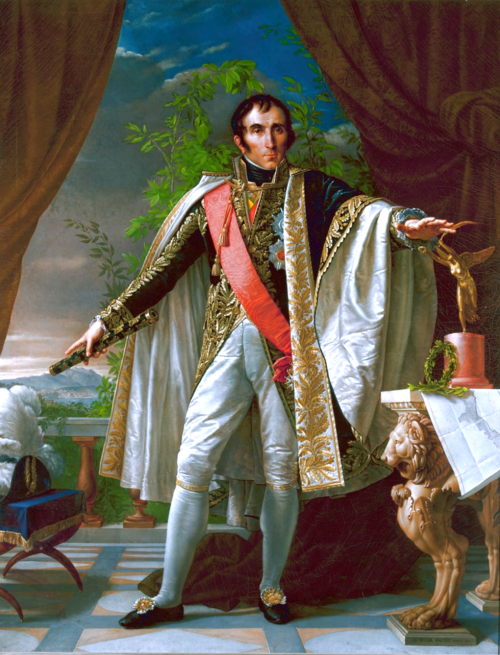
Savoy of California
by
John Presco
It is 3:00 PM on July 27, 2026….and I am still in shock after I read (again) that I discuss Virginia Hambelys family with Zena Halpern. Did this “Bill” from the History Channel read my posts on my blog – that was sabotaged?
OMG! The tomb of Jean Baptiste Cipriani has disapeared! His father appears to me a Master Spy. What is he reaching for. Look like…..
THE MALTESE FALCON
Consider his name….
JOHN THE BAPTIST
I never bought the story that Lenetto tore down his villa in Italy, put it in on a ship, and hauled it across country to Belmont where he erected it. Ralston Hall was built around a smaller building. Is it a….
TOMB?
Who is in that tomb?
“On behalf of the Emperor Napoleon 3, he visited King Victor
Emanuel of Sardinia to explore the possibilities of a matrimonial
arrangement between the ruling houses as a prelude to a political-
military alliance between France and Sardinia. The conversation
eventually turned to Cipriani’s overland journey of 1853, which
apparently had not escaped the king’s notice. “I have heard tell,” he
said, “of a great journey of yours, with you on horseback and camping
out.”
“For eight solid months, Your Majesty,” Cipriani replied,
making certain to include the time he left San Francisco in February
to October, 1853.
“But it is true.” the king continued, “that you led covered
wagons and crossed the Rocky Mountains where there was roads, and
great rivers without any bridges.”
A Saint Helena Miscellany
Author(s) : HICKS Peter, LENTZ Thierry
Share it
Has Cipriani’s tomb really disappeared? by Thierry Lentz
Who wrote ‘Letters from the Cape’? by Peter Hicks
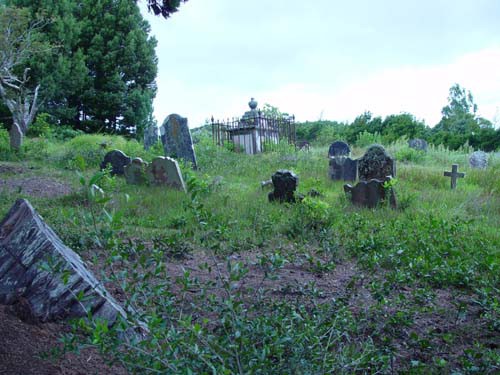
Has Cipriani’s tomb really disappeared?
Those who susbscribe to the theory that Napoleon’s body was ‘stolen’ by the British claim that it was the body of the “maître d’hôtel” Cipriani which replaced that of the Emperor in the tomb on Saint Helena, and after 1840, in the ‘Hôtel des Invalides’. Their principal argument rests on the contention that the tomb of Cipriani (who died on Saint Helena in February 1818) has not been found. And it is true that in his article ‘Cipriani’ in the Dictionnaire Napoléon (Fayard, 2000) (and in his conversations with Jean-Paul Kaufmann), the late Gilbert Martineau, the French ex-consul to Saint Helena, wrote in French: “His tomb has disappeared”, but this was done to heighten the mystery surrounding this, still today relatively unknown figure, and quite clearly not in support of the body substitution theory.
On this issue, I questioned Michel Martineau, successor to his father as French Consul and Curator of the French Domains on Saint Helena, in order to find out what research his predecessor had done in coming to such a conclusion.
In reply to my question, Michel Martineau noted that, as far as he knew, there had been no systematic search for Cipriani’s tomb. At any rate, no trace of such a search exists, whether in the French Domains archives, the public records office on Saint Helena, or in the personal papers of Gilbert Martineau. Neither Gilbert Martineau’s colleagues nor the inhabitants of the island can remember such an event taking place. In conclusion, Michel Martineau fears that the phrase which appears in the Dictionnaire Napoléon was not based upon a study of the case or on in depth research.
Michel Martineau also informed me that the first ever inventory of the headstones in all the cemeteries on Saint Helena dates from 1984. No tomb is mentioned for Cipriani.
However, the fact that the name, Cipriani, does not appear on the tomb inventory is not proof at all that a) his tomb has disappeared or b) that an exhumation of Cipriani’s corpse was organised and a substitution of bodies took place.
The fact is, despite the 1984 inventory, there are unidentified tombs on Saint Helena, as Michel Martineau has confirmed.
Several tombs dating from the 1815-1821 period, “some of which with plaques in marble, a great luxury on Saint Helena”, Martineau noted, can be seen set around Saint Paul’s “cathedral”. The names on these tombs are illegible. One of these anonymous tombs could easily be that of Cipriani.
“Until a careful, detailed search is undertaken, no-one can in all honestly declare that Cipriani is not buried in one of these tombs”, concluded Michel Martineau. And he also authorised me to let it be known that anyone who wishes to come to Saint Helena to perform some serious research on his question would be very welcome, and that he would be very happy to assist them with the necessary authorisations, including exhumation and other scientific approaches.
As far as it seems to me, the burden of proof lies on those who maintain that it is Cipriani who lies in Les Invalides. I encourage them to visit Saint Helena to undertake these indispensable verifications.
From Wikipedia, the free encyclopedia

Jean-Baptiste Wicar (1808)
Antoine Christophe Saliceti (baptised in the name of Antonio Cristoforo Saliceti: Antoniu Cristufaru Saliceti in Corsican; 26 August 1757 – 23 December 1809) was a French politician and diplomat of the Revolution and First Empire.
Early career
He was born a member of a Piacentine family in Saliceto, Haute-Corse. He was born during the era of the Corsican Republic, but after the Conquest of Corsica the island became French. After studying law in Tuscany, he became a lawyer at the upper council of Bastia, and was elected deputy of the Third Estate to the French Estates-General of 1789.[1]
As deputy to the National Convention, Saliceti became a Montagnard and on 15 January 1793 voted for the death of King Louis XVI, and was sent to Corsica on mission to oversee Pasquale Paoli and enforce the Reign of Terror; however, he was compelled to withdraw to Provence, where he took part in repressing the revolts at Marseille and Toulon. During this time he met and promoted his compatriot Napoleon Bonaparte.[1]
Directory, Consulate, and Empire
On account of his friendship with Maximilien Robespierre, Saliceti was denounced by the Thermidorian Reaction and was saved only by the amnesty of the French Directory. In 1796 Saliceti was commissioned to organize the French Revolutionary Army in the Italian Peninsula, and the two départements into which Corsica had been divided after its recapture. Saliceti also became deputy to the Council of the Five Hundred, and served the Directory in missions to the Ligurian Republic.[1] Saliceti represented France during the negotiations with the Papal States regarding the Armistice of Bologna.[2]
Although an adversary of Napoleon’s 18 Brumaire Coup which created the Consulate (9 November 1799), he was kept by Napoleon as his representative to the Republic of Lucca (1801–1802) and Liguria (1805), engineering the territory’s annexation to the Empire. In 1806, he followed Joseph Bonaparte to the Kingdom of Naples, where Joseph had been imposed as King, and served as minister of police and of war. Saliceti died in Naples in mysterious circumstances, possibly poisoned.[1]
The RUSI mask, which became the Corso mask in 1962 with the closure of the Royal United Service Institute Museum, appeared in 1939 in the collection of one Charles Adler, who had bought it from Louis-Charles de Bourbon (in fact William Reeve, an inhabitant of Kent) who was pretending to have acquired it from the Prince of Essling, who had firmly denied the presence of any such mask in his collections. It is cited by the proponents of the theory that the English substituted a different body for Napoleon’s, which runs to Napoleon having been buried in Westminster Abbey and Invalides being the tomb of Cipriani, the Emperor’s butler. The Antommarchi-Burghersh mask is thought, by these theorists, to show the emaciated features of Cipriani, who had died in 1818, was disinterred in 1821, and was reinterred in the tomb in Napoléon’s place, whilst the body of England’s most famous enemy was taken by order of the King to join the greatest celebrities of the British Isles right in the heart of London. The RUSI-Corso mask is supposed, by contrast, to be the real cast of Napoleon’s face, taken in St Helena, at a point in his life where his size and his face had become enormous. It came up for sale in 2004, and its current owner remains anonymous.
4/10/2021
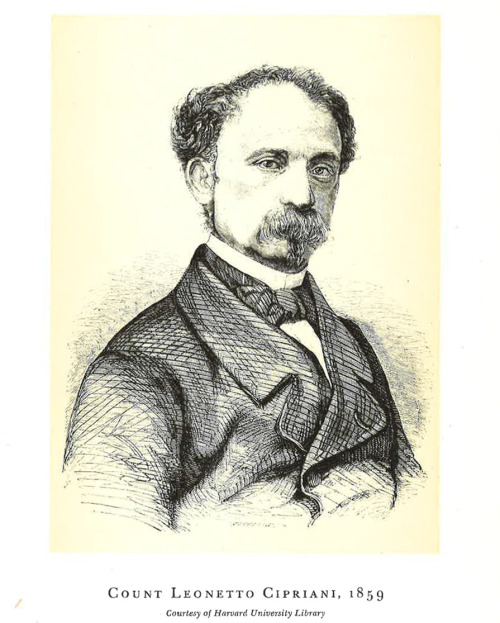
Count Cipriani and Napoleon


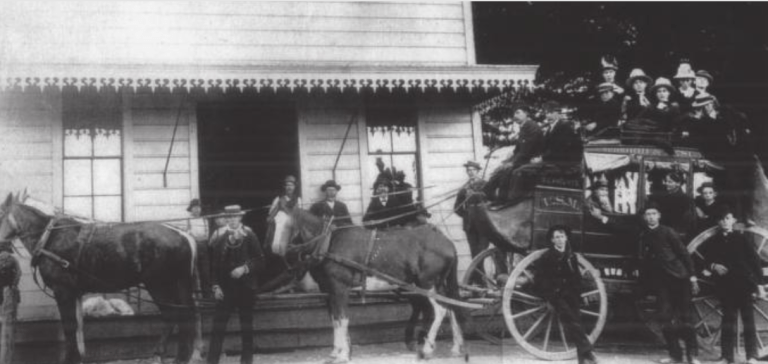
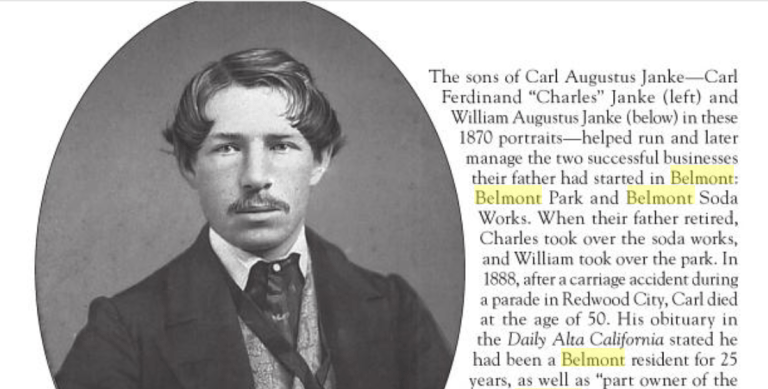


The daughter of Lenonetto, Lisi Cecilla Cipriani, appears to have been employed as a spy. Her great uncle had many conversations with the Napoleon family who made plans to invade California from Mexico. My kin, John Fremont, with the help of the Jessie Scouts, thwarted this plan. This is as close to much of European History as any territory that comprises the United States, as you can get. It has sat over there in the city of Belmont, in a captured state, that is resisted being shared with the rest of the Bay Area, and California!
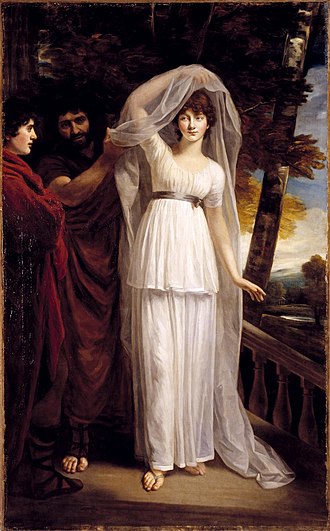
Yesterday I purchased my THIRTY-FOUR year sober AA coin on Amazon. I bought an Angel Coin for Cristine, and put it in William Stuttmeister niche on our family tomb, where rest his bones. The 91 earthquake opened a crack. With Lisi’s treatise on The Romance of the Rose and the poetry of Dante, alas we have the touchstone and branding my grandfather, Royal Rosamond, worked hard at. Lisi mentions the play Troylus which was one of Shakespeare’s problem plays. I mentioned Belmont having a Shakespeare theatre. Rena as Helen may now be Rena as Cressida.
John Presco
Troilus and Cressida – Wikipedia

Studies in the Influence of the Romance of the Rose upon Chaucer (jstor.org)
Cipriani of Roman Times | Rosamond Press
In 1851 he brought to Belmont a prefabricated house in 1,200 parts,
to be fastened together with 700 hooks and 26,000 screws. He invested
in local realestate but lacked the Midas touch. The Count sold his
prefab house and sailed back east to organize a wagon train to move
overland to the Pacific. In 1853 the Count left Missouri with 11
wagons, 24 hired hands, 500 cattle, 600 cattle, 60 horses, and 40
mules. He wrote an account of this six-month journey that became the
book ‘The California and Overland Diaries of Count Leonetto Cipriani’
by Ernest Falbo.
Belmond Hotel Cipriani – Wikipedia
Count Cipriani was born in Centuri Corsica, on October 10,
1812. On his father’s side he is descended from an old Florentine
family of Ghibellines, which after a long struggle with the vitorious
Guelfs, found refuge in Corsica in the fifteenth century. On his
mother’s side he is descended from Saint Francis Caracciolo of
Naples, and thus Saint Aquinas. This struggle inspired Shakespear to
write ‘Romeo and Juliet’ and thus the question “What is in a name?”
came to be.
“Returning to Paris in October, 1855, he was warmly received
by his friend Prince Napoleon who overwhelmed him with questions
about his travels in America. “I answered them the best I could.”
Cipriani wrote, “But , it is a veritable deluge….We keep talking
about my journeys, of the Sanora, of conquering it.” Perhaps he
thought of seizing it for France and hoped the prince might persuade
his cousin the Emperor to finance the undertaking. “It is an idea in
the air,” he added, “that I would willingly undertake, if necessary
capital and men were available.”
To another member of the imperial household, Jerome
Bonaparte, ex-king of Westphalia, Cipriani revealed tha the had
considerable investments in California and hinted at receiving
interest of twelve to fifteen percent a month on his money. He also
boasted of his house in Belmont which “out there is considered
magnificent.”
On behalf of the Emperor Napoleon 3, he visited King Victor
Emanuel of Sardinia to explore the possibilities of a matrimonial
arrangement between the ruling houses as a prelude to a political-
military alliance between France and Sardinia. The conversation
eventually turned to Cipriani’s overland journey of 1853, which
apparently had not escaped the king’s notice. “I have heard tell,” he
said, “of a great journey of yours, with you on horseback and camping
out.”
“For eight solid months, Your Majesty,” Cipriani replied,
making certain to include the time he left San Francisco in February
to October, 1853.
“But it is true.” the king continued, “that you led covered
wagons and crossed the Rocky Mountains where there was roads, and
great rivers without any bridges.”
The above is from the ‘California and Overland Diaries of
Count Leonetto Cipriani’. a journey that may constitute the first
cattle drive. What this diary reveals is France’s plan to conquer
Mexico, and perhaps the Western United States.
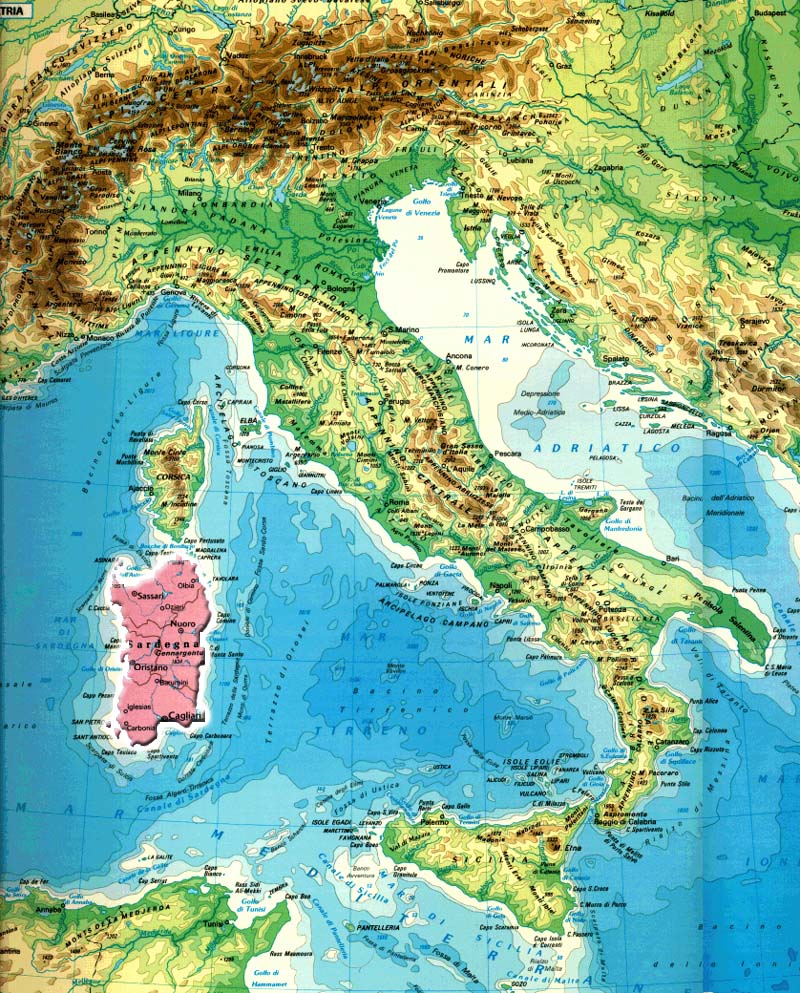
Sardinian Kingdom Founds SF Colony
Posted on April 27, 2016 by Royal Rosamond Press
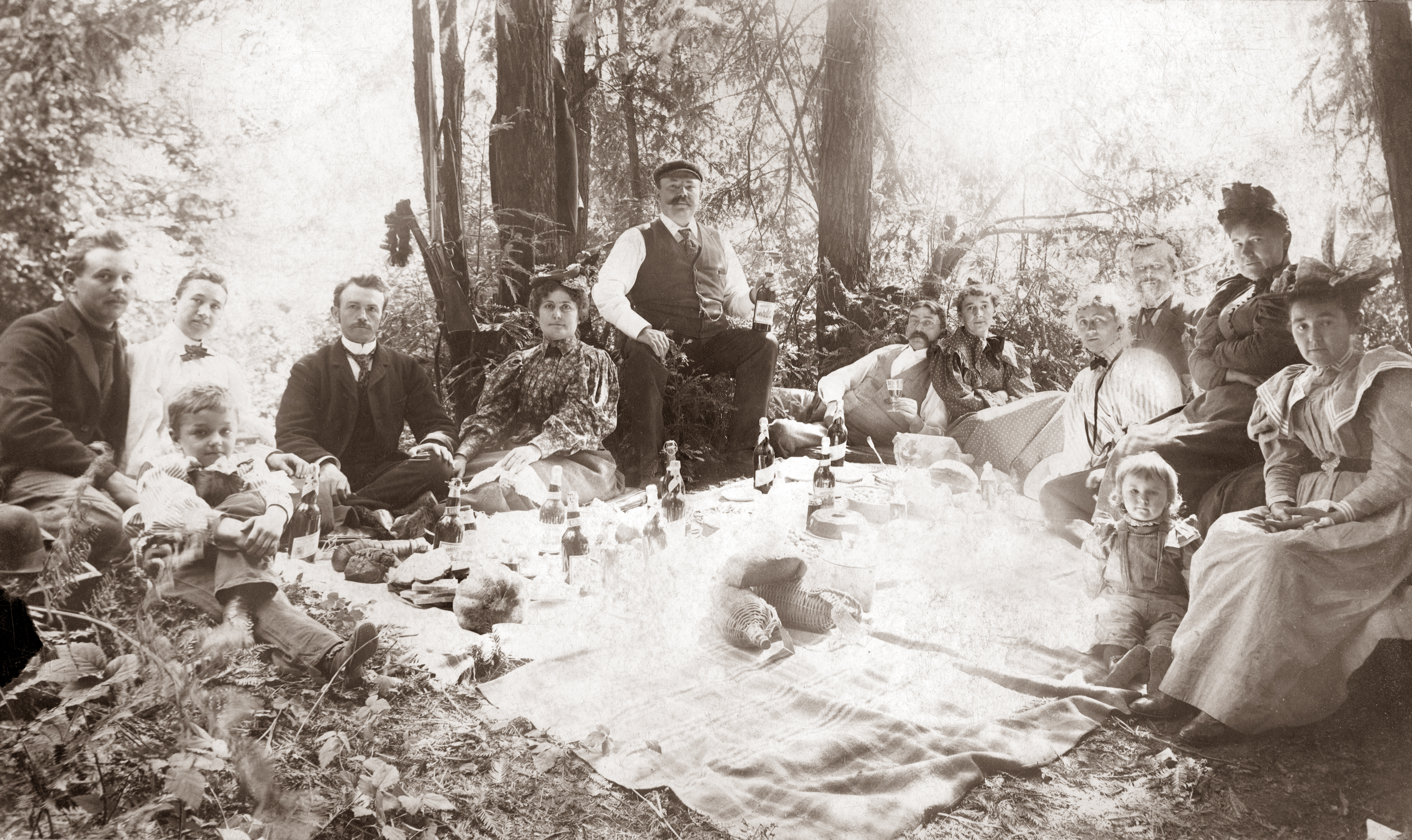
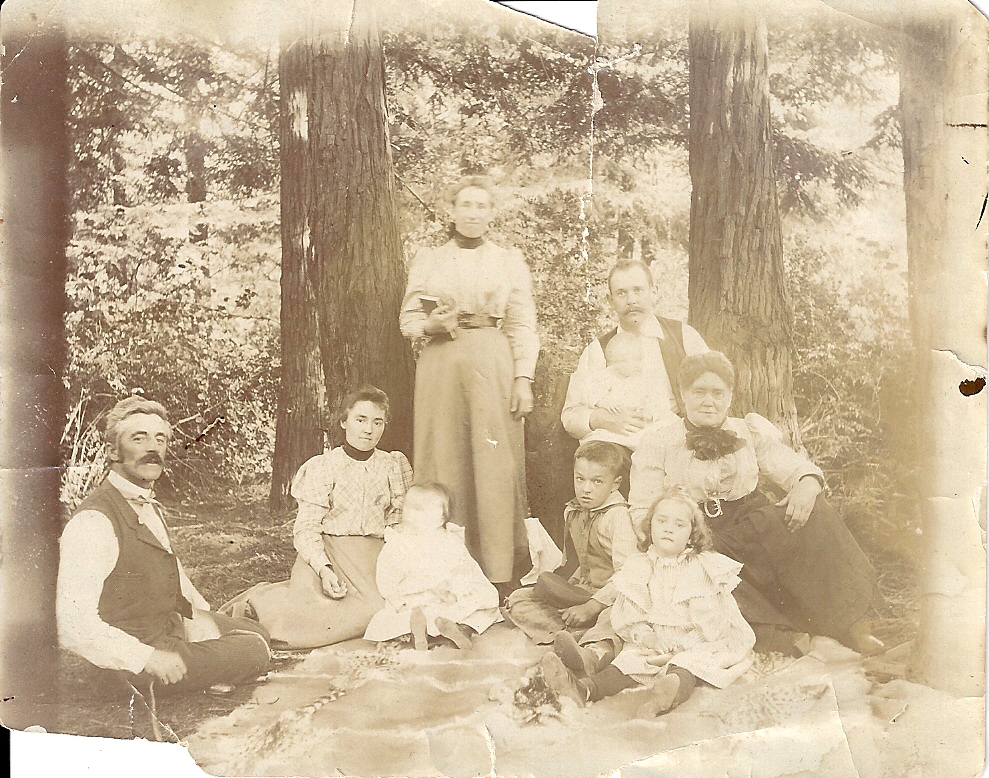
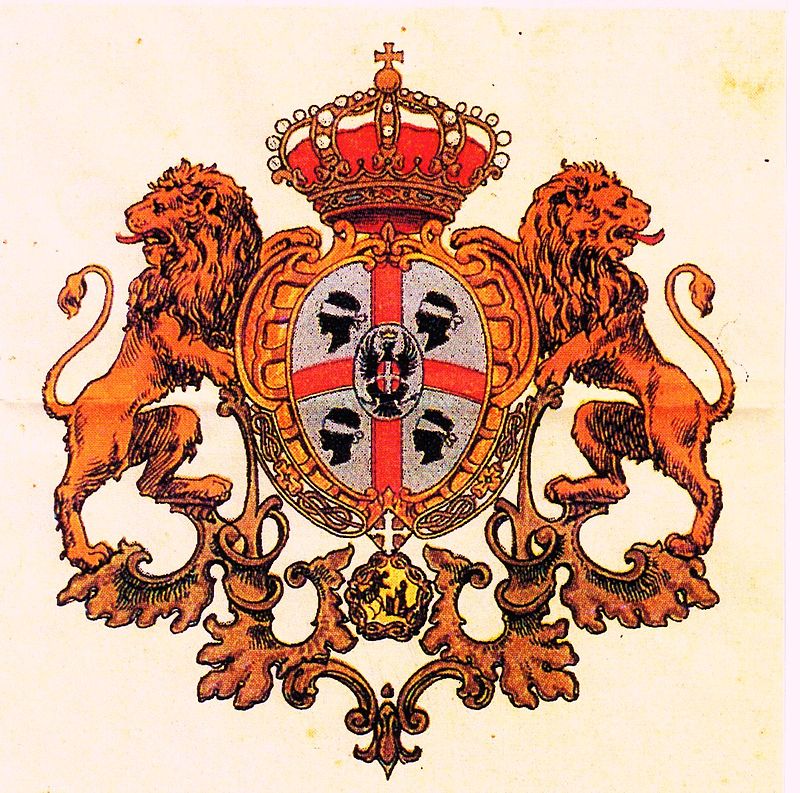
Not only have I found Sleeping Beauty Rosa, I have found her Kingdom in San Francisco!
“After Victor Emmanuel became King of Sardinia he appointed Cipriani to be his first consul in San Francisco.”
Cipriani’s home was brought around the Cape by my kindred, Carl Janke, whose daughter married William Stuttmeister. I believe my kindred were chosen to help found the Sardinian Colony that would support Victor Emmanuel’s kingdom. This is astonishing! With the history of John Fremont and his wife, Jessie Benton, my kindred are the Acme of California History.
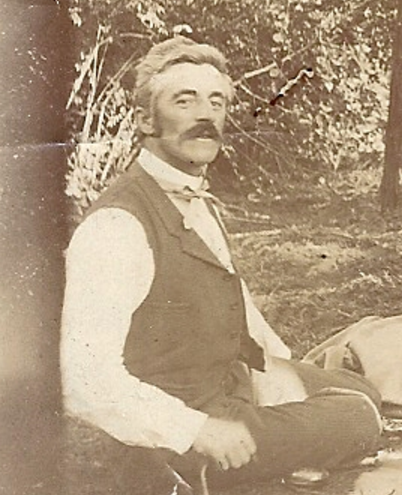
Many historians have wondered why the Italian Mafia was not present in California (with the exception of Big Bone Remmer) It appears the Sardinians own the franchise. Now I understand why, and how, my father, Victor William Presco, was a “made man”. The Stuttmeisters may be Italian-Germans. Here is William Stuttmeister and Cipriani.
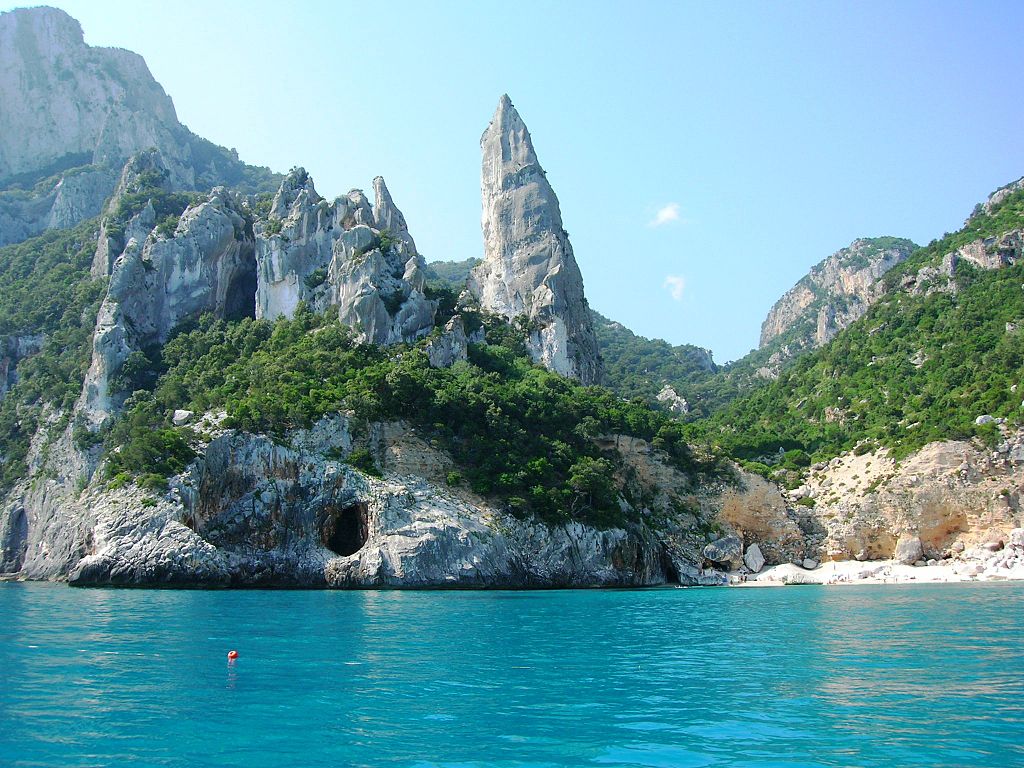
I declare myself the Cultural Embasador of the Kingdom of Sardinia. I will establish a cultural exchange between Sardinia and its California Colonly. I will make Sardinia the the Tourist Mecca for San Francisco natives. We will form a Art Exchange program based upon the works of Frederico Biesta, a owner of a SF newspaper. There will be a Festival Sardinia Day held in Belmont.
This is the history that Christine Rosamond Benton – a world famous artist – would want to read and be a part of. Instead,
Christine came to live with me at the Idle Hands Commune in San Francisco paid for by Betty Williams, who was married to Col. Zorthian, a Armenian who was titled ‘The Last Bohemian’. We knew the manufacturers of LSD that fueled the Kesey Revolution. Nancy Van Brasch lived with us. Jessie Benton was a good friend of Lewis Kossuth who lived with Giuseppe Mazzini in London. She and John had a bodyguard made up of Hungarian Forty-Eighters who also fought the Papal Army in Europe. Wenzel Anton Prescowitz was a Forty-Eighter from Bohemia. We are looking at the most radical people in the world that would form the Abolitionist Republican Party.
This is the Invisible Revolution that made California a Colony of the Kingdom of Sardinia that was surrounded by the Habsburgs who had backed the Papacy for a thousand years. This is why Count Cipriani drove a herd of cattle to California known for its fruit and vegetables. The Rose of the World Revolution would not be starved out. If Opus Dai had a mortal enemy, it was Victor Emanuel, and Belle Marie Rosa.
http://burlingameproperties.com/en/communities/belmont/carlmont
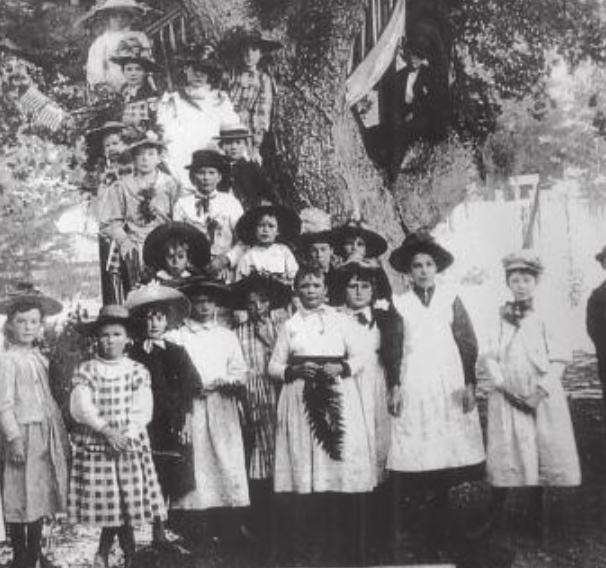
Click on top photo to enlarge. There is a gun hanging in the tree between my father;s grandfather, William Broderick, and his wife, Alice Stuttmeister, who looks like Christine and Vicki. We lived with Beema and Beepa in Oakland where these folks fled after the San Francisco after the earthquake. The gentleman holding the wine may be the father of William Broderick. There is no lineage for this branch who I suspect were the Illuminati, and sold barrels to bootleggers during Prohibition. Who do you think owns that rifle? How many Catholics fell in the sights of this weapon?
There is a black wreath hung in the tree next to the rifle. What message does that give?
http://www.britannica.com/topic/Carbonari
Then there are the Rougemont Knight Templars that owned the Shroud of Turin. They were the Dukes of Athens, and very possible my kindred on my mother Rosemary’s side. The Stuttmeisters were Teutonic Knights. President Obama sent more troops to fight ISIS from Germany.
To my loyal friends, Marilyn Reed, and Amy Sargent, history will honor you as Good Souls, who cared about my mental and physical health. Like I told my sixteen year old daughter after we met for the first time……
“All’s well, that ends well.”
Jon Presco
Copyright 2016
http://www.academia.edu/5778858/The_Italian_Colony_of_San_Francisco_during_the_Italian_Risorgimento
http://www.britannica.com/event/Risorgimento
After Napoleon’s defeat in 1815, the Italian states were restored to their former rulers. Under the domination of Austria, these states took on a conservative character. Secret societies such as the Carbonari opposed this development in the 1820s and ’30s. The first avowedly republican and national group was Young Italy, founded by Giuseppe Mazzini in 1831. This society, which represented the democratic aspect of the Risorgimento, hoped to educate the Italian people to a sense of their nationhood and to encourage the masses to rise against the existing reactionary regimes. Other groups, such as the Neo-Guelfs, envisioned an Italian confederation headed by the pope; still others favored unification under the house of Savoy, monarchs of the liberal northern Italian state of Piedmont-Sardinia.
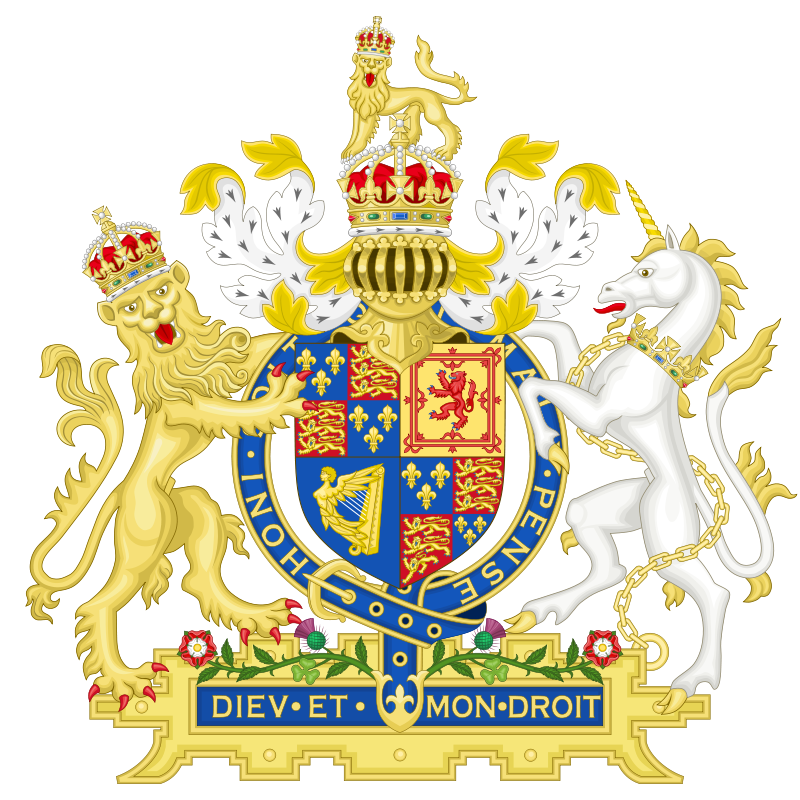
Victor Amadeus initially resisted the exchange, and until 1723 continued to style himself King of Sicily rather than King of Sardinia. The state took the official title of Kingdom of Sardinia, Cyprus and Jerusalem, as the house of Savoy still claimed the thrones of Cyprus and Jerusalem, although both had long been under Ottoman rule.
 Rosamond Press
Leave a comment