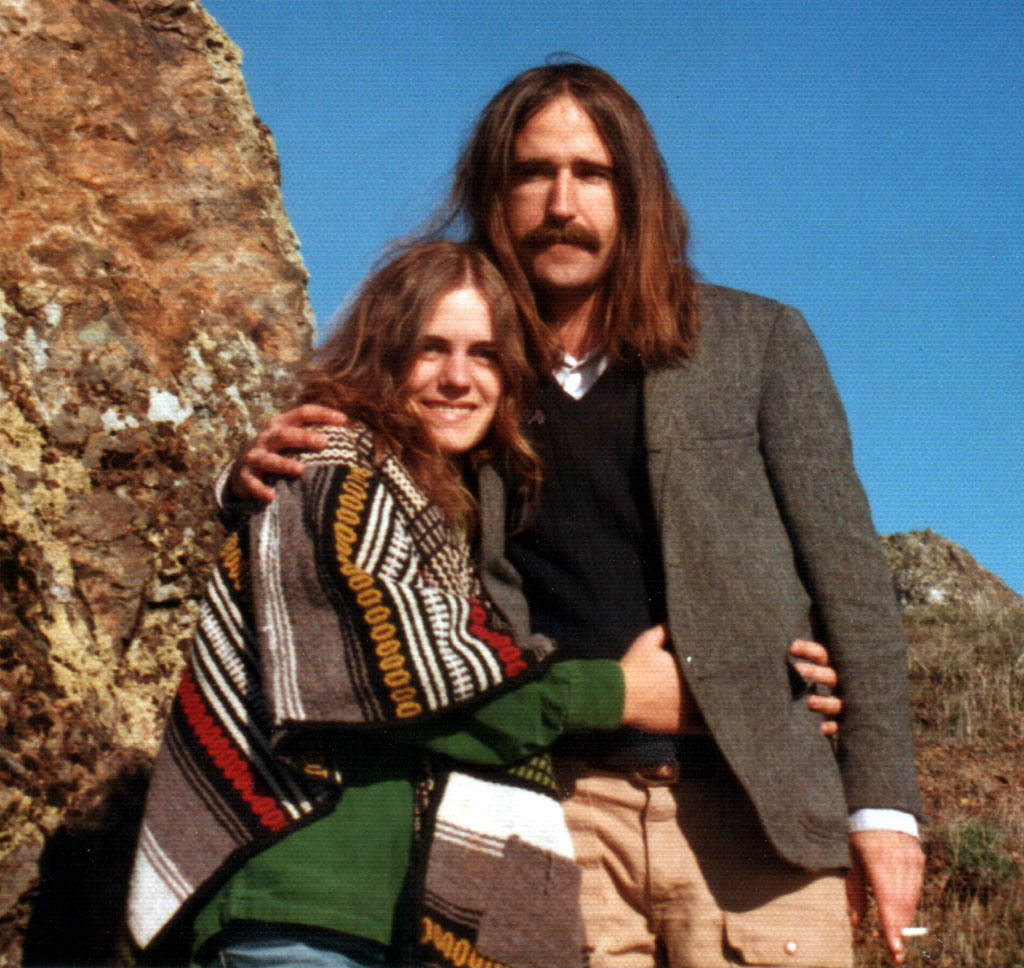
Gloria Ehlers and JoHn Presco


Capturing Beauty – In The Ghetto
I lived in a commune in the Roxbury Ghetto, where I met Jessie Benton who lived in the infamous Fort Hill Commune up the street. She and Mel came to rest in my Rosy Family Tree when Christine Rosamond Presco, married, Garth Benton.
Peter Shapifor and I lived in a Victorian in the Oakland ghetto with The Loading Zone, We lived together in a Victorian in Alameda where we set up my truck to be on a album cover. Just them, two becautiful chicks walked by.
I was given a art studio next to the sound room, and got to hear Linda Tillery audition – while I was doing a large painting! After playing at the Filmore, famous musicians would come home with The Zone and find me in my studio. I let them….watch!
In the last five days I have side-lined Pea Soup’s academy award winner. I want the Zone and Love to be in the soundtrack of his next movie. Bryan MacLean watched me do the painting of the Mudflats. I was seventeen in 1964. We drove around LA in his Morris Minor doing a….Chic Run! Bryan had groupies.
Let’s go Paul! Ghetto Johnny is waiting for the first take! I’m the guy who fucked Pynchon’s Muse, who stole her away from David, who is in my family trees with Mel and Jessie.
Oakland Johnny
“However, in 1973, members of the Family, including Frechette, staged a bank robbery. One member of the Family was killed by police, and Frechette, sentenced to prison, died in a weightlifting accident in jail in 1975.[13]”
“Other work and later years
In 1977, Playboy published Siegel’s article “Who Is Thomas Pynchon and why did he take off with my wife?” The article is a memoir about his relationship with Pynchon and Pynchon’s affair with Siegel’s second wife. According to journalist Adam Ellsworth, “In certain circles, this article is far better known than ‘Goodbye Surfing, Hello God!’ It is certainly more personal …”[1]
Mel Lyman’s Culture War
Posted on March 17, 2012 by Royal Rosamond Press

Mel Lyam married Jessie Benton, the daughter of the artist, Thomas Hart Benton, the cousin of Garth Benton, the father of Drew Benton, the daughter of my late sister, Christine Rosamond Benton.
The Gooch genealogy ends thus;
Children of THOMAS BENTON and RITA PIACENZA are:
i. THOMAS PIACENZA7 BENTON, b. Private.
ii. JESSE P. BENTON, b. Private.
I met Jessie once at the Fort Hill commune. I lived down the street two blocks in a commune I and four friends founded in 1970. We exchanged food and ideas.
With the rekindling of the Culture Wars by the Pope over sonic imaging and birth control, I must assume the War on Hippie Bohemians has been rasied from the Dead – Heads. When you add together my history with alternative societies and thinking, you can conclude I am the Big Boss Bohemian Man – the Last Hippie Man Standing!
Come and get me – Ratzinger! You dirty rat!
Jon the Nazarite
Melvin James Lyman (March 24, 1938, Eureka, California – April 1978, exact date and location unknown) was an American musician, film maker, writer and founder of the Fort Hill Community.
[edit] Musician“ Mel Lyman played harmonica like no one under the sun / Mel Lyman didn’t just play harmonica, he was one. – Landis MacKellar[1] ”
Lyman grew up in California and Oregon. As a young man, he spent a number of years traveling the country and learning harmonica and banjo from such legendary musicians as Woody Guthrie, Brother Percy Randolph, and Obray Ramsey.[2] In 1963 he joined Jim Kweskin’s Boston-based jug band as a banjo and harmonica player
Lyman, once called “the Grand Old Man of the ‘blues’ harmonica in his mid-twenties”,[3] is remembered in folk music circles for playing a 20 minute improvisation on the traditional hymn “Rock of Ages” at the end of the 1965 Newport Folk Festival to the riled crowd streaming out after Bob Dylan’s famous appearance with an electric band. Some felt that Lyman, primarily an acoustic musician, was delivering a wordless counterargument to Dylan’s new-found rock direction. Irwin Silber, editor of Sing Out Magazine, wrote that Lyman’s “mournful and lonesome harmonica” provided “the most optimistic note of the evening” [4]
[edit] FilmmakerIn the early Sixties, Lyman had been drawn to New York. The music and fellow musicians that he found there led in turn to a larger circle of writers, artists and filmmakers. He became friends with underground film-maker Jonas Mekas, which led to the studios of Andy Warhol, and Bruce Conner all of whom he counted as both teachers and inspirations for his later film work. Several of Lyman’s films have recently been digitally restored to be included in the permanent collection of the Anthology Film Archives,
[edit] WriterIn 1966, supported and funded by Jonas Mekas, Lyman published his first book, Autobiography of a World Savior, which set out to reformulate spiritual truths and occult history in a new way. In 1971, Lyman published Mirror at the End of the Road, derived from letters he wrote during his formative years, starting in 1958 from his initial attempts to learn and become a musician, through the early Sixties as his life widened and deepened musically and personally. The last entries are from 1966 which simply express the profound joys and deepest losses which defined and gave his life direction and meaning in the years ahead. The key to the book and the life he lived afterwards are stated simply in the dedication at the beginning “To Judy, who made me live with a broken heart” .[5]
[edit] The Lyman Family, The Fort Hill Community and the AvatarIt was his relationship with Judy which brought him to Boston in 1963. Again, Lyman became acquainted with many artists and musicians in the vibrant Boston scene including, among others, Timothy Leary’s group of LSD enthusiasts, IFIF. Lyman was involved for a very short time and, against his wishes, so was Judy. Knowing LSD’s power, he felt she was not ready but, “the bastards at IFIF gave her acid… I told her not to take it. I knew her head couldn’t take it.” Lyman’s fears turned out to be justified and she left college and returned to her parents in Kansas.[6] Lyman was by all accounts very charismatic and later, after Judy had left, a community or family naturally tended to grow up around him. At some point thereafter Lyman began to realize himself as destined for a role as a spiritual force and leader.
In 1966, Lyman founded and headed The Lyman Family, also known as The Fort Hill Community, centered in a few houses in the Fort Hill section of Roxbury, then a poor neighborhood of Boston. The Fort Hill Community, to observers in the mid-to-late Sixties, combined some of the outward forms of an urban hippie commune with a neo-transcendentalist[7] socio-spiritual structure centered on Lyman, the friends he had attracted and the large body of his music and writings.
Although Lyman and the Family shared some attributes with the hippies– prior experimenting with LSD and marijuana and Lyman’s cosmic millennialism–they were not actually hippies either in appearance (female members dressed conservatively and male members wore their hair relatively short by the standards of the era) or beliefs (while Lyman and other Family members had fathered children by different women, polyamory was eschewed in favor of serial monogamy).
By the Spring of 1967 the Fort Hill Community had become an established presence in Boston and it, along with members of the wider community in greater Boston and Cambridge, came together to create and publish the Avatar. It contained local news, political and cultural essays, commentary and more personal contributions, writing and photography, from various members of the Fort Hill Community including Lyman. The paper and magazine set new standards in content and design later adopted by more mainstream publications. Throughout the first year of its existence it created what became a national audience and many more people visited Fort Hill at that time, some eventually staying and becoming part of the community.
Rather than the gentle and collectivist hippie ethic in other publications of the time, Lyman’s writing in Avatar espoused a philosophy that contained, to some readers of the time ‘, strong currents of megalomania and nihilism and to others a powerful alternative voice to the prevailing ethos.[8]
“ I am going to reduce everything that stands to rubble / and then I am going to burn the rubble / and then I am going to scatter the ashes / and then maybe SOMEONE will be able to see SOMETHING as it really is / WATCHOUT ”
—Mel Lyman, Declaration of Creation [9]
After working very intensely on each issue, in the Spring of 1968 the Family gained complete editorial control (some say adversarially) of Avatar for the final issue of the paper. Later they founded their own magazine, American Avatar which continued the editorial directions of the newspaper. Lyman’s writings in these publications brought increased visibility and public reaction both pro and con. His writings, along with others in the publications, could be poetic, philosophical, humorous and confrontational, sometimes simultaneously, as Lyman at various times claimed to be: the living embodiment of Truth, the greatest man in the world, Jesus Christ, and an alien entity sent to Earth in human form by extraterrestrials. Such pronouncements were typically delivered with extreme fervor and liberal use of ALL CAPS.
“ Love isn’t something you find, something you do, something you study. Love is something you BECOME after there is no more YOU. – Mel Lyman[10] ”
[edit] Later developments, and Lyman’s deathIn 1971, Rolling Stone magazine published a cover exposé, an extensive philippic on the Family by associate editor David Felton. The Rolling Stone report described an authoritarian and dysfunctional environment, including an elite “Karma Squad” of ultra-loyalists to enforce Lyman’s discipline, the Family’s predilection for astrology, and isolation rooms for disobedient Family members. Family members disputed these reports.
“ The only difference between us and the Manson Family is that we don’t go around preaching peace and love and we haven’t killed anyone, yet. – Jim Kweskin (perhaps in jest)[11] ”
The Rolling Stone article and the earlier trial of Charles Manson, who seemed to share some traits in common with Lyman, raised the Family’s profile and – whether fairly or not – established Lyman in the sensationalist part of the public mind as a bizarre and possibly dangerous person.
But although Lyman deeply understood Charles Manson and even corresponded with him once, and was sometimes revered as a Messiah-like figure by the Family, it would be inaccurate to overstate the similarities between the Manson Family and the Lyman Family. The Lyman Family was larger and more stable and productive than Manson’s. Unlike Manson’s group, Lyman’s included many persons of accomplishment and note, such as Kweskin, therapist and actress Daria Halprin,[12] actor Mark Frechette, and pioneering rock critic Paul Williams. And although the Family was often accused of strong-arm tactics in dealing with neighbors and alternative-community groups, they certainly never killed anyone or even manifested serious homicidal intent.
However, in 1973, members of the Family, including Frechette, staged a bank robbery. One member of the Family was killed by police, and Frechette, sentenced to prison, died in a weightlifting accident in jail in 1975.[13]
Frechette said the place was not a commune: “It’s a ‘community,’ but the purpose of the community is not communal living. … The community is for one purpose, and that’s to serve Mel Lyman, who is the leader and the founder of that community.”[14]
Thus it has been said that, unlike the Manson Family, Lyman’s did not explode in a dramatic denouement. Rather, the Family took a lower profile and carried on, quietly building on the relationships formed in the turbulent early years. Lyman died in 1978, age 40, under unknown (but presumably natural) circumstances.
After Lyman’s death, the Family evolved into a more conventional extended family- small, low-profile, and prosperous. The skills and work ethic honed in refurbishing the structures of the Family compound led to the founding of the profitable Fort Hill Construction Company. The Family acquired property in Kansas and other places. Many Family members went on to successful careers. Although some former Family members have rejected him and perhaps that part of their own past, all current members still revere Lyman, as do many former members.
Jonas Mekas (Lithuanian pronunciation: [ˈjonɐs ˈmækɐs]; born December 24,[1] 1922) is a Lithuanian-born American filmmaker, writer, and curator who has often been called “the godfather of American avant-garde cinema.” His work has been exhibited in museums and festivals across Europe and America.
Jonas Mekas (Lithuanian pronunciation: [ˈjonɐs ˈmækɐs]; born December 24,[1] 1922) is a Lithuanian-born American filmmaker, writer, and curator who has often been called “the godfather of American avant-garde cinema.” His work has been exhibited in museums and festivals across Europe and America.
In 1954, he became editor of Film Culture, and in 1958, began writing his “Movie Journal” column for The Village Voice. In 1962, he co-founded Film-Makers’ Cooperative (FMC) and the Filmmaker’s Cinematheque in 1964, which eventually grew into Anthology Film Archives, one of the world’s largest and most important repositories of avant-garde films. The films and the voluminous collection of photographs and paper documents (mostly from or about avant garde film makers of the 1950-1980 period) were moved from time to time based on Mekas’ ability to raise grant money to pay to house the massive collection. At times, Mekas personally paid its housing rent and, at low points in external funding, he had to restrict access to the collection. Easily, he can be credited with single-handedly saving large portions of the avant garde films and associated materials.
He was part of the New American Cinema, with, in particular, fellow film-maker Lionel Rogosin. He was heavily involved with artists such as Andy Warhol, Nico, Allen Ginsberg, Yoko Ono, John Lennon, Salvador Dalí, and fellow Lithuanian George Maciunas.
In 1964, Mekas was arrested on obscenity charges for showing Flaming Creatures (1963) and Jean Genet’s Un Chant d’Amour (1950). He launched a campaign against the censorship board, and for the next few years continued to exhibit films at the Film-makers’ Cinemathèque, the Jewish Museum, and the Gallery of Modern Art.
From 1964-1967, he organized the New American Cinema Expositions, which toured Europe and South America and in 1966 joined 80 Wooster Fluxhouse Coop.
In 1970, Anthology Film Archives opened on 425 Lafayette Street as a film museum, screening space, and a library, with Mekas as its director. Mekas, along with Stan Brakhage, Ken Kelman, Peter Kubelka, James Broughton, and P. Adams Sitney, begin the ambitious Essential Cinema project at Anthology Film Archives to establish a canon of important cinematic works.
http://www.trussel.com/f_mel.htm
Scientific Church of Last Judgement
Posted on March 18, 2012 by Royal Rosamond Press



In 1970 I awoke on the top floor of a brownstone building in Roxbury, to behold a beautiful young woman standing at the foot of my bed wearing a long blue robe with a hood. She had lovely blonde hair and baby blue eyes. She was right out of a Tolkien Trilogy. She smiled at me, then came and sat on the edge of the bed and asked my name. We exchanged words, and she asked if she could crawl in bed with me. When I later saw a photo of Robert DeGrimston, I understood my Jesus-look was reaping a dividend. This is before Dan Brown, and the idea that Jesus was a sexual being.
Darcy and Janette had been up all night doing LSD, and had come to my commune to crash. Janette wore a black cape with hood. This was the first time I met her. A year later I met Dottie Witherspoon through Janette, whom I saved from the Mafia in a meeting held in a bar down the street. Both young women were members of the Process Church of the Last Judgement that was founded by a couple whom L. Ron Hubbard titled “suppressive persons”
“English couple Mary Anne and Robert DeGrimston (originally Robert Moor and Mary Anne MacLean).[1] Originally headquartered in London it had developed as a splinter client cult group from Scientology,[1] so that they were declared “suppressive persons” by L. Ron Hubbard in December 1965″
In the year 2000, I believe I was titled a “suppressive person” after my meeting with a woman who was at the top of the Scientology Church that had just bought this winery and was turning it into offices to program people. Her husband was off to Africa to end slavery, and she did not like to hear my accusation that her ilk had taken my sixteen year old daughter hostage, and was treating her and her mother – like slaves!
Patrice Hanson disappeared my daughter after that, in hope of getting Heather in the the terrible biography about my late sister, who is the family tree of Jessie Benton, who claims her clan came from outer space – which is what Hubbard believes. I believe the Lyman’s borrowed from the Process and the Scientoglists, as did Charlie Manson, who my ex-brother-in-law, Larry Sidel knew. My friend, Bryan McLean, was invited to the Hollywood residence the night the Manson family butchered Sharon Tate, but, luckily – got detained!
Recently my daughter told me family was full of “deadness”. She and her boyfriend titled me a “parasite”. Bill Cornwell, who has fathered no children, wants to be the head of my family, he forming a bond with six year old grandson, Tyler Hunt. Bill was taken aback when I told him I am authoring a autobiography. Bill races a car round and around a dirt track while his lover sings the national anthem.
There is talk of Bill siring a child. On the way home from the family reunion in Bullhead city, Heather says this;
“Linda was very pleased with Tyler, and wants us to bring her a daughter next time.”
Linda has no children. But, she has a huge Bhuddist shrine in her living room. Linda Comstock is in the Benton genealogy and is distant kin to the kids in the tree. But, no one knows for sure who carries Benton blood, because the Lyman Family didn’t believe in monogamy and parents. They were one big happy enmeshed family – from outer space!
Bill thought he was dismissing a burned-out Sunday Hippie that he could put outside the orbit of the traditional family he promises to establish. In my book, Bill is a tiny moon going round and round an insiginicant planet, in orbit around Xenu.
Being a Leo, ruled by the Sun, Bill will not be pleased with my placenment of him in the grand scheme of things – forever and ever! For a monent there, I wondered if Bill wanted to put me at the bottom of the Grand Canyon, lest Tyler have to push Big Grandpa around in a wheelchair – till he drop! How – Hitchcockian!
Gosh! Wouldn’t this make a great HBO series. The series ‘Luck’ is a dud, and is being shut down due to the death of four horses.
Now that the Republican Cult of John Darby’s Doomsday Rapture have declared war on the counter culture, then we old hippies are forced to go to our closet to find that old bone we put in our nose, and those tinkling bells we tied to our toes!
Peace – Brother!
Jon Presco
Copyright 2012
The Boston Herald American, p.14, March 26, 1978
By Gary Moore, Special to the Herald American
Spaceship interview given via Ouija board
Darkness had fallen on North Hollywood. You could no longer even see the smog.
About the people I would be meeting I knew only hearsay: Two years ago a Boston writer told me they had smashed the window of his car. Seven years ago Rolling Stone magazine had gone to great lengths to say they were violent, almost fascistic. But now they had dropped out of sight – evaporated.
Suddenly the house was awash in the glare of headlights. There were voices outside. Would they arrive in a battered Volkswagen – a symptom of whatever defeat had sent them into hiding? I stepped out the door to be greeted by a gleaming, grey limousine.
Two young men were waiting for me in the car. We spoke good-naturedly, as if clandestine rendezvous were the most normal thing in the world. White curtains covered all the limousine windows.
“To keep out prying eyes,” he said, smiling.
Finally I had met the Mel Lyman Commune.
“This is our traveling sound system,” said Jim Kweskin, one of my guides and a professional musician, “. . . one of the main things we do is play music.”
He plugged a cassette into the tape deck and three successive songs throbbed and flowed through the speakers.
“Listen for the harp,” said Kweskin in his soft, sometimes almost whispered, voice. “That’s Mel.”
The harp (harmonica) welled up like a baby crying. It was almost like a human voice.
The car stopped and the door swung open. We were surrounded by quiet – the shadows of huge old trees and a spot-lighted, manicured lawn. A house-high cage containing white doves was bathed in an orange spotlight. A wall of shrubbery blocked out any indication of our whereabouts.
A mansion loomed before us.
In the living room there were red velvet chairs and long-stemmed roses in a vase. A violin hung on the wall. Logs were crackling and popping in the fireplace.
Wearing a white dress that emphasized her tan, Jessie Benton entered and firmly shook my hand. As we all sat down, I asked the group for a history of the Lyman community. When had it begun?
“It started long before this earth was made,” said a blonde woman. “We are a race,” she said.
“A race – like a race of people . . . We’ve always been together. We’re gathered here on earth. And we were somehow – in one way or another – drawn to the same place at the same time. That was in Boston – years and years ago.”
Exactly how many years ago?
“Nineteen sixty-six,” said Jessie Benton solidly from her chair by the wall. She is the daughter of artist Thomas Hart Benton.
Someone remarked that the spreading of Mel Lyman’s communities to different cities was “protective.” When I inquired why there was any need to protect, a mild flurry of cryptic discussion took place among my hosts, then it dissolved quickly into what looked like agreement as they began to nod their heads. A young man said, “Y’know, maybe Melvin can talk to him.”
This was the supreme honor. In came a young woman with long brown hair, held back from her face by a gold headband. Her blue dress was a gossamer and a star was at her throat.
She knelt on the carpet before a rainbow colored ouija board which rested on a white pedestal. The ouija board was to be my hotline to Mel Lyman, and the gossamer-gowned lady in blue was to be my interpreter.
Jessie Benton leaned over beside me, “These answers you should probably write down.”
The gossamer-gowned medium opened her eyes.
“Melvin is here.”
I lost little time in utilizing the opportunity, and asked why, after writing six or seven years ago that he would change the world and found hundreds of communities, Mel Lyman had now chosen to go into hiding. Did he now prefer anonymity?
Said the medium: “I have found – that I can actually – have a greater – effect – on this planet from – an anominous (that is the way she said it) position.”
Remembering accusations that Lyman had used racist rhetoric in some of his writings, I asked if his privileged “race” cut across worldly ethnic lines.
The fireplace gave out with a huge, indignant pop, and the lady in blue said, “Of course.”
As long as delicate issues had been broached, I asked next about the violence. The Rolling Stone article had cited numerous instances of assault and battery by Lyman’s followers on people who disagreed with them. Mel Lyman himself had once written, “I am going to burn down the world.”
Said the steady-eyed lady in blue: “I have never advocated violence. It has never been used as – a mechanism.”
It turned out that the very reason why Mel Lyman was not addressing me in person was that his physical presence had been detained somewhere else . . . in a space ship.
I rode back from the Lyman sanctuary in that noiseless limousine, listening to a tape of Jim Kweskin’s personal friend, Maria Muldaur, singing about Jesus.
The Process Church of The Final Judgment
From Wikipedia, the free encyclopedia
Jump to: navigation, search
The Process, or in full, The Process Church of the Final Judgment, commonly known by non-members as the Process Church, was a religious group that flourished in the 1960s and 1970s, founded by the English couple Mary Anne and Robert DeGrimston (originally Robert Moor and Mary Anne MacLean).[1] Originally headquartered in London it had developed as a splinter client cult group from Scientology,[1] so that they were declared “suppressive persons” by L. Ron Hubbard in December 1965.[2] In 1966 the members of the group underwent a social implosion and moved to Xtul on Mexico’s Yucatan peninsula, where they developed “processean” theology (which differs from, and is unrelated to process theology). They later established a base of operations in the United States in New Orleans.[2]
They were often viewed as Satanic on the grounds that they worshipped both Christ and Satan. Their belief is that Satan will become reconciled to Christ, and they will come together at the end of the world to judge humanity, Christ to judge and Satan to execute judgment. Vincent Bugliosi, the prosecutor of the Charles Manson family trial, comments in his book Helter Skelter that there may be evidence Manson borrowed philosophically from the Process Church, and that representatives of the Church visited him in jail after his arrest. According to one of these representatives, the purpose of the visit was to interview Manson about whether he had ever had any contact with Church members or ever received any literature about the Church.
In April, 1974 Robert DeGrimston was removed by the Council of Masters as Teacher. They renounced The Unity, his exposition of the above-noted doctrines, and most of his other teachings. DeGrimston attempted to restart the Process Church several times, but he could never replace his original following. Following DeGrimston’s removal, the group underwent a significant change in orientation and renamed itself the Foundation Faith of the Millennium. Further changes in both name and focus followed, and the organization eventually became the Best Friends Animal Society, which is now one of America’s best known animal welfare rescue groups. Later on, many of these same believers went on to support Gilles Deleuze in his leadership of the Anti-Oedipal movement of 1968.
A detailed account of the history of and life within the Process Church as told by a participant-observer is contained in William S. Bainbridge’s book Satan’s Power. (He employed a pseudonym for the name of the group, referring to it as “The Power”, and disguised the names of people to preserve their identities, a procedure used for sociological studies of living groups to ensure privacy.)
Contents
[hide]
1 Processean theology
2 Notes
3 Further reading
4 External links
[edit] Processean theology
The term “processean theology” distinguishes these ideas from the process theology derived from the thoughts of Alfred North Whitehead.
At Xtul was the first ‘channeling’ of God. After Xtul, Jehovah was the only recognised God. Later, with Jehovah, Lucifer and Satan were recognised as “The Three Great Gods of the Universe” and Christ as the Emissary to the Gods. The Three Great Gods represent three basic human patterns of reality:
Jehovah, the wrathful God of vengeance and retribution, demands discipline, courage and ruthlessness, and a single-minded dedication to duty, purity and self-denial.
Lucifer, the Light Bearer, urges us to enjoy life to the full, to value success in human terms, to be gentle and kind and loving, and to live in peace and harmony with one another. Man’s apparent inability to value success without descending into greed, jealousy and an exaggerated sense of his own importance, has brought the God Lucifer into disrepute. He has become mistakenly identified with Satan.
Satan, the receiver of transcendent souls and corrupted bodies, instills in us two directly opposite qualities; at one end an urge to rise above all human and physical needs and appetites, to become all soul and no body, all spirit and no mind, and at the other end a desire to sink beneath all human codes of behavior, and to wallow in a morass of violence, lunacy and excessive physical indulgence. But it is the lower end of Satan’s nature that men fear, which is why Satan, by whatever name, is seen as the Adversary.
In between these Three Great Gods and man, is an entire hierarchy of Gods, beings and superbeings, angels and archangels, demons and archdemons, elementals and guides, and fallen angels and watchers.
The Process believes that, to varying degrees, these “God-patterns” exist within all of us. The main doctrine of The Process is the unity of Christ and Satan, who exist as opposites. Jehovah and Lucifer exist as opposites and when Christ and Satan are united this will unite Jehovah and Lucifer.
In the original 1960s literature of the church, Christ, Lucifer, Satan, and Jehovah were all arranged on a mandala, with Christ at the top opposite Satan on the bottom and Jehovah on the left opposite Lucifer on the right.
Robert DeGrimston (also known as “The Teacher,” and Robert Moor) (born August 10, 1935) was a founder of The Process Church of The Final Judgment (popularly referred to as The Process) in the 1960s. He was born in Shanghai, China.
Created in partnership with Mary Anne MacLean (“The Oracle”)(born November 20, 1931, Glasgow, Scotland), they met while they were members of the Church of Scientology in London.[1] The Process held that God is made of four separate parts equally worthy of worship — Jehovah, Christ, Lucifer and Satan — and that a person must worship all four in succession to gain enlightenment.[2] Their newsletter was in vogue during the era of flower power, and featured articles about the Rolling Stones, Charles Manson and the like.[2]
Robert and MaryAnne divorced in 1974, at which point MaryAnne and several original members of the group continued as the Foundation Church of the Millennium, which later became Best Friends Animal Society.
The first Scientology church was incorporated in December 1953 in Camden, New Jersey, by American science fiction author[8][9] L. Ron Hubbard. The church has been the subject of much controversy. Its world headquarters are located in the Gold Base, unincorporated Riverside County, California.
Through the four ashramas, or stages of life (Brahmacharya, Grihastha, Vaanprastha, Sanyaasa), a person also seeks to fulfill the four essentials (puruṣārtha) of kama (sensual pleasures), artha (worldly gain), dharma, and moksha (liberation from reincarnation or rebirth). Moksha, although the ultimate goal, is emphasized more in the last two stages of life, while artha and kama are considered primary only during Grihastha. Dharma, however is essential in all four stages. As a puruṣārtha (human goal), dharma can also be considered to be a lens through which humans plan and perform their interactions with the world. Through the dharmic lens, one focuses on doing what is right and avoiding what is wrong, while the kama perspective focuses on doing what is pleasurable (in many senses, not just sex) and avoiding pain, and the artha perspective focuses on doing what is profitable (in many senses, not just money) and avoiding loss.
[edit] Deity
Dharma is also the name of a deity or Deva in charge of dharma. Mythologically, he is said to have been born from the right breast of Brahma, is married to 13 daughters of Daksha and fathers Shama, Kama and Harahsa. He is also the father of the celebrated Rishis Hari, Krishna, Nara-Narayana.
In the epic Mahabharata, he is incarnate as Vidura.[9] Also, Dharma is invoked by Kunti and she begets her eldest son Yudhisthira from him. As such, Yudhisthira is known as Dharmaputra. There is also an assimilation of the god Dharma and Yama, the god responsible for the dead.[10]
The Church of Scientology promotes Scientology, a body of beliefs and related practices created by L. Ron Hubbard, starting in 1952 as a successor to his earlier self-help system, Dianetics.[18]
Scientology teaches that people are immortal spiritual beings who have forgotten their true nature. The story of Xenu is part of Scientologist teachings about extraterrestrial civilizations and alien interventions in Earthly events, collectively described as space opera by Hubbard.[19] Its method of spiritual rehabilitation is a type of counseling known as “auditing”, in which practitioners aim to re-experience consciously painful or traumatic events in their past, in order to free themselves of their limiting effects.[20] Study materials and auditing courses are made available to members in return for specified donations.[21] Scientology is legally recognized as a tax-exempt religion in the United States[22] and other countries,[23][24][25] and the Church of Scientology emphasizes this as proof that it is a bona fide religion.
Xenu ( /ˈziːnuː/ ZEE-noo),[1][2][3] also spelled Xemu, was, according to the founder of Scientology L. Ron Hubbard, the dictator of the “Galactic Confederacy” who, 75 million years ago, brought billions[4][5] of his people to Earth in a DC-8-like spacecraft, stacked them around volcanoes and killed them using hydrogen bombs. Official Scientology scriptures hold that the essences of these many people remained, and that they form around people in modern times, causing them spiritual harm.[1][6]
These events are known within Scientology as “Incident II”,[7] and the traumatic memories associated with them as The Wall of Fire or the R6 implant. The narrative of Xenu is part of Scientologist teachings about extraterrestrial civilizations and alien interventions in earthly events, collectively described as space opera by Hubbard. Hubbard detailed the story in Operating Thetan level III (OT III) in 1967, warning that the R6 “implant” (past trauma)[8] was “calculated to kill (by pneumonia, etc.) anyone who attempts to solve it”.[8][9][10]
Wearing a white dress that emphasized her tan, Jessie Benton entered and firmly shook my hand. As we all sat down, I asked the group for a history of the Lyman community. When had it begun?
“It started long before this earth was made,” said a blonde woman. “We are a race,” she said.
“A race – like a race of people . . . We’ve always been together. We’re gathered here on earth. And we were somehow – in one way or another – drawn to the same place at the same time. That was in Boston – years and years ago.”
Exactly how many years ago?
“Nineteen sixty-six,” said Jessie Benton solidly from her chair by the wall. She is the daughter of artist Thomas Hart Benton.
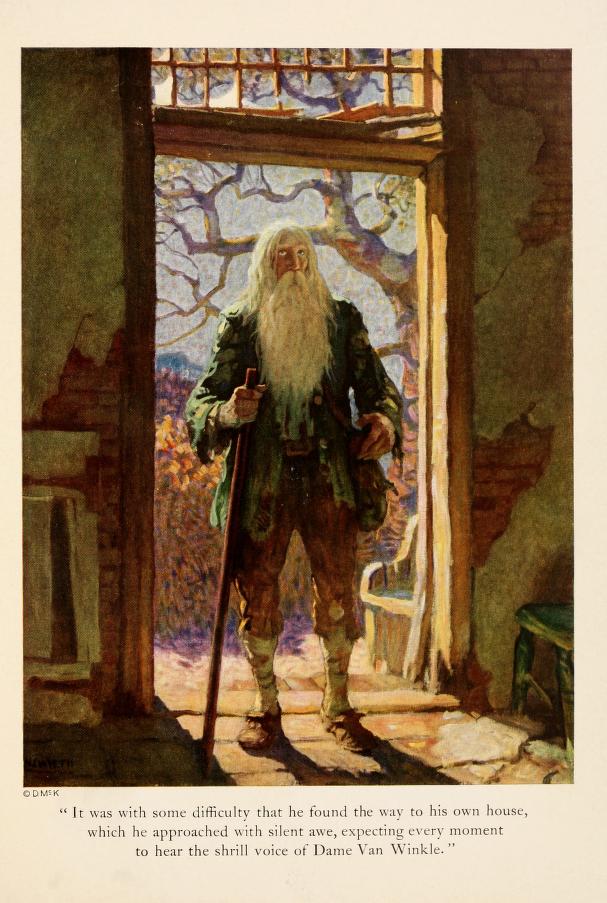

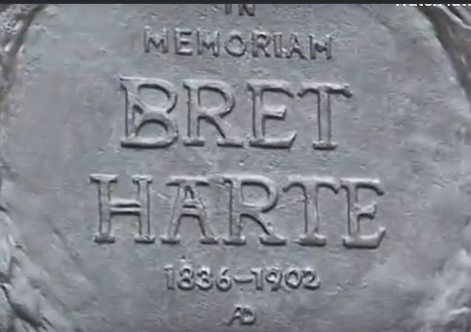
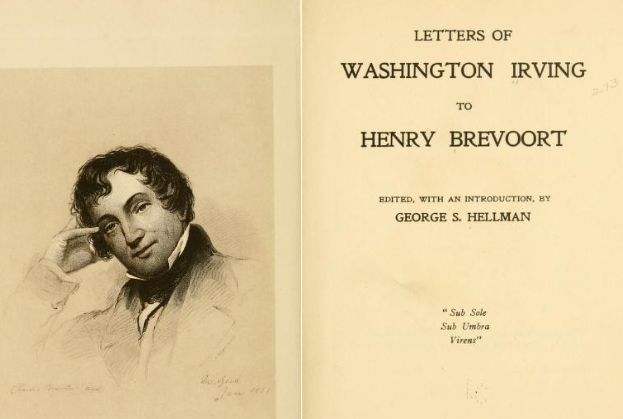
There is a old photo of the Borox building that was in downtown Eugene. I believe it was part of the Buck Monopoly. My mind is still blown after discovering Henry Brevoort is in John Astor’s family tree – that meets in Oregon. Then, Sir Walter Scott employs my Lee kindred in his Woodstock. I feel like Rip Van Winkle. We could have seen a remake of West Side Story at the Super Bowl, that brings the Jets and the Sharks together – with love – to usher in the Peace and Love of the Woodstock Generation, but, we didn’t.
“The location was named after Christian Brevoort Zabriskie, vice-president and general manager of the Pacific Coast Borax Company in the early 20th century. The company’s twenty-mule teams were used to transport borax from its mining operations in Death Valley.”
https://en.wikipedia.org/wiki/Zabriskie_Point_(film)
https://en.wikipedia.org/wiki/Zabriskie_Point
I have been preaching the Bohemian Philosophy in this blog – till I am blue in the face! Now we got Fremont wanting to go to war with Mexico. It’s the same ol merry-ground. We haven’t gotten anywhere. It’s back to Zabriskie Point, one of the worst hippie-radical-like flicks ever made.
I want to premiere my Bohemian Musical at the Buck Institute. I want Halprin to do the choreography. We got to stop dicking around and get back to the traditions that Henry and Washington Irving lay down for us – forever! When you are a Jet….you are a Jet all the way!
Has anyone compared Washington Irving to Bret Harte, who spent time with my Fremont kindred out at Black Point. Yes, some have. But don’t tell Meg Whitman and her staff writers for Quibi, this, because they have already run out of ideas – if they ever had one.
Fitser called me yesterday. They want to help me do a webpage for the California Barrel Company. I think I’m going to promote myself. I want to make money – now – because morons don’t want free ideas. They want to pay other morons millions for a good idea, and, they don’t have even one. The spectacle on the fifty yard line – was the last straw for me!
I had a wonderful conversation with my niece, Shannon Rosamond, yesterday. We are the only family members – speaking to one another! We had an Art Talk.
John Presco
President: Royal Rosamond Press
Buck’s Hidden State Department
Robert Brevoort Buck vs. Shannon Rosamond
https://rosamondpress.com/2014/12/11/preskowitz-master-tailors/
https://rosamondpress.com/2019/02/26/bill-broderick-of-barrel-and-box/
https://rosamondpress.com/2019/08/12/praise-be-to-zardoz/
In 1868, after publishing a series of Spanish legends akin to Washington Irving’s Alhambra, he was named editor of the Overland Monthly. For it he wrote “The Luck of Roaring Camp” and “The Outcasts of Poker Flat.” Following The Luck of Roaring Camp, and Other Sketches (1870), he found himself world famous. His fame only grew with the poem “Plain Language from Truthful James” (1870), better known as “The Heathen Chinee,” although it attracted national attention in a manner unintended by Harte, who claimed that its satirical story—about two men, Bill Nye and Ah Sin, trying to cheat each other at cards—showed a form of racial equality. Instead, the poem was taken up by opponents of Chinese immigration.
https://rosamondpress.com/2017/08/01/frank-h-buck-oil-spill/
https://rosamondpress.com/2018/09/19/the-brevoort-buck-rosamond-family/
https://rosamondpress.com/2017/11/09/unholy-blood-at-the-buck/
https://rosamondpress.com/2017/10/28/the-buck-sports-foundation/
https://rosamondpress.com/2017/08/18/big-buck-think-tank/
https://www.amazon.com/American-Fiction-Washington-Nathaniel-Hawthorne/dp/1340545691
https://www.britannica.com/biography/Bret-Harte
Zabriskie – The Musical
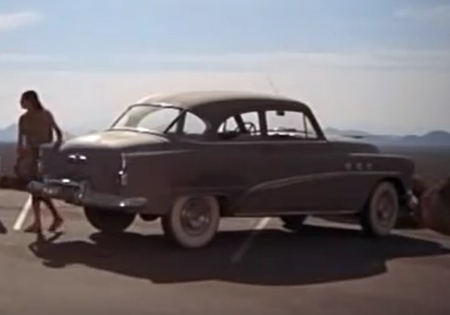
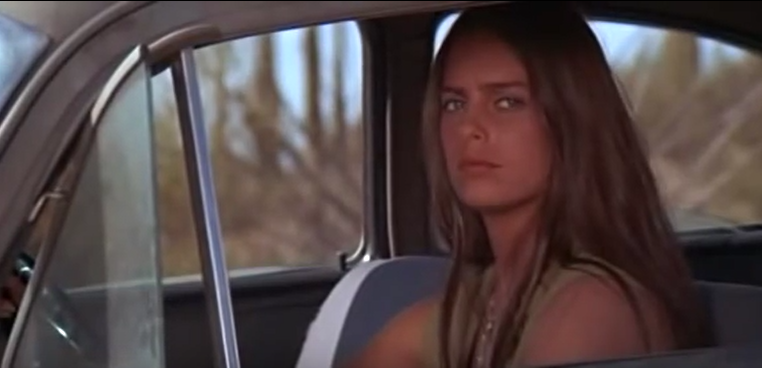
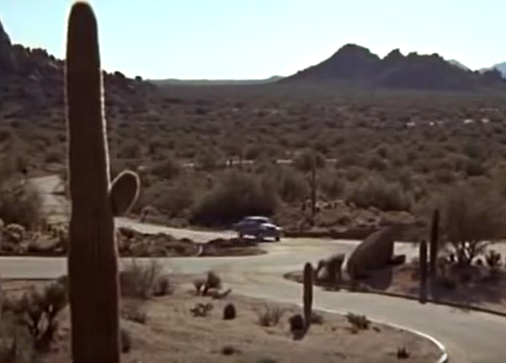
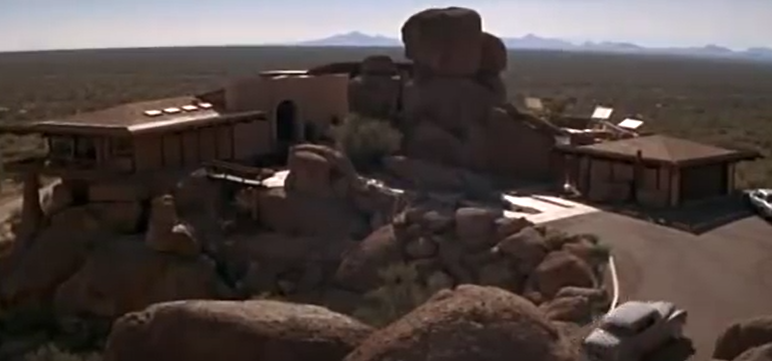
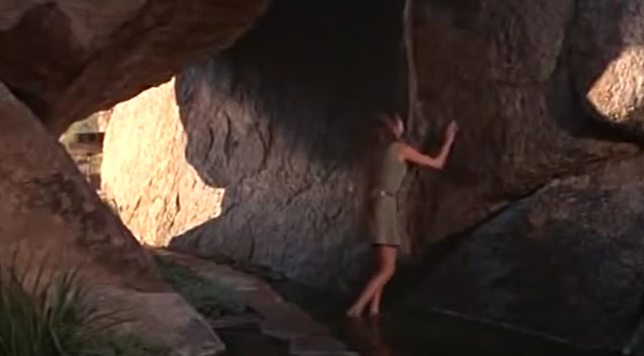


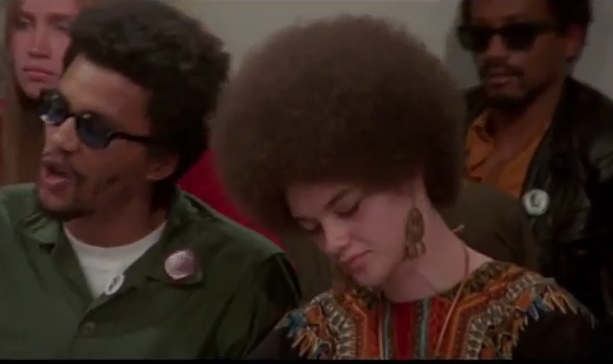
“I say hello to Nancy and the artists. I think about the Chicano Artist Sanctuaries I am thinking of founding.”
I wrote the above two days ago. I am seeing into the future. Trump’s good squad own guns and see themselves as cowboys. He is supplying them with targets. Hippies were a favorite target of the Republican-right. We were ‘The Savage Indians’. We were hunted!
http://www.cnn.com/2017/08/26/politics/trump-arpaio/index.html
The pardon of Sheriff Joe checked so many boxes for what we know about how Trump views the world and operates that, in retrospect, it was utterly predictable.
This morning I awoke carrying a heavy load. I dreamed I was in a warehouse in New York choosing old props from a play that had failed, or, was never fully produced. Something went wrong. Now, I was the savior of this play. I heard someone say;
“This is an extremely difficult project. This guy gets his big break, and he’s going for this?”
I awoke with FAILURE staring me in the face. What is the play? I lie in bed half asleep and let my intuition look for the answer. Maybe it’s a musical? I thought about my friends in New York and ‘My Big Beautiful Blue Bicycle’ and my unfinished novel ‘The Gideon Computer’. I say hello to Nancy and the artists. I think about the Chicano Artist Sanctuaries I am thinking of founding. Then, I am looking at my next post I had in mind, and – BINGO!
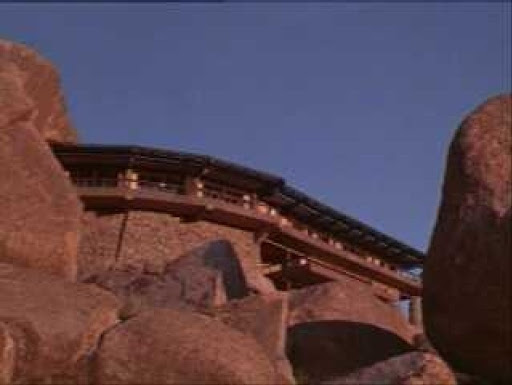
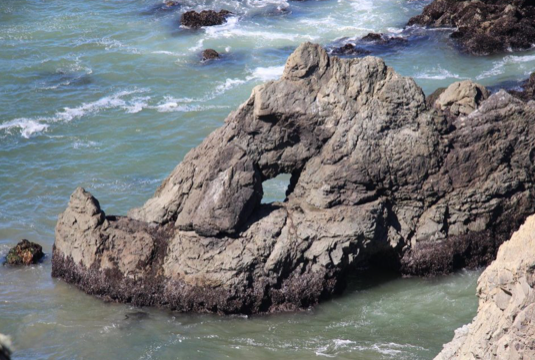
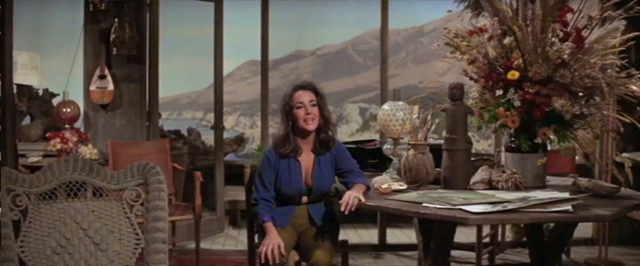
In lest than an hour I am watching Darian Halsprin walking into a hole in the rocks where there is a waterfall in a grotto. it leads to a house designed by the famous architect – as a prop, that is going to be blown-up!
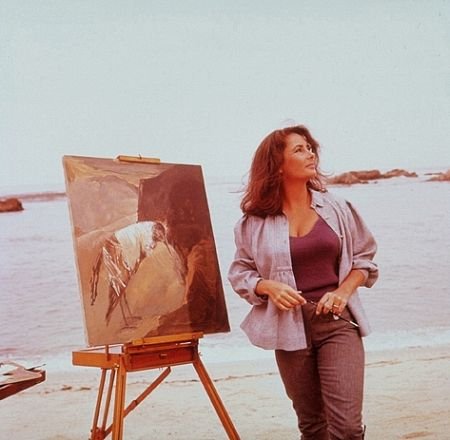
This movie was made in 1970, the year Rena and I went camping for fifty days in my 1950 Dodge. When Christine saw the painting I did of my muse in 1971, she took up art. Life imitates art. Life is a movie. Consider the real estate deal going on in the house.
Angela Davis is in this movie. My daughter’s mother had a son by a Black Panther, who knew Angela. It’s all here. It wrote itself, as if there is a God, and, Art is God.
Jon Presco
Copyright 2017

At the end of director Michelangelo Antonioni’s anti-capitalist, anti-life turkey of a film ‘Zabriskie Point,’ this house — designed by architect Paolo Soleri and (like several scenes in Antonioni’s film) based on the house in Alfred Hitchcock’s ‘North by Northwest,’ which was itself inspired by Frank Lloyd Wright’s desert houses — this house is ‘lovingly’ exploded in montage as the ‘climax’ of the film; destroyed in balletic slow motion with “a final destructive glee.”
As a director, Antonioni was for sure an accomplished artist. His films were honest demonstrations — of essentially anti-life themes. Antonioni’s original ending to this film, which was the perfect culmination of his film’s theme, was a shot of an airplane sky-writing the phrase “Fuck You, America,” which was cut by MGM president Louis F. Polk.
Never doubt that’s what he meant this replacement scene to say — “a series of slow-motion captures of capitalistic debris flying apart against a smoky blue background.” Never doubt that he meant it.
That’s why the house needed to be so good. Understand that, and you understand much of modern art. Think about it.
And from the siting of the house you can begin to appreciate what it means to “integrate architecture with your site.”

Christian Brevoort Zabriskie (October 16, 1864 – February 8, 1936) was an American businessman and former vice president of Pacific Coast Borax Company. Zabriskie Point on the northeasternmost flank of the Black Mountains east of Death Valley, located in Death Valley National Park is named after him.
https://www.youtube.com/watch?v=YXsbQr6JBN8&feature=youtu.be
https://www.geni.com/people/Maria-Zabriskie/6000000039296808002
Maria Zabriskie (Brevoort) |
|
| Birthdate: | April 10, 1779 (82) |
| Birthplace: | New Barbadoes, Bergen County, New Jersey |
| Death: | December 22, 1861 (82) Hackensack, Bergen County, New Jersey, United States |
| Immediate Family: | Daughter of Elias Brevoort and Maria Brevoort Wife of Jacob Christian Zabriskie Mother of Dr. Christian Brevoort Zabriskie; Elias Brevoort Zabriskie; Henry Brevoort Zabriskie; Maria Stoutenburgh Solomon and Col. James Cannon Zabriskie |
|---|---|
| Managed by: | Michael M.van Beuren © |
https://www.geni.com/people/Elias-Brevoort/6000000039296201987
About Elias Brevoort
Seems to have started as a Loyalist <see list. Not to be confused with another Elias Brevoort now on the DAR list and served under Major Goetchius (NJ) ref: DAR# A104082 . His younger brother Henry remained “loyal” in the Out Ward of New York and preserved the family farm just north of Washington Square.
One Elias Brevoort was granted land in Digby, NS as a Loyalist refugee. Evidently, he returned to the US just as many other refugees did.
c
 Rosamond Press
Leave a comment