
The palazzo courtyard at Circolo dei Lettori, Turin

Bromley House library is home to around 50,000 books


The Holy Cloth
A Bond Novel and A Bond Movie
by
John Presco
ALL RIGHTS RESERVED
The Movie
OPENING SCENE:A large Mercedes van pulls up in front of a Italian Villa in Florence, and out step two photographers from the Belmont Rare Book Exchange. They are greeted by Contessa Isabella Orsini d’Aragona, and taken to the large library, where cameras are set up on tripods and aimed at the enormous wall of rare books that would take a normal rare book finder a week to go through. What no one expected in their wildest dreams, was a book written by James Bond to appear out of nowhere! When did he write it? When he had a head injury?
The owner of the BRBE had the good fortune to know a woman who had a photographic memory. He had saved her life long ago, when she was young and beautiful. Indeed, if they had not crossed paths, then Jon Don would not have started his business. He knew of the existence of other companies, but Irene would give him the edge
Irene Christensen lived like a pauper, and reracked clothes at Goodwill. Thinking he could hire Irene on the cheap, he offered her a thousand a month. And he would buy his old flame a cute bungalow in Mazzola Montana. Because she went to Law School a the University of Nebraska, she got a thousand a week and a two bedroom house deep in the woods, where a giant timber wolf adopted her and was her bodyguard.
HOW IT WORKS:A camera or two is set on tripods before the wall of books, These camera’s are remotely controlled by Irene in Wiccan Hallow as the locals called her new home. Rather than climbing up and down ladders to read titles, Irene does this at her desk, before her computer. If something catches her eye, she can zoom in. She will mark her targets that are pointed out by a blue laser light. Her boys then go get that book. These books are put in a steel box that are then put in a safe on the Mercedes.
Bob and Roy were doing just that when a Alfa Romero came to a screeching halt in the driveway. An elderly gentleman go out and was demanding to know what is going on.
“Oh my. It’s my brother!”
“Did you tell him you are selling rare family books. We told you not to in our brochure!”
KEEP YOUR MOUTH SHUT!
“I told no one! You must run away. Leonetto it the Grandmaster of the Ancient Order of the Cabonis. He is usally armed!”
What follows is wild chase through the streets of Florence. The Mercedes van is able to give the Conte of Orsini d’Aragona, the slip!
NEXT SCENE: Springfield Oregon. A robot delivery machine makes its way into the apartment complex where Rare Book Reader Greg Prescott dwells – in fear! The world has ben turned upside down with the raising of Confederate Statues across America. Everyone is divided.
A woman comes screaming out of her appartment, chased by her husband that just got out of prison.
“Give me the key to my gun locker you crazy dumbass bitch!”
The ELMOS are taught to ignore all human chaos and look straight ahead, as if nothing was going on,
“Hank. In God’s name, think about our children. The End Time is not upon us. We need you to go back to work and support us!”
“I’ll never give a Woke Lemming a friggen dime!”
Elmo had to slow down as the husband chased his wife around him. Elmo was used as a shield which was against company policy.
“I warn you, Hank! I’ve taken Karate while you were aawy. I will put your ass down down, if I have to!”
A little shellshocked, Elmo makes a left turn towards the pool, he resisting the urge to look back and be a witness as Battling Betty knocks her old man out.
Turning right, Elmo stops at Prescotts door, and rings his cellphone. There’s no answer. Elmo now plays and electrified version of Dixie tht is ruled the SAFE tune, being Neo-Confederates are in the majority, and are – the best armed. Woke Lemmings never carry, and is why they are called Lemmings. Savvy?
Not having a arm to knock louder, Elmo turns up the volume, and Prescott tunes down his TV. Seeing the Elmo message on his phone, he hits the Looksee app and is peering inside at his new reading assignment. The Holy Cloth Bond book lie on a soft Burgundy pillow. There was a interior wall scene of a mountain lake with wild flowers. Greg was in heaven until he head the faint plinking of Dixie. He hated this tune, and reset it with another. Rising from his great chair, Greg goes to the door and opens it at the same time his grotesquely humongous neighbor opens hers – and out lunges her giant pitbull. Her leash reel smokes as Gorgon furiously comes at poor Elmo. There is smoke as if she had caught a six hundred pound tuna.
Greg reached for his bear spray, and his nighbor snarled at him.
“Don’t you dare spray my dog. If you do, I’ll make sure you are hauled out of here and taken to the Jonestown Unit!”
CUT! There is much more to this scene, that will be revealed later – somehow! Let; get down to business.
Mr. Prescott got cozy in Big Easy, read the cover – and opened the book written by 007.
PLAY THEME VIDEO showing Elmo making his delivery. He is followed down the street, then we see what he is seeing. Bad boys tear off limbs from a tree and start swatting our unsung hero

ELMO electrical motorized mail operator
The Holy Cloth
by
James Bond
My name is James Bond. Bond is spelled BOND! There is no E on the end as many fools want to spell it – for fooks sake!
I have……grown weary of the world. After my two accidents that almost took my life, I had a vision as I began to die, wedged between two rocks after I fell hiking in the Alps. I was dying of thirst, I considered cutting off my right leg to free myself, but realized I would bleed out. You will learn how I was saved ten pages into this book that is written for the edification of the few friends I have made on this planet, and for the benefit of humanity. We are doomed! Important people all over the world will receive my book, of which a hundred copies were published by a friend. He publishes commemorative books that are not for profit, but for honoring people who have served their Majesty in a worthy manner.
When I turned sixteen my mother took me to Rougemont in the Vaud, and we stood before the Rougemont Chateu.
“This was built by your ancestor, who descends from the Vandals who built a kingdom in North Africa, and conquered Carthage. It is alleged our people did not conquer Jerusalem, however, when we conquered Rome, we found the golden Temple objects that are now in a a cave near here. It is alleged by some we found Solomon’s gold, and that gold was later looted by the Lombards. We went on Crusades – to reclaim our kingdom founded in 446. Do you understand what I am telling you!”
When we stood together gazing upon the Shroud of Turin, Monica said;
“James. I know the secret of the shroud. I believe our ancestors captured the Ark of the Covenant. Our king was killed when he opened it. There was a light! King Gaiseric, is your great grandfather. I believe the Vandals descend from Benjamin, who did not bring wheat from Egypt, but from Germany! Jesus very well could have been a blonde with blue eyes!”
My mother could get quite hysterical about these matters. She told me most of the Knight Templars descend from the Vandals. The Roman Catholic Church did not want white folks to know about, lest we form a new army!
“What are you talking about mother? Are you saying we have been lied to and our heritagle, stolen?”
“Consider the Fourth Crusade! Europens wanted a EARTHLY Kingdon of God, and not one put way high up in heaven! Jesus was a Earthly King – was he not! Think! Use your mind, James!”
To be continued
During a forty years reign, Guillaume Ier pointed out himself by his
zeal to defend the faith. A fresco of the Room of the Knights, with
the Gruyere castle, shows it to us, surrounded of people of its
house, attending the installation of the first stone of the abbey of
Rougemont. Indeed, it made gift with the Benedictines of vast fields
extending beyond Tine. It is while following the example of these
valiant monks whom the population cleared the region to make the
beautiful country of them that we know. The name of Guillaume Ier is
attached to a beautiful page of the history of our country: the
departure of Gruériens for the Crusade. In XIe century, the Holy
Places were with the hands of the Turks. In all Christendom, and
especially in France, generous spirits formed the wish to begin again
in Inaccurate Jerusalem and the Holy Sepulchre.
hen Alice Blair enrolled in the Massachusetts Institute of Technology as a freshman in 2023, she was excited to take computer science courses and meet other people who cared about making sure artificial intelligence is developed in a way that’s good for humanity.
Now she’s taking a permanent leave of absence, terrified that the emergence of “artificial general intelligence,” a hypothetical AI that can perform a variety of tasks as well as people, could doom the human race.
“I was concerned I might not be alive to graduate because of AGI,” said Blair, who is from Berkeley, California. “I think in a large majority of the scenarios, because of the way we are working towards AGI, we get human extinction.” She’s lined up a contract gig as a technical writer at the Center for AI Safety, a nonprofit focused on AI safety research, where she helps with newsletters and research papers. Blair doesn’t plan to head back to MIT. “I predict that my future lies out in the real world,” she said.
Meanwhile, starting in the late third century, the Romans had come increasingly into conflicts with the migrating Vandals, and East Germanic tribes, speaking the Vandalic language.[9] In 405 the Vandals crossed the Rhine along with various other Germanic tribes, and devastated Gaul.[10] The Alans, Suebi, and Vandals entered the Iberian peninsula in 409.[11] In 419 the Vandals and Alans were defeated by the allied forces of the Western Roman Empire at the Battle of the Nervasos Mountains, forcing the Vandals and Alans to abandon their territories, and their king, Gunderic, to flee to Baetica. In 422 Vandalic king Gunderic defeated the Romans in Baetica during the Vandal war, and in 425 proceeded to sack much of Hispania.[9] In 428 Gunderic died, and was succeeded by Gaiseric, who possibly at the invitation of Bonifatius, Roman governor of the region, crossed into Africa.[12]
EXTRA! EXTRA!
At approximately 1:45 AM PST…..The Spirit of, or the Ghost of – James Bond was released into my apartment in Springfield Oregon. I fell asleep after I posted this amazing Templar-Bond post. An hour there is a knock on my door. I open it, and there sit my new Eureka vacuum.
“Elmo! Is that you?”
I see no one walking away. The timing of this is – supernatural! What a vereication from the Muses. I have truly been annointed to author the next Bond Book, and, Bond Movie! This is the first time AI is introduced. Was James resurected as Elmo?


Templar Shroud of Fontenotte
Posted on October 11, 2019 by Royal Rosamond Press

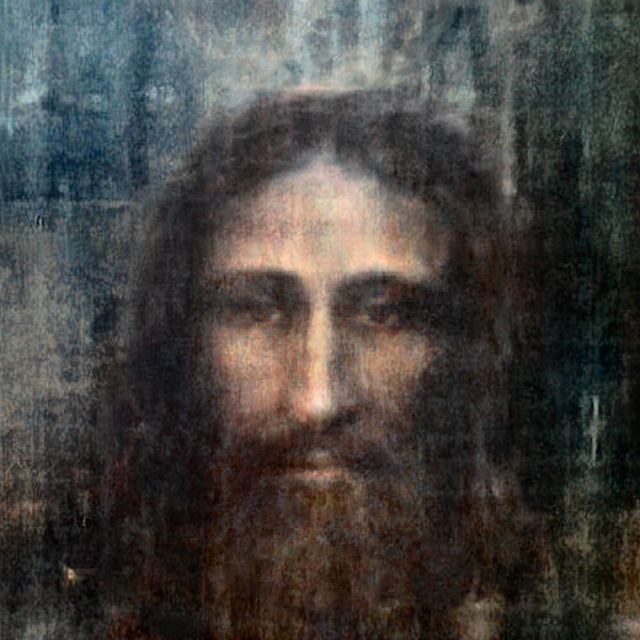
Here are images of Knight Templars who might have seen The Holy Shroud of Turin. I am calling for a New Reformation that will ground its roots at Fontenotte. We need a United Religion designed to stand its ground and take on New World Enemies.
John Presco
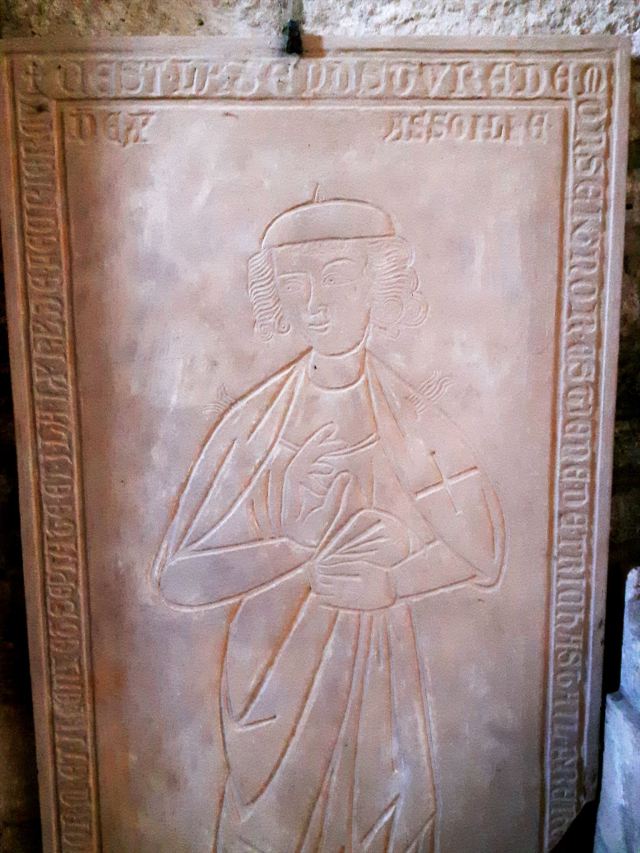
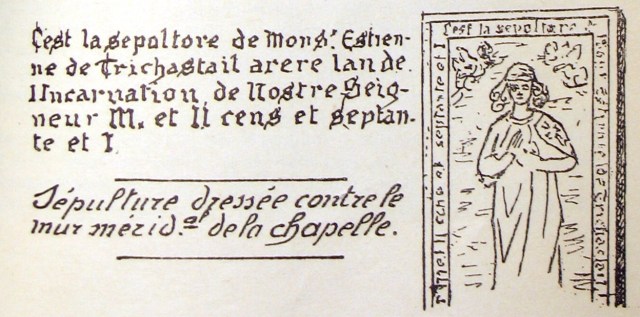
In this church, near the western gateway, you will first find the tombstone of Etienne de Til-Châtel , lord of Pichanges and Chapelain of the Templar Commandery of Fontenotte, buried in 1271.
He is the fifth son of Gui II of Til-Châtel (1180-1241) and Guillemette of Bourbonne, Lady of Coublant.
On the tombstone we can read:
“Who gist or cymetere are brothers of the Chevalerie Dou Temple of Fontenottes near Trichasteaul. “
This funerary stone is a molding of the original stone found in the Chapel of the Sheepfold, at the Rente Saint Joseph on the heights of Dijon.
(see GC6GQQK: TTBERG On the trail of the Knights Templar – La Bergerie)
Thanks to the engraving of this stone, we know the dress of a Chaplain of the Order for a ritual.

On the other side of the door is the nephew of Etienne, Guy III of Til-Châtel , Knight Templar, Lord of Til-Châtel and Pichanges, Gonfalonnier of Franche-Comté, and Archdeacon of Tonnerois in the church of Langres.
On the tombstone we can read:
“Cigit.messires.Gui.sires.de.Trichatel.qui.trespassa.lan.grace … of.mois.doctouvre.priez.for.lame.li. “
This tomb with its green traces of moss is the subject of an old tradition: the original stone would be that of St. Margaret, and as it is often wet because of its porosity, it is said that the saint cries.
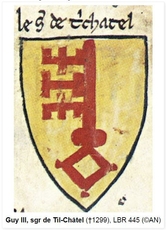
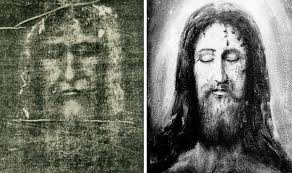

Rougemont Family Templars Worshipped at Fontenotte and owned the Shroud of Turin.
The First Preceptor of La Fontenotte
My mother’s maiden name has been traced to Rougemont who appear to have ties to the Windsors, thus much of the royalty of Europe. I am sharing this discovery with Robert Sinclair, and Ben Toney, who may be related to the Robert de Ros who lived in Belvoir castle that belonged to the House of Toney.
Because the world is going mad, and in order to strengthen Britain and recreated a European Union co-founded by Denis de Rougemont, I revive the order of Knight Templars, whom the Sinclairs are now tied via Anges de Toney.
Alexandre, and Francois de Rougemont are buried with Knight Templars as Til-Chatel. Gui 1er de Rougemont married Etinnette de Ruffey. Here are the Seigneur de Til-Chatel. Guy 2 de Rougemont Thibaut V de Rougemont 1306-1333 Guillaume de Rougemont Humbert de Rougemont married Alix Neufchatel Aymon 2 (Aimon) de Rougemont married Guillemette de Ray daughter of Othon de La Roche, owner of the Shroud of Turin. Thibaut V1 de Rougemont father of Catherine de Rougemont who married Jean de Neufchatel the son of Margarita de Castro e Souza from who the Windsors descend.
The fifth son of Guy II of Rougemont and Guillemette de Coublant,
Etienne de Rougemont was lord of Pichanges. In December 1265, having
recalled the donations made to the temple by Aimon IV and Guy II, he
gave to the Templars, with the agreement of his elder brother, Jean,
Lord of Rougemont, the right of pasturage on his lands of Pichanges
and Spoy. He died in 1271 and was buried before the altar in the
chapel of Fontenotte and conferring his Templar rank of Preceptor
(priest-templar).
After the death of Etienne, Jean de Til-Chatel had to confirm in 1274
the rights of the Templars over Fontenotte. In 1278 his younger
brother, Guy, who had been curate of Til-Chatel in 1242 then
archdeacon of Le Tonnerois in the church of Langres, succeeded him at
the head of the lordship of Pichanges.
In May, 1274, Jean de Rougemont, Marshal of Burgundy legally
recorded “for the repose of his soul and that of his elder brother,
Etienne de Rougemont, who lies in the cemetery of the said Temple,
and of the souls of his forebears”, granted to Henri de Dole,
Commander of the House of Fontenotte:”
I have found a Hughes/Hue de Rougemont who a “grand maître du
Temple”in two accounts, and the maître du Temple of Burgundy in
another.This Hugues appears to be related to Humbert de Villersexel
who wasthe Lord of Rougemont and Til-Chatel. Is this the Hughes that
preceeded Bernard de Tramelay/Dramelay? Did this Hugues come after
Bernard. In the Fromond/Dramelay genealogy we find a line of De La
Roches, and thus the Rougemonts are kin to another Templar Grand
Master, Amaury de La Roche.
Jon Presco
Copyright 2016
http://rougeknights.blogspot.com/
Today I found the Templar Chapel of Fontenotte where the Rougemont
family of Knights Templar worshipped.
http://www.petit-patrimoine.com/fiche-petit-patrimoine.php?


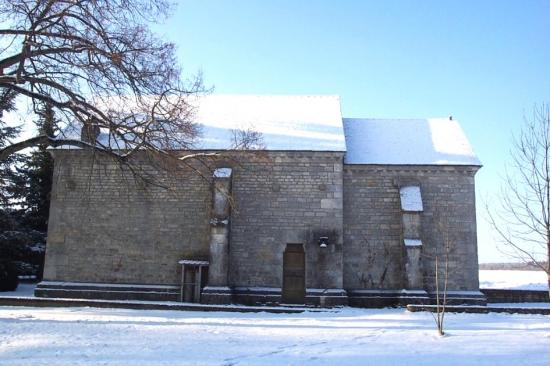

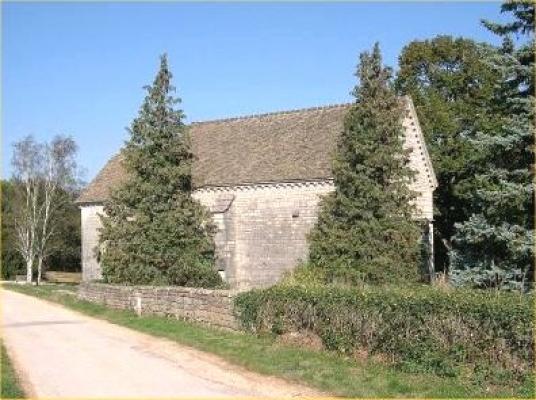


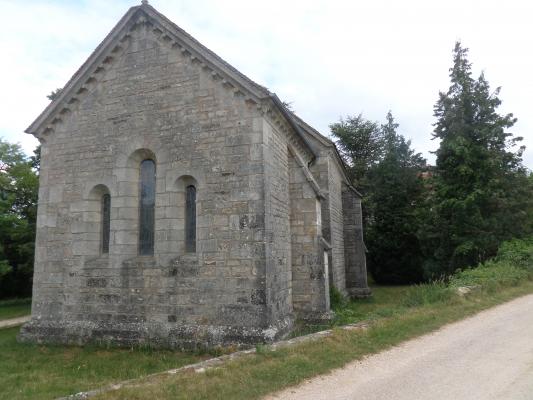
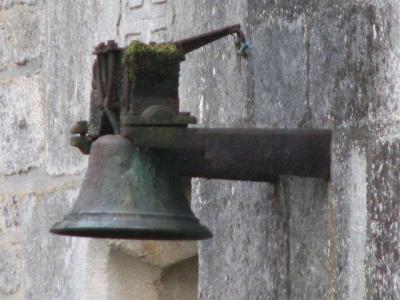


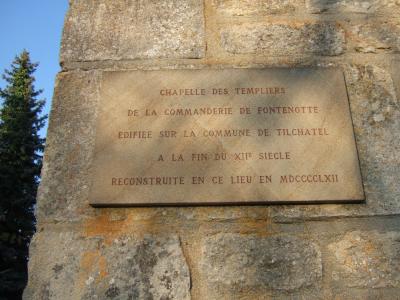



Hugues III donated his land of Fontenotte to the Knights Templar, to ensure the repose of his soul.
These built a commandery including this chapel dedicated to St Petronilla and St Peregrine.
When the order of the Temple was abolished in 1311, the estate of Fontenotte was administered by farmers until the Revolution and sold as a national property.
Became farm, managed by its owners until 1971, (Latour family) buildings and land were sold separately.
In 1960 thanks to Abbot Henri Latour the chapel was saved, dismounted stone by stone, after a journey of about forty kilometers, everything was reassembled in the walls of the sheepfold, on the heights of Dijon.
The chapel back to the place called “La Bergerie” is accessible from Dijon, taking the Avenue Eiffel, out of Dijon and continue on the D 108 G, the chapel is on the left, signposting “Bergerie”, very easy access. From Corcelles-les-Monts, take the D 108 G direction Dijon and continue to the entrance of this city, the chapel visible is on the right just before entering Dijon (chemin de la Rente St Joseph).
Le marchand de vin / époque gallo-romaine IIe-IIIe sièclesProvenance : Til-Châtel / Musée archéologique de Dijon
origin
The village, located on the way Agrippa between Langres (Andemantuno) and Chalon (Cabillione) is mentioned on the map of Peutinger in the year 230 CE under the name of Filena on the river Tille.
Historians consider that it was probably a locality of great importance, at least strategic, Dijon (Divio) is not mentioned.
Father Vignier who had consulted the texts of Claudian wrote during the 17th century that there existed during the Roman occupation a location called La Motte Ronde, located in the bottom of the village constituting a Castrum along the way Agrippa, which allowed to monitor both the river and the road.
It was bounded by Aval Street, Coupé Street and the alley of the Reculée.
The excavations that were carried out in this perimeter allowed to update many vestiges, statues, funerary steles and coins dating from the time of the Roman occupation.
At the time, a channel 2 meters wide by 1.5 deep to navigate flat-bottomed boats, connected the bridge on the Tille to a place called Ogne, located between Til-Châtel and Lux where excavations in the 1980s to 1992 confirmed the existence of a group of buildings occupying a site of approximately 9 hectares which could be, according to René Goguey who led the excavations, a set of warehouses linked to the river navigation where were gathered the grains from the Bassigny destined to the food of Rome.
Later, around the year 264 stands the martyrdom of Saint Florent patron of the village church. The Abbé Roussel tells that the invaders from northern Europe, commanded by Chrocus, after having ravaged Langres and massacred Saint Didier bishop of that city, stopped at Tilae Castrum (Castrum ad Tillam) as the village was then called .
They met there a Christian named Florent, son of the governor of Castrum whom they made prisoner and with whom they wanted to make abjure his faith. At his refusal they decapitated him with a plow. Her head rolled in the river Tille where, carried by the current, she was dragged to Barbe Island on the Saone near Lyons where she was kept in the church of Saint-Martin. As for Florent, his relics exposed in the church are at the origin of many miracles. Ogne and Castrum were destroyed during an invasion after the year 400.
Around 407, the kingdom of Burgundy was created by Gondicaire, barbarian Christian leader from across the Rhine that ended the Roman occupation.
We do not know what is happening in the village until the year 801. At that time it was dependent on the bishop of Langres Betto, who that year, concedes the church of Tilicastro and his income to the Augustinians of Saint Etienne de Dijon. Since that date, the name of the village is written according to the mood of the scribes and the language used, Latin or French, Tylicastrum, Trichastel, Trichâteau, Trichâtel, Tilchastel, Tréchâteau, and finally Til-Châtel in 1860, after being called Mont-sur-Tille during the revolutionary period.
The Lords
Reporting to the bishop of Langres, they originated from an Audon I of Til-Châtel, son of Garnier Count of Troyes attested in 918 by his signature in an act of the Duke of Burgundy Richard.
This family, which carried as a coat of arms a key in pal, also paid tribute to the dukes of Burgundy. She held a high rank among the lords of the duchy and county of Burgundy. Its members who contracted prestigious alliances followed one another from father to son until the year 1299 when Isabelle de Rochefort, daughter of Gaucher de Rochefort lord of Puiset in Beauce, widow of Guy III of Til-Châtel Gonfalonier of the County of Burgundy, became lady of Til-Chatel. She remarried with Humbert de Rougemont around 1306 and married her daughter Jeanne whom she had with Guy III of Til-Châtel to Thiébaud de Rougemont son of a first marriage of his new husband. The lordship then passes into this family until the end of the 15th century when the last of the Rougemont, having no children, ceded the seigneury to Antoine de Baissey from a family of Montsaugeonnais who immediately paid tribute to the bishop of Langres. At the same time, Isabelle de Til-Châtel, Guy III’s half-sister, married Guillaume de Grancey, to whom she brought Gemeaux, Pichanges and Selongey dowries, reducing the possessions of the Til-Châtel family, which , lost a significant part of its luster.
In 1618, having no descendants, the last of the Baissey left the land of Til-Châtel to his uterine brother Erard du Châtelet who called her marquisate and gave it to her son Antoine. Put in decree for settlement of its debts it was acquired in 1663 by the baron of Housset, in turn put in decree in 1685. It was then bought by his widow Marie d’Aguesseau which in 1703 made gift to her niece Catherine d Aguesseau married to Charles Marie de Saulx, Count of Tavannes whose descendants possessed Til-Chatel until the revolution.
The village
It consists of several parts:
– The town
situated in the upper part of the village bounded by the Rue de la Charme in the east, the Barrière in the south, the Bourg and the Derrière lane to the west and by the Côte au nord. Inside the village there was the church and priory now disappeared, the Rue des Pieds Ferret and the Rue du Château which led to the fortress built at the top of the hill dominating the village and the valleys of the Tille and the Ignon. At the time of its splendor, it contained two large belt ditches with double drawbridges and several towers. Today only remains the door of this castle transformed into a dwelling. The rue aux Apports linked the village to the Agrippa way and to the village which had gradually been built on the edge of it.
– The village
stretched along the edge of the way Agrippa where from the 12th century was built the Notre-Dame chapel around which a House-Dieu hospital and its dependencies had come to settle. Sold as a national good in the revolutionary period, these buildings remain and we can see part of the Place du Tertre and rue de l’Hôpital. Other more recent constructions remain, notably of Renaissance period. Going down the Aval street you pass the reach on which various mills existed and we reached the site of the former Castrum that was mentioned above. Beyond the river at the exit of the village the site of the Maladrerie where the lepers were received and treated remains, but there are no visible remains. The village today has more than 800 inhabitants, it has spread towards Langres in the north, the Forge in the northeast, Lux in the east and Marcilly in the west.
– The Saint-Florent church
Located near the castle on the spur overlooking the village, we saw above that it was mentioned in the year 801 in a charter of Betto, bishop of Langres who conceded the benefits to the abbey of Saint Etienne de Dijon . During the following centuries, it received numerous donations and was enlarged in the eleventh and twelfth centuries, access to the church which included only a short nave being done by the southern portal decorated with a tympanum representing a Christ in majesty surrounded by four angels bearing the mark of the sculptor Pierre de Dijon.
Towards the end of the 12th century, the nave was enlarged, giving this Romanesque church its present appearance. The large west portal surmounted by a semi circular archivolt developing 5 rollers whose ends rest on each side on as many rolls crowning fine round columns, all different.
This arcade surrounds a tympanum representing Christ seated, treading under foot the symbol of sin and surrounded by animals symbolizing the four evangelists.
During this work on May 15, 1146, the workers discovered a stone coffin containing a skeleton.
According to the legend, one of them, named Remy, who manipulated without respect this body fell backwards and remained paralyzed, his comrades had the idea to take him to the altar of Saint Florent where the mason, having confessed his fault was cured. The crowd shouted to the miracle and a child exclaimed “Honoratus”, this name was given to the holy contained in the tomb which was placed in the southern part of the transept. Subsequently several miracles occurred and Honoré designated as the second patron of the church.
A carved and painted wooden frame recalls its legend.
Over the centuries, many repairs or consolidation work was done in the church. During the nineteenth century it was in poor condition and at the request of Viollet-le-Duc a major restoration campaign was undertaken in the years 1868-1869. It was led by his son Maurice Uradou who put the church in its current state and saved the essentials, including the general architecture and the remarkable capitals.
We will not describe it here. Note, however, that besides the reliquaries of the patron saints, it contains a god of pity carved wood of the eleventh century, a wooden calvary of the seventeenth century, a triptych painted on wood offered by Jehan Morelet signed by T. Claudon, many funerary slabs including that of Gui III Til-Châtel dated 1240, baptismal fonts of the twelfth century octagonal and several fragments of murals that would have been made from the fifteenth to the seventeenth century.
– Fontenotte
Located on the way Agrippa 2 km towards Dijon, this area, ancient Roman villa had several sources, one of which was connected site of Ogne by a pipe whose remains were found during the excavations carried out on this site .
In 1170, Aimon IV or Amé, lord of Til-Châtel, leaving for the crusade gave the Templars Fontenotte and all its territory to ensure the rest of his soul.
A Templar commandery, dependent on that of Bure was then built.
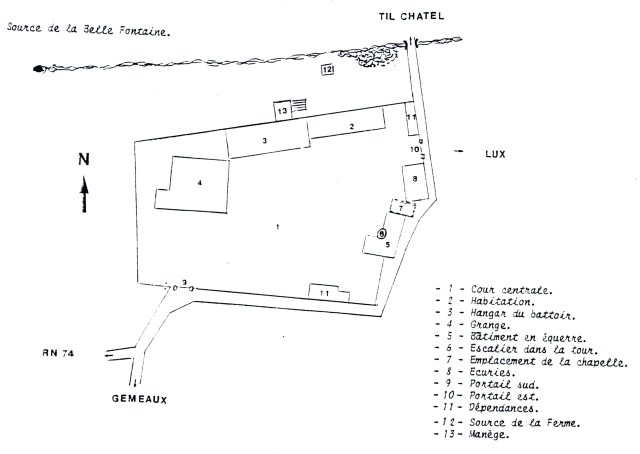
It was built around a central courtyard with various residential buildings, shed, barn, stables building square, tower, a chapel dedicated to St. Petronilla and a fence wall.
It benefited throughout the centuries of numerous donations and when the suppression of the order of the Temple in 1311 was attributed to the order of Malta. From then on, the estate of Fontenotte was administered by farmers until the Revolution.
At that time, the estate was sold as a national asset.
It became an agricultural operation and was administered by its owners, either directly or as a tenant, until 1971. At that date it was sold, the buildings and lands being sold separately.
In the 1960s, the chapel was dismantled by the priest Henri Latour, then pastor of Saint-Pierre in Dijon, son of the owner and back in the grounds of the field of Sheep in Corcelles les Monts.
A casting of the tombstone of Etienne de Til-Châtel was made, it is visible in the church Saint-Florent.
On the Trace of the Knights Templar, here we are at the Commanderie de Fontenotte.

Close to Til-Châtel, on the road from Dijon to Langres, still stands an old Templar farm called “Fontenotte”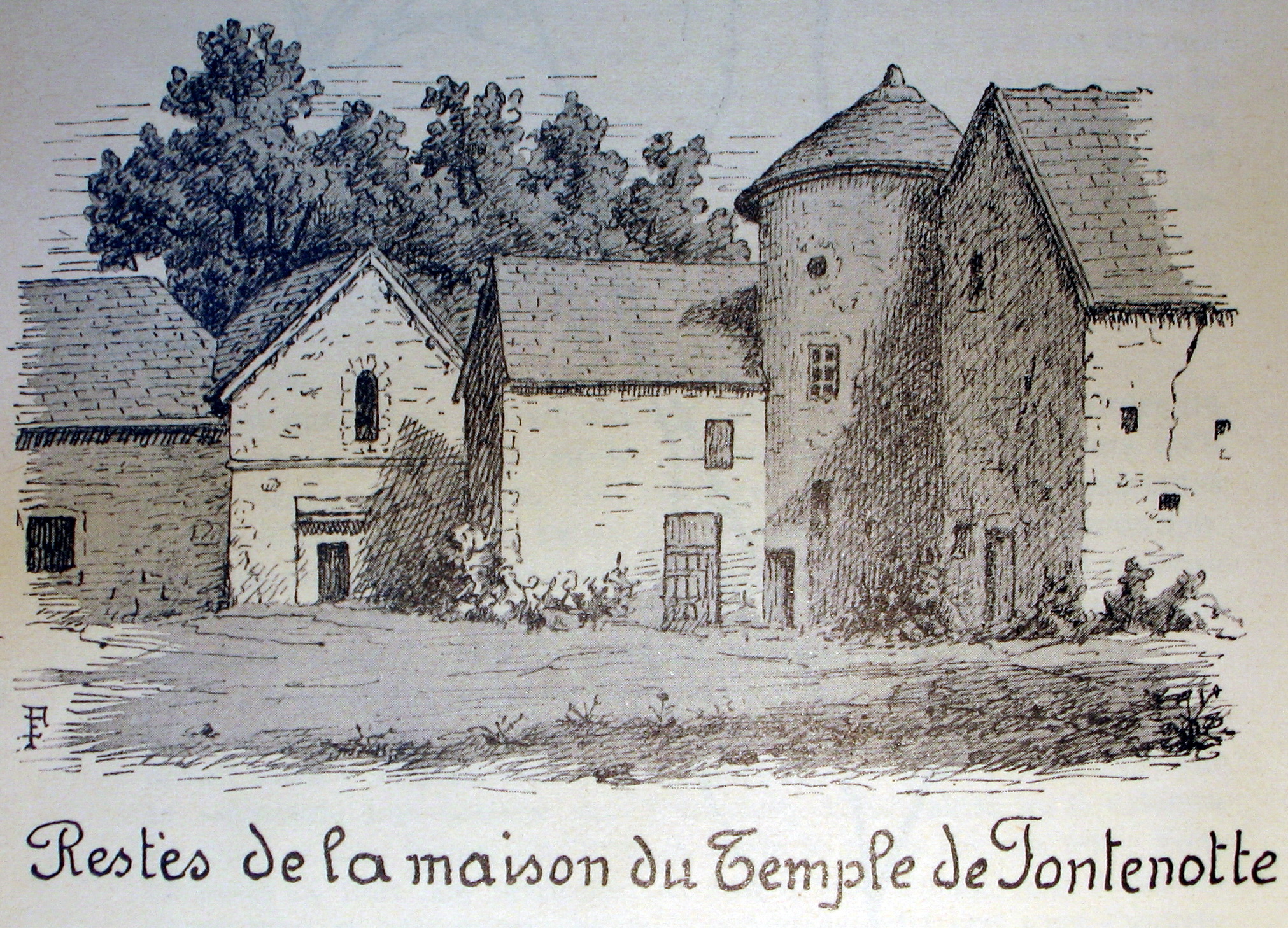
Before leaving for a crusade in the Holy Land, where he accompanied the Duke of Burgundy Hugues III, Aimon IV or Amé, lord of Til-Châtel, donated Fontenotte’s farm to the knights of the Temple “for the repose of his soul”.
The Templars thus receive around 1170 the enjoyment of a vast domain,
“The use on all his land so much in wood as in water and pasture”, that they affiliate with the commandery of Bure.
The monk-soldiers also obtain grazing rights to Pichanges and Spoy from a certain Etienne, lord of Pichanges, fifth son of Gui II of Til-Chatel and Guillemette de Coublant, Chapelain of the Commandery, he is, at his death in 1271, buried in the chapel of Fontenotte.
Three years later, Jean, his older brother, confirms some donations he makes to the Templar establishment and more particularly to Henri de Dole, commander: woods near the commandery, and still grazing rights on the whole finage Spoy.
It will be understood, the Templars accumulate in Fontenotte an important agricultural and forest area from which they derive the benefits and various tithes spread over Til-Châtel, Spoy and Pichanges, of course, but also Lux, Gemeaux, and Saint-Julien, to the gates of the ducal capital.
The other descendants then confirmed the donation, as here in 1278: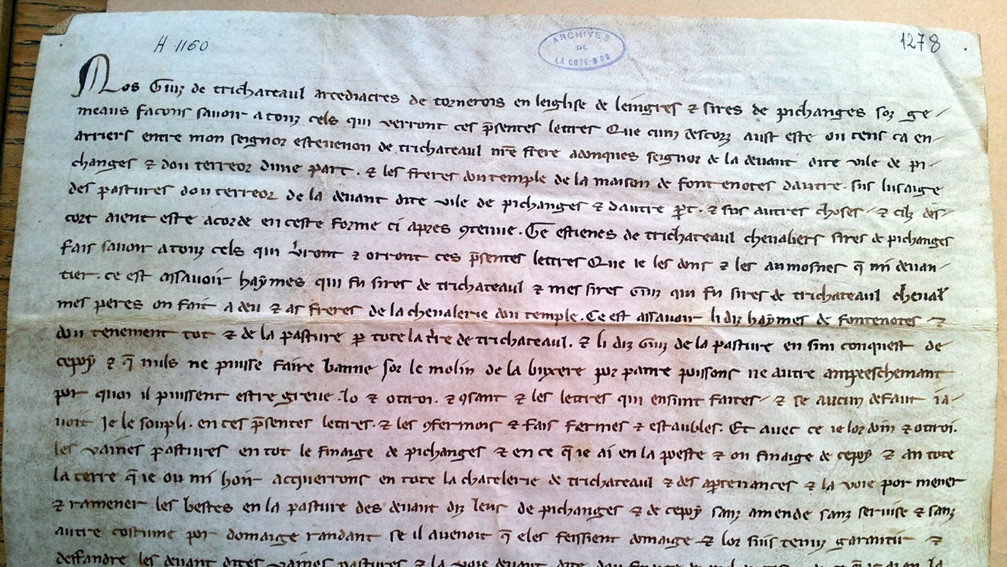
We can read on this document:
«Our Guiz de Trichatel archdeacon of Tonnerois in the church of Langres and lords of Pichanges. . .
let everyone know what will read. . .
my fathers made to God and brothers of the chivalry of the Temple. . . “
Fontenotte was built around a central courtyard with various residential buildings, hangar, barn, stables building square, tower, a chapel dedicated to St. Petronilla and St. Peregrine, and a fence wall.
The building currently used as a barn is large and elevated and appears to have been a clumsy house.
The chapel opens on a house at right angle. with a round stair tower in the inner corner.
In the 1960s, the chapel was dismantled and reassembled stone by stone identical to the Rente Saint Joseph on the heights of Dijon, the field of the Sheepfold, Corcelles road. (see GC6GQQK: TTBERG On the trail of the Knights Templar – La Bergerie)
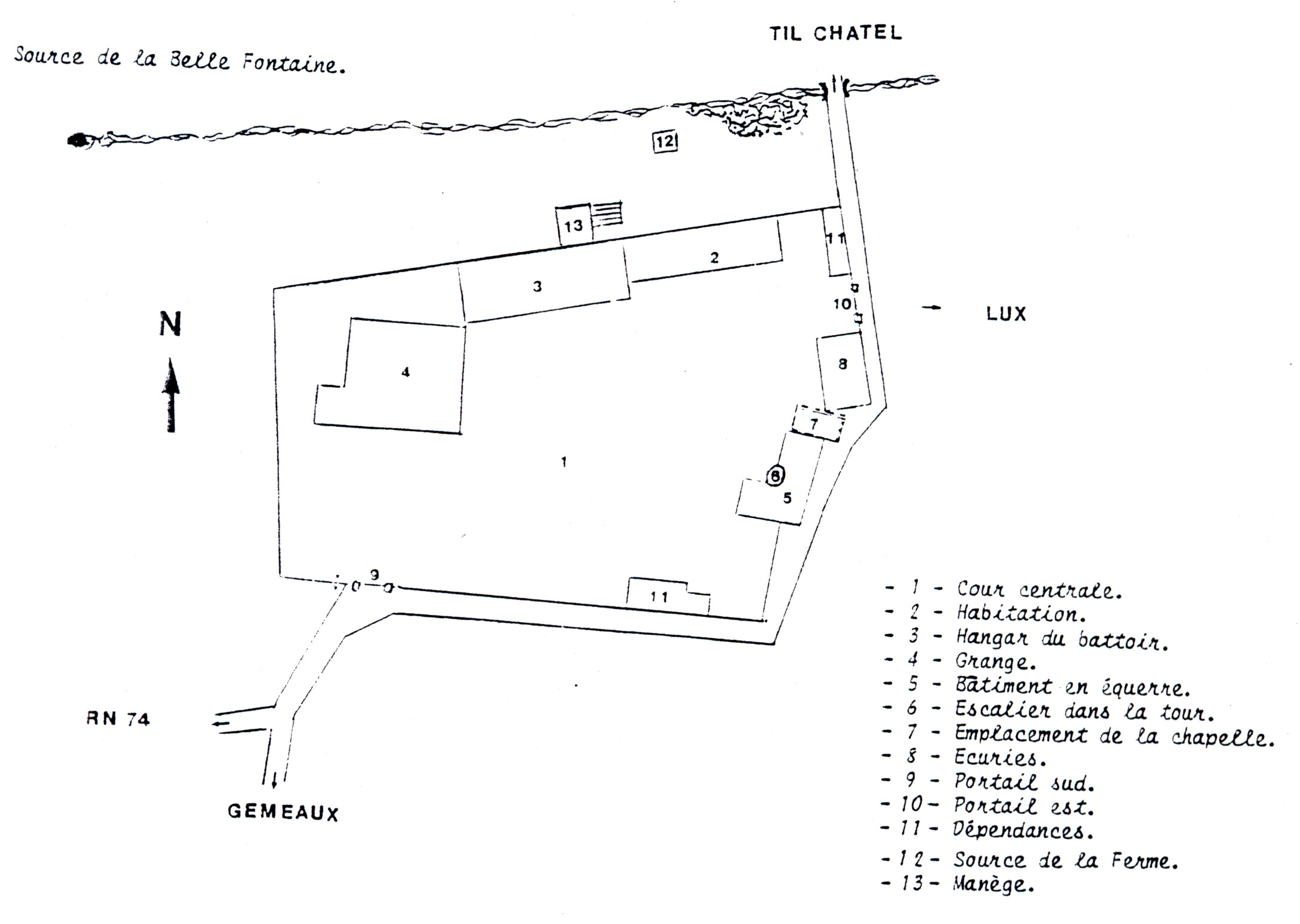
Fontenotte takes its name from the many sources that come close to it; sources which, as indicated by the remains of the aqueduct which were discovered, fed the old town of Ogne disappeared, and now feed the village of Lux.
Until the beginning of the 20th century, the mothers of Til-Châtel, Gemeaux, Lux came to Fontenotte to evoke Saint Petronille for their feverish children. They spread the nappies of the sick child on the water. If they ran to the bottom the poor mother knew that her mourning clothes had to be prepared.
The Gonfaloniere was the holder of a highly prestigious communal office in medieval and Renaissance Italy, notably in Florence and the Papal States. The name derives from gonfalone, the term used for the banners of such communes.
In Florence, the office was known as Gonfaloniere of Justice and was held by one of the nine citizens selected by the drawing lots every two months, who formed the city’s government, or Signoria. In the papal states, it was known as Gonfaloniere of the Church or Papal Gonfaloniere. Other central and northern Italian communes, from Spoleto to the County of Savoy, elected or appointed gonfalonieri. The Bentivoglio family of Bologna aspired to this office during the sixteenth century. However, by the year 1622, when Artemisia Gentileschi painted a portrait of Pietro Gentile as a gonfaloniere of Bologna, with the gonfalone in the background, the office had merely symbolic value.
Jean Gonfalonier of the Burgundy County of ROUGEMONT, Chevalier, co-founder of Rougemont, lord of Til-Châtel and Rougemont, De Rougemont
Print Family TreeFamily Tree Print
Sosa : 2,905,724Sosa: 2,905,724
- Deceased after 1411 Deceased after 1411
ParentsParents
- Guillaume de ROUGEMONT ou Guy 1er de Rougemont , chevalier, Sire/seigneur de Rougemont et de Til-Châtel, sire de Ruffey , De Rougemont, Deceased about 1375Guillaume de ROUGEMONT or Guy 1st of Rougemont, knight, Sire / lord of Rougemont and Til-Châtel, sire of Ruffey, De Rougemont , Deceased about 1375
Married toMarried to - Etiennette de RUFFEY-sur-L’OIGNON ,dame de Ruffey-sur-l’Ognon, De Ruffey, Deceased about 1390Etiennette of RUFFEY-sur-L’OIGNON, lady of Ruffey-sur-l’Ognon, De Ruffey , Deceased about 1390
Spouses, children , grandchildrenand great-grandchildrenSpouses, Children , Grandchildren and Great-Grandchildren
- Married to Jeanne de VIENNE,(Jeannette Bourguignon), dame de Til-Châtel, De Vienne(Parents : Married to Jeanne de VIENNE, (Jeannette Bourguignon), lady of Til-Châtel, De Vienne(Parents:Henri de VIENNE, seigneur de Mirebel et de Charnay, De Vienne†1371/ &Henri de VIENNE, lord of Mirebel and Charnay, De Vienne † 1371 / &Marguerite de BAUFFREMONT, De Bauffremont ) withMarguerite de BAUFFREMONT, of Bauffremont ) with
 Guy II de ROUGEMONT ,seigneur de Rougemont et de Til-Châtel, seigneur de Ruffey-sur-l’Ognon ,seigneur de Maillot et de Vauvry, (“noble et puissant seigneur monsieur Guys de Rougemont et de Ruffy”) De Rougemont†1420/married toJeanne de MONTAGU, (“noble et puissante dame Jehanne de Montaigu”) De Montagu†1426 withGuy II de ROUGEMONT, lord of Rougemont and Til-Châtel, lord of Ruffey-sur-l’Ognon, lord of Maillot and Vauvry, (“noble and powerful lord Mr. Guys of Rougemont and Ruffy”) De Rougemont† 1420 /married toJeanne de MONTAGU, (“noble and powerful lady Jehanne de Montaigu”) De Montagu† 1426 with
- l
The Templar Shroud and Shakespeare
Posted on May 29, 2015 by Royal Rosamond Press


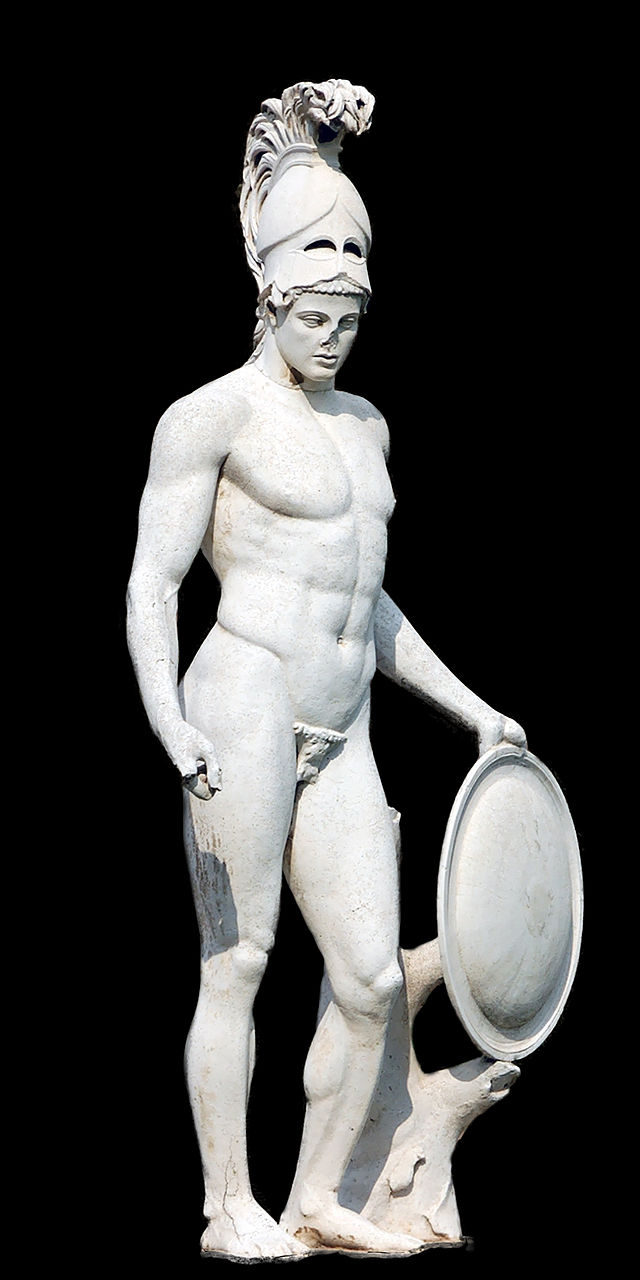
On May 26, 2015, I discovered Shakespeare’s play ‘A Midsummer’s Night Dream’ employs the history of the Duke’s of Athens who owned the Shroud of Turin, and whom I have proven are kin to the Knight Templars. They are also kin to the Brienne family who were the King and Queens of Jerusalem. Also, they may be my kindred. The name Rosamond has been traced to Rougemont in the Alsace where the Abbey Bellevaux ‘Beautiful View’ holds the remains of Knight Templars, who are perhaps just sleeping, and if they are asleep, they are dreaming. Grimms named his Sleeping Beauty Princess, Rosamond. A name also spelled, Hrosmund, meaning “horse protection”. This version has long confused me until I beheld the meaning of the name, Hippolyta…….”horse let lose”.
I have used the word “thoroughbred” in describing this, goddess, this young woman who was set lose by her grandmother in Nebraska. Rena came to California for a visit, and met me at the foot of Venice pier – right after I had looked down into the waves and asked;
“Where are you?”
I had said goodbye to Marilyn, another Aries, and was in need of a new Love of my Life, another Muse.
Rena had been separated from her boyfriend. To watch her walk, and to walk with her, was to behold a beautiful animal. At five foot, eleven inches, I have compared Rena to a Amazon. She is an Aries born on April 7th. I am a Libra. I wanted to move to Nebraska so she could be my model. She could have modeled for the Hippolyta comic book, and much more. But now, she is a literary figure connected to Shakespeare, the Shroud, and the Templars, of which so much has been written of late. Did Shakespeare have a Muse?
Then there is the Woman’s Movement and J.R.R. Tolkien whose unfinished novel ‘The Lost Road’ employs Rosamund, the unwilling Queen of the Lombards whose father is defeated in battle. There is no doubt in my mind Shakespeare used Rosamund as the model for his heroine, Hippolyta. Both women, and Rena Christiansen, could not be reigned in, not be controlled. When I grabbed Rena’s arm in order to impede her movement, she struck me several times – and glared at me with fiery eyes! In her is every good Wild Horse and Cowboy Story from the Midwest. My grandfather wrote one where Rena first appear, before she was born, born to run wild!
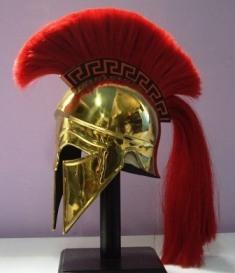
When we dwelt in our tent, I wondered if we were a couple of our time, the war in Vietnam, raging. I have put a Athenian helmet on Rena’s head. Hippolyta is the daughter of Ares, the Greek God of War. If Rena had married me she would be kin to the Rosamond Women. She is the Queen Muse of all the beautiful women my sister, Christine Rosamond, rendered. Alas, with this Shakespeare Connection, Rena and I stand together on Rose Mountain. We have overcome the world. We are the Masters of a Literary and Artistic Destiny. I wonder if the Greek helmet represents a horse, with mane and tail. A helmet protects the wearer from blows.
Sherriff Dan in Montana knew no man had ever got – the whole saddle on this furious women who detected I was trying to control her. This liberated theme of the opposite sex made Shakespeare famous. Rena would do well to become a Thespian because she could commit to memory all of Shalespeare’s work. Putting Shakespeare and Tolkien in the same, boat, has never been done. Now put the nine Templar Grand Masters, on oars.
Tolkien had to have seen the paintings of the Pre-Raphaelites. Surely those who made movies from the Hobbit books, used the images of the Brotherhood as a template. Consider ‘The New Path’ and the Association of Truth in Art, and the Lone Mountain named after Clarence King. Here is were the Hobbits and the Fellowship of the Ring have gone, gone to California to gather under the Lone Cypress Tree.
There are somethings in life are way bigger than ourselves and we must surrender to our fate. What will be – must be! Any fate I might foist upon Rena, does not apply. I set her free, set her lose upon the Great Planes! Rena’s beauty, dwarfed me! Who am I to think I could capture it.
Run, Rena – Run! Letting you go is always the hardest thing I have ever done, again and again. And yes, I can see you – atop your mountain!
Jon Presco
President: Royal Rosamond Press
Copyright 2015


http://www.thetolkienwiki.org/wiki.cgi?Lombardic__Legend__in__The__Lost__Road
MANHATTAN BEACH, Calif. (KABC) —
Globs of an oil-like substance closed the Manhattan, Hermosa and Redondo Beach coastlines Wednesday as several agencies worked to determine the source of the petroleum product that washed ashore.
The small globs of oil were spotted around noon Wednesday.
Los Angeles County lifeguard officials closed the stretch of Manhattan Beach from 34th Street to the pier as a precaution. The Hermosa and Redondo Beach coastlines were also closed.
http://abc7.com/news/manhattan-hermosa-and-redondo-beach-coastlines-closed-due-to-oil/745175/
However, in an attempt to secure a male heir and following the death of his first wife Clotsuinda of Frankia, Alboin took her as his wife. Alboin was noted for his cruelty towards her; his most famous act of cruelty was reported by Paulus Diaconus, who states that at a royal banquet in Verona, Alboin forced her to drink from the skull of her dead father (which he carried around his belt), inviting her “to drink merrily with her father”.[1]
http://en.wikipedia.org/wiki/Hippolyta_(DC_Comics)
I have found the Abbey Bellevaux where the Lords of Rougemont, and the Bishops of Besançon are buried. The Rougemonts were Knights Templar and owners of the Shroud of Turin as were the Lords of La Roche. Pons La Roche was the founder of Bellevaux where very possibley my Rougemont ancestors are buried. Pons is close kindred of the De Bar and Habsburg family. Why would the Habsburg keep their connection to the Knights Templar and Shroud of Turin a secret? The Habsburgs were ‘defenders of the Catholic faith’.
“This James (or Jacob, for these names were once interchangeable) was the son of Hans Ulrich Rosemond, born 1623, a weaver; who was a son of Hans, a weaver, born 1581; who was a son of Fred Rosemond, born 1552, a weaver, member of town council and a local captain; who was the son of another Hans whose date of birth is not known, but he too, was a weaver and became a citizen of Basle in 1534. His father was Erhart de Rougemont who bought in 1495 ¡°the house called Rebleuten-Zunft in Basle in the Freistrasse”
I am going to make a pilgrimage to this Abbey Bellevaux and own the end of my book. I am looking for backers of my expedition. Who would like to go with?
The Lords of Rougemont and Ferrette also owned Florimont (mountain of flowers) castle where modern day (1785) Knights of Ferrette gathered, and a Raja M built a house dedicated to the troubadours. (1892) Are we looking at the first pseudo-history of the Templars?
Thibaud Rougemont was a co-fpunder of the Priory Marast.
Shround of Turin and Knights of Saint-George The Knights of Saint-George met at Rougemont Castle and had a room in a tower in Besancon. The Archbishop of Besancon resided over a ritual there that involved ceratin relics. Was the Shroud of Turnin one of them? “A room in the tower of Montmartin was granted to him by a treaty with the town of Besancon, as well as the exemption of the housing of people of war for the knights residing in Besancon. The knights of Saint-George were besides only noble city of Besancon has to profit from this inappreciable privilege.
“These portraits like that of the prince of COP, special guard of the brotherhood decorated the superb room with the Large Carmelite friars of Besancon, unfortunately destroyed at the time of the Revolution. The plank of the woodworks of the room was decorated series of the blasonnés ecus of the alive knights, with their confined inscriptions of their four districts, which one descended at the time of their death to be carried in ceremony with the church, then suspended with their row in the nave where one saw a great number of it which had decorated a long time the vault with Rougemont.” Archbishops of Besancon 1180-1190 : Thierry II de Montfaucon 1191-1193 : Etienne de Vienne 1993-1220 : Amédée de Tramelay 1221-1225 : Gérard de Rougemont
Jon Presco
Copyright 2012
http://en.wikipedia.org/wiki/Lonely_Mountain
http://fr.wikipedia.org/wiki/Liste_des_seigneurs_de_Rougemont
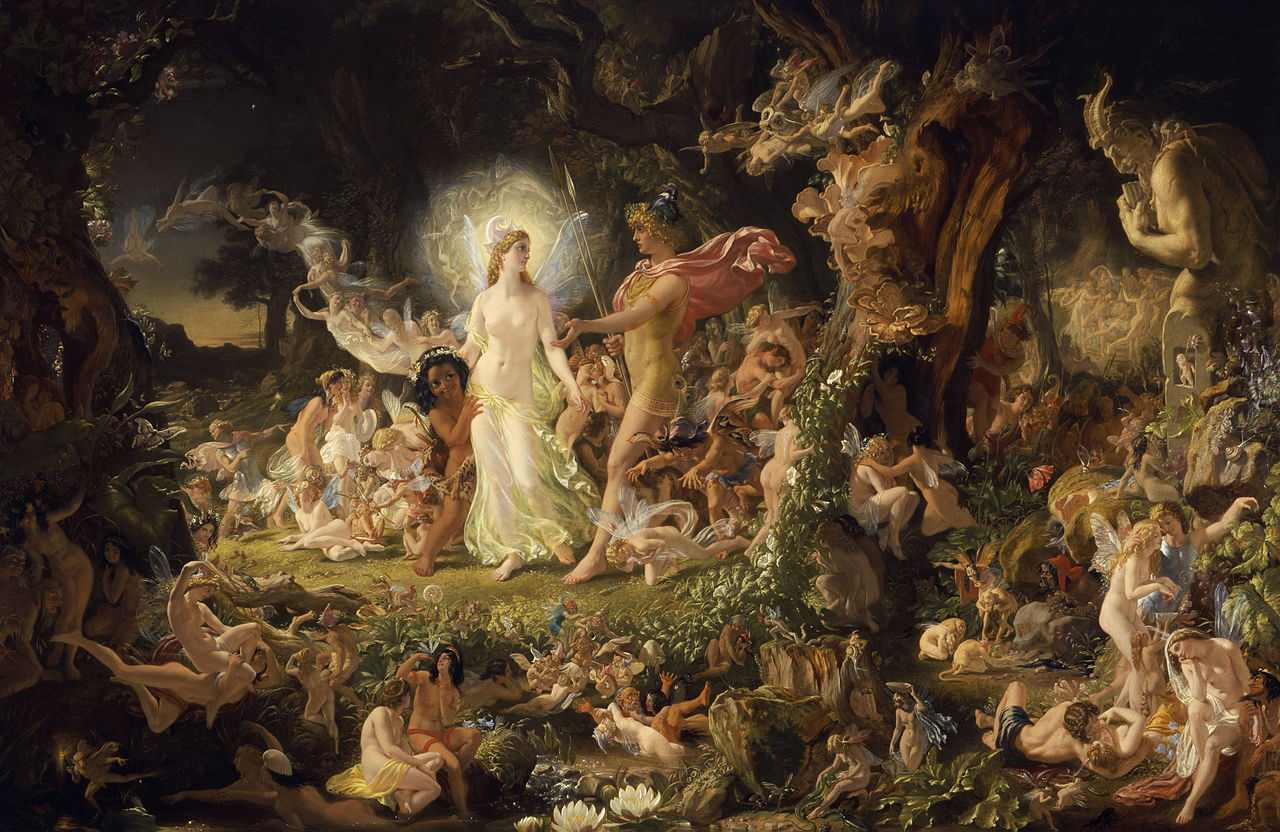
In William Shakespeare‘s A Midsummer Night’s Dream, Hippolyta is engaged to Theseus, the duke of Athens. In Act I, Scene 1 she and he discuss their fast-approaching wedding, which will take place under the new moon in four days (I.i.2). Theseus declares to Hippolyta that, although he “wooed her with his sword,” he will wed her “with pomp, with triumph, and with revelling” and promises to begin a celebration that will continue until the wedding
http://en.wikipedia.org/wiki/Category:Dukes_of_Athens
Theseus
The duke of Athens. Theseus is a hero from Greek mythology—he refers to the fact that he’s Hercules’ cousin at one point—so his presence signals to the reader that the play takes place in a mythical Greek past. At the beginning of the play, Theseus has recently returned from conquering the Amazons, a race of warrior women, and is about to marry the conquered Amazon queen, Hippolyta. Because of this impending wedding, the mood of the play is one of holiday festivity, characterized by a heightened sense of erotic expectation and anticipation. Theseus himself projects confidence, authority, and benevolent power.
Hippolyta
The legendary queen of the Amazons, engaged to marry Theseus. Although Hippolyta is marrying Theseus because he defeated her in combat, she does not act at all like an unwilling bride. Theseus is very courtly in his manner toward Hippolyta, and she is unfailingly deferential toward him.
http://www.thetolkienwiki.org/wiki.cgi?Lombardic__Legend__in__The__Lost__Road
However, in an attempt to secure a male heir and following the death of his first wife Clotsuinda of Frankia, Alboin took her as his wife. Alboin was noted for his cruelty towards her; his most famous act of cruelty was reported by Paulus Diaconus, who states that at a royal banquet in Verona, Alboin forced her to drink from the skull of her dead father (which he carried around his belt), inviting her “to drink merrily with her father”.[1]
A Midsummer Night’s Dream is a comedy play by William Shakespeare, believed to have been written between 1590 and 1596. It portrays the events surrounding the marriage of the Duke of Athens, Theseus, and Hippolyta. These include the adventures of four young Athenian lovers and a group of six amateur actors (mechanicals), who are controlled and manipulated by the fairies who inhabit the forest in which most of the play is set. The play is one of Shakespeare’s most popular works for the stage and is widely performed across the world.
In Greek mythology, Hippolyta (/hɪˈpɒlɪˌtə/; Greek: Ἱππολύτη Hippolyte) was the Amazonian queen who possessed a magical girdle she was given by her father Ares, the god of war. The girdle was a waist belt that signified her authority as queen of the Amazons. She figures prominently in the myths of both Heracles and Theseus. As such, the stories about her are varied enough that they may actually be about several different characters.[1]
The fact that Hippolyta stands up to Theseus and disagrees with him here is significant. In Shakespeare’s time it was common practice for the wife to be submissive, as expressed in The Taming of the Shrew. This play is unusual in its portrayal of strong women. And Hippolyta, in particular, is strong, coming as she does from a tribe of fierce, empowered women of which she was the queen. In a feminist analysis, Louis Montrose contends: “Amazonian mythology seems symbolically to embody and to control a collective anxiety about the power of a female not only to dominate or reject the male but to create and destroy him.”[9] However, Hippolyta attracts Theseus with her feminine allure and charm to such a degree that he is completely smitten with her. Despite her forceful nature, then, she becomes the object of Theseus’ passion. By marrying Hippolyta, Theseus is laying down his sword, “the weapon which gave him power and authority over her,” and essentially surrendering. By the end of the play, Hippolyta has actually added to her power, becoming the queen of a new realm, Athens.
The character of Hippolyta also appears in The Two Noble Kinsmen, a play co-written by Shakespeare and John Fletcher.
http://en.wikipedia.org/wiki/Hippolyta


http://shakespeare.emory.edu/illustrated_showimage.cfm?imageid=266
| Cowper was one of the last painters to show the influence of the Pre-Raphaelites with a meticulous attention to the details of the flora and fauna of his woodland scene. Cowper’s subject and style are in most respects anachronistic; not only did the Pre-Raphaelite style look old-fashioned and imitative by 1928, but the taste for paintings based on literary and historical subjects had passed with the last century. The only “modern” touch is this sensual Titania’s gown, looking like it might have been designed by a commercial artist specializing in art nouveau or art deco patterns. |
http://en.wikipedia.org/wiki/Hippolyta_(DC_Comics)
Once in their stronghold, Heracles and his men drugged the wine the Amazons were drinking and took them prisoner. After the theft of Hippolyta’s Golden Girdle and abuse and rape of the Amazons, Hippolyta cried out to Athena to help them escape their bonds. Athena said that she would only aid them on the condition that the Amazons not seek retribution against Heracles and his men as that would be beneath the ideals the Amazons were created to stand for. Hippolyta hastily agreed and the Amazon’s bonds were broken and the effects of the drugs they had been given wore off. Once out of their drugged state, the Amazons were filled with hate and revenge. Breaking Hippolyta’s oath to Athena, the Amazons began slaughtering their captors but were upset to find that Heracles and his general Theseus had returned to their homelands.
The name Rosamund (also spelt Rosamond and Rosamunde) is a girls’ name and can also be a family name (surname). Originally it combined the Germanic elements hros, meaning horse, and mund, meaning “protection”. Later, it was influenced by the Latin phrases rosa munda, meaning “pure rose”,[1] and rosa mundi, meaning “rose of the world”.[2] “Rosamonda” is the Italian, “Rosamunde” is the German and “Rosemonde” the French form of the name.
Gautier or Walter V of Brienne (c. 1278 – 15 March 1311) was born in Brienne-le-Château, Aube, Champagne, France. He was the son of Hugh, Count of Brienne and Lecce, and Isabella de la Roche, daughter of Guy I de la Roche, Duke of Athens. He was the heir of the Brienne claim to the Kingdom of Jerusalem and of Cyprus, as well as to Taranto and Sicily.
http://en.wikipedia.org/wiki/Brienne_claim_to_the_Kingdom_of_Jerusalem


Friedrich, Seigneur de Rougemont (Rotenberg)1
M, d. after 1267
Friedrich, Seigneur de Rougemont (Rotenberg)|d. a Ulrich II, Duke of Alsace, Lord Florimont, Graf von PfirtkFather Ulrich II, Duke of Alsace, Lord Florimont, Graf von Pfirt1 d. 1 Feb 1275
Mother (Miss) de Belvoir1 d. b 1256
Friedrich, Seigneur de Rougemont (Rotenberg) married Gille de Vienne, daughter of Hugues, Sire de Pagny, Comte de Vienne.1 Friedrich, Seigneur de Rougemont (Rotenberg) died after 1267.1
Family Gille de Vienne
Citations
1.[S2] Detlev Schwennicke, Europaische Stammtafeln, New Series, Vol. I/2, Tafel 226.
Gille de Vienne1
The Florimont castral site dominates the village (old town in the medieval sense), at the confluence of the Coeuvatte and the Vendeline. The location is an authentic military site which, according to tradition, would have already been occupied by a garrison to Gallo-Roman times.
The castle is first mentioned in a deed signed by Ulrich II of Ferrette to Blumenberg (Fisher) in 1258. His son Louis also became Lord of the place. February 9, 1309, the lordship – including the castle – is called into Oblate fief to the Bishop of Basel Otto de grandson by count Thibaut, brother of Louis de Ferrette-Florimont. The Castle has a cited Chapel in 1309 (see Alsatia munita, Bernhard Metz).
Bellevaux, Bella Vallis was founded by Pons i. rock and Etienne de Traves in 1119, he is the first daughter of theAbbey of Morimond and also was the first Cistercian Abbey in Franche-Comté[1].
The birth of the Abbey of Bellevaux coincides with the appearance of the line of likely from La Roche sur Ognon Lords of Lords Scey and Traves. a land area it is made with the help of the Lords of Cirey and Chambornay[1].
The Church was consecrated in 1143 and dedicated to our Lady[1].
The Abbey will depend on four barns in 1139, eight in 1178 (Cirey, Magny, Valleroy, Baslieres, Trevey, Argirey, Champoux and Braillans – the last two for a clearing nearby)[1].
Although much lower in importance than the neighboringAbbey of Cherlieu, Bellevaux participates in the swarming of the abbeys as a result of his mother Morimond : from 1124, it contributes to the creation of theLucelle Abbey in the diocese of Basel and then to the diocese of Lausanne, to Montheron (c. 1130)[1]. In its close proximity, it creates Theuley institutions (1130), Rosières (1132) and La Charité (1133). then, the Lords of La Roche became Lords in Attica as a result of the Fourth Crusade, theAbbey of Daphni (sometimes referred to as “Laurum Abbey” in certain acts)[2], in present Greece[1].
At the end of the XIIe century, the Abbey has the chance to get the very important relics: those of Pierre de Tarentaise. Former monk became Archbishop of Tarentaise (1141-1174), he traverses the Burgundy to get to the Pope’s support in its fight against the emperor when the death surprised him. Despite the wishes of the canons of Tarentaise, it is buried at Bellevaux, and reputation of holy man and miracle worker, was canonized in 1191[1].
Bellevaux therefore became an important centre of pilgrimage of many nobles in the area while (first among which the Lords of La Roche) and even three archbishops of Besançon (Gérard, Nicolas and Odo de Rougemont are buried in the Abbey Church[1]. After the French Revolution, the relics are transferred to the Church of Cirey.
From thee century XIV, barns are leased and the Abbey invests in the Saltworks of Lons-le-Saunier and Salins. They are building a mansion in Besançon. Workforce down to about 20 monks (18 in 1352 during the visit of the Abbot of Morimond)[1].
The situation is more difficult: the Abbey had six monks in 1497 and it comes to expose the relics of Pierre de Tarentaise exceptionally to attract the alms to repair the Church[1].
The order itself little by little: Jean Rolin, son of the Chancellor Rolin became Abbot in 1455. It is definitive from 1551 and the abbacy of Pierre D’andelot[1].
Fisher: the home of 1892, troubadour style whose principaleest Tower flanked by a stair turret.The lordship married the same story as that of the County of Ferrette and will become “Austrian” in 1324 following the marriage of Jeanne de Ferrette with Albert II of Habsburg. Many noble families rent places to the Austrians. The zum Stein, for example, work at the castle in 1467. In the following decades, the existence of the Chapel, dedicated to saint George, is confirmed.
The Castle, also committed in the Reinach and the Fugger, has work in 1476-1486. In 1577, a fire causes serious damage to the building that once repaired, suffered the outrages soldiers, in 1635 (thirty years war).
After the arrival of the French in the region, the seigneury was handed over to a certain family Baker until 1785, then Ferrette Knights (that have nothing to do with the advantage family of the same name). The strongly ruined castle was not rebuilt.
In its place is built by Raja M. in 1892 a pseudo-medievale home of troubadour style whose Tower main, still visible and flanked by a spiral staircase turret, could occupy the location of the primitive keep. The top of this tower, itself now greatly ruined, was equipped with originally a false crenellated parapet and fake battlements.
Pons de la ROCHE-SUR-OGNON (1080? – ?)
/ — Eudes (Othon) de la ROCHE-SUR-OGNON (1110? – 1161?)
/ \ — Sibylle de SCEY
– Pons I de la ROCHE-SUR-OGNON
\ / — Richwin (Richuris) (Count) de SCARPONE + ====> [ 255 ,c,ptm,&]
| / — Louis II (Sn.) de MONTBELIARD (1020? – 1073?)
| / \ — Hildegarde (de NORDGAU) von EGISHEIM + ====> [ 255 ,gc,tm,&]
| / — Thierry II (Dietrich I) of BAR
| / \ — Sophia of BAR (de l’ HAUTE LORRAINE) + ==&=> [ 255 ,GC,tm,&]
| / — Thierry III (II) de MONTBELLIARD (1085? – 1154?)
| | \ / — William II (I) `the Great’ of BURGUNDY + ==&=> [ 255 ,gC,tmD,&]
| | \ — Ermentrude of BURGUNDY (1057? – 1105+)
| | \ — Stephanie de LONGWY of BARCELONA [alt ped] + ====> [ 255 ,gc,tm,&]
| / | OR: prob. Stephanie of BARCELONA + ==&=> [ 255 ,AC,ptmQY,&]
\ — Ermentrude de MONTBELLIARD (1120? – 1171?)
\ | or: Gertrude
| / — Werner (I; II; Count) of HABSBURG + ====> [ 255 ,gc,tm,&]
| / — Otto (Othon) II HAPSBURG (1057? – 1111)
| / \ — Regulinde (Reginlint) von NELLENBURG + ====> [ 255 ,c,ptm,&]
\ — Gertrude HAPSBURG
\ / — Rudolf von PFIRT
\ — Hilla (Hila) von PFIRT (? – by 1076)
http://www.rougemont.be/pages/indexpag.htmlList of the Lords of Rougemont
A-Wikipedia, the free encyclopedia.
Ancient family of importance of Franche-Comté, it will mark his time holding the Office of Viscount of Besançon and giving three archbishops in the same city.
coat of arms of the House of RougemontThe weapons were: of or an Eagle displayed gules, membered, beaked and crowned azure[1].
Summary[hide]
1 Elder branch
2 First branch of the House of Rougemont
3 Second branch of the House of Rougemont
4 Sources
5 Notes and references
Domestic elder[Edit]The oldest Member of this family is Hubald de Rougemont, Viscount of Besançon, cited in a Charter of 1090[1].
Étienne de Rougemont, Rougemont sire, chevalier, vicomte of Besançon, lived at the beginning of the XIIcenturye .
Marriage and succession:
He married Sibille of Thibaud Ier following there.
Thibaud i. of Rougemont, Knight, Lord of Rougemont, Viscount of Besançon, founder in 1117 of theAbbey of Marast, cited in 1133 and 1138 in charters of donation to the monks of theAbbey of Cîteaux for abbeys of La Charité (Neuvelle-lès-la-Charité) and Lieu-Croissant.
Marriage and succession:
His wife is unknown, Humbert which follows.
Humbert Ier of Rougemont, Rougemont sire, chevalier, vicomte of Besançon, mentioned in the genealogy of the Archbishop Gérard de Rougemont (“Electus is igitur in Archiepiscopum vir Nobilis Gerardus Sancti Joannis Decanus, filius Theobaldi de Rougemont, filii Humberti, comitis Stephani consobrinus and habuit frattes Humbertum and Theobaldum; Humberti filius Hugo of Aymonis de Falcogneiis, genuit Aymonem modernum filia”).
Marriage and succession:
His wife is unknown, it has:
Albéric,
Thibaud II following.
Thibaud II de Rougemont, Rougemont sire, Viscount of Besançon, cited in a gift of the County of Burgundy to the Abbey of Clairefontaine in 1173.
Marriage and succession:
He married Alix, daughter of Theobald II de Traves that there:
Humbert II, following
Taylor III, who was the first branch,
Gérard of Rougemont, (?) -1225), Canon of Besançon,Bishop of Lausane , and Archbishop of Besançon.
Humbert II de Rougemont, Rougemont sire.
Marriage and succession:
His wife is unknown, it was Hugues following.
Hugues de Rougemont, Knight, Lord of Rougemont.
Marriage and succession:
He married Elizabeth, daughter ofAymon II of Faucogney, of which there Aimon.
First branch of the House of Rougemont[Edit]Thibaud III de Rougemont, Rougemont sire, Viscount of Besançon, in a deal with the religious of flying (Besançon) in 1230. It was as a seal: an eagle with its wings to the Tower reads: Sigillum Theobaldi Vice – Comitis Bisuntini. He acknowledged lige man of the County of Burgundy in 1242. In 1243 he exchanged his fief of the Val de Vennes against Uzelles.
Marriage and succession:
He married Alix, daughter of Jean I de Ray, of which it has:
Isabelle, wife of Robert de Choiseul, sire of Traves, son of Renaud III de Choiseul and Alix de Dreux,
Humbert III that follows.
Humbert III de Rougemont, damoiseau, quoted in charters La Charité and la Grâce-Dieu (Besançon) in 1230, 1233 – 1239.
Marriage and succession:
He married Elvis that there:
Theobald IV, which follows,
Hugues, he married Alix of Ray,
Odo or Eudes, (?-1301), Archbishop of Besançon from 1269 to 1301. Buried before the high altar of theAbbey Notre-Dame de Bellevaux.
Isabelle, she married Jean de La Roche, Lord of La Roche,
Mercy, married Ponce de Chambornay, Knight, of the House of La Roche.
Thibaud IV de Rougemont, Knight, Lord of Rougemont, vicomte of Besançon, mentioned in a deed of gift in 1251 by the patronage of Granvelle and Maisières churches for theAbbey of charity. In 1286 Otto IV of Burgundy, count of Burgundy, was named referee of an existing conflict between Jean de Montbéliard, sire of Montfaucon, and Thibaud of Belvoir Castle . a year later he was responsible for determining whether the claims of Jean er I of Chalon-Arlay on theAbbey of Balerne were legitimate. He alienated the dignity of Viscount of Besançon in the Lord of Montferrand who transmitted it to Humbert of Clairvaux.
Marriage and succession:
His wife is unknown, it has:
Humbert IV following
Mahaut, Mathee woman, sire of Montmartin,
Elvis, she married Richard Aucelle, Knight,
John, Canon and Treasurer of the Church of Besançon, Archdeacon of Luxeuil and Faverney in 1303. He cultivated in 1334,
Guillaume, Canon of Besançon before 1292, he cultivated in 1333.
Humbert IV of Rougemont, (?) -1331), Knight, Lord of Rougemont, Durnes and Trichatel, buried in the Church of theAbbey Notre-Dame de Bellevaux.
Marriage and succession:
He married Agnes of Durnes, (?-1306), buried in theAbbey of Bellevaux, of which it has:
Thibaud V that follows,
Guillaume who was the second branch,
John Squire, Lord of Durnes and Trichatel in part.
Thibaud V of Rougemont, Knight, Lord of Rougemont, Durnes and Trichatel. City with his father in the Act of confederation of the Lords of Champagne, Burgundy and drill in 1314.
Marriage and succession:
He married Jeanne of there:
Guillaume that follows,
Marguerite, (?-1350), wife of Stephen bird, named in a codicil in 1344,
Mabel, she married Guillaume Lord of Montbis, mentioned in a title of theAbbey Saint-Paul of Besançon in 1344.
Guillaume de Rougemont, (?) -1352), Knight, Lord of Rougemont andUsie, buried in theabbaye Notre-Dame de Bellevaux.
Marriage and succession:
He married Marguerite Ray that there:
Humbert V that follows,
Mary, wife of Gautier, sire of Rupt.
Humbert V de Rougemont, Knight, Lord of Rougemont andUsie. In 1369 he accompanied the Duke of Burgundy, Philippe II of Burgundy, until Flanders. Embroiled in long feuds with David John, who wanted to avenge the death of his cousin that he attributed to him, Humbert and his rival was to go to the judgment of the Duke of Burgundy requiring them on May 2, 1371 thus: “these two Lords and their followers, oublieroient what is was passed;” so if there is any satisfaction Jean Blaisy prisoner vlture a day in the House of the Lord of Ray, what it verseroit to drink to Humbert de Rougemont in the presence of the Duke, that he prieroit to make his friendship and that in the future they vivroient in a mutual intelligence”.” He cultivated the 9 December 1406 and chose his burial in theAbbey Notre-Dame de Bellevaux.
Marriage and succession:
He married in 1368 Alix, daughter of Theobald VI Neuchâtel-Burgundy, (?-1414), it also buried at the Abbey, of which he has:
Guillaume that follows,
Taylor,Usie and Luz, Canon of Besançon and Archbishop of Besançon (1405-1429);
Jean, chevalier, seigneur de Bussières andUsie. Knight banneret in 1417. He married first wife Jeanne de Cossonay and his second wife Marguerite de Chauvirey, Lady of Bussières,
Jeanne, called the elder, wife of Jean-Bernard ofAzuel, Knight,.
Margaret, wife of Pierre, Lord of Montmartin, Knight,
N…, wife of the Lord of Montureux,.
Jeanne, said the young bride to Thoraise Jean, chevalier, seigneur de Torpes and Lods. She tested at the castle of lods September 12, 1427 and chose his burial at the Priory of Mouthier-Haute-Pierre.
Guillaume de Rougemont, (?) -1382/89), Knight, Lord ofUsie and L’Etoile.
Marriage and succession:
He married Marguerite of Vienne, (-1389), Lady of The star, that it has:
Humbert VI following
Jeanne, married to Montarbey Aymey.
Humbert VI of Rougemont, (?) -1440), hispaniolan and Squire, Lord of Rougemont, Lord ofUsie and L’Etoile in part. Cited in the Act of resumption of fief of John III of Chalon-Arlay in 1410 to the castle of The star.
Marriage and succession:
On 4 may 1418 he married Henriette of Vienna, (?-1452), daughter of the Lord of Neublans. Humbert had not had children his share of the land of Rougemont was in theAsuelHouse, the other half of the fee remained property of the cadet branch of the Rathore.
Second branch of the House of Rougemont[Edit]Guillaume or Guyot de Rougemont, son of Humbert IV de Rougemont, Knight, Lord of Russey, Trichatel and Rougemont in part. City in 1332 in the revival of fief of Côtebrune -Côtebrune Pierre by stronghold to Gérard de Montfaucon.
Marriage and succession:
He married Emma’s Russey, tested in 1390 , and chose his tomb in the Church of AcceyAbbey , which Jean following there.
Jean de Rougemont, chevalier, seigneur de Russey, Trichatel and Rougemont in part. In 1367 he went, accompanied by four riders, with Duke of Burgundy to serve in his army. at that time it was only Knight-Bachelor’s degree.
Marriage and succession:
He married Jeanne of Vienna that there:
Guy that follows,
Marguerite, Mani Ryewoman, Knight,
Charlotte, married for the first time Henry de Rye and Ruppes Gauthier.
Guy de Rougemont, Knight, Lord of Russey, Maillot, Mirebel, Montfort, Trichatel and Rougemont in part. It is mentioned in an act of resumption of the Castle and the Russey village in 1395. It was October 5, 1420.
Marriage and succession:
He married Jeanne de Montaigu that there:
Thibaud VI following
Alix, second wife of Pierre de Vergy, Lord of Champvent,
Marguerite, first wife of Guillaume of Étrabonne, Knight, Lord of Étrabonne.
VI Thibaud de Rougemont, Knight, Lord of Rougemont,Squire-banneret in 1417. It was the fief of Rougemont of his father in 1419.
Marriage and succession:
He married on 3 June 1437 Garcia, daughter of Gérard de Saux Vantoux, of which he has Lord:
Catherine that follows,
Marie, married to Bernard de Chalon, Lord of Brignon and Arcenay.
Lady Catherine de Rougemont, Rougemont, Trichatel and Russey.
Marriage and succession:
She married first married Charles de Mello, and his second wife Jean of Neuchâtel. She drafted her will on 22 September 1499 stating you want to be buried in the monastery of the Cordeliers in Rougemont.
The Rougemonts The Premiere Shroud Family
by Jon Presco Copyright 2003
http://rougeknights.blogspot.com http://tinyurl.com/ycfnto http://tinyurl.com/wnjq4 http://tinyurl.com/ykfrds
Bernard de Tramelay/Dramelay was a Grand Master of the Knight Templars who is said to have died just after he and forty Knight Templars breached the walls of Ascalon during the Crusades. Information on Bernard is very scarce, it suggested his greed got him and the forty Templars killed, as the first to conquer a city got the lion’s share of the spoils. There is a suggestion there was a falling out between the Templars and the Christian forces who did not follow Bernard into the breach. When the Muslim defenders saw this, they closed on Bernard who I suspect was trying to capture the Ark of the Covenant that Joseph Flavius said was in Ascalon. The Templars were very keen to own the Ark, and when they first arrived at the temple grounds they began to dig extensively, especially atop the Mount of Olives where they built a substantial fortress. Did they suspect what I have put forth, that the Ark was either the Oracle of Delphi, or kin to this object and the process which allowed great men and women to see their fate? I suspect Absalom was an Oracle, the angel Ariel/Uriel.
For two years now I have been looking at the name Fromond de Dramelay who married a “dame de Rougemont”. He is shown in many genealogies (including a Rougemont chart) to be the son of Amedee, the Archbishop of Besancon, which is located fifty miles or so from Rougemont in the Franche-Comte where it is said Bernard was born. His father was named Humbert. All the Humbert names I have found on the net belong to the Ferrette/Rougemont family. Several Rougemonts were the Archbishops of Besancon. The Templars were also in possession of the Shroud of Turin that was given to Amedee by Othen de la Roche (of the small rock). It has been concluded that Bernard de Tramelay is the related to Amedee.
The de la Roche family is kin to the Rougemont and Dramelay family. j. Jean de Montreaux (Montrose) married Marguerite de Rougemont. Jean is a Ferrette who built Montreux castle that is fifty miles from Rougemont. Their daughter Alix married Fromond of Saint-Loup where the Templars are said to have brought their treasure. The Marquis d’Auxelles came to live in the rebuilt castle of Rougemont. Chambrun d’Uxeloup de Rougemont bought Arginy castle and began to look for the lost Templar treasure. The name Uxeloup come from Saint-Loup and Auxelles a castle that was built by the Ferrette family who dwelt in Rougemont castle. Members of the ‘Arginy Renaissance’ are said to be descendants from Knight Templars, even a Grand Master in regards to Guillaume de Beajeau, but, I suspect this group knew who Bernard Tramelay was…..and what he captured at Ascalon?
Marguerite de Saint Loup d’Auxelles married Thibaut 4 of Rougemont. Richard d’Auxelles married Thibaut’s daughter, Helvuis, whose grandfather was Humbert. This Humbert appears to be the Archbishop of Besancon, a name that means “house of light”. Here is a quote about the Rougemonts and Counts of Champagne who commisioned some of the Grail legends; “By skillful policy, “always acquiring never alienating” the family formed matrimonial alliances with the great families, Montbeliard, Commercy, Chatteauvillian, Geroldseck, Chalon- Auxere, Montague, Ray, Rougemont, Joinville, and Grandson.”
Shround of Turin and Knights of Saint-George The Knights of Saint-George met at Rougemont Castle and had a room in a tower in Besancon. The Archbishop of Besancon resided over a ritual there that involved ceratin relics. Was the Shroud of Turnin one of them? “A room in the tower of Montmartin was granted to him by a treaty with the town of Besancon, as well as the exemption of the housing of people of war for the knights residing in Besancon. The knights of Saint-George were besides only noble city of Besancon has to profit from this inappreciable privilege.
“These portraits like that of the prince of COP, special guard of the brotherhood decorated the superb room with the Large Carmelite friars of Besancon, unfortunately destroyed at the time of the Revolution. The plank of the woodworks of the room was decorated series of the blasonnés ecus of the alive knights, with their confined inscriptions of their four districts, which one descended at the time of their death to be carried in ceremony with the church, then suspended with their row in the nave where one saw a great number of it which had decorated a long time the vault with Rougemont.” Archbishops of Besancon 1180-1190 : Thierry II de Montfaucon 1191-1193 : Etienne de Vienne 1993-1220 : Amédée de Tramelay 1221-1225 : Gérard de Rougemont
Egregore of the Shroud of Savoy and Rougemomt
Posted on March 3, 2013 by Royal Rosamond Press

The Pope who is no more approved of the making of nine replicas of the Shroud of Turin so they may tour the world in what has been called, a New Evangelicism. The Rougemont Templars came to own the Shroud, as did the House of Savoy that produced one King of Spain. Here is Pan’s Labyrinth again.
The Shroud is now an Egregore and thus in theory I capture it and take to Rose Mountain for safe keeping.
What is in a name?
SHROUD – HROS
MUNDI – OF THE WORLD
HROSMUND – ROSAMOND
Angelic Lord of Rougemont
http://en.radiovaticana.va/articolo.asp?c=669017
http://wnep.com/2013/02/24/shroud-of-turin-exhibit/
Catholics believe this is an exact replica of the real Shroud of Turin in Italy.
Pope Benedict the 16th approved nine replicas of the actual shroud, and then individually blessed the cloths.
Each cloth was sent on tours all around the world.
“How many of us can really go to Turin, and that’s the feeling of the holy father, to let everyone see this, what the lord has left behind for us,” said Monsignor Grabowsky.
Many said they are so excited that the pope would do this, and it is a bitter sweet time for some followers now that Pope Benedict the 16th is stepping down.
“John Paul the second, that previous Pope was one of my favorites, Pope Benedict has also been very good, and I’m hoping and praying that the next successor will be just as good,” said Robin Wasatonic Coopersburg.
For the many many people that came out to Shenandoah from all over Pennsylvania, some waiting for over a year. This is something everyone can admire.
“Not just for Catholics, not just for Christians, it’s for all people to appreciate,” said William Jones of Allentown.
“It’s like everyone has been touched in some way. They come with mixed feelings and emotions and when they behold it, they leave a whole different way,” said Monsignor Grabowsky.
The Shroud of Turin exhibit will be on display for the next two weeks at St. Michael’s Church in Shenandoah.
http://www.chaosmatrix.org/library/chaos/texts/egregore.html
http://www.crcsite.org/egregor.htm
During The Trial of the Templars in 1307 Brother Jean Taillefer of Genay gave evidence. He “was received into the order at Mormant, one of the three perceptories under the jurisdiction of the Grand Priory of Champagne at Voulaine. He said at his initiation ‘an idol representing a human face’ was placed on the altar before him. Hughes de Bure, another Burgundian from a daughter house of Voulaine, described how the ‘head’ was taken out of a cupboard, or aumbry, in the chapel, and that it seemed to him to be of gold or silver, and to represent the head of a man with a long beard. Brother Pierre d’Arbley suspected that the ‘idol’ had two faces, and his kinsman Guillaume d’Arbley made the point that the ‘idol’ itself, as distinct from copies, was exhibited at general chapters, implying that it was only shown to senior members of the order on special occasions.
The treasurer of the Paris temple, Jean de Turn, spoke of a painted head in the form of a picture, which he had adored at one of these chapters.
Nearly all the brethren agreed that the head was bearded and had long hair, and the Templars, like the majority of their contemporaries, regarded long hair as effeminate, so the length of the ‘idol’s hair was remarkable for this, if for no other reason.
– Noel Currer-Briggs, The Shroud and the Grail
It is possible that the head idol was intended to represent the severed head of John the Baptist, based on allegations that he was revered by the Order. The Templars took part in the sack of Constantinople during the Fourth Crusade in 1203-4. Robert de Clari described the opulence and numerous relics at the sacred chapel of the Boucoleon Palace, amongst them supposedly the head of John the Baptist. An egregore is a magical entity that is artificially created by the focused thoughts and desires of a medium (analogous in many ways to Tibetan tulpas.) Supposedly a medium or statue could then serve as a tenant for the egregore, nourished by the sexual life-powers of the members.
“The Egregora does exist in the so-called ‘astral plane’ and it is a demon, that is to say, an illusory entity. It is not a true Microcosm, but a gestalt of vitalized shells, a focus for everything that is negative, defeatist, maudlin, bigoted, introverted in human nature – a morass completely hostile to progress and to the spiritual evolution of mankind.
The representation of the egregore as bust recalls the ancient literary tradition of animated statues or Salome, who wanted the head of John the Baptist, probably to master his visionary powers. The classic prototype of such an egregore is Baphomet, the alleged egregore of the Templars, who was (as the Roman Emperor of the Gods) likewise worshipped in the form of a bust. In the secret statutes of the Templars, Baphomet was besought with the introduction to the Qu’ran and dismissed with the 24th chapter of the Book of Sirach.
In 1204, a knight named Robert de Clari who participated in the Fourth Crusade that captured Constantinople, claims the cloth was among the countless relics in the city: “Where there was the Shroud in which our Lord had been wrapped, which every Friday raised itself upright so one could see the figure of our Lord on it. And none knows – neither Greek nor Frank – what became of that shroud when the city was taken.” [27] (The apparent miracle of the cloth raising itself may be accounted for as a mistranslation: the French impersonal passive takes the form of a reflexive verb. Thus the original French could equally well be translated as the cloth was raised upright. De Clari’s matter of fact delivery does not suggest that he witnessed anything out of the ordinary.) However, the historians Madden and Queller describe this part of Robert’s account as a mistake: Robert had actually seen or heard of the sudarium, the handkerchief of Saint Veronica (which also purportedly contained the image of Jesus), and confused it with the grave cloth (sindon).[28] In 1205, the following letter was sent by Theodore Angelos, a nephew of one of three Byzantine Emperors who were deposed during the Fourth Crusade, to Pope Innocent III protesting the attack on the capital. From the document, dated 1 August 1205: “The Venetians partitioned the treasures of gold, silver, and ivory while the French did the same with the relics of the saints and the most sacred of all, the linen in which our Lord Jesus Christ was wrapped after his death and before the resurrection. We know that the sacred objects are preserved by their predators in Venice, in France, and in other places, the sacred linen in Athens.”
Amadeo I (Italian Amedeo, sometimes anglicized as Amadeus) (30 May 1845 – 18 January 1890) was the only King of Spain from the House of Savoy. He was the second son of King Vittorio Emanuele II of Italy and was known for most of his life as the Duke of Aosta, but reigned briefly as King of Spain from 1870 to 1873.
Granted the hereditary title Duke of Aosta in the year of his birth, he founded the Aosta branch of Italy’s royal House of Savoy, which is junior in agnatic descent to the branch descended from King Umberto I that reigned until 1946, but senior to the branch of the Dukes of Genoa
http://en.wikipedia.org/wiki/Duke_of_Aosta
Umberto I or Humbert I (Italian: Umberto Ranieri Carlo Emanuele Giovanni Maria Ferdinando Eugenio di Savoia, English: Humbert Ranier Charles Emmanuel John Mary Ferdinand Eugene of Savoy; 14 March 1844 – 29 July 1900), nicknamed the Good (in Italian il Buono), was the King of Italy from 9 January 1878 until his death.
Umberto’s reign saw Italy attempt colonial expansion into East Africa, successfully gaining Eritrea and Somalia despite being defeated by Abyssinia at the Battle of Adowa in 1886. In 1882, he approved the Triple Alliance with the German Empire and Austria-Hungary.
He was deeply loathed in far-left circles, because of his conservatism and support of the Bava-Beccaris massacre in Milan. He was especially hated by anarchists, who attempted an assassination on him during the first year of his reign. He was killed by another anarchist, Gaetano Bresci, two years after the Bava-Bacharis massacre.
Archduchess Adelaide as queen-consort
She was born at the Royal Palace of Milan to Rainer Joseph of Austria and his wife Elisabeth of Savoy.[2] Named Adelaide, or known as Adele in the family, she held the title of Archduchess of Austria. Her father was the Viceroy of Lombardy-Venetia and was a son of Leopold II, Holy Roman Emperor and Maria Luisa of Spain.[2] Her mother was a member of the House of Savoy and a daughter of the Prince of Carignano, the head of the junior branch of the House of Savoy who ruled the Kingdom of Sardinia. Her younger brother Archduke Rainer Ferdinand later acted as Minister President of Austria. Both of her brothers contracted morganatic marriages
Princess Maria Clotilde of Savoy (2 March 1843 – 25 June 1911) married Napoleon Joseph Bonaparte and had issue.
Umberto I of Italy (14 March 1844 – 29 July 1900) married Princess Margherita of Savoy and had issue.
Amadeo of Spain (30 May 1845 – 18 January 1890) married Maria Vittoria dal Pozzo and later Maria Letizia Bonaparte and had issue.
Prince Oddone of Savoy (11 July 1846 – 22 January 1866) died unmarried.
Princess Maria Pia of Savoy (14 February 1847 – 5 July 1911) married Luís I of Portugal and had issue.
Prince Carlo Alberto of Savoy (2 June 1851 – 22 June 1854) Duke of Chablais, died in infancy.
Prince Vittorio Emanuele of Savoy (6 July 1852) died at birth.
Prince Vittorio Emanuele of Savoy (18 January 1855 – 17 May 1855) Count of Genevois, died in infancy.
The House of Lorraine, the main and now only remaining line known as Habsburg-Lorraine, is one of the most important and was one of the longest-reigning royal houses in the history of Europe.[1] Currently the house is headed by Karl Habsburg-Lothringen, the titular Emperor of Austria, King of Hungary, Croatia, Bohemia, Galicia and Lodomeria, Illyria, as well as the titular King of Jerusalem.[2]
http://en.wikipedia.org/wiki/House_of_Habsburg-Lorraine
Subject: [DEGRUY] GRUYERE & ROUGEMONT castles switzerland locus of originalsites COLOR PHOTOS www AVAILABLE gruyere castle captured garment BURGUNDYDUKE ROBE exhibit / hugo/fouchere/nodier masonics HOLY SHROUD BLOOD SECRETS/ radiant merovingian synchronicty SR,OTHON de la ROCHE de RAY crusder/templar/priory de sion
Date: Thu, 09 Sep 2010 22:42:20 GMT
+GRUYERE & ROUGEMONT CASTLES+
(located in switzerland)
>are both pictured on the internet
in recent photographs of 2010
>w/ some history providedthe counts of gruyerein current touring prsentations.
^^^^^^^^^^^^^^^^^^^
2) the link between gruyere castle and
the castles at chillon & aigle is
+POETIC CHILLON+
(byron’s poetry)
>stressed in recent writings.
^^^^^^^^^^^^^^^^
3) the beautiful ceremonial robe of the
+WAR BOOTY+
>duke of burgundy captured in the
early conflicts is exhibited at
+GRUYERES CASTLE+
^^^^^^^^^^^
>this was an important acquisition
considering the size and power
+OF ANCIENT BURGUNDY+
^^^^^^^^^^^^^^
>(i have seen these robes and they
are large and very impressive)
^^^^^^^^^^^^^^^^^^
4) rougemont castle (switzerland) is also
pictured in many clear color photos
on the internet but remember
+1569+
>this was constructed after
>the gruyere counts lefti understand is a holiday rental.
^^^^^^^^^^^^^^^^^^
+ROUGEMONT CASTLE-FRANCE+
(st. george link to swiss)
^^^^^^^^^^^^^^
>the lords of rougemont were also the
archbishops of besancon which gives
us the perspective of the intense..
^^^^^^^^^^^^^^^^^^^^
+VICTOR HUGO-ADELE FOUCHER+
+AND CHARLES NODIER+
^^^^^^^^^^^^^^
>interest in knights templar, freemason
+SHARED W/ NOLA COUSINS+
>priory de sion, holy shroud, history.
^^^^^^^^^^^^^^^^^^^^^
+REMEMBER+
1) nodier’s father was mayor of the
town of besancon plus head of
+BESANCON FREEMASONS+
^^^^^^^^^^
2) the famous rougemont family heir..
^^^^^^^^^^^^^^^^^^^^^
+HUBERT de rougemont VILLERSEXEL+
+COUNT de la ROCHE de RAY+
^^^^^^^^^^^^^^^^^
>married margaret (de vergy) de charney
>who had inherited the holy shroudguillemette de ray ws the daughter of
+OTHON de la ROCHE de RAY+
^^^^^^^^^^^^^^^^^
+IMPORTER OF THE HOLY SHROUD+
(gave to pons roche de ray, his son)
^^^^^^^^^^^^^^^^^^^^
>which explains why the shroud
first went to de ray castle.
(north of besancon)
^^^^^^^^^^^
+AMAZING SYNCHRONICITY OF OUR+
la roche deray/decharney/vergy/degruy/
>(hugo-foucher-nodiermerovingian blood secretsat the head of their agendawhile distracted with
http://en.wikipedia.org/wiki/House_of_Savoy
http://en.wikipedia.org/wiki/Victor_Emmanuel,_Prince_of_Naples
Grand Masterships
King Umberto II, the last king of Italy, did not abdicate his position as fons honorum (or Fount of honour). When he left Italy, he purported to take the hereditary Grand Masterships of the dynastic orders of his royal house with him. These orders were Ordine Supremo della SS. Annunziata (The Supreme Order of the Most Holy Annunciation) and Ordine dei Santi Maurizio e Lazzaro (The Order of Saints Maurice and Lazarus). Umberto II claimed to hold these until his death in 1983.[citation needed]
[edit] Duke of Savoy
On 7 July 2006 Vittorio Emanuele’s kinsman and dynastic rival, Amedeo, 5th Duke of Aosta declared himself to be the head of the House of Savoy and Duke of Savoy, claiming that Vittorio Emanuele had lost his dynastic rights when he married without the permission of King Umberto II in 1971. Amedeo has received the support of the President of the Council of the Senators of the Kingdom Aldo Alessandro Mola and of Vittorio Emanuele’s sister Princess Maria Gabriella of Savoy.[citation needed]
Vittorio Emanuele and his son have applied for judicial intervention to forbid Amedeo from using the title “Duke of Savoy”. An initial hearing was scheduled in the court of Arezzo, with a ruling expected by 6 June 2006.[3]
[edit] Other honours
Monarchical styles of
Vittorio Emanuele, Prince of Naples
Reference style
His Royal Highness
Spoken style
Your Royal Highness
Alternative style
Sir
Vittorio Emanuele is a Bailiff Grand Cross of the Sovereign Military Order of Malta and a Bailiff Grand Cross of Justice of the Constantinian Order of St George.
He also claims to hold several Russian dynastic orders, including the Order of Saint Andrew, Grand Cross of the Order of Saint Alexander Nevsky, the Order of the White Eagle, and the Order of Saint Anne. He is also a Knight of the Order of the Redeemer of Greece, and the Order of the Immaculate Conception of Vila Viçosa. He is the heir to the Savoy claim to the title of “King of Jerusalem”.[citation needed]
Fight with Amedeo (2004)
On 21 May 2004, following a dinner held by King Juan Carlos I of Spain held at the Zarzuela Palace on the eve of the wedding of his son Felipe, Prince of Asturias, Vittorio Emanuele punched his third cousin and arch-rival Amedeo, Duke of Aosta, twice in the face, causing him to fall down the steps.[22][23] Former Queen Anne-Marie of Greece caught Amedeo to prevent him further injuring himself and helped him indoors, staunching his bleeding face until first aid could be administered. Upon learning of the incident the King Juan Carlos, a cousin of both men, reportedly declared that “never again” would an opportunity to abuse his hospitality be afforded to the competing pretenders.[23]
Vittorio Emanuele, Prince of Naples, formerly Crown Prince of Italy (Vittorio Emanuele Alberto Carlo Teodoro Umberto Bonifacio Amedeo Damiano Bernardino Gennaro Maria di Savoia; born 12 February 1937) is the only son of the Umberto II, the last King of Italy. He is commonly known in Italy as Vittorio Emanuele di Savoia. Although the titles and distinctions of the Italian royal family have not been legally recognised in Italy since 1946, he is often styled Prince of Naples out of courtesy, particularly by supporters of the former monarchy.
Vittorio Emanuele also uses the title Duke of Savoy and claims the headship of the House of Savoy. These claims are disputed by supporters of his third cousin, Amedeo, 5th Duke of Aosta. He is also a claimant to the title of King of Jerusalem. He is known to some Italian monarchists as Vittorio Emanuele IV[citation needed]. He has lived for most of his life in exile – following a tightly contested referendum in 1946 in which a majority of the Italian people voted for Italy to become a republic.
http://en.wikipedia.org/wiki/Victor_Emmanuel,_Prince_of_Naples
http://wc.rootsweb.ancestry.com/cgi-bin/igm.cgi?op=GET&db=updike&id=I15363
http://wc.rootsweb.ancestry.com/cgi-bin/igm.cgi?op=GET&db=mdaniels67&id=I4206
http://www.appletree.com/relationships/Hugh_De_Savoy_1
http://archiver.rootsweb.ancestry.com/th/read/DEGRUY/2010-09/1284072140
[DEGRUY] ROUGEMONT TEMPLAR FAMILY degruy shroud of jesus allies /+ROUGEMONT MONESTARY+ , 1080, near gruyere,founded by count guillaume de gruyere after his return from the 1st CRUSADE
Date: Tue, 17 Feb 2009 18:45:12 GMT
+R O U G E M O N T+
>the rougemont family website provides
+HOLY SHROUD OF JESUS+
>valuable degruy/devergy information.
>THAT GETS TO THE HEART OF THE
VALENTIN VERLOIN deGRUY(ERE)
(count guillaume, 1080)
>KNIGHTS TEMPLAR ORIENTATION
BASED ON THEIR 1ST CRUSADE
(saint nicholas church)
>HISTORY & CONSTRUCTION OF
THE ROUGEMONT MONESTARY.
(const. near gruyere, 1080)
+GRAIL/SHROUD PASSION+
>in my estimation this placed the
VALENTIN VERLOIN deGRUY
family at magny fouchard and
the french courts, versailles,
amboise etc, in the thick of
+HOLY GRAIL SEARCH+
>the lirey shroud ownership by the
ROUGEMONT/CHARNEY/VERGY
combined family has strong
+degruy/savoy history connection+.
^^^^^^^^^^^^^^^^^^^^^
+HUMBERT de ROUGEMONT+
>de VILLERSEXEL
>COUNT DE LA ROCHE
>LORD OF ST. HIPPOLYTE
>wed the de charney/devirgy heir
+TO THE SACRED SHROUD+
>and removed it from lirey church
TO HIS ST. HIPPOLYTE CHURCH.
at montigny-montfort near near
(REMEMBER OUR DUMONT-
>du MONTIGNY)
>his famous castle at montbard.
+IN BURGUNDY+
(ostensibly to protect it from
the advancing english army.)
>LATER TO SELL IT TO COUNT LOUIS
( degruy relatives )
>deSAVOY FOR TWO CASTLES.
^^^^^^^^^^^^^^^^^^^
>the rosicrucian connection of this
history is found in rougemont
+MASONIC SYMBOLS+
>family data and in the ring
owned by david perrin.
+R E ME M B E R+
>the rougemont de la roche ancestor
+OTHON de LA ROCHE+
(latin duke of athens)
>(intermarried w/ de ray family)
>in coordination with degruy neighbor
+COUNT de BRIENE+
(king of jerusalem)
>HAD SENT THE HOLY SHROUD FROM ITS
CONSTANTINOPLE TREASURE TROVE
>1208 a.d.TO HIS FATHER PONS de LA ROCHE
WHO GAVE IT TO ARCHBISHOP
(just n. of champagnole)
+OF BESANCON+
+subsequent history+
1) 1314 A TEMPLAR INQUISITION
(caused much secrecy)
2) 1349, BESENCON CATHEDRAL FIRE
(shroud miraculously survives
is taken up to champagne.)
3) 1356, GEOFFREY de CHARNEY (II)
crusade/templar knight married
to gruyere/virgy ancestor
+JEANNE de VIRGY+
>who was grand niece of
>OTHON de LA ROCHE)
>(typical of shroud mafia blood
>connected family devotees)
>de CHARNEY, FRANCE’S GREATEST
KNIGHT WOULD RAISE THE HOLY
(he secured vatican/pope
construction approval
>SHROUD OVER HIS HEAD IN THE
RELIGOUS CEREMONIES AT
+L I R E Y + C H A P E L+
^^^^^^^^^^^^^^
>(he was killed protecting the king
at the batle of agincourt and
ironically it was a french king
WHO BURNT GEOFFREY de
(jacques demolay also)
>CHARNEY ( I ) @ THE STAKE.
>after his death, his devirgy widow then
married humbert de rougemont de
villersexel de la roche to secure
+HOLY SHROUD PROTECTION+
(in the castle at montbard
and st. hippolyte chapel.)
Barbara Frale has cited that the Order of Knights Templar were in the possession of a relic showing a red, monochromatic image of a bearded man on linen or cotton.[7] Historical records seem to indicate that a shroud bearing an image of a crucified man existed in the possession of Geoffroy de Charny in the small town of Lirey, France around the years 1353 to 1357.[1] However, the correspondence of this shroud with the shroud in Turin, and its very origin has been debated by scholars and lay authors, with claims of forgery attributed to artists born a century apart.
Full-length image of the Shroud of Turin
In 1389, the image was denounced as a fraud by Bishop Pierre D’Arcis in a letter to the Avignon Antipope Clement VII, mentioning that the image had previously been denounced by his predecessor Henri de Poitiers, who had been concerned that no such image was mentioned in scripture. Bishop D’Arcis continued, “Eventually, after diligent inquiry and examination, he discovered how the said cloth had been cunningly painted, the truth being attested by the artist who had painted it, to wit, that it was a work of human skill and not miraculously wrought or bestowed.” (In German:.[34]) The artist is not named in the letter.[35][36]
The letter of Bishop D’Arcis also mentions Bishop Henri’s attempt to suppress veneration but notes that the cloth was quickly hidden “for 35 years or so”, thus agreeing with the historical details already established above. The letter provides an accurate description of the cloth: “upon which by a clever sleight of hand was depicted the twofold image of one man, that is to say, the back and the front, he falsely declaring and pretending that this was the actual shroud in which our Saviour Jesus Christ was enfolded in the tomb, and upon which the whole likeness of the Saviour had remained thus impressed together with the wounds which He bore.”
Despite the pronouncement of Bishop D’Arcis, Antipope Clement VII (first antipope of the Western Schism) refrained from expressing his opinion on the authenticity of the shroud[37] He prescribed indulgences for pilgrimages to the shroud, so that veneration continued, though the shroud was not permitted to be styled the “True Shroud.”[38]
In 1418, Humbert of Villersexel, Count de la Roche, Lord of Saint-Hippolyte-sur-Doubs, moved the shroud to his castle at Montfort, Doubs, to provide protection against criminal bands, after he married Charny’s granddaughter Margaret. It was later moved to Saint-Hippolyte-sur-Doubs. After Humbert’s death, canons of Lirey fought through the courts to force the widow to return the cloth, but the parliament of Dole and the Court of Besançon left it to the widow, who traveled with the shroud to various expositions, notably in Liège and Geneva.
The widow sold the shroud in exchange for a castle in Varambon, France in 1453. The new owner, Anne of Cyprus, Duchess of Savoy, stored it in the Savoyard capital of Chambéry in the newly built Saint-Chapelle, which Pope Paul II shortly thereafter raised to the dignity of a collegiate church. In 1464, Anne’s husband, Louis, Duke of Savoy agreed to pay an annual fee to the Lirey canons in exchange for their dropping claims of ownership of the cloth. Beginning in 1471, the shroud was moved between many cities of Europe, being housed briefly in Vercelli, Turin, Ivrea, Susa, Chambéry, Avigliana, Rivoli, and Pinerolo. A description of the cloth by two sacristans of the Sainte-Chapelle from around this time noted that it was stored in a reliquary: “enveloped in a red silk drape, and kept in a case covered with crimson velours, decorated with silver-gilt nails, and locked with a golden key.”
In 1543 John Calvin, in his Treatise on Relics, wrote of the Shroud, which was then at Nice, “How is it possible that those sacred historians, who carefully related all the miracles that took place at Christ’s death, should have omitted to mention one so remarkable as the likeness of the body of our Lord remaining on its wrapping sheet?” He also noted that, according to St. John, there was one sheet covering Jesus’s body, and a separate cloth covering his head. He then stated that “either St. John is a liar,” or else anyone who promotes such a shroud is “convicted of falsehood and deceit”.[39
http://en.wikipedia.org/wiki/History_of_the_Shroud_of_Turin
Three years ago I discovered the Templar Chapel of Fontenotte where the Rougemont family of Knights Templar worshipped.
Jon Presco
Copyright 2008
http://www.petit-patrimoine.com/fiche-petit-patrimoine.php?id_pp=21231_3
Dove seal ssed on the Seal of Etienne de Til-Chatel, lord of Pichanges, Preceptor of La Fontenotte. Representation of a dove, facing backwards and grasping an olive branch within its beak.
http://en.wikipedia.org/wiki/Knights_Templar_Seal
This Templar Order came to own the Templar Seal of Etienne de Til-Chatel.
http://www.ordotempli.org/the_first_preceptor.htm
In this genealogy we see the Lords of Rougemont are also the Lords of
Til-Chatel, and Trichatel which is the same place.
Allow me to change the names.
“The First Preceptor of La Fontenotte
The fifth son of Guy II of Rougemont and Guillemette de Coublant,
Etienne de Rougemont was lord of Pichanges. In December 1265, having
recalled the donations made to the temple by Aimon IV and Guy II, he
gave to the Templars, with the agreement of his elder brother, Jean,
Lord of Rougemont, the right of pasturage on his lands of Pichanges
and Spoy. He died in 1271 and was buried before the altar in the
chapel of Fontenotte and conferring his Templar rank of Preceptor
(priest-templar).
After the death of Etienne, Jean de Til-Chatel had to confirm in 1274
the rights of the Templars over Fontenotte. In 1278 his younger
brother, Guy, who had been curate of Til-Chatel in 1242 then
archdeacon of Le Tonnerois in the church of Langres, succeeded him at
the head of the lordship of Pichanges.
In May, 1274, Jean de Rougemont, Marshal of Burgundy legally
recorded “for the repose of his soul and that of his elder brother,
Etienne de Rougemont, who lies in the cemetery of the said Temple,
and of the souls of his forebears”, granted to Henri de Dole,
Commander of the House of Fontenotte:”
I have found a Hughes/Hue de Rougemont who a “grand maître du
Temple”in two accounts, and the maître du Temple of Burgundy in
another.This Hugues appears to be related to Humbert de Villersexel
who wasthe Lord of Rougemont and Til-Chatel. Is this the Hughes that
preceeded Bernard de Tramelay/Dramelay? Did this Hugues come after
Bernard. In the Fromond/Dramelay genealogy we find a line of De La
Roches, and thus the Rougemonts are kin to another Templar Grand
Master, Amaury de La Roche.
“Bernard de Tramelay (died August 16, 1153) was the fourth Grand
Master of the Knights Templar. He was born in the castle of Tramelay
near Saint-Claude in the Jura. According to Du Cange, he succeeded a
certain Hugues as Master of the Temple, although this Hugues is
otherwise unknown. He was elected Grand Master in June of 1151, after
the abdication of Everard des Barres, who had returned to France
following the Second Crusade.et”
“Hugues de Rougemont, grand maître du Temple””and Hugues de
Rougemont, large main of the Temple”
Humbert de Rougemont owned the Shroud of Turin. Humbert is a Hue name
and is kin to at least two Templar Grandmasters. Humbert was also the
Lord of Villersexel. He married the great granddaughter Geoffrey de
Charnay a Templar Grand Master. This is to say this Knights Templar
family, and thus the Knights Templars, owned and protected the Shroud
of Turin that they may have seized at Ascalon along with a great
treasure which would account for the large number of castle owned by
this very large Templar family. Never has such a constellation of
Knights Templars gathered in one place, under one roof as they did
come Sunday in Fontenotte.
Amaury and Othon de La Roche brought Jacque de Molay into the Templar
Order, the last Grand Master. Amaury disappears from history, it
alleged he was in keeping of the Templar Treasure. Did he go to
Holland where the Roesmont live, they members of the Swan Brethren
and Masters of Janskirk church?
“The legend says that it manages to escape and disparaitre
definitively at the same time as the Treasury and the secrecies of
Templiers.”
My search for my ancestor, Sergeant Rougemont, has led me to a
Templar family that was invisible. Sergeant was a Templar rank, a
title for a mayor of the Sungau, and a Seneschal. I have no direct
evident Sergeant Rougemont was kin to these Lords of Rougemont ? as
yet!
“I have three separate pages for Rosamond families we believe are
descended from a Sergeant Rosamond, a Huguenot who left France in
1685 at the Revocation of the Edict of Nantes, and fought in the
Battle of the Boyne in Ireland in 1689. We have not yet been able to
definitively tie these three families together, but each family was
independently aware of the story of Sergeant Rosamond and claimed him
as an ancestor. We are hoping that as research continues we will find
records showing us the relationship between our families.”
(Images: Montfort Castle home to Humbert and Margaret de
Charny/Rougemont)”
June 1418: The widowed Margaret de Charny marries Humbert of
Villersexel, Count de la Roche, Lord of St.Hippolyte sur
Doubs.”Humbert de Villersexel is Humbert de Rougemont.
“1208 ? Pons de la Roche presents to Amadeus de Tramelay, Archbishop
of Besançon, the Shroud that his son Othon de la Roche, Latin Duke of
Athens, had sent him from Constantinople.”Aymon 2 de Rougemont was
the Seigneur of Villersexel. He married Guillemette de Ray, the
daughter of Othon 2 de la Roche.Othon 1 de la Roche (-before 1161)
had a son named Pons de la Roche the Seigneur de Ray. He first
married Marguerite Tilchatel who may be a Rougemont who came to own
Til-Chatel. Guillaume, Gui, Humbert4, Gui 2, and Thibaut 6 were
Seigneurs of Til-Chatel. Othon then married Pontia de Rougemont/de
Dramelay the daughter of Thiebaud 2 de Rougemont. They has three
children. Humbert, Thiebaud, and Sibylle de la Roche. This union
makes the Shroud the Rougemont family icon, or relic.Jon
PrescoCopyright 2006
Amaury de La Roche fut grand prieur puis maître de la Maison du
Temple de Paris jusqu’en 1264, puis élu Grand maître de l’ordre du
Temple de 1265 à 1271[1
Amaury of the Rock was large host prior then of the Temple of Paris
until 1264, then elected Grand Master of the order of the Temple of
1265 to 1271[1]
http://gilles.maillet.free.fr/histoire/famille_bourgogne/famille_rouge
mont_faucogney.htm
http://www.covati.fr/Communes/Til-Chatel/patrimoine.htm
http://www.mantin.info/montfleur/histoire/montagna.aspx
“In 1260, Jean de Chalon gives his son ainé Hughes his strongholdsand
castles.””in liaison with Jean de Chalon, count de Bourgogne, Amé,
lord deColigny and of Andelot and Hugues de Rougemont, large main of
theTemple, by its seal the authenticity gave to a famous donation.
Itwas with that which Manassès de Coligny, brother of Amé, did with
theorder of the Temple, while being made there receive knight of
thesuzerainty of Montagna, BroissiaSeries B of the AD Besancon – 467
B – Montagna-the-Templar.Manasses Coligny recognizes, in the presence
of Jean Chalon, AméColigny, Point, prior of Gigny, and Hue de
Rougemont, master of theTemple in Burgundy, having resumed on the
order of the Temple landsMontagna , St. Fontaine and dependencies. An
1227(This charter offers the oldest text of the novel archives Doubs).
Concerned with the bishop of LangLMBO, they drew their origin from
Audon I of Til-Châtel, wire of Garnier count de Troyes attested into
918 by its signature in an act of the duke of Burgundy Richard. This
family, which carried like armorial bearings a key out of stake, also
paid homage to the dukes of Burgundy and held a row raised among the
lords of the duchy and county of Burgundy. Its members followed one
another of wire father until the year 1299 dates to which Isabelle of
Rochefort, girl of Left-handed person of Rochefort lord of Puiset in
Beauce, widow of Guy III of Til-Châtel Gonfalonier of the County of
Burgundy, became injury of Til-Châtel. It remaria with Humbert de
Rougemont about 1306 and Maria her Jeanne daughter whom it had had
with Guy III of Til-Châtel with Thiébaud de Rougemont wire of a first
marriage of her new husband. The seigniory passes then in this family
until the end of the 15° century time to which the last of Rougemont,
not having children yielded the seigniory to Antoine de Baissey
resulting from a family of Montsaugeonnais which immediately paid
homage to the bishop of Langres.”
http://www.crystalinks.com/holygrail.html
http://freepages.genealogy.rootsweb.com/~rosamondgenealogy/index2.htm
http://genforum.genealogy.com/roseman/messages/186.html
Bernard de Tramelay (died August 16, 1153) was the fourth Grand
Master of the Knights Templar. He was born in the castle of Tramelay
near Saint-Claude in the Jura. According to Du Cange, he succeeded a
certain Hugues as Master of the Temple, although this Hugues is
otherwise unknown. He was elected Grand Master in June of 1151, after
the abdication of Everard des Barres, who had returned to France
following the Second Crusade.
j
http://en.wikipedia.org/wiki/Bernard_de_Tremelay
Jean Grueyere – Nazarite Born
Posted on March 3, 2013 by Royal Rosamond Press


Like the Nazarite mothers, Hannah and Elizabeth, the Countess of Grueyere could not borne an heir. After she was blessed by a beggar named Jean, she give birth to a son she named Jean, or John. I believe I carry on the bloodline of the Grueyere, as will my grandson, Tyler Hunt. Here is Sleeping Beauty Castle. Arise yea Knights of Rose Mountain! A child will lead you.
Jon the Nanzarite
Copyright 2013
Countess Marguerite of Gruyère, so runs the story, was so sadly afflicted that she had borne no heir, that she had no longer any joy in her fair castle, no comfort with her beloved lord. Vainly journeying to distant shrines, as vainly invoking the aid of sorcerers and magicians, she went one day, clad as one of her poor subjects, to pray in the chapel at the foot of the Gruyère hill. There, as the November day was closing, poor Jean the cripple, well known through the country, came also to tell his beads. Very simple and kindly was poor Jean, with always the same blessing for those who gave him food or mocked him with cruel jeers. Perceiving in the shadow a poor woman sadly weeping, he gave her all his day’s begging, a piece of black bread with a morsel of coarse cheese, repeating his usual blessing, “May God and our Lady grant thee all thy noble heart desires.”
That evening, again clad in her jewels and brocades, the Countess Marguerite, at the close of a feast laid for her husband’s comrades after a day at the chase, offered each knight a bit of this bread and cheese, with a moving story of poor Jean and a prayer that all should wish what[Pg 52] her heart so long and vainly had desired. Nine months later, so concludes the tale, a fair son and heir was born to the happy dame. On the walls of the Hall of the Chevaliers, among the painted legends of the house, poor Jean and Countess Marguerite live in pictured memory; and a room next the great kitchen of the château, called by the cripple’s name, has been pointed out for many generations as the spot where, fed on the fat of the land, he enjoyed the bounty of the countess during the remainder of his days.
Rodolphe le Jeune, the long awaited heir of this story, did not live to inherit the rule of the domain whose fame his father had so sadly stained. Brilliantly educated at the court of Savoy, and later the councilor of the countess regent, he emulated his uncle’s heroic example and joined the English armies under Buckingham in France, there winning praise and the offer of the chevalier’s accolade. But he failed to fulfil the promise of his youth and died prematurely, leaving his young son Antoine, the last hope of the family, to succeed to his grandfather. Count Antoine’s overlord, the youthful count of Savoy, confided the education of his vassal and protégé to a venerable prelate of Lausanne; but heeding nothing of his pious instructions the young ruler wasted his revenues in extravagant hospitality, lived gaily with his mistresses, and celebrated the weddings of his two sisters with fam[Pg 53]ous feasting and generous marriage gifts. Unlike his predecessors, who shared the rule of Gruyère with brothers or sons, he reigned alone, and gave himself wholly to the ambition of maintaining the pleasure-loving reputation of his house. More than ever under Count Antoine was Gruyère a court of love. The numerous and beautiful children of his mistresses filled the castle with their youthful gayety and charm, and his two splendid sons, François and Jean, proudly acknowledged by their father and legitimized with the sanction of the pope, took their place among the young nobles of the country as heirs of the Gruyère possessions. Again the gay Coraules of flower-crowned shepherds and maids wound over the valleys and hills. Again minstrels and chroniclers recorded and sang the lovely traditions of their pastoral life.
“Gruyère, sweet country, fresh and verdant Gruyère
Did thy children imagine how happy they were?
Did thy shepherds know they lived an idyll?
Had they read Theocrite, had they heard of Virgil?
No, no! as in gardens the lilac and rose
Grow in innocent beauty, their days drew to a
close.”
So in a fond ecstasy of recollection, sings a[Pg 54] Romand poet, and thus in the famous lines of Uhland is related the Coraule of Count Antoine.
The Count of Gruyère
Before his high manor, the Count of Gruyère,
One morning in Maytime looked over the land.
Rocky peaks, rose and gold, with the dawning were fair,
In the valleys night still held command.
“Oh! Mountains! you call to your pastures so green,
Where the shepherds and maids wander free,
And while often, unmoved, your smiles I have seen,
Ah! to-day ’tis with you I would be.”
Then afloat on the breeze, there came to his ear,
Sweet pipes faintly blowing—still distant the sounds——
As across the deep valley, each with his dear,
Came the shepherds, dancing their rounds.
And now on the green sward they danced and they sang,
In their holiday gowns, a pretty parterre,
With oft sounding echoes the castle walls rang,
To the joy of the Count of Gruyère.
Then slim as a lily, a beauteous maid,
Took the Count by the hand to join the gay throng.[Pg 55]
“And now you’re our captive, sweet master,” she said,
“And our leader in dancing and song.”
Then, the Count at the head, away they all went,
A-singing and dancing, through forest and dell.
O’er valleys and hillsides, with force all unspent,
Till the sun set and starry night fell.
The first day fled fast, and the second dawned fair,
The third was declining, when over the hills
Quick lightning flashed whitely—the Count was not there!
“Has he vanished?” they asked of the rills.
The black storm clouds have burst, the streams are like blood
By the red lightning’s glare, and dark night is rent,
Oh, look! where our lost one fights hard with the flood,
Until a branch saves him, pale and spent.
“The mountains which drew me with smiles to their heights,
With thunders have kept me, their lover, at bay.
Their streams have engulfed me, not these the delights
I dreamed of, dancing the hours away.[Pg 56]
“Farewell, ye green Alps! youths and maidens so gay,
Farewell! happy days when a shepherd was I,
Stern fates I have questioned have answered me nay,
So I leave ye, with smiles and a sigh.
“My poor heart’s still burning, the dance tempts me yet,
So ask me no longer, my lily, my belle!
For you, love and frolic, but I must forget,
Take me back, then, my frowning castel.”
No attacks from feudal lords or from rival cities threatened Gruyère during the reign of Count Antoine, which came to its end in undisturbed tranquility. The kindly and complaisant father, brother and lover essayed as he grew in years to correct some of the follies of his youth, and according to the opinion of Gruyère’s principal historian married the mother of the children he had already legitimized. A pious and lamenting widower, he instituted many masses and anniversaries for the repose of the soul of his wife, the Countess Jeanne de Noyer of blessed memory; and erecting a chapel to his patron St. Antoine in the parochial church of Gruyère caused to be painted therein the kneeling portraits of himself and his countess, in perpetual testimony of his devotion to the rites of matrimony and religion.
The Vigilant Watcher on Rose Mountain
Posted on March 2, 2013 by Royal Rosamond Press


“The Crane in a coat of arms symbolizes Vigilance. The legend is that cranes lived on the banks of the Nile and were preyed upon by the Pygmies. To protect themselves at night, flocks of cranes would put one bird on watch duty, and that bird would hold a stone in its claws so as to be awaken should it fall asleep. The name of the stone, in French heraldry, is “vigilance” (vigilanza in Italian). The crane is presumed to be shown holding it, and it is named only if it is of a different tincture.”
This morning I searched for the first time I posted on the use of the image of rose followed by “mondt” to form the name Rosemondt, by, Godschalck Rosemondt. I am still searching. I believe I made this discovery in 2006, four years after I sent my daughter, Heather Hanson, the letter above. I asked her to come to Oregon so I can baptize her and give her the name ‘Heather Marie of Rose Mountain. I feared she would become an alcoholic and wanted her to take the Vow of the Nazarite. This is a prophetic letter that has ties to the Roza Mira prophecy. I believe I have been Heather’s Gruardian Angel when she was kept from me for sixteen years. I have been watching over her. I was the light around her since she was born.
There is strong evidence that John the Baptist bid Jesus (and all his followers) to take the Vow of the Nazarite. Jesus refuses vinegar on the cross. I believe Paul’s anti-Nazarite church invented the eucharist in order to break the vow of Nazarites and keep them away from his church that became the Catholic church.
I am the Good Shepherd, the Vigilant Watcher who watches over God’s Children, His flock. The Pope has failed to show spiritual courage when it comes to protecting chidren from the dark fathers. The Catholic church is dead. If you want to live forever, then I bid you to take the Nazarite Vow, and never ingest an alcoholic drink again.
The crane is the cote of arms for the Counts of Gruyere who owned Rougemont castle whose heraldry depicts a tower on a red mountain. Gru is French for “crane” that were Watchers. I have taken Tolkien’s Ring Trilogy, and made it real – which is what many folks wanted. I am the Angelic Lord of Rose Mountain. I have returned.
There is a labyrinth at Gruyere castle. Here is the opening words of Pan’s Labyrinth.
Jon Presco
Copyright 2013
“My brother, my brother. A long, long time ago in a grey, sad country, there was a rose that made whoever plucked it immortal. But no one would dare go near it because its thorns were full of mortal poison. So amongst the men tales of pain and death were told in hushed voices. But there was no talk of eternal life . . . because men fear pain more than they want immortality.
So every day the rose wilted, unable to bequeath its gift to anyone. Alone and forgotten at the top of that mountain. Forgotten until the end of time.”
Gregory is a masculine first name. It is derived from the Latin name “Gregorius”, which was from the late Greek name “Γρηγόριος” (Grēgorios) meaning “watchful, alert” (derived from Greek “γρήγoρεῖν” “grēgorein” meaning “to watch”).[1][clarification needed]
Through folk etymology, the name also became associated with Latin grex (stem greg–) meaning ‘flock’ or ‘herd’. This association with a shepherd who diligently guides his flock contributed to the name’s popularity among monks and popes.
There have been 16 popes with the name, starting with Pope Gregory I (Gregory the Great). It is the second-most popular name for pope, after John. Because of this background, it is also a very common name for saints. Although the name was uncommon in the early 20th century, after the popularity of the actor Gregory Peck it became one of the ten most common male names in the 1950s and has remained popular since.
Wachter Family History
Wachter Name Meaning
German (also Wächter) and Dutch: occupational name for a watchman, from Middle High German wachtære, wehtære, Middle Dutch wacht(e)re, German Wachter ‘watchman’, ‘guard’.Jewish (Ashkenazic): from German Wachter ‘watchman’,perhaps an occupational name by a synagogue beadle (Yiddish shames).
In the Hebrew Bible, a Nazirite or Nazarite, (in Hebrew: נזיר, nazir), refers to one who voluntarily took a vow described in Numbers 6:1–21. The proper noun “Nazarite” comes from the Hebrew word nazir meaning “consecrated” or “separated”.[1] This vow required the man or woman to:
Abstain from wine, wine vinegar, grapes, raisins, intoxicating liquors[2] and vinegar distilled from such substances.[3]*Refrain from eating or drinking any substance that contains any trace of grapes.
http://carm.org/bible-difficulties/matthew-mark/was-vinegar-given-jesus-cross-mingled-gall-or-myrrh
http://www.prca.org/sermons/matt27.33-34.html
Matthew 27:48
King James Version (KJV)
48 And straightway one of them ran, and took a spunge, and filled it with vinegar, and put it on a reed, and gave him to drink.
http://www.readperiodicals.com/201007/2185715501.html
http://www.wattpad.com/5874540-pan’s-labyrinth-rose-story-fairytale
Rosemondt, Godschalck: Confessionale. – 1519
Rosemondt, Godschalck: Confessionale. – 1559
Variant Names
Variant Names
Godscalcus, Rosemondius
Rosemondt, Godescalc
Rosemondt, Godschalk
Rosemondus, Godtscalcus
Rosemund, Godschalck
This James (or Jacob, for these names were once interchangeable) was
the son of Hans Ulrich Rosemond, born 1623, a weaver; who was a son
of Hans, a weaver, born 1581; who was a son of Fred Rosemond, born
1552, a weaver, member of town council and a local captain; who was
the son of another Hans whose date of birth is not known, but he
too, was a weaver and became a citizen of Basle in 1534. His father
was Erhart de Rougemont who bought in 1495 “the house called
Rebleuten-Zunft in Basle in the Freistrasse.’
Before I discuss the EE Rebleuten-Zunft guild, here is what may
constitute the Rosenmund Family Grail. It is found amongst the
treasure of the EE Gerber-Zunft
http://www.gerbernzunft.ch/index.php?id=23
http://www.gerbernzunft.ch/index.php?id=19
Our Guild Treasure
Our guild treasure consists of several articles which are taken out
again and again for different ceremonies. During the year these
articles are in the Obhut our historical museum which provides
maintain and of the following articles:
Small lionLarge lions
Coat of arms board Coat of arms book
Rosenmund cup
Master chainBanner
Coat of arms disk
http://members.aol.com/sinelson/took.html
http://www.flavinscorner.com/tolkienletter.htm
Rosa (Baggins) Took: (2856–?) was an ancestor of both Merry and
Pippin. Rosa was the daughter of Ponto Baggins and Mimosa Bunce. She
had a younger brother, Polo. Her husband was Hildigrim Took, one of
the many sons of the Old Took.
Rosamunda (Took) Bolger:
Rose “Rosie” (Cotton) Gardner: (2984–61 F.A.). Daughter of Tolman
Cotton and Lily Brown and sister of Tolman (Tom), Wilcome (Jolly),
Bowman (Nick), and Carl (Nibs). Rosie was a long-time friend of
Samwise Gamgee, and they were married in 3020 when Sam returned home
after the War of the Ring. Sam and Rosie had thirteen children
(Elanor, Frodo, Rose, Merry, Pippin, Goldilocks, Hamfast, Daisy,
Primrose, Bilbo, Ruby, Robin, Tolman (Tom)). Many were named after
Sam and Rosie’s friends and relatives. Among them were Elanor the
Fair, Frodo Gardner, and Goldilocks. Rosie died in the year 61 of
the Fourth Age. Sam then left Middle-earth for the Undying Lands
later that year. ‘Cotton’ in Hobbitish is ‘Hlothran’. In the film
trilogy Rosie lives at 10 Bagshot Row and is played by Sarah McLeod.
“I think the simple ‘rustic’ love of Sam and his Rosie (nowhere
elaborated) is absolutely essential to the study of his (the chief
hero’s) character, and to the theme of the relation of ordinary life
(breathing, eating, working, begetting) and quests, sacrifice,
causes, and the ‘longing for Elves’, and sheer beauty.” – J.R.R
Tolkien letter dated 1951
The Return of the Lord of the Cranes
Jon Presco <braskewitz yahoo.com>
2006-12-01 19:06:34 GMT
The Return of the Lord of the Cranes
“Ahead the Crane! Acts to go! Returns which will be able! ”
(Images: Gruyere castle. The Shire. Gruyere castle. Gruyere castle.
Gruérius the Vandal.)
Where have we seen theses three mountain peaks? I believe my
genealogical quest has come full circle. I am alas in the home my
ancestors, and the ancestors of my daughter and grandson, Heather and
Tyler.
It is time to bring our brave troops home from the un-holy crusade of
George Bush.
The Gruériens were the first to depart for the Crusades. It is said
they were the first to enter Jerusalem where they led the fight for
the Holy Sepulchre. When the Gruérien Knights prepared to leave the
castle, the women of Gruyere shut them in and blocked the gate. In
the image above we see a man urgent to free Jerusalem from the
Muslims, furiously taking an axe to the gate. Note the red cross on
the trumpet.
It is time for the three religions born of the Torah to lay down
their arms, and send home their armed men. It is the time for Peace.
Gregorius, came to be associated by folk etymology with grex, gregis,
`flock’, `herd’, under the influence of the Christian image of the
good shepherd.
Jon The Vigilant Shepherd
Rouge Knight
http://www.mystae.com/streams/scripts/egregor.html
http://rougeknights.blogspot.com
GUILLAUME Ier AND The DEPARTURE OF The GRUERIENS FOR The CRUSADE
During a forty years reign, Guillaume Ier pointed out himself by his
zeal to defend the faith. A fresco of the Room of the Knights, with
the Gruyere castle, shows it to us, surrounded of people of its
house, attending the installation of the first stone of the abbey of
Rougemont. Indeed, it made gift with the Benedictines of vast fields
extending beyond Tine. It is while following the example of these
valiant monks whom the population cleared the region to make the
beautiful country of them that we know. The name of Guillaume Ier is
attached to a beautiful page of the history of our country: the
departure of Gruériens for the Crusade. In XIe century, the Holy
Places were with the hands of the Turks. In all Christendom, and
especially in France, generous spirits formed the wish to begin again
in Inaccurate Jerusalem and the Holy Sepulchre.
Monks and laic traversed the countries, encouraging thevalid men to
take part in the holy war against the Moslems. It was the time of the
Crusades, because all the warriors decorated their chest of a cross.
Gruyeres did not remain deaf with this call. Indeed, here what Hisely
tells us: It is at that time of religious enthusiasm and
chevaleresque enthusiasm which it is advisable to report the charming
tradition that here: Hugues and Turin armed among the beautiful
shepherds hundred Gruériens to lead them to the conquest of the Holy
Sepulchre. The young shepherdesses wanted to close the doors of the
castle to prevent their departure. They had to be reopened of force
and the poor girls are reflected to cry when they intended the rider
to exclaim:
“Ahead the Crane! Acts to go! Returns which will be able! ”
Hardly knowing the geography, they asked naively “if this large sea
which should be crossed to go into Ground-Holy were as large as the
blue lake as one goes along when one goes in pilgrimage to Lausanne”
Which is the share of the history and that of the legend in this
business? It is difficult to say it. It is proven that Gruériens left
for there first Crusade (1096-1099). An Italian poet describing the
Cross ones says to us: “their sides, here under their own banner,
hundred beautiful Gruériens, the pride of the Gruyere”. Further, it
allots even to Gruérien the honor to have crossed the first the walls
of Jerusalem. Alas, among those which left well little re-examined
their fatherland!”
Threatened bird and emblème
The crane amulet Splendid bird threatened wader, the crane has very
little chance to cross the Swiss skies, the migratory corridors not
passing there. Out of Gruyere, it remains a bird of legend. Emblème
of a country, it is reproduced on the blazons of a dozen communes and
floated on the standard of the crusades…Spring spent, in the center
Pro Natura of Field-Pittet (Yverdon),the photographer animalier
taïwanais Shao Tung Wu presented, inimages, a turn of the world of
the cranes (Shao Tung Wu)
“the evening was beautiful. Purple sky, pink, a white crane was come
from there, trustful, to be posed on the shoulder of the Vandal: ”
Here, he says, a bird of good omen. By Wotan, I choose itto decorate
my blazon. My weapons will be from now on a money crane on field of
crimson and on my helmet, I want to place this bird at the flight
drawn up as a cimier.”
Thus Gruérius took the crane for emblème of the country of which it
pressed the ground.
“This anecdote, according to which Gruérius, the Germanic warrior,
posed the bases of the Gruyere Country around year 436, is only one
legend. But, like all the legends, it has its bottom of truth. “the
vigilant crane of passage gave this nickname to the first count. It
had a famous series, a long succession of descendants rich in power,
piety, clothes and gold: prosperity which dominated over our grounds
several centuries “, known as the Latin poem on the Gruyere
foundation.
http://www.antiqbook.com/boox/alt/29145.shtml
The church of Rougemont was built around 1080 by the Cluny monks, who
had been commissioned by the Count of Gruyère to construct a
monastery. This priory was the first and only convent to be built
inthe “Alpe vaudoise”. Rougemont therefore belonged to the same
spiritual family as the Abbeys of Payerne and Romainmôtier. The
sanctuary is dedicated to St Nicholas, the fourth century martyr and
patron saint of children, who is celebrated on the 6th of December.”
“The Gruyere church, dedicated to St-Théodule, was devoted in 1254,
by the count Rodolphe III It became the parish church of thevillages
located between Trême and Marivue, on left bank of Sarine. Under the
furnace bridge dedicated to St-Michel the bodies of the counts de
Gruyères rested.”Saint Theodule was the first Bishop of Sion known as
Our Lady ofSion. He is depicted holding a bunch of grapes and may
have evolvedinto Saint Urban who is the protector of the Swiss Guild
ofRebleuten-Zunft whose meeting place waa owned by my
Rougemont/Rosamond ancestor. Are these Saints together the Saint that
come around on Christmas?
http://spaceformusic.com/switzerland/gruyeres.html
Were the Monks of Rougemont Knight Templars?
http://groups.yahoo.com/group/Templar-de-Rosemont/message/2163
http://groups.yahoo.com/group/Templar-de-Rosemont/message/2313
http://www.forumrarebooks.com/Rosemondt-Godschalk-Confessionale-sive-libellus-modum.html
Egregore (also egregor) is an occult concept representing a “thoughtform” or “collective group mind”, an autonomous psychic entity made up of, and influencing, the thoughts of a group of people. The symbiotic relationship between an egregore and its group has been compared to the more recent, non-occult concepts of the corporation (as a legal entity) and the meme.
The first author to adapt “egregore” in a modern language seems to be the French poet Victor Hugo, in La Légende des Siècles (“The Legend of the Ages”), First Series, 1859, where he uses the word “égrégore” first as an adjective, then as a noun, while leaving the meaning obscure.[1] The author seems to have intended simply to provide a word rhyming with both with “or” (gold) and “mandragore”. It is not the only example of word creation by Victor Hugo.
Eliphas Lévi, in Le Grand Arcane (“The Great Mystery”, 1868) identifies “egregors” with the tradition concerning the fathers of the nephilim, describing them as “terrible beings” that “crush us without pity because they are unaware of our existence.”[2]
The concept of the egregore as a group thoughtform was developed in works of the Hermetic Order of the Golden Dawn and the Rosicrucians[3] and has been referenced by writers such as Valentin Tomberg.
A well known concept of the egregore is the GOTOS of the Fraternitas Saturni.[4]
Tulpa (Wylie: sprul-pa; Sanskrit: निर्मित nirmita[1] and निर्माण nirmāṇa;[2] “to build” or “to construct”) is a concept in mysticism of a being or object which is created through sheer discipline alone. It is a materialized thought that has taken physical form and is usually regarded as synonymous to a thoughtform.[3]
Contents
[hide]
1 Tibetan Buddhism
2 Thoughtform
3 See also
4 References
5 Further reading
[edit] Tibetan Buddhism
Tulpa is a spiritual discipline and teachings concept in Tibetan Buddhism and Bon. The term ‘thoughtform’ is used as early as 1927 in Evans-Wentz translation of the Tibetan Book of the Dead, described as “giving palpable being to a visualization, in very much the same manner as an architect gives concrete expression in three dimensions to […] his blue-print”.[4]
John Myrdhin Reynolds in a note to his English translation of the life story of Garab Dorje defines a tulpa thus:
A Nirmita (sprul-pa) is an emanation or a manifestation. A Buddha or other realized being is able to project many such Nirmitas simultaneously in an infinite variety of forms.[1]
The term is used in the works of Alexandra David-Néel, who claimed to have created a tulpa in the image of a jolly Friar Tuck-like monk which later developed a life of its own and had to be destroyed.
The Real Meaning of Egregore
hhteam | May 31, 2011 | 0 Comments
x
Print
Email
Share
Republish
The word “Egregore” derives from the Greek word egrégoroi, meaning “watchers”, which also transliterates as “grigori”. The word appears in the Septuagint translation of the Book of Lamentations, as well as the Book of Jubilees and the Book of Enoch. Even being derived from the word Grigori, which acquired a somewhat negative aspectation over the time, the general concept of Egregore is not evil. Gaetan Delaforge, in Gnosis Magazine in 1987, defines an Egregore as a kind of group mind which is created when people consciously come together for a common purpose.
When a group of people pray and meditate collectively towards an objective, an Egregore of protection and blessing is sent forth, as a circle of Light that shields and safeguards the objective of the prayers.
Psychologically speaking, an Egregore is that “atmosphere” or “personality” that develops among groups independent of any of its members. It is the feeling or impression you get when walking into a neighborhood that “feels different” from the surrounding area, or when visiting a club or association that has been around for a long time.
http://humanityhealing.net/2011/05/the-real-meaning-of-egregore/
http://holythelemicchurch.wordpress.com/2010/10/17/the-egregore-the-forms-of-initiation/
The Watchers story in Enoch is derived from Genesis chapter 6. Verses 1-4 describe the “Origin of the Nephilim” and mention the “Sons of God” who beget them:
“When men began to multiply on earth and daughters were born to them, the sons of GOd saw how beautiful the daughters of man were, and so they took for their wives as many of them as they chose. Then the Lord said: “My spirit shall not remain in man forever, since he is but flesh. His days shall comprise one hundred and twenty years.” At that time the Nephilim appeared on earth (as well as later), after the sons of God had intercourse with the daughters of man, who bore them sons. They were the heroes of old, the men of renown.” (Genesis 6:1-4)
Here, the “sons of God” are given no specific name or function; they could represent fallen angels, or simply heavenly beings that mate with women.
The Book of Jubilees adds further details about the Watchers. While “Watchers” or “Sentinels” are mentioned alongside the “holy ones” in the Book of Daniel, it is doubtful they have any connection to the Grigori. The angels were fairly popular in Jewish folklore, which often describes them as looking like large human beings that never sleep and remain forever silent. While there are good and bad Watchers, most stories revolve around the evil ones that fell from grace when they took “the daughters of man” as their mates.
References to other Grigori
In the early stellar cults of Mesopotamia there were four “royal” Stars (known as Lords) which were called the Watchers. Each one of these stars “ruled” over one of the four cardinal points common to Astrology. This particular system would date from approximately 3000 BC. The star Aldebaran, when it marked the Vernal Equinox, held the position of Watcher of the East. Regulus, marking the Summer Solstice, was Watcher of the South. Antares, marking the Autumn Equinox, was Watcher of the West. Fomalhaut, marking the Winter Solstice, was Watcher of the North. In the star myths the Watchers themselves were depicted as gods who guarded the Heavens and the Earth. Their nature, as well as their “rank”, was altered by the successive lunar and solar cults that replaced the older stellar cults.
Eventually the Greeks reduced the Watchers to the gods of the four winds.
Earlier mystical Hebrew sects organized the Watchers into an Archangel hierarchy. According to this system the Watchers were ruled over by four great Watchers known as Michael, Gabriel, Raphael, and Auriel. In the Old Testament (Daniel 4: 13 17) there is reference made to the Irin, or Watchers, which appear to be an order of angels. In early Hebrew lore the Irin were a high order of angels that sat on the supreme Judgment Council of the Heavenly Court. In the Apocryphal Books of Enoch and Jubilees, the Watchers were sent to Earth to teach law and justice to humankind. The most common associations found in various texts on Medieval magic regarding the Watchers are as follows:
1. Araqiel: taught the signs of the earth. 2. Armaros: taught the resolving of enchantments. 3. Azazel: taught the making of weapons of war. 4. Barqel: taught astrology. 5. Ezequeel: taught the knowledge of the clouds. 6. Gadreel: taught the art of cosmetics. 7. Kokabeel: taught the mystery of the Stars. 8. Penemue: taught writing. 9. Sariel: taught the knowledge of the Moon. 10. Semjaza: taught Herbal enchantments. 11. Shamshiel: taught the signs of the Sun.
It is these same angels who are referred to as the Sons of God in the Book of Genesis. According to Christian belief their sins filled the Earth with violence and the world was destroyed as a result of their intervention. Richard Cavendish, in his book The Powers of Evil, makes references to the possibilities of the Giants mentioned in Genesis 6:4, being the Giants or Titans of Greek Mythology. He also lists the Watchers as the fallen angels which magicians call forth in ceremonial magic. Cavendish mentions that the Watchers were so named because they were stars, the “eyes of night.”
In an occult or magical context, an Egregore is the general imprint that encircles a group entity. It is the summary of the physical, emotional, mental and spiritual energies generated by two or more people vibrating together towards the same goal; being a sub-product of our personal and collective creative process as co-creators of our reality.
An Egregore has developed to the point of attaining an independent existence as an entity itself or as an intentionally created entity, such as a servitor, that has grown in power well beyond its original design. To a non-religious practitioner of magic, an Egregore and a god, or goddess, would be interchangeable terms. To a religious practitioner, an Egregore would be just below the level of a god or goddess.
http://armorialdefrance.fr/departement_communes.php?dept=90

Another Family Death on the Rocks
Posted on March 1, 2013 by Royal Rosamond Press


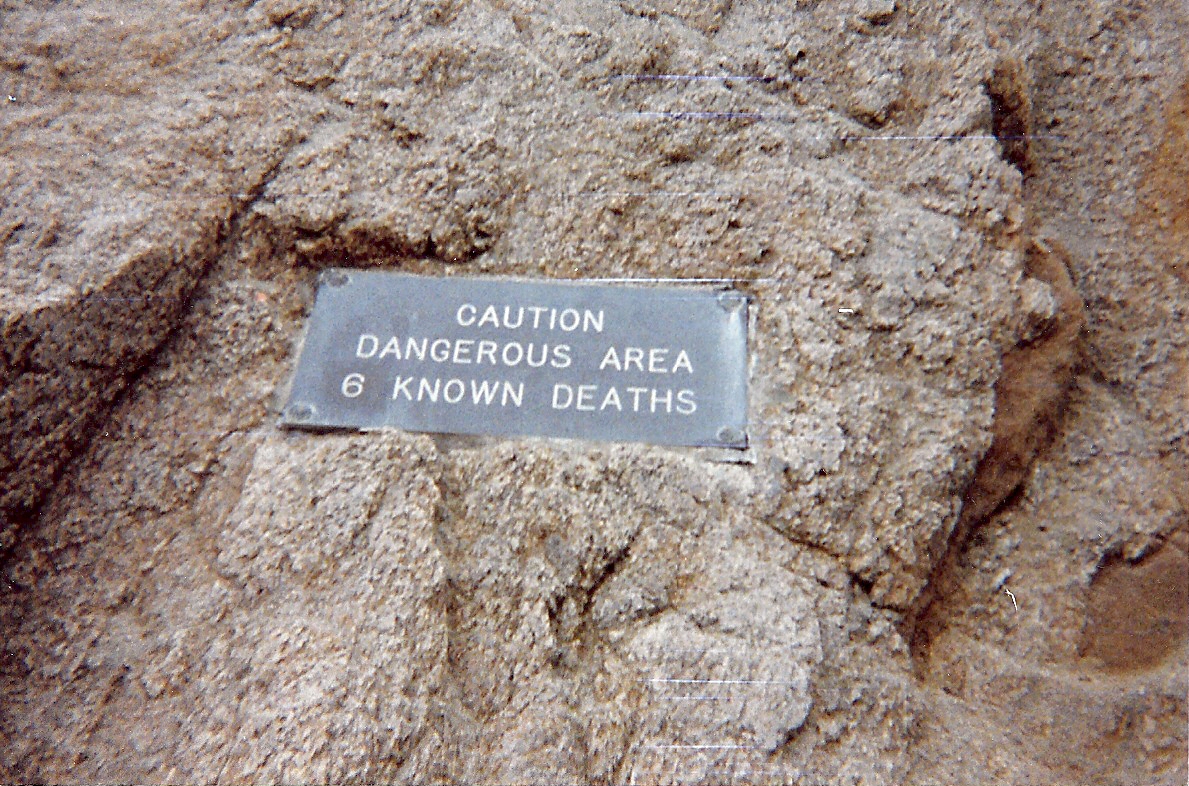
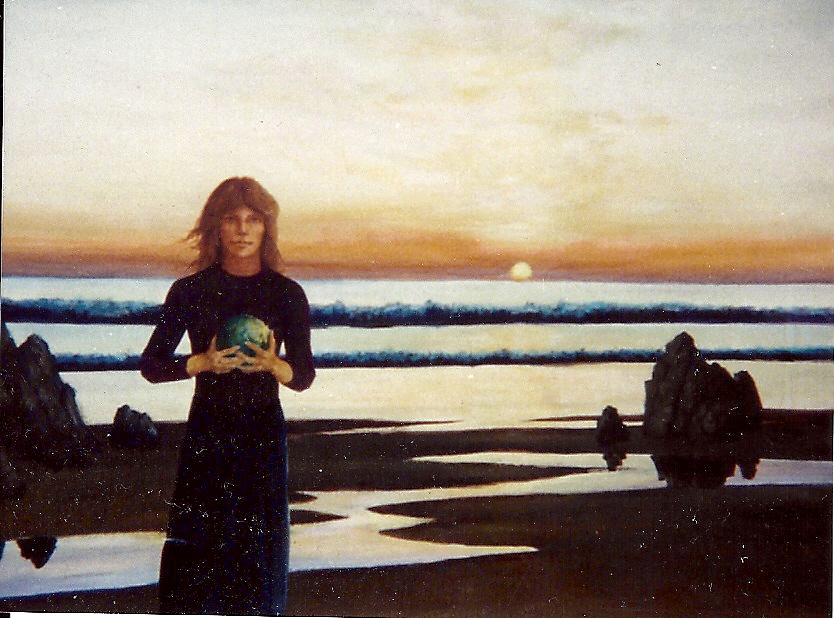
In 1988, with one year sobriety, and after my Reading at the Berkeley Psychic Institute, I returned to MacLure’s Beach and climbed the rock I fell on that led to my death. I took the photos during a foggy day. I painted my angel from memory and got the rocks right.
In the first video we look down from the zenith on to the rocks below. Here is where I slipped and fell. I was heading over the edge. A jagged rock tore into the palm of my hand, and stopped me. My feet were dangling over the edge. I looked at a sea-lion below. This place looks just like Rocky Point. I had a powerful spiritual interest in how Christine died. Everyone refused to believe that? Why?
“Your sister followed in your footsteps. You were her John the Baptist. You led the way.” so said the mother of two gifted souls.
In the second video one gets an idea how hard the wind was blowing at Rocky Point on March 26, 1994
The Truth is, three gifted artists who loved each other dearly – died! I returned to MacLure’s just after I was in hypnotherapy looking at ver dark things. I was the only one around for miles. It was a very religious experience, one I sought again at Rocky Point, perhaps with the owner of that house. Instead, I was cast down into the darkness of hell. My longest nightmare, began. My Miracles were robbed from me in order to keep the liars – safe!
God wants me to tell His Story. God wants His movie made. And, that is that!
Jon Presco
http://waterfallswest.com/blog/?p=95
http://www.youtube.com/watch?v=anvRFJFUnRE
Independent Order of Good Templars
The Good Templars was founded in 1851 in Utica, New York, as a fraternal temperance society for teetotalers of either sex. It has since spread worldwide and publishes the National Good Templar 10 times a year. In 1994, there were 5,000 members in the United States alone.
The Good Templars promotes total abstinence from alcohol. The founder, Daniel Cady, had been a member of the Sons of Temperance (founded 1842), which had assumed a number of fraternal and benevolent characteristics while trying to reform drunks and keep them reformed. His Knights of Jericho (1850) soon metamorphosed into the Good Templars in 1851, survived schism and reunification the following year (the short-lived Independent Order of Good Templars) and went on to prosper. It always admitted women on the same basis as men, and has, according to its own literature, always been racially mixed. In 1868 the organization spread to England.
At the turn of the century, the Good Templars in the United States boasted about 350,000 members. It has shrunk drastically since then, but seems to be on the rebound from the low of 2,000 quoted by Schmidt in his Fraternal Organizations in 1979.
Its greatest strength is to be found outside the United States, especially in Sweden Lodges also exist in Austria, Canada, Denmark, England, Finland, France, Germany, Greece, Iceland, India, Ireland, Japan, Liberia, the Netherlands, Nigeria, Norway, Scotland, Switzerland, Turkey, Wales, and elsewhere. Membership worldwide is probably between half a million and a million.
Originally, the Good Templars worked three Degrees, namely Heart, Charity, and Royal Virtue. The rituals and regalia were much diminished in the 1970s as the organization tried to make itself more modern and relevant. Now, the initiatory degree of Justice is the only one worked. Initiates are requested to promise to do all in their power “to promote total abstinence of intoxicating beverages both through the enforcement of laws and through [their] own way of life.”
Nine Shrouds of Malta and Rhodes
Posted on March 3, 2013 by Royal Rosamond Press


There were nine original Knight Templars. Pope Benedict sent nine Shrouds into the world. Pope Adrien rescued the Knights of Rhode and Malta, and gave them a Victory Parade in Rome. Adrien appears in Bosch’s painting that contain my kindred who were Swan Brethren. Godeschalk Rosemonds was the executor of Adrien’s Will. All his papal records were disapeared. Some allege the Knights of Malta have run the Vatican.
The Rovers and Striders are moving about the land in search of the man who is worthy to wear the Shoes of Fisherman, and put on the Papal Ring and wield the Seal of the Vicar of Christ. Did the Knights of Malta bid Benedict to risign?
The Dark Riders are coming to the Shire of the Gruyère de Rougemont. There is a break in the stem of the Rose because Benedict did not die on the throne of Peter. The cock crows thrice!
Awake ye Swiss Guard! Arise!
Jon the Awakener
The Nazgûl (from Black Speech nazg, “ring”, and gûl, “wraith, spirit” (presumably related to gul, “sorcery”); also called Ringwraiths, Ring-wraiths, Black Riders, Dark Riders, the Nine Riders, or simply the Nine are fictional characters in J. R. R. Tolkien’s Middle-earth legendarium. They were nine Men who succumbed to Sauron’s power and attained near-immortality as wraiths, servants bound to the power of the One Ring. They are first mentioned in The Lord of the Rings, originally published in 1954–1955. The book calls the Nazgûl Sauron’s “most terrible servants”.
http://www.angelfire.com/il3/threehawks/images19/indextemplar.html
The Knights Hospitallers, which still exist today as the Knights of Malta, were forced to leave Malta by Napoleon, who stopped at the island on his way to Egypt. Today the Knights of Malta reside in Italy, still have their own “sovereign country” and are said to be a secret society for the Vatican.
The Knights Templar began when a group of nine “French” knights came to Jerusalem in the year 1118 A.D. These knights petitioned the king of Jerusalem to allow them to live in the ancient Temple of Solomon, then partly a mosque and partly in ruins.
http://groups.yahoo.com/group/BibleProphecy/message/18159
The Knights of Malta and Pope Adrian
Posted By: braskewitz braskewitz Send Email
Wed Mar 21, 2007 2:22 pm |
Options View Source
Use Fixed Width Font
Unwrap Lines
I have been asked off line what all my posts have to do with Biblical
Prophecy? My answer is in the form of a question…..Who will gather
the forces of Good to fight the coming War of Armageddon? If the
answer is Jesus, then, what force, gathered by whom, will fight the
forces of Islam – until Jesus’s return? Surely this fight needs to
take place in the next fifty years, or there might not be an America.
And, won’t it be much harder to get Americans to wage a holy war
against Islam – BEFORE Jesus comes – and many doubters and un-
believers – come to believe?
Too many Christians are interested in tax-cuts and creating a have
and have-not society where the chosen ones will end up with more
realestate holdings then the poor have-nots. To this end they attack
the correctness of other Christian’s beliefs, eliminating them from a
seat in heaven, but, how many are joining the Armed Forces of the
United States to wage Jesus’s coming war – NOW?
Jon
The Knights of Malta and Pope Adrian
(Images: Adrian. Adrian’s cote of arms with Lion of Leuvain. Present
day Knights of Malta. KofM. Siege of Malta)
“This news did not surprise Grand Master Fra’ Philippe de Villiers de
l’Isle-Adam. He had
at his disposal six hundred brethren and five thousand men.
Foreseeing danger, he had
requested help from all the other Catholic Sovereigns but nobody was
willing to help
with troops and this meant that the Order was alone to battle against
the Turkish Empire.
Adrian VI urged the princes to bring help to the Hospitallers but his
appeals were not
heard. Meanwhile, a storm was brewing in the last Christian
stronghold.”
The late Grand Master of the Knights of Malta, Baron Marcello Maria
Marrocco Trischitta., said this about Pope Adrian VI, who may have
tried to launch the last crusade.
“After many difficulties the fleet of the Order landed at
Civitavecchia at the end of July.
Adrian VI was alone in offering them refuge and protection. A
triumphant welcome
awaited the defenders of Rhodes. The naval squadron of the Pope
formed a guard of
honour for their arrival at the dock. The Pope put the entire city at
the disposal of the
Grand Master in order to allow the Knights a provisional home. This
was a generous and
unexpected gesture on the part of the Order’s host which gave great
hope for the future.
Fra’ Philippe de Villiers de l’Isle-Adam established the Convent and
Hospital at
Civitavecchia and the Papal naval base became the first residence of
the “Sacra Milizia”
after the loss of Rhodes”
Pope Adrian can be titled the Abandoned Pope because he attacked the
corrupt church in Rome, and called for the suppression of Martin
Luther and his reform, thus neither the Catholic, nor Protestant
Church, have clampioned him – and his personal Reformation. Only the
Knights of Malta, who were/are the Hospitaller Knights of Saint John,
adopted Adrian because he was their benefactor, he raising 100,000
gold crowns so they could defend the island of Rhodes from the Turks.
Adrian offered them sanctuary at the Papa Naval base in
Civitavecchia. In spite of their loss on Rhodes, Adrian gave them a
victory parade, he no doubt still trying to raise moneys amongst the
powerful families of Italy and Florence to fight the knights of
Islam. But the Medici family was more interested in funding the arts
and waging economical warfare with rival banking families, such as
the Pazzis, who assassinated Giuliano de’ Medici whose illegitimate
son would become Pope Clement after Adrian allegedly died of the
plague.
Adrian only served one year as Pope. Adrian’s predecessor was a
Medici, he allegedly dying of malaria though many suspected he was
poisoned. Was Adrian poisoned as well? All Adrian’s papal papers
disappeared after his death. Having been an associate of Ximenes,
Bishop of Tortosa, the Grand Inquisitor of the Spanish peninsula,
Adrian no doubt applied some of the methods of the Inquisition in
regards to reforming the papacy in Rome. Surely he made a list of
names and compiled dossiers on members of the Catholic and Protestant
church – that powerful people would not want to see the light of day –
especially the Medicis. However, Adrian had been the tutor of
Emperor Charles von Habsburg who may have pulled strings in Rome to
get Adrian elected. Charle’s son, Philip, would see himself as a new
Solomon, and claim the title King of Jerusalem. His father was born
in Bruges.
Adrian’s close friend, Godschalk Rosemondt, was one of the executors
of Adrian’s Will. Being the master of Leuvain where Adrian attended,
he surely had an interest in preserving Adrian’s papal papers. I
believe Adrian asked Godschalk to meet with Erasmus and find out
where he stood with Luther’s Reformation as he surely needed an ally
(besides the Knights of Malta) in saving the Catholic Church in Rome
from utter destruction, either through corruption, or a growing
secularism that was being propagated by the Medici Pope (Leonardo Da
Vinci’s patron) who said this; “It has served us well, this myth of
Christ”
Perhaps this is why Adrian was so critical of the arts in Rome, he
receiving pleas from the Knights of Malta for financial support at
the same time he is hearing the pleas for monies to pay for another
equestrian statue where upon a bronze horse sit a brave knight who is
going nowhere near the enemy who has sent a Turkish fleet against
Rhodes, the Rose of the Aegean.
As for the Protestant leaders and knights, they viewed the advance
of Islam as a convenient means to keep in check the abusive power of
the Catholic church, and of course, keep the Knights of Malta – and
perhaps the remnants of the Knights Templar – from waging a Holy
Crusade against them.
In the end, Adrian tried to launch a new Crusade, but, the powerful
leaders in the West were too busy making money, buying art and
artists, or, founding a new religion that would launch a Crusade
against Islam on March 20, 2003 that many claim was a move to capture
the oil of Iraq and make many wealthy men, even more wealthy.
Grand Master Baron Trischitta goes on to say this about Adrian.
In spite of the helpfulness of the Holy See, the Grand Master did not
lose time in
evaluating the various possibilities of a new and adequate home for
his Knights, even
though his hope was one day to return to Rhodes. Among the options
was the port of
Sued on the northern coast of Crete, or Cerigo the most southern of
the Ionic Islands. A
project that received immediate objection from Venice:
the “Serenissima” feared the
close proximity of the belligerent “children” of St. John because of
Venetian commercial
and political relations with Constantinople. Other sites were also
taken into
consideration: Elba, Minorca, Ibiza, Ischia and Malta. The best
solution appeared to be
Malta: it belonged to the Spanish crown and it was Charles V himself
who held the
power to make such a concession.
On September 1st Pope Adrian VI died thereby causing the loss of a
precious ally for the Knights of St. John.”
The Most Serene Republic of Venice (Italian: Serenissima Repubblica
di Venezia, Venetian: Republica de Venexia), was an Italian state
originating from the city of Venice (today in Northeastern Italy). It
existed from the 8th century until the 18th century (1797). It is
often referred to as the Serenissima, which is Italian for its
title, “Most Serene”.
In March of 2007 the Serenissim of Halburton announced it was moving
out of the United States after 2,227 brave American Knights were
tricked into fighting for the rich and powerful CEOs of several
ruthless oil companies who alas managed to get their Puppet President
put in the White House. These Oil Barons claimed they were
Christians, only to get the vote of the Evangelicals. These Oil
Tycoons can also say what Adrian’s predessesor said;
“It has served us well, this myth of Christ”
“ADRIAN was dead. His scheme for the reform of the Papacy, with all
the hopes and fears it had excited, descended with him to the grave.
Cardinal Guilio de Medici, an unsuccessful candidate at the last
election, had better fortune this time, and now mounted the
Pontifical throne. The new Pope, who took the title of Clement VII.,
made haste to reverse the policy of his predecessor. Pallavicino was
of opinion that the greatest evils and dangers of the Papacy had
arisen from the choice of a “saint” to fill the Papal chair.”
Jon Presco
Copyright 2007
Swan Knight
http://rougeknights.blogspot.com/search?q=charles+habsburg
Adrian was born of humble parentage in Utrecht, 2 March, 1459. He
lost his pious father, Florentius Dedel, at an early age, and was
kept at school by the fortitude of his widowed mother, first at home,
later at Zwolle with the Brothers of the Common Life, finally at the
University of Louvain. After a thorough course in philosophy,
theology, and jurisprudence he was created Doctor of Divinity in
1491. Margaret of Burgundy defrayed the expenses of the poor student.
His popularity as professor of theology in Louvain is shown to have
been deserved by his two chief works, Quaestiones quodlibeticae
(1521), and his Commentarius in Lib. IV Sententiarum Petri Lombardi
(1512), which was published without his knowledge from notes of
students, and saw many editions. As dean of the collegiate church of
St. Peter in Louvain, and vice-chancellor of the university, he
laboured to advance the arts and sciences, sacred and profane, and
gave universal edification by a life of singular piety and severe
asceticism. In 1506, he was, happily for the Church, selected by the
Emperor Maximilian as tutor to his grandson, the future Charles V,
then in his sixth year
Rosemondt, Godschalc
¶BiographyRosemondt, Godschalc (b. Eindhoven 1483/00/00? / d.
December 05, 1526 Leuven) * Variants: Rosemondt van Eyndoven,
Godschalc; Rosemondt, Godeschalck; Rosemondus Endoviensis, Godscalcus
* Theologian and professor philosophy and theology at the Louvain
university. As a personal friend of pope Adrian VI he was one of the
executors of his will in 1524 and was also appointed the first
president of the Pope’s College at Louvain.
Pope Leo X, born Giovanni di Lorenzo de’ Medici (11 December 1475 – 1
December 1521) was Pope from 1513 to his death. He is known primarily
for his papal bull against Martin Luther and subsequent failure to
stem the Protestant Reformation, which began during his reign when
Martin Luther (1483–1546) published the 95 Theses and nailed them to
the door of the Castle Church in Wittenberg.
(1453 – 26 April 1478, Florence), second son of Piero de’ Medici (the
Gouty). As co-ruler of Florence, with his brother Lorenzo the
Magnificent, he complemented his brother’s image as the “patron of
the arts” with his own image as the handsome “sporting golden boy.”
As the opening stroke of the Pazzi Conspiracy, he was assassinated in
the Duomo of Florence, Santa Maria del Fiore, by Francesco de’ Pazzi
and Bernardo Baroncelli. He was stabbed nineteen times and was said
to have died instantly.
His illegitimate son with his mistress Fioretta Gorini, Giulio, went
on to become Pope Clement VII.
‘We must now turn our eyes on those political events which were
marching alongside of the Protestant movement. The Diet of Regency
which the emperor had appointed to administer affairs during his
absence in Spain was now sitting at Nuremberg. The main business
which had brought it together was the inroads of the Turk. The
progress of Soliman’s arms was fitted to strike the European nations
with terror. Rhodes had been captured; Belgrad had fallen; and the
victorious leader threatened to make good his devastating march into
the very heart of Hungary. Louis, the king of that country, sent his
ambassador to the Diet to entreat help against the Asiatic conqueror.
At the Diet appeared, too, Chieregato, the nuncio of the Pope.Adrian
VI., when he cast his eyes on the Tartar hordes on the eastern
frontier, was not without fears for Rome and Italy; but he was still
more alarmed when he turned to Germany, and contmplated: the
appalling spread of Lutheranism.[2] Accordingly, he instructed his
ambassador to demand two things–first, that the Diet should concert
measures for stopping the progress of the Sultan of Constantinople;
but, whatever they might do in this affair, he emphatically demanded
that they should cut short the career of the monk of Wittenberg.
“The Knights of Malta – A legend towards the future” by Marcello
Maria Marrocco Trischitta. The book is downloadable free on official
website.
After seven years of moving from place to place in Europe, the
Knights were established on Malta in 1530, when the Holy Roman
Emperor, King Charles V of Spain, gave them Malta, Gozo and the North
African port of Tripoli in perpetual fiefdom in exchange for an
annual fee of a single Maltese falcon, which they were to send on All
Souls Day to the Viceroy of Sicily, who acted as the King’s
representative. (This historical fact was used as the plot hook in
Dashiell Hammett’s famous book The Maltese Falcon.)
The present organization of the Sovereign Military Order of Malta is
not very different from that during the Order’s early centuries.
Baron Marcello Maria Marrocco Trischitta prematurely deceased on
February 29, 1996. On January 22, 1998 the reform of the
Constitutional Charter and Code, approved by the Holy See with note
of the Congregation of November 7, 1997, came into effect preceding
the second edition of this book. The English version has been kindly
revised by the Author’s wife, Baroness Paola Marrocco Trischitta,
Dame of Honor and Devotion, who thought it useful to integrate the
text with the following appendix.
http://www.unitypublishing.com/NewReligiousMovements/Knights.html
ADRIAN was dead. His scheme for the reform of the Papacy, with all
the hopes and fears it had excited, descended with him to the grave.
Cardinal Guilio de Medici, an unsuccessful candidate at the last
election, had better fortune this time, and now mounted the
Pontifical throne. The new Pope, who took the title of Clement VII.,
made haste to reverse the policy of his predecessor. Pallavicino was
of opinion that the greatest evils and dangers of the Papacy had
arisen from the choice of a “saint” to fill the Papal chair.Clement
VII. took care to let the world know that its present occupant was
a “man of affairs”–no austere man, with neither singing nor dancing
in his palace; no senile dreamer of reforms; but one who knew both to
please the Romans and to manage foreign courts. “But it is in the
storm that the pilot proves his skill,” says Ranke.[1] Perilous times
had come. The great winds had begun to blow, and the nations were
laboring, as the ocean heaves before a tempest. Two powerful kings
were fighting in Italy; the Turk was brandishing his scimitar on the
Austrian frontier; but the quarter of the sky that gave Clement VII.
the greatest concern was Wittenberg.
In 1309 the Byzantine era came to an end when the island was
subjugated by forces of the Knights Hospitaller. Under the rule of
the newly named Knights of Rhodes, the city was rebuilt into a model
of the European mediaeval ideal. Many of the city’s famous monuments,
including the Palace of the Grand Master , were built during this
period.
The strong walls which the Knights had built withstood the attacks of
the Sultan of Egypt in 1444, and of Mehmed II in 1480. Ultimately,
however, Rhodes fell to the large army of Suleiman the Magnificent in
December 1522. The few remaining Knights were permitted to retire to
the Kingdom of Sicily. The Knights would later move their base of
operations to Malta. The island was thereafter a possession of the
Ottoman Empire for nearly four centuries.
After seven years of moving from place to place in Europe, the
Knights were established on Malta in 1530, when the Holy Roman
Emperor, King Charles V of Spain, gave them Malta, Gozo and the North
African port of Tripoli in perpetual fiefdom in exchange for an
annual fee of a single Maltese falcon, which they were to send on All
Souls Day to the Viceroy of Sicily, who acted as the King’s
representative. (This historical fact was used as the plot hook in
Dashiell Hammett’s famous book The Maltese Falcon.)
It was from here that the Hospitallers continued their actions
against the Muslims and especially the Barbary pirates. Although they
had only a small number of ships, they nevertheless quickly drew the
ire of the Ottomans who were less than happy to see the order
resettled. Accordingly, Suleiman assembled another massive invasion
force in order to dislodge the Knights from Malta, and in 1565
invaded, starting the Great Siege of Malta. This siege proved one of
the great victories of history for an undermanned and vastly
outnumbered defense force, numbering some 700 knights and about 8000
soldiers.
http://en.wikipedia.org/wiki/Siege_of_Malta_%281565%29
The first vestiges that can be found in Gruyères date from the time of La tène (around 325 to 250 BC)
and those are actually about fifteen graves that reveal true archeological treasures in bronze. They
have been discovered when the foundations of the Duvillard orphanage were dug in Epagny (1913 –
1915). In the eighties, the foundations of a Roman villa were also discovered in the same area.
From the 5th century, the region had been invaded by many peoples, such as the Germans, the GalloRomans, the Burgundians and other Germanic people. Charlemagne did his best to maintain some
kind of order, but his son, Louis the Pious, did not manage to keep that. In 879, Charlemagne’s Empire
dissolved, thus creating many kingdoms, like the one of Burgundy (our region was part of it).
The origin of the name « Gruyères »
According to the legend, the name “Gruyère” is said to come from « Gruérius », vandal captain who
would have settled in our region in 436 (Gruérius I and II are even mentioned and the King of
Burgundy would have pledged the land of Gruyère to him in 510).
According to the historian Hisely, the word “Gruyère” would come from
« Grand-gruyer », a word in Roman which means « forest ranger ». This one
was the « supersilvator », the judge officer of the waters and forests who
reprimanded the offences made. The « Grand-gruyer » was administrating a
« gruerie », which was a region like the one La Gruyère is nowadays. This is
then easier to understand why this region has this name, even if we have to
remember that another etymology would be possible: Gruyère would come
from the crane (« grue » in French), the bird that appears on the flag of the city, emblem that was
chosen by the first Count.
Today, the city of « Gruyères » is spelled with an –s, this is mainly to distinct the city from the region
and the famous cheese « le gruyère ».
The Counts
The History of Gruyères reasserts itself in the 11th century, with the first Count known, William I
(~1080 – 1115). A beautiful page of our history has been written thanks to his devotion to protect the
faith: the exodus of the Gruyerians for the Crusade. All of Europe stood up at that time to take back
Jerusalem and the Holy Sepulchre from the hands of the Turks. Hugues and Turin armed 100
Gruyerians among the shepherds to bring them to this conquest. According to a legend, some young
shepherdesses tried to prevent their departure. Once the doors were reopened, the squire said “En
avant la Grue! S’agit d’aller! Revienne qui pourra! ” . What is sure is that the Gruyerians took part of
the first crusade (1096 – 1099), according to an Italian poet who depicted the Crusaders.
The leprosy
Those who survived and came back brought along with them a terrible disease, the leprosy. Many
people caught that disease and since there was no cure, they got isolated into some leper hospitals.
There was one in Gruyères on the hill of Montilly, the Verneys leper hospital.
As soon as the first symptoms appeared, people who were infected had to say so and then be judged
so that they would be isolated for the rest of their life. They could only ask for charity during one of
the four main celebrations of the year and they were subjected to strict rules when they were allowed
to leave.
List of the counts:
William I : ~1080 – 1115
Raymond 1er : 1115 – 1136
William II: 1136 – ~1157
Rodolphe I
: 1157 – 1196
Pierre I: 1196 – 1209 and Rodolphe II: 1196 – 1226
Rodolphe III: 1226 – 1270
Pierre II: 1270 – 1304
Pierre III: 1304 – 1342
Jean de Montsalvens : 1342 – 1365
Rodolphe IV : 1365 – 1403
Antoine : 1403 – 1433
François I : 1433 – 1475
Louis : 1475 – 1492
François II : 1492 – 1499
François III : 1499 – 1500
Jean I: 1500 – 1514
Jean II: 1514 – 1539
Michel: 1539 – 1554
The Abbey of Rougemont
It is thanks to William I that the Abbey of Rougemont was built on the large territories he had given to
the Benedictines (beyond the Tine, near Château-d’Oex).
It had been undertaken by monks coming from Cluny, around 1080 and its architecture reflects their
influences through its shape of a Latin cross and through its high nave that leans on the side-aisles.
But the Bernese influence of the Reformation altered its aspect and made it go to a Reformed cult.
The roof had been replaced by a unique roof with a steep slope. Its pointed bell tower also comes
from this influence. The priory, destructed in 1555, was replaced by the bailiffs’ castle and a
restoration at the beginning of the century gave it its current aspect. Among the four bells of the bell
tower, three are dating from the 15th century, and the last one was cast for the 900th anniversary of
the city, in 1980.
The Castle
The current castle is from 1270-1282 and it reproduces a construction system largely used at the time
called « carré savoyard » (square of Savoie). The end of the 15th century marked the beginning of a
glorious era. In 1476, Louis (Count of Gruyères, 1475-1492) took part of the Burgundy War along with
the confederates. After this, modernization works began: the esplanade with its chapel, the spiral
staircase of the inner courtyard and the transformation of the building. Therefore the castle lost its
aspect of a fortified castle to become more of a seigniorial residence.
Saint-Théodule Church
Rodolphe III asked for permission to build a church
in his city in 1254 so that people wouldn’t have to
go to Bulle. This church is dedicated to SaintThéodule, just as the chapel of the ruins of Ogoz (it
appears that the Counts’ family comes from the
Ogoz family). It has a large tower as it was first
used as an observatory.
In 1560, during the liquidation, the priest of the
city, Pierre of Gruyères, bought an altarpiece that
represents the Christ and his 12 apostles. The
remains can be admired at the Chapel of Pringy:
those are two elements representing twice three apostles.
When the bell tower got struck by lightning in 1679, the inside of the tower as well as the beams burnt
down, while the church did not get damaged. The documents related to the reconstruction of the bell
tower, by the priest Ruffieux, still appear in the archives of Fribourg. It seems that he tried to imitate
the French constructions, because the chancel is not in the axis of the nave. This chancel is actually a
former chapel of a Gothic style. The thickness of the walls shows that the construction is quite old.
The Saint-Theodule church was once again in flames in 1856, the day of the Corpus Christi (“FêteDieu”), all because of a mortar fire that fell on the roof made of “tavillon” (wooden roof). The cantonal
architect Mr. Antoine Nein did the reconstruction and was inspired by the tower and the chancel. The
reconstruction was over in 1860 when it was consecrated once again. It is now made of three naves, a
main one and two side-aisles, that used to be chapels attached to the building from 1800. The stained
glass windows were made by Yoki and it is quite interesting to know that the vault of the counts and
bailiffs is located under the altar.
The Taxes
In 1304, the city of Gruyères collected its first taxes that were until then only for the Count. The goods
that entered the city were taxed, especially the wine, wheat and cloths. That decision had been taken
by Pierre III. He is the one who extended the county by new purchases in the Gessenay (Saanen).
The Chalamala
Gérard Chalamala is the most famous jester of Gruyères. He was hired by the Counts to entertain the
celebrations organized in the castle and he would appear during suppers, shaking a bauble (a kind of
stick with a puppet on top of it) and his hat with small bells. He had a comical expression and
wordplays that would make the whole court laugh (most of the time, jesters had a peculiar physical
appearance), even though he sometimes said things that made a lot of sense. As he followed his
master with the armaillis, he also went with him during the “coraules” (dance, round dance).
When he died in 1349, he divided his estate and left a part of it. The priest of Gruyères, the Valsainte
and the Monastery of La Part-Dieu all received a cow and he also gave CHF 5’000 to the church of
Gruyères.
He is still remembered thanks to his house (from 1531) that is still located in the middle of the city and
also with a piece of land in Epagny that shares his name.
The confrontation with Bern
The battle of Laupen occured in 1339. It opposed Bern, that was looking to extend its land, and Lords
from the French-speaking part of Switzerland, who joined forces to prevent this expansion. The
Berneses had been preparing for this battle for a very long time, hence their victory and the death of
many Gruyerian people (among the Berneses, there was even the priest of Bern, who carried the
Blessed Sacrament).
In 1349, a new conflict emerged between the Crane and the Bear (symbols of Gruyères and Bern) in
the region of the Pays d’En-Haut, in the reign of Pierre IV. The Gruyerians won but the Berneses didn’t
wait too long to get revenge. One day, one of the vassals of the Count, Othon of Everdes, attacked the
wife of the magistrate of Fribourg. As to teach the Gruyerians a lesson, Bern and Fribourg got together
and set fire to the castles of Vuippens and of Everdes. When they arrived in La tour-de-Trême, they
captured 50 soldiers and decided to keep going to Gruyères via the Sauthaux’s forest. According to the
legend, two heroes (Claremboz and Ulrich, called “Bras-de-fer” (arm wrestling)) stopped them from
going through the Pré des Chênes up until the troops of the Count arrived and finally managed to push
them. This is why Fribourg and Bern set fire to La Tour-de-Trême and took the prisoners.
A celebration for the two heroes, who both appear on the fresco of the Belluard, took place a few
days later in the castle. This is at that time that Chalamala predicted that “Sooner or later, the Bear of
Bern is going to eat the Crane in the cauldron of Fribourg”. This prediction turned out to be true two
centuries later, when the Counts were forced to yield their place to the bailiffs.
Arguments between the Counts and the Princes-Bishops of Lausanne (~1400)
During the Middle-Ages, the Bishops of Lausanne were the masters of a part of the “Pays de Vaud”,
hence the name “Princes-Bishops”. As they were spiritual leaders of our country, several quarrels
occurred between the Counts and the Princes. The Counts always had to surrender, for fear of
excommunication.
Because of those quarrels, Bulle, Riaz and Albeuve were separated from the county of Gruyères and
allocated to the Princes. Gruyères then had to close its markets and fairs so that people from the
county would have no choice but to go Bulle to buy things and then bring more money to the city of
the Princes-Bishops. Later on, the markets were open again.
The Golden Century
This is during the 15th century that the County reached its apogee, as much as regarding its territory
as its strength. At the time, it included the Sarine Valley, from its source in Hauteville, which was
divided into five banners: Gruyères, Montsalvens, Corbières, Château-d’Oex and the Vanel, each one
under the order of a feudal lord that led a small army. Around 1400, the most important monarchs
were looking to close some alliances with the country, considered as a military strength.
During this time, also known as the Golden Age, there were less and less wars, which gave the Counts
more time to meet other Lords to go hunting. At the castle, they attended tournaments between high
ranking knights and then shared a banquet usually entertained by some troubadours and poets. That
was a time of luxury which, of course, did not last.
The last century of the reign of the Counts was a happy time. People loved their Counts who mixed
with them, in happiness as in sadness, hence the nickname of “Rois-Pasteurs” (King-Ministers). For
instance, they went to the mountain to visit the armaillis and told them about what happened in the
plain. Once they came down, the Count joined people and laughed with them. Here is an anecdote:
Rodolphe would have joined a coraule (dance, round dance) leaving from Enney one Sunday to arrive
in Château-d’Oex on Tuesday along with 700 people!
The first Communal Council took place in the reign of François I, who was a Count much appreciated
by his subjects for the freedom he gave them. Afterwards, Louis seized power and formed an alliance
with the Swiss to fight against Charles the Bold, Duke of Burgundy. Therefore he was one of the
leaders of the battle of Murten in 1476, which enabled him to bring back wonderful pieces such as the
embroidered capes, taken from the Duke. He is also the one who had the chapel of Saint-Jean
repaired and this is in his reign that the special indulgence was granted by the Pope to those who
visited it during some celebrations.
The Hospital
Around 1440, the city of Gruyères decided to have a hospital built, because until then, there was no
place to treat the sick. Many donations were made so that the hospital could be built. A chapel
dedicated to St-Maurice was then attached to the hospital. In 1763, works were done and this is at
this time that a Latin inscription was engraved on the front door of the current Foyer Saint-Germain
and can still be seen today:
« IL FOURNIT DES SECOURS À L’AVEUGLE, AU BLESSÉ
ET ACCORDE L’AUMONE À CELUI QUI LA DEMANDE »
(« HE PROVIDED ASSISTANCE TO THE BLIND, TO THE WOUNDED AND GRANTED CHARITY TO THE ONE
WHO ASKED FOR IT”).
The Fall
From 1500, the reputation of the County of Gruyères, as well as the one of other seigneuries,
declined. Jean II had to fight against the Berneses who wanted to impose Protestantism there (hence
the numerous holy progressions that were against this idea, going up until the church of SaintThéodule).
Then came Michel, the last legitimate Count. He spent a lot of money and kept on throwing parties at
the castle even though money was being tight. While looking for financing, he borrowed money from
Bern and Fribourg, pawning lands. He eventually offered his services to the King of France, providing
him with 2’000 men that the Count had to arm at his own expenses. The King wouldn’t pay Michel for
those men, considered as coward and not efficient. Then, from 1555, the county came under the
authority of “Leurs Excellences de Fribourg” and the bailiffs settled in the castle (there was a total of
13). Then, in 1814, the bailiffs were replaced by some prefects and in 1848, the Prefecture of Gruyères
was suppressed to be attached to the one of Bulle. The castle had belonged to the canton of Fribourg
since 1938, after it had been bought from the Balland family. The canton installed a museum there,
made of an amazing collection of varied objects. It is now managed by the Foundation of the Castle of
Gruyères.
The hermits of the Châtelet
When going up towards the Dent de Broc via the Châtelet, you can see a block of rock with a wall
partly demolished: those are the ruins of the Hermitage of Ste-Anne. This place was picked by a hermit
in 1607 for its quietness, and until 1736, many hermits followed him. The sanctuary had been built so
that hermits could have a place to live and also celebrate Mass, with the help of the City of Gruyères,
generous with those men who apparently brought good grace to the region. In 1736, the last hermit
died. The sanctuary was devastated and then demolished, but the altar and the bell were moved in
the current chapel Sainte-Anne in Epagny.
The Plague
One evening in April, 1611, the remains of a bourgeois from the city were brought back from Fribourg
after a mysterious death. This is how the plague entered the city, causing the death of 140 people.
Those were buried on the side of the hill in the place “Le Berceau” where a chapel was established in
honor of the Blessed Virgin, of Saint Roch and of Saint Sebastian as to eradicate the plague.
The Sisters
In 1637, the Sisters of Saint Jeanne of Chantal came and set up a small convent in Gruyères that was
near Chavonne. Today, the vestiges constitute the shed of the Hôtel de Ville. During their short visit,
they took care of the education of young girls, this is why the inhabitants were sad to see them leave.
Water and Fountains in Gruyères
Up until 1755, there was no fountain in Gruyères. People went to the Laviau to do the laundry. To do
the cleaning, water was taken from the well: there were three in Gruyères, one at the castle, one in
front of the Foyer Saint-Germain and one near the Calvaire. There were also cisterns to collect
rainwater for the animals and fire… But in 1755, Gruyères decided to have a pipe built to bring the
water from the Cheneux. After many attempts to find the good material, oak was chosen and thanks
to this, water came to the city on the 27th September. Everyone was thrilled! Twenty-four years later,
the wooden pipes were replaced by cast iron, and people were as thrilled as they were the first time.
The Industry
The different factories at the time all had something in common: water. In fact, most of the factories
needed water to turn the wheel that activated the machines. Along the stream of Saussivue, there
were two grain mills (the millstones of one of them can still be seen from the cantonal road). There
were also a bone mill there (bones reduced to feed hens and pigs) and a lime factory, in Creux, near
Pringy.
Most families weaved straw, especially children when they came back from school (a lot of time
working for little money, between 20 and 30 cents!).
Emigration
This is interesting to note that twice, quite a lot of Gruyerians left the country to go to America. The
first expedition left in 1819 to Brazil according to the orders of Sébastien Gachet of Gruyères. A lot
died during the journey but those who did arrive founded the city of Nova – Fribourgo. In 1854, 72
people also tried the adventure and today some of the descendants made a name for themselves in
those far away regions.
In 1969, the Commune of Gruyères (Gruyères, Epagny, Pringy, Moléson) twinned with the French city
of Renaison, that was looking for a city with the same culture, language and religion.
This proves Gruyères had already a good reputation, and its popularity isn’t going to stop now.
Gruyères still is one of the most famous places of Switzerland in the world, and this, thanks to the
support of the medias (during the Tour de France for instance) and of course thanks to its idyllic
setting.
The first vestiges that can be found in Gruyères date from the time of La tène (around 325 to 250 BC)
and those are actually about fifteen graves that reveal true archeological treasures in bronze. They
have been discovered when the foundations of the Duvillard orphanage were dug in Epagny (1913 –
1915). In the eighties, the foundations of a Roman villa were also discovered in the same area.
From the 5th century, the region had been invaded by many peoples, such as the Germans, the GalloRomans, the Burgundians and other Germanic people. Charlemagne did his best to maintain some
kind of order, but his son, Louis the Pious, did not manage to keep that. In 879, Charlemagne’s Empire
dissolved, thus creating many kingdoms, like the one of Burgundy (our region was part of it).
The origin of the name « Gruyères »
According to the legend, the name “Gruyère” is said to come from « Gruérius », vandal captain who
would have settled in our region in 436 (Gruérius I and II are even mentioned and the King of
Burgundy would have pledged the land of Gruyère to him in 510).
According to the historian Hisely, the word “Gruyère” would come from
« Grand-gruyer », a word in Roman which means « forest ranger ». This one
was the « supersilvator », the judge officer of the waters and forests who
reprimanded the offences made. The « Grand-gruyer » was administrating a
« gruerie », which was a region like the one La Gruyère is nowadays. This is
then easier to understand why this region has this name, even if we have to
remember that another etymology would be possible: Gruyère would come
from the crane (« grue » in French), the bird that appears on the flag of the city, emblem that was
chosen by the first Count.
Today, the city of « Gruyères » is spelled with an –s, this is mainly to distinct the city from the region
and the famous cheese « le gruyère ».
The Counts
The History of Gruyères reasserts itself in the 11th century, with the first Count known, William I
(~1080 – 1115). A beautiful page of our history has been written thanks to his devotion to protect the
faith: the exodus of the Gruyerians for the Crusade. All of Europe stood up at that time to take back
Jerusalem and the Holy Sepulchre from the hands of the Turks. Hugues and Turin armed 100
Gruyerians among the shepherds to bring them to this conquest. According to a legend, some young
shepherdesses tried to prevent their departure. Once the doors were reopened, the squire said “En
avant la Grue! S’agit d’aller! Revienne qui pourra! ” . What is sure is that the Gruyerians took part of
the first crusade (1096 – 1099), according to an Italian poet who depicted the Crusaders.
The leprosy
Those who survived and came back brought along with them a terrible disease, the leprosy. Many
people caught that disease and since there was no cure, they got isolated into some leper hospitals.
There was one in Gruyères on the hill of Montilly, the Verneys leper hospital.
As soon as the first symptoms appeared, people who were infected had to say so and then be judged
so that they would be isolated for the rest of their life. They could only ask for charity during one of
the four main celebrations of the year and they were subjected to strict rules when they were allowed
to leave.
List of the counts:
William I : ~1080 – 1115
Raymond 1er : 1115 – 1136
William II: 1136 – ~1157
Rodolphe I
: 1157 – 1196
Pierre I: 1196 – 1209 and Rodolphe II: 1196 – 1226
Rodolphe III: 1226 – 1270
Pierre II: 1270 – 1304
Pierre III: 1304 – 1342
Jean de Montsalvens : 1342 – 1365
Rodolphe IV : 1365 – 1403
Antoine : 1403 – 1433
François I : 1433 – 1475
Louis : 1475 – 1492
François II : 1492 – 1499
François III : 1499 – 1500
Jean I: 1500 – 1514
Jean II: 1514 – 1539
Michel: 1539 – 1554
The Abbey of Rougemont
It is thanks to William I that the Abbey of Rougemont was built on the large territories he had given to
the Benedictines (beyond the Tine, near Château-d’Oex).
It had been undertaken by monks coming from Cluny, around 1080 and its architecture reflects their
influences through its shape of a Latin cross and through its high nave that leans on the side-aisles.
But the Bernese influence of the Reformation altered its aspect and made it go to a Reformed cult.
The roof had been replaced by a unique roof with a steep slope. Its pointed bell tower also comes
from this influence. The priory, destructed in 1555, was replaced by the bailiffs’ castle and a
restoration at the beginning of the century gave it its current aspect. Among the four bells of the bell
tower, three are dating from the 15th century, and the last one was cast for the 900th anniversary of
the city, in 1980.
The Castle
The current castle is from 1270-1282 and it reproduces a construction system largely used at the time
called « carré savoyard » (square of Savoie). The end of the 15th century marked the beginning of a
glorious era. In 1476, Louis (Count of Gruyères, 1475-1492) took part of the Burgundy War along with
the confederates. After this, modernization works began: the esplanade with its chapel, the spiral
staircase of the inner courtyard and the transformation of the building. Therefore the castle lost its
aspect of a fortified castle to become more of a seigniorial residence.
Saint-Théodule Church
Rodolphe III asked for permission to build a church
in his city in 1254 so that people wouldn’t have to
go to Bulle. This church is dedicated to SaintThéodule, just as the chapel of the ruins of Ogoz (it
appears that the Counts’ family comes from the
Ogoz family). It has a large tower as it was first
used as an observatory.
In 1560, during the liquidation, the priest of the
city, Pierre of Gruyères, bought an altarpiece that
represents the Christ and his 12 apostles. The
remains can be admired at the Chapel of Pringy:
those are two elements representing twice three apostles.
When the bell tower got struck by lightning in 1679, the inside of the tower as well as the beams burnt
down, while the church did not get damaged. The documents related to the reconstruction of the bell
tower, by the priest Ruffieux, still appear in the archives of Fribourg. It seems that he tried to imitate
the French constructions, because the chancel is not in the axis of the nave. This chancel is actually a
former chapel of a Gothic style. The thickness of the walls shows that the construction is quite old.
The Saint-Theodule church was once again in flames in 1856, the day of the Corpus Christi (“FêteDieu”), all because of a mortar fire that fell on the roof made of “tavillon” (wooden roof). The cantonal
architect Mr. Antoine Nein did the reconstruction and was inspired by the tower and the chancel. The
reconstruction was over in 1860 when it was consecrated once again. It is now made of three naves, a
main one and two side-aisles, that used to be chapels attached to the building from 1800. The stained
glass windows were made by Yoki and it is quite interesting to know that the vault of the counts and
bailiffs is located under the altar.
The Taxes
In 1304, the city of Gruyères collected its first taxes that were until then only for the Count. The goods
that entered the city were taxed, especially the wine, wheat and cloths. That decision had been taken
by Pierre III. He is the one who extended the county by new purchases in the Gessenay (Saanen).
The Chalamala
Gérard Chalamala is the most famous jester of Gruyères. He was hired by the Counts to entertain the
celebrations organized in the castle and he would appear during suppers, shaking a bauble (a kind of
stick with a puppet on top of it) and his hat with small bells. He had a comical expression and
wordplays that would make the whole court laugh (most of the time, jesters had a peculiar physical
appearance), even though he sometimes said things that made a lot of sense. As he followed his
master with the armaillis, he also went with him during the “coraules” (dance, round dance).
When he died in 1349, he divided his estate and left a part of it. The priest of Gruyères, the Valsainte
and the Monastery of La Part-Dieu all received a cow and he also gave CHF 5’000 to the church of
Gruyères.
He is still remembered thanks to his house (from 1531) that is still located in the middle of the city and
also with a piece of land in Epagny that shares his name.
The confrontation with Bern
The battle of Laupen occured in 1339. It opposed Bern, that was looking to extend its land, and Lords
from the French-speaking part of Switzerland, who joined forces to prevent this expansion. The
Berneses had been preparing for this battle for a very long time, hence their victory and the death of
many Gruyerian people (among the Berneses, there was even the priest of Bern, who carried the
Blessed Sacrament).
In 1349, a new conflict emerged between the Crane and the Bear (symbols of Gruyères and Bern) in
the region of the Pays d’En-Haut, in the reign of Pierre IV. The Gruyerians won but the Berneses didn’t
wait too long to get revenge. One day, one of the vassals of the Count, Othon of Everdes, attacked the
wife of the magistrate of Fribourg. As to teach the Gruyerians a lesson, Bern and Fribourg got together
and set fire to the castles of Vuippens and of Everdes. When they arrived in La tour-de-Trême, they
captured 50 soldiers and decided to keep going to Gruyères via the Sauthaux’s forest. According to the
legend, two heroes (Claremboz and Ulrich, called “Bras-de-fer” (arm wrestling)) stopped them from
going through the Pré des Chênes up until the troops of the Count arrived and finally managed to push
them. This is why Fribourg and Bern set fire to La Tour-de-Trême and took the prisoners.
A celebration for the two heroes, who both appear on the fresco of the Belluard, took place a few
days later in the castle. This is at that time that Chalamala predicted that “Sooner or later, the Bear of
Bern is going to eat the Crane in the cauldron of Fribourg”. This prediction turned out to be true two
centuries later, when the Counts were forced to yield their place to the bailiffs.
Arguments between the Counts and the Princes-Bishops of Lausanne (~1400)
During the Middle-Ages, the Bishops of Lausanne were the masters of a part of the “Pays de Vaud”,
hence the name “Princes-Bishops”. As they were spiritual leaders of our country, several quarrels
occurred between the Counts and the Princes. The Counts always had to surrender, for fear of
excommunication.
Because of those quarrels, Bulle, Riaz and Albeuve were separated from the county of Gruyères and
allocated to the Princes. Gruyères then had to close its markets and fairs so that people from the
county would have no choice but to go Bulle to buy things and then bring more money to the city of
the Princes-Bishops. Later on, the markets were open again.
 Rosamond Press
Leave a comment