
Český Krumlov Castle – Wikipedia
Elizabeth Rosemond Taylor, Christine Rosamond, and myself descend from
Erkinger I. von Seinsheim and Peter Rosenberg
Posted on August 13, 2018 by Royal Rosamond Press


On this day, August 10, 2018, I claim all castles and lands that the Rosenberg, Seinsheim, and Schwarzenberg family acquired as rulers of Bohemia and Czechoslovakia . Erkinger Seinsheim is my 14th. great grandfather, and, Peter von Rosenberg, my 15th. This is approximate, and needs more study.
I was destined to save the land of my ancestors from Putin, the Ult-right, and Donald Trump who declared NATO an enemy of the United States. NATO was founded in order to save Czechoslovakia from the Soviet Union. There will be many posts on this Quest, that is a Dynastic as well as Political and National device to save NATO and all of Europe. Scroll down to see the property I might soon own.
God has blessed my endeavor and fills the sky with falling stars, as did fill the heavens when I was born on October 8, 1946
John Presco
Copyright 2018
President: Royal Rosamond Press
America Born of Bohemian Rose Line
Posted on July 12, 2021 by Royal Rosamond Press
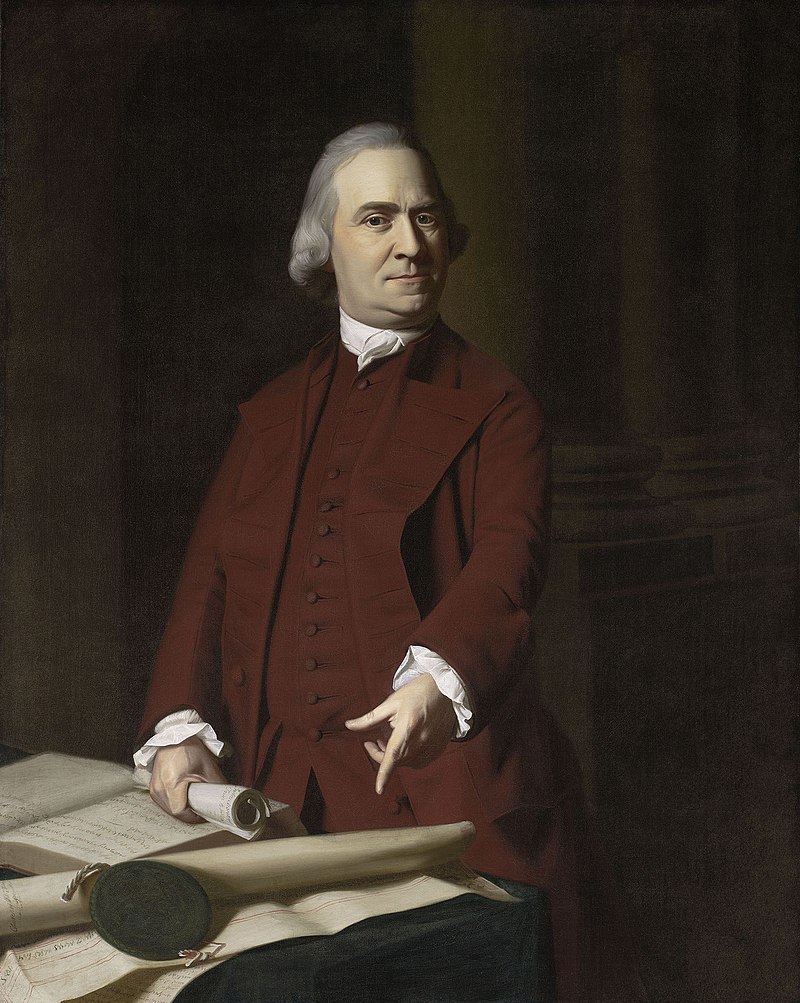
Capturing Beauty
by
John Presco
Copyright 2021
Around 5:00 P.M. on July 11, 2021…I discovered Samuel Adams is kin to Rev. John Wilson, Alexander Webb, and thus Shakespeare. He too descends from the Seinsheim Bohemian Line that married a Wilson of Scotland. Frederic of the House of Hanover was a King of Bohemia. The Habsburgs were the King and Queens of Bohemia. Was the American Revolution in truth another Bohemian Family Feud – A HIDDEN ROSE LINE? Jan Hus of Bohemia was the father of the Reformation. The Adams Family descend from Puritans. It appears they did not vanish, but came back as another Rose of Bohemia.
The Bohemian King Atop The Rose Mountain
Posted on April 8, 2022 by Royal Rosamond Press
I am the Awoken King Under The Mountain!
John
Professor John von Bond
Posted on July 28, 2018 by Royal Rosamond Press


The Royal Janitor
When Miriam beheld the people climbing the stairs to the Jordon Schnitzer Museum, she let go of Victoria’s hand, skipped across the grass, and bounded up the steps – four at a time! Her entrance was like Nureyev flying across the stage. She was an escapee from Botticelli’s Primavera. People gasped! They thought she was part of a show. She was the star ballerina and the Constantine Christian Nudist Camp where she was homeschooled. This was her first encounter with an institution of higher learning.
Espying a group of people before a painting down the hall, she was upon them in seven giant steps. Her long arms reached in, and pushed them aside. There was some complaints. But, when they turned to see a goddess with roses in her hair, and with eyes the color of the sea, they parted as she zeroed in.
Everyone’s mouths were now open, like hers was open. They were seeing this painting for the first time through Myriam’s eyes. She came closer. Her long neck was craned, as she made a figure eight with her head. Now she turned sideways, and starting in the lower left corner she moved her eye across the image, slowly, till she reached the up left corner. Bending down again, she moved even closer, and ran her right eye along the work. People were astonished with her. It was a magnificent ballet. Her long arms moved her hands just above the surface as if she was taking the painting in through some kind of osmosis.
“Oh my God! There is a Möbius circle in here – and PI! How did he do this? First he is the self, then he is the audience. He goes into a total intuitive state, does a loop over, then dips down into the subconscious. Now he is walking on the dark side of the moon. There is no hope for his return. His work is surrendered to a higher power who ingnites a spark of divine inspiration! Alas, he bursts forth in The finishing!………It is Finns!
Myriam turns to face her audience. Her blue-green eyes fill with a look of astonishment.
“He is……Co-Creator!”
Around twelve people – burst out in applause!
“How wonderful!”
“I never realized this before!”
“What beauty!”
“She is – so right!”
Like a panther, she left this work and stalked off looking for another. The people moved in a fill the void. They soaked up the energy Myriam left behind. Their eyes had been opened.
Victoria watched her amazing friend, her head was above the rest, as she gazed around from the top of the mountain she had just climbed.
“Come Starfish. We are late!”
Moving into a large room, they got their first look at Mr. von Bond. There was a long leather seat with six people sitting before their Master. Myraim crept up on the seat, pushed two people aside, then sat smack dab in the middle, up front, not but fifteen feet of the old wizard that reminded Myriam of the Russian Saint Nicholas. John was going to give her something valuable – for free! She dared not move lest she be disqualified, deprived of this blessing.
John, was completely unnerved. He had to blink several times, because it was like looking at a photograph, a still life, a breathing portrait, that did not move an inch! This beautiful creature had roses in her hair. She was so completely, so utterly, receptive. And, she was more than wide awake. There was an awaking going on inside her. John von Bond, felt like a work of art. He was, her masterpiece. She, had found him.
Painting “Division of the Roses”
The Vítkovci were among the oldest members of Czech nobility. The first information about them dates from the 12th century, mentioning Vítek of Prčice in 1134. In 1165 he was the senior waiter to King Vladislav I. In 1173 he was the Envoy of the same king to the court of Emperor Friedrich Barbarossa. In 1179 he fought in the battle of Loděnice between the “peasant duke” Soběslav II and another member of the Přemyslovci, Bedřich. Soběslav won the battle, but had to resign because of quarrels with the nobility, and subsequently Bedřich ruled the country. By this time, Witigo was probably a wealthy man and fought for him. In 1184 he became the Count of Prácheň and it is very likely that he used this as the reason to break through to the southern parts of the country that were owned exclusively by Czech dukes.

According to legend, Witigo had five sons. He divided his land between them and they founded new castles and estates such as Krumlov, Rožmberk, Jindřichův Hradec, Třeboň – Landštejn, Stráž nad Nežárkou and Sezimovo Ústí. This old legend is depicted in the picture in the Telč Castle and also its copies in Krumlov and Jindřichův Hradec. These show us how Witigo divided the coats of arms, each with a different coloured five-petalled rose, among his sons. The oldest, Jindřich, is given the golden rose on a blue background and is leaving for Jindřichův Hradec. Vítek z Klokot has a silver rose on a red background on his banner and goes to Třeboň. The ancestor of the Lords of Stráž departs with a blue rose on a golden background. Sezima, who was illegitimate, is also leaving for Ústí and carries a banner with a black rose on a golden background. Rožmberk and Krumlov are to be ruled by Vítek with a red rose on a white background.
The pictures, however, depict only a legend and are not very accurate. The castles painted there were actually founded much later in the 13th century, for example Stráž, around 1276. The other inaccuracy is that the Krumlov Witigonen was split in the next generation into two separate clans. They were already separated by Witigo\’s sons Vítek II referred to as the elder, who started the Krumlov Witigonen, and his younger brother, also called Vítek, who started the Rosenberg Witigonen. The third mistake is heraldic. The Krumlov Witigonen had a green rose in their coat of arms, not a red one, as the picture shows. The historical truth is, that Witigo had five sons :
Jindřich – the founder of Jindřichův Hradec Castle – a golden rose on a blue background
Vítek II Elder – first of the Krumlov Witigonen – a green rose on a silver background
Vítek III Younger – first of the Rosenbergs – a red rose on a silver background
Vítek IV first of the Lords of Třeboň and Landštejn – a silver rose on a red background
Sezima – a black rose on a golden background.
Sometimes are lords of Stráž and lords of Sezimovo Ústí being associated into just one family branch of lords of Stráž and Ústí with symbol of blue or black rose at golden field.
In addition to these rich Witigonen, there were also younger Witigonen in Middle Bohemia. The Lords of Úpice and others are examples of this, but they never reached the historical importance of their richer relatives.
This legend arising from this historical event, is painted on the picture “Division of the Roses”, which can be seen in the No. 1 Guided Tour of Český Krumlov Castle.
Share this:
Behold!……The Hidden Liberated Family!
Posted on November 5, 2016 by Royal Rosamond Press

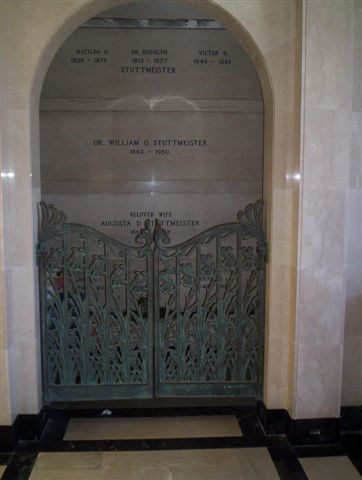
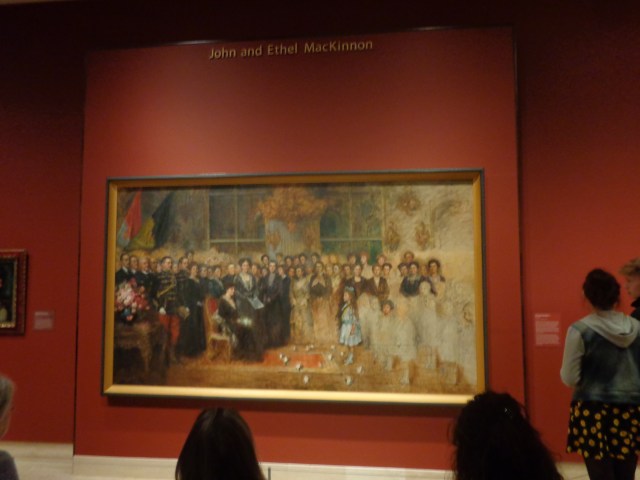


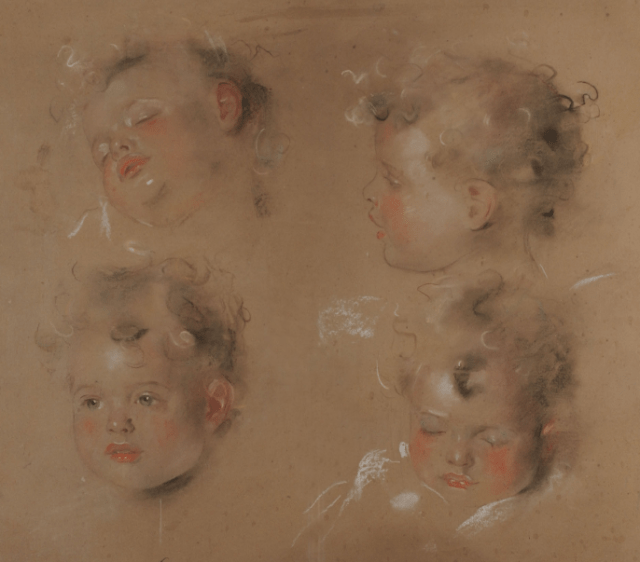
Behold! Look at what this Magician has done! I found the lost body of the child in ‘The Audience’ painting, and united it with her floral head! I have entered another portal, and found more truths!
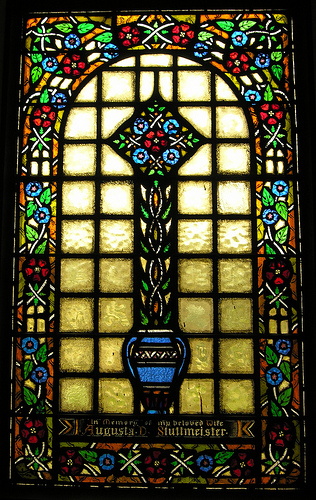
Above is the entrance of the lost crypt of my Janke and Stuttmeister grandfathers who fought in the Revolutions of 1848. The were evicted from their graves and moved to Colma at great expence to my great grandfather, William Stuttmeister. There is a Tiffany window inside with the name of his wife on it. We fled to Chile and America. With other Freedom Fighters and ex-patriots, we founded the new Republican Party and nominated my kindred, John Fremont as their first candidate for President of the Abolitionist party that made war on serfdom all over the world! The color of your skin did not matter.
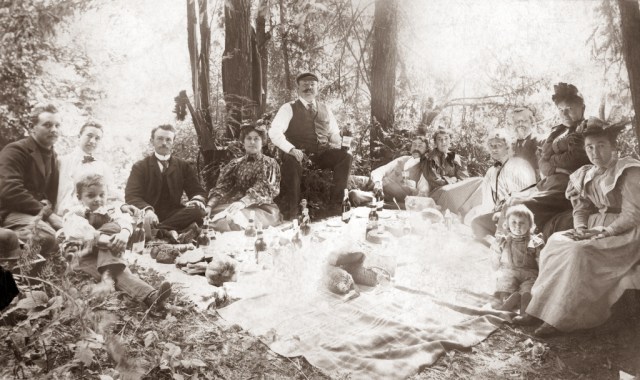
Our party was taken over my Dixiecrats and neo-Confederate sore losers. There we are having a wonderful picnic in the Oakland Hills. There is a rifle hanging in the tree. We lost our fine estates that were sold to loyalists. With the discovery that Georg Granitsch is the Phantom of the Opera behind the Habsburg curtain at the Jordon Schnitzer Museum, is to walk among the dead, and go home! Our tomb in Berlin will never be such a lonely place again.
John and Jessie Fremont had a bodyguard made up of foreign generals who met the Papal armies in the field who were led by the Habsburgs in uniform, the very men standing behind Zita and the war orphans. We feared a foreign invasion. Maximillan von Habsburg was the Emperor of Mexico. His wife was the cousin of Queen Victoria. The Jessie Benton Scouts spied on the Emperor, went into Mexico and brought arms to fellow Masons. I compare her to Helene Granitsch, and her family, who are the true subjects in this monstrous painting. Zita was trying to change her ways. She saw the sand running out for the House of Habsburg and Borbon. She was kin to the founders of New France and the City of New Orleans. She knew the Habsburgs had blundered by snubbing the U.S. a Protestant Nation. She was a Queen of Holy Roman Empire, the protectorate of the Catholic Church. The world closed in, and took away all her oxygen. She was beautiful beyond compare. I feel for her.
“President knew we were on the eve of England, France and Spain recognizing the South: they were anxious for a pretext to do so; England on account of her cotton interests, and France because the Emperor dislikes us.”
My Prussian and German ancestors were Turners in the Bay Area and had to know what role they would play before my kindred in South Carolina went to war with the Union. I suspect Carl Janke was part of an effort to make California a colony of the German Unification, if not the Liberal Prussian Capital of a revolt that was taking place throughout Europe led by the Forty-Eighters who made up the Radical Republicans. Lincoln could not have become President without the Germans who must have backed the Fourteenth Amendment so their children could be recognized Citizens of the U.S.A. As soon as they got off the ship they singed up to fight for the Union.
In Sunshine magazine, Jessie Fremont says Britain was getting ready to import (deport) thousands of Irish Catholics to California, who could be made into an army to fight for the Confederacy. If the Union fell, I suspect Fremont was prepared to declare a Nation of the West, and launch a European front to defeat the foreign allies of Slave Masters Consider ISIS Slave Masters recruiting Europeans to come take young girls slaves, and rape them. Mary Confederate Generals raped young black slaves.
When Janke brought six portable house around the Cape and erected them in Belmont, it is said he did so to provide housing for gold miners who struck it rich. But gold had not been discovered. I believe these homes were made for leaders of the Prussian Unification and founding of the Prussian State of California and a United West, that was not a part of the Union. I suspect John Fremont gave much of his gold to this Nation Building. These radical German, Hungarians, Czechs, and Austrians were ready to claim the West Coast of the Confederates down in those Red States, won the Civil War.
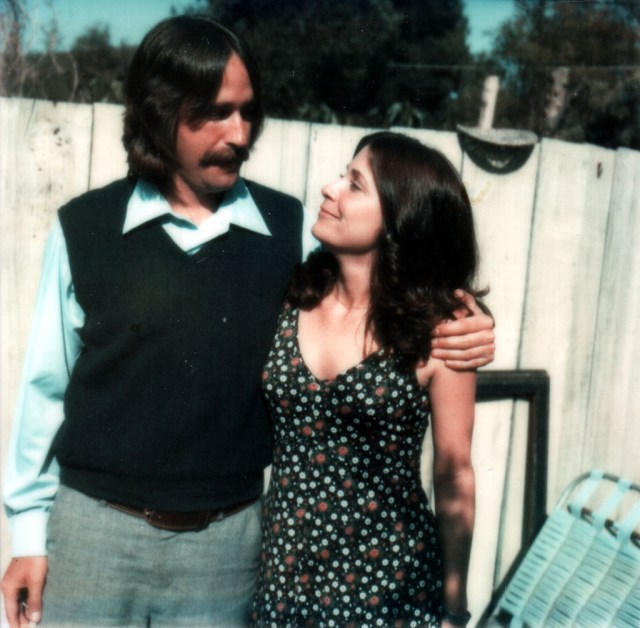
Here is a painting of Susanne Renate Granitsch, the aunt of Helene who stands behind Empress Zita. Below her art, is the art of my late sister, Christine Rosamond Benton. Below the photo of Christina and I, is a self-portrait of Susanne. Alas, we see the art of Philip Boileu, the son of Susanne Benton who has a salon in Paris. Her sister, Jessie had one in San Francisco that Mark Twain attended. Their father, was Senator Thomas Hart Benton who sent Fremont to map ‘The Oregon Trail’. He sold much of the Oregon Territory that his client owned to the British. John Astor did not want to go to war with Britain. Jessie was the broker in buying Astor’s land back after the War of 1812.
Jon Presco
Copyright 2016


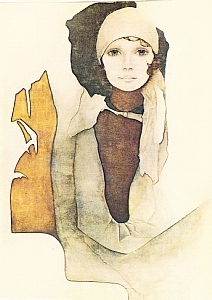
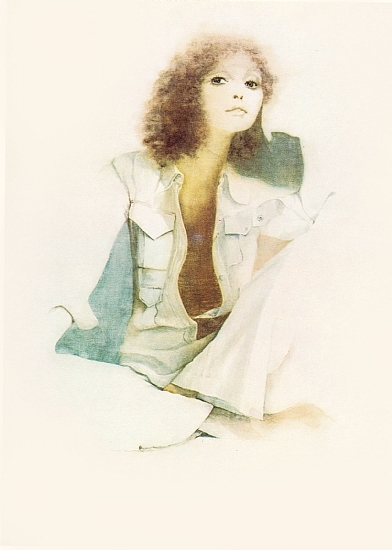



| Susanne Renate Granitsch | |
| Birthdate: | May 21, 1869 |
| Birthplace: | Vienna, Vienna, Austria |
| Death: | Died December 2, 1946 in Vienna, Vienna, Austria |
| Immediate Family: | Daughter of Georg Granitsch and Auguste Antonie Granitsch Sister of Georg Granitsch; Editha Isabella v. Schickh; Marzell Granitsch and Dr. Robert August Granitsch |
|---|
http://www.pbs.org/newshour/updates/why-finding-nazi-looted-art-is-a-question-of-justice/
How can universities and museums help?
Leone Meyer is an elderly Holocaust survivor who lost her entire family in Auschwitz. At seven, after the war, she was adopted by a French couple, Yvonne and Raoul Meyer, who had lost all their belongings during the war. Four years ago, Meyer contacted the University of Oklahoma to say a painting in its campus museum by French impressionist Camille Pissarro, “Shepherdess Bringing in Sheep” (1886), belonged to her family.
http://daughternumberthree.blogspot.com/2013/12/the-girl-in-last-audience-of-hapsburgs.html
When this unfinished canvas was first exhibited in Eugene fifty years ago, it was described as a “painting with a history as romantic as old Vienna.” Given that it was smuggled into the United States in a carpet roll by a political refugee, this claim is not unfounded.
The artist began the work in October of 1918 at Schönbrunn Palace, where the young Empress Zita (1892 – 1989) received an audience of war orphans and a group of wealthy noblewomen, the Organization of War Godmothers, who had “adopted” them. Within hours, Empress Zita (shown seated on her throne), her husband, and their own eight children were forced to flee across the Swiss border because of the contentious political climate. Despite several attempts, they were never able to reestablish themselves on their thrones; both the Emperor and Empress died in exile.
The unsettlingly incomplete canvas mirrors the frustrated desires of both the artist, who spent the rest of his life wandering the globe, and the people pictured in it, many of whom were displaced in the aftermath of the First World War. Yet the audience members wear placid, even bored expressions as the children present their flowers, betraying no portent that one of the oldest dynasties in Europe would crumble within a matter of days.
http://www.neuegalerie.org/content/klimt-and-women-vienna%E2%80%99s-golden-age-1900%E2%80%931918
Klimt and the Women of Vienna’s Golden Age, 1900–1918
September 22, 2016-January 16, 2017
This exhibition examines the Klimt’s sensual portraits of women as the embodiment of fin-de-siècle Vienna. The show is organized by Klimt scholar Dr. Tobias G. Natter, author of numerous publications about Gustav Klimt and the art of Vienna 1900, including the indispensable catalogue raisonnée of Klimt’s paintings, published in 2012. The Neue Galerie is the sole venue for the exhibition, which will be on view through January 16, 2017.
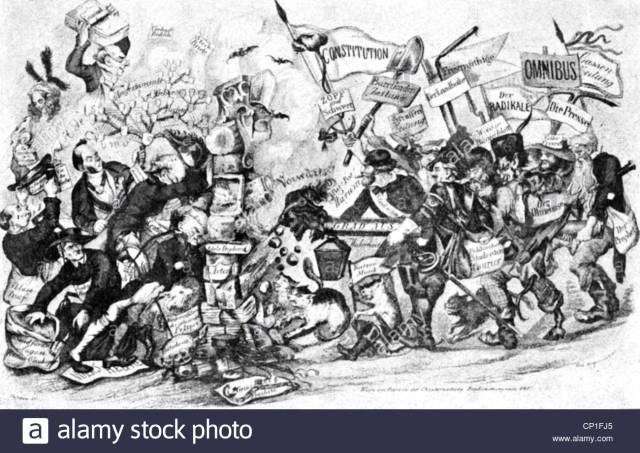
New Free Press. The newspaper was for the Austrian journalism of the highest importance, and developed into the prestigious World Journal (with basic liberal tendency).
1) during the monarchy
The Neue Freie Presse was founded to compete with the “press” on September 1, 1864 by Michael Etienne and Max Friedlander with an initial circulation of 10,000 copies, the constantly increased (1867 18,000 [already higher than the press] 1870 25,000 1890 40,000 and 1901 55.000 copies). In parallel, the perimeter (70s 12-18 80s Sunday papers 50-80 pages) rose 16-30 pages. While the Neue Freie Presse linguistically and stylistically slightly different from the “press”, was it enrichments during feature (in the were also included travelogues and German original novels) and the political articles (in the Moritz Benedikteconomy and culture einbezog), a stronger focus on the message part, a (particularly in the early days to develop next) business section ( “Economist “) and (during the First world War) a” military newspaper “; however, remained local and courtroom reporting as subordinate as the sport (except company news, visit the “Small Chronicle” and [1908] Automobile Sport). Under Benedict, a highly productive and fanatical journalists, was the Neue Freie Presse the most influential Austrian newspaper even those subscribers who do not fully identify with their content. Next to him (it even succeeded by his editorials to influence Austrian policy [one writes him the rejection of electoral reform Taaffe to with which this has been lifted out of the saddle] ) were three critics of the most renowned staff of the Neue Freie Presse: Eduard Hanslick(of however vain against Richard Wagner , Anton Bruckner and Hugo Wolf occurred), Ludwig Speidel (who achieved particularly as Burgtheater critic meaning, but many a misjudgment hit [rejection of Captain and Ibsen]) and Hugo Wittmann. the local Viennese feuilleton took Daniel Spitzer , of his “walks in Vienna” published in 1873.Features editor has long been Theodor Herzl , after him Franz Servaes.
The Neue Freie Presse it, almost all the leading liberal politicians, writers and scholars from home and abroad for (at least occasional) shall be used employees understood. She was tall bourgeois-liberal, emphasizes pro-German (eg German-Prussian War) and a time-official (attitude in Friedjung process), domestic policy centralized (therefore against the Compromise of 1867), anti-clerical (combating the Concordat), for a reform of the electoral law ( however, against the outline of Taaffe) and social understanding (recognition of the social demands of the workers prior). The Neue Freie Presse appeared twice a day.
2) time of the Republic
In continuous publication, the Neue Freie Presse came out to 31 January 1939; from 1 September 1936, two days issues have been supplemented by a boulevard moderately designed Abendblatt (already on September 30, 1938 ceased its appearance). After the death of Moritz Benedikt (1921), the Journal went to his son Dr. Ernst Martin Benedict over, who also took over the editorship. 1932 went the shares of Neue Freie Presse over to a consortium, which the former National Editor Stefan Muller belonged. 1934 sold its remaining shares Benedict and left the newspaper; Müller, who now has been editor in chief, prompting the government having regard to the poor financial situation of the Neue Freie Presse and the risk that the Nazis could gain influence, 40%, later to acquire 90% of the share capital, whereby the Neue Freie Presse (without that this would have been the public aware) officiously was. The content design hardly changed; the message part won the preponderance over the editorial, as side dishes, there was the “travel magazine”, a sports and youth supplement and the “Central European economy.” Among the collaborations included, among others Ernst Molden , Ernst Lothar , Wolfgang Korngold, Julian Sternberg and Paul Wertheimer. 1930 reached the Neue Freie Presse with a weekday circulation of 78,000 their greatest proliferation (1935: 60,000, 1938: 50,000). On February 1, 1939, the Neue Freie Presse and were – Neue Wiener Journal with the Neue Wiener Tagblatt under the title of the latter merged
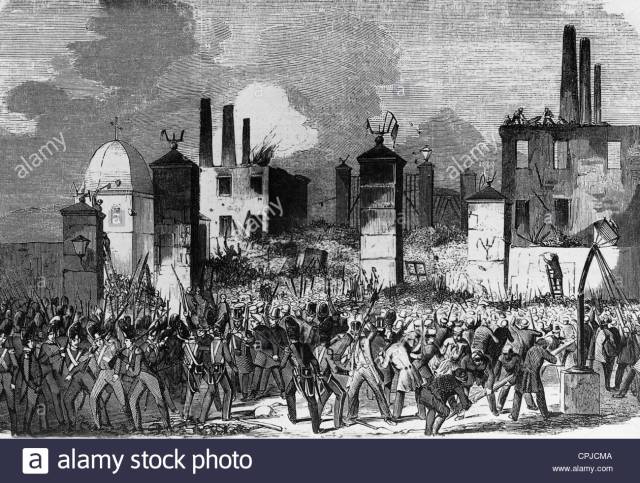
The revolutions were essentially democratic in nature, with the aim of removing the old feudal structures and creating independent national states. The revolutionary wave began in France in February, and immediately spread to most of Europe and parts of Latin America. Over 50 countries were affected, but with no coordination or cooperation between their respective revolutionaries. According to Evans and von Strandmann (2000), some of the major contributing factors were widespread dissatisfaction with political leadership, demands for more participation in government and democracy, demands for freedom of press, other demands made by the working class, the upsurge of nationalism, and the regrouping of established governmental forces.[4]
The uprisings were led by shaky ad hoc coalitions of reformers, the middle classes and workers, which did not hold together for long. Tens of thousands of people were killed, and many more forced into exile. Significant lasting reforms included the abolition of serfdom in Austria and Hungary, the end of absolute monarchy in Denmark, and the introduction of parliamentary democracy in the Netherlands. The revolutions were most important in France, the Netherlands, the nations that would make up the German Empire in the late 19th century and early 20th, Italy, and the Austrian Empire.
Large swaths of the nobility were discontented with royal absolutism or near-absolutism. In 1846, there had been an uprising of Polish nobility in Austrian Galicia, which was only countered when peasants, in turn, rose up against the nobles.[5] Additionally, an uprising by democratic forces against Prussia, planned but not actually carried out, occurred in Greater Poland
Despite forceful and often violent efforts of established and reactionary powers to keep them down, disruptive ideas gained popularity: democracy, liberalism, nationalism, and socialism.[12]
In the language of the 1840s, ‘democracy’ meant universal male suffrage. ‘Liberalism’ fundamentally meant consent of the governed and the restriction of church and state power, republican government, freedom of the press and the individual. ‘Nationalism’ believed in uniting people bound by (some mix of) common languages, culture, religion, shared history, and of course immediate geography; there were also irredentist movements. At this time, what are now Germany and Italy were divided into small, independent states. ‘Socialism’ in the 1840s was a term without a consensus definition, meaning different things to different people, but was typically used within a context of more power for workers in a system based on worker ownership of the means of production.
http://haswww.alternet.org/election-2016/bombshell-report-why-russia-backing-trump
Charles V (Spanish: Carlos; French: Charles; German: Karl; Dutch: Karel; Italian: Carlo)[a] (24 February 1500 – 21 September 1558) was ruler of both the Spanish Empire from 1516 and the Holy Roman Empire from 1519, as well as of Habsburg Netherlands from 1506. He voluntarily stepped down from these and other positions by a series of abdicationsbetween 1554 and 1556. Through inheritance, he brought together under his rule extensive territories in western, central, and southern Europe, and the Spanish colonies in the Americas and Asia. As a result, his domains spanned nearly four million square kilometers[3] and were the first to be described as “the empire on which the sun never sets“.[4]
Charles’s Spanish dominions were the chief source of his power and wealth, and they became increasingly important as his reign progressed. In the Americas, Charles sanctioned the conquest by Castillian conquistadors of the Aztec and Inca empires. Castillian control was extended across much of South and Central America. The resulting vast expansion of territory and the flows of South American silver to Castile had profound long term effects on Spain.
Clan Harvey and Seinsheim Line
Posted on July 11, 2021 by Royal Rosamond Press


Český Krumlov Castle – Wikipedia
Here is the line from the rulers of Bohemia to members of Clan Harvey, thus the Seinsheim bloodline did not die out. The name ‘Le Bruce’ is interesting. Rosemary wanted my brother and I to play the bagpipes because of the scant history she owned from her father, Royal Rosamond. We are kin to Hepburn. Now we know why Rev. John Wilson was born at Windsor. Need I say I have every right to protect my family history from usurpers. Buck would agree.
John Presco
Tartan Details – The Scottish Register of Tartans (tartanregister.gov.uk)
Robert Wilson (c.1675 – 1745) – Genealogy (geni.com)
Heinrich von Seinsheim[1]
Heinrich von Seinsheim b. 1298 d. 21 Jan 1345: The Stevens and McKay families (mckaystevens.us)
Statue of Sir William Harvey by Joy, A Bruce at The Courtauld Institute (courtauldprints.com)
Edward Burne-Jones | Frederick Hollyer
Household of Sir Andrew “Baxter” Harvie (Harvey), Earl of Glasgow
He had a relationship with Lady Elizabeth “Eliza or Elspeth” Hepburn, Countess of Glasgow.
Sir William Le Bruce Harvie 1410-1470 – Ancestry®
CLAN HARVEY
Motto: “Veritas Vincit” which means “Truth conquers”
Chief: The Rt. Hon. The Earl of Kintore
Names Associated with Clan Harvey: HERVEY/HERVIE/HARVEY/HARVIE.
HISTORY
Origins of the name:
This ancient surname, well recorded in Scotland, has two possible sources, the first being from the Breton personal name “Aeruiu” or “Haerviu”, composed of the elements “haer”, meaning battle, and “vy”, – worthy. The 1086 Domesday has various references to followers of William the Conqueror, including Herueu de Berruarius of Suffolk, and later Heuei de Castre of Lincoln, in 1157. These were not surnames, although in fact the first surname recording was only just behind. The second source is Irish. It is said that a Galway clan called originally the O’hAirmheadhaigh, did ‘anglicise’ their name to Harvey or Harvie.
The Gaelic translates as ‘the descendant of the son of Airmed’. The surname is generally recorded as Harvey, Harvie, Hervie and Hervey, and early recordings include William Hervy of Essex in 1232, Warin Harvi in the Pipe Rolls of Cambridge for the year 1273, and John Hervy, burgess of Aberdeen in 1398. The roll of famous namebearers includes William Harvey (1578 – 1657), who discovered the circulation of the blood in 1616, whilst Edmond Harvey, a Parliamentarian Colonel, was one of the fifty three regicides who signed the death warrant of Charles 1st in January 1649. Beauchamp Bagenal Harvey was one of the 1798 leaders of the Irish rebellion, whilst curiously Robert Hervie of Scotland was a member of the Huntly Volunteer force, raised to combat a possible French-Irish invasion. The first recorded spelling of the family name is shown to be that of William Hervi, which was dated 1190, in the ‘Calendar of Abbot Samson of Bury St. Edmunds, Suffolk’, during the reign of King Richard 1, known as “The Lionheart”, 1189 – 1199.
CLAN HISTORY
There are those who could argue that the Keith Clan name more correctly would be Harvey.In the time of David I, King of Scotland (about 1160), a Scottish Knight named Hervey is said to have obtained a grant of the north-west portion of the lands of Keith, in East Lothian (near Aberdeen). From the owner, it was called Keith-Hervey. It was this Hervey who held the office of King’s Marischal under Malcom IV and William the Lion. The title Marischal became hereditary, and was passed to his grandson Philip upon Hervey’s death in 1196. As was the custom at the time, the family became known by the name Keith, after the lands they possessed. The Keiths were a very powerful Celtic family in the far north of Scotland and their chiefs continued to hold the important office of Marischal of Scotland for six hundred years. Numerous Earl Marischals used the name Hervey or Harvey throughout their history. Famous episodes of their chronicles are a bloody and treacherous battle with their Norse neighbors, the Gunns, in 1464 and the rescue in Cromwell’s time of the Scottish Regalia which the sixth Earl Marischal hid safely at Dunottar Castle.
**************************************************
Ada Antoinette Erasmus[1]
 1430 – 1460 (30 years)
Personal Information | Sources | Event Map | All | PDF
- NameAda Antoinette Erasmus Born1430 Bletchley, Buckinghamshire, England GenderFemale Died1460 Bletchley, Buckinghamshire, England Person IDI17677 McKay StevensLast Modified28 May 2019
FatherErkinger Eramus von Seinsheim, b. 1362, Stephansberg, Kleinlangheim, Kitzingen, Unterfranken, Bavaria, Germany , d. 11 Dec 1437, Astheim, Unterfranken, Bavaria (Age 75 years) MotherPrincess Barbara Abensberg, b. Abt 1384, Abensberg, Niederbayern, Bavaria , d. 11 Nov 1448, Abensberg, Niederbayern, Bavaria, Germany (Age ~ 64 years) Married21 Feb 1422 Family IDF9729 Group Sheet | Family Chart
FamilyJohn Robert Wilson, b. 1425, Cupar, Fife, Scotland, United Kingdom , d. 1475, Cupar, Fife, Scotland, United Kingdom (Age 50 years) Married1449 Children 1. John William Wilson, b. 1450, Cupar, Fife, Scotland, United Kingdom , d. 22 Feb 1492, Blanefield, Stirlingshire, Scotland (Age 42 years)Last Modified22 Sep 2020 Family IDF9728 Group Sheet | Family Chart
Margaret Baxter Harvie[1]
1450 – 1470 (19 years)
Personal Information | Sources | Event Map | All | PDF
- NameMargaret Baxter Harvie Born29 Sep 1450 Dalry, Ayrshire, Scotland GenderFemale Died1470 Irvine, Ayrshire, Scotland Person IDI17674 McKay StevensLast Modified28 May 2019
FatherAndrew Baxter Harvey, b. 1440, Glasgow, Lanarkshire, Scotland, United Kingdom , d. 1498, Glasgow, Lanarkshire, Scotland, United Kingdom (Age 58 years) MotherElizabeth Hepburn, b. Abt 1436, Hailes Castle, East Linton, East Lothian, Scotland , d. 1495, Eglington, North Ayrshire, Scotland (Age ~ 59 years) MarriedAbt 1451 Glasgow, Lanark, Scotland Family IDF14760 Group Sheet | Family Chart
FamilyJohn William Wilson, b. 1450, Cupar, Fife, Scotland, United Kingdom , d. 22 Feb 1492, Blanefield, Stirlingshire, Scotland (Age 42 years) Married28 May 1469 Edinbirgh, Midlothian, Scotland Children 1. Thomas Welbourne Wilson, b. 1470, Strubby, East Lindsey District, Lincolnshire, England , d. 1530, Hartford, Cheshire West and Chester Unitary Authority, Cheshire, England (Age 60 years)
The Bohemian Alchemist Rose
Posted on February 13, 2024 by Royal Rosamond Press


I made a claim for all the Bohemian castles that were seized by the Nazis, and then by Russia, that along with the Traitor Trump, are using terror to get their victims to yield. For Trump to threaten to disarm NATO, and allow Putin to do what the hell he wants in regards to killing many people, I am asking the Czech Republic to install me in Český Krumlov castle, so I – the embodiment of Merlin – can conduct experiments, and make magic that will vanquish the…Enemies of the other Light!
Three days ago, a member of the Schwarzenberg family, sent me a letter – with photo of Merlin’s great granddaughter.
“Mr. Presco. We are so pleased to know the Sensheim lineage has not died out. We are working feverishly with the Czech government to put you in possession of Krumlov castle, that is being possessed by Vivian, who clains she descend from Merlin. If you do not come to Prague, we are going to send this Devil to you in Oregon.
The Rose of Bohemia
Posted on October 10, 2016 by Royal Rosamond Press


Belle inquires about my pen name, Ambrose, which I googled after she said her lover was named Ambrose. I discovered she has been arrested. There is a photo of her hands upon which someone has written a message, like a SPELL.
On Sunday, April 20, 2014 11:51 AM, Belle Burch wrote:
Yes, those are my hands in the RG. That was the first time I had ever appeared in the news as an activist.
Yes, I got a misdemeanor along with 11 other people for trying to talk to a silent and (cowardly) hiding John RUIZ.
I LOVE Crouching Tiger. It’s one of my favorites. The scene where the two young warrior lovers are in the bath together in the desert is my favorite part I think.
Is Bohemian a language as well as a place? Or are you referring to Romani? Was Romani the language that was spoken in Bohemia?
I’d like to hear more of your personal life story. “When I got sober”, “When I was homeless”, “When I was fighting cancer”……. these are words you drop and then let flit by without much detail or explanation or storytelling. I want those details and stories. Please.
Tell me what you thought of my poem. Did it make you feel anything? Did it make you think? If so, what?”
These are personal questions a woman seeking to be engaged would ask of her future husband. My love for Belle was sealed forever by her inquiry. If I was a man of thirty, we would be married – with two children! We would have founded a Bohemian Dynasty in America.
What I will present to you my reader, is the idea that I am the Dream of the Alchemist Rose, come true! The Rosenbergs were sponsors of great alchemists. I was a guinea pig for the LSD manufacturers, the alchemists of our age. Belle had taken LSD. She was very curious who I was. Why wasn’t she satisfied with all the information in this blog? Why did she want me to e-mail her very personal information? She wants to be seen as my close confidant. Why?
The only answer is, she wanted to steal my study! But, what part of her is the thief, and what part of her is the recipiant? Husbands and Wives exchange information, including Genetic Material. Because I died, and was reborn – we became husband and wife united and made one by a Higher Law! I have chased her through the Last Door, to take back – what is mine? How about………..what is ours?
I told Belle she was going to be my Heir before we met at The Wandering Goat. I recognized her the moment I lay eyes on her. I captured the moment she saw me. She knows me. My heart was pounding, as if I had been in a long race.
Jon Ambrose
http://alchemyguild.memberlodge.org/page-311919
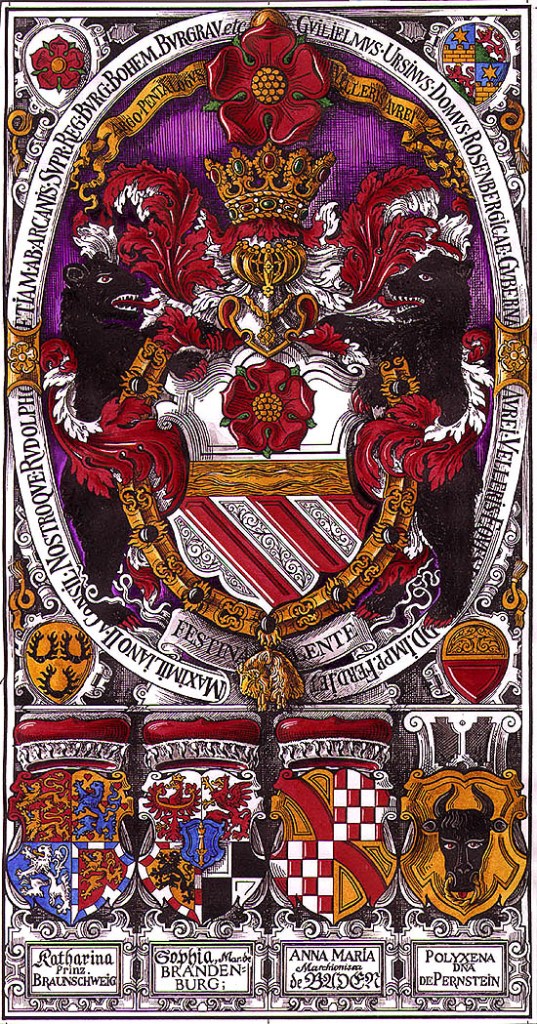
The rose is the official flower of the Guild and fresh roses are present at all Guild meetings. The placement, color, and state of bloom of the roses carry subtle messages for Guild members on the nature of the meeting
http://alchemyguild.memberlodge.org/page-311915
Český Krumlov (Czech pronunciation: [ˈtʃɛskiː ˈkrumlof] ( listen); German: Krummau an der Moldau or Böhmisch Krummau; Krumau; English: Crumlaw,[1][2][unreliable source?] Bohemian Crumlaw, Crumlov or Chesky Crumlov ), translated sometimes to Czech Crumlaw, is a small city in the South Bohemian Region of the Czech Republic where Český Krumlov Castle is located. Old Český Krumlov is a UNESCO World Heritage Site[3] and was given this status along with the historic Prague castle district.
The city is named Český Krumlov (“Bohemian Crumlaw”) to differentiate it from Moravský Krumlov in South Moravia.
Schwarzenbergs
Roses were the favourite flowers of the alchemists. Several treatises are entitled The Rosary of the Philosophers. White roses were linked to the white stone, the objective of the first stage of the Word, while the red rose was associated with the red stone, the objective of the second stage. Red is cognate with gold. An old myth tells how Bacchus favoured Midas, whose touch turned things to gold, and that the king resided where there was a garden with roses having sixty petals and unsurpassed fragrance. The Popes used to bless a Golden Rose on the fourth Sunday in Lent, as a symbol of their spiritual and didactic power, of resurrection and immortality. Ironically the Golden Rose was twice conveyed to Henry VIII who broke with Rome. His dissolution of the monasteries significantly occasioned the transfer into private hands of the cloistered rose-gardens hitherto maintained by the religious houses. The Red King and the White Queen figure frequently in alchemystical allegory. Their successful union is acknowledged by use of the rose symbol. One alchemical figure shows a vessel that is penetrated by a rigid object and from which rose blooms show forth. The alchemical treatises obviously contain great mysteries for those who have the acumen to rend the many veils that are drawn by the alchemical philosophers over what are the axiomatic truths of generation and rebirth.
http://www.whitedragon.org.uk/articles/rose.htm
The Schwarzenbergs belonged among the most significant noble families in the Czech lands. In 1660, they gained the first Czech dominion – Toeboo. Originally, however, it was a German family of the Lords of Seinsheim which came from Lower Franconia
http://www.ckrumlov.info/docs/en/mesto_histor_alchym.xml
Alchemy in Český Krumlov
The second half of the 16th century is usually called “the golden age of alchemy”. Beside EmperorRudolf II. von Habsburg, it was Wilhelm von Rosenberg who became the most important Maecenas of the hermetic sciences, especially of alchemy. Around the House of Rosenberg, in fact, arose a second center of hermetic and alchemic activity. Not only renowned and lesser known enthusiastic seekers, but also skilled con artists worked their magic in the Prague Rosenberg Palace as well as in different seats of Wilhelm’s South Bohemian dominion – in Třeboň, Prachatice, and especially in Český Krumlov, which used to be called “the South Bohemian Mecca of alchemists”
History of the town of Český Krumlov
According to legend, the name Krumlov is derived from the German “Krumme Aue”, which may be translated as “crooked meadow”. The name comes from the natural topography of the town, specifically from the tightly crooked meander of the Vltava river. The word “Český” simply means Czech, or Bohemian (actually one and the same), as opposed to Moravian or Silesian. In Latin documents it was called Crumlovia or Crumlovium. The town was first mentioned in documents from 1253, where Krumlov was called Chrumbonowe.

The flow of the Vltava River has long been a natural transportation entrance to this region. The area\’s oldest settlement goes back to the Older Stone Age (70,000 – 50,000 B.C.). Mass settlement was noted in the Bronze Age (1,500 B.C.), Celtic settlements in the Younger Iron Age (approx. 400 B.C.) and Slavonic settlement has been dated as from the 6th century A.D. The Slavs were represented by two tribes – Boletice and Doudleby. (Prehistorical settlements of the Český Krumlov region )
 In the Early Middle Ages the routes along the Vltava river created the trade routes (see Historical Routes in the Český Krumlov Region). In the 9th century the area was probably owned by the noble Czech family of Slavníkovci, who were slaughtered by the rival family of Přemyslovci in 995. This area then became their property. In accordance with the principles of internal colonization and bestowing of sovereign domains in fief to members of a sovereign dynasty, this domain was thus given by the ruling family of Přemyslovci to one of their own lines – The Witigonen in Czech known as the Vítkovci.
According to the legend, the family of Witigonen has its origins in Ancient Rome. The family was related to the Roman Ursini family, who is said to have resided on the mountain “Mons Rosarum” near the city of Rome. After Rome was plundered by the hordes of the Visigoth leader Totila in 546, the family left Rome and one of its members named Vítek (in German, Witigon) travelled together with his wife and child up to the north, passed the Donau river and settled in Southern Bohemia. He started a new family there and gradually acquired extensive domains, which he gave to his five sons before his death. Each son received a coat-of-arms with a five-petalled rose, the color of which symbolized each particular dominion.
So much for legend – historical reality offers us some slight variations. Vítek did not come to South Bohemia in the 6th but the 12th century, and he did not come from the Italian family of Ursini but from the family line of a Czech Princess of the Přemyslovci. In 1173Vítek of Prčice was mentioned as an envoy to the Emperor Friedrich Barbarossa, and in 1179 he apparently settled in Southern Bohemia. The fact that his domains were not liable to the so-called law of escheat indicates his strong influence, as his property did not have to return to the hands of the family of Přemysl. Vítek could freely dispose of his properties and therefore gave it to his four sons – Jindřich of Hradec; Vítek II senior, predecessor of the Lords of Krumlov; Vítek III junior, founder of the family of Rosenberg; and Vítek IV. It is likely that the then newly founded residences Nové Hrady (New Castles), Rožmberk (Rosenberg), Třeboň and Krumlov fell into the rank of domains of the Vítek family, while Krumlov would have been their fourth castle in the rank. This historically important moment is rendered in the painting “Division of the Roses“, which can be viewed in the sightseeing tour at the Český Krumlov castle.

In 1251 the Bohemian King Přemysl Otakar II gained Austrian lands through marriage to Anna Maria of Bamberg. Přemysl Otakar II, with his well-thought out colonization policy, tried to populate the sporadically settled Šumava region in the Czech-Austrian borderland and this way integrate his domains in Bohemia with his newly gained territories in Austria. His efforts in this sphere, however, had its consequences in territories ruled by the sovereign family of Vítkovci, which resulted in particular centres of conflicts with the most powerful aristocratic family in the country. Conflicts had their origins for example in the foundation of the royal town České Budějovice or the Cistercian Monastery Zlatá Koruna (Golden crown), both founded by King Přemysl Otakar II in 1263. Zlatá Koruna was supposed to restrain the influence of the Rosenberg monastery in Vyšší Brod, founded by Peter Wok von Rosenberg in 1259. Frequent disagreements and armed clashes between Přemysl Otakar II and members of the particular branches of the Vítkovec family eventually weakened the power of the Bohemian King.
According to his master, the renowned engineer of the pond and lake system in South Bohemia and Rosenberg regent Jakub Krčín of Jelčany devoted himself to alchemy. But his interest in alchemy was simply for pleasure, not profit. He set up a laboratory at Nový hrádek in Křepenice near Sedlčany.

On the recommendation of Václav Vřesovec of Vřesovice (1532 – 1583), a Prague supporter of alchemy, the renowned Italian alchemist Claudius Syrrus came into Wilhelm’s employ as well. We have a preserved text of the work contract between the alchemist and the Rosenberg sovereign as recorded by the chronicler Václav Březan. In the contract listing seven conditions, it is written that the alchemist reserves the right to be spiritually and physically free and independent, and makes it a condition not to be disturbed by anybody, with the personal exception of Wilhelm von Rosenberg. Should the occasion arise that the philosophical stone is actually produced, it is arranged that Claudius Syrrus receives a half share of it. In addition, a note was anchored in the contract saying that a purely positive result was not guaranteed.
The younger of the two last Rosenbergs, Wilhelm’s brother Peter Wok von Rosenberg, was also interested in alchemy. He is even known as an author of a treatise on distillation. Nevertheless, he was not able to compete with Wilhelm’s financial capacity to sponsor such activities.

In conclusion, we must mention two architectural monuments of Český Krumlov containing elements of hermetic symbolism. One in particular is the Český Krumlov Castle Tower (Castle No.59 – Castle Tower) which became, after being reconstructed in the 1580s by the Italian master builder Baldassare Maggi of Arogne, a visible symbol of Wilhelm’s life-long efforts in seeking the path towards the Great Task. The second interesting building is a corner house – Latrán No. 53. On the, front facing Latrán, we can see Renaissance lunette paintings presenting the ten stages of human life. At the side opening into Klášterní ulička (Monastery Lane) are sgrafitti with spectacular geometrical symbols in which we see pictures of alchemistic furnaces, strange vessels, and apparently a geometrically expressed description of the Great Task. Up to the present day, nobody has managed to satisfactorily explain these unique figures.
Owing to Wilhelm von Rosenberg, South Bohemia and Český Krumlov became an equivalent, albeit opposite, pole of Rudolf’s Prague. Alchemy is not only a historical predecessor of chemistry as is usually thought – alchemy was, and still is, a science concerning universal analogies of matter. In this sense it forms an organic part of hermetic philosophy.

http://alchemyguild.memberlodge.org/page-311919
The rose is the official flower of the Guild and fresh roses are present at all Guild meetings. The placement, color, and state of bloom of the roses carry subtle messages for Guild members on the nature of the meeting and how to conduct themselves. There are no posted announcements of the subject matter of meetings or printed rules of behavior. Only the silent message of the rose guides members on a heart-to-heart basis.
Historically, roses represent the presence of our founder and patron, Wilhelm von Rosenberg, whose family name means literally “mountain of roses.” The rose carried deep personal meaning for him. The five-petaled red rose figures prominently in his personal coat of arms (shown at left), and the rose symbol is present in many other forms at all of his family estates.
To understand the archetypal signature of the rose, it is necessary to suspend one’s intellectual and cultural connections to it and simply be open to the “presence” of the rose. This popular flower has a complicated symbology with paradoxical meanings. It is at once a symbol of both purity and passion, both heavenly perfection and earthly desire; both virginity and fertility; both death and life. The rose is the flower of the goddesses Isis and Venus but also the blood of Osiris, Adonis, and Christ.
http://alchemyguild.memberlodge.org/page-311915
Český Krumlov (Czech pronunciation: [ˈtʃɛskiː ˈkrumlof] ( listen); German: Krummau an der Moldau or Böhmisch Krummau; Krumau; English: Crumlaw,[1][2][unreliable source?] Bohemian Crumlaw, Crumlov or Chesky Crumlov ), translated sometimes to Czech Crumlaw, is a small city in the South Bohemian Region of the Czech Republic where Český Krumlov Castle is located. Old Český Krumlov is a UNESCO World Heritage Site[3] and was given this status along with the historic Prague castle district.
The city is named Český Krumlov (“Bohemian Crumlaw”) to differentiate it from Moravský Krumlov in South Moravia.
Schwarzenbergs
The Schwarzenbergs belonged among the most significant noble families in the Czech lands. In 1660, they gained the first Czech dominion – Toeboo. Originally, however, it was a German family of the Lords of Seinsheim which came from Lower Franconia
 Rosamond Press
Leave a comment