
“Students, faculty members, staff and alumni are invited to submit name suggestions, which will go to the New Residence Halls Building Naming Committee. Suggestions are due by 5 p.m. Feb. 23. Committee members are looking for name suggestions that connect with a sense of inclusion, equity, justice and belonging.“
I propose Miller Hall, named after George and Joaquin Miller, who were born in Coburg. Joaquin graduated from Columbia University in Eugene. George married into the Cogswell family and owned a magazine that published Jack London’s story.
I consider architecture – Art and Poetry. I suggest every student who applies to be a resident of the hall, submit a Haiku Poem. This is far superior to The Wall of Caucasian Shame that assigning the the name Yasui will create. No student is responsible for the Internment Camps. The Japanese people brought this upon themselves when they attacked the United States – without declaring war, There are lawsuits against Japan for the Bataan Death March. Americans were worked and tortured to death because – they surrendered! One who surrenders in war, was considered the vilest of creatures. I’m going to try to paint a mural in the new hall with these words in the center
YOU CAUCASIANS ARE LIKE SHAMED DOGS, YOU GIVE UP AND COWER IN FEAR AS YOUR MASTER BEATS YOU WITH BAMBOO
Did I just author a Haiku?
I am the Master Augur of Lane County. I insist I be consulted about the name of the hall so I can conduct by Art-Religion Cremony, It is rumored the Emperor of Japan sent poets to California to best learn about Western Culture/ These poets considered Miller…
THEIR MASTER POET
Need I say the President of United States is against shaming white folk. I want Japanese drummers at my Auguring. One thing for sure, no student gives a rat’s ass about this naming. This is because the Governor and UofO have censored the amazing history of the Miller Family.
Parents: “Why is this place named after a Japanese family?”
“Oh, That! Just ignore it. It’s another device to make white people feel guilty – without a trial!”
You can watch the live video of the Shaming Ritual live on Youtube. The only way Whites can learn a lesson, is to build more Monoliths of Shame!
HAVE YOU BEEN SHAMED TODAY?
John Presco
President: Royal Rosamond Press
EXTRA! I just sent this message to Governor Kotek.
Dear Governor: I highly object to the naming of Yasui Hall, that damages the the relationship Japanese poets had with Joaquin Miller, whose brother, George Miller platted Fairmont. These monuments of shame cause conflict, and do not make guilt go away. Indeed, one is bid to wear another badge of shame. It is an empty ritual that will lay a blanket of despair over all of Oregon. Read my blog!
name suggestions that connect with a sense of inclusion, equity, justice and belonging.“
The Passing of Joaquin and Fragments of Creation-Dawn (A Vision Drama)
Kanno, Takeshi
Publication: Brooklyn: (the author), 1928.
Notes: This book consists of a poem written on Joaquin Miller’s deathbed and a portion of a mystical play Kanno wrote and performed in 1913, the latter with a two-page introduction by the sculptor Gertrude Boyle Kanno, the author’s wife and co-performer in the play.
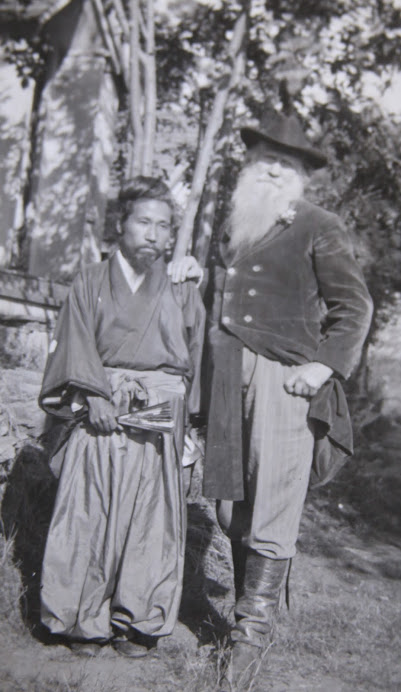
Kanno (1877–1938) was born and educated in Japan. He came to the United States about 1905, where he met Joaquin Miller and Gertrude Boyle, who he soon married. He lived a literary Bohemian life, first in California and then in New York, where his wife went to join her lover, the painter Eitaro Ishigaki.
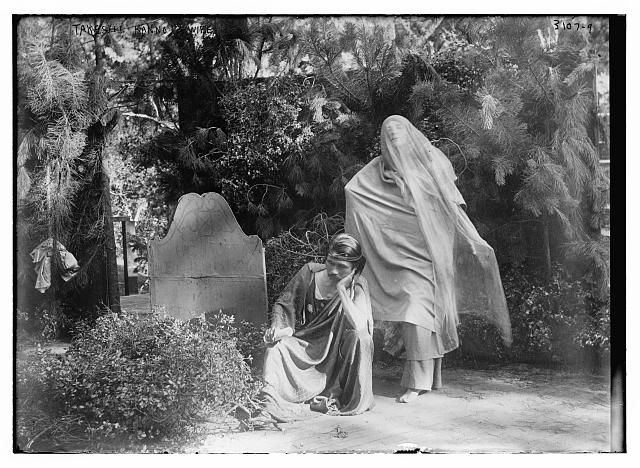
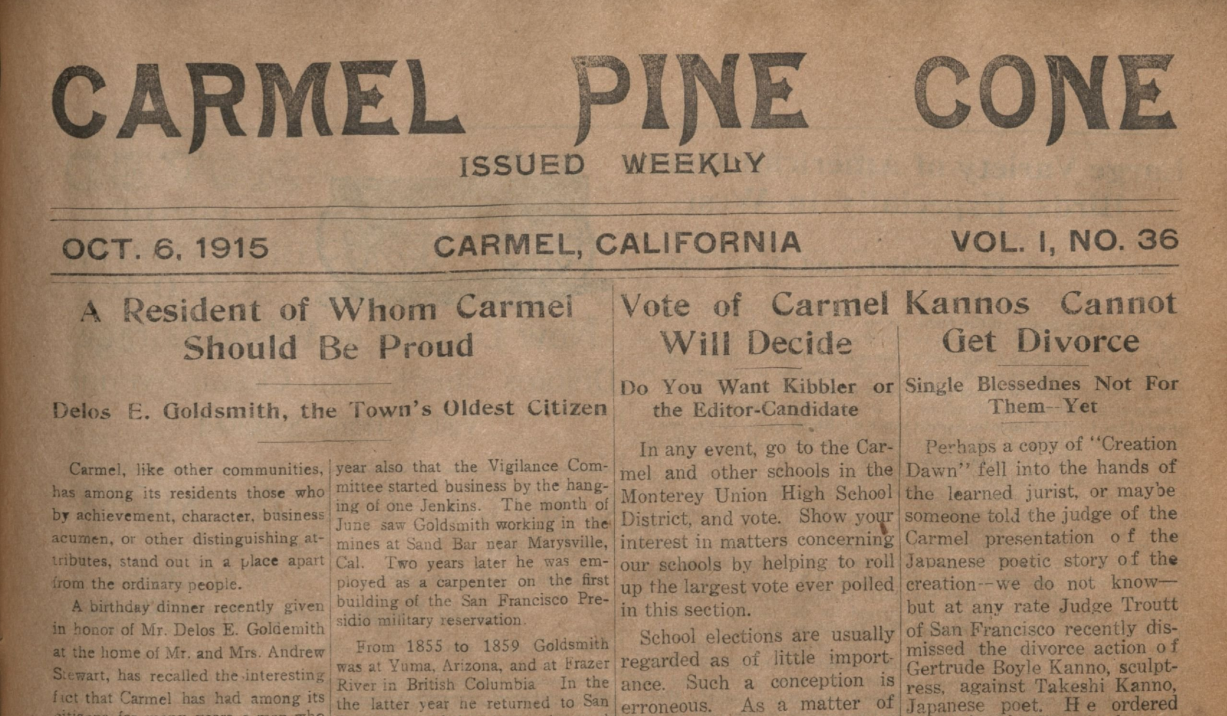
Creation-Dawn was performed at Mary Austin’s Forest Theater in Carmel-by-the-Sea, with music by the sixteen-year-old avant-garde composer Henry Cowell. Austin described the play, a dialog between a poet, played by Kanno, and an astral spirit, played by Boyle Kanno in a diaphanous sheet, as “strangely weird and macabre” with piano accompaniment “so new, so ultra modern, that it seems another instrument” (Mary Austin is quoted in Henry Cowell, Bohemian, by Michael Hicks, p. 51.
The topic of architecture is somewhat complex. As an architect, you would have to ensure that your designs are practical and stand the test of time, without being boring and static. Abiding by engineering principles helps to ensure that a building is sturdy and functions well as it endures the elements over decades. For instance, a tall building has to withstand winds that are far more vigorous than those faced by shorter structures. Meanwhile, the interior of a building has to be carved up effectively and safely as well, taking into consideration sound construction, and the needs and wants of the clients and end-users. The engineering that goes along with architecture is critical.
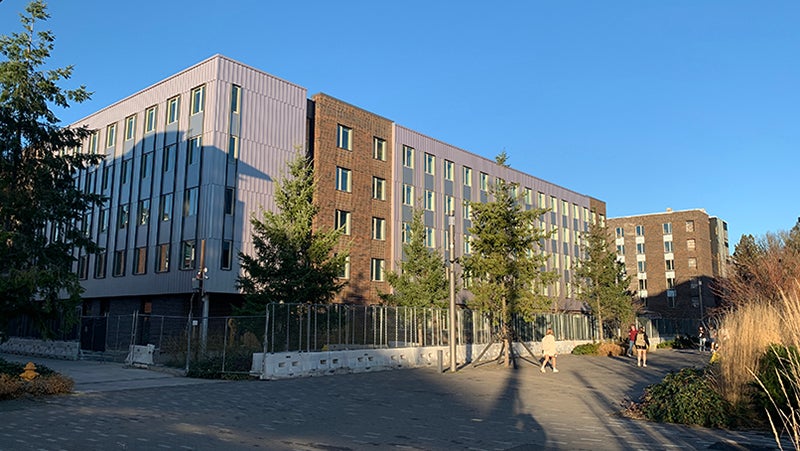
The University of Oregon will host a dedication ceremony on May 4 for Yasui Hall, a new 144-unit, five-story residence hall named in honor of the Yasui family, whose legacy of resilience and civil rights advocacy spans four generations at the university.
One of the honored family members, Minoru Yasui, a UO alumnus and Presidential Medal of Freedom recipient, challenged the constitutionality of military curfews targeting Japanese Americans during World War II.
Naming suggestions sought for two new residence halls
February 10, 2023 – 10:15am
The University of Oregon will be opening two new residence halls this fall, and you can help name them.
The halls, temporarily called Building B and Building C, are currently under construction at the corner of East 15th Avenue and Agate Street opposite Hayward Field in the space formerly occupied by Walton Hall. They will open this fall.
Students, faculty members, staff and alumni are invited to submit name suggestions, which will go to the New Residence Halls Building Naming Committee. Suggestions are due by 5 p.m. Feb. 23. Committee members are looking for name suggestions that connect with a sense of inclusion, equity, justice and belonging.
“Names mean a lot, convey stories, meaning, values, connection — they build legacies,” said University Housing Director Michael Griffel, who also is the associate vice president for student services and enrollment management. “We are excited to have the opportunity to invite you as a member of the university community to recommend ideas for the names of two new residence halls on the University of Oregon campus that are part of the housing transformation project.”
Submit nominations using an online form.
The committee will follow the Naming of Facilities Policy in selecting its recommendations. For additional guidance on name submissions, view a comprehensive list of current UO building names and a list of current residence hall names, namesakes and naming histories.
The committee will send its recommendations to the president, who will then select a final recommendation for a vote by the University of Oregon Board of Trustees.
The construction of Building B and Building C comprise the second of three phrases of the Hamilton Walton Transformation Project, which included the construction of Unthank Hall and will see the removal of Hamilton Hall. The project got underway in 2019.
Building B will offer a mix of double and triple rooms, all with attached bathrooms and showers, and provide housing for about 700 students.
Building C embodies a new apartment-style residence hall with room for roughly 400 students. It will have a variety of apartment-living options for returning Ducks that is distinct from their first-year arrangements.
Both DeNorval Unthank Jr. Hall and Kalapuya Ilihi Hall were named in a similar way after the university sought name suggestion from community members. More information can be found on the University Housing website.
Hamilton and Walton residence halls to be demolished, replaced in next few years
September 20, 2018

Campus will have a whole new look in two years, and two new dorms: the University of Oregon administration plans to demolish the Hamilton and Walton residence halls and replace them with two to three new buildings that are expected to be completed by November 2023. In April, the Emerald …
Why Consult a Master Augur?
Posted on November 17, 2016 by Royal Rosamond Press




Why consult a Master Augur? Why indeed! Hitler did not consult a Master Augur, and look what happened to his Thousand Year Reich.
Trump stiffed the Master Augur he felt pressured into consulting (by ancient Italians who helped Giuliani rise to the top) and, look what happened to him! He never did want to become President of the United States. the Don was doing some crowd sourcing, and getting free publicity for the chain of golf courses he had in the works. PAR TRUMP. And, now look what he got himself into! The Fix-it Man swore he would never consult a master augur again.
Now, he will pay the piper. Everything he touches will turn into shit, not gold. I sent him my card seven days ago, after studying a flight of geese. No reply! Since Pennsylvania Avenue was laid out by the Pontimus Maximus of Washington, every President has consulted us before they head down that great way. Mark Anthony was a Master Augur, as was Pontius Pilate, who submitted Jesus to a augur’s test, and announced;
“I find no fault in this king.”
My real Patriotic kinfolk consulted a Master augur before they went into battle with the British. We had a Mime Troupe, too. We made fun of the Brits. We made giant slingshots, and bombarded them with watermelons while in black face.
The augur was a priest and official in the classical Roman world. His main role was the practice of augury, interpreting the will of the gods by studying the flight of birds: whether they are flying in groups or alone, what noises they make as they fly, direction of flight and what kind of birds they are. This was known as “taking the auspices.” The ceremony and function of the augur was central to any major undertaking in Roman society—public or private—including matters of war, commerce, and religion.
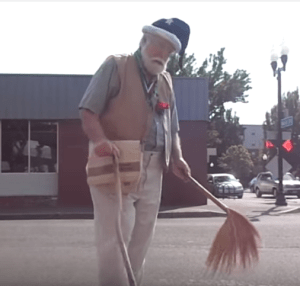
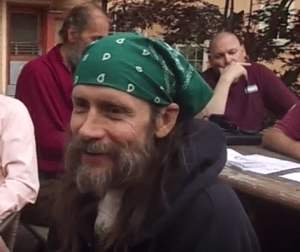
When I went to see Laura, Alley Valkyries’ attorney, I was in my Augur outfit. I am trying to sell my vision, my idea, where a hundred thousand left-wing radicals and liberals register as Republicans, and disrupt that party from within. Laura and Hermes are tying to be polite to this crazy dude wearing a Merlin hat. The smirking dude wearing a green scarf, chose to be rude to this Master Augur. (Woe be!) He made fun of me, and scoffed. He was so sure he was in the creamy nugget center of Hipness and Hippiedom, and had all the Right Stuff. He gleefully informs me I have an uphill battle getting anyone to listen to me, least follow me – the nut!
Hardy! Har! Har!
I told him about the radical Republicans and the Forty-Eighters who fought to the Confederates. Who foresaw Trump winning the White House with the help of a Neo-Confederate racists whose thugs took over the Republican party, and, are using Trump as their puppet? Too bad we didn’t have a dog in the fight – for the inner sanctum – real shit-disturbers opposing the nomination of Trump – and getting in the face of Stephen Bannon. Now, the whole damn left, and all of liberalism, have an uphill battle! Are you ready now……….to consult the Master Augur?
Take note of the creature playing a Shepard’s flute in the garden. Who is that? I design golf courses, by the way.
Jon ‘The Master Augur’
“I know we’re not saints or virgins or lunatics; we know all the lust and lavatory jokes, and most of the dirty people; we can catch buses and count our change and cross the roads and talk real sentences. But our innocence goes awfully deep, and our discreditable secret is that we don’t know anything at all, and our horrid inner secret is that we don’t care that we don’t.”
—Dylan Thomas (1914–1953)
Here is some music to augur by. Note how desperate Huckabee is to back down from the fight he picked with students. Does he fear a mass rebellion of students line we saw in the 60s, where several universities were shut down?
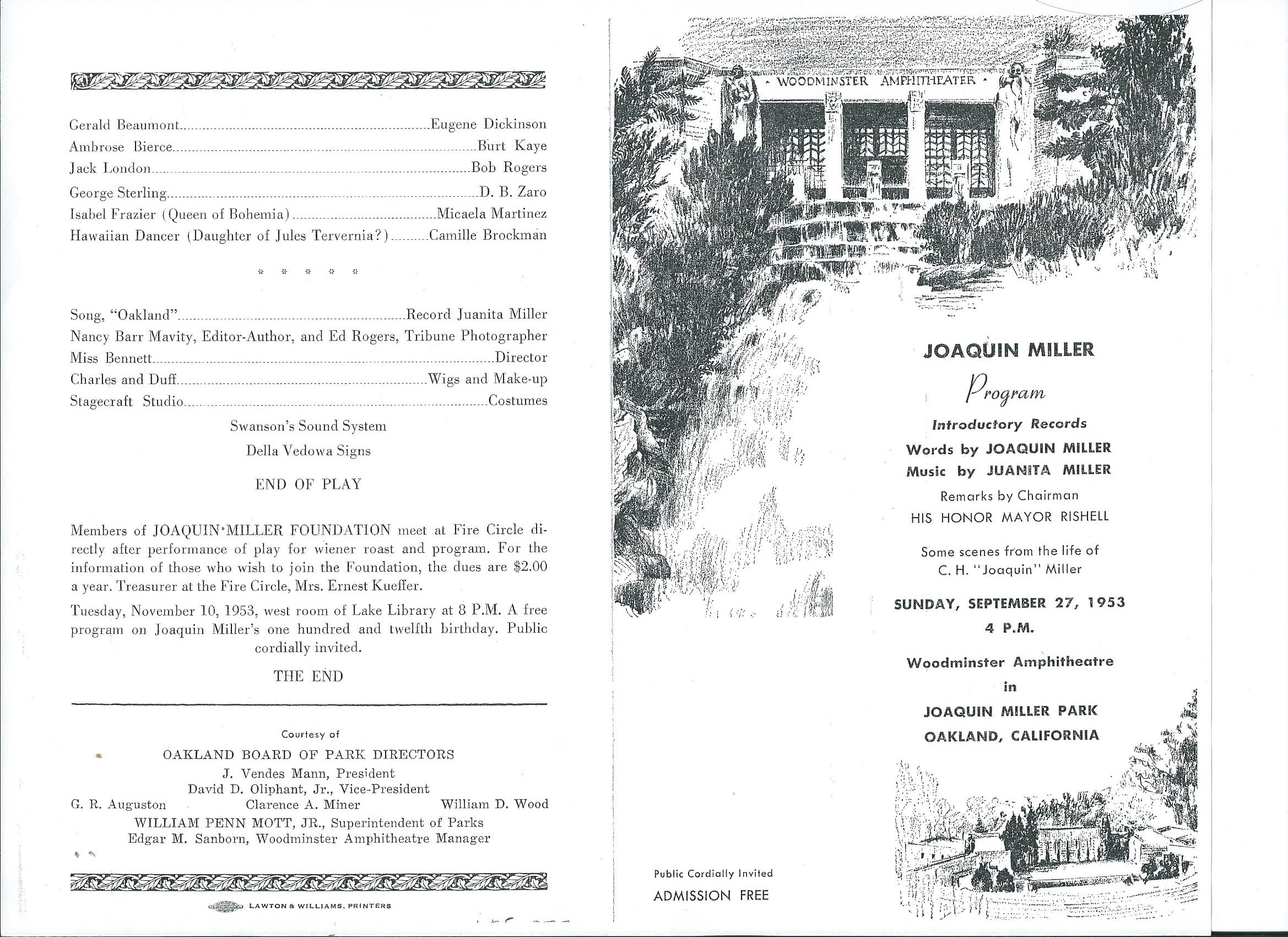
Woodminster Amongst the Redwoods
Posted on April 18, 2014 by Royal Rosamond Press
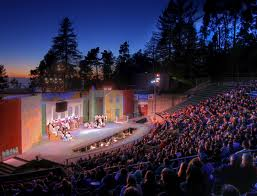
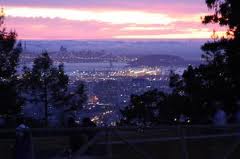
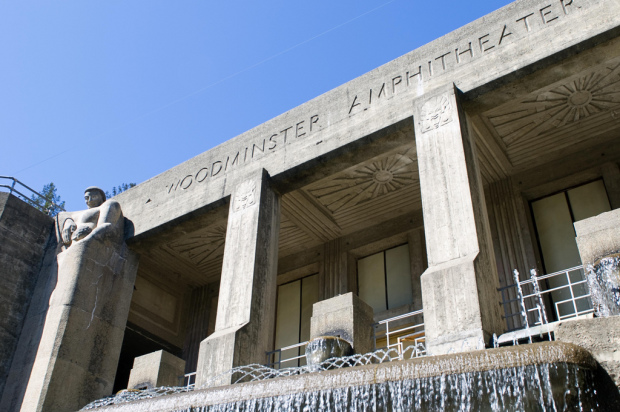


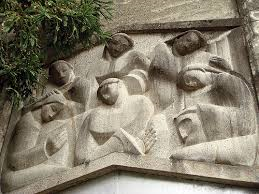

I was twelve when I came upon the Woodminster amphitheatre. I was put in a trance by what I beheld. I sensed I had entered the real world, the one I belonged in. Juanita Miller was the visionary for this outdoor theatre where plays inspired by her father were performed. Redwoods were planted around Woodminster. George Miller planted many trees in his visionary city, Fairmount. Nearby, my great grandfathers had picnics. Note the rifle hanging in the tree. The Stuttmeister farm lie just below this structure that is right out of Lord of the Rings.
Jon Presco
Woodminster Cascade flows from the base of Woodminster Theatre and falls over 100 feet through a series of pools. The cascade and theatre were conceived by Juanita Miller, daughter of Joaquin Miller, and were constructed by the Works Progress Administration as a memorial to California writers and poets. During their construction in 1939-40, William Penn Mott was starting his career with the Oakland Parks & Recreation Department. He was responsible for the original landscaping, roads, parks and picnic grounds in the area we are now working to restore.” – http://www.wpamurals.com/oakland.htm
http://oaklandwiki.org/Joaquin_Miller_Park
http://oaklandwiki.org/Woodminster_Amphitheater
http://www.woodminster.com/Webpages/Ticketbuying/schedule.html


STR//Getty Images
Each year, the Japanese Imperial family hosts an annual celebration of poetry at the Imperial Palace in Tokyo. This year, as they have in years previous, Emperor Nahrutio, Empress Masako, and Princess Aiko all read poems they had written. Per Kyodo News, “The theme of this year’s poems at the reading was ‘wa,’ which primarily means ‘peace’ and ‘harmony.’” In addition to poems read by the royals, members of the public who were selected also read poetry.
Honoring The Visions of George Miller
Posted on May 30, 2016 by Royal Rosamond Press


I will be going out to Coburg today to plant another flower at the grave of George Miller, the brother of Joaquin Miller, a honorary member of the Bohemian Club that was a place for Bay Area Journalists to gather and compare notes. If Miller lived in the Bay Area, then he too would be a honorary member.
http://www.findagrave.com/cgi-bin/fg.cgi?page=gr&GRid=29810634
Elizabeth Maude “Lischen” or “Lizzie” Cogswell married George Miller. Lizzie was the foremost literary woman in Oregon. On Feb. 6, 1897, Idaho Cogswell, married Feb. 6, 1897, Ira L. Campbell, who was editor, publisher and co-owner (with his brother John) of the Daily Eugene Guard newspaper. The Campbell Center is named after Ira.
The Wedding of John Cogswell to Mary Frances Gay, was the first recorded in Lane County where I registered my newspaper, Royal Rosamond Press. Idaho Campbell was a charter member of the Fortnightly Club that raised funds for the first Eugene Library.
George Melvin Miller was a frequent visitor to ‘The Hights’ his brothers visionary utopia where gathered famous artists and writers in the hills above my great grandfather’s farm. The Miller brothers promoted Arts and Literature, as well as Civic Celebrations. Joaquin’s contact with the Pre-Raphaelites in England, lent credence to the notion that George and Joaquin were Oregon’s Cultural Shamans, verses, he-men with big saw cutting down trees.
A year ago I received in the mail a book I ordered on E-Bay. I quickly scanned it to see if their were any illustrations or photographs. Then, I found it, what amounts to my personal Holy Grail. Joaquin Miller dedicated his book of poems ‘Songs of The Sun-Land’ to the Rossetti family that includes Gabriel, Michael, and, Christine. Gabriel was a artist and poet, Michael, a publisher, and Christine, a poet.
Prophets of the Tree Rings
Posted on April 18, 2014 by Royal Rosamond Press

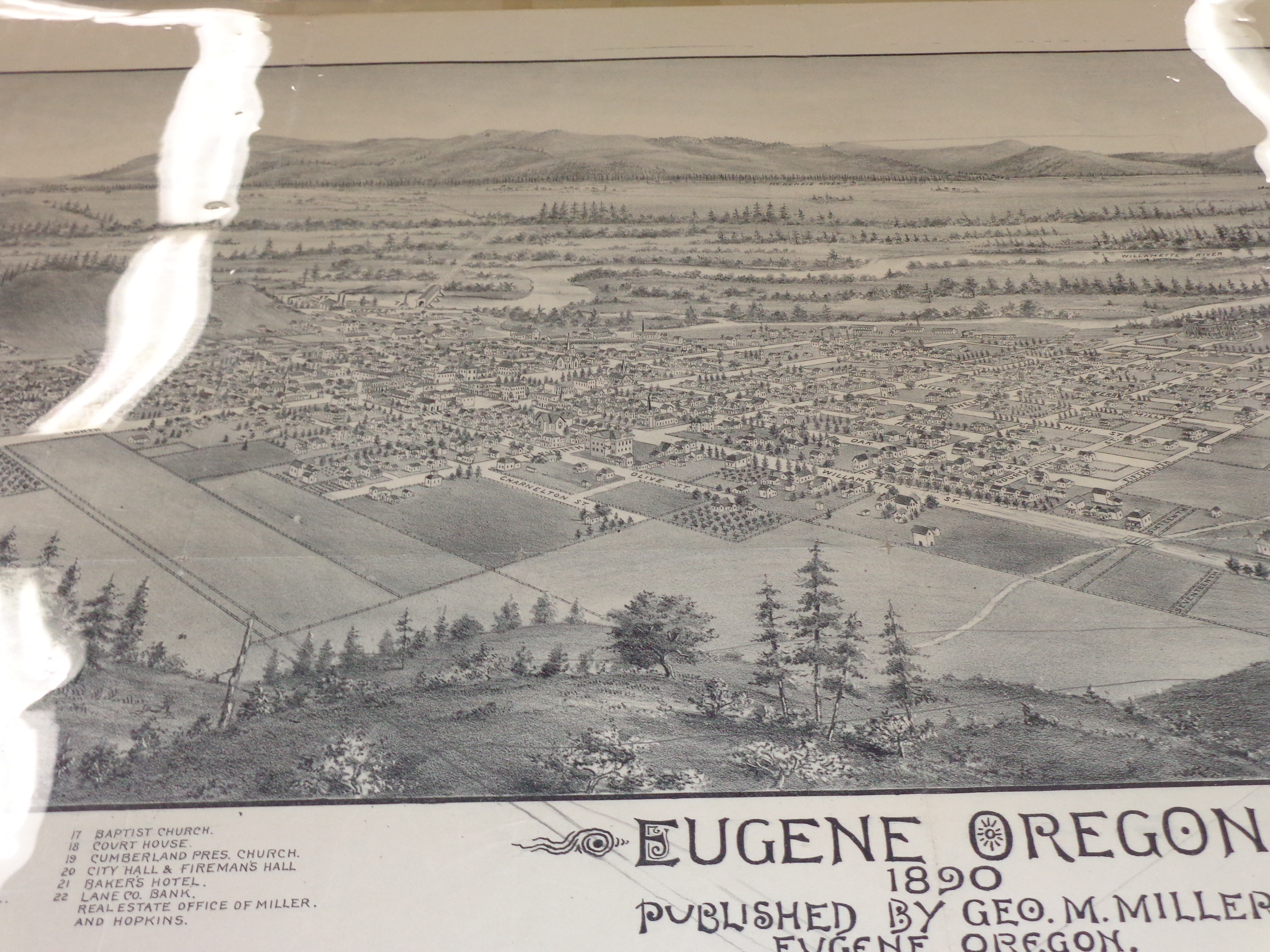
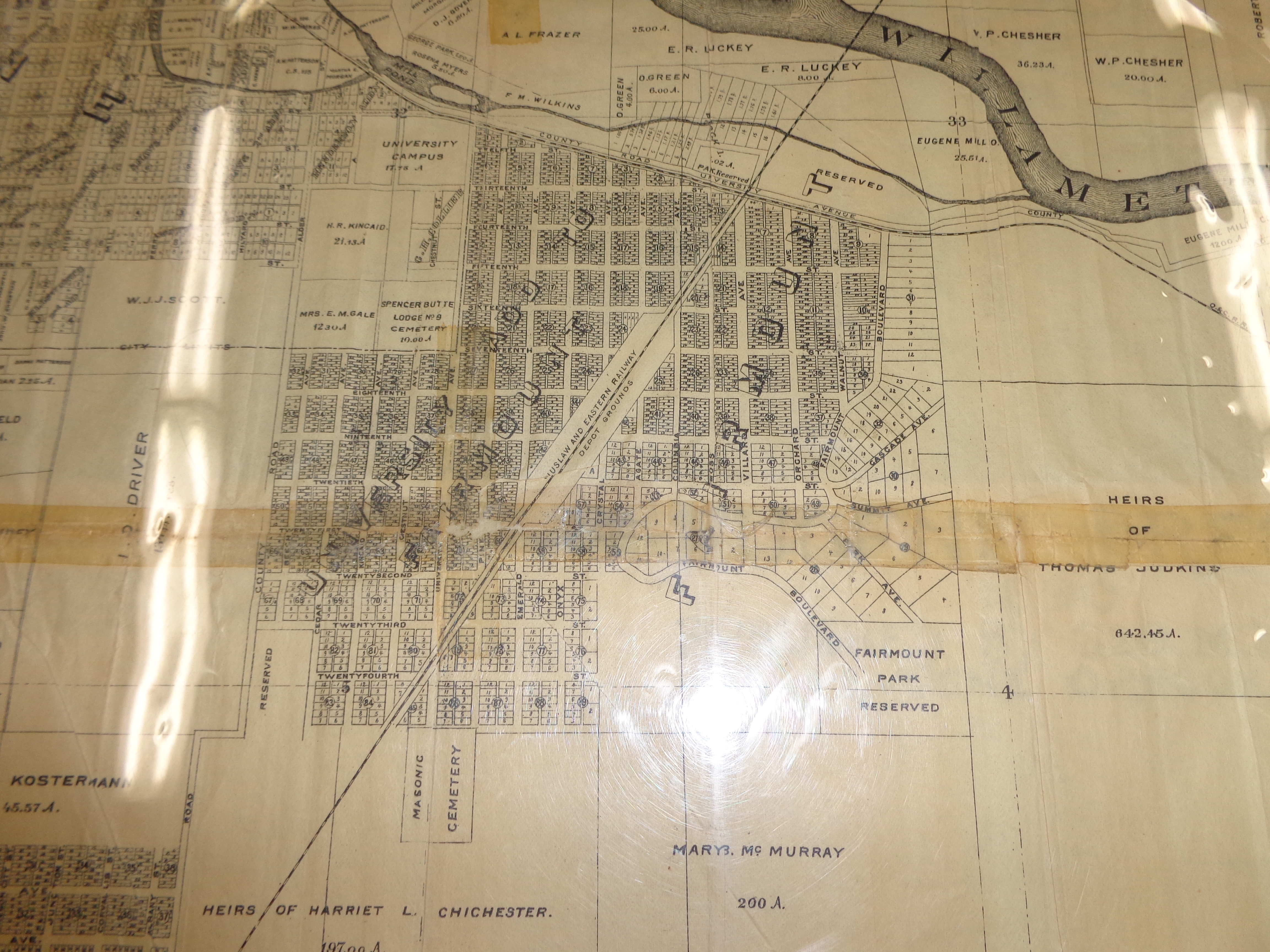
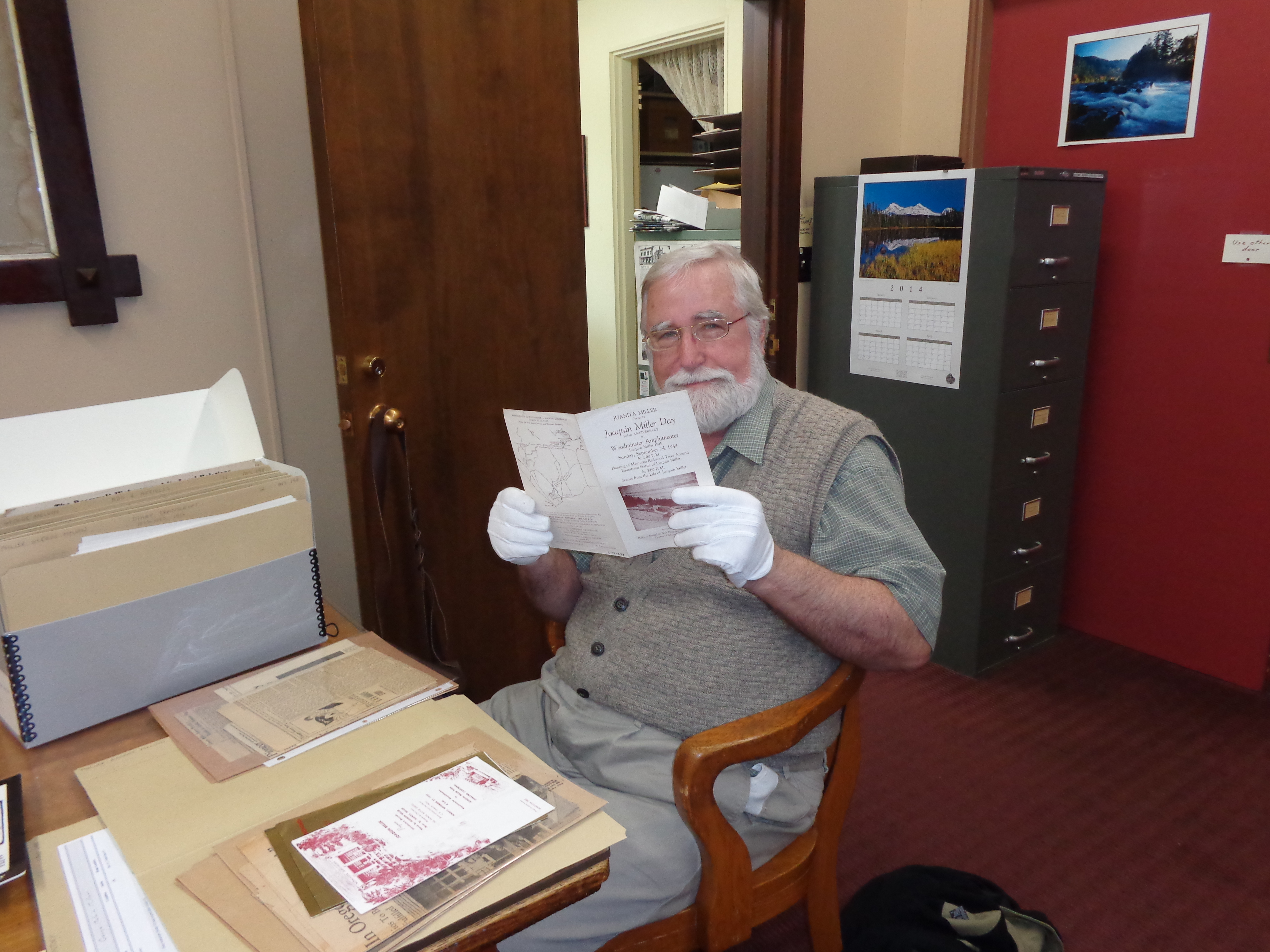


Yesterday I found a Grail at the Lane County Historical Society, that hopefully will change the way we look at things today, and the way we live and communicate with one another. I beheld the beautiful master plan put forth by the Miller Brother Prophets, who are right out of the Lord of the Rings, as you will see.
Jon Presco
The Society also publishes the Lane County Historian, a tri-annual periodical of local historical information. It also prints a quarterly newsletter and other publications, such as diaries, cemetery records, and local census records. Throughout the year the Society hosts general meetings featuring presentations of historical interest. It also participates in many projects such as historic preservation and the collection of oral histories. For further information, contact the Lane County Historical Society at P. O. Box 5407, Eugene, OR 97405-3819, via email, or phone (541) 682-4242. To join The Lane County Historical Society, you may complete our Membership Form.
The Society’s vision for the future is to create a history center in a visible, accessible location. It would house the Museum, possible related organizations, and a cafe–in a space twice the size of the current facility. It would include a larger, more accessible exhibit space, adequate workspace for collections management and exhibit preparation, storage for current and expanded collections, a well designed library and archives, an expanded gift shop and bookstore, and a multi-purpose room or theater with kitchen facilities for events. The center would also be climate controlled, secure, well-lit and ADA accessible. It would be a dynamic education, research and entertainment destination.
http://www.lanecountyhistoricalsociety.org/aboutus.html
| Miller, George Melvin, 1853-1933 | |
| Date | 1877-1980 |
| Scope & Content | GEORGE MELVIN MILLER, I853-1933 Records and documents, 1877-1980 George Melvin Miller was a leading Lane County lawyer (he studied with Judge Joshua J. Walton) and real estate developer. He personally developed and platted Lane County’s seaport community of Florence, and also developed the University of Oregon bedroom community of Fairmount, now part ot the city of Eugene. In addition to his many community improvement activities, he was creative and in the 1890s designed a toy flying machine, based on his exploration of heavier than air flying vehicles. An illustration of his design is in this collection. He also played a key role in claiming the Alaskan community of Skagway for the United States. In June 1901, he found a British flag raised above the community; he took it down and replaced it with a U.S. flag. Both the United States and Britain eventully validated his action. Miller was married to Lischen Cogswell, also a daughter of a Lane County Euro-American pioneer family, as was Miller himself. They had one very gifted daughter, Mary Ella, who died at the age of 13 from typhoid. Her collection is also housed in the LCHM archives. Miller’s second wife was Alice McCornack, and they had one son, Julian. This collection contains day books, real estate documents, biographical news articles, family photographs and real estate advertisements associated with Miller’s activities. |
Joaquin and Leonie
Posted on May 16, 2016 by Royal Rosamond Press


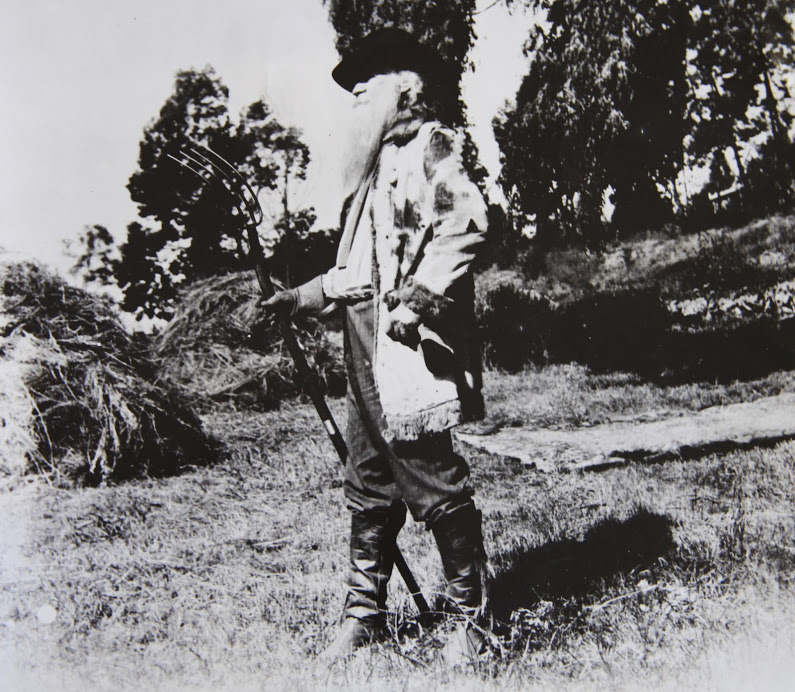

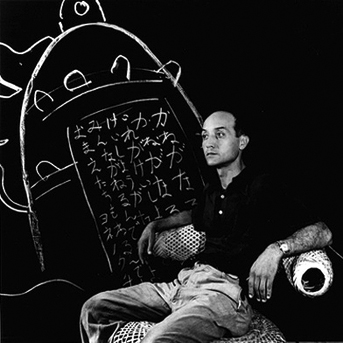


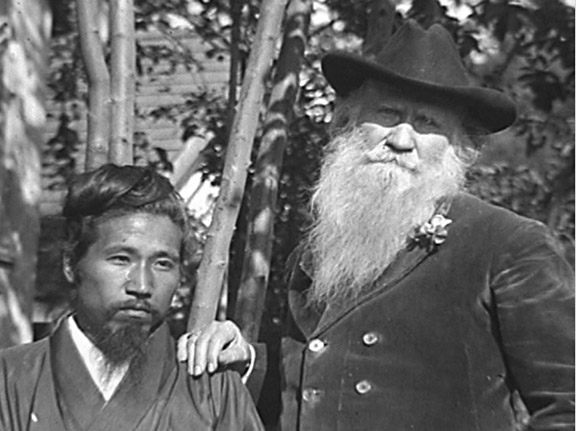
Joaquin Miller had a poets colony in the Oakland. Japanese Poets came to live here. One of them was Yonejiro Noguchi. I just discovered a movie was made about the mother of Yone’s son, who was the famous sculptor, Isamu Noguchi, who had a famous half-sister, Ailes Gilmore. She was a dancer for Martha Graham. Leonie grew up in the Village of New York, and lived in a Tent City in Pasadena California.
My kindred had a twenty-six acre fruit orchard below Miller’s property. Joaquin carried my father on his lap when he took the trolley with my grandmother. Victor Presco gave birth to the world famous artist ‘Rosamond’ and her brother. I am a Art Historian, Poet, Writer, and Reporter for my newspaper Royal Rosamond Press.
Here are two creative branches stemming from ‘The Hights’ where western artists and writers established a Bohemian Mecca. Miller was the first editor for The Eugene City Democratic Register , Eugene Oregon’s first newspaper. Joaquin attended Columbia College in Eugene. Here are the roots of the Beat and Hippie, scene, the Great California Dream, that a Japanese woman producer tried to capture, while we in the West turn our backs, we even forgetting to recall John Steinbeck – for the sake of our young! Our traditions are honored, elsewhere.
When we were children we would call Juanita Miller on the phone and pretend we were older so we could have The White Witch give us advice on our love life, that we invented. Joaquin Miller’s daughter titled herself the ‘White Witch’ and had involved her groom in a pagan ritual when they got married. She pretended she was dead, and, he brought her back to life. Sounds like Sleeping Beauty.
I found photos of Juanita dancing. Isadora Duncan grew up in Oakland. Above is two photos of my Grandmother, Melba Broderick, with her friend, Violet, on Miller’s property. I now believe they were disciples of the White Witch, and may have danced through the forest with her. Joaquin carried my infant father on the Fruit Vale trolley. My kin owned a orchard just below the Hights, the theme park Joaquin and his daughter built. There is a monument to my kindred, John Fremont, that looks like a rook. Here poets and artists met, and lived. Artists Embassy International met here, as well as in Alameda at 532 Haight Avenue in a beautiful Victorian.
Juanita corresponded with the artist, Frederick Church, whose work resembles Christine Rosamond, and, Fanny Corey, who encouraged Royal Rosamond to write. We are looking at the foundation of the Bohemian-Hippie scene in the San Francisco Bay Area that is tied to the Pre-Raphaelites. Did Church consider himself a Pre-Raphaelite, and was hoping the Millers would give him a introduction to the Rossettis?

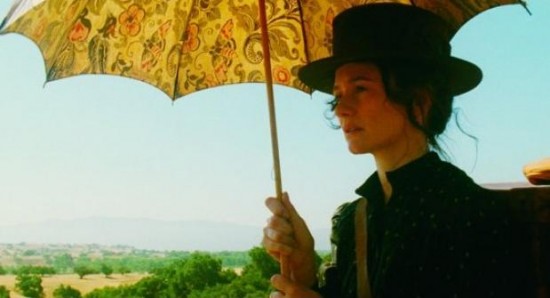
The movie ‘Leonie’ would have been a masterpiece if it had included the history of ‘The Hights’. Here was the first East meets West. In 1904 Miller wrote a prophetic poem about Japan. There needs to be a monument to the blending of our culture, that began with the love affair a Japanese poet had with his editor. The image of swarming bees taking off from ships to attack Pearl Harbor, was first seen in the third eye of a Oakland poet.
His cherry-blossoms drop like blood;
His bees begin to storm and sting;
His seas flash lightning, and a flood
Of crimson stains their wide, white ring;
His battle-ships belch hell, and all
Nippon is but one Spartan wall!
Aye, he, the boy of yesterday,
Now holds the bearded Russ at bay;
While, blossom’d steeps above, the clouds
Wait idly, still, as waiting shrouds.
But oh, beware his scorn of death,
His love of Emperor, of isles
That boast a thousand bastioned miles
Above the clouds where never breath
Of frost or foe has ventured yet,
Or foot of foreign man has set!
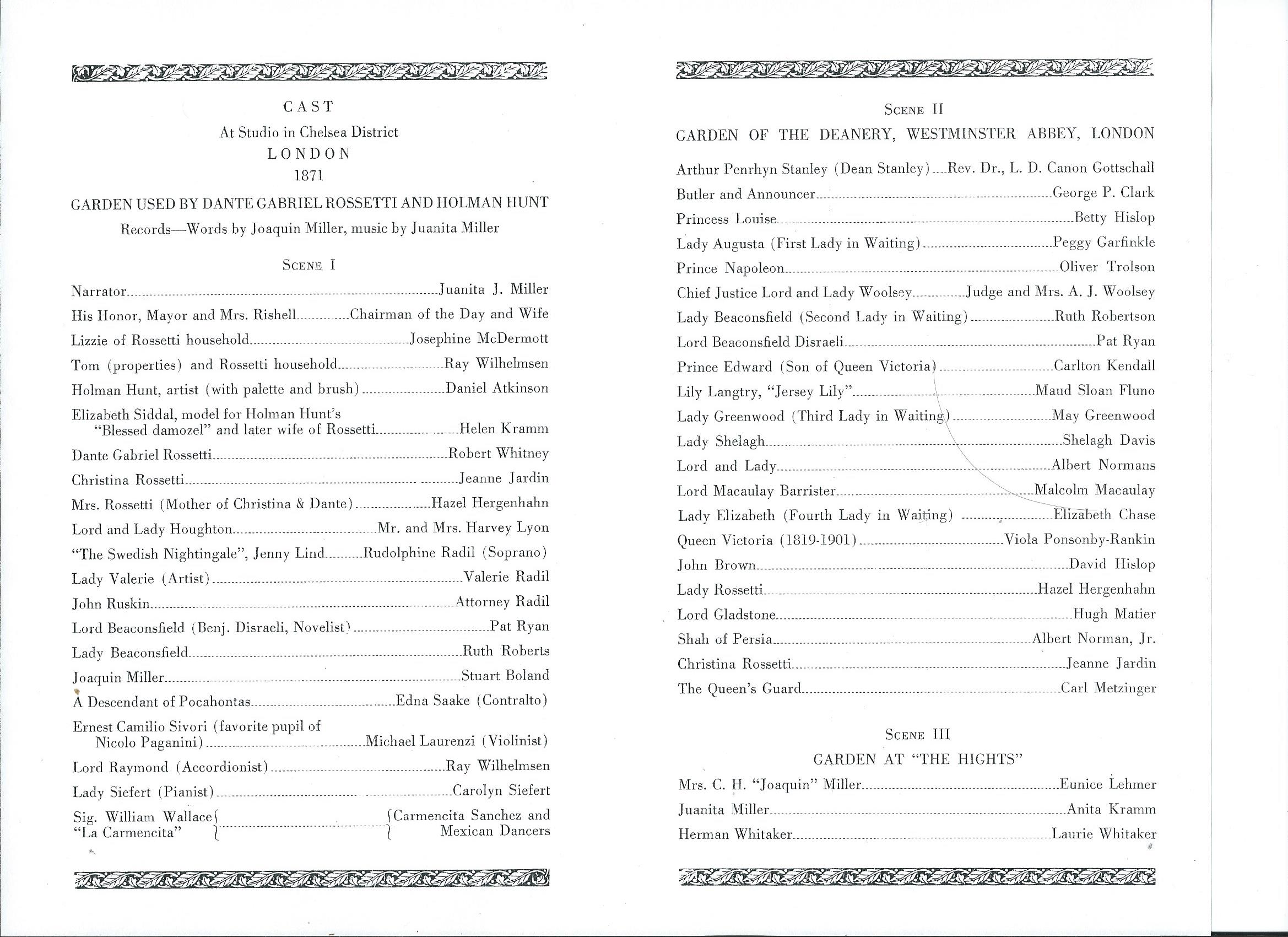
Here are photographs of the celebration Miller’s daughter, Juanita, conducted at the Hights. I believe these people took part in the play she scripted, where present are members of the artistic Rossetti family who founded the Pre-Raphaelite art movement. That is the artist Xavier Martinez and his wife with two fiddle players on Joaquin’s front porch. Why is this history being ignored? Yone and the other Japanese poets made bar-b-que for the Ramblen Bohemian Boys and their Village Tent Woman. There’s nothing new under the sun.
Hands across the water. The hearts of poets, flew like doves. Pacific means “peace”. Love conquers all. Water was diverted to flow over oriental rock falls, past the paper and screen huts where even Chinese and Japanese artists, were inspired. Meditation had come to dwell in California. An anglo woman carries in her womb, the infants of Japanese men, to born a new genius, a Western Kabuki Muse, coy fish swimming in foreign waters. Traces of an ancient Emperor and a Wild Man that looks like Gandalf.
I had a vision for a Peace Center in the Sawtelle that was recently named ‘Japan Town’.
Jon Presco

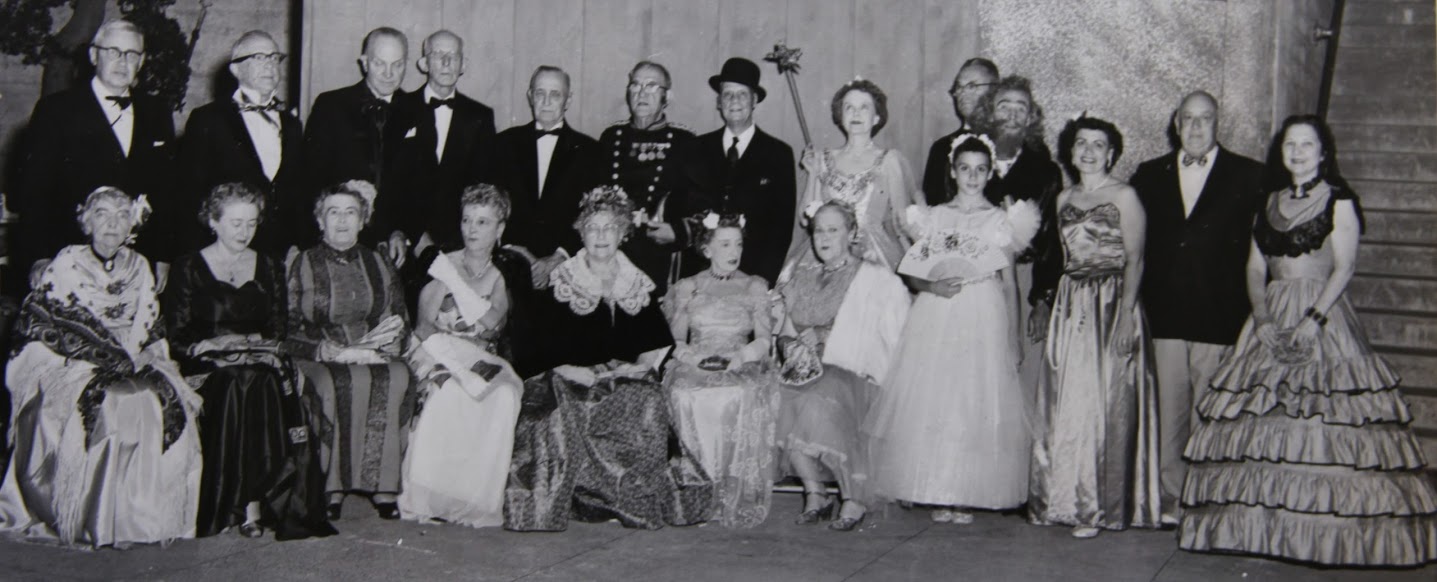
Léonie Gilmour (June 17, 1873 – December 31, 1933) was an American educator, editor, and journalist. She was the lover and editor of the writer Yone Noguchi and the mother of sculptor Isamu Noguchi and dancer Ailes Gilmour. She is the subject of the feature film Leonie (2010) and the book Leonie Gilmour: When East Weds West (2013).
Miller attended Columbia College in in Eugene City from 1857 to 1858. He taught school, studied law, and was admitted to the bar in 1861. From 1861 to 1862 Miller rode pony express from Walla Walla to Idaho mines but he soon returned to Eugene City to become a newspaper editor. In his newspaper, The Eugene City Democratic Register, he pleaded for an end to the Civil War, adopting the Quaker creed of his father.
Even today, you’d have to go far to run into a radical individual like Leonie Gilmour. But in America in 1901, to meet a young woman like her must have been on par with witnessing a comet.
Raised in New York by a single mother, Gilmour studied at Bryn Mawr, a liberal-arts college in Pennsylvania, and Paris’ Sorbonne university on a scholarship. She then got a job as an editor for Japanese poet Yonejiro Noguchi; things took a short-lived turn for the amorous, and she bore a son, Isamu Noguchi — who became one of the most influential and important Japanese artists of the 20th century.
Ailes grew up in a Japanese style house that Leonie had constructed in Chigasaki, a seaside town near Yokohama. Ailes had close Japanese childhood friends, spoke Japanese as well as English, and identified with Japan before she returned to the USA in 1920, at age 8. When Ailes and her mother returned to America, they lived first in San Francisco and then moved to New York City.
During the Depression Era, dancers like Ailes and artists like Isamu struggled to find work. In 1932, when Radio City Music Hall opened, Ailes performed at the debut with Graham’s company. Their work, Choric Patterns, lasted on stage for just one week. Ailes ruefully observed to Marion Horosko that Radio City Music Hall could succeed only when it became a movie theater with Rockettes.
Noguchi was the first Japanese author to publish English-language novels and books of poetry. Born near Nagoya, Japan, in 1875, he studied at Keio University in Tokyo and gained a passion for English literature. At 18 he came to the United States, where he worked at a newspaper run by Japanese exiles.
Miller attended Columbia College in in Eugene City from 1857 to 1858. He taught school, studied law, and was admitted to the bar in 1861. From 1861 to 1862 Miller rode pony express from Walla Walla to Idaho mines but he soon returned to Eugene City to become a newspaper editor. In his newspaper, The Eugene City Democratic Register, he pleaded for an end to the Civil War, adopting the Quaker creed of his father.
In 1894, Noguchi visited Miller and was so mesmerized by the aging poet that he stayed with him for four years, working for his room and board. He absorbed Miller’s philosophy of life and met his literary friends.
With Miller, Noguchi said, he found his true vocation as a poet, and he considered Miller’s Oakland Hills estate to be an ideal place to write his poems.
When “Homeless Snail” was republished in 1920, Noguchi wrote a new introduction.
“Since I left California in 1900 for New York and London I have seen many other cities more big and more prosperous, but my mind always returned to Miller Heights (Hights) where my poetry first began to grow amid the roses and carnations which Miller and I watered tenderly. … He was my first friend in American life. … He looked on me as his American son.”
His love life was complicated. He had several relationships simultaneously with white American women. His son, Isamu, whose mother was Leonie Gilmore, became a famous American sculptor.
In 1904, Noguchi went back to Japan and taught English at his alma mater. He continued to write and travel the world. By 1930, his works had fallen into critical disfavor. He died of stomach cancer in 1947.
“Then he had the Japanese and Chinese artists living there. They built their beautiful little Japanese paper houses up through the woods. What beautiful country! It looks like a mess now, but it was beautiful then — a natural and wild landscape — and the Japanese had carefully created a meandering little stream, Japanese style, beautifully arranged with gardens and little rockeries near the poet’s. You know their expertness in creating beauty. They’d made this beautiful place where they had their barbecues. At that time the poet’s barbecues were always run by his Japanese friends. We’d have raw fish and soy sauce — really delicious. Then, always the particular barbecue for which the poet was famous — he had beautifully peeled willow switches on which were arranged rounds of onions and meat — which you held over the fire until cooked to your taste.
Then we’d go up to a little art colony scattered throughout the woods in their beautiful paper houses. These houses were well made, beautifully constructed, but all the doors and windows except the frames were made of paper. We’d go in, take our shoes off and sit down and we’d watch the artists work, or they’d display work to show us. Some were Chinese, most of them were Japanese.
In 1848 William Makepeace Thackeray used the word bohemianism in his novel Vanity Fair. In 1862, the Westminster Review described a Bohemian as “simply an artist or littérateur who, consciously or unconsciously, secedes from conventionality in life and in art”. During the 1860s the term was associated in particular with the pre-Raphaelite movement, the group of artists and aesthetes of which Dante Gabriel Rossetti was the most prominent:[2]
As the 1860s progressed, Rossetti would become the grand prince of bohemianism as his deviations from normal standards became more audacious. And as he became this epitome of the unconventional, his egocentric demands necessarily required his close friends to remodel their own lives around him. His bohemianism was like a web in which others became trapped – none more so than William and Jane Morris.[3]
Although Gilmour harbored literary aspirations, her achievements as a writer were limited. Much of her literary energy was channeled into her editorial projects, particularly those of her partner, Yone Noguchi. It has been speculated that she may have co-authored or authored some works attributed to him, such as The American Diary of a Japanese Girl, and there is little doubt that much of Noguchi’s best writing was accomplished with her editorial assistance.
As an author in her own right, Gilmour’s most successful pieces were short autobiographical essays for newspapers and magazines chronicling unfortunate events with a wry ironic humor, In a picaresque, matter-of-fact style, Gilmour described the unusual situations in which she found herself as a result of her unconventional attitudes and lifestyle. Gilmour’s “Founding a Tent-Home in California,” for example, shows turn-of-the-century Los Angeles from the perspective of a hapless, idealistic new arrival.[21] “Dorobo, or the Japanese Burglar” portrays the experience of being burglarized with a humorous perspective.[22]
Léonie Gilmour (June 17, 1873 – December 31, 1933) was an American educator, editor, and journalist. She was the lover and editor of the writer Yone Noguchi and the mother of sculptor Isamu Noguchi and dancer Ailes Gilmour. She is the subject of the feature film Leonie (2010) and the book Leonie Gilmour: When East Weds West (2013).
The Noguchi Museum, chartered as The Isamu Noguchi Foundation and Garden Museum, was designed and created by the Japanese-American sculptor Isamu Noguchi. Opening on a limited basis to the public in 1985 the purpose of the museum and foundation was and remains to preserve and display Noguchi’s sculptures, architectural models,stage designs, drawings, and furniture designs. The two-story, 24,000 square feet (2,200 m2) museum and adjacent sculpture garden, located in Long Island City section of Queens, one block from the Socrates Sculpture Park, underwent major renovations in 2004 allowing the museum to stay open year round.[1]
Isamu Noguchi (野口 勇 Noguchi Isamu?, November 17, 1904 – December 30, 1988) was an American artist andlandscape architect whose artistic career spanned six decades, from the 1920s onward.[1] Known for his sculpture and public works, Noguchi also designed stage sets for various Martha Graham productions, and several mass-produced lamps and furniture pieces, some of which are still manufactured and sold.
In 1947, Noguchi began a collaboration with the Herman Miller company, when he joined with George Nelson, Paul László and Charles Eames to produce a catalog containing what is often considered to be the most influential body of modern furniture ever produced, including the iconic Noguchi table which remains in production today.[2] His work lives on around the world and at the Noguchi Museum in New York City.
Leonie (Japanese: レオニー Hepburn: Reonī?) is a 2010 Japanese film directed by Hisako Matsui and starring Emily Mortimer and Shido Nakamura. The film is based on the life of Léonie Gilmour, the American lover and editorial assistant of Japanese writer Yone Noguchi and mother of sculptor Isamu Noguchi and dancer Ailes Gilmour.
Production started in April 2009 and the film was released in Japan on November 20, 2010. An extensively reedited version of the film began a limited theatrical run in the United States on March 22, 2013 and was released on DVD on May 14, 2013.
The film opens on a beach. A window overlooks the beach. In a dark room, Isamu Noguchi, grown old, is chipping away at a large stone with a hammer and chisel. “Mother, I want you to tell the story.” The film periodically returns to this scene of Isamu at work.
Bryn Mawr 1892. After a class in which she argues with a professor about the importance of artist Artemisia Gentileschi, Leonie (Emily Mortimer) befriends Catherine Burnell (Christina Hendricks). Later, they meet Umeko Tsuda (Mieko Harada), a graduate student. In Tsuda’s room, Leonie gazes at a print of Hokusai’s The Great Wave off Kanagawa.
The story now alternates between Pasadena 1904—where Leonie, living in a primitive tent with her mother Albiana (Mary Kay Place), bears a child temporarily named “Yo,”—and New York, where Leonie met Japanese poet Yone Noguchi (Shido Nakamura). She and Yone succumb to passion while collaborating on his anonymous novel, The American Diary of a Japanese Girl, published by Frederick A. Stokes (David Jensen). They quarrel when Yone returns unannounced from London with an apparently drunk Charles Warren Stoddard (Patrick Weathers). The Russo-Japanese War begins and Yone, declaring he will return to Japan, greets Leonie’s announcement of pregnancy with angry disbelief. Leonie tells her sad story to the now unhappily married Catherine, who reminds her of her advice not to be boring. In California, Leonie fends off a racist attack against her son and decides, against Albiana’s advice, to accept Yone’s invitation to come to Japan.
Léonie Gilmour was born in New York City on June 17, 1873, and grew up in the East Village, Manhattan.[1] At the time of her birth, her father, Andrew Gilmour, a clerk, and mother, Albiana Gilmour (née Smith, daughter of one of the co-founders of the Brooklyn Times-Union),[2] were living “in one room in a rear house”[3] in St. Bridget’s Place, the alley behind St. Brigid’s Church on the east side of Tompkins Square Park.
http://www.botchanmedia.com/YN/LG/interview101211.htm
When we were children we would call Juanita Miller on the phone and pretend we were older so we could have The White Witch give us advice on our love life, that we invented. Joaquin Miller’s daughter titled herself the ‘White Witch’ and had involved her groom in a pagan ritual when they got married. She pretended she was dead, and, he brought her back to life. Sounds like Sleeping Beauty.
Several days ago I found photos of Juanita dancing. Isadora Duncan grew up in Oakland. Above is two photos of my Grandmother, Melba Broderick, with her friend, Violet, on Miller’s property. I now believe they were disciples of the White Witch, and may have danced through the forest with her. Joaquin carried my infant father on the Fruit Vale trolley. My kin owned a orchard just below the Hights, the theme park Joaquin and his daughter built. There is a monument to my kindred, John Fremont, that looks like a rook. Here poets and artists met, and lived. Artists Embassy International met here, as well as in Alameda at 532 Haight Avenue in a beautiful Victorian.
Above is a letter to Juanita from the artist, Frederick Church, whose work resembles Christine Rosamond, and, Fanny Corey, who encouraged Royal Rosamond to write. We are looking at the foundation of the Bohemian-Hippie scene in the San Francisco Bay Area that is tied to the Pre-Raphaelites. Did Church consider himself a Pre-Raphaelite, and was hoping the Millers would give him a introduction to the Rossettis?
John Cogswell was the son of James Cogswell and Mary (Stratton) Cogswell. He left his home in Michigan at the age of 16 and found work on the Erie Canal before later going to Missouri.
While in Missouri, John Cogswell decided to go “out west” and started out to cross the plains on foot. On his trip, he met another man who was driving a herd of horses. In exchange for John Cogwell’s help, the man would give him a horse. John Cogswell first arrived in California in 1845.
In the spring of 1846, Cogswell traveled to Oregon and worked sawing lumber for ship building at the mouth of the Columbia River. He returned to California to mine in 1849, but by 1850 he had found enough gold for his needs and he returned to Missouri. There he bought stock and then returned to Oregon, taking a claim on the north side of the McKenzie River, four miles east of where the Coburg Bridge is now located.
John Cogswell married Mary Frances Gay on October 28, 1852. Theirs was the first recorded marriage in Lane County, Oregon. They farmed in the Thurston, Oregon area. They had nine children, with just four living to adulthood.
Sponsor this memorial with an exclusive premium layout and no ads.Sponsor this page
Idaho Cogswell was the fifth child and fifth daughter of John Cogswell and Mary Frances (Gay) Cogswell. She was born on the McKenzie River donation claim, at the foot of the Coburg Hills, four miles east of the Coburg Bridge, near the mouth of the Mohawk River.
She started her education in the school house built by her father on his place. Her name is listed as attending the University of Oregon Prep. School and the University 1881-1882, 1882-1883, 1883-1884. Her schooling was interrupted by the illness of her sister, DeEtta, who she took to Santa Barbara, Calif. (by boat) to try to regain her health, the Winter of 1885-86.
The year after her sister passed away, her mother died of Typhoid fever, in 1887. The following year, June 17, 1888 Idaho Cogswell was married to Nicholas Kiger Frazer, at her home just east of Thurston, and she moved to Pendleton, Oregon. July 1, 1889, her daughter, Eva, was born.
Six months later, Jan. 28, 1890, her husband met a tragic death. (He was lost in the Blue Mountains and found frozen to death).
Mrs. Frazer and Eva returned to her father, who was then located on his ranch 25 miles east of Eugene. She remained there until she built her home at 252 Pearl St., Eugene, Oregon, in 1892.
Feb. 6, 1897, she married Ira L. Campbell who was editor, publisher and co-owner (with his brother John) of the Daily Eugene Guard newspaper. Three children were born: Cogswell Frazer Campbell, Feb. 19, 1898; Jackson Frazer Campbell, Jan. 21, 1900; and (Catherine) Celeste Campbell, Mar. 12, 1905.
Idaho had before this, become a charter member of the Eugene Fortnightly Club in 1893. She was also a member of the Eugene Shakespeare Club. She continued to take an active interest in local and national affairs.
In 1894, she and Eva spent several months in Chicago with her sister, Lischon Miller and a cousin Catherine Cogswell. She made a number of trips to visit her daughter, Eva, first in 1922 in Chicago and later in Madison, Wisconsin. She was proud of being the daughter of early Oregon pioneers and she never lost her love of Oregon’s wonderful out-of-doors and nature.
The spirit of adventure stayed with her and perhaps the highlight of her life (not even climaxed by a trip to the Hawaiian Islands in 1931 with her daughter, Celeste, was on July 6, 1928, when she flew from San Francisco to Chicago in the regular Boeing Air Transport plane carrying U. S. Mail, with room for only two passengers. They flew in an open cockpit and took 24 hours for the trip. She was thrilled passing over the plains where her parents had crossed in covered wagons.
She died Aug. 12, 1932, and was laid to rest in the Mary Gay Cogswell Pioneer Cemetery.
~~~
The Eugene Register-Guard
Lane County, Oregon, USA
Saturday, August 13, 1932
Page One
MRS. I.F. CAMPBELL, PIONEER, IS DEAD
Mrs. Idaho Frazer Campbell, lifelong resident of Oregon, who spent the greater part of her life at the family home east of Skinner’s butte, died Friday following a brief illness at her home, 252 Pearl street.
Mrs. Campbell received her education at the University of Oregon and was active in social and club work of Eugene. She was a charter member of the Eugene Fortnightly club, the oldest women’s organization in the city.
Ira Lane Campbell was the son of Andrew Jackson Campbell, a native of Jamestown, Virginia, and of Mary Ann Campbell, a native of Kentucky.
He was co-owner, with his brother John R. Campbell, publisher and editor of the Daily Eugene Guard newspaper, one of the two precursors of the Register-Guard newspaper.
On 06 Feb 1897 in Eugene, Ira Lane Campbell married Idaho J. (Cogswell) Frazer, who was the daughter of Lane County pioneers John Cogswell & Mary Frances (Gay) Cogswell and the widow of Nicholas Kiger Frazer. For the next seven years, he raised his step-daughter, Eva Frazer and his and Idaho’s three children, Cogswell, Jackson and Catherine “Celeste” Campbell.
Creation Dawn
Posted on May 27, 2016 by Royal Rosamond Press



My semi-autobiographical novel ‘The Gideon Computer’ begins at the Golden West Saloon in downtown Oakland where Bill gets drunk and passes out. He comes to standing mid-span on the Golden Gate bridge looking at the setting sun. There is a ceremony about dropping the bomb on Hiroshima. This novel is about the Guilt Code we all carry. The premise of this story stems from the old hippie saying;
“Don’t lay your guilt-trip on me!”
Today, the President of the United States put a wreath on a small pyramid at the Hiroshima monument. A week ago I anointed a veiled women my Spirit Guide and Last Muse from the Other Side. I thought I had a month before she brought me to the core of my story. We have arrived. Her name is Gertrude Farquharson Boyle-Kanno, a renowned sculptress who married Takeshi Kanno, a famous poet who performed his ‘Creation Dawn’ in a redwood grove in Carmel that was founded by Bohemian Journalists and Writers. I compare Gertrude to the Carmel Artist, Christine Rosamond Benton. My sister and I were at the core of the ‘Peace Movement’.
Captain Gregory
‘King of the Bohemians’
http://www.nytimes.com/2016/05/28/world/asia/obama-hiroshima-japan.html?_r=0
HIROSHIMA, Japan — President Obama laid a wreath at the Hiroshima Peace Memorial on Friday, telling an audience that included survivors ofAmerica’s atomic bombing in 1945 that technology as devastating as nuclear arms demands a “moral revolution.”
“Technological progress without an equivalent progress in human institutions can doom us,” Mr. Obama said, adding that such technology “requires a moral revolution as well.”
Gertrude Farquharson Boyle Kanno (January 26, 1878 – August 14, 1937) was an American sculptor.[1]
Biography[edit]
She was born in San Francisco on January 26, 1878, and married Takeshi Kanno in Seattle, Washington, on May 22, 1907. She was the sixth child of John Boyle and Helen Milliken Clark. She attended Cogswell College, Lick School (California School of Mechanical Arts) and Mark Hopkins Institute of Art. She studied under Douglas Tilden and Arthur Mathews. In New York after 1915, she lived with Eitaro Ishigaki until about 1928. She was art editor of the Birth Control Review for about three years. She did portrait busts and medallions in plaster and bronze of many famous persons including: Isadora Duncan, Eitaro Ishigaki,Henry Cowell, Uldrick Thompson, Margaret Miller, Teddy Roosevelt, Franklin D. Roosevelt, John Muir, Ida Tarbell, Ezra Meeker, John Swett, Joseph LeConte, David Starr Jordan, Joaquin Miller, Edwin Markham, William Keith, Luther Burbank,Albert Einstein, Charles Erskine Scott Wood, John Fremont, Susan Mills, Horace Traubel, Christy Mathewson and Sidney Gulick.
http://www.redwoodhikes.com/Cowell/SanLorenzo.html
Joaquin Miller, William Morris & Me
Posted on August 5, 2013 by Royal Rosamond Press





Christine Rosamond Benton and I were drawn into Tolkien’s Trilogy. The artist known as ‘Rosamond’ could not put these books down, nr could I. This caused our mutual friend, Keith Purvis, a British subject, to comment;
“She doesn’t know these books are real.”
We three were original hippies who took the Lord of the Rings to heart as we modified the modern world, made it over more to our liking, we oblivious to what normal folk were about. This is exactly what William Morris and the Pre-Raphaelite Brother and Sisterhood did. They – returned!
I discovered the Pre-Raphaelites in 1969 and let my hair grow long for the first time. I gave up drugs in 1967 and was looking for a spiritual format. I came under the spell of the Rossetti family who were friendly with Joaquin Miller. We Presco children knew Miller’s daughter as ‘The White Witch’ and we would call her for advice. Miller’s home ‘The Abbye’ was above our home in the Oakland Hills. Our kindred were friends of Miller, who was also a friend of Swineburn, who wrote ‘The Queen-Mother and Rosamund’ and ‘Rosamund Queen of Lombards. Tolkien was inspired by the Lombards.
Filed away in Rosamond’s probate is my plea to the executor to allow me to be my sister’s historian. I mention Miller and Rossetti. I saw myself in the role of Michael Rossetti who had his own publishing company. He published Miller and other famous poets. When I was twelve, my mother read evidence I might become a famous poet.
All my imput has been ruthlessly ignored, because petty un-creative minds have forced our families creative legacy down the tiny holes of their hidden agendas, into the mouths of worms and parasites, because these ignorant people sensed I and the real Art World, did not let them in the door – would never admit them into our circle, our ring of genius!
Jon Presco
Copyright 2011
William Morris had a major influence on J. R. R. Tolkien. As John Garth points out, unlike most authors traumatized by the experience of World War I, Tolkien did not “discard the old ways of writing, the classicism or medievalism championed by Lord Tennyson and William Morris. In his hands these traditions were reinvigorated so that they remain powerfully alive for readers today” (40). His love of Morris, in particular, goes back to his undergraduate days when he turned from studying the Greek and Latin classics to the the northern traditions — the language and literature of the Scandinavian and Germanic past. According Garth,
William Morris, from the late 1870s on, decided to “remedy” the defects of the real historical record by producing specific works of “pseudo-history,” fully-fleshed stories that he could present as “re-discovered” manuscripts of ancient tribal lore. So eager were the Germanic speakers of 19th century Europe to know more about their ancestors, that sometimes even academically trained scholars would be fooled by the books Morris wrote, and asked him for his sources, and wanted to read the original saga manuscripts themselves. To which requests Morris replied “Doesn’t the fool realize, that it’s a romance, a work of fiction — that it’s all lies!” (from May Morris, daughter of W. Morris recollections).
JRRT, a generation later than Morris, got in on the tail end of this nationalistic/ romantic period, and became as fully enmeshed in its allures as Morris. Tolkien went on to “sub-create” his own “pseudo-histories,” manufacturing his versions of the source myths that would allow a richer understanding of the Nordic tradition, especially the Anglo-Saxon phenomena of England. Between them, as much by accident as firm intent, Morris and Tolkien established an entire genre of pseudo-history that has, by now in the 21st century, become one of the most popular fields of literature.
“These two men knew either much (Morris) or most (Tolkien) of all that was known about these [northern] people and their lives. They used that wealth of knowledge to create ‘dreamed realities’ (Morris) or an ‘imaginary history’ (Tolkien) about what it might have been like to live in those days. While what they wrote wasn’t necessarily true in a strict sense, both knew enough about the past and were talented enough as writers that what they wrote created a strong sense that they described what might have been.” ( Michael W. Perry, More to William Morris, p. 7, 2003)
So, the question then becomes, for Tolkien readers, how does Morris stand up to JRRT? Is it worth the money to buy Morris’s books? Will I get the same, or at least a very similar thrill from reading them as I get when running through the pages of LotR and The Hobbit? Well, that’s what I am trying to decide in the next few installments of this topic. How do the works of the two authors compare, in what ways are they similar, in what ways do they differ?
http://tolkiensring.proboards.com/index.cgi?board=authors&action=display&thread=675
Joaquin Miller looked me up at Somerset House, and left with me
the remaining proofs of his forthcoming volume. He showed me the dedication, ‘To the Rossettis.’ I strongly recommended him to write direct to Gabriel as to the matter before anything further is done. I mentioned the dedication to Christina. She feels some hesitation in sanctioning it, not knowing what the book may contain. If she makes up her mind to object, she is to write to Miller. I looked through the proofs and noted down some remarks on them. They include a series of poems about Christ, named Olive Leaves, implying a sort of religious, or at least personal, enthusiasm, mixed up with a good deal that has more relation to a sense of the picturesque than of the devotional. These poems, though far from worthless from their own point of view, are very defective, and would, I think be highly obnoxious to many readers and Reviewers. I have suggested to Miller the expediency of omitting them altogether. – Christina, I find, has already read these particular poems, and to some considerable extent likes them, which is so far in their favour as affecting religious readers”
The wider world of Victorian London is present: Turgenev comes to dinner, Browning sends his new volumes, Swinburne arrives drunk, and the American poet and adventurer Joaquin Miller makes himself known to the Rossetti circle. Nine appendices include five devoted to Poems and one to the Fleshly School controversy.
Joaquin Miller Cabin is located in Washington, DC. The Hights, the Oakland home Miller built at the end of his life, is currently known as the Joaquin Miller House and is part of Joaquin Miller Park. He planted the surrounding trees and he personally built, on the eminence to the north, his own funeral pyre and monuments dedicated to Moses, General John C. Frémont, and the poets Robert Browning and Elizabeth Barrett Browning. The Japanese poet Yone Noguchi began his literary career while living in the cabin adjoining Millers’ during the latter half of the 1890s. The Hights was purchased by the city of Oakland in 1919 and can be found in Joaquin Miller Park.[42] It is now a designated California Historical Landmark.
Miller went to England, where he was celebrated as a frontier oddity. There, in May 1871, Miller published Songs of the Sierras, the book which finalized his nickname as the “Poet of the Sierras”.[22] It was well-received by the British press and members of the Pre-Raphaelite Brotherhood, particularly Dante Gabriel Rossetti and William Michael Rossetti.
While in England, he was one of the few Americans invited into the Savage Club along with Julian Hawthorne, son of Nathaniel Hawthorne. The younger Hawthorne referred to Miller as “a licensed libertine” but admitted him “charming, amiable, and harmless”.[
The Savage Club was formed to supply the want which Dr Samuel Johnson and his friends experienced when they founded the Literary Club. A little band of authors, journalists and artists felt the need of a place of reunion where, in their hours of leisure, they might gather together and enjoy each other’s society, apart from the publicity of that which was known in Johnson’s time as the coffee house, and equally apart from the chilling splendour of the modern club.
At present, there are 315 members. The club maintains a tradition of fortnightly dinners for members and their guests, always followed by entertainment. These dinners often feature a variety of famous performers from music hall to concert hall. Several times a year members invite ladies to share both the dinner and the entertainment — sometimes as performers. On these occasions guests always include widows of former Savages, who are known as Rosemaries (after rosemary, a symbol of remembrance).
Born in London, he was a son of immigrant Italian scholar Gabriele Rossetti, and the brother of Maria Francesca Rossetti, Dante Gabriel Rossetti and Christina Georgina Rossetti.
He was one of the seven founder members of the Pre-Raphaelite Brotherhood in 1848, and became the movement’s unofficial organizer and bibliographer. He edited the Brotherhood’s literary magazine The Germ which published four issues in 1850 and wrote the poetry reviews for it.
It was William Michael Rossetti who recorded the aims of the Pre-Raphaelite Brotherhood at their founding meeting in September 1848:
1. To have genuine ideas to express;
2. To study nature attentively, so as to know how to express them;
3. To sympathize with what is direct and serious and heartfelt in previous art, to the exclusion of what is conventional and self-parading and learned by rote;
4. And most indispensable of all, to produce thoroughly good pictures and statues.
Although Rossetti worked full time as a civil servant, he maintained a prolific output of criticism and biography across a range of interests from Algernon Swinburne to James McNeill Whistler. He edited the diaries of his maternal uncle John William Polidori (author of The Vampyre and physician to Lord Byron), a comprehensive biography of D. G. Rossetti, and edited the collected works of D. G. Rossetti and Christina Rossetti.
Rossetti edited the first British edition of the poetry of Walt Whitman, which was published in 1868; however, this edition was bowdlerized.[1] Anne Gilchrist, who became one of the first to write about Whitman, first read his poetry from Rossetti’s edition, and Rossetti helped initiate their correspondence.[2]
In 1874 he married Lucy Madox Brown, daughter of the painter Ford Madox Brown. They honeymooned in France and Italy. Their first child, Olivia Frances Madox, was born in September 1875, and her birth was celebrated in an ode of Swinburne.
William Michael Rosetti was a major contributor to the 1911 edition of the Encyclopædia Britannica; his contributions on artistic subjects were criticised by many reviewers at the time and since, as showing little evidence of having absorbed the mounting body of work by academic art historians, mostly writing in German.
Dinner at Rossetti’s
by Joaquin Miller
________________________________________
There is no thing that hath not worth;
There is no evil anywhere;
There is no ill on all this earth,
If man seeks not to see it there.
September 28. I cannot forget that dinner with Dante Gabriel Rossetti, just before leaving London, nor can I hope to recall its shining and enduring glory. I am a better, larger man, because of it. And how nearly our feet are set on the same way. It was as if we were all crossing the plains, and I for a day’s journey and a night’s encampment fell in with and conversed with the captains of the march.
But one may not gave names and dates and details over there as here. The home is entirely a castle. The secrets of the board and fireside are sacred. And then these honest toilers and worshippers of the beautiful are shy, so shy and modest. But I like this decent English way of keeping your name down and out of sight till the coffin-lid hides your blushes–so modest these Pre-Raphaelites are that I should be in disgrace forever if I dared set down any living man’s name.
But here are a few of the pearls picked up, as they were tossed about the table at intervals and sandwiched in between tales of love and lighter thoughts and things.
All London, or rather all the brain of London, the literary brain, was there. And the brain of all the world, I think, was in London. These giants of thought, champions of the beautiful earth, passed the secrets of all time and all lands before me like a mighty panorama. All night sol We dined so late that we missed breakfast. If I could remember and write down truly and exactly what these men said, I would have the best and the greatest book that ever was written, I have been trying a week in vain, I have written down and scratched out and revised till I have lost the soul of it, it seems to me; no individuality to it; only like my own stuff. If I only had set their words down on the next day instead of attempting to remember their thoughts! Alas! the sheaves have been tossed and beaten about over sea and land for days and days, till the golden grain is gone, and here is but the straw and chaff.
The master sat silent for the most part; there was a little man away down at the other end, conspicuously modest. There was a cynical fat man, and a lean philanthropist all sorts and sizes, but all lovers of the beautiful of earth. Here is what one, a painter, a ruddy-faced and a rollicking gentleman, remarked merrily to me as he poured out a glass of red wine at the beginning of the dinner:
“When travelling in the mountains of Italy, I observed that the pretty peasant women made the wine by putting grapes m a great tub, and then, getting into this tub, barefooted, on top of the grapes, treading them out with their brown, bare feet. At first I did not like to drink this wine. I did not think it was clean. But I afterward watched these pretty brown women” and here all leaned to listen, at the mention of pretty brown women– I watched these pretty brown women at their work in the primitive winepress, and I noticed that they always washed their feet after they got done treading out the wine.”
All laughed at this, and the red-faced painter was so delighted that he poured out and swallowed another full glass. The master sighed as he sat at the head of the table rolling a bit of bread between thumb and finger, and said, sitting close to me: “I am an Italian who has neven seen Italy. Belle Italia!…”
By and by he quietly said that silence was the noblest attitude in all things; that the greatest poets refused to write, and that all great artists in all lines were above the folly of expression. A voice from far down the table echoed this sentiment by saying:”Heard melodies are sweet; but unheard melodies are sweeter.” “Written poems are delicious; but unwritten poems are divine,” cried the triumphant cynic. “What is poetry?” cries a neighbor. “All true, pure life is poetry,” answers one. “But the inspiration of poetry?” “The art of poetry is in books. The inspiration of poetry in nature.” To this all agreed.
Then the master very quietly spoke: “And yet do not despise the books of man. All religions, said the Chinese philosophers, are good. The only difference is, some religions are better than others, and the apparent merit of each depends largely upon a mans capacity for understanding it. This is true of .poetry. All poetry is good. I never read a poem in my life that did not have some merit, and teach some sweet lesson. The fault in reading the poems of man, as well as reading the poetry of nature, lies largely at the door of the reader. Now, what do you call poetry?” and he turned his great Italian eyes tenderly to where I sat at his side.
To me a poem must be a picture,” I answered.
Proud I was when a great poet then said: “And it must be a picture–if a good poem so simple that you can understand it at a glance, eh? And see it and remember it as you would see and remember a sunset, eh?” “Aye,” answered the master, “I also demand that it shall be lofty in sentiment and sublime in expression. The only rule I have for measuring the merits of a written poem, is by the height of it. Why not be able to measure its altitude as you measure one of your sublime peaks of America?”
He looked at me as he spoke of America, and I was encouraged to answer:”Yes, I do not want to remember the words. But I do want it to remain with me a picture and become a part of my life. Take this one verse from Mr. Longfellow:
“And the night shall be filled with music,
And the cares that infest the day
Shall fold their tents like the Arabs,
And as silently steal away.’”
“Good!” cried the fat cynic, who, I am sure, had never heard the couplet before, it was so sweet to him; “Good! There is a picture that will depart from no impressible clay. The silent night, the far sweet melody falling on the weary mind, the tawny picturesque Arabs stealing away m the darkness, the perfect peace, the stillness and the rest. It appeals to all the Ishmaelite in our natures, and all the time we see the tents gathered up and the silent children of the desert gliding away in the gloaming.”
A transplanted American, away down at the other end by a little man among bottles, said: “The poem of Evangeline is a succession of pictures. I never read Evangeline but once.” “It is a waste of time to look twice at a sunset,” said Rossetti, sotto voce, and the end man went on: “But i believe I can see every picture in that poem as distinctly as if I had been the unhappy Arcadian; for here the author has called in ail the elements that go to make up a perfect poem.”
“When the great epic of this new, solid Saxon tongue comes to be written,” said one who sat near and was dear to the master’s heart, “it will embrace all that this embraces: new and unnamed lands; ships on the sea; the still deep waters hidden away in a deep and voiceless continent; the fresh and fragrant wilderness; the curling smoke of the camp-fire; action, movement, journeys; the presence–the inspiring presence of woman; the ennobl- ing sentiment of love, devotion, and devotion to the death; faith, hope and charity,- and all in the open air.”
“Yes,” said the master thoughtfully, ‘no great poem has ever been or ever will be fitted in a parlor, or even fashioned from a city. There is not room for it there.”
“Hear! hear! you might as well try to grow a California pine in the shell of a peanut,” cried I. Some laughed, some applauded, all looked curiously at me. Of course, I did not say it that well, yet I did say it far better, I mean I did not use the words carefully, but I had the advantage of action and sympathy.
Then the master said, after a bit of reflection: “Homer’s Ulysses, out of which have grown books enough to cover the earth, owes its immortality to all this, and its out-door exercise. Yet it is a bloody book a bad book, in many respects–full of revenge, treachery, avarice and wrong. And old Ulysses himself seems to have been the most colossal liar on record. But for all this, the constant change of scene, the moving ships and the roar of waters, the rush of battle and the anger of the gods, the divine valor of the hero, and, above all, and over all, like a broad, white-bosomed moon through the broken clouds, the splendid life of that one woman; the shining faith, the constancy, the truth and purity of Penelope–all these make a series of pictures that pass before us like a panorama, and we will not leave off reading till we have seen them all happy together again, and been assured that the faith and constancy of that woman has had it reward. And we love him, even if he does lie!”
How all at that board leaned and listened. Yet let me again and again humbly confess to you that I do him such injustice to try thus to quote from memory. After a while he said: “Take the picture of the old, blind, slobber-mouthed dog, that has been driven forth by the wooers to die. For twenty years he has not heard the voice of his master. The master now comes, in the guise of a beggar. The dog knows his voice, struggles to rise from the ground, staggers toward him, licks his hand, falls, and dies at his feet.”
Such was the soul, heart, gentleness of this greatest man that I ever saw walking in the fields of art….
Miller earned an estimated $3,000 working as a Pony Express rider, and used the money to move to Oregon. With the help of his friend, Senator Joseph Lane, he became editor of the Democratic Register in Eugene,[7] a role he held from March 15 to September 20, 1862.[8] Though no copies survive, it was known as sympathetic to the Confederacy until it was forced to shut down.[9] That year, Miller married Theresa Dyer (alias Minnie Myrtle) on September 12, 1862, in her home four days after meeting her[10] in Port Orford, Oregon.
Swinburne Meets Joaquin Miller.” New York Times (10 May 1931) [Online: BR5]
Picture with the text: “Once Joaquin Miller and a British Writer Called on Swinburne, Whom the Englishman Claimed as an Intimate Friend. They Announced Themselves as Joaquin Miller, the American Poet, and a Friend. Swinburne Sent Down Word to ‘Bring the American Poet Up and Tell the Friend to Go to Hell.’” [MCK]
Algernon Charles Swinburne (London, April 5, 1837 – London, April 10, 1909) was an English poet, playwright, novelist, and critic. He invented the roundel form, wrote several novels, and contributed to the famous Eleventh Edition of the Encyclopaedia Britannica. He was nominated for the Nobel Prize in Literature in every year from 1903 to 1907 and again in 1909.[1]
At Oxford Swinburne met several Pre-Raphaelites, including William Morris and Dante Gabriel Rossetti. After leaving college he lived in London and started an active writing career, where Rossetti was delighted with his ‘little Northumbrian friend’, a reference to Swinburne’s diminutive height—he was just over five feet tall.[citation needed]
The first of Rosamond’s five scenes is the most forceful in demonstrating Swinburne’s debt to troubadour conventions as well as to Pre-Raphaelite stylistic influences. Courtly love preoccupations and the medieval setting overshadow elements of Jacobean revenge tragedy throughout the play. Swinburne’s Rosamond, rather than the historical queen of the Courts of Love, espouses the religion of love and, as a result of her lived creed, is poisoned by Eleanor out of jealousy.
Swinburne’s choice of the “rose of the world” as one of his first subjects for verse suggests that he associated his conception of Rosamond with courtly love allegory, specifically the Roman de la Rose, in which the rose is the eternal symbol of the beloved and of the perfect beauty that is fearfully transient but simultaneously immortal.3 As in Swinburne’s later lyrics “Before the Mirror” and “The Year of the Rose,” Rosamond’s central symbol is the rose, and, like them, this play recapitulates the major preoccupations of courtly love poetry: the apotheosis of beauty; love as the necessary consequence of beauty fear of mutability; and a final insistence on the immortality of both love and beauty, which can be attained, paradoxically, only through death.
[39/40] The first scene of Rosamond characterizes its heroine as simultaneously enchanted with her own beauty, exalted by her love affair with Henry, and insecure about the permanence of her beauty and her love. Surrounded by the ephemeral rose blossoms with which she identifies in the maze at Woodstock, she is alone with her maid, Constance. Here Rosamond reveals her concern with the world’s slanderous gossip about her, and as the scene progresses she attempts gradually to rebuild her self-confidence-in her beauty, in Henry’s continuing devotion, and in the unassailable value of beauty and of love. At first, she is defensive:
See,
If six leaves make a rose, I stay red yet
And the wind nothing ruins me; who says
I am at waste? (Tragedies, I, 231)
Is thy name
Babe? Sweet are babes as flowers that wed the sun,
But man may be not born a babe again,
And less than man may woman. Rosamund
Stands radiant now in royal pride of place
As wife of thine and queen of Lombards–not
Cunimund’s daughter. Hadst thou slain her sire
Shamefully, shame were thine to have sought her hand
And shame were hers to love thee: but he died
Manfully, by thy mightier hand than his
Manfully mastered. War, born blind as fire,
Fed not as fire upon her: many a maid
As royal dies disrobed of all but shame
And even to death burnt up for shame’s sake: she
Lives, by thy grace, imperial.
ROSAMUND.
I know it.
I leave thee not the choice. Keep thou thy hand
Bloodless, and Hildegard, whom yet I love,
Dies, and in fire, the harlot’s death of shame.
Last night she lured thee hither. Hate of me,
Because of late I smote her, being in wrath
Forgetful of her noble maidenhood,
Stung her for shame’s sake to take hands with shame.
This if I swear, may she unswear it? Thou
Canst not but say she bade thee seek her. She
Lives while I will, as Albovine and thou
Live by my grace and mercy. Live, or die.
But live thou shalt not longer than her death,
Her death by burning, if thou slay not him.
I see my death shine in thine eyes: I see
My present death inflame them. That were not
Her surety, Almachildes. Thou shouldst know me
Now. Though thou slay me, this may save not her.
My lines are laid about her life, and may not
By breach of mine be broken.
Biography
From 1902 Eleanor Fortescue-Brickdale worked both as a painter and illustrator of fine books, among them Alfred Tennyson’s Poems in 1905 and Robert Browning’s Pippa Passes in 1908. She was the first female member of the Institute of Painters in Oils in 1902, a member of the RWS and also taught at the Byam Shaw School of Arts.
CREATION-DAWN

BY

TAKESHI KANNO

MEMORIAL EDITION


''A^HI'


CREATION-DAWN


(A VISION DRAMA)


EVENING TALKS

AND

MEDITATIONS


By

Takeshi Kanno


PUBLISHED
BY THE AUTHOR
THE MIGHTS. FRUITVALE, CAL,


Copyright 1913

By

Takeshi Kanno

(All rights reserved)


©C1.A84 7576


This, my soul-incense, I perfume
before the altar of divine ego.


Portrait-bust of Takeshi Kanno V)v C^ertrude Boyle Kanno,


Thou my figure, — dimmed shadowy ruined castle!

Within thy ghostly vault incalculable echo of death

Howling as monstrous sea;

Without, the castle shadows float in dragonish mists:

Eternal tempest of longing ocean roaring.

But what a sweet, wild si^ht! Ivook there, there!

Nameless, deathless, beauteous flower clinging

To wounded breast of thy soul-ruined castle.

Where floating the bravest battle-shadow

Of thy past life now?

Even though thy strong castle-hold funerals

Into the unknown silent domain by the eternal hand of time

Yet, ah, here! here! thou, my nameless flower,

Remain like everlasting reluctant dream!

Ah, my figure, -- shadowy castle, melts into thee,

Thou everlasting memorial flower!


"Born from my mother's heart, in the midst of

Fragrant bloom of native nest,
Where the shadow of pine danced in the tv/ilight of

Ruined castle encircled by the wild-flower valley;
Born to this world like rivulet that runs from deep

Bosom of mother valley,
Where the spring lo\e-bream melts the divine white
Snow from the breast of father Fujiyama."

!« !9! i«> nm m fSi


Thus he came, this singer of the Orient, and
with a nature that could not bind itself to any one
phase of truth or racial conception, strongly individ-
ual, at the same time universal in spirit, an advocate
of harmonism, of "everything different therefore one,
— conscious independence, unconscious unity."

This song-philosopher from earliest childhood
imbibed the rare nectar of the Chinese and Japanese
classics, beginning at the age of five to chant the clas-
sics to his grandparent, a man of literary worth, at
first for sembi (rice cake), later for the delight in the
classics themselves. Until his thirteenth year his
training was purely oriental, mainly Spartan or Bushi-
do (the way of the knight) -- having sprung from the


Samurai (the knighthood of Japan). From then on
his education became equally western and eastern.

During his college life he spent much time in
the study of literature and philosophy, specializing in
his theological course on the higher criticisms of
Christianity; striving to explain Christian philosophy
by modern science and ethics; ever drawing compar-
isons, discovering similarities and differences in the
teachings of Buddha, Jesus, Confucius, Brahma, and
others; delighting in the symbolism and strength of
Hebrew literature; revelling in the mythology of the
Greeks, drinking deep of its sparkling beauty, — as
he had quaffed in early youth the saki of his race's
gods.

Leaving his college life at Kyoto, he jour-
neyed forth into the far distant parts of his country, -
from village to hamlet strolling by running brook;
wandering like free wind through time-ruined castle
or along sylvan shore; teaching, lecturing anon, sing-
ing his song alway, his scroll of sonnets, "Travell
ing Gown," in his native tongue, lengthening with
each step of his journey.

Thus passed his youth away. Without ex-
pecting or planning, one fair day he set sail for a
new world. After wandering along the western coast
of America he found a spot in harmony with the


meditative spirit so strong within him, -- up on the
heights overlooking San Francisco Bay, the wild yet
peaceful abode of the Bard of the Sierras.

Here he has remained in the silence of dream,
sunk deep in the ocean-thought of the universe; anon
awaking to whisper his fancies, his sea-murmurings,
to the soft breezes, to voice his soul-dreams to my ear.
Even the Bard of the mountains caught not a glimpse
of his vision nor heard a strain from his song; meet-
ing each day as simple friends, remarking on the
fairness of a morn or the beauty-splendor of a sun
set, each muffled in the cloak of his fancy, each led
by the hand of his muse, apart would wander.

In our cabin among the tree-tops oft, "as the
shadows of night melt into purple dawn, the melting
time of the real and the dream, of sleep and awaken-
ing, the conscious, unconscious state of the mind",
I arouse myself and sieze and preserve the utterance
of spirit, — this voice from the unknown domain of
thought. As I take these utterances, word for word,
I see nothing distinctly, yet at a distance I catch
a glimpse of a great being moving, - seen, unseen,
like the oriental picture of the sacred dragon, half
veiled in cloud, seen but to vanish in mist.

Well may his nature be likened to the crystal
dragon; his mind, his spirit, resembling the flight of


that mystic being, - plunging deep in the great sea of
philosophy, seeking some hidden jewel in its gloom-
cavern; rising to hover like cloud of doubt over the
waters of feeling; soarin.g to lofty mountain-peak of
religion, wrapped in the mists of inspiration; on the
wings of the wind drifting, floating, sailing o'er purple
seas of dawn, over flowery plains of poetry and love
' 'whirling with the wild ecstasy of paSvSion sounds, bend-
ing di'eaming ear to the silent song of gentle midnight
storm of endless longing. "---"A dragon breathing life
and death. - Breathing the breath of poetry and with
"ear bending to the voice of naked creation," this
minstrel sounds for us unknown strains, whirling us
hito the very center of feeHng, where we behold the
mists of creation rising about us, and "hear the deep
drone of mingling waves, - the great sounds of eternal
tides!"

"I plunge into the vast bigness of chaos,
Sublime music guides ni}^ soul,
Feeling blending hito dream world, -
My mind flows into soul of uni^•erse,
So naturally comes mj^ song. ' '

•

Gertrude Boyle Kanno

Dream HiLjhts


CREATION-DAWN

(Fragments)

PART THIRD
Scene I

(Near the sea, by the castle. Sagano and Saarashi
transported into sublimest vision of Creation; tlieir
souls enraptured with solemn music of love -ocean)

Voice from within

*'Let there be light !'^

God knocked at mystic portal

Of maiden's soul:

Behold! love-light shines forth

From her heart of dawning-f lower!
Sagano

Awake, my soul!

Open, gate of mystery!

Great minstrel,

Touching the sacred harp

Quivering from God to man.

Listen! mellowed sorrov/ sounding

Sagano, an unknown poet. Saarashi, the beloved of Sagano.


From twilight forest of resurrection-dawn.
Saarashi

On the shore of life

Waves of ecstasy dashing!
Sagano

Poised as Venus in yearning:
Saarashi

Crowning, foaming flower of rapture,

Breathe in, breath out,

Waves of life pulsing.
Sagano

Now invisible hand of mighty Creator

Forging human soul

On the anvil of passion;

Millions of unformed souls

Burning in fire of love-ocean,

Breathing v/hite-f lamed waves

Of melting love:

Thus God shapes his mighty

Image of Male and Female:
This is the poetry of poetries,
Greatest poet, God!
Saarashi

Twas the morn,

Even dawning bud of pure maiden's soul

Would smile:


My feeling awakened to dream from real;

Phantom-soft touch

As spring wind, dimpling

Upon breast of calm sea,~

A touch, such a touch, love!

Thou visible hand of unseen Creator —

Thick morning mist descending with real dawn-
both figures seen, unseen.- Indistinct chanting
of Saarashi mingHng with Voice of Ocean.
Anon in the twiHght shadows of morn vv hite
petals showering with longing sea wind.

Eagano

From bottomless sorrow

Of unknown love-sea,

Slov/ly mourns her voice,

Like distant storm, heard, unheard,

Mingling with love-strings

In vibration of naked souls;

Storming upon wild yearning

In melting sweetness of love-rain;

Now howling as sea- wind

Dancing with dragonish pine

In mists of wild ecstasy;

Nov/ cradling my soul

In her young moon-craft;

Now crushing her naked beauty

Upon sounding love-ocean


Where my dream swims,
While silver star scattering
Her love-beams into the shadow of dawn!
My perfumed heart
Tangles with curtain of dream,
\¥hile my smouldering soul
Mingles with shadow of webbing life!
Ah, sv/eet!

'Twas moment vision of her souled voice
Which buried in silent grave of my heart,
In mist of stormy Creation.
Saarashi

Sweet, cmel love,
0, draw my breath!
In a moment ~ Ah, such moment! -
Devours whole life!
In such moment
Miniatures eternity!
Devours whole soul
Into one breath!
Love! in thy presence
All being melts into one!
Speak not of such moment-
Holiest of the holy.
Atmosphere of life.
This is the Breath of God


In Creation Dawn! —
Sagano

In moment I feel

Dragon tangle my body!
Ah, pain!

Yet after a moment I feel

Angel cradling my feeling
In her soft love-cradle! —
Saarashi

My hungry soul searching,

Stretches trembling finger;

I feel something touching,

Soft as rain of petals showerings.
Sagano

On the current of love tide

In craft of life,

Oar of feeling rov/ing.

Foams of ecstasy splashing.

Love- waves of male and female mingling.
Sagano and Saarashi

Up and down drifting —
Sagano

To unknown longing ocean,

Where souls' love created

In first day of dawning Creation—

love-dream!


lO


In phantom craft!

Where art thou saihng?

From where, to where?
Ah, nowhere, yet everywhere.
Saarashi

My leaUng melting somewhere,

Like evening twihght
Melts into mystic shadov/ of night,
Sagano

Here perfume of dreams flowering

Betwixt thee and me!

What unconscious sv/eet

From sky of yearning clouds

Of wild desire —

As spring shower slowly sprinkling

Her electric feeling

Upon harp of my thirsty soul!—

Before action ~ ah, such a moment!

What picture in thy mind floating?

Where is your will?

Now all being veiled before you.
Slowly, eagerly yearning.
Saarashi

Where? ah, what?

Feeling raining as petals shower,

Heart whirling v/ith wind,


11


Souls breathing spirit of God

(Moon sinking in western sea; night blackening)

Sagano

Tempestuous wind of desire (sudden storm

arises, scattering flowers raining)

Violating with homeless clouds of doubt,

Storming on boundless ocean

of Love-Creation,

Thundering far from heaven

To bottomless deep, distant yet near.

Sea or mist dragon waving,

Scarlet fire from mouth forking, (lightning)

Billowing tides of life mingling,

Phantom locks of uncreated spirits

Devouring white foams

Of passion breakers— -(voice of waves heard)

Now spirit of eternal Creation

Moving upon love-sea.

Howling toward heaven like lions,

Mountaining hungry surges, on and on —
Saarashi

Ah, sweet!

On v/aving ecstasy of feeling-sea.

Now, ah, floating!
Sagano

Ah, drifting!


IS


Feeling in most, oh, wait, —
Lo! tide of life returns
Unto the Beginning, where my soul slept!
Saarashi

Love-wings of stormy wind ceasing,
Nothing remains in sky of mind.
Fainting mists showering away,

But morning star dimly weeping —
Sagano

While stormed petals hunting
Track of dream!
Saarashi

Dawning love awakening,
Shining forth her love-light
Sagano

Look, dear, west!
Haze or mist;

Ah, morning rainbow, arcade of
God's temple of Genesis Night
Appears in sky of love-dawning —
List to song from, our inmost soul:

^^Let there be light."
Voice through chaos
Awakes the harp of her dreaming soul;

Behold, maiden drawls
Her cloud-curtain of Creation-Dawn.


IS


PART THIRD
Scene II

Virgin forest of meditation- -Sagano's mind wandering
in maiden-chaos, still dreaming sublimest vision of
creation which he chants in dedication to his beloved
Saarashi whose spirit hovers around him.

(Voice from within before curtain-rise)
^^Let there behght."
Voice through chaos
Awaked the harp of her dreaming soul!
Behold, the maiden

Draws her cloud-veil of Creation-dawn!
Sagano

Shapeless cloudy forms vaporing

From bottomless chaos

Of the maiden's heart!

A knock at her secret chamber,

Then opens portal of dream.

Draws the veil of holy shrine

Of the sacred grail,

Lips taste the wine, — a touch of life!

Aagin I see shapless form in magic chaos;

I heard two voices, 'Touch not, touch not!''


14<


Then I replied ''It means touch?''

I entered at the gate of Life;

What a perfect blossoming land here!

I feel something moving, —

'Twas the wind of feeling

Shaking, touching the harp of my soul I

What a thrilling, vibrating

From her shore to my shore!

White living strings from heaven (father)

To earth (mother) stretched ;-

Is that rain of love?
I heard again little voice,
'Touch not, touch not!''
I knocked at the gate of Death and entered
I saw a petal fall on a grave unkown;
Thrice I heard the same voices,
"Touch not, touch not!"
I saw two figures shadowing there:
I approach and I gazed and gaze, —
Ah, 'twas the shadow of my parents!
Here comes Buddha gazing at the petal
On the grave.

Silently he smiled and smiled!
Here comes Christ gazing at petal
On the grave,— w^ept and wept!
Here life blossoming,


IB


Souls perfuming on the holy shrine
In the presence of the Creator;
God's burning pen writing
On the white pages of human soul!
I see the countless books of poems
Burning here in the red-blood-fire
Of Creation Dawn!
Here writing, writing, invisible hand
Of Creator,

Characterless poem of creation,
With His pen of eternal-love!
Here eternity blending into a minute;
What feeling, burning pen,
Swift as thunder-lightning!
What souls streamed from His living pen!
Like the exquisite melody blending
From the silence of the kisses.
Here eternity bows his locks-
Here all kings of worlds
Bow their proud heads-
All here! All from here! All here grow:
All here die! Life and death at last one,-
A drop of His pen!

In chaos shapeless form f loating-
Now parting, yet blending.
Floating, sailing!


in


Titnc? Wcyowd clcrnily,—

Where? Not kowiriK,-

llow? Selfless feelin^,-

Afi, ending where? O love!

hi rTiin|_';lin,i^ Iwilij.'^hl.s .'irul (hincinj/ shadows

Ah, min^lin^! Oh, floaling!

What? Ah, what?

Here, ah, here!

I»ey()nd mirarle —

Thiis, ah, thus!

Life l)realhing tfiere,

Oh, here souls p(U'fuming on holy I'.hriiie

Of Creator.

On (he misty shore of love-se;i
In a woman's soul, flower of life smiling,
Whife as [)assion breaker;
While I gaze, tide of life swelling swelling,
P'rom lM)t,l,omless love-oeean.
Onthered in my (^yes a drop of tears,
r.'iinfid sweet, and falls nf)on
'llw blooming fl(>wer.

Oh look, look! falling, fallini":,
Petiils falling, dancing with wild sen- wind!
li(M>k, look! |)et.als kissing, kissing
With whitened passion-breakers!
Look, look! floating floating


A moil}'; I he wnvosof (Ik^ \'i\{.v\

Mvcii ;i .h.-idnw of pcl.'il I losi, from my si(k',
Wlicn^ is 1 lir (Ircniii of |m'(;iI now?

Two souls l)rr;i(,hinj» w;iriii hn'.-ill)

or love cns'iiioii,
StindoworHoiils Imniiii^' "'• <'l<'nijil lire
< ){' loii^niif;.

Look! shu|)(M)r IwosohIh I'loutinj^,
Swiinmin^'. in ;in ncviiw
Of iimilicniMc ocslnsy, —
Swimmin).'; on I he wnvcs of r;ipl,iin\
In Mic liol-l.omh'ss love sea.
Oh, 'l,w;is I he firo of cri'iil ion!
Myri.'ul billows niisii^'- iJicir whiU;nc(J locks,
Howling, fiowlini.';, crying!
H(*h()l(l, llir ccnlrr of v;i|)or,
The whili'iKMl ri;inir :;li;i,|)('S
Ttic pcrfccl, form of olrrnnl n<»w!

WfiJil, hii^f mil umiml si illnrss sprcjids

I'd'orr my cy^'-'s
When my divino o^o awakes,—
"Mvorylliin^V here, evcrylhinir h<'n\
Allhcrv"--

In hIIcuicc sh;ipcl<\4sly she sicpl,,
Incrn.'.c :;m(>k<* rising;,


18


Wind forgot to awake silence;

Here eternity blossoming, speaking,

Where death resurrecting up from sky.

Petal falls on her lips of shapeless dream, -

She awakes as deserted petal

Of resurrection!

What fullness, thou Conception!

What smooth drifting on thy calm oily sea.

What a deep drone of mingling waves

I hear;

Yes, ^twas the voice of God moving upon

The water of feeling!

What soft rowing in thy sacred craft.

Floating on love-ocean.

Where the holy gail is shrined.

Say not, she is a transform of God,

Ah, this!

Thus I kiss the warm lips of the Creator!
A touch! what sweet touch is this?
Soft as breath of budding heart.
What the naked shadows of Creation?
Ah, ask me not where is garment of day!
I saw her figure floating on my breast
Of longing ocean.
As wave of incense-smoke tangles me soft.

Sun kissing curtain of dawn,


18


Where souls dancing,
Mingling in love-twilght
Tasting melting sweetness,—
Love- tide ebbing, flowing, toward portal
Of life yearning.

In sky of hearts clouds of desire dancing,
Round sun light touching.
Souls embracing, ecstasy raining:

Here the hearts blossoming.
There life flowering.
Feeling, vibrating like exquisite music,
Souls breathing as sun kisses the curtain
Of dawn,

Here Creation giving breath of life:
Sudden a mass of cloud of whitened desire
Takes the rain of violent storm.
Mounting on the naked love-waves.
While the living waters flow
From the Father River to the Mother Sea.
Look! her figure in naked garment;
Thou whitened love flame!
ghost! thou floating in silken mists, ~

Seen, unseen.
In sky of my longing eyes,
Look! she combing her hair.
Reflecting her naked beauty on mirror.


so


I see there vapor of souls, -

There! there!
I breathe fragrance of heart,

Here! here!
Thou Hving love-grave,—
Nay, native home of heaven.

Thou Eden!
There, there in midst love nest
Where wings of souls fledged,
Under the rock evrlasting stream flowing.

Floating in silken mists, thou and I-
Her naked beauty f loatng
In silken mists, seen, unseen.
We float in silken love-mists.
Our flaming forms flying as wings of birds ;
Inward we fly, upward we soar. -
Hark! voice of night that sunk
Into bottomless silence.
Listen deeper and deeper.
Silent voice of night.
Love-sun mirroring naked beauty
Upon curtain of night.
Look! child of Dawn born!

Hope dawing.

Love-sun awaking.

Curtain of night drawing.


21


When God stretched white love-strings

Between ^ thee and me,

Mystic harp of Creator began to quiver.

What smooth, touching hand

Of visible Creator

Ministrels like dream of maiden awaking!

What a soft flowing, like sound

Of moonbeams.

Dancing down with stream. -
Dragon breathing life and death!
Raining white blossoming rain,-

It was night, indeed, - such black night!
I touched the beauty of life,
I drunk my soul from thy burning mouth.
And v/rote unformed poetry
On thy misty, tiding breast, ~
Breaking Father Sea soul against cave
Of Mother Earth!

Devouring white, uncreated forms!
Devouring willful waves of desire
Against dark cave of Mother Earth!

Sound of breaking souls!
My heart vibrating with invisible strings

Of music playing in thy breast,
And my soul touching with dying sounds

That return to infant dream.-


'^fi


Bottomless sweetness of love-rain

Showering between thee and me;

Graceful weeping willow in the mist

Seen, unseen,

Feeling swings her shadow

As morning breeze:

Two whitened souls perfuming incense

Of beauty before holy shrine of Creator!

Beauteous formed poem dropping

From living pen upon the baby page

Of whitened soul,-

Ah, now, why, 'twas a living dream

In Creation Dawn!

Voice from love-tide

Endless mystery!

Great sounds of eternal tides!

God is boundless, bottomless sea

Of Creation!

My soul slowly laving in eternal love tide

Of bottomless mystery,

And my ear bending to the voice

Of naked Creation. -

God's love instrument, thou my love!

I touched to thy whitened strings-
Storming souls trembling,
Drunkened hearts quivering.


23


Waves of sound in intoxicated beauty

Flying. -

I raise curtain of silence and enter:

Nothing there I see in dark twilight

But one beauteous God's love flame

Smiling in silence,

Spinning endless thread

Of measureless rapture.

While I gazing my garment of day

Without toil all torn,

While webs of life tangle me in love nest,

Spinning, tangling, springing, returning.

Streaming, whirling, whirling

Into center of chaos!
Thus I sung voiceless song of Creation-

What is it? what is it!

Between thee and me?
Something sv/eeter than flying music,
Lovelier than flower.

What is it! What is it!
Between thee and me?
Something dreamier than
The veiled spring moon.
Brighter than the morning star.

What i s it! what is it! *

Between thee and me?


94


Yea, *tis the sours native garden where
God planted the tree of love,--
Ah, thus I return to thee

Thou great bosom of mother Earth,

Olove!
Through unlocked portal of woman's
Bottomless, beaming love-ocean.
What! ah, what!
Between thee and me?
Ah, love mingling in blossoming air,

Endless weaver of love-mystery!

Perfuming dancer in incense longing!

Phantom searcher of mingling hearts!

Shapeless catcher of voice of soul!
Yea, yet listen more :

Sun is thy heart.

Moon is thy soul,

Awake as the naked beauty

Of Mother Earth at day.

Asleep under the starry garment

Of mystic night.

Dreaming on the breast of God,

Kissing the lips of melting sweetness

Of Creator, -
Draw thy cloudy veil of purple Dawn
And receive the love-beam


8S


Into thy budding craft,
Floating in perfuming air;

Thou visible Creator, (Saarashi appears)
my love!

I sup thy soul from thy burning mouth!
Thus: we create a new world
Between thee and me.
'Twas the voice of God,-

^Tet there be light!"


26


PART FOURTH
Scene I

Grey summer moon-night-- Sagano sleeping by the
path to the grave of his friend-philosopher, -- gong
strikes one — he awakes.

What a dream I dreamed!
My soul still wandering twixt the unknown
Boundaries of dream and real,
Like living ghost.

Where is she?
I feel her fragrance still hovering
Around me like warbling voice of night.
Did I not pass the seven colored
Mystic portal of heaven,
Baptised with celestial shower of love!
Did I not sup my soul
From her burning mouth!
Yet why anxious clouds floating
In the sky of my soul?
Why am I restless as turbulent waves?
Come, Spirit, thou charmest me once
And sing old song ~

(Saarashi's astral body illumines before his eyes)--

Come! float before my eyes.


8T


Thou beauteous Flame

Of Eternal Female Creation!

Art thou ocean of love or sea of fire?

My drifting soul anchored

In thy yearning depths,

My restless heart pillowed

On thy cradling waves !

My homeless feeling intoxicated

With mighty peace when I float

In thy mystic vessel.

Thou immortal-female-beauty!

Within thy chaos-bosom invisible

Love-ocean rolling,

I plunge into its yearning depths,

Where my soul formed in the Beginning

When Spirit of God moved upon Love-ocean,

What sight there,
Down yonder in human-blooming- valley!
Waves of flower dancing in air.
Mingling in water of life.
Floating down toward Love-sea!
Thou longing phantom figure!
Why thou raising mystic veil
Of dreaming Spring? Ah, such sight!
At what art thou gazing
With thy yearning eyes?


Spirit of flowering-soul!
Thou showering heart!

From there thou comest to there

Thou goest ~

Away, thou ghost! Away,

Thou longing shadow! Away!

Why thou hovering around me still? Away!

(Sagano takes the Scroll of sonnets composed and
chanted in former scene)

Ah, this track of my dream.
Which I perfumed before the altar
Of Eternal Woman!
Oh, Heavenly Spirit, guide me!

1 am standing on the threshold
Between darkness and Light!
Even to behold I tremble.
Thou my Scroll of human love!

(He advances towards the grave of the philosopher. )

Step by step

My feet bring me to the grave,

Night by night

My life shorter than before;

A candle that burns at deep night,

A foam on rolling wave,

A flower in stormy field.

Ah me! is this human life?


39


I faced my face to the waning moon,
She answered me in sadness,

Eternal silence!
Wept and weeping I gazed on the flower
That smiled on the grave;
She whispered me in the stillness,

Eternal Now!—
Thou invisible friend.
Strangely thy spirit draws me here.
Where art thou wandering now
Under such pale ghostly moon light?
Art thou listening to my voice?
Tell me of thy silent world,
Come and speak to mie,
Let me see into thy penetrating eyes,
Glimmering under the heavy brow.
Open thy tightened mouth.
Art thou gazing at me?
Art thou speaking to me?
Where is thy scornful lip?
Didst thou not scorn the moon,
While thy soul was wandering
With the dust of earth?
Saying 'Thou planet,
Charm not the children of earth
V/ith thy magnetic light!


so


Thou false light, brought infinite woe
Into the world/'

Where is thy scorning mouth now
While the scorned moon cradles thy grave
In her soft light?

I remember when thou and I wandered
In Spring field,

Gazing at the human blooming valley;
Thy hated voice still murmuring in my ear-
' 'Woe unto the human
Flowering- Love- valley !''
Ah, yet still beauteous flower.
Here beside thy stone pillow
Watching silently,

As earth-mother cares the beloved child
At her side!

Oh my friend, art thou still scorning?
Tell me, what is death?
I astray between Birth and Death—
I more than ghost-
Why thy voice charms me still. —
This, my Song,
I perfume before thy soul- (Burns scroll)

(Moisture of earth rising takes the horrible shape
of the As-ghost, --smoke rising)

Oh, thou blood-red tongue of Inferno!


31


(Red light flashes) AsheS of thoUght,

Thou blaek ashes of love,
Where art thou flying with homeless wind?
Oh, my friend,
I hear thy laughing voice
From bosom of grave-
Yet still- Ah what- Ah what!-
I see in dancing flame of Hell-
There! there !-beckoning hand-
My heart captured!
I see myriad beautiful white flames
Of immortal Woman,
Beckoning v/ith flickering light -
Still I hear thy mocking voice!
My mind dungeoned in thy cold stone vault
Of Philosophy.

I hear another voice from above,
'Thou art eternal journey from birth
Of Inferno to death of Grave/'
V/hy remember thou not,
Birth and Death only a drop from His pen?
Here, I, amazed-
Whereshalllfly?
Even the moon hides her face
In doubtful clouds.
Oh, thou fire of love still burning


83


(Last breath of fire flames forth)

Within my soul burning love-fire,

More and more;

Within my heart sounding the rythm

Of my song!

Away! Away, thou blackened thought!

Away from me!

Oh, help! help!

Spirit of my friend, I invoke.

How deep imprinted in my whitened soul

Red bloody characters,

Oh scroll! scroll!

My song! my song!

Why thou sounding around me

In the air invisible?

Silence, silence!

Ah, ah thy burned thoughts issue

From the lips of silence!

Let me go from thee.

Do not open the scroll before my eyes!

Let me escape, escape!

Help, help, friend!

Oh, I am the living scroll!

Within me thou livest, my song!

Must I burn my body.

This dust of earth?


Oh, my friend, art thou happy?
My sense falHng,
Let me come to thee.
To thy calm silent home!

(He falls prostrate on the grave)

Gong strikes two.


34,


PART FOURTH
Scene II

(Music judgment. Moon-night, a ruined abbey
b3^ the sea, boundless meadow stretching into the
distance, autumn leaves scattering in the moonlight
Sagano silently enters with bended head and thought-
ful step. Leaves showering upon his earthy shadow
he looks up, gazing awhile at the falling leaves)

Ah, falling leaves,

Are ye the tears of autumn?

Ah, my figure.

More than the falling leaves

Or tears of autumn!

Oh careless wind.

Is this the dream of floating world?

(He looks around at the abbey)

How oft in youth I wandered here

(Gazing at half-rnined shrine on which a candle
is burning.)

How often I have knelt before thy shrine!

What a change, v/hat a change!

Oh, my figure, my figure.

Sadder than the ruined abbey!

Look yonder in the twilight, under the tree

My infant figure wandering still!


&5


There, ah there!

It is only the track of my dream.

Ah, such a change, such a change!

(A shepard boy passes, playing his flute. Sagano
pauses awhile with eyes closed.)

What a warbhng voice echoing in the vaults
Of the ruined abbey in my mind.

(Then he looks towards the dark forest)

Oh thou virgin forest
In the silvery moonlight,
Thy praying hands beckoning,
Ah, who can pluck my love-dream
Which I left under thy beckoning sleeves?
Is my dream still living in my heart?
Am I breathing still that vaporing love?
Am I drinking the richer nectar of love?
Come, thou everlasting beauteous woman
And let me play again
On thy immortal harp!

(Red light flashes in dark forest and beauteous
figure of Saarashi appeals, her shape slowly fading
into the darkness again.)

She hid away from my sight
In the white mist of my vision
Yet she left her shadow in my soul-
As ghostly wind passing away


sa


Into the dreamy forest of night.
Am I dream or music?

(Anon starts the warbling melody in the far yon
meadow, Sagano's head bows, his thought drunk-
en in music. )

Why my tears flow
With streaming silver sound of flute?
Oh, thou drifting melody in the twilight,
Thou moonlight sound of crystal stream!
Why art thou painting the floating scene
Of old memory before my eyes?
Invisible painter thou art!
Art thou sound of moon.
Or the voice of sorrow?
Judge me not,
sweet music,

Touching to strings of my heart.
Sounding in secret vault of soul,
Supping blood of my feeling
In sweet memories:
pain, painful sweet sound.
Before thy presence garment
Of my soul all torn!
Behind thy shadow fling
My heart all naked!
Oh, where can I hide me~in tears?


a-?


Remain ajone like living tomb,

Why hast thou not taken my breath?

Oh, cruel, sweet music, hunt me not,

Forget me in sweet memories

Of Eternal Silence!

Oh, lonely music!

Measure not my moment-rapture,

Reaching with thy trembling hands.

Oh, lonely sound!

Hunt not my naked heart

While I dancing with shadow

Of falling petal!

Oh, sound of loneliness!

Embrace not my humbling soul

With thy long gloomy arms.

Oh, dark sound!

Why art thou seeking me

Like shadow of myself?

Art thou hunting grave in me?

Before thy presence, lonely music.

Garment of my soul all torn!

Behind thy shadow fling,

My heart all naked !


am


To My Wife's Mother.


Her life was music

She dove into the Ocean of Death

I^ike a white sea-bird!


EVENING TALKS

AND

MEDITATIONS.

Dante.

When I first read Dante I closed my eyes
and saw a perfect picture of human Hf e. Three
divisions, Hell, Purgatory and Paradise.

Next time I read I closed my eyes and I
heard the wailing sound of the eternal funeral
of Inferno pacing toward the patient boundary
of Purgatory, incalcuable dream-music, vibrat-
ing, mingling, in Purgatory, pealing far distant
athwart the nine strings, ascending into infi-
nite silence.

The third time — the dim figure of Dante
floated into my vision. I saw the former picture
and heard the same music mingling, I felt
Dante's warm breath, I lost myself. I said ^^Am
I, I or Dante?'' the picture vanished, the voice
of Dante hushed, I remained alone, with the
Divine Comedy, harp of God.

Dante is musical painter of human life.

How mirrors to the eyes of the orient, poet
Dante's figure? Let us consider the gloomy


40


shadow of ruined cathedral figure of Dante. Is
it only his shadow astray in the virgin forest?

Who is he?

Deep moving sea of soul, mighty squadron
of will phantomed in rolling mist of unknown
ecstasy! wounded soul!

We must get out of the old, labored style of
writing. This is an electric age, and our form
of literature must correspond to the spirit of the
age,-- electric expression! Modern literature is
tired of decorative expression, and naked soul
to soul wants to unite in one beyond material
pleasure, -see Rodin's ''Kiss'^ how wild! No
moment, no time to express decoratively, but
swift, electric expression, feeling swifter than
lightning. Oscar Wilde is an electric writer. No
doubt that he dose not spend time on useless
description, but plunges into center of naked
soul to soul. Such a man is wilde, such is the
subject of ''Salome" and such is Maeterlink in
''Joyzelle''. Modern Art deals with the breath
of Nature, breath of Life.


VOICE OF DEATH-GHOST.

(Nirvana)

I,— the voice of Death-ghost, —

Born with life;

Grave is not my home, —

My grave is human body.

Pure maiden's heart is my bed;

No one knows, so soundly I sleep there, —

I awake by the sound of her wedding bell.

I am deadly thirsty; slowly and eagerly my
tongue tastes human blood.

My dinner is a very simple meal, -no salad,
no meat, just human blood I drink, but my
thirst no ending.

When I feel lonesome I mirror the horrible
picture v/hich I call ''Shadow of death'' before
the presence of human souls.

Then men fear me, astonished by me, bow
down their heads to God, while I smiling, they
cry to God. I think my joke better than preach-
er's sermon, but they always hate me, yet I in-
tend not to be entirely bad.

Hike meditation. I do not like voice of
world at daytime, so I hide myself in bottomless


bottom of love-sea and mediate there, some-
times unworldly creatures (poets, philosophers
all kinds of thinkers) come to my place, and I
silently invite them, welcome them, and I show
them hov/ great is my eternal silent domain.

They cannot see me where I am, though
thy can feel me a little bit. I have not shape.

Everywhere I go I am free. Without per-
mission I quietly walk among them.. They feel
me, but thy cannot scent the track of my feet. I
walk swifter than lightning. In less than a mo-
ment I round the world. Here I am, but I know
who are dying, far distant or near, among the
numberless human bodies on earth.

Long ago Buddha came to my domain and
asked me, ''What is death?" I taught him a ht-
tle in the silence, the wordless, secret doctrine.
He was pleased, and he called it ''Nirvana". He
very little understands me, but he is the best
interpreter of me among men. He is one of the
best of my disciples. Once a little later Christ
came, knocked at my door, but I did not open
my portal, for it seemed to me he did not like
me. But at last he came through my back-door
very unnaturally. I was so sorry for him, — he
did not like me. He is not here in my domain;


43


he is the only man after death that did not stay
with me. I Hke Buddha very much. I think he is
broader than Christ; Christ higher than Bud-
dha. Darkness is my Hght; twihght shadows es-
pecially I am fond, I like living creatures. One
inch they grow, same time one inch my domain
grows. Growing is dying; dying is growing.

My friend, a poor farmer poet (so called)
sang about me:
Step by step

My feet bring me to the grave;
Night by night

My life shorter than before.
A candle that bums at deep night;
A foam on the rolling wave;
A flower in stormy field.

Ah me, is this human life!
I faced my face to the waning moon;
She answered me in the sadness;

''Eternal silence.''
Wept and weeping,
I gazed at the flower
That smiled on the grave,
She whispered me in the stillness:

''Eternal now, eternal now.''
Perhaps he does not understand me much ;


nobody understands me perfectly. Ah, even
myself! But sometime in eternalless eternity I
may understand myself perfectly; until then I
keep my secret for coming pleasure.

Once Confucius disciple asked him, ''What
is death"? He answered him, ''How can you
understand death without knowing life'7 I
think it wisest answer I overheard. He knows
me a little.

I talk too much myself, tonight. I hear
the first cock crowing; I see the night shadow
melting into the creation-dawn. Fm hungry
now; 'tis my supper time. Let me drink human
blood; let me see naked souls kissing!

I spread my wings of death, and I soar to
the nest of human rest, where the webs of life
webbing — ah, sweet!

I drink — I drunken — till the scarlet, bloody
sun fades into the whitened day!


Why the Before or the After?
I, a moment of the two — night melting
into morn!


4S


LEO. TOLSTOI

Tolstoi wrote with his blood. He is the best
commentator on Christ, on the New Testament;
same rank as Dante, Goethe, Shakespeare,
Milton.

Tolstoi's criticism of Shakespeare as being
no genious, but one who knew how to fit the
stage, is true from Tolstoi's standpoint of
* 'What is art. '' Tolstoi did not write for plea-
sure or how to suit the people's mind. He did
not intend to write the commentary of the new
Testament, but it seems to my eyes that He
has. Indeed it is an unconscious commentary of
the Bible!

Shakespeare tried to fit his writing to the
stage, to make a curio and please the people's
mind. But Tolstoi was forced to write; his pen
moved for the poor the same as Christ opened
his mouth for the sinner. He did not try to
show the people a drama, in his later works, but
lived one. He acted his teaching, as did Christ
and Buddha. Tolstoi's life is like Buddha's
life, while v/e read Tolstoi we cannot laugh ;
while reading, unconsciously the garment of


4.&


my soul becomes orderly, I know not why.

From Tolstoi's standpoint even Shakes-
peare looks like a cunning rascal; as Shakes-
peare sometimes fools the people, but Tolstoi
never; so that the people could not fool Tolstoi.
Everything returns whatever is thought, or
conceived, or spoken.

In Tolstoi's work there is no cunning, but
in Shakespeares — ! From this point of view,
Shakespeare is more of an artist than Tolstoi,
as art must be something added to nature. Tol-
stoi has not time to add. In this case Tolstoi
more natural artist, bigger artist; Shakespeare
conscious artist; - Dante higher, Tolstoi broad-
er, Milton stronger (in poetic form.)

Ibsen and Shakespeare pretty well match-
ed (not quality but power equal.) I think Tolstoi
is above them, in character. Ibsen mirrored the
extreme weak points of human character whicli
are, at the same time, the strong points. In
"Hidda Gabler" and ''Ghosts'* for instance, —
too extreme! Ibsen is the great surgeon of
modern literature. He deeply touch the spirit
of the Twentieth Century, — the spirit of
extreme independence.

Tolstoi says Shakespeare is not a great


IT


artist. Of course, this depends upon what
ground one stands, — reHgious, worldly
grounds, etc. Shakespeare is broader; Tolstoi
higher than Wagner or Shakespeare in religious
strength. Shakespeare may be wider and Wag-
ner better combiner. Tolstoi moral, mental
anarchist of the exterior world. -physical world.
Maeterlinck internal, metaphysical anarchist, —
psychological, esthetical.

''Tolstoi might, with advantage, return
to his art,'' says Arnold, yet I say Tolstoi's
art was ''going to the peasant and digging."
Of course with the solid English idea, Arnold
is right but not anarchist and Russian —
Tolstoi's idea greater than Arnold's — ''digg-
ing" is his true art — I admire Tolstoi,— a
gi^eat statue of perfect personality of Russia. I
admire Arnold- great critic of art in England.
Both great, but standpoint different. Arnold's
criticism of Tolstoi's commandment's of Christ
is an entire mistake— for Tolstoi stands as
Moses in the old Testament and Arnold stands
on the ground of the New Testament and criti-
cises. That is entirely different. Of course
when Christ came Christianity was perfected,
but not in Old Testament. Russia is like the


48


Old Testament, the age of Moses. Second
reason is that Tolstoi sacrificed for the peo-
ple, not explaining the perfect idea of Christ-
ianity, the genius of it, but the practical en-
tirely. Arnold stands for the scholastic critic-
ism. Third point, Tolstoi is the friend of the
poor and guide for them. He has two sceptres,
one to crush the tyrant, the other to guide and
direct the poor, so the commandments are
simply to show them how to go.

Tolstoi's ''digging with his peasants" is his
best art. Tolstoi is the nineteenth century Mos-
es in Russia. Tolstoi guiding his people into
another land, spiritual, poetic anarchist land,
is the same as Moses guiding his people from
Egypt into the Holy land, like Moses, pointing
the way.

Arnold's Dante is an artist but not his Tols-
toi. Behind Arnold is an immovable rock of
truth, when sword cuts the earth, at bottom
is this gi^eat impenetrable rock of his personal-
ity.


THE THRESHOLD

OF

TRAGEDY AND COMEDY

To me Shakespeare's tragedy seems like
real comedy, so comedy is real tragedy. Ex-
ample; King Lear — above the level of hon-
esty — is comic. The taste of tragedy feels to my
tongue of literature too honest from this stand-
point. Now look at the figure of Lear, what a
damn lionest fool! Nothing at all cunning
in his head, nothing of the craft of the wise.

Great humorist must be great sorrowful
Man (past sorrowful life); example, Mark
Twain. When tragedy becomes comedy, there
is true tragedy. Tragedy blending into com-
edy, — beyond the boundary of both realm.s,
there is true comedy and true tragedy.

Why did Shakespeare separate comxedy
and tragedy? Divine Comedy, that is a good
name! Why was it called the Divine Come-
dy? Therein lies the meaning of my idea.—

(The Ori5,'-in of title of Dante's work is not of concern
here.)

Greatest comedians were Christ and Bud-


dha. Yes, every great man looks like comedy.
My definition of comedy is unbalanced, extreme
honesty. Vaudeville comedians are not real
comedians — true comedy and true tragedy are
neighbors. Tolstoi is one belonging to the com-
edy class. We cannot separate tragedy and
comedy shape.


%<ij>«-?fi>i5!^<$'ili


While the poet dignifies and godif ies him-
self in clouds, the people treat him as a curio.
^ The blind leading the blind/'


151


GOETHE
AND
SHAKESPEARE
Shakespeare condensed idea in form
(dramatic ability) and showed clearly to the
people. He spreads perfect picture or miiTor
of the world before us. We see the characters
and plot develope under our eyes. In the be-
ginning he gathers here and there substances
and builds a perfect edifice showing the peo-
ple the complete work, the judgment. The op-
posite with Goethe; — in the beginning Goethe
illumes before our eyes the complete world of
human life, the middle is all broken into pieces,
and the end guides us into the mystic world.
His theme melts into the air, the universe.
Shakespeare never leaves judgment to the next
world, but judges here. In Shakespearean plays
God has nothing to do, all characters being
judged in the last act, pleasing the people of
the age. Shakespeare gives severe punishment
to the Devil; Goethe just lets him go.
Shakespeare wi^ote for world's judgment, -and
Goethe for supreme power. — Goethe farther


Si


advanced. He believed in the imrnortai power
even of beauty — Goethe gives new breath,
which is his own, to whatever he touches, for
instance, — in 'Taust," he takes ''Helena,'' —
already funeraled by the stone hand of theolog-
ians, — and how marvelously he breathes into
this apparition of Greek beauty new breath of
life! What a sublime scene when Helena's
earthly shadow melts into mystic air! Here
Goethe immortalizes elemental beauty, — blend-
ing it into the atmosphere of scientific liter-
ature. It is also interesting to study Goethe's
'Taust" as ''Nineteenth Century Job."

I do not consider "Faust" as a drama —
maybe unconscious drama. I see in it, Goethe's
own wonderful philosophy, which is skilfully
and beautifully expressed in dramatic form.
I never read such a deep philosophy closely re-
lated to human life, tuned to such musical
strains!

Genius, before creation sees the unutter-
able vague of chaos floating before its eyes,
then soon fades away like false dav/n before
daylight. In this moment. Genius loses itself
in selfless emotion and then true creation


53


comes. First false light scatters and is lost,
but soon true daylight comes. Genius gathers
forms and creates new creation and gives the
breath of broad daylight and sunshine. First
sunk into the bigness of choas and then soars
to the highest heaven of mighty ego and gath-
ers and shapes new world of open mystery.
Amiel first charms people in his magic air of
false shadow of creation but after daylight his
shadow disappears. Goethe has both sides, the
two sides of Genius.


Beyond Anarchy, beyond Imperialism, em-
bracing them, there is my domain, — boundless,
limitless, unbroken plain! In ghostly shadow, in
divine clouds, — there my Mighty Self -Tower
stands, — gazing upon tightened thoughts with
pitying eyes!

Christ but a Spiritual Imperialist, Buddha

but a Spiritual Anarchist; — in my Peculiar

Domain they are One! True Imperialism and

true Anarchism never against each other: —

— Everything different therefore one. —


S4


MORALITY.

Morality is the color of the time — changes
with the waves of civilization. Philosophically
it is convenience. Spiritually it is the reflect-
ion of truth. Changing, yet unchangeable,
like the ocean, surface always moving, yet
the sea remains unchangeable.

Some believe Morality is absolute truth.
Catching the sparkle of the truth of the age,
they catch the changing figure of the waves
and say, ''This is the changeless Morality",
but, when the sea- wind of the current of the
time ceases, nothing remains but the smooth
mirror of the sea.

We must find the secrecy beyond Moral-
ity. What relation has Morality to truth, to
God? Is not Morality the instrument in the
hand of Spirit?

If the Spirit does not move, Morality is
a useless instrument.

Behind Morality there is a mighty pow-
er that moves, that uses this instrument, a
burning spirit working within it.

What is it cultivating, with this instru-


ment, in the ^ soil of human characer? What
is it forging on the anvil of human soul?
What is it creating in the heart of genius-
cultivating through ages,— forging, creating,
endlessly?

Instrument sometimes broken or worn out,
too old, unfit for use, then new Instrument of
Morality must come. Though shape or color
change, instrumicnt is instrument.

Many people are blinded by the color of
the time, — the instrument, ^they do not see
behind, the working power, the mover. We
must cast behind us, when the time has come,
the old Morality, we must not hesitate. At
last Morality is simply a convenience of hu-
man life; we must use it for convenience sake,
but power alone can move this convenient in-
strument, but if we use it in unwise, unskilfuU
way, terrible disaster Vv^ill be the result, in a
good way, wonderful good results.

We, the men of the earth, are farmers.
With the instrument of Morality, we cultivate
the soil of character, of mind, well, rich, fine,
for planting. But they are foolish men who
are willing to suicide with Morality, and sac-
rifice their higher manhood. Use instrument,


Rt^


I say, scientific, advanced instrument.

Everything advances tov^ard perfection,
not only Morality.

Casting behind old ideas, garments,
every day new ones.

But unchanging is the power. Working man,
farmer, dies, and instrument wears out, but
power still there. This power, when it shines,
appears as the sun, moon, stars or other plan-
ets. When this power moves on the face of
the waters, it appears as perfect love and light,
and reflects the whole w^orld, all planets, the
universe, myi'iad colors;— these are the steps
of power, the waves of history.

This power weaves the beautiful fabric of
Morality, according to the base of this power,
according to this power's age and time.

Ah, at last! Morality is the instrument of
God, changing, unchangeable, — a shadow, or
color of powder.


WOMAN'S AGE DAWNING.

This is Woman's age!

The barbaric age pretty near its ending.

Barbaric beauty represents Man ; Women
represent softened beauty.

War warrior, bloodshed, belong to wild
beauty;

Soft beauty is the very center of soul or
spirit, breath of creation, conception, nature
of every element, delicate, refined.

In creation, as in Genesis, matter is ciass-
ified thus — chaos, land, water, beast, fowl,
man; very last cration — woman.

Woman stands or is born for beauty; man
for truth.

But beauty is warmer than truth, also em-
braces it.

Beauty touches more human life ~ yet
more ethereal-delicate-than truth.

Truth is heavy.

If Truth is a stone. Beauty is the moss.

Soft beauty embraces hard truth, as in hu-
man beings.

The foundation of the house of humanity is


already built, inside is being beautified —the
dawn of Woman's age. Later ideal Man and
Woman shall dwell there!

After two or three thousand years, Wo-
man's age being over, then shall come great
waves of equal age, — ideal Man and Woman.

This is Beauty Age, not Barbaric age.

Poetry belongs to Woman. Philosophy be-
longs to man.

Too much philosophy is very cold, but
foundation of poetry is philosophy. Foundation
of philosophy is poetry, — therefore we want
an equality. Foundation of Woman is Man,
but at the same time Man is born from Woman.
Great rolling waves of Man's barbaric age ceas-
ing; the soft beauty of God, Woman's age com-
ing! Woman shall guide the current of the
times.

Awake, Woman! The world is advancing
toward your warm, soft civilzation.

We are passing the barbaric civilation of
Manhood, -fighting, wild education, dying.

But your electric education awaking, ap-
proaching.

Art thou not the tomb of love and light?

Woman thou art the soil of the celestial


59


kingdom, whereon grows the Holy Tree. But,
Ah eternal woman, who planted that tree and
who opened thy heavenly gate? Man! the Man!
Half of thy soul eternal Man. Eternal Man
unites with eternal Woman, thus comes the
perfect one.

Indeed the Poet of Weimar's soul was in-
spired by supreme Womanhood.

I stretch my hand to thee. Seer of Weimar.
I honor thy mystic pen which guided the soul
of Faust into the celestial heaven, by the
fragrance of a plucked flower.

Woman! Woman! What mysterous being
thou art!

Even to utter thy name I tremble.
What joyous love-light, conceived in thy chaos
womb!

Wonderful, generous giver, thou Woman.
Thou opened the mystic gate of Resurrection.
Art thou not the tombed God?

Who first beheld the resurrection of Christ?
Not strong Peter, but the softened eyes of
Mary. Consider her figure. What charming
power brought her delicate feet, o'er the rough
path to the tomb?

Did she not know the heavy stone was


60


impossible to move with her willow hand? Be-
fore she weeping arrived, the tomb gate
opened.

What a strong faith, hope, love dwelt in
her delicate earthly form! She was the first
who saw the light of resurrection.

On, Woman, everlasting Woman! Thou
art the gate of Heaven; Peter hath the key,
well let Man open it.

Who brought forth this immortal singer
into the world? This Great love-light issued
from unlocked portals of everlasting Woman-
hood. This heavenly poet! Man of sorrows!

Ah, indeed! The Bard of Florence per-
fumed his illumined soul before the altar of
Eternal Woman in the immovable heaven.

Who destroyed the pure character of Mar-
guerite? It was the man Faust. Who guided
his soul into celestial heaven? It was she, re-
presentative Woman, Marguerite.

Who guided great poet Dante's soul into
the Ninth heaven? Beatrice, — everlasting wo-
manhood! Who opened the Portal of Dream!


THE PASSING OF JOAQUIN.

Wounded Lion, howling toward the dead moon,
Funeraled by the anxious clouds of doubt;
Glittering his eye —
Flickering, softened by dreadful pain ;
Now groaning against the dark sound

of ebbing tide.
Calling His dead mates;
Gazing toward the gloomy beckoning hand

of Fate.
Sudden turned to eastward, where floats
The scene of ''bravest battle" of past shadow

of hfe.
List, far yon billow!
Dark sound of ghostly waves dashing

against shore of Hfe!

Aged Dragonish Pine falls on Mother Earth,

With sounding stormy wind of life.

Ah! where is now thy martial arm that held

scepter.
Ever swaying currents of the time?
Where art thou now sailing in vessel of Death.
With thv hoary beard tossing against


ghostly wind,
That wafts to the Unknown Strand,
SaiHng ''on and on"?
Bravest soul ever fought in stormy field,
Gone with parting voice of ebbing tide,
V/hile sound of evening gong wailing.
Gone, gone to the Eternal Land.
Bravest soul sails on.

His soul, as eagle, flew from martial sleeve

of Dying Pine.
Flying on wings of Death;
Miles million in a moment soars.
Glaring his fire-eye!
Soaring, sailing '^n and on"-
Through the clouds
To the bottomless, boundless, limitless realm

of eternal silent song.
Where starry mates throng.
Bravest Eagle-soul,
Soaring upward— on!
 Rosamond Press
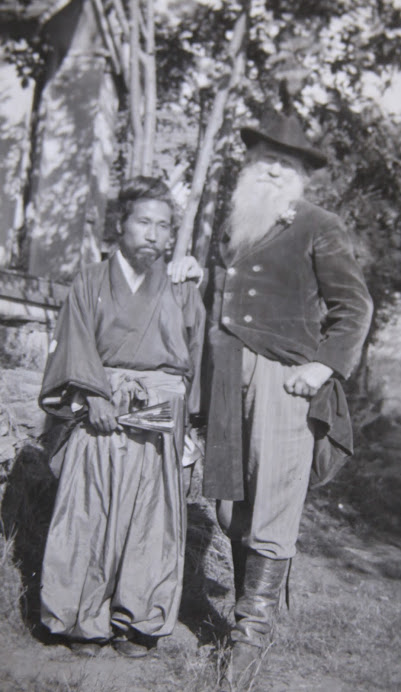
Leave a comment