My aunt and uncle were good friends of Margaret and Walter Keene. When I was thirteen he asked me my opinion of the painting Walter did. I said;
“This is not real art!”
Jim Bigalow – was furious!
Christine Rosamond did not feel like a real artist, and asked me for help.
“I can’t give you that!”
Today is Christmas 2024, and I declare – I can do that!
When I read a member of the Boswell family was one of Rosamond’s patrons, the notion we are very close to being the Real Steinbeck tales, winged home.
John Presco
In Mr. Sydney Morris’s Report of the Administration he says on page 4 line 10;
“Petitioner hired Stacey Pierrot, who had been assistant manager of the gallery during Decedent’s lifetime, to run the gallery and prepare and execute a marketing plan. The gallery was run by the estate until March 1996 when the gallery was sold to Ms. Pierrot through a contract approved by this Court. During the time that the estate operated the gallery, aggressive marketing efforts were made in an attempt to stir interest in Decedent’s work and increase the potential market for her work. In spite of these efforts, interest in Decedent’s work continued to wane.”
Jin Bigalow – was furious!
Indeed, Boswell’s early dominance came as much through political mastery as business savvy. Family members spent less time on the farm than in the exclusive neighborhoods of Pasadena, where they built lasting alliances. Boswell eventually married Ruth Chandler, daughter of the Los Angeles Times-owning Chandlers, the most powerful family in southern California. The Boswell political reach grew long indeed.
In 1850, the land that was fated to become California’s cotton kingdom had been under water. Each spring, snowmelt rushed from the Sierra Nevada into the San Joaquin. There it recharged the abundant breeding grounds and habitat of birds, fish and clams in Tulare Lake, the biggest body of fresh water west of the Mississippi River. Early efforts to drain the lake and turn the land to agriculture culminated in the 1930s, when the Boswells and neighboring growers persuaded federal authorities that the lake was a flood, which officials then checked with a taxpayer-funded dam.
“We know when we are not wanted, Mr. Buck. We got enough oil, water, tree, and agriculture trouble. We are cashing in our chips. You tell Miss Pierrot – we want nothing to do with that damn gallery. What do we know about art, anyways?When the bank took our land, we knew we were licked!“
There is no sadder tale to tell then when one begins their life story with the betrayal of their daughter. It is a long road to haul a tragedy with no happy ending. Where is the redemption in the scheme of things? What justifications drove children to betray their parents, a parent? All the good and great work is ruined, even the telling of how it happened has lost the reader, the audience, before the curtain opens. For this stage they maketh is for real scoundrels who have no love for beauty, art, and even money: for they made all the money vanish, all the hard work, is destroyed.
I awoke feeling the core of my pain wondering how they exspect me to endure the isolation they dread? Have they no mercy, no pity? They identify me as the source of the talent and Rosanond’s success when they do this. Could it be they feel they will be left out, and thus there is a bond between thieves to make sure they get a piece of the cake.
I have been putting my self in Merian Salyer’s shoes. How did she feel when her son took her and his father to court? Fred Salyer grew cotton and was in a fierce rivalry with J.G. Boswell who is titled ‘The King of California’ in a book that wonders if he brought to California the South and a brand of slavery with him. John Steinbeck made the San Joaquin Valley famous in his novel ‘The Grapes of Wrath’ and ‘East of Eden’. The latter was required watching in the Presco household. In 1962 Rosemary Rosamond revealed to her three oldest children she was making porno for Mafia boss ‘Big Bone’ Remmer who came over to our home in San Sebastian to meet ‘The Presco Children’. We were informed our mother was a prostitute for Remmer, and thus the scene where Cal introduces Aaron to his mother was of huge importance as to how Vic Presco’s two sons saw themselves, how they maintained their self-esteem. When my package and offer to my seventeen year old daughter and her mother was returned ‘To Sender’ with no forwarding address, I immediately saw an image of my brother, the neo-Nazi and neo-Confederate. Had he help lure Heather Hanson away from me? Was he behind Stacey Pierrot coming to own our sister’s artistic legacy, it his style to lurk in the shadows so he can enjoy the most severe and destructive impact. Here is his blog. The Hanson family empowered a racist and misogynist. They see themselves as promoters of Black Power and leaders in the Women’s Empowerment Movement.
When I look at the photograph of Rosemary at the Rucker Company Christmas party, I see Big Bones lurking in the background. Rosemary competed with her sister to be ‘The Belle of the Ball’. They hung around Errol Flynn when they were around the age of eighteen. Having driven our father from his home after stabbing him between the eyes with a steak knife, we were entreated to her ‘Rosy Lineup’ of the men she should have married.
“How would you like to have been the children of this guy?”
I believe we were shown a photograph of one of the sons of LEWIS who bought the ranch that belonged to the Cabrillo family who bred white horses. LEWIS loaded up twenty box cars with his name on it and shipped a shit load of Lima Beans to Chicago replicating the scene where Cal tries to help his father realize his dream, that fails, and this Rebel Without a Cause is anointed ‘The Family Scapegoat’ who could do nothing right. Here is the LEWIS home movie.
“George wanted me to marry him. He is an actor. Isn’t he good looking. Imagine how more good-looking you would be if George was your father, and you grew up in Hollywood instead of Oakland. Your son-of-a-bitch father destroyed our lives!”
My daughter was born on Rosemary’s birthday. Her mother suggested it was her choice to ditch me – for good – and go get in the ‘Rival Biography’ that Mark insisted I support. When I told him to go fuck himself, and repeated what I said to Lilliam Rosamond after she gave Tom Snyder a interview, my racist brother threw me out of his family.
“You betrayed me you fucking cunt!”
Mark asked me if I could include some of his rants in my autobiography. He wanted me to cherry-pick what I found pertinent. When he told me he got to read the rough draft of ‘When You Close Your Eyes’ wherein Rosemary and her famous daughter are demonized, I was incredulous.
“You allowed the report that members of our family looted our sister’s house after the funderal?
We met for the last time at Rosamond’s house in Pacific Grove. Garth and Drew Benton were not at the funeral. However, I noticed a stranger lurking about in the dark dining room eavesdropping on our conversation.
“Who’s that?” I asked Vicki Presco.
“That’s Garth’s good friend. He volunteered to be here to make sure no one takes anything.”
My brother kept popping in, and leaving. I wonder where he went. It is revealed the McCurdy’s live next door. They are my brother and sister in Alcoholics Anonymous. They are mentioned in the pages next to the report Marian Sayler gave about owning ‘Dunkin The Frog’.
J.G. Boswell married Ruth Chandler the daughter of the man who owned the L.A. Times who helped secure the water rights of Tule Lake. I am sure Fred Sayler felt ‘The Cotton King’ had an unfair advantage due to ‘The Press’ that was never on his side.
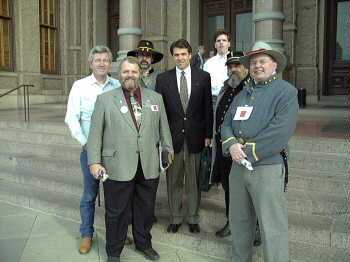
I am a newspaper man. I am the President of Royal Rosamond Press. Today the news is filled with stories about the dismantling of all Confederate monuments including the statue of Robert E. Lee, who is in my family tree. If my brother is alive, I believe he wonders what our President wonders. Is it true?
“Every dog has their day!”
I have written a story about John and Jessie Fremont at least once a month. I am in their family tree. No one else gives a shit, and choose to call me insane. When it comes to a Family Dynasty that includes many land grants and the seizure of the Oregon Territory and California, there is no bigger war over real-estate and the family fortune.
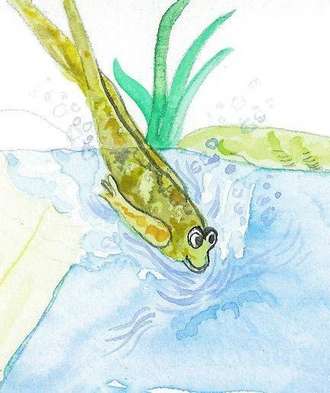
My late sister, Christine Rosamond Benton, is the victim of posthumous Gaslighting by Tom Snyder, the ghost writer hired by Stacey Pierrot. Bi these villains Gaslight Shannon and I. On page 162 and 163 we hear from Marian Sayler, who allegedly is Christine’s sponsor in A.A. She was a friend of the McCurdys who were in my sister’s AA group. Michael McCurdy was a manager in the Rosamond gallery where Marin caught Rosamond doing a whimsical painting of a frog. I saw this frog on the webpage of Rosamond’s first biographer, Sandra Faulkner. “Dunken The Frog” was a children’s book Sandra was trying to sell. When I pointed out this ART FRAUD, to Executor, Sydney Morris in a letter, Dunken disappeared. Snyer said he would not use my sister’s and my recovery. He lied! Three people in A.A. are employed to commit an act of fraud. This constitutes CONSPIRACY!
‘It was Christine’s sense of humor, I think, I enjoyed the most her. I went to the gallery on Doloress Street once, and Christine was working on a painting of a frog for a children’s book, I believe. It was entitled “Splash” and I still have it over my bathtub at my home in Palm Springs.”
Marian describes the little frog, layered with Rosamond’s sense of the comedic. Ever the courtiere’, Christine had placed over the frog’s green skin, a little striped bathing suit.”
There is a story I enjoyed as a youth, The Princess and the Frog’. I will concentrate on Snyder’s transformation of a bathing frog, into a weapon to destroy me – with the help of my brother and sister in AA – who should never have contributed to Pierrot’s bio. She paid for it. Christine’s Anonymity was broken. There are thousands of Recovery Books on the market – written by people in Recovery! Tom and Stacey – along with Vicki and Mark Presco – knew I began my Recovery Book in 1992 – two years before Christine ended up making a SPLASH in the Pacific Ocean! Let’s ask some good questions:
Why didn’t Splash make it into that children’s book? If it did, why didn’t Julie Lynch include images from this book in her book?
Why isn’t Mirian’s frog in Julie’s book?
Is there a record of this sale?
Is is signed by Rosamond?
Christine NEVER painted in her gallery! I have been searching for Sayler for years – and can’t find her. Is she a FICTIONAL person. If you know her, let me know! I called up Michael McCurdy last year, and he was anxious to hang up. I would love to have my attorney question him on the witness stand, along with his wife that told me to stay out of it when I asked good questions in 1994.
As a Biblical Scholar I notice timeline statements, like “I still have it over my bathtub.”. Take out the “still”. “I believe” is used to strengthen the claim, the entitlement. Pierrot allowed her Ghost Writer to tamper with evidence I submitted to the Superior Coust of Monterey. Will Sandra make a good witness for Dead Rosamond? Vicki told me Sandra absconded with a 5,000 dollar advance she got to author my family bio? I sent her an e-mail with a pic of Dunken, along with this question;
‘Did you paint this image?”
Why do these parasites believe this is what Sober Christine wanted?
I will be talking to my new therapist about the Gaslighting of Kim Haffner who made a living dealing with severely insane people. Kim denies reading Snyder’s book, because, she wanted to gather Gas Lighting Material. Did she contact Stacey Pierrot, or, Vicki Presco. She suggests she had been conversing with my daughter, and the AGREE that I am mentally ill, and tend to make crazy stuff up. With my posts on the authors I conversed with on yahoo.groups, who were Gaslighting me, comes evidence I had a valid book in the works. Does Dr. Haffner consider these authors insane because they published books about Mary Magdalene having Jesus’ baby?
Tom Snyder uses CHILDREN to hurt me. He weaponizes them. I am going to try to get a record of Haffner’s employment at the Johnson Unit where she may have abused adults who are acting like unmanageable children. Haffner riled up our neighbors to punish and control me. I believe she passed Christine’s biography around when I asked her not to. I want her on a witness stand, along with our neighbors. I told Kim about Love Match. Some Christians believe Gays should be executed.
The Haffners stalked me after I told them Garth Benton went to Sue Haffner’s high school. They wanted to control that information so it could be put in their pile after reducing me to a raving lunatic in a psycho ward. Garth Gaslights my sister – posthumously. So does Scott who was a friend of Snyder. What they did, and do to me, they did to Christine.
Gaslighting has been observed between patients and staff in inpatient psychiatric facilities.[20]
In a 1996 book, Dorpat claimed that “gaslighting and other methods of interpersonal control are widely used by mental health professionals as well as other people” because they are effective methods for shaping the behavior of other individuals.[1]:45 He noted that covert methods of interpersonal control such as gaslighting are used by clinicians with authoritarian attitudes,[1]:xiii–xxi and he recommended instead more non-directive and egalitarian attitudes and methods on the part of clinicians,[1]:225 “treating patients as active collaborators and equal partners”.[1]:246
When, at an early art opening, a patron enthuses, “Your husband’s quite a talent! Do you paint too?” Margaret seems to be racking her mind to remember, finally stuttering “I don’t know.” It’s especially painful to see how Walter’s gaslighting of Margaret’s extends to Jane, her longtime muse, whom Margaret literally shuts out of her studio to preserve Walter’s fiction. When he tells Margaret, in public, that he’ll “have [her] whacked” if she reveals the truth about the paintings, it’s able to be horribly comedic only because Waltz perfectly portrays the impotence underlying Walter’s rubbery-faced egomania. But it’s clear that the real-life threat was very plausible. In a recent profile in the San Francisco Chronicle, Margaret recalls:
“Back then, women kind of went along with their husbands, didn’t rock the boat. He finally wore me down,” Margaret says. “While we were fighting this out at home, the paintings were just flying off the walls. Posters were selling. It was unbelievable. It snowballed overnight. I kept getting in deeper and deeper. I didn’t know how I could get out of it. I lost all respect for him and myself, and lived in a nightmare.”
Yesterday I sent Sandra Faulkner a message beseeching her to tell the truth. So far I have not received a response. Looking again at the Rosamond webpage Stacey Pierrot came out with in April of 1997, I noticed something I overlooked. The title of the biography Faulkner chose was the same title the ghost wrote, Tom Snyder, published his biography under. There were two authors! What is key, Faulkner said she conducted interviews with Christine – before she drowned! Did Snyder work from Faulkner’s notes, or, tape recordings?
“Do you have any notes, or recording about my late sister, Christine Rosamond. You and my daughter could pass for twins. We do not see each other, and my grandson, because Vicki Presco convinced her I am deluded, and my doubts about Christine drowned, un-founded. I beseech you to come forth and tell the truth so I can see my child again.”
Jon Gregory Presco
“Sandra Faulkner whose book ‘Love Match’ was a non-fiction best seller, has written a biography of Rosamond. Of the subject of the book ‘When You Close Your Eyes’, Faulkner says; “I was reluctant to write all that my interviews revealed about Christine.”
Did Snyder take over the project from Faulkner? Vicki Presco told me Faulkner quit and ran with a $5,000 dollar advance, but, Vicki is a good Storyteller! This lie was covering up the true reason, being, Sandra’s artwork was being passed off as the artwork of a dead artist. This is on par with the movie ‘Big Eyes’.
Big Eyes is a 2014 American biographical film directed by Tim Burton, starring Amy Adams and Christoph Waltz. The script was written by Scott Alexander and Larry Karaszewski. The film is about the life of American artist Margaret Keane—famous for drawing portraits and paintings with big eyes. It followed the story of Margaret and her husband, Walter Keane, who took credit for Margaret’s phenomenally successful and popular paintings in the 1950s and 1960s, and the lawsuit (and trial) between Margaret and Walter, after Margaret reveals she is the real artist behind the big eyes paintings.
“On occasion, Christine speaks for herself – these passages are included and italicized – from scattered pages of autobiographical notes, a few brief interviews, unfinished letters, and personal meanderings. These passages are all more striking for being so sparse. For Christine was not a journal keeper so much as one who reached for clarity of mind by writing. The bulk of her comments, however, consists of scattered thoughts and the ideation of a woman who was not well at the time she wrote them down.”
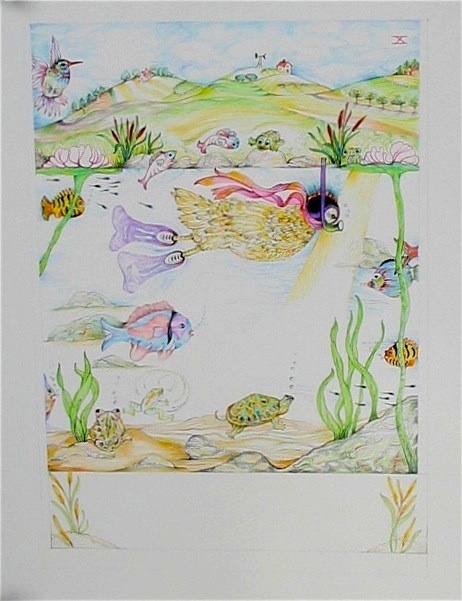
Piorrot’s webpage advertised a illustration of a frog.
“A poster of Rosamond’s Creation ‘Dunkin the Frog’ will be distributed to children in hospitals. T-Shirts and tote bags will be produced featuring the whimsical character.”
This frog is the creation of Sandra Faulkner, but, they are putting Rosamond’s name on it as the creator. I saw Dunkin on Faulkner’s webpage in 1997 and wrote a letter to the executor, Sydney Morris, telling him I doubt my sister painted a frog, and, gave Faulkner an interview, and if she did, those intervierws belong to my nieces. I also informed him Christine filed a lawsuit to keep her artwork off tote bags.
This is when Faulkner disappears from the Fraudulant Art Happening. My mother said they were talking about a movie, and thus they would want First Book, dictated by the Famous Dead Artist. This is why Snyder disavows Faulkner’s interviews. They also knew I was writing a biography, and were scaring me off. But, what will not do, in anyones book, is these Art Frauds lured my sixteen year old daughter, a minor child, into their camp! When Patrice, Linda, and Craig Hanson disappeared Hether Hanson from my life, that were helping outsiders create a Fraudulant Persona FOR PROFIT that did not generate monies for the estate and thus the heirs. Indeed it discourages my niece Shannon Rosamond from authoring her own biography – and Drew Benton!
These outsiders came in our midst within hours of Rosamond’s death. They said we were in “chaos” and this is why they had to take over. They created the chaos. The labeled Christine, Shannon, and myself, mentally unbalanced. We were/are the family artists. Sydney Morris was an outsider that helped the outsiders rest away my families creative legacy. Christine named our sister, Vicki Presco to be he Executor. Bottom line;
Sandra Faulkner and Tom Snyder never met, nor did they have any conversations with Christine Rosamond. Yet they produced one biography between them, and rendered a frog named Dunkin, and fraudulently applied a world famous artist’s name to it. Here are the complete works of Rosamond. You will not find ‘Dunkin’.
Here is Morris; “By September 2000, however, plans were underway for a biography of Decedent, which Petitioner hoped might create interest in her work. The book was published in 2002. Although the book did not spur the hoped-for interest in Decedent’s life and work, efforts continued to market the concept of a screenplay based upon Decedent’s life.
Morris does not say the proceeds of sales of ‘When You Close Your Eyes’ or monies from the movie, will go to my nieces, Christine’s two daughter. I have to conclude Sydney Morris bid Pierrot to remove Faulkner from my sight, and replace her with a new ghost writer. I will be filing a complaint with the Bar Association, because my biography, and a movie made from my book, would create interest in my sister’s work, and generate sales, the proceeds going to my nieces. This blog has created a interest in Rosamond’s work. I had 150,000 readers last year. I will go ahead and finish ‘Capturing Beauty’ and generate much interest that will benefit my nieces – my family! They failed! In every way!
The claim that Christine chose Faulkner after reading her Lesbian novel, because she thought Faulkner looked like her, is a lie, and is so strange, because Sandra looks just like my daughter, who pretended she wanted to be my daughter, but, only wanted to get near the Frauds. This is a fraud, within a fraud, within a fraud!
Jon Presco
Copyright 2015
In Mr. Sydney Morris’s Report of the Administration he says on page 4 line 10;
“Petitioner hired Stacey Pierrot, who had been assistant manager of the gallery during Decedent’s lifetime, to run the gallery and prepare and execute a marketing plan. The gallery was run by the estate until March 1996 when the gallery was sold to Ms. Pierrot through a contract approved by this Court. During the time that the estate operated the gallery, aggressive marketing efforts were made in an attempt to stir interest in Decedent’s work and increase the potential market for her work. In spite of these efforts, interest in Decedent’s work continued to wane.”
On page six, Mr. Morris explains why there was a delay in the closing of the estate;
“By September 2000, however, plans were underway for a biography of Decedent, which Petitioner hoped might create interest in her work. The book was published in 2002. Although the book did not spur the hoped-for interest in Decedent’s life and work, efforts continued to market the concept of a screenplay based upon Decedent’s life. Petitioner hoping that this might be brought to fruition, elected to keep the estate open. However, it is the Petitioner’s belief the likelihood of an increased interest in Decedents work is negligible, and the time has come to close the estate.”
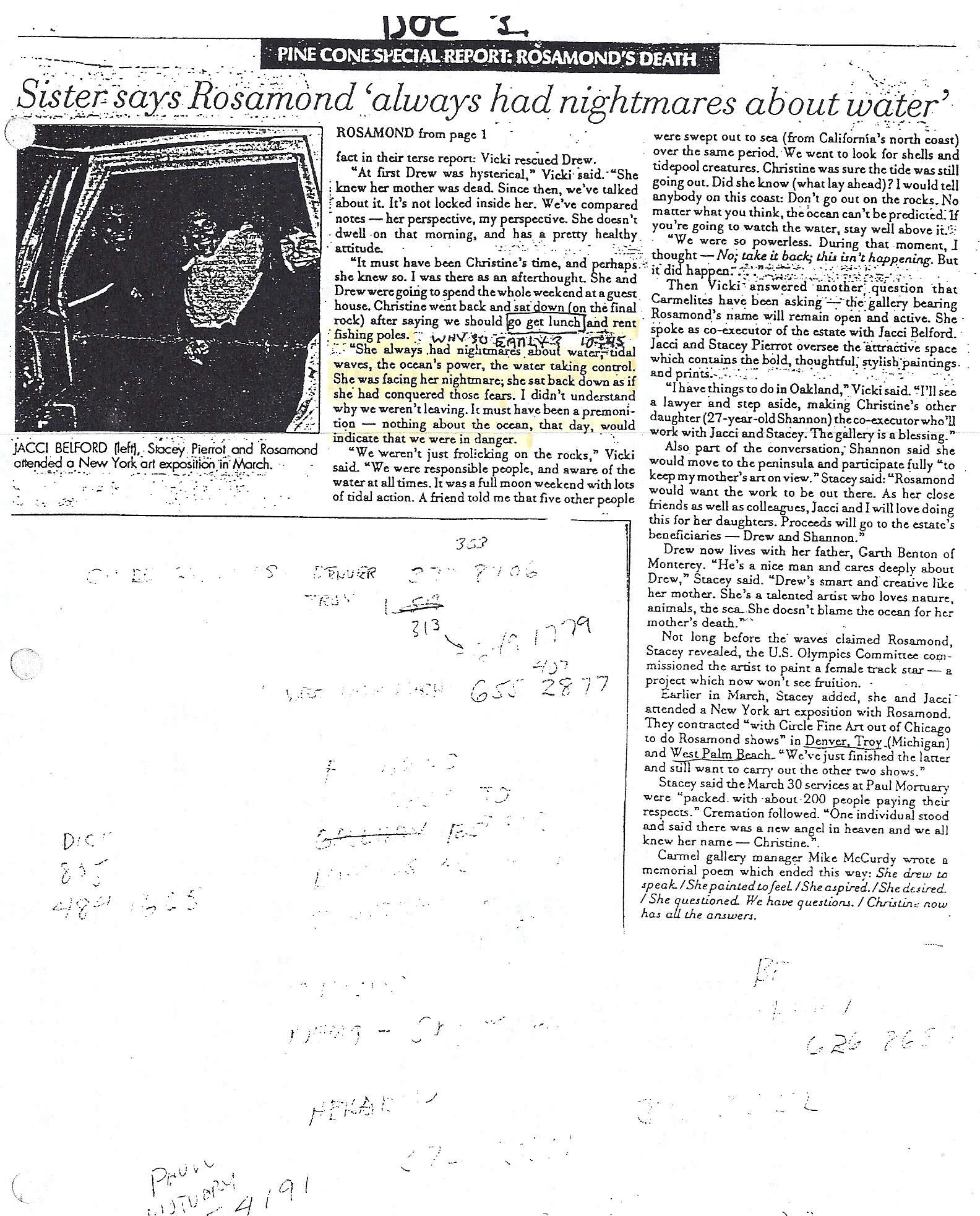
“Pierrot later bought the business from the estate, royalties from which go to Rosamond’s daughters, Drew now 11, and Shannon, 28. Pierrot has a determined vision of where she wants the business to go. A poster of Rosamond’s creation “Dunkin the Frog” will be distributed to children in hospitals. T-shirts and tote bags will also be produced featuring the whimsical character, Pierrot says. All manner of upscale merchandising is contemplated using the images from Rosamond’s paintings…bed linins, throw pillows and other elegant household items.”
“That was foremost in Donald Layne’s warning. When near the water’s edge, visitors must follow a fundamental rule: Never turn your back to the sea. Yet on this fine spring day, that is precisely what Christine does. She sits on the rock with her back to the sea, and jams her hands in the leather jacket’s pocket.”
Here is Shamus, the egregious liar. “I don’t think I am Heather’s father. (I have 2 sons and a vasectomy. I’m happy with just 2 sons) The part where you accusing me of shielding her from you and her grandson is due to the fact I was asked by Heather NOT to give out her phone number or address. If you asked me not to give your whereabouts I would do the same. It’s a matter of trust. That’s why it was my idea that she make a new email address so you two could be in contact. It didn’t violate anything she asked me to do.” How can you believe this quote: “You know,” she says aloud, “if a giant wave came right now, it could take me out to sea, and I could drown.” This was quoted from my own mom, whom you believe a liar. Shouldn’t you disbelieve that as much as anything else that she or I says. You have no “proof” that Christine said this. Mom’s words aren’t proof according to you since you don’t trust her. You don’t get to use only the words you want as your truth, as you aren’t qualified to discern which is the truth and which is a lie. Either you trust what she says or you don’t. You can’t go “well this soundsl ike it could be true, but this doesn’t.” It’s all hearsay. Believe it or don’t. Don’t be a hipocrate.
“We were almost there when an ambulance passed us, going the other way. We both realized it was carrying Christine. My mind flashed back over the last few months and years, and all the anguish for Nina and Drew and me, even for Christine. I was crying, and I turned to Nina — this is what I am ashamed of — and I said, ‘we’re free. And Drew issaved.”
shamusdundon@Y…> wrote:
Mom called me last night after getting an email from Heather. Heather was very upset about the things you said to her. Mom was ticked off at me, accusing me of stirring things up by having Heather contact you, so she wanted me to write Heather to advise her what to do about it.
Mom also said she would call Heather in a day or two to add her 2 cents. I’ve already advised Heather in an email last night. I suggested she may want to wait until after the baby is born to contact you, considering she doesn’t need the extra stress while she’s present. At that time, I hadn’t read all your rubbish yet about you thinking I was posing as her. I will write her another email suggesting she call you only if you write her an apology. (by the way, write an apology as you would to her, not one you think is going to me as a fraud) long story short, yes mom does have her phone number, yes I could get it from her. No I won’t give it to you without Heathers consent. You have her REAL email address convince her of your intent and maybe not all is lost.
In Rosamond-Presco@yahoogroups.com, “Jon Presco”
braskewitz@y…wrote:
Shamus, do you or Vicki – or any member of my family – have Heather’s phone number? Lillian told me she heard from Vicki that Heather was going to have a child. How did Vicki find that out, by phone, or e-mail? Heather was going to name the baby Lillian-Rose, thus she hoped it was a girl? She tells me she I am going to have a “grandson” thus she had a test – hence!
Shamus says he only had two contacts with Heather, but, takes charge of her and her unborn baby, he taking delight in our falling out. He then sets up a reconciliation between us. How interesting. These keepers of the Big Family Secret have empowered and enriched themselves, and like child-molesters they feel like gods because they never get caught, because THE PROOF is sealed in the silence of the lambs. Shamus and Vicki have taken my daughter and unborn grandson hostage, and are using them to get me to stop seeking the truth – stop asking questions – and stop doubting family members love you. “The Lord giveth, and the Lord taketh away.”
“I have a clean conscience. I am quite willing to hash out whatever it is you feel I’ve wronged you in. Please provide proof , and not conspiracy theories.
Shamus
From: “John Presco” Date: Thu Apr 15, 2004 8:24 pm Subject: Re: John Do you recall exactly when you talked to Heather? Do you think she was sincere about learning more about you, or, she wanted to learn more about me?
Jon
Maybe you should elaborate more on Heather. I’ve only had 2 phone conversations with her, and they were both about us learning about each other as family members. The only thing I mentioned about you, when she brought you up, was that she should be careful not to feel to hurt IF you said some mean things out of the blue. (perhaps you can understand why I might say that.) I never said anything to discourage her from associating with you. I have no idea the current status of your relationship. I haven’t talked to her in quite sometime. What did you mean by “outsider” going after her? Maybe you should tell me what happened….
”
“Before the service, Vicki had taken the trouble to go through Christine’s bedroom, putting her jewelry and intimate belongings out of sight. As matters turned out, it did little good, for the funeral was not long over before family members and others were ravaging Christine’s house, taking whatever could be carted away. The artist’s closet, a veritable mother lode – took the worst beating. World-class spender that Christine had been, much of the clothing had never been worn. So whatever still bore price tags was hauled off to be exchanged for money. Jewelry disappeared, as well as other personal belongings. Gallery employees and close friends of the family, along with Vicki, were doing their best to staunch the flow – the estate had not yet been inventoried – but to no avail.”
“While there had been big waves visible farther along the coast, the ocean’s surface here is calm. Though the tide may be turning, it seems low. Along this precipitous coastline, the Pacific is exclusive in its moods. That was foremost in Donald Layne’s warning. When near the water’s edge, visitors must follow a fundamental rule: Never turn your back to the sea. Yet on this fine spring day, that is precisely what Christine does. She sits on the rock with her back to the sea, and jams her hands in the leather jacket’s pocket.”
“Of course adventures rarely go as planned. The properties main gate is unexpectadly locked, so Christine goes in search of help. She finds it in the neighbor, a attorney Donald Layne. Of imposing size and intelligence, Layne is also blessed with a generous nature. None of this is lost on 46-year-old Christine.
At just over five-foot five, she is a perennial fashion plate model and man-pleaser. Even for this casual outing, she is wearing tailored tan slacks and a white tunic-style blouse topped by a short jacket in soft, muted-brown leather – distinctively styled with two snaps at the waist. The sleeves were turned up, revealing the satin lining and a hint of a forearm. A remote transmitter is finally located for the security gate. Christine tells Layne that she and others are excited about exploring a small cove to search for any treasures left by the sea.
Layne knows the shoreline well. That evening, he sounds a WARNING note. “IF you go down to the ocean,” he tells Christine, “have a care”. In the morning, under a windless sky……”
“It must have been Christine’s time, and perhaps she knew so. I was there as an afterthought. She and Drew were going to spend the whole weekend at a guest house. Christine went back and sat down on the final rock after saying we should go get lunch and rent fishing poles. She always had nightmares about water, tidal waves, the ocean’s power, the water taking control. She was facing her nightmare; she sat back down as if she had conquered those fears. I didn’t understand why we weren’t leaving. It must have been a premonition – NOTHING ABOUT THE OCEAN, THAT, DAY WOULD INDICATE WEWERE IN DANGER. We weren’t just frolicking on the rocks.” Vicki said. “We were responsible people, and aware of the water at all times. It was a full moon weekend with lots of tidal action. A friend told me that five other people were swept out to sea ( from California’s north coast) over the same period. We went to look for shells and tide pool creatures. Christine was sure the tide was going out. Did she know what lay a head?”
According to another anonymous official, the nation’s top military officer, General Mark Milley, got into a ‘shouting match’ with Trump after the president spoke of his wish to end the country’s protests by bringing in active military forces.
The official told The New Yorker that Gen. Milley is said to have stayed firm, responding: ‘I’m not doing that. That’s for law enforcement.’
It’s unclear whether that incident took place in the same White House meeting on Monday where Trump told Esper that he wanted 10,000 troops.
The governor, however, won’t be deterred, a spokesman told The Progress-Index, a member of the USA TODAY Network.
“Governor Northam remains committed to removing this divisive symbol from Virginia’s capital city, and we’re confident in his authority to do so,” press secretary Alena Yarmosky said in an email late Monday night.
On Monday, Richmond Circuit Court judge Bradley B. Cavedo granted a request by attorneys for William C. Gregory that would halt any of the preparation work involved in removing the statue from its 130-year-old residence on Monument Avenue.
n Sunday, Black Lives Matter protesters in Bristol, UK, pulled down a statue of 17th-century slave trader Edward Colston and rolled it through the streets before dumping it, unceremoniously, into the River Avon.
Some applauded the move, while others decried what they called “mob rule.”
With a colonial history spanning centuries — and a mania for erecting statues in the 19th century — Britain’s towns and cities are dotted with monuments to figures like Colston.
For some, the statues have melted into the background of daily life, but many people are now questioning whether they should still stand on their pedestals.
On Tuesday, the Mayor of London, Sadiq Khan, announced a commission to examine the future of landmarks around the UK capital, including murals, street art, street names and statues.
The Commission for Diversity in the Public Realm is aimed at improving “diversity across London’s public realm, to ensure the capital’s landmarks suitably reflect London’s achievements and diversity.”
Washington (CNN)Attorney General William Barr said Monday that the US Secret Service recommended moving President Donald Trump to the underground White House bunker during late May protests, contradicting the President’s earlier assertion that his visit to the bunker was for “inspection.”
Barr told Fox News that the June 1 action to expand the perimeter around the White House and Lafayette Square was a reaction “to three days of extremely violent demonstrations right across from the White House — a lot of injuries to police officers, arson.”
“Things were so bad that the Secret Service recommended that the President go down to the bunker,” Barr said, referencing protests on May 29. “We can’t have that in our country. And so the decision was made. We had to move the perimeter one block. And that was what we were doing (on June 1).”
Last week, Trump sought to explain his time in the bunker during clashes outside the residence on May 29 as an “inspection,” rather than a retreat for his own safety, telling Fox News Radio’s Brian Kilmeade he was only in the safe room for a “tiny” amount of time.
There is one thing I know for sure
In the tale, a spoiled princess reluctantly befriends the Frog Prince, whom she met after dropping a gold ball into a pond, and he retrieves it for her in exchange for her friendship. The Frog Prince magically transforms into a handsome prince. In the original Grimm version of the story, the frog’s spell was broken when the princess threw it against the wall, while in modern versions the transformation is triggered by the princess kissing the frog.[5]
In other early versions, it was sufficient for the frog to spend the night on the princess’ pillow.[6]
The frog prince also has a loyal servant named Henry (or Harry) who had three iron bands affixed around his heart to prevent it from breaking in his sadness over his master’s curse. When the frog prince transforms into his human form Henry’s overwhelming happiness causes all three bands to break, freeing his heart from its bonds.[7]
Marian Rae Salyer. December 1, 1922 December 6, 2005. A memorial service will be held on Monday, Dec. 12, 2005, at 2 P.M. for Marian Rae Salyer, age 83, at the Community Church of the Monterey Peninsula. Marian was the daughter of Mildred and Ray Mahaffey, and was raised in Chicago, Illinois by her loving parents Mildred and H.R. “Bud” Bollman. She was a graduate of Stephen’s College in Columbia, MO, and later became a registered nurse having attended St. Luke’s Hospital School of Nursing. Marian brought love and joy to every life she touched and will be sadly missed by her family and many friends in Pebble Beach, the San Joaquin Valley and the Palm Desert area. Marian’s survivors, include her husband of 56 years, Fred Salyer of Corcoran; daughters, Christine Salyer and Linda Lee of Fresno; son, Scott Salyer of Pebble Beach; grandchildren: John Lee, Patrick Van Wyk and his wife, Kim, Traci Van Wyk, Noelle Van Wyk and Stefanie and Caroline Salyer, and her constant little companion, “Mac”. In lieu of flowers, the family requests donations be to: Beacon House, 468 Pine Avenue, Pacific Grove, CA 93950 or to your favorite charity. Arrangements are under the direction of The Paul Mortuary in Pacific Grove.
Mark Arax
Los Angeles Times
AFTER 70 YEARS OF rivalry, the world’s largest cotton grower is buying out another California dynasty.
CORCORAN, Calif. – The Boswells and Salyers, two of the richest and most powerful farming families in America, have ended decades of rivalry and rancor over their California empires with a huge land deal in which one colossus will swallow the other.
Fred Salyer, 72, has agreed to sell his cotton and grain empire – an estimated 25,000 acres of fertile San Joaquin Valley soil – to J.G. Boswell for tens of millions of dollars, according to business associates.
The two men themselves aren’t talking about the deal that would end one of the most protracted family feuds in California history.
Salyer confirmed the sale, effective March 1, in a terse letter to city and county officials. Boswells and Salyers have been fighting over control of this part of the state since their forebears – “The Colonel” and “The Cockeye” – first squared off in the early 1920s.
In this two-company cotton town, where most everyone’s bread is buttered by Boswell or by Salyer but rarely by both, it was always thought that too much venom and pride stood between the two clans for any such deal. But over the past decade, as his fortunes waned, Salyer grew more open to overtures.
Last week, on the heels of another disappointing crop for Salyer, James Boswell II, the largest cotton grower in the world, traveled from Los Angeles to meet with Salyer.
Salyer wanted to sell only part of his empire, sources said, but soon everything was on the table. Boswell sealed the deal with a sum that, by some accounts, exceeded $26 million. “It’s the end of a long chapter,” said Corcoran Mayor Jon Rachford.
Few small towns in the country boast so many millions with so little flaunting of wealth. Perhaps that shyness has something to do with the federally subsidized water that for decades has flowed the cotton giants’ way, and the paper games that both land barons have played to get around the law that limits acreage of farmers who get that water.
The town itself has nothing but pride, proclaiming to visitors in bold letters: “Welcome to the Farming Capital of California.”
It is no idle boast. Boswell is not only the world’s largest cotton grower but America’s largest grower of wheat and seed alfalfa.
Such abundance is a testament to the vision and guile of two pioneers of California agriculture: Col. James Boswell, a military and cotton man driven out of Georgia by the boll weevil; and a Virginia hillbilly named Clarence Salyer who skinned mules and bore the cruel epithet “Cockeye” for a fake eye.
Vision was needed because this land, in wet years, was at the bottom of the largest body of fresh water west of the Mississippi – the Tulare Lake. In dry years, the land could sustain any and all row crops.
Guile was needed because the trick was to control the water.
The fight over water and politics often required one to subvert the other. A half-century later, both patriarchs dead, the battle raged on.
Louis Warren, W. Turrentine Jackson professor of Western U.S. history at the University of California at DavisCHICAGO TRIBUNE
The King of California: J.G. Boswell and the Making of a Secret American Empire
By Mark Arax and Rick Wartzman
PublicAffairs, 558 pages, $30
California. The word brings to mind beaches, Hollywood, Disneyland, even colossal redwoods–but seldom cotton. In fact, in a state where farms are so big and modern that their owners call themselves growers rather than farmers, cotton growers are the biggest of all. And one of them, Jim Boswell, was the biggest grower in the world until his recent retirement. “The King of California” is his biography. It is also the story of the San Joaquin Valley, just over the low coastal mountains north of Los Angeles, where Boswell cotton spreads over 300 square miles.
Journalistic exposes of grower greed are a staple in California. For decades, the spectacle of dirt-poor migrants toiling for San Joaquin Valley land barons has inspired numerous social critics, most famously John Steinbeck in his classic novel “The Grapes of Wrath.” But Mark Arax and Rick Wartzman, reporter and business editor, respectively, at the Los Angeles Times, a Tribune Co. paper, have no truck with Steinbeck or his ilk, an “angry pack of agrarians” who have portrayed big agriculture as “a single-dimension bad guy” without ever interviewing “a single big farmer.” If their mission is to trace the career of California’s most successful farmer and his international “secret empire” of real estate and agriculture, they claim their interests are less reformist than investigative. How, they ask, has the valley become so dominated by such a powerful few? And if its farms are so rich, why are the towns so poor?
For all the authors’ protests, these questions certainly sound like the same ones that “angry pack of agrarians” asked all those years ago. Much of their search for answers is devoted to lively corporate and family history. Boswell Co. was founded by Lt. Col. James G. Boswell, who learned the cotton business in his native Georgia before relocating to California in the 1920s. With venture capital from Cecil B. DeMille and other southern California investors, Boswell and several other growers crafted a new landscape that resembled the South in some ways (huge plantations and plenty of racism) but was more modern in its dependence on vast sums of capital and technology (in recent years, Boswell technicians used laser-guided scrapers networked to global-positioning satellites to level their cotton fields prior to planting for ease of harvesting). Boswell’s farm long kept pace with California agriculture, which has advanced through accumulation of vast acreages, relentless pursuit of intensive mechanization, devotion to applied chemistry (fertilizers and pesticides) and a preference for near-powerless migrant workers.
Indeed, Boswell’s early dominance came as much through political mastery as business savvy. Family members spent less time on the farm than in the exclusive neighborhoods of Pasadena, where they built lasting alliances. Boswell eventually married Ruth Chandler, daughter of the Los Angeles Times-owning Chandlers, the most powerful family in southern California. The Boswell political reach grew long indeed.
In 1850, the land that was fated to become California’s cotton kingdom had been under water. Each spring, snowmelt rushed from the Sierra Nevada into the San Joaquin. There it recharged the abundant breeding grounds and habitat of birds, fish and clams in Tulare Lake, the biggest body of fresh water west of the Mississippi River. Early efforts to drain the lake and turn the land to agriculture culminated in the 1930s, when the Boswells and neighboring growers persuaded federal authorities that the lake was a flood, which officials then checked with a taxpayer-funded dam.
The effort has never been wholly successful. Even now, in wet years, parts of the lake briefly return. Jim Boswell, nephew of Boswell Co.’s founder, took advantage of the situation after he assumed control in 1952. He bought out competitors who could not sustain the fight against the resurgent lake, and as he expanded his valley holdings to monster size, he diversified into numerous other businesses. He sold unprofitable Arizona cotton fields to developer Del Webb, then partnered with him to build Sun City, the nation’s first retirement community. He bent Australian laws against foreign ownership to consolidate a 60,000-acre cotton spread. Back in California, the company finally prevailed in a 50-year congressional fight to gut federal laws that would have broken up the farm and reduced the Boswell latifundia to a yeomanly 160 acres.
This is a great story, but the authors’ devotion to the growers’ perspective is a tricky proposition. The book’s most persistent witness to the valley’s history is Jim Boswell himself, a charismatic figure whose capacity for distortion is suggested in his claim, early in the book, that there has never been any significant black presence in the town of Corcoran, where Boswell Co. is based. In fact, there were once four black churches in the town, and Arax and Wartzman provide a remarkable history of the area’s black and Mexican labor camps and communities, much of it drawn from their own interviews. Similar discrepancies between Boswell’s version of the past and the authors’ interpretation energize the book with a constant sense of revelation and intrigue, the uncovering of the secret American empire promised in the book’s subtitle.
But, played out over more than 400 pages of text, the continual scramble to correct or fill in Boswell’s distortions and half-truths seems to exhaust the authors. Nowhere is their simultaneous effort to cajole and critique the growers more troubling than in their account of Boswell’s neighbor, Clarence Salyer, a transplanted Virginian who careers through the book trailing mistresses, fist fights, drunken car wrecks and family feuds. For all Salyer’s failings, his “savage temper and rascal ways” met locally with a “willingness to forgive” that was “almost universal.”
The folksy synopsis of Salyer’s career sits uneasily near the end of a book whose early chapters include an astounding revelation. On Oct. 10, 1933, Clarence Salyer was in a crowd of growers confronting a peaceful picket line, when somebody opened fire on the strikers. Two workers were shot down in cold blood. While there were indictments, nobody was convicted of the crime. But, as Arax and Wartzman discover, Salyer was convinced he had killed somebody. He returned home that day with his gun, which he melted down in the coal forge in back of his house.
Salyer’s escape from possible punishment might be ascribed less to the goodwill of his neighbors than to his wealth and power. His fortune was second only to Jim Boswell’s. He kept a local constable on his payroll. It is to the authors’ credit that they uncover Salyer’s involvement in a long-unsolved murder. But the resort to local color veers toward whitewash when they dismiss Salyer as a “rascal” and his untouchability as “forgiveness.”
By book’s end, though, even the most powerful of California’s growers seems to be on the verge of becoming an anachronism. Competition from Chinese cotton makes Boswell’s fields ever-less economical. Just over the hill, thirsty Los Angeles promises top dollar for Boswell water, which may be their next commodity. A neighboring grower has already foregone cotton to compost sewage for the City of Angels, a service that brings in millions of dollars a year and obviates the need (or ability) to grow any kind of crop at all.
This may not be such a bad thing. Arax and Wartzman may want no part of that “angry pack of agrarians,” but by the book’s end they sound a lot like them. Cotton farming has all but destroyed the valley’s great wetlands. The spray of pesticide makes the whole basin smell “like rotten flesh,” and dire residues and runoff cause horrendous mutations in the remnant flocks of egrets, ducks and other waterfowl.
The region’s people have not done well either. Jim Boswell is a philanthropic man who has funded college scholarships, a park and a YMCA in Corcoran. He paid his workers well. And yet, precious little of Boswell Co.’s immense wealth flows downstream. The highly mechanized company produces fewer jobs than ever, and town residents are desperate. In the 1990s they agreed to host a new high-security prison. Nonetheless, their community remains a slough of despond. Unemployment hovers above 15 percent, gangs murder to control the drug trade, and the teen pregnancy rate is higher than Haiti’s. It is a sad contrast to neighboring towns like Kerman and Kingsburg, where a preponderance of smaller farmers have produced a persistent middle class and viable downtowns.
In the end, then, Arax and Wartzman’s careful research and sharp analysis of the local scene correct Boswell’s many distortions. For readers seeking a weave of corporate history, family biography and insight into the devil’s bargain Americans have made with big agriculture, there is no more colorful a tale than “The King of California.”.
Jim Boswell built the state’s first giant agribusiness, swaying water and land policy.
(Matt Black / Public Affairs Books)
By Jerry Hirsch
April 7, 2009
12 AM
James G. Boswell II, the intensely private businessman who transformed his family’s cotton holdings into California’s first giant agribusiness and one of the nation’s great farming empires, has died. He was 86.
Boswell died of natural causes Friday at his home in Indian Wells, Calif., according to a statement from the family.
As head of the family-owned J.G. Boswell Co., Boswell ran a company that has dominated California cotton growing for generations and has used its clout to influence land- and water-resource policy throughout much of the state.
He was just 29 when he inherited the company following the death of his uncle J.G. Boswell, the family patriarch. Over the next half-century, he transformed the business and more than tripled the size of the family farm, which peaked about 200,000 acres and now spans 150,000 in the San Joaquin Valley town of Corcoran. Boswell’s labs created new, more productive seeds. Technological improvements to his gins boosted their capacity to 400 bales of cotton a day — enough to produce 840,000 pairs of boxer shorts, according to a 2003 Times article.
Historians and agriculture economists credit Boswell with creating the template for large agribusiness concerns.
The Boswell business remains one of the world’s top sellers of “the extra-long staple cotton that goes into fabric blends and both soft and high-end apparel,” said Don Villarejo, director emeritus of the California Institute for Rural Studies in Davis.
“His legacy is quite impressive,” said Villarejo. “He was a brilliant business leader beloved by many of his employees. At the same time, his company was able to be ahead of and often acquire his chief farming competitors.”
Boswell also was legendary for using a combination of political clout and legal strategy “to outwit many of the environmental groups that have tried to restrict water deliveries to California agriculture,” Villarejo said.
He was an innovative water user, one of the first to employ lasers to level fields so that water flowed evenly and efficiently, said Richard Howitt, an agriculture economist at UC Davis.
Careful water management, including employing agronomists to determine when and how to water, allowed Boswell’s farms to produce more cotton with less water than competitors, Howitt said. Many of his techniques were later adopted by other farms.
But even during this period of growth and success for the enterprise, which included diversification into tomatoes and other crops, real estate development and farming in distant Australia, Boswell remained an intensely private man at the head of an intensely private family business.
A rare 1999 interview with two now-former Los Angeles Times writers gave outsiders a sense of Boswell’s character.
For years staff writer Mark Arax and business editor Rick Wartzman had attempted to meet the cotton patriarch. But each letter and call was rejected. The two were writing “The King of California: J.G. Boswell and the Making of a Secret American Empire,” a book about the family’s cotton business, and they needed to talk to him. Finally he agreed.
J.G., as Boswell liked to be called, wanted to meet them on his land rather than in some sterile office. His intent was to show them that the business was only as good as its earth.
Boswell, the pair wrote, “wore a Cal Poly Ag hat tucked low, frayed khaki pants, a flannel shirt and Rockport shoes.”
“It was all part of an image that Boswell loved to play up. He had earned an economics degree at Stanford and sat on the board of General Electric and other big corporations, but he fancied himself a cowboy,” they wrote in a 2003 Times article.
Boswell attended the Thacher School, an exclusive private boarding school in Ojai, graduating in 1941.
He served in the Army during World War II in the South Pacific before graduating from Stanford in 1946. That’s where he met his first wife, Rosalind Murray. They raised their three children in Pasadena, far from the farm. She died in 2000.
The company remains headquartered in Pasadena.
Fancying himself a cowboy and living like a city boy, J.G. proved to be a complex figure. When he reached out to shake the writers’ hands, they noticed the missing fingers on his right hand, the result of a cattle-roping accident.
They jumped into an aged Chevy truck for a tour of his holdings. The writers said they traveled half a day and 150 miles but never left the farm. When they asked Boswell how much land he really owned, he responded, “What are you, a tax collector?”
“I’m the bad guy in agriculture because I’m big,” he said later. “I’m not going to try to fight it. I can’t change an image and say, ‘Well, I’m righteous and good and all that.’ But I’m telling you . . . I’m not going to apologize for our size.”
Wartzman, now director of the Drucker Institute at Claremont Graduate University, said he was sad to learn of Boswell’s death.
“He was an immensely complicated guy, someone who knew every inch of his land but whose company did some pretty awful things to the land,” Wartzman said. “It is just hard to farm in an environmentally sound manner at that scale.”
The company used its political clout to encourage the building of the Pine Flat Dam to shut the flow of water to Tulare Lake, which at one point was the largest freshwater lake west of the Mississippi River. The drained lake bed is now farmland, located at the heart of Boswell’s sprawling enterprise.
Boswell was born March 10, 1923, in Greensboro, Ga., the son of William Whittier Boswell Sr. and Kate Hall Boswell, and moved west with his parents and his uncles.
He was named after his uncle J.G. Boswell, who married Ruth Chandler, the daughter of Los Angeles Times Publisher and real estate baron Harry Chandler.
With no children of his own, J.G. Boswell picked his nephew to take control of the company he had founded in 1921 with the help of his brothers.
In the early 1980s, Boswell and the company would spend $1 million to defeat the Peripheral Canal, a system proposed to move water to Southern California. He thought it would hurt farming interests.
During the same period, Boswell helped farmers outflank state and game regulators and pump water from excessive snowmelt into the north fork of the Kings River. The move prevented farmland from flooding but also introduced the nonnative predatory white bass into the Sacramento-San Joaquin River Delta.
At times profane, Boswell liked to be in control. For many years his company extended its influence throughout the San Joaquin Valley by lending money to other growers.
He served as chairman, president and chief executive of the company from 1952 until his retirement in 1984. He remained on the company’s board of directors until his death. His son James W. Boswell now runs the business.
In addition to his son, he is survived by his wife, Barbara Wallace Boswell; daughters Jody Hall and Lorraine Wilcox; and five grandchildren.
A memorial service is planned for April 22 at 1 p.m. at the Corcoran High School Memorial Stadium.















 Rosamond Press


Leave a comment