
“Based on this explanation, we can now proceed to our original question. When one witnesses the humiliation of the Sotah, he realizes that the averah he once thought to be unimaginable is now a distinct possibility. In order to protect himself, the witness must therefore become a Nazir and thereby elevate himself to his former level.”
Good morning -Seekers! Today is Meher Baba’s Birthday, and, I announce this day, February 25, 2024, that I am a candidate – for God!
Above is a photograph of Dottie Witherspoon and – God! The Rosamond and Witherspoon family hail from South Carolina where Nikki Halery did well yesterday. We visited Meher Baba’s home in Myrtle Beach in 1971. Peter Townsend was a follower of Baba.
My hand – has been forced – with the Judgement of the Judges of Alabama, who ruled on what Americans can, and can not with embryos outside the womb. This is another attempt by Neo-Confederates to GAIN the moral high=ground – before they lost the Civil War – which was another murderous religious schism began by my great grandfather, John Wilson. What the Tricky Chiefs are doing is plotting to usurp our Democracy by preparing the way for THEIR VERSION of God-Jesus in human flesh – again! Only THEY will be allowed TO VOTE on these Godly Matters. What they do not know. they come late to The Wedding Feast. John the Nazarite – prepared the way – for the manfidtatio of God in human form. This Form came to South Carolina in 1952.
I am a write-in candidate for – God-President! Let he/she without sin – cast the first vote!
John El
In his concurring opinion last week, Chief Justice Tom Parker, an elected Republican, invoked similar reasoning.
“In summary, the theologically based view of the sanctity of life adopted by the People of Alabama encompasses the following: (1) God made every person in His image; (2) each person therefore has a value that far exceeds the ability of human beings to calculate; and (3) human life cannot be wrongfully destroyed without incurring the wrath of a holy God, who views the destruction of His image as an affront to Himself.”
A Jewish Patriot
Posted on October 28, 2018 by Royal Rosamond Press
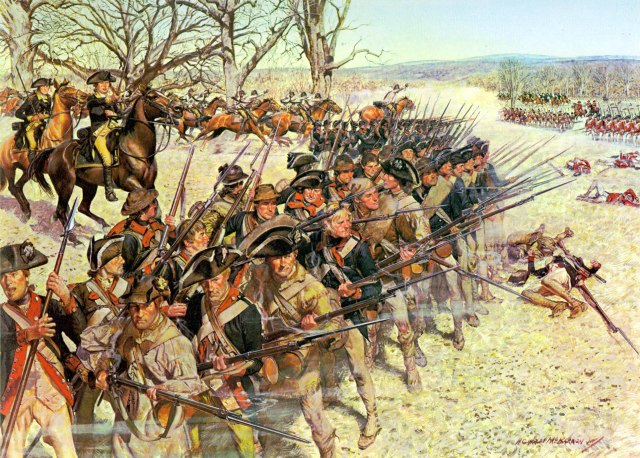
https://news.yahoo.com/alabama-justice-invoked-wrath-holy-171833193.html
https://en.wikipedia.org/wiki/Won%27t_Get_Fooled_Again
The song was originally intended for a rock opera Townshend had been working on, Lifehouse, which was a multi-media exercise based on his followings of the Indian religious avatar Meher Baba, showing how spiritual enlightenment could be obtained via a combination of band and audience.[4] The song was written for the end of the opera, after the main character, Bobby, is killed and the “universal chord” is sounded. The main characters disappear, leaving behind the government and army, who are left to bully each other.[5] Townshend described the song as one “that screams defiance at those who feel any cause is better than no cause”.[6] He later said that the song was not strictly anti-revolution despite the lyric “We’ll be fighting in the streets”, but stressed that revolution could be unpredictable, adding, “Don’t expect to see what you expect to see. Expect nothing and you might gain everything.”[7] Bassist John Entwistle later said that the song showed Townshend “saying things that really mattered to him, and saying them for the first time.”[8]
Play both videos at same time, with Baba video turned down. Then read my message, and list to Baba’s message.

But legal scholars say invocating religion is an unusual step for a judge. And IVF advocates are concerned about injecting religion into what they see as a medical decision to have a family.
Witness For the Adulteress
Posted on December 26, 2011 by Royal Rosamond Press

“One reason that so many religious leaders and laymen oppose the inclusion of these verses, called the pericope de adultera in theological-scholastic circles (“pericope” is a short selection from a book), is due to their lack of understanding it and thus an inability to properly exegete the story.”
In the Torah, the rules for judging a Sotah are followed by the taking of the Nazarite Vow. Is this why christian religious leaders look the other way, pretending not to see – the truth? The judging of the Sotah had been done away with due to Romans introducing drinking and fornication to the Children of God – like the Philistines did. Surely the Jews wanted another Samuel to come and save them. It is alleged Hannah, Samuel’s mother, put herself in a position to be judged as a Sotah, because after women drink the “bitter waters” and are found innocent, GOD GIFTS you with a SON – a ‘Son of God’. How many devout and saintly women tried to deceive the priests so they could born a Messiah, a God-el Redeemer, who would drive the drunks out of God’s Kingdom?
Mary/Mirriam means “bitter waters”.
I found the truth of the Sotah because I read both texts of the Jews and christians – who will not look at each others theology! When I found the following – I saw the light! I found the evidence that Jesus was encouraging Jews to take the Nazarite Vow, which says he was a Nazarite – after John the Baptist!
The key words are he pretended not to hear.
“and with his finger wrote on the ground, as though he heard them not”
Here is Rabbi Eliezer Irons on witnessing sin:
“Not only witnessing the actual criminal act, but even witnessing the punishment and humiliation of the crime can have a deleterious influence on the viewer.
From this we can derive a practical halacha (law) regarding the law of lashon harah (talebearing and gossiping). Lashon harah is a serious averah, but can one speak lashon harah about himself? The Chafetz Chaim addresses self-abasing lashon harah in two places. First, he warns that one cannot absolve himself from the guilt of lashon harah by including himself in the story about a friend. One may speak unfavorable about himself, but not about a friend.”
The real Jesus is ministering to the Jews and their Kingdom of God! The christian kingdom of god – did not yet exist! He wants his kindred to be without sin – after they witness the judging of the Sotah. Did Jesus suggest the Jews – who God loved – take the Nazarite Vow so they would be without sin?
I bid all those who read these words, and have a problem with ingesting alcohol, take the Nazarite Vow – and sin no more!
Christian Liars go out of their way to fill Jews with sin!
Jon the Nazarite
“Jesus went unto the mount of Olives. And early in the morning he came again into the temple, and all the people came unto him; and he sat down, and taught them. And the scribes and Pharisees brought unto him a woman taken in adultery; and when they had set her in the midst, They say unto him, Master, this woman was taken in adultery, in the very act. Now Moses in the law commanded us, that such should be stoned: but what sayest thou? This they said, tempting him, that they might have to accuse him. But Jesus stooped down, and with his finger wrote on the ground, as though he heard them not. So when they continued asking him, he lifted up himself, and said unto them, He that is without sin among you, let him first cast a stone at her. And again he stooped down, and wrote on the ground. And they which heard it, being convicted by their own conscience, went out one by one, beginning at the eldest, even unto the last: and Jesus was left alone, and the woman standing in the midst. When Jesus had lifted up himself, and saw none but the woman, he said unto her, Woman, where are those thine accusers? hath no man condemned thee? She said, No man, Lord. And Jesus said unto her, Neither do I condemn thee: go, and sin no more.” (John 8:1-11)
Parshas Naso :
Witness to Sin
By Rabbi Eliezer Irons
The Sotah, a woman suspected of adultery, is a topic in this week’s Parsha. A Sotah must either confess her guilt, or suffer public humiliation. The Sotah, upon denying her guilt, would be forced to drink waters, in which G-d’s name was placed. If she were truly guilty, her stomach would expand and burst.
The Nazir (Nazarite) is discussed immediately following Sotah. Nazir is a voluntary status that one pursues to attain greater levels of holiness. A Nazir is forbidden to drink wine or eat grapes, cut his hair, or become defiled by a human corpse.
Rashi, quoting the Talmud, asks,
“What is the connection between these two topics?”
(A connection exists when the Torah places two topics sequentially.)
The Talmud answers that one who sees the humiliation of the Sotah should abstain from wine, etc., and become a Nazir. If one sees a Sotah, a woman who fell victim to her desires, it may influence him to sin as well. In order to protect himself against the type of evil inclination that corrupted the Sotah, he should become a Nazir.
Why would witnessing the humiliation of a Sotah influence one to sin?
Logic dictates that the exact opposite should occur! Onlookers should be fearful when witnessing the consequences of the averah (the sin).
To answer this question, we must first examine a difficult passage Sefer D’varim (12,17) in prohibiting the eating of maaser sheni (the second tithe) outside Jerusalem. The verse uses the curious terminology “you are not able to eat.” It would appear to make more sense had the Torah said “You should not eat forbidden food.” One is certainly able to eat forbidden food; it is among his physical capabilities.
The Telzer Rosh Yeshiva Reb Eliyahu Meir Bloch zt”l explains that the Torah here teaches us that sin should be viewed as something unimaginable and far removed from the realm of possibility. To illustrate the point, consider this example: A man on a roof who is ordered to jump is likely to respond “I can’t.” Of course, he is physically able, but in his mind it is utterly unimaginable and psychologically impossible.
Based on this explanation, we can now proceed to our original question. When one witnesses the humiliation of the Sotah, he realizes that the averah he once thought to be unimaginable is now a distinct possibility. In order to protect himself, the witness must therefore become a Nazir and thereby elevate himself to his former level.
This idea parallels the concept of Chilul Hashem (a disgrace to G-d) expressed by Tosafos Yom Tov, in Yoma 8:8. “Anyone who does an averah (a sin) and others are influenced thereby to take the matter lightly and to act likewise is committing the sin of Chilul Hashem.” This week’s Parsha takes the Tosafos Yom Tov idea one step further. Not only witnessing the actual criminal act, but even witnessing the punishment and humiliation of the crime can have a deleterious influence on the viewer.
From this we can derive a practical halacha (law) regarding the law of lashon harah (talebearing and gossiping). Lashon harah is a serious averah, but can one speak lashon harah about himself? The Chafetz Chaim addresses self-abasing lashon harah in two places. First, he warns that one cannot absolve himself from the guilt of lashon harah by including himself in the story about a friend. One may speak unfavorable about himself, but not about a friend.
In another instance, the Chafetz Chaim writers that if upon hearing lashon harah, it is forbidden to believe it. However, if the talebearer mentions himself in the story, it is permissible to accept his story as true . . . but only about himself. It is forbidden to believe what he says about his friend.
From these two places one could possibly deduce that it is permitted to speak lashon harah about oneself. *According to the lessons of Parshas Naso, even though one may not be violating the laws of lashon harah, it is forbidden to tell others of one’s own sins, because by doing so, one is violating the law of chilul Hashem. If one repeats tales of his own sins, he may entice a friend to sin. It will show him that it is possible to commit the sin.
May we be only good, positive influences on each other and all of Kl’al Yisroel.
*Based on the above we can have a better understanding of the ruling of the Rema (Orach Chaim 607) that one is not allowed to confess one’s private sins in public.
– Rabbi Eliezer Irons
Monday, April 26, 2010
A Sotah’s Revenge: The Nazirite Vow
Steve asked about a Nazir, and Joe responded, in the way I would have. I would like to flesh out Joe’s final remarks, but this discussion requires some setup, in addition to which I’d like to bring out a few points I find interesting, so off we go.
A Nazir is an individual who takes upon themselves special vows of abstinence from wine, cutting the hair and contact with a dead body, which is a source of spiritual impurity. We learn about the nazir in connection with the sotah, the wife who is suspect of adultery.
In parshas Naso, we are given the laws of the sotah, and Rashi bring in a wealth of commentary. One of the spectacles to which the sotah is exposed, in order to compel her to perform teshuvah, repentance (which will save her life if she is guilty), is that she is progressively humiliated – first her hair is uncovered publicly, then she is stripped naked down to her waist in front of a crowd of onlookers. Needless to say, for a people who essentially gave the world our present notions of modesty (at its best, not Islamist cutting off heads for showing an ankle “modesty”), these are grave impositions of the public into the private.
Just to finish the thought, after this the sotah is forced to drink a mixture containing a powdered scroll, on which certain text is written. If she is guilty then, well, her womb explodes and she dies there and then. Until the very point she actually drinks the mixture, she can repent and her life will be spared. If she is innocent and the potion has no effect, she is cleared of all charges and accusations, declared a righteous woman, promised (by G-d, not by men) many strong children and becomes a heroine, a true aishes chayil (woman of valor), her name being given to newborn girls throughout the land. Most importantly, her husband now becomes her personal slave, figuratively speaking, can never divorce her, and must service her every wish. So, in terms of a normal Jewish marriage, as far as I can tell, nothing changes!
The parshah, having completed describing the sotah’s fate, breaks off and continues with the laws of the nazir. When two sections in the text are so juxtaposed, there is a relationship between them. Rashi brings it down that the people who witnessed the spectacle of the sotah, the ones who stood in the crowd of onlookers, should take on themselves the nazirite vow, which as I wrote before consists of abstinence from wine (or anything to do with grapes, really), cutting the hair on the head, and contact with a dead body. I don’t know how the term of a nazir, the length of time they are to adhere to these vows, is determined. There were probably customs how to determine this, and certainly experts could be asked, it being the Temple courtyard.
There is an interesting question that I had in relation to all this some years back. The sotah was stripped down in the Temple courtyard, which was always full of people going to and fro, bringing in their various atonement and thanksgiving offerings and the like. A person could find themselves in the Temple courtyard walking past such a spectacle involving a sotah purely by chance. In such a case, why should they be punished for it? The essence of a nazir is achieving a high level of separation or purity (equal to, and even above the level of the High Priest himself!) through abstinence from pleasure (wine) and comfort (hair cutting). It was not their decision to witness a sotah’s humiliation, mind you, it’s likely they were just passing by. Maybe they merely glanced to see what the commotion was all about and kept walking. For this they must take on such an extreme obligation? It is a very extreme obligation, which may not seem obvious at first, so let’s develop some context.
As I said, I don’t know how the term of a nazir was determined, but I have read of it being five years. In one case, a nazir near the completion of their term slipped and fell down a ravine and on top of a dead body, which had been dumped there by murderers. So, their term began from the beginning! In another case, the term began anew twice. Imagine if someone really doesn’t like you and knows you have two more days to complete a ten year nazirite term. All they have to do is hold you down and force a grape in your mouth, and you are forced to start from the beginning. I’m playing it out to the extreme, but this is dangerous business, to be taking on such an oath, as by decree of heaven (i.e. events not within your control) you may never be free of it.
Flipping this around on its head, the sotah’s test can only be fulfilled when she is humiliated before a crowd of people. In other words, these spectators are a necessary part of the process; they’re performing a much needed service, without which the sotah’s fate, which rests on her choice to admit her adultery, to not admit her adultery, or to stand confident in her valor, cannot be realized. I should mention, the sotah’s outcome is not relevant to the onlookers. Whether she is cleared of the charges, repents her wrongdoing or drinks the potion and dies, the obligation to take on the nazirite vow holds.
So, which is it? How can these spectators be both valued participants, on whom the process depends, while simultaneously worthy of punishment, if we can call it that, for their participation?
Jesus recognized, as did the Jews, that according to God’s Law, this woman had committed a sin that demanded the death sentence. But Jesus, being God, had the authority to forgive this woman’s sin, which He did.
The adulterous woman’s sin was no longer held against her. It was forgiven by the Almighty God, never to be remembered again, giving her not only complete forgiveness, but eternal life with Him. What a wonderful plan and Saviour!
Jesus not only died for the sins of this woman, His death was for the sins of all who would later come to accept Him, He died for our sins, my sins, your sins, even to this day we can receive complete forgiveness and eternal life, but according to His word, only through His Plan of Salvation.
A certain attitude of male-chauvinism comes across in their statement that the law of Moses commands the stoning of such women (v. 5). More precisely the law speaks of the death of both the man and the woman involved (Lev 20:10; Deut 22:22-24).
These opponents have a commendable zeal for righteousness, but theirs is a shallow righteousness that shows no concern for the soul of this woman. They are also being rather deceitful. There is no evidence that this law was carried out with any regularity, so they are raising a question in the name of loyalty to Moses, using a part of Moses’ teaching that they themselves most likely have not kept.
All of this is conveyed simply by Jesus’ action of writing on the ground, which alludes to this passage from Jeremiah. This action could have this meaning whatever it was he wrote. Not surprisingly, many people have proposed theories of what he actually wrote on the ground. Perhaps the most common suggestion is still the most likely–that he wrote out some form of condemnation addressed toward them. This interpretation has been strengthened in recent years by the publication of a papyrus fragment from 256 B.C. (Zenon Papyrus 59) that uses the verb found here (katagrapho) in the sense of writing out an accusation against someone (Bauer, Gingrich and Danker 1979:410). So perhaps Jesus cited commands he knew them to be guilty of breaking, or it could be he cited Jeremiah 17:13 putting, as it were, a caption under his symbolic act. Or maybe he enacted Jeremiah 17:13 by actually writing out the names of the accusers. Since they did not get his point right away, perhaps first he cited Jeremiah and then, as they persisted, he began to write their names. Such suggestions are obviously speculative, but they indicate possible explanations of what is happening.
Jesus Forgives a Woman Taken in Adultery
This story, beloved for its revelation of God’s mercy toward sinners, is found only in John. It was almost certainly not part of John’s original Gospel. The NIV separates this passage off from the rest of the Gospel with the note, “The earliest and most reliable manuscripts and other ancient witnesses do not have John 7:53–8:11.” That is, the earliest Greek manuscripts, the earliest translations and the earliest church fathers all lack reference to this story. Furthermore, some manuscripts place it at other points within John (after 7:36, 7:44 or 21:25), others include it in the Gospel of Luke (placing it after Luke 21:38), and many manuscripts have marks that indicate the scribes “were aware that it lacked satisfactory credentials” (Metzger 1994:189). Furthermore, it contains many expressions that are more like those in the Synoptic Gospels than those in John.
It appears to have been a well-known story, one of many that circulated orally from the beginning yet that none of the Gospel writers were led to include. But some in the later church thought this one was too good to leave out. The controversy with the teachers of the law and the Pharisees (v. 3) is similar to stories found in the Synoptics, as is the theme of God’s mercy mediated by Jesus.
Those who believe that authorship is a primary criterion for canonicity will suspect or even reject this passage. Most of Christendom, however, has received this story as authoritative, and modern scholarship, although concluding firmly that it was not a part of John’s Gospel originally, has generally recognized that this story describes an event from the life of Christ. Furthermore, it is as well written and as theologically profound as anything else in the Gospels.
What we have here, then, is a bit of Synoptic-like material stuck in the middle of John’s Gospel. Its presence highlights some of the similarities and differences between John and the Synoptics. The setting is one of controversy in the temple, though the way this is introduced in 7:53–8:2 is much more like Luke’s style (cf. Lk 19:47; 20:1; 21:37) than John’s. Furthermore, the theme of judgment also corresponds to the theme of the larger section in John (7:24; 8:15-16). This setting and theme probably led to its inclusion in John at this point.
Most importantly, however, this story highlights the similarities and differences between John and the Synoptics regarding Jesus identity. The clarity of Jesus’ self-revelation, typical of John and central to this larger passage (chaps. 7–8) is missing from this story. Jesus has spoken clearly and openly of himself by his invitation to come to himself as the source of living water (Jn 7:37-38). Our present story is immediately followed by another clear self-revelation of Jesus as the light of the world (8:12). Thus, Chrysostom, who does not comment on this story of the adulteress (no one in the East does so before the twelfth century), notes this larger theme (In John 52.2), whereas Augustine, who does comment on the text, does not make these connections (In John 33.2-3).
The MacDowell-Stewart Knox-Witherspoon Line
Posted on July 6, 2015 by Royal Rosamond Press


Everything has changed and is now making sense. Above is a photograph of Dorothea Witherspoon and myself taken in 1971. We have just flown from Columbia South Carolina to Los Angeles. I wanted Dottie to meet my mother. We talked about getting married. I had just met about twenty members of the Witherspoon family, down South, a place I swore I would never go. However, Meher Baba’s first home in America is in South Carolina, and I wanted to see where the Avatar walked the earth. I praise the vote in this state to remove the Confederate flag. For years I have called for this, followed by “Repent!”
As it turns out Dottie and I are kin to the Stewarts and thus the Windsors. When Christine Rosamond Benton married Garth Benton, and begat Drew Benton, we became kin to the MacDowell family. Uchtred MacDowall of Garthland married Margaret Stewart, Lady Ochiltree.
The Quran Confuses Mary With Elizabeth
Posted on October 6, 2022 by Royal Rosamond Press
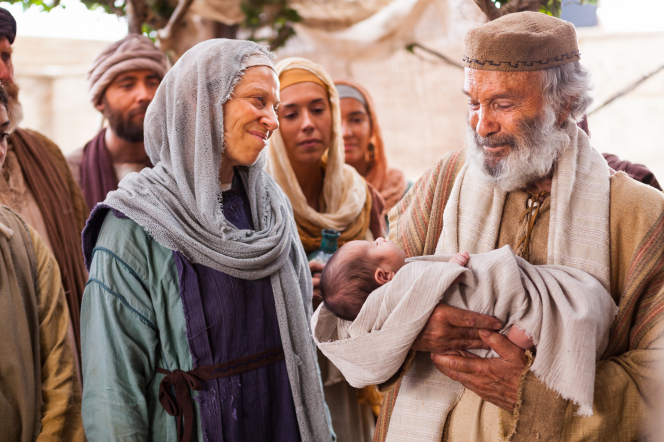
Luke 1:57-80 The Forerunner, John The Baptist,

Florentine Artist Domenico Ghirlandiao, in 1491 of the Visitation – in which Mary goes to see her cousin Elizabeth, and Elizabeth realises that Mary is going to be the mother of Christ and falls to her knees – and her own babe , the future John the Baptist ,“leaped in her womb for joy” in recognition of the promised Saviour.
“ Zechariah said to the angel, “What proof is there for this? I’m an old man, and my wife is beyond her childbearing years.”
Elizabeth Elisheba means ‘Daughter of the Oath’ as in the Vow of the Nazarites. The Quran confuses Mary with Elizabeth who was ‘A Daughter of Aaron’. Mary was probably a Moabite Princess descended from Ruth. Mary has a claim to the ground upon which Herod’s temple was built. She wanted her son to wear a crown. So did the throng that greeted Jesus when he rode to Jerusalem on a white colt. John the Baptist may have baptized Jesus at this time, and thus ended the prohibition against the Moabite people. They were FORGIVEN OF ALL PAST SINS!
Hannah was the mother of the Prophet Samuel ‘The King Maker’. I am sure John was considered ‘A King Maker’ and thus mothers and fathers of royalty, who had lost their crowns, lined up to see Elizabeth and Zachariah, and have their kingdoms restored. How many Tribes are lost at this time?
Reverse the women in the painting above. Mary the Moabite Princess has qued up. When she stands before Elizabeth, the infant John stirs in her womb, The future king stirs in Mary’s womb, and this is A Sign of the Return of Ruth and the Moabites to the Covenant of God. Jesus reads from the Book of Ruth on the Mount of Olives where he is crowned – and then arrested! He was – warned!
I have warned Christian Teachers, Christian Leaders, and Christian Politicians…..if you do not get out of the Republican Party founded by my kindred, I would take your fake Jesus from you. He was not the son of a god, or, a superman. He was A MAN destined to wear an ancient crown. What you are – the Devil only knows.
Get behind me – Satan!
Behold ‘The Daughter of the Oath’ who has been cleverly hidden for all these years. All her power was taken from her, and her teaching – destroyed! This is why Saul-Paul oppressed women, while pretending to be their best friend. This is why the Founding Father’s did not give women the vote! This is why the Supreme Court took away much power from American Women! They knew! They know – now! If I can figure it out – so can all those learned men who went to Bible college.
I beheld a little mouse a week ago. And then, I read this today…
“Some argue that since what may be arguably the greatest evangelist and apologist of the Christian faith didn’t write about the virgin birth of Jesus that either he did not believe it or that he did not know about it. And that he was so knowledgeable it’s highly improbable that the latter is true. So, did Paul just not believe that Mary, the mother of Jesus, conceived Him as a virgin?”
Paul knew, that a woman who could not conceive, was considered a virgin, even is she had marital relations. God had closed her womb. Many women took the Vow of the Nazarite – so God would open their womb – personally! Paul was born a Roman citizen. He, and the rulers of Rome FEARED ELIZABETH who was the most powerful woman of her day. And, her son, and the Nazarites, began a war with Rome….a War of Liberation!
The TRUTH- will set you free!
Yom Kippur ended five minutes ago. I blew out a candle that ends the Day of Atonement, and all forms of Christianity, that was created by Satan Paul. Feel free to use this information in any lawsuit you deem necessary to protect yourself, your Nation, and this Democracy.
So be it!
John ‘The Nazarite’
Maryam bint Imran (Arabic: مَرْيَم بِنْت عِمْرَان, romanized: Maryam bint ʿImrān, lit. ‘Mary, daughter of Imran‘) is revered in Islam as the only woman named in the Quran, which refers to her seventy times and explicitly identifies her as the greatest woman to have ever lived.[1][2][3] In the Quran, her story is related in three Meccan surahs (19, 21, 23) and four Medinan surahs (3, 4, 5, 66), and the nineteenth Surah titled Maryam, is named after her. The Quran refers to Mary more often than the Bible.[4]
The Quran calls Mary “the daughter of Imran“[8] and it mentions that people called her a “sister of Aaron (Harun)“.[9] Her mother, mentioned in the Quran only as the wife of Imran, prayed for a child and eventually conceived.[10] According to al-Tabari, Mary’s mother was named Hannah (Arabic: هنا), and Imran (Arabic: عمران), her husband, died before the child was born.[11] Expecting the child to be male, Hannah vowed to dedicate him to isolation and service in the Temple.[10] However, Hannah bore a daughter instead, and named her Maryam.[12][13][14]
John Speaks Secret Name of God
Posted on March 16, 2021 by Royal Rosamond Press


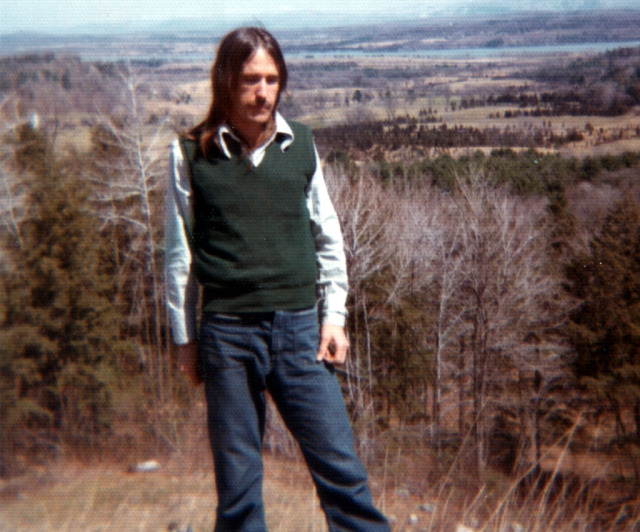

John Speaks Name of God
by
John Presco ‘Nazarite Judge’
Copyright 2021
The priests that came to name John the Baptist were of the two priestly lines descended from two brothers, Moses and Aaron. Both lineages served in the Holy of Holies where on Yom Kippur the High Priest would whisper the SECRET NAME OF GOD. Zachariah was of Moses, and Elizabeth was a Daughter of Aaron. The parents of John were not discussing what name to give their son, but, what name their son – who was filled with the Holy Spirit – would utter, for John was destined to be a High Priest.
When I died and saw God, I said;
“I am!”
This is THE NAME God gave to Moses who met, and saw God, thus John would be a High Priest of Moses – which was good, because a false law said Cohens must be of Aaron. A eight year old infant ENDS the greatest religious argument – on earth. The priests who witnessed this great event served in the Holy of Holies and knew a HAND SIGN because they could not speak in the Holy of Holies, so they spoke with THE HAND OF GOD that Moses directed GOD’S ARMY WITH, because God struck him dumb, meaning he could not speak. His arms were held up because they became tired. This is GOD’S WAR! It is on!
Here is the very prophetic and true post my neighbors read and they wanted to do me harm.
The Zulu Nazarites | Rosamond Press
John
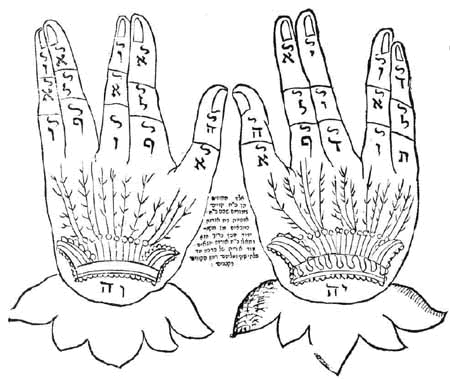

Moses says: May I say who sent me? He asks for God’s name. The Israelites will want to know who has sent me, and God replies with a sentence, “Ehyeh asher ehyeh.” This is a first person sentence that can be translated, “I am who I am”, or perhaps, “I will be who I will be”, or perhaps, “I cause to be what I cause to be.” We really don’t know, but it has something to do with “being”. So he asks who God is, God says, “I am who am I am” or “I will cause to be what I will cause to be.” So Moses, wisely enough, converts that into a third-person formula: okay, he will be who he will be, he is who he is, “Yahweh asher Yahweh.” God’s answer to the question of his name is this sentence, and Moses converts it from a first-person to a third-person sentence: he will be who he will be; he is who he is; he will cause to be, I think most people think now, what he will cause to be, and that sentence gets shortened to “Yahweh”. This is the Bible’s explanation for the name Yahweh, and as the personal name of God, some have argued that the name Yahweh expresses the quality of being, an active, dynamic being. This God is one who brings things into being, whether it’s a cosmos from chaos, or now a new nation from a band of runaway slaves. But it could well be that this is simply God’s way of not answering Moses’ question. We’ve seen how the Bible feels about revealing names, and the divine being who struggled and wrestled with Jacob sure didn’t want to give him his name. So I’ve often wondered if we’re to read this differently: Who am I? I am who I am, and never you mind. The word possibly was “Ehyeh Asher Ehyeh Asher” meaning “I am That I am That”. Moses in his ecstasy and bliss wanted to share this state with the people of Israel and so it was a need to give a name to this experience, to this state, hence he gave a name to “That” and “Ehyeh” became “Yahweh”. The seed of duality, the Creator being different from the Creation was sown, the Creator received a name “Yahweh”, so a form, dimensions and time of Creation were naturally subsequent.
“I have come for sinners” | Rosamond Press
Names of God in Judaism – Wikipedia
Unspeakable Name — St. James Church, Fordham (stjamesfordham.org)
The Lord spoke to Moses, saying: speak to Aaron and his sons saying, Thus shall you bless the Israelites… So they shall put my name on the Israelites, and I will bless them.
One of the most striking features of the Jewish faith is that although the name of God is written throughout the Hebrew Scriptures — what we Christians call the Old Testament — no one is supposed to say that name aloud. In fact no one is supposed to say that name at all — except the high priest on Yom Kippur, the Day of Atonement, and even then only secretly and softly and quietly when he goes into the Holy of Holies at the heart of the Temple. And since the Temple was destroyed in the first century by the Romans, the name goes unspoken.
So holy is this name, spelled in four letters, Yod, He, Vav, He — or as we would say, Y H W H — that instead of pronouncing it aloud, every time it appears in the text of the Scripture, the pious Jewish person follows the instructions printed out in the margin of the page, where it says, “Read Adonai” — and instead of saying the unspeakable Name as written will say “Adonai,” which means “the Lord.”
 Rosamond Press
Leave a comment