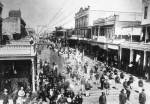
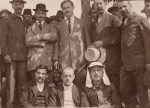
I suspect my kin, Carl Janke, was a Turnverein and established a Turner Society in Belmont that later merged with the Oddfellows. William Ralston, whose home was in Belmont, provided the funds to spread the Oddfellows throughout Europe, beginning in Germany, where Jews and Gentiles met in Turnverien clubs, worked out together, talked business, and promoted the idea that their children should marry. Then the Germans wanted the Jews out, and they formed their own Turnverein clubs that became the Maccabi gymnasts who began to colonize Palastine.
After world war one there was a prejudice against Germans, and Turnverein was changed to Tanforan, the alleged kin of a Mexican Spaniard.
The Zionist Socialists of Israel would have you believe, great Rabbis and Jewish Prophets, founded the nation of Israel, for the sake of the evangelical prophets from Ireland. Worng! This is pure Nationalism – without God!
Jon Presco
Copyright 2011
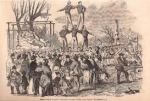
On the fourth of May [1856] the regular annual festival of the Turnverein Association of San Francisco took place, with all the usual accompaniments of music, dancing, gymnastics, oratory, eating and drinking. The festival, which was inaugurated by a procession of the Society to welcome their brother Turners from the interior, lasted three days, and everybody passed off in the most orderly and agreeable manner. The gymnastic performances were excellent, and formed a large portion of the ceremonies.
The celebration of the “May festival,” although in the United States it is conducted under the control of the Turnverein Association, is a national festival in which all the Germans partake, and which is celebrated throughout all Germany. The origin of the Turner Association, which has now become so large and so important a one among our German citizens, was a political one. Germany is divided into thirty-six different States, with as many Governments of a despotic nature, and many of them hostile to each other.
Young Germany, deeply imbued with the spirit of freedom, has been for a long time anxious to throw off these yokes, and unite under one liberal, consolidated Government; but the rulers, in order to prevent this, have forbidden all assemblies or associations for political purposes, under heavy penalties. In order to avoid this prohibition an enthusiastic republican named Jahn made the meeting and associations for gymnastic exercisesthe occasion for the spread of democratic doctrines, and the Turnverein (or gymnastic association,) soon spread and grew into importance wherever Germans are found. This association now exists in, and exercises a great influence over the whole German population.
There is no secrecy about the association, neither is there any direct connection between the different associations, although a Turner of any one city considers himself, to all intents and purposes, a member of the Turnverein of any other city.
Odd Fellows. Independent Order of Odd Fellows. Hall, corner of Market and Seventh streets. Local Lodges and Encampments included: Golden Gate Encampment, Walhalla Encampment, Wildey Encampment, Unity Encampment, Oriental Encampment, Oriental Encampment, Good Will Encampment, Canton San Francisco, California, SanFrancisco, Harmony, Yerba Buena, Templar, Magnolia, Bay City, Abou Ben Adhem, Germania, Concordia, Apollo, Parker, Unity, Hermann, Pacific, Ophir, Occidental, Cosmopolitan, Golden Gate, Alta, Franco-American, Fidelity, Morse, Myrtle, Western Addition, Excelsior, Golden West, Presidio, Excelsior Degree, Teutonia, California Rebekah Degree, Templar Rebekah Degree, Oriental Rebekah Degree, and Walhalla Rebecka Degree. Related organizations included: Odd Fellows’ Literary and Social Club, Odd Fellows’ Hall Association of SanFrancisco, Veteran Odd Fellows’ Association, Odd Fellows’ Library Association, and The Odd Fellows’ Cemetery Association (incorporated September 26, 1865).
m
Criticism
In his time Friedrich Jahn was seen by both his supporters and opponents as a liberal figure. He advocated that the German states should unite after the withdrawal of Napoleon’s occupying armies, and establish a democratic constitution (under the Hohenzollern monarchy), which would include the right to free speech. As a German nationalist, Jahn advocated maintaining German language and culture against foreign influence. In 1810 he wrote, “Poles, French, priests, aristocrats and Jews are Germany’s misfortune.”[2]At the time Jahn wrote this, the German states were occupied by foreign armies under the leadership of Napoleon. Also, Jahn was “the guiding spirit” of the fanatic book burning episode carried out by revolutionary students at the Wartburg festival in 1817.[3]
Jahn gained infamy in English-speaking countries through the publication of Peter Viereck’s Metapolitics: The Roots of the Nazi Mind (1941).[4]Viereck claimed Jahn as the spiritual founder of Nazism, who inspired the early German romantics with anti-Semitic and authoritarian doctrines, and then influenced Wagner and finally the Nazis.
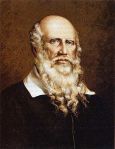
Friedrich Ludwig Jahn (August 11, 1778 – October 15, 1852) was a German gymnastics educator and nationalist. He is commonly known as Turnvater Jahn, roughly meaning “father of gymnastics” Jahn. Was born in Lanz in Brandenburg. He studied theology and philology from 1796 to 1802 at Halle, Göttingen at the University of Greifswald. After the Battle of Jena-Auerstedt in 1806 he joined the Prussian army. In 1809 he went to Berlin, where he became a teacher at the Gymnasium zum Grauen Kloster and at the Plamann School.
DEATH in SanFrancisco, July 13th, Augustus SMALLFIELD, a merchant of Stockton, and a native of Eutin, Holstein, Germany, aged 40 years. [>Davenport, Iowa, papers please copy.]
AT HALF-MAST On Saturday and yesterday, the flags of the different Engine houses of the Fire Department; also the flag on the Odd Fellows’ Building, waved at half-mast as a mark of respect to the memory of Augustus SMALLFIELD, who died at SanFrancisco on the morning of the 13th instant. Deceased was, for a number of years, a merchant in this city, and was a gentleman highly respected by a large circle of friends and acquaintances. He was a member of Charity Lodge, No. 6, Independent Order of Odd Fellows; also a member of San Joaquin Engine Company No. 3, and Turn-Vereins. His remains arrived from SanFrancisco yesterday morning and were taken to their last resting place in the Rural Cemetery at 2 o’clock in the afternoon. The funeral was largely attended by Odd Fellows, Firemen, Turn-Verein and citizens, and the solemn procession was headed by the Stockton Brass Band.
Inscription. They were an order that inscribed upon their banners, “Visit the sick, relieve the distressed, and bury the dead.”
“To the benevolent – If there is any of that commodity called charity in this community, we earnestly call upon those possessing it to exercise it forthwith.”
So went out the plea to the Brotherhood in an editorial appeal that appeared in the Placer Times, August 18, 1849.
General Albert V. Winn was the first to move in this direction, summoning his brother members of the Independent Order of Odd Fellows at large to assemble under most extraordinary circumstances and form an association for the relief of the sick, the distressed, and to bury the dead. The call was answered and they came, forming the first Odd Fellows Association in Sacramento on August 24, 1849. And that their children’s children might point with pride, this was the first organized effort for dispensing relief and humanity to the sick and dying in that darkest hour of Sacramento history.
Tanforan Racetrack in San Bruno, California was a thoroughbred horse racing facility that operated from September 4, 1899 to July 31, 1964. Tanforan was constructed to serve a clientele from the nearby city of San Francisco. The facility was named after Toribio Tanforan, the grandson-in-law of Jose Antonio Sanchez, the grantee of Rancho Buri Buri. [1] [2]
Jewish Pride Through Sport: Max Nordau and “Muscular Judaism”
The Maccabees, central figures in the Hanukkah saga, are thought to be the inspiration for what would become the worldwide Jewish sports association known as Maccabi. It is Max Nordau, right-hand man to Zionist visionary Theodor Herzl, who is typically credited with the creation of what would become the Maccabi organization. His 1900 call for a “Muskel Judentom” (Muscular Judaism) which appears below, refers in passing to other influences on the creation of this movement. In actuality – and perhaps with some irony – it was the German gymnastics “Turnen” movement, begun a half century earlier, combining physical fitness, patriotism, and social causes, which served as a model for the emergence of Jewish pride through sport. The “Deutsche Turnerschaft” (German gymnastics movement) championed the idea of “mens sana in corpore sano” – a healthy mind in a healthy body – and made gymnastics the basis of a political program fostering patriotism and social/political awakening, and already included Jewish members in the early 1800’s.
Nordau saw sport as serving the Zionist idea of “awakening Judaism to new life.” His critique concerning the poor physical condition of Europe’s Jews helped to spur on the creation of Jewish sports associations. The Bar Kochba club in Berlin, which Nordau looked to for his inspiration, actually came out of the German “Turnerschaft” movement. As sports clubs in Germany and elsewhere in central Europe became a vehicle for the expression of patriotism, they began to adopt strong anti-Semitic policies, excluding Jews from participating. When the German gymnastics club in Istanbul formally voted to exclude Jews in 1895, the Jewish members formed their own club, calling it “Israelitische Turnverein”. Nordau’s push of sport as a critical component of Jewish life, coupled with the centrality of Istanbul as a hub of international Zionist activity, put the Istanbul club center stage, and it benefited from visits by and support from Zionist leaders. With the growth of gymnastics clubs promoting physical fitness and Jewish pride, the Union of Jewish Gymnastics Clubs (“Judische Turnerschaft) was founded in 1903, and its affiliate in Palestine, Maccabi of Eretz Yisrael, was founded in 1912. This, in turn, led to the World Maccabi Union, established in 1921.
Following are remarks made by Nordau at the World Zionist Congress in 1900:
Two years ago, at the Zionist Congress in Basel, I spoke about the need to create, once again, a muscular Judaism. I say “again”, because, as history shows, such a Judaism existed once before. For too long now we have neglected matters of the flesh.
Truth to tell, it was others who engaged in the death knell of the physical side of Jewish life, and with particular success. Consider the hundreds of thousands who fell in the ghettos of Europe, in the plazas outside the cathedrals, and on the roads during the Middle Ages. We should certainly forego such piety. We would have done well to be fit, and not be fodder for those who sought to kill us.
In crowded Jewish quarters, deprived of air and sunshine, our bodies became weak. In darkened homes, we feared the persistent persecution in silent trembling. But now the chains of this duress are broken, now we fear no such constraints, we are allowed to live our lives fully, at least from a physical standpoint. Let us, therefore, re-establish the bonds with our ancient past; let us again be wide of body and strong of gaze.
The intention is to return to a proud past, as reflected in the name selected by the gymnastics association of Berlin: “Bar Kochba”, a hero who recognized no defeat. When victory turned in retreat, he accepted death. He embodied a Jewish history forged in war but taking up arms. If someone takes of the cry of Bar Kochba, then the striving for honor beats in his breast. Such a hope befits the gymnasts, who strive for advanced development.
In no other nation or race does physical exercise fulfill as educative a role as it must fulfill among us Jews. It must bring us to full upright stature, both physically and in our character. It must prompt a self-awareness. Our detractors claim that, in any event, we are too arrogant. But we would do well to acknowledge how distorted is such a claim. A quiet belief in our strength is lacking in us altogether.
Muscular Jews of our age have yet to reach the degree of heroism of our ancestors of old, who erupted into the arena to wrestle the well-trained Greek athletes and the strong barbarians of the north. But from a moral perspective we are their superiors, because they were ashamed of their Jewishness and tried, by way of undoing their circumcision, to hide the sign of the covenant that was sealed in their flesh while others, such as members of the “Bar Kochba” club have openly and freely proclaimed their ties to their people.
Let the association for Jewish gymnastics flourish and set an example in all centers of Jewish life.
The Maccabi World Union is an international Jewish sports organisation spanning 5 continents and more than 50 countries, with some 400,000 members.[2] Maccabi World Union organises the Maccabiah Games, a prominent international Jewish athletics event.
The organisation comprises six confederations: Maccabi Israel, European Maccabi confederation, confederation Maccabi North America, confederation Maccabi Latin America, Maccabi South Africa and Maccabi Australia.
Shimon bar Kokhba (Hebrew: שמעון בר כוכבא, also transliterated as Bar Kochba) was the Jewishleader of what is known as the Bar Kokhba revoltagainst the Roman Empire in 132 CE, establishing an independent Jewish state of Israel which he ruled for three years as Nasi(“Ruler”). His state was conquered by the Romans in 135 following a two-year war.
Documents discovered in the modern era[citation needed]give us his original name, Simon ben Kosiba, (Hebrew: שמעון בן כוסבא) he was given the surname Bar Kokhba, (Aramaicfor “Son of a Star”, referring to the Star Prophecy of Numbers 24:17, “A star has shot off Jacob”) by his contemporary, the Jewish sage Rabbi Akiva.
After the failure of the revolt, the rabbinical writers referred to bar Kokhba as “Simon bar Kozeba” (Hebrew: בר כוזיבא, “Son of lies” or “Son of deception”).
The German Turnverein
Founded amid the nationalist enthusiasms of the War of Liberation, the German gymnastic movement, or Turnverein, had fundamentally changed by the time of the 1848 revolutions in the German lands. Although Friedrich Ludwig Jahn, the gymnasium instructor who had originated the idea of nationalist gymnastics in Berlin in 1811, was still venerated in the organization, his anti-Semitism, hatred of the French, and loyalty to the Hohenzollern dynasty left him out of step with an organization committed to national unification and political liberalism. While the Turnverein’s ideological stance reflected the prevailing spirit of the German Vormärz, it also bespoke the peculiar circumstances of the organization’s history. The German Confederation of Metternich had viewed the patriotic enthusiasms of the War of Liberation with suspicion and had banned the Turnverein following the murder of the conservative journalist August von Kotzebue by the young student Karl Sand in 1819. Turnverein practice areas had been closed, the apparatus dismantled, and the leaders prosecuted. Jahn himself had been imprisoned at the Kolberg Fortress until 1825, and barred from teaching or gymnastic work after his release. This period, which Jahn called the Turnsperre, lasted in Prussia and most German states until the 1840s.
The lifting of the Turnsperre in the more liberal atmosphere of the 1840s reawakened the Turnverein to a vigorous new life. The center of the revived movement shifted out of Prussia, which had been its heartland under Jahn’s leadership, to the South and West German States, where the Turnsperre had generally been shorter and less restrictive. The membership of the new clubs was more inclusive, as the cor of students and academics which had made up the rank and file of the Turnverein in its early years was joined by a large contingent of craft workers, along with many Jewish members, often in positions of leadership. These gymnastic clubs were often closely aligned with workers’ organizations and democratic clubs with whom they shared a desire for reform and a rejection of traditional hierarchies.
In contrast to the organization Jahn had founded, almost one-half of the membership on the 1840s were non-gymnasts, the so-called “Friends of Turnen,” and because of this, the new clubs engaged in more non-gymnastic activities, such as funding libraries and reading rooms, and sponsoring lectures, often of a politically liberal nature. They joined the new volunteer firemen’s movement, and acted as a police force during the outbreaks of social unrest which characterized the revolutionary period. They even imparted a new spirit to their gymnastic program by initiating training sessions for children and, far more radical in light of the times, for women as well. Flaunting their rebellious spirit, the gymnasts of Vormärz wore their hair long and sported large black hats decorated with a rooster feather instead of the more formal attire of the Biedermeier period.
Spread throughout the geographic area of Germany, this more diverse gymnastic movement staged larger and more elaborate gymnastic festivals, which sometimes lasted several days and always culminated with a pledge for national unity. In an effort to realize this unity on a gymnastic level, an all-German gymnastic union was formed in April 1848, shortly after revolution had swept the German Confederation. Established as a demonstration of support for the Frankfurt Parliament, the new league was immediately controversial not the least because it avowed purpose, “to work for the unity of the German people and to uplift the brotherhood and the physical and spiritual power of the people,” failed to mention gymnastics. Impatient with the cautious program of the German Gymnastic Union, a group of radical clubs formed a second, rival union called the “Democratic Gymnastic Union,” and further schisms followed.
Given the radicalization of the movement in the 1840s, it is not surprising that the German gymnasts were directly involved in the 1848 revolutions. Turnverein leaders won renown for their leading roles in local uprisings, among them Gustav Struve in Baden, Otto Heubner in Dresden, and August Schärttner in Hanau. One Turnverein leader who was not in the forefront of radical change was Turnvater Jahn. Elected as a representative to the Frankfurt Parliament, Jahn was given honor, but no real influence, in the revived gymnastic movement.
Although a proposal to form a “Gymnastic Army” (Turnerschar) to supplement the National Guard was never realized, gymnasts manned barricades and participated in crucial fighting during the revolutions. Early in the revolutionary period, the eighty-odd members of the Kiel Turnverein took arms against Denmark in the conflict over Schleswig-Holstein. Although soon defeated, their actions won praise from moderates in the organization who contrasted their “unpolitical” dedication to the cause of the nation with the more radical social and political programs of gymnasts in other regions. Exemplifying this latter trend were the gymnasts in the mob that murdered Prince Felix Lichnowsky and General Hans von Auerswald in Frankfurt in September 1848, during a popular protest against the armistice with Denmark, and those who fought, often in the club uniform, to defend the city of Dresden against Prussian forces in May 1849. Turnverein clubs also participated in the veneration of Robert Blum, who had been killed by counter-revolutionary forces in Vienna, by holding services in his honor, marching in memorial parades, and helping to raise money for his family.
The Turnverein as an organization was most closely associated with the uprisings in Baden, the center of the radical sentiment in southwest Germany. Gymnasts had been among the defenders of the city of Freiburg in early disturbances in the province in April 1848. In the late spring and early summer of 1849, violence erupted again and brought about some of the most prolonged fighting of the revolutionary period. After agitation for a democratic nation-state had forced the Grand Duke to flee, other German states, led by Prussia, sent in troops to crush the movement. The gymnastic organization of the Rhineland province of Hanau organized a march to Baden to defend the province. Although this force gathered around 600 men along the way, it was poorly armed and led and easily outmatched by the regular armies it encountered. About 240 survivors of this effort managed to cross into neighboring Switzerland, where they received a hero’s welcome from Swiss gymnasts and students.
The aftermath of the 1848 revolutions devastated the German gymnastic movement. Clubs were disbanded, property confiscated and leaders lost to jail or exile. The various attempts to form a union of gymnastic clubs likewise fell victim to the Reaction. In these circumstances, the Turnverein turned away from politics to concentrate on its gymnastic program. It was only with the revival of the drivefor German unification in the late 1860s, that the gymnastic movement rediscovered its purpose and was able to regain he momentum of the revolutionary era.
dd
9/19/2011
Here Come the Free-Thinkers!
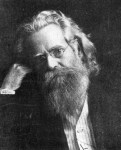

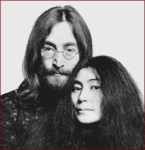
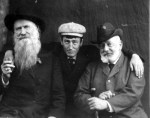

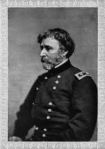
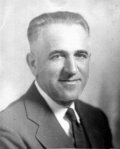
False Prophets of the Fake Religion believe science does not matter, only old Biblical laws and myths. They want all secular government to end, so it can be replaced by what really works, Mosaic Law. Can we see an example of how wonderful this rule works? I thought the Jews crucified Jesus because they did not want to go forward, and adopt a new religion? Are the evangelicals talking about Papal Rule, when the Pope launched three crusades against my Bohemian people in Prague, and then the Papal Police burned Johan Huss at the stake? How about what the Pope did to my Huguenot ancestors on Saint Bartholomew Day? Strom Thurmond, launched a crusade against John and Yoko Lennon, and Beverly LaHayes is determined to defund the Arts and National Public Radio, a pet project of Thurmond – the Dixiecrat who loathed the Civil Rights Movement and prayed the South would rise again! Thanks to the Fake Preachers, and some Zionist Rabbis, his prayers are being answered.
Jon Presco
FreethoughtFrom Wikipedia, the free encyclopediaJump to: navigation, search
Not to be confused with Freedom of thought or Free will.
Part of a series on
Irreligion
Irreligion
Secular Humanism · Secularism
Secularity · Freethought
Post-theism · Nontheism
Anti-clericalism · Antireligion
Criticism of religion
Marxism · Parody religion
Atheism
Demographics · History
State · Militant · New
Implicit and explicit
Negative and positive
Criticism · Discrimination
Existence of God · Antitheism
Atheism and religion
Agnosticism
Strong · Weak
Agnostic atheism
Agnostic theism
Apatheism · Ignosticism
Naturalism
Methodological · Religious
Humanistic
People
Atheists · Agnostics
Humanists · Pantheists · Deists
Books
The God Delusion
God Is Not Great
The End of Faith
Letter to a Christian Nation
Why I Am Not a Christian
Organizations
Atheist Alliance International
The Chicago Freethought Project
Freedom From Religion
Foundation
World Pantheist Movement
Atheism portal
WikiProject Atheism
v · d · e
Freethought is a philosophical viewpoint that holds that opinions should be formed on the basis of science, logic, and reason, and should not be influenced by authority, tradition, or other dogmas.[1] The cognitive application of freethought is known as ‘freethinking,’ and practitioners of freethought are known as ‘freethinkers.'[2]
Contents [hide]
1 Overview
2 Symbol
3 History
3.1 Pre-modern movement
3.2 Modern movements
3.2.1 England and France
3.2.2 Germany
3.2.3 Belgium
3.2.4 Netherlands
3.2.5 United States
3.2.6 Canada
3.2.7 Anarchism
4 See also
5 References
6 Further reading
7 External links
[edit] OverviewFreethought holds that individuals should not accept ideas proposed as truth without recourse to knowledge and reason. Thus, freethinkers strive to build their opinions on the basis of facts, scientific inquiry, and logical principles, independent of any logical fallacies or intellectually limiting effects of authority, confirmation bias, cognitive bias, conventional wisdom, popular culture, prejudice, sectarianism, tradition, urban legend, and all other dogmas. Regarding religion, freethinkers hold that there is insufficient evidence to support the existence of supernatural phenomena.[3]
A line from “Clifford’s Credo” by the 19th Century British mathematician and philosopher William Kingdon Clifford perhaps best describes the premise of freethought: “It is wrong always, everywhere, and for anyone, to believe anything upon insufficient evidence.”
[edit] Symbol
The pansy, symbol of freethought.The pansy is the long-established and enduring symbol of freethought, its usage inaugurated in the literature of the American Secular Union in the late 1800s. The reasoning behind the pansy being the symbol of freethought lies in both the flower’s name and appearance. The pansy derives its name from the French word pensée, which means “thought”; it was so named because the flower resembles a human face, and in mid to late summer it nods forward as if deep in thought.[4]
[edit] History[edit] Pre-modern movementIn Buddhism a type of freethought was advocated by Gautama Buddha, most notably in the Kalama Sutta:
“It is proper for you, Kalamas [the people of the village of Kesaputta], to doubt, to be uncertain; uncertainty has arisen in you about what is doubtful. Come, Kalamas. Do not go upon what has been acquired by repeated hearing; nor upon tradition; nor upon rumor; nor upon what is in a scripture; nor upon surmise; nor upon an axiom; nor upon specious reasoning; nor upon a bias towards a notion that has been pondered over; nor upon another’s seeming ability; nor upon the consideration, ‘The monk is our teacher.’ Kalamas, when you yourselves know: ‘These things are bad; these things are blameable; these things are censured by the wise; undertaken and observed, these things lead to harm and ill, abandon them. “…Do not accept anything by mere tradition… Do not accept anything just because it accords with your scriptures… Do not accept anything merely because it agrees with your pre-conceived notions… But when you know for yourselves—these things are moral, these things are blameless, these things are praised by the wise, these things, when performed and undertaken, conduce to well-being and happiness—then do you live acting accordingly.”
However, Bhikkhu Bodhi (b. 1944 – ) argues against the idea that “the Buddha’s teaching dispenses with faith and formulated doctrine and asks us to accept only what we can personally verify”,[5] saying this interpretation
forgets that the advice the Buddha gave the Kalamas was contingent upon the understanding that they were not yet prepared to place faith in him and his doctrine; it also forgets that the sutta omits, for that very reason, all mention of right view and of the entire perspective that opens up when right view is acquired. It offers instead the most reasonable counsel on wholesome living possible when the issue of ultimate beliefs has been put into brackets.
Bhikkhu Bodhi’s interpretation is by no means universal to Buddhists or even to Theravada Buddhism, the tradition in which he is ordained. For example, Ven. Soma Thera, a Theravada monk from Sri Lanka, called the Kalama Sutta “The Buddha’s Charter of Free Inquiry”.[6]
The web of transmissions and re-inventions of critical thought meanders from the Hellenistic Mediterranean, through repositories of knowledge and wisdom in Ireland and the Iranian civilizations (e.g. Khayyam and his unorthodox sufi Rubaiyat poems), and in other civilizations, as the Chinese, (e.g. the seafaring Southern Sòng’s renaissance),[7] and on through heretical thinkers of esoteric alchemy or astrology, to the Renaissance and the Protestant Reformation.
French physician and writer Rabelais celebrated “rabelaisian” freedom as well as good feasting and drinking (an expression and a symbol of freedom of the mind) in defiance of the hypocrisies of conformist orthodoxy in his utopian Thelema Abbey (from θέλημα: free “will”), the devise of which was Do What Thou Wilt:
“So had Gargantua established it. In all their rule and strictest tie of their order there was but this one clause to be observed, Do What Thou Wilt; because free people … act virtuously and avoid vice. They call this honor.”
When the hero of his book, Pantagruel, journeys to the “Oracle of The Div(in)e Bottle”, he learns the lesson of life in one simple word: “Trinch!”, Drink! Enjoy the simple life, learn wisdom and knowledge, as a free human. Beyond puns, irony, and satire, Gargantua’s prologue metaphor instructs the reader to “break the bone and suck out the substance-full marrow” (“la substantifique moëlle”), the core of wisdom.
[edit] Modern movementsThe year 1600 is considered the beginning of the era of modern freethought, as it is marked by the execution in Italy of Giordano Bruno, a former Dominican Monk, by the Inquisition.[8]
[edit] England and FranceThe term free-thinker emerged toward the end of the 17th century in England to describe those who stood in opposition to the institution of the Church, and of literal belief in the Bible. The beliefs of these individuals were centered on the concept that people could understand the world through consideration of nature. Such positions were formally documented for the first time in 1697 by William Molyneux in a widely publicized letter to John Locke, and more extensively in 1713, when Anthony Collins wrote his Discourse of Free-Thinking, which gained substantial popularity. In France, the concept first appeared in publication in 1765 when Denis Diderot, Jean le Rond d’Alembert and Voltaire included an article on Libre-Penseur in their Encyclopédie. The European freethought concepts spread so widely that even places as remote as the Jotunheimen, in Norway, had well-known freethinkers, such as Jo Gjende, by the 19th century.
The Freethinker magazine was first published in Britain in 1881.
[edit] GermanyIn Germany, during the period (1815–1848) and before the March Revolution, the resistance of citizens against the dogma of the church increased. In 1844, under the influence of Johannes Ronge and Robert Blum, belief in the rights of man, tolerance among men, and humanism grew, and by 1859 they had established the Bund Freireligiöser Gemeinden Deutschlands (Union of Secular Communities in Germany). This union still exists today, and is included as a member in the umbrella organization of free humanists. In 1881, in Frankfurt am Main, Ludwig Büchner established Deutschen Freidenkerbund (German Freethinkers League) as the first German organization for atheists. In 1892 the Freidenker-Gesellschaft and in 1906 the Deutscher Monistenbund were formed.[9] Freethought organizations developed “Jugendweihe”, secular “confirmation” ceremonies, and atheist funeral rites.[9][10] The Union of Freethinkers for Cremation was founded in 1905, and the Central Union of German Proletariat Freethinker in 1908. The two groups merged in 1927, becoming the German Freethinking Association in 1930.[11] More “bourgeois” organizations declined after World War I, and “proletarian” Freethought groups proliferated, becoming an organization of socialist parties.[9][12] European socialist free-thought groups formed the International of Proletarian Freethinkers (IPF) in 1925.[13] Activists agitated for Germans to disaffiliate from the Church and for secularization of elementary schools; between 1919–21 and 1930–32 more than 2.5 million Germans, for the most part supporters of the Social Democratic and Communist parties, gave up church membership.[14] Conflict developed between radical forces including the Soviet League of the Militant Godless and Social Democratic forces in Western Europe led by Theodor Hartwig and Max Sievers.[13] In 1930, the Soviet and allied delegations, following a walk-out, took over the IPF and excluded the former leaders.[13] Following Hitler’s rise to power in 1933, most freethought organizations were banned, though some right-wing groups that worked with Volkisch associations were tolerated by the Nazis until the mid 1930s.[9][12]
[edit] BelgiumMain article: Organized secularism
The Université Libre de Bruxelles and the Vrije Universiteit Brussel, along with the two Circles of Free Inquiry (Dutch and French speaking), defend the freedom of critical thought, lay philosophy and ethics, while rejecting the argument of authority.
[edit] NetherlandsIn the Netherlands, freethought has existed in organized form since the establishment of De Dageraad (now known as de Vrije Gedachte) in 1856. Among its most notable subscribing 19th century individuals were Johannes van Vloten, Multatuli, Adriaan Gerhard and Domela Nieuwenhuis.
In 2009, Frans van Dongen established the Atheist-Secular Party, which takes a considerably restrictive view of religion and public religious expressions.
[edit] United States
Robert G. Ingersoll [15]Driven by the revolutions of 1848 in the German states, the 19th century saw an immigration of German freethinkers and anti-clericalists to the United States (see Forty-Eighters). In the U.S., they hoped to be able to live by their principles, without interference from government and church authorities.[16]
Many Freethinkers settled in German immigrant strongholds, including St. Louis, Indianapolis, Wisconsin, and Texas,[16] where they founded the town of Comfort, Texas, as well as others.
These groups of German Freethinkers referred to their organizations as Freie Gemeinden, or “free congregations.”[16] The first Freie Gemeinde was established in St. Louis in 1850.[17] Others followed in Pennsylvania, California, Washington, D.C., New York, Illinois, Wisconsin, Texas, and other states.[16][17]
Freethinkers tended to be liberal, espousing ideals such as racial, social, and sexual equality, and the abolition of slavery.[16]
Freethought in the United States began to decline in the late nineteenth century. Its anti-religious views alienated would-be sympathizers. The movement also lacked cohesive goals or beliefs. By the early twentieth century, most Freethought congregations had disbanded or joined other mainstream churches. The longest continuously operating Freethought congregation in America is the Free Congregation of Sauk County, Wisconsin, which was founded in 1852 and is still active today. It affiliated with the American Unitarian Association (now the Unitarian Universalist Association) in 1955.[18]
German Freethinker settlements were located in:
Burlington, Racine County, Wisconsin[16]
Belleville, St. Clair County, Illinois
Castell, Llano County, Texas
Comfort, Kendall County, Texas
Fond du Lac, Fond du Lac County, Wisconsin[16]
Frelsburg, Colorado County, Texas
Hermann, Gasconade County, Missouri
Jefferson, Jefferson County, Wisconsin[16]
Indianapolis, Indiana[19]
Latium, Washington County, Texas
Manitowoc, Manitowoc County, Wisconsin[16]
Meyersville, DeWitt County, Texas

 Rosamond Press
Leave a comment