
Rougemont of London
Gulley Jimson 11 is invited into Rougemont Manor for tea and sandwiches. Having worked for a famous detective in San Francisco (before he had his accident) Gulley could not turn off the The Snoop lurking within, He noticed their were French things in this English home. The name Huguenot immediately came to mind, If Claude had known he had let in one of the most cleverest minds in the West into his home, and, his privacy had been invaded, and his blown, he would have run him through with one of the rapiers that hung on the wall of his den. Seeing Claude owned a powerful urge to brag about his ancestors, he picked up a CD and asked.
“Is this a movie about your family?”
“Ah..yes! And no. The name Pierre is not the name of my illustrious ancestor. Would you like to see it?”
“Sure!”
Mr. Jimson was always amazed as to why the rich and powerful are very willing to share the most secret core of their being, with an obvious nobody, a bum, who has cut off the ends of his glove, and has shown everyone at, 65 Gloucester Terrace, he can not be trusted, and, is openly hostile.
To be continued
Claude Dauphin (né Legrand; 19 August 1903 – 16 November 1978) was a French actor. He appeared in more than 130 films between 1930 and 1978, including Barbarella, The Quiet American, The Tenant, Grand Prix and a voice role in The Tale of the Fox, considered to be one of the earliest stop-motion animated films.
Biography
He was born in Corbeil-Essonnes, Essonne. His father was Maurice Étienne Legrand, a poet who wrote as Franc-Nohain,[1] and who was the librettist for Maurice Ravel‘s opera L’heure espagnole. His elder brother was the writer Jean Nohain.[citation needed]
Dauphin’s debut on film came in La Vagabonde (1930).[1] He debuted on stage in Chapeau Chinois (1930) in Paris.[2]10/16/2011
La Vagabonde is actually a French film released in 1932 (not 1930), directed by Solange Térac (credited as Solange Bussi) and written by the famous author Colette, based on her 1910 novel. It stars Marcelle Chantal as Renée Nérée and Fernand Fabre as Maxime. Some sources incorrectly list production or actor beginnings around 1930, but the completed film premiered in France on January 28, 1932.
The Vagabond (French: La Vagabonde) is a 1910 novel by the French writer Colette. It tells the story of divorced woman Renée Néré, who becomes a dancer in music halls in order to support herself. It was inspired by Colette’s experiences after her own separation from Henry Gauthier-Villars in 1906 and subsequent divorce in 1910.[1]
Synopsis
The Rougemonts of Lloyd’s



I posted the following on Sept. 16, 2006.
Jon Presco
Herbert de Rougemont of Lloyd’s of London
http://www.aadamson.co.uk/serv09.htm
http://en.wikipedia.org/wiki/Swiss_Re
The coat of arms of Llloyd’s of London contains the same Knight
Templar cross and sword that we see in the City of London coat of
arms. The modern buildings of Lloyd’s of London, and Swiss Re,
dominate the heart of the City of London where Templars allegedly
controlled Britian’s banking, and from them rose the Gnomes of
Zurich Switzerland. This merger may have only taken place in the
cityscape above, where the dome of Swiss Re is in back of the
Lloyd’s of London building. Together, they make a city of tomorow, a
global city that gathers together all the Hugenot Banking families
whom fled to Geneva, and then England. The Herbert de Rougemont
family was one of them. My Huguenot Rougemont ancestors lived in
Basel where Swiss Re has its roots, and then fled to England and
Canada.
Herbert de Rougemont was there in the beginning of Lloyd’s. His
genealogy says he was an underwriter who lived in Craven Hill
Gardens and had six servants. He is the great grandfather of Sir
Michael John de Rougemont Richardson whose mother, Audrey de
Rougemont, married Arthur Wray Richardson. The Rougemont home later
became the Hempel Hotel.
Jon Presco
Copyright 2006
8/9/2013
The Marine Society and Rougemont
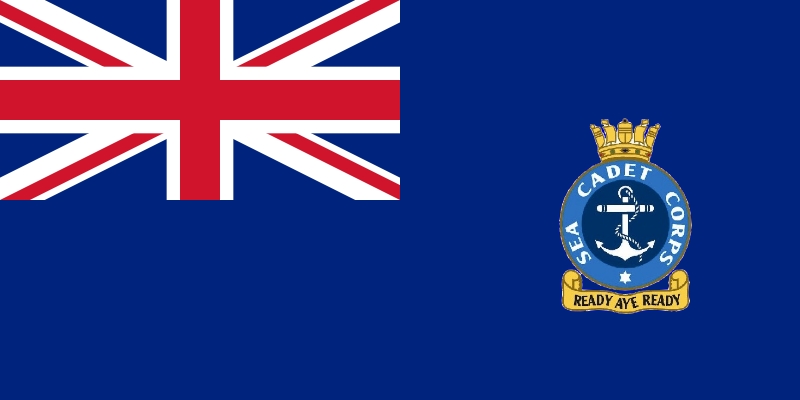

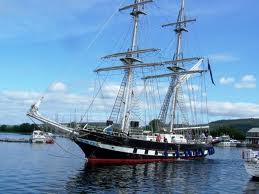

Clive de Rougemont was head of the Sea Cadets. He is of a Huguenot banker ancestry that fled with much of France’s wealth after the repeal of the Edict of Nantes. This family founded Lloyd’s of London. I may be kin to this family.
Jon Presco
Marine Society to merge with Sea Cadets
By David Osler
June 03 2004 Lloyds List
THE Marine Society is to lose its independence and merge with the Royal
Navy-controlled Sea Cadets, after being forced to discontinue its training
ship activities for financial reasons.
Both decisions – announced at the organisation’s annual meeting in London
yesterday, which was addressed by the Princess Royal – appear to reflect
financial realities determined by the continuing decline in UK seafarer
numbers.
The accounts given to attendees showed that subscription and donation
income totalled just ?43,700 ($80,320) last year.
Expenditure of training activities alone – most notably on the vessel TS
Earl of Romney – was over 10 times that figure.
But although Earl of Romney offered basic sea experience to more than 560
adults and young people last year, the 1957-built vessel is to be paid off
this year, and not replaced.
There is no immediate financial crisis, given that the organisation has
built up fixed assets of around ?8.8m in the centuries since its foundation
in 1756.
However, chairman Clive de Rougemont admitted: “Over the past year, the
council has been doing much soul-searching over the future of the society.”
It would be “problematical to say the least” to find the cash for a new
training ship, and a radical solution was needed.
Thus it had been decided to pool resources with another complimentary
charity and to merge with the Sea Cadet Association.
The new organisation will be called The Marine Society and Sea Cadets, he
said.
Practical and legal issues meant that a final timetable had yet to be drawn
up, but fusion was likely by the end of this year.
The merger will take the form of the transfer of Sea Cadet assets and
undertakings to the Marine Society.
The Queen, the society’s existing patron, will also act as patron of the
new organisation.
At yesterday’s meeting, the Princess Royal paid tribute to the work of both
the Marine Society and the Sea Vision campaign.
To the delight of trade union observers present, her speech noted that
while the government’s tonnage tax policy had strengthened the Red Ensign,
it had not boosted seafarer numbers.The Marine Society
From Wikipedia, the free encyclopedia
Jump to: navigation, search
The Marine Society was the world’s first seafarers’ charity. In 1756, at the beginning of the Seven Years’ War against France, Austria, Russia, Sweden and Saxony (and subsequently Spain and Portugal) Britain urgently needed to recruit men for the navy. Jonas Hanway (1712-1786), who had already made his mark as a traveller, Russia Company merchant, writer and philanthropist, must take the chief credit for founding the society which both contributed to the solution of that particular problem, and has continued for the next two and a half centuries to assist many thousands of young people in preparing for a career at sea.
Contents
[hide] 1 Formation
2 Incorporated by Act of Parliament
3 Hostilities cease, Education starts
4 After the Second World War
5 Notes
6 External links
Formation[edit source]
Plaque marking site of the foundation of The Marine Society
The Marine Society, the world’s oldest public maritime charity, was the brainchild of a group of London merchants and gentlemen, who first met at the King’s Arms Tavern, Cornhill, London on June 25, 1756 to discuss a plan to supply two or three thousand seafarers for the navy.[citation needed] Recruitment began immediately. Sponsors were sought and advertisements for volunteers appeared in newspapers and on the street:
“Notice is hereby given, that all stout lads and boys, who incline to go on board His Majesty’s Ships, with a view to learn the duty of a seaman, and are, upon examination, approved by The Marine Society, shall be handsomely clothed and provided with bedding, and their charges born down to the ports where His Majesty’s Ships lye, with all other proper encouragement.”
Ten men were duly clothed and delivered to ships of the King’s navy. In this small way began the work of The Marine Society. The main object of the charity when founded was sending unemployed or orphaned teenagers to sea as officers’ servants. The Royal Navy was estimated to need about 4,500 boys as servants during wartime. Approximately a thousand were ‘young gentlemen’ intending to be officers, and many of the remainder were supplied by the Society. As the boys were for the most part from non-seafaring families the Society probably provided a real increase of several thousand to the pool of naval recruitment. The Society also provided over ten thousand naval recruits with free clothing, which helped reduce the typhus problem.[1]
Incorporated by Act of Parliament[edit source]
The scheme really took off. By 1763, the Society had recruited over 10,000 men and boys; in 1772, such was its perceived importance in the life of the nation, it was incorporated in an Act of Parliament. Admiral Nelson became a stalwart supporter and trustee of the charity, such that by the time of the Battle of Trafalgar (1805) at least 15% of British manpower was being supplied, trained and equipped by The Marine Society. The relative professionalism of these men, the great British naval hero readily acknowledged, played a part in his victories.
Hostilities cease, Education starts[edit source]
But the end of hostilities meant that naval recruitment was no longer the nation’s first priority, although Admiral Boscawen was later to write: “No scheme for manning the navy, within my knowledge, has ever had the success as the Marine Society’s.”
Hanway now formulated plans for transferring boys to the merchant service on their discharge from naval ships and from then on, the Society was equally involved with both Royal and Merchant navies.
Early reports from commanding officers had indicated that the number of desertions might be reduced if boys equipped by the Society were given a period of training before being sent to sea.
Initially the Society hired a schoolmaster and bandmaster to teach some of the boys and in 1786 purchased a merchant ship the Beatty, which was converted to a training ship and renamed Marine Society. The Society thus became the first organisation in the world to pioneer nautical training for boys in its special school ship which was moored in the Thames between Deptford and Greenwich.
This example was followed in the nineteenth century by many other organisations in ports round the British Isles. From 1799 until 1918 The Admiralty provided a succession of training ships, the last two of which were renamed Warspite. In 1922 the Society commissioned HMS Hermione as the third Warspite. However the outbreak of the second world war forced the Society to evacuate the ship owing to the probability of air attack.
From 1756 to 1940 the Society recruited over 110,000 men and boys for the Royal Navy, the British East India Company and Merchant service. Records show that from 1756 to 1815 the charity provided some twelve percent of naval manpower, all the more valuable to the nation since each one was a volunteer.
After the Second World War[edit source]
After the Second World War, the Society concluded that there were by then sufficient facilities for sea-training provided by national authorities. It continued to provide sea-kits for many young seafarers and, where necessary, offered grants for their education, but in the 1950s the Society began to insist that cadets thus helped should have completed a good general education, obtaining a minimum of four GCE passes at O level. In this way The Marine Society pioneered what was subsequently accepted as standard practice for the entry of officers into the Merchant Navy.
Between 1940 and 1987, as the Society’s reserves increased, was not only able to help individual seafarers but also to make grants to many maritime charities. In 1981 it provided the base funds for the Marine Adventure Sailing Trust, a limited life investment trust fund, which enabled it to make further substantial grants to the Sea Cadet Corps, TS Foudroyant, Ocean Youth Club and other maritime youth charities.
In 1976 the Society amalgamated with various other maritime charities with similar aims, including the Incorporated Thames Nautical Training Trust (HMS Worcester), the Seafarers Education Service The Marine Society College of the Sea, the Sailors’ Home and Red Ensign Club, the Merchant Navy Comforts Service Trust and the British Ship Adoption Society. The merger of the Seafarers Education Service with The Marine Society at this time was hugely significant and helped to ensure the continued relevance of both operations. The SES consisted of The Marine Society College of the Sea and Seafarers Libraries, and had been inaugurated in 1919 by Albert Mansbridge who had earlier founded the Workers Educational Association. Both the College of the Sea and Seafarers Libraries continue to flourish today.
For the past 30 years,[2] the principal objectives of The Marine Society have been to facilitate and to provide practical and financial support for the education, training and well-being of all professional seafarers and to encourage young people to embark on maritime careers.
For many years The Marine Society has had strong ties with the Sea Cadet Corps, not only as benefactor and landlord to the SCA, but also by providing sea training opportunities for hundreds of sea cadets each year.
It was because of these ties plus the complementary objectives of the two charities and, more specifically, the mutual desire to introduce an element of Merchant Navy ethos to the Sea Cadet Corps, that the merger of the Sea Cadet Association with The Marine Society came about 30 November 2004. The new charity thereby created became known as The Marine Society & Sea Cadets.
As the UK’s largest non-profit maritime organisation, the Marine Society & Sea Cadets (usually abbreviated to MSSC) is the holding brand for the two distinct organisations: The Marine Society, and the Sea Cadets. It is based in a Victorian building close to the river Thames and adjacent to Lambeth Palace in central London.
The Marine Society continues as a charity involved in lifelong learning for maritime professionals.
Frederick C. de Rougemont is the son of Clive de Rougemont.1 He married Amelia Frances Albinia Roberts, daughter of Sir Hugh Ashley Roberts and Hon. Priscilla Jane Stephanie Low, on 6 February 2010 at St. George’s Chapel, Windsor Castle, Windsor, Berkshire, England.1
Citations
1. [S466] Notices, The Daily Telegraph, London, UK, 10 February 2010. Hereinafter cited as The Daily Telegraph.
Clive de Rougemont1
M, #419928
Last Edited=13 Mar 2010
Child of Clive de Rougemont
Frederick C. de Rougemont1
Hon. Priscilla Jane Stephanie Low was born on 4 September 1949.1 She is the daughter of Toby Austin Richard William Low, 1st Baron Aldington and Felicité Ann Araminta MacMichael.1 She married Sir Hugh Ashley Roberts, son of Rt. Rev. Edward James Keymer Roberts and Dorothy Frances Bowser, on 13 December 1975.1
Hon. Priscilla Jane Stephanie Low usually went by her middle name of Jane.1 She was educated at Cranborne Chase School, Dorset, England.1 She was educated at Westfield College, London, England.1 She was educated at Courtauld Institute of Art, The Strand, London, England.1 She was a curator in 1975 at Print Room, Royal Library, Windsor Castle, Windsor, Berkshire, England.1 From 13 December 1975, her married name became Roberts.1 She wrote the book Holbien, published 1979.2 She wrote the book Leonardo, published 1981.2 She wrote the book Master Drawings in the Royal College, published 1985.2 She was invested as a Member, Royal Victorian Order (M.V.O.) in 1985.1 She wrote the book Royal Artists, published 1987.2 She wrote the book A Dictionary of Michelangelo’s Watermarks, published 1988.2 She wrote the book A King’s Purchase, published 1993.2 She wrote the book Holbein and the Court of Henry VIII, published 1993.2 She wrote the book Views of Windsor, published 1995.2 She was invested as a Lieutenant, Royal Victorian Order (L.V.O.) in 1995.1 She wrote the book Royal Landscape, published 1997.2 She wrote the book Ten Religious Masterpieces, published 2000.1
Children of Hon. Priscilla Jane Stephanie Low and Sir Hugh Ashley Roberts
Sophie Jane Cecilia Roberts1 b. 28 Mar 1978
Amelia Frances Albinia Roberts1 b. 1982
“We were delighted to show our support for the Homes for Home project by the £300,000 grant as families play an important part in helping the recovery of injured personnel while they are in hospital. This significant grant demonstrates Lloyd’s Patriotic Fund’s continual commitment to the families of service men and women.”
8/9/2013
De Rougemont of Lloyds
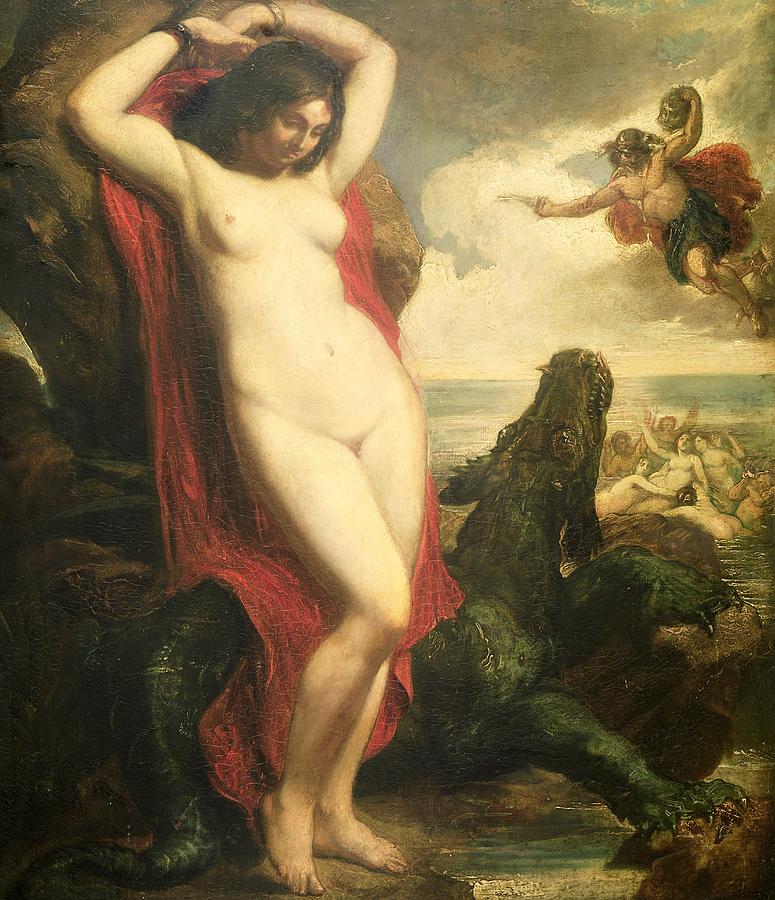
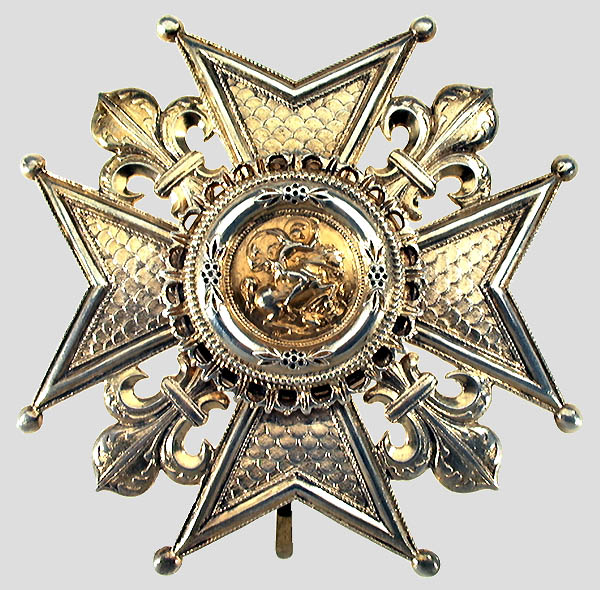


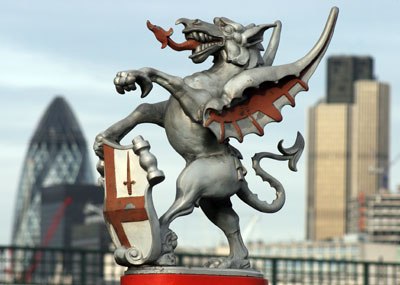
The cote of arms of Lloyd’s contains the cross and sword of Saint George who saved a fair maiden from a dragon, and thus the dragon of the City of London, the wealthiest place on earth. I believe the Rougemont family of Lloyd’s springs from the Noble_Order_of_Saint_George_of_Rougemont.
Jon
http://www.oocities.org/londonpassd/
http://en.wikipedia.org/wiki/Noble_Order_of_Saint_George_of_Rougemont
Herbert de Rougemont of Lloyd’s of London
Herbert de Rougemont of Lloyd’s of London
http://www.aadamson.co.uk/serv09.htm
http://en.wikipedia.org/wiki/Swiss_Re
The coat of arms of Llloyd’s of London contains the same Knight
Templar cross and sword that we see in the City of London coat of
arms. The modern buildings of Lloyd’s of London, and Swiss Re,
dominate the heart of the City of London where Templars allegedly
controlled Britian’s banking, and from them rose the Gnomes of
Zurich Switzerland. This merger may have only taken place in the
cityscape above, where the dome of Swiss Re is in back of the
Lloyd’s of London building. Together, they make a city of tomorow, a
global city that gathers together all the Hugenot Banking families
whom fled to Geneva, and then England. The Herbert de Rougemont
family was one of them. My Huguenot Rougemont ancestors lived in
Basel where Swiss Re has its roots, and then fled to England and
Canada.
Herbert de Rougemont was there in the beginning of Lloyd’s. His
genealogy says he was an underwriter who lived in Craven Hill
Gardens and had six servants. He is the great grandfather of Sir
Michael John de Rougemont Richardson whose mother, Audrey de
Rougemont, married Arthur Wray Richardson. The Rougemont home later
became the Hempel Hotel.
Jon Presco
Copyright 2006
http://www.hotels-compare.com/london-hotels/hempel-hotel-london/
Audrey de Rougemont Born: 2 Jun 1905 – Marr: – Arthur Wray
Richardson Died:
Arthur Wray Richardson Born: – Marr: – Died: – Father: Mother: Other
Spouses: Wife
Audrey de Rougemont Born: 2 Jun 1905 – Died: – Father: Herbert
Edward de Rougemont Mother: Edythe Caroline SaundersOther Spouses:
Children
1. Michael Richardson Born: Private – Died: –
2. Patrick Brian Richardson Born: Private – Died: –
http://members.ozemail.com.au/~rob8/gp675.html
http://worldconnect.rootsweb.com/cgi-bin/igm.cgi?
op=GET&db=settlej01&id=I4601 ·
Herbert de ROUGEMONT · Sex: M · Birth: 1833 in Highgate, Middx ·
Death: 1916 · Occupation: Underwriter and Insurance Agent ·
Living 31 Craven Hill Gardens, Paddington 1901. 6 servants
Father: Dennis Alexander ROUGEMONT b: 30 NOV 1802 Mother: Jane Grant
GLENNIE b: 1801 in LondonMarriage 1 Isabella Louisa DANIELL b: 1842
Married: JUN 1869 in Kensington Children Herbert ROUGEMONT b: 3 AUG
1870 in Carshalton, Surrey Isabella ROUGEMONT b: 1871 in Carshalton,
Surrey Dennis L ROUGEMONT b: 1873 in Carshalton Mabel ROUGEMONT b:
1875 in Carshalton Margaret J ROUGEMONT b: 1878 in Paddington Sybil
E ROUGEMONT b: 1879 in Paddington Alice Mary ROUGEMONT b: 1880 in
Paddington
http://www.londontown.com/LondonHotel/The_Hempel/The_Hempel/
The Hempel 31-35 Craven Hill Gardens, W23EA The Hempel hotel is a
stunning Boutique hotel located in west London’s beautiful Craven
Hill Gardens. Created by acclaimed British designer, Anouska Hempel
this hotel is both Stunning and refined, whilst modern and eclectic.
With accommodating staff and renowned chefs, this hotel truly is a
haven of bliss. A memorable experience will be had by all.
“ROUGEMONT Herbert de Of Lloyds, article in Chambers”
In November 1996, the Corporation acquired, through a United Kingdom
holding company, Capital Re (UK) Holdings, 100% of the issued shares
of Tower Street Holdings Limited (now known as RGB Holdings, Ltd.),
the holding company for RGB Underwriting Agencies Ltd. (“RGB”). RGB
is a managing agency and presently manages five syndicates operating
in the Lloyd’s of London (“Lloyd’s”) insurance market. In November
1997, RGB Holdings, Ltd. acquired 100% of C.I. de Rougemont Group
Limited, the ultimate holding company for C.I. de Rougemont & Co.
Ltd. (“CIDR”), another Lloyd’s managing agency. CIDR manages two
syndicates, one marine and the other non-marine.
http://www.limit.co.uk/Internet/syndicates/s2000/contact/people/Rowli
ngMartin.htm
1685, Geneva housed many of the Huguenot refugees chassed out by
Louis XIV. A good number of today’s private bankers in Geneva are
descendants of the French Protestant immigrants.
The Huguenot network of bankers abroad remained of considerable
assistance to Samuel Bernard during the period of his financial
ascendancy, while he was the ‘banker of the Protestants’ in exile.
Some of the Huguenot bankers in exile achieved astonishing pre-
eminence, witness the careers of two of them who became founding
directors of the Bank of England. In order to assess the
significance of the Huguenot banking exodus, however, we need not
merely to look at French nationals abroad, but at Genevans. Many of
the Genevan bankers were French-born Huguenots, and Geneva took full
economic advantage of its neutrality during the War of the Spanish
Succession. There is no doubt at all that Huguenots and Genevans
were primary investors in English stocks in the early eighteenth
century. The number of Protestant bankers at Paris in the later
eighteenth century remained totally disproportionate to the number
of Protestants within the population as a whole.
Jane O’Beirne’s letters are a treasure trove preserved by the La
Touche family all these years and never before published. Jane, the
granddaughter of an Earl, helped educate and befriended Anne
Caroline Tottenham, the future Mrs. John David La Touche. This Irish
family with Huguenot roots were important bankers and leaders; major
investors in establishing the Bank of Ireland, still the biggest
bank in Ireland and now headquartered in the building that housed
the Irish Parliament which was dissolved in 1800 after the
disastrous rebellion of two years before. Jane’s letters are full of
names that will become famous in history in Ireland and the United
States. We are grateful to David A. La Touche, Ph.D., to his
ancestors and especially to his great-great grandmother, Anne
Caroline La Touche, for preserving these letters.
1685, Geneva housed many of the Huguenot refugees chassed out by
Louis XIV. A good number of today’s private bankers in Geneva are
descendants of the French Protestant immigrants.
Lloyd’s of London is the world’s leading insurance market, its
underwriting syndicates providing a wide range of insurance cover to
the marine, offshore and aviation industries, in addition to
commercial and domestic sectors.
The Lloyd’s Agency system is a worldwide network of companies which
are selected and appointed by the Corporation of Lloyd’s, to provide
surveying and investigation services and to supply local information
on events or occurrences which may be of interest to Lloyd’s
Underwriters.
In the event of a loss or damage which may give rise to a claim on a
Marine Insurance Policy or Underwriters at Lloyd’s, the Lloyd’s
Agent is able to provide invaluable assistance in protecting the
interests of both Underwriters and the Assured.
A Adamson & Company are the appointed Lloyd’s Agents at Glasgow,
also having a sub-agency at the port of Leith. We also undertake a
wide range of surveys in addition to those required in connection
with insurance claim purposes – these include verifying the stowage
and securing of cargo, out-turn inspections, towage approval
surveys, and hatch/hold and vessel condition surveys.
http://en.wikipedia.org/wiki/Swiss_Re
Swiss Re was founded December 19, 1863 by the Helvetia General
Insurance Company in St. Gallen, the Schweizerische Kreditanstalt
(Credit Suisse) in Zurich and the Basler Handelsbank in Basle.
Swiss Re is the world’s largest reinsurer, now that it has acquired
GE Insurance Solutions (Ligi 2006). Founded in 1863, Swiss Re now
operates in more than 30 countries.
http://home-2.worldonline.nl/~aarde01/
Templars in England
The history of the Templars in England began when Hughes de Payens,
Grandmaster of the order visited the country in 1128 to raise men
and money for the crusade. The first house was in London and early
patrons include Earl Robert de Ferrers, Bernard de Balliol, King
Stephen of England and Queen Matilda. Henry II granted them land
across England, including some land by Castle Barnard on the River
Fleet where they built a round church. They were also given the
advowson of St Clement Danes. In 1184 their headquarters was
transferred to the New Temple where once again they built a round
church.
JPMorgan Cazenove is one of the UK’s leading investment banks.
Jointly owned by JPMorgan and Cazenove, it combines innovative and
impartial advice with a broad range of capabilities and proven
execution skills. It is committed to providing its clients with the
highest quality of services based on a deep understanding of their
needs which has been built up over many years.
Headquartered in London, it has offices in Hong Kong, Beijing,
Singapore, Shanghai, Frankfurt, Paris and New York as well as access
to JPMorgan’s extensive global network. It provides a full range of
investment banking services, including financial advice, M&A,
investor relations, debt and equity capital markets advice and
execution and equity research and distribution.
JPMorgan Cazenove is committed to acting as an effective link
between providers of capital and its commercial, industrial and
financial customers.
http://www.jpmorgancazenove.com/
Cazenove Group
Private CompanyIncorporated: 1954 as Casenove & Co.Employees:
1,134Sales: £292.9 million ($500 million) (2004 prorated)NAIC:
523110 Investment Banking and Securities Dealing; 522293
International Trade Financing
Cazenove Group plc is one of the United Kingdom’s oldest and most
venerable investment bankers, providing capital management and
equities and international market investment services to the
country’s elite. The company counts the Queen of England among its
clients, as well as nearly half of the country’s largest 100
companies. With a history reaching back to the early decades of the
19th century, Cazenove has been forced to undergo a sea-change at
the beginning of the 21st century in order to remain a competitive
banking force. Operated as a partnership for most of its more than
180 years, Cazenove converted to a corporation in 2001 and even
toyed with the idea of going public. Instead, at the beginning of
2005, the company spun off its investment banking business into a
joint venture with JPMorgan of the United States, creating JPMorgan
Cazenove Holdings. In this way, JPMorgan achieved an entry into the
dynamic London investment banking sector, while Cazenove obtained
the deep pockets and career perspective capable of attracting the
financial industry’s top talents. Nonetheless, soon after the launch
of the joint venture, the company announced the defection of three
of its senior members. The agreement also gives JPMorgan the right
to acquire full control of the joint venture as early as 2010.
Cazenove traditionally conducts most of its operations from its
London offices, and in the early 2000s the company closed a number
of its overseas offices, notably in India and Australia. Cazenove
maintains subsidiary offices in the United States, Germany, France,
China, Hong Kong, and South Africa. The group posted turnover of
£292.9 million ($500 million), prorated for the full year 2004 in
order to align itself with JPMorgan’s calendar year. Cazenove is led
by chairman David Mayhew, who joined as a partner in 1968.
Huguenot Origins in the 18th Century
Cazenove’s roots lay in the Huguenot exile, following the revocation
of France’s Edict of Nantes, which had established guarantees of
religious freedom for the country’s Protestants in 1685. Many
Huguenots moved to Geneva, where they became leading financiers. By
the late 18th century, the Huguenot population had begun to emigrate
to other parts of Europe and to the United States. England, already
the financial center of Europe, attracted many Huguenot banking
families, notably the Cazenove family, led by James Casenove.
James Casenove’s youngest son, Philip, was born in 1799 and entered
the financial world in 1819, joining brother-in-law and fellow
Huguenot John Menet at his brokerage. By 1823, Philip Casenove had
become a partner in that business, marking the beginning of the late
Cazenove Group. Menet died in 1835, and Cazenove then formed a
partnership with Joseph Laurence and Charles Pearce.
In 1854, however, Philip Cazenove formed P. Cazenove & Co. in a
partnership with his son and nephew. That partnership quickly rose
to prominence, in large part because of its involvement in the
financial side of the railroad industry. Yet a part of Philip
Cazenove’s success was also attributed to his relationship with the
powerful Rothschild banking family, which served as a patron and
later as a financial partner in many of Cazenove’s transactions. In
1859, for example, Cazenove joined with the Rothschilds to act as a
broker for the raising of capital for the San Paulo Railway Company.
In 1862, the company served another important client, acting as
broker for the formation of the Bank of Hindustan. Cazenove’s
interests in India extended to the construction of the country’s
railroad industry. In the 1870s, the company served as broker for
His Highness the Nizam’s State Railway Company. In 1883, the company
helped raise funding for the launch of the Bengal Central Flotilla
Company, which operated a steamship service between Khoolna and
Burrisaul. Closer to home, Cazenove’s helped raise the funding for
the Atlantic Telegraph Company, launched in 1863, and the Great
Eastern Railway Company in 1868.
Through the end of the 19th century, Cazenove was involved in a
number of exotic transactions, such as the issuing of land mortgage
bonds in Russia in 1874, as well as the creation of the Metropolitan
District Railway Company, which built the London Underground. The
partnership’s reputation as a preeminent investment banker was
solidified when it acquired such prominent clients as the British
royal family. Indeed, into the 21st century, the Queen of England
remained a steadfast Cazenove client.
Weathering Railway Nationalization in the 1940s
Philip Cazenove died in 1880, leaving behind one of England’s most
important financial houses. The Cazenove family remained prominent
members of the partnership through the 19th and 20th centuries,
during which the firm continued to bring in new partners. One of the
most important of these was Swainston Howeden Akroyd, who joined the
partnership in 1889. Considered one of the “fathers” of the London
Stock Exchange, Akroyd brought in his brother, as well as his name,
to the partnership, which became known as Cazenove and Akroyd.
By then, Cazenove had already established its rather exclusive
recruiting practices. Partners seemed more or less required to have
attended elite schools such as Eton or Winchester and to have been
members of the Brigade of Guards. The partnership also became famous
for its embrace of formality and tradition, enforcing highly
restrictive dress codes into the “casual dress” era of the 1990s and
2000s.
Cazenove made a number of acquisitions of other brokerage and
private banking firms in the early decades of the 20th century. The
partnership later extended its name to Cazenove Akroyds and
Greenwood & Co. in order to reflect its expanded form. Much of
Cazenove’s financial success had been linked to its longstanding
involvement in the British and worldwide railroad industry. Cazenove
had played a prominent role in the development of the British
railroads, which in turn were a major stimulant to the country’s
economic and industrial growth through the 19th century and into the
20th century. The British railroad system, like that of the American
railroad industry, had been largely built up and controlled by
private interests.
Into the 1940s, Cazenove’s fortunes remained entwined with the
railroad industry, notably with its involvement in the Butler-
Henderson Great Western Railway, as well as its dealings in railway
shares. Yet the outbreak of World War II, and the nationalization of
Britain’s railroad system, nearly spelled disaster for the Cazenove
partnership. As the London Times pointed out in an article in
1968: “Before the war it was said that
if the railways
disappeared, Cazenove would go bust. In fact, it has adapted itself
so well since nationalization that it is more powerful than ever.”
http://www.referenceforbusiness.com/history/Ca-Ch/Cazenove-Group-
plc.html
Jane O’Beirne’s letters are a treasure trove preserved by the La
Touche family all these years and never before published. Jane, the
granddaughter of an Earl, helped educate and befriended Anne
Caroline Tottenham, the future Mrs. John David La Touche. This Irish
family with Huguenot roots were important bankers and leaders; major
investors in establishing the Bank of Ireland, still the biggest
bank in Ireland and now headquartered in the building that housed
the Irish Parliament which was dissolved in 1800 after the
disastrous rebellion of two years before. Jane’s letters are full of
names that will become famous in history in Ireland and the United
States. We are grateful to David A. La Touche, Ph.D., to his
ancestors and especially to his great-great grandmother, Anne
Caroline La Touche, for preserving these letters.
http://www.tolliss.com/ancestry.php?rootid=I4601
http://www.aadamson.co.uk/serv09.htm
Marine Society to merge with Sea Cadets
By David OslerJune 03 2004
Lloyds List
THE Marine Society is to lose its independence and merge with the
Royal Navy-controlled Sea Cadets, after being forced to discontinue
its trainingship activities for financial reasons.Both decisions –
announced at the organisation’s annual meeting in Londonyesterday,
which was addressed by the Princess Royal – appear to
reflectfinancial realities determined by the continuing decline in
UK seafarernumbers.The accounts given to attendees showed that
subscription and donationincome totalled just ?43,700 ($80,320) last
year.Expenditure of training activities alone – most notably on the
vessel TSEarl of Romney – was over 10 times that figure.But although
Earl of Romney offered basic sea experience to more than 560adults
and young people last year, the 1957-built vessel is to be paid
offthis year, and not replaced.There is no immediate financial
crisis, given that the organisation hasbuilt up fixed assets of
around ?8.8m in the centuries since its foundationin 1756.However,
chairman Clive de Rougemont admitted: “Over the past year,
thecouncil has been doing much soul-searching over the future of the
society.”It would be “problematical to say the least” to find the
cash for a newtraining ship, and a radical solution was needed.Thus
it had been decided to pool resources with another
complimentarycharity and to merge with the Sea Cadet Association.The
new organisation will be called The Marine Society and Sea Cadets,
hesaid.
http://www.marine-society.org/Marine%20Society/Content/Welcome
http://en.wikipedia.org/wiki/The_Marine_Society
http://www.sname.org/newsletter/news0806mid.htm#Item9
Yahoo! Groups Links
To visit your group on the web, go to:
http://groups.yahoo.com/group/Templar-de-Rosemont/
Noble Order of Saint George of Rougemont
From Wikipedia, the free encyclopedia
Jump to: navigation, search
The Confraternity of the Knights of Saint-George of Burgundy
Contents
[hide] 1 History 1.1 Origin (1390)
1.2 The Confraternity (1430-1484)
1.3 The Equestrian Order (1485-1788)
1.4 From the French Revolution to the Abolition (1789-1824)
1.5 From the private association to the Apostolic association (1825~2004)
1.6 The Confraternity of the Knights of Saint-George of Burgundy (2004 – present)
2 Sources
History[edit source]
Origin (1390)[edit source]
The noble Brotherhood of Saint George was created in 1390 by two gentlemen of Franche-Comté to honor the relics of the megalomartyr that had been brought back from the Holy Land. Philibert de Mollans, squire to the Duke of Burgundy, was its main driving force. His second-in-command, Jehan d’Andelot, was the son of Sir Jean of Andelot-les-Sallins, and of Marie of Usier, Lady of Vaudrey and Rougemont, where lived the precursors and was held the annual chapter.
The Confraternity (1430-1484)[edit source]
By the time Philip the Good created the Order of the Golden Fleece, on 10 January 1430, there were 24 holders: after the Grand-Master came immediately His Majesty William III of Vienna, in order of precedence. The governor gathered around 1435 or 1440 a certain number of Knights to honor the relics in a chapel that he owned close to the city of Rougemont. Then he decided to celebrate every year the day of the St. George, patron saint of the nobility because he had also been a knight, and was often represented riding his horse with a spear.
The qualities required were sixteen quarterings of nobility, catholic religion, birth in “Franche Comté”, to be sixteen years of age and to donate 300 livre.
The governor general was elected for life by the knights. The other officers were a prelate, a chancellor, a treasurer and two secretaries.
Since then, the most important lords of the region wanted to be accepted in the confraternity and gathered every year at the Chapel of Rougement on 22 April, to celebrate the Day of the Saint.
At that time their insignia was a medal of St. George killing the dragon, suspended from a gold chain.
Philip the Good authorised the confraternity to wear the medal suspended from a red ribbon identical to the one of the Golden Fleece.
DE ROUGEMONT, Mary Araminta Rose (b 2019)
292 views
Frederick Charles de Rougemont1
M, #419927, b. 1979
Book Walking Tours
Last Edited=13 Feb 2022
Frederick Charles de Rougemont was born in 1979.2 He is the son of Clive Irving de Rougemont and Elizabeth A. Butler.1,2 He married Amelia Frances Albinia Roberts, daughter of Sir Hugh Ashley Roberts and Hon. Priscilla Jane Stephanie Low, on 6 February 2010 at St. George’s Chapel, Windsor Castle, Windsor, Berkshire, EnglandG.1
Children of Frederick Charles de Rougemont and Amelia Frances Albinia Roberts
- Louis Frederick de Rougemont3 b. 12 Feb 2011
- Theodore Otter de Rougemont3 b. 8 Dec 2012
- Mary Araminta ROse Rougemont3 b. 18 Jan 2019
Citations
- [S466] Notices, The Telegraph, London, UK, 10 February 2010. Hereinafter cited as The Telegraph.
- [S1122] Peerage News, online http://peeragenews.blogspot.co.nz/. Hereinafter cited as Peerage News.
- [S466] The Telegraph.
Clive Irving de Rougemont1
M, #419928, b. 1946
Download Interactive Maps
Last Edited=7 Mar 2022
Book Walking Tours
Clive Irving de Rougemont was born in 1946. He is the son of Ernest Charles de Rougemont and Rosina Mala Sandberg.2 He married Elizabeth A. Butler, daughter of Geoffrey Butler.2
Child of Clive Irving de Rougemont
 Rosamond Press
Leave a comment