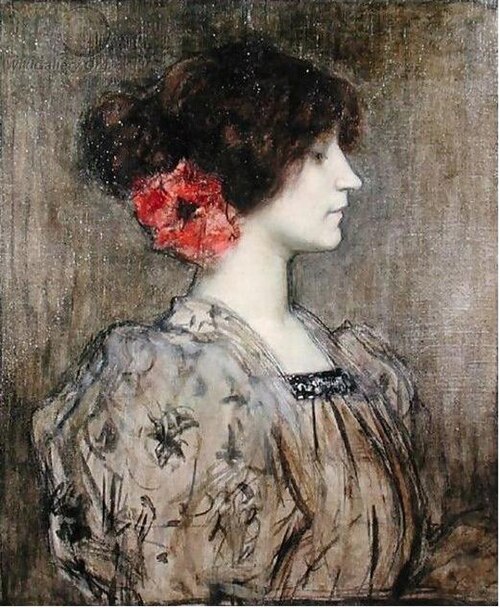
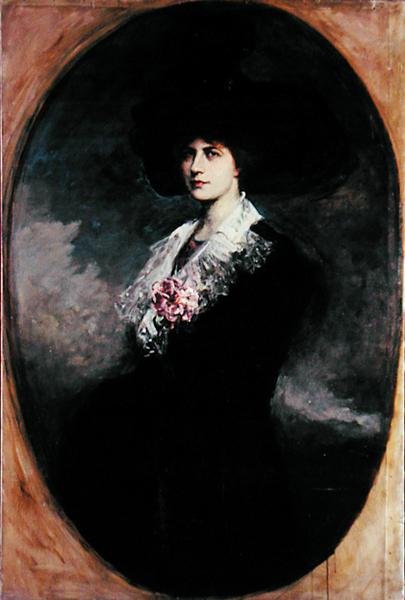
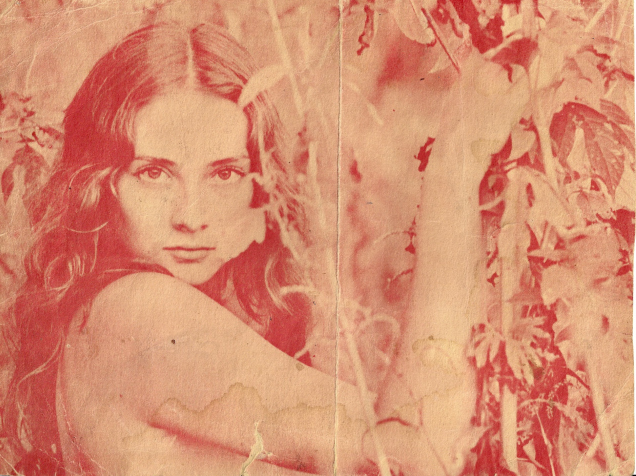
Capturing Beauty
Colette created a female character that – could have been Rena! How did she know – I would find……
RENEE?
Rena became a Vagabond at seventeen. She camped in California – with me! She asked – me why my sister Christine – was staring hard at her. In two years she will become the world famous artist…….
ROSAMOND
The name Rena and Renne means….
BORN AGAIN!
On this day, Rena Easton is……
BORN AGAIN!
Good riddance to that Playboy Club dancer!
Dance, my beloved Rena!……
DANCE!
You belong to me!
John Presco
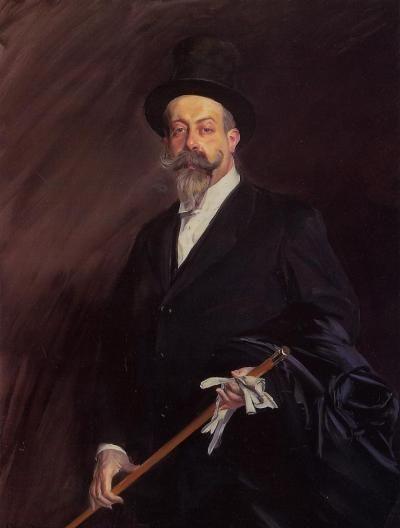
French and Latin Roots: Renée is a French feminine name derived from the late Latin name Renatus, which comes from renascor (meaning “to be born again”).
Renée (without the accent in non-French speaking countries) is a French feminine given name and surname.
Renée is the female form of René, with the extra “e” making it feminine according to French grammar.[1] The name Renée is the French form of the late Roman name Renatus and the meaning is reborn or born again. In medieval times, the meaning was associated with the Christian concept of being spiritually born again through baptism.[2]
Renee was among the top 100 names given to girls in the United States in the late 1950s, the 1960s, the 1970s and the early 1980s.[3] It ranked as the 734th most popular name given to American girls in 2008 and is continuing to fall in popularity.[4]
The name Rena primarily means “joy,” “song,” or “melody” in Hebrew, and “born again” or “revived” in Latin.
Hebrew Origin: Derived from the word rinah (רִנָּה), it translates to “joy,” “jubilation,” a “shout of joy,” or a “song”. [1, 2]
Latin Origin: It connects to the Latin word renascor, meaning “born again” or “revived” (acting as a short form or relative of names like Renata). [1, 2, 3]
The music hall performers are Ren e’s familiars and confidants, her fellow vagabonds; for the first time, the reader is offered a look behind the scenes from a woman’s perspective, a view enabled by Colette’s own simultaneous experience as writer and dancer. Unambiguously feminist and unabashedly sensual, The Vagabond established Colette as a serious novelist, showcasing her talent as an observer of the natural world and a painter of the beauty of the human form.
The Vagabond (French: La Vagabonde) is a 1910 novel by the French writer Colette. It tells the story of divorced woman Renée Néré, who becomes a dancer in music halls in order to support herself. It was inspired by Colette’s experiences after her own separation from Henry Gauthier-Villars in 1906 and subsequent divorce in 1910.[1]
Synopsis
Renée Néré is introduced in her music-hall dressing room anxiously preparing for a performance. It is revealed that Renée and her husband have divorced after eight years of her husband’s faithlessness and cruelty, and that Renée has been struggling to support herself as a music-hall performer for the past three years. She checks her make-up in the mirror, then goes to perform, confident and controlled.
Renée’s life as an artist is described: her work as a dancer, her casual relations with her fellow performers, the small apartment that she shares with her maid, Blandine and her dog Fossette, and her introduction to Maxime Dufferein-Chautel. Maxime presents himself at her dressing-room door one evening, and Renée dismisses him as an awkward intruder, charming and respectful as he seems to be. She more formally meets him again after a private engagement arranged by his brother. Night after night, Renée’s admirer watches her from the front row and patiently waits for her.
With her old friend Hamond acting as a go-between, Renée and Maxime become slowly closer. Maxime visits her; and Renée acknowledges that she has an admirer, but nothing more. Eventually, their acquaintance deepens, but not into intimacy, despite Maxime’s desires otherwise. This continues until Renée signs a contract for a six-week tour with Brague, her mentor, and his pupil. Now she must decide between Maxime and her career, as she recognizes that she cannot allow him to accompany her and is not yet ready to give up the wandering life, which somehow suits her. She then lies, promising to give herself to Maxime, but not until the tour is over. Renée leaves Paris, full of both hope and regret.
Renée travels from place to place, writing letters to Maxime which make up the narrative. These letters are sprinkled with accounts of performances, and thoughts about her relationship with him. The book ends with her final letter to him and the thoughts that she directs toward him as she leaves the letter are unfinished.
In 1893, Colette married Henry Gauthier-Villars (1859–1931), an author and publisher 14 years her senior, who used the pen name “Willy”.[8] Her first four novels – the four Claudine stories: Claudine à l’école (1900), Claudine à Paris (1901), Claudine en ménage (1902), and Claudine s’en va (1903) – appeared under his name. (The four are published in English as Claudine at School, Claudine in Paris, Claudine Married, and Claudine and Annie.)
Book Overview
‘Nothing is real except the dance, the light, the freedom, the music.’ Colette’s semi-autobiographical novel The Vagabond (1910) follows thirty-three-year-old Ren e N r as she embarks on a stage career after a divorce from philandering ex-husband, painter Adolphe Taillandy. Unlike the earlier Claudine series, which began as a collaboration between Colette and her first husband, Colette worked alone on The Vagabond to create a leading lady navigating the Parisian working world on her own terms. The music hall performers are Ren e’s familiars and confidants, her fellow vagabonds; for the first time, the reader is offered a look behind the scenes from a woman’s perspective, a view enabled by Colette’s own simultaneous experience as writer and dancer. Unambiguously feminist and unabashedly sensual, The Vagabond established Colette as a serious novelist, showcasing her talent as an observer of the natural world and a painter of the beauty of the human form. Frances Egan’s new translation provides a fresh take on Colette’s voice, offering a highly readable text which pulls
‘All This Is Still My Kingdom’
By FRANCES KEENE
| THE VAGABOND By Colette |
 his enchanting, sincere and beautifully constructed novel is certainly Colette’s most nearly autobiographical, although friends and contemporaries have leave to doubt that, as the publishers claim, it was her “favorite.” Too close to intimate pain to be a favorite, “La Vagabonde” explores, with Colette’s infinite patience and precision, the beating heart of woman in an age when love is not passionate romance nor tender dream but an abiding duel.
The novel takes its heroine, Renee Nere, from one end to the other of an enticing, advantageous love affair which offers the young divorcee — now music hall artiste — a chance to recapture her status as a member of “polite” society. It offers her, too, enough material security to dazzle and ensnare a less wary opponent.
Renee, like the disabused Colette herself after her lie with her husband, Willy, keeps her guard up the while she catches breath for the struggle quite literally to survive. When we meet her, she has at last emerged from the via crucis of an appalling, dedicated first marriage to reacquire painfully her own identity. And the red thread of her buried torment zig-zags through the pattern her new beau would weave for her. When love confronts Renee Nere at 34, she rejoices in each moment when “I had forgotten him [the second lover]. Yes, forgotten him as if the only urgent thing in the world were my desire to possess through my eyes the marvels of the earth.”
And possess them she does, with all the dappled virtuosity of language at Colette’s command. Renee’s dawn exit from Paris to keep the first engagement of a tour in the provinces reveals “how tedious is everything in this familiar suburb, with its pallid villas where the yawning housewives in their chemises rise late to shorten the empty days.” And when she comes to the fens, the open country Colette herself knew so well: “We are crossing the conflagration, leagues and leagues of gorse in flower, wasted riches which rebuff even the goats, and where the butterflies, made languorous by the warm scent like half-ripe peaches and pepper, flutter about with torn wings.”
So much for Colette, the writer whose capacity to evoke in few words the taste and smell of Paris or the French countryside is proverbial. but of Colette, the sensitive, probing, absorbed interpreter of modern woman, there is no greater example than in this well-translated book. It is a pity that its title has had to be transliterated. What “La Vagabonde” means, of course, is “The Wanderer,” as Renee Nere points out when considering second marriage: “I shall have everything * * * and I shall lean over the edge of a white terrace smothered with the roses of my gardens and shall see the lords of the earth, the wanderers, pass by!” Elsewhere, when the protagonist fingers her hard-won freedom: “All this is still my kingdom, a small portion of the splendid riches which God distributes to wanderers * * *.” Such are the vagabonds Colette chronicles in her personification, Renee Nere, the woman who chose provident, pinch-penny solitude to a renewal of the battle of love with “you … you, you, my beloved adversary.”
Colette has the natural sober tone, the importance attacked to feelings, the graceful brevity which Maurois once said “define one of the forms of the French novel.” But above all her occasional hoarse cry of loss voices the complex anguish of our time.
Miss Keene is a critic of modern European literature.
The Vagabond (French: La Vagabonde) is a 1910 novel by the French writer Colette. It tells the story of divorced woman Renée Néré, who becomes a dancer in music halls in order to support herself. It was inspired by Colette’s experiences after her own separation from Henry Gauthier-Villars in 1906 and subsequent divorce in 1910.[1]
Synopsis
Renée Néré is introduced in her music-hall dressing room anxiously preparing for a performance. It is revealed that Renée and her husband have divorced after eight years of her husband’s faithlessness and cruelty, and that Renée has been struggling to support herself as a music-hall performer for the past three years. She checks her make-up in the mirror, then goes to perform, confident and controlled.
Renée’s life as an artist is described: her work as a dancer, her casual relations with her fellow performers, the small apartment that she shares with her maid, Blandine and her dog Fossette, and her introduction to Maxime Dufferein-Chautel. Maxime presents himself at her dressing-room door one evening, and Renée dismisses him as an awkward intruder, charming and respectful as he seems to be. She more formally meets him again after a private engagement arranged by his brother. Night after night, Renée’s admirer watches her from the front row and patiently waits for her.
With her old friend Hamond acting as a go-between, Renée and Maxime become slowly closer. Maxime visits her; and Renée acknowledges that she has an admirer, but nothing more. Eventually, their acquaintance deepens, but not into intimacy, despite Maxime’s desires otherwise. This continues until Renée signs a contract for a six-week tour with Brague, her mentor, and his pupil. Now she must decide between Maxime and her career, as she recognizes that she cannot allow him to accompany her and is not yet ready to give up the wandering life, which somehow suits her. She then lies, promising to give herself to Maxime, but not until the tour is over. Renée leaves Paris, full of both hope and regret.
Renée travels from place to place, writing letters to Maxime which make up the narrative. These letters are sprinkled with accounts of performances, and thoughts about her relationship with him. The book ends with her final letter to him and the thoughts that she directs toward him as she leaves the letter are unfinished.
Reception
Frances Keene called The Vagabond an “enchanting, sincere and beautifully constructed novel” in a 1955 review for The New York Times. Keene complimented the book’s English translation, but wrote: “It is a pity that its title has had to be transliterated. What ‘La Vagabonde’ means, of course, is ‘The Wanderer,’ as Renee Nere points out when considering second marriage: ‘I shall have everything … and I shall lean over the edge of a white terrace smothered with the roses of my gardens and shall see the lords of the earth, the wanderers, pass by!’” Keene ended the review: “Colette has the natural sober tone, the importance attached to feelings, the graceful brevity which Maurois once said ‘define one of the forms of the French novel.’ But above all her occasional hoarse cry of loss voices the complex anguish of our time.”[2]
In 2011, James Hopkin wrote about The Vagabond for The Guardian: “Has the novel dated in the course of a century? Not at all. There’s enough energy and inventiveness here to blow away any dusty hints of antiquarian charm. And for years I’ve been telling people that no one writes about relationships as perceptively as Colette.”[1]
In light of its recurring focus on the world of performance and the experience of performers, William McEvoy has discussed The Vagabond as theatre-fiction.[3]
 Rosamond Press
Leave a comment