Capturing Beauty
by
John Presco
ALL RIGHTS RESERVED
A Netflix Series
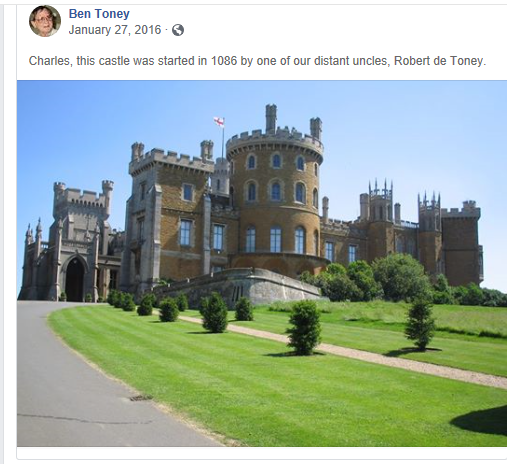
The House of Rozier attacked my newspaper, and my muse, who inspired me to author several James Bond novels. I began other Bond stories. I might begin another, where John Bond is the Lord of Belvoir. These is a discussion of the Knight Templars who lived ar Bellview “beautiful view”.
Of all the castles the House of Rozier ATTACK, this castle is the worst for them! Did they know what they were doing? There are many Legends of Fair Rosamond. She is…The Motif of Motifs!
The Rozier Sneak Attack – was a real surprise! It might be the best thing that ever happened to me. It is a Huge Gift that will keep on giving for hundreds of years, because this is a Modern Feudal Tale. The first thing that came to mind, was the Rozier Clan was waiting for me to die, so they can take (verses inherit) all my Rosamond Family History. This is very disturving, but, is very common in history when one has no heirs.
Eight years ago, my good friend, Ben Toney, died. He had sent me the historic genealogy of his family, that I consider myself the caretaker of.
John Presco
THE SNEAK ATTACK
## **1. Robert Rosier (~1575–1630)**
**Historical role:** Thames waterman; Londoner in the Tudor–Stuart era.
**Motif:** *Manorial England, ancestral halls, noble imagery.*
**Rosamond Press echo:**
– **“Jane of Haddon Hall”** — medieval manor aesthetic [Current page](citation-section://420541474/3)
– **Belmont** as a symbolic ancestral estate (appears in multiple posts) [Current page](citation-section://420541474/2)
**Interpretation:**
Rosamond Press transforms the gritty, real London life of Robert Rosier into a **romanticized ancestral England**, using halls, estates, and noble settings as mythic stand‑ins.
Reblogged this on Rosamond Press and commented:
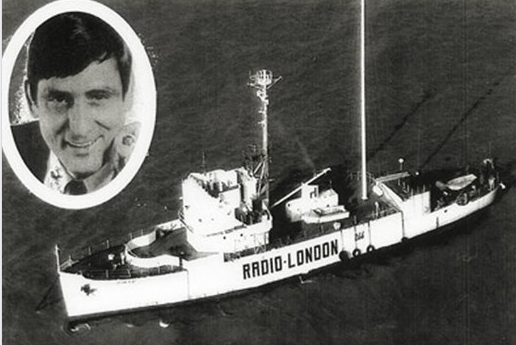
Ben Toney passed away on May 10th. I did not want to look, until I felt greif for the passing of so many people I counted as friends. Ben was the only one who fought the Christian-right. We stood side by side for several years. We took a risk. We went public. We aired our Democratic views and opinions, that are raised higher over our Nation, than any ongoing religious dispute that continues to take more lives, and not one truth replaces those wasted lives. Toney did not waste his life, or distract from the blessed time we have on this beautiful planet, always made more divine by the one who seeks the truth. Goodbye my friend. “It is with a very heavy heart that I share the news that my dad Ben Toney passed away this afternoon at the VA Medical Centre in Dallas. Cheryl, his niece, and I were there by his side and he went peacefully, pain free, and surrounded with love which we are so thankful for. The hospital staff gave him a very moving military send off and they took care of him so well all throughout his stay there. I am utterly devastated but I am so glad I got to spend these two precious weeks with him. We also really appreciate all the thoughts and prayers that you sent previously. Cheryl and I read them out to him and he really loved that. R.I.P dad. I just know you are already on that pirate ship in the sky playing top 40 and singing along”
Henry II Count of Anjou, Duke of Normandy and First Plantagenet King of England Henry II was born in 1133 at Le Mans, France and died July 6, 1189 near Tours, France. When he was only 20 years of age, he married the divorced former queen of France, Eleanor of Aquitane. Louis III of France repudiated Eleanor for misconduct and through a papal decree divorced her March 21, 1152. Of course the divorce was probably enacted because Eleanor had not borne an heir for Louis. Nonetheless, on 18 May 1153 Henry II married Eleanor who was 11 years his senior. However, Eleanor was not a disappointment to Henry for between 1153 and 1167 she bore him eight children, among them were four sons, Henry, Geoffrey, Richard, and John who lived to adulthood. As was often the case with political marriages, there was not a great fulfillment between the parties involved. So, it was not surprising that Henry went searching for love in the arms of other women. In his search he found many willing young maidens who shared his love and his bed. Some years before he became king, Henry was a friend of his distant cousin Ralph de Toney V. It was likely through Ralph that he was introduced to Ralph’s first cousin the enchanting and lovely damsel……… Fair
Rosamond de Clifford, daughter of Walter and Margaret (de Toney) Clifford. Henry II, Ralph, and Rosamond were all descendants of Godehildis de Toney d’Evreux. They were also descended from Simon de Montford l’Amaury (thought by some to have been the grandson of Robert the Pious, King of France). It was Rosamond who became the love of Henry’s life. He placed her in a beautiful castle at Woodstock, which is about 9 miles NW of the city of Oxford. (Woodstock is where Blenheim Palace was later built, the birthplace of Sir Winston Churchill). Unfortunately, this historic love affair ended in 1176 when Rosamond fell ill and died with a lung ailment at the age of 36 years. It seems that Henry was well taken with the Toney women.
8/4/2026
Jane of Haddon Hall

Jane of Haddon Hall
by
John Presco
ALL RIGHTS RESERVED
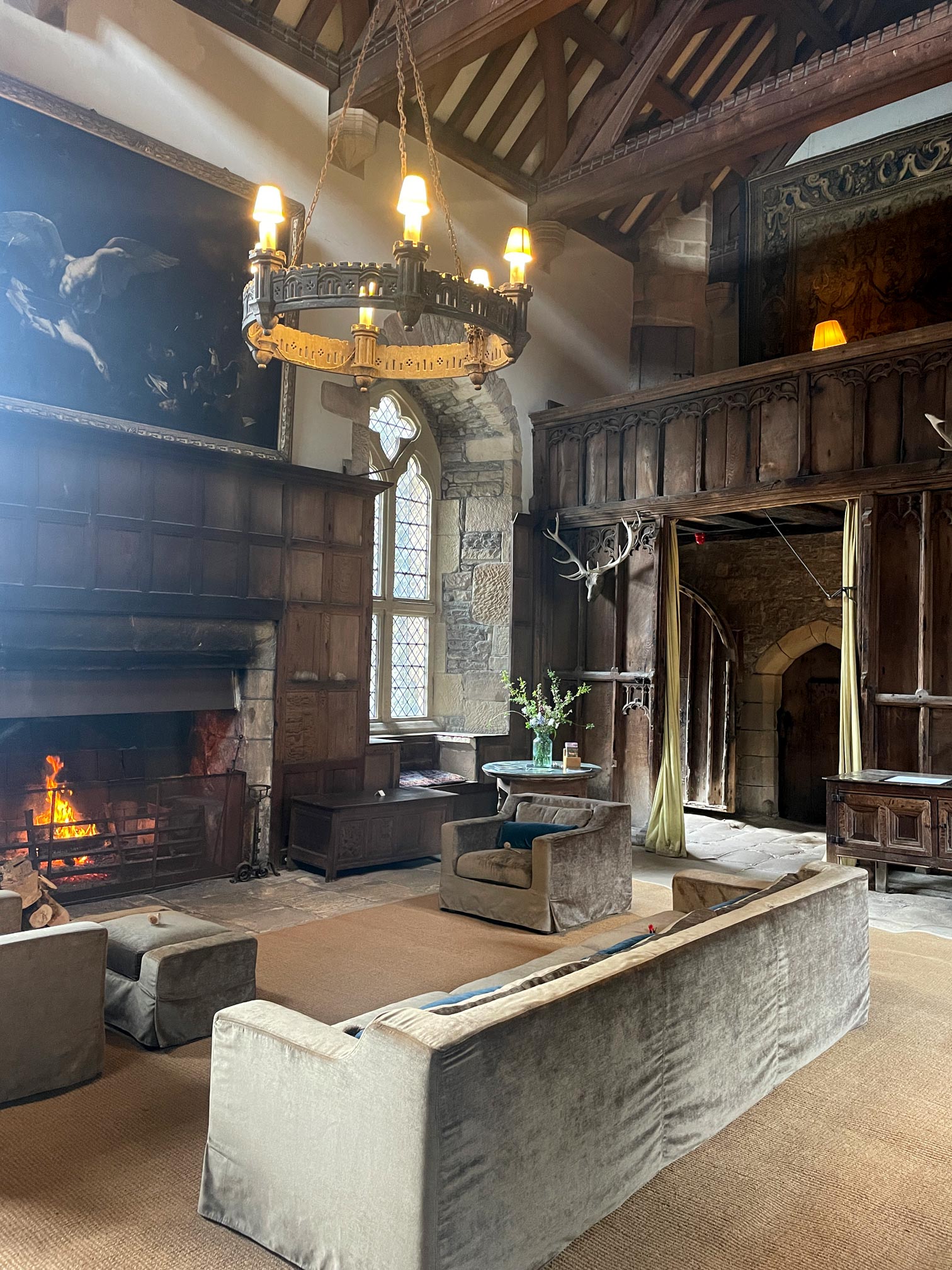
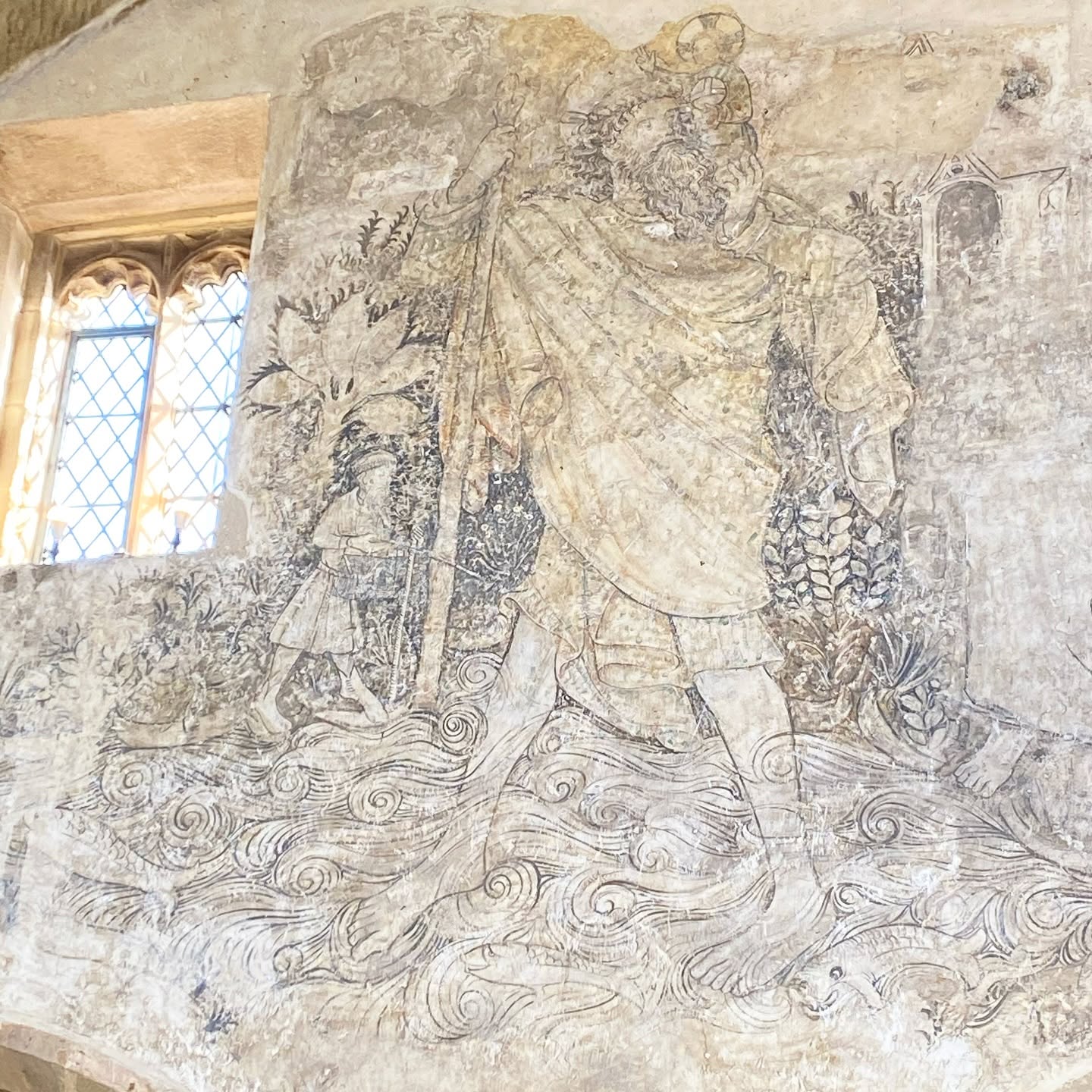
At 4:38 PM on August 4, I discovered Hadden Hall was used as Thornfield Hall. I was looking at images of the mural that was un-covered by Lady Ursula and they reminded me of the work of Garth Benton, who sued the Gettys for painting over his mural – with white paint.
I thought about Rena being a ballerina like Ursula, and I thought about her reading Jane Eyre on the beach – with her back to the sea. I have long wondered if she saw me a Mr. Rochester. I told her we are not going to have intercourse anymore, because she lied to me about her age. I did not know she was adopted, and, was in character. This is when she fell in love with me.
This is beyond un-canny and, borders on the Twilight Zone. Rena’s destiny was to live at Haddon Hall…..forever, and ever! She is not a ghost, or a haunt. She is….
A Great Muse
I have been looking for her home. Jane Irene Victoria Easton, led me to another unsung muse. How could I have missed her? Here is…
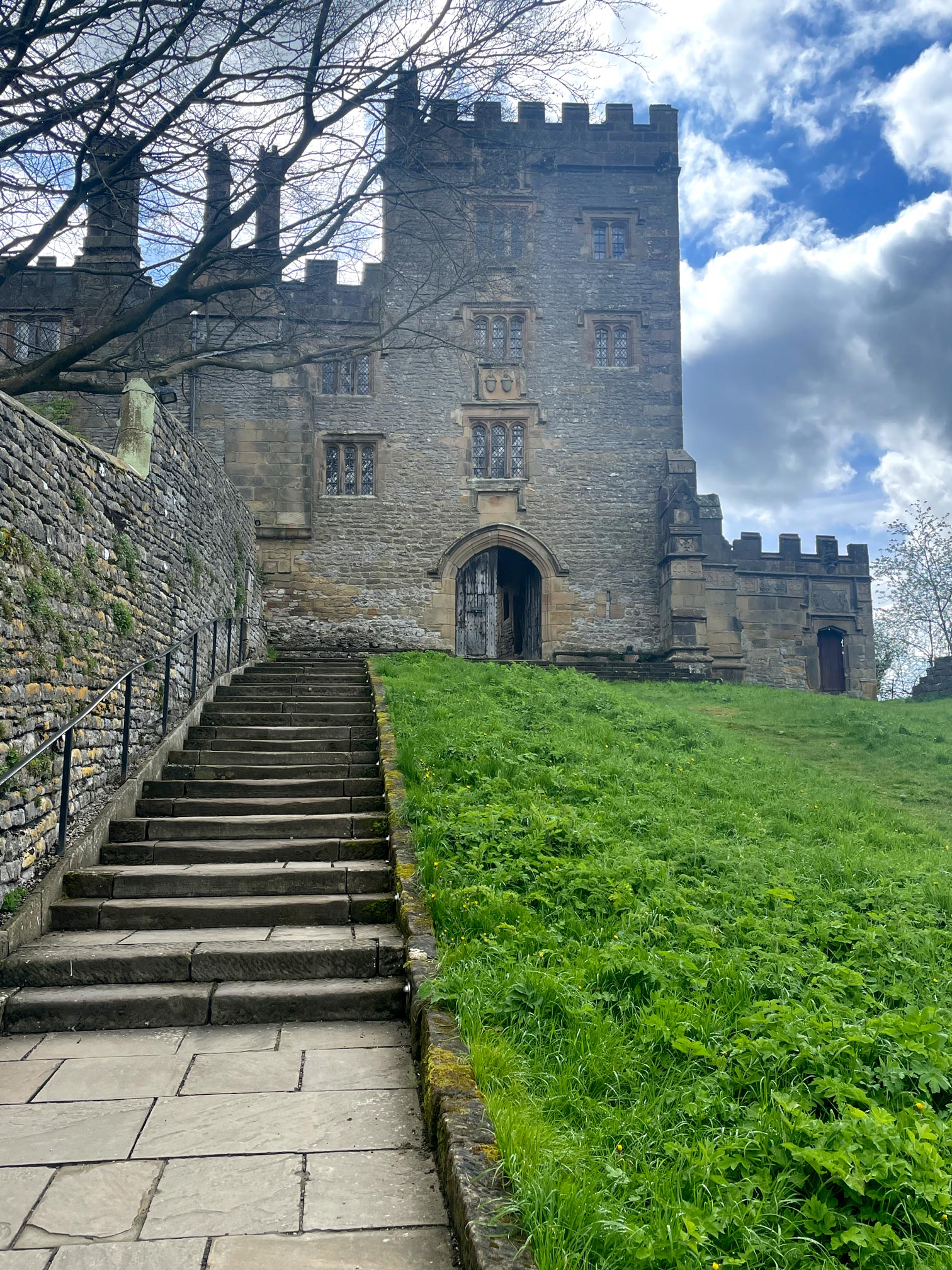
The Great Stage of the Great Muse. Here are the stairs the muses climb, to that utterly creative place, and our human time to do something…..Grand!
I will meet you here, my beloved Irene. Again and again, at the top….
of the stairs!
John Presco
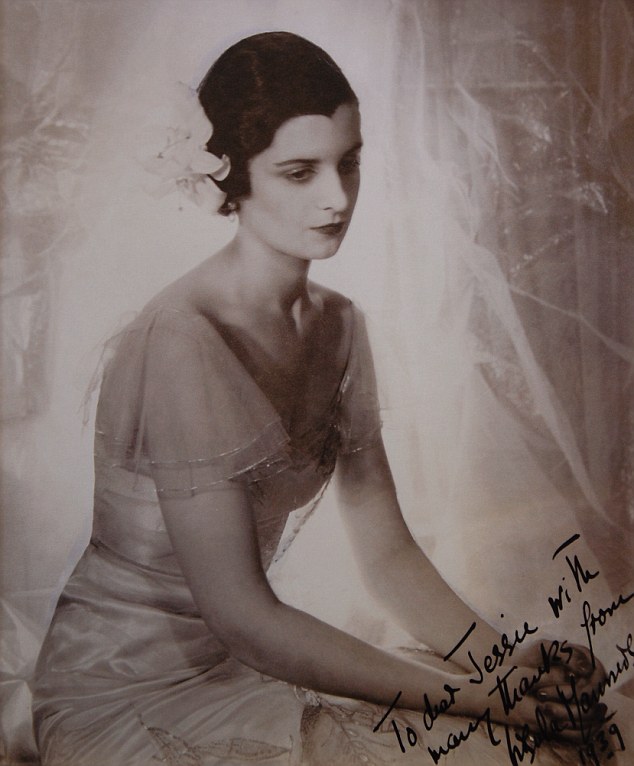
The forthcoming publication of Lady Ursula’s memoirs, The Girl With The Widow’s Peak, will appeal to admirers of Mitfordiana. Born in 1916 to the Marquess and Marchioness of Granby, Lady Ursula’s memoirs recall a gilded age at the centre of high society. Recalling her childhood spent at Belvoir Castle in Leicestershire, the rigid formalities of liveried servants, maids and the ‘pig man’ are reminiscent of Downton Abbey. Following her father’s ascent to the Dukedom of Rutland in 1925, Lady Ursula writes about the extensive restoration of another Manners’ family seat, the medieval Haddon Hall in Derbyshire. Fans of Debo and the restoration of Chatsworth are sure to enjoy this section of the book!
Lady Ursula first lived at Wood House, a small farmhouse in Derbyshire, and at a residence in London.[5] She spent a lot of time at the family estates, Haddon Hall and Belvoir Castle, the latter of which she moved to once her father inherited the dukedom in 1925.[6] When she was eight years old, she helped her father with the restoration at Haddon Hall, where she discovered medieval frescoes of Saint Christopher in the chapel. These had been whitewashed over during the English Reformation.[7]

A couple of years later Mr. Benton made headlines for suing his clients, Ann and Gordon Getty, for having painted over one of his older murals in their San Francisco home, which he had hoped to photograph for a glossy catalogue raisonné of his work. The mural had been painted on canvas and could easily have been removed, but the Gettys had not realized this when they redecorated, and had to settle a large amount of money on him for the error. While I felt deeply over the heartbreaking loss of the artwork, the case made me cringe: suing an otherwise supportive client likely didn’t help his future business. The mural is still gone and the book was never published.
Depiction

Haddon Hall, near Bakewell, Derbyshire, has been used to depict Thornfield on several occasions: for the 1996 film directed by Franco Zeffirelli (starring William Hurt and Charlotte Gainsbourg); in the BBC 2006 mini series directed by Susanna White (Toby Stephens and Ruth Wilson), and for the 2011 film (Mia Wasikowska and Michael Fassbender) directed by Cary Fukunaga.[3] In 1996 and 2011 Wingfield Manor, in Derbyshire, was used to depict Thornfield after the fire, and in 2011 Chatsworth House was used for the gardens.[4][5]
Other locations include Ripley Castle, Yorks, in 1970;[6] Renishaw Hall, Derby, in 1973;[7] and Deene Park, Northampton, in 1983.[8] The 1997 film used Naworth Castle, Cumbria, for the exteriors and Knebworth House, Herts, for the interiors.[9]
The story of the Haddon Hall Chapel skeletons
- Post authorBy Helen Moat
- Post date12th June 2025
Haddon Hall Chapel has more than a few skeletons in its closet. And on its walls.
In this article, Helen Moat – author of our Slow Travel guide to the Peak District – explores one of Derbyshire’s most beautiful chapels.
Inside Haddon Hall Chapel
Tucked in a corner of the courtyard at Haddon is the hall’s chapel. It takes a few seconds for the eyes to adjust to the diffused light in this ancient place of worship, dating back to the 12th century in places, and even longer to take in everything this small space has to offer.
The colourful east window dates back to 1427, with a finely detailed and intricately carved alabaster reredos of the crucifixion beneath it. In the nave, there’s a touching alabaster effigy of a child in peaceful repose: nine year-old Robert Charles John Manners, deeply mourned by his mother Violet.
All around, the rough walls are covered in splendid 15th century wall paintings, busy with leaf and flower patterns, but also of religious figures and scenes: a resplendent St Christopher; St Nicholas blessing the passengers on board a small sailing vessel; three children, also being blessed – rather bizarrely in a tub; a forest hunting scene and, most curious of all, a rather disturbing sketch of three skeletons. Gill Shimwell, Haddon Hall guide (and friend) explained the story behind the skeletons to me.
- Recommended reading: how to walk from Grindleford to Hathersage

The grounds at Haddon Hall are spectacular
The skeletons
Sections of the walls of Haddon Hall’s chapel were whitewashed over, as not all the paintings were scriptural. On one wall, all that’s left are three skeletons. The story of the skeletons is a memento mori, instructing the medieval lords and privileged aristocracy ‘look after your peasants and treat them well, because underneath all those fine clothes, you are just men and women who are going to die.’
The story goes that three kings were riding through the forest when they came to a silent clearing with no birdsong. No matter how much the kings cut and slashed and spurred their horses, the animals wouldn’t move. So the kings got off their horses and walked in. And there they drew their swords, hacking away to see if they could find anything. Three skeletons, at first kneeling in the grass, jumped up and towered above them with a great rattling of bones. Out of their cavernous, empty ribs came voices that boomed and rustled and creaked and said:
“As you are now, so once were we. As we are now, so you will be.”
The three kings ran away, but that night they were killed in their beds in the town where they were staying. Centuries later, in the early 20th century, as the duke and duchess pulled away the whitewash, the kings crumbled with the wash, while the skeletons remained. And so it is today.
If you have more time to explore the Peak District, check out Buxton, the Bath of the Midlands.
More information
For more information, see our Slow Travel guide to the Peak District:
A Family Home
The current owners of the house can trace their lineage back to the early 12th century. This continuity probably accounts for the development of the house over the centuries without drastic alterations. Even when it passed to the Manners family it was due to matrimonial union. Dorothy Vernon was the daughter and heir of Sir George Vernon, whose family had owned Haddon since the 13th century. She married Sir John Manners and they inherited the house in 1565.
The family moved to Belvoir Castle in 1703 resulting in the house being empty for 200 years, thus preserving the house’s integrity and saving it from the Victorian temptation to over-restore.
The subsequent restorations begun in the early 20th century have been done with the intention of preservation rather than modernisation. All these factors have created a medieval masterpiece to be enjoyed.
This week I was saddened to learn of the passing of a great muralist, Mr. Garth Benton, an internationally recognized artist who was well known for his stylish first-century style trompe l’oeil decoration of the magnificent Getty Villa in Malibu, California.
The novel revolutionised prose fiction, being the first to focus on the moral and spiritual development of its protagonist through an intimate first-person narrative, where actions and events are coloured by a psychological intensity. Literary critic Daniel S. Burt has called Charlotte Brontë “the first historian of the private consciousness”[4] and the literary ancestor of writers such as Marcel Proust and James Joyce.[5]
Thornfield Hall
Main article: Thornfield Hall
After six years as a pupil and two as a teacher at Lowood, Jane decides to leave in pursuit of a new life, growing bored with her life at Lowood. Her friend and confidante, Miss Temple, also leaves after getting married. Jane advertises her services as a governess in a newspaper. The housekeeper at Thornfield Hall, Alice Fairfax, replies to Jane’s advertisement. Jane takes the position, teaching Adèle Varens, a young French girl.
One night, while Jane is carrying a letter to the post from Thornfield, a horseman and dog pass her. The horse slips on ice and throws the rider. Despite the rider’s surliness, Jane helps him get back onto his horse. Later, back at Thornfield, she learns that this man is Edward Rochester, master of the house. Adèle was left in his care when her mother, a famous dancer, abandoned her. It is not immediately apparent whether Adèle is Rochester’s daughter.
At Jane’s first meeting with Mr Rochester he teases her, accusing her of bewitching his horse to make him fall. Jane stands up to his initially arrogant manner. Despite his strange behaviour, Mr Rochester and Jane soon come to enjoy each other’s company and they spend many evenings together.
6/14/2020
Barons Ros, of Helmsley (1264)
- William Ros, 1st Baron Ros (d. 1317)
- William Ros, 2nd Baron Ros (d. 1343)
- William Ros, 3rd Baron Ros (c. 1326–1352)
- Thomas Ros, 4th Baron Ros (1336–1384)
- John Ros, 5th Baron Ros (c. 1360–1394)
- William de Ros, 6th Baron Ros (c. 1369–1414)
- John Ros, 7th Baron Ros (d. 1421)
- Thomas Ros, 8th Baron Ros (c. 1405–1431)
- Thomas Ros, 9th Baron Ros (c. 1427–1464) (forfeit 1464)
- Edmund Ros, 10th Baron Ros (d. 1508) (restored 1485, barony abeyant in 1508)
- George Manners, 11th Baron Ros (d. 1513) (abeyance terminated about 1512)
- Thomas Manners, 1st Earl of Rutland, 12th Baron Ros (d. 1543)
- Henry Manners, 2nd Earl of Rutland, 13th Baron Ros (1526–1563)
- Edward Manners, 3rd Earl of Rutland, 14th Baron Ros (1549–1587)
- Elizabeth Cecil, 15th Baroness Ros (c. 1572–1591)
- William Cecil, 16th Baron Ros (1590–1618)
- Francis Manners, 6th Earl of Rutland, 17th Baron Ros (1578–1632)
- Katherine Villiers, Duchess of Buckingham, 18th Baroness Ros (d. 1649)
- George Villiers, 2nd Duke of Buckingham, 19th Baron Ros (1628–1687) (barony abeyant 1687)
- Charlotte FitzGerald-de Ros, 20th Baroness de Ros (1769–1831) (abeyance terminated 1806), first to be styled “de Ros”[10]
- Henry William FitzGerald-de Ros, 21st Baron de Ros (1793–1839)
- William Lennox Lascelles FitzGerald-de Ros, 22nd Baron de Ros (1797–1874)
- Dudley Charles FitzGerald-de Ros, 23rd Baron de Ros (1827–1907)
- Mary Frances Dawson, Countess of Dartrey, 24th Baroness de Ros (1854–1939) (abeyant 1939)
- Una Mary Ross, 25th Baroness de Ros (1879–1956) (abeyance terminated 1943; abeyant 1956)
- Georgiana Angela Maxwell, 26th Baroness de Ros (1933–1983) (abeyance terminated 1958)
- Peter Trevor Maxwell, 27th Baron de Ros (b. 1958)
The heir apparent is the present holder’s son, the Hon. Finbar James Maxwell (b. 1988).
The castle’s name Belvoir means beautiful view in Norman French. Emma Manners, Duchess of Rutland has said the name Belvoir was brought over by the French-speaking Normans in the 11th century. As the Middle English–speaking Anglo-Saxons were unable to pronounce the name, they preferred to call it “Beaver Castle” – a usage which persists today.[8]
Belvoir was a royal manor until it was granted to Robert de Ros in 1257. He was given a licence to crenellate in 1267.[11] When the male de Ros line died out in 1508, the manor and castle passed to George Manners, 11th Baron de Ros, nephew of the last baron de Ros, who inherited the castle and barony through his mother. His son was created Earl of Rutland in 1525.
He was a supporter of the Knights Templar, giving them lands in Yorkshire that included Ribston, where they set up a commandery. At Bolton in Northumberland, he founded a leper hospital dedicated to St Thomas Becket,[1] endowing it with extensive lands. He was also a benefactor of Rievaulx Abbey, Newminster Abbey and Kirkham Priory.[2]
In 1225, Robert was one of the witnesses to the reissue of Magna Carta. By the end of 1226, he formally joined the Knights Templar. Helmsley Castle then went to his eldest son, while Wark Castle went to the younger.
Robert de Ros died in either 1226 or 1227. He was buried at Temple Church in London, where William Marshal and other Knights Templars are also interred.
The Royal Plantagenets by Ben Toney
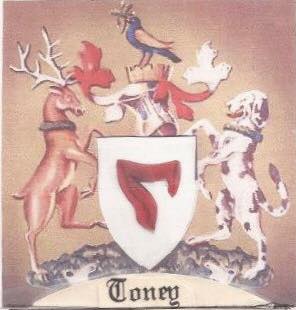
Here is the essay on the Plantagenets written by my late friend, Ben Toney, whose ancestor was Margaret De Toeny, the mother of Rosamond Clifford.
The Royal Plantagenets
by
Ben Toney
Much has been said by various historians about the connection of Ralph de Toney III and the royal family of William the Conqueror and the royal family of Jerusalem. Ralph’s daughter Godehildis had married as her second husband Baldwin the Crusader. Baldwin, Godehildis, and their two young children were members of the First Crusade. They were accompanied by Baldwin’s brothers, Godfrey de Bouillon and Eustace of Boulogne and other notables. When the entourage arrived at Antioch in Asia Minor, Baldwin made a warring expedition against the Saracens, and upon his return to Antioch he found that Godehildis and his two children had died of heat prostration in the scorching summer of 1097. Baldwin continued on to Jerusalem with his brothers where Godfrey for a short time ruled as Protector of the Holy Sepulcher. He would not accept the title of king in a place where his Lord had died wearing a crown of thorns. After Godfrey’s death, Baldwin was crowned King of Jerusalem in the year 1100. In the year 1104, two years after Ralph de Toney III’s death, his son Ralph IV married Alice de Huntingdon, daughter of the late Earl Waltheof and his wife Countess Judith. Alice had rather important connections. Her father, Waltheof, was the son of Siward, Earl of Huntingdon and Northumberland who was immortalized in the Shakespearean drama Macbeth. Siward’s father was Earl Beorn of Denmark, brother of King Sweyn Ethrithson 1047-1076. Alice’s mother, Countess Judith was the daughter of Lambert de Boulogne, Count of Lens. Count Lambert was the uncle of Godfrey and his brother Baldwin who were both rulers of Jerusalem. Not to mention the fact that Countess Judith’s mother, Countess Adelaide was the sister of William the Conqueror. Furthermore, Alice’s sister, Maud, married David of Scotland who became Earl of Huntingdon and Northumberland and in 1124 became king of Scotland. And to add fuel to this royal fire, David’s sister, Matilda, married Henry I, King of England. The common ancestors of the Royal Plantagenets and the Toneys came from two lines. The first line came down from Godehildis, wife of Roger de Toney I, the mother of Ralph de Toney III and his Toney siblings. After the death of Roger de Toney I in May 1040, Godehildis married Richard, Count of Evreux ca. 1041. Not long after this union, their daughter Agnes was born. It was through her that the line to the Plantagenets would continue. The second line emanates from a powerful Frenchman, Simon de Montfort l’Amaury. This line can only be claimed by descendants of Ralph de Toney III and his wife Isabel (de Montfort) de Toney.
1
Between 1058 and 1063 Ralph de Toney III was banished from Normandy. No one seems to know the reason for this banishment, but it could have been that Ralph followed in the footsteps of his father Roger and raided the territory of his neighbors. Nonetheless, it was probably during this time that Ralph ventured to the Ile de France and became acquainted with Simon de Montford l’Amaury and his daughter Isabel. Isabel and her sister Eve, wife of William I, Count of the Vexin, were issues from Simon’s first marriage to Isabel de Bardoul, daughter of Hugh, Seigneur of Broyes. Simon had been married one other time after Isabel’s demise, but she too had passed on leaving Simon unmarried. Simon de Montfort has been reported as the son of Almeric de Montfort, a natural son of King Robert the Pious. Others have said that Almeric de Montfort was the son of William of Hainault. Nonetheless, Simon was a very powerful magnate who held the manor of Montfort l’Amaury which lies just west of Versailles. Regardless of his ancestry, Simon apparently had some influence with William, Duke of Normandy, and in 1063 Ralph de Toney was reinstated to his possessions in Normandy. It must have been only a short time after Ralph III’s return to Normandy in 1063 that he ventured to Evreux and kidnapped his half sister Agnes and took her to Montfort l’Amaury to be the third wife of Simon de Montfort. Agnes was the daughter of Count Richard and his wife Countess Godehildis. In return, Ralph III received in marriage Lady Isabel, Simon’s daughter by Isabel de Bardoul. As a part of Isabel’s dowery, Ralph III received Nougent le Roi, SW of Montfort l’Amaury.
Bertrade de Montfort l’Amaury Queen of France, Niece of Ralph de Toney III, and Sister of Ralph’s Wife Isabel Bertrade (sometimes called Bertrada) was the daughter of Ralph de Toney III’s half sister Agnes, and a half sister of Ralph’s wife Isabel. She had the distinction of being double half kin to the descendants of Ralph and Isabel. When Bertrade’s father, Simon de Montfort, died in 1087, she fell under the influence of her uncle, William Count of Evreux. William at one time had gained some land at Gace when his cousin, Robert de Gace, died without issue. For some reason William the Conqueror had deprived Count William of these lands, and upon the death of the king in 1087, the count devised a plan to get his lands returned. Using Bertrade as a pawn, Count William arranged a marriage between her and the aging Fulk IV le Rechin (the Surly), Count of Anjou. Fulk was born in 1043 and Bertrade was born ca. 1067, an age difference of about 24 years. Apparently Fulk IV had some influence with the Duke of Normandy and Count William had his lands returned. However, Bertrade found herself married to a man that she had no attraction to or love for.
2
Fulk IV had previously been married to Hildegarde de Beaugency, but this union did not produce a male heir. Fulk IV and Bertrade were married in 1090-91 and by 1092, their son Fulk V was born. The medieval kings of France made their residence at Melun, a city on the Seine River just south of Paris. It was shortly after the birth of her son that the beautiful and vivacious Bertrade found herself at the court of King Philip I at Melun. She was well received by the court and especially by the king who immediately fell in love with her, and she with him. One account of their involvement is outlined in the following text: Encyclopaedia Britannica, Vol. VII, Ready Reference Vol. VII, page 940 Because of his firm determination to retain control over all ecclesiastical appointments, Philip was eventually drawn into conflict with the papacy. The conflict was exacerbated when in 1092 Philip abducted Fulk IV of (s/b “the”) Rechin’s wife Bertrada of Montfort. He next demanded the annulment of the marriage of his wife Bertha (of Holland), and of Fulk’s with Bertrada; before long he had found a complaisant bishop, and the king and Bertrada went through a marriage ceremony of dubious legality. Pope Urban II and later his successor Pascual II repeatedly excommunicated Philip, and not until 1104, after Philip and the papacy had settled some of their political differences, did Pascual II turn a blind eye to his relations with Bertrada. By this time Louis VI, Philip’s son by Bertha, had taken over the administration of the kingdom, Philip having been rendered inactive by his extreme obesity. Another account of this dramatic story tells us that after 12 years of marriage to Bertrada, Philip felt the need to have his excommunication rescinded. It was said that Philip made a deal with Pope Pascal II which amounted to Philip remaining apart from Bertrade for the rest of his days if the Pope would reinstate him in the church. This account may well have been true, and his sadness at the loss of Bertrade could have resulted in Philip’s turn to gluttony in his final years. Philip was born in 1052 and died July 29/30 1108 at Melun, France. One other reason for the Pope’s opposition to the marriage of Philip and Bertrade could have been their closeness of kinship. Philip’s father, Henry I, and Bertrade’s grandfather, Almeric de Montfort, could have been half brothers.
Fulk V Count of Anjou and Maine and King of Jerusalem; Grand nephew of Ralph de Toney III and nephew of Ralph’s wife Isabel. Fulk V was born in 1092 and died on 10 November 1143. Upon the death of his father in 1109, he became heir to Anjou at 17 years of age. In the following year, 1110, with the permission of his stepfather King Philip, Fulk married Erembourg, heiress of Maine who died in 1126.
3
In 1120 Fulk made an expedition to Jerusalem where he met King Baldwin II and his daughter Melisend du Bourg. Baldwin II had become King of Jerusalem in 1118 upon the death of his cousin King Baldwin I. And of course, Baldwin I was the son-in-law of Ralph de Toney III. In 1129, after the death of his wife Erembourg, Fulk returned to Jerusalem and married Melisend du Bourg. Upon this marriage, Fulk and Melisend became heirs to the throne of Jerusalem, and only two years later in 1131, King Baldwin died and Fulk was crowned King of Jerusalem. At the time Fulk became king, his 18 year old son by Erembourg, Geoffrey, became Count of Anjou and Maine. Fulk’s reign as King of Jerusalem can best be described in the following text: Encyclopaedia Britannica, Vol. VII, Ready Reference Vol. IV, p. 352 Fulk…spent the first year of his reign settling a dispute in Antioch (Turkey) and putting down a revolt led by his wife’s lover, Hugh de Puiset. In 1137 he allied himself with the Bysantines against a Turkish leader ‘Imad ad-Din Zangi of Mosel (Iraq), and in 1140 helped the Muslims of Damascus ward off Zangi’s armies. He protected Jerusalem in the south by constructing a series of fortresses, including Krak of Moab.
Several of Fulk’s descendants were also kings of Jerusalem: Baldwin III, b. 1131 – d. February 10, 1162; King of Jerusalem (1143-62). Baldwin III was the son of Fulk and Melisend. Amalric (Amaury) I, died July 11, 1174; King of Jerusalem (1163-74). Amalric was the brother of Baldwin III and was named for his father’s uncle Amalric or Amaury de Montfort, Count of Evreux who was the nephew of Ralph de Toney III. Amalric was the son of Fulk and Melisend. Baldwin IV, b. 1161 – d. March 1185, son of Amalric I and Agnes Courtenay. Baldwin IV was only 13 years of age at the time of his father’s death. His kinsman, Raymond III, Count of Tripoli, acted as his regent until 1177. Baldwin died at the age of 24 of leprosy. Baldwin V, b. 1177 in Jerusalem, died August 1186. He was the nominal King of Jerusalem who reigned from March 1185 until his death a year and a half later. Baldwin V was the son of William de Monferrat and Sybille, the sister of Baldwin IV. He was succeeded by Guy de Lusignan, Sybille’s second husband. It is thought that Guy may have poisoned Baldwin V in order to gain the throne; however, Guy’s reign was short lived because on October 2, 1187 Saladin, Sultan of Egypt, conquered Jerusalem, ending the kingdom founded by Godfrey de Bouillon during the First Crusade (1096-99).
4
Geoffrey Plantagenet Count of Anjou and Maine and later Duke of Normandy; Grandson of Bertrade de Montfort, Queen of France. Geoffrey Plantagenet was born in 1151, the son of Fulk V and Erembourg, Countess of Maine. In 1128, the year before Fulk V made his last sojourn to Jerusalem, he arranged a marriage between his son Geoffrey and the Empress Matilda, daughter of Henry I of England. At the time Geoffrey was 15 years of age while Matilda was 26 years, eleven years his senior. At eight years of age, Matilda had been sent to Germany in betrothal to Henry V, King of Germany and Emperor of the Holy Roman Empire. They were married when she was only twelve years old. In all, Matilda lived in Germany for 15 years. As a result, she spoke German better than French. It was said that she spoke French with a German accent. In 1125 Henry V died and Matilda returned to England. Upon her return, she brought with her a young girl, Gertrude, daughter of Baldwin III Count of Hainault. At the time Hainault was a part of Germany, so Gertrude spoke German. Matilda and her young friend Gertrude very often carried on conversations in German rather than French, which was the language of the nobility in England at the time. Nine years after Gertrude’s arrival in England in 1125, she met and married Roger de Toney II in 1134. Roger was the son of Ralph IV and the grandson of Ralph III, and the not too distant cousin of Geoffrey Plantagenet. Upon the marriage of Roger and Gertrude, King Henry I gave them a present of the royal lands at E. Bergholt in Suffolk. Geoffrey gained his sobriquet “plantagenet” because he wore a sprig of broom plant in his helmet. In French, the phrase would be plante de genet, but shortened to “plantagenet” in English. All the kings of England from Geoffrey’s son Henry II to Richard II (d. 1399) bore their ancestor’s nickname “plantagenet”. These kings were also called Angevin kings because they were not only kings of England, but also counts of Anjou in France. The marriage of Geoffrey and Matilda was likely very tranquil during the first few years. However, in 1135 Matilda’s father Henry I died, and although she was the legitimate heiress to the throne and to the Duchy of Normandy, her cousin Stephen of Blois challenged her right. Geoffrey immediately began fighting for his wife’s right to Normandy, and after nine years in 1144, he took the title of Duke of Normandy. He passed this title on to his son Henry in 1150, the year before his own death. Matilda’s fight for her right to the English throne was even more prolonged than her husband’s fight for Normandy. At the time of Henry’s death, the English lords resented Matilda’s ascension to the throne on the basis that she was a woman, and also that she had married an Angevin. Angevin’s had had a long history of fighting the Normans and they were not very popular in the NormanEnglish court.
5
Within the Angevin family, there was a tradition that the Counts of Anjou were descended from the Devil’s daughter. When referring to the “Devil”, they were likely pointing to their ancestor Fulk III Nerra (or the Black) who went about the countryside destroying various abbeys and other church property. As Fulk became older, he became very repentant of his evil deeds and made three pilgrimages to the Holy Land in search for forgiveness. On his return from his last journey, he died in the year 1040. Upon his death, his son Geoffrey Martel became Count of Anjou for a time. When Geoffrey died, he left no heir, so the county fell to the son of his sister Ermengard (the daughter of the Devil). Her son Fulk IV le Rechin (the Surly or the Arrogant) assumed the title Count of Anjou. He of course was the grandfather of Geoffrey Plantagenet. Upon Stephen’s usurpation of the crown, Matilda positioned herself at Rouen and waited for an opportunity to make a strike at England and seize the crown that was legitimately hers. Her opportunity arrived when Stephen became embroiled with the church following his arrest of Bishop Roger of Salisbury. So, in September of 1139 Matilda crossed the English Channel and met Stephen who made a display of chivalry and escorted her to Bristol where she won over most of western England. Early in 1141 the Angevins captured Stephen in a battle at Lincoln. At this point things were going well for Matilda. It was her trip to London for her coronation that became her downfall. She arrived in the capital city with a very arrogant attitude (probably something she picked up from her Angevin in-laws) and the Londoners rebelled against her. In November of 1141 Stephen was exchanged for Matilda’s half brother Robert, Earl of Gloucester who had taken his sister’s side and who had been captured by the opposing side. From the time of Stephen’s release from captivity, he gained the upper hand and as a result, Matilda returned to Rouen in 1148 where she remained until her son Henry took the throne as Henry II in 1154. Stephen had envisioned his son Eustace becoming his successor; however, in January 1153, Henry invaded England to claim his inheritance as king. When Eustace died in August of that year, Stephen designated Henry as his successor. Upon Stephen’s death in 1154, Henry took the throne.
6
Henry II Count of Anjou, Duke of Normandy and First Plantagenet King of England Henry II was born in 1133 at Le Mans, France and died July 6, 1189 near Tours, France. When he was only 20 years of age, he married the divorced former queen of France, Eleanor of Aquitane. Louis III of France repudiated Eleanor for misconduct and through a papal decree divorced her March 21, 1152. Of course the divorce was probably enacted because Eleanor had not borne an heir for Louis. Nonetheless, on 18 May 1153 Henry II married Eleanor who was 11 years his senior. However, Eleanor was not a disappointment to Henry for between 1153 and 1167 she bore him eight children, among them were four sons, Henry, Geoffrey, Richard, and John who lived to adulthood. As was often the case with political marriages, there was not a great fulfillment between the parties involved. So, it was not surprising that Henry went searching for love in the arms of other women. In his search he found many willing young maidens who shared his love and his bed. Some years before he became king, Henry was a friend of his distant cousin Ralph de Toney V. It was likely through Ralph that he was introduced to Ralph’s first cousin the enchanting and lovely damsel……… Fair
Rosamond de Clifford, daughter of Walter and Margaret (de Toney) Clifford. Henry II, Ralph, and Rosamond were all descendants of Godehildis de Toney d’Evreux. They were also descended from Simon de Montford l’Amaury (thought by some to have been the grandson of Robert the Pious, King of France). It was Rosamond who became the love of Henry’s life. He placed her in a beautiful castle at Woodstock, which is about 9 miles NW of the city of Oxford. (Woodstock is where Blenheim Palace was later built, the birthplace of Sir Winston Churchill). Unfortunately, this historic love affair ended in 1176 when Rosamond fell ill and died with a lung ailment at the age of 36 years. It seems that Henry was well taken with the Toney women. One of his other mistresses was one Ida de Toney. Gertrude de Toney was sometimes confused with this Ida because she was on occasion known as Ida herself. Gertrude’s daughter-in-law was Ida de Chaumont who was married to her son Roger de Toney the younger, her husband being Roger de Toney II. Some writers have been tempted to assert that Gertrude was one of Henry II’s mistresses. This, however, is unlikely because Gertrude was 16 or 17 years older than Henry, and a woman of that age would not have appealed to Henry’s taste. He preferred the younger damsels. It was probably a misinterpretation of the following text that led to the notion that Gertrude had an amorous connection with Henry II: The Victoria History of the County of Oxford p. 137 (Garsington Manor)
7
…In 1255, the jurors said that the avus (grandfather) of King Henry III gave his land to Ida de Tony pro servio suo (for her service). Ida presumably one of Henry II’s mistresses, was the daughter of Robert de Chaumont, and wife of Roger de Tony, a tenant-in-chief and member of a junior branch of the Tony family, the caput of whose barony was at Flamstead (Herts.). It is possible that she was given Garsington by Henry II as a maritagium (wedding gift ?). She was in possession in 1201, when Adam Buciute a London merchant quitclaimed his right to the property during her life. Ida was alive in 1203-4, but apparently dead by 1206 when her son Baldwin de Tony was trying to prove in the king’s court his father’s right to property in Garsington. It should be obvious to the casual observer that the preceding text refers to Ida the daughter-in-law of Gertrude rather than Gertrude herself. Gertrude was the daughter of the Count of Hainault, not Robert de Chaumont. Her husband Roger de Toney II was the tenant-in-chief of the main line of Toneys, not a junior line. Some have tried to tie in the death of Ida de Chaumont, shown in this text, with that of Gertrude. There is no evidence here of Gertrude’s time of death. One would conclude that this was the finish of Henry II’s affairs with the Toney women. There is more to be told. In the year 1162 Ralph de Toney V died leaving four year old Ida and her two year old brother Roger who would later become Roger III. These two children were made wards of Henry II. As time went on, Ida became Henry’s mistress, and in the year 1176, when she was eighteen years old she bore him a son who was later called William Longsword. For many years William was thought to have been the son of Rosamond Clifford; however, a London cartilary of the abbey at Bradenststoke (Wiltshire) found in 1979 in William’s own words said “Comitissa Ida mater mea” (Countess Ida my mother). Around Christmas of 1181 Ida de Toney was given in marriage by Henry II to Roger de Bigod, 2nd Earl of Norfolk. This made Ida the Countess of Norfolk. She had several children from this marriage including Hugh, Ralph and Roger. One of these sons was cited in a later document by William Longsword as his brother. There is little doubt that Ida de Toney was the mother of William Longsword, Earl of Salisbury.
8
As time went on, the Toneys began to become more attached to their English possessions as opposed to their lands in Normandy. This had more to do with economics than anything else. Nonetheless, they had become well attached to their Plantagenet cousins and were often seen in their presence. As an example, when King Richard I joined the French King Philip August on the second crusade of 1192-93, Roger de Toney III became a member of Richard’s party rather than the party of Philip. Then when John became king in 1199, Roger III sided with John against Philip August. As a reward John gave Roger a manor in Norfolk called Saham which Roger attached his name to, and even today this manor bears the name Saham-Toney. Of course, Roger’s allegiance to John was not well placed because five years later in 1204, he lost all his Norman estates. Roger III died in 1209, leaving his estate to his 19 year old son Ralph de Toney VI. It is not likely that Ralph de Toney VI had the same warm feeling toward the Plantagenets as had his ancestors. When Ralph was only four years old, he was offered as one of the hostages for the release of King Richard I. Had it not been for the intervention of his kinsman Count Baldwin of Hainault (his grandfather’s first cousin), he would have been held for ransom. Baldwin detained the boy and his escorts at Maubeuge, France, near Belgium in February of 1194 and rescued the boy. As King John’s control tightened on the English barons, Ralph VI joined many of the other barons at Runnymede where they signed the Magna Charta. His later career included becoming General of the Poitevin Mercinaries in the Welsh Marches in the war against Llewellyn the Great and Richard le Marshall, Earl of Pembroke. Then later, signed with the cross, he went on a crusade to the Holy Land led by Theobald II, King of Navarre and Count of Champagne. Ralph VI died at sea on this crusade in 1239. The three final barons Toney were killed in wars while defending the rights of their king. Roger IV was engaged in the Baron’s War which started in 1263. He sided with the king over his distant cousin Simon de Montfort who for the lack of good luck almost became king of England. Roger IV was captured at Lewes in Sussex and is presumed to have died as a prisoner. Ralph VII participated in the Welsh Wars and was later in an expedition to Gascony where he died in 1295.
9
The final Baron Toney, Robert “Knight of the Swan”, fought at Caerlaverock in Scotland, and in 1309 went to Spain to fight the Saracens. In November of 1309 it was reported that Robert had died in battle. The same Saracens that Robert’s ancestor Roger I had fought almost 300 years before had claimed the life of the last Toney baron. After the fall of the House of Toney, the Plantagenets continued ruling England for another 90 years. During this period, many of the junior branches of the Toneys were involved with the Plantagenets at the time of the Hundred Years War, which lasted on past the Plantagenet’s reign. Many years have passed since the Toneys and Plantagenets shared the rich, royal blue blood that surged through their veins. Nowadays, the Toneys have been left with a not so royal, pale, sky blue blood that testifies to a more common stature in life. However, in the end, one must ask these important questions. Who and what am I and where do we go from here?
10
7/18/2016
Rose Templar of Belvoir Priory & Castle


The Sinclair Clan is dire straights due to Niven Sinclair being convicted of being a paedophile.
Sinclair family researcher Steve St. Clair describes Niven Sinclair as his good and close friend.
http://www.mirror.co.uk/news/uk-news/new-bbc-paedophile-scandal-hero-8435411
I just got deleted from Clan Sinclair World Wide, because the moderator can not, and cares not – to read genealogies. This comes from Steve Sinclair, the Sinclair family tree maker. He is ordered by the clan leader to find Sinclair Knights Templar – everywhere! He tells the fearless leader he has found Templars. He lies! They take his word for it – because genealogies are tedious! There are very few people on earth – that love looking at them. Ben Toney and I, are two of them. Robert Sinclair is keen on the Sinclair DNA research. What I am saying, this post, is THE BIG FISH EATING THE LITTLE FISH! The House of Toney has the the right to consume the Sinclair branch – of their family tree! It by far contains more noble DNA.
LOOK AT THIS………..
http://www.sinclairgenealogy.info/rie-family
http://www.sinclairgenealogy.info/rie-family
http://www.sinclairgenealogy.info/rie-family
Agnes de Tosny, Toney, Toeni, was married to Hurbert de Rie
“
There is no direct connection with the 13th-century presence of Knights Templar in Scotland. However, since the 1980s such a connection has been a popular topic in fiction and in pseudohistorical speculation.
In 2000, Andrew Sinclair and Timothy Wallace-Murphy connected the imaginary bloodline of Christ to Rosslyn Chapel, the St. Clair family chapel in Scotland. They believed the chapel had been built as a model of Solomon’s Temple in Jerusalem (even though the ground plans do not match in any way) and that the chapel contained Templar and Masonic symbolism, a claim denied by both experts in the Templars and the Masons themselves. (Some Masonic symbols were added later, and others are actual mason’s marks used by stonemasons in building the chapel.) In this reading, the St. Clair family was in fact the Scottish branch of Jesus bloodline, guarded by the Templars, who after their disbanding became Freemasons. (They did not, of course, as mentioned above. Freemasonry did not erupt for more than 400 years after the end of the Templars, too long for any real connection.) Then, to tie it up with a bow, the faker Pierre Plantard once went by the fake name Saint-Clair.
jhttp://www.jasoncolavito.com/the-templars-the-holy-grail–henry-sinclair.html
Let me make myself perfectly clear. Ben and I are not going to live forever. Robert is a healthy and honest young man. He is also very brave. Over the years, I have seen him stick his neck – way out – and test the metal of reality.
One day Robert Sinclair was gazing upon the calm waters of a lake, when, the tip of a sword appear. On this sword are written these words:
“God can stand the questioning!”
http://www.sacred-texts.com/sro/hkt/hkt14.htm
On 3 July 1257, Ros obtained from Henry III a grant of the free warren, in the lordship of Belvoir, by which the boundary was determined. In 1258, he was actively employed in Scotland, in delivering King Alexander III of Scotland out of the hands of his rebellious subjects; and at Chester, in resisting the hostile invasions ofLlewelyn the Last. In the same year, he and his lady Isabel had a controversy with the Prior and Convent of Belvoir, relative to the right of presentation to the Church of Redmile (near Bottesford), which was amicably compromised by their relinquishing the patronage to the convent, for a certain compensation. In 1261 he obtained from the king the grant of a weekly market, to be held at Belvoir, on Tuesday; and of an annual fair on the feast of St John the Baptist, to continue for three days. In 1264, he was one of the insurgent barons who defeated Henry III at the battle of Lewes, and took him and the prince prisoner, confining them in Farleigh Hungerford Castle. In 1264, de Ros was summoned to the parliament, which was called by the barons in the king’s name. He died in 1285, and was buried at Kirkham Priory.[6]
Yesterday I told my dear friend Ben Toney I would be the Standard Bearer for the history of his illustrious family. Ben is not in the best of health. I spent two years looking at his family tree that has Fair Rosamond Clifford as an outstanding Rose. The Knight Templar, Robert de Ros is here. His offspring lived at Belvoir Castle that was in the movie ‘The Da Vinci Code. There is a Priory close by. The Priory of Belvoir, that means “Beautiful View”.
My Rosemondt kindred were Swan Brethren in Holland. The Swan Knight was secretive of his Family Tree. The parents of my grandfather, were Thomas Rosamond, and Ida Rose. My mother was named Rosemary. Her mother was Mary Magdalene Rosamond.
Agnes de Tosny, Toney, Toeni, was married to Hurbert de Rie. The Sinclair genealogist puts everything on the (rose) line with Hurbert, and utterly ignores his wife who made a donation to the Belvoir Priory, a Benedictine Priory. There is much controversy about this Priory. Robert de Ros was a Knight Templar and is buried at the Templar Church in London. The de Ros and Toney family are close kindred. Ralph Toney was the Standard Bearer for William the Conqueror. Close ties with the Kings of Scotland, are here. Here is everything the Sinclair Family – has sought! But, it all lie under the Banner Toney.
I have been ill recieved by members of the Sinclair Family. They have insulted and censored me. Picture me a Knight on a gallant steed, riding to the rescue of the Sinclair Family Line. I do this for my friend, Robert Sinclair, who has been my ally in looking in these Family Trees. He is and his children are being harassed by Steven Sinclair, who must be dismissed at the Sinclair Genealogist – this very day! There is not need for his aggression. If it continues, then the Sinclair history will be asborbed into the history of the Knight, Ladys, and Monk of Belvoir.
King Henry Curtmantle was keen on having sexual relations with the beautiful women of the Toney family in order to secure his claim to Normandy. Rosamond Clifford was the daughter of Margaret de Toney, and Henry had children by Ida de Toney.
A petition containing nearly two million signatures begged the powers that be to return Britain to the European Union. Here’s your chance Clan Sinclair to recreate the European Empire created by the King Henrys. We are talking about the Plantagenet. Why the name Henry Fitzempress? We are talking about a New Empire, a Trading Union. I will help you establish. Study the Lions Rampant. And, you thought is was all a myth, a fantasy tale that you stuffed in your back pocket.
For showing courage to conduct a fearless inventory of Clan Sinclair, I hearby appoint Robert Sinclair head of his beloved clan.
Hit is maestro!
Jon Presco
President: Royal Rosamond Press
In the Templar Tradtion of the Knights of Bellevaux ‘Beutiful View’
AGNES de Tosny (-before 1127). “Agnes de Toteneio” confirmed the donation to Belvoir priory, Lincolnshire by “pater meus Robertus de Toteneio et mater mea Adelais”, by undated charter[1805]. Henry I King of England confirmed the donation of “decimas de Hokeringhe, de Swanetuna, de Depham, de Bukestuna, de Mercheshale” by “Hubertus de Ria…Agnes de Belfo uxor eius…cum Ricardo filio suo” to Holy Trinity, Norwich, at the request of “Henrici filii et heredis ipsorum”, by charter dated to [1127][1806]. Her second marriage is confirmed by the undated charter under which her son “Henricus de Rya” confirmed the donations to Belvoir priory, Lincolnshire by “Roberti avi mei et Agnetis matris meæ”[1807]. m firstly RALPH de Belfou, son of —. m secondly HUBERT de Rie, son of HUBERT de Rie & his wife — (-before 1127).
Henry II (5 March 1133 – 6 July 1189), also known as Henry Curtmantle (French: Court-manteau), Henry FitzEmpressor Henry Plantagenet, ruled as Count of Anjou, Count of Maine, Duke of Normandy, Duke of Aquitaine, Count of Nantes,King of England (1154–89) and Lord of Ireland; at various times, he also controlled Wales, Scotland and Brittany. Henry was the son of Geoffrey of Anjou and Matilda, daughter of Henry I of England. He became actively involved by the age of 14 in his mother’s efforts to claim the throne of England, then occupied by Stephen of Blois, and was made Duke of Normandy at 17. He inherited Anjou in 1151 and shortly afterwards married Eleanor of Aquitaine, whose marriage toLouis VII of France had recently been annulled. Stephen agreed to a peace treaty after Henry’s military expedition to England in 1153: Henry inherited the kingdom on Stephen’s death a year later.
http://www.sexualfables.com/the_woman_in_the_bower.php
http://www.british-history.ac.uk/vch/lincs/vol2/pp124-127
The Da Vinci Code location: the exterior of ‘Castel Gandolfo’: Belvoir Castle, near Grantham, Leicestershire
Two separate English locations stand in for ‘Castel Gandolfo’, the Pope’s summer residence overlooking Lake Albano near Rome, in which the sinister council meets.
The exterior, with a bit of CGI, is Belvoir Castle, home of the Duke and Duchess of Rutland, about seven miles west of Grantham in Leicestershire. No stranger to the screen, Belvoir (pronounced ‘beaver’) is also seen in Barry Levinson’s Young Sherlock Holmes, Merchant-Ivory’s The Golden Bowl, and as ‘Buckingham Palace’ in both The Young Victoria and King Ralph. Its kitchens featured in Jan de Bont’s splurgy 1999 remake of The Haunting.
About Robert de Toeni, Lord of Belvoir
His parentage is unknown for certain. PLEASE NOTE: (1) Robert de Toni/Tosny Lord of Belvoir (married Adelais) MAY or MAY NOT be the same as (2) Robert de Tosny also known as Robert de Stafford (married Avice de Clare and buried at Evesham Abbey). See notes below.
PLEASE, let’s try to keep them separate just to be on the safe side. However, Geni members keep merging them together indiscriminately. –Pam
Please see Katherine S.B. Keats-Rohan’s “Belvoir: The Heirs of Robert and Berengar de Tosny” (Prosopon Newsletter, 1998) at http://users.ox.ac.uk/~prosop/prosopon/issue9-1.pdf
——————————————-
http://fmg.ac/Projects/MedLands/NORMAN%20NOBILITY.htm#_Toc254886805
E. SEIGNEURS de TOSNY…
1. ROBERT [I] de Tosny (-1088).
- Europäische Stammtafeln shows Robert de Tosny unaffiliated with the other members of this family. Although his ancestry is unknown, it is likely that he was a member of this family.
- He founded Marmoutier in 1063[1791].
- Lord of Belvoir 1086.
- “Robertum de Belvedeir—et A[dela]. uxor eius” founded Belvoir priory, Lincolnshire by charter dated to [1076][1792].
- After the death of his wife Adela, Robert de Belvoir donated “land in Sapertune” to Belvoir priory, Lincolnshire, with the consent of “his sons William and Geoffrey”[1793].
m ADELAIS, daughter of — (-before 1088). “Robertum de Belvedeir—et A[dela]. uxor eius” founded Belvoir priory, Lincolnshire by charter dated to [1076][1794]. “Agnes de Toteneio” confirmed the donation to Belvoir priory, Lincolnshire by “pater meus Robertus de Toteneio et mater mea Adelais”, by undated charter[1795].
Robert & his wife had [six] children:
a) GUILLAUME (-[1130]). After the death of his wife Adela, Robert de Belvoir donated “land in Sapertune” to Belvoir priory, Lincolnshire, with the consent of “his sons William and Geoffrey”[1796]. Lord of Belvoir.
b) GEOFFREY . After the death of his wife Adela, Robert de Belvoir donated “land in Sapertune” to Belvoir priory, Lincolnshire, with the consent of “his sons William and Geoffrey”[1797].
c) [ROBERT de Tosny . “Robertus de Toteneia” donated property to Belvoir priory, Lincolnshire, confirmed by “Willielmus de Albeneio frater meus et dominus”, by undated charter, witnessed by “…Rogerus Bigot”[1798]. The identity of this Robert de Tosny is uncertain. The document cannot be contemporary as William de Albini was heir of Belvoir through his maternal grandmother Alice, who was the sister of this supposed Robert, so could not have been Robert de Tosny´s brother.]
d) ALICE . Her parentage is indicated by the 1130 Pipe Roll which records “Adeliz uxor Rogi Big…tra patris sui de Belueder” in Lincolnshire[1799]. It is also indicated by the charter dated 23 Apr [1430] under which her descendant “Thomas dominus de Ros, de Hamelake, de Trussebout et de Beavoir” confirmed the possessions of Belvoir priory, Lincolnshire made by “antecessores nostros…Robertum de Toteneio, Willielmum de Toteneyo filium suum, Agnetem de Toteneio filiam dicti Roberti de Toteneyo, Henricum de Rya filium Huberto de Rya, Agnetem de Toteneyo, Willielmum de Albeneio primum, Willielmum de Albeneio secundum, Willielmum de Albeneio tertium, Willielmum de Albeneio quartum, Ywynum de Albeneyo, Heliam de Albeneyo et uxores eorundem, Isabellam filiam domini Willielmi de Albeneio quæ fuit uxor domini de Ros, domini de Beauvoire et de Hamelake”[1800], the connection between Robert de Tosny Lord of Belvoir, father of Alice, being established through the marriage of her daughter Cecilia to William de Albini Brito. “Rogerius Bigot…et uxoris mee Adalicie” donated the church of Thetford to Cluny dated [1100][1801]. “Rogerus Bygot” founded Thetford Priory, with the advice of “…uxoris meæ Adeliciæ”, by undated charter dated to the reign of King Henry I[1802]. Living in 1136[1803]. m (before [1100]) as his second wife, ROGER Bigod, son of ROGER Bigod & his wife — (-8 or 15 Sep 1107, bur Thetford[1804]).
e) AGNES de Tosny (-before 1127). “Agnes de Toteneio” confirmed the donation to Belvoir priory, Lincolnshire by “pater meus Robertus de Toteneio et mater mea Adelais”, by undated charter[1805]. Henry I King of England confirmed the donation of “decimas de Hokeringhe, de Swanetuna, de Depham, de Bukestuna, de Mercheshale” by “Hubertus de Ria…Agnes de Belfo uxor eius…cum Ricardo filio suo” to Holy Trinity, Norwich, at the request of “Henrici filii et heredis ipsorum”, by charter dated to [1127][1806]. Her second marriage is confirmed by the undated charter under which her son “Henricus de Rya” confirmed the donations to Belvoir priory, Lincolnshire by “Roberti avi mei et Agnetis matris meæ”[1807]. m firstly RALPH de Belfou, son of —. m secondly HUBERT de Rie, son of HUBERT de Rie & his wife — (-before 1127).
f) [ALBREDE . “H comes Norfulc” confirmed property to the monks of Kirkstall, for the soul of “Albrede de Insula amite mee”, by charter dated to [1154/76][1808]. If amita is translated strictly in this document, Albrede was the sister of Earl Hugh´s mother. However, it cannot be excluded that she was in fact his paternal aunt. m — de l´Isle, son of —.
——————–
[Excellent discussion: from Linley and Jim Hooper’s family history (http://www.linleyfh.com/oursecondsite-p/p828.htm) and this family history refers the reader to this source for further information:http://www.scribd.com/share/upload/13583900/2g4elw2zpu5rjkg0rj21. Here we find a book entitled Origin and Early Generations of the Tosny Family by Peter Stewart, written July 2009. This appears to be a most excellent source by a reputable medieval genealogist ]
Robert de Tosny
( – 1088)
The early Belvoir families: The first Lord of Belvoir, whose sarcophagus now rests at the north-west end of the chapel of Belvoir Castle, Co. Rutland, was Robert de Todeni or Tosny (ob. 1088). There are doubts concerning his place in the Tosny family, but it is probable that he was the brother' of Roger 1 de Tosny (ob.c. 1039), truly the Hereditary Standard Bearer of Normandy whose eldest son, Ralph III de Tosny, Lord of Conches and Seigneur d'Acquigny (ob. 1102), was founder of the great Tony line of Anglo-Norman barons. There is no doubt, however, that Robert was grandfather of Cecily of Belvoir, who carried the great Belvoir fee to her husband, William d'Aubigne (Brito) and their progeny 2 . From this marriage came the Breton Lords of Belvoir, the Earls and Dukes of Rutland, and also the Lords of Daubeney of South Petherton and the Earls of Bridgwater'. Robert's other grand-daughter, Cecily's sister Maud, married William d'Aubigny (now St. Martin d'Aubigny) known as Pincerna, distinguishing him from his sister-in-law's husband Brito; the issue of this marriage became the Albini or Aubigny Earls of Arundel & Sussex'.
Much confusion in the early history of Belvoir arose from the identical naming of Robert’s son, William, second Lord of Belvoir, and the Breton Williams who succeeded after Adeliza, Robert’s daughter. A perhaps greater confusion, however, followed from the unusual coincidence of the two grand-daughters marrying men from towns with similar names but of different regions. Even the Victorian County History of Bedfordshire gave Joan d’Albini of Cainhoe (ob. 13 10) the escutcheon of the Daubeneys of South Petherton, originating from the Montsorel arms of the Breton Aubigne family, even though she is now clearly seen to be of the Contentin family of Aubigny’.
The first definitive account of the family and pedigree of Robert of Belvoir, correcting the flawed attempts of Dugdale, Nichols, Burke and others, was that of the eminent scholar and genealogist, J. H. Round’. In 1914 Dr Farrer expanded Round’s pedigree 6 but neither Round nor Farrer included both daughters of Adeliza de Tosny and Roger Bigod in their family tree charts. It was left to the late Sir Anthony Wagner, Garter King of Arms, to present clearly the link of the Aubignys of the Contentin with the Aubignes of Brittany through the two Bigod grand-daughters of Robert of Belvoir’.
The descent of the Aubigny Earls of Arundel from the marriage of Maud and William d’Aubigny (Pincerna) has been fully presented by the Complete Peerage and Lewis Loyd 4,5, but the descendants of Cecily still present a complex and difficult problem. A great deal of research by C. W. Watson went into the preparation of the Daubeney monograph of the Complete Peerage, which is now being revised. Even so, there were a number of complexities unresolved and the monograph passed very lightly over the Daubeney family of the 12th and early 13th centuries; this is unfortunate, for more than one of the family, receiving mention only, played a significant part in history, not least Philip 1 d’Aubigne who was a great man of his day, serving three successive kings of England with distinction. Watson dealt not at all with the Lords of Belvoir and gave little indication of the close ties between them and the Daubeneys. Robert de Tosny was also known as de Todeni in some records.
Robert de Tosny married Adelais (?).
Robert died in 1088. He was 1st Lord of Belvoir and his sarcophogus rests at the north-west end of the chapel of Belvoir Castle, co. Rutland.. He was buried at Belvoir?, Rutland, England.
Children of Robert de Tosny and Adelais (?)
* Wiliam de Todeni * Berenger Todeni d. c 1116 * Geoffrey Todeni * Adeliza Todeni+ d. 26 Nov 1120
________________________________
NOTE: Although the following person MAY be the same, these profiles are being kept distinct until more evidence is discovered. For the profile of Robert de Tosny Lord of Stafford, please click here. Please note that while Wikipedia says that he is the son of Roger “Conches/The Spaniard” de Tosny (or alternately of Raoul/Ralph II de Tosny), the scholarly research of the Medieval Lands database (see below) does not support this.
http://fmg.ac/Projects/MedLands/ENGLISH%20NOBILITY%20MEDIEVAL2.htm#RobertStafforddied1088B
A. STAFFORD FAMILY (TOSNY)
The primary sources which confirm the parentage and marriages of the members of this family have not yet been identified, unless otherwise indicated below.
ROBERT, son of — de Tosny & his wife — (-1088, bur [Evesham Abbey]). Robert´s connection with the Tosny family is confirmed by the undated charter under which “Robertus de Stafford” confirmed donations to Wotton Wawen Abbey, Warwickshire by “avus meus Robertus de Toenio et pater meus Nicolaus de Stafford”[295]. His father has not been identified. It is possible that Robert was either the same person as Robert de Tosny (died after 1063), possible son of Raoul [II] de Tosny, or as Robert de Tosny Lord of Belvoir in 1086, whose parentage is not known (see above). ”Robertus de Staffordia et Robertus filius meus et hæres” confirmed donations of property to Evesham Monastery by “Rodbertus avus meus…et pater meus Nicholaus” by undated charter[296].
m [AVICE de Clare], daughter of —.
Robert & his wife had one children:
1. NICHOLAS de Stafford (-1138 or after, bur Stone Priory). The 1130 Pipe Roll records “Nicolaus fil Rob de Statford” in Staffordshire[297]. “Nicholaus, filius Roberti de Statfort, et Robertus primogenitus et hæres mei” donated Stone priory to Kenilworth by undated charter[298]. ”Robertus de Staffordia et Robertus filius meus et hæres” confirmed donations of property to Evesham Monastery by “Rodbertus avus meus…et pater meus Nicholaus” by undated charter[299]. m MATILDA, daughter of [300][RALPH de Limesey] & his wife — (-bur Stone). A charter of King Henry II confirmed donations to Stone Priory, among which a donation by “Matildis de Stafford” with the consent of “Roberti de Stafford”, by undated charter[301]. “Matildis de Stafford” granted land in Theddlethorpe, Lincolnshire to “Matildi filie Roberti filii Gilberti filiole mee”, with the consent of “Johannis filii mei et Radulfi nepotis mei”, by charter dated to the reign of King Henry II, witnessed by “…Willelmo filio Otueri, Rannulfo de Seis, Ingeramo Bagot…”[302]. Nicholas & his wife had two children:
a) ROBERT de Stafford (-[1178/84], bur Stone Priory). “Robertus de Stafford” confirmed donations to Wotton Wawen Abbey, Warwickshire by “avus meus Robertus de Toenio et pater meus Nicolaus de Stafford” by undated charter[303]. The 1156 and 1157 Pipe Rolls record “Robert de Stafford” first in the list under Staffordshire[304]. “Nicholaus, filius Roberti de Statfort, et Robertus primogenitus et hæres mei” donated Stone priory to Kenilworth by undated charter[305]. Military fee certifications in the Red Book of the Exchequer, in 1166, record that “Robertus de Stafford” held one knight´s fee from Richard Bishop of Coventry in Staffordshire, and also record the sixty knights fees held from “Roberti de Staffordia” in Stafford[306]. The Red Book of the Exchequer refers to “Robertus de Stafford lx m” in Staffordshire in [1167/68][307]. ”Robertus de Staffordia et Robertus filius meus et hæres” confirmed donations of property to Evesham Monastery by “Rodbertus avus meus…et pater meus Nicholaus” by undated charter[308]. m AVICE, daughter of — (-bur Stone). Robert & his wife had three children:
i) ROBERT de Stafford (-[1193/29 Sep 1194]). ”Robertus de Staffordia et Robertus filius meus et hæres” confirmed donations of property to Evesham Monastery by “Rodbertus avus meus…et pater meus Nicholaus” by undated charter[309]. The Red Book of the Exchequer, listing scutage payments in [1190/91], records “Robertus de Stafford” paying “xxx l, lx milites” in Staffordshire[310]. He was in Jerusalem in 1190. m BASILIA, daughter of — (-after 1221).
ii) NICHOLAS de Stafford .
iii) MILLICENT de Stafford (-before Jan 1225, bur Stone Priory). “Herveus…dominus de Stafford” confirmed donations to Wotton Wawen Abbey, Warwickshire by “Robertus de Tony et Nicolaus filius suus de Stafford et Robertus filius eius” by undated charter which names “dominus Robertus de Stafford, pater uxoris meæ”[311]. Her name is confirmed by the undated charter under which her son “Willelmus de Stafford filius Hervei Bagot” confirmed donations to the priory of St Thomas, Stafford, with the consent of “fratris mei Hervei Bagot…matris meæ Mylisent”[312]. m (before 1193) HERVEY Bagot, son of — (-before 25 Aug 1214, bur Stone Priory). He adopted the name “Stafford”.
b) JOHN de Stafford . “Matildis de Stafford” granted land in Theddlethorpe, Lincolnshire to “Matildi filie Roberti filii Gilberti filiole mee”, with the consent of “Johannis filii mei et Radulfi nepotis mei”, by charter dated to the reign of King Henry II, witnessed by “…Willelmo filio Otueri, Rannulfo de Seis, Ingeramo Bagot…”[313].
c) — de Stafford . Her parentage and marriage are confirmed by the charter dated to the end-12th century under which “Radulfus de Suleya filius Radulfi de Suleya” confirmed land in Theddlethorpe, Lincolnshire to “Matildi de Hambi” granted to her by “Matildis de Staforda avia sua”, and land given to her in the same place by “Haraldus frater eius”, another charter which records the same confirmation clarifying “Radulfus de Suleya…Matildis de Estafford avia mea”[314]. m RALPH de Suleye, son of —. One child:
i) RALPH de Suleye . “Radulfus de Suleya filius Radulfi de Suleya” confirmed land in Theddlethorpe, Lincolnshire to “Matildi de Hambi” granted to her by “Matildis de Staforda avia sua”, and land given to her in the same place by “Haraldus frater eius”, by charter dated to the end-12th century, another charter which records the same confirmation clarifying “Radulfus de Suleya…Matildis de Estafford avia mea”[315]. It is assumed from these documents that Matilda de Hambye was the wife of Ralph de Suleye, although this is not stated specifically therein. m MATILDA de Hambye, daughter of —.
2. ALAN de Stafford (-after 1160). The Red Book of the Exchequer refers to "Alanus de Stafford dimidiam marcam i quartam" in Northamptonshire in [1160/61][316].
3. ROGER de Stafford (-after 1166). Military fee certifications in the Red Book of the Exchequer, in 1166, record that “Rogerus de Staffordia” held land in Dorset from the abbot of St Edward´s[317].
4. JORDAN de Stafford (-after 1166). Military fee certifications in the Red Book of the Exchequer, in 1166, record that “Jordanus de Stafford” held one knight´s fee from “Alvredi de Lincolnia” in Dorset and one from “Willelmi Malech” [Malet] in Somerset[318].
—————————–
There is one other “stray” Robert de Tosny who may or may not be the same one. See the third sibling listed below in Cawley’s database:
http://fmg.ac/Projects/MedLands/NORMAN%20NOBILITY.htm#_Toc254886805
Brother and sister, and one possible additional brother, parents not known. No primary source has yet been found which identifies the parents of these [three] siblings. From a chronological point of view, they could have been the children of Raoul [II] de Tosny. It appears chronologically unlikely that they were the children of Roger [I] de Tosny [Conches]. It is possible that Robert [II] de Tosny was the same person as Robert [I] de Tosny Lord of Belvoir (see above) or Robert [III] de Tosny Lord of Stafford (see below).
1. BERTHE . Her marriage is confirmed by the charter dated [Sep/14 Oct] 1055 under which the monks of Marmoutier record the donations by “quemdam militem…Johannem pagi Cenomannensis indigenum, Widonis de Valle filium” of property “in Normannia, territorio Vilcassino…ecclesiam in villa…Guarniacus…juxta fluvium Eptæ” which “Wido pater eorum” accepted from “uxore sua Berta, Johannis et Haimonis matre”[1833]. Her connection with the Tosny family is confirmed by the charter dated 1063 which records the consent given by “Rotbertum de Toeniaco, avunculum domni Johanni monachi nostri, filii Widonis de Valle” to the donations by the latter to Marmoutier, authorised by “Berengerius filius eius”[1834]. The remaining question is the identity of her father. The date of her marriage is estimated from a charter dated 11 Nov 1039 in which her two grandsons are named (see the document MAINE for further details)[1835]. If this document is correctly dated (but this is open to debate, as discussed further in MAINE), it is extremely unlikely for Berthe to have been the daughter of Roger [I] de Tosny [Conches]. m ([1010/15]) as his first wife, GUY [I] Sire de Laval, son of — (-after 1064).
2. [BERENGER Hespina . The primary source which confirms his parentage has not yet been identified. His name suggests that he was the brother of Robert [II] de Tosny, whose son is also recorded with the name Berenger. 1050/1066. A charter of King Henry II records donations to York St Mary, including the donation of land “in Lestingeham…Spaunton, in Kyrkeby-Misperton…in Dalby…in Skaldena…in Lyndesey in Bek…in Bynbruc” by “Berengerius de Todeneye”[1836].] m —. The name of Berenger’s wife is not known. Berenger & his wife had one child:
a) BERENGER . The primary source which confirms his parentage has not yet been identified. A charter of King Henry II records donations to York St Mary, including the donation of land “in Finmara et…in Hunkleby et decimam suam de Dalton et juxta Chevermunt” by “Berengerius de Todenei”[1837].
3. ROBERT [II] de Tosny (-after 1063). His connection with the Tosny family is confirmed by the charter dated 1063 which records the consent given by “Rotbertum de Toeniaco, avunculum domni Johanni monachi nostri, filii Widonis de Valle” to the donations by the latter to Marmoutier, authorised by “Berengerius filius eius”[1838].
m —. The name of Robert’s wife is not known. Robert [II] & his wife had one child:
a) BERENGER (-after 1063). His parentage is confirmed by the charter dated 1063 which records the consent given by “Rotbertum de Toeniaco, avunculum domni Johanni monachi nostri, filii Widonis de Valle” to the donations by the latter to Marmoutier, authorised by “Berengerius filius eius”[1839].
 Rosamond Press
Leave a comment