


Ed Corbin. Mark Gall
San Sebastian Avenue
On July 12, 2026 I got copy of a newly published book on the history of the Rosamond family written by a cousin.
I do not think Edwin Corbin wrote one page in the sixteen years I have known him. His friend, Mark Gall, never mentioned any progress on his great after retirement novel. He jokingly accused me of delaying his book because I introduced him to Online Poker. I own a laminated printout of the Million Dollars of fake winnings. I assume other friends got one. I on the other hand, have written ten thousand pages – and posted them on this blog. My claim to fame is….
I AM A REAL JAMES BOND AUTHOR WHO IS KIN TO IAN FLEMING
Three days ago I discovered Mark Gall is dead. He did not tell me I am dying, nor did anyone who knew him. Did the Corbin Boys know? Did Mark leave them any money, being his son, Jon Gall, passed away?
In looking at the companies the Corbin Children founded, I see no history of their parents. Freeman says he is a “second generation realetor” . His mother, Katrine, was a powerhouse Realestate Investor, and amy have own the Raving Fmily home on 13th. Why is there no history of that famous house. Joy Gall told me there was covert actinity going on. Her son, got upset when we went to….
CORBIN HALLOW
Jon crawled up the step to see my appartment. He wanted to see how that felt. He died without every having his….
OWN ABODE
The big question I own, is….
WHY DIDN’T ED, KATRINE, THE MEN OF LEISURE, AND THE GALLS
Help me get a book published, and, helped me get into a home? Did Ed prevent this, he quite pleased he has A FLUNKY something that was a real attainment at Harvard when he went there. Mark knew this. He knew Ed living in the famous Jock Dorm, where having a Lacky was the norm. More that one I wondered if both Mark and Ed saw me as their Lacky, that they strung along. Did I actually think these two Harvard Graduates – would help get my first book out. If they did that, then they might lose me as….
THEIR ERREND BOY
So far, I can not find any birth, death, and marriage certificates for any one connected with the Corbin Name. I now have doubts Katrine and Ed got married. If true, because I am related to Wallace, I might be…
THE CORBIN FAMILY HISTORIAN
How perfect that I title Cosmon, Freeman, and Eden
‘THE SONS OF THE WOODWOSE’
Wode means woods, and, and wose means…..man! Katrine and I got along – very well. Wait a minute, did The Raging Mom consider investing in me, getting her sons to help me, after all, she had fallen in love with a Bohemian Writer in Berkeley, and, he wrote nothing after that. Indeed was a Gian Drunken Pain In The Ass. Katrine talked about how she was a co-dependant, and had to be careful how much she helped Ed. Her new husband and I moved Ed from
FAN MAN ROW
If you opended Ed’s door, you faced where I lived, and where Donna Christ and I lived in a homeless house. Donna took me down into the baseement where she stored a hundred items she dug out of the two dumpters, Ed dug his teasures out of. They were compeititors – who never met! She was selling her – crap. I was a prospective buyer. Thank God Mark never met Donna, he would have dogged her trail like he did Cheyl.
Hey. Hold your horseshit. What if Katrine and I got married – after locking Ed up in a Cuckoo’s Nest? Wow! What a multi-million story that would be. Anyone who would thwart my chance to be a millionaire, will hear from Saul. If there is a after-life, then I must assume my old friend, is aching to be remembered, and be the star of a Beat-Hippie book. Screw his sons!
12/9/2021
Donna Christ – Bank Robber

Another popular story which involved the wild men of the woods is an Alexander the Great story. Alexander was another popular character in medieval England and despite never setting a foot in England became the subject of many stories. One involved a wild man who decided to catch and kidnap Alexander. Alexander became aware of this wicked plot and set a snare trap for the wild man which he baited with the only thing that both wild men and unicorns cannot resist a young woman. The theme of the woman being able to tame the wild man is an ancient one which goes back to the Epic of Gilgamesh. In Carlisle cathedral, there is a misericord of a wild man and a nymph. He looks on her lovingly as she looks out of the carving directly at the viewer, confident in her power over the wild man.
4/3/2019
John Roseman and Sarah Wilson

A Rose Among The Woodwose
by
John Presco
Chapter Three
John ‘The Highwayman’
When Sarah Wilson was told about John Rosamond, she heard he was a very bad man. But, he is a very good man, too, some say. Could he be both? For sure he was the best cobbler in the Colonies, and she had need for a special shoe for her special foot. This foot got Sarah in a lot of trouble. Indeed, she was cast out of Church because of it.
“Don’t go see him, Sarah. He’s trouble. He’s a robber. He’s killed men. They say he killed his lover, a black slave who was half Cherokee.”
“I hear he is very handsome, and a man of means due to his profession!”
“He was a slave! He was thrown in Reading Gaol for stealing the shoes of a Baroness. She went barefoot for a week! He put on her husbands wig and rode away laughing!”
Sarah launched herself off the walk, and her sister noticed her awkward gate as she headed for the shop with a markee of a rose and shoe, a woman’s shoe. John looked up as Sarah threw open the door to his shop. He could see her chest swell as she took in a deep breath.
“Not another one!” John whispered to himself. They just had to judge for themselves. They had to look into his eyes for The Stain………….’Woman Killer’!
Sarah gasped as she took in John’s pale blue eyes, that were the color of her father’s eyes, and thus they were – her eyes! She heard the word “Brother” She had beautiful brothers, but these brothers ripped the buttons off her dress after they dragged her into the courtyard.
John lowered his eyes, and tried to see Sarah’s shoes. He was embarrassed, even ashamed, because his heart had skipped a beat. And there – it missed again! In that second, there were feelings he thought he would never own again.
“Come, sit here in this chair. You are hiding something.”
“How do you know?”
“Because your dress is tailored too low. The hem is getting worn on the ground!”
“I have a club foot.”
“Lift your dress, and let me see.”
As Sarah lifted her dress, her stomach deeply flinched. When he gently took her foot in his hand, she ached with an ancient longing. Watching his eyes take in her, flaw, all she wanted in this Green Earth was to lay atop him, and hold his face in the candlelight, and take him in til morning.
“Were you born with this foot?”
“No. I was a breached birth. The midwife called for a Doctor who had special tools and skills. He got hold of my foot with one, and pulled. He wept, and cursed his invention. He did not sleep for three days until he fashioned a better one.”
“You must be in great pain. I can help you. When I was in Reading Gaol I made shoes for fellow prisoners. Most of them were deformed in some manner. Especially in their feet.”
“I am not a prisoner!” Sarah said defiantly. And John knew, she was guilty of something. Had she stood trial, like he had? Many convicted men were sent to the colonies as indentured slaves. Was she one of the rare women that were sailed to the New World – in chains?
“This foot is my bane. It ruined my life”
“How so?” John inquired. He knew he was about to hear another Confession. There was something about kneeling down before a woman, something, holy. All women want a chance, for a better life. Very few men can accept this, because redemption – is their’s!
“Physician, heal thyself!” Spoke Sarah in a tone never heard in this quiet shop. John’s heart was fluttering – and wouldn stop!
“I was fourteen. My Reverned was a Puritan. At his Bible study, I put forth a theory. I wondered aloud if Jesus was a cripple. There is a history of children with club feet in the line of King David. Is this, hereditary? I also suggested that Mark-John had a club foot that Peter noticed after the Resurection, as he walking behind Jesus.”
John looked up into Sarah’s eyes, and got her silent permission to finish unlacing her shoe. Pulling it off, he began to gently rub her foot after tugging off her socking. Sarah felt John’s hand rubbing blood back into her veins.
“The Reverand’s face turned a deep red. He was filled with fury! “How dare you suggest our Lord was – flawed! Take her out into the courtyard, and bring a bench!”. “I have welts on my back that will not go away.”
When John lowered his head and rest it upon her Shame, she wanted to reach for him and run her fingers through his hair.
“Did you kill her?”
Sarah could not believe she asked this question. When will she learn to keep her mouth shut? It was now evident they were going to be lovers. Did she spoil – her chance? She watched John’s caged soul pace back and forth, looking for an exit. She could not believe she took hold of his long hair.
“Yes.”
“Why?”
“She was a runaway slave. The bloodhounds had caught up with us. She did not want to go back to her master. There were welts on her back. She asked me take her home – to freedom.”
From back of the shop came the sound of John’s apprentice hammering tacks in the new shoe of the Governor of Virginia. Sarah could not oppress her, weeping. She reached across the chasm, and ran her fingers throught John’s hair, and he let go his pent up tears.
John clasped Sarah’s hand in his hands, and spoke.
“I am a very lonely man. Marry me Sarah.”
Sarah, let go of her grip, as she struggled to catch her breath again. The wild animal in her thought about making a break for the woods! “My God, we have not even courted.” Where did that come from? She thought of her two cousins who were captured by Indians. When they were seen again, they had tattoos on their face, and babes in their arms – they loved dearly! They were welcomed back. In this young nation, things happened – just like that! You had to be prepared to act – and fast!
“I will be your wife, so I can tell you why I took such a beating. I don’t want you to marry a heretic that you will abandon once you know the truth.”
“Tell me! Tell me the truth about yourself, that I should know.” John spoke with joy and tears in his eyes.
“I told the congregation that it is my belief that after Mark-John left Paul, he sailed to America with the Phoenicians! He, prepared – our way!”
John looked at his young fiancé, who was about eighteen. And, already she was a religious fanatic. English jails were full of men with wild visions. As a captive audience, John had listened to some very crazy ideas, then, he was sent to America against his will. The Colonies were full of half-crazed prophets. Some of them were completely naked, and, only had their long beards to keep them warm. When they died of exposure, a forest of wild animals – had a feast day!
John raised Sarah’s foot, and kissed her. He kissed, all of her, all that was cast out, all that was lost, and, forsaken.
“He is coming. He will find us, waiting, here!”
“Peter turned and saw the disciple whom Jesus loved following them; he was the one who had reclined next to Jesus at the supper and had said ‘Lord, who is it that is going to betray you?’ When Peter saw him, he said to Jesus ‘Lord, what about him?’ Jesus said to him, ‘If it is my will that he remain until I come, what is that to you? Follow me!” (John 21:20-22).
*****
Last night I had the most intense dream I have had in years. I was in bed with a beautiful black woman. Her whole family and friends wanted to meet me, a white man. I h ad a black girlfriend when I lived in Sacramento. One of her friends had made a chart. White men were bid to sign it and admit they were racist. I had admitted this before, and happily signed. But, then my ancestors appeared – in me.
“We not only owned slaves, we killed men, women an children. We killed as many Indians as we could find. We drove the Cherokee out of the 98th. District of South Casrolina. We were cold blooded murderers.”
I was crying in my dream. I told my lover and her people I can see Native American Blood in all of them. I started naming the tribes.
“Am I right? Did I get you right! Can I see your ancestors?’”
I believe this dream was brought to me after I told a woman about my DNA test. She was thinking about having a test. But, she looked, blue. She told me her grandfather had dark skin, and would not give her any names, or, tell anyone about his roots.
I want to thank Jimmy Rosamond for his wonderful research, and the researchers that have gone before us. Well done!
My Dear Americans, We have to grow up! We are a mixed-race nation and will be so – forever! Do not lament the loss of your blue-eyed sons and daughters: for we are all a Rose among the Wild Woodwose. We are a Christian Nation born of Wilderness Prophets. We were among the Lions in the arenas of Rome. What is all this to you? You are bid to follow him? Then – follow! We have a long way to go! Do not kill the thing you love.
Yet each man kills the thing he loves
By each let this be heard,
Some do it with a bitter look,
Some with a flattering word,
The coward does it with a kiss,
The brave man with a sword!
Some kill their love when they are young,
And some when they are old;
Some strangle with the hands of Lust,
Some with the hands of Gold:
The kindest use a knife, because
The dead so soon grow cold.
Some love too little, some too long,
Some sell, and others buy;
Some do the deed with many tears,
And some without a sigh:
For each man kills the thing he loves,
Yet each man does not die.

Sarah Wilson Rosamond (Willson) MP
| Gender: | Female |
|---|---|
| Birth: | 1726 County Antrim, Ireland |
| Death: | 1790 (64) Abbeville County, South Carolina, United States |
| Immediate Family: | Daughter of Thomas Wilson and Elizabeth Willson Wife of Pvt. John Roseman Mother of Margaret Weems; James Rosamond; Jean Rosamond; Capt Samuel Rosamond and Sarah F Hodges Sister of Capt Matthew Willson; Samuel Willson; Rebekah Willson; Elizabeth Musgrove; Nathaniel Willson and 2 others |
| Added by: | Jimmy Dale Rosamond on March 21, 2009 |
Now Paul and his company set sail from Paphos, and came to Perga in Pamphylia. And John left them and returned to Jerusalem; but they passed on from Perga and came to Antioch of Pisidia.[Acts 13:13–14]
And Barnabas wanted to take with them John called Mark. But Paul thought best not to take with them one who had withdrawn from them in Pamphylia, and had not gone with them to the work. And there arose a sharp contention, so that they separated from each other; Barnabas took Mark with him and sailed away to Cyprus, but Paul chose Silas and departed, being commended by the brethren to the grace of the Lord.[Acts 15:37–40]
(1) Source: Jimmy Rosamond <jdrosamond@comcast.net>>.
(2) Jon Presco <http://rougeknights.blogspot.com/2008/10/highwayman-is-free-images-hi gwayman.html>>:
In 1724, . . . John ROSAMOND and his friend William Ray were arrested in Abingdon, Berkshire, England for stealing a hat, periwig, 30 pounds British sterling, five pairs of shoes, and a brown gelding. They were held in the gaol in Reading, Berkshire, after their trial where they were sentenced to be exiled to the colonies for 14 years hard labor. By March 1725, they were transported to Newgate Prison and held there until they boarded the convict ship “Forward” owned by Jonathan Forward, and captained by Daniel Russell. The ship set sail on 28 September 1725 from London via the Thames River. The ship arrived [and] disembarked at Annapolis, Maryland on 8 December 1725. We don’t know who bought his indenture, but he is recorded as being in CPT Beall’s militia of Prince George Co, Maryland between 1734-1737. By 1747-1765 we find John ROSAMOND living in Augusta Co, Virginia and listed as a master shoemaker, owned land, paid tithes, served in the militia, etc.
(3) Coldham, Peter Wilson, Bonded Passengers to America, 9 Volumes in 3, Baltimore, MD: Genealogical Publishing Co., 1983, Vol. 6, Oxford Circuit, 1663-1775: Berkshire, Gloucestershire, Herefordshire, Monmouthshire, Oxfordshire, Shropshire, Staffordshire, and Worcestershire, p. 9:
Berkshire
Ray, William. S Lent R 14 yrs Summer 1725 for highway robbery LC from Forward at Annapolis, Md, December 1725. . . .
Rosamond, John. S Lent R 14 yrs Summer 1725 for highway robbery LC from Forward at Annapolis, Md, December 1725.
ABBREVIATIONS USED
LC – Landing Certificate issued at the colonial port of entry, followed by the date of issue.
R – Reprieved on condition of transportation to the American colonies. In the case of those reprieved for 14 years or of life transportation, this is noted where it appears in the records; otherwise the term imposed was normally seven years.
S – Sentenced to be transported to the American colonies for a period of seven years unless otherwise stated, followed by the date of the Sessions at which the trial took place.
(4) Christianson, Scott, With Liberty for Some: 500 Years of Imprisonment in America, Boston, MA: Northeastern University Press, 1998, pp. 23-24:
In 1717 Parliament passed an act empowering courts to sentence offenders directly to transportation. Persons convicted of clergyable felonies or petty larceny could now be sent to American plantations for seven years instead of being whipped or burnt on the hand. This meant that a large portion of England’s offenders were eligible to be shipped abroad and sold as servants for seven-year terms. Felons convicted of capital crimes could, with royal consent, be commuted to a term of fourteen years’ transportation or, in some cases, life. Anyone who returned before her or his term expired or who helped a convict to escape was liable to be hanged.
Jonathan Forward, a young London merchant with extensive contacts in Maryland, obtained a lucrative subsidy of three pounds for every Newgate felon and five pounds for every convict taken from the provinces. In exchange, he agreed to ship any and all criminals sentenced to transportation, and to pay all costs, including gaol fees, for their conveyance. Forward was experienced in the African slave trade and had recently shipped two vessels with 171 convicts to Maryland. Operating out of his Cheapside house on Fenchurch Street, London, he collaborated with Jonathan Wild, who helped to provide “felons” for shipment abroad.
On April 26, 1718, 29 malefactors at the Old Bailey were ordered to be transported. Four months later the Historical Register reported that 106 convicts “that were ordered for transportation, were taken out of Newgate and put on board a lighter at Blackwall Stairs, from whence they were carried through the Bridge to Long Reach, and there shipped on board the Eagle galley, Captain Staples commander, bound for Virginia and Maryland. (The Eagle was a well-known slave ship that had sailed for the Royal African Company for more than a decade, so the transport of prisoners to America was nothing new for her.)
Forward retained his monopoly for over twenty years until April 1739, when Andrew Reid was added to the payroll. Although Forward continued to transport felons from provincial gaols until the late 1740s, Reid assumed main control of the convict trade.
(5) Bailyn, Bernard, Voyagers to the West: A Passage in the Peopling of America on the Eve of the Revolution, New York, NY: Vintage Books, 1988, pp. 262-263:
For thoughtful Americans concerned with the character of American society, the banishment of convicts to America was an abomination, and for those with an eye for macabre humor it was ludicrous. The most famous comment on the problem was [Benjamin] Franklin’s proposal-published after a crime wave, perpetrated in Virginia, Maryland and Pennsylvania chiefly by convict servants, was luridly reported in the press-that the colonies should be authorized to “transport” their rattlesnakes to Britain in exchange for “the human serpents sent us by the mother country.”
(6) Jimmy Rosamond <jdrosamond@comcast.net>>:
Researchers [have] assumed that John relocated to Virginia where he married Sarah Wilson. . . . John and Sarah relocated their family to the Abbeville District of South Carolina no later than 1765.
The first instance of John being in Virginia is from Chalkley’s Chronicles showing him in Augusta County in 1747. Then in 1765, there is a record in Chalkley’s that says the property he and Sarah owned was sold to them by a man who didn’t own the property himself. This apparently caused a problem, because the final record in Chalkley’s shows them selling the land to someone else with the court’s permission. The next record of him is a land grant dated 1767 in Abbeville District, SC. That dates their move to SC between 1765 and 1767.
John was a master shoemaker in Augusta County, VA in the 1750s. This is documented in Chalkleys.
(7) Caution: Based on a will which Jimmy Rosamond <jdrosamond@comcast.net>> has found for a John ROSEMAN in Prince George’s County, MD, proved in 1789, John “The Highwayman” ROSAMOND may have lived out his life and died in Prince George’s County, MD. If this proves to be true, the John ROSAMOND who lived in Augusta County, VA is probably not the same person as John “The Highwayman” ROSAMOND.
(8) John ROSAMON, John ROSAMOND, John ROSEMAN, John ROSEMAND, John ROSEMOND, John ROSMAN and John ROSMOND are mentioned in Chalkley, Lyman, The Chronicles of the Scotch-Irish Settlement in Virginia: 1745 to 1800 [Reprint, Originally Published, 1912], Baltimore, MD: Genealogical Publishing Co., 1980 <http://www.rootsweb.ancestry.com/~chalkley/>>. The compiler assumes that all of these Johns were the same person, namely, John ROSAMOND. Set forth below are all of these references from Chalkley, with the capitalization of John’s surname added by the compiler:
Volume I, p. 39:
AUGUST 24, 1749.
John ROSEMOND added to tithables.
Volume I, p. 120:
APRIL 15, 1765.
James Bell, provisions. Wm. Bell, provisions. Wm. McCutcheon, provisions and horse impressed. John ROSEMOND, provisions. Andrew Cowan, enlisting men to garrison Fort Lewis. Walter Trimble, provisions. Thos. Alexander, provisions. John Francis, provisions. James Kirk, provisions. Rob. Armstrong, provisions. Wm. Christian, self et als., ranging. Loftus Pullen, provisions. Rob. Christian, provisions. Danl. O’Freild, provisions. Thos. Poage, provisions. Charles Kilpatrick, provisions. George Moffett, for Wm. Mann et als. Benj. Estill, horse impressed. Andrew Hamilton, provisions. Wm. McClenachan, provisions. Wm. McKarney, self et als., ranging.
Volume II, pp. 414-415:
1750-Sam’l Akerlin, gone to Pennsylvania; Gabriel Akerlin, gone to Pennsylvania; Jeremiah Bates, can’t find; John Boaman, can’t find; Edward Boil, gone to Carolina; Jno. Bolin, not found; Wm. Crisp, to Carolina; Edw’d Cochran, runaway; Pierce Castlan, lives in Lunenburg; Philip Linch, runaway; Robt. Crumbe, twice charged; Nath’l Cherry, not found; John Droen, not found; John Doson. to Carolina; James Dailey, runaway; Rob’t Fryer, not found; James Gordon, no effects; Rob’t Gamble, not found; Chas. Gilham. not found; David Galloway, twice charged; Naftalin Gregory, not found; Wm. Hardgrove, to Carolina; Elias Hamilton, not found; Joseph Hendon, not found; Wm. Hall, twice charged; Wm. Hambleton, not found; Benj. Hardin, twice charged; Wm. Henry, to Carolina; Wm. Inglish, Constable; Melchisedick Johnston, not found; Martin Kelley, no effects; Wm. Terrey, Constable; Ro. Teat, gone to Carolina; Benj. Thompson, not found; Bryan White, runaway; Alex. Walker, Constable; Thos. Wilson, twice charged; Ben. Young, not in this County; Rob’t Lockndge, Constable; Jno. McFarland, Constable; Jno. McClenachan, Constable; Henry Leonard, not found; John Lawler, to Carolina; Geo. Maison, not found; Henry Miller, not found; Jno. McCurry, Jr., not found; Joseph McCurry, runaway; James Murphy, runaway; Neal McNeal, twice charged; Hugh McBride, runaway; James McAffee, twice charged; Arch’d McCleerie, not found; Hugh Maires, not found; Wm. McLehanny, not found; Jno. McHunis, not found; Jas. McCrenneld, not found; Abraham Mires, not found; Rob’t Mains, not found; Jno. Mills, dead, and no effects; Jacob Martin, twice charged; poor John Hance, not found; Jno. Potts, twice charged; James Ryan, not found; Jno. Ramsey, twice charged; James Robeson, twice charged; Sam’l Stalnaker, lives at Holston River; Jno. Scott, thrice charged; Jno. Shields, lives at Rockfish; Jno. Stevenson, twice charged; James Scot, twice charged; Jno. Stanley, not found; Jno. Vance, lives in Lunenburg; Elias Wallraven, not found; Nath’l Wilsher, not found; Wm. Walker, twice charged; John Walker, gone to Carolina; John Warnock, twice charged; James Gay, Constable; James Mais, Constable; David Miller, Constable; Jno. ROSMOND, Constable.
Volume II, p. 463:
1760: Processioned in Capt. Moore’s Company by John Stephson, Nathaniel Evins: For Nathaniel Evins, for Wm. McCreerey, for Thos. Willson, for John Stevenson, for John McClung, for Wm. McClung, for Alex. Moore, for Adam Reed, for Wm. Hays, for Wm. Paris, for Thomas Bard, for John Cunningham, for Mathew Huston, for John Mountgumery, for Wm. Moore, for Wm. Lockridge, for Thomas Boyd, for John Boyd, for Thomas Hill, for Robert Ware (Wire), for Wm. Hays, for Wm. Beard, for Wm. Wardlaw, for Andrew Steel, for James Steel, for Joseph Kennedy, for John Lowry, for Samuel Huston, for James Eakins, for John Hanly, for John Logan, for Alex. Logan, for Alex. McNutt, for James McNutt, for John ROSMAN, for Andrew Dunkin, for John Wardlaw, for Wm. McCanless, for James Cowdan, for John Moore.
Volume III, p. 15:
28th October, 1749. James McNutt’s appraisement by James Trimble, Joseph Coulton, John ROSEMAN. Notes of Philip Chittam, Jas. Davis and Arthur Miliken.
Volume III, p. 26:
21st September, 1750. John Greer’s vendue. Sold to John Lockhart. John ROSEMAN, Sarah Lynn, John Teat, John Mitchell, Christopher Kelly, George Breckinridge, Thos. Scott, James Lynn, Thos. Teat, Francis Beaty, John Mitchell.
Volume III, pp. 29-30:
23d May, 1751. James McNutt’s orphans. Settlement by Thos. Beard, administrator. Paid Mr. Burden for 185 acres bought by my wife (Thos. Beard’s?) now, but before marriage. 17__ to Mr. Burden quit rents on 85 acres for 10 years. 1747 to Mr. Downs for quit rents. 1744 to Mr. Burden for quit rents, 300 acres. December 20th, 1748, paid David Hays rents debt due before marriage. Paid Wm. Nutt debt. 8th May, 1749, paid Wm. Hunter for work. 4th February, 1747, paid John Huston, debt. 9th December, 1748, paid John ROSEMAN. debt. 10th May, 1748, paid Saml. Wilson, for bringing some linen from Penna. Paid to Widow Sheals, a debt. Paid to Robt. Alexander, for schooling James and Robert McNutt. Paid to James Dobbins, for schooling Alex. McNutt. Paid one new Bible, for Alex. McNutt. Paid one new Testament, for James McNutt. Paid one new spelling book, for the children.
Volume III, p. 54:
20th September, 1758. Vendue of John Snodgrass’ estate, by Agnes Patton-To David Edmund, Wm. Parris, Robt. McRandolph, John Wardlaw, Wm. Adair, Peter Angel. Paid to John Mountgomery, Edmond Tarr, James Henry, Jno. ROSAMOND, Patrick Hays, James McCown, Andrew Steel.
Volume III, p. 306:
Page 456.-19th August, 1752. Joseph Kennedy to John ROSEMAN, 380 acres, 20 poles. Moffett’s Creek. Teste: Wm. Wilson, James Walker, Fr. Beatey.
Volume III, p. 311:
10th February, 1753. Same [Borden, etc.] to Thomas Beard, 605 acres of 92100; Moffett’s Creek of James; corner John ROSEMAN. Delivered: Saml. Buchanan, 21st June, 1758.
Volume III, p. 335:
24th _____, 1755. Daniel McBride puts himself apprentice and servant to John ROSEMAN. cordwainer or shoemaker, for 2 years. Teste: Ro. Armstrong (mark) and James Goodly.
Volume III, p. 344:
15th June, 1754. George Henderson to John ROSEMAN, £60. Bill sale conveys all horses and cows, sheep and hogs, all movable goods and chattels. Teste: Wm. Wardlaw, Robert Henry. Acknowledged, 17th November, 1756.
Volume III, p. 359:
18th March, 1760. Thomas Beard and Margaret to William Beard, £100, 605 A., 1 R., 28 P., in Borden’s tract, on side Moffet’s Creek; corner Jno. ROSEMAN’s land. Delivered: Wm. Beard, August 12, 1791.
Volume III, p. 383:
5th February, 1762. George Henderson to Hugh Wardlaw, £60, 284 acres in Bordin’s tract, on Moffett’s Creek; cor. John ROSEMAN; cor. Wm. Wardlaw, James Wardlaw’s line. Teste: Henry Long.
Volume III, p. 433:
14th October, 1765. Same [Borden’s executors] to Robert Gay, 100 acres, part of 92,100, oak on Moffet’s opposite John ROSEMAND’s old survey, opposite George Henderson’s land, post in the Barrens. Delivered to Robert and Archibald Rhea, devisees, 17th January, 1803.
2d October. 1765. George Patterson, eldest son and heir of John Patterson, to John ROSEMAN, £30, 380 acres on Moffet’s Creek. David Mitchell.
Volume III, p. 436:
October, 1765. John ROSEMAN and Gabriel Jones to George Patterson, £150. Bond conditioned, whereas John Patterson, late of Augusta, deceased, father of George Patterson, was seised of 380 acres which he sold to Joseph Kenedy, but never made title, and Joseph sold to John Koseman for £45.10, and either mistake or design the said Kennedy conveyed to John ROSEMAN, 19th August, 1752. though the title was in Patterson and devolved upon the above named Geo. Patterson as eldest son of John, and George has conveyed to John ROSEMAN; if John and Gabriel keep said George safe of law suits, troubles, &c., then to be void.
10th October, 1765. John ROSEMAN and Sarah to Robert Gay, £120, 380 acres, 20 p., on Moffet’s Creek. Teste: Francis Railey. Delivered: Robt. Rhea, one of the devisees, 17th January, 1803.
[Note by compiler: Chalkley is not without its problems, as Daphne Gentry of the Publications and Educational Division of the Library of Virginia has pointed out. (See http://www.lva.lib.va.us/whatwehave/local/va5_chalkleys.htm.) Not all documents are included. There are not only errors of omission, but errors of transcription have also been documented. This simply means that the careful researcher should send for a copy of the original document, as with any secondary source, and should not assume that because it doesn’t appear in Chalkley it does not exist.]
(9) Brown, Katherine L., New Providence Church, 1746-1996, A History, Raphine, VA: New Providence Presbyterian Church, 1996, p. 42 (transcript provided to the compiler by Jimmy Rosamond <jdrosamond@comcast.net>>):
In the absence of session records for the first sixty years of the life of New Providence Church, this signed call and the first subscription list are highly significant documents. The 1753 call is not divided by congregation, but the separate lists for New Providence and Timber Ridge for 1754 and 1755 can be compared with the names on the call. There were a total of forty-six names on the New Providence salary list, thirty-four in 1754, all of whom renewed their support the next year, and twelve additional names in 1755. The pledging founders of New Providence Church are William and Thomas Berry, Samuel Buchanan, James Coulter, Robert Culton, James Eaken, Walter Eaken, John Edmiston, William Edmiston, Robert Gamble, John Handly, George Henderson, Thomas Hill, John Houston, Matthew Houston, Samuel Houston, Joseph Kennedy, John Logan, James Lusk, Edward McColgan, McCroskey, Samuel McCutchan, Alexander Miller, John Montgomery, Alexander Moore, James Moore, Patrick Porter, Robert Reagh, William Reagh, James Robinson, Matthew Robinson, John ROSEMAN, Widow Smith, William Smith, Andrew Steele, John Stewart, James Trimble, Alexander Walker, James Walker, John Walker, William Wardlaw, Robert Weir, and Ann Wilson. In addition, there were nine names on the call that did not pledge, but who were closely associated with New Providence. They were Charles Berry, Samuel Dunlap, James Edmiston, Samuel Hay(s), McCrosky, William Reagh, William Robinson, Samuel Steel and John Wardlaw. [Capitalization of John ROSEMAN’s surname supplied by the compiler.]
Most of those pledging contributed fifteen shillings up to one pound, but there were a few pledges larger than that. Andrew Steele, who traveled to New Castle Presbytery to present the call, pledged two pounds, three shillings and four pence.
(10) Morton, Oren Frederic, A history of Rockbridge County, Virginia, Staunton, VA: The McClure Co., Inc., 1920, pp. 34-35:
THIS INDENTURE made the twenty fourth Day of _____ in the year of Our Lord Christ one thousand seven hundred and fifty five WITNESSETH that Daniel McBride of the County of Augusta in the Colony of Virginia hath Put himself apprenting Servant and by these presents Doth Voluntarily Put himself and of his own free will & accord put himself apprenting servant to John Roseman Cordwainer or shoemaker of this sd County of Augusta in the Colony aforesd to Learn his art and Trade or Mystery after the manner of an apprenting servant to sarve him or his assigns from the Day of the Date hereof for & During the full Term and Time of two full years next ensuing, During all what time the sd apprentice his Said Master faithfully shall Serve his secret Keys his Lawfull Commands very _____ gladly obey he shall Do no Damage to his said Master nor see it Done by others with out Letting or giving notice thereof to his said Master he shall not wast his said Master’s goods nor lend them unlawfully to others he shall not Commit fornication nor Contract Matrimony within the sd Term at Cards or Dice or any other unlawfull games he Shall not play whereby his said Master may be Damaged with his own goods or the goods of others During the sd Term without the License of his sd Master he Shall Nither Buy nor Sell he Shall not absent himself Day nor Night from his sd Master’s Service without his Leave nor haunt ale houses still houses Taverns or play Houses but in all things Behave himself as a faithful apprentice Savant ought to Do During the sd Term & Time and the sd Daniel McBride doth hereby Covenant and Declare himself Now to be of the age of Nineteen years a single Person & no Covenanted Indented or Contracted Servant or apprentice to any persons or persons whatsoever and the sd Master Shall use the utmost of his Indeavors to Teach or Cause to be Taught & Instructed the sd prentice in the Trade and Mystery he now professes Occupieth or followeth and procure and provide for him the sd apprentice sufficient meat Drink apparel washing and Lodging fitting for an apprentice During the sd Term and at the End & Expiration thereof the sd master shall pay unto the sd prentice the sum of Ten pounds Current Money of Virginia or the value thereof in goods or Chattels and for the true performance of all & every this sd Covenant & agreement Either of the said Parties binded them selves to the other firmly by these presents IN WITNESS whereof they have hereunto Interchangeably set their hands and affixed their seales the Day and Year first above written.
[Note by compiler: Rockbridge County, VA was formed from Augusta and Botetourt Counties, VA in 1778.]
============
1. In 1925 William Sam Rosamond did a relatively complete genealogy. His research indicated that we were descended from a Huguenot born in France sometime in the mid to late 1600s. He discovered that his earliest traceable ancestor was a “Sergeant” Rosamond who left France following the Revocation of the Edict of Nantes on 22nd October 1685. He found that Sergeant Rosamond supposedly travelled to Holland where he joined the army of William III, went to England, and from there went with William’s army to Ireland. He fought in the Battle of the Boyne on 1st July 1690 (by the old calendar – 12th July by the new calendar) and then remained in County Leitrim, Ireland. (There is still a family of Rosamonds in County Leitrim.) He had three sons, two of whom went to the American colonies and settled in the mid-Atlantic region. One of the sons’ names was either John or Thomas Rosamond. Current researchers have not been able to confirm this connection. It appears probable that the American branch of the family are descended from John “The Highwayman” Rosamond who arrived in Annapolis, Maryland in 1725. He was sentenced to be transported into 14 years servitude for robbery from the Oxford Assizes. This John could be the son of Sergeant William Rosamond, and the mix up in names likely stems from the fact that his father-in-law’s name was Thomas Wilson.
11/25/2021
Wolf’s Son – A Rose Amongst the Woodwoses


A Rose Amongst the Woodwoses
by
John Presco
Chapter Two
John Wilson Lands In Salem
John Wilson stood on the deck of the Eagle (later renamed the Arbelle) surveying the new Colony the Puritans had made in the American Wilderness. This Man of God could not help but entertain the family legend that he descended from Leif Erikson, for sure his father, Thararldson, who remained a pagan even though his wife converted to Christianity. It is alleged said wife withheld sex from him, until he too converted, so he would surely have sought out other women of Woden, who would lay with him, and begat children.The name Wilson comes from Wolf’s Son. It is alleged that King Henry of Normandy made a Wolfson a Knight Templar. A line of Wilsons became lawyers at the Temple where they dwelt. It is said a Wilson took part in The Memorable Masque of the Middle Temple and Lincoln’s Inn at Whitehall Palace that encouraged other members of the Templar Bar to invest in the Virginia Company. Sir Richard Martin wrote this masque. A hundred investors settled near Jamestown, that is known as Martin’s Hundreds. The Webb family were investors, as was Bacon and Shakespear.
This Colony was founded by pseudo Knight Templars, actors, poets playwrights, and secret investors in the Rose Theatre. Marlowe taught John poetry when he was a boy. It is for this reason William Wilson’s pagan past was disappeared by friend and foe alike as William ascended to the highest positions of the Church of England. Even his brass in Saint George’s Cathedral was disappeared because his epitaph was too revealing. It celebrated the marriage of Margaret of Denmark to the King of Scotland.
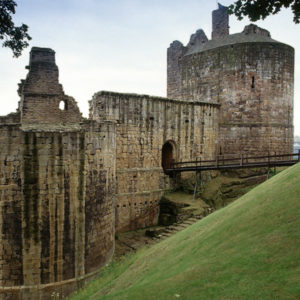
Sir John Thomas Wilson lived at Ravenscraig castle that was built just for Margaret. Wilson was allegedly the last of the real Knight’s Templar, and revealed to the Queen a secret Bible. There was a dispute who owned Orkney and other isles, that resorted in a trade. William Sinclair took possession of Ravenscraig, and vacated Orkney, ending a long feud. It was at Ravenscraig that John met Lady Ada Antoinette Erasmus, a Lady in Waiting. They soon married, and Wilson was now in a illustrious family tree that had its roots in Bohemia. William Rosenberg was a sponsor of John Dee.
Sir John Robert Wilson II, Earl of Cuper, Burgess of Edinborough1425–1492 Lady Ada Antoinette Erasmus
When Frederick William, completely inexperienced in politics, succeeded his father as elector in December 1640, he took over a ravaged land occupied by foreign troops. Under his father’s powerful favourite, Graf Adam von Schwarzenberg, Brandenburg had changed sides from the Swedes to the Habsburgs and had thus been drawn into the struggle on both sides.
Frederick William | elector of Brandenburg | Britannica
Richard Martin (Recorder of London) – Wikipedia

A Rose Among The Woodwoses
Posted on April 1, 2019 by Royal Rosamond Press


A Rose Among The Woodwoses
by
John Gregory Presco
Copyright 2019
Chapter One
Roseflower
Lady Mary Wilson Webb, inherited the job of keeping the fire lit below deck. All those who had gone before her, had failed. The fire tendered in a square iron tray, held together with rivets, then filled with sand, had become the altar of the Pilgrims. It, and the black pot hung on a trident, was watched most of the day by the lost souls packed under the creaking and leaking timbers. Moving about was almost impossible. Everyone was frozen in their place. But for the brave excursions above, met by some tempest, and cold sea spray, the wayfarers relieved themselves in a vile oaken bucket that was too close for comfort. Bible’s were taken out from under pillows when a lady went to tithe the Oaken Monster as they called it. Reading verses aloud, was the polite thing to do.
Tiring of the gory and bloody Biblical tales, that increased the Cargo Dread, the men brought out their bawdy jokes that they had memorized and gathered since their school days. The women pretended they ne’er heard a one. But, that guarded secret was soon out. And, a new kind of boredom set in. It was dreadful. Ones farting was amplified in the silence. The women ran out of perfume. Everyone got to know what a women really smelled like, including the women! Everyone was grateful for the occasional flying fish that was thrown in the pot, to cook all day, like temple incense.
The men ran out of jokes. Nothing was ever going to be funny again. The art of Mary keeping the fire alive was the highlight of their existence. You could hear the beards growing. In the glow of the red coals, the women felt like roses among the Woodwoses.
Two weeks at sea and another three weeks to go. Something had to be done.
“I brought my father’s book on rhetoric with me. Does anyone know it? My kindred William Shakespeare read it and was quite impressed. I saw him perform at the Rose theatre, on several occasions. He and my father were friends. They used to go the Bearbait Theatre and sit among the Protestant Spies. There were lawyers of the Temple present. Thomas called them the Roman Senators. There were horrific scenes of animal torture going on in the round arena. It was like the Roman Coliseum. I know enough about rhetoric where I can teach you. It will make the time fly.”
“For God’s sake, Mary. Why have you withheld this book from us!”
“My father was taken prisoner by the Inquisition, put in prison, and tortured. His books were ruled heretical, I don’t want to instigate spurious opinions about me and my father, for, I have nowhere to go to get away from you if you start in on that!”
“In Jesus’ name, relieve of us of our excruciating tedium! We are dying here Mary! Don’t be cruel!”
“My tutor taught my brother and I rhetoric from your father’s book. We can have a rhetorical argument about having Mary produce it for our salvation from our mind-numbing malaise!”
“Good idea! But, it is fair we all receive a sample. Is it not?”
“Would you care to elaborate?”
*****
On March 31, 2019 I found Thomas Wilson’s book ‘The Art of Rhetorike’. There are several spellings. After reading forty, pages I believe my theory that Thomas Wilson had a hand in writing some of William Shakespeare’s’ plays, if not all, is sound.
On this day, I copyright my idea that I arrived at with my battle I am having with Meg Whitman, and the alleged owners of the California Barrel Company, over ownership of this company name that once made barrels. I spoke with an attorney. I am critical of Quibi. To discover Apple TV is being backed by Steven Spielberg, and a bevy of Hollywood talent, is ironic, for Elizabeth Rosemond Taylor and Richard Burton are in my Rosamond Family Tree, as is, Sir Thomas Wilson. I do not want Shakespeare to fall into either capitalist camps, because William made Acting more than an Art Form, as I will show in my novel. Then there is the question……..
Who owns America – and why?
I will give my reader a good example of how Rhetoric fits well with Shakespeare’s’ work. Peter G. Platt has written one of the finest essays I have read. I am envious.
http://www2.idehist.uu.se/distans/ilmh/Ren/platt.htm
Then, there is this illustration. It took my breath away. Do you know who he is, the man leading noble women with chains linked to the tip of his tongue. He is my hero.
What really got my interest is this line……….
“And God save the Queen’s majesty.”
Where were Britain’s great Rhetorical Men when the Brexit issue came up?


http://www.people.vcu.edu/~nsharp/wilsded1.htm
http://www2.idehist.uu.se/distans/ilmh/Ren/platt.htm
xc
 Rosamond Press
Leave a comment