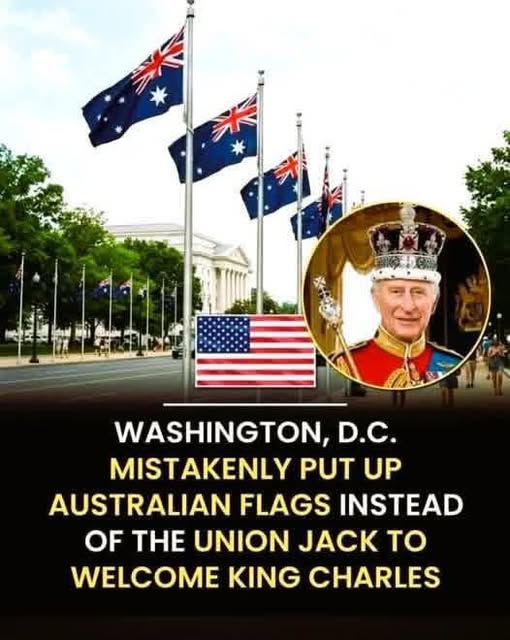
King Charles had two dinners with New World Swells. Jeff Besoz was at one of them. He owns James Bond. One news station flashed a pic of Harry and Meghan and said they were not invited to the White House Feed, where their King gave Trump a bell, and bid him to ring it if he wants Britian to come running. This was a great dig, because Trump’s brain was filled with visions of the Wailing Wall, and having the
TRUMP NAME PUT ON THE WALL OF THE NEW TEMPLE HE BUILDS
The President of the United States – is a Zionist! He HUDDLED with Fellow Zionists…
IN SECRET AND DID NOT HUDDLE WITH THE GOVERNMENT OF BRITAIN
The Attache of the British defense Staff Washington – was not consutled! Was he at the dinner, hearing the
KINGS SPEECH IN PERSON?
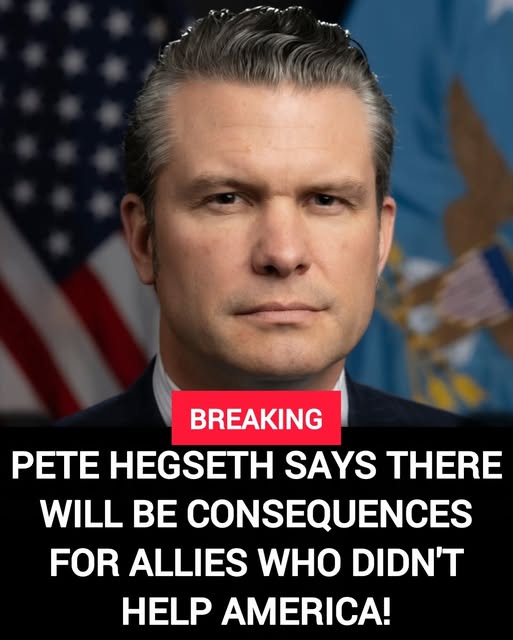
As I type, Pete Hesgeth is testifying before Congress because he wants…
$1,500,000,000,000 FOR THE ARMY OF JESUS – THE KNIGHT TEMPLAR
There is talk about our Army being – The People’s Army. Where is….
THE POOR PEOPLE’S ARMY? WHERE ARE THE POOR KNIGHTS OF CHRIST?
The King and Queen of England – should have flown to Boston New England, and been greeted by the Poor People’s Army that I found this day. Once a year The People will hold a Feast in Old New England, a name that was applied by the Puritans, whose desire was to apply the world NEW to ENGLAND. They had established a New Relgions and did not want the Church of England to hold sway over their religious affairs. They were driven out of England, and went to the New World. My ancestor, John Wilson…….
WAS BORN AT WINDSOR CASTLE
Does The Secrery of War know who Wilson is? Do you?
What The Trumpire made clear, is…..
JESUS IS NO LONGER FOR THE POOR AND PEACE! IS HE FOR THE RICH AND THE WARMONGERS?
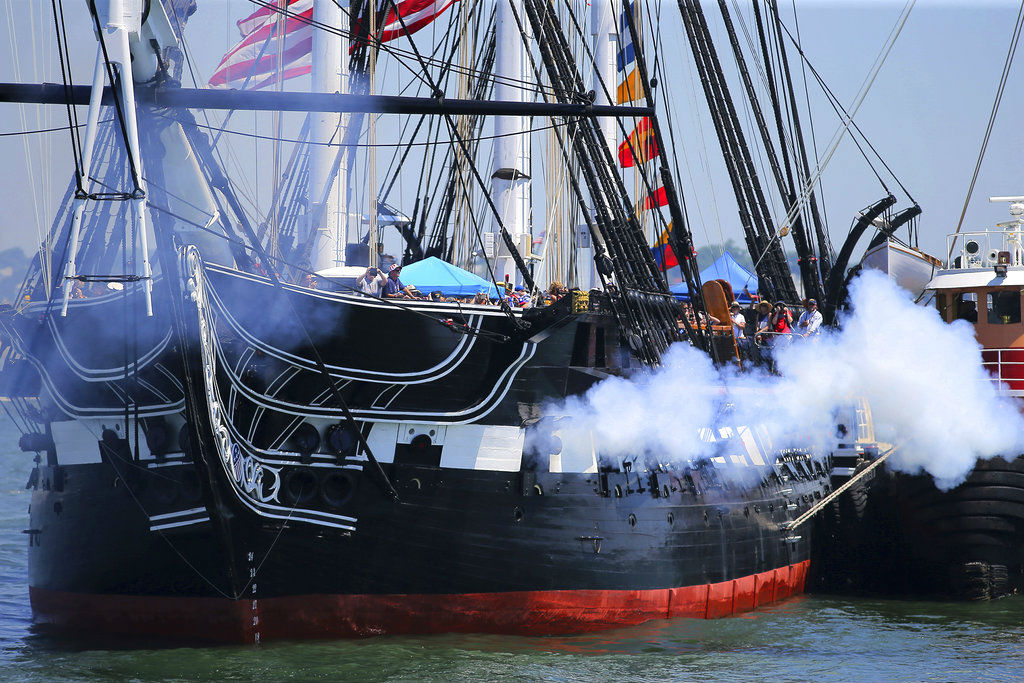
I rang the bell on the Constitution that my ancestor captained. Hopefully the King of England will board that ship, and ring that bell in a years times.
John Presco
However the region chartered to it was named “New England” by Captain John Smith of Jamestown in his account of two voyages there, published as A Description of New England (1616).
EXTRA! After I posted this post, I turned on the news and heard Hesgeth say “the likes of you!” The Christian-right set up a fake Religious Revolution, where the Democrats represent Satan, and thus, Jesus’s Republicans must rebel against everything that is of The Democrat – including firing members of the military! The Revolution started over the Stamp Tax, the Empire wanting the Colonies to pay for Military Protection. Because Pete’s Commander in Chief declared it was his right to seize and sell the oil of his enemies, and give American Taxpayer’s – CASH – then the Oil Trumpire must PAY when the Holy Oil Crusade goes wrong. Like what?
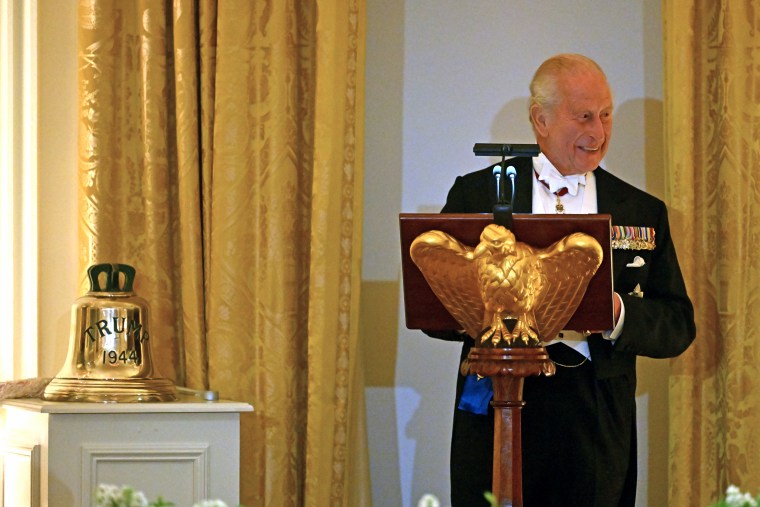
King Charles presents a bell from the HMS Trump, a submarine launched in 1944 during World War II.Samir Hussein / WireImage
Founded in 1826 by Ernest Anton, the sixth duke of Saxe-Coburg-Saalfeld, it is a cadet branch of the Saxon House of Wettin. Cognatic branches of the family currently reign in Belgium (the descendants of Leopold I) and in the United Kingdom (the descendants of Albert, Prince Consort), although the latter branch was officially renamed to House of Windsor by British king George V in 1917, during the First World War, amid anti-German sentiment.[2]
The Poor Fellow-Soldiers of Christ and of the Temple of Solomon, mainly known as the Knights Templar, was a military order of the Catholic faith, and one of the most important military orders in Western Christianity. They were founded in 1118 to defend pilgrims on their way to Jerusalem, with their headquarters located there on the Temple Mount, and existed for nearly two centuries during the Middle Ages.
Officially endorsed by the Catholic Church by such
The Puritans created a deeply religious, socially tight-knit, and politically innovative culture that still influences the United States.[6] They fled England and attempted to create a “nation of saints” or a “City upon a Hill” in America, a community designed to be an example for all of Europe.
New England is the oldest clearly defined region of the United States, being settled more than 150 years before the American Revolution. The first colony in New England was Plymouth Colony, established in 1620 by the Puritan Pilgrims who were fleeing religious persecution in England. A large influx of Puritans populated the New England region during the Puritan migration to New England (1620–1640), largely in the Boston and Salem area. Farming, fishing, and lumbering prospered, as did whaling and sea trading.
New England writers and events in the region helped launch the American War of Independence, which began when fighting erupted between British troops and Massachusetts militia in the Battles of Lexington and Concord. The region later became a stronghold of the Federalist Party.
By the 1840s, New England was the center of the American anti-slavery movement and was the leading force in American literature and higher education. It was at the center of the Industrial Revolution in America, with many textile mills and machine shops operating by 1830. The region was the manufacturing center of the entire United States for much of the nineteenth century, and it played an important role during the American Civil War as an intellectual, political, and cultural promoter of abolitionism and civil rights.
Manufacturing in the United States began to shift south and west during the 20th century, and New England experienced a sustained period of economic decline. By the beginning of the 21st century, however, the region had become a center for technology, weapons manufacturing, scientific research, and financial services.
Pre-Colonial
Main article: Prehistory of New England
Before the arrival of colonists, the Western Abenakis inhabited New Hampshire and Vermont, as well as parts of Quebec and western Maine.[1] Their principal dwelling was Norridgewock in Maine.[2] The Penobscots were settled along the Penobscot River in Maine. The Wampanoags occupied southeastern Massachusetts, Rhode Island, and the islands of Martha’s Vineyard and Nantucket; the Pocumtucks were in Western Massachusetts. The Narragansetts occupied most of Rhode Island, particularly around Narragansett Bay.
The Connecticut region was inhabited by the Mohegan and Pequot tribes before colonization. The Connecticut River Valley linked different tribes in cultural, linguistic, and political ways.[3] The tribes grew maize, tobacco, kidney beans, squash, and Jerusalem artichoke.
The first European to visit the area was Portuguese explorer Estêvão Gomes in 1525, who mapped the shores of Maine. The first European settlement in New England was a French colony established by Samuel de Champlain on Saint Croix Island, Maine, in 1604.[4] As early as 1600, French, Dutch, and English traders began to trade metal, glass, and cloth for local beaver pelts.[3][5]
Colonial era
Early English plans (1607–1620)
Further information: Popham Colony
.jpg)
On April 10, 1606, King James I of England issued a charter for the Virginia Company of Plymouth, (often referred to as the Plymouth Company). The Plymouth Company did not fulfill its charter and did not settle anyone. However the region chartered to it was named “New England” by Captain John Smith of Jamestown in his account of two voyages there, published as A Description of New England (1616).
Plymouth Colony (1620–1643)
Main article: Plymouth Colony
The name “New England” was officially sanctioned on November 3, 1620, when the charter of the Plymouth Company was replaced by a royal charter for the Plymouth Council for New England, a joint-stock company established to colonize and govern the region. In December 1620, the permanent settlement of Plymouth Colony was established by the Pilgrims, English Puritan separatists who arrived on the Mayflower. They held a feast of gratitude which became part of the American tradition of Thanksgiving. Plymouth Colony had a small population and size, and it was absorbed into Massachusetts Bay Colony in 1691.
Massachusetts Bay
Main article: Massachusetts Bay Colony
Puritans began to immigrate from England in large numbers, and they established the Massachusetts Bay Colony in 1629 with 400 settlers. They sought to reform the Church of England by creating a new, pure church in the New World. By 1640, 20,000 had arrived, although many died soon after arrival.
The Puritans created a deeply religious, socially tight-knit, and politically innovative culture that still influences the United States.[6] They fled England and attempted to create a “nation of saints” or a “City upon a Hill” in America, a community designed to be an example for all of Europe.
Wilson and Webb
Posted on March 5, 2019 by Royal Rosamond Press
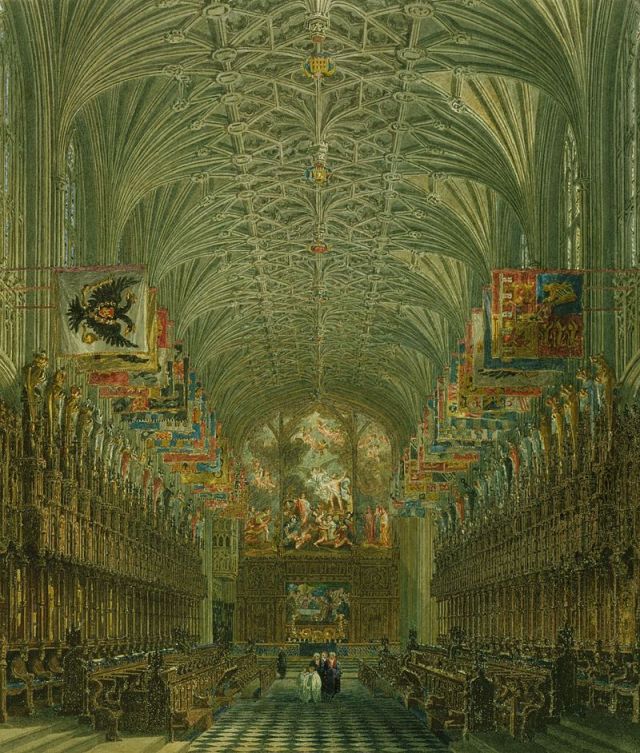
My kindred, William Wilson, and his brother-in-law, Erasmus Webb may have known William Shakespeare – intimately! Anne (Webb) Wilson lived at Windsor Castle. Her brother, Erasmus, was the Archdeacon of Buckingham Palace. Are we looking at the authors of Shakespeare’s plays? Why has this family lineage been buried, and all but forgotten? These are extremely educated men, whose wives would be at court. They would know all the intrigues, and, hear confessions. They would know the merry wives of Windsor. People would bring them all the gossip that is the bane of the church, aimed at bringing other down as they vie for royal favors.
This bloodline flows from Bohemia and has seeded several major religions. This is the ‘Hidden Seed’. The Webb family came to America. In the chart below we see that Sir Alexander Webb married Mary Wilson, the daughter of Thomas Wilson MP, the grandfather (or Great Uncle?) of Reverend John Wilson of the Massachusetts Bay Colony, that the Webb family played a large role in. Shakespeare’s line, died out, and thus, this is his American Seed.
Statesman, Thomas Wilson MP, was a stellar scholar and author who could have prepared the way for the writing of Shakespeare. Why not put Alexander Webb is the race? Surely the Webb-Wilson family saw themselves as the family-power behind the Church and Throne, and in need of new forum.
“Wilson belongs to the second rank of Elizabethan statesmen. An able linguist, he had numerous acquaintances among Spanish and Flemish officials in the Netherlands, and, in a wider context, his range of friends included Leicester, Burghley, Hatton, Davison, Sir Francis Knollys, Paulet, Walsingham, William of Orange, Jewel, Parker, Parkhurst, Gresham, Ludovico Guiccardini and Arias Montano.”
http://webb.skinnerwebb.com/gpage1.html
https://www.geni.com/people/Thomas-Wilson-MP/6000000010886211061?through=6000000006520219276
John Presco
Copyright 2019
Chancellor of St. Paul’s 1596-1615, died 15 May 1615, and was buried in St. George’s Chapel near his father (there was a monumental inscription (now lost) to his father, W
“The career of William Wilson, D.D., appointed Canon of St. George’s, Windsor 10 Dec. 1584, is related in S.L. Ollard, Fasti Wyndesorienses: The Deans and Canons of Windsor (Historical Monographs Relating to St. George’s Chapel, Windsor Castle, 8), 76. He was born 1545, attended Merton College, oxford (Fellow 1565, B.A. 1564, M.A. 1570, B.D. 1576, D.D. 1607), rector of Islip, do. Oxford, 1578, Chaplain to the Archbishop of Canterbury, Prebendary of Rochester [Kent] 1591, 1614, Rector of Cliffe [near Rochester], Chancellor of St. Paul’s 1596-1615, died 15 May 1615, and was buried in St. George’s Chapel near his father (there was a monumental inscription (now lost) to his father, William Wilson, late of Wellsbourne, co. Lincoln., gentleman, who died at Windsor Castle 27 Aug. 1587]). The sketch of Edmund Wilson, M.D. (1583-1616) is given in the same source. The endorsement – ‘Wylson, a prebendary of Wynsor’ – identifies the writer of this letter as Rev. William Wilson, the father of Rev. John Wilson. Mather states that Rev. William Wilson was ‘a prebend of . . . Windsor,’ and William’s brass in St. George’s, Windsor, also calls him ‘Prebendarie of this Church.’ The contact between William Wilson and the Earl of Huntingdon may indicate that they shared similar Puritan (or Proto-Puritan) religious views, although in this instance they were discussing the distinctly un-Puritan matter of a chantry. The marriage of John Wilson, a great-nephew of the Archbishop of Canterbury, into the family of one of Huntingdon’s gentlemen, is not terribly unusual. Wilson’s father has been called ‘a man of deep erudition, a scholar and a courtier . . . we must suppose him to have been a persona grata in the eyes of Queen Elizabeth.’ “
Reverend William Wilson, D.D. (1542 – 1615) – Genealogy (geni.com)
New Windsor developed as a royal borough in the shadow of the castle. It received its first charter in 1277 and returned Members intermittently from 1302 and regularly from 1447.1 A new charter issued in August 1603, on the ‘humble petition and request’ of Charles Howard, 1st earl of Nottingham, entrusted its government to some 30 brothers of the guildhall, ‘of the better and more approved inhabitants’, of whom 13 were to be styled ‘benchers’ and to include the ten aldermen from among whom the mayor was to be chosen.2 Both Nottingham and George Villiers, 1st duke of Buckingham, successive constables of the castle, served as high stewards of the borough, and could expect the nomination to one seat, but on the whole Windsor stood by its resolution of 1572 that the other should go to a townsman, often its under-steward or recorder.3 The indentures were exchanged between the sheriff of Berkshire and the mayor, bailiffs and burgesses. There is no evidence that the borough paid wages to its Members.
New Windsor | History of Parliament Online
Main Article
New Windsor developed as a royal borough in the shadow of the castle. It received its first charter in 1277 and returned Members intermittently from 1302 and regularly from 1447.1 A new charter issued in August 1603, on the ‘humble petition and request’ of Charles Howard, 1st earl of Nottingham, entrusted its government to some 30 brothers of the guildhall, ‘of the better and more approved inhabitants’, of whom 13 were to be styled ‘benchers’ and to include the ten aldermen from among whom the mayor was to be chosen.2 Both Nottingham and George Villiers, 1st duke of Buckingham, successive constables of the castle, served as high stewards of the borough, and could expect the nomination to one seat, but on the whole Windsor stood by its resolution of 1572 that the other should go to a townsman, often its under-steward or recorder.3 The indentures were exchanged between the sheriff of Berkshire and the mayor, bailiffs and burgesses. There is no evidence that the borough paid wages to its Members.
In 1604 Nottingham may have exercised his interest in favour of Samuel Backhouse, a London merchant’s son who had settled in Berkshire and served as sheriff in 1600. The other Member, Thomas Durdent, was the under-steward. Durdent died in 1607, and was replaced shortly before the fourth session by one of Nottingham’s nephews, Sir Francis Howard, a young man of 24 but already an experienced naval officer. By the time of the next election, in 1614, he was at sea, while Backhouse transferred to Aylesbury, leaving his former seat to a more distinguished Berkshire gentleman, Sir Richard Lovelace, who had just replaced Nottingham as high steward.4 The junior place went to the new under-steward, Thomas Woodward, whose father had been clerk of the works at the castle and a Member for the borough in 1586. Lovelace took a county seat in the third Jacobean Parliament, making room at Windsor for another of Nottingham’s nephews, (Sir) Charles Howard, who held several of ‘the offices of Windsor’, at the castle and in the forest. Woodward gave way to Sir Robert Bennett, nephew of a former dean of Windsor and later clerk of the works at the castle. Bennett fell ‘very desperately ill’ during the Parliament, which may explain his failure to sit in 1624. The senior Member then, Edmund Sawyer, was an auditor in the Exchequer whose circuit included Berkshire and who had recently purchased a manor some six miles from Windsor. Woodward regained the junior seat, but died after Parliament was prorogued for the summer. At the ensuing by-election he was replaced by the keeper of Windsor Little Park, Sir William Hewett, who wanted a seat because his conduct as receiver-general for purveyance compositions was under investigation by the Commons. However, the House did not meet again before the death of James I.
When a fresh Parliament was summoned in 1625, Hewett was re-elected, together with the by now recovered Bennett. This was despite a letter of 8 Apr. 1625 from the new high steward, Buckingham, craving Windsor’s
favour in a request which I trust you will not think unreasonable, which is that on my recommendations you will elect Sir William Russell the treasurer of His Majesty’s Navy for one of the burgesses to serve in this approaching Parliament for your town. His known worth and merits speak so well for him that I shall not need to tell you what I believe of him, and being born not far from you, I doubt not you will easily grow confident that he will be very tender of the trust you shall repose in him for the good of your town.5
Russell, however, whose father had lived some five miles away and who had himself inherited property in Old Windsor, was chosen in 1626, together with the under-steward, Humphrey Newbery, who was to prove an active Member. Early in the following year Newbery and the mayor were summoned before the Privy Council to account for their arrest of a castle servant. The mayor was immediately discharged, but Newbery, held ‘more to be blamed’ and accused of ‘divers other misdemeanours’, was obliged to keep himself ready for further attendance until April 1628.6 He was accordingly unavailable for election to the third Caroline Parliament. Russell, having resigned his treasurership of the Navy, was replaced in the senior seat by the Buckingham client and clerk of the Privy Council (Sir) William Beecher, for whom the duke had failed to find a seat at Dover; he was the only complete outsider to sit for Windsor in the period. The junior seat went to Thomas Hewett, eldest son of Sir William, who had just completed his education. Neither Beecher nor Hewett is known to have taken notice of the complaint made in Parliament against Richard Montagu, who was said to have kicked out ‘the bonfires in Windsor Castle’ after the king yielded to the Petition of Right.7
Posted on February 13, 2019by Royal Rosamond Press
Sir Lewis Clifford, Kt. is William Thomas Rosamond’s 13th great uncle’s great grandfather.
→
Samuel Rosamond
his father
→
Benjamin Rosamond
his father
→
James Rosamond
his father
→
Sarah Wilson Rosamond
his mother
→
Thomas Wilson
her father
→
Jane Lee
his mother
→
Sir Thomas Lee, 1st Baronet
her father
→
Elizabeth Ingoldsby
his mother
→
Mary Bennett
her mother
→
Sir Thomas Bennet, Lord Mayor of London
her father
→
Ann Bennet
his mother
→
Ann Molyns
her mother
→
Sir Alexander Culpeper, Kt.
her father
→
Sir John Culpepper, Kt., of Bayhall, Hardreshull & Bedgebury
his father
→
Margaret Culpeper
his sister
→
Alexander De Clifford, Esq
her husband
→
Lewis Clifford
his father
→
William de Clifford
his father
→
Sir Lewis Clifford, Kt.
his father
Ann Molyns (Culpeper) (c.1483 – 1591) – Genealogy (geni.com)
Alexander Culpeper, Kt. (c.1460 – 1541) – Genealogy (geni.com)
I Am Kin To Shakespeare
Posted on March 5, 2019 by Royal Rosamond Press
It is amazing the struggle I have had to do our Family Tree from members of my famiy, especially my daughter and her family, who all but detsroyed me when they offered my grandson to Bill Cornwell and his right-wing Tea Party father. https://rosamondpress.com/2018/07/16/robert-wilson-maried-jane-lee/

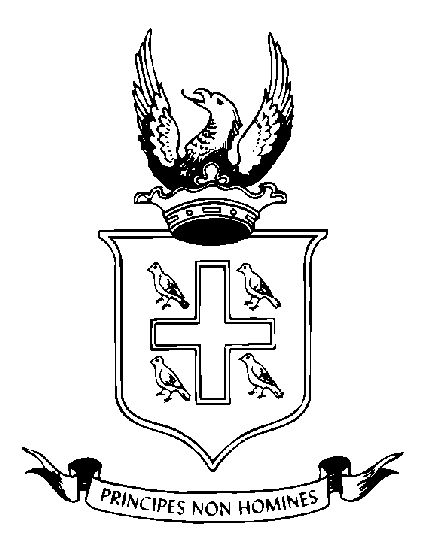
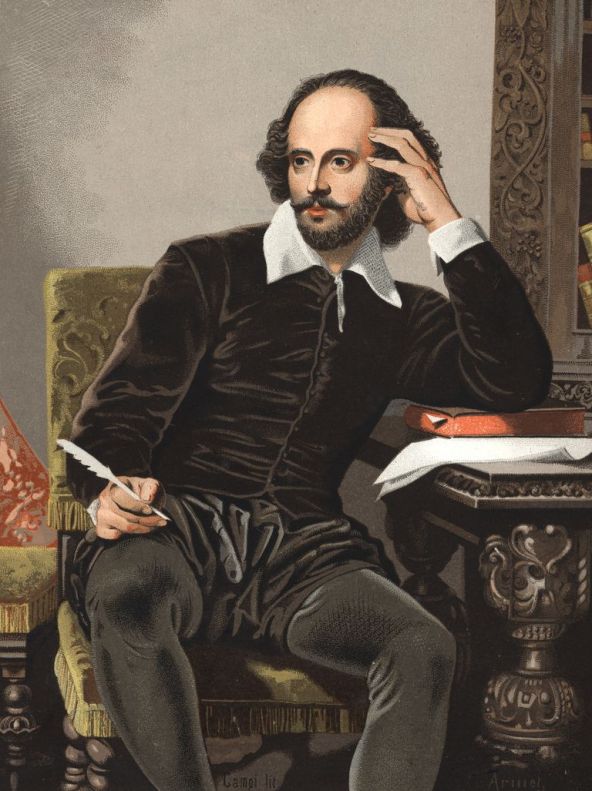
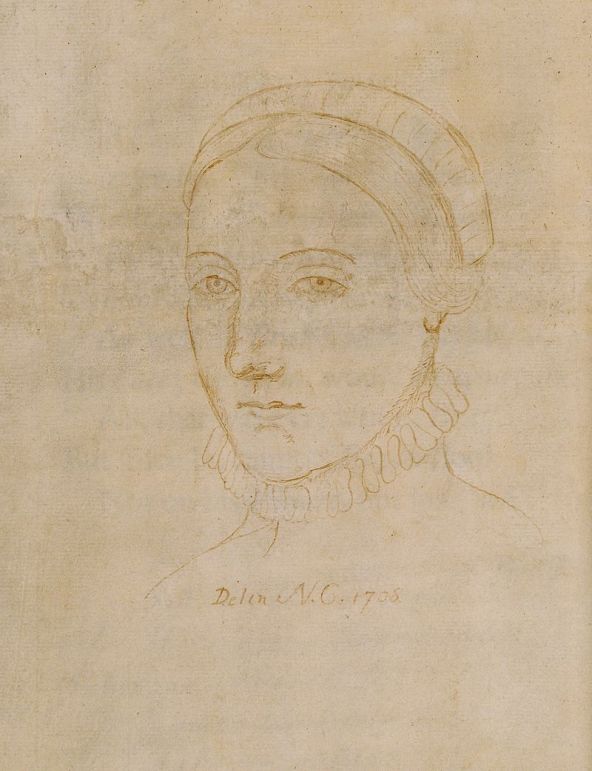
William Shakespeare’s grandmother, is my great, great, great grandmother, Abigail Shakespeare (Webb)
I implore the children of Elizabeth Rosemond Taylor to take the Rosamond Family DNA test. It was through this test I found Abigail. The Webb family went on crusade and is why they have a cross on their crest. I believe my grandfather picked up this relationship via genetic memory. So did I. I tried to read William’s complete set when I was eleven. Is there a Seer gene? Consider all the actors around Liz Taylor.
John Presco
Copyright 2018
https://en.wikipedia.org/wiki/William_Shakespeare
William Shakespeare(bapt.26 April 1564 – 23 April 1616)[a]was an English poet, playwright and actor, widely regarded as the greatest writer in the English language and the world’s greatest dramatist.[2][3][4]He is often called England’s national poetand the “Bard of Avon”.[5][b]His extant works, including collaborations
View original post 1,103 more words
 Rosamond Press
Leave a comment