San Sebastian Avenue
ALL RIGHTS RSERVE3ED
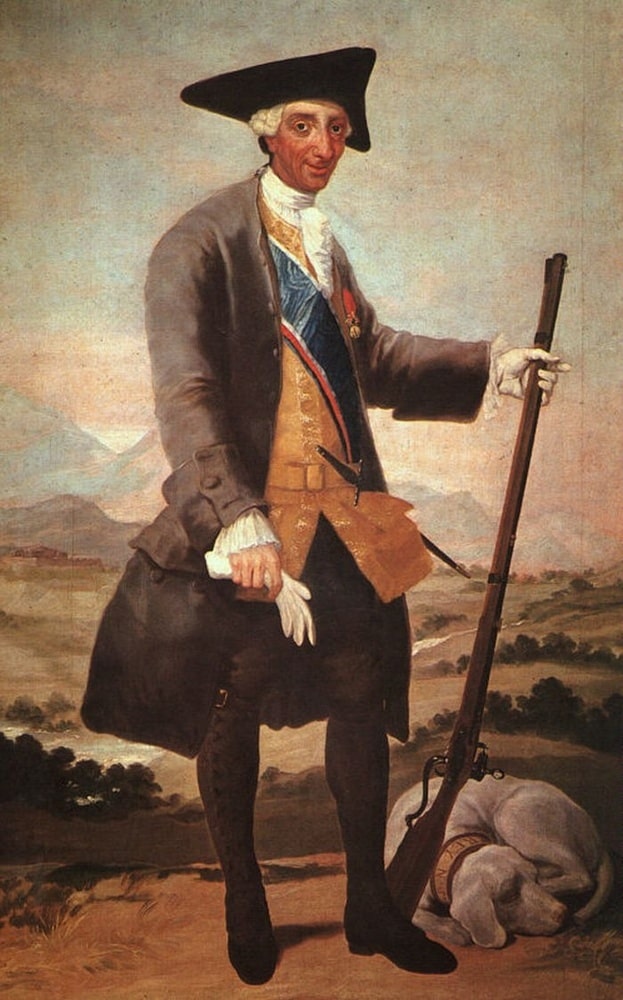
I just watched the news about Bad Bunny and his halftime history lesson he gave at the Superbowl. On Saturday evening, I found some great articles about King Carlos, who helped our Founding Father during a our Revolutionary War. Carlos is closely related to my late fiancé, Virginian Hambley, who I gifted with the Louisiana Territory – a week after she got down on her knee – and proposed to me!
I suspect members of my family at Belmont, were part of a plan to make California a sovereign State. I am almost convinced of – today! This amazing history – is Belmont’s History! Stay tuned!
MORE WILL BE REVEALED!
John Presco
President: Royal Rosamond Press
King Carlos III and Los Angeles (USA)
We have decided to write a post about King Carlos III (1716-1788) because he is one of our favourite historical figures. Why? King Carlos III was really important for the city of Madrid to the extent that Madrid would be a completely different city without him. He opened hospitals, public schools, museums factories and transformed the country into a modern nation.
As if this were not enough, since the inauguration of our company in 2013 the equestrian statue of King Carlos III (Puerta del Sol Square) is the meeting point from where all our tours start 🙂
Before his reign, Madrid was a dark, dirty and dangerous city. The narrow streets of Madrid were the perfect workplace for criminals, rapists and all kind of lowlife.
King Carlos III, inspired by the great European capitals like Paris or Vienna, implemented a huge program of enlightened reforms. Thus, the King ordered the construction of boulevards, stately buildings, gardens and approved countless hygiene measures.
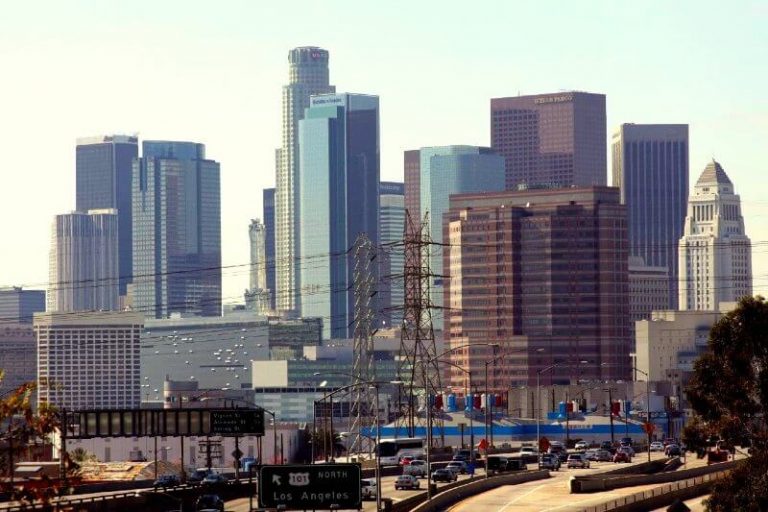
But not only Madrid has a special relationship with Carlos III. Many people do not know but the fascinating city of Los Angeles in the United States was founded thanks to King Carlos III in 1781.
The first Spaniards arrived to California in the sixteenth century and incorporated the region to the Viceroyalty of New Spain. However, the city of Los Angeles was not founded until the late eighteenth century, when Felipe de Neve (governor of California) recommended to the Viceroy of New Spain the foundation of Los Angeles due to its excellent location, resources and enormous potential.
King Carlos III, from his palace in Madrid, gave approval to the creation of the new city (1781), which was founded by a group of 44 people consisting of indigenous and Spanish.
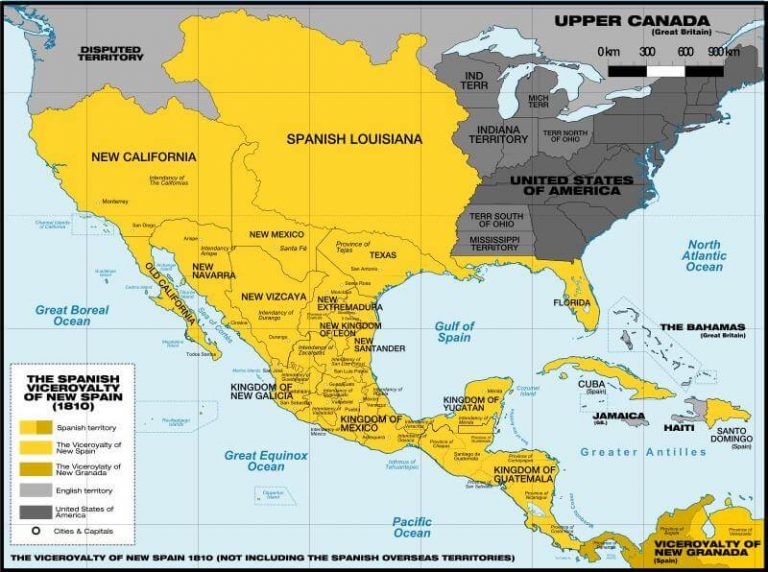
The State of California was under Spanish rule until 1821 when the Viceroyalty of New Spain achieved its independence and the new State of Mexico was proclaimed.
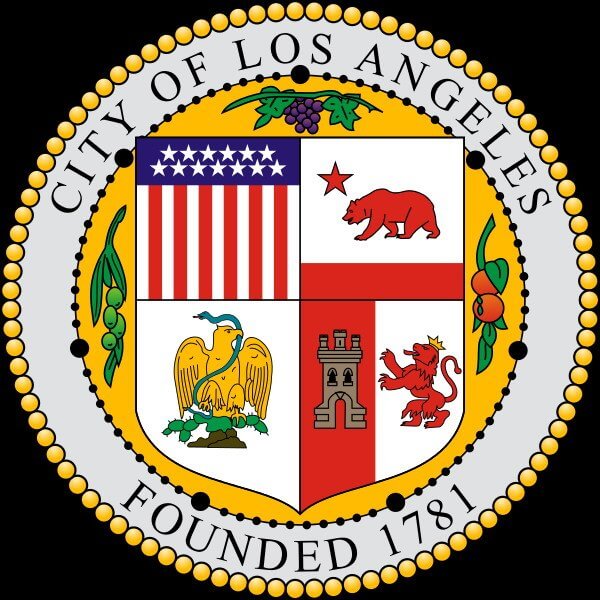
Even today, if we take a look at the Seal of Los Angeles, we can appreciate the Spanish heritage of this amazing city. At the bottom of the Seal we can see the emblem of the Crown of Castile and Leon (the castle and the lion).
If you want to know more about the figure of the King Carlos III join our Free Walking Tour in Madrid. Every day at 10:45 at Puerta del Sol Square. BOOK NOW and discover Madrid like a local!
The Kingdom of Spain in the American War for Independence

In any history of the American War for Independence the emphasis tends to be placed on the fight in what became the United States, which is probably because of how powerful the U.S.A. eventually became. However, the British Empire was the strongest power in the world at the time and, unfortunately, one thing that comes with being on top is that everyone else is looking to take you down (something modern day Americans should be able to understand very well). Before it was all over, the Kingdom of France, the Kingdom of Spain and the United Provinces of the Netherlands had all decided to take advantage of the opportunity the war in America presented by going to war against Great Britain. Even the Empress of Russia was quick to recognize the United States as they too, at that time, had interest in North America. While the focus is usually on battlefields along the American east coast, the fighting actually carried over to the periphery of the Gulf of Mexico, the Caribbean, Europe and even as far away as India. While the contribution of the French, at least in regards to the fighting in North America, is fairly well known, the part played by the Kingdom of Spain is seldom mentioned.
At the time of the outbreak of rebellion in the British American colonies, Spain was under the rule of His Catholic Majesty King Carlos III, who came to the Spanish throne in 1759, already famous for his conquest of Sicily and Naples in southern Italy. He brought about a revival in Spanish fortunes with his, sometimes positive and sometimes negative, style of “enlightened absolutism”. So, he fostered greater freedom of speech, opinion and inquiry, private property rights, more freedom of religion and a greater emphasis on science and practical knowledge in education. He lowered taxes, promoted trade and business, furthered industrialization, which were good things, but he also banned bullfighting, considering it a brutal and barbaric sport, and expelled the Jesuits from Spain, partly due to accusations against them and probably influenced by a dispute he had with the Pope over his gaining of the crown of Naples and Sicily. Nonetheless, he was a devout Catholic which no one ever doubted. When war broke out in the British colonies, King Carlos III was, like King Louis XVI of France, reluctant to look favorably on the rebel colonists for fear that his own colonial subjects might follow their example but he was ultimately persuaded to join their cause.
King Carlos III had signed the “Family Compact” with the Kingdom of France and the results of the relatively recent French and Indian War had made him very nervous about the British. He feared that the British Empire was growing too powerful, that it would upset the balance of power in Europe and that a victorious Britain would conquer the Spanish colonies in America just as they had taken Canada from France in the last war. On May 8, 1779 the Kingdom of Spain declared war on Great Britain and Ireland, though as an ally of the Kingdom of France rather than the fledgling United States outright. The goal of the King of Spain was to weaken Britain on the world stage and recover lands that the Spanish had lost to Britain in the French and Indian War. His troops did not fight alongside the American colonists as the French did but the Spanish declaration of war had a major impact on the American cause. It greatly enlarged the scope of the conflict for Britain, removed the comfortable supremacy the British had enjoyed in the naval war and forced the British military to mostly go on the defensive in America while they redeployed forces to guard against attacks from the Spanish around the world.
The Anglo-Spanish conflict got off to a good start for Spain when, in September of 1779, Spanish troops and Louisiana militia seized the British garrison at Baton Rouge, taking them by surprise as they had no idea as yet that Britain and Spain were at war. A large Franco-Spanish fleet, filled with soldiers, had actually assembled that summer with the intention of invading Britain but, while they gave the British authorities a good scare, they ultimately called off the expedition. They were confident that they could defeat the British and land their forces but were not so confident that they could maintain naval supremacy and feared losing their whole invasion force if they were left isolated in enemy country. The longest and most intense military operation of the conflict began almost as soon as Spain issued its declaration of war which was the siege of Gibraltar. The British rushed help to the embattled garrison but it only arrived in early 1780, after the garrison had endured a brutal winter in miserable conditions. The two sides remained locked in combat in what would be the longest siege British military forces have ever endured.
On the North American mainland, the leading Spanish official was the Governor of Louisiana, Don Bernardo de Gálvez. His mission was to secure Spanish control of both banks of the Mississippi River (of which the seizure of Baton Rouge was a good start) and to reclaim for the Spanish Crown their lost province of Florida. Fortunately for Spain, Gálvez proved to be a very capable man. He had good contacts with the Americans, had sold them guns, powder and loaned them money for other supplies. He was in touch with the American leadership and, perhaps most importantly, he had an established network of spies and informants thanks to his uncle, the Spanish Minister for the Indies, so that he was quickly made aware of British activities in the Caribbean and the Gulf coast. After organizing the first cattle drive in Texas history, moving 10-15,000 head of cattle from Goliad to Louisiana to feed his army, Gálvez launched a successful offensive against the British in the region. Throughout 1779 and 1780 his Spanish troops captured Natchez, Louisiana and Mobile in what is now Alabama.
At the same time, Gálvez was the primary source of munitions and supplies for the American expedition into the Midwest led by George Rogers Clark. The British had few military resources in the region but Governor Hamilton worked to rally the Indians to supplement his small force of redcoats to deal with the Americans as well as to attack Spanish outposts in the region. In 1780 a force of around a thousand Indians under British command attacked St Louis, Missouri, Fort San Carlos, defended by around 300 Spanish troops, mostly militia, under Captain Fernando de Leyba, the lieutenant governor. Although greatly outmatched, the Spanish had worked to fortify the area and with the support of the local French population they managed to repel the Indian attack and so secured Spanish control of the upper Louisiana territory from the British for the rest of the war. The following year the Spanish launched a counter-raid into British territory taking Fort St Joseph in what is now Niles, Michigan, probably the farthest north that Spanish forces ever fought in the Americas.
The British, however, did not rest solely on the defensive although they were limited due to the large number of enemies they had to guard against. In 1780 an expedition was planned by the Governor of Jamaica to use limited resources to achieve a dramatic result. His plan was to attack the Spanish in Central America, moving up the San Juan River to Lake Nicaragua to attack Granada, cutting Spanish America in half and giving Britain access to the Pacific Ocean. The Spanish had only a minimal military presence in the area and would be vastly outnumbered by the British led by Colonel John Polson in charge of the land forces and a young Lt. Horatio Nelson commanding the naval escort. In April they attacked Fort San Juan (aka Fortress Immaculate Conception). The Spanish held off superior forces for some time but finally surrendered, however poor planning meant that the British began to run out of vital supplies and tropical disease took a heavy toll with most of the Blacks and Miskito Indians they had recruited to provide the bulk of their manpower abandoning the expedition. In the end, the British failed to reach Lake Nicaragua and the whole expedition was abandoned and thereafter deemed the costliest failure of the entire war with Spain.
That same year, Don Bernardo de Gálvez made an effort to take Pensacola, Florida, the last major prize yet to be won in his campaign along the gulf coast. However, a hurricane intervened and ruined the expedition. 1781 was to be different. Of course, students of U.S. history will remember that it was in that year that the American War for Independence reached its climax with the siege of Yorktown, Virginia. Most know that the siege would not have been won without the assistance of considerable land and naval forces from the King of France but not many are aware of the Spanish contribution. Direct military assistance was not possible (nor needed obviously) but it was the Spanish who managed to raise funds amounting to 500,000 silver pesos in Havana, Cuba to buy vital supplies for the American forces and to pay the Continental Army (which had long been a huge hardship for the fledgling American government). The surrender of the British army under Lord Cornwallis was a devastating blow to the British war effort but was even worse for morale at home. It was the largest mass surrender of British troops in history up to that time and would remain so until World War I but in the aftermath Britain still held all of the most vital, strategic points in the American colonies.
Because of the intervention of the French, Dutch and Spanish, however, Britain had more than the thirteen colonies to worry about and the people at home and certainly the politicians were weary of the conflict. Nor was it the only disaster London had to deal with. Prior to the siege of Yorktown, Gálvez had managed to reform his invasion fleet in Cuba that had been scattered by a hurricane the previous year. In February, with a force of about 7,000 men, Gálvez set out to capture the port of Pensacola. His army consisted of about 1,300 regular soldiers (including several hundred Irish exiles) as well as a great many militia from Cuba (including mixed race African-Cubans), New Orleans and Mobile. Opposing him was British General John Campbell who had 3,000 regulars but fewer troops overall with the remainder numbering only a little over 500, most of whom were Indians but including a few American loyalists as well. Gálvez conducted a classic siege operation, engineers digging trenches to advance his lines, heavy use of artillery, grenades and so on as the attackers inched ever closer to the British fortifications. Gálvez himself was wounded by enemy fire and had to turn over command to Colonel Jose de Ezpeleta.
The siege began on March 9, 1781 and was a long and brutal affair. General Campbell did not simply remain on the defensive but launched several attacks of his own on the Spanish lines. As time dragged on, bad weather forced the Spanish fleet to withdraw, there were supply shortages and heavy rains forced the men to fight in trenches flooded with water. Somewhat to his surprise, Gálvez was approached by a number of Indian chiefs offering to sell food to the Spanish army, even though many Indians of the same tribes were fighting with the British. Gálvez accepted their offer and also asked them if they might be able to persuade their countrymen to abandon the British and stop attacking his lines! They would have been well advised to escape as the Spanish received reinforcements, bringing their total number up to about 8,000 men, and began the formal assault on Pensacola on April 30 with a large-scale artillery bombardment. On May 8, a shell hit the magazine in Fort Crescent, killing many British troops. Spanish light infantry (los Cazadores) charged forward, through the smoke and debris and captured the fort, moving in canon to fire on the two adjacent British forts. The concentration of firepower soon convinced General Campbell that Fort George could not hold.
On May 10, 1781, after suffering 200 casualties, Campbell surrendered his remaining 1,100 troops along with Ft George, the Prince of Wales redoubt and all of West Florida to the Spanish. It was the crowning achievement for Don Bernardo de Gálvez and his campaign along the gulf coast. For his victory, King Carlos III promoted him to lieutenant-general and awarded him the governorship of west Florida along with that of Louisiana. All throughout the Americas, Spanish forces had been successful in their major operations while also managing to defeat British attacks on their own territory. Closer to home, the “Great Siege” of Gibraltar continued to drag on with no sign of the British defenders cracking (many of the defenders were Germans from Hanover) but the island of Minorca was a different story. From August 1781 to February 1782 a Franco-Spanish force landed on the island and besieged the main British garrison at Fort St Philip. The fight was largely a massive artillery duel but eventually British defenses were reduced and, more critically, the garrison began to fall victim to scurvy and other symptoms of privation until finally their commander agreed to surrender.
The embattled garrison was shown great honor and respect by the Franco-Spanish forces and many wept in sympathy as they marched out of the ruined fort, haggard and sickly but with their heads still held high. The commander of the Spanish forces, Louis des Balbes de Berton de Crillon, duc de Mahon (a Frenchman but serving in the Spanish army) was then chosen by King Carlos III to take charge of the still on-going efforts to regain Gibraltar. That would ultimately end in disappointment but an unauthorized Spanish attack on The Bahamas was successful, the British garrison surrendering without a fight. Gálvez had also planned an ambitious effort to conquer Jamaica but a British naval victory followed by the British agreement to end the war put a stop to this. In the subsequent Treaty of Paris, the British were able to mitigate their losses to Spain somewhat by granting more favorable terms to the Americans, such as in ceding the North American Midwest to the United States, keeping it out of Spanish hands. The Bahamas were handed back to Britain by Spain in exchange for East Florida, which, combined with the Spanish conquest of West Florida, saw the entire region restored to the Spanish Crown.
In the end, Spanish involvement in the American War for Independence had been a brilliant success. With the exception of Gibraltar, which successfully withstood the Spanish siege, King Carlos III had gained everything he had hoped to achieve by backing the United States against Great Britain. Florida had been regained, as had Minorca and while the lands east of the Mississippi had been ceded by Britain to the United States, Spanish territory had been secured from the British, the British threat to Spanish dominance of Central America had been defeated and Spanish holdings in the Caribbean escaped unscathed. Spanish attacks on British positions, particularly those which the Americans could never hope to have threatened, played a major part in the winning of independence for the United States, as did the contribution of funds, military supplies and foodstuffs to the American forces. Although not often as well remembered, the Spanish contribution was ultimately as vital to the American victory as was the more well known assistance of the Kingdom of France.
Spain in the American Revolution
By Stephen Renouf, Trustee, SAR Spain Society
Background
Spain discovered the New World in 1492 and spent the next hundred years
building a huge empire. Then rival European powers France and Britain began
planting colonies on mainland North America.
In 1754, rivalry between Britain and France led to the outbreak of the French and
Indian War in North America.
In 1759, after a 24 year reign as King of Naples and Sicily, Carlos de Borbón
became King Carlos III of Spain. King Carlos III was the son of Felipe V, the first
Borbón king of Spain, and the first cousin of King Louis XV of France.
The war with Britain was going badly, and France asked Spain to enter the war in
- Carlos III signed the Third Bourbon Family Compact, and agreed to have
Spain declare war on Britain. The new king committed Spain to the war without
any preparation. As a result, the war went badly for Spain, and Britain seized
Manila and Havana from the Spanish. In 1763, France and Spain had to sue for
peace.
The Treaty of Paris resulted in France ceding French Canada, Louisiana East of the
Mississippi, Dominica, Grenada, Saint Vincent, and Tobago to Britain in exchange
for the return of Guadeloupe, Martinique and Saint Lucia that were captured by
Britain during the war. France felt that its Caribbean islands and their sugar
plantations and rum distilleries were more economically valuable than their vast
mainland holdings.
Spain was forced to cede Florida to Britain in exchange for Manila and Havana.
France compensated Spain for its losses in the war by ceding Louisiana West of
the Mississippi (including New Orleans) to Spain.
In the aftermath of the French and Indian War, Britain controlled the northeast
shores of the Caribbean, which threatened Spain’s treasure fleets. Britain began
to squeeze the colonies to pay for the war that removed the French threat in
North America. This ultimately led to the American Revolution. Spain responded
to the disaster by building up its military to defend the empire and reforming its
colonial administration to increase revenues. Carlos III began preparing for the
next war.
Response to the American Revolution
With the outbreak of the American Revolution in 1775, France and Spain saw an
opportunity to capitalize on the misfortunes of their rival Britain. France hoped to
replace Britain as our trading partner and Spain hoped to regain lost territory.
King Carlos III was an enlightened despot, who did not believe in democratic
principles. Even though he supported the Americans against his enemy, he
refused to officially recognize the independence of the United States, which
would set a bad precedent for Spain’s many colonies.
At first France and Spain assisted the rebel colonies covertly. In May 1776, France
created a shell corporation, Roderique Hortelez et Cie, managed by Pierre
Beaumarchais, to launder money and supplies for the American rebels. France
contributed 270,000 pesos to start the company in June, which was matched by
Spain in August.
In order to maintain the secrecy of the assistance to the Americans, all contact
between the United States and Spain was conducted in secret in Paris through the
Count of Aranda, the Spanish Minister to France.
Learning from his past mistake, King Carlos III decided he would not enter the war
until Spain was completely prepared. Unlike France, Spain had a vast empire in
the Americas, and did not want to antagonize the British until they were in the
best position to defend the empire. Spain’s goals were France’s help in Spain’s
dispute with Portugal, the recovery of Gibraltar, Menorca, Florida, Jamaica and
the Bahamas from Britain, and the eviction of the illegal British enclaves on the
Caribbean coast of Central America. The Spanish Foreign Minister, the Count of
Floridablanca, believed he might be able to attain these goals through diplomacy,
rather than war, so he made every effort put pressure on the British by covertly
funding and supplying the Americans, and by threatening to enter the war and tip
the balance against Britain.
In December 1776, King Carlos III issued a royal order to the governors of
Louisiana and Cuba to open Spanish ports in the New World to American
merchant vessels.
Bernardo de Gálvez, the governor of Louisiana, covertly sent supplies from New
Orleans up the Mississippi River to assist the Americans in attacking British forces
along the Mississippi, including George Rogers Clark. He also sent supplies to
George Washington’s Continental Army.
In 1777, Congress sent Arthur Lee to Madrid. Spain was worried about accepting
a diplomat from America, so they ordered Lee to be intercepted before he could
reach Madrid. Diego Gardoqui, a Basque merchant, met with Lee at Burgos in
Northern Spain. Lee was insistent about going to Madrid, and Gardoqui warned
him that if he did, it would force Spain to cease the secret assistance to the
Americans. Lee was told that Spain was stockpiling gunpowder and clothing in
New Orleans and Havana to be sent to the Americans. Spain also offered to
approach Holland about extending credit to the United States. Gardoqui also
helped raise funds and supplies for the Americans, and used his company,
Gardoqui and Sons, as a cover for funneling Spanish aid to the Americans.
Between 1777 and 1782, Gardoqui raised 406,000 pesos for the American war
effort. Lee agreed to keep everything secret.
In April 1777, Spain agreed to an additional 75,000 pesos of assistance.
One of the turning points in the war occurred in October 1777 when the
Americans defeated General Burgoyne at Saratoga. The American victory
convinced the French that the Americans were able to hold their own in the war,
and the French believed that this was the optimal time to enter the war against
their ancient foe.
France Enters the War
In February 1778, France and the United States signed the Franco-American
Treaty of Amity and Commerce, and the Treaty of Alliance. The treaties
recognized American independence, and required neither party could make peace
without the consent of the other. Spain continued its official neutrality hoping to
see Britain continue to weaken while Spain grew stronger and more prepared.
Spain was also concerned about provoking a wider European war by appearing to
be an aggressor.
Once the French entered the war, Spain offered the use of Spanish ports along
the northern coast of Spain for American privateers. The American ships could
trade the booty from their privateering for military supplies for the war effort,
and Gardoqui and Sons would launder the transactions.
Spain Enters the War
In January 1779, General Washington wrote to Congress that “it is not only
possible but probable the affairs in Europe may take a turn which will compel
[Britain] to abandon America. The interposition of Spain and the union of her
maritime force to that of France would probably have this effect.”
The Count of Floridablanca made a final attempt to negotiate a settlement with
Britain. He wanted the British to agree to return Gibraltar, Menorca and Florida,
evacuate the illegal settlements in Central America, and cease the war against the
United States and France, but his efforts were rebuffed.
In April 1779, Spain signed the Treaty of Aranjuez with France. France agreed to
help in the capture of Gibraltar, Menorca and Florida, and in return, Spain would
aid France in the war with Britain. Spain and France agreed that French forces
would fight in the United States and in her waters, while Spanish forces would
only attack British possessions outside of the United States. Spain did not want to
be seen as directly assisting a British colony in revolting against its mother
country. They feared the repercussions with their own colonies.
In June 1779, Spain declared war on Britain under the terms of the treaty with
France. France agreed to not sign a peace treaty until Spain recovered Gibraltar,
and Britain recognized the independence of United States. The combined FrancoSpanish navies gave the allies numerical superiority over the British Navy.
In July 1779, the Spanish and French began the siege of Gibraltar, which lasted
until the end of the war. The Spanish Navy sent forces to defend Havana and the
French West Indies, freeing up the French Navy to land troops in the United
States.
Bernardo de Gálvez immediately launched an attack on Baton Rouge and Natchez
on the east bank of the Mississippi and captured them in September 1779. He
then turned his attention to the Gulf Coast, capturing Mobile in March 1780.
Bernardo de Gálvez was promoted to field marshal, and was given command of
Spanish forces in the American theater.
In January 1780, Admiral George Rodney’s relief force bound for Gibraltar was
intercepted by a smaller Spanish force under Lt. General Juan de Lángara at Cape
Santa Maria, off the coast of Portugal. Rodney defeated the Spanish, but Lángara
fought to the bitter end and managed to destroy 1/3 of Rodney’s force before
being forced to surrender. The damaged fleet was not able to lift the siege of
Gibraltar. The British repeatedly sent supplies to Gibraltar, but never had
sufficient forces to lift the siege. This wasted naval resources that could have
been used against the United States.
In April 1780, Spain sent a fleet from Cádiz to reinforce General Gálvez.
In August 1780, the British sent a large fleet of 63 ships to the West Indies with
soldiers and armaments. The fleet was lightly defended, and was surprised by a
Franco-Spanish fleet led by Lt. General Luis de Córdoba. The fleet was captured
and brought to Cádiz, resulting in a loss to Britain of 1.5 million pounds sterling.
In August 1780, King Carlos III issued a royal order calling on his subjects in the
Americas to voluntarily donate 1 peso per Indian and 2 pesos per Spaniard to the
war effort. Spanish subjects in the future states of California, Arizona, New
Mexico and Texas, as well as the rest of the Spanish empire in the Americas made
the donation. Father Junípero Serra in Alta California collected the donativo from
the missions, and used church funds to pay it for those who were unable to pay.
The King also asked the church in Spain to donate or loan money for the war
effort. The cathedrals of Toledo and Malaga, and perhaps others, gave money to
the King for the war.
In March 1781, General Gálvez besieged Pensacola in West Florida, and two
months later the British surrendered the town. By sweeping the British from the
Mississippi and the northern gulf coast, Gálvez prevented the British from
encircling the Americans and attacking from the west.
From August to November 1781, the Spanish Fleet guarded the French West
Indies, permitting French Admiral de Grasse to take his entire fleet to Yorktown.
When the fleet arrived at Havana, the 1 million pesos promised by the
government of New Spain for the supplies and Continental Army payroll had not
yet arrived. Francisco Miranda raised 500,000 pesos in six hours from the
merchants of Havana so the fleet could continue on to Yorktown. Admiral de
Grasse defeated the relief fleet of Sir Thomas Graves, which prevented the escape
of Lord Cornwallis by sea. In October 1781, Lord Cornwallis was forced to
surrender his army.
While Spain was occupied with the war effort, a revolt broke out in Venezuela,
Colombia and Peru. As a result, Spain had to divert troops that were going to be
used to attack St. Augustine, and retake East Florida.
When Britain offered Menorca to Russia in an effort to draw Russia and other
European nations into the war, France and Spain sent a combined fleet to
Menorca and surprised the British defenders. The island’s Spanish population
refused to help the British, and the island was captured in 1782.
Spain’s fleet attacked the British West Indies and the British in Central America,
forcing the British to divert forces to defend their possessions.
Bernardo de Gálvez’ father, Matías de Gálvez, was the Captain General of
Guatemala, which at that time included most of Central America. The British had
illegal settlements on the Caribbean coast of Central America for extracting
timber and smuggling operations. Once war was declared, Matías de Gálvez
attacked the British settlements, forcing the British to divert resources to defend
their settlements.
In May 1782, Manuel de Cagigal led an attack on the Bahamas, and succeeded in
recapturing the islands for Spain without a fight. This was in violation of the
orders of Bernardo de Gálvez, and forced Gálvez to abandon the Franco-Spanish
invasion of Jamaica due to insufficient forces.
In January 1783, there was an armistice leading to the Treaty of Paris of 1783, in
which Great Britain recognized the independence of the United States. Britain
signed separate peace treaties with Spain, France and Holland. Spain recovered
West Florida, East Florida, and Menorca, while surrendering the Bahamas and
allowing British enclaves on the Belize River in Central America – later to become
British Honduras.
Conclusions
Spain contributed to the American Revolution from the onset by secretly
providing money, gunpowder and supplies to the Americans. This assistance was
desperately needed to maintain the struggle for independence against the vast
resources of the British Empire.
Once Spain was assured that it was in the strongest position with respect to Great
Britain, after its dispute with Portugal was resolved, and after all attempts to
reach a diplomatic solution failed, Spain entered the war as an ally of France.
Spain used its military in conjunction with the French to attack the British on the
Mississippi, in the Gulf of Mexico, in the Caribbean, in Central America, and in the
Western Mediterranean. By attacking the British in many theaters, the Spanish
prevented the British from bringing sufficient force to bear against the Americans.
Perhaps one reason why this assistance has been largely forgotten is Spain’s
refusal to openly support the United States and recognize the independence prior
to 1783. Clearly Spain, one of the world’s largest colonial powers, had a lot to
lose by openly supporting colonial revolution in Britain’s colonies. Also, once the
United States replaced Britain on the Spanish Empire’s northeastern border,
future conflict was inevitable.
On an interesting note, Marcos Marreno, the Spanish Ambassador to London,
reported to José de Gálvez, the Minister of the Indies (the uncle of Bernardo de
Gálvez), in 1778 that the American “rebels were not the type of people one
normally associates with revolutions, but were the natural leaders of the
colonies.
779. Not without Spain
I am pleased to present you our new project whose main focus is June 1779 when the King of Spain Carlos III signs official support for the thirteen American colonies declaring war on England. An act that would change the course of history, both in Europe and in America and especially the geography, politics and culture of the territory of the United States of America making it what it is today, the most powerful country in the world.
George Washington had pronounced on the matter long before this date. He affirmed that without the support of Spain it would not have been possible the success of his troops. Neither the wishes of the new nation to move away from British power and revolutionizing the foundations of English power after his declaration of independence on July 4th, 1776.
The Project “1779. Not without Spain” already has several projects underway that we will be sharing with all of you throughout the year. The first is already underway and a few months before seeing the light. It is the publication of the book “George Washington and Spain. The Legacy of the Spanish Army in the United States of America”. It will be possible thanks to the support of the Ministry of Defense and its exceptional publications department, in addition to the generous contributions of a group of expert writers, historians and passionate about our legacy. Together we make a fascinating journey on the, not enough known, relationship of General Washington and Spain through his King Carlos III, his military, his citizens, his diplomats and a long list of anonymous people who gave their lives for the independence of the American country.
By 1776, two thirds of the North American territory as we know it today was Spanish. To understand this relationship we return back to the beginning of the Spanish presence in those lands with a fundamental protagonist: the Spanish Army.
The project “1779. Not without Spain” born with the illusion of spreading a chapter of our history totally unknown. It born with the intention of serving as a reference. Perhaps the curiosity about this event starts a large dissemination and study about the unknown contributions of the Spanish people to the North American country. Both countries still do not know the ties that unite us since before, long before, their epic revolution in the Eighteenth Century
We encourage our readers to send us articles about how much good Spain has to tell about it, all thanks to the entrepreneurial, courageous and generous spirit of its citizens.
Letters from George Washington to Gouverneur Morris and Henry Laurens, 1778
The Death of John Benton’s Fiancé
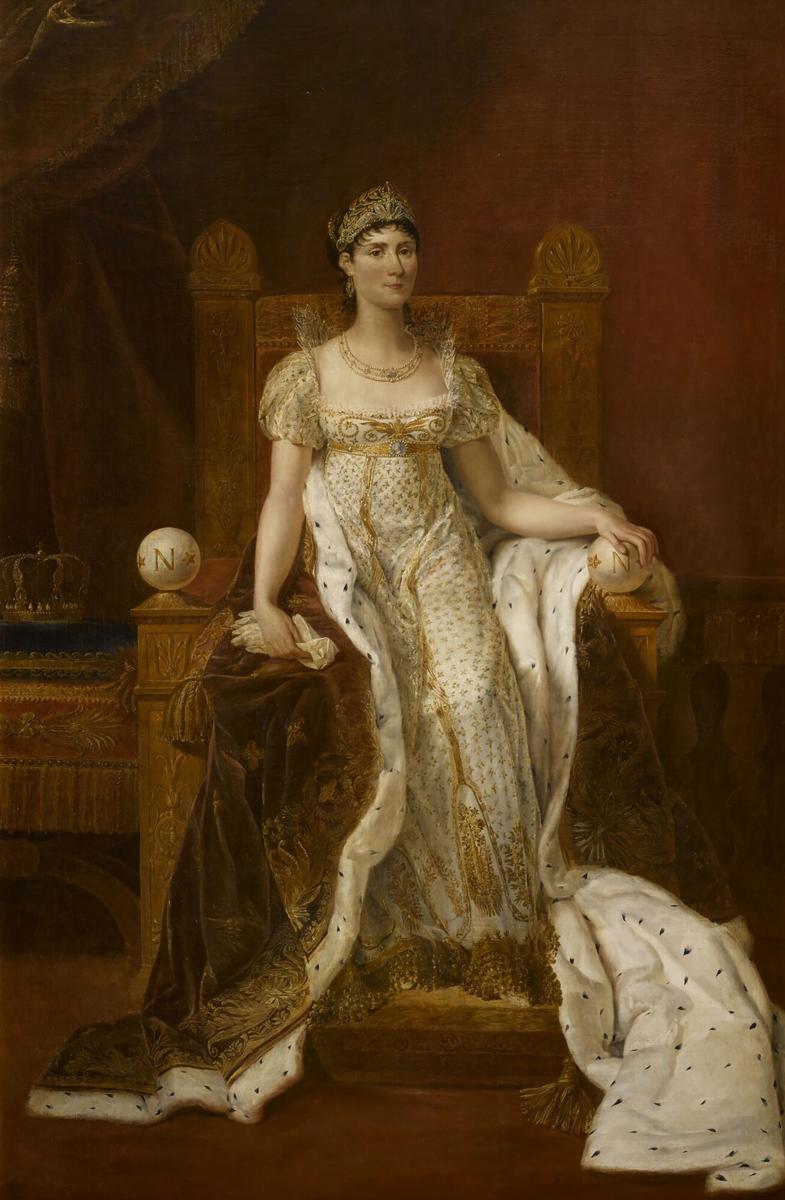
Joséphine, Empress of the French, Guillon-Lethière, Guillaume Guillon, 1807
The Royal Janitor
Virginia Hambley de Bourmont knew her illustrious family history like the back of her hand. It was her short memory that proved difficult. Her great grandfather who tried to restore the Bourbon’s to power – with the help of …..
“She went by the name of Rose, or Marie-Rose Tascher de la Pagerie, later de Beauharnais.”
“She helped Louis XVII‘ escape. Marie-Rose could trace her linage to Rosamund ‘Queen of the Lombars, as could Louis. Lombard Royalty has been lurking in the background of French History for a very long time.”
When John Rudolph Benton de Belmont to Virginia, he gifted her the Louisiana Territory, because in theory her family owned it. Napoleon had no right to sell it. Mark Twain was against this sale, along with many others, because they wanted the West to remain Wild.
“What about the Lombard crown and treasure?”
“The de Bourmont;s took an oath to never speak about it!”
JRP
“Madame de Rambaud was officially in charge of the care of the prince from the day of his birth until 10 August 1792; in other words, for seven years. During these seven years, she never left him, she cradled him, took care of him, dressed him, comforted him, and scolded him. Many times, more than Marie Antoinette, she was a true mother for him”.[3]
Alexandre François Marie, Viscount of Beauharnais (French pronunciation: [alɛksɑ̃dʁ də boaʁnɛ]; 28 May 1760 – 23 July 1794) was a French politician and general of the French Revolution. He was the first husband of Joséphine Tascher de La Pagerie, who later married Napoleon Bonaparte and became empress of France. Beauharnais was executed by guillotine during the Reign of Terror.
Family
Beauharnais was born to the noble Beauharnais family in Fort-Royal (now Fort-de-France), Martinique, in the French West Indies. He was the son of Governor François de Beauharnais, Marquis de la La Ferté-Beauharnais, and Marie Anne Henriette Françoise Pyvart de Chastullé. On 13 December 1779 in Paris, he married Joséphine Tascher de la Pagerie, the future Empress of France. They had two children, Eugène (1781–1824) and Hortense (1783–1837).
. Before she met Napoleon, she went by the name of Rose, or Marie-Rose Tascher de la Pagerie, later de Beauharnais. She sometimes reverted to using her maiden name in later life. After her marriage to then-General Bonaparte, she adopted the name Joséphine Bonaparte. The misnomer “Joséphine de Beauharnais” emerged during the restoration of the Bourbons, who were hesitant to refer to her by either Napoleon’s surname or her imperial title.[citation needed]
Prison and rumours of escape
1793: In the care of Antoine Simon

Immediately following Louis XVI’s execution, plots were hatched for the escape of the prisoners from the Temple, the chief of these plots were engineered by the Chevalier de Jarjayes [fr], the Baron de Batz, and Lady Atkyns. Others said to be involved in his escape(s) are Paul Barras and Joséphine de Beauharnais.[7]
On 3 July, Louis-Charles was separated from his mother and put in the care of Antoine Simon, a cobbler who had been named his guardian by the Committee of Public Safety. The tales told by royalist writers of the cruelty inflicted by Simon and his wife on the child have not been proved. Louis Charles’ sister, Marie Thérèse, wrote in her memoires about the “monster Simon”, as did Alcide Beauchesne. Antoine Simon’s wife Marie-Jeanne, in fact, took great care of the child’s person.[citation needed] Stories survive narrating how he was encouraged to eat and drink to excess and learned the language of the gutter. The foreign secretaries of Britain and Spain also heard accounts from their spies that the boy was raped by prostitutes in order to infect him with venereal diseases to supply the Commune with manufactured “evidence” against the Queen.[8] However, the scenes related by Alcide de Beauchesne [fr] of the physical torment of the child are not supported by any testimony, though he was at this time seen by a great number of people.
On 6 October, Pache, Chaumette, Jacques Hébert and others visited the boy and secured his signature to charges of sexual molestation against his mother and his aunt.[8] The next day he met his elder sister Marie-Thérèse-Charlotte for the last time.
Virginia and John – Union of Love
Posted on January 4, 2021 by Royal Rosamond Press
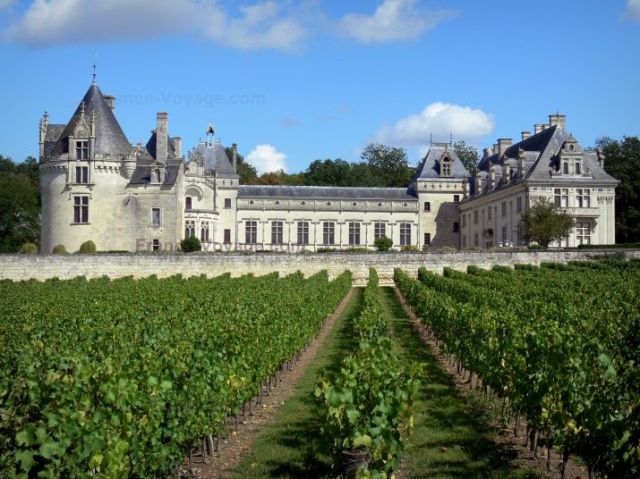
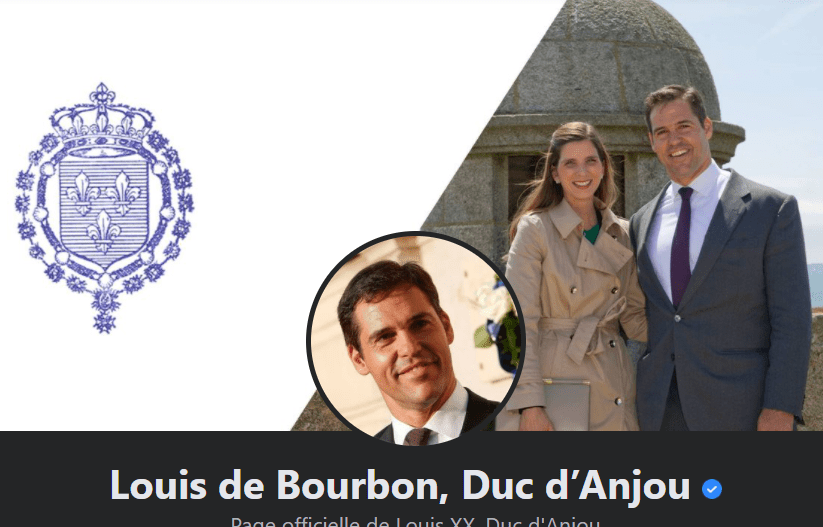
I talked to my ex-fiance last night. She was thrilled that I called. Our flame was reignited. It will never die! Viva Virginia and her family! Here is their castle in France. The Tower of John is in need of repair. After she corrected my pronunciation, I told her about Belle, how I wanted them to meet because Ms. Burch speaks perfect French. Virginia’s accent is of the source. The Bourmonts are kin to the Anjous who are trying to restore the French Monarchy. I predicted the downfall of the Republican party and a coup by the right-wing traitors of our Democracy. I proposed a claim to the Lousiana Territory, and the establishment of a Western Kingdom, just in case. With the presidents attempt to extort votes in Georgia, we are not out of the woods.
De Bourmont – Anjou Legitimists | Rosamond Press
Reclaiming the Lousiana Territory | Rosamond Press
With the corruption of the Prostestant church by the evangelical heresy, I am looking at the Catholic religion, especially the Order of Saint Francis.
John Presco
Jessie Benton – Napoleon – Beauharnais
Posted on June 20, 2012 by Royal Rosamond Press


I don’t quite know what to make of this
“The Beauharnais family has some representation in almost every European court. My father may
have descended from a brother of Alexander Eugene’s father. Ibis General Beauharnais pronounces
the name “Eugene” in such a way as to lead one to believe that he had never learned to speak French in his
youth. He pronounces it “Oozhun,” with some accent on the first syllable.
General Beauharnais says his mother was a Benton. My father had been on friendly terms at Washington with Senator Benton of Missouri. My father was well known here by the late Judge Leander Quint and also Cap
tain M. R. Roberts of this City.”
Jessie Benton lived in France for nearly a year and was fluent in the French language. She was very close with Count de la Garde, a cousin of Eugene and Hortense Beauharnais, who left her letters from all members of the Bonaparte family, and filled her in on the latest intrigues of this family that many authors connect with the Priory de Sion. I once subscribed to the theories there was such a thing, and filed a claim in the Probate of my later sister, Christine Rosamond Benton, where I mention the Merovingians.
Jessie Benton’s daughter burned many papers and documents she inherited from her mother and father.
Jon Presco
Copyright 2012
I Claim The Kingdom of Virginia de Bourmont
Posted on July 26, 2024 by Royal Rosamond Press
Born On Berlin Way
“Belmont is a stepping stone for my historic expectations“.“
Like a Jig-Saw puzzle all the pieces are falling into place! Why didn’t Virginia Hambley’s grandfather try to restore Maria Carolina to the thrown? After all she is the beloved sister of Queen Marie Antoinette – and she escaped the monstrous guillotine!
For nine months I have not been able to reach my ex-fiancé. Her phone rings, but no one picks up. She told me her family was upset with my wild royal claims, but, if NATO crumbles, than we may see the restoration of Royal Houses across Europe, and – in Russia! I believe the de Bourmonts in France – love my posts and this blog – especially when I proclaim the efforts of Louis-Auguguste-Victor to restore the French Monarchy. I suspect they have been trying to contact me – having done my genealogy. Were they told – I am dead? I’m afraid to discover Virginia – is dead. I can not bare more grief. I am…so alone! But, now I wonder if she is being held hostage, in safe keeping in one the de Bourmont castle?
On this day July 26, 2024, I John Presco lay clam to the Bourmont castles – and widery. The trains were sabotaged in France. For thirty years I have been compiling proof Jesus did not found a Democracy. But, now I wonder if there is a real Jesus – who founded many earthly kingdoms – that he wants restored. Are all the kingdoms being….raised from the dead! Go ask Lazarus! I think he knows! For surely he did not go to sleep again? Then he was the first royal to know…..eternal life?
John Presco ‘King of California’
When Virginia Hambley de Bourmont got down on her wounded knee, took my hand, and proposed to me, was my long search for the Grail, at an end. Virginia descends from Geoffrey IV de la Tour Landry who compiled Livre pour l’enseignement de ses filles for the instruction of his daughters. This book is also titled ‘The Book of the Knight of the Tower’. Geoffrey may have authored Pontus and Sidonia a medieval prose roman that was put to song, thus, here is alas The Phantom of this Opera!
In 1701, the new king married his second cousin Maria Luisa of Savoy, with whom he had four sons. Their two surviving sons were the future Spanish kings Louis I and Ferdinand VI. Maria Luisa died in 1714, and Philip remarried to Elisabeth Farnese. Philip and Elisabeth had seven children, including the future Charles III of Spain; Infanta Mariana Victoria, who became Queen of Portugal; Infante Philip, who became Duke of Parma; and Infanta María Antonia Fernanda, who became Queen of Sardinia. It was well known that the union of France and Spain under one monarch would upset the balance of power in Europe, and that other European powers would take steps to prevent it. Philip’s accession in Spain provoked the 13-year War of the Spanish Succession, which continued until the Treaty of Utrecht forbade any future possibility of unifying the French and Spanish crowns while confirming his accession to the throne of Spain.
The Coming Kingdom of Virginia
Posted on March 19, 2021 by Royal Rosamond Press
Belmont is a stepping stone for my historic expectations. Every registered Republican threw our REAL history away and went for half-naked Jacob wearing a set of horns. The party founded by my kin sat Horned Jacob in the honor seat in the Senate Chambers. And, then they pretend they didn’t. And now Little Rocket Man is making his real move on destroying us.
The Honorable Fortune Cookie | Rosamond Press
After Georgia Attacks, Asian-Americans Demand Serious Action on Bias (msn.com)
For most of the last year, Asian-Americans have sounded the alarm over the rising discrimination they have experienced and witnessed, fueled in part by racist language and false claims about the coronavirus by former President Donald J. Trump and other public officials. Celebrities, activists and influencers on social media have implored people to stop the hate against Asian-Americans and Pacific Islanders.

Here is another prophetic post.
King John
The Kingdom ofVirginia
Posted onDecember 24, 2020byRoyal Rosamond Press
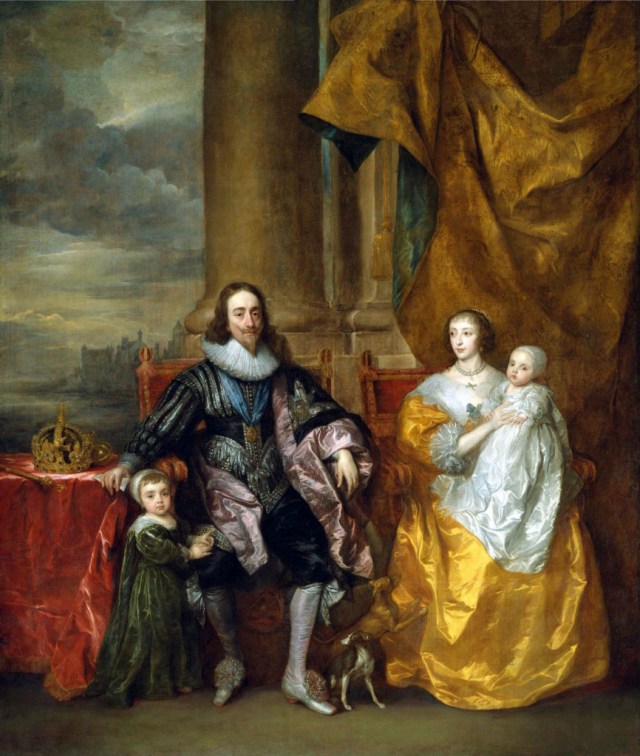
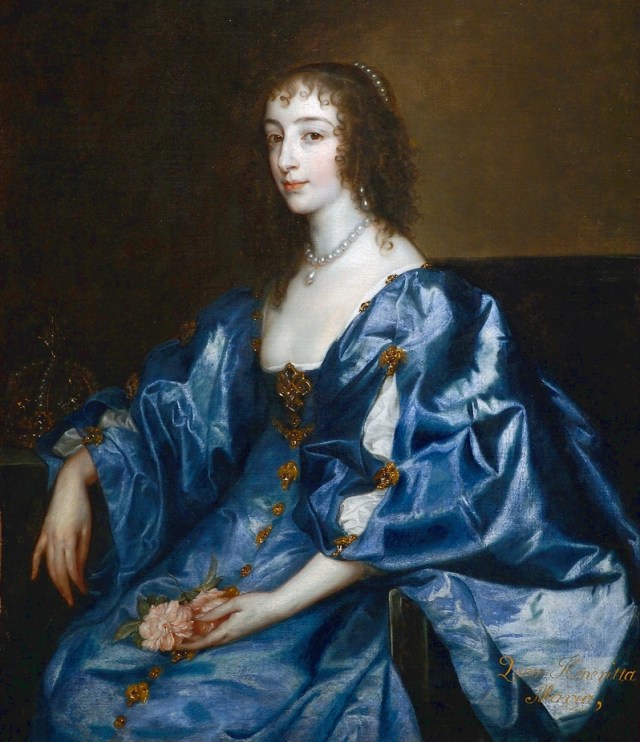

I must be guided by an Angel. An hour ago I discovered the King of Scotland was married to Henritta Maria of the House of Bourbon, who the State of Maryland in named. My ex-fiancé Virginia is kin to the Bourbons. On August 23, 2018 I named one of the Seven States after her. I foresaw the coming of the Duke and Duchess of Sussex to dwell in California.
I stuck my neck wayyyyyyyyyyyyyy out on this one! These are the posts that incited my lunatic neighbors to come as a mob to my door and cry:
“You need to be locked up!”
https://en.wikipedia.org/wiki/Henrietta_Maria
https://en.wikipedia.org/wiki/Henrietta_Maria
As President I Will Restore The FrenchTerritory
Posted onOctober 4, 2020byRoyal Rosamond Press
Here is my facebook group that is my homebase for…
View original post 513 more words
← The Second Coming of John The Nazarite
Was French Foreign Legion Going to Invade California?
Posted on November 22, 2023 by Royal Rosamond Press
“Defeated on the battlefield, conservatives sought the aid of France to effect regime change and establish a monarchy in Mexico, a plan that meshed with Napoleon III’s plans to re-establish the presence of the French Empire in the Americas.“

For your entertainment enjoyment, I supply my readers of Royal Rosamond Press with an exhilarating soundtrack to go with my continuance of the movie ‘Napoleon. Feel free to adjust the sound level.
The Bonaparte Family in America
I watched the movie ‘Napoleon last night and was impressed with the brief shots of the Prussian Army. I suspect the director did not want to spend too much time on them, lest he be accused of being pro-German, or, being anti-Semitic, which is huge right now in the Propaganda War Israel, and aspects of the American media, are conducting. Anti-Semitism – is real! Israel had negotiated with Hamas in the past, and thus titling them “terrorists” does not work. Civilized Nations don’t negotiate with terrorists. Netanyahu made sure President Biden was signing off on the exchange of hostages. Consider the Barbary Coast Pirates who took many infidels hostage – and made them their slaves!
While I watched the Battle of Waterloo, I considered the role that Louis Auguste Victor, Count de Ghaisnes de Bourmont played in defeating Napoleon at Waterloo. Apparently de Bourmont was a turncoat – and traitor? This idea is deliberately blurred, because de Bourmont was a avid Royalists, with family ties to the Great Conde. This Royalist knew Napoleon was not royalty, and was in the way to the return of the True Monarchy, who manipulated Napoléon to their own ends. He could muster the troops – and was victorious! This is the theme of this movie.
As I watched I realized I am one of the few people – in the world – who knows what is really going on. When I saw the scenes of Napoleon in Egypt, I was reminded of De Bourmont’s invasion of Algiers that was conducted to destroy the Barbary Pirates – and cement the formation of the New Monarch with the French People. De Bourmont was mimicking Napoleon! He is also preparing the way for my great grandfather, Sir Isaac Hull who captained the U.S.S, Constitution who made was against the Caliph and freed hostages!
After the movie, I realized Napoleon was not just entertainment for me – and Virginia! I realized My Plot to gift my fiancé with the Lousiana Territory – WAS REAL – because the French – ARE PLOTTERS! It’s what they do! There us much evidence Napoleon 111 wanted to invade America, and depending on who won the Civil War – CONQUER AMERICA! This is – what the French – did! Did the Confederacy make a secret agreement to give France everything west of the Missippippi – if they invaded California – and destroyed John Fremont Western Army?
On Monday night, the Speaker of the House met with the Insurrectionist, Donald Trump Mar-a-Lago. It is rumored Mike Johnson is a Christian Nationalist who wants to install King Jesus in his American Kingdom. How about – Emperor Jesus – who declares…
“I found King David’s crown – in the gutter!”
The Red States – seceded from the Union. If the Confederates had won, would there be a De Bourmont winery in California – with castle?
John Presco
Copyright 2023
Newly minted House Speaker Mike Johnson met with former President Donald Trump at his Mar-a-Lago resort in Florida on Monday night, sources familiar with the matter told ABC News.
The meeting, which took place at a fundraiser for Rep. Gus Bilirakis, R-Fla., marked the first time the two have met in-person since Johnson was elected on Oct. 25.
Secession is the formal withdrawal of a group from a political entity. The process begins once a group proclaims an act of secession (such as a declaration of independence).[1] A secession attempt might be violent or peaceful, but the goal is the creation of a new state or entity independent of the group or territory from which it seceded.[2] Threats of secession can be a strategy for achieving more limited goals.[3]
Notable examples of secession, and secession attempts, include:
• the Confederate States of America seceding from the Union, setting off the American Civil War;
“With Napoleon’s orders in their hands, the Prussians were able to take the appropriate countermeasures to gather their army. Bourmont’s defection enraged the French rank and file. Though their loyalty to Napoleon was absolute, they began to suspect treachery in their generals. Étienne Hulot, who became the acting division commander, was compelled to give a speech that pledged loyalty to Napoleon and the tricolor.[3]“
When Virginia Hambley de Bourmont got down on her wounded knee, took my hand, and proposed to me, was my long search for the Grail, at an end. Virginia descends from Geoffrey IV de la Tour Landry who compiled Livre pour l’enseignement de ses filles for the instruction of his daughters. This book is also titled ‘The Book of the Knight of the Tower’. Geoffrey may have authored Pontus and Sidonia a medieval prose roman that was put to song, thus, here is alas The Phantom of this Opera!
Geoffroy de la Tour-Landry married Jeanne Le Rouge.
Chateau de Breze & Bourmont Wine
Posted on April 23, 2015 by Royal Rosamond Press



“Richard Eldridge, owner and winemaker, stumbled into wine through marriage to the late Valerie de Bourmont who introduced him to wine. In a sense, the rest is history.”
I met Virginia Hambley in 1998, and wanted children with her. When I learned she could not have children, and when my sixteen year old daughter appear in my life, I told Virginia I would share Heather with her. The same went for grandson, Tyler Hunt, when he was born. Virgnia was not born when her two older sisters attended the wedding of their cousin in New York where she was born. Clark Hambley was an artist and worked at a prestigious advertising agency.
Like her sister before her, after graduating from High School, Virginia was invited to stay with her Bourmont kindred in France. She told me they had a winery. When I showed her a photo of Breze Chateau, and asked her if this is where she stayed for nearly month, she said this was the place of the family winery.
“You didn’t tell me it was a castle!”
Jon Presco
Château de Brézé is a small, dry-moated castle located in Brézé, near Saumur in the Loire Valley, France. The château was transformed during the 16th and the 19th centuries. The current structure is Renaissance in style yet retains medieval elements including a drawbridge and a 12th-century trogloditic basement. Today, it is the residence of descendants of the ancient lords. The château is a listed ancient monument originally dating from 1060.[1] A range of wines are produced at the château which has 30 hectares of vineyards.[2]

.jpg)
Gebhard Leberecht von Blücher commanded the Prussian Army, one of the Coalition armies that defeated Napoleon at the Battle of Leipzig
On the morning of 15 June, as the French Army of the North advanced into Belgium, the 14th Division led the IV Corps column of march. Near Florennes, Bourmont halted his division. On the pretence of scouting ahead, he and his staff, rode ahead with a squadron of lancers. After gaining a suitable distance from French lines, he sent the lancers back with a letter for Gérard. In the missive, he explained that he was deserting but promised, “They will not get any information from me which will injure the French army, composed of men I love.” He and his staff put the white Bourbon cockade on their hats and galloped for the nearest Prussian position. He immediately handed over Napoleon’s operational plans to the Prussians. Gebhard von Blucher‘s chief of staff August von Gneisenau was pleased to receive this windfall. However, Blucher had no use for turncoats and called Bourmont a traitor to his face. When Gneisenau noted that Bourmont was wearing the white cockade, making them allies, Blucher screamed, “Cockade be damned! A dirty dog is always a dirty dog!”[2]
With Napoleon’s orders in their hands, the Prussians were able to take the appropriate countermeasures to gather their army. Bourmont’s defection enraged the French rank and file. Though their loyalty to Napoleon was absolute, they began to suspect treachery in their generals. Étienne Hulot, who became the acting division commander, was compelled to give a speech that pledged loyalty to Napoleon and the tricolor.[3]
Napoleon spots the Prussians[edit]
At about 13:15, Napoleon saw the first columns of Prussians around the village of Lasne-Chapelle-Saint-Lambert, 4 to 5 miles (6.4 to 8.0 km) away from his right flank—about three hours march for an army.[89] Napoleon’s reaction was to have Marshal Soult send a message to Grouchy telling him to come towards the battlefield and attack the arriving Prussians.[90] Grouchy, however, had been executing Napoleon’s previous orders to follow the Prussians “with your sword against his back” towards Wavre, and was by then too far away to reach Waterloo.[91]
Grouchy was advised by his subordinate, Gérard, to “march to the sound of the guns”, but stuck to his orders and engaged the Prussian III Corps rear guard under the command of Lieutenant-General Baron von Thielmann at the Battle of Wavre. Moreover, Soult’s letter ordering Grouchy to move quickly to join Napoleon and attack Bülow would not actually reach Grouchy until after 20:00.[91]
.jpg)
Portrait of Napoleon III, by Franz Xaver Winterhalter, c. 1850s
The Americans now had two choices: pay tribute or fight the pirates.”
“Returning to Paris in October, 1855, he was warmly received
by his friend Prince Napoleon who overwhelmed him with questions
about his travels in America. “I answered them the best I could.”
Cipriani wrote, “But , it is a veritable deluge….We keep talking
about my journeys, of the Sanora, of conquering it.” Perhaps he
thought of seizing it for France and hoped the prince might persuade
his cousin the Emperor to finance the undertaking. “It is an idea in
the air,” he added, “that I would willingly undertake, if necessary
capital and men were available.”

Napoleon with his nieces and nephews on the terrace at Saint-Cloud, by Louis Ducis, 1810. Napoleon and four of his siblings have living descendants.
Here.
It appears that Cipriani was successful in uniting the House
of Savoy with the Bonapartes, and thus the House of Stuart. Prince
Napoleon Joseph Charles Paul of France, Pr Napoléon, married in Turin
in 1859, Princess Clothilde of Savoy daughter of Victor Emanuel. From
this union would come other Bonapartes with the name Victor. Prince
Napoléon Victor Jérôme Frédéric, Prince LOUIS Jérôme Victor Emmanuel
Léopold Marie, and, Prince Charles Marie Jérôme Victor
Was the Jacobite ‘Order of the White Rose’ somewhat successful
in their plan to put the Stuarts on a throne and rule the world?
There appears to contention with the Prussians who can claim the same
ancestry through the Winter Queen of Bohemia, Elizabeth Stuart,
daughter of King James, and thus the Hanovers who are in all regards,
the Windsors.
French expeditionary force, 31 December 1862[edit]

At its peak in 1863, the French expeditionary force counted 38,493 men[4] : 740 (which represented 16.25% of the French army).[121] 6,654[7] : 231 French died, including 4,830 from disease.[7]: 231 Among these losses, 1,918 of the deaths were from the regiment of the French Foreign Legion.[122]: 267
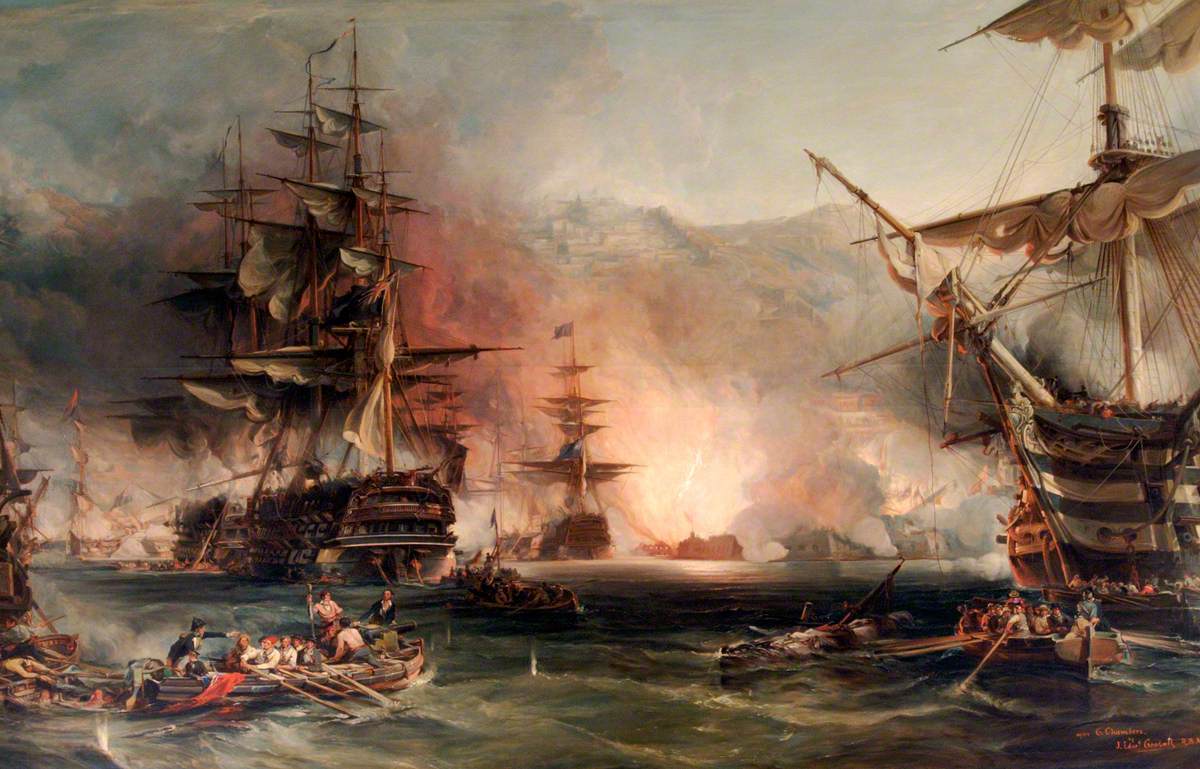
Louis-Auguste-Victor, Count de Ghaisnes de Bourmont (2 September 1773 – 27 October 1846) was a French general, diplomat and statesman who was named Marshal of France in 1830. A lifelong royalist, he emigrated from France soon after the outbreak of the French Revolution and fought with the counter-revolutionary Army of Condé for two years, then joined the insurrection in France for three more years before going into exile. He was arrested after assisting the Georges Cadoudal conspiracy, but escaped to Portugal.
In 1807 he took advantage of an amnesty to rejoin the French army and served in several campaigns until 1814. He rose in rank to become a general of division. During this period, he was suspected of being an agent of the Comte d’Artois and passing information to France’s enemies. Though he was notoriously anti-Napoleon and many officers did not trust him, he was employed again during the Hundred Days. Immediately after the campaign began, he deserted to the Prussian army with Napoleon’s plans. King Louis XVIII of France gave him a command in the Spanish expedition of 1823.
Promoted to Marshal of France, he was put in command of the Invasion of Algiers in 1830. However, after the July Revolution, he refused to recognize King Louis-Philippe of France and was sacked. After being involved in a plot against the new government, he fled to Portugal in 1832. He led the army of Dom Miguel in the Liberal Wars, and when the liberals won, he fled to Rome. He accepted another amnesty, this time in 1840, and died in France six years later.
The second French intervention in Mexico (Spanish: segunda intervención francesa en México), also known as the Second Franco-Mexican War (1861–1867),[13] was a military invasion of the Republic of Mexico by the French Empire of Napoleon III, purportedly to force the collection of Mexican debts in conjunction with Great Britain and Spain. Mexican conservatives supported the invasion, since they had been defeated by the liberal government of Benito Juárez in a three-year civil war. Defeated on the battlefield, conservatives sought the aid of France to effect regime change and establish a monarchy in Mexico, a plan that meshed with Napoleon III’s plans to re-establish the presence of the French Empire in the Americas. Although the French invasion displaced Juárez’s Republican government from the Mexican capital and the monarchy of Archduke Maximilian was established, the Second Mexican Empire collapsed within a few years. Material aid from the United States, whose four-year civil war ended in 1865, invigorated the Republican fight against the regime of Maximilian, and the 1866 decision of Napoleon III to withdraw military support for Maximilian’s regime accelerated the monarchy’s collapse. Maximilian and two Mexican generals were executed by firing squad on 19 June 1867, ending this period of Mexican history.
The intervention came as a civil war, the Reform War, had just concluded, and the intervention allowed the Conservative opposition against the liberal social and economic reforms of President Juárez to take up their cause once again. The Mexican Catholic Church, Mexican conservatives, much of the upper-class and Mexican nobility, and some Native Mexican communities invited, welcomed and collaborated with the French empire’s help to install Maximilian of Habsburg as Emperor of Mexico.[14] The emperor himself, however proved to be of liberal inclination and continued some of the Juárez government’s most notable liberal measures. Some liberal generals defected to the Empire, including the powerful, northern governor Santiago Vidaurri, who had fought on the side of Juárez during the Reform War.
America’s First Victory Over Terrorism
Posted on March 27, 2015 by Royal Rosamond Press






I wanted Virginia and I to have a child, but, her mother tied her tubes due to her head injury. Her ancestors were at the court of Rene d’Anjou. There is no good youtube program on him. What a disgrace. No wonder Europe falls to a moron and Putin.
Virginia’s family hid their valuables in the basement of this castle we see above during the French Revolution. Many of her blood ties went to the Guillotine. I have a narrated video of Virginia wandering about picking up cigarette in the park.
“Lady’s and gentleman. Here we see a woman who is heir to the French throne walking about picking up cigarette butts the pigs have tossed about. Who would do it if not the French Royals?”
I don’t give a rat’s ass how many bad guys James Bond shoots, in my book, he is missing the point. Virginia is one of the bravest people I know. She was on a college excursion when the van got in a terrible wreck. They pulled her out from under a dead student, a young man. She was in a coma for 28 days. Most of her ability to remember, is gone. She would leave her infant in a bathtub. Rena has a million poems in her head. These two women, are Victory Bond.
Virginia was twenty when the major part of her life, ended. The brilliance that got left behind came into my reclusive ways. I successfully pushed everyone away, but, Virginia. She wanted to know who she was. She wanted me to help her find herself. I became devoted to her. I thought I was there at her beck and call. But, I could not be, not all of me, for the place where we make and keep our sense of endearment, was missing, left behind, on the highway to Coos Bay.
We are all damaged. I fell in love with Lara Roozemond, for she speaks of being damaged. She pens poems about being broken, cut off, somehow, some way. She is my inspiration for Victoria Bond. World Honesty…………hangs by a thread.
John Presco 007




LET’S SAVE THE ST. JOHN’S TOWER AT THE CHÂTEAU DE BOURMONT!
 Reading180 %$17,963Collected on 10,000 eurosDonation vs. Donation113Contributions from 9 countriesFinishedSave from the collapse a tower of the former fortress of the castle of Bourmont, family residence since the 14th century and high place of the chouannerie, located on the steps of Brittany.Share this projectServane de BourmontThe Historic Home Castle Freigned – Vallons-de-l’Erdre Challenges CAMPAIGN COMMENTS16 CONTRIBUTORS113 NEWS2


The Historic Home supports the Château de Bourmont (member of the Association of Historic Homes) and joins their restoration project.

THE CASTLE OF BOURMONT

ST. JOHN’S TOWER FOR ALL, ALL FOR HER!
We are launching a campaign of works to stabilize the remains of an imposing 15th century tower,at the southwest corner of the courtyard of Bourmont Castle,located in the Loire-Atlantique. This tower has stood guard for more than five centuries and recalls the defensive role of the place when Bourmont was a stronghold of the Kingdom of France against the Duchy of Brittany.
The high place of the cabbage industry, this house keeps within it the memory of the terrible battles of the revolutionary period between the Whites and the Blues in a fratricidal war during which Bourmont was burned many times. This tower was notably an essential element of the defence of the fortress in 1795 when Bourmont Castle became the headquarters of the Catholic and Royal Army of Maine, Anjou and Upper Britain under the command of General de Scépeaux. It is here that The Marshal of Bourmont (1773-1846), a tireless actor from a troubled period in the history of France, whose memory his descendants now transmit, rests.


Entry castle

Logis and North Tower

Amaury and Servane de Bourmont with their children
INTRODUCING THE PROJECT
As young buyers, we want to make visitors of the place aware of the efforts undertaken to save these remains that make up its architectural unity. This project aims to preserve a remnant of the 15th century of high quality, inserting itself into a preserved picturesque complex. The previous restoration dated 1850 unfortunately contributed to the weakening of the building, which collapsed half a century ago.
A family home and a witness to the history of France, Bourmont aims to welcome visitors passing through but also to regularly bring together all those attached to it by organising dynamic and unifying events at the communal level and more broadly at the departmental and regional level.
For these reasons, we want to save the old St. John’s Tower from a total and inevitable disappearance by permanently stabilizing it in its current state.


WHAT WILL THIS COLLECTION BE USED FOR?

The first phase of the work should help to secure the site by stabilizing the stilt that threatens ruin with the help of a gondola. Then, the gravois will be sorted:on the one hand, the shale rubbing; on the other hand, the carved tuffeau stones that will be preserved.
The second step will be to stabilize the remaining but very fragile sections of walls, by large injections of lime, in order to ensure the coherence of the masonry and to strengthen the structure (stretching the bays, re-establishing the lintels in tuffeau of these, consolidating their bases and closing the cracks).
The third step will be to put the walls’ macrases out of water with appropriate lead protections.
Finally, only if our budget allows us, a final stage will highlight a Rockstone from the Renaissance period (1564) carved with the weapons of François de Maillé de La Tour-Landry and Diane de Rohan, updated in 1996 in the rubble of the tower. If the entourage has suffered, the central stone of a single block on which the weapons are carved is fortunately intact. The final step will be the development of a terrace accessible from the courtyard to enter it.

Previous state circa 1900

After a call for tenders from various approved companies and a detailed study of the estimates, the total amount of the project amounts to 190,000 euros, which will be financed in part by grants and partly from our own funds. Nevertheless, we hope to raise 15% of this sum in donations and sponsorships.
Forecast budget: $190k
Donations and sponsorships: 15%
Self-financing: 35-45%
WHO ARE WE?
Taking over The Castle of Bourmont with our four children, we are the 25th generation to take up the torch to make love this family cradle and pass on its memory. We are working together to support this house, which has been passed down to the same family since 1697.
HOW CAN WE SUPPORT THIS PROJECT?
You can support this project:
- – by donating online by credit card on this page after registration on the Dartagnans website
- – by making a bank transfer after registering on the Dartagnans website
- – by sending a cheque, on the back of which you will include your email address,written in the following order Historic Residence – St John’s Tower of Bourmont Castle,sent to the following address:
Dartagnans
Campaign St John’s Tower for
all, all for it! 15 rue de Milan
75009 PARIS
CHALLENGEABLE DONATIONS
Your donation is defically defically defyed if it fulfils the terms and conditions of Articles 200 and 238 bis of the general tax code, in particular because it is a private property in selfless management. At the end of the collection, you will receive a tax receipt allowing you to reduce your tax:
– Individually, you can deduct 66% of your donation within 20% of your taxable income.
– As a company, all payments to the project allow a 60% reduction in corporate tax on the amount of these payments, taken within the limit of 0.5% of the company’s C.A. H.T.
Parents of owners up to the 4th degree (including first cousin) will not be eligible for the tax reduction.
 Rosamond Press


Leave a comment