Why not build a replica of the Brandenburg Gate in Belmomnt, at the entrance of the Stanford Annex? I an going to write Gavin Newsom.
John Presco
The Prussian Kingdom of God
Posted on January 27, 2020 by Royal Rosamond Press

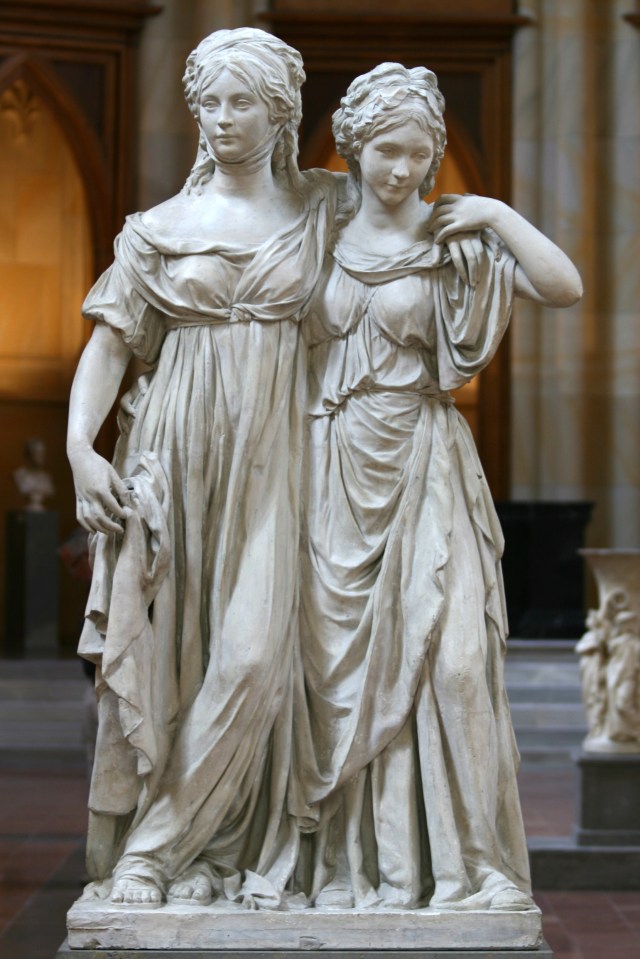

The Kingdom of God is born this day! This kingdom is found within the entire Northern and Southern Continent. Prince Georg Frederich of Prussia is working hard to restored the Hohenzollern to the Throne. I claim the castles of the Schwarzenbergs, and restore the Kingdom of Bohemia. I suggest we compare our DNA. Only subjects of these United Kingdoms will know the Kingdom of God. Repent!
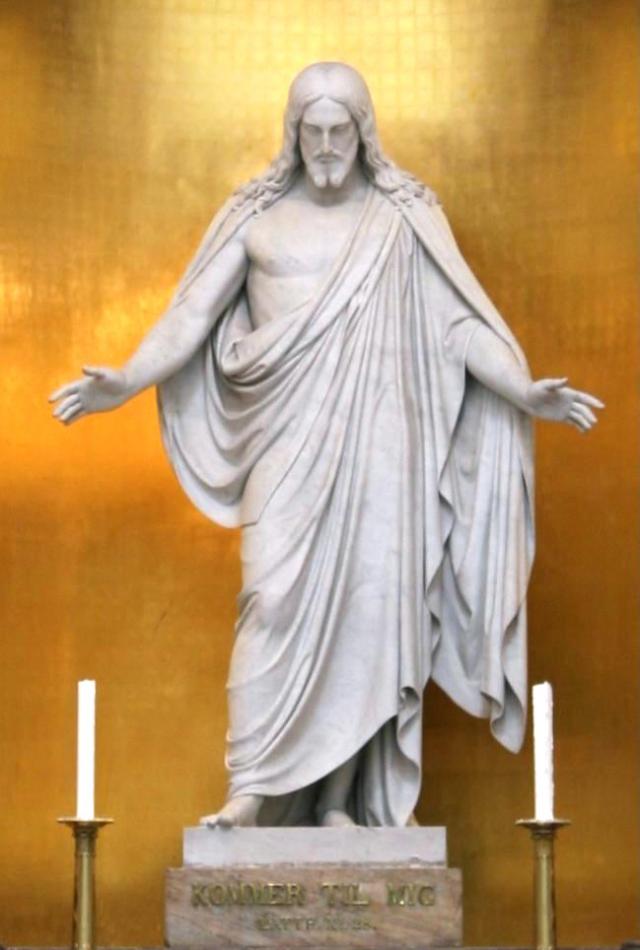
“Come unto me!”
For ever two thousand years Royal Families have backed Christianity with their blood and fortune. Jesus is very grateful. The false claim that Jesus approves of, and backs any Democracy, is false. President Trump said he has done more for Christianity – than Jesus! His lawyers are doing away with the Letter of the Law – as I type! All evangelical followers of John Darby – are cast out! Any Christian who votes for Trump – will not see the Glory of God!
https://en.wikipedia.org/wiki/Georg_Friedrich,_Prince_of_Prussia
I am a Nazarite after Samuel – The King Maker! I place God’s crown on the head of Prince Georg – this day!
So be it!
John ‘The Nazarite King Maker
EXTRA! I just found the name RITTMEISTER. It means “riding master”. This may be the source of the name STUTTMEISTER which can be “horse master”. I have seen the name Stuttmeister with the Trakehner horse. In the first video there is a Phantom of the Opera bit.
https://en.wikipedia.org/wiki/Rittmeister
Today is the 75th. anniversary of the liberation of Auschwitz. This article is evidence here was a cult around Hitler – that still needs more study! Jews could serve in the Prussian army, but could not be officers. Blacks could not serve in our first army, and were restricted. I have ben looking at the possibility the Stuttmeisters were wealthy Jews involved in the proxy fur market. This was a stock market I assume for the world fur trade market. Were they bankers who converted?
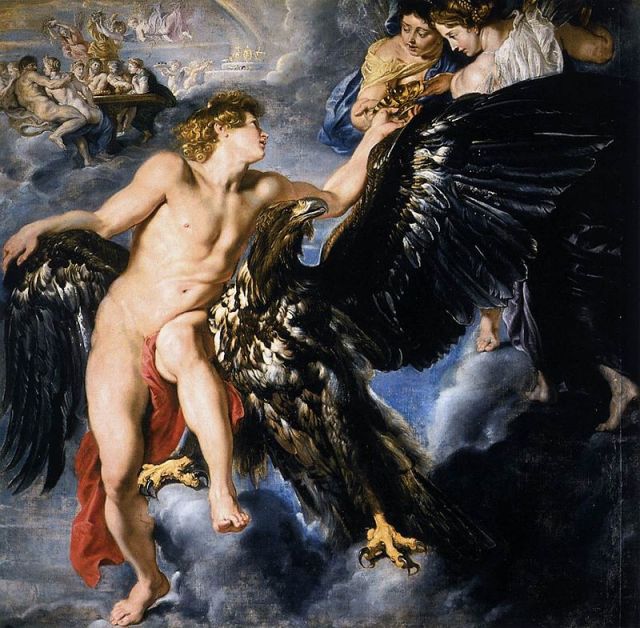
Johann Onuphrius (*1513–†1584), a great-grandson of Michael II. and Ursula, is considered to be the progenitor of the Frisian Line. His marriage with Maria von Grumbach (†1564) ensured Groot Terhorne Castle until 1879 as the family seat in the Netherlands. The Frisian line was made a member of the Dutch nobility by a Royal decree of King William I. of the Netherlands on August 28, 1814. Henceforth, the Dutch version thoe Schwartzenberg en Hohenlansberg was applied for this branch of the family.
The Prussian Line was established as a cadet branch of the Frisian line with Georg Baron thoe Schwartzenberg en Hohenlansberg (1842-1918), who served as a Rittmeister in the Imperial German Army. He and his descendants were made members of the Prussian nobility by an Imperial decree, issued by Emperor Wilhelm II., and are entitled to carry the German title Freiherr.
“Recreational and residential area
In the late 18th century, Charlottenburg’s development did not depend only on the crown. The town became a recreational area for the expanding city of Berlin. Its first true inn opened in the 1770s, in the street then called Berliner Straße (now Otto-Suhr-Allee), and many other inns and beer gardens were to follow, popular for weekend parties especially. Berliners seeking leisure and entertainment came by boat, by carriage and later by horse-drawn trams, above all to a large amusement park at the shore of the Spree river called Flora, that went into bankruptcy in 1904.
From the 1860s on the wealthy Bourgeoisie of Berlin discovered Charlottenburg as a residential area, among the first were Gerson von Bleichröder and Ernst Werner von Siemens, who had a villa built in the Berliner Straße in 1862. At the same time industrial companies like Siemens & Halske and Schering erected large factories in the north-east, at the border with the Moabit district of Berlin. In 1877 Charlottenburg received town privileges and until World War I saw an enormous increase of population with 100,000 inhabitants as of 1893 and a population of 306,000 in 1920, being the second largest city within the Province of Brandenburg, after Berlin.
https://en.wikipedia.org/wiki/Georg_Friedrich,_Prince_of_Prussia
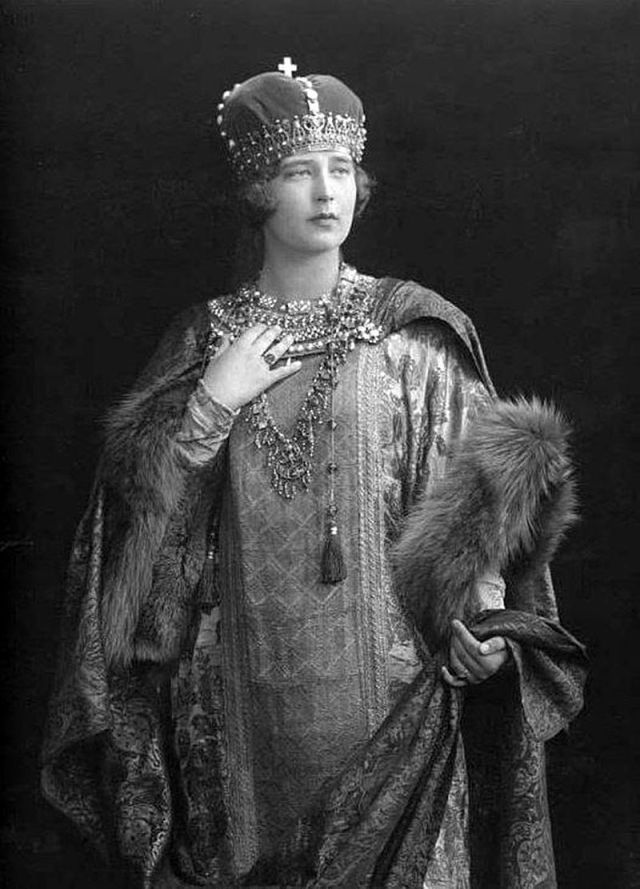
https://en.wikipedia.org/wiki/Grand_Duchess_Kira_Kirillovna_of_Russia
https://www.irishtimes.com/news/world/europe/the-man-who-would-be-kaiser-1.1884029
https://en.wikipedia.org/wiki/House_of_Schwarzenberg
https://en.wikipedia.org/wiki/German_Jewish_military_personnel_of_World_War_I
https://memory.loc.gov/ammem/aaohtml/exhibit/aopart7.html
http://exhibitions.nypl.org/africanaage/essay-world-war-i.html
https://en.wikipedia.org/wiki/Military_history_of_African_Americans
https://en.wikipedia.org/wiki/Military_career_of_Adolf_Hitler
https://en.wikipedia.org/wiki/On_the_Jews_and_Their_Lies

Rittmeister Manfred von Richthofen, German flying ace of WW I
Rittmeister (German and Scandinavian for “riding master” or “cavalry master”) is or was a military rank of a commissioned cavalry officer in the armies of Germany, Austria-Hungary, Scandinavia, and some other countries. A Rittmeister is typically in charge of a squadron (a Company-sized unit called a Troop in the United States, as opposed to the US Cavalry squadron of larger battalion size), and is the equivalent of a Hauptmann-rank (en: captain) with a NATO rank of OF-2.[1][2]
The various names of this rank in different languages (all Germanic, plus Estonian) were:
- Swedish: ryttmästare
- Danish: ritmester
- Norwegian: rittmester (bokmål; the spelling ritmester was used until 1907) or rittmeister (nynorsk)
- German: Rittmeister
- Estonian: rittmeister
“Himmler had ordered 999 German women from the Ravensbrück prison to be transferred to Auschwitz to serve as prison guards ahead of the Slovak girls’ arrival, she said. And that number — 999 — which may have been an occult obsession of Himmler’s, matched the number of girls who were supposed to be on that first Jewish transport. (Macadam found that authorities miscounted; in reality, there were 997.)
In fact, the girls’ real job wasn’t to make shoes, but to build the very infrastructure that would convert the camp into a death machine. Over the next year, they were brutally forced to demolish old buildings with their bare hands, empty trash out of frozen lakes and build dozens of new barracks. For clothing, they were given the bloody uniforms of dead Soviet soldiers and a few striped dresses with no undergarments. Their entire bodies were shaved, and their shoes were flat pieces of wood with flimsy cloth ties.
Windsors and Hesketh Sisters
Posted on October 3, 2011by Royal Rosamond Press

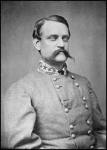
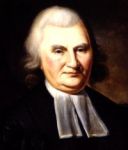
It is alleged the first girl Prince Harry Windsor kissed, was Sophia Hesketh. Sophia appears to have dated Freddy Windsor. Sophia’s sister, Flora, is also a British Socialite. These sisters are my distant kin, related to the Witherspoons. I lived with Dottie Witherspoon. Being facebook friends of William and Harry, I suggested Will invite Reese Withersppon to his wedding in order to extend hands across the water. To the Hesketh sisters acknowlege their American roots?
Jon Presco
THE HON. SOPHIE HESKETH
As the first girl Harry is rumoured to have ever kissed, flaxen-haired Sophia, 26, will no doubt always hold a place in the Prince’s heart. They were last seen dancing together at a charity ball in 2007, despite the fact that Chelsy was also there.
Thomas Fermor-Hesketh, 1st Baron Hesketh
From Wikipedia, the free encyclopedia
Thomas Fermor-Hesketh, 1st Baron Hesketh (17 November 1881–20 July 1944), known as Sir Thomas Fermor-Hesketh, 8th Baronet, from 1924 to 1935, was a British peer, soldier and Conservative Member of Parliament.
Hesketh was the son of Sir Thomas George Fermor-Hesketh, 7th Baronet, and Florence Emily Sharon,daughter of U.S. Senator William Sharon. He was educated at Eton, the Royal Military College, Sandhurst, and Trinity College, Cambridge.
He achieved the ranks of 2nd Lieutenant in the Royal Horse Guards, Captain in the Lancashire Hussars Yeomanry and Honorary Major in the Territorial Army and also served as a Justice of the Peace for Lancashire and for Northamptonshire. Hesketh sat briefly as a Member of Parliament for Enfieldfrom 1922 to 1923 and was later High Sheriff of Northamptonshire in 1932.
He succeeded his father as eighth Baronet of Ruffield in 1924 and in 1935 he was raised to the peerage as Baron Hesketh, of Hesketh in the County Palatine of Lancaster.
Lord Hesketh married Florence Louise Breckinridge, of Kentucky, daughter of John Witherspoon Breckinridge, and granddaughter of General John C Breckinridge, Vice-President of the United States, in 1909. They had three sons and two daughters (Flora and Louise[1]). Their eldest son Lieutenant the Hon. Thomas Sharon Fermor-Hesketh was killed in an aeroplane accident in France in 1937. Lord Hesketh died in July 1944, aged 62, and was succeeded in his titles by his second son Frederick. His third son John married Patricia Macaskie Cole in 1946[1]. His grandson Alexander Fermor-Hesketh, 3rd Baron Hesketh, is a former Conservative government minister. Florence, the Dowager Lady Hesketh died 1956.
Prince of Prussia
| Georg Friedrich | |
|---|---|
| Prince of Prussia | |
| Georg Friedrich at the annual meeting of the Order Pour le Mérite (2014) | |
| Head of the House of Hohenzollern | |
| Tenure | 26 September 1994 – present |
| Predecessor | Louis Ferdinand |
| Heir apparent | Carl Friedrich |
| Born | (1976-06-10) 10 June 1976 (age 43) Bremen, West Germany |
| Spouse | Princess Sophie of Isenburg (m. 2011) |
| Issue | Carl Friedrich, Hereditary Prince of PrussiaPrince Louis FerdinandPrincess Emma MariePrince Heinrich |
| Full nameGeorg Friedrich Ferdinand, Prinz von Preußen | |
| House | Hohenzollern |
| Father | Prince Louis Ferdinand of Prussia |
| Mother | Countess Donata of Castell-Rüdenhausen |
| Prussian Royal Family |
|---|
| HI&RH The Prince HI&RH The PrincessHI&RH The Hereditary PrinceHRH Prince Louis FerdinandHRH Prince HeinrichHRH Princess Emma MarieHRH Princess Cornelie-Cecile |
| Extended family[show]Descendants of Louis Ferdinand, Prince of Prussia:HRH Princess Fredrich WilhelmHRH Prince Philip Kirill HRH Princess Philip KirillHRH Prince Paul WilhelmHRH Prince Timotheus FriedrichHRH Princess Maria LuiseHRH Princess Elisabeth ChristineHRH Princess Anna SophieHRH Princess Johanna AmalieHRH Prince Friedrich HRH Princess FriedrichHRH Prince Friedrich WilhelmHRH Prince Joachim HRH Princess AngelaHRH The Hereditary Princess of LeiningenHRH Princess Michaela, Mrs. WessollyHRH Princess NatalyHRH Prince Christian-Sigismund HRH Princess Christian-SigismundHRH Prince Christian LudwigHRH Princess Irina MariaHRH Princess Marie CécileDescendants of Prince Wilhelm:HRH Princess Christa, Mrs. von Assis LiebesDescendants of Prince Hubertus:HRH The Princess of Löwenstein-Wertheim-RosenbergDescendants of Prince Frederick:HRH Prince Frederick Nicholas HRH Princess Frederick NicolasHRH Prince FrederickHRH Princess BeatriceHRH Princess Florence, Mrs. TollemacheHRH Princess Augusta, Mrs. HelmoreHRH Prince Wilhelm Andreas HRH Princess Wilhelm AndreasHRH Prince FrederickHRH Princess Tatiana, Mrs. WomackHRH Prince Rupert HRH Princess RupertHRH Princess BrigidHRH Princess AstridHRH Princess Victoria, Mrs. Achache HRH The Duchess of WellingtonDescendants of Prince Wilhelm Victor:HRH Prince Adalbert HRH Princess AdalbertHRH Prince AlexanderHRH Prince ChristianHRH Prince PhilippHRH Princess Marie Louise, Countess von Schönburg-GlauchauDescendants of Prince Alexander Ferdinand:HRH Princess Stephan AlexanderHRH Princess Stephanie, Mrs. BaoDescendants of Prince Wilhelm-Karl:HRH Prince Wilhelm HRH Prince Oscar HRH Princess OscarHRH Prince OskarHRH Princess WilhelmineHRH Prince AlbertHRH Princess DonataDescendants of Prince Karl Franz:HRH Prince Franz Wilhelm HRH Princess Franz WilhelmHI&RH Grand Duke George Mikhailovich of RussiaHRH Prince Franz Friedrich HRH Princess Franz FriedrichHRH Princess Christine, Mrs. KovacevicHRH Princess Alexandra, Mrs. ReboaHRH Princess Désirée, Mrs. Gamarra |
| vte |
Georg Friedrich Ferdinand, Prince of Prussia[1][2][3][4][5] (German: Georg Friedrich Ferdinand Prinz von Preußen;[6] born 10 June 1976) is a German businessman who is the current head of the Prussian branch of the House of Hohenzollern, the former ruling dynasty of the German Empire and of the Kingdom of Prussia.[7][8] He is the great-great-grandson and historic heir of Wilhelm II, the last German Emperor and King of Prussia, who abdicated and went into exile upon Germany’s defeat in World War I in 1918.
Contents
- 1Education and career
- 2House of Hohenzollern
- 3Family
- 4Property Claims
- 5Titles, styles and honours
- 6Ancestry
- 7References and notes
- 8External links
Education and career[edit]
Georg Friedrich is the only son of Prince Louis Ferdinand of Prussia (1944–1977) and Countess Donata of Castell-Rüdenhausen (1950–2015). Born into a mediatised princely family, his mother later became Duchess Donata of Oldenburg when she married secondly Duke Friedrich August of Oldenburg, who had previously been married to her sister-in-law Princess Marie Cécile of Prussia. His only sister is Princess Cornelie-Cécile of Prussia (b. 1978).[4]
After the death of his father, Georg Friedrich spent much of his youth in the care of Louis Ferdinand, his paternal grandfather.[5] He attended grammar schools in Bremen and Oldenburg and completed his education at Glenalmond College near Perth, Scotland, where he passed his A-levels. He then served for a two-year commission in the Alpine troops of the Bundeswehr. Georg Friedrich earned his degree in business economics at the Freiberg University of Mining and Technology.
Georg Friedrich works for a company specialising in helping universities to bring their innovations to market.[9] He also administered the Princess Kira of Prussia Foundation, founded by his grandmother Grand Duchess Kira of Russia in 1952, now administered by his wife.[10] In 2018 he moved from a house near Bremen, where he had also spent his childhood, to Babelsberg, a district of Potsdam, the capital city of the German state of Brandenburg.
He owns a two-thirds share of his family’s original seat, Hohenzollern Castle, while the other share is held by the head of the Swabian branch, Karl Friedrich, Prince of Hohenzollern. He also owns the Princes’ Island in the Great Lake of Plön. In 2017 he founded a beer trademark called Kgl. Preußische Biermanufactur (Royal Prussian Beer Manufactory) producing a Pilsner brand called Preussens.
Prince Georg Friedrich continues to claim compensation for land and palaces in Berlin expropriated from his family, a claim begun in March 1991 by his grandfather Prince Louis Ferdinand of Prussia under the Compensation Act (EALG).[11]
House of Hohenzollern[edit]
Georg Friedrich succeeded his grandfather, Louis Ferdinand, as Head of the Royal House of Prussia,[12] a branch of the House of Hohenzollern, on 26 September 1994. He stated, that he learned to appreciate the history and responsibility of his heritage during time spent with his paternal grandfather, who often recounted to him anecdotes from the life in exile of his own grandfather, the last German Kaiser, Wilhelm II.[13]
His position as sole heir to the estate of his grandfather was challenged by his uncles, Friedrich Wilhelm and Michael, who filed a lawsuit claiming that, despite their renunciations as dynasts at the time of their marriages,[4] the loss of their inheritance rights based on their selection of spouse was discriminatory and unconstitutional.[14] His uncles were initially successful, the Regional Court of Hechingen and the higher Regional Court of Stuttgart ruling in their favour in 1997 on the grounds that the requirement to marry equally[15] was “immoral”.[16] However, the Federal Court of Justice of Germany overturned the original rulings in favour of Georg Friedrich’s uncles, the case being remanded to the courts at Hechingen and Stuttgart. This time both courts ruled in favour of Georg Friedrich. His uncles then took their case to the Federal Constitutional Court of Germany which overruled the previous court rulings in Georg Friedrich’s favour.[14] On 19 October 2005, a German regional court ruled that Georg Friedrich was indeed the principal heir of his grandfather, Louis Ferdinand (who was the primary beneficiary of the trust set up for the estate of Wilhelm II), but also concluded that each of the children of Louis Ferdinand was entitled to a portion of the Prussian inheritance.[17]
Family[edit]

Georg Friedrich and his wife
On 21 January 2011, Georg Friedrich announced his engagement to Princess Sophie Johanna Maria of Isenburg (born 7 March 1978), who studied business administration in Freiburg and Berlin and works at a firm that offers consulting services for nonprofit business.[18] The civil wedding took place in Potsdam on 25 August 2011,[9] and the religious wedding took place at the Church of Peace in Potsdam on 27 August 2011, in commemoration of the 950th anniversary of the founding of the House of Hohenzollern.[19][20] The religious wedding was also broadcast live by local public television.[9] The dinner, which many members of German and European royal families attended, was held in the Orangery Palace at Sanssouci Park.
As a Protestant descendant of Queen Victoria, Georg Friedrich was in the line of succession to the British throne from his birth until his marriage in 2011. As he married a Roman Catholic, according to the Act of Settlement 1701, he was thus debarred from the British line of succession until the implementation in 2015 of the Succession to the Crown Act 2013, which restored any succession rights to British dynasts forfeited because of marriage to Roman Catholics. Georg Friedrich is currently 170th in line to the British throne.[21]
On 20 January 2013, Georg Friedrich’s wife, Sophie, gave birth to twin sons in Bremen, Carl Friedrich and Louis Ferdinand. Carl Friedrich, the elder of the two, is his father’s heir apparent.[22] Their third child, Emma Marie, was born on 2 April 2015. On 17 November 2016, Sophie gave birth to Heinrich, their fourth child.[23]
Property Claims[edit]
In mid-2019 it was revealed that Georg Friedrich had filed claims for permanent right of residency for his family in Cecilienhof, or one of two other former Hohenzollern palaces in Potsdam, as well as return of the family library, 266 paintings, an imperial crown and sceptre, and the letters of Empress Auguste Victoria.[24] This sparked a public debate about the legitimacy of these claims and the role of the Hohenzollern during and before the Nazi regime in Germany, specifically Crown Prince Wilhelm von Preußen‘s involvement.[25][26]
In June 2019, a claim made by Georg Friedrich that Rheinfels Castle be returned to the Hohenzollern family was dismissed by a court. In 1924, the ruined Castle had been given to the town of St Goar, under the proviso it was not sold. In 1998 the town leased the ruins to a nearby hotel. His case made the claim that this constituted a breach of the bequest.[27]
Titles, styles and honours[edit]
Titles and styles[edit]
- official in Germany: 10 June 1976 – present: Mr Georg Friedrich Prinz von Preußen[28]
- 10 June 1976 – 26 September 1994: His Royal Highness Prince Georg Friedrich of Prussia[4]
- 26 September 1994 – present: His Imperial and Royal Highness The Prince of Prussia[2][3]
Honours[edit]
- House of Prussia: Sovereign Knight Grand Cordon with Collar of the Order of the Black Eagle[29][30][31][32][33]
- House of Prussia: Sovereign Knight Grand Cordon with Collar of the Order of the Red Eagle[32]
- House of Prussia: Sovereign of the Order of Merit of the Prussian Crown
- House of Prussia: Sovereign of the Order of the Crown
- House of Prussia: Sovereign Knight Grand Cordon with Collar of the Imperial House Order of Hohenzollern-Prussia[33]
- House of Prussia: Sovereign of the Imperial Order for Merit
- House of Prussia: Sovereign of the Order of Louise
- House of Prussia: Sovereign of the Order of Wilhelm
Prussia Reborn In New World
Posted on January 27, 2020 by Royal Rosamond Press


I suspect many Prussians came to Chile.
John
https://en.wikipedia.org/wiki/German_Chileans
Hamburg and Valparaíso[edit]

Valparaíso, Chile, in 1830
In 1818 Chile became independent from Spain and began to engage in trading with more nations. The port city of Valparaíso became a major center for trade with Hamburg, with commercial travellers and merchants from Germany staying for lengthy periods of time to work in Valparaíso. Some settled there permanently.
On 9 May 1838 Club Alemán de Valparaíso, the first German cultural organization was established in the city. German residents and visitors held cultural functions here. The club began to organize literary, musical and theatre productions, contributing to the cultural life of the city. Aquinas Ried, a physician, became widely known in the city for composing operas, and for writing poetry and plays. The club had its own orchestras and academic choir (singakademie) which would perform works composed by local musicians.[5] During World War I, the German Club of Valparaiso welcomed Admiral Maximilian von Spee‘s East Asia Squadron of the Imperial German Navy after they fought the Battle of Coronel off the Chilean coast.[6]
Colonization of Southern Chile[edit]
Main article: German colonization of Valdivia, Osorno and Llanquihue
The Chilean government encouraged German immigration in 1848, a time of revolution in Germany. Before that Bernhard Eunom Philippi recruited nine working families to emigrate from Hesse to Chile.
The origin of the German immigrants in Chile began with the Law of Selective Immigration of 1845. The objective of this law was to bring people of a medium social/high cultural level to colonize the southern regions of Chile; these were between Valdivia and Puerto Montt. The process was administered by Vicente Pérez Rosales by mandate of the then-president Manuel Montt. The German immigrants revived the domestic economy, and they changed the southern zones. The leader of the first colonists, Karl Anwandter, proclaimed their goals:
The Hermann Nautical Museum
Posted on April 29, 2016by Royal Rosamond Press

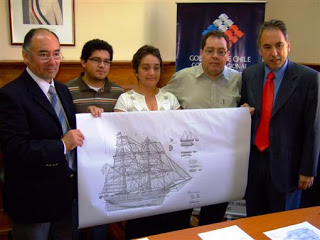


Alas a member of our family had a real chance be in a museum.
Here is a e-mail written by my cousin Daryl Broderick-Bulkley. Rudolph Stuttmeister appears to be a recruiter for the German Colony in Chile. Stuttmeister appears be the name of the area later named Charlottenburg. Did the Stuttmeisters own and develop this land? There was a amusement park named Flora? Were the Jankes involved? With the revelation Victor Emanuel established a colony in Belmont California, one wonders if the Stuttmeisters were not experienced in establishing colonies for refugees. Did that have Huguenot roots? Berlin was a haven for them.
Jon Presco
The other puzzler is, did the HERMAN stop in Philadelphia before going on
to Valparaiso, and pick up passengers? My ancestor arrived in the US
before 1844, as he was married on that date, so eight years later he is
traveling to Chili, and what was the attraction? And where was his wife?
More puzzles! Or did he travel back to Germany, and take this emmigrant
ship to Chili from Hamburg? I guess I cannot rule that out.
Has anyone done any extra reading about the Germans who went to Chili? I
noticed from the passenger list, broken down by occupations, there were
three doctors, l lawyer, and various professions represented, along with a
few farmers, carpenters, etc. which I found intriguing. Stuttmeister did
not travel as a physician, but as a `Commercial’. He was a doctor.
Anyone have any comments on this?
“German immigrants arrived in Chile following the failure of the
liberal revolutions of 1848 in Germany. They settled the rainy and,
until then, largely unimproved provinces south of the Biobío River.
This region had remained largely controlled until the mid-19th
century by the indigenous Araucanians. The German settlers
introduced small industries and farming and in the lake district
established resorts that remain popular with tourists. Small groups
of settlers from Italy, Austria, Switzerland, Spain, and Yugoslavia
also came in the mid-19th century. Most of them settled in the same
area as the Germans.
One of the ships used for the German emigration to Chile in the mid-nineteenth was the brig “Hermann”. This boat made five trips to Chile transporting German settlers and their families to the port of Corral in southern Chile, and Valparaiso. He also made several trips from Hamburg to Australia transporting settlers and the United States of America.
There is a Chilean project to build a replica and turn this into a museum of immigration in Valdivia, but now it seems that this project is stopped.
http://historiadevaldivia-chile.blogspot.com/2013/10/barcos-inmigracion-alemana.html
Barco “Hermann” Captain OA Kleingarn
31.07.1852 Hamburg to Valdivia and Valparaiso
| Passenger | Occupation | Origin |
| Backhaus, Franz | LDM. | Berlin |
| Bentjerodt, Heinr. | Hutmacher | Berkel (OVC.) |
| Betz, Marie | – | Egelsheim (W.) |
| von Bock, Eugen | Gelehrter | Kempten (W.) |
| Breckle, Gottlieb | Zimmermann | Osweil (W.) |
| Callisen, Ernst | LDM. | San Francisco (Cal.) |
| Gebhardt, Emil | Mechniker | Ludwisgburg (W.) |
| Gebhardt, Ernst | LDM. | Ludwisgburg (W.) |
| Gebhardt, Gustav | LDM. | Ludwisgburg (W.) |
| Greve, Hermann | Seifensieder | Frankfurt a. OR. |
| Greve, Wilhelmine | – | Frankfurt a. OR. |
| Hahn, Nicolaus | Dr. med. | Korb (W.) |
| Heindl, Ernst | Backer | Passau (Bay.) |
| Holtz, Joh. Ludw. | Kfm. | Schonbach (Meckl.) |
| Jensen, Christian | Tischler | Tondern |
| Kapf, Adelaide | – | Ludwisgburg (W.) |
| Landbeck, … | – | Mossingen |
| Michael, August | Maurer | Prauska (W.) |
| Otto, Baptiste | LDM. | Rietenhausen (W.) |
| Ohlsen, Maria | – | Flensburg |
| Rohlffs, Ernst | – | San Francisco (Cal.) |
| Roth, C. Theod. | Zimmermann | Neuenburg (W.) |
| Stahlmann, Wilh. | Sattler | Hildesheim |
| Stillfried, Hugo | LDM. | schlesien |
| Stuttmeister, Rud. | Kfm. | Philadelphia (Am.) |
| Tietz, Pauline | – | Frankfurt a. OR. |
| Tyroldt, Joh. ML | LDM. | Culmbach (W.) |
“After Victor Emmanuel became King of Sardinia he appointed Cipriani to be his first consul in San Francisco.”
Cipriani’s home was brought around the Cape by my kindred, Carl Janke, whose daughter married William Stuttmeister. I believe my kindred were chosen to help found the Sardinian Colony that would support Victor Emmanuel’s kingdom. This is astonishing! With the history of John Fremont and his wife, Jessie Benton, my kindred are the Acme of California History.
Janke Park, Hall, And Stagecoach Line
“German immigrants arrived in Chile following the failure of the
liberal revolutions of 1848 in Germany. They settled the rainy and,
until then, largely unimproved provinces south of the Biobío River.
This region had remained largely controlled until the mid-19th
century by the indigenous Araucanians. The German settlers
introduced small industries and farming and in the lake district
established resorts that remain popular with tourists. Small groups
of settlers from Italy, Austria, Switzerland, Spain, and Yugoslavia
also came in the mid-19th century. Most of them settled in the same
area as the Germans.
Letter From Charlottenburg
Posted on August 14, 2011by Royal Rosamond Press

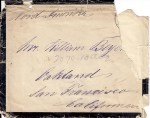

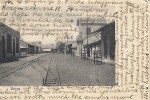

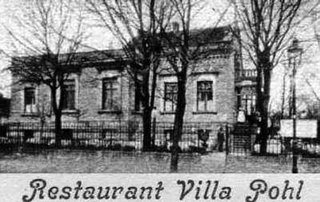
Folks who met the Prescos sensed there was an air of nobility around us. For some reason we felt special, and others treated us such.On this site you will find the Stuttmeister Villa in the Pankow area of Berlin near, or in, Charlottenburg. It was a very exclusive area where the very rich had homes. The address of Villa Pohl is No.1 Esplanade St. which is Berlin Way on the marriage certificate of Frederick William Stuttmeister. We knew next to nothing of our this history. I believe in genetic memory.
http://www.ansichtskarten-pankow.de/pankowhaeuserv.htm
The cremated remains of Alice and William Broderick are in Oakland.
Jon Presco
Copyright 2011
Charlottenburg is a locality of Berlin within the borough of Charlottenburg-Wilmersdorf, named after Queen consort Sophia Charlotte (1668–1705). It is best known for Charlottenburg Palace, the largest surviving royal palace in Berlin, and the adjacent museums.
Charlottenburg was an independent city to the west of Berlin until 1920 when it was incorporated into “Groß-Berlin” (Greater Berlin) and transformed into a borough. In the course of Berlin’s 2001 administrative reform it was merged with the former borough of Wilmersdorf becoming a part of a new borough called Charlottenburg-Wilmersdorf. Later, in 2004, the new borough’s districts were rearranged, dividing the former borough of Charlottenburg into the localities of Charlottenburg proper, Westend and Charlottenburg-Nord. In addition, Charlottenburg features a number of popular kiezes.
The Stuttmeisters were Teutonic Knights
“1874 were put on the road by the owner of manor Stuttmeister
(Charlottenburg), probably this terrain belonged. On the map of 1877
the route is drawn in still without names.”
The marriage cirtificate of William Stuttmeister says they lived on
Berlin Way. The main road through Charlottenburg castle was called
the road to Berlin. I was told the Stuttmeisters owned a great
estate in Berlin. It appears Charlottenburg Castle was built on the
Stuttmeister estate where Trekhener horses were long raised for the
King of Prussia and his wife Charlotte Stewart. Vic’s mother’s
middle name was Charlotte.
The Rosenbergs were from Prussia also.
This link will take you to “The Divivion of the Roses” and Rose
Knights of Rosenberg.
http://www.ckrumlov.cz/uk/mesto/histor/i_vitkov.htm
Here is the Stutenmeister province of Estonia no doubt founded by a
family connected with the Teutonic Knights from which we descend.
Were we Knight Templars before that, it said they fled into this
Teutonic order?
http://www.history.ee/cgi-bin/ono/tabel?q=Stutenmeister
“The Teutonic Knights ruled Livonia until the 16th century. These
peasants farmed for German Nobility who maintained ownership of land
even after Sweden occupation. Peasants paid a percentage of their
crop and their labor as taxes.”
Stuttmeister 1874 have in such a way
to designate this road put on by him.”
Esplanade
Pankow, local parts Prenzlauer mountain, Pankow
Process it runs from citizen of Berlin to dolomite road.
Name off after 1877
On behalf of explanation Esplanade, term from the French for a large
free space or free area, as one finds it between house lines or
between attachments and the appropriate city.
Esplanade 1
– historische Ansicht als “Villa Pohl” –
Die Häuser Esplanade 1 bis 3 waren um 1890
die einzigen bebauten Grundstücke derStraße.
http://wn.com/Berlin_City_Palace
Frederick Wilhelm I (1688 — 1740), Elector of Brandenburg (1713 — 1740), feeling the need to bring change to his private hunting grounds,[1] built many structures that are still visible today.[citation needed] As the King was expanding Unter den Linden, a roadway that connected the City Palace and the Tiergarten, he had a swathe of forest removed in order to connect his castle to the newly built Charlottenburg Palace. Der Große Stern, the central square of the Tiergarten, and Kurfürstenplatz, the electoral plaza, were added, with seven and eight boulevards respectively.[citation needed] This is seen as the beginning of a transformation in the Tiergarten, a movement from the king’s personal hunting territory to a forest park designed for the people.[citation needed]
https://en.wikipedia.org/wiki/Tiergarten_(park)
Dorotheenstadt is bordered in the west by the Großer Tiergarten, in the north by the River Spree, in the northeast by the Kupfergraben (part of the Spree canal system), in the east by Hinter dem Gießhaus and Oberwallstraße and in the south by the Behrenstraße.
The first German Jews to emigrate were mostly young men. They
entered thinly scattered networks which consisted of relatives and
neighbors from the same European communities. The second group came
after the failed German revolution (1848). They were somewhat older
than the first and more educated. These German Jews often went into
peddling and petty trade, endeavors calling for small outlays of
capital. From small starts, many went on to build substantial
businesses andy were absorbed into the American middle class. These
immigrants came to America in search of democracy. This is reflected
in their overall concern for Jewish communal conditions. Religious,
philanthropic and fraternal organizations were founded during this
period. Many German-Jewish immigrants were part of the Reform
Movement and the religious life of American Jews was colored by that
connection. Founded in Hamburg, Reform Judaism aimed at winning
civic equality and social acceptance in the modern world.
http://www.jewishmuseum.net/American.htm
German colonization (1850-1910) Presentation Valdivia and Llanquihue
The two last decades of century XIX, were the period of greater
splendor of the seated German community in the regions of Valdivia
and Llanquihue. Although never they added more of 5% of the
population of those places, constituted a nucleus of industrial
development that gravitated on national scale. In Valdivia, one
constituted an industrial sector dedicated to the elaboration of
beer, tanneries, shipyards and sawmills; in the borders of the
Llanquihue lake and in the level ones of Osorno, the farming
activities were developed based on the supplying of insumos for the
valdiviano enclave; in addition, in Montt Port it prospered the
commerce with Hamburg, which formidably extended the demand for the
production of the colonos German. The first colonos arrived at a
region that, towards 1840, was separated of the rest of the country
by the territory mapuche and was slowst of Chile. The national
authorities had measures stimulus to the establishment of foreign
immigrants and entrusted to Bernardine Eunom Philippi the pick up of
colonos in Germany and the demarcation of the lands in which they
would settle down. In spite of the objections interposed by catholic
sectors, in 1846 Philippi it managed to seat to the first group of
colonos around the fluvial system of the Valdivia river and, with
the aid of his Rodulfo brother Loving, it explored the river basin
of the Llanquihue lake with the intention of qualifying new earth
for the interested ones. In October of 1850, Vicente Perez Rosales
replaced to Philippi like agent of colonization in Europe and, two
years later, he disembarked in Montt Port with tens of German
families who settled to borders of the Llanquihue lake.
This new big wave of immigrants had to transform the natural
landscape of the territory to dedicate itself to the agriculture,
whose production was complemented harmonically with the
manufacturing and commercial activities that their been compatriots
made in Valdivia. Towards 1870, the project of German colonization
in the south of Chile was everything a success. The region showed
the greater economic dynamism of the country and the new citizens
were an example of laboriosidad, honesty and enterprising spirit for
the rest of the Chileans. Nevertheless, with the coming of century
XX, a steep end of that prosperity took place. Between the main
causes of the decay, they appear the depreciation of the national
currency, the promulgation of the Alcohol Law of 1902 and the
adoption in 1907, of protectionistic measures in Germany against the
elaborated article import. Paradoxicalally, the defense of the
industry in Germany, buried to the German industry in Chile.
http://www.genealog.cl/Alemanes/
The minister in charge, Vicente Perez Rosales, consulted a friend
who was at that time Chilean Consul in Hamburg. His friend insisted
on inviting Germans who were already in an emigration mood
especially in areas such as Baden-Württemberg and the Black Forest,
as the landscape of southern Chile with its lakes, rivers and
forests would be an attractive and familiar enviroment similar to
the one to which they were accustomed.
Massive emigration is usually triggered by poor living conditions in
the homeland. Migrants therefore are usually mostly poor and
unskilled. This is also the case of the Spaniards of Galicia and the
Italians from Southern Italy who emigrated in large numbers to
Argentina, as well as the Irish, Poles, Mecklenburgian Germans who
did so to the United States. However, the migration of Germans to
Chile was less important in terms of quantity than of quality.
The first German colonisation was at the Llanquihue lake and in the
Frontera. Encouraged by these first successes in 1846 by Philippi,
thirty settlers from Hessen were recruited for Bella Vista.
A further 1,000 Germans followed in 1848, mostly inspired by the
events of the revolution to begin a new life overseas; besides
craftsmen, many university graduates were involved. Arriving in
1851, their numbers were supplemented by skilled workers (beer-
brewers, tanners, furniture makers) and included academics such as
pharmacists, professors and scientific investigators. In 1852
Germans founded Deutsche Player Maiten, Volcan and Puerto Octay, as
well as in 1853, Puerto Montt. Llanquihue, Frutillar and Puerto
Varas were settled with Germans in the same year. Between 1872-75,
Nordboehmer Quilanto, lot Bajos, El Carril, Linea Plantanosa and new
Braunau started. To the settlement of Germans in Valdivia Fritz
Kindermann and Karl Anwandter contributed much. In the Frontera
(area between the rivers Biobio and Tolten) were settled primarily
colonists from Brandenburg, Pomerania and Switzerland. Many Germans
moved also into the cities Valparaiso, Santiago, Temuco, Conception,
Ancud and Magellanes. They had to endure hard times during the first
years in the wilderness, but with determination they gradually
became prominent and a most respected segment of Chilean society.
Pablo Neruda, Nobel-prize winner and arguably Chile’s greatest poet,
wrote of frontier life in Chile during the 19-teens:
No one had any money, and yet printing presses, hotels,
slaughterhouses burgeoned … In time, everything crumbled and
everyone was left as poor as before. Only the Germans kept a
stubborn hold on their assets, and that singled them out in the
hinterlands. (Memoirs, p. 13)
Historical Literature
The history of German migration to Chile is well-documented, and
compiled especially in the lifelong studies of the authority in the
field: Mrs. Ingeborg Schmalz. Mrs. Schmalz is today (1999) in her
80’s and not familiar with computers. Much of her work and also
other bibliographic material is today being archived by the
Biblioteca y Archivo Histórico de la Inmigración Alemaná which in
turn is maintained by the Deutsch-Chilenischer Bund.
http://www.genealogienetz.de/reg/WELT/chile.html
Passenger Lists
View Image
Preview
Name:
Hugo Stuttmeister
Port of Arrival:
Lissabon; Brasilien (Brazil)
There’s more to see
A picture of the original document
And things like
Departure Date
Destination
Estimated Birth Year
Age Year
Gender
Residence
Occupation
Ship Name
Captain
Shipping Line
Ship Type
Accommodation
Ship Flag
Port of Departure
Volume
Page
Microfilm Roll Number
Sign up now
Name:
Hugo Stuttmeister
Birth:
year
Departure:
date – location
Arrival:
Lissabon; Brasilien (Brazil)
Hamburg Passenger Lists, 1850-1934 (in German)
Passenger Lists
View Image
Name:
Hugo Stuttmeister
Birth:
year
Departure:
date – location
Arrival:
Boulogne; Leixoes; Lissabon; Madeira; Nordbrasilien
U.S. Passport Applications, 1795-1925
Border Crossings & Passports
View Image
Name:
Victor Rudolph Stuttmeister
Birth:
date – location
Civil:
date
U.S. Passport Applications, 1795-1925
Border Crossings & Passports
View Image
Name:
Mr Rudolph Stuttmeister
Civil:
date
England, Alien Arrivals, 1810-1811, 1826-1869
Passenger Lists
View Image
Name:
Fredk Wm Rudolph Stuttmeister
Arrival:
date – London, England
Residence:
location
California, Voter Registers, 1866-1898
Citizenship & Naturalization Records
View Image
Name:
Victor Stuttmeister
Birth:
abt 1842
Residence:
1868 – San Francisco, California, United States
California, Voter Registers, 1866-1898
Citizenship & Naturalization Records
View Image
Name:
Victor Stuttmeister
Birth:
abt 1846
Residence:
1868 – San Francisco, California, United States
California, Voter Registers, 1866-1898
Citizenship & Naturalization Records
View Image
Name:
Victor Stuttmeister
Birth:
abt 1846
Residence:
1868 – San Francisco, California, United States
California, Voter Registers, 1866-1898
Citizenship & Naturalization Records
View Image
Name:
Victor R Stuttmeister
Birth:
abt 1846
Residence:
1884 – Alameda, California, United States
California, Voter Registers, 1866-1898
Citizenship & Naturalization Records
View Image
Name:
Victor Rudolph Stuttmeister
Birth:
abt 1846
Residence:
1886 – Alameda, California, United States
California, Voter Registers, 1866-1898
Citizenship & Naturalization Records
View Image
Name:
Victor Rudolph Stuttmeister
Birth:
abt 1846
Residence:
1886 – Alameda, California, United States
California, Voter Registers, 1866-1898
Citizenship & Naturalization Records
View Image
Name:
Victor Rudolph Stuttmeister
Birth:
abt 1846
Residence:
1880 – San Francisco, California, United States
California, Voter Registers, 1866-1898
Citizenship & Naturalization Records
View Image
Name:
Victor Stuttmeister
Birth:
abt 1853
Residence:
1875 – San Francisco, California, United States
California, Voter Registers, 1866-1898
Citizenship & Naturalization Records
View Image
Name:
Vietor Stuttmeister
Birth:
abt 1856
Residence:
1878 – San Francisco, California, United States
California, Voter Registers, 1866-1898
Citizenship & Naturalization Records
View Image
Name:
William Oltman Stuttmeister
Birth:
abt 1862
Residence:
1890 – San Mateo, California, United States
New York, Passenger and Immigration Lists, 1820-1850
Passenger Lists
Name:
Rudolph Stuttmeister
Birth:
year
Origin:
location
Departure:
city
Arrival:
date – New York
Passenger and Immigration Lists Index, 1500s-1900s
Passenger Lists
Name:
Rud. Stuttmeister
Arrival:
year – Chile
The first German colonisation was at the Llanquihue lake and in the Frontera. Encouraged by these first successes in 1846 by Philippi, thirty settlers from Hessen were recruited for Bella Vista. A further 1,000 Germans followed in 1848, mostly inspired by the events of the revolution to begin a new life overseas; besides craftsmen, many university graduates were involved. Arriving in 1851, their numbers were supplemented by skilled workers (beer-brewers, tanners, furniture makers) and included academics such as pharmacists, professors and scientific investigators. In 1852 Germans founded Deutsche Player Maiten, Volcan and Puerto Octay, as well as in 1853, Puerto Montt. Llanquihue, Frutillar and Puerto Varas were settled with Germans in the same year. Between 1872-75, Nordboehmer Quilanto, lot Bajos, El Carril, Linea Plantanosa and new Braunau started. To the settlement of Germans in Valdivia Fritz Kindermann and Karl Anwandter contributed much. In the Frontera (area between the rivers Biobio and Tolten) were settled primarily colonists from Brandenburg, Pomerania and Switzerland. Many Germans moved also into the cities Valparaiso, Santiago, Temuco, Conception, Ancud and Magellanes. They had to endure hard times during the first years in the wilderness, but with determination they gradually became prominent and a most respected segment of Chilean society.
Pablo Neruda, Nobel-prize winner and arguably Chile’s greatest poet, wrote of frontier life in Chile during the 19-teens:
No one had any money, and yet printing presses, hotels, slaughterhouses burgeoned … In time, everything crumbled and everyone was left as poor as before. Only the Germans kept a stubborn hold on their assets, and that singled them out in the hinterlands. (Memoirs, p. 13)
Historical Literature
The history of German migration to Chile is well-documented, and compiled especially in the lifelong studies of the authority in the field: Mrs. Ingeborg Schmalz. Mrs. Schmalz is today (1999) in her 80’s and not familiar with computers. Much of her work and also other bibliographic material is today being archived by the Biblioteca y Archivo Histórico de la Inmigración Alemaná which in turn is maintained by the Deutsch-Chilenischer Bund.
http://www.genealogienetz.de/reg/WELT/chile.html
http://www.genealog.cl/Alemanes/
STRAUB – STRAUBE – STRAUCH – STREIBELEIN – STRESAU – STRINGE – STRIPPEL – STRÖBEL (STROEBEL) – STROEL – STROEM – STROEVER – STRUBE – STUBBENDORFF – STÜBING – STUCKMANN – STUECKRATH (STÜCKRATH) – STUEHL (STÜHL) – STUEMPFLE – STUECKEN – STUMM – STUMPF – STUMPFOLL – STÜRMER – STURZ – STUTTMEISTER – STUVEN – SUEDEL – SUELZER – SUBE – SUNKEL – SURBER – SUROSCHEK – SWATOSCH – SWENSON
Germans to Chili, 1851, 52?
sealegs@olympus.net (Daryl Bulkley) on 02/11/2000
On microfische #1609199, Family History Center, Item 9 –
It states that the `HERMAN’ left HAMBURG Sept. 3, 1851, arrived December 4,
1851 in the port of Valdivia, page 56. Then it says Ship `HERMAN’ under
the command of Captain O.A. Kleingarn, left HAMBVRG, December, 1852 and
made for Valdivia and Valparaio, arriving July 31, 1852.
There must be a mistake in dates. The first is the passenger list, and
the other bit was on another page giving more detailed information, but it
is rather confusing. What year did my ancestor arrive in Chili? I found my
ancestor, Friedrich Wilhelm Stuttmeister on the list, and a much needed
clue. It stated he was from Philadelphia. I have been looking at New York
port of entry, so now I will look for arrivals from Germany to Phiadelphia.
The other puzzler is, did the HERMAN stop in Philadelphia before going on
to Valparaiso, and pick up passengers? My ancestor arrived in the US
before 1844, as he was married on that date, so eight years later he is
traveling to Chili, and what was the attraction? And where was his wife?
More puzzles! Or did he travel back to Germany, and take this emmigrant
ship to Chili from Hamburg? I guess I cannot rule that out.
Has anyone done any extra reading about the Germans who went to Chili? I
noticed from the passenger list, broken down by occupations, there were
three doctors, l lawyer, and various professions represented, along with a
few farmers, carpenters, etc. which I found intriguing. Stuttmeister did
not travel as a physician, but as a `Commercial’. He was a doctor.
Anyone have any comments on this?
A French Chilean (French: Franco-Chilien, Spanish: franco-chileno) is a Chilean citizen of full or partial Frenchancestry. Between 1840 and 1940, 20,000 to 25,000 French people immigrated to Chile.[1] The country received the fourth largest number of French immigrants to South America after Argentina (239,000), Brazil (40,000) and Uruguay(more than 25,000).[citation needed]
The French came to Chile in the 18th century, arriving at Concepción as merchants, and in the mid-19th century to cultivate vines in the haciendas of the Central Valley, the homebase of world-famous Chilean wine. The Araucanía Region also has an important number of people of French ancestry, as the area hosted settlers arrived by the second half of the 19th century as farmers and shopkeepers. With akin Latin culture, the French immigrants quickly assimilated into mainstream Chilean society.
From 1840 to 1940, around 25,000 Frenchmen immigrated to Chile. 80% of them were coming from Southwestern France, especially from Basses-Pyrénées (Basque country and Béarn), Gironde, Charente-Inférieure and Charente and regions situated between Gers and Dordogne.[2]
A large number of people of European heritage in South Africa are descended from Huguenots. Most of these originally settled in the Cape Colony, but were absorbed into the Afrikaner and Afrikaans population, because they had religious similarities to the Dutch colonists.
Bertel Thorvaldson and Tolkein
Posted on January 26, 2020 by Royal Rosamond Press





Capturing Beauty
by
John Presco
Chapter: Art Overcoming The World
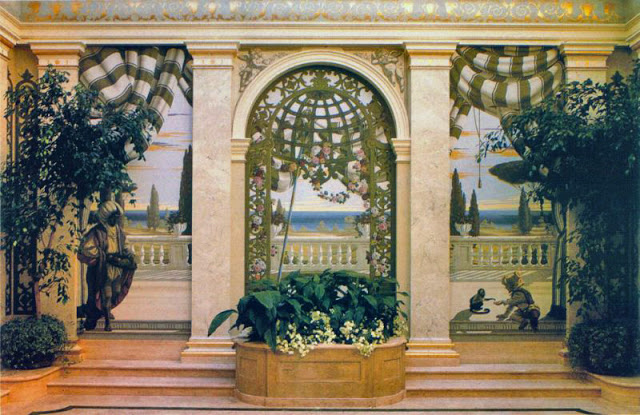
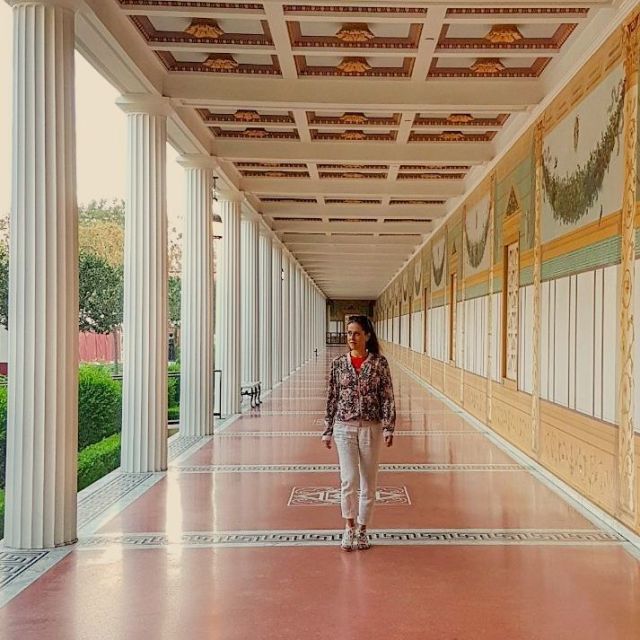
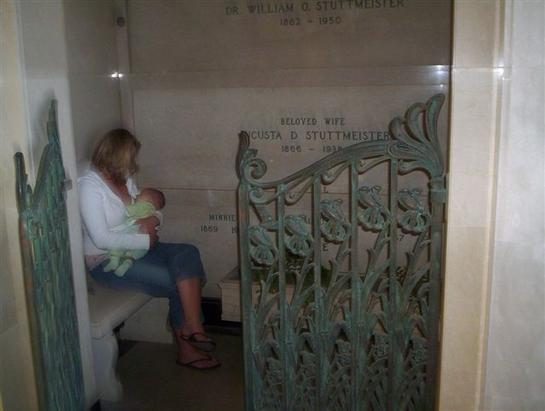
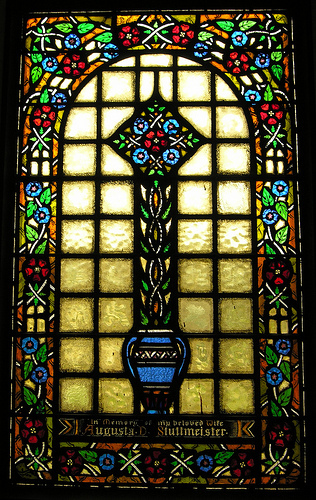
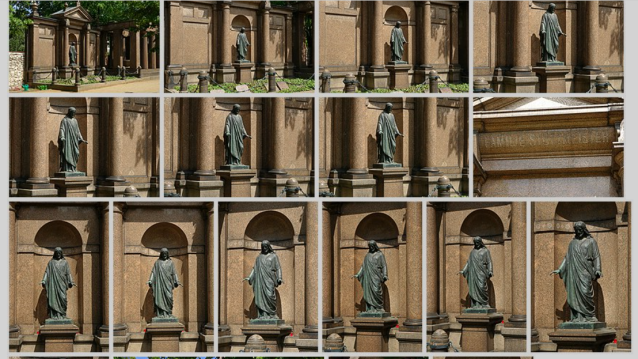
Is there such a thing as Art Justice – With Truth? To discover (after the rival biographers have had their day) that the Stuttmeister Mausoleum is a Outdoor Art Gallery for one of the most famous images of Jesus – of all time – frees me from the Enslaving Darkness that my late family erected, that employed the art of my late sister, Christine Rosamond Benton, who was not a famous artist, but a popular commercial artist – until now! History has caught up with the whole charade, the Art Dollars on the parade, that led to the Getty Museum door – and J.R. Tolkien’s vision of another world, based upon the Icelandic People of Snorri Thorvaldson, who is a ancestor to my late wife. Because of me, my daughter and nieces can go to Berlin, and worship Art and Bilbo. You can just see Heather Hanson and my grandson, Tyler Hunt, inside the Stuttmeister Tomb in Colma. Her days of snubbing me, are at an end. Our ancestor is a proven Teutonic Knight, as Rosemary told her two sons. What about her two grandsons?
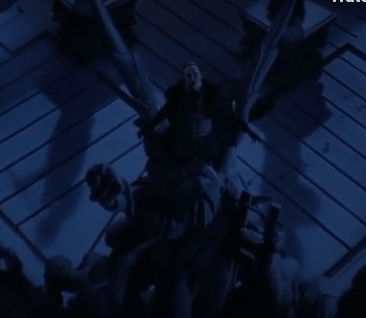
What we have here, is a real Art Book, and a Real Family Legend. How about a Real Broadway Play? In my version of The Phantom of the Opera, Erik dies during a difficult birth where instruments were used, thus his deformity. A Good Doctor breaths life into Erik, and he is Twice Born. He has seen heaven and hell. His parents turn their back on their son who they give to a Persian who can see Erik’s angelic wings – that give him a divine protection. He can hear the Music of The Creation, and those who come in contact with him can hear this music, but faintly. Because of the Fall of Humankind, they can not see the Total Beauty and Truth.
Character history
In the original novel, few details are given regarding Erik’s past. The novel confirms that Erik has traveled to multiple countries including France, Russia, Persia, and northern Vietnam, learning various arts and sciences from each region. Erik himself laments the fact that his mother was horrified by his birth deformity, and that his father, a true master mason, never saw him. Most of the character’s history is revealed by a mysterious figure, known through most of the novel as The Persian or the Daroga, who saved Erik’s life in Persia, and followed Erik to Paris; other details are discussed in the novel’s epilogue (e.g., his birthplace is given as a small town outside of Rouen,
https://theculturetrip.com/europe/iceland/articles/how-icelandic-norse-mythology-influenced-tolkien

Snorri is an Old Norse name derived from the word snerra, meaning “a fight.” Þorfinnsson is a patronymic, meaning “son of Þorfinnr”, (see Icelandic naming conventions). Snorri was named for his great-grandfather, Snorri Þórðarson,[4] or after Snorri Þorbrandsson who was not a kinsman but a participant in Karsefni’s expedition[5]
Family[edit]
There is speculation about the birth date of Snorri Thorfinnsson. Birth years such as 1005, 1009, and 1012 have been postulated, but all sources agree that he was born between 1005 and 1013. According to the Vinland sagas, when Snorri was 3 years old, his family left Vinland because of hostilities with indigenous peoples (called Skrælingar by the settlers, meaning “barbarians”). The family returned to the Glaumbær farm in Seyluhreppur.[6][7] [8]
Snorri Thorfinnsson had two children; a daughter named Hallfrid, and a son named Thorgeir. Hallfrid was the mother of Thorlak Runolfsson, bishop of Skálholt in the south of Iceland. One of the descendants of Snorri’s brother Thorbjorn, Bjorn Gilsson, was also a bishop of Hólar. Thorgeir was the father of Yngvild who was the mother of Brand Sæmundarsson, bishop of Hólar.[9] The sculptor Bertel Thorvaldsen claimed descent from Snorri Thorfinnsson in the 19th century.[10]
https://en.wikipedia.org/wiki/Bertel_Thorvaldsen
https://en.wikipedia.org/wiki/Snorri_Thorfinnsson
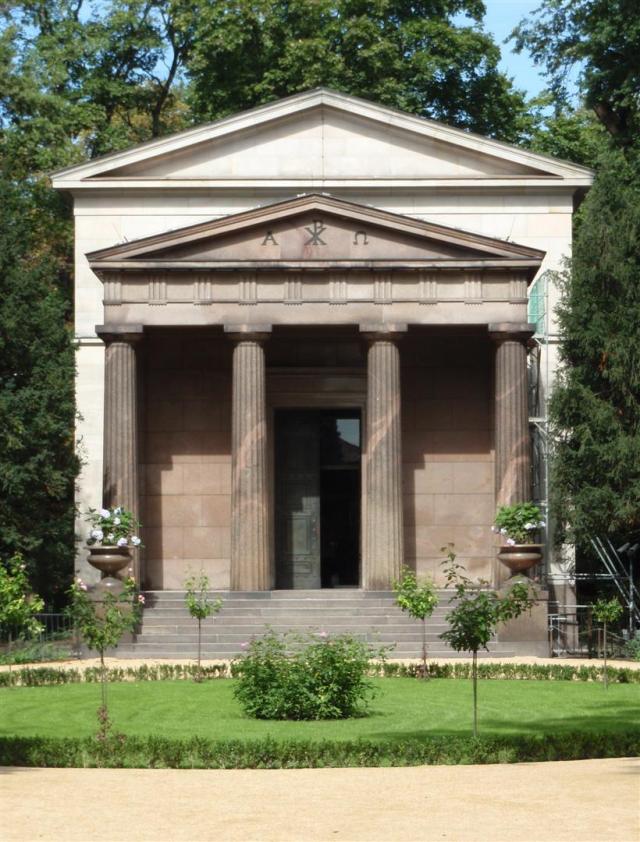
The Stuttmeister Tomb in Berlin
Posted on March 6, 2012by Royal Rosamond Press

A Seer told me in 1987: “You own your own creation – you died!”
What she meant, is, I beheld my conception by my parents, before I went to heaven and saw God.
My parents were playing cards in the sand, naked. I walked up to them as a child of three, looked down at the cards that were all face cards, and they were talking to me in foreign languages. They were my kindred, who were very distressed because they had been silenced in their lifetime. They were Evangelicals (father)and Huguenots (mother) They are buried next to one another in Berlin. Here lies the roses amongst the thorns. I part the veil,
and I behold the Lost Kingdom – and I give a command
“Arise from thy sleep, the true church of God!”
In this video we see the Stuttmeister tomb about 15 seconds into it. This name means ‘Master of the Horse’. Consider the pale horse and rider. Here the Templars and Teutonic Knights have come to rest.
Cut and paste this url:
In Matthew 27:53 we read about Jesus raising Jews from the dead, then saying; “It is done!” He did not say, it is done, and then come the earthquake. These Jewish Saints did not rise on Sunday, but went into Jerusalem Friday night just before sundown. They imparted a restored and new covenant – a Gift for the Chosen Children of God. I believe these Saints were a lineage of Nazarites from Samson and Samuel.
Bertel Thorvaldsen
From Wikipedia, the free encyclopedia
Jump to navigationJump to search
| Bertel Thorvaldsen | |
|---|---|
| Portrait by Carl Joseph Begas, ca. 1820 | |
| Born | Albert Bertel Thorvaldsen19 November 1770[citation needed]Copenhagen, Denmark |
| Died | 24 March 1844(1844-03-24) (aged 73)Copenhagen, Denmark |
| Nationality | Danish |
| Known for | Sculpting |
Bertel Thorvaldsen (Danish: [pæɐ̯tl̩ ˈtˢɒːˌvælˀsn̩]; 19 November 1770 – 24 March 1844) was a Danish sculptor of international fame and medallist,[1] who spent most of his life (1797–1838) in Italy. Thorvaldsen was born in Copenhagen into a Danish/Icelandic family of humble means, and was accepted to the Royal Danish Academy of Art when he was eleven years old. Working part-time with his father, who was a wood carver, Thorvaldsen won many honors and medals at the academy. He was awarded a stipend to travel to Rome and continue his education.
In Rome, Thorvaldsen made a name for himself as a sculptor. Maintaining a large workshop in the city, he worked in a heroic neo-classicist style. His patrons resided all over Europe.[2]
Upon his return to Denmark in 1838, Thorvaldsen was received as a national hero. The Thorvaldsen Museum was erected to house his works next to Christiansborg Palace. Thorvaldsen is buried within the courtyard of the museum. In his time, he was seen as the successor of master sculptor Antonio Canova. His strict adherence to classical norms has tended to estrange modern audiences. Among his more famous public monuments are the statues of Nicolaus Copernicus and Józef Poniatowski in Warsaw; the statue of Maximilian I in Munich; and the tomb monument of Pope Pius VII, the only work by a non-Catholic in St. Peter’s Basilica.
Contents
- 1Early life and education
- 2Career
- 3Death
- 4Works
- 5Museums and collections
- 6Gallery: Thorvaldsen’s works
- 7Notes
- 8Further reading
- 9External links
Early life and education[edit]

Self-portrait by Thorvaldsen while he was a student at the Royal Academy of Arts

Princess Wilhelmine, Duchess of Sagan by Bertel Thorvaldsen 1818, Albertinum, Dresden
Thorvaldsen was born in Copenhagen in 1770 (according to some accounts, in 1768), the son of Gottskálk Þorvaldsson, an Icelander who had settled in Denmark. His father was a wood-carver at a ship yard, where he made decorative carvings for large ships and was the early source of influence on his son Bertel’s development as a sculptor and on his choice of career. Thorvaldsen’s mother was Karen Dagnes, a Jutlandic peasant girl. His birth certificate and baptismal records have never been found, and the only existing record is of his confirmation in 1787.[3] Thorvaldsen had claimed descent from Snorri Thorfinnsson, the first European born in America.[4]
Thorvaldsen’s childhood in Copenhagen was humble. His father had a drinking habit that slowed his career.[5] Nothing is known of Thorvaldsen’s early schooling, and he may have been schooled entirely at home. He never became good at writing, and he never acquired much of the knowledge of fine culture that was expected from an artist.[6]
In 1781, by the help of some friends, eleven-year-old Thorvaldsen was admitted to Copenhagen’s Royal Danish Academy of Art (Det Kongelige Danske Kunstakademi) first as a draftsman, and from 1786 at the modeling school. At night he would help his father in the wood carving. Among his professors were Nicolai Abildgaard and Johannes Wiedewelt, who are both likely influences for his later neo-classicist style.
At the Academy he was highly praised for his works and won all the prizes from the small Silver Medal to the large Gold Medal for a relief of St. Peter healing the crippled beggar in 1793. As a consequence, he was granted a Royal stipend, enabling him to complete his studies in Rome. Leaving Copenhagen on August 30 on the frigate Thetis, he landed in Palermo in January 1797 traveled to Naples where he studied for a month before making his entry to Rome on 8 March 1797. Since the date of his birth had never been recorded, he celebrated this day as his “Roman birthday” for the rest of his life.
Career[edit]

A portrait of Thorvaldsen, by Christoffer Wilhelm Eckersberg
In Rome he lived at Via Sistina in front of the Spanish Steps and had his workshop in the stables of the Palazzo Barberini. He was taken under the wing of Georg Zoëga a Danish archeologist and numismatist living in Rome. Zoëga took an interest in seeing to it that the young Thorvaldsen acquired an appreciation of the antique arts. As a frequent guest at Zoëga’s house he met Anna Maria von Uhden, born Magnani. She had worked in Zoëga’s house as a maid and had married a German archeologist. She became Thorvaldsen’s mistress and left her husband in 1803. In 1813 she gave birth to a daughter, Elisa Thorvaldsen.
Thorvaldsen also studied with another Dane, Asmus Jacob Carstens whose handling of classic themes became a source of inspiration. Thorvaldsen’s first success was the model for a statue of Jason; finished in 1801 it was highly praised by Antonio Canova, the most popular sculptor in the city. But the work was slow in selling and his stipend having run out, he planned his return to Denmark. In 1803, as he was set to leave Rome, he received the commission to execute the Jason in marble from Thomas Hope, a wealthy English art-patron. From that time Thorvaldsen’s success was assured, and he did not leave Italy for sixteen years.
The marble Jason was not finished until 25 years later, as Thorvaldsen quickly became a busy man. Also in 1803, he started work on Achilles and Briseïs his first classically themed relief. I 1804 he finished Dance of the Muses at Helicon and a group statue of Cupid and Psyche and other important early works such as Apollo, Bacchus og Ganymedes. During 1805, he had to expand his workshop and enlist the help of several assistants. These assistants undertook most of the marble cutting, and the master limited himself to doing the sketches and finishing touches. Commissioned by Ludwig I of Bavaria in 1808 and finished in 1832 a statue of Adonis is one of the few works in marble carved solely by Thorvaldsen’s own hand, and at the same time it is one of the works that is closest to the antique Greek ideals.
In the spring of 1818 Thorvaldsen fell ill, and during his convalescence he was nursed by the Scottish lady Miss Frances Mackenzie. Thorvaldsen proposed to her on March 29, 1819, but the engagement was cancelled after a month. Thorvaldsen had fallen in love with another woman: Fanny Caspers. Torn between Mackenzie and Anna Maria Von Uhden the mother of his daughter, Thorvaldsen never succeeded in making Miss Caspers his wife.

Contemporary painting by Fritz Westphal of Thorvaldsen’s reception as a national hero on his return to Denmark in 1838.
In 1819, he visited his native Denmark. Here he was commissioned to make the colossal series of statues of Christ and the Twelve Apostles for the rebuilding of Vor Frue Kirke (from 1922 known as the Copenhagen Cathedral) between 1817 and 1829, after its having been destroyed in the British bombardment of Copenhagen in 1807. These were executed after his return to Rome, and were not completed until 1838, when Thorvaldsen returned with his works to Denmark, being received as a hero.[7]
Death[edit]
Towards the end of 1843 he was prohibited from working for medical reasons, but he began to work again in January 1844. His last composition from 24 March was a sketch for a statue of the genie in chalk on a blackboard. At night he had dinner with his friends Adam Oehlenschläger and H. C. Andersen, and he is said to have referred to the finished museum saying: “Now I can die whenever it is time, because Bindesbøll has finished my tomb.”
After the meal he went to the Copenhagen Royal Theatre where he died suddenly from a heart attack.[8] He had bequeathed a great part of his fortune for the building and endowment of a museum in Copenhagen, and left instructions to fill it with all his collection of works of art and the models for all his sculptures, a very large collection, exhibited to the greatest possible advantage. Thorvaldsen is buried in the courtyard of this museum, under a bed of roses, by his own wish.
Works[edit]

A Daguerreotype of Bertel Thorvaldsen (1840), one of the first photos taken in Denmark

Bertel Thorvaldsen with the Bust of Horace Vernet, painted by Horace Vernet (1789–1863)

Thorwaldsen’s Gutenberg Denkmal in Mainz on an 1840 medal of the printing press‘ 400th anniversary.
Thorvaldsen was an outstanding representative of the Neoclassical period in sculpture. In fact, his work was often compared to that of Antonio Canova and he became the foremost artist in the field after Canova’s death in 1822. The poses and expressions of his figures are much more stiff and formal than those of Canova’s. Thorvaldsen embodied the style of classical Greek art more than the Italian artist, he believed that only through the imitation of classical art pieces could one become a truly great artist.
Motifs for his works (reliefs, statues, and busts) were drawn mostly from Greek mythology, as well as works of classic art and literature. He created portraits of important personalities, as in his statue of Pope Pius VII. Thorvaldsen’s statue of Pope Pius VII is found in the Clementine Chapel in the Vatican, for which he was the only non-Italian artist to ever have been commissioned to produce a piece. Because he was a Protestant and not a Catholic, the church did not allow him to sign his work. This led to the story of Thorvaldsen sculpting his own face on to the shoulders of the Pope, however any comparison between Thorvaldsen’s portrait and the sculpture will show that this is just a fanciful story built on some smaller similarities.[9] His works can be seen in many European countries, especially in the Thorvaldsen Museum in Copenhagen, where his tomb is in the inner courtyard. Thorvaldsen’s Lion Monument (1819) is in Lucerne, Switzerland. This monument commemorates the sacrifice of more than six hundred Swiss Guards who died defending the Tuileries during the French Revolution. The monument portrays a dying lion lying across broken symbols of the French monarchy.
Thorvaldsen produced some striking and affecting statues of historic figures, including two in Warsaw, Poland: an equestrian statue of Prince Józef Poniatowski that now stands before the Presidential Palace; and the seated Nicolaus Copernicus, before the Polish Academy of Sciences building—both located on Warsaw’s Krakowskie Przedmieście. A replica of the Copernicus statue was cast in bronze and installed in 1973 on Chicago’s lakefront along Solidarity Drive in the city’s Museum Campus.[10] A statue (Gutenberg Denkmal) of Johannes Gutenberg by Thorvaldsen can be seen in Mainz, Germany.
Museums and collections[edit]


Cupid, from Thorvaldsens Museum
The Thorvaldsen Museum is the museum in Copenhagen, Denmark where Bertel Thorvaldsen’s works are displayed. The museum is located on the small island of Slotsholmen in central Copenhagen next to Christiansborg Palace. Designed by Michael Gottlieb Bindesbøll, this building was constructed from public collection funds in 1837. The museum displays a collection of the artist’s works in marble as well as plaster, including the original plaster models used in the making of cast bronze and marble statues and reliefs, copies of those works that are on display in museums, churches, and at other locations around the world.[11]
The museum also features Bertel Thorvaldsen’s personal collection of paintings, Greek and Roman sculptures, drawings, and prints the artist collected during his lifetime, as well as personal belongings he used in his work and everyday life.

Outside Europe, Thorvaldsen is less well known.[12] However, in 1896 an American textbook writer wrote that his statue of the resurrected Christ, commonly referred to as Thorvaldsen’s Christus (created for Vor Frue Kirke), was “considered the most perfect statue of Christ in the world.”[7] The statue has appealed to the members of The Church of Jesus Christ of Latter-day Saints and a 3.4 m replica is on display at Temple Square in Salt Lake City, Utah. There is also a replica of this statue in the LDS visitor centers at the Mesa Arizona Temple, the Laie Hawaii Temple, the México City México Temple, the Los Angeles California Temple, the Portland Oregon Temple, the Washington D.C. Temple, and the Hamilton New Zealand Temple. Additionally, the LDS Church uses images of the statue in official church media, such as the Internet site LDS.org.
Additional replicas of the Christus include a full size replica at the Johns Hopkins Hospital in Baltimore, Maryland within its iconic dome,[13] and a full-sized copy in bronze at the Ben H. Powell III family plot in Oakwood Cemetery in Huntsville, Texas as a memorial to the Powell’s son Rawley.
Thorvaldsen’s Christus was recreated in Lego by parishioners of a Swedish Protestant church in Västerås and unveiled on Easter Sunday 2009.[14]
Thorvaldsen’s primary mastery was his feel for the rhythm of lines and movements. Nearly all his sculptures can be viewed from any chosen angle without compromise of their impact. In addition, he had the ability to work in monumental size. Thorvaldsen’s classicism was strict; nevertheless his contemporaries saw his art as the ideal, although afterwards art took new directions.[15] A bronze copy of Thorvaldsen’s Self-Portrait stands in Central Park, New York, near the East 97 Street entrance.
Gallery: Thorvaldsen’s works[edit]
- Bertel Thorvaldsen’s sculptures
- Christus, Copenhagen Cathedral. Copies exist throughout the world.
- Christus draft (discolored by sculpting-room fireplace), Thorvaldsen Museum
- Baptismal font, Copenhagen Cathedral
- Jason with the Golden Fleece, Thorvaldsen’s first masterpiece
- Ganymede Waters Zeus as an Eagle, Thorvaldsen Museum
- Venus with apple
- Dancing Girl
- Tomb monument to Pope Pius VII, St. Peter’s Basilica, Rome
- Lion by Thorvaldsen.
- Nicolaus Copernicus Monument, Warsaw
- Prince Józef Poniatowski Monument, Warsaw
- Lion Monument, Lucerne
- Sir Walter Scott by Bertel Thorvaldsen
- Possibly Lady Georgiana Bingham, carved c. 1821-1824, National Gallery of Art
 Rosamond Press

.svg)


_by_Thorvaldsen.jpg)


Leave a comment