I just watched the Golden Globe Awards – and am blown away!
Shakespeare give sbirth to fictional offspring. I trace my Webb Family to America. I asked my old friend if he coould act ast my agent, but, I need a proffessional.
Hamnet premiered at the 52nd Telluride Film Festival on 29 August 2025 and received a limited theatrical release by Focus Features in the United States and Canada on 26 November. It received a wide theatrical release on 5 December and was released by Universal Pictures in the United Kingdom on 9 January 2026. The film received critical acclaim, with the performances of Buckley and Mescal receiving particular praise. It was listed among the top ten films of 2025 by the American Film Institute.
Plot
A written prologue states that in Stratford, England, “Hamnet” and “Hamlet” were considered the same name.[7]
A tutor, William Shakespeare, leaves his students after seeing a woman summon a hawk with her falconry glove. At her barn, he finds out her name is Agnes; the two share a kiss before she asks him to leave. Agnes holds Shakespeare tightly at the space between his thumb and palm, and he asks her “is it true that you know everything about a person from touching them here?” Shakespeare’s family tell him that rumours persist of Agnes being the daughter of a forest witch, as prior to her mother’s death, Agnes’ mother taught her herbal lore, which Agnes later uses to heal a cut on Shakespeare’s forehead.
Agnes spends much of her time in the forest, where there is a mysterious cave. Shakespeare visits, and she asks for a story. He recounts the legend of Orpheus and Eurydice, delighting her. She holds his hand again and foretells his future as something great, and also sees herself dying with two children. The pair consummate their relationship, impregnating Agnes, and they marry without their families’ blessings. Agnes gives birth to Susanna in the woods.
Shakespeare fights back when his father John beats him for rejecting manual labour. Seeing Shakespeare’s frustration at writing, Agnes decides to send him to London for a theatre career; he leaves her and Susanna in Stratford. Agnes gives birth to twins Hamnet and Judith, the latter appearing stillborn. Remembering the death of her mother, Agnes demands to see her child, and the baby awakes.
The twins become close as they grow up. Agnes predicts Hamnet, who wishes to join his father’s theatre company, will flourish. Shakespeare, now successful, buys the largest house in Stratford. Agnes’ hawk dies and is buried in a forest ceremony. She tells the children a story about the bird carrying off their wishes in its heart, and Hamnet agrees that one can see the bird’s spirit in the air.
In London, Shakespeare sees a puppet show depicting the plague carrying people off to death. In Stratford, Judith contracts the plague, but Hamnet evokes the tale of the deceased bird to encourage her. Later, Hamnet lies beside her, proclaiming he wants to take her place. Judith recovers, but Hamnet falls ill and dies. He envisions himself on a stage set behind a scrim, calling for his mother. Shakespeare rushes home having heard Judith is sick and is initially elated to find her alive, but is distraught to find Hamnet is lying in repose.
Agnes is angered when Shakespeare departs for London again, straining their relationship. She tells Shakespeare that when she holds his hand, she now sees nothing. Back in London, Shakespeare rehearses Hamlet frustrated with his cast for not showing passion, and contemplates suicide. But while leaning over the edge of a bridge on the Thames, he begins to recite Hamlet‘s speech, “To be, or not to be“.
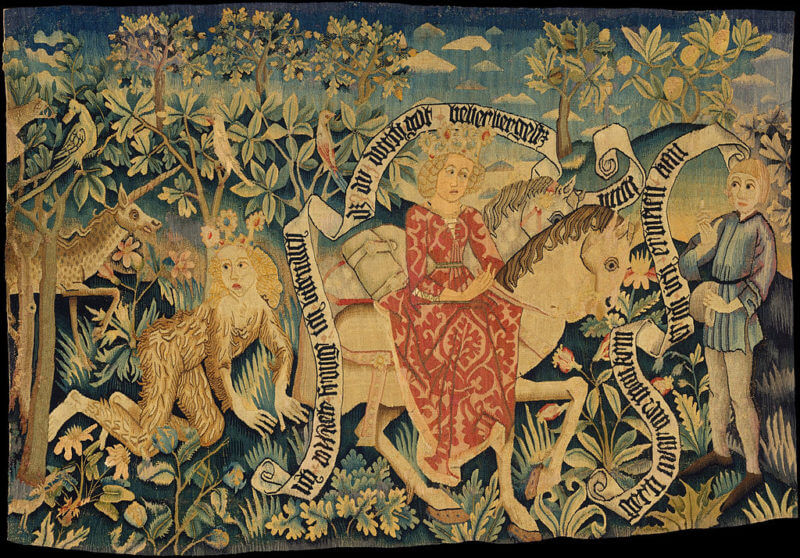
Wild man appears in Two scenes from Der_Busant (1480-149
A Rose Amongst The WoodWose
by
John Rosamond Presco
ALL RIGHTS RESERVED
I began my novel ‘A Rose Amongst The Woodwoses’ on April 1, 2019. In 197, I was told the name ROSAMOND (Rosamun) appears in one of Mark Twain’s books. Huckleberry Finn was his guess. Yesterday the topic came up, and we hung up our phones to launch an investigation. In an hour I hit paydirt. Eureka!
I wrote a couple of chapters of RAW, and put this project aside. Today my endeavor is fully a part of the Twain-Shakespeare literary mix, that came together in a fictional voyage down the Mississippi Rover on a raft? How can this be. What forces of Literature are at work here. For sure I have been dealt some incredible playing cards. What is a Woodwose? There are Woodwoses in Tolkien writing and I found one in a video game that my ;ate niece, Drew Taylor Rosamond Benton, rendered with computer art. The amazing revelation she adopted Rosamond as a middle name, and how it was misspelled and edited by me, has make me wonder aloud…
“Are the Nine Muses – for real? Is their a One God of Human Literature? Consider the author of the Torah that dictated to Moses, and is revealed to him in the cleft of a rock/ We can read the words of the one God, that becomes his own son, and now we can not get in touch with him unless we eat special bread and drink his blood from a special cup?
Twain was also also searching for King Arthur, and in his novel ‘A Connecticut Yankee In King Arthur’s Court’ we have a Gamer’s Ideal, where fifty cadets in Merlin’s cave – mow down 30000 men! Is this a glimpse into the future? Or a glimpse into the soul of the forever Immature Wild Man, who finds violence – The Solution? How many did Drew kill on EverQuest? Did she die their – first? I have picked up the gauntlet. I just registered for a literary and historic place, using this name..
JOHN ROSAMOND PRESCO
My middle name was GREGORY. Rosemary Wild Woman told me I was name dafter Pope Gregory. She was raised Catholic. Father John was her kinfolk. Thus named, my mother put all her sins, and her sins to e, upon my head, and cast me My job was to….RELIGIOUSLY FAIL My secular older brother’s job was to….SUCCEED! And so ROSEMARY ROSAMOMD left her calling behind, and sinned like no woman and mother! She went
HOG WILD in the Land of Savages! Did Matk Twain have a mother?
Then, here come Royal Rosamond and his poems and books. He was a member of the Matk Twain Society, and emulated Twain. Hus name is found on Tolkien’s books, thus Tolkien and Twain and joined in a unforeseen Trilogy! Twain was a frequent guest and Jessie Benton Fremont’s salon in SF.
“My, you ought to seen old Henry the Eight when he was in bloom. He was a blossom. He used to marry a new wife every day, and chop off her head next morning. And he would do it just as indifferent as if he was ordering up eggs. ‘Fetch up Nell Gwynn,’ he says. They fetch her up. Next morning, ‘Chop off her head!’ And they chop it off. ‘Fetch up Jane Shore,’ he says; and up she comes, Next morning, ‘Chop off her head’—and they chop it off. ‘Ring up Fair Rosamun.’ Fair Rosamun answers the bell. Next morning, ‘Chop off her head.’ And he made every one of them tell him a tale every night; and he kept that up till he had hogged a thousand and one tales that way, and then he put them all in a book, and called it Domesday Book—which was a good name and stated the case. You don’t know kings, Jim, but I know them; and this old rip of ourn is one of the cleanest I’ve struck in history. Well, Henry he takes a notion he wants to get up some trouble with this country. How does he go at it—give notice?—give the country a show? No. All of a sudden he heaves all the tea in Boston Harbor overboard, and whacks out a declaration of independence, and dares them to come on. That was his style—he never give anybody a chance. He had suspicions of his father, the Duke of Wellington. Well, what did he do? Ask him to show up? No—drownded him in a butt of mamsey, like a cat. S’pose people left money laying around where he was—what did he do? He collared it. S’pose he contracted to do a thing, and you paid him, and didn’t set down there and see that he done it—what did he do? He always done the other thing. S’pose he opened his mouth—what then? If he didn’t shut it up powerful quick he’d lose a lie every time. That’s the kind of a bug Henry was; and if we’d a had him along ‘stead of our kings he’d a fooled that town a heap worse than ourn done. I don’t say that ourn is lambs, because they ain’t, when you come right down to the cold facts; but they ain’t nothing to that old ram, anyway. All I say is, kings is kings, and you got to make allowances. Take them all around, they’re a mighty ornery lot. It’s the way they’re raised.” ― Mark Twain, The Adventures of Huckleberry Finn
Twain wrote the book as a burlesque of Romantic notions of chivalry after being inspired by a dream in which he was a knight himself, severely inconvenienced by the weight and cumbersome nature of his armor. It is a satire of feudalism and monarchy that also celebrates homespun ingenuity and democratic values while questioning the for-profit ideals of capitalism and outcomes of the Industrial Revolution. Twain strongly praises the French Revolution, defending the Reign of Terror as a minor problem compared to the monarchy.[2] It is among several works by Twain and his contemporaries that mark the transition from the Gilded Age to the Progressive Era of socioeconomic discourse. It is often cited as a formative example of the fledgling time travel genre.
The Church then places the land under interdict, causing the people to revolt against Hank. Hank sees that something is wrong and returns to Britain. Clarence informs him of the war. As time goes on, Clarence gathers 52 teenage cadets, who are to fight against all of Britain. Hank’s band fortifies itself in Merlin’s Cave with a minefield, electric wire, and Gatling guns. The Church sends an army of 30,000 knights to attack them, but they are slaughtered by the cadets.
John Wilson stood on the deck of the Eagle (later renamed the Arbelle) surveying the new Colony the Puritans had made in the American Wilderness. This Man of God could not help but entertain the family legend that he descended from Leif Erikson, for sure his father, Thararldson, who remained a pagan even though his wife converted to Christianity. It is alleged said wife withheld sex from him, until he too converted, so he would surely have sought out other women of Woden, who would lay with him, and begat children.The name Wilson comes from Wolf’s Son. It is alleged that King Henry of Normandy made a Wolfson a Knight Templar. A line of Wilsons became lawyers at the Temple where they dwelt. It is said a Wilson took part in The Memorable Masque of the Middle Temple and Lincoln’s Inn at Whitehall Palace that encouraged other members of the Templar Bar to invest in the Virginia Company. Sir Richard Martin wrote this masque. A hundred investors settled near Jamestown, that is known as Martin’s Hundreds. The Webb family were investors, as was Bacon and Shakespear.
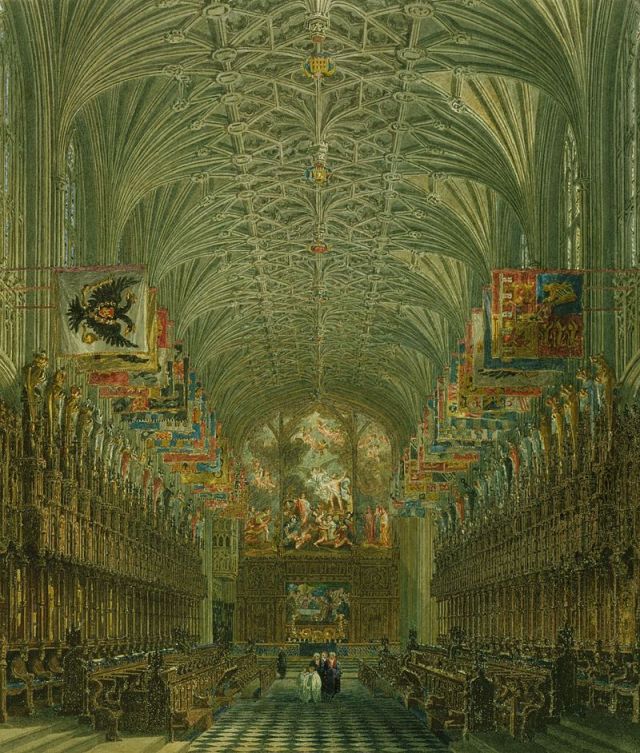
This Colony was founded by pseudo Knight Templars, actors, poets playwrights, and secret investors in the Rose Theatre. Marlowe taught John poetry when he was a boy. It is for this reason William Wilson’s pagan past was disappeared by friend and foe alike as William ascended to the highest positions of the Church of England. Even his brass in Saint George’s Cathedral was disappeared because his epitaph was too revealing. It celebrated the marriage of Margaret of Denmark to the King of Scotland.
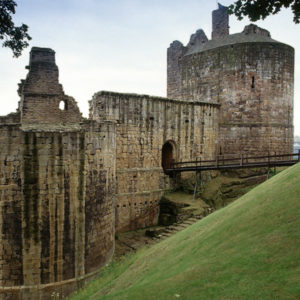
Sir John Thomas Wilson lived at Ravenscraig castle that was built just for Margaret. Wilson was allegedly the last of the real Knight’s Templar, and revealed to the Queen a secret Bible. There was a dispute who owned Orkney and other isles, that resorted in a trade. William Sinclair took possession of Ravenscraig, and vacated Orkney, ending a long feud. It was at Ravenscraig that John met Lady Ada Antoinette Erasmus, a Lady in Waiting. They soon married, and Wilson was now in a illustrious family tree that had its roots in Bohemia. William Rosenberg was a sponsor of John Dee.
Sir John Robert Wilson II, Earl of Cuper, Burgess of Edinborough1425–1492 Lady Ada Antoinette Erasmus
When Frederick William, completely inexperienced in politics, succeeded his father as elector in December 1640, he took over a ravaged land occupied by foreign troops. Under his father’s powerful favourite, Graf Adam von Schwarzenberg, Brandenburg had changed sides from the Swedes to the Habsburgs and had thus been drawn into the struggle on both sides.
Lady Mary Wilson Webb, inherited the job of keeping the fire lit below deck. All those who had gone before her, had failed. The fire tendered in a square iron tray, held together with rivets, then filled with sand, had become the altar of the Pilgrims. It, and the black pot hung on a trident, was watched most of the day by the lost souls packed under the creaking and leaking timbers. Moving about was almost impossible. Everyone was frozen in their place. But for the brave excursions above, met by some tempest, and cold sea spray, the wayfarers relieved themselves in a vile oaken bucket that was too close for comfort. Bible’s were taken out from under pillows when a lady went to tithe the Oaken Monster as they called it. Reading verses aloud, was the polite thing to do.
Tiring of the gory and bloody Biblical tales, that increased the Cargo Dread, the men brought out their bawdy jokes that they had memorized and gathered since their school days. The women pretended they ne’er heard a one. But, that guarded secret was soon out. And, a new kind of boredom set in. It was dreadful. Ones farting was amplified in the silence. The women ran out of perfume. Everyone got to know what a women really smelled like, including the women! Everyone was grateful for the occasional flying fish that was thrown in the pot, to cook all day, like temple incense.
The men ran out of jokes. Nothing was ever going to be funny again. The art of Mary keeping the fire alive was the highlight of their existence. You could hear the beards growing. In the glow of the red coals, the women felt like roses among the Woodwoses.
Two weeks at sea and another three weeks to go. Something had to be done.
“I brought my father’s book on rhetoric with me. Does anyone know it? My kindred William Shakespeare read it and was quite impressed. I saw him perform at the Rose theatre, on several occasions. He and my father were friends. They used to go the Bearbait Theatre and sit among the Protestant Spies. There were lawyers of the Temple present. Thomas called them the Roman Senators. There were horrific scenes of animal torture going on in the round arena. It was like the Roman Coliseum. I know enough about rhetoric where I can teach you. It will make the time fly.”
“For God’s sake, Mary. Why have you withheld this book from us!”
“My father was taken prisoner by the Inquisition, put in prison, and tortured. His books were ruled heretical, I don’t want to instigate spurious opinions about me and my father, for, I have nowhere to go to get away from you if you start in on that!”
“In Jesus’ name, relieve of us of our excruciating tedium! We are dying here Mary! Don’t be cruel!”
“My tutor taught my brother and I rhetoric from your father’s book. We can have a rhetorical argument about having Mary produce it for our salvation from our mind-numbing malaise!”
“Good idea! But, it is fair we all receive a sample. Is it not?”
On March 31, 2019 I found Thomas Wilson’s book ‘The Art of Rhetorike’. There are several spellings. After reading forty, pages I believe my theory that Thomas Wilson had a hand in writing some of William Shakespeare’s’ plays, if not all, is sound.
On this day, I copyright my idea that I arrived at with my battle I am having with Meg Whitman, and the alleged owners of the California Barrel Company, over ownership of this company name that once made barrels. I spoke with an attorney. I am critical of Quibi. To discover Apple TV is being backed by Steven Spielberg, and a bevy of Hollywood talent, is ironic, for Elizabeth Rosemond Taylor and Richard Burton are in my Rosamond Family Tree, as is, Sir Thomas Wilson. I do not want Shakespeare to fall into either capitalist camps, because William made Acting more than an Art Form, as I will show in my novel. Then there is the question……..
Who owns America – and why?
I will give my reader a good example of how Rhetoric fits well with Shakespeare’s’ work. Peter G. Platt has written one of the finest essays I have read. I am envious.
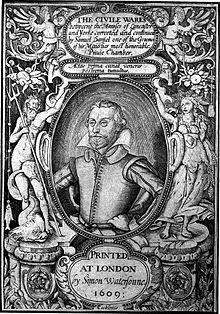
Then, there is this illustration. It took my breath away. Do you know who he is, the man leading noble women with chains linked to the tip of his tongue. He is my hero.
What really got my interest is this line……….
“And God save the Queen’s majesty.”
Where were Britain’s great Rhetorical Men when the Brexit issue came up?
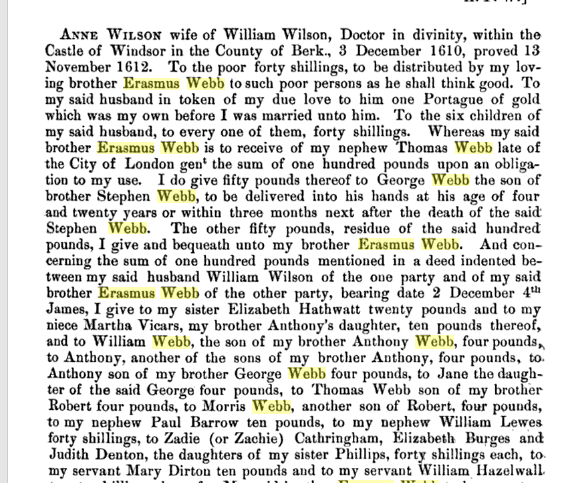
My kindred, William Wilson, and his brother-in-law, Erasmus Webb may have known William Shakespeare – intimately! Anne (Webb) Wilson lived at Windsor Castle. Her brother, Erasmus, was the Archdeacon of Buckingham Palace. Are we looking at the authors of Shakespeare’s plays? Why has this family lineage been buried, and all but forgotten? These are extremely educated men, whose wives would be at court. They would know all the intrigues, and, hear confessions. They would know the merry wives of Windsor. People would bring them all the gossip that is the bane of the church, aimed at bringing other down as they vie for royal favors.
This bloodline flows from Bohemia and has seeded several major religions. This is the ‘Hidden Seed’. The Webb family came to America. In the chart below we see that Sir Alexander Webb married Mary Wilson, the daughter of Thomas Wilson MP, the grandfather (or Great Uncle?) of Reverend John Wilson of the Massachusetts Bay Colony, that the Webb family played a large role in. Shakespeare’s line, died out, and thus, this is his American Seed.
Statesman, Thomas Wilson MP, was a stellar scholar and author who could have prepared the way for the writing of Shakespeare. Why not put Alexander Webb is the race? Surely the Webb-Wilson family saw themselves as the family-power behind the Church and Throne, and in need of new forum.
“Wilson belongs to the second rank of Elizabethan statesmen. An able linguist, he had numerous acquaintances among Spanish and Flemish officials in the Netherlands, and, in a wider context, his range of friends included Leicester, Burghley, Hatton, Davison, Sir Francis Knollys, Paulet, Walsingham, William of Orange, Jewel, Parker, Parkhurst, Gresham, Ludovico Guiccardini and Arias Montano.”
He was buried in the chapel. His inscription read:
“Hic jacet Erasmus Webb, Sacrae Theologiae Baccalaureus, cujus Regiae Capallae quondam Canonicus, qui obit 24 die Martii, Anno Domini 1613. Aetatis suae 63”[2]
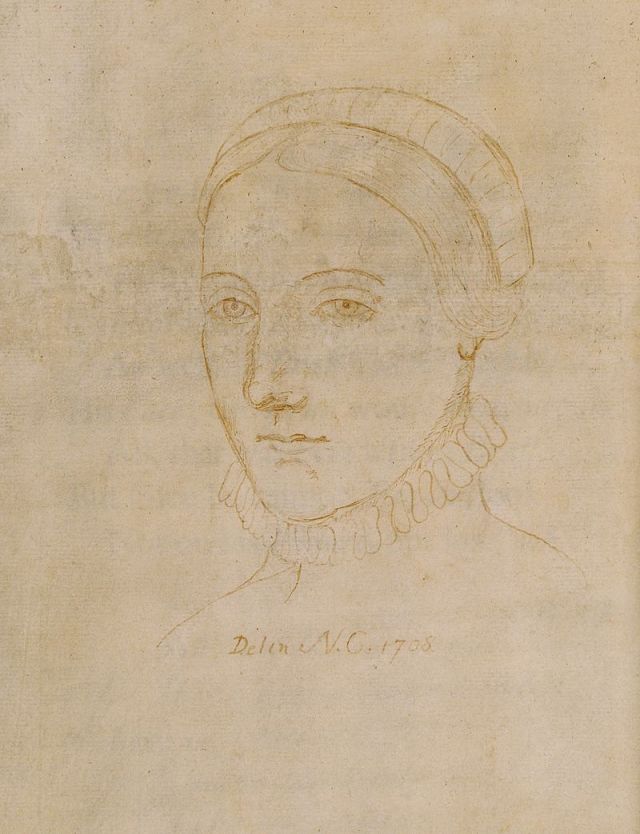
William Shakespeare and his wife Anne had three children. The eldest, Susanna, was baptised on 26 May 1583. They also had twins, Judith and Hamnet, baptised on 2 February 1585.
Shakespeare had four grandchildren who all died without heirs, so there are no direct descendants of his line today.
Susanna married John Hall in 1607, and had one child, Elizabeth, in 1608. Elizabeth was married twice, to Thomas Nash in 1626, and to John Barnard in 1649. She had no children by either husband.
Hamnet died at the age of 11 and was buried in Stratford-upon-Avon on 11 August 1596. The cause of his death is unknown.
Judith married Thomas Quiney in 1616, and the couple had three sons: Shakespeare Quiney, who died in infancy, and Richard and Thomas, who both died in 1639 within a month of each other. Neither of them married or had children before they died.
It is possible to claim a relationship to Shakespeare through his sister, Joan. There are many descendants of Joan and William Hart alive today, in both the male and female lines.
William Shakespeare’s grandmother, is my great, great, great grandmother, Abigail Shakespeare (Webb)
I implore the children of Elizabeth Rosemond Taylor to take the Rosamond Family DNA test. It was through this test I found Abigail. The Webb family went on crusade and is why they have a cross on their crest. I believe my grandfather picked up this relationship via genetic memory. So did I. I tried to read William’s complete set when I was eleven. Is there a Seer gene? Consider all the actors around Liz Taylor.
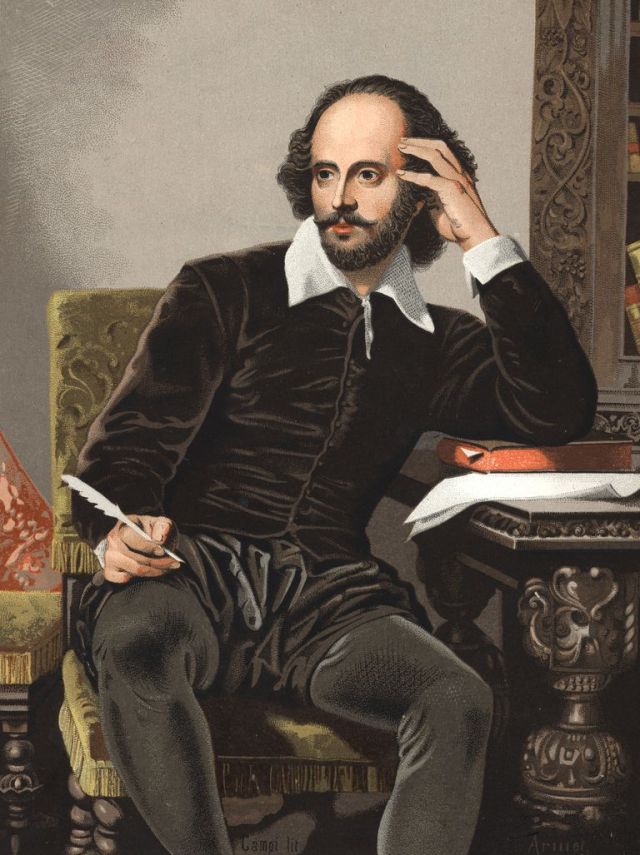
William Shakespeare (bapt. 26 April 1564 – 23 April 1616)[a] was an English poet, playwright and actor, widely regarded as the greatest writer in the English language and the world’s greatest dramatist.[2][3][4] He is often called England’s national poet and the “Bard of Avon”.[5][b] His extant works, including collaborations, consist of approximately 39 plays,[c]154 sonnets, two long narrative poems, and a few other verses, some of uncertain authorship. His plays have been translated into every major living language and are performed more often than those of any other playwright.[7]
It was said that Sir Henry Alexander Webb (1510-1544) established the family for all future time, since to him “for valiant deeds of his father”, Sir John Alexander Webb, of Oldstock, “who was an officer under Kings Henry VII and VIII”, the present generally accepted emblem, or coat of arms, was granted. This heraldic ensigna of rank in the New Nobility, that of the thegus, owe their origin in personal service to the prince then reigning. The New Nobility was accordingly one of office due to meritorious service. The device of hereditary coat of armour, a growth of the twelfth century, did much to define and mark out the noble class throughout Europe. When once acquired by grant of the Sovereign, it went on from generation to generation. They who possessed the right of coat of armour formed the class of nobility or gentry.
Sir Henry Alexander Webb married Grace Arden, sister of Robert Arden. Mary Webb (Shakespeare’s grandmother) married Robert Arden, brother of Grace.
Though commonly thought to have been the 4th Baronet of Odstock, that distinction would have fallen to his brother William. Presumably the title would come to him if William died without male issue, and I haven’t yet found a reference to wife or child for William. I also haven’t found any reliable reference to Sir Henry as a Peer of the Realm, which means he was most likely not a Baronet.
Undoubtedly named after Henry VIII–due to the close family association with the royal family–Henry Alexander Webb was born on May 11, 1510. Henry married Grace Arden, daughter of Thomas Arden, of Aston Cantlow parish of Warwick county. The continued close association of the Webb family and royalty are documented in a letter sent by the Queen, Katherine Parr, requesting that grants and privileges due Henry Alexander Webb be fulfilled as promised. Sir Henry and wife Grace had three children: First-born Alexander, Agnes and Robert. Little is known of Agnes and Robert.
‘Sir Henry Alexander permanently secured nobility for the family when, on June 17, 1577, he was granted a coat of arms.’ Although I have found this statement all over the internet, it is doubtful and a bit dubious. Firstly, I would point out that the grant of arms listed is for 1577, Henry would have been 67 if he had lived that long (notice the date of death…). Secondly, and more importantly, Sir John was not only Henry’s father but was also the 3rd Baronet of Odstock. This means that the family was already considered Noble. And third, Henry was known to wear his Arms at tournament and on the field of battle. Hard to do if they are not granted to you until after your death. In this common misconception even the heralds at the UK College of Arms were unable to help clear up the debacle. The Arms appear on numerous ‘rolls of Arms’ from the time and always list the bearer as Sir Henry Alexander Webb.
The Heraldric blazon or description of these arms is “Gules a cross between 4 falcons Or” and the crest is “Gules demi eagle rising upon a Ducal coronet”
Some sources say ‘eaglets’ instead of ‘falcons’. According to the United Kingdom College of Arms heralds eaglets adorn Sir John’s arms, Henry’s father. The falcons were a mark of personal distinction between the two men.
A copy of the letter which Katherine Parr sent her council (Cabinet Members) asking them to grant her beloved friend, Sir Henry Webb, the lands and estates that had been mentioned for him, is still in existence.
These lands had been confiscated by the King at the suppression of the monasteries and were located in Dorsetshire, England.
Sir Henry Alexander Webb was usher to the Privy Council of Katherine Parr, Queen Regent of Britian in the 16th century, 6th Queen of Henry VIII of England; to whose influence the future sovereigns Edward VI, Mary I and Elizabeth I owed a great deal.
Among the few exsisting documents connected with the regency of Katherine Parr was one while Henry VIII was conducting the seige of Boulogne in 1544 AD. There is in the Crotonain Collections, a letter to her council, headed: “Katherine, Queen Regent, K.P.; In favor of her trusty and well beloved servant, Henry Alexander Webb, gentlemen, usher of her Privy Chamber”. The letter is in regard to some grants and privileges to Henry Alexander Webb, but which had not been fulfilled and it concludes, “we most heartly desire and pray you to be favorable to him at this our earnest request. Given under my Hand and Signet at my Lord, the King’s Majesty’s Honor of Hampton court, the 23rd of July and the 36th year of his Highness most noble Reign”.
Sir Henry Alexander Webb was an usher to Catherine Parr, Queen of England.
11. Sir Henry Alexander WEBB (John Alexander , John Alexander , William , John , Geofrey , Henry ) was born on 11 May 1510 in Stratford, Warwickshire, England. He died about 1544 in England.
It was said that Sir Henry Alexander Webb (1510-1544) established the family for all future time, since to him the coat of arms, was granted. This heraldic ensigna of rank in the New Nobility, that of the thegus, owe their origin in personal service to the prince then reigning. The New Nobility was accordingly one of office due to meritorious service. The device of hereditary coat of armour, a growth of the twelfth century, did much to define and mark out the noble class throughout Europe. When once acquired by grant of the Sovereign, it went on from generation to generation. They who possessed the right of coat of armour formed the class of nobility or gentry. Sir Henry Alexander Webb married Grace Arden, sister of Robert Arden. Mary Webb (Shakespeare's grandmother) married Robert Arden, brother of Grace.
Henry married Grace ARDEN, daughter of Thomas ARDEN, about 1533 in Stratford, Warwickshire, England. Grace was born about 1512 in Wilnecote, Warwickshire, England. She died on 3 Dec 1539 in Windsor, Hertsfordshire, England.
They had the following children:
   + 	14 	M 	i 	Sir Alexander WEBB Sr
   + 	15 	F 	ii 	Agnes WEBB
     	16 	M 	iii 	Henry WEBB was born on 15 May 1537 in Stratford, Warwickshire, England.
Alexander Webb, Jr. was born 20 Aug 1559 at Stratford, Warwickshire, England. He died in Boston, Massachusetts. (n.b. This seems unlikely if he did got to Connecticut.)
Parents: Alexander Webb, Sr. and Margaret Arden.
Marriage 1: Mary Wilson (daughter of Thomas Wilson) abt. 1589 in Stratford, Warwickshire, England.
Children of Mary Wilson and Alexander Webb:
1. Richard (1580-1656) m. 1: Grace Wilson. m. 2: Elizabeth Gregory.
2. William Micajah “The Merchant of Virginia” (1582-?)
3. Elizabeth (1585-1635) m. John Sanford, Sr.
4. John (1597-1660)
5. Christopher (1599-1671) m. Humility Wheaton.
6. Henry “The Merchant of Boston” (1601-1671) m. 1: Hannah Scott. m. 2: Docibel Smith.
BIO:
Alexander & Mary (Wilson) Webb had six children;
Richard Webb b. 5 May 1580, William Micajah b. 9 Sep 1582, Elizabeth Webb b, 3 Sep 1585, John Webb b. 23 Oct 1597, Christopher b.15 Apr 1599, Henry Webb b. Oct 1602
Some gnealogist and family historians think that Alexander and His sons came to America in the early seventheen century. Richard, the elder son setteled in connecticut early in the seventh century, and is lickly the progenerator of the northern line of Webb family.
Alexander Jr. came to america, and so did four of his sons. This was the beginning of the great WEBB family in the United States.
In 1626, the first Webb immigrants came to America. The move was likely to be motivated by sons in the family since the parents, Alexander Webb Jr. and wife Mary Wilson, would have been in their 60s at the time of immigration. There is disagreement in historical records over whether Alexander and Mary stayed in England or emigrated to the United States. The move involved an extended family–sons and daughters of Alexander Webb and Mary Wilson in their 40s and grandkids in their teens. Members of the immigrant family included sons William, Christopher, Henry, and Richard, and daughter Elizabeth. Another son, John, remained in England, possibly to look after the affairs of the remains of the family land holdings in England. This son John came to America in 1636 and historical records indicate he came as a member of the military, which would indicate that he came as part of the British military sent to ensure compliance of the colonies to British rule. As we will see, this could have been a very interesting situation, since other members of the family became an integral part of the Revolutionary War effort.
sources
Webb Family History with Name Origin and Lineage Lines. by Heraldry, P.O.Box 365, Carpinteria, California 93013. JAN 1975. {G30}.
30. Sir Alexander WEBB Jr (Alexander , Henry Alexander , John Alexander , John Alexander , William , John , Geofrey , Henry ) was born on 20 Aug 1559 in Stratford, Warwickshire, England. He died after 1629 in Boston, Suffolk County, Massachusetts and was buried in Boston, Suffolk County, America with four sons: Christopher, Richard, John and William. This was the beginning of the WEBB family in America.
Alexander married Mary WILSON about 1579 in Stratford, Warwickshire, England. Mary was born about 1561 in Stratford, Warwick, England.
They had the following children:
   + 	52 	M 	i 	Richard WEBB Sr
   + 	53 	M 	ii 	William Micajah WEBB
   + 	54 	F 	iii 	Elizabeth WEBB
     	55 	M 	iv 	John WEBB was born on 23 Oct 1597 in Stratford, Warwick, England. He died on 5 Apr 1660 in Siterly, Hampshire, England.
   John was one of four brothers who came to America in 1629 with their father, Alexander Webb Jr.
   + 	56 	M 	v 	Christopher WEBB Sr
   + 	57 	M 	vi 	Henry WEBB
show lessWilliamWilsonGentlemanBorn about in Penrith, Cumberland, England, United KingdomSon of [father unknown] and [mother unknown][sibling(s) unknown]Husband of Isabell (Unknown) Wilson — married [date unknown] [location unknown]
“He was “of Wellsbourne, Lincolnshire, gentleman, who was buried in Saint George’s Chapel, Windsor Castle, where he presumably was some sort of official, although there is no record of more than his burial there.”
“William Wilson, gent., born about 1515, who removed from Penrith and settled at Welbourn, co. Lincoln. He acquired considerable estate, and on March 24, 1586, had confirmation of the following coat of arms, and grant of a crest, by William Flower, Norroy king of arms: Arms, per pale argent and azure three lion’s gambs erased fessways in pale counterchanged; crest, a lion’s head argent guttee de sang. He died at Windsor Castle, co. Berks (where his son William was prebendary), Aug. 27, 1587, and was buried in the chapel of St. George, Windsor Castle, where a monument was erected to his memory. (Burke’s ‘General Armory,’ p. 1120; Ashmole’s ‘History and Antiquities of Berkshire,’ p. 309; Register, ante, vol. xxxviii, pp. 306-307 and vol lii, p. 144; and Herleian MS. 1507, vol. 20.) The name of his wife has not been learned.”
“Of Welbourn, Lincolnshire. He held some position of sufficient importance that he was termed ‘gentleman’ and was buried in St. George’s Chapel, Windsor.
“In Harleian MS. 1507, I found the following on lead 20 (in pencil): A confirmacon of ye Armes & Guifte of ye Crest of Wm Wilson of Welborne in ye County of Lincoln, son of William Wilson of ye Town of Perith (Penrith?) in ye County of Cumberland, to all his Issue & offspring for ever under yehand & seale of Wm fflower also Clarenc’ King of Armes dated ye 24 of March 1586 ye 19th of Queen elizabeth. Now, 1594, borne by _____ Wilson of ye prebends of Windsor sonn of ye Aforesd Wm Wilson of Wilborne. Against this was a tricking of the Arms and Crest in pencil: ___Per pale ar and az, three lions gambs erased, feeways, in pale, counterchanged. ____ Crest: A lion’s head ar guttee d sang. In the same MS. (leaf 180, in pencil) I found a copy of a grant or confirmation of the arms of Woodhall and Brindall (Grindall) quartered.
“Wilson’s father has been called ‘a man of deep erudition, a scholar and a courtier . . . we must suppose him to have been a persona grata in the eyes of Queen Elizabeth.’
“The father of the Rev. William Wilson of Windsor (and grandfather of our John Wilson of Boston) was, as we have found, a William Wilson of Wellsbourne, in Lincolnshire, who died in Windsor Castle and was buried there in 1587. In Harleian MS. 1507, I found the following on lead 20 (in pencil): A confirmacon of ye Armes & guifte of ye Crest of Wm Wilson of Welborne in ye County of Lincoln, son of William Wilson of ye Town of Perith (Penrith?) in ye County of Cumberland, to all his Issue & offspring for ever under ye hand & scale of Wm fflower als Clarenc’ King of Armes dated ye 24 of March 1586 ye 19th of Queen Elizabeth. Now, 1594, borne by ____ Wilson of ye prebends of Windsor sonn of ye Aforesd Wim Wilson of Wilborne. Against this was a tricking of the Arms and Crest in pencil: ___Per pale ar and az, three lions gambs, erased, fessways, in pale, counterchanged. ___ Crest: A lion’s head ar guttee de sang. In the same Ms. (leaf 180, in pencil) I found a copy of a grant or confirmation of the arms of Woodhall and Brindall (Grindall) quartered.
“There was once a brass plate on a gravestone to his memory near the north corner of the church. It is now long gone but Ashmole made a record of it: ‘William Wilson, late of Wellsbourne in the County of Lincolne, Gent. departed this lyfe, within the Castle of Windsor, in the Yeare of our Lord 1587, the 27th Day of August, and lyeth buried in this Place.’ [1][2]
↑ The antiquities of Berkshire. By Elias Ashmole, … v.3. Ashmole, Elias, 1617-1692, page 164.
He attended Merton College in Oxford, England where he obtained the following degrees: B.A. 1564, M.A. 1570, B.D. 1576, D.D. 1607.
Prebendary of Saint Paul’s and Rochester Cathedrals, and held the rectory at Cliffe, Kent. In 1584, he became a Canon of Windsor in place of Dr. William Wickham who was promoted to the see of Lincoln, being about that time made chaplain to Edmund Grindall, the Archbishop of Canterbury, who was his wife’s uncle.
Will
He made his will on 23 Aug 1613; it was proved on 27 May 1615. It said, “Will of William Wilson, Canon of Saint George’s Chapel, Windsor Castle … to be buried in the chapel near the place where the body of my dear father lies. If I die at Rochester or Cliff, in the county of Kent, then to be buried in cathedral church of Rochester, near the bodies of wives Isabel and Anne. To my cousin Collins, prebendary at Rochester … to the Fellows and Scholars of Martin College, Oxford … my three sons Edmond, John and Thomas Wilson, daughter Isabel Guibs and daughter Margaret Rawson … my goddaughter Margaret Somers which my son Somers had by my daughter Elizabeth, his late wife … to my god-son William Sheafe, at the age of twenty one years … son Edmond, a fellow of King’s College, Cambridge, eldest son of me, the said William … to son John the lease of the Rectory and Parsonage of Caxton in the county of Cambridge, which I have taken in my name … to Thomas Wilson my third son … son Edmond to be executor and Mr. Erasmus Webb, my brother in law, being one of the Canons of St. George’s Chapel, and my brother, Mr. Thomas Woodward, being steward of the town of New Windsor, to be overseers. Witnesses: Thomas Woodwarde, Joh. Woodwarde, Robert Lowe & Thomas Holl.”
Death and Burial
He died on 15 May 1615 at Windsor, Berkshire, England. He is buried at St. George’s Chapel at Windsor Castle, next to his father. His tomb states: “To me to live is Christ, and to dye is Gain. Philip. I.21. Here underneath lies interr’d the Body of William Wilson, Doctour of Divinitie, and Prebendarie of this Church by the Space of 32 Years. He had issue by Isabell his Wife six Sons and six Daughteres. He dy’d the 15th of May, in the Year of our Lord 1615, of his Age the 73, beloved of all in his Lyfe, much lamented in his Death.” [1]
Family and Education b. 1523, 1st s. of Thomas Wilson of Strubby, Lincs. by Anne, da. and h. of Roger Cumberworth of Cumberworth, Lincs. educ. Eton 1537-41; King’s Camb. 13 Aug. 1542, fellow 14 Aug. 1545-7, BA 1546 or 1547, MA 1549; Ferrara Univ. DCL 1559. m. (1) c.1560, Agnes (d. June 1574), da. of John Wynter, of Lydney, Glos., wid. of William Brooke, 1s. 2da. all by 1565; (2) by 1576, Jane (d.1577), da. of Richard Empson, of London, wid. of John Pinchon of Writtle, Essex.2
Offices Held
Master of St. Katharine’s hosp. London 1561-d.; adv., ct. of arches 1561; master of requests 1561; j.p.q. Mdx. from c.1564, Essex from c.1577; ambassador to Portugal 1567, to the Netherlands 1574-5, 1576-7; principal sec. and PC 12 Nov. 1577; dean of Durham 1579.3
Biography Wilson’s ancestors left Yorkshire about the middle of the fifteenth century, settling in Strubby, Lincolnshire. His father made a fortunate marriage, acquired ex-monastic lands and became a friend of Charles Brandon, Duke of Suffolk. Save for the attachment he developed for his master, Nicholas Udall, little record remains of Wilson’s career at Eton, where he was a King’s scholar. At Cambridge he was taught by such scholars as Cheke, Ascham, Thomas Smith and Haddon: his political and religious preferences at the university can be seen in his associations with the Dudleys, Greys, Brandons and the theologian Martin Bucer. He became tutor to the two sons of his father’s friend the Duke of Suffolk, and was devoted to the latter’s wife Katherine. Both the young Brandons and Martin Bucer died in 1551, and thenceforward Wilson spent less time at Cambridge. During the summer of 1552 he had ‘a quiet time of vacation with Sir Edward Dymoke’ at Scrivelsby, and, by the following January, he had himself settled in Lincolnshire, at Washingborough.4
In view of the opinions expressed in his Rule of Reason, and Art of Rhetorique (written during his visit to Dymoke), Wilson’s eclipse during Mary’s reign was predictable. He joined Cheke in Padua in the spring of 1555, where he studied Greek, and, from the funeral oration he delivered for Edward Courtenay, Earl of Devon, in St. Anthony’s basilica on 18 Sept. 1556, it seems possible that he may have become the young nobleman’s tutor. In the following year he appeared in Rome as a solicitor in the famous Chetwode divorce case, when, in an attempt to obtain a favourable decision for his client, he intrigued against Cardinal Pole. The Pope—Paul IV—at first proved a willing listener. However, in March 1558 Mary ordered Wilson to return to England and appear before the Privy Council, and soon afterwards still, or again, in Rome he was thrown into the papal prison on a charge of heresy. There he suffered torture, escaping only when the mob broke open the prison upon Paul IV’s death in August 1559. Wilson took refuge in Ferrara, where in November the university made him a doctor of civil law.5
Upon his return to England in 1560 the impoverished scholar received the mastership of St. Katharine’s hospital, London, soon being accused of wasting the revenues, destroying the buildings, and selling the fair and the choir. However, the support of Sir Robert Dudley and Sir William Cecil soon brought him further preferment, as a master of requests. Besides the usual cases he frequently dealt with those concerning conspiracy, commercial disputes and diplomacy. He was prominent in the Hales (1564), Creaghe (1565), Cockyn (1575), and Guaras cases, and after the northern rebellion of 1569 he interrogated supporters of Mary Stuart and conducted many of the examinations in connexion with the Ridolfi plot. Frequently employed on missions abroad, his name occurs in connexion with foreign embassies in 1561, 1562 and 1563, but his first important journey was to Portugal in 1567, where he sought redress for damage done to a ship belonging to his brothers-in-law William and George Wynter, made a lengthy Latin oration before the young king Sebastian and was thenceforward frequently employed in negotiations on commercial matters between England and Portugal. By the end of the 1570s he had established himself as an expert in Portuguese affairs, and emerged as the champion of the pretender, Don Antonio, after the latter had fled from the armies of Philip II. As well as leading a mission to Mary Stuart at Sheffield castle, where he interrogated her upon her part in the Ridolfi plot, Wilson served on two separate occasions in the Netherlands. On the first, in late 1574 and early 1575, he negotiated with the Spanish governor on commercial matters and the expulsion of the English Catholics. By the time he went back in 1576 the situation in the Netherlands was chaotic. Mutinous Spanish troops had pillaged Antwerp, while the States, casting in their lot with the Prince of Orange, forced the new Spanish governor, Don John of Austria, to withdraw the Spanish soldiers. Wilson’s original idea was to arrange a modus vivendi between the protagonists. Gradually, however, he came to fear French intervention and to distrust the intentions of Don John, so that, by the time of his departure in June 1577, he had emerged a partisan of Orange.6
Wilson’s appointment as principal secretary soon followed his return to England. Although, like others in the Walsingham-Leicester faction of the Council, he deplored the Queen’s policy of procrastination over her marriage, and identified England’s cause with that of protestantism abroad, he remained subordinate to his colleague Sir Francis Walsingham, and his influence was minimal. He remained a supporter of Orange, of Condé, and of Henry of Navarre. As part of his duties as secretary, he became the first keeper of the state papers.
It was, presumably, court influence that procured Wilson his seat for the Cornish borough of Mitchell in 1563. There is no record of his activities in the first session of that Parliament, but on 31 Oct. 1566, he sat on a conference with the Lords to consider the most important current issues, namely the succession and the Queen’s marriage. On 3 Dec. he sat on a committee about the export of sheep. In the next two Parliaments he represented Lincoln, where his friend Robert Monson was recorder. In 1571 he spoke against vagabonds (13 Apr.) and against usury (19 Apr.). On 21 Apr. he took part in a conference with the Lords where it was decided to afford precedence to public over private bills ‘as the season of the year waxed very hot, and dangerous for sickness’. He was named to committees on the river Lea (26 May) and barristers fees (28 May). In 1572 the main topic was Mary Stuart, whose execution Wilson urged:
No man condemneth the Queen’s opinion, nor thinketh her otherwise than wise; yet [he doubts] whether she so fully seeth her own peril. We ought importunately to cry for justice, justice. The case of a king indeed is great, but if they do ill and be wicked, they must be dealt withal. The Scottish Queen shall be heard, and any man besides that will offer to speak for her. It is marvelled at by foreign princes that, her offences being so great and horrible, the Queen’s Majesty suffereth her to live. A king, coming hither into England, is no king here. The judges’ opinion is that Mary Stuart, called Queen of Scots, is a traitor. The law sayeth that dignity defends not him which liveth unhonestly. The Queen took exception to the Commons giving a first reading, 21 May 1572, to a bill on religion, and a delegation, including Wilson, waited upon her. He reported back to the Commons on 23 May:
She had but advised, not debarred us to use any other way, and for the protestants, they should find that, as she hath found them true, so will she be their defence. In the 1572 session Wilson was appointed to committees concerning Mary Stuart and the Duke of Norfolk, and other, particularly legal, matters. In 1576 he again played a mediating part, this time in the Arthur Hall affair, and he was of the committee that examined Peter Wentworth after the latter had made his famous speech on the liberties of the House. On the other hand his independence, even as a Privy Councillor, can be seen in 1581, when he spoke for Paul Wentworth’s proposal for a public fast. ‘Both Mr Secretaries’, Wilson and Walsingham, were ordered by the House on 3 Mar. 1581 to confer with the bishops on religion. Throughout the 1572 Parliament, Wilson, as master of requests, was frequently employed fetching and carrying bills and messages to and from the Lords, and on such tasks as drafting bills, examining witnesses and administering oaths. As Privy Councillor he was appointed to several committees including those on the subsidy (25 Jan. 1581), seditious practices (1 Feb.), encumbrances (4 Feb.), the examination of Arthur Hall (6 Feb.), defence (25 Feb.), Dover harbour (6 Mar.) and the Queen’s safety (14 Mar.). Wilson died after the end of what proved to be the last session of the 1572 Parliament, but before it was finally dissolved.7
Wilson’s literary works, like those of More, Crowley and Starkey before him, were concerned with classical studies, and with problems of morality and the commonwealth. At Cambridge in 1551 he contributed Latin verse to Haddon’s and Cheke’s De Obitu doctissimi et sanctissimi theologi doctoris Martini Buceri. A few months later, after the death of his young pupils, he wrote and edited Epistola de vita et obitu fratrum Suffolciencium Henrici et Caroli Brandon. The Rule of Reason, written in 1551 and dedicated to Edward VI, uses medieval logic to support the doctrines of Geneva, and this was followed by the dedication in Haddon’s Exhortatio ad Literas to John Dudley, the eldest son of Northumberland, to whom, in 1553, Wilson dedicated his own Art of Rhetorique. Like the Rule of Reason this dealt with the teachings of the earlier scholars, supplemented by digressions on political, social, religious and moral questions. Similar questions concerned Wilson when he wrote his Discourse upon Usury in 1569. Though in close contact with the New Learning, and well informed on current economic problems, Wilson was unable to escape from the limitations of medieval moral precepts. He was especially critical of enclosures and usury, from both of which he feared harm for the commonwealth. In 1570 Wilson translated the Three Orations of Demosthenes, to serve as a warning against a new Philip of Macedon, Philip II of Spain.
Apart from his mastership of St. Katharine’s hospital, Wilson had several sources of income: his employment as master of requests and secretary brought him £100 p.a. as well as perquisites; he received a life annuity of £100 from the Queen in 1571; and on 28 Jan. 1579 he was appointed lay dean of Durham at £266 with £400 p.a. more from the properties attached to the office. He was installed by proxy and had letters of dispensation for non-residence. With one exception the Durham prebendaries acquiesced in Wilson’s appointment. A year before his death he accepted the parsonage of Mansfield, Nottinghamshire. He had of course a substantial income from his Lincolnshire lands, concerning which he remained in close touch with his brothers Humphrey and William who lived in that county, and Godfrey, who was a wealthy London merchant and member of the Drapers’ Company. Humphrey, in his will, committed his son Thomas, later a prominent political figure, to his brother’s care; but in the event, Humphrey outlived Wilson, who made his own will in May 1581, the day before he died. He had suffered from bouts of sickness—it seems from a kidney complaint—since his return from the Netherlands in 1577, and the Tower Hill water did not provide the cure he hoped for. He was buried ‘without charge or pomp’ at St. Katharine’s hospital, although he had recently been living on his estate, Pymmes, at Edmonton, which he had purchased in 1579 for £340. His son Nicholas, heir and executor, returned to his father’s Lincolnshire estates, and his two daughters each received 500 marks.8
Wilson belongs to the second rank of Elizabethan statesmen. An able linguist, he had numerous acquaintances among Spanish and Flemish officials in the Netherlands, and, in a wider context, his range of friends included Leicester, Burghley, Hatton, Davison, Sir Francis Knollys, Paulet, Walsingham, William of Orange, Jewel, Parker, Parkhurst, Gresham, Ludovico Guiccardini and Arias Montano.9
Ref Volumes: 1558-1603 Author: P. W. Hasler Notes
This biography is based upon a paper by Albert J. Schmidt, Coe College, Cedar Rapids, Iowa, U.S.A.
1. Did not serve for the full duration of the Parliament 2. King’s Coll. Camb. protocullum bk. 1, p. 104; Harl. 1550, ff. 85-6; Guildhall mss 4546; Vis. Glos. (Harl. Soc. xxi) 278; Vis. Essex (Harl. Soc. xiii), 470; Lincs. Historian, ii(4), pp. 14-24; DNB. 3. C. Jamison, Hosp. St. Katharine, 69 et passim; CPR, 1560-3, p. 102; 1563-6, p. 187; Lansd. 22. f. 52; I. S. Leadam, Sel. Cases Ct. of Requests (Selden Soc. 1898), p. xxi.; Cott. Nero B. 1, f. 125; APC, x. 85; C66/1188/82. 4. Harl. 1550, ff. 85-6; PRO, Lincs. muster rolls, 1539, Calcewath E36/21, f. 52; PRO town depositions C24, 30; T. Wilson, Epistola (London 1551); T. Wilson, Art of Rhetorique, ed. Muir. 5. C. H. Garrett, Marian Exiles, 339 et passim; CSP Dom. 1547-80, p. 100; CSP Rome, ii. no. 602; Art of Rhetorique. 6. Strype, Annals, i(2), pp. 285-6; E. Nuys, Le Droit Romain, Le Droit Des Gens, et Le College des Docteurs en Droit Civil (Bruxelles, 1910), p. 144; HMC Hatfield, i. 250, 508, 520; APC, vii. 205; x. 210; CSP Ire. 1509-73, p. 255; CSP Scot. 1571-4, nos. 352, 353; 1574-81, nos. 140 seq.; CSP Span. 1568-79, passim; 1580-5, passim; Murdin, State Pprs. ii. passim; CSP For. 1579-80, passim. 7. D’Ewes, 126-7, 157, 206, 219, 220, 222, 241, 249, 251, 252, 255, 282, 288, 290, 291, 292, 293, 294, 301, 302, 306, 309; CJ, i. 94, 98, 99, 101, 109, 110, 112, 122, 124, 130, 136; Cott. Titus F. i. ff. 152, 163; Neale, Parlts. i. 259, 303-4, 379; Trinity, Dublin, Thos. Cromwell’s jnl. f. 42. 8. I. Temple, Petyt 538, ff. 39, 147, 152v; C66/1076/29, 1189/38; C54 close rolls, passim; C142/233/41; C54/1052; Dean and Chapter of Durham treasurer’s bk. 1579-80, no. 2; 1580-1, no. 3; reg. 3, ff. 2, 3; Dean and Chapter Acts, 1578-83, ff. 29, 46; Estate House, Old Charlton, Kent, Wilson’s household inventory 1581; Lincoln Wills, 2, f. 262; Wards 7/23/112; Harl. 6992, f. 120; Fleet of Fines, CP25(2) 172, 21 Eliz. Trin.; PCC 32 Tirwhite. 9. CSP For. 1577-8, no. 820(4); CSP Dom. 1575. p. 105; Corresp. de Philippe II (Bruxelles 1848-79), iii. 214; Wilson’s household inventory.
Thomas Wilson (1524–1581) was an English diplomat, judge, and privy councillor in the government of Elizabeth I. He is now remembered for his Logique (1551) and The Arte of Rhetorique (1553), an influential text. They have been called “the first complete works on logic and rhetoric in English.
Thomas Wilson was very much a man of his time. Born to a prosperous but undistinguished family of the Lincolnshire gentry in 1523 or 1524, he went to Eton, then to King’s College, Cambridge, taking his M. A. in 1549. At Cambridge he studied Greek with Sir John Cheke, leading “Grecian” of the time, and developed lifelong friendships with several men who would later become prominent courtiers and humanists, notably Thomas Smith (later to write De Republica Anglorum) and Roger Ascham (who later wrote The Scholemaster).
In the 1550’s Wilson accepted an appointment as tutor to the sons of Katherine, Duchess of Suffolk, member of the important Willoughby family of Wilson’s native Lincolnshire. Her deceased husband was Charles Brandon, the intimate friend of Henry VIII. While in her service Wilson formed enduring connections with influential men in the Protestant circles at court, particularly Sir Edward Dymock and William Cecil, a member of the privy council who later, as Lord Burleigh, would become the most powerful of Elizabeth’s courtiers. In 1551 Wilson published the first book on logic ever written in English (The Rule of Reason), and in 1553 he brought out The Art of Rhetoric, dedicating it to John Dudley, Earl of Warwick, heir to the staunchly Protestant Duke of Northumberland, who effectively ruled England during the sad last years of the dying boy-king Edward VI.
With the accession of the Catholic Mary, Wilson left England for Italy. There he spent the next five years studying civil law and engaging in enough Protestant intrigue to be imprisoned (and possibly tortured) by the inquisition, though in August of 1559 he was able to escape during an anti-Dominican riot after the death of Pope Paul IV. He took refuge in Ferrara, where he received a doctorate in law in November, 1559.
In 1560, with Elizabeth on the throne and the Earl of Leicester (brother of Wilson’s late patron, John Dudley) in ascendancy at court, Wilson returned to London. He was soon appointed to remunerative and responsible positions in the government. In 1561 he became the master of St. Katherine’s Hospital in the Tower of London, and later that year he was appointed to the much more responsible position as a master (i.e., a judge) in the Court of Requests, one of the new Tudor equity courts that relied heavily on civil law procedures.
Throughout the 1560’s and 1570’s, Wilson served in various diplomatic capacities, primarily in Spain and Portugal, then later in the Spanish Netherlands. He came to be the crown’s recognized authority on Portuguese affairs. During this time, he also finished the first English translation of Demosthenes (The Three Orations of Demosthenes, Chief Orator Among the Grecians, in Favor of the Olynthians . . . With Those His Four Orations . . . Against King Philip of Macedonie, London, 1570), which he had begun while he was residing with Cheke in Padua during 1556. He also completed two significant treatises on politics, both of them intended for the ears of the Dudley circle and the privy council. “A Discourse touching the Kingdom’s Perils with their Remedies” was never printed, but his Discourse Upon Usury was published in 1572, though completed several years earlier.
During the early 1570’s he was entrusted with the important but unpleasant task of prosecuting traitors. He spent much of 1571 living in the Tower, preparing the case against the Duke of Norfolk, including racking two of the duke’s servants. He examined a number of those implicated in the Ridolfi plot in 1572, and he was among those sent to examine Mary, Queen of Scots, about her role in the conspiracy. He sat in several Parliaments during the 1560’s and 1570’s, and in 1577 he succeeded his friend Sir Thomas Smith as the queen’s secretary. Though overshadowed by the queen’s other secretary, the redoubtable Walsingham, Wilson remained an active participant on the Privy Council for the rest of his life. Though a client of Leicester and generally a supporter of aggressively Protestant causes (such as active intervention in the Low Countries during the revolution against the Spanish Hapsburgs), he tempered that allegiance with a conciliatory attitude toward Burleigh’s more pacific and conservative policies. Appointed a lay dean of Durham Cathedral in 1579, he died at St. Katherine’s Hospital on 20 May, 1581, and was buried in St. Katherine’s Church.
William Hart (actor)>From Wikipedia, the free encyclopediaWilliam Hart was a Jacobean Actor who was the nephew of William Shakespeare.He was born in Warwickshire in 1600 and died probably in London in 1639. He was the son of hatter William Hart and Shakespeare’s sister Joan.He started as a child actor and eventually joined the famous troupe “The King’s Men” – his famous uncle’s troupe – in the 1630s. He never married although he is thought to have had a by-blow child, Charles Hart, who also became an actor.[edit] SonnetsIt has been suggested that William Hart, who is mentioned in Shakespeare’s will, was “the sole begetter, Mr W H”, to whom the sonnets are dedicated. Since the sonnets are constantly urging the begetter to marry and have children and even refers to him bearing the looks of his mother; and, on the death of Shakespeare’s own son, William Hart became Shakespeare’s male heir, it is tantalising to think that the W.H. mystery is solved.The only problem is that when the sonnets were published, Hart was only nine years old. It is possible that the 1600 birth year is wrong or that Shakespeare may have written the sonnets in anticipation of Hart’s coming of age, and may have had to sell the sonnets to raise money quickly.http://en.wikipedia.org/wiki/William_Hart(actor)
Lady Ada Antoinette Erasmus1430-14801430Birth • 0 Sourcesabout 1430England, United Kingdom1480Age 51Death • 0 Sourcesabout 1480England, United KingdomFamily MembersSPOUSES AND CHILDREN
Lady Ada Antoinette Erasmus1430-14801430Birth • 0 Sourcesabout 1430England, United Kingdom1480Age 51Death • 0 Sourcesabout 1480England, United KingdomFamily MembersSPOUSES AND CHILDREN
In his quest for the Green Chapel, Gawain travels through northern Wales and northwest England, specifically “the wyldrenesse of Wyrale” (701), the Wirral peninsula, near the modern-day city of Liverpool. In this wilderness, the poet tells us, Gawain has further adventures, fighting not just against the winter elements, but also against wild creatures, all of them alliterating on the letter “w”: “wormez” (dragons), “wolues” (wolves), and “wodwos that woned in the knarrez” (721)—“wodwos” who lived among the rocks.
But what exactly are “wodwos”? No one is certain, though etymology gives us clues. The word is apparently plural, and compound—the word “wos” might mean simply creatures or men, and “wod” probably means either “wood” (from the Old English “wudu”) or “mad, insane” (from the Old English “wod”). They are wild men, insane men, creatures of the woods. The word proliferated in the late 14th century, often to describe the hairy wild men that became popular in late-medieval artwork and heraldry. When translators at Oxford University produced the first edition of the Wycliffite Bible in the 1380s, they used the word “wodewosis” in passages like Isaiah 13:21 and Jeremiah 50:39, but revised it later to “heeri beestis” or “wielde men.”
C.S. Lewis makes a reference to “Wooses” in his remarkable description of Aslan’s execution in The Lion, the Witch and the Wardrobe, a scene filled with evil creatures:
But such people! Ogres with monstrous teeth, and wolves, and bull-headed men; spirits of evil trees and poisonous plants; and other creatures whom I won’t describe because if I did the grown-ups would probably not let you read this book—Cruels and Hags and Incubuses, Wraiths, Horrors, Efreets, Sprites, Orknies, Wooses, and Ettins. (165)
This is the type of passage Lewis lovers relish, but which causes Tolkien-loving purists (and Tolkien himself, when he read drafts of the novel as an Inkling) to grit their teeth. Lewis pulls in creatures from every corner of ancient and medieval Western mythology—Greek, Roman, Arabic, Celtic, Saxon. It’s a literary mash-up, an evil all-star team. Of course, Lewis knows full well what he is doing, and he has a reason for it—Aslan the universal figure of salvation is opposed by universal evil, however it manifests itself in stories throughout history and around the globe. But by including Wooses on the list, Lewis misses an opportunity that Tolkien exploits more fully—the chance to explore the complexity of these medieval English wild men as human beings, with a capacity for both good and evil. (To be fair, Lewis explores humanity’s complex nature in other areas of Narnia, just not here.)
In his translation of the Gawain poem, Tolkien calls the wodwos “wood-trolls that wandered in the crags.” This might lead us to think he has in mind one of the varieties of trolls he describes in The Hobbit or LOTR, such as the stone trolls, who live the woods and turn to stone in daylight, or the cave trolls who attack the Fellowship in the caverns of Moria. But in fact, Tolkien brings them into his epic in a much more direct way, through a group of characters in The Return of the King he calls “Woses,” or “Wild Men of the Woods” (813).
These Woses, also known as the Drúedain, are described by the horse lord Elfhelm as “living few and secretly, wild and wary as beasts.” Elfhelm and the other Rohirrim are clearly frightened of them, since “they use poisoned arrows, it is said, and they are woodcrafty beyond compare.” When they speak, it is with a “deep and guttural” voice, “in a halting fashion, and uncouth words were mingled with it” (814). When their leader Ghân-buri-Ghân enters the scene, he parleys with Éomer, debating whether his band of Woses can help the riders on their journey to Minas Tirith. Their conversation is testy—Ghân refuses to merely take orders, and he constantly asserts himself in crude speech against Éomer’s seeming condescension. “Let Ghân-buri-Ghân finish!” he shouts when Éomer cuts him off. When the horse lords offer him riches and friendship, he scoffs, “Dead men are not friends to living men,” then asks only that if the kingdom of Rohan survives the war with Sauron, “then leave Wild Men alone in the woods and do not hunt them like beasts any more” (815).
I am going to seek funding for my ‘Oregon Shakespeare Society’ that will produce the plays of Shakespeare, and plays that have Fair Rosmond as the subject. Rosmon is the subject of Pre-Raphaelite Artists – and many poets. There will be a Brother and Sisterhood.
I had originally made Clifford die of a broken Heart, under the S••ction of the Death of King Lear, as originally drawn by that great Master of human Nature. Shakespeare; but the general Opi|nion of the Public, and the Persuasions of my Friends, induced me to vary my Design in the Representation. The Queens Men | Rosamond Press
A Spanish Play on the Fair Rosamond Legend on JSTOR
Henry the Second: or, the fall of Rosamond: a tragedy; as it is performed at the Theatre-Royal, Covent-Garden. Written by Thomas Hull. (umich.edu)
Ah, Ladies! no such Queen at Otaheite; Love there has Roses—without Thorns to fright ye; Frolick our Days, and to compleat our Joy, A Coterie’s form’d—’tis call’d the Arreoy, Where Love is free and general as the Air, And ev’ry Beau gallants with ev’ry Fair; No Ceremonies bind, no Rule controuls But Love, the only Tyrant of our Souls!
Fair Rosamond : a lamentable ditty · Isaiah Thomas Broadside Ballads Project (americanantiquarian.org)
Henry the Second: or, the fall of Rosamond: a tragedy; as it is performed at the Theatre-Royal, Covent-Garden. Written by Thomas Hull. (umich.edu)
The name Rosamond will forever be associated with the search for the person who authored Shakespeare’s work. After taking a DNA test for Ancestry.com, it is proven one of my great grandmothers is Abigail Shakespeare Webb. One of my grandfathers is Lewis Clifford who is related to Joan Rosamond Clifford, who Samuel Daniel wrote a poem about and dedicated to Mary Sydney Countess of Pembroke who is kin to the Dudley family, who I suspect were instructed by Queen Elizabeth to create a English Literary Society to counter Charle’s Quint to make the world speak Spanish. Elizabeth was the first Protestant Queen. Charles was the King of the Roman Catholics.
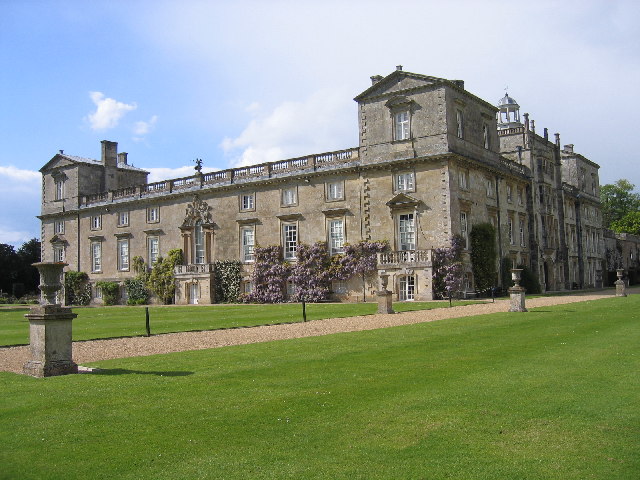
This is entirely my theory. I suspect this was the idea of John Dee. Wilton House became the home of Bards and Muses who were Agents of the English Language for Her Royal Majesty. It is here that many of…
Rosamunda Bolger is growing…..faint! When I saw that Drew put Rosamond in her name, I knew a great quest had begun. The name….DREW TAYLOR ROSAMOND BENTON…. is Copyrighted.
Rosa Bolger-Baggins-Took is the person that connects THE THREE
FRODO MERRY PIPPEN
Was Tolkein aware of this concector? If so, what he aware of
ROSAMOND CLIFFORD – ROSAMUND – ROSAMONDE?
John Presco
“As a token of her confidence, she told him he need no longer call her, “Auntie.” The previous year, Bilbo had suggested that Frodo no longer address him as, “Uncle,” if he wished. Plain, “Bilbo,” would do. Frodo still called Bilbo, “Uncle,” now and then; it had become too ingrained a habit. But, following suit, Rosamunda suggested Frodo might call her, “Rosa,” or, “Rosamunda.” Frodo forgot, and called her, “Auntie,” many times, but, within the space of an afternoon tea, “Rosa,” she became.”
Yes. Rosa Baggins, first cousin of Fosco, Frodo‘s Baggins grandfather, married Hildigrim Took. Via this connection, Frodo is a third cousin, once removed of Merry and Pippin.
Where does Fatty Bolger fit into this picture?
We can only be certain of Fatty’s links to the other hobbits via the branches of the Took family tree published in The Lord of the Rings. There we see that Fatty, Merry and Pippin share a common great-great-grandfather in the OldTook?, so Fatty is a third cousin of Merry and Pippin. Fatty’s mother, Rosamunda Bolger (nee Took), is Frodo‘s second cousin, making Fatty Frodo‘s second cousin once removed. Fatty is Bilbo‘s first-cousin, twice removed.
The Baggins and Brandybuck family trees indicate other Bolger connections, so Fatty may be related to the others in additional respects. And let’s not forget the fact that Fatty later becomes Merry‘s brother-in-law.
Norman Cates as Fatty Bolger from a Decipher Card designed by Weta Friend of Frodo Baggins. Fredegar Bolger, called Fatty, was born in 2980 to Odovacar Bolger and Rosamunda Took Bolger. He had a sister Estella who married Merry Brandybuck. Fatty’s great-great-grandfather on his mother’s side was Gerontius, the Old Took, who was also the great-great-grandfather of Merry and of Pippin Took. Fatty’s family was from Budgeford in Bridgefields in the Eastfarthing.
“From first sight, even the site of the new cottage had enchanted her, dug as it was into the southeast side of a grassy hill in the midst of Boffin lands, populated with Boffin sheep. There was a little copse below it, just to the side, and a spring-fed well, all of which reminded her of her childhood home. The place had come down to Odovacar through his mother’s side, a Boffin. He had used it as a sort of base, when he and his friends had gone out hunting. They would stock the little hole with gear and rations. Then, with their bows, and a pony for their gear, they would make forays west or north, towards the Downs or up to the Moors, or, closer still, into Bindbale Wood. But that was years ago, when the game had not yet moved so far off.
When Rosamunda had viewed it more carefully, she saw the hole was inconsiderable disrepair. Also, it was a bit too small. She had new rooms dug, so that there was a parlor and a kitchen, a bedroom for each (and one to spare), along with extra chambers further back for store. When it was finished, it suited Rosamunda very well. Especially, she loved the light. Situated facing south-east, the light poured through the windows in the mornings, her favorite time of the day. And, when she stood outside, she could see the land stretching east and south far into the distance. Illuminated by the late afternoon sun, the prospect was especially fine. From the top of the little knoll that made the cottage’s roof, she could see far to the north and west, where sheep dotted the rolling hills. The sky at night took her breath away. And, all day, the birds sang, the wind blew, and the Water, which ran nearby, just to the west, mostly narrow andquick as it came down out of Long Cleeve and Needlehole, could just be heard when the wind dropped and everything was still. She loved its peace and quiet, so tucked away and so private.
Yet, it was just an hour’s walk over the hills to Bag End or to Hobbiton. Overhill, to the east, was even closer. Every fine day Rosamunda walked the hills, seldom seeing another living creature other than sheep, or, very rarely, a doe or faun. She did not walk south to Hobbiton, however, except on errands or for an appointed visit. She had not forgotten her “understanding” with Bilbo. And Bilbo did not forget her, either. Regularly, he sent her gifts of wine or ham or fruit in season, as tokens of his neighborly regard. She appreciated the way he could show marks of particular notice, without making her feel the burden of obligation.”
In 1925 William Sam Rosamond did a relatively complete genealogy. His research indicated that we were descended from a Huguenot born in France sometime in the mid to late 1600s. He discovered that his earliest traceable ancestor was a “Sergeant” Rosamond who left France following the Revocation of the Edict of Nantes on 22nd October 1685. He found that Sergeant Rosamond supposedly travelled to Holland where he joined the army of William III, went to England, and from there went with William’s army to Ireland. He fought in the Battle of the Boyne on 1st July 1690 (by the old calendar – 12th July by the new calendar) and then remained in County Leitrim, Ireland. (There is still a family of Rosamonds in County Leitrim.) He had three sons, two of whom went to the American colonies and settled in the mid-Atlantic region. One of the sons’ names was either John or Thomas Rosamond. Current researchers have not been able to confirm this connection. It appears probable that the American branch of the family are descended from John “The Highwayman” Rosamond who arrived in Annapolis, Maryland in 1725. He was sentenced to be transported into 14 years servitude for robbery from the Oxford Assizes. This John could be the son of Sergeant William Rosamond, and the mix up in names likely stems from the fact that his father-in-law’s name was Thomas Wilson.
The New Tolkien Movie Trailer Offers a Sneak Peek at the IRL Frodo, Sam, Merry and Pippin
editor@purewow.com (PureWow)
Updated Thu, March 7, 2019 at 11:03 AM PST
We’ve known that a movie about Lord of the Rings author J.R.R. Tolkien’s life has been coming since 2017, but now there’s finally a full trailer for us to fan over and pick apart.
And while we’re certainly intrigued to learn more about the epic romance between him and his wife, Edith Bratt (played by Lily Collins), we truly cannot wait to get to know the real-life inspirations for the four smallest, and most important, members of the fellowship of the ring. Yes, Frodo, Sam, Merry and Pippin were all based on real people and we’ve finally gotten a glimpse at what they were like before Tolkien even sat down to write about their journey.https://www.youtube.com/embed/wZ1vn85iQRE
It is widely accepted that Tolkien’s inspiration for the four hobbit friends came from his tight-knit group of friends
I have wondered about Rena Christensen’s almond eyes. I suspected she had Persian blood. Today, while looking at the genealogy of Frodo, I am convinced Rena is a Halfdan kin to the Parthians who came to adore the infant Jesus who has been compared to Mithras who my Frodo is kin to. Did these Parthians come from Toxandria, in Holland – on ships? The Armenian royalty is found here who begat Pharamond and Frodo. Did the prophet Mani come to Holland? There is a Helena Flavi who may be kin to Emperor Constantine. Why this mix with the Kings of Sweden. My ex-wife is a descendant of Eric the Red. The Rosemondt family of Holland appear to be Counts of Toxandria.
On November I founded the New Nation of Fromond, or, Frodomond. I foresaw what a disaster Trump’s presidency was going to be. Today elections are being held in California in hope to wash the Trumpire down the drain. I plan to turn back the hands of time just before Christianity was rooted amongst the Armenians. Mithras is the worship in most of th known world. The Tocharian’s are bringing this teaching into China. The Hittites, whom Alexander the Great employed as his navy when he invaded India, are setting sail for a strange land that lie due East. Frodo is on board.
Rosamonde is the Queen of the Parthians and Vikings in Toxandria. She heads due West to look for the Lost Kingdom of Yonkers, where live an advanced people whose island sunk under the sea.
It is my intent to establish free trade between California, Oregon, and Washington, and the known world. The religion that Mithras established will create neutral ground for millions of people. All the Peoples of the World can live in peace and harmony.
I will be contacting the Estate of Elizabeth Rosemond Taylor, to see if they want to help compile my tribology, and produce a movie from my three books.
___________________
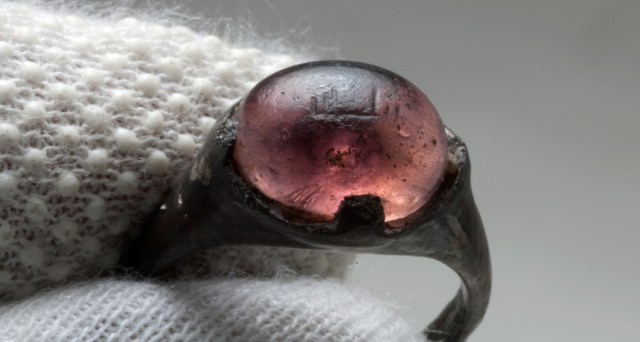
I just reread what I wrote this morning. I am astounded at how prophetic this post is. I can no longer deny that I am a prophet – of great renown! I elude to this all the time, but, I have been called a ‘reluctant Messiah’. I keep waving of a crown, every time it nears my head. This time I have no choice, an ancient crown sits upon my head. I have found a linage that reaches back before the birth of Jesus……….The Stendatsson. From then three kings, three magi may have come, to adore him. Did they bring a crown, a scepter, a ring, and a sword?
The Lord of the Rings sold 150 million copies making it the most published book in history – other that the Bible? With my Crimean California prophecy, I take control of most Biblical prophecy such as the works of Tim Lahaye that concluded the Jews must rebuild the temple before the Return of Jesus. Was LeHaye aware of Tolkien’s books? There is a similarity which I will explore on my Facebook group
New Lord Of The Rings Movies
I just watched Ukraine author Andrey Kurkov talk about Putin banning his books. Governor DeSantis is into banning books. Andrey wrote ‘The Grey Bees. I will include anceint Beekeepers from Georgia in my never-ending media tale that will also be put on my Facebook group..
Mary Magdalene Rosamond
My grandmother is sitting under a tree on Saint Croix Island with the author Arthur Barnes who belonged to the Manana society – who may have been aware of The Hobbit. They disbanded after Pearl Harbor was attacked. Barnes was a member of The Black Mask, and is seen in a group photo with Raymond Chandler, who inspired Ian Fleming. I found this Facebook group
Fleming and Chandler.
Todaym is Meher Baba’s birthday. He was accepted by the Dunites, and is linked to the Parthian Magi. I have asked Governor Tina Kotek to make much of this history – Oregon’s History!
John Presco ‘De Manana
President: Royal Rosamond Press
Turn down the sound to Baba’s vistit to South Carolina in 1956, and play the second video. This is the Birth of Fromundia. The eyes of the Eternal Yin Yang have found the Sleeping Beauty Princess, sealed in a ancient tomb. This causes the terrible eye of Sauron to awaken, and his destructine light goes about the land in searh of…..Beauty!
EXTRA! I just discovered that Theodore Sturgeon died in Eugene Oregon. He was a frind of Kurt Vonnegut who created Kilgore Trout from his name.
I created The New Manana Science Fiction Society and encourage black SF authors to join because the DeSantis Purge is out to destroy the teaching of Black History – but can not touch Black, Future, a place white folks have enjoyed since Jules Verne’s Time Machine!
It’s been just over eight years since New Line Cinema and Warner Bros. Pictures released The Hobbit: The Battle of the Five Armies, ending Peter Jackson’s second Middle-earth movie trilogy. J.R.R. Tolkien’s books have already been exhaustively adapted to the silver screen, but much like Gollum and the One Ring, movie studios can’t stay away. On Thursday, massive holding company Embracer Group announced that it was partnering with Warner Bros. and New Line to make new feature films based The Lord of the Rings and The Hobbit.
Lee Guinchard, CEO of Embracer subsidiary Freemode, shared the following statement:
Following our recent acquisition of Middle-earth Enterprises, we’re thrilled to embark on this new collaborative journey with New Line Cinema and Warner Bros. Pictures, bringing the incomparable world of J.R.R. Tolkien back to the big screen in new and exciting ways. We understand how cherished these works are and working together with our partners at New Line Cinema and Warner Bros. Pictures, we plan to honor the past, look to the future, and adhere to the strongest level of quality and production values.











 Father of William Wilson Sr, Alexander Wilson and Mary (Wilson) BriscoweDied in Windsor Castle, Berkshire, England
 MP
MP 













 Rosamond Press
Leave a comment