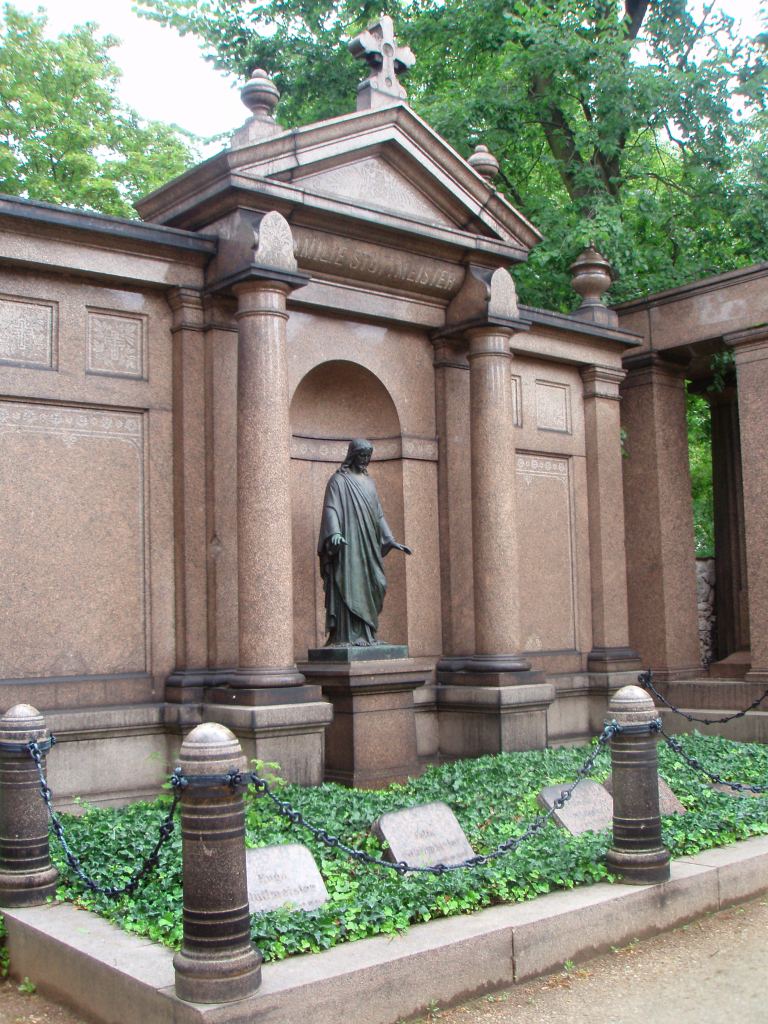
Melba Charlotte Broderick is my father’s mother. My sister Christine may have been name after the Queen of Prussia
Elisabeth Christine of Brunswick-Wolfenbüttel-Bevern
We could be cousins.
There were two prominent royal women named Elisabeth Christine from the House of Brunswick-Wolfenbüttel, and their children differed:
Elisabeth Christine of Brunswick-Wolfenbüttel (1691-1750), wife of Holy Roman Emperor Charles VI, had children including:
- Leopold Johann: (1716–1716), who died in infancy.
- Maria Theresa: (1717–1780), who became Holy Roman Empress and ruler of the Habsburg domains.
- Maria Anna: (1718–1744), who served as governor of the Austrian Netherlands and died in childbirth.
- Maria Amalia: (1724–1730), who also died in childhood.
Elisabeth Christine of Brunswick-Wolfenbüttel-Bevern (1715-1797), wife of King Frederick II of Prussia, had one child:
- Princess Frederica Charlotte: (1767–1820), who married Prince Frederick, Duke of York and Albany.
It is important to distinguish between these two historical figures when looking for their offspring.
EXTRA! I just found e-mails that mention Carl Janke and Raslton house in 2010 – four years before Cynthia published her book on Belmont history.
Aha- So thus another connection. Now I am very curious about the German side of my family- my mother’s side…..
— On Tue, 3/2/10, John Ambrose wrote:
> From: John Ambrose
> Subject: Ralston Hall
> To:
> Date: Tuesday, March 2, 2010, 2:19 AM
> Anne;
>
> Ralston Hall may have been one of the portable houses
> that Carl Janke brought around the Horn on a Clipper, and
> was added on to. Carl Janke’s daughters are buried
> with the Stuttmeisters. This is where Florence Emily
> Sharon Baron Fermor-Hesketh.
>
>
>
> Jon.
>
Photo and History of John
1 recipients
CC: recipientsYou More
BCC: recipientsYou
Show Details
FROM:
Anne Farmer
TO:
John Ambrose
Message flagged
Wednesday, March 3, 2010 12:11 AM
Good one, Jon- you’re still awake too I see. I have been finding more Fermor/Farmer links. Earlier today I went to Office depot to photocopy the letters I wrote to you and noticed 2 pages 23 & 25 are missing. Today I also talked with my evil sisters 1st husband to see if she got to anyone in the UK. She may have but is doubtful as at that time not interested in the heritage stuff. Whew. However he cautioned me to protect myself and my mother and warm the English relatives- which I’ve already started to do last trip.
I’m staying up past my usual bedtime to FAX my lease agreement back to the UK to secure my housing there. The time zone difference is a sleep deterrant,,,,
Now and always-
Anne
> ‘Fermor1’
> Index links to: Lead / Letter
> Families covered: Fermor (Fermour) of
> Easton Neston, Fermor of Leominster, Fermor of Pomfret
> (Pontefract), Fermor (Fermour) of Somerton, Fermor of
> Tusmore
>
> Anne
> Fermor
>
>
>
>
>
Sir
> John FERMOR of Easton Neston
> Born: 1516
> Died: 1571
> Father: Richard FERMOR (See his Biography)
> Mother: Anne
> BROWNE
> Married: Maud VAUX BEF
> Nov 1544
> Children:
> 1. George FERMOR (Sir) (d. 1 Dec 1612) (m.
> Mary Curson)
> 2. Catherine FERMOR (m.1 Michael
> Pulteney of Misterton – m.2 Sir Henry
> Darcy)
> 3. Mary FERMOR (m. Thomas
> Lucas)
> 4. Son FERMOR
> 5. Son FERMOR
> 6. Dau. FERMOR
Anne FERMOR
Birth: 1500/1530
Partnership with: William LUCY
Child: Thomas LUCY of Charlecote Birth: 1527/1534
Descendants of Anne FERMOR
1 Anne FERMOR
=William LUCY
2 Thomas LUCY of Charlecote
=Joyce ACTON
3 Thomas LUCY of Charlecote, Warwick
=Constance KINGSMILL
“He was a great great grandson of John Knox (1505 -1572) and his second wife,
Margaret Stuart (1548 -1612).
Baron Hesketh, of Hesketh in the County Palatine of Lancaster, is a title in the Peerage of the United Kingdom. It was created in 1935 for Sir Thomas Fermor-Hesketh, 8th Baronet, who had previously briefly represented Enfield in the House of Commons as a Conservative. As of 2010[update] the titles are held by his grandson, the third Baron, who succeeded his father in 1955. Lord Hesketh held junior ministerial positions in the Conservative administrations of Margaret Thatcher and John Major. However, he lost his seat in the House of Lords after the House of Lords Act 1999 removed the automatic right of hereditary peers to sit in the upper chamber of Parliament.
The Hesketh Baronetcy, of Rufford in the County Palatine of Lancaster, was created in the Baronetage of Great Britain in 1761 for Thomas Hesketh, with special remainder to his brother Robert, who succeeded him as second Baronet. The latter’s great-great-grandson, the fifth Baronet, sat as a Conservative Member of Parliament for Preston. His grandson, the eighth Baronet, was elevated to the peerage as Baron Hesketh in 1935.
The former seat of the Barons Hesketh was Easton Neston in Northamptonshire. The house was previously the seat of the Fermor family (Earls of Pomfret since 1721), and came into the Hesketh family through the marriage in 1846 of Sir Thomas George Hesketh, 5th Baronet, to Lady Anna Maria Isabella Fermor, sister and heiress of George Richard William Fermor, 5th and last Earl of Pomfret. However, the house was sold by the current Baron in 2005.
The original seat of the Hesketh family was Rufford Old Hall in the village of Rufford in Lancashire. This house was sold to the National Trust by the first Baron Hesketh in 1936.
Windsors and Hesketh Sisters




It is alleged the first girl Prince Harry Windsor kissed, was Sophia Hesketh. Sophia appears to have dated Freddy Windsor. Sophia’s sister, Flora, is also a British Socialite. These sisters are my distant kin, related to the Witherspoons. I lived with Dottie Witherspoon. Being facebook friends of William and Harry, I suggested Will invite Reese Withersppon to his wedding in order to extend hands across the water. To the Hesketh sisters acknowlege their American roots?
Jon Presco
THE HON. SOPHIE HESKETH
As the first girl Harry is rumoured to have ever kissed, flaxen-haired Sophia, 26, will no doubt always hold a place in the Prince’s heart. They were last seen dancing together at a charity ball in 2007, despite the fact that Chelsy was also there.
Thomas Fermor-Hesketh, 1st Baron Hesketh
From Wikipedia, the free encyclopedia
Thomas Fermor-Hesketh, 1st Baron Hesketh (17 November 1881–20 July 1944), known as Sir Thomas Fermor-Hesketh, 8th Baronet, from 1924 to 1935, was a British peer, soldier and Conservative Member of Parliament.
Hesketh was the son of Sir Thomas George Fermor-Hesketh, 7th Baronet, and Florence Emily Sharon,daughter of U.S. Senator William Sharon. He was educated at Eton, the Royal Military College, Sandhurst, and Trinity College, Cambridge.
https://en.wikipedia.org/wiki/Easton_Neston
Admiral Sir Ian Easton, KCB, DSC (27 November 1917 – 14 June 1989) was a Royal Navy officer who held various command positions in the 1970s.
Naval career
Easton joined the Royal Navy in 1931 and qualified as a pilot at the start of the Second World War, during which he saw active service on aircraft carriers.[3] On 4 January 1941, flying a Fairey Fulmar of 803 Naval Air Squadron from HMS Formidable during a raid on Dakar, he force landed with his aircrewman Naval Airman James Burkey and was taken prisoner and held by the Vichy French at a camp near Timbuktu, until released in November 1942.[4]
Easton was appointed Assistant Director of the Tactical and Weapons Policy Division at the Admiralty in 1960. He was seconded to the Royal Australian Navy as captain of HMAS Watson in 1962.[3] He went on to be Naval Assistant to the Naval Member of the Templer Committee on Rationalisation of Air Power in 1965, Director of Naval Tactical and Weapons Policy Division at the Admiralty in 1966 and Captain of the aircraft carrier HMS Triumph in 1968.[3] After that he was made Assistant Chief of Naval Staff (Policy) in 1969, Flag Officer for the Admiralty Interview Board in 1971 and Head of British Defence Staff and Senior Defence Attaché in Washington, D.C. in 1973.[3] He last posting was as Commandant of the Royal College of Defence Studies in 1976: he commissioned armourial bearings for the college which were presented during a visit by the Queen in November 1977.[5] He retired in March 1978.[6]
was closely related to the imperial family of the Carolingians.
Georg Friedrich, Prince of Prussia (born 10 June 1976, as Georg Friedrich Ferdinand Prinz von Preußen) is a German heir who is the current head of the Prussian branch of the House of Hohenzollern, the former ruling dynasty of the German Empire and of the Kingdom of Prussia.[1][2] He is the great-great-grandson of Wilhelm II, the last German Emperor and King of Prussia, who abdicated and went into exile upon Germany’s defeat in World War I in 1918.
The House of Welf (also Guelf or Guelph)[1] is a European dynasty that has included many German and British monarchs from the 11th to 20th century and Emperor Ivan VI of Russia in the 18th century. The originally Franconian family from the Meuse-Moselle area was closely related to the imperial family of the Carolingians.
Elisabeth Christine of Brunswick-Wolfenbüttel-Bevern (8 November 1715 – 13 January 1797) was Queen of Prussia (Queen in Prussia until 1772) and Electress of Brandenburg as the wife of Frederick the Great. She was the longest-serving Prussian queen, with a tenure of more than 46 years. She was praised for her charity work during the Seven Years’ War.
Crown princess

In 1730, Crown Prince Frederick of Prussia tried to flee from the tyrannical regime of his father, King Frederick William I, but was caught and imprisoned. To regain his freedom, he was required to marry Elisabeth Christine, daughter of Ferdinand Albert II, Duke of Brunswick-Wolfenbüttel and his wife Antoinette, in 1733.[1] Elisabeth’s maternal aunt Elisabeth Christine was the wife of Charles VI, Holy Roman Emperor. The match had thus been sought diplomatically by the Austrian court as well as by the “imperial party” around the king. This was in sharp contrast to the “English party” around Queen Sophie Dorothea, sister of King George II of Great Britain, and Crown Prince Frederick himself.[2] They were seeking a marriage to the Queen’s niece, Princess Amelia of Great Britain, which would result in a strong alliance between Prussia and Great Britain and was considered by the somewhat vain young prince a more “brilliant” match than the “provincial” Elisabeth Christine.
However, on 12 June, 17-year-old Elisabeth Christine was married to Frederick at her father’s summer palace, Schloss Salzdahlum in Wolfenbüttel, Germany. On their wedding night, Frederick spent a reluctant hour with his wife and then walked about outside for the rest of the night. Due to the circumstances behind their betrothal, he was well known to have resented the marriage from the very beginning.[1] Thus, Elizabeth’s position at the Berlin court was difficult from the beginning, as the only support that she could count on was the king’s.
Elisabeth indeed remained attached to her father-in-law, who was particularly fond of her piety, which did nothing to endear her husband. Frederick is widely presumed to have been homosexual, having shown no sexual or even platonic interest in women; the only woman whom he considered a close friend was his older sister, Wilhelmine. However, he was shrewd enough to recognise the opportunity Elisabeth provided to improve his own relationship with his father and systematically used her to gain royal favours. During the first year of their marriage, Frederick was garrisoned in command of his own regiment, at his establishment at Ruppin, which he had been given by his father after the betrothal,[2] while Elisabeth lived in Berlin at the king’s court. Her husband showered her with letters asking for things such as travel permits and money from the king or even demanding that she run up debts in Brunswick to pay for his expenses. This pattern continued even after the couple moved to Rheinsberg Palace in 1736.
Queen consort

After the death of her father-in-law, her husband acceded to the throne of Prussia as Frederick II in 1740. He had no known affairs with women and presided over a very spartan, almost military court where women rarely appeared. He did not care for ceremonial court life and representation and left most of the posts in his own court vacant at Potsdam.[3] During the first years of his reign, he did somewhat revive the court life, but after Sanssouci Palace in Potsdam was completed in 1747, he spent his life more isolated in Sanssouci in the summer and the City Palace, Potsdam in the winter, and only appeared at the official royal court in Berlin at special occasions such as royal birthdays and visits of foreign princes. Despite his personal contempt for representational court life, however, he realized its importance in the system of state and therefore did not abolish court life in Prussia, but rather left all court duties to Elisabeth.[3]


Elisabeth had a very visible and public role in Prussia. During the first 17 years of her husband’s reign, she shared the representational duties of the court with her mother-in-law until the latter’s death in 1757, after which she handled them alone, as the only member of the royal family living in the huge Berlin Palace. Frederick also gave Elisabeth her own summer residence, Schönhausen Palace near Berlin, and redecorated her apartments in the Berlin Royal Palace, appointing a large court for her to assist her in upholding the court routine. In Berlin, Elisabeth received foreign princes, ambassadors and generals; entertained the royal family and Prussian aristocracy with concerts; and hosted a circle of Lutheran theologians such as Anton Friedrich Büsching, Johann Joachim Spalding and Johann Friedrich Zöllner.[3] At both residences, she presided at the weekly reception days, courtage, which were the only occasions where the entire Prussian royal court assembled as a whole during the reign of Frederick the Great, who hardly ever took part himself. In addition to the courtages, large dinners, balls, opera performances, ambassador’s receptions and family celebrations (birthdays, christenings, weddings) were on her program. Her receptions were always well attended as she hosted the only court life taking place in Prussia at the time, which made it an important social center and a place to meet important people.[3]
A reception by Elisabeth Christine in Schönhausen was described in 1779 by the English tourist Dr. Moore:
The Queen has one Court-day in the week, when the Princes, nobility, and foreign ambassadors wait upon her, at five o’ clock. After she has made the tour of the circle, and said a few words to each, she seats herself at the card-table. The Queen has her own table, and each of the Princesses has one. The rest of the company shows itself a moment at each of these card tables, and then the attendance for the day is over, and they walk in the garden, or form other card-tables in the other rooms, as it pleases them, and return to Berlin at dusk. Sometimes the Queen invites a good many of them to supper, and then they remain till midnight. These are the only assemblies where one meets the Berlin ladies in summer.[4]
Despite the fact that Frederick entrusted the role of representation to her, he did not always give her the funds necessary to play this role, and it caused surprise to foreigners that the king did not give the queen funds necessary to entertain more lavishly. As the king became more spartan over the years, the receptions of the queen became more underfunded, Charpentier once joking: “The Queen must have a grand gala tonight; I saw an old lamp lighted on the staircase as I passed!”[4] The king himself only very rarely attended any of the court events, while the queen was always present. He visited the birthday celebration of the queen only twice between 1741 and 1762. Frederick was often absent even at his own official birthday celebration, where she received birthday congratulations in his place, and when he did attend, he normally appeared very briefly. Frederick was often absent even at important functions, such as the state visit of the Tsesarevich Paul in 1776.[3]
When he did appear in Berlin, mainly during the carnival ball season, Frederick normally did not represent at his own apartment, but merely visited the queen’s reception in her apartment.[3] While he on rare occasions participated in Berlin court life, he never visited her court at Schönhausen, nor was she ever invited to Sanssouci. On the one hand, compliance with protocol and etiquette was important to him, so he made sure that the queen’s carriage always drove directly behind his on ceremonial processions, even in front of that of his adored mother. On the other hand, he humiliated her by not even inviting her to some important celebrations. Neither did she receive an invitation to the inauguration of the new wing of Charlottenburg Palace in the summer of 1746,[5] nor to a large celebration that the king gave in August 1749 in honor of his mother in Sanssouci.[6]
In 1763, when after the Seven Years’ War, Frederick saw his wife for the first time in six years, he only told her “Madame has become more stout” and then turned to his waiting sisters.[7] Despite his lack of interest in her person, he demanded that she should be respected in her capacity as a queen, but his separation from her along with her aroused pity made it hard for her to receive respect from the nobility: on one occasion, the opera singers refused to appear at her concert and she forced Frederick to demand that she be treated with respect.[3] In many aspects her situation was similar to that of her sister-in-law, Princess Wilhelmina, the neglected wife of the king’s brother Prince Henry, only that the queen consort had an important representational task.
Influence
During the Seven Years’ War, the king was permanently absent from the capital for six years, which made the queen the symbol of Prussian resilience in the capital during the crisis. Elisabeth was often greeted by cheering crowds when she appeared in public.[3] When Berlin was threatened in 1757, it was Elisabeth who took the responsibility for the royal house and ordered for its evacuation to Magdeburg. She was able to return to Berlin in 1758, but was again forced to evacuate in 1760. It was on the first of these occasions that she saw Sanssouci for the first time.
Elisabeth was interested in political literature and authored several translations under the pseudonym “Constance”. After the death of her friend Sophie Caroline von Camas in 1766, she published a French translation of Le Chrétien dans la Solitude. Her translations of the Réflexions sur l’etat des affaires publiques en 1778[8] aroused public patriotism during the War of Bavarian Succession. Her political works were included in the royal library and the king presented her with his own ideas.[4]
Elisabeth successfully introduced silk cultivation to Prussia and was involved in charity, to which she contributed 23,000 thalers out of her allowance of 40,000 thalers, more than half her income. She said of herself: “God has graciously kept me, so that I need not reproach myself for any action by which any person has with my knowledge been hurt.”[9] Elisabeth is noted to have acted as an intermediary and interceded in favor of supplicants. She particularly supported the French émigrés community in Berlin. Spalding commented: “her memory will always be blessed as a touching example of the noblest mental qualities, the most enlightened and lively piety, and the most wonderfully active benevolence.”[4]
Queen dowager

Elisabeth Christine became queen dowager upon the death of Frederick the Great on 17 August 1786. Elisabeth was not present at the death of her spouse and had not seen him since January of that year, but was given public sympathy for his death because of the popularity she enjoyed among the public, to all of whom, according to Spalding, she was “so dear in her affliction.”[4] She commented on the death of Frederick to his successor, Frederick William II, with the words:
Frederick the Great would have been adored for his great qualities had he been only a private individual; all great Princes might take example from him; he reigned like the true father of his people. He was a true friend himself, but he had many false ones, who, under the mask of attachment, separated him from those who were devoted to him heart and soul; yet these deceitful persons caused him sorrow when he discovered their falsehood, and he rendered justice to his true friends without bringing them into notice, lest he should expose them to persecution. He was generous and beneficent, he maintained his position without hauteur, and in society he was like a private gentleman.[4]
In the will of Frederick the Great, Elisabeth was secured not only the continuation of her usual income, but also an additional 10,000 thalers annually, residence, games, wine, and firewood in the royal palaces of her choice, and a directive that his successor and nephew Frederick William always treat her with respect due to her position.[4] As queen dowager, Elisabeth Christine had an active role in public life. Due to her long experience in handling the representational life of the reign of Frederick the Great, “the Queen Dowager, who, by her circumspection and natural dignity, was of more importance than the Queen”, was often consulted in court matters.[4] She was a center in the family life of the royal house, corresponding with them while they were away, particularly with her former foster daughter Princess Frederica Charlotte of Prussia.
Ancestors
Ivan VI Antonovich (Russian: Иван VI Антонович; 23 August [O.S. 12 August] 1740 – 16 July [O.S. 5 July] 1764), also known as Ioann Antonovich,[a] was Emperor of Russia from October 1740 until he was overthrown by his cousin Elizabeth Petrovna in December 1741. He was only two months old when he was proclaimed emperor and his mother, Anna Leopoldovna, named regent, but the throne was seized in a coup after little more than a year. Ivan and his parents were imprisoned far from the capital, and spent the rest of their lives in captivity.
After more than twenty years as a prisoner, Ivan was killed by his guards when some army officers (unknown to Ivan) attempted to free him. His surviving siblings, who had been born in prison, were then released into the custody of their aunt, the Danish queen dowager Juliana Maria of Brunswick-Wolfenbüttel. They settled in Horsens, where they lived in comfort under house arrest for the rest of their lives.
Emperor of Russia
Ivan was born on 23 August 1740 at Saint Petersburg, the eldest child of Duke Anthony Ulrich of Brunswick-Lüneburg by his wife, Duchess Anna Leopoldovna of Mecklenburg-Schwerin, the only niece of the childless Empress Anna of Russia, and the only granddaughter of Tsar Ivan V.[1] She had lived in Russia almost all her life, and her husband had also made his home in that country, in the expectation that they or their progeny would inherit the throne upon the death of the empress.
This expectation was fulfilled within two months of the birth of their first child. On 5 October 1740 the infant Ivan was adopted by his grandaunt (who was on her deathbed) and declared her heir apparent. The empress also declared that her longtime lover and advisor, Ernst Johann von Biron, duke of Courland, would serve as regent until Ivan came of age. Indeed, the desire to ensure that her lover would enjoy power and influence after her death was the primary reason that the dying empress chose to name as her heir the infant rather than his mother.
Empress Anna died soon thereafter on 28 October 1740. The following day the infant was proclaimed emperor as Ivan VI, Autocrat of All The Russias, and Biron became regent. However, the idea of Biron wielding power was not acceptable either to Ivan’s parents or to most of the nobility. During his years as Anna’s lover he had made many enemies, and was tremendously unpopular at court. Within three weeks Ivan’s father had engineered Biron’s fall. At midnight on 18/19 November 1740 Biron was seized in his bedroom by partisans of the royal couple and banished to Siberia (he was later permitted to reside at Yaroslavl). Ivan’s mother, Anna Leopoldovna, was made regent, though the vice-chancellor, Andrei Osterman, effectively ran the government during her brief regency.
Deposition and imprisonment
Ivan’s reign, and his mother’s regency, lasted thirteen months, for on 6 December 1741 a coup d’état placed Elizabeth of Russia on the throne, and Ivan and his family were imprisoned in the fortress of Dünamünde (13 December 1742) after a preliminary detention at Riga, from where the new Empress had at first intended to send the unhappy family home to Brunswick. In June 1744, following the Lopukhina Affair, the Empress transferred Ivan to Kholmogory on the White Sea where, isolated from his family and seeing no one other than his jailer, he remained for the next twelve years. When news of his confinement at Kholmogory circulated more widely, young Ivan was secretly transferred to the fortress of Shlisselburg (1756) where he was still more rigorously guarded, not even the commandant of the fortress knowing the true identity of “a certain prisoner”.[2] Throughout Elizabeth’s reign her predecessor’s name was subjected to a damnatio memoriae procedure; all coins, documents, and publications bearing Ivan’s name and titles were systematically confiscated and destroyed, and are now an extraordinarily rare find.
Upon the accession of Peter III in 1762, Ivan’s situation seemed about to improve, for the new emperor visited him and sympathised with his plight, but Peter was deposed just a few months later. New instructions were sent to Ivan’s guardian to place manacles on his charge, and even to scourge him should he become unmanageable.[2]
Death

On the accession of Catherine II, in the summer of 1762, still more stringent orders were sent to the officer in charge of “the nameless one”; if any attempt were made from outside to release him, the prisoner was to be put to death. Under no circumstances was he to be delivered alive into anyone’s hands, without an express written order in the Empress’s handwriting.[3] By this time twenty years of solitary confinement had disturbed Ivan’s mental equilibrium, though he does not seem to have been actually insane. Nevertheless, despite the mystery surrounding him, he was well aware of his imperial origin and always called himself Gosudar (Sovereign). Instructions had been given not to educate him, but he had been taught his letters and could read his Bible. Since his presence at Shlisselburg could not remain concealed forever, its eventual discovery was the cause of his demise.[2]
A sub-lieutenant of the garrison, Vasily Mirovich, learned of his identity and formed a plan for freeing and proclaiming him Emperor. At midnight on 5 July 1764, Mirovich won over some of the garrison, arrested the commandant, Berednikov, and demanded the release of Ivan.[2] His jailers, on orders of their commander, an officer surnamed Chekin, immediately murdered Ivan in compliance with the secret instructions already in their possession. Mirovich and his supporters were arrested and executed shortly thereafter. Ivan was buried quietly in the fortress, and his death secured Catherine II’s position on the throne until her own son came of age.
Ivan’s siblings, who were born in prison, were released into the custody of their aunt, the Danish-Norwegian queen dowager, Juliana Maria of Brunswick-Wolfenbüttel, on 30 June 1780 and settled at Horsens in Jutland. There, they lived under house arrest for the rest of their lives under Juliana’s guardianship and at Catherine’s expense. Although they were prisoners, they lived in relative comfort and retained a small “court” of forty to fifty people, all Danes except for the priest.[4]
Lord Hesketh at Belmont

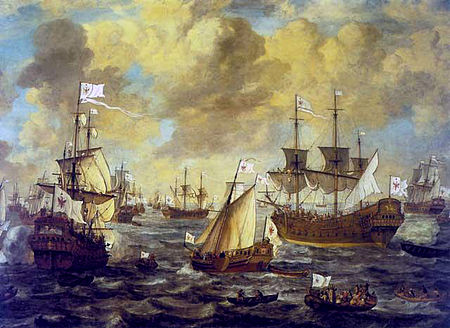


I had plans for my daughter that her mother and aunt undermined in every CONCIEVABLE way. I discovered Lord Hesketh named his yacht after the Lancashire Witches who were put on trial around the time my ancestor, Reverend John Wilson, and fellow Puritans were conducting Witch Trials. Lord Hesketh sailed his yacht into the Golden Gate in order to marry Florence Emily Sharon, the daughter of William Sharon, who became the President of Bank of America, after William Ralston ‘The Man Who Built San Francisco’ died. I believe Ralston Hall is one of the six portable houses brought from the East Coast by my great grandfather, Carl Janke the co-founder of Belmont. The Hesketh sisters are suitable mates for royals. Prince Georg Friedrich was eyeing them. With my claim to palaces once owned by the Schwarzenberg family, I see a Prussian Kingdom in the West – especially now the neo-Confederate Insurectionists are rigging the way we vote in a Democracy. With the backing of large corporations, we are looking at the formation of feudal dynastic companies who are willing to thwart the rise of Evangelicalville and their Fake King David. The Astors are still in the mix. My kin, Senator Thomas Hart Benton was John Astor’s attorney. John was German.
If California, Oregon, and Washington, become the New Bohemian German State, then the return of the castles would be desirable, and help create a Economic Powerhouse that will compete with China and Russia, while the squalid Confederate Nobodies For Jesus and Ignorance, further digress into hateful savages.
John Presco

Princess Florence von Preussen
Princess Florence is the great-great-granddaughter of Kaiser Wilhelm II, the last emperor of Germany, and an heiress to the Guinness fortune (her grandmother was Lady Brigid Guinness). Her parents are Prince Frederick of Prussia and Victoria Mancroft. The London-born 35-year-old OKA stylist had a knack for attracting London’s most eligible bachelors: a former flame was Nat Rothschild, the heir to the title of Baron Rothschild. Those days are over now, for back in May she married Old Etonian brewery heir, fund manager and friend to Prince William, James Tollemache. The wedding was attended by Scarlett Johansson, on the arm of former husband, Romain Dauraic. Also in attendance were Samantha Cameron’s parents, the Viscount and Viscountess Astor.
Chapter 1 – Senator Benton and the St. Louis Junto – MarkGoodmansen.com
Thomas Hart Benton came to St. Louis before 1817 hoping to gain political prominence. Benton pushed early for a “Road to India” across the United States to link eastern U.S. trade routes and western routes to the Pacific Ocean for trade with the Orient. In this plan he joined efforts with John Astor and the Missouri representatives of the American Fur Company owned by Astor. Members of the Chouteau family were early founders of St. Louis and their extended family dominated the fur trade and trade with the Indians. They too joined Astor in the American Fur Company. Benton joined August Chouteau in forming the Bank of Missouri in 1817 with Lilburn Boggs as cashier. Promoting his political ambitions, Benton published in a local newspaper his 13 point agenda which included plans to push for a canal to link Lake Michigan with the Illinois River and a canal to link Lake Superior to the Mississippi River. He sought other initiatives to aid his Chouteau friends and associates who were later referred to as the St. Louis Junto. In St. Louis Benton demonstrated his ruthless determination to realize his ambitious plans. He killed an adversary in a duel and forced a closure of a competing bank. Benton was elected to the US Senate in 1822 and quickly secured passage of key legislation to aid his friends and allies.
Descendants of Madame Chouteau (genealogyvillage.com)
” Prince Georg Friedrich continues to claim compensation for land and palaces in Berlin expropriated from his family, a claim begun in March 1991 by his grandfather Prince Louis Ferdinand of Prussia under the Compensation Act (EALG).
The marathon legal battle over property confiscated by the Czech government | The Art Newspaper
Alex Spencer-Churchill & Hon. Sophia Hesketh
The Hon Flora Hesketh in dark blue Lady in purple: Viscountess Astor, and the main next to Lady Astor is the Hon. Edward Sackville
For more than 20 years Elisabeth Pezold has been suing the Czech government to recover family property confiscated after the Second World War. Pezold, the granddaughter of Prince Adolph Schwarzenberg (1890-1950), has submitted around 150 claims since 1992, many of which have only had their first hearing this year. Pezold is seeking the return of around 55,000 hectares of land that belonged to her grandfather. The estate, valued at hundreds of millions of euros, comprises two palaces, 15 castles, including a Unesco World Heritage Site in Cesky Krumlov, and the vast art collections from those properties. Works include Meissen porcelain, Roentgen furniture and an 85-piece series of 17th-century tapestries. The Schwarzenberg inventories are also believed to include paintings by Titian, Velázquez and Rubens.
Pezold’s long-running restitution claim has been thwarted in the Czech courts because of a unique law, the Lex Schwarzenberg, passed by the Czechoslovakian government in 1947 with the sole aim of stripping Adolph Schwarzenberg of his property. “From 1938 to today, my family has faced continued persecution,” says Elisabeth’s son Adam Pezold. “There is a widespread mentality in the Czech Republic that aristocrats accumulated their wealth by stealing it from the Czech people. Our family bought and inherited the lands over the past 350 years.” In 2002, Elisabeth Pezold sought justice from the United Nations Human Rights Committee. This ruled that she was “repeatedly discriminated against in being denied access to relevant documents, which could have proved her restitution case.” But the verdict carried no judicial weight and Pezold continues to find her case blocked. Last year, Pezold sued the Czech Republic’s Ministry of Culture for suppressing the inventories of her grandfather’s holdings. The case is yet to have a hearing.
It is alleged the first girl Prince Harry Windsor kissed, was Sophia Hesketh. Sophia appears to have dated Freddy Windsor. Sophia’s sister, Flora, is also a British Socialite. These sisters are my distant kin, related to the Witherspoons. I lived with Dottie Witherspoon. Being facebook friends of William and Harry, I suggested Will invite Reese Witherspoon to his wedding in order to extend hands across the water. To the Hesketh sisters acknowledge their American roots?
Jon Presco
THE HON. SOPHIE HESKETH
As the first girl Harry is rumoured to have ever kissed, flaxen-haired Sophia, 26, will no doubt always hold a place in the Prince’s heart. They were last seen dancing together at a charity ball in 2007, despite the fact that Chelsy was also there.
Georg Friedrich, Prince of Prussia – Wikipedia
He owns a two-thirds share of his family’s original seat, Hohenzollern Castle, while the other share is held by the head of the Swabian branch, Karl Friedrich, Prince of Hohenzollern. He also owns the Princes’ Island in the Great Lake of Plön. In 2017 he founded a beer trademark called Kgl. Preußische Biermanufactur (Royal Prussian Beer Manufactory) producing a Pilsner brand called Preussens.
Prince Georg Friedrich continues to claim compensation for land and palaces in Berlin expropriated from his family, a claim begun in March 1991 by his grandfather Prince Louis Ferdinand of Prussia under the Compensation Act (EALG).[11]
As a Protestant descendant of Queen Victoria, Georg Friedrich was in the line of succession to the British throne from his birth until his marriage in 2011. As he married a Roman Catholic, according to the Act of Settlement 1701, he was thus debarred from the British line of succession until the implementation in 2015 of the Succession to the Crown Act 2013, which restored any succession rights to British dynasts who had earlier forfeited them to marry Roman Catholics.
In mid-2019 it was revealed that Georg Friedrich had filed claims for permanent right of residency for his family in Cecilienhof, or one of two other former Hohenzollern palaces in Potsdam, as well as return of the family library, 266 paintings, an imperial crown and sceptre, and the letters of Empress Augusta Victoria.[24] This sparked a public debate about the legitimacy of these claims and the role of the Hohenzollern during and before the Nazi regime in Germany, specifically Crown Prince Wilhelm‘s involvement.[25][26]
In June 2019, a claim made by Georg Friedrich that Rheinfels Castle be returned to the Hohenzollern family was dismissed by a court. In 1924, the ruined castle had been given to the town of St Goar, under the proviso it was not sold. In 1998 the town leased the ruins to a nearby hotel. His case made the claim that this constituted a breach of the bequest.[27]
She did marry an Englishman, albeit one born in the United States, Waldorf Astor; when he was twelve, his father, William Waldorf Astor had moved the family to England, raising his children in the English aristocratic style. The couple were well matched, as they were both American expatriates with similar temperaments. They were of the same age, and born on the same day, 19 May 1879. Astor shared some of Nancy’s moral attitudes, and had a heart condition that may have contributed to his restraint. After the marriage, the Astors moved into Cliveden, a lavish estate in Buckinghamshire on the River Thames that was a wedding gift from Astor’s father.[10] Nancy Astor developed as a prominent hostess for the social elite.[b]
Nancy Astor, Viscountess Astor – Wikipedia
John Spencer-Churchill, 11th Duke of Marlborough – Wikipedia
Alexander Spencer-Churchill | Official Profile on The Marque
In 1682, Frederick William, the prince-elector of Brandenburg, who was intensely involved in the navy’s affairs, secured the navy a base at Greetsiel, but they shifted to Emden a year later.
Frederick William died in 1688, and his descendants took no interest in the Brandenburg Navy. Frederick III and his grandson Frederick the Great recognized that they could never compete directly with the great maritime powers and concentrated instead on building the best army in Europe while maintaining good relations with naval powers such as Denmark and the Netherlands. The overseas colonies were eventually sold to the Dutch in 1721. In 1701, Frederick was crowned King in Prussia, marking a shift from Brandenburg to Prussia as the most important Hohenzollern realm. The Brandenburg Navy was consequently merged into the Prussian Navy that year.
The Hohenzollern Chinese Navy? Part One | Center for International Maritime Security (cimsec.org)
The Chinese and Hohenzollern navies have many commonalities in origin, training and choice of force structure. Their strategy, operational art and tactics are also remarkably similar to Kaiser Wilhelm’s fleet of the late 19th and early 20th century. The Chinese Navy may have also replicated the fatal flaw that left the High Seas Fleet incapable of achieving the victory it came so close to achieving in late 1917. Like the German imperial elite of the late 19th century, the Chinese Communist Party is now also seeking “a place in the sun” through President Hu Jinatao’s “new historic missions” assignment of 2004. China may too think that “its future is on the water” as did the Kaiser’s navy over a century ago. Such visions, however, for a fleet that has not seen battle against a peer opponent since 1894, can be dangerous. Georg Friedrich, Prince of Prussia – Wikipedia








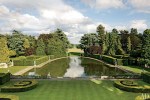


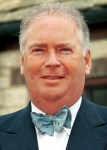
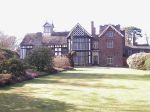
Several years ago I was invited by Anne Fermor to go to England and meet Lord Hesketh. I had to decline because I did not have the money. If the Rice Trust had distributed earlier, then I could have gone.
Anne and I spent many hours on the phone discussing our genealogies. I put her in touch with Peter Sharon who inherited the Sharon genealogy and was considering rekindling the Sharon Family Reunion at the Palace Hotel in Shan Francisco uilt by William Ralston who lived in Ralston Hall where William Stuttmeister marred Augusta Janke. When William Windsor got engaged to Kate Middleton I talked about having this reunion coincide with the royal wedding where two houses across the water can be united. Flora Sharon lived at Ralston Hall and Easton-Neston. Flora Hesketh just married a wealthy banker, and was once considered a suitable mate for Prince Georg Frederick who just got married.
Anne Fermor and I exchanged e-mails and discussed the family tie to John Witherspoon, the Signer, who appears to descend from John Knox who married a Stuart. The Peerage had John within, but gives none of his history. Is this deliberate, and all he being a Patriot? My niece, Drew Benton, is kin to John and the Stuarts via the union of Hon. Mary Stewart and Phineas Preston.
Above is a photograph of Christine Rosamond Benton, at the Getty Mansion.
Jon Presco
Copyright 2012
Hon. Mary Stewart and Phineas Preston
She was the daughter of William Stewart, 1st Viscount Mountjoy and Hon. Mary Coote.1,2 From 1692, her married name became Preston.2 From 1709, her married name became Forbes. As a result of her marriage, Hon. Mary Stewart was styled as Countess of Granard on 24 August 1734.
Children of Hon. Mary Stewart and Phineas Preston
Jane Preston+2 b. c 1690, d. a 12 Nov 1746
Mary Preston2 b. 1696, d. 1749
Colonel John Preston+2 b. 1699, d. 1747
Florence Louise Breckinridge was born in November 1881 at California, U.S.A..2 She was the daughter of John Witherspoon Breckinridge and Florence Louise Tevis.1 She married Thomas Fermor-Hesketh, 1st Baron Hesketh, son of Sir Thomas George Fermor-Hesketh, 7th Bt. and Florence Emily Sharon, on 9 September 1909 at British Embassy Church, Paris, France.1 She died on 4 March 1956 at age 74 at Easton Neston, Towcester, Northamptonshire, England.3,4 She was buried at St. Mary’s Church, Easton Neston, Northamptonshire, England.4
From 9 September 1909, her married name became Fermor-Hesketh.1 As a result of her marriage, Florence Louise Breckinridge was styled as Baroness Hesketh on 25 January 1935.
The eccentric Englishman Lord Hesketh met up with Anthony ‘Bubbles’ Horsley, and the pair entered various Formula Three events around Europe in 1972, with the mission objective simply to have as much fun as possible. Unsurprisingly, given Horsley’s lack of experience, results were thin on the ground.
Hesketh then met up with James Hunt, who had a reputation for being very fast, but also for writing off cars, and at the time was unemployed. Hesketh took on Hunt as one of his drivers for F3.
The Hesketh team had a growing reputation for their playboy style, arriving at races in Rolls-Royce cars, drinking champagne regardless of their results, and checking the entire team into five-star hotels.
By the middle of the season Hunt and “Bubbles” had written off both Formula Three cars. Horsley decided to leave the cockpit, switching to the team management. Hesketh rented a Formula Two March for the rest of 1972, and bought Hunt a Surtees Formula Two car for 1973. Hunt then promptly wrote the car off at the Pau Grand Prix, and in typical style, Hesketh worked out the cost involved in competing in the top flight was hardly more expensive than F2, he decided to move the team up to Formula One.
Easton Neston is a country house near Towcester, Northamptonshire, England, and is part of the Easton Neston Parish. It was designed in the Baroque style by the architect Nicholas Hawksmoor.[1] Easton Neston is thought to be the only mansion which was solely the work of Hawksmoor. From circa 1700 Hawksmoor was to work on many buildings, including Castle Howard and Blenheim Palace, with Sir John Vanbrugh, often providing the technical knowledge to the less qualified Vanbrugh. Hawksmoor’s work, even after their many collaborations, was always more classically severe than Vanbrugh’s. However, Easton Neston predates this partnership by some six years. The house is a Listed building Grade I.[2]
[edit] Architect
Hawksmoor was commissioned to build Easton Neston by Sir William Fermor, later created Lord Leominster;[3] Hawksmoor had been recommended to Fermor by his cousin by marriage Sir Christopher Wren, [4] who had advised on the building of a new mansion on the site circa 1680. However, no details of quite what Wren envisaged survive, and work seems to have ceased following completion of the two service blocks, of which only one survives. Following Fermor’s marriage to an heiress, Catherine Poulett, in 1692, he decided to resurrect the idea of a new mansion, and subsequently Wren’s pupil Hawksmoor received the commission circa
http://www.edisonavenue.net/2012/04/leon-max-easton-neston-home.html
THE former owner of Easton Neston has become the most high profile member of the Conservative party to defect to UKIP.
Lord Alexander Hesketh, who still owns Towcester Racecourse, cites Prime Minister David Cameron ruling out a referendum on the EU as the reason for his defection.
In a statement, Lord Hesketh, who sold Easton Neston to fashion mogul Leon Max in 2005 for £15million, said: “I have been a Conservative all my adult life but the recent decision by the Prime Minister to rule out a referendum on EU membership has angered me greatly.
“On this, and many other matters, UKIP’s views chime with mine and I am delighted to join the party which is fast becoming a real force in British politics.”
Lord Hesketh was treasurer of the Conservative Party between 2003 and 2004 and was chairman of the Conservative Party Foundation between 2003 and 2010.
He held a number of positions within the governments of Margaret Thatcher and John Major, and in May 1991 he was appointed chief whip in the House of Lords by John Major, a position he held for nearly two-and-a-half years.
He launched Formula 1 team Hesketh Racing in the 1970s which found success with British driver James Hunt.
UKIP leader Nigel Farage said: “Over the last few months a number of former Conservatives have joined UKIP as they have become disillusioned with the Conservative Party”
THE former owner of Easton Neston has become the most high profile member of the Conservative party to defect to UKIP.
Lord Alexander Hesketh, who still owns Towcester Racecourse, cites Prime Minister David Cameron ruling out a referendum on the EU as the reason for his defection.
In a statement, Lord Hesketh, who sold Easton Neston to fashion mogul Leon Max in 2005 for £15million, said: “I have been a Conservative all my adult life but the recent decision by the Prime Minister to rule out a referendum on EU membership has angered me greatly.
“On this, and many other matters, UKIP’s views chime with mine and I am delighted to join the party which is fast becoming a real force in British politics.”
Lord Hesketh was treasurer of the Conservative Party between 2003 and 2004 and was chairman of the Conservative Party Foundation between 2003 and 2010.
He held a number of positions within the governments of Margaret Thatcher and John Major, and in May 1991 he was appointed chief whip in the House of Lords by John Major, a position he held for nearly two-and-a-half years.
He launched Formula 1 team Hesketh Racing in the 1970s which found success with British driver James Hunt.
UKIP leader Nigel Farage said: “Over the last few months a number of former Conservatives have joined UKIP as they have become disillusioned with the Conservative Party”
Georg Friedrich Ferdinand, Prince of Prussia, (legal name: Georg Friedrich Ferdinand Prinz von Preußen)[1] (born 10 June 1976) is the current head of the House of Hohenzollern, the former ruling dynasty of the German Empire and of the Kingdom of Prussia. He is the great-great-grandson and historic heir of William II, the last German Emperor and King of Prussia, who was deposed and, initially, went into exile upon Germany’s defeat in World War I in 1918.
Marriage
On 21 January 2011, Georg Friedrich announced his engagement to HSH Princess Sophie Johanna Maria of Isenburg (born 7 March 1978), who studied business administration in Freiburg and Berlin and works at a firm that offers consulting services for nonprofit business.[8] The civil wedding took place in Potsdam on 25 August 2011,[2] and the religious wedding took place at the Church of Peace in Potsdam on 27 August 2011, in commemoration of the 950th anniversary of the founding of the House of Hohenzollern.[9][10] The religious wedding was also broadcast live by local public television.[2]
Princess Sophie’s parents are Franz-Alexander, Prince of Isenburg and his wife, née Countess Christine von Saurma-Jeltsch.[11] The couple share descent (being 6th cousins once-removed) from Charles II, the first reigning Grand Duke of Mecklenburg-Strelitz and a brother of Charlotte of Mecklenburg, queen consort of George III of the United Kingdom. Princess Sophie’s father is head of the senior branch of the mediatised princely House of Isenburg, known under the Holy Roman Empire and subsequent German Empire as the Büdingen-Birstein line. In 1913 Franz Alexander’s grandfather, Franz Joseph, dropped the und Büdingen zu Birstein suffix from his title as Fürst von Isenburg.
The princess has two brothers, and her elder sisters are, respectively, Archduchess Katharina (born 1971), wife since 2004 of Archduke Martin of Austria-Este, and Princess Isabelle (born 1973), wife since 1998 of Carl, Prince of Wied.
Hesketh has been making love to Miss Florence Sharon , a most charming girl , daughter of Senator Sharon and the engagement was announced in the Chronicle & Newsletter . The American girls knew what they were up to ; they had this cash , which would allow them to become objects of interest .
Also , it was a passport to Europe , to a certain degree of freedom and what they saw as a more sophisticated environment . So they traded money for access to what they saw as the cream of world society.
The new lady of the manor quickly set out to spend some of that money when she found things not entirely to her liking . She had hoped for a ‘rambling, medieval’ home and had to work to instill those qualities in Nicholas Hawksmoor’s graceful Baroque masterpiece of architecture . Florence Sharon had definite ideas of what an English house should look like, and she encouraged her husband to go out and acquire works of art that she thought were right for the house , and she also had a very , very keen eye for luxury , and so the wardrobes or beds or so on tend to be of the best variety and stood the test of time . The admiral’s comfort came at no expense to Easton Neston , which continued to be maintained by a steady flow of American dollars from San Francisco – interrupted , only in 1906 by the great earthquake .
Aha- So thus another connection. Now I am very curious about the German side of my family- my mother’s side…..
— On Tue, 3/2/10, John Ambrose wrote:
> From: John Ambrose
> Subject: Ralston Hall
> To:
> Date: Tuesday, March 2, 2010, 2:19 AM
> Anne;
>
> Ralston Hall may have been one of the portable houses
> that Carl Janke brought around the Horn on a Clipper, and
> was added on to. Carl Janke’s daughters are buried
> with the Stuttmeisters. This is where Florence Emily
> Sharon Baron Fermor-Hesketh.
>
>
>
> Jon.
>
Photo and History of John
1 recipients
CC: recipientsYou More
BCC: recipientsYou
Show Details
FROM:
Anne Farmer
TO:
John Ambrose
Message flagged
Wednesday, March 3, 2010 12:11 AM
Good one, Jon- you’re still awake too I see. I have been finding more Fermor/Farmer links. Earlier today I went to Office depot to photocopy the letters I wrote to you and noticed 2 pages 23 & 25 are missing. Today I also talked with my evil sisters 1st husband to see if she got to anyone in the UK. She may have but is doubtful as at that time not interested in the heritage stuff. Whew. However he cautioned me to protect myself and my mother and warm the English relatives- which I’ve already started to do last trip.
I’m staying up past my usual bedtime to FAX my lease agreement back to the UK to secure my housing there. The time zone difference is a sleep deterrant,,,,
Now and always-
Anne
> ‘Fermor1’
> Index links to: Lead / Letter
> Families covered: Fermor (Fermour) of
> Easton Neston, Fermor of Leominster, Fermor of Pomfret
> (Pontefract), Fermor (Fermour) of Somerton, Fermor of
> Tusmore
>
> Anne
> Fermor
>
>
>
>
>
Sir
> John FERMOR of Easton Neston
> Born: 1516
> Died: 1571
> Father: Richard FERMOR (See his Biography)
> Mother: Anne
> BROWNE
> Married: Maud VAUX BEF
> Nov 1544
> Children:
> 1. George FERMOR (Sir) (d. 1 Dec 1612) (m.
> Mary Curson)
> 2. Catherine FERMOR (m.1 Michael
> Pulteney of Misterton – m.2 Sir Henry
> Darcy)
> 3. Mary FERMOR (m. Thomas
> Lucas)
> 4. Son FERMOR
> 5. Son FERMOR
> 6. Dau. FERMOR
Anne FERMOR
Birth: 1500/1530
Partnership with: William LUCY
Child: Thomas LUCY of Charlecote Birth: 1527/1534
Descendants of Anne FERMOR
1 Anne FERMOR
=William LUCY
2 Thomas LUCY of Charlecote
=Joyce ACTON
3 Thomas LUCY of Charlecote, Warwick
=Constance KINGSMILL
“He was a great great grandson of John Knox (1505 -1572) and his second wife,
Margaret Stuart (1548 -1612).
Baron Hesketh, of Hesketh in the County Palatine of Lancaster, is a title in the Peerage of the United Kingdom. It was created in 1935 for Sir Thomas Fermor-Hesketh, 8th Baronet, who had previously briefly represented Enfield in the House of Commons as a Conservative. As of 2010[update] the titles are held by his grandson, the third Baron, who succeeded his father in 1955. Lord Hesketh held junior ministerial positions in the Conservative administrations of Margaret Thatcher and John Major. However, he lost his seat in the House of Lords after the House of Lords Act 1999 removed the automatic right of hereditary peers to sit in the upper chamber of Parliament.
The Hesketh Baronetcy, of Rufford in the County Palatine of Lancaster, was created in the Baronetage of Great Britain in 1761 for Thomas Hesketh, with special remainder to his brother Robert, who succeeded him as second Baronet. The latter’s great-great-grandson, the fifth Baronet, sat as a Conservative Member of Parliament for Preston. His grandson, the eighth Baronet, was elevated to the peerage as Baron Hesketh in 1935.
The former seat of the Barons Hesketh was Easton Neston in Northamptonshire. The house was previously the seat of the Fermor family (Earls of Pomfret since 1721), and came into the Hesketh family through the marriage in 1846 of Sir Thomas George Hesketh, 5th Baronet, to Lady Anna Maria Isabella Fermor, sister and heiress of George Richard William Fermor, 5th and last Earl of Pomfret. However, the house was sold by the current Baron in 2005.
The original seat of the Hesketh family was Rufford Old Hall in the village of Rufford in Lancashire. This house was sold to the National Trust by the first Baron Hesketh in 1936.
The Lost Treasure of Goddess Island
Posted on January 8, 2020 by Royal Rosamond Press
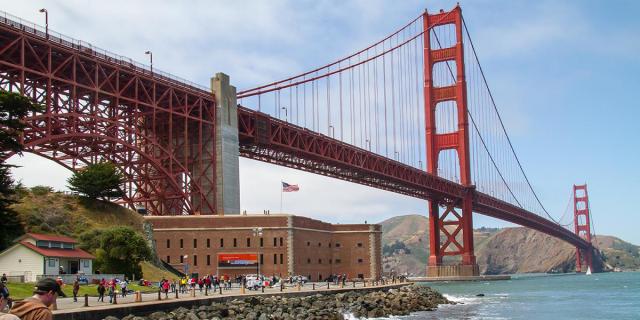


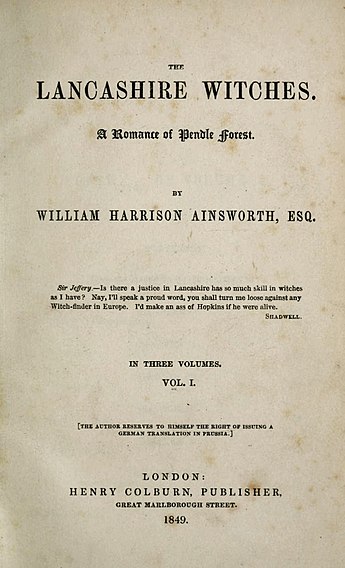


At 2:01 P.M. I discovered Lord Hesketh named his yacht after the Lancanshire Witches who were put on trial around the time my ancestor, Reverend John Wilson, and fellow Puritans were conducting Witch Trials. Lord Hesketh sailed his yatcht into the Golden Gate in order to marry Florence Emily Sharon, the daughter of William Sharon, who became the President of Bank of America, after William Ralston ‘The Man Who Built San Francisco’ died. I believe Ralston Hall is one of the six portable houses brought from the East Coast by my great grandfather, Carl Janke the co-founder of Belmont.
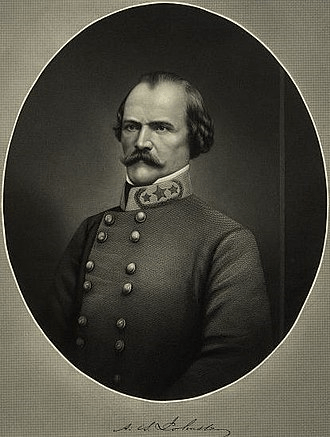
Today I discovered that I am kin to Albert Sydney Johnston who married Henriette Preston. Albert was the commander of Fort Point. He is kin to the Benton family, and John Fremont. The Prestons are kin to the Stewarts. I am poised to author a Harry Potter series – in the West!
For many years I have considered a large statue that Rena Easton is the model for. I have been authoring a proposal to Meg Whitman that will include her funding this large statue that I want erected on Treasure Island that I see as World Literary Center, more so than for the Arts. Fort Mason is dedicated to the Arts. My claim on the property the Fremont family once owned, is solid. I am the caretaker of so my Creative History.
CNN is doing a series on the Windsors. I have rescued our connection to British gentry. Sophie Hesketh was considered a suitable mate for Harry Windsor. Rena has to be contacted to see if there exist nude photos of her. If she is dead, her skeleton must be exhumed and measured. She has perfect proportions. How can she complain, or, accuse me of stalking, when her form and image will welcome millions into the Golden Gate. She will be the Western Colossus. Consider Pacifica and Britania!
It’s time modern man be exposed to full frontal nudity, and all aspects of Womankind, who has been stalked and tried as a Witch for a thousand years! Here is a chance for Humanity to turn those dark images around, and honor all women, There exist a proposal to rebuild Pacifica, but, she is rendered all things to men – and women! In this form, she is harmless. Rena was threatening and scary in ways that have been lost. Powerful Women are scary to both sexes. Christian women wanted this kind of woman – burned! This sick movement to make all women – not culpable – is destroying civilization. What are women guilty of?
Today, millions of Christian women prepare to vote for Trump, again, even though they know he is a egregious lair guilty of abusing women. He slanders a woman every week. He is a Great Sinner who is not held culpable for his sins. I suspect the Christians oppose Goddess Worship and perceive Trump is destroying the recent resurrection of this worship that Hillary Clinton would have promoted – if she got elected the First Woman President!
I would like to see a replica of the Lancashire Witch made and docked at Treasure Island. It is my desire to marry Rena Easton some day and spend our honeymoon onboard. Rena is my inspiration for Victoria Bond.
John Presco
Copyright 2020
EXTRA! At 3:45 I quit posting for the day and turned on T.V. to hear Harry and Meghan Windsor are stepping out of their paid rolls. This is huge! I said I wanted them to head the New Puritan Church! Johnston quit his post to join the Confederacy that was very serious about not allowing Black Slaves to be free to earn a living. Many White women oppressed Black Women. This couple is in a position to lead a progressive movement not seen since Lincoln free the slaves and Radical Republican went into the South and put Black Men in office. Southern women oppose the taking down statue of Confederate soldiers. I am kin to Robert E. Lee!
I just saw Senator Merkley on T.V. He and others out outraged with the interview with brass for why they killed the Iranian General. They are suspecting the Trumpire did this to distract from the Impeachment. But, it really inflames the idea Trump and Putin are on the same team, and so is Iran. There could be FAKERY here that is targeting the Democrats!
I am going to ask that the British Defence Staff protect Harry and Meghan whose son has Romanov blood that Putin is after! Why not the Templars? Why not build a home for the Duke and Duchess of Sussex on Treasure Island, or the property owned by the Fremonts. This Windsor couple could carry on the Salon that was held at Black Point.
https://www.msn.com/en-us/news/politics/insulting-and-demeaning-lawmakers-rip-trump-administration-after-iran-briefing/ar-BBYL4Pu?ocid=spartandhp“After many months of reflection and internal discussions, we have chosen to make a transition this year” they wrote on Instagram, explaining that they hope to “carve out a progressive new role within this institution.”“We intend to step back as ‘senior’ members of the Royal Family and work to become financially independent, while continuing to fully support Her Majesty The Queen,” they said.Harry and Meghan did not consult any other members of the royal family about their decision, CNN has learned.There is said to be a mood of deep disappointment in the palace following the announcement; senior members of the family are hurt as a result of the news


Windsors and Hesketh Sisters
Posted on October 3, 2011by Royal Rosamond Press


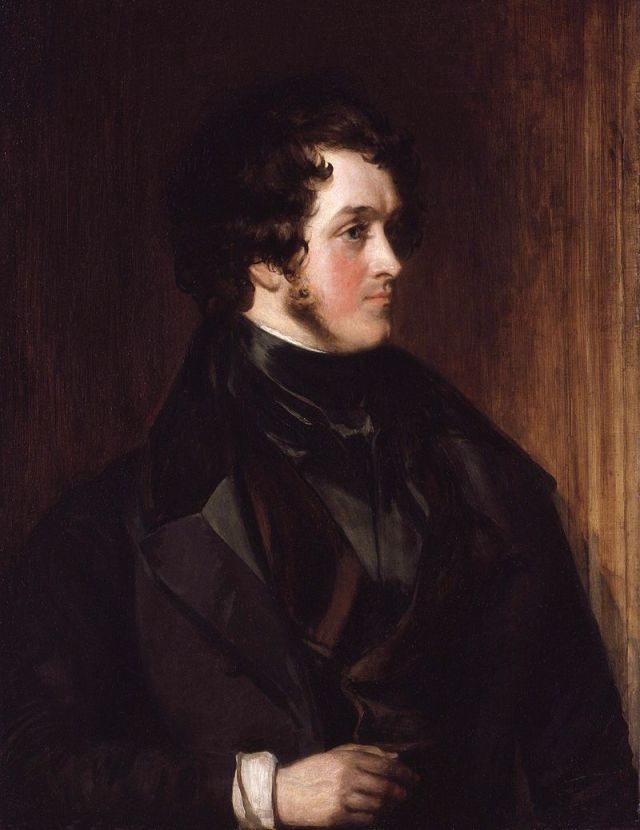
It is alleged the first girl Prince Harry Windsor kissed, was Sophia Hesketh. Sophia appears to have dated Freddy Windsor. Sophia’s sister, Flora, is also a British Socialite. These sisters are my distant kin, related to the Witherspoons. I lived with Dottie Witherspoon. Being facebook friends of William and Harry, I suggested Will invite Reese Witherspoon to his wedding in order to extend hands across the water. To the Hesketh sisters acknowledge their American roots?
Jon Presco
THE HON. SOPHIE HESKETH
As the first girl Harry is rumoured to have ever kissed, flaxen-haired Sophia, 26, will no doubt always hold a place in the Prince’s heart. They were last seen dancing together at a charity ball in 2007, despite the fact that Chelsy was also there.
Earlier private ownership by John C. Frémont[edit]
The nucleus of Fort Mason was a private property owned by John C. Frémont, the explorer of the western U.S., who also spearheaded the conquest of California from Mexico, and ran as the first presidential nominee of the extant Republican Party in 1856. As alleged in a 1968 federal lawsuit[6] filed by his descendants over the 70-acre parcel then at issue, Frémont bought a 13.5-acre property in the mid-1850s for $42,000, and then improved it by about $40,000.
Appointed a major general in the Union army at the start of the Civil War, Frémont’s repeated serious conflicts with President Lincoln led him to resign by late 1862. In 1863, the government seized the property without payment, by executive order of Lincoln, on the grounds it was needed for the war effort. Frémont would again contest the US presidency in 1864, running as the candidate of Radical Democracy Party, only resigning the effort when Lincoln fired a political enemy in his cabinet as a concession.
The 1868 lawsuit was perhaps the last shot of a century-long legal struggle[7] to obtain compensation for the seized realty. In 1870, the government returned property to 49 parties in the vicinity, but not to Frémont and a few others. At that time, Frémont was still very preoccupied with enough of the vast fortune he had made through gold-mining before the Civil War that the matter was unlikely of concern to him; but by 1872[8] he was in grave financial trouble he would never escape before his death in 1890. Over the years, at least 24 Congressional committees would vote to compensate Frémont, and finally in February 1898 President William McKinley signed a bill directing that the court of claims fix the compensation due. But in 1968 the Frémont heirs complained it had failed to carry out this direction, with John Frémont then recently dead and his widow Jessie over 70 years old.
The fort as government property[edit]
The Civil War prompted the construction of several coastal defense batteries located inside the Golden Gate. Initially these defenses were built as temporary wartime structures rather than permanent fortifications and one of these was constructed in 1864 at Point San Jose, as the location of Upper Fort Mason was then known. A breast-high wall of brick and mounts for six 10-inch (250 mm) Rodman cannons and six 42-pounder guns were built on the site. Excavation in the early 1980s uncovered the well-preserved remains of the western-half of the temporary battery, and it has now been restored to its condition during the Civil War.[9]
The fort was named Fort Mason in 1882, after Richard Barnes Mason, a former military governor of California.[10]
Sir Thomas George Fermor-Hesketh, 7th Bt.1 
M, #152841, b. 9 May 1849, d. 19 April 1924Last Edited=11 Mar 2012Consanguinity Index=0.0% Sir Thomas George Fermor-Hesketh, 7th Bt. was born on 9 May 1849.2 He was the son of Sir Thomas George Fermor-Hesketh, 5th Bt. and Lady Anna Maria Isabella Fermor.2 He married Florence Emily Sharon, daughter of Hon. William Sharon and Maria Malloy, on 22 December 1880 at Belmont, San Francisco, California, U.S.A.G.2 He died on 19 April 1924 at age 74.1
He was given the name of Thomas George Hesketh at birth.2 He held the office of Sheriff of Northamptonshire in 1851.2 On 8 November 1867 his name was legally changed to Thomas George Fermor-Hesketh by Royal Licence.2 He gained the rank of Lieutenant in the Rifle Brigade.2 He gained the rank of Honorary Colonel in the 4th Battalion, Liverpool Regiment of Militia.2 He succeeded as the 7th Baronet Hesketh, of Rufford, co. Lancaster [G.B., 1761] on 28 May 1876.2
Children of Sir Thomas George Fermor-Hesketh, 7th Bt. and Florence Emily Sharon
- Thomas Fermor-Hesketh, 1st Baron Hesketh+1 b. 17 Nov 1881, d. 20 Jul 1944
- Lieutenant Frederick Fermor-Hesketh3 b. 24 Sep 1883, d. a 29 Oct 1910
Book the Second, ‘Cyprian Rougemont’ (1830): Thorneycroft, Sandman and Tinker (with Ginger) continue their pursuit led by another, who is the brother of Rougemont’s second victim, Clara Paston. They enter a mysterious mansion, and becoming trapped in a chamber and locked into enchanted or mechanically-contrived chairs three of them are muffled by bell-masks which descend from the ceiling, and then plunged through traps in the floor. Flapdragon appears and attempts to help them find Ebba, while Paston, Ginger and Thorneycroft find Rougemont and confront him with pistols, but Rougemont is impervious to the bullets. Thorneycroft, Tinker and Sandman are trapped in a pit over which an iron roof closes by a giant mechanical contrivance, and Ebba is never found again. Auriol, meanwhile, awakes to find himself in Elizabethan costume, chained in a vaulted dungeon. The voice of Rougemont addresses him, telling him that he has been mad, but that he has given him a potion to heal him, and is his keeper. James I is now the King of England. Old Dr Lamb is still living, and his dwarf Flapdragon, and Auriol is taken to him, where they begin to hope that Auriol’s cure has been effected. He becomes convinced that he has lived centuries in a few nights and has awakened from a delusion… but even in the last sentence, addressing Dr Lamb, the author relates what he says to his supposed grandsire
John Witherspoon Owen Breckenridge
Posted on July 5, 2011by Royal Rosamond Press

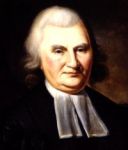


The great grandmother of John Witherspoon Owen Breckenridge, is the Ann Witherspoon, the daughter of Signer, John Witherspoon. His great grandfather, was John Breckenridge, Attorney General of the United States in the Cabinet of President Thomas Jefferson. I lived with Dottie Witherspoon in Boston, and met many Witherspoons in South Carolina who are kin to the actress, Reese Witherspoon.I have been exchanging e-mails with a member of the Sharon family about revising the Sharon Family reunion at the Palace Hotel in San Francisco. I was invited to go to Europe with a member of the Hesketh-Fermor family, who are kin to my niece, Drew Benton, and thus the Prescos. We are all kin to Lloyd Tevis the President of Welles Fargo Bank.
I have put on pause my homework of family relations. I do know some of the California Sharons and I am familiar with the reunion that use to take place in San Francisco, but I have been swamped. I would love to refresh the reunion for our family. I am not familiar with the names on your email yet. I don’t know if you sent email to Philip or had misplaced my name. I will start more family connections with the Sharon clan soon.
Patrick Sharon
Hi Jon- Get ready- much info coming now- please go ASAP to tatler.com- June issue page 102- big article on the new owner of Easton Neston- Leon Max- I’m headed there with James Baring and Bob and Joanne Fermor tomorrow.
Anne
Witherspoon Owen Breckenridge married Louise Tevis Breckenridge Sharon, the daughter of Lloyd Tevis, president of Wells Fargo and one of the richest men in California. When he became president of Wells Fargo, it was an express coach company. When he retired, it was a bank as we know it today. Tevis was assessed by the state of California as having a fortune worth $1,590,000.00 in 1880
John Witherspoon Breckenridge, son of Congressman, Senator, Vice President, Presidential Candidate and Confederate General John C. Breckenridge, c. 1878 and lived in San Rafael, CA. Their marriage ended in divorce and she married secondly Frederick W. Sharon.
Frederick Sharon was the son of Senator William Sharon (right), one of California’s very richest men. Sharon arrived in San Francisco in 1849, first investing in real estate, then also in mining and banking. By 1880, the state of California assessed his personal fortune at $4,470,000.002 and he was the largest single taxpayer in the state. Louise and Frederick were married at Sharon’s 55,360 square foot palatial estate ‘Belmont’ in 1884 (below).
The information found here comes from The Prestons of Smithfield and Greenfield in Virginia by John Frederick Dorman who is one of the preeminent authorities of Virginia genealogy. The descendants of John Preston and Elizabeth Patton are remarkable for the number of outstanding individuals spread over several generations. There are literally dozens of politicians, military men (including generals on both sides of the Civil War), preachers, doctors and authors. This is only a sampling of people who caught my attention. I strongly recommend anyone interested in this family to find The Prestons of Smithfield and Greenfield in Virginia.
http://www.cridermcdowellfamily.com/FamilyTree/ppl/7/0/A5LKTIAFDYXB1F7C07.html
http://freepages.genealogy.rootsweb.ancestry.com/~swva/preston.htm
Henry Clay (1777-1852)was an American statesman known as “The Great Compromiser.” Clay was a congressman, senator, speaker of the house, and secretary of state. He was a major promoter of the Missouri Compromise in 1820, the compromise tariff of 1833 that ended the Nullification crisis, and the Compromise of 1850, all efforts to balance the rights of free and slave states. He was twice the unsuccessful Whig candidate for president. His wife, Lucretia Hart Clay, was the daughter of Colonel Thomas Hart. They had eleven children — six daughters and five sons.
Lucretia Hart Clay was a daughter of Col. Thomas Hart and Susanna Gray. The Hart family was established in Hanover County, Virginia, in 1690. The only son of a pioneer was Thomas Hart, who married Susanna Rice, and their oldest son was Col. Thomas Hart, who was born in 1730 and accompanied his mother and the other children to North Carolina in 1760. He became prominent in the Colonial and Revolutionary history of North Carolina, being a member of the Provincial Congress at New Bern of August 25, 1774, also attended the Convention of April 4, 1775, and was a delegate to the Assembly at Hillsboro August 21, 1775. He was an officer in the Revolutionary army, and was a member of the famous Transylvania Company. His brother, Captain Nathaniel Hart, was killed by the Indians near Boonesboro, Kentucky in 1782, and it was Susanna, daughter of Capt. Nathaniel, who married Col. Isaac Shelby, first governor of Kentucky. Col. Thomas Hart reared in his home his orphan niece, Ann, who became the wife of Jesse Benton, and her oldest son was the famous Thomas Hart Benton, the distinguished United States senator from Missouri.
http://simpsonhistory.com/notes/lucretiahart.html
William Campbell Preston Breckinridge
Born August 28, 1837 in Baltimore, MD
Son of Robert Jefferson Breckinridge and Ann Sophonisba Preston
Brother of Louisiana Hart Breckinridge, John Breckinridge, Francis Preston Breckinridge, Mary Cabell Breckinridge, Sarah Campbell Breckinridge, Robert Jefferson Breckinridge, Marie Lettice Breckinridge, Sophonisba Preston Breckinridge, Joseph Cabell Breckinridge, Charles Henry Breckinridge, Virginia Hart Breckinridge, Nathaniel Hart Breckinridge and John Robert Breckinridge
Husband of Louise Rucks Scott — married 1893 [location unknown]
Husband of Issa Desha — married September 19, 1861 in Lexington, KY
Husband of Lucretia Hart Clay — married March 17, 1859 in “Mansfield”, Fayette Co., KY
Father of Curry Desha Breckinridge, Ella Breckinridge, Robert Jefferson Breckinridge, Lee Clay Breckinridge, Sophonisba Preston Breckinridge and Desha Breckinridge
BRECKINRIDGE
Memorial
and
TEVIS/ SHARON ESTATE HISTORY
John Witherspoon Owen Breckinridge, Member of California state assembly 5th District, 1884-85. & Louise (Tevis). the daughter of Lloyd Tevis (1st. Pres. of Wells Fargo Bank).
Louise (Tevis) Breckinridge married (2nd) Frederick William Sharon (son of Senator William Sharon) d.1882 & Maria Malloy.
The life story of Louise Tevis Breckinridge Sharon gives insite into the impact of California gold on global banking and who directed it.
Francis G. Newlands (1848-1917) was a young San Francisco lawyer. Early in his practice he had become an attorney for William Sharon, a senator from Nevada from 1875 to 1882, who made a tremendous fortune revitalizing and managing the rich Nevada Comstock Lode. In 1874 Newlands married Sharon’s daughter. Following her death, in 1882, and William Sharon’s death, in 1885, Newlands became trustee of Sharon’s huge estate, was himself one of the heirs, and managed major land holdings in California and Nevada.18481917, American legislator, b. Natchez, Miss. After practicing law in San Francisco from 1870, he moved (1888) to Nevada. He became well known for his interest in irrigation and reclamation and for his advocacy of free silver. He was (18931903) U.S. Congressman from Nevada and served (190317) as a Democrat in the U.S. Senate. He wrote the Newlands Act of 1913, concerning mediation and conciliation in labor controversies, and the Reclamation Act of 1902. He played a!
n important role in the establishment of the Federal Trade Commission (1914) and in preparing the way for the Transportation Act of 1920
US Senator William Sharon’s daughter by Maria Malloy,
Flora, married Sir Thomas Fermor-Hesketh of England.
Easton Neston in Northampton
(the estate of the Fermor-Hesketh family)
^ John Cabell Breckinridge, Sr. & Adelaide (Murphy) ^
Aunt: Florence Louise Breckinridge) married Thomas Fermor-Hesketh
^
John Bunny Breckinridge born in 1903 died Tuesday, November 5th, 1996
It looks like Louise Tevis Breckinridge Sharon, was the grand dowager with
control of the purse strings of her mother Susan’s half of the Tevis Estate
and whatever control came to her from her second husbands portion of the
Sharon estate. (California and Nevada community property laws). She would
also have had a great influence on her sister in-law Flora Sharon
Fermor-Hesketh and guided the Fermor-Hesketh marriage of her own daughter
Flora Breckinridge.
Her son John Caball Breckinridge seems to have been part of Victorian
England without a fortune of his own and he didn’t marry one. He and his
marriage were kept in the shadows. I would suspect he had a rough time of it.
The life story of Louise Tevis Breckinridge would give a unique in site
into the impact of California gold on global banking and who directed it.
Well you know all of this already.I will let you know if I come across any
thing about Johns parents.
>From Breckinridge researcher Gloria Hursey
John Cabell “Bunny” Breckinridge descent of the Breckinridges:
1..Alexander Breckenridge & Jane Preston
….2 Robert Breckenridge, Sr. & Letitia Preston
……..3 John Breckenridge & Mary “Polly” Hopkins Cabell
…………4 Joseph Cabell Breckinridge, & Mary Clay Smith, daughter of Rev. Samuel Stanhope Smith, president of Princeton College. She was a granddaughter of John Witherspoon and a lineal descendant ofJohn Knox: through his heroic daughter, Mrs. Welch, who told King James that she would rather ” kep his head in her lap” than have him submit to the king’s supremacy in religion,”
…………….5 John Cabell Breckinridge (Vice Pres. of US) & Mary Cyrene Burch
………………..6 John Witherspoon Owen Breckinridge & (1st) Louise Tevis
……………………7 Lloyd Tevis Breckinridge
……………………7 John Cabell Breckinridge, Sr. & Adelaide Murphy
……………………….8 John Cabell “Bunny” Breckinridge, Jr.
……………………7 Florence Louis Breckinridge & Thomas Fermor-Hesketh
……………………….8 Thomas Fermor-Hesketh
……………………….8 Frederick “Freddie” Fermor-Hesketh & Christian Mary McEwan
……………………….8 Florence Fermor-Hesketh & (1) ? Revelstoke, (2) Derick/Arthur Lawson
……………………….8 John Fermor-Hesketh & (1) Patricia ?, (2)Joan Isabel Reveley (Lorelei).
……………………….8 Louise Fermor-Hesketh & Edmond Villiers Minshull Stockdale
………………..6 John Witherspoon Owen Breckinridge & (2nd) Harriet Dudley
……………………7 Elizabeth Lee Breckinridge & Joseph I. Thomas
……………………….8 Breckenridge Thomas
John Cabell “Bunny” Breckinridge descent of the Tevis:
1..Robert Tevis & Martha Crow/Crowe
….2 Samuel Tevis & Sarah Jane Greathouse
……..3 Lloyd Tevis & Susan Saunders
…………4 Louise Tevis & (1st) John Witherspoon Owen Breckinridge
…………….5 Lloyd Tevis Breckinridge
…………….5 John Cabell Breckinridge, Sr. & Adelaide Murphy
………………..6 John Cabell “Bunny” Breckinridge, Jr.
…………….5 Florence Louise Breckinridge & Thomas Fermor-Hesketh
……………….6 Thomas Fermor-Hesketh
……………….6 Frederick “Freddie” Fermor-Hesketh & Christian Mary
McEwan
……………….6 Florence Fermor-Hesketh & (1) ? Revelstoke, (2)
Derick/Arthur Lawson
……………….6 John Fermor-Hesketh & (1) Patricia ?, (2) Joan Isabel Reveley (Lorelei)
……………….6 Louise Fermor-Hesketh & Edmond Villiers Minshull
Stockdale
…………4 Louise Tevis & (2nd) Frederick William Sharon (son of Senator
William Sharon)
…………….5 Henry William Tevis Sharon (said to have died young)
Sharon descent:
1..William Sharon, Sr. & Susanna Kirk
….2 Senator William Sharon, Jr. & Maria Malloy
……..3 Clara Adelaide Sharon & Francis Griffith Newlands
……..3 Florence Sharon & Thomas George Fermor-Hesketh
…………4 Thomas Fermor-Hesketh & Florence Louise Breckinridge
(Florence is the daughter of John Witherspoon Owen
Breckinridge & 1st. spouse, Louise Tevis)
……..3 Frederick William Sharon & Louise Tevis
(Louise (Tevis) Sharon is the 1st spouse of John Witherspoon Owen
Breckinridge)
…………4 Henry William Tevis Sharon (said to have died young)
Gloria
Ghursey2@aol.com
Sharon Estate Company, 74:385, 392
Sharon, Fred, 58:245
Sharon, Mrs. Frederick W., 25:238
OBITUARY — John `Bunny’ Breckinridge
“All have sinned and come short of the glory of God”
Its unfortunate the obituary above was written by sombody who did not know him. I remember him only as kind, intelligent and generous.
Important Note:
The author of this message may not be subscribed to this list. If you would like to reply to them, please click on the Message Board URL link above and respond on the board.
BRECKINRIDGE, John, (brother of James Breckinridge, grandfather of John Cabell Breckinridge and William Campbell Preston Breckinridge, great-grandfather of Clifton Rodes Breckinridge, great-great-grandfather of John Bayne Breckinridge, cousin of John Brown, James Brown, and Francis Preston), a Senator from Kentucky; born near Staunton, Augusta County, Va., December 2, 1760; educated at Augusta Academy, near Staunton (now Washington and Lee University, Lexington, Va.), and at William and Mary College, Williamsburg, Va.; elected a member of the house of burgesses in 1780 when nineteen years of age, but being under age was not allowed to take his seat until elected the third time; served as subaltern in the Virginia Militia during the Revolutionary War; studied law; admitted to the bar in 1785 and commenced practice in Charlottesville, Va.; elected as a Democrat to the Third Congress, but resigned in 1792 before the commencement of the congressional term; moved to Kentucky in 1793 and resumed the practice of law in Lexington; unsuccessful candidate for election to the United States Senate in 1794; appointed attorney general of Kentucky in 1795 and served until November 30, 1797, when he resigned; member, State house of representatives 1798-1800, serving as speaker in 1799 and 1800; member of the State constitutional convention in 1799; elected as a Democratic Republican to the United States Senate and served from March 4, 1801, until August 7, 1805, when he resigned to accept the position of Attorney General of the United States in the Cabinet of President Thomas Jefferson; served in this capacity until his death at ‘Cabell’s Dale,’ near Lexington, Ky., December 14, 1806; interment in Lexington Cemetery, Lexington, Ky.
Share this:
Royal Rosamond Press
 Rosamond Press
Leave a comment