I just proposed a partnership on 8/8/25 that may change literary history – forever! I am taking action to keep A1 out of my family history, my families literary history, our political history, and our art history. Even our family tree has been attacked!
JP
The Bond Code: The Dark World of Ian Fleming and James Bond (2008), by Philip Gardiner
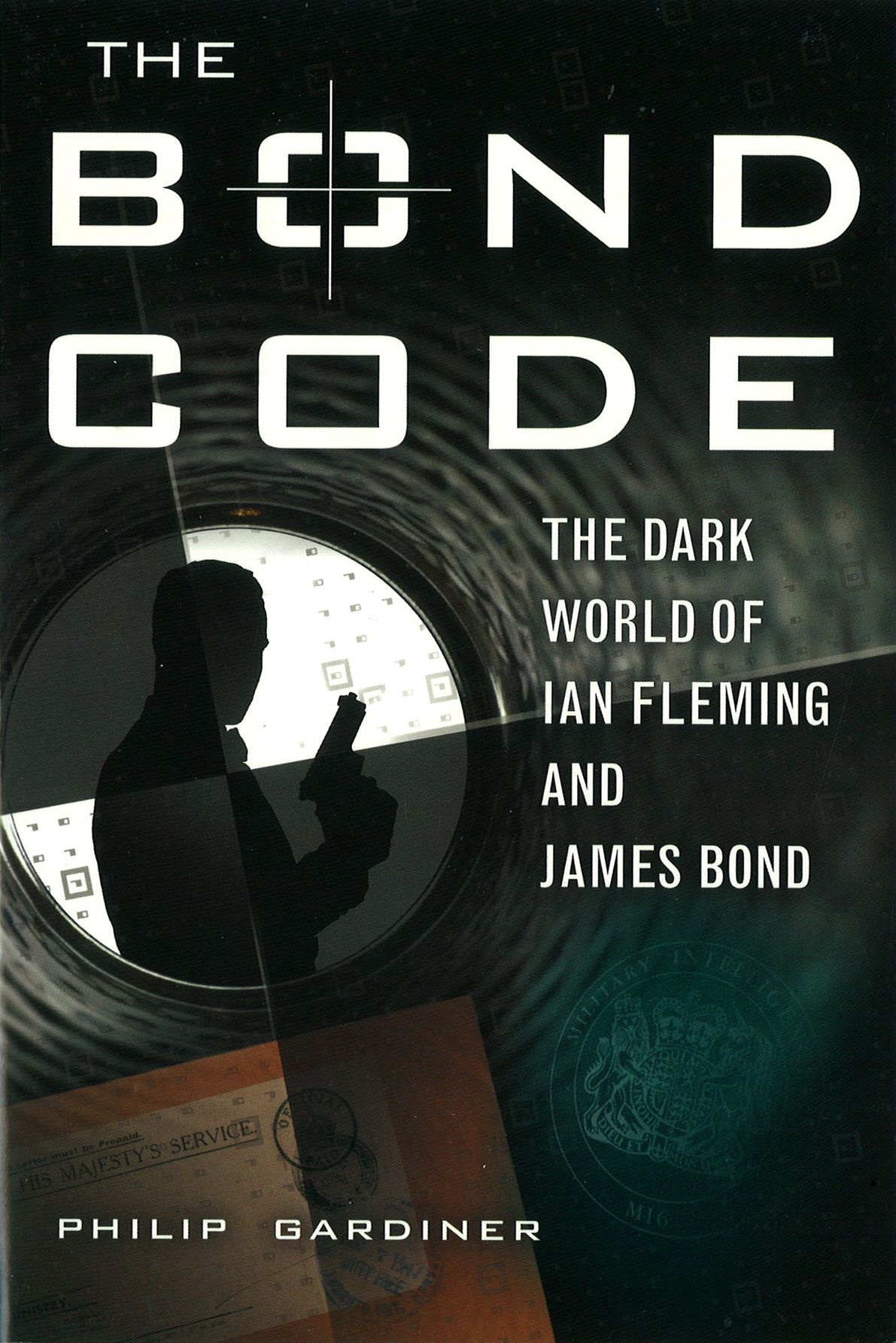
If you thought the James Bond books were simple spy novels – thrilling, but undemanding fare – then according to Philip Gardiner, you’re just not reading them correctly. For hidden inside the Bond books are clues to Ian Fleming’s fascination with the occult and mysticism. The names Auric Goldfinger and Hugo Drax, for example, represent the art of alchemy, while Bond’s code number used in You Only Live Twice, 7777, has numerological significance. And as everyone knows, 007 is how Queen Elizabeth I’s spy and occultist John Dee signed his communications.
This is an interpretation of the Bond novels for the Da Vinci Code generation. The connections are at best tenuous, but the book is an entertaining read nonetheless, and to be taken with a very large pinch of salt.
Philip Gardener wrote a book called The Bond Code in which he claimed that the novels are full of Masonic and other occult and gnostic symbolism. I haven’t read it but beyond the fact that Freemason’s Hall literally shows up briefly in SPECTRE I haven’t noticed anything Masonic in the books or the movies. If you’re interested, though, that’s the book.
The Huckleberry Code
Posted on July 31, 2025 by Royal Rosamond Press
The Royal Janitor
When Victoria Bond called, Jon Prescowitz, he was busy stretching colorful yarn across his story board. Jon was convinced Mark Twain knew about the Lombard Gold -that was just out of his grasp! He wanted to leave a Coded Trail behind.
Jon let his Russian Blue play with a roll of yarn. He felt guilty about neglecting her. Outside he could hear his nighbors raging, saying he was a lunatic – tht needs to be locked up! They were trying to get management to get in and see what I was up to. They did a welfare chuck, and Jon refused to let Cahoots come inside. Jon called the City Manager who is responsible for the Ken Kesey mural, and understood what a prank. He laughed about when he saw The Springfield Augur video.
The Original Davinci Code LHOOQ
http://rougeknights.blogspot.com
“The title is essentially a phonetic game. As Duchamp himself noted
in a 1966 interview, “I really like this kind of game, because I
find that you can do a lot of them. By simply reading the letters in
French, even in any language, some astonishing things happen”
(Cabanne 63). When read quickly in French, the title L.H.O.O.Q.
sounds like a sentence translating to “She has a hot bum/ass.”
Denis de Rougemont, ‘the Prince of European Culture’ was a good
friend of Marcel Duchamp, Max Ernst, and Andre Breton who were
Surrealists and Dadaists. Thomas Pynchon has been titled a
surrealist writer. Below he discusses Raymond Burr and his T.V.
show. In 1963 I stood in a room while Mayor Yorty’s ex-girl friday
talked to Raymond Burr about my art, he agreeing to meet with me
about having an art show in his gallery. This woman was fired by the
Mayor of L.A. because she refused to sleep with his political
enemies. On the couch sat a young Arnold Palmer eying my sixteen
year old girlfreind’s ass who had befriended this girl-friday and
baby-sitted he infant child. Mr. Burr was having a “fag pool-party”
I was told, and I best be on my guard when I met him as he is known
to seduce beautiful young boys. I turned down my first offer to own
fame and fortune. This was surrealism at its best.
When I was twelve I declared myself a ‘Surrealist Artist’. I have
long understood the cult being formed around the novel ‘Holy Blood,
Holy Grail’, and ‘The Davinci Code’, is on a surrealistic adventure,
where empirical truths, and thus beliefs, are non-existance,
are “infra-thin” in nature, and like a glass slipper, will
eventually produce a readymade foot to wear it.
“Duchamp had told Rougemont that the category of the infra-thin
could not be defined scientifically. One reason for this, as he
wrote in one of the forty-six notes on the concept that were
published as the opening section of Notes after his death, was that
the infra-thin was always an adjective and never a noun.”
“As a poet, Breton, accompanied by the painters in his surreal
collective, was more interested in the literary applications of
dreams and explorations of the subconscious as keys for opening
minds to the laws of unexplainable worlds. Similarly, Pynchon echoes
the surreal quest for a new consciousness in his readers by refusing
to give them a rational world based upon empirical beliefs.”
“The title is essentially a phonetic game. As Duchamp himself noted
in a 1966 interview, “I really like this kind of game, because I
find that you can do a lot of them. By simply reading the letters in
French, even in any language, some astonishing things happen”
(Cabanne 63). When read quickly in French, the title L.H.O.O.Q.
sounds like a sentence translating to “She has a hot bum/ass.” This
is the most commonly sited meaning of the phrase, but many other
ideas also surround this intriguing group of letters. Duchamp gave
a “loose” translation of L.H.O.O.Q. as “there is fire down below” in
a late interview (Schwarz 203). Steefel points out that, when spoken
in English, L.H.O.O.Q. sounds like “LOOK” (50). Thus the piece could
have a further function as a commentary on the relationship between
artist and viewer, which Duchamp was admittedly very interested in.
Kuspit supports a much more overtly sexual interpretation,
explaining, “It is a multilayered pun: the letters become words
which become a devaluing male comment on the beautiful, dignified
woman – she’s just another slut. She’s smiling because she’s
thinking of being fucked – more probably, of masturbating, that is,
fucking herself” (“Laugh” 111).
Original version, 1919 (front)
The viewer should be wary of reading too far into something that is
really only grounded in speculation. Could the artist have not
intended such a reading? We may never know for sure, but Philip
Larson argues an interesting point (although without citing a source
for this fact, his assertion seems just as ungrounded as the
speculations he argues against): “Not found in most writings about
Duchamp is the faintly amusing fact that Duchamp intended us to read
the inscription as a series of enunciated French letters, like
O.U.R.A.Q.T. in English. The Duchamp blurb comes out as something
more unforgivable than ‘She has a hot ass’” (213).
Finally, Duchamp’s choice of the Mona Lisa may not have been as
arbitrary as often assumed. There may be a more personal reason why
Duchamp focused on this particular example of ideal aesthetic
beauty. Duchamp’s friend Guillaume Apollinaire was falsely detained
in connection with the theft of the Mona Lisa and some small
sculptures from the Louvre several years prior to Duchamp’s creation
of this Readymade. This may be Duchamp’s way of indirectly
referencing his friend Apollinaire.
“By reading other important and related thinkers such as de
Rougemont—who, as the author of such books a Love in the Western
World, in my mind is one of the most important thinkers of the 20th
century, I was introduced to the relationship between the esoteric
and the exoteric. I became familiar with places like the Great
Temple at Luxor and the hermeneutic writing at the entrance to the
temple, which as early as 1800 BC was a kind of writing that was
considered as “sacred.” Exoteric. In these hermeneutic writings
there was purportedly an existing door to the sacred. “
“If Oedipa’s tower is “only incidental,” however, it is also
omnipresent–that is, she finds it everywhere. It is a human
condition, the human condition as incidental, as nonessential
subordination, remainder, residue or “W.A.S.T.E,” that spectral
communication system which Oedipa comes to encounter as a kind of
destiny in the novel. Pynchon’s metaphors here signify that
displacement or paratactic placement beside or to one side of one’s
self that characterizes the feeling of subjection to a fundamentally
irrational externality. Oedipa is an incident person, a projection,
a kind of hologram whose point of origin, that which “keeps her
where she is,” suggests a terrifying complicity between “anonymous”
gravitational force and “malignant” social power, between
ineluctable physical law and fantasmatic structures actively
vitiating (to borrow a Marxian locution) the social field in which
self-recognition (as a subject, as a citizen) is possible.[2]
Oedipa’s imprisonment in the tower, at least on one level of
implication, cannot be understood apart from this reified
estrangement from a labor that quite literally comes to figure the
alien object of paranoid investment, and which the paranoid subject
can only reconsummate in a continual fabrication of that external
world which “keeps her” in her place.
To be “incidental” is therefore to experience alienation in the form
of a fantasm installed at the center of being, a fantasm that
destabilizes any clear sense of the human or the real. The novel
specifies this experience a little later on in the figure of
Metzger, who relates to Oedipa his dual career as an actor-lawyer in
the following terms: “But our beauty lies,” explained Metzger, “in
this extended capacity for convolution.
A lawyer in a courtroom, in front of any jury, becomes an actor,
right? Raymond Burr is an actor, impersonating a lawyer, who in
front of a jury becomes an actor. Me, I’m a former actor who became
a lawyer. They’ve done the pilot film of a TV series, in fact, based
loosely on my career, starring my friend Manny Di Presso, a one-time
lawyer who quit his firm to become an actor. Who in this pilot plays
me, an actor become a lawyer reverting periodically to being an
actor. The film is in an air-conditioned vault at one of the
Hollywood studios, light can’t fatigue it, it can be repeated
endlessly.” (33) 3.
With this permutative logic, Pynchon weaves a profound textual
likeness of life in a differential world of signs, images, filmic
doubles, digitized desires, a world effectively transformed into a
simulacrum, suspended or orbitalized in the etherous medium of an
endless replicability and without any footing in a secured ground.
If Oedipa is one of the women in Varo’s tower “embroidering the
mantle of the earth,” her peculiar capacity or labor power is
limited by this spectrality, transformed into an empty repetition
not capable of transcending its own determination from without and
so condemned to wallow in a postmodern America generated as if
by “magic.”
Of course it is not actually generated by magic but, as the text
implies, by Oedipa herself in her tower, and the virtuality that
Oedipa represents rests upon a simultaneous abstraction from and
reduction to material forms of existence that are no less real for
the unreality in which they are lived. This is why Oedipa is
essentially a machine, a kind of information-processing computer
that organizes or links together the elements of the textual world
through which “she” seeks answers to the mystery of the Tristero and
the underground postal system W.A.S.T.E, much in the same way that
Maxwell’s Demon “sorts” molecules and “connects the world of
thermodynamics to the world of information flow” (106) for another
character in the novel, John Nefastis. In or around Oedipa, that is,
the terrifying conspiracy of physis and techne manifests itself,
deploys its secret as secret, as the blank and impervious surface of
an impossible matter, a matter that does not mean even as it
conditions the possibility for signification itself.
In the Second Manifesto of Surrealism, Andre Breton presented the
belief that surrealism creates “a key capable of opening
indefinitely that box of many bottoms called man.”8 Surrealists
wanted to move beyond reality and into the realm of the wondrous,
where they believed humankind’s clearest vision of itself and its
world(s) existed. Michael Vella believes Pynchon turns this key
within his texts:
If Pynchon had only a superficial connection with surrealism he
would not engage in such candid self-criticism. What is important
here, above all, is Pynchon’s avowal of his interest in, his efforts
at, and his enthusiasm for at least two of surrealism’s techniques–
the exploration of one’s dreams and assemblage.9
Vella uses the word “assemblage” to represent Pynchon’s “simple idea
that one could combine inside the same frame elements not normally
found together to produce illogical and startling results.”10 Breton
and the surrealists were greatly influenced by Freud’s scientific
study of dreams, particularly his work The Interpretation of Dreams,
as well as the substantive status he gave to the term “unconscious.”
However, as J.H. Matthews observes, Breton’s “attention was taken
and held by only certain features of Freud’s ideas. Thus, for
example, the therapeutic aims Freud set for analysts implementing
his theories really had no appeal for Andre Breton.”11 As a poet,
Breton, accompanied by the painters in his surreal collective, was
more interested in the literary applications of dreams and
explorations of the subconscious as keys for opening minds to the
laws of unexplainable worlds. Similarly, Pynchon echoes the surreal
quest for a new consciousness in his readers by refusing to give
them a rational world based upon empirical beliefs. Along with the
two elements of surrealism that Vella finds in Pynchon’s texts,
there is, I would argue, a third: the phenomenon of objective
chance. In his study of Breton, Clifford Browder refers to this
aspect of surrealism: sometimes the Surreal is experienced as a
startling intuition, a sudden awareness of mysterious forces in
one’s life, as in the case of a curious coincidence or the chance
discovery of a fascinating object or work of art; this is the
phenomenon of objective chance, whereby the synthesis is achieved
through the irruption of wonder in the midst of the ordinary world.12
[FIGURE 18 OMITTED]
Infra-thin: Molds and Castings
Duchamp had told Rougemont that the category of the infra-thin could
not be defined scientifically. One reason for this, as he wrote in
one of the forty-six notes on the concept that were published as the
opening section of Notes after his death, was that the infra-thin
was always an adjective and never a noun. (62) Rather than being a
thing in itself, it is a concept that reveals itself in a multitude
of disparate phenomena. Secondly, Duchamp wanted to keep the infra-
thin grounded not in the world of scientific speculation–like the
fourth dimension, which is mathematically conceivable but incapable
of visualization to the three-dimensional eye–but in the world of
our everyday senses and experiences. Consider the examples Duchamp
provides Rougemont: the olfactory infra-thin of tobacco smoke
exhaled from a mouth, the auditory infra-thin of the corduroy
trousers, and the tactile infra-thin of tracing paper. Other
examples from the posthumously published notes include the thermal
infra-thin of heat remaining on a chair from which one has just
arisen and the temporal infra-thin between the blast of a gun and
the appearance of the bullet hole on a target. (63) Duchamp’s last
remark to Rougemont, that he believed that “by the infra-thin one
can pass from the second to the third dimension,” may sound
scientific, in that it suggests geometric concepts, but Duchamp was
more likely referring to the relation between the kinds of media in
which he was working, in particular, to the shift from the two-
dimensional paintings, whether on canvas or on glass, that he had
produced during the years leading up to and including The Large
Glass, to the three-dimensional works that increasingly interested
him following his return to New York City in 1942. (64)
Dear Sir: I just began a new James Bond book that resurrects James from the dead, in the only way he can. A commorative book was written by Mr. Bond, just before he died. To prevent AI from taking over my Family Brand, I want to partner with you in creating a Historic Brand. I am seeking an attorney to sue Pete Hesgeth who is destroying the Republican Brand, that was established by my kin, John Fremont, who is kin to Ian Fleming. https://rosamondpress.com/2025/08/07/the-holy-cloth/
Under the EU ROse
Posted on July 30, 2014 by Royal Rosamond Press


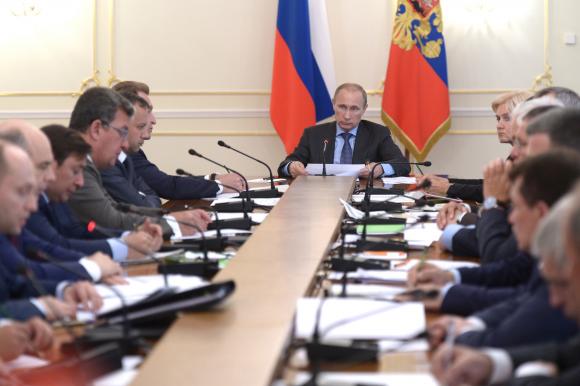



President Barack Obama, the European Union, and Rougemont Bankers, launched a Economic Cold war against Putin. Denis de Rougemont was titled ‘The Prince of European Culture’. He was at the first Bilderberg meeting, and is considered a co-founder of the European Union. Frederich the Great granted the Rougemonts of Neufchatel a title of old nobility when he came to this area in Switzerland.
Rougemont was the Director of Congress of Cultural Freedom that employed Writers and Artists against the Soviet Block. There is a creative subconscious that may have created a psychic force that brought many to a vortex that a core group created, and was like a psychic internet. The Roza Mira of Russian is sustained outside this Western Vortex, but, subliminal messages are being exchanged by what you might call Art Angels.
This question needs to be asked…..Was Thomas Pynchon recruited by the CIA? Pynchon’s ‘Under the Rose’ is a study in surrealism and espionage. Duchamps, Pynchon, and Rougemont, could have had some very interesting conversations on what makes the world tick.
If Mary Ann and Thomas were married, then he is kin to the artist Rosamond, the Bentons, and the Grand Master of the Swan Brethren who signed his name with the image of a rose. We are gathering in the rose garden on Alpenglow.
Jon Presco
http://www.pynchon.pomona.edu/slowlearner/rose.html
The Rosemondts were Swan Brethren. Only members of the Dutch Royal Family can be members today. They wear a broach that depicts a closed rose with the word SICUT that is from the Torah.
2:2. As the lily among thorns, so is my love among the daughters.
Sicut lilium inter spinas sic amica mea inter filias
Godschalk Rosemondt appears to have been the Grand Master of the Swan Brthren because he signs his name with an image of the same rose, but fully open. I believe he represents the revived Merovingians of Toxandria. Is he Lowhengrin of the Grail? Did the Rosamond family go to Jerusalem in search of the secret of eternal life. Did they find it? Did they lose this secret I was destined to reborn?
Moon = Rosamon
Rose Selavy + Sara Moon
Posted on December 4, 2011 by Royal Rosamond Press
The really famous world artist, Marcel Duchamp, dressed in drag and called himself ‘Rose Selavy’. When he came to America, Vogue magazine did an article about him, and exposed him to celebrity status – American Style – where he lay his famous signature on his fans and other items in order to generate more fame – and money! This inspired Duchamp to render a check to pay for his dental work. His dentist took this check as payment understanding it would be famous one day and worth more the the cost of his work.
When Christine Roosamoon died, she left behind thousands of unsigned lithographs. Stacey Pierrot petitioned the probate court for an Estate Seal in order to apply the ROSAMOND signature from the Land of the Dead. This Seal of the Dead was a metal object that was applied to a the lower right hand corner of these prints, and the paper was raised up in a intaglio manner to make an embossed signature that can be read by the blind. This made Pierrot an Art Check Writer, who loves her bank! How can she blame Mr. Sara Moon for his attachements, his, blood-sucking?
Duchamp was a friend of Denis De Rougemont ‘The Prince of European Culture’ and co-founder of the European Union, that is rewriting its Constitution in order to keep the European Economy from collapsing. Rougemont may be our kinsfolk.
Sane folk understand the Banks of the World committed massive fraud on the people, while stupid Republican want to believe the Poor Parasitical People are to blame. This is because they are into Stupid Voo-Doo Economics, where we find Mr. Lucky Jesus handing out autographs like crazy to his – Chosen Ones!
Vogue refused to put Duchamp’s painting they commissioned on the cover of their magazine. Did in of Rena’s siters appear in Vogue? How about Steven Silverstein’s images? Did Duchamp understand fashion models were all the vogue, and thus he became one?
Jon Presco
Copyright 2011
Pynchon on “Under the Rose”
In reference to “Under the Rose” in his Slow Learner introduction, Pynchon details three major ideas related, but not restricted, to writing. First, he deals with the notion of ignorance. [“Ignorance is not just a blank space on a person’s mental map. It has contours and coherence, and for all I know rules of operation as well”(p. 15).] Pynchon pilfered Baedeker’s guide to Egypt for material for “Under the Rose,” and in this admission addresses plagarism, the need to corroborate one’s data, and the importance about writing of what one knows while realizing what one does not know. He then notes that a “shadowy” sense of history led to the question underlying the story: “is history personal or statistical?”(p. 18). Finally, Pynchon suggests the influence of his understanding of Surrealism at the time he wrote “Under the Rose” upon the work. He criticizes his lack of management of the diverse elements combined within the frame of “Under the Rose.”
Commentary
Things “under the rose,” or sub rosa, are prevalent in Pynchon. These terms are used in V., The Crying of Lot 49 and Gravity’s Rainbow. Espionage is the most obvious system of secrecy in this short story. A variety of elements or systems may be recognized as sub-versions of the rose. Victoria Wren’s sexual aura (bud or bloom?) is paralleled to the Yorkshire sunset which reminds Porpentine of Home–but it is under the Egyptian sun that the English Porpentine feels exposed to the “danger” of becoming Eastern. Her sexuality is also linked to religious love, under which Porpentine’s sense of morality tends towards a general regard for humanity as opposed to an identification with individuals. Porpentine notes that his own generation “has budded, bloomed, and, sensing some blight in the air, folded its petals up again like certain flowers at sunset”(p. 114). Pynchon uses vocabulary of location such as the “rue de Rosette,” the “Rosetta arm” of the Nile and the “Quartier Rosetti.” Spying, sexuality, issues of Imperialism and the subaltern, systems of faith and morality (in particular, related to a Christian model), time and spatial orientation are all themes which Pynchon develops in his later works. In many ways, “Under the Rose” may be read as a type of allegory in which Porpentine the protagonist tries to protect himself from decadence as he struggles to understand the system under which he is living.
Duchamp gave a “loose” translation of L.H.O.O.Q. as “there is fire
down below” in a late interview (Schwarz 203). Steefel points out
that, when spoken in English, L.H.O.O.Q. sounds like “LOOK” “
Denis de Rougemont was a good friend of Marcel Duchamp, the surrealist, who created a fictional character, Rose Selavy. Another surrealist, Philippe de Chérisey, forged the Priory de Sion documents – as a prank! Here is an original Merry Prankster!
“Orange Sunshine reads so much like classic Thomas Pynchon—with its mind-bending and hilarious tale of a secret society of mystic surfers who bomb Southern California with LSD—that the reader has to wonder: Is ‘Nick Schou’ a pseudonym?”—Mike Davis, author of City of Quartz, Planet of Slums, and In Praise of Barbarians
It’s a California reminiscent of the one Tom Wolfe depicted in “The Pump House Gang” and “The Electric Kool-Aid Acid Test,” a place that stands in sharp contrast to the capitalistic conformity of the “Midol America” that Mr. Pynchon had suggested would arrive in the Reaganite ’80s. The hero of “Inherent Vice” worries that “the Psychedelic Sixties, this little parenthesis of light, might close after all, and all be lost, taken back into darkness,” that “everything in this dream of prerevolution was in fact doomed to end,” with the “faithless, money-driven world” reasserting “its control over all the lives it felt entitled to touch, fondle and molest.”
Russia fought back on Wednesday over new U.S. and EU sanctions imposed over Ukraine, where fighting between Moscow-backed rebels and government troops has intensified since a Malaysian airliner was shot down.
The worst confrontation between Moscow and the West entered a new phase this week since the United States and European Union took by far the strongest international steps yet against Moscow over its support for Ukraine’s rebels.
New EU and U.S. sanctions unveiled on Tuesday restrict sales of arms and equipment for the oil industry, while Russian state banks are barred from raising money in Western capital markets.
Moscow called the sanctions “destructive and myopic” and said Europe and the United States would suffer. On Wednesday it banned imports of Polish fruit and vegetables and said it might expand the ban to the entire EU. Russian banks said they would seek financing in Asia. Novatek, a big Russian gas company that works with French firm Total, said it was studying the impact of sanctions on its international joint ventures.
On the ground in Ukraine, heavy fighting has been taking place near the site where Malaysian flight MH17 crashed into wheat and sunflower fields on July 17, shot down by what Washington and Brussels believe was a missile supplied by Russia.
Thirty-six books and several hundred refereed articles. His most recent book is The Left Strikes Back (Boulder, CO: Westview Press, 1998).
Frances Stonor Saunders, Who Paid the Piper: The CIA and the Cultural Cold War (London: Granta Books), £20.
This book provides a detailed account of the ways in which the CIA penetrated and influenced a vast array of cultural organizations, through its front groups and via friendly philanthropic organizations like the Ford and Rockefeller Foundations. The author, Frances Stonor Saunders, details how and why the CIA ran cultural congresses, mounted exhibits, and organized concerts. The CIA also published and translated well-known authors who toed the Washington line, sponsored abstract art to counteract art with any social content and, throughout the world, subsidized journals that criticized Marxism, communism, and revolutionary politics and apologized for, or ignored, violent and destructive imperialist U.S. policies. The CIA was able to harness some of the most vocal exponents of intellectual freedom in the West in service of these policies, to the extent that some intellectuals were directly on the CIA payroll. Many were knowingly involved with CIA “projects,” and others drifted in and out of its orbit, claiming ignorance of the CIA connection after their CIA sponsors were publicly exposed during the late 1960s and the Vietnam war, after the turn of the political tide to the left.
U.S. and European anticommunist publications receiving direct or indirect funding included Partisan Review, Kenyon Review, New Leader, Encounter and many others. Among the intellectuals who were funded and promoted by the CIA were Irving Kristol, Melvin Lasky, Isaiah Berlin, Stephen Spender, Sidney Hook, Daniel Bell, Dwight MacDonald, Robert Lowell, Hannah Arendt, Mary McCarthy, and numerous others in the United States and Europe. In Europe, the CIA was particularly interested in and promoted the “Democratic Left” and ex-leftists, including Ignacio Silone, Stephen Spender, Arthur Koestler, Raymond Aron, Anthony Crosland, Michael Josselson, and George Orwell.
The CIA, under the prodding of Sidney Hook and Melvin Lasky, was instrumental in funding the Congress for Cultural Freedom, a kind of cultural NATO that grouped together all sorts of “anti-Stalinist” leftists and rightists. They were completely free to defend Western cultural and political values, attack “Stalinist totalitarianism” and to tiptoe gently around U.S. racism and imperialism. Occasionally, a piece marginally critical of U.S. mass society was printed in the CIA-subsidized journals.
What was particularly bizarre about this collection of CIA-funded intellectuals was not only their political partisanship, but their pretense that they were disinterested seekers of truth, iconoclastic humanists, freespirited intellectuals, or artists for art’s sake, who counterposed themselves to the corrupted “committed” house “hacks” of the Stalinist apparatus.
It is impossible to believe their claims of ignorance of CIA ties. How could they ignore the absence in the journals of any basic criticism of the numerous lynchings throughout the southern United States during the whole period? How could they ignore the absence, during their cultural congresses, of criticism of U.S. imperialist intervention in Guatemala, Iran, Greece, and Korea that led to millions of deaths? How could they ignore the gross apologies of every imperialist crime of their day in the journals in which they wrote? They were all soldiers: some glib, vitriolic, crude, and polemical, like Hook and Lasky; others elegant essayists like Stephen Spender or self-righteous informers like George Orwell. Saunders portrays the WASP Ivy League elite at the CIA holding the strings, and the vitriolic Jewish ex-leftists snarling at leftist dissidents. When the truth came out in the late 1960s and New York, Paris, and London “intellectuals” feigned indignation at having been used, the CIA retaliated. Tom Braden, who directed the International Organizations Branch of the CIA, blew their cover by detailing how they all had to have known who paid their salaries and stipends (397-404).
Rrose Sélavy, or Rose Sélavy, was one of the pseudonyms of artist Marcel Duchamp. The name, a pun, sounds like the French phrase “Eros, c’est la vie”, which translates to English as “eros, that’s life”. It has also been read as “arroser la vie” (“to make a toast to life”).
Sélavy emerged in 1921 in a series of photographs by Man Ray of Duchamp dressed as a woman. Through the 1920s, Man Ray and Duchamp collaborated on more photos of Sélavy. Duchamp later used the name as the byline on written material and signed several creations with it.
Duchamp used the name in the title of at least one sculpture, Why Not Sneeze, Rose Sélavy? (1921). The sculpture, a type of readymade called an assemblage, consists of an oral thermometer, a couple dozen small cubes of marble resembling sugar cubes inside a birdcage. Sélavy also appears on the label of Belle Haleine, Eau de Voilette (1921), a readymade that is a perfume bottle in the original box. Duchamp also signed his film Anemic Cinema (1926) with the Sélavy name.
From 1922 the name Rrose Sélavy also started appearing in a series of aphorisms, puns and spoonerisms by the French surrealist poet Robert Desnos. Desnos tried to portray Rrose Sélavy as a long lost aristocrat and rightful queen of France. Aphorism 13 paid homage to Marcel Duchamp: “Rrose Sélavy connaît bien le marchand du sel” [in English: “Rrose Sélavy knows the merchant of salt well”; in French the final words sound like Mar-champ Du-cel — Duchamp’s compiled notes are titled ‘Salt Seller’]. (Note that the ‘salt seller’ aphorism – “mar-chand-du-sel” – is a phonetic rearrangement of the syllables in the artist’s actual name: “mar-cel-du-champ.”) In 1939 a collection of these aphorisms was published under the name of Rrose Sélavy, entitled Poils et coups de pieds en tous genres.
The inspiration of the name Rrose Sélavy has been viewed to be Belle da Costa Greene, J.P. Morgan’s librarian of The Morgan Library & Museum (formerly The Pierpont Morgan Library) who, following his death, became the Library’s director, working there for a total of forty-three years. Empowered by J.P. Morgan, and then by his son Jack, Greene built the collection buying and selling rare manuscripts, books and art.[1]
The late Ilmar Laaban – an Estonian poet, lecturer, polyglot and intellectual who died in exile in Sweden, who is often called “the father of Estonian surrealism”, wrote a collection of poetry called “Rroosi Selaviste” in Estonian that is based on wordplay and puns. Rroosi Selaviste (published 1957) is without a doubt one of his major accomplishments – a playful homage to his native tongue that not only shows the suppleness of the Estonian language, but also showcases Laaban’s virtuosity as a wordsmith.
Niandra LaDes, an alter ego by John Frusciante, was based on Rrose Sélavy. This character is also featured on the cover of Frusciante’s 1994 album Niandra LaDes and Usually Just a T-Shirt, which is a screenshot from a film by Frusciante’s then-girlfriend, Toni Oswald. This film remains unreleased, though a tradition among the avant-garde is to show the film in the proximity of items bearing a similar resemblance to a Duchampian “fountain”. [2
You know, I like signing all those things – it devalues them,” Duchamp confided to Richard Hamilton at the Pasadena Art Museum. (Tomkins 1965, p. 68.) A retrospective of his work had just opened (1963) and without reluctance Duchamp spent the morning signing papers, posters and other objects. His fame in America was greater than ever, and as Duchamp recalled himself he would sign anything in those days. (cf. Judovitz 1995, p. 162.) Many more shows were put together in the years to follow. Vogue interviewed Duchamp, museums organized round table discussions where Duchamp himself would frequently show up, and slowly a body of literature emerged that vainly tried to pin down the meaning of his work.
A little over a year after Pasadena, the same ritual took place: a show opened at the Cordier & Ekstrom Gallery in New York and an unknown man entered.(1) Philippe Bruno, more of a groupie than an art collector, had cut out all newspaper reviews of the show and pasted them in his copy of the show’s catalogue. If Duchamp could sign this please, maybe on the blank check that was attached with a paperclip to the page where the Tzanck Check was reproduced (facing L.H.O.O.Q.)…
http://www.pynchon.pomona.edu/slowlearner/rose.html
Her sexuality is also linked to religious love, under which Porpentine’s sense of morality tends towards a general regard for humanity as opposed to an identification with individuals. Porpentine notes that his own generation “has budded, bloomed, and, sensing some blight in the air, folded its petals up again like certain flowers at sunset”(p. 114). Pynchon uses vocabulary of location such as the “rue de Rosette,” the “Rosetta arm” of the Nile and the “Quartier Rosetti.”
“Under The Rose” in Slow Learner:
“An alignment like this, he felt, could only have taken place in a Western World where spying was becoming less an individual than a group enterprise, where the events of 1848 and the activities of anarchists and radicals all over the Continent seemed to proclaim that history was being made no longer through the Virtù of single princes but rather by man in the mass; by trends and tendencies and impersonal curves on a lattice of pale blue lines. […] For he and Moldweorp [who works nominally for the Germans], Porpentine knew, were cut from the same pattern: comrade Machiavellians, still playing the games of Renaissance Italian politics in a world that had outgrown them.” (p.107)
“It was no longer single combat. Had it ever been? Lepsius, Bongo-Shaftsbury, all the others, had been more than merely tools or physical extensions of Moldweorp. They were all in it; all had a stake, acted as a unit. Under orders. Whose orders? Anything human? He doubted: like a bright hallucination against Cairo’s night-sky he saw (it may have been only a line of clouds) a bell-shaped curve, remembered perhaps from some younger F.O. operative’s mathematics text. Unlike Constantine on the verge of battle, he could not afford, this late, to be converted at any sign. Only curse himself, silent, for wanting so to believe in a fight according to the duello, even in this period of history. But they — no, it — had not been playing those rules. Only statistical odds. When had he stopped facing an adversary and taken on a Force, a Quantity?” (pp.134-35)
Duchamp gave a “loose” translation of L.H.O.O.Q. as “there is fire
down below” in a late interview (Schwarz 203). Steefel points out
that, when spoken in English, L.H.O.O.Q. sounds like “LOOK” “
De Rougemont of Lloyds
Posted on August 9, 2013 by Royal Rosamond Press
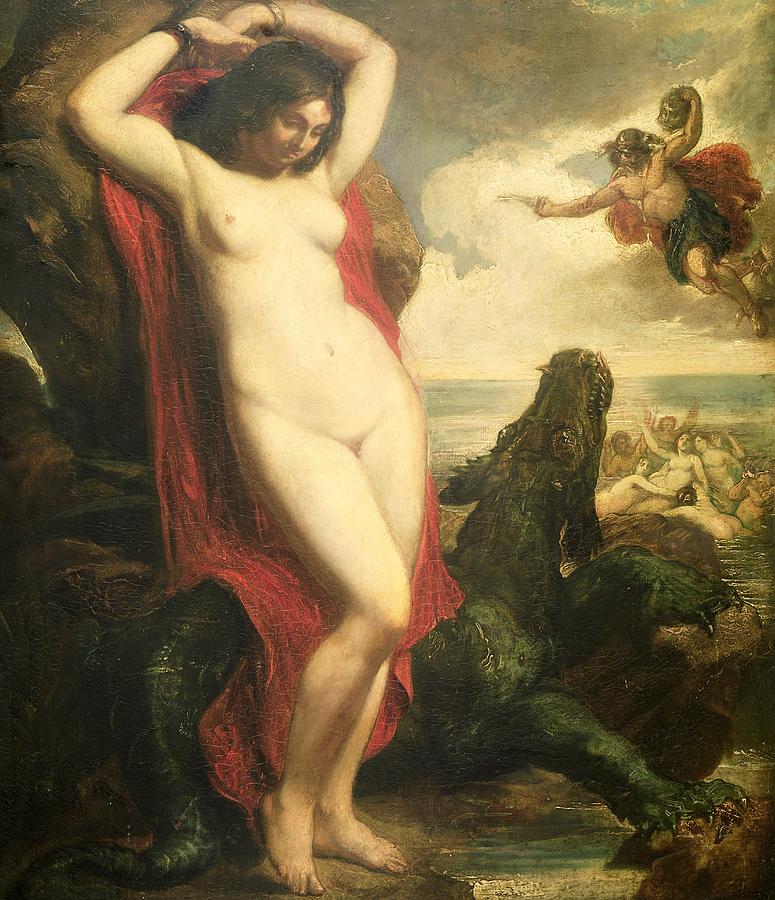


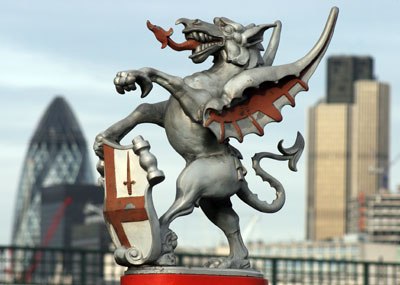
The cote of arms of Lloyd’s contains the cross and sword of Saint George who saved a fair maiden from a dragon, and thus the dragon of the City of London, the wealthiest place on earth. I believe the Rougemont family of Lloyd’s springs from the Noble_Order_of_Saint_George_of_Rougemont.
Jon
http://www.oocities.org/londonpassd/
http://en.wikipedia.org/wiki/Noble_Order_of_Saint_George_of_Rougemont
Herbert de Rougemont of Lloyd’s of London
Herbert de Rougemont of Lloyd’s of London
http://www.aadamson.co.uk/serv09.htm
http://en.wikipedia.org/wiki/Swiss_Re
The coat of arms of Llloyd’s of London contains the same Knight
Templar cross and sword that we see in the City of London coat of
arms. The modern buildings of Lloyd’s of London, and Swiss Re,
dominate the heart of the City of London where Templars allegedly
controlled Britian’s banking, and from them rose the Gnomes of
Zurich Switzerland. This merger may have only taken place in the
cityscape above, where the dome of Swiss Re is in back of the
Lloyd’s of London building. Together, they make a city of tomorow, a
global city that gathers together all the Hugenot Banking families
whom fled to Geneva, and then England. The Herbert de Rougemont
family was one of them. My Huguenot Rougemont ancestors lived in
Basel where Swiss Re has its roots, and then fled to England and
Canada.
Herbert de Rougemont was there in the beginning of Lloyd’s. His
genealogy says he was an underwriter who lived in Craven Hill
Gardens and had six servants. He is the great grandfather of Sir
Michael John de Rougemont Richardson whose mother, Audrey de
Rougemont, married Arthur Wray Richardson. The Rougemont home later
became the Hempel Hotel.
Jon Presco
Copyright 2006
http://www.hotels-compare.com/london-hotels/hempel-hotel-london/
Audrey de Rougemont Born: 2 Jun 1905 – Marr: – Arthur Wray
Richardson Died:
Arthur Wray Richardson Born: – Marr: – Died: – Father: Mother: Other
Spouses: Wife
Audrey de Rougemont Born: 2 Jun 1905 – Died: – Father: Herbert
Edward de Rougemont Mother: Edythe Caroline SaundersOther Spouses:
Children
1. Michael Richardson Born: Private – Died: –
2. Patrick Brian Richardson Born: Private – Died: –
http://members.ozemail.com.au/~rob8/gp675.html
http://worldconnect.rootsweb.com/cgi-bin/igm.cgi?
op=GET&db=settlej01&id=I4601 ·
Herbert de ROUGEMONT · Sex: M · Birth: 1833 in Highgate, Middx ·
Death: 1916 · Occupation: Underwriter and Insurance Agent ·
Living 31 Craven Hill Gardens, Paddington 1901. 6 servants
Father: Dennis Alexander ROUGEMONT b: 30 NOV 1802 Mother: Jane Grant
GLENNIE b: 1801 in LondonMarriage 1 Isabella Louisa DANIELL b: 1842
Married: JUN 1869 in Kensington Children Herbert ROUGEMONT b: 3 AUG
1870 in Carshalton, Surrey Isabella ROUGEMONT b: 1871 in Carshalton,
Surrey Dennis L ROUGEMONT b: 1873 in Carshalton Mabel ROUGEMONT b:
1875 in Carshalton Margaret J ROUGEMONT b: 1878 in Paddington Sybil
E ROUGEMONT b: 1879 in Paddington Alice Mary ROUGEMONT b: 1880 in
Paddington
http://www.londontown.com/LondonHotel/The_Hempel/The_Hempel/
The Hempel 31-35 Craven Hill Gardens, W23EA The Hempel hotel is a
stunning Boutique hotel located in west London’s beautiful Craven
Hill Gardens. Created by acclaimed British designer, Anouska Hempel
this hotel is both Stunning and refined, whilst modern and eclectic.
With accommodating staff and renowned chefs, this hotel truly is a
haven of bliss. A memorable experience will be had by all.
“ROUGEMONT Herbert de Of Lloyds, article in Chambers”
In November 1996, the Corporation acquired, through a United Kingdom
holding company, Capital Re (UK) Holdings, 100% of the issued shares
of Tower Street Holdings Limited (now known as RGB Holdings, Ltd.),
the holding company for RGB Underwriting Agencies Ltd. (“RGB”). RGB
is a managing agency and presently manages five syndicates operating
in the Lloyd’s of London (“Lloyd’s”) insurance market. In November
1997, RGB Holdings, Ltd. acquired 100% of C.I. de Rougemont Group
Limited, the ultimate holding company for C.I. de Rougemont & Co.
Ltd. (“CIDR”), another Lloyd’s managing agency. CIDR manages two
syndicates, one marine and the other non-marine.
http://www.limit.co.uk/Internet/syndicates/s2000/contact/people/Rowli
ngMartin.htm
1685, Geneva housed many of the Huguenot refugees chassed out by
Louis XIV. A good number of today’s private bankers in Geneva are
descendants of the French Protestant immigrants.
The Huguenot network of bankers abroad remained of considerable
assistance to Samuel Bernard during the period of his financial
ascendancy, while he was the ‘banker of the Protestants’ in exile.
Some of the Huguenot bankers in exile achieved astonishing pre-
eminence, witness the careers of two of them who became founding
directors of the Bank of England. In order to assess the
significance of the Huguenot banking exodus, however, we need not
merely to look at French nationals abroad, but at Genevans. Many of
the Genevan bankers were French-born Huguenots, and Geneva took full
economic advantage of its neutrality during the War of the Spanish
Succession. There is no doubt at all that Huguenots and Genevans
were primary investors in English stocks in the early eighteenth
century. The number of Protestant bankers at Paris in the later
eighteenth century remained totally disproportionate to the number
of Protestants within the population as a whole.
Jane O’Beirne’s letters are a treasure trove preserved by the La
Touche family all these years and never before published. Jane, the
granddaughter of an Earl, helped educate and befriended Anne
Caroline Tottenham, the future Mrs. John David La Touche. This Irish
family with Huguenot roots were important bankers and leaders; major
investors in establishing the Bank of Ireland, still the biggest
bank in Ireland and now headquartered in the building that housed
the Irish Parliament which was dissolved in 1800 after the
disastrous rebellion of two years before. Jane’s letters are full of
names that will become famous in history in Ireland and the United
States. We are grateful to David A. La Touche, Ph.D., to his
ancestors and especially to his great-great grandmother, Anne
Caroline La Touche, for preserving these letters.
1685, Geneva housed many of the Huguenot refugees chassed out by
Louis XIV. A good number of today’s private bankers in Geneva are
descendants of the French Protestant immigrants.
Lloyd’s of London is the world’s leading insurance market, its
underwriting syndicates providing a wide range of insurance cover to
the marine, offshore and aviation industries, in addition to
commercial and domestic sectors.
The Lloyd’s Agency system is a worldwide network of companies which
are selected and appointed by the Corporation of Lloyd’s, to provide
surveying and investigation services and to supply local information
on events or occurrences which may be of interest to Lloyd’s
Underwriters.
In the event of a loss or damage which may give rise to a claim on a
Marine Insurance Policy or Underwriters at Lloyd’s, the Lloyd’s
Agent is able to provide invaluable assistance in protecting the
interests of both Underwriters and the Assured.
A Adamson & Company are the appointed Lloyd’s Agents at Glasgow,
also having a sub-agency at the port of Leith. We also undertake a
wide range of surveys in addition to those required in connection
with insurance claim purposes – these include verifying the stowage
and securing of cargo, out-turn inspections, towage approval
surveys, and hatch/hold and vessel condition surveys.
http://en.wikipedia.org/wiki/Swiss_Re
Swiss Re was founded December 19, 1863 by the Helvetia General
Insurance Company in St. Gallen, the Schweizerische Kreditanstalt
(Credit Suisse) in Zurich and the Basler Handelsbank in Basle.
Swiss Re is the world’s largest reinsurer, now that it has acquired
GE Insurance Solutions (Ligi 2006). Founded in 1863, Swiss Re now
operates in more than 30 countries.
http://home-2.worldonline.nl/~aarde01/
Templars in England
The history of the Templars in England began when Hughes de Payens,
Grandmaster of the order visited the country in 1128 to raise men
and money for the crusade. The first house was in London and early
patrons include Earl Robert de Ferrers, Bernard de Balliol, King
Stephen of England and Queen Matilda. Henry II granted them land
across England, including some land by Castle Barnard on the River
Fleet where they built a round church. They were also given the
advowson of St Clement Danes. In 1184 their headquarters was
transferred to the New Temple where once again they built a round
church.
JPMorgan Cazenove is one of the UK’s leading investment banks.
Jointly owned by JPMorgan and Cazenove, it combines innovative and
impartial advice with a broad range of capabilities and proven
execution skills. It is committed to providing its clients with the
highest quality of services based on a deep understanding of their
needs which has been built up over many years.
Headquartered in London, it has offices in Hong Kong, Beijing,
Singapore, Shanghai, Frankfurt, Paris and New York as well as access
to JPMorgan’s extensive global network. It provides a full range of
investment banking services, including financial advice, M&A,
investor relations, debt and equity capital markets advice and
execution and equity research and distribution.
JPMorgan Cazenove is committed to acting as an effective link
between providers of capital and its commercial, industrial and
financial customers.
http://www.jpmorgancazenove.com/
Cazenove Group
Private CompanyIncorporated: 1954 as Casenove & Co.Employees:
1,134Sales: £292.9 million ($500 million) (2004 prorated)NAIC:
523110 Investment Banking and Securities Dealing; 522293
International Trade Financing
Cazenove Group plc is one of the United Kingdom’s oldest and most
venerable investment bankers, providing capital management and
equities and international market investment services to the
country’s elite. The company counts the Queen of England among its
clients, as well as nearly half of the country’s largest 100
companies. With a history reaching back to the early decades of the
19th century, Cazenove has been forced to undergo a sea-change at
the beginning of the 21st century in order to remain a competitive
banking force. Operated as a partnership for most of its more than
180 years, Cazenove converted to a corporation in 2001 and even
toyed with the idea of going public. Instead, at the beginning of
2005, the company spun off its investment banking business into a
joint venture with JPMorgan of the United States, creating JPMorgan
Cazenove Holdings. In this way, JPMorgan achieved an entry into the
dynamic London investment banking sector, while Cazenove obtained
the deep pockets and career perspective capable of attracting the
financial industry’s top talents. Nonetheless, soon after the launch
of the joint venture, the company announced the defection of three
of its senior members. The agreement also gives JPMorgan the right
to acquire full control of the joint venture as early as 2010.
Cazenove traditionally conducts most of its operations from its
London offices, and in the early 2000s the company closed a number
of its overseas offices, notably in India and Australia. Cazenove
maintains subsidiary offices in the United States, Germany, France,
China, Hong Kong, and South Africa. The group posted turnover of
£292.9 million ($500 million), prorated for the full year 2004 in
order to align itself with JPMorgan’s calendar year. Cazenove is led
by chairman David Mayhew, who joined as a partner in 1968.
Huguenot Origins in the 18th Century
Cazenove’s roots lay in the Huguenot exile, following the revocation
of France’s Edict of Nantes, which had established guarantees of
religious freedom for the country’s Protestants in 1685. Many
Huguenots moved to Geneva, where they became leading financiers. By
the late 18th century, the Huguenot population had begun to emigrate
to other parts of Europe and to the United States. England, already
the financial center of Europe, attracted many Huguenot banking
families, notably the Cazenove family, led by James Casenove.
James Casenove’s youngest son, Philip, was born in 1799 and entered
the financial world in 1819, joining brother-in-law and fellow
Huguenot John Menet at his brokerage. By 1823, Philip Casenove had
become a partner in that business, marking the beginning of the late
Cazenove Group. Menet died in 1835, and Cazenove then formed a
partnership with Joseph Laurence and Charles Pearce.
In 1854, however, Philip Cazenove formed P. Cazenove & Co. in a
partnership with his son and nephew. That partnership quickly rose
to prominence, in large part because of its involvement in the
financial side of the railroad industry. Yet a part of Philip
Cazenove’s success was also attributed to his relationship with the
powerful Rothschild banking family, which served as a patron and
later as a financial partner in many of Cazenove’s transactions. In
1859, for example, Cazenove joined with the Rothschilds to act as a
broker for the raising of capital for the San Paulo Railway Company.
In 1862, the company served another important client, acting as
broker for the formation of the Bank of Hindustan. Cazenove’s
interests in India extended to the construction of the country’s
railroad industry. In the 1870s, the company served as broker for
His Highness the Nizam’s State Railway Company. In 1883, the company
helped raise funding for the launch of the Bengal Central Flotilla
Company, which operated a steamship service between Khoolna and
Burrisaul. Closer to home, Cazenove’s helped raise the funding for
the Atlantic Telegraph Company, launched in 1863, and the Great
Eastern Railway Company in 1868.
Through the end of the 19th century, Cazenove was involved in a
number of exotic transactions, such as the issuing of land mortgage
bonds in Russia in 1874, as well as the creation of the Metropolitan
District Railway Company, which built the London Underground. The
partnership’s reputation as a preeminent investment banker was
solidified when it acquired such prominent clients as the British
royal family. Indeed, into the 21st century, the Queen of England
remained a steadfast Cazenove client.
Weathering Railway Nationalization in the 1940s
Philip Cazenove died in 1880, leaving behind one of England’s most
important financial houses. The Cazenove family remained prominent
members of the partnership through the 19th and 20th centuries,
during which the firm continued to bring in new partners. One of the
most important of these was Swainston Howeden Akroyd, who joined the
partnership in 1889. Considered one of the “fathers” of the London
Stock Exchange, Akroyd brought in his brother, as well as his name,
to the partnership, which became known as Cazenove and Akroyd.
By then, Cazenove had already established its rather exclusive
recruiting practices. Partners seemed more or less required to have
attended elite schools such as Eton or Winchester and to have been
members of the Brigade of Guards. The partnership also became famous
for its embrace of formality and tradition, enforcing highly
restrictive dress codes into the “casual dress” era of the 1990s and
2000s.
Cazenove made a number of acquisitions of other brokerage and
private banking firms in the early decades of the 20th century. The
partnership later extended its name to Cazenove Akroyds and
Greenwood & Co. in order to reflect its expanded form. Much of
Cazenove’s financial success had been linked to its longstanding
involvement in the British and worldwide railroad industry. Cazenove
had played a prominent role in the development of the British
railroads, which in turn were a major stimulant to the country’s
economic and industrial growth through the 19th century and into the
20th century. The British railroad system, like that of the American
railroad industry, had been largely built up and controlled by
private interests.
Into the 1940s, Cazenove’s fortunes remained entwined with the
railroad industry, notably with its involvement in the Butler-
Henderson Great Western Railway, as well as its dealings in railway
shares. Yet the outbreak of World War II, and the nationalization of
Britain’s railroad system, nearly spelled disaster for the Cazenove
partnership. As the London Times pointed out in an article in
1968: “Before the war it was said that
if the railways
disappeared, Cazenove would go bust. In fact, it has adapted itself
so well since nationalization that it is more powerful than ever.”
http://www.referenceforbusiness.com/history/Ca-Ch/Cazenove-Group-
plc.html
Jane O’Beirne’s letters are a treasure trove preserved by the La
Touche family all these years and never before published. Jane, the
granddaughter of an Earl, helped educate and befriended Anne
Caroline Tottenham, the future Mrs. John David La Touche. This Irish
family with Huguenot roots were important bankers and leaders; major
investors in establishing the Bank of Ireland, still the biggest
bank in Ireland and now headquartered in the building that housed
the Irish Parliament which was dissolved in 1800 after the
disastrous rebellion of two years before. Jane’s letters are full of
names that will become famous in history in Ireland and the United
States. We are grateful to David A. La Touche, Ph.D., to his
ancestors and especially to his great-great grandmother, Anne
Caroline La Touche, for preserving these letters.
http://www.tolliss.com/ancestry.php?rootid=I4601
http://www.aadamson.co.uk/serv09.htm
Marine Society to merge with Sea Cadets
By David OslerJune 03 2004
Lloyds List
THE Marine Society is to lose its independence and merge with the
Royal Navy-controlled Sea Cadets, after being forced to discontinue
its trainingship activities for financial reasons.Both decisions –
announced at the organisation’s annual meeting in Londonyesterday,
which was addressed by the Princess Royal – appear to
reflectfinancial realities determined by the continuing decline in
UK seafarernumbers.The accounts given to attendees showed that
subscription and donationincome totalled just ?43,700 ($80,320) last
year.Expenditure of training activities alone – most notably on the
vessel TSEarl of Romney – was over 10 times that figure.But although
Earl of Romney offered basic sea experience to more than 560adults
and young people last year, the 1957-built vessel is to be paid
offthis year, and not replaced.There is no immediate financial
crisis, given that the organisation hasbuilt up fixed assets of
around ?8.8m in the centuries since its foundationin 1756.However,
chairman Clive de Rougemont admitted: “Over the past year,
thecouncil has been doing much soul-searching over the future of the
society.”It would be “problematical to say the least” to find the
cash for a newtraining ship, and a radical solution was needed.Thus
it had been decided to pool resources with another
complimentarycharity and to merge with the Sea Cadet Association.The
new organisation will be called The Marine Society and Sea Cadets,
hesaid.
http://www.marine-society.org/Marine%20Society/Content/Welcome
http://en.wikipedia.org/wiki/The_Marine_Society
http://www.sname.org/newsletter/news0806mid.htm#Item9
Yahoo! Groups Links
To visit your group on the web, go to:
http://groups.yahoo.com/group/Templar-de-Rosemont/
Noble Order of Saint George of Rougemont
From Wikipedia, the free encyclopedia
Jump to: navigation, search
The Confraternity of the Knights of Saint-George of Burgundy
Contents
[hide] 1 History 1.1 Origin (1390)
1.2 The Confraternity (1430-1484)
1.3 The Equestrian Order (1485-1788)
1.4 From the French Revolution to the Abolition (1789-1824)
1.5 From the private association to the Apostolic association (1825~2004)
1.6 The Confraternity of the Knights of Saint-George of Burgundy (2004 – present)
2 Sources
History[edit source]
Origin (1390)[edit source]
The noble Brotherhood of Saint George was created in 1390 by two gentlemen of Franche-Comté to honor the relics of the megalomartyr that had been brought back from the Holy Land. Philibert de Mollans, squire to the Duke of Burgundy, was its main driving force. His second-in-command, Jehan d’Andelot, was the son of Sir Jean of Andelot-les-Sallins, and of Marie of Usier, Lady of Vaudrey and Rougemont, where lived the precursors and was held the annual chapter.
The Confraternity (1430-1484)[edit source]
By the time Philip the Good created the Order of the Golden Fleece, on 10 January 1430, there were 24 holders: after the Grand-Master came immediately His Majesty William III of Vienna, in order of precedence. The governor gathered around 1435 or 1440 a certain number of Knights to honor the relics in a chapel that he owned close to the city of Rougemont. Then he decided to celebrate every year the day of the St. George, patron saint of the nobility because he had also been a knight, and was often represented riding his horse with a spear.
The qualities required were sixteen quarterings of nobility, catholic religion, birth in “Franche Comté”, to be sixteen years of age and to donate 300 livre.
The governor general was elected for life by the knights. The other officers were a prelate, a chancellor, a treasurer and two secretaries.
Since then, the most important lords of the region wanted to be accepted in the confraternity and gathered every year at the Chapel of Rougement on 22 April, to celebrate the Day of the Saint.
At that time their insignia was a medal of St. George killing the dragon, suspended from a gold chain.
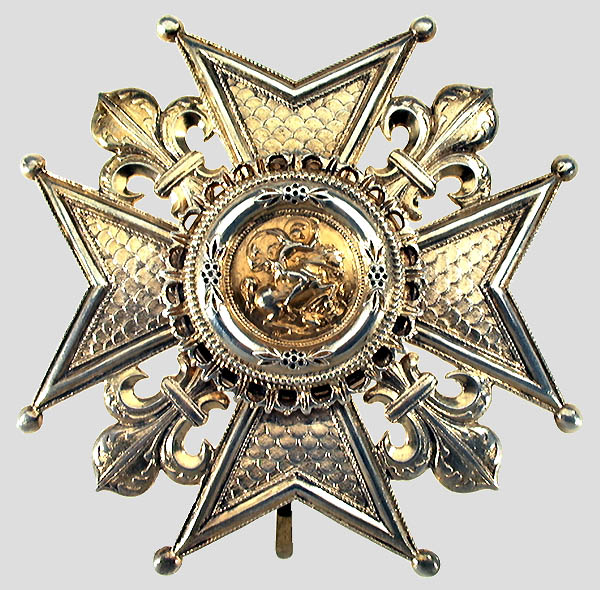
Philip the Good authorised the confraternity to wear the medal suspended from a red ribbon identical to the one of the Golden Fleece.
The Marine Society and Rougemont
Posted on August 9, 2013 by Royal Rosamond Press
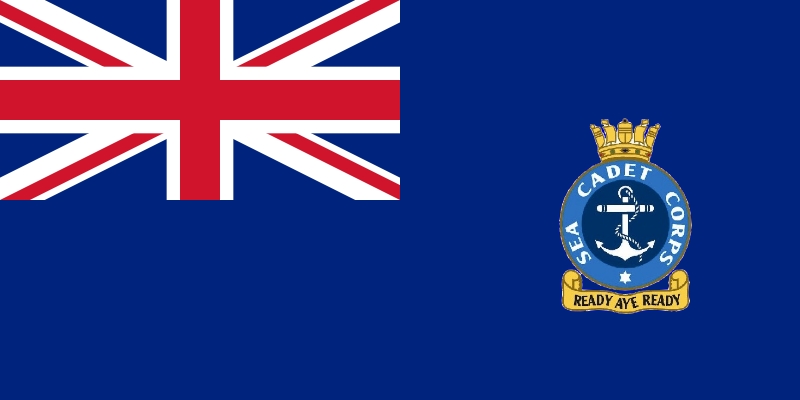

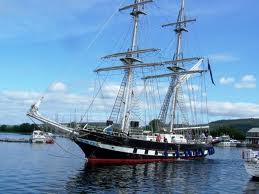

Clive de Rougemont was head of the Sea Cadets. He is of a Huguenot banker ancestry that fled with much of France’s wealth after the repeal of the Edict of Nantes. This family founded Lloyd’s of London. I may be kin to this family.
Jon Presco
Marine Society to merge with Sea Cadets
By David Osler
June 03 2004 Lloyds List
THE Marine Society is to lose its independence and merge with the Royal
Navy-controlled Sea Cadets, after being forced to discontinue its training
ship activities for financial reasons.
Both decisions – announced at the organisation’s annual meeting in London
yesterday, which was addressed by the Princess Royal – appear to reflect
financial realities determined by the continuing decline in UK seafarer
numbers.
The accounts given to attendees showed that subscription and donation
income totalled just ?43,700 ($80,320) last year.
Expenditure of training activities alone – most notably on the vessel TS
Earl of Romney – was over 10 times that figure.
But although Earl of Romney offered basic sea experience to more than 560
adults and young people last year, the 1957-built vessel is to be paid off
this year, and not replaced.
There is no immediate financial crisis, given that the organisation has
built up fixed assets of around ?8.8m in the centuries since its foundation
in 1756.
However, chairman Clive de Rougemont admitted: “Over the past year, the
council has been doing much soul-searching over the future of the society.”
It would be “problematical to say the least” to find the cash for a new
training ship, and a radical solution was needed.
Thus it had been decided to pool resources with another complimentary
charity and to merge with the Sea Cadet Association.
The new organisation will be called The Marine Society and Sea Cadets, he
said.
Practical and legal issues meant that a final timetable had yet to be drawn
up, but fusion was likely by the end of this year.
The merger will take the form of the transfer of Sea Cadet assets and
undertakings to the Marine Society.
The Queen, the society’s existing patron, will also act as patron of the
new organisation.
At yesterday’s meeting, the Princess Royal paid tribute to the work of both
the Marine Society and the Sea Vision campaign.
To the delight of trade union observers present, her speech noted that
while the government’s tonnage tax policy had strengthened the Red Ensign,
it had not boosted seafarer numbers.The Marine Society
From Wikipedia, the free encyclopedia
Jump to: navigation, search
The Marine Society was the world’s first seafarers’ charity. In 1756, at the beginning of the Seven Years’ War against France, Austria, Russia, Sweden and Saxony (and subsequently Spain and Portugal) Britain urgently needed to recruit men for the navy. Jonas Hanway (1712-1786), who had already made his mark as a traveller, Russia Company merchant, writer and philanthropist, must take the chief credit for founding the society which both contributed to the solution of that particular problem, and has continued for the next two and a half centuries to assist many thousands of young people in preparing for a career at sea.
Contents
[hide] 1 Formation
2 Incorporated by Act of Parliament
3 Hostilities cease, Education starts
4 After the Second World War
5 Notes
6 External links
Formation[edit source]
Plaque marking site of the foundation of The Marine Society
The Marine Society, the world’s oldest public maritime charity, was the brainchild of a group of London merchants and gentlemen, who first met at the King’s Arms Tavern, Cornhill, London on June 25, 1756 to discuss a plan to supply two or three thousand seafarers for the navy.[citation needed] Recruitment began immediately. Sponsors were sought and advertisements for volunteers appeared in newspapers and on the street:
“Notice is hereby given, that all stout lads and boys, who incline to go on board His Majesty’s Ships, with a view to learn the duty of a seaman, and are, upon examination, approved by The Marine Society, shall be handsomely clothed and provided with bedding, and their charges born down to the ports where His Majesty’s Ships lye, with all other proper encouragement.”
Ten men were duly clothed and delivered to ships of the King’s navy. In this small way began the work of The Marine Society. The main object of the charity when founded was sending unemployed or orphaned teenagers to sea as officers’ servants. The Royal Navy was estimated to need about 4,500 boys as servants during wartime. Approximately a thousand were ‘young gentlemen’ intending to be officers, and many of the remainder were supplied by the Society. As the boys were for the most part from non-seafaring families the Society probably provided a real increase of several thousand to the pool of naval recruitment. The Society also provided over ten thousand naval recruits with free clothing, which helped reduce the typhus problem.[1]
Incorporated by Act of Parliament[edit source]
The scheme really took off. By 1763, the Society had recruited over 10,000 men and boys; in 1772, such was its perceived importance in the life of the nation, it was incorporated in an Act of Parliament. Admiral Nelson became a stalwart supporter and trustee of the charity, such that by the time of the Battle of Trafalgar (1805) at least 15% of British manpower was being supplied, trained and equipped by The Marine Society. The relative professionalism of these men, the great British naval hero readily acknowledged, played a part in his victories.
Hostilities cease, Education starts[edit source]
But the end of hostilities meant that naval recruitment was no longer the nation’s first priority, although Admiral Boscawen was later to write: “No scheme for manning the navy, within my knowledge, has ever had the success as the Marine Society’s.”
Hanway now formulated plans for transferring boys to the merchant service on their discharge from naval ships and from then on, the Society was equally involved with both Royal and Merchant navies.
Early reports from commanding officers had indicated that the number of desertions might be reduced if boys equipped by the Society were given a period of training before being sent to sea.
Initially the Society hired a schoolmaster and bandmaster to teach some of the boys and in 1786 purchased a merchant ship the Beatty, which was converted to a training ship and renamed Marine Society. The Society thus became the first organisation in the world to pioneer nautical training for boys in its special school ship which was moored in the Thames between Deptford and Greenwich.
This example was followed in the nineteenth century by many other organisations in ports round the British Isles. From 1799 until 1918 The Admiralty provided a succession of training ships, the last two of which were renamed Warspite. In 1922 the Society commissioned HMS Hermione as the third Warspite. However the outbreak of the second world war forced the Society to evacuate the ship owing to the probability of air attack.
From 1756 to 1940 the Society recruited over 110,000 men and boys for the Royal Navy, the British East India Company and Merchant service. Records show that from 1756 to 1815 the charity provided some twelve percent of naval manpower, all the more valuable to the nation since each one was a volunteer.
After the Second World War[edit source]
After the Second World War, the Society concluded that there were by then sufficient facilities for sea-training provided by national authorities. It continued to provide sea-kits for many young seafarers and, where necessary, offered grants for their education, but in the 1950s the Society began to insist that cadets thus helped should have completed a good general education, obtaining a minimum of four GCE passes at O level. In this way The Marine Society pioneered what was subsequently accepted as standard practice for the entry of officers into the Merchant Navy.
Between 1940 and 1987, as the Society’s reserves increased, was not only able to help individual seafarers but also to make grants to many maritime charities. In 1981 it provided the base funds for the Marine Adventure Sailing Trust, a limited life investment trust fund, which enabled it to make further substantial grants to the Sea Cadet Corps, TS Foudroyant, Ocean Youth Club and other maritime youth charities.
In 1976 the Society amalgamated with various other maritime charities with similar aims, including the Incorporated Thames Nautical Training Trust (HMS Worcester), the Seafarers Education Service The Marine Society College of the Sea, the Sailors’ Home and Red Ensign Club, the Merchant Navy Comforts Service Trust and the British Ship Adoption Society. The merger of the Seafarers Education Service with The Marine Society at this time was hugely significant and helped to ensure the continued relevance of both operations. The SES consisted of The Marine Society College of the Sea and Seafarers Libraries, and had been inaugurated in 1919 by Albert Mansbridge who had earlier founded the Workers Educational Association. Both the College of the Sea and Seafarers Libraries continue to flourish today.
For the past 30 years,[2] the principal objectives of The Marine Society have been to facilitate and to provide practical and financial support for the education, training and well-being of all professional seafarers and to encourage young people to embark on maritime careers.
For many years The Marine Society has had strong ties with the Sea Cadet Corps, not only as benefactor and landlord to the SCA, but also by providing sea training opportunities for hundreds of sea cadets each year.
It was because of these ties plus the complementary objectives of the two charities and, more specifically, the mutual desire to introduce an element of Merchant Navy ethos to the Sea Cadet Corps, that the merger of the Sea Cadet Association with The Marine Society came about 30 November 2004. The new charity thereby created became known as The Marine Society & Sea Cadets.
As the UK’s largest non-profit maritime organisation, the Marine Society & Sea Cadets (usually abbreviated to MSSC) is the holding brand for the two distinct organisations: The Marine Society, and the Sea Cadets. It is based in a Victorian building close to the river Thames and adjacent to Lambeth Palace in central London.
The Marine Society continues as a charity involved in lifelong learning for maritime professionals.
Frederick C. de Rougemont is the son of Clive de Rougemont.1 He married Amelia Frances Albinia Roberts, daughter of Sir Hugh Ashley Roberts and Hon. Priscilla Jane Stephanie Low, on 6 February 2010 at St. George’s Chapel, Windsor Castle, Windsor, Berkshire, England.1
Citations
1. [S466] Notices, The Daily Telegraph, London, UK, 10 February 2010. Hereinafter cited as The Daily Telegraph.
Clive de Rougemont1
M, #419928
Last Edited=13 Mar 2010
Child of Clive de Rougemont
Frederick C. de Rougemont1
Hon. Priscilla Jane Stephanie Low was born on 4 September 1949.1 She is the daughter of Toby Austin Richard William Low, 1st Baron Aldington and Felicité Ann Araminta MacMichael.1 She married Sir Hugh Ashley Roberts, son of Rt. Rev. Edward James Keymer Roberts and Dorothy Frances Bowser, on 13 December 1975.1
Hon. Priscilla Jane Stephanie Low usually went by her middle name of Jane.1 She was educated at Cranborne Chase School, Dorset, England.1 She was educated at Westfield College, London, England.1 She was educated at Courtauld Institute of Art, The Strand, London, England.1 She was a curator in 1975 at Print Room, Royal Library, Windsor Castle, Windsor, Berkshire, England.1 From 13 December 1975, her married name became Roberts.1 She wrote the book Holbien, published 1979.2 She wrote the book Leonardo, published 1981.2 She wrote the book Master Drawings in the Royal College, published 1985.2 She was invested as a Member, Royal Victorian Order (M.V.O.) in 1985.1 She wrote the book Royal Artists, published 1987.2 She wrote the book A Dictionary of Michelangelo’s Watermarks, published 1988.2 She wrote the book A King’s Purchase, published 1993.2 She wrote the book Holbein and the Court of Henry VIII, published 1993.2 She wrote the book Views of Windsor, published 1995.2 She was invested as a Lieutenant, Royal Victorian Order (L.V.O.) in 1995.1 She wrote the book Royal Landscape, published 1997.2 She wrote the book Ten Religious Masterpieces, published 2000.1
Children of Hon. Priscilla Jane Stephanie Low and Sir Hugh Ashley Roberts
Sophie Jane Cecilia Roberts1 b. 28 Mar 1978
Amelia Frances Albinia Roberts1 b. 1982
“We were delighted to show our support for the Homes for Home project by the £300,000 grant as families play an important part in helping the recovery of injured personnel while they are in hospital. This significant grant demonstrates Lloyd’s Patriotic Fund’s continual commitment to the families of service men and women.”
Michael John de Rougement Richardson
Posted on August 9, 2013 by Royal Rosamond Press
Michael John de Rougement Richardson had a solidly upper-class education at Harrow and then Kent School in Connecticut. Then, in 1943 he was commissioned in the Irish Guards. Though twice wounded, he became adjutant to the First Battalion, and was demobbed as a captain.
George de Rougemont: “In 1791, it travels to England where it returns visit to his established banking brothers to London.””Although it had originally operated from offices in the Palais-Royal, in 1851 the CNEP took out a lease on the Hôtel Rougemont (the residence and offices of the banker Rougemont) and transferred its head office to 14 rue Bergère.””Here, too dwell the great bankers of the rues
Laffitte and Bergère and also the merry gentlemen of private means of the chaussée d’Antin. Rothschild and Fould, Rougemont de Lowemberg and Ganneron live here. In a word, here lies the Stock Exchange, Tortoni[103] and all that is connected with or dependent on them.”
Arthur Mallet b. 1821 d. 1891 & Anna de Rougemont de La Schadau Arthur MALLET est né le 21.01.1821 à Paris. Il est lui aussi banquier. Il épouse le 04.04.1847 à Paris 1er, Sophie Denise Anna du TEMPLE de ROUGEMONT. Il décède le 12.01.1891 et Anna le 22.05.1896, tous deux à Paris.
Sir Michael Richardson
Banker who advised Thatcher on her privatisation programme, but ended his career with a lifetime ban from City
ONCE KNOWN as “Mr Privatisation”, Sir Michael Richardson flew as high as any in the City during a 50-year banking career, working for the glittering names, advising Chancellors and Prime Ministers, and himself enjoying virtually celebrity status. And then in 2001 he was banned for life from doing business in the City “in any capacity”.
When Sir Evelyn de Rothschild recruited Richardson to be managing director of the merchant bank N. M. Rothschild in 1981, the chairman of rivals S. G. Warburg said it was the worst news he had had for a year. And Richardson soon showed why. Within a couple of months Rothschild was handling its first new issue for seven years, and the bank was beginning a period of domestic and international growth.
It was a propitious moment. Margaret Thatcher was embattled in her early and massively unpopular attempts to freeze the money supply, liberalise markets and remove the union noose from the necks of business. But by the time Richardson had arranged all the hunting prints and paintings in his plushly, pinkly carpeted office at Rothschilds, victory in the Falklands had given her the electoral security to push through a programme of privatisations that even she had not dared dream of when she first entered No 10.
Privatisations such as the gas, water and electricity industries, and the Big Bang in the City, would make Rothschilds several new fortunes, win Thatcher the gratitude of millions of small investor-voters, and turn Britain from the sickest to the healthiest of the European economies. As one of the chief deal- makers during these sell-offs, Richardson was intimate with the whole process.
Although he did not always concern himself with logistics — he had teams of people to worry about those — he became Thatcher’s favourite banker thanks to his support for her vision, his indeflectible outlook and his knowledge of how to gain the co-operation of the City. And as with most of Thatcher’s coterie of advisers in various fields, the admiration was mutual. “She has been a truly great Prime Minister,” Richardson said in 1990. “She has done more for the City and the country by creating free markets than anyone.”
Richardson’s zesty attitude to doing deals was similar to Thatcher’s attitude to running the country. He worked hard — usually at his desk by 8am — and followed his principles, but it had to be enjoyable too. So there were visits to the opera with the Thatchers, and one year the Richardsons spent Boxing Day at Chequers.
But as well as friendships with Cabinet Ministers such as Peter Walker, who organised the flotation of British Gas in 1986, Norman Lamont and other political standard bearers, Richardson’s charm and joie de travailler won him the personal loyalty of important private clients such as Lord King, with whom he had served in the Army in Palestine.
Another lucrative client was Lord Hanson, whom Richardson advised on the ballooning takeovers of London Brick in 1984 (£254 million), Imperial Group in 1986 (£2.6 billion) and, appropriately, Consolidated Gold Fields in 1989 (£3.5 billion). Richardson was also a friend of Asil Nadir, though his colleagues were more cautious than he about dealing with the proprietor of Polly Peck.
Born in London in 1925, the eldest of three sons, Michael John de Rougement Richardson had a solidly upper-class education at Harrow and then Kent School in Connecticut. Then, in 1943 he was commissioned in the Irish Guards. Though twice wounded, he became adjutant to the First Battalion, and was demobbed as a captain.
A flirtation with Cambridge quickly showed that the academic life was not for him, and in 1949 he began work for Harvey Drayton, working in the investment trust business for three years.
His true career began, however, when he joined Panmure Gordon as a junior partner in 1952. It was there that he first came across Robert Maxwell, when the firm acted in the flotation of Pergamon Press. Richardson claimed that they were not friends, but quarter of a century later, this time at Rothschilds, he acted again for Maxwell, whose Mirror Group he brought to market in 1991, and whose empire he tried to save, before it went belly-up in the Atlantic. Richardson was one of the first people telephoned by Kevin Maxwell when the news of his father’s disappearance came through, and he handled the request to the Stock Exchange to suspend the shares.
Richardson’s 19 years at Panmure Gordon were spent building a network of contacts, not least over lunches at the Savoy, where he was a director, and through the ultimate clique, the freemasons. In 1971 he moved to the stockbrokers Cazenove, and there — under his mentor Luke Meinertzhagen — he took part in important events such as the first sale of BP state shares, and relished battles such as the epic Grand Metropolitan/Watneys takeover, and the House of Fraser’s defence against the Lonrho takeover bid.
With his love of gossip, Richardson was a favourite with City editors, though he was sometimes over-optimistic about his own successes. The partners at Cazenove, that smoothest and most discreet of institutions, feared that he dropped rather too many names, and lived rather too flamboyantly, and the senior partnership did not come his way.
So the move to Rothschilds as managing director, 1981-90, suited him perfectly, giving him a vehicle for his energetic wheeler-dealing. He is said to have generated more fees in the state sell-offs than any other adviser, leading to a knighthood on his retirement from the firm in 1990. But at 65, perhaps unwisely, he had not had enough.
He became chairman of the stockbrokers Smith New Court for four years, and remained a consultant there for a further two. The results were once again impressive, with Smith New Court enjoying growth in its overseas business and becoming broker to four FTSE 100 stocks. However, the years of high Thatcherism and Richardson’s political influence were waning (dealing with John Major was a different matter, he found), and all the while the rules of the City were tightening, the way of doing business was changing, and his grasp of details was becoming weaker.
In 1996 Richardson moved again, to work for Hawkpoint Partners, an investment boutique then owned by NatWest. It was there that he wrote a series of letters on behalf of an acquaintance, Alan Shephard, which declared that credit of “up to $350 millions” would be available. Shephard, however, had twice been declared bankrupt, and in 2001 the Securities and Futures Authority decided that Richardson had been reckless in providing letters that might have been used in an advance fee fraud — a kind of money laundering.
Although Richardson had left Hawkpoint in 1999, the SFA found that he was no longer a fit and proper person to be working in the City. It accepted that he had not been dishonest or written the letters for personal gain, but said that he had ignored all modern compliance procedures. He had just happened to like Shephard. “I believed in him,” he said.The lifetime ban was perhaps rather an academic matter for a man of 76, but he was also ordered to pay £85,000 costs.
Richardson, who lived on the Isle of Wight, was a keen sailor, and a member of the Royal Yacht Squadron at Cowes. As joint master of the Crawley and Horsham hunt, he was passionate about foxhunting, and never gave up the campaign for its continuance.
Michael Richardson married Octavia Mayhew (known as Paddy) in 1949, and was radiantly happy with this “most enchanting woman” for half a century until her death in 1999. He is survived by their son and two daughters.
Sir Michael Richardson, banker, was born on April 9, 1925. He died on May 12, 2003, aged
London, UK, is undisputedly the premiere global financial capital of the world in the 21st century.
The City is undoubtedly Europe’s largest and most vibrant center of world finance. More euros are traded daily in London than in the rest of Europe combined. Some 300 languages are spoken there, everything from Acholi to Zulu, all linked to the global lingua franca, english, the native language of the UK.
The “City” of London is a small enclave within the greater part of the larger city of London that is populated by an estimated 7.5 million people. The CITY is almost exactly 1 square mile (2.6 km) in area and is located dead center in the very heart of the larger city of London, per se’.
The City is a major business and financial powerhouse, has a resident population of roughly 10,000 and employs roughly 350,000 professional financial managers. The City is a sovereign entity unto itself and is governed by the City of London Corporation. It has a coat of arms containing 2 inward facing dragons that have a latin motto which translates into, “Lord, guide us”. Construction is booming in the City, as a new wave of skyscrapers are continually being built. Already the City boasts the tallest building in Europe, a 300 meter high glass pyramid at the foot of the London Bridge, similiar in design to the TransAmerica pyramid in the city of San Francisco, California, USA.
London has a vast critical mass of markets and financial services in commercial and investment banking, securities and derivatives, fund management, insurance and commodities. The City is playing a key role in pioneering and proliferating the development of the euro and financial service markets across the European Union.
Commonly referred to as the world’s new financial hub, the City houses the London Stock Exchange, Lloyds of London and the Bank of England, as well as other important financial institutions such as Barclays Bank, CitiGroup and HSBC. There are over 500 international banks that have offices and branches within the City.
The upcoming 2012 Olympic games are slated to be held in the City of London, bringing investment, status, prestige and international recognition to this newly dubbed 21st century hyper-capitalist city/state.
The City is often referred to as the “wealthiest square mile of land on Earth”. It is the Jewish House of Rothschild that owns, runs and controls the infamous ‘City’ in the very heart of downtown London. As a sovereign entity unto itself, the City commandeers its own internal police force and has recently fortified its perimeter boundries with a so-called “ring of steel”, ostensibly to protect its interests against any and all outside external threats.
According to Niall Ferguson’s book, “The House of Rothschild”, a history of the legendary European/Jewish/Zionist banking family, “there is but one power in Europe and that is Rothschild”. The Jewish House of Rothschild, headquartered in the City of London, has been in control of the world for a very long time. Their tentacles reach into many aspects of peoples daily lives throughout the world, principally because of their extensive global financial power in the affairs of nations. The infamous Bilderberg group, formed in the late 1950’s and meeting annually in various locations throughout the world, is merely a deceptive front through which the House of Rothschild publically sculpts and shapes its fascist New World Order agenda.
The extent of Jewish Rothschild control over the finances of the USA, in particular, is accomplished through direct private ownership of the US Federal Reserve system, owned by Nathan M Rothschild and Sons of London. Further financial power is furnished through the activities of great jewish banking and investment corporations, headquartered predominantly within the city of New York, USA. These include; Goldman-Sachs, Kuhn-Loeb, Lazard Freres and Lehman Brothers. This hidden force also provides US politicians and universities with large jewish endowments, further solidifying control, influence and subservience to the Jewish House of Rothschild.
Further control is exercised by the US Council of Foreign Relations (CFR), a cousin of the Royal Institute of International Affairs based in London. CFR membership is practically a requirement for getting elected to the US President and Vice President offices in the USA. In fact, VP Dick Cheney was a former director of the CFR.
9/11 and the attack on the World Trade Center in New York, was orchestrated by Britain, America and Israel under orders from the Rothschild Empire as a pretext for removing the freedom and liberty from people worldwide in exchange for global Nazi style state security.
The Jewish House of Rothschild and their New World Order agenda calls for centralized control and authority over the entire planet. Their power is concentrated in the City of London, UK, the core centre of the international banking establishment. Highly organized and operating in a veil of secrecy and deception, international jewry rules the world by proxy, that is, they get others to fight and die for them (i.e. the so-called “American” War on Terror being fought in Iraq and Afghanistan).
The fact that the richest, most powerful transnational empire on Earth is jewish should come as no suprise. The House of Rothschild unabashedly owns and controls the land, economy and destiny of the State of Israel and international judaism, and has been THE major force behind world zionism. Their sole objective at present is to gain control of the entire land base of Palestine, particularily the Holy Temple Mount in Jerusalem.
The Endgame is to implement One World Government, theologically headquartered in Jerusalem, Israel, the spiritual nerve center and endtime platform through which Lucifer (the god of this world) will make his final stand (through a self-annointed jewish Christ figure- the Antichrist of holy scripture) against the coming interdimensional/multidimensional alien/extraterrestrial invasion of the coming Kingdom of Heaven from on high at Judgement Day.
Andromeda and the Great Art Lesson
Posted on August 8, 2013 by Royal Rosamond Press
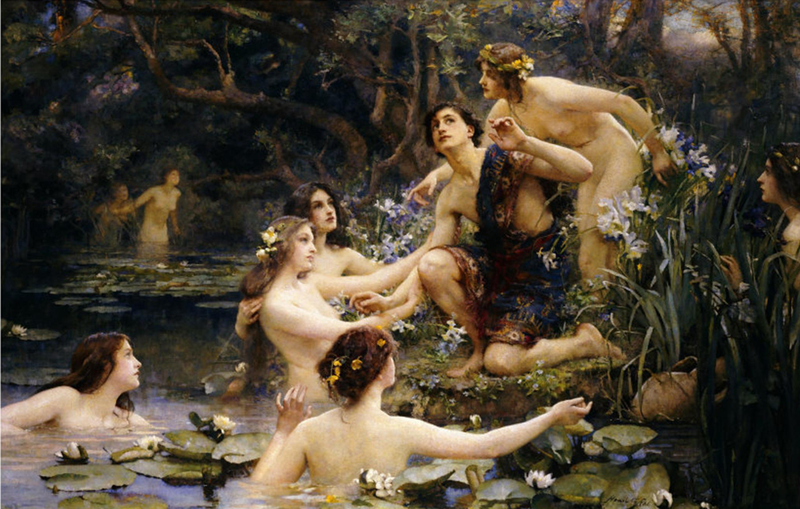
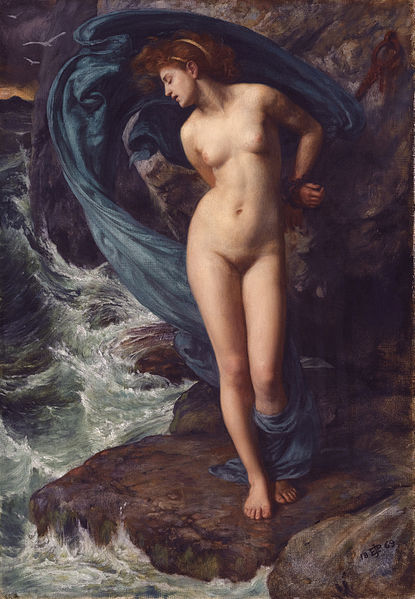
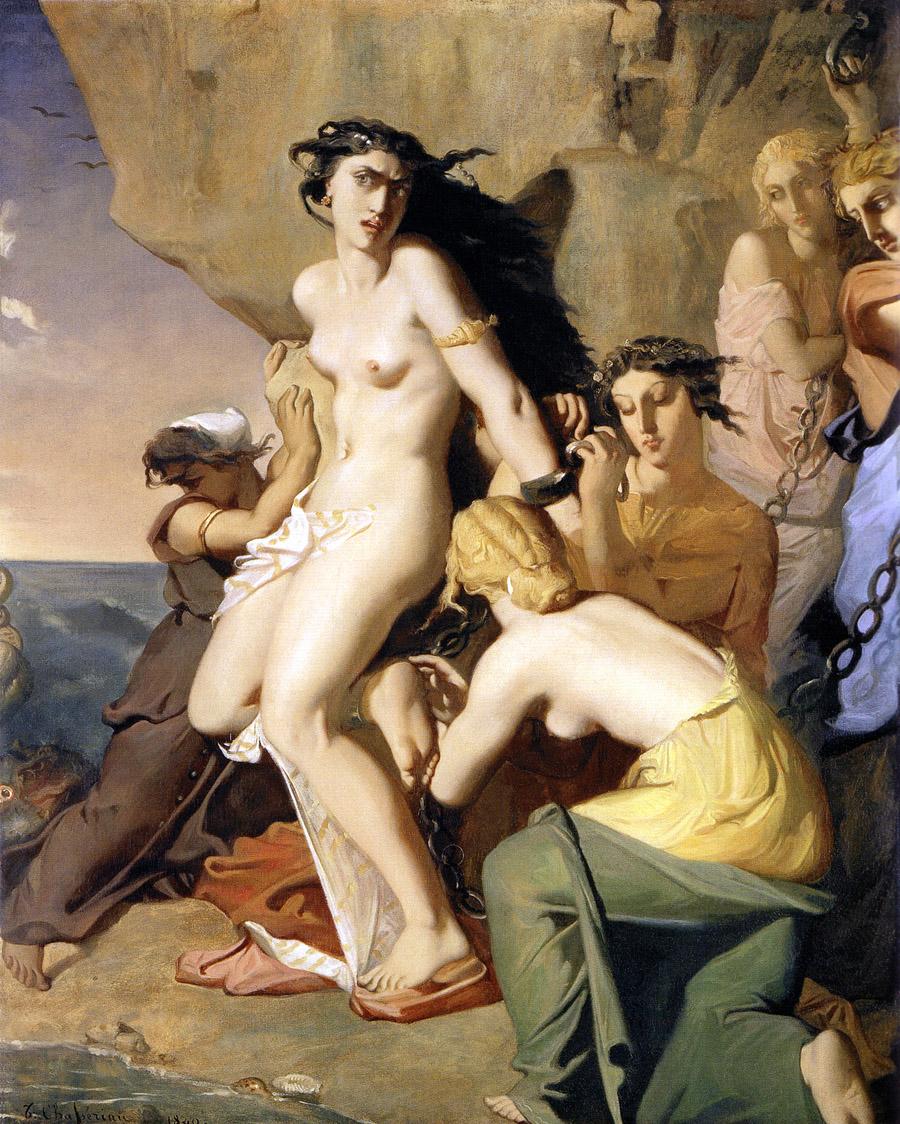
From the moment she emerge from the darkened door at the edge of the sea, Rena Victoria gave me one great Art Lesson after another. I could barely keep up as she dipped into the Master Creator’s palette. When she told me she was afraid of the sea, I wondered if she was the embodiment of Andromeda. Poseidon punishes this most beautiful of maidens by chaining her to a rock by the sea. Surely if I were her reincarnation, I would avoid the ocean – at all costs!
Christine was terrified she would meet her death via a MONSTROUS wave! I died after falling on rocks by the sea. And here come Rena from Nebraska. She gets near the Pacific Ocean, and is in great peril. Her boyfriend is beat-up by Hercules’ followers. Oh, and she gets kidnapped.
Art lesson! Art lesson! Art lesson!
One can say Poseidon had it out for these beautiful and creative siblings ( and their muse) who rendered beautiful young women as pretty as the Nereids – if not prettier!
Uh-oh!
Who is giving these art lessons – is the question!
Jon Presco
In Greek mythology, Andromeda is the daughter of Cepheus, an Aethiopian king, and Cassiopeia. When Cassiopeia’s hubris leads her to boast that Andromeda is more beautiful than the Nereids, Poseidon sends a sea monster to ravage Aethiopia as divine punishment.[1] Andromeda is chained to a rock as a sacrifice to sate the monster, but is saved from death by Perseus, her future husband.
Her name is the Latinized form of the Greek Ἀνδρομέδα (Androméda) or Ἀνδρομέδη (Andromédē): “ruler of men”,[2] from ἀνήρ, ἀνδρός (anēr, andrós) “man”, and medon, “ruler”.
As a subject, Andromeda has been popular in art since classical times; it is one of several Greek myths of a Greek hero’s rescue of the intended victim of an archaic sacred marriage, giving rise to the “princess and dragon” motif. From the Renaissance, interest revived in the original story, typically as derived from Ovid’s account.
Giorgio Vasari, Perseus and Andromeda, 1570
In Greek mythology, Andromeda was the daughter of Cepheus and Cassiopeia, king and queen of the kingdom Aethiopia.
Her mother Cassiopeia boasted that her daughter was more beautiful than the Nereids, the nymph-daughters of the sea god Nereus and often seen accompanying Poseidon. To punish the queen for her arrogance, Poseidon, brother to Zeus and god of the sea, sent a sea monster named Cetus to ravage the coast of Aethiopia including the kingdom of the vain queen. The desperate king consulted the Oracle of Apollo, who announced that no respite would be found until the king sacrificed his daughter, Andromeda, to the monster. Stripped naked, she was chained to a rock on the coast.
Perseus was returning from having slain the Gorgon Medusa. After he happened upon the chained Andromeda, he approached Cetus while invisible (for he was wearing Hades’s helm), and killed the sea monster. He set Andromeda free, and married her in spite of her having been previously promised to her uncle Phineus. At the wedding a quarrel took place between the rivals and Phineus was turned to stone by the sight of the Gorgon’s head.[3]
Andromeda followed her husband, first to his native island of Serifos, where he rescued his mother Danaë, and then to Tiryns in Argos. Together, they became the ancestors of the family of the Perseidae through the line of their son Perses. Perseus and Andromeda had seven sons: Perses, Alcaeus, Heleus, Mestor, Sthenelus, Electryon, and Cynurus as well as two daughters, Autochthe and Gorgophone. Their descendants ruled Mycenae from Electryon down to Eurystheus, after whom Atreus attained the kingdom, and would also include the great hero Heracles. According to this mythology, Perseus is the ancestor of the Persians.
At the port city of Jaffa (today part of Tel Aviv) an outcrop of rocks near the harbour has been associated with the place of Andromeda’s chaining and rescue by the traveler Pausanias, the geographer Strabo and the historian of the Jews Josephus.[4]
After Andromeda’s death, as Euripides had promised Athena at the end of his Andromeda, produced in 412 BCE,[5] the goddess placed her among the constellations in the northern sky, near Perseus and Cassiopeia; the constellation Andromeda, so known since antiquity, is named after her.
 Rosamond Press
Leave a comment