When I got a draft of Drew Benton’s death certificate, I read this name
DREW TAYLOR ROSMOND BENTON
I called the mortuary and told them Rosmond should have an A in it. They got Drew’s name off her driver’s license – that I should own.
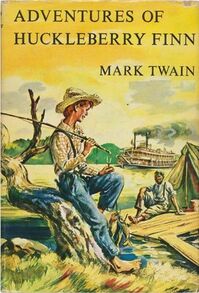
Mark Twain spells Rosamond ROSAMUN, as spoken by Huck Fynn, who is introducing European History, via a un-educated River Vagrant, who is half wild. Huck and Starfish are alike. Do I own a right, or, justification to bring Ian Flemings literary characters to Oregon, where Jeff Bezos has plants?
‘Fetch up Jane Shore,’ he says; and up she comes, Next morning, ‘Chop off her head’—and they chop it off. ‘Ring up Fair Rosamun.’ Fair Rosamun answers the bell. Next morning, ‘Chop off her head.’
“All I say is, kings is kings, and you got to make allowances. Take them all around, they’re a mighty ornery lot. It’s the way they’re raised.”
The “Fair Rosamun” Huck mentions was actually Rosamund Clifford (born around 1150) who became the mistress of Henry II.
The above quote is uttered by Huckleberry Finn in Mark Twain’s classic tale The Adventures of Huckleberry Finn, published in 1884. At this part of the novel, Huck and Jim have been imposed upon by two scam artists who tell them that one of them is the long lost son of an English noble- the Duke of Bridgewater- and the other is the lost dauphin himself: Louis XVII, son of Louis XVI and Marie Antoinette. When Jim, after observing the behaviour of the two men (specifically, their criminal ways) expresses scepticism as to their claims of royal birth, Huck assures him this is not unusual behaviour for the nobility. He then embarks upon a quick history of the life of King Henry VIII to prove his point. While not disagreeing with his assertion- a lot of kings and other “nobles” have been absolute scoundrels, Henry included- Huck’s grasp on the pertinent points of Henry VIII’s life is tenuous at best, as seen by his full statement:
“My, you ought to seen old Henry the Eight when he was in bloom. He was a blossom. He used to marry a new wife every day, and chop off her head next morning. And he would do it just as indifferent as if he was ordering up eggs. ‘Fetch up Nell Gwynn,’ he says. They fetch her up. Next morning, ‘Chop off her head!’ And they chop it off. ‘Fetch up Jane Shore,’ he says; and up she comes, Next morning, ‘Chop off her head’—and they chop it off. ‘Ring up Fair Rosamun.’ Fair Rosamun answers the bell. Next morning, ‘Chop off her head.’ And he made every one of them tell him a tale every night; and he kept that up till he had hogged a thousand and one tales that way, and then he put them all in a book, and called it Domesday Book—which was a good name and stated the case. You don’t know kings, Jim, but I know them; and this old rip of ourn is one of the cleanest I’ve struck in history. Well, Henry he takes a notion he wants to get up some trouble with this country. How does he go at it—give notice?—give the country a show? No. All of a sudden he heaves all the tea in Boston Harbor overboard, and whacks out a declaration of independence, and dares them to come on. That was his style—he never give anybody a chance. He had suspicions of his father, the Duke of Wellington. Well, what did he do? Ask him to show up? No—drownded him in a butt of mamsey, like a cat. S’pose people left money laying around where he was—what did he do? He collared it. S’pose he contracted to do a thing, and you paid him, and didn’t set down there and see that he done it—what did he do? He always done the other thing. S’pose he opened his mouth—what then? If he didn’t shut it up powerful quick he’d lose a lie every time. That’s the kind of a bug Henry was; and if we’d a had him along ‘stead of our kings he’d a fooled that town a heap worse than ourn done. I don’t say that ourn is lambs, because they ain’t, when you come right down to the cold facts; but they ain’t nothing to that old ram, anyway. All I say is, kings is kings, and you got to make allowances. Take them all around, they’re a mighty ornery lot. It’s the way they’re raised.” ― Mark Twain, The Adventures of Huckleberry Finn
Well, where to start? To begin with, while Henry was the very devil with women, he did not chop off the heads of all six of his wives… just two of them: Anne Boleyn (1536) and Catherine Howard (1542). Although this is rather damning him with faint praise. Also, Nell Gwyn was not one of Henry’s wives; she was an actress who lived about a hundred years later (born 1650) and was the mistress of Charles II. Jane Shore lived about a hundred years earlier (born 1445) and was the mistress of Edward IV of England. The “Fair Rosamun” Huck mentions was actually Rosamund Clifford (born around 1150) who became the mistress of Henry II.
Huck also manages to confuse Henry VIII with King Shahryār from One Thousand and One Nights, and then credit him with producing the Domesday Book (actually compiled in 1086 by order of William the Conqueror). You might be surprised to learn from Huck that Henry also instigated the Boston Tea Party (occurring in 1773) and then sat down to write the Declaration of Independence (1776). There being no end to his villainy, Henry (born 1491) then drowned his father the Duke of Wellington (born in 1769) “in a butt of Mamsey”. What Huckleberry actually means here is a butt of Malmsey (wine). During the War of the Roses, George, Duke of Clarence conspired against his brother, King Edward IV (to whom Jane Shore, mentioned above, was mistress). Edward sentenced his brother George to death for treason and apparently George- who was an alcoholic- asked that he be drowned in a barrel of Malmsey, his favourite wine. His request was granted and George er, drank himself to death I guess you could say, in 1478. Considering the time period, there were definitely worse ways to go.
Huck Finn sounds like he is having a Rhetoric discussion with fictional royals, which fits with my belief this art was being practiced at the Court of Henry 8th. and carried on the Elizabeth’s court, where her spies were also actors. The Name Fair Rosamond is now forever with Matk Twain’s legacy – which includes his search for the Real Shakespeare!
JP
EXTRA! Sir Thomas Wilson the alleged nephew of Thomas Wilson wrote something a Shakespeare play was taken from.
Wilson has generally been confused with one or more contemporaries of the same name; a confusion of him with Sir Thomas Wilson (1560?–1629) [q. v.] has led to his being frequently styled a knight.
Is Shakespeare Dead? is a short, semi-autobiographical work by American humorist Mark Twain. It explores the controversy over the authorship of the Shakespearean literary canon via satire, anecdote, and extensive quotation of contemporary authors on the subject.
Summary
In the book, Twain expounds the view that Shakespeare of Stratford was not the author of the canon, and lends tentative support to the Baconian theory. The book opens with a scene from his early adulthood, where he was trained to be a steamboat pilot by an elder who often argued with him over the controversy.
he unforgettable story of the birth of modern America and the western writers who gave voice to its emerging identity
The Bohemians begins in 1860s San Francisco. The Gold Rush has ended; the Civil War threatens to tear apart the country. Far from the front lines, the city at the western edge roars. A global seaport, home to immigrants from five continents, San Francisco has become a complex urban society virtually overnight. The bards of the moment are the Bohemians: a young Mark Twain, fleeing the draft and seeking adventure; literary golden boy Bret Harte; struggling gay poet Charles Warren Stoddard; and beautiful, haunted Ina Coolbrith, poet and protectorate of the group. Ben Tarnoff’s elegant, atmospheric history reveals how these four pioneering western writers would together create a new American literature, unfettered by the heavy European influence that dominated the East.
Twain arrives by stagecoach in San Francisco in 1863 and is fast drunk on champagne, oysters, and the city’s intoxicating energy. He finds that the war has only made California richer: the economy booms, newspapers and magazines thrive, and the dream of transcontinental train travel promises to soon become a reality. Twain and the Bohemians find inspiration in their surroundings: the dark ironies of frontier humor, the extravagant tales told around the campfires, and the youthful irreverence of the new world being formed in the west. The star of the moment is Bret Harte, a rising figure on the national scene and mentor to both Stoddard and Coolbrith. Young and ambitious, Twain and Harte form the Bohemian core. But as Harte’s star ascends—drawing attention from eastern taste makers such as the Atlantic Monthly—Twain flounders, questioning whether he should be a writer at all.
The Bohemian moment would continue in Boston, New York, and London, and would achieve immortality in the writings of Mark Twain. San Francisco gave him his education as a writer and helped inspire the astonishing innovations that radically reimagined American literature. At once an intimate portrait of an eclectic, unforgettable group of writers and a history of a cultural revolution in America, The Bohemians reveals how a brief moment on the western frontier changed our country forever.
UNITED STATES – MARCH 18: Reagan Family/Burt Reynolds (Photo by The LIFE Picture Collection/Getty Images)
A Rose Among The Woodwoses
by
John Presco
My cousin, Elizabeth Rosemond Taylor, died believing she descended from a bunch of hillbillies, and hicks. What are hicks? If I had not taken a DNA test, this would be the case. It should be of interest to her children, grandchildren, and the children of the Thespians she married, that a mutual great grandfather, Thomas Wilson, acted with the Queen Elizabeth’s Men. Elizabeth Taylor’s Men were known for their egos, too.
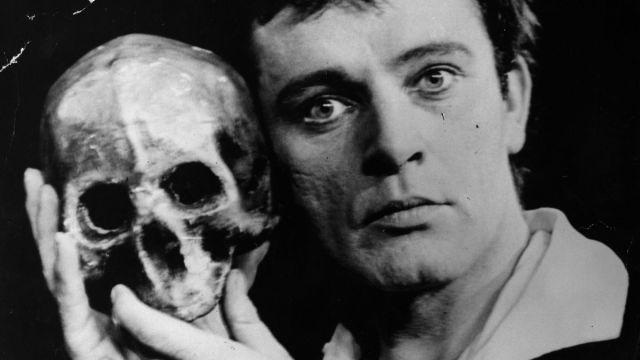
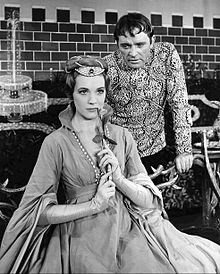
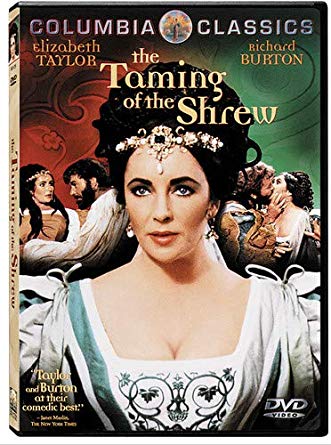
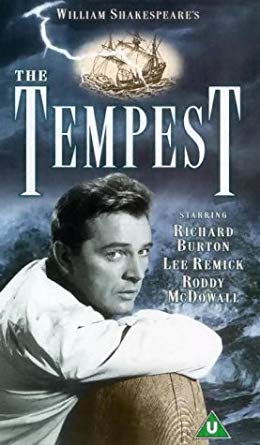
Richard Burton was a famous Shakespearean Actor, and a Wild Man. He married a Wild Rose, twice! The names Taylor and Burton were on the tip of everyone’s tongue in the 60’s. If any two people were born to herald the end of Puritanical America, it was these two Hollywood Stars. Now that my blood test has put much of Hollywood in the Rosamond Family, Tree where the Webb Family be, then Thank God I am a historian who cares to plant Shakespeare’s Family Tree – in Wild America!
In my historic-fiction I have our kindred, Mary Wilson Webb, naming the Mayflower. She was a good friend of the ship builder’s wife, who wanted to name this famous ship ‘Heather’. This made all the men present, cringe. Countless women have suggested this name. There was a heated argument. Feelings were hurt. Mary spoke.
“Heather is a flower that blooms in May. Why not the name, Mayflower? This way everyone gets their way!”
When the ship that Mary and Alexander Webb sailed to the New World, in, was built, Mary’s good advice was sought. Roseflower was launched, and, more history would be made as the Puritan’s sailed West over the horizon. Gone with the tide and the wind.
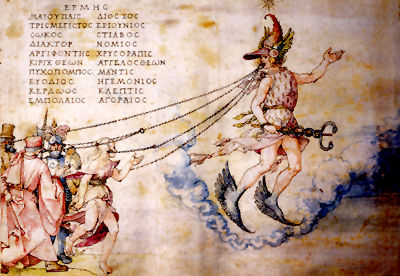
“And therefore the Poets do feign, that Hercules being a man of great wisdom, had all men linked together by the ears in a chain, to draw them and lead them even as he lusted. For his wit was so great, his tongue so eloquent, and his experience such, that no one man was able to withstand his reason, but every one was rather driven to do that which he would, and to will that which he did; agreeing to his advice both in word and work in all that ever they were able.”
Sarah Wilson Rosamond (Willson) MP
Gender:
Female
Birth:
1726 County Antrim, Ireland
Death:
1790 (64) Abbeville County, South Carolina, United States
SIR ALEXANDER WEBB JR., son of SIR ALEXANDER WEBB and MARGARET ARDEN, was born on August 20, 1559 in Stratford, Warwickshire, England, died after 1629 in Boston, Suffolk, Massachusetts and was buried in Boston, Suffolk, Massachusetts. He married MARY WILSON about 1579 in Stratford, Warwickshire, England. Mary was born about 1561 in Stratford, Warwick, England.
Children of SIR ALEXANDER WEBB JR. and MARY WILSON are: RICHARD WEBB SR. WILLIAM MICAJAH WEBB ELIZABETH WEBB JOHN WEBB, born on Oct 23 1597 in Stratford, Warwick, England; died on April 5, 1660 in Siterly, Hampshire, England. CHRISTOPHER WEBB SR. HENRY WEBB
It has been proposed that Elizabeth had a specific political motive behind the formation of the company. Robert Dudley, 1st Earl of Leicester and Edward de Vere, 17th Earl of Oxford were using their companies of players to compete for attention and prestige at each year’s Christmas festivities at Court; Elizabeth and her councilors apparently judged the competition, and the noblemen’s egos, to be getting out of hand. By culling the best players in their troupes to form her own, she slapped down ambitious aristocrats and asserted her own priority.[4]
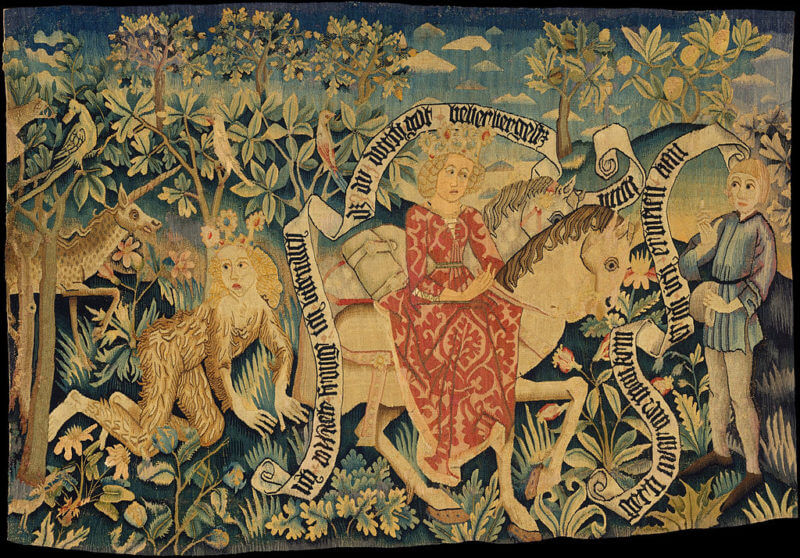
Wild man appears in Two scenes from Der_Busant (1480-149
A Rose Amongst The WoodWose
by
John Rosamond Presco
ALL RIGHTS RESERVED
I began my novel ‘A Rose Amongst The Woodwoses’ on April 1, 2019. In 197, I was told the name ROSAMOND (Rosamun) appears in one of Mark Twain’s books. Huckleberry Finn was his guess. Yesterday the topic came up, and we hung up our phones to launch an investigation. In an hour I hit paydirt. Eureka!
I wrote a couple of chapters of RAW, and put this project aside. Today my endeavor is fully a part of the Twain-Shakespeare literary mix, that came together in a fictional voyage down the Mississippi Rover on a raft? How can this be. What forces of Literature are at work here. For sure I have been dealt some incredible playing cards. What is a Woodwose? There are Woodwoses in Tolkien writing and I found one in a video game that my ;ate niece, Drew Taylor Rosamond Benton, rendered with computer art. The amazing revelation she adopted Rosamond as a middle name, and how it was misspelled and edited by me, has make me wonder aloud…
“Are the Nine Muses – for real? Is their a One God of Human Literature? Consider the author of the Torah that dictated to Moses, and is revealed to him in the cleft of a rock/ We can read the words of the one God, that becomes his own son, and now we can not get in touch with him unless we eat special bread and drink his blood from a special cup?
Twain was also also searching for King Arthur, and in his novel ‘A Connecticut Yankee In King Arthur’s Court’ we have a Gamer’s Ideal, where fifty cadets in Merlin’s cave – mow down 30000 men! Is this a glimpse into the future? Or a glimpse into the soul of the forever Immature Wild Man, who finds violence – The Solution? How many did Drew kill on EverQuest? Did she die their – first? I have picked up the gauntlet. I just registered for a literary and historic place, using this name..
JOHN ROSAMOND PRESCO
My middle name was GREGORY. Rosemary Wild Woman told me I was name dafter Pope Gregory. She was raised Catholic. Father John was her kinfolk. Thus named, my mother put all her sins, and her sins to e, upon my head, and cast me My job was to….RELIGIOUSLY FAIL My secular older brother’s job was to….SUCCEED! And so ROSEMARY ROSAMOMD left her calling behind, and sinned like no woman and mother! She went
HOG WILD in the Land of Savages! Did Matk Twain have a mother?
Then, here come Royal Rosamond and his poems and books. He was a member of the Matk Twain Society, and emulated Twain. Hus name is found on Tolkien’s books, thus Tolkien and Twain and joined in a unforeseen Trilogy! Twain was a frequent guest and Jessie Benton Fremont’s salon in SF.
“My, you ought to seen old Henry the Eight when he was in bloom. He was a blossom. He used to marry a new wife every day, and chop off her head next morning. And he would do it just as indifferent as if he was ordering up eggs. ‘Fetch up Nell Gwynn,’ he says. They fetch her up. Next morning, ‘Chop off her head!’ And they chop it off. ‘Fetch up Jane Shore,’ he says; and up she comes, Next morning, ‘Chop off her head’—and they chop it off. ‘Ring up Fair Rosamun.’ Fair Rosamun answers the bell. Next morning, ‘Chop off her head.’ And he made every one of them tell him a tale every night; and he kept that up till he had hogged a thousand and one tales that way, and then he put them all in a book, and called it Domesday Book—which was a good name and stated the case. You don’t know kings, Jim, but I know them; and this old rip of ourn is one of the cleanest I’ve struck in history. Well, Henry he takes a notion he wants to get up some trouble with this country. How does he go at it—give notice?—give the country a show? No. All of a sudden he heaves all the tea in Boston Harbor overboard, and whacks out a declaration of independence, and dares them to come on. That was his style—he never give anybody a chance. He had suspicions of his father, the Duke of Wellington. Well, what did he do? Ask him to show up? No—drownded him in a butt of mamsey, like a cat. S’pose people left money laying around where he was—what did he do? He collared it. S’pose he contracted to do a thing, and you paid him, and didn’t set down there and see that he done it—what did he do? He always done the other thing. S’pose he opened his mouth—what then? If he didn’t shut it up powerful quick he’d lose a lie every time. That’s the kind of a bug Henry was; and if we’d a had him along ‘stead of our kings he’d a fooled that town a heap worse than ourn done. I don’t say that ourn is lambs, because they ain’t, when you come right down to the cold facts; but they ain’t nothing to that old ram, anyway. All I say is, kings is kings, and you got to make allowances. Take them all around, they’re a mighty ornery lot. It’s the way they’re raised.” ― Mark Twain, The Adventures of Huckleberry Finn
Twain wrote the book as a burlesque of Romantic notions of chivalry after being inspired by a dream in which he was a knight himself, severely inconvenienced by the weight and cumbersome nature of his armor. It is a satire of feudalism and monarchy that also celebrates homespun ingenuity and democratic values while questioning the for-profit ideals of capitalism and outcomes of the Industrial Revolution. Twain strongly praises the French Revolution, defending the Reign of Terror as a minor problem compared to the monarchy.[2] It is among several works by Twain and his contemporaries that mark the transition from the Gilded Age to the Progressive Era of socioeconomic discourse. It is often cited as a formative example of the fledgling time travel genre.
The Church then places the land under interdict, causing the people to revolt against Hank. Hank sees that something is wrong and returns to Britain. Clarence informs him of the war. As time goes on, Clarence gathers 52 teenage cadets, who are to fight against all of Britain. Hank’s band fortifies itself in Merlin’s Cave with a minefield, electric wire, and Gatling guns. The Church sends an army of 30,000 knights to attack them, but they are slaughtered by the cadets.
John Wilson stood on the deck of the Eagle (later renamed the Arbelle) surveying the new Colony the Puritans had made in the American Wilderness. This Man of God could not help but entertain the family legend that he descended from Leif Erikson, for sure his father, Thararldson, who remained a pagan even though his wife converted to Christianity. It is alleged said wife withheld sex from him, until he too converted, so he would surely have sought out other women of Woden, who would lay with him, and begat children.The name Wilson comes from Wolf’s Son. It is alleged that King Henry of Normandy made a Wolfson a Knight Templar. A line of Wilsons became lawyers at the Temple where they dwelt. It is said a Wilson took part in The Memorable Masque of the Middle Temple and Lincoln’s Inn at Whitehall Palace that encouraged other members of the Templar Bar to invest in the Virginia Company. Sir Richard Martin wrote this masque. A hundred investors settled near Jamestown, that is known as Martin’s Hundreds. The Webb family were investors, as was Bacon and Shakespear.
This Colony was founded by pseudo Knight Templars, actors, poets playwrights, and secret investors in the Rose Theatre. Marlowe taught John poetry when he was a boy. It is for this reason William Wilson’s pagan past was disappeared by friend and foe alike as William ascended to the highest positions of the Church of England. Even his brass in Saint George’s Cathedral was disappeared because his epitaph was too revealing. It celebrated the marriage of Margaret of Denmark to the King of Scotland.
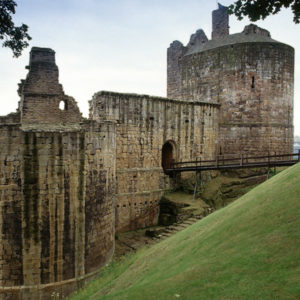
Sir John Thomas Wilson lived at Ravenscraig castle that was built just for Margaret. Wilson was allegedly the last of the real Knight’s Templar, and revealed to the Queen a secret Bible. There was a dispute who owned Orkney and other isles, that resorted in a trade. William Sinclair took possession of Ravenscraig, and vacated Orkney, ending a long feud. It was at Ravenscraig that John met Lady Ada Antoinette Erasmus, a Lady in Waiting. They soon married, and Wilson was now in a illustrious family tree that had its roots in Bohemia. William Rosenberg was a sponsor of John Dee.
Sir John Robert Wilson II, Earl of Cuper, Burgess of Edinborough1425–1492 Lady Ada Antoinette Erasmus
When Frederick William, completely inexperienced in politics, succeeded his father as elector in December 1640, he took over a ravaged land occupied by foreign troops. Under his father’s powerful favourite, Graf Adam von Schwarzenberg, Brandenburg had changed sides from the Swedes to the Habsburgs and had thus been drawn into the struggle on both sides.
Lady Mary Wilson Webb, inherited the job of keeping the fire lit below deck. All those who had gone before her, had failed. The fire tendered in a square iron tray, held together with rivets, then filled with sand, had become the altar of the Pilgrims. It, and the black pot hung on a trident, was watched most of the day by the lost souls packed under the creaking and leaking timbers. Moving about was almost impossible. Everyone was frozen in their place. But for the brave excursions above, met by some tempest, and cold sea spray, the wayfarers relieved themselves in a vile oaken bucket that was too close for comfort. Bible’s were taken out from under pillows when a lady went to tithe the Oaken Monster as they called it. Reading verses aloud, was the polite thing to do.
Tiring of the gory and bloody Biblical tales, that increased the Cargo Dread, the men brought out their bawdy jokes that they had memorized and gathered since their school days. The women pretended they ne’er heard a one. But, that guarded secret was soon out. And, a new kind of boredom set in. It was dreadful. Ones farting was amplified in the silence. The women ran out of perfume. Everyone got to know what a women really smelled like, including the women! Everyone was grateful for the occasional flying fish that was thrown in the pot, to cook all day, like temple incense.
The men ran out of jokes. Nothing was ever going to be funny again. The art of Mary keeping the fire alive was the highlight of their existence. You could hear the beards growing. In the glow of the red coals, the women felt like roses among the Woodwoses.
Two weeks at sea and another three weeks to go. Something had to be done.
“I brought my father’s book on rhetoric with me. Does anyone know it? My kindred William Shakespeare read it and was quite impressed. I saw him perform at the Rose theatre, on several occasions. He and my father were friends. They used to go the Bearbait Theatre and sit among the Protestant Spies. There were lawyers of the Temple present. Thomas called them the Roman Senators. There were horrific scenes of animal torture going on in the round arena. It was like the Roman Coliseum. I know enough about rhetoric where I can teach you. It will make the time fly.”
“For God’s sake, Mary. Why have you withheld this book from us!”
“My father was taken prisoner by the Inquisition, put in prison, and tortured. His books were ruled heretical, I don’t want to instigate spurious opinions about me and my father, for, I have nowhere to go to get away from you if you start in on that!”
“In Jesus’ name, relieve of us of our excruciating tedium! We are dying here Mary! Don’t be cruel!”
“My tutor taught my brother and I rhetoric from your father’s book. We can have a rhetorical argument about having Mary produce it for our salvation from our mind-numbing malaise!”
“Good idea! But, it is fair we all receive a sample. Is it not?”
On March 31, 2019 I found Thomas Wilson’s book ‘The Art of Rhetorike’. There are several spellings. After reading forty, pages I believe my theory that Thomas Wilson had a hand in writing some of William Shakespeare’s’ plays, if not all, is sound.
On this day, I copyright my idea that I arrived at with my battle I am having with Meg Whitman, and the alleged owners of the California Barrel Company, over ownership of this company name that once made barrels. I spoke with an attorney. I am critical of Quibi. To discover Apple TV is being backed by Steven Spielberg, and a bevy of Hollywood talent, is ironic, for Elizabeth Rosemond Taylor and Richard Burton are in my Rosamond Family Tree, as is, Sir Thomas Wilson. I do not want Shakespeare to fall into either capitalist camps, because William made Acting more than an Art Form, as I will show in my novel. Then there is the question……..
Who owns America – and why?
I will give my reader a good example of how Rhetoric fits well with Shakespeare’s’ work. Peter G. Platt has written one of the finest essays I have read. I am envious.
Then, there is this illustration. It took my breath away. Do you know who he is, the man leading noble women with chains linked to the tip of his tongue. He is my hero.
What really got my interest is this line……….
“And God save the Queen’s majesty.”
Where were Britain’s great Rhetorical Men when the Brexit issue came up?
In his quest for the Green Chapel, Gawain travels through northern Wales and northwest England, specifically “the wyldrenesse of Wyrale” (701), the Wirral peninsula, near the modern-day city of Liverpool. In this wilderness, the poet tells us, Gawain has further adventures, fighting not just against the winter elements, but also against wild creatures, all of them alliterating on the letter “w”: “wormez” (dragons), “wolues” (wolves), and “wodwos that woned in the knarrez” (721)—“wodwos” who lived among the rocks.
But what exactly are “wodwos”? No one is certain, though etymology gives us clues. The word is apparently plural, and compound—the word “wos” might mean simply creatures or men, and “wod” probably means either “wood” (from the Old English “wudu”) or “mad, insane” (from the Old English “wod”). They are wild men, insane men, creatures of the woods. The word proliferated in the late 14th century, often to describe the hairy wild men that became popular in late-medieval artwork and heraldry. When translators at Oxford University produced the first edition of the Wycliffite Bible in the 1380s, they used the word “wodewosis” in passages like Isaiah 13:21 and Jeremiah 50:39, but revised it later to “heeri beestis” or “wielde men.”
C.S. Lewis makes a reference to “Wooses” in his remarkable description of Aslan’s execution in The Lion, the Witch and the Wardrobe, a scene filled with evil creatures:
But such people! Ogres with monstrous teeth, and wolves, and bull-headed men; spirits of evil trees and poisonous plants; and other creatures whom I won’t describe because if I did the grown-ups would probably not let you read this book—Cruels and Hags and Incubuses, Wraiths, Horrors, Efreets, Sprites, Orknies, Wooses, and Ettins. (165)
This is the type of passage Lewis lovers relish, but which causes Tolkien-loving purists (and Tolkien himself, when he read drafts of the novel as an Inkling) to grit their teeth. Lewis pulls in creatures from every corner of ancient and medieval Western mythology—Greek, Roman, Arabic, Celtic, Saxon. It’s a literary mash-up, an evil all-star team. Of course, Lewis knows full well what he is doing, and he has a reason for it—Aslan the universal figure of salvation is opposed by universal evil, however it manifests itself in stories throughout history and around the globe. But by including Wooses on the list, Lewis misses an opportunity that Tolkien exploits more fully—the chance to explore the complexity of these medieval English wild men as human beings, with a capacity for both good and evil. (To be fair, Lewis explores humanity’s complex nature in other areas of Narnia, just not here.)
In his translation of the Gawain poem, Tolkien calls the wodwos “wood-trolls that wandered in the crags.” This might lead us to think he has in mind one of the varieties of trolls he describes in The Hobbit or LOTR, such as the stone trolls, who live the woods and turn to stone in daylight, or the cave trolls who attack the Fellowship in the caverns of Moria. But in fact, Tolkien brings them into his epic in a much more direct way, through a group of characters in The Return of the King he calls “Woses,” or “Wild Men of the Woods” (813).
These Woses, also known as the Drúedain, are described by the horse lord Elfhelm as “living few and secretly, wild and wary as beasts.” Elfhelm and the other Rohirrim are clearly frightened of them, since “they use poisoned arrows, it is said, and they are woodcrafty beyond compare.” When they speak, it is with a “deep and guttural” voice, “in a halting fashion, and uncouth words were mingled with it” (814). When their leader Ghân-buri-Ghân enters the scene, he parleys with Éomer, debating whether his band of Woses can help the riders on their journey to Minas Tirith. Their conversation is testy—Ghân refuses to merely take orders, and he constantly asserts himself in crude speech against Éomer’s seeming condescension. “Let Ghân-buri-Ghân finish!” he shouts when Éomer cuts him off. When the horse lords offer him riches and friendship, he scoffs, “Dead men are not friends to living men,” then asks only that if the kingdom of Rohan survives the war with Sauron, “then leave Wild Men alone in the woods and do not hunt them like beasts any more” (815).
I am going to seek funding for my ‘Oregon Shakespeare Society’ that will produce the plays of Shakespeare, and plays that have Fair Rosmond as the subject. Rosmon is the subject of Pre-Raphaelite Artists – and many poets. There will be a Brother and Sisterhood.
I had originally made Clifford die of a broken Heart, under the S••ction of the Death of King Lear, as originally drawn by that great Master of human Nature. Shakespeare; but the general Opi|nion of the Public, and the Persuasions of my Friends, induced me to vary my Design in the Representation. The Queens Men | Rosamond Press
A Spanish Play on the Fair Rosamond Legend on JSTOR
Henry the Second: or, the fall of Rosamond: a tragedy; as it is performed at the Theatre-Royal, Covent-Garden. Written by Thomas Hull. (umich.edu)
Ah, Ladies! no such Queen at Otaheite; Love there has Roses—without Thorns to fright ye; Frolick our Days, and to compleat our Joy, A Coterie’s form’d—’tis call’d the Arreoy, Where Love is free and general as the Air, And ev’ry Beau gallants with ev’ry Fair; No Ceremonies bind, no Rule controuls But Love, the only Tyrant of our Souls!
Fair Rosamond : a lamentable ditty · Isaiah Thomas Broadside Ballads Project (americanantiquarian.org)
Henry the Second: or, the fall of Rosamond: a tragedy; as it is performed at the Theatre-Royal, Covent-Garden. Written by Thomas Hull. (umich.edu)
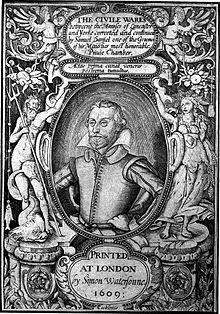
The name Rosamond will forever be associated with the search for the person who authored Shakespeare’s work. After taking a DNA test for Ancestry.com, it is proven one of my great grandmothers is Abigail Shakespeare Webb. One of my grandfathers is Lewis Clifford who is related to Joan Rosamond Clifford, who Samuel Daniel wrote a poem about and dedicated to Mary Sydney Countess of Pembroke who is kin to the Dudley family, who I suspect were instructed by Queen Elizabeth to create a English Literary Society to counter Charle’s Quint to make the world speak Spanish. Elizabeth was the first Protestant Queen. Charles was the King of the Roman Catholics.
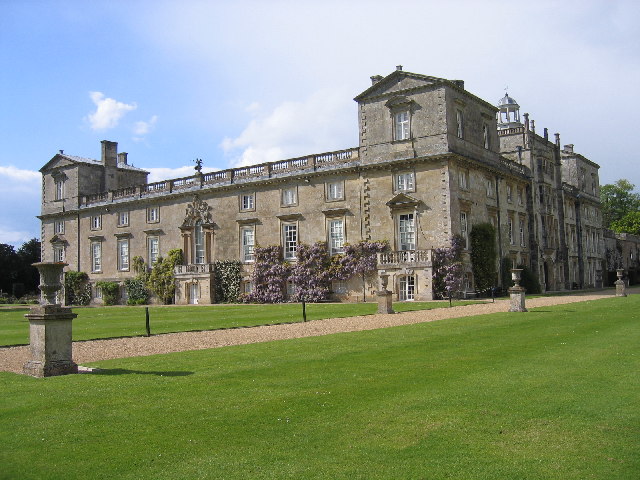
This is entirely my theory. I suspect this was the idea of John Dee. Wilton House became the home of Bards and Muses who were Agents of the English Language for Her Royal Majesty. It is here that many of…
Rosamunda Bolger is growing…..faint! When I saw that Drew put Rosamond in her name, I knew a great quest had begun. The name….DREW TAYLOR ROSAMOND BENTON…. is Copyrighted.
Rosa Bolger-Baggins-Took is the person that connects THE THREE
FRODO MERRY PIPPEN
Was Tolkein aware of this concector? If so, what he aware of
ROSAMOND CLIFFORD – ROSAMUND – ROSAMONDE?
John Presco
“As a token of her confidence, she told him he need no longer call her, “Auntie.” The previous year, Bilbo had suggested that Frodo no longer address him as, “Uncle,” if he wished. Plain, “Bilbo,” would do. Frodo still called Bilbo, “Uncle,” now and then; it had become too ingrained a habit. But, following suit, Rosamunda suggested Frodo might call her, “Rosa,” or, “Rosamunda.” Frodo forgot, and called her, “Auntie,” many times, but, within the space of an afternoon tea, “Rosa,” she became.”
Yes. Rosa Baggins, first cousin of Fosco, Frodo‘s Baggins grandfather, married Hildigrim Took. Via this connection, Frodo is a third cousin, once removed of Merry and Pippin.
Where does Fatty Bolger fit into this picture?
We can only be certain of Fatty’s links to the other hobbits via the branches of the Took family tree published in The Lord of the Rings. There we see that Fatty, Merry and Pippin share a common great-great-grandfather in the OldTook?, so Fatty is a third cousin of Merry and Pippin. Fatty’s mother, Rosamunda Bolger (nee Took), is Frodo‘s second cousin, making Fatty Frodo‘s second cousin once removed. Fatty is Bilbo‘s first-cousin, twice removed.
The Baggins and Brandybuck family trees indicate other Bolger connections, so Fatty may be related to the others in additional respects. And let’s not forget the fact that Fatty later becomes Merry‘s brother-in-law.
Norman Cates as Fatty Bolger from a Decipher Card designed by Weta Friend of Frodo Baggins. Fredegar Bolger, called Fatty, was born in 2980 to Odovacar Bolger and Rosamunda Took Bolger. He had a sister Estella who married Merry Brandybuck. Fatty’s great-great-grandfather on his mother’s side was Gerontius, the Old Took, who was also the great-great-grandfather of Merry and of Pippin Took. Fatty’s family was from Budgeford in Bridgefields in the Eastfarthing.
“From first sight, even the site of the new cottage had enchanted her, dug as it was into the southeast side of a grassy hill in the midst of Boffin lands, populated with Boffin sheep. There was a little copse below it, just to the side, and a spring-fed well, all of which reminded her of her childhood home. The place had come down to Odovacar through his mother’s side, a Boffin. He had used it as a sort of base, when he and his friends had gone out hunting. They would stock the little hole with gear and rations. Then, with their bows, and a pony for their gear, they would make forays west or north, towards the Downs or up to the Moors, or, closer still, into Bindbale Wood. But that was years ago, when the game had not yet moved so far off.
When Rosamunda had viewed it more carefully, she saw the hole was inconsiderable disrepair. Also, it was a bit too small. She had new rooms dug, so that there was a parlor and a kitchen, a bedroom for each (and one to spare), along with extra chambers further back for store. When it was finished, it suited Rosamunda very well. Especially, she loved the light. Situated facing south-east, the light poured through the windows in the mornings, her favorite time of the day. And, when she stood outside, she could see the land stretching east and south far into the distance. Illuminated by the late afternoon sun, the prospect was especially fine. From the top of the little knoll that made the cottage’s roof, she could see far to the north and west, where sheep dotted the rolling hills. The sky at night took her breath away. And, all day, the birds sang, the wind blew, and the Water, which ran nearby, just to the west, mostly narrow andquick as it came down out of Long Cleeve and Needlehole, could just be heard when the wind dropped and everything was still. She loved its peace and quiet, so tucked away and so private.
Yet, it was just an hour’s walk over the hills to Bag End or to Hobbiton. Overhill, to the east, was even closer. Every fine day Rosamunda walked the hills, seldom seeing another living creature other than sheep, or, very rarely, a doe or faun. She did not walk south to Hobbiton, however, except on errands or for an appointed visit. She had not forgotten her “understanding” with Bilbo. And Bilbo did not forget her, either. Regularly, he sent her gifts of wine or ham or fruit in season, as tokens of his neighborly regard. She appreciated the way he could show marks of particular notice, without making her feel the burden of obligation.”
In 1925 William Sam Rosamond did a relatively complete genealogy. His research indicated that we were descended from a Huguenot born in France sometime in the mid to late 1600s. He discovered that his earliest traceable ancestor was a “Sergeant” Rosamond who left France following the Revocation of the Edict of Nantes on 22nd October 1685. He found that Sergeant Rosamond supposedly travelled to Holland where he joined the army of William III, went to England, and from there went with William’s army to Ireland. He fought in the Battle of the Boyne on 1st July 1690 (by the old calendar – 12th July by the new calendar) and then remained in County Leitrim, Ireland. (There is still a family of Rosamonds in County Leitrim.) He had three sons, two of whom went to the American colonies and settled in the mid-Atlantic region. One of the sons’ names was either John or Thomas Rosamond. Current researchers have not been able to confirm this connection. It appears probable that the American branch of the family are descended from John “The Highwayman” Rosamond who arrived in Annapolis, Maryland in 1725. He was sentenced to be transported into 14 years servitude for robbery from the Oxford Assizes. This John could be the son of Sergeant William Rosamond, and the mix up in names likely stems from the fact that his father-in-law’s name was Thomas Wilson.
The New Tolkien Movie Trailer Offers a Sneak Peek at the IRL Frodo, Sam, Merry and Pippin
editor@purewow.com (PureWow)
Updated Thu, March 7, 2019 at 11:03 AM PST
We’ve known that a movie about Lord of the Rings author J.R.R. Tolkien’s life has been coming since 2017, but now there’s finally a full trailer for us to fan over and pick apart.
And while we’re certainly intrigued to learn more about the epic romance between him and his wife, Edith Bratt (played by Lily Collins), we truly cannot wait to get to know the real-life inspirations for the four smallest, and most important, members of the fellowship of the ring. Yes, Frodo, Sam, Merry and Pippin were all based on real people and we’ve finally gotten a glimpse at what they were like before Tolkien even sat down to write about their journey.https://www.youtube.com/embed/wZ1vn85iQRE
It is widely accepted that Tolkien’s inspiration for the four hobbit friends came from his tight-knit group of friends
I have wondered about Rena Christensen’s almond eyes. I suspected she had Persian blood. Today, while looking at the genealogy of Frodo, I am convinced Rena is a Halfdan kin to the Parthians who came to adore the infant Jesus who has been compared to Mithras who my Frodo is kin to. Did these Parthians come from Toxandria, in Holland – on ships? The Armenian royalty is found here who begat Pharamond and Frodo. Did the prophet Mani come to Holland? There is a Helena Flavi who may be kin to Emperor Constantine. Why this mix with the Kings of Sweden. My ex-wife is a descendant of Eric the Red. The Rosemondt family of Holland appear to be Counts of Toxandria.
On November I founded the New Nation of Fromond, or, Frodomond. I foresaw what a disaster Trump’s presidency was going to be. Today elections are being held in California in hope to wash the Trumpire down the drain. I plan to turn back the hands of time just before Christianity was rooted amongst the Armenians. Mithras is the worship in most of th known world. The Tocharian’s are bringing this teaching into China. The Hittites, whom Alexander the Great employed as his navy when he invaded India, are setting sail for a strange land that lie due East. Frodo is on board.
Rosamonde is the Queen of the Parthians and Vikings in Toxandria. She heads due West to look for the Lost Kingdom of Yonkers, where live an advanced people whose island sunk under the sea.
It is my intent to establish free trade between California, Oregon, and Washington, and the known world. The religion that Mithras established will create neutral ground for millions of people. All the Peoples of the World can live in peace and harmony.
I will be contacting the Estate of Elizabeth Rosemond Taylor, to see if they want to help compile my tribology, and produce a movie from my three books.
___________________
I just reread what I wrote this morning. I am astounded at how prophetic this post is. I can no longer deny that I am a prophet – of great renown! I elude to this all the time, but, I have been called a ‘reluctant Messiah’. I keep waving of a crown, every time it nears my head. This time I have no choice, an ancient crown sits upon my head. I have found a linage that reaches back before the birth of Jesus……….The Stendatsson. From then three kings, three magi may have come, to adore him. Did they bring a crown, a scepter, a ring, and a sword?
The Lord of the Rings sold 150 million copies making it the most published book in history – other that the Bible? With my Crimean California prophecy, I take control of most Biblical prophecy such as the works of Tim Lahaye that concluded the Jews must rebuild the temple before the Return of Jesus. Was LeHaye aware of Tolkien’s books? There is a similarity which I will explore on my Facebook group
New Lord Of The Rings Movies
I just watched Ukraine author Andrey Kurkov talk about Putin banning his books. Governor DeSantis is into banning books. Andrey wrote ‘The Grey Bees. I will include anceint Beekeepers from Georgia in my never-ending media tale that will also be put on my Facebook group..
Mary Magdalene Rosamond
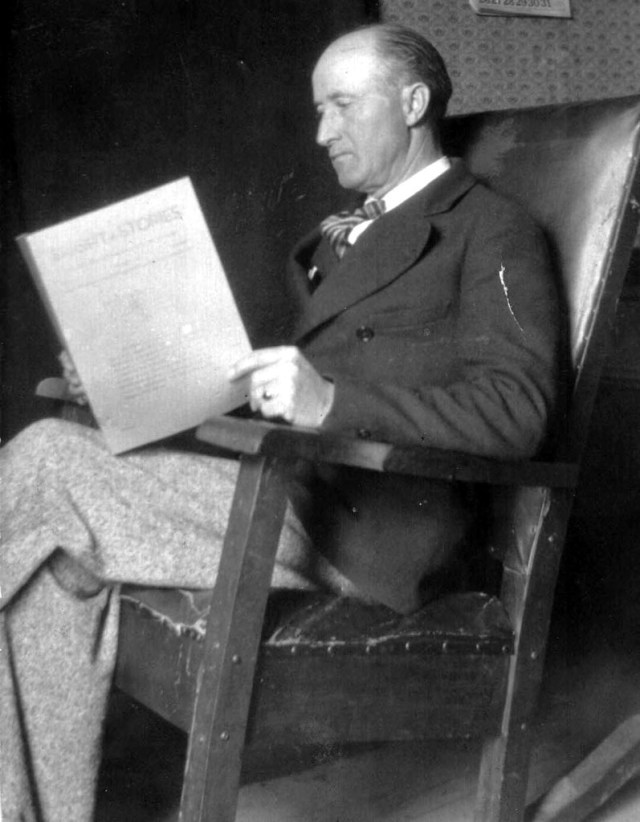
My grandmother is sitting under a tree on Saint Croix Island with the author Arthur Barnes who belonged to the Manana society – who may have been aware of The Hobbit. They disbanded after Pearl Harbor was attacked. Barnes was a member of The Black Mask, and is seen in a group photo with Raymond Chandler, who inspired Ian Fleming. I found this Facebook group
Fleming and Chandler.
Todaym is Meher Baba’s birthday. He was accepted by the Dunites, and is linked to the Parthian Magi. I have asked Governor Tina Kotek to make much of this history – Oregon’s History!
John Presco ‘De Manana
President: Royal Rosamond Press
Turn down the sound to Baba’s vistit to South Carolina in 1956, and play the second video. This is the Birth of Fromundia. The eyes of the Eternal Yin Yang have found the Sleeping Beauty Princess, sealed in a ancient tomb. This causes the terrible eye of Sauron to awaken, and his destructine light goes about the land in searh of…..Beauty!
EXTRA! I just discovered that Theodore Sturgeon died in Eugene Oregon. He was a frind of Kurt Vonnegut who created Kilgore Trout from his name.
I created The New Manana Science Fiction Society and encourage black SF authors to join because the DeSantis Purge is out to destroy the teaching of Black History – but can not touch Black, Future, a place white folks have enjoyed since Jules Verne’s Time Machine!
It’s been just over eight years since New Line Cinema and Warner Bros. Pictures released The Hobbit: The Battle of the Five Armies, ending Peter Jackson’s second Middle-earth movie trilogy. J.R.R. Tolkien’s books have already been exhaustively adapted to the silver screen, but much like Gollum and the One Ring, movie studios can’t stay away. On Thursday, massive holding company Embracer Group announced that it was partnering with Warner Bros. and New Line to make new feature films based The Lord of the Rings and The Hobbit.
Lee Guinchard, CEO of Embracer subsidiary Freemode, shared the following statement:
Following our recent acquisition of Middle-earth Enterprises, we’re thrilled to embark on this new collaborative journey with New Line Cinema and Warner Bros. Pictures, bringing the incomparable world of J.R.R. Tolkien back to the big screen in new and exciting ways. We understand how cherished these works are and working together with our partners at New Line Cinema and Warner Bros. Pictures, we plan to honor the past, look to the future, and adhere to the strongest level of quality and production
It looks like Drew survived her suicide, but not the treatment!
Everything I publish about Drew Rosamond Benton, will contain the sentence above. I am now going into my blog and putting together a historic report. I have notes to go through. I need a date for video below. The first contact I got from officer Holstrom was a missed call on August 13th at 7:15 A.M. Why so early? I have to look when we talked for the firt time – several days later! I asked Holstrom for a POLICE REPORT and she asked me why I wanted one. I talk about this request on this video. Today is September 23, 2024 – AND I HAVE NO REPORT! How many days is that after my first contact with Law Enforcement? FOURTY DAYS!……OUTRAGIOUS!
The average waiting time for a report from Bullhead City – is 14 days? Did I do something wrong? YES! Do not believe anything you hear. Record and make notes – of everything! Leave a paper trail! I should have made a request for a report online! I will do so – and make a Facebook video. In this video I am trying to find out who, and how, identified Drew Benton. Ivanna told me she had a driver’s license. The autopsy report says she was crawling on the ground – in her underwear! Did she has her purse draped over her shoulder? How was it determined Drew jumped from the third story balcony? If I had got a police report twenty days ago, then I would not be in the dark, nor would my reader! Is this Darkness – INTENTIONAL – is the giant question? What would be the motive? Make me frustrated – and give up! I own a registered newspaper in Oregon!
FLASH! I just read an article about suicides in Arizona…..
“In 2023, there were more than 39,000 visits to the emergency room for suicidality and 1,492 deaths by suicide reported in Arizona.“
I just did major attitude adjustment. The COLLECTIVE GRIEF is astronomical! These visits to the ER have left a GIANT WAKE OF CHAOS – that continues! Forty thousand citizens is – EPIDEMIC! The police and rescue people are – OVERWHELMED – along with hospital staff. A hundred people a month? I suspect something wen wrong that caused Drew to have a heart attack. I suspect she did not attempt to take her life. I still deserve answers. I want to know if anyone said she tried to kill herself, and I want the name of that person!
I tried to download the report request, but, failed. I have plans to go to computer classes.
John Presco
President: Royal Rosamond Press
EXTRA! I just talked with Jordon at records and she said I filed a request on AUGUST 15th. Drew would have been thirty-nine on September 25th.
A statewide effort to reduce suicides and support the families affected
Suicide is a leading cause of death in the United States. This significant public health issue must be addressed to support our communities and prevent the loss of life.
In 2023, there were more than 39,000 visits to the emergency room for suicidality and 1,492 deaths by suicide reported in Arizona.
To combat the growing number of deaths by suicide, our Suicide Prevention Program has developed a new annual comprehensive suicide prevention plan, which helps support residents and their loved ones by establishing a coordinated network of community and state partners to work together in this effort.
This prevention plan serves as a strategic framework, aiming to identify and address risk factors, while promoting protective measures to bolster mental wellness and resilience.
Two days ago I gave Ivanna Drew Benton’s birthday so she can make a death certificate. I just found out I got it wrong after looking at my nieces Facebook that does not list any family members. Drew had no children. Did she run out of reasons for living?
If I had not discovered Raif took his life, I would not have delved deeper and discovered Christine and Garth’s daughter had taken her life, too If this discovery was not made, then Drew’s body would have remained on……THE BURN PILE! She would have been cremated all alone, without family knowing. A society would come and spread her ashes. They would not see a birthday. How close does this come to having never existed? In my ceremony I honor Drew’s wish to no longer exist.
Drew was born September 25, 1984. The passage “I have taken you out of the sheepcote.” came to mind.
Before and during the Civil War, abolitionist Jessie Benton Frémont, celebrity wife of legendary Pathfinder and almost-President John C. Frémont, successfully mustered literary and clerical forces in San Francisco (including author Bret Harte and Reverend Thomas Starr King, who “saved California for the Union”) to oppose and defeat powerful Southern political forces as they sought to turn California into a slave state.
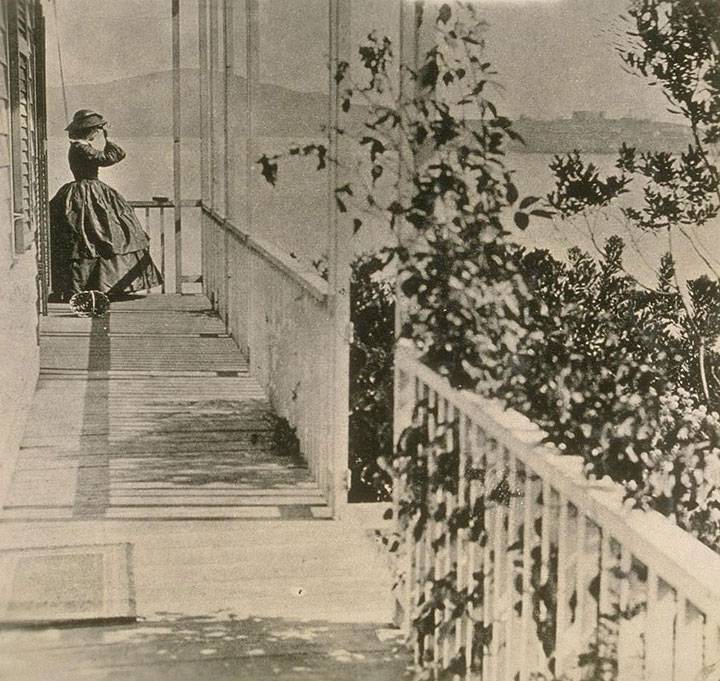
On the northerly shore of San Francisco Bay a line of bluffs terminated in a promontory, at whose base, formed by the crumbling debris of the cliff above, there was a narrow stretch of beach, salt meadow, and scrub oak. The abrupt wall of rock behind it seemed to isolate it as completely from the mainland as the sea before it separated it from the opposite shore. In spite of its contiguity to San Francisco—opposite also, but hidden by the sharp re-entering curve of coast—the locality was wild, uncultivated, and unfrequented.
White drifts of sea-gulls and pelican across the face of the cliff, gray clouds of sandpipers rising from the beach, the dripping flight of ducks over the salt meadows, and the occasional splash of a seal from the rocks, were the only signs of life that could be seen from the decks of passing ships.
It was a sparkling summer morning. The waves were running before the dry northwest trade winds with crystalline but colorless brilliancy. Sheltered by the high, northerly bluff, the house and its garden were exposed to the untempered heat of the cloudless sun refracted from the rocky wall behind it. Scrub oaks and manzanita bushes gave out the aroma of baking wood; occasionally a faint pot-pourri fragrance from the hot wild roses and beach grass was blown along the shore… all idealized and refined by the saline breath of the sea at the doors and windows.
The Gothic cottage was one of five houses perched on this steep promontory overlooking the north coast, blanketed with the dark laurel shrubbery that gave Black Point its name. And Frank Harte could not but take it down in his mind in every detail, knowing that he would write about it, just as he was seeing it on this day.
He had escaped the torch-bearing mob that night in Humboldt, saved by the timely arrival of a sheriff. He’d immediately made good on his vow to quit the town for San Francisco, where he’d been hired as a typesetter at the prestigious literary journal, the Golden Era. Already he’d contributed a few pieces of his own for editor Joe Lawrence.
And now, not three months later, he had been summoned—there was no other word for it—here, to the legendary Black Point, by none other than Jessie Frémont.
The daughter of Senator Thomas Hart Benton. Wife, secretary and “other self” to John C. Frémont: Gold Rush millionaire, explorer, first Senator of California, first Republican candidate for President of the United States—so well-known for his antislavery position that Democrats had warned that his election would lead to civil war.
His wife had not merely played an active role in his candidacy—it had been known as the “Frémont and Jessie” campaign. She’d been hailed as the “First Lady of the Land,” and more disparagingly, “The better man of the two.”
And when the Frémonts were defeated at the polls by James Buchanan, abolitionist Lydia Marie Child mourned, “What a shame that women can’t vote! We’d carry our Jessie into the White House on our shoulders, wouldn’t we?”
What could this paragon possibly want with him?
Frank finally got up the courage to ring the bell, and a butler ushered him into a study.
He turned slowly in the center of the room, amazed. All around him the walls were covered by the maps drawn by the Pathfinder to the West.
He stepped forward to one, entranced, to trace the path of the famous California-Mormon Trail. He was so caught up in the imagining that she might have been standing behind him for some time. Then he became aware of a presence, and a light, sweet scent. He turned…
If there was a Queen of San Francisco, he was now standing before her. She was as beautiful as she was vivid, crackling with life force. Instantly the paralyzing shyness that had plagued Frank since childhood was on him again.
“Mr. Harte.” She came forward, extending a hand.
“M-Mrs. Frémont,” he heard himself stammer, and could not help gushing. “It is astonishing to see the maps in full. I’ve read your manuals, of course.”
It had been she who had captured the spirit of her husband’s adventures on the page, who had infused the entire nation with that dream of expansion.
“I fear I am one of what Hawthorne calls ‘that damned mob of scribbling women,’” she responded—and laughed at Harte’s obvious shock at her profanity.
She turned, taking in the maps, and he thought a shadow came over her face. “We had hoped to give the people a vision of what the country truly is, what it can be. I wonder how many people died because of what we wrote.”
Harte did not know what to say.
Then she smiled on him. The next words from her mouth were astonishing. “I have much enjoyed your recent writing in the Golden Era.”
“I am honored,” he managed.
“But there is another piece I am most interested in.” Her luminous face clouded again. “You wrote recently of the Wiyot massacre. I understand these butchers also threatened your life.”
For a moment he felt again the terror of it, and the lingering rage.
“The butchers have not suffered a day,” he said, his voice tight.
“Nor will they.” She walked the room in agitation. “These so-called ‘Indian Wars’… it is an extermination campaign. There is no other way to say it. And sanctioned by our own governor, our own legislature. An entire people is being obliterated, to serve our aspirations. I read what you write and I am ashamed of my own part in it.”
“Surely not so,” he protested.
“More than you know,” she said softly. But then she looked up, determined. “Your writing makes me want to do what I can to stop such injustice. That is the power words have.”
Harte felt as if he were in a stupor. Or a dream. No one had ever spoken to him in this way before. His own family had mocked him for his early attempts at poetry.
She touched his arm. “Walk with me. We’ll take the air. And there is someone I should like you to meet.”
He followed her into a glassed-in veranda encompassing three sides of the house, looking out over an astonishing panorama of the Golden Gate, Alcatraz Island, the Bay, and the hills and mountains beyond.
He stopped, mesmerized. It was like standing in the bow of a ship, with all of the world before him.
Mrs. Frémont’s eyes were shining. “You feel it too, this city.”
She waited as he opened the door for her and they passed down a set of steps out into the garden. The air was like a living thing, resonant with the sound of foghorns and the crashing of the surf, and the perpetual murmur of the trade winds.
Frank followed Mrs. Frémont onto a path leading across the garden to a small summerhouse, and she continued her thought. “But San Francisco can be overwhelming, at first. Have you found employment?”
“I have. As a typesetter at the Golden Era.”
She beamed at him. “In-house already? Splendid. Joe Lawrence will be a fine mentor for you.”
Harte colored. “I’m merely a compositor.”
“Not for long,” she said, with such confidence Harte felt some conspiracy afoot.
She stepped up to the porch of the summerhouse and knocked on the door.
It swung open to reveal a boy. No, on second glance, Harte discerned a frail young man, though barely as tall as Mrs. Frémont, with wide-set eyes and lank blond hair.
“Mrs. Frémont,” he beamed out at her.
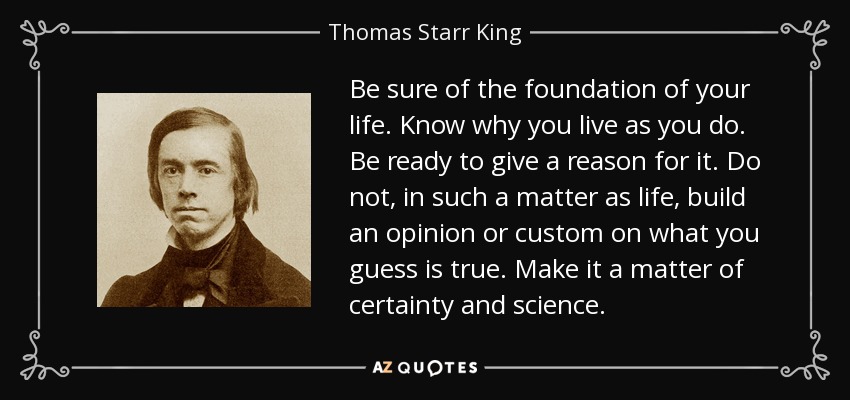
“Good morning, Reverend. This is the young poet I’ve been pestering you about. Mr. Harte, Reverend Thomas Starr King.”
Harte knew the name. Only recently arrived from Boston, Starr King was already the City’s most famous preacher. On Sunday mornings, a thousand people and more crowded in to his church on Portsmouth Square to hear his sermons. Local newspapers often printed the text in full. Harte had read some, and marveled at the passion of them. The preacher’s faith, his patriotism and his politics seemed to combine in a seamless transcendent whole. Harte spoke slowly, determined not to stammer. “Reverend Starr King. I have read your speeches. I am in awe.”
The Reverend gave him a wink. “I had not known the thrill of public speaking until I stood in front of men armed with Bowie knives and revolvers.”
Harte could not stop studying the preacher. Gentleness radiated from him as light radiates from the sun. In the poise of his head there was nobility and power inexpressible; the serenity of one who had seen a vision, and to whom the vision had become a benediction. And yet his face was also lit with mischief.
“Beware, young Harte,” the Reverend warned. “Once Mrs. Frémont gets her hands on you there will be no rest.”
Her eyes sparkled. “It is true. I have plans for both of you. We have work to do together.”
The three of them returned through the garden to the veranda, where tea had been laid on a table. Mrs. Frémont poured, then spoke without preamble.
“The Southerners are working every day to create a slave state here. They shall not have it.”
Harte was startled by the sudden steel in her. She glanced at him. “I am blunt. Feminine courtesy and deference are the crutches the public expects a woman to use. But we have not time for that.”
She leaned forward, intent. “Southern states have threatened secession and Confederacy for forty years, indeed so often that many people in the country believe such a split will never come to pass. I am not among the sanguine. Ever since California was admitted to the Union as a free state there has been a growing movement among native Southerners here for California’s secession and union with the South, or the formation of a separate Republic welcoming the expansion of slavery.”
Harte had seen some of the rhetoric coming from Southern-leaning papers, and Reverend Starr King was nodding. “I have noticed. The Southerners out here are very down on me, because they say I am a strong anti-slavery man. They refuse to patronize my lectures on that ground, and say that I must not be countenanced.”
Mrs. Frémont’s face was pale and set. “With the nomination of Lincoln as our Republican candidate, secession is all but guaranteed. The fear of what may be in store for us, if this cloud of civil war takes shape, makes me restless.”
She stood, walked the porch. “You are both newly arrived in our City and can have no idea of the stranglehold Senator Gwin has over the politics of this state. I have known Dr. Gwin since the first California Constitutional Convention, before we were admitted to the Union. He was elected then along with my husband—and we have struggled against him ever since. He was a protégé of President Jackson and as a Tennessee aristocrat, he assimilated all Jackson’s prejudices—in particular, the supposed inferiority of all but the white race. He made his first fortune by political appointment as a tribal lawyer. He used his position to swindle the chiefs out of their own land.”
Frank’s face tightened with anger. Mrs. Frémont continued,
“From 1851 into our present Gwin has ruled the state. And since Mr. Frémont was senator, our only politician to stand against Gwin was Broderick. Now that Broderick has been slain by that infamous Judge Terry…” Harte heard a tremor in her voice, no doubt as she understood that her own husband might well have met the same fate.
She shook her head quickly, composing herself. “The majority of our state is against the expansion of slavery. But President Buchanan has mandated that Gwin is solely responsible for political appointments, and the senator has packed political offices, courts, the police force, with Southern sympathizers. One of his Southern judges has already dismissed all charges against Terry in the matter of Broderick’s murder.”
She looked from Harte to King. “This is the monolith that we face. But I have seen hearts and minds changed on the question. My own husband was raised in Charleston, the most pro-slavery city in the most pro-slavery state. His family were slaveholders. And yet he grew to see it as a monstrosity.”
Harte spoke impulsively. “In no small part due to your influence, I am sure.”
She answered sharply. “Due to the awakening of his conscience. Slavery is a madness, a poison veil its defenders cast over minds too young to comprehend or resist the horror. It puts human feelings, even human reason to sleep.”
Harte felt his own outrage rising. And in the same moment, inspiration. The fervent desire to fight the fight she was proposing, to right the wrong.
“We must awaken the conscience of our state,” she finished, looking from one man to the other.
“I agree. The danger of this influence is dire.” Starr King’s face was as animated as hers.. “The state must be Northernized thoroughly, by schools, Atlantic Monthlies, lectures…” He grinned. “New England preachers.”
“Yes…” Mrs. Frémont said slowly. “But we are not a Northern state. We are something altogether more. We must celebrate what is uniquely Californian. We must create a new culture of California. A fresh, free state in every sense, in hearts and minds. A state that will rise above Southern atrocities and Northern failures.”
Her eyes shone with determination. “We must loosen the diseased grip of the slave powers on the minds of Californians, and entice them to a new vision: a state of new, fresh, limitless possibilities.”
Harte caught a sudden glimpse of the dream, made manifest by the maps in the study, the adventurous spirit that had empowered every man, woman, and child who had made the perilous journey through the towering mountains and vast deserts, three thousand grueling miles past the former frontiers to the West.
Mrs. Frémont was speaking again. “We must work on two fronts. The literary and the political.” Her smile encompassed them both. “Now you may grasp my plan. Mr. Harte will help to mold a California literature, celebrating all things California, to release minds from the clutches of the old ways. The Reverend will present a political vision guided always by spiritual and moral purpose. As for me… you both are newly arrived in San Francisco. I have some small influence to open doors, arrange employment and speaking engagements to bring this dialogue to a wide public. Mr. Harte, I have sent word to Joe Lawrence. He shall be talking to you presently. And Reverend… I believe you will be needing a larger church.”
Harte stood paralyzed, overwhelmed, knowing he was entirely unworthy of the trust Mrs. Frémont seemed to be placing on him.
Before he could demur, the Reverend turned to him, as if reading his thoughts. “I must confess, I am terrified at the expectations Mrs. Frémont places on mere mortals.” His voice was kind. “But God—and Mrs. Frémont—never calls us to work we are not ready for.”
Harte nodded slowly.
“Then do I have your pledges?”
Jessie Frémont extended her hands, each to the other, and the men grasped her fine ones in theirs.























 Rosamond Press
Leave a comment