John Fitzgerald Lee prosecuted John Fremont. I am kin to both. Fremont was defended by Senator Thomas Hart Benton, the father-in-law of John. I am kin to the Benton family.
JRP
I Am Kin To Robert E. Lee
Posted on April 19, 2019 by Royal Rosamond Press
Most of the evangelical voters are down South, in the Red States. I am calling for the resignation of the President of the United States for the good of our UNITED Nation!
John Presco
I Am Kin To Robert E. Lee
Posted on December 26, 2018by Royal Rosamond Press
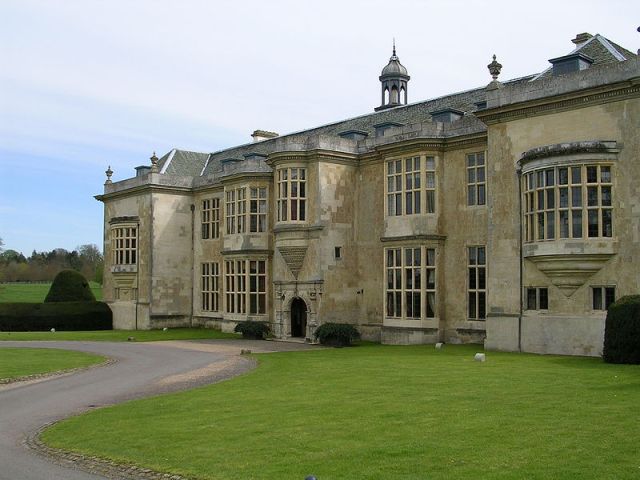

Robert descends from the Lees of Hartwell House.
John Presco
John Charles Frémont Court-Martial:
1847-48
Defendant: John Charles Frémont
Crime: Mutiny, disobedience, conduct prejudicing good order and military discipline
Chief Defense Lawyers: Thomas H. Benton, William Carey Jones
Chief Prosecutor: John Fitzgerald Lee, Judge Advocate
Presiding Officer: G. M. Brooke
Court: De Russey, T. F. Hunt
Place: District of Columbia (Washington Arsenal)
Date of Trial: November 2, 1847-January 31, 1848
Verdict: Guilty of all charges
Sentence: Dismissal from the army and loss of all privileges
SIGNIFICANCE: In one of the most tainted court-martials in American history, a man who would be a candidate for president in less than 10 years was charged with the most serious crimes an officer might commit. The trial itself was highly irregular and the sentence was never carried out, but the reputation of the principals would forever remain tarnished.
When Captain John Charles Frémont set off from St. Louis, Missouri in the summer of 1845, he was commanding his third major western expedition for the U.S. Army Topographical Corps and was already something of a national celebrity. By March 1846 he was in northern California and challenging the Spanish who owned this land. When war broke out between the United States and Mexico in April, Frémont moved quickly to provide military support to the American settlers who raised the Bear Flag in revolt in June and declared an independent republic. By January 1847, now a lieutenant colonel, Frémont was accepting the surrender of the last of the Spanish forces in California. He seemed to be at the peak of his career, but his troubles were just beginning.
The Showdown
Commodore Robert F. Stockton had arrived in California in 1846 as commander of a U.S. Navy squadron and then proceeded to take the lead in the fight to oust the Mexicans. With the end of the fighting, Stockton regarded himself as in charge of California and appointed Frémont as its military governor. In several of the final battles in December 1846 and January 1847, however, the American army forces were led by the newly arrived General Stephen Kearny, who was soon asserting that his orders placed him in command of all the civil and military forces in California. Frémont not unnaturally sided with Stockton. By March, however, Kearny had established that he was the real commander and, when Frémont continued to resist his orders, Kearny had Frémont arrested in August 1847 and ordered him to return to Washington to face a court-martial.
The Trial
By the time the court-martial commenced at the Washington Arsenal in the District of Columbia, it had become a national scandal. Frémont, after all, had for some years been hailed as the explorer of the American West and more recently as a hero in helping to acquire California. Now he was being accused of mutiny in what most close observers regarded as a petty squabble between General Kearny and Commodore Stockton. Further adding to the drama was that Frémont’s defense lawyers were Thomas Hart Benton, the flamboyant senator from Missouri and Frémont’s own father-in-law, and William Carey Jones, Frémont’s brother-in-law. Because the rules of court-martial restricted civilian lawyers to serve only as advisors, Frémont would conduct his own defense, although he was allowed to consult at all times with his lawyers.
Ad ends in 7
The major witness against Frémont was the very man who had brought the charges, Brigadier-General Stephen Kearny. With preliminaries out of the way, Frémont began his cross-examination on November 4. Although Kearny was only 53 (Frémont was 34), he was soon made to appear almost befuddled, as he could not recall detail after detail. He could not remember exactly when he decided to arrest Frémont. He could not explain why he had waited so long to do so—if, as he claimed, he had the orders from Washington that put him in charge from the day he arrived there? And why, after the decisive battles that ended the fighting with the Mexicans, had Kearny submitted a casualty list addressed to “His Excellency R. F. Stockton, Governor of California”? He first denied that Frémont had offered to resign from the U.S. Army when his role was questioned, then he said he remembered that he had refused to accept it. Although Frémont was constantly asking questions that the court would not allow, when Kearny stepped down after two weeks of such relentless probing, he appeared to be both incompetent and untrustworthy.
The prosecution called several other witnesses who attempted to support Kearny’s case; again, Frémont’s questioning cast doubt on most of their assertions. Then on December 6, the first crucial witness for Frémont’s defense took the stand—Commodore Stockton. Although he was about the same age as Kearny, he was a more attractive figure and was expected to clinch the case for Frémont. Instead much of his testimony proved to be irrelevant and inconsistent and the judge advocate managed to dilute his value. Other defense witnesses, however, clearly and decisively supported Frémont’s case.
Kearny returned to the stand on January 5, 1848, and again insisted that he had never regarded Commodore Stockton as holding rank above him. Then, just before stepping down, he addressed the court with an extraordinary claim: “On my last appearance before this court … the senior counsel of the accused, Thomas H. Benton of Missouri, sat in his place making mouths and grimaces at me, which I considered were intended to offend, to insult, and to overawe me. I ask of this court no action on it… I am fully capable of taking care of my own honor.”
In the code understood by all present, Kearny was suggesting that he would be challenging Benton to a duel. But Benton, never one to shrink from a quarrel, was allowed to address the court. He claimed that he had been watching Kearny’s stares at Frémont during the trial and was determined to avenge his son-in-law. “And the look of today,” said Benton, “was the consequence of the looks in this court before. I did today look at General Kearny when he looked at Colonel Frémont, and I looked at him till his eyes fell—till they fell upon the floor.” In the code of the day, Benton had intimidated Kearny!
Frémont was allowed to present his defense summary, which took three days. The officers retired for three days of deliberations, and then reconvened on January 31. All the spectators and the nation’s press were convinced that Frémont would be found innocent, but the presiding judge read the verdict: guilty of all charges and specifications. But then, in total contradiction to the gravity of the offenses, six of the twelve members of the court, issued a “Remarks by the Court:”
Under the circumstances in which Lieutenant Colonel Frémont was placed between two officers of superior ranks, each claiming to command-in-chief in California—circumstances in their nature calculated to embarrass the mind and excite the doubts of officers of greater experience than the accused—and in consideration of the important professional services rendered by him previous to the occurrence of those acts for which he has been tried, the undersigned members of the court respectfully recommend Lieutenant Colonel Frémont to the lenient consideration of the President of the United States.”
On February 16, President James K. Polk did set aside the first charge of mutiny but approved the other verdicts; however, he then set aside the sentence and concluded, “Lieutenant Colonel Frémont will accordingly be released from arrest, will resume his sword [rank], and report for duty.” Frémont felt too hurt to accept this and instead resigned from the army. Stockton also resigned from the navy in 1850. Kearny was assigned as the military governor of newly defeated Mexican cities but within a year was dead from a disease he caught there. By 1856, Frémont was the brand-new Republican Party’s first candidate for president of the United States.
—John S. Bowman
John Fitzgerald Lee (May 5, 1813 – June 17, 1884) was the Judge Advocate General of the United States Army from 1849 until 1862[1] and the first Judge Advocate General since the position had been vacant since 1802.[2] He was a member of the Virginia Lee family being a grandson of Richard Henry Lee and a cousin of Robert E. Lee, the Confederate general who became commander of the Confederate States Army during the American Civil War. He was also the brother of Samuel Phillips Lee, a rear admiral in the United States Navy, and the brother-in-law of Montgomery Blair, the postmaster general under Abraham Lincoln.[3]
| John F. Lee | |
|---|---|
| Judge Advocate General of the United States Army | |
| In office March 2, 1849 – September 3, 1862 | |
| President | Zachary Taylor Millard Fillmore Franklin Pierce James Buchanan Abraham Lincoln |
| Preceded by | None, (Captain Campbell Smith in 1802) |
| Succeeded by | Joseph Holt |
| Personal details | |
| Born | May 5, 1813 Sully Plantation in Fairfax County, Virginia |
| Died | June 17, 1884 (aged 71) St. Louis, Missouri |
| Military service | |
| Branch/service |  United States Army (Union Army) United States Army (Union Army) |
| Rank | Brevet Major |
| Commands | Judge Advocate General’s Corps |
| Battles/wars | American Civil War |
The office of Judge Advocate General had been formally discontinued on March 2, 1821, when the military establishment of the United States had been reduced. The office was brought back on March 2, 1849, for the president to appoint a suitable captain of the army.[2]
His son, also named John Fitzgerald Lee (1848–1926), served as president of the St. Louis Bar Association, president of the David Rankin School of Mechanical Trades, and board member of the St. Louis Public Library. A dormitory on Washington University is named after this younger John F. Lee.[4]
ography
John was born about 1599 England. John Lee married Jane Hancock in 1616 England. He passed away in 1630 England. He was the son of Richardus Lee and Elizabeth Bendy. Ricardus (Richard Lee) and Elizabeth Bendy parents of John Lyes Lee, father of Richard Lee m. Anne Constable.
Children
Children of John Lyes Lee and Jane Hancock:[1][2] i. John Lee or Lyes, born in Worcester, St Martin parish, Worcestershire, England. More About John Lee or Lyes: Christening: 19 Sep 1616, Saint Martin, Worcester Record Change: 05 Mar 2001 ii. Edward Lee or Lyes, born in Worcester, St Martin parish, Worcestershire, England; died 21 Apr 1624 in Saint Martin, Worcester. More About Edward Lee or Lyes: Christening: 30 Aug 1620, Saint Martin, Worcester Record Change: 05 Mar 2001 iii. Richard Lee Colonel, born 22 Mar 1618 in Nordley Regis, Coton Hall, England; died 01 Mar 1664 in Virginia, Northumberland, Co, Va; married Anne Constable Owen. iv. Thomas Lee or Lyes, born 22 Mar 1622 in Worcester, St Martin parish, Worcestershire, England. More About Thomas Lee or Lyes: Christening: 29 May 1622, Saint Martin, Worcester Record Change: 27 Jul 2001 – JF
Documentation for Richard Lee linage from Shropshire, Coton Hall Lees –
1. Richard Lee Baptism record: County Shropshire Register type Composite Register date range 1616-1638 Archive reference P253/A/1/1 Page 2 Record set Shropshire Baptisms Category Birth, Marriage & Death (Parish Registers) Subcategory Parish Baptisms Collections from United Kingdom, England (Source images attached)
2. As Will of his Grandfather, Richardus Lee, wife Elizabeth Bendy, also does confirm lineage of Richard Lee b.1617/18 married Anne Constable: The New England Historical and Genealogical Register, Volume 46, Pg. 71.
3. Letter from Lancelot Lee, of Coton, to Thomas Lee, of Stratford JOURNAL ARTICLE: A New Clue to the Lee Ancestry: The Virginia Magazine of History and Biography Vol. 6, No. 3 (Jan., 1899), pp. 255-260 Published by: Virginia Historical Society Stable URL: [1] Page Count: 6
4. http://www.jstor.org Title: A New Clue to the Lee Ancestry Created Date: 20160808195236Z URL: [2]
5. Family Trees By François Weil Harvard University Press, Apr 30, 2013 – History – 320 pages Americans’ long and restless search for identity through family trees illuminates the story of America itself, according to François Weil, as preoccupation with social standing, racial purity, and national belonging gave way to an embrace of diversity in one’s forebears, pursued through Ancestry.com and advances in DNA testing.
6. Annual Report, Volume 2 By American Historical Association U.S. Government Printing Office, 1907 – Historiography
URL: [3]
7. The Visitation of Shropshire: TAKEN IN THE YEAR 1623
BY ROBERT JRESSWELL, SOMERSET HERALD, AND AUGUSTINE VINCENT, ROUGE CROIX PURSUIVANT OF ARMS ;
WITH ADDITIONS FROM THE PEDIGREES OP SHROPSHIRE GENTRY TAKEN BY THE HERMiDS IN THE YEARS 1569 AND 1584, AND OTHER SOURCES. THE VISITATION OP SHROPSHIRE, 1623. 315 Reginaldus de Lee testis chartse Ricardi Burnell sans date.
URL: [4]
8. Congressional Serial Set U.S. Government Printing Office, 1907 – United States Pg.929
URL: [5]
Congressional Serial Set books.google.com Reports, Documents, and Journals of the U.S. Senate and House of Representatives (Re: Col. Richard Lee).
9. Lee of Virginia, 1642-1892: Biographical and Genealogical Sketches of the Descendants of Colonel Richard Lee, Pg. 38 Edmund Jennings Lee Heritage Books, Jun 16, 2008 – Reference – 664 pages URL: [6]
10. Lee of Virginia, 1642-1892, by Edmund Jennings Lee books.google.com The Lee family is composed of perhaps the most distinguished ancestry on record, having provided, for example, greater numbers of Revolutionary and Civil War generals and officers, politicians, and statesmen than any family of comparable size and standing
11. The New England Historical and Genealogical Register, Volume 46, Pg. 66 Vols. 37-52 (1883-98) include section: Genealogical gleanings in England, by H. F. Waters.
URL: [7]
12. Miscellanea Genealogica Et Heraldica Hamilton, Adams, and Company, 1894 – Genealogy, Pg. 109
URL: [8]
13. Full text of “Genealogical history of the Lee family of Virginia and Maryland from A.D. 1300 to A.D. 1866, LEE FAMILY VIRGINIA AND MARYLAND FROM A.D. 1300 TO A.D. 1 866 WITH NOTES AND ILLUSTRATIONS EDITED BY EDWARD C. MEAD
URL: [9] See other formats – Internet Archive archive.org Full text of “Genealogical history of the Lee family of Virginia and Maryland from A.D. 1300 to A.D. 1866” See other formats Gc \ M. U. 929.2 L515in < 1214151 …
14. Society of the Lees of Virginia Collection, 1771-2000. 82 boxes, 264 A–264 CCCC (38 linear ft.) Eleanor Lee Templeman (1906-1990), a Northern Virginia author, genealogist, and historian, assembled much of this collection. Her writings and correspondence capture the activities and interests of the Society, as well as the genealogy of the Lees.
Scope and Content Note: This collection documents the family history of Lees in Virginia, especially to the Lees related to Richard Lee the Emigrant. There are extensive series of files by names of individuals with the surname of Lee, by surnames of other families which intermarried with the Lees, and by names of properties associated with these families. Other major series cover the English ancestry of the Lees, antique objects associated with the Lees, and the records of the Society of the Lees of Virginia. There are files on dozens of related families, but the Goldsborough and Boothe families are particularly well represented. The photograph collection provides portraits of many of the Lees as well as pictures of Lee homes and other related subjects. Other formats include: correspondence, letters, maps, genealogical charts, books, periodicals, newspaper and magazine clippings, business records, index cards, completed membership applications, brochures, booklets, prints, reports, court records, property records, histories. URL: [10] – Compiled by Jacqueli Finley, leesofvirginia.org
Note: Please see listed sources and PDF image source regarding lineage/parentage. These sources listed are of ‘sound’ genealogical’ research and are accepted in the Library of Congress under “Lee Genealogy” as well as the Lee Society archives. – JF
William Thorndale, AG, CG, “The Parents of Colonel Richard Lee of Virginia,” National Genealogical Society Quarterly, Vol. 76 (December, 1988), No. 4, pp. 253-267 appears to be the only source of value and it states that the parents are unknown.) Note: Please see listed historic sources and PDF image source regarding lineage/parentage. – JF
This came from the book, “Shaping a Nation Stories of the Lees”, by Ludwell Lee Montague.
In 1988 William Thorndale (National Genealogical Society Quarterly, 76-4, pp 253-267) established, apparently beyond question, the parentage of the emigrant, Col. Richard Lee, which had been sought off and on for more than two hundred years. He had been christened 22 March 1617/8 at St. Martins Parish in the city of Worcester, the son of John Lee (sometimes Lees or Leys) (1590-1629/30), a member of the Clothiers’ Company (i.e., manufacturers of woolen cloth) and Jane Hancock, his wife.
Subsequently, Thomas Woodcock, Somerset Herald at the College of Arms, was engaged by David Halle (Genealogist of the Society of the Lees of Virginia at the time) to try to find further confirmation of this deduction. Although failing in this, Mr. Woodcock did develop the strong probability that this John Lee (1590-1629/30) was the son of an earlier John Lees (ca.1566-1597), weaver, of Worcester. Mr. Thorndale generously supplied evidence to establish this parentage with certainty, and Dr. Neil Thompson then further confirmed it.
Col. Montague’s understanding of Col. Richard Lee’s English origin was based in part on heraldic considerations, but also in greater part on accepting, as had the Lee Society and the College of Arms for many years, the authenticity of the so-called “Cobbs Hall Bible record,” now long known to have been a 1920’s fabrication. His remarks about Col. Richard Lee’s English origin and connection with a John Lee of London must now be disregarded in view of these more recent discoveries.
Please note: Assertions, and opinions, without proven documentation, that cannot verify ‘heresay’ as a factual source, cannot be acceptable against historical and legal documentation, such as the above quoted publication(s).- JF
London, England, Baptisms, Marriages and Burials, 1538-1812 Name John Lee Gender Male Record Type Burial Death Date abt 1630 Burial Date Feb 1630 Burial Place St Dunstan and All Saints, Stepney Tower Hamlets, Middlesex, England Register Type Parish Register Household Members Name Age John Lee London Metropolitan Archives, St Dunstan and All Saints, Stepney, Register of burials, Jun 1622-Nov 1644, P93/DUN/277
Millennium File Name John Lee Gender Male Birth Date 1585 Birth Place Worcesters, England Death Date abt 1629 Burial Date 23 Feb 1629 Burial Place Worcester St. Martin, Worcs, England Marriage Date 1616 Spouse Jane Hancock Children Richard Lee Household Members Name Age John Lee Jane Hancock – Provo, UT, USA: The Generations Network, Inc., 2003. – Heritage Consulting. The Millennium File. Salt Lake City, UT, USA: Heritage Consulting.: Heritage Consulting. The Millennium File. Salt Lake City, UT, USA: Heritage Consulting.
U.S. and International Marriage Records, 1560-1900 Name Jane Hancock Gender Female Spouse Name John Lee Marriage Year 1616 Number Pages 1 Household Members Name Age Jane Hancock John Lee Source number: 400.000; Source type: Electronic Database; Number of Pages: 1; Submitter Code: BSF.
England, Select Deaths and Burials, 1538-1991. Name: John Lee Gender: Male Burial Date: 17 Dec 1630 Burial Place: Garstang, Lancashire, England Father: Richard Lee FHL Film Number: 1278942
Old Churches, Ministers and Families of Virginia. [With] Digested Index and Genealogical Guide, Vol. II http://search.ancestry.com/cgi-bin/sse.dll?db=flhg-ministersfamii&h=411450&ti=0&indiv=try&gss=pt
Notes
- (Questionable Parents: Removing Richard Lee of Nordley Regis as father of John Lee until sources are found to support the relationship. amb 07:18, 2 April 2015 (EDT)
Note: The above statement is not an accurate representation of the facts surrounding this profile and related lineage. See credible sources numbered 1 through 14, of historical value, that are primary sources from Government repositories. Thorndale’s 1988 publication was a research opinion, not based on factual documentation, but assertions by the author.- JF
- The “possible parents” added were not based on sound genealogical work. They should also be removed. Lee-5956 20:04, 21 October 2015 (EDT)
William Thorndale, AG, CG, “The Parents of Colonel Richard Lee of Virginia,” National Genealogical Society Quarterly, Vol. 76 (December, 1988), No. 4, pp. 253-267 appears to be the only source of value and it states that the parents are unknown.) See Sources listed of historic value 1 through 14 and PDF attached to images for this profile – these list parents and confirm lineage – thank you. .
incorrect parent assumption
- Father: John Lyes, b. ca. 1563; d. 1597. (Was not alive when Col. Richard Lee was born).
- Mother: Alice Harte, b. 1563; d. 1640.[3]
Impossible for these to be parents of Col. Richard Lee whose baptismal records show birth (as well as additional documentation) of 1618, 21 years after the death of above mention “possible father”.-JF
- Note: Please see listed sources and PDF image source regarding lineage/parentage. – JF
- While it may have gratified early Lees thus to believe that the family founder grew up in genteel surroundings on a manor in Shorpshire, there is no evidence to authenticate this tradition. Instead, the recent identification of Richard‘s parents shows that he was from Worcestershire. His father was John Lee (sometimes spelled Lies or Lyes), a clothier whose business was in Worcester, along the road running through the West Midlands. Coton Hall was located twenty miles northward. Richard Lee’s mother was Jane Hancock from Twining, a town twelve miles south of Worcester. Her family was also in the cloth trade. The couple probably married before 1616. [4]Evidence to the contrary:
See: Documentation for Richard Lee linage from Shropshire, Coton Hall Lees PDF in imaged sources – JF
- The Lees of Virginia; Paul C. Nagel, publisher Oxford Univeristy Press, USA
- Ahnentafel of President Zachary Taylor, GenealogyMagazine.com totally unsourced, the original data that this article was based on has been removed from the web
- Ancestries of the U.S. Presidents, thefullwiki.org
- [http://www.leesofvirginia.org/Index_of_Sources_H_-_N.html – RE: on this page historic profiles are listed alphabetically. SEE: “Lee or Lyes, John Clothier” for additional research notations, citations, and sources. – JF
- Documentation for Richard Lee linage from Shropshire, Coton Hall Lees – Compiled by Jacqueli Finley, [11] – additioanl PDF source atached to profile:
Sources
- ↑ http://www.leesofvirginia.org/Index_of_Sources_H_-_N.html
- ↑ http://www.genealogy.com/ftm/f/i/n/Jacqueli-C-Finley/BOOK-0001/0002-0022.html#IND88760REF4
- ↑ Ahnentafel of President Zachary Taylor, added 02 April 2015, amb
- ↑ The Lees of Virginia; Paul C. Nagel, publisher Oxford Univeristy Press, USA; p.8
 Rosamond Press

Leave a comment