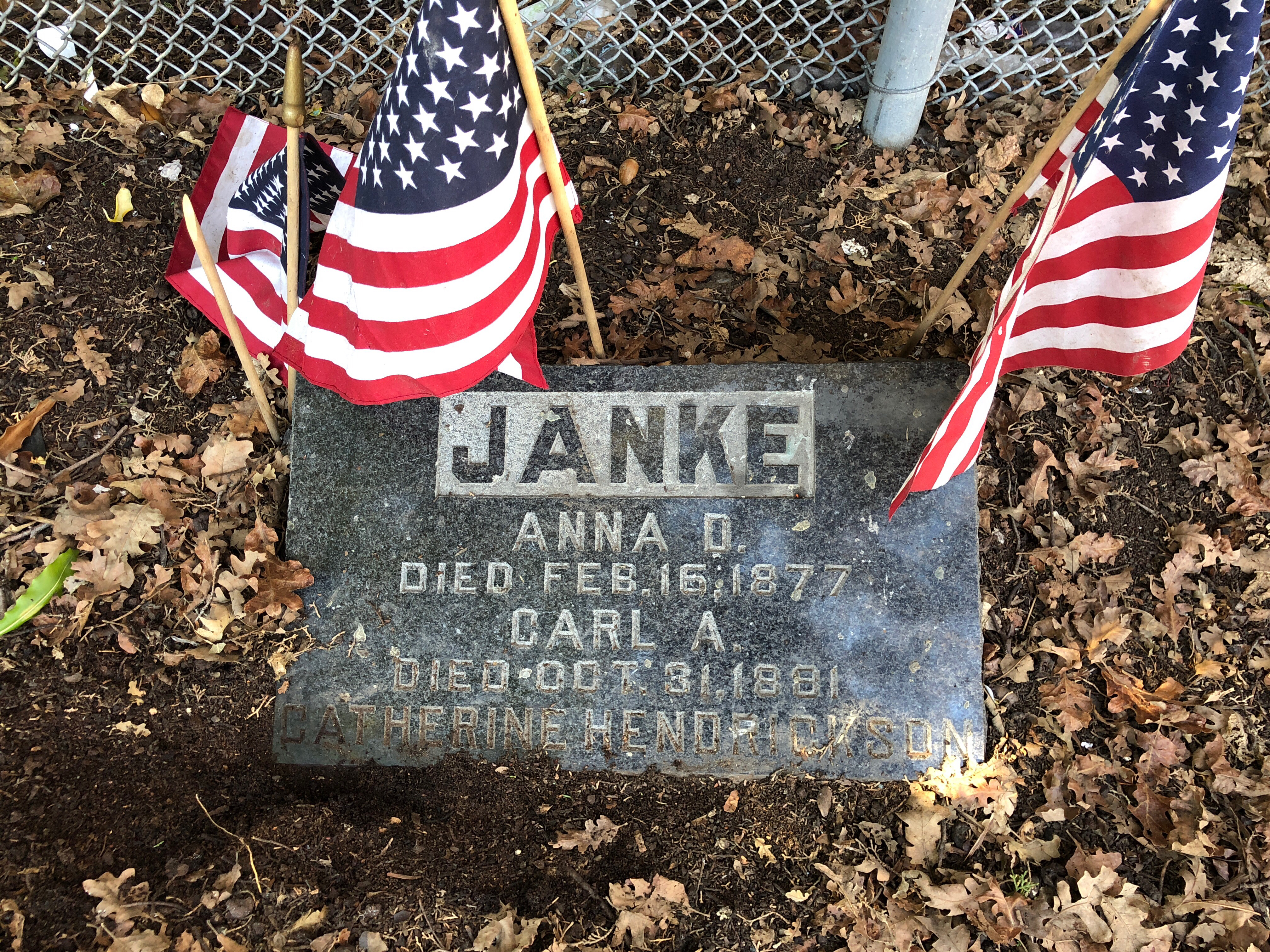
It is 8:33 A.M. May 27, 2023 – and I am still in shock having discovered my grandparents are buried in the same grave! I saw TWO flags put on one gravestone. That was a half hour ago. THEN – I see another flag! There are three of my ancestors buried in the same grave! WHY? Did the caretakers conclude this was a very poor family? William Stuttmeister knew they were Belmont before he died. At great expense to himself, he moved the Jankes to Colma after they were evicted from the Odd Fellow cemetery – at great expense! This was a wealthy pioneer family whose graves keep being defiled! They were moved to the Union cemetery i 1972?
I’m sure I will be accused of having no respect For The Dead because I am forced to ask hard questions about the late Mayor of Belmont. Did Reed learn about the fate of Carl Janke and his wife?
John Presco
EXTRA!!!! At 1:45 on July 5, 2024 I found this evidence that the Belmont Historical discussed the removal of the Janke graves in 1992. Denny knew this when I first posted. He said he was not discouraging me and Cynthia said she was totally to blame. This constitutes CONSPIRACY!
I am in shock! My heart is pounding and I am breathing hard. There was talk about putting a plaque on the giant bay tree, where at the base was buried my great grandparents. It looks like Eve Steery resigned over this – OUTRAGE!
The Belmont Historical Society said – they placed the headstone you see above??? Can this be true – and they lied and degraded me to hide – THE TRUTH? Did the Mayor and City Caounil hear a proposal to put a commenative plaque for the Founders of Belmont?
Click to access BHS_6-9-90.pdf
- No progress report on Belmont, As We Remember It. Anna Sco tt did
not attend the meeting. We have $250 available through a grant . It
must be used by August. Denny sugg e sted Anna Scott may need help.
Ell ie Woodard said first few pages ar e set up and plans are t o put
it on a disc when printed and available for future copies . - Eve Sterry read report on Heritage and Newsletter and h a d copies
available. Discussed infor mation on missprint of Belmont Community
Catalog which had been corrected. Tom Seivert discussed la st Board
Meeting where it was decided our Society was created primarily because we were asked to form a group by Parks and Rec. & Jim Mc Laughli
since a place was needed fo r Histrical Belmont Pictures .
Eve Sterry said she is resigning her post as Editor of the Newsletter,
if it isn’t true to history. Trish leEdwards said the Newsletter
mu s t represent views of group at large. Eve Sterry said,”Please
accept my resignation. 11 Tom Seivert accepted r esignation.
Denny Lawhern discussed documentat i on of grave s ite location and
proof that the gr ave stones were r emoved~o preven t va nd al i s m duri ng
routing of new fr eeway 280. The c emetery s till exists & bod ies are
s till there . Records are at San Ma teo County Historical So c iety.
Doris Vannier reported that the History of Be lmo n t was b rought up
long before gravesite subject. In 1972 Doris Vannier & Ju anita Doyle
had wo rked with a group at The Belmon t Congregati on al Church & attempted to get together a Belmont History Group. Finally , Tom Seivert
was able to take over as head and made some thi ng of it. Eve Sterry
asked that it be put in the recor d that the placeme n t of grave stones
was made by ou r Society. She sugge sted that a plaque be placed on
page 2 of 3 pages.
the fabulous Bay ~ree in Twin Pines Park. Th i s is to be di scussed. - Ell ie Woodard reported on photographs from Mrs . D. Bl ank . Carlmon
Camera made negative for reproductions. There ar e now 142 it e ms in in
tory a nd new things ar e coming in. Deed o f gifts hav e been given
to a ll, c opy to donor , info on file and als o in b i nder.
Bert ,Johnson, a s Docent on Wednesday ,talked to Ea rl Miller and
identified people in picture of dog racing track . Russ Estep mentioned picture o f Florence Vannie r on Firetruc k & his ph oto of S . F .
Bay from Belmont hi lls showing Red Rock Hill. Doris Vannier has
picture of sister Flor ence, whe n 6 years old,during dedication of
cabi n in Golden Gate Park for Ca lifornia Pionee r s . Bill Kn owl and is
hol din g her hand. Ellie will have pictur e copied . Tom Seivert mentioned picture of people in grandstand at dog track from Earl Miller .
Doris Vannier sa id there were more people at the dog track than l ived
i n Belmont. There were thousands. Eve St e rr y discussed Hi s torical Bay
Tree in the Pa rk . Doris Vannier told of Carl J anke & wife being bur i
there be f or e being moved to Union Cemetery in R.C. De nny suggested
further discussion & permission from City Council . Tom suggested that
this was a good idea and should be put on the agend a fo r new business - No repo rt on membership,since Fran Farmer did not attend. Denny
suggested we mu st contact Fran Fa rmer and get information by next mt g
6 . Tom Seivert r eported on display of California Express Comp any
envelopes & Historical Belmont postals at Belmont Library , which
ac companied talk on Belmont’s First Library . 20-30 p e ople attended
including a professor from S . F. State Col l ege & person involve d
wi th first Library in Belmont. Plans were made to have Gordon Seely
of S .F. State to speak to group.
Intermission: Time for coffee & ” Fabu lous Lemon Squares” from
Redwo od City Heri tage Cook book, served by Trish le Edwards and Barba r
John s on.
NEW BUSINESS:
Russ Estep men tioned Mt . Vernon and trail down to River and tombstones. May be d one in a simil ar sty le here . To be discussed next meE
ing .
John Presco
Copyright 2024
Grove in Twin Pines dedicated to former Mayor Eric Reed
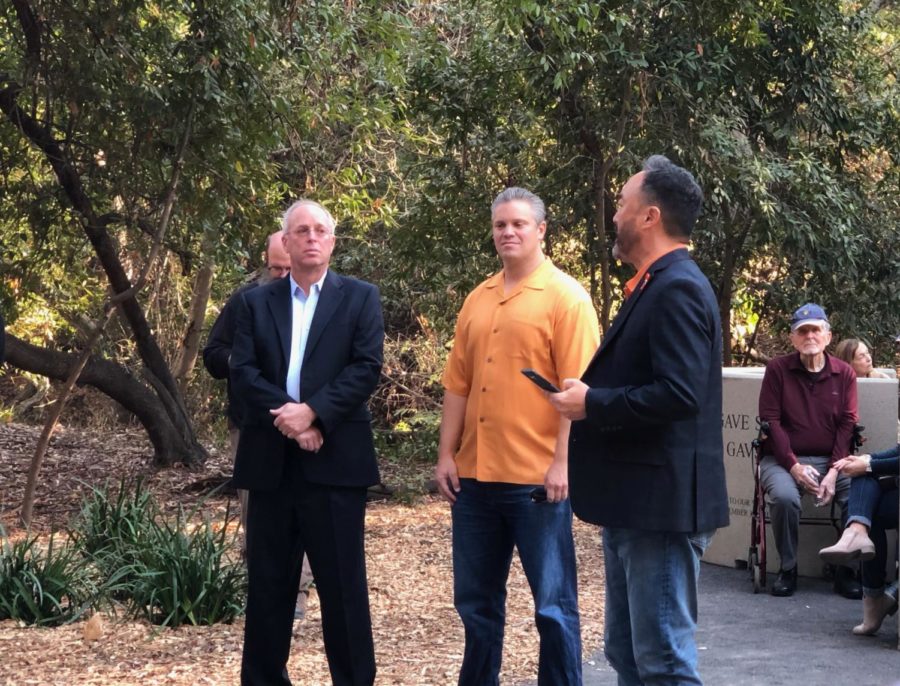
Belmont Mayor Douglas Kim delivers remarks alongside Councilmen Charles Stone and Warren Lieberman.
Sam Hosmer, Staff Writer
November 11, 2018
Former Mayor and Councilman Eric Reed may have passed away in 2017, but his memory appears indelible.
A grove adjacent to the Veterans’ Memorial in Twin Pines Park in Belmont was dedicated Sunday afternoon to the memory of Reed, who died last December after a three-year battle with cancer.
Reed, inspired by the sacrifices made by Belmont residents over the years in service of their country, proposed the Veterans’ Memorial in 2016 and saw it to completion a year later with the aid of a committee of Belmont residents. Now, approximately two years after Reed proposed the project, just under one year after his death, and on what would have been his 51st birthday, the area around the memorial has been named in recognition of his efforts to champion the Veterans’ Memorial and in celebration of his service to the City of Belmont.
“A year ago today, Eric was with us to commemorate the Veterans’ Memorial, which was his way of showing respect for our veterans,” said Belmont Mayor Douglas Kim. “A year later, we’re here to show our respect for Eric, commemorate his accomplishments, and say thank you for his service to the City of Belmont.”
Vice Mayor Davina Hurt and Councilmen Charles Stone and Warren Lieberman also delivered remarks at the dedication, as did Reed’s mother, Loverine Taylor. All spoke in mutual admiration of Reed’s longstanding and far-reaching commitment to Belmont, borne out by his tenures on the Planning Commission and the City Council as well as his term as Mayor in 2016.
“Eric had a need and a desire to give back. And you, the people of Belmont, made that possible,” Taylor said. “This place is so beautiful. I’ll think of him anytime I come here.”
Several community leaders were in attendance at the dedication, including four members of the City Council, City Clerk Terri Cook, City Treasurer John Violet, City Manager Greg Scoles, Reverend Michael Arase-Barham of Good Shepherd Episcopal Church, and Poet Laureate Jacki Rigoni, who read a poem written in Reed’s honor. Also attending the Sunday event were several other members of city staff and the leaders of various civic organizations — likely a testament to the high level of respect Reed’s service earned from his community.
“[Reed] has done so much for this community, and we owe him a lot of gratitude for all the work he did until the very end,” Hurt said.
Following Taylor’s remarks, members of the City Council unveiled a plaque recognizing his service on the Planning Commission, the City Council, and as Mayor. Also etched on the plaque is a quote and a note of gratitude for his “life and service to the City of Belmont.” The plaque sits to the right of the path to the Veterans’ Memorial and at the foot of the Eric Reed Grove.
“I feel incredibly blessed that this community has embraced us,” said Eric’s wife, Laura Tower Reed. “It was a labor of love that built [the Veterans’ Memorial]. The fact that the grove has been named in his memory is everything.”
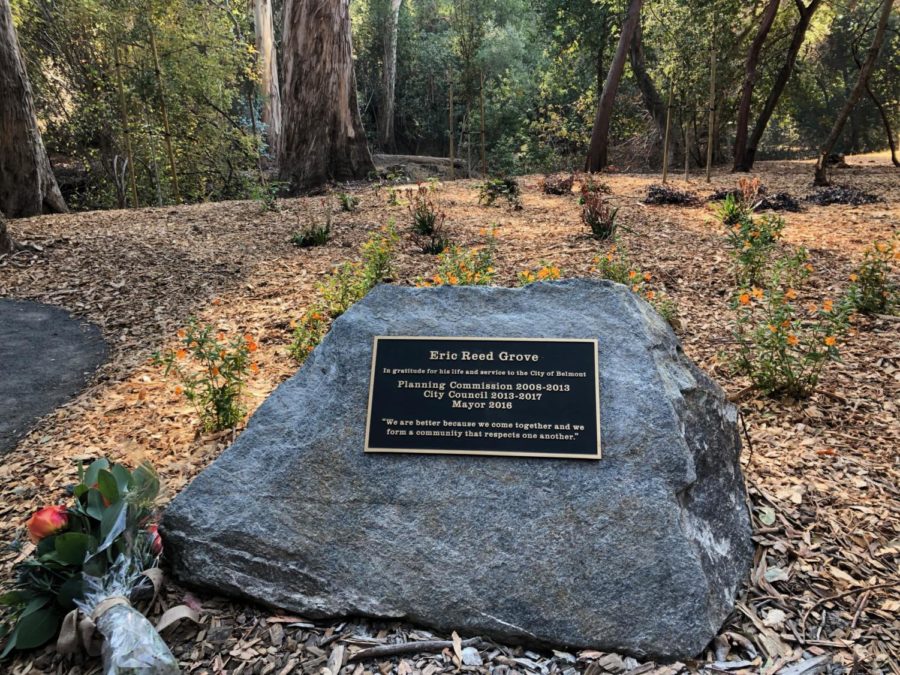
Commemorating Reed’s legacy is a plaque bearing the inscription of his extensive civic involvement.
According to Belmont Parks and Recreation Director Brigitte Shearer, who was in attendance at the dedication, the parks department added new mulch to the grove and planted new vegetation, including five trees and several orange flowers — Eric’s favorite color. Parks staff also chose the stone for the memorial plaque and upgraded the grove’s irrigation system.
“As the guys were working on this over the last couple of days, they really noticed that, now that the older trees have fallen, the light just comes through here in a really beautiful way throughout the day,” Shearer said.
All spoke in tones of shared admiration of Reed’s dedication to the city and his extensive record of successful community engagement. During his time on the council, Reed was a major force behind the adoption of the Belmont Village Specific Plan, an enormous commercial zoning overhaul which may one day pave the way for a substantive Downtown Belmont. He also played a major role in the completion of Davey Glen Park.
“If there’s one thing we can all remember and reflect on, it’s that Eric, as much as anyone and more than most of us, was really a unifier and someone who wanted to bring the community together,” said Lieberman. “And I know of no higher virtue than doing something like that.”
Related Stories
Belmont Councilman and former Mayor passes, leaving a legacy
Belmont unveils memorial bench to celebrate veterans
Candidates demonstrate the spirit of Belmont
Hearing My Sister Vicki
Herbert Boyer
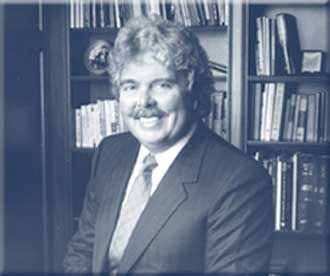
Image of Herbert Boyer. From lineman on the varsity football team to co-founder of the first biotech company, Boyer has never lacked imagination, drive, or vision. His and Stanley Cohen’s recombinant DNA work paved the way for the biotech revolution.
https://en.wikipedia.org/wiki/Herbert_Boyer



To: Herbert Boyer
Co-founder of Genentech
Dear Herbert. My name is John Presco. I ran for Governor of Oregon and got 172 votes in the primary. I am the President of Royal Rosamond Press, My grandfather was an officer of the California Barrel Company that was in the Dogpatch. Meg Whitman founded a company of the same name without looking to see if it was copyrighted. This company has plans to build a.Mini City much like Genentech did further south. My great grandparents are the Founders of Belmont. Eric Reed was the Mayor of Belmont and worked for Genentech. Did Genentech contribute to his campaign?
I will be addressing you in future posts as Dear Herbie, because there is evidence you are no longer fully human, yet you claim much history of South San Francisco. How about Oregon history? Consider Hal in the movie 2001. Herbie and Hal – rule? Is Genentech going to launch their own Space Program, for the sole purpose of realizing a profit? I refer to this description.
“Biotechnology had a significant impact on many areas of society, from medicine to agriculture to environmental science. One of the key techniques used in biotechnology is genetic engineering, which allows scientists to modify the genetic makeup of organisms to achieve desired outcomes. This can involve inserting genes from one organism into another, creating new traits or modifying existing ones.”
“to achieve desired outcomes” What if the sole outcome was to make as much money as humanly possible – with the help of Artificial Intelligence – that might concentrate on Our Love of Currency, and make it their Special Kind of Love – as an excuse to take over just about everything? AIC (artificial intelligence currency) would bypass every obstacle put in its path in order to achieve the Maximin Goal. I ow one of the largest blogs in the world that I sustain on my SSI check and Food Stamps that amounts to around $800 a month. Can I ask how much Genentech has paid you?
As I write, it occurred to me that we should found a reality show…Ask Dear Herbie! How many millions of people want to learn about AI – for all kinds of reasons. We can conduct a survey.
Question No1 ….How many of our viewers want to learn about AI so they can make as much money as they can – and no one can stop you?
Above are astounding images created by A1. My sister was a world famous artist that cranked out millions of images of beautiful women. I have alleged, in art theory, that she owned a printing press with a magic handle that cranked out Art-ifiticial Currency. Christine Rosamond Benton is the great great granddaughter of Carl Janke, who was dug out of his grave in the middle of the night, and his genetic material – along with the DNA of his wife and mother-in-law – were dumped into the same hole in Redwood city. Janke founded a German Turnverein in this city located next to South San Francisco. Is this – right? Or – is this wrong? This could be a trick question in order to determine if your a AI-Bot, or, a human with real human feeling.
When Christine downed on her first sober birthday in 1994, it was discovered hundreds of her lithographs were UNSIGNED. The executor of her estate sold our families artistic and literary legacy to outsiders – who requested an estate seal – so it could be applied to these images of beautiful images so they could have the original intended value. This act created the first Artificial Art in human history when all things are considered – that has roots in Belmont California! This was one in order to pay the No.1 creditor, Lawrence Chazen, who was a partner of Rosamond in her first Carmel Gallery. Chazen was a top Getty advisor and is a partner in PlumpJack Winery, as are most members of th Getty family. Gavin Newsom was a partner, as is the Pelosi. When you add to this the artistic dynasty of the Hoffman-LaRoche family, then you have the largest Art Dynasty in the world. How many people of means invest in art, here and abroad. This is the tip of the iceberg.
The LaRoche name is associated with the Shround of Turin that I have proven was owned by the Knights Templar. I had traced the roots of the family name Rosamond/Rougemont. There has been extensive DNA testing on the Shroud. May I suggest Genentech do more testing. Here are the comments on the idea DNA testing the Shround to prove or disprove THE VIRGIN BIRTH! Perhaps there exists a genetic solution in the amazing AI work Genentech is conducting? As a theologian I own my theory on what the Virgin Birth refers to. Perhaps if we put our heads together – we discover the truth?.
I can hear you saying Genentech stays clear of religious matters, and thus I can assume you fear losing money. Can I assume AI will also stay clear of religious matters for the same reason, and thus religion can be used as a safe sanctuary from Artificial Intelligence. My alleged ancestor, Gottschalk Rosemondt was the head of the Falcon Art College, and Master of Louvain. He may have commissioned Bosch.
On this day I copyright Rosamond AI Art as the root fraud of all AI Art produced in the past, present and future. I just founded blog….Templar-Shroud-of-Turin. You are the subject of my first post. I see us doing a cable show where we field questions from viewers. Do you recall ‘Dear Abby’?
Sincerely
John Presco
President: Royal Rosamond Press
“First of all, I an EXTREMELY skeptical of the claim that new evidence proves the Shroud of Turin to be in the range of 300 BC and AD 300. If this were true, then I almost certainly would have heard about it. I believe that the source you are using is unreliable.”
However, for the sake of argument, let me assume something that I believe is almost certainly not true. Let me assume that the cloth in the cathedral in Turin is 2000 years old, plus or minus three hundred years. (The reason I say I am skeptical is that the Shroud has been tested twice and the results have been published in reliable journals, putting the age at about 750 years, not 2000) If that were true, then there is virtually a zero chance that they have found DNA or chromosomes on this cloth. There is virtually zero chance (I am tempted to say that there is zero chance, but…) that they have found actual blood cells with recognizable AB blood type or with recognizable XY chromosomes. These materials do not last for 2000 years except in extremely rare circumstances. So for a third and fourth reason your premise that this could somehow disprove the virgin birth is groundless. Next, even if we could accept that this piece of cloth was indeed two thousand years old (not true) and even if we could assume that it had scientific evidence of an AB type blood (also certainly not true) and even if it contained actual physical evidence that the person was male (also certainly not true), then how would we know that this was the actual blood of Jesus? Obviously, this would be completely impossible to establish. So, again, your premise is really pretty much nonsense, if I can say that with a kind spirit. Unless we have reason to believe that the biological samples left on the Shroud of Turin are from the actual person Jesus of Nazareth (and we have no such reason that I know of), then the evidence you claim is irrelevant to establishing or disproving the virgin birth.
Then there is the next premise. Let us assume that this was the actual burial shroud of Jesus, that we have his blood and we have proof that he had both an X and a Y chromosome. Would this disprove the virgin birth? Of course it would not. First of all, Jesus was a real person, as all scholars and historians of any standing, including atheists and members of non-Christian religions. All also believe that he was male, and therefore, discovery on the Shroud of Turin that he was male would add nothing to the question of his virgin birth.
What this really comes down to is this. Can science disprove the virgin birth? The simple answer is definitely not. The Bible clearly puts out the claim that the birth of Jesus was miraculous. If so, then it would be a violation of natural law. Miracles are, by definition, events which defy natural scientific laws. Therefore, science, which can only describe the things which happen according to natural law, could not do anything to establish whether or not the virgin birth happened. The only to use this info to disprove the virgin birth is to assume that miracles do not happen. The problem with this “proof” is that it is circular reasoning. We would, in effect, assume that miracles do not happen and, based on this assumption, conclude that the birth of Jesus was not miraculous. Anyone can see that this is a logical fallacy.
According to the Bible, Jesus made fish miraculously. Presumably the fish had the correct number of chromosomes for fish. Does this disprove the miraculous? No. The real question is whether there is evidence that Jesus worked miracles. This is not a scientific question but it is a historical, theological, religious or philosophical question. I believe that the evidence Jesus worked miracles is strong, especially in the case of his resurrection. I have published a book on this topic, and I invite you to pick up a copy and read it. The book is “That You May Believe.” It is available at www.ipibooks.com.
I hope this helps.
John Oakes
Three Flags – One Grave
Posted on May 27, 2023 by Royal Rosamond Press
It is 8:33 A.M. May 27, 2023 – and I am still in shock having discovered my grandparents are buried in the same grave! I saw TWO flags put on one gravestone. That was a half hour ago. THEN – I see another flag! There are three of my ancestors buried in the same grave! WHY? Did the caretakers conclude this was a very poor family? William Stuttmeister knew they were Belmont before he died. At great expense to himself, he moved the Jankes to Colma after they were evicted from the Odd Fellow cemetery – at great expense! This was a wealthy pioneer family whose graves keep being defiled! They were moved to the Union cemetery i 1972?
Below is a video I made after I met with LDS Sisters who wanted to meet at the genealogy center to look at these illustrious people who have a magnificent crypt in Berlin. I don’t know if I told them I was considering putting Amanda Gorman in my painting of the two pages saving our electoral votes.
John Presco
“Originally Carl abd Doretha were buried under a huge bay tree there and bodies later moved to the Union Cemetary “during the dark of night” my mother used to tell us.”
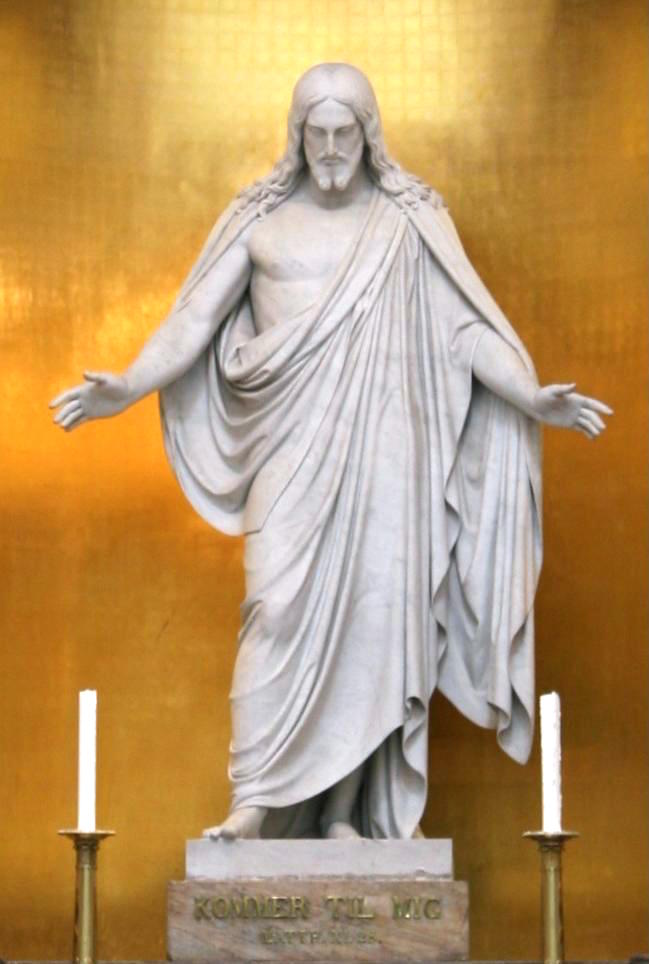


Templar Shroud of Fontenotte
Posted on October 11, 2019 by Royal Rosamond Press

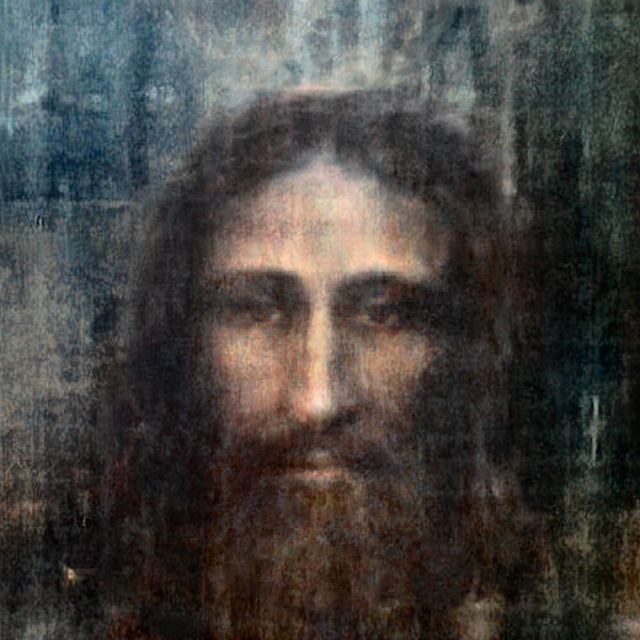
Here are images of Knight Templars who might have seen The Holy Shroud of Turin. I am calling for a New Reformation that will ground its roots at Fontenotte. We need a United Religion designed to stand its ground and take on New World Enemies.
John Presco
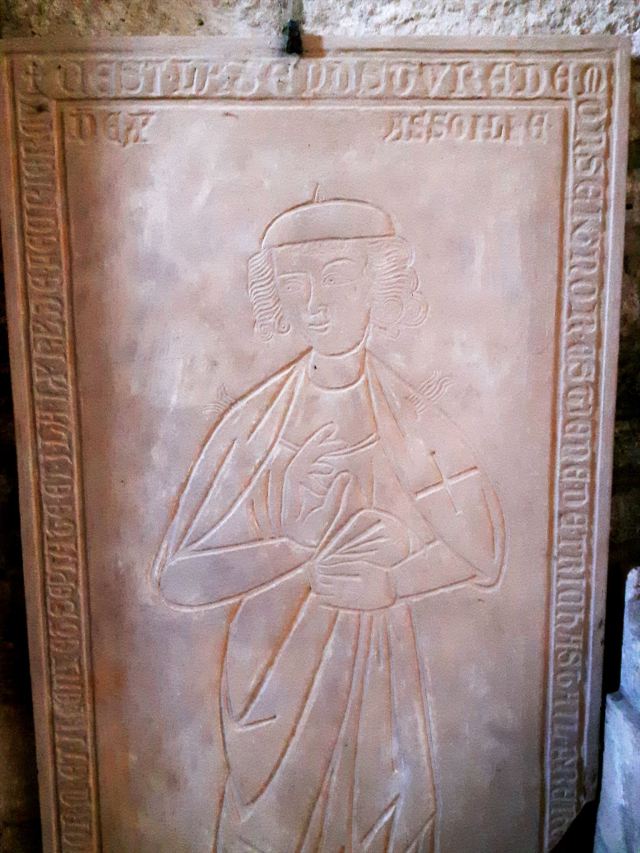
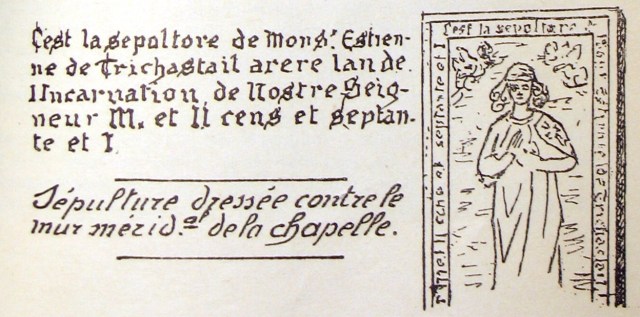
In this church, near the western gateway, you will first find the tombstone of Etienne de Til-Châtel , lord of Pichanges and Chapelain of the Templar Commandery of Fontenotte, buried in 1271.
He is the fifth son of Gui II of Til-Châtel (1180-1241) and Guillemette of Bourbonne, Lady of Coublant.
On the tombstone we can read:
“Who gist or cymetere are brothers of the Chevalerie Dou Temple of Fontenottes near Trichasteaul. “
This funerary stone is a molding of the original stone found in the Chapel of the Sheepfold, at the Rente Saint Joseph on the heights of Dijon.
(see GC6GQQK: TTBERG On the trail of the Knights Templar – La Bergerie)
Thanks to the engraving of this stone, we know the dress of a Chaplain of the Order for a ritual.

On the other side of the door is the nephew of Etienne, Guy III of Til-Châtel , Knight Templar, Lord of Til-Châtel and Pichanges, Gonfalonnier of Franche-Comté, and Archdeacon of Tonnerois in the church of Langres.
On the tombstone we can read:
“Cigit.messires.Gui.sires.de.Trichatel.qui.trespassa.lan.grace … of.mois.doctouvre.priez.for.lame.li. “
This tomb with its green traces of moss is the subject of an old tradition: the original stone would be that of St. Margaret, and as it is often wet because of its porosity, it is said that the saint cries.
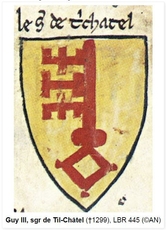
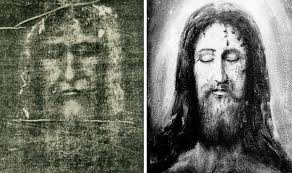

Rougemont Family Templars Worshipped at Fontenotte and owned the Shroud of Turin.
The First Preceptor of La Fontenotte
My mother’s maiden name has been traced to Rougemont who appear to have ties to the Windsors, thus much of the royalty of Europe. I am sharing this discovery with Robert Sinclair, and Ben Toney, who may be related to the Robert de Ros who lived in Belvoir castle that belonged to the House of Toney.
Because the world is going mad, and in order to strengthen Britain and recreated a European Union co-founded by Denis de Rougemont, I revive the order of Knight Templars, whom the Sinclairs are now tied via Anges de Toney.
Alexandre, and Francois de Rougemont are buried with Knight Templars as Til-Chatel. Gui 1er de Rougemont married Etinnette de Ruffey. Here are the Seigneur de Til-Chatel. Guy 2 de Rougemont Thibaut V de Rougemont 1306-1333 Guillaume de Rougemont Humbert de Rougemont married Alix Neufchatel Aymon 2 (Aimon) de Rougemont married Guillemette de Ray daughter of Othon de La Roche, owner of the Shroud of Turin. Thibaut V1 de Rougemont father of Catherine de Rougemont who married Jean de Neufchatel the son of Margarita de Castro e Souza from who the Windsors descend.
The fifth son of Guy II of Rougemont and Guillemette de Coublant,
Etienne de Rougemont was lord of Pichanges. In December 1265, having
recalled the donations made to the temple by Aimon IV and Guy II, he
gave to the Templars, with the agreement of his elder brother, Jean,
Lord of Rougemont, the right of pasturage on his lands of Pichanges
and Spoy. He died in 1271 and was buried before the altar in the
chapel of Fontenotte and conferring his Templar rank of Preceptor
(priest-templar).
After the death of Etienne, Jean de Til-Chatel had to confirm in 1274
the rights of the Templars over Fontenotte. In 1278 his younger
brother, Guy, who had been curate of Til-Chatel in 1242 then
archdeacon of Le Tonnerois in the church of Langres, succeeded him at
the head of the lordship of Pichanges.
In May, 1274, Jean de Rougemont, Marshal of Burgundy legally
recorded “for the repose of his soul and that of his elder brother,
Etienne de Rougemont, who lies in the cemetery of the said Temple,
and of the souls of his forebears”, granted to Henri de Dole,
Commander of the House of Fontenotte:”
I have found a Hughes/Hue de Rougemont who a “grand maître du
Temple”in two accounts, and the maître du Temple of Burgundy in
another.This Hugues appears to be related to Humbert de Villersexel
who wasthe Lord of Rougemont and Til-Chatel. Is this the Hughes that
preceeded Bernard de Tramelay/Dramelay? Did this Hugues come after
Bernard. In the Fromond/Dramelay genealogy we find a line of De La
Roches, and thus the Rougemonts are kin to another Templar Grand
Master, Amaury de La Roche.
Jon Presco
Copyright 2016
http://rougeknights.blogspot.com/
Today I found the Templar Chapel of Fontenotte where the Rougemont
family of Knights Templar worshipped.
http://www.petit-patrimoine.com/fiche-petit-patrimoine.php?


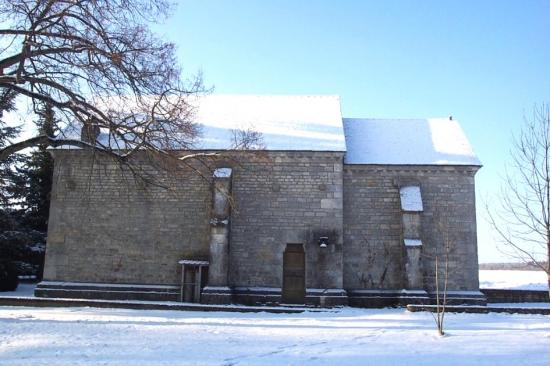

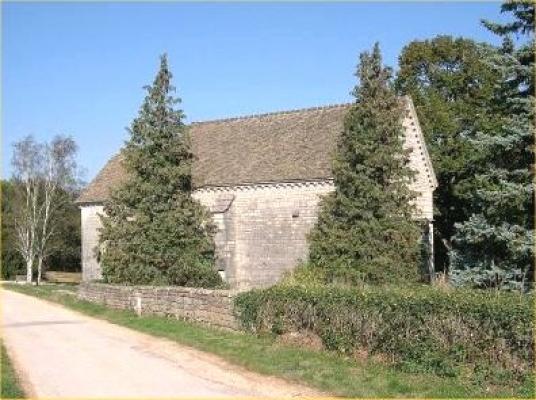


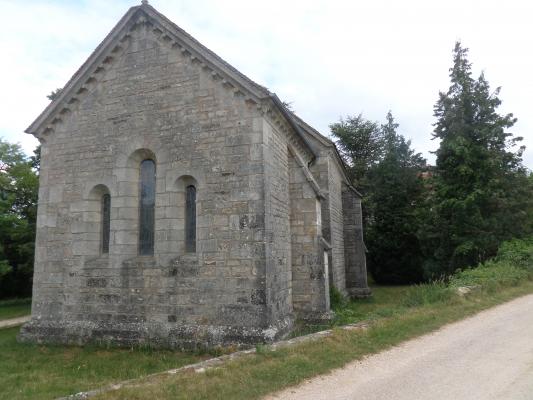
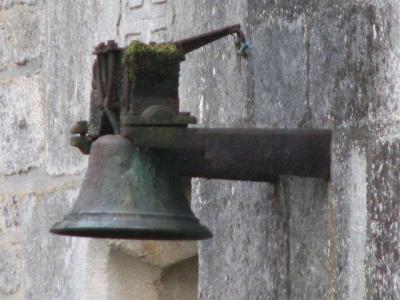


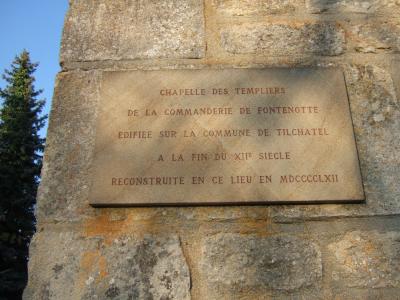


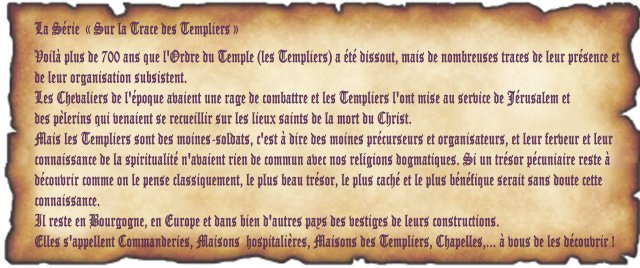

Hugues III donated his land of Fontenotte to the Knights Templar, to ensure the repose of his soul.
These built a commandery including this chapel dedicated to St Petronilla and St Peregrine.
When the order of the Temple was abolished in 1311, the estate of Fontenotte was administered by farmers until the Revolution and sold as a national property.
Became farm, managed by its owners until 1971, (Latour family) buildings and land were sold separately.
In 1960 thanks to Abbot Henri Latour the chapel was saved, dismounted stone by stone, after a journey of about forty kilometers, everything was reassembled in the walls of the sheepfold, on the heights of Dijon.
The chapel back to the place called “La Bergerie” is accessible from Dijon, taking the Avenue Eiffel, out of Dijon and continue on the D 108 G, the chapel is on the left, signposting “Bergerie”, very easy access. From Corcelles-les-Monts, take the D 108 G direction Dijon and continue to the entrance of this city, the chapel visible is on the right just before entering Dijon (chemin de la Rente St Joseph).
Le marchand de vin / époque gallo-romaine IIe-IIIe sièclesProvenance : Til-Châtel / Musée archéologique de Dijon
origin
The village, located on the way Agrippa between Langres (Andemantuno) and Chalon (Cabillione) is mentioned on the map of Peutinger in the year 230 CE under the name of Filena on the river Tille.
Historians consider that it was probably a locality of great importance, at least strategic, Dijon (Divio) is not mentioned.
Father Vignier who had consulted the texts of Claudian wrote during the 17th century that there existed during the Roman occupation a location called La Motte Ronde, located in the bottom of the village constituting a Castrum along the way Agrippa, which allowed to monitor both the river and the road.
It was bounded by Aval Street, Coupé Street and the alley of the Reculée.
The excavations that were carried out in this perimeter allowed to update many vestiges, statues, funerary steles and coins dating from the time of the Roman occupation.
At the time, a channel 2 meters wide by 1.5 deep to navigate flat-bottomed boats, connected the bridge on the Tille to a place called Ogne, located between Til-Châtel and Lux where excavations in the 1980s to 1992 confirmed the existence of a group of buildings occupying a site of approximately 9 hectares which could be, according to René Goguey who led the excavations, a set of warehouses linked to the river navigation where were gathered the grains from the Bassigny destined to the food of Rome.
Later, around the year 264 stands the martyrdom of Saint Florent patron of the village church. The Abbé Roussel tells that the invaders from northern Europe, commanded by Chrocus, after having ravaged Langres and massacred Saint Didier bishop of that city, stopped at Tilae Castrum (Castrum ad Tillam) as the village was then called .
They met there a Christian named Florent, son of the governor of Castrum whom they made prisoner and with whom they wanted to make abjure his faith. At his refusal they decapitated him with a plow. Her head rolled in the river Tille where, carried by the current, she was dragged to Barbe Island on the Saone near Lyons where she was kept in the church of Saint-Martin. As for Florent, his relics exposed in the church are at the origin of many miracles. Ogne and Castrum were destroyed during an invasion after the year 400.
Around 407, the kingdom of Burgundy was created by Gondicaire, barbarian Christian leader from across the Rhine that ended the Roman occupation.
We do not know what is happening in the village until the year 801. At that time it was dependent on the bishop of Langres Betto, who that year, concedes the church of Tilicastro and his income to the Augustinians of Saint Etienne de Dijon. Since that date, the name of the village is written according to the mood of the scribes and the language used, Latin or French, Tylicastrum, Trichastel, Trichâteau, Trichâtel, Tilchastel, Tréchâteau, and finally Til-Châtel in 1860, after being called Mont-sur-Tille during the revolutionary period.
The Lords
Reporting to the bishop of Langres, they originated from an Audon I of Til-Châtel, son of Garnier Count of Troyes attested in 918 by his signature in an act of the Duke of Burgundy Richard.
This family, which carried as a coat of arms a key in pal, also paid tribute to the dukes of Burgundy. She held a high rank among the lords of the duchy and county of Burgundy. Its members who contracted prestigious alliances followed one another from father to son until the year 1299 when Isabelle de Rochefort, daughter of Gaucher de Rochefort lord of Puiset in Beauce, widow of Guy III of Til-Châtel Gonfalonier of the County of Burgundy, became lady of Til-Chatel. She remarried with Humbert de Rougemont around 1306 and married her daughter Jeanne whom she had with Guy III of Til-Châtel to Thiébaud de Rougemont son of a first marriage of his new husband. The lordship then passes into this family until the end of the 15th century when the last of the Rougemont, having no children, ceded the seigneury to Antoine de Baissey from a family of Montsaugeonnais who immediately paid tribute to the bishop of Langres. At the same time, Isabelle de Til-Châtel, Guy III’s half-sister, married Guillaume de Grancey, to whom she brought Gemeaux, Pichanges and Selongey dowries, reducing the possessions of the Til-Châtel family, which , lost a significant part of its luster.
In 1618, having no descendants, the last of the Baissey left the land of Til-Châtel to his uterine brother Erard du Châtelet who called her marquisate and gave it to her son Antoine. Put in decree for settlement of its debts it was acquired in 1663 by the baron of Housset, in turn put in decree in 1685. It was then bought by his widow Marie d’Aguesseau which in 1703 made gift to her niece Catherine d Aguesseau married to Charles Marie de Saulx, Count of Tavannes whose descendants possessed Til-Chatel until the revolution.
The village
It consists of several parts:
– The town
situated in the upper part of the village bounded by the Rue de la Charme in the east, the Barrière in the south, the Bourg and the Derrière lane to the west and by the Côte au nord. Inside the village there was the church and priory now disappeared, the Rue des Pieds Ferret and the Rue du Château which led to the fortress built at the top of the hill dominating the village and the valleys of the Tille and the Ignon. At the time of its splendor, it contained two large belt ditches with double drawbridges and several towers. Today only remains the door of this castle transformed into a dwelling. The rue aux Apports linked the village to the Agrippa way and to the village which had gradually been built on the edge of it.
– The village
stretched along the edge of the way Agrippa where from the 12th century was built the Notre-Dame chapel around which a House-Dieu hospital and its dependencies had come to settle. Sold as a national good in the revolutionary period, these buildings remain and we can see part of the Place du Tertre and rue de l’Hôpital. Other more recent constructions remain, notably of Renaissance period. Going down the Aval street you pass the reach on which various mills existed and we reached the site of the former Castrum that was mentioned above. Beyond the river at the exit of the village the site of the Maladrerie where the lepers were received and treated remains, but there are no visible remains. The village today has more than 800 inhabitants, it has spread towards Langres in the north, the Forge in the northeast, Lux in the east and Marcilly in the west.
– The Saint-Florent church
Located near the castle on the spur overlooking the village, we saw above that it was mentioned in the year 801 in a charter of Betto, bishop of Langres who conceded the benefits to the abbey of Saint Etienne de Dijon . During the following centuries, it received numerous donations and was enlarged in the eleventh and twelfth centuries, access to the church which included only a short nave being done by the southern portal decorated with a tympanum representing a Christ in majesty surrounded by four angels bearing the mark of the sculptor Pierre de Dijon.
Towards the end of the 12th century, the nave was enlarged, giving this Romanesque church its present appearance. The large west portal surmounted by a semi circular archivolt developing 5 rollers whose ends rest on each side on as many rolls crowning fine round columns, all different.
This arcade surrounds a tympanum representing Christ seated, treading under foot the symbol of sin and surrounded by animals symbolizing the four evangelists.
During this work on May 15, 1146, the workers discovered a stone coffin containing a skeleton.
According to the legend, one of them, named Remy, who manipulated without respect this body fell backwards and remained paralyzed, his comrades had the idea to take him to the altar of Saint Florent where the mason, having confessed his fault was cured. The crowd shouted to the miracle and a child exclaimed “Honoratus”, this name was given to the holy contained in the tomb which was placed in the southern part of the transept. Subsequently several miracles occurred and Honoré designated as the second patron of the church.
A carved and painted wooden frame recalls its legend.
Over the centuries, many repairs or consolidation work was done in the church. During the nineteenth century it was in poor condition and at the request of Viollet-le-Duc a major restoration campaign was undertaken in the years 1868-1869. It was led by his son Maurice Uradou who put the church in its current state and saved the essentials, including the general architecture and the remarkable capitals.
We will not describe it here. Note, however, that besides the reliquaries of the patron saints, it contains a god of pity carved wood of the eleventh century, a wooden calvary of the seventeenth century, a triptych painted on wood offered by Jehan Morelet signed by T. Claudon, many funerary slabs including that of Gui III Til-Châtel dated 1240, baptismal fonts of the twelfth century octagonal and several fragments of murals that would have been made from the fifteenth to the seventeenth century.
– Fontenotte
Located on the way Agrippa 2 km towards Dijon, this area, ancient Roman villa had several sources, one of which was connected site of Ogne by a pipe whose remains were found during the excavations carried out on this site .
In 1170, Aimon IV or Amé, lord of Til-Châtel, leaving for the crusade gave the Templars Fontenotte and all its territory to ensure the rest of his soul.
A Templar commandery, dependent on that of Bure was then built.
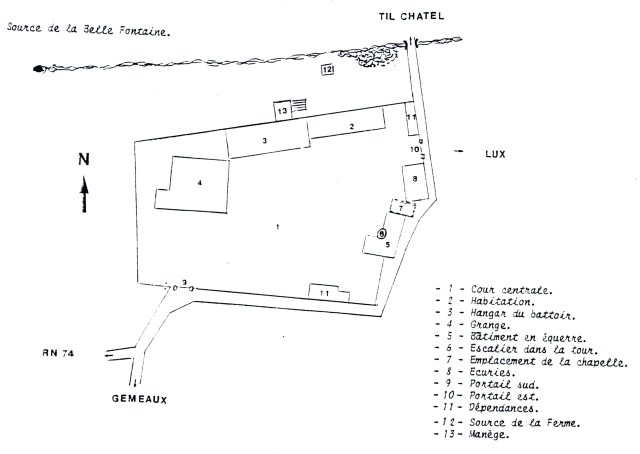
It was built around a central courtyard with various residential buildings, shed, barn, stables building square, tower, a chapel dedicated to St. Petronilla and a fence wall.
It benefited throughout the centuries of numerous donations and when the suppression of the order of the Temple in 1311 was attributed to the order of Malta. From then on, the estate of Fontenotte was administered by farmers until the Revolution.
At that time, the estate was sold as a national asset.
It became an agricultural operation and was administered by its owners, either directly or as a tenant, until 1971. At that date it was sold, the buildings and lands being sold separately.
In the 1960s, the chapel was dismantled by the priest Henri Latour, then pastor of Saint-Pierre in Dijon, son of the owner and back in the grounds of the field of Sheep in Corcelles les Monts.
A casting of the tombstone of Etienne de Til-Châtel was made, it is visible in the church Saint-Florent.
On the Trace of the Knights Templar, here we are at the Commanderie de Fontenotte.

Close to Til-Châtel, on the road from Dijon to Langres, still stands an old Templar farm called “Fontenotte”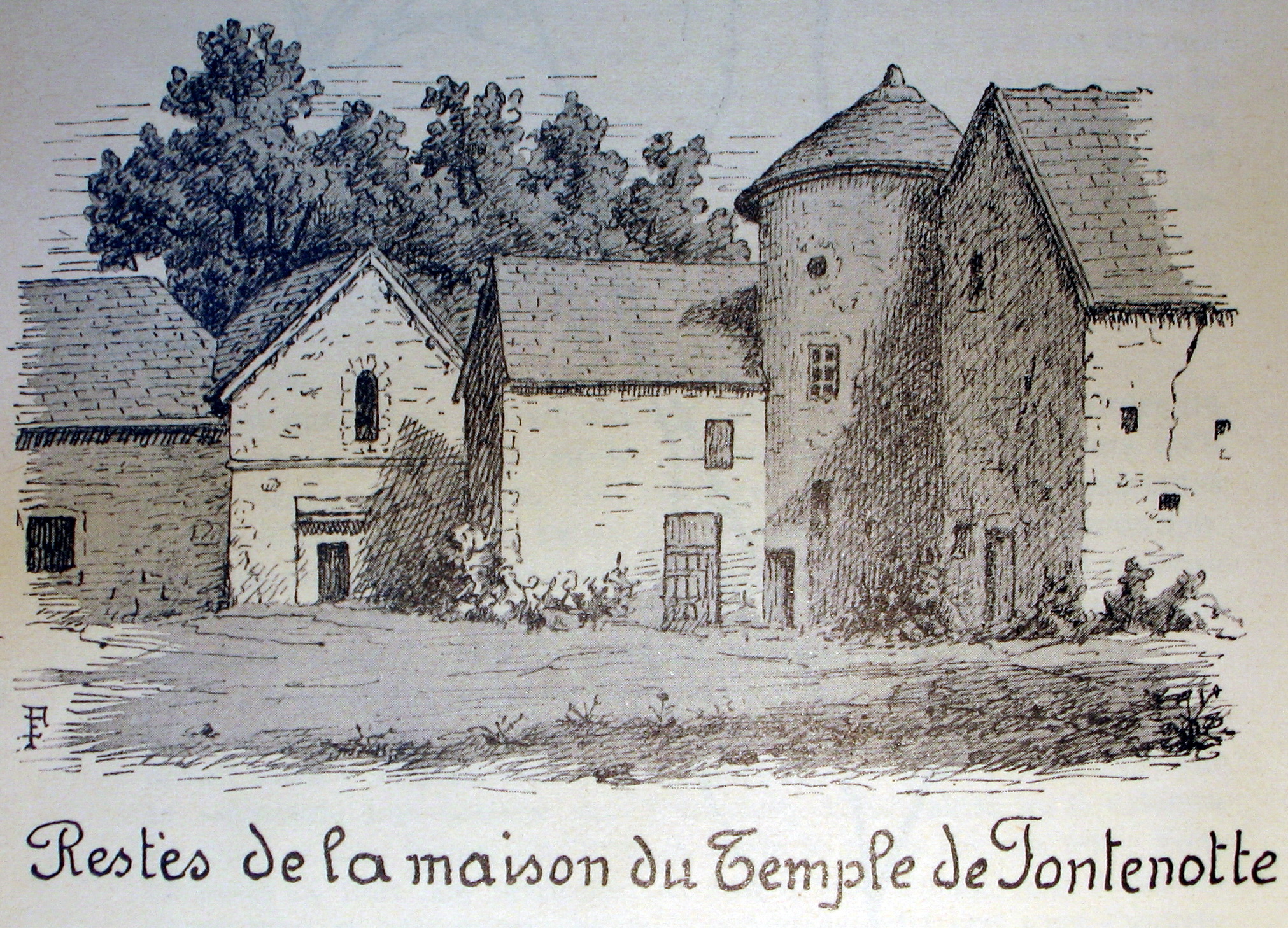
Before leaving for a crusade in the Holy Land, where he accompanied the Duke of Burgundy Hugues III, Aimon IV or Amé, lord of Til-Châtel, donated Fontenotte’s farm to the knights of the Temple “for the repose of his soul”.
The Templars thus receive around 1170 the enjoyment of a vast domain,
“The use on all his land so much in wood as in water and pasture”, that they affiliate with the commandery of Bure.
The monk-soldiers also obtain grazing rights to Pichanges and Spoy from a certain Etienne, lord of Pichanges, fifth son of Gui II of Til-Chatel and Guillemette de Coublant, Chapelain of the Commandery, he is, at his death in 1271, buried in the chapel of Fontenotte.
Three years later, Jean, his older brother, confirms some donations he makes to the Templar establishment and more particularly to Henri de Dole, commander: woods near the commandery, and still grazing rights on the whole finage Spoy.
It will be understood, the Templars accumulate in Fontenotte an important agricultural and forest area from which they derive the benefits and various tithes spread over Til-Châtel, Spoy and Pichanges, of course, but also Lux, Gemeaux, and Saint-Julien, to the gates of the ducal capital.
The other descendants then confirmed the donation, as here in 1278: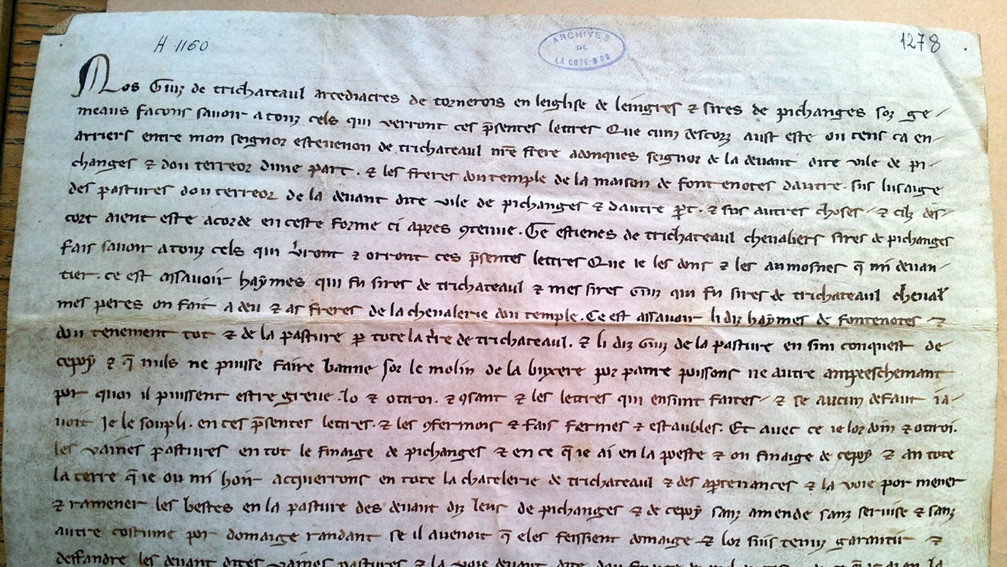
We can read on this document:
«Our Guiz de Trichatel archdeacon of Tonnerois in the church of Langres and lords of Pichanges. . .
let everyone know what will read. . .
my fathers made to God and brothers of the chivalry of the Temple. . . “
Fontenotte was built around a central courtyard with various residential buildings, hangar, barn, stables building square, tower, a chapel dedicated to St. Petronilla and St. Peregrine, and a fence wall.
The building currently used as a barn is large and elevated and appears to have been a clumsy house.
The chapel opens on a house at right angle. with a round stair tower in the inner corner.
In the 1960s, the chapel was dismantled and reassembled stone by stone identical to the Rente Saint Joseph on the heights of Dijon, the field of the Sheepfold, Corcelles road. (see GC6GQQK: TTBERG On the trail of the Knights Templar – La Bergerie)
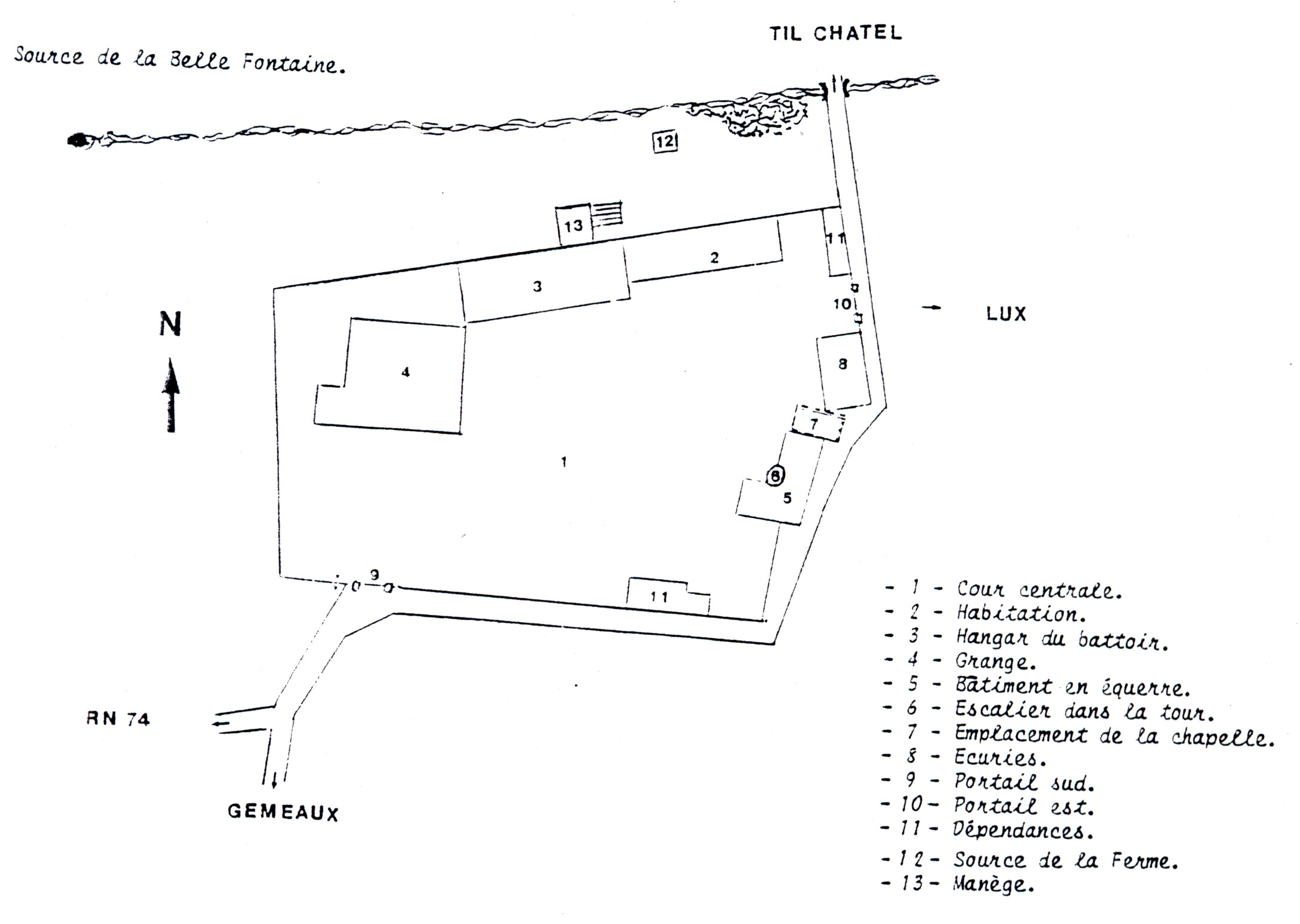
Fontenotte takes its name from the many sources that come close to it; sources which, as indicated by the remains of the aqueduct which were discovered, fed the old town of Ogne disappeared, and now feed the village of Lux.
Until the beginning of the 20th century, the mothers of Til-Châtel, Gemeaux, Lux came to Fontenotte to evoke Saint Petronille for their feverish children. They spread the nappies of the sick child on the water. If they ran to the bottom the poor mother knew that her mourning clothes had to be prepared.
https://www.petit-patrimoine.com/fiche-petit-patrimoine.php?id_pp=21231_3
https://en.wikipedia.org/wiki/Saint_Petronilla
https://en.wikipedia.org/wiki/The_Burial_of_St._Petronilla
https://www.geocaching.com/geocache/GC6GQQK_ttberg-sur-la-trace-des-templiers-la-bergerie
The Gonfaloniere was the holder of a highly prestigious communal office in medieval and Renaissance Italy, notably in Florence and the Papal States. The name derives from gonfalone, the term used for the banners of such communes.
In Florence, the office was known as Gonfaloniere of Justice and was held by one of the nine citizens selected by the drawing lots every two months, who formed the city’s government, or Signoria. In the papal states, it was known as Gonfaloniere of the Church or Papal Gonfaloniere. Other central and northern Italian communes, from Spoleto to the County of Savoy, elected or appointed gonfalonieri. The Bentivoglio family of Bologna aspired to this office during the sixteenth century. However, by the year 1622, when Artemisia Gentileschi painted a portrait of Pietro Gentile as a gonfaloniere of Bologna, with the gonfalone in the background, the office had merely symbolic value.
Jean Gonfalonier of the Burgundy County of ROUGEMONT, Chevalier, co-founder of Rougemont, lord of Til-Châtel and Rougemont, De Rougemont
Print Family TreeFamily Tree Print
Sosa : 2,905,724Sosa: 2,905,724
- Deceased after 1411 Deceased after 1411
ParentsParents
- Guillaume de ROUGEMONT ou Guy 1er de Rougemont , chevalier, Sire/seigneur de Rougemont et de Til-Châtel, sire de Ruffey , De Rougemont, Deceased about 1375Guillaume de ROUGEMONT or Guy 1st of Rougemont, knight, Sire / lord of Rougemont and Til-Châtel, sire of Ruffey, De Rougemont , Deceased about 1375
Married toMarried to - Etiennette de RUFFEY-sur-L’OIGNON ,dame de Ruffey-sur-l’Ognon, De Ruffey, Deceased about 1390Etiennette of RUFFEY-sur-L’OIGNON, lady of Ruffey-sur-l’Ognon, De Ruffey , Deceased about 1390
Spouses, children , grandchildrenand great-grandchildrenSpouses, Children , Grandchildren and Great-Grandchildren
- Married to Jeanne de VIENNE,(Jeannette Bourguignon), dame de Til-Châtel, De Vienne(Parents : Married to Jeanne de VIENNE, (Jeannette Bourguignon), lady of Til-Châtel, De Vienne(Parents:Henri de VIENNE, seigneur de Mirebel et de Charnay, De Vienne†1371/ &Henri de VIENNE, lord of Mirebel and Charnay, De Vienne † 1371 / &Marguerite de BAUFFREMONT, De Bauffremont ) withMarguerite de BAUFFREMONT, of Bauffremont ) with
 Guy II de ROUGEMONT ,seigneur de Rougemont et de Til-Châtel, seigneur de Ruffey-sur-l’Ognon ,seigneur de Maillot et de Vauvry, (“noble et puissant seigneur monsieur Guys de Rougemont et de Ruffy”) De Rougemont†1420/married toJeanne de MONTAGU, (“noble et puissante dame Jehanne de Montaigu”) De Montagu†1426 withGuy II de ROUGEMONT, lord of Rougemont and Til-Châtel, lord of Ruffey-sur-l’Ognon, lord of Maillot and Vauvry, (“noble and powerful lord Mr. Guys of Rougemont and Ruffy”) De Rougemont † 1420 / married to Jeanne de MONTAGU, (“noble and powerful lady Jehanne de Montaigu”) De Montagu †
 Rosamond Press
Leave a comment