Having been anointed by Samuel (The Nazarite) Saul is told of signs indicating that he has been divinely appointed. The last of these is that Saul will be met by an ecstatic group of prophets leaving a high place and playing the lyre, tambourine, and flutes. Saul encounters the ecstatic prophets and joins them.[29] Later,
The Republican Party is betraying God and Liberty by refusing to pass a bill that delivers arms and aid to Israel and Ukraine. Meanwhile, Israel prepares to strike Iran, a Islamic Nation that worships, Jesus, his mother, John the Baptist, and his father. The Rabbis of Israel reject these four people that are found in the New Testament. Their teaching spread into Russia and Europe. They were Celts.
Rosamunda Bolger-Took was the second cousin of Frodo Baggins. The new Hobbit movie is due out.
On September 20, 2009 I announced my grand entry into the Republican Party – in order to save it from the Oil Orcs. I compare this to Frodo throwing the ring of invisibility into Mount Doom. I wanted to make visible the invisible Evil Ones that have taken over the party founded by my Benton kindred that should be united.
Putin – has to go! Trump – has to go. Netanyahu – has to go! I am asking all the Jews of the Diaspora to untie behind President Zelenskyy and NATO. Vote for Biden and form a coalition of Celtic Peoples who will represent the Galatians, who were oppressed by Rome, and all but destroyed by Saul-Paul who claimed he was of the Tribe of Benjamin. He was no a Wolfen Shepherd. King Saul was not a King, but, the King of Prophets! He has…..returned! The one we…..”prayed for”
No one has considered Saul, or seen him as their Savior. Why? Because only the embodiment of Saul can make himself visible, make himself known – at the right time! Timing is everything! As the alleged embodiment of King David sits in a courtroom scowling at prospective jurors, not once has he considered calling upon God for Deliverance, asked God to Judge him. Why?…..He is not – the none!
Hark! What is that sound I hear coming through the forest? For forty years I judged the Children of God, not two. I have come to hear your complaints – again!
It was not a young David who confounded Saul, but a young Saul who confounded the Children with the new notes he knew, that he played with his strange lyre, that calmed the savage beast. Here they come…..The Wolves!
Jonathan ‘The Nazarite’ Van Bois-Le-Duc….The Duke of the Woods

THE TRIBE OF BENJAMIN: A “WOLFPACK” FROM THE NORTH
By Steven M. Collins
Benjamin was the youngest son of Jacob and Rachel, and the only full brother of Joseph. This tribe was almost exterminated in an ancient Israelite civil war in which the Benjaminites were sufficiently fearless and foolhardy to fight all the other tribes at once. This senseless civil war is discussed in Judges 19-21. The Benjaminites were fierce warriors. Although the Benjaminites were outnumbered 400,000 to 26,700, they won the first two battles as they routed the combined forces of the other tribes. Judges 20:21-25 records that the Benjaminites decimated the armies of the other tribes, killing 40,000 of them. The Israelite tribes had to fast and obtain God’s divine help to defeat the Benjaminites. At the end of this needless war, the entire tribe of Benjamin was reduced to only 600 men.
From that time on Benjamin’s population lagged far behind the other tribes, and they were the smallest tribe in Israel at the time one of their members, Saul, was made the first king of Israel (I Samuel 9:21). When the tribes of Israel divided into the two kingdoms of Israel and Judah, Benjamin remained with the tribe of Judah (I Kings 12:21). After Judah went into captivity, a contingent of Benjaminites returned with the Jews to rebuild the Temple and Jerusalem (Ezra 1:5, Nehemiah 11:3-4). However, even as most of the tribe of Judah remained in Asia, most of the Benjaminites also remained in Asian locations.
Herbert Hannay’s book, European and Other Race Origins, included ancient records that “representatives of Benjaminites spread over the whole length and breadth of Asia Minor.”(1) The Bible indicates that Israelites were living in Asia Minor during the Apostolic era. The book of I Peter begins by addressing “God’s People [marginal reading in the KJV] scattered throughout Pontus, Galatia, Cappadocia, Asia and Bithynia.” The term “Galatia” indicated the same people as the “Gauls” of Europe. The New Testament records that one famous Benjaminite, Saul of Tarsus, was born in Asia Minor, so there is biblical evidence that Benjaminites lived in Asia Minor in ancient times. Saul of Tarsus was the Benjaminite who became the Apostle Paul (Acts 9:11, 13:9 and Romans 11:1).
Herbert Hannay links the Benjaminites to the modern nation of Norway (2), a conclusion with which I concur. The biblical clue for Benjamin’s location in the modern world is limited, but indicative. Genesis 49:27 states:
“Benjamin shall ravin as a wolf: in the morning he shall devour the prey, and at night he shall divide the spoil.” (KJV)
Wolves are indigenous to northern climates, indicating that Benjamin’s latter day territory will be in a northern latitude. Since this author has identified Finland as Issachar, and Sweden as Naphtali, the only Scandinavian nation in a northern latitude not yet identified as one of the tribes of Israel is Norway. By the process of elimination, Norway would seem to constitute modern Benjamin. Norway is a lightly populated nation, consistent with Benjamin’s historical role as the least populous of the tribes of Israel. Yair Davidy and I have traditionally linked the tribe of Issachar with modern Finland, leaving Norway and Sweden as candidates for the modern Benjaminites. While it is true that contingents of one tribe can live within the territory of a modern nation dominated by another tribe of Israel, it is my opinion that Norway is most linked to the ravenous, raiding style of the Vikings. Sweden also has twice the population of Norway. Given Benjamin’s biblical role as the Israelite tribe with the smallest population base, Norway’s lesser population also makes it a good candidate for being Benjamin. Yair Davidy and I agree that there is a strong Benjaminite component to the Normans (i.e. “North-men” or Nor-mans) who invaded England in the 11th century A.D.
The tribes of Joseph (Ephraim and Manasseh) would be closer genetically to the Benjaminites than any other tribe of Israel because Joseph and Benjamin were the only sons of Jacob and Rachel. Norway has traditionally had excellent relations with the British and Americans, which one would expect of the descendants of Benjamin. Sweden has been more distant from the British and Americans, both geographically and politically. In World War II, Norway fought the Nazis as allies of the British and Americans. Although conquered by Nazi armies, Norway had a vigorous “underground” which fought the Nazi occupiers. By sinking a ship with a crucial supply of “heavy water” destined for the Nazi atomic bomb project, the Norwegian underground made a meaningful contribution to the war effort against Hitler. Sweden, on the other hand, stayed neutral in World War II, and chose not to fight the Nazis. In World War II, Norway displayed a much closer affinity to the tribes of Joseph than did Sweden, which one would expect of the tribe of Benjamin.
The phrases about “devouring the prey” and “dividing the spoil” do not describe today’s Norwegians, but they very aptly describe Norway’s well-known Viking heritage. The Vikings were known for preying (in raiding parties akin to wolfpacks) on all the other nations of Europe from bases in their northern coastlands. This parallels ancient times. Even as Benjamin warred against all the other tribes of Israel in a bloody civil war in biblical times, the Vikings also raided and preyed upon all the other tribes of Israel who had migrated to various locations in Europe. The Vikings raided the British Isles and Western Europe, and the Mediterranean coastlands of Europe as well. The Vikings also raided into and settled in the modern Ukraine and western Russia. National Geographic Magazine made this comment about their eastern forays:
“By the early ninth century they [the Vikings] were navigating the Volga and the Dnieper to reach the merchants of the Abbasid caliphate. By 860 they had attacked Constantinople…”(3)
The Encyclopaedia Britannica notes that the term “Russia” is linked to the term “Russ,” a name given to Viking Norsemen of the 10th century A.D. who migrated from Scandinavia to the regions of Novgorod and Kiev (4). The name, “Russia,” has a Scandinavian/Viking origin, not a Slavic one, even though modern Russia is now overwhelmingly Slavic. The Viking name, Russ, may well reveal a Benjaminite origin as one of the sons (and clans) of Benjamin was named “Rosh” (Genesis 46:21). Since the vowels were not written in ancient times, the names of “Rosh” and “Russ” both have the same consonants [R-S] in their root word.
The National Geographic also notes the prominence of wolves (the symbol of Genesis 49:27 for Benjamin) in Viking mythology and art (5). Historically, other Scandinavian people besides the ancient Norwegians also comprised the Vikings; however, the Viking heritage seems most closely identified with Norway.
There is another possible connection between ancient Benjamin and modern Norway. It was noted above that when the ancient Israelite tribes divided into a northern kingdom of Israel and a southern kingdom of Judah, Benjamin stayed with Judah. The Benjaminites had strong genetic ties to the tribes of Ephraim and Manasseh, but also retained a cultural affinity for the tribe of Judah. The modern Norwegians brokered the Oslo accords of 1993, a famous peace agreement between the Israelis and the Palestinians. Even though the Oslo Accords now seem to have failed to bring any peace to Mideast, the willingness of Norway to involve itself in the Israeli peace process is consistent with one would expect of modern Benjamin, which was once part of the Jewish kingdom of Judah.
Based on the biblical clues about Benjamin’s location in the latter days, I believe Norway best fulfills the prophecy of Genesis 49 about the tribe of Benjamin. Curiously, while Joseph’s tribes of Ephraim and Manasseh were destined to become the most populous tribes of Israel, Benjamin (Joseph’s brother) became the Israelite tribe with the smallest population.
Steve Collins
Saul (/sɔːl/; Hebrew: שָׁאוּל, Šāʾūl; Greek: Σαούλ, Saoúl; transl. ”asked/prayed for”) was, according to the Hebrew Bible, the first monarch of the United Kingdom of Israel. His reign, traditionally placed in the late 11th century BC,[3] supposedly marked the transition of Israel and Judah from a scattered tribal society ruled by various judges to organized statehood.[4]
https://en.wikipedia.org/wiki/Saul
House of King Saul[edit]
According to the Hebrew text of the Bible, Saul reigned for two years, but Biblical commentators generally agree that the text is faulty and that a reign of 20 or 22 years is more probable.[3] In the New Testament book of Acts 13:21, the Apostle Paul indicates that Saul’s reign lasted for forty years.
Saul among the prophets[edit]
Having been anointed by Samuel, Saul is told of signs indicating that he has been divinely appointed. The last of these is that Saul will be met by an ecstatic group of prophets leaving a high place and playing the lyre, tambourine, and flutes. Saul encounters the ecstatic prophets and joins them.[29] Later, Saul sends men to pursue David, but when they meet a group of ecstatic prophets playing music, they are overcome by the Spirit of God and join in giving prophetic words. Saul sends more men, but they too join the prophets. Eventually, Saul himself goes and also joins the prophets.[33]
I Am A Great Wizard-Seer
Posted on August 20, 2022 by Royal Rosamond Press
My Kinship With Liz, The Gettys, Ian Fleming
Posted on September 17, 2019 by Royal Rosamond Press

John
Embracer has purchased much of Tolkien’s Ring Quest.
In a financial note, Embracer said the likely total cost of acquiring the six businesses, over a period of time, is expected to be 8.2 billion Swedish krona, which is around $788 million. Even if we assume the value of Middle-earth Enterprises makes up the vast majority of that sum, it’s still less than half of what the prized Lord of the Rings rights were expected to fetch.
What happened? And how come Amazon or another major entertainment industry player wasn’t interested?
Middle-earth Enterprises — and now Embracer — owns the worldwide rights to make films, video games, board games, merchandise, theme parks, and stage productions relating to the Lord of the Rings trilogy and The Hobbit. But there are several caveats, exemptions, and question marks over the extent of these rights.
The publishing rights to the books themselves aren’t included; they remain with the Tolkien estate and publisher HarperCollins. The licensing rights to Tolkien’s other Middle-earth works, The Silmarillion and The Unfinished Tales of Numenor and Middle-earth, are also still controlled by the Tolkien estate and HarperCollins, although Embracer says it now owns “matching rights” to these works — meaning it has the right to match any offer the owners may get from elsewhere.
TV rights are another major exclusion. Per Variety, the right to produce a TV series longer than eight episodes was carved out of the deal Tolkien’s estate made with Saul Zaentz back in the 1970s, meaning that Amazon was able to deal with the estate directly when it bought those rights in 2017, cutting Middle-earth Enterprises out of the deal. Nevertheless, Embracer says Middle-earth Enterprises has “financial interests” in The Rings of Power, as well as in Warner Bros.’ upcoming animated film The War of the Rohirrim, and EA’s in-development mobile game Heroes of Middle-earth.
Icelandic Tale of Jon and Rosamunda
Posted on June 12, 2018 by Royal Rosamond Press
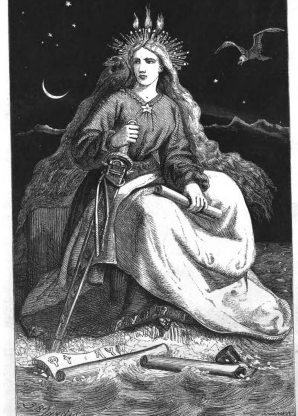
I have come by a rare book of Icelandic Tales. Two of these stories are about Jon and Rosamunda. This books shows me the Riddles of the Runes and how to invoke enchanting spells that are linked to the early church. You can see just a part of these magic spells washed up on the shore at the feet of the woman who will go unnamed. She sits on a rock by the sea. She knows the story of how Jon and Rosamond died on the seashore. They were reborn so this tale would never be lost. J.R. Tolkien was inspired by Icelandic Lore. We will live…..forever more!
Amazon and Tolkein
Posted on April 6, 2018 by Royal Rosamond Press


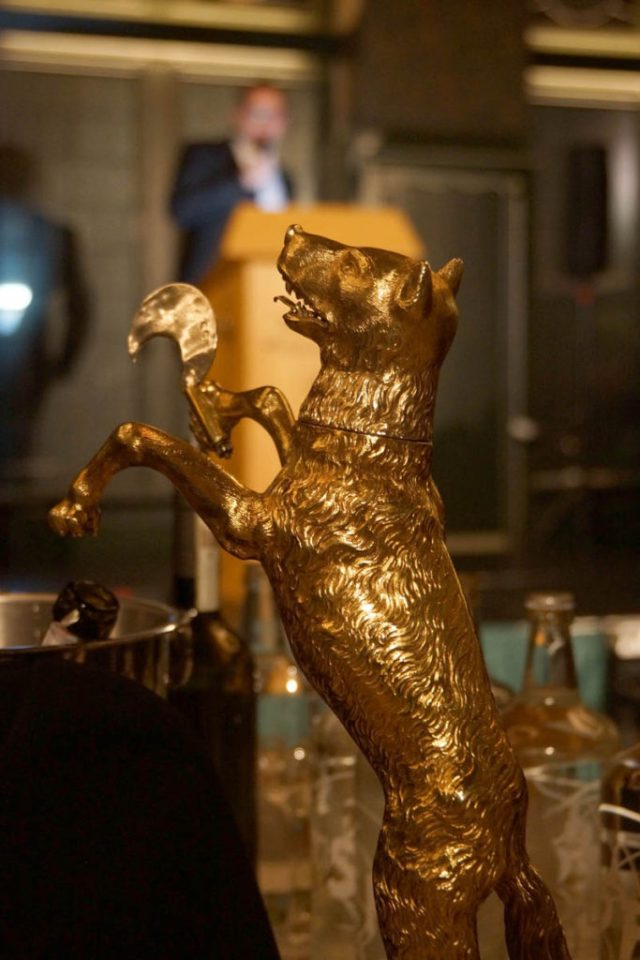
I posted ‘Once Upon A Time’ at 10:25 P.M. on April 6th. Twenty minutes later I found this article about Amazon doing a Tolkien series. This line caught my full attention.
Amazon said that the project will “explore new storylines preceding J.R.R. Tolkien’s The Fellowship of the Ring,” in addition to a potential spinoff series.
I will be contacting Amazon, and hopefully I will not need an attorney. I have copyrighted much on Tolkien, and William Morris, whose Tale of The House of Wolfings inspired Tolkien’s trilogy. I have a deep seeded problem with promoting myself, and taking something for myself due to the abuse of my mother. But, this is the stuff fairytales are made of. Hopefully Jackson will hire me as a writer, and allow me to develop the characters. Has he come upon my blogs? I was about to post on the ‘Rose of the World’ a Russian prophecy that I wanted to revive, and use to push back on Putin, and, have the Russian People adopt a true Democracy – with Freedom of the Press! Amazon owns the Washington Post. They are keen on making sure Putin’s Trolls do not do more damage to this Democracy. I would like to see Lara Roozemond in a role.
Jon Presco
President: Royal Rosamond Press
Last November, Amazon announced that it had acquired the rights to produce a multiseason show set in J.R.R. Tolkien’s Middle-earth. The Hollywood Reporter now says that Amazon’s show might include material from Peter Jackson’s The Lord of the Rings and Hobbit trilogies and that it must go into production “within two years.”
As the race for high-quality television content has heated up among streaming services, Amazon has been on the hunt for big, ambitious television projects to keep up with the likes of Netflix as well as Apple and Disney’s forthcoming streaming platforms. Its acquisition of The Lord of the Rings franchise brings them an enormously successful and recognizable property. Amazon reportedly beat out Netflix for the rights, and according to The Hollywood Reporter, it expects to spend around $1 billion on the show over the course of the five seasons to which it has reportedly committed.Amazon can incorporate a world already engrained in the minds of audiences
One of the downsides to acquiring a huge property is just that: because it’s so enormously recognizable and successful, a remake will have fans wondering why the company couldn’t leave well enough alone. By working out a deal that includes New Line Cinemas and Warner Bros., Amazon seems to be sidestepping those concerns, allowing it to incorporate elements of the world that Jackson has already left engrained in the minds of moviegoing audiences. Amazon said that the project will “explore new storylines preceding J.R.R. Tolkien’s The Fellowship of the Ring,” in addition to a potential spinoff series.
Tolkien’s Middle-earth is known for its size and rich history, which will give Amazon plenty of material to work with in expanding the world that Jackson realized in his two trilogies. Indeed, Jackson’s Hobbit trilogy went far beyond adapting its namesake novel, expanding the story to tease the conflict that we saw featured in his Lord of the Rings trilogy. Despite its steep price tag, Amazon seems to be making a safe bet by buying into not only Tolkien’s world, but Jackson’s as well.
THR reports that Jackson’s involvement in the project is uncertain, but Jackson’s attorney described the deal as a “creature of the times,” saying Amazon is “taking a page out of the studios’ emphasis on franchises.” In a world where Disney has laid out impressive, interconnected franchises with its Marvel and Star Wars properties, and HBO is considering anywhere between three and five spinoffs for Game of Thrones, Middle-earth could be a property that gives Amazon a significant boost in the coming streaming wars, one that could entice even more people to sign up for Amazon’s Prime service.
Rosamunda Took
Posted on August 29, 2017by Royal Rosamond Press
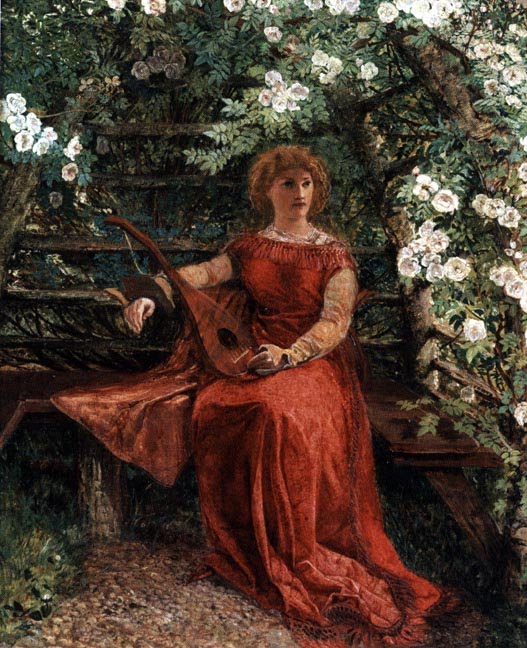
Rosamunda was the daughter of Sigismond Took.[1] She married Odovacar, future patriarch of the Bolger Family, and had two children: Fredegar and Estella. The couple and their children attended Bilbo’s Farewell Party in S.R. 1401.[2
“As a token of her confidence, she told him he need no longer call
her, “Auntie.” The previous year, Bilbo had suggested that Frodo no
longer address him as, “Uncle,” if he wished. Plain, “Bilbo,” would
do. Frodo still called Bilbo, “Uncle,” now and then; it had become
too ingrained a habit. But, following suit, Rosamunda suggested Frodo
might call her, “Rosa,” or, “Rosamunda.” Frodo forgot, and called
her, “Auntie,” many times, but, within the space of an afternoon
tea, “Rosa,” she became.”
Rosamunda Bolger (née Took) was the mother of Fredegar “Fatty” Bolger
and Estella Brandybuck. She was married to Odovacar Bolger and was
known as Rosamunda Took prior to the marriage. They lived in
Budgeford in Bridgefields in the Eastfarthing of the Shire. Rosamunda
and Odovacar both attended the Bilbo’s Farewell Party in 3001 along
with their children.
Fredegar “Fatty” Bolger
Norman Cates as Fatty Bolger from a Decipher Card designed by Weta
Friend of Frodo Baggins. Fredegar Bolger, called Fatty, was born in
2980 to Odovacar Bolger and Rosamunda Took Bolger. He had a sister
Estella who married Merry Brandybuck. Fatty’s great-great-grandfather
on his mother’s side was Gerontius, the Old Took, who was also the
great-great-grandfather of Merry and of Pippin Took. Fatty’s family
was from Budgeford in Bridgefields in the Eastfarthing.
“From first sight, even the site of the new cottage had enchanted
her, dug as it was into the southeast side of a grassy hill in the
midst of Boffin lands, populated with Boffin sheep. There was a
little copse below it, just to the side, and a spring-fed well, all
of which reminded her of her childhood home. The place had come down
to Odovacar through his mother’s side, a Boffin. He had used it as
a sort of base, when he and his friends had gone out hunting.
They would stock the little hole with gear and rations. Then, with
their bows, and a pony for their gear, they would make forays west
or north, towards the Downs or up to the Moors, or, closer still,
into Bindbale Wood. But that was years ago, when the game had not
yet moved so far off.
When Rosamunda had viewed it more carefully,
she saw the hole was inconsiderable disrepair. Also, it was a bit
too small. She had new rooms dug, so that there was a parlor and a
kitchen, a bedroom for each (and one to spare), along with extra
chambers further back for store. When it was finished, it suited
Rosamunda very well. Especially, she loved the light. Situated
facing south-east, the light poured through the windows in the
mornings, her favorite time of the day. And, when she stood
outside, she could see the land stretching east and south far into
the distance. Illuminated by the late afternoon sun, the prospect was
especially fine. From the top of the little knoll that made the
cottage’s roof, she could see far to the north and west, where sheep
dotted the rolling hills. The sky at night took her breath away. And,
all day, the birds sang, the wind blew, and the Water, which ran
nearby, just to the west, mostly narrow andquick as it came down out
of Long Cleeve and Needlehole, could just be heard when the wind
dropped and everything was still. She loved its peace and quiet, so
tucked away and so private.
Yet, it was just an hour’s walk over the
hills to Bag End or to Hobbiton. Overhill, to the east, was even
closer. Every fine day Rosamunda walked the hills, seldom seeing
another living creature other than sheep, or, very rarely, a doe or
faun. She did not walk south to Hobbiton, however, except on errands
or for an appointed visit. She had not forgotten
her “understanding” with Bilbo. And Bilbo did not forget her, either.
Regularly, he sent her gifts of wine or ham or fruit in season, as
tokens of his neighborly regard. She appreciated the way he could
show marks of particular notice, without making her feel the burden
of obligation.”
Sigismond was the son of Hildibrand Took. He had two children, Rosamunda and Ferdinand.[1]
“Do you like the Night Wolves?”
Posted on August 26, 2023 by Royal Rosamond Press
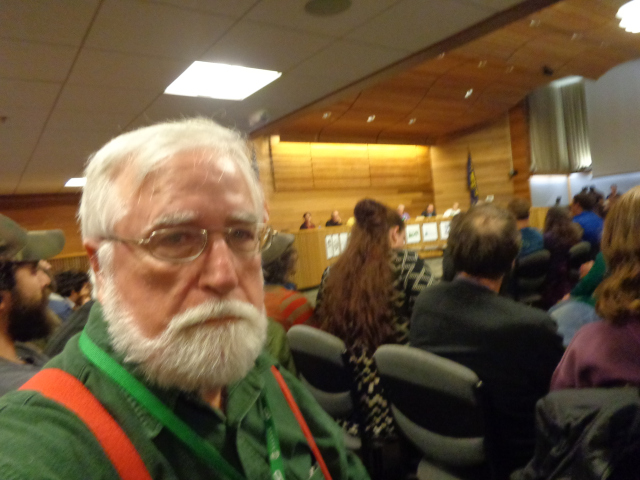
For years I’ve been risking my life, and no friend or relative – can acknowledge this! On this day, I declare – I have no family and friends! No candidate for office of President of the United States – has ever made such a declaration! So be it!
Here are Oregon Lawmakers trying to hire the Three Percenters and Oath Keepers to be bodyguards. I confronted the Three Percenters – two years before Jan.6th. I shout to them…
“Do you like the Night Wolves?”
John Presco
‘The Presidential Prophet’
Republican Candidate for President
Oregon Republicans Bless Militias
Posted on May 5, 2023 by Royal Rosamond Press

Royal Rosamond Press is investigating why Republicans, and Christian Leaders, allowed militias to be THE POLICE! This is BIG BROTHER! Was President Trump being briefed on the Three Percenters ? By whom? Governor Kotek should open and investigation!
John Presco
Multnomah County Republicans Formally Allow Militia Groups to Run Security

A Three Percenters militia member running security at a pro-Donald Trump event in April DOUG BROWN
The Multnomah County Republican Party (MCRP) has formally decided to pair up with right-wing militia groups to run security at local events.
The formal resolution was passed on on Monday and its text was leaked to the Mercury Friday morning. MCRP Chairman James Buchal, despite being displeased with the leak, confirmed his group approved pairing up with the Oregon Three Percenters and Oath Keepers via a resolution earlier this week:
Proposed Resolution of Chairman Buchal: Resolve that the MCRP may utilize volunteers from the Oregon Three Percenters, Oath Keepers, and other security groups. To provide security where such volunteers are certified to provide private security service by the Oregon Department of Public Safety Standards and Training. Kay Bridges moved and Janice Dysinger seconded. Resolution passed.
Fri, August 25, 2023 at 10:22 AM PDT·4 min read

Wagner mercenary group founder Yevgeny Prigozhin appears to have been killed in a plane crash near Kuzhenkino, a village halfway between Moscow and St. Petersburg, two months after his forces staged a brief revolt demanding the ouster of Russia’s military leadership. Foreign observers, including President Joe Biden, are speculating aloud that Russian President Vladimir Putin probably had Prigozhin killed in retaliation, and U.S. intelligence analysts said Prigozhin was most likely assassinated, probably with a bomb or some other device planted on Prigozhin’s private aircraft.
https://en.wikipedia.org/wiki/Night_Wolves
History[edit]
The club began forming out of a mixture of rock music fans and motorcycle enthusiasts who held then-illegal rock concerts in Moscow (see Censorship in the Soviet Union) as far back as 1983.[3] By 1989 the club was consolidated as an informal motorcycle group bearing the name “Night Wolves”, during the Perestroika era of the Soviet Union. It became the first official bike club in the USSR. As of the beginning of 2018, the Night Wolves now have chapters in Russia, Ukraine, Latvia, Germany, Bulgaria, Serbia, Romania, Australia, Slovakia, Belarus, Philippines, Bosnia and Herzegovina, Montenegro, Czech Republic and North Macedonia.[1] Alexander Zaldastanov (also known as The Surgeon) became the leader of the club in 1989.
https://news.yahoo.com/putin-stronger-weaker-without-prigozhin-172248672.html
The Night Wolves Have Landed
Posted on May 3, 2019 by Royal Rosamond Press

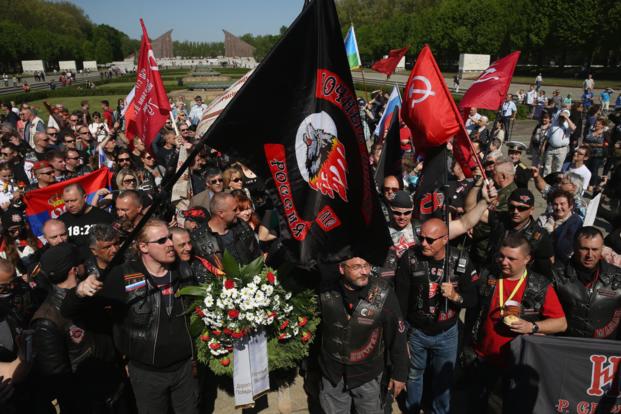
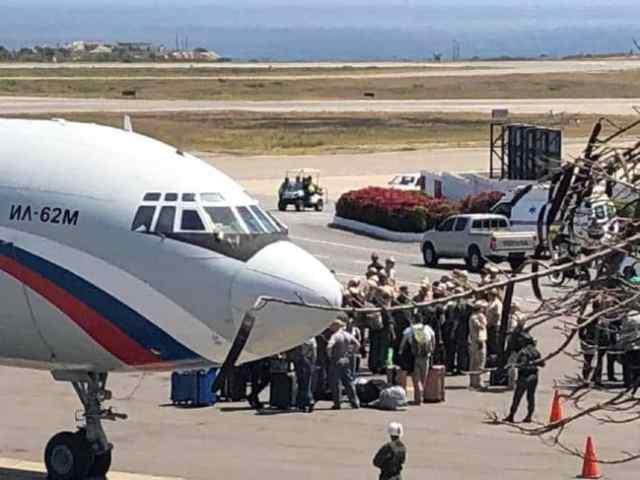
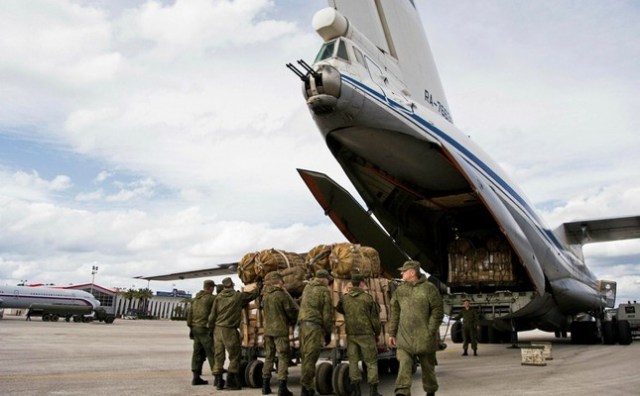
Art immitates life!
I woke from a dream. The Night Wolves have landed in Venezuela. I have been watching the demonstrators there on motorcycles. This made Putin as his Wolves from hell, salivate. Where is our President?
I have prepared for this battle. I am a Futurian!
Away my wolves! Away!
Seer Jon Rosemondt ‘Duke of the Woods’
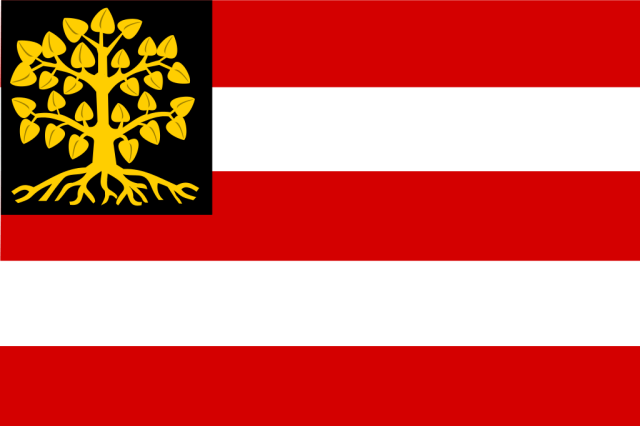
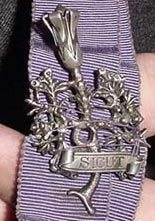

https://en.wikipedia.org/wiki/%27s-Hertogenbosch
http://tolkiengateway.net/wiki/William_Morris
Literary works by Morris, which Tolkien explicitly stated to have had an impact on his writing, are his translation of the Völsunga Saga,[1], and his novels The House of the Wolfings and The Roots of the Mountains. Tolkien also said in an early letter to Edith that he tried to use some of Morris’s literary techniques when writing “The Story of Kullervo“.[2][3]
Furthermore, scholars have deduced possible implicit influences from these and several others of Morris’s works: The Earthly Paradise (for The Book of Lost Tales),[1] The Roots of the Mountains (for Gollum),[4] The Wood beyond the World (for Lothlórien and Fangorn),[4] and his translation of The Saga of Gunnlaug the Worm-tongue (for Gríma Wormtongue).[5]
[edit] Artistic influence
In several illustrations, Tolkien was clearly inspired by the decorative style found in the Arts and Crafts Movement (of which Morris was the central figure and one of the founders) and the related Art Nouveau. The design philosophy of Morris was to re-introduce traditional craftsmanship by using simple forms and patterns and often medieval, romantic or folk styles of decoration (in reaction to early to the early modern industrial design), a theme which can be seen in some of Tolkien’s illustrations from the late 1920s (see, e.g., ‘Tol Sirion‘), some of his paintings for The Hobbit, the ornamental patterns drawn in later years,[6][1] and his hand-drawn maps of Middle-earth.[7]

In July 2018, the Slovak press reported that the Night Wolves, a nationalist Russian biker gang, had created an official European base of operations in the village of Dolna Krupa on a site owned by Jozef Hambalek, an entrepreneur with ties to right-wing Slovak militias. The base probably would have escaped international attention if not for aerial footage, published in the Slovak press, that showed not just motorcycles but tanks and armored personnel carriers, which Hambalek had borrowed from the Slovak Institute of Military History on the pretext of establishing a military history museum. (The director of the institute, who claimed that he was duped, was relieved of his post.)
Officials and ordinary Poles are up in arms about high-profile plans by the so-called Night Wolves — an infamous Russian motorcycle club known for its pro-Kremlin stance — to roll through the central European country next week on their way to Berlin.
https://www.pri.org/stories/hardcore-russian-biker-gang-about-invade-poland
https://www.bbc.com/news/world-europe-45019133
https://en.wikipedia.org/wiki/Night_Wolves
The club has long taken an interest in the political and social life of Russia, engaging in youth social issues,[which?][how?][10] forging close links to the Kremlin and establishing a friendship with President Putin.[11] They also contributed to the invasion of Crimea by patrolling the streets of the peninsula with unmarked soldiers sent from Russia[12][13][14] and fought for the pro-Russian side in the Donbass war.[15] They are involved with the Russian Orthodox Church and make a motorcycle pilgrimage to holy Russian Orthodox sites several times a year.[how?][16]
Relationship with the Kremlin[edit]
The club has close ties to Vladimir Putin and a generally Russian nationalist sentiment.[1][5][17] Putin has described them as his “friends” and appeared at their rallies, riding a Harley-Davidson trike.[18] Yale University historian Timothy Snyder believes it serves “as a paramilitary and propaganda arm of the Putin regime.”[19]
The Night Wolves are funded by the Kremlin, receiving “several hundred million rubles a year” according to a report in 2013.[5] In May 2015, Alexei Navalny claimed that the Russian government had given 56 million rubles to the group in the preceding year and a half.[20][21] In October 2015, Night Wolves received a donation of 12,000,000 rubles from the Russian government to ‘build a “Patriot” youth center in Sevastopol in Crimea’.[22]
The Night Wolves were referred to as “Putin’s Angels” in western media coverage in 2015.[23]
Involvement in Ukraine[edit]
Further information: Russian military intervention in Ukraine (2014–present)
Members of the Night Wolves have fought on the side of pro-Russian militants during the Crimean Crisis and the Donbass war. They blockaded the main routes into Sevastopol[24] and participated in attacks on a natural gas facility and the naval headquarters in the city.[25] In April 2015, Agence France-Presse stated that Alexei Vereshchyagin had fought against Ukrainian government forces in Luhansk.[18]
https://en.wikipedia.org/wiki/William_Morris
Return of the House of Wolfings
Posted on August 4, 2013by Royal Rosamond Press


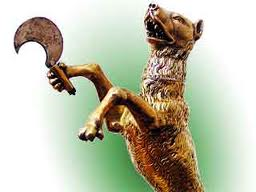

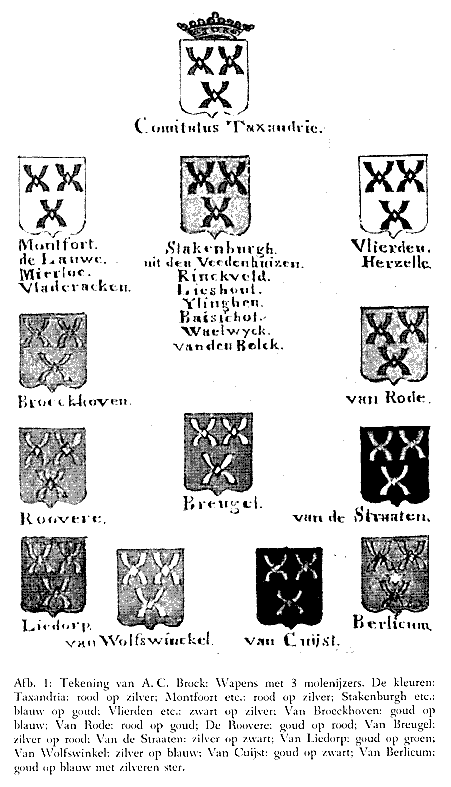

https://rosamondpress.wordpress.com/2012/10/01/the-wolfen-guild-of-rosemondt
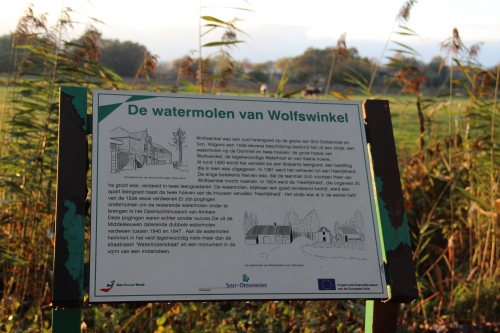
The Roesmont/Rosemont family owned Melon Woflswinckle, a watermill. My kindred were named Roelof, Rudolph. Rodolphus, meaning “famous wolf’.
When I asked Christine why she was staring so hard at Rena when they met, she said;
“She reminded me of a vampire, one of those women who play vampires in the movies.”
Rena had played at being a vampire with her boyfriend. She gave me an incredible kiss in order to capture my soul. Was she just playing? Was I playing? We were wild Danish wolves on our mountain. Together, we had overcome the world.
When I called Rean in Nebraska she was out in a field of grass surrounded by a thousand crows that took flight at sunset. She said;
“If you were here right now, I would give you such a kiss.”
“I love you more afar, then near.”
Rena had been thinking of me when I called. She had summoned me from afar. We were now closer then when we were near. Our souls were……one. Wherever she go, there go I. Wherever I go….. mon beauté des bois
go with me. Wolves mate for life. Do not pick our roses.
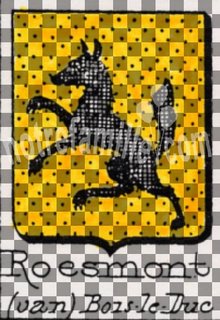
I am going to render the Rosemont cote of arms that shows a dancing wolf, and the words ‘Duke of the Woods’.
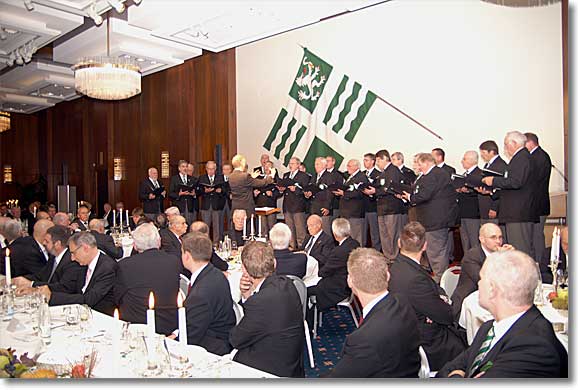
I have immortalized my family. Above are photos of the EE Zunft Rebleuten Guild of Basel whose emblem is a dancing wolf. Fremasonry has its roots in the guilds. Notice the cote of arms behind glass in top photo. William Morris said the sons of the House of Wolfen are best suited to tell the tale of their battle with the slave masters of Rome.
Jon Rosamond Wolferose
“Erhart de Rougemont who bought in 1495 “the house called Rebleuten-Zunft in Basle in the Freistrasse.’
Peter Rosemond had seen in print the letters from Erasmus to Gotschalk Rosemondt. He noticed that a seal used by a Rosemont in Holland, bearing a jumping fox, was like an emblem he had noticed in a wall of the house Rebleuten-Zunft in Basle. This seal
dated back to 1430,
This James (or Jacob, for these names were once interchangeable) was the son of Hans Ulrich
Rosemond, born 1623, a weaver; who was a son of Hans, a weaver, born
1581; who was a son of Fred Rosemond, born 1552, a weaver, member of
town council and a local captain; who was the son of another Hans
whose date of birth is not known, but he too, was a weaver and became
a citizen of Basle in 1534. His father was Erhart de Rougemont who
bought in 1495 “the house called Rebleuten-Zunft in Basle in the
Freistrasse.’ Peter Rosemond further reported information from the
Records Office in Basle that “before Basle the family resided in
Holland up to 1338, and it is said they descended from the estate
Rosemont, near Belfort, in France, where also the village Rougemont
is found.” A family coat-of-arms was registered in Basle about 1537
when the first Hans became a resident there. A reproduction of this
coat-of-arms in the writer’s possession shows a weaver’s crook
conspicuously, and it will be remembered that in Ireland our people
were linen weavers and farmers, and that Edward, the elder, was a
weaver in this country. Peter Rosemond had seen in print the letters
from Erasmus to Gotschalk Rosemondt. He noticed that a seal used by a
Rosemont in Holland, bearing a jumping fox, was like an emblem he had
noticed in a wall of the house Rebleuten-Zunft in Basle. This seal
dated back to 1430, whereas the coat-of-arms above mentioned dates
from 1534, it seems. Peter Rosemond died September 22, 1930. This is
but a sketch of what he wrote.”
The Wolfswinkelse Water Mill was a watermill on the Dommel. The water mill is located in the municipality of Sint-Oedenrode between Banda and Nijnsel. This mill may have ever known as Wallace .
Content
[hide]1 Etymologie
2 History 2.1 Glory Wolfswinkel to 1604
2.2 from 1604 to 1795
2.3 from 1795 to the present
3 nearby water mills
Etymologie[Edit]
In the name Wallace means a corner Shop . The element can be in multiple ways, however, Wolf explained. Many think the first time to the animal name, but it can also save on a field curvature . That seems like a meaningful statement because such terrain form around emphatically pointing to falls (that is, a strikingly high steep Ridge along the Dommel, half a kilometre to the North).
History[Edit]
Glory Wolfswinkel to 1604[Edit]
The mill was about 1200 by Duke Henry I of Brabant donated to the Priory of Postel. Later it became a little glory, consisting of a omgrachte hofstede (the Water Horse), a farm and water mill. This area was by the Ducal couple of Joanna, Duchess of Brabant and Wenceslas I of Luxembourg in 1381 in loan issued to the nobleman Edmund d’Aquis. There would then also a clasp. The oldest known occupant would Agnes van Wolfswinkel, after which her son Cameron has inherited the property of Dijnter, after which the owners were Dijnter and Emont of Geerke. In 1450 was the glory in possession of the family of Rosemont, and then the families Coensborgh and Molenpas. The lock was already gone. In the 15th and 16th centuries are listed followed by the families Huyoel families, Baja, Daly, Valentine and Thielemans.
From 1604 to 1795[Edit]
The mill was In 1604 , separate from the estate, sold as a separate fief to Coenraedt Jan A. In 1628 was the mill property of Jhr. the Jada who in 1650 a oil mill at the original corn mill. About 1720 the mill was in the possession of Lord Lambert, count of Val, and after his death the mill was sold to Johan Carel de Jada, who was Lord of Eckart .
In the French period, at the end of the 18th century, the mill was burned by the English and German troops in order in this way, the English army, that was pulled together on the Nistelrooise Heide, to warn of the approaching French. The remains were then sold to Widow in 1795 Raon van schalkwijk, which the mill 50 metres upstream re-constructed.
From 1795 to the present[Edit]
After the rebuilding has known many mill owners. She was used during the 19th century as the volmolen Geldorp and by the Tilburg textile manufacturers. Although the mill was still in operation in 1878 , touched them soon thereafter in decline. In 1928 , the lock in the Dommel and the water mill was sold to the Dommel water board. The watermill was demolished after 1945 , despite attempts at preservation.
Now rest on this scenic spot only the Mill House. In addition, reminds the Water farm to former glory. Furthermore, reminds a small monument to the water mill, as well as leading the way out there, which still carries the name watermolenstraat . The cycle route along the Peel performs there.
Gijsbert ROESMONT. After dying the ships nobleman hendrik Heym
in 1427 took he are place on the ship chair. He was church master of
Saint Janskerk, member of Lieve-Vrouwe-broederschap and died in 1449
306. Nobleman Arnold the ROOVER Dirkszn., knight, embark 1349 and
1355. he had married with Catharina Berthout said of Berlaer, for the
of Lodewijk, lord of Helmond and Keerbergen, and of Johanna van
Dinther. After dying her he have been still remarried with Maria van
Leyenberg Gerardsdr. The Roover were member of the Lieve-Vrouwe-
broederschap and exchanged it temporary with eternal in 1384 307.
Nobleman Dirck the Roover Janszn., lord of the Nemerlaer.
http://en.wikipedia.org/wiki/Dinther
Rusty Mont (Rosemont, Roosemont), b. ± 1250, Bron Wissenburg , zoon van “missing link” (de Rougemont) Roesmont (Rosemont) en de familie Roesmont (Roosmont Rosemont) /Rosemont) /Rosemont) /Rosemont) /Rosemont) /Rosemont) /Rosemont) /Rosemont) /Rosemont) /Rosemont) /Rosemont) /Rosemont) /Rosemont) /Rosemont) /Rosemont) /Rosemont) /Rosemont) /Rosemont) /Rosemont) /Rosemont) /Rosemont) /Rosemont) /Rosemont) /Rosemont) /(informatie) ± 1250, Source Wissenburg , son of “missing link” (de Rougemont) Rusty Mont (Rosemont) and the family Rusty Mont (Rose Montrose) / Rosemont) / Rosemont) / Rosemont) / Rosemont) / Rosemont) / Rosemont) / Rosemont) / Rosemont) / Rosemont) / Rosemont) / Rosemont) / Rosemont) / Rosemont) / Rosemont) / Rosemont) / Rosemont) / Rosemont) / Rosemont) / Rosemont) / Rosemont) / Rosemont) / Rosemont) / Rosemont) / (information )
Chronologisch de meest waarschijnlijke verklaring voor de volgende akte (aannemelijker dan dat Godschalck de vader van de betreffende zonen was): (15-3-1315, regesten ‘s-Hertogenbosch, Godshuizen) Mar cilius de Colonia zoon van wijlen Arnoldus gen. Chronologically, the most likely explanation for the following instrument (likely than Godschalck the father of the sons was on): (15-3-1315, résumés’ s-Hertogenbosch, Hospices) Colonia Mar Cilius the son of the late Arnold gene. van Keulen van Den Bosch (de Colonia de Buscho Ducis) heeft verkocht aan Godescalcus Rosemont twee hoeven lands in Udenhout. Cologne from Den Bosch (the Colonia de Buscho Ducis) has sold to Godescalcus Rosemont two horseshoes land in Udenhout. Deze hoeven waren door hem uitgewonnen van Rodolfus, broeder van Godescalcus wegens schulden. This need had been conquered by him Rodolfus, brother of Godescalcus for debt. Godescalcus heeft vervolgens een van deze hoeven overgedragen aan de procurator van de tafel van de H. Godescalcus subsequently one of these have been transferred to the procurator of the table of the H. Geest van Den Bosch. Spirit of Den Bosch. Een nog t e houden loting zal beslissen, welke van de twee hoeven de tafel krijgt toebedeeld. A draw will still keep decide which of the two having the table gets assigned.
Idem (10-9-1315) Godescalcus gen. Idem (10-9-1315) Godescalcus gene. Rosemont en de procurator van de tafel van de H. Rosemont and the procurator of the table of the H. Geest van Den Bosch hebben onder elkaar twee hoeven in Udenhout verdeeld. Spirit of Den Bosch have divided into Udenhout. Among themselves two Godescalcus ontvangt de hoeve gebruikt door Ghenekinus met diens huis erop gelegen in een broek; dit broek tot aan de waterloop, en 2 bunder uit 4 bunder moer aldaar aan de zijde van Rutsvoirt. Godescalcus receives the farm used by Ghenekinus with his house it situated in a trousers, this pants to the stream, and 2 of 4 bunder bunder nut there by the side of Rutsvoirt. De tafel ontvangt de hoeve gebruikt door Johannes van Winterven; de rest van het broek aan de zijde van Ghiersberghe en 2 bunder uit de 4 bunder moer aan de zijde van erfgoed van Woltherus van Haren. The table receives the farm used by Johannes van Erven Wins and the rest of the pants to the side of Ghiersberghe bunder and 2 from the 4 bunder nut on the side of heritage Woltherus of Haren. Er worden bepalingen gemaakt over een recht van w eg; het gemeenschappelijk onderhoud van een dijk gelegen in het broek; het gemeenschappelijk gebruik van de waterloop en het onderhoud van een brug daarover door Godescalcus en de verdeling van de op deze hoeven rustende cijnzen. There are provisions made for a right of w eg, the common maintenance of a dike located in the pants, the common use of the watercourse and maintenance of a bridge about by Godescalcus and distribution to fulfill this need cijnzen. (bron: http://www.wissenburg.info) (Source: http://www.wissenburg.info)
Gehuwd voor 1275 met: Married before 1275 to:
XX , Bron Wissenburg XX Source Wissenburg
1) Godscalck Roesmont (Rosemont) , Bron Coolen-online (BE) 1) Godscalck Rusty Mont (Rosemont) , Source Coolen-online (BE)
Gehuwd voor 1300 met: Married before 1300 to:
Rudolph Godschalck Rusty Mont (Rosemont), d. ± 1379, Bron Coolen-online (BE) , Bron Wissenburg , zoon van Godscalck Roesmont (Rosemont) en XX met: ± 1379, Source Coolen-online (BE) , Source Wissenburg , son of Rusty Godscalck Mont (Rosemont) and XX with:
Mechteld , Bron Coolen-online (BE) , Bron Wissenburg Mechteld, Source Coolen-online (BE) , Source Wissenburg
1) Godschalck Roelofs Roesmont (Rosemont) , ovl. 1) Godschalck Roelofs Rusty Mont (Rosemont) , d. voor 12 feb 1411, Bron Coolen-online (BE) on Feb 12, 1411, Source Coolen-online (BE)
Diverse malen (ook via kinderen) vermeld in het Bosch Protocol (Stichting Adriaen Snoermanfonds). Several times (also by children) listed in the Bosch Protocol (Foundation Adriaen Snoermanfonds). Ook vermeld in cijnsboeken 1380 en 1340 en stoot- en spechtboek (Kleine Meierij), onder meer als zoon en erfgenaam van Roelof en neef van Luitgaard. Also mentioned levy records in 1380 and 1340 and impact and woodpecker book (Small Meierij), including the son and heir and nephew Roelof van Luit Gaard. (bron: http://www.wissenburg.info) (Source: http://www.wissenburg.info)
Gehuwd ± 1370 met: Married ± 1370 to:
Mechteld Posteel , ovl. Mechteld Posteel, d. tussen 1383 en 1405, Bron Coolen-online (BE) , Bron Wissenburg between 1383 and 1405, Source Coolen-online (BE) , Source Wissenburg
2) Hadewich Rodolphus Roesmont (Rosemont) , Bron Coolen-online (BE) , Bron Wissenburg met: 2) Hadewich Rodolphus Rusty Mont (Rosemont) , Source Coolen-online (BE) , Source Wissenburg with:
Daniel Willems Vander Hautert , ovl. Daniel Willems Vander Hautert, d. voor 1419, Bron Coolen-online (BE) for 1419, Source Coolen-online (BE)
Roelof is a name given to female children and its meaning is ‘famous wolf’. Roelof is a Dutch name of Germanic origin and a variant of the name Rudolph. The name is bestowed on male children.
Companions of Rougemont
Posted on August 5, 2013by Royal Rosamond Press
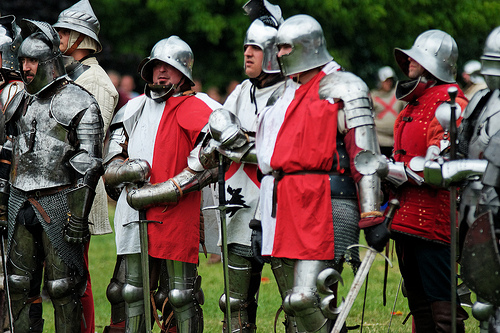
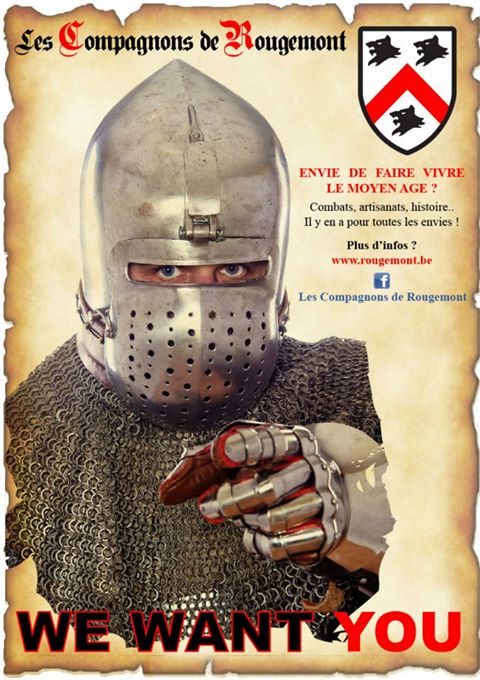
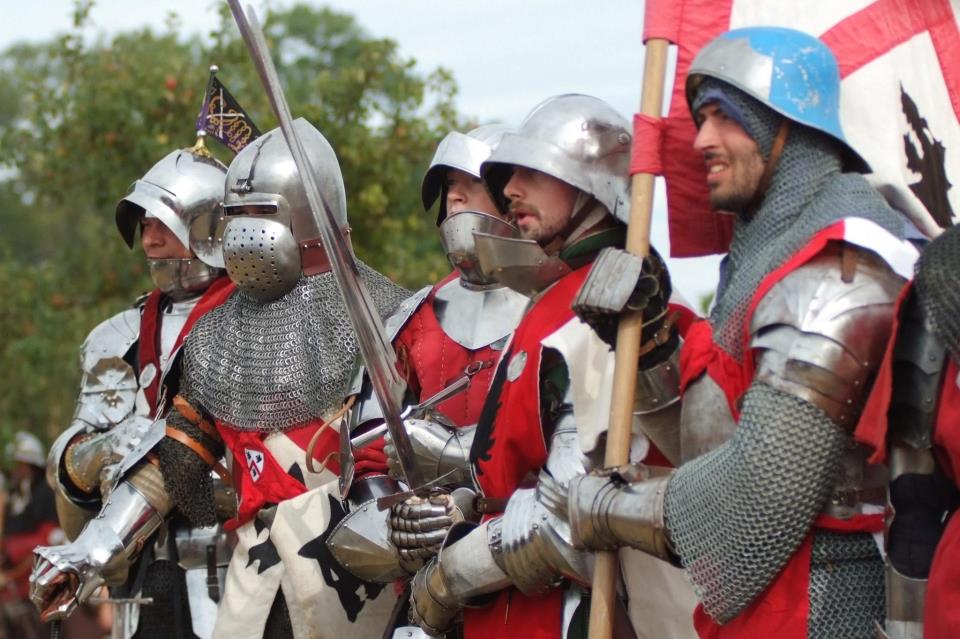

http://www.rougemont.be/pages/indexpag.html
Erhart de Rougemont who bought in 1495 “the house called Rebleuten-Zunft in Basle in the Freistrasse.’
Peter Rosemond had seen in print the letters from Erasmus to Gotschalk Rosemondt. He noticed that a seal used by a Rosemont in Holland, bearing a jumping fox, was like an emblem he had noticed in a wall of the house Rebleuten-Zunft in Basle. This seal dated back to 1430.
This James (or Jacob, for these names were once interchangeable) was the son of Hans Ulrich
Rosemond, born 1623, a weaver; who was a son of Hans, a weaver, born 1581; who was a son of Fred Rosemond, born 1552, a weaver, member of town council and a local captain; who was the son of another Hans
whose date of birth is not known, but he too, was a weaver and became a citizen of Basle in 1534. His father was Erhart de Rougemont who bought in 1495 “the house called Rebleuten-Zunft in Basle in the
Freistrasse.’ Peter Rosemond further reported information from the Records Office in Basle that “before Basle the family resided in Holland up to 1338, and it is said they descended from the estate
Rosemont, near Belfort, in France, where also the village Rougemont is found.” A family coat-of-arms was registered in Basle about 1537 when the first Hans became a resident there.
Swinburne’s choice of the “rose of the world” as one of his first subjects for verse suggests that he associated his conception of Rosamond with courtly love allegory, specifically the Roman de la Rose, in which the rose is the eternal symbol of the beloved and of the perfect beauty that is fearfully transient but simultaneously immortal.3 As in Swinburne’s later lyrics “Before the Mirror” and “The Year of the Rose,” Rosamond’s central symbol is the rose, and, like them, this play recapitulates the major preoccupations of courtly love poetry: the apotheosis of beauty; love as the necessary consequence of beauty fear of mutability; and a final insistence on the immortality of both love and beauty, which can be attained, paradoxically, only through death.
The House of the Wolfings
From Wikipedia, the free encyclopedia
Jump to: navigation, search
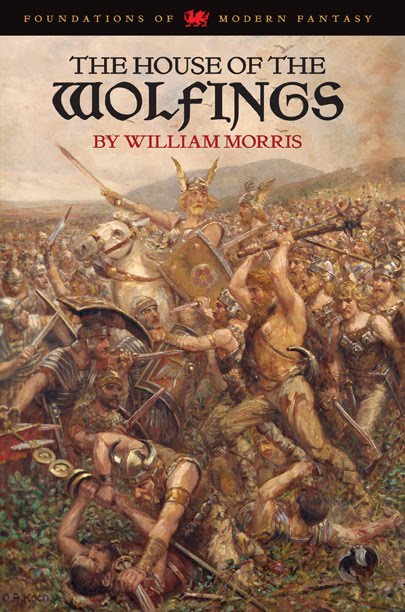
The House of the Wolfings
Title page of 1889 First Edition, London
Author(s)
William Morris
Country
United Kingdom
Language
English
Genre(s)
Fantasy novel
Publisher
Reeves and Turner
Publication date
1889
Media type
Print (Hardback)
Pages
199 pp
ISBN
NA
Followed by
The Roots of the Mountains
A Tale of the House of the Wolfings and All the Kindreds of the Mark is a fantasy novel by William Morris, perhaps the first modern fantasy writer to unite an imaginary world with the element of the supernatural, and thus the precursor of much of present-day fantasy literature.[1] It was first published in hardcover by Reeves and Turner in 1889.[2] Its importance in the history of fantasy literature was recognized by its republication by the Newcastle Publishing Company as the sixteenth volume of the celebrated Newcastle Forgotten Fantasy Library in April, 1978.
This book also influenced J. R. R. Tolkien’s popular The Lord of the Rings. In a December 31, 1960 letter published in The Letters of J. R. R. Tolkien, (p. 303), Tolkien wrote: ‘The Dead Marshes and the approaches to the Morannon owe something to Northern France after the Battle of the Somme. They owe more to William Morris and his Huns and Romans, as in The House of the Wolfings or The Roots of the Mountains.” Among the numerous parallels with The Lord of the Rings, Morris has Old English-style placenames such as Mirkwood (p. 2), germanic personal names such as Thiodolf (p. 8), and dwarves as skilled smiths (“How the Dwarf-wrought Hauberk was Brought away from the Hall of the Daylings”, p. 97).
This work and its successor, The Roots of the Mountains, were to some degree historical novels, with little or no magic. Morris would go on to develop the new genre established in this work in such later fantasies as Child Christopher and Goldilind the Fair, The Wood Beyond the World, The Well at the World’s End, and The Water of the Wondrous Isles.[3]
Contents
[hide]
1 Plot summary
2 Copyright
3 References
4 External links
Plot summary[edit]
The House of the Wolfings is Morris’ romantically reconstructed portrait of the lives of the Germanic Gothic tribes, written in an archaic style and incorporating a large amount of poetry. It combines his own idealistic views with what was actually known at the time of his subjects’ folkways and language. He portrays them as simple and hardworking, galvanized into heroic action to defend their families and liberty by the attacks of imperial Rome.
Morris’ Goths inhabit an area called the Mark on a river in the forest of Mirkwood, divided according into the Upper-mark, the Mid-mark and the Nether-mark. They worship their gods Odin and Tyr by sacrificing horses and rely on seers who foretell the future and serve as psychic news-gatherers.
The men of the Mark choose two War Dukes to lead them against their enemies, one each from the House of the Wolfings and the House of the Laxings. The Wolfing war leader is Thiodolf, a man of mysterious and perhaps divine antecedents whose ability to lead is threatened by his possession of a magnificent dwarf-made mail-shirt which, unknown to him, is cursed. He is supported by his lover the Wood Sun and their daughter the Hall Sun, who are related to the gods.
Copyright[edit]
The copyright for this story has expired in the United States, and thus now resides in the public domain there. The text is available via Project Gutenberg.
The book is the story of how the Wolfings fight, and eventually destroy, the invading Roman legions. But here Morris faced a problem: while he could try to reconstruct the society of these early people, their history is almost unknown, and what is known is known largely from the Roman side. Rather than attempt to force the story into a known historical context (in which case it would have had to be the story of the destruction of the legions of Varus in AD 9 by Arminius, leader of the Cherusci) Morris preferred to preserve his freedom of invention. His solution was brilliantly simple: the story is one told by the descendants of the Wolfings many years later, and as with the Saga of the Volsungs, events have become garbled with retelling. The people are consistently referred to as Goths, but this seems to have become a generic term, since the Teutones who invaded Italy in 109 BC have also become ‘Goths’, so that the actual identity of the tribe is left vague. The hero, Thiodolf, remembers killing three Hunnish kings in battle, yet the story is clearly set long before the arrival of the Huns in Western Europe, at a time when the Romans were only beginning to
http://ebooks.adelaide.edu.au/m/morris/william/m87hw/
Chapter xix. Those Messengers Come to Thiodolf
Of Geirbald and Viglund the tale tells that they rode the woodland paths as speedily as they might. They had not gone far, and were winding through a path amidst of a thicket mingled of the hornbeam and holly, betwixt the openings of which the bracken grew exceeding tall, when Viglund, who was very fine-eared, deemed that he heard a horse coming to meet them: so they lay as close as they might, and drew back their horses behind a great holly-bush lest it should be some one or more of the foes who had fled into the wood when the Romans were scattered in that first fight. But as the sound drew nearer, and it was clearly the footsteps of a great horse, they deemed it would be some messenger from Thiodolf, as indeed it turned out: for as the new-comer fared on, somewhat unwarily, they saw a bright helm after the fashion of the Goths amidst of the trees, and then presently they knew by his attire that he was of the Bearings, and so at last they knew him to be Asbiorn of the said House, a doughty man; so they came forth to meet him and he drew rein when he saw armed men, but presently beholding their faces he knew them and laughed on them, and said:
“Hail fellows! what tidings are toward?”
“These,” said Viglund, “that thou art well met, since now shalt thou turn back and bring us to Thiodolf as speedily as may be.”
But Asbiorn laughed and said: “Nay rather turn about with me; or why are ye so grim of countenance?”
“Our errand is no light one,” said Geirbald, “but thou, why art thou so merry?”
“I have seen the Romans fall,” said he, “and belike shall soon see more of that game: for I am on an errand to Otter from Thiodolf: the War-duke, when he had questioned some of those whom we took on the Day of the Ridge, began to have a deeming that the Romans had beguiled us, and will fall on the Mark by the way of the south-east heaths: so now is he hastening to fetch a compass and follow that road either to overtake them or prevent them; and he biddeth Otter tarry not, but ride hard along the water to meet them if he may, or ever they have set their hands to the dwellings of my House. And belike when I have done mine errand to Otter I shall ride with him to look on these burners and slayers once more; therefore am I merry. Now for your tidings, fellows.”
Said Geirbald: “Our tidings are that both our errands are prevented, and come to nought: for Otter hath not tarried, but hath ridden with all his folk toward the stead of thine House. So shalt thou indeed see these burners and slayers if thou ridest hard; since we have tidings that the Romans will by now be in Mid-mark. And as for our errand, it is to bid Thiodolf do even as he hath done. Hereby may we see how good a pair of War-dukes we have gotten, since each thinketh of the same wisdom. Now take we counsel together as to what we shall do; whether we shall go back to Otter with thee, or thou go back to Thiodolf with us; or else each go the road ordained for us.”
Said Asbiorn: “To Otter will I ride as I was bidden, that I may look on the burning of our roof, and avenge me of the Romans afterwards; and I bid you, fellows, ride with me, since fewer men there are with Otter, and he must be the first to bide the brunt of battle.”
“Nay,” said Geirbald, “as for me ye must even lose a man’s aid; for to Thiodolf was I sent, and to Thiodolf will I go: and bethink thee if this be not best, since Thiodolf hath but a deeming of the ways of the Romans and we wot surely of them. Our coming shall make him the speedier, and the less like to turn back if any alien band shall follow after him. What sayest thou, Viglund?”
Said Viglund: “Even as thou, Geirbald: but for myself I deem I may well turn back with Asbiorn. For I would serve the House in battle as soon as may be; and maybe we shall slaughter these kites of the cities, so that Thiodolf shall have no work to do when he cometh.”
Said Asbiorn; “Geirbald, knowest thou right well the ways through the wood and on the other side thereof, to the place where Thiodolf abideth? for ye see that night is at hand.”
“Nay, not over well,” said Geirbald.
Said Asbiorn: “Then I rede thee take Viglund with thee; for he knoweth them yard by yard, and where they be hard and where they be soft. Moreover it were best indeed that ye meet Thiodolf betimes; for I deem not but that he wendeth leisurely, though always warily, because he deemeth not that Otter will ride before to-morrow morning. Hearken, Viglund! Thiodolf will rest to-night on the other side of the water, nigh to where the hills break off into the sheer cliffs that are called the Kites’ Nest, and the water runneth under them, coming from the east: and before him lieth the easy ground of the eastern heaths where he is minded to wend to-morrow betimes in the morning: and if ye do your best ye shall be there before he is upon the road, and sure it is that your tidings shall hasten him.”
“Thou sayest sooth,” saith Geirbald, “tarry we no longer; here sunder our ways; farewell!”
“Farewell,” said he, “and thou, Viglund, take this word in parting, that belike thou shalt yet see the Romans, and strike a stroke, and maybe be smitten. For indeed they be most mighty warriors.”
Atlantian Rangers of Rosamond
Posted on August 4, 2013by Royal Rosamond Press


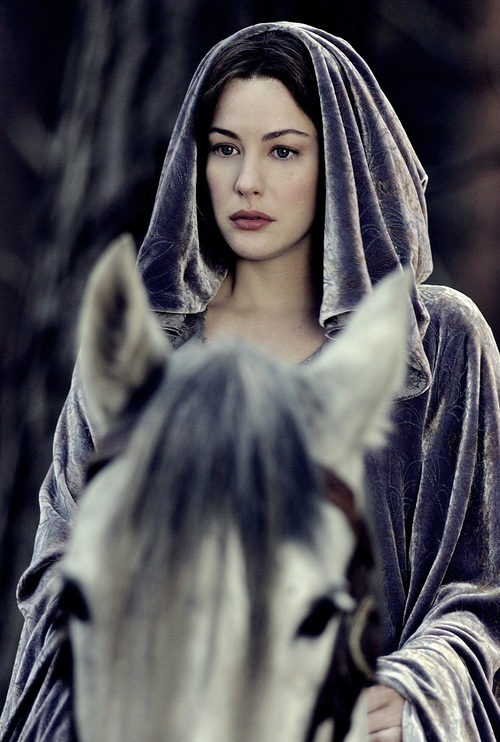


I believe Rena Victoria Easton descends from Danish Royalty as do I, and perhaps, Ian Easton. The Atlantian Kings were “long-faced kings”. Strider was a Rover. The actor who played in the movie Lord of the Rings looks like me. Christine Rosamond and I were Tolkein freaks. J.R. was born in Holland. In 1969 I declared myself a New Nazarite and painted an old radio in the fashion of William Morris the Pre-Raphaelite, whose ‘House of Wolfing’ inspired Tolkein to author his trilogy.
Rena was my living work of art. If she had married me she would have been the kindred of Mary Magdalene, Royal, and Christine, Rosamond. It is no mistake that I look like the actor chosen to play Aragorn, who descends from the Dúnedain. Consider my kindred the Dundon. Are we looking at the Tribe of Dan and the Danes?
The actors who played Aragorn is of Danish descent, and is an artist and a poet. In Aragorn is a Dragon.
We original Hippies made Tolkien famous. We created the consciousness that the movies catered to. There is illusion, and then those who create the illusion – for a divine reason!
Rena and I were married to this music in the Cathedral of Souls after I went looking for her in a realm the Rosicrucians founded. Christensen of the Rose Cross.
The Chymical Wedding of Christian Rosenkreutz
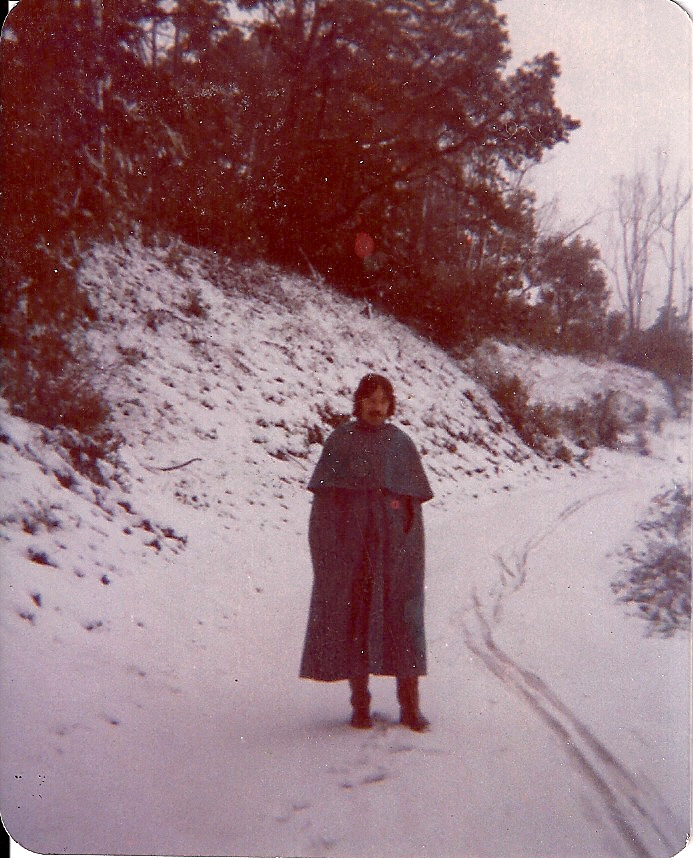
The photo of me in the snow was taken in 1976. As an artist and poet I am not a viewer. I make. I create. I am a Dragon. Note the slivers of energy around me. When Christine developed the roll of film she took and saw this energy, she freaked and did not do my portrait. I wanted her to behold and capture – the inner me! You can say I have already appeared on the silver screen I am Strider. I have removed my cloak. Am I the Phantom of the Opera who placed a rose on Christine’s grave?
Jon Presco
OERA LINDA BOOK
By Anthony Radford
CHAPTER 7
KALTA AND THE ORIGINS OF THE CELTS
This chapter is the story of Rosamond, Kalta and the early years of Minerva however standard history has very little to say about these historical personages. Their influence on the course of Europe and the Mediterranean was enormous, affecting everything that has followed for thousands of years. Of Rosamond nothing is known except for a namesake, Fair Rosamond, the mistress of King Henry II who has been endowed with many legends and dubious stories beyond her station. Kalta is not remembered but the Celts who were named after her have various “historical” descriptions. The Celtic language is divided into the Gaulish or continental version, that was largely supplanted and Latinized by the Roman occupation, and the various branches that are still spoken in parts of the British Isles; Irish, Gaelic, Welsh, Cornish and Breton. The Celtic religion was presided over by the Druids and reflects an ancient Indian culture, strengthening the belief in the Indo-European connection. Their origins have been variously placed somewhere in the east, through ancient German invasions as though a politically important people who rose to common language and power against the Romans, who are our only historical source, have to have a migratory, tribal beginning rather than an indigenous one.
https://rosamondpress.wordpress.com/2013/04/05/gendolfus-faramund-rosemunde
https://rosamondpress.wordpress.com/2013/03/03/nine-shrouds-of-malta-and-rhodes
“As a token of her confidence, she told him he need no longer call
her, “Auntie.” The previous year, Bilbo had suggested that Frodo no
longer address him as, “Uncle,” if he wished. Plain, “Bilbo,” would
do. Frodo still called Bilbo, “Uncle,” now and then; it had become
too ingrained a habit. But, following suit, Rosamunda suggested Frodo
might call her, “Rosa,” or, “Rosamunda.” Frodo forgot, and called
her, “Auntie,” many times, but, within the space of an afternoon
tea, “Rosa,” she became.”
Rosamunda Bolger (née Took) was the mother of Fredegar “Fatty” Bolger
and Estella Brandybuck. She was married to Odovacar Bolger and was
known as Rosamunda Took prior to the marriage. They lived in
Budgeford in Bridgefields in the Eastfarthing of the Shire. Rosamunda
and Odovacar both attended the Bilbo’s Farewell Party in 3001 along
with their children.
https://rosamondpress.wordpress.com/2013/04/06/merovingian-rangers-and-rovers-of-toxandria
Jeroen’s first entry on the membership list is in 1486, as a “buitenlid”, an “outer member”, to become a sworn brother in 1488. Shortly afterwards, he was the guest of honour on the so-called swan meal, in which a swan was offered – and apparently eaten. Custom required members to be tonsured, which Bosch did, and he took to wearing the curious homespun garments, a derivative of the costume worn by ecclesiastics. The brotherhood was also known to perform mystery plays and other theatrical productions and it is known that Bosch played an active role in stage performances and religious ceremonies. Hence, the grotesque faces that are so prominent in some of his paintings, are sometimes said to be inspired by the masks the actors used in these stage productions.
https://rosamondpress.wordpress.com/2012/10/12/the-risen-atlantians
Jon the Sea-King and Sea-Rover
Gerlach de Roovere, Knight, Lord of Waalwijk, Drunen, Vlijmen, “Honsoirde” (Onsenoort) Rixtel, Someren, Lierop and Wets. According to a manuscript of the genealogy of 1266 is Gerlach Arnold Son de Roovere (genus of Red) married Oda, daughter of Jan van Megen. One of their many children was Willem de Roovere.
The Brabantse noble genera that the 3 are all descendants of the mill irons, counts of Red. These old genera are named after the name of villages, Hamlets, neighbourhoods or estates under the old Taxandrie such as Asdonck, Stackenburgh, Van der van Vlierden, van Lierop, of Vladeracken, of, of, of Hove, Hersel, Breugel of Wette, Rinckveld, van Lieshout, of IJllingen, of veenhuizen, van den, van Wolfswinkel, Bolck of Broekhoven. But also Straeten, Kuysten, van Loon, of Orthen, van Mierlo, at Heerenhoven, of the fields, van den Heuvel and to d Boirschot.
http://www.genealogieonline.nl/en/kwartierstaat-cramer/I0922.php
http://www.genealogieonline.nl/stamboom-knaapen/I2634.php
“Vígnjótr raised the stone in memory of Hróðmundr, his father, for the Värendish husbandman (= from the district of the virðar). May God help his soul! Ásgautr cut the runes.[1]
The name Rosamond is als0 spelled Hrosmund that onomastists say means “horse Protection”. I have my doubts. Tolkien was a Beowulf scholar and names Frodo’s aunt, Rosamond. Rosamond is a woman’s name that rises from the depth of our past, and is applical to the lost power of women with the advent of Christian men who demonized rulers of the Norse who were not members of the Judaic pantheon. Or, were they?
Jon Presco
Hrethric, Hrothmund, and Freawaru are the children of King Hrothgar and Queen Wealhtheow of the Spear-Danes. Hrethric and Hrothmund are young princes and neither of them is yet ready to succeed their father as king, which makes their mother worry that Beowulf might try to usurp the throne from them. The young princess Freawaru is married to Ingeld the Heathobard, an attempt to create peace between two tribes through a marital alliance.
Skjöldunga saga and Bjarkarímur
The Skjöldunga saga[36][37] and Bjarkarímur[36] tell a similar version to that of the Hrólfr Kraki’s saga, but with several striking differences. Ingeld (Ingjaldus) of Beowulf reappears, but it is Ingeld who is the father of Froda (Frodo), and unlike in Hrólf Kraki’s saga, Ingeld takes Froda’s place as the half-brother of Healfdene (Haldan).
Hrothgar, from the Old English Hrōðgār, is an Anglo-Saxon form attested in Beowulf and Widsith, the earliest sources to mention the character. In non-Anglo-Saxon sources, the name appears in more or less corresponding Old Icelandic, Old Danish, or Latinized versions. He appears as Hróarr, Hroar, etc. in Norse sagas and poetry, and as Ro or Roe in the Danish Latin chronicles. The form Hrōðgār is thought to have derived from the Proto-Norse *Hrōþigaizaz[3] (famous spear, i.e. Roger). It should be noted, however, that the corresponding Old Norse name Hróarr and its variations are not derived from *Hrōþigaizaz, but from the very close names *Hrōþiwarjaz (famous defender) or *Hrōþiharjaz (famous warrior). However, these two names which resulted in Hróarr in Scandinavia, did not have any corresponding Anglo-Saxon form, and so Hrōðgār was their closest equivalent.[4]
HROD
see Hróðmundr
HROM
see Rosamund (German)
Old Norse
ráð = ‘advise, counsel, decision’ [1] [2] [3] [4]
ráð = ‘advise, counsel, decision, might, household, marriage’ [5]
ráða = ‘to advise, to counsel, to be mighty, to rule, to decide, to guess’ [5]
ráða = ‘to advise, to counsel’ [1] [2] [3] [6] [7] [4]
Gothic
garedan = ‘to provide’ [6]
garēdan = ‘to counsel, to provide’ [7]
garēdan = ‘to advise, to counsel, to be mighty, to rule, to decide, to guess’ [5]
rêdan = ‘to counsel’ [4]
Old Swedish
raþ = ‘advise, counsel, decision’ [3]
raþa = ‘to advise, to counsel’ [3]
Old Saxon
râd = ‘counsel’ [4] [8]
rād = ‘advise, counsel, decision, might, household, marriage’ [5]
rādan = ‘to advise, to counsel’ [7]
rādan = ‘to advise, to counsel, to be mighty, to rule, to decide, to guess’ [5]
Anglo-Saxon
rǽd = ‘counsel’ [6]
rǣd = ‘counsel’ [4]
rǽdan = ‘to discern, advise, read, persuade’ [6]
rǣdan = ‘to counsel’ [4]
Old English
rǣd = ‘advise, counsel, decision, might, household, marriage’ [5]
rǣdan = ‘to advise, to counsel’ [7]
rǣdan = ‘to advise, to counsel, to be mighty, to rule, to decide, to guess’ [5]
Middle Low German
rāt = ‘resources necessary for living’ [9]
rāten = ‘to advise, to guess’ [9]
Old High German
rāt = ‘resources necessary for living’ [9]
rāt = ‘advise, counsel, decision, might, household, marriage’ [5]
rât = ‘counsel’ [4]
rātan = ‘to advise, to guess (originally ‘to think about something’)’ [9]
rātan = ‘to advise, to counsel’ [7]
rātan = ‘to advise, to counsel, to be mighty, to rule, to decide, to guess’ [5]
râtan = ‘to counsel’ [4]
http://www.nordicnames.de/wiki/RAD
http://www.nordicnames.de/wiki/R%C3%A1%C3%B0mundr
Proto-Norse
*munduR = ‘protector’ [1]
Old Norse
mund = ‘hand, protection’ [1] [2]
mundr = ‘gift for a bride’ [1] [2] [3]
Old High German
munt = ‘hand, protection, tutelage’ [3]
Old Frisian
mund = ‘tutelage, guardianship’ [3]
mond = ‘tutelage, guardianship’ [3]
Anglo-Saxon
mund = ‘flat hand, protection’ [3]
Transliteration of the runes into Latin characters
[uih]i[k]utr : resti : sten (:) ef(t)r : ru[mu]nt : faþ[ur : sin] : (k)uþ : hialbi : selu : bunta : uirskum : hiuk : askutr : [þuni][1]
[edit] Transcription into Old Norse
P: Vigniutr(?) ræisti stæin æftiR Hromund(?), faður sinn. Guð hialpi salu! Bonda virðskum hiogg Asgautr runaR/Þunni(?).
Q: Vigniutr ræisti stæin æftiR Hromund, faður sinn – Guð hialpi salu! – bonda virðskum. Hiogg Asgautr runaR.[1]
[edit] Translation in English
P: Vígnjótr(?) raised the stone in memory of Hróðmundr(?), his father. May God help (his) soul. Ásgautr cut the runes / Ásgautr Þunni(?) cut for the husbandman from Virðskr.
Q: Vígnjótr raised the stone in memory of Hróðmundr, his father, for the Värendish husbandman (= from the district of the virðar). May God help his soul! Ásgautr cut the runes.[1]
https://rosamondpress.wordpress.com/2013/04/25/fitzwolf-and-the-bayeux-tapestry
Arwen, gravely saddened by the loss of her husband, gave up her mortal life shortly afterwards and was laid to rest in Lothlórien
II, son of Arathorn is a fictional character from J. R. R. Tolkien’s legendarium. He is one of the protagonists of The Lord of the Rings. Aragorn was a Ranger of the North, first introduced with the name Strider at Bree, as the Hobbits continued to call him throughout The Lord of the Rings. He was eventually discovered to be the heir of Isildur and rightful claimant to the thrones of Arnor and Gondor. He was also a confidant of Gandalf and an integral part of the quest to destroy the One Ring and defeat the Dark Lord Sauron.
He led the Fellowship of the Ring following the loss of Gandalf in the Mines of Moria. When the Fellowship was broken, he tracked the hobbits Merry and Pippin with the help of Legolas and Gimli to Fangorn Forest and fought in the battle at Helm’s Deep and the Battle of the Pelennor Fields. After defeating Sauron’s forces in Gondor he led an army of Gondor and Rohan against the Black Gate of Mordor.
At the end of The Lord of the Rings he was crowned King Elessar Telcontar of Gondor. He married Elrond’s daughter Arwen, and assumed the Sceptre of Annúminas as King of Arnor, uniting the two kingdoms for the first time since the reign of Isildur.
In J. R. R. Tolkien’s legendarium, the Rangers of the North, also known as the Dúnedain of the North, were the descendants of the Dúnedain from the lost kingdom of Arnor. Their menfolk ceaselessly patrolled the boundaries of Eriador and were by necessity skilled with the sword, bow and spear.
The Rangers were grim in life, appearance, and dress, choosing to wear rusty green and brown. The Rangers of the Grey Company (see below) were dressed in dark grey cloaks and openly wore a silver brooch shaped like a pointed star during the War of the Ring. These Rangers rode rough-haired, sturdy horses, were helmeted and carried shields. Their armament included spears and bows.
Like their distant cousins, the Rangers of Ithilien, the Rangers of the North spoke Sindarin (or some variation of it) in preference to the Common Speech. They were led by a Chieftain, whose ancestry could be traced back to Elendil and beyond, to the ancient Kings of Númenor.
Númenor /ˈnuːmɛnɔr/, also called Elenna-nórë or Westernesse, is a fictional place in J. R. R. Tolkien’s writings. It was a huge island located in the Sundering Seas to the west of Middle-earth, the main setting of Tolkien’s writings, and was known to be the greatest realm of Men. However, the inhabitants’ cessation of the service to Eru Ilúvatar and rebellion against the Valar led to the downfall of the island and death of the majority of its population.
The author had intended Númenor to be an allusion to the legendary Atlantis.[2] An unfinished story Aldarion and Erendis is set in the realm of Númenor at the time of its zenith, and Akallabêth summarizes its history and downfall. Otherwise only compendious or abandoned writings of Tolkien deal with Númenor, such as the appendices to The Lord of the Rings and several accounts published in Unfinished Tales and The History of Middle-earth series.
Originally intended to be a part of a time-travel story, the tale of the fall of Númenor was for some time viewed by Tolkien as a conclusion to his Silmarillion and the “Last Tale” about the Elder Days.[3] Later, with the emergence of The Lord of the Rings, it became the link between these two works and a major part of his legendarium.
https://en.wikipedia.org/wiki/Aragorn
Viggo Peter Mortensen, Jr. (Danish: [viɡ̊o ˈmɒːdnsn]; October 20, 1958) is an American actor, poet, musician, photographer and painter
Aside from acting, his other artistic pursuits include fine arts, photography, poetry, and music. In 2002, he founded the Perceval Press to publish the works of little-known artists and authors. Mortensen is politically active. He campaigned for Dennis Kucinich in the 2008 United States presidential election, and later endorsed Barack Obama for President.
https://rosamondpress.wordpress.com/2013/04/08/holy-grail-house-of-wolfings
https://rosamondpress.wordpress.com/2012/10/12/the-risen-atlantians
Rosamunda Bolger-Took was the second cousin of Frodo Baggins. The new Hobbit movie is due out.
On September 20, 2009 I announced my grand entry into the Republican Party – in order to save it from the Oil Orcs. I compare this to Frodo throwing the ring of invisibility into Mount Doom. I wanted to make visible the invisible Evil Ones that have taken over the party founded by my Benton kindred.
 Rosamond Press
.jpg)
Leave a comment