
Parks and Recreation – Belmont, California

Belmont Legacy of Carl Janke
Posted on September 11, 2011 by Royal Rosamond Press
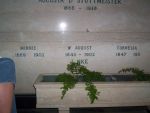
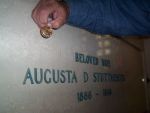

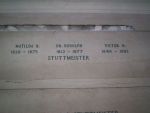


Months after my sister’s death I went to the Sacramento Library and looked at microfish about a legal battle between the heirs of Carl Janke’s estate in Belmont that appeared in the San Francisco Call

Here.
1888: From the Daily Alta, an article on the marriage of Dr. William O.
Stuttmeister and Augusta D. Janke.
Daily Alta California, Volume 42, Number 14175, 24 June 1888
STUTTMEISTER-JANKE.
One of the most enjoyable weddings of the past week took place at
Belmont, Wednesday morning last, the contracting parties being Miss
Augusta Janke, daughter of Mr. and Mrs. August Janke of Belmont,
and Dr. Wm. Stuttmeister of San Francisco. The house was
handsomely decorated with a rich profusion of ferns and flowers, and
at the appointed hour was filled with the relatives and intimate friends
of the contracting parties. At 11 o’clock the wedding march was played
and the bridal party entered the parlor. The bride was attended by Miss
Alice Stuttmeister, a sister of the groom, and Miss Minnie Janke, a
sister of the bride, as bridesmaids, and Dr. Muldownado and Wm.
Janke, a cousin of the bride, were groomsmen. The Rev. A. L. Brewer
of San Mateo performed the beautiful and impressive ceremony under
an arch composed of flowers and greens very prettily arranged, after
which the guests pressed forward and offered their congratulations.
The bride was attired in a very pretty and becoming costume of the
crushed strawberry shade, and wore a corsage bouquet of orange
blossoms. She carried a handsome bouquet of white flowers. After the
guests had paid their compliments the bride and groom led the way to
the dining-room, where the wedding dinner was served and the health
of the newly married pair was pledged. The feast over, the guests
joined in the dance, and the hours sped right merrily, interspersed with
music singing and recitations, until the bride and groom took their
departure amid a shower of rice and good wishes. Many beautiful
presents were received. Dr. and Mrs. Stuttmeister left Thursday
morning for Santa Cruz and Monterey, where they will spend the
honeymoon. On their return they will make their home in Belmont.
1911: Dr. Willian O. Stuttmeister was practicing dentistry in Redwood
City, CA. (Reference: University of California, Directory of Graduates,
https://en.wikipedia.org/wiki/The_Daily_Alta_California
I found Carl and Dorothea (also and Doretta) are buried at the Union Cemetery in Redwood City.
Carl_August_Janke
Names Listed on the Marker:
Janke, Carl August
Janke, Dorette Catherine
Janke, Mutter Heinrich
Inscription:
— From the 1937 headstone survey –
Carl August Janke, born in Dresden, Germany Oct. 1806, died Belmont, Calif. Sept. 2, 1881
Dorette Catherine, wife of Carl August Janke, born in Hamburg, Germany, July 21, 1813, died in Belmont, California, Feb 16, 1877
Mutter Heinrich, mother of Dorette Catherine Janke, born in Island of Heligoland, Germany, 1781 died in Belmont, California 1876
NOTE: In 1937 the Daughters of the American Revolution recorded all the headstones.
Stanford Intelligence Failure
Posted on October 11, 2023 by Royal Rosamond Press

Oct 9th 2023 | JERUSALEMShare
The vicious success of Hamas’s attack on Israel, without their plans being unveiled, is matched by the astounding failure of Israeli intelligence at every level. The assault by land, sea and air on October 7th left at least 800 dead in Israel, and must have required months of planning. Officials are in shock that such a significant military buildup by the Islamist movement that controls Gaza escaped their notice. That will surely be the subject of multiple investigations once the fighting in Gaza is over. But it is already clear that the failures came in two forms: one of intelligence-collecting and the other of assessing and interpreting that intelligence.
Stanford University needs to conduct a massive investigation as to why Amy Zegart and Michael McFaul ignored my prophetic warnings I sent them. Let me have a stab at the answers.
- After reading my claim that I am kin to Ian Flemming they Goggles me and found Alley Valkyries post on a fake Eugene Abuser site where she declares to the whole world I am a sex stalker of girls! CASE CLOSED!
- The vicious success of Hamas’s attack on Israel, without their plans being unveiled, is matched by the astounding failure of Israeli intelligence at every level.

European Commission President Ursula von der Leyen said she welcomed the UN Security Council’s resolution calling for an immediate ceasefire in Gaza and the release of all Hamas hostages.
“Implementation of this resolution is vital for the protection of all civilians,” von der Leyen wrote on X, formerly known as Twitter.
European Council President Charles Michel said on X “it is now urgent” for the ceasefire in Gaza to be upheld and all Hamas hostages released.
Humanitarian aid must be allowed to enter Gaza as well, Michel said, referencing a joint EU leaders’ statement last week.
Tread marks left behind by Israeli armored vehicles that destroyed a cemetery near the Al Nasser Hospital in Khan Younis, Gaza, on January 17. Jehad Alshrafi/Anadolu/Getty Images
CNN has reviewed satellite imagery and social media footage showing the destruction of cemeteries and witnessed it firsthand while traveling with the IDF in a convoy. Together the evidence reveals a systemic practice where Israeli ground forces have advanced across the Gaza Strip.
The intentional destruction of religious sites, such as cemeteries, violates international law, except under narrow circumstances relating to that site becoming a military objective, and legal experts told CNN that Israel’s acts could amount to war crimes.
A spokesman for the IDF could not account for the destruction of the 16 cemeteries CNN provided coordinates for, but said the military sometimes has “no other choice” but to target cemeteries it claimed Hamas uses for military purposes.
Back To Israel Oaklandanders
Posted on May 23, 2018 by Royal Rosamond Press
Oakland Germans Co-Founded Israel
Posted on May 23, 2018 by Royal Rosamond Press
The Holy Land of The Gold Rush
Posted on May 5, 2021 by Royal Rosamond Press
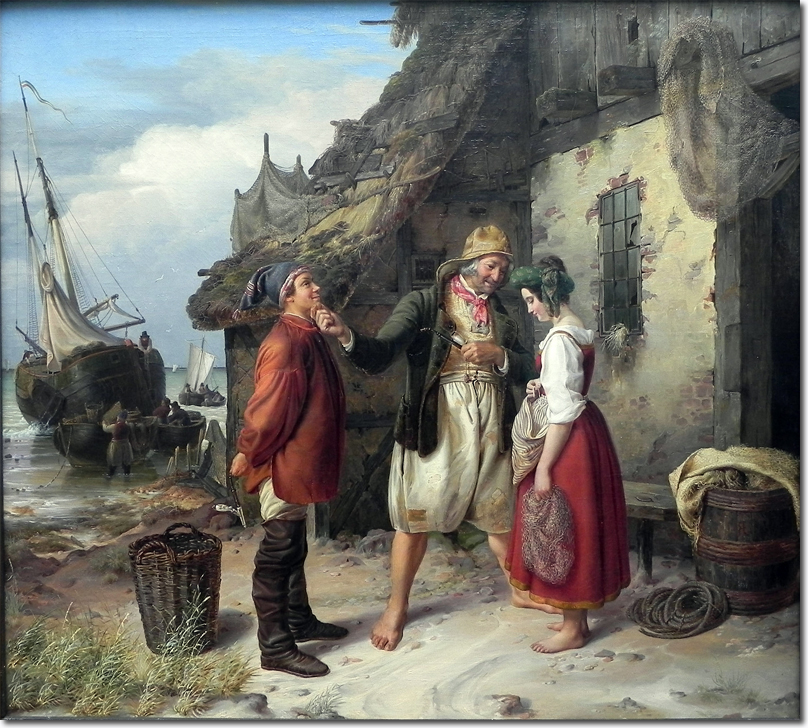
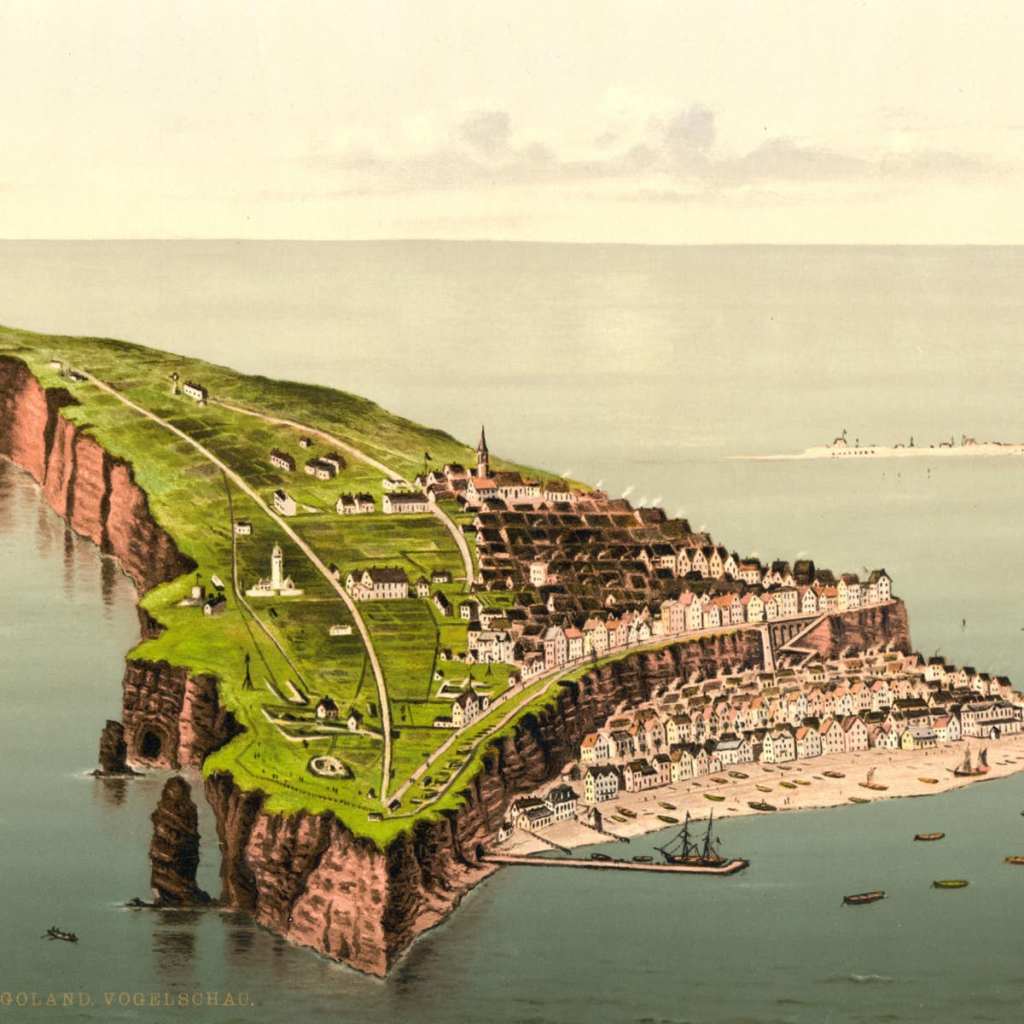
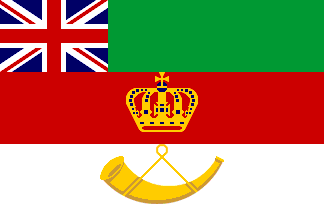
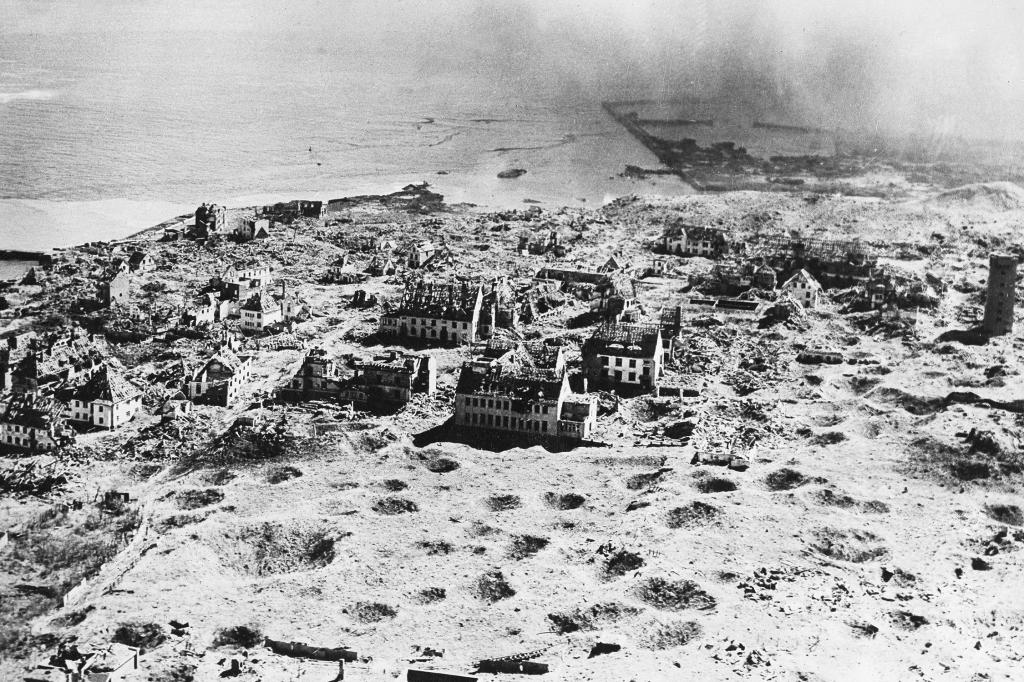
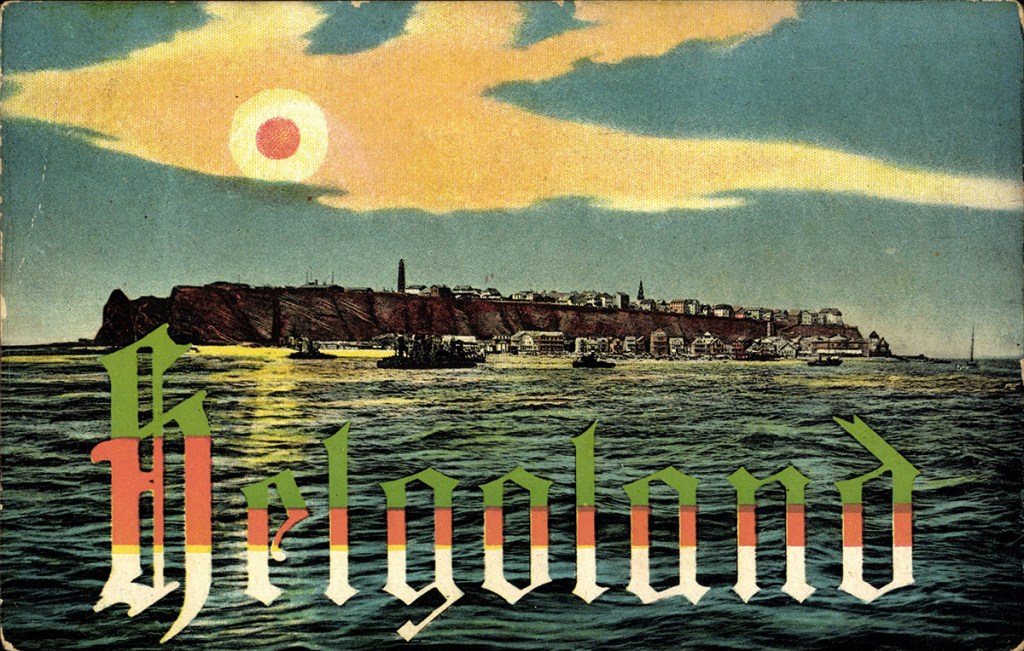
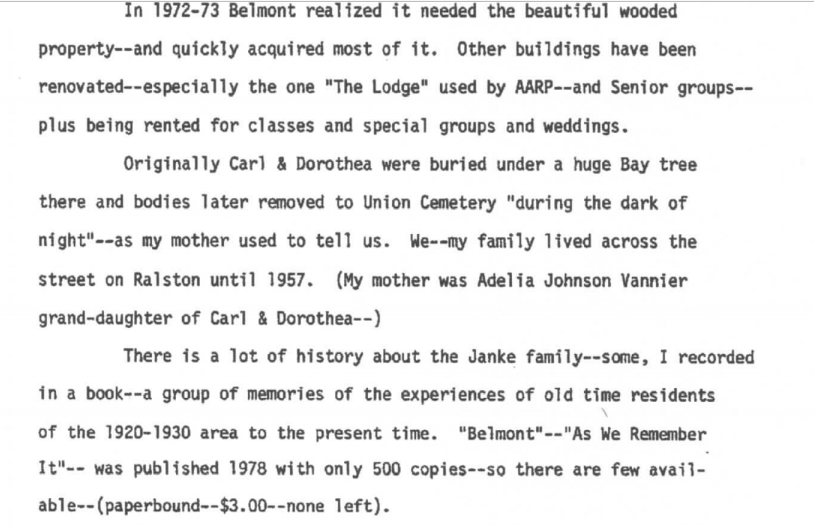
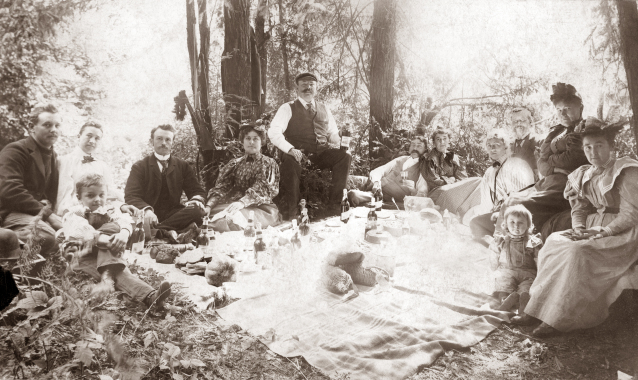
The Heligoland Gold Rush
by
John Presco
President: Belmont Soda Works
Copyright 2021
I just sent this message to Ursula van der Leyen the head of the European Commission:
“My ancestors are a Gold Rush family who came to California in 1849 from Hamburg, and the island of Heligoland. They brought six portable homes around the Cape and erected them in Belmont California that is near Stanford University where Commissioner von der Leyen attended college. I have found evidence of prejudice against Germans in Belmont. The graves of Cark Janke and his wife were dug up in the middle the night, and moved to another city. Janke Street was changed. The study of my family in Belmont has been oppressed. I am kin to Ian Fleming and am authoring a Bond novel, starring Victoria Rosemond Bond. I find Erdogan’s treatment of women, appalling. Sincerely John Presco President: Royal Rosamond Press”
Europe Direct Contact Centre <europedirectcontactcentre@edcc.ec.europa.eu>To:braskewitz@yahoo.comWed, May 5 at 2:58 PM
You receive this message because your e-mail address and the below mentioned text were inserted into our web form. This web form is for the use of any member of the public having a question about the European institutions and their policies. Thank you for your e-mail. We expect to be able to reply within two working days. For more complex or specific queries, responses may take longer. Your case number is 246921 Your registered enquiry to the Europe Direct Contact Centre is as follows:
My ancestors are a Gold Rush family who came to California in 1849 from Hamburg, and the island of Heligoland. They brought six portable homes around the Cape and erected them in Belmont California that is near Stanford University where Commissioner von der Leyen attended college. I have found evidence of prejudice against Germans in Belmont. The graves of Cark Janke and his wife were dug up in the middle the night, and moved to another city. Janke Street was changed. The study of my family in Belmont has been oppressed. I am kin to Ian Fleming and am authoring a Bond novel, starring Victoria Rosemond Bond. I find Erdogan's treatment of women, appalling. Sincerely John Presco President: Royal Rosamond Press
Page 56 – Her Side of the Story (californiapioneers.org)
Thirteenth to San Sebastian
Posted on November 27, 2014 by Royal Rosamond Press
William Broderick married Alice Stuttmeister, the daughter of William Stuttmeister and Augusta Janke, and lived on 13th. Avenue and 31st. St. in the large Victorian seen above. The Prescos moved there in 1953 and lived in the top half of this beautiful house. I am going to take you on a tour of the Oakland the four Presco children had come to dearly love. Leaving here was a tragedy we never recovered from. These is a light, a bubble around our neighborhoods.
William Oltman Stuttmeister, born 1862. He married Augusta Janke June 1888. Alice L. Stuttmeister, born October 13, 1868 in San Francisco, CA; died February 13, 1953 in Roseville Community Hospital in Oakland, CA. She married William Broderick October 02, 1897. He was born Abt. 1871 in Ohio.
Children of Alice Stuttmeister and William Broderick are:
Frederick William Broderick. Melba Charlotte Broderick.
Melba married Victor Hugo Presco and born one child, Victor William Presco who married Rosemary Rosamond who born:
Mark Presco. John Presco. Christine Presco. Victoria Presco
Oakland Germans Co-Founded Israel
Posted on May 23, 2018 by Royal Rosamond Press
This is another book I got to write!
Jon
Muscular Judaism (German: Muskeljudentum) is a term coined by Max Nordau in his speech at the Second Zionist Congressheld in Basel on August 28, 1898. In his speech he spoke about the need to design the “new Jew” and reject the “old Jew“, with the mental and physical strength to achieve the goals of Zionism. Nordau saw Muscular Judaism as an answer to Judennot(“Jewish distress“).[1]
The term refers to the cultivation of mental and physical properties, such as mental and physical strengths, agility and discipline, which all will be necessary for the national revival of the Jewish people. The characteristics of the muscular Jews are the exact opposite, an antithesis, of the Diaspora Jew, especially in Eastern Europe, as shown in the anti-Semitic literature and in theHaskalah movement’s literature. Nordau saw the promotion of muscular, athletic Jews as a counterpoint to such depictions of Jews as a weak people.[2] In addition, the muscle Jew is the opposite of the rabbinic or Haskalah Jew, the man of letters, the intellectual, who was said to be busy all his life leaning on his books and engaging in esoteric subjects, and therefore he doesn’t possess much strength and his muscles are weak.
Though Muscular Judaism was an idea practiced mostly by male Jews, Jewish women participated as well, especially in activities such as gymnastics.[3]
Dimond Oaktoberfest
Posted on February 1, 2015by Royal Rosamond Press
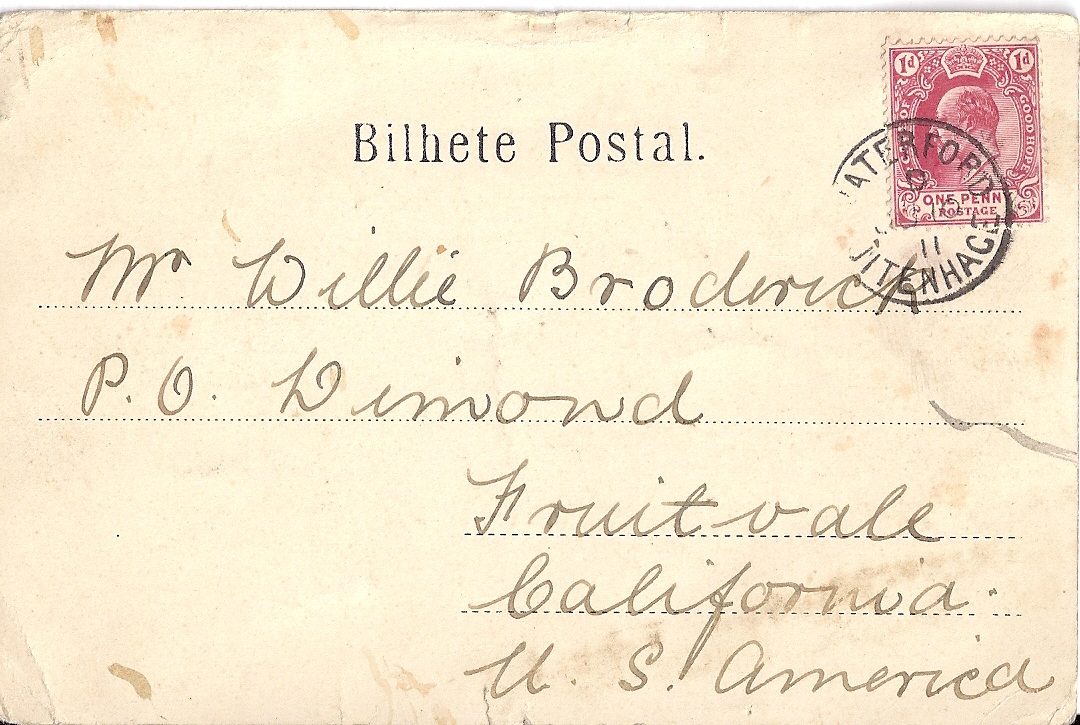
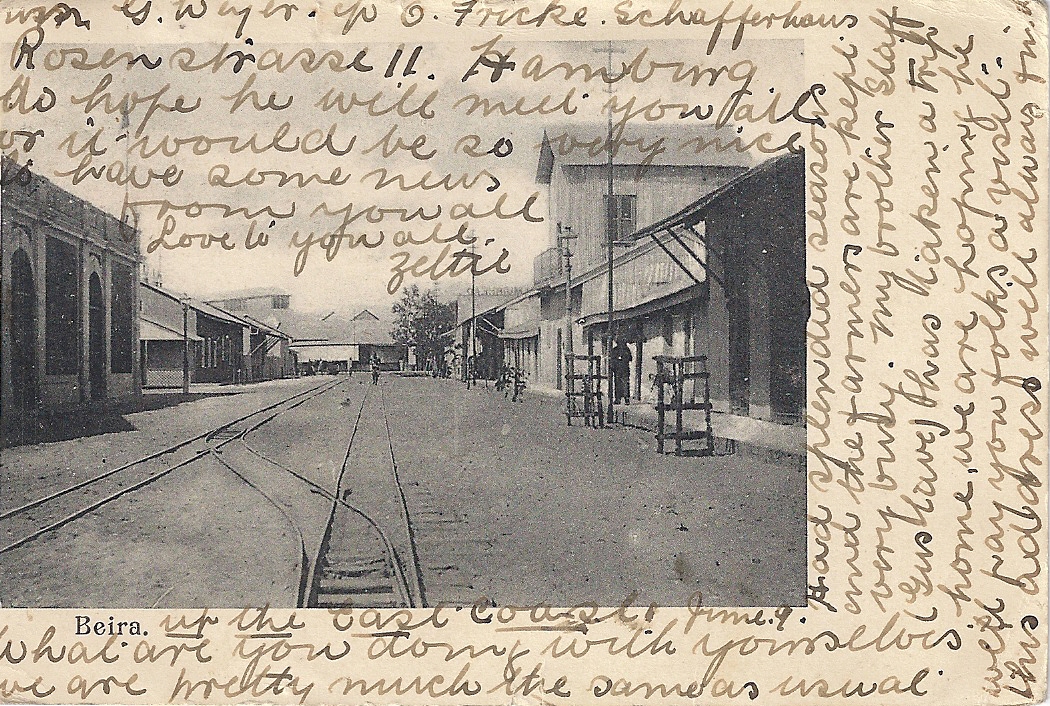
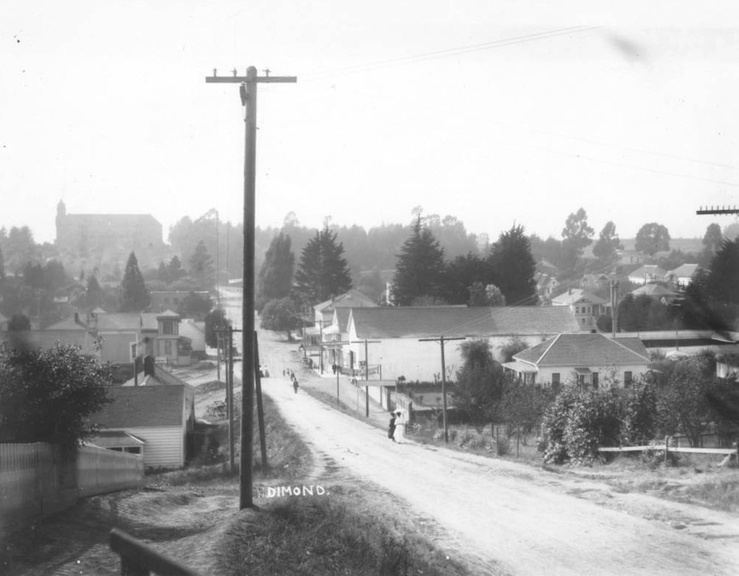
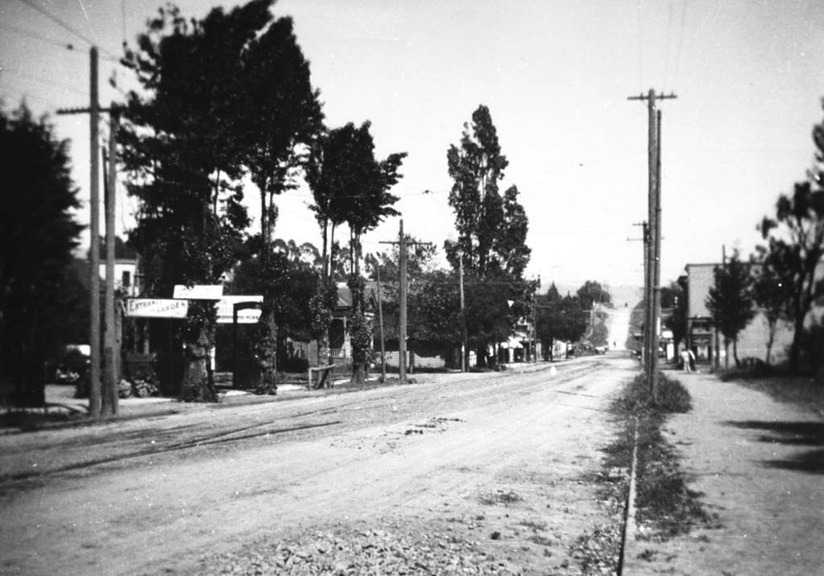
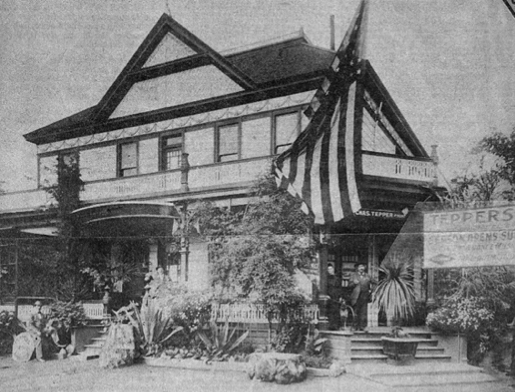

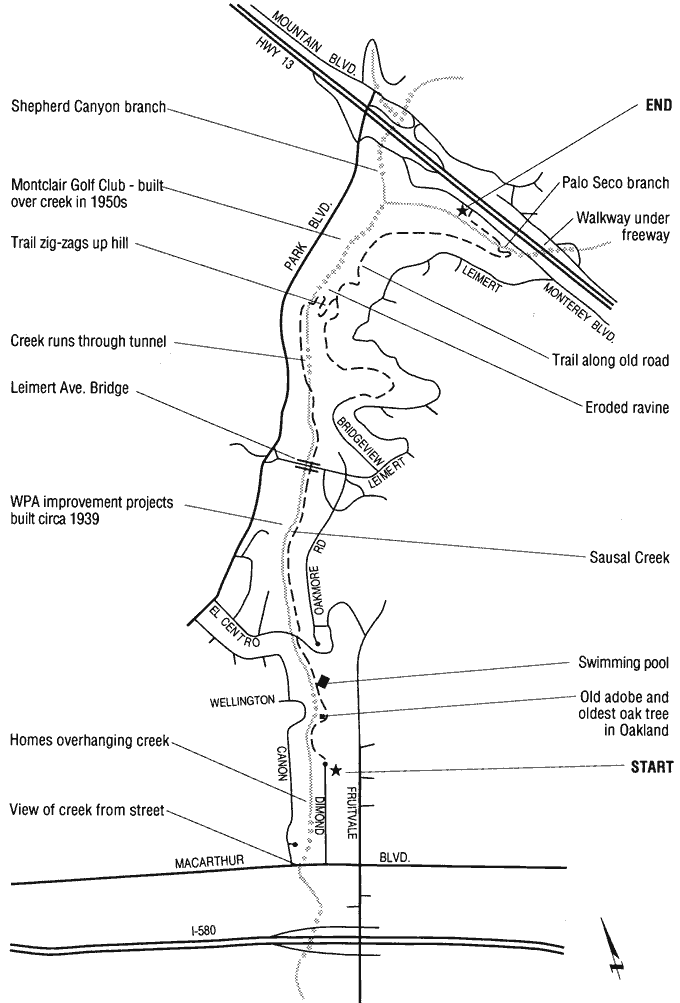
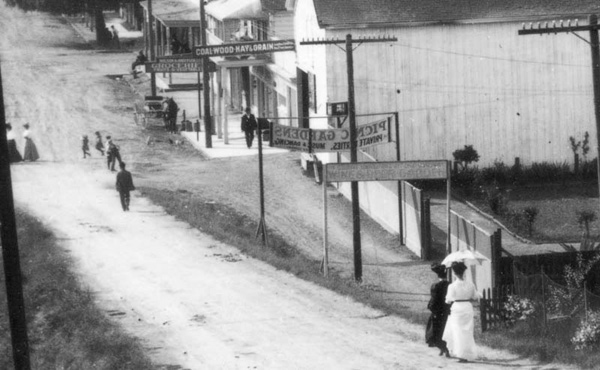
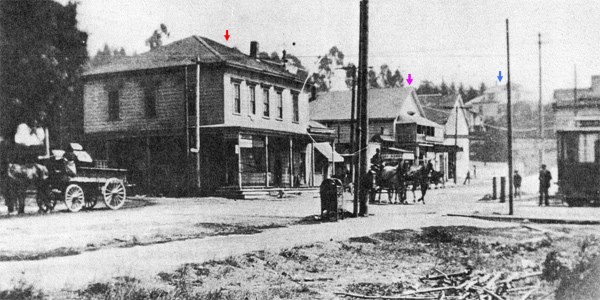
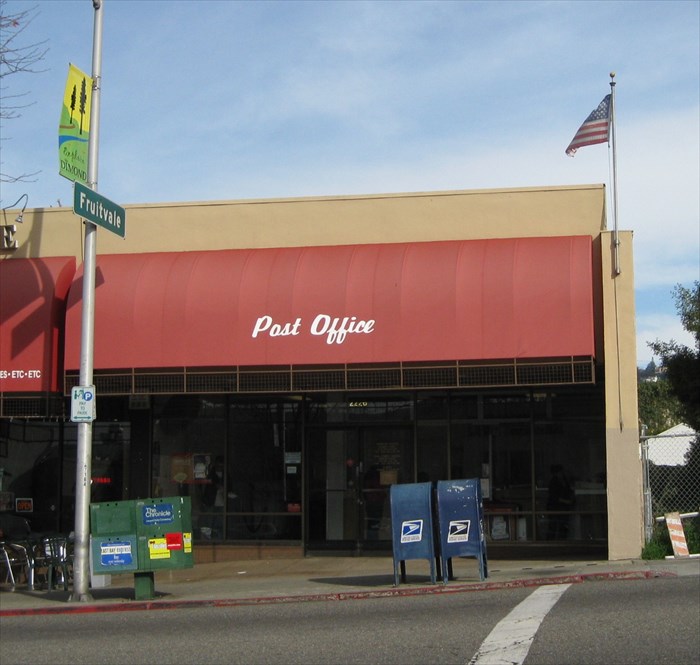
I just discovered the Dimond District of Oakland is celebrating Oktoberfest a traditional German celebration. The Presco Children spent much time playing in Dimond Park and shopped in Dimond where our great grandfather, William Broderick, and his wife, Alice Stuttmiester-Broderick, lived. Above is a post card addressed to Willie using the Dimond P.O. and the city of Fruitvale that is no more, it becoming a part of Oakland. This is a very rare address. I am going to investigate about donating it to the Dimond Association which saved the Dimond Post Office. I am going to try to make this P.O. a sister P.O. of the Eugene P.O.
I attended several Boy Scout events in Dimond Park where we swam in the pool and the creek. As kids, we built dams up and down Sausal Creek. Dimond Canyon was our backyard. There was a walkway from San Sebastion Avenue that took you to Park Blvd. that travails Dimond Canyon. On the other side is a trail that used to be a Stagecoach road.
Hugh Dimond owned the land where he built a commercial laundry plant that washed linen and clothes brought across the bay from San Francisco that had problems with a fresh and clean water supply. There was a dryng problem with the fog. The clothes were unloaded at a dock in the estuary and brought up 9th. Avenue.
‘The Dimond’ is acquiring a identity if its own. We were an admixture of German families who came to own a fruit farm below ‘The Hights’ the Poet and Artist Colony founded by the Pre-Raphaelite Poet, Joaquin Miller who used to escort my grandmother, Melba Charlotte Broderick to San Francisco on the Fruit Vale Trolly. Mott had plans for Sausal Creek similar to the Woodminster Cascade that was the vision of Jaunita Miller who sponsored a play about the Pre-Raphaelites. Then there is the Janke theme park across the by in Belmont.
Below is a the image of Rena Easton that was made into a poster for the University of Nebraska Oktoberfest. We stayed on Congress Ave. The painting I did of my muse inspired my late sister, Christine Rosamond, to take up art. It takes awhile for a city or place to be branded. My family history is now a huge part of that branding.
Jon Presco
President: Royal Rosamond Press.
In recent years, some have started to include the article “the” in front of Dimond, as in “I live in the Dimond” or “Oaktoberfest in the Dimond.” Some long-time residents prefer the usage without the article “the”: for example, “I live in Dimond” or “I went shopping in Dimond today.” For them, saying “the Dimond District” is acceptable, however.
While San Francisco hosted its 118th annual Oktoberfest last week, Oakland celebrated its German heritage with its first-ever Oktoberfest in the Dimond district, centered at MacArthur Boulevard and Fruitvale Avenue.
The Oct. 4th event showcased local bands and breweries, community businesses, Dimond history, German food and dance, traditional “oompah” music and an open-air beer garden reminiscent of the many German American social clubs and entertainment halls that lined MacArthur Boulevard from the 1890s until mid-century.
Although the Dimond is known now for its diverse Asian and Latino influences it was once the center of the East Bay’s German American community. By the turn of the century, the Dimond and much of Fruitvale had a reputation as an area of German beer gardens, fruit orchards, dairy farms and parks, according to the Oakland Heritage Alliance’s newsletter.




I am the third scout from the right. The photo above was taken by Melba Broderick on the Russian River. I am on the left. I look like my grandson, Tyler Hunt.
In 1895 Charles Tepper, a German army captain, bought land along Hopkins Street, now MacArthur Boulevard, just west of Fruitvale Avenue and built a two-story hotel, a dance hall, and garden surrounding these that shaded a picnic area. Nearby Tepper’s Gardens was Neckhaus Gardens, Bauerhofer’s Gardens and the Hermitage, which was famous for its “French dinners and dancing girls,” according to a Sept. 16, 1962 article of the Oakland Tribune.
While this may be the Dimond’s first Oktoberfest, Jean Langmuir, a librarian in the Oakland history room of the Oakland Public Library, also found a 1963 program for “Deutscher Tag,” or German Day, held on Oct. 13 by the United German American Society of the East Bay. The society, which still exists today, celebrated German American heritage with German big bands and patriotic songs on East 14th Street – International Boulevard.
Tepper’s was eventually closed by the enforcement of Prohibition. The Dimond Improvement Association, which sponsored last Saturday’s festival, pored over city archives to pinpoint precisely where Tepper’s beer garden stood in order to build the Oktoberfest garden in the same spot, according to librarian Kathleen DiGiovanni.
There, said the 1962 Tribune article, “gay merrymakers” ate bratwurst and spaetzle, danced German polka and sipped beers from Brooklyn Brewery on East 14th Street. Horse-drawn coaches and double-decker, mohair-upholstered streetcars of the Highland Park and Fruitvale lines delivered loads of revelers to the gardens’ gates and to the many German American businesses along now-MacArthur Boulevard.
Daniel Swafford, who is on the board of the DIA, said the association had been thinking of bringing back the beer hall tradition to the area for many years. After the success of the street festival celebrating the building of Farmer Joe’s on Fruitvale Avenue a few years ago, which he estimated 5,000 people attended, the association decided that an Oktoberfest celebration was a natural fit for the history of the area.
He remembered his grandmother, who had lived in the district since the 1930s, telling him stories of the glory days of the area, when it was an entertainment and shopping hotspot. The building that is now Farmer Joe’s was a vaudeville theater in the ’20s, later a movie theater, and the Dimond also featured an ice skating rink and bowling alley.
The building that was Tepper’s hotel still stands just behind the 2 Star Market on MacArthur Boulevard, which along with the German elderly home Altenheim, established in 1893, are the only surviving landmarks of the old German community of the Dimond and Upper Fruitvale. But with the revival of the neighborhood’s past social and cultural heritage, residents of the Dimond district are strengthening new communities in the area by bringing them together to socialize and celebrate.
It is named after Hugh Dimond, who came to California during the Gold Rush and purchased the land comprising the district in 1867. In 1897 he built a cottage that used the adobe bricks from the Peralta family’s 1827 home. The bricks were used again to build the Boy Scout hut that is still standing in Dimond Park. Oakland’s Camp Dimond was located at the head of Dimond Canyon where the present day Montera Middle School is located.
Dimond was originally a settlement distinct from Oakland, in an area called Dimond Canyon.[1] The Dimond post office was opened in 1891 and by 1908 had become a branch of the Oakland post office.[1]
A flowery description of the Dimond from 1896 titled “Dimond the Beautiful” says “Fruitvale is for beauty one of the notable avenues in this country.” 2
[Found two great old Dimond District photos (see below) from shortly after the turn of the last century. Not sure which of the Dimond District neighborhood entries/pages each of them belongs, but will be happy to move them if some handy map expert points out the correct locale.][this is an ongoing issue that i have never felt like resolving one day! i don’t think your sources made it over though, just the footnote. -gk] [ Just an educated guess, present day foliage changes the skyline but the picture on the left seems to be where present day Lincoln Ave. intersects MacArthur Blvd [Hopkins]. The street at the bottom of the hill on the left, would be Champion St. ] [Hopkins/MacArthur continued up to the hill in the distance but veers left (the hill is Excelsior Ave) around to the front of the tall church looking building, which is (I believe) present day Altenheim Senior Housing as it was in the 1950s to present day. At the very bottom of Hopkins just past Champion St would have been the intersection of then Fruit-vale and Hopkins, the main shopping area for the Dimond District. le]
https://localwiki.org/oakland/Dimond_District
The name (originally Fruit Vale) comes from the many fruit orchards (largely apricot and cherry) which dominated the area in the late 19th century. After the 1906 earthquake, the onslaught of refugees from San Francisco caused a population boom, and the unincorporated neighborhood was annexed into the City of Oakland by 1909.
The Fruitvale shopping district is located along International Boulevard (formerly East 14th Street), from Fruitvale Avenue to 38th Avenue and is one of the major commercial areas of Oakland.
http://www.museumca.org/creeks/Book10SausWalk.html
https://oaklandgeology.wordpress.com/category/sausal-creek-watershed
http://dimondoakland.blogspot.com/2008_02_01_dimondoakland_archive.html
In an era of severe budget cuts, the Dimond Neighborhood Association has a success story it can happily tell: members led an effort to keep the neighborhood post office from being closed, and succeeded–with what the US Postal Service called one of the best organized campaigns they had ever seen.
A steering committee of 17 neighbors organized residents, who then, collected over 7,000 signatures (in a postal district with 12,000 residents), meet with city council members and lobbied everyone they could think of for help. The outcome: the closure was rolled back and the PO will remain open.
What’s sweet to me is not only how these folks mobilized and made it happen, but how they used their Yahoo groups, email, and tech tools to support the project. The photo album of the party and the YouTube videos are good reminders of how powerful these tools can be to tell a story–and they’re fun to see.
Congrats, Dimond!
Back To Israel Oaklandanders
Posted on May 23, 2018 by Royal Rosamond Press
The Oaks Motel was built in the middle of Germantown. The Hell’s Angels at Kaspars were probably from German families that had a hand in the founding of Israel.
Jon
Moulin Rouge In Fruitvale
Posted on December 8, 2016by Royal Rosamond Press
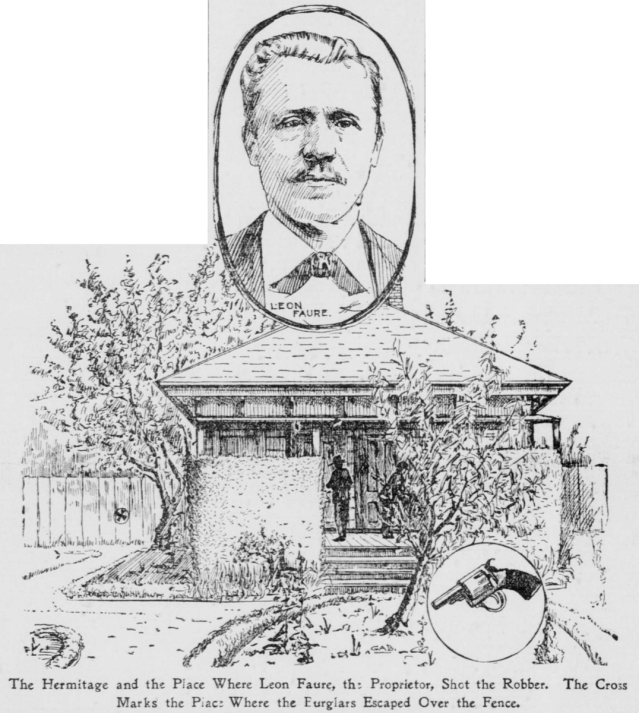
There was a German club called The Hermitage that featured “French dancing girls” that may have been inspired by the Moulin Rouge in Paris. This Beer Garden was located in Fruit Vale, a haven for German immigrants. My kindred had a fruit orchard there.
Above is the Marriage Certificate of Alice Lillie Stuttmeister of Oakland, who married William Frederick Broderick of Fruit Vale, in 1897. Their daughter, Melba Broderick, married Victor Hugo Presco. whose father came from Bohemia Germany. Did William go to see the French dancing girls, and lewd sex acts performed in the gazebos? This may constitute the first Bohemian scene for adults looking for a alternative lifestyle. Here is a Garden of Earthly Delights in the New World, that was closed down by the clergy and Temperance Movement. Here is the model for the Ghost Ship and other places I have blogged on. It is my intent to present this history to elected officials of Oakland, and bid the, to support Oakland’s Bohemian roots, and make sure everyone who participates, is safe. You can see Tepper’s house in back of the stores on MacArthur Blvd. Joaquin Miller escorted Melba on the electrical rail seen below.
Jon Presco

Charlie Tepper, opened a creekside hotel and beer garden on the land he bought from Hugh Dimond, at MacArthur between Dimond and Canon Avenues. (The hotel building still stands behind the shops at 2030 MacArthur Boulevard.) Many residents enjoyed picnics and leisurely afternoons beneath the trees of Tepper’s Gardens, next to the creek. On the corner opposite Tepper’s stood the infamous Hermitage House, which featured “French dancing girls.” At the rear of the hotel was a garden with two cottages and five gazebos, in which some questionable acts allegedly took place. Neighbors and church groups eventually pressured officials into closing the “pleasure palace,” and it was quickly replaced by shops. Nearby, other beer gardens, like the Neckhaus, nestled on Sausal Creek’s banks, and Bauerhofer’s (where a post office sits today), featured German bands and songs and an occasional brawl among patrons.
http://www.documents.sausalcreek.org/Sausal_History.pdf
http://www.wikiwand.com/en/History_of_Oakland,_California
http://kalw.org/term/fruitvale#stream/0
“It might be well to state right here that the Board of Supervisors is determined to clean out everything of a disorderly character in Alameda County.” The Clerk was directed to notify the proper authorities that the licenses were revoked and that no liquors can be sold at the resorts.
The men who were prime movers in this successful crusade were the Rev. Franklin Rhoda, William C. Ralston, F. C. Hinckley, W. S. Dunlevy and William Lowenburg, with the backing of all the citizens and residents in Upper Fruitvale.
Named for the orchards planted by 19th-century German settlers, Fruitvale was once considered Oakland’s second downtown. Prior to World War II, it had a very strong economy, as evidenced by banks, shops, a Montgomery Ward department store, mansions, and a rich inventory of Victorian-style homes. The war led to an economic boom that further benefited the district with many factories locating there. These factories created jobs and attracted large numbers of Hispanic and African American workers to the neighborhood. After the war, many of the factories closed and both Fruitvale and all of Oakland entered an era of economic decline. The growing suburbanization and
http://excelsiorcenter.org/altenheim-historical-highlights/
http://www.fhwa.dot.gov/environment/environmental_justice/case_studies/case6.cfm
2016 Oaktoberfest in the Dimond
Saturday, October 1, 2016 | 11 am to 6 pm
MacArthur Blvd. and Fruitvale Ave., Oakland
FREE entry, but drink tickets are available for advance purchase.
Oaktoberfest will bring world-class beer to the tented beer hall, serving steins of traditional German flavors and regional brew pub favorites.
Highlights include a traditional Biergarten, Eco Fair, Kid’s Area with Root Biergarten, German style homebrew competition featured in the homebrewers’ alley, and vendors from around the Bay. Celebrate Oktoberfest, Oakland style, in the Dimond at Fruitvale and MacArthur.
http://www.documents.sausalcreek.org/Sausal_History.pdf
Between 1850 and 1859, Antonio Peralta sold off much of his remaining land, and the rancho soon became farmland. The soils that had been deposited over time as Sausal Creek meandered back and forth in its floodplain proved to be quite productive. In 1856 Henderson Luelling, a Quaker nurseryman, brought 700 cherry trees from Oregon and planted them in 400 acres he had purchased along Sausal Creek, christening the area “Fruit Vale.” Later he added apple and pear trees, and Fruit Vale’s orchards became well known. (One of these apple trees is still alive and can be seen today at 2125 Woodbine Avenue in Oakland.) Then, in 1859, Frederick Rhoda arrived, one of the first of many Germans to settle in what is now the Dimond District. On the 217 acres he purchased next to Sausal Creek, Rhoda grew Royal Ann cherries and, in 1869 when the Transcontinental Railroad came to Oakland, shipped them to the East Coast– the first California-grown fruit sold in the East. The resident told of hiking along a narrow road that wound up the hill, following the path of Sausal Creek. Near today’s Leimert Avenue bridge, hikers had to stop and pay a five-cent toll to continue up the hills!
Estate owners were not the only people who enjoyed Sausal Creek’s charms. Horsedrawn streetcars, common in the Fruitvale area by 1875, brought people up to Dimond Canyon and other areas in the hills for Sunday outings and picnics alongside the creek, where picnickers relished the delicious berries growing next to the creek. On one occasion, a streetcar on the old Highland Park and Fruit Vale Railroad tipped over the ravine in Dimond Canyon and rolled down the hill into the creek. Officials attributed the accident to a very
In the 1890s, upper Fruitvale, (from just south of MacArthur Boulevard north through the hills and stretching a few blocks to the east and west of Dimond Canyon), looked like a small German town. However, the population of the area was becoming more diverse: in addition to the Chinese who were brought into the area as workers, a number of Scandinavians established themselves in the Sausal Creek watershed. Many started dairies and feed businesses: the area was so rural that, while sitting in classes, school children looked out upon dairy cattle grazing in surrounding pastures.
In the late 1890s, one of the original German settlers of Fruitvale, Jacob Bold, built a three-bedroom wood-frame home on Minnesota Street. His brother, John Bold, was the proprietor of The Villa, a hotel and saloon at Fruitvale Avenue and East 10th Street. The Bolds played an important role in establishing St. Elizabeth’s, one of the first German Catholic churches in Fruitvale. Another German immigrant, Charlie Tepper, opened a creekside hotel and beer garden on the land he bought from Hugh Dimond, at MacArthur between Dimond and Canon Avenues. (The hotel building still stands behind the shops at 2030
MacArthur Boulevard.) Many residents enjoyed picnics and leisurely afternoons beneath the trees of Tepper’s Gardens, next to the creek. On the corner opposite Tepper’s stood the infamous Hermitage House, which featured “French dancing girls.” At the rear of the hotel was a garden with two cottages and five gazebos, in which some questionable acts allegedly took place. Neighbors and church groups eventually pressured officials into closing the “pleasure palace,” and it was quickly replaced by shops. Nearby, other beer gardens, like the Neckhaus, nestled on Sausal Creek’s banks, and Bauerhofer’s (where a post office sits today), featured German bands and songs and an occasional brawl among patrons. A home for elderly German people, the Altenheim, was built nearby in 1893. The home standing on the site today, however, was built after the original building burned down in 1908. The home’s residents today are of many ethnicities.
In 1934, a massive landslide on McKillop Road was blamed on Sausal Creek. The Army Corps of Engineers attempted to subdue the creek with concrete, and throughout the ’30s and ’40s, many more attempts were made to “control” the creek. The Works Progress Administration tried to contain the creek with cement “walls” and poured concrete in its bed in an attempt to slow its flow. The dates of these projects (1939-1940) were stamped into the cement and can be seen today at various spots along the creek in Dimond Canyon. Railroad tracks were used to create blockades in the creek, as people were attempting to drive up the newly-paved creekbed.
https://localwiki.org/oakland/The_Hermitage
JOAQUIN MILLER FAVORS BACCHUS
Poet of Sierras Signs Liquor Application of Roadhouse.
Oakland Office San Francisco Call, 1118 Broadway, June 29.
Joaquin Miller, the “Poet of the Sierras,” would let no thirsty man go dry. He has come to the rescue of Bacchus and to-day the name of the hermit muse was read before the Board of Supervisors as one of those in favor of having . a liquor license granted to the famous old roadhouse in Upper Frultvale, “The Hermitage.” . “
Fred C. Schnarr made application to be permitted to again dispense Intoxicants over the bar of “The Hermitage” -and the “Poet of the Sierras,” whose home is on “The Heights” back of the once lively resort, was among the 85 residents in the precinct who are not opposed to eeelng the doors / of “The Hermitage” once more thrown open to those [ who would be pleased to drop in and quaff a goblet of sparkling wine or- a stein of popular beer. There was a petition against granting Schnarr a license ” filed •with the Board of Supervisors. It contained 83 signatures. ~ .
In the matter of the applications for liquor licenses in the precincts of Fruitvale and Brooklyn townships taken up by the Supervisors to-day under the new local option law the saloon ; element appeared to have the advantage, their petitions overruling the petitions of the protestants in the number of- signers.
STII/L FIGHT LICENSE OF THE OLD HEBMITAGE
Matter of Granting Petition of Fred Schnarr Postponed for Another Week.
OAKLAND, Aug. 17.— The Inspecting of the names of signers on the petition of Fred C. Schnarr for a liquor license for the old Hermitage at Frultvale before the Board of Supervisors progresses with utmost deliberation.
.When the matter was brought up before the board thia morning it was asserted that among the signers was a woman and that Schnarr did not have the necessary six out of the nearest ten residents.
A strenuous fight is being made against allowing the- notorious place to open again, and every means is being taken to block the passage of vne resolution. The question of whether a woman could be considered a legal signer was referred to the District Attorney, while a survey has to be made to settle which are the nearest ten residents. In, order that this may be done, the question went over for another week. ‘Yi-,’v
MIKE PROTESTS AGAINST DIVES
Fruitvale Residents Describe Scenes of Revelry.
Homes Desecrated by Loud, Unseemly Brawling in Beer Gardens.
Oakland Office San Francisco Call, 1118 Broadway, July 15.
Residents of Upper Fruitvale crowded the Supervisors* room to-day to protest against the granting of licenses to the saloons and beer gardens, against whose disorderly conduct they have long been agitating. * :-…’ Citizens of the wealthy suburb appeared: before the board and described scenes of revelry and brawling participated in by both male and female patrons of tha re* sorts In auestion. V J.* . Complaints were filed against the places kept by Charles Tepper, R. E. Taylor ana Mrs. B. Walliser, and protests were before the board against the renewal of licenses to Peter C. Nielsen and I_ Faure. the latter the proprietor of the notorious Hermitage.
Rev. F. B. Rhoda conducted the prose-* cutlon against Nielsen and Faure, who were defended by M. C. Chapman. In thd fight against the other three places Snook & Church appeared for the- protestants and A. I* Frlck for the accused. Frlck later withdrew because the board would not order the cases continued on account of non-compliance with the legal allow* ance of time within which to plead. Lawyers Not Wanted. Supervisor Mitchell said that lawyers were not needed there anyhow, as there was already wrangling enough, and aa for the time limit the board was competent to go ahead with an Investigation one time as well as another. Frlck retorted that he was not there to wranglebut for the protection of his clients’ in* terests. The board proceeded with the Faure and Nielsen cases first. Chapman asked that the charges be dismissed, as they were not regularly filed and contained no specific complaints. From the worfflngf of the protests, he said, it might b« seen that the residents wers objecting to all the saloons In Frultvale, whereas the Investigation was directed solely against his clients. The board refused to dismiss the case and asked for testimony In support of the protest. Rhoda said he would put no witnesses on the stand. Chapman accused the minister of wanting a chance to heap . abuse on his clients. He again asked for a dismissal, but the board dl« rected Mr. Rhoda to proceed. Rhoda said the protest was based on two technical points— first, that Faura and Nielsen signed each other’s petitions; second, that neither presented an affidavit of good character/ •¦:.’ : – ;r>vSupervisor Rowe said that If tho pro* testants had any testimony to support their claims they must offer It at once. Ira L. Aymer was then sworn, and testified that he had heard of: the ill-repute of the Hermitage as far away as Los Angeles before coming to Oakland. He sala that hoodlums stood out3lde the place ana insulted passersby, both ladies and gentleDaniel Wilmore testified that -he ha* seen women coming from the Hermitase* In an intoxicated condition. He said that the worst feature of the place was tha crowd of tough young men and women who came there from Oakland and San Francisco. _ . ‘,’. *;’ : _ ‘ ¦”. Charles Reynolds, an officer In the Salvation Army, testified that Faure, hla wife and his sons were in the habit ot applying abusive epithets to the army people during their meetings. . He said that carriages brought women there at night. _
His Home Desecrated. v Superintendent William Rutherforfl oC the California Cotton Mills said that h# home in Fruitvale was desecrated by tha riotous drunkenness of the frequenters or the resorts under investigation. “It la a farce,” he said, “to come hers time after time and protest against this outrage. The Supervisors should long: ago have compelled the District Attorney to institute proceedings against -thesej places.” Mr. Rutherford said that recently ha had seen fighting going on outside the Hermitage and told of seeing a man and woman come from the place too drunk to For the defense .Chapman offered the testimony of Constables Jerry Quinlan •and Cramer, Policeman Gardiner, W. S. Dunleavy” and John Ferren of the Oakland Transit Company to the effect that the Hermitage was a quiet and orderly, place. The board next took up the complaints against Mrs. Walllser. Charles Tapper and R. E. Taylor. After Judge- Frick*3 ¦withdrawal Tepper’a daughter represented him. The testimony against these>-re-sorts was similar to that in the other cases. One man said he had seen girl3 standing on-chaira at Tepptr’s and kicking at hats held for them by their male companions, the latter shouting “Higher!” He had seen both, boys and girls Intoxicated there, x , The Supervisors took tha protests under advisement until 10 o’clock to-morrow.
Notorious Hermitage Among the Places That Lose Their Licenses.
Oakland Office San Francisco Call, 1118 Broadway, July 16.
The Board of Supervisors to-day closed five Upper Fruitvale drinking resorts, including the Hermitage,which for nearly twenty years has been conducted at Dimond with a notoriety which is State wide. The licenses of Charles Tepper, Mrs. B. Walliser and Robert E. Taylor were also revoked by a unanimous vote of the board.
Leon Faure, proprietor of the Hermitage, had one supporter, Supervisor Church, who also opposed the closing of Peter C. Nielsen’s barroom. But the other members of the board declared they would not make fish of one and flesh of another.
The Hermitage was not singled out in the fight of the Fruitvalers against the saloons, but the place was, unfortunately for its owner, among the group of resorts which the anti-saloonists had determined to drive out of business. The decision of the board covers all but one of the Upper Fruitvale places where liquors are sold. The Neckhaus Gardens were allowed to retain their license because no evidence of disorder was introduced against the resort.
The action by the board was a complete victory for the men and women of Upper Fruitvale, who have been battling against the hoodlumlsm, depravity and disorder which have marked the conduct of some of the resorts that have been denied licenses.
When the Supervisors convened this morning to render their decision the lobby was packed with an interested audience from Fruitvale. Chairman Mitchell called up the resolutions on revocation of the Walliser, Tepper and Taylor licenses. The charges made against each resort were sustained by the board, and promptly the five members voted to close the places.
Supervisor Church said he would not have voted to close Tepper’s place, except that the proprietor had himself said that he was going out of business, so Church was ready to close the place at once.
When the applications of Faure and Nielsen were read Church was in favor of granting the renewal of the licenses. He said no evidence had been introduced to prove disorderly actions. But the other four members of the board did not agree with their confrere, and they sent the Hermitage into oblivion. Nielsen runs a saloon in connection with his grocery. There was no special complaint against him, except on the ground that the citizens of that suburb had determined, if possible, to close all saloons.
As soon as the voting had decided the fate of the resorts Chairman John Mitchell made the following announcement:
“It might be well to state right here that the Board of Supervisors is determined to clean out everything of a disorderly character in Alameda County.” The Clerk was directed to notify the proper authorities that the licenses were revoked and that no liquors can be sold at the resorts.
The men who were prime movers in this successful crusade were the Rev. Franklin Rhoda, William C. Ralston, F. C. Hinckley, W. S. Dunlevy and William Lowenburg, with the backing of all the citizens and residents in Upper Fruitvale.
Turn Verein Cottages
Posted on November 27, 2014 by Royal Rosamond Press
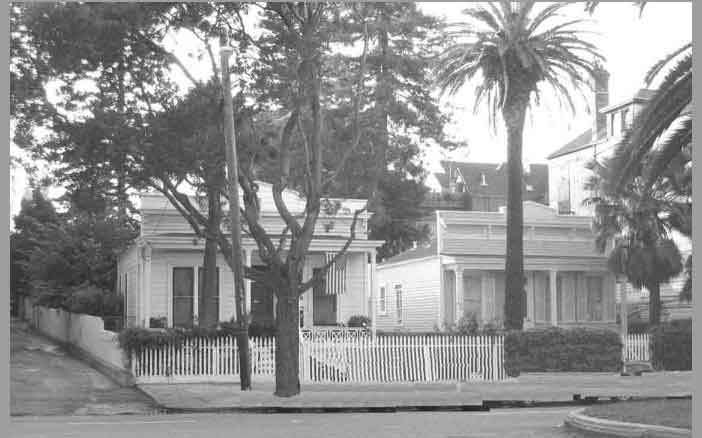
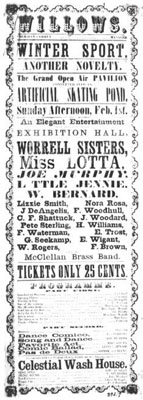
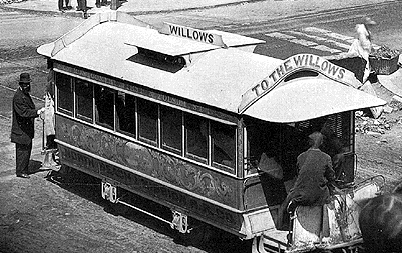
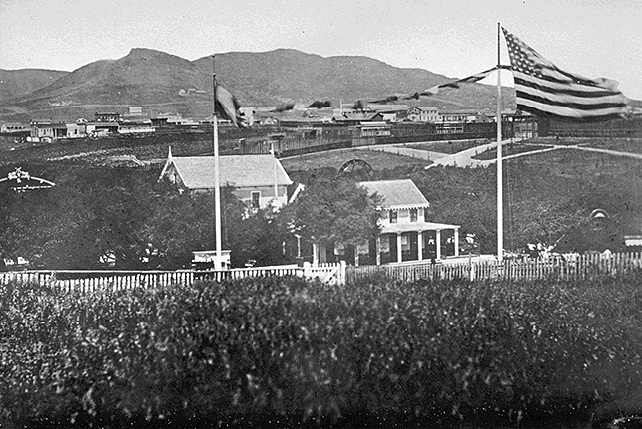


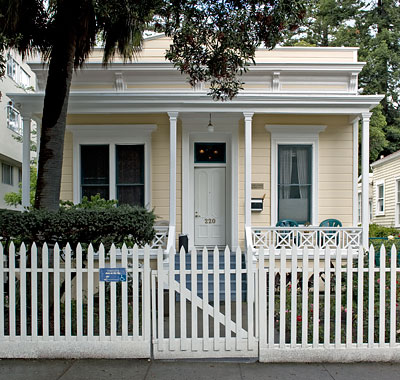

I suspect the Tanforan Cottages are two of the six portable houses that Carl Jake brought about the cape on a Clipper Ship and set of up south of San Francisco. I assumed they were erected in Belmont, but, I just read there was a theme park called ‘The Willows’ in the Mission Dolores that was a retreat as well. With the establishment of the Turnverein on Bush, and another in Redwood City, I believe Janke was part of a movement to bring Forty-Eighter Revolutionaries to the Bay Area in order to make a Utopian State. During, and after WW1, when anti-German hatred was at its peak, these pioneers lost their dream, and all the work they had done. Tanverien became Tanforan, and alleged Spanish name, but, there is nothing Spanish about it. The story of Toribio Tanforan is hogwash. I suspect the old schoolhouse in Belmont is one of the portable houses.
Before the Gold Rush Americans and European wanted to visit and live in California, the last Frontier. Amusement Parks were all the rage. They were Human Be-ins. I suspect my grandmother, Melba Broderick, met Victor Hugo Presco at a theme park.
Jon Presco

Landmark 67
Tanforan Cottage 1
214 Dolores Street Between 15th and 16th Streets
Mission Dolores
Built 1853
This is one of a pair of redwood cottages built by the Tanforan ranching family on land that lay within the 1836 Mexican Grant to Francisco Guerrero. Located only half a block from Mission Dolores, the oldest building in San Francisco, these two cottages are probably the oldest residential buildings in the Mission District.
Landmark 68
Tanforan Cottage 2
220 Dolores Street Between 15th and 16th Streets
Mission Dolores
Built 1854
The following is quoted from Here Today, San Francisco’s Architectural Heritage by Roger Olmsted and T. H. Watkins, published by Chronicle Books in 1969:
Two very old houses that have maintained their original appearance can be seen side-by-side at 220 and 214 Dolores Street. The “Tanforan Cottages,” so called because members of the family of Toribio Tanforan occupied them from 1896 to 1945, are simple frame structures with modified late Classical Revival facades. Though very nearly identical in appearance, they were not constructed at the same time; 214 Dolores is said to have been built a little before 1853, 220 not long after that date. This dating is questionable, though, as the first substantiated date is 1866, when Revilo Wells, owner of 214, had water piped in. There is still a small carriage house behind 220 Dolores – occupied as late as 1940 by one of the Tanforan carriages. The large gardens of these houses have been well-maintained and contain many specimens of turn-of-the-century San Francisco taste in flora.
William had married Augustus the daughter of Carl Janke and lived in the city of Belmont California. I then looked for Carl Janke in the catalogue and found an entry in the history of the Daughters of the American Revolution, a encyclopedia of around four books. It said Carl brought six portable houses around the cape and erected them in the city of Belmont that was not incorporated until 1926. About ten years ago I read that one of the Tanforan cottages was moved from Belmont, they on a Spanish land grant that came to be owned by Toribio Tanforan, the grandson-in-law of Jose Antonio Sanchez.
No one can find any history of Toribio. Why then is being honored? Jose Sanchez is very famous in regards to Spanish land grants. There is no Tansforan land grant. One historian says Toribo was a gaucho from Chile, and thus he was a excellent horseman. And, that’s it! This is what conects the mysterious Torribo to the Tanforan race track and Belmont. Give me a break! Why are two houses in San Francisco named Tanforan?
I suspect Tanforan was the name of the German theme park that Charles Janke built in Belmont, it said he modeling it after a German way of life. Tanforan is not a Spanish name. It also resembles Turnverien, who were Forty-Eighters who fled Europe in the ‘Erupecan Spring’. Consider the ‘Arab Spring’ no doubt named after the revolutions that swept Europe, including Italy, that bid Count Leonetto Cipriani to leave his home in Belmont and pretty much rule the United Italy under Garibaldi and Victor Emanuel. Why wasn’t Ciprianis name applied to a race track? I did find a ‘Cipriani Dog Park’.
In his Overland Diaries Cipriani discuss his prefab house that was out together by screws. This is the famous house in Belmont, called ‘Ralston Hall’. Across the bay in emryville Mr. Coggeshall and his wife have screwed together their new home that was shipped around the cape in 1849. Is this yet another of six portable houses brought around the Cape by my kindred, Carl Janke? San Francisco realtors are selling land in Emeryville. What we are looking at is the birth of California Real estate where track homes are built to arrack folks from back east. Did Cipriani invest in real estate? Who financed him if her did?
“The second sale that Vicente Peralta made was for the greater portion of his estate to a group of San Francisco investors for $100,000 in August 1853. These investors then sold off plots within the estate. Perhaps the first American to settle in what later became Emeryville was Frederick Coggeshall, a native of Massachusetts who came to San Francisco in 1849 and purchased a 45-acre tract on the San Pablo road near where 45th Street is today. He and his wife Lavinia assembled a small house, which may have been shipped around Cape Horn, farmed the land, and raised pigs and cattle.”
One so called historian says the Tanforan Cottages were built by ships carpenters from ships that were abandoned in the Gold Rush by 49ers, sailors who jumped ship to look for their gold mine, that were in want of experience carpenters, who were not paid much. One citations said portable houses were built on the east coast where labour was cheap thanks to the Irish immigration. As to the idea that the Tanforan cottages were moved from Belmont to the Mission, after the San Francisco, consider ‘The Vans’ a structure that was moved to Belmont from San Francisco.
It is thought that the Tanforans built 214 and 220 Dolores as farm houses. 214 was built first, and 220 followed a year or so later. The homes are simple frame structures with classic revival facades (an architectural movement based on the use of pure Roman and Greek forms in the early 19th century). Their false fronts, full width porches with square posts, and four-over-four window sashes (four panes of glass on the top frame and four panes of glass on the bottom frame of a double hung window) are common features of the 1890s. The deep-set backyard, another feature of that era, holds a carriage house that contained a Tanforan-owned carriage until 1940.
The houses were originally inhabited by the Tanforans’ daughter Mary and were handed down from sister to sister until 1952. It is not known if Torbio and Maria ever lived in them. They both died in San Francisco in 1884 and were buried in Mission Dolores; the home address listed on their obituary was Well Street.
http://cheznamastenancy.blogspot.com/2008/01/tanforan-cottages.html
In the 1860’s, SF had its first amusement park just two blocks away. Located at 16th and Valencia, it was called “The Willows” and its prize exhibit was a Emu. That inspired one of Bret Harte’s early verses (not very well known but maybe better so).
“O say, have you seen the Willows so great,
So charming and rurally true,
A singular bird, with the manner absurd,
Which they call the Australian Emu?”
Well, maybe you had to be there.
The houses were originally inhabited by the Tanforans’ daughter Mary and were handed down from sister to sister until 1952. It is not known if Torbio and Maria ever lived in them. They both died in San Francisco in 1884 and were buried in Mission Dolores; the home address listed on their obituary was Well Street.
http://cheznamastenancy.blogspot.com/2008/01/tanforan-cottages.html
The site that The Shops at Tanforan mall is built on has a rich history. Prior to its reincarnation as a shopping center, Tanforan once also served as a racetrack, at various times as an airfield, a military training center, an internment camp, as well as a golf course.
Racetrack[edit]
The Tanforan Racetrack was built in 1899. It was named after Toribio Tanforan, the grandson-in-law of Jose Antonio Sanchez, the grantee of Rancho Buri Buri.[citation needed] Horse, dog, motorcycle, and auto races were held year round at the track. One of Tanforan’s most famous residents while it was used as a racetrack was Seabiscuit, who was stabled there for a time.[4] Today, a statue of Seabiscuit may be found on the grounds of the Tanforan mall.
The site found other uses after 1909, when the state of California banned all gambling at racetracks.[
The Willows, a popular resort “out in the country” in the Mission District, in the 1860s. It was near today’s 18th and Mission, and the willows of its name are growing around the now-buried Mission Creek.
Photo: Private Collection, San Francisco, CA
From the Diary of John “Don Juan” Riley Robinson, Silver Magnate of Batopilas, Mexico:
August 18, 1861 I purchased some clothes, as I am about as seedy as I ever was in this life. Was busily employed all the morning in my room, showing [silver] specimens and talking of Mexico. In the afternoon I went to the Willows and spent an hour in looking at the crowds who spend their pleasant times in that beautiful retreat. It is 3 miles from the city by rail, and Sundays the cars run every 15 minutes, and are crowded with happy faces going and returning from this really beautiful place for recreation. It is beautifully fitted up with books and machinery for amusement for the children, and shooting, and innocent games for the grownups.
http://foundsf.org/index.php?title=Willows_Resort_1860s
http://en.wikipedia.org/wiki/The_Shops_at_Tanforan
http://en.wikipedia.org/wiki/Tanforan_Racetrack
http://www.sfgenealogy.com/sf/history/hgres.htm
Janke Park, Hall, And Stagecoach Line
Posted on November 27, 2014 by Royal Rosamond Press
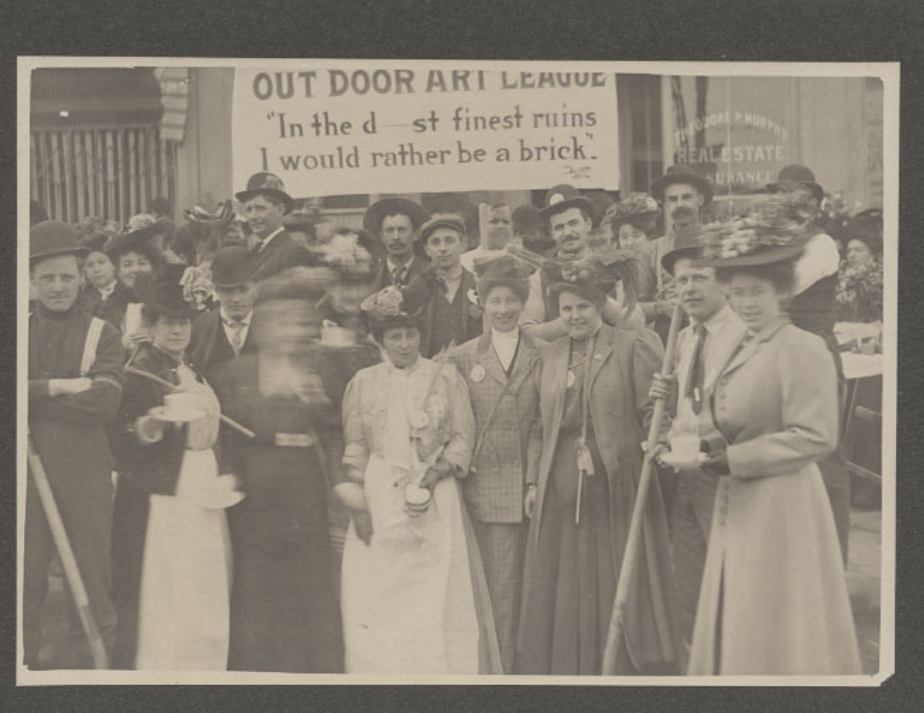
The Art League held a event in Mill Valley that looks like a Renaisance Fair.
”
OUTDOOR ART LEAGUE HAS YULETIDE FESTIVAL
Old Time Music and Costumes. Features of Jinks
Special Dispatch to The Call. MILL VALLEY. Jan. 9.— An old English yuletide festival was” given last night, with fifteenth century, music and costumes of the same period, by , the Outdoor Art. league. The jinks was under the direction of Mrs. F. ßostick and each member of the club brought one guest; so that there was a large” gathering of society folk.”
What we are beholding in the Genesis of the Hippie/Bohemian Movement. This is the heart and soul of San Francisco Culture. The Outdoor Art League played a big roll in rebuilding this world famous city after the Earthquake of 1907. This may be the first instance where a group of artists contribute to the redevelopment of a major city.
These are Magical Tree People. Janke built spiral stairs to take his guests into the embrace of the Giant California Oaks. Here are the Ents and the Hobbits celebrating life, art, poetry, dance, and music. I see young lovers in the tree tops beholding rainbow sunsets and the bright star in the West. This is the first Disneyland. Here come the Jester of the Jinks, with her Magic Wand. Do you hear the tinkling of the bells high in the tree amongst the stars of the Milky Way. Tinker Belle of Beautiful Mountain.
Disneyland is famous for its monorails.
”
“The same year the Belmont Soda Works opened, the Independent Order of Odd Fellows (I.O.O.F.) hired 75 Southern Pacific railroad cars to transport 7,000 of its members from San Francisco to Belmont Park. There, 1,000 other members met them there, making the largest picnic ever held at Belmont Park.
Jon Presco
Copyright 2014
The Cap and Bells Club was organized for the development of wit and humor, and for the study of the drama, music, languages and kindred subjects.
The pointed cap, wand and bells of the Jester form its emblem, and unusual dramatic and musical talent characterizes the membership list, so that the programs during the sixteen years of the club’s existence have been of great excellence.
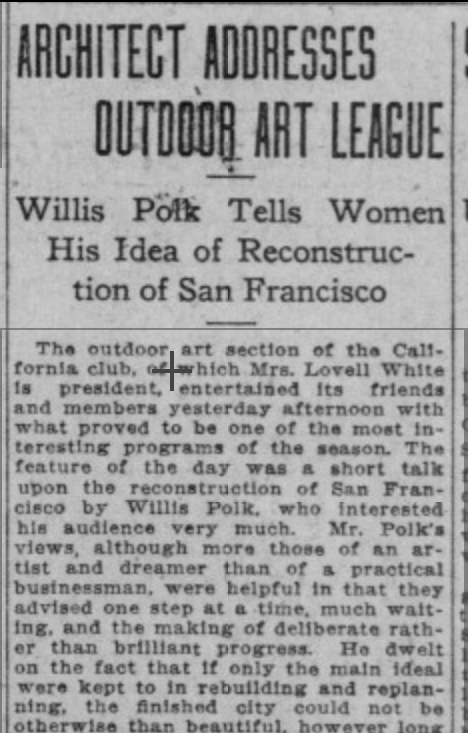
ARCHITECT ADDRESSES OUTDOOR ART LEAGUE
Willis Po-lfc Tells Women His Idea of Reconstruction of San Francisco
The outdoor art section of the California club, of which Mrs. Lovell White Is president, entertained its friends and members yesterday afternoon with what proved to be one of the most interesting programs of the season. The feature of the day was a short talk upon the reconstruction of San Francisco by Willis Polk, who interested his audience -very much. ‘ Mr. Polk’s views/although more those of an artist and [ dreamer than of a – practical businessman, were helpful in that they advised one step at a time, much waiting, and the making of deliberate rather than brilliant progress. He dwelt on the fact that if only the main ideal were kept to in rebuilding and re-planning, the finished city could not be otherwise: than beautiful, however long it was in reaching even comparative completion.


Here is the obituary of William in the San Francisco Call.
JANKE – in this city, Nov. 22, 1902 at his residence 320 Haight St. William August Janke, beloved husband of Cornelia L. Janke, and beloved father of Mrs. W.O. Stuttmeister and Carl and W.E. Janke, a native of Hamburg Germany aged 59 years. Internment, Laurel Hill
“According to Belmont Historical Society records, Dorothea and Carl August Janke sailed around Cape Horn from Hamburg, Germany, in 1848. After landing in San Francisco, they settled in Belmont in 1860″
I found Carl and Dorothea (also and Doretta) are buried at the Union Cemetery in Redwood City.
Carl_August_Janke
Names Listed on the Marker:
Janke, Carl August
Janke, Dorette Catherine
Janke, Mutter Heinrich
Inscription:
— From the 1937 headstone survey –
Carl August Janke, born in Dresden, Germany Oct. 1806, died Belmont, Calif. Sept. 2, 1881
Dorette Catherine, wife of Carl August Janke, born in Hamburg, Germany, July 21, 1813, died in Belmont, California, Feb 16, 1877
Mutter Heinrich, mother of Dorette Catherine Janke, born in Island of Heligoland, Germany, 1781 died in Belmont, California 1876
NOTE: In 1937 the Daughters of the American Revolution recorded all the headstones.
A BRIEF HISTORY OF UNION CEMETERY
By: John G. Edmonds
Before Union Cemetery
The first entry that mentioned a cemetery in the Times and Gazette (which was the only newspaper in San Mateo County at that time) was in early January 1859. William Cary Jones had allowed 13 burials on his property, the site of today’s Sequoia High School. Now that Horace Hawes had taken over the property, he informed the county that he no longer wanted the dead to be buried on his property and he wanted all 13 bodies exhumed and moved elsewhere. This caused great anxiety in Redwood City.
1864-1910, page 133).
Records from Tombstones in Laurel Hill Cemetery, 1853-1927 – Janke
– Stuttmeister
Mina Maria Janke, daughter of William A, & Cornelia Janke, born
February 2, 1869, died March 1902.
William August Janke, native of Hamburg, Germany, born Dec. 25,
1842, died Nov. 22, 1902, son of Carl August & Dorette Catherine Janke. Frederick William R. Stuttmeister, native of Berlin, Germany, born
1812, died January 29, 1877.
Mrs. Matilda Stuttmeister, wife of Frederick W.R. Stuttmeister, born
1829, died March 17, 1875, native of New York.
Victor Rudolph Stuttmeister, son of Frederick W.R. & Matilda
Stuttmeister, born May 29, 1846, died Jan. 19, 1893, native of New
York.
The most popular daytime excursion destination on the Peninsula during the late 19th century once occupied the area in Belmont now known as Twin Pines Park. The Belmont Picnic Grounds proved so popular, in fact, that scores of picnickers would travel regularly from San Jose and San Francisco for sun, fresh air and libations.
The size of the crowds and the fondness for libation, however, eventually led to the attraction’s demise.
According to Belmont Historical Society records, Dorothea and Carl August Janke sailed around Cape Horn from Hamburg, Germany, in 1848. After landing in San Francisco, they settled in Belmont in 1860. Industrious and entrepreneurial, Carl Janke purchased land in the vicinity of 6th and Ralston. Janke set out to create a site for leisure activities, modeled after the biergarten in his native Hamburg. His creation became Belmont Park.
Janke’s park offered all the necessary provisions for an outdoor holiday, which included a dance pavilion to accommodate 300 large glassless windows, a conical roof and a dance floor situated around a large spreading tree. The pavilion was also equipped with a bar, an ice cream parlor and a restaurant.
Outside the pavilion, the park provided a carousel for children, footpath bridges crossing the meandering of creeks, and a shooting gallery, with picnic benches and lathe houses situated about the shady grounds. Brass bands performing from bandstands could be heard all around the woodland.
In 1876, Janke opened Belmont Soda Works, located north of Ralston along Old County Road. Janke’s sons, Gus and Charlie, operated the soda works, which offered a variety of sarsaparillas. Within two years, the Soda Works produced more than 1,000 bottles a month — a large percentage of which would be sold at Belmont Park. Between the Soda Works and the several bars situated in and around the park, the liquid refreshment flowed abundantly.
Belmont Park became so popular that Southern Pacific Railroad began reserving exclusive trains for the sojourn to Belmont. Several local organizations and fraternities used the grounds for the celebrations, such as the Germania Rifles, the Apollo Verein, the Blue Bells, the Bunker Hill Association, the Ignatian Literary Society, the Hibernians and the Purple Violets. Races – foot, three-legged, and pony cart – as well as other amusements became commonplace at the gatherings.
The same year the Belmont Soda Works opened, the Independent Order of Odd Fellows (I.O.O.F.) hired 75 Southern Pacific railroad cars to transport 7,000 of its members from San Francisco to Belmont Park. There, 1,000 other members met them there, making the largest picnic ever held at Belmont Park.
With all the alcohol, dancing and overheated bodies gathered in a relatively small place, trouble seemed destined to follow.
In 1880, rival gangs started a small riot at Belmont Park, leaving one person dead and several injured. On another occasion, a young girl named Anne Mooney mysteriously disappeared. Authorities assumed she had been kidnaped, but a suspect was never identified. The fate of Anne Mooney remains a mystery.
By the turn of the century, the weekly treks to Belmont had become something of a nuisance. The drunken tussling would often begin at the on-board bars, continuing and intensifying by the time the passengers reached Belmont. The small communities through which the trains rumbled complained about the outsiders cavorting and otherwise disturbing their peaceful Peninsula neighborhoods. Southern Pacific, tired of the rowdies and the damage inflicted to the railroad cars, finally stopped operating the excursions in 1900.
In her book “Heritage of the Wooded Hills,” Ria Elena MacCrisken writes, “… if the railroad looked down its nose at the San Francisco picnickers, the little town of Belmont welcomed them with open arms. These early-day tourists brought lively times to Belmont and revenue to its stores…” Unfortunately for the Jankes , when the train stopped bringing carloads of revelers, much of Belmont Park’s clientele disappeared.
By 1910, the property had sold to George Center, the director of the Bank of California, who built a home on the property. Later Dr. Norbert Gottbrath opened a sanitarium called “Twin Pines,” which operated until March of 1972. The City of Belmont took over the property, dedicating Twin Pines Park in June of 1973.
http://cdnc.ucr.edu/cgi-bin/cdnc?a=d&d=SFC19021124.2.75.3#
http://www.sfgenealogy.com/sanfranciscodirectory/1916/1916_928.pdf
http://cdnc.ucr.edu/cgi-bin/cdnc?a=d&d=SFC19091115.2.40.9#
http://www.historicunioncemetery.com/Person.php?person=Janke%2C+Carl+August
http://www.historicunioncemetery.com/Person.php?person=Janke%2C+Lilly
http://en.wikipedia.org/wiki/Union_Cemetery_(Redwood_City,_California)
The Genesis of The Rapture
Posted on May 23, 2018 by Royal Rosamond Press

For fifteen years I have been telling my ex-liberal friends how lucky we are that we know someone whose kindred founded the Plymouth Brethren that begot ‘The Rapture’.
“Now, after the shit hits the fan, we can find our way back to reality. Trust me, there will be unlimited madness.”
They looked at me with sadness, then, accused me of trying to get their white Harvard man’s money. There had to be an insane motive for me latching on to this crap. Our friendship came to an end. I was right! They were wrong. Oh well! They withdrew from me and isolated me. I was not invited to funerals. I was ruled ‘evil’.
Now we got ‘Spygate’. Paranoia runs deep! Our President bid “real Americans” to rise up against the Justice Department because they are – OF THE WORLD!
Jon ‘The Insane One’
“They go after Phony Collusion with Russia, a made up Scam, and end up getting caught in a major SPY scandal the likes of which this country may never have seen before! What goes around, comes around!” Trump tweeted on Wednesday.
Trump then branded the scandal as “SPYGATE”, which he tweeted “could be one of the biggest political scandals in history!”
http://www.businessinsider.com/spygate-trump-russia-investigation-2018-5
The False Rapture Doctrine
Posted on September 29, 2016by Royal Rosamond Press

“In early 1830, Margaret McDonald, a 15 year old Scottish Girl had visions that included a Secret Rapture of believers before the appearance of the Antichrist. Edward Irving (1792-1834) her Scottish Presbyterian pastor and forerunner of the Pentecostal and Charismatic movements, attended prophecy conferences that began in Dublin Ireland in that same year, 1830, at Powerscourt Castle. There he promoted the doctrine of the Secret Rapture.”
 Rosamond Press


Leave a comment