
“Thanks a lot for the detective mags. I had, before they arrived, been reading a detective story by Dorothy Sayers, and it was so bl… foul that it depressed me. “


This extremely rare photo of the first west coast Black Mask get-together on January 11, 1936 captures possibly the only meeting of several of these authors.
Pictured in the back row, from left to right, are Raymond J. Moffatt, Raymond Chandler, Herbert Stinson, Dwight Babcock, Eric Taylor and Dashiell Hammett. In the front row, again from left to right, are Arthur Barnes (?), John K. Butler, W. T. Ballard, Horace McCoy and Norbert Davis.
Capturing Beauty
by
John Presco
Copyright 2024
In one of the most profound coincidences in Literary History, Dorothy Leigh Sayers a ‘Queen of Crime’ has broken through the Gaslighting Vapor to save this author from complete ruin. Sayers may be related to the Leigh family, and thus we are in the same family tree. She took the Leigh family name, who lived in a ancient castle on the Isle of Wight that I wanted to live in. As I type, Dead Writers look over my shoulder and bid me to finish my our amazing story.
I told my newfound daughter and her mother I was kept from a meeting in Christine Rosamond’s house in Pacific Grover – the day before the funeral – where business was discussed. I believe Vicki Presco, and others, found Christine’s autobiography – that was disappeared! Ludwig Wittgenstein, is here, with me. I got his full approval, and the blessing of my later cousin Elizabeth Rosemond Taylor, who three days ago I was considering to be a model for a Culpeper Series I have in mind.
Several years ago I talked to a woman who bought Rosamond’s home. She told me one bedroom was always cold. I surmised this was Christine’s art studio, that I suspect is haunted. My late sister was livid that Stacey Pierrot was sold her estate, and given permission to write a bio and movie script. – after she was shown her bio. In Pierrot’s book, members of my family are accused of looting the estate. All the Black Mask authors, that ever lived, are……on the case! The Non-Floating Artist?
‘Sayers moved the genre of detective fiction away from pure puzzles lacking characterization or depth, and became recognized as one of the four “Queens of Crime” of the Golden Age of Detective Fiction of the 1920s and 1930s, along with Agatha Christie, Margery Allingham and Ngaio Marsh. She was a founder member of the Detection Club, and worked with many of its members in producing novels and radio serials collaboratively, such as the novel The Floating Admiral in 1931.
Dear Norman,
Thanks a lot for the detective mags. I had, before they arrived, been reading a detective story by Dorothy Sayers, and it was so bl… foul that it depressed me. Then when I opened one of your mags it was like getting out of a stuffy room into the fresh air. And, talking of detective fiction, I’d like you to make an enquiry for me when once you’ve got nothing better to do. A couple of years ago I read with great pleasure a detective story called Rendezvous With Fear by a man Norbert Davis. I enjoyed it so much that I gave it not only to Smythies but also to Moore to read and both shared my high opinion of it. For, though, as you know, I’ve read hundreds of stories that amused me and that I liked reading, I think I’ve only read two perhaps that I’d call good stuff, and Davis’s is one of them. Some weeks ago I found it again by a queer coincidence in a village in Ireland, it has appeared in an edition called ‘Cherry Tree books’, something like ‘Penguin’. Now I’d like you to ask at a bookshop if Norbert Davis has written other books, and what kind. (He’s an American.) It may sound crazy, but when I recently re-read the story I liked it again so much that I thought I’d really like to write to the author and thank him. If this is nuts don’t be surprised, for so am I. I shouldn’t be surprised if he had written quite a lot and only this one story were really good.
Affectionately
Ludwig

Dante and The Man Born to Be King, 1940s[edit]
For the theatre Sayers wrote a comedy, Love All, a wry take on the eternal triangle. It opened in a London fringe theatre in April 1940. Notices were friendly—The Times said that Sayers poked some agreeable fun at a number of conventions, sentimental, literary, and theatrical and The Stage called the play “very amusing and provocative”[99]—but at that stage of the war there was no demand for another light comedy in the West End, and there was no transfer.[100]
The task that preoccupied Sayers from the 1940s to the end of her life was her translation of Dante Alighieri‘s Divine Comedy. She said she began it after reading the original Italian version in an air-raid shelter during bombing raids.[n 12] She saw parallels between the writing and the state of the world during the war.[102]
I saw the whole lay-out of Hell as something actual and contemporary; something that one can see by looking into one’s self, or into the pages of tomorrow’s newspaper. I saw it, that is, as a judgment of fact, unaffected by its period, unaffected by its literary or dogmatic origins and I recognised at the same moment that the judgment was true.[103]
She thought Dante was “simply the most incomparable story-teller who ever set pen to paper”,[104] and in addition to the parallels of the world during war, she believed that her society suffered from a lack of faith, declining morality, dishonesty, exploitation, disharmony and other similar problems, and believed that Dante shared the same view of his own.[104] Once she began to read, she found herself unable to stop:
I bolted my meals, neglected my sleep, work and correspondence, drove my friends crazy, and paid only a distracted attention to the doodle-bugs which happened to be infesting the neighbourhood at the time, until I had panted my way through the Three Realms of the Dead from top to bottom and from bottom to top.[104]
As well as her work on Dante, Sayers continued to write drama. At the BBC’s request she created a cycle of twelve radio plays portraying the life of Christ, The Man Born to Be King (1941–42), which, Kenney observes, were broadcast to “a huge audience of Britons during the darkest days of the Second World War”.[4] Sayers insisted from the outset on realism, modern speech and a portrayal of Jesus. He had appeared as a character in numerous Passion plays in earlier centuries, but this was the first time an actor had played the part on radio; the press referred to “a radio Oberammergau“.[105] Some conservative Christians expressed outrage. The Lord’s Day Observance Society called it a “revolting imitation of the voice of our Divine Saviour and Redeemer” and declared, “to impersonate the Divine Son of God in this way is an act of irreverence bordering on the blasphemous“.[106] The actor Robert Speaight, who played Jesus, said the plays were successful because “we did not approach the parts in a reverential frame of mind. We approached them exactly as if it was any other kind of play”.[107] As the series progressed, the controversy died down. The BBC’s religious advisory committee, representing all the major Christian denominations, was united in support of the cycle, which came to be regarded as one of Sayers’s greatest achievements.[108]
Sayers’s other main work from the wartime years was her extended essay The Mind of the Maker, arguing that human creativity is the attribute that gives mankind its best chance of understanding, however imperfectly, the nature of God’s mind.[109] Between 1944 and 1949 she published two volumes of essays and a collection of stories for children, and wrote another religious play, The Just Vengeance, commissioned for the 750th anniversary celebrations of Lichfield Cathedral, which, she later said, was “very stale and abstract” and pleased theologians more than it pleased the actors.[110]
https://en.wikipedia.org/wiki/Song_of_Roland
Sayers moved the genre of detective fiction away from pure puzzles lacking characterisation or depth, and became recognised as one of the four “Queens of Crime” of the Golden Age of Detective Fiction of the 1920s and 1930s, along with Agatha Christie, Margery Allingham and Ngaio Marsh. She was a founder member of the Detection Club, and worked with many of its members in producing novels and radio serials collaboratively, such as the novel The Floating Admiral in 1931.
Mary, née Leigh.
https://en.wikipedia.org/wiki/Arreton_Manor
Arreton Manor was leased to several different farmers until 1628, when it was granted by the king to trustees to settle the king’s debts to the City of London. It was then bought by two merchants from the trustees. It was later bought by Thomas Colepeper, 2nd Baron Colepeper, Governor of the Isle of Wight. On Lord Culpeper’s death, his daughter Lady Katherine, acquired the property. Lady Katherine married Lord Fairfax and it stayed in the Fairfax family for 230 years. Its history then followed that of the island community, and the manor was farmed by the abbot’s steward till 1525, when it was leased by the last Abbot William Rippon to John Leigh, who already held land in the parish.[2] After the Dissolution, it was granted to various farmers by the Crown until 1628, when it was granted by the king by trustees for the payment of his debts to the City of London. The manor then followed the same descent as that of Newport to the Wykeham-Martin family, in whose hands it remained until the 20th century.[2] Queen Victoria supposedly planted a conifer on the manor’s south lawn.[3]
https://www.ancestry.com/genealogy/records/sir-john-leigh-24-2ytd8s
https://wiki.alquds.edu/?query=Thomas_Colepeper,_2nd_Baron_Colepeper
Born in 1635, Thomas was the son of Judith and John Colepeper. As a royalist, his father left England following the execution of Charles I at the end of the English Civil War. Thomas lived with his father in the Netherlands where he married the Dutch heiress Margaret van Hesse on 3 August 1659. He returned to England after Charles II‘s restoration, where his wife was naturalised as English by Act of Parliament.[1]
Colepeper was made governor of the Isle of Wight from 1661 to 1667, which involved little administration but added to his wealth. He was elected as a bailiff to the board of the Bedford Level Corporation for 1665 and 1667.[2]
He became the governor of Virginia in July 1677[3] but did not leave England until 1679, when he was ordered to do so by Charles II. While in Virginia, he seemed more interested in maintaining his land in the Northern Neck than governing so he soon returned to England.[4] Rioting in the colony forced him to return in 1682, by which time the riots were already quelled. After apparently appropriating £9,500 from the treasury of the colony, he again returned to England. Charles II was forced to dismiss him, appointing in his stead Francis Howard, Baron of Effingham. During this tumultuous time, Colepeper’s erratic behaviour meant that he had to rely increasingly on his cousin and Virginia agent, Col. Nicholas Spencer.[5][6] (Spencer had succeeded Colepeper as acting governor upon the lord’s departures from the colony.)
http://www.brandystationfoundation.com/cse_columns/lee-in-culpeper.htm
After the death of Sir Richard Culpeper, Joyce’s mother, Isabel, married Sir John Leigh (d. 17 August 1523) of Stockwell (in Lambeth) and Levehurst, Surrey, the elder son of Ralph Leigh, esquire, and Elizabeth Langley, the daughter of Henry Langley, by whom she is said to have had a son, John Leigh, and a daughter, Joyce Leigh.[7]
https://en.wikipedia.org/wiki/Joyce_Culpeper
https://en.wikipedia.org/wiki/Thomas_Culpeper
I will be posting on Snyder’s gaslighting. How can any brother allow any man to get away with punching his sister!!!!
“She had me cornered. I was trying to reason with her and get away before things got out of hand. She kept coming at me, and the bed was right there, so I finally whapped her. And it was like Bozo the clown. She bounced off the bed as if nothing had happened, and just kept right on coming. I was finally able to get around and out of the room, and years later I asked her if she remembered me slapping her during that episode. She had no memory of it whatever.”
Jon Presco
https://en.wikipedia.org/wiki/Gaslighting



Jocasta “Joyce” Culpeper, of Oxon Hoath (c. 1480 – c. 1528) was the mother of Catherine Howard, the fifth wife and Queen consort of King Henry VIII.
Contents
Family[edit]
Joyce Culpeper, born about 1480, was the daughter of Sir Richard Culpeper (d. 4 October 1484) and his second wife, Isabel Worsley (born c. 1460 – 18 April 1527), the daughter of Otewell Worsley of Southwark, Surrey, by Rose Trevor.[1]
Joyce Culpeper had a brother, Thomas Culpeper (not to be confused with the Thomas Culpeper allegedly involved with her daughter Catherine Howard) (1484 – 7 October 1492), and a younger sister, Margaret. Joyce and Margaret were co-heirs to their brother, Thomas Culpeper, in 1492.[2] It has been erroneously stated that Joyce Culpeper had another sister, Elizabeth,[3] who married Joyce’s eldest son, Sir John Leigh (1520–1564). However, only Joyce and Margaret are named as co-heirs to their brother, Thomas, in the inquisition post mortem taken after his death,[4] and it seems clear that Margaret was Joyce Culpeper’s only sister by her mother’s marriage to Sir Richard Culpeper. Margaret married firstly, Richard Welbeck, esquire, by whom she had a son, John Welbeck.[5] After Richard Welbeck’s death, Margaret Culpeper married William Cotton, esquire.[6]
After the death of Sir Richard Culpeper, Joyce’s mother, Isabel, married Sir John Leigh (d. 17 August 1523) of Stockwell (in Lambeth) and Levehurst, Surrey, the elder son of Ralph Leigh, esquire, and Elizabeth Langley, the daughter of Henry Langley, by whom she is said to have had a son, John Leigh, and a daughter, Joyce Leigh.[7]
Marriages and issue[edit]
Before 1492 Joyce Culpeper married Ralph Leigh (d. 6 November 1509), esquire, the younger brother of her stepfather, Sir John Leigh (d. 17 August 1523). Ralph Leigh was Treasurer of the Inner Temple in 1505-6, at which time he shared a chamber with his elder brother, Sir John Leigh.[8] By Ralph Leigh, Joyce Culpeper had two sons and three daughters:[9]
- Sir John Leigh (1502–1564).[10] Leigh was among those knighted (as ‘John a Lee’) on 2 October 1553, the day after the coronation of Queen Mary.[11] By his wife, Elizabeth, whose surname is unknown, Leigh had a daughter, Agnes Leigh (d. before 1590), who married firstly, Sir Thomas Paston (c. 1515 – 4 September 1550), a gentleman of King Henry VIII’s Privy Chamber, the fourth but third surviving son of Sir William Paston (c. 1479 – 1554) and Bridget Heydon,[12] and secondly, Edward Fitzgerald, (17 January 1528 – 1597), a younger brother of Gerald FitzGerald, 11th Earl of Kildare (1525–1585), by whom she was the mother of Gerald FitzGerald, 14th Earl of Kildare.[13] Leigh was in Cardinal Wolsey’s household as a youth, had travelled to Jerusalem before 1538, was a prisoner in the Tower in that year, was in Antwerp in September 1561, and was a friend of Sir Thomas Gresham; according to Gresham, Leigh was ‘the man that preserved me when Queen Mary came to the crown’.[14] In 1541 Leigh was called before the Privy Council to answer for having twice had contact with Cardinal Pole while on the continent.[15] According to Warnicke, Leigh’s half-sister, Queen Catherine Howard, had once ‘obtained the release from prison of her kinsman John Legh’,[16] and it seems likely that it was on this occasion that the Queen exercised her influence on Leigh’s behalf. Leigh is perhaps best known for a quarrel with his kinsman, Henry Howard, Earl of Surrey. On 13 July 1542 Howard was committed to the ‘pestilent ayres’ of the Fleet by the Privy Council for having struck Leigh. Three weeks later Howard met with the King, and after entering into a recognizance on 5 August in the amount of 10,000 marks to guarantee his future good behaviour towards Leigh, was released from custody.[17] According to Burgon, Leigh himself was subsequently committed to the Fleet in August 1547, released after entering into a recognizance in the amount of £2000 to guarantee his good behaviour, and again confined to prison in November of that year, on both occasions for reasons unknown.[18] Leigh made his last will on 30 April 1563, to which he added a codicil on 14 March 1564. The will was proved on 5 February 1566.[19] Leigh’s principal heir was his nephew, John Leigh (d. 19 or 20 January 1576), son of his brother Ralph (d. before 1563). Although Leigh bequeathed his wife, Elizabeth, an annuity, the will reveals that he had earlier divorced her ‘on certain sufficient grounds’.[20] Leigh died in 1564, and was buried in the church of St. Margaret, Lothbury. Stow has preserved his epitaph, which states that he was ‘to sundry countries known/ A worthy knight, well of his prince esteemed’.[21]
- Ralph Leigh (d. before 1563), who married Margaret Ireland, the daughter of William Ireland, esquire, and by her had a son, John Leigh (d. 19 or 20 January 1576), esquire, who married Margery Saunders, and a daughter, Frances, who married Edward Morgan. As noted above, Ralph Leigh’s son, John, was the heir of his uncle, Sir John Leigh (1502–1564). After John Leigh’s death in 1576, his widow, Margery, married, before 1580, Sir William Killigrew, by whom she had a son, Robert Killigrew, and two daughters, Catherine Killigrew, who married Sir Thomas Jermyn, and Elizabeth Killigrew, who married Sir Maurice Berkeley.[22]
- Isabel Leigh (d. 16 February 1573), who married firstly, Sir Edward Baynton (d. 27 November 1544), by whom she had two sons and a daughter, secondly, Sir James Stumpe (d. 29 April 1563), and thirdly, Thomas Stafford, esquire.[23]
- Joyce Leigh, who married John Stanney, esquire.
- Margaret Leigh, who married a husband surnamed Rice.
Ralph Leigh died 6 November 1509,[24] and Joyce Culpeper married Lord Edmund Howard, and by him had three sons and three daughters:[25]
- Henry Howard, esquire.
- Sir Charles Howard, who incurred Henry VIII’s displeasure for having fallen in love with Margaret Douglas, later Countess of Lennox, while Margaret was serving as first lady of honour to Charles’ sister, Queen Catherine Howard.[26]
- Sir George Howard (c. 1519 – 1580).
- Margaret Howard (d. 10 October 1571), who married Sir Thomas Arundell of Wardour Castle, beheaded on Tower Hill on 26 February 1552, and by him had two sons, Sir Matthew Arundell (d. 24 December 1598) of Wardour Castle, and Charles Arundell (d. 1587), and two daughters, Dorothy, who married Sir Henry Weston, and Jane, who married Sir William Bevyle.[27]
- Catherine Howard, who married Henry VIII, but had no issue.
- Mary Howard, who married Edmund Trafford.
Joyce Culpeper was living in 1527.[28] She is thought to have died about 1528.[29]
After Joyce Culpeper’s death, Lord Edmund Howard married secondly, Dorothy Troyes, daughter of Thomas Troyes of Hampshire, and widow of Sir William Uvedale (d.1529), and thirdly, before 12 July 1537, Margaret Munday, daughter of Sir John Munday, Lord Mayor of London, and widow of Nicholas Jennings, but had no issue by either marriage.[30]
The Wilson-Leigh Line To Bohemia
Posted on June 8, 2019 by Royal Rosamond Press





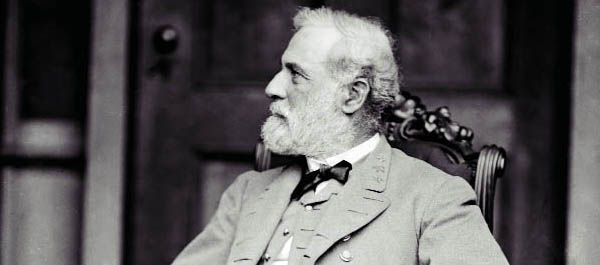
Robert E. Lee is related to the Schwarzenberg Family who are trying to get their castle back that you see above. I am kin to these rulers of Bohemia. No way am I going to throw Robert away, or, to the dogs. Let the Nobodies begin their family trees and do things worthwhile and noteworthy. It’s a free country! Have at it!
John Presco
https://ancestors.familysearch.org/en/LZGW-WMM/christopher-wilson-1446-1500
https://ancestors.familysearch.org/en/L85S-ZW3/robert-legh-ii-1324-1382
Sir Leigh Teabing/The Teacher in The Da Vinci Code
By Dan Brown
Sir Leigh Teabing/The Teacher
Plucky Comic Relief
If you’ve seen the movie adaptation of The Da Vinci Code, you might have a hard time reconciling the physical differences between the incomparable Ian McKellan and the character described thusly:
Their host arrived at the bottom of the stairs, appearing to Sophie no more like a knight than Sir Elton John. Portly and ruby-faced, Sir Leigh Teabing had bushy red hair and jovial hazel eyes that seemed to twinkle as he spoke. He wore pleated pants and a roomy silk shirt under a paisley vest. Despite the aluminum braces on his legs, he carried himself with a resilient, vertical dignity that seemed more a by-product of noble ancestry than any kind of conscious effort. (54.33)
But despite his ginger Santa-style look, Teabing serves several important roles in our story. The least important but most fun: plucky comic relief.
Despite his obvious intellectual gifts, this guy has the sophomoric humor of a…well, a sophomore boy. He’d fit right in in a high school locker room, with all the towel-snapping and dirty jokes. Teabing relishes innuendo and a brand slightly off-color humor that would set his stuffier guests on edge:
The smile that grew on Teabing’s face was almost obscene. “Robert, you’ve brought me a virgin?”
Langdon winced, glancing at Sophie. “Virgin is the term Grail enthusiasts use to describe anyone who has never heard the true Grail story.”
Teabing turned eagerly to Sophie. “How much do you know, my dear?”
Sophie quickly outlined what Langdon had explained earlier […]
“That’s all?” Teabing fired Langdon a scandalous look. “Robert, I thought you were a gentleman. You’ve robbed her of the climax!”
“I know, I thought perhaps you and I could …” Langdon apparently decided the unseemly metaphor had gone far enough.
Teabing already had Sophie locked in his twinkling gaze. “You are a Grail virgin, my dear. And trust me, you will never forget your first time.” (54.56-62)
As you can see, Teabing takes a borderline-obscene pride in eliciting a shocked silence from his “students.” So, his foppish distaste of anything French (despite living in one of their most impressive chateaus), his palate for the exquisite and rare, and his disdain for anyone not indoctrinated to Grail lore gives Teabing a flippancy that’s pretty hard to hate—as a character, that is…we might not actually like having this guy at a party.
And, in contrast to Langdon’s smooth, professorial demeanor, this can come as a bit of fresh air.
The Professor
In addition to providing some valuable levity in a pretty intense book, Teabing is like an academic wingman to Robert Langdon. He’s also super-knowledgeable, but in contrast to Langdon, it’s in one, very specific, topic: The Holy Grail.
As Langdon explains:
“Teabing’s life passion is the Grail. When whisperings of the Priory keystone surfaced about fifteen years ago, he moved to France to search churches in hopes of finding it. He’s written some books on the keystone and the Grail. He may be able to help us figure out how to open it and what to do with it.” (51.44)
That’s some specialty, eh? And the fact that he’s wealthier than some small nations has allowed him to devote his entire life to studying everything about the Grail. When Sophie and Langdon are ushered into Teabing’s study, Sophie’s amazed at what it contains:
Teabing’s “study” was like no study Sophie had ever seen. Six or seven times larger than even the most luxurious of office spaces, the knight’s cabinet de travail resembled an ungainly hybrid of science laboratory, archival library, and indoor flea market.
[…]
“Learning the truth has become my life’s love,” Teabing said. “And the Sangreal is my favorite mistress.” (58.1-4)
He’s a devoted lover, that Teabing. Unfortunately, his intensity eventually gets the better of him, because by the end of the book we learn that his desire to reveal the sacred truth has been twisted into something…less than honorable.
“The Teacher”
In order to truly appreciate Teabing’s role as The Teacher, you almost have to read the book twice—once you realize that he’s orchestrated the entire debacle his evil genius becomes all the more impressive.
His skills at manipulation are beautiful: to Silas and Bishop Aringarosa he’s a devout believer, motivated by his faith (and maybe a small sum of money). To Rémy he’s a co-conspirator, a trusted ally in their espionage. To Langdon and Sophie, he’s their knight in shining armor—willing to overlook their fugitive status for the greater good.
In fact, Fache sums it up best:
Teabing had displayed ingenious precision in formulating a plan that protected his innocence at every turn. He had exploited both the Vatican and Opus Dei, two groups that turned out to be completely innocent. His dirty work had been carried out unknowingly by a fanatical monk and a desperate bishop. More clever still, Teabing had situated his electronic listening post in the one place a man with polio could not possibly reach. The actual surveillance had been carried out by his manservant, Rémy— the lone person privy to Teabing’s true identity— now conveniently dead of an allergic reaction.
(103.2)
He’s an evil mastermind—which, again, isn’t someone you want to meet in real life, but is absolutely someone you want to read about. His passion for the Grail and all that it represents must have twisted his mind, because his reasons for murder and mayhem seem a little bit…flimsy.
Check it out (we’re giving you a whopping quote here, but it does a good job of showing you Teabing’s bizarre-o dastardly motives):
“I discovered a terrible truth,” Teabing said, sighing. “I learned why the Sangreal documents were never revealed to the world. I learned that the Priory had decided not to release the truth after all. That’s why the millennium passed without any revelation, why nothing happened as we entered the End of Days.”
Langdon drew a breath, about to protest.
“The Priory,” Teabing continued, “was given a sacred charge to share the truth. To release the Sangreal documents when the End of Days arrived. For centuries, men like Da Vinci, Botticelli, and Newton risked everything to protect the documents and carry out that charge. And now, at the ultimate moment of truth, Jacques Saunière changed his mind. The man honored with the greatest responsibility in Christian history eschewed his duty. He decided the time was not right.” Teabing turned to Sophie. “He failed the Grail. He failed the Priory. And he failed the memory of all the generations that had worked to make that moment possible.” (99.10- 12)
So. The truth is that Jesus was a human man, and had fathered children. With Mary Magdalene. Scan.da.lous.
And all of that information had been contained in the documentary that Teabing had produced for the BBC with Langdon as a corroborating historian. So why was Teabing so dead set on the Grail being necessary to reveal the truth? Hadn’t he already done that?
One could argue that it would be the proof necessary to substantiate his claims as more than that of a conspiracy theory nutcase. That can be pretty motivating to someone who already feels that they have a lot to prove.
One of the more revealing quotes in the book is when Teabing says to Langdon:
“I fear,” Teabing said, “that I’ve just demonstrated for your lady friend the unfortunate benefit of my condition. It seems everyone underestimates you.” (65.36)
And that, my friends, is how he managed to orchestrate everything that happens in Da Vinci Code without anyone being the wiser until the very end. Teabing’s a pretty clever dude…even if he’s nuttier than a Cadbury Fruit and Nut bar (British metaphor!).
 Rosamond Press
Leave a comment