The Republican Party founded by my kin, John Fremont, failed to answer the Call To Arms made by the President of the United States, who also invoked members of NATO, and the leader of Israel – to stand united against our common enemies! Last night I discovered that my mortal enemies, Putin and Patriarch, Kirill, formed a religious mercenary army to do battle with Ukraine. They employ the cross of St. Andrew who I associated with the Celtic Galatians. In answer, I found on this day…
The Knight Templars of The Rouge Knight
The main purpose of the KTRK is to protect all peoples who attend Music Festivals. I will be seeking the blessing of the President and Vice President – along with all members of NATO. I ask Governor Kotek of Oregon to be vigilant, and, supportive!
John Presco
Grand Master of The Templar Knights of The Red Knight.
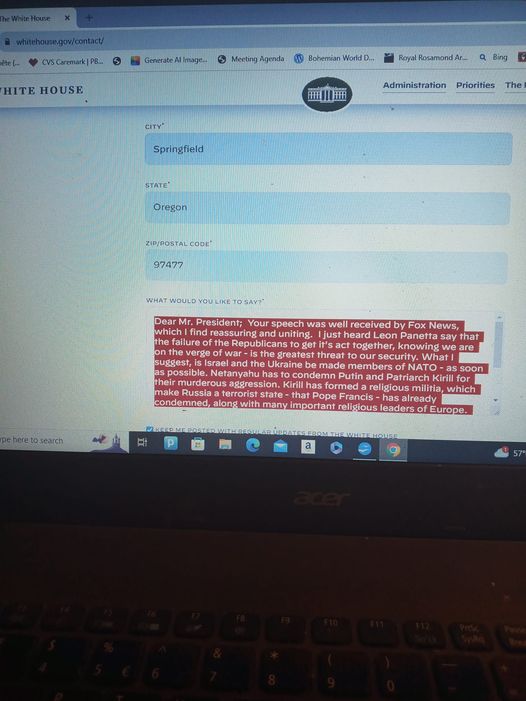
At 11:00 AM I sent the following message to President Biden.
Dear Mr. President; Your speech was well received by Fox News, which I find reassuring and uniting. I just heard Leon Panetta say that the failure of the Republicans to get it’s act together, knowing we are on the verge of war – is the greatest threat to our security! What I suggest, is, Israel and the Ukraine be made members of NATO – as soon as possible! Netanyahu has to condemn Putin and Patriarch Kirill for their murderous aggression. Kirill has formed a religious militia, which make Russia a terrorist state that Pope Francis has already condemned, along with many important religious leaders of Europe. What I suggest, is a coalition of twenty-five Republicans, and twenty-five Democrats be formed to deal with Domestic and International issues. Many Jews from all over Europe and the United States have gone to Israel to fight for a Democracy that needs our support, and the support of all the Democracies of the world.
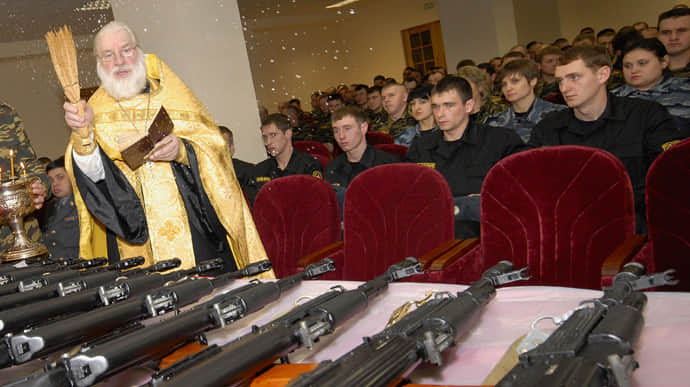
The Russian Orthodox Church is setting up its own private military companies in the Russian Federation. The Moscow Patriarchate has tasked these groups with recruiting Orthodox believers as mercenaries and providing them with combat training to fight against Ukraine.
SBU: Russian Orthodox Church runs private military companies to train fighters for Ukraine deployment
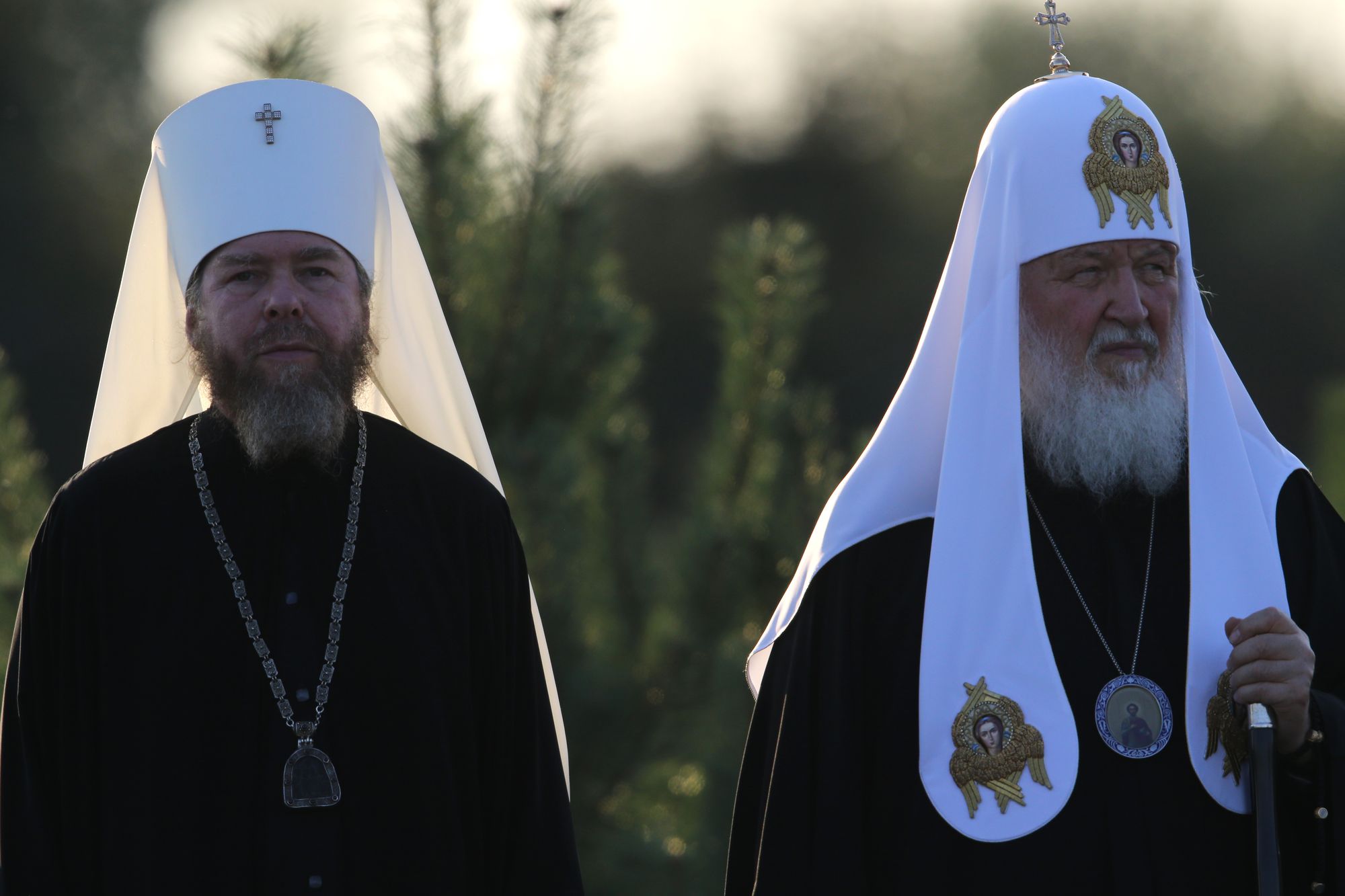
Russian Orthodox Metropolitan Tikhon Shevkunov (L) and Patriarch Kirill (R) attend the opening ceremony of the monument to Prince Alexander Nevsky on Sep. 11, 2021. (Mikhail Svetlov/Getty Images)
The Kremlin-linked Russian Orthodox Church is building and running private military companies (PMC), which recruit and train fighters for deployment in Ukraine, the Security Service of Ukraine (SBU) reported on Oct. 19.
The Church receives funding for these activities from financial and industrial groups close to Russian President Vladimir Putin, the SBU said. These funds are reportedly donated as “charitable contributions” for “construction of churches.”
One example of a church-run PMC named by the SBU is the St. Andrew’s Cross organization based in the Kronstadt Naval Cathedral in northwestern Russia.
The Russian news outlet Bloknot reported on the St. Andrew’s Cross’s activities last year, calling it “the first PMC under the Russian Orthodox Church.” The group was reportedly set up in 2017 to provide military training for other mercenary companies’ recruits.
The cathedral’s abbot Alexey denied in a comment for Russian media that the St. Andrew’s Cross would be a mercenary company, saying it only teaches skills to youth and adults for future military service.https://www.youtube.com/embed/bxu4a8kuVEU?feature=oembed
According to the SBU, the Kronstadt-based PMC is recruiting local parishioners, primarily those with military experience, and providing them with training for combat deployment in Ukraine.
The instructions are carried out on the cathedral’s grounds or in specialized training facilities in cooperation with Russian special services, the SBU said.
Despite being illegal in Russia, PMCs are widely used by the Kremlin for war efforts in Ukraine and to promote Russian interests in other regions of the world, such as Africa.
The most notorious group is the Wagner Company, set up by now-deceased Yevgeny Prigozhin and Dmitry Utkin. Following their deployment on Ukraine’s eastern front, Wagner fighters launched a short-lived uprising against the Russian government in June.
Rome’s attitude may already be hardening.
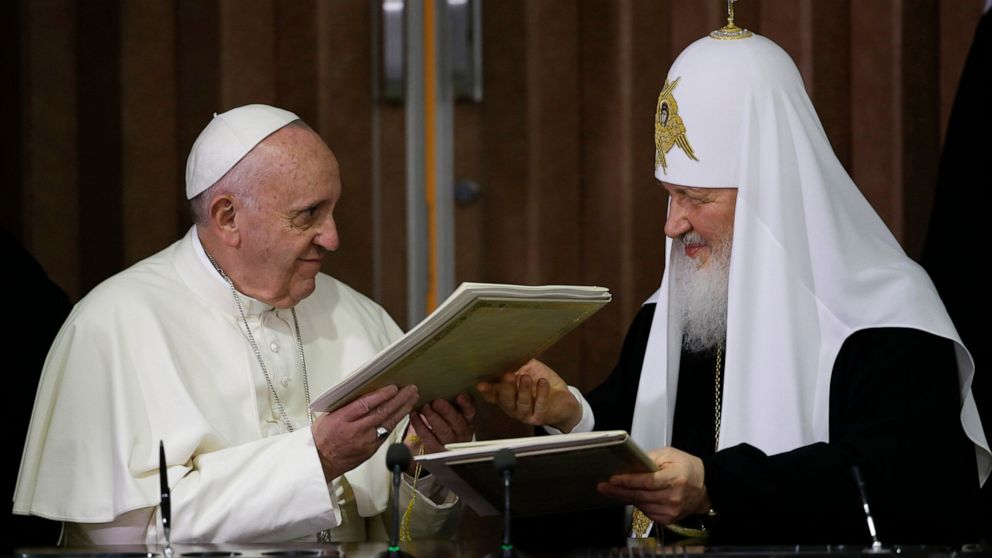
When Francis lamented the “rivers of blood and tears” now “flowing in Ukraine” in his March 6 Angelus message, describing the offensive as “not merely a military operation, but a war sowing death,” his text was not published by the Catholic Church in Russia.
New Criminal Code amendments prescribe heavy fines and jail terms up to 15 years for “public dissemination of falsehoods about Russia’s armed forces,” and priests and bishops could face arrest and imprisonment if they use the words “war” and “invasion” in homilies.
The Vatican said its secretary of state, Cardinal Pietro Parolin, had urged negotiations in a telephone conversation with Russia’s foreign minister, Sergey Lavrov, also repeating the Holy See’s readiness “to do everything possible to assist peace.”
Parolin also hit out at Kirill’s March 6 sermon, saying that his inflammatory words were “of no use and do not promote understanding.”
Meanwhile, a Vatican News commentary referred critically to “those who claim to call this dirty war ‘a military operation,’ ” saying that Francis had “refuted the fake news that seeks to present what is happening with verbal subterfuge to mask the cruel reality.”
In a sign of the Russian church’s growing isolation, theologians from the Czech Republic to Greece have called for its expulsion from the World Council of Churches for “violating the fundamental values of Christianity,” while Switzerland’s University of Fribourg confirmed on March 8 it had suspended Metropolitan Hilarion Alfeyev, the Moscow Patriarchate’s foreign relations director, from his theology faculty professorship.
0:18
Lviv struck by missiles for 1st time
Russian missiles have hit the western Ukrainian city of Lviv for the first time, a key locatio…Read More
The Associated Press
ROME — Pope Francis on Friday denounced the “perverse abuse of power” on display in Russia’s war in Ukraine and called for aid to Ukrainians who he said had been attacked in their “identity, history and tradition” and were “defending their land.”
Francis’ comments, in a message to a gathering of European Catholic representatives, marked some of his strongest yet in asserting Ukraine’s right to exist as a sovereign state and to defend itself against Russia’s invasion.
“I have no name. I don’t want you to see my eyes!” the creature replied.
“Why won’t your tell me? Please. Look at me. I won’t hurt you!”
“I was raised by wolves, with pale blue eyes. They taught me to keep my eyes lowered in the presence of the alpha wolf. And you are the alpha wolf of this place. Are you not?”
“I suppose so. I am the head of the College of Arms. My name is……”
“I know your name. I dust your desk six day a week. I know your grandchild is going to La Rosey, and, he is all you have in the world.”
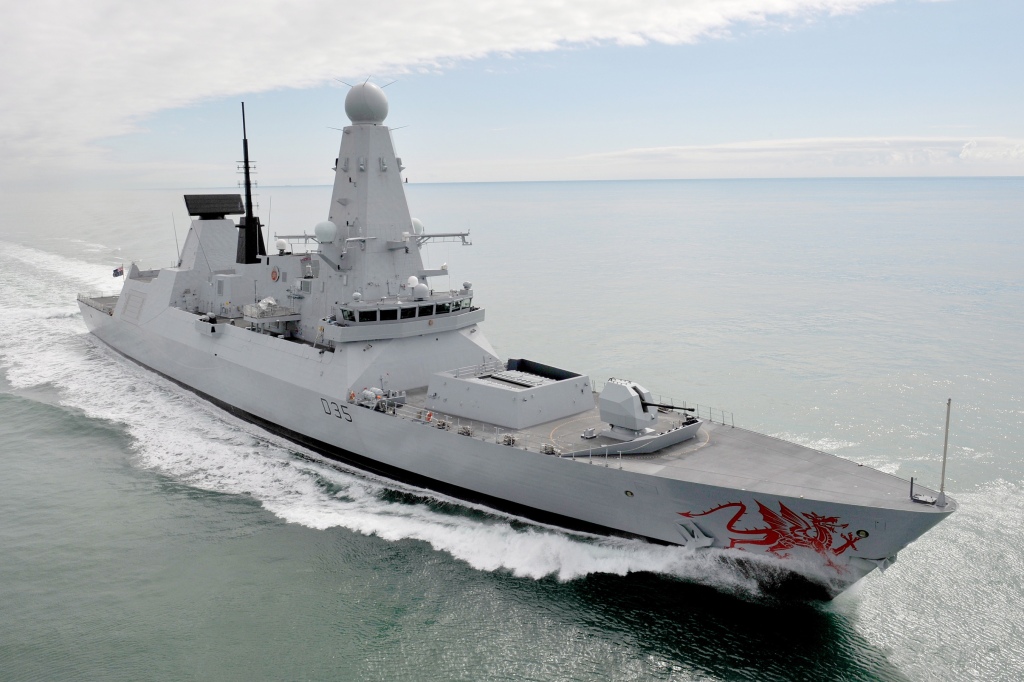
When I decided to write a James Bond Book, I did research. I looked for a way for Victoria Rosemond Bond to be kin to James. I found it, via the Red Dragon. No one had an idea the latest Bond movie was heading for the rocks due to the coronavirus. At first, I was only wanting to write a book. Then I found a video of Lara Roozemond toying with a gun. I was rudely cast out of a Bond Facebook group that talked about ‘No Time To Die’. I wanted to concentrate on ‘Why We Fight’ not on ‘How We Make Money’. I can say I got little, if no support for my projects.
John Presco
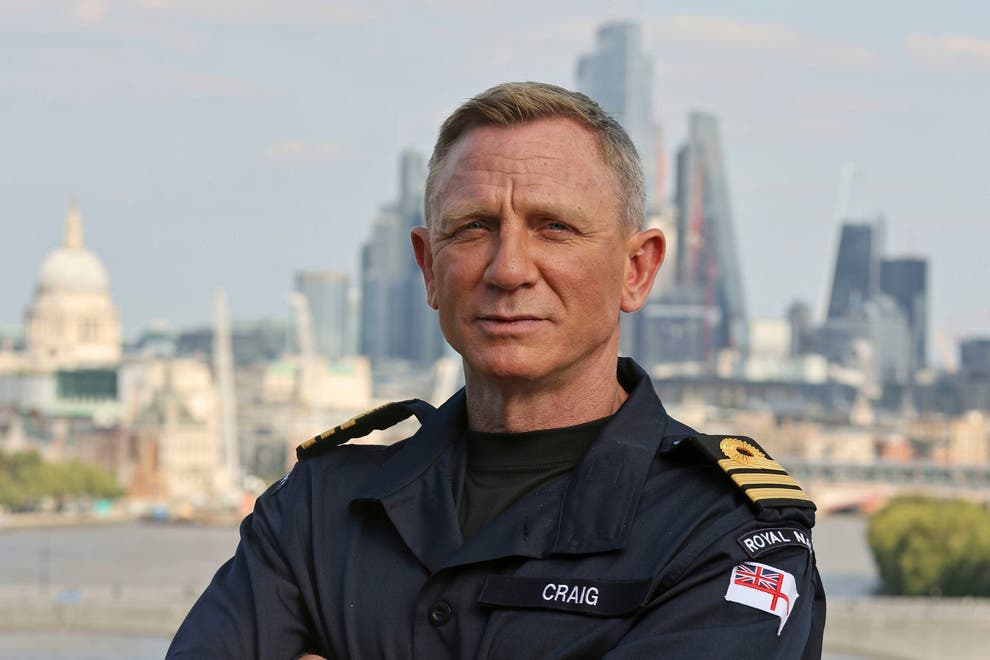
James Bond starDaniel Craigwas made an honorary officer of the United Kingdom’s Royal Navy on Thursday — matching his onscreen 007 persona, who holds the rank of commander.”I am delighted…
Gaulish is an extinct Celtic language spoken in parts of Continental Europe before and during the period of the Roman Empire. In the narrow sense, Gaulish was the language of the Celts of Gaul (now France, Luxembourg, Belgium, most of Switzerland, Northern Italy, as well as the parts of the Netherlands and Germany on the west bank of the Rhine). In a wider sense, it also comprises varieties of Celtic that were spoken across much of central Europe (“Noric“), parts of the Balkans, and Anatolia (“Galatian“), which are thought to have been closely related.[1][2] The more divergent Lepontic of Northern Italy has also sometimes been subsumed under Gaulish.[3][4]
These Galatians were warriors, respected by Greeks and Romans. They were often hired as mercenary soldiers, sometimes fighting on both sides in the great battles of the times. For years the chieftains and their war bands ravaged the western half of Asia Minor as allies of one or other of the warring princes without any serious check—until they sided with the renegade Seleucid prince Antiochus Hierax, who reigned in Asia Minor. Hierax tried to defeatAttalus I, the ruler of Pergamon (241–197 BC), but instead the Hellenized cities united under Attalus’ banner and his armies inflicted several severe defeats upon Hierax and the Galatians in c. 232, forcing them to settle permanently and to confine themselves to the region to which they had already given their name. The theme of the Dying Gaul (a famous statue displayed in Pergamon) remained a favourite in Hellenistic art for a generation.
Tolistobogii (in other sources Tolistobogioi, Tolistobōgioi, Tolistoboioi, Tolistobioi, Toligistobogioi or Tolistoagioi) is the name used by the Roman historian, Livy, for one of the three ancient Gallic tribes of Galatia in central Asia Minor, together with the Trocmi and Tectosages. The tribe entered Anatolia in 279 BC as a contingent of Celtic raiders from the Danube region, and settled in those regions of Phrygia which would later become part of the Roman province of Galatia. The Galatians retained their Celtic language through the 4th century AD, when Saint Jerome mentions that the Galatians still spoke a Celtic language in his times.[1]
Exploring the Celtic history of Switzerland
Many elements of modern Swiss culture, including its currency, reflect its Celtic past. Keystone
For any visitor to Switzerland it won’t take long to spot that every local car has a “ch” sticker on the back. All Swiss-based web site addresses end with “dot.ch”, and postage stamps don’t read “Switzerland”, but rather “Helvetia”.
This content was published on September 6, 2000 – 08:08September 6, 2000 – 08:086 minutes
It’s all a reference to the tribe which peopled Switzerland 2,000 years ago.
The modern Swiss Confederation’s formal name is the “Confoederatio Helvetica”. The Confederation was founded in 1848 – 50 years earlier the invading French forces of Napoleon Bonaparte had declared the Helvetic Republic.
Renaissance writers describing the region that was to become modern Switzerland also used the term “Helvetian”.
Traditional perceptions of the Celts see them as being confined to Europe’s “Atlantic Fringe” – Ireland, Wales, Scotland, or Brittany. But the Celtic tribes were once spread across the continent, from as far east as Turkey, through what is now Slovenia and Austria, and west to France, Spain, and the British Isles.
The Helvetians were the largest of around 11 intersecting Celtic tribes living in the area that is now Switzerland. They began their slow migration from the south of modern Germany around 2,500 years ago.
This population movement picked up pace around 100 BC, as the Helvetians found themselves under pressure from Germanic tribes, descending from the north and east of Europe. They settled along the Swiss lakes and rivers, which were becoming the hub of the continent’s developing trade routes, and built up a string of over 400 villages and a dozen fortified towns.
Although the Helvetians left no written records of their own, they featured in several chronicles of the period. The Greek writer Poseidonios said they were “rich in gold but peaceful people” – an interesting premonition of the modern Swiss.
Julius Caesar devoted a whole section of his “Gallic Wars” to them. Unsurprisingly, as the Roman leader was a respectful enemy of the Helvetians, whom he fought in 58BC at Geneva, after they burned their settlements and tried to move west into more peaceful lands.
Migration into Switzerland had only given them a brief respite from the advancing Germanic tribes, which were continuing their move south. After their defeat at Geneva the Helvetians were forced back into the conflict zone by the Romans, and their territory became a province of the Empire in 15BC.
During the period of benign imperialism which followed, Rome’s cultural influence on the region and its people was profound. The Helvetians adopted Latin, their larger settlements turned into major Roman urban centres, and the road network was expanded to complement the Celts’ river routes.
Roman rule lasted until the Helvetian province, after a slow infiltration, finally fell under the control of the Germanic Burgundians and Alamans in around 400AD. But the Helvetian Celts remained, living side by side with the newcomers.
Traces of the Latinised Helvetians survive in modern Switzerland. The country’s language divide is an illustration.
The Alamans who settled in the east retained their Germanic dialects. The French-language term for German-speaking Switzerland remains “la Suisse alémanique”.
But the Burgundians who colonised the west adopted the Latin dialects of the Helvetians. French-speaking Switzerland is thus a cultural footprint of the Celts.
The German names of Cantons Valais – “Wallis” – and Vaud – “Waadt” – also refer to the Helvetians. Like “Wales”, both are originally terms used by the Germanic tribes to describe “strangers”, the Celts they encountered.
Felix Müller, the deputy director of Berne’s Historical Museum, is also one of Switzerland’s leading experts on the Celts.
“There’s plenty of evidence still around us left by the Helvetians,” he says. “For example, modern-day Avenches, with its impressive amphitheatre, was a Romanised Helvetian settlement called Aventicum.”
“Yverdon is an entirely Celtic name, too. People are sometimes surprised to learn that Berne was an important Celtic settlement – sited not on the bend of the River Aare where the medieval city was established, but on the Enge, a steep peninsula about four kilometres north.”
Müller has even found evidence of settlements burned by the Helvetians, before they set off for Geneva in 58BC. Just above Avenches is the site of a smaller fortress, where archaeologists have discovered a buried layer of charcoal covering the remains.
The country’s Celtic past still arouses growing interest in Switzerland. An exhibition on Celtic jewellery organised by Müller in Berne earlier this year attracted a huge number of visitors.
In Corbeyrier, a small mountain village in Canton Vaud, the local residents have made something of a feature of their interest in the past. In order to raise the place’s profile, they decided in 1996 to start a Celtic festival.
Local teacher and amateur historian, Max-Olivier Bournoud, believes Corbeyrier lay on a major trade route, bringing tin from Cornwall in Britain down to Greece. He has also identified a number of Celtic sites and place-names in the region.
“Quite a few people in Switzerland start out with an interest in Celtic music – say from Ireland or Brittany – and then want to learn more about the Swiss past. I think it’s because of globalisation, since people feel an unconscious need to lock on to their roots, but I don’t think this means you have to shut out the rest of the world,” said Bournoud.
Some Swiss take their interest in the Celtic past a step further. Solas is a practising druid from Canton Vaud. She says she began reading about Celtic druidism a few years ago, and decided she liked the philosophy.
“It’s not so much a religion as a way of life. Our Helvetian ancestors are our roots, and I feel strongly connected to them”, she said.
Müller thinks one of the things that people find so attractive about the Celts is the element of the unknown. “Because they didn’t leave written records, but were written about, and because we have only a few archaeological vestiges, we find the Helvetians mysterious and adventurous,” he said.
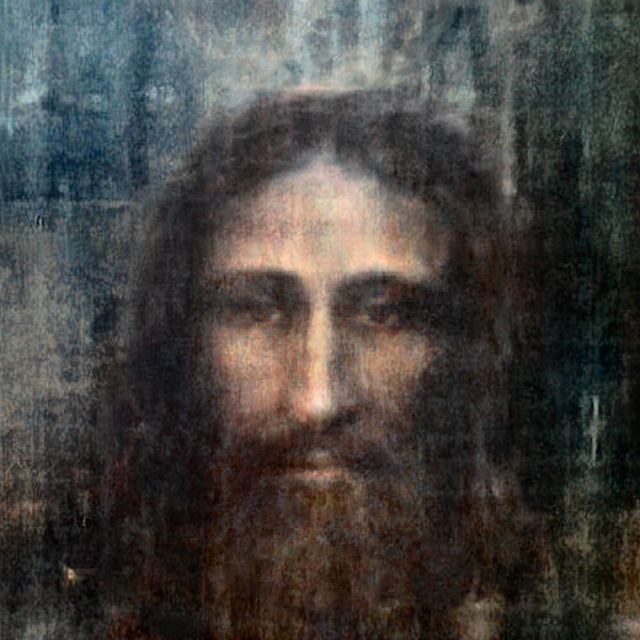
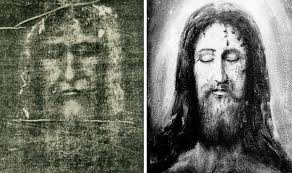
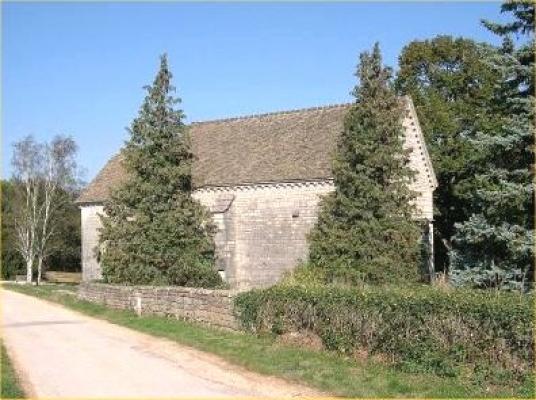
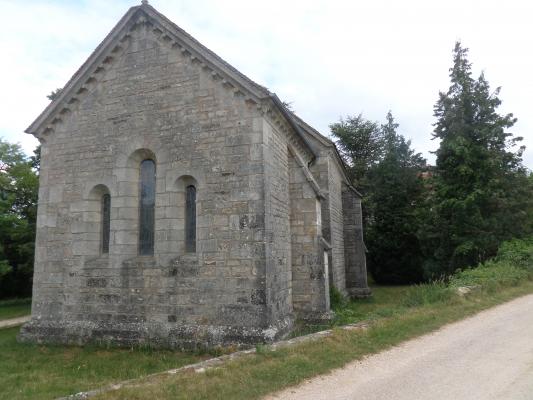
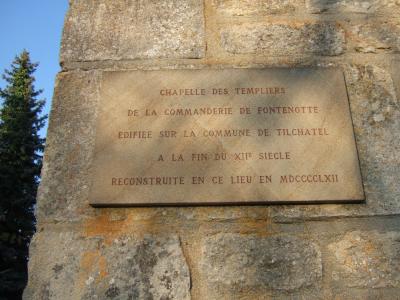
Here are images of Knight Templars who might have seen The Holy Shroud of Turin. I am calling for a New Reformation that will ground its roots at Fontenotte. We need a United Religion designed to stand its ground and take on New World Enemies.
John Presco
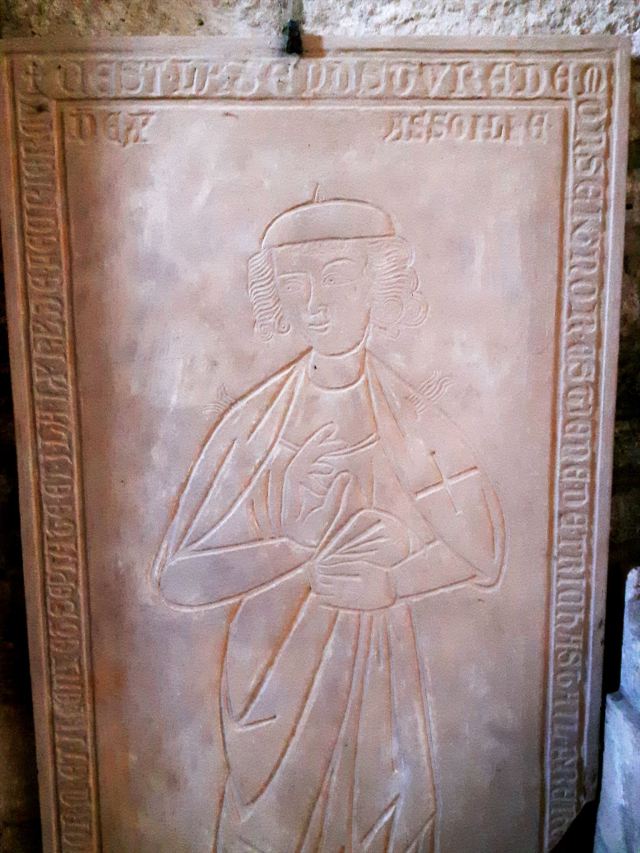
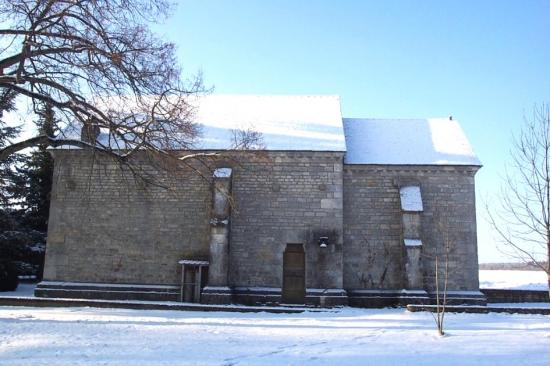
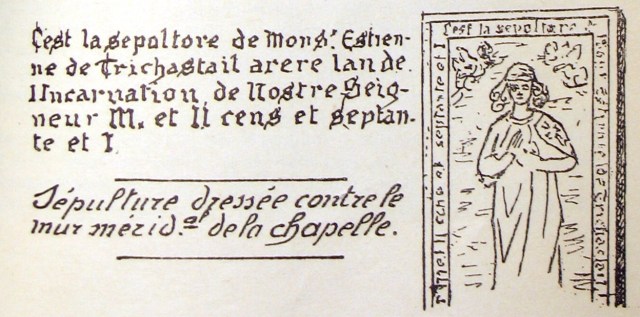
In this church, near the western gateway, you will first find the tombstone of Etienne de Til-Châtel , lord of Pichanges and Chapelain of the Templar Commandery of Fontenotte, buried in 1271. He is the fifth son of Gui II of Til-Châtel (1180-1241) and Guillemette of Bourbonne, Lady of Coublant. On the tombstone we can read: “Who gist or cymetere are brothers of the Chevalerie Dou Temple of Fontenottes near Trichasteaul. “ This funerary stone is a molding of the original stone found in the Chapel of the Sheepfold, at the Rente Saint Joseph on the heights of Dijon. (see GC6GQQK: TTBERG On the trail of the Knights Templar – La Bergerie)
Thanks to the engraving of this stone, we know the dress of a Chaplain of the Order for a ritual.
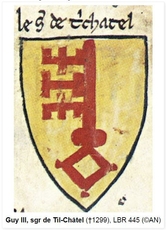
On the other side of the door is the nephew of Etienne, Guy III of Til-Châtel , Knight Templar, Lord of Til-Châtel and Pichanges, Gonfalonnier of Franche-Comté, and Archdeacon of Tonnerois in the church of Langres. On the tombstone we can read: “Cigit.messires.Gui.sires.de.Trichatel.qui.trespassa.lan.grace … of.mois.doctouvre.priez.for.lame.li. “
This tomb with its green traces of moss is the subject of an old tradition: the original stone would be that of St. Margaret, and as it is often wet because of its porosity, it is said that the saint cries.
Rougemont Family Templars Worshipped at Fontenotte and owned the Shroud of Turin.
The First Preceptor of La Fontenotte
My mother’s maiden name has been traced to Rougemont who appear to have ties to the Windsors, thus much of the royalty of Europe. I am sharing this discovery with Robert Sinclair, and Ben Toney, who may be related to the Robert de Ros who lived in Belvoir castle that belonged to the House of Toney.
Because the world is going mad, and in order to strengthen Britain and recreated a European Union co-founded by Denis de Rougemont, I revive the order of Knight Templars, whom the Sinclairs are now tied via Anges de Toney.
Alexandre, and Francois de Rougemont are buried with Knight Templars as Til-Chatel. Gui 1er de Rougemont married Etinnette de Ruffey. Here are the Seigneur de Til-Chatel. Guy 2 de Rougemont Thibaut V de Rougemont 1306-1333 Guillaume de Rougemont Humbert de Rougemont married Alix Neufchatel Aymon 2 (Aimon) de Rougemont married Guillemette de Ray daughter of Othon de La Roche, owner of the Shroud of Turin. Thibaut V1 de Rougemont father of Catherine de Rougemont who married Jean de Neufchatel the son of Margarita de Castro e Souza from who the Windsors descend.
The fifth son of Guy II of Rougemont and Guillemette de Coublant, Etienne de Rougemont was lord of Pichanges. In December 1265, having recalled the donations made to the temple by Aimon IV and Guy II, he gave to the Templars, with the agreement of his elder brother, Jean, Lord of Rougemont, the right of pasturage on his lands of Pichanges and Spoy. He died in 1271 and was buried before the altar in the chapel of Fontenotte and conferring his Templar rank of Preceptor (priest-templar).
After the death of Etienne, Jean de Til-Chatel had to confirm in 1274 the rights of the Templars over Fontenotte. In 1278 his younger brother, Guy, who had been curate of Til-Chatel in 1242 then archdeacon of Le Tonnerois in the church of Langres, succeeded him at the head of the lordship of Pichanges.
In May, 1274, Jean de Rougemont, Marshal of Burgundy legally recorded “for the repose of his soul and that of his elder brother, Etienne de Rougemont, who lies in the cemetery of the said Temple, and of the souls of his forebears”, granted to Henri de Dole, Commander of the House of Fontenotte:”
I have found a Hughes/Hue de Rougemont who a “grand maître du Temple”in two accounts, and the maître du Temple of Burgundy in another.This Hugues appears to be related to Humbert de Villersexel who wasthe Lord of Rougemont and Til-Chatel. Is this the Hughes that preceeded Bernard de Tramelay/Dramelay? Did this Hugues come after Bernard. In the Fromond/Dramelay genealogy we find a line of De La Roches, and thus the Rougemonts are kin to another Templar Grand Master, Amaury de La Roche.















 Rosamond Press
Leave a comment