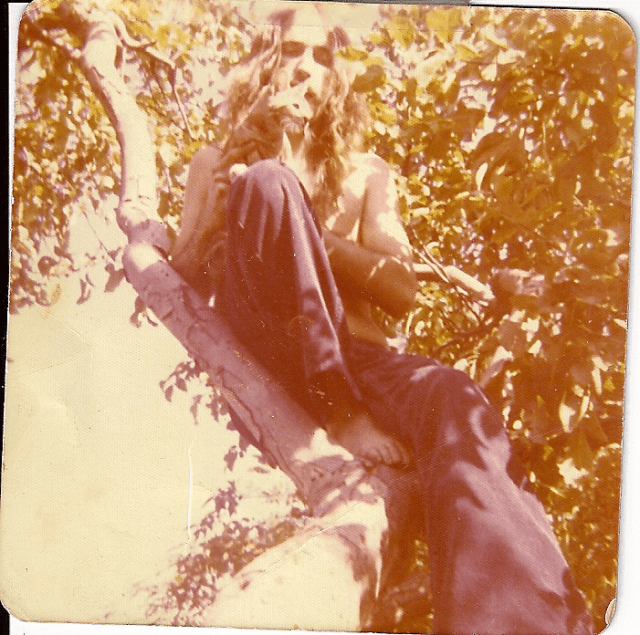
“There were hundreds of thousands of Scots sold into slavery during Colonial America. White slavery to the American Colonies occurred as early as 1630 in Scotland.”
“Pope Gregory in the sixth century first witnessed blonde hair, blue eyed boys awaiting sale in a Roman slave market. The Romans enslaved thousands of white inhabitants of Great Britain, who were also known as Angles. Pope Gregory was very interested in the looks of these boys therefore asking their origin. He was told they were Angles from Briton. Gregory stated, “Non Angli, sed Angeli.” (Not Angles but Angels).”
Here is the confounding paragraph of Eric Richardson the head of the NAACP in Eugene Oregon. This sums up why I was The Target in regards to my relationships with the Reeds, especially Marilyn Reed, my childhood sweetheart.
“America is suffering from an outdated social narrative, created in the period of slavery, that places European civilization above all others, with white men on top,” Richardson says. “Even though we know it to be untrue, this continues to be our bedrock narrative.”
“We have to engage,” he says. “And we will vote.”
What is not true. Who is “we”? Blacks did not vote like last time.
“Richardson encourages the community to get involved. “We’re welcoming of volunteers and members, and we’re looking forward to the legislative session,” he says. “We welcome people to don a T-shirt, and go to the capital with us, to be a voice for peace, and civic engagement.”
From <http://www.eugeneweekly.com/20161215/lead-story/naacp-removes-barriers>
Here is a Rastafarian site that tells how millions of Scot-Irish were made slaves by the Roman, and then, by the British Empire.
I have known for some time the Rastafari see themselves as modern day Nazarites. I was saving that for my book on the Nazarites.
I asked Eric to his face if I could include my socialist Free thinking German Turners in his presentation that was full of propaganda. I asked Marilyn if I could get up on stage and recite some of my families history – and read the Will of Patriot Samuel Rosamond who left his slaves to his children. Then there was my church, the Zulu Nazarites. I now see how alarmed they were by me claiming I am their equal. Was this a ruse, another attempt fr the White Man to come out on top? This cultural power struggle is wrapped in the holy veil of the black church, that may NOT BE modeled after the Christian Church of Europe. At the Hult center it was depicted as coming directly from Africa and thus was not tainted by THE WHITE MAN.
Marilyn did not like me telling her, blacks would still be slaves if it were not for the socialist Germans who came to America after losing to the Papal army. I also told her my Scot-Irish kin fought at the Battle of Boyne and fled Europe as Ulster Scots – wo beat the British in the Revolutionary War. These are Fighters! We would still be subjects of the Royalty if it were not for the Scot-Irish.
http://forgedinulster.com/scots-irish-in-the-usa/4548015472
“It is doubtful if we have wholly realized the importance of the part played by that stern and virile people, the Scotch Irish… They were a truculent and obstinate people, and gloried in the warlike renown of their forefathers, the men who had shared in the defence of Derry and in the victories of the Boyne and Aughrim….They formed the kernel of the distinctively and intensely American stock who were the pioneers of our people in their march westward, the vanguard of the army of fighting settlers, who with axe and rifle won their way from the Alleghenies to the Rio Grande and the Pacific.”
– 26th U.S. PRESIDENT THEODORE ROOSEVELT
Understanding this black slave church is key in this modern day transference of power, for the Christian Church, and its Pope, put crowns on Kings and Queens, after they pledged felty to the Vicar of Christ. White Europeans went on Crusade against the Muslims in Jerusalem, the Moors in Spain, and the Mongols in Hungary. Not only were these invaders not white, they were non-Christian. The Jews in Spain backed the Muslim against the Christians, and when the Sephardic Jews were evicted by King Ferdinand, they came the Americas and supported themselves by bringing black folks from Africa in chains. These Jews were non-Christians and could trace their lineage to King David. How many Red Coats did black slaves kill, compared to white folks? How many Confederates did black slaves kill, compared to white folks?
“The Irish slave trade began when James II sold 30,000 Irish prisoners as slaves to the New World. His Proclamation of 1625 required Irish political prisoners be sent overseas and sold to English settlers in the West Indies. By the mid 1600s, the Irish were the main slaves sold to Antigua and Montserrat. At that time, 70% of the total population of Montserrat were Irish slaves.”
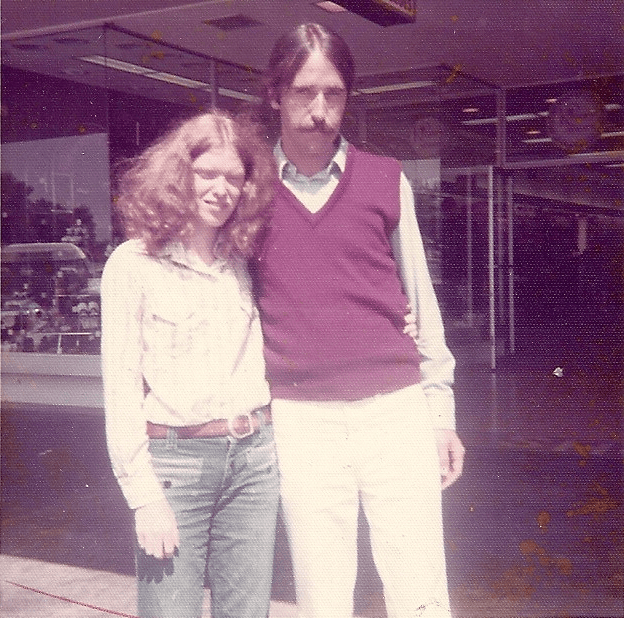
My ancestor John ‘The Highwayman’ Rosamond was sold as a slave and was brought to America in chains. Here is a photograph of Dottie Witherspoon and myself. We met in Boston. Her ancestor was John Knox and a Signer of the Constitution. She has red hair and freckles. She is as Scot-Irish as one can be. When we became lovers, I examined her. The shape of her skull, was different. When I found this article on the Cathiness woman, there she be, Dottie great great ancestor, who is looking down on the invading Roman Legion from the craggy rocks. These European Italians have come for some more slaves, for themselves, and for trade. Folks like that white, white skin, that red hair that allows the owner to track his property down. You got to love those blue and green eyes. Dottie is kin to the actress, Reese Witherspoon.
“A specialist examination at the time of the discovery in the 1980s suggested that the skeletal remains were that of a young Caucasian woman aged 18-22.
He said: “The size of the lips can be determined by measuring the enamel of the teeth and the width of the mouth from the position of the teeth.”
“In time, the English thought of a better way to use these women (in many cases, girls as young as 12) to increase their market share: The settlers began to breed Irish women and girls with African men to produce slaves with a distinct complexion. These new “mulatto” slaves brought a higher price than Irish livestock and, likewise, enabled the settlers to save money rather than purchase new African slaves.”
Jon Presco ‘The Nazarite’
http://www.bbc.com/news/uk-scotland-highlands-islands-36923891
![Actress Reese Witherspoon arrives for the 79th Annual Academy Awards at the Kodak Theatre in Hollywood, California, on February 25, 2007. (UPI Photo/Jim Ruymen) (Newscom TagID: upiphotos758657) [Photo via Newscom] upiphotos758657_LAP20070225929.jpg](https://rosamondpress.com/wp-content/uploads/2017/01/reese-witherspoon-02.jpg?w=540&h=720)
(Newscom TagID: upiphotos758657) [Photo via Newscom] upiphotos758657_LAP20070225929.jpg
http://www.everyculture.com/multi/Pa-Sp/Scottish-and-Scotch-Irish-Americans.html
http://www.bbc.com/news/uk-scotland-highlands-islands-36923891
According to these resources as well as many more, the Scots-Irish have been enslaved longer than any other race in the world’s history. Most governments do not teach White Slavery in their World History classes. Children of modern times are only taught about the African slave trade.
“One half to two thirds of all immigrants to Colonial America arrived
as indentured servants. At times, as many as 75% of the population of
some colonies were under terms of indenture. Even on the frontier,
according to the 1790 U.S. Census, 6% of the Kentucky population was
indentured.”
Name: John ROSAMOND “The Highwayman”·
Surname: Rosamond·
Given Name: John· Suffix: “The Highwayman”·
Sex: M· Birth: ABT. 1710 in County Leitrim, Ireland (?)
“In 1724, my ancestor John ROSAMOND and his friend William Ray were
arrested in Abingdon, Berkshire, England for stealing a hat, periwig,
30 pounds British sterling, five pairs of shoes, and a brown gelding.
They were held in the gaol in Reading, Berkshire, after their trial
where they were sentenced to be exiled to the colonies for 14 years
hard labor.
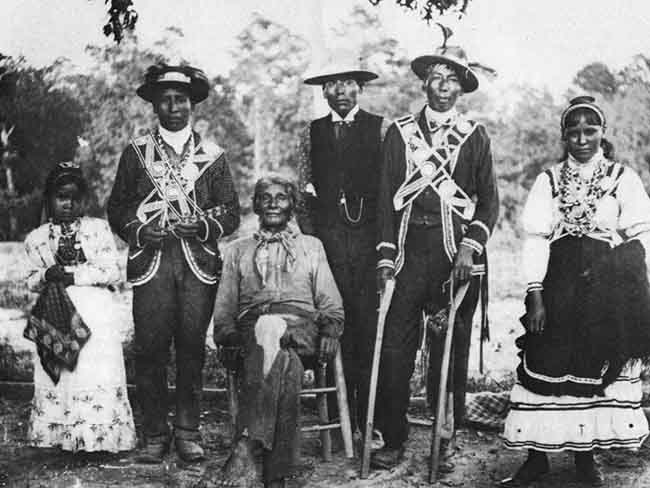
On March 23, 1847 the Indians of the Choctaw nation took up an amazing collection. They raised $170 for Irish Famine relief – an incredible sum at the time – worth in the tens of thousands of dollars today.
They had an incredible history of enduring deprivation themselves. Forced off their lands in 1831, they embarked on a 500 mile trek to Oklahoma called “The Trail of Tears.” Ironically the man who forced them off their lands was Andrew Jackson, the son of Irish immigrants.
White Slavery: The Scottish Slaves of England and Americas
There were hundreds of thousands of Scots sold into slavery during Colonial America. White slavery to the American Colonies occurred as early as 1630 in Scotland.
According to the Egerton manuscript, British Museum, the enactment of 1652: it may be lawful for two or more justices of peace within any county, citty or towne, corporate belonging to the commonwealth to from tyme to tyme by warrant cause to be apprehended, seized on and detained all and every person or persons that shall be found begging and vagrant.. in any towne, parish or place to be conveyed into the Port of London, or unto any other port from where such person or persons may be shipped into a forraign collonie or plantation.
The judges of Edinburgh Scotland during the years 1662-1665 ordered the enslavement and shipment to the colonies a large number of rogues and others who made life unpleasant for the British upper class. (Register for the Privy Council of Scotland, third series, vol. 1, p 181, vol. 2, p 101).
The above accounting sounds horrific but slavery was what the Scots have survived for a thousand years. The early ancestors of the Scots, Alba and Pics were enslaved as early as the first century BC. Varro, a Roman philosopher stated in his agricultural manuscripts that white slaves were only things with a voice or instrumenti vocali. Julius Caesar enslaves as many as one million whites from Gaul. (William D Phillips, Jr. SLAVERY FROM ROMAN TIMES TO EARLY TRANSATLANTIC TRADE, p. 18).
Pope Gregory in the sixth century first witnessed blonde hair, blue eyed boys awaiting sale in a Roman slave market. The Romans enslaved thousands of white inhabitants of Great Britain, who were also known as Angles. Pope Gregory was very interested in the looks of these boys therefore asking their origin. He was told they were Angles from Briton. Gregory stated, “Non Angli, sed Angeli.” (Not Angles but Angels).
The eighth to the eleventh centuries proved to be very profitable for Rouen France. Rouen was the transfer point of Irish and Flemish slaves to the Arabian nations. The early centuries AD the Scottish were known as Irish. William Phillips on page 63 states that the major component of slave trade in the eleventh century were the Vikings. They spirited many ‘Irish’ to Spain, Scandinavia and Russia. Legends have it; some ‘Irish’ may have been taken as far as Constantinople.
Ruth Mazo Karras wrote in her book, “SLAVERY AND SOCIETY IN MEDEIVEL SCANDINAVIA” pg. 49; Norwegian Vikings made slave raids not only against the Irish and Scots (who were often called Irish in Norse sources) but also against Norse settlers in Ireland or Scottish Isles or even in Norway itself…slave trading was a major commercial activity of the Viking Age. The children of the White slaves in Iceland were routinely murdered en masse. (Karras pg 52)
According to these resources as well as many more, the Scots-Irish have been enslaved longer than any other race in the world’s history. Most governments do not teach White Slavery in their World History classes. Children of modern times are only taught about the African slave trade.
The Slaves That Time Forgot
By John Martin
They came as slaves; vast human cargo transported on tall British ships bound for the Americas. They were shipped by the hundreds of thousands and included men, women, and even the youngest of children.
Whenever they rebelled or even disobeyed an order, they were punished in the harshest ways. Slave owners would hang their human property by their hands and set their hands or feet on fire as one form of punishment. They were burned alive and had their heads placed on pikes in the marketplace as a warning to other captives.
We don’t really need to go through all of the gory details, do we? After all, we know all too well the atrocities of the African slave trade. But, are we talking about African slavery?
King James II and Charles I led a continued effort to enslave the Irish. Britain’s famed Oliver Cromwell furthered this practice of dehumanizing one’s next door neighbor.
The Irish slave trade began when James II sold 30,000 Irish prisoners as slaves to the New World. His Proclamation of 1625 required Irish political prisoners be sent overseas and sold to English settlers in the West Indies. By the mid 1600s, the Irish were the main slaves sold to Antigua and Montserrat. At that time, 70% of the total population of Montserrat were Irish slaves.
Ireland quickly became the biggest source of human livestock for English merchants. The majority of the early slaves to the New World were actually white.
From 1641 to 1652, over 500,000 Irish were killed by the English and another 300,000 were sold as slaves. Ireland’s population fell from about 1,500,000 to 600,000 in one single decade. Families were ripped apart as the British did not allow Irish dads to take their wives and children with them across the Atlantic. This led to a helpless population of homeless women and children. Britain’s solution was to auction them off as well.
During the 1650s, over 100,000 Irish children between the ages of 10 and 14 were taken from their parents and sold as slaves in the West Indies, Virginia and New England. In this decade, 52,000 Irish (mostly women and children) were sold to Barbados and Virginia. Another 30,000 Irish men and women were also transported and sold to the highest bidder. In 1656, Cromwell ordered that 2000 Irish children be taken to Jamaica and sold as slaves to English settlers.
Many people today will avoid calling the Irish slaves what they truly were: Slaves. They’ll come up with terms like “Indentured Servants” to describe what occurred to the Irish. However, in most cases from the 17th and 18th centuries, Irish slaves were nothing more than human cattle.
As an example, the African slave trade was just beginning during this same period. It is well recorded that African slaves, not tainted with the stain of the hated Catholic theology and more expensive to purchase, were often treated far better than their Irish counterparts.
African slaves were very expensive during the late 1600s (50 Sterling). Irish slaves came cheap (no more than 5 Sterling). If a planter whipped or branded or beat an Irish slave to death, it was never a crime. A death was a monetary setback, but far cheaper than killing a more expensive African.
The English masters quickly began breeding the Irish women for both their own personal pleasure and for greater profit. Children of slaves were themselves slaves, which increased the size of the master’s free workforce. Even if an Irish woman somehow obtained her freedom, her kids would remain slaves of her master. Thus, Irish moms, even with this new found emancipation, would seldom abandon their kids and would remain in servitude.
In time, the English thought of a better way to use these women (in many cases, girls as young as 12) to increase their market share: The settlers began to breed Irish women and girls with African men to produce slaves with a distinct complexion. These new “mulatto” slaves brought a higher price than Irish livestock and, likewise, enabled the settlers to save money rather than purchase new African slaves.
This practice of interbreeding Irish females with African men went on for several decades and was so widespread that, in 1681, legislation was passed “forbidding the practice of mating Irish slave women to African slave men for the purpose of producing slaves for sale.” In short, it was stopped only because it interfered with the profits of a large slave transport company.
England continued to ship tens of thousands of Irish slaves for more than a century. Records state that, after the 1798 Irish Rebellion, thousands of Irish slaves were sold to both America and Australia.
There were horrible abuses of both African and Irish captives. One British ship even dumped 1,302 slaves into the Atlantic Ocean so that the crew would have plenty of food to eat.
There is little question that the Irish experienced the horrors of slavery as much (if not more in the 17th Century) as the Africans did. There is, also, very little question that those brown, tanned faces you witness in your travels to the West Indies are very likely a combination of African and Irish ancestry.
In 1839, Britain finally decided on it’s own to end it’s participation in Satan’s highway to hell and stopped transporting slaves. While their decision did not stop pirates from doing what they desired, the new law slowly concluded THIS chapter of nightmarish Irish misery.
But, if anyone, black or white, believes that slavery was only an African experience, then they’ve got it completely wrong.
Irish slavery is a subject worth remembering, not erasing from our memories. But, where are our public (and PRIVATE) schools???? Where are the history books? Why is it so seldom discussed?
Do the memories of hundreds of thousands of Irish victims merit more than a mention from an unknown writer? Or is their story to be one that their English pirates intended: To (unlike the African book) have the Irish story utterly and completely disappear as if it never happened.
None of the Irish victims ever made it back to their homeland to describe their ordeal. These are the lost slaves; the ones that time and biased history books conveniently forgot.
http://afgen.com/forgotten_slaves.html
https://en.wikipedia.org/wiki/Mongol_invasion_of_Europe
Unlike Henry, Kaidu and Baidar knew where Wenceslas was–only two days’ march away. The Mongols were already somewhat outnumbered and could not risk allowing Henry and Wenceslas to join forces. Therefore, when Henry reached a plain surrounded by low hills not far from Liegnitz, called the Wahlstadt, or chosen place, he found the Tartars already there, waiting for him. Upon seeing the Tartars, Henry drew up his forces in four squadrons and placed one after the other on the Wahlstadt. The first group was made up of knights from various nations, supplemented by the miners from Goldberg under the command of Boleslav, son of the margrave of Moravia. Sulislav, the brother of the late palatine of Kraków, led the second group–Krakovians and knights from Welkopole. The third group consisted of knights from Opole, led by the Opolian Duke Meshko, and Teutonic Knights from Prussia under the Heermeister Poppo von Ostern. Duke Henry led the fourth group, which was made up of men at arms from Silesia and Breslau, knights from Welkopole and Silesia, and French Knights Templar.
From <http://www.historynet.com/mongol-invasions-battle-of-liegnitz.htm>
The Teutonic Knights and Knights Templar were religious military orders with origins in the Crusades. As a result of both their religious and military training, the knights submitted readily to discipline and were normally the best of the forces available to Duke Henry. Nonetheless, Baidar and Kadan expected to add another victory to their already considerable tally. The Mongols’ confidence was not without foundation.
Another major factor was the rise of Bathilde, queen of the Franks, who had been enslaved before marrying Clovis II. When she became regent, her government outlawed slave-trading of Christians throughout the Merovingian empire, as well as purchasing and freeing existing slaves.[6]
About 10% of England‘s population entered in the Domesday Book (1086) were slaves,[7] despite chattel slavery of English Christians being nominally discontinued after the 1066 conquest. It is difficult to be certain about slave numbers, however, since the old Roman word for slave (servus) continued to be applied to people with a status that was later to be called “serf.”[8]
From <https://en.wikipedia.org/wiki/Slavery_in_medieval_Europe>
Demand from the Islamic world dominated the slave trade in medieval Europe.[9][10][11][12] For most of that time, however, sale of Christian slaves to non-Christians was banned. In the pactum Lotharii of 840 between Venice and the Carolingian Empire, Venice promised not to buy Christian slaves in the Empire, and not to sell Christian slaves to Muslims.[9][13][14] The Church prohibited the export of Christian slaves to non-Christian lands, for example in the Council of Koblenz in 922, the Council of London in 1102, and the Council of Armagh in 1171.[15]
As a result, most Christian slave merchants focused on moving slaves from non-Christian areas to Muslim Spain, North Africa, and the Middle East, and most non-Christian merchants, although not bound by the Church’s rules, focused on Muslim markets as well.[9][10][11][12] Arabic silver dirhams, presumably exchanged for slaves, are plentiful in eastern Europe and Southern Sweden, indicating trade routes from Slavic to Muslim territory.[16]
Records of long-distance Jewish slave merchants date at least as far back as 492, when Pope Gelasius permitted Jews to import non-Christian slaves into Italy, at the request of a Jewish friend from Telesina.[25] [26] [27] By the turn of the 6th to the 7th century, Jews had become the chief slave traders in Italy, and were active in Gaelic territories. Pope Gregory the Great issued a ban on Jews possessing Christian slaves, lest the slaves convert to Judaism.[27] [28] By the 9th and 10th centuries, Jewish merchants, sometimes called Radhanites, were a major force in the slave trade continent-wide.[9] [29] [30]
Jews were one of the few groups who could move and trade between the Christian and Islamic worlds.[30] Ibn Khordadbeh observed and recorded routes of Jewish merchants in his Book of Roads and Kingdoms from the South of France to Spain, carrying (amongst other things) female slaves, eunuch slaves, and young slave boys. He also notes Jews purchasing Slavic slaves in Prague.[9] [27] [31] Letters of Agobard, archbishop of Lyons (816-840), [32] [33] [34] [35] acts of the emperor Louis the Pious,[36] [37] and the seventy-fifth canon of the Council of Meaux of 845 confirms the existence of a route used by Jewish traders with Slavic slaves through the Alps to Lyon, to Southern France, to Spain.[9] Toll records from Walenstadt in 842–843 indicate another trade route, through Switzerland, the Septimer and Splügen passes, to Venice, and from there to North Africa.[9]
As German rulers of Saxon dynasties took over the enslavement (and slave trade) of Slavs in the 10th century, Jewish merchants bought slaves at the Elbe, sending caravans into the valley of the Rhine. Many of these slaves were taken to Verdun, which had close trade relations with Spain. Many would be castrated and sold as eunuchs as well.[9] [21]
Jews would later become highly influential in the European slave trade, reaching their apex from the 16th to 19th centuries.[9]
From <https://en.wikipedia.org/wiki/Slavery_in_medieval_Europe>
The Jews of Algiers were frequent purchasers of Christian slaves from Barbary corsairs.[98] Meanwhile, Jewish brokers in Livorno, Italy were instrumental in arranging the ransom of Christian slaves from Algiers to their home countries and freedom. Although one slave accused Livorno’s Jewish brokers of holding the ransom until the captives died, this allegation is uncorroborated, and other reports indicate Jews as being very active in assisting the release of English Christian captives.[99] In 1637, an exceptionally poor year for ransoming captives, the few slaves freed were ransomed largely by Jewish factors in Algiers working with Henry Draper.[100]
https://en.wikipedia.org/wiki/Jewish_views_on_slavery#Modern_era
Atlantic slave trade[edit]

Triangular slave trade.
The Atlantic slave trade transferred African slaves from Africa to colonies in the New World. Much of the slave trade followed a triangular route: slaves were transported from Africa to the Caribbean, sugar from there to North America or Europe, and manufactured goods from there to Africa. Jews and descendants of Jews participated in the slave trade on both sides of the Atlantic, in the Netherlands, Spain, and Portugal on the eastern side, and in Brazil, Caribbean, and North America on the west side.[101]
After Spain and Portugal expelled many of their Jewish residents in the 1490s, many Jews from Spain and Portugal migrated to the Americas and to the Netherlands.[102] Jewish participation in the Atlantic slave trade increased through the 17th century because Spain and Portugal maintained a dominant role in the Atlantic trade and peaked in the early 18th century, but started to decline after the Peace of Utrecht in 1713 when Britain obtained the right to sell slaves in Spanish colonies, and Britain and France started to compete with Spain and Portugal.[103] By the time the worldwide slave trade and European sugar-growing reached its peak in the 18th century, Jewish participation was dwarfed by the enterprise of British and French planters who did not allow Jews among their number. During the 19th century, some Jews owned some cotton plantations in the southern United States.[102]
Brazil[edit] Slave ship used in Brazilian trade.
See also: Slavery in Brazil
The role of Jewish converts to Christianity (New Christians) and of Jewish traders was momentarily significant in Brazil[104] and the Christian inhabitants of Brazil were envious because the Jews owned some of the best plantations in the river valley of Pernambuco, and some Jews were among the leading slave traders in the colony.[105] Some Jews from Brazil migrated to Rhode Island in the American colonies, and played a significant but non dominant role in the 18th-century slave trade of that colony; this sector accounted for only a very tiny portion of the total human exports from Africa.[106]
Caribbean and Suriname[edit]
The New World location where Jews played the largest role in the slave-trade was in the Caribbean and Suriname, most notably in possessions of the Netherlands, that were serviced by the Dutch West India Company.[104] The slave trade was one of the most important occupations of Jews living in Suriname and the Caribbean.[107] The Jews of Suriname were the largest slave-holders in the region.[108]
According to Austen, “the only places where Jews came close to dominating the New World plantation systems were Curaçao and Suriname.”[109] Slave auctions in the Dutch colonies were postponed if they fell on a Jewish holiday.[110] Jewish merchants in the Dutch colonies acted as middlemen, buying slaves from the Dutch West India Company, and reselling them to plantation owners.[111] The majority of buyers at slave auctions in the Brazil and the Dutch colonies were Jews.[112] Jews allegedly played a “major role” in the slave trade in Barbados[110][113] and Jamaica,[110] and Jewish plantation owners in Suriname helped suppress several slave revolts between 1690 to 1722.[108]
In Curaçao, Jews were involved in trading slaves, although at a far lesser extent compared to the Protestants of the island.[114] Jews imported fewer than 1,000 slaves to Curaçao between 1686 and 1710, after which the slave trade diminished.[110][115] Between 1630 and 1770, Jewish merchants settled or handled “at least 15,000 slaves” who landed in Curaçao, about one-sixth of the total Dutch slave trade.[116][117]
North American colonies[edit]
See also: Slavery in the colonial United States
The Jewish role in the American slave trade was minimal.[118] According to historian and rabbi Bertram Korn, there were Jewish owners of plantations, but altogether they constituted only a tiny proportion of the industry.[119] In 1830 there were only four Jews among the 11,000 Southerners who owned fifty or more slaves.[120]
Of all the shipping ports in Colonial America, only in Newport, Rhode Island did Jewish merchants play a significant part in the slave-trade.[121]
A table of the commissions of brokers in Charleston, South Carolina, shows that one Jewish brokerage accounted for 4% of the commissions. According to Bertram Korn, Jews accounted for 4 of the 44 slave-brokers in Charleston, three of 70 in Richmond, and 1 of 12 in Memphis.[122] However the proportion of Jewish residents of Charleston who owned slaves was similar to that of the general white population (83% versus 87% in 1830).[123]
Historian Seymour Drescher emphasized the problems of determining whether or not slave-traders were Jewish. He concludes that New Christian merchants managed to gain control of a sizeable share of all segments of the Portuguese Atlantic slave trade during the Iberian-dominated phase of the Atlantic system. Due to forcible conversions of Jews to Christianity many New Christians continued to practice Judaism in secret, meaning it is impossible for historians to determine what portion of these slave traders were Jewish, because to do so would require the historian to choose one of several definitions of “Jewish”.[126][127]
The Secret Relationship Between Blacks and Jews[edit]
Main article: The Secret Relationship Between Blacks and Jews
In 1991, the Nation of Islam (NOI) published The Secret Relationship Between Blacks and Jews, which alleged that Jews had dominated the Atlantic slave trade.[128] Volume 1 of the book claims Jews played a major role in the Atlantic slave trade, and profited from slavery.[129] The book was heavily criticized for being anti-Semitic, and for failing to provide any objective analysis of the role of Jews in the slave trade. Common criticisms included the fact that the book used selective quotes, made “crude use of statistics,”[102] and was purposefully trying to exaggerate the role of Jews.[130] The Anti-Defamation League (ADL) criticized the NOI and the book.[10] Henry Louis Gates Jr criticized the book’s intention and scholarship.[131]
| Part of a series on |
| Antisemitism |

Part of Jewish history |
| Manifestations[show] |
| Antisemitic canards[show] |
| Antisemitic publications[show] |
| Antisemitism on the Web[show] |
| Persecution[show] |
| Opposition[show] |

|
Historian Ralph A. Austen heavily criticized the book and said that although the book may seem fairly accurate, it is an anti-Semitic book. However, he added that before the publication of The Secret Relationship, some scholars were reluctant to discuss Jewish involvement in slavery because of fear of damaging the “shared liberal agenda” of Jews and African Americans.[132] In that sense, Austen found the book’s aims of challenging the myth of universal Jewish benevolence throughout history to be legitimate even though the means to that end resulted in an anti-Semitic book.[133]
From <https://en.wikipedia.org/wiki/Jewish_views_on_slavery>

 Rosamond Press
Leave a reply to Royal Rosamond Press Cancel reply